Home Blog Page 224

Review: MISKATONIC #1 Where The FBI Face Lovecraftian Horrors

AfterShock Exclusive Preview: MISKATONIC #1

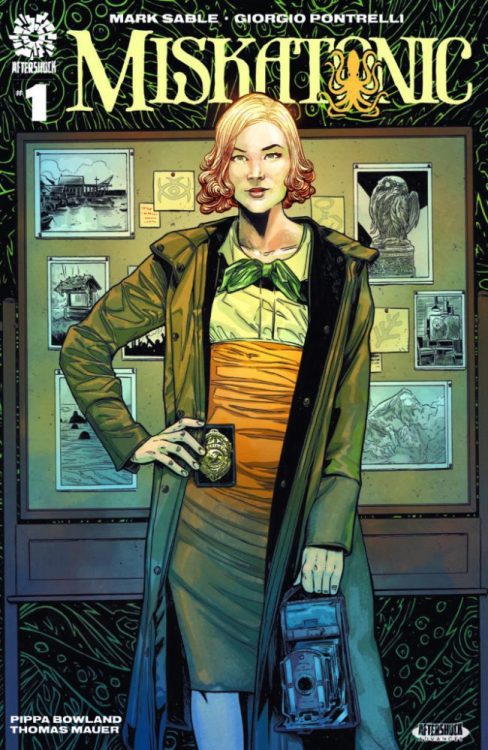
With Lovecraft Country making news, both positive and negative, on the internet it will come as no surprise that H.P. Lovecraft’s work is the inspiration behind AfterShcok Comics‘ new title Miskatonic. The television series is set in the 1950’s with a real world location which was the influence for many of Lovecraft’s stories, whereas Mark Sable and Giorgio Pontrelli’s comic mostly has a fictional setting but is comprised of real events and features prominent historical characters.

The story opens with the bombing of a ‘blue blood’ in Innsmouth, in the Miskatonic Valley, which allows newly appointed director of the FBI, J Edgar Hoover, the opportunity to reassign Agent Miranda Keller. Agent Keller is a dedicated worker with an impressive record but she does not fit into Hoover’s vision for the future of the Bureau, a “muscular extension of American Justice. Or as Miranda put’s it, “masculine”.
Miskatonic #1, preview p7
Miskatonic #1 Credit: AfterShock Comics

Real World Interactions

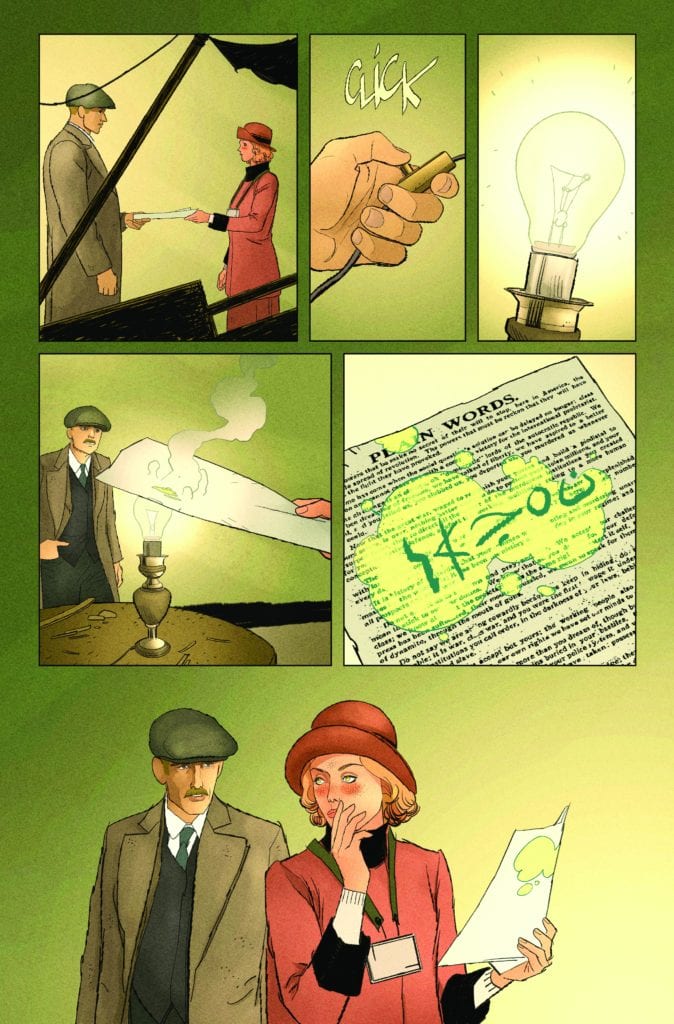
Miskatonic is a mystery story steeped in American history, visual and textual. One of the exciting things about the range of comics that AfterShock have been putting out is the obvious passion of the creators. Several of the titles have links to real world events which result in hours lost down internet rabbit holes researching the background to the story. And just as Stephanie Phillips’ Descendent had me reading around government conspiracies and the Lindbergh Baby, Miskatonic had me Googling “Plain Words” and anarchistic bombers. My search history will need to be expunged.

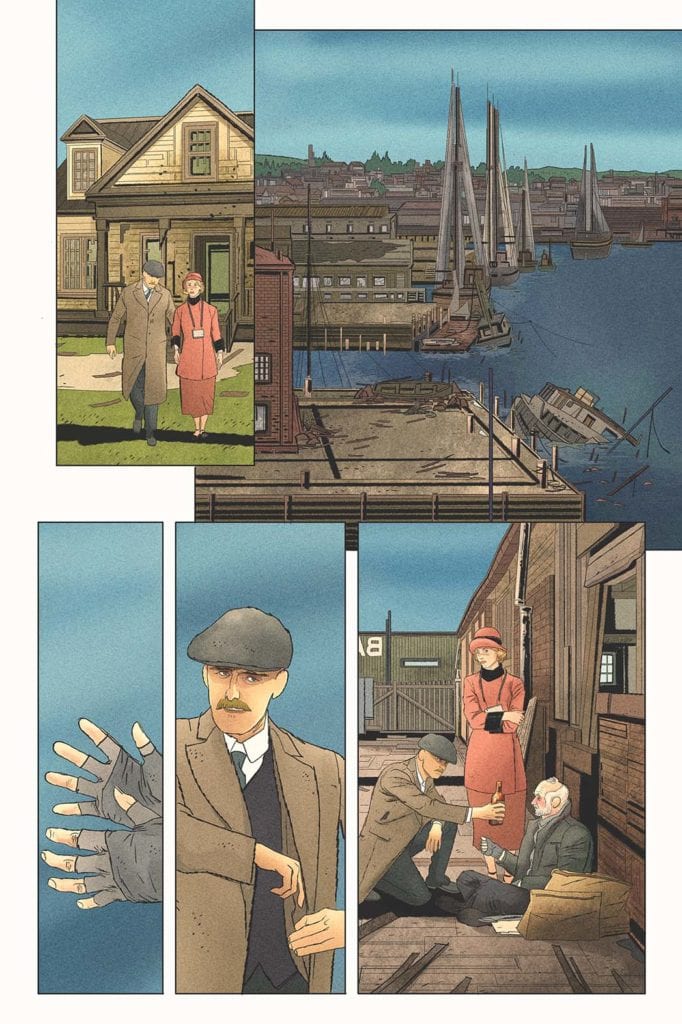
The merging of historical facts and creative plot is seamless to the point that it is believable that Agent Keller was a real person and her treatment by the infamous Hoover is a recreation of real events. It’s not until approximately a third of the way in that anything unnatural rears its head by which point Sable and Pontrelli have totally absorbed you into their world. The Lovecraftian locations are so commonplace these days that you forget they aren’t real places and Pontrelli draws the 1920’s Massachusetts’ townships as if from direct reference. The setting has the substance of reality and this is enhanced by the color work by Pippa Bowman.

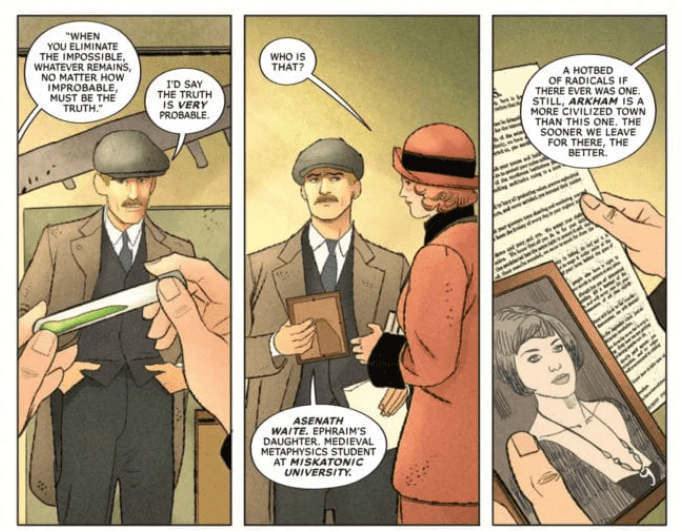
The shift from the grey and washed out greens of Washington DC to the dusty Ochre of Innsmouth is subtle but symbolises a shift in tone. This is heightened by the contrast between Agent Keller and her surroundings. Bowman dresses Keller in salmon colored clothes from the moment she reaches Innsmouth. From the respectable dress suit to the bed clothes that she wears, Agent Keller stands out from the background in every panel she’s in. This contrast reaffirms many of the themes inherent in the comic. The difference between the City, or a cultured locale, and the country; the conspiratorial nature of Truth against implied reality; and even natural versus supernatural. A simple application of color draws the reader’s attention to these aspects of the narrative as they play out in the plot.
Miskatonic
Miskatonic #1 Credit: AfterShock Comics

Drawing from History

Pontrelli’s fine line work combined with his detailed backgrounds creates both an absorbing page of story and an historically accurate setting. As a reader you become immersed in the narrative and the setting equally, with each aspect feeding the reading of the other. There is a definable tension on the page between the interloper, Keller, and the locals and locale. Tom Malone, the agent in Innsmouth, acts as a link between the two worlds but Sable introduces just as much tension in his relationship with Keller, thereby forming an atmosphere of unease on every page.

Subtleties in the script are brought out through Thomas Mauer’s lettering with his occasional, yet impactful, use of boldface. Elements of the characters are accentuated through the speech and the patterns that Mauer creates. It all flows so effortlessly across the page you barely notice it but the nudges are there, informing your subconscious and allowing you to have a fully rounded experience. If nothing else, the combination of inked lines, color, and letters are satisfying to read, making this a worthwhile comic before even attempting to pick apart the narrative.
Miskatonic
Miskatonic #1 Credit: AfterShock Comics

Conclusion

As an introduction to a series, Miskatonic is superb. It effortlessly melds Lovecraftian Law with historical events to create a costume drama that is as representative of our modern era’s desperate conspiracy theories as it is the fear mongering of the early 1920’s. The uneasy political backdrops of both times worm their way into Sable’s story creating a narrative tension reflected through the visual aspects of the page.

The comic is intriguing, fascinating, and opens up a world of truths, half truths, and fictions that you will be desperate to pick apart. In today’s comic industry it is not enough to provide ten minutes of entertainment, there has to be an acknowledgement of the wider world in which the comic is situated. Whether it is science-fiction, biographical, or superhero in nature, nothing exists in a vacuum. Miskatonic is very aware of itself, it’s setting, and the fictional elements it is layering over historical fact. As long as the comic can retain this commitment to a para-textual narrative, Miskatonic will be a title worth following through to the end.
Monkeys Fighting Robots Youtube

Review: SONIC THE HEDGEHOG #34 Is Surprisingly Slow

Sonic The Hedgehog

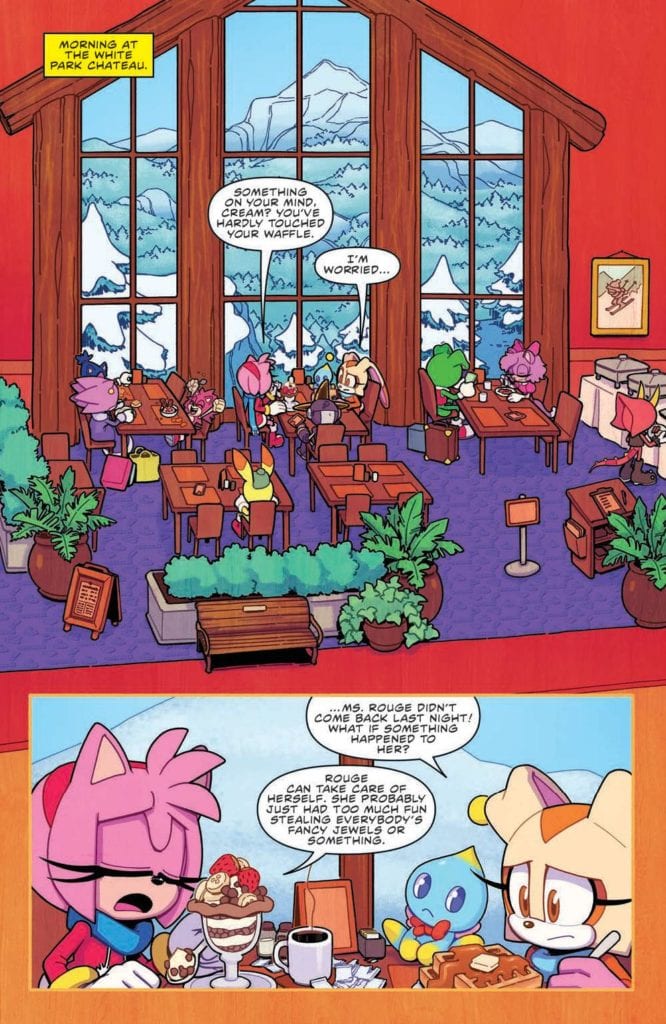
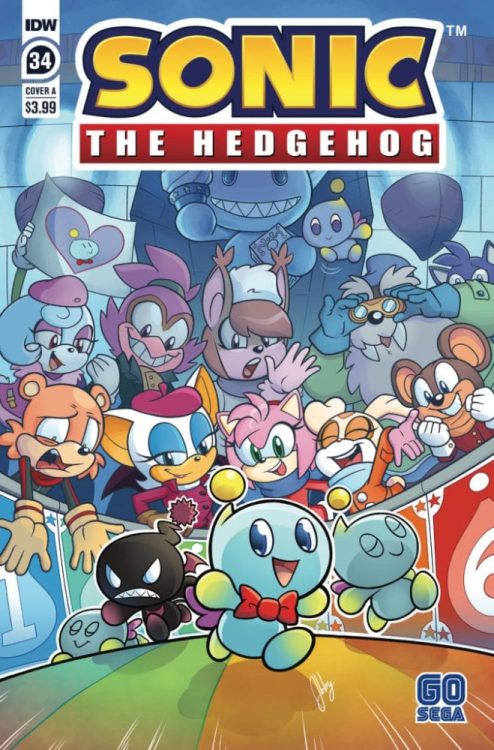
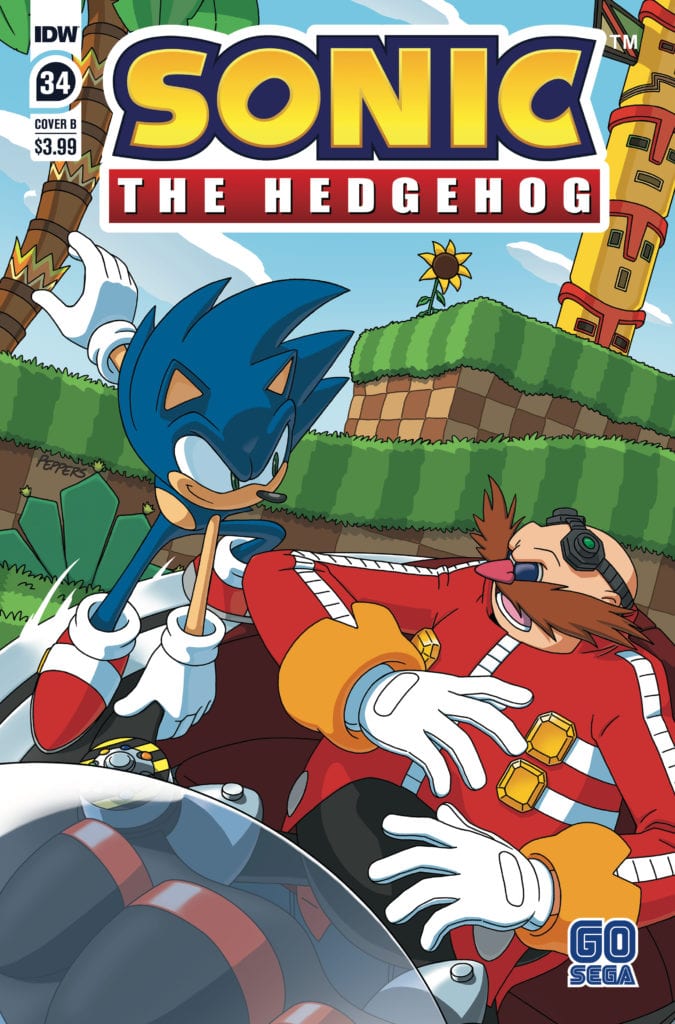
Sonic The Hedgehog #34 out this week from IDW Publishing is slowly moving the plot forward with the new arc. With Rogue’s crew on one side and Sonic and Tails on the other, both teams continue their mission to help repair Omega. The issue is brought together thanks to Evan Stanely (writer and artist), Reggie Graham (colorwork), and Shawn Lee (lettering).

Summary

It’s off to the races with Cream, Cheese, Amy, and Rouge! They have to keep up their winning streak or surrender Cheese to Clutch’s evil… clutches!

Sonic The Hedgehog

Writing

With the story split between the two teams (and Shadow doing his own sleuthing), you’d think there would be more twice the action. Instead, more time is spent moving the plot forward than having fight scenes. This seems odd considering Shadow was overpowered in the previous issue by an unknown assailant and there was a good chance the fight could have continued. Still, it is a new arc so it’s not all gonna be explosions and chase scenes.

Writer Evan Stanely does take the time to showcase Shadow’s efforts to get to the bottom of what is going on in the resort and discovers Clutch is evil. Really? The shady guy who was shown in a room full of covered furniture with dim lighting who was trying to manipulate Rogue can’t be trusted? How shocking. Seriously though, there is a lack of subtlety here, but hopefully, more about Clutch and his plan will be revealed in the next issue.

Sonic The Hedgehog

Artwork

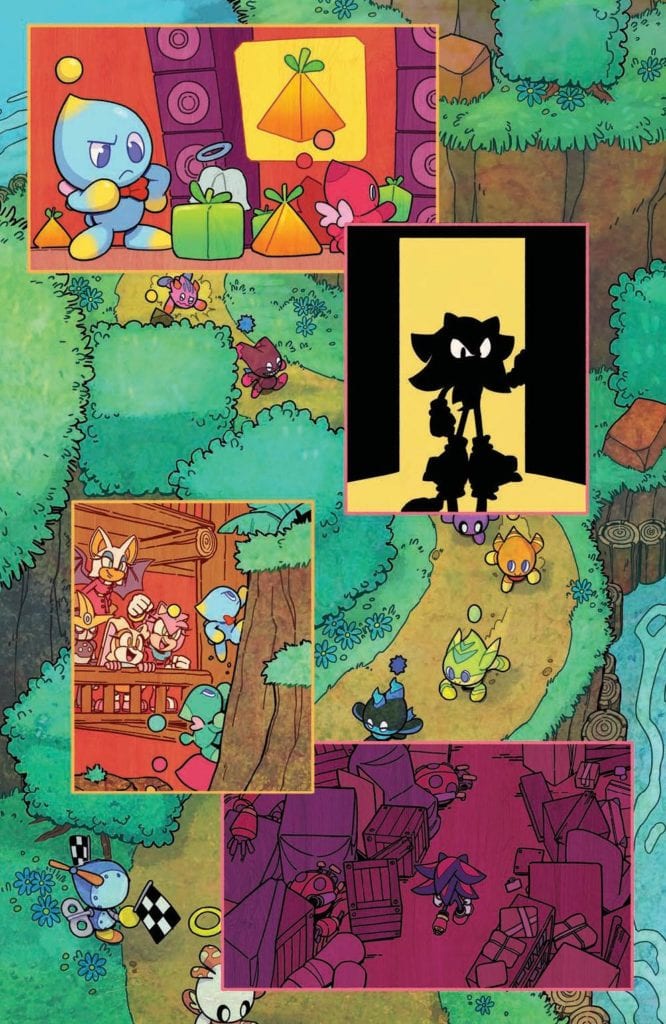
With Evan Stanely providing story and artwork, many moments resonate astonishingly well in this issue. One of the best occurs with a montage showcasing Cheese advancing through the races as Shadow continues his investigation. The side by side comparison of these frames acts as a montage moving the story forward and showing a passage of time in just a few frames on the same page.

The colorwork by Reggie Graham continues to highlight the difference between each of the settings. From the bright colors used in the resort to the hushed tones used in the Clutch’s secret room, the use of color helps the reader understand they have moved to a different setting without being told directly. Also, it helps the newly introduced character to stand out more.

Sonic The Hedgehog

The lettering work by Shawn Lee provides the right auditory aspects to the story. From the Chao races to the sound effects as Sonic kicks some garbage, the important actions are labeled with the right amount of sound for the situation. Also, the use of the word “Scuff” to show someone getting pushed was amusing.

Conclusion

Sonic The Hedgehog #34 is still early in its new arc but does manage to be entertaining thanks to the art. The action will increase moving forward judging by the cliffhanger at the end of the issue. For now, fans can enjoy some more lighthearted moments before Sonic and his friends find themselves having to face off against some army of rampaging robots somewhere down the line.

Monkeys Fighting Robots Youtube

Review: REDFORK & The Horror Brought To Impoverished Hills

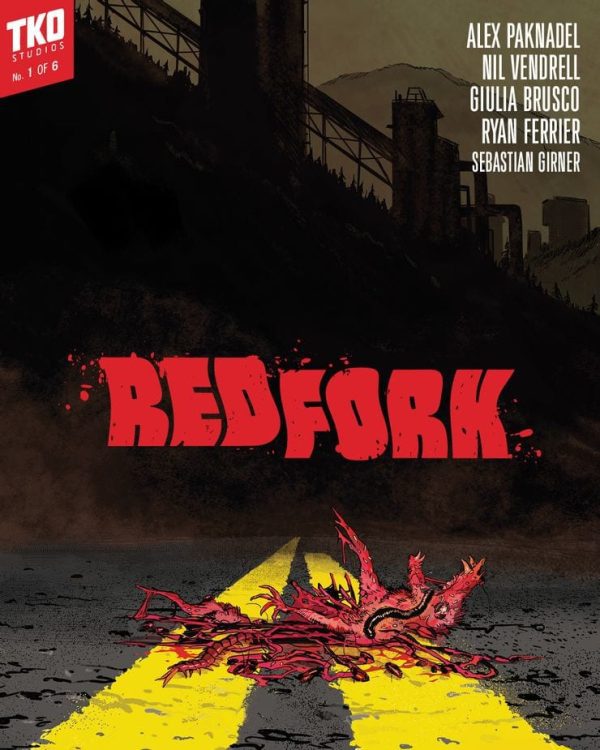
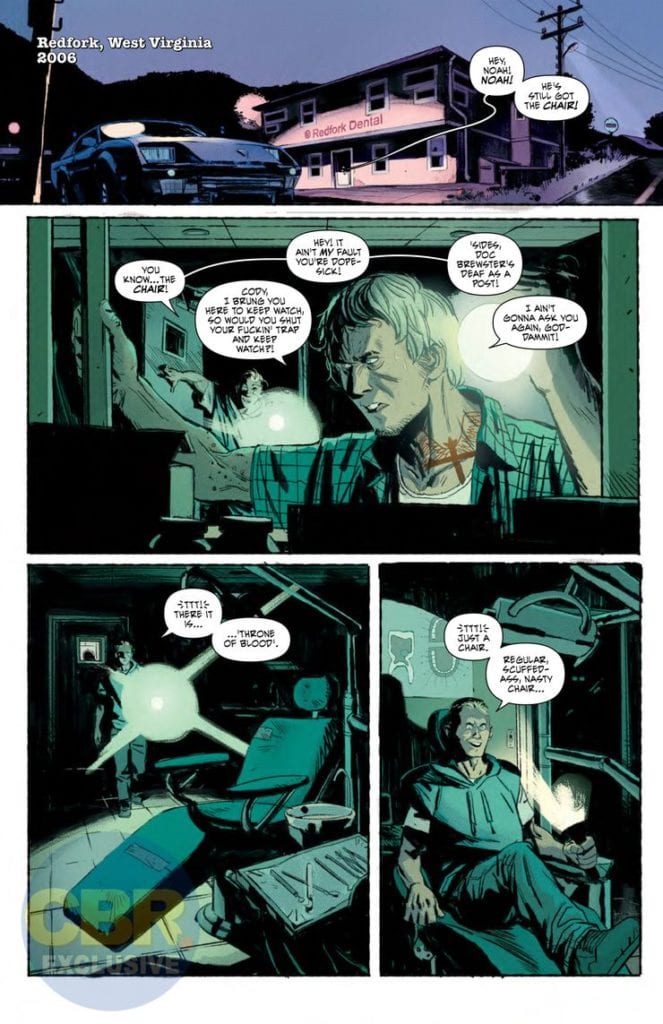
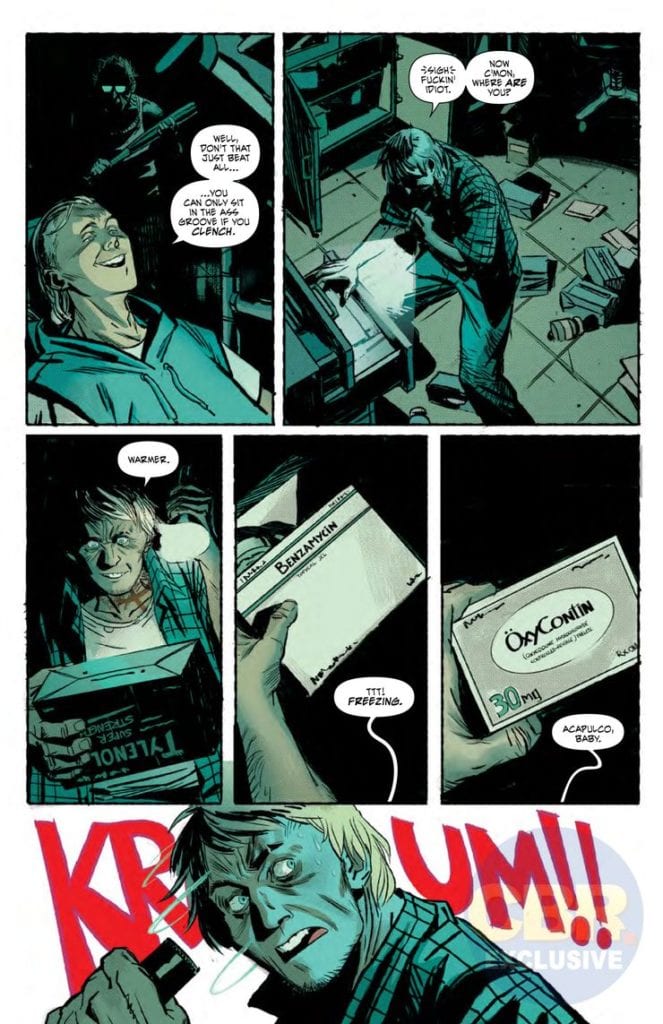
The best horror is most effective when it focuses its energies on the stories of the characters and victims within the story first, and the scares second. This is why Redfork, a 6-issue mini-series from writer Alex Paknadel and artist Nil Vendrell and published by TKO Studios, is one of the most frightening and outstanding horror comics published in recent memory. This is a comic that empathizes with the near-inescapable living nightmare of people living in poverty conditions and forced by higher forces both societal and, in here at least, supernatural, to give up their very bodies to just be able to survive. With colors by Giulia Brusco and letters from Ryan Ferrier, Redfork is a story about the lives of people just trying to get by, all while being seduced and betrayed by powers that could care less.

“Ex-con Noah McGlade returns to his coal-mining hometown to find it blighted by opioid abuse and economic decline. But there’s something even darker draining the very life from this town, and as Noah digs deeper he unearths a dormant horror that threatens to consume what little he has left to live for.”

Writing & Plot

While writer Alex Paknadel does craft a seriously frightening supernatural horror experience with Redfork, the reason it turns out to be so effective is because of the attention paid to the human characters within the story. Noah’s introduction makes him the sort of person your average member of society would avoid or scorn; he’s a convict with a past inclination for violence and drug abuse. Hell, almost everyone in the town of Redfork is stuck to some harmful vice that allows them to temporarily escape the pain of having no money and no way out. Paknadel does an incredible job of writing a town full of people with no hope that are just trying to get by. They are all written with sympathy, and not the sneer of superiority that many would cast upon these people if they passed them in the street. This is a book that is very aware not only of the torment of cyclical poverty but also of the very people that take advantage of those who have no means of surviving without those who prey upon their labor. Mining is one of the most dangerous and parasitic professions in the history of industry, sending hundreds of people to their deaths with little more than a shrug in response from their employers. Paknadell does not shy away from the cruel indifference shown by the wealthy company owner of the Redfork mine, and her ability to see the people in this town as little more than means to an end.

The very reality that Redfork represents is already its own brand of horror by itself. This is why fact that the comic’s supernatural element is so unnerving is also so impressive. There are two villains in this story, an earthly one and an unnatural one. Both of them torment the population of Redfork in different ways; the first keeps them in the only lifestyle they can afford to know while barely hiding her disdain for them, while the second offers them miraculous wonders and appears to actively care for them as human beings. Before they’ve realized it however, their lives are torn asunder by something they could scarcely understand. This sort of meta-commentary makes what was already a politically-charged horror and turns it into one of the most effective political metaphors I’ve ever seen in a comic. The commentary on our own political system never comes off as preachy, rather like a poetic series of interpretable observations from the characters in the story. The presentation of the story itself is delivered with piano wire-like tension and impeccable pacing, keeping the reader strung along with a combination of fantastic character writing and an increasingly eerie tale of terror. This script is a tasty gore-soaked casserole of body-horror, character-drama, and societal commentary all delivered with a skill seldom seen in any medium.

Art Direction

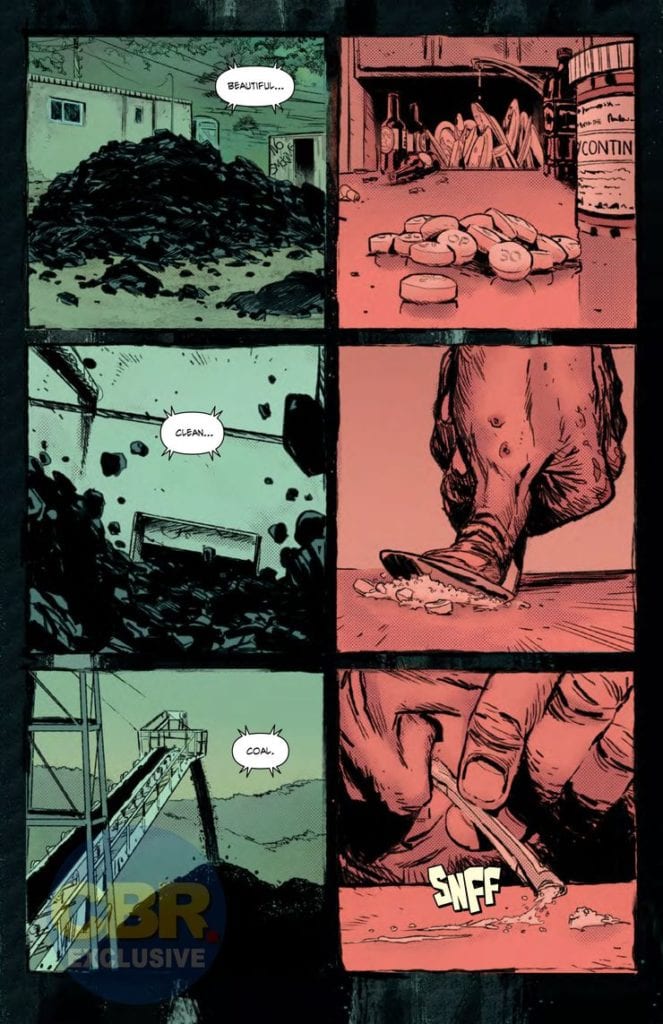
Carrying the tension and atmosphere of Redfork is the stellar visual approach of artist Nil Vendrell. He, along with colorist Giulia Brusco, craft a visual storytelling experience that drops bloody breadcrumbs of horror while maintaining a simultaneous focus on the plight of the people living in Redfork. Vendrell continually builds curiosity and tension from page to page by showing only small glimpses and flashes of the growing threat in this small forgotten town, presenting the major scares like the best classic horror films. Vendrell understands the need to create a focus on the cast of people and their condition just as well as Paknadel does, and so just as much effort foes into the directing and panel layouts of Noah’s experiences with the other people in his hometown. There’s a visual sense of alienation and bleak hopelessness that is telegraphed in the framing of characters, and this effect rolls right into the direction of the horror atmosphere when the scary stuff starts dropping. The phenomenal pacing in this story pays off in a huge way with the late-stage reveals after so much meticulous plotting. A common issue among horror stories is that once the big bad is revealed all the tension sot of fizzles out. Luckily that’s not so with Redfork; this story stays intense and frightening from start to finish.

Giulia Brusco creates a hazy, coal dust-covered color experience for this comic that oozes with an unnerving atmosphere. There’s a constant darkness in every panel as if the color palette was tossed down a mineshaft and brought back up for use. These dark and drab tones are so prevalent that the sudden bits of fleshy gore and otherworldly lights punctuate the pages with shock and urgency. There’s a rather symbolic use of daylight and nighttime in here as well, but getting into that would be getting into some spoiler territory. The letters from Ryan Ferrier use a sharp, angular font that I’ve noticed becoming more common in horror comics. It’s a great choice that is well-executed, with Ferrier using tonal changes and effects that stay in the speech balloons rather than taking up space within the panel. The visual work on this horror story is a spectacular display of atmospheric and character-oriented storytelling.

Redfork is one of the most effective comics I’ve read this year. Not only is it a superb horror story, but it’s a thoughtful and empathetic examination of the lives of the impoverished working class and how they are taken advantage of by predators both supernatural and very real. Alex Paknadel constructs his most brilliant script yet, weaving a terrifying and intimate tale of terror and woe. The art of penciller Nil Vendril and colorist Giulia Brusco composes a blackened environment that sets the story’s taut pacing while offering stellar character-focused visual narrative-work. Redfork is without a doubt one of the best horror comics I’ve gotten to read, so please head over to TKO Studios and grab yourself a copy.


Monkeys Fighting Robots Youtube

Review: FATMAN Offers Bizarre Take On Santa Claus

Fatman is as ridiculous as its synopsis indicates, but commits to its narrative in hopes that the audience will take it seriously. Santa Claus is not as Jolly as rumors claimed, he is an alcoholic who just angered the wrong child this Christmas. Fatman might find itself on the yearly holiday season must watch list, but for all the wrong reasons because the film is so absurd. A new guilty pleasure has arrived and it’s offering one of the most unique takes on this legendary holiday icon. 

There’s an instant feeling of intrigue when you take Santa and alter him from the kid-friendly persona many are familiar with. The red suit is gone, random outbursts of joy cease to exist, and the task of gifting children around the world can be life-threatening. Fatman intends to be a dark comedy, but most of its jokes fall flat, or just aren’t very funny. The humor in this comes from the narrative, which is over the top insanity. Directed and written by Eshom and Ian Nelms, the film stars Mel Gibson, Walton Goggins, Marianne Baptiste, and Chance Hurstfield. Fatman follows Santa who must battle an assassin sent to kill him after a 12-year-old boy received a lump of coal in his stocking. 

Mel Gibson as Santa in Fatman

Billy (Hurstfield) is 12, spoiled, rich, and still is not satisfied because Santa has gifted him with a lump of coal this year. He terrorizes his household while his father travels the world with his girlfriends. Gibson stars as Santa, but he is unpleasant, void of joy, and doesn’t want to be alive it seems. No one in Fatman seems to acknowledge that he is the man that annually breaks into everyone’s house to leave gifts. After receiving a lump of coal, Billy hires a hitman played by Goggins to takeout the drunk Santa. The hitman agrees without hesitation because he has been miserable for years since Santa never gave him the gift he always wanted. The Nelms brothers do an awful job with these characters because audiences will not care for a single person in this film.

Fatman comes off like it was just made out of boredom, but this take on Santa is quite refreshing. The film’s comedic moments come from how awful it gets, and it even incorporates action elements, which felt out of place at times. There is no sense of development for anyone, Santa is still an angry boomer by the end, and Billy is still spoiled rotten. The Nelms brothers do a great job showing off how aging children can affect Santa with their bad behaviors. This is causing a decline in Santa’s business, so military assistance is requested. Also, despite having minimal likable characters, there is Ruth (Baptiste), who is Mrs. Claus and she is the only person worth caring for.

Walton Goggins as Skinny Man in Fatman

Everyone delivers as far as performances are concerned in this absurd outing. Gibson is great as a miserable Santa and Goggins eats up every scene as the hitman. He comes off intimidating to every character he interacts with and delivers his lines in a menacing voice. Hurstfield makes Billy as unlikable as possible, so if that’s what the filmmakers wanted then he was fantastic. He captures Billy’s disdain for Santa and wonderfully demonstrates how twisted this child can be. Baptiste is amazing as Ruth, she will have viewers wishing they had a friend or spouse like her around. Despite everyone being so naughty, she is always there to brighten the mood and Baptiste does a great job as Mrs. Claus.

The direction in this film is adequate, but Fatman is oddly paced at times. It drags on with these hollow characters, but you’ll find yourself wanting to see how this film wraps because of the solid performances. The cinematography assists the gritty vibe Fatman gives off from start to finish. It will be interesting to see what happens to this film overtime because it could become a guilty pleasure for many to watch around this time of year. However, there is little chance this grows to cult status or anything close because as a film, it is bad to the bone.

Mel Gibson as Santa Claus in Fatman

At its core, Fatman is about a disgruntled grownup searching for Santa’s address while Santa tries to save his business. It is an over the top, half baked film that has little to offer anyone that watches it. A holiday film that exists just to exercise a fresh take but will leave no lasting impact. Fatman has a special place on the list of Holiday films, and that is at the very bottom. 

Monkeys Fighting Robots Youtube

How The Times Have Changed in DRYAD #7

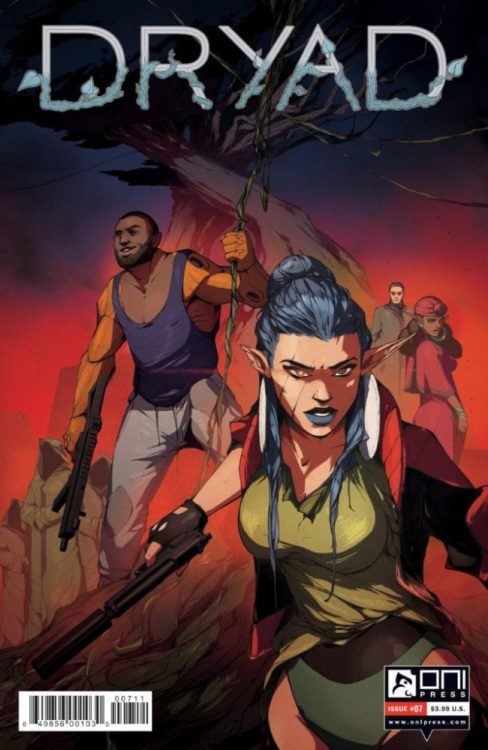
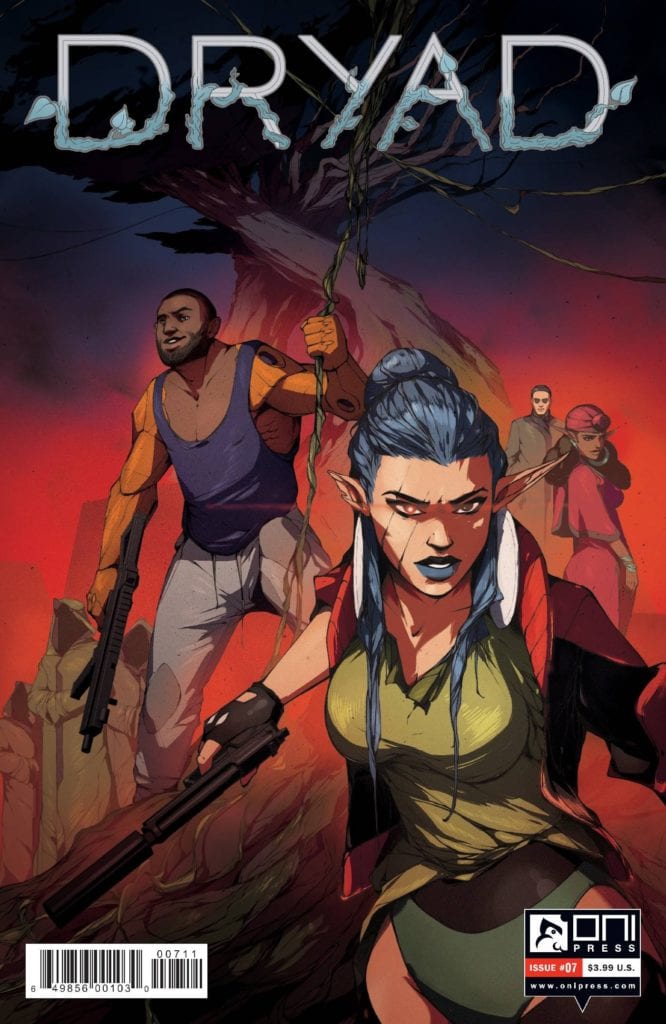
A dynamic cover for Dryad #7, one that hints to the past and the future.

DRYAD #7, available December 2 from ONI Press, brings with it even more changes for one family — and the reasons why they have stuck together for so long. This is a world full of magic and technology, and there are bound to be some cracks in the merger.

A dynamic cover for Dryad #7, one that hints to the past and the future.

Once upon a time, the Glass family had known a peaceful and relatively quiet life out in what was, essentially, the middle of nowhere. Now they’ve been picked up and dropped off into the middle of a bustling city — and a growing conflict.

Each issue has steadily reviewed and taken apart everything this family had known, or rather, believed to be true. The family, the world, everything. It’s all changing, with very few exceptions. That is the setting for which Dryad #7 takes off.

The Writing

Dryad #7 is a rich and complex issue, from the very first page, right up until the conclusion. Kurtis Wiebe has clearly put in so much effort into this story, and yet there are countless questions still waiting to be answered.

This entire series has been genre-breaking on more than one level. First, it combined science fiction and fantasy elements into one world. Now, there’s a strong infusion of family drama, and just a dash of spy thrillers on top of everything else.

It makes for a fascinating world, if nothing else. While the wait for the next issue, and hopefully more answers, is likely to feel long, at least there are details worth pouring over from this issue. Such as the family history, the implications made, and the city itself.

All things considered, Dryad #7 is an issue that sits heavy. That was likely intentional, given everything that was revealed or hinted at. Still, it’s difficult to predict what the fallout will be, given the various directions and forms that can be taken.

The Art

Dryad #7 is a striking issue, that much is certain. The characters are still a strong highlight to the series, but there are so many more details to enjoy as well. The vibrant backdrops, the blending of organic and tech, the magic, all of it.

Justin Barcelo is the lead artist, and it is through Bacelo’s work that the past and present collide. The flashbacks are especially noteworthy here, being both dramatic and shockingly…endearing. Something that will make more sense when context is provided. that’s a promise.

Francesco Segala’s colors are to die for. The strong use of blue and green hues on some pages really do set the scene and the tone. It’s a color palette that lends well both to technology, and to magic. Meanwhile, the reds, pinks, and purples of the other dominant pages speak to emotional turmoil and family drama.

Jim Campbell letters the issue, and it is here where many nuances appear. The upheaval of the twins, their bond, the feel of motion and impact, all of it comes out through the lettering.

Conclusion

Dryad #7 is a moving issue, there is no argument in that. It is a fascinating issue, that answers questions in one hand, and raises more with the other. With each page it feels like the tale is getting more complex, and possibly much darker as well. Only time will tell how the Glass family fares from all of this.

Monkeys Fighting Robots Youtube

The Vessel Is Being Readied In RED MOTHER #10

RED MOTHER #10, available tomorrow from BOOM! Studios, is changing Daisy’s life — again. Her life has been far from easy these past several issues, and it looks like her story isn’t quite over yet.

***SPOILER WARNING***

spoilers ahead

The psychological thriller continues in Red Mother #10. Daisy McDonough’s entire life was turned upside down on one fateful night. She lost her eye and her boyfriend all in one fell swoop. While she still doesn’t have answers from that night, there was a moment where it seemed like her life was on the upswing again.

Something dark and twisted has made its way into Daisy’s life — something that anybody from the outside could have easily warned her was an illusion — and it seems unlikely that whatever it is would be willing to let go so easily.

This entire series has been full of suspenseful moments and graphic horror, all of which combine to heighten the tale — and the concern for one targeted woman.

Things are about to be set in motion in Red Mother #10.

The Writing

In many ways, Red Mother #10 reads completely differently from the rest of the series. Don’t be mistaken — it is still haunting and disturbing. It simply feels like much of the horror is out in the open, which actually makes it more terrifying, rather than less.

Jeremy Haun did a fantastic job of building up the suspense in this issue. Even the most seemingly normal and benign moments seemed like they were liable to tip the scale at any moment. It was…alarming.

As were many other changes throughout this issue, for that matter. Yes, Daisy is still fighting. If anything, she’s gotten better on that front. But there are many other elements that have gotten darker. Some of them make sense, even without explanation. While others feel like they’re setting up for some sort of dramatic reveal. Granted, that probably isn’t a reveal that Daisy is going to enjoy all that much.

This issue officially flips the series. Before it had felt like a combination of horror and suspense. Now it’s firmly in the world of horror, and the creature hidden by the darkness doesn’t feel so compelled to hide anymore.

Who do you think he’s talking to?

The Art

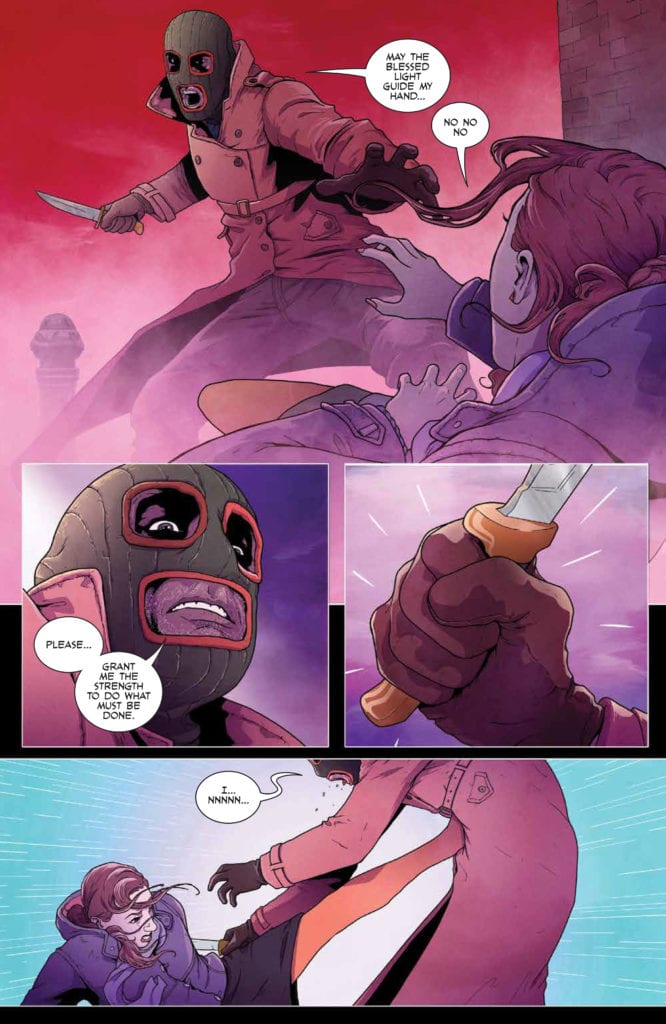
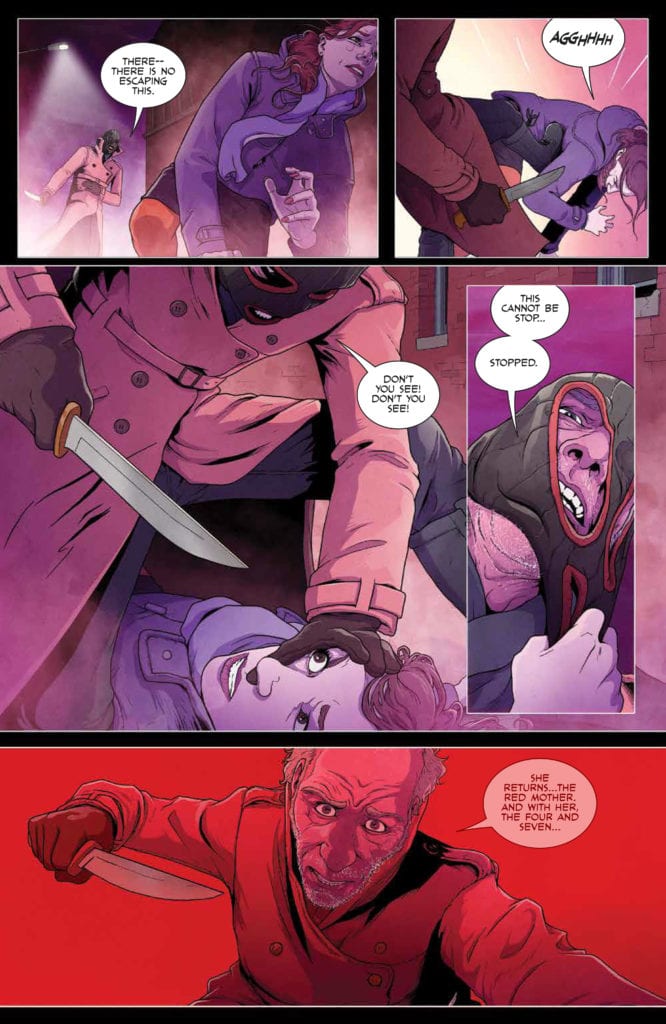
As dark as the plot gets within Red Mother #10, the artwork is there every step of the way. It’s bold, creepy, and admittedly even gory at times. All of which is thematically appropriate, given everything that is happening.

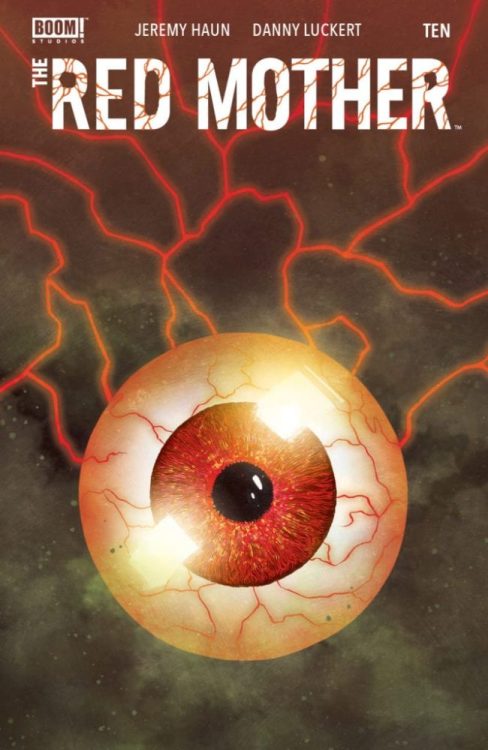
In fact, there are a few scenes that will make you stop cold. Take the cover (also by Haun!), for example. That is a break from the norm – and yet that simple (yet disturbing) image of an eyeball speaks volumes about what is about to happen. Especially to those who have been following along.

Danny Luckert is the lead artist for this entire series, providing both the lines and the colors. His characters are nuanced, being capable of great pain, and deception. Meanwhile, the colors are dominated by bold hues, such as the bloody impression left by a specific shade of red.

Ed Dukeshire is the letterer, and this is another area in which the artwork shines. The sound of breaking can practically be felt — jumping straight from the pages and into the reader’s nervous system. It adds to the book’s alarming nature in the best of ways.

It all fades to red…

Conclusion

Red Mother #10 is in all likelihood setting the scene for a dark confrontation. Perhaps the final confrontation. That part may be more difficult to predict, yet it is going to make for a fascinating read nonetheless.

Monkeys Fighting Robots Youtube

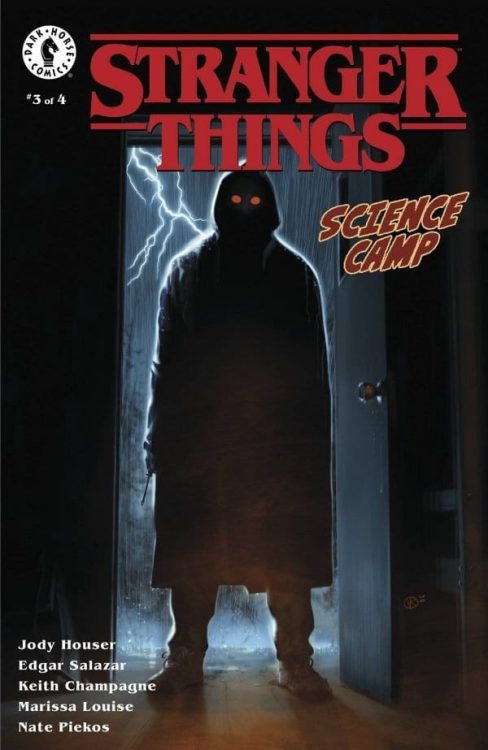
How Dustin Leads In STRANGER THINGS: SCIENCE CAMP #3

STRANGER THINGS: SCIENCE CAMP #3, available November 25th from Dark Horse, brings fans back to the solo story of Dustin, and how he was totally the cool kid at Science Camp — all while something sinister is happening in the background, of course.

If there’s one thing that Stranger Things: Science Camp has managed to prove, it is that Dustin is actually quite a personable and likable character. In fact, if you put him in a room (or camp) full of like-minded kids, odds are good that he’ll be liked by most of them.

Ironically, this also explains how he came back from camp with a girlfriend — even if most of his friends thought she was imaginary at first. The tale is also going a long way in showing off the skills (and determination) that Dustin learned from his time in Stranger Things.

Stranger Things: Science Camp #3 is the second-to-last issue of the series, and that means the adventure is about to get a whole lot more dramatic. The strange figure lurking in the shadows is going to become a problem again, and one can only hope that the case of the missing counselors will come up as well.

The Writing

Stranger Things: Science Camp #3 is the perfect balance of charming and spooky. In short, it feels just like a Stranger Things story should. Written by Jody Houser, the series first started off feeling almost casual and fun. But it has quickly taken on a darker edge.

It almost makes readers wonder why Dustin didn’t bring up this story to his friends when he got back home. Especially given the role he’s presumably going to play in the resolution (Dustin has learned better than to sit back and watch as horrors unfold). Perhaps he didn’t want to brag, or didn’t believe his friends would think the tale true? After all, they thought his girlfriend was fake for a few minutes there.

Either way, the events that are unfolding in this tale are quickly becoming more interesting with time. Anybody feel confident enough to begin making guesses on who the mysterious stranger is? With only one issue left, we’re almost at the big reveal.

Dustin’s character is every bit as endearing as always, while some of the secondary characters (girlfriend included) are getting a bit more fleshed out. Finally! Fans get to learn just a little bit more about her. It does raise the question, will we be seeing her again in future seasons of the show?

The Art

Stranger Things: Science Camp #3 could be an advertisement for an 80s camp — it is that spot on. Every little detail looks like it came straight from the decade the series is set in, and that in itself is an impressive feat. Throw in the camp elements, and you’ve got something else entirely.

Edgar Salazar (pencils) and Keith Champagne (inks) worked hard together to bring that vision to life, that much is clear. The cabins, clothes, and every other little detail really do read as a blend of the time and location, while the characters look exactly as they did in the show (with a few stylistic changes, of course).

Marissa Louise’s colors bring it all together, colors that could happily read as being from the 80s, or from a camp that is having trouble keeping up with the times. Except for the scenes portraying the horror elements, of course — those are appropriately swathed in dark colors.

The lettering for this issue was provided by Nate Piekos, and it is yet another example of work well done. The screams and sound effects feel real, while the story carefully unfolds around Dustin and the camp.

Conclusion

Stranger Things: Science Camp #3 continued Dustin’s solo story. Showing how much he has grown and learned, thanks to his friends (and the circumstances he’s already gone through). It hints strongly towards the young man Dustin will one day become. While also having a bit of fun and drama along the way.

Monkeys Fighting Robots Youtube

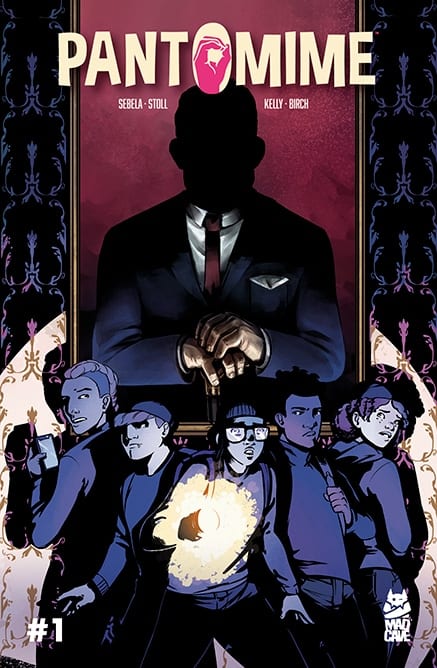
PANTOMIME #1 Offers A Special Reading Experience

Pantomime #1, out now from Mad Cave Studios, is the first issue of a crime miniseries about a group of deaf teens who get in over their heads when they foolishly steal from the wrong person.

Writing

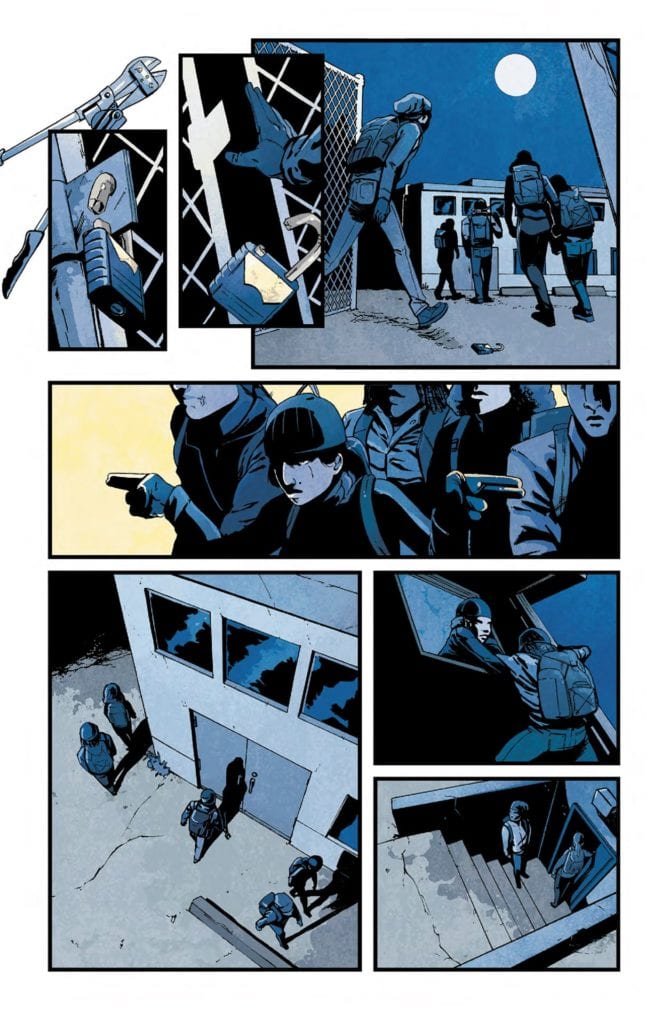
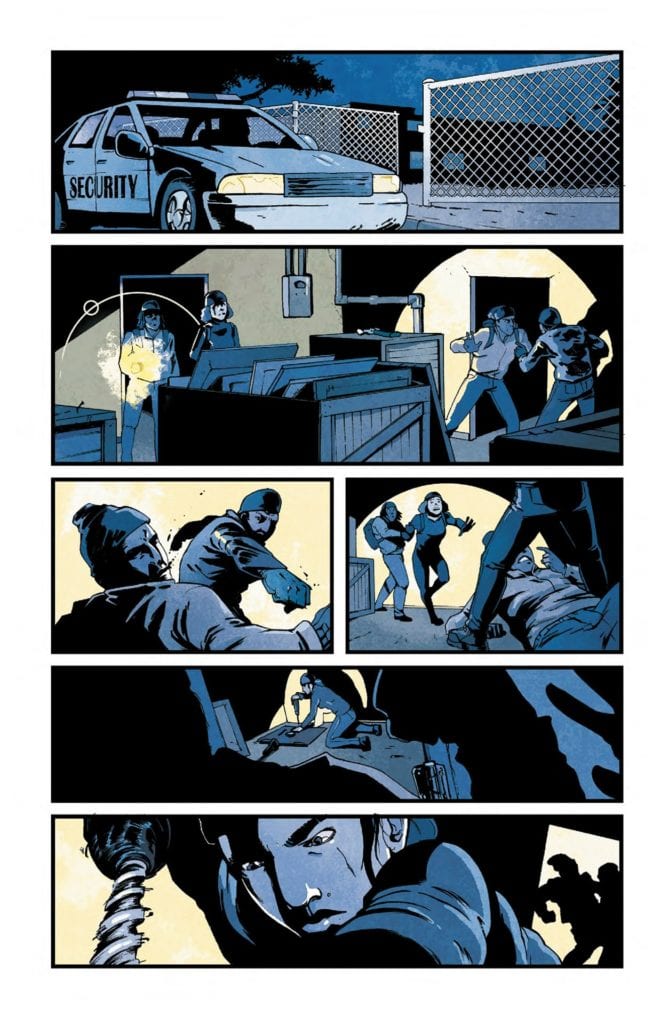
Christopher Sebela gives us a beautiful, engaging story from start to finish. The story’s pace never feels dragged out. Everything flows naturally and elegantly. Sebela throws the reader right into the action with two silent pages, which essentially tell us what this miniseries is about. The heist sequences are thrilling and well-thought-out. The ending surprises the reader and keeps them guessing what will happen next to this loveable group of kids. Each main character has their own voice, strengths & weaknesses, and the thing they excel at. It was also a great, realistic touch to see how these kids slowly get addicted to the adrenaline boosts these heists give them. The characters Sebela created together with the artists are so believable and three-dimensional; the reader can’t help but feel a genuine, strong connection to them. Art

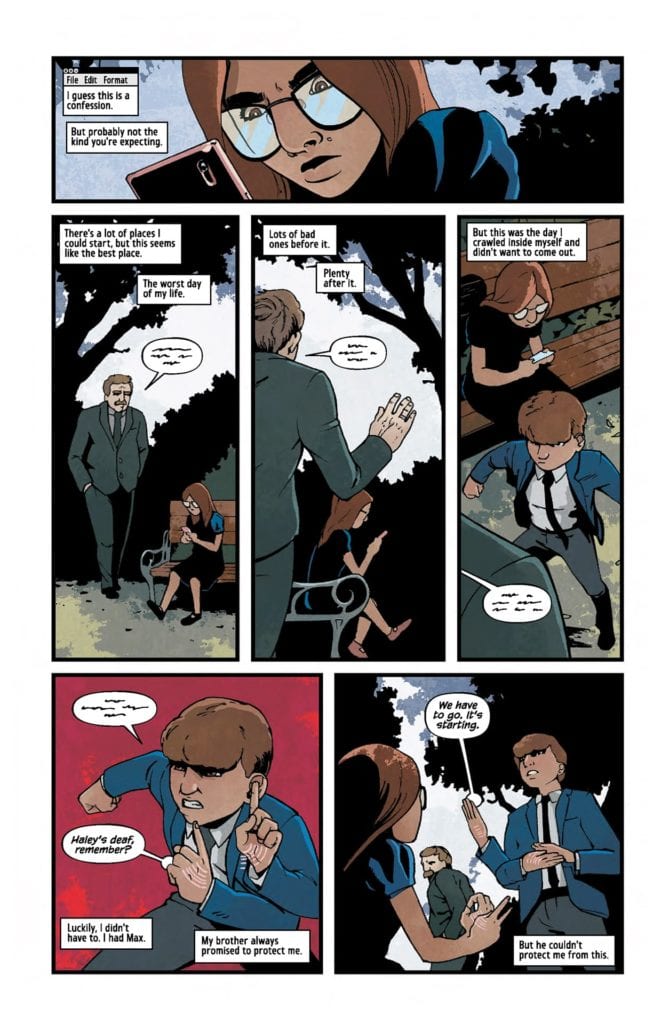
David Stoll‘s fantastic art and the story fit like a glove. The characters are instantly recognizable. Each character has their own head shape, their own unique features. The panels’ backgrounds can be too empty at times, but it still works here because Stoll chooses to focus more on the acting, which looks great. The reader can understand very quickly how the characters feel at each moment. The art looks realistic, but it still manages to come off as stylish and unique. But most importantly, the way Stoll overcomes the challenge of showing the characters speaking in sign language without splitting the pages into too many panels is simply brilliant. He draws the movements in a way that isn’t distracting or confusing to the reader. With his incredible work on this first issue, Stoll leaves the reader amazed and wanting more.

Coloring

The coloring by Dearbhla Kelly pairs swimmingly with Stoll’s art. Kelly captures Haley’s (the main character and narrator) point of view brilliantly. When she wants the reader to feel sad for Haley, Kelly uses dark and cold colors to set the grim mood. But, when she wants the reader to fall in love with the special needs academy and the new dynamics between those funky kids, Kelly uses bright and warm color tones, which allow the reader to take a look at the world through Haley’s eyes. It makes us feel exactly how Haley feels while she’s narrating the story. More specifically, there is a double-page spread where Haley tells the reader about each group member and their backstory. To distinguish each character, Kelly colors the panels in a monochromatic palette, and the specific character is colored in different, contrasting colors. It’s a smart choice that effectively smoothes out the reading experience.

Lettering

Justin Birch cleverly chooses a font with both uppercase and lowercase letters, making Pantomime #1 feel a lot more modern and fresh. Birch carefully places his balloons and caption boxes in an order that is easy to follow. He also usually makes the spoken dialogue indecipherable, which puts the reader in the same shoes as the deaf kids. It helps us understand their inner world a bit more. His choice to pull the balloon tails all the way to the kids’ hands when they speak in sign language works well here and never confuses the reader.

Conclusion

You can tell this comic is close to the hearts of everyone involved. Each creator, in almost perfect harmony, beautifully complements and compliments the various elements of this comic. Pantomime #1 is a perfect example of why representation matters—a perfect example of how it can make for one of the most unique reading experiences of 2020.
Highly recommended to anyone interested in viewing the world through a fresh, different lens.

Monkeys Fighting Robots Youtube

ORIGINS #1 Focuses Too Much On Plot To Create Any Real Connection

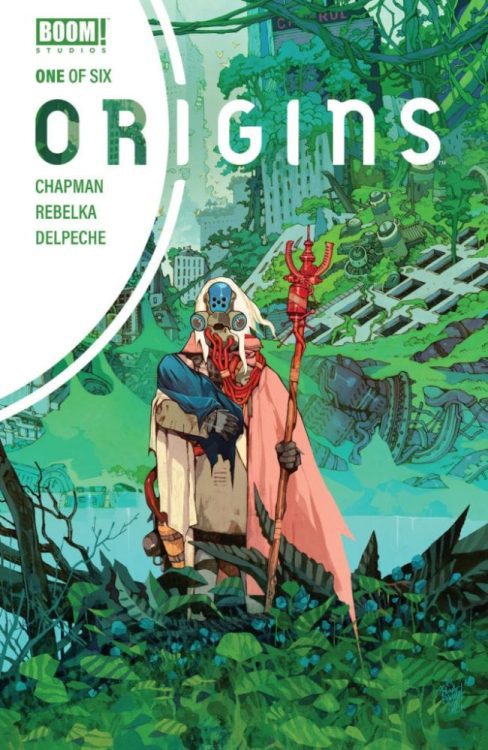
Origins #1, out this week from Boom! Studios is a “biopunk sci-fi tale that explores what happens to our planet in a post-human world, and the impact of Mother Nature on the tech our disappearance will eventually leave behind.”

spoilers ahead

Writing

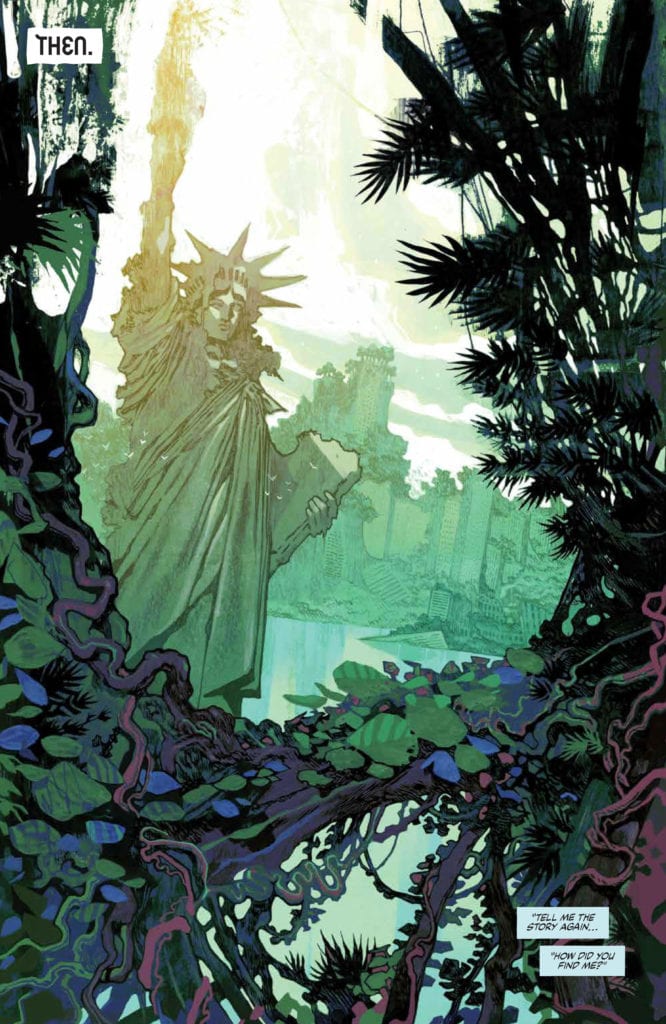
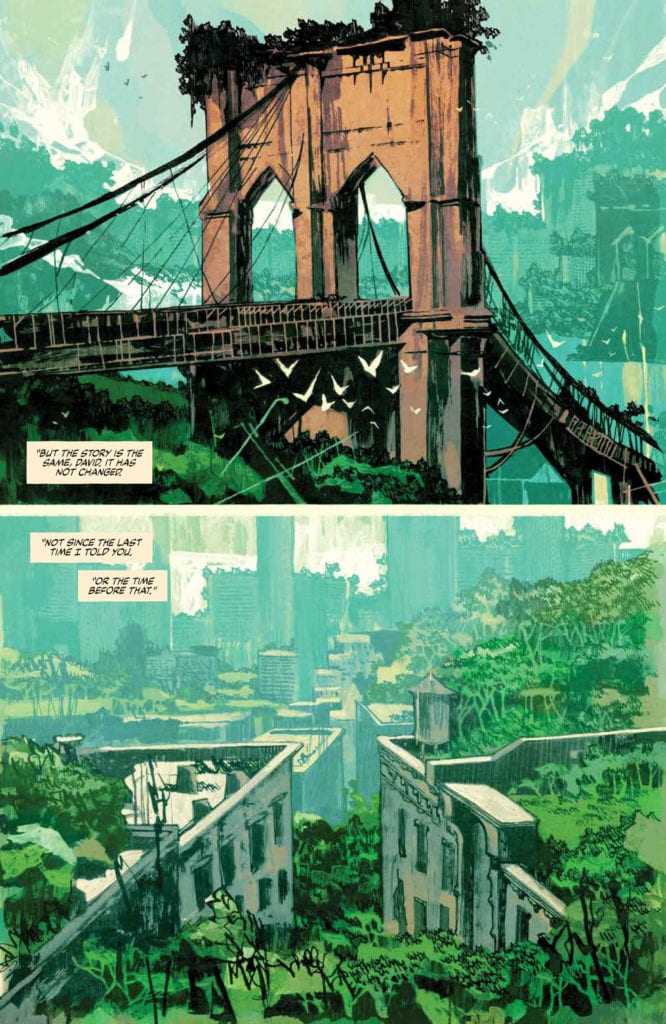
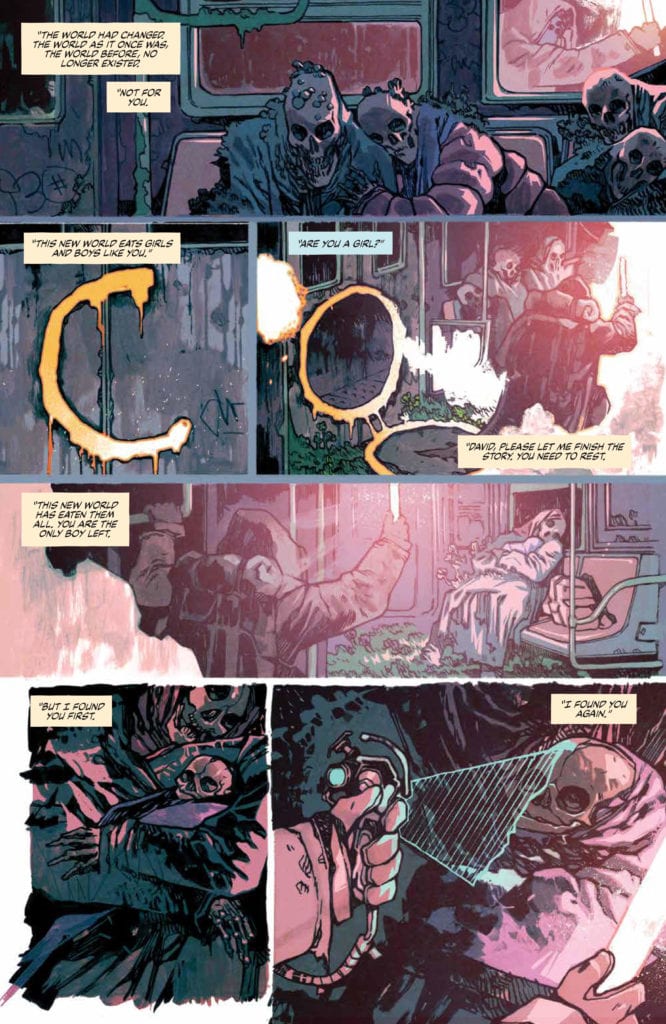
The issue opens with establishing panels of the world where the story is taking place. It’s the real world, but something has changed. While we’re glancing at this strange, new world, a conversation occurs between an adult and a child, Chloe and David respectively. Chloe tells David the story of how she found him; The flashback playing out in front of the reader. Chloe finds a dead boy at an abandoned train and uses futuristic technology to bring the child back to life. When David lets out his first cry, Chloe swears to protect the child at all costs until he’s ready to return to his legacy. “Your past is your future,” she announces. This opening sequence works well. It keeps the reader immersed and curious about the world and the two main characters. Unfortunately, everything following this sequence is where it all goes downhill.

The story then jumps forward in time to the present, and the reader gets a page and a half-filled again with establishing panels. Taking place over four pages, the establishing panels at the start were more than enough for the reader to understand the look and the feel of the world where the characters are living in. So, the choice to focus on this world once again made the story feel a little dragged out.

In addition, the ending doesn’t have any real cliffhanger. Except for a one-page fight scene against a flying dinosaur, this issue doesn’t offer anything exciting enough to justify the anticlimactic ending.
But most importantly, Chapman focuses too much on plot and exposition to create any real connection between the reader and David. The reader doesn’t get enough time to learn about David’s motivations. To learn about his fears and how he feels to be the “chosen one.” We virtually know nothing about David.

Chapman created a rich world despite everything mentioned before, which still manages to ignite enough interest in the reader, making them curious to see where Chapman will take the story next.

Art

Origins #1 has the artwork of Judas artist, Jakub Rebelka. Rebelka draws his backgrounds and locations in great detail. The unique panel borders make the pages look animalistic and energetic. His costume designs fit in well with the post-apocalyptic atmosphere. There’s no denying that Rebelka’s art is good and effective. But, it can feel a bit uninspired at times. David’s face looks inconsistent, especially as an adult, and the acting looks too subtle to capture how the characters truly feel.

Coloring

The colorwork by Patricio Delpeche is arguably the best part of Origins #1. Delpeche offers a great use of monochromatic palettes, which helped to immerse the reader in the story right from the start. It gives the pages a grim look that works here with the story’s biopunk, dark themes. He uses the light sources at his disposal cleverly. Everything looks and feels surreal and realistic at the same time.

Lettering

As for Jim Campbell’s lettering, it’s great. Campbell seems to understand the post-apocalyptic vibes perfectly. He chooses to place his balloons without a stroke, which works well here. The balloon tales are a joy to look at. What sometimes doesn’t work are the sound effects. Specifically, where the flying dinosaur appears, the sound effect’s font and design don’t seem to match the dinosaur’s prehistoric, spooky look. Campbell is well known for his great lettering work, but it feels like there weren’t enough opportunities for him in the script to show the reader how amazing his work can be.

Conclusion

Origins #1 certainly shows it has the potential to be great. Despite a dull story, the creative team still manages to create a rich world that keeps the readers engaged. The art looks great, but the script doesn’t offer the art team enough chances to shine. Recommended for hardcore fans of futuristic, post-apocalyptic tales like the Planet of the Apes franchise.

Monkeys Fighting Robots Youtube

Review: Rhythm in HELLBOY & THE BPRD: THE SEVEN WIVES CLUB

HELLBOY & THE BPRD THE SEVEN WIVES CLUB

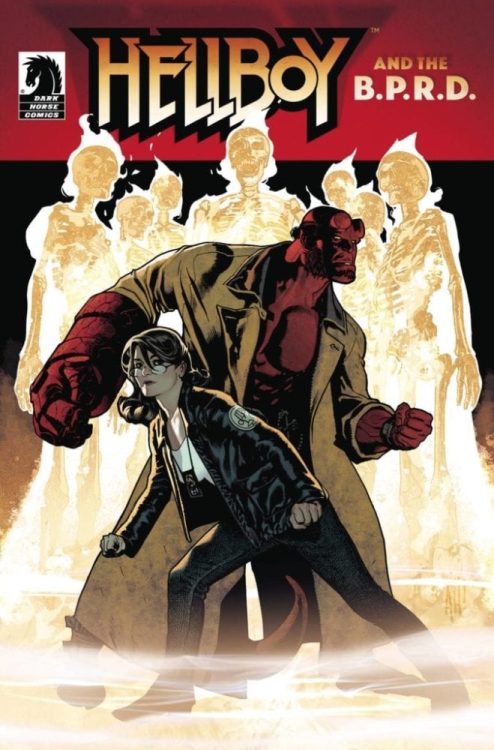
Written by Mike Mignola, with art and colors by Adam Hughes and letters by Clem Robins, Dark Horse’s Hellboy & The BPRD: The Seven Wives Club is more like a work of music than a comic. Mignola’s script, Hughes’ art, and Robins’ lettering all work harmoniously to create a clear visual rhythm.

Writing

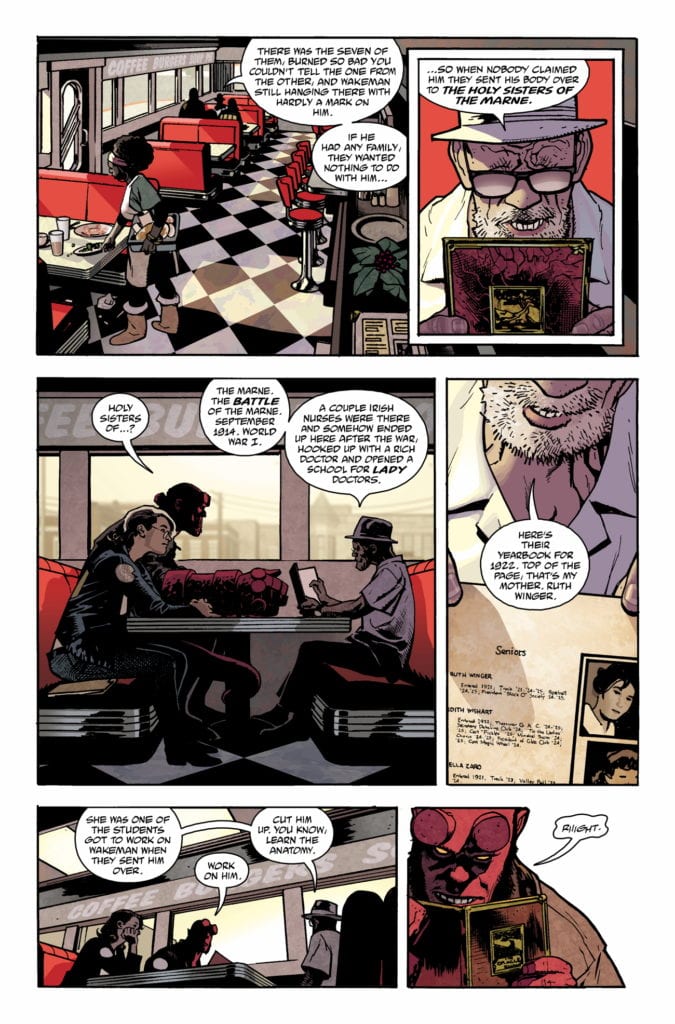
Mignola sets the pace of this script brilliantly. As we open, Hellboy and Agent Raskin learn about the story of the Seven Wives Club. This section is very text-heavy. It requires that the reader spend time on these pages, making the reader feel as though these moments are slow and take time. But when Hellboy and Raskin go to investigate, Mignola pulls back. Only what’s absolutely necessary is written on the page. This quickens the pace, but it also makes us feel like we’re being pulled into danger against our will. We want to spend more time on these pages because the danger exists in pages further on. Mignola won’t let us. With our hearts in our throats, Mignola shoves us through each door and down each hallway. His minimalistic dialogue in his spookiest pages makes for a terrifying increase in tension.

HELLBOY & THE BPRD THE SEVEN WIVES CLUB Hughes Mignola Dark Horse

Art

Hughes is joyously experimental with his page layouts. In the first few pages, as we begin to piece together the evidence of what’s happened, Hughes superimposes panels on the rest of the page. They have thick white borders, making them almost look like photographs. As Hellboy collects each hint, the panels begin to look like pictures on an evidence board. But the page doesn’t stay that organized.

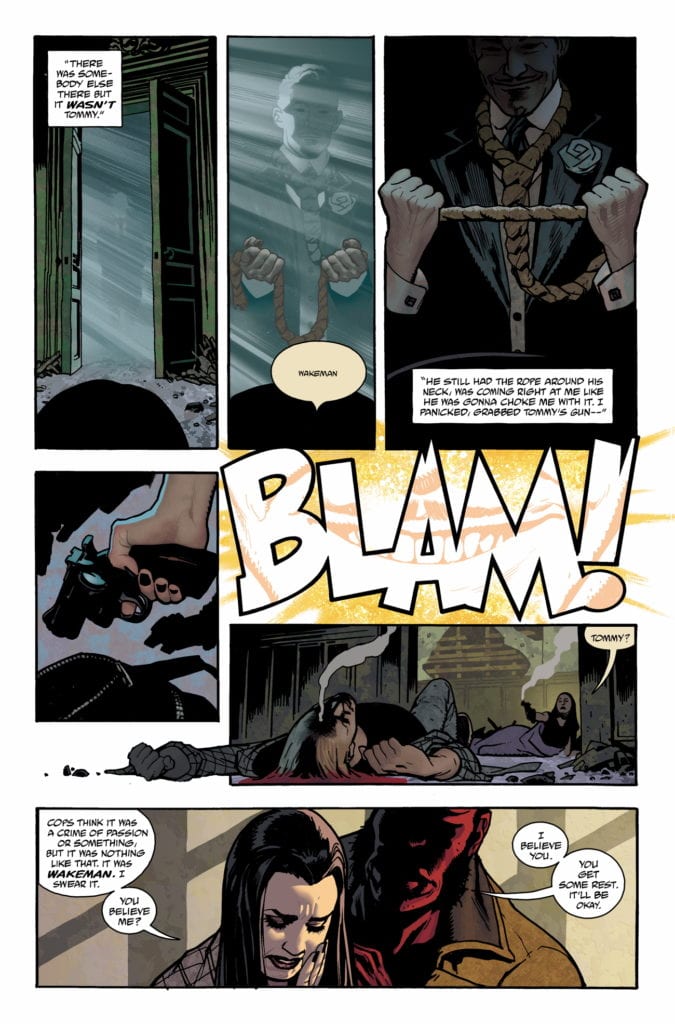
When the script comes to its “shit hits the fan” moment, the page layout immediately responds. Panels look like they’re falling off the page, and the world looks like it’s falling apart. Interestingly, in the midst of the chaos, we still get some right angles. Sometimes they’re moments of order being restored, like Raskin beginning to piece together how to stop these ghouls. But at other times, it’s a nightmarish eye of the storm: the villain smiling and stretching out his hands. Either way, these moments are highlighted by their order in the chaos, and their image sticks with you.

Hellboy Hughes Mignola Dark Horse

Coloring

Hughes’ coloring underlines the seductive nature of evil. After all, this is a story about many people who keep seeming to be drawn to the same man. In the opening moments, Hughes colors everything in a very warm palette. Hellboy is a deep red; everything else is almost in an orange glow. It’s autumnal and calming. But when Hellboy and Raskin begin their investigation, everything becomes a little grayer. It’s not just that the lights are off, things begin to look devoid of life. Yet there are moments of brilliant color that show up suddenly in the midst of the grey. They’re not moments of life, though. It’s the ghosts, the skeletons, the power emanating off of corpses. And frankly, it’s all gorgeous. Hughes shows us why all these people, living in a grey world, would be drawn to something bright and fantastic even if it is a corpse.

Lettering

Robins really leans into the rhythm Mignola has created. In any other script, it would make sense to divide up a character’s dialogue. Large chunks of text aren’t easy to read, and our eyes don’t like seeing them. But in a Hellboy script, Robins knows it’s important that we take our time on these pages. They are the calm before the storm. And so every monologue about what happened to the Seven Wives Club is shown in one long chunk of text. But when Hellboy, Raskin, and Ford enter the school, Robins makes a point of showing how little they say. Their tails to their word balloons are long, and they reach out, with dead space all around them. It makes each line of dialogue feel like it’s cutting through the silence, just as the word balloon cuts through the scene.


Dark Horse’s Hellboy & the BPRD: The Seven Wives Club is another hit from Mignola, Hughes, and Robins, the same team that brought us the brilliant Hellboy: Krampusnacht. It reads like a song. The story’s rhythm is clear as day on the page, and this brilliant creative team balances terror and mystery with ease. Pick up The Seven Wives Club one-shot, out from Dark Horse November 11th! And check out my and Matt Sardo’s interview with Adam Hughes on the project here!

Monkeys Fighting Robots Youtube