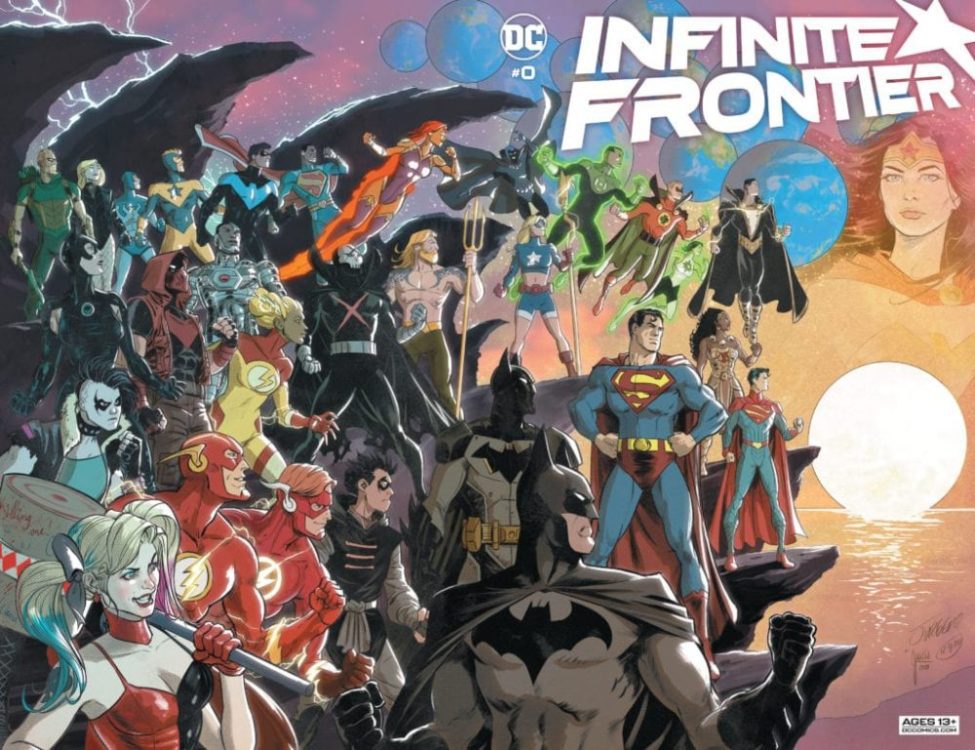
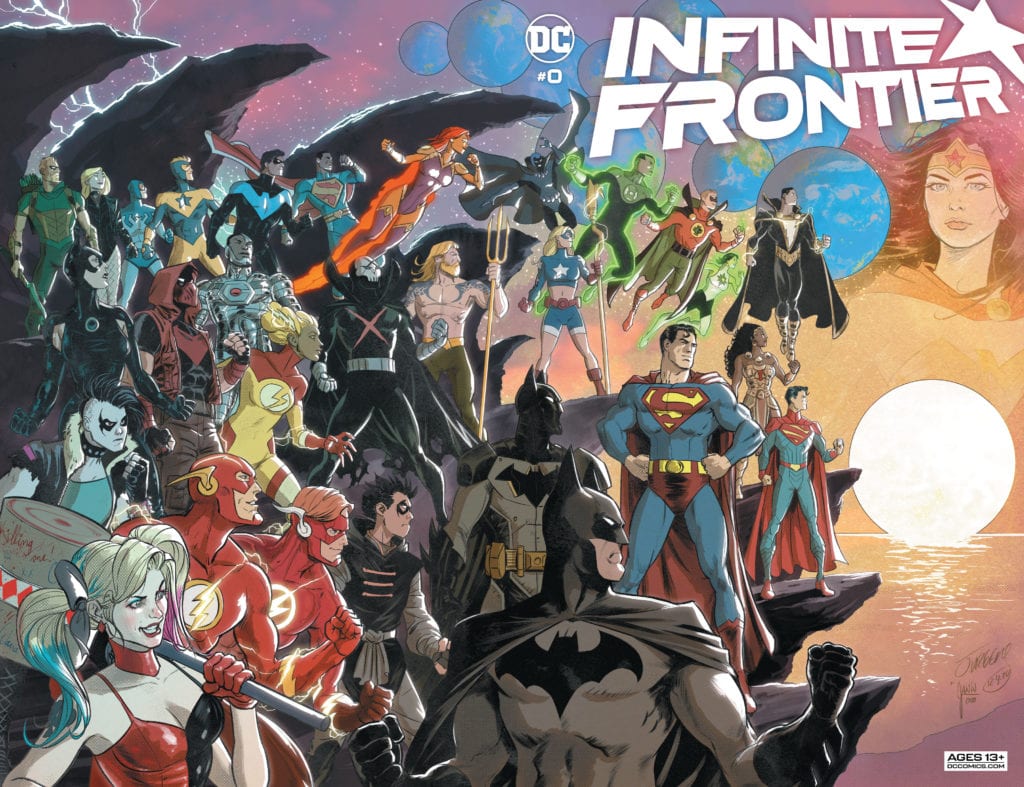
It has been a journey going through each of the Future State titles. One would consider it a new frontier full of possibilities. But while we were focusing so much on the future, what is happening in the present? In the wake of Dark Nights Death Metal, the heroes and villains unite to create a new station to protect the world from future cosmic threats. They also use it as a staging ground to map out this new multiverse. While this new infinite frontier is laid out before our heroes and villains, only one question remains. Where do we start?
**Some Spoilers Below**
Story:
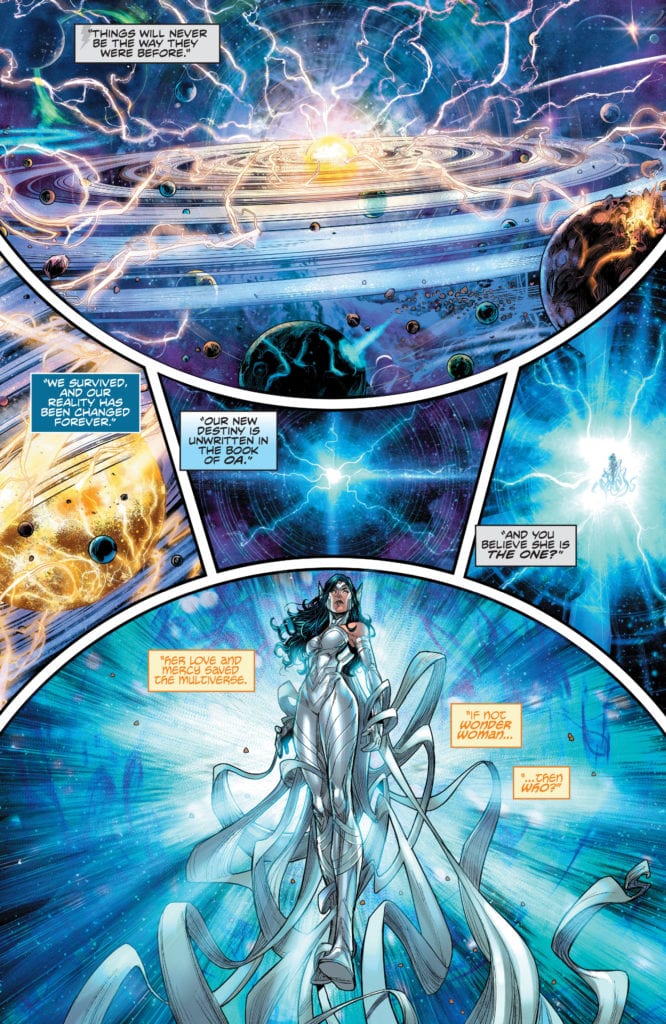
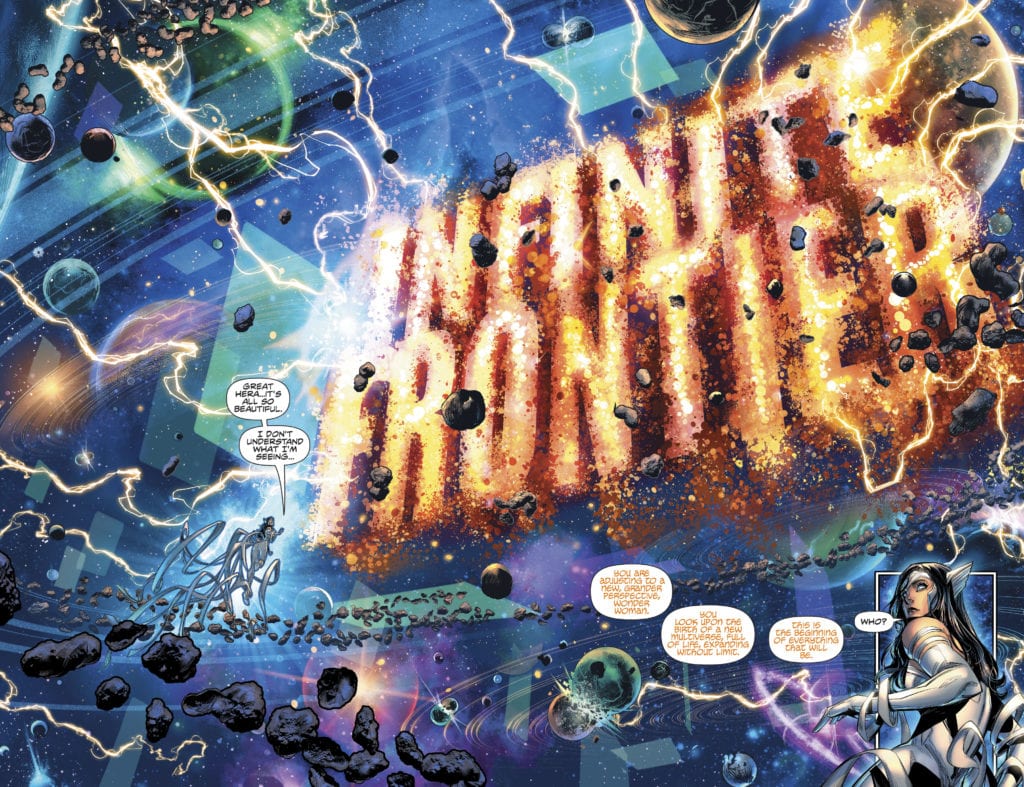
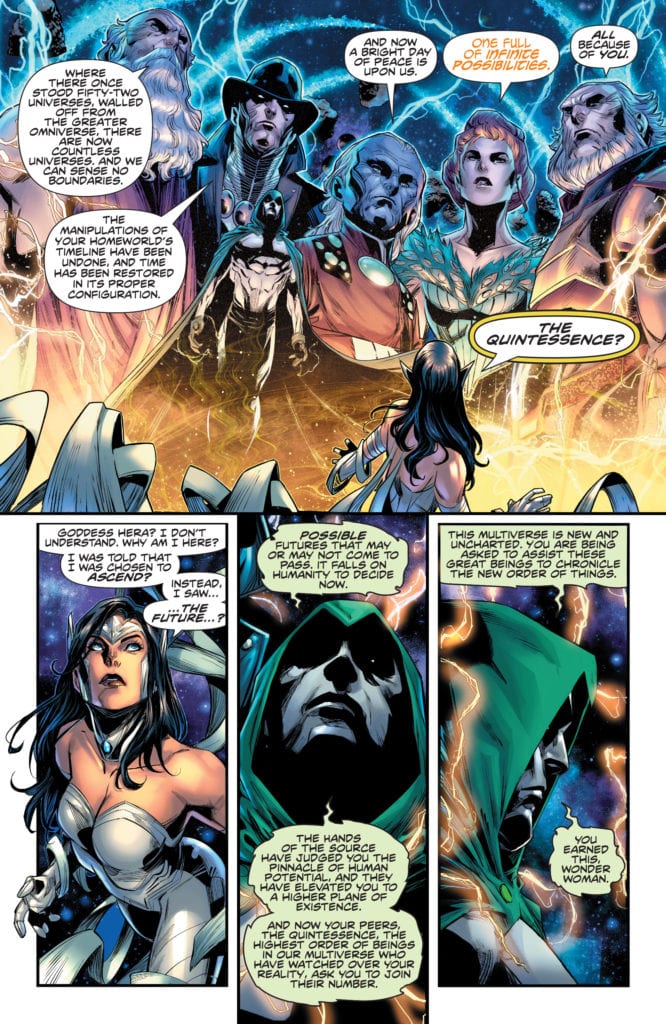
We open with the multiverse reforming and Wonder Woman popping out near the center of it. As she gets her bearings, she is greeted by the Quintessence, the group of god-like entities observing the DC heroes. One of the entities, The Spectre, explains that she has been chosen to join their ranks because of her bravery during Death Metal. While she is flattered by the offer, Diana is hesitant. To help sway her choice, The Spectre offers to show her what has happened that has started since the new era began. There the pair travel across this new frontier, seeing what the heroes are up to.
The problem with writing this review is that there is A TON of stuff that is revealed. The Quintessence is only a framing device for an issue dedicated to setting up the new comic arcs. We see the beginnings of the next incarnation of the Justice League, Barry giving Wally the title of The Flash, The Justice Society coming back into play, and so much more. It’s honestly really overwhelming trying to keep track of it all.
The strongest pitch, and the one with two sections of the issue dedicated to it, was the Batman set-up. We see our next antagonist step into the spotlight with an explosive plot that continues to reshape Gotham. What’s coming up will be divisive, as this can be seen as a board clear to tradition. This reviewer, however, is intrigued, to say the least.
Art:
There are a plethora of art teams, each bringing their own unique styles to the tales they are presenting. No two stories look the same, and it just shows how diverse these stories really are.
The highlights of the bunch would be Dave Marquez with Justice League, Stephen Byrne with Alan Scott’s story, and John Timms with the framing story. Dave’s take on the Justice League is simplistic, relying more on more traditional designs to bring people in. The same can be said with Alan Scott’s Story, leaning towards traditional design and softer colors to help deliver a more personal story. Finally, we have Timms work for the framing story, and honestly, it’s cosmically brilliant. He is able to truly capture the size of the story with mind-blowing visuals, such as Wonder Woman and Spectre speaking to one another while looking down upon several adventures happening at the same time. The overall art is well done, but those three should provide hope for the coming series.
Conclusion:
Overall this bombastic first step into the Infinite Frontier is an interesting one. We get a ton of peeks into the coming stories, promising new adventures for fan-favorite characters. The art for each story fits perfectly and would get any reader excited. The only complaint I actually have is the fact that it can be a tad overwhelming. This comes with every DC era start, but it really never gets easy. That doesn’t mean I personally didn’t have a good time, just be careful if you’re looking for one particular story.
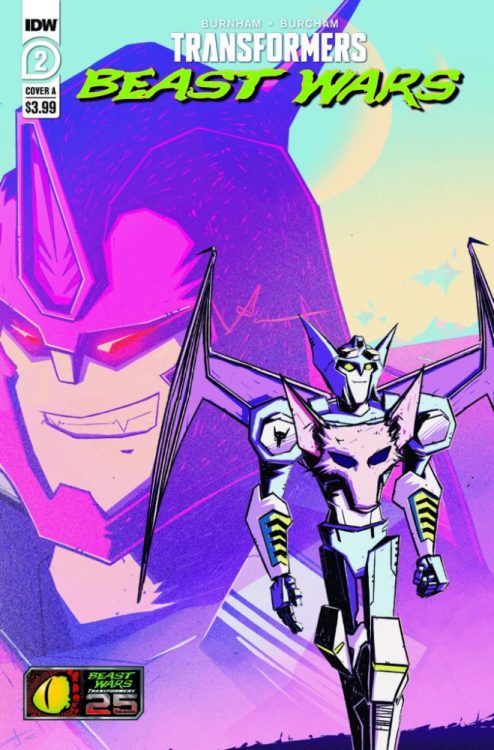
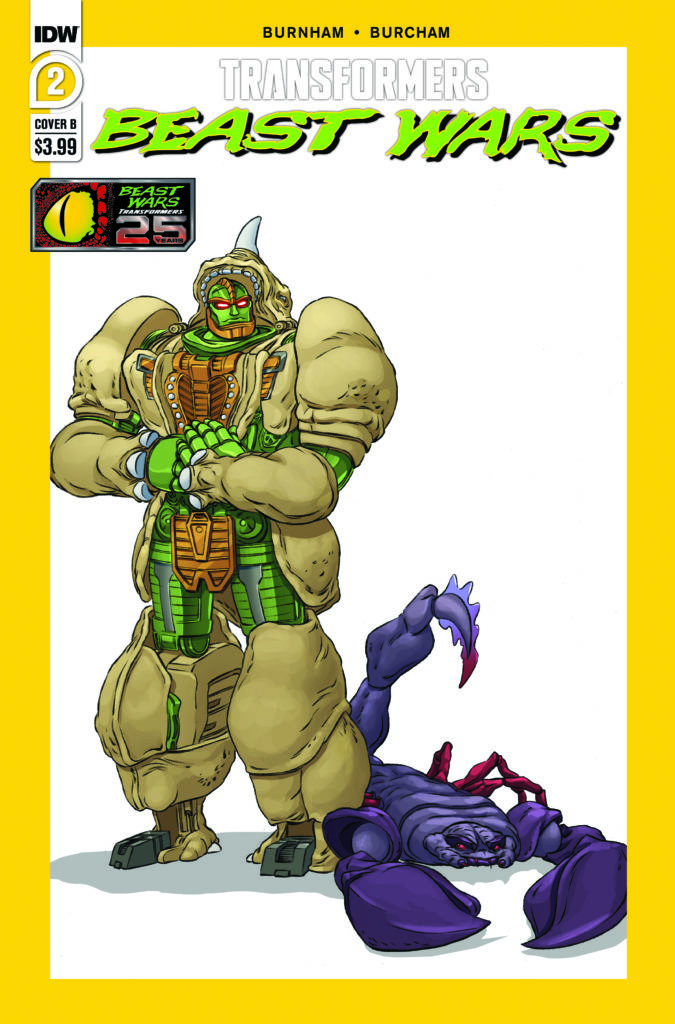
Transformers: Beast Wars #2 out this week from IDW Publishing introduces more familiar faces from the TV series much earlier than in the original story. The early arrival of such a well-known element of the old show shows the comic is planning ahead. The surprise arrival is made possible thanks to Erik Burnham (Writer), Josh Burcham (Artist), and Jake M. Wood (Letterer).
The Maximals, led by Optimus Primal, and the Predacons, led by Megatron, have crashed on a strange new world and they are not alone. To survive the planet…they’ll have to explore their surroundings and their new bestial alt-modes in search of an advantage.
Writing
Within the first few pages, the Vok are introduced to the story. The Vok were revealed to be the puppet masters behind many of the mysterious elements in the Beast Wars TV series. In this issue, it is apparent these creatures are aware of and observing both the Maximals and Predacons from the moment they arrive on the planet. This early introduction is another major indication the new comic intends on adding unique aspects to the overall story.
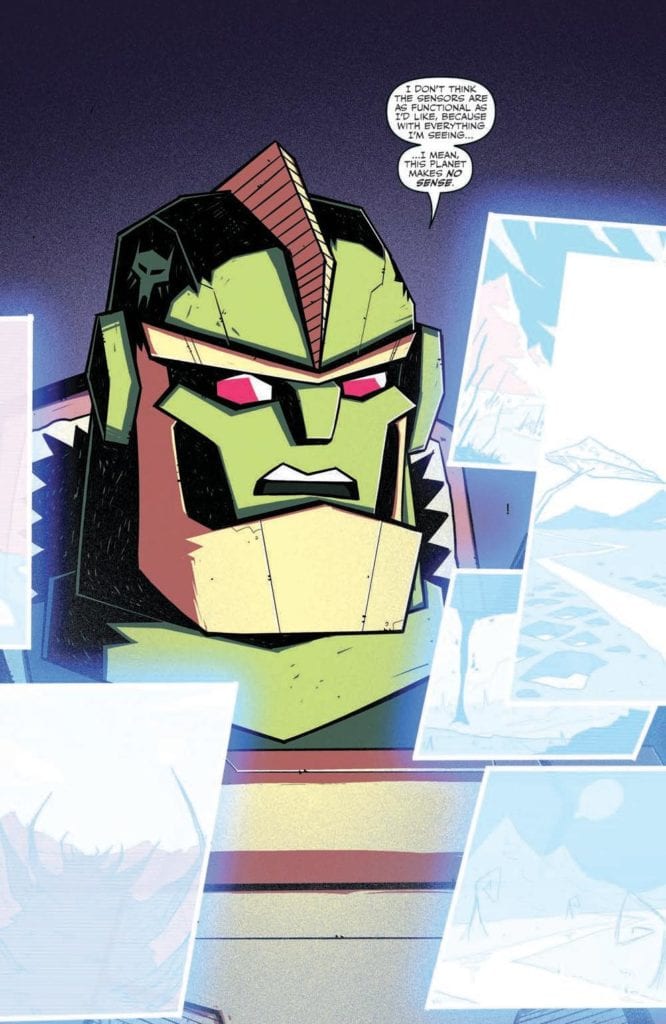
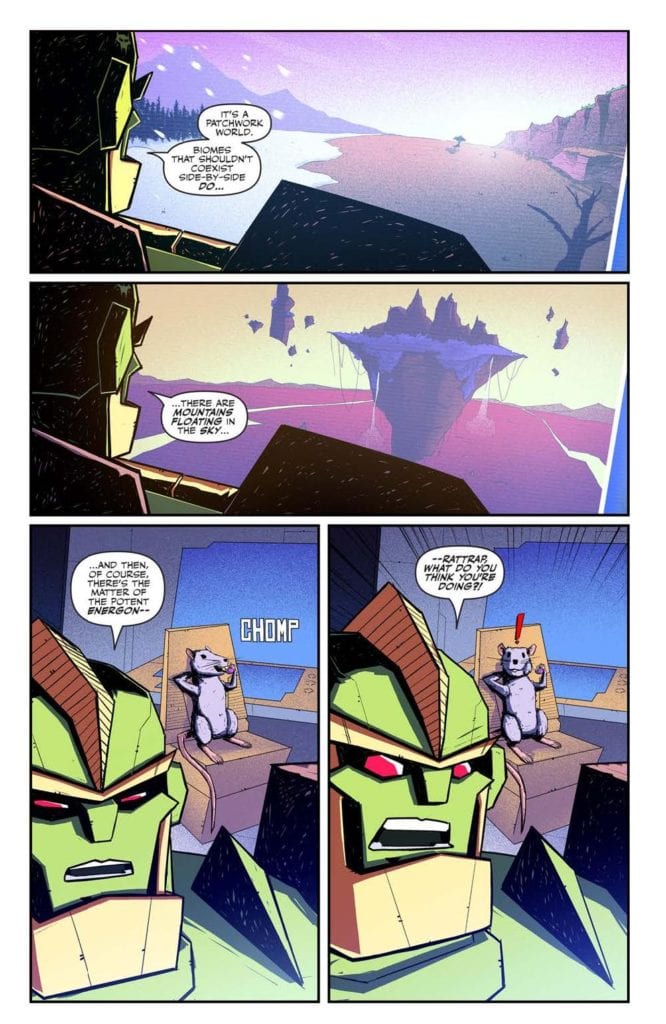
Writer Erik Burnham is slowly re-establishing the story of the Beast Wars. Characters are still trying to analyze their surroundings and figure out what they should do next. The familiar characters are perfectly represented such as Tarantulas is shown to be more concerned with research and Rattrap annoying to his teammates. There is a battle later in the issue though so the issue isn’t without action.
Artwork
Josh Burcham provides both linework and colorwork for the issue. The linework makes sure to distinguish the Vok are a different race of creatures than either the Maximals or Predacons. Yet, it captures the floating head with tendrils look from the CGI TV show and makes it very recognizable.
Burcham’s colorwork for the issue allows for a subtle fade effect as characters transform into their different modes. The use of more pastel tones on the Vok makes them look unnatural, especially as the other characters become white and black when they appear. It conveys the Vok operating on another plane of existence.
The lettering work by Jake. M Wood offers visually pleasing sound effects and distinct styles for when computers are presenting data to the characters. Strangely, there is no change in font or word bubbles for the Vok. This seems like a bit of a wasted opportunity as they are supposed to be alien beings the Transformers are unaware of. The use of a distinct font could add to their otherworldly aspect.
Conclusion
Transformers: Beast Wars #2 has a nice twist with the early introduction of the Vok but still moves slowly in establishing the familiar story. Still, the revelation the Vok are not only present but are monitoring all events from the very beginning shows ambition. It means the creative team will have to work on some surprises the old school fans won’t see coming.
Man-Bat #2 continues the surprise DC Comics series on March 2 after appearing in Future State’s shadows. Writer Dave Wielgosz crafts a short-term story within a larger one, a feat uncommon in miniseries. With art as eye-catching as Sumit Kumar’s, the issue certainly feels big enough to stand on its own. That, of course, gets help from the vibrant color array from Romulo Fajardo Jr. The lettering by Tom Napolitano compounds this further by giving captions design as unique as the character voices.
Background
Kirk Langstrom, the Man-Bat, has been getting favorable depictions in series like Justice League Dark. Before all of that occurs, Kirk was at his lowest with the Man-Bat being the only thing that gives his life meaning. But when this addiction causes an incident, Kirk wants to try and fix everything.
Man-Bat #2: A Jumping On Point
Wielgosz demonstrates Man-Bat #2‘s narrative like it’s an issue of another series. He provides just enough context to set up the premise of the series as well as the issue. In this case, it’s Kirk’s initial humanitarian efforts to help people like his deaf sister. Only for his work to take over his life and hurt people around him. This makes Kirk a very sympathetic character who has gone through loss and is trying to take responsibility. The only problem is, Kirk is ignoring the core roots of his problems. As the premise sets up, Kurt tries to control everything without realizing why that’s a problem. The inclusion of the pre-Taylor Suicide Squad is practically a reflection of Kirk’s situation. The squad is mostly Batman’s rogues’ gallery-like Deadshot and Killer Croc, once great villains now a disposable clean-up crew. They want to capture and control Man-Bat in a way like the overarching villain Scarecrow uses Kirk’s Man-Bat serum to build an army. Everybody is so focused on trying to take control of Man-Bat they fail to actually fix anything.
While Man-Bat #2 does continue a larger story, its ability to tell an individual story within its boundaries is remarkable. It doesn’t just make things easy to jump into; it stands on its own little narrative.
Scale Of The Man-Bat
Kumar presents Kirk’s character arcs in substantial and weighty ways in Man-Bat #2. The opening page features a wide-open sky full of beautiful stars where a couple bonds. Everything looks good until a smaller panel pops up, revealing that the happy memories drifted away. Kirk felt small in many of the panels he was in, like his makeshift lab, as small and helpless as the bats he dissected. When Deadshot shoots at him, the large volume of Man-Bat is a pure attempt at animalistic intimidation.
The dark coloring of Man-Bat in action via Fajardo adds to the intimidation. It’s a strong contrast to the colorful Suicide Squad who forces Man-Bat out in broad daylight. The shading that Man-Bat is covered in when he’s on the offensive is often in blurring speed. This makes Man-Bat feel like a predator that’s always moving. Unlike when he is clearly seen, which displays him in vulnerable positions.
To complete how Man-Bat dominates whatever page of Man-Bat #2 he’s on, the captions by Napolitano display his nature. In comparison to Kirk’s uniform captions with a similarly dark color scheme and light fonts, Man-Bat’s are tattered black and bold font. It looks as if Man-Bat has taken control of Kirk with the way Man-Bat speaks as though they were different people.
You Can’t-Miss Man-Bat #2
Man-Bat #2 is part of a series fans can enjoy at any moment in time. This issue stands out by focusing on a character arc; it feels like an invitation for latecomers. There’s plenty of spectacle that lives up to the title character’s scale in both story and art. If readers go further in, they are sure to get rewarded for following this series.
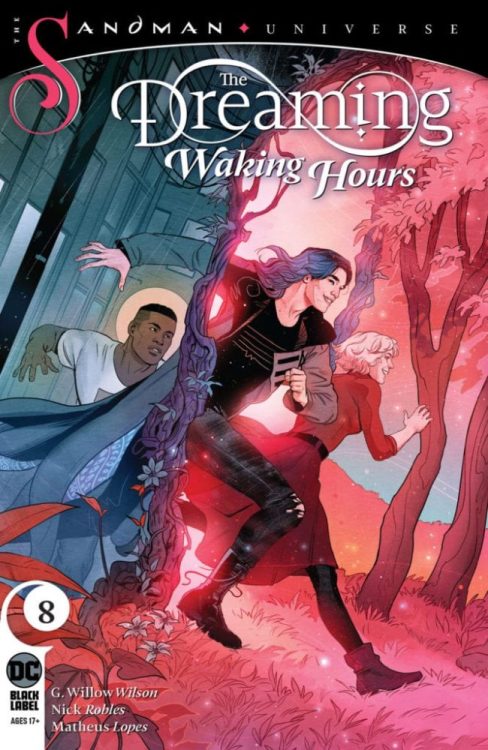
Writer G. Willow Wilson and artist Nick Robles, along with colorist Mat Lopes and letterer Simon Bowland, return with another chapter of their outstanding addition to the Sandman mythos in The Dreaming: The Waking Hours #8. This issue sees Heather After, Ruin, and Jophiel take a trip to the land of Faerie (some more reluctantly than others), and what results is quite possibly the most outright entertaining issue of this series thus far. With a hilarious and well, sexy script and staggeringly incredible artwork, this is a masterwork of a comic issue and possibly the best single issue of 2021 so far.
“Heather After has a theory about just where Ruin’s lost love might be found…but the realm of Faerie is a dangerous place under the best of circumstances, and as Ruin, Heather, and Jophiel will quickly find when they cross between worlds, the circumstances there have changed quite a bit!”
Writing & Plot
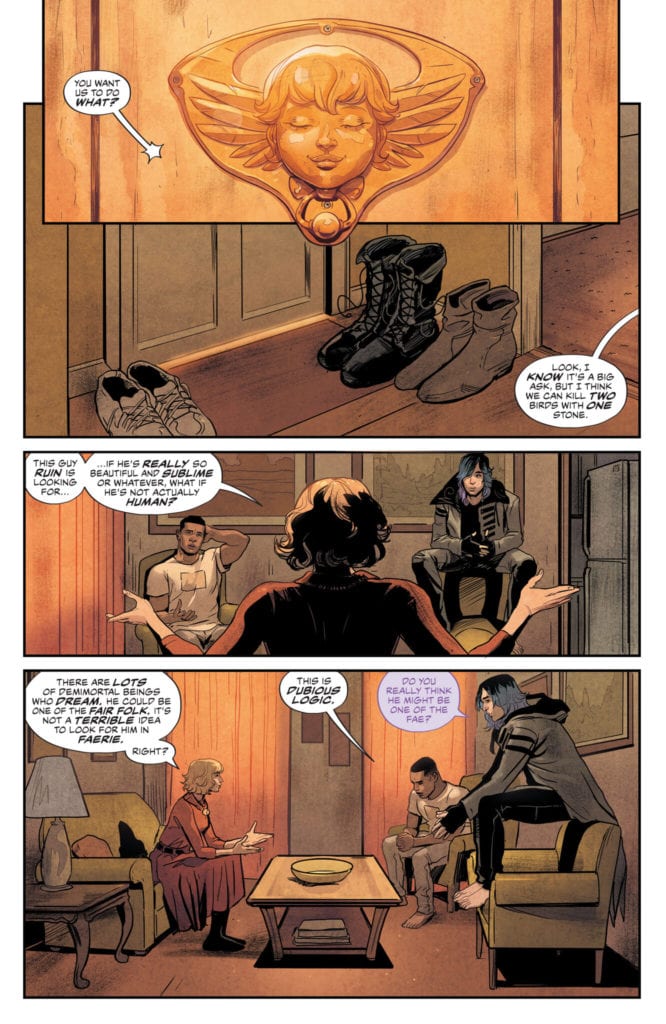
G. Willow Wilson has been firing on all cylinders during this run, so when I say that her script on The Dreaming: The Waking Hours #8 is some of her most impressive work yet, I’m saying quite a bit. The different personalities of the angel Jophiel, the naïve nightmare Ruin, and the confident sorceress Heather. After are all written to clash and bounce off of one another, and it makes for some of the best conversational dialogue I’ve ever read in a comic. The humor in this issue is outstanding, and every funny bit lands with a chuckle. The latter part of the issue with the group’s arrival in Faerie makes for the most hilarious yet ominous moment in the book, blending humorous sexual comedy with that classic Sandman mythological subject matter and dark magics. Indeed, there is a growing dark undertone to this comic that carries along as Dream follows the trio’s trail, making for a layered and complex read. This mix of whimsy, humor, and threatening auras is pure Sandman magic of course and is the exact sort of thing one would expect to see in a book sprouting out of Gaiman’s universe. However, it’s not since Gaiman’s original Sandman that this world and this cast of characters has been so damn delightful to be a part of.
Art Direction
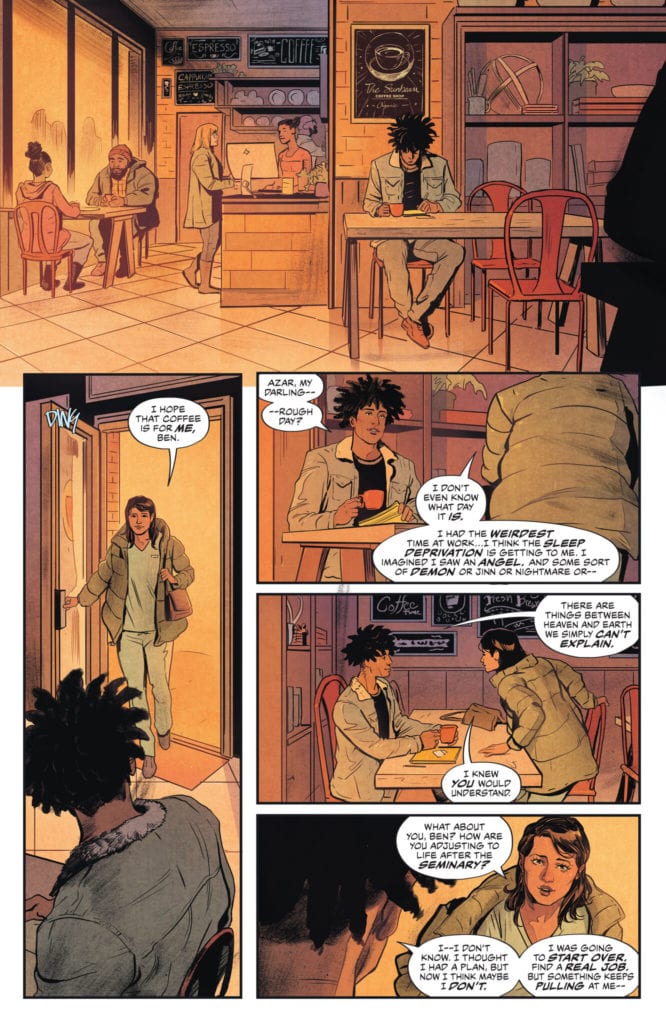
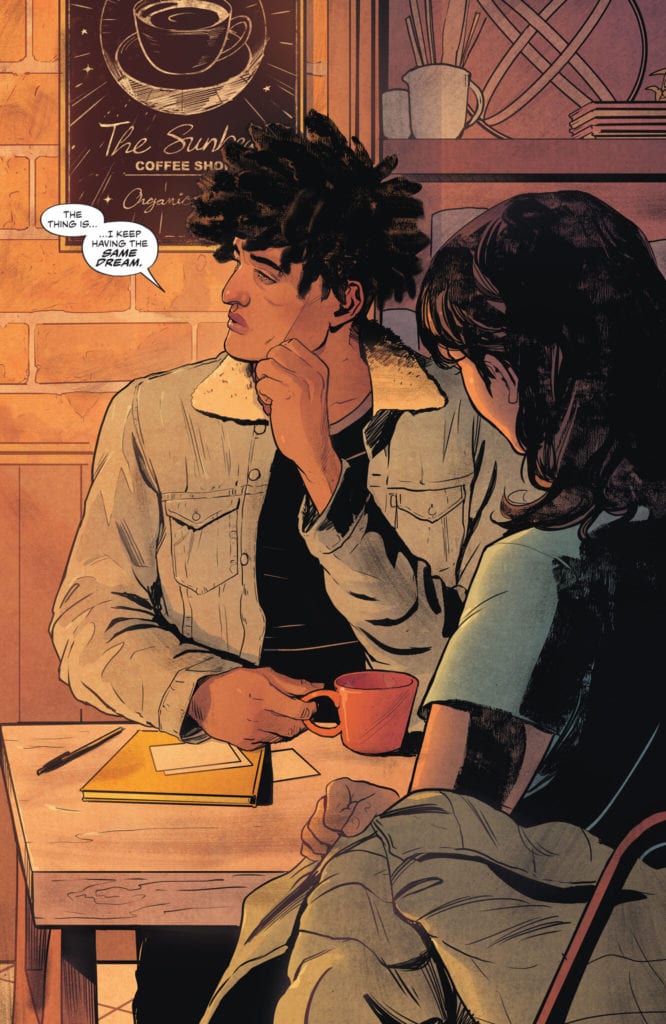
The phenomenal Nick Robles, the artist behind the first 6 issues of The Waking Hours, finally makes his return here for issue #8. While the fill-in artists have done amazing work, I’d almost forgotten what I was missing when I saw Robles’s pencils again. His thin, delicate linework allows for so much intricate detail and animation on every panel, and everything springs forth on the pages from the décor of a coffee shop to the fur of a burly minotaur. The animations for every character, both main and random extra, are full of individual life, and the personalities of each person come through perfectly. Robles may indeed have my pick for my favorite drawing of Dream of the Endless (maybe, at least for Daniel, if not Morpheus). Robles’ originality and vision construct page layouts is once again an awe-inspiring experience, as he once again eschews traditional formats and directing for images that organically bleed from one image to the next. Panel borders hardly seem to exist, and when they do, they are unnoticeable – but nothing ever feels cluttered. Mat Lopes’s colors once again work immense wonders into this saga in the Sandman Universe, offering an incredible array of tones on every page. I admired the opening orange sunlit scene in a coffee shop on the first couple of pages for a few long moments before moving on. This is a pretty tame scene compared to Lopes’s coloring of Dream and the Dream realm, Faerie, and numerous mythological beings and the luminous colors they exhibit. It’s just such simple moments are rarely given such beauty in this or any medium. Simon Bowland’s lettering is as grat and consistent as it’s always been, with the character-themed fonts and pitch-perfect bolds and italics on every page. The Dreaming: The Waking Hours continues to be one of the best-looking comics on stands right now.
The Dreaming: The Waking Hours #8 is a stupendously clever and witty comic. G. Willow Wilson’s script offers up a ton of personality and heart, as well as some of the funniest moments ever seen in a Sandman comic. The visual work is once again outstanding, with Robles’s pencils and Lopes’s colors creating a world that can only be described as the height of visual work in the comics medium. Be sure to grab this newest issue when it hits shelves on 3-2!
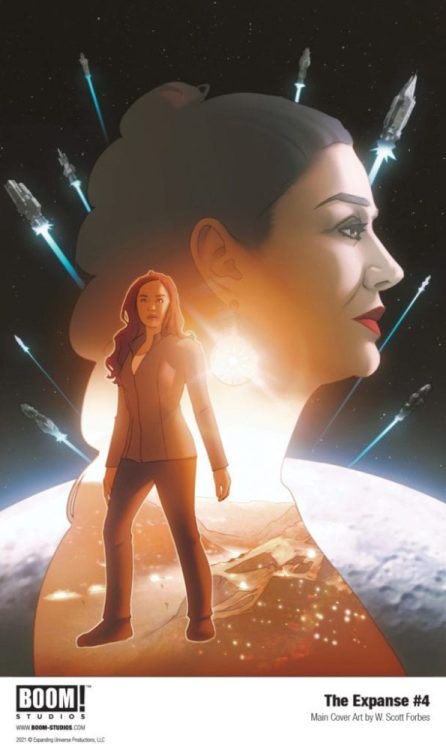
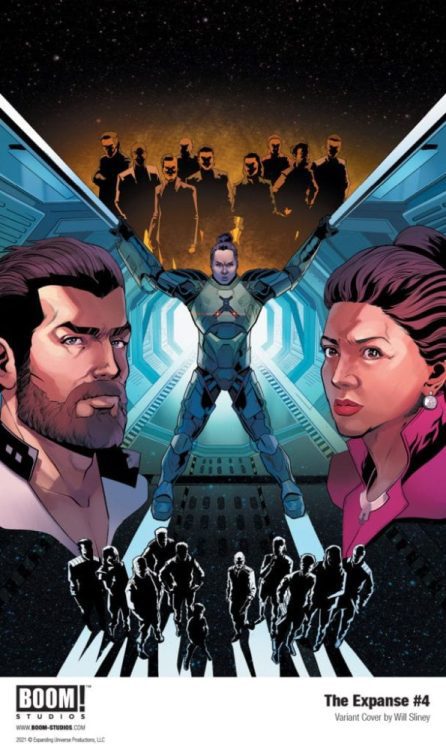
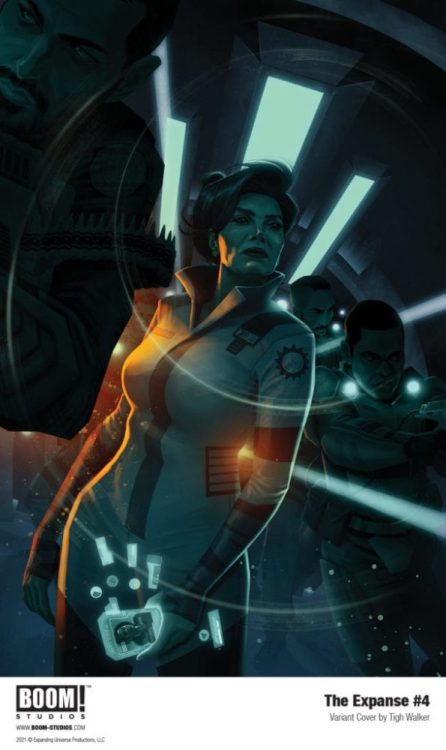
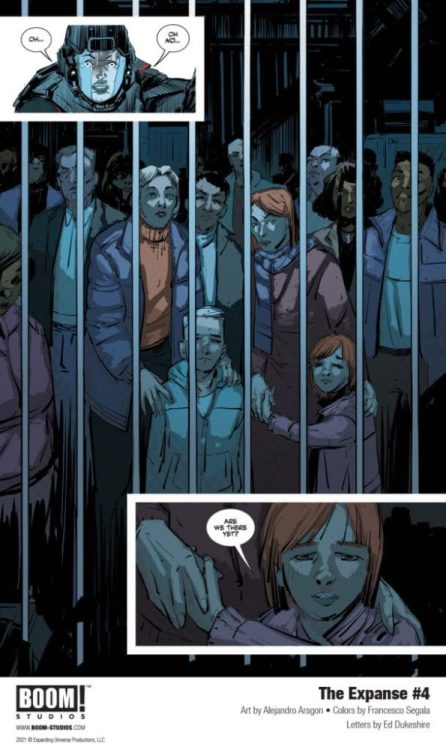
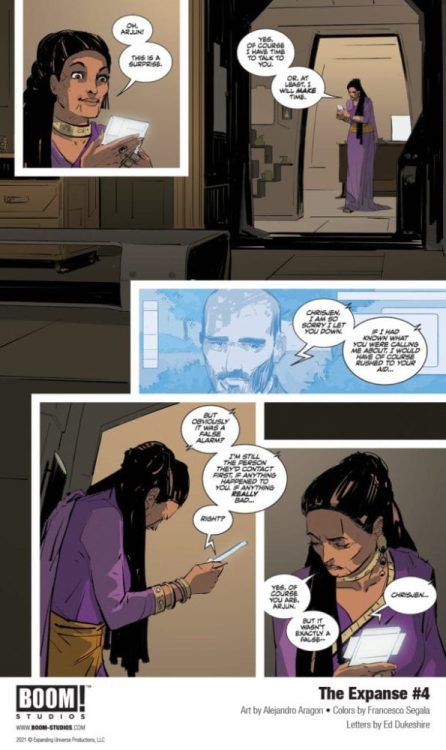
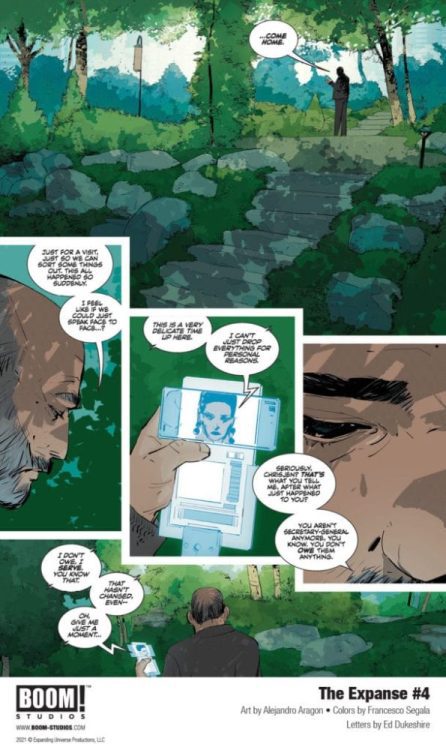
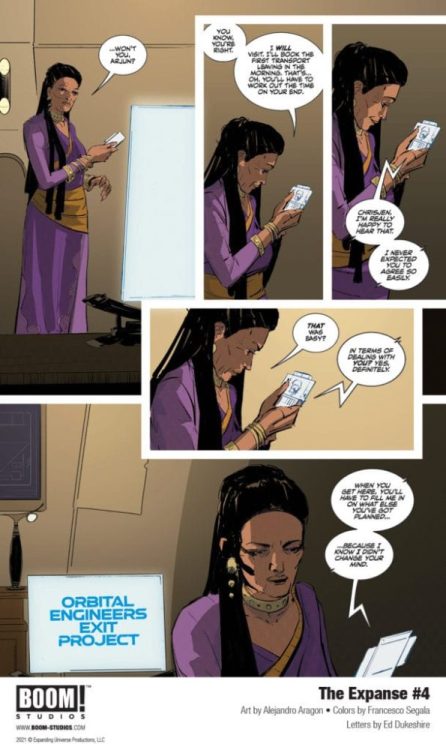
THE EXPANSE #4 hits your local comic book shop on March 17, but thanks to BOOM! Studios, Monkeys Fighting Robots has an exclusive five-page preview for our readers.
The limited comic book series’s final issue is written by Corinna Bechko, with art by Alejandro Aragon, Francesco Segala drops the color and Ed Dukeshire’s letter work. W. Scott Forbes worked on the main cover, Tigh Walker and Will Sliney created the two variants.
About THE EXPANSE #4: The series is set between the fourth and fifth seasons of the television show. Bobbie and Avasarala make their final moves in the battle to save humanity, but any victory may come with a cost neither of them is ready to pay.
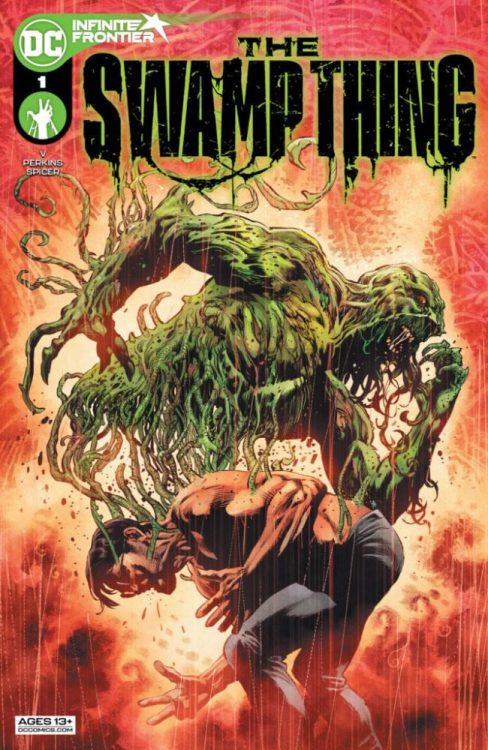
We live in exciting times. On the heels of DC Comics’ Future State, many creative teams are creating series that lead up to Future State’s events. The Swamp Thingis one of those series. Writer Ram V, artist Mike Perkins, colorist Mike Spicer, and letterer Aditya Bidikar are playing with our expectations in this issue. They are filling these pages with doom and gloom. But their characters, all new to the Swamp Thing mythos, read like old friends. They’re immediately familiar, full of life and plans for the future. So, even though we know we probably shouldn’t get invested in these doomed folks, this dastardly creative team gets us caring right off the bat. DC Comics’ The Swamp Thing #1 is the start of your next heartbreak. Minor spoilers ahead.
Writing
V doesn’t do much in terms of introducing our characters. Instead, he keeps us guessing. Levi, who it seems safe to assume is the protagonist, is returning from a trip home to India. He’s clearly recovering from whatever happened over there. But V doesn’t tell us what that was. He doesn’t give us Levi’s life story. V just puts Levi on a plane and fills his head with nightmares. It’s intoxicatingly mysterious. The only character V gives us details about is the Pale Wanderer. The Pale Wanderer is a being of legend. Characters at a crime scene swap ghost stories, building up the terror we feel that the Wanderer could be around any corner. When the Wanderer finally shows up, V does something that sends chills down the spine. He gives the creature a voice. This force of nature, that seems inhuman and ghostly, wants to chat.
In giving us lots of details about our antagonist, and keeping the cards close the vest about our protagonist, V ups the stakes. If Levi, whoever he is, ends up facing off with the Pale Wanderer, will he make it out alright? The answer: we don’t know. But knowing so little about Levi makes him a puzzle we want to solve. Though, occasionally, V does slip into exposition mode. Jessica, Levi’s friend, tells Levi why he was sent back to India. It feels like dialogue that’s aimed at the reader, not Levi. Levi knows why he went home. But V still obscures so many of the details of this story. And he’s setting up a cast of characters who soliloquize and share their hearts with one another. That’s just who they are. It’s the tone V is creating. In the midst of mystery, these characters have their hearts on their sleeves.
Art
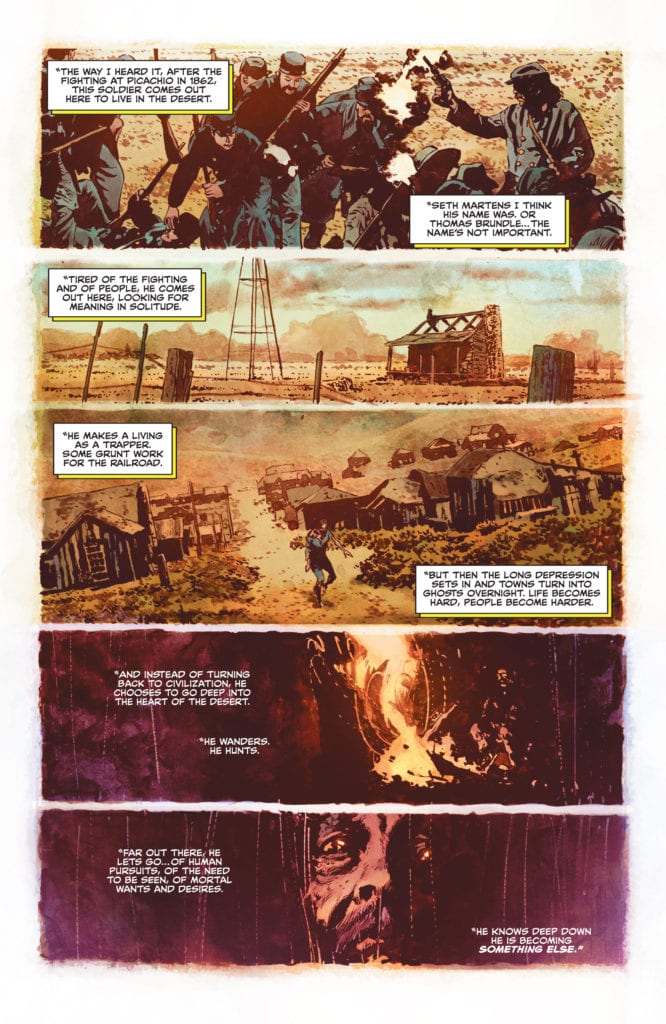
Perkins is just as much of a culprit when it comes to hiding the answers. In Levi’s flashbacks, Perkins makes us feel as though we’re caught between important details. The long, slender panels feel like half a picture. We see angry faces, crowds gathering, but we don’t get to see why. It’s infuriating and exciting, all at once. Perkins never lets us think, however, that he doesn’t know the answers. Every panel feels haunted by a deeper knowledge. It almost reads like Perkins is drawing these pages with a heavy heart. He knows the chaos he’s drawing his characters into. As the plane Levi’s on passes through dark clouds, Perkins makes them look like tentacles trying to grab ahold of the plane. Even seemingly innocuous images of trees feel like omens of death and destruction.
This all culminates as Levi runs to the bathroom. Perkins twists the panels, making them look lopsided and warped. It’s hard not to feel ill looking at those panels. Perkins so brilliantly replicates the feeling of dizziness in these pages, that it’s best to read this comic sitting down. Every inch of this issue is terrifying but beautiful. Perkins will lure you in to this story and then scare the crap out of you.
Coloring
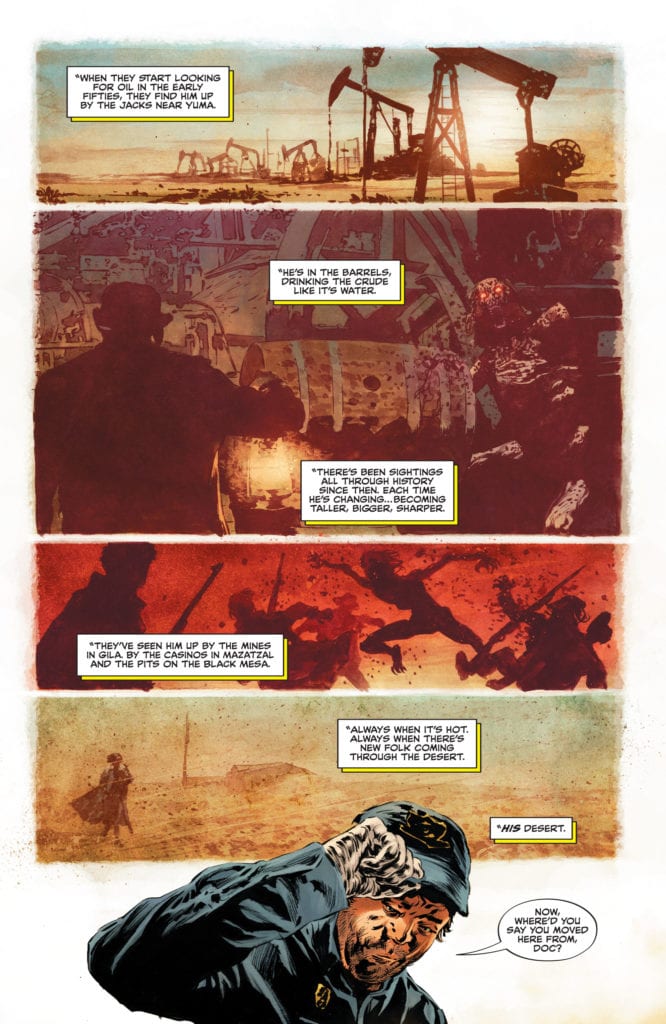
Spicer’s coloring is breathtaking. It pairs so perfectly with Perkins’ art to make everything feel both foreboding and gorgeous. It’s in these pages that Spicer reminds us that bloody corpses and beautiful sunsets are both red. And our history lesson about the Pale Wanderer looks faded from time. But Spicer also makes these moments feel faded for another reason. These aren’t just old memories. We’re watching the progression of a man losing his humanity. The only moment that looks vibrant and alive on those pages, is the deep red image of the Pale Wanderer making his way through a group of soldiers. Whenever Spicer has the opportunity to connect something awful with something awe inspiring, he does. Haunting memories are a gorgeous orange. Every moment of terror somehow makes us want to dive deeper into the horror.
Lettering
Bidikar’s lettering is a tug of war between order and chaos. As we learn about the Pale Wanderer, some captions are given a text box and others are not. It’s the nonchalant captions that have clear boxes around them. These are the little bits and pieces that we’ll probably forget about soon enough. Little things like what the Pale Wanderer was doing before he became what he is. But it’s the captions that are just set against the page, with no border around them, that haunt the reader. “And instead of going back to civilization, he chooses to go deep into the hear of the desert,” one of these captions says. “He wanders, he hunts,” the next says. It’s a disconcerting idea. Why would someone choose to go out into the wilderness? It’s a dangerous caption. One that can’t be contained by text boxes or borders. With this small change in how they present the captions, Bidikar highlights the captions they don’t want us to forget. And we won’t.
DC Comics’ The Swamp Thing #1 is exactly how you should start a story. It’s full of mystery. It’s both deeply haunting and deeply beautiful. V, Perkins, Spicer and Bidikar are luring us into a dangerous new world. And though we may know, from Future State: Swamp Thing, where things are likely going, we’re glued to the page to see just how we get there. These characters feel like living, breathing human beings and the horror that faces them feels disturbingly enticing. Pick up The Swamp Thing #1, out from DC Comics March 2nd, at a comic shop near you. It’s the first issue of a surefire gamechanger.
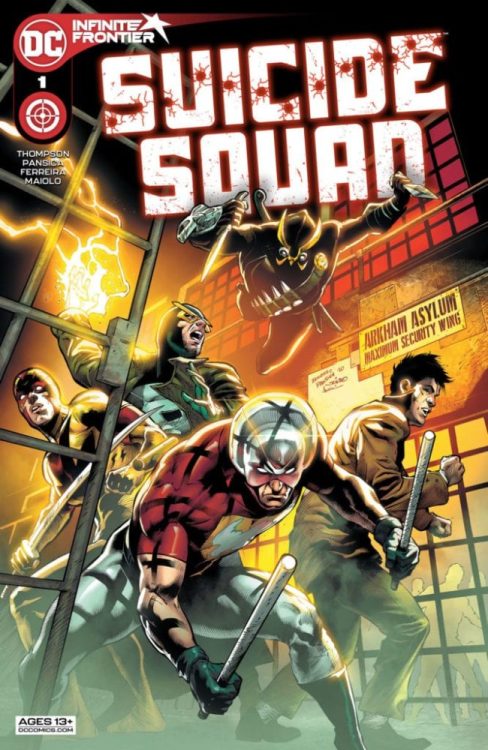
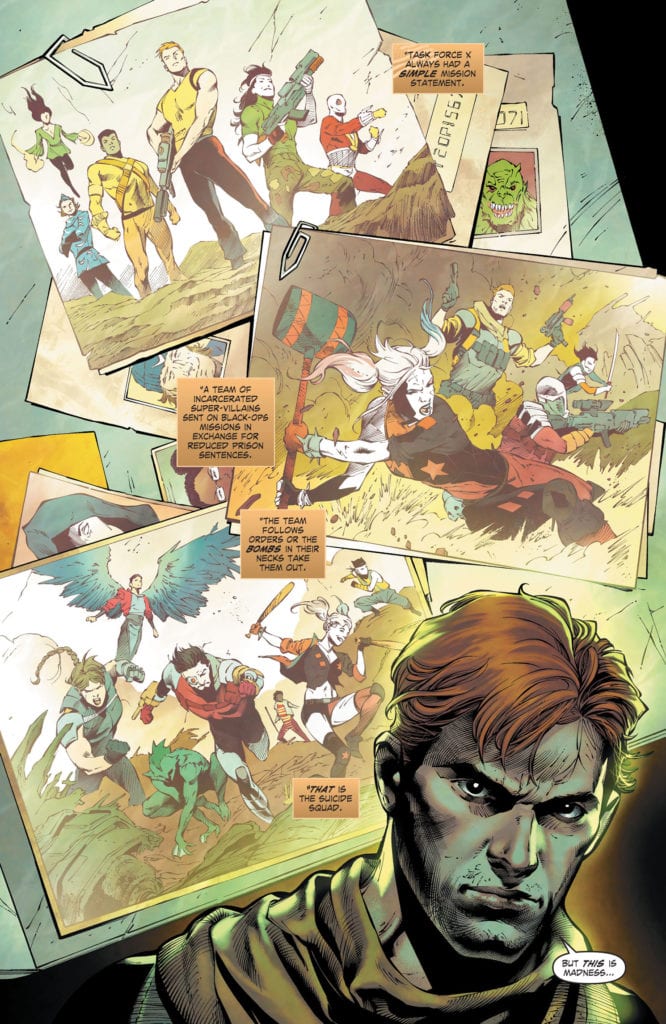
It might seem a little unfair to measure this new Suicide Squadrun up against the last one. Tom Taylor and Bruno Redondo’s run on Suicide Squad is a tough act to follow. But that’s what makes this issue of Suicide Squad so great. It nods to Taylor and Redondo briefly, then boldly does its own thing. Well, kind of. Writer Robbie Thompson, penciller Eduardo Pansica, inker Julio Ferreira, colorist Marcelo Maiolo and letterer Wes Abbott present a version of the Suicide Squad that feels classic. They go back to basics, connecting to all of the things that make Task Force X who they are.
Writing
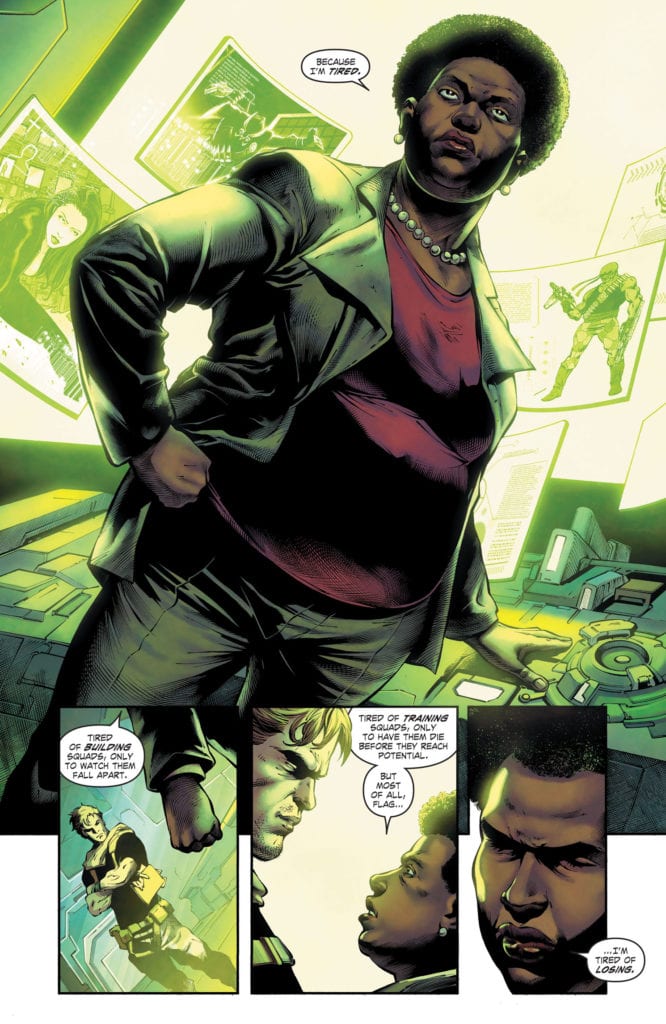
Thompson doesn’t pull punches in this issue. He makes it abundantly clear that Suicide Squad is going to be a revolving door for characters. Some characters, like Peacemaker and Amanda Waller, are going to be mainstays. But everyone else is fair game. Thompson has us worried about the safety of these maniacs right off the bat. And he creates such an interesting balance of chaos and order. We get the relatively calm conversations between Waller and Flag, juxtaposed against prison riots. Thompson highlights the divide between “the management” and “employees.” Waller can be calculating in her decisions, but it’s still going to mean Task Force X are going to get their hands dirty.
Art
Pansica and Ferreira are constantly playing with their page layouts. The page layouts also highlight the dueling natures of Task Force X. They are a group that is full of violence and chaos, but they’re pretty organized and nonchalant about it. For the most part. In one scene, Pansica and Ferreira show a fight breaking out in a prison. We see a lopsided panel in one corner, as a character dons their mask to join the fight. But the fight itself seems both wild and contained. As Peacemaker and the character fight people around them, the panels continue in a diagonal line down the page. It feels organized but off-kilter. It’s as though Peacemaker and the character balance each other out into some strange, twisted medium. Pansica and Ferreira do a fantastic job of making this issue feel wild, and showing that the characters don’t seem all that fazed.
Coloring
Maiolo takes a page out ofFuture State: Suicide Squad‘s book. The color palette seems muted and pale for the most part. But when there’s violence, the page lights up. We see a huge red page of a character stabbing someone. And when another character is electrocuted, the page is a brilliant blue. On one hand, the characters seem to be reveling in the violence. These are the bright moments for them. Everything else in their lives is controlled by Waller. But, at the same time, these moments also read like they’re breaking through the haze that surrounds each character. These untouchable criminals are actually being fazed every once in a while. Pansica and Ferreira certainly make them look nonchalant, but Maiolo is telling us these acts of violence are cutting through. They look like they’re shaking it off well enough, but maybe they’re not.
Lettering
Amanda Waller has got to be a fun character to letter. She has such a clear cadence and rhythm. And Abbott nails it. Every time she speaks, Abbott makes her sound so laid back. She takes her time to say what she wants. She never speaks in large chunks. Abbott rarely has her say more than seven words at a time. And her dialogue is given so much space on the page. Everyone seems so scared of her, even Rick Flag. The only time one of her lines overlaps someone else’s is when she’s speaking to Peacemaker. Abbott shows us that Peacemaker and Waller are birds of a feather. Neither is scared of the other and both are willing to make some messy decisions.
DC Comics’ Suicide Squad #1 is an exciting start to a series. It’s fun, chaotic, violent, and has all the staples of being a classic Suicide Squad story. This creative team clearly loves the work they’re doing. That much is clear from every panel on every page. Pick up DC Comics’ Suicide Squad #1, out March 2nd, at a comic shop near you.
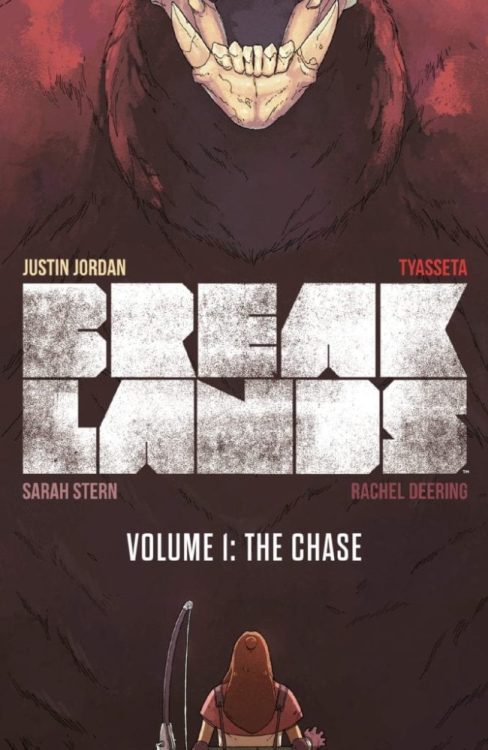
The physical release of BREAKLANDS VOLUME ONE: THE CHASE will happen on March 3rd, 2021. The book will collect the first five issues of the digital first series that were released by Comixology. The in-print edition will be released by Dark Horse Comics. The story is written by Justin Jordan. The art is created by Tyasetta. Sarah Stern provides colors, and Rachel Deering handles lettering.
Breaklands is like an amazingly crafted patchwork quilt. You can focus on a single moment, pull out the influence, and be impressed by the craftsmanship. Yet, when you pull back and see the work as a whole you find something truly amazing. A piece of art that is breathtaking and the sum total is exponentially greater than its parts. Breaklands reminds you why you love comics.
STORY
Justin Jordan tells a brilliant story set in a world that combines genres like sci-fi, superhero, post-apocalyptic, and dystopian. However, in a world that is so blatantly different from that of the reader it still feels lived-in and real. What is truly remarkable about the setting is how Jordan combines all these genres together, and the world still feels hopeful and new. Even with all of its faults, you’re drawn into it. You want to know more about it and you want to understand how the world came to be the way it is. You want to know more about every character you see in the background. It is truly inconceivable how the writer combines so many influences and presents something that feels fresh and new.
While the setting and world building is truly jaw-dropping, the characters are nearly beyond compare in the world of sequential art. Kasa Fain is our protagonist, and from the get go it is nearly impossible not to love her. She is loyal to her family. She is unique in a world filled with larger than life people and circumstances. In her quest, she assembles a motley crew that is just as loveable as she is. Each one of them has a unique voice and feel. Just wait until you meet Toy and Ruth.
Of course what would the good guys be if they were not met with an amazing antagonist to thwart them on their way? The villains in this book are just so compelling. You want to know more about them, and there are a few instances where you are hoping redemption will come for them in future volumes (I am looking at you Shattersword). The story in Breaklands Volume One: The Chase is breathtaking. Every page beckons you forward, and yet you want to linger so you can appreciate the moment that is laid before you on the page. Justin Jordan has crafted a modern classic. The only source of irritation I found was when there was not another page to turn.
ART
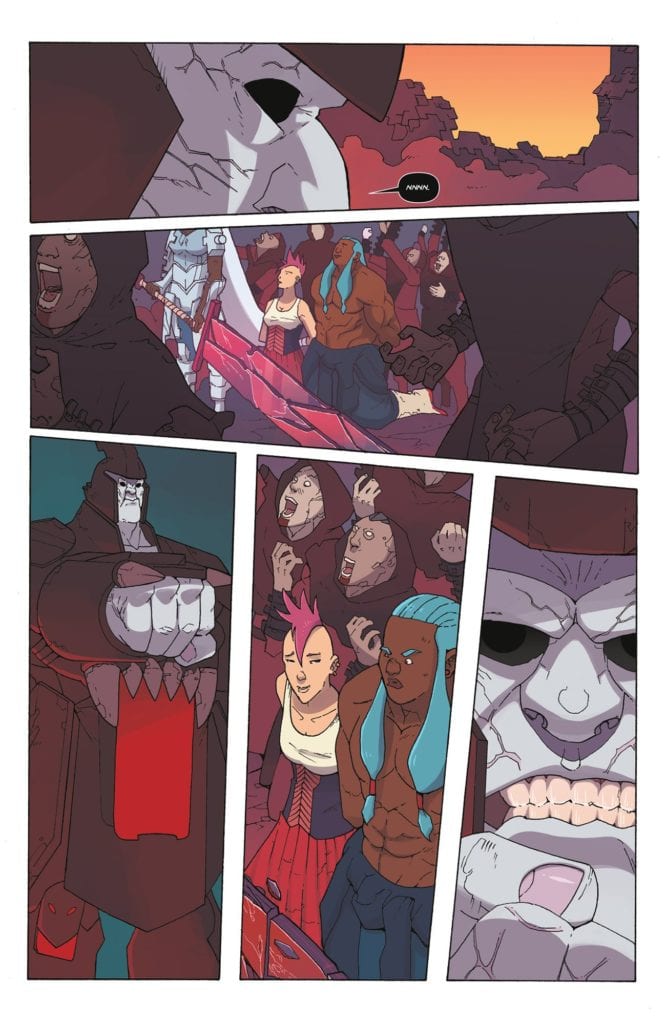
Tyasetta’s work is equal to the brilliance of the story they are helping tell. They make the story seem hopeful, though it’s set in a hopeless world. The love one feels for each of the characters is due to how they are drawn on the page. In the art, you see a vast number of influences and an amazing display of talent. In some of the pages that depict heavy action, I was reminded of the X-men comics I loved as a child. On pages that focused solely on our protagonist, it was like seeing a Disney movie as a kid.
In the crowded city scenes, I saw the manga I had read as a teen. The truly amazing part of the art is that even though it felt reminiscent of so many forms, it also felt brilliant and new. It never felt stale or that it was trying to imitate something that preceded it. It is clear the art is grounded in past works, but it is also a new vibrant expression in the world of comics.
COLORING
In Breaklands Sarah Stern’s colors are another brilliant part of the tapestry. The palette somehow feels simultaneously muted and vibrant. In the work, you encounter a multitude of environments and each one has their own array of color. This gives each place a brilliant and unique look. It helps the reader differentiate where each section of the story is happening, and does a great job of conveying the mood of each setting.
Each character’s color helps tell their own unique story. The colors chosen to depict each one helps us see their unique voice and perspective. The coloring makes the world feel diverse, and that a million different stories could happen. The coloring is inviting and warm.
LETTERING
Rachel Deering does a great job with lettering Breaklands in a traditional way. The lettering never steals focus, but does help convey what is going on in the world. The onomatopoeia is done in a fashion that feels authentic to the world. It is here the lettering really makes itself known. The letter combines with the art in action sequences to make you feel like you are hearing the sounds.
CONCLUSION
Breaklands Volume One: The Chase is an amazing and brilliant book. Every ingredient in the pot is delicious on its own, but when combined you have an experience that is out of this world. This is a once a decade work on par with Saga, Fables, Umbrella Academy, and Sandman. It is not a work that you love because it is a comic. It is a work that makes you love comics.
WandaVision has reached its penultimate episode and it was the best episode so far as it explores Wanda’s past.
Agnes has revealed her true identity. She is really Agatha Harkness, a powerful witch and she wants to know how Wanda was able to turn Westview into a sitcom world and how she resurrected Vision. Agatha takes more extreme actions to get Wanda to reveal her secret by kidnapping her sons and force Wanda to explore traumatic events in her, including the death of her parents, the experiments that were performed on her, and finding out what happened to Vision’s body.
WandaVision has been about Wanda’s grief and making a fantasy world so she didn’t have to face reality. “Previously On” took Wanda out of her comfort zone and she had to face everything she had been trying to avoid. She had to relive all her pain. This episode showed why Wanda had a personal connection to sitcoms, offered up lots of continuity nods, and set up the future.
Despite Wanda being a prominent character in the MCU since Avengers: Age of Ultron, she has not been that developed. “Previously On” rectified this by looking at events that were only mentioned. The death of Wanda’s parents was given even more significance because it showed Wanda had a protective magical relax and when she was exposed to the Mind Stone it gave her powers. The episode also had a touching moment when Wanda and Vision had their first heart-to-heart.
This episode was the most focused in the series. It just followed Wanda and Agatha as they literally go through Wanda’s memories. The surreal visuals and the change of locations gave made this episode seem like the MCU’s version of Eternal Sunshine of the Spotless Mind or Inception.
There has been a debate on whether Wanda would be revealed to be a mutant. This episode dismisses that theory. Agatha states Wanda was a powerful witch who was able to perform powerful acts through instinct. In the comics Agatha has been a mentor to Wanda instead of an outright villain and that could be the direction the final episode and the MCU can go. But we have to remember Agatha did kill Sparky.
The lingering questions from WandaVision are the roles of mutants and the multiverse in the Marvel Cinematic Universe. This was symbolized with the role of Pietro who was played by Evan Peters, the actor who played the character in the Fox X-Men movies. The series has ended up dodging the question because Agatha said she created this version of Pietro. However, due to Agatha’s nature, she could be lying.
WandaVision has been a character-driven show and “Previously On” was the most character-focused episode yet.
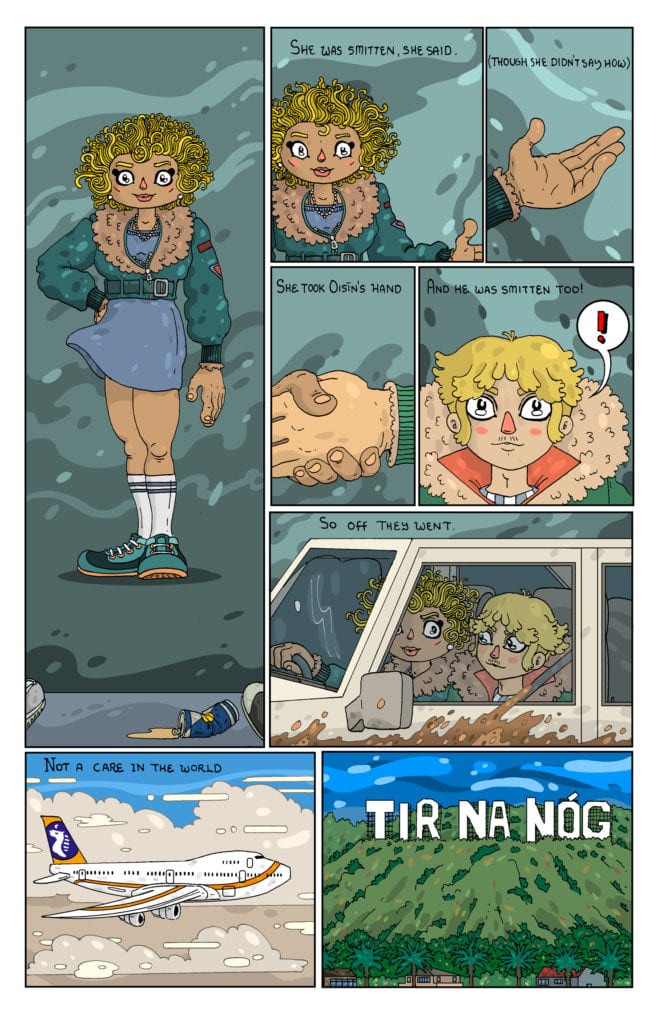
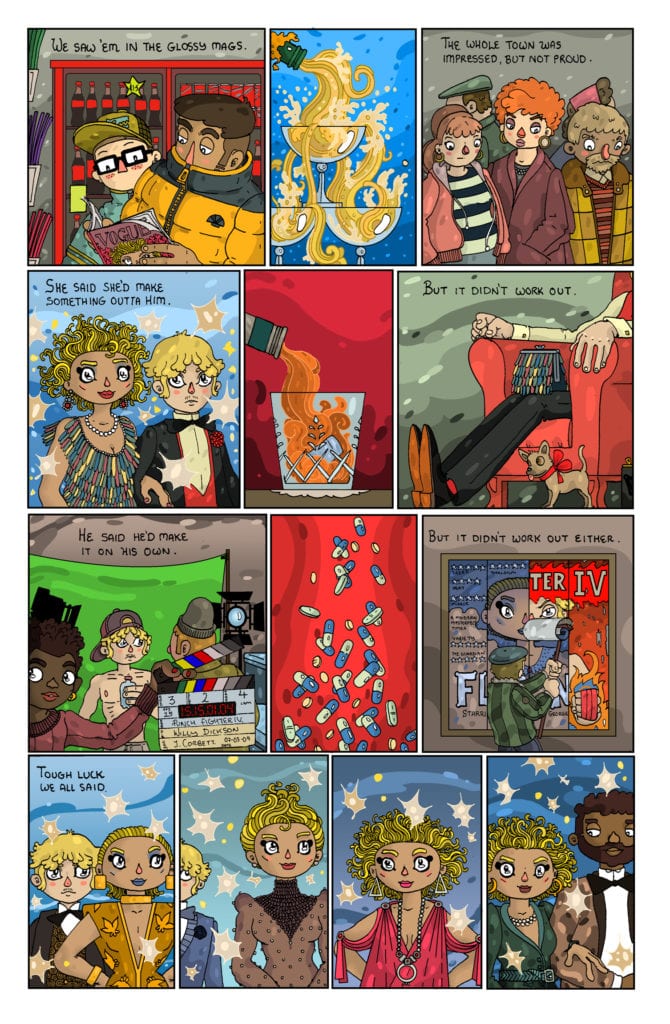
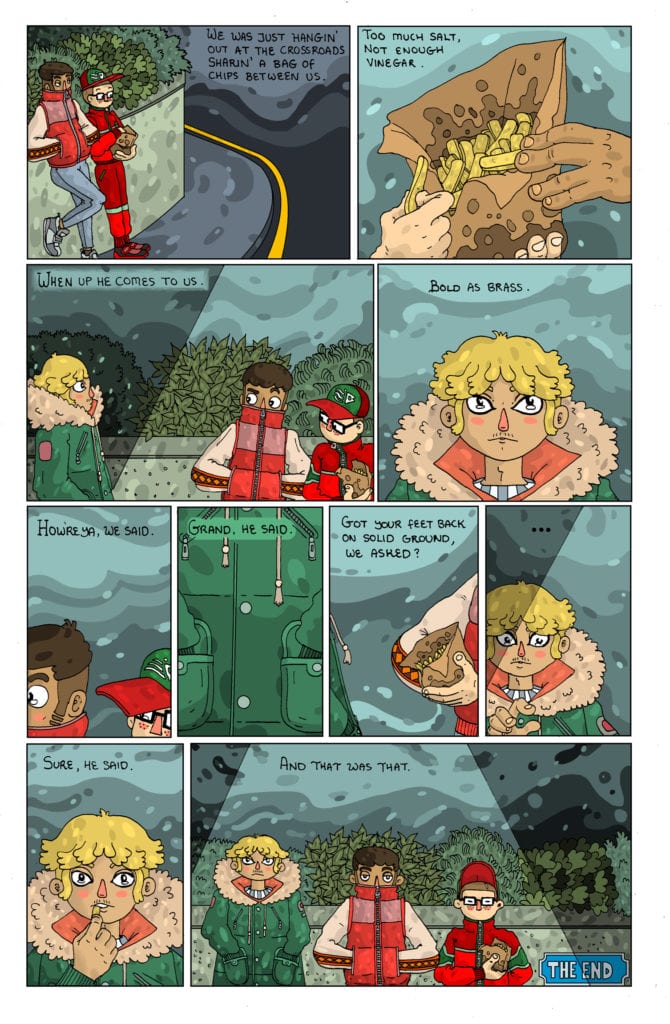
TURNING ROADS is currently funding on Kickstarter, and we chatted with the book’s editor Paul Carroll about how the anthology came together and what readers can expect.
The project is a collection of Irish folklore and mythology retold in modern (and future) settings. Carroll talks more about the project below, but the stories will span various genres and styles, with over 30 creators from all around the world contributing. The campaign runs through March 28th, 2021.
Monkeys Fighting Robots: Tell us about TURNING ROADS — what kind of stories can readers expect to find in this anthology?
Paul Carroll:Turning Roads is an anthology of short comics from Irish and international creators, focused on retelling Irish myths, legends and folklore stories in modern and future Ireland. There’s a mix of science fiction, fantasy and magical realism blended through the stories, some of which take a distinct genre fiction approach to the twist, others of which treat the presence of Irish fairies in modern Ireland as a consequence of time, rather than magic — they were always there, and now they’re adapting to life here. There are 18 different teams in the book, each with their own styles and voices, so no two stories will be the same — and that’s not even accounting for the fact that one legend appears twice in the book, albeit through two very different approaches.
MFR: Where did you get the idea to put this project together?
PC: This goes back to the Before Times; there were discussions around the winter of 2019 among Irish and UK comic creators about putting together comic anthologies. I’ve had notions of organising something like this for a while, even before those conversations, and with lockdown in Ireland presenting long-term isolation for the comic community here, the timing felt right. I’ve been out of work as a result of the pandemic, while others have been busy trying to meet their deadlines or doing essential work as part of their day jobs, so I figured it was only right to put some of my time and experience to good use. At the very least, I’ve tried, and some people have paid attention.
MFR: Can you plug some of the creators who are contributing to the book? And can you tease anything about the stories they’re working on?
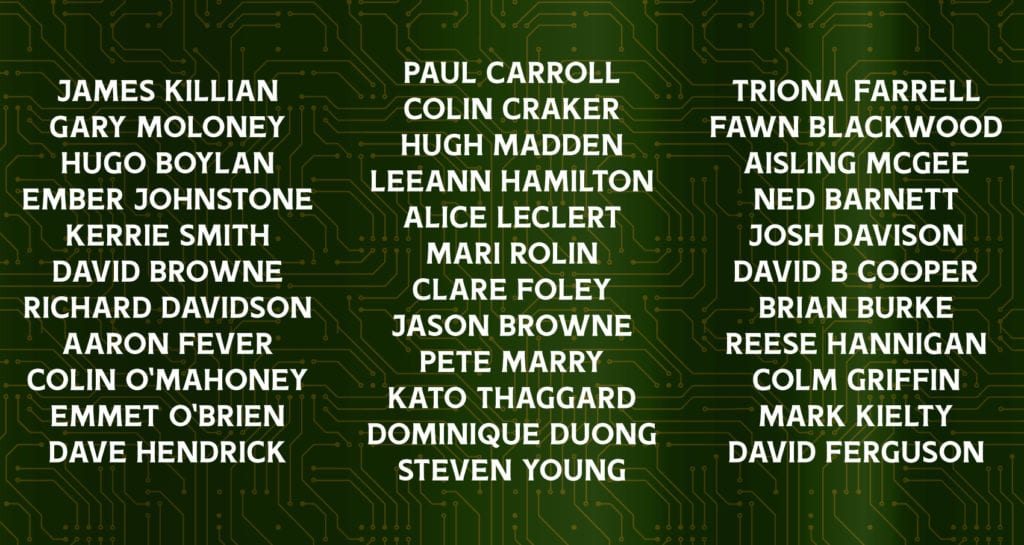
PC: I’m exceptionally fortunate to have over 30 creators involved in this book. There are some who’ve been around the Irish comics scene for a while — people whose work I admired before I knew the creators personally — like Hugo Boylan, Dave Hendrick, Leeann Hamilton, and Tríona Farrell. Hugo and Dave are both writing stories for the book, teaming up with Hugh Madden and Pete Marry respectively to tell some whacky tales. Hugo and Hugh have so much creative energy between them, and the one page of their story I’ve seen so far just blew me away. Leeann is joining Kerrie Smith on art in a beautiful little short that Kerrie scripted. They’re probably two of the most humble creators in the book, and they’ll be packing quite a punch with the story they’re telling. As for Tríona, I was lucky enough to get her on board to colour one of the stories in the book.
It would take hours to shine a similar light on everyone, but there’s so much talent in this book it almost makes me feel unworthy to be editing them. (Except, of course, they’re also all lovely and endearing, so they’ve made me feel like I’ve fit the part quite well!) Just off the top of my head, two of the creators I didn’t know before this whose portfolios made me audibly gasp the first time I saw them are Dominique Duong and Ember Johnstone. Each is contributing stories as solo creators, and I honestly cannot wait to see the finished work. We’ll need to adopt them as Honorary Irish when all this is done!
MFR: I’m assuming you have at least a passing interest in myth and legend since you’re putting together this anthology — where does that fascination come from? Is it something from childhood, or something you grew to appreciate as you got older?
PC: I’ve always loved stories, and myth and legend provided so many variations that my young mind couldn’t keep up. It started with the Greek legends, through old movies my dad would put on the television on a Sunday afternoon, and then Disney’s wildly inaccurate Hercules. After that, I took any chance I had to experience Greek myths, mostly through PC games as I was growing up, and then through books and reading online once the opportunities presented themselves. (Side note: we didn’t have even a dial-up Internet connection in my household until I was in my mid-teens!) That passion for mythology then spread through other pantheons, to the point of collecting books on Norse and Egyptian mythology whenever I could. At some point along the way, I found my collection included stories of Irish myth and legend, though I couldn’t tell you how or when they showed up. Still, they felt right at home.
MFR: What do you think makes Irish myth and legends stand out compared to other cultures’ folklore (other than being set in Ireland, obviously)? Are there certain themes and concepts that make them uniquely Irish?
PC: Irish stories are a funny old lot. They almost always end in misery, and sometimes they’ll just stop when the main character is dead. There’s a lot of focus on death, and on the consequences of messing about with things that you shouldn’t. There’s a strange beauty to them, though the retellings and changes made to the stories and the people that occupy them make it confusing to keep track of everything all at once. Between the arrival of Christianity in Ireland, and the occupation of Ireland by the British, we’ve ended up with many contrasting tales, each with their own focal points and morals (if you’re lucky to have a moral by the end of the story!)
MFR: You write a story yourself in TURNING ROADS — how do you like writing short stories compared to longer ones like MEOUCH?
PC: I’ve always had a soft spot for short stories. There’s a whole separate challenge in telling a complete story in just a few pages. With Meouch, myself and Gareth Luby get to play around on single scenes for a few pages at a time, and it allows for more space to tell jokes and shift the mood a bit whenever we need to, but you don’t have that freedom when you go from a 20-page issue one down to four pages. Not that that’s a bad thing. The constraint is part of what makes it fun. Unless you have a completely unforeseen twist at the end, there’s the challenge of keeping a story tonally consistent and interesting, and there’s not much room for explaining what’s happening before it’s all over.
Of course, short stories also allow writers to work with lots of different people if they want to. Don’t get me wrong, I’d do a hundred short stories with Gareth if he had the time, but even if he wasn’t working a full-time day job, there’s only so much one artist can do. For Turning Roads, I took a couple of chances on my story; I’m working with James Killian, who’s relatively new to the scene, on art, while Marvel’s own Tríona Farrell is handling colours. (I really felt like I was chancing my arm asking Tríona, but she’s a delightful person and set my mind at ease from the get-go!)
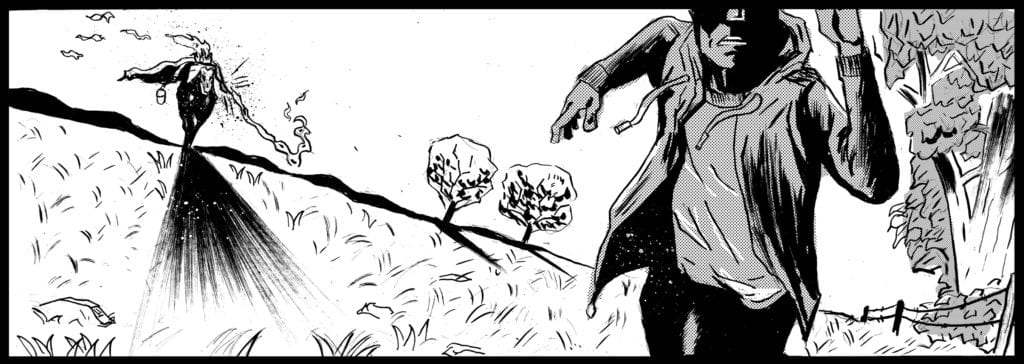
A teaser image from “Dusk and Dreaded Night” by Paul Carroll and James Killian (colors will be by Tríona Farrell).
MFR: How has the process of putting together the Kickstarter campaign and getting it ready to launch been? Any advice for creators who are getting ready to start their own project?
PC: Full disclosure: I’m an anxious person. I love having done a Kickstarter campaign, but I panic the entire way up to and through the process. It’s also been almost two years since my first campaign, so I’d forgotten so much about how it’s done. My advice boils down to a few things. The first is simple: give yourself more than enough time to complete the set-up of the project, because there are always delays on Kickstarter’s end when it comes to approving a campaign. They’re quite open about the delay — it can take up to three days to be approved — but if you leave it late, you can be stuck waiting.
Secondly, have as much work ready to show as you can. This is for more than just the Kickstart page. A good press release can result in people needing more images to include when they share something online, and you need it accessible. Save it on your computer, on your phone, in the Cloud – have it available to send to people no matter when they ask you.
And thirdly, do the work in marketing and PR. You need to be present on social media, before, during and after a campaign. Tell people about your project, as people for help, and put in the effort in contacting websites and podcasts. Craft a press release if you feel the need to put on a professional face, and have all the info you need to tell potential interviewers at hand so they can craft better questions for you.
(And, it should be said, the immortal words of Douglas Adams apply to running a Kickstarter campaign: Don’t Panic.)
MFR: What are you most proud of in regards to TURNING ROADS? What are you most excited for people to see?
PC: I have personal pride in even getting it this far, which is a difficult thing for any Irish writer to admit to having. We’re a shy, modest bunch for the most part.
For real, though, I’m excited to share the stories that were pitched. I picked the ones that spoke to me, the ones that made my mythology-loving inner child want to see them complete.
There’s also a special guest star who I’m hoping will make an appearance when we hit the stretch goal stage of things, fulfilling cover art duties. It’s a big name, I can promise you that, well outside what I considered the realm of possibility back during the initial conversations I had with people about doing the book.
MFR: And you are part of Limit Break Comics alongside Gary Moloney and Gareth Luby. Outside of TURNING ROADS, what else can we expect to see from Limit Break in the near future? Any projects coming down the pike that you want to tease or promote?
PC: Limit Break as a collective has a few projects on the go at the moment. We’re talking with a couple of creators from outside the circle of three about publishing their books under the label – we’re hopeful we’ll get to announce them before conventions return to Ireland.
Aside from that, you can expect issue two of both Meouch and Plexus in the near future. Gareth is hard at work on the art for Meouch. Plexus currently has two stories out of three completed from the art point of view, too, which is an exciting place to be in.
Joining them, I’m working on cryptid horror comics under a project name Dark House; I’ve no idea when they’ll start appearing in the world, but it’s fun to return to the genre after a few years away from it in terms of comics. While I’m doing that, Gary is putting together a wicked looking pitch, and he has plans to put together a collection of his crime comics in the future — I’m under oath not to make any promises on his behalf as to when any of that will happen, and he’s our law-talking guy so I’ve got to stick to my word!
It’s an exciting time to be making comics, though, and working with Gareth and Gary makes the journey all the better.
Thanks again to Paul Carroll for taking time to talk with us! TURNING ROADS is currently funding on Kickstarter; you can check it out here!
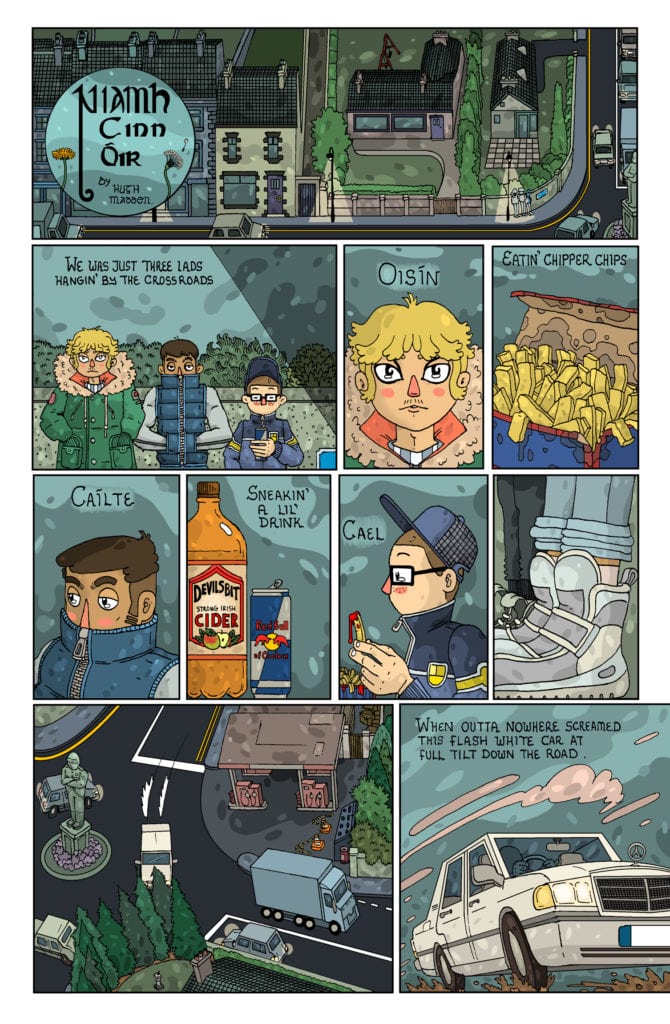
Have a look at one of the stories from TURNING ROADS, Niamh Cinn Óir by Hugh Madden:


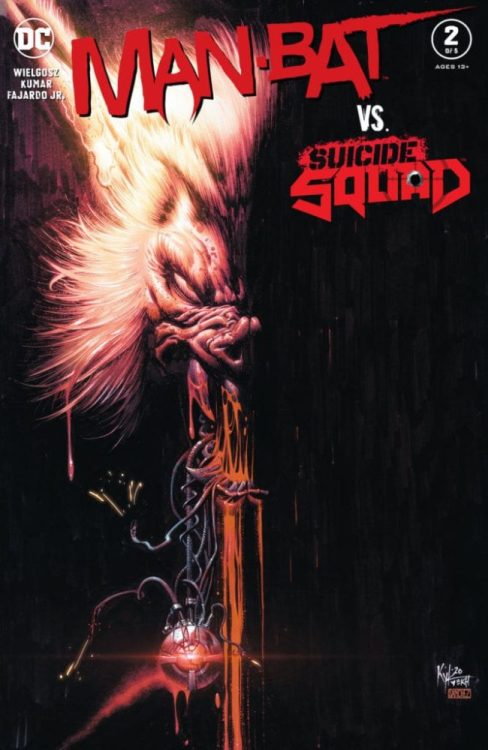
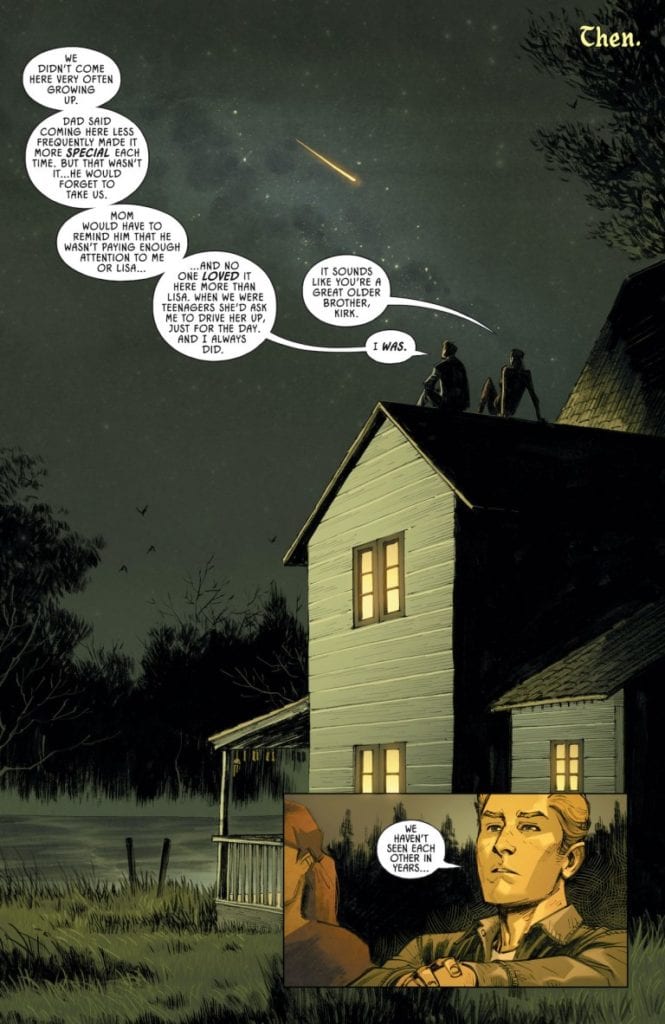 Wielgosz demonstrates Man-Bat #2‘s narrative like it’s an issue of another series. He provides just enough context to set up the premise of the series as well as the issue. In this case, it’s Kirk’s initial humanitarian efforts to help people like his deaf sister. Only for his work to take over his life and hurt people around him. This makes Kirk a very sympathetic character who has gone through loss and is trying to take responsibility. The only problem is, Kirk is ignoring the core roots of his problems. As the premise sets up, Kurt tries to control everything without realizing why that’s a problem.
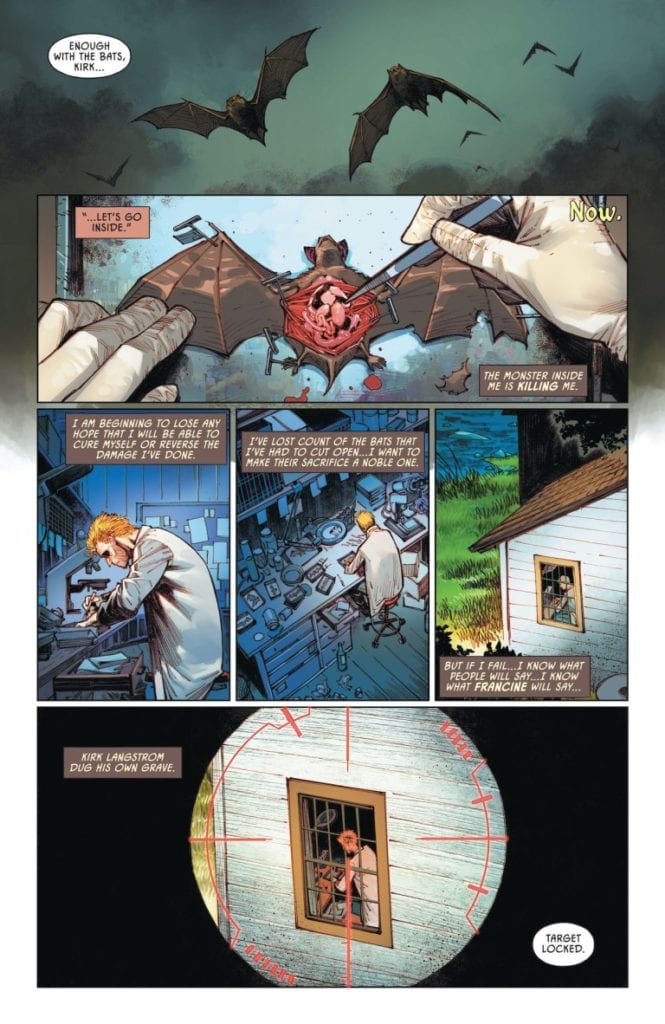 The inclusion of the pre-Taylor Suicide Squad is practically a reflection of Kirk’s situation. The squad is mostly Batman’s rogues’ gallery-like Deadshot and Killer Croc, once great villains now a disposable clean-up crew. They want to capture and control Man-Bat in a way like the overarching villain Scarecrow uses Kirk’s Man-Bat serum to build an army. Everybody is so focused on trying to take control of Man-Bat they fail to actually fix anything.
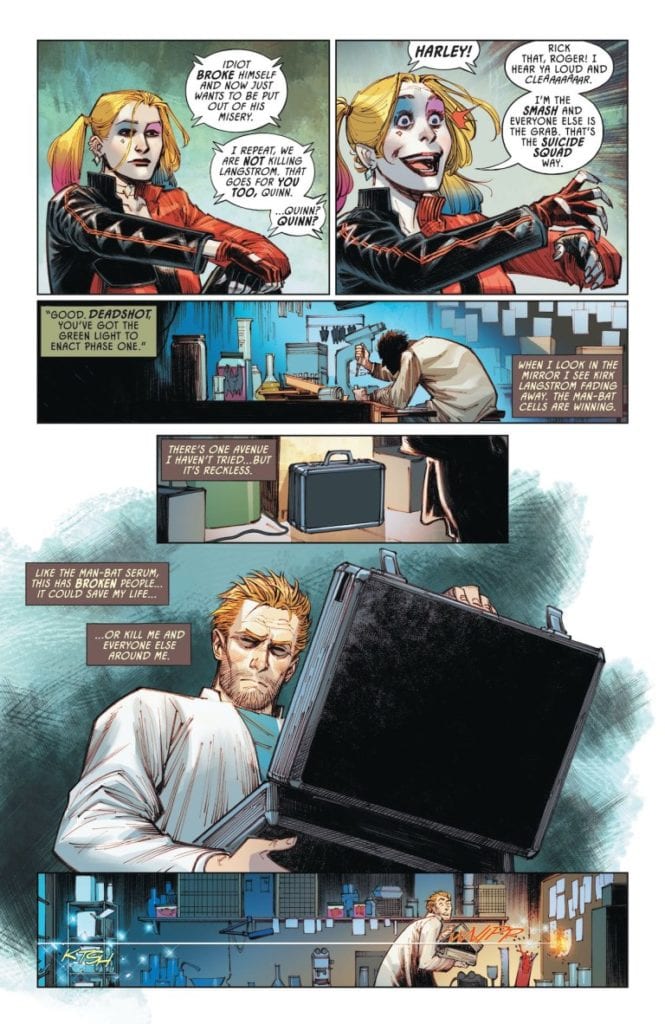 The dark coloring of Man-Bat in action via Fajardo adds to the intimidation. It’s a strong contrast to the colorful Suicide Squad who forces Man-Bat out in broad daylight. The shading that Man-Bat is covered in when he’s on the offensive is often in blurring speed. This makes Man-Bat feel like a predator that’s always moving. Unlike when he is clearly seen, which displays him in vulnerable positions.