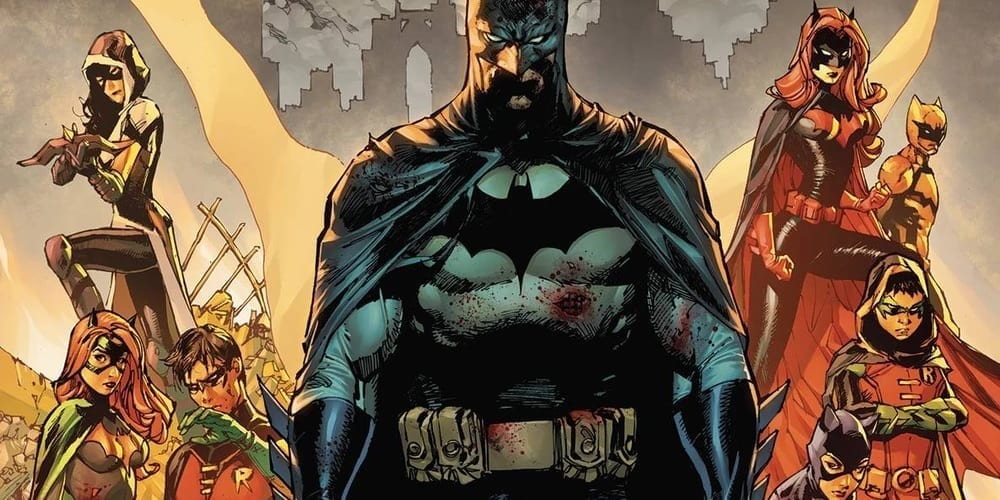
This is it. Tom King’s epic story reaches its culmination with Batman #85, out this week from DC Comics. Here’s the critical question, though: does this final issue live up to the stakes set by the last three-and-a-half years of buildup?
As a storyteller, King is probably one of the most controversial creators in the game right now. 2017’s Mister Miracle was a universally-acclaimed masterpiece, while opinions on last year’s Heroes in Crisis event proved to be rather mixed. While his run on Batman has been strong overall, it has definite ups-and-downs, with those moments sometimes coexisting even within a single issue.
The Writing
In typical King fashion, Batman #85 eschews linear storytelling, instead jumping from chronological point to point with nearly every page. We see Bruce duking it out with Thomas, then cut to him watching a football game, then to Alfred’s grave, then to jumping from rooftop to rooftop across the Gotham skyline, and so on.
There are plenty of highpoints throughout the book. For instance, we see King use the bar sequence as a kind of direct address, injecting some broader commentary on the character. As Bruce tells a fellow patron, “Stories change. People change.” Over eighty years of stories and continuity, Batman is not a character stuck in time; he evolves as his readers evolve. Over the years, we’ve seen Bruce Wayne continue to grow in complexity and develop as a character. He’s not a fixed entity, but rather one who changes with us.
That said, the book does suffer more than a bit from its jumbled presentation. There doesn’t seem to be any explicit intent behind the nonlinear motif from a storytelling perspective. Many of these scenes seem unnecessary, and only serve to obscure the story itself. The narrative in Batman #85 feels somewhat rushed and undercooked as a result.
For instance, King directly states his thesis by book’s end, answering resoundingly the question behind his entire run: can Batman be happy? It’s indeed a cathartic moment, but once again, pivoting to another scene somewhat undercuts the moment. Using an unorthodox story structure isn’t a bad thing…if it’s motivated. Here, however, it doesn’t really seem to be, and only gets in the way of an otherwise satisfying conclusion.
Batman #85 ends with an epilogue penned by incoming writer James Tynnion IV. The writer suggests, with ominous foreshadowing, that big things are on the horizon. Based on previous works, I’m confident that Tynnion is up to the challenge. Plus, it will be interesting to see how the tone of the series pivots following this issue.


The Artwork
As Tom King bows out with this issue, we also say ‘goodbye’ to artist Mikel Janin, who will be replaced by artists Tony S. Daniel, Guillem March, and Jorge Jimenez beginning with our next issue. Janin’s artwork has been a consistent visual delight in Batman, and this issue is no exception.
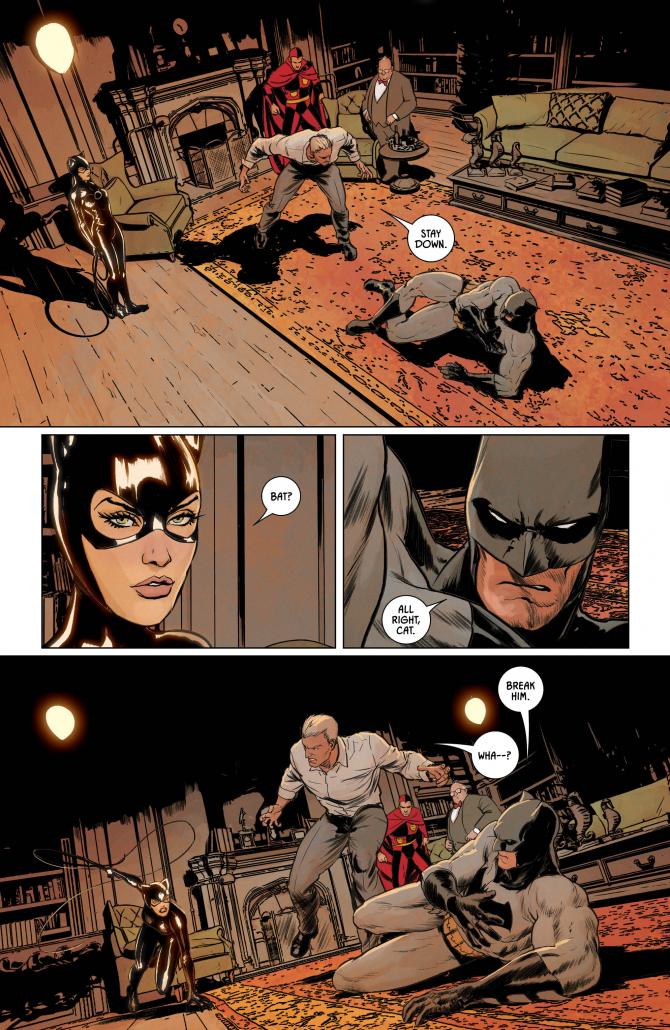
The team clenly divide most of the pages in Batman #85 into horizontally-stacked panels of four to six per page. This offers some visual coherence, despite the constant temporal shifts. We also have the visual repetition–a hallmark of this creative team’s run–which adds to the effect. Despite the choppiness of the narrative, the artwork manages to nail the story beats. From one scene to the next, King and Janin tightly sync the pacing of the images and dialogue.
Perhaps Janin’s greatest asset as an artist, though, lies in his character designs. They’re consistently expressive and compelling, while simultaneously possessing a sleek and somewhat angular look. As many of the illustrations in Batman #85 are closely cropped-in on the characters, we really get to appreciate this visual element.
Jordie Bellaire, as always, comes through with the colors here. She employs several palettes for the different settings, with each really bringing the visuals to life.

Final Thoughts
Love it or hate it, Tom King’s run on Batman was certainly one of the most novel takes on the character. Batman #85 condenses many of the themes and motifs that defined this series over the last three-plus years, so make of that what you will.






 Deadpool requires little introduction for even non-comic fans. Whether it’s Ryan Reynolds’ portrayal on the big screen or the comics written
  You Are Deadpool, written by Ewing with art by Salva Espin, is the concept of Deadpool in a Dungeons & Dragons-esque situation. But instead of game masters and absurdly named weapons, it’s a game of resource management and morality, each of which plays into the scenarios where Deadpool is sent through time to different comic eras. At the suggestion of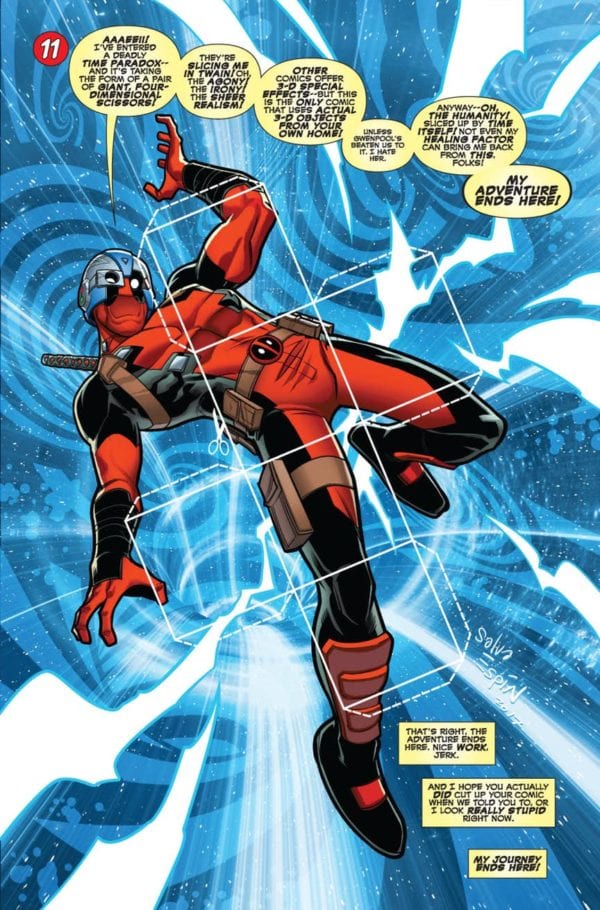




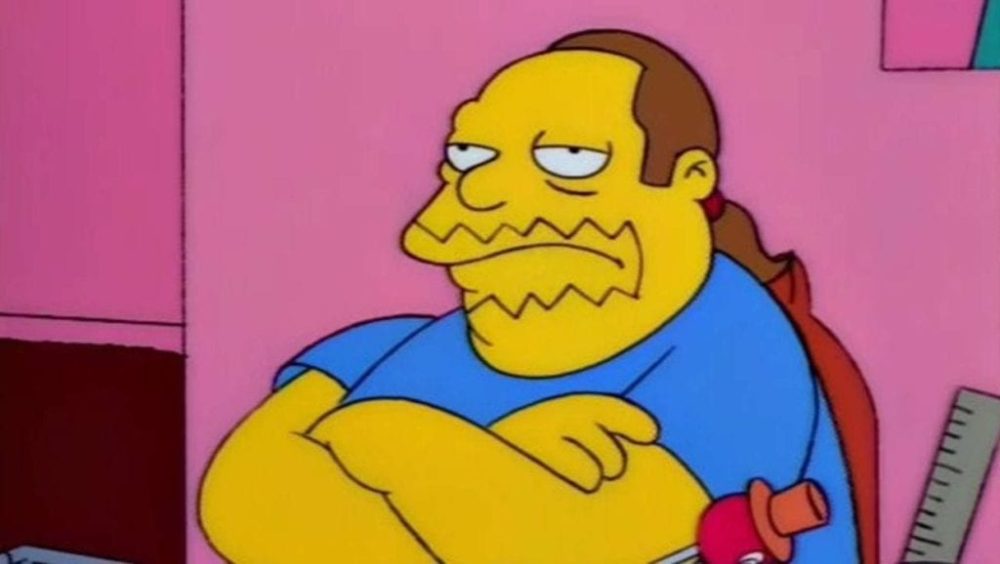
 “There was a guy, Hans, who worked here at one point, who claimed that he was the inspiration for Comic Book Guy,” said Davis. “Hans was a young, heavyset guy with long hair. And he would judge customers’ choices, out loud.”
 Well, most other products. An obvious parallel came up in my conversation with that one anonymous cashier. When I asked if he had a favorite Comic Book Guy line, he said, “The classic, ‘Worst episode ever.’ That just distills that nerdy putting everything down even though you love it. It’s something you love, but you just feel compelled to crap on it. It’s making people feel bad for what they’re into.”
 Funnily enough, Jack Black later appeared (or his voice did) on The Simpsons as the rather friendly, welcoming owner of a rival, hipster comic book store, across the street from the Android Dungeon. Jesse Farrell, manager of Hub Comics in Somerville, clued me into this episode I’d missed. (Season 19, episode 7, if you’re keeping track. It included this priceless tidbit: Milhouse asking Alan Moore to sign a copy of Watchmen Babies in V for Vacation.)