Home Blog Page 52

Project 365: One Comic Every Day, Week 30

The premise is simple: read one comic every day for the entire year. It seems like a simple task but there is no way that I read 365 comics last year, even if you count the individual issues in collections. So, this year, I am committing myself to this reading challenge, in the hope that I can broaden my reading habits and fully engage with my favorite hobby again.

When it comes to monsters, comics have their fair share. There are, 1) the obvious monsters: the mutated violent creatures that attack the intergalactic and fantasy heroes, 2) the classics: such as vampires, zombies, and Frankenstein’s creatures, 3) the misunderstood: again including the adaptations of Frankenstein but also including those from Big Girls (Image Comics) and, of course, the Thing from the Fantastic Four, and 4) the villainous monsters — the evil people that exist for the superheroes to fight (will Lex Luthor, Norman Osborne, and Wilson Fisk please stand up?).

But, the worst kind of monster associated with comics is the disgraced creator. More and more over recent years, stories, allegations, and criminal proceedings have ended many creators’ careers and tainted the comic industry. When engaged in a project like this one, where a large majority of the reading comes from older material, it becomes difficult to navigate the uneven terrain and avoid the forbidden zones populated with disgraced or triggering creators and comics. Earlier in the year, I spent a week re-reading X-Men titles only to discover that a large section of my collection contained, for want of a better word, problematic writers. There are some websites that don’t even review comics from whole publishers because of their brazen associations with people and groups that appear to stand against one of the central modern comic mantras of ‘Comics are for everyone’.

Most people don’t want to cause unnecessary discomfort by discussing triggering topics or creators. And most definitely don’t want to be seen promoting the work of creators or publishers whose reputation and practices are questionable or even illegal. However, when the focus of an article, such as this, is less about advertising or recommendations and more about the dissection and the discussion of comics as social and cultural history, it is difficult to avoid some creators work.

In her book Monsters: A Fan’s Dilemma, Claire Dederer examines her own journey of interacting with artistic works by problematic creators. Although it doesn’t touch on any comic book creators or publishers specifically, the questions that are raised and discussions that she leads are relevant to the comic industry and its fan base. Is it acceptable to write about and promote the work of Frank Miller, an outspoken man whose opinions and work has caused offense to numerous people, so much so that he was removed from the quest list of the UK comic convention Thought Bubble in 2021? And what about Warren Ellis? A writer of some outstanding, influential work, but also someone who has taken advantage of a large group of women over the years, grooming them in online chat rooms and at conventions. Although he is not currently producing any work, how should people interact with his past work? Roc Upchurch was arrested for domestic abuse, pretty much ending his comic career. It also had knock-on effects for the comic he was working on at the time, which led to further complications with the writer Kurtis Wiebe and the publisher of Rat Queens, Image Comics. Is the mere mention of his name a step too far, or is it possible to examine his work and even engage with new work, if it was to emerge, without condoning his previous actions?
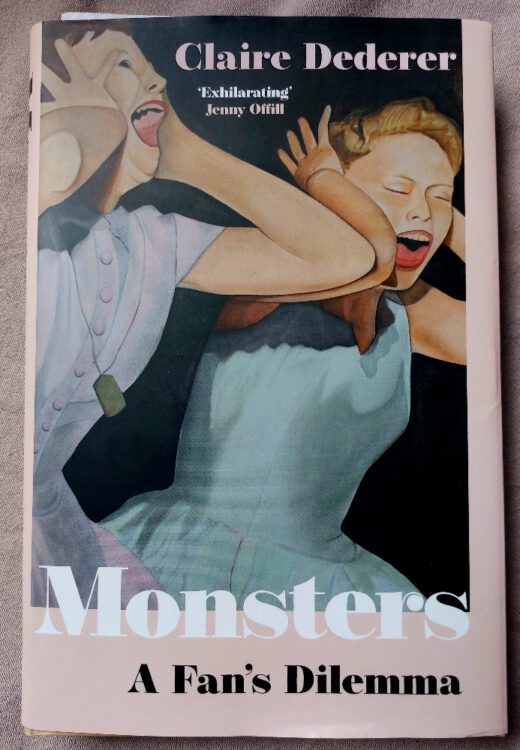
Monsters A Fan’s Dilemma by Claire Dederer

This is a rough sea to navigate, but reading Dederer’s book provides a fascinating and balanced view of the subject. I already have strong views on the connection between Art and Artist, believing that work can, and should, stand on its own two feet without needing to be propped up by the creator — in comics more so than other visual arts. However, this view has been formed over years of studying historical art and culture. It’s easier to discuss the works of a deceased artist than it is someone alive who has perpetrated heinous acts.

I raised this topic briefly in my X-Men week and cleverly sidestepped the issue to focus on different comics. However, I was forced to think about this subject again in Week 30 because of the comics I mindlessly pulled together to read. An exciting proposition of reading comics published through a single publisher, in this case AfterShock Comics, was slightly marred as I realized that one of the titles, one of my favorite titles, was written by Warren Ellis. Do I just ignore it? Replace it with a different title? That would be the easiest option. But, I have other comics I want to read, created by “monsters” as Dederer would name them. The works are important to the history of the British and the American comic industry. They can be classed as works of art along the lines of Rosemary’s Baby by Roman Polanski or Thriller by Michael Jackson, and they are fan favorites or have cultural significance, like JK Rowling’s Harry Potter books. To ignore them does a disservice to the history and study of comics but that does not mean that we have to endorse the creators or condone their actions.

But I started Week 30 with something a bit lighter, something fun and entertaining. It was the start of my read through the AfterShock Comics titles that I own. AfterShock, as a publisher, have put out some of the best titles in the last 10 years, and have had a very good social media presence that was warm, friendly and personal. So, it seems a little unfortunate that this week leads into my examination of controversies.
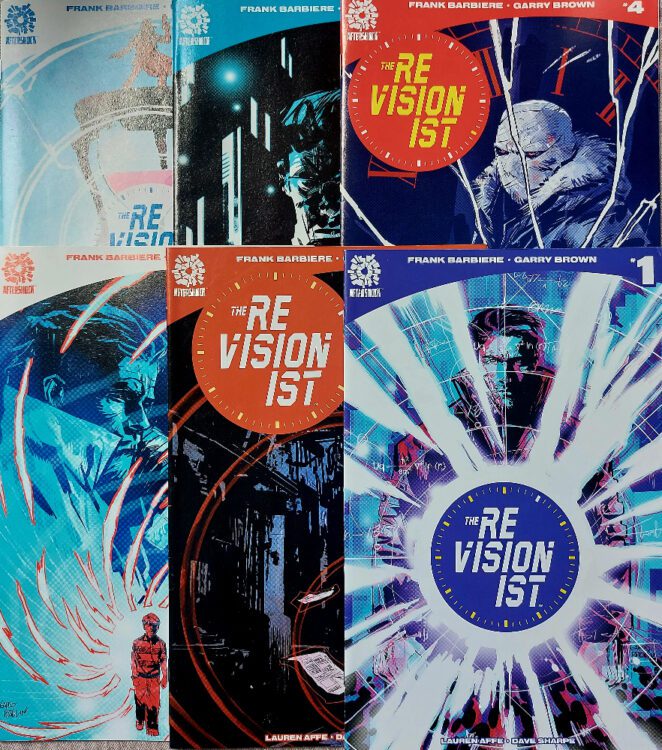
The Revisionist #1-6
Credit: AfterShock Comics

Comic Number 203 to 205: The Revisionist #1-6 (that’s actually 2 comics a day)

Written by Frank Barbiere and illustrated by Garry Brown, The Revisionist is a twisty-turny time travel story that falls somewhere between Time Cop and Millennium (the movie, not the television series). In the first issue, the reader is introduced to Martin Monroe, who is fully engrossed in his personal mission: killing time travelers in the past to save the future. Barbiere throws the reader into the thick of the action with a sequence straight out of 2000AD. It is an unspecified science fiction-esq setting mixed with violence and high stakes.

After that initial onslaught, however, the story slows down and becomes a journey of self discovery for the central character. His story starts at his lowest point, as a prison rat, squealing on the other inmates to impress the parole board, and one particular prison guard. The conflict between characters is expertly illustrated by Brown who concentrates on facial expressions and the characters postures in order to capture the level of threat and violence. There is a real physicality to the characters and the difference between Monroe and the prison bullies is clearly visible.

Where this comic really stands out is with the color provided by Lauren Affe. There are sequences where the art takes an abstract turn, where Monroe is speaking to his father through a form of telepathy. During these moments the coloring shifts dramatically to an unworldly color palette, making the experience as uncomfortable for the reader as it is for Monroe.

Affe’s effect on the emotional aspects of the plot doesn’t end there, however. She contrasts color themes on opposite pages so that there is a visible divide between the separate scenes. She also alters the background coloring to highlight specific foreground action. The reality of the scene is replaced with emotional signifiers. This is most apparent during fight sequences but also plays a part when focusing on memories, such as on the first page of issue 3 where Monroe is remembering a childhood birthday. The scene is about the relationship he has with his father and there are virtually no background details, only a faded mustard color. This color becomes a motif for Monroe’s memories and begins to bleed into the rest of his life as it spirals out of control.

As the story progresses, it becomes more and more complicated. A new set of bandaged characters enter the mix like an army of Invisible Men who speak a language no-one understands. The more that Monroe “fixes” the past the more time begins to unravel. The only constant is the violence that follows Monroe back and forwards through time.

Despite the complexity, Barbiere keeps a tight hold on the reins of the narrative and it never contradicts itself, except where it is meant to. Brown and Affe’s artwork keeps the momentum of the narrative moving. The layouts and color palettes are designed for an easy reading experience so that the reader’s concentration is on the story aspects.

The influences for this comic are clear and visible within the pages. This is a combination of a Philip K Dick story, with 1980s movie action, and 1990s television storytelling, all filtered through the hands of comic aficionados. The plot is a mix of ideas that can be found in a number of different places, novels, films, other comics, but the tight scripting and the exceptional artwork sells this comic. The Revisionist is a joy to read.
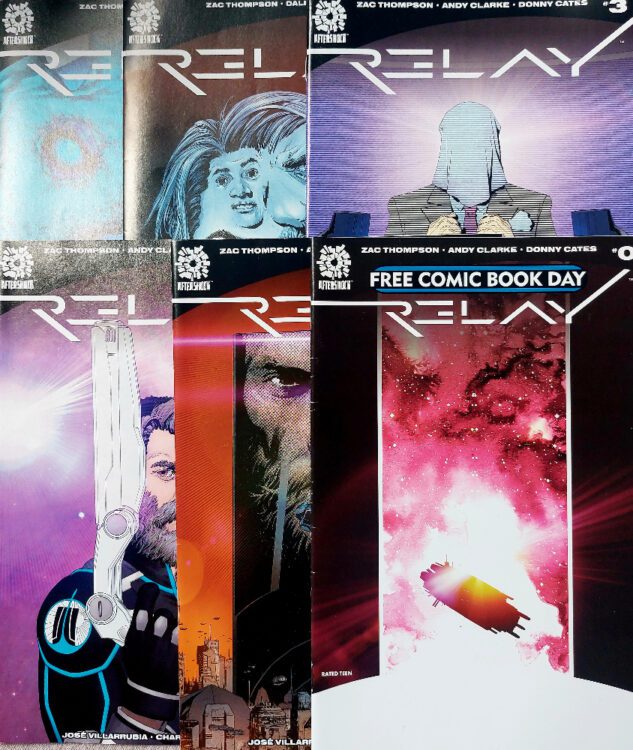
Relay #0-5
Credit: AfterShock Comics

Comic Number 206: Relay #0 – 5

Relay is another high concept science fiction mini-series that draws its inspiration from sources outside of comics. The central concept bears an uncanny resemblance to Stanley Kubrick and Arthur C. Clarke’s 2001: A Space Oddity. In fact, it’s almost as if writer Zac Thompson asked himself “What would happen if the human race went looking for the creators of the monolith?” As an idea, it is very engaging and, after the 0 issue, the examination of a world shaped in the shadow of a monolith and the need by some to find meaning to their life, is a very fascinating concept. Thompson makes his central protagonists curious about the world, like the reader is after opening the comic. This allows the narrative to explore elements of the world, giving the reader insights into the landscape and the people. As the protagonist is shaped by his experiences, the reader is led through the philosophies of the creators.

I enjoyed this series when it originally came out and make time to re-read it every so often. There is a suddenness to the end which makes it less than satisfying. It definitely leaves you wanting more. However, the first issue, the Free Comic Book Day 0 issue, is a magnificent comic by itself. Obviously, it sets up the 5 issue series, but the story this single issue tells is compelling and thought provoking. It questions the birth of religions and hints at the consequences of those belief systems. It has a lot to say for such a short comic.
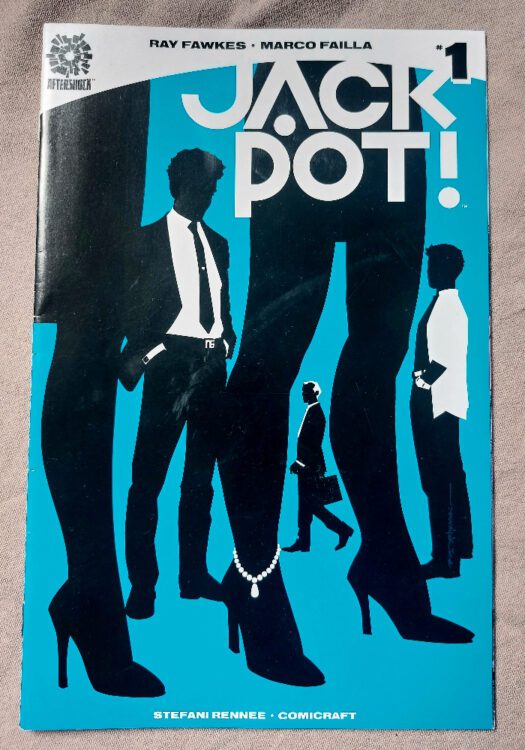
Jackpot #1
Credit: AfterShock Comics

Comic Number 207: Jackpot #1

With a minor tweak and the removal of the final page, Jackpot #1 would be the perfect, one shot, heist comic. The set-up is simple and the plot unfolds at exactly the right pacing to keep the reader on the edge of their seat. There are a couple of tongue in cheek references to the heist genre and Ray Fawkes is clearly enjoying stirring his sense of humor into the mix. Together with the bold, clean lined artwork by Marco Failla, Jackpot is a cinematic piece of entertainment.

Ray Fawkes has, over the years, produced some challenging comic work. The titles where he works as both artist and writer, such as Intersect and In The Flood, play with the concepts of narrative and visual storytelling. There is no compromise to his vision and his experimentation produces stunning results. But he also knows how to maneuver around mainstream comics, bringing his experimentation to a wider audience. In comics like Jackpot, Fawkes initially produces an experience that is easy to access for readers. He adapts his style to the constraints of mainstream storytelling and acknowledges the popular culture he draws from, such as the Ocean’s 11 film series.

I was lucky enough to see him on a panel a few years ago and his excitement and consideration when discussing a single panel in a comic layout highlighted his attention to detail. He came across as motivated and elevated by the process of creating comics, even mainstream titles. And this positivity shines through in his work. You can’t go wrong with a Ray Fawkes comic.
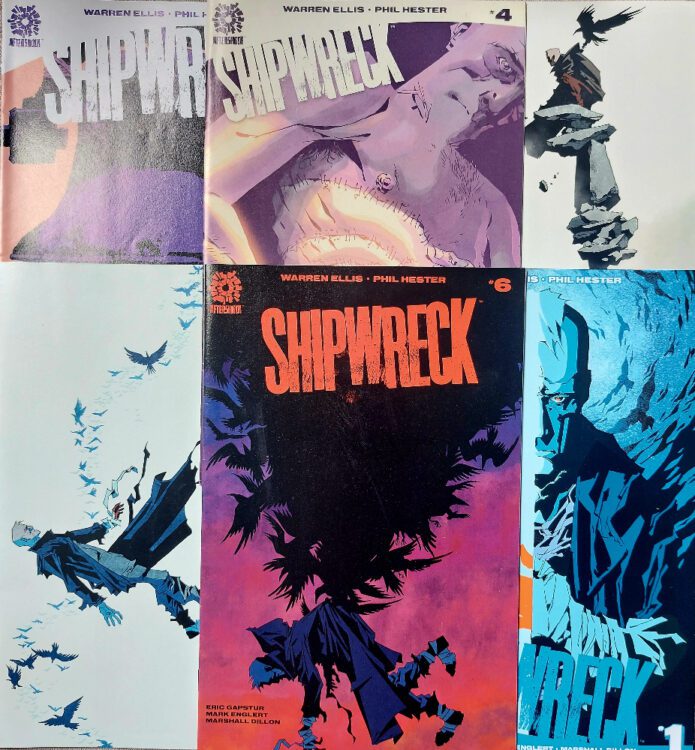
Shipwreck #1-6
Credit: AfterShock Comics

Comic Number 208: Shipwreck #1-6 (part 1)

There are a lot of really good AfterShock comics still to read. Stronghold, one of the best examinations of the superhero genre since Watchmen (yes, I said it) and Undone by Blood, one of my favorite comics of all time. However, it is difficult for me to skip past Shipwreck for a number of reasons.

Firstly: it was one of the first AfterShock comics I bought, and it impressed upon me the aims of the publisher. Here was a publisher committed to producing great stories and even better comics. They seem to give their creators freedom to experiment with their craft and do not conform to a house style. In 2016, when the first issue came out, this was a fresh and exciting publisher filling a gap that Image appeared to be losing at the time.

Secondly: The artwork, which I will talk about in a minute

Thirdly: At the time, I was a fan of Warren Ellis’ work. He had worked on a number of titles that I enjoyed. He wrote and created Lazarus Churchyard in the early 1990s which was one of my favorites from the anthology title Blast! More recently he worked on Moon Knight with Declan Shalvey, Trees with Jason Howard, and the start of The Batman’s Grave mini-series for DC.

I am going to discuss Shipwreck in two parts. I will look at the comic itself before discussing the writer in relation to his work.

The story’s protagonist, Dr Jonathan Shipwright, finds himself marooned on a new Earth after his experimental dimension hopping spaceship crashes on re-entry. The people he meets make little sense to him and the landscape less so. He is lost, searching for a way home but plagued by secrets that are revealed over the course of the six issues. The central character is complex, with the narrative often implying he knows less than he does and the reader is stranded in the topsy-turvy world desperately trying to find their feet.

The plot is superbly structured across the six issues and is definitely a title you should binge read. There are philosophical discussions about the nature of existence, the purpose of life, and the place of humanity in the world. But it is also a journey of self discovery as Dr Shipwright starts the series running from his life.

The narrative is excellent, however the artwork is better. Phil Hester’s pencils and Eric Gapstur’s inks produce heavy outlines and solid black shadows which gives the comic a distinctive look. Everything on the page serves a purpose and the layouts are extremely satisfying to read. The interchangeable panel sizes, often overlapping or bleeding to the edge of the page with no border, opens up the world and draws the reader in. The figure work is bold and over exaggerated, creating perfect on page acting for the characters. Facial expressions and posturing make this a highly emotive comic. The violence is unsettling and there are moments of grotesque beauty.

Mark Englert holds nothing back with the colors. There is such a variety to the color palette and there are shades I don’t think I have ever seen in a comic before. Englert creates an unknown world through his use of bold, flat colors fields. There is very little subtlety but this works magnificently with the tone of the narrative and the heavy black ink work.

From a purely visual perspective, Shipwreck is one of the best comics released in the last 10 years.

However…
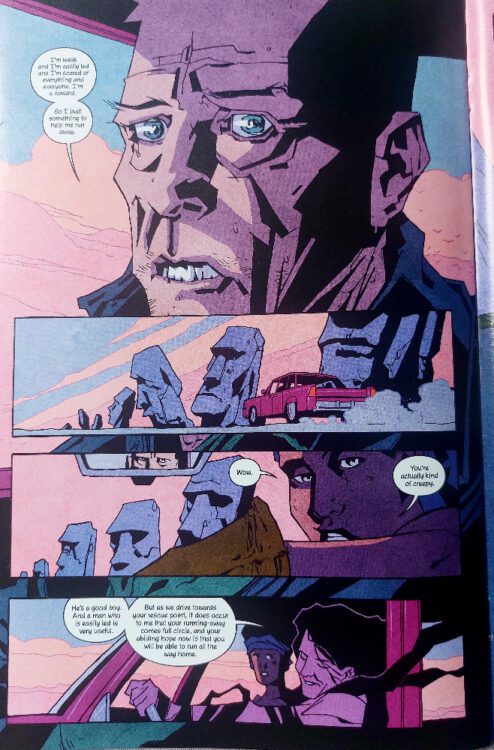
Shipwreck #5 page 18
Credit: AfterShock Comics

Comic Number 209: Shipwreck #1-6 (part 2)

There is an elephant in the room. Shipwreck is one of my favorite comics, as I’ve explained above, and it is something of a standard setter for AfterShock comics and indie/creator-owned comics in general of that time. However, you will not find anyone discussing it because of the writer’s behavior in his personal life.

In 2020, Ellis was accused of sexual coercion and manipulation by several women, and this led to a large group of women detailing an unsettling pattern of behavior. For information about the accusations and the reaction by the community, I recommend visiting the website SoManyOfUs.com. The outcome of the incident was that Ellis removed himself (or was possibly removed) from his ongoing comic productions and all of the titles he was working on ceased. The final issues of The Batman’s Grave were released as the issues had already been completed by that point but that was the end of his comic career to date.

Warren Ellis has not been convicted of a crime, but his actions have made it impossible for him to work in the mainstream comics industry. When it was, prematurely, announced that he was going to continue working on his crime comic Fell, the negative backlash forced Image Comics to release a statement confirming they would not be publishing the comic. The problem this creates for people studying, reviewing, and writing about comics is, how do you handle the back catalog of a problematic writer, like Ellis? He has worked on a vast array of comics, for most of the big publishers, and some of his work are classed as seminal comics work, or at least they were.

In her book Monsters: A Fan’s Dilemma, Claire Dederer asks the question “Can I love the art but hate the artist?” before explaining that, in the modern world, an artist’s behavior can become a stain that affects the audience’s view of the artwork retrospectively.

“The Stain — spreading, creeping, wine-dark, inevitable — is biography’s aftermath. The person does the crime and it’s the work that gets stained. It’s what we, the audience, are left to contend with.” (Dederer)

The simple solution is to ignore the work — pretend it doesn’t exist. In some instances this is easy to do. If the work has had no impact on the culture it is a part of then dismissing it from the discussion is the obvious answer. But more often than not, the artwork has already made its mark. Shipwreck, for example, may not be a historically groundbreaking comic, but it was fairly important to the rise of AfterShock Comics’ place in the market. Not only were they able to sell the comic on the reputation of the writer (who at that point was highly respected and influential), but the comic demonstrated the freedoms that the creators were given and the types of comic the publisher wished to be known for.

There is also another study potential. By re-examining the comic today, we could get a new insight into the character and the creator, just as Shakespearean plays are re-examined when new information is discovered about the playwright’s life. The text hasn’t changed but our perception of it will have.

Take the central character of Shipwreck, Dr Jonathan Shipwright, as an example. In the comic he is an intelligent man, one who is respected and admired by his peers. He has created something unique and sought after by others. He is also running away from his life, trying to leave behind the world for reasons that aren’t clear. In issue five, when Shipwright is asked why he developed a machine to help him escape his home, he replies, “I’m weak and I’m easily led and I’m scared of everything and everyone. I’m a coward. So I built something to help me run away.” In reply, Nina says, “Wow. You’re actually kind of creepy.”

In retrospect, the conversation here could be applied to Ellis’ own actions and engagement with them. He knows that he has behaved badly and not treated people with respect but the stance of “I’m weak” is his way of excusing his actions. He acknowledges that the protagonist, in this case a narrative representation of the writer, would come across as creepy to others but he is still the hero of the work, the misunderstood character just trying to find a place in the world. In issue six, he states, “I’ve been shown murders. Burials. Things that made no sense. Except here. They were the right decisions for here.” Again, this can be seen as an admission of guilt but with a caveat. The mistake wasn’t what was done, but the circumstances under which it occurred.

If you read Shipwreck knowing the accusations aimed at Ellis, the six-part story takes on a different life. It becomes a shielded confession and search for absolution. Dederer’s “stain” infects Shipwreck and gives it a more disturbing undertone. A fascinating journey of self discovery becomes an admittance of guilt but not an acceptance of it.

From a visual point of view, this is still one of the best comics in the last 10 years, and we can’t dismiss the artist’s work because of the writer’s actions. However, our understanding and reading of the comic will be forever stained and that stain changes our perception of the narrative.

For the next seven comics, I am going to look at some more controversial creators’ work and comics that themselves caused a stir when they were released. This means that there may be some triggering aspects to the comics discussed or material that some readers may find objectionable. Therefore I would recommend skipping the next installment if you want to avoid such discussions, but, please come back in a week or so, where I will discuss some more wholesome material.
Monkeys Fighting Robots Youtube

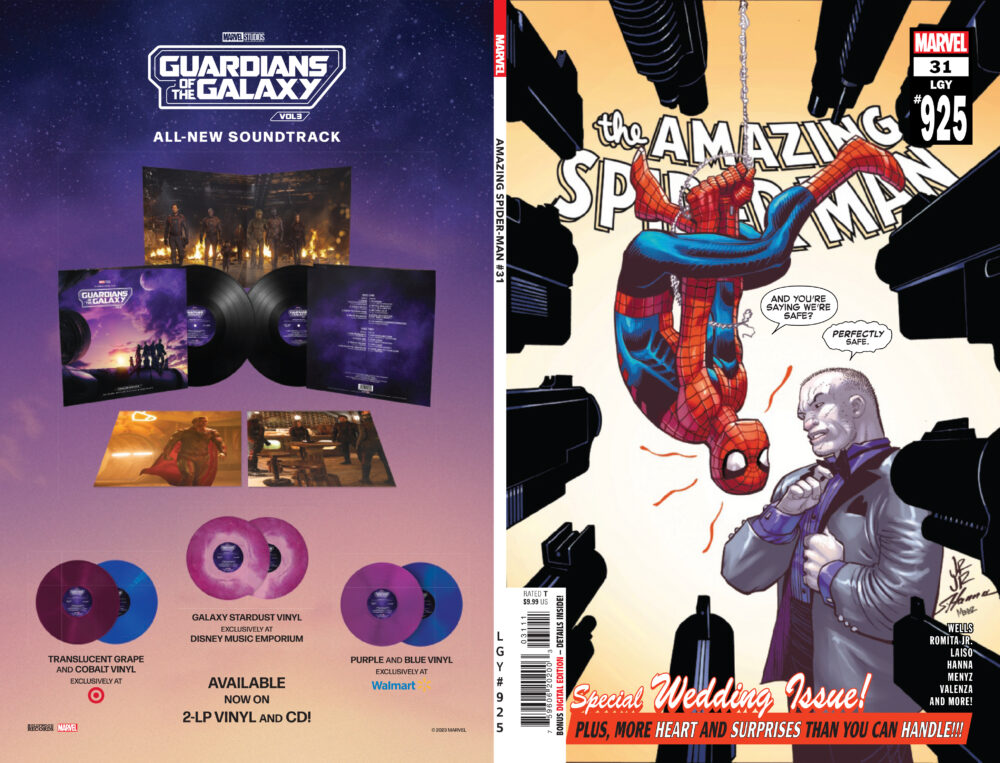
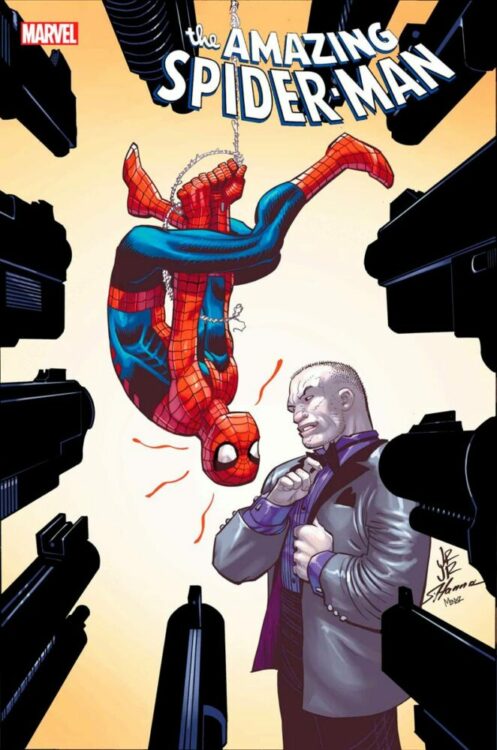
Marvel Comics Exclusive Preview: AMAZING SPIDER-MAN #31

marvel comics exclusive preview amazing spider-man

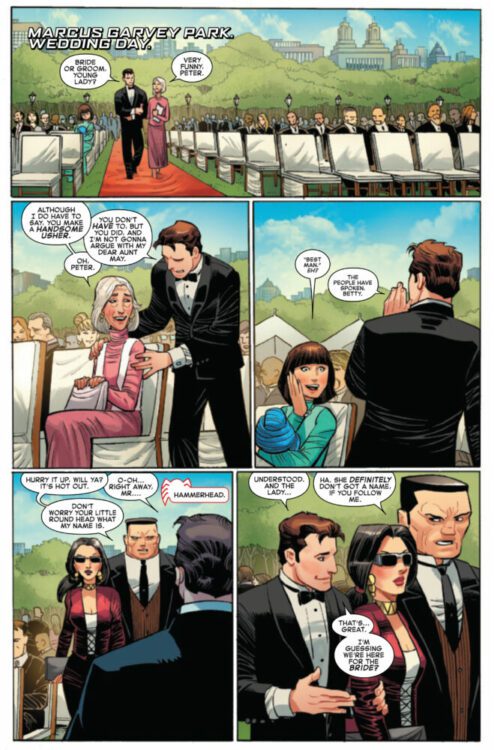
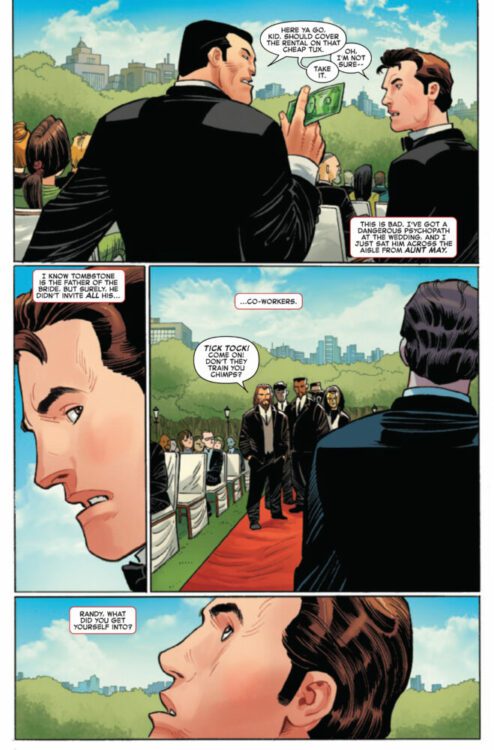
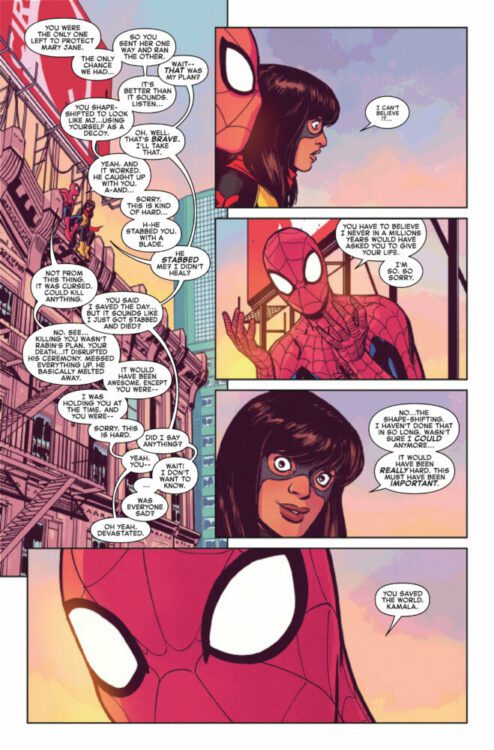
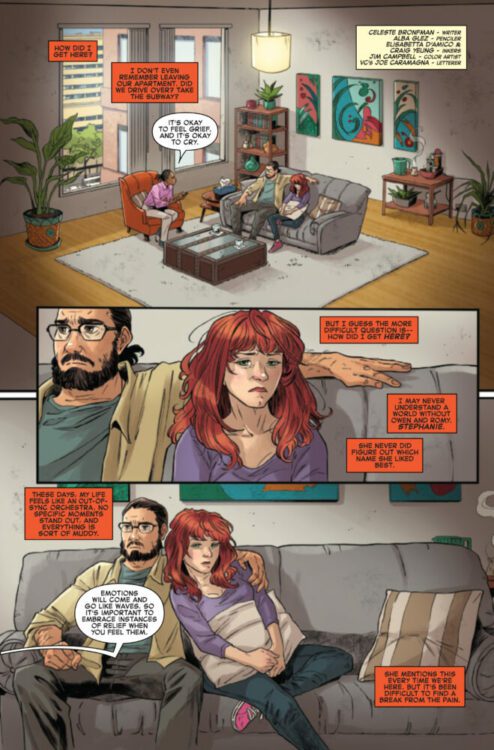
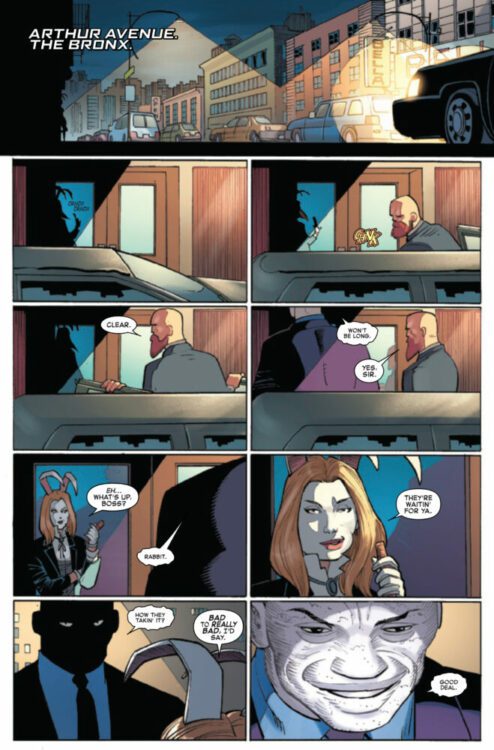
AMAZING SPIDER-MAN #31 hits your local comic book store on August 9th, but thanks to Marvel Comics, Monkeys Fighting Robots has an exclusive five-page preview for you!

About the issue:
SPECIAL OVER-SIZED ISSUE!

IT’S THE WEDDING OF THE YEAR!

Peter Parker is the best man, and Tombstone is walking the bride down the aisle! That’s right – Janice Lincoln and Randy Robertson are tying the knot, and there’s NO WAY all the crime bosses in NYC aren’t seeing this as an opportunity to off Tombstone. This story sets up our big Spider-Event of Zeb and Johnny’s second year on ASM, and that’s just the HALF of it! Also in this issue: bachelor/bachelorette parties, other ASM-story preludes, glimpses of some of the biggest unannounced Spider-projects and extra bonus awesomeness!

The over-sized issue is by a slew of various writers and artists contributing mainline stories, backups, one-pagers, and previews. Of the three stories previewed below, the main story is by writer Zeb Wells and artists John Romita Jr. (inks by Scott Hanna), Emilio Laiso, and Zé Carlos, with colors by Marcio Menyz and Bryan Valenza; the Ms. Marvel story is by Wells and artist David Lopez, with colors by KJ Diaz; and the Mary Jane story is by writer Celeste Bronfman and artist Alba Glez, with inks by Elisabetta D’Amico and Craig Yeung, and colors by Jim Campbell. All three of these stories are lettered by Joe Caramagna, and the main cover is by John Romita Jr., Scott Hanna, and Marcio Menyz.

Check out our AMAZING SPIDER-MAN #31 preview below:

marvel comics exclusive preview amazing spider-man

marvel comics exclusive preview amazing spider-man

marvel comics exclusive preview amazing spider-man

marvel comics exclusive preview amazing spider-man

marvel comics exclusive preview amazing spider-man

marvel comics exclusive preview amazing spider-man


Are you reading AMAZING SPIDER-MAN? Sound off in the comments!

Monkeys Fighting Robots Youtube

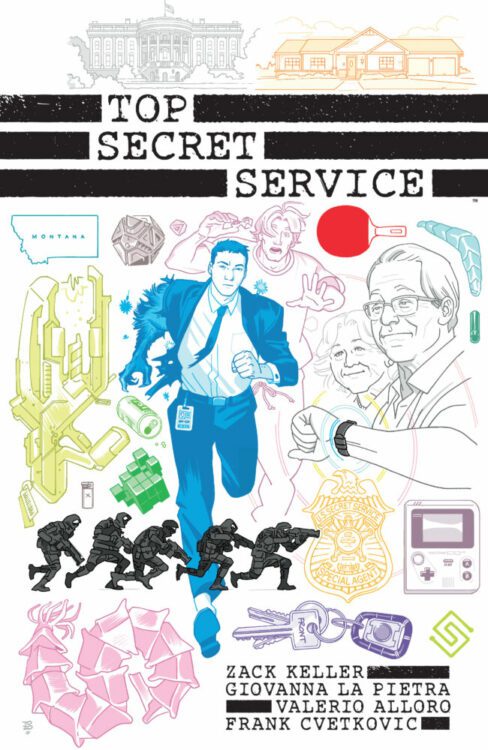
Exclusive: Action, Comedy, and Aliens Abound in Zack Keller and Giovanna La Pietra’s TOP SECRET SERVICE

top secret service dark horse comics exclusive announcement zack keller Giovanna LaPietra

Monkeys Fighting Robots is pleased to announce TOP SECRET SERVICE, an upcoming graphic novel from Dark Horse Comics. The exciting new book is by writer Zack Keller (Creeping, Cuphead, Hotel REM) and artist Giovanna La Pietra, with colors by Valerio Alloro, and letters by Frank Cvetokovic.

About TOP SECRET SERVICE:
After achieving their lifelong goal of becoming U.S. Secret Service Agents, best friends Chris Lu and Blake Sansome are not assigned to protect the current president, but instead a retired ex-president enjoying the quiet life on his Montana ranch. The rookie agents hate their boring assignment far from the high-profile action they crave… until an elite hit squad assaults the house. They soon learn that the kindly old ex-president was actually involved in a world-altering government conspiracy covering up alien contact. Now, people have come for the secrets only he knows… and the dangerous technology the aliens left behind.

Dark Horse boasts that the “thrilling, action-packed comedic adventure” is “perfect for fans of 21 Jump Street and Men in Black.”

TOP SECRET SERVICE will hit book stores on January 30th, 2024, and comic shops the next day, January 31st. It’s available for preorder now.

Check out the cover by Tonci Zonjic right here:

top secret service dark horse comics exclusive announcement zack keller Giovanna LaPietra


Are you going to pick up TOP SECRET SERVICE when it hits shops in January? Sound off in the comments!

Monkeys Fighting Robots Youtube

Interview: Geof Darrow Talks SHAOLIN COWBOY: CRUEL TO BE KIN And Having A Pet Alligator

geof darrow shaolin cowboy cruel to be kin

The SHAOLIN COWBOY: CRUEL TO BE KIN hardcover hits comic shops August 9th, which makes this the perfect time to revisit our interview with the Cowboy’s creator, cartoonist Geof Darrow!

We spoke with Darrow back when the first issue of CRUEL TO BE KIN was coming out, and the conversation took us all over the map: from the Cowboy and Darrow’s overall creative process, to Akira Kurosawa films, and even stories regarding the cartoonist’s real-life pet alligator his family once kept.

About the book:
In order to keep a newborn Komodo dragon from joining the endangered species list, the Shaolin Cowboy must first make him an orphan and then adopt him into the ways of the “Intercepting fist” to keep their road trip from turning into roadkill. When social distancing isn’t enough, the Cowboy has plenty of booster shots and jabs to keep a new army of foes, both new and old, from turning the situation from ugly, to bad, and no good.

“If Sergio Leone, Tsui Hark, Stephen Chow, and Sam Raimi could somehow have a child together and then disavow it, this book would be it . . . maybe.” – Geof Darrow

Thanks again to Geof Darrow for talking with us.

SHAOLIN COWBOY: CRUEL TO BE KIN hits bookstores August 8th, and comic shops August 9th.

Monkeys Fighting Robots Youtube

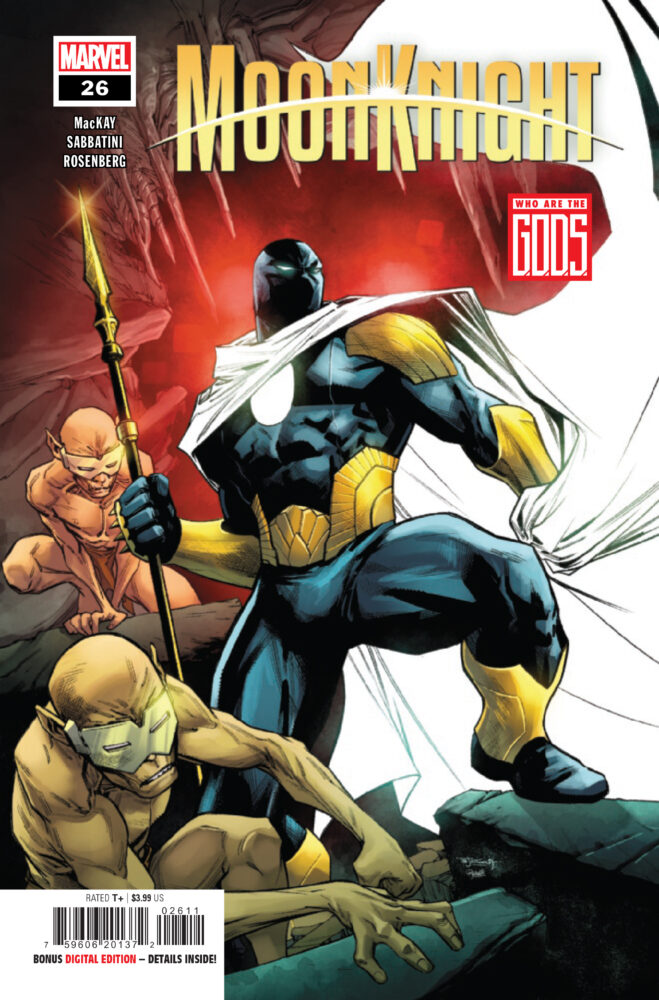
Marvel Comics Exclusive Preview: MOON KNIGHT #26

marvel comics exclusive preview moon knight

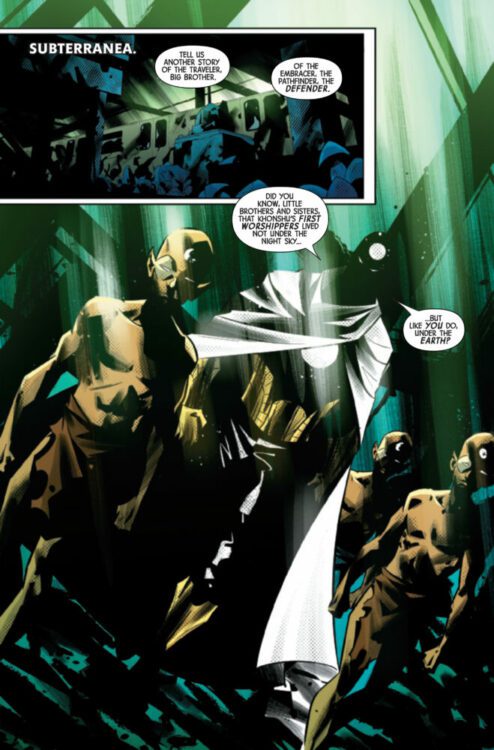
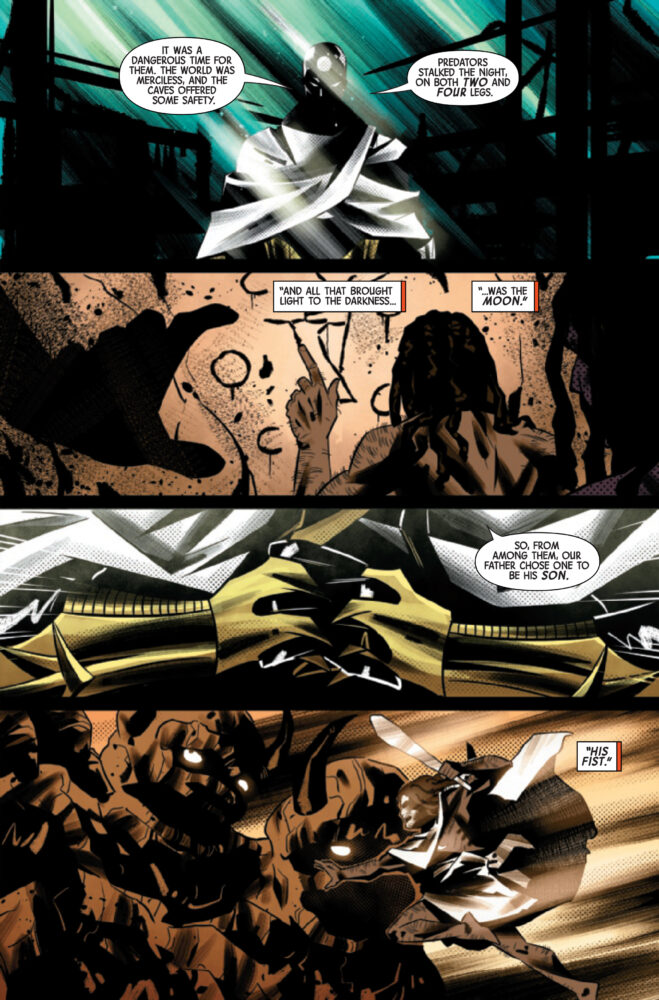
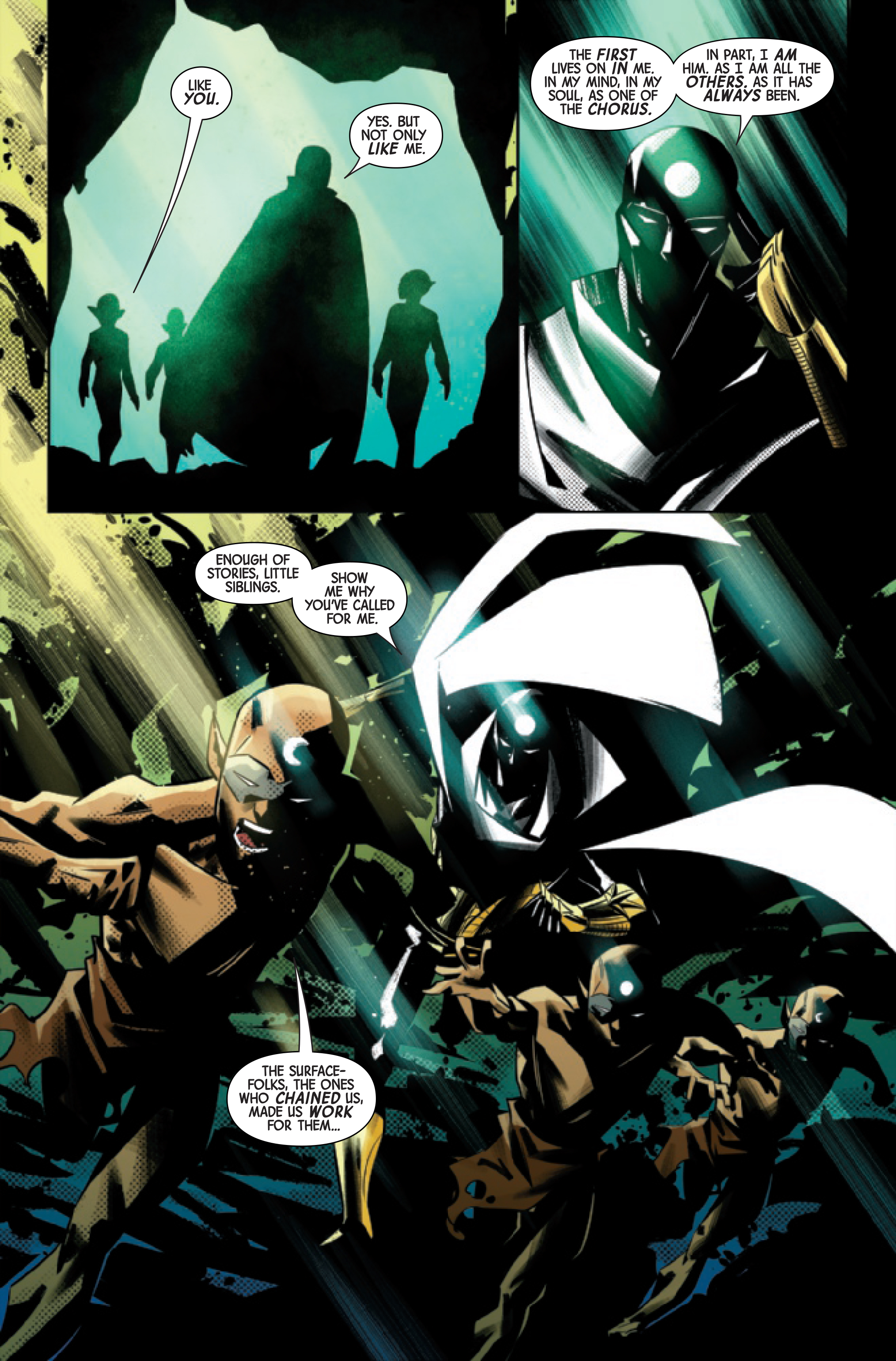
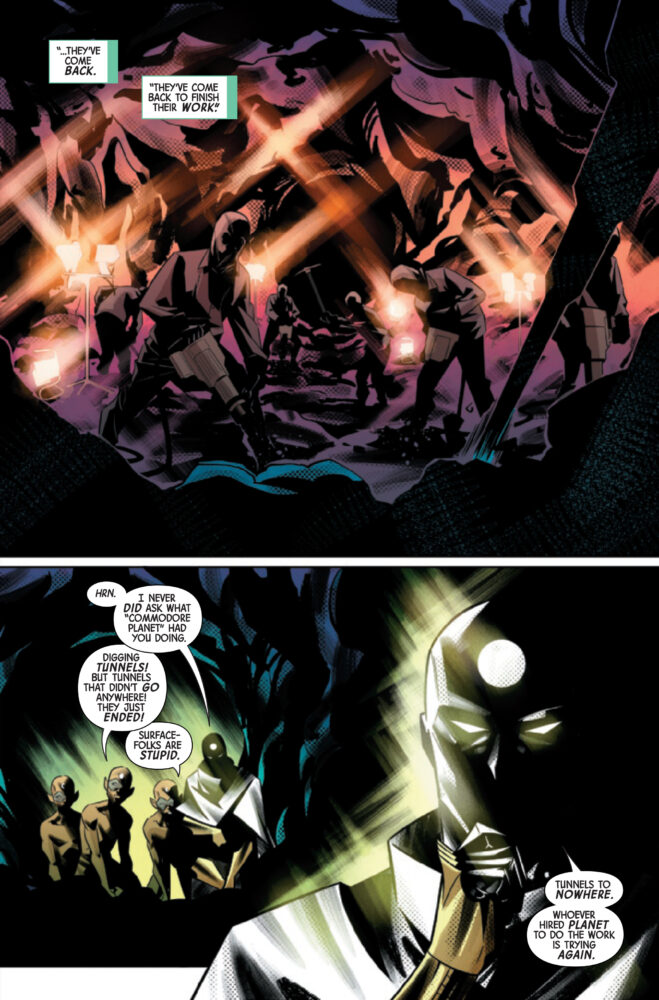
MOON KNIGHT #26 hits your local comic book store on August 2nd but thanks to Marvel Comics, Monkeys Fighting Robots has an exclusive four-page preview for you!

About the issue:
While Moon Knight is dealing with the apocalyptic events of MOON KNIGHT #25, what of Hunter’s Moon? Khonshu’s faithful Fist leads new converts to war, but how exactly was his most recent resurrection flawed, and does this new weakness spell doom for Dr. Badr?

PLUS: A bonus page written by Jonathan Hickman – WHO ARE THE G.O.D.S.?

The issue is by writer Jed MacKay (with a special G.O.D.S. page written by Jonathan Hickman) and artist Federico Sabbatini, with colors by Rachelle Rosenberg, and letters by Travis Lanham. The main cover is by Stephen Segovia and Rachelle Rosenberg.

Marvel is building up to the death of Moon Knight this fall. This October, Moon Knight #28 will kick off “The Last Days of Moon Knight,” a three-part story by MacKay and Allesandro Cappuccio which will “be the culmination of Moon Knight‘s current era and the beginning of his next chapter.”

Check out our MOON KNIGHT #26 preview below:

marvel comics exclusive preview moon knight

marvel comics exclusive preview moon knight

marvel comics exclusive preview moon knight

marvel comics exclusive preview moon knight

marvel comics exclusive preview moon knight

marvel comics exclusive preview moon knight


Are you reading the current MOON KNIGHT run? Sound off in the comments!

Monkeys Fighting Robots Youtube

Self-Published Spotlight: BIG Big Bang Comics

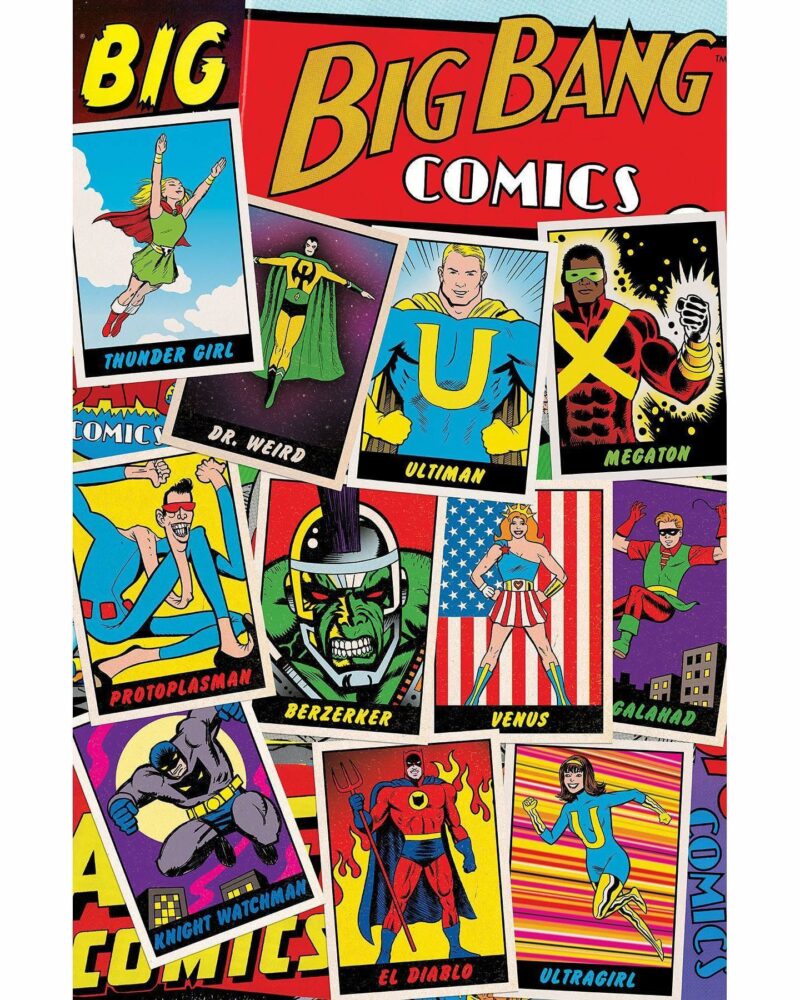
Jim Rugg Cover Art

Welcome to Self-Published Spotlight, a regular interview column where I will be highlighting self-published comics and the creators and small print publishers who make them.


Big Bang Comics has had a storied history in the world of comics. Born of a pure love for the medium, the concept created by Gary Carlson and Chris Ecker has grown throughout the years to become bigger, better, and bolder. So when comic critic and journalist Michael Fitzgerald Troy launched a Kickstarter campaign for an oversized Treasury Edition style collection, I knew I had to learn much more about it. Michael, as he is on his YouTube Channel, MFTtv, was a deep well of knowledge and brimming with enthusiasm. So check out that chat and more importantly back this project so we can all have it in our hands!
Monkeys Fighting Robots: So Michael, tell us a bit about Big Bang Comics.

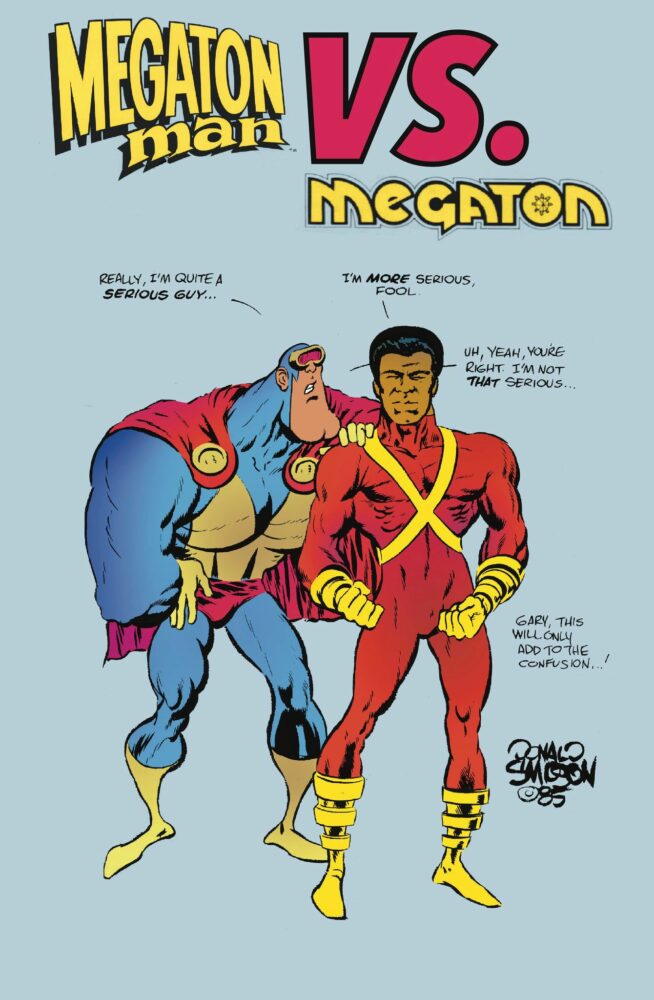
Michael Fitzgerald Troy: Big Bang Comics is one of the longest-running independent comic book publishers founded by Gary Carlson and Chris Ecker with a pure desire to make the kinds of comics they grew up loving. And you can really see the inspiration that went into the creation of the largely Golden And Silver-Aged flavored homage style characters. But they are much more than knockoffs and shouldn’t be dismissed as such. These characters have stood the test of time and were thoughtfully and lovingly created by Gary and Chris. Big Bang started as Megaton that would through no fault of its own turn into a roughly 64-page annual anthology. Coming out basically when they could through grassroots publishing mechanisms. Megaton is especially noteworthy because it arguably had a hand in helping launch the careers of Erik Larsen and Rob Liefeld. Early versions of Savage Dragon and Youngblood make their first appearances in Megaton comics-promoting Rob Liefeld to coin Gary Carlson “The Grandfather of Image Comics.” Eventually, Gary and Chris wanted to focus the shift to the more Silver and Golden age characters they loved so much and Big Bang was born! After varying publishing deals and a stint at Image Comics Big Bang has continued publication mostly through Indyplanet where you can find an extensive backlog of Big Bang Comics.

Art by Dandy Don Simpson
MFR: How did you get involved with this project? How and when did it start?
MFT: When I interviewed Gary (Carlson) for my YouTube channel (MichaelFitzTroyTv) it occurred to me that it was kind of a shame that this humble legend in the comic industry was relegated to print on demand. Arguably, there’s nothing against it-it allows Big Bang an affordable platform to continue publishing. I just thought they deserved something more. Something special. And that’s where my BIG Big Bang Comics Pop Art anthology tribute was born! From my big, gigantic, artistic ego. I’m a cartoonist myself and definitely have a pop art slant. I was impressed by a lot of the artists I’d seen out there and actually had the pleasure to work with on some fan projects and whatnot. I especially loved what Eli Schwab at Cosmic Lion Productions was doing. His Ghost Agents project with Rocko Jerome seemed like a perfect model for what I wanted to do for a Big Bang tribute. A gorgeous art-focused treasury-sized format. Plus they do a Kickstarter to pay the artists. Seems like a good plan. Plus Big Bang had never done a Kickstarter before and they seemed open to it. I knew it had to be something really special to warrant a Kickstarter and let me tell you- THIS is something special! I thought a treasury-sized anthology with some of the most amazing up-and-coming artists that I know is the book I want to read. So that’s the book I’m going to make. I pitched it to Eli, I pitched it to Gary- they all said “yes” and here we are. And ego may have been the impetus but it’s far from the muse.
MFR: How did you score that sweet Jim Rugg cover?
MFT:With great power comes great responsibility” and that’s in the DNA of every tried and true fanboy. I knew it had to be special. I knew we needed a little something, something. I knew we needed Jim Rugg. So, luckily I had a good in with Jim having interviewed him for my channel and I basically told him why he was the one that had to do the cover. And thankfully, he enthusiastically agreed! And gave us this beautiful Silver-Aged flavored “Baseball Card” style cover. He brilliantly suggested we turn into a trading card set as an incentive for the Kickstarter. (Which of course we did!) and that really speaks to the thoughtfulness you’re going to get out of a Jim Rugg cover. I couldn’t be happier-and Jim was drawn in by the treasury format and the chance to draw classic superheroes. Something he rarely does. As an editor that was oddly satisfying for me. To have it be meaningful and not just a paycheck!
MFR: There are multiple covers correct?

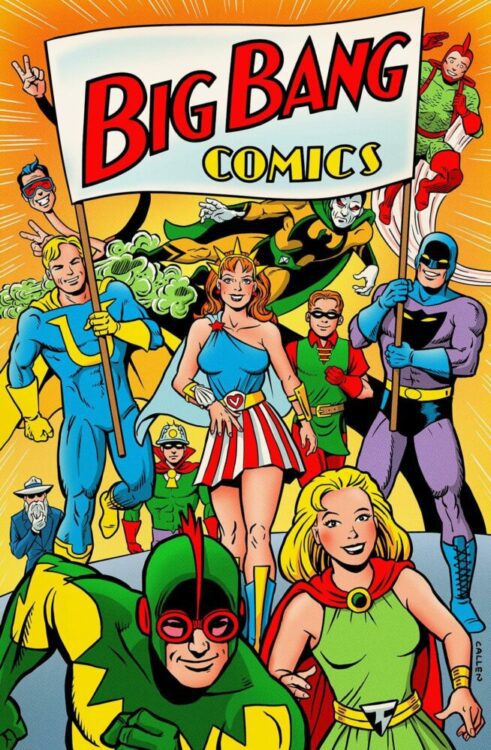
MFT: Yes. For the Golden Age fans, we have an amazing “chase” variant cover by the ever-amazing Kerry Callen. That was another satisfying moment in the endless list of mounting satisfying moments from working on this project. Apparently, Gary Carlson has been wanting to work with Kerry for years and it’s been a dream come true for him to see Kerry’s depiction of the characters he created. I was beyond the moon to be able to facilitate that. I actually have another Big BBC contributor Sam J. Royale to thank for the suggestion.

Chase Cover Variant by Kerry Callen.

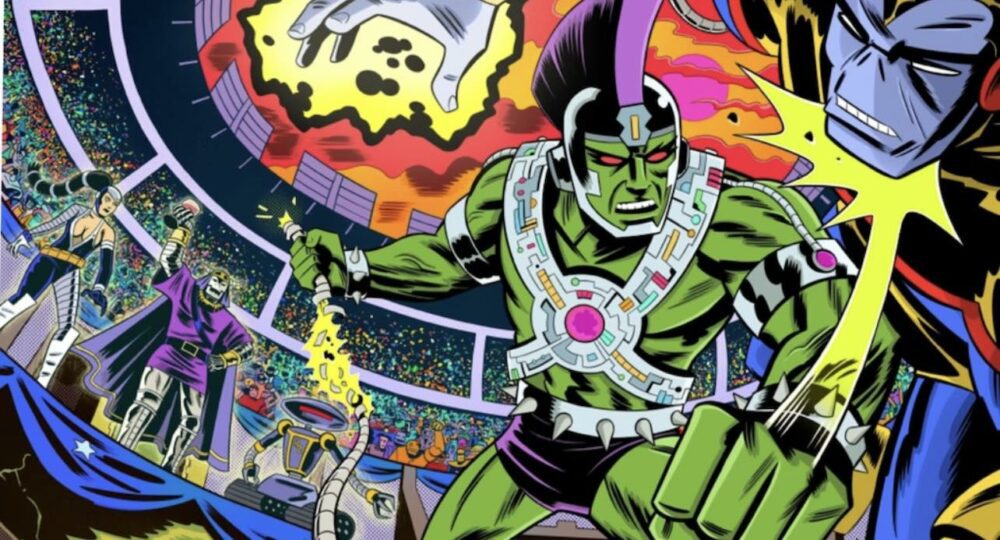
MFT: Another major score for the book is Nick Cagnetti who has supplied the jaw-dropping Berzerker centerfold you’ll see associated with the campaign. I recently fell in love with Pink Lemonade and also interviewed him for my channel! See kids- if you want to work with the top talent in the Biz you need a YouTube channel or shameless tenacity. Fortunately for this project, I have both. Luckily Nick said yes. I gave him the tiniest thumbnail and he gave me this epic sweeping two-page spread that would make Erik Larsen jealous! And low-key- I hope it does! Rounding out the power players is Mahdi Khene. One of the most unique voices in indie comics right now. I was aware of Mahdi before Bootleg Spider-Man made him indie famous and I’m so happy we have him in the book. Another example of how perfectly this project came together. I told Mahdi I wanted him, period. And I held my breath. And he gave me the most amazing dead-on pitch-perfect Big Bang pin-up. It really speaks to his voice as an auteur to be able to mail the character so concisely. And so horribly really. He did rip off Ultiman’s face after all. To his credit Gary loved and man was I relieved!
Art by Nick Cagnetti
MFR: What’s it been like working with Gary, who seems like one of your heroes?
MFT: Gary has been the Jiminy Cricket in my ear the whole time. The real guiding force. I’ve taken delicate care to ensure that he approves of everything we’re putting in the book. He trusted the right guy I will tell you that. I have been so protective of these characters.
MFR: What other talent have you brought into the book?
MFT: So, after all the name-dropping- I have to say that there are a number of talented up-and-coming artists involved in the project. Some of the most unique and talented cartoonists I’m either a fan or friend or thankfully in many cases both. And it’s not just pin-ups. While the book is very art focused and takes full advantage of the treasury-sized format I wanted it to have substance too. So we have a handful of really great short stories featuring all the Big Bang classic heroes. The list of creators is crazy good! The aforementioned Sam J. Royale, Milo Trent, Jason Foster, Mike Madrid, Jason Quinones, James WINDSOR-Smith, Evan Quiring, Kasey BOUCHARD, The Q Method, Steven A. Wilcox, Bill McEvoy, and many more. A special shout out to the amazing Barry Tan who started with 2 pinups and now has 6! He also gets special credit as my personal therapist through this process. It means more to me than he’ll ever know. And I got to color some of his work. I’m actually acting as a colorist on a lot of the book. I’m kind of known for my wild color palette so I’m hoping some of that shines through. My battle cry throughout has been “Brignt! Beautiful colors! Bright beautiful superheroes!” I want this book to be beautiful not dark and muddy. It’s a superhero comic book for the love of Pete! I approached the stories with a “do no harm” approach. Out all the toys back in the sandbox unscathed. I mean except for Ultiman’s face. The stories aren’t necessarily canon but could be. There’s a great story with Megaton and Ultragirl that is a little squirrelly on continuity but it’s beautifully drawn by Christian Meesey so I had to make it work. There’s so much goodness here! For all comic book fans. For lovers of beautiful art and classic superheroes with a pop art twist. This book is incredible. There’s nothing else like it. A 100-page plus treasury-sized anthology with some of the top talent in the biz bringing nothing less than their A game. I’m so proud of this book. I hope it’s a huge Kickstarter smash and we get to do a sequel!

Make sure you support BIG BIG BANG COMICS! Click that link! 

Monkeys Fighting Robots Youtube

Self-Published Spotlight: Suspense Stories of The Silent

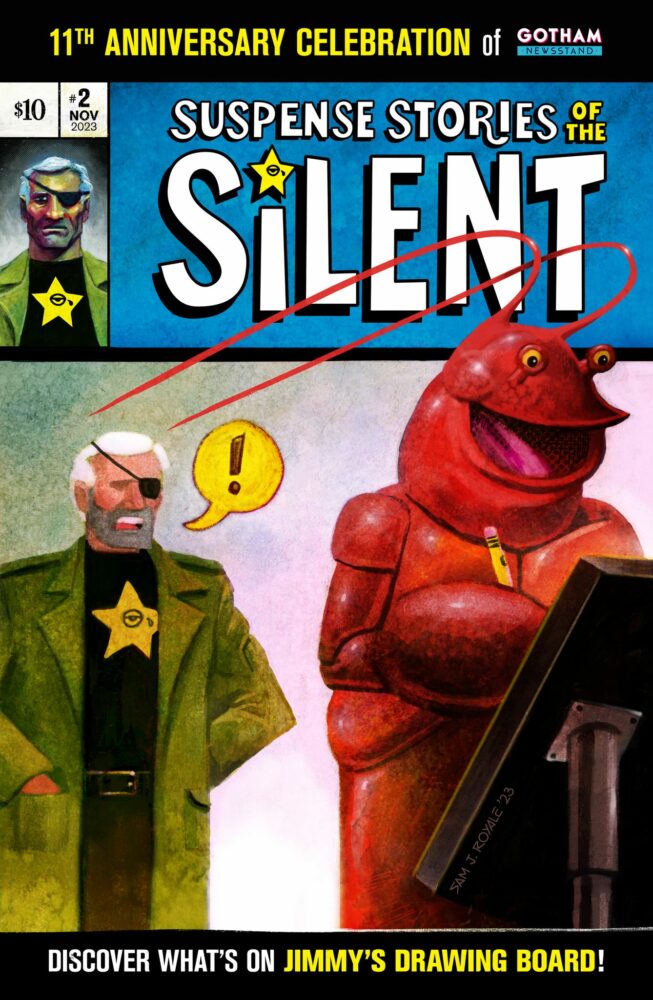
Cover to Suspense Stories of The Silent #2.

Welcome to Self-Published Spotlight, a regular interview column where I will be highlighting self-published comics and the creators and small print publishers who make them.


Peter Hensel has worn many hats in the comics industry. Starting as a fan, he moved into becoming a successful retailer and, most recently has jumped into the creator pool with his book, Suspense Stories of The Silent. Peter’s passion for comics has always been evident in our conversations, so when he set on creating his own project, I knew I wanted to talk to him about it. I think you’ll find Peter (much like I do) to have a lot of insight into comics and what makes them so great. So check out our chat and then make sure to support the Kickstarter campaign, so we can all get this book in our hands!

Monkeys Fighting Robots: So Peter, what’s your comic book origin? How did you get into comics?
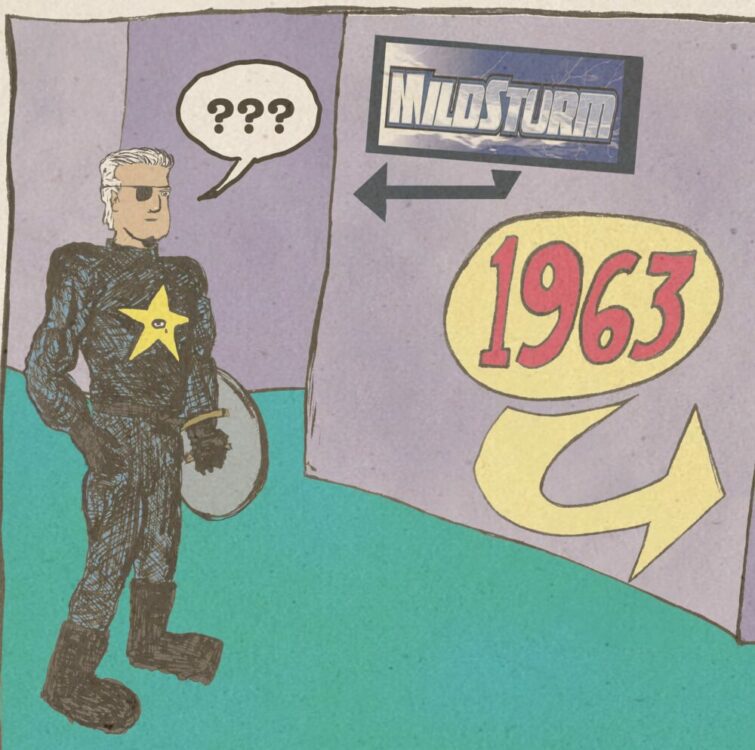
Peter Hensel: I always knew that the real world just wasn’t for me. Virtues like truth, and compassion for those weaker than me, these values always felt within me, and comics always taught and reflected the goodness I wished the real world held. For me I’ve always been into comics, in my earliest memories I was already a fan of Sonic (The Hedgehog) comics. I guess the deeper question would be how did I get into the real world because I’ve never felt not into comics. Growing up, I never really did have schoolyard friends. I played Magic: The Gathering, though, and pretty much grew up in comic and card stores. I volunteered for tournament help and got paid in store credit for comics, so as I was a teenager it just always felt like I had a stack of comics I was waiting to read, and going to the library, I found my comic reading never had to end if I had the will to make one trip to the library! Which I could bike to, so I really never did run out of comics to read. Still, have some. I got into drawing comics after I wrote several sci-fi novels and self-published them. I enjoy writing prose, I really do, but in my entire prose writing, I did feel like I was just compensating for not knowing how to draw things. And so, my first gig actually making comics was William Hoffknecht of 100% Comics offering me the chance to write my own 1963-universe licensed story! I learned how to color and letter after receiving the first pages, and have started to draw on my own, too. Although don’t worry, Suspense Stories of The Silent is only gonna have a couple of doodles from me! A whole bullpen worth of artistic talent is bringing my written vision to life.

MFR: You’re also a comics retailer, with your own shop. How did you end up running a comic shop? And did that affect the way you saw the medium?
PH: Well, the shop was born out of two moments. One was me genuinely wanting to support and influence the whole medium, not just as a customer deciding to purchase individual copies for myself, but as a store ordering multiple copies and supporting underground, less well-known titles. I want the shop to be a place where readers can discover things they’ve never encountered before. This was a fantasy I had for many years before actually opening up. The other motivating factor was, at one point in my early 20s, I had way too many back issue boxes. They started taking up the living room of a shared apartment instead of just my bedroom, so instead of having roommate issues, I did bring them to my first convention and then got a storage unit right after so my comics wouldn’t take up my whole life. The store came two years later when my Life Partner believed in me and a stable space enough to push me to lease my first very small month-to-month space in a San Antonio Mall. Through my time as a retailer, I’ve seen almost every type of comic either offered as a new one to order or in a box from someone trying to sell their collection to the store. All that time spent observing them, I kept imagining a comic that hasn’t looked like any comic I had seen before. Suspense Stories of the Silent #1 is that Eldritch comic from an unknown universe.

MFR: So what exactly is Suspense Stories of the Silent? Do you have a Hollywood-style “elevator pitch” for our readers?
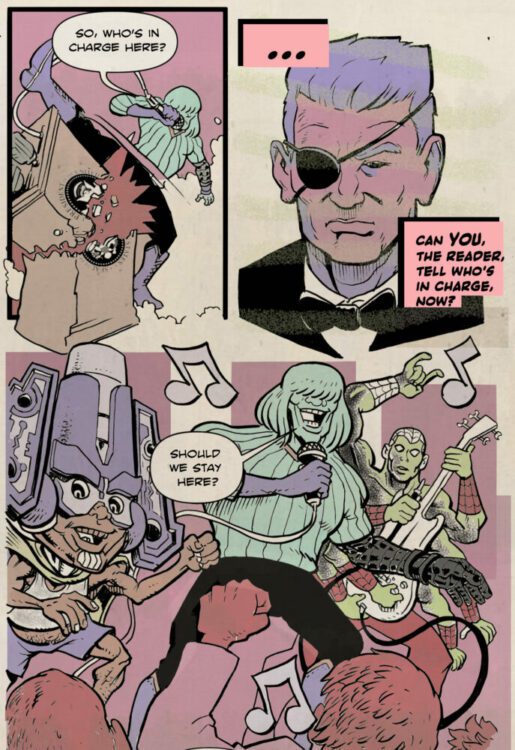
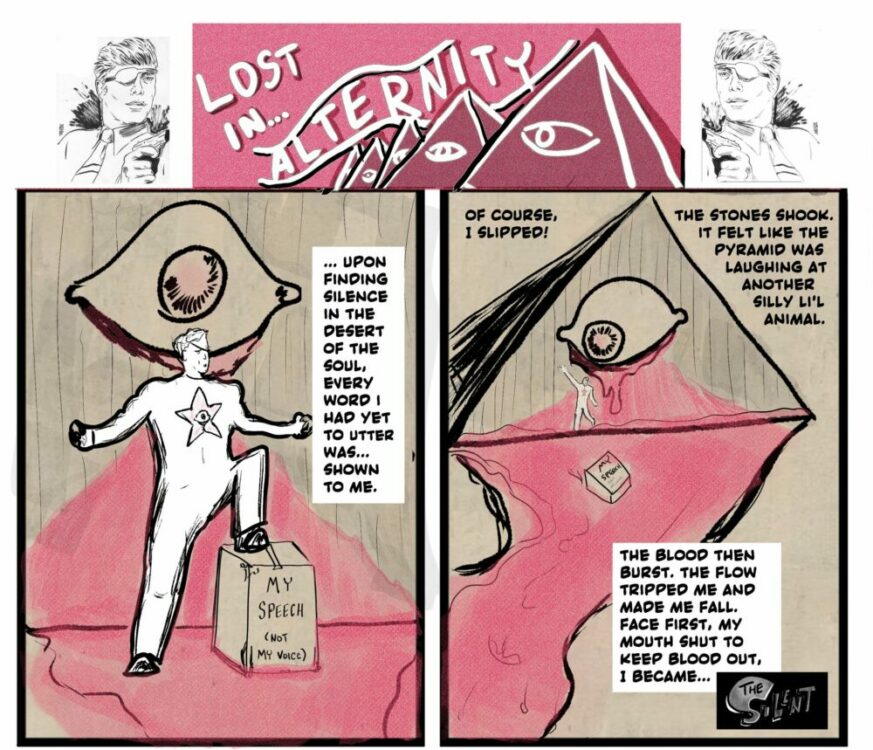
PH: It’s the debut of a character with ages worth of history. Three different eras of stories relate to the raw golden age origin, the fun and vibrant swing of post comics code silver age, and his cyberpunk maturity in a technological mystery. All of the stories pay attention to what suspense they leave the reader in, and really focus on the idea that a story needs to have an element of mystery and intrigue resolved by a twist ending. EC Comics’ short stories are a major influence on how these suspense stories try to tell as much with as little as possible. The Silent part does not mean the comics themselves are without words, but that the hero never does speak up and say anything. The people start to call him The Silent because he never provides any words, except to his young fan Gerald who grows up to become his superheroic companion that we meet in “Planet of the Sapes”. Unlike older EC comics, there is a clear narrative connection between all the stories, and it is intended for fans of bizarre bronze age back issues and extra especially meant for the smart and thoughtful Detective-like reader who appreciates subtle fantasies and obvious enigmas.

MFR: So once the idea was born, how did you go about getting the project started? What would you say was your very first step? And did have an A to Z plan from the beginning?
PH: In a group meeting for 100% Comics Giant Sized ’63 Special, some of the characters didn’t have licensing rights, specifically the Ultimate Secret Agent, so calling upon the Jim Steranko Death of Captain America arc where publicly the American hero dies, the alter ego still lives on, shifting identities. Immediately, realizing that Ulysses Samson Armstrong’s voice would be instantly recognized from radio and newsreels, we decided to call him the Silent Minority. I went on to make the giant-sized 63 story with him and his falcon-like sidekick as minor cameos, but the idea of a hero who aged throughout the 40s through the comics code and beyond stayed with me. I made a comic special about my store Gotham Newsstand as a fictional 1946 store that the Silent M helped save from a violent body-doubling speculator-type character, and from there I knew he was gonna have a life of his own. Initially, I thought the second comic would come quickly, but I realized it would be best to work ahead as it has a pretty spicy cliffhanger, so I’m already more than halfway done with #2, and this Kickstarter is to raise funds to offset print this series on old newsprint styled pages, instead of keep it a smaller run modern digitally printed comic. So this Kickstarter is about making this an ongoing series instead of a three-issue mini-series, too, by raising a lot of interest which is even more important than the money were trying to raise in this campaign. To answer the second part, I’d say I planned the whole story together a year and a half ago, yea. Making the art and all the pages is taking a great amount of time focusing on each aspect of it. I didn’t quite plan to meet as excellent and eager an artist to make #3 happen, and the many plot and writing contributions from my artists have been incredible visions that became the future.

MFR: What would you say is something new you learned about the medium by creating this comic? Like do you see it differently now?
PH: I had no idea of the tremendous amount of effort and revision that goes into every single page. On some of these pages, I dashed off a quick idea for a composition thinking about what issue #3 or #5 is gonna be like, but that random idea is so far away from now, considering the production time of the artists and the ability I have to raise or save personal money to pay them for their time… You really have to believe in the short little seven-page idea to see it through the many months from idea to the layouts to penciling to inking, then to lettering or coloring concerns. I learned to kind of sift ideas and leave some waiting, and to kind of reach for my own group of developed ideas when the time comes to go the studio with the artist and make what was loose and malleable into something molded and unchangeable. I initially learned how to color and letter my own pages to allow greater control and lower the costs of the project, but that has quickly become my own area of joy. Simply hand lettering some dialogue or finding the right way to shade colors on top of different colors, reproducing old school ben day dot coloring techniques with modern printing styles really has led me to see the old Copper and Bronze Age comics as something an intense amount of attention that many people gave. That sense of a letterer handling every page, then the colorist looking over everything too, really leads to more refined, elaborate pages, and I want to bring that sense of a whole group making a comic to these pages.

MFR: Let’s talk influences. Who are some of your favorite cartoonists? And since you found a love for lettering and coloring, do you have favorites in those as well?PH: Erik Larsen is my favorite cartoonist, of all time. Sometimes the stories are more about the set style, sometimes they’re talking heads exploration of a society with superheroes. They’re almost always funny, and each issue is a self-contained chunk of story that functions as its own moment and often reads differently in collected edition form. As an editor, Erik got lots of talent to tell his universe’s stories with the Image spinoffs Freak Force, Superpatriot, and Star, and in this first issue I function more as an editor overseeing his own creation than a full-on cartoonist. Although I did get nervous with this Kickstarter coming out and finished drawing a fourteen-page mini-comic story, I do want to cartoon, and visually I have tried drawing in the styles of Jaime Hernandez, butch guice, and Jack Davis to get a handle on anatomy, angles, and facial expressions before making my own pages. As a colorist, I learned a lot looking at the coloring of Cheis O’Halloran in Ice Cream Man. Using color shifts to convey the unreality of the Ice Cream Man encounters, or, sometimes, memories, delusions, temptations, and desires is all well done by establishing meaning behind background shifts and shifts in textures, among other decisions, too. You know, as a writer, W Maxwell Prince on Ice Cream Man and his other short works really inspired the emphasis on short forms, as well as Erik Larsen. The letterer I learned the most from is Tom Orzecowski and his amazing efforts in the Claremont X-Men at guiding your eye across the story with the design of lettering, sometimes foregoing captions and being able to capture different voices through different fonts and effects, too. For coloring though I spent a lot of time looking at a lot of older comics and how to emulate the Ben Day dot effects with many different layers of colored screen tone to achieve secondary colors and offset effects. Glynis Wein and Marie Severin are two of the best old-school colorists. They often color figures an unreal color, say orange when they erupt in anger, or maybe a chill. purple when they calm down. Or in memory sequences the backgrounds are red and all characters and foreground figures are light blue. They say a lot with simple color choices so the rest of the page’s elements can shine through.

MFR: Personally, I have loved seeing you grow as a creator. And it’s obvious you have a deep passion and understanding of the medium!
PH: Thanks for that, Manny. I started drawing in a Zoom ‘zine group across the screen from you and it means a lot you’ve seen the growth. 

Monkeys Fighting Robots Youtube

Project 365: One Comic Every Day, Week 29

The premise is simple: read one comic every day for the entire year. It seems like a simple task but there is no way that I read 365 comics last year, even if you count the individual issues in collections. So, this year, I am committing myself to this reading challenge, in the hope that I can broaden my reading habits and fully engage with my favorite hobby again.

Some weeks are busier than others, and it can be difficult to find time to read some comics, never mind write about them. This week was all about catching up on new comics, comics that have been released in the last few weeks that I haven’t gotten around to reading yet. One of the reasons they start to build up is the aforementioned time issue, but another factor is that I’m reading more and more in a digital format these days. I barely go to a comic book shop, and I buy new comics even less. I’m lucky enough to have access to a few preview comics and our library has some good digital content so I don’t need to sign up to Comixology or Marvel Unlimited.

Although, I find it harder to read comics on a computer than I do picking up an actual physical copy. There is something to be said for the materiality of a comic book. The physical weight seems to imbue the narrative with metaphysical weight and makes the reading experience more real. A computer is artificial in nature and, for me at least, the screen creates a distance between myself and the comic, like a realization of the fourth wall. I find it harder to become immersed in a comic on a computer. The knock on effect is that I put off reading the digital comics building up in my special folder marked “comics.”

Of course, the other problem I have with a lot of new comics that I read is that they just aren’t very good. Imagine flicking through the television channels and there is nothing but Police Procedurals on. One or two of them might be worth watching, another few might do if you can’t find anything else, but the majority aren’t even going to make you stop flicking. That’s how I feel about the comic industry at the moment. The main publishers aren’t putting out many titles that I’m even intrigued by, never mind ones that I find irresistible.

It happens with comics. It comes in waves. I’m not saying there aren’t any good comics at the moment, I’m just saying it’s harder for me to find ones that I’m interested in. Maybe San Diego Comic Con will bring a slew of new title announcements to get my engines revving again.

Planet of Apes #4
Credit: Marvel Comics

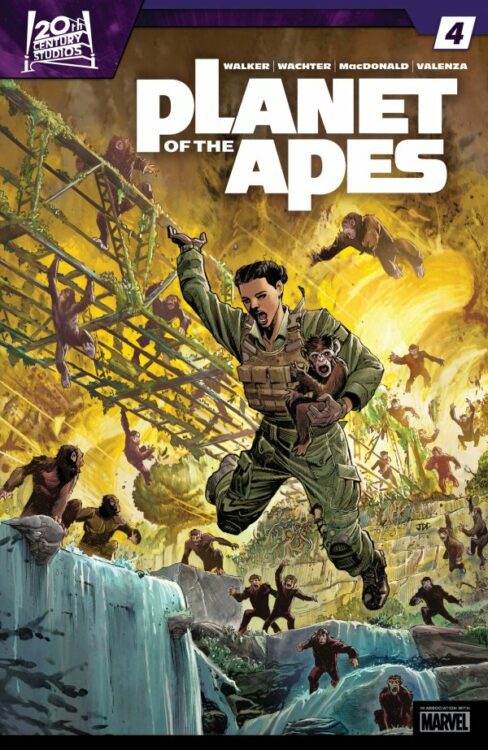
Comic Number 196: Planet of the Apes #4 (Marvel)

From the ending of this issue, I am led to believe this is the penultimate issue. I even started to search for the Marvel solicitations to see if there was an issue after number 5 but the whole experience was bringing out the grumpy old man within so I gave it up. I have better things to do with my time.

Unfortunately, reading this iteration of Planet of the Apes is not to be considered as better things. It has been a disappointment so far. This entire issue is a fight on a boat with a voice over conversation that is, in essence, simply an information dump. The artwork is okay, and displays some moments of impressive action but there’s no depth to it. No wonder or excitement. Even the badly translated Indonesian PotA comics have a hook to get you reading. They may be dreadful in a number of ways but they also have a sincerity and a clear love of the franchise. This Marvel comic feels like a standard Marvel comic with all the trappings that come with being published through a massive corporation. I have read good things from David F Walker previously but this series has been a missed opportunity to really re-light the Planet of the Apes comic series. BOOM! Studios did a fantastic job with the franchise, and historically, Marvel opened up the simian world. Where previous series have been the chimpanzees and orangutans, developing ideas and creating political intrigue, this series is the heavy handed gorilla, bashing its way through the narrative in the hopes that it will come out on top at the end.

The Savage Strength of Star Storm #2
Credit: Image Comics

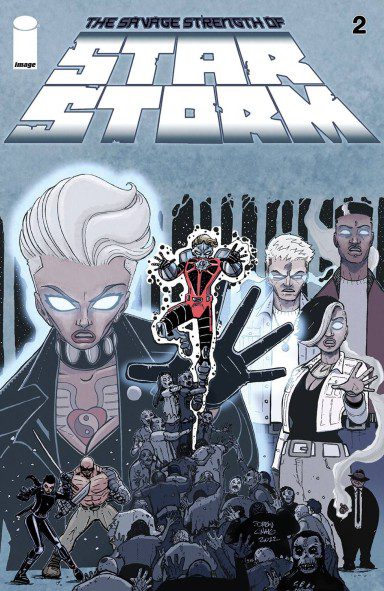
Comic Number 197: The Savage Strength of Star Storm #2 (Image Comics)

The series opener for Star Storm didn’t impress me at all. But occasionally, a bad first issue can lead to something greater. Issue 1 may have just been finding its feet, working through the kinks etc. Unfortunately, this second issue hasn’t succeed in finding its way.

The plot is very disconnected, with narrative elements appearing and disappearing with no explanation. The opening sequence is heavy with exposition that sets up the story, allowing the characters and the action to move from a funeral to a zombie attack via a family drama involving a vigilante mob princess. With more consideration, the narrative could have flowed more smoothly and the onslaught of story threads might have been less jilting.

The artwork doesn’t help the fast pace of the narrative, either. For large parts, the characters are quite static and inhabit awkward panels. For example, in once scene, two characters have a conversation in a panel while all of the other characters are lined up as if they are waiting for a bus. There is no visual or narrative need for such a composition and it pulls the reader out of the story. There are also some inconsistencies within the artwork, such as characters clothes changing between panels when there was no indication of time passing. This also makes it difficult to follow the fast flow of this story because, as a reader, you are stopping to re-read sections for narrative clarity.

I found this comic to be a frustrating read. This is a story brimming with over the top characters and an outlandish B-Movie plot, which could be very entertaining. Unfortunately, those elements are lost in a visual style that doesn’t embrace the unique qualities of modern comics and a narrative that doesn’t take the time it needs to introduce the different elements. At the moment, Star Storm has all of the toys out of the box but isn’t sure which ones it wants to play with.

Con & On #1
Credit: Ahoy

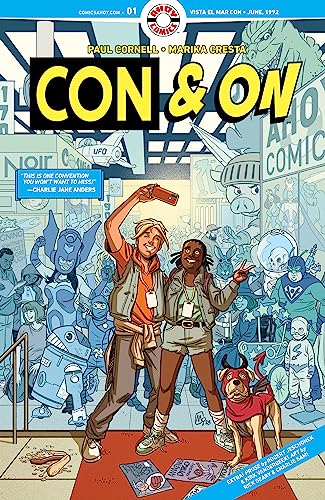
Comic Number 198: Con & On (Ahoy)

I don’t really like being negative about comics but occasionally it is difficult to find good things to say about something (see Comic Number 197). With Con & On #1, I wasn’t sold on the whole narrative but I enjoyed the way it was told, if that makes sense? To put it another way, I didn’t really care for the setting and the plot but the script was brilliant and the artwork delightful. It’s like watching a ballet and appreciating the talent of the dancers and respecting the choreography of each sequence but not really liking ballet.

The characters in this comic are wonderfully written, especially the caricatures of the comic creators and the obvious reference to the British Invasion. The narrative may seem to paint the comic industry in a poor light, but writer Paul Cornell is such a positive person, it is difficult to imagine this comes from a place of bitterness. The negative elements are more like that feeling of disappointment in a friend when they do something wrong.

Marika Cresta’s artwork is wonderful and captures the excitement, over whelming, chaos that is the convention scene. The layouts contain many overlapping panels, the building blocks of comics stacked on top of each other as if they haven’t quite found their place on the page. This mirrors the central characters journey through this opening issue because they are young enthusiasts looking for their place in the industry.

Con & On is a comic about the industry, it understands comics as a medium, and has an interesting collection of characters to follow. It has a lot going for it.

Dead Romans #5
Credit: Image Comics

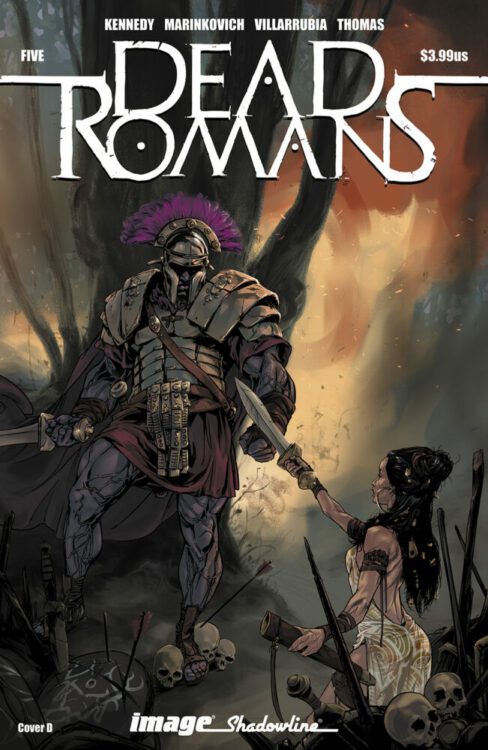
Comic Number 199: Dead Romans #5 (Image Comics)

Every issue of this that has come out has impressed me. Fred Kennedy, Nick Marinkovich, Jose Villarrubia, and Andrew Thomas and doing a superb job of creating a comic that looks outstanding.

This issue shows the reader the cost of living with Rome from the point of the invader and the invaded. It also highlights the reach of the Roman Empire, demonstrated through the mix of nationalities that ride with a Roman army. As exciting as the story is, the historical facts seem to ring true, though I am not an expert.

It goes without saying that I love this series, I’ve mentioned every issue in this ongoing project. The subject matter fascinates me (I am currently listening to the audio version of Simon Scarrow’s Death to the Emperor and reading Pompeii by Robert Harris) and the artwork in this comic looks fresh and exciting. I could read this every week.

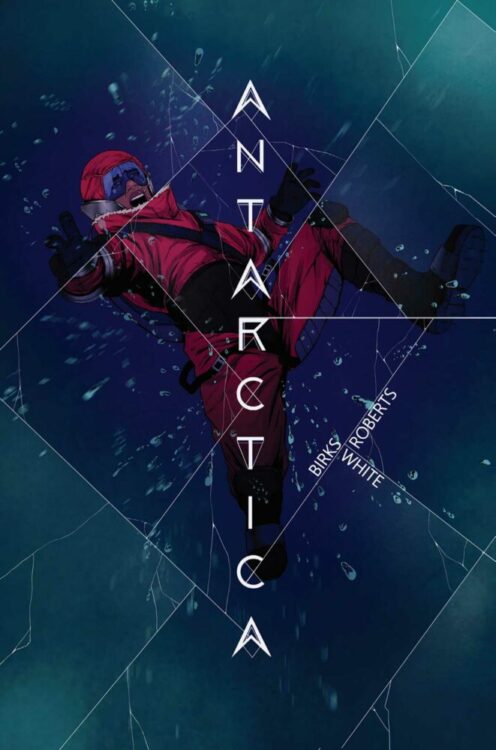
Antarctica #1
Credit: Image Comics

Comic Number 200: Antarctica #1 (Top Cow Productions)

Go into this one cold, if you can. I did and it really paid off. Therefore, stop reading this and go read Antarctica instead…

Gone? Good.

I knew nothing about this comic when I read it so I really got caught out when the crime mystery took a science fiction turn right at the end. You knew something was coming; Simon Birks teased at it all the way through, and there is something about Wili Roberts’ artwork that hints at a science fiction story. I can’t quite put my finger on what it is.

There are some impressive moments in this comic. Take the second page as an example. The same location drawn at different times, across a number of the years but featuring the same characters. They stack on the page like color coded emotion with the final panel featuring a heart breaking moment in the central characters life. You really feel for Hannah at that moment. It is a magnificent piece of storytelling.

There is another moment in the comic with the exact same page layout, five widescreen panels, with a single viewpoint. It’s as if these traumatic moments in Hannah’s life affect her in the same way, that they are linked in some way.

Antarctica is an impressive opening to a comic book series. The first issue draws the reader in by focusing on the central character and following her step by step from childhood to the world altering cliffhanger. One to keep an eye on.

Blade #1 (2023)
Credit: Marvel Comics

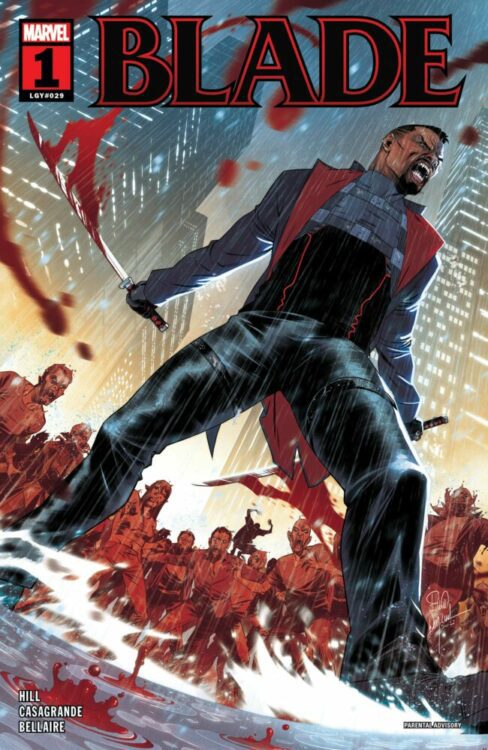
Comic Number 201: Blade #1 (Marvel 2023)

I read the new Blade comic.

Insert shrugging emoji here.

It was just a coincidence that this came out this week because me and my son watched the first movie last weekend (He was curious what it was. He enjoyed it). I took that as a sign to read the new comic. I don’t know why I do this. Marvel just isn’t giving me anything at the moment. I should just step away. This is a good comic that will appeal to Marvel readers, but that’s not me at the moment. Check out the reviews by people who have more of a stake in this game.

Alien #4
Credit: Marvel Comics

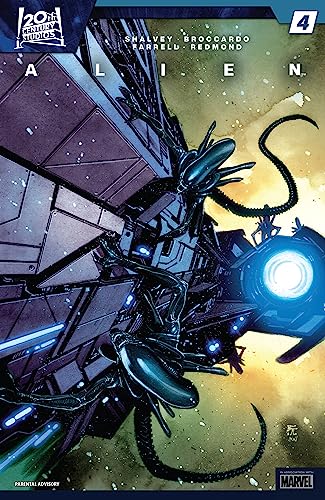
Comic Number 202: Alien #4 (Marvel 2023)

What did I literally just say about Marvel?!?!

The Alien franchise, much like the Planet of the Apes franchise, is one of those properties where I enjoy the extended universe. I never really got into the Doctor Who books or the vast array of Star Wars comics, however I have always enjoyed a good Alien comic. The early Dark Horse comics (published at first by Titan comics in the UK in collected form and by Trident in a monthly magazine) have been regular reads of mine for years. Just like the films they are entertainment of the greatest order. They swing through the genres from horror to war story to allegory and center on the human condition.

However, the latest Alien output has been less than great. The first series that Marvel put out was plagued with problematic art thanks to the controversial working practices of the artist, but it also suffered from mediocre narratives and lackluster scripts. At least Thaw, written by Declan Shalvey, has a punchy script and fast paced action similar in vain to the 1986 Aliens movie. Andrea Broccardo’s artwork is more fluid and suits the story being told. It is a well rounded comic but does suffer from overused story elements.


All in all, it has been a good reading week, despite the lack of time I’ve had to actually pick any comics up. Reading brand new comics is more of a challenge than reading older ones from my collection, the quality is more varied and sometimes it is difficult to find anything positive to say. Either because the comic isn’t very good or, as is more often the case, it doesn’t appeal to me on a personal level. I have become so tired of the superhero genre that I give it a wide berth and I’m always disappointed when I dip my toe back in but it’s very rarely the fault of the creators. It is a genre, as a whole, that has lost its appeal for me.

Monkeys Fighting Robots Youtube

Review: BLADE #1 Brings Horror Back To The Marvel Universe

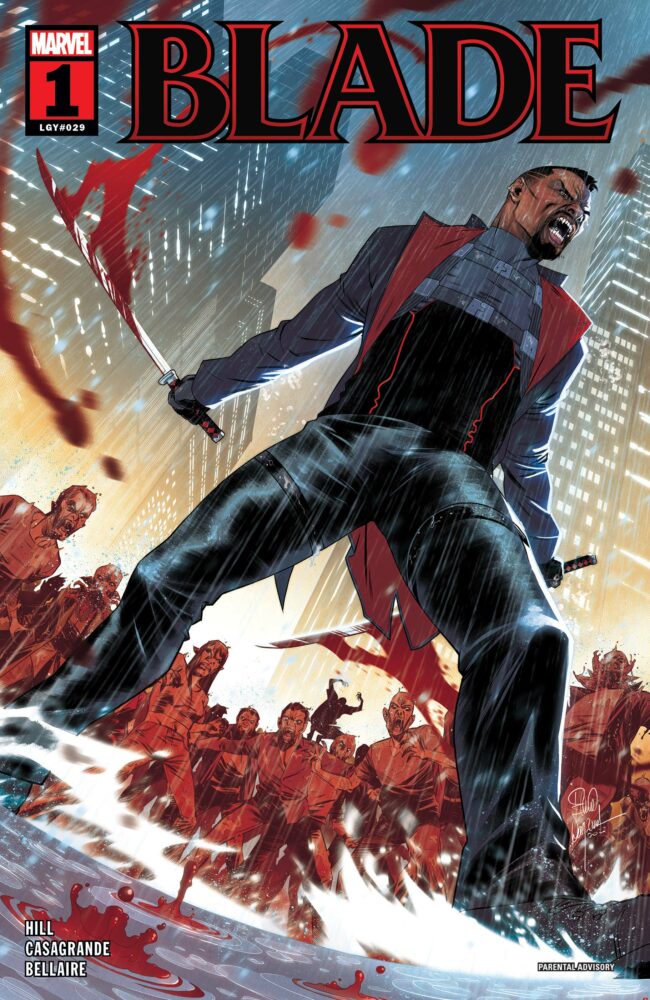
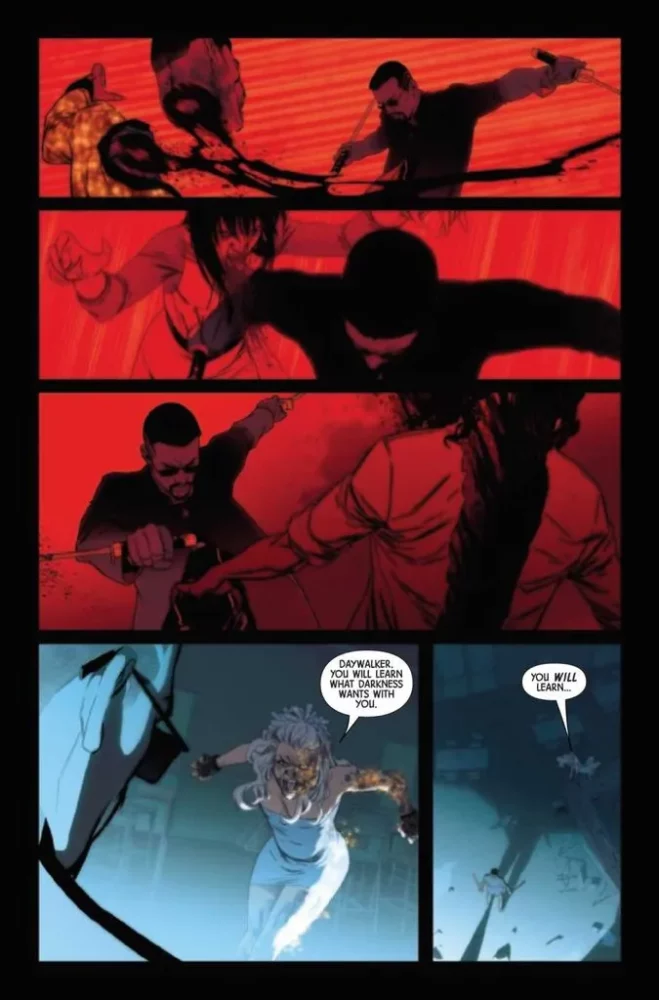
There has been a Blade movie in the works for a while, which means that it’s time for Marvel to capitalize on the character. This installment of Blade is written by Bryan Hill, who has worked his way around Marvel before with books like Fallen Angels and Killmonger. Joining him on this visual journey is Elena Casagrande on art, Jordie Bellaire on colors, and Joe Sabino with the letters.

WRITING

Blade #1 starts off fast. We see a girl in a club with music and dancing. People are generally enjoying themselves, and then BOOM, monsters everywhere. This is what Hill is bringing to this book. It’s hard to find a good action and horror combo in the Marvel universe, but this issue shapes up what the series will look like moving forward. Hill delivers chills and curve balls throughout the first issue that will keep you engaged. Blade is tasked with saving a girl named Dana Smith. If he fails at doing this, the world will end. To get information on Dana, Blade must talk to Tanaka, and they’re not exactly besties.

Hill writes Blade like an old time veteran who has seen it all. Nothing is surprising to him, and he’s tough to kill. This tone and vibe of the series works well, especially for readers who are not familiar with the character. Hill and Casagrande choreograph new and interesting fight scenes for the issue. No lie, Blade throws a futon to get Dana out of the way of a killing blow. This team gives us the Blade that we’ve always needed in a book that is scary fun!

ART

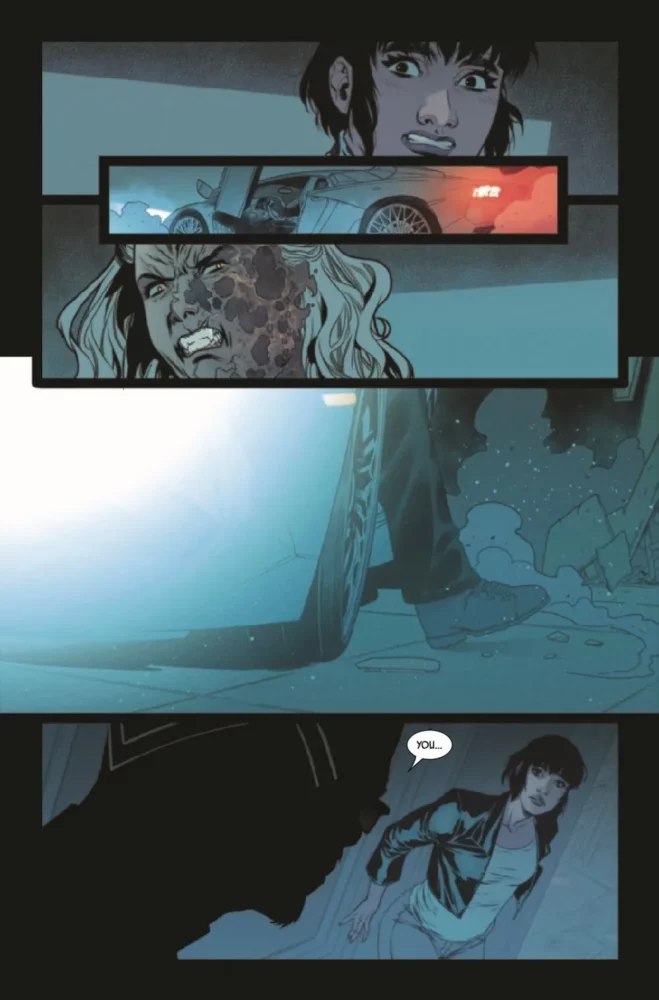
The pencils by Elena Casagrande are excellent. Casagrande beautifully draws creepy pages that will capture the readers attention. Seeing a human pinned to the wall with several samurai swords sticking out of him like a pin cushion is certainly attention grabbing. The panel layout by Casagrande is also exciting. She doesn’t always use a traditional formula for a page, sometimes she’ll have panels where it looks like a sword is cutting the page. Sometimes she’ll have panels with little inserts within another panel. This layout is visually interesting and works well with an artsy book like Blade. Casagrande also capitalizes on Hill’s script when it comes to the fight panels. She’s creative with how she draws what the script demands. Casagrande will give us images from above or action panels from different angles. These little touches make the pencils in this issue stand out.

The colors by Jordie Bellaire are flawless. This looks like it’s going to be an interesting visual journey, and Bellaire is the perfect colorist to tap for it. She isn’t afraid to use dark reds that mask entire panels or have backgrounds with dark blues. When something needs to stick out, like the mask of an armed assailant trying to kill Dana, Bellaire makes sure to make the gold pop on the face. Bellaire doesn’t have many colors that leap off the page in this issue, but when a villain is using a powerful sword that is on fire, Bellaire uses a bright yellow for the torch. We can also trace the fire as the sword is swung. Bellaire offers a masterclass in how to color in Blade #1. She once again solidifies herself as one of the best colorists in the industry.

The letters by Joe Sabino work well with this issue. Sound effects are important in comics, and Sabino uses a decent amount for this issue. Someone crashing through the window warrants a “SKISSKKK.” Sabino places the words above the villain with low opacity so the reader can see through them. As Blade decapitates someone, Sabino lays out a “KRRRSSSHHHH” which wraps in a little at the bottom of the page. Word balloon placement is great. No character or action is covered by any dialogue. Sabino did a fine job with this issue, but that’s nothing new.

CONCLUSION

Blade #1 is an enjoyable and creepy book. The twists and turns will surprise you and question what will happen next. Bryan Hill turns in a wonderful script that is exactly what the character needs. Hill, Casagrande, and company are breathing new life into Blade and making him more fun than ever. Blade #1 is available at a comic shop near you!

Monkeys Fighting Robots Youtube

Marvel Comics Exclusive Preview: INCREDIBLE HULK #2

marvel comics exclusive preview incredible hulk

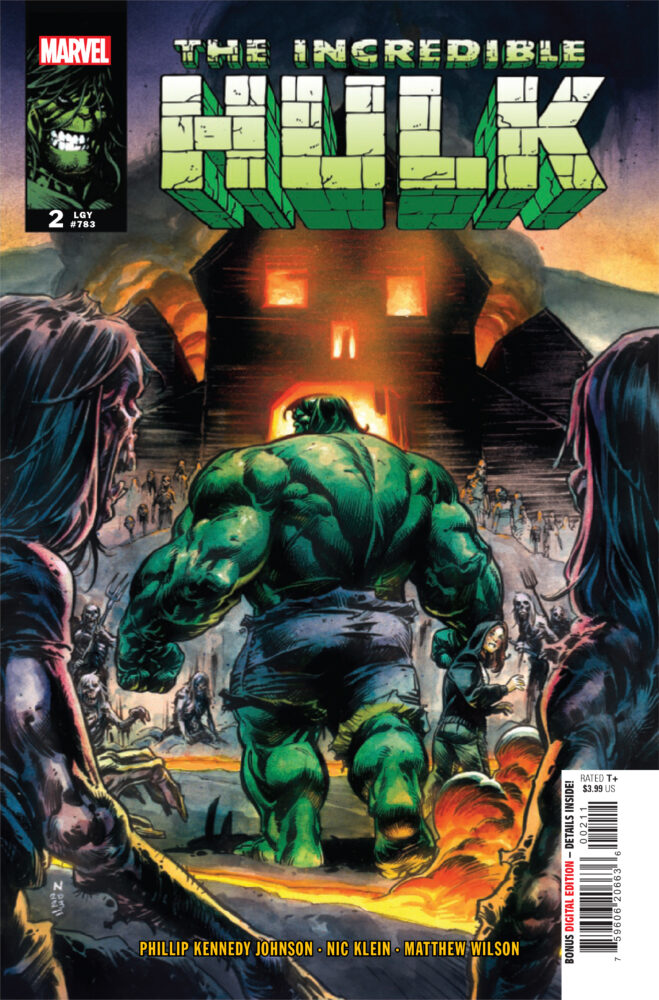
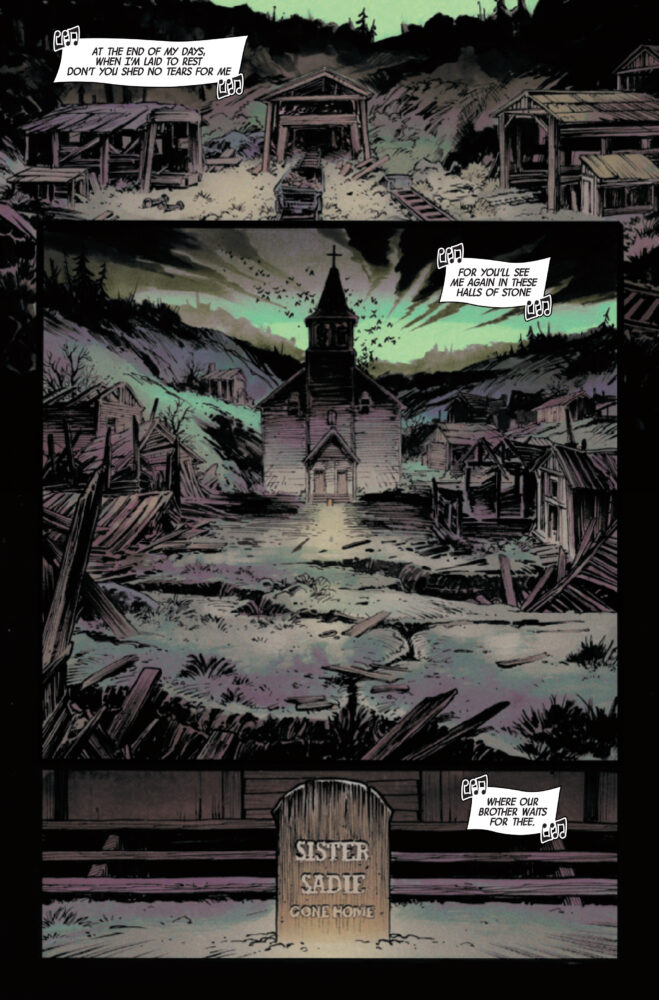
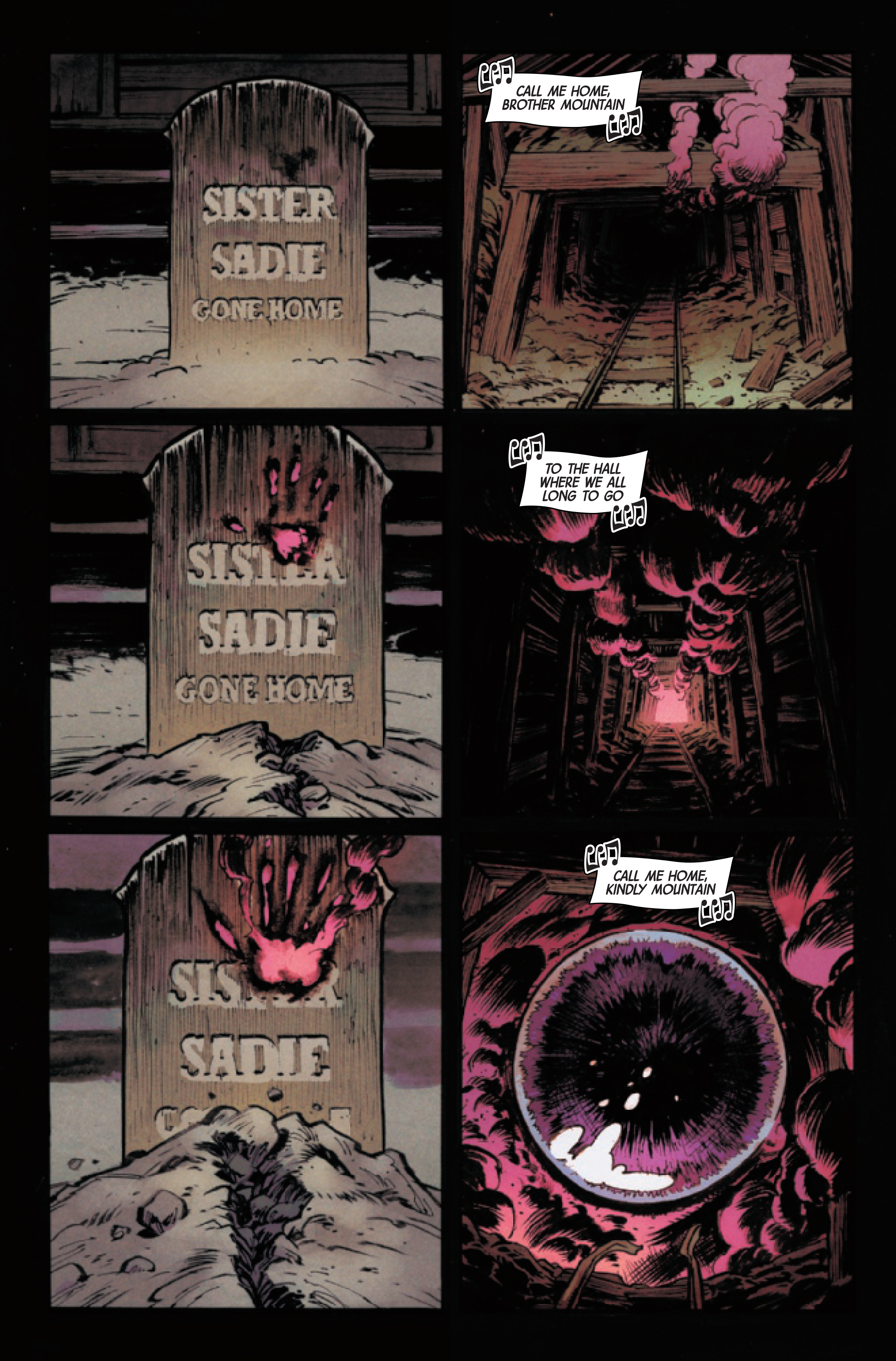
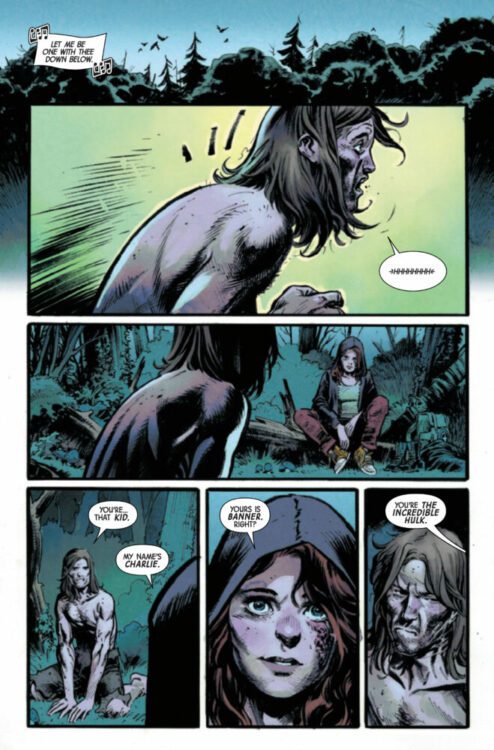
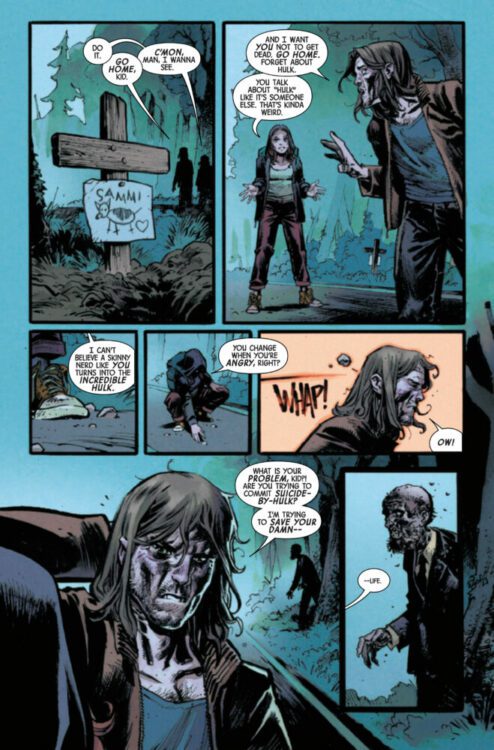
THE INCREDIBLE HULK #2 hits your local comic book store on July 26th but thanks to Marvel Comics, Monkeys Fighting Robots has an exclusive four-page preview for you!

About the issue:
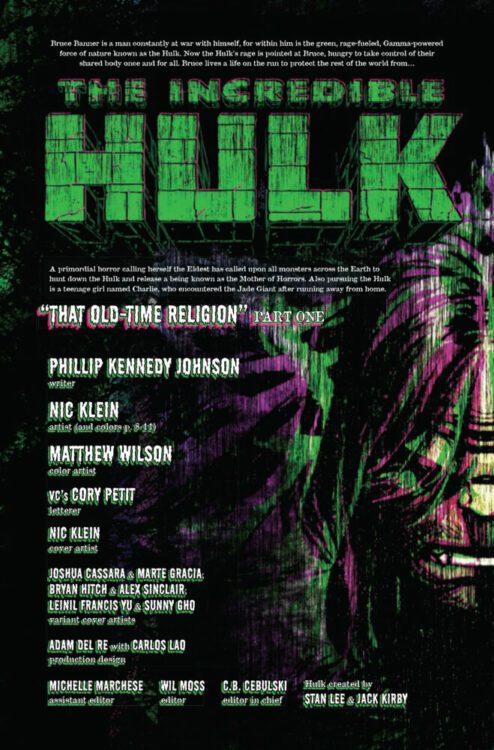
The Mother of Horrors demands her freedom! And in order to make it happen, her most dutiful servant – a terrifying monstrosity who calls herself the Eldest – seeks to reclaim that wayward son of monsters: the Hulk himself. Now every eldritch horror and primordial being has its eyes set on the Jade Giant! Meanwhile, on their path to peace and isolation, Banner and his new friend Charlie find themselves forced to pass through an abandoned coal mining town…but when night falls, the term “ghost town” takes on a terrifying new meaning.

The issue is by writer Phillip Kennedy Johnson and artist Nic Klein, with colors by Matthew Wilson, and letters by Cory Petit. The main cover is by Klein.

PKJ and Klein’s INCREDIBLE HULK run is a return to the series’ roots as a monster comic, following the footsteps of the original Stan Lee and Jack Kirby run, as well as Al Ewing and Joe Bennett’s Immortal Hulk run that wrapped in 2021.

Check out our INCREDIBLE HULK #2 preview below:

marvel comics exclusive preview incredible hulk

marvel comics exclusive preview incredible hulk

marvel comics exclusive preview incredible hulk

marvel comics exclusive preview incredible hulk

marvel comics exclusive preview incredible hulk

marvel comics exclusive preview incredible hulk


Did you pick up the first issue of Phillip Kennedy Johnson and Nic Klein’s INCREDIBLE HULK? Pretty great, right? Sound off in the comments below!

Monkeys Fighting Robots Youtube