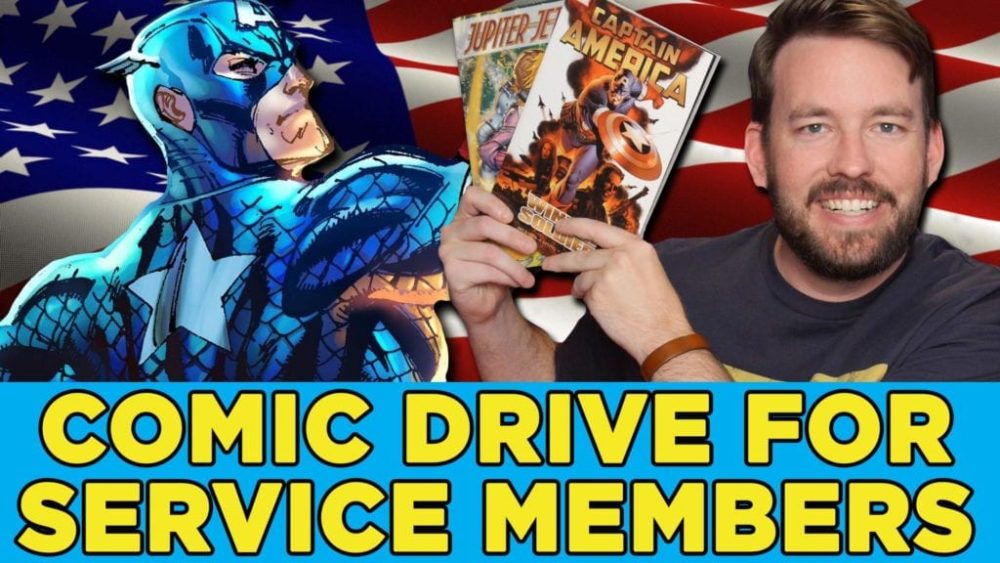
The Jawinn Comic Drive, in partnership with Operation Gratitude and Collectors Paradise, is collecting comic books to send to US military members deployed overseas, and you can help them hit their goal!
Jawinn Comic Drive was founded by Jason Inman (Jawinn = Jason William Inman), himself an Army vet and author. 2019 marks the five year anniversary of the Comic Drive, and over those five years, Jawinn has sent over 134,964 comic books to service members and their families.
From November 1st through November 30, Jason is looking to collect 15,000 comics for Operation Gratitude to send to the service members to read in their care packages through the holidays and the new year. The comics can be from any company or genre and can include graphic novels and trade paperbacks! Jason just asks that you keep the books family-friendly, as some comics will be sent to soldiers’ family and children.
Let Jason tell you about the project himself:
Old and new comics in new and fine condition are welcome, but please make sure the comics are in good reading condition. If you wouldn’t read a book that’s falling apart, please don’t gift it to a soldier. Plus, if you wish to include personal letters of support to the servicemen, send them along with your comics!
If you want to add other items you see on their list — batteries, deodorant, sunscreen, please feel free to add those to the package as well! Please make sure to put “Jawiin Comic Drive for Service Members” in the Product Donation Information Section. The rest of the form is pretty self-explanatory.
2 – Box and ship the comics and the donation form to:
Operation Gratitude , 21100 Lassen St. Chatsworth, CA 91311
(IMPORTANT: Please include a donation form in EVERY box even if they’re part of the same donation. Sometimes cartons don’t all arrive at the same time.)
3 – Send a picture of your comics and the number of books you are donating to jawiincomicdrive@gmail.com. (If you don’t send your number to the email, they will have an inaccurate count and the drive could fail. Let’s get these soldiers some comics for the new year!)
And for Los Angeles locals:
For Los Angeles locals, all three Collectors Paradise comic shops will serve as drop off locations. And for every comic book dropped off to a Collectors Paradise location, the store will match the donation with an equal number of comic books.
To help kick off the drive, Collectors Paradise’ brand new NoHo Arts District location will host a Jawiin Comic Book Drive event on Sunday, November 10th, 2019 (the day before Veterans Day), featuring several LA-based comic book artists! If you donate more than 25 comics during the event you will get a free sketch from:
About Operation Gratitude: Every year, Operation Gratitude sends 250,000+ individually addressed care packages to Soldiers, Sailors, Airmen and Marines deployed overseas, to their children left behind, and to New Recruits, Veterans, First Responders, Wounded Heroes, and their Caregivers. Each package contains food, hygiene products, entertainment, and handmade items, as well as personal letters of support.
Mike Flanagan’s Doctor Sleep successfully blends elements of Stephen King’s novels and serves as a proper continuation to Stanley Kubrick’s horror masterpiece, The Shining. Flanagan has been making a name for himself since his successful film Oculus released back in 2013. Now, fresh off last year’s well-received Netflix series The Haunting of Hill House, Flanagan has crafted a worthy companion to one of the best horror films ever.
Based on King’s 2013 novel of the same name, Doctor Sleep picks up nearly four decades after the events of The Shining. Danny Torrance, now all grown up, is a struggling alcoholic who remains haunted by the events that unfolded at the Overlook hotel during his childhood. After hitting rock bottom, Danny starts getting clean and meets Abra, a young girl who shares his ability to shine. After Abra becomes the target of an immortal group known as the True Knot, Danny attempts to save her before it’s too late. Directed and written by Flanagan, Doctor Sleep stars Ewan McGregor, Rebecca Ferguson, Kyliegh Curran, and Cliff Curtis.
Rebecca Ferguson as Rose the Hat in DOCTOR SLEEP
Flanagan’s script is an absolute treat that manages to effectively balance itself as a sequel to The Shining novel and film. There are several callbacks to Kubrick’s film and a third act that fans will absolutely adore. Flanagan spends enough time developing all of the major characters, even though a lot of the True Knot members aren’t developed that well outside of Rose the Hat. He takes time to reconnect audiences with Danny and fully flesh out this downward spiral he has been on for quite a while so that viewers can sympathize with his struggles. Speaking of Rose the Hat, she is going to go down as one of the greatest on-screen horror villains. The character is calculated, charismatic, very memorable and it helps that she is brought to life by such an amazing actress.
Ewan McGregor is incredible as Danny and the expressions on his face just help see what the character is going through. Since his father went insane when he was a kid, Danny hasn’t fully recovered from that and he sadly adopted his father’s alcoholism as well. Luckily, he decides he doesn’t want to go down that same road and he starts fresh. He now uses his ability to shine in order to give dying elderly a peaceful passing. Mcgregor is very believable in the role and his performance makes it easy for audiences to get behind Danny.
Ewan McGregor as Danny Torrance in DOCTOR SLEEP
Also, Doctor Sleep does a great job of spending equalling enough time with its villains and protagonist. Now, the standout in this film is Ferguson who stars as Rose the Hat, an immortal psychic who leads the True Knot. The group feeds on the life force of individuals that shine in order to live longer and stay young. Ferguson is giving one of her best performances to date in this role, she brings a seductive charm to the character and her delivery is amazing. Ferguson just makes Rose the Hat come across as such a dominant presence and her fate probably could have been handled a bit better.
Doctor Sleep is very chilling, calm, and very atmospheric thanks to Flanagan’s camera work. His attempts at recreating famous shots from The Shining aren’t the best, but still very impressive. The film really is at its best when Flanagan just does his usual thing by creating a world viewers can get hooked on like a hypnotic drug and remaining true to the Doctor Sleep aspect of it. Towards the end, the film stumbles a bit and the final act feels rushed and not finished. The problem is that everything prior is paced very slowly just like The Shining, but then the pace picks up at a decent rate and then it rushes through its third act. However, Doctor Sleep is still a solid film overall despite its hiccups.
Adding to that, the score for Doctor Sleep is fantastic and it just makes the film so much more interesting. Composed by the Newton Brothers, it consists of some revamped tunes from Kubrick’s film and several new pieces for this continuation. There is one scene in particular where a familiar tune plays and it will cause nostalgia for some and send chills down your spine all at once.
Kyliegh Curran as Abra in DOCTOR SLEEP
Also, Curran is a surprising delight as Abra. The character has a hint of darkness lingering in her that becomes apparent by the pleasure she finds in hurting Rose the Hat. Curran gives a performance that perfectly balanced that innocence and that inner darkness, which may or may not become an issue for her later in life. The chemistry between her and McGregor is amazing to watch unfold. Her encounters with Rose the Hat are all very tense and chilling because Curran brings a sense of overconfidence to the character. It’s one of those rare occasions where the child actor isn’t a bother and viewers will actually want to see more of her as the film progresses.
Doctor Sleep is by far the best Stephen King film this year. It really only stumbles when it wants to be overly nostalgic and recreate things from The Shining. However, Flanagan spends a remarkable amount of time telling the primary story, and connecting viewers with the characters. IA film that effectively acts as a middle ground between several works was never going to be an easy task, but Flanagan has done a great job with Doctor Sleep and it wraps up the story of Danny Torrance in a beautiful way.
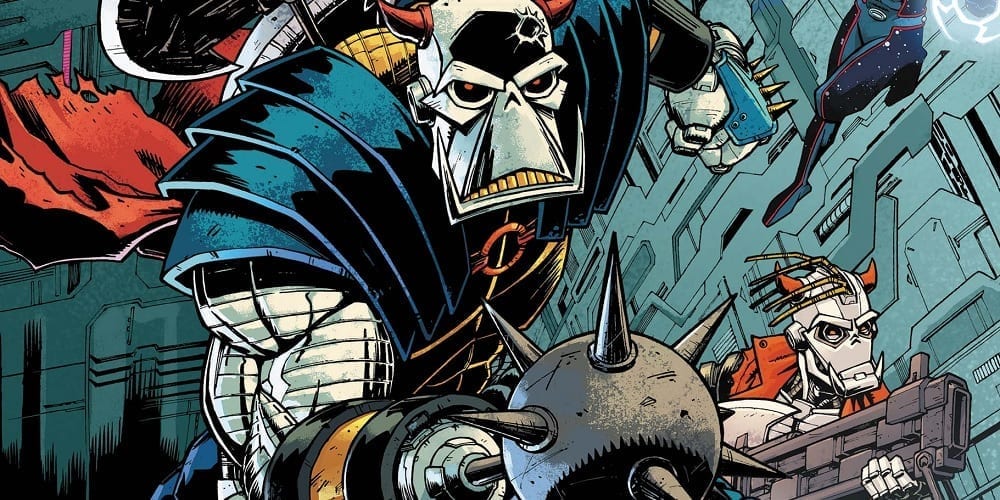
Death’s Head and crew are still trapped and fighting it out with Dr. Necker in Death’s Head #4, out this week from Marvel Comics. And, although it may be a little unbalanced, the book manages to tie the story together with a satisfying conclusion.
The Writing
In earlier issues, the individual characters’ conflicts felt rather disjointed. With Death’s Head #4, though, the dots finally connect, giving each member of the main cast a defined arc. Whether it’s overcoming fear of obsolescence, commitment, or a lack of self, the characters all get the chance to grow and develop by the end of the book.
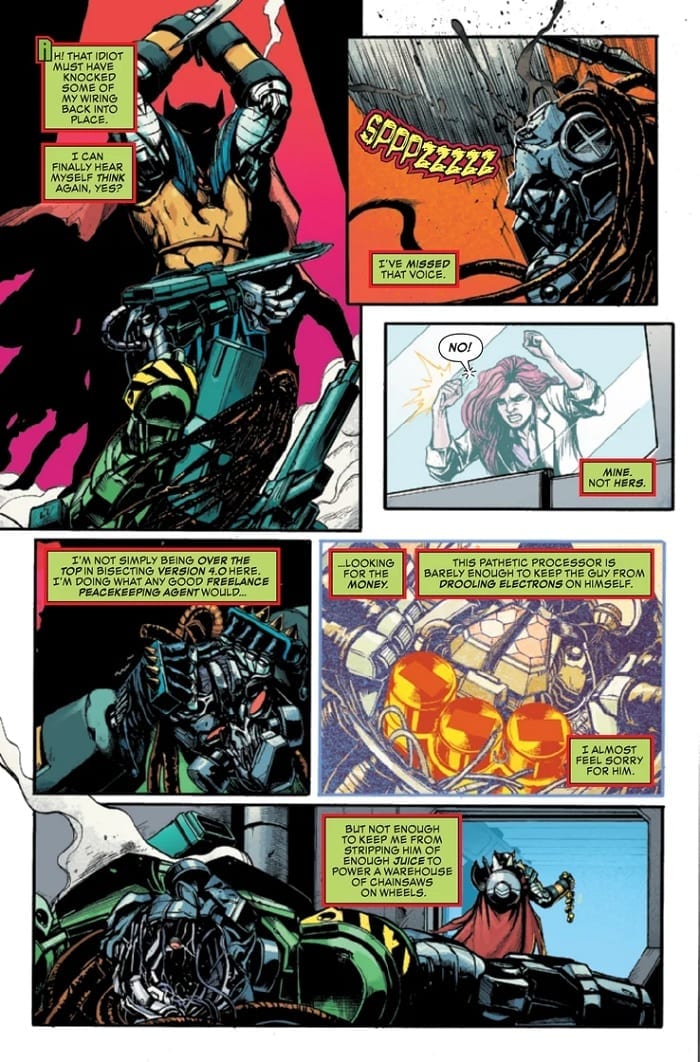
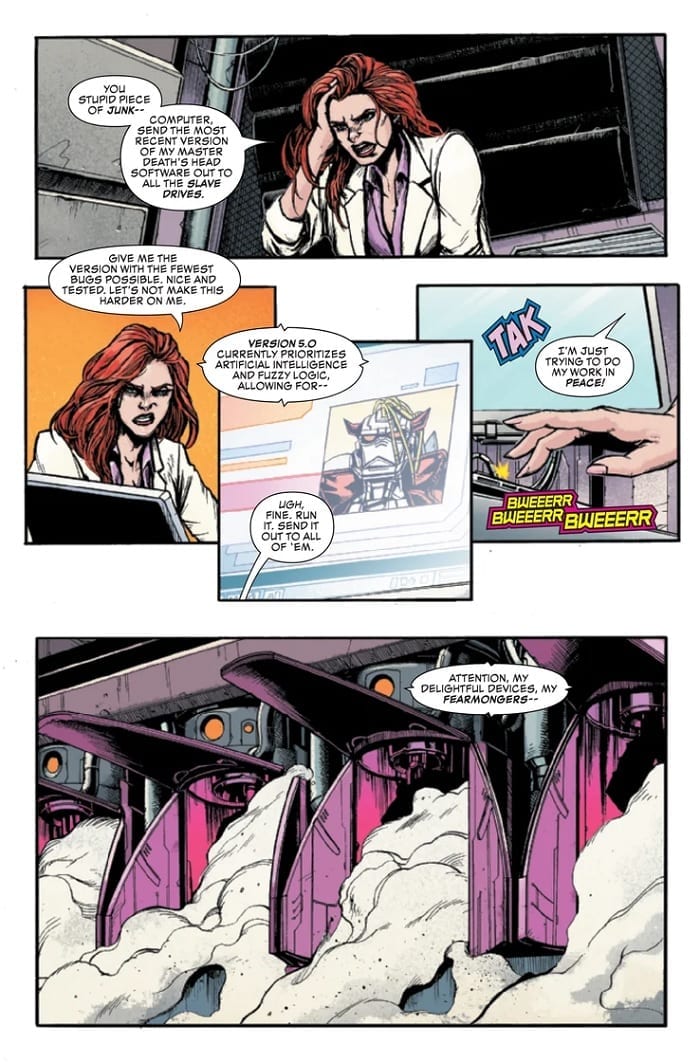
For Death’s Head, the challenge is to overcome the objectification forced upon him. To Necker, all versions of Death’s Head are an object to be possessed. As she says “That’s the one good thing about these older models—sometimes banging on them makes them work better,” clearly conveying how she sees the character: as a tool to be manipulated. Both Death’s Head and Vee need to assert their—for lack of a better term—humanity, rebelling against their condition. It’s a novel approach to a character who, generally speaking, tends toward the brutish and flat in portrayal.
The human characters are developed as well, giving Hulkling and Wiccan a sense of genuine purpose. Hawkeye is the exception here; while Kate Bishop is always a welcome addition, she really doesn’t contribute much to the narrative, nor do we see her grow or learn anything.
But, while characterization is a strongpoint of Death’s Head #4, the narrative can be a bit hit-or-miss. Tini Howard’s writing throughout the series is fairly impressive. However, the author seems to put more weight on some facets of the story than others, leading to issues in pacing. As a result, some parts feel overdone, while other elements are hand-waived away.
The book’s climax, for example, is not totally satisfying; after all the running and fighting in the last half of the series, the final confrontation feels like a bit of a nonevent. It’s not enough to overshadow the book’s strengths, but it can make the reader feel that some core components of the narrative were effectively afterthoughts.
The Artwork
Artist Kei Zama’s work in Death’s Head #4 pays homage to the edgy, nineties-style look of earlier Death’s Head comics, while still managing to make the book feel unique and wholly her own. It’s richly-stylized and detailed, feeling like a cross-pollination of vintage and modern aesthetics. We have the heavier lines and more angular designs, paired with a contemporary eye for composition, giving us some of the best of both worlds.
The art flows nicely, maintaining a cohesive feel. Each image hits the story beats well and preserves a sense of kinetic energy from panel to panel.
The only real complaint is that there are times throughout the book at which it can be difficult to make out what’s on the page. Through all the chrome and shadows in Death’s Head #4, figures can sometimes blend or be engulfed by too much darkness. This can make it hard to decipher what the artist is trying to convey at some moments.
The colors by artist Felipe Sobreiro are impressive as well. Despite employing a wide range of tones, he manages to keep everything coherent and cohesive.
Final Thoughts
Death’s Head #4 is a respectable ending to a solid four-part story. While the book might have benefited from the space afforded by a couple more issues, it’s worth checking out.
Amazing Spider-Man #33 hits your local comic book store November 6th, but thanks to Marvel Comics, Monkeys Fighting Robots has an exclusive five-page preview for you.
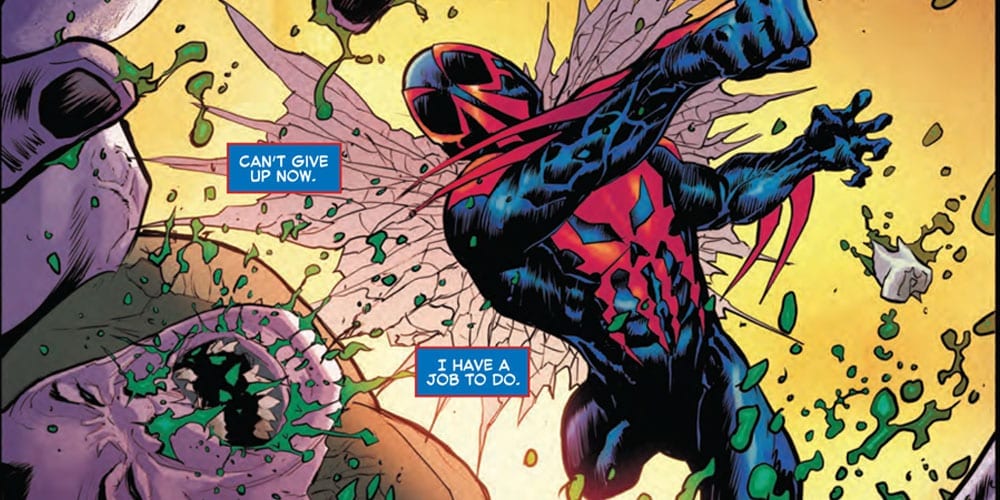
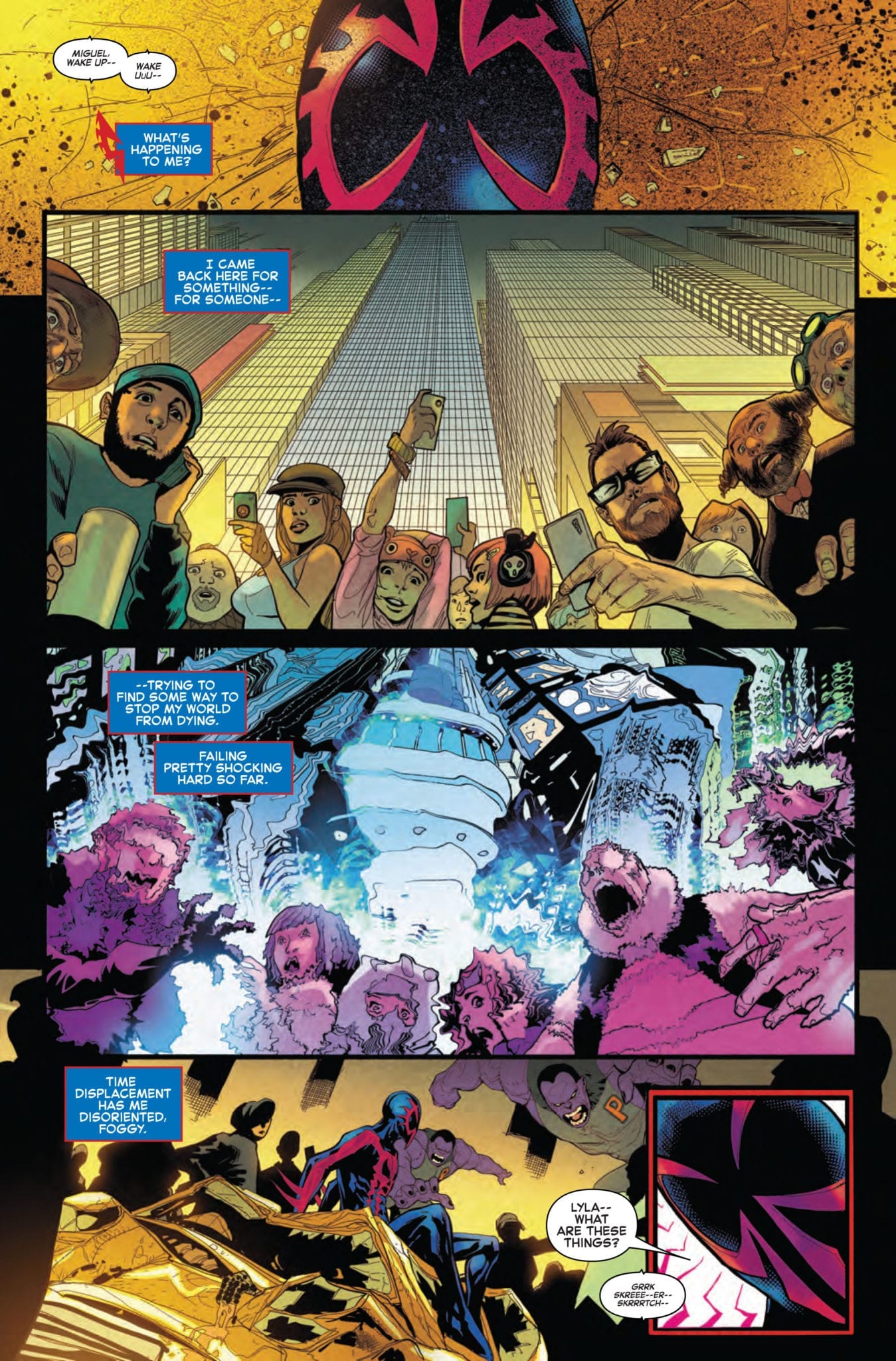
About the issue: THE FUTURE IS IN PERIL! Miguel O’Hara’s mysterious return to the present threatens his life and his entire future. But why?
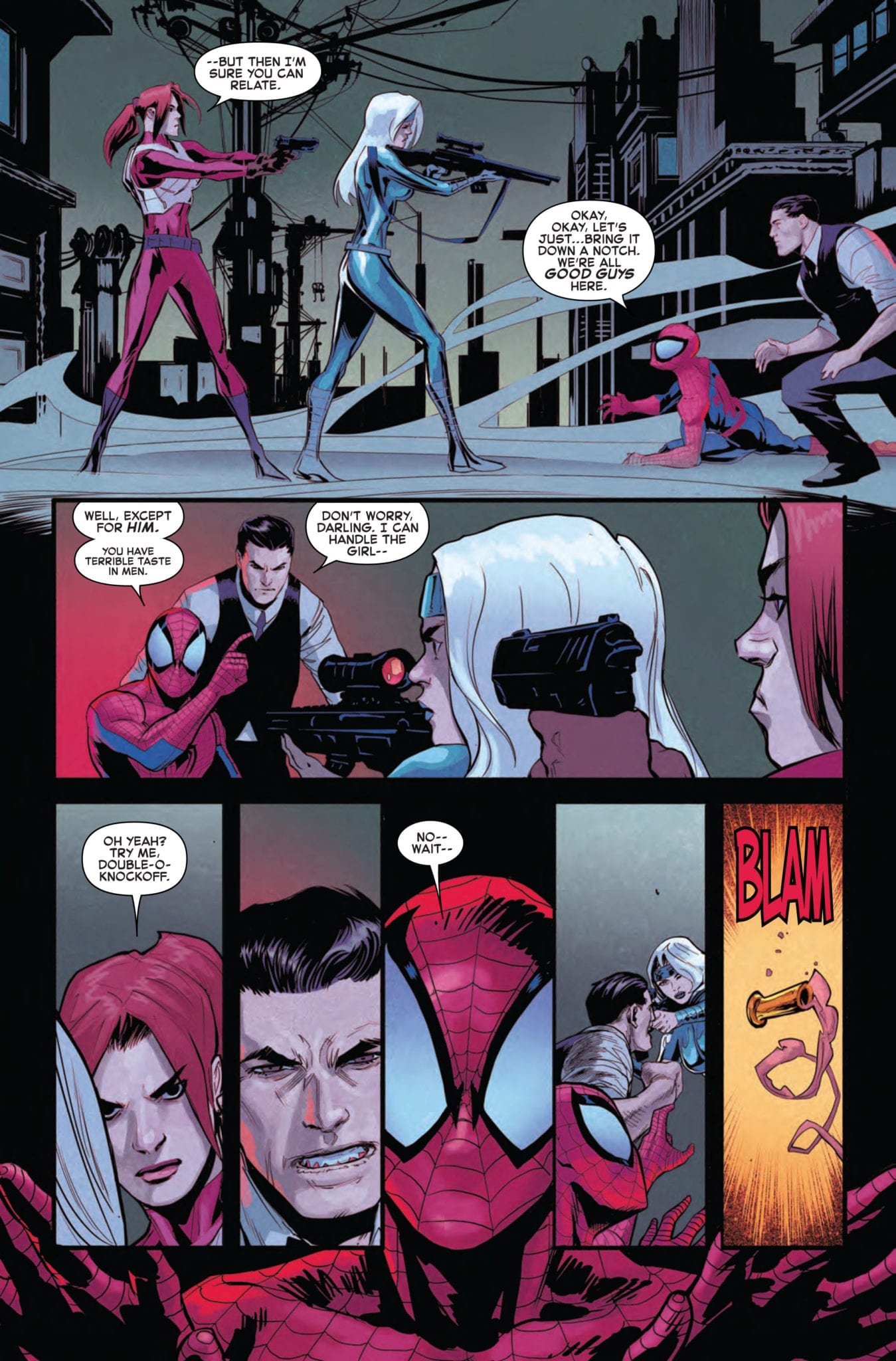
As for OUR time’s Spider-Man, he’s got his hands full with classic villains, family problems and international incidents that intertwine in terrifying ways!
Amazing Spider-Man #33 is by writer Nick Spencer and artist Patrick Gleason (drawing for Marvel after spending the last 19 years working exclusively for the Distinguished Competition), with colors by Matt Wilson and letters by Joe Caramagna.
This preview sees Miguel O’Hara, Spider-Man 2099 himself, back in the present day and on the run from the Roxxon Corporation. Miguel is trying to “find some way to stop [his] world from dying,” and Peter Parker is an integral part of his plan.
ASM #33 kicks off the Marvel 2099 event that will be running through November and December. The event will take place over the next three issues of Amazing Spider-Man, as well as an Alpha issue, an Omega issue, and seven one shot tie-ins (Spider-Man 2099, Doom 2099, Punisher 2099, Conan 2099, Venom 2099, Fantastic Four 2099, and Ghost Rider 2099).
Check out the AMAZING SPIDER-MAN #33 preview below:
Are you reading Amazing Spider-Man? Who is your favorite Spider-Person? Sound off in the comments!
You can’t escape the current superhero cinema takeover that is happening at the moment, especially with ‘comic book’ movies everywhere. They are breaking sales records, overloading the shops with tie-in merchandise, and generally making their presence known. The one thing this surge in superhero cinema doesn’t seem to be affecting is the sale of monthly comics, the source of all of these movies.
At one time, the river of ideas ran the other way, with the comic book movie adaptation being an event of its own. Especially if you remember a time before streaming and almost instant releases on DVD/TV/Internet. The comic book adaptation served a purpose beyond merchandising: they existed as a replacement for the film after it had left the cinema. If you were a fan of Planet of the Apes, for example, then the only way to enjoy the characters between movie releases was to buy the comics.
Times have changed, and the need for direct replicas of movies in a comic book format has been disappearing for a few decades. However, adaptations haven’t gone away; instead they too have evolved over time.
Below, I look at a handful of movies that have made their way onto the pages of a comic. I am not interested here in continuing stories, although some of the examples below have spun out into ongoing comics, I am focusing on comics that are direct adaptations of a specific film. The choices I have made highlight how different approaches can produce very different products, and even enhance the original source material.
Blade Runner Adaptation from Marvel
Blade Runner
As a movie, it is well renowned almost to the point of worship. Often cited as one of the best Science Fiction movies ever made, Ridley Scott’s vision is beautiful to behold.
When adapting such a visual treat, the writers and artists over at Marvel were left with a very difficult task. However, in September 1982 Marvel published their adaptation which captured the image of the movie in a very direct way.
Adapting the story proved to be easy in the end. Archie Goodwin took all of the major scenes and condensed them down to a few pages and panels, streamlining the scope of the movie into easily digestible chunks. Goodwin used the, now much maligned, voiceover to give the reader all of the information that was lost via the transition from screen to page. Whereas Harrison Ford wanted the character to ‘do’ more in the movie instead of relaying all of the information via voiceover, Goodwin did the opposite. This meant that scenes were compacted and lost some of the long, establishing shots that made the movie so memorable.
However, almost to counter this, the artists Al Williamson and Carlos Garzon attempted to capture the specific look of the movie. They did this by choosing to recreate the movie almost like a series of stills, with each panel representing a single shot of the film. They stretched the borders and changed the height and width of the panels to give the comic the same sense of vastness of location but also to heighten the claustrophobic character interactions. The cast are rendered as close to the actors’ appearance as possible, again embedding the impression of movie stills.
The comic is a colorful, engaging accompaniment to the movie but offers nothing more, and in some aspects less, than the source material. There are some beautifully drawn panels, but they just remind the reader of the excellent scenes that they are mimicking and as a result, remind the reader what they are missing out on by reading the comic instead of watching the film.
Japanese Adaptation of Planet Of The Apes
Planet of the Apes
When the first Planet of the Apes movie came out in 1968 the concept of watching the movie when ever you wanted to or even owning a copy was still years in the future. Out of all of the comics on this list, the Planet of the Apes adaptations were primarily replacements for the movies, an attempt to keep the franchise in the public eye for as long as possible. There wasn’t any real artistic agenda behind them.
Or was there?
The thing about Planet of the Apes is that even at the start, there was massive interest in the designs and concepts. When Pierre Boulle’s novel ‘La Planète des singes’ was first optioned for a film no-one, the author included could imagine how popular those apes would become. So popular that in 1974, Marvel Comics published a Planet of the Apes magazine that would eventually include adaptations of all five original movies.
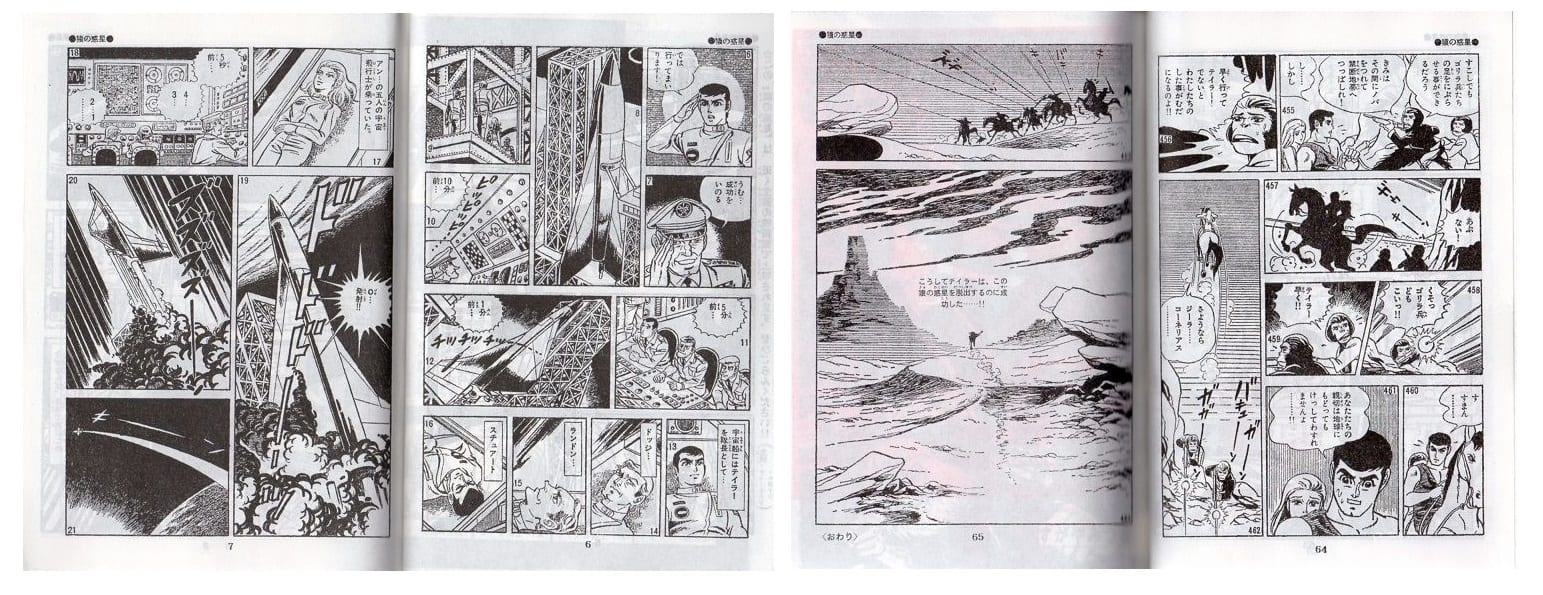
This was not the first adaptation of the movie however. In 1968 a Japanese magazine, Bôken’ô, printed the first comic book Apes, written and drawn by Jôji Enami. Elements of the design were different, partially because the final designs were not available at the time the manga comic went in production, and some of the story elements were also changed. Most notably, the scene with the Statue of Liberty reveal was omitted to keep the ending a secret: even back then spoilers were a big thing.
Despite these changes, Saru no Wakusei (Planet of Monkeys) is a faithful adaptation but given the Manga treatment. The recognizable elements of the movie are kept intact; for example, the Apes look like the characters played by Kim Hunter and Roddy McDowall, albeit simplified. However, the usual traits familiar to Manga readers are also there within the art: limited backgrounds, concentrations on characters’ faces, and motion lines. Jôji Enami has taken an American movie and turned it into a Japanese science fiction fable.
Over the years, different adaptations of Planet of The Apes have been published. Marvel’s comic was a fairly straightforward transition from movie to comic. The publisher also adapted the follow-up films and attempted to link them with a continuing comic strip. Later, a new movie was made by Tim Burton with a new adaption published. Most recently, in 2018, BOOM! Studios released a beautiful illustrated hardback graphic novel based on Rod Serling’s original script.
Comparing the different takes on the franchise would be an entirely different article, but the commitment by the comic creators to produce engaging comics has kept the franchise alive for over 50 years.
Dick Tracy Adaptation
Dick Tracy
Dick Tracy started as a comic strip way back in the 1930s. As it grew in popularity it was adapted many times, on radio, television and, of course, for the big screen. In 1990 Disney, bullied by Warren Beatty, made a big budget, brightly colored comic book action movie adaptation. To complete the circle the movie itself got the comic book treatment but instead of aping other adaptations, or even mimicking the original Chesteer Gould strips, the comic by Kyle Baker went in a different direction.
It stands out for two reasons. Firstly, it was the third part of a trilogy. The movie adaptation formed the closing part of the story, which was expanded on in two prequels. This approach is all the rage these days with Marvel releasing prequel comics for all of their big-budget movies, but this wasn’t the norm back in 1990.
The first two parts of the trilogy, Big City Blues and Dick Tracy Vs The Underworld, set up the world that the movie inhabited, expanding the character arcs and adding context to some of the more unexplained plot points. They act as wonderful lead in comics but also stand as great stories by themselves.
The second reason the Dick Tracy adaptation stands out is because of the sublime artwork by Baker. There is no desire to create lifelike images of the cast like in the Blade Runner comic, or even to create a realistic world for the narrative to exist in. Instead, Baker goes all out on creating an atmosphere that captures the postmodern playfulness of the Disney movie while acknowledging the violent nature of the original strips. The emphasis is on the concepts inherent in the story and the emotional aspects of the characters. Vast swathes of color indicate a character’s presence within the interchangeable backdrops.
The narrative follows the movie plot pretty closely, but this was easy to achieve because the movie is as close to a moving comic as you are likely to get. This makes the transition of narrative simple from screen to page without suffering any loss or discomfort between the two mediums. Baker then captures the energy of the actors within his singular style. The end product is a fluid, dynamic collection of panels that almost move before your eyes.
The movie might get mixed reviews but the adaptation is pure modern comic book gold.
Bram Stoker’s Dracula Adaptation from Topps
Bram Stoker’s Dracula
Everyone knows Dracula. The crafty vampire gets into everything from german expressionist films, Hammer Horror movies set in the 1970’s, Marvel Comics, and even an alluring appearance in Buffy The Vampire Slayer. In 1992 Francis Ford Coppola, inspirational director and Marvel Universe Movie hater, brought his own take on the character to the big screen, It was a highly erotic, visual spectacular than tweaked known Vampire Lore. However, it was the Topps Comics Production adaptation written by Roy Thomas and drawn by Mike Mignola and John Nyberg that really pushed the boundaries of the Dracula story.
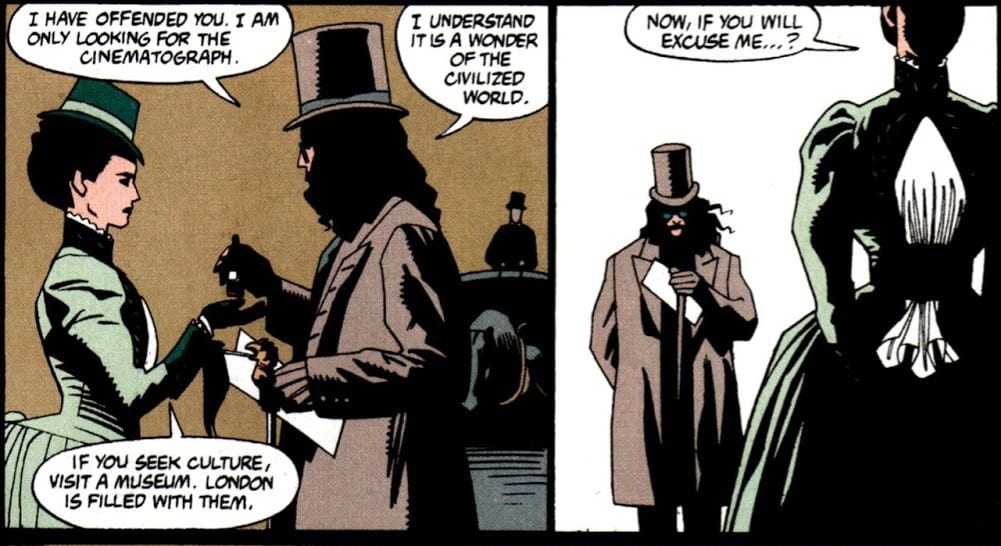
Whereas the majority of the dialogue was taken directly from the script of the movie, the heavy shadowed art style of Mignola gives the comic a unique look, besting even Coppola’s visual flair. The impression of horror is gouged out of the page, leaving large black recesses for the characters to get lost in. This darkness, a reflection of the hopelessness of the titular character, takes over every page, Brief flashes of white, or moments of lighter tones, interrupt the overpowering darkness but ultimately this is a story set in the depths of night, on the verge of a new age that is about to begin with a horrific world war.
Modern fears are explored within the subtext of the story. The danger of sexual predators from within as well as without is a topic that is as relevant today as it has been since the day Stoker wrote his original novel. Thomas and Mignola take the essence of the film, the underlying themes, and accentuates them. The characters have a resemblance to the actors, but the expressionistic style creates a distance that the film fails to achieve. The story becomes about the struggles and relationships of the characters, not about spotting the guest appearances or wondering if Winona Ryder and Keanu Reeves are expertly portraying suppressed Victorian’s or simply wooden actors.
Whereas the film has some trouble escaping the actors’ limitations and Coppola’s emphasis on style over substance, the comic is able to bring character back into the tale. More so than other titles on this list, the adaptation of Bram Stoker’s Dracula uses the movie as an inspiration and surpasses that source material in visual storytelling. Sitting down for a couple of hours to read this comic is ultimately more satisfying than watching the film.
Adaptation of Aliens entitled Newt’s Tale
Aliens
Initially it might not be clear what makes the Aliens adaptation that much different from many other comic books of its time. The Dark Horse comic, written by Mike Richardson, was published in two parts and told the story of the movie with the twist being, it was told from the point of view of Newt, the annoying little girl that just got in the way.
Aliens: Newt’s Tale allowed the writer to adapt the screenplay written by James Cameron but give everything a slightly new angle. It was new but old at the same time. The scenes that the reader knows from the film are given different emphasis or importance because it is all relayed through this young girl who, obviously, doesn’t have the same view on the world as the gung-ho marines or their reluctant guide. Richardson uses this opportunity to look at the Aliens story-line and give it a fresh new spin.
The other aspect of Newt’s Tale that makes it stand out among other movie adaptations is the fact it includes many of the deleted scenes which have been included in later, extended cuts of the film. Richardson got the chance to cut and paste the original working script into the finished product, thus expanding his story without altering the overall narrative too much. All of Newt’s experiences before the Marines show up gives the story a more human element that was lacking from the film. As a war film Aliens is tremendous, but for character motivation or empathy, it is sorely lacking. Richardson is able to inject the narrative with a bit of the human character it needs to distinguish the humans from the xenomorphs.
By taking this approach with the adaptation, Dark Horse was able to sell the concept of the comic as a movie tie-in but also as something new, buying into that completist nature that many comic and science fiction fans have. You haven’t seen the full Aliens until you have read Newt’s Tale.
More Bram Stoker’s Dracula artwork by Mike Mignola
Adapt Or Perish
Over the years strong bonds have grown between the Movies and Comics. At various stages one of the mediums has feed the other, fuelling a spring of ideas and creativity. At the moment most of that traffic is heading one way, from the page into the multi-plex but in the past the comic book industry has gained from its big screen counterpart.
The Movies that have filled the cinemas have inspired a host of writers and artists to experiment with his or her craft to create new ways of telling a story. The differences between the live-action Dracula and it’s comic book counterpart expresses more than just personal interpretation but also differences between the mediums. There are somethings that a movie simply cannot do that a comic book can, and by comparing adaptations to its source material, you begin to get a sense of what those differences are.
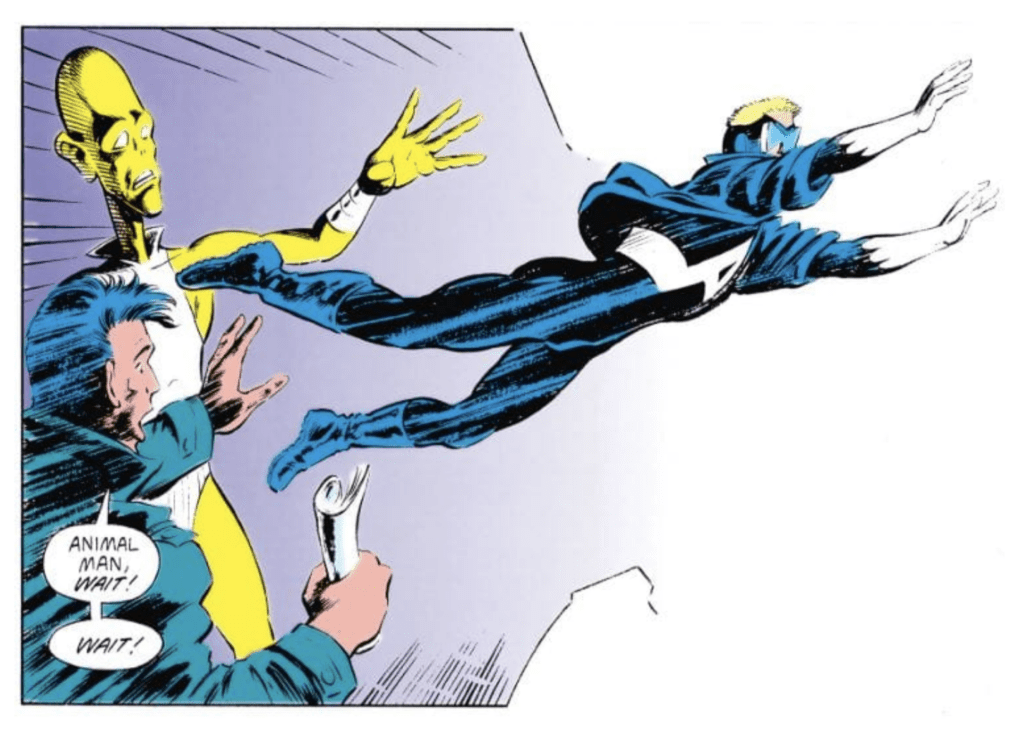
The relationship between art and the artist has always been intriguing. The complicated, messy balance between self-infatuation and emotional sacrifice has perhaps never been more exemplified than in Grant Morrison’s ANIMAL MAN (1988). The audacity one has to have to write oneself into one’s work, especially as an omnipotent and relentless God, is astounding. One would think Morrison could not be more self-obsessed, until they later describes themselves as a dying chimp at a typewriter, somehow lucky enough to have stumbled upon a masterpiece.
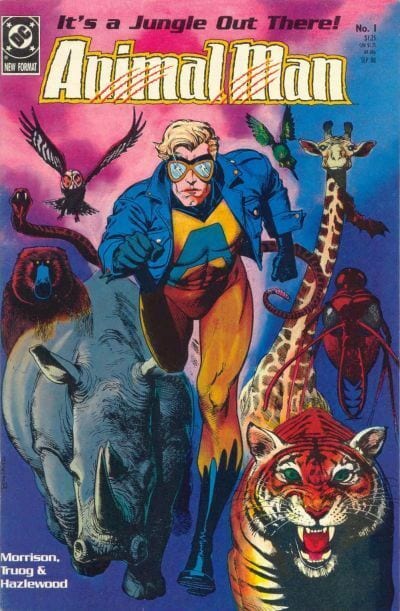
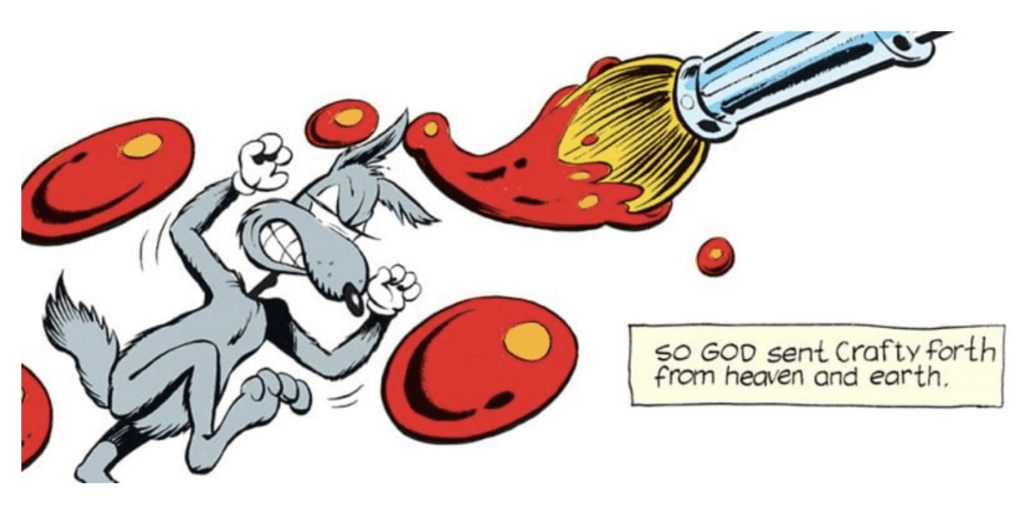
ANIMAL MAN is the story of Buddy Baker. Baker is a small-time superhero who happened upon a spaceship that gave him the ability to emulate the skills of nearby animals. At times Buddy seems embarrassed by his origins; other times, he seems befuddled by his anonymity. A pretty straightforward story, until we meet Crafty Coyote in issue 5, titled “The Coyote Gospel.” Crafty is a refugee from a cartoon universe filled with senseless violence. Having sought an audience with his God, a being on a throne holding a paintbrush, Crafty is expelled from his universe. This is the first time we meet Morrison in the pages of their work, and they seem to revel in the pain they inflict on their characters.
Having professed themselves omnipotent, Morrison breaks all the rules. Characters look off the page and seem to be able to see the reader’s face, screaming in terror. Other characters break the edge of the panels on the page and find themselves confusedly wandering through the gutter. One seemingly immortal villain is ultimately killed by other characters pushing on the sides of the panel he’s in until it shrinks enough to crush him. Much of Morrison’s genius comes from the fact that it is through Buddy that we see them break the rules. Buddy becomes aware of the gutters on the page, the reader looking at the page, and the God that’s pulling the strings.
In a quest for answers, Buddy seems to leave the world of his comic book altogether. He walks through Limbo, where he meets retconned characters and a dying chimp that is typing the words to issues of ANIMAL MAN. He even visits the apartment of Grant Morrison, where they talk together about Buddy’s pain and existence. “It’s all here. This is where I write the wrongs of the world,” Morrison tells him.
And at last, we see how it all fits. Morrison must create stakes and conflict, and for that, they need the character to feel pain. In the end, is the writer really a god or merely a devil?
Morrison’s meditation on an artist’s relationship with their art is a worthwhile read that manages to somehow feel like something beyond just a comic book. When Morrison put themselves in their work, they also gave themselves license to break all the rules and blow our minds.
What is your favorite example of an artist putting themselves in their work? Do you agree with Morrison and think writers are often cruel to their characters? Comment below!
Anyone with any minor interest in Rooster Teeth’s animated series RWBY knows that saying the franchise has grown dramatically since its inception is a terrible understatement. RWBY has evolved beyond just being a web series, there’s a comedy spinoff, a Japanese manga series, games on consoles and smartphones alike, a tabletop board game, a spinoff novel, and now a comic series published by DC Comics.
If you’re a RWBY fan, and you already read comics, this series was made for you. If you don’t already read comics, this is an excellent way to start. The setting brings us back in time to the fourth season of the show where the four main characters, Ruby Rose, Weiss Schnee, Blake Belladonna, and Yang Xiao Long (Ultimately making the initials R W B Y for their team name) are separated as the result of the season 3 finale. This is an interesting part of the storyline, and it appears the comic will shed more light on the characters’ lives during their time apart.
Panel from issue # 1 showing Ruby separated from her teammates (Silhouetted in the back) as she sets of with the remaining members of team JNPR
While the first issue does attempt to catch the reader up on what happened in the first three seasons of the show, it helps more to bring previous viewers back into the setting of the fourth season than it does to bring new readers in for the first time. Thus, making the target audience somewhat exclusive to previous fans of the series. That being said, what writer Marguerite Bennett has given us so far is very worthwhile for the committed fan base.
After first establishing our setting in issue # 1, the following four have been short stories revolving around each of the four leads, showing character histories and tales we have never seen in the show. Additionally, with the narrative focusing entirely on one character per issue, we get a more personal look into his or her perspectives and struggles during this time.
Each issue is well crafted to fit the tones and settings for each character with coloring and minor detailing in the art style that brings it all together. Issue #5, revolving around Weiss, does this immensely well as the story shifts between her locked away in her room to flashing back to her time in school with her friends. The palettes go from a dark and dreary background to a vibrant and lush school grounds with colorful uniforms and faces.
From issue # 5 from left there’s Weiss locked in her room and the right her reminiscing about school
The art style transitions well for the character designs and adds details the 3D character models from the show are lacking. Kudos to Mirka Andolfo on her execution. That, combined with the mentioned coloring by Arif Prianto, which maintains and adds an extra layer to the color theme within the franchise, really brings together a style that is fresh but still respectful to the source material.
Each of these short stories feels quite genuine to the overall series. As if they were ideas planned for the show to begin with, though I can not confirm this theory. Regardless there’s clear communication between the writers at DC and Rooster Teeth.
Without telling too much, Bennett first catches our attention in issue two by giving us some long-awaited info about Ruby’s mother, who is only spoken about in brief instances in the show. We also get to see some history between Blake and Adam following that in issue four, which better explains their relationship by showing it to us directly.
Flashbacks like these are difficult in the show as one can imagine, they would have to make new models dedicated to these specific scenes making additional expenses for short-lived purposes. So it is refreshing to get to see these scenes played out here. The only gripe I have so far is that there is not a lot of notable fight choreography, which is strange since that is something the show is acclaimed for.
That being said, now that we have reached the point where they have covered the four leads introductions, I am excited to see what other tales Bennett will be telling as the issues progress from here. I would prefer if they do not try to tell four different narratives across the span of each issue, maybe tell the perspective of one character for a few, then move on to the next. This would help with pacing.
With the new season RWBY Vol. 7 right around the corner, it would be great to see if any of the stories in the comic tie in to the show. A brief reward to dedicated readers goes a long way. I highly recommend the digital comic experience for anyone looking to pick it up. They’re only $0.99 on Comixology, and you can tell they’re optimized explicitly for the platform.
What other series would you love to see stylized as a comic book? Let us know in the comments!
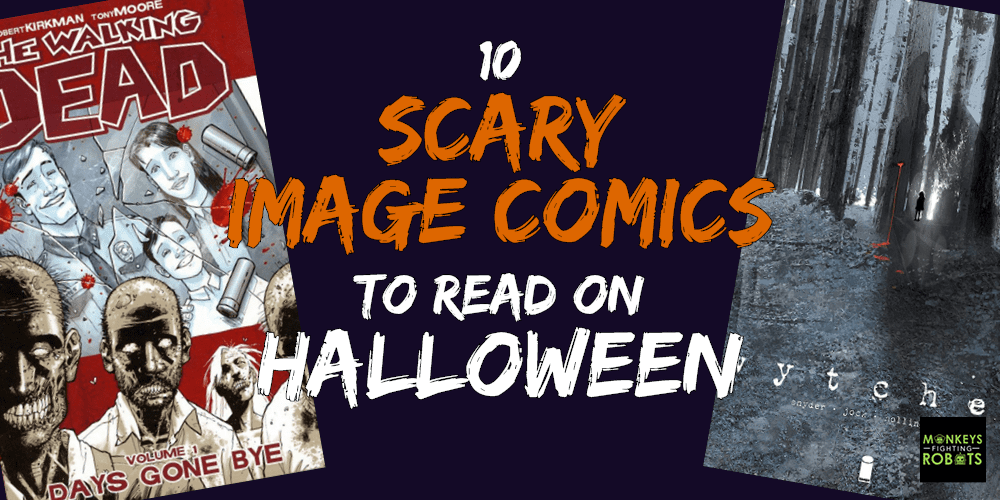
The big two comic book houses have their share of horror books to read on a chilling Halloween night. But it’s safe to say the folks at Image Comics have taken the horror comic and perfected it. There’s a plethora of graphic novels and ongoing series in the Image library that are just as gruesome, terrifying, and visceral as any prose or film out there.
Just in time for Halloween, here are a few examples of great scary books from Image Comics.
‘68
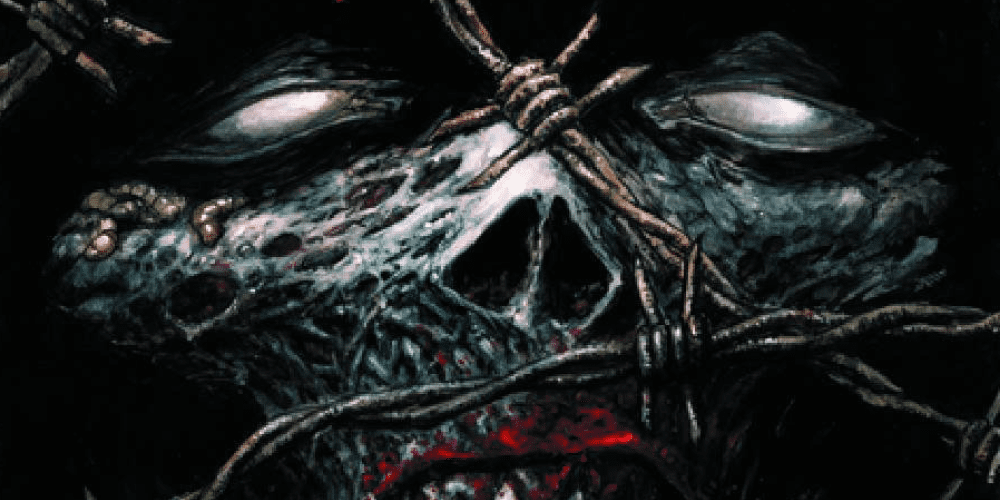
Zombies and war, need more be said? ‘68 was created and written by Mark Kidwell, and depicts a zombie apocalypse during the height of the Vietnam War. The story follows the various survivors, both civilian and military, and how the living dead in 1968 affected the war efforts and protests in America. The artwork is insane and gross, perfect for filling that itch for blood and gore this time of the year. There are six volumes to read, each with their own set of stories and characters in this harsh world.
Gideon Falls
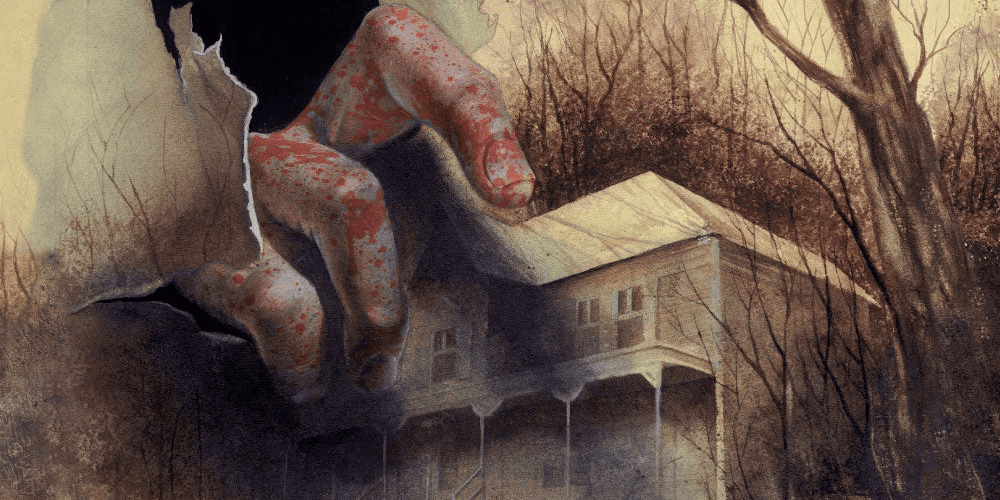
Less gore, but more psychological horrors, Gideon Falls features two congruent story lines – one about the town’s new Catholic priest, the other about a conspiracy theory obsessed recluse. Both are having these strange visions of The Black Barn, an otherworldly barn that has appeared throughout history, causing madness and chaos in its wake. The series is downright scary and unsettling. And Andrea Sorrentino delivers this gritty, unique artwork that adds layers to the already chilling story.
Ice Cream Man
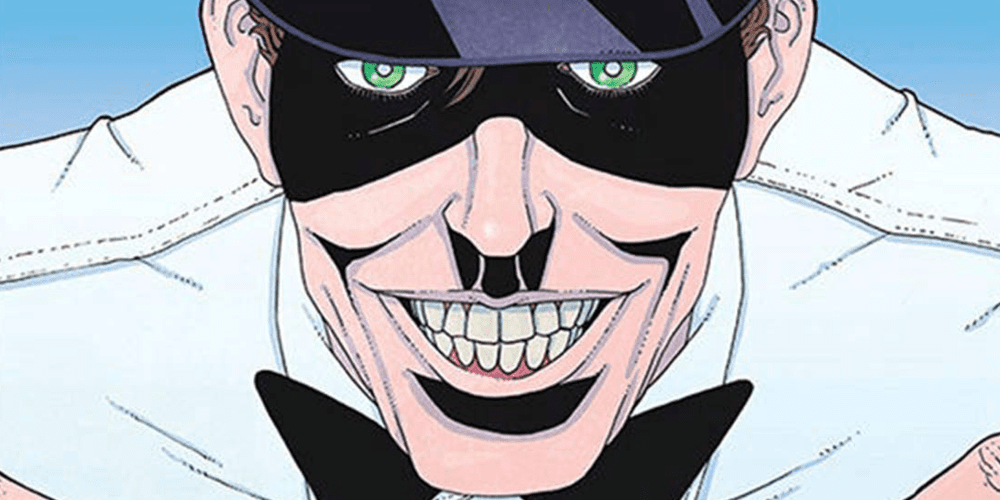
Are you looking for an addictive horror anthology? Ice Cream Man by W. Maxwell Prince, with artwork by Martin Morazzo, features a new tale of existential horror in each issue. In the center of the chaos is the Ice Cream Man, a trickster demon who shares the tales of terror of his own making. A creative and downright scary read, Ice Cream Man is perfect for indulging your horror sweet tooth.
Infidel
A “haunted house story for the new millennium,” Infidel is a deeply striking graphic novel about an American Muslim woman and her multi-racial neighbors who move into a building haunted by entities that feed off xenophobia. Writer Pornsak Pichetshote, artist Aaron Campbell, and colorist José Villarrubia take common horror tropes and add contemporary issues like racism to make this one truly terrifying book.
Nailbiter
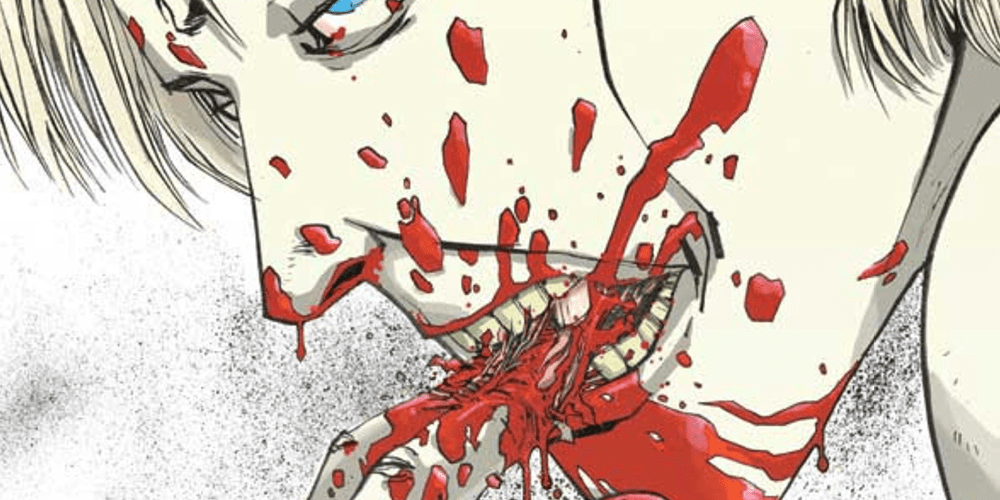
Grim and gory, Nailbiter is not for the faint of heart. The story takes place in Buckaroo, Oregon, which happens to be the birthplace of sixteen of the most evil serial killers in the world. When an FBI profiler investigating the town goes missing, an NSA agent must work with the serial killer known as “Nailbiter” to find his friend and uncover what truly makes a murderer. A suspenseful plot that keeps you in the dark, you’ll be, well, biting your nails in anticipation to find out what happens next.
Revival
When the dead come back to life in rural Wisconsin, Officer Dana Cypress has to deal with the media scrutiny, religious zealots, and government quarantine that has come with them. Revival, written by Tim Seeley, with art by Mike Norton and colors by Mark Englert, is described as a “rural noir.” It’s not your typical zombie horror story, but rather an intriguing small town mystery, that presents its readers with some unique concepts.
Severed
Set in 1916, Severed tells the story of Jack, an orphan who runs away from his adoptive home in search of his biological father. But the road ahead of him is filled with all sorts of terrors, including the child-eating monster he calls The Nightmare. Writer Scott Snyder is a master of horror, and does an absolutely fantastic job in setting the atmosphere of early twentieth century America. You’ll care for every character Jack comes across, and tremble whenever The Nightmare appears on the page.
Spawn
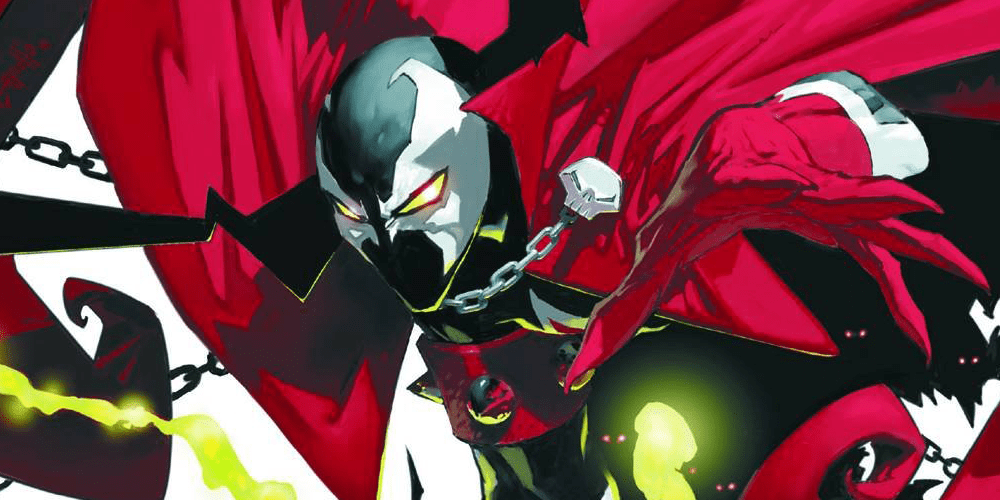
What would this list be without the horror comic that helped launch Image Comics itself? Created by Todd McFarlane in 1992, Spawn has primarily been the story of Al Simmons, who made a bargain after his death, and returned to Earth as a hell-spawn: one of Hell’s elite officers. Over 300 issues in, Spawn is considered the greatest independent comic series of all time. And for good reason. It’s action-packed and exciting, with dark and intriguing story lines, and masterful artwork that is striking and highly detailed. There’s a plethora of titles featuring the character, all available for you to devour this Halloween (and year-round).
The Walking Dead
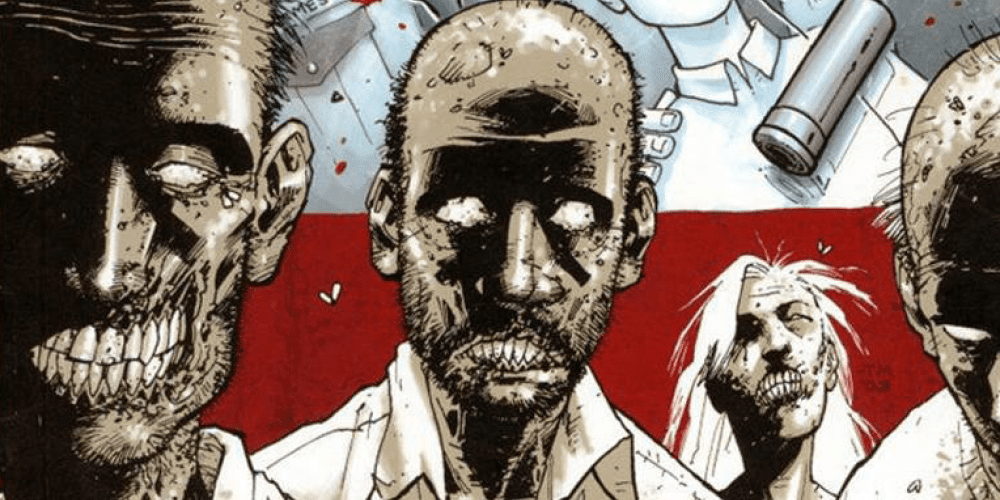
Another seminal series for both horror and comics. The Walking Dead follows a group of survivors in the months and years after a zombie apocalypse, led by police officer Rick Grimes, who travel in search of a safe and secure home. Robert Kirkman created a world where no one character was truly safe and where the people were more monstrous than the undead. Yes, the series was a bit of a slow burn, but over the course of the series you really get a good understanding of how and why the characters’ evolved as civilization declined and eventually rebuilt. Furthermore, that slow burn was met with a feeling of constant dread. Much like the zombies that suddenly crept up behind a person, so did that terror of what could possibly happen once you turned the page.
Wytches
Another Scott Snyder entry on this list, Wytches takes the concept of these dark, magical beings with cauldrons and broomsticks, and makes them much more visceral and horrifying than ever before. The story is about the Rooks family, who move to a remote town escape a haunting trauma. But something evil is waiting for them in the woods just beyond town. Watching from the trees. Ancient…and hungry. This book is absolutely perfect for Halloween, or any night of the year if you’re looking for a dark and twisted tale. The utterly creepy artwork by Jock adds layers to the horrifying experience when reading this book, with mangled monsters and backgrounds that look like they were splattered onto the page.
Have we missed your favorite scary title from Image Comics? Let us know your favorite in the comments. Happy Halloween!
Looking for more comics to devour this Halloween season? Check out these other lists:
From the mind of Hellboy, creator Mike Mignola and writer/artist Warwick Johnson-Cadwell comes a new graphic novel steeped in folklore and classic monster myth. Our Encounters With Evil: Adventures of Professor J.T. Meinhardt And His Assistant Mr. Knox is a unique and intelligent monster tale steeped in literary tradition and comedy in a way that only Mignola’s imagination can offer.
In a story that follows the characters from Mr. Higgins Comes Home, Professor Meinhardt, Mr. Knox, and Mary Van Sloan set out on a series of monster hunts and misadventures. From chasing vampires in the Carpathian Mountains to being pursued by werewolves, the two inquisitive slayers meet a cast of strange and intriguing characters both villain and ally in their quest against creatures of the night.
Mignola has once again imagined a brilliantly unique yet somewhat familiar supernatural landscape with lore pulled from European and literary mythologies. Instead of Lovecraftian monstrosities or undead Russian wizards, Meinhardt and Knox hunt down good ol’ vampires. This story pulls heavily from classic literary works like Bram Stoker’s Dracula, Sherlock Holmes, and even Joseph Conrad’s Heart of Darkness. The concept and world may wear its influences on its sleeve, but it’s handled in such a way that it’s just a treat to see how and where these influences manifest in the story.
While the concept and characters may belong to Mignola, Our Encounters With Evil is brought to life by the talents of Warwick Johnson-Cadwell. Cadwell’s writing here fits the “less is more” approach that Mignola books often have, leaving the bulk of plot development to take place visually. There are a couple of exceptions to this rule, one of these being a story told through journal entries and the other being the exposition points. Now, exposition can often be a bad word when it comes to writing, but somehow Mignola always manages to team with writers that know how to use it properly. There’s a sort of “sitting around the campfire and swapping ghost stories” vibe that Cadwell uses here. The hunters and the people they meet will often give one another information about ancient beasts through narratives of their own. While these may be information dumps in a sense, they’re delivered in such an entertaining way that it doesn’t really matter.
The real stars of the writing here are the humor and character work. Professor Meinhardt and Mr. Knox come across as intelligent monster hunters at the start. Competent, however? Debatable. Without getting into spoilers, the circumstances of their victories are so stunning and hilarious that it’s a wonder how these two have stayed alive for so long. Well, that wonder is likely due to the prowess of master hunter Mary Van Sloan, who works as the hyper-competent foil to the two leads. The way that Cadwell plays with romantic-era monster tropes and humorously turns them on their head is this novel’s crowning achievement. While spooky at times, the clever humor lands on all fours throughout the book.
Cadwell’s art is pitch-perfect for anything with Mignola’s name on the cover. Artists that work on Mignola’s books always have an intriguing and strange style that works alongside Mignola’s own work, and Our Encounters with Evil is no exception. The simplistic yet effective visuals give the story its “spooky and strange” aesthetic while also being a great vehicle for the visual humor. Even the sound effects are given over to Cadwell’s unique vision, blending in perfectly with whatever chaos is happening in the panels without contrasting with the overall tone. Clem Robins’ handles letters and does so with sharp attention to stresses during dialogue. Bold and irregular letters set the mood during fights or panic. The real highlight is the authentic look of handwritten journal entries near the end of the story.
Our Encounters With Evil is an endlessly clever and surprisingly hilarious horror graphic novel. Mignola and Johnson-Cadwell have created a story that derives influence from literature and mythic monsters of old, and still stands on its own as a unique creation. Any fan of Gothic horror, classic monsters or even just witty humor are in for a definite treat when this book hits shelves on November 13th.
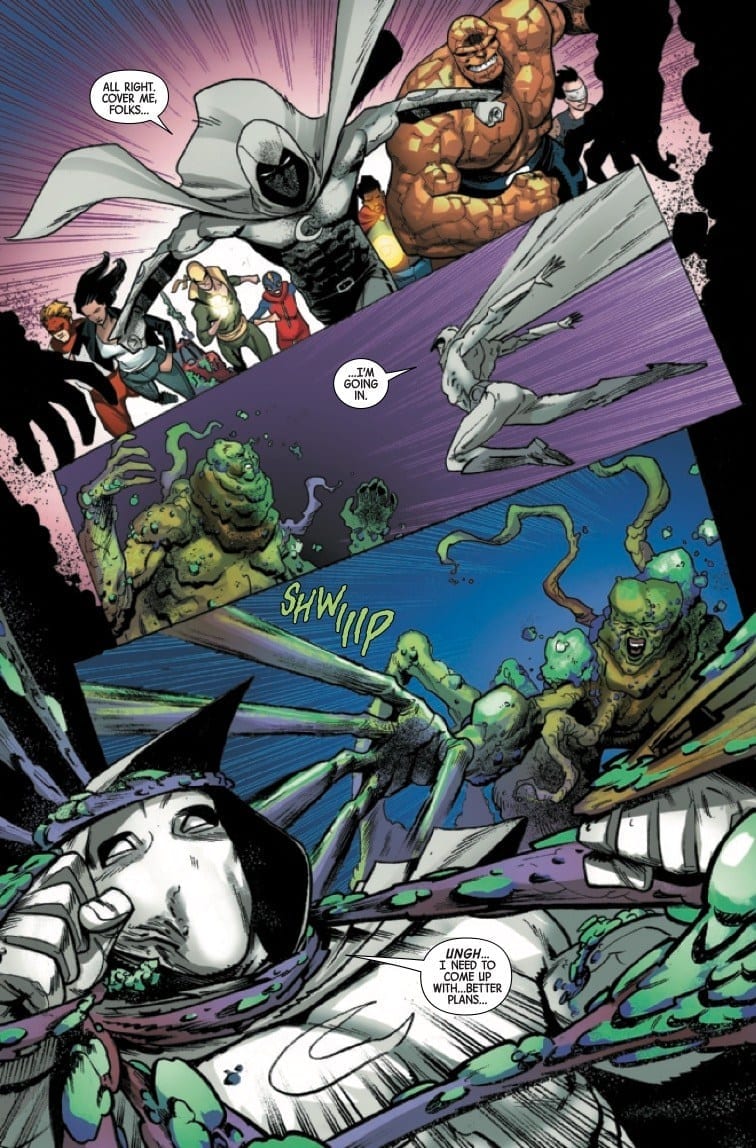
CONTAGION #5, available in stores Wednesday, October 30th, is the concluding chapter to this five-part miniseries. We’ve witnessed the outbreak of a parasitic fungus that’s infected New York’s heroes, beginning with the Fantastic Four (minus Ben Grimm) and continuing its rampage among the remaining protectors. But the contagion, known as the Urchin, has laid waste the Avengers and most everyone on the scene, leaving the future to an unlikely hero: Moon Knight. Will he find a way to stop the threat that took down Earth’s mightiest heroes?
Story
To the casual comic book fan, the vigilante hero Moon Knight may seem like a Batman knock-off, especially with his brooding, assortment of gadgets, and guilt complex. But beneath Marc Spector’s gruff exterior lies a fractured psyche, allowing him remain largely immune to psychological controls (like the Urchin) that could best even the Dark Knight. This special talent give the hero reason enough to plan an infiltration of the creature’s mind.
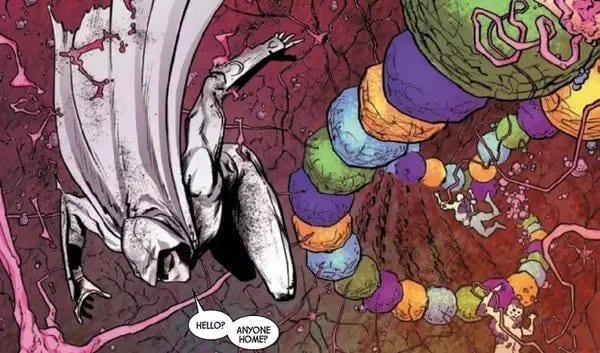
After becoming successfully absorbed by the Urchin, Moon Knight searches for the core of the creature’s mind, but runs into various zombified versions of the heroes under its control. One of these is the freshly absorbed Pie after a hard-fought battle. Enraged at the monster for absorbing a child, Moon Knight slices the mental tendrils to bits before they can take over Pie’s mind. And now the two bravely face the inner workings of the Urchin in a rescue mission that could potentially spell the end for everyone.
Writer Ed Brisson makes this version of Moon Knight relatable and distinct in his personality, representing those of us who feel like their inner thoughts are full of madness. This hero shows us that despite the mental issues affecting us—depression, anxiety, bipolar disorder, and more—we all have the capacity within us to save the day. We just need a supportive team to have our backs.
Artwork
Adam Gorham, Roge Antonio, Mack Chater, Damian Couceiro, and Stephen Segovia’s illustrations, in conjunction with Veronica Gandini’s coloring, are a charming blend of psychedelic bliss and disturbing horror. The fungi-covered heroes and buildings of New York’s Yancy street bring to mind apocalyptic images in classic sci-fy stories. But the really enjoyable elements are found within the Urchin itself; Moon Knight’s journey through this twisted mangle of minds is reminiscent of a Magic School Bus trip within someone’s body, depicting colorful, organ-like structures set in front of a backdrop of membranes and tissues. What’s more, the art within the Urchin meshes well with VC’s Cory Petit’s lettering, which seems to follow Moon Knight in each panel as he tumbles around in the chaos.
Comic Covers
Main Cover
Juan José Ryp & Jesus Aburtov’s cover artwork depicts Ruby, the unwillingly host of the Urchin, along with the main roster of Avengers in calcified (or “fungified”) form. The group is set against a backdrop of fungi-covered buildings and bridges as well. These images together show how the contagion, much like any disease of the body or mind, infects everything around us.
Variant Cover
Ryan Browne’s variant cover illustration is much like the main cover in its focus on the characters infected forms. But instead of the heroes, this version places the focus on Yancy Street resident Ruby. Readers are brought back down to earth by seeing the true damage this contagion has wrecked on normal people.
Conclusion
The message in CONTAGION #5 hits home, but the wrap up seemed a bit rushed. It would have been nice to learn more about the intricacies of the Urchin and see exactly how it exerted so much power over our heroes. Still, the series was a blast to read and brings light to one of Marvel’s most overlooked Moon-themed characters.
Were you satisfied with the conclusion of this series? Let us know in the comments below!