Home Blog Page 213

Comic Book Fandom vs Reality, The TOM KING Edition

Few fans are harder to keep happy than comics fans. I know because I’m one of them. When fans are displeased with a writer, they make their opinions known.

Over the past few years, as I’ve engaged with fandom on the Twitterverse and various Facebook fan pages, it’s been hard not to miss the vitriol that has been spewed at DC Comics’ writer Tom King. King has written several high-profile stories that have put him front and center of DC fan discourse. Despite celebrated runs on Grayson (with Tim Seeley), Mr. Miracle, and Sheriff of Babylon, some of King’s storytelling choices have raised the specter of fan criticism, including my own. However, I think a lot of this criticism has been misplaced, and King’s role in some of his writing choices has been misunderstood.

While King stuck out as one of the star writers of DC Rebirth back in 2016, after Batman and Catwoman failed to get married in Batman #50, King’s crown seemed to lose some of its shine.

What was initially lauded as one of Batman’s best runs soon gave way to rancor; however, not all of this was King’s fault.

Batman #50 was never going to result in a marriage. That’s a happy ending that would’ve arrived too early. However, I long suspected this would be one of those “darkest before the dawn” type of stories that would circle back to a happily ever after, which sort of happened in City of Bane, but that was because of a decision by DC to shuffle the real ending of King’s Bat/Cat story into its own maxi-series.

It’s also worth noting that one of the reasons fans were so pissed off by Batman #50 was that it was marketed (strongly!) as the wedding of the century for DC Comics. I’m not going to harp on this point too much, but others have pointed out that while the marketing for the issue was deceptive, Tom King is not in charge of the marketing and wrote the exact story he wanted to tell. What DC chose to do with that is on them. Not King.

Every writer is bound to make a few decisions that fans aren’t pleased with, but King has received some unnecessary flack for several things he shouldn’t have. Some of the comments I’ve read take the form of almost conspiratorial thinking: “Tom King hates this character which is why he did THIS,” or, “Tom King disagreed with this or that editor which is why he did THIS,” or, “Tom King just likes messing up continuity which is why he did THIS.”

I think it’s time we give King some exoneration here.

Let’s start with a biggie–the treatment of Wally West in Heroes in Crisis!

I love Wally West and was super excited about his return in DC Rebirth #1. I’m a fan of the character and everything he represents about DC history, continuity, and legacy.

But do you know who also loves Wally West? Tom King!

While King admits that he liked the story he wrote about Wally in Heroes in Crisis, the choice of characters and the roles they played in the story were editorially mandated by DC. With a few exceptions, the most vehement complaints (historically) about King’s writing have this one thing in common–an editorial mandate!

Another editorial mandate that got pushed on King was the death of Alfred Pennyworth in his Batman run. A lot of fans (like myself) who were hoping that DC’s timeline might yet “catch up” to the events of Doomsday Clock, as was originally promised, had those dreams dashed with Alfred’s death, given that the character appeared alive in that story.

That King seemed to drop the emphasis on the Rebirth narrative, despite Saturn Girl appearing in one of his first issues and “The Button” having been a major storyline during his run, was dissatisfying to me, and I’m sure, many others. Reading various Twitter threads gave me the impression that some fans thought Tom King and other writers at DC were intentionally undermining the Rebirth/Doomsday Clock storyline and giving the middle finger to fans who were concerned about continuity.

But Tom King is a fan of comics. I imagine that a lot of things that get you and I fired up as fans are probably the same things that get him fired up as a fan. King actually pitched a story to DC that would’ve connected Dr. Manhattan to the return of Superman’s father Jor-El and the Flashpoint Thomas Wayne in order to show that their returns were more than a coincidence. The Jor-El/Manhattan connection was certainly addressed a time or two, but the return of Thomas Wayne definitely seems like a missed opportunity to tie into the larger Rebirth story involving Manhattan. It’s nice to know that King and I were on the same page there (and again, it was DC editorial that kept King’s pitch from coming to fruition).

If you’re not a fan of King thematically linking his work to ideas about war and trauma, that’s fine. We all have writers and artists in comics we connect to more than others.

But it’s time we stop giving King unnecessary flack for editorial decisions that were out of his hands and appreciate his unique voice as a writer.
Monkeys Fighting Robots Youtube

Review: THE ORVILLE #4: HEROES PART 2 OF 2 – The Price Of Becoming A Hero

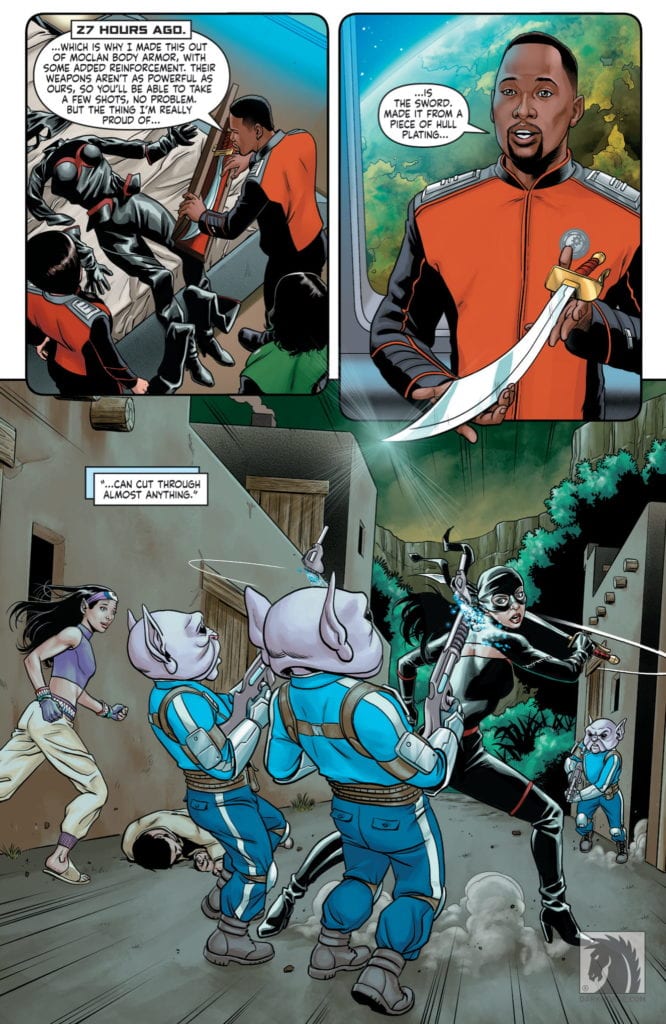
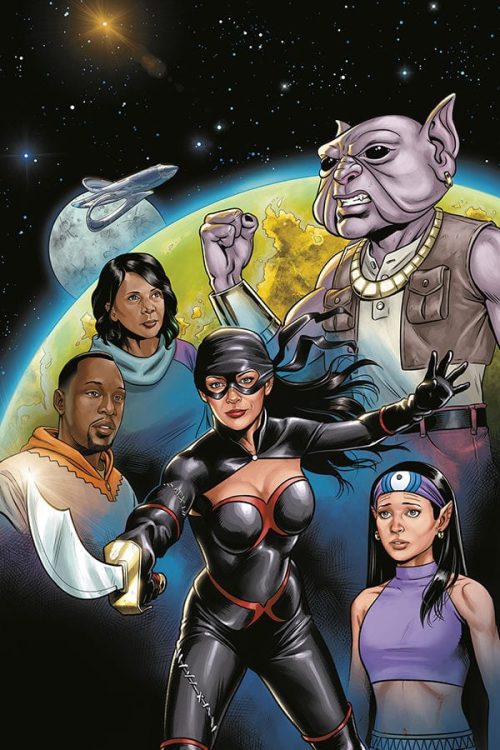
THE ORVILLE #4: HEROES PART 2 OF 2, available in stores on Wednesday, December 2nd, concludes the two-part story highlighting Talla Keyali and her fight to protect the Okudum people. Readers have enjoyed watching the young Lieutenant embrace a role as the legendary hero Xandia. But will this choice come back to haunt her?

Story

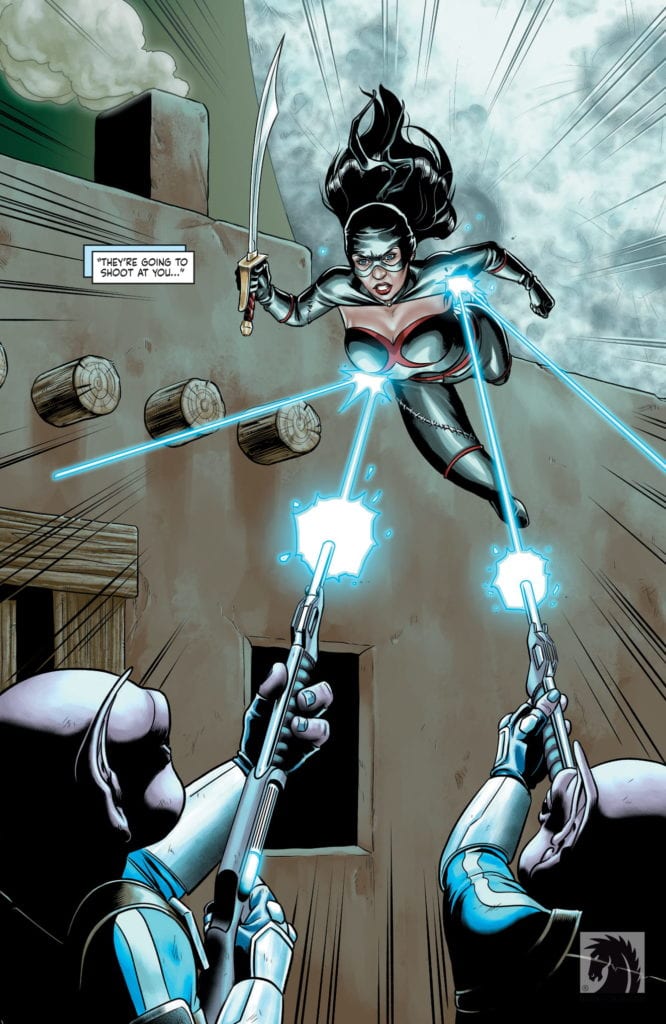
After shocking the Okudum with her appearance as the fabled  last issue, Talla shows she’s back in action with a fresh costume. Thanks to ‘s engineering, our hero now sports a bulletproof outfit complete with a sword made from their ship’s strong hull.

This bit of detail helps readers see the strong bond between Talla, Dr. Claire Finn, and Lieutenant John LaMarr. The fact that her crewmates didn’t hesitate to offer assistance in her idealistic plan proves the strength of their friendship.

But despite her assortment of advanced weaponry, it seems even Talla’s prowess won’t place her in multiple places at once. And it’s that key factor that leads to a tragedy that could escalate the fighting further.

David A. Goodman’s writing helps readers feel as if they’re a part of the story. The way he guides us through each scene gives the impression we are in the panels with our favorite characters.

Artwork

David Cabeza’s penciling and ink work, Michael Atiyeh’s coloring, and Richard Starkings and Comiccraft’s Jimmy Betancourt’s lettering capture the essence of The Orville in this issue. The protagonists are drawn with a stunning realism that almost rival their real world counterparts. Each scene uses colors effectively to keep readers focused on the action scenes. And the word balloons are placed strategically so as to outline these sequences.

Conclusion

THE ORVILLE #4: HEROES PART 2 OF 2 concludes the Heroes arc in dramatic fashion. Readers will be on the edge of their seats as they follow Talla through the most heart-wrenching fight of her life.

Do you think it was right for Talla to impersonate Xandia? Let us know in the comments below!

Monkeys Fighting Robots Youtube

Review: MARVELS SNAPSHOTS: CIVIL WAR #1 Asks Tough Questions

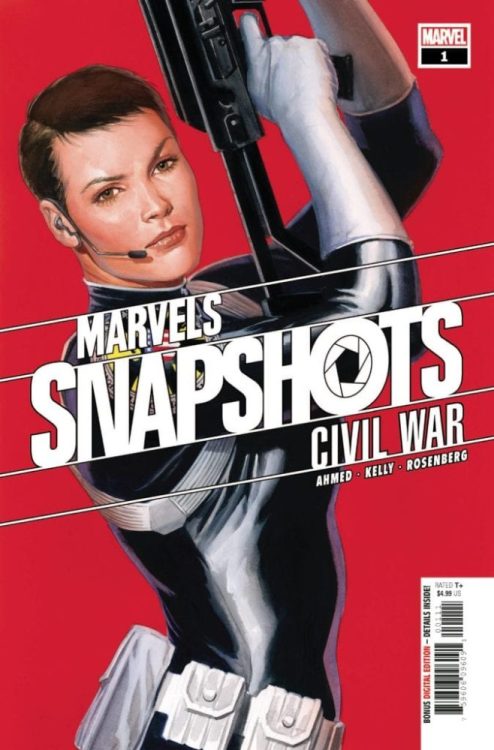
Marvels Snapshots Civil War, Ross cover

MARVELS SNAPSHOTS: CIVIL WAR #1, available from Marvel Comics on December 2nd, presents the ethical dilemmas faced by a low-level SHIELD agent during the events of Civil War. Saladin Ahmed turns in a surprisingly thought-provoking story that forces the reader to ask one simple question – What would you do?

Cover Art

It’s an Alex Ross quality, so high-quality art is a de facto given at this point. That said, Maria Hill’s expression is notably lacking in any emotion, and nothing is really happening.  It’s a beautiful cover, but it lacks punch.

Writing

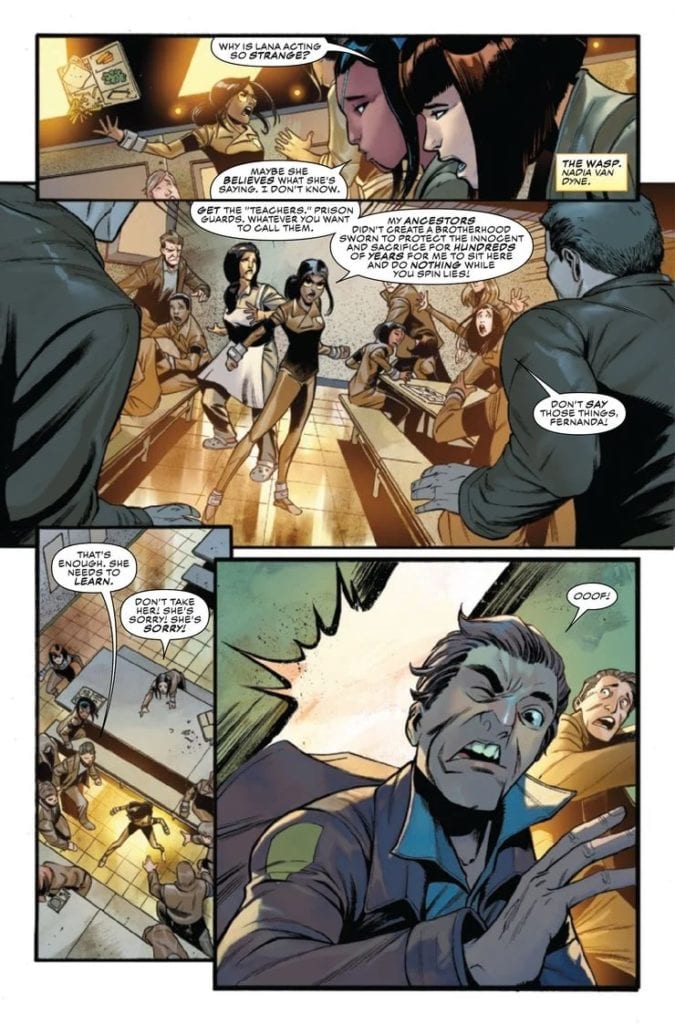
This issue follows a low-level SHIELD agent (Clyde Dobronski) who’s eager to protect innocent lives after the Superhuman Registration Act is passed. He very quickly learns that “doing the right thing” is not so clear when he’s ordered to capture icons of heroism such as Captain America. Dobronski fills the role of average, every man trying to walk the line between protecting innocent, non-superpowered lives versus arresting and imprisoning superhuman citizens, minors in some cases, who represent little or no threat.

Ahmed’s story works well because of how nuanced each character was developed in such a short book. The narrative largely falls on the side of the superhumans who want to be free, but even then, the seeds of doubt are still present. The reader is forced to ask some serious questions about what we would do in Dobronski’s shoes, such as:

Would we do what felt wrong under the umbrella of following orders?

What price would we pay to keep civilians safe? What price is too high?

Are superpowered minors less jaded about the world and therefore able to better grasp the core of freedom, or are they simply too young to understand the threat they themselves pose?

The story wraps up with a mildly open-ended resolution, leaving those questions for each reader to answer on their own. I enjoyed the challenge of this issue because it was, at times, uncomfortable.

Pencils/Inks

Ryan Kelly’s art is fairly strong throughout the entire issue. The focus of this story is Dobronski, who’s depicted as a less than exceptional physical specimen. He’s older, overweight, not athletically gifted in his movements, and completely average in every way.

Kelly makes Dobronski just mediocre enough for the reader to understand why he hasn’t climbed the SHIELD but not so pathetic as to make him seem unqualified to work for SHIELD. In gaming terms, Kelly created the comics equivalent of an npc, and it works perfectly for this story.

All the remaining visual elements work for this very confined story. It’s confined in the sense that everything happens within small moments and interactions between characters. It’s the little things like posture, body language, gestures, and facial expressions that make all the difference. And Kelly nails it.

Coloring

Rachelle Rosenberg makes great use of mood-coloring, especially with the contrasting highlights to Kelly’s dramatically inked shadows. Nearly every panel uses old-school overhead lighting to mimic what you would see in government buildings and prisons. The lighting scheme throws a lot of shadow that Kelly plays up to add dramatic punch, and Rosenberg takes full advantage with gorgeous highlights and color gradients to make those shadows deeper. More ominous. This is great mood-setting from Rosenberg.

Lettering

VC’s Joe Sabino turns in a solid performance with the lettering. The dialog is clean and easy to read. Word balloon placement follows the panel flow perfectly. And the pacing is excellent throughout.

Conclusion

MARVELS SNAPSHOTS: CIVIL WAR #1, available from Marvel Comics on December 2nd, is one of the strongest issues in the Snapshots series by taking a successful event and finding an interesting story within the story. The writing is excellent from front to back, and the art team is the icing on the cake. This is a highly recommended issue.

Monkeys Fighting Robots Youtube

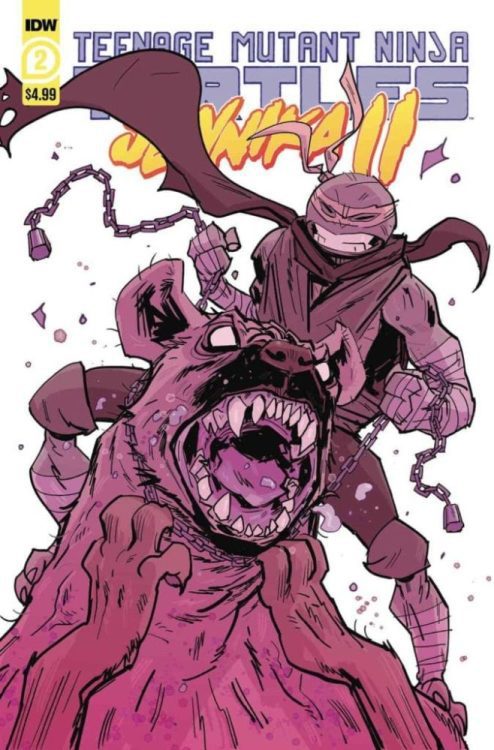
Review: TEENAGE MUTANT NINJA TURTLES: JENNIKA II #2 Uncovers A Mutant Town Mystery

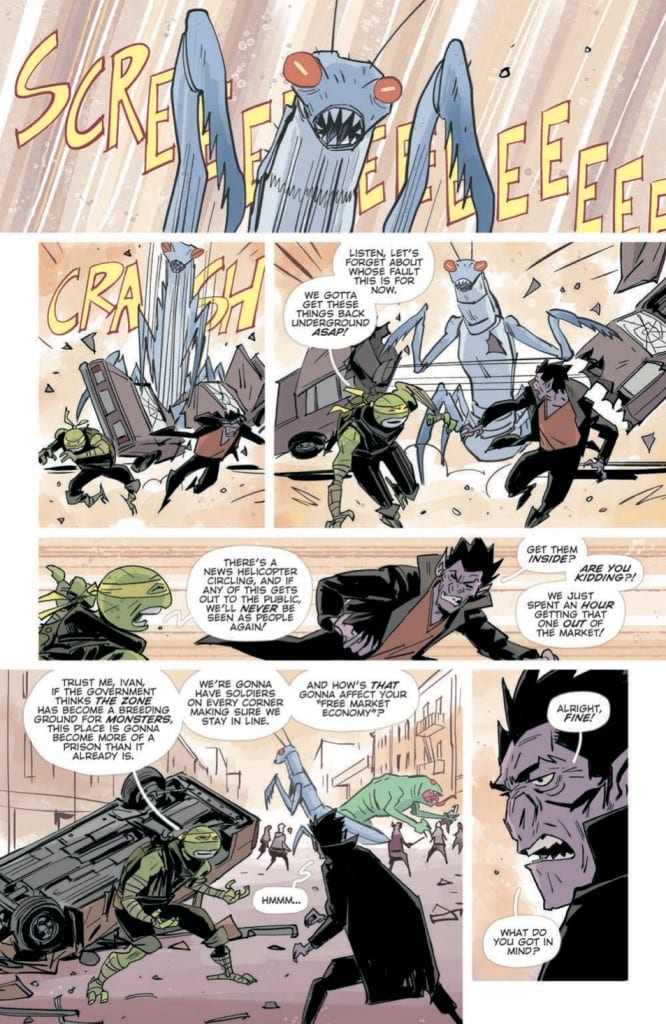
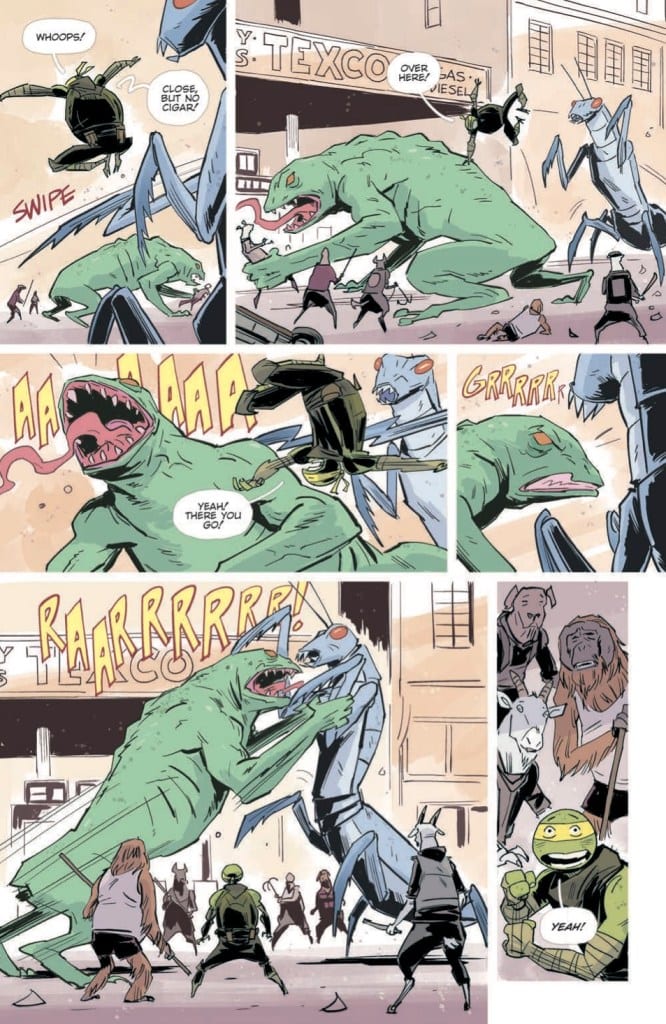
TEENAGE MUTANT NINJA TURTLES: JENNIKA II #2, available in stores on Wednesday, December 2nd, dives deeper into the mysteries of Mutant Town. Seeking to keep the community away from the media, Jennika attempts to draw attention away from a violent new mutant. But when another monstrous creature joins the fray, the solo warrior may need help from Ivan.

Story

Jennika and Ivan appear to have their hands full right in the issue’s opening pages. Readers are well aware of the struggles mutant citizens have faced in their new lives, but none of these involved vicious monsters.


Readers will follow Jennika and Ivan through the streets of New York’s Mutant Town as they look to uncover this mystery. They’ll find townspeople with rich personalities, many of whom tell tales of “shadow people” who use strange drugs underground. Could the out-of-control mutants be connected?

Brahm Revel’s writing combines elements of mystery and action stories in astounding fashion. Each panel opens up new questions, making us anxious to find out what lies in store for Jennika.

Artwork

Revel’s penciling and ink work, coloring, and lettering work well together to create an engaging visual representation of this story. The sleek lines outlining Jennika are contrasted with the jagged, bulky masses of her assailants. We also loved how her yellow hues brought attention to her action sequences against darker backgrounds. In addition,  the fonts add to the high-intensity scenes with onomatopoeia words.

Conclusion

TEENAGE MUTANT NINJA TURTLES: JENNIKA II #2 opens up new possibilities, and new dangers. Readers will find themselves drawn into the narrative more so than ever before.

Who do you think the “Shadow People” are? Let us know in the comments below!

Monkeys Fighting Robots Youtube

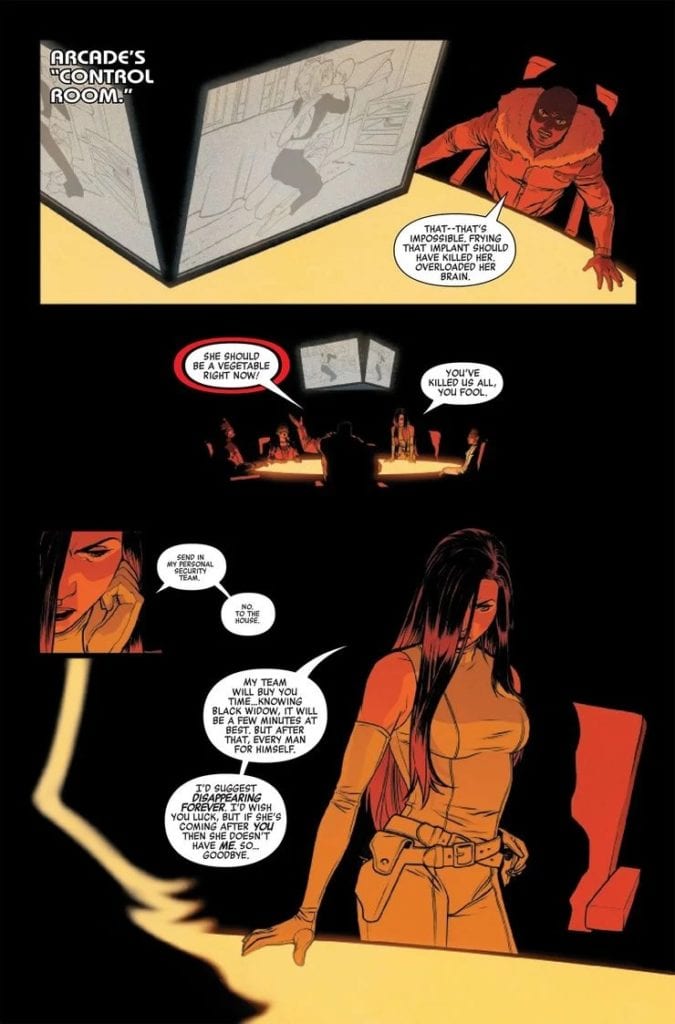
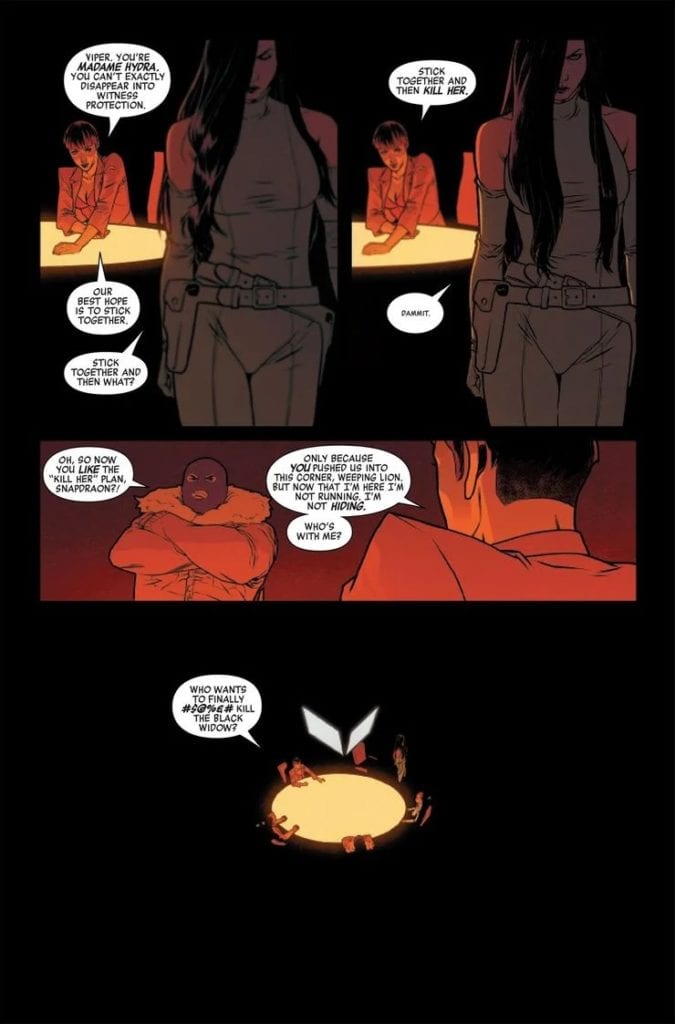
How to Face the Widow’s Rage in BLACK WIDOW #4

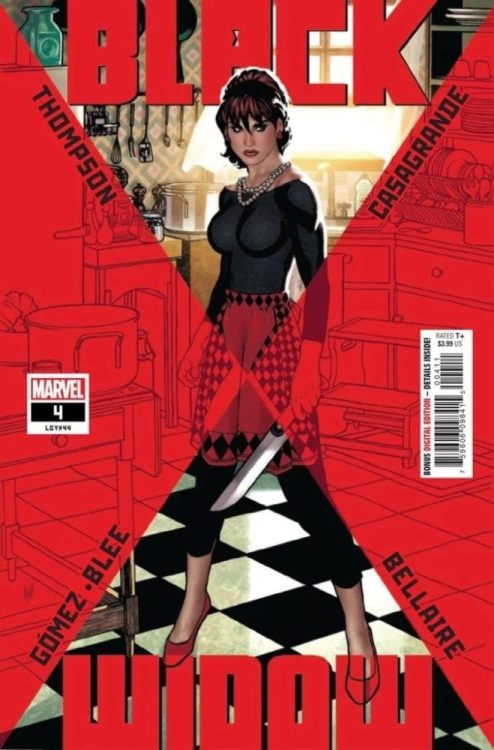
BLACK WIDOW #4, available Wednesday from Marvel Comics, continues a unique and groundbreaking story of the one and only Natasha Romanoff, aka the Black Widow. Her journey so far has been unexpected, and now there are more twists lying in wait.

Which version of Nat will she be, when she wakes up?

Many fans have been talking nonstop about Black Widow’s latest series, and with good reason. It has been an innovative series, right from the start, pushing Natasha Romanoff to new heights and adventures. Alongside her fans, of course.

Over the course of four issues, fans have come to understand the circumstances that led to this latest turn of events. Knowing how it came to be hasn’t lessened the emotional toll of it all. If anything, the opposite is true.

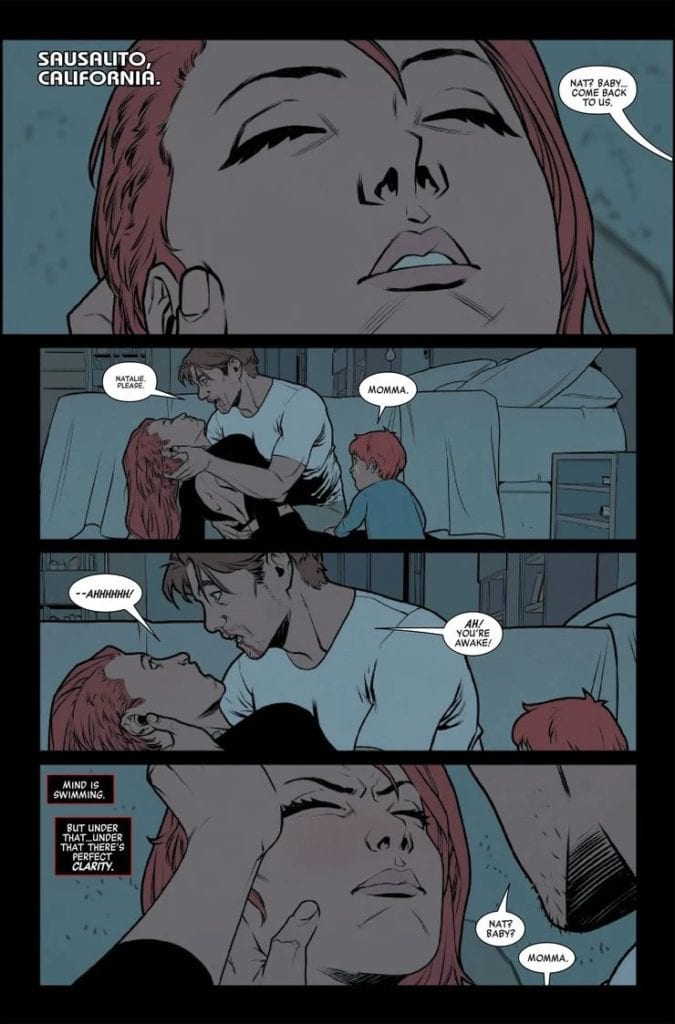
Black Widow #4 picks up right where the previous issue left off, with Natasha fighting for her life. All while fighting to understand everything that is happening. She’s likely in for a rough ride in her future.

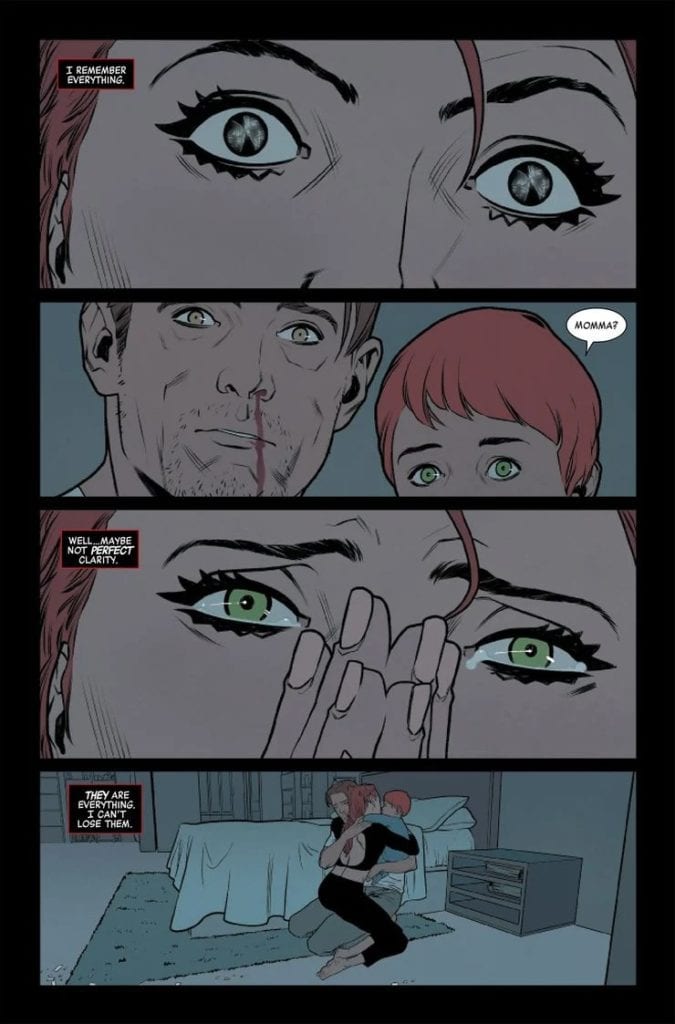
A heartwarming reaction, with interesting implications.

The Writing

Natasha’s life has been turned upside down over the course of these past few issues. What started out as a seemingly normal mission has turned into anything but – with even her allies becoming a little bit confused about what has happened. Admittedly to comical effect.

Black Widow #4 is full of action, fighting, and so much more. All thanks to Kelly Thompson and her creative writing. This is a dark issue, though perhaps not for the reasons one might expect. The truth has finally come out, as has the reaction to it.

The story doesn’t end there. Not by a long shot. This actually makes a painful amount of sense, as Black Widow has never been a person to just walk away. Not from a fight, and certainly not from this.

This entire plot arc is added layers to Nat’s character, and in such refreshing ways. It’s so easy to imagine this different side of her character, even if it did come about due to false circumstances. It makes readers want a win for this heroine. While also raising concerns about how long it’ll be before the rug is once again pulled out from under her feet.

Even with that sense of foreboding lingering in the air, this entire series has been such a breath of fresh air. This is a Black Widow series like never seen before, as Thompson takes risks. Both with the writing, and the character herself.

Naturally, this story is far from over, as Black Widow’s enemies continue planning.

The Art

The was a fairly massive artistic team working together to bring Black Widow #4 to the fans. This is thanks, at least in part, due to the fact that flashbacks made their way into the mix. Those flashbacks set the scene, and were a necessary inclusion for this issue.

Elena Casagrande was the lead artist for present-day events, while Carlos Gomez was the artist in charge of the flashbacks. Together they wove a narrative that is impossible to look away from. In both timelines, Natasha looks amazing – and just a little bit intimidating. As she should. As do her enemies.

Jordie Bellaire’s colors were used for the present, while Federico Blee’s colors made an appearance in the past. The two were highly distinct from one another – making the transition clear. Interestingly enough, they did not make the decision to mute the colors for the past. The brighter tones are oddly effective here, especially as the present seems to be set in largely darker spaces.

VC’s Cory Petit was the letterer for the entire issue, adding a sense of cohesion throughout. There are a few panels in particular that really steal the show here, and countless little details that are a strong reminder of just how dangerous the Black Widow really is.

We’ve gone from an elaborate plan to something much simpler (in theory).

Conclusion

Upon completing Black Widow #4, it’s almost difficult to know how to feel. That’s how you know an issue has gotten under one’s skin. It’s dark, full of action, and really took some major risks with Nat’s character. The real question is, how long will it last? More importantly, what is going to follow that cliffhanger ending?

Monkeys Fighting Robots Youtube

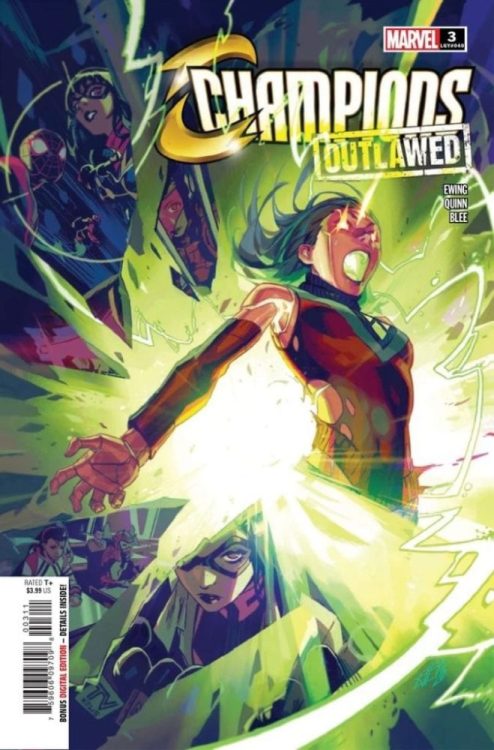
How the Fight Continues in CHAMPIONS #3

CHAMPIONS #3, available Wednesday from Marvel Comics, dives back into an event that still feels eerily similar, as all underage heroes are forced to make a choice. That, or face the repercussions from C.R.A.D.L.E.

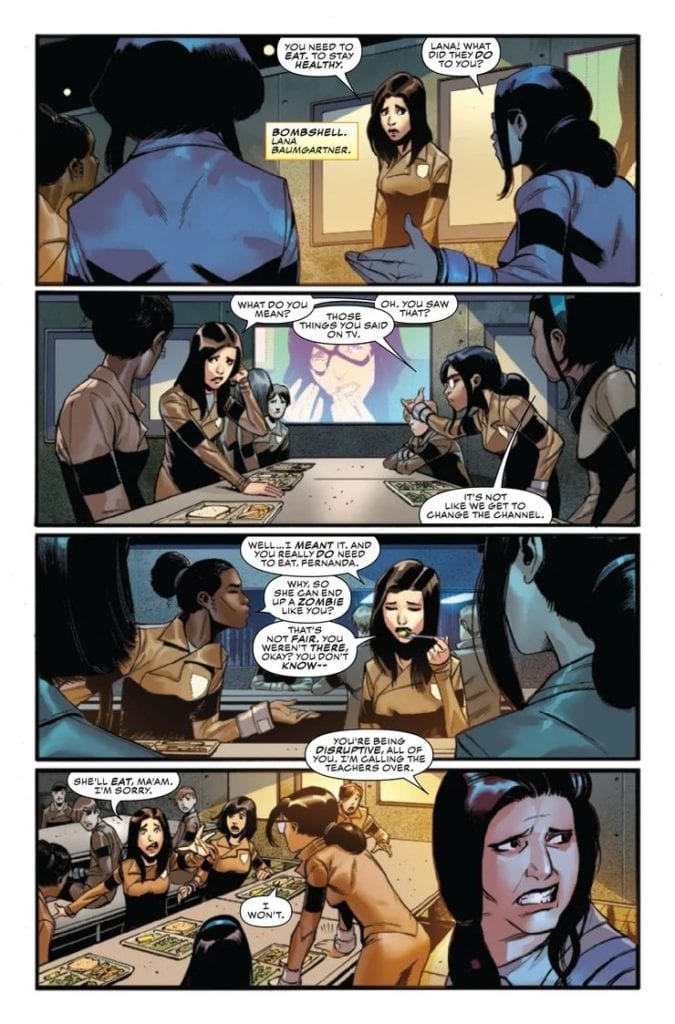
Bombshell is clearly having a difficult time here.

Thanks to the events of Outlawed, and C.R.A.D.L.E.’s growing support, the Champions are on the run. That is, some of the Champions are on the run – those who haven’t already been captured. In reality, this applies to any other underage hero out there.

It’s an event that feels eerily similar to that of the Superhuman Registration Act. Something that was almost certainly done with intention. After all, how could any agency possibly know the ages of the heroes they’re targeting, as most have secret identities? This feels like yet another excuse to harvest names and take control over those with power.

That is something openly discussed in Champions #3, as it should be. From the looks of things, it’s going to get quite a bit darker and dangerous before it gets better. All while history repeats itself.

Meanwhile, Snowguard, Starling, and Locust seem to having a…different reaction.

The Writing

Champions #3 is a rough issue to read, and it has nothing to do with writing quality. It is merely tough to see such a situation occurring – once again, at that. There are many parallels that can be drawn here, between the comics and the real world.

A fact that Eve L. Ewing likely wrote in with intention. It adds a raw element to the plot, as do the emotions and conflict portrayed on many of the characters within this issue. The Champions we all know and love have changed so much over the years, and this issue went a long way in showing the reasons why.

This issue is largely split into three parts. Those heroes who are in detention centers (sorry, reeducation camps), one group of young heroes that is on the run, and one solo hero trying to find herself after everything she has been through.

It’s fascinating to see how these three stories connect, albeit sometimes more than a little harrowing. It’s creating a powerful tale, with no shortage of emotion and impact. A fact that couldn’t be more true after that dramatic conclusion. Is anyone else counting down the days until Champions #4 drops?

This isn’t going to be good…

The Art

As one might imagine, the artwork in Champions #3 is complex and fully capable of showy the variety of emotions that our characters are experiencing. There’s no doubting how broken up some of the captured heroes are, or how exhausted those on the run are. Not to mention dozens of other details.

Bob Quinn’s art is the basis for this issue, bringing over a dozen named characters to life, with little to no need to label any of them (though most do come with a courtesy label as well – nice touch). The dramatic changes in scenery is yet another impressive example from this issue, quickly jumping from a facility to a farm, and then back to the city.

Federico Blee’s colors enhance each and every scene that Quinn drew. There’s on sunset, in particular, that is simply breathtaking. It’s almost ironic how beautiful it is, given how dark it gets in this issue. The light blooms in general are wonderfully done in this issue, be it from a natural source, a bulb, or a power.

Finally, VC’s Clayton Cowles letters bring it all together. You can feel the exhaustion and exasperation coming off our young heroes. You can see the image and the damage caused. Most importantly, one sound effect and you can suddenly guess who is about to appear on the next page.

Locust is clearly done staying quiet.

Conclusion

Champions #3 is going to be an issue that hits many fans right in the feels. The connections to the past, and to real life, just cannot be avoided. It makes this issue a difficult – yet vital – one to read, all while our heroes continue to fight for what is right.

Side note: I really recommend that readers looking into Champions right now also pick up Magnificent Ms. Marvel and Miles Morales: Spider-Man. As both series show different sides of the events currently going on.

Monkeys Fighting Robots Youtube

It All Comes Full Circle in LUMBERJANES END OF SUMMER #1

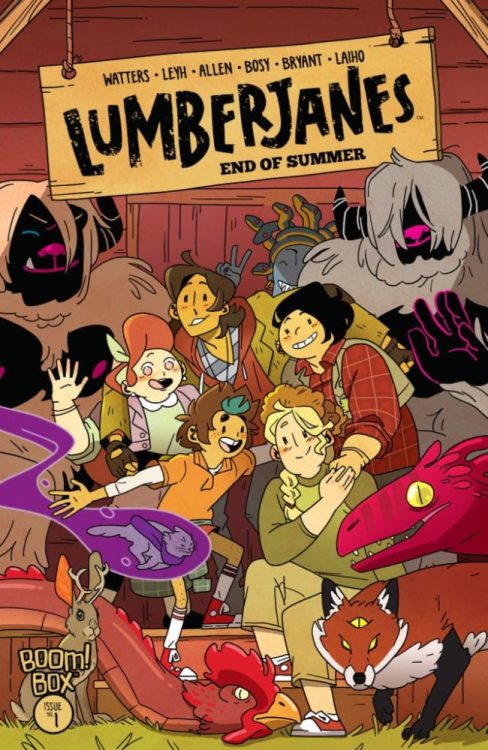
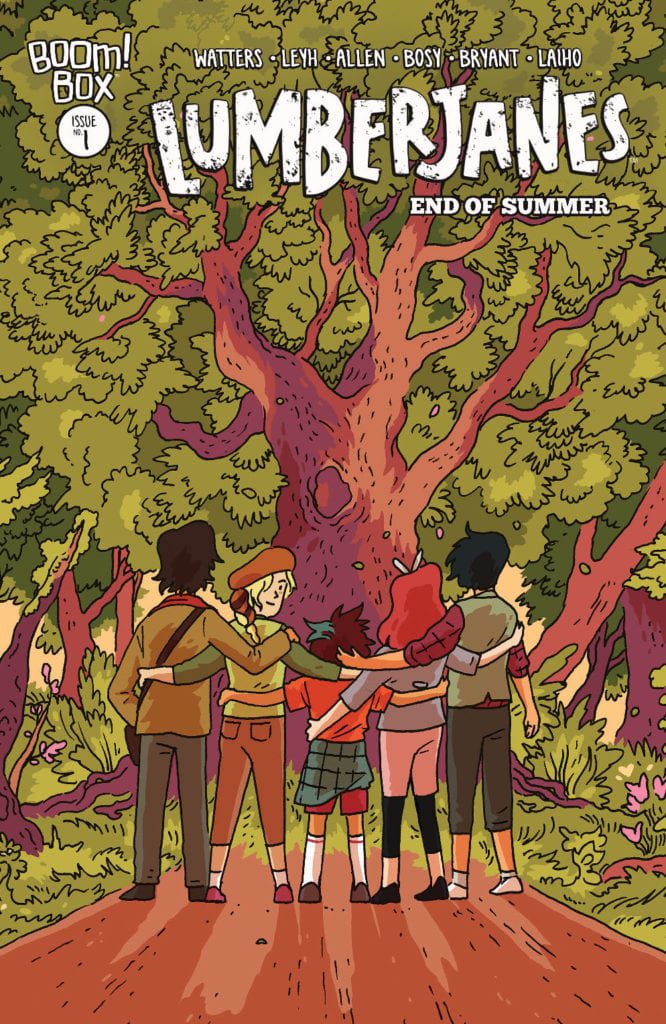
LUMBERJANES END OF SUMMER #1, available Wednesday from BOOM! Studios, brings with it the finale of a beloved series. Still, all good things must come to an end. Even summer camp and all the chaos it contains.

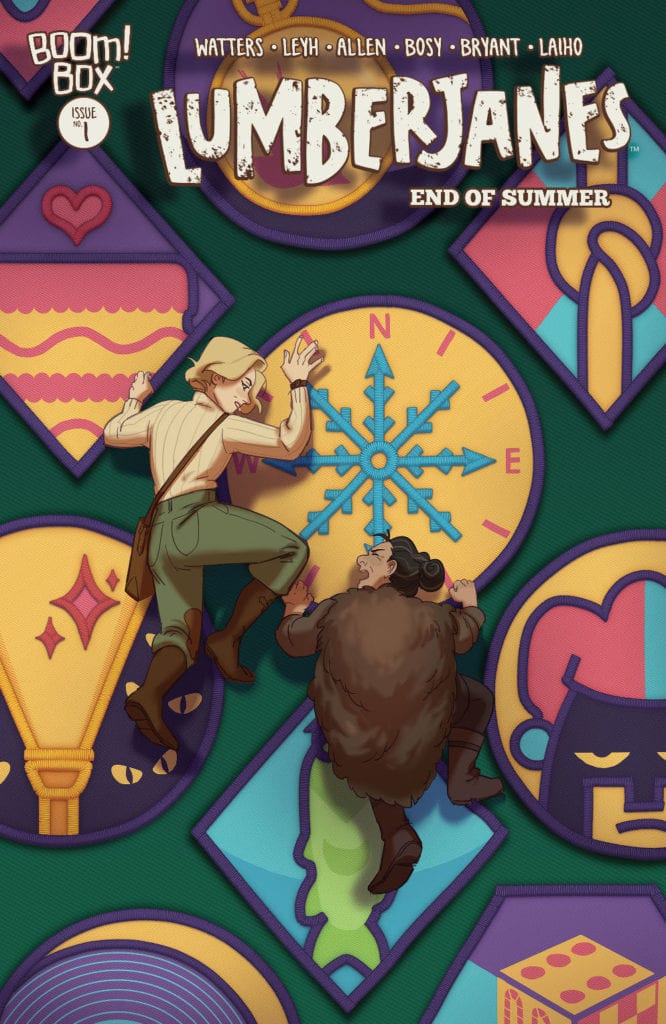
Two of the Lumberjanes veterans working together on this alternate cover.

This is a bittersweet moment for any and all fans of the Lumberjanes. The series is officially coming to an end here, with Lumberjanes End of Summer #1. That being said, it is certainly an ending that does the entire series – and the characters – justice.

More than that, it is always better to see a series conclude properly, than to see it canceled with little to no warning. On the bright side, this is a series that can easily be revisited by any fan, as it will always welcome them back.

The fact that the series will someday air on HBO will hopefully help to soothe any feelings of loss that the fans are dealing with. That and the endearing note included at the end of this issue, which may or may not make you tear up (hint: it will).

Lumberjanes End of Summer #1 is a whopping forty-eight pages, getting just a bit more time to wrap everything up with satisfaction. Our campers, their counselors, and all of the mystical friends they’ve made along the way.

These friends will always be close, especially after all they’ve been through.

The Writing

Lumberjanes End of Summer #1 was written by Shannon Watters and Kat Leyh and it is a whirlwind of an issue, to put it lightly. In many ways, this is an issue that brings the entire series full circle.

The Roanoke Cabin’s final adventure is possibly their biggest yet. At the very least, the stakes have never been higher. As such, there’s plenty of chaos, laughter, and rampant emotions bundled up into the narrative of this tale.

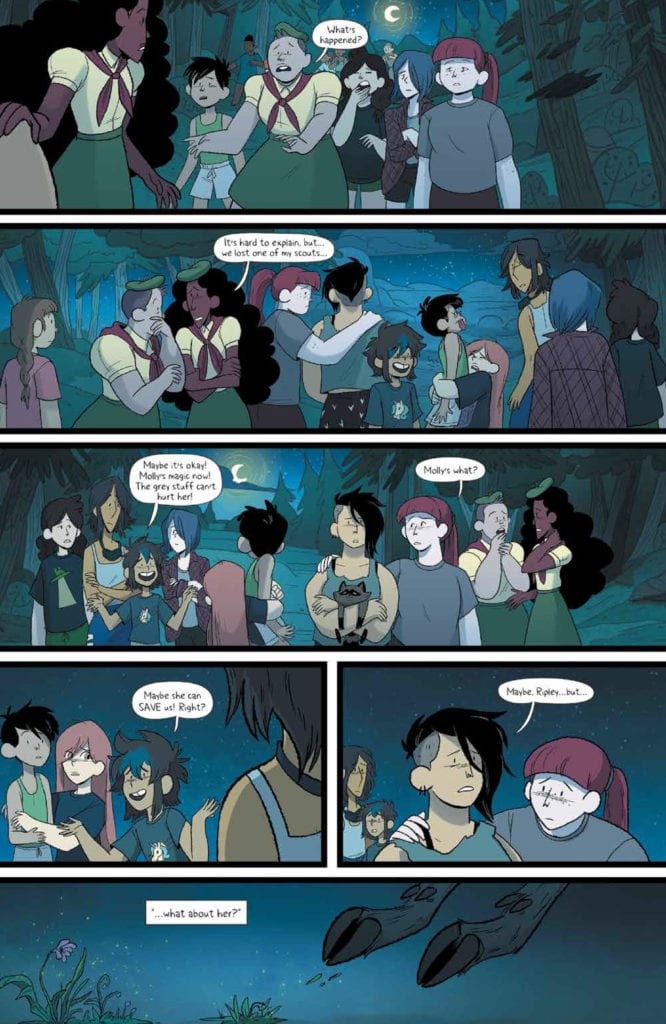
For a moment it almost seemed like Molly’s story was going to take dominance, but this series has always been balanced, and it didn’t take long for the rest of the Lumberjanes (not just Roanokes) to join into the fray.

It was a delight to read, raising hopes, spirits, and so much more before it came to the end. Throw in the excuse to laugh here and there (a feat that only little Ripley could pull off), and it all makes for a memorable conclusion.

A memorable conclusion worthy of this series. While most fans would never have chosen to say goodbye to this series, I can at least honestly say that this is one of the best goodbyes possible. That is something I can’t complain about.

It is also an ending that encourages fans to go back to the beginning and read it all over again. Not because it felt lacking – but because of how tightly it ties back to those very first plot arcs. It’s really quite clever, and leaves everything on a positive note.

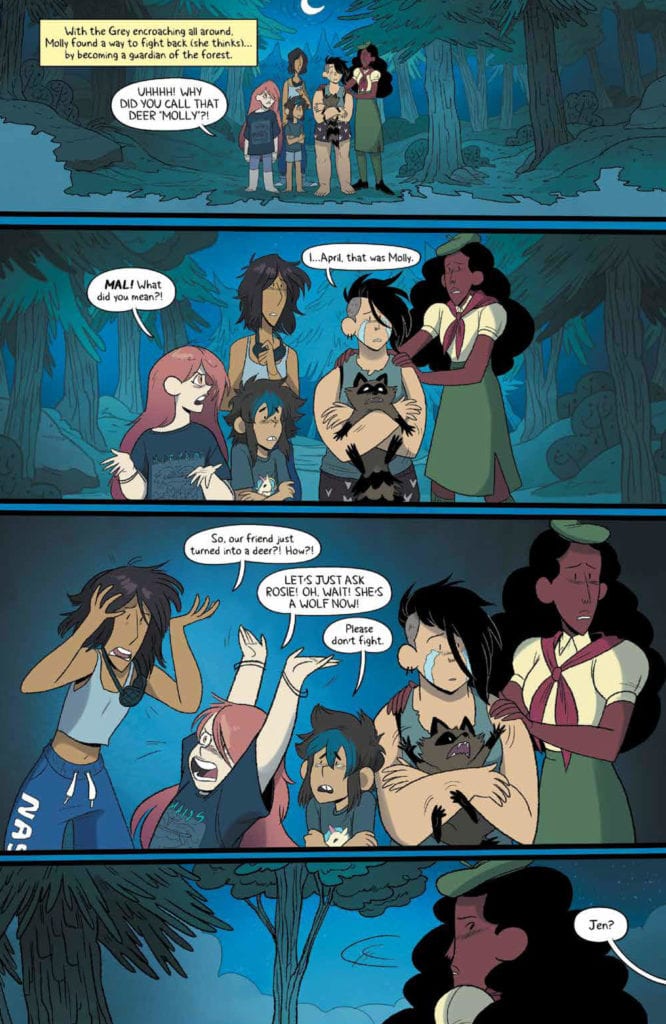
Even for the Lumberjanes, having your friend (and girlfriend, in Mal’s case) run off and turn into a deer is…something worth getting worked up about.

The Art

There is no shortage of artists involved in Lumberjanes End of Summer #1. Brooklyn Allen (layouts), Alexa Bosy (art), Kanesha C. Bryant (art), Maarta Laiho (colors), and Aubrey Aiese (letters) all worked together to bring this amazingly spirited issue to fruition.

It’s a colorful and chaotic mess – and I mean that in the best of ways. Lumberjanes has always been full of vibrant colors and characters, running around and causing no end of adventures. All of that is captured in this single issue, as every camper and found friend works together against a common foe.

A common foe that stands out quite spectacularly, thanks to its complete lack of color. Another clever little twist from this series. On the polar opposite of that scale is the appearance of another old friend, one who couldn’t be more colorful if they tried.

All of these elements work together to bring about a look that is classically Lumberjanes. Every little detail, from the wardrobe to the characters, and even the way they react to new challenges. It all resonates, both with the characters, and with the readers.

Do you think Molly can do it? Can she save the day?

Conclusion

Lumberjanes End of Summer #1 is a heartwarming conclusion to a series full of spirit, acceptance, and adventure. This is a conclusion that the fans deserved, though it came with plenty of twists and surprises to keep everyone entertained. All while bringing the story full circle. In the Lumberjanes way, of course.

Monkeys Fighting Robots Youtube

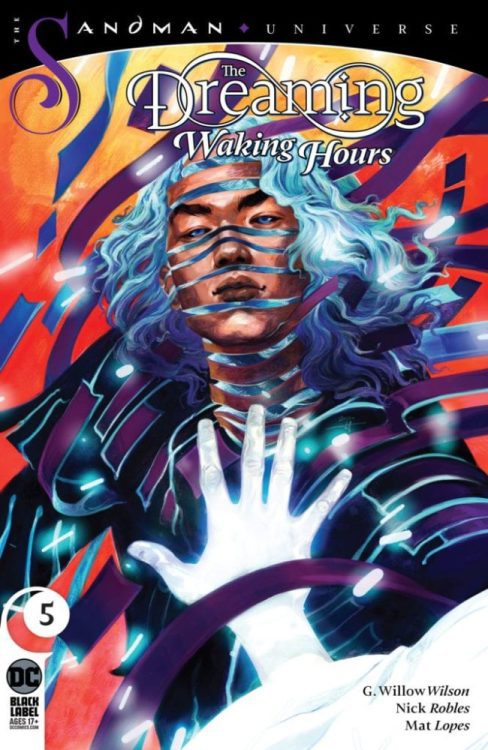
Review: THE DREAMING: THE WAKING HOURS #5 – The End of the Beginning

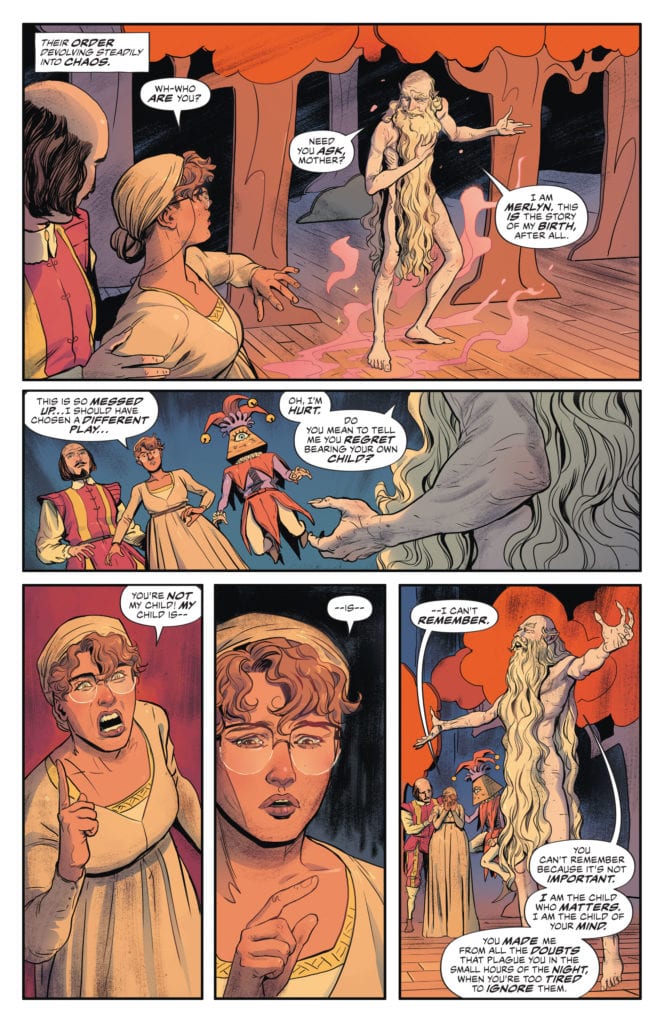
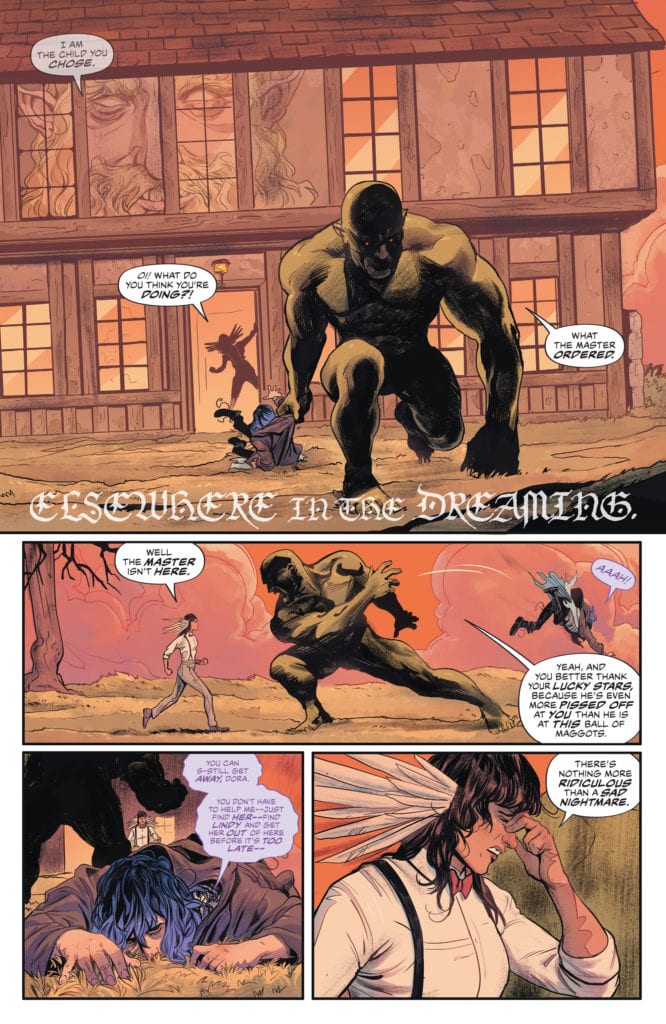
Writer G. Willow Wilson and artist Nick Robles continue their outstanding Sandman Universe saga with “The Dreaming: The Waking Hours” #5. Along with Mat Lopes on colors and Simon Bowland on letters, this issue resolves the series’s first major arc with relatable and emotional revelations as well as character developments that will no doubt be fascinating to read about in coming issues. With yet again incredible visuals from Robles and Lopes, this is yet another outstanding comic book from one of the most talented creative teams in the industry right now.

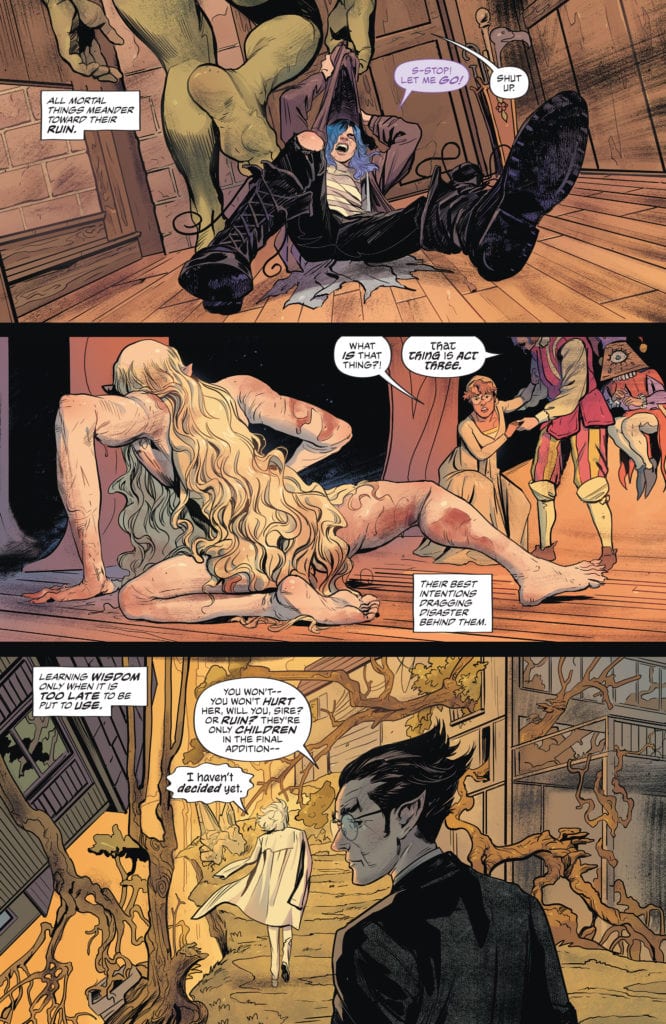
“After his escape to the waking world went terribly awry, Ruin finds himself face to face with his creator, Dream…and Dream is not happy. Is there any force in this world that could stop him from unmaking his most unpredictable creation?”

Writing & Plot

Every issue of “The Dreaming: The Waking Hours” that G. Willow Wilson has penned thus far has been, much like the original Sandman, an engrossing mix of relatable human character drama and wildly imaginative and intelligent mysticism. This issue ends the introductory arc with Lindy and her infant’s unintentional run-in with the denizens of the Dreaming in an emotionally meaningful way. This series thus far has been, among other things, an internal journey for both struggling single mother Lindy and the lovesick nightmare that is Ruin. While Lindy’s time with the assorted identities of Shakespeare does come to a rather abrupt conclusion, it ends in a way that still feels right from Sandman’s ever-present literary standpoint. The conclusion of Ruin’s introduction and his search for love and meaning is a stroke of brilliance for Wilson as a character writer and someone putting her stamp on this universe. Not only is Ruin a great new character that is near impossible not to love, but Wilson also understands Dream himself as a complicated being with his own sense of humanity. As always, the dialogue is naturalistic and engrossing. The pacing in this issue is a bit rushed at points compared to prior issues, but the conclusions that Wilson comes to still feel right and climactic. This is another fantastically written issue for this series and another great installment of Sandman universe storytelling.

Art Direction

I could never possibly run out of praise for Nick Robles’s work, and that still proves to be true on The Waking Hours #5. The dynamic animations and never-ending range of stylistic variety in terms of environments and characters – human and other – that Robles brings to the Sandman universe is some of the best seen in the franchise’s history. Getting lost in this world is an impossibly easy task thanks to how Robles’s pencils create such vivid detail and brilliantly designed characters. Not only are his pencils great, but his visual direction is just as inventive. In true Sandman fashion, panels run into each other or disappear altogether for the sake of how the Dreaming and its reality-shedding story often works. Robles – and the story at large –  is aided by the astonishing colors of Mat Lopes. The sheer amount of variety in the shades and tones used by Lopes within the pencil lines is beyond impressive, but also the way the colors match and create the emotional tones of each panel is the work of an artistic expert. The visual experience crafted by these two artists work hand in hand to perfectly deliver this comic’s incredible visual experience. The letters from Simon Bowland are a modern touch on the classic Sandman lettering style; a classical yet contemporary aesthetic with each character having their own slightly different font. Once again, this series is gifted with an incredible art team that delivers perfect results week in and week out.

“The Dreaming: The Waking Hours” #5 is an emotionally sweet and beautiful ending to this series’s opening story arc. While this script feels a bit more rushed that the prior issues thus far, the story still feels complete and the character revelations are all earned. The visuals are once again beyond striking, making this one of the most gorgeous comics on shelves right now. Be sure to grab this latest issue from your local comic shop when it hits shelves on 12/1!

Monkeys Fighting Robots Youtube

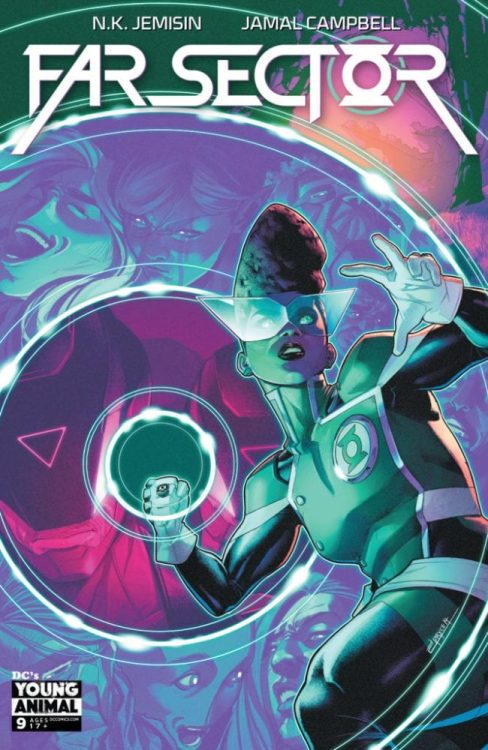
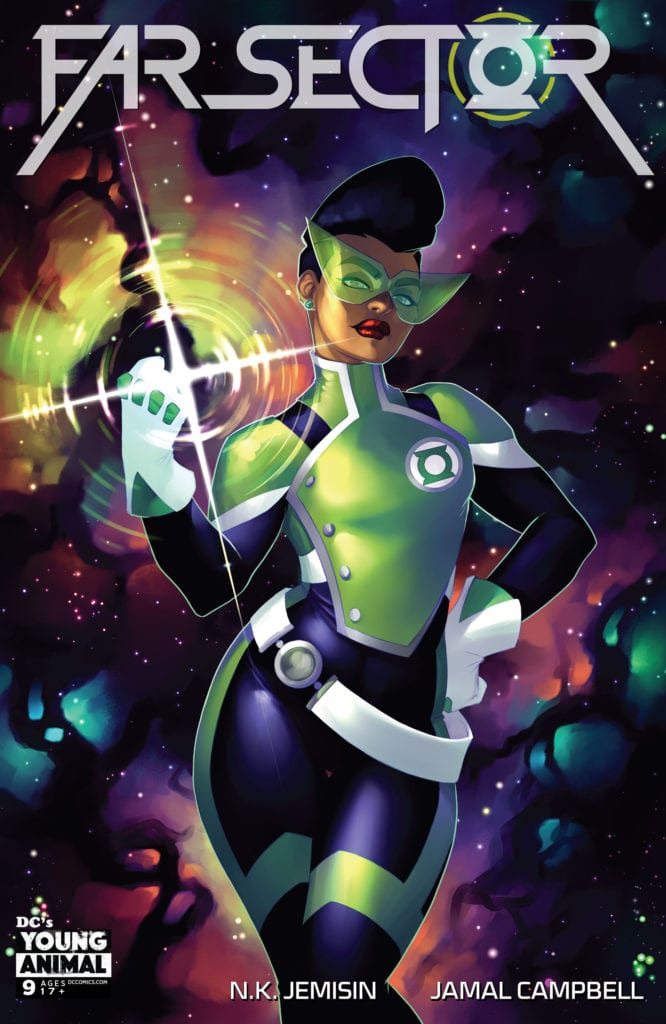
Review: FAR SECTOR #9 – The Eye of the Storm

From Writer N.K. Jemisin and artist Jamal Campbell comes another chapter of DC’s surprise hit with Far Sector #9. While this issue is comparatively uneventful compared to the drama and action of most of the other chapters, this is still 22 pages of insightful and effective narrative combined with more of Campbell’s absolutely astounding artwork. With letters from Deron Bennett, this is still a great read that sets up the next intense arc for this series.

“Jo’s investigation into the conspiracy at the heart of the City Enduring takes her to Platform Solid Ground, an alien farmland where most of the City’s food comes from. But what the headstrong Green Lantern discovers there shakes even her to the core as Far Sector’s thrilling threads of murder and machinations build to a fever pitch.”

Writing & Plot

N.K. Jemisin has been known to pack massive amounts of story into every 22-page issue of Far Sector without anything ever feeling too slow or unnecessary.  In this ninth issue, it’s interesting to see that she has decided to write a chapter that feels almost like a recap of sorts. This issue isn’t as exciting or eventful as the others (despite it’s disturbing final page revelation) because it goes back over many of the concepts we already understand while revealing new ones through conversational dialogue. This isn’t even a bad thing really, as Jemisin’s direction with the plot and her dialogue abilities make the issue still delightfully entertaining. Her decision to make this issue a stepping stone from the last arc to the next has me (and should have you) excited and intrigued at what she has in store for her finale. The socio-political concepts she tends to focus on are still here, but still read as if they are a fresh wound. Seeing the issues and plight of lower-class citizens on the City Enduring, as well as coming to understand the upper-crest’s absurd political system, is uncomfortably timely. Jemisin packs in a ton of relevant story and packages it with a continually compelling character arc.

Art Direction

In all honesty, what more can be said about Jamall Campbell’s artwork? His work here on Far Sector #9 is as stunning as always, full of spectacularly animated characters and stunning sci-fi visuals. This issue’s focus on character drama and investigation draws away from Campbell’s visual action choreography and more towards his ability to focus on person-to-person interactions. This issue is largely comprised of shot/reverse shot or reaction shot panels that build the story through the character lens. Campbell’s precise digital art style is perfect for this sort of space opera/noir tale, as the characters and environments bleed with color and imagination on every page. The lettering from Deron Bennett is modern and classy, using as clean font in the speech bubbles while being inventive (but not over the top) on the special effects. This is once again a brilliantly put together piece of visual storytelling.

Far Sector #9 may be a bit of a dull issue compared to its predecessors, but it’s still a completely effective piece of character storytelling and pointed political commentary. N.K. Jemisin pens a script that focuses in on what she wants this story to ultimately be about while setting up the next major arc. Jamal Campbell once again draws an immaculate sci-fi world with a variety of stunning alien life and vivid colors. This has been one of DC’s best comics of the past year, and it’s absolutely worth the pickup when it hits the stands at your local comic shop on 12/1!

Monkeys Fighting Robots Youtube

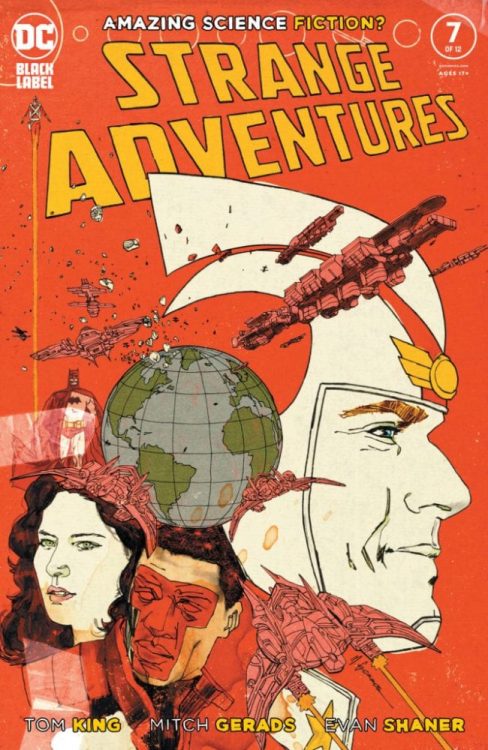
Review: STRANGE ADVENTURES #7 Makes Us Question Everything

King Strange Adventures DC Comics

Usually, for a Strange Adventure review, I would write this in two parts: one section discussing the storyline of Adam’s book, the other showing the modern-day investigation into his actions. But DC Comics’ Strange Adventures #7 is hard to get specific about. Not because it’s not brilliant. Writer Tom King, artists Mitch Gerads and Evan “Doc” Shaner, and letterer Clayton Cowles have delivered one of their strongest issues to date. It’s just so potentially spoiler-y. So to avoid ruining a magnificent issue, I’m going to keep this a little briefer than usual.

Writing

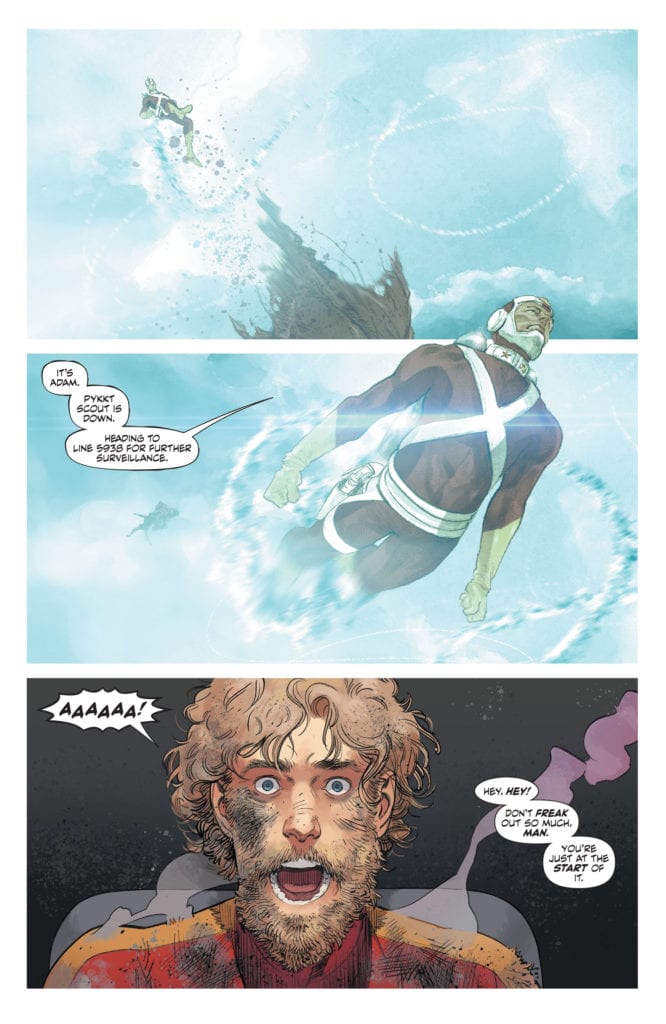
King makes us question everything from the first panel. Do we even know Adam Strange at all? King switches us back and forth between scenes of Adam staving off a new Pykkt invasion, to scenes of him being captured in an invasion gone by. His casual brutality begins bubbling to the surface. We begin to wonder if he’s even a hero. In fact, he seems to look down on superheroes. They can’t get their hands dirty like he can. We’re seeing a new Adam. An Adam that will do anything to get the job done. King’s scenes of Adam’s past with the Pykkts brilliantly creates a terrifying origin for this rage. It shows us the turmoil that’s turned now to violence, and it gives us more than enough reason to worry.

King Strange Adventures DC Comics

Art

Gerads and Shaner, in some ways, switch approaches in this chapter. Where Gerads once held the ground in the gritty and dirty, Shaner now stakes his claim. In fact, Gerads’ scenes are often disturbingly clean. There’s a war going on, but Alanna and Adam’s indifference to it all is shown visibly in scenes that look completely calm. Shaner, on the other hand, pulls out all the gritty, grimey, timey wimey stops. This change is most noticeable in a simple scene of Adam and one of his captors looking out a window. They’re silhouettes against the light. In any other chapter, Shaner would have their backs shown as a solid black. But here, we can actually see the pen strokes. It brings a grittiness and realism in that’s like sugar in a gas tank. Can the clean world Adam has created in his book deal with an encroaching reality, or will it crumble around him?

Coloring

A lot of the disturbing calm in Gerads’ scenes comes from his coloring. It’s a soft color palette. Gentle blues and greens, hints of orange. It feels serene, except for the occasional red burst of blood. There’s a sense of comfort in these scenes that makes us feel as though Alanna and Adam feel more at peace when they’re at war. Shaner’s colors are hypnotic and disturbing. He has brilliant rainbows of color spread out across his panels. It would be beautiful and mesmerizing, if it weren’t in scenes of violence and torture. Shaner invites us into the unraveling mind of Adam Strange. He gets us to feel the beauty of letting go and slaps us in the face with the harsh dullness of reality.

King Strange Adventures DC Comics

Lettering

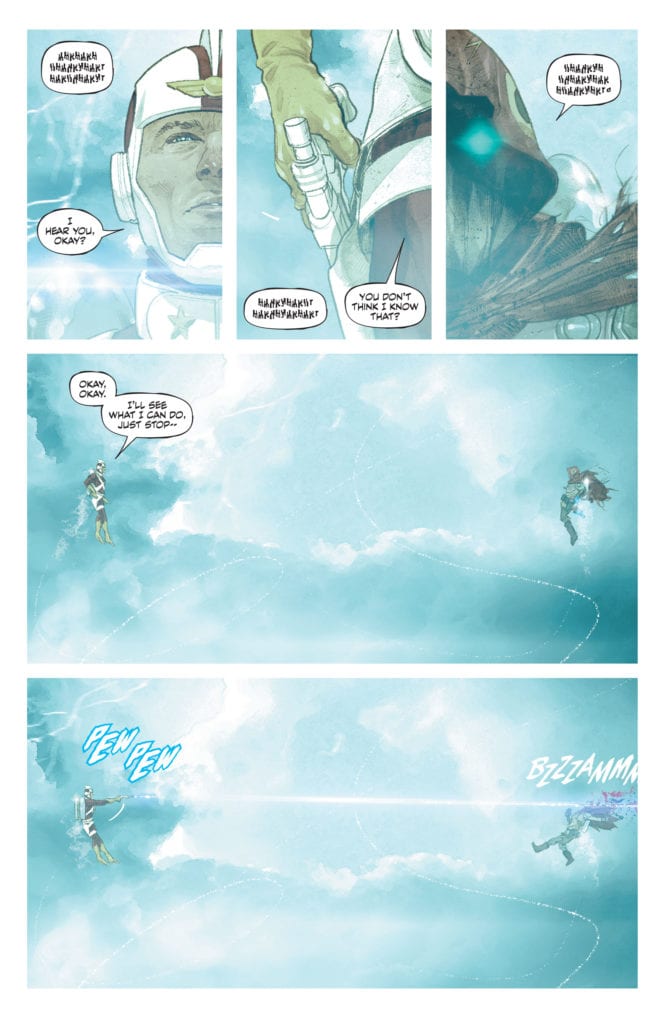
There are so many opportunities in this issue for big sound effects. But as Adam gets zapped from place to place, no letters accompany him, except the sound of his own screaming. When Alanna stamps out a cigarette, or Batman takes a punch, there’s nothing. Cowles strips the lettering back to its essentials, and the sounds that stay jump off the page. The three panels, two with a “pew pew” and one with a heart-stopping “snap,” that have sound effects, stick with the reader vividly. Because that’s what Cowles does — he highlights the important. In a conversation with Alanna, Adam lays out his heart in a tumbling dialogue. But Cowles separates one thought from the rest. He spaces out the stacked bubbles on either side of the line “I thought I was crazy.” Those three panels and that one line are the core and soul of this issue.


DC Comics’ Strange Adventures #7 is wonderfully complicated. This creative team is upping the stakes as we pass the midway mark, promising with each new issue a conclusion that will blow us away. Pick this issue up, out from DC Comics December 1st, at a comic shop near you!

Monkeys Fighting Robots Youtube