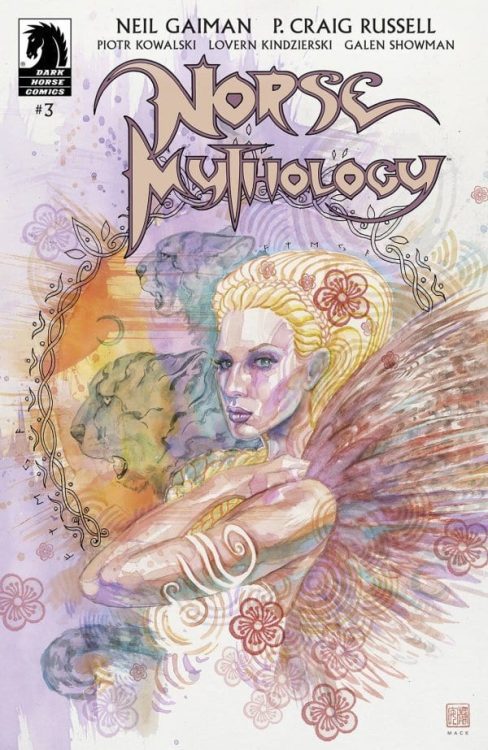
Norse Mythology #3, out December 9th from Dark Horse Comics, is the beginning of another classic story with many of your favorite gods and an exciting series of events.
Norse Mythology #3 Story
It is impossible to dispute that the stories portrayed in this series are classics, and Neil Gaiman’s writing brings the ancients tales to life and makes them feel new. P. Craig Russel flawlessly transitions Gaiman’s retelling of the iconic stories to the medium of comic books so that it flows naturally and effortlessly pulls the reader in. I have never been well-versed in Norse mythology, so as someone who is experiencing many of these stories for the first time, I can attest that they are made to be gripping and wildly entertaining tales. The stories have a slightly more mature tone than children’s books. They are entertaining for older ages, but I could see this series resonating well with children a few years before their teens. I know I would be going absolutely crazy over this series at age eleven when I read every mythology-related book I could get my hands on. Norse Mythology #3 has a story that captivates readers despite little action and dialogue that flows perfectly.
Art
The art of Piotr Kowalski is incredible to look at. Norse Mythology #3 has minimal action, so the characters’ facial expressions and body language do the heavy lifting. Kowalski’s faces match perfectly with the dialogue presented, and it is evident when a character is hostile or discomforted from body language alone. Kowalski also did a phenomenal job with the highly detailed character costumes and backgrounds in the issue. It seems like every god or goddess in the issue is wearing some fur, chainmail, or jewelry with a surprising amount of detail. Thanks to the talents of Kowalski, all of these characters look amazing. The backgrounds of the issue — mostly the interiors of buildings in Asgard — have detailed stone walls with stunning shading. By nailing the finest of details, Kowalski can make the world of Asgard feel like a place that truly exists.
Norse Mythology #3 features the spectacular coloring of Lovern Kindzierski. The wondrous characters from Norse myth would be nowhere near as exciting without his work on this issue. Kindzierski uses a broad color palette for his characters and settings, which quickly establishes a fantastical tone for the world. It makes you feel like you’re taking a small glimpse into a vast and complex world, which is a great feeling to be getting across for any fantasy tale. Kindzierski also uses the technique of single-colored backgrounds to his advantage. This is done in some cases to add energy to a panel. A warm color like yellow adds to the ferocity of a character in a panel and helps the emotion come across clearer. It is also used to help a character stand out, even if an intense emotion does not need to come across. This is done with cool colors that contrast the bright style of the book’s characters and helps aim all attention to the character on a panel.
Galen Showman provides some stunning lettering that helps make Norse Mythology #3 such a riveting read. For example, Showman often includes speech bubbles that don’t have words. This may seem strange at first, but a word bubble with an exclamation point or a spiral is an effective way to portray sounds people make without creating onomatopoeia that attempts to express the same emotion. Showman also uses alternate speech bubble borders and background colors to help express emotion in a character’s dialogue and uses intriguing fonts for action panels that require sound effects. In all, Showman provides some mesmerizing lettering in the issue.
Conclusion
Norse Mythology #3 helps cement how this series is one of the most enjoyable and accurate ways to portray classic mythology. The writing of the issue is simple yet flows well, and the art complements the story extraordinarily well. For any fans of mythology, I could not recommend this series more.
With Annihilation/Genesis refusing to accept the results of her duel with Apocalypse, Amenthi forces attack Otherworld.
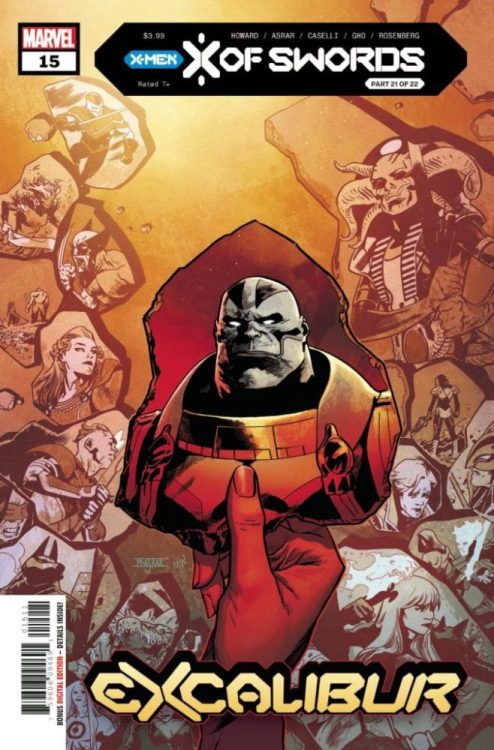
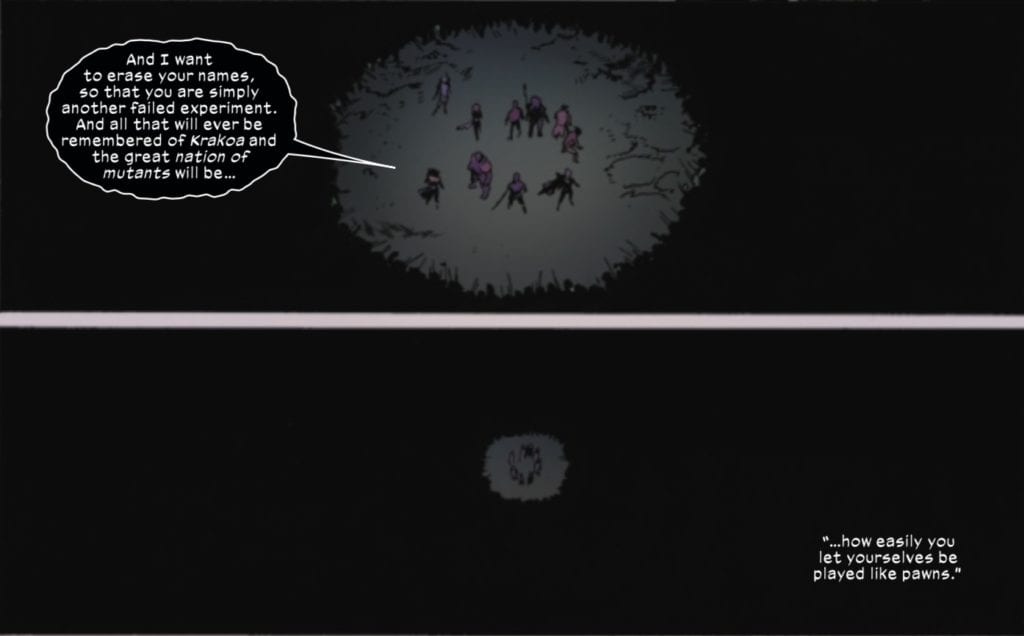
There are a few cool moments in this book, including an “arrival of the Calvary” moment as Jubilee and the Priestesses of the Green arrive. However, given the overwhelming numbers of the Amenthi forces, this has the same effect as the elves’ arrival at Helm’s Deep in Lord of the Rings: The Two Towers. While Arakko loses some of its champions, with Bei the Blood Moon switching sides and the White Sword departing, readers are treated to an image of Krakoa’s remaining champions surrounded by a sea of Amenthi darkness.
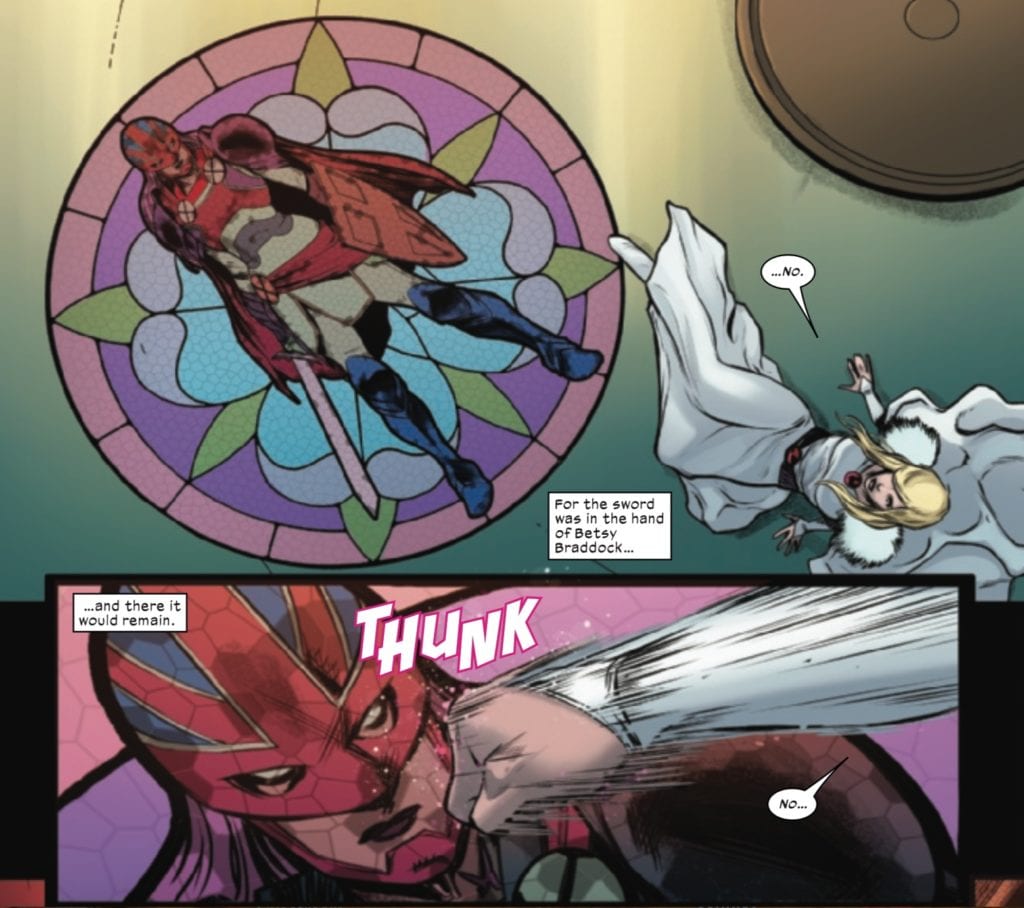
However, this issue ends with a glimmer of hope, as readers discover that the Captain Britain Corps has been reborn, and, much to Saturnyne’s consternation, is modeled not on Brian Braddock, but Betsy, with multiple iterations of Betsy Braddock responding to the call to defend the Starlight Citadel.
Longtime readers of Hickman’s work will remember that the Captain Britain Corps fell during his Avengers run by the Beyonders. In this issue, Howard and Hickman revisit the plot point and restore the Corps. This may, however, leave readers with questions. The biggest question may be why the multiverse’s pattern for Captain Britain is based on Betsy and no longer on her brother Brian (as it had been in the past). Why would Betsy be Saturnyne’s true protector?
Sure, there are some in-story explanations about Betsy being the template and Saturnyne’s spell not going as she wanted, but perhaps there is another explanation as well.
In the fallout from Hickman’s Secret Wars, Al Ewing launched The Ultimates, a title that explored, among other things, some of the consequences of the multiverse’s death and subsequent rebirth. Readers learned in that series that the current multiverse was its eighth iteration, the multiverse from before Secret Wars having been its seventh.
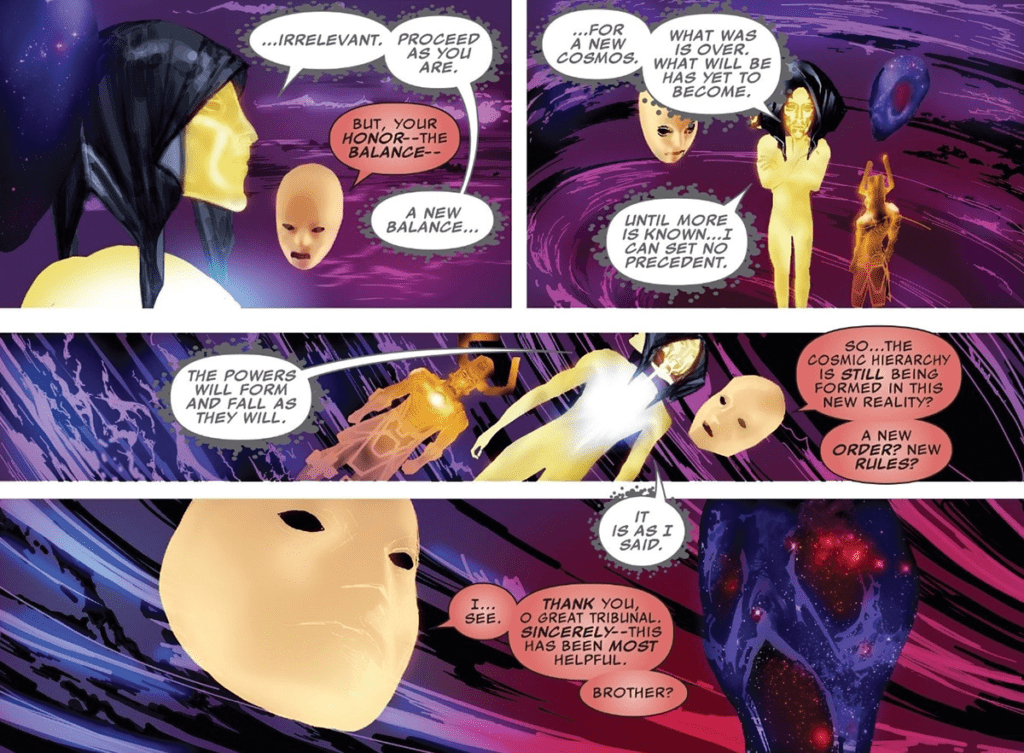
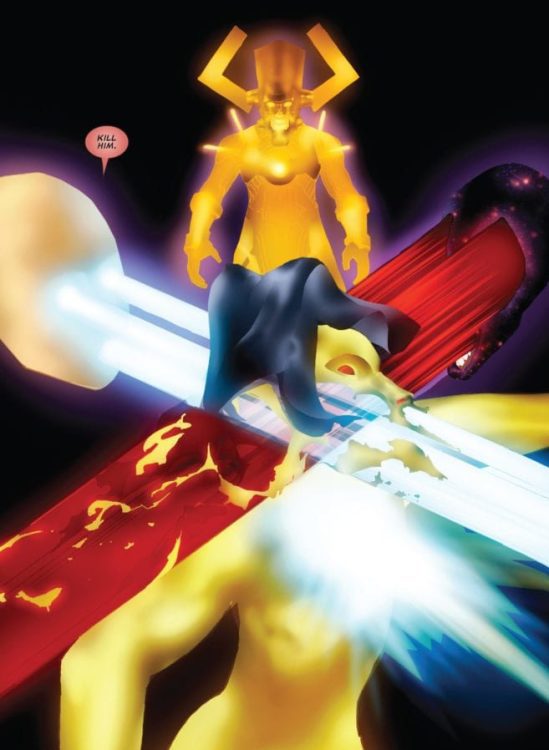
This new multiverse is still in the process of settling in Ewing’s run, meaning that a new balance is establishing itself among Marvel’s great cosmic powers, a lesson the Living Tribunal learns the hard way in a dispute with Master Order and Lord Chaos.
A new multiverse with a new set of rules means there can be a new template for the Captain Britain Corps, not only in the 616 Universe but every universe.
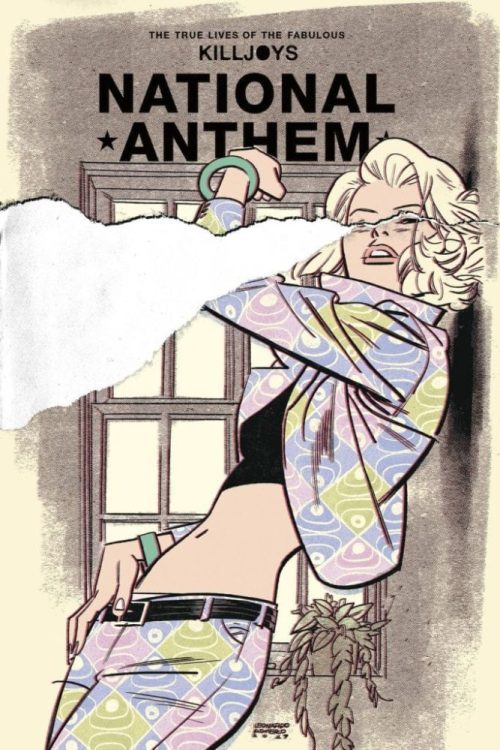
Fron writers Gerard Way and Shaun Simon and artist Leonardo Romero comes the action and emotion-heavy third issue of “The True Lives of the Fabulous Killjoys: National Anthem.” This issue poses a renewed focus on its core cast of characters as the old band of Killjoys gets back together and rediscovers their trauma and will to fight. With Outstanding visual work from Romero and colorist Jordie Bellaire as well as stellar lettering from Nate Piekos, this is yet another brilliant ride of a comic from this team.
“After finding their final missing member, the reassembled Killjoys exterminating team have a shootout with an enemy gang and discover a bizarre authoritarian scheme from their corporate adversaries.”
Writing & Plot
Gerard Way’s and Shaun Simon’s script for “National Anthem” #3 focuses on getting the rest of the Killjoys back in the band and developing the emotional root of their struggle. Introducing and reintroducing new and returning members of the team is allowing the pair of writers to cover different kinds of internal and external struggles and shows these characters defeating their traumas. It’s great both in terms of a way to get into and empathize with these characters, as well as be a motivator to both overcome one’s own struggles and empathize with those of other people. Way and Simon have managed to take this sort of cliched concept of fighting the establishment and refurbishing it for the socio-political talking points of 2020. The dialogue and narration are still a flavorful combination of excellent naturalistic dialogue, crazed in-universe not-speak, and artistic poeticism. This chapter’s pacing breathes a bit more than the last two issues, as new cast members are brought into the fold and there’s actually a moment for downtime. This being said, there are still some outrageous fight scenes mixed in with the character’s own revelations and self-discoveries. The final page dialogue blurb will be a treat for both fans of the original Killjoys comic as well as die-hard MCR fans. This is another stellar and sharp script that promises much more insane fun in the coming chapters.
Art Direction
The style that Leonardo’s heavily silver-aged inspired pencils gives “National Anthem” #3 might be the biggest draw of this book from the outside, even more than Gerard Way’s star power. The classic blended with contemporary look is one that has been making a big comeback with the likes of Nick Derington and Doc Shaner, but Romero’s is distinct in it’s design. His thin lines allow for more of a more open use of color as well as the cultivation of the faux-60’s aesthetic this comic strives for. The character animations are sharp despite any sort of shadows or inked textures, and the tine details in the panels are as clear as day. Speaking of those colors, Jordie Bellaire’s palette uses a huge variety of shades that pop off of every page. Each panel has the effect of one of those overwhelming neon road signs but in a really cool way. The vivid choices in this book look stunning, and are a huge portion of why this insane series works. The lettering from Nate Piekos functions much in the same way Romero’s art does; classically inspired but with contemporary touches. The accents and effect lettering are filled in by Bellaire’s colors and blend into the environment like part of the scenery. This comic looks spectacularly spot-on, like pop-art on acid, and it’s arguably the best feature of this thus far outstanding series.
“True Lives of the Fabulous Killjoys: National Anthem” #3 is an impactful and turbulent ride of a chapter. Gerard Way and Shaun Simon’s script offers punk mayhem and his usual weirdness but with a topical heart that grounds the story and its characters in a place of relatable reality. The visuals from Leonardo Romero and Jordie Bellaire are a phenomenal fusion of classic weirdness and modern techniques that make one of the coolest looking books on shelves right now. Be sure to grab this third chapter of this brilliant comic series from your local comic shop on 12/9!
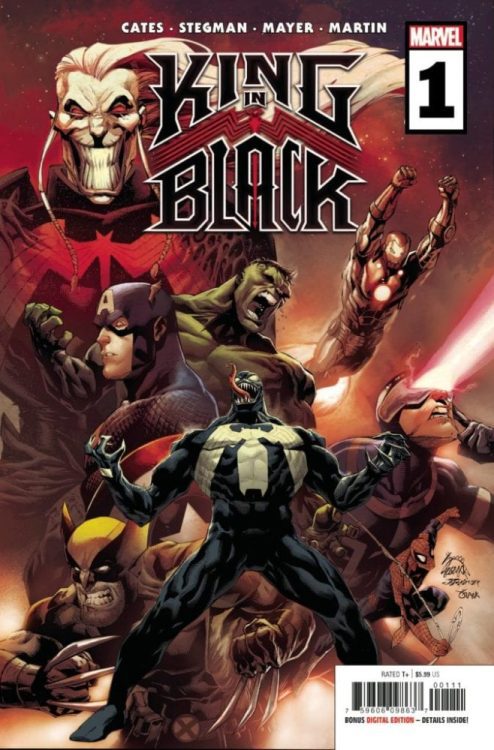
King in Black #1 is in your local comic book shop right now, as Donny Cates, Ryan Stegman, inker JP Mayer, color artist Frank Martin, and letterer Clayton Cowles bring Knull to earth for an epic five-chapter Marvel Comics event.
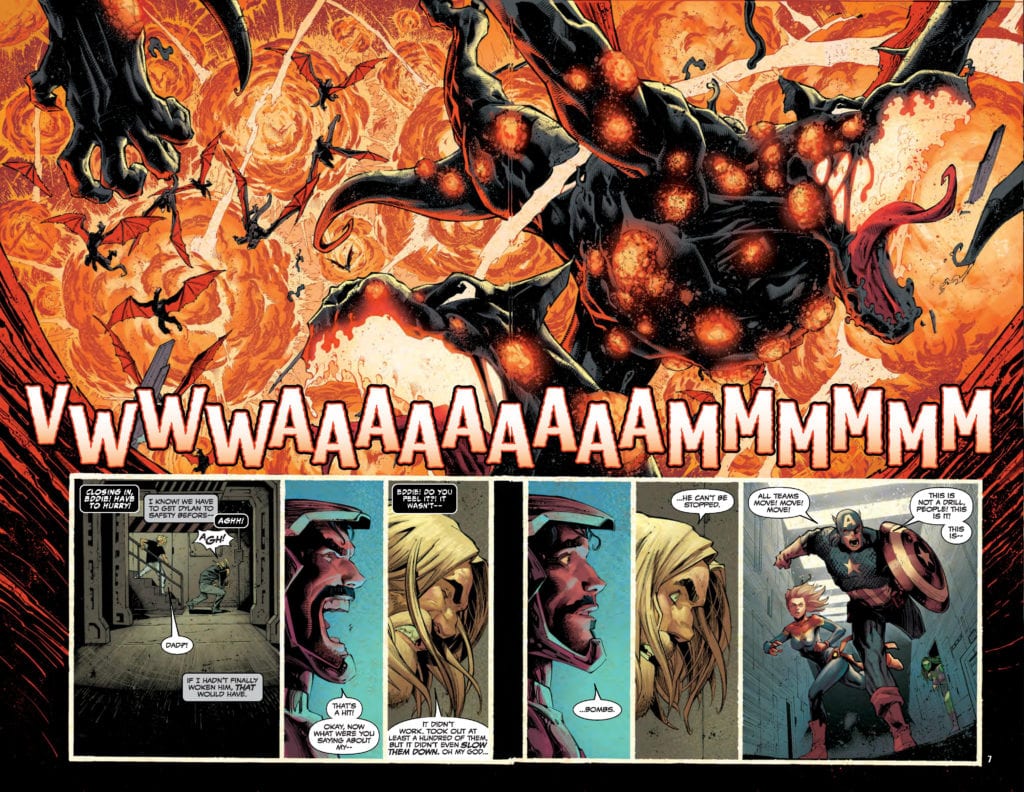
Did I mention this was a blockbuster comic? There are NINE double-page spreads in this book. Stegman is given the freedom to explode the Marvel Comics Universe all over this book with four jaw-dropping shocking moments. The pace of the book is very brisk because of Stegman’s Michael Bay-inspired artwork.
Cates does his job and sets up an insane conflict with insurmountable odds for heroes to overcome and figure out how to save the world yet again. Where Cates excels is in how accessible this first issue is to a new reader. If you are a fan of the Marvel Cinematic Universe, you can pick this book up and hold your own understanding of the plot. Where explanation is needed, Cates fills in the gaps. As mentioned above, there are four cliffhanger moments that Cates could have ended the first issue on, but he throws everything at this comic to keep stunned and begging for more.
Martin is the force that separates King in Black #1 from all other giant Marvel Comics event books. This is not a Spider-Man event book, this is a Venom event book, and the color palette is DARK. The darkness sets the tone for the series, and then Martin screams in your face with his electric blues, on-fire yellows, and deep blood reds. The colors used invoke emotion and get into your soul. King in Black #1 feels like the final chapter of 2020.
Cowles must be smiling ear-to-ear, admiring the job he did on this issue. There are so many different lettering elements in King in Black #1 that make the book so much fun to read. The gigantic sound effects are off the charts with scale. The tone and texture in the word balloons is very emotional, from Captain America’s confidence, to Knull’s consumption of death, to Eddie Brock’s torment and relationship with the symbiote.
King in Black #1 is a complete book that gets you excited to read comics and dig through back issues to research the story.
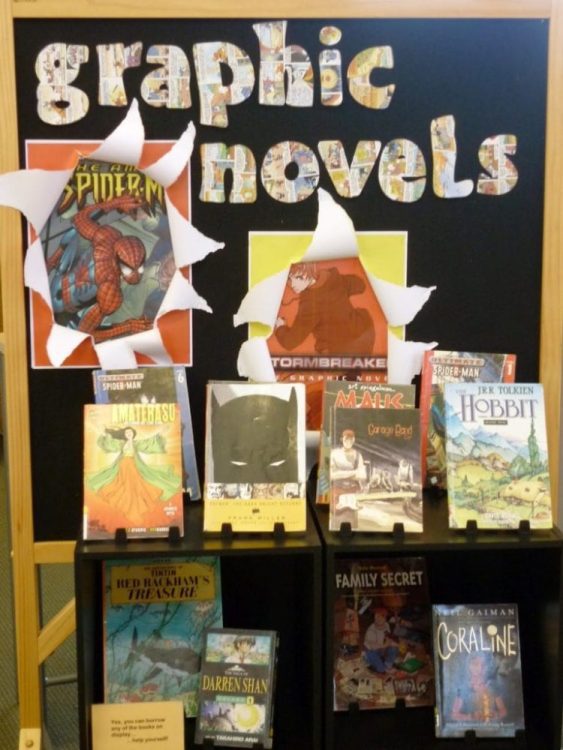
Since the early days of the medium, graphic novels have proven to be well-suited to non-fiction storytelling. But among the glut of superheroes and other more popular fiction, we can find something to love in every insightful biography or educational graphic novel. Here are five books that deserve more attention.
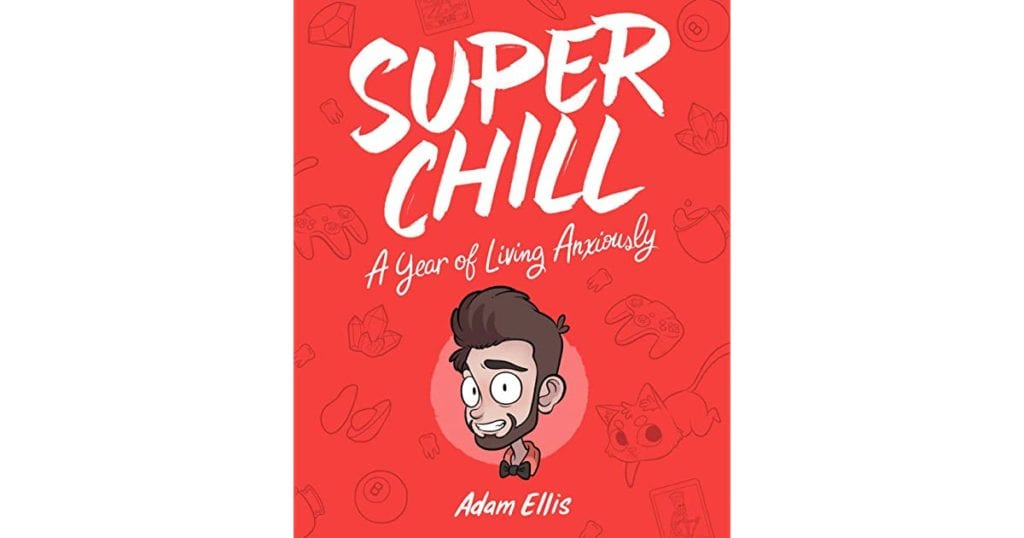
SUPER CHILL: A YEAR OF LIVING ANXIOUSLY
Adam Ellis’ 2018 solo work isn’t strictly a graphic novel, but we can stretch the rules to fit this funny and relatable book. Super Chill collects fifty-plus short comics full of absurdity and personal embarrassment. From a story of an awkward psychic reading to the scene of a wildly shaking leg causing the world to explode, expressive lettering, bright coloring, and a cartoonish style make us cringe and laugh in equal measure. So, if you’ve also imagined an Autumn leaf reminding you of your mortality or had anxiety dreams at all, then this is the book for you.
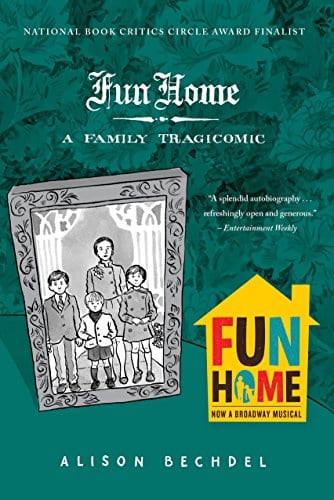
FUN HOME: A FAMILY TRAGICOMIC
Alison Bechdel made the mainstream with her eponymous feminist media “test.” But, if you want to know the art behind the name, Fun Home is an excellent place to start. As it was published fourteen years ago, it’s had plenty of time to make many top ten graphic novels lists–and rightfully so. Bechdel employs a classic comic strip style to tell her tragic family story. Divided into seven chapters, the balance of humor, drama, and the objectivity given by time make this a highly readable book.
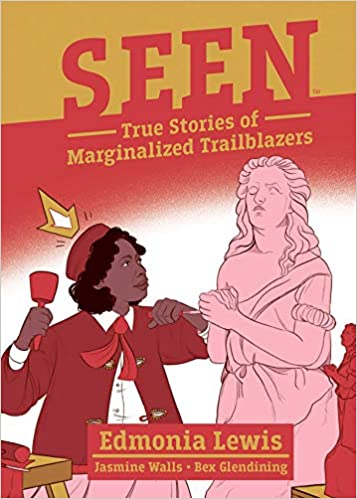
SEEN: EDMONIA LEWIS
To escape the pandemic’s steady upheaval of our lives, we’ve had plenty of new works to soothe our wounds. Some have been pure escapist entertainment, while others are more politically poignant. In the latter category, Seen: Edmonia Lewis is the first in an original series entitled “Seen: True Stories of Marginalized Trailblazers” from Boom! Studios’ Boom! Box imprint. Written by Jasmine Walls and illustrated by Bex Glendinning, Edmonia Lewis’ story is told in a straightforward manner using short captions and quotations from Lewis herself and other historical figures. To complement the writing, the artistic style is relatively unadorned except in Glendinning’s renderings of Lewis’ sculptures. However, colorist Kieran Quigley and letterer DC Hopkins have their chances to shine in adding pastel color to a time period we’ve mostly seen in black-and-white and in breaking up blocks of text into easily read bits. Another feature of the book is panels in the form of scraps of old paper, a choice that adds a touch of flair and highlights the time period. This book is a must-read of 2020. Pick it up in time for the next installment titled Seen: Rachel Carson, which will be released in March of next year.
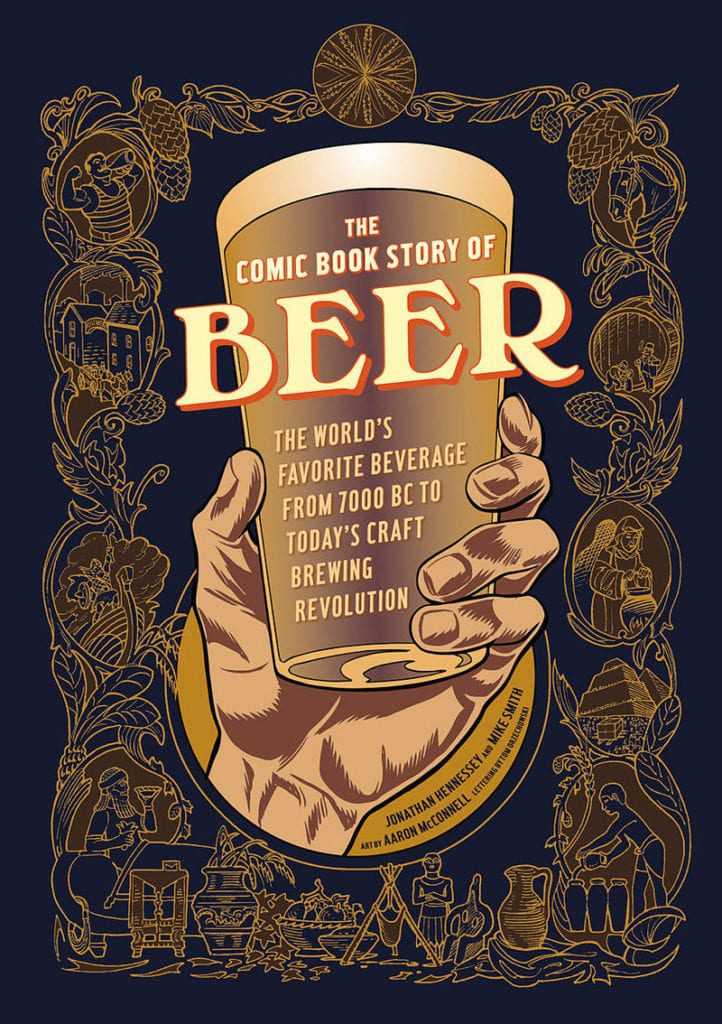
THE COMIC BOOK STORY OF BEER
Let’s face it; if all our history texts from high school were in comic book form, we’d all have loved the subject more. While beer as a subject is interesting through any media, its ancient history comes to life, and its complicated modern economic journey becomes easily digestible in graphic form. Illustrator Aaron McConnell contributes dynamic and animated art, while Mike Smith and Jonathan Hennessey provide insightful, clear, and gripping prose. Merge your love of beer and graphic novels with this book.
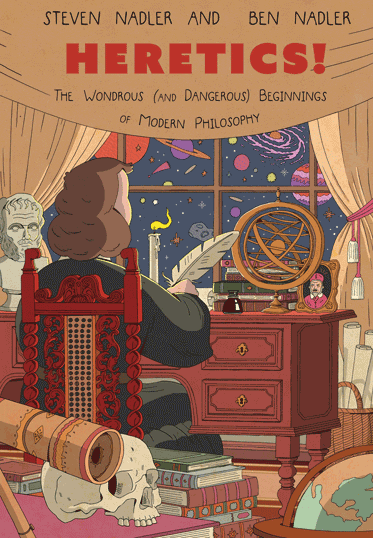
HERETICS! THE WONDEROUS (AND DANGEROUS) BEGINNINGS OF MODERN PHILOSOPHY
I don’t think I’m alone in saying that philosophy as a subject can be intimidating and overwhelming to any layman feeling ill-equipped to tackle life’s big questions. Have no fear fellow laymen, Heretics! is an extremely accessible introduction to important modern philosophers and their ideas. Written by philosophy professor Steven Nadler in collaboration with his illustrator son, Ben Nadler, their humor and whimsy make philosophy seem surprisingly cool. Ben’s fun illustrations, including a panel of the Devil working on his MacBook, hilariously contrast his father’s summaries of Spinoza and Locke’s grand concepts. Soon you’ll be talking about “pre-established harmony” and “empiricism” with the best of them. I also defy you to read this book and not want it to be reimagined as a series on Adult Swim.
End your year on a high note by picking up a graphic novel or two. Which graphic novels would make your own list?
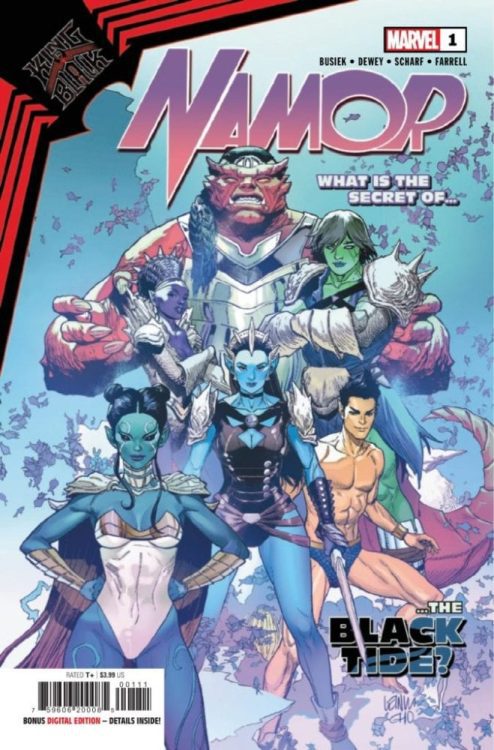
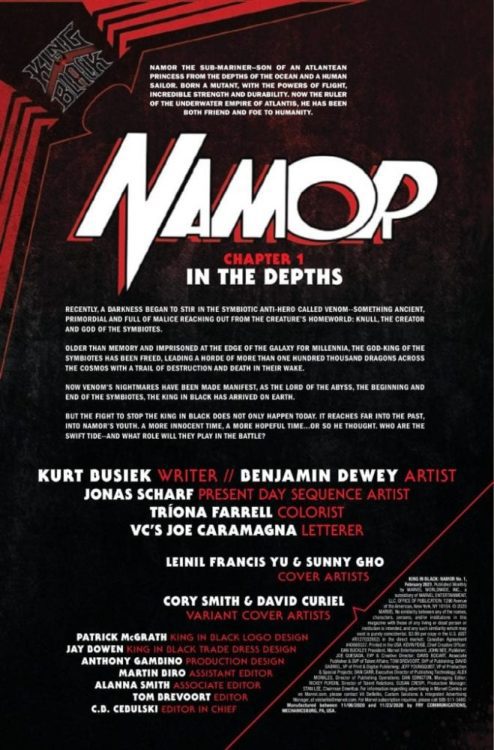
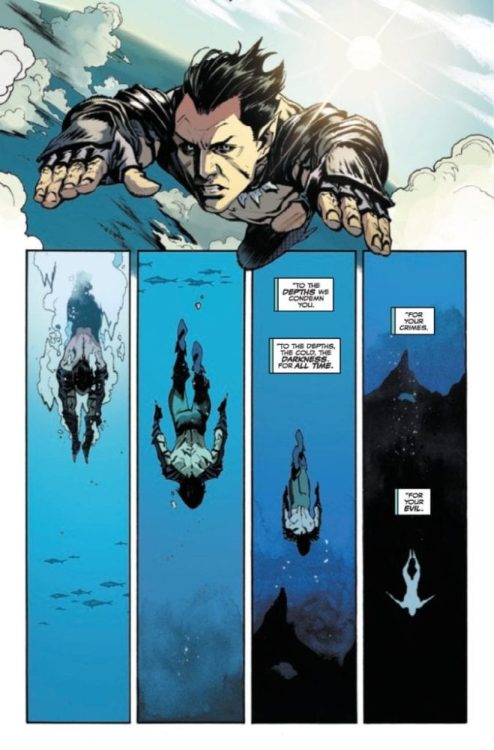
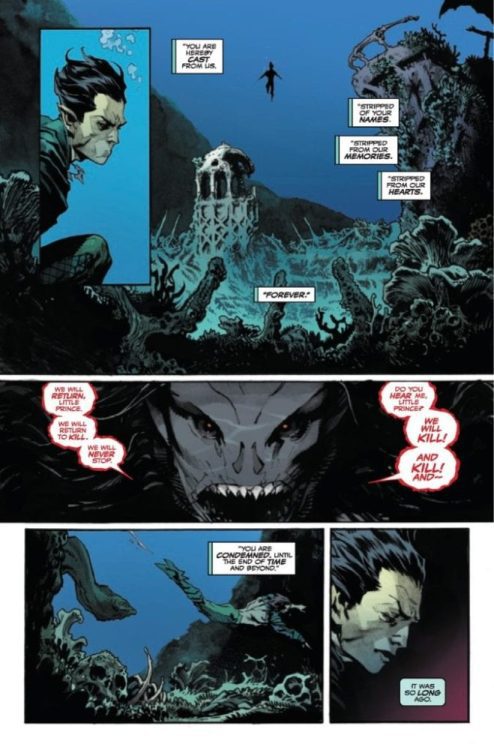
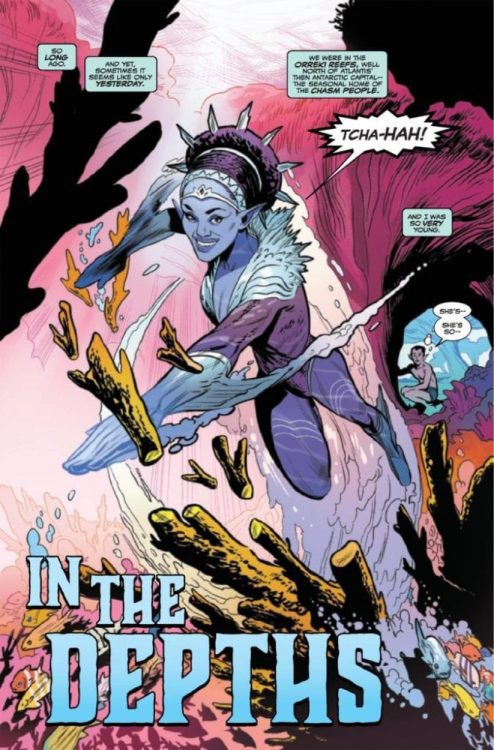
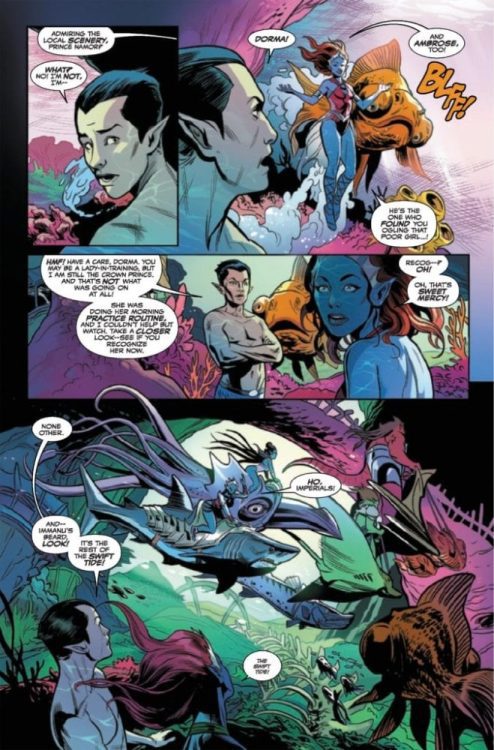
KING IN BLACK NAMOR #1 (OF 5) hits your local comic book shop next week, but thanks to Marvel Comics, Monkeys Fighting Robots has an exclusive four-page preview for our readers.
About KING IN BLACK NAMOR #1 (OF 5): Spinning out of the KING IN BLACK epic comes a dark, chilling story of the birth of Atlantis’s greatest villains. The players: Namor, Lady Dorma of Atlantis, the outsider Attuma – all still in their teen years – and The Swift Riders, the Atlantean Empire’s greatest heroes. It begins with alliances and possibility, as Attuma’s people may join the Empire…but what lies ahead is tragedy, betrayal, and the unleashing of dangerous, deadly magics. A deep dive into Marvel history…and the birth of a threat that will only grow in menace across time.
The book is written by Kurt Busiek, with art by Ben Dewey, Jonas Scharf is the “present-day sequence artist,” Tríona Farrell added the color, and you will read Joe Caramagna’s letter work. Leinil Francis Yu and Sunny Gho worked on the cover.
Are you excited for this KING IN BLACK tie-in? Comment below with your thoughts.
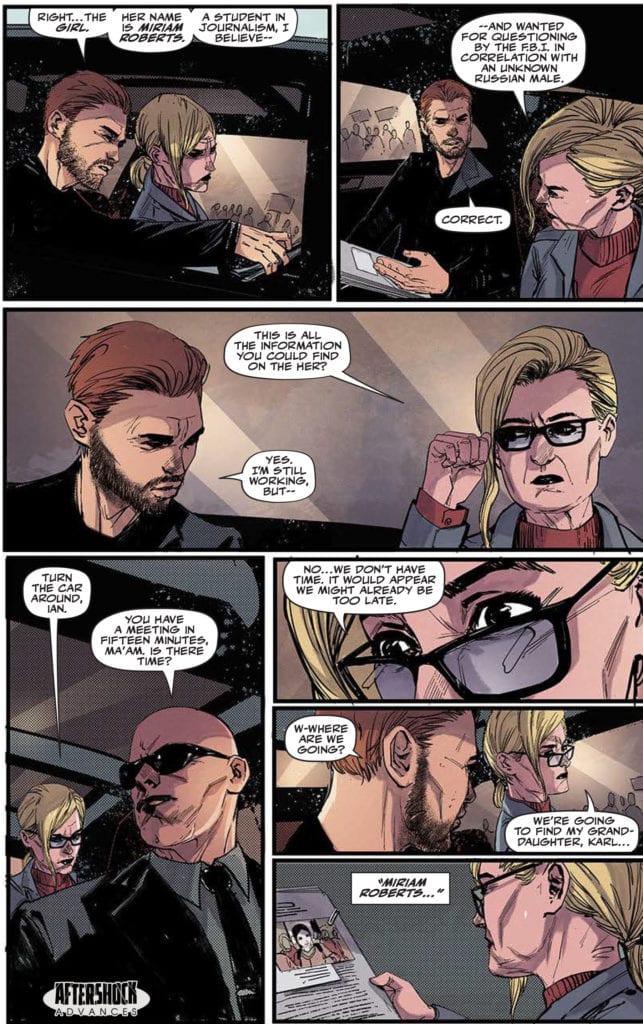
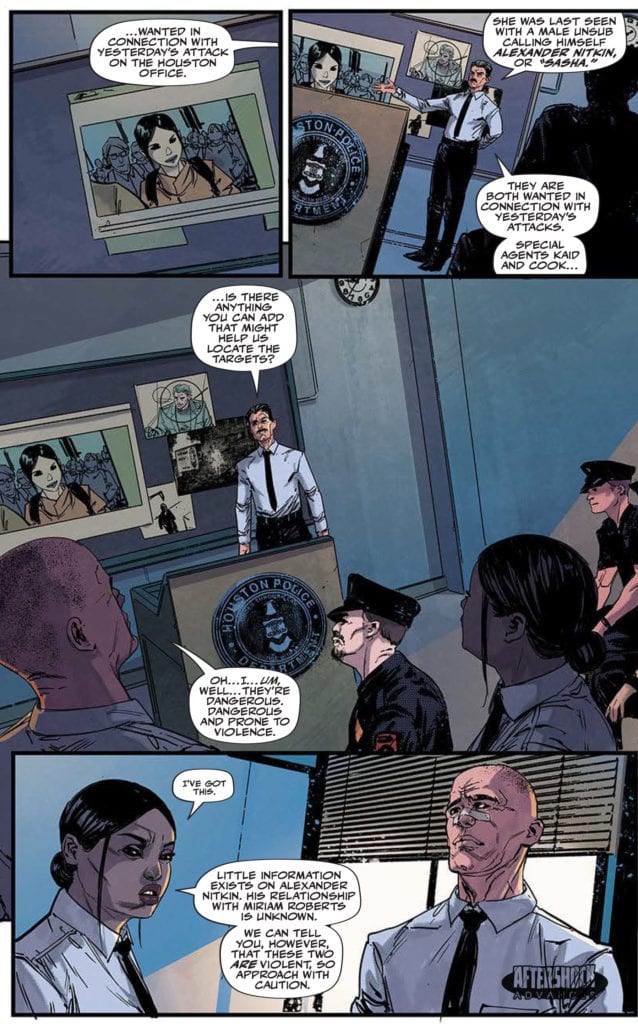
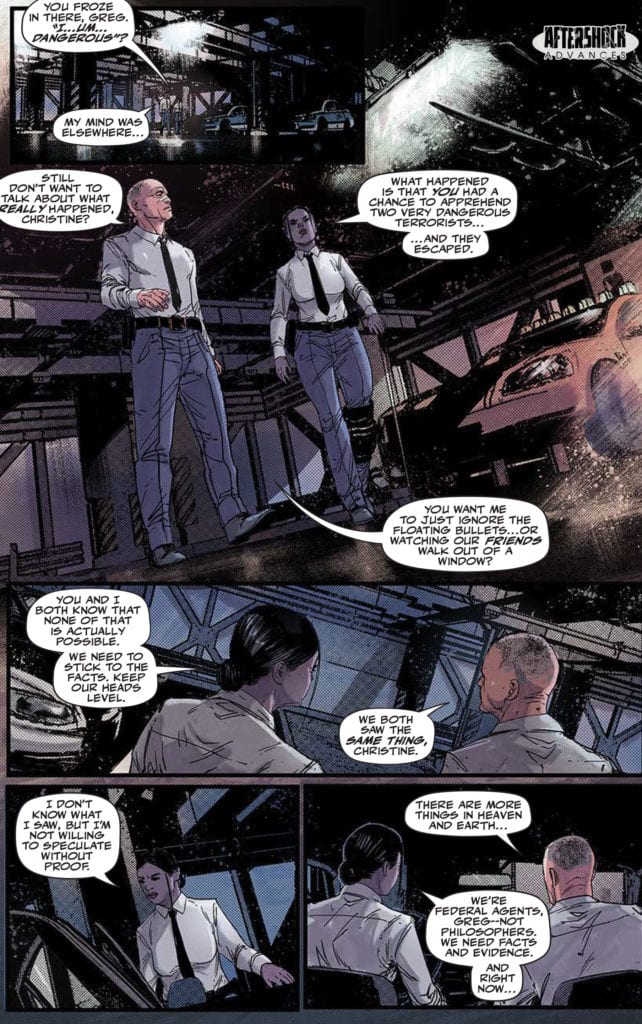
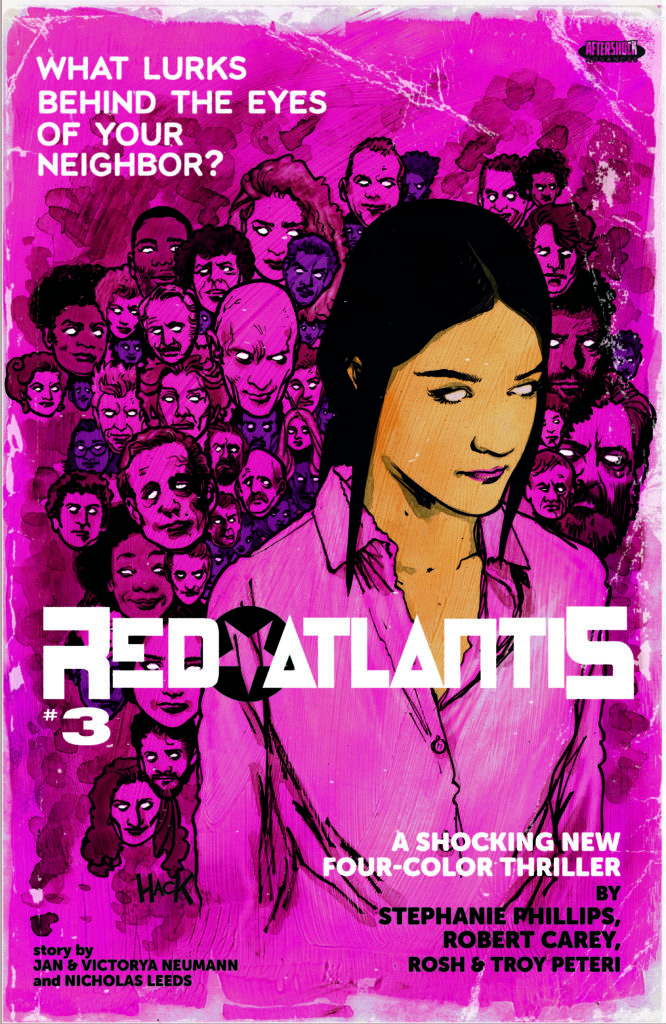
RED ATLANTIS #3 hits your local comic book store January 13th, but thanks to AfterShock Comics, Monkeys Fighting Robots has an exclusive four-page preview for you.
About the issue: Last week, Miriam Roberts was a normal college student. Now, she’s wanted by the FBI in connection with a series of terrorist attacks involving psychically powered Russian sleeper agents. Just when Miriam believes things couldn’t get worse, secrets about her long-lost parents resurface, and she realizes that she might have powers of her own.
RED ATLANTIS #3 is by writer Stephanie Phillips and artist Robert Carey, with colors by Rosh, and letters by Troy Peteri. The cover is by Robert Hack.
MFR reviewer Justin Munday called Phillips’ script for RED ATLANTIS #1 “sharp, entertaining, and expertly paced.”
Check out the RED ATLANTIS #3 preview below:
Are you reading RED ATLANTIS? Sound off in the comments!
The Princess Switch: Switched Again is a sequel to the hit holiday film on Netflix starring Vanessa Hudgens (High School Musical, Rent: Live) as both a baker from Chicago and a duchess from a fictional European city in a Parent Trap-Esque romantic comedy. To tug at your heartstrings with musical notes is composer Alan Lazar.
The Princess Switch: Switched Again finds us back in the life of Stacy DeNovo, the baker from Chicago. Stacy’s BFF, Kevin, played by Nick Sagar (Supergirl), and his precocious daughter Olivia (now played by Alex Adeosun) return as well. As would happen, the plot brings Stacy and Lady Margaret Delacourt, the duchess, and Stacy’s doppelgänger, back together. But, as sequels will do, the hijinks of the first film are taken to new, exciting heights, with Vanessa Hudgens playing yet another character.
PopAxiom spoke with Alan Lazar about his road to making music for film and television, including taking the composing reigns for The Princess Switch: Switched Again.
Speak The Language
Alan grew up in South Africa, where he studied “computer science and political studies.” So, how did making music change the course of his studies? “I’d always played music. I was classically trained as a kid, so it was always a part of my life. But I never seriously considered it as a career.”
“In college,” he continues, “I played in a band — Mango Groove — on weekends to earn some extra cash. Unexpectedly, we got a record deal, which ended up being one of the biggest selling pop albums in South Africa. We were one of the first multi-racial bands in South Africa in the early 90s. It was a real symbol of the changes happening in the country. We tapped into a lot of positive feelings back then.”
Now a hit musician in his country, Alan says, “That gave me the confidence to get on this creative path. I’d always loved movies, and I applied to a bunch of film schools in the US, thinking I could study directing and screenwriting.” Alan won a Fullbright scholarship to USC Film School in LA where he was on track for a Master’s Degree in directing and screenwriting. “What happened along the way is I started writing music for student films. I discovered that’s what I love doing more than anything. I found directing and writing quite stressful, but writing music for a film I loved from the moment I started doing it.”
Few composers studied directing and screenwriting. “In a weird way,” Alan says, “it helped. I know the language of film well, and so much of film is collaborating and communicating. I can speak the language of a director.”
Film Vs. TV
Alan’s worked on TV series like The Real Housewives of Orange County and the film Holiday in the Wild. What’s different about the two mediums, and what’s the same? “At the end of the day, it’s all about the emotions you want to put in those images. The whole process between something like Housewives and scoring a film is so fundamentally different.”
Alan shares his view on the differences. “With Housewives, they like to edit to music. So, I give them music at the beginning of a season. We have this shorthand now; we have categories for the types of tracks I create for them. So, it’ll be like ‘light tension,’ ‘medium tension’’ or ‘heavy tension.’ There will be one for ‘sweeping glamour’ or the comedy ones will have labels like ‘quirky-cool’ or ‘quirky whimsical’ and ‘quirky awesome.’”
“They’ll order things from me at the start of the season,” he says, “so it’s kind of like the score is coming before the picture. It’s generally very energetic score; very beat-oriented and groove-oriented.”
“Scoring a movie is so different,” Alan continues, “Generally, I only start writing music when there’s a cut of the movie, often a very advanced cut of the movie. I’m crafting every single piece of music directly to those pictures. So, it’s the pictures that inspire me. Also, when you score a project like a film, you have to make sure every note hits in the right spot. You’re generally writing music that doesn’t function by itself. It’s meant to support the story.”
“Another big difference,” Alan says, “is the point of contact. Generally, on TV, I’m dealing with the producers, and the director is more of a hired hand, but in movies, directors are the driving creative force.”
About The Princess Switch: Switched Again
The Princess Switch was a huge hit for Netflix, and Switched Again followed suit, becoming the number one global movie on the streaming giant in the first week of its premiere. Alan’s work on The Princess Switch: Switched Again came about due to word of mouth, and it proved to be a great counter to this stressful year. “I loved working on ThePrincess Switch: Switched Again. Given everything with COVID, I was in my studio writing music for this joyful, upbeat, Christmas romantic comedy. It was a nice tonic for reality.”
“It’s so feel-good and upbeat,” Alan says of the sequel, “It’s got great production design. Vanessa Hudgens is amazing. She plays three roles.”
Alan watched the first film to “get a sense of the tone. Director Mike Rohl gave me a lot of detail and helpful information about what sort of feeling and tone they wanted to keep from the first, but also where they wanted to go with the new movie.”
“The biggest note to me,” he says, “was that they wanted to make it bigger all around than the first. We upped a notch on the score. It’s a full orchestral score which we recorded in Budapest, all remotely.”
The Princess Switch: Switched Again adds a new layer to the underscore’s equation. “At the same time, there’s a new character that Vanessa plays who gets specific scoring in a style that’s quite different than the first one.”
“It’s a big score,” he asserts, “about 65 minutes of music. The director loved music, and he wanted to have a lot of music.”
Switching Sounds
The Princess Switch: Switched Again takes everything you love about the first but to a whole new level of excitement. “There are a couple of scenes in the movie where there’s wall-to-wall action. Those kinds of cues are a bit more difficult to write.”
“There was also a scene towards the end,” Alan reminisces, “which was a combination of an action scene, but with a strong emotional component. I worked hard on that scene; it’s a three-and-a-half-minute cue. My initial draft of that took me about nine hours. That’s a long time for me, particularly for a first draft. I wanted to fuse the emotion with what the scene needed pace-wise.”
Alan shares a story of how deep his connection to his job — and this cue — go. “As a composer, sometimes you have to go to an emotional place. You’ve got to get yourself to that place and live in it. This particular cue was like that. It’s a romantic cue, but it’s also got hope and fear. A lot is going on in it. I came out of my studio with some tears in my eyes, and my kids were making fun of me, ‘You made yourself cry, daddy!’”
Working Remotely
A lot of the score to Princess Switch: Switched Again happened through remote work. How does that affect making music? “There’s nothing like being with the musicians together. There’s a lot of communication that goes on that gets lost in these remote connections. At the same time, I have to say that I was nervous before working on the initial remote sessions. But they all went so well. I didn’t feel like I didn’t get something that I wanted.”
“Netflix allowed a couple of orchestras around the world to start doing recordings for them,” Alan shares, adding that Netflix allowed these orchestras “on the basis of having strict COVID protocols in place; string players wearing masks; woodwind and brass sections were put behind plexiglass.”
The process formed a connection between the Budapest Art Orchestra and Alan’s studio. “I could see video of them. I also had a direct text chat with the conductor. It was pretty incredible. He was quick on stuff. I could send him a note via text while he was conducting, and I could hear it straight away. We did between three to eight takes of every single cue. It was a lot to get through. We recorded over two days. Also, a separate grand piano part.”
“The nice thing about it,” Alan says, “a lot of people who wouldn’t normally come to a session were able to tune in remotely. The producers, the director, writers, some people from Netflix were all able to sit in. Weirdly, it made it all like a communal experience.”
Wrapping Up
Alan’s influences come from a familiar place to many movie fans. “I grew up on many of the typical American entertainment like Star Wars and Raiders of the Lost Ark. I loved all of them.”
“When I went to college in South Africa,” Alan continues, “I started getting more into local music like Mbaqanga, Marabi, and Kwela. It had a lot of influence on me musically. I had a classical music background and was well-acquainted with film music. But this unique South African scene fed my musical vocabulary.”
Alan shares four recent scores that blew him away. “The Chernobyl score by Hildur Guðnadóttir was interesting and groundbreaking. I love the Succession theme music and underscore by Nicholas Britell. A Spanish series on Netflix called Someone Has To Die from composer Luis Moreno. It was this dramatic, feisty, orchestral score with a bit of an old-school vibe. Nathan Barr’s score for Hollywood, I loved that.”
“One of those 60s or 70s TV shows,” Alan answers when asked about dream projects. “The Avengers, The Saint, and The Man from U.N.C.L.E., anything from that era that’s sci-fi or detective. The scores for a lot of those shows are so good. They’re using live orchestras like most TV shows did back then, and they often used instruments in such fascinating ways. Doing a modern revamp of those scores and introducing contemporary elements would be fun.”
The Princess Switch: Switched Again is available on Netflix. So, what’s coming next from Alan? “I have several things floating. Nothing I can mention right now because I don’t want to jinx anything.”
Is The Princess Switch: Switched Again on your watch list?
Thanks to Alan Lazar and Rhapsody PR
for making this interview possible.
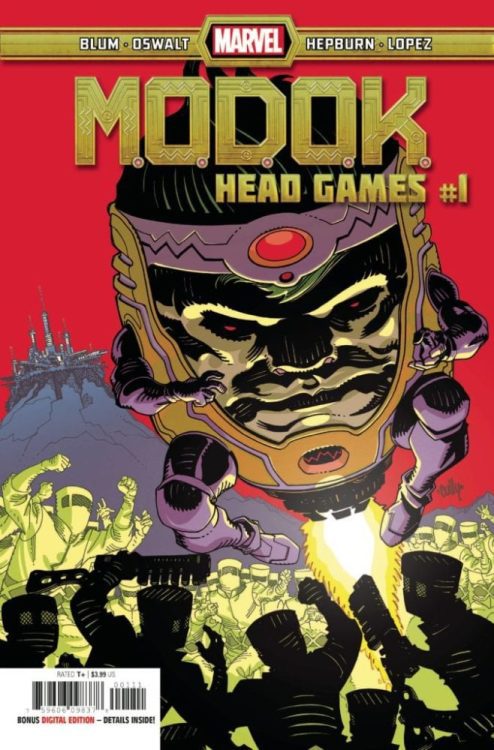
MODOK Head Games #1 by Marvel out on December 2 for a story about a character ready to appear on TV. The same show’s creators Jordan Blum and Patton Oswalt, even serve as writers. Joining this ensemble is artist Scott Hepburn, colorist Carlos Lopez, and letterer Travis Lanham.
MODOK Head Games #1 Crisis
Blum and Oswalt waste no time in bringing material from their show to the comics. In order for the adult sitcom moods to not interfere with Marvel’s more pulpy atmosphere, MODOK Head Games #1 prefers introspection. The titular MODOK, despite his vast intelligence and abilities, is facing his mid-life crisis. His capabilities and computerized brain seem to be clashing with something he keeps hidden within. This brings out an interesting dynamic to a character who was defined only by those things. The very presence of a life outside of super-villainy throws MODOK off in several ways. With AIM being full of cutthroats, it makes sense why MODOK sees this as a glitch. Despite that, MODOK’s subconscious manifests something that only his civilian identity George Tarleton knows.
Situational Irony
While the story of MODOK unfolds, the artwork by Hepburn gives a distinct slapstick style of effects. Take the scenes and splash panels where MODOK takes action with various equipment. On a splash page, he does various attacks at once, with the effects varying. He equips other various tools in a smaller scene, only for the action following to simply be a headbutt. MODOK Head Games #1 never tries to take itself too seriously in its actions. The character has little to fear in these situations, unlike the visions he experiences, which Hepburn displays with facial concerns.
The coloring by Lopez is often coded to different characters. Purple most often relates to MODOK, especially in regards to his intellect and his visions. The complementary green in the meantime describes a threat towards MODOK, especially Monica Rappaccini. What really stands out in MODOK Head Games #1 is Lantham’s lettering. The captions display three segments of MODOK’s mind: his standard yellow captions with purple words to display his default state of mind, a computerized version of the previous often accompanying a black and white input, and crooked black captions with white words screaming out in a large font. All of which look ready to clash with one another in issues to come.
MODOK Head Games #1: A Companion
MODOK Head Games #1 is certainly shaping up to be a rather interesting series. While it is advertising the upcoming Hulu show, it has its own identity. This identity just happens to revolve around an inversion of what its creators are bringing forth. It’s a rather clever way of making sure one series doesn’t overlook the other.
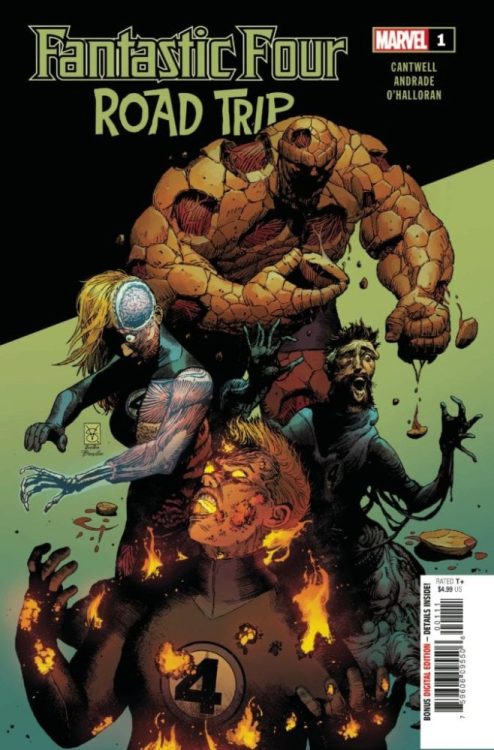
Fantastic Four Road Trip #1 is a one-shot from Marvel Comics out December 2. Doctor Doom writer Christopher Cantwell gives artist Filipe Andrade a chance to get creative with grotesque surrealism. That surrealism furthers with colorist Chris O’Halloran and letterer Joe Caramagna contributing to the weirdness.
Fantastic Four Road Trip #1: Simply Fantastic
Cantwell takes the Fantastic Four out of the drama of their mainline series for some family times. Fantastic Four Road Trip #1 follows the titular family trying to get some vacation time in them. Seeing the Fantastic Four going about their usual quirks is certainly a breath of fresh air. Like when Sue Storm and Ben Grimm make bets on whether Reed turns their trip into a small expedition. That same decision by Mister Fantastic certainly opens a chance to show both the FF’s family drama and superheroism.
Grotesque Absurdism
Where Fantastic Four Road Trip #1 really stands out is in the artwork by Andrade. His exaggerated cartoony art style gets highly creative when the Fantastic Four get caught in a death trap. Body horror and surreal effects like Franklin being in multiple places at once are a grotesque display of the FF. They explore the strange and are part of it, which can be to their detriment. It’s what makes some scenes where the Fantastic Four’s cabin turns into an abstract art piece fascinating and horrifying.
Some of the stranger aspects of Fantastic Four Road Trip #1 display themselves through color by O’Halloran. In scenes featuring Franklin/Powerhouse, his yellow and blue clothes and black hair make him stand out. It’s what makes his role in the overall plot stand out. The lettering by Joe Caramagna features both hand-drawn wordmarks that can look as absurd as the art and uniform lettering as a contrast. This juxtaposition serves as both a forewarning and a way for things to become more mundane as the plot advances.
One Little Detail
On the flip side, while it isn’t a requirement to read previous material, it helps to see where the plot fits. This is particularly important in regards to Franklin with events from the mainline comics. It’s only because Franklin’s attitude throughout the one-shot reflects these events.
Fantastic Four Road Trip #1 Is Good For The Reader
Fantastic Four Road Trip #1 is a good issue just to see Marvel’s First Family be themselves. The family dynamic between them is always a sight to behold as they drive each other crazy with their quirks. The artwork is most definitely what will attract readers for combining surrealism with the grotesque. Because by all accounts, the Fantastic Four are explorers in all things of the Marvel Universe.