Home Blog Page 146

Review: OLD Unevenly Explores Aging Through Beach Horror

Old, M. Night Shyamalan’s latest film, is a mixed bag of his best and worst qualities as a filmmaker. His first film since closing out the Unbreakable trilogy with Glass in 2019 is a thought-provoking story that examines the fear of getting old, but its concept feels held back at times. While it gets messy, Old is one of Shyamalan’s stronger efforts. His skillful direction is on display but dampened by bizarre camerawork more than once, and Old reinforces the argument that someone else should write the films he directs.

The thought of getting old is a fear for many, but some feel indifferent towards the inevitable. Shyamalan capitalizes on these fears by combining them with an environment several people would consider going to for peace, the beach. However, many will plan a getaway to escape their problems at home and that’s what’s going on for the central family in Old. Shyamalan’s screenplay almost serves as a reminder that running from your problems won’t make them better. Directed and written by M. Night Shyamalan, Old stars Alex Wolff, Thomasin Mckenzie, Gael Garcia Bernal, Eliza Scanlen, Abbey Lee Kershaw, Vicky Krieps, Rufus Sewell, and Aaron Pierre. The film follows a family on vacation that discovers the beach they are on is causing them all to age faster than normal.

(from left) Maddox (Thomasin McKenzie) and Trent (Alex Wolff) in Old, written for the screen and directed by M. Night Shyamalan.

The primary family includes Guy (Bernal), his wife Prisca (Krieps), and their two kids, Maddox (Mckenzie) and Trent (Wolff). Old begins with them arriving at the resort, letting it be known these are the four characters to watch out for. Shyamalan’s screenplay introduces many others along the way, which is fine, but by the end of the film, you haven’t given audiences a reason to care about the core family or their fates. The time spent with Guy and his family does include an argument between him and Prisca to showcase this vacation is an escape from the hurdles they are avoiding. Once the beach horror starts, everyone is one-dimensional at best for the rest of the runtime. Whether intentional or not, characters are defined by their occupations and health issues.

Old spoonfeeds the audience too often when it doesn’t need to since Shyamalan doesn’t hide his signature twist this time around. It’s revealed halfway, but the reasoning comes towards the end, so the over-explaining can grow tired. Shyamalan’s twist this time is an acceptable but lukewarm revelation. The dialogue that Guy, his family, and the other characters share amongst each other is unbearable. Their conversations and behaviors during the intense moments will have many scratching their heads. For instance, someone gets stabbed to death midway through the film, a scream is heard, but seconds after they find the body, this same person acts as if they weren’t just terrified.

(from left) Maddox (Thomasin McKenzie) and Mid-Sized Sedan (Aaron Pierre) in Old, written for the screen and directed by M. Night Shyamalan.

Shyamalan paces this film very well, for the most part, it is sluggish at times, but there’s this feeling of anguish from start to finish. The atmosphere created in this film will keep audiences uncomfortable for many sequences, some that include body horror. It’s an improvement over Glass, which seemed to drag on for a lot of its middle act. Old becomes a heart-racing, beach vacation gone to hell in the blink of an eye. Shyamalan doesn’t let up once it kicks in and utilizes this seemingly tranquil environment to create a stressful scenario for the characters and the audience. Performances here are hit or miss at times, specifically with the line delivery from the characters. 

Everyone does a terrific job displaying the panic and confusion felt throughout the film. Wolff and Krieps are the standouts here, Wolff delivers yet another emotionally draining performance as this kid whose losing his youth quicker than he can process. Krieps’s performance as his mother is equally heartwarming and sad to watch because she can’t protect her children, which is what any mother wants to do. The pain and sadness in her eyes are enough to make up for the underdevelopment of this family because audiences will start to care about them. Trevor Gureckis’ score sounds off at all the right moments to amplify the fear and frustration felt by everyone on this beach. Shyamalan’s concept is half-baked, but the technical strengths are undeniable here.

(from left) Prisca (Vicky Krieps), Maddox (Thomasin McKenzie), Guy (Gael García Bernal) and Trent (Luca Faustino Rodriguez) in Old, written for the screen and directed by M. Night Shyamalan.

Old probably won’t be a Shyamalan film that many will grow to appreciate, this execution is going to spark a divide, but that’s to be expected at this point. Its underlying themes regarding life are the strongest aspects as it relates to the screenplay. While Skillfully directed and well-acted, the script hiccups prevent the film from being considered nothing more than alright. This horrific concept will make you contemplate your life in more ways than one.
Monkeys Fighting Robots Youtube

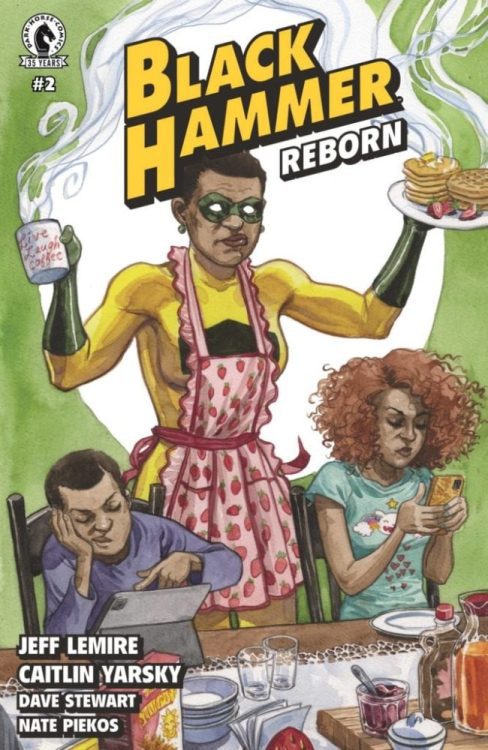
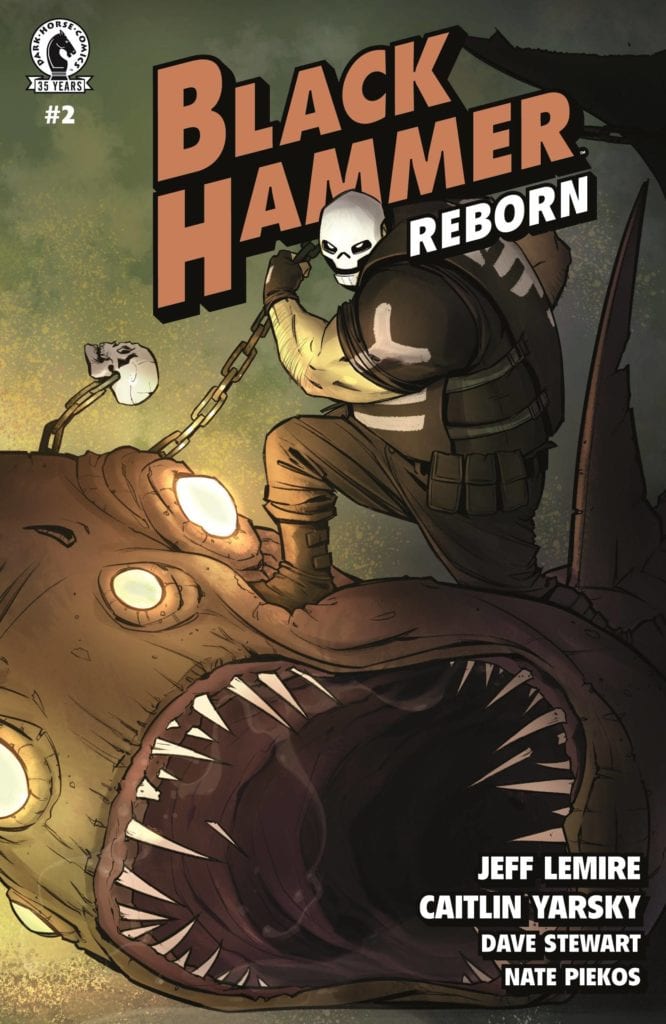
Review: BLACK HAMMER REBORN #2 – It’s in the Genes

black hammer reborn Lemire Dark Horse

Dark Horse Comics’ Black Hammer Reborn #2 is one part morality play, two parts fever dream. Writer Jeff Lemire, artist Caitlin Yarsky, colorist Dave Stewart, and letterer Nate Piekos show us how the life of a superhero can turn on a dime. The world Jeff Lemire has created with Dean Ormston in Black Hammer is now a sprawling universe. This series gleefully reaps the rewards of their hard work.

Writing

Lemire immediately shows us how Rose Weber is just like her mother, Lucy (AKA Black Hammer II). She’s curious, ambitious, and very, very irresponsible. But the world of Black Hammer is full of surprises, and Rose isn’t ready for all of them. As this issue turns from scenes of teenage rebellion into dreamscapes and twisting realities, Lemire sends us back in time to catch up with a younger Lucy Weber. It’s no accident that this happens. Lemire is not only hinting at where some of the danger, both metaphysical and natural, may be coming from, but he’s also showing us that Lucy, in her heyday, got herself into as much trouble as Rose.

Art

Yarsky’s art in the previous issue sometimes dabbled in the world of melodrama. In my review, I suggested it might be that she was counteracting the mundanity of Lucy’s life with big expressions and flare. Black Hammer Reborn #2 seems to confirm this theory. We see both Rose and a Lucy in scenes where they’re in grave danger. They smirk and smile, only occasionally getting very expressive. Even when scenes twist and flip upside down, Rose doesn’t look too worried. Yarsky brilliantly savors the really expressive moments of her art. She balances big stakes with sly smiles, and familial arguments with wild faces.

Coloring

Stewart continues some of the themes he underlined in the last issue. His colors often look dark or muted. The scenes we see look as though they are occurring at night. But it’s the moments of superhero-level stakes that are colorful and bright. Windows into the Parazone are brilliant green and yellow, just like Lucy’s Black Hammer costume as she fights crime on rooftops. But when we see Skulldigger in this issue, he creates a tone that sits in-between these extremes. As a character, he’s colored in greys, whites and blacks. But behind him, the scene feels both dark and colorful at once. The night air is a soft purple, with rays of pink and orange light radiating from below. It’s as though Skulldigger is neither mundane nor is he super. He’s his own flavor entirely.

black hammer reborn Lemire Dark Horse

Lettering

Peikos truly writes sound effects that you can hear. And their brilliance lies in their subtle differences. As the issue goes on, there are many sounds that repeat themselves. The “choom choom” noise of lasers is uniform. So is the “chak chak” of a weapon, or the “bzzz” of a phone. These are the unchanging noises of machines. But the “SHRAK” of a portal opening is unlike the “SHRACK” of it closing again later on. The fonts look the same, but as it appears it begins with a big S and H. The sound hits us like a wall, then fades away. And as the portal disappears, it’s the A, C and K that are large now. It gives one last earsplitting noise before fading out altogether. Piekos’ letters change in subtle ways, but the sounds they represent are as clear as day.


Dark Horse’s Black Hammer Reborn #2 continues to be a fun return to the Black Hammer universe. It shows us the terrifying realities of what it’s like to be a superhero or a parent in that wild, unpredictable world. Pick up Black Hammer Reborn #2, out from Dark Horse July 21st, at a comic shop near you!

Monkeys Fighting Robots Youtube

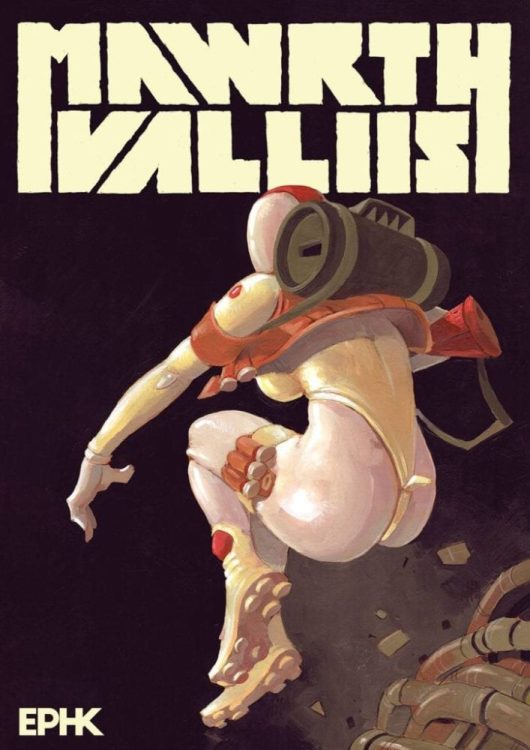
MAWRTH VALLIIS: Building An Alien World’s Essentials

Mawrth Valliis Cover

Mawrth Valliis is a unique piece from Image Comics coming to comic stores on July 21. This fast-paced kickstarted narrative by cartoonist EPHK looks like it authentically comes from Mars.

What’s Mawrth Valliis Mean?

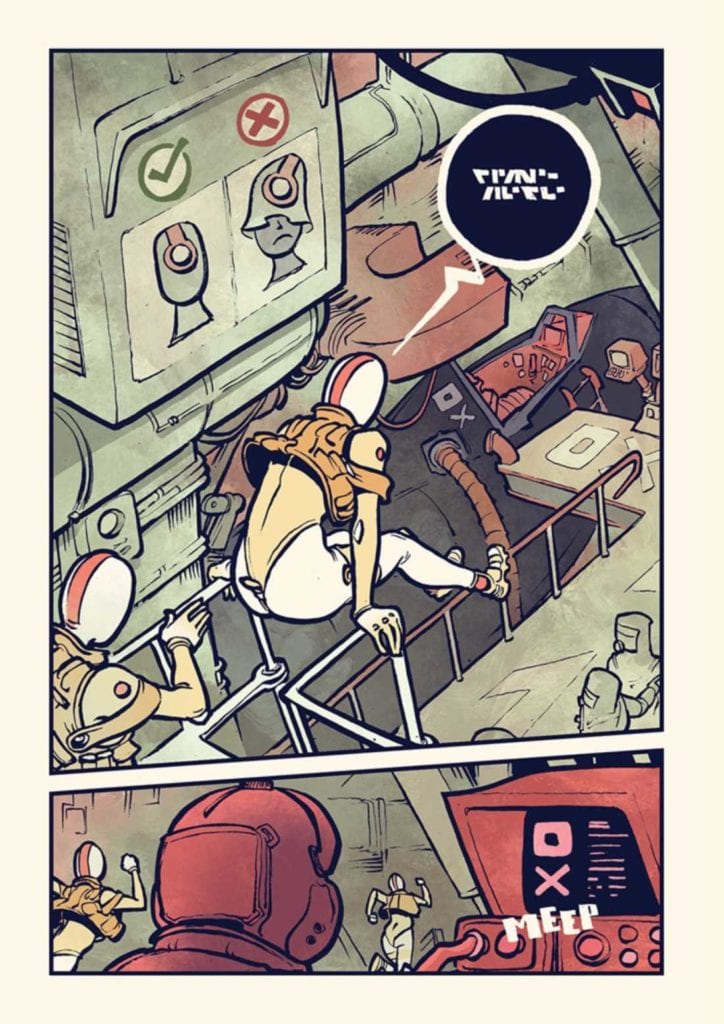
Mawrth Valliis makes a dynamic first impression. Aside from specially designed Martian airships, there’s a strong sense of urgency to their encounters. Even without showing the character’s faces or understanding their words, the body language, emotive imagery, and sound effects hold weight. It gives readers a strong reason to invest in the story to reread and look for background details. Like a sign that says pilots/soldiers have to keep their masks on.

Mawrth Valliis worldbuilding

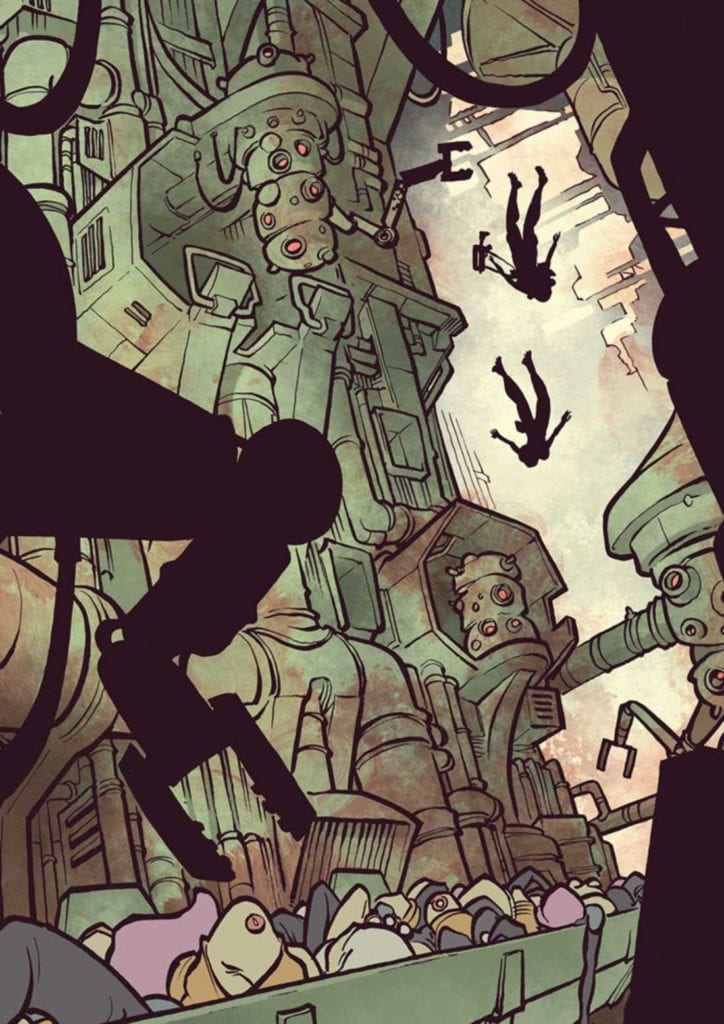
With this investment, readers get a better inclination towards understanding the scenario of Mawrth Valliis. Because the plot can be a little confusing on the first read with how surreal the Martian environments become. But once the protagonist’s face is revealed, there comes a strong sense of empathy to try and understand everything with her. If they want to, maybe they can decipher the patterns and language of Mars. That way, they can fully understand the schematics of the airships and other equipment. At the very least, the reader will come to appreciate the time and effort to create an environment that feels truly alien.What it al

Give It A Try!

In a straightforward plot, Mawrth Valliis presents an authentic alien world. Amid the intense action movie pace, there are environments and equipment that feel out of reach at first. But with enough time, effort, and understanding, the reader will find a world and character to hook onto.

Monkeys Fighting Robots Youtube

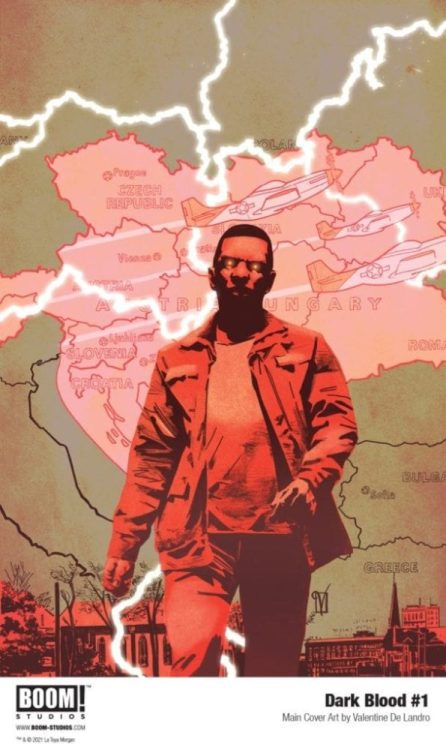
Review: DARK BLOOD #1 – A Hero In A Thankless Home

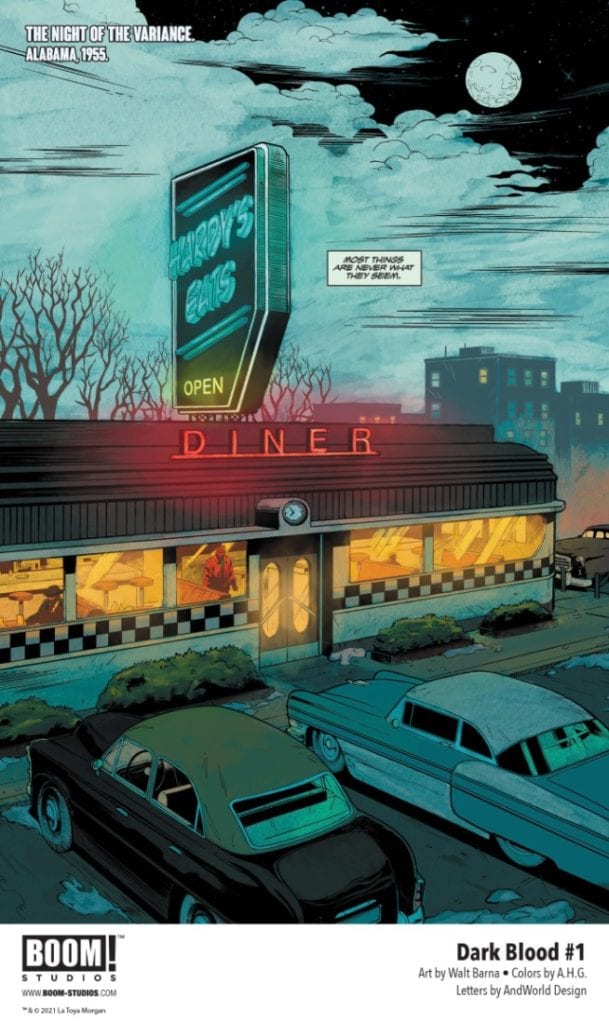
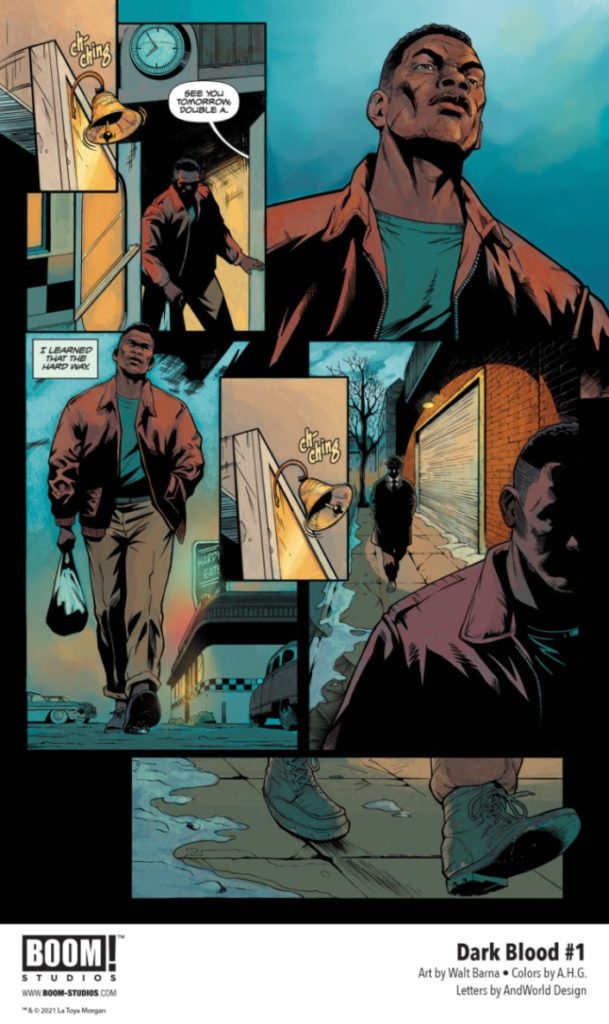
Writer Latoya Morgan and artist Walt Barna have put together a phenomenal debut issue with Dark Blood #1. Along with colorist A.H.G. and letters from Andworld Design, this poignant and original comic blends real world socio-political issues into a superhero plot in a way the Big 2 often have trouble doing. With a brilliantly smart script and fantastic visuals, this is easily one of the best #1’s of the year.

“What if you were given the power to change the course of history? Alabama, 1955. Avery Aldridge is an ordinary young Black man. A decorated World War II veteran, Avery provides for his wife and daughter. But wounds of the past have a way of coming back, and Avery Aldridge will soon discover he is anything but ordinary… After a run-in awakens strange new abilities, Avery’s about to become more powerful than he could have ever dared to dream… in a country and society that never wanted him to have any power.”

Writing & Plot

Latoya Morgan pens a script that blends a harrowing reality with a House of Ideas style origin story in Dark Blood #1. Avery Aldridge’s life after returning home is a discomforting reminder of a harsh truth – as it well should be. Morgan utilizes the medium to dart between flashbacks of Aldridge as a WWII pilot and his life back home as a black man in the Jim Crow South. Dark Blood is a gripping comic, with cutting dialogue and intense pacing. Morgan understands how to use the comics medium well to tell this story. There isn’t that much dialogue. Morgan writes the script to allow it to be told with sharp panel direction. Morgan’s experience as a screenwriter no doubt comes into play here.

A worry I had coming in was that the superhero comic-ish element of this book would stick out like a sore thumb and not fit into the book. Fortunately, Morgan sticks the landing here as well. The moment where we witness Aldridge’s powers manifest for the first time is a damned satisfying thrill. The buildup and unexpected unleashing of this power given the context of the scene here made my hair stand on end. This is a textbook lesson in how to write a great opening comic, with a tight and exciting script that makes me endlessly excited for what comes next.

Art Direction

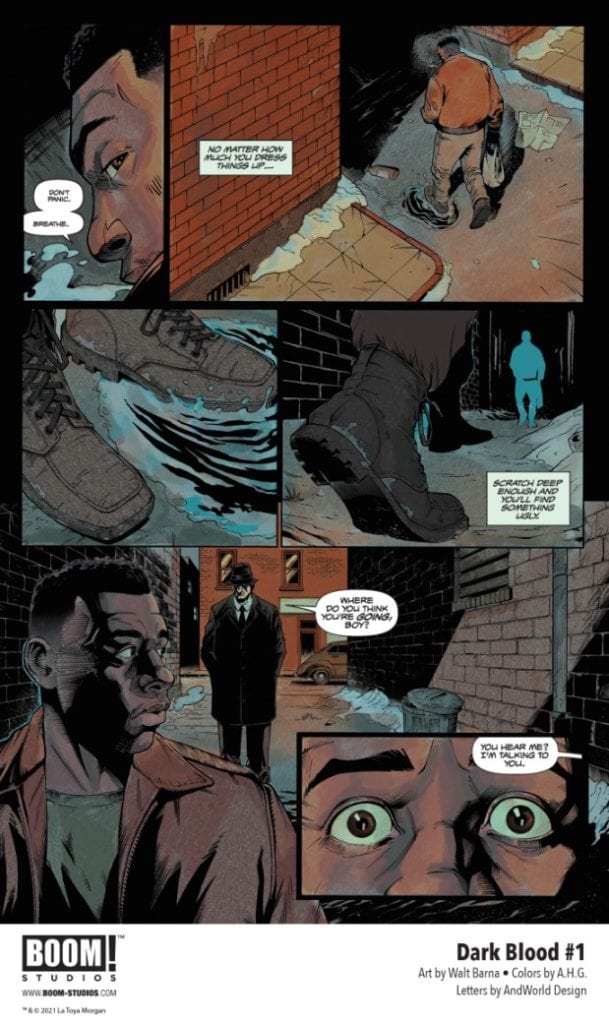
Walt Barna elevates an already astounding script to immense heights in Dark Blood #1. His pencils and inks provide a that makes the reader get lost in this comic’s pages. Barna’s thin lines are filled by sharp, shadowy inks. This pays in dividends with the comic’s dark, imposing “current” setting as well as its thematic subject. His Character animations are outstandingly detailed, giving us insight to Aldridge’s mentality and making it very easy to empathize with him. Action sequences are full of weight and momentum, making them pack an exhilarating punch when events stop being quiet. Panel direction here is expertly crafted as well. Barna excels at the sequential progression of tension, building to the intense payoffs with a careful hand.

The colors from A.H.G. are top notch as well. Every page is brought to life with a thick, vivid palette. This work intensifies the atmosphere of the book, capping off the outstanding visual work. The lettering here is intuitive and modern, with sensible font changes and great special effects work. This is an outstanding looking comic, befitting the excellence of the story being told.

Verdict

Dark Blood #1 is a phenomenal opening issue for this mini-series. Latoya Morgan’s script is poignant and calculated, and crafts a unique script packed with narrative power. Walt Barna and A.H.G.’s visuals are stunning and atmospheric, packed with detail and great direction. This is a prime example of a great #1, so be sure to grab it when it hits shelves on 7/21!


Monkeys Fighting Robots Youtube

Review: SUPERMAN AND THE AUTHORITY #1’s Everything You Hoped For

Superman and the Authority DC Comics Morrison

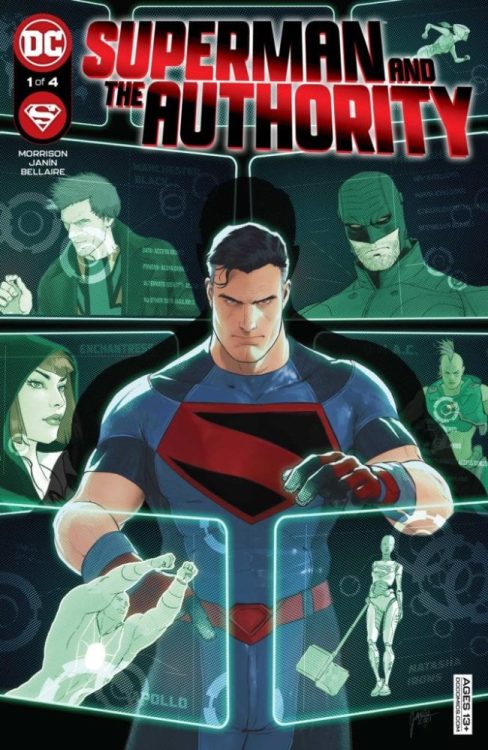
Alright, that’s quite a headline for you. Probably sounds a little ridiculous when you read it, right? But no, DC Comics’ Superman and the Authority #1 really is something to behold. It’s the best version of what it could be, with plenty of hints at incredible things to come. Writer Grant Morrison brings us the trippy, edgy, whimsical writing that they’re known for. Artist Mikel Janin, with colorist Jordie Bellaire, and letterer Steve Wands, turn Superman and the Authority #1 into the start of a new mythology.

Writing

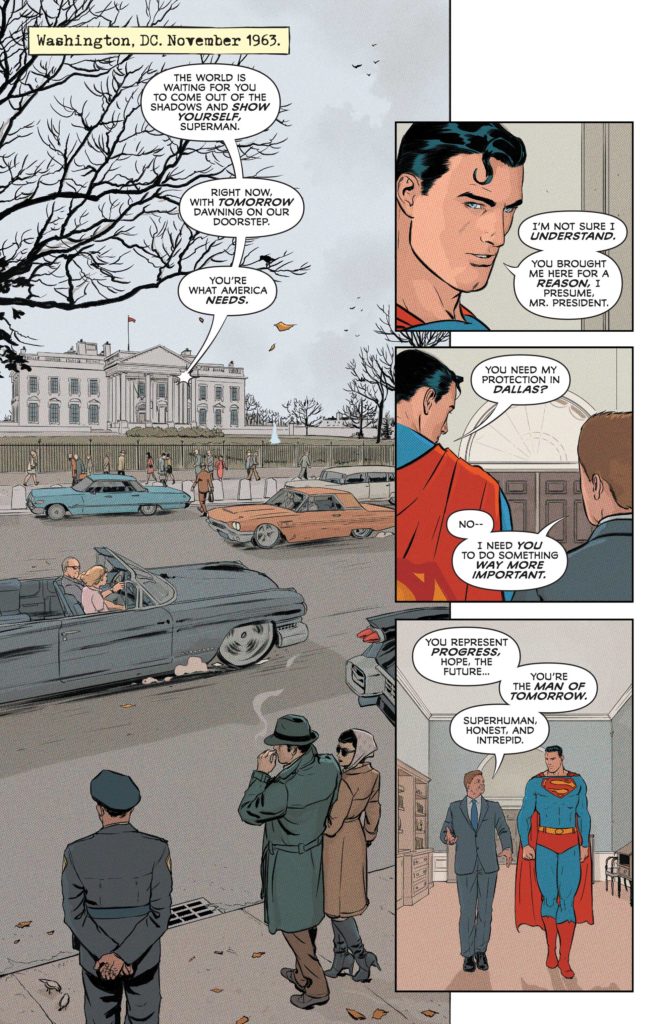
Morrison’s writing oozes with a love of the medium. Even when they’re breaking the rules of writing, they’re doing it in a way that is drenched in enthusiasm. We bounce around time in this issue. Morrison shows us scenes of Superman chatting with JFK before bringing us back to the modern day, where we catch up with Manchester Black. It’s a brilliant juxtaposition. We see what’s often considered a golden age in history, written in all its glory. Morrison’s Kennedy is a man who is full to the brim with ideals and driven by an excitement for the future. He’s the Kennedy people dream of: the spirit of a nation struggling to be better. He’s Superman, if Superman were president in 1963.

Superman and the Authority DC Comics Morrison

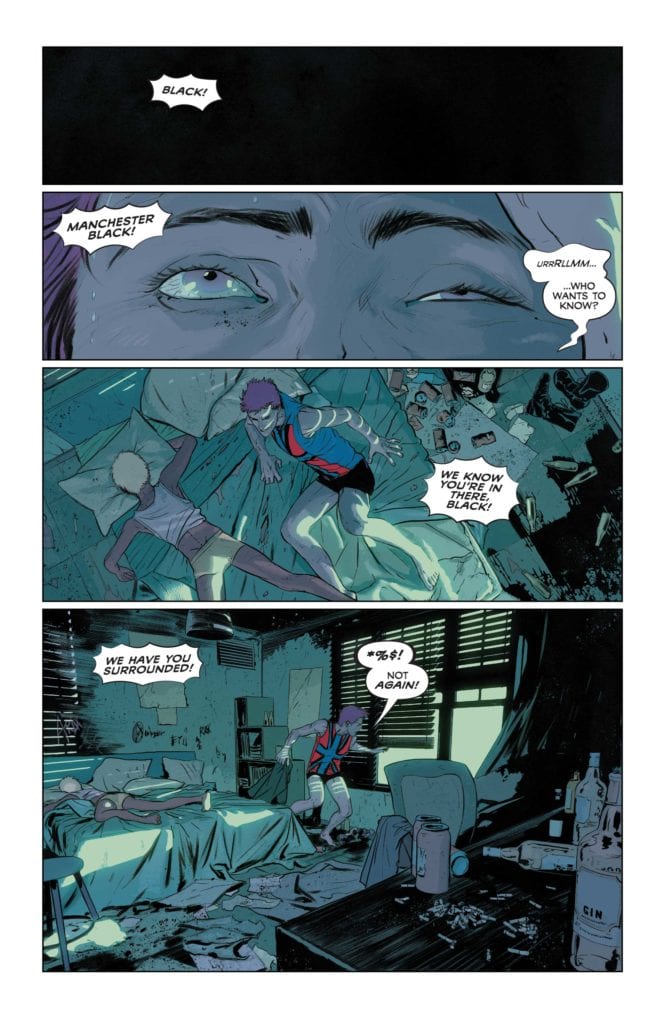
When Morrison introduces us to Manchester Black, he’s the very opposite. Black is disgusting. He is disingenuous, disengaged and disillusioned. He wants nothing to do with anyone and would be happy getting pissed drunk on his own in a grungy apartment. But quickly, that becomes impossible. Black is forced out of his hovel, and he is picked up by Superman and taken away. When we see Superman, he’s still got that belief in him, the belief that JFK put there. He believes in the things he promised to Jack Kennedy. But those beliefs are buried under years of disappointment. He lists them off: “After that day, it all came down like dominoes–Bobby Kennedy–Martin Luther King–The Space Race–Intergang–Darkseid–Doomsday.

With this list, Morrison seamlessly blends real history with the history of the DC Universe. It’s so simple, yet so effective. And as the issue goes on, the stakes grow to what can only be described as “Morrison-esque” proportions. Zonedroids, Thought-beasts, and clandestine meetings give us a taste of Silver Age style comic book shenanigans. Superman explains the stakes in wordy exposition dumps and Manchester Black announces his powers before using them. It would all fall flat if it weren’t written by the giddy pen of Grant Morrison. Their love of this medium turns each of these moments into a joyful callback to the comics of old. Morrison channels their best Jack Kirby impersonation and pulls it off with flying colors.

Art

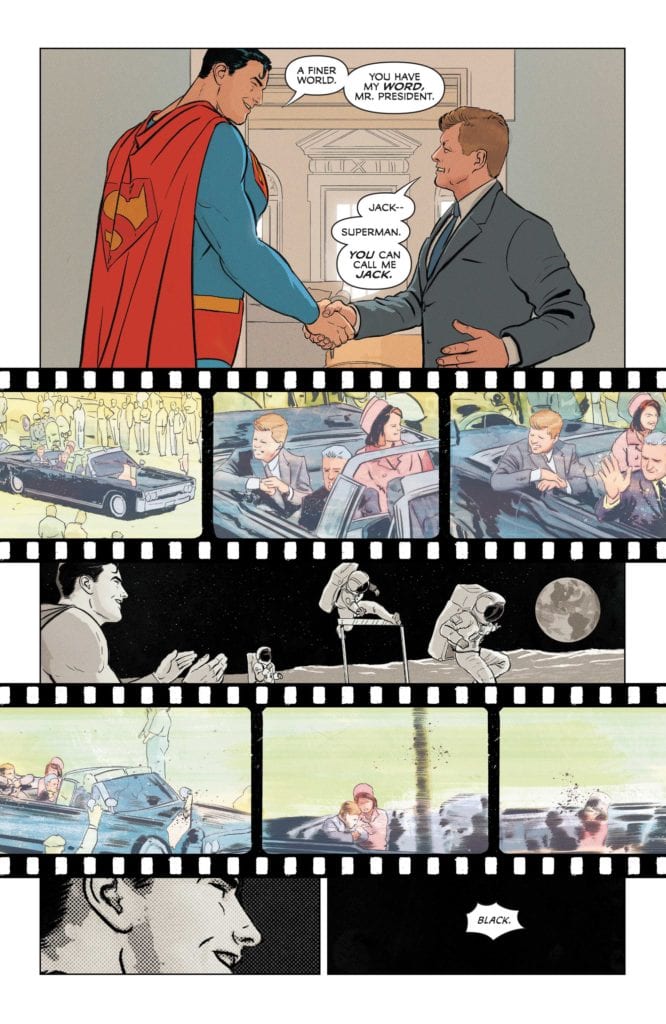
Janin’s art is stunning, through and through. But, above all else, it is constantly adapting in this issue. The Superman of the first few pages is deeply different from the Superman that shows up later on. When this issue begins, everything is picturesque and beautiful. JFK and Superman stand in panels symmetrically. Nearly every panel looks as though it could be a magazine cover. But then it all ends. Janin interrupts the page with footage reels. We see the assassination of JFK, placed around images of man walking on the moon. Superman looks on at the astronauts, applauding and smiling. As the footage of JFK’s death ends, we zoom in on Superman’s smiling face again. No words are needed, the subtext is clear. “It was a simpler time,” it tells us. Janin is depicting the death of Superman’s innocence. He’s showing the turning point of the world.

Superman and the Authority DC Comics Morrison

The next page confirms as much. We get a close up of Manchester Black’s eyes rolling open from an alcohol induced-coma. His shitty apartment and the violence of his altercation with the military would be enough to tell us times have changed. But it’s not that that seals the deal. It’s Superman’s arrival. He appears like a black ghost. Janin depicts him almost like a disembodied spirit. His anger at history’s decline is as clear as his red eyes burning through the night. But with all this doom and gloom, Janin balances it with idealism. Superman’s Fortress feels like it houses the building blocks of utopia. It’s in here that we see the angry idealism of Superman clash with the apathetic disillusionment of Manchester Black.

Coloring

The image Morrison and Janin give us of the 1960’s may be idealized and beautiful, but Bellaire also creates a distance to it. The colors are muted. All except for Superman, who stands out in brilliant red and blue. But overall, the scene feels almost as though it has paled with time. It’s a vision of the past that is firmly aware that it’s set in the past. But it also lends Superman an immortal quality. Even as he and JFK walk down the hall, they pass a photograph of the JSA. The image is brown with age, discolored by time. But Superman is young and bright.

Superman and the Authority DC Comics Morrison

While the modern scenes have more of a brightness to them, vibrant color often shows up in disturbing situations. Bellaire colors the nightmarish visions Manchester Black gives the military in a bright red. And when Black is shot full of holes, the background panels are blue and red. They almost form a twisted, violent Union Jack, like the one on Black’s chest. And as the issue goes forward, the colors become more and more deep. Whether it’s the red glow that Superman’s heat vision bathes the room in, or the green lights that herald an oncoming danger, it’s all incredibly colorful. Bellaire’s coloring is moving and fantastic!

Lettering

There are so many fun moments in Wands’ lettering. And surprisingly few of those moments are sound effects, though the “Plenk,” and “Kkk-kzzrk” of Manchester Black being electrocuted is both funny and cathartic. No, Wands shines most in the details. The captions or datelines on each page are written like they were done on a typewriter. Wands makes this whole issue feel like it came out of some government file. And as Superman is fighting off Zonedroids, with Manchester Black walking out into the snow, Black’s word balloons are incredible. At first, he talks. We see the scribbled interior of the balloon, showing us his words are unintelligible. Then, he speaks briefly again. “*” is all that’s written. Finally, he shouts, but the word balloon is empty.

And just like that, Wands turns a small scene into something memorable and hilarious. But it’s throughout the whole issue that he’s constantly adapting. Fonts grow and shrink. Words fade out into grey. Wands is using everything in his toolbox to create rhythm, style and even humor. And he’s nailing it.


DC Comics’ Superman and the Authority #1 is just perfect. It’s all the bombastic, thought-provoking scripting you want from Morrison. It has all the gorgeous visuals and dynamic style you’d want from Janin. Bellaire imbues every scene with meaning and flare. And Wands’ specialty is found in the details, making it all work together flawlessly. Superman and the Authority already promises to be an amazing series. It’s a comic about people aiming for lofty goals. Funny, because it surpasses all goals I’d set up for it in my head. Pick up Superman and the Authority #1, out from DC Comics July 20th, at a comic shop near you!

Monkeys Fighting Robots Youtube

Review: NIGHTWING #82 and a Peek into the Past of the Flying Graysons

Nightwing DC Comics Taylor

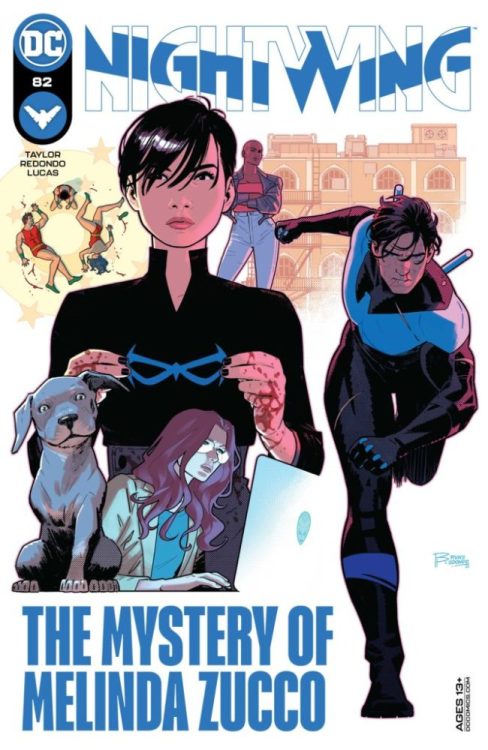
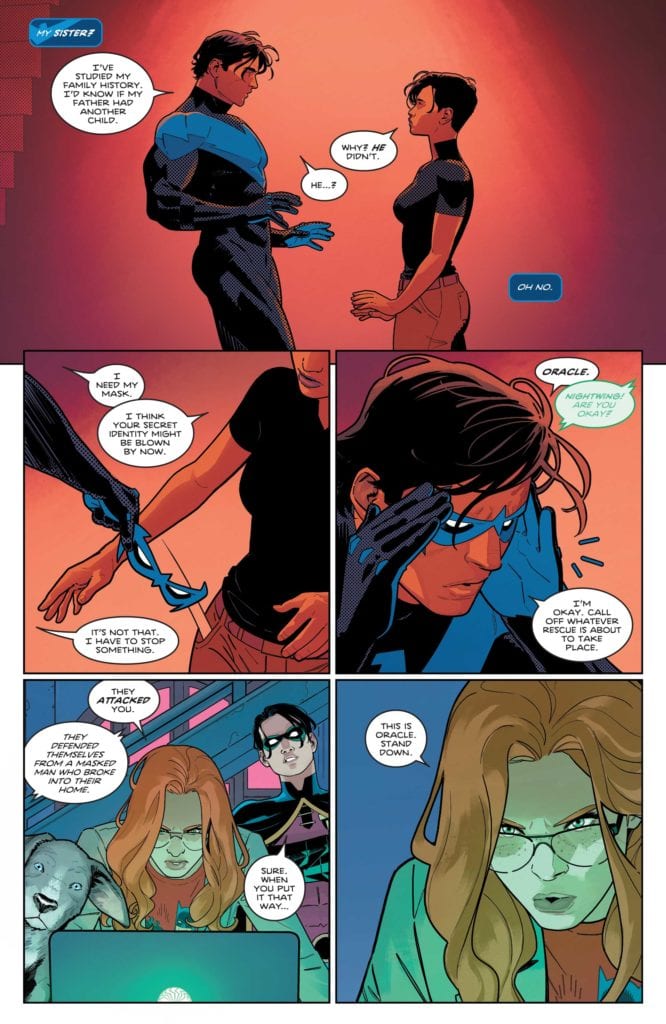
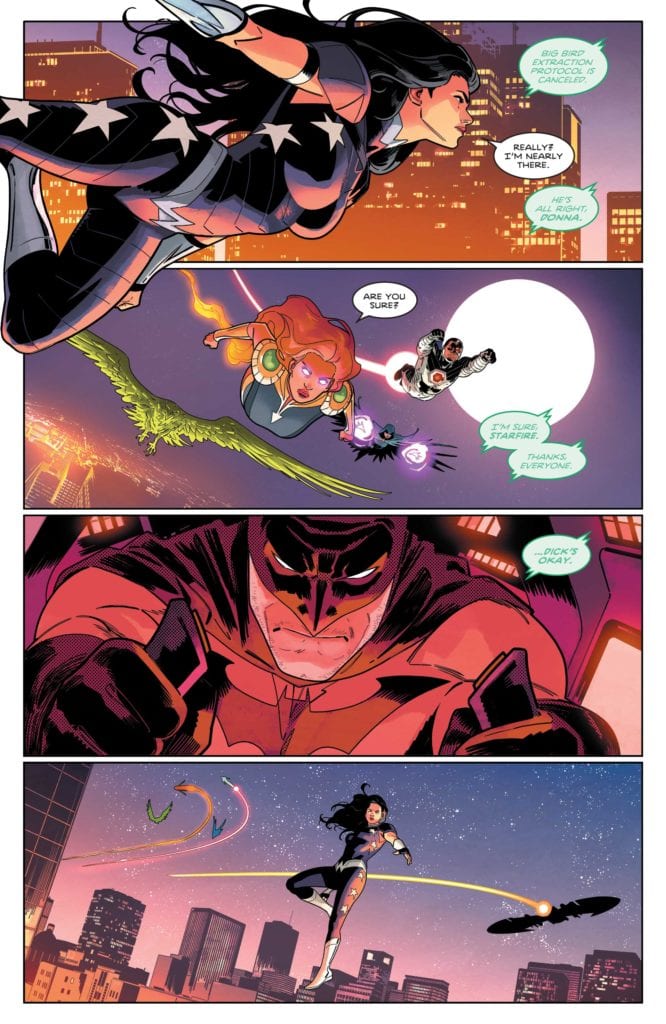
DC Comics’ Nightwing #82 is a relatively straightforward issue. It takes the twist from the finale of Nightwing #81 and explains how it could be possible. Yet, in a single issue, writer Tom Taylor, pencillers Bruno Redondo, Rick Leonardi and Neil Edwards, inkers Bruno Redondo, Andy Lanning and Scott Hanna, colorist Adriano Lucas, and letterer Wes Abbott, (what a huge creative team for this issue!) show us that we may be wrong about the characters that seemed at first to be “the bad guys.” Spoilers ahead for the previous issue, Nightwing #81.

spoilers ahead

Writing

Taylor has a lot of fun in this issue. It’s both a heartfelt look at the lives of Nightwing’s parents, the Flying Graysons, and a thriller-style history of Tony Zucco. With this issue, Taylor is showing us how Nightwing and Melinda Zucco could be related. Briefly, Taylor confuses things a little. Melinda tells Nightwing that his father didn’t have another child, but then we go on to hear a story that contradicts that. And later, when John Grayson talks to Tony Zucco, it feels like both John Grayson and Taylor overplay their hand a little. “Please accept this oversized fluffy bear and all the condescension that goes with it,” John Grayson says. It seems that the Grayson knack for taunting was perfected in a later generation. But overall, this issue is about the beautiful legacy that the Graysons created. It’s about how their lives touched more people than we know. And Taylor shows us where Dick’s drive and desire to do what’s right comes from.

Art

It’s no surprise this issue has a huge art team. That’s because Nightwing #82 changes art styles to tell its story. When Meili Lin, Melinda’s mother, begins her story, the issue transitions into an older style than what we’ve become used to. It’s a fantastic way to take us back to another time. The most notable change, is the use of Ben-Day dots. Redondo often uses Ben-Day dots in his art. Often they’re used as accents. In this issue, in the modern scenes, they’re most noticeable on Melinda’s shirt. But the scenes of the Flying Graysons are completed colored by Ben-Day dots. It gives the whole section a feel of being right out of the 1940’s.

Coloring

Of course, the use of Ben-Day dots is also part of the job of the coloring department as well. But Lucas goes beyond that. It looks almost as though the scenes showing the Flying Graysons were depicted using the four-color coloring method. Even colors that aren’t cyan, magenta, yellow or key(black), have a look of being a muddy combination of those colors. Again, it’s a fantastic way to take us back in time. Lucas also makes a point of setting these scenes in juxtaposition to the modern scenes. Scenes of Nightwing, Melinda and Meili talking are shown in deep reds and clear blues. The evolutions of coloring in the comics industry is on full display in this issue.

Nightwing Taylor DC Comics

Lettering

Abbott’s lettering is always a joy to behold. His sound effects are simple but effective. With every new issue, it feels more and more impressive how fresh his sound effects feel. No gunshot feels quite the same, and Abbott is always using new fonts for new situations. But one of the best parts of Abbott’s lettering in Nightwing #82, is in a scene of the Flying Graysons doing tricks in the circus. The word balloons stretch high, and then dive low, before going back up again. Our eyes, as we scan the page, mimic the movement of the Flying Graysons on the trapeze. It’s a simple trick that works brilliantly.


DC Comics’ Nightwing #82 is surprisingly fun for an issue that deals with some nasty history. That’s because this creative team is always finding the beauty in small moments. We come out of this issue, more in love with the Graysons than ever, and wondering what this team has next for Nightwing! Pick up Nightwing #82, out from DC Comics July 20th, at a comic shop near you!

Monkeys Fighting Robots Youtube

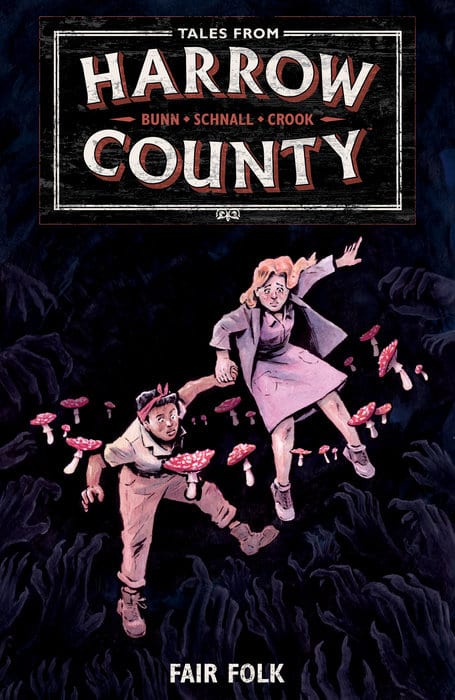
Review: HARROW COUNTY: THE FAIR FOLK #1 – Old Friends Long Gone

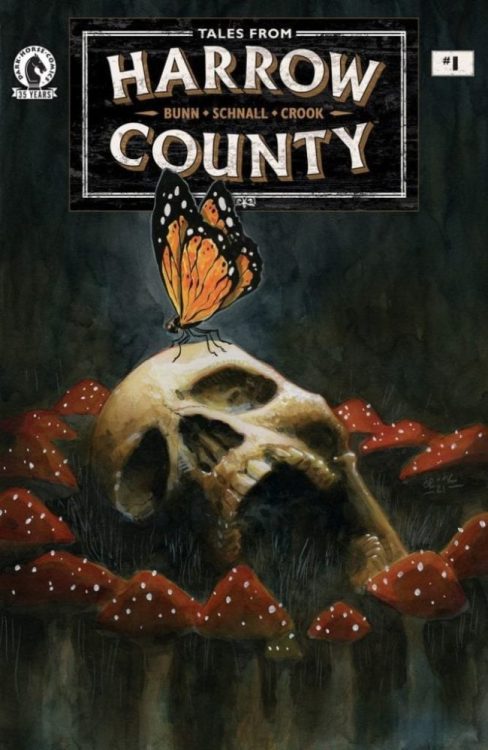
Original series creators Cullen Bunn and Tyler Crook, along with artist Emily Schnall, return to our favorite haint-filled town in Harrow County: The Fair Folk #1. This new series is an instant return to form. Bunn’s script is full of the same heartfelt character writing that we got in the original comic. He’s also still quick to turn up the creepiness and mystery, which is brought to life spectacularly by Schnall. This will be a definite pick for both fans of the original Harrow County and horror fans alike.

“Fresh off the loss of her goblin friend to a strange portal, Bernice must weigh her responsibilities as protector of Harrow County with her desire to get her companion back safe and sound. But the past weighs heavily and the fair folk use Bernice’s and her memories against her. And something more disastrous than she could have feared may be around the corner to threaten both the worlds of humans and of haints.”

Writing & Plot

Cullen Bunn returns to the town he created in Harrow County: The Fair Folk #1 in the same fashion he last left it. Bunn’s character writing has always come across as genuine and full of emotion and humanity despite the horror setting. Fair Folk starts off shortly after the events of Death’s Choir with Bernice dealing with the personal fallout. This issue is all about reestablishing relationships and finding old friends. All of the dialogue feels real and unique, and it hits with an emotional reality that makes you feel like you’re standing in the room with the characters.

Bunn’s penchant for taking the Southern setting and its folklore and both utilizing it while also paying it respect has always been one of my favorite elements of Harrow County. The use of magic and legends feels like manner they’re told by superstitious relatives in backwoods North Carolina. Another is how he handles the numerous creatures and their characterization. Granted we only get one speaking monster appearance here, but he is fantastic. I’m all set for more of this series and this world in general.

Art Direction

Emily Schnall has a daunting task in maintaining the visual aesthetic of this established world in Harrow County: The Fair Folk #1. Tyler Crook created the perfect visual language for the original series. This was then continued by Naomi Franquiz in Death’s Choir,  who also managed to nail this story’s look. Fortunately, Bunn and Crook have an eye for artists as Schnall once again provides top-notch visuals that keep this unique aesthetic alive. Her visual style is distinctive from her predecessors, but still blends in with the prior Harrow County comics. Her thick lines created expressive characters human and haint alike. She follows the designs set out by Crook, but they still have her distinct flair.

Panel direction is much like how it’s always been, with a careful visual progression guided by narration. A large portion of what helps Schnall’s work blend in with the prior series are her colors. She utilizes the same sort of watercolor style to give this series its unique look. Every surface, from the foliage to the human characters and the monsters themselves are decorated in an array of shades. Tyler Crook himself returns for the lettering, which is as dynamic as ever. His fonts change from character to character, and the way he hides effect sounds within the environment will never not be impressive. This is a stellar looking comic that stays right in line with the rest of this fantastic world.

Verdict

Harrow County: The Fair Folk #1 is a stellar return to this wonderfully eerie and fascinating world. Cullen Bunn’s script is full of humanity and charm, and still knows how to being the horror. Emily Schnall fits right in with the artistic legacy of this series, bringing her own style to bear while keeping in line with the world as a whole. Be sure to grab this outstanding new issue when it hits shelves on 7-21!

Monkeys Fighting Robots Youtube

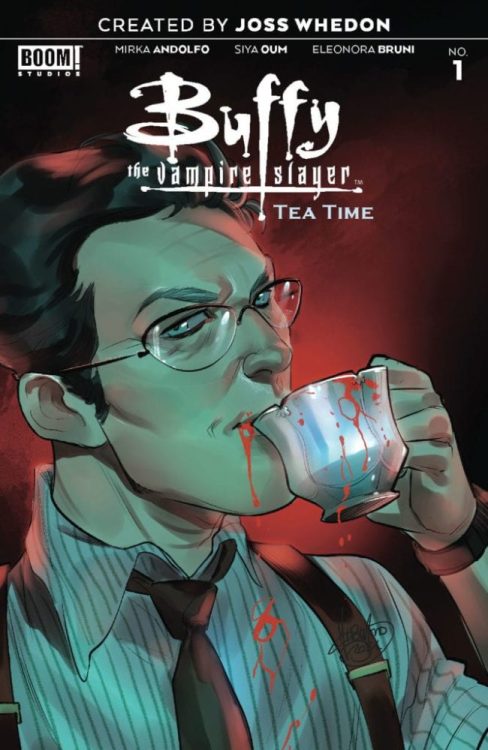
Review: BUFFY THE VAMPIRE SLAYER: TEA TIME #1—Bloody Giles Fun

Main Cover

It’s fun to fantasize about your Watcher becoming the monster you’re tasked to slay until you’re forced to face some emotional truths. Available now from Boom! Studios, Buffy the Vampire Slayer: Tea Time #1 explores what would happen if Giles became a vampire. This issue is written by Mirka Andolfo, with illustrations by Siya Oum, inks by Giuseppe Cafaro, Francesca Follini, and Dario Formisani, colors by Eleanora Bruni and letters by Ed Dukeshire.

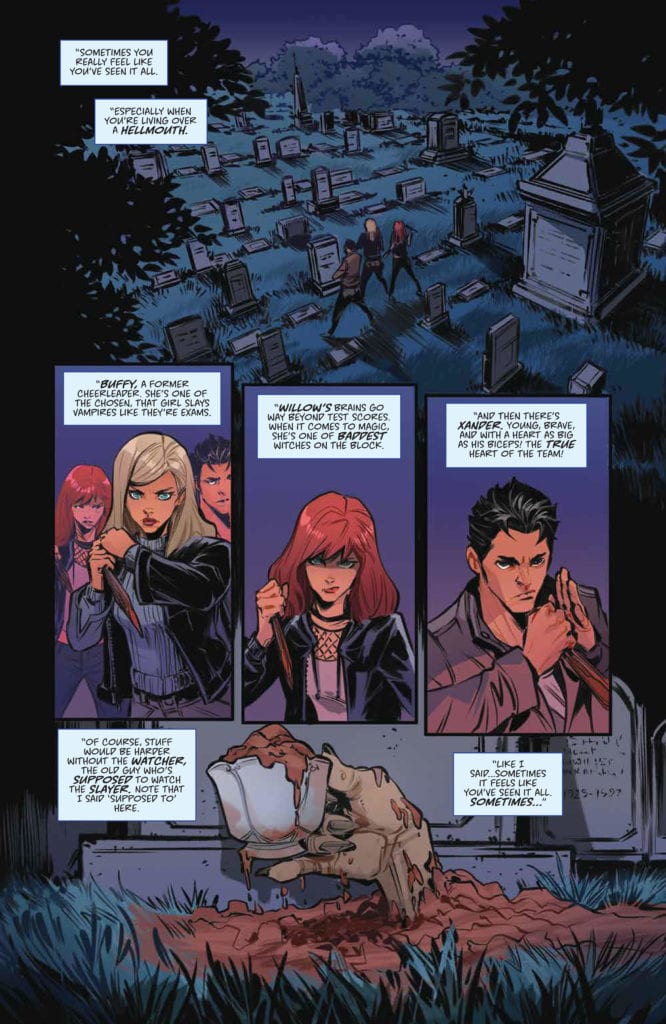
During a long night of pre-slaying research at the library, Buffy and friends trade scenarios in which Giles has become a vampire. Writer Andolfo, instead of keeping us in suspense, makes it clear from the beginning that Giles isn’t actually a vampire. But the idea itself is so shocking that I found myself questioning it throughout the issue. This question was enough to lend a unique spookiness to the issue.

Contributing to this spookiness are the inks and layout. Many of Oum’s panels are inset or slightly out of alignment which makes you feel off-kilter. Inkers Cafaro, Follini and Formisani gave each individual scenario blocky angular shadows and hard outlines that reinforce a dream-like darkness. The inky darkness contrasts severely with the real scenes in the library that consists of bright lighting and ever so slightly brighter colors. While the contrast is dramatic, it feels more playful than stark.

Seeing Red

Vampire Tea
THE SCOOBY GANG IMAGINES FIGHTING VAMPIRE GILES.

However, what’s also playful is Bruni’s emphasis on the color red, especially where there’s blood. In fact, the red of the blood is more saturated than any other color in the issue. Bruni uses the familiar pink, blue, and purple based color palette, but in muted tones. Such muted coloring adds to the serious tone. Then, when the muted colors come in contrast with the bright red blood, the tone lightens up a bit. It’s a reminder that though the series is about vampire slaying, it’s not an especially visceral or violent one.

On the lettering end of things, Dukeshire maintains the playfulness through higher than usual use of SFX. Dukeshire has previously gained my favor by restrained use of SFX, but for this issue the increased effects are appropriate. The SFX font sizes, shapes and colors are varied to suit the situation and action. It’s the variety as much as the number of SFX that’s fun.

For all Dukeshire’s strengths, there were a couple errors in the dialogue. On one page, there was either an issue with the placement of a dialogue bubble or a panel that gave me pause. No one is perfect, nor any comic for that matter. Despite its flaws, however, Buffy the Vampire Slayer: Tea Time #1 comes close to a perfect Buffy comic, if not a perfect comic altogether.

Giles the Vampire

You may have come expecting only a light tea, but got a vampire Giles instead. In true Buffy fashion, Tea Time #1 balances the light-hearted with some heartbreaking emotion. Giles may not really be a vampire now, but what would it do to the Scooby Gang if he were? And the big question is how would they go on without their Watcher and surrogate father?

These questions sound like good fodder for the main story. I do wonder whether anything from this special will make its way into the main arc, especially the blink-and-you’ll-miss-it reference to Tara. Who knows? Maybe we’ll really see a vampire Giles in the near future.

Monkeys Fighting Robots Youtube

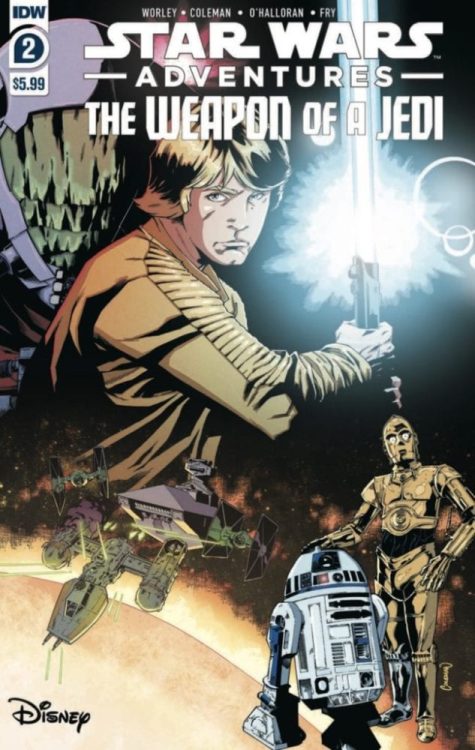
Review: STAR WARS ADVENTURES: THE WEAPON OF A JEDI #2

Main Cover

Star Wars Adventures: The Weapon of A Jedi #2 picks up the pace as dangers of the Eedit ruins and looming Imperial Forces drive Luke to quickly master the Force. Available now from IDW, this second installment is based on a novel by Jason Fry. It’s adapted by writer Alec Worley with art by Ruairi Coleman. Chris O’Halloran provides colors while Amauri Osorio and 49 Grad-Medienagentur contribute lettering.

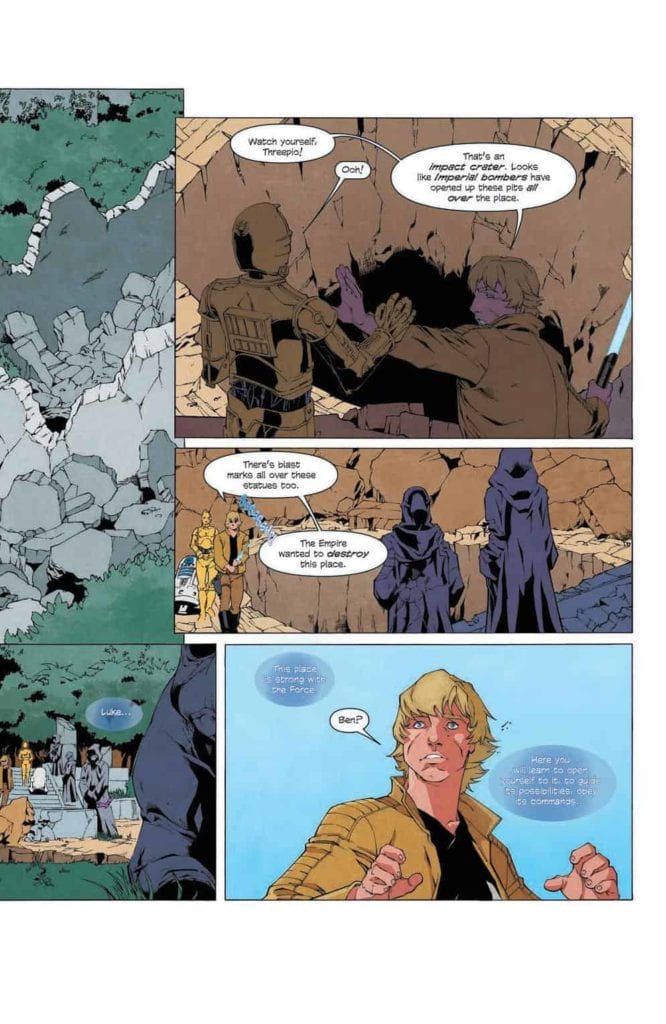
Luke, C-3P0 and R2-D2 have entered the belly of the beast in the Eedit ruins. Though Imperial forces are on Luke’s trail, writer Worley devotes ample page time to Luke’s training. We get to see how doggedly Luke trains on his own with only his lightsaber and the memory of Ben Kenobi to guide him.

Luke staying awake for two nights to train in the Force is definitely crazy, yet somehow admirable. The stakes are personal for him. Understanding the Force is key to understanding his past and arms him against the Empire. Besides making for some great action sequences, Worley’s training-focused issue makes room for Jedi philosophy. Despite a few contrivances to hurry up the Imperial force’s pursuit, the issue is quite balanced with plot and character.

Using the Force

In the action sequences, Coleman gets to show off Luke’s lightsaber and some explosive effects. Coleman uses dark lines to emphasize the action. Furthermore, each lightsaber movement is drawn in exaggerated blue arcs. While the action lines work well for the sake of style and drama, the lightsaber arcs look too much like ribbons covering large sections of panels to be effective.

Use the Lightsaber
LUKE AND THE DROIDS ENTER THE RUINED TEMPLE.

The blue of the lightsaber posed a problem for the colorist, O’Halloran, as well. On page twelve, in a night scene already awash in blue and purple, one panel has a blue background behind the bright blue lightsaber, a blue dialogue bubble, and a special effect done in blue. Of course, blue is used deliberately, but maybe some shading would have prevented the dialogue and lightsaber from getting lost in the background. I almost mentally skipped over the panel without reading the dialogue because of the lack of contrast.

Other than the overuse of SFX, the above-mentioned panel exemplifies my only issue with Osorio’s and 49 Grad-Medienagentur’s lettering and design. These issues obstruct the action, slowing down the read from one beat to the next.

Despite such problems, Star Wars Adventures: The Weapon of A Jedi #2 manages to be a fun second issue. Luke has become the Jedi hero we recognize from the movies. The next step will be to challenge the Empire beyond a skirmish with some Storm Troopers. The Force is strong with us and with Luke as we face, head on, the next Star Wars adventure.

Monkeys Fighting Robots Youtube

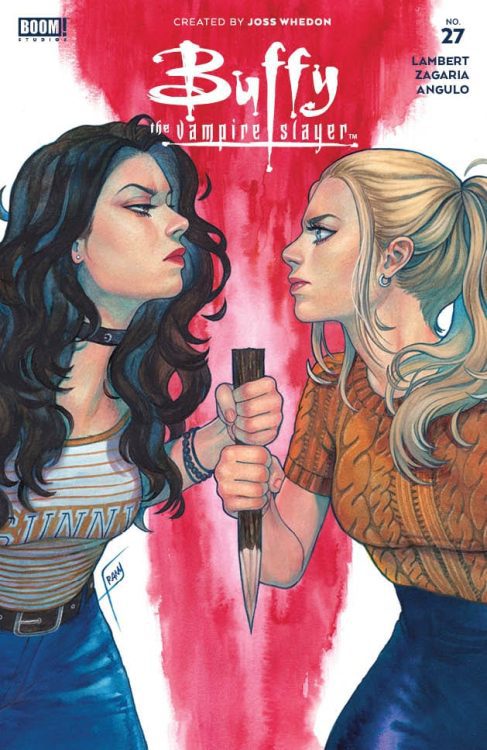
Review: BUFFY THE VAMPIRE SLAYER #27—Enemy At the Gate

The Enemy Divides

There’s a new big bad in town and he’s unlike anything Buffy and the gang have ever faced. Available from Boom! Studios, Buffy the Vampire Slayer #27 is written by Jeremy Lambert with art by Carmelo Zagaria. Contributing colors and lettering are Raul Angulo and Ed Dukeshire respectively.

Lambert manages to insert a couple of twists per issue and #27 is no different. We finally learn how Dorothy, head of the Watcher Council, has a deeper connection to the Scooby Gang. But the biggest reveal was the new big bad, Silas. What’s funny about the latter reveal is Anya’s been saying it, but Giles doesn’t seem to believe her. It takes mishap in Ethan’s magic training with Willow to convince him.

These twists are especially exciting because of the amount of planting Lambert has done. No matter how frustrating the delayed reveals are, all suspense is worth the eventual twist. Besides, it’s the build up that makes the reveal even bigger than expected.

Expressionist

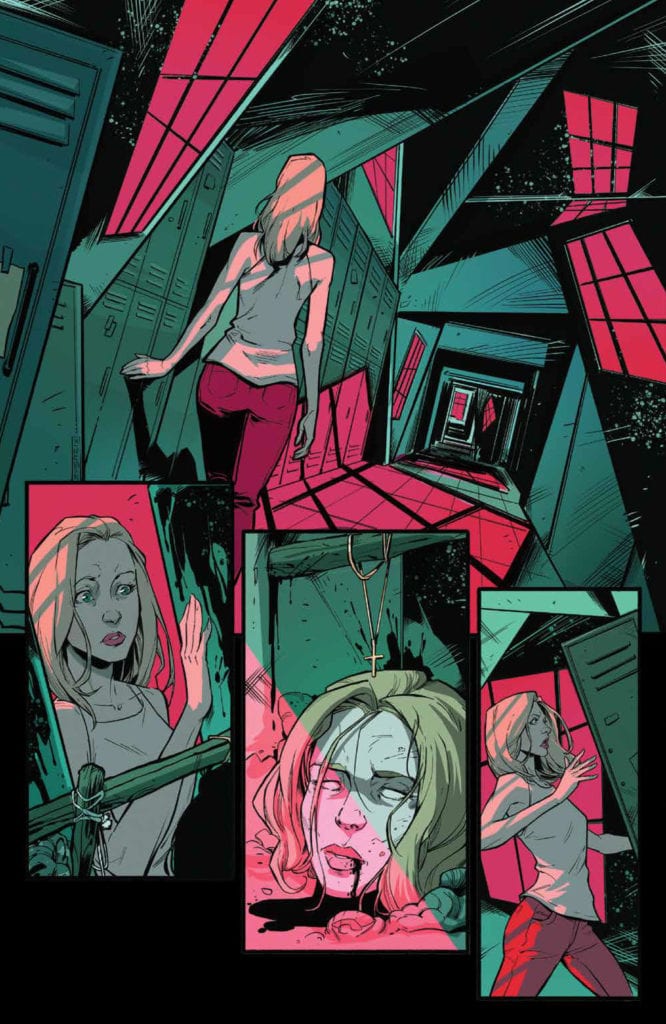
Big art follows big reveals. To that end, Zagaria draws with expressionistic flare. Each frown is accentuated with thin, scratchy lines. A stunning dream sequence in which Buffy’s fears are exposed feels straight out of The Cabinet of Dr. Caligari. It’s all Dutch angles, rough shadows and stark expressions. Such dramatic and film-like choices heighten the terror and sadness of the story.

As issue #27 explores Buffy’s fear of death, Zagaria’s expressionistic choices suit its tone. After all, the stakes are apocalyptic now. Thus, Angulo’s colors reflect such depth of feeling. In Buffy’s dream sequence, dark green and red carve through the black background. Later, brown and blue dominate the palette. No colors are quite cold, but they’re not altogether warm. All this to say that the color heightens the emotion where appropriate. However, the palettes also imbue the book with a quality of earthiness. It’s at once grounded and surreal.

Enemy of the Mind
BUFFY’S GERMAN EXPRESSIONIST NIGHTMARE.

Dukeshire’s lettering, on the other hand, does the work of capturing a lighter energy in his dialogue bubbles. Contrasting the previous issue, he uses no SFX. Instead, Dukeshire uses lots of long, panel-hopping tails and overlapping bubbles to communicate the frenetic energy of the characters. He does especially well in breaking up extended sequences of dialogue—of which there are many. In that case, Dukeshire does quite a bit to brighten up the issue using very little, and without imposing upon the narrative and illustration.

Changes

With every change in illustrator or writer, I find myself appreciating the Buffy series as a whole even more. Each creator adds so much character and style that freshens up the story. This issue in particular feels the most tense and high stakes partly because of newcomer Zagaria.

Nonetheless, the tensest moments have yet to come as we still don’t quite know who Silas is. Whoever he is, he’s already done a lot of damage to the morale of the Scooby Gang. So, whoever takes on the art of the next issue, I hope we see Silas’ in all his ugly villain glory. The enemy’s at the gate, and all we have is the hope that Buffy’s strength will prevail over death.

Monkeys Fighting Robots Youtube