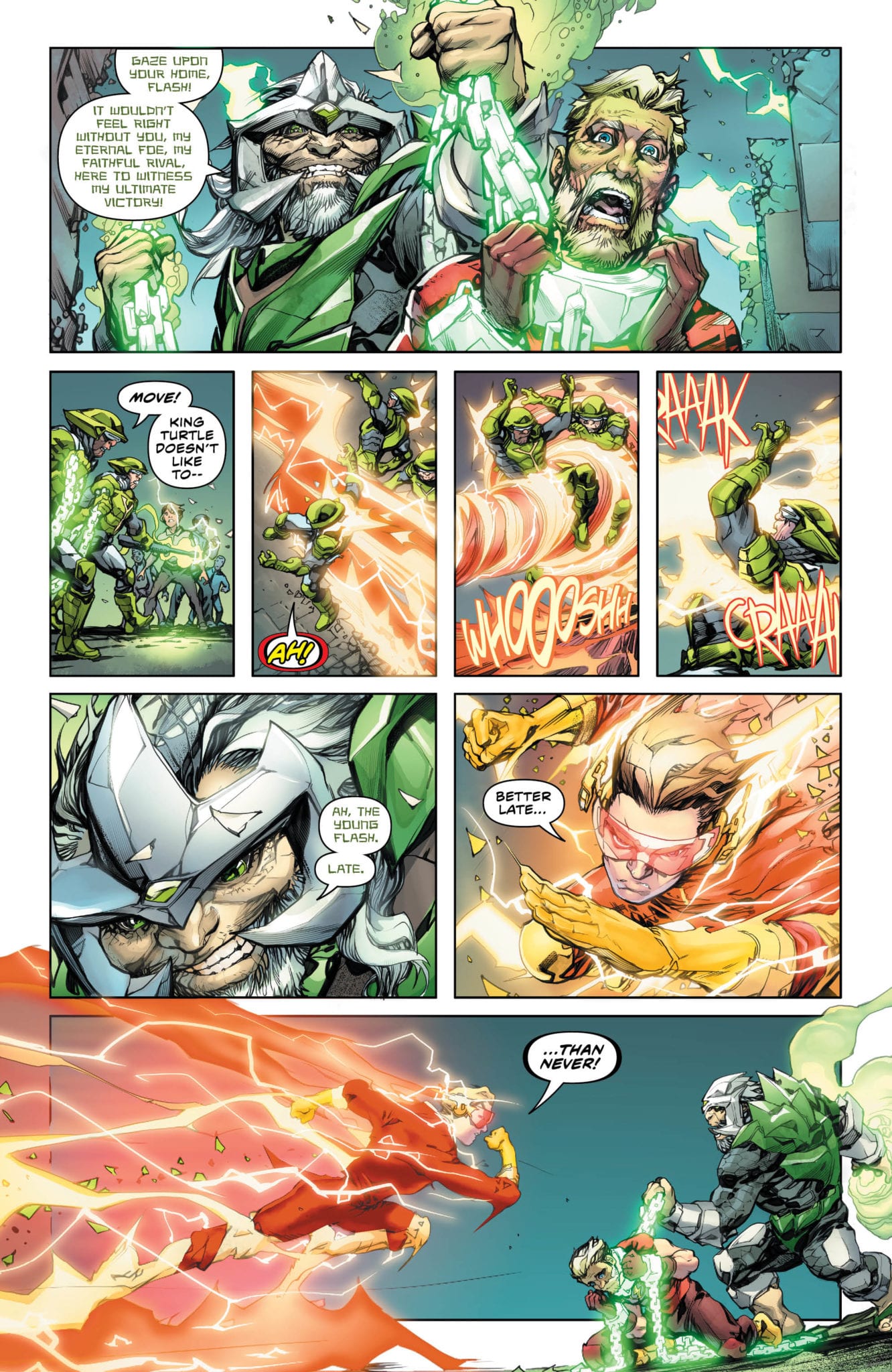
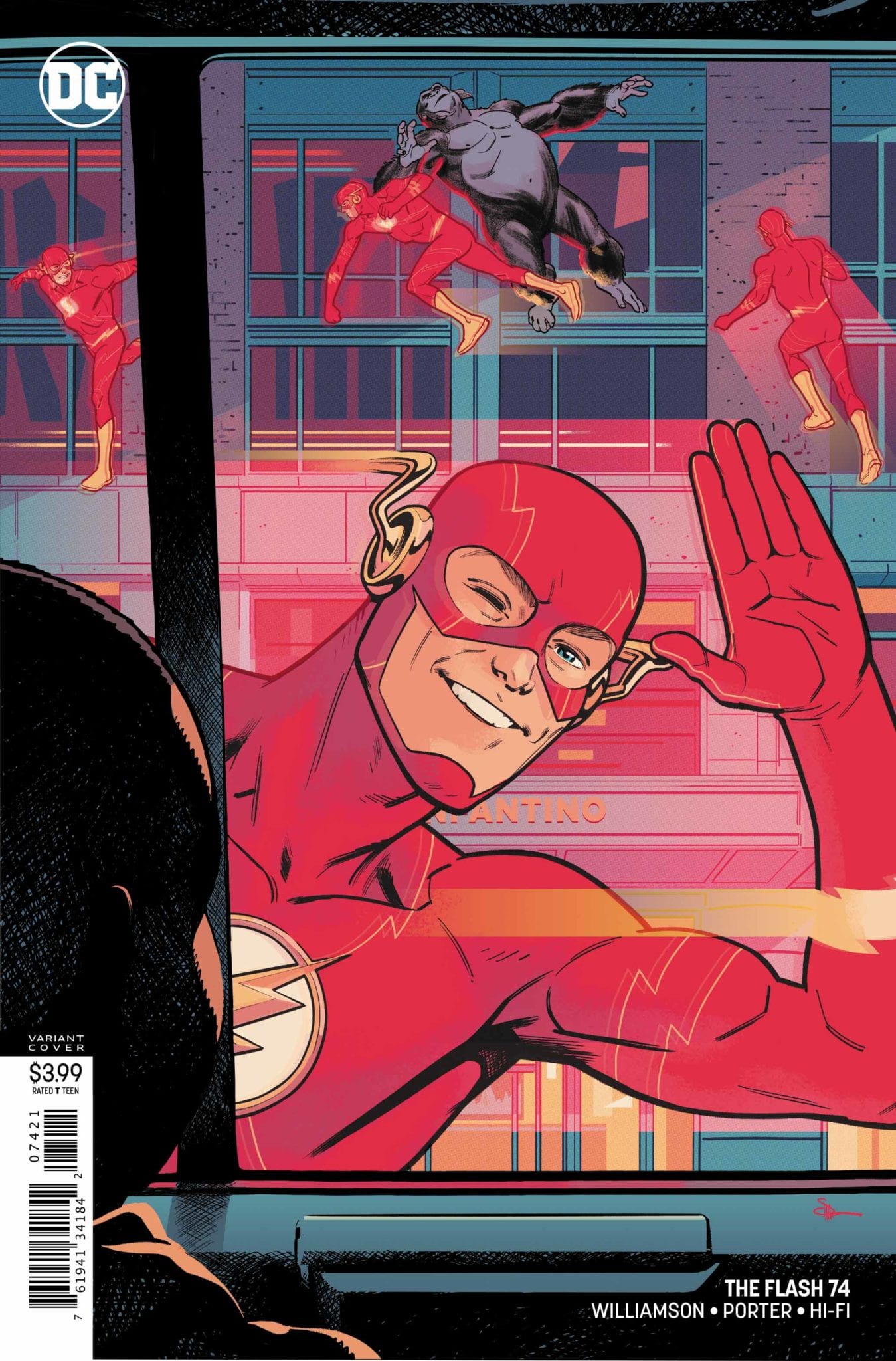
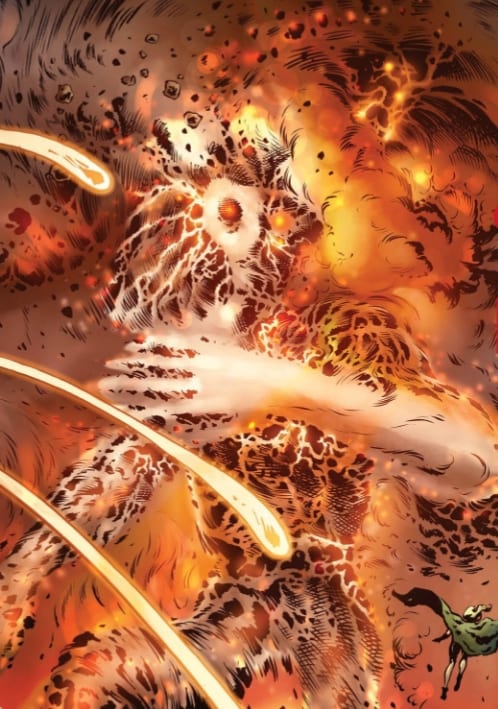
The Flash is written by Joshua Williamson, with art by Howard Porter, HI-FI handled colors, Steve Wands lettered the pages, with Porter and HI-FI’s work on the cover. Evan “Doc” Shaner provide the variant cover.
About The Flash #74:
“The Flash Year One” continues! The Turtle has made his grand entrance, and it’s about to bring down the house! As an untested hero with the mastery of his abilities still in its infancy, Barry Allen will face the toughest challenge of his life to defend Central City from the invading forces of those who seek its destruction. Our hero is faced with the fateful choice to either become a superhero or die trying!
Check out the preview below.
What do you think of Flash Year One? Comment below with your thoughts on the series.
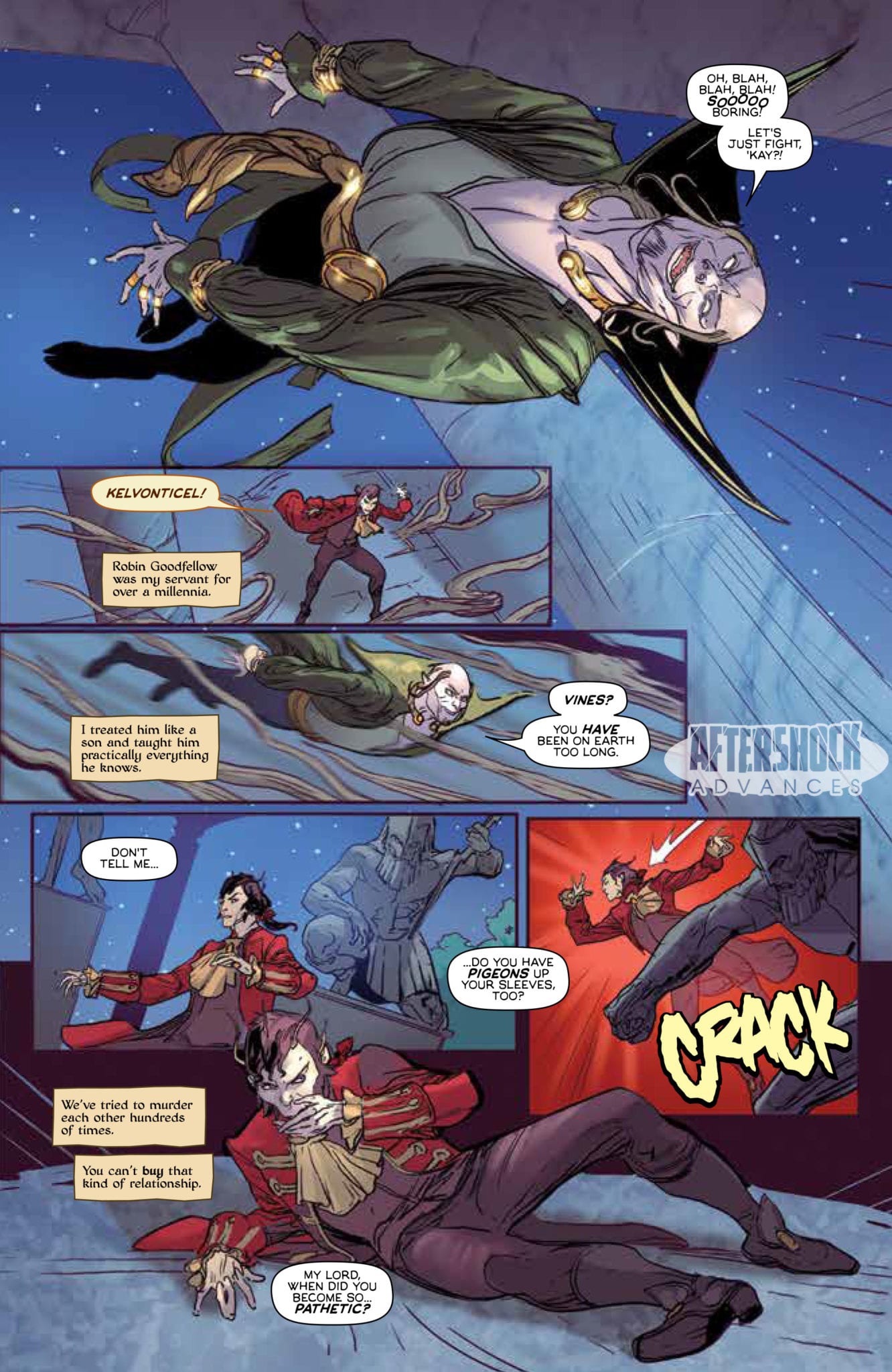
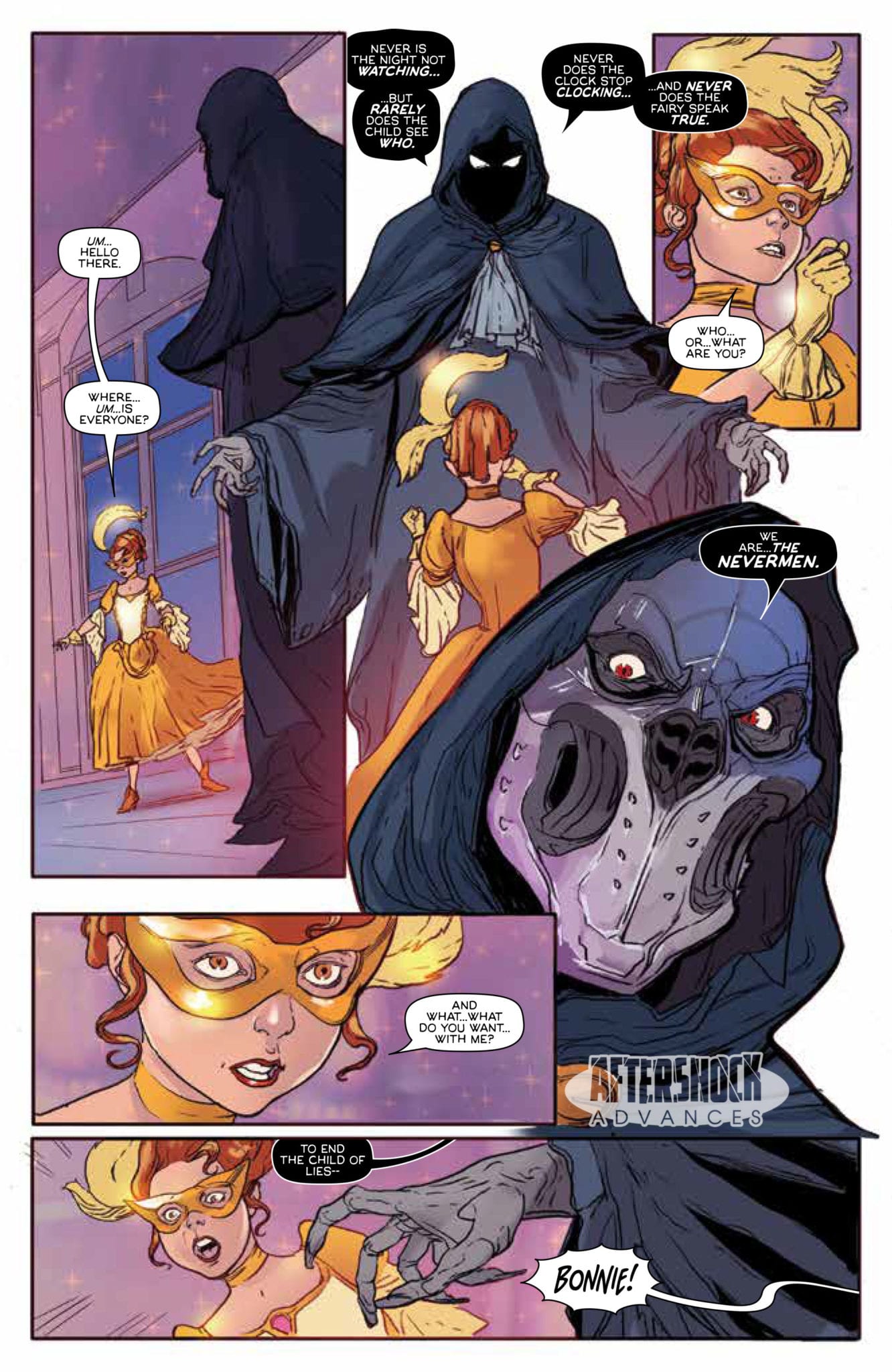
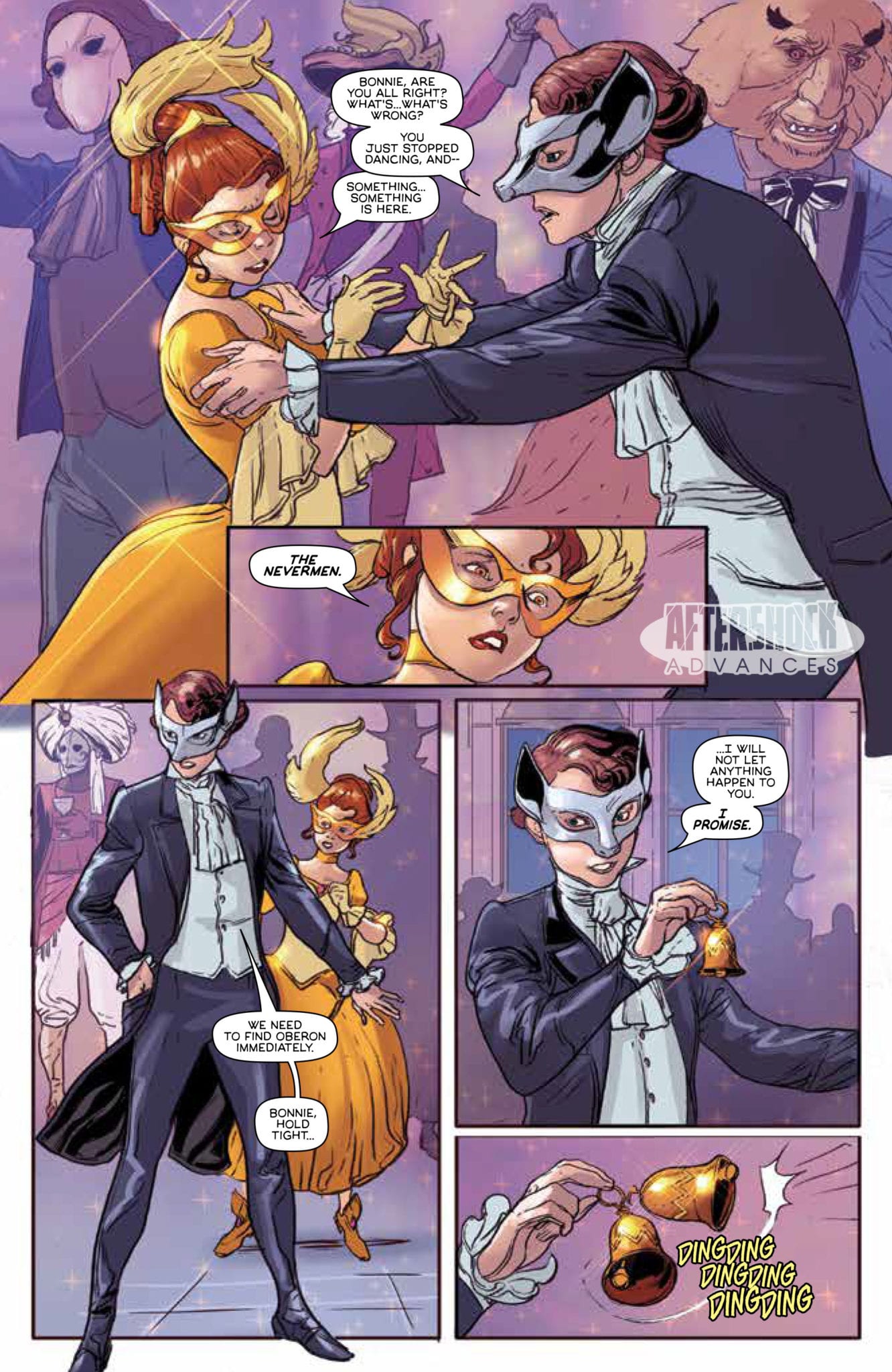
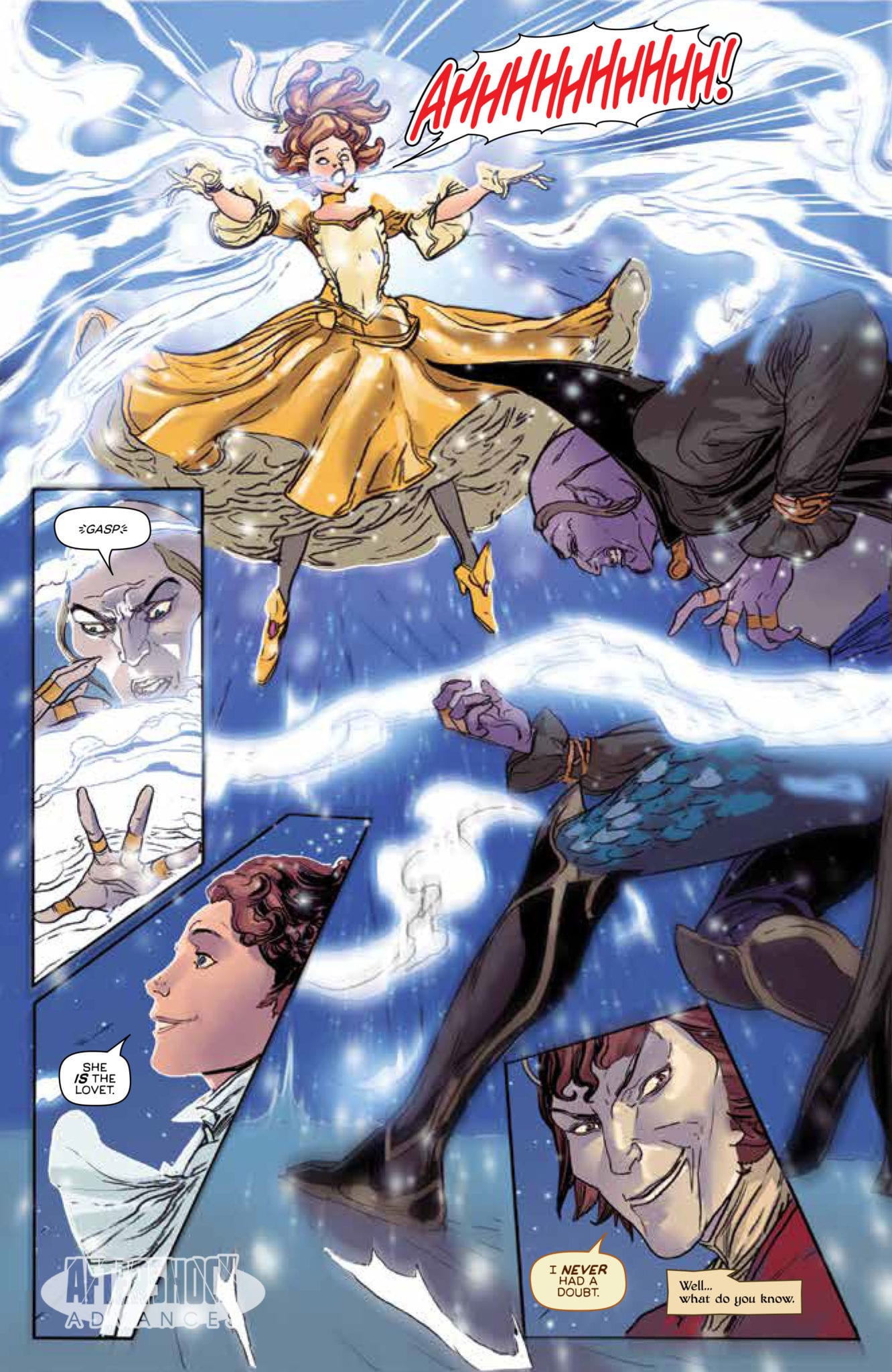
Oberon is a supernatural adventure written by Ryan Parrott (VOLITION, Power Rangers), with art by Milos Slavkovic (Lightstep), Leonardo Paciarotti handled colors, Charles Pritchett lettered the pages, with Slavkovic’s work on the cover.
About Oberon #5:
The dethroned King of the Fairies’ sordid past is revealed as Oberon comes face-to-face with his former servant – PUCK. But is he friend…or foe?
Check out the preview below.
Do you have Oberon on your pull list? Comment below with your thoughts on the series.
After taking audiences by storm with his breakout masterpiece Hereditary, Ari Aster returns with Midsommar, which tells the most disturbing cinematic breakup tale.
Aster’s sophomore feature depicts a ruthless and unnerving descent into madness between two people that don’t deserve a happily ever after. Written and directed by Aster, the film stars Florence Pugh, Jack Reynor, William Jackson Harper, Will Poulter, and Vilhelm Blomgren. Midsommar follows a group of graduate students that travel to Sweden for a festival that occurs every ninety years, but they find themselves caught in the ritualistic practices of a pagan cult.
Dani and Christian are a couple on the verge of disintegration, and as shown in the trailer, no one wants out more than Christian. However, once a tragic event occurs, he decides to stay with Dani out of guilt. This then leads to Christian inviting Dani to join him and his friends on the trip to Sweden. Similar to Hereditary, Midsommar gives an intense look into grief and features a tour de force performance from its female lead.
Florence Pugh as Dani in Ari Aster’s MIDSOMMAR.
Pugh stars as Dani, the film’s heroine who is trying to recover from a tragic event. While her co-stars do what they can, Pugh shines as the distraught protagonist, as she goes through almost every emotion during the film. It’s made clear very early on that this character suffers anxiety due to the events going on in her life, and that factors into why Christian wants to leave her. Reynor stars as Christian, the boyfriend of Dani who has been trying to break away for a while. His plan’s only reinforced by his friends Josh (Harper), Pelle (Blomgren), and Mark (Poulter), who don’t seem too fond of Dani either for the most part. Midsommar may feature a pagan cult performing raw, bone-chilling practices, but it’s still a gruesome breakup story at its core.
As soon as the group arrives in the Swedish village, they are mesmerized by its scenery and the attire of the festival participants, better known as the Harga. Dani and her distant friends are invited to participate in the daily festivities, which include maypole dancing, meditation, feasting, and consuming mind-altering drugs. At first, the villagers seem harmless but certain practices will lead to the group of friends reconsidering their decision to come, but by then it’s too late.
Florence Pugh as Dani, Jack Reynor as Christian, and Vilhelm Blomgren as Pelle in Ari Aster’s MIDSOMMAR.
Aster has crafted a visually stunning film that will cause disgust just as much as it will leave viewers in awe at how beautifully shot it is. Midsommar isn’t as frightening as the trailers make it seem, but it is very unsettling to watch and will leave audiences pondering on what they just witnessed. The film’s cinematography by Pawel Pogorzelski is stellar and a visually satisfying component that brings the horrific imagery to life. The Haxan Cloak’s score accompanies the disturbing two-hour experience so immaculately and will stick with you once the credits roll. Yet, despite its horrific nature, certain lines and sequences in Midsommar will undoubtedly spark laughter.
Midsommar is a successful sophomore feature from Aster, who is leaving his mark on modern horror. The film isn’t as coherent as his debut film, but it is more bizarre. Midway through the film, it feels like Aster becomes focused on sparking a reaction with graphic imagery rather than finishing a coherent narrative. The film does manage to end on a high note, but along the way, the story becomes a bit muddled in its attempt to be visually discomforting.
Regardless of that, after leaving audiences floored with Hereditary, many wondered how Aster would follow it up. Well, he has crafted a dark romantic film about a toxic relationship that can’t be saved. By the time Midsommar reaches its bonkers finale, the relationship between Dani and Christian has been shattered. Not only do they go through a traumatic experience, but the audience suffers right along with them.
Once the credits roll, the viewers are left with a sense of catharsis. Aster has a knack for putting his audience through the wringer, and he doesn’t switch up for this latest outing. There is no way to prepare for Midsommar and the bizarre activities that ensue, but expect to be left emotionally drained.
A24 will be releasing Midsommar in theaters on July 3rd.
Aero #1 continues the story of Lei Lin, a new character introduced during the recent War of the Realms event.
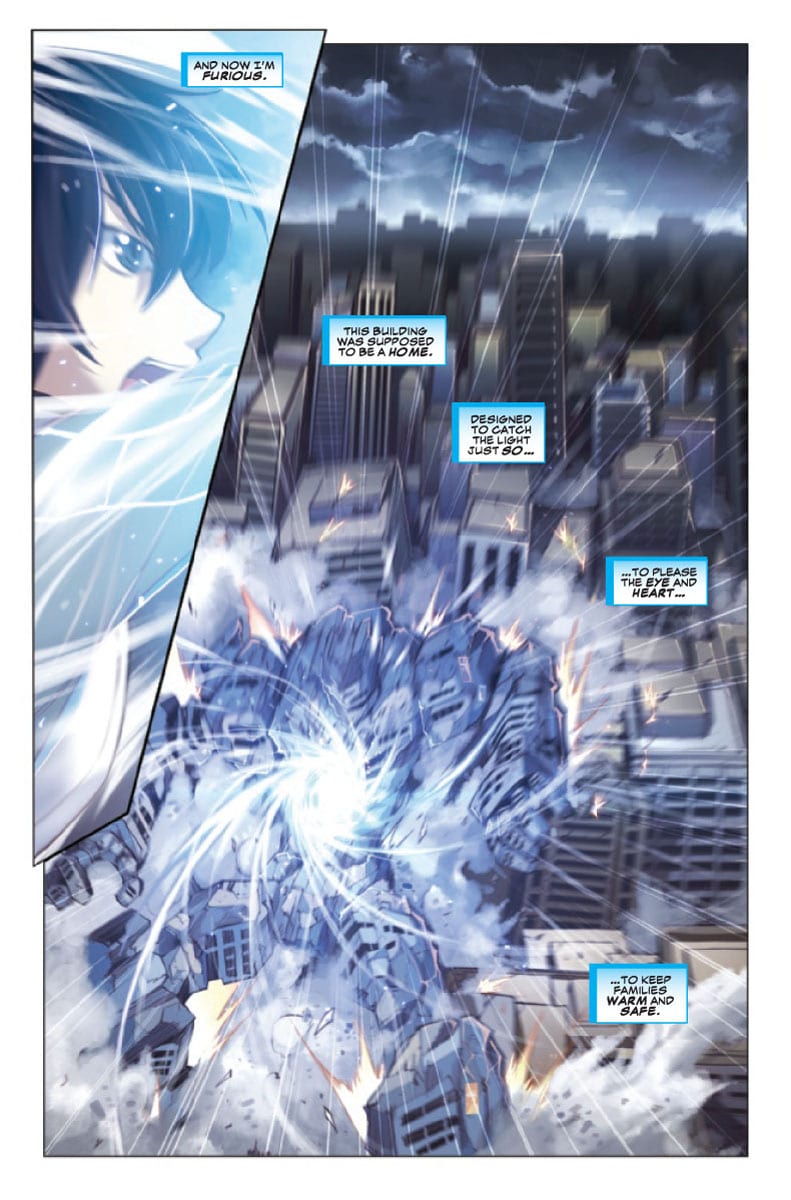
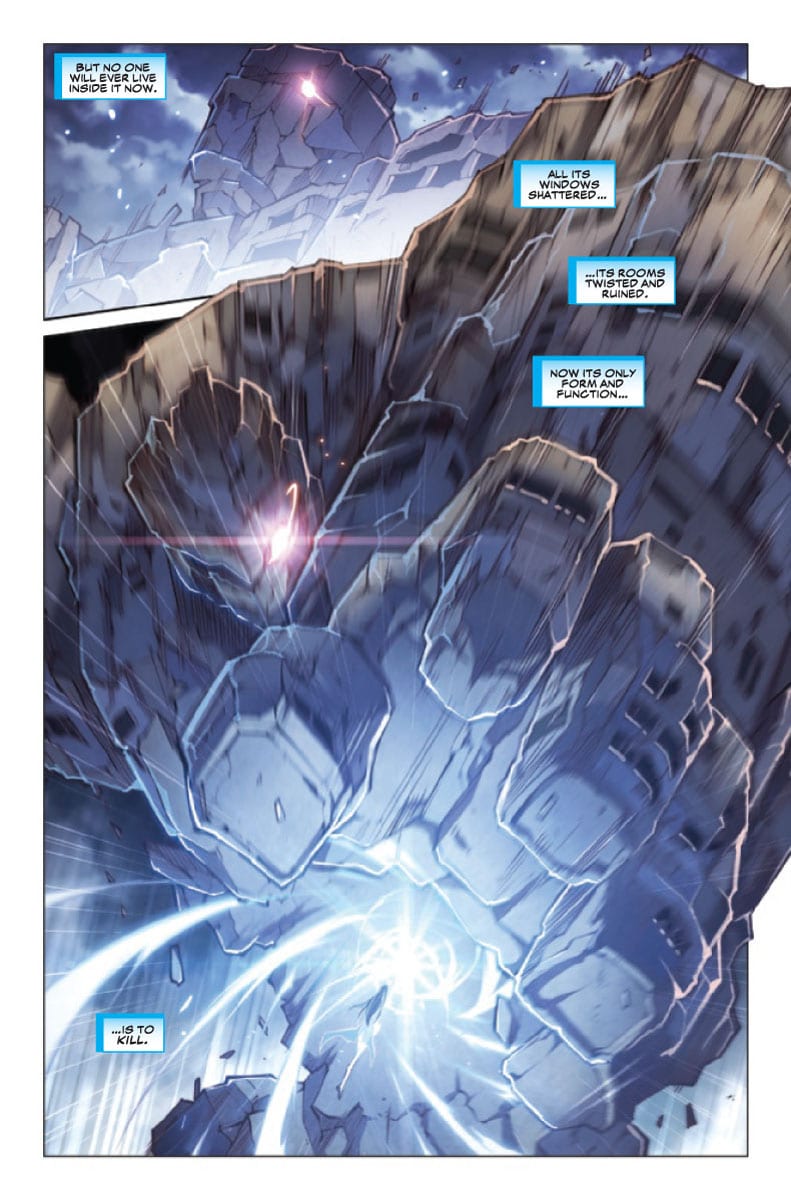
This debut issue presents two stories. First, in Protector of the City from writer Zhou Liefen, we see Lei defend her hometown of Shanghai against skyscrapers that seem to spring to life as monstrous golems. In Aero & Wave: Origins and Destinies, Greg Pak delves into the backstory of Triumph Division’s Wave, another Marvel newbie.
The Writing
Zhou’s story in Aero #1 evokes an aesthetic more familiar to fans of manga. It’s not only in the visuals, though; the storytelling has a distinctive stylistic flair to it as well.
This book begins in media res, with Lei facing-off against a towering monster which, she explains, is a living building. After this introduction, we jump back to months earlier in the story. Most of the issue is presented as an expository aside, with Lei speaking directly to the reader, relaying elements of her backstory and day-to-day life.
The extended monologue does have the occasional clunky line, but this could be more of a translation matter. The writing in Aero #1 is strong overall, giving us a rundown on who this character is and what she’s about. Although it’s mostly exposition, the story still manages to keep the reader’s interest by centering in on the action within the character’s world. Yes, it’s just dropping the backstory, but it’s laser-focused on key details, presented in an engaging manner.
Greg Pak’s story takes place shortly after the conclusion of the War of the Realms event. Rather than the titular character, this feature delves into the backstory of Wave from the Filipino super team Triumph Division.
Pak’s is the less-impressive of the two tales. While it lays out an interesting concept for the character’s origins, it’s presented in a less-fluid manner. Interactions between characters tend to feel a bit stilted, as if only really there to frame Wave’s exposition. Add to that the pair’s actions on the last page don’t feel motivated based on the emotional pitch of the story up to this point. As a result, the ending of the chapter doesn’t quite hit the emotional beats the writer is reaching for.
The Artwork
As mentioned, the artwork in the first story of Aero #1 feels very manga-influenced. Artist Keng’s character designs present softer, less-angular features. The environments also feel a bit lighter and flowing, with a very organic, vivacious sensibility.
It’s a strong presentation overall. Panels flow well from one to the next, opening up occasionally into striking full-page illustrations. The sequences of Aero’s battle against the golem are particularly eye-catching, presented with great attention to detail and an eye for dynamic, refined imagery.
With Aero & Wave: Origins and Destinies, the art style is much more reminiscent of a conventional Western comic style. The illustrations by Pop Mhan are well-composed, with fluid and dynamic imagery and plenty of energy. Unfortunately, they tend to be overshadowed by the sweeping presentation we find in the first half of Aero #1.
The color work is strong in both stories as well. Federico Blee provides colors in our second story; unfortunately, his work suffers a similar fate as Mhan’s, though. The visuals in our first story, from both an illustration and color angle, knock it out of the park.
Final Thoughts
Aero #1 is an impressive debut for the new title. I look forward to seeing where the creators take this character next.
The Doom Patrol Has Returned in Their Own Bizzare, Heroic Way
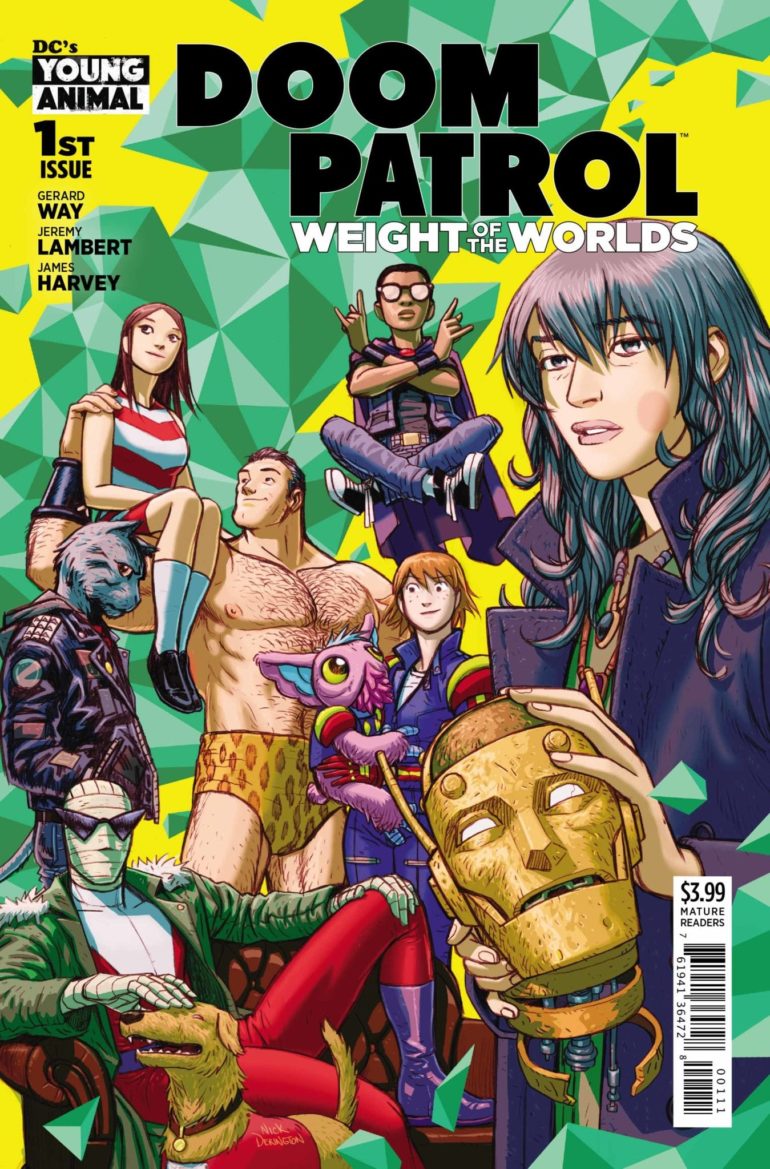
Three years ago, Gerard Way came to DC Comics to create an imprint called Young Animal. The comics under this imprint contained more of the bizarre and obscure heroes the DC Universe had. From Shade, the Changing Girl to Bug the Forager, the comics ranged from dark to weird every issue.
However, none were as strange as Gerard Way’s version of the Doom Patrol. As far as the world’s most unusual heroes go, the two volumes leading up to the crossover Milk Wars(still sounds weird as I type it) were some of the strangest stories many have ever read. Yet that’s what made it stand out to this reader. It has been nearly a year since its final issue, and now Way has returned with a new adventure. Can the Doom Patrol carry the weight of the worlds?
**Some Spoilers Below**
Story:
Picking up a little bit after the events of Milk Wars, the Doom Patrol is trying to find a new direction. Cliff Steele, who was once Robotman now transformed back into his human state, goes home to try and make peace with his mother. Flex Mentallo and Rita(Elastigirl) have been steadily reintroducing her to reality, only to make it their goal to find the beach Flex had seen in a vision.
Negative Man and Crazy Jane have been pursuing different forms of therapy, which leads to the adoption of a puppy and the new direction they were all searching for. Crazy Jane asks Danny, the team’s ambulance for transportation, to take the team to a place that needs their help. That place ends up being a planet full of people being forced to do non stop exercise for a cruel prophet.
This was a bizarre but all around enjoyable ride back into the Doom Patrol. I enjoyed seeing the characters still affected by the Milk Wars crossover and how they were choosing to cope. From animal emotional support to going home to see their family, these heroes are shown to be just as human as any other character in the DC Universe. It makes the book feel more relatable, even if the situations are out of this world.
Another great aspect of the book is that most of the team is together at this point. The last two volumes had the team scattered across the world, and it was a new character, Casey Brinke, to bring them all back together. While the adventure was fun to get them all together, it felt great to see them all helping out here. If this comic turns into an episodic adventure across the stars with the team working together to save lives, I think I’ll love this Doom Patrol even more.
Art:
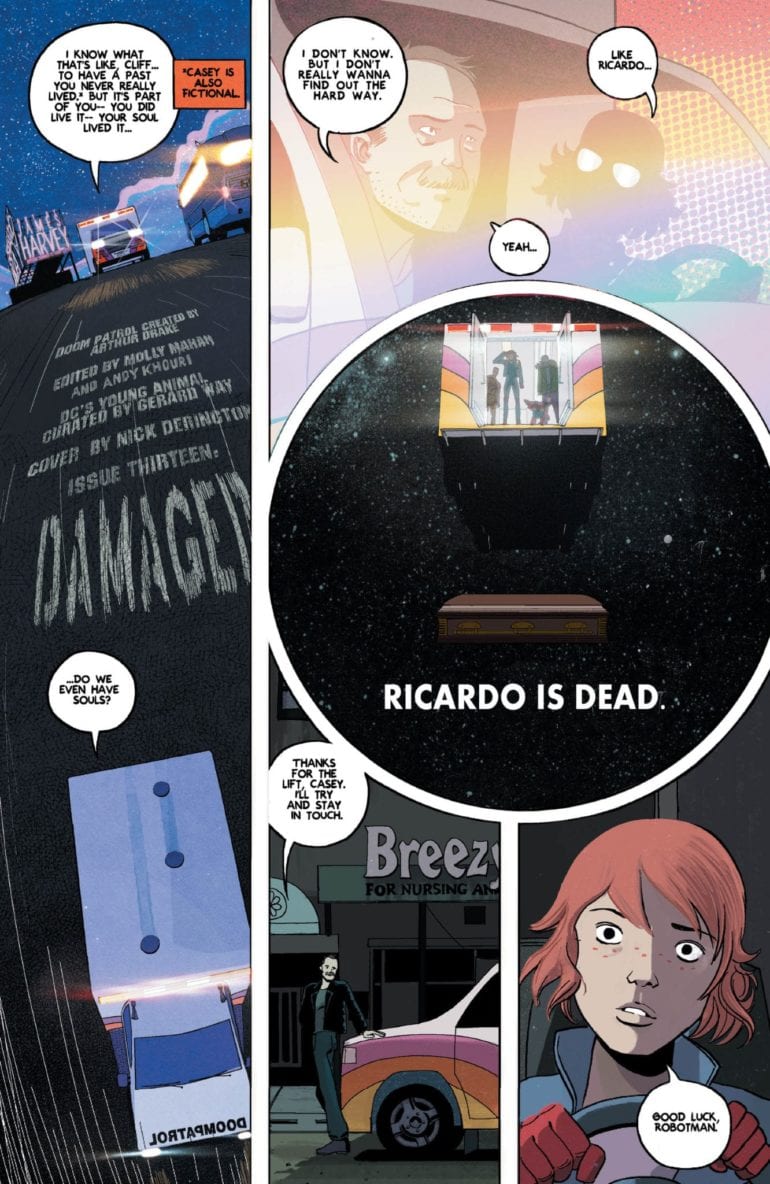
One of the few things that sadly doesn’t return is the art of Nick Derington. While his work helped bring the Doom Patrol back to popularity, James Harvey does an excellent job here. His line work makes the entire issue feel psychedelic in nature, but also leaves room for haunting moments that shakes this reader to his core. One of the most chilling pages in this book is a dream sequence with Negative Man, where we watched a terrified man die during a war. The detail in the thousand-yard stare and his death is still burnt into my memory.
The art gets even better when you take into account the fantastic colorwork from Sajan Rai. It walks this line of vibrant and subdued to make the whole thing feel like an old comic book. Mix it with the bizarre nature of Harvey’s linework, and we have a perfect look for this iteration of the Doom Patrol.
Conclusion:
The Doom Patrol is back and is still just as strangely fantastic as it always has been. The story has its action and character-driven moments, all the while maintaining its odd charm. The art captures the oddities perfectly with a variety of dark and bright imagery. It’s just a great read, and I highly recommend it.
Hal Jordan thought visiting the Tolkien-esque fantasy planet Athmoora would offer plenty of rest and relaxation. Alas, this was never to be as a monstrosity begins attacking members of the United Planets, of which Athmoora is a part. Now the newly dubbed “Sir Hal” must find a way to defeat the threat, but can this be done when his power ring won’t function properly?
Story
Green Lantern stories are usually riffled with exaggerated science fiction elements and futuristic technology. But this story bucks the trend by placing Hal right in the middle of a society who fights evil with swords and and magic, not high-tech power rings—Hal in fact is unable to use his ring reliably on the planet due to an odd interference. Some may claim this change goes against the Green Lantern mythos’ identity, but it is this break from the standard formula that ultimately keeps readers engaged with the comic line.
It would be too predictable for Morrison to send more space baddies like Controller Mu to Hal’s doorstep, so he brilliantly unleashes threats that refuse to be defined by rationality and science. This round features a confrontation with a alien who looks like Hal’s predecessor Abin Sur, as well as an interdenominational being who’s hell-bent on destroying everything in its path. Needless to say, Hal is in for a few surprises as the past and future collide.
The sheer absurdity of Hal finding “R & R” on a war-torn planet is exactly the kind of quirkiness that makes Morrison’s run on THE GREEN LANTERN shine. This unhealthy attraction to dangerous situations is what Hal is known for, and it’s exciting to see how he maneuvers his way through this situation with little more than his wits.
Art
Liam Sharp’s penciling in THE GREEN LANTERN #9 shows us how versatile of an artist he is. His ability to draw medieval characters alongside those of the sci-fi persuasion is nothing short of remarkable. This is pleasantly complemented by Steve Oliff’s earthy tones to give readers the feeling of the world’s lack of technological dependence.
Amidst these illustrations lies Tom Orzechowski’s impressive lettering placements, giving us full context of the somewhat odd battle taking place while covering up none of the action.
The Comic Covers
Sharp’s main cover features Hal taking on the Abin Sur lookalike to give readers a direct foreshadow and focus for the story. Jeff Dekal’s variant cover art places focus on the magical qualities of the issue’s setting by depicting spirit-like animals erupting from Hal’s ring.
Conclusion
THE GREEN LANTERN #9, while changing up the formula, remains true to the mythos by bringing back a character from Hal’s past. It’s great to see our favorite characters grow through new experiences while remaining tethered to impactful events from their pasts.
What did you think of the change in the comic’s story formula? Let us know in the comments below!
The X-Men had forgotten Emma Frost ever existed, but no longer. Scott and his fellow mutants go to confront his former lover in UNCANNY X-MEN #21.
***SPOILERS LIE AHEAD***
With Age Of X-Man still going on, the mutants that weren’t taken away to Nate Grey’s utopia are left in a very confusing world. With their allies and species seemingly vanished, it’s a big deal when they discover a major player like Emma Frost is still on the board.
Our subplot shows us the darker underbelly of what goes on when the X-Men are no longer around. Anti-mutant organization O.N.E. is putting a handful of mutants through horrifying experiences. Luckily they make the classic mistake of bring a wounded Wolverine behind enemy lines.
Writer Matthew Rosenberg has been doing a wonderful job pushing a story forward with only so many mutants to work with. Luckily for him (and us) he gets the cream of the crop. Rosenberg was tasked with handling the return of Cyclops and Wolverine while the rest of the X-Men leaders are off in the Age Of X-Man event.
Cylcops’ current hodgepodge uniform is mostly great, combining elements of previous costumes. There’s one problem though and it’s majorly distracting. Scott’s crotch area looks like a giant yellow diaper. Salvador Larroca is a fantastic artist doing great work, it’s just this one flaw that keeps this uniform from being truly great.
It’s great to see Larroca doing this series after his long and controversial tenure on Star Wars. Away goes the photo-reference style and out come these explosive and emotionally charged pages.
Larroca’s style is a great fit for X-Men, he’s more than capable of providing a diverse cast where everyone feels very much their own. All the powers and abilities are on display in spectacular fashion.
That one overlapping panel where the X-Men arrive and see Wolverine causing chaos is particularly glorious.
One irritating feature of this issue, and story for that matter, is how handicapped Juggernaut seems to be. When confronted with unbeatable odds and a giant foe, why isn’t Ol’ Juggs the one rushing in headfirst to dispose of these enemies? There are too many panels of him just standing idly by.
Juggernaut is finally incorporated into the action once Ilyana’s mutant ability is neutralized. Once the demon takes over, she quickly removes the Gem Of Cyttorak and disposes of Cain Marko. The sequence is extremely entertaining and beautifully illustrated.
The page of action-panel breakdowns at the end of the issue is another art highlight. Our cliffhanger ending shows Emma (with a scar from what I assume is the O.N.E. device being removed from her head) having erased the entire world’s memories of the existence of mutants altogether.
Emma Frost continues to go through and interesting development with Matthew Rosenberg behind the wheel. She’s not entirely a villain, but she’s definitely operating in a grey area rather than being straight-up heroic. Ms. Frost is playing by her own rules, which puts her and Scott’s relationship in an interesting place to go forward with.
Rosenberg has crafted a clever story with the development of Emma Frost at the heart of it. Fans had reason to worry after her last appearance at the end of IvX, but we’re now back on track.
All-in-all, Uncanny X-Men #21 is another solid issue. The only blemishes are very minor and it carries the story forward in an exciting direction. Matthew Rosenberg and Salvador Larroca deliver a perfectly palatable X-Men story focusing on heroes we’ve missed for quite some time.
Lois Lane has always been the DC Comics character who’s fallen in the shadow of her famous superhero husband. True, she’s been the focal point of countless Superman stories, but there’s never been a comic line focused exclusively on the hard-hitting investigative journalist. Fortunately, the creative minds of Greg Rucka and Mike Perkins are bringing readers a tale of truth, suspense, and cultural commentary as Lois uncovers a dangerous secret that could impact the whole world.
Story
After spending a week with her head down deep in work, Daily Planet editor Perry White informs her a colleague was found dead in Russia after criticizing the Kremlin. Stricken with anger and unbelief, Lois requests one of her journalist colleagues to “question” those responsible while she attempts to dig deeper into this scandal.
Reading this issue makes one feel like they’ve been thrust into the middle of a Watergate level investigation. In order to showcase Lois’s journalistic abilities, Rucka has her use her connections to investigate the incident. Among these includes The Question, who wastes no time extracting information from a lead. But this investigation isn’t the only thing on her mind. Back at home, Lois continues to face criticism from the public after sharing a kiss with Clark as Superman.
The story’s parallels to the United States’ current dealings with Russia and the Southern border are hard to miss. In fact, we get to see Lois criticize the administration for taking money from large corporations in exchange for children detention center contracts. It’s this ability to speak to real issues in a fictional world that makes LOIS LANE #1 one of the greats.
Art
Perkins’ pencil and ink work, working in conjunction with Paul Mounts’ coloring, sets the tone for the issue. The bold lines and various dark shades makes one feel as if they’re joining journalists Bob Woodward and Carl Bernstein as they venture into dangerous territory in pursuit of a story.
Simon Bowland’s letters add to the suspense of the issue as well, placing the word balloons in such a strategic way as to complement Lois’ probing questions, building even more suspense.
The Comic Covers
Perkins’ cover, with its dark shades and fiery Superman sigil, captures the drama behind Lois’ dangerous world of investigative reporting. Jenny Frison’s variant cover places much more of an emphasis on Lois’ status as a journalist, placing her in a suave fedora complete with leather jacket and interview pen.
Conclusion
LOIS LANE #1 is a breakout hit that promises to establish Lois’ status as one of the greatest DC Comics characters. The intelligence, strength, and pursuit of truth makes her just as much of a hero as Superman.
What did you think of Lois Lane’s first comic line? Let us know in the comments below!
Previously, on Justice League (Apex Predator – Part 1), J’onn J’onnz searches for a cloaked man that people are using as the embodiment of fear mongering across America in the aftermath of Lex Luthor’s villainous call to action. This cloaked figure turns out to be none other than Lionel Luthor back from the dead. Meanwhile, Superman, World Forger, and other League-ers attempt to recruit their Multiversal counterparts in an effort to fix the Source Wall and stop Perpetua. Finally, Hawkgirl leads the search for The Legion of Doom in the Hall of Justice.
The “Apex Predator” story and “Year of the Villain” event continues in this issue, with forgotten pasts serving as the theme throughout. The Justice League has arrived at the Monitor’s world, while J’onn J’onnz comes face to face with the newest member of the Legion of Doom, and the eponymous Apex Predator is revealed.
** Spoilers Below **
Story
Eons ago, the Monitor, the Anti-Monitor and the World Forger stopped the rise of Perpetua—but can they overcome billions of years of mistrust to work together and do it again? Plus, Lex Luthor’s offers across the DC Universe haven’t gone unnoticed—Martian Manhunter is aware of “the Offer.” And J’onn J’onnz will pay the price.
James Tynion IV continues the three threads he began in the previous issue of “Apex Predator,” letting shine some deep moments of character development as well as plot building. As mentioned above, forgotten pasts served as the interconnecting motif throughout the book. J’onn J’onnz recalls the horrors of being experimented on as a child by Lionel Luthor, all the while in a similar situation in the present at the hands of Professor Ivo. This is the strongest storyline in the issue, as Tynion has created an interesting take on the Martian Manhunter, one who is filled with rage and obsessively looking for answers.
The writing becomes a bit uneven from here on out. Tynion hurriedly throws in a quick reiteration of the various Crises the DC Multiverse experienced, and why that applies to the Monitor, as well as World Forger attempting to enlist his brother in the fight against their mother. It’s a lot of world building in four pages, and Tynion is not as poetic as Snyder has been with this amount of exposition.
Ivo reveals he has been creating the human/martian hybrid army for Perpetua, dubbed “Apex Predator” by Lionel Luthor back in the day. But J’onnz obsessive hunt for Lex is incomplete. Despite Hawkgirl’s plea, he must continue. Tynion presents a tantalizing setup for the next issue of Justice League, with a holographic Lex Luthor offering the Martian Manhunter the answers he desperately seeks.
Art
Javier Fernandez returns in “Apex Predator”with his classic, pulpy style. This time, he really delivers supreme artistry, particularly with the fluctuating appearance of J’onn J’onnz throughout the issue. We see an enraged Martian Manhunter, a younger version being split in two, an oversized version imprisoned in a Bacta Tank, and a liquid version leaping through a computer monitor. Fernandez gives J’onnz so much detail in his varying morphed and twisted appearances, you can truly feel the pain and rage that the Manhunter from Mars is experiencing.
Fernandez also crafts some intense action sequences with Martian Manhunter and Hawkgirl fighting Ivo and Amazo. His dark and grittier aesthetic really amplifies the fierce battle that ensues.
Conclusion
The story and artwork featuring Martian Manhunter is on point, but the middle pages in “Apex Predator” comes off as a bit flimsy.
What did you think of the second part of the “Apex Predator” storyline in Justice League #27? Let us know in the comments!
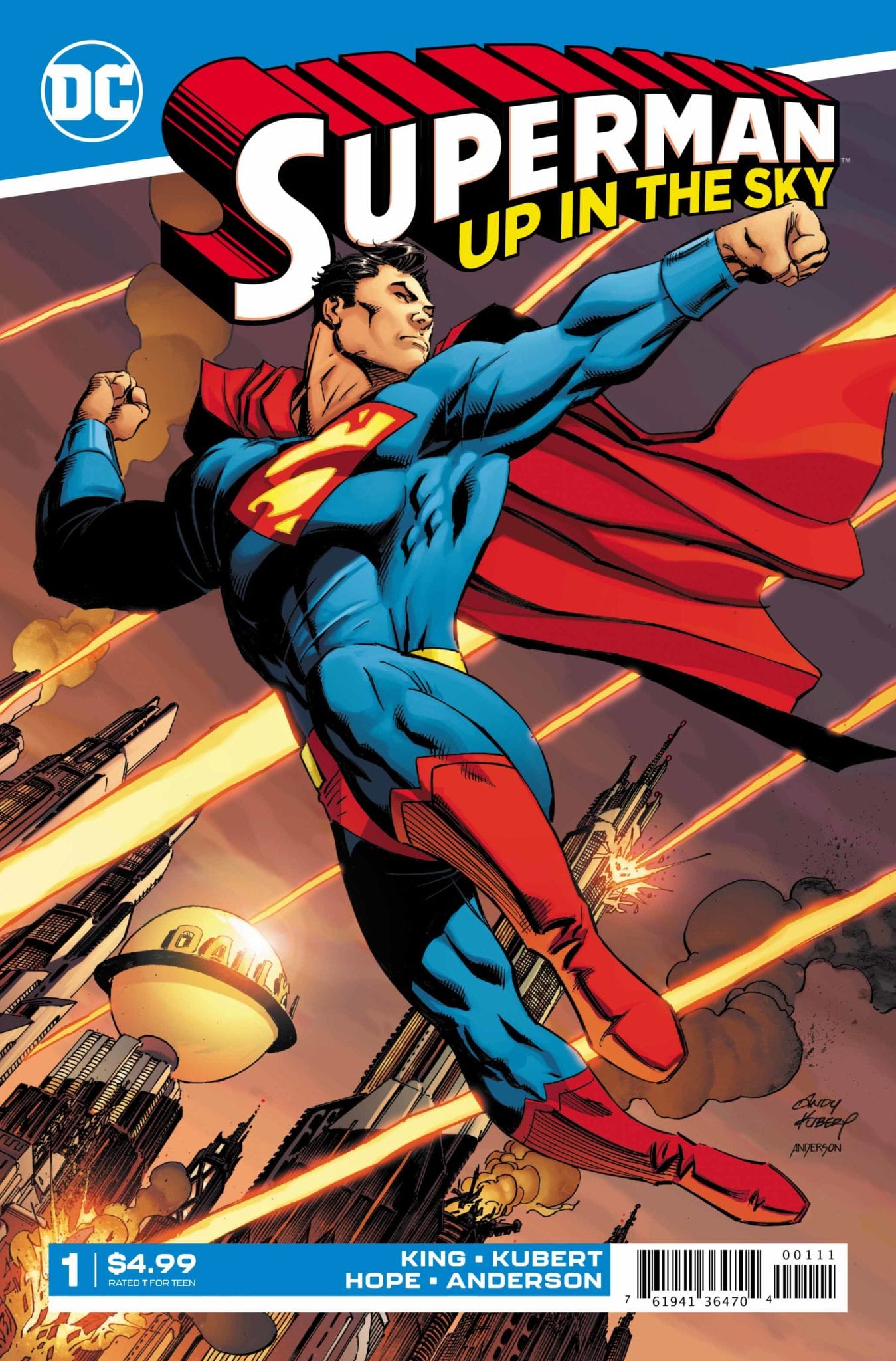
Superman: Up in the Sky #1 is the first part of a six issue miniseries, which was originally printed in the Superman Giant series hidden somewhere in your local Walmart.
** Spoilers Below **
Story
Aliens have kidnapped a young Earth girl from Metropolis, taking her off-planet. Superman goes in pursuit of them, but with each stop along the path, the mystery of who the aliens are deepens, and the Man of Steel is faced with a new task. Is he getting closer to rescuing the girl, or further away? And who is protecting Metropolis in his absence? This galaxy-spanning question poses a moral dilemma for Superman: How much is one life worth compared to the millions back on his adopted planet? How far will he go, what foes will he face, to find that answer?
In Superman: Up in the Sky #1, Tom King has gone for a ‘back to basics’ formula to telling this Man of Steel story. Readers are given a strong emphasis and why Superman is the hero we know and love. His supporting players, including Perry White, Pa Kent, and Lois Lane are also put in the spotlight to give a clear idea as to who these characters are, for any new readers.
King is known for his emotionally complex take on established characters. Sometimes they are revered (see: Vision), while others are met with division (see: Heroes in Crisis). Here we see an obsessive Superman, one who must be able to save anyone and everyone. He refuses to accept that he cannot help people individually, whilst also being the savior the entire planet needs him to be. It’s very reminiscent of Batman, who will stop at nothing until the mystery is solved. King leans heavily into the investigative journalist that Supes is supposed to be, but rarely seen.
Art
Penciller Andy Kubert brings his visceral and bold style to Superman: Up in the Sky. Much like his work in The Dark Knight III: The Master Race, there are some images of Superman in this book covered in shadow, and with heavy, vivid creasing. When he draws closeups of his characters, Kubert is a master of facial expressions, particularly that of rage. There is also some beautiful imagery of Superman saving the day time and time again. That’s not to say the artwork is flawless. Some character proportions and facial expressions are a bit uneven.
Conclusion
Tom King and Andy Kubert present a great jumping on point for new readers, as well as an interesting angle on Superman’s unquenchable need to save the day for established fans.
What did you think of Superman: Up in the Sky #1? Let us know in the comments!