Home Blog Page 372

Real Comics Shop Folk Dish On “Comic Book Guy”

It was 30 years ago this week that The Simpsons debuted as a half-hour sitcom. In those three decades, the animated TV series has hatched catchphrases like “Doh!” “Eggs-ellent,” and “Smell you later,” to name a few. But perhaps most pertinent to readers of this site is: “Worst episode ever.”

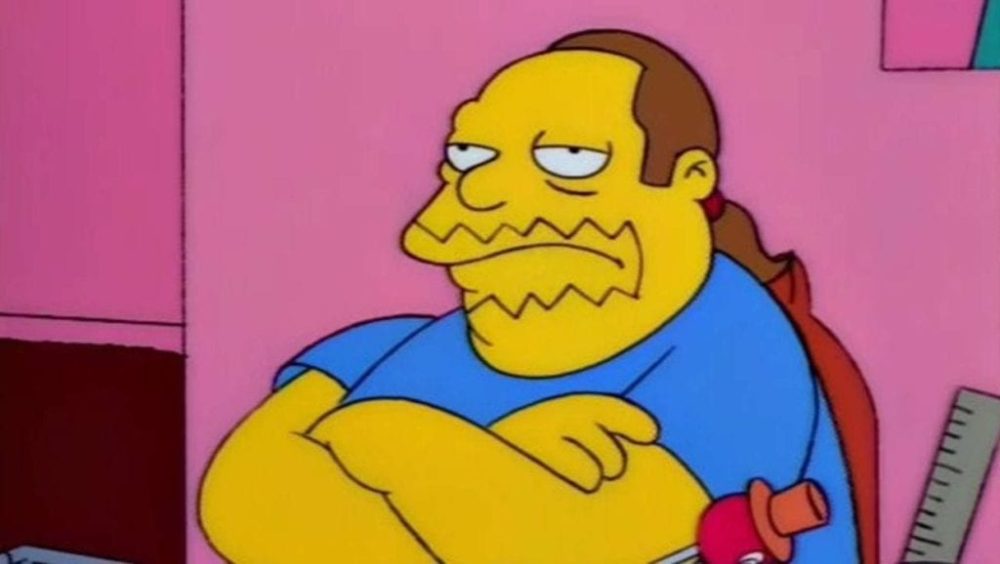
That indelible line belongs to “Comic Book Guy,” owner of Springfield’s Android Dungeon comic book store. (After more than two decades with no given name, the character revealed it, with a comically annoying lack of fanfare, as Jeff Albertson.)

Overweight, opinionated, and possessing an elephantine memory that allows him to criticize his favorite TV shows in granular detail (“In episode 2F09, when Itchy plays Scratchy’s skeleton like a xylophone, he strikes the same rib twice in succession, yet he produces two clearly different tones…”), the character represents the worst of comic-con nerdom.

As the series approached its latest milestone, I began to wonder: What do real-life comic book shop owners think about the character? He’s a gross exaggeration, right? Or is he eerily accurate? Or both? And so, making the rounds of my local comic book shops, I posed those very questions.

“That dude 100 percent exists,” said Dan Palomares, manager of Comicopia in Boston. “I’ve seen that dude, in this space.”

Frankly, I was expecting a little more hedging, but Palomares’ was one of many such unvarnished comments I heard. “Actually, it’s a pretty accurate depiction,” said one cashier (the only one of my sources who requested anonymity). The consensus was that the know-it-all-ism depicted by Albertson (as no one calls him) is indeed representative—at least of a subset of comic book fans.

In fact, I even stumbled upon the tantalizing possibility that Comic Book Guy existed, in flesh and blood, and once waddled the streets of Cambridge, Massachusetts. There, in Harvard Square, at Million Year Picnic, New England’s oldest comic book shop, owner Tony Davis explained.

“There was a guy, Hans, who worked here at one point, who claimed that he was the inspiration for Comic Book Guy,” said Davis. “Hans was a young, heavyset guy with long hair. And he would judge customers’ choices, out loud.”

There does sound a semblance. But how, in Hans’ view, did the Simpsons writers discover him? Simple. “A lot of the Harvard Lampoon guys [e.g., Conan O’Brien], who later went on to The Simpsons, used to shop here.”

Could Hans be right? Davis himself had doubts. I would have to seek the truth from a writer or producer of the show.

But before we get to that, note what Davis said about Hans “judging customers’ choices, out loud.” Confronting shoppers with a haughty attitude seems like a bad business practice, but when it comes to comic books, it’s not altogether unexpected. To be sure, none of the folks I interviewed, in the fall of 2019, had anything like that attitude, and yet somehow all felt that the character rang true. Maybe it’s because comic books inspire more passion in people—sellers and consumers—than other products.

Well, most other products. An obvious parallel came up in my conversation with that one anonymous cashier. When I asked if he had a favorite Comic Book Guy line, he said, “The classic, ‘Worst episode ever.’ That just distills that nerdy putting everything down even though you love it. It’s something you love, but you just feel compelled to crap on it. It’s making people feel bad for what they’re into.”

As soon as he said this, I thought of Jack Black’s hyper-critical, more-knowledgeable-than-thou record shop clerk in High Fidelity.

“Yes,” Anonymous agreed. “It’s levels of gate-keeping, ‘Keep out of my subculture.’ Trying to make it seem too complex to outsiders. I don’t get that mindset. I’m excited if I get to clue someone into something cool.”

Funnily enough, Jack Black later appeared (or his voice did) on The Simpsons as the rather friendly, welcoming owner of a rival, hipster comic book store, across the street from the Android Dungeon. Jesse Farrell, manager of Hub Comics in Somerville, clued me into this episode I’d missed. (Season 19, episode 7, if you’re keeping track. It included this priceless tidbit: Milhouse asking Alan Moore to sign a copy of Watchmen Babies in V for Vacation.)

“I think we’re more like that store,” Hub’s Farrell said. “It was a correct, up-to-date stereotype.”

Still, Farrell feels that Comic Book Guy is accurate—and exaggerated. “It’s both,” he said. “It’s a loving stereotype.”

“I experienced this moment of comic book shop solidarity,” Farrell related. “I was at New England Comics in Brookline, and on the TV, a ‘Treehouse of Horror’ [Halloween] episode was on. There’s a part where Comic Book Guy is walking down the street, reading an issue of Aquaman and saying, ‘But Aquaman, you cannot marry a woman without gills. You’re from two different worlds!’ And then he sees a nuclear missile heading his way and says, ‘Oohh, I’ve wasted my life.’

“The entire store just burst out laughing,” Farrell said. “It was an amazing moment of unity.” (Comicopia’s Palomares, too, said this line was one of his favorites.)

Speaking of unity, across town at the aforementioned New England Comics in Brookline, Riley Villiers—the youngest, and the only female staffer who happened to be behind the register at any of the handful of stores I visited on my unscientific expedition—had the most encouraging news.

Compared to when Comic Book Guy was created in The Simpsons’ early days, “there’s not the same kind of consumers or gatekeepers anymore,” Villiers said. “The audience has broadened, and we don’t have the same kind of gatekeepers in the industry—as in, the people higher up. It used to be exclusively for boys, but now I think the publishers do a better job of making comic books inclusive for all genders and other backgrounds.”

Okay, the suspense has gone on long enough. What about Hans and Harvard Square? I got in touch with Mike Reiss, a Harvard Lampoon alum who was one of the first writers, and later a producer, of The Simpsons. (Highly recommended for comedy fans: Reiss’ memoir, Springfield Confidential.) My question: was Hans the inspiration?

“Comic Book Guy was simply an archetype,” said Reiss. “When I go to Comic Cons, the crowd looks like it’s 15 percent Comic Book Guys. People have speculated that the voice is imitating animator Ralph Bakshi, but it was purely an invention of Hank Azaria. We figured he’d be a one-shot character, which is why we didn’t even give him a name.

“There’s no Harvard connection,” Reiss added. “Interestingly, long after we’d created the character, I met his double working in a comic book store 100 yards from our Simpsons offices.”

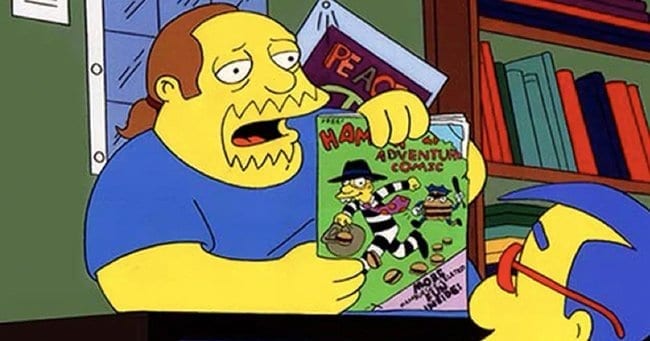
Have you met a real-life Comic Book Guy? Or do you have a favorite line of his? Post it in the comments below. (Here’s mine: “This is a rare photo of Sean Connery signed by Roger Moore. It is worth $150.”)
“The answer is ‘fries.'”
Monkeys Fighting Robots Youtube

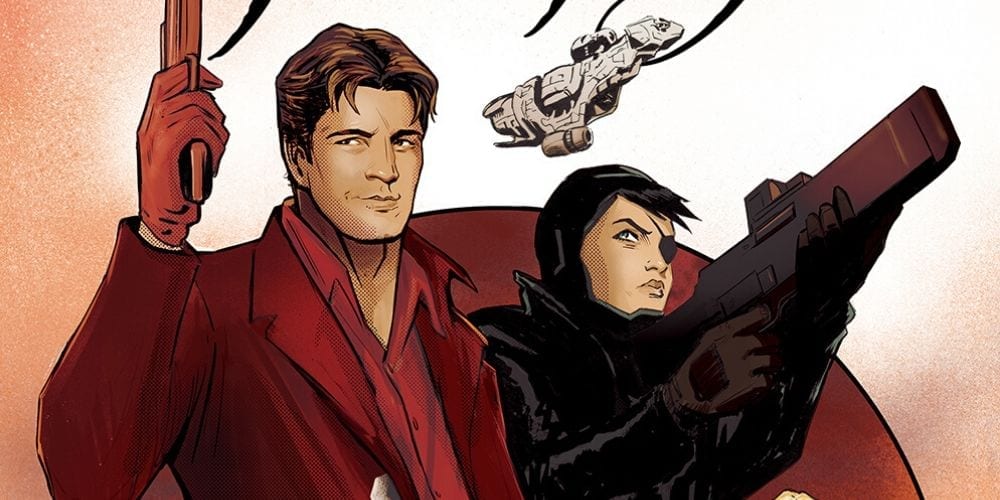
The End of Another War in FIREFLY #12

FIREFLY #12, out this Wednesday from Boom! Studios, concludes the end to the most recent war that Mal and crew have found themselves a part of. It’s a chaotic mess, full of loyalties and politics.

What a classic Firefly cover!

***SPOILER WARNING***

It’s been so heartwarming to see the series that Joss Whedon created continue on in comic book form. The crew of Serenity have been getting themselves into one mess or another in the comics for years. But none of the messes can really compare to what Mal just faced.

Firefly #12 is an issue that the series has been building towards for quite some time. Each member of the crew has had the opportunity to create their own allies in this plot. And that all ends up being vital in how this war ends.

Mal is looking just a little bit smug on this alternate cover of Firefly #12.

If you haven’t been following the series up until this point, you might be asking yourself ‘what war?’ And the answer is a very simple one. What war have Mal and Zoe been fighting this whole time? For while we say the war is over, it never does truly end.

One thing that might be slightly confusing is trying to figure out at which point in time this series is currently set. We know that it must occur after the events of the show itself, but it also much be before the movie itself (being that several characters did not survive that series of events). That’s a fairly limited window. And it’s been growing ever smaller, with each and every reboot of the series.

This alternate cover for Firefly #12 is arguably one of the best so far.

The Plot

Firefly #12 concludes several plots that have been running through this series for quite some time. Grek Pak did an excellent job of wrapping up most of the loose ends – while leaving fans with some lingering questions.

Given the theme leading up to this point – that the war never really ends – we are left wondering if this is really the conclusion to the plot. Or if this all explains the rising tensions that can be found during the events of Serenity (or something else).

Admittedly, some of the elements in this wrap up felt a little bit too…convenient. The sort that are clearly designed for the purposes of drama. And while that in itself isn’t a bad thing, it doesn’t feel quite like the Firefly we know and love. On the bright side, it does set up for the next plot, which is something.

The men of Serenity all with their iconic looks on this variant cover.

The Art

Firefly #12 is an issue full of drama and action. And it’s the action in this issue that’s really the highlight. Showing off fight scenes when characters are within ships and on the ground can be difficult, but the artistic team did a solid job of it here.

They also showed just how dangerous this battle could have been – and the costs that each side would have experienced had something not been done about it. That is so much easier said than done, so this fact really deserves a lot of credit.

Dan McDaid (pencils/inks), Marcelo Costa (colors), and Jim Campbell (letters) did an excellent job working together for this project. While some artistic license was taken for how the characters were designed, they all resembled the characters we have come to love. And there are a few scenes especially worth note (such as the one where Jayne had to duck and run).

An so we’re on the verge of a war, all over again.

In Conclusion

While Firefly #12 concludes this plot, there is still so much left to this story. Not only are we already set up to dive right into another plot, but many subplots have yet to be resolved. And that means we’re not done reading about our favorite crew. Only time will tell how bad the next mess is going to be.

Monkeys Fighting Robots Youtube

Trees and Mysteries in LUMBERJANES #69

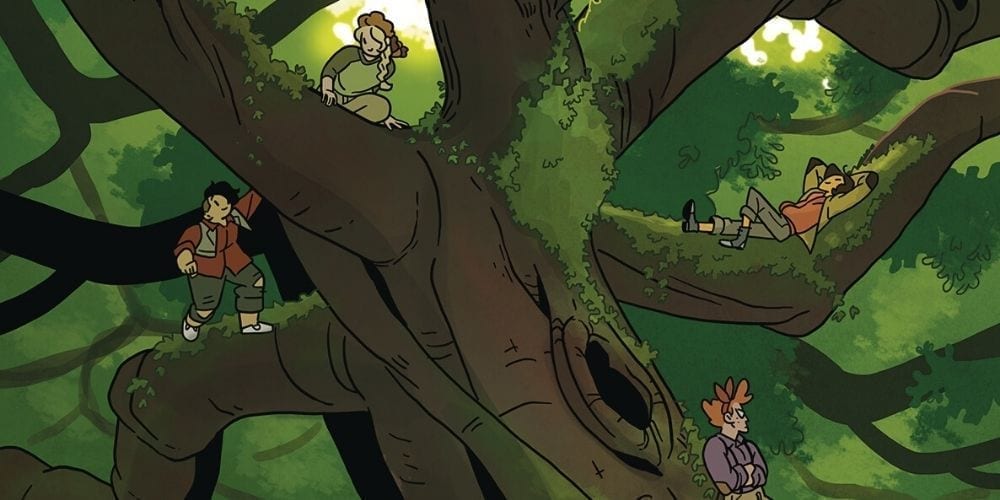
LUMBERJANES #69, out this Wednesday from Boom! Box brings our Lumberjanes to a classic moment in their series: they are finally to learn how to cut down a tree, properly. Fans will enjoy the irony of that situation, while being fascinated with the mystery forming.

All of the Roanoke cabin can fit on this massive tree!

***SPIOLER WARNING***

Lumberjanes #69 is the start of a whole new plot for our endearing Lumberjanes. Having just witnessed a battle between two goddesses, you’d think they’d want a bit of a cool down. But apparently bored Lumberjanes = troublesome Lumberjanes.

This alternate cover of Lumberjanes #69 hints at the past.

The Plot

Lumberjanes #69 is an issue set in two different timelines. One is set firmly in the past, telling the story of past Lumberjanes. While the other is the tale of the Roanoke cabin we’ve come to love so much. Oh, and did we mention that the Lumberjanes are finally (finally!) learning how to cut down trees; hard to believe that hasn’t happened before now, given their namesake.

Shannon Watters and Kat Leyh have done it again. They’ve woven together a deceptively simple plot, one that will bring the Lumberjanes up again something new and intriguing. That inevitably means that they’ll be getting into some sort of trouble. But considering this whole plot started with them being punished for misbehaving (read: carving their names into a tree), that was probably to be expected.

The element of the two timelines was an especially nice touch. It hinted at an adventure yet to come for our campers, while also raising our curiosity about the campers of the past. The balance between the past and present has always been carefully honed in this series, with the line becoming thinner in plots such as these.

Along with being a plot filled with mystery, this issue had a few fun pieces of information as well. Or at least, it’s fun if you’re the type hoping to learn more about trees. This little tidbit did make Molly come off even more endearing than ever, which didn’t feel possible before now.

What a dramatic tone for the start of this new plot.

The Art

Lumberjanes #69 was a bright and colorful issue, with the campers trekking out into the woods to learn the fine skill of cutting down trees. Or rather, the timeline set in the present is all bright and colorful.

The timeline of the past is, very appropriately, colored in sepia tones. It made a clear distinction between the past and the present, while also hinting at how far past these events really were. In short, it was all perfectly handled.

Kanesha C. Bryant and Julia Madrigal were the lead artists for this issue, and they’re the ones responsible for the dynamic scenes, as well as the growing sense of mystery in this issue. Meanwhile,

Maarta Laiho is the one behind the color palette we already discussed. And finally, Aubrey Aiese was the letterer for this issue – and their sound effects were sublime.

Apparently sneaking off in the night is a Lumberjane tradition.

In Conclusion

Lumberjanes #69 was a brilliant start to a new plot arc, proving that this series is far from over. And thank goodness for that fact. The intrigue and air of mystery were exceptionally handled in this issue, making readers eager to see what will happen next.

Monkeys Fighting Robots Youtube

Trials of the J Team in RUNAWAYS #28

RUNAWAYS #28, out this Wednesday from Marvel Comics, brings us the Runaways like we’ve never seen them before. The crew have settled in well to this new team, all but one. Yet we can’t help but feel like something is about to go horribly wrong.

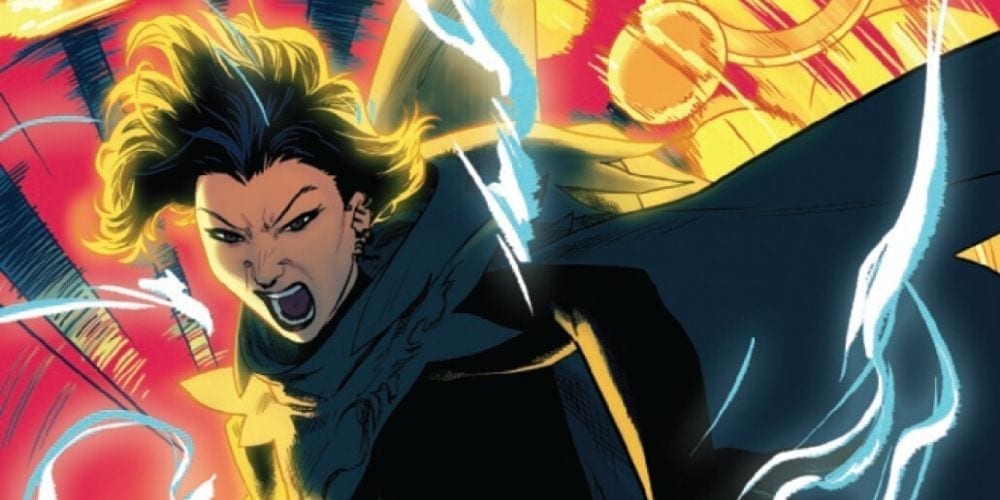
The cover for Runaways #28 is truly brilliant, with Nico looking as fierce as ever.

***SPOILER WARNING***

The Runaways have found themselves in a mansion, welcomed with open arms by a hero known as Doc Justice. He asks nothing of them…though they have been encouraged to join his superhero team.

Seeing the Runaways being run by a whole new leader – one who happens to be an adult – is one of the strangest experiences yet. Given the common themes of the series up until this point, fans can only expect the worst for what will happen next.

Early morning training session!

The Plot

Runaways #28 is an issue that drastically moves forward the Doc Justice plot – but in a way where only the fans can really see what is happening. Well, the fans and Gert. But then again, she’s been suspicious this whole time. Good girl!

Rainbow Rowell has woven us a tale here, in which the hero is nothing like he seems. It’s once again falling back on the themes that the Runaways can’t always trust the adults around them, and when you think about it, that’s when the series really shines. No wonder this plot has been getting our attention so much.

It’s probably safe to assume that after this issue, any people who were still hoping for the best from Doc Justice will have given up. He’s that perfect sort of slimy, where he’s all cute and nice to your face – but in truth is thinking the worst of you. And really, that’s the one type of antagonist the Runaways are never prepared to face.

This whole plot has been decidedly insidious for that reason. It shows how brilliant Rowell is at writing subtle and slow building plots. Considering we have no idea how this plot arc is going to end up going, that couldn’t be more true. Though there’s little doubt that this plot will end explosively – one way or the other.

Along with the buildup of Doc Justice’s plot are several subplots. And it’s the Gert subplot that is perhaps the most heartbreaking one of the series so far. The dramatic event in this issue was completely unexpected – and the last thing Gert needed to have to deal with at this point. But it is proof that the Runaways are far from healed.

That’s actually not a bad play, all things considered.

The Art

Runaways #28 was an issue with several dynamic scenes. There are several highlights of this issue, between the expressions and events that occurred. The plot itself wouldn’t have held nearly so much weight, if not supported by such artwork.

Andres Genolet was the lead art for Runways #28, with Dee Cunniffe providing the colors, and VC’s Joe Caramagna doing the lettering. Together they showed us a version of the Runaways that are being split apart. Not by a villain, but by a slimy hero of all things.

The costume redesigns are still stunning, though the edge they’ve taken is even more alarming than ever. Though perhaps that’s because of the images that are clearly being featured in newspapers and magazines – it feels a whole lot like exploitation.

Nico has been feeling for a long time like she couldn’t (wouldn’t) rely on her magic.

In Conclusion

Runaways #28 was a surprising issue on more than one count, all while finally showing us the true colors of a hero we were never inclined to trust. You’d think that’d be more satisfying than it was, but Gert’s hurt colored the whole issue with somber tones.

Despite (or in spite) of all of this, we’re very much looking forward to seeing how the whole Doc Justice plot ends up playing out, in the long run.

Monkeys Fighting Robots Youtube

Another Goodbye in GWENPOOL STRIKES BACK #5

GWENPOOL STRIKES BACK #5, out this Wednesday from Marvel Comics, is an issue that once again forces fans to say goodbye to one of their favorite characters. Gwenpool’s series is once again coming to an end, and it is a bittersweet moment.

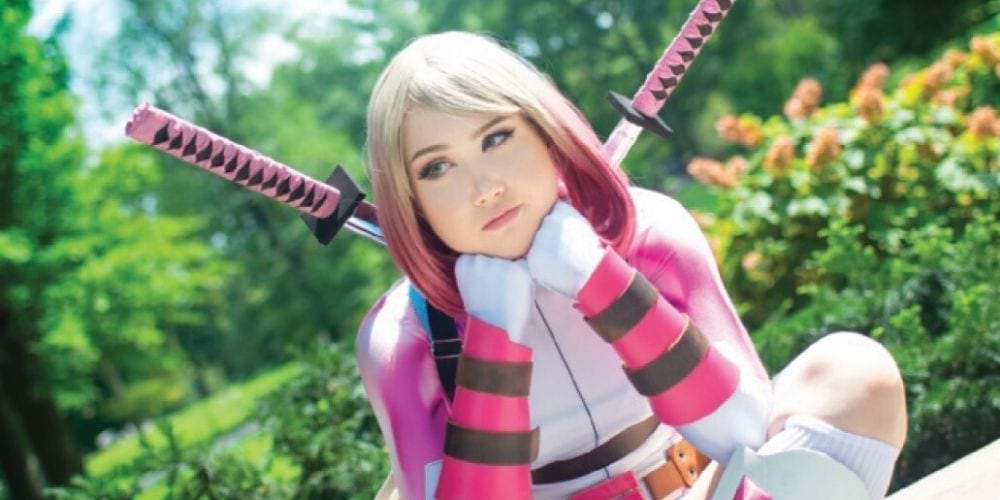
Believe it or not, this is a fan cosplaying Gwenpool on the cover!

***SPOILER WARNING***

Gwenpool Strikes Back was a fun and crazy series for the fans to jump into and enjoy. It was a blast seeing Gwen create so much chaos, pulling in icons from all over the Marvel Universe. All while showing off Gwen’s abilities and tendency to break the fourth-wall.

Along with providing us many opportunities for laughs, this series opened up a chance to talk about the elephant in the room: comic book sales. It’s so easy to forget that sales make a sense. But that’s a fact that Gwen made readers painfully aware of, all while she was questing to keep her series (and thus, herself) alive.

All Gwen wants to do is fight Kamala, but that doesn’t seem to be happening.

The Plot

Gwenpool Strikes Back #5 concludes this fun and dynamic series, and there’s no doubt that it is full of bittersweet moments. Much like the last time Gwen had to conclude her series, she’s very much aware of the ending. And that gives her a unique opportunity to say goodbye. That is something that makes for laughter and tears.

Leah Williams did a delightful job of blending humor and bittersweet elements in this issue. It all starts out with fun and laughs – like one would expect. But then it gets alarming heavy and dark in no time. In a way, this intensity is something the fans deserved. It’s certainly the sort of tale that Gwenpool herself has earned, what with her quest to become something important to her readers. That opened the door to something…more.

There’s so much to love about this issue, especially for the die hard fans in the audience. Yes, there were also a lot of changes (which Gwen herself directly addresses), but those changes leave us with hope. And that’s something we should hold onto with both hands.

While it would be so easy to just talk about the whole issue, we can’t do that. So instead, here are the highlights: there are several laugh out loud moments. The sort where you’ll get funny looks if you’re reading this in public, so do consider yourself warned.

The conclusion itself is full of feels, of the bittersweet variety. Gwen has made something for herself here, thanks in part to the changes made. It felt like every author of Gwen’s (Christopher Hastings, Kelly Thompson, and Williams) lent a hand in creating this conclusion. And that made it feel right.

Sloppy right hook! Our new favorite sound effect.

The Art

Naturally, with Gwenpool Strikes Back #5 being the conclusion to the series, we had high expectations for the artwork itself. It did not disappoint. The funny scenes would not have been the same, if not for the artwork showcasing them.

Likewise, Gwen’s goodbye felt right, thanks to the artstyle provided here. The sticky note scenes was an especially nice touch, for a variety of reasons. David Baldeon was the lead artist for this issue, and thus the reason behind much of the tone for it all. And he did an excellent job. Gwen’s expressions were one of the major highlights in this issue, as you’ll clearly see when you get towards the end.

Jesus Aburtov and Guru-eFX were in charge of the colors, and they were perfection. The color palette on the whole was fairly bright and cheerful, which is more or less what we’ve come to expect from Gwen’s series. However, they were also not afraid to make use of the white spaces on the page, which is both brilliant and ironic, given Gwen’s abilities.

VC’s Joe Caramagna did the lettering, and as per usual he did an excellent job. And that just leaves one more thing of note: the cover. You may have noticed that it’s a bit different than normal. That’s because this is an actual cosplay – done by a fan. It’s really cool to see the fandom getting a hat tip here, in the end of the series.

It can be a bit hard to fight Kamala when she’s not interested, huh?

In Conclusion

Gwenpool Strikes Back #5 was a powerful and moving ending. It’s the ending that Gwenpool herself deserved, alongside all of her fans. Hopefully this won’t be our final goodbye to this amazing character. But if it is, we’re almost okay with it, thanks to these events. Almost.

Monkeys Fighting Robots Youtube

Review: MIDDLEWEST #13—When Hard Work Hurts

MIDDLEWEST #13 cover art

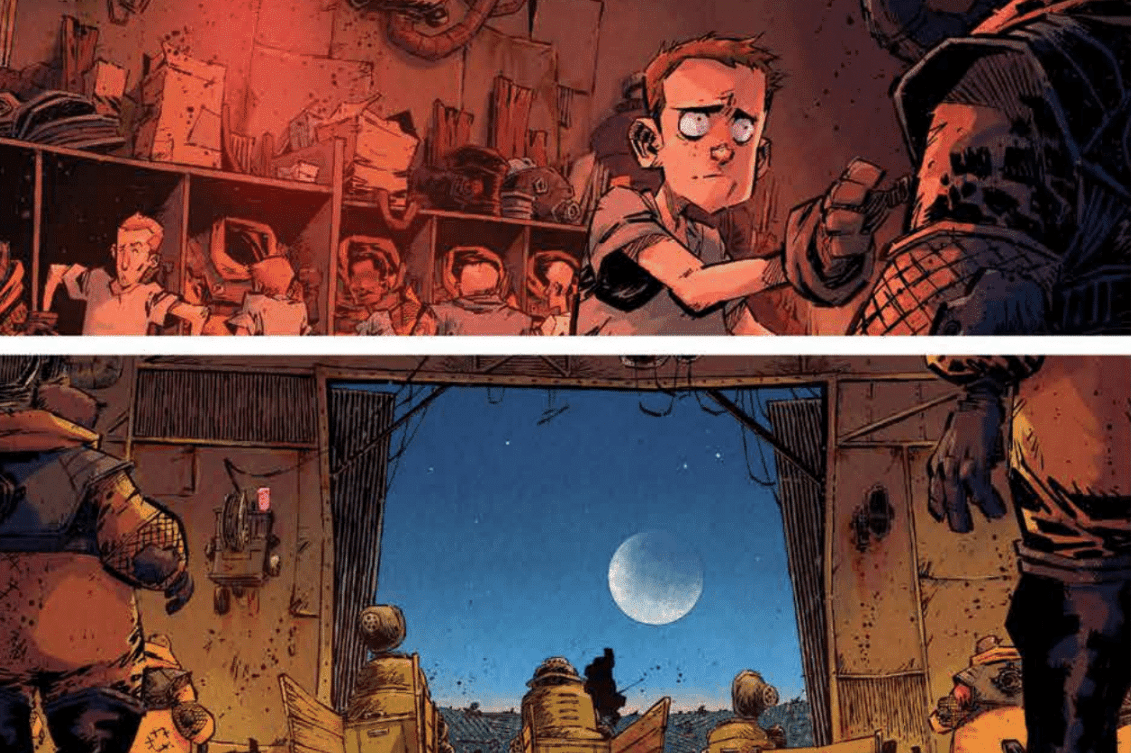
MIDDLEWEST #13 hits comic book stores on Wednesday, December 18th, and it’s unlike any issue that’s come before. Gone are the days of fantastical beasts and wild adventures (at least for the moment); all that lies ahead for Abel and Bobby is a life of enslavement on Raider’s ethol farm. Is there any hope for escape?

Story

The story immediately takes the reader to Abel’s past and highlights his home life before his mother left. We witness a time in which his father was kind and supportive, even to the point of encouraging him in his paper route. Even on the difficult days, he reminds Abel that “a little hard work never hurt anyone.”

Abel's working hard on his paper route

Flash forward an unknown period of time and we witness a terrible fight break out between Abel’s father and mother, which traumatizes the young boy. His mother leaves shortly after and readers see his father’s abusive tendencies erupt in full force. The seemingly benign messages he gave encouraging Abel to work hard morph into a toxic ideology that affects Abel throughout his experience on Raider Farms.

“A little hard work never hurt anyone”—this is the motto by which Raider and his cronies force their child slaves to perform work for them. This experience also brings back so many painful memories from his father, leaving Abel with no will left to fight back.

Abel working on Raider's farm

Writer Skottie Young highlights the horrors of our own reality through the fictional lives of Abel, Bobby, and the rest of the children held against their will on Raider’s farm. In them we see children with their own desires, fears, and ways of dealing with a system that effectively strips them of their humanity. Fortunately, Maggie, Jebediah, and Fox have honed in on their location and are ready to mobilize their community of other nomads affected by harsh systems within the world.

Artwork

Jorge Corona’s penciling and ink work, Jean-Francois Beaulieus coloring, and Nate Piekos of Blambot’s lettering work well together throughout this issue. We see their unique elements come together to craft a realistic child trafficking setting that’s genuinely unsettling. Seeing depictions of children slaving over farms in the heat of the day, complete with an assortment of dark grays and browns of smoke clouds, evokes sorrow and rage. And what’s particularly effective is the use of small lettering sizes to represent the children whispering about their predicament, showing us just how low the evil men have brought their slaves beneath them.

Comic Cover

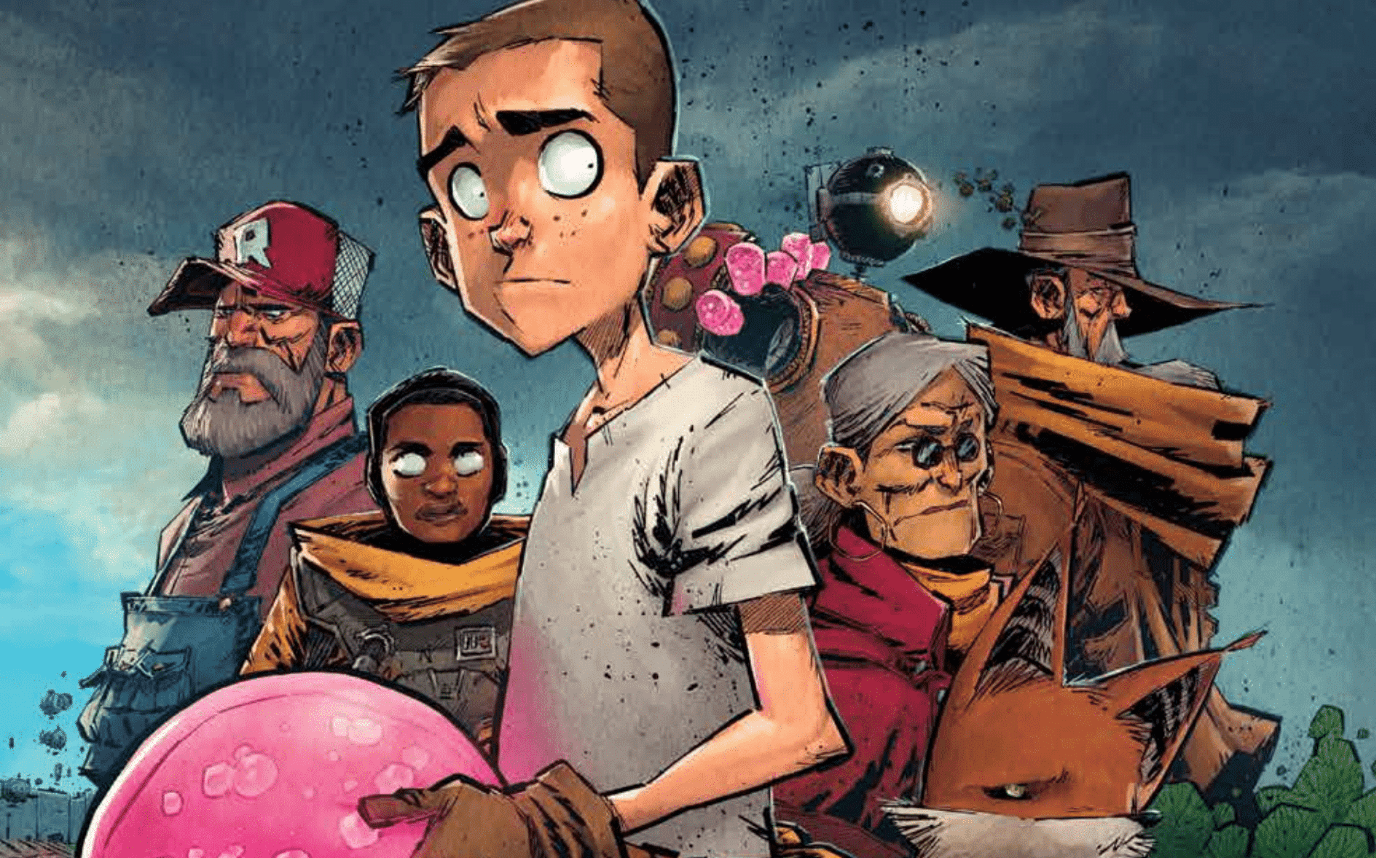
Corona’s cover artwork places the spotlight on the series’ main characters and shows each in their unique conditions. We feel Abel’s sorrow as he’s harvesting ethol plants, and we rage against Raider as he stares out across his farm.

Conclusion

MIDDLEWEST #13 is call to action for Maggie, Jebediah, Fox, and the rest of the community. Too long they have let personal squabbles prevent them from working together; the kidnapping of Abel and Bobby was the perfect catalyst to spur them into action.

What did you think of the farm work the kids were forced to perform? Let us know in the comments below!

Monkeys Fighting Robots Youtube

Review: AQUAMAN #55—Fueled By Hate, Or Love?

AQUAMAN #55 main cover art

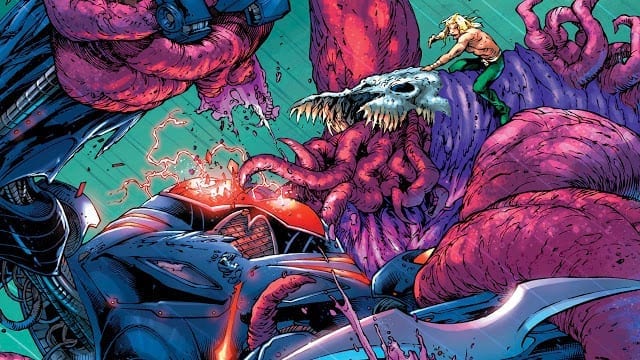
Aquaman and his archenemy, Black Manta have hated each other ever since that fateful day in which our hero accidentally caused the death of the villain’s father. But in this particular conflict, Manta has used his rage to craft a mechanized robot armor powered by his father’s memories mapped onto an A.I. At the same time, one of the monsters brought to life through his mystical powers grows stronger as the two rivals rage against one another. Will everyone lose in this deathmatch, or will someone stand up against hate?

The rubber finally hits the road when AQUAMAN #55 hits comic book stores on Wednesday, December 18th.

Story

With a virtually impenetrable mech suit under his (seemingly) complete control, Manta appears to have the upper hand on Aquaman. But the aquatic hero isn’t alone. Miles away, Queen Mera uses her aquakinesis powers to generate an enormous water version of herself to even the playing field.

Unfortunately, the strain on her increases exponentially due to the distance and Manta’s might, but Aqualad musters up the courage to use his powers alongside hers’, infusing the “water Mera” with volts of electricity.

Writer Kelly Sue DeConnick uses this next moment brilliantly by having Arthur appeal Manta’s humanity. His heartfelt plea to save “David,” though sincere, adds fuel to the villain’s fiery rage, which adds strength to Tristan Maurer’s monster. The chaos leaves little room for hope.

But what everyone fails to realize is Manta’s father’ A.I. slowly remembering its former life, the lessons in honor taught to his son. This robot, which appears to be more human than Manta himself, remembers the love for his son and disavows the hate fueling this conflict.

Each character in this story wrestles with their emotions in a way that makes one often forget they’re reading a comic book. And the conclusion is sure to leave readers on the edge of their seats.

Artwork

This issue’s artwork reminds one of a stormy sea: chaotic, fast-paced, and filled with surprises. Robson Rocha’s penciling and Daniel Henriques’s ink work provide fully,fleshed out details on both ‘s monster and Manta’s mech tech. Sunny Gho’s coloring fills these out with a myriad of bright and dark colors to represent the dichotomies between organic life and supposed soulless technology.

Clayton Cowles’ lettering is a treat as well; we see a shift in the dialogue balloon for Mera’s water creation in which the background is aqua and the lines are loose and free-flowing like waves.

Comic Covers

Main Cover

Rocha, Jason Paz, and Alex Sinclair’s main cover features Aquaman and Maurer’s monster fighting a brutal battle against Manta and his A.I. father.

Variant Cover

Gho and Chris Stevens’ variant cover depicts Aquaman in his throne under the sea, commanding the creatures that live there. One of these appears to be a tentacle of Maurer’s monster, showing us just how much power the hero wields.

Conclusion

AQUAMAN #55 brings the thrilling fight between Aquaman and Manta to an end, but the conclusion isn’t what readers would assume. This tale provides high levels of insight into these characters we’ve grown to love.

Do you think Manta’s father acted according to his established character? Let us know in the comments below!

Monkeys Fighting Robots Youtube

SKULLDIGGER & SKELETON BOY #1 – A Deadly Vigilante In Spiral City

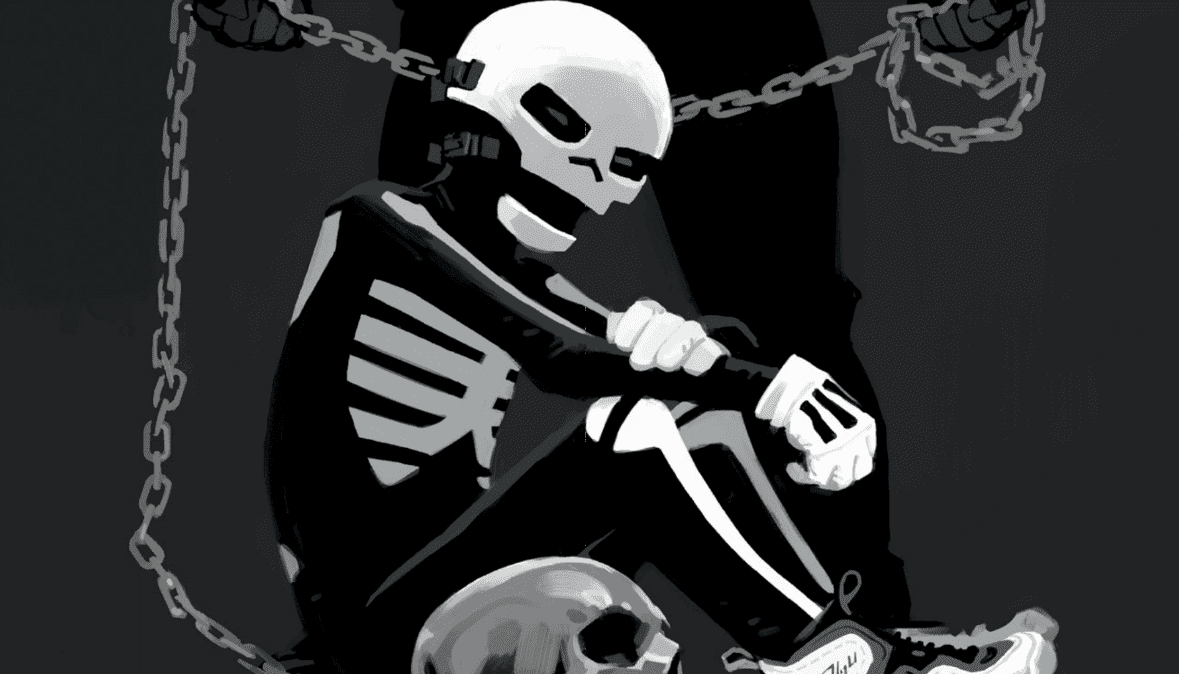
Jeff Lemire introduces us to the violent vigilante of Spiral City, in Skulldigger & Skeleton Boy #1 from Dark Horse Comics.

Black Hammer takes golden age and silver age heroes and gives them a darker and more tragic twist. We’ve seen counterparts for Thor, Shazam, Dr. Strange, Captain America, and with Skulldigger & Skeleton Boy we are treated to the Batman & Robin of Spiral City.

Skulldigger Cover A

What I love so much about Black Hammer is how so much goes wrong. The origin stories from this universe are familiar except they portray a more human aspect to crime fighting. Let’s be honest here; not everything goes according to plan. Jeff Lemire explores what would happen if the heroes didn’t make all the right choices, if their powers brought them a terrible curse, or if they couldn’t handle the responsibilities asked of them.

I figured Black Hammer didn’t have a Batman analog because it would be pretty difficult to come up with something more dark and depressing than Batman’s origin, but I have underestimated Lemire once again. Skulldigger & Skeleton Boy is an age old story with a brand new twist.

Lemire Variant

The Creative Team

Along with Lemire we have Tonci Zonjic for the artwork, Dave Stewart for the colors, and Steve Wands using his magic on the letters.

Zonjic brings a different style to the world of Black Hammer, but it fits seamlessly into the universe. None of the stories rely on realism in the artwork, and Skulldigger & Skeleton Boy looks like the original Black Hammer back at the farm. I can’t wait to see how Skulldigger connects to Golden Gail and the others.

Dave Stewart is the busiest man in comics. Transitioning from bold, bright, and beautiful like Silver Surfer: Black to the dark, dreary, a destitute world of Black Hammer, he doesn’t skip a beat. What can I say about his work that hasn’t been said before? Most likely nothing. If you want amazing colors from a man that can do it all, you come to Stewart.

Steve Wands is a frequent collaborator with Lemire. He knows exactly what the story needs and how to blend into the artwork perfectly. Legibility is key. I get most of my reading done after long days staring at words on a computer screen. The last thing I want, when reading a book for enjoyment, is to have to strain or squint at the page. This is never an issue with Wands and his cinematic effects always feel like a part of the story.

Story

Black Hammer is known to show the most depressing parts of being a superhero, and explores all the darkness that other superhero books avoid at all costs. I’m excited to find out about Grim Jim and the crimes he has committed. As the analog for the Joker, there promises to be a pretty lengthy and heinous list of atrocities.

Skulldigger Deodato Variant

When you take the law into your own hands and become judge, jury, and executioner, the line of good and evil starts to blur. It is not obvious who is the hero of this story, and after the reveal at the end of this first issue, we learn we’re in for a Jason Todd-esque relationship between Skulldigger and Skeleton Boy.

Fans of Batman and the Punisher will surely find something to like about Skulldigger. This universe is absolutely sad and wonderfully thrilling all at the same time. Skulldigger & Skeleton Boy looks like it is on track to fall in line with the other amazing titles that Lemire has treated us with. If you haven’t read Black Hammer and all of the tie-ins, what are you waiting for?It is a truly phenomenal story and you won’t regret a single panel of it.

Are you looking forward to the newest entry from the Black Hammerverse? Who is your favorite character? Let us know in the comments below.


Monkeys Fighting Robots Youtube

Review: INVISIBLE KINGDOM #8 Where Drama And Beauty Go Hand In Hand

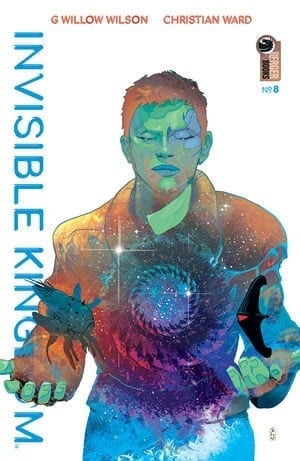
Invisible Kingdom #8
Invisible Kingdom #8 Credit: Dark Horse Comics

Blasting into the world this week is the new issue of Invisible Kingdom from Dark Horse imprint, Berger Books. This comic from G. Willow Wilson and Christian Ward is an exciting space adventure with beautiful imagery. If you haven’t checked this series out yet, this latest issue is accessible and once on-board, you’ll want to stay.

Invisible Kingdom #8 Cover
Invisible Kingdom #8 Credit: Dark Horse Comics

Familiar Narrative 

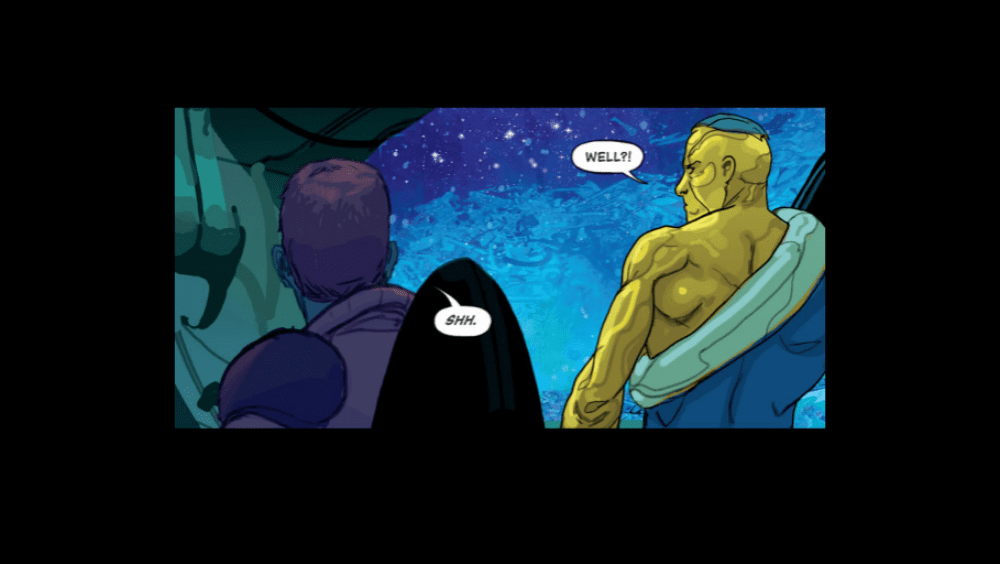
While playing both sides, Captain Grix risks everything to get her ship back and escape the space pirates. However, her reputation has preceded her and now her plans are beginning to unravel. What chance does the crew of the Sundog have with enemies on both sides?

Whereas the first arc was all about world building with elaborate planetary systems and a host of different species mixing on the page, in this second arc G. Willow Wilson has scaled that world right back. The crew of the Sundog have become trapped on a spaceship surrounded by space junk and they have nowhere to go.

Although this narrative limits the vast expanse of Space that made the previous arc so exhilarating it does allow Wilson to focus much deeper on the characters. This issue, for example, is primarily a character breakdown of Captain Grix. The situations she faces and her interactions with the different factions within the narrative illustrates her personality in all its guises.  She is a Captain, a mother, a thief, and a desperate woman just trying to survive. She makes a number of different plays and doesn’t win them all.

This character dissection is a wonderful read. It pulls the reader into the comic way beyond the surface appreciation of the art and, in turn, creates intense drama. The story itself isn’t groundbreaking, especially for this type of science fiction where it draws from classic western motifs, but the detailed character work ups the ante. The reader is invested in Grix and her crew to the point where each twist in the story heightens the tension. This comic slowly pulls you to the edge of you seat.

The pace at which the narrative unfolds is perfectly pitched with the first two thirds of the comic building the drama, setting all the pieces in place before a turn in fortunes changes the tempo. Links to the Western start to pile up with an interesting take on The Good, The Bad, and the Ugly in the setup of the final act. 

Invisible Kingdom #8
Invisible Kingdom #8 Credit: Dark Horse Comics

Creative Visuals

It almost goes without saying at this point that Christian Ward’s art work is outstanding. If you have read any previous issues of Invisible Kingdom then you know exactly what to expect from the visuals. If you have somehow missed issues 1 to 7 then you’re in for a treat. 

Ward creates emotionally complex pages with expressionistic images that rely on color representation to identify various characters. Even the environments are color coded in a way that indicates what is happening at different locations in the narrative. It is clever but is also a very simple storytelling technique that any reader can adapt to almost instantly. It allows Ward to be less formulaic with his design and character work. 

There is the sense of the cinematic about the layouts and image composition but then Ward goes beyond this to create linear sequences that only work in the comic book format. It is the sudden drop from full page width panel to a very small, square panel that stands out. It acts like a quick zoom and pinpoints a specific moment, giving it importance above everything else.

Sal Cipriano does something similar with his lettering. The speech balloons have a hand drawn look to them, with inconsistencies in the thickness of the balloon border. However, there are moments when the border has a smooth, even finish. It is a subtle change but adds weight to the text within the balloon. It makes the reader, almost subconsciously, ponder that particular speech, reading more in to it than the flowing conversations around it.

Cipriano also occasionally breaks the firmness of the panel borders with his speech balloons. This draws out the moment and, as before, highlights a specific phrase giving it an inflated sense of importance. 

Invisible Kingdom #8 red panels
Invisible Kingdom #8 Credit: Dark Horse Comics

Conclusion

On the surface Invisible Kingdom is an entertaining Space Adventure with classic Western undertones, easily comparable to Firefly or even Star Wars. However, Wilson, Ward, and Cipriano elevate the experience with impressive knowledge of their craft and a more experimental approach to presentation.

It is clear that the creators are having an excessive amount of fun while making this comic because that comes across in the reading. You can’t help but be entranced by the characters and there are several that you will become emotionally attached to without necessarily realising it. This particular issue draws your attention to this fact because it centralises on character. 

Wilson is cleverly imprinting the characters and their lives on the reader so that whatever follows next will be that much more dramatic. The danger highlighted in this issue will only intensify and our love of the characters will push the tension up, edging us ever nearer and nearer to the edge of our seats.


Monkeys Fighting Robots Youtube

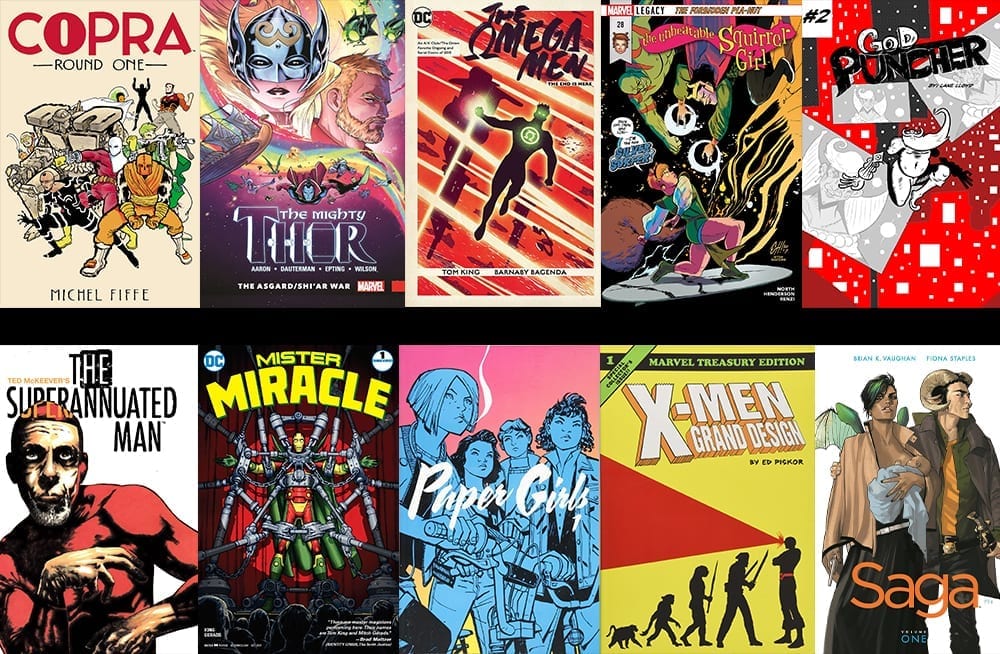
Our Favorite Comic Books From The Past Decade (2010 – 2019)

The past ten years of the comic book industry have been insane, to say the least, as superhero films dominate the landscape, and creator-owned books exploded on Kickstarter. With advances in technology, and our ability to connect with creators all over the globe; it has never been easier to create and publish a comic book than now. For this reason, I’m so proud of our diverse group of books below. These are Monkeys Fighting Robots’ favorite books from the past decade.

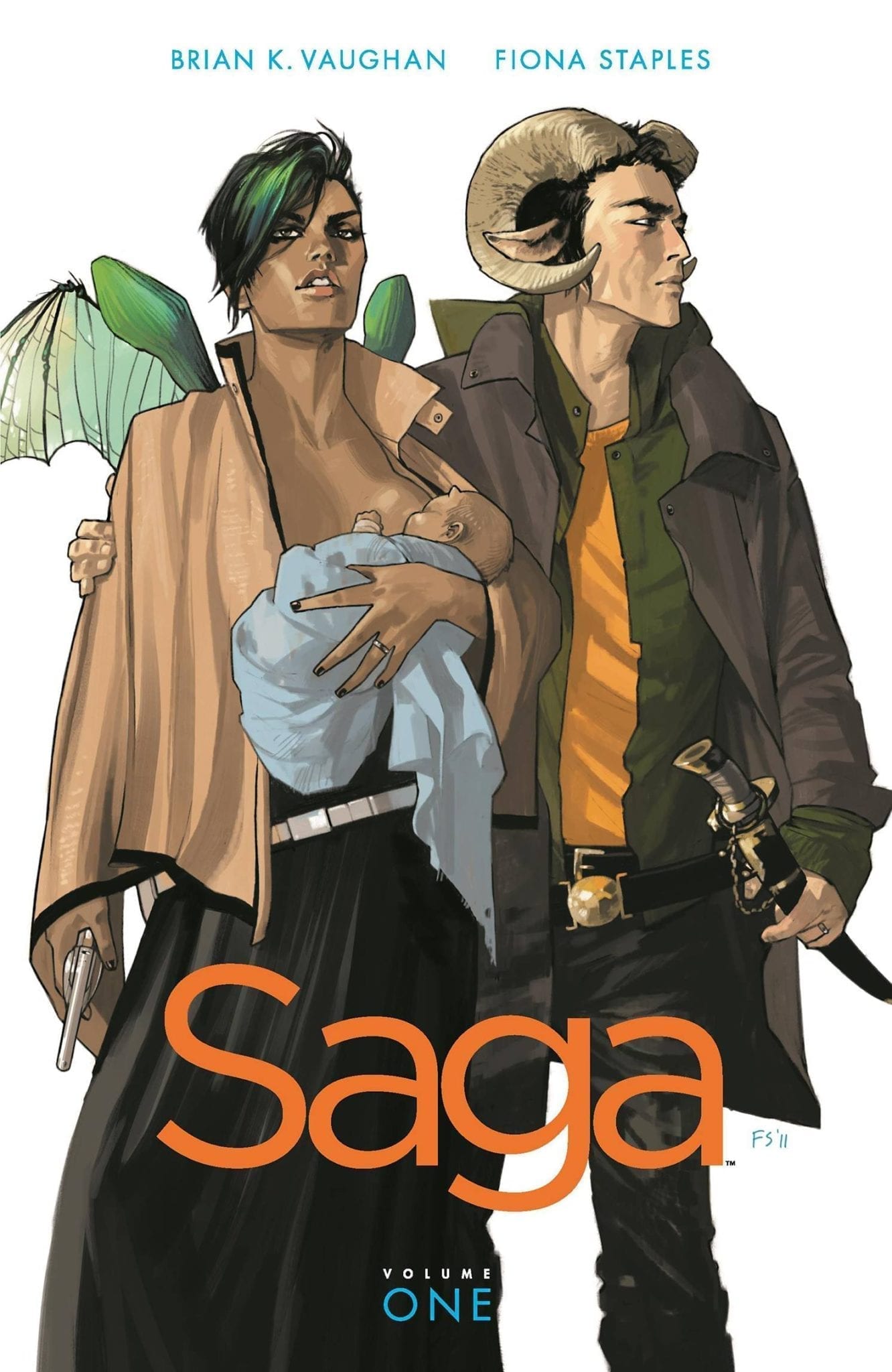
Saga

Our Favorite Comic Books From The Past Decade (2010 - 2019)

Anthony Composto
Every “Best of the Decade” list you read this year will feature Brian K. Vaughan and Fiona Staple’s Saga. You may even be sick of hearing people praise Saga over the past seven years. But there’s a reason comics fans won’t shut up about Saga: it deserves the acclaim. The world (or rather universe) Staples and Vaughan built is beautiful, vibrant, and interesting. The characters feel real and relatable despite their horns, wings, and television heads. The story is full of hope and love, but it doesn’t shy away from the darker, uglier side of life that we all must face. Plus, it has so many twists and turns that Saga never feels stale or boring. It’s endlessly readable; every time a new volume comes out, I find myself re-reading the entire series from the start, and it always fills me with the same sense of wonder. Through the intergalactic war and fantastic creatures that fill it, Saga is a quintessential comic on what it means to be human. It may be a more conventional pick, but Saga is, without a doubt, one of the best comics of the last decade, and with half the story still untold, it’ll be one of the best of the next decade to boot.

X-Men: Grand Design (Treasury Edition)

Our Favorite Comic Books From The Past Decade (2010 - 2019)

Manny Gomez
Ten years is A LOT of comics, and choosing one is a difficult task. So I went with the book I was most excited about, and that ended up delivering on all fronts: Ed Piskor’s X-Men Grand Design: Treasury Edition. As impressive as the single issues of Piskor’s love letter to the X-Men are, the collected and oversized Treasury Edition is my favorite physical comic book of the decade. The book harkens back to the classic Treasury Editions of the 70s yet also, due to the art and artist involved, gives off an almost Drawn and Quarterly/Fantagraphics indie comics vibe. It’s a perfect fusion of indie and mainstream comics in a gorgeous package. This edition also includes Piskor’s recoloring of the original X-Men #1. Piskor’s colors on Kirby’s pencils are sublime. Hopefully, this book sparks a whole slew of Grand Design books that keep this format and vibe. These are the kind of projects that keep comics fresh, viable, and exciting! Read more comics!

Paper Girls

Our Favorite Comic Books From The Past Decade (2010 - 2019)

David DeCorte
In case you haven’t noticed, ‘80s nostalgia has been a bit of a thing in recent years. While reliving the past can be nice, Paper Girls is a story that uses nostalgia as a lens through which we can better understand a broader truth about growing up, as well as the nature of nostalgia itself. Throughout this thirty-issue run, creators Brian K. Vaughn and Cliff Chiang deliver an incredibly inventive, fast-paced story, all brought to life with rich, stylish artwork. It’s the characterization, though, that makes the series so compelling. Each personality populating this world feels like a real, rounded person. These characters forge genuine emotional connections with the reader. This is the element that ultimately makes the theme of the inevitability of change—and the fact that change isn’t a bad thing—resonate so powerfully.

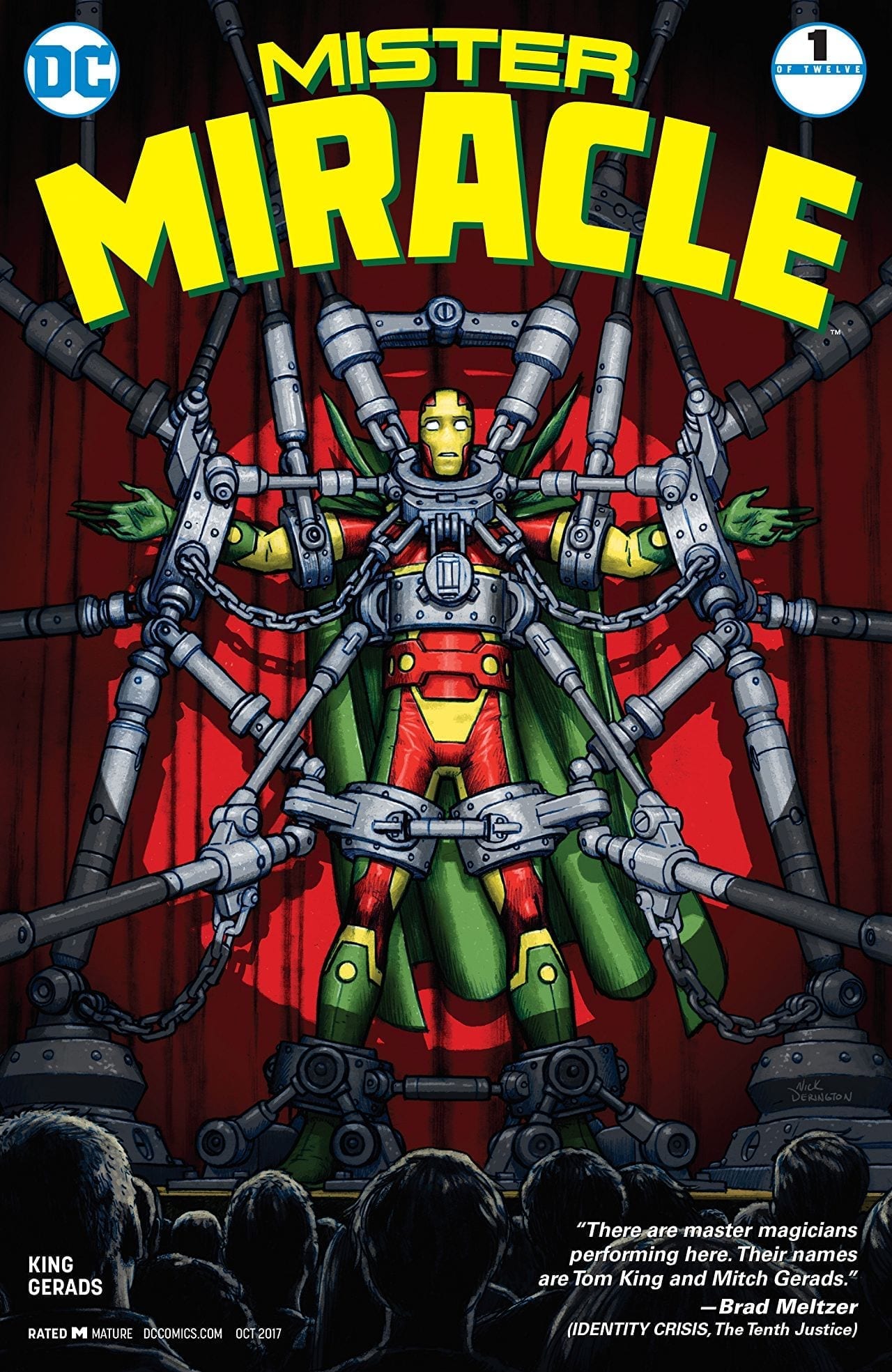
Mister Miracle

Our Favorite Comic Books From The Past Decade (2010 - 2019)

Justin Munday
As many jokes as there may be about Tom King’s constant focus on PTSD and its ensuing nihilistic depression, there’s no scoffing at the effectiveness of Mister Miracle. King and artist Mitch Gerards’ 12-issue maxi-series about the chaotic emotional state of Scott Free, a.k.a. Mister Miracle is one of the most beautifully constructed comic series in recent memory. The opening plot point with Scott Free supposedly attempting to “escape” death itself is the catalyst for a year-spanning tale about survivor’s guilt, trauma, love, and fatherhood. Free, realistically, is trying to escape his haunting existence after being raised in the pits of Apokolips. Moments of frightening doubt and questionable reality are intercut by strange deadpan humor and uplifting scenes of emotional beauty. Scott and Barda’s relationship is one of the best working romances ever presented in the medium. Watching them go from dealing with Scott’s attempted suicide to waging war on the armies of Apokalips and back to deciding on a home remodel is a constantly reassuring and emotionally uplifting treat. King and Gerards take Jack Kirby’s classic creation to storytelling heights that Kirby himself could scarcely imagine. “Darkseid Is” is the calling card for the surrounding darkness that Free, and potentially anyone who reads the series, can succumb to under just the wrong circumstances. The entire rest of the series, however, is the response to it. It offers up the conclusion that yes, Darkseid is, but we can exist and thrive in spite of it.

The Superannuated Man

Our Favorite Comic Books From The Past Decade (2010 - 2019)

Darryll Robson
Unlike the 1990s, which turned into a quagmire for comic book fans, the last ten years have gone from strength to strength with arguably some of the best comics coming out in the later years of the decade. We’ve seen milestone issues like Action Comics #1000, surprise endings from The Walking Dead, and ground-breaking concepts like Building Stories by Chris Ware. To pick just one comic, or even a single series, from all on offer, is a mammoth task. Therefore I have selected a personal favorite, an underrated miniseries whose first issue was released in June 2014: The Superannuated Man.

Ted McKeever writes, draws, and potentially lives in the bizarre future world of The Supprannuated Man, where a lone human is merely trying to survive in a dystopian landscape of talking animals and existential blame. While post-apocalyptic landscapes are two a penny, McKeever has created a philosophical examination of what makes us human and the natural evolution of the world around us.

Highly detailed black and white artwork drag you through the poetic yet grotesque world, which is haunted by memories of the present day. At some level, we are all being left behind, and The Superannuated Man is about how we cope and adapt.

As the world of comics expands and more people fall in love with the sequential arts, there will be greater demand for something new, something different. Comics like The Superannuated Man, although not appealing to a large crowd, can now find an audience. And the fact that vanity projects such as this exist is proof that the industry is changing for the better.

God-Puncher

Our Favorite Comic Books From The Past Decade (2010 - 2019)

Jason Jeffords Jr
Picking my favorite comic of the decade might have been the hardest thing I’ve done all year, what’s even harder is having only a few sentences to portray why said comic is deserving of such an award. Let’s not waste any more sentences on why God-Puncher by Lane Lloyd is one of the best comics of the decade. Starting out, you may notice that you’ve never heard of God-Puncher; this is due to it being self-published by Lloyd himself, giving him the freedom to do whatever he pleases. This creative freedom is God-Puncher’s strong suit, yet one hardship the comic faces, as a world filled to the brim of comic publishing overshadows the self-published creators.
So much could be said about the issues of God-Puncher released so far, yet the most important fact is: how fun each issue is and how it embraces the energy of what comics are. Lloyd’s creative art and chaotic story shine beautifully through each panel he has painstakingly made all of them by himself. Each facet of the comic shows his love, admiration, and understanding of the medium. By the time you’re caught up on God-Puncher, you’ll fall in love with the world of self-published comics. You’ll realize there’s a vast world out there of comics waiting to be discovered that are self-published. God-Puncher changed the way I look at comics, which has only happened once before.

The Unbeatable Squirrel Girl

Our Favorite Comic Books From The Past Decade (2010 - 2019)

Anthony Wendel
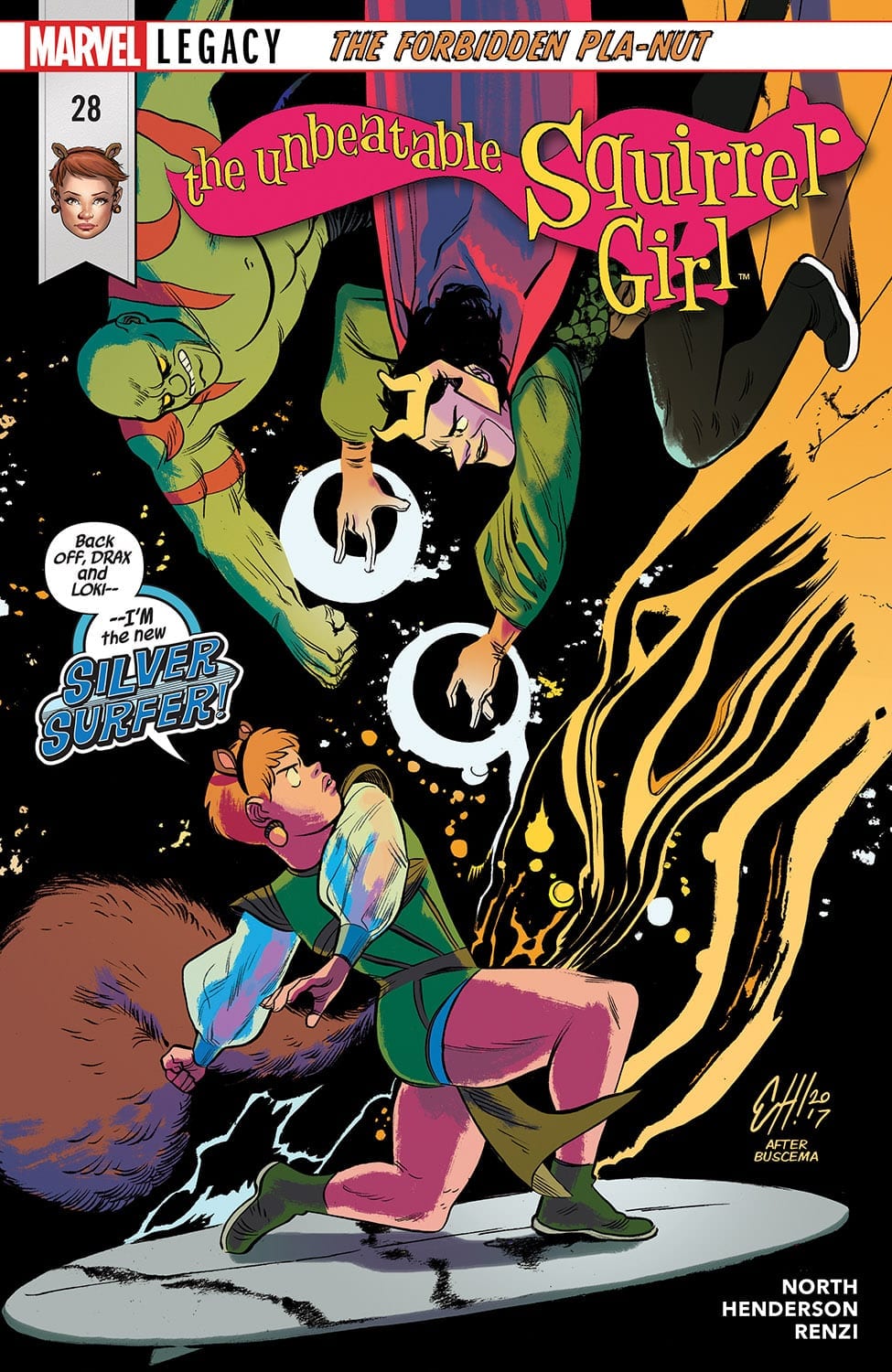
Comedy is hard. Comedy in comics can be even harder. Yet, somehow the Unbeatable Squirrel Girl found a way to make me laugh with every issue I read. Either by taking a character some would have labeled as a “D-Lister” and have her take a selfie after defeating Galactus, have to reject Mole Man trying to court her, or the time she legitimately went on a date with a Sentinel, it was impossible not find joy in this series. Squirrel Girl was just a fun character to watch, go on adventures who would not get swept up in title changing events, and instead would just leave the reader with a smile thanks to puns, meta-commentary, and cliff note jokes which were easy to miss but a joy to read. Also, just one word: Kra-Van. Google it and thank me later.

Omega Men: The End is Here

Omega Men: The End is Here
Jody Cardona
When I pick out comics to read, I usually go for the ones I think I would be entertained by first. I don’t often seek out the comics that make me sit and think about the world outside those colorful pages. That all changed when I picked up the first issue of Tom King’s Omega Men. From that first issue, we were brought into a darker universe than we have ever seen in DC Comics. A universe where morality was not black and white, but gray. Where heroes were just as despicable as the villains, and their victories just caused more problems to the universe at large. It was only after I finished the last issue of the series did it make me look to the world at large. This comic truly opened my mind to such issues that plague our world today. It’s one that will make you look at our world and make you see shades of gray. The Omega Men series is truly one of the best comics of the decade.

The Mighty Thor

The Mighty Thor

Cat Wyatt
This decade has brought with it dozens of memorable comic issues and series. But few had the impact that the Mighty Thor did, at least as far as I’m concerned. Jason Aaron’s run took some serious risks with a beloved character, handing over the mantle of Thor to a new hero – or rather, heroine. Jane Foster as Thor may have been a surprise for many, but in hindsight, it fit her character perfectly. Think about how driven she’s always been, and it all falls into place. The Mighty Thor brought with it some serious impact and several new readers. Jane Foster’s Thor was emotional and brilliant, one that invited conversation and debate. I was always impressed by the creative team behind the project, taking on so much heat through social media, and yet never once backing down from their story. The Mighty Thor was intense, showing us the costs of being a hero, all while giving us a Jane Foster determined to do what was right. And it’s a plot that’s going to stick, forever in my heart.

COPRA

Copra Round One

Jamie Jones
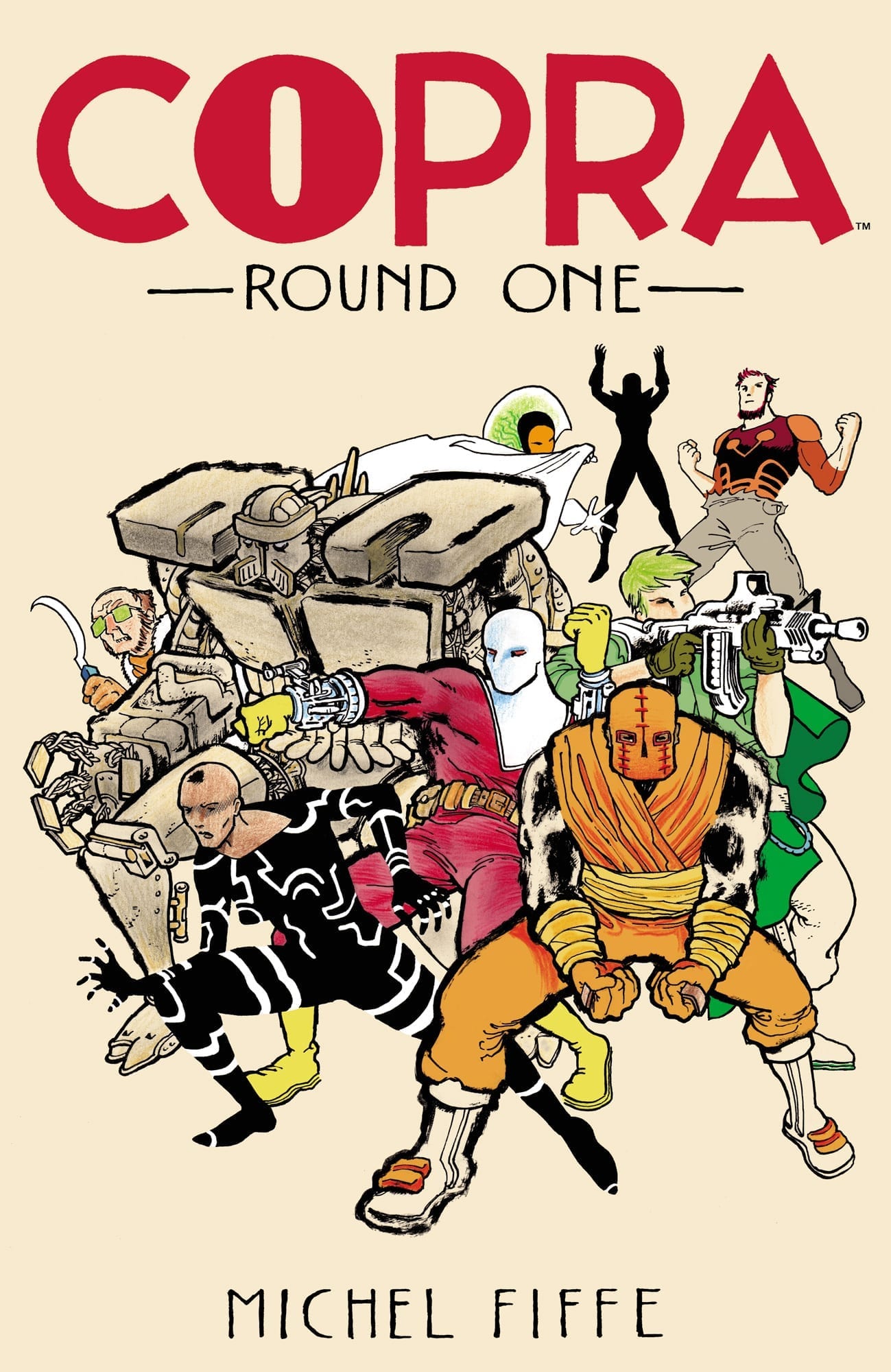
Like the manic scribbles of a middle school student making his own Death of Superman comic in the margins of a math test (the results of which is better than any book published by one of the big two), Michel Fiffe has taken the comics that he loves and made them into something worth reading. That sounds bad, like I’m bad-mouthing mainstream comics. I’m not. It’s just; Copra stands above so much in the superhero genre.

Fiffe has internalized all comics, pre-bubble-burst, and filtered it through a heavy dose of Clowes, Burns, and their ilk. Never letting COPRA’s ever-escalating action get in the way of small character moments and giving us deeply interesting characters whose growths and deaths mean something from issue to issue.

When I found COPRA, I was pretty bummed on comics. I couldn’t find anything that made me want to stay in the game. Nothing that made me want to make comics. Now, COPRA is one of the books that I keep close, a source of inspiration, a gold standard of self-publishing, and the constant reminder that it only takes one person to make a comic.


What was your favorite book of the past decade? Comment below with your thoughts.

Monkeys Fighting Robots Youtube