Home Blog Page 365

Review: The Population Grows Backwards in THE CLOCK #1

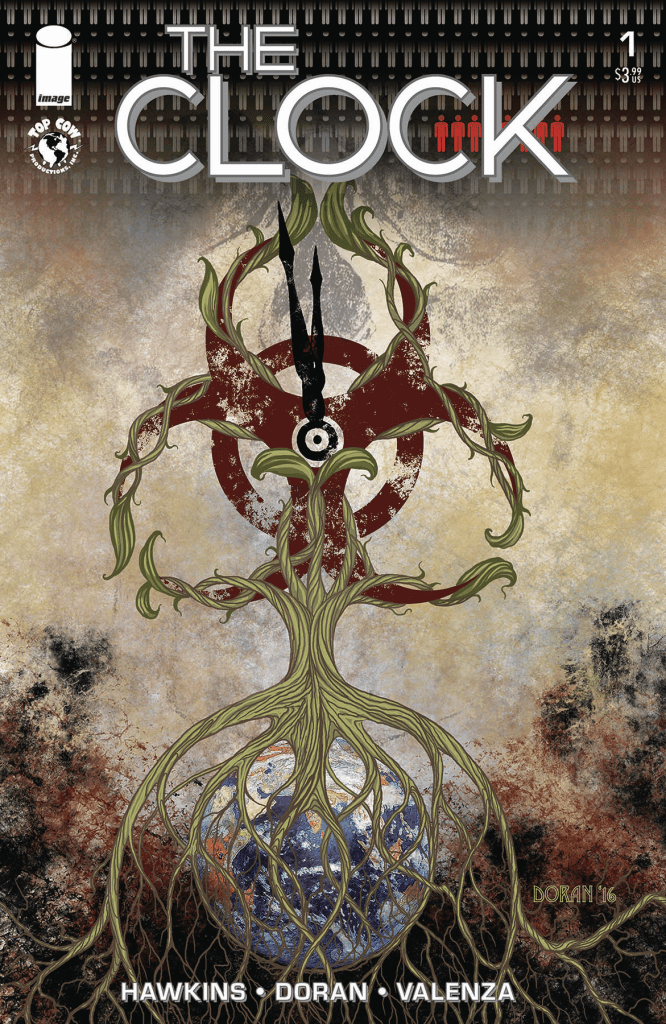
Writer Matt Hawkins brings to bear the terrors of eugenics and bio-terrorism in “The Clock” #1. This first issue is an interesting start that unfortunately focuses a bit too much on the plot and not enough on the characters.

Within three weeks, hundreds of millions of healthy people worldwide contract various forms of aggressive cancer, and the proliferation, seemingly a viral outbreak, stumps the best scientific minds available. But after a leading cancer researcher loses his wife and watches his nine-year-old daughter begin to succumb to the same illness, he must race against the clock to end a global conspiracy that could propel the world straight into WWIII…or worse.

Writing & Plot

Matt Hawkins‘ script for this first issue of “The Clock” is immensely proficient at discussing the larger plot of this story. However, it tends to rush over its character-focused moments. The premise of a weaponized cancer Hawkins displays here is properly frightening and relatively unique as far as grounded science fiction goes. The writing takes great pains in explaining exactly what the overbearing global issue is in the plot. The sense of urgency and desperation here is certainly felt, even if the writing itself is often a bit clinical. Admittedly, the protagonist being a scientist does a lot to explain this issue. A problem is found however when many of the characters don’t have their own distinctive voice within the narrative. Another problem is that, although the personal issues of the main characters are addressed, any smaller moments are usually rushed past to make room for more jargon. This is likely just a first issue problem, but it does struggle to make the reader care for this cast the way that a good story should.

Art Direction

Artist Colleen Doran lends her talents to the artistic creation of “The Clock.” While she is likely known for her more fantasy-oriented work on series such as Neil Gaiman’s Sandman or Warren Ellis’ Orbiter, this issue proves her abilities to create more grounded scenes. The focus of Doran’s art is an ironic opposite of Hawkins’, as all the focus has to be on the characters. Each character therefore is easily discernable and very much human in how they display emotion. The environmental art is suitably detailed for this kind of semi-realistic story. Bryan Valenza’s colors are equally effective in bringing this world to life in a grounded fashion. The visuals are nothing spectacular, but they do their job.

“The Clock” #1 is an intriguing and tense debut issue that is unfortunately just a bit dry. The focus on expository jargon-filled dialogue makes the reading experience less than engaging. The characters are given understandable conflicts and moments of tragedy, but they are often rushed over to get to more of the overarching plot. The art does its job of giving the world and characters life, but it isn’t anything too outstanding. The story itself is genuinely interesting however, so hopefully future issues can iron out some of these stresses.
Monkeys Fighting Robots Youtube

Review: THE DOLLHOUSE FAMILY #3, Where Demons Stay Meddlesome

“The Dollhouse Family” has been one of the most intriguing horror comics in recent memory thus far. This third issue only proves the point even further. Writer M.R. Carey along with artists Peter Gross and Vince Locke bring forth the most chilling issue of this series yet.

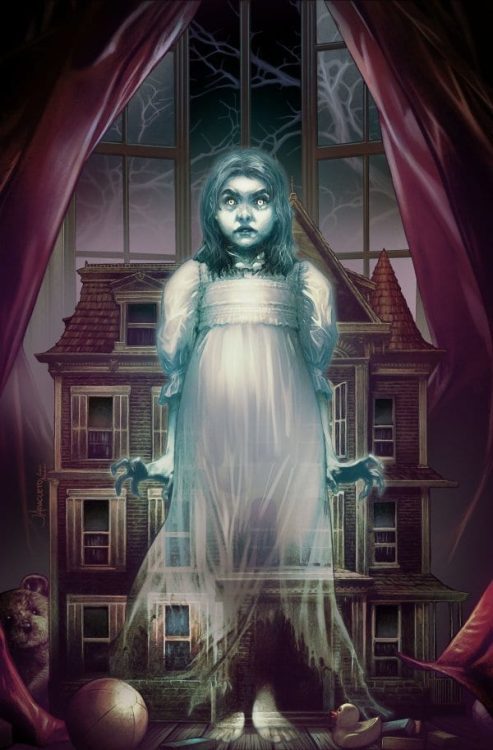
Childhood ends. Children grow up. And young Alice is now a mother herself, raising her daughter alone in 1990s London. But the Dollhouse has never forgotten the promise that she made. The Dollhouse knows where she’s gone. And so does Jenny, the ghost of the girl who died in her orphanage…

Writing & Plot

M.R. Carey‘s meticulous plotting and sense of terror return in brilliant spades in “Dollhouse Family” #3. The two plotlines separated by almost two hundred years are as engaging as ever, without ever tripping over one another. On top of this, there is a significant time jump in Alice’s life that doesn’t feel rushed in the slightest. It’s a bit mind-boggling how Carey handles consistent time jumps without ever overstuffing the plot. On top of this, the mystery and intrigue of this story continues to mount alongside the horror. This is likely the most outright frightening issue of this series yet. Carey demonstrates his knowledge of horror in comics with chilling turn-of-the-page scares that will stick in the mind as you read. The human character drama and real-world issues in this book feel realistic as well, making for a fantastic and engaging read all-around.

Art Direction

Peter Gross’ handling of layouts and Vince Locke’s art once again creates the brilliant Gothic aesthetic of “Dollhouse Family.” The panel layouts are never seen in any conventional manner, and this assists in creating the winding horror story’s atmosphere. Gross manages to give Carey’s scripts the exact artistic panache they require to really sell the time-jumping unpredictability of this haunting tale. Locke’s pencils and inks also once again prove to be perfect for the sort of classic Vertigo-esque series being made. The characters and environments have the proper brilliant detail put into them, but they are assisted by the sort of “printed on newspaper” look that old Vertigo series had. Locke’s unsettling and outright horrifying visuals are sure to delight fans of this genre. Once again, “The Dollhouse Family” is a flawless fusion of narrative and art to create something truly special.

“The Dollhouse Family’ #3 is a stellar creation of Gothic-horror in comics form. M.R. Carey’s plotting is consistently paced and delivers the unexpected from month to month. Gross and Locke’s visions of this world help to create the most outright intense and terrifying issue of this series thus far. “The Dollhouse Family” is without a doubt one of the most impressive comics on DC’s Black Label imprint.

Monkeys Fighting Robots Youtube

Review: The Island Betrays Hana In RONIN ISLAND #9

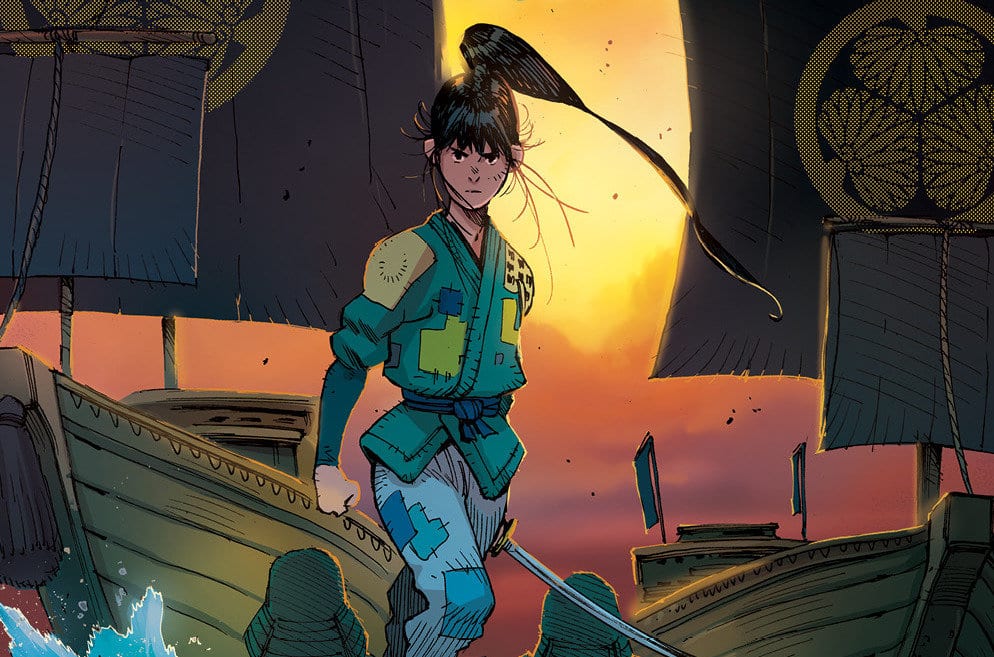
RONIN ISLAND #9 main cover artwork

RONIN ISLAND #9, available in comic book stores on Wednesday, January 8th, unveils a pivotal event in the world of Hana and Kenichi. After weeks of fighting and eluding the Shogun’s army, the young samurai has finally arrived at Ronin Island. Her team is ready to warn the islanders of the impending invaders. Will they welcome our heroes with open arms? Or could their long-held ideals of welcoming withered away under the winds of fear?

Story

As the large mass of fused Byonin makes its way toward the Island, Hana retreats in her mind and recalls her first encounter with Elder Jin. The young girl feels unwanted by the rest of the Island.

Jin, attempting to soothe Hana with platitudes of the Island’s equality and open-mindedness, is shut down immediately. Hana offers up her own lived experience of exclusion in spite of the community’s espoused ideals. So, with an amazing sense of understanding, Jin instills within her a sense of confidence due to her ability to bring people together.

This flashback is placed here to serve as a diametrically opposed scene to what Hana and her companions meet next. Upon arriving at the Island, Jin refuses to let the wayward travelers back into their community, citing their desire to protect themselves from those intimidating forces on the outside. This betrayal hits Hana hard, making her question the ideals of “togetherness” and “equality” the Elder taught her so long ago.

Writer Greg Pak weaves together a narrative that hits home with its themes of familial estrangement. When Elder Jin rejects Hana and her friends, readers witness an abandonment of the community’s ideals in service of fear.

Artwork

Giannis Milonogiannis’s penciling, Irma Kniivila’s coloring, and Simon Bowland’s lettering work together seamlessly in this flashback focused issue. The transitions between Hana’s memories of her early life on the Island and those of her present predicament are distinguished by a varying degrees of opacity in lines and colors. This stylistic choice applies to the lettering as well.

Comic Covers

Main Cover

Milonogiannis and Msassyk’s main cover artwork depicts this issue’s star, Hana, riding on a boat toward the Island with sword in hand. We see a clear sense of determination on her face as she seeks to protect her home.

Preorder Cover

Ethan Young crafted the predorer cover as usual, this time depicting a Byonin infected bear in a traditional East Asian art style. This helps us visualize the creatures as legendary monsters.

Conclusion

RONIN ISLAND #9 hits readers hard and allows them to sympathize with Hana more than ever before. We’ve all been betrayed by those we once looked up to, but can we blame someone for reacting out of great fear?

Do you think Hana will survive after being shut out from the Island? Let us know in the comments below!

Monkeys Fighting Robots Youtube

HAWKMAN #20 and the Kingdom of the Crystal McGuffin

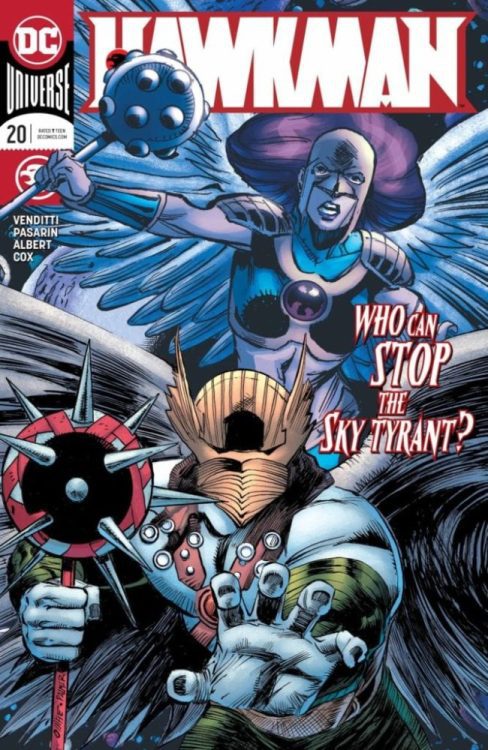
Hawkman #20, written by Robert Venditti, pencils by Fernando Pasarin, inks by Oclair Albert and Danny Miki, colors by Jeremy Cox and letters by Starkings and Comicraft, is a simple issue that somehow works. Much of this series shouldn’t work. Hawkman is chasing after one McGuffin after another. It reads more like a video game or and Indiana Jones movie than a comic. Yet somehow, this refreshingly simple series of quests knows what it’s doing. And what it’s doing is just plain, old-fashioned fun!

Writing

Venditti revels in Carter Hall’s archeological roots. Each issue, including this one, is essentially a treasure hunt. But now, with Sky Tyrant in control of Hawkman’s body, this gets a little more complex. Carter wants to find the treasure at the end of the clues, but he wants to wrest control back from Sky Tyrant first. The tug-of-war between wanting Carter to succeed, and wanting to see what happens if Sky Tyrant succeeds, adds a brilliant extra layer to this quest.

Art

Pasarin, Albert, and Miki’s art is beautiful. Depicting everything from Carter’s showdown with demonic priests, to his internal struggle with the Tyrant, the art is continuously changing in all ways except quality. In an issue fueled by a battle with evil, Pasarin and co regularly cycle back to the snarling faces of that evil. Reminding us just who Carter is really up against.

Colors

Cox carries many of the tonal shifts. From the monkly showdown, which feels straight out of an Indiana Jones movie, to alien landscapes. It’s the hues and auras cast over the characters’ faces that give us a sense of how they fit in. And each shift helps us see what each world is like. The halls of the castle are dark and evil. The surface of the planet is full of wonder.

Letters

The letters by Starkings and Comicraft also work to set a unifying tone. The flashbacks and present-day moments, all marked with a futuristic font, remind us this is one man’s life, no matter the time period. Carter Hall has lived a long time. The many different fonts for each character helps us hear their voices. Carter’s is faint and unheard. Sky Tyrant’s is brutal and dirty.


Hawkman #20 probably shouldn’t work. It seems like the kind of plot that is so episodic; it would fit better in a video game. But the creative team pulls together to deliver a beautiful work. I only wish it was a video game because this is the kind of issue that makes me want to join this world.

Monkeys Fighting Robots Youtube

GOTHAM CITY MONSTERS #5: Cue the Monster Mash

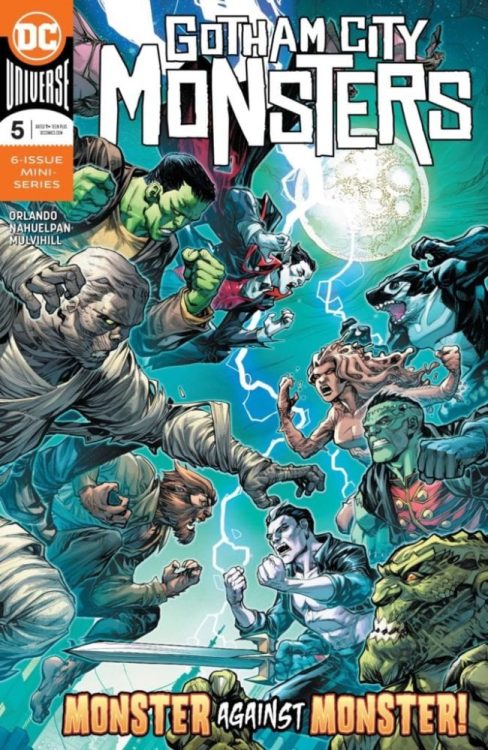
Written by Steve Orlando, with art by Amancay Nahuelpan, colors by Trish Mulvihill and letters by Tom Napolitano, Gotham City Monsters #5 presses pause to cue the big monster fight scene. While in many ways it would seem this is the point of a series like this, this issue feels like a regression. With loud moments and bloody splash pages, it revels in the monster genre. It settles for being the genre, instead of continuing to surpass it.

Writing

Orlando writes kitch well, and it’s important to point out he knows what he’s doing. The fights are gory and cheesy, but they know they are. Larger-than-life characters with unknown histories show up to serve as colorful enemies and be vanquished. Their role is to make a pretty mark on the pavement. With one issue left to go, it’s unclear if Orlando seeks to push the limits of where these characters fit or embrace their given lot.

Art

Nahuelpan’s art is perfectly fitted to Orlando’s approach. The blood and brains flying across the page are perfectly and gruesomely rendered. Melmoth’s twisted grin as he fights off Frank and the gang is like seeing his soul painted in his expression. Slaughter Swamp oozes off the page so vividly it’s hard not to feel you’re wading through swamp water as you read.

Colors

Mulvihill’s colors have their moments of brilliance. Yet this issue feels less nuanced. In previous issues, Mulvihill’s coloring beautifully swayed back and forth between light and dark. In this issue, she settles into more of a greyish middle hue. The contrast is often lost, and the pages rarely feel cohesive. Perhaps it’s that Mulvihill so perfectly sets the mood on some pages, the others seem to not quite meet the bar.

Letters

Napolitano continues to have a raucous good time. The many fonts assigned to each character, specifically crafted to say something about them. Napolitano even goes so far as to distinguish how one Frankenstein speaks versus another. Many of the sound effects, while serving similar purposes, are written very differently. No two sword slices may sound alike.


If you’re looking for the monster brawl promised in the last issue, Gotham City Monsters #5 is for you. It’s all the fun of slasher films, and classic creature tales rolled into one. While much of this series pushes these characters away from their stereotypical uses, this one plants them right back in there. We’ll have to wait for the finale to see whether the monsters have a bright future, or whether they must settle for their lot in life.

Monkeys Fighting Robots Youtube

Review: The Kinmundian Fights Against The Forces Of Armageddon in BATTLEPUG #5

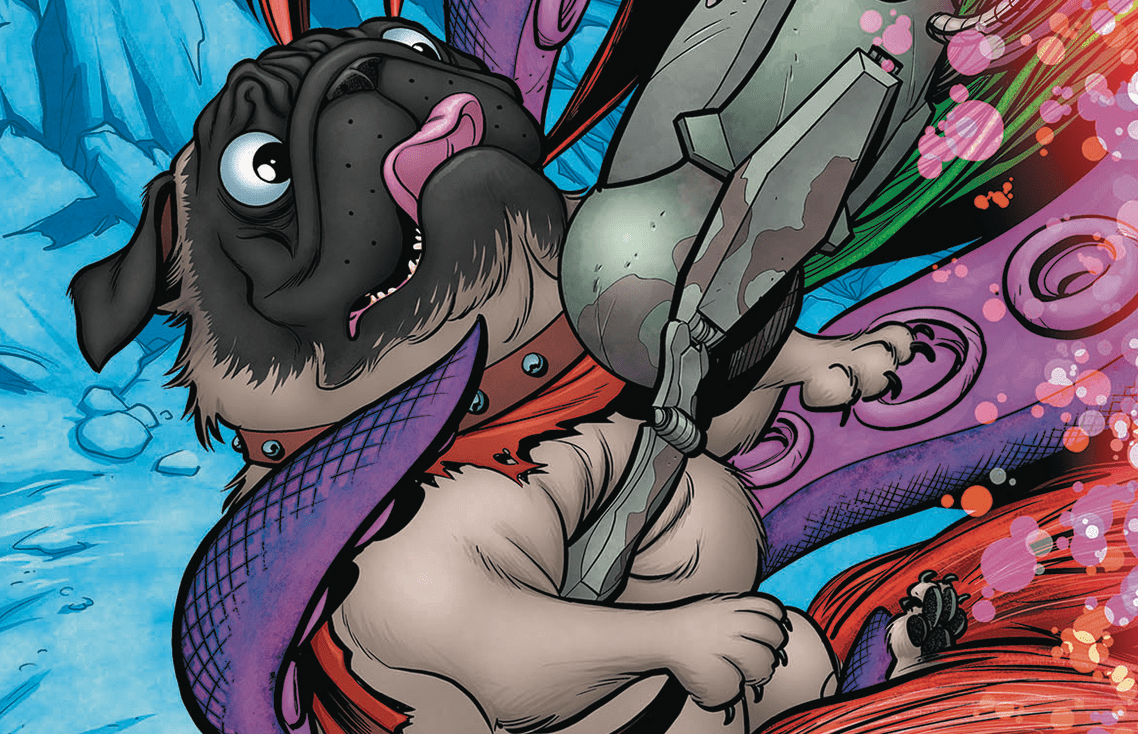
BATTLEPUG #5 cover artwork

BATTLEPUG #5, available in comic book stores on Wednesday, January 8th, forces the Kinmundian’s nightmares into his reality. The portal to another dimension has been opened by the Queen of the Northland Elves, and she’s unleashed a horrific beast on the group. No one is sure what the villain is planning, but it’s clear one thing is driving her actions: revenge.

Story

All tensions are high in this climatic scene in the Northland. Even the giant boy, who claims to own Sprinkles, sees the dangers the Queen poses by opening up the dimensional door. As a desperate measure, the boy realizes he must risk his life to close the door. Fortunately, the Kinmundian, Moll, and the others have the same goal in mind.

The allies unleash the full force of their powers on the Queen and the Beast. Bryony uses her plant magic on pumpkin seeds in a creative fashion, Sasha trades blows with the help of her enchanted armor, and Moll, along with the Kinmundian, use their connection to the forces of nature to conjure up a beast of their own.

Mike Norton’s writing captures the desperation in each character, yet balances it with their determination to fight the Queen, her monsters, and whatever else the alternate dimension has in store at all costs. If readers didn’t know it already, this group of misfits are true heroes. The question is: Can the Kinmundian prevent to impending doom the dimensional break poses, or will the images that have haunted his dreams for weeks come to fruition?

Artwork

The artwork within this issue contains all the thrills and frills of a multidimensional battle scene. Norton’s penciling and ink work pairs well with Allen Passalaqua’s coloring, In addition, featuring horrific details on the beast and an assortment of colors ranging from one end of the color wheel to the other. And CRANK!’s lettering ties the scenes together with impressive styling of the onomatopoeia sound effects, allowing readers to imagine they have landed right in the middle of this climatic battle.

Comic Covers

Main Cover

Norton and Passalaqua’s main cover depicts Sprinkles and the Kinmundian locked in combat with the beast from the alternate dimension. We see the desperate look on our heroes’ faces as they fight a creature far surpassing them in power.

Variant Cover

Gene Ha’s unique variant cover gives us an otherworldly version of Sprinkles, as if he was transformed into one of the beings from the dimension door. This effect makes us question the beloved dog’s true origins.

Conclusion

BATTLEPUG #5 is the issue readers have been waiting for since the plot’s unveiling in issue #1. We finally see the Kinmundian’s nightmares come to life, and the fate of the world lies in the balance. We’re anxious to find out how this all turns out!

Do you think the Kinmundian and Sprinkles will be able to reach the other dimension? Let us know in the comments below!

Monkeys Fighting Robots Youtube

The Return of a New Enemy in STAR #1

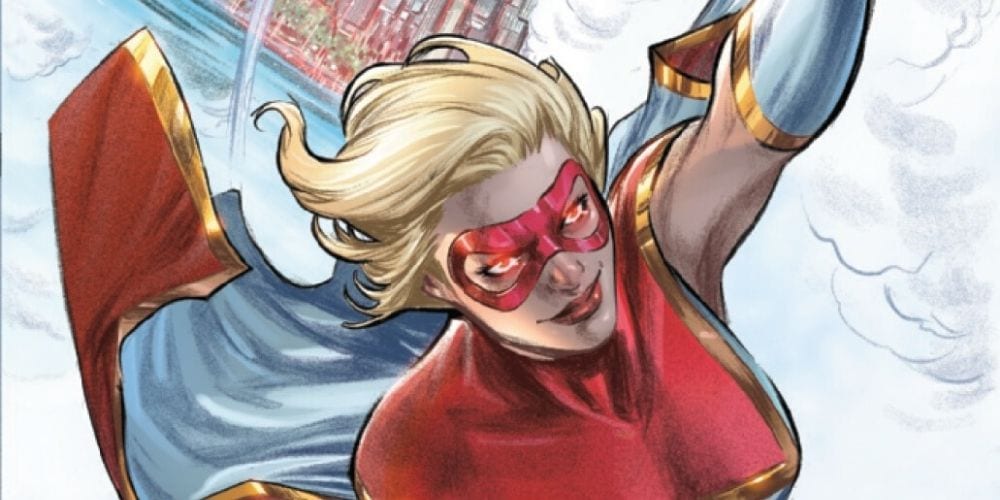
A new Marvel villainess rises to the top in STAR #1, out this Wednesday from Marvel. Originally introduced in Captain Marvel’s series, Star is getting her own miniseries – which means a lot of bedlam and machinations are about to ensue.

Look who’s back! It’s Star, as first introduced in Captain Marvel.

***SPOILER WARNING***

Fans of Captain Marvel will surely recognize the name Star. She was a character (villain, really) introduced in her latest series – and she pushed Captain Marvel’s limits and boundaries in ways that we’ve never seen before.

For her part, Star wasn’t always a villain. Her name is Ripley Ryan, and she used to be a reporter – one who genuinely enjoyed her job. Then one day she was sent to interview Captain Marvel for Ms. Magazine. And that’s the day that everything changed for her.

Long story short, her entire worldview was blown apart thanks to one macho jerk of a villain. And the rest, as they say, is history. Well, perhaps not so much. This miniseries is enough to prove that Star’s story is far from over.

Star #1 brings us back to the villainess that caught our attention with her unique design and brutal plans. Now she’s beaten, but far from broken. Her first issue in this series is full of cameos, and thus not something you’re going to want to miss out on.

Star #1 shows us what would admittedly be a very unpleasant memory…

The Plot

Let’s just say it now: Kelly Thompson has done it again. Star was an interesting character right from her first introduction, but this plot has taken her to all-new levels. Star #1 is a finely balanced issue. It’s impossible to forget all of the horrible things Star did – and all the things that she is still willing to do. And yet there’s something so…human about her struggles here. Well, mostly human at any rate.

You see, Star is in a unique situation. She’s beaten, yes, there’s no doubt about that. But she’s not broken. And she’s free. That’s giving her the time to learn how to work and control a pesky but powerful stone in her body.

That in itself would be enough to make this issue a remarkable one, but the truth is that the story has just begun. There are several cameos to accompany Star’s plotting and scheming – and they’re the sort of interactions fans live for.

We’re not going to spoil it all by talking about who walks into these pages. But we will say that it was a blast to read – and had several extremely satisfying moments. One of which may or may not include a beating and a few Spider-Man worthy quips.

Star may be a villain, but we can sympathize with some of her issues here.

The Art

Star #1 features some truly outstanding artwork. That second page is a total eye-catcher. Not only is it vibrant and compelling to look at – but it’s a poignant reminder of what Star has already gone through (even if it was something of her own creation).

Javier Pina and Filipe Andrade were the lead artists for this issue, and they clearly enjoyed the challenge of drawing for a villain. Ripley’s expressions are plain to read, even as she masks up and makes some tough decisions for herself.

Meanwhile, Jesus Aburtov’s colors are what make this issue what it is. His understanding of rich tones and color combinations is impressive and given Star’s color palette (mainly red and white) that creates a lot of striking scenes.

Then there’s VC’s Clayton Cowles, who provided the lettering for this issue. There was a lot of information that had to be introduced and done quickly. Take a look at that first page, where the credits are included. That’ll give you a solid idea of what we’re working with here.

The fact that a villain bar exists shouldn’t be as surprising as it is.

In Conclusion

Star #1 was an intense and memorable introduction to this miniseries. Ripley’s quest is an interesting one, but it is brought to new heights thanks to the characters revolving around her. Or targeting her – whichever you prefer.

Monkeys Fighting Robots Youtube

Revenge and Kidnappings in DRAGON AGE: BLUE WRAITH #1

DRAGON AGE: BLUE WRAITH #1, out Wednesday, January 15th from Dark Horse is the beginning of a whole new set of adventures. Once again we’ve been transported back to the delightful yet dangerous world that is Dragon Age.

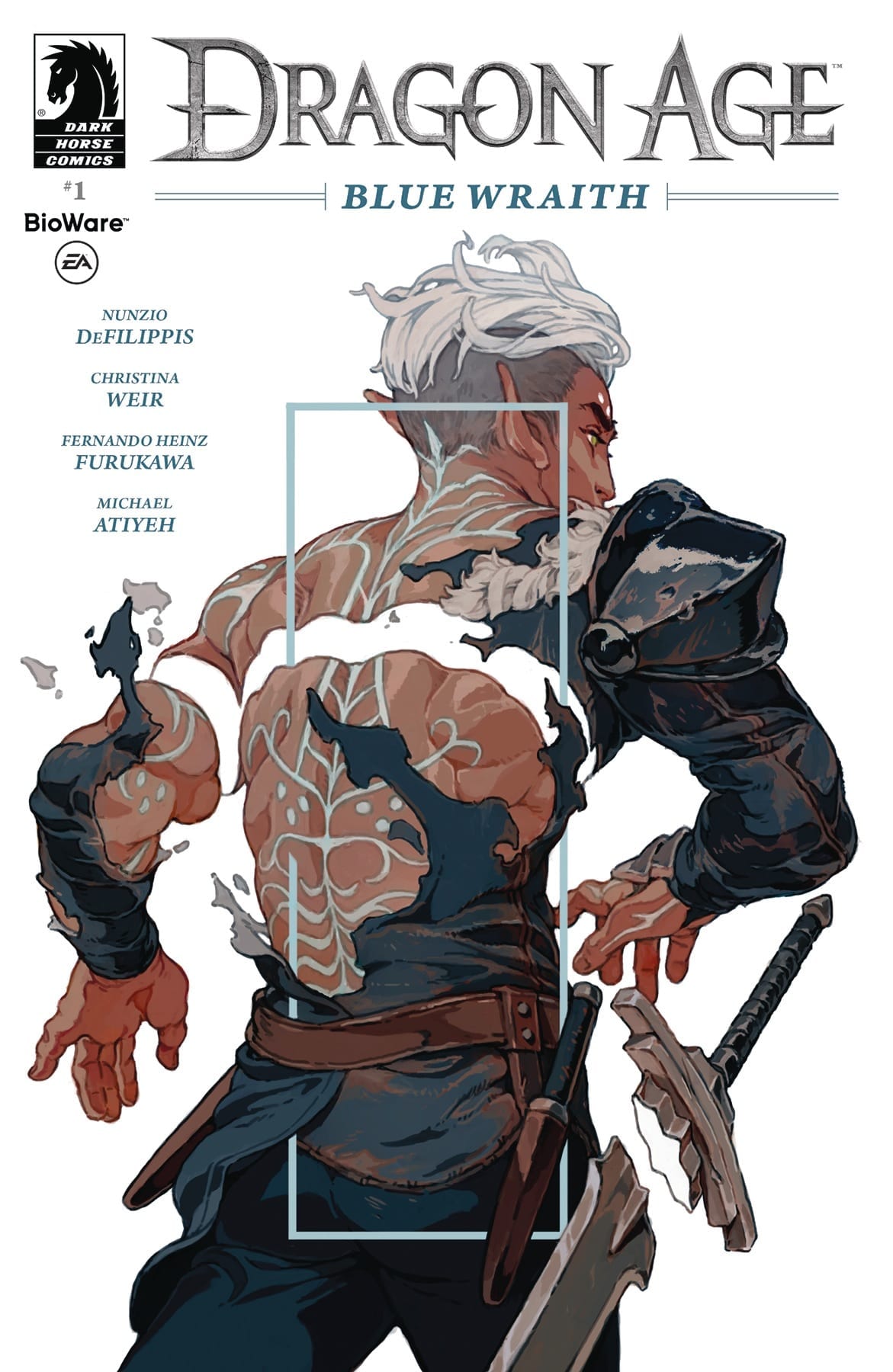
The cover of Dragon Age: Blue Wraith #1 is a concerning image, if ever we’ve seen one.

***SPOILER WARNING***

There are a lot of reasons why Dragon Age fans should consider picking up Dragon Age: Blue Wraith #1. For starters; do you remember Fenris from Dragon Age II? Odds are pretty good that you do – he’s about to make his first comic book appearance in these pages.

It’s also worth mentioning that this is the very same team behind Dragon Age: Knight Errant and Dragon Age: Deception. So if you enjoyed either of those series, this is one to check out (hint: they have some characters in common!).

That is not the best way to cultivate talent…just saying.

The Plot

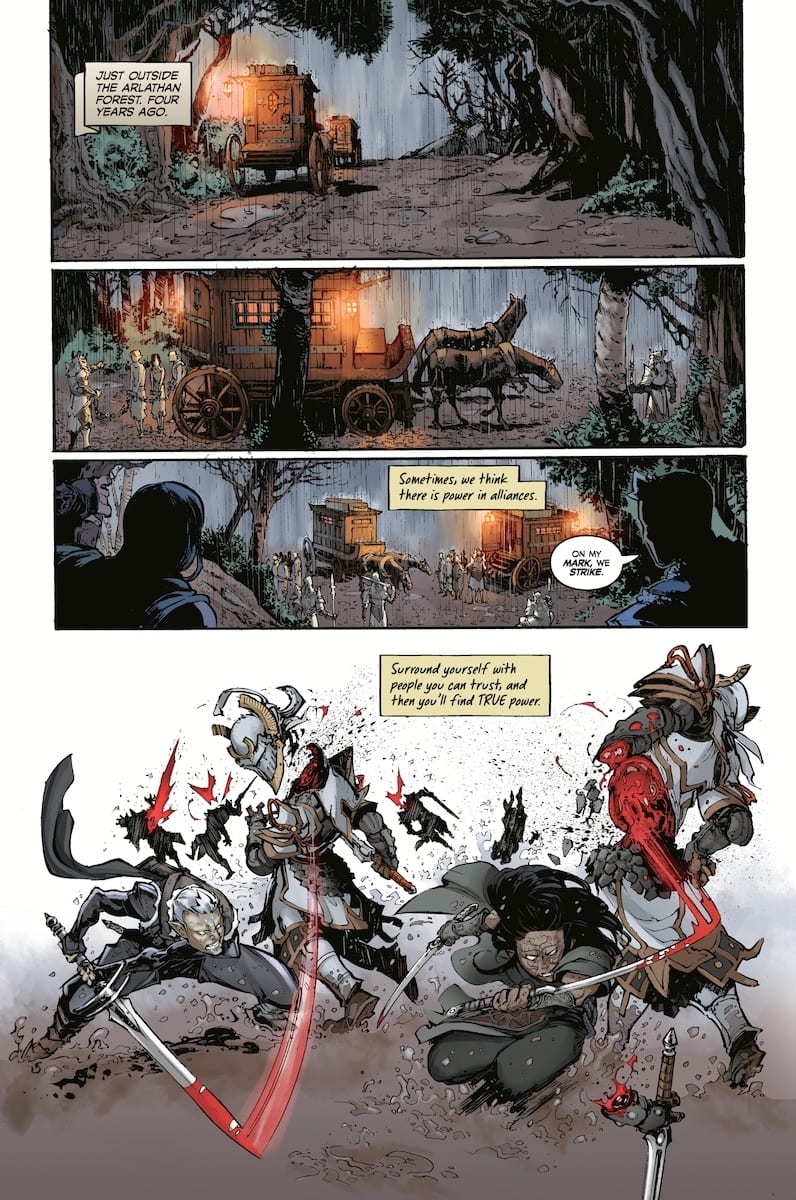
Dragon Age: Blue Wraith #1 starts off strong. Given that this series is only going to be three issues long, that’s probably not too much of a surprise. They only have so much time to tell us this tale. Right away we’re pulled into the action – with Fenris, aka the Blue Wraith, cleaving a bloody path to his goals.

Which sounds about right, when you think about it. This has always been a world full of magic and conflict, and that’s one of the many reasons why fans have been so drawn to it. All of the danger and epic qualities have been perfectly captured here, though the gore always seems to feel more real when it’s on the pages.

Nunzio DeFilippes and Christina Weir are a dynamic writing duo, bringing us a complex plot full of dynamic characters. There’s a unique blend of characters here, as they’ve pulled characters from the games (obviously), as well as creating several of their own.

If you haven’t read the other series they’ve created, you might find yourself a bit confused about some of the events referred to here. But honestly, you can get a lot of information from the context alone, so don’t let that intimidate you away from giving this series a try.

While the majority of this issue has a harsh and heavy tone, there are some delightfully funny moments sprinkled throughout. That is thanks mostly to the character development they’ve invested in thus far.

Talk about not pulling those punches! There are plenty of brutal battles to be found in Dragon Age: Blue Wraith #1.

The Art

Unsurprisingly, Dragon Age: Blue Wraith #1 has some truly stunning artwork. Likewise, one should anticipate plenty of brutal and bloody battle scenes. For this is a series that doesn’t shy away from the more graphic elements that come with fantasy fights.

Fernando Heinz Furukawa was the lead artist for this issue and should get most of the credit for what we see here. At least in regards to the designs for the battles and poses – all of which are epic. Meanwhile, Michael Atiyeh was the colorist and did an exceptional job nailing the tone and colors of the world we know so well. Finally, Nate Piekos of Blambot was the letterer, and you can see their trademark style throughout. It works rather nicely in this particular world.

If the faces here are anything to go by, then there’s a fair amount of tension building in the background.

In Conclusion

Dragon Age: Blue Wraith #1 was an intense and interesting start to a series. Honestly, the only downside we’re seeing to this series thus far is that it’s going to be a short one. But we’ll take what we can get, and enjoy learning a bit more about Fenris and what he’s been up to in the meantime.

Monkeys Fighting Robots Youtube

A Changing of the Minds in STEEPLE #5

STEEPLE #5, out Wednesday, January 15th from Dark Horse is filled with witchcraft, second-guessing and self-doubt. And thus ends another brilliant and quirky series.

Steeple #5’s cover has some interesting implications and concerns.

***SPOILER WARNING***

It’s hard to believe that Steeple is coming to a close, but that is exactly what Steeple #5 signifies for its fans. This may be the final issue in the series, but the door has been left open for those fans desperate to see more – and to have their lingering questions answered.

Steeple was always meant to be a miniseries, so we can’t pretend to be surprised by this early conclusion. But that won’t stop us from being sad about it. Billie’s personality was so unique and charming, it was difficult to do anything but look forward to whatever antics she was going to get into next.

The silver lining here is this: John Allison (writer and lead artist) isn’t done. In fact, we already know of at least one new project he’s working on called Wicked Things. He’ll be working alongside Max Sarin, which is really all the more reason to get excited here. So at least we have something to look forward to there.

The alternate cover of Steeple #5 is vibrant and brings hints at a reappearance of certain characters of the monster persuasion.

The Plot

Steeple #5 is not your ordinary wrap-up issue. But then again, Billie isn’t exactly an ordinary leading character, is she? That’s where the charm of this series comes from. So we really shouldn’t be surprised by any additional twists that John Allison throws our way.

There is a lot to love and appreciate about this issue. The entire series has been this exploration of the human condition, about doubt, hesitation, and questioning your very nature. But this fifth and final issue in the series takes it so much farther.

With it comes several changes. Those changes may be for the better, or they may not be. That depends entirely on your perspective, and that is part of the point behind this whole series. It’s been beautifully showcased here, and done in such a way as to make the readers sit down and think.

Interestingly, while this issue is intended to be the end, it is left with enough wiggle room to easily continue. We’re not saying that it will – but the door has been left open, and that has gotten us curious.

The Art

Steeple #5 contains much of the charming artwork that we’ve seen in the previous issues. John Allison was the lead artist for this issue. His writing and his art merge together flawlessly, creating a world full of interesting and admittedly very peculiar characters.

As for the colors, those were provided by Sarah Stern. Her work is lovely, finding a balance between the muted colors of a small town and the vibrant colors that come from magic and life. It’s a fine balance, but it has given Steeple such a distinctive feel.

Finally, Jim Campbell was the letterer for this issue. And once again you can see how subtlety is key. There are several moments in which Campbell was allowed to get a bit more creative in this issue, and he didn’t waste those opportunities. The end result was something subtle, but fascinating. It was one of those moments that added layers to the story being told.

In Conclusion

While we’re sad to see Steeple end, we have to admit that Steeple #5 was another brilliant addition to this series. It pushed the boundaries and comfort zones of our characters, forcing them to think for themselves and make some tough decisions. That has always been a highlight of this series, so it was wonderful to see one last monumental decision before it all came to an end (for now).

Monkeys Fighting Robots Youtube

MIGHTY MORPHIN’ POWER RANGERS/TEENAGE MUTANT NINJA TURTLES #2 – Continues The 90’s Into 2020

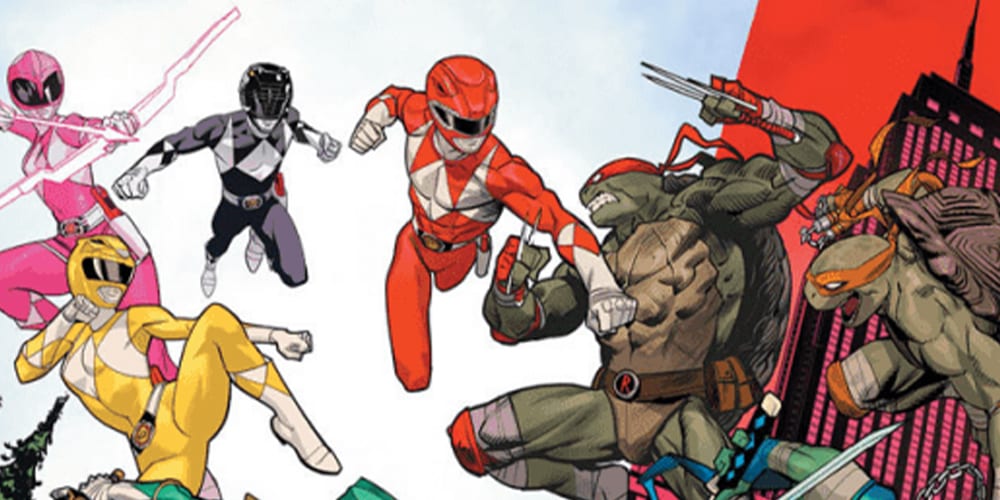
It may be 2020, but the ’90s were such a great time people can’t let it go, this rings true with BOOM! Studios (in partnership with IDW and Nickelodeon) Mighty Morphin’ Power Rangers/Teenage Mutant Ninja Turtles #2 where lovers of both respected franchises get the chance to relive his or her action figure crossovers.

What happened to never showing your secret identity?
Interior art by Simone Di Meo with assistance from Alessio Zonno. Colors by Walter Baiamonte with assistance from Igor Monti. Letters by Ed Dukeshire

Make sure to read our review for the first issue if you haven’t or pick it up from your local comic shop.

TALE WITH ATTITUDE

Akin to their respective TV series, MMPR/TMNT #2 is fast-paced with barely any slow down, yet, it never swerves into break-neck speed. Instead, the second issue (of five) is able to give a fair amount of new information effectively. While keeping some revelations in its pocket. Writer Ryan Parrott is able to achieve a great feat of making each conversation fun while being informative and important to the plot/characters. When the Turtles and Power Rangers interact, they stay true to their characters and play off of each other perfectly. The aforementioned excellent character interaction happens anytime the teams are on the page together, but hits exceedingly harder during an action moment.

During one fight scene, there is a conversation I’d like to note. Not due to what it’s about (pizza), but because of how Parrott wrote it. As the fight with the two teams and Foot Clan rage on, each member teams up with another from the other team to fight the clan. During this, the pairs of fighters banter back and forth to the reader’s great enjoyment. But, when Parrott jumps from one pair to another, we join them in the middle of a conversation, instead of the very beginning. This may not seem like much, but this joining in makes the scene feel real. This technique makes the fight feel as if everyone is having conversations we can’t hear (read).

MMPR/TMNT #2 reveals the reason why Green Power Ranger, Tommy Oliver, has joined the Foot Clan. At first, some readers may think it’s awkward writing, yet it’s entirely in line with how he is. This furthers the point of Parrott understanding what these characters are fundamentally about.


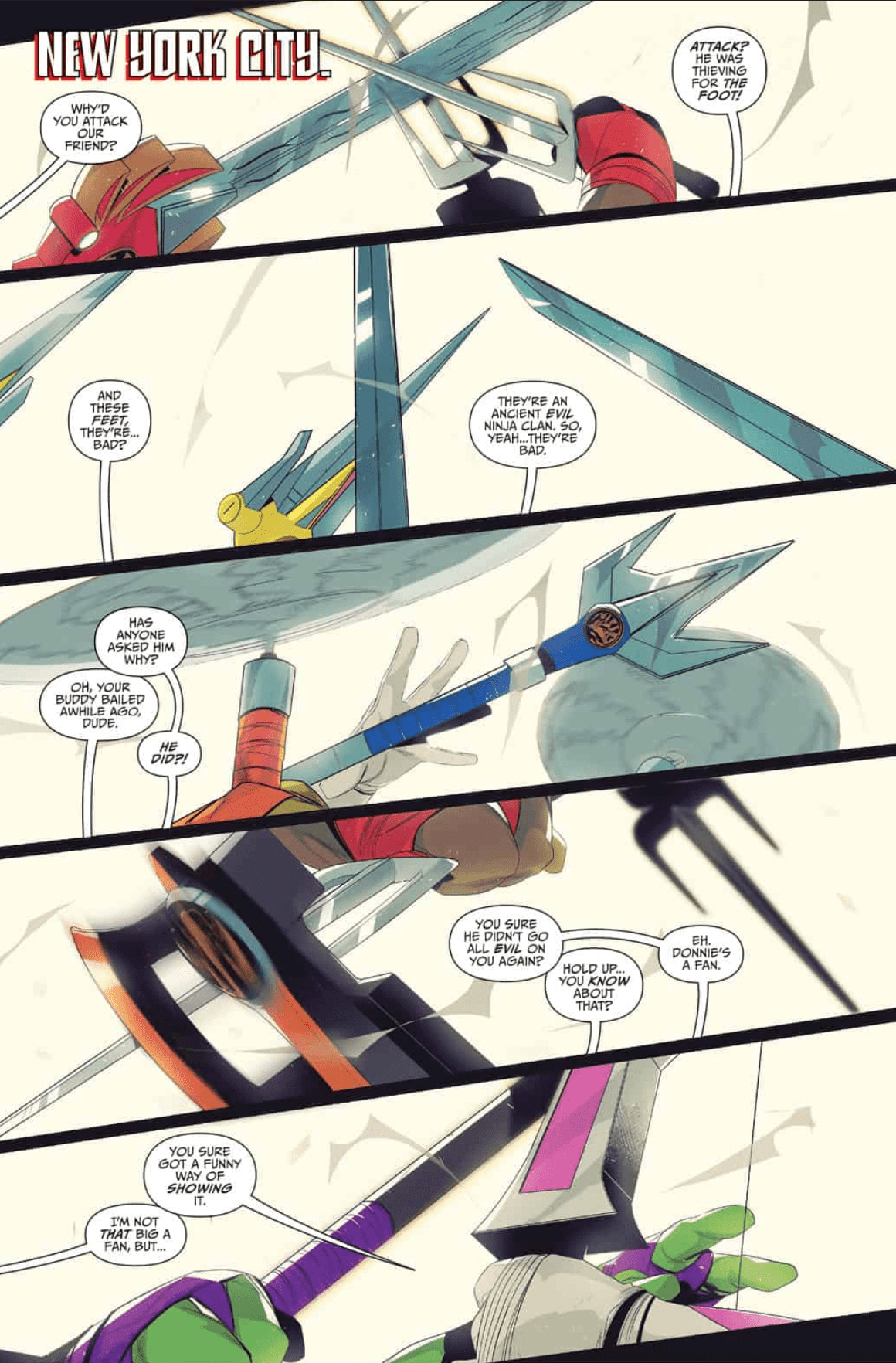
Great weapons opening page.
Interior art by Simone Di Meo with assistance from Alessio Zonno. Colors by Walter Baiamonte with assistance from Igor Monti. Letters by Ed Dukeshire

LEAN GREEN NINJA ART TEAM

Simone Di Meo continues the high energy art seen in MMPR/TMNT #1 into the second issue with assistance from Alessio Zonno. Each fight scene packs in a beautiful fluidity that feels like animation cells coming together for a cartoon. During the fights, the duo exaggerates some actions/movements, but it never looks weird or overdone. Instead, these exaggerations help make the battles feel alive with static energy, precisely what you’d expect from both franchises. Yet, the beautiful art isn’t limited to just action moments. When the story calls for the few slow-paced character moments, they literally break the panels.

The art duo makes sure that when characters are talking during non-action scenes, the panel they adorn is layered upon the others to make them pop. Another element that pops is the gorgeous colors by Walter Baiamonte with assistance from Igor Monti. During some scenes in MMPR/TMNT #1, the colors are too bright, which causes problems. But in MMPR/TMNT #2, this blight never occurs. Instead, the colors are vibrant and jazzy as they should be.

A great panel in a great issue.
Interior art by Simone Di Meo with assistance from Alessio Zonno. Colors by Walter Baiamonte with assistance from Igor Monti. Letters by Ed Dukeshire

One of the best moments of color usage is a more subdued one. When the Power Rangers unmask, instead of making it take a large panel or some big ordeal, the team makes it a smaller moment with minimalist motions. In this scene (shown above), when the masks deform – for a better word – it’s shown with a few colored shapes coming off their heads. It’s simple, yet one of the coolest moments in MMPR/TMNT #2.

In the previous issue, Ed Dukeshire’s lettering was a highlight with a mood mirroring the show while helping MMPR/TMNT #1 pop more. Dukeshire’s amazing lettering returns in MMPR/TMNT #2. Per usual, Dukeshire makes sure none of the letters obscure the are while helping the viewer’s eyes. On top of that great skill, he changes the format for words in a few cases that make said moment stand out more.

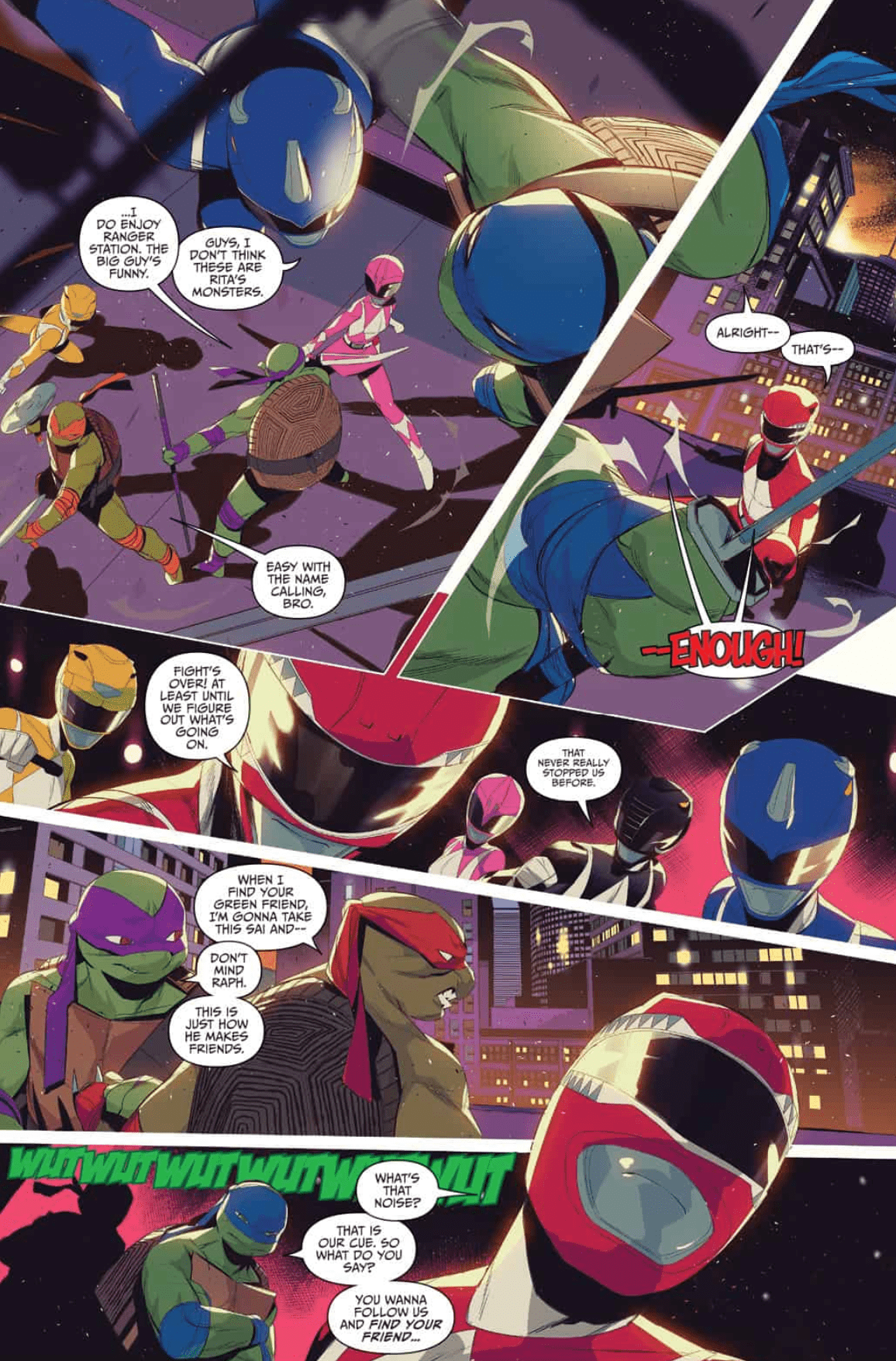
When the two leaders say enough then you know it's for sure enough.
Interior art by Simone Di Meo with assistance from Alessio Zonno. Colors by Walter Baiamonte with assistance from Igor Monti. Letters by Ed Dukeshire

Conclusion

MMPR/TMNT started with a solid issue that had a few minor hiccups. With the second issue, all of these blemishes have vanished, leaving a comic book that warrants a read if you’re a fan of either story. Even if you’re not a fan, the creative work inside is with your time.

Memorable Quote: “Just hit her in the head, guys don’t overthink it.” – Yellow Ranger

She does have a very valid point.

MIGHTY MORPHIN POWER READERS

What did you think of the second issue? Let us know down below. I enjoyed the first issue so much I went and started reading each team’s new comic series.

Monkeys Fighting Robots Youtube