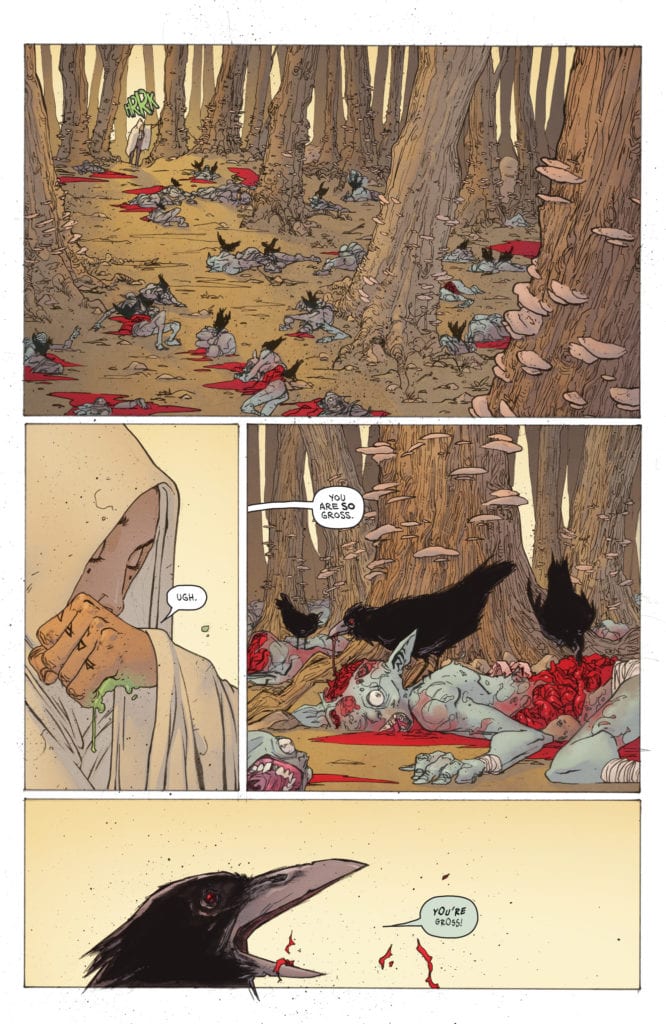
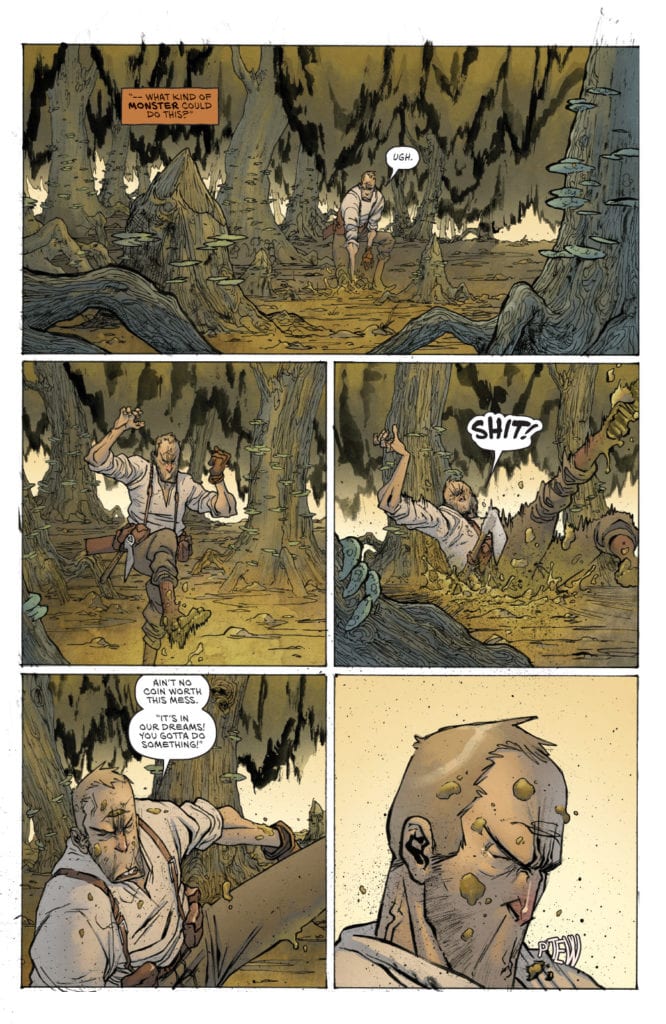
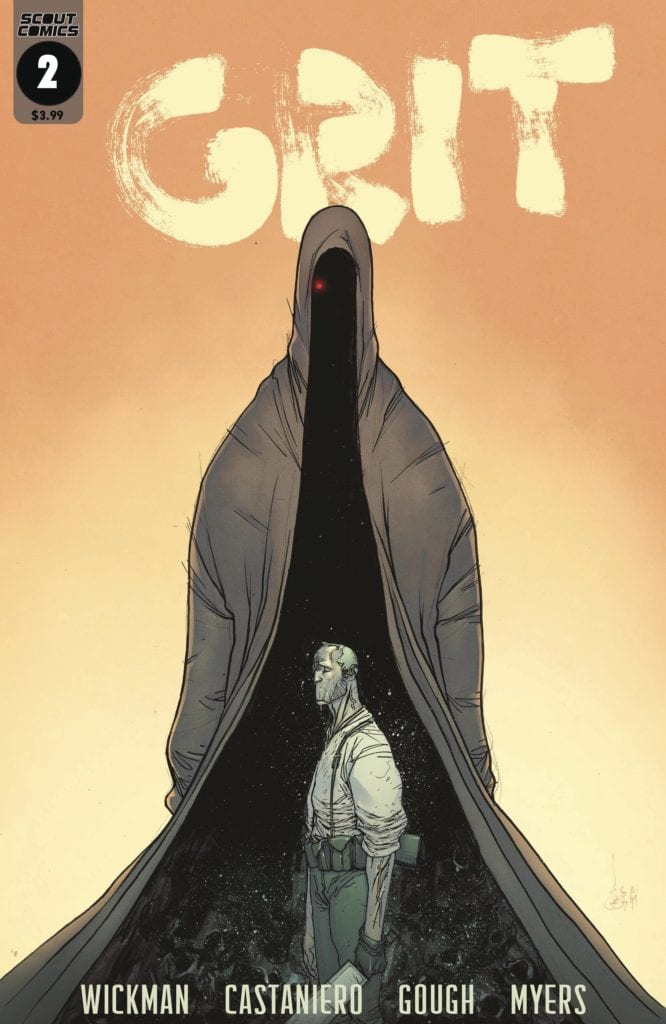
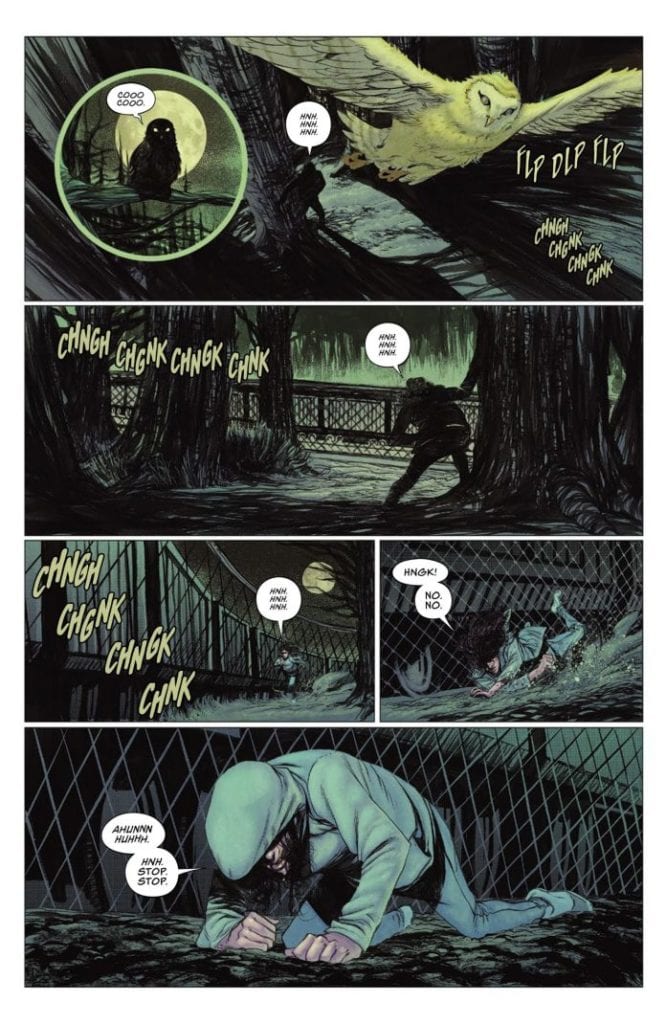
GRIT #2 hits your local comic book store August 26th, but thanks to Scout Comics, Monkeys Fighting Robots has an exclusive five-page preview for you.
The 3-issue series is about a cranky old monster hunter and the short-tempered witch who sure wishes he would stop slaughtering stuff. It’s what the creators are calling “Southern-fried sword and sorcery.”
About issue #2: When a mysterious wanderer comes across a mound of slaughtered goblins, she wants answers, and all signs point to Old Man Barrow. Unfortunately for him, she decides to mount her interrogation while he’s knee deep in the swamp, hunting a dream hag. If there’s one thing Barrow hates more than a witch, it’s two witches. Things ain’t looking pretty for our hero, y’all.
GRIT #2 is by writer Brian Wickman and artist Kevin Castaniero, with colors by Simon Gough, and letters by Micah Myers.
In his review of GRIT #1, MFR critic Gabe Hernandez called the story “BONKERS” and said the comic is “both rustic and dripping with fantasy gore.”
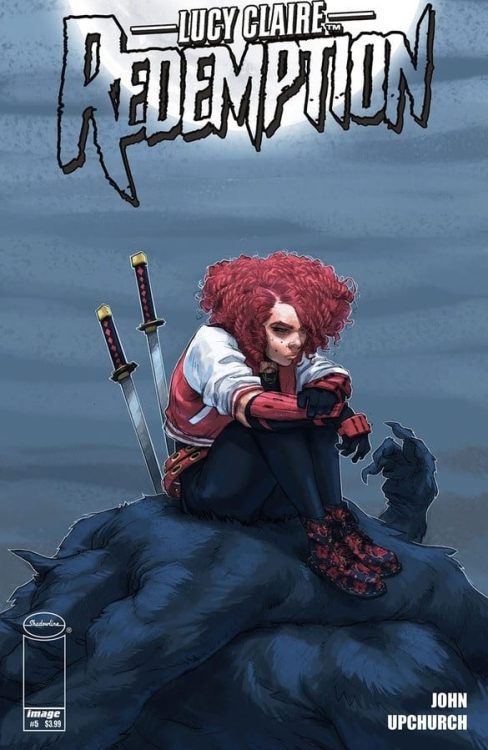
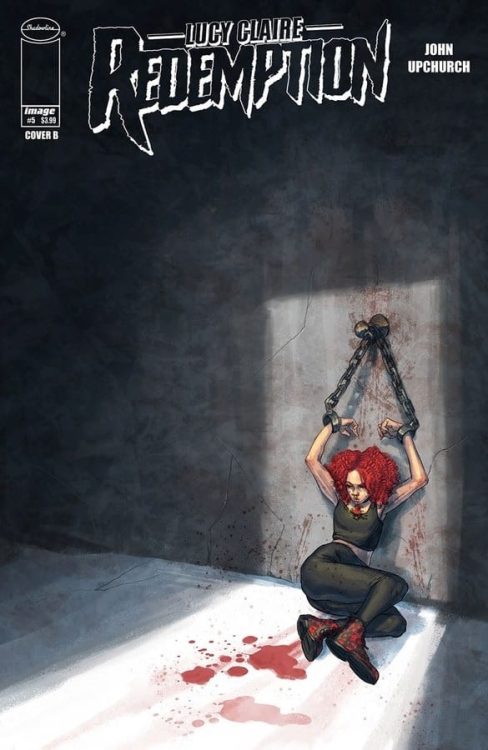
Lucy's past is catching up to her in Lucy Claire: Redemption #5.
LUCY CLAIRE: REDEMPTION #5, available this Wednesday from Image Comics, is about to up the ante for this werewolf hunting group – and their conflicted leader.
Lucy’s past is catching up to her in Lucy Claire: Redemption #5.
***SPOILER WARNING***
Lucy Claire: Redemption is one of those series that deserves more attention for the feats it is pulling off. John Upchurch is the writer and artist for the entire series, an act that is certainly a labor of love.
Once upon a time, Lucy Claire was a famous werewolf hunter. That’s all in the past now, or at least, it almost was. Now she’s been pulled to the forefront of another war, as wolves come crawling out of the dark.
As does her past. There’s a reason Lucy lived in a state of disgrace, and why she let herself fall so low. Now readers are about to learn the full truth and all of the complications that come with it.
It’s safe to say that Lucy is not in a good place in Lucy Claire: Redemption #5.
The Writing
Lucy Claire: Redemption #5 is a harrowing read, for a variety of reasons. The issue starts off with Lucy in a rough predicament, one that might be upsetting for some This scene is made even more intense by the implications of who is involved.
From there the issue moves rapidly forward, which is both good and bad. Bad, because there are still so many questions left unanswered. Good, because we’re back to seeing Lucy in a state where she can hold herself up – and she’s willing to fight with everything she has.
It’s this balance that made the issue so intense and intriguing. The hints of the past, along with references to what could be. Upchurch has made no effort to hold the reader’s hands through this journey, yet that in itself has proven to be the right move. The careful unveiling of the past has only increased emotional investment, rather than decreasing it.
One thing is certain: there’s a fight brewing on the horizon. It’s impossible not to detect that fact, just like it’ll be impossible to avoid rooting for Lucy and her side of this impending war.
The Art
As mentioned above, John Upchurch was responsible for all of the artwork in Lucy Claire: Redemption #5. It’s still an incredibly impressive feat, even five issues in. The series has such a distinct look and feel, and it has truly heightened the story to all-new levels.
This is an issue full of rapidly transitioning scenes, yet it wasn’t difficult to follow what was happening. In fact, almost all of the focus goes towards what is being said (and what is being left unsaid). Something Upchurch encouraged by creative panel usage.
The fight scene that inevitability follows is worth seeing as well, if for no other reason than having the satisfaction of knowing it happened. It’s a fast-moving fight, making it all feel more realistic because of it. This is a brutal fight, with no room for pretty moves or fancy dodges. It suits this world in more ways than one.
Conclusion
Lucy Claire: Redemption #5 is another intense addition to this series, one that does not feel inclined to pull its punches. Thankfully, it also is starting to let readers get a glimpse into Lucy’s past – and hinting at what she’ll do to get her future (and family) back).
Carol Danvers is taking a different sort of flight in Marvel Action: Captain Marvel #6.
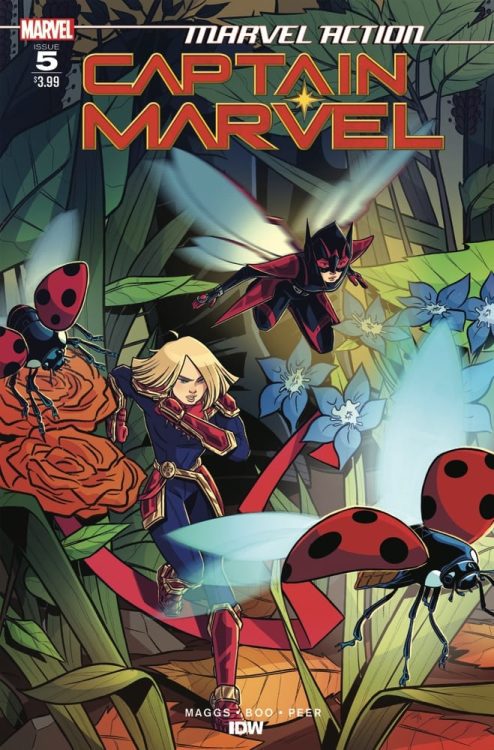
MARVEL ACTION: CAPTAIN MARVEL #6, available this Wednesday from IDW continues this bite-size adventure following Captain Marvel and the Unstoppable Wasp.
Carol Danvers is taking a different sort of flight in Marvel Action: Captain Marvel #6.
***SPOILER WARNING***
The last few issues of Marvel Action: Captain Marvel have focused on the dynamic duo that is Captain Marvel and the Unstoppable Wasp (aka Nadia). Well, they’re actually a relatively new dynamic duo. But they’re clearly still having a ton of fun while saving the day.
It’s also been a bit of a learning experience. After all, Carol Danvers isn’t used to getting shrunk. Or being told that her powers are too unsafe to use. On the bright side, it’s interesting to know that she is potentially too powerful when in her tiny form, thanks to the physics of the Pym Particles (not that Carol saw it that way).
These two heroines are going to have to put their heads together in order to stop the latest villainous plan from A.I.M. Granted, it’s a bit hard to take any plan titled ‘Operation Roadkill.’ Even if said plan involves the squashing (literally) of the toughest Avengers out there.
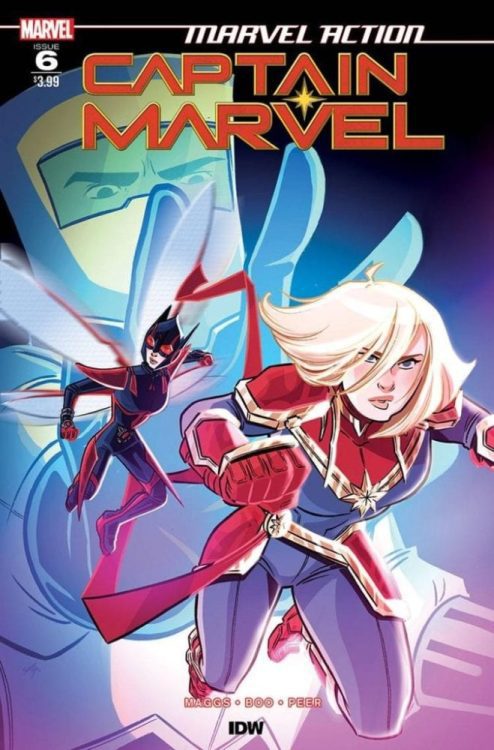
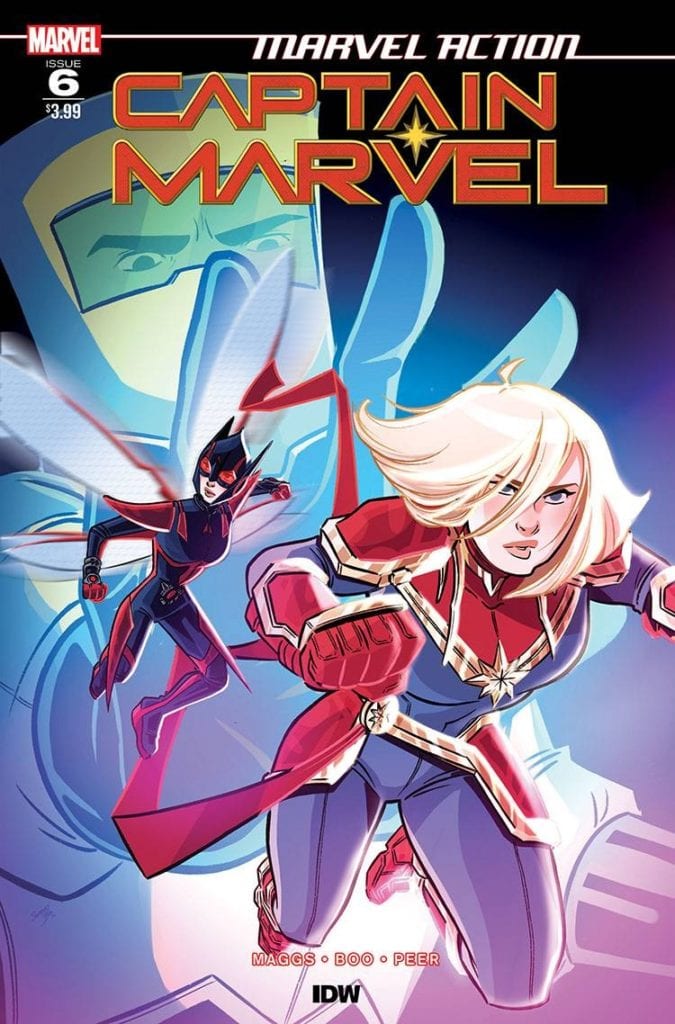
Captain Marvel and The Unstoppable Wasp have shrunk down in Marvel Action: Captain Marvel #6
The Writing
Sam Maggs really does know how to write a fun and charming plot. Marvel Action: Captain Marvel #6 is a fun adventure, giving both Captain Marvel and the Unstoppable Wasp a chance to shine, and show off the differences in their abilities.
It’s also so painfully refreshing to see a series avoid taking itself too seriously. Even the characters involved make fun of ‘Operation Roadkill’ and all of the implications (despite the threat it carries). It really is just a bit of fun.
Conveniently placed items make it even easier for our girls to save the day. One could argue that it’s too perfect…but since it results with Tony getting a hot pink car it kind of evens out. At least, on the humor scale.
This issue wraps up this latest adventure, though it does hint at more Marvel Action: Captain Marvel adventures in the future. So far, each arc has consisted of three action (and fun) filled issues, a trend that is not likely to be broken.
The Art
Marvel Action: Captain Marvel #6 had a great team of artists backing up such a fun and quirky plot. Sweeney Boo (pencils, inks), Brittany Peer (colors), and Christa Miesner (design and letters) were the three dominant artists on this team, and they had a little bit of fun with this issue.
Then again, how often is one allowed to design the most absurd replacement car ever for Tony Stark? Hard to avoid having a bit of fun with that whole mess. Then there are other fun elements, such as a teeny tiny Carol Danvers, complete with a pout – and a costume redesign.
The colors are as bright and bubbly as the characters within. Considering we’re talking about Nadia, that’s actually saying something. Obviously, Nadia’s inclusion also meant that there was plenty of room to play with scale. That’s something the artists did with gusto.
Conclusion
Marvel Action: Captain Marvel #6 was a fun diversion from the real world. You can tell that this is a series designed for all audiences – including younger generations. As such, it’s pretty casual, yet full of iconic and funny moments.
This issue wraps up the latest plot arc. Though it does give the impression that there will be more adventures to come. Until then!
GRIT #2, available on August 26th from Scout Comics, introduces witches and herbomancers to Barrow’s current assignment, as he learns his last battle isn’t over just yet. Written by Brian Wickman and drawn by Kevin Castaniero, this issue picks up right where issue #1 left off (read our review here) and replaces the gore-soaked action with stellar character development without losing a lick of style or tone.
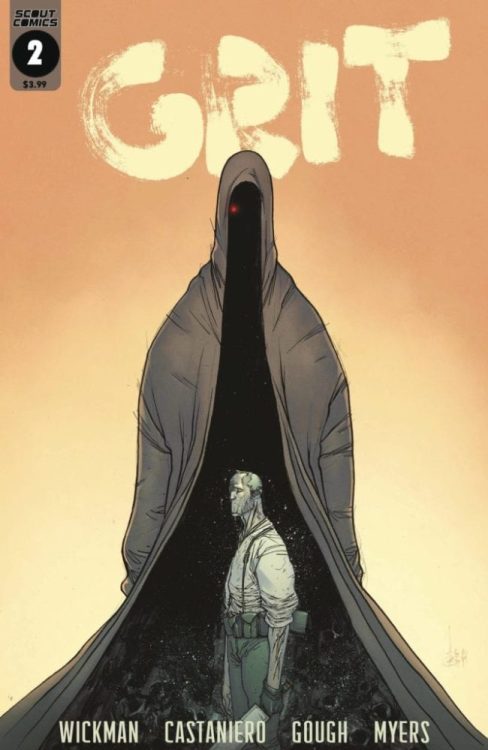
Castaniero’s cover style from the first issue to this one emphasizes an expert grasp on single-point perspective that packs a punch. Barrow is standing unflinchingly before the towering specter of the issue’s cliffhanger antagonist. That’s right, you don’t get to the big bad until the end, but it’s quite an entrance.
Writing
Wickman’s story, as noted, swaps out all-out gore action with backstory and character introductions. Through the clever use of a Bog Mother, you get an brief but effective setup for Barrow’s origins. Ari the Herbomancer comes in to save the day, but not before giving you plenty of foul-mouthed language and impressively organic dialog that tells you exactly where the story is going.
I liked Barrow and the world Wickman & Castaniero built in the first issue. This entry takes that development even further, and it’s thorough entertainment on every single panel. There’s a scene involving a “little birdie” that caught me off guard in a highly amusing way.
Pencils/Inks
Castaniero’s art is stylistic, and it suits Wickman’s world to a T. The swamps are sufficiently slimy and muddy. The Bog Mother’s design is familiar and unique at the same time, reminiscent of Meg Mucklebones from Legend (1985) but still wholly unique for this setting.
There’s a Mike Mignola quality to Castaniero’s art that gives each character an exaggerated anatomy during certain sequences, particularly with the use of long face, long limbs and sloping shoulders. It’s this style choice that infuse the characters with a plasticity that makes their movements and gestures more dynamic.
Coloring
Simon Gough’s coloring builds on his ability to infuse the issue with so much brown and yet keep the surroundings and characters distinctive. Everything is covered with the muck and mire of Southern woods after a heavy rain. Barrow and Ari are clothed in simple farmers clothes, and the overcast skies are absent any hint of bright color. In any other hands, the issue would be largely drab and dull, but Gough finds the right combination of hues to keep the woods alive.
Lettering
Micah Myers lettering makes excellent use of color to delineate dialog between the humans and otherwordly beings. Specifically, the Bog Mother’s dialog uses a dark ash fill but the effective use of bright yellow for the letters and bubble borders makes her dialog pop. Overall, the lettering placement is very unobtrusive so as to let the character art breathe, and it’s very well done.
Conclusion
GRIT #2 adds in character development and story to breathe new layers of life into this Southern High Fantasy world. Wickman’s story shifts multiple gears from last issue without losing any of the spark, and Castaniero’s art blends with the story perfectly. I’m eagerly anticipating the next issue.
Role playing games have, on occasion, been the source for works of fiction, take the George R. R. Martin line of books Wild Cards as an example. A series of books that first appeared in 1987 and new releases are still coming out. Dungeons and Dragons is growing in popularity again and feeding back into geek culture: Kieron Gillen and Stephanie Hans’ Die from Image comics is a modern, dark fantasy set firmly in the world of D&D.
It will come as no surprise, then, that another popular role playing game would make it’s leap into the realms of comic book storytelling. Vault Comics newest title, Vampire The Masquerade, takes the complex hierarchical vampire society from the game and imposes it onto a very modern world. The comic features the start of two tales, each featuring a female lead from a different caste of vampire.
Vampire The Masquerade #1 Credit: Vault Comics
Feeding Frenzy
Vampire The Masquerade, the game, was created in 1991 by Mart Rein-Hagan and was set amongst a society of undead, all struggling to survive in the modern world. One of the main premises behind the role playing game was that the vampires were working behind the scenes, hidden from society. It switched the players from being hunters of evil creatures to often misunderstood demons, scratching out an existence. Ultimately it’s Anne Rice’s Vampire Chronicles in game form.
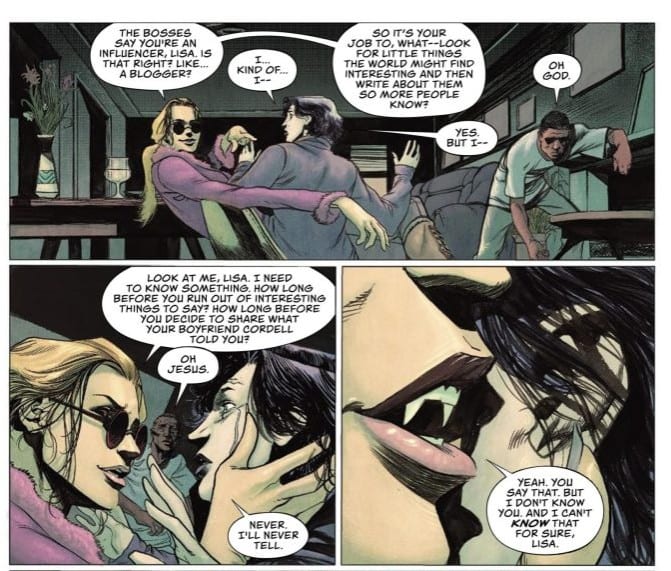
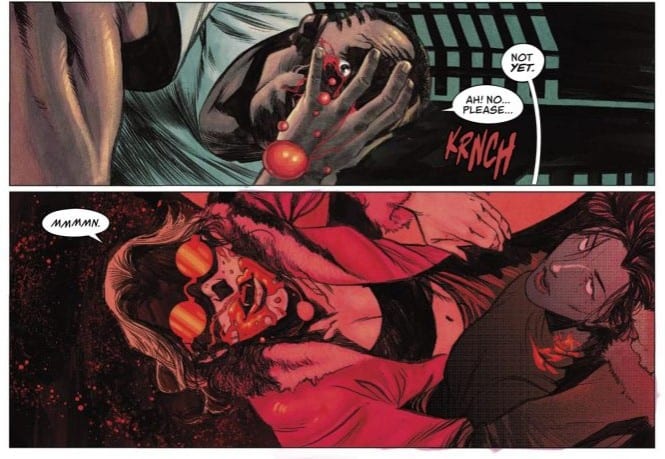
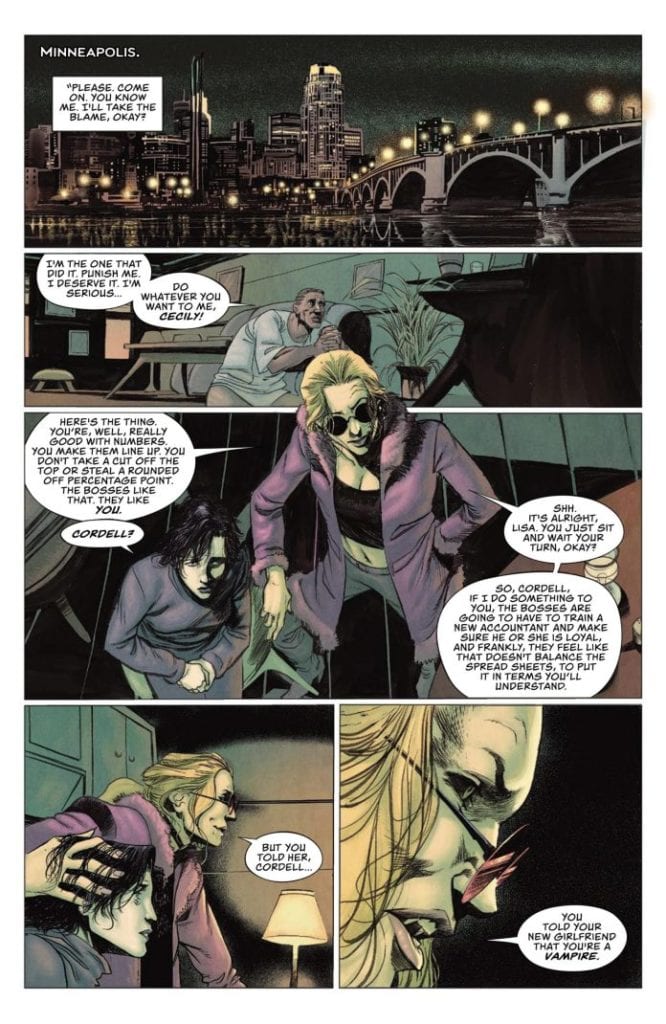
In the main feature of the comic, Winter’s Teeth, Tim Seeley and Devmalya Pramanik introduce the readers to Cecily, a violent vampire enforcer. She is shown to be a cruel, almost heartless, monster in her opening scene but Seeley and Pramanik also manage to make her sympathetic. Maybe this is because they dress her in a Duran Duran t-shirt; a reference to a band that has been linked with a number of modern vampire tales.
The musical theme is carried through the scene with Cecily singing a traditional German song that became popular in America in the early 19th Century. This reference infers the timelessness of the vampire, hinting at her age, whereas the Duran Duran reference indicates that she is still a part of modern society. Whereas some vampires are removed from the modern world, Cecily is shown to take an interest in it.
As the story progresses Seeley uses Cecily to lead the reader into the world of Vampire The Masquerade. Through her the complex society of the undead is revealed and with it the indications that a clan war is on the horizon. This is where Seeley digs deep into the myths of the role playing game and draws out elements gamers will find familiar. This does not, however, impede the storytelling. Seeley is clever enough to weave the game elements into the fabric of his story without them standing out like a punk rock patch on a 17th Century courtesan dress.
Vampire The Masquerade #1 Credit: Vault Comics
Vampire Tropes
Stories involving Vampires go through waves of popularity, with each crest containing a mass of unoriginal undead tales and a few experimental genre twisters. The success of each often depends on the audience it is aimed at. Twilight for example was extremely popular for a short time, de-fanging the vampire and turning the demon into a cute puppy for teenage girls. But there have always been more violent, horror focused alternatives, especially in comics books. Titles like 30 Days of Night and American Vampire are more fierce with an emphasis on the bestial nature of the undead beast.
With Pramanik’s visuals, Vampire The Masquerade falls somewhere between the two extremes. He mixes the precise outlines of characters with scratchy, pitch black shadows that devour the scenery like the bloodthirsty creatures he draws. There is an eloquence to the cast that is bathed in violence and abstract horror. Some of the panels capture the sublime beauty that made Bram Stoker’s original novel, Dracula, such a classic.
As you move through the story you begin to get a sense of what it is to be one of these lost creatures of the night. This is the comics greatest strength and is more impressive than the story itself. The emotional impact outweighs the blend of vampire mythologies that form the basis of The Masquerade’s role playing attraction. Here, Seeley and Pramanik are more concerned with telling an engaging story than they are feeding fans of the game franchise.
Vampire The Masquerade #1 Credit: Vault Comics
The Anarch Tales
The second tale in the comic is written by Tini Howard and Blake Howard and focuses on the outcasts of the Vampire Society. A group of misfits, led by Colleen Pendergrass, etch out a living, sourcing blood wherever they can get it. Colleen was part of an abusive relationship before being sired by her husband, itself an act of abuse, and continues to live in such a world. Her husband, Mitch, is tellingly introduced to the reader in his canine form. There is no subtlety in the characterisation in this chapter of the comic.
This element of the comic starts off like an episode of What We Do In The Shadows but without the humour. The Howard’s introduce an array of creatures, each a deformed stereotype but, just like the preceding story, there is a charm to the way the tale is told. Surprisingly, the cliches don’t grate and the intrigue inherent in the story doesn’t allow you to question what you are reading.
Nathan Gooden’s freer art style gives the pages a lot of momentum. The story feels as though it has a fast pace even though not a lot actually happens. His characters have a clear definition but the setting is more of an emotional construct; an idea of a place as opposed to an actual location. Above all else Gooden’s design has a much needed element of fun.
Linking the two stories together is the color work by Addison Duke and the lettering by Andworld Design. Both of these elements are consistent throughout the comic helping to create a single believable world for the characters to inhabit. Duke darkens the backgrounds but uses brighter, solid colors to make the characters pop from the page. He gives them an otherworldly appearance in a murky, realistic landscape. Andworld Design gives the vampires presence on the page, with subtle alterations to the text to emphasise verbal inflections. The lettering enforces the powerful nature of the vampires by placing their speech balloons over those of the humans.
Vampire The Masquerade #1 Credit: Vault Comics
Conclusion
Vampires seem to be making a bit of a comeback, at least in comic books. Later this year Image releases Dracula, Motherf**ker by Alex De Campi and Erica Henderson which is a more experimental take on the vampire genre. Vampire The Masquerade is a more traditional vision of the undead and plays into the history and mythology of vampirism. Just like the role playing game, it draws inspiration from many places; movies, novels, folklore.
The two tales contain elements of the role playing that will be recognisable to those familiar with it but in neither does this hamper the storytelling. Ultimately this feels like an excuse by Vault to tell some modern vampire tales and the creators do a good job. A title like this does have a limited appeal. If you have no interest in vampires then this comic isn’t for you as it doesn’t offer much beyond the thirst for drinking of blood. However, if you enjoy a bit of horror, and like grown up vampire stories, then Vampire The Masquerade should be right up your street.
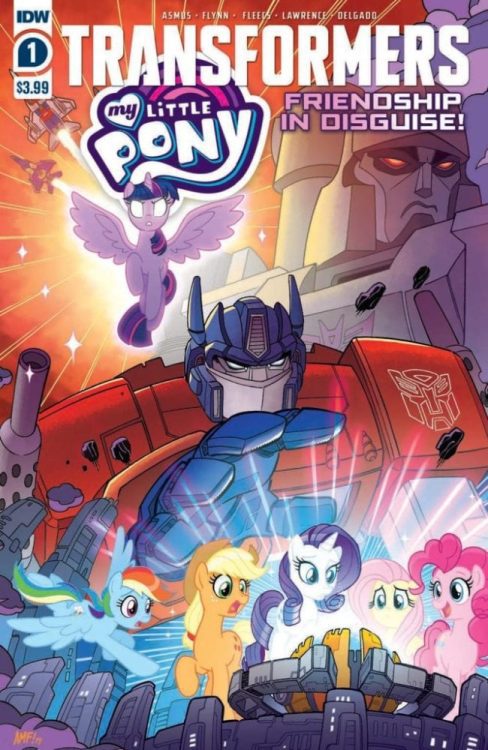
My Little Pony/Transformers #1 by James Asmus, Ian Flynn, Tony Flees, Jake M. Wood, Jake Lawrence, Luis Antonio Delgado, and Neil Uyetake brings two of the biggest franchises together for an entertaining experience. The prospect alone makes for an intriguing read, as one of the most recognizable Sci-Fi series crosses over with one of the most popular Fantasy series in recent years. Luckily for the fans, the issue is more than worth the purchase price.
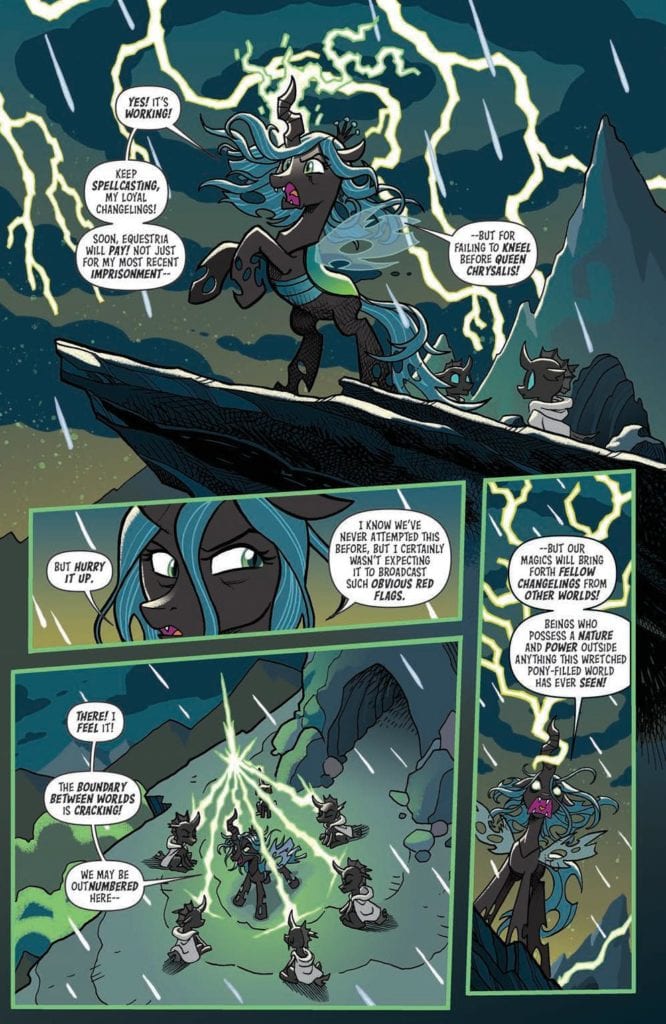
When Queen Chrysalis casts a spell looking for more changelings, she accidentally interferes with a malfunctioning Spacebridge! What’s this mean for our favorite fillies? There are suddenly a bunch of Autobots and Decepticons in Equestria!
Writing
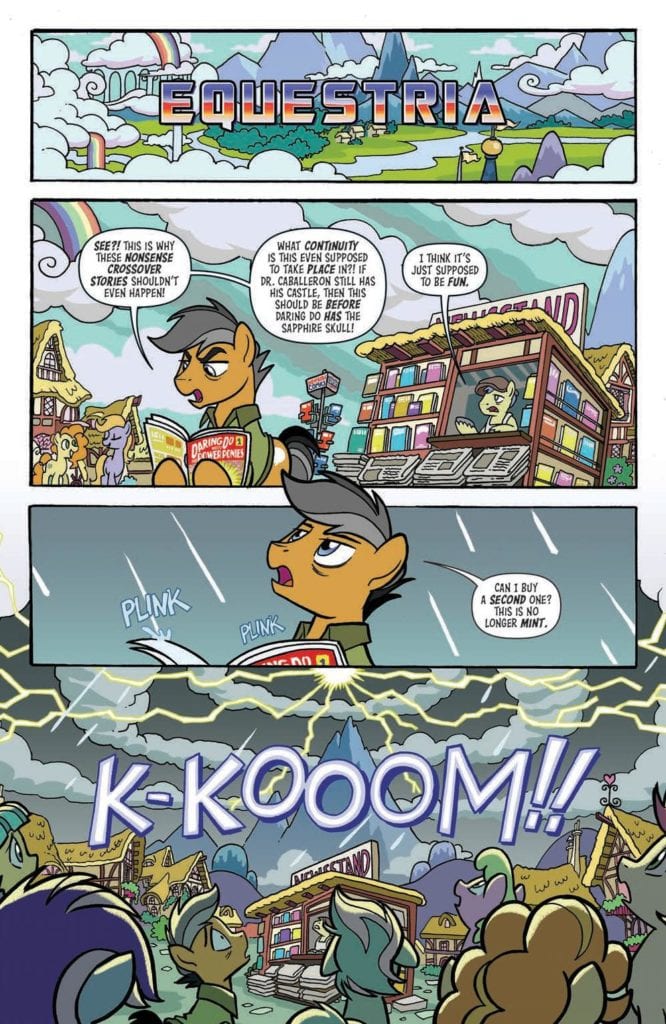
The issue offers two stories from different writers. The first one, “Transformation is Magic” by James Asmus makes it a point to set up the entire mini-series and let the reader know not to take the story too seriously. Just enjoy the fun of it. The many winks and nods in this story are very welcomed and are genuinely hilarious. Making sure comedy lands in comics is no easy task but Asmus manages to pull it off.
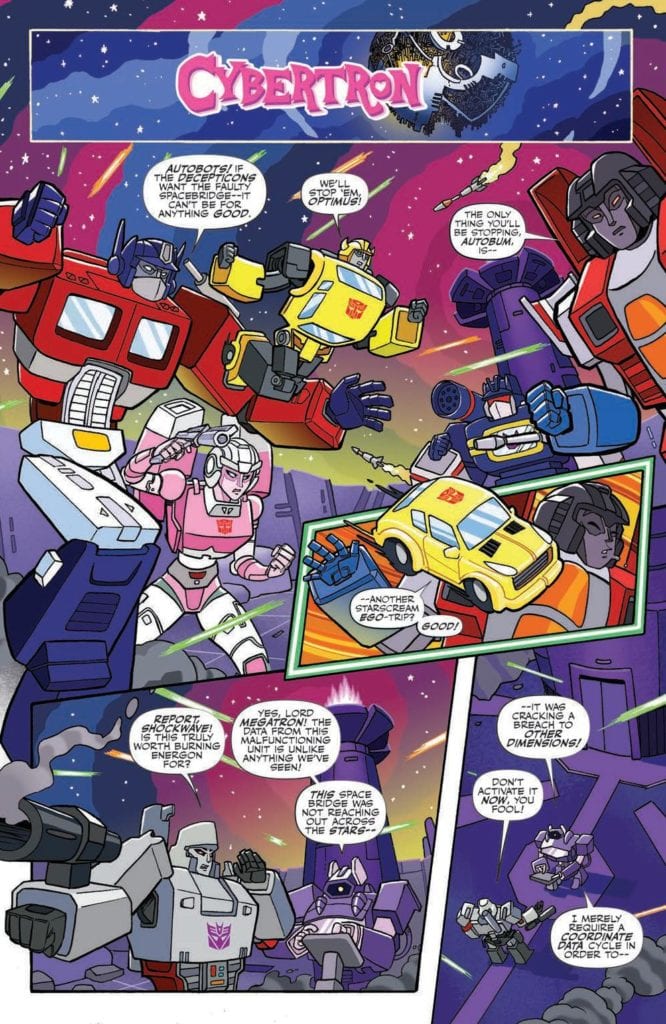
The second story, “Shine like a Diamond” by Ian Flynn focused on how the characters from the two franchises will interact with one another. Here, Rarity and Arcee have to team up to defeat Starscream. Though one would think a more flamboyant Autobot like Tracks would fit with Rarity, the story conveys the pair finds a way to work together for their goal. The story works well and sells the idea this mini-series is worth checking out.
Artwork
The artwork by Tony Fleecs and Jack Lawerence well with each of the stories they are helping to tell. With Tony Fleecs his artwork helps to present the more comedic aspect and deliver the jokes of the first story. Meanwhile, Lawrence’s work offers a sharp look for Arcee as she fights with Rarity offering back up.
The coloring by Tony Fleecs and Luis Antonio Delgado compliments the pencils and inks they are working with. Tony Fleecs’ color finds a way to accentuate both the magical and scientific effects as the Autobots are drawn to Cybertron thanks to the spell of Queen Chrysalis. With Delgado’s work it’s impressive how the sharper color of the Transformers is mixed seamlessly with the softer colors of the Ponies without it coming off as distracting.
The lettering work by Jake M. Wood and Neil Uyetake conveys a powerful auditory aspect to the issue. The work by Wood offers fantastic placement of word bubbles resulting in perfect delivery of the jokes being told. Meanwhile, the lettering by Uyetake works to compliment the action scene as Rarity and Arcee take on Starscream with sound effects adding to the flow of the panels.
Conclusion
From the very beginning of the issue, My Little Pony/Transformers #1 makes it clear fans are supposed to have fun with this series. Luckily there is plenty of fun to be had in the issue between the comedy and how well the characters interact with each other. It will be amusing to see the other ponies and Transformers interact with each other in the other three issues of the mini-series.
Playing at drive-ins across the United States and in homes later this year is the supernatural thriller Followed, which takes viewers on a terrifying ride that’ll change the way you look at vloggers and elevators. Composer Jason Soudah took to the studio to layer the film with a soundscape designed to scare the pants off of viewers.
Followed is the story of DropTheMike, a controversial vlogger in the vein of Logan Paul or PewDiePie who goes missing while exploring a haunted hotel. Mike’s channel has surprised 50,000 subscribers by delivering mostly tasteless videos with the help of his crew. In this case, Mike is exploring the Hotel Lennox, the site of grisly murders that went unsolved. Urban myths claim the hotel is haunted; viewers are taken on a wild ride to learn the truth.
PopAxiom and Jason discussed making the music for Followed and his movie-like road to great opportunities.
Music Maker
Jason’s connection to music began as early as four or five years old when he “… started playing piano … One of my older cousins played piano, and she used to get all us grandkids together to put on shows for the family.”
A few years later, for reasons unknown to Jason, a now seven-year-old started “… writing rubbish songs. I just wanted to write my music from quite a young age.”
For Jason, creating music never stopped, and it “… lead to playing piano and keyboards in bands; learning the guitar.”
Like any kid of the past few decades, Jason “… grew up with movies like Star Wars and Back to the Future and score-driven films …” Naturally, he fell, “… in love with that kind of music.”
Possibilities
Jason played live shows with the band while flirting with scoring by creating “… music for small films and theatrical productions at college. But I still focused on becoming a singer/songwriter.”
Around 2006, the young musician’s skills as a pianist earned him work on “… an album with Sylvia Massy and Michael Ross …” Jason recalls them “… saying that my piano stuff should be in movies. But I didn’t know if I could do that because I could read music but not particularly well. They were quite encouraging to go into that world.”
Another spark setting Jason off in the direction of film scoring was an interview with legendary composer Hans Zimmer who discussed, “… how he uses technology to make music … I found that inspiring. It opened my mind to the idea that it’s possible to do it without classical training.”
Random Encounters
Jason continued to work as a singer, songwriter, and engineer.” I got introduced to people through ASCAP at music conferences. I got connected to Simon Greenway in London who specialized in film music. He told me about this place in LA called Remote Control.”
Little by little, these encouraging moments added up. One night, an old-school friend showed up watch Jason perform at a show. They rode home together. “I told him that I was craving playing the piano because I hadn’t played a real piano in a long time.
Jason’s friend answered, “Oh, you should come in, my girlfriend and I have a piano, and it’s all sound-proof.”
“So, I go into this very up-market London townhouse …” Jason says, “… At the end of this huge library, there’s a massive, nine-foot grand piano. So, I start playing.”
Perhaps feeling the room’s presence, Jason says, “I turn around, and there’s a studio space behind me with awards on the mantle. It turned out that my friend’s girlfriend was Michael Kamen’s daughter.”
To continue expanding his musical career, Jason and his wife moved to LA circa 2009. Jason was having a drink with a friend. “My friend brought a friend who was also from London. I told her I was a musician and interested in scoring. She started asking me some detailed questions, and I asked, ‘How come you know so much?’ She said her dad was a composer. Later that evening, she says, ‘My dad’s studio is just up the street if you guys want to check it out.'”
Jason was excited to see a studio. “I was expecting some small, garage studio, and we get there, and she points to half a block and says ‘This building’s my dad’s and this building …”
“We go in … and sit in this huge, red, dimly lit room with equipment everywhere. I said, ‘Who’s your dad?’ and she replies, ‘Hans Zimmer.'”
“It was like something was trying to tell me this [composing] is something I need to get into.” Jason thought and says, “As soon as I took the plunge into the film scoring world, it seems to me that everything started moving faster than it had.”
Intern To Assistant
Once Jason was able, Zoe Zimmer introduced the up-and-coming composer to the studio manager. Zoe made no promises but did offer little tips about keeping her dad happy. “… her dad doesn’t like cold Coca-Cola, so if you get one for him, get it straight from the cupboard. Little things like that, so I wouldn’t get fired right away.”
Jason was eager to dive into whatever work came at him at Remote Control. “My second morning there, I asked to go to Matthew Margeson’s room, a composer on campus. I thought it was about getting him lunch or something, but when I walked in, he had my resume. He interviewed me and hired me to be his assistant on a trial basis.”
Jason’s run as Matt’s intern assistant was short-lived. “Matt trained me on how to run a studio. I did that for about two months …” But it wasn’t the end for Jason “… Matt was able to hire me full-time. I worked for him for about three years as his assistant. Gradually, I got to the point where I was writing cues.”
Jason leaves no doubt, “That opportunity was so good, and I was determined to do my very best and make sure Zoe didn’t regret introducing me.”
During this time, Jason’s support system, his wife, had his back every step of the way. “For the first five weeks I wasn’t getting paid, and then, it’s not like studio assistants make a lot. There were nights I’d come home super-late or even days where I’d be sleeping in the studio. She’d bring me clothes and stuff like that. I couldn’t have done any of it without her.”
Working at Remote Control did involve things like “Panic attacks and sleepless nights and working on multiple projects at once.” But Jason says of this experience, “It’s great training. Any time that I’m in a stressful situation on a new project I can say ‘I’ve done this before and it’s going to be fine.'”
Jason adds, “It was a great experience being in that studio. There are so many people working hard, and we all learn from each other. I’ll be chit-chatting with someone in the car park, and they’ll say ‘Oh, I need some guitar on this,’ then I end up doing guitar for someone.”
About Followed
Getting the gig for Followed in 2018 involved “… another random meeting. I was in Venice Beach looking for a sushi restaurant. I ask a random woman, and she was English, so we got to chatting. She ended up inviting me to a Thanksgiving gathering she was having. We ended up chatting with Todd Klick, the writer of Followed. We became friends that night. He’s a huge Hans Zimmer fan and fan of music.”
Jason’s relationship with Klick, well, clicked. “He came by the studio and came by a few shows when I was still performing in LA. He introduced me to Antoine Le, the director, and Matthew Solomon, the lead producer. They came around my studio, and I played them an idea I had, which they liked.”
As Klick, Le, and Solomon neared the post-production phase of making Followed, and they called Jason. After watching a rough cut of the film, Jason, “… based the first idea on the Korean Elevator Game. For the main melody, I assigned notes on the piano a number and then followed the sequence of floors, which gave me the melody.”
The Korean Elevator Game goes by other names but mainly involves riding elevators in specific patterns. Jason explains, “In the game, when you freak out and want to come back, you’re supposed to do everything in reverse order. Later on, I had another idea for the sort of ‘friendship’ or ‘love’ theme. We called it the ‘Come Home Suite.’ Surprise, surprise, I a melody with those notes in the reverse order and put nicer chords under it to make it sweeter, which was Antoine’s favorite.”
Followed features a mix of music that includes a healthy dose of hip hop. “On a couple of tracks, I got teamed up with a rapper. He came in a performed on a couple of tracks.”
Jason doesn’t recall there being a lot of references to the music of other movies. He says, “Antoine wanted to feel the music, so I used a lot of sub-bass and low-end. So, sometimes the cue is barely audible, but you’ll feel this rumbling … something uneasy to make viewers feel on edge.”
Wrapping Up
The conversation turns to influences and Jason, those other artists who inform his creative DNA. “Definitely Hans Zimmer. Before I even had a window into his world, I was a big fan and continue to be. He’s always pushing boundaries with music and his work ethic. Also, his collaborative nature.”
Jason continues, “Michael Jackson was a big influence. Engineer Bruce Swedien had a massive influence on me and his recording techniques. Dr. Dre and The Chronic. Mixing funk and hip-hop beats. Pharrel as well. I’m a huge fan of the Goo Goo Dolls and Paramore.”
When asked about getting his hands on a dream remake, Jason says, “I would love to have a go at Memento. I love the music, but that film was groundbreaking for me. The way the story was told. That would be one I’d love to have a go.”
Memento isn’t the only thing he’d like to do. “I’d love to do something like a Bourne film … action-thriller-mystery. I love the way John Powell had that cello, and bringing in what to me is British dance beats and middle-eastern drums. I love music that’s not stuck in one sonic palette.”
Followed is out in theaters and drive-ins. Fans can also request that the film gets released on a screen near you. “They’re talking about doing a sequel to Followed. I’m working with another group of filmmakers on a project called the Daugherty Gang based on a true story.
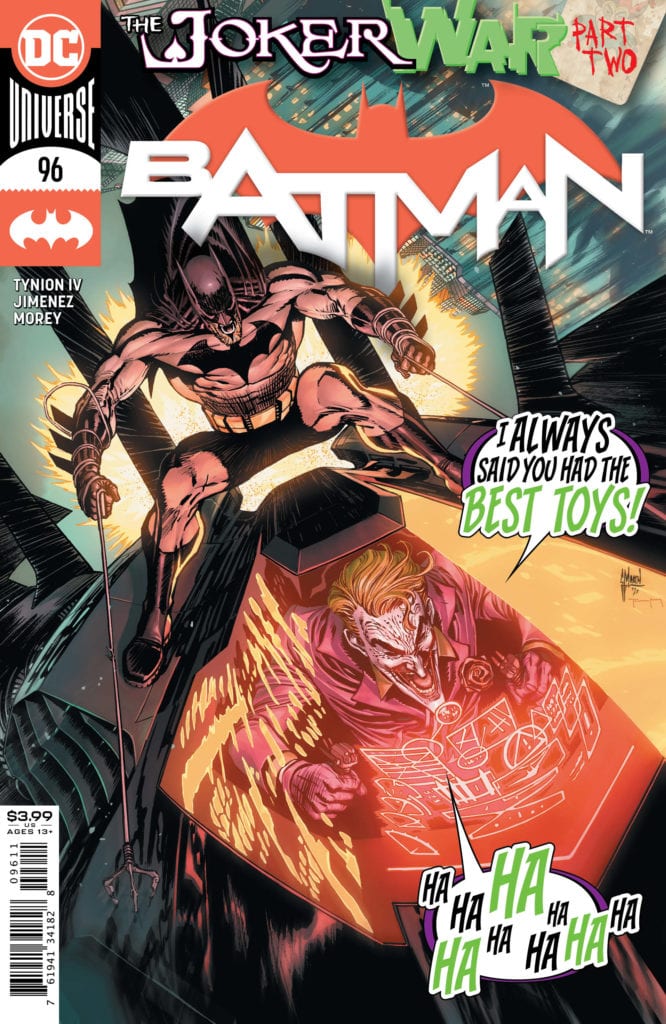
The Joker War is in full swing, and Batman is in dire straits. With Joker having the money and power to control Gotham, Bruce struggles to evade the clowns. He works his way to Wayne Tower, hoping for access to some of his technology. When he breaks in, he finds Punchline waiting for him. She reveals that she had poisoned Lucius Fox with Joker Toxin, and after a brief fight, she did the same to Batman. As he attempts to escape, Batman comes face to face with a Joker-themed Batwing, which fires upon. How will Batman overcome the odds stacked against him?
**Some Spoilers Below**
Story:
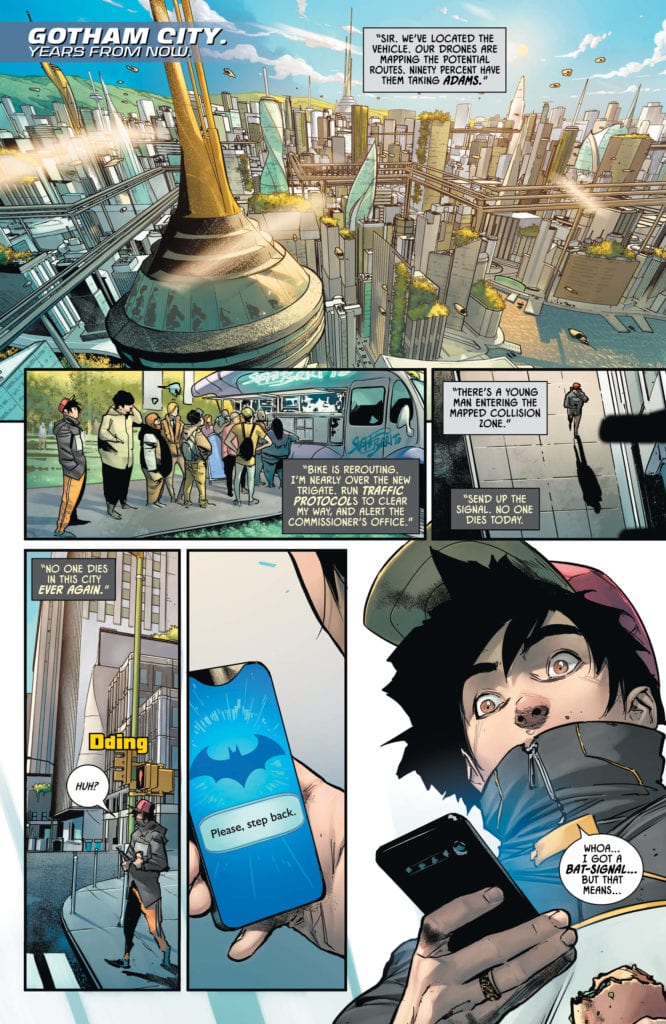
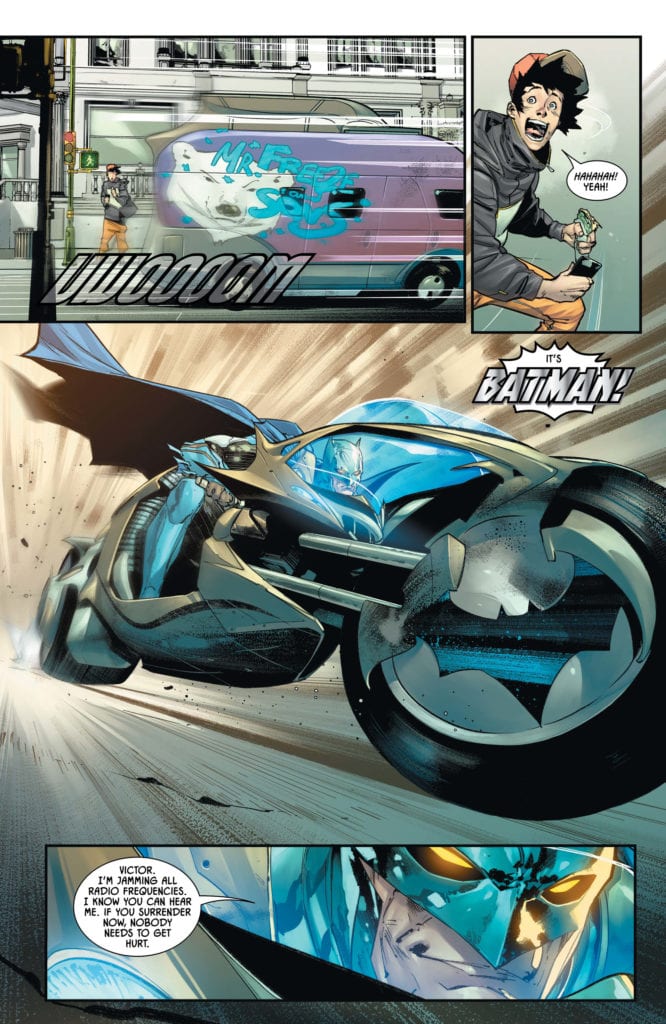
We open years from the present, where an older Batman is able to keep peace in Gotham. After taking down Mr. Freeze and his sons, he returns to the cave where Alfred greets him. They go back and forth, but before they leave the cave, Alfred snaps his own neck. It turns out this is a nightmare he was having over the past three days. After the explosion at Wayne Tower, Harley found an unconscious Batman, leaving clowns to run the streets. She explains that Joker and Punchline have created a new Joker Toxin that has to work through his system.
I’m not sure whether or not Tynion IV meant to turn this story into a horror story, but it proves very effective. The horrible scenes of the clowns invading and dream sequences send shivers down my spine. It also was able to accomplish something I’ve actually been enjoying this dive into Bruce’s psyche post-Alfred. The idea of the snapped-neck Alfred has begun to spread through his mind, even imagining his parents with them. While I had my own issues with Tom King’s run, I did like the potential of this plotline and love how Tynion IV is putting it in the center of the character development for Bruce.
The only real downside is that this story definitely had some pacing issues. This is mostly due to the fact most of the action in this story was told through flashbacks. When comics follow this sort of story-telling, we end up with not accomplishing month. If we cut out the flashbacks and dream sequences, that would be half of the comic. Now obviously, this will be smoothed out as we keep moving forward in the comic, but as it stands, it’s offputting.
Art:
Jorge Jimenez is the artist for the Batman issues of Joker War, and his style definitely fits. As I mentioned before, this story is played like a horror movie, and his style matches it. With his illustrations, we get teased into this brighter story, only to be shaken by the dark world we actually are in. While the snapped necks and Joker grins are terrifying, they don’t compare to a terrifying callback to The Dark Knight Movies. Tomeu Morey brings these pages to the next level with excellent creepy colorwork. It’s just a perfect look for a disturbing story in Gotham.
Conclusion:
Overall, it’s a decent chapter in the Joker War saga. With creepy imagery and the ominous foreshadowing of the Joker’s plan, it gets this reviewer excited. This war is clearly going to change things up for Batman, as the nightmares are getting worse. The biggest issue is just the slight pacing issues from the flashbacks and dream sequences. Even then, it doesn’t detract from the overall story. The art team provides an iconic look for this arc and will be talked about for years to come. It might not have been as strong as the opening or the build-up, but this helps flesh out the Joker War fantastically.
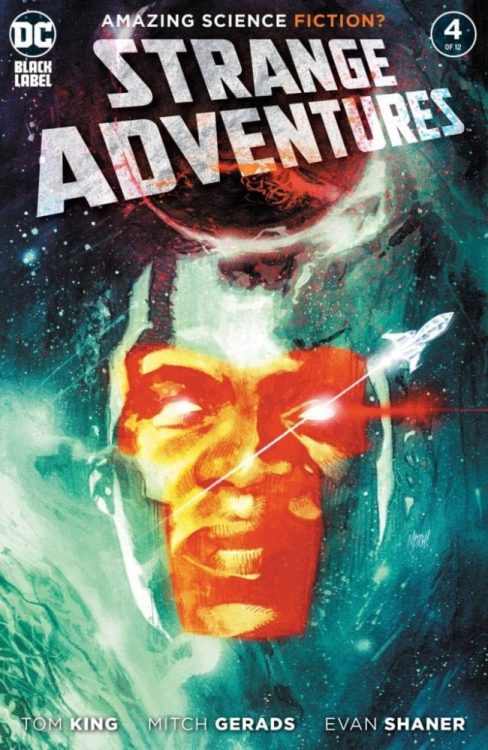
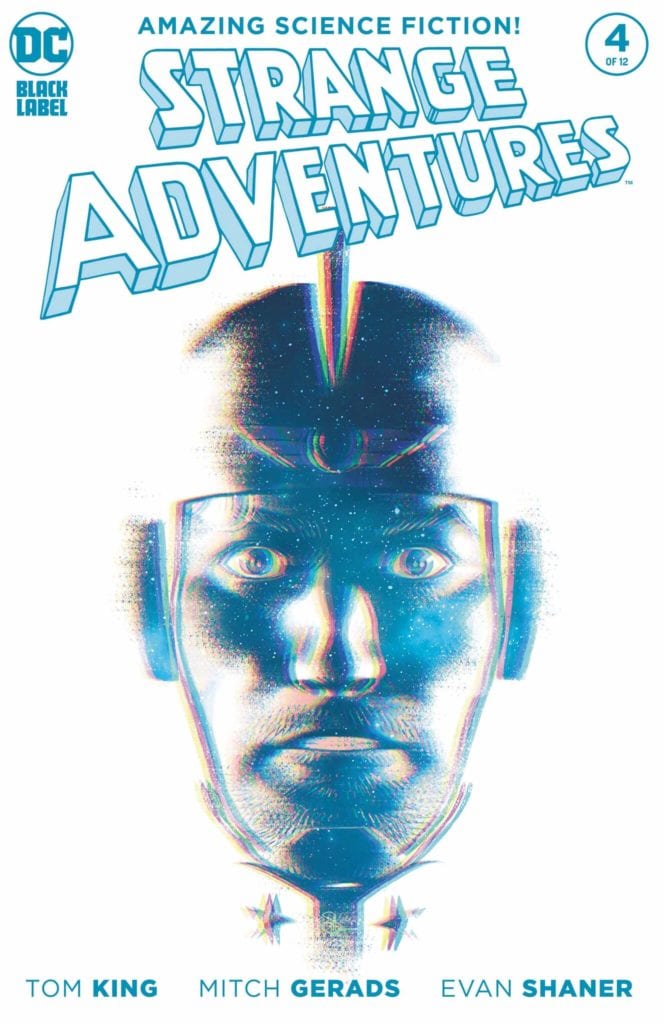
I hesitate to call DC Comics’ Strange Adventures #4 boring. That obviously has some negative implications, which aren’t true of this issue. It is boring though. It’s impersonal and bleak. But that’s because this creative team, writer Tom King, artists Mitch Gerads and Evan “Doc” Shaner, and letterer Clayton Cowles, are making a statement: Sometimes the truth isn’t entertaining. Sometimes doing the right thing isn’t very frilly — it’s just right. This creative team sacrifices nothing in the department of the quality they put forward in Strange Adventures, they just allow the story to slow down and remind us what true life can be like. There are a few minor spoilers, so please read this incredible issue before diving in!
Mr. Terrific: A Slow Train Coming
Writing
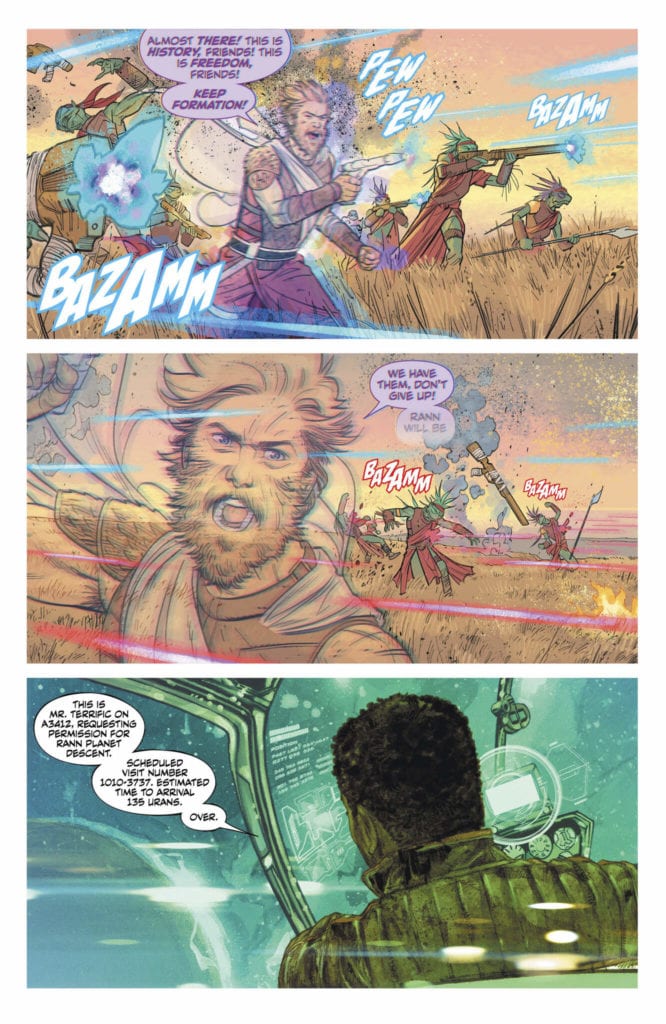
King doesn’t try and spice up the Terrific scenes of this comic too much. There are moments that really stand out. Moments that make you wish you could be best friends with Michael Holt. But the thing that’s so incredible about Mr. Terrific is his unflinching commitment to the truth. So what do we see of his stay on Rann? We see him pouring over alien documents. We see him interview Rannian officials. Sure, he gets a little punchy at the end (in a very badass way) but most of this issue he’s just researching.
Terrific has become a whole new entity in these pages. He’s a force of nature: slow but unstoppable. His complete commitment to his research may not be a source of much action, but it allows us to see what a great choice he is to look into Adam Strange. He doesn’t take no for an answer; when he hits dead ends he breaks right through them. He is a slow train coming, and he’s gaining on Adam inch by inch.
Art
Gerads does an incredible job of making everything on Rann seem unclear. For one thing, we hear over Terrific’s ship’s radio that there will be a landing party waiting for him on arrival. But Gerads zooms out to show us one person standing in a wide-open space. It immediately makes us distrust the Rannians. And Gerads zooming out for the panel pulls us away from the details and makes the moment feel impersonal. In fact, most of these scenes feel impersonal. Terrific looks small on the page, and we rarely get close-ups of his face. With one notable exception.
When Terrific is brought before the Rannians for asking to see Pykkt files, he gets slapped by Sardath. We then see Terrific’s face up close, unobscured, for the first time. But he doesn’t quite look angry. His nonchalance as he slaps Sardath back stops us from worrying. We know, from his face, that Terrific has learned as much as he will from the Rannians. He doesn’t mind burning this particular bridge.
Coloring
Gerads’ colors tell us all about what’s going on under Rann’s surface. For one thing, many of the scenes are colored using lots of whites. When Terrific lands his ship, the landing area is white and vast. It gives the implication that there are no obstacles to Terrific’s search. But as the scenes progress, Gerads plays with reflections and glares a lot. Bright whites that gleam off of the surface of every panel. It’s as though the Rannians have turned on the lights. “We have nothing to hide,” they’re saying. But in so doing, they’re shining the light in Terrific’s eyes. Their transparency is just an illusion, designed to blind Terrific even more to the truth. But as we see Terrific put down a group of armed Rannians in a cool blue-hued room, we know he’s undeterred, and unstoppable.
Lettering
Cowles has taken an about-face in this issue. Previously, Cowles almost never included sound effects in his scenes with Gerads’ art. But in this issue, we get plenty large, cartoony letters surrounding Terrific. It feels out of place, until you realize Terrific is entering Adam’s world. This is the world of a space adventurer, the world of cartoon lettering. It still looks alien, when placed side by side with Mr. Terrific. But it should. Terrific is not welcome on Rann, and the lettering working out of joint with his character, which is always reserved, seems to almost be telling him to go home. With every big red letter, we’re reminded Terrific isn’t on his home turf, and this planet rebels at the thought of him sticking around.
Adam Strange: Alien at Home
Writing
King’s chapters from Adam’s book Strange Adventures take a moving turn in this issue. We get the sense that Adam was actually baring his heart when he wrote these pages. It’s uncharacteristically sincere. It’s the story of him being sent home by the zeta beam, while the Pykkt war is still in full swing. While he’s home he goes to friends in the Justice League and asks for help. But they refuse to bring him back to Rann. They don’t want to get involved. With this, King complicates our interpretation of Adam’s actions.
Sure, we can see how he completely dehumanizes the Pykkt people. They are invaders, and for that reason alone they deserve to die, no questions asked. But the Justice League treat Rann with similar reasoning. Rann isn’t Earth, that’s all the Justice League needs to know to not care. Even with Adam begging for the fate of his people, they seem unmoved. Suddenly, it’s hard not to see Adam’s heart in this. It’s hard to see him as less than human. Even if he is hiding some awful things.
Art
When Shaner first shows us Adam on Rann, he looks majestic. His beard blowing in the wind, in alien armour as he charges across a battlefield. But when we see him again, back on Earth, he looks small. Seeing him so suddenly in his civilian clothes, with his beard shaved and now slowly growing back, he looks a little pathetic in comparison. It’s also worth noting, that most of his panels with Superman and Green Lantern, he’s beneath them. They are literally looking down at him. It’s an isolating experience, and the moments where he does rise up, are moments of him rejecting their input. They are moments of him going off alone.
So when we see him waiting for the zeta beam a second time, he’s all alone in a field. He looks resigned. The beard Adam had on Rann is back, but it means something else now. He hadn’t shaved his beard the first time around because he’d been hiking through the desert to save Alanna. This time, he’s been on Earth. He’s had access to a mirror and a razer. He just didn’t care. So what was once a badge of honor, a mark of his perseverance, has now become a sign of his resignation. But once he gets to Rann, it’s Alanna who is looking up to him this time. She’s the one who restores his hope and gets him fighting again.
Coloring
When Shaner is showing us Rann, in the pages of Adam’s book Strange Adventures, his coloration is intoxicating. The landscapes, with deep browns and hues of purple, make you want to dive right into the page. But when Adam is back on Earth, everything has a simplicity to it. An unattractive simplicity. It’s the same simplicity that we hear in Hal’s reasoning for staying out of the fight, or Clark’s explanation for why he can’t take Adam home to Rann. Everything is a little too black and white for these characters, they can’t see the colors in between. They haven’t seen the colors Adam has. So when the zeta beam reappears, the colors are hypnotic and beautiful. You feel pulled toward the page. But what Adam finds once on Rann is the same simplicity. Brown field, white bones. Until Alanna shows up. Then the skies become a glorious dance of red and purple again.
Lettering
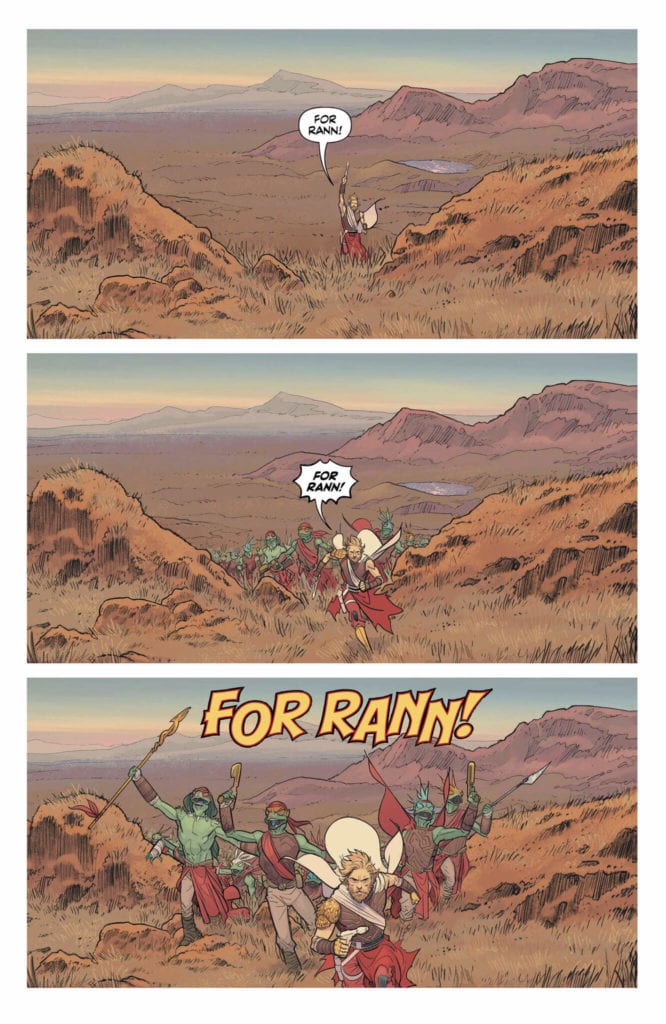
Cowles has completely switched his treatment of each storyline. While Terrific is surrounded by bright sound effects, Adam can’t find them anywhere. The explosions and battlecries before he gets beamed back to Earth are full of flair, but his time in bars and on the moon are nearly silent. It gives us a sense of Adam’s loss of meaning. Just as sound effects teach us how to feel, by how they appear on the page, Adam doesn’t know how to feel about being “home.” He feels so alone and so devoid of emotion. And when he arrives on Rann his feelings carry over at first. We only see the small yellow “Craw, craw, craw” of the buzzards. And he barely says anything once he’s arrived. Once Alanna delivers a rousing monologue to him, he responds shortly “For Rann.” It’s small, and doesn’t fly far from his mouth. It gives us a sense that he just squeaked it out. But it feels all the more sincere for it.
Strange Adventures always delivers. That’s because every page, every panel, is pregnant with meaning. The most “boring” issues aren’t just boring because the creative team ran out of things to say, but because they’re rhapsodizing about the nature of truth and entertainment. There are layers upon layers of meaning in the most innocuous scenes. King, Gerads, Shaner and Cowles are hitting it out of the park with every issue. Pick up DC Comics’ Strange Adventures #4 from your local comic shop August 4th, and prepare to love being bored.
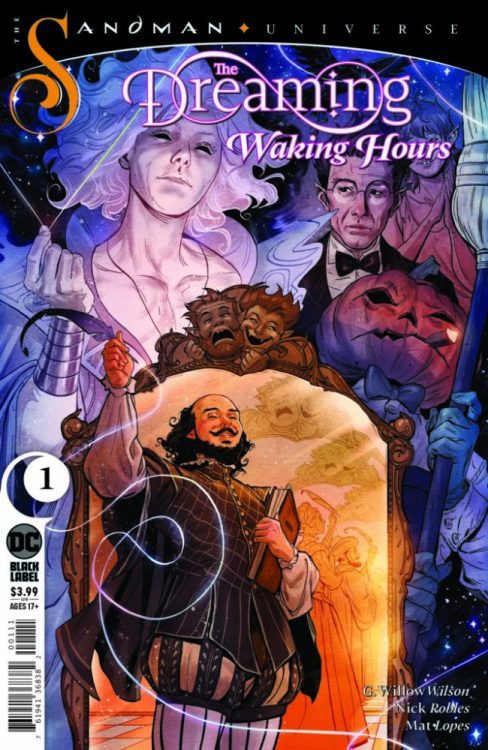
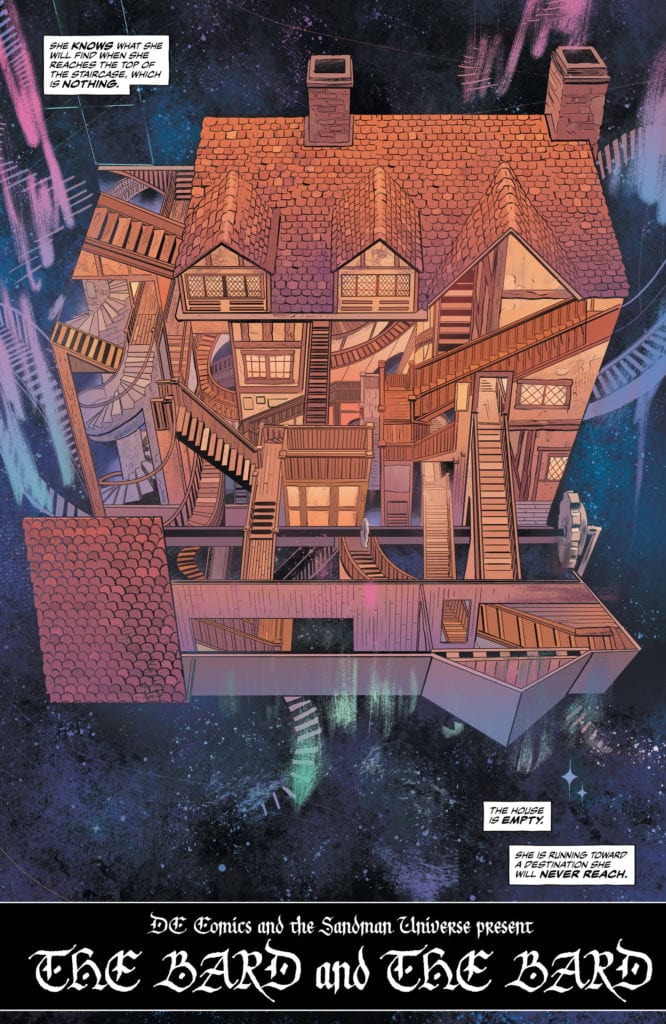
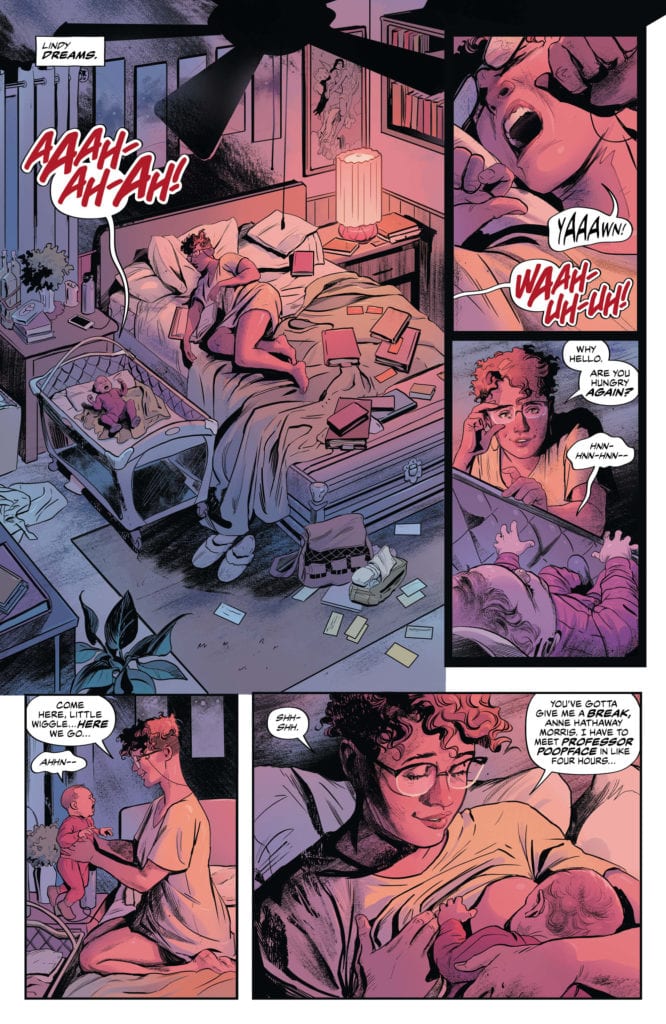
The newest chapter of the Sandman Universe is here, with “The Dreaming: The Waking Hours” #1 from writer G. Willow Wilson (Invisible Kingdom, Cairo) and artist Nick Robles (Euthanauts). With the help of returning co-creators Mat Lopes and Simon Bowland on colors and letters respectively, this first issue of a new Sandman story is a compellingly written and character-focused opening with incredible artwork that is sure to please both old fans and newcomers alike.
“One of Dream’s heaviest responsibilities is the creation of nightmares-the beings that haunt our sleep and turn our thoughts toward darkness. In the form of Ruin, the nightmare of catastrophic failure, Dream was certain he’d built his next masterpiece…but Ruin can’t help but live up to his name, sending every situation into a spiral of unexpected consequences. Unfortunately, Shakespearean scholar (and exhausted new mother) Lindy has dreamed of Ruin…and in the process, she’s delivered him unto the waking world!”
Writing & Plot
Writer G. Willow Wilson has the unenviable job in “The Dreaming: The Waking Hours” #1 of both following up Si Spurrier’s stellar The Dreaming run that ended earlier this year, as well as adding to the legacy of Neil Gaiman’s original Sandman. It seems from this first issue however that she is very much up to the task. This is a well-focused issue that bears down on its characters and their struggles, while also reiterating the lore of the Sandman Universe without ever wading into needless exposition. Both protagonists, the struggling intellectual single-mother Lindy and struggling young nightmare Ruin, are instantly compelling and easy to relate to as characters, and both for totally different reasons. Willow’s blending of a simple, character-driven plot and fantastic dialogue sensibilities keep this an easily enjoyable read that still has all the mystery and fantasy needed in a Sandman tale. The only issue I ever had with Spurrier’s work on The Dreaming was his reliance on the original Sandman for his plot. Being well-versed in Gaiman’s original work didn’t make this a personal issue for myself, but it could easily have been overwhelming for anyone stepping into this universe for the first time. Wilson’s work here improves upon that aspect with a plot that is easy to follow and compelling for readers with little-to-no Sandman knowledge but filled with enough references and easter eggs for classic fans (such as myself) to be satisfied. The succinct, compelling script here make for a fantastic start to this new chapter in the Sandman Universe.
Art Direction
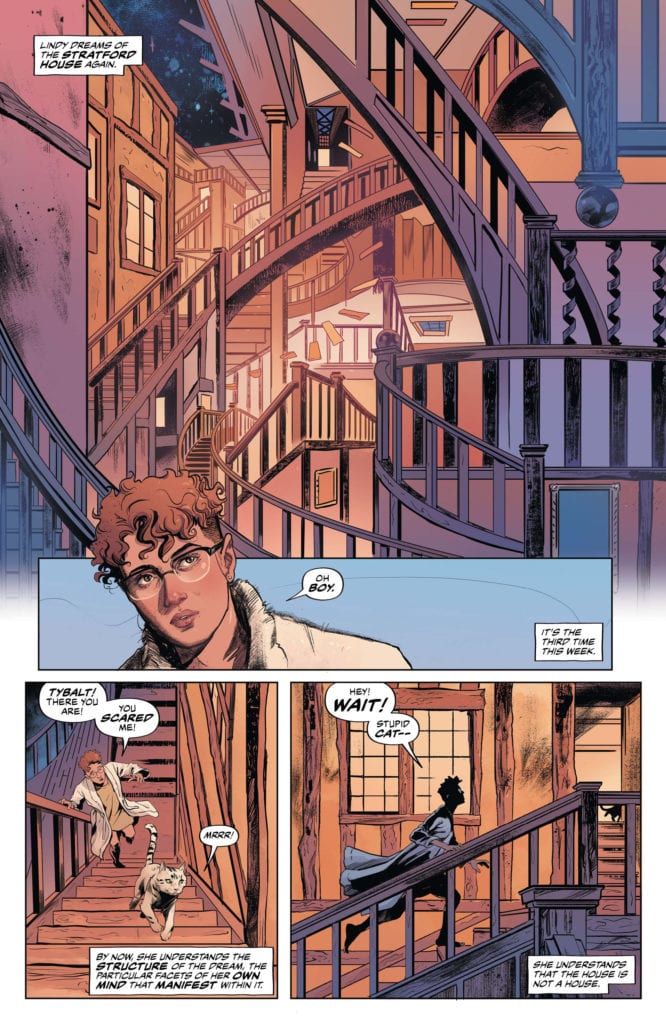
As imposing a position as Wilson has, artist Nick Robles has massive shoes to fill as well. Robles steps in after the Eisner-nominated phenom Bilquis Evely’s work on The Dreaming for this first issue of “The Dreaming: The Waking Hours.” Fortunately, Robles proves more than ready for this task. “The Waking Hours” looks every bit as stunning as its predecessor, in terms of character design, direction, and the necessary fantastical visualizations. Robles’s animations on each character are stunning, bringing each of them to life with blossoming vibrancy. His detailed environments, from Lindy’s cramped apartment to the mazes crafted in The Dreaming, are immaculate in their construction. Robles is such a fitting successor to Evely not just for his unique talent, but also because his style is strikingly similar to the prior artist. This is in no way a detraction from his talent, it’s very much a compliment. Robles’s ability to match the style of one of the best artists currently in the industry while maintaining his own visual mark makes him one of the most promising new artists in comics. This all being said, Robles is helped out by returning Dreaming colorist Mat Lopes, who also colored Evely’s pencils on the prior series. The matching aesthetic of both the former series and “Waking Hours” is primarily owed to his outstanding work, with one of the most expansive palates seen in recent comics. There’s a considerable detailed finesse in his work as well, with carefully selected shades revolving around specific characters and the context of their scenes. Also returning is letterer Simon Bowland, whose expressive and character-specific fonts give this comic the proper Sandman reading experience as has been done for decades now. Visually, “The Waking Hours” is almost as good as it gets in the world of comics.
“The Dreaming: The Waking Hours” #1 is a focused and brilliantly interesting start to this new saga in the Sandman Universe. G. Willow Wilson’s script is full of thoughtful character writing and intelligent but easy-to-follow fantasy. The visual work of Nick Robles and Mat Lopes is some of the best done in the whole of Sandman’s history, and a fitting continuation of the prior series’s aesthetic. This comic is an easy recommendation to both veteran Sandman fans and new readers alike. Be sure to grab this debut issue when it arrives at your local comic shop on 8/4!