Home Blog Page 203

CENTRAL PARK SEASON 1 | TV Review

Central Park was one of Apple TV+’s big-ticket shows and the streaming platform’s first adult animated series.

Owen Tillerman (Leslie Odom Jr.) is the park manager of the famous park. He lives within a property in the park with his family. His wife, Paige (Kathryn Hahn), is a journalist for a small newspaper, his daughter, Molly (Kristen Bell) is an aspiring artist, and his son, Cole (Tituss Burgess), is obsessed with a dog. The Tillermans unwittingly clash with the hotel owner/property tycoon Bitsy Brandenham (Stanley Tucci), who wants to buy Central Park and turn the green space into condos and retail spaces.

Central Park was created by Josh Gad, Loren Bouchard, and Nora Smith. Bouchard was the creator of Bob’s Burgers and Smith was a producer on that show. The influence of Bob’s Burgers on Central Park was obvious. Central Park had a similar art style to Bob’s Burgers and like Bob’s Burgers, Central Park focused on a family who lived at their workplace. H. Jon Benjamin, the star of Bob’s Burgers even appears in a recurring role as the Mayor of New York.

The family unit was one of the great features of the show. They were a loving if chaotic group. Owen was good at his job but he was neurotic, and Paige showed competence as a journalist but her paper’s lowly status made access difficult. The kids were a fun presence. Molly was the smarter of the pair who a crush on a boy, so tried to avoid embarrassing herself. Molly had a snark to her, like Louise Belcher from Bob’s Burgers. Cole was a sensitive soul, although not so bright. Often the family paired up for storylines, like Owen and Paige having to travel to Brooklyn during a surprise audit, Owen and Cole going on a treasure hunt, and Paige and Molly going into Bitsy’s hotel for journalistic reasons.

Whilst Central Park had long-running stories like Bitsy’s scheme to try and take over the park and Molly’s romance, most of the episodes worked as standalone stories. If Central Park was broadcast on traditional TV it would be easy for a new viewer to follow. The structure of many episodes was Bitsy comes up with a plan to help her get one step closer to owning the park, and a secondary standalone story. It was similar to how Disenchantment structured their series – by having the overarching story in the background.  

Central Park’s unique selling point was it was a musical. All the episodes had a few musical numbers and many of the cast members worked in the musical genre. Josh Gad was known for roles in FrozenBeauty and the Beast, and Book of Mormon, Odom Jr. was in Hamilton, Burgess has appeared on Broadway, and Kristen Bell was Anna from Frozen. People who have written songs for the show include Alan Menken, Fiona Apple, and Meghan Trainor. For fans of Broadway-style music should be happy with the songs in the show, although some stick in the mind better than others.

The show also brings in guest stars. Examples include Fred Armisen (Big Mouth), Audra McDonald (The Good Fight), and Stephanie Beatriz (Brooklyn Nine-Nine). My favorite was Andrew Rannells and that was due to him working with Gad, so we got a Book of Mormon reunion.

However, the role of Birdie (Gad) was an issue. Birdie was a busker who also operated as the narrator. It seems like the writers had to find a way to shoehorn Gad into the series because his purpose was to tell the audience information about how the park runs and sometimes interferes with the story. He just seemed surplus to the story. The information could have been told in more organic ways.

Although Central Park was classified as an adult animated series, it was tame compared to many Netflix shows. There was little swearing, no violence, and only a few rude jokes. It has a TV-14 in the USA, but children younger than that age could watch it without much fuss. The humor, language, and situation were more in line with shows like The Simpsons and Futurama.

For Apple’s first foray into adult animation, Central Park was a good start. They have a light and breezy show which makes a change from the darker, heavier, and more controversial rivals.
Monkeys Fighting Robots Youtube

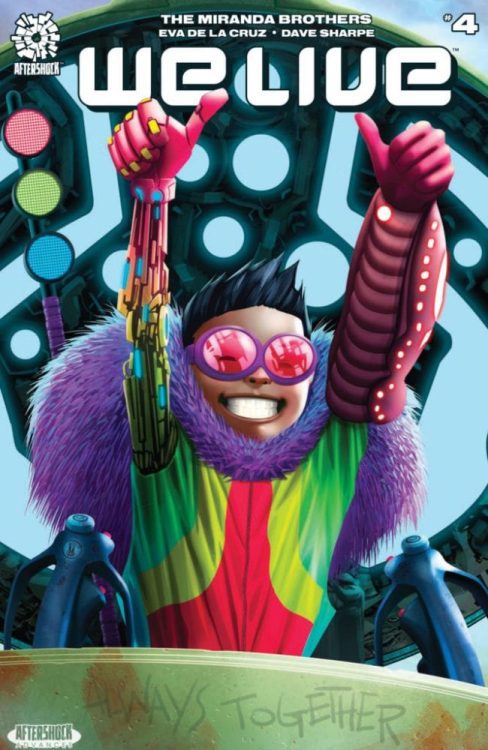
AfterShock Comics Exclusive Preview: WE LIVE #4

aftershock comics exclusive preview we live #4

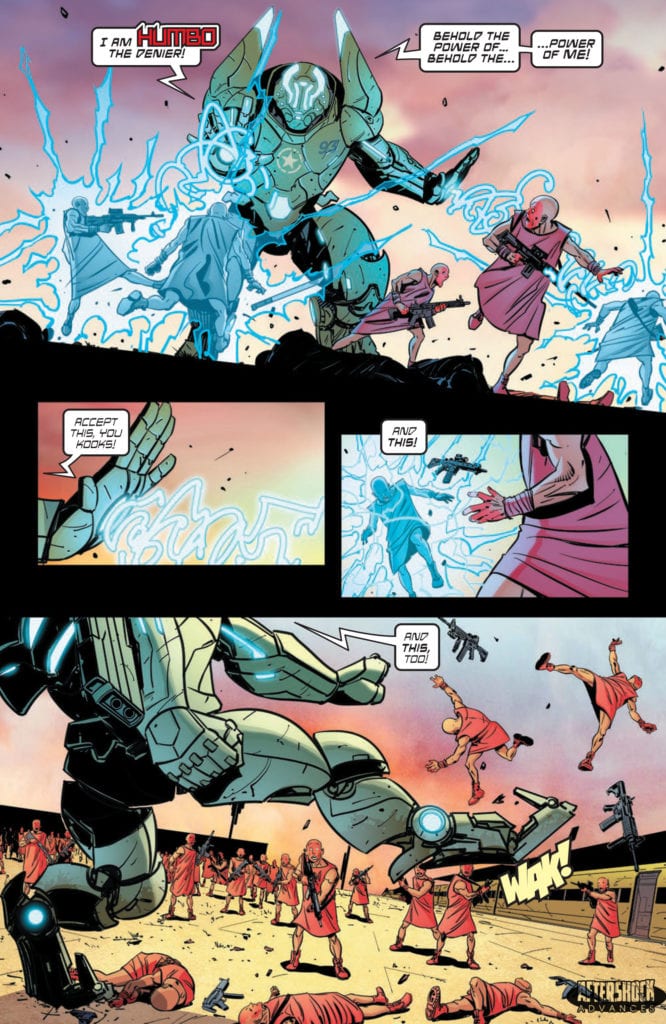
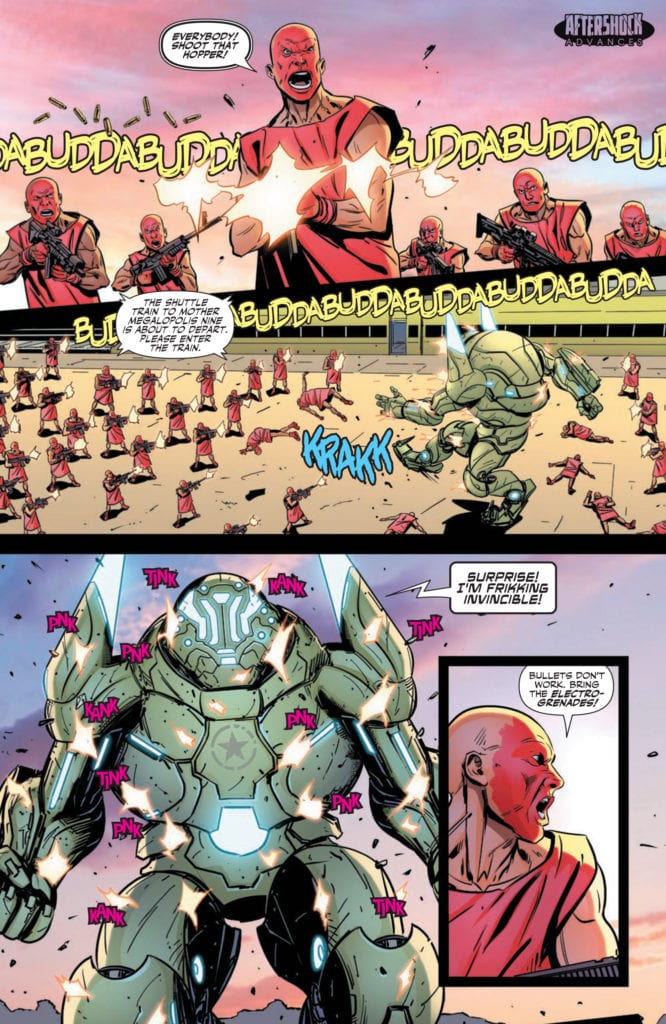
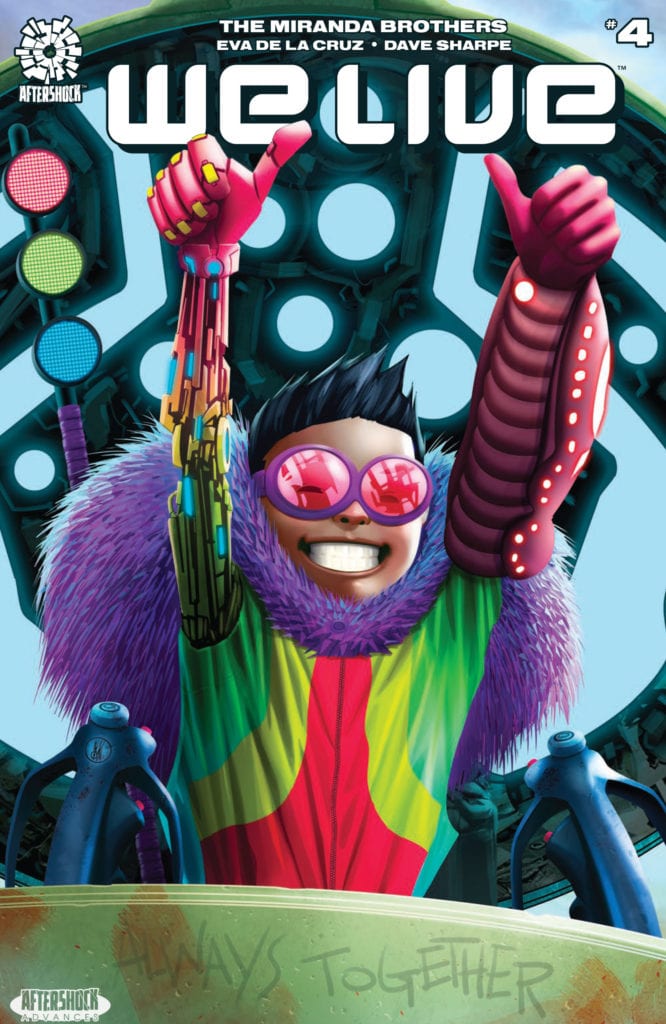
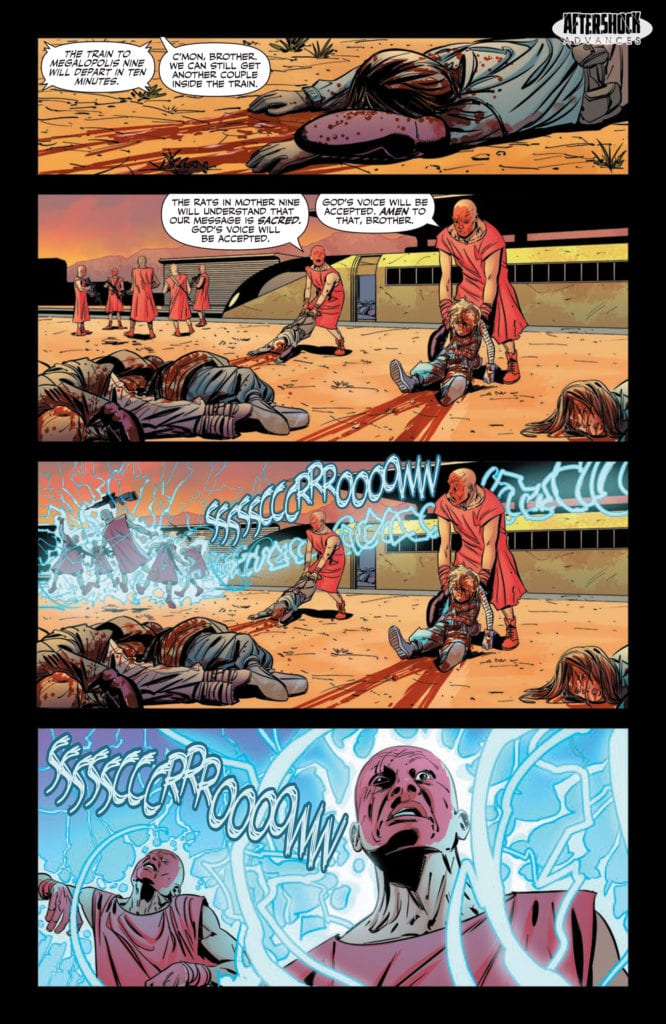
WE LIVE #4 hits your local comic book store today, January 20th, but thanks to AfterShock Comics, Monkeys Fighting Robots has an exclusive four-page preview for you.

About the issue:
Humbo’s plan for escaping the Acceptists might not be enough for the group to make the train headed to Megalopolis Mother 9. This might be the end of the trip.

The fragile fantasy world created by Tala for her little brother Hototo finally crumbles under the cruel weight of reality. Tears are the only language left between them. The long journey to the extraction point suddenly reveals the open wound.

WE LIVE #4 is by brothers Roy and Inaki Miranda (with both on writing duties, and Inaki on art duties as well). Colors are by Eva de la Cruz, and letters are by Dave Sharpe.

Check out the WE LIVE #4 preview below:

aftershock comics exclusive preview we live #4

aftershock comics exclusive preview we live #4

aftershock comics exclusive preview we live #4

aftershock comics exclusive preview we live #4

aftershock comics exclusive preview we live #4


Are you reading WE LIVE from AfterShock Comics? Sound off in the comments!

Monkeys Fighting Robots Youtube

Review: KING IN BLACK: IRON MAN/DOCTOR DOOM #1 Is So Crazy It’s Hilarious

Iron Man

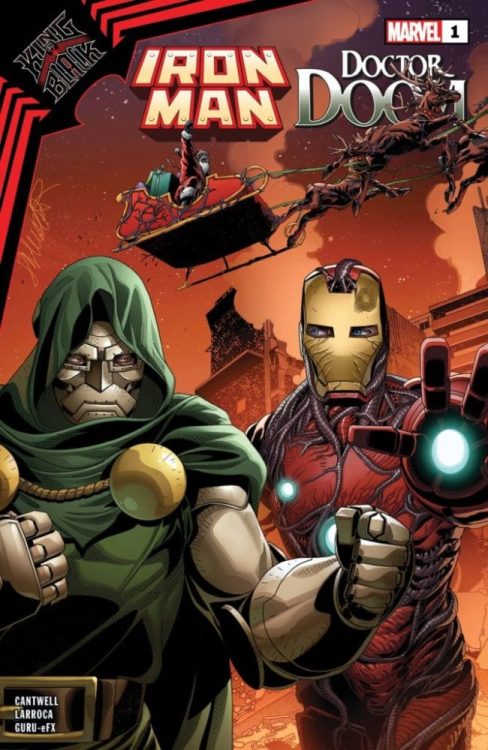
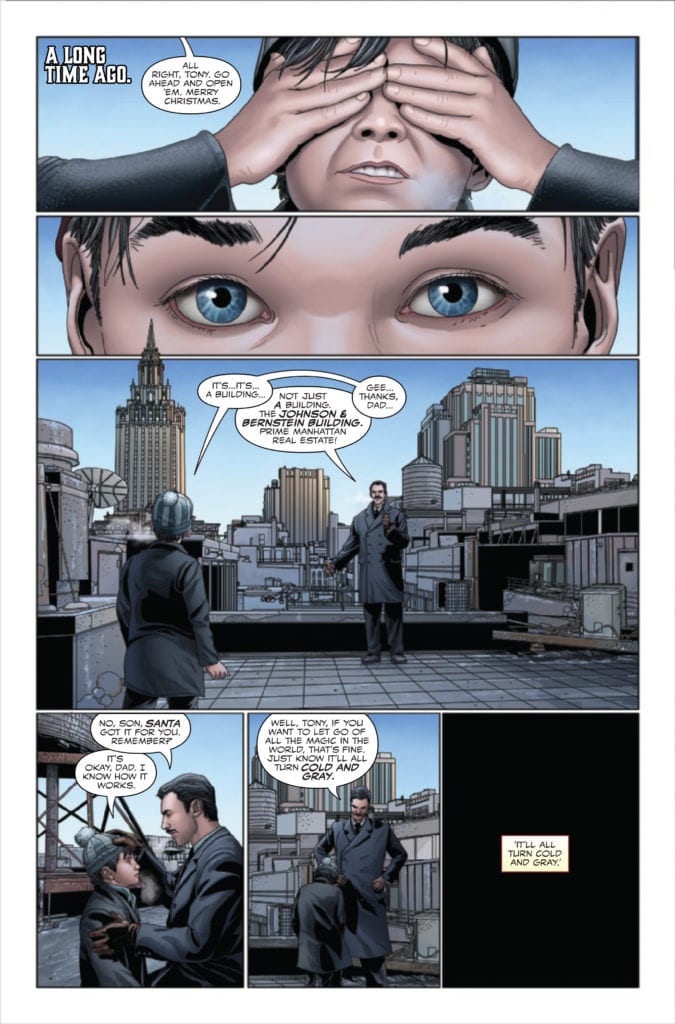
King In Black: Iron Man/Doctor Doom #1 out this week from Marvel Comics is one lat glass of holiday cheer to enjoy. Iron Man and Doctor Doom find themselves having to defeat a symbiote controlled Santa Claus. Yes, you did read the previous sentence right and it’s thanks to Christopher Cantwell, Salvador Larroca, GURU e-FX, and VC’s Travis Lanham.

Summary

As Iron Man and Doom fight as temporary allies, their unexpected encounter both with each other and a horrifying inversion of yuletide joy may ultimately reveal to them the true meaning of Knull-mas.

king in black iron man doctor doom marvel comics exclusive preview

Writing

This issue truly is hilarious. Two of the most bitter rivals who find themselves having to team up far too often must face off against an enemy whose very mention causes one to smile. Try it for yourself. Iron Man and Doctor Doom face against an alien-controlled Santa Claus. See, you are smiling already, aren’t you? This is the level of entertainment this issue has at its disposal.

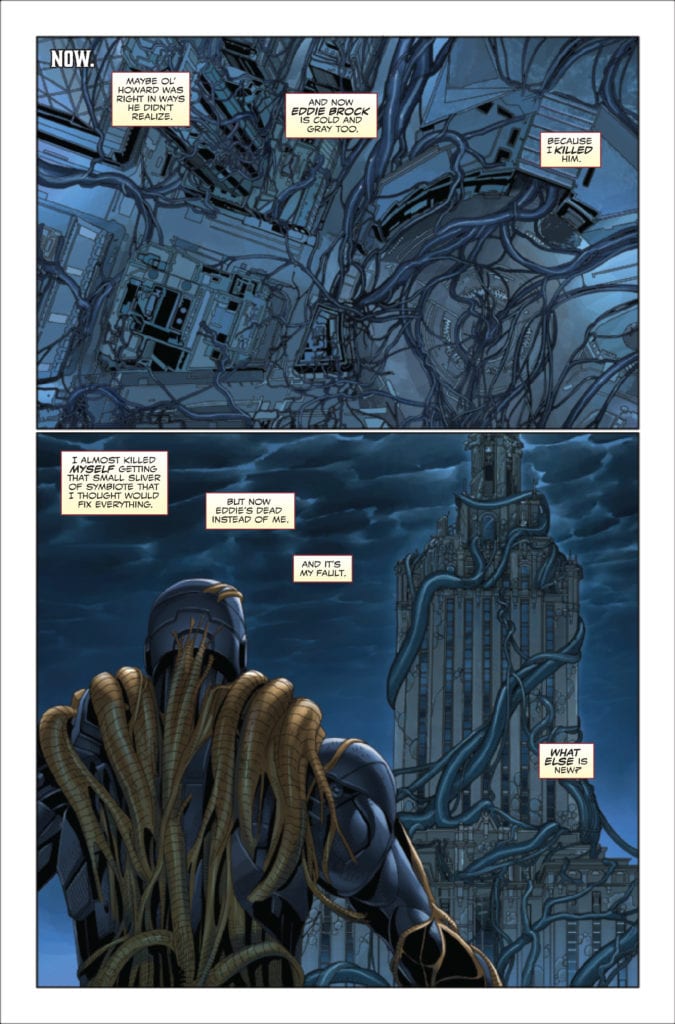
The issue is not without its serious moments. Writer Christopher Cantwell takes the time to allow Tony to reflect on what has happened in the King in Black event. It weighs on him but doesn’t bring the story down but instead adds a perfect balance between comedy and tragedy.

king in black iron man doctor doom marvel comics exclusive preview

Artwork

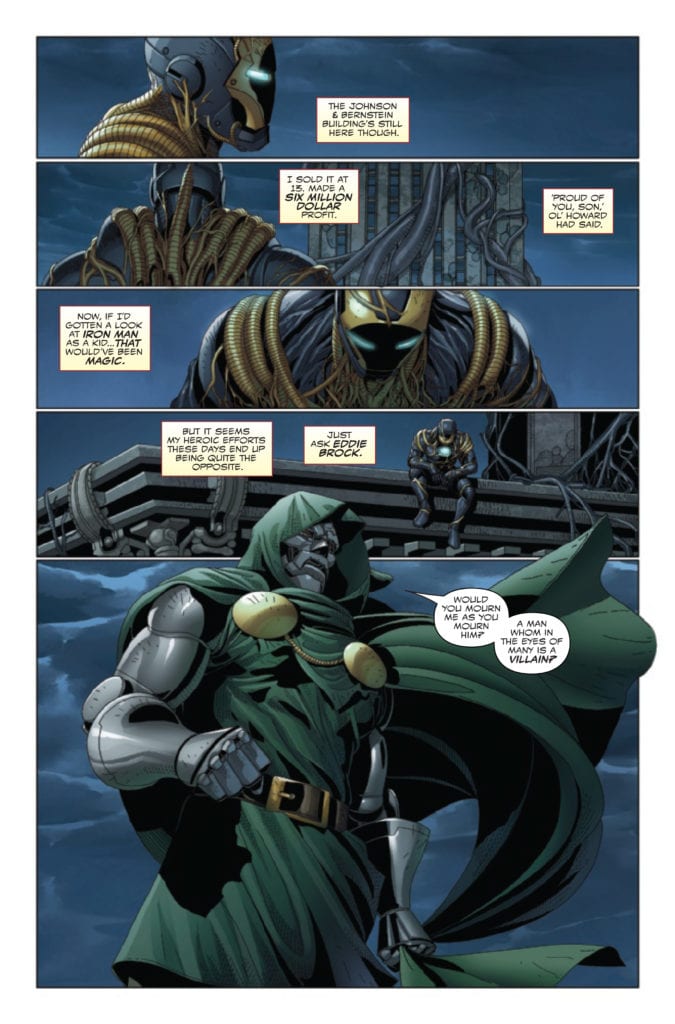
The artwork by Salvadora Larroca adds to the concept of mixing the dark elements with the comedy. The environment is shown as being desolate and corrupted by what has occurred in the King in Black. Yet throughout the issue, Iron Man and Doctor Doom are drawn with great detail ready for whatever Knull Santa can throw at them.

The colorwork by GURU e-FX offers visual striking contrast from page to page. The metallic gold aspects of Iron Man’s armor and the green of Doctor Doom’s cape stand out well against the dark setting in each of the panels. Also, the lighter colors on the first-page flashback help to showcase a more light-hearted period of Iron Man’s life.

king in black iron man doctor doom marvel comics exclusive preview

Thanks to the lettering by VC’s Travis Lanham this issue is able to maintain its mix of humor and drama. The font used allows for the Knull Santa to seem unnatural and a near legitimate threat. At the same time, the use of a very unique font creates one of the most entertaining jokes in the whole issue. No spoilers here, you’ll have to read the issue for yourself.

Conclusion

King In Black: Iron Man/Doctor Doom #1 is a side story of a much larger event but is so entertaining it’s worth the purchase. It’s all thanks to the over the top premise being hilarious. Even if you aren’t following the King In Black, you owe it to yourself to read this issue.

Monkeys Fighting Robots Youtube

Marvel Comics Exclusive Preview: THE AMAZING SPIDER-MAN #56

AMAZING SPIDER-MAN #56 Exclusive Preview

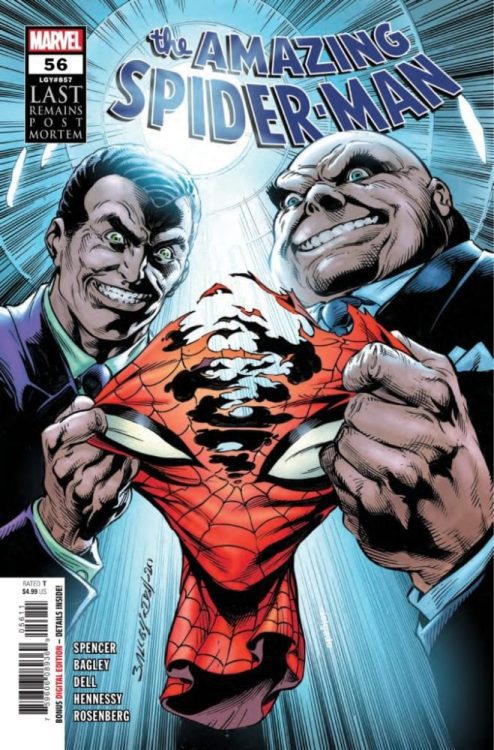
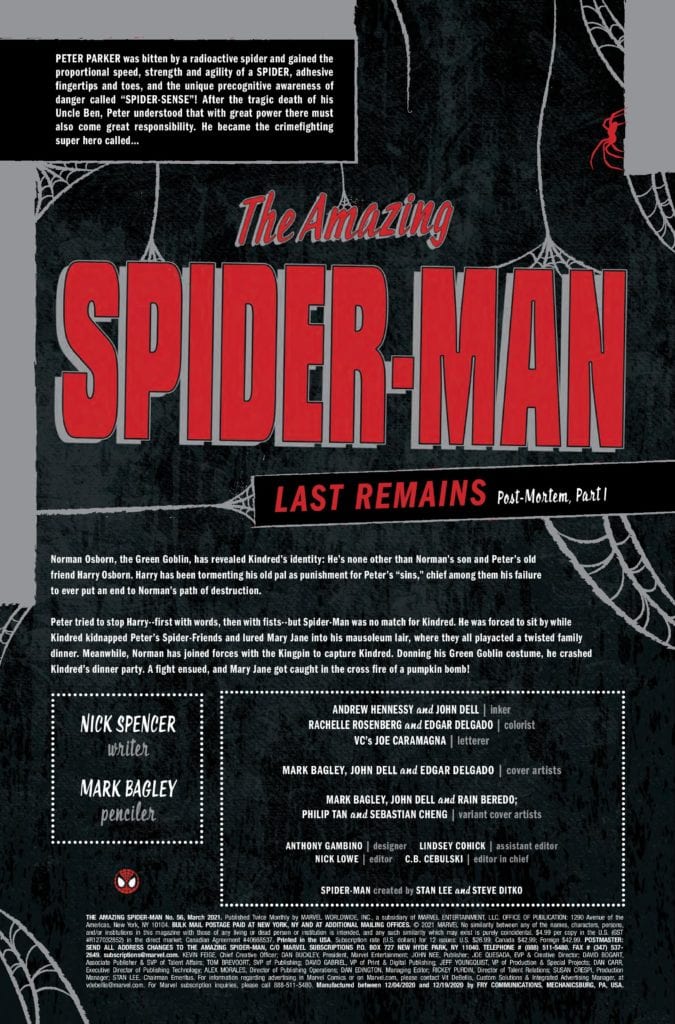
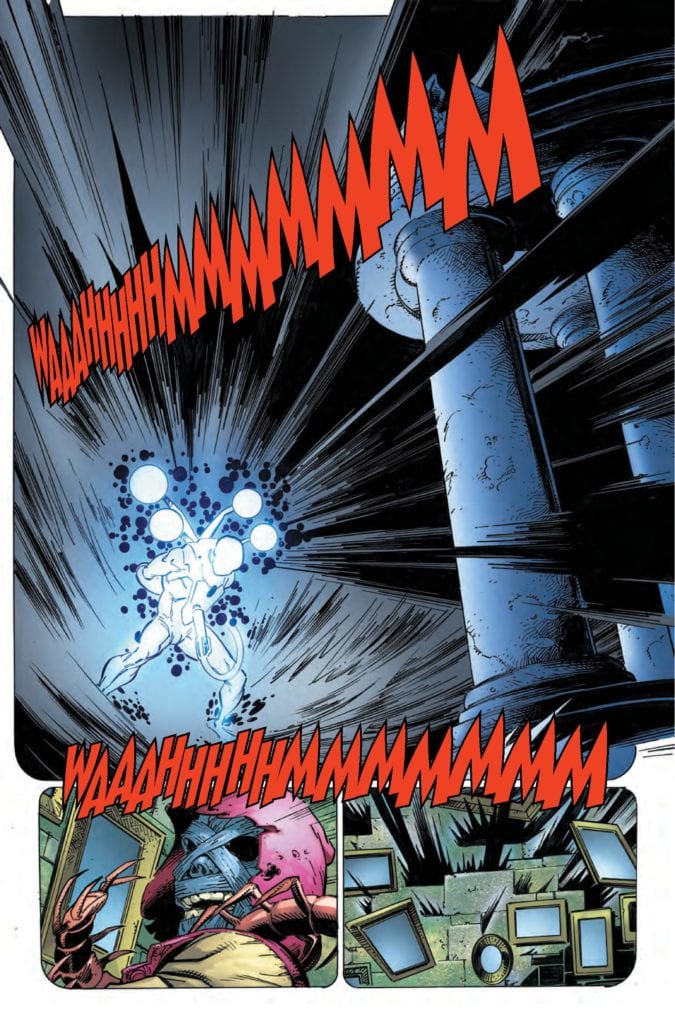
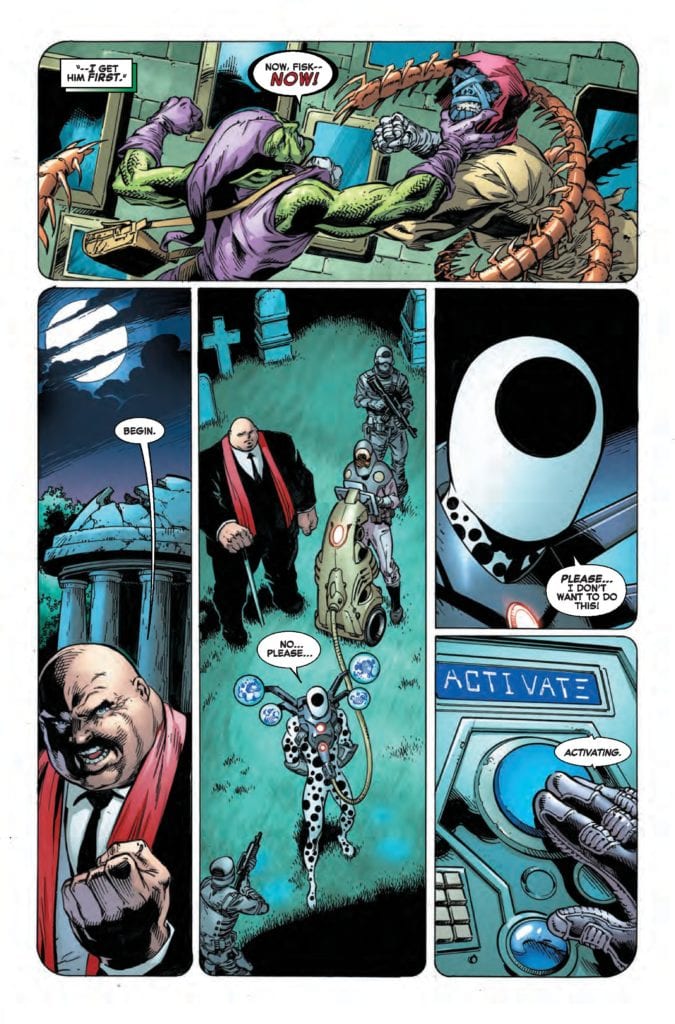
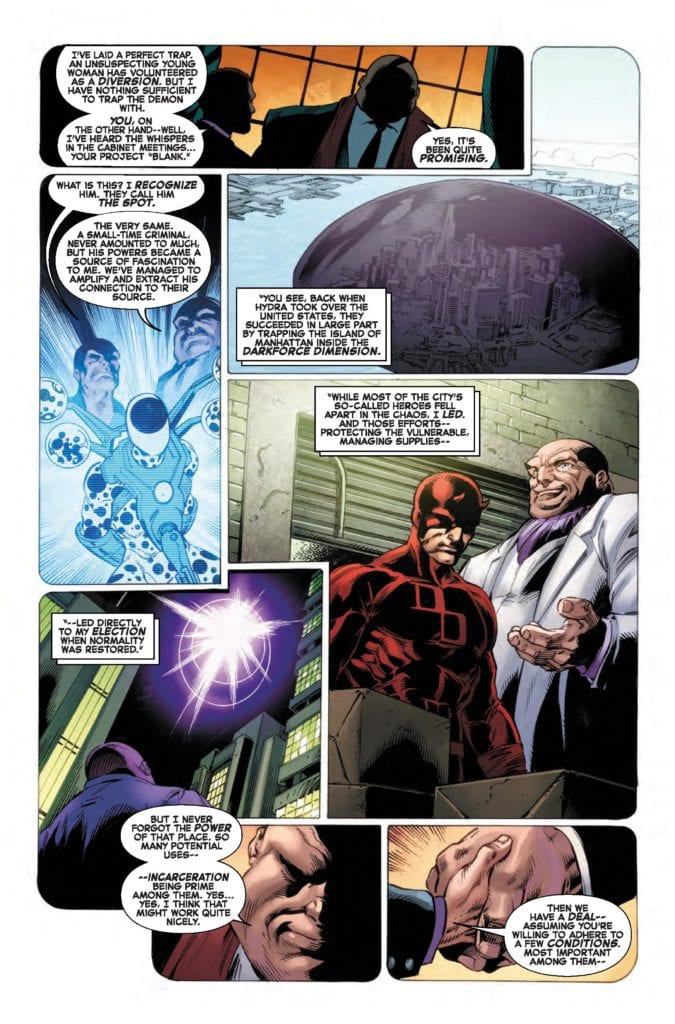
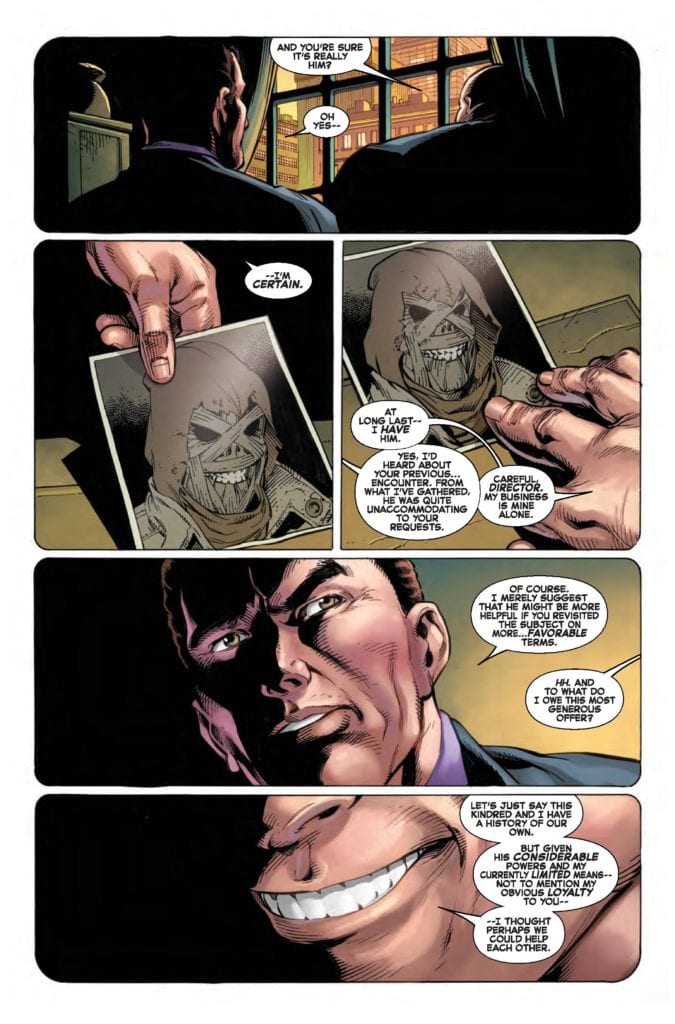
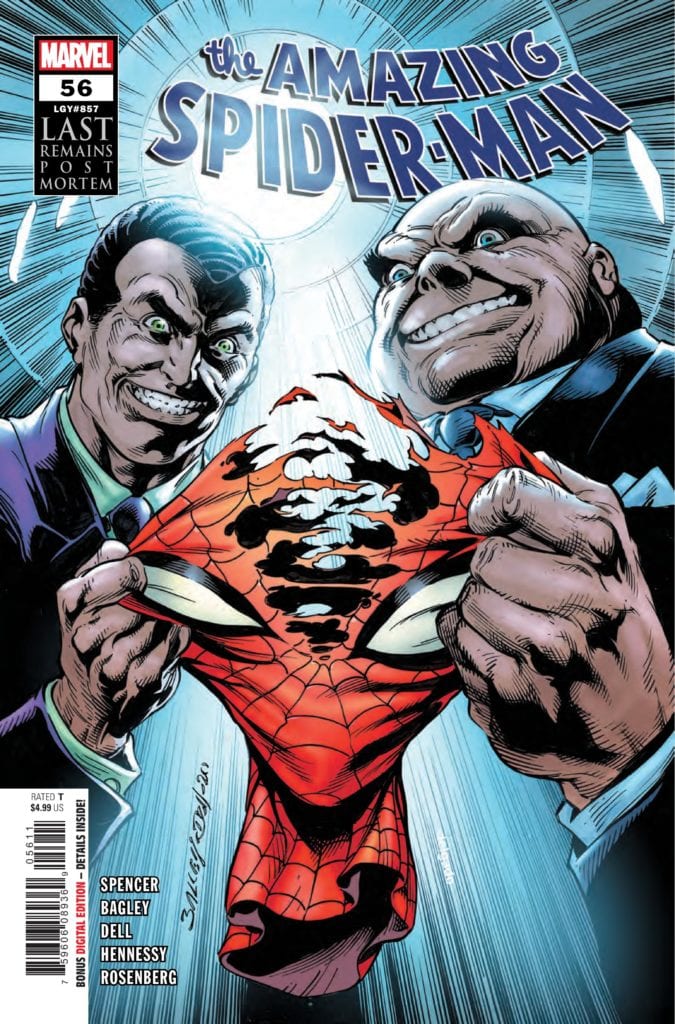
THE AMAZING SPIDER-MAN #56 hits your local comic book shop next week, but thanks to Marvel Comics, Monkeys Fighting Robots has an exclusive four-page preview for our readers.

“Last Remains: Post-Mortem, Part 1” is written by Nick Spencer, while Mark Bagley handles pencils, Andrew Hennessy and John Dell drop inks, Rachelle Rosenberg and Edgar Delgado are the colorists, and you will read Joe Caramagna’s letter work.

About the issue:
LAST REMAINS” TAKES ITS TOLL! You will never look at Norman or Harry Osborn the same again. We know SPIDER-MAN won’t.

Enjoy the preview below:

AMAZING SPIDER-MAN #56 Exclusive Preview

AMAZING SPIDER-MAN #56 Exclusive Preview

AMAZING SPIDER-MAN #56 Exclusive Preview

AMAZING SPIDER-MAN #56 Exclusive Preview

AMAZING SPIDER-MAN #56 Exclusive Preview

AMAZING SPIDER-MAN #56 Exclusive Preview


Are you reading AMAZING SPIDER-MAN? Sound off in the comments!

Monkeys Fighting Robots Youtube

Review: A Fight To Claim The Phoenix Force In AVENGERS #40

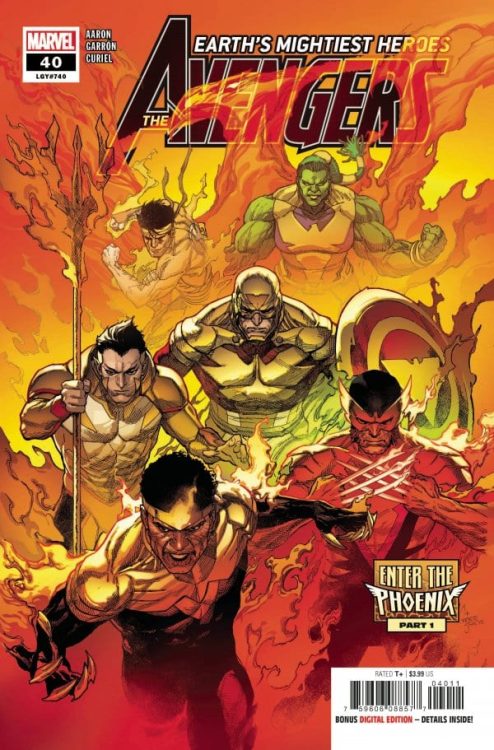
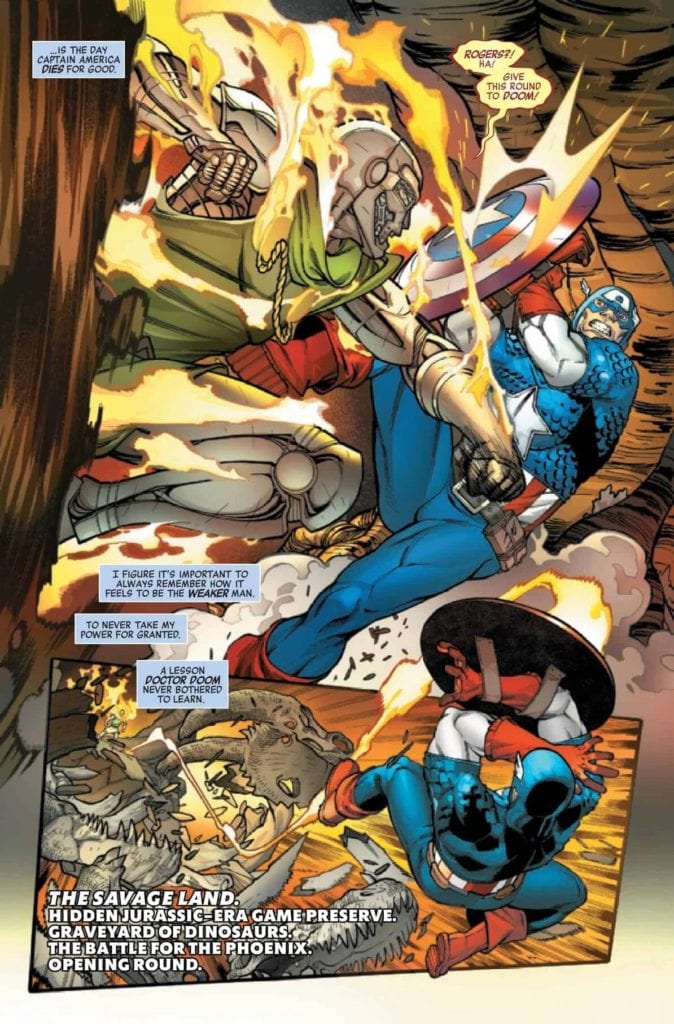
AVENGERS #40, available in comic book stores on Wednesday, December 30th, introduces a brand new Avengers chapter featuring the Phoenix Force. After landing on Earth, the cosmic being is once again looking for a new host. But the rules are different this time—it turns out the Phoenix wants to pit Earth’s most powerful creatures against one another in order to determine who’s most worthy of its power. The resulting tale is a thrilling addition to the Phoenix’s history in the Marvel Universe.

Story

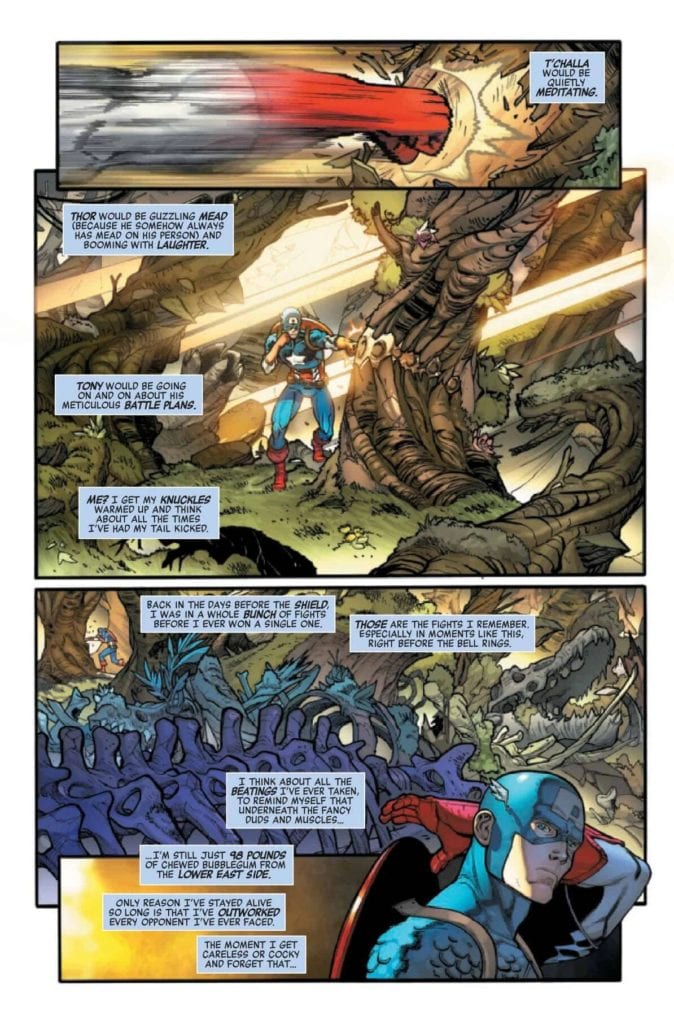
Readers get a glimpse into the mind of Captain America at the beginning of this issue, set in a ravaged landscape unfamiliar to us. The star-spangled Avenger thinks about what other heroes would do on his predicament before laying out what’s going through his mind.

An enraged Doctor Doom soon arrives, and the two begin duking it out. What’s interesting to note is the blazing Phoenix power shared between them. But just before we can grasp what’s going on, the scene shifts to the past. Here, readers will learn how Cap, Doom, and the others become wrapped up in this crazy fight.

Jason Aaron’s narrative technique—throwing readers into the present scene, with context added along the way—is a brilliant way to tell this story. We get small pieces of what led up to the one-on-one fight so as not to move too quickly through the action.

Artwork

We were thrilled to see such extravagant artwork within this issue. Javier Garrón’s penciling and ink work, alongside David Curiel’s coloring, casts marvelous illustrations of Cap, Doom, and others in flowing embers of yellow, orange, and red. These elements help capture the essence of the Phoenix. In addition, VC’s Cory Petit’s lettering places the dialogue strategically to guide readers through each scene.

Conclusion

AVENGERS #40 introduces the next big installment of the Phoenix saga. The setup looks promising; we hope the story expands Phoenix lore even further.

Who do you think will ultimately win the contest? Let us know in the comments below!

Monkeys Fighting Robots Youtube

Review: COLONEL WEIRD: COSMAGOG #3 and Weird’s Frustration

Weird Lemire Dark Horse

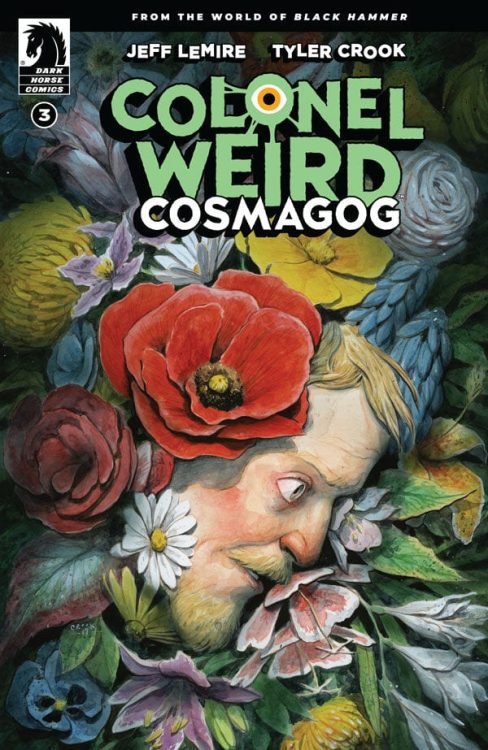
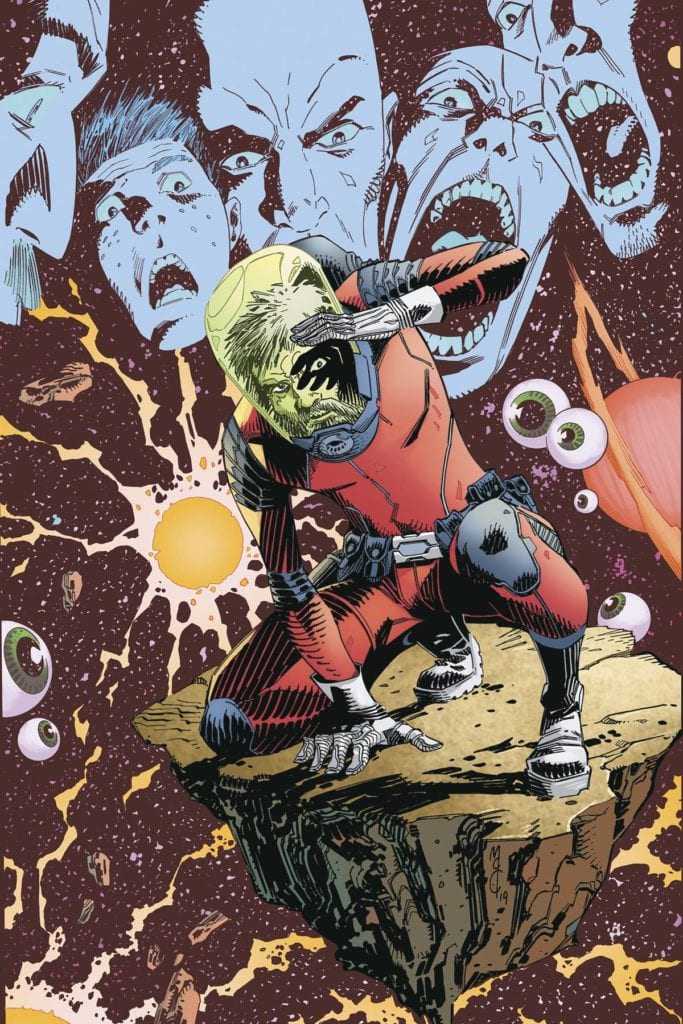
Every issue of Colonel Weird: Cosmagog merits multiple reads. It’s the kind of series that elicits exactly the response it wants to, but it’s rarely a comfortable response. The first issue was excruciatingly vulnerable; the second was slow and beautifully simple. Dark Horse’s Colonel Weird: Cosmagog #3, written by Jeff Lemire, with art, letters, and colors by Tyler Crook, is deliberately frustrating. It invites us into the mind of Colonel Weird, a man who is caught up in the tide of time, and shows what it’s like to feel powerless.

Weird Lemire Dark Horse

Writing

One of the most notable things about Colonel Weird: Cosmagog #3 is how repetitive it feels. Most of the scenes Lemire shows us are essentially things we already know. We know Weird went into the Para-Zone; we know what happened to Eve. Without any major new revelations, the script could feel flat. But what makes Lemire’s script work is that we’re not alone in this knowledge. Weird knows all of this even more thoroughly than we do. And so, we’re witnessing Weird make all the same mistakes. “I am… very sorry…” he whispers to an alien before blowing it to pieces. Lemire’s use of dramatic irony is downright infuriating. But Weird’s a character who is powerless to change “the pattern of things.” Surely that would be downright infuriating too.

Art

Crook shows us how painful it is for Weird to follow the pattern set before him. On one page, we see Abraham Slam and Colonel Weird talk as the world falls apart around them. We see Slam call up to him, followed by a close up of Weird looking over his shoulder, agony all over his face. Each panel goes back and forth between the two of them. We get closer to Slam, seeing his panic, even watching events over his shoulder. But we see Weird glide away, becoming more and more distant and smaller on the page. He has to abandon Slam because it’s what he’s done before. Crook shows how disjointed and confusing Weird’s path through time is, by mimicking it in the page layout. No page is symmetrical; the gutters cut the page into uneven pieces, creating twisted paths throughout the issue.

Coloring

Because Lemire’s script is so drenched in dramatic irony, Crook brilliantly uses his coloring to play against every scene. When we see a young Colonel Weird taking to the stars, the coloring is warm and fun. Crook is making the coloring in that scene feel naive, almost childlike. A bright march towards Weird’s doom. When Crook shows Eve and Weird meeting at night, the scene is dark and intimate. But Crook also uses the darkness to create a foreboding atmosphere. It’s not just two lovers reconnecting, but their last time in each others’ arms. Every scene, every panel, is using the knowledge of what comes next. Crook haunts us through these moments as we rail against what we know is going to happen.

Lettering

We gradually see Weird lose his mind through his dialogue. When we first hear him speak, it’s the Weird we know. His lines are full of ellipses, showing us his hesitation, and his word balloons are grey and twisted. But then he jumps back into a younger version of himself. His dialogue looks normal and confident. And when we see him years down the line, we’re beginning to see the hesitation and madness sink in. His dialogue is littered with ellipses and often broken up into multiple balloons. In the last scene that we see, his dialogue evolves. His first couple lines look normal, but then suddenly, he’s speaking in the twisted grey balloons we’ve come to know. It’s a visual representation of Weird’s mind-melting away.


Dark Horse’s Colonel Weird: Cosmagog continues to be a delight. Sure, this issue is pretty frustrating in its repetition, but in such a way that we can empathize with Weird’s own frustration. We see just how infuriating it is to be in control of nothing. Once again, Lemire and Crook make their most mysterious character beautifully human. Pick up Colonel Weird: Cosmagog #3, out today from Dark Horse Comics, at a comic shop near you!

Weird Lemire Dark Horse

Monkeys Fighting Robots Youtube

Review: The Joys And Horrors Of A Young Prince In KING IN BLACK: NAMOR #2

namor

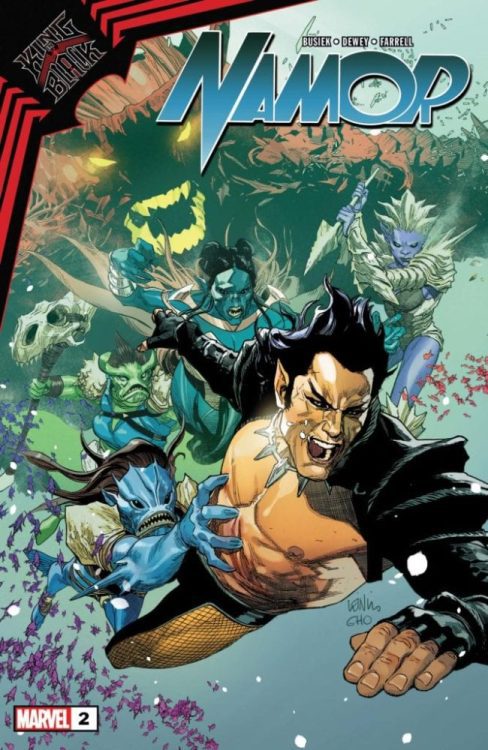
KING IN BLACK: NAMOR #2 hits comic book stores on Wednesday, December 30th, diving deeper into Namor’s younger years. Last issue detailed the sea dweller’s introduction to the Swift Tide warriors. Now, readers will follow Namor and this groups into dark depths, revealing a power older than the sea itself. Can our water warriors stand against a power spawned by the symbiote king Knull?

Story

The story opens with a view of an Atlantean village being attacked by local bandits in search of food. But the Swift Tide soon arrives to meet them with Namor and his friends in tow.

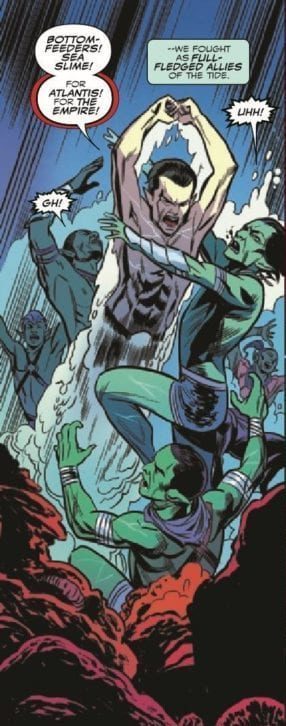
Readers get to enjoy a younger, more idealistic version of Namor as he fights for a cause he believes in. This element, present throughout this issue, help us sympathize more deeply with the character—especially when compared to his older, jaded self.

The story continues as the Tide seeks out a mythic relic called the Unforgotten Stone. In the process, we learn of the moral difficulties facing Namor’s friend Attuma. As an outsider of sorts, he’s able to find sympathy for the hungry raiders. This revelation explores Namor’s capacity for mercy in brilliant fashion.

Unfortunately, this moment is soon broken up by the Tide’s pressing task to find the Stone. Soon the horrors of old gods and twisted beings will come front and center.

Kurt Busiek’s writing takes readers on the rollercoaster that is Namor’s life with the Tide. We see his joy and unexpected sense of horror at what his compatriots find in the dark depths.

Artwork

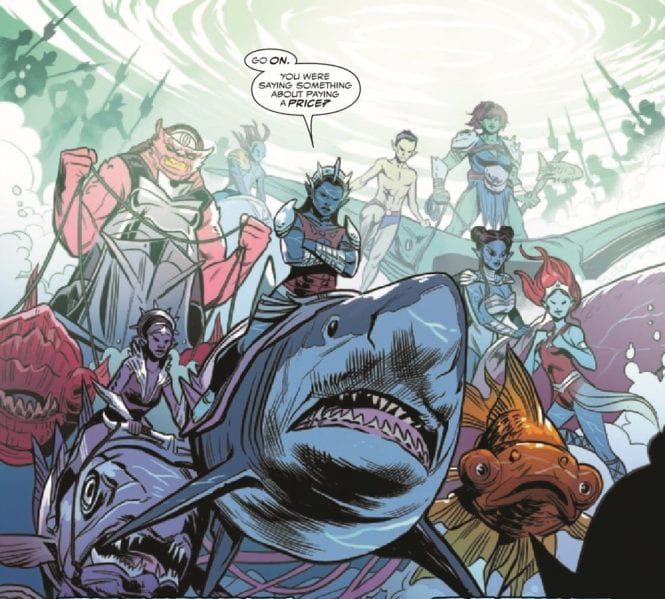
Benjamin Dewey’s penciling and ink work, Tríona Farrell’s coloring, and ‘VC’S Joe Caramagna’s lettering worked together wonderfully in this expansive issue. The spanning scenes of undersea Atlantean mountains and temples set the atmosphere perfectly. They and the characters set within them stand out from these backgrounds while complementing each other. And the lettering, much like the water throughout the setting, seems to flow with the currents in an engaging way.

Conclusion

The expansive story told in KING IN BLACK: NAMOR #2 establishes more backstory for both Namor and the mysterious forces of Knull. We can’t wait to see where the creators take this prequel next!

Would you like to learn more about the Stone’s history? Let us know in the comments below!

Monkeys Fighting Robots Youtube

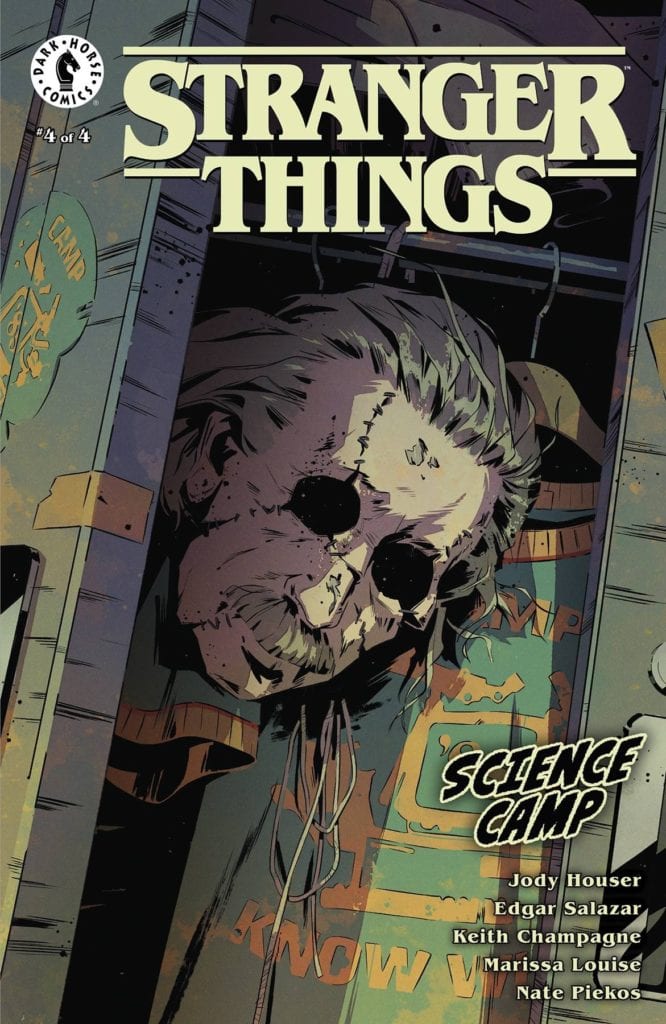
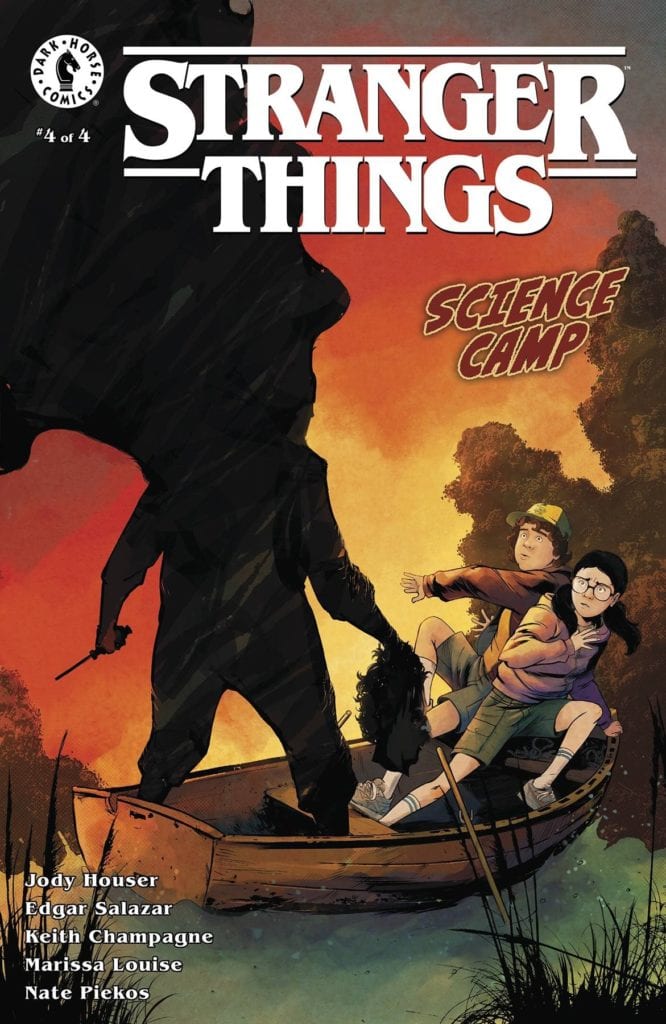
A Satisfying Conclusion In STRANGER THINGS: SCIENCE CAMP #4

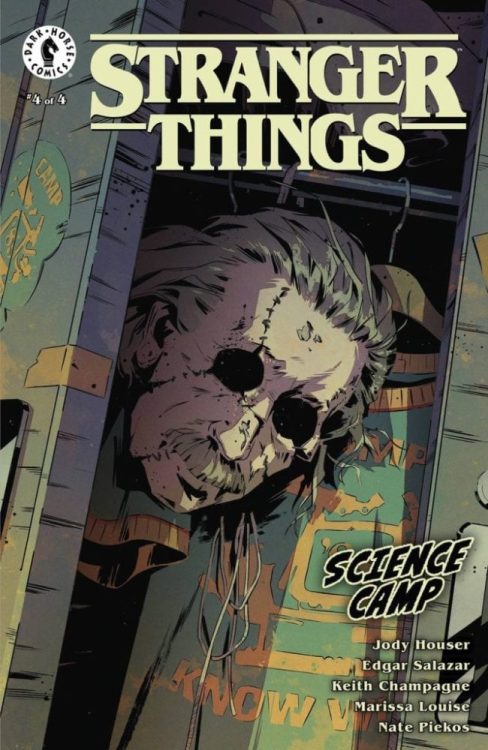
The mysterious stranger makes another appearance in Stranger Things Science Camp #4.

STRANGER THINGS: SCIENCE CAMP #4, available Wednesday, December 30th from Dark Horse, finishes one of the latest Stranger Things series, as it is time that Dustin’s solo story comes to an end. On the bright side, we finally get to know what happened that one time at Science Camp.

The mysterious stranger makes another appearance in Stranger Things Science Camp #4.

The most recent season of Stranger Things had a lot of fun referencing Dustin’s time at Science Camp. It portrayed everything from making Dustin feel left out (for all that he missed over the summer), to making fun of his ‘imaginary girlfriend’ who is actually quite real. And quite brilliant.

That did leave fans just a little bit curious to see what actually happened while he was away at camp. Most of us (myself included) pictured an adorably nerdy camp, with a meet-cute designed just for Dustin and his new lady love.

As it turns out, things didn’t quite go as planned – which begs the question; why didn’t Dustin tell his friends the whole story. Except that maybe he didn’t think they’d believe him? After all, they didn’t believe the girlfriend story either.

Stranger Things: Science Camp #4 wraps up an intriguing plot, one that brought with it more danger and twists than most of us would have predicted. It’s good to know that Dustin’s experience in Hawkins has left him well-prepared.

A new battle may just be waiting in Dustin’s future (or is it his past?).

The Writing

It’s almost hard to believe that this series is only four issues long, and yet Stranger Things: Science Camp #4 is without a doubt the final wrap on this adventure. Over the course of these four issues, fans got to see what Dustin looked like when he was flying solo. As it turns out, he’s actually the cool kid. At least, when you put him in the context of a bunch of science and math fans.

Written by Jody Houser, this final issue answers at least two of the major questions lingering on our minds. Mainly, what the heck is going on, and how it leads to Dustin getting a girlfriend. Both fit in nicely with the larger world.

It’s impressive how many risks were taken in this short series, given how confined the timeline itself it. We all know full well what happened to Dustin before and after, which is fairly limiting. Yet there were some surprises in store.

Obviously, the big reveal of what happened isn’t quite to the same scale as what we’re used to seeing El fight – but that’s okay. In a way, this plot actually felt more human because of it. Plus, there’s something comforting in the familiar concept of a bunch of kids stepping up to try and save the day. Isn’t that the core of the series?

The Art

The artwork in Stranger Things: Science Camp #4 is more or less exactly what you’d expect. It features some brilliant forest scenes, but otherwise, it really does look like a camp that sprung straight out of the ’80s.

Edgar Salazar (pencils) and Keith Champagne (inks) created the ideal foundation for this plot. There’s no doubting the location, identity of characters – or the very real fear on their faces. While sometimes their expressions are comically overdone, it does feel intentional – we’re talking about the massive emotions that run through kids, after all.

Marissa Louise’s colors work wonders to set the scene. The lush and vibrant greens are reminiscent of all that time spent in camps, for obvious reasons. It makes for a stark contrast against the brighter oranges and earthy tones pulled in to balance it all out.

The lettering, provided by Nate Piekos of Blambot, is the icing on the cake, more or less. It’s what ties everything together while managing to remain understated in the best of ways.

Conclusion

And so concludes Stranger Things: Science Camp #4, a fun adventure revolving around one of the kids we’ve come to know so well. It was refreshing seeing one of them off on their own, and how well they can stand up in the big bad world. All thanks to their past experiences, of course.

The answers this series brought along were mostly expected – but with a couple of fun twists along the way. It held true to the core premise of the main series, while having a bit of fun along the way.

Monkeys Fighting Robots Youtube

BIG MOUTH SEASON 4 | TV Review

After the somber end of Season Three, the kids of Bridgeton Middle School continue with their struggles with puberty.

Season Four picks up where Season Three had left off: Andrew and Nick’s friendship has broken down. Unfortunately, Andrew and Nick have to spend the summer together at camp and Nick starts to suffer from anxiety. Jessi has to move to New York City, and she suffers a relapse into depression. Missi has an identity crisis due to her mixed-race heritage. And Jay and Lola start a relationship.

Despite Big Mouth being an animated show filled with surreal sequences, dirty jokes, and monsters, it’s one of the most relatable shows currently on TV, especially for teenagers. Many people would have suffered from the same issues the Big Mouth characters have suffered from.

Nick and Jessi were the characters who had the biggest arcs in the season. Nick was one of the most confident members of the group. He has already had some relationships with girls and his biggest concern was he was the most underdeveloped out of all the teens. However, in this season Nick suffers from anxiety – the new monster in the series was Tito the Anxiety Mosquito and she acted as the voice of self-doubt. She amplifies what the characters were already feeling.

Nick had the worst summer possible because he was lonely and bullied which led to him suffering from panic attacks. Even after the summer Nick, Tito still comes back to make Nick’s life difficult. Nick also sees a future version of himself that has all his worst attributes and shows his worst fear: being alone.

Jessi’s story was poignant. Tito comes and ruins Jessi’s life during her first day at a new school, and this led to the return of the Depression Kitty. Together they work against Jessi, making her feel terrible which led to Jessi making decisions. Even her hormone monster, Connie, helped Jessi make bad decisions. In the series Connie, Depression Kitty, and Tito encourage Jessi into a relationship with a pretentious arty kid – Connie encouraged Jessi’s attraction to Michael, whilst Depression Kitty and Tito tell Jessi he’s the only way she can have any sense of self-worth. All this leads to Jessi being pressured into doing something she was reluctant to do. I was thinking ‘don’t do it Jessi’ which shows how invested I was into the arc.

Jessi’s story was like the teenage version of Inside Out. The Depression Kitty, Tito, and Connie amplify all of Jessi’s emotions. There was even a reference to Inside Out when Jessi breaks down in tears during her first day at school.

Andrew, Missi, and Matthew have arcs and important moments. Andrew had two major storylines – the first was the storyline at camp where he participated in the bullying against Nick, the second was developing a fear of death. Andrew suffered from constipation when at camp, leading to metaphorically act like a piece of shit. Yet this leads to Andrew and Nick restoring their friendship and calling back to the first episode where the pair were willing to embarrass each other to help each other out.

Missi’s revolved around her identity. She has lived a sheltered life to the point she doesn’t realize why her dad gets stopped at the airport. It’s only when Missi meets her cousins where they encourage her to embrace her heritage. Missi gets a new look and in “A Very Special 9/11 Episode” she speaks with DeVon, the only black student in her grade. DeVon states Missi should be confident in her identity, but he has a troubling revelation that he changes the way he speaks depending on his surroundings. Both Missi and DeVon were kids from a middle-class suburb, so their experience was going to be different from other African Americans.

The show lampshades that Missi was voiced by a 37-year-old white woman and with the current political climate many animated shows have recast with voice actors of color. Big Mouth was no expectation, but they simply didn’t change Missi’s voice. Partly this was due to Jenny Slate already much of her dialogue for the fourth season, but the main reason was to highlight Missi’s metamorphosis during the series and the voice change was a major plot point. Ayo Edebiri’s voice was slightly deeper than Jenny Slate’s, but the difference was minor and the change could be argued that Missi’s maturing so her voice would get deeper.

Matthew’s storyline involved his sexual identity and coming out. This was difficult for him because his mother was a religious conservative, and his dad was a Navy veteran. The family home was covered in patriotic American symbols. Many gay viewers could relate to Matthew’s plight.

My favorite episode of the season was “Horrority House,” the ninth episode. In that episode the teens have a bad trip and experience their worst fears. It made for a powerful episode as Nick, Jessi, Andrew, Missi, and Matthew have surreal experiences and come to important realizations. The season finale followed a similar pattern to the finales in Season One and Two because the characters have to save one of their friends.

Season Four introduces a new character for the first three episodes, Natalie. Natalie was the first major transgender character. The previous summer she arrived as Gabe but suffered hardships when puberty struck. Natalie was anxious because she didn’t know where she fitted in because everyone knew her as a boy the previous summer. I hope that Big Mouth explores asexuality in a future season.

Season Four was a more dramatic season of Big Mouth but it was not without comedy. Maurice the Hormone Monster was his usual crude self and there plenty of gross-out humor. Missi’s hormone monster, Mona was entertaining, but I admit it might be because she used a lot of Britishisms.

This was an excellent season of Big Mouth filled with lots of character growth and self-realization. Big Mouth shows it’s more than sex jokes and gross-out humor.

Monkeys Fighting Robots Youtube

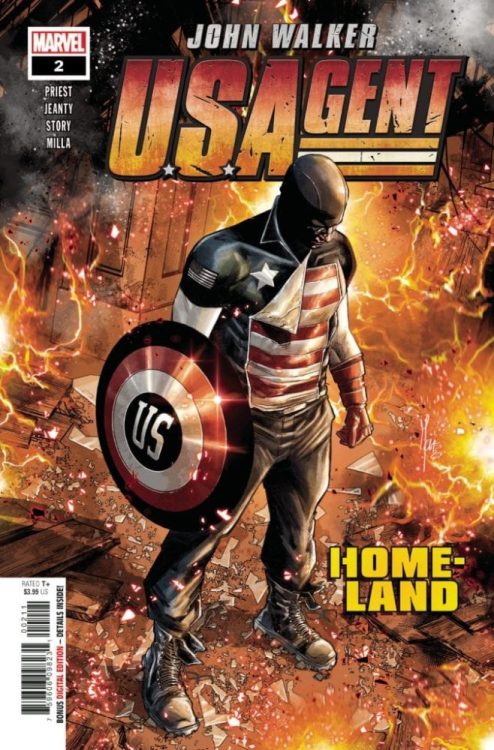
U.S. AGENT #2: Southern Hospitality (And Lack Thereof)

U.S Agent #2 Cover

U.S Agent #2 out now from Marvel Comics features The Falcon and the Winter Soldier‘s co-star John Walker. Writer Christopher Priest tackles the difficult task of characterizing an ex-Captain America by hooking the reader with intrigue. Joining him are penciler Georges Jeanty, inker Karl Story, colorist Matt Milla, and letterer Joe Sabino.

Background

John Walker was U.S. Agent; now he’s just a government contractor working numerous small jobs. One of them just happens to send him to a small southern town entering a conflict with a former SHIELD base led by his sister.

U.S Agent #2: Little White Lies

John is a difficult character to fi in today’s modern world, being a tried-and-true redneck. Priest’s history with morally ambiguous characters like Deathstroke gives him a leg up on portraying John. U.S Agent #2 centers the main conflict on the Southern American identity between John and Kate. Despite their origins, they couldn’t be any more different. Their relationship is very strenuous, with John remembering Kate abandoning him in a fire as a child.

U.S Agent #2 conflict page

Every conversation between them in U.S Agent #2 feels like a family feud for moral dominance; John’s more conservative approach to the conflict is a bit dishonest as he gets the town’s help with his similarities to Captain America. Kate favors a more direct approach that involves kicking down doors. Despite her own Southern origins, Kate looks down on the townspeople calling them “hicks.” She is also willing to exploit John’s motivations to get him out of the way, the memory of their brother no less. The reader can practically feel the tension between them, keeping them guessing on what happens next.That's going to sting

U.S.Art!

Jeanty’s pencils cover a wide array of situations, often in the form of shifting dynamics between characters. John and Kate’s arguments throughout U.S Agent #2 display how Kate tries to control the situation. Kate taking away and doing repairs to John’s vehicles, demonstrates the power she has over him. The story accents the space they share; they often share the same line work, which becomes more apparent when they share sights.

The coloring from Milla is best when it comes to the backgrounds that blank out with colors suggesting moods of events; light blue-greens indicate a casual background while purple shows a state of confusion. The lettering by VC’s Sabino displays moments that each hold importance. Not least of which are the panels featuring titles and details like they are segments of a documentary. These moments highlight every little thing that happens, like displaying the town’s feeling on gun safety. They’re moments that juxtapose with Kate’s view of the people; despite West Virginia’s more conservative status, the people aren’t hostile.

The Plot Thickens in U.S Agent #2

Within U.S Agent #2 comes a shift in dynamics; here John Walker looks more sympathetic with how the reader sees his sister. With how manipulative and standoffish Kate seems, readers can’t help but think back on what John values, especially as John’s southern identity may be what puts him and Kate into further conflicts. All of this together makes U.S. Agent a good read that gets readers intrigued as the plot moves forward.

Monkeys Fighting Robots Youtube