

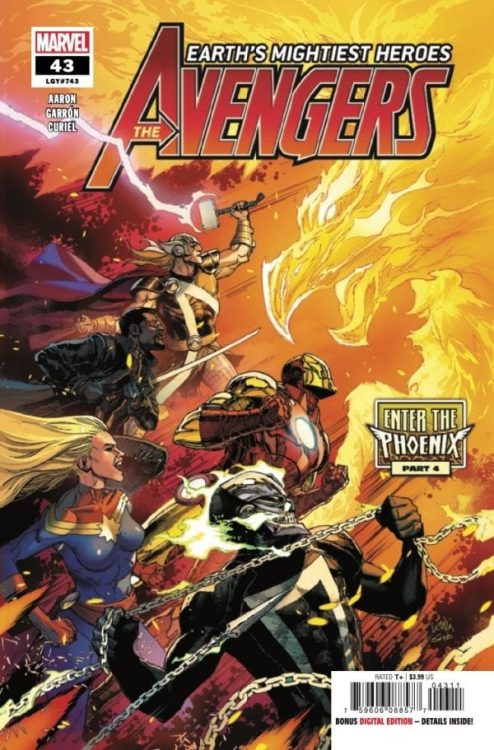
AVENGERS #43 hits stores on Wednesday, March 3rd, making this the fourth installment of the Enter the Phoenix run. After choosing some of the world’s most accomplished heroes to compete in a tournament, the Phoenix Force decides to survey all it has brought together. And after revealing a unique connection with Thor last issue, it’s attempting to forge a greater connection with him. But what purpose does it have for the other champions in this tournament?
Story
The Avengers, their allies, and a few unsavory actors have been the focus of the Phoenix’s tournament for the past three issues. And while this is still the case, we see the events told by someone other than the characters themselves. The Phoenix makes it clear that it is in charge of the narrative.
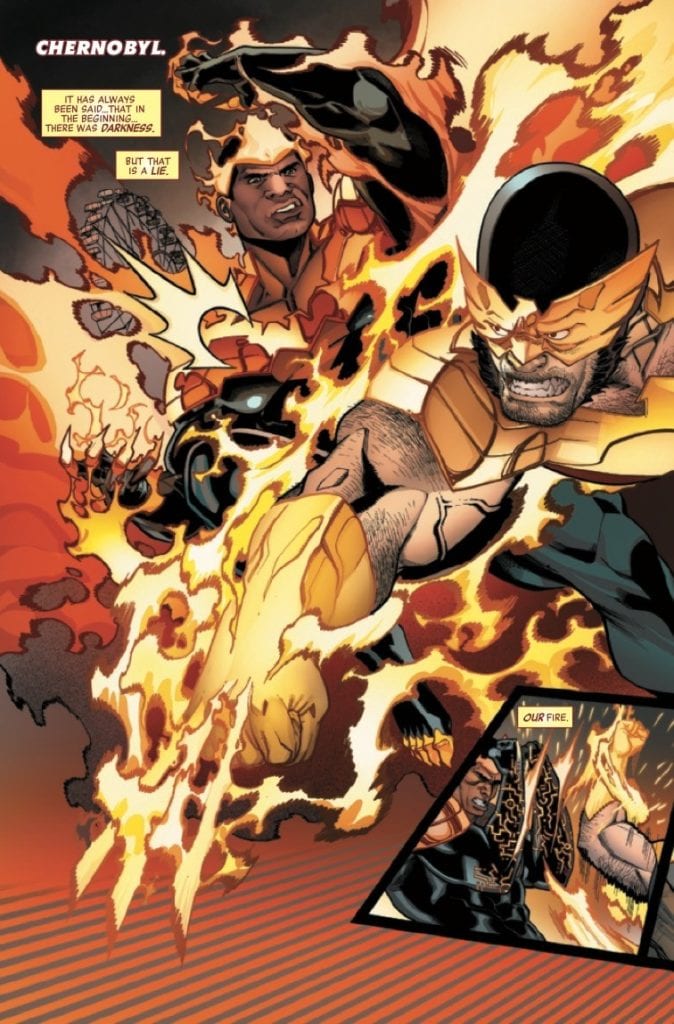
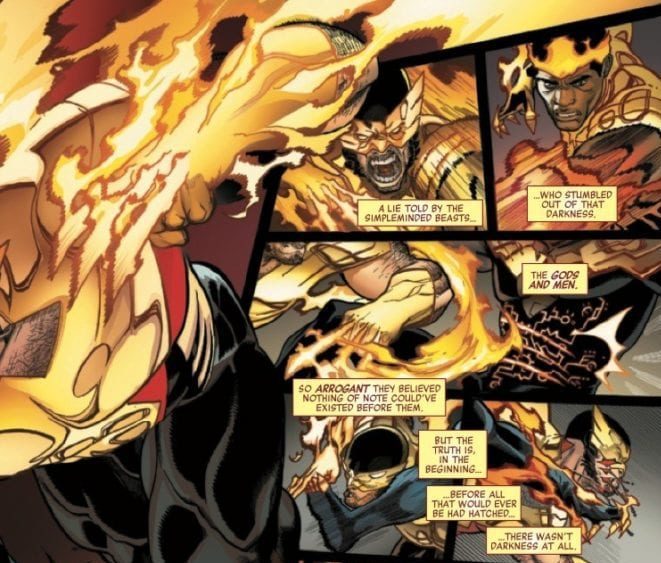
Amidst a bloody fight between Black Panther and Wolverine, the Phoenix narrates a tale of its own. It reveals that it was one of the primordial forces of creation, existing as light long before any other mortal beings. This hype up of the being’s influence establishes a clear hierarchy of power. And as its narration continues throughout each individual battle, we learn more about its motivations.
Jason Aaron’s narrative does a beautiful job showcasing the Phoenix’s personality. The rage of the heroes fighting in its power is amplified by the sheer authority laced throughout its speech. We can’t wait to see what lies in store as its might grows.
Artwork
Penciler and inker Javier Garrón’s depictions of characters in combat captures the sheer brutality of this tournament. The slugs, kicks, and flames envelop each one with red, orange, yellow, and black shades, courtesy of colorist David Curiel. These aesthetics pair perfectly with the Phoenix’s cryptic dialogue. Letterer VC’s Cory Petit’s narration boxes, cast in yellow and red, frame each scene to keep us focused on both the words and illustrations.
Conclusion
AVENGERS #43 gives readers an intriguing look into the mind of the Phoenix itself. We’re anxiously awaiting the reveal of the Phoenix’s chosen champion.
Do you think the Phoenix will assert more control in the coming issues? Let us know in the comments below!
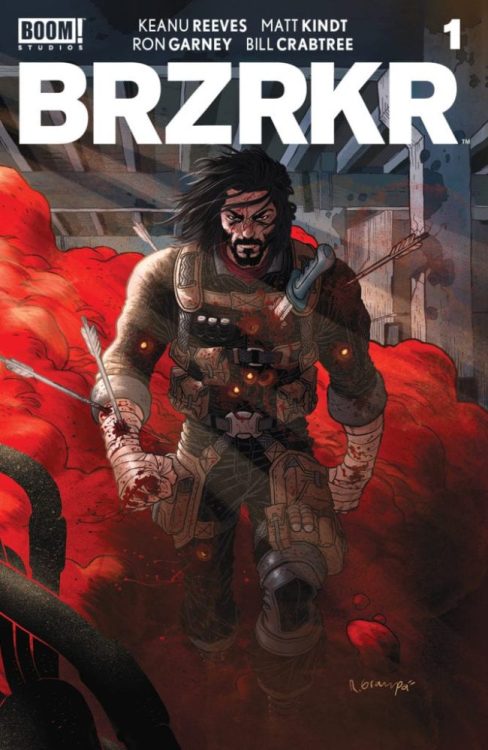
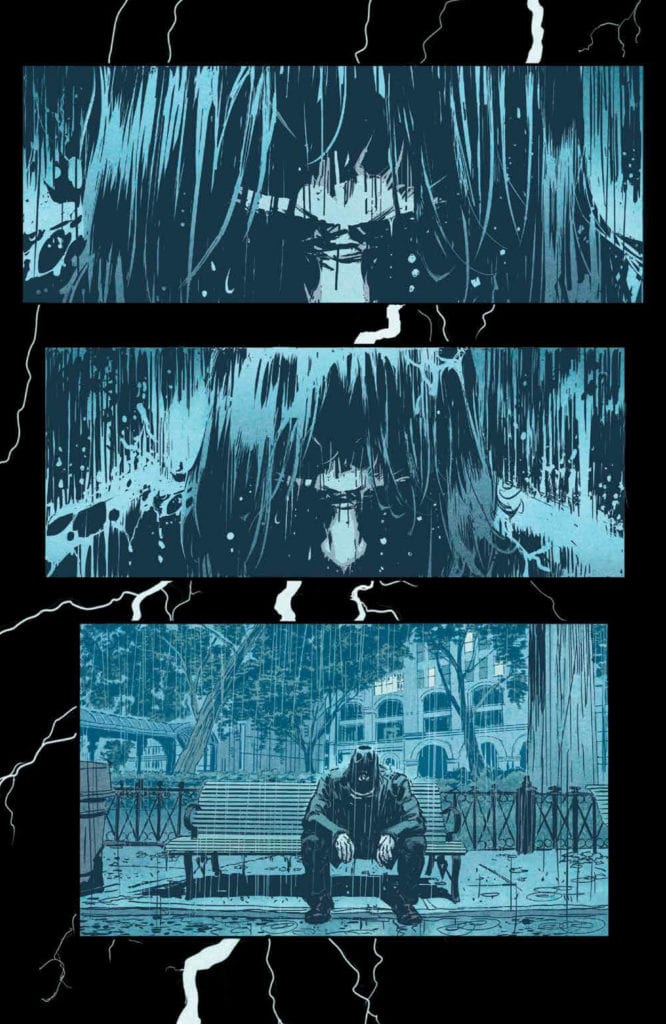
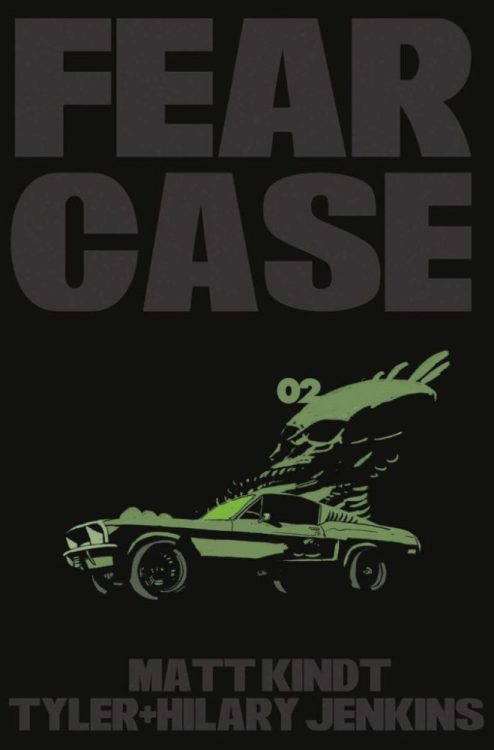
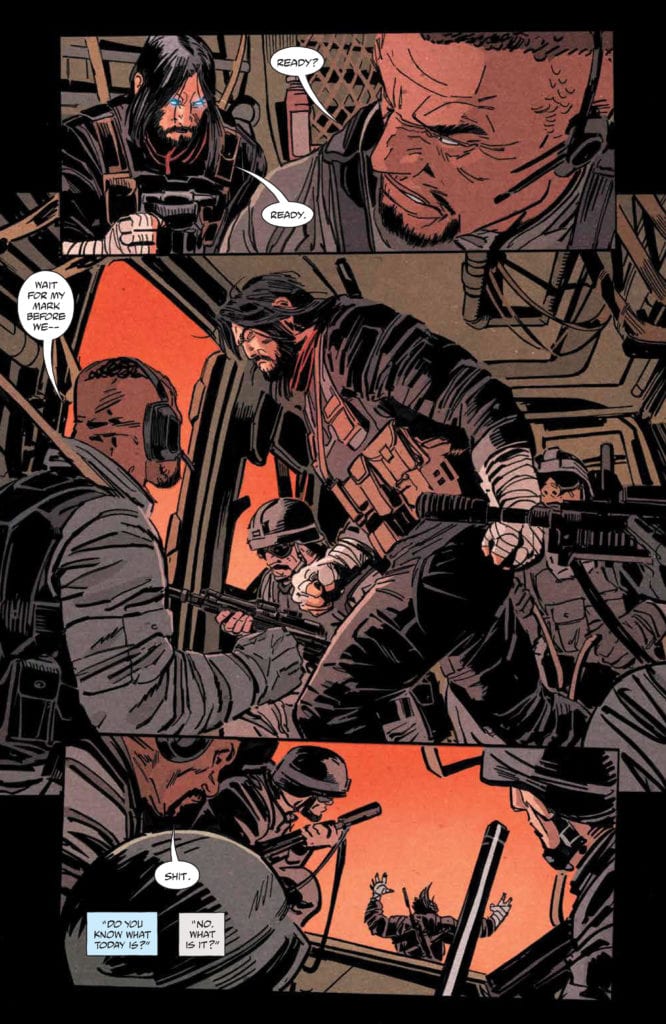 In just the opening of BRZRKR #1, we see the berserker in a scene evoking the Sad Keanu meme. For Reeve’s fans, this tells the reader what kind of character the berserker is, a super-powered John Wick, which given the brutal over the top actions that Garney illustrates, this comparison isn’t far off. Combining with red colors that Crabtree uses to accompany the berserker, the title character remains the center of attention. Sometimes it’s when the background disappears, like when the berserker dodges a bullet or when he’s being operated on in a blue room.
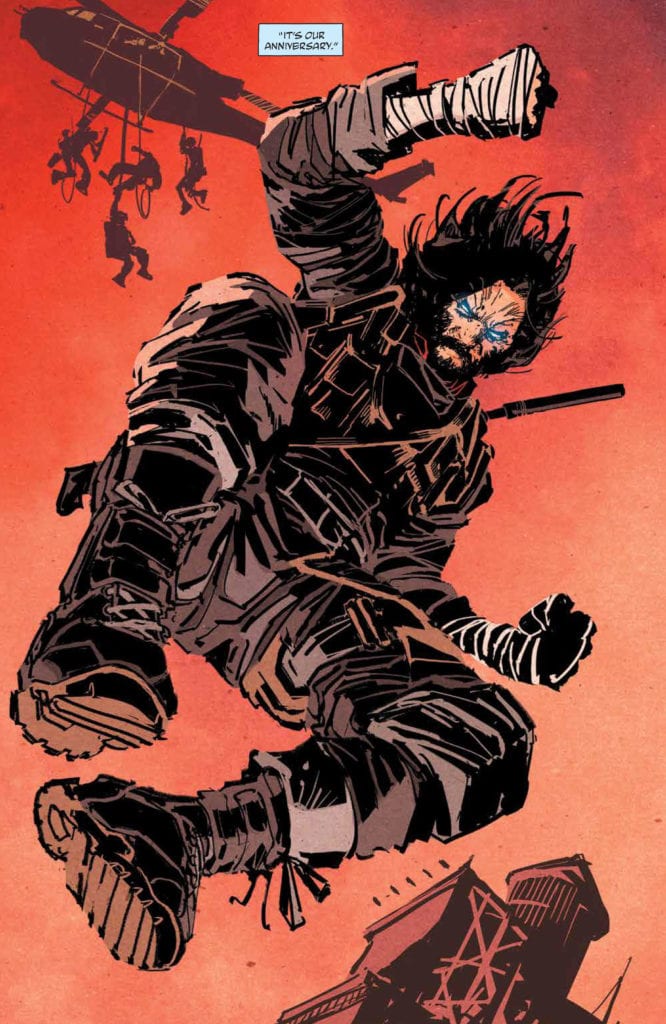 The most clever art in BRZRKR #1 comes from the lettering by Robins. The captions that the berserker talks to his psychologist are in juxtaposition with the berserker killing people. Considering Kindt has it written like the Berserker is talking to a significant other, this comes across as a parody of John Wick. I mean, the psychologist says, “it’s our anniversary,” like she’s his wife. The blue captions are a light blue color indicating a sense of ease, unlike the cold gray ones of the berserker. So when the berserker turns up at an operating table, it indicates this loving sense the reader got on implication is just part of the berserker’s job. It’s a rather tragic comedy when you look at it like that.

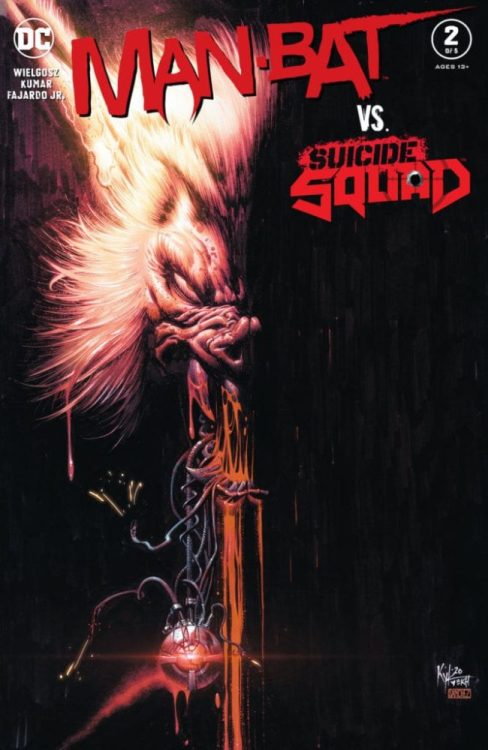
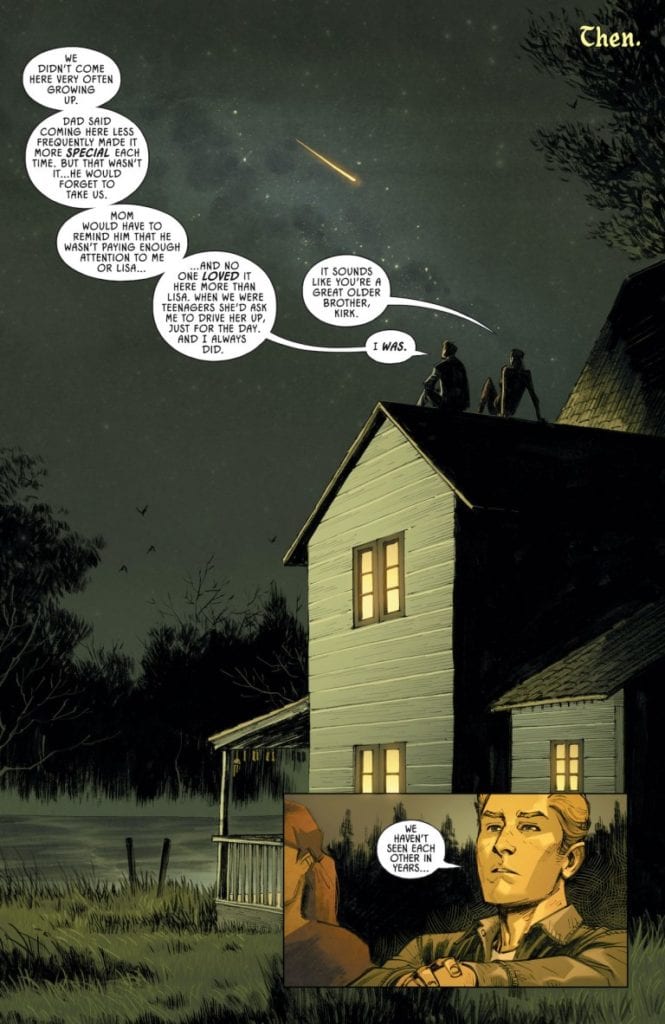 Wielgosz demonstrates Man-Bat #2‘s narrative like it’s an issue of another series. He provides just enough context to set up the premise of the series as well as the issue. In this case, it’s Kirk’s initial humanitarian efforts to help people like his deaf sister. Only for his work to take over his life and hurt people around him. This makes Kirk a very sympathetic character who has gone through loss and is trying to take responsibility. The only problem is, Kirk is ignoring the core roots of his problems. As the premise sets up, Kurt tries to control everything without realizing why that’s a problem.
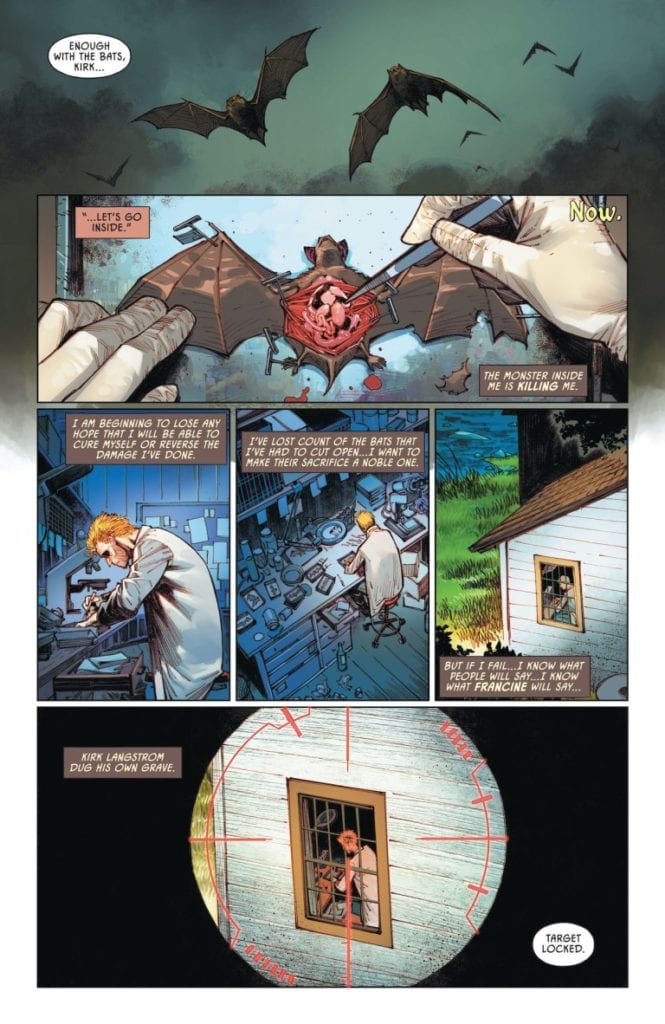 The inclusion of the pre-Taylor Suicide Squad is practically a reflection of Kirk’s situation. The squad is mostly Batman’s rogues’ gallery-like Deadshot and Killer Croc, once great villains now a disposable clean-up crew. They want to capture and control Man-Bat in a way like the overarching villain Scarecrow uses Kirk’s Man-Bat serum to build an army. Everybody is so focused on trying to take control of Man-Bat they fail to actually fix anything.
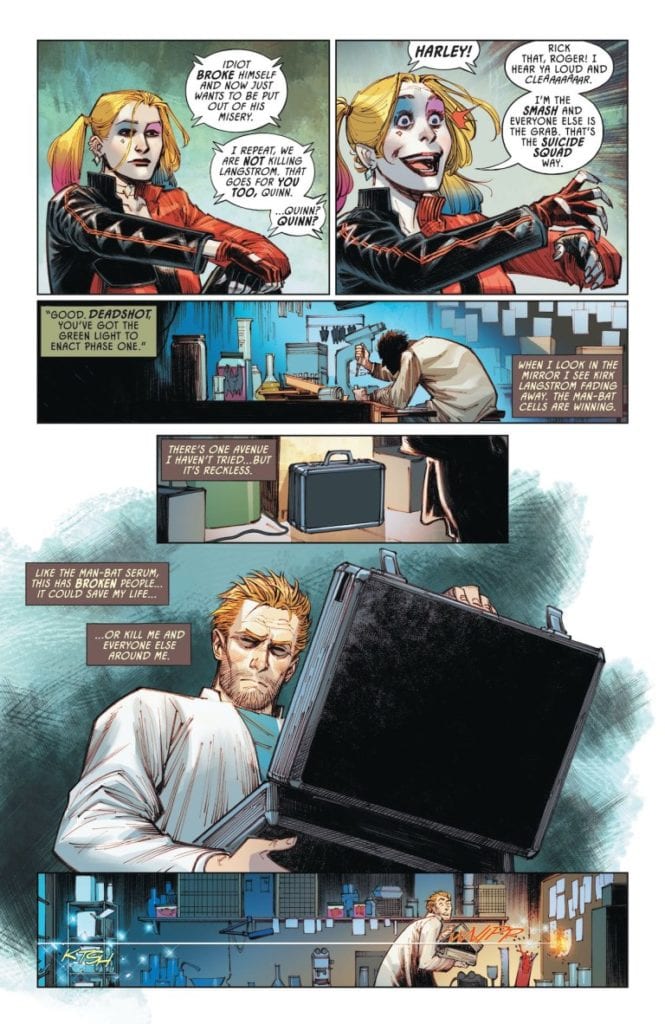 The dark coloring of Man-Bat in action via Fajardo adds to the intimidation. It’s a strong contrast to the colorful Suicide Squad who forces Man-Bat out in broad daylight. The shading that Man-Bat is covered in when he’s on the offensive is often in blurring speed. This makes Man-Bat feel like a predator that’s always moving. Unlike when he is clearly seen, which displays him in vulnerable positions.