Antlers is a highly unnerving creature film with an important message about child abuse. Based on Nick Antosca’s short story, the film is a relentless slow burn with a superb creature design. It may take itself too seriously, but it’s executed tremendously for the first two acts. After spending many moments building up intrigue and tension, Antlers does lose some steam during the third act. This doesn’t erase the brilliance of those first two acts, which makes Antlers worth checking out.
Working as an allegory for abuse, Antlers provides the perfect setup for viewers to grow attached to the characters on screen. The film’s downtrodden landscape aids in maximizing the emotional angst portrayed by its characters. Director Scott Cooper relies on the surroundings to create this never-ending claustrophobic feeling. Antlers is brought to life through terrific performances from Keri Russell, Jesse Plemons, Jeremy Thomas, Scott Haze, Amy Madigan, and Graham Greene.
Cooper collaborated with Antosca on this chilling screenplay and Cooper translates it into a methodical creature film for the screen. The film centers on Julia Meadows (Russell), a teacher who has recently returned to her hometown. She becomes increasingly concerned for her student, Lucas Weaver (Thomas). Lucas has been displaying signs of abuse, and Julia’s traumatic past makes her desperate to help her student. However, Lucas is secretly keeping a supernatural creature inside his house. The torment Lucas endures at home and school makes him likable early on.
Lucas is bullied at school and then goes home to a life no child deserves to live. Very few resources are available, he’s visibly unclean, and it’s as if no one lives there. Of course, he’s keeping a massive secret in his upstairs attic that will torment the entire town. The dynamic between Julia and Lucas acts as Antlers heart, her determination to save Lucas makes her easy to get behind. Initially, Lucas is hesitant to tell Julia the truth. He understands that telling would mean an uncertain future for him at home. Julia resides with her brother Paul (Plemmons), the local sheriff, and they both share a traumatic experience that has crippled their bond as siblings.
This exploration of generational trauma and cycles of abuse makes Antlers fun to experience and the atmospheric dread that lingers in each shot amplifies the film’s themes. Building towards the creature reveal also kept the film intriguing and shows Cooper knows how to keep the audience invested. It was a solid setup with a tremendous payoff, and Cooper keeps the creature terrorizing Lucas shrouded in darkness. Towards the end, unnecessary exposition dumping takes place to confirm what was already being made obvious.
Antlers is tackling the wendigo folk tale and the subtle approach was relinquished in favor of exposition dumping. The methodical unease felt early on grows into a thrilling final confrontation with the wendigo. How it’s defeated is severely underwhelming and made the creature appear less menacing. Aside from that, Russell and Thomas are very convincing in their roles. Thomas delivers one of the best child performances this year, and Russell is mesmerizing as this rightfully concerned teacher with a troubling past.
Cooper keeps the tension consistent, never letting up, but allows the unease to grow with each new revelation surrounding Lucas’ horrific life at home. One scene in Lucas’ attic involves an intense body contortion that will send chills down your spine. The bone-chilling score from Javier Navarrete acts as an ominous force ringing throughout each scene. The film’s pacing never grows dull, and the methodical approach allows enough time to become attached and invested in its narrative.
Antlers is an effective creature film that may have a rocky finish, but the events leading up to its satisfying end solidify it as a good film. Wendigo horror isn’t breaking new ground, so I can see why some may think the film takes itself too serious. Antlers should make for a fun watch this Halloween season when it arrives this weekend.
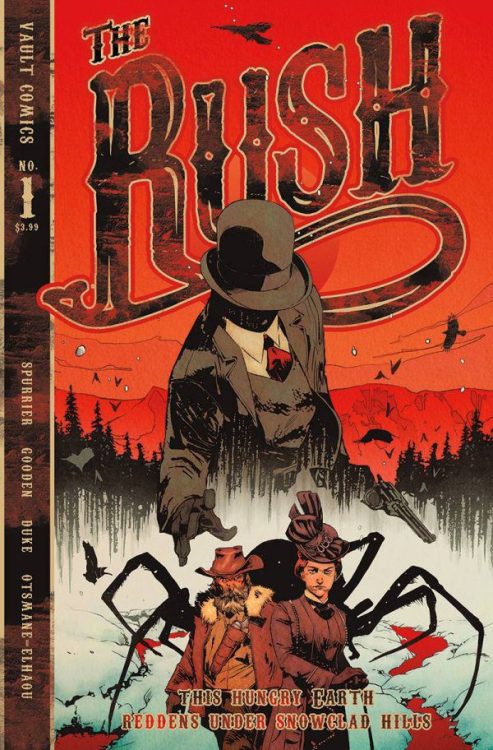
You can always trust Vault Comics to produce thrilling and thought-provoking work. THE RUSH, or This Hungry Earth Reddens Under Snowclad Hills, is no exception. Writer Simon Spurrier, artist Nathan Gooden, colorist Addison Duke, and letterer Hassan Otsmane-Elhaou put us into the shoes of 1899’s gold miners. They tap into the desperation and exhaustion of what’s been a very tough year.
About the Plot:
THE RUSH #1 takes place during the Gold Rush, in 1899. Out in the wilderness, a monster stalks those who are desperate enough to still be searching for gold. One such poor soul is Caleb Bridger. THE RUSH #1 follows his mother as she travels out to find him and bring him home. God only knows what she’ll run into along the way…
Writing
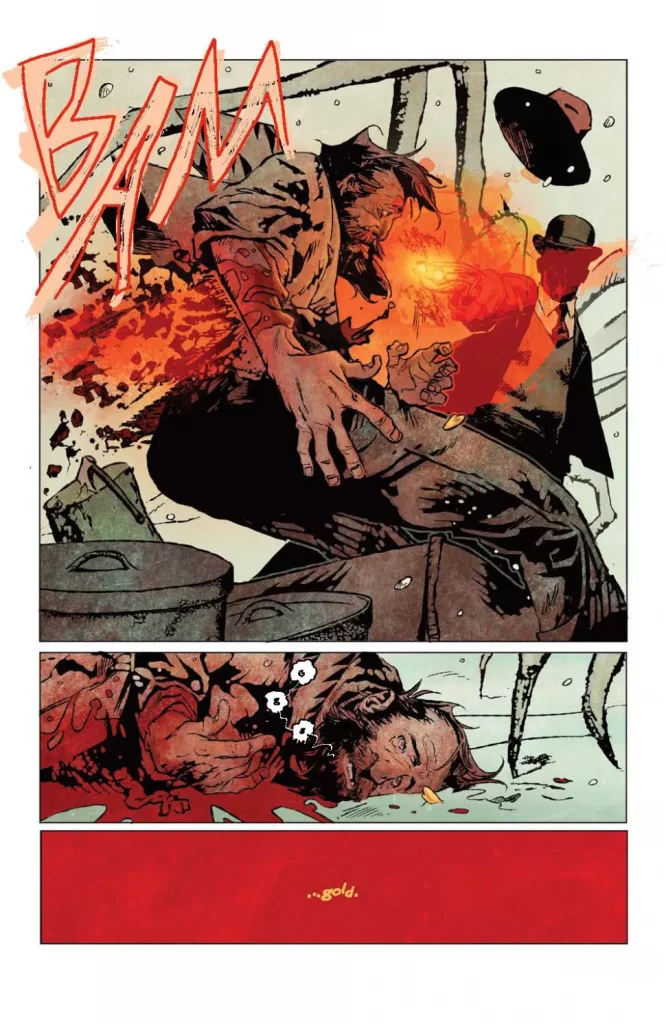
Spurrier begins this story with a monster. But it’s not a monster with tentacle arms or red eyes. It’s a monster that wears a bowler hat and tie. As the monster approaches, another character is distracted by a lump under his skin. He takes a knife to it and, after maiming himself, finds a nugget of gold. The subtext to these moments is immediately clear. Spurrier wants us to think greedy, well-dressed men, taking scraps away from the poor. It’s so easy to look back on the Gold Rush and just pass it off as a time of greed. But now, we know better. We’ve lived through a year where we’ve had nothing to do but sit and think about all the ways that our systems are broken.
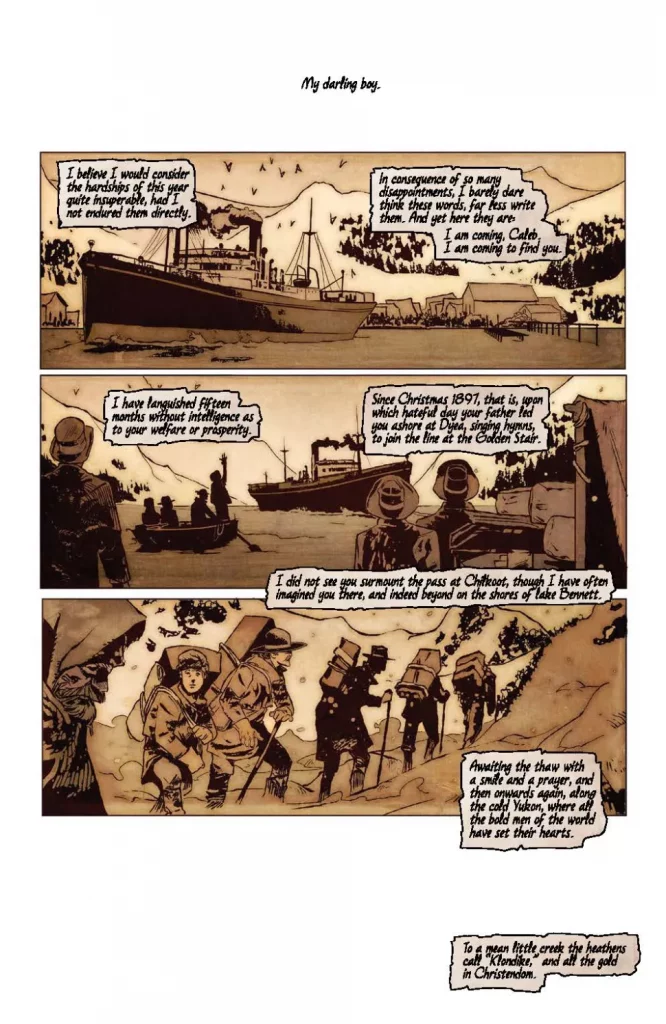
And Spurrier wants us to draw those connections. He wants us to remember the desperation of 2020, a desperation that still lingers. “My darling boy,” the main character, Mrs. Bridger, writes. “I believe I would consider the hardships of this year quite insuperable, had I not endured them directly.” It’s a distanced, polished way of saying she’s surprised she’s made it this far. Spurrier is re-contextualizing the Gold Rush. It’s a quiet and slow start to this series, but it promises so much more to come. Spurrier is in no rush, himself. He’s going to tell this story right.
Art
As we start the issue, and first meet our monster, there are several moments that bleed past the panel borders. Birds fly out into the margins of the page, the loud noises of gun fire burst past the edges of the panel. Gooden is immersing us in the world, but also showing us that some moments are too big to be contained. Soon after, though, we get Mrs. Bridger’s letter to her son. Very big moments seem to happen in her letter. We see men stab each other in the face, another man vomits all over himself, and two men are in a gunfight. But these scenes have a thick, white margin around them. They are utterly unremarkable to Mrs. Bridger. Gooden shows us that death and violence are just a norm in the time of the Gold Rush.
Gooden’s character designs are beautiful. He can make a character look charming on one end of the page and have them looking sinister two panels later. But it’s all done with great subtlety. Gooden is a master of the human face and manages to drive this story onwards with the emotions of the characters, all while keeping the characters generally stoic. It’s small tells like a shift of the eyes or the tightening of a jaw that gives us all the emotion we need.
Coloring
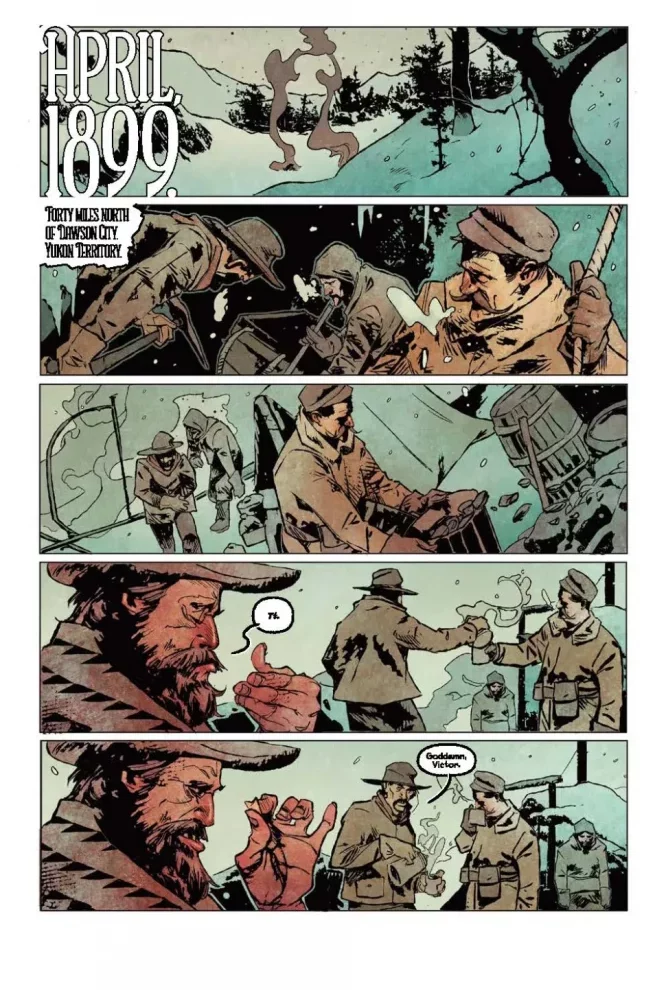
In the world of THE RUSH, every scene has an ambience. Duke doesn’t stop at just coloring the scene, he gives each scene a feeling. As the issue opens, everything is quite neutral. There are browns, blues and whites, but it mostly looks pale. One of the characters, however, has a reddish hue. Then, as the monster shows up and violence rears its ugly head, Duke shows why the red was there in the first place. Soon, it’s all we see.
Then, we see Mrs. Bridger’s letter. Duke colors it in a light brown, throughout. This adds to the normalcy of these scenes. There’s violence and death, but Mrs. Bridger barely notices. It’s all par for the course. But as we see her and her chaperone enter Dawson City, a city built on the riches found in the initial Gold Rush, the pages are given a golden tint. When they venture out into the wilderness, where all this gold supposedly came from, color drains from the page again. Not only does Duke show us what to feel in each scene, but he points to the pointlessness of the Gold Rush still going on. The gold is gone and the wilderness is a desolate and empty place.
Lettering
There’s an incredible amount of energy to Otsmane-Elhaou’s letters. From the moment the monster first attacks, the “BAM” that tears through its victim is messy and looks scribbled on the page. It perfectly sums up the senseless brutality of that moment. The same can be said of the “HRRKK” of vomit, spewing from a character’s mouth, or the “HAW! HAW! HAW!” of a bunch of drunks laughing at Mrs. Bridger. Each sound is perfectly tailored to each situation.
But it’s the dialogue of THE RUSH #1 that feels downright magical at times. When Mrs. Bridger finds her husband has returned home without saying anything, she’s furious. His response is spirited at first. He stumbles along his words, but it’s with gusto that he lays down his defense. But at the end of one of his word balloons, his lettering becomes tiny: “I couldn’t take it no more,” he says. The size of the font tells us everything we need to know about his shame. Otsmane-Elhaou’s lettering is some of the best in the business, and Vault Comics’ THE RUSH #1 is a textbook example of why!
THE RUSH #1, from Vault Comics, is a story of hardship and desperation. It’s about people who are stuck in a vicious cycle of poverty, while those who hold the purse strings do nothing to help. This creative team brilliantly ties these events to real life, connecting 1899 to the present day. With a slow and methodical start, this series promises to be a subtle and entrancing horror-show. Pick up THE RUSH #1, out from Vault Comics today, at a comic shop near you!
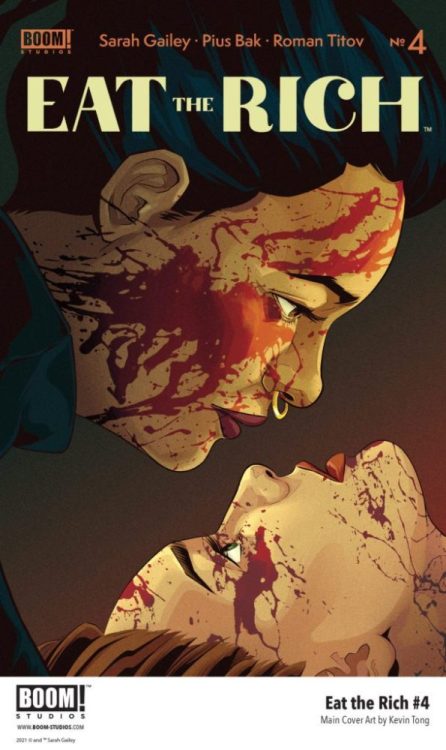
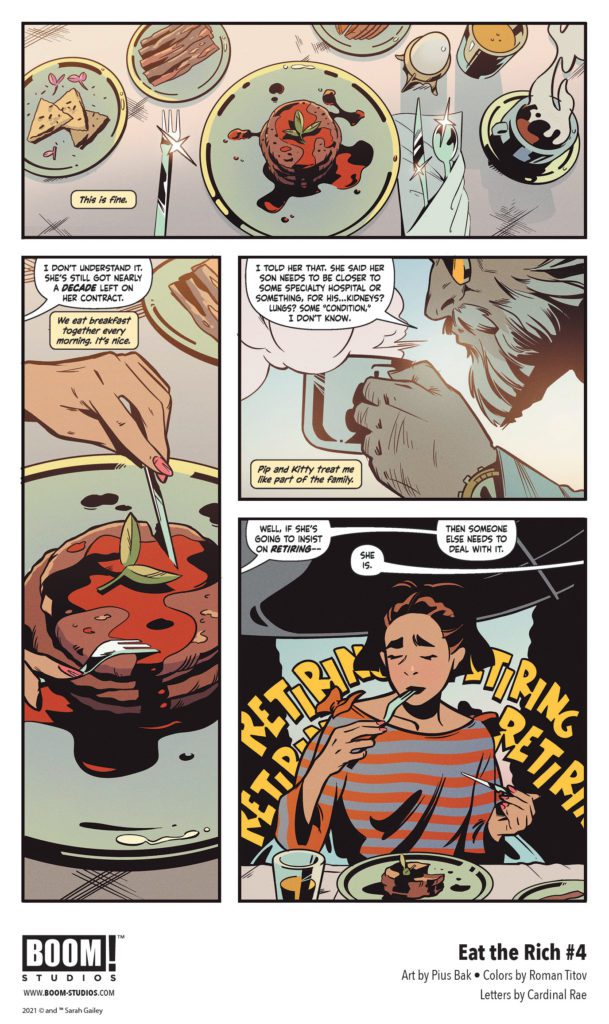
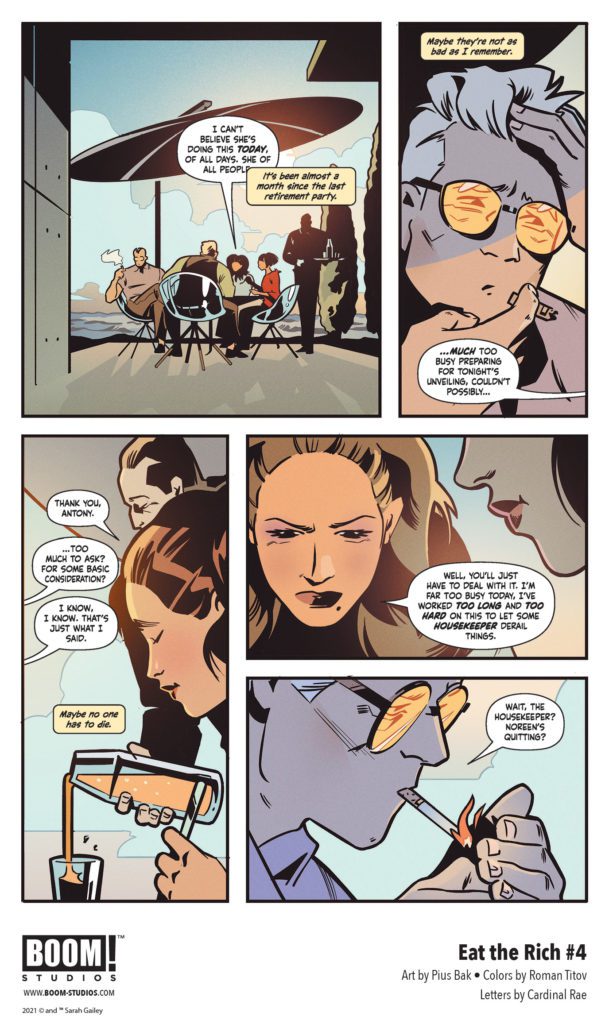
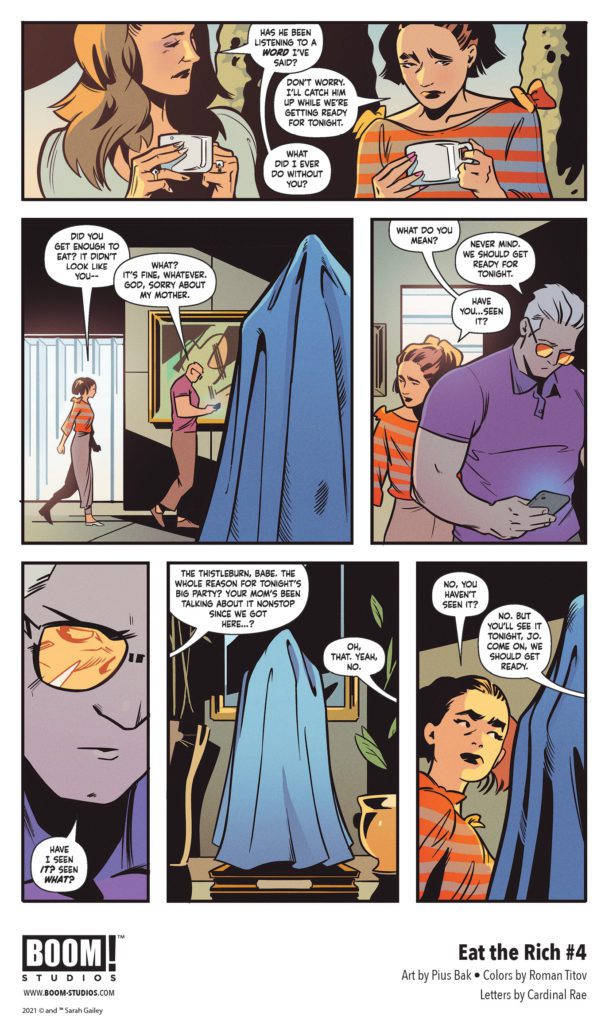
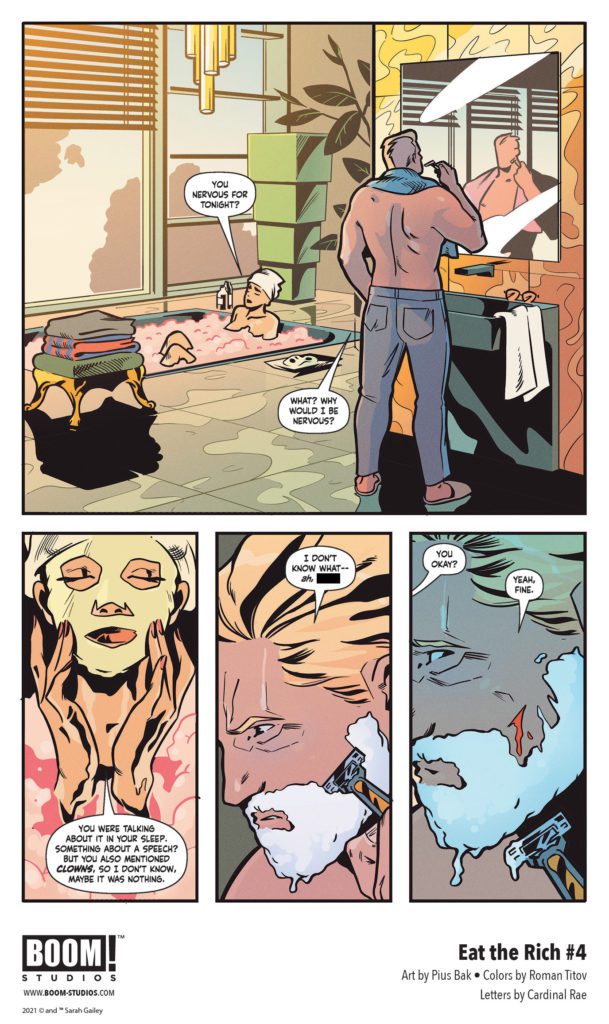
EAT THE RICH #4 hits your local comic book store November 17th, but thanks to BOOM! Studios, Monkeys Fighting Robots has an exclusive five-page preview for you.
About the issue: Even as Joey struggles to make sense of everything she’s seen, what role her beloved Astor has in it, and what it means for her relationship with him, Crestfall Bluffs is a flurry of activity preparing for the Thistleburn Unveiling Gala Party. When Joey intervenes in a situation she doesn’t fully understand, it will bring everything to a head in the most unexpected way!
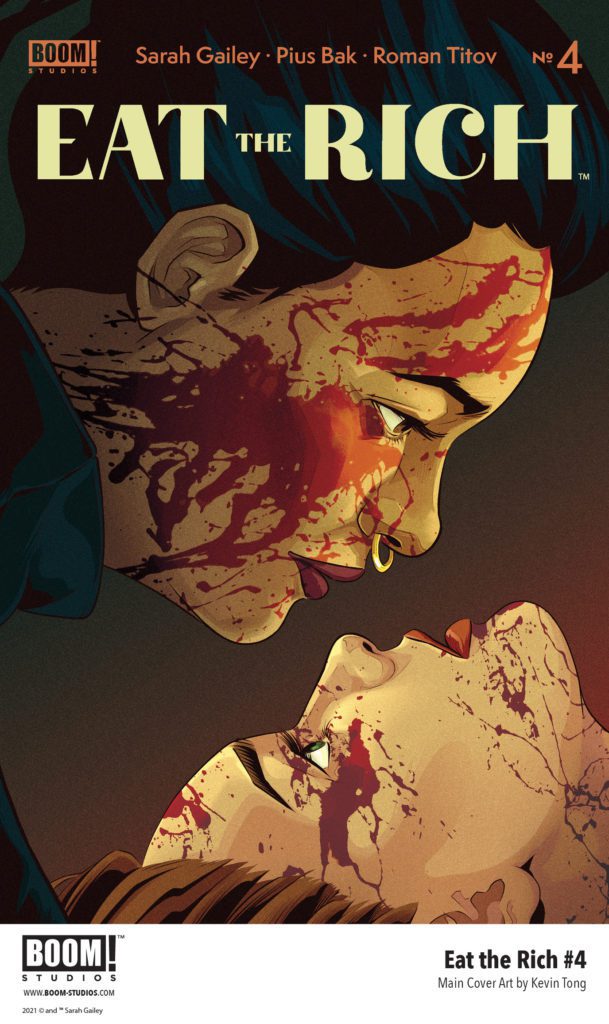
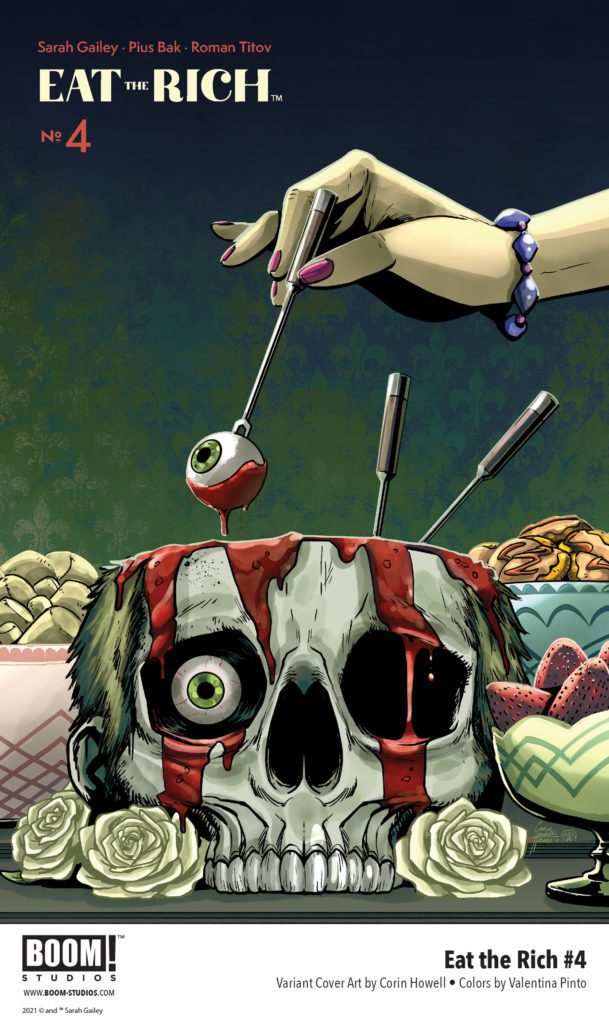
The series is by writer Sarah Gailey and artist Pius Bak, with colors by Roman Titov, and letters by Cardinal Rae. The main cover is by famed illustrator Kevin Tong, with variants by Becca Carey and Corin Howell.
Check out the EAT THE RICH #4 preview below:
Are you reading EAT THE RICH? Sound off in the comments!
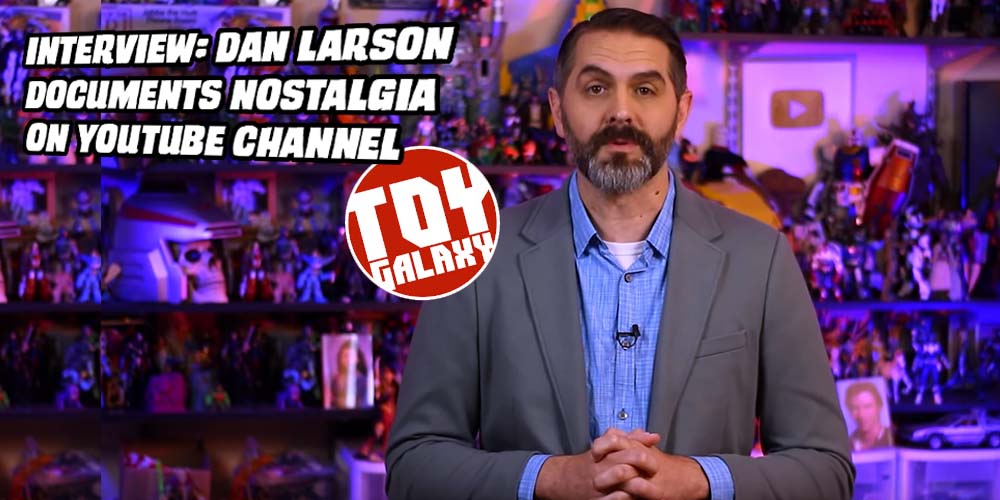
Nostalgia’s a hell of a drug in the 21st century as beloved franchises are rebooted, re-imagined, or continued seemingly endless, and over at the YouTube channel Toy Galaxy, they deep dive into the origins of that nostalgia.
Transformers, A-Team, GI Joe, KnightRider, Robotech, Wizard magazine, Max Headroom, and more feature as subjects of Toy Galaxy videos . For roughly 20 minutes, Dan and his partner Greg take viewers on a content-dense ride through the behind-the-scenes elements that gave rise to many of the things we know and love today. While Netflix is hurtling two new He-Man shows at us in one year, Toy Galaxy is riding through memory lane to tell us just how He-Man and the Masters of Universe came to be in the first place. In addition, the channel will discuss details that even larger documentaries on the same subject might overlook.
PopAxiom spoke with Dan Larson, the man in front of the camera for Toy Galaxy, whose clear, calm, and light-hearted delivery (with a dash of delicious Gen X snark) makes watching the channel a delight every time.
Page Maker
Before Dan was informing and entertaining on YouTube, he “went to Rhode Island College. That school is mostly about teaching teachers. I was looking to break into comic books and publish my books.”
“I graduated with a degree in printmaking,” Dan says, “so like limestone blocks and woodcut prints and lithography. But my real education came from working at the campus newspaper. Then, from 1994 to 1998, I learned how to do digital desktop publishing. It was the first time I touched a digital camera.”
The transition from the old-school ways to new was something Dan will never forget. “My freshman and sophomore year, we were using photocopy machines to reduce and enlarge images and glue them down, then suddenly we’re doing all that on a computer in Adobe Page Maker.”
Creating Toy Galaxy
Dan’s a lifelong fan of action figures, and his partner Greg is a cinephile. So when conceiving of Toy Galaxy, the pair as themselves, “Do we want to do a ‘zine’ where it’s sort of photocopies and stapled or do we want to something that looks and sounds professional.”
“When we started,” he says about the initial days of creating the channel,” we saw a lot of low-tech stuff out there with bad sound and picture; long run-times. We didn’t want to be that. We wanted it to look like there’s a whole team behind it.”
Over the years, he says, “We’ve established what’s long enough for us. There are definitely videos where I start to get too deep into the weeds, and I lose the narrative. I have to pull back.”
“Fifteen or twenty minutes is our sweet spot,” he definitively says. “Anything longer than that, and I lose the narrative. Anything shorter than that feels like we didn’t cover it.”
Galactic Evolution
Toy Galaxy began in April of 2015. After six years, what’s changed in how they create videos? “It’s a whole different process. The focus of the channel’s shifted. The original intent was to do action figure reviews. At the time, YouTube wasn’t putting a focus on long videos. Now, they like long videos because it keeps eyeballs on YouTube.”
“We were watching people doing toy reviews,” he continues, “and thinking ‘ten minutes to do an action figure review?’ So we focused on short, concise, and, most importantly, entertaining. We knew we were never going to be the first to review something. Channels were doing it for years already. We could not compete with that; we weren’t getting free merchandise or anything like that.”
Dan explains, “The approach was, we want to make our videos so entertaining to watch that even if you watched the other 100 reviews, you still want to watch ours. So how is Toy Galaxy going to do it, and what jokes will there be this week?”
Early on, Toy Galaxy “put in a timing mechanism by calling the videos four minutes or less. This review of Spider-Man in four minutes or less. That was the hook and gave us our angle.”
“Over the years,” he adds, “we envisioned our channel as sort of a network. We wanted to approach action figures and the industry in the same sort of way. So we were offering up a variety of things with the reviews, versus videos, ten things you need to know about whatever.”
Franchise Universe
Dan and Greg focused on creating a successful business and watched the numbers. “We knew what people were responding to and weren’t responding to. So, we pushed the channels in the right directions. Ten things you need to know evolved into longer format videos, becoming the ‘History of.’ The other shows we were doing weren’t doing as well, and one-by-one we cut them off.”
“We know exactly our demographic — to the birthday.” Dan laughs, and so do I because that demographic is primarily people like me. Though, Toy Galaxy undoubtedly appeals to a broader audience as there are fans of franchises of all ages. “We appreciate when people message us saying, ‘Hey, I love what you’re doing. It’s a show I can watch with my kid since we’re both into Masters of the Universe or Voltron.”
Though the six years, Dan asserts, “The one thing that’s never changed is our approach, we’re always trying to answer our questions first. I always think, what will make me or Greg laugh? I never considered myself a journalist; I never studied journalism, but at the end of the day, I have questions, and those are the questions we ask.”
“Why were Masters of the Universe this shape versus GI Joe, who was this shape,” he continues, “Where did it come from? Why were 12-inch action figures popular in the 60s, but by the 80s, it’s smaller figures? How do these things evolve and change?”
Processing
“Greg programs the channel,” Dan begins the discussion of Toy Galaxy behind-the-scenes. “I’m the in the blood fan of all these things. Greg was more the type who watched them, didn’t get too involved with them, then immediately turned to other things. His obsessions are more cinema and film.”
Greg’s lack of sentimentality for most of Toy Galaxy’s subjects is “a good thing … none of this is precious to him. If we need to put something out there, that is a fact; even if we know, it’ll upset the discourse or the fandom. We’re stating facts.”
“It used to be we’d program out a few weeks in advance,” he’ says, but things have slowly changed. “Since we’ve taken on sponsors, it’s more like 10 to 12 weeks now. Though it’s not set in stone, and it’s fluid. We can respond to feedback from one video to the next.”
“Tuesdays, we’re doing research. Then, Wednesday, I take that research and immerse myself in whatever it is. So, for The Transformers: The Movie, I went back and watched the movie.”
Dan makes sure to have “a good understanding of the generalities and where we want to go with it. I will go deeper in the research because I watch the thing, and I compare the experience to my understood experience from my life. Having watched the thing as a kid, I can draw from that and understand the community’s opinion on the topic.”
“On Thursday, I spend the whole day writing it all up,” Dan adds, “Friday we shoot. Greg will edit over the weekend or Monday, and we start all over again on Tuesday.”
The Transformers: The Movie
At the time of this interview, Toy Galaxy put out a video for the animated Transformers movies from the 80s in time for the film’s 35th anniversary. Throughout, Dan clearly says the full name of the movie, The Transformers: The Movie. “Greg was adamant about that. So in the script, I shortened it to just Transformers or Transformers: The Movie, but Greg said, ‘no, stop, it’s The Transformers: The Movie. That’s the name of the movie. Transformers is the Michael Bay movie.’ So I did a ‘control plus F’ and changed them all to The Transformers: The Movie.”
“We put out that The Transformers: The Movie video and people have responded saying ‘It was so refreshing,'” Dan shares, “They say, ‘so many videos are about it being the best or worst movie ever made’ and neither of those things is true. So we’re not coming at it from a perspective of how it ranks in terms of good or bad cinema; we’re telling you here’s how it was made, here are some of the circumstances behind it, here’s why it is a box office failure, but it was still a success.”
Deep Thoughts
As superficial as franchises and merchandising might seem, it speaks to profound truths about society. Of course, fandom doesn’t usually dive too deep into those kinds of thoughts, but Dan does. “At a higher level, we ask why is this generation still so obsessed with this stuff to the point that it’s still driving movies and cartoons and all that stuff?”
“I go back and forth thinking about how we were guinea pigs,” Dan says as we discuss the political changes in the 80s that gave rise to franchise dominance. “We were this experiment. Thirty-five, forty years later, what did the experiment produce? What kind of society did unregulated children’s advertising produce?”
In a sense, human society is one giant laboratory in constant motion. “YouTube is sort of another social experiment. What happens when you have whole generations of kids raised on this mostly unregulated thing?”
Wrapping Up
Toy Galaxy covers more than just toys; it’s more like a pop culture universe. “One of our best performing videos was Max Headroom. We just had a video about Wizard and Toyfare magazines.”
Six years into their experiment, and with subscriber numbers still on the rise, Dan says, “We’re hoping we’ve built up a fan-base that doesn’t care what we talk about and just want to hear how we talk about a particular thing.”
“Growing up and through my 20s and 30s,” he reflects, “before we started the channel, I always had this vision of a museum or writing a book about the history of toys. Part of the drive of building my collection was that I needed every version of Captain America because I may need to go back to these and talk about them at some point in the future. I never thought something like Toy Galaxy was in my future.”
Manga has been massively influential in the pop culture world, although its impact outside of Japan is more down to animated adaptations rather than the original comics.
Today there is a multitude of movies and TV shows that are based on or inspired by manga, and as with any adaptation, the quality can vary wildly.
If you only want to watch the cream of the crop, the following line-up of exceptional interpretations of game-changing manga series will be a good starting point.
Black Jack
Despite its name, Black Jack isn’t the best gambling manga of all time. It’s more interested in telling unique tales of medical breakthroughs, self-sacrifice, and the importance of modesty in the face of significant achievements.
These elements are translated expertly to the screen in the first full-length film adaptation, released in 1996. It may lack the extreme edge of some of its contemporaries but in retrospect Black Jack: The Movie is an intriguing and artistically striking artifact of a time when Japanese animation was still relatively unknown in the West.
Ghost In The Shell
Doubtlessly managing to outdo the manga on which it is based, Ghost In The Shell is another 90s anime adaptation that pushed the envelope with its art style and visual effects.
In fact, if you watch the movie today, it’s hard to appreciate just what effect it had on audiences at the time. So many touches that we take for granted now were first found here, and it is no surprise to see it cited alongside Akira as one of the main influences for the Matrix franchise. The less said about, the more recent live-action remake, the better.
One-Punch Man
When the first season of One-Punch Man hit in 2015, it felt like a breath of fresh air, standing out from the cookie-cutter anime crowd by parodying so many elements and skewering them perfectly while still cramming in some incredible action set pieces and mega-scale battles.
The tone of One-Punch Man is undeniably silly, but it wears this ridiculousness on its sleeve and manages to avoid the po-faced sincerity, which can compromise many of the other more modern manga adaptations that are doing the rounds today.
Akira
Arguably the most famous manga adaptation ever made and undoubtedly the most critically acclaimed, Akira still stands like a behemoth over the industry more than three decades after its release.
Its ability to blend political commentary and sci-fi smarts with brutal action and deep characterization helps to justify the high esteem in which it is held by fans. If nothing else, it proved that complex manga could indeed be adapted to feature-length film format without making sacrifices in the transition.
Fullmetal Alchemist
Like all popular manga series, there is a cavalcade of adaptations of the steampunk universe of Fullmetal Alchemist, with multiple anime series, two animated movies, and the inevitable hit-and-miss live-action iteration.
While seeing hand-drawn characters recreated by flesh and blood actors is clearly not always a good idea, the animated interpretations of Fullmetal Alchemist fare far better. The first anime is probably the one to watch as a priority, partly because it takes the story in a different direction to the manga and packs plenty of surprises as a result.
Devilman Crybaby
While opinions were divided upon release, Devilman Crybaby had gained critical traction in the past few years and is now regarded as a well put together adaptation of a vintage manga series that once again proved a hit with Western audiences, who made up the majority of the viewership on Netflix when it debuted in 2018.
Once again, it manages to explore some intriguing themes and topics, presenting debates around the likes of sexuality and growing up in a way that does not feel preachy or pared back. And, of course, the unflinching intensity of the many set pieces proved that modern manga adaptations could still go hard when called upon.
Fist of the North Star
Fist of the North Star is not exactly the most sophisticated franchise out there, but that does not stop the stupendous strength and stoicism of its protagonist Kenshiro from being compelling.
Various adaptations exist, and the 1986 animated feature film is gloriously violent and over the top as fans would hope.
The world of manga adaptations is vast and growing all the time, so explore these examples and then see what else is out there!
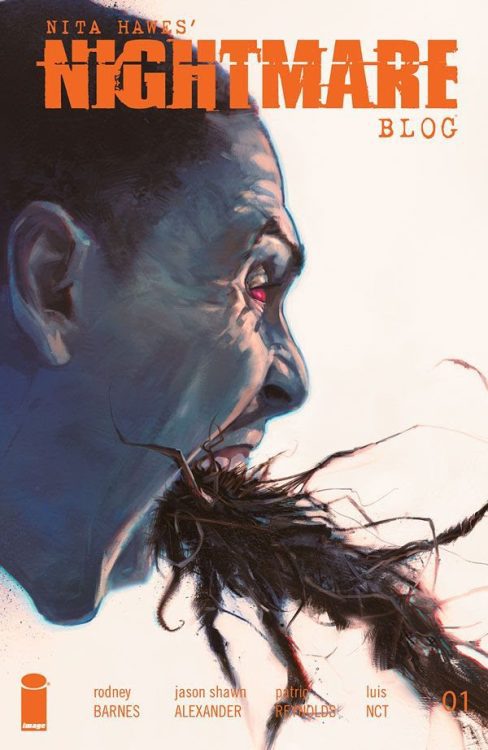
From Killadelphia creators Rodney Barnes and Jason Shawn Alexander comes a spinoff tale in a new town with a new kind of terror. Along with artist Patric Reynolds, colorist Luis NCT, and letterer Marshall Dillion, Nita Hawes’ Nightmare Blog #1 is a tense and deep opening to this new horror series. With the same kind of character driven writing that makes Killadelphia so successful, and incredible as ever visual work, this new series is off to one hell of a start.
“Jimmy Sangster might have left Maryland for the vampire-infested city of “Killadelphia,” but there is still untold evil lurking the streets of Baltimore. The demon Corson has surfaced from the underworld to possess a once-wronged man, and his vengeance will come at the cost of humanity’s despair! But Jimmy’s former lover Nita Hawes—a woman with demons of her own—has begun a quest to root the evil out of her city. Guided by the ghost of her dead brother, she must come to terms with her own past, lest she join her brother in a state worse than death!”
Writing & Plot
Rodney Barnes constructs horror the right way in Nita Hawes’ Nightmare Blog #1. Much like with Killadelphia, he constructs the story in a two-fold direction. He builds the character and backstory of Nita Hawe and other cast members to make them relatable and feel human. When he isn’t doing that, he’s scaring the hell out of us with his antagonist. Hawes’ experience with evil comes from her past – both from her ex Jimmy Sangster (protagonist of Killadelphia) and the tragic manslaughter of her brother. The problem is, her brother won’t leave her be now. Hawes’ guilt takes a unique form here, as her little brother’s ghost pusher her to make this blog and root out evil.
Barnes does fantastic work making Hawes a well-rounded character that is simultaneously experiencing and dealing with trauma. We are only at the tip of the iceberg with her investigations into the underworld, and I can’t wait to see how she navigates that threat. On the other hand, we have Corson. His backstory is as compelling as any slaughter-loving demon’s can be. This blues-singing monstrosity is a genuine terror on the page, with every one of his scenes sticking well into my memory. Especially with what may very well be the single most jolting turn-of-the-page scare in comics this side of Junji Ito.
Art Direction
Jason Shawn Alexander’s work on Spawn has likely prepared him well for what he does here in Nita Hawes’ Nightmare Blog #1. Much like with Killadelphia, he and Patric Reynolds are responsible for the art and layouts in this spinoff. Alexander displays a keen sense of horror direction in this issue. He typically sets up 5 to 8 panels per page, capturing moment to moment movements from different perspectives. In the case of character moments, its a great way to get a sense of people’s emotional states and personalities. In a horror scene, it’s an intense play-by-play for the approach and slaughter by a demon to his victims. This intricate directing shifts just for the last turn-of-the page scare. A full page image creates one of the most chilling scenes in horror comics.
Alexander and Reynolds have a distinct, gorgeous style that is perfect for character detail and horror. Their use of realistic references has an almost photorealistic effect that never gets into uncanny valley territory. Minute expressions are portrayed with perfect detail to give us a view into the heads of our main characters. The demonic details come to life with ferocious surprise, with disturbing designs and gory aftermath. Much of the horror here is based on staples of the genre, but it’s handled so well that it’s a welcome sight for any horror fan.
Color & Lettering
The painted style colors from Luis Nct add a whole other layer of complexity to the book’s aesthetic. Every image is saturated with a palette of shades due to the color work instead of a flat tone. His work is especially memorable on the more monstrous and supernatural sequences. These moments bathed in blood, viscera, and/or hellfire feel akin to the works of Francisco Goya. Marshall Dillion’s lettering deserves note here for its simple yet creative touches. His main font is a standard, highly legible contemporary font that come alive during the demon Corsan’s passages. The red-on-black lettering is such a smart move. His SFX letters are really cool as well, coming off as scratchy disturbing shockwaves. This comic is a phenomenal work of visual horror storytelling.
Verdict
Nita Hawes’ Nightmare Blog #1 is a phenomenal and frightening start to this spin-off series. Rodney Barnes pens a script that builds its characters to make their troubles relatable to the reader while never letting up on the brutal terror that has come to their world. The visuals from Jason Shawn Alexander, Patric Reynolds, and Luis NCT are densely detailed and darkly atmospheric, making images that will stay with you long after you close the book. If you’re a fan of Killadelphia or a horror fan in general, be sure to grab this issue when it hits shelves on 10/20!
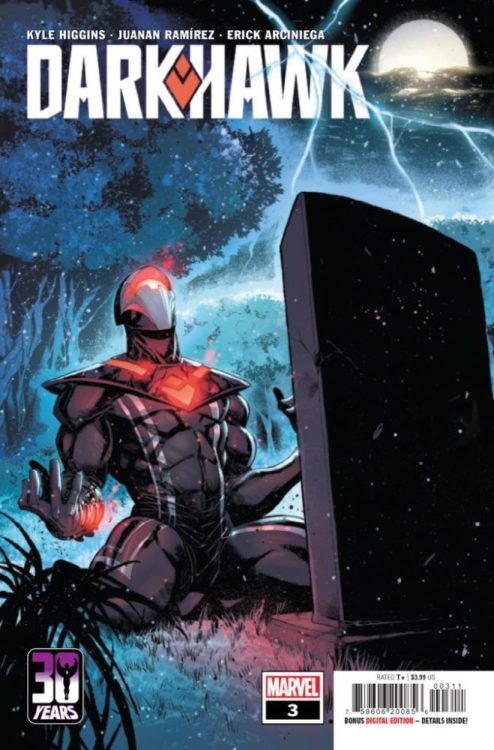
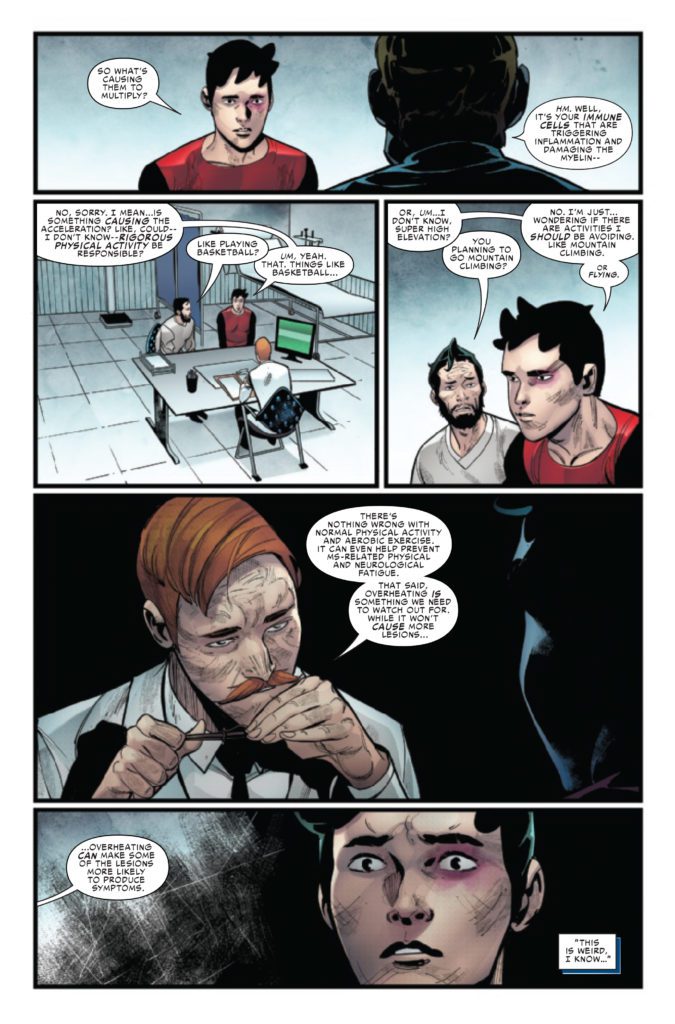
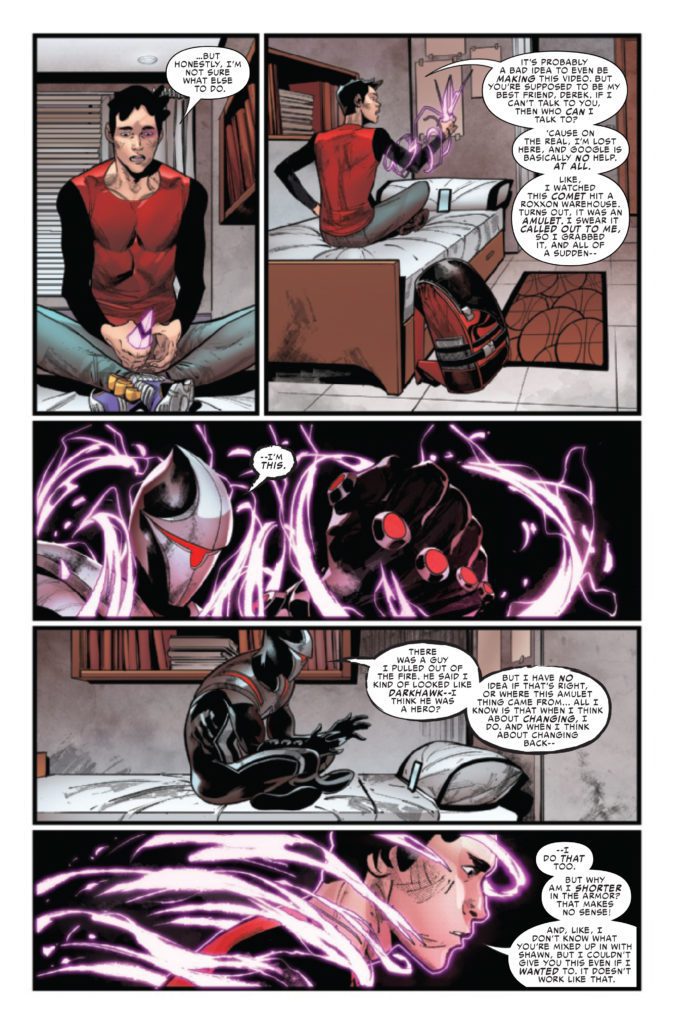
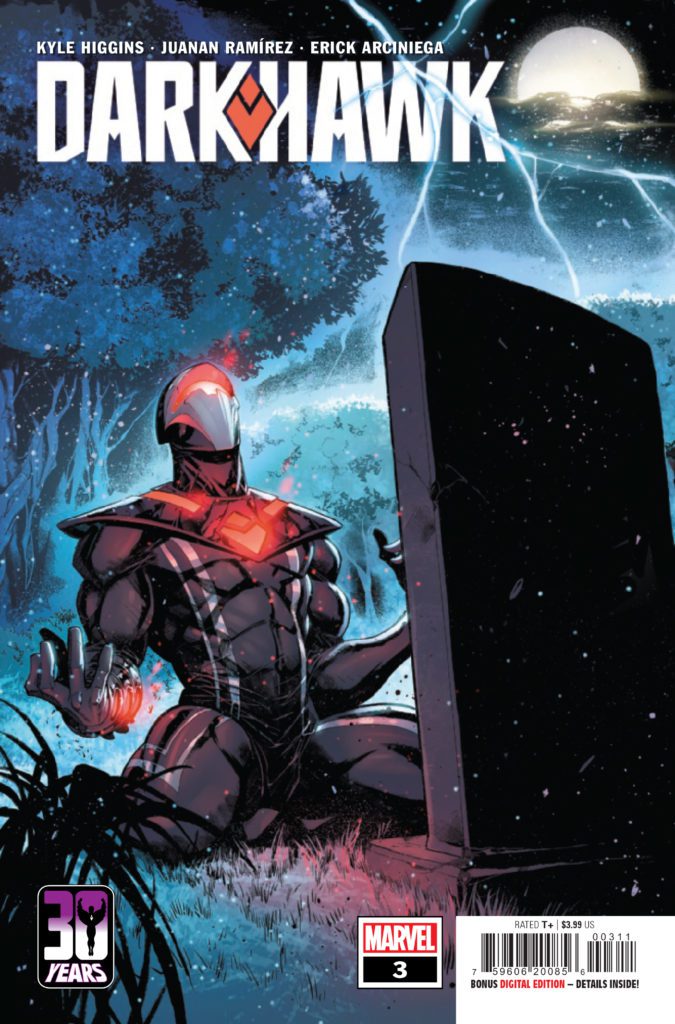
DARKHAWK #3 (of 5) hits your local comic book store November 3rd, but thanks to Marvel Comics, Monkeys Fighting Robots has an exclusive four-page preview for you.
About the issue: Someone very close to Darkhawk is dead! But who is it? And is it Darkhawk’s fault? More importantly, will the new Darkhawk cross the line that no hero should ever cross?
The issue is by writer Kyle Higgins and artist Juanan Ramírez, with colors by Erick Arciniega, and letters by Travis Lanham. The main cover is by Iban Coello and Jesus Aburtov.
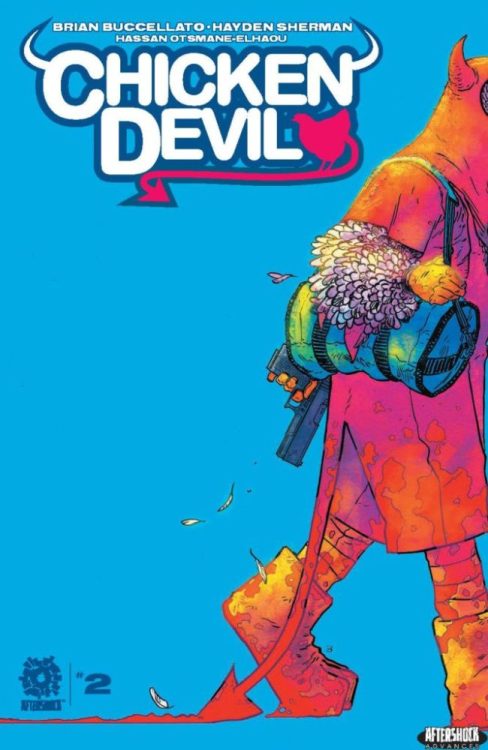
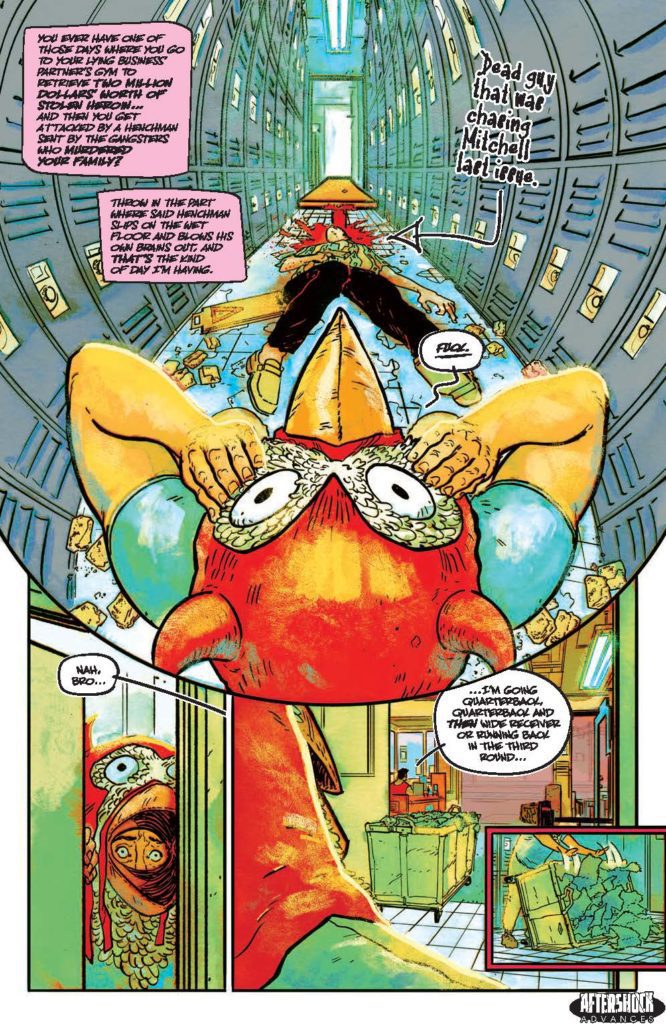
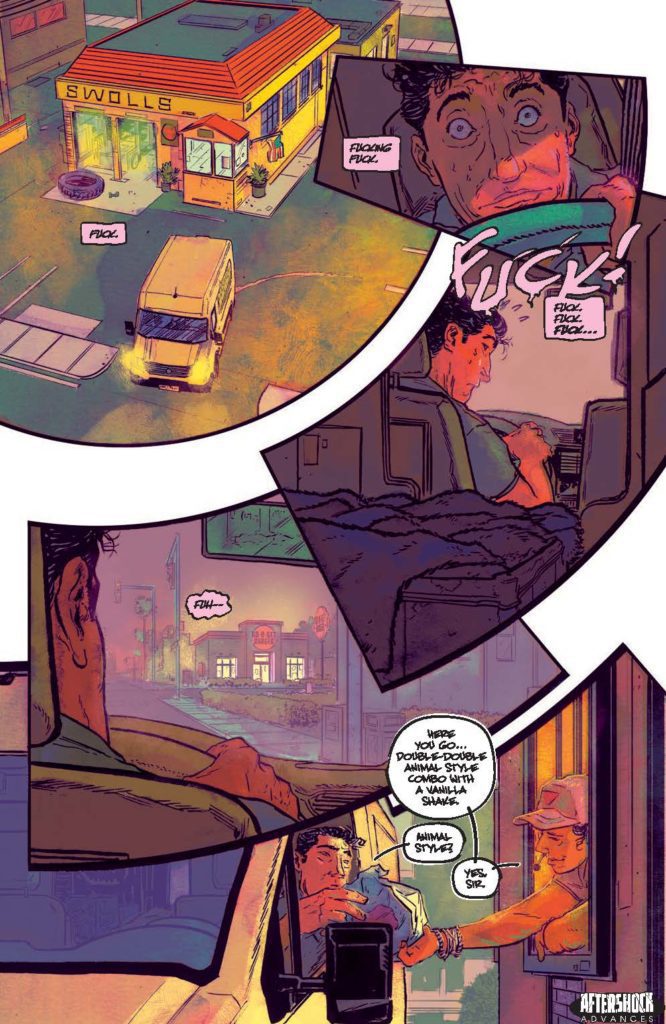
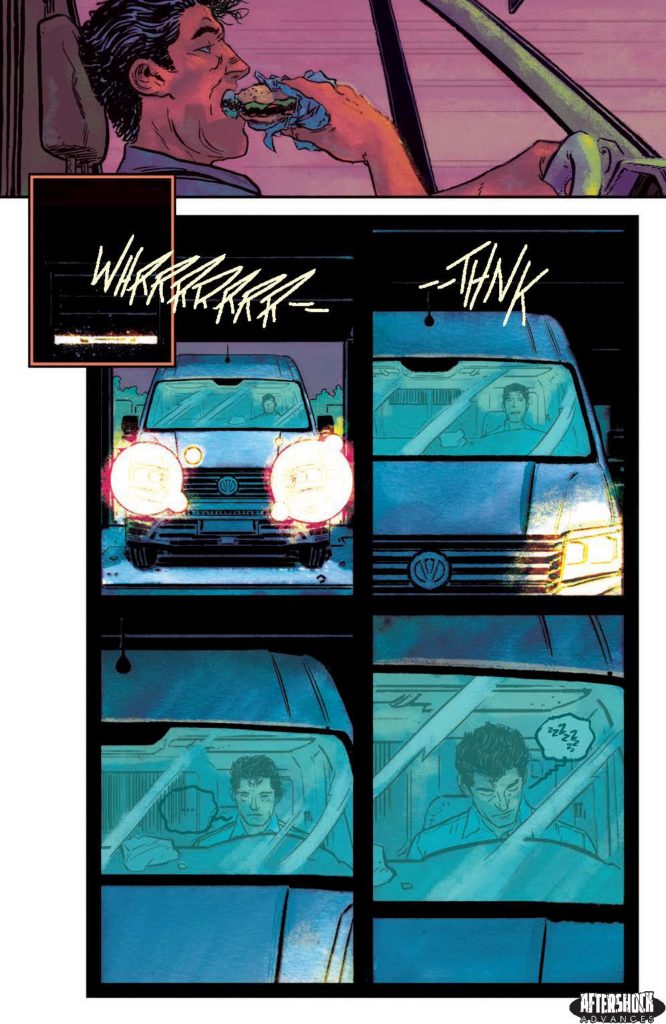
CHICKEN DEVIL #2 hits your local comic book store November 10th, but thanks to AfterShock Comics, Monkeys Fighting Robots has an exclusive four-page preview for you.
About the issue: The most unlikely chicken-fried revenge story continues. Mitchell, our overmatched hero, must contend with the bloody aftermath of his first run-in with the Russian mob…as he deals with nosey detectives, his shady business partner, Antonio and the stolen heroin.
The series is by writer Brian Buccellato and artist Hayden Sherman, with letters by Hassan Otsmane-Elhaou. The cover is by Sherman.
Buccellato compares CHICKEN DEVIL to Barry, The End of the F***ing World, AMC’s Fargo, and various Quentin Tarantino films, calling the series “a dark tragicomedy that puts an edgy spin on the revenge/vigilante genre.” The first issue came out on October 6th.
Check out the CHICKEN DEVIL #2 preview below:
Did you pick up the first issue of CHICKEN DEVIL from AfterShock? Sound off in the comments!
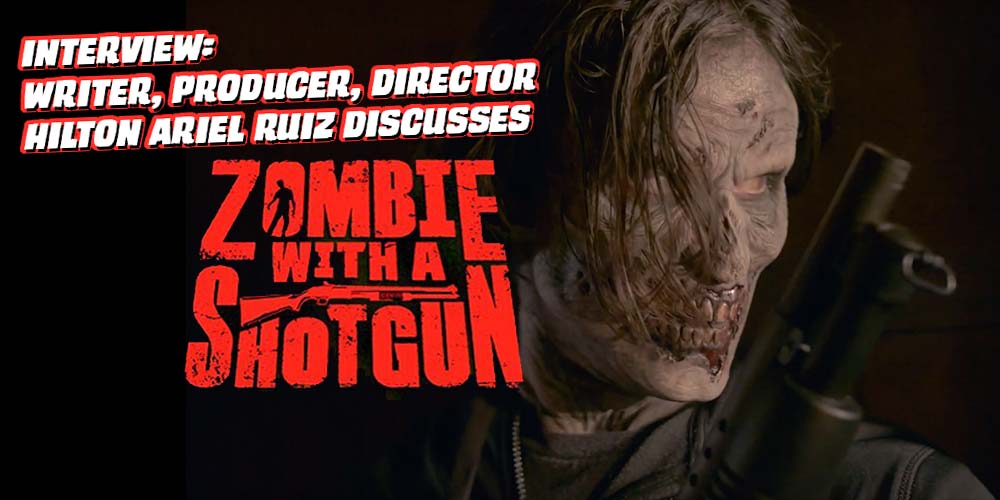
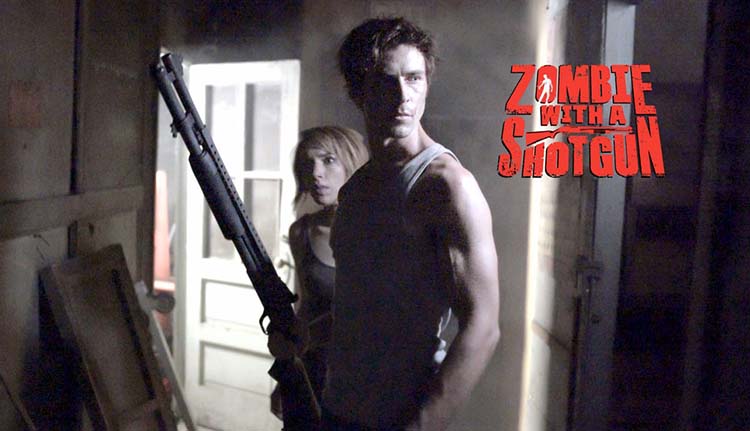
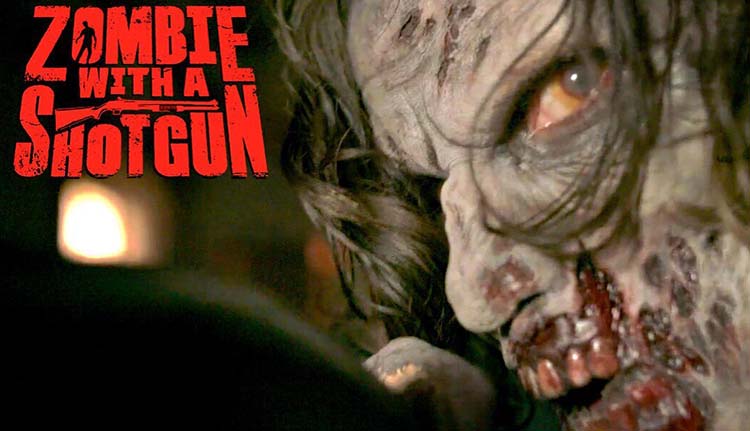
Zombie with a Shotgun is a horror film on Amazon Prime from writer, producer, director Hilton Ariel Ruiz with some fresh ideas for the zombie mythos, including giving the living dead some heavy firepower and a bone to pick with a lot of people.
The world in Zombie with a Shotgun is under assault by a viral infection that’s turning people into flesh-eating monsters. However, unlike many zombie films, some people retain their humanity. That doesn’t matter to law enforcement that’s decided to kill the infected on site. The government wants to catch the infected and learn from the illness. Another group may or may not be responsible for causing the virus. Zombie with a Shotgun is a very indie film, but that didn’t stop Hilton Ariel Ruiz and his team from turning his 2012 web series into a cult hit while teasing the larger world.
PopAxiom spoke with Hilton Ariel Ruiz about becoming a filmmaker and the rise of Zombie with a Shotgun.
When did Hilton’s relationship with movies begin?
I tell people I grew up in the Latin Brady Bunch. We had three boys, three girls, mom, and dad. My aunt lived with us, and she was like Alice. Instead of the dog, we had a cat. So, the cheapest way to get six rowdy kids to calm down was the movie theater. So Saturday and Sunday we’d go to the movie theater.
We’d come home after the movies and re-create scenes. I was the youngest one in the family, so I wasn’t allowed to play anything. So we’d go home after something like Return of the Jedi, and my brother would be Luke while my cousin played Vader. They made a fake camera out of cardboard to not make me feel bad, and I’d be the ‘director.’
When did Hilton get a real camera?
I got a camera at 13 or 14 and started making movies with my friends. We’d do recreations of Halloween or Friday the 13th. It got serious when I got to high school, where they accidentally put cinema studies on my schedule. So I went to the class, and I loved it. As the course kept going, I was saying, ‘this is me.’ I had a great teacher named Ms. Wilson. We would watch amazing films like Citizen Kane and Vertigo.
Who are some of the directors that influenced Hilton?
I love Ridley Scott; Alien, Blade Runner, and Legend. Cronenberg’s The Dead Zone is one of my favorites ever. John Carpenter with The Thing and Halloween. Those guys were such a massive inspiration to me.
Where did Zombie with a Shotgun begin?
It’s been a long roller-coaster with Zombie with a Shotgun (ZWAS). Not many people know this, but ZWAS will be ten years old soon. It started in 2012 when web series started to get popular. I wanted to do it from the zombie’s point of view with a monster that wasn’t crazy but was aware of his surroundings.
What happened after the first episode when online?
It was the first time I experienced going viral. I was like, ‘holy sh*t.’ We hadn’t even finished the series, we’d just put out the first episode, and I was getting calls from production companies and producers. A lot of people thought it was a trailer for an already produced series. So, we finished the series, and I said, ‘let’s go on to the next thing.’ So, I left Zombie with a Shotgun alone. It had its time, I thought.
But every subsequent project, people would ask me, ‘what’s going on with ZWAS?’ It kept growing, and questions kept on coming. No matter what I did, the zombie thing was just overshadowing it all.
Not a lot of people get that viral experience. I realized I brushed something off that had more to it. We started to plan a feature when I met this great comic artist Simone Guglielmini who helped me do the first issue of a comic book.
What do you think made the web series so popular?
The episodes average around five minutes. But that first episode, there’s a moment at the end where the zombie kisses the girl, and I think that’s what people reacted to because they’d never seen something like that. So it got this whole thing going.
Did the growing cult popularity make it easier to find the money for the movie?
I thought having the social media explosion with the web series, and the comic book would easily get the budget I wanted. I spoke to many producers, but no one wanted to pull the trigger. Finally, the conversation came up with some that they would take it over and give me a percentage. I said, ‘hell no.’ It happens a lot in the industry, but I decided not to give in.
How did Hilton make the movie without help from a studio or producer?
I went on a campaign to raise money. In 2016, we shot in New York for ten or twelve days until we ran out of money. We did two more campaigns to raise funds until the movie was released in 2019. On November 28th that year, it went onto streaming services which was exciting. We went to conventions and everything until COVID shut it all down.
Is the series required viewing to enjoy the film?
The series was more atmospheric. There is some sort of continuity though the web series is more about the idea. So, you could watch Zombie with a Shotgun without having watched the series.
How does the feature compare to the web series?
The feature was very ambitious. We had multiple locations and 30 cast members compared to the web series with two, maybe three people. Writing the web series was five or six pages at a time. The feature requires a lot more of that. On top of that, indie filmmaking means there will be changes. The script is changing by the day. The first script we had for Zombie with a Shotgun is entirely different from the 2019 film. That’s how things go when you’re in indie filmmaking. You just have to keep on going and figure out how to move forward. It’s a lot of work—three years of raising money. Bless the crew and actors who didn’t abandon the project.
What’s the reaction been like over the years?
I get emails and DMs all the time from people telling me how much they love the film. Then you get the other group who tells you that’s the biggest piece of sh*t film they’ve ever seen. One of the biggest complaints from real fans, you know who they are, was the lack of gore. But that comes down to budget. We didn’t have that kind of budget to blow things up and blow people away with the shotgun all the time.
What’s the future for Zombie with a Shotgun?
There’s a huge universe to play within Zombie with a Shotgun. We want to push the gore some more. But of course, that’s the budget provided. So we’ve got to raise the money to make the next film gory. We also plan to have vampires in the sequel as one of the main parts of the story line. Not to spoil anything, but it’s going to introduce a whole bigger story. We’re excited; we think it’s going to be different and cool.
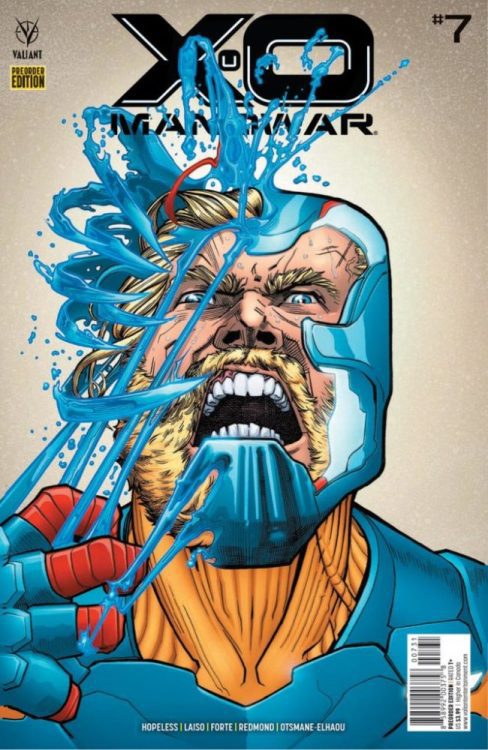
X-O Manowar #7 is where this Valiant Entertainment run reaches its climax, on October 20th. After so many obstacles and red herrings, this series true villain reveals himself.
Background
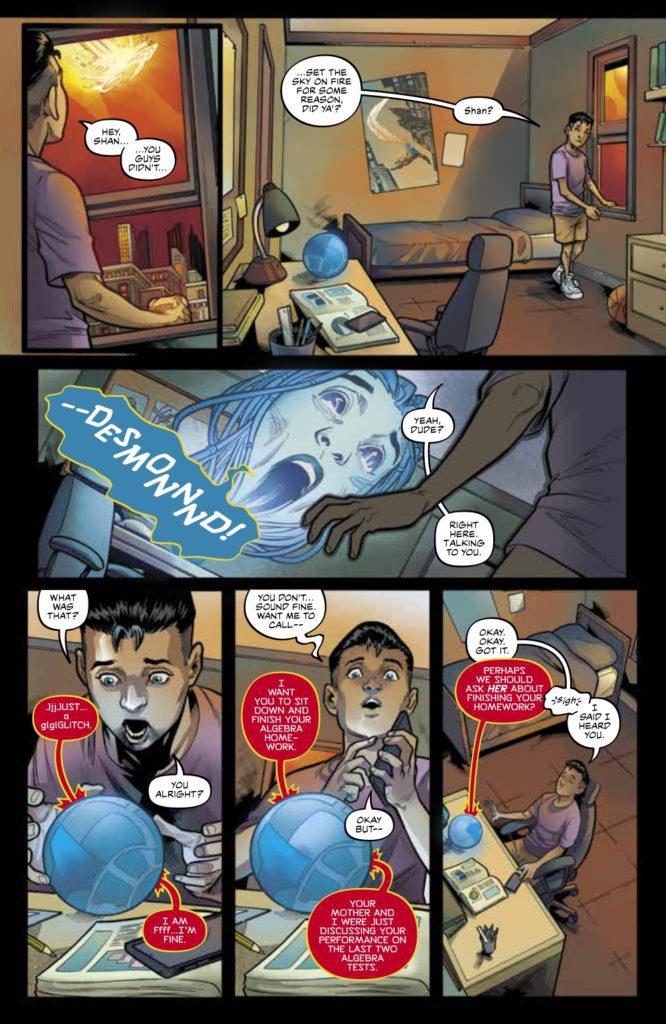
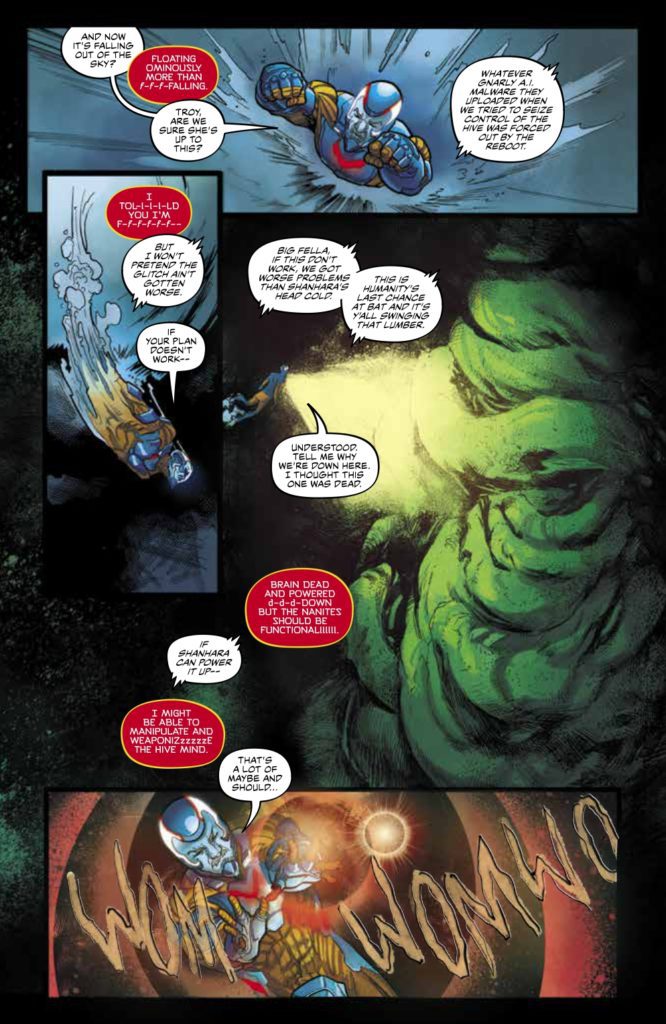
In this run of X-O Manowar, Aric and his battle suit Shanhara are in battle against a nanite singularity swarm. Fortunately, they have tech billionaire Troy Whitaker to help out.
X-O Manowar #7: Leaked Truths
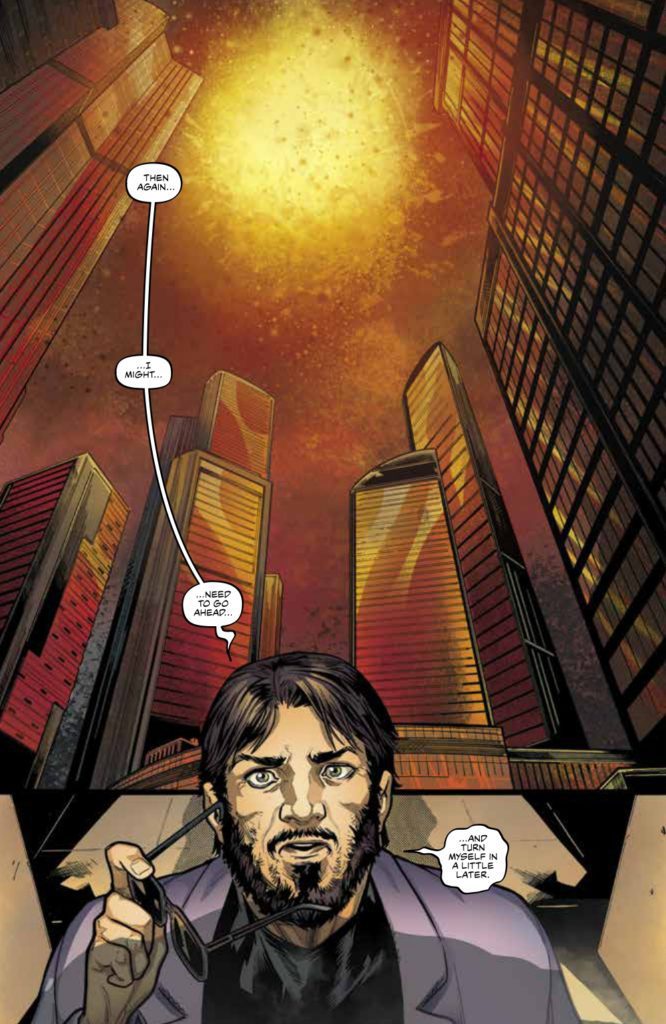
Dennis Hopeless writes the tertiary character Troy as a compelling presence. He has a Tony Stark-like charisma that ranges from humanitarian to subtle schemer. Throughout X-O Manowar #7, Troy helps Aric with a lot of the burdens he’s carrying. Without his help, Aric would be in real trouble. But at the same time, Troy takes advantage of Aric in times of high risk. Add to the fact that Troy deflects his knowledge about the nanite swarm, and it’s clear that he’s hiding something.
High Octane Distractions
Emilio Laiso continues to illustrate eye-catching images throughout X-O Manowar #7. The movements of each character, object, and the setting itself keeps the reader’s attention. If not for the bold inking by Raffaele Forte, the key elements of those scenes would blend together. Then there’s the coloring by Ruth Redmond, almost every major scene involves a bright light or a color blend. Along with the hand drawn SFX and ever shifting word balloons of Hassan Otsmane-Elhaou, the art ensnares the readers’ attention.
X-O Manowar #7: Don’t Blink Or You’ll Miss Everything
This issue’s fast pace, attention arresting artwork, and big revelation make it arguably the best in the series. But even that’s just a small sample of a groundbreaking arc involving a dynamic character. It leaves readers ready for more.