Recently Marvel Comics has tackled mutant families in X-Men, and mutant pirates in Marauders, but this Wednesday they take the next step in EXCALIBUR #1; mutants and magic.
Art by Marcus To, colors Erick Arciniega, letters VC’s Cory Petit
Magic, Mutants, Myths
Much like the other first issues, Excalibur #1 focuses more on the story, characters, and future rather than action. Writer Tini Howard’s slow paced nature works in its favor by helping ease in readers to the magic based side of X-Men. Howard elegantly pushes the plot forward by taking time to introduce each character, motivation, and how they all tie together.
In the recent Power/House of X series, a fair amount of the classic X-Villains join the X-Men in the mutant paradise, Krakoa. But, all is not hunky-dory. Nothing ever is;, especially for mutants. This uneasiness of ‘nothing good lasts forever’ comes from teaming up with Apocalypse. Even though he has accepted Krakoa’s ways, there are still hints of his former self and doubt stemming from others around him. But, when these moments happen, they are never forced or seem out of place.
Art by Marcus To, colors Erick Arciniega, letters VC’s Cory Petit
ART
The art by Marcus To falls in line with the other X-Titles style; keeping the characters looking realistic, and Krakoa a beautiful utopia. The designs for each character matches other titles they appear in, making the new relaunch of titles feel as one big universe. While doing this To keeps his art simple for new comers, yet elegant in its beauty.
These beautiful landscapes and costumes are helped immensely by Erick Arciniega’s magical colors. Throughout Excalibur #1 Arciniega paints a gorgeous bright colored background that makes the characters pop, while still showing the beauty of the locations. The few times magic or mutant powers are used, the pages light up akin to a firework show, encapsulating you.
Excalibur #1 may not contain the explosive fonts seen in the other titles, but VC’s Cory Petit keeps the bubble placement from covering the art. Plus, the usage of Apocalypse’s new ‘name’ makes for exciting dialogue moments.
Art by Marcus To, colors Erick Arciniega, letters VC’s Cory Petit
Conclusion
Howard’s slow paced, ease of excess story combined with To and Arciniega’s magical art makes Excalibur #1 a spell of a first issue. If magic mixed with mutants interests you, now’s the best time to hop in.
Cover Story: Like the other X-Men titles, Excalibur #1 has its fair share of Variant covers. But, the coolest comes from design artist, Tom Muller who also created all the new X logos.
Side Note: Much like Prince, Apocalypse turned himself into a symbol.
Art by Marcus To, colors Erick Arciniega, letters VC’s Cory Petit
Magic and You
What did you think about the first magical issue? Let us know below!
BLACK CANARY: IGNITE 0 ut this Tuesday from DC Zoom, the graphic novel is a tell-all tale of a young Dinah Lance and her journey towards becoming a hero. Perfect for fans of the illustrious Black Canary, this graphic novel will fit all age brackets.
Dinah is rocking the punk rocker look on the cover of Black Canary: Ignite
***SPOILER WARNING***
Black Canary: Ignite is the latest in a round of graphic novels geared towards a younger audience. And like the rest in the series, this is the tale of a younger Dinah, before she had truly settled into her powers or her superhero persona.
As such, we get to see an entirely new side of Dinah Lance, aka Black Canary, in this novel. It’s an exciting take, naturally. And it provides a lot of insight for the trials and tribulations she faced, long before she gained control over her iconic power.
Nobody is surprised that Dinah was in a band as a teenager.
This was perhaps the most adorable and charming take ever on the Black Canary. But that is probably no surprise to fans of Meg Cabot, the author of this delightful tale. Black Canary: Ignite not only gave us a chance to see a different side of a beloved character, but it also gave us a desperately needed break from a barrage of the heavier comics out there.
This novel was light and cute and even enchanting at times. Full of teenage angst and girl power, it’s sure to be a hit with a younger audience, while being splendidly nostalgic for older readers tempted to pick it up.
Dinah Lance as a teenager, is everything a fan might expect. She was bursting to the brim with energy, sass, and teenage rebellion. Appropriately so, music is her life, as are her best friends (I wonder where they ended up?).
And that was all before the big reveal came into the mix: her mother used to be the Black Canary, and she’s who Dinah inherited her powers from. Unfortunately, nothing ever stays in the past in the world of superheroes. Thus an old antagonist is seeking revenge on Dinah’s mother, and they’re willing to pull Dinah into the mix.
These revelations may have felt like somewhat weird twists, but they fit in perfectly with the tone of the story. And best of all, the way this novel was written, it’ll be perfect for old fans, but best of all, it’s ideal for a newer and younger audience.
And there goes her iconic power.
Black Canary: Ignite had one highly talented artist working behind the scenes. Cara McGee was the illustrator and colorist for the entire graphic novel, giving the piece a cohesive feel. If you’ve seen any of the other works coming out of DC Zoom lately, you’ll notice that the artwork here fits right in with the rest of it.
The artwork is bubbly and bright, which is fitting, given the intended audience and the more luminous nature of the main character. But it also wasn’t afraid to show darker scenes, such as Dinah or her mother being attacked.
The highlight of the artwork in this graphic novel would have to be the way Dinah’s power was portrayed. Here was a wild form of her powers, still budding and entirely out of control. As such, it had a slightly different look than we’re used to – and that is precisely how it should have been.
Did she even take time before assuming who was to blame?
Black Canary: Ignite is quite possibly the most cheerful superhero origin story out there right now, and is perfect for any young girls looking to get into comics. Or for those of us who simply love Dinah, and will happily devour any story about her. No matter your motivation, this is one graphic novel you’re not going to want to miss out on.
Knives Out is a brilliant murder-mystery that understands the importance of attention to detail. A modern whodunit that features an ensemble cast, where everyone serves a purpose and keeps you entertained from start to finish. This film has just about everything you’d expect from a whodunit film while also making it feel fresh for modern audiences. Knives Out is so well made, and it has so many layers to its central mystery that it warrants multiple repeat viewings.
Last Jedi director Rian Johnson has written a film that has a lot to say about wealth, immigration, and class in America in its own hilarious way. Knives Out revolves around the death of Harlan Thrombey, a wealthy crime novelist who is found dead after his 85th birthday. After his shocking death, the remaining Thrombey’s are all considered suspects by experienced detective Benoit Blanc. This crowd-pleasing treat stars Chris Evans, Ana de Armas, Daniel Craig, Jamie Lee Curtis, Toni Collette, Lakeith Stanfield, Katherine Langford, and many others.
Daniel Craig as Benoit Blanc in KNIVES OUT
Detail to the overall story was in full effect with this film because once everything is revealed, you can easily go back and pinpoint how it adds up perfectly in the end. Johnson’s script is covered in so many tiny details that leave no scene wasted, and there is a payoff for every setup. The family probably could have been developed a little bit better, but the first act does enough to introduce viewers to the Thrombey’s. Adding to that, the script is so clever and witty that even though the family may be slightly underdeveloped they each are memorable in some fashion. Knives Out is ten steps ahead of its audience, and that’s what makes the final moments so rewarding.
Johnson’s direction will keep viewers on the edge of their seats; he captures this film so wonderfully and brings you into this world with such ease. He’s shown his skill in the past with his previous work, and it continues here. Johnson’s ability to effectively manage so many characters at once while still keeping the audience guessing is very impressive. He also takes great pleasure in giving the audience answers only to provide more layers or pull the rug from under viewers of the film. His direction puts the film at a proper pace, which allows time for all of the scenes to matter and serve a purpose in the final twist.
Jamie Lee Curtis as Linda Drysdale Thrombey in KNIVES OUT
Adding to that, Armas and Craig are the two standout performers from this film. Armas stars as the nurse of the newly deceased novelist, and she does a good job bringing the character to life. Craig stars as Blanc, the highly hilarious detective who Craig clearly enjoyed playing. It’s apparent that he enjoyed playing this character, and he shares the scene with Armas character quite often. Armas is better of the two because she is leading a film that features several notable names, and she does it so well. Her ability to make the audience care about this innocent nurse who is stuck in the middle with this greedy family is wonderful.
Knives Out is another surprisingly good film this year that is very smart, detailed, and well-acted by a fabulous cast. Johnson’s modern homage to classic whodunit films that came before it is an absolute blast, and it will keep audiences guessing. Knives Out social commentary on American society may cause some to lose interest, but the story and the way everything plays out makes up for it because is just so well done.
Just in time for Halloween, Marvel Comics’ Marvel Zombies: Resurrection #1 offers readers a horrific hybrid between a zombie outbreak and a space adventure. Thanks to writer Phillip Kennedy Johnson, the miniseries hits the ground running. In these opening pages, some of Earth’s Mightiest Heroes succumb to some of their infected allies and a visually striking cliffhanger shows us that the Marvel Universe is in grave danger.
Marvel Zombies: Resurrection #1
Writer: Phillip Kennedy Johnson
Artist: Leonard Kirk
Color Artist: Guru-eFX
Letterer: VC’s Travis Lantham
Kennedy Johnson packs several gripping moments into the opening installment and it’s refreshing to see an event-based series swing for the fences right away. But some of these moments don’t fully hit the mark. The story opens with the reunion of the Illuminati. Many fans will remember this group for its culpability in some numerous controversies, from Civil War to Secret Invasion. The unit’s latest meeting should be a shocking moment but it doesn’t get the narrative importance it deserves. It’s fair to focus on the emergency at hand but none of the characters even acknowledge the Illuminati’s troubled past. While the inclusion of the group is a pleasant surprise, it’s disappointing that Kennedy Johnson seemingly ignores its significance.
In Marvel Zombies: Resurrection #1, the Illuminati is back.
But several other compelling moments make up for the failure to mention the Illuminati’s history. The image of Galactus’ diseased corpse floating in space quickly plunges the issue into the horror genre. Then, one full-width panel shows the Avengers’ spaceship closing in on Galan’s lifeless face. From start to finish, the art team captures the eerie isolation of space rather than the spectacular beauty other comics focus on. Color artist Guru-eFX uses dull blacks and grays to convey this sense of desolation. As effective as these scenes are, an even memorable one comes when the heroes go inside Galactus’ corpse.
Earth’s Mightiest Heroes unite to take on a mysterious, dire new threat.
Even before the zombies attack the heroes, Galactus’ mouth is a gruesome setting. Wolverine, the Fantastic Four, Iron Man and others stand on Galan’s rotting tongue and artist Leonard Kirk uses calluses, wrinkles and discoloration to make it look monstrous. Similarly, Galactus’ decaying teeth are off-putting; Kirk and the art team make each one look like a decomposed mountain. The whole scene feels like a twisted version of the classic Pinocchio scene where the eponymous character is trapped in Monstro. From start to finish, this story will give you chills.
Beneath all the gore, though, Kennedy Johnson crafts a story that leaves the reader wanting more. Tony Stark and Reed Richards initially agree that they should harvest Galactus’ corpse for its resources. While Iron Man later realizes they’d be better off destroying it and going home, Reed presses on. This determination is at least partially responsible for the ensuing tragedy; if Reed listened to his peers and his wife, Sue, all of this could have been avoided. Once again, Reed looks like an evil scientist. (At one point, Magik compares him to Victor Frankenstein.) While it’s only a matter of time before many of the heroes are zombified, we can hope to see the progression of Reed’s role in the outbreak.
Marvel Zombies: Resurrection #1 is worth checking out, especially in the spirit of the season. At best, it’s the beginning of a new Marvel series with a strong mystery surrounding Galactus’ death. At worst, it’s the first chapter of zombie invasion, which practically guarantees grisly deaths, scary story elements and everything else you’d want from a horror movie.
What’s you think of Marvel Zombies: Resurrection #1? Where do you want to see the mystery go from here?
Before bestowing your young ones with more mature comics like The Sandman or 30 Days of Night, there are plenty of spooky books to get them started this Halloween season. These comic books are filled with all sorts of ghouls and specters, but features stories, themes, and artwork that is accessible to people of all ages.
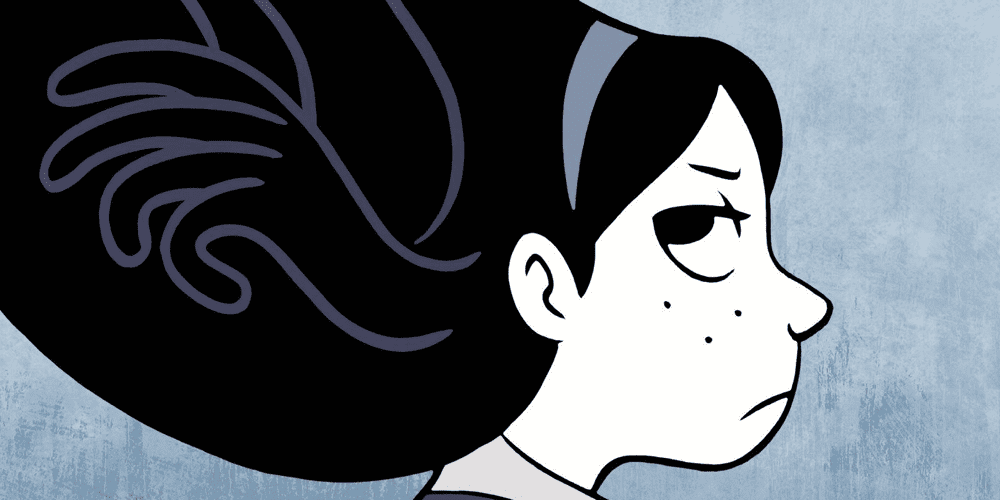
Anya’s Ghost
Written by Vera Brosgol, Anya’s Ghostis a coming-of-age ghost story about Anya, a self-conscious loner who befriends the ghost of a young girl who died nearly a century before. What starts as a cute, charming story of two outsiders finding and helping one another transforms into a beautiful and haunting tale once Anya begins to uncover the truth of her new friend’s death.
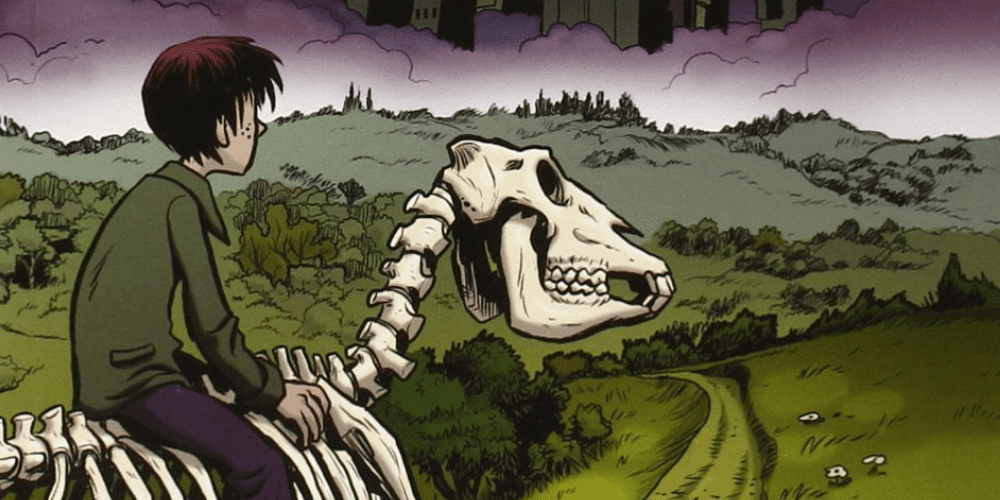
Ghostopolis
This spooky adventure, written and illustrated by Doug TenNapel, takes you on a Wizard of Oz-esque journey to the land of ghosts. Young Garth is transported to the eponymous Ghostopolis. With powers that the ghosts of Ghostopolis seemingly don’t possess, Garth and his ghost friends embark on a journey to take down an evil ruler and find a way to return home to the land of the living. Though it’s a wholly familiar story, it is still a most enjoyable book with heart, adventure, and a really cool magic system.
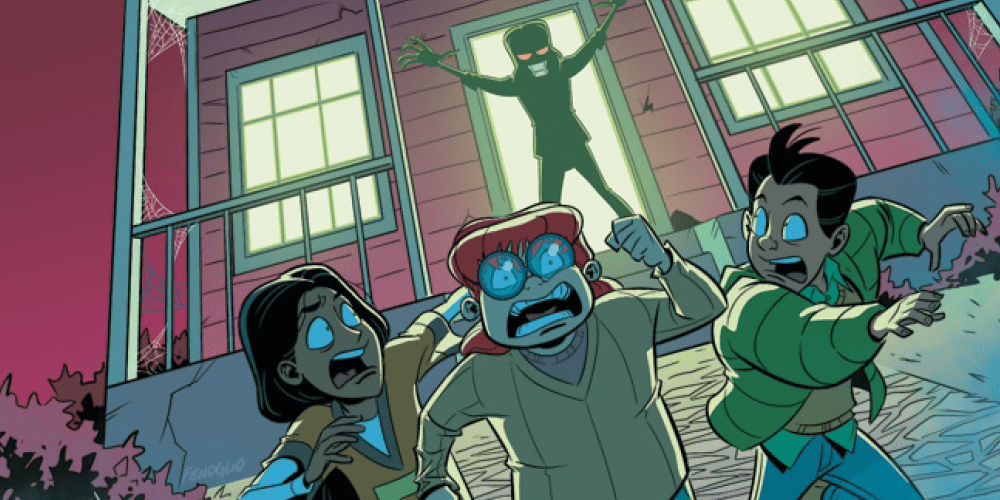
Goosebumps
Yes, the iconic series of children’s horror novels by R.L. Stine comes in comic format as well. And what’s more, there are multiple books for you and your kids to devour. There are four volumes of Goosebumps Graphix, each an anthology with three or four graphic novel adaptations of the classic stories such as Night of the Living Dummy and The Werewolf of Fever Swamp. There have also been a few original stories published, including most recently Horrors of the Witch House, about three friends who discover that an evil witch has purchased the town’s haunted house. These comics are just as fun and spooky as the original Goosebumps tales, and perfect for parents who read them as children to share with their kids.
Gotham Academy
Originally developed as part of the final wave of DC Comics’s New 52 initiative, Gotham Academy centered around Olive Silverlock and her friends as they navigate the spooky prep school, endure its bizarre staff, and uncover its mysteries. Though the initial series lasted only 19 issues, and its Rebirth era reboot (entitled Second Semester) just another 12 more, the book is without a doubt a fun and haunting read. It’s got that Harry Potter charm and sense of adventure, coupled with the gothic/noir spirit of the Batman mythos.
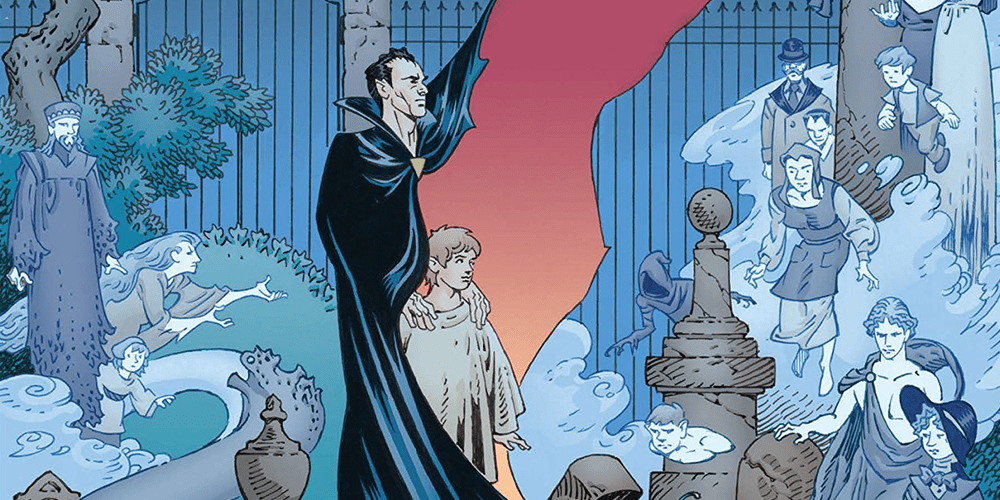
The Graveyard Book
The celebrated children’s novel by Neil Gaiman is adapted into graphic novel format, adding haunting imagery on top of the prolific tale. The Graveyard Book tells the story of Nobody “Bod” Owens, who, as an infant, crawls his way into a cemetery after his family is murdered. The ghosts of the graveyard take pity on the boy, and decide to raise him as one of their own. Each chapter of the book is written as a short story, or one episode of a bigger series, with Bod on an adventure in and around the graveyard. Gaiman is a master of dark fantasy, and The Graveyard Book is no exception. While the novel itself is a must read for you and your kids, the graphic novel adaptations brings those narrative visuals to life with beautiful detail and color.
Scooby-Doo, Where Are You?
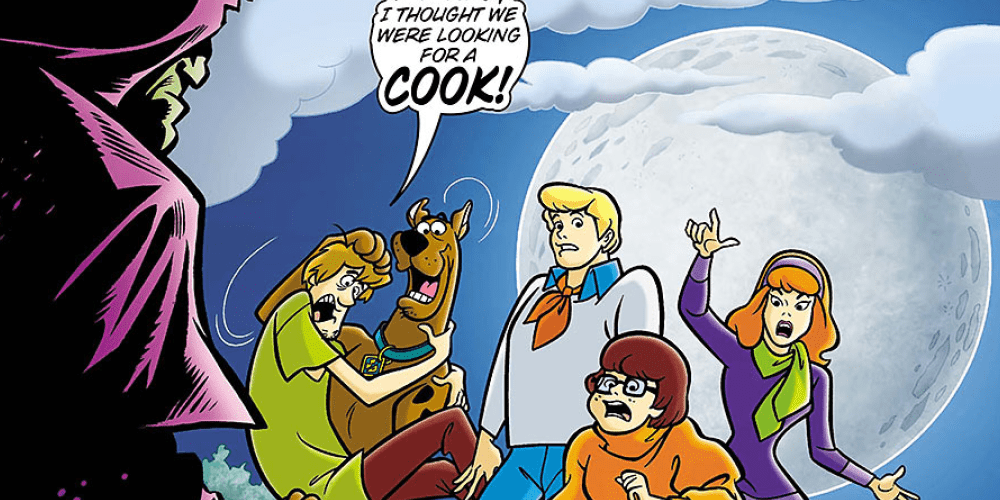
Another bit of nostalgia that you can share with the next generation, Scooby-Doo, Where Are You is a chuckle and chill inducing series. Published by DC Comics since 2010, each issue of Scooby-Doo features one new and one classic mystery that Mystery Incorporated must solve to catch the creepy crooks – who would have gotten away with it, if not for those meddling kids!
Spook House
Eric Powell (The Goon) wrote and co-illustrated this anthology series of scary campfire tales for kids. While it’s creepy in its own right, Spook House is a great gateway comic for kids that want a fun Halloween read. The writing has some dark elements to it, but the whimsical and cartoonish artwork serves as a great counterbalance. Some of the standout stories in the anthology include Heckraiser and The Creature from Granny’s Pond.
The Witch Boy
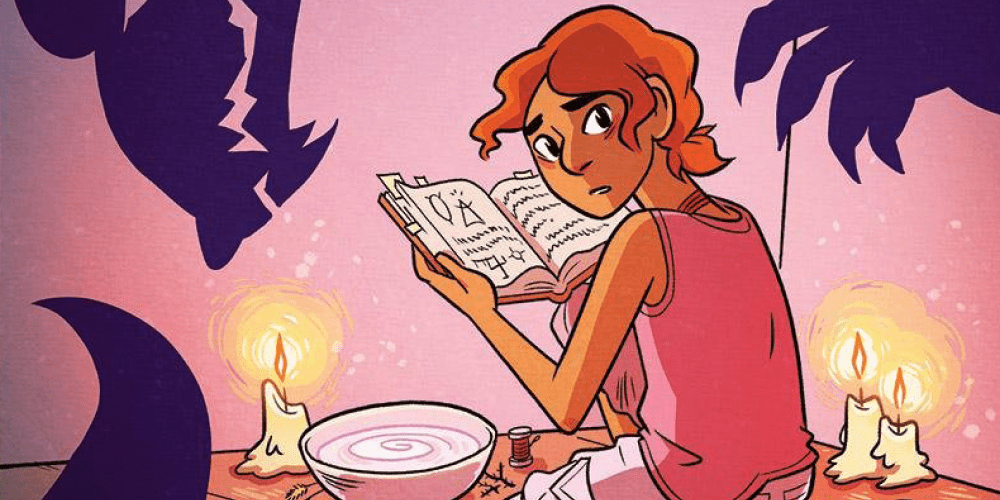
In The Witch Boy by Molly Ostertag, the girls in Aster’s family are raised to become witches, while boys become shape shifting demon hunters. But Aster, who has yet to prove he can shift, is more fascinated by witchcraft. The book presents relatable ideas such as going against what is expected of you, and the consequences you face in society because of those feelings. The book has spawned two sequels, The Hidden Witch and The Midwinter Witch.
What other spooky comic books are your kids reading this month? Let us know in the comments.
The decade is almost over, so let’s look back on Archie’s ten-year evolution and speculate on his future. The first half experimented with different ideas not seen in the franchise for a long time. From marriage and adult life in “Life With Archie” to “Archie Horror“. The “New Riverdale” series spearheaded by Mark Waid was a huge change in the status quo of the franchise, pushing the main cast into new roles while reflecting on our current times. What can we expect from Archie Comics over the next decade? The Archie Americana series presents some suggestions.
The Premise Of Archie
I’ll take this over High School Musical any day.
Since the forties, Archie Comics has one goal in mind; depicting coming-of-age tales for America’s youth. Being a teenager is one of the most crucial and vulnerable times in a person’s life. With Archie, kids who ponder about high school or even teens in the same grade have a pal they can confide in. It’s not just about high school but reflecting on social events of that period. For each decade, readers get a new Archie to see what life is like for any generation.
Archie Americana
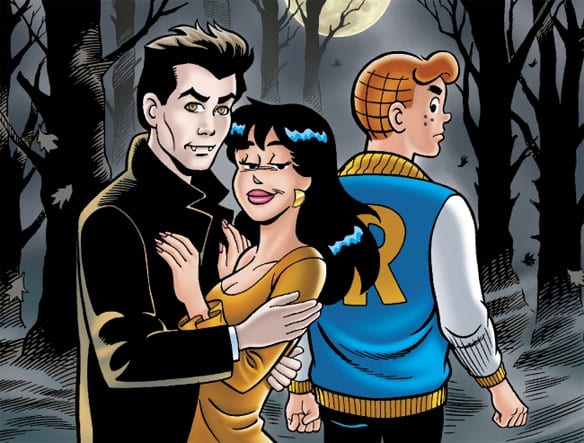
To help get a better idea, Archie Comics released the Archie Americana collection that focuses on different eras. This includes but is not limited to social commentary like the 80s Punk Movement. In a more milder move than South Park, Archie explores both sides of the topic realistically. For example, cable was semi-useful until the wires are cut. Other times Archie Americana parodies popular media like Batman and Knight Rider for fun.
Archie 2020s Predictions
With the turn of the decade, some trends are already starting to form for Archie and his gang.
Media
When it comes to TV some companies are already bundling their streaming services. But it can still go even further through some middleman companies like “Roku.” Think “Hulu,” “Disney+,” and a few less notable services like “YouTube Originals” in a 6-for-1 deal. Again though, it comes with some inherent flaws like lacking “Hulu with Live TV.” It would be middleman products, after all.
Virtual Reality is steadily improving enough to make 90s Jughead freak out. Music, gaming, and streaming are all viable areas for VR that steadily improves. Maybe the Archies will make appearances like the “Blue Man Group” or “Gorillaz”. Unfortunately, that also means more special effects like autotune. Thankfully live touring is still a thing that’s lucrative. Because sometimes real life trumps a virtual one.
Social Changes
It wouldn’t be social commentary without reflecting on positive inclusions on social lives. Representation is kind of hard though since Archie has at least one member of groups considered marginalized. Thankfully, Kevin and Harper are too fleshed out to even be considered token cast members. More mature topics like drugs or guns would have to be very subtle; this is supposed to be for all ages.
However, education vs. real-world experience is a very viable discussion for anyone. With the internet peaking its potential, schools are almost obsolete. Most people with Master’s Degrees don’t even get jobs in his or her major’s field. Betty is certainly someone who would be affected the most by all of this. The best thing to do is have Betty find herself through jobs and internships. That way, she can see what she’s good at and make smarter decisions.
Then there are the job benefits of small businesses and major corporations. Jughead working at Pop’s would have him work minimum wage but with benefits and personal fulfillment. Major chains or corporations like Lodge Industries meanwhile can offer higher salaries, benefits, and more opportunities. The problem comes from whether anyone wants to stick around. Most characters like Reggie are more than likely to end up in unfavorable warehouse jobs.
Anything else like fashion, Enoughism*, and social media events are all viable for Archie 2020s.
Parodies
A few topics come to mind for popular media parodies. A parody of Game of Thrones is definitely a possibility, hopefully without all the ‘everybody dies’ cliche. But it would be a waste not to parody hit movies. Obviously, Archie’s superheroes from the Dark Circle imprint would have an in-comic cinematic universe. Maybe even biopics like Bohemian Rhapsody and Rocketman. Everything else remains subjective to the zeitgeist.
Archie 2020s Other Comics
Now for some real guesstimating. Archie Comics tackles everyday life in a way anybody can relate to. That usually means getting out of comfort zones. Putting the cast in new settings is always viable if it’s a slice-of-every-life. One idea is “College Life with Archie,” one where the New Riverdale cast has to choose where they go in life. Otherwise, there are remake publications analogous to Jughead’s Time Police.
Then there’s what the “Newer” Archie would look like. With the New Riverdale cast’s graduation, someone has to fill the void. A slight redesign like every other decade is also expected. Not a return-to-form series though, Classic Archie covers that complete with the old artwork. Then there’s the whole portrayal part. New Riverdale expands and retrofits the characterizations. From Archie’s looks, Jughead’s asexuality, and Veronica being a fish out of water. It would be great if Archie 2020s does this too. Reggie, for example, has a chance for more development.
Any Other Ideas?
It all comes down to the people behind the Archie Comics. But what do you all think? Will Archie make any big changes? What will be the next trends the Riverdale gang messes with? Share your thoughts in the comments.
*Enoughism is a theory according to which there is a point where consumers possess everything they need, and by buying more it actually makes their life worse off.
Jason Aaron has cemented his legacy in comics with his essential run on Thor, and King Thor #2 most certainly does not tarnish his otherwise stellar legacy. Aaron’s script has an almost biblical weight to it, with narration equal parts brutal and beautifully poetic. Esad Ribić’s art and Ive Svorcina’s colors are equally frayed and distraught. King Thor #2 is fittingly apocalyptic, as it marks one of the last comics in Aaron’s run on the Thor line, and he shows he still has a firmer grasp on the character and universe than few others ever had.
King Thor #2 begins immediately after the resurrection of Gorr The God Butcher, or as he is now rechristened Gorr, The God of God Butchers. Gorr begins to mop the floor with Loki and Thor, and it becomes apparent that the only chance Thor has is to get Loki to help him.
Aaron has such a firm grasp on the tone and Meta text of the Thor canon; it’s as if he was destined to write this book. The fraught narration describing Thor’s inner-thinking and the inevitable doom of the universe makes the story feel like an apocalyptic myth from a Nordic tribe. It feels that there should be a group of men chanting ominously with each blurb.
Aaron is misotheistic and harbors some conflict towards the idea of an all-powerful god, but he is still capable of imparting some beauty in the downfall of the All-Father. The reader knows that Gorr’s logic is sound, and his goal isn’t impure, but his hatred and ruthlessness cloud him. Gorr’s end goal is to make a race of humans who don’t need Gods, who can be independent, which isn’t that evil depending on your philosophical and theological perspective. But the reader feels each blow to Thor because Thor, in theory, is the good guy. Aaron toys with these stances and presumed roles in simply masterful ways.
Another highlight of this chapter is the dialogue between Thor and Loki, as Aaron shows he has a full understanding of one of the more convoluted and electric brotherly relationships in comics. The barbs Thor throws at Loki to get him to fight against Gorr is underlined by his deep love for his adopted brother. In the end, as they are being absorbed by Gorr’s all-black matter, Thor and Loki are the last things each other have, and their final dialogue is a fitting capstone to their relationship.
Gorr The God of God Butchers Does Some God Butchering
Ribić’s art and Ive Svorcina’s colors are the ideal complements to Aaron’s more mature story. Ribić’s figures are bulky and weighty, Thor lumbers in this fight like a sore veteran gearing up for his last battle, and Gorr moves viciously. There are also parts of this comic that look like the cover art to an 80’s metal album, which is equally rad. One of Thor’s granddaughters rides throughout space on a shark. I mean, how can you top that? Svorcina’s colors are neutral and fittingly dour. Svorcina gives each panel an accent of fraying or areas that are lighter than others make the story feel more historic and dour. VC’s Joe Sabina’s letters burst off the page, and during the action scenes are impressively vibrant and eye-catching. The script he adds to the narration also gives a more biblical or apocalyptic feel to the ensuing battle as well.
Throughout Aaron’s run on the Thor series, he has shown keen understandings of the myths, it’s characters, and the stories themes, while also being able to inject his ideas into the story. King Thor #2 is no exception as Aaron maintains that he is the best writer of Thor we’ve seen in a while.
Grant Morrison and Dave McKean’s Arkham Asylum celebrates its 30th anniversary this year; let’s take a look back and see what makes the story such a spooky, satisfying, and enduring read.
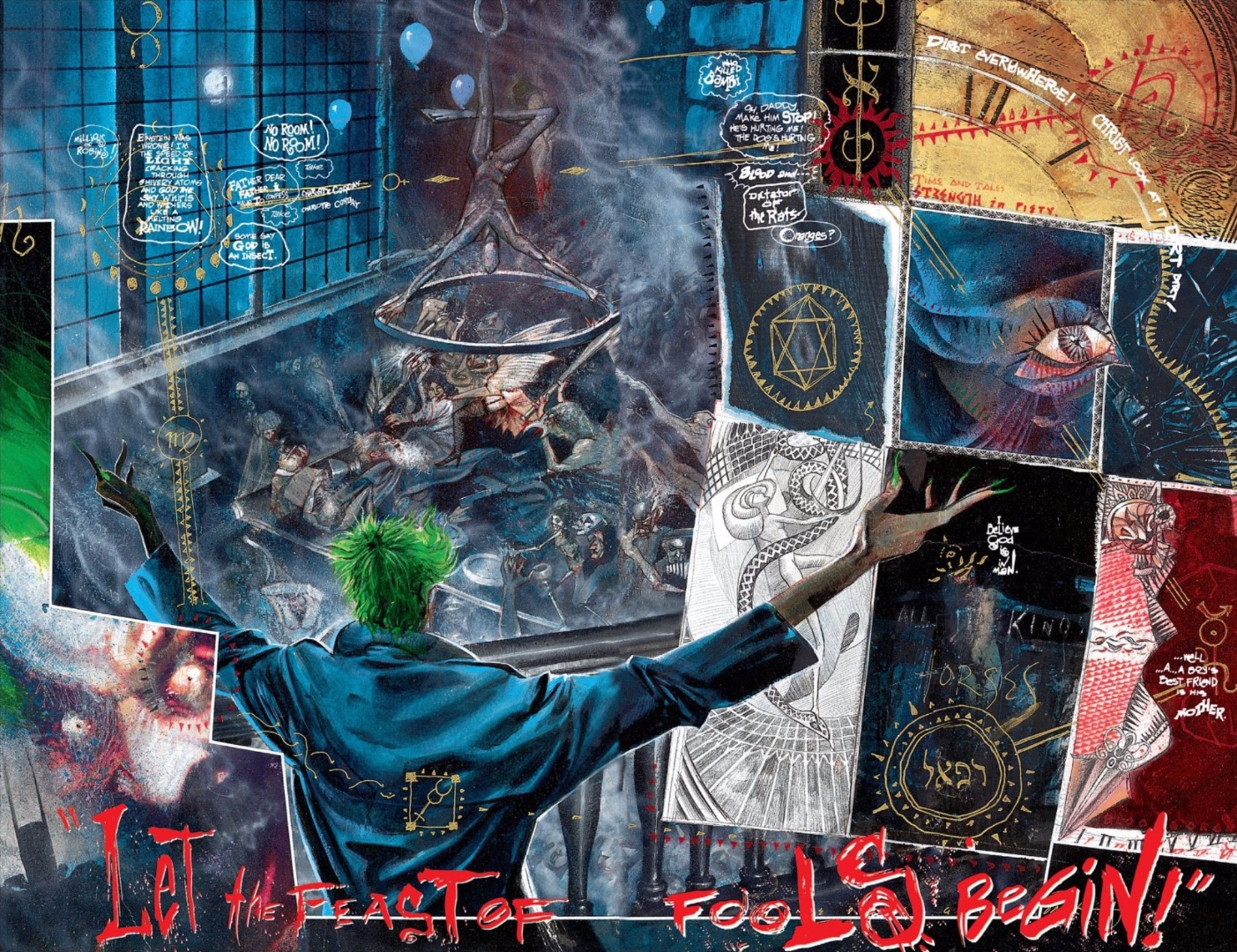
Interior Page by Artist Dave McKean, Letterer Gaspar Saladino
Batman has a multitude of villains, and throughout the collective characters’ 80 years, most have their defining or well known stories. But, what about locations? Yeah, you could just plop a character in a well known city/state (like New York), but to give life to a story, the landscape should breath on its own.
When someone mentions Metropolis, people think Superman. Wakanda — Black Panther. The list goes on. For Batman, it’s Gotham, but even more so is the fabled asylum — Arkham. There aren’t many instances where the general public can name the prison/asylum that characters go to, but this is one of them. Arkham Asylum leaves an impression.
This shows that, yes, a location can tell a story. Arkham wasn’t always so established, though. early on, it barely had a backstory. Enter Grant Morrison, Dave McKean, and 1989’s Arkham Asylum: A Serious House on a Serious Earth.
Like Celine Dion asks in her song, “what if walls could talk?” Well, that’s what Morrison and McKean set out to answer.
The inmates of Arkham have taken over the asylum, and the Joker has an important demand: he wants Batman. The Dark Knight makes his way to the madhouse to confront The Joker, and once inside, he faces his famous list of villains in a maze-like asylum when The Joker begins a deadly game of hide and seek.
Arkham Asylum: A Serious House 15th Anniversary Edition Cover By Dave McKean
Origins of Arkham Asylum
Arkham Asylum: A Serious House on a Serious Earth released on October 5th 1989 as a graphic novel from DC Comics. This trip through the Asylum was writer Morrison’s first foray into the Batman Universe; he and McKean were joined by letterer Gaspar Saladino, and editors Karen Berger and Art Young.
As publishers typically do with iconic works, DC Comics has released a multitude of editions for Arkham Asylum, but the edition that first added behind-the-scenes extras was the 15th Anniversary Edition. This edition included: a full script with annotations from Morrison, thumbnail layouts for the art by Morrison, and an aftermath from Berger, as well as a host of information that tells the story behind how the book came together.
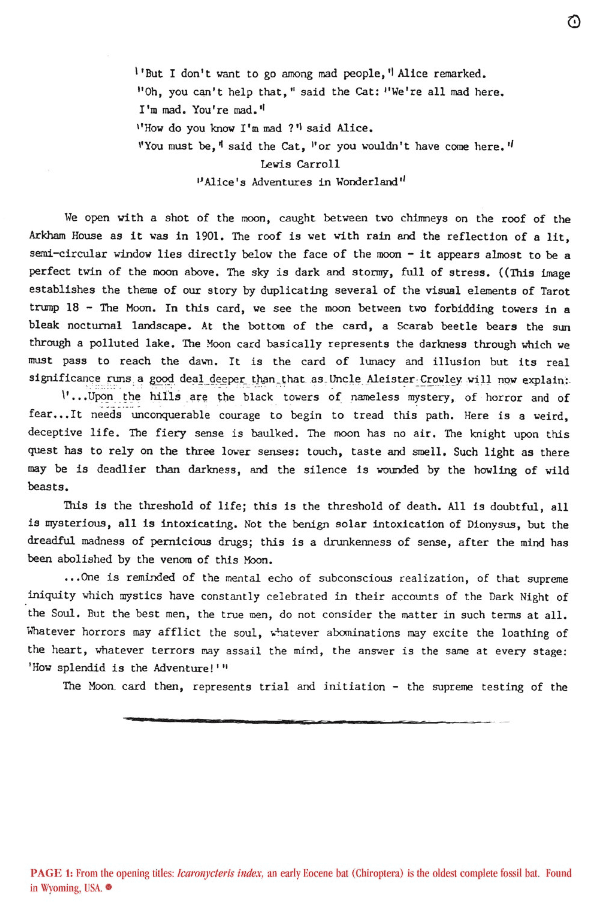
Arkham Asylum: A Serious House Morrison Script Page 1
The next few bits of information are from the extras in the 15th Anniversary Edition.
Morrison explained that the subtitle (A Serious House on a Serious Earth) originated from the 55th line of Philip Larkin’s poem Church Going. He also spoke on the inspiration of where the themes came from: “[Arkham Asylum was] inspired by Lewis Carroll, quantum physics, Jung, and Crowley; its visual style by surrealism, Eastern European creepiness, Cocteau, Artaud, Švankmajer, the Brothers Quay, etc.“
Originally Morrison wanted Brian Bolland as the artist for Arkham Asylum: A Serious House on a Serious Earth, as he wanted it to look more realistic. Instead, McKean was tasked with the job. Morrison criticized McKean’s choice of making the novel more abstract, adding that their two styles clashed and competed with the novel’s symbolic systems. Later, he said this clash of creators was the story’s greatest weakness.
In what may be one of the funniest quotes in the Anniversary Edition, Morrison says, “Who’s laughing now, asshole?” This was pointed towards people in the comic book industry that got a hold of an early script version and called it “pretentious.” In context, this quote is quite hilarious with all the stories in varying media that the graphic novel has inspired.
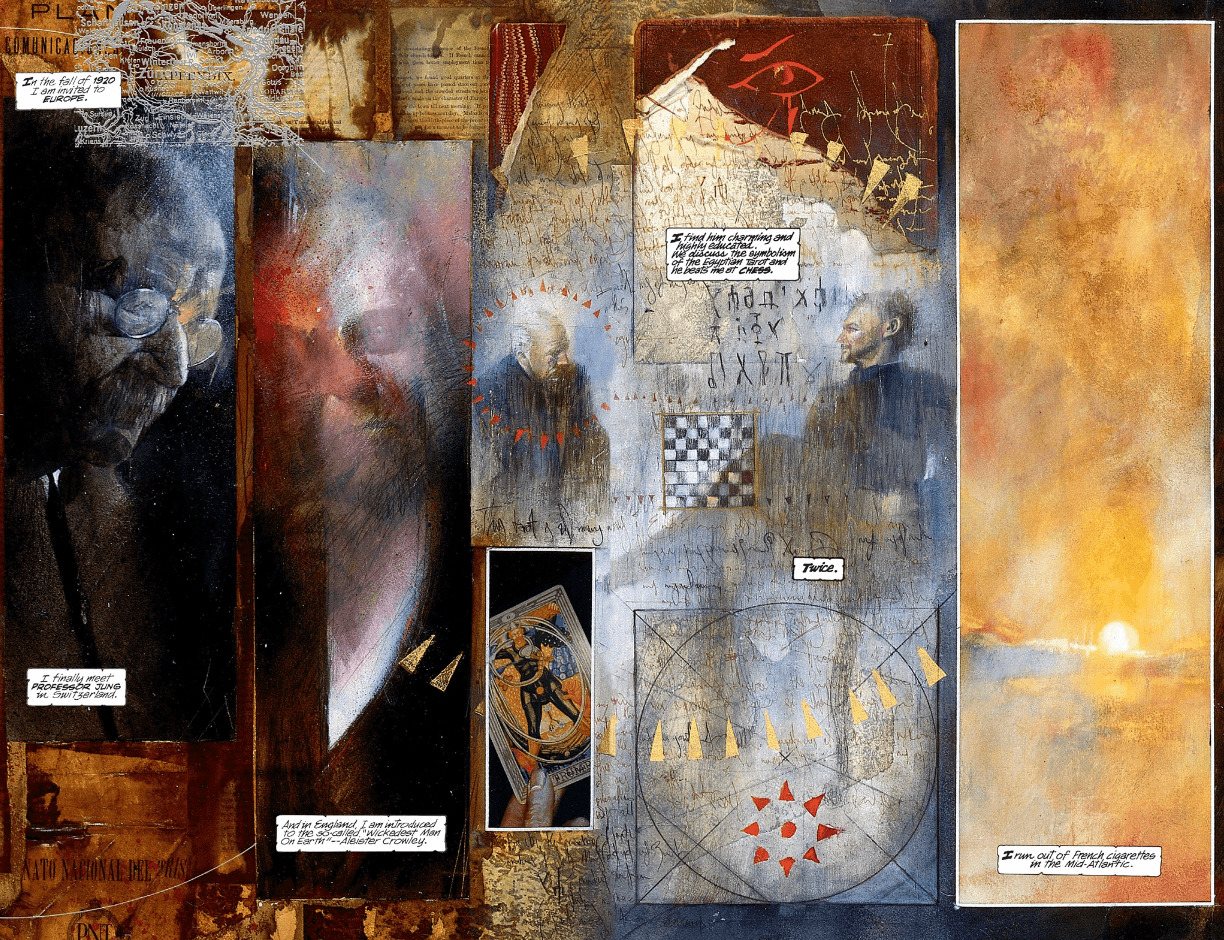
Interior Page by Artist Dave McKean
In The Name
The idea of a story revolving around a building instead of a character is present in the name: Arkham Asylum: A Serious House on a Serious Earth. The cover still has Batman’s name on it, but in smaller text than others. And “Batman” is usually cut out when the story is talked about, with most people simply calling it Arkham Asylum.
Although it may focus on Batman making his way into Arkham to face his notorious nemeses, A Serious House relies more upon the history of the Asylum and its residents.
By using Batman as a narration device, Morrison essentially gave the fabled Asylum an expanded backstory. There’s no “big bad” villain for Batman to face off against, either, which is atypical of a superhero comic. Instead, Arkham Asylum: A Serious House revolves around a grand tour of the Asylum as The Joker forces Batman into a game of hide and seek. This form of storytelling gave Morrison and McKean the ability to focus on a multitude of villains, while still making it read organically.
Morrison and team sprinkled in a great deal of backstory of the Asylum’s founder—Dr. Amadeus Arkham. Dr. Arkham was originally conceived in Len Wein’s Who’s Who: The Definitive Directory of the DC Universe #1, but it wasn’t until Morrison took the character and his tragic backstory, making it even more heartbreaking.
Residents of The Asylum
What is an asylum without its residents? Morrison added his own take on these inmates (villains) that live inside of it. A few of these changes ended up sticking in future iterations. There weren’t many, but the most significant were Maxie Zeus receiving electricity powers, a more reptile Killer Croc, and Mad Hatter being obsessed with Alice inWonderland. The latter became a defining character trait for the character.
A more controversial change was Mad Hatter’s obsession with children, especially ‘little’ girls, essentially making him a pedophile/child molester. Although he wasn’t around for a large page count, this change-up was a huge departure, and a taboo subject. That wasn’t the only ‘taboo’ area Morrison went for.
In a few scenes, Morrison paints Joker ‘in love’ with Batman. Or as it’s been said in the past, in a homosexual fashion. In the script Morrison originally added that Joker would “wear make-up and black lingerie in parody of Madonna.” This was shot down by DC Comics due to the success of the recent live-action Batman movie, but Morrison added in two other characters cross-dressing.
Joker is also dubbed as possessing ‘Super-Sanity’, an idea Morrison planted here and returned to later in his Batman run.
Although a few other characters are changed, they aren’t that different, or significant enough to mention.
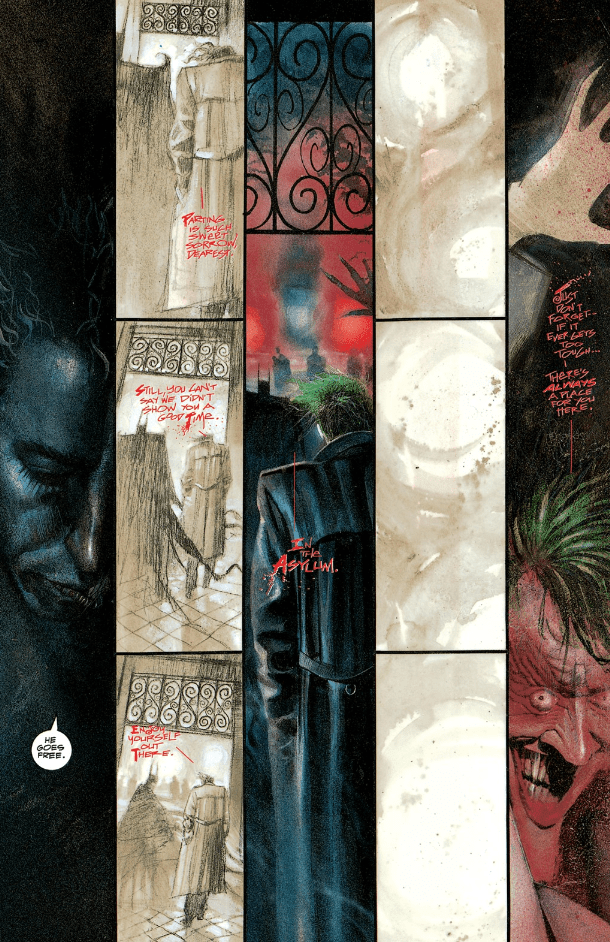
Interior Page by Artist Dave McKean, Letterer Gaspar Saladino
Drawing on The Asylum’s Walls
As groundbreaking and crazy as Morrison’s writing is, Dave McKean’s art takes this graphic novel to another dimension. McKean’s art style is insanely distinct, enough so that you can instantly tell it’s his work.McKean is known for his ability to combine a multitude of media in his works of art. This skill is showcased to the max here as he mixes paints, photography, and the usual drawings, all in a media mashup, making each page a work of art.
At times, McKean’s art does feel muddy or hard to comprehend, but that’s part of its charm. The art helps the atmosphere greatly, much like the hard-to-read lettering (we’ll get to that). The art makes you feel as if you were there with Batman, even if it isn’t realistic. Each panel/page brings something new and unique to the table, while keeping the maze-like feeling, making the reader feel uneasy in each moment.
McKean himself didn’t feel the same, though, calling his own art “overpainted, lavish illustrations in every panel just didn’t work. It hampers the storytelling.” But, we’d have to strongly disagree.
And while McKean’s art may take Arkham Asylum to another dimension, letterer Gaspar Saladino does one of the best lettering jobs in any dimension, while being the hardest to read. As great as this story is, a common complaint from readers is that the lettering is hard to read at times. Is this true? Yes.
But, is it a problem? Actually not so much. At times you may need to reread a piece of dialogue, but when you do, you’ll catch more information. Negativity aside, Saladino’s lettering is one of the best seen in any comic. Each character has a differing dialogue balloons, with some not even having a balloon at all.
Saladino plays with font size, style, color, and placement so much that the reader feels like they’re in the Asylum. That’s how the ‘hard to read’ lettering can be interpreted, while it gives a certain uneasiness to the claustrophobic asylum. Plainly put, Saladino’s seemed to make the lettering hard to follow/read at times on purpose to help amplify the feeling seen throughout Arkham Asylum: A Serious House.
Interior Page by Artist Dave McKean, Letterer Gaspar Saladino
30 Years Later
Thirty years later and Arkham Asylum: A Serious House’s plot, art, and lettering is still a sight to behold. This famous story can be traced to a multitude of inspirations for future Bat-centric stories, especially 2009’s Batman: Arkham Asylum video game. Some themes also reemerge later throughout Morrison’s seminal run on Batman.
Should you read it? Hell yeah! Now’s the best time with the recently released Absolute Edition! It seems the 30th Absolute Edition comes with even more afterwards as well, and what may be the biggest change: McKean went back and restored the art himself. Look below for how great it looks!
Mckean himself handle the art reproduction and I’m blown away from the differences in this edition. pic.twitter.com/PTUnRtVHLg
After 30 years, you can still go back and read Arkham Asylum: A Serious House and find something new. That’s the magic that’s kept this story in the zeitgeist all these years, and which will keep it relevant for the next 30+ years.
Have you read Arkham Asylum: A Serious House? If so what do you think? Is it in any of your top lists? Let us know below!
Side Note: Check out Michael Fromm’s list of 10 scary DC Comics that includes Arkham Asylum: A Serious House and other great titles!
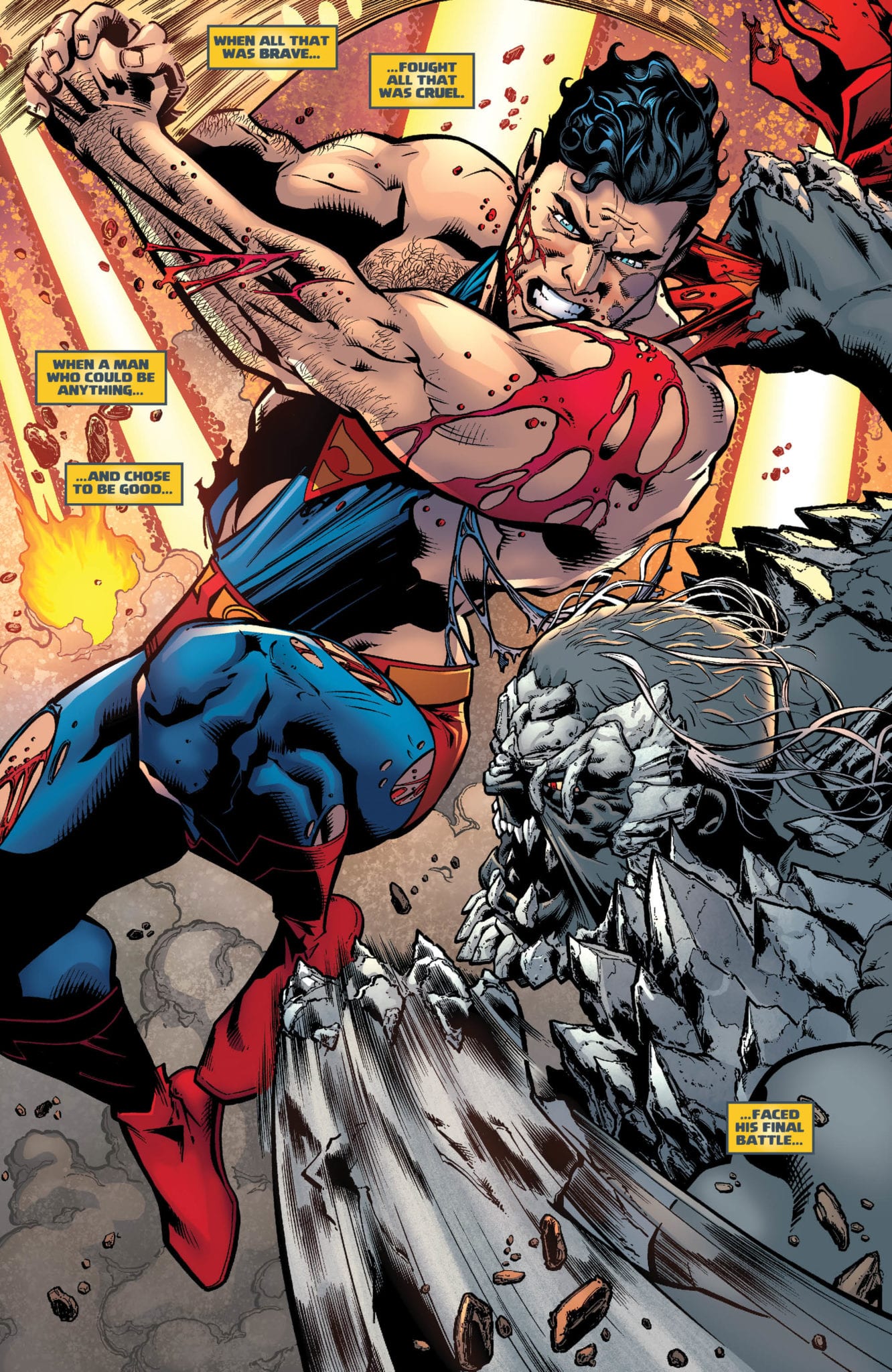
TALES FROM THE DARK MULTIVERSE: THE DEATH OF SUPERMAN #1, available in comic book stores Wednesday, October 30th, is a tale of a dystopian future in which the Man of Steel perishes and all hell breaks lose. But it’s not the villains who unleash an unimaginable amount of destruction upon society—it’s Lois Lane. Her anger at the Justice League’s inability to prevent Superman’s death leads her to adopt a harsher stance against injustice in society. Coupled with an unexpected visitor who has the ability to grant a compatible person Kryptonian powers, the hard-nosed reporter is ready to step into the void her beloved left behind, vowing to root out evil in a way he never could.
Story
Our story from the Dark Multiverse opens with Tempus Fuginaut, a celestial being much like Marvel’s The Watcher, pondering why evil exists in our world. Viewing the course of history over countless societies in the multiverse has acquainted him with mighty forces of darkness that often destroy the goodness in worlds—and it always comes back.
This question has been posed by all kinds of people throughout human history. It’s an existential angst within our hearts that tells us things should be different. By showing this doubt within a cosmic being like Tempus, writer Jeff Loveness establishes a relatability that connects with readers and makes it easy for them to empathize with an even more humanized character: Lois.
Following the death of Superman at the hands of Doomsday, Lois encounters The Eradicator at the Fortress of Solitude. This being from Krypton bestows all of the hero’s powers upon her after she pledges to continue the fight against evil. She adopts her own black and red version of the Kryptonian’s garb and begins a non-stop campaign against all the villains on Earth.
Throughout this process we witness Lois question why Clark held back so much of his power against the injustices plaguing the planet. In her eyes, the Big Blue Boy Scout provided quick-fixes to the problem of evil instead of seeking a permanent solution to the problem of evil. She believes it’s her duty to play God and root out all that’s wrong in the world, regardless of how much blood is spilled in the process.
Artwork
The artwork within this issue balances a fine line between good and evil, much like the opposing forces of the main and dark multiverses. Brad Walker’s penciling, along with Drew Hennessy and Norm Rapmund’s ink work, gives us highly detailed scenes of horrendous wreckage amidst the futuristic structures that typically dot the Metropolis skyline. It’s as if all the hope of progress and salvation that Superman represented died with him.
This clash of good and evil, order and disorder, is played out even more throughout the story with John Kalisz’s coloring; he contrasts the bright, primary colors of Superman and many of the other superheroes with the dark shades of red and black in Lois’ uniform. When it comes to lettering, Clayton Cowles draws us more into this clash by presenting her as a complex moral agent—her internal dialogue boxes are set in the neutral color of yellow so readers don’t assume either good or evil intentions.
Comic Cover
Lee Weeks and Brad Anderson’s cover artwork features an intense image of Lois as Superwoman, wearing a black costume with the “S” sigil written in blood on her chest. This juxtaposition to Superman’s classic outfit, coupled with the rage in her eyes, shows readers the vast differences between each one’s philosophy of crime-fighting.
Conclusion
This new addition to the TALES FROM THE DARK MULTIVERSE series is a monumental shift in Superman storytelling. We witness a human like us (Lois) step into the god-like hero’s shoes and succumb to the temptations that haunt our deepest desires.
Do you think Lois is a more effective hero than Superman? Let us know in the comments below!
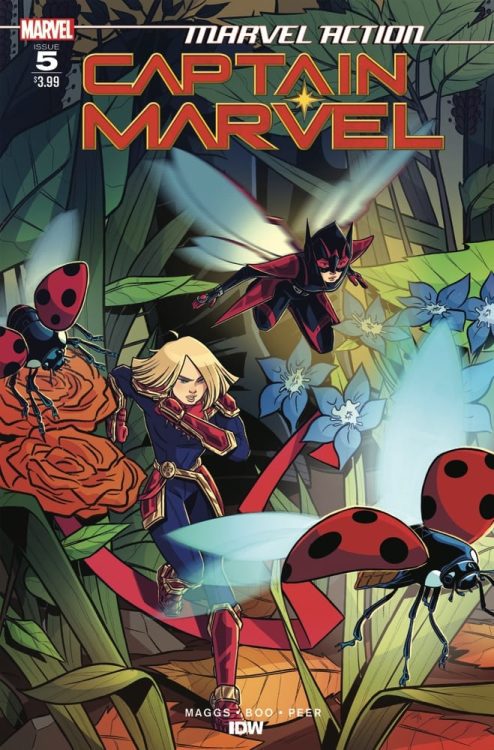
Captain Marvel and The Unstoppable Wasp have shrunk down in Marvel Action: Captain Marvel #6
The Lighthouse is one of those films that can be unpacked and interpreted in many different ways. The biggest struggle many directors face after a hit film is avoiding a sophomore bomb. Back in 2015, Robert Eggers made his directional debut with The Witch, a film regarded as one of the decades scariest stories ever told. Four years later, he has returned with an even more engaging tale about two seamen going completely insane.
Directed by Eggers, who co-wrote the script with his brother Max Eggers, The Lighthouse follows Ephraim Winslow and Thomas Wake. Two wickie’s who spend four weeks on an isolated island only to be driven mad. William Dafoe (Thomas Wake) and Robert Pattinson (Ephraim Winslow) star as the two leads in this unnerving tale set in the late 19th century. Eggers has put together a film that will undoubtedly require more rewatches than The Witch. The Lighthouse is very ambiguous from start to finish, but it provides just enough for viewers to interpret all of the chaos in several ways.
William Dafoe and Robert Pattinson in THE LIGHTHOUSE
Eggers and his brother have teamed up to present a story riddled with symbolism, Greek mythology, and lots of farts from Dafoe. The script has elements of humor to it, and most of it comes from Dafoe’s rear. Also, the story requires viewers to remain attentive because Eggers is not holding the audience’s hand here. Pattinson and Dafoe deliver some of the year’s best dialogue, but it can become confusing when they begin to ramble. While the story is a bit incoherent at times and repetitive, Eggers includes so many setups and payoffs it makes up for that minor issue in this near-perfect film. There are several instances in the movie where earlier references become a reality for a particular character.
Dafoe probably won’t be up for an Oscar award, but he should be for this performance alone. He comes across as a completely insane individual and devours every scene from start to finish. Pattinson even dug down deep and managed to put on a performance that is an acceptable companion to Dafoe’s. From the moment both men appeared on screen, it was clear that something special was going to happen in this film. Neither one held back from their vocal deliveries and facial expressions; they put on performances worthy of a standing ovation.
Robert Pattinson in Robert Eggers THE LIGHTHOUSE
Eggers camera work is on an entirely new level here. Every shot in The Lighthouse is incredible. There is a sense of unease the moment the film begins, and then it just builds through till the final credits. Accompanying his marvelous direction is a score by Mark Korven that drives home the sense of dread and unease. The Lighthouse is very heavy on symbolism and mermaid imagery, all of which Eggers captures beautifully, but it won’t make sense if you aren’t knowledgable about certain topics. Regardless of that, Eggers has proven he is capable of securing audiences’ attention with his impeccable direction.
There is no right or wrong interpretation of this well-crafted film, as there is too much to consider and unpack for only one perspective to be valid. Not a complete masterpiece, but certainly something that deserves the attention it has received. Eggers will be disappearing for another few years before he decides to put out another film. It is clear that the gap between The Witch and The Lighthouse was used properly. Hopefully, his next project is filled with the same elements that made his last two films memorable and thought-provoking. The Lighthouse is one of the years best films, and it is brought to life by two actors who deliver award-winning performances.









 It wouldn’t be social commentary without reflecting on positive inclusions on social lives. Representation is kind of hard though since Archie has at least one member of groups considered marginalized. Thankfully, Kevin and Harper are too fleshed out to even be considered token cast members. More mature topics like drugs or guns would have to be very subtle; this is supposed to be for all ages.
 A few topics come to mind for popular media parodies. A parody of Game of Thrones is definitely a possibility, hopefully without all the ‘everybody dies’ cliche. But it would be a waste not to parody hit movies. Obviously, Archie’s superheroes from the Dark Circle imprint would have an in-comic cinematic universe. Maybe even biopics like Bohemian Rhapsody and Rocketman. Everything else remains subjective to the zeitgeist.