Home Blog Page 383

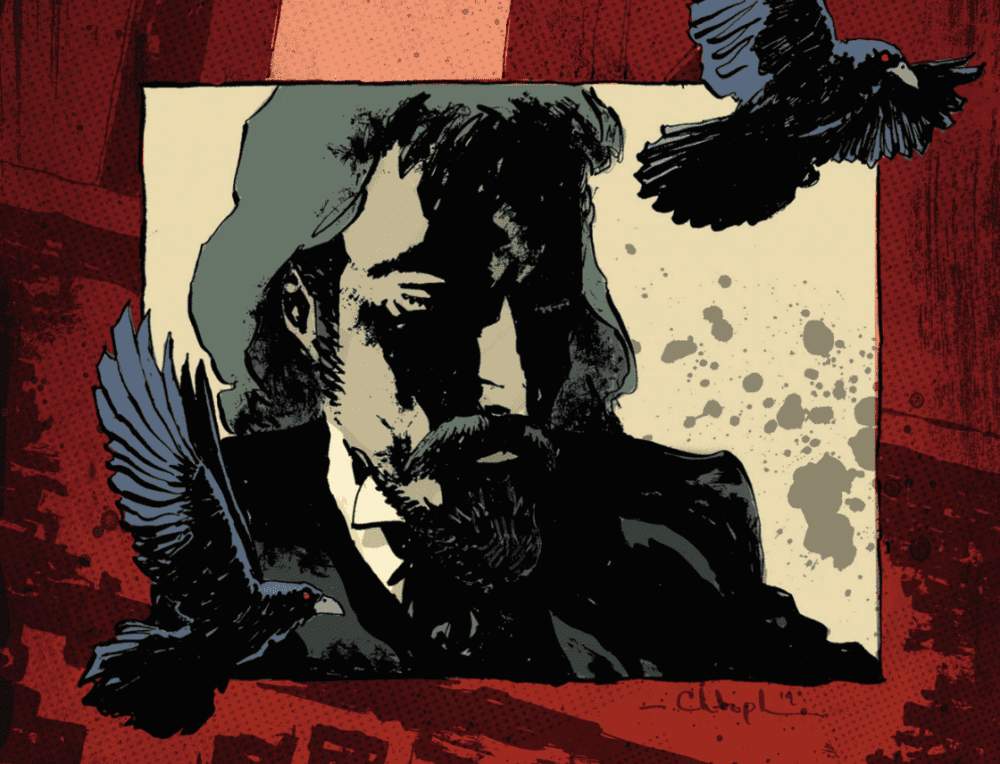
Review: The Hellboy Universe Meets Jack the Ripper in WITCHFINDER: REIGN OF DARKNESS #1

Even with the promising concept of taking a supernatural jab at Jack the Ripper in the Hellboy universe, “Witchfinder: Reign of Darkness #1” doesn’t do much to bolster that premise. Even with some sharp dialogue and a witty protagonist to back it up, this debut issue is plagued with a humdrum series of events and bland visuals.

In 1888, renowned occult investigator and adviser to the Queen Sir Edward Grey is put on the case to hunt down the serial murderer plaguing English alleys known as Jack the Ripper. Despite Grey’s intuitions about this killer being tied to occult agendas, British investigators dismiss his claims. What none of them realize however is just how powerful the forces behind these murders are. Hellboy creator Mike Mignola teams with writer Chris Robeson and artist Christopher Mitten to create a new Hellboy Universe story that’s been years in the making.

Sir Edward Grey, a.k.a. “the Witchfinder” and his associations were introduced into the Hellboy universe years ago during the “Wild Hunt” story line. Since then, the royal supernatural investigator has been an important supporting character and star of his own solid series. The “From the Pages of Hellboy” stamp is essentially a symbol of assured quality in comics, which is why it’s such a shame that this first issue of “Witchfinder: Reign of Darkness” is so bland. The novel (if not a bit overplayed) pitch of implementing Jack the Ripper in this universe is undersold by this issue’s lack of revelations or intriguing events. This issue follows Grey and his assistant Miss Goad as they follow a series of hunches and discover random MacGuffins to further the investigation. There’s an obvious bit of tension between Grey and the police, as well as a promising ending that will hopefully lead to more exciting and terrifying pastures. The Witchfinder series has been known to be a bit on the slow burn side of comic storytelling. However, this issue doesn’t offer the steady series of discoveries and intrigues to start off a compelling plot. There just isn’t much besides Grey’s likability as a protagonist, snappy naturalistic dialogue, and the premise itself to make the plot very engaging.

Perhaps the most iconic element of the Hellboy universe is its’ unique Gothic-horror aesthetic. Mignola has always found artists that reflect his own iconic styling, but manage to also have their own individual artistic looks. One such artist is Christopher Mitten, who has worked on various Hellboy and B.P.R.D. stories in the past and done so to great effect. It’s strange then how the art in this issue is so hit-and-miss. The environmental detail is excellent, and it brings late 19th-century London to life in all its hazy Gothic glory. There are specific trademark “Hellboy-ish’ moments (no spoilers) that are enticing and haunting, as they should be. It’s the character art itself that doesn’t fit. The human character look as if they were superimposed over a pre-drawn background. They look like still-rendering digitizations. This is brought about by what almost looks like a lack of inking on the characters themselves. Facial features are penciled well enough to be able to tell who is who, as well as their facial expressions, but the drawings have no dimension. The color-work on the characters as well is strangely flat. Again, the environments and specific supernatural elements look stellar, but the character art itself is off-putting.

“Witchfinder: Reign of Darkness #1” is a bit of a rocky start for a highly-anticipated new series that details one of the more intriguing anecdotes from Hellboy universe past. The premise is good fun and there is a definite shot at the end that details much more is to come, but the writing and revelations in this first issue aren’t particularly interesting. It’s also plagued by a strange choice of character art that is in stark contrast with the great environmental art and the Hellboy universe as a whole. The final pages of this issue promise that there is much more terror in store for these characters, so here’s hoping the creative team can capitalize on that promise after a lackluster first issue.
 

Monkeys Fighting Robots Youtube

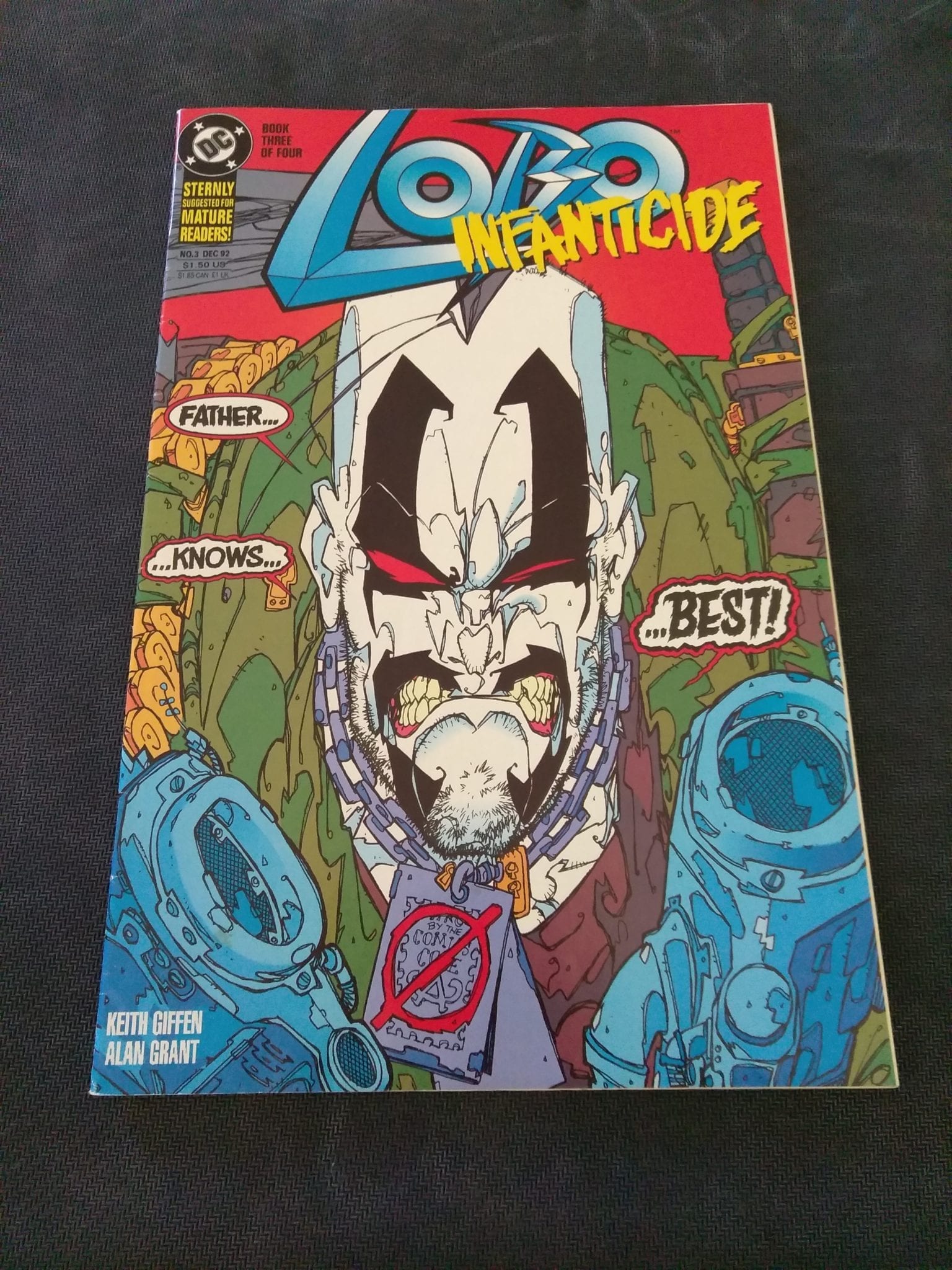
I’d Buy That For A Dollar: LOBO INFANTICIDE #3 (December 1992)

I'd Buy That For A Dollar

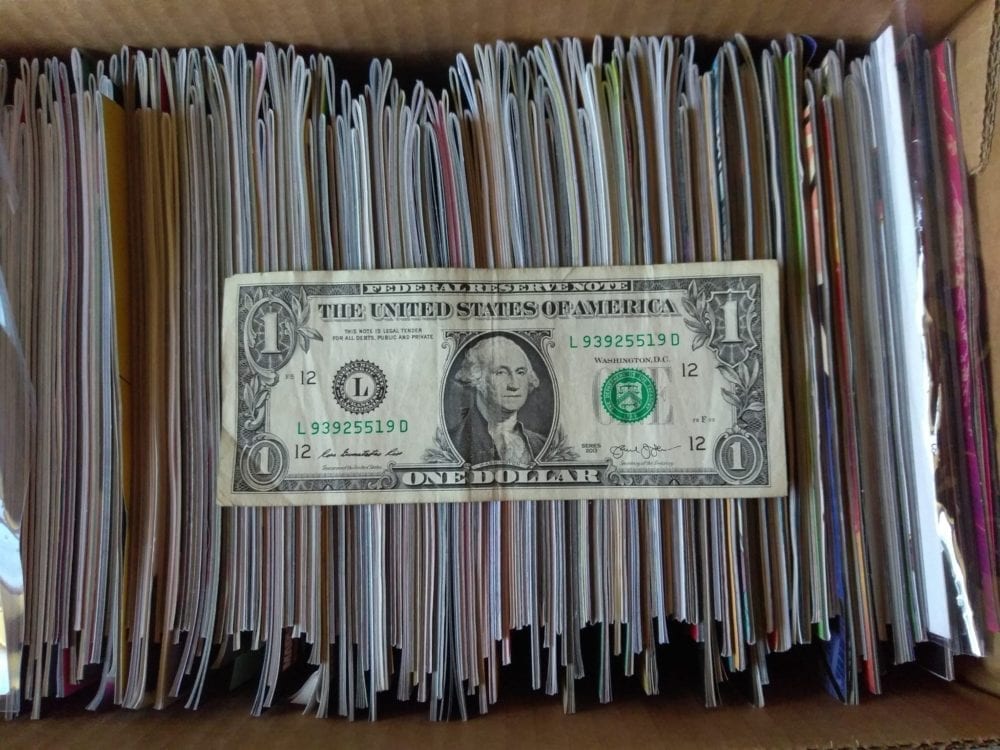
Welcome to ‘I’d Buy That For A Dollar’ a column where I will be exploring the weird and wonderful world of dollar bin diving. The only rule is each and every comic is purchased for one dollar (or less!).

This week’s book is probably one of the most 90s properties there is. Lobo was created by Roger Slifer and Keith Giffen ( the artist on this week’s book as well) in Omega Men #3 (June 1983). Lobo is an alien from the planet Czarnia and works as an interstellar mercenary and bounty hunter.

He was first introduced as a villain in the 80s but soon fell out of popularity. He was revived as an anti-hero biker in the early 1990s.  Lobo as a sort of parody of the 90s “grim and gritty” superhero stories and characters (Cable, Wolverine, and Punisher); he was then enthusiastically accepted by fans.  This popularity led to Lobo having a high profile in DC Comics stories from then on and as starring roles in various series. Lobo Infanticide is one of them.Lobo

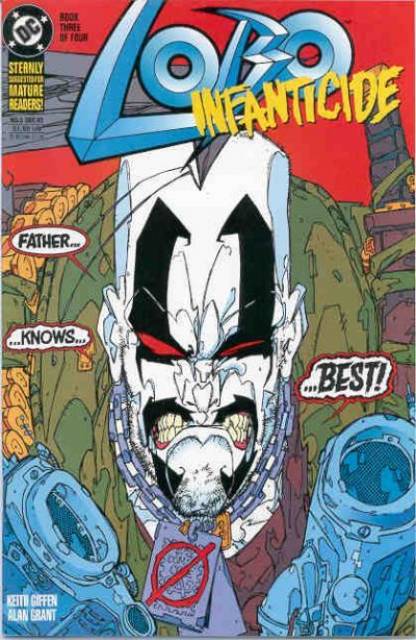
Lobo Infanticide #3
Script by: Allan Grant
Plot/Art/Ink by: Kieth Giffen
Colors by: Digital Chameleon
Letters by: Todd Klein

From the opening pages of Lobo Infanticide #3:

The story so far…sick of humiliation and contempt, 200-plus of Lobo’s illegitimate children (or bastards) are scheming to bring about the death of their evil dad (or bastich). So why are the battle squads descending to the surface of Czarnia?

That’s a pretty crazy intro and set up. It’s pretty obvious this isn’t a serious comic (and NOT AT ALL for kids). But it’s effective and sets the tone for the book perfectly. So let’s take a look at some pages!

Lobo
Here’s my copy! Solid condition. Lobo was always talking on the covers and usually addressing the reader or an off-page, unseen character.

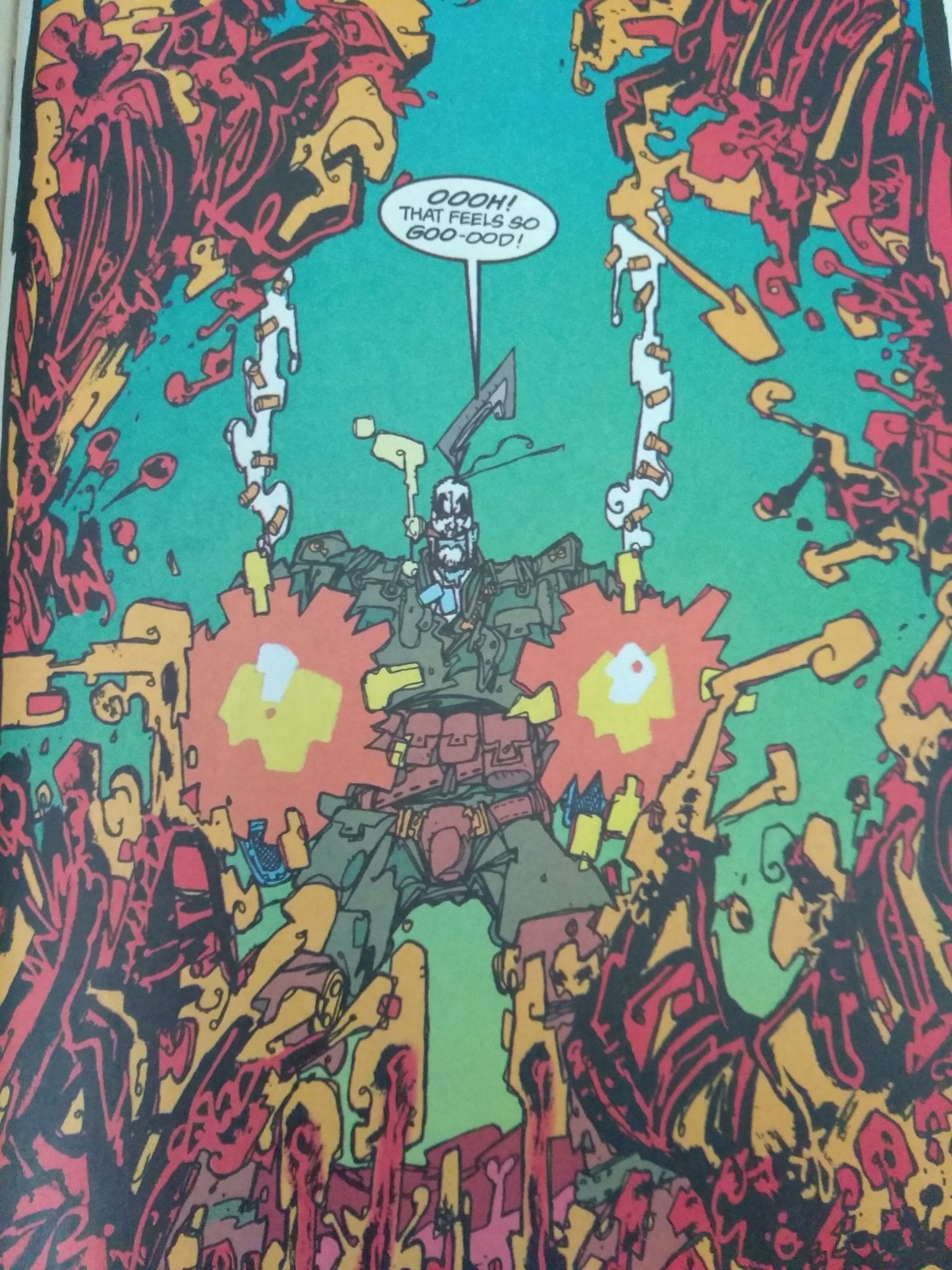
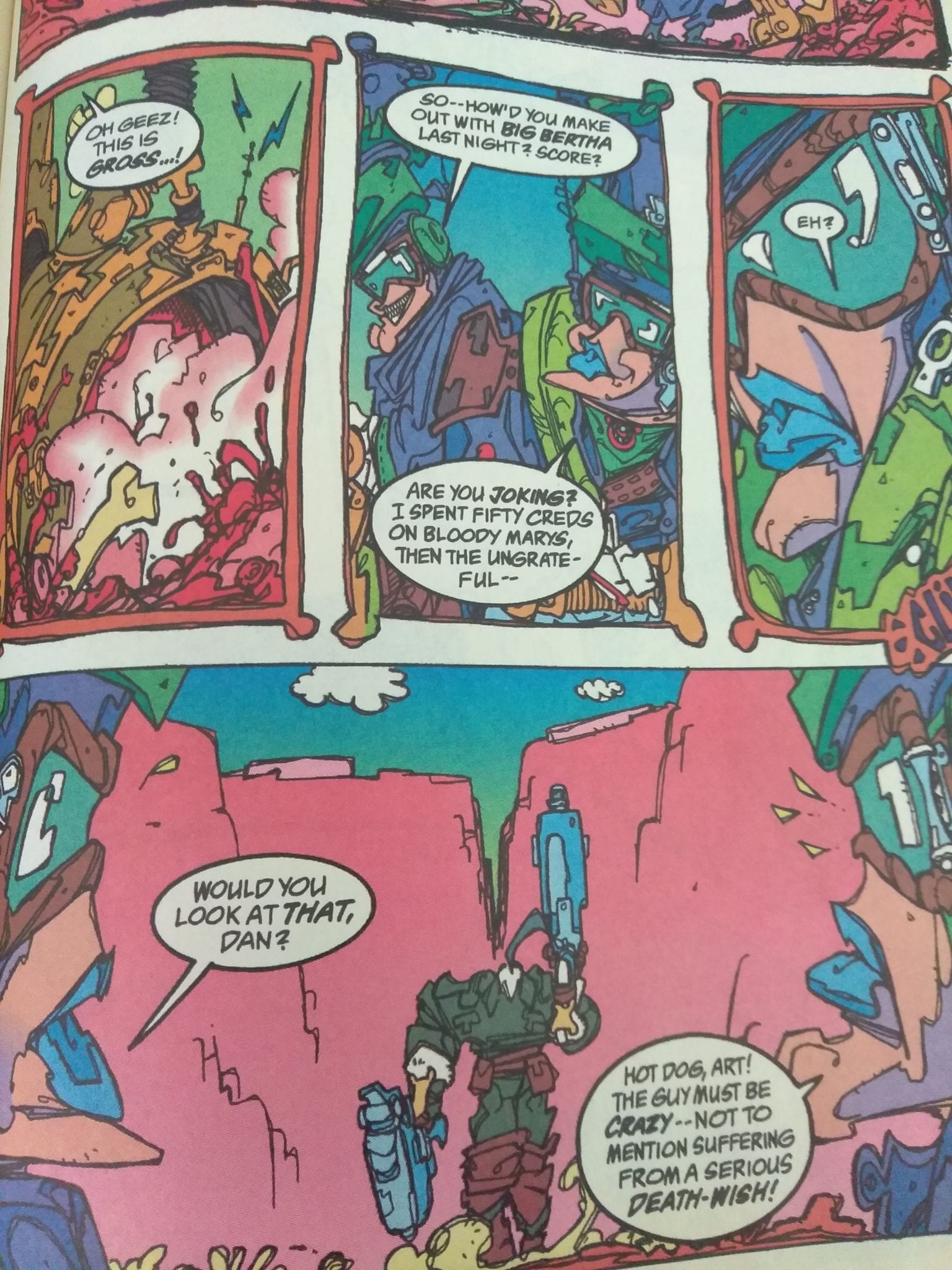
Take a careful look at all the crazy linework of Giffen and the awesome digital coloring that helps make the whole thing such a unique looking book. No one drew Lobo comics like Giffen! There’s so much wild energy! And there’s also some great lettering by Todd Klein!

Lobo
Giffen always did this extreme close up of Lobo’s face, usually smoking a cigar!
Lobo
Just look at all the squiggly lines. Giffen’s art feels so immediate.
Lobo
Love these layouts. And those panel borders are fantastic!
Lobo
Another busy looking but excellent image. You can stare at this stuff and find so many details.

Great stuff right?! These pictures do not do it justice.

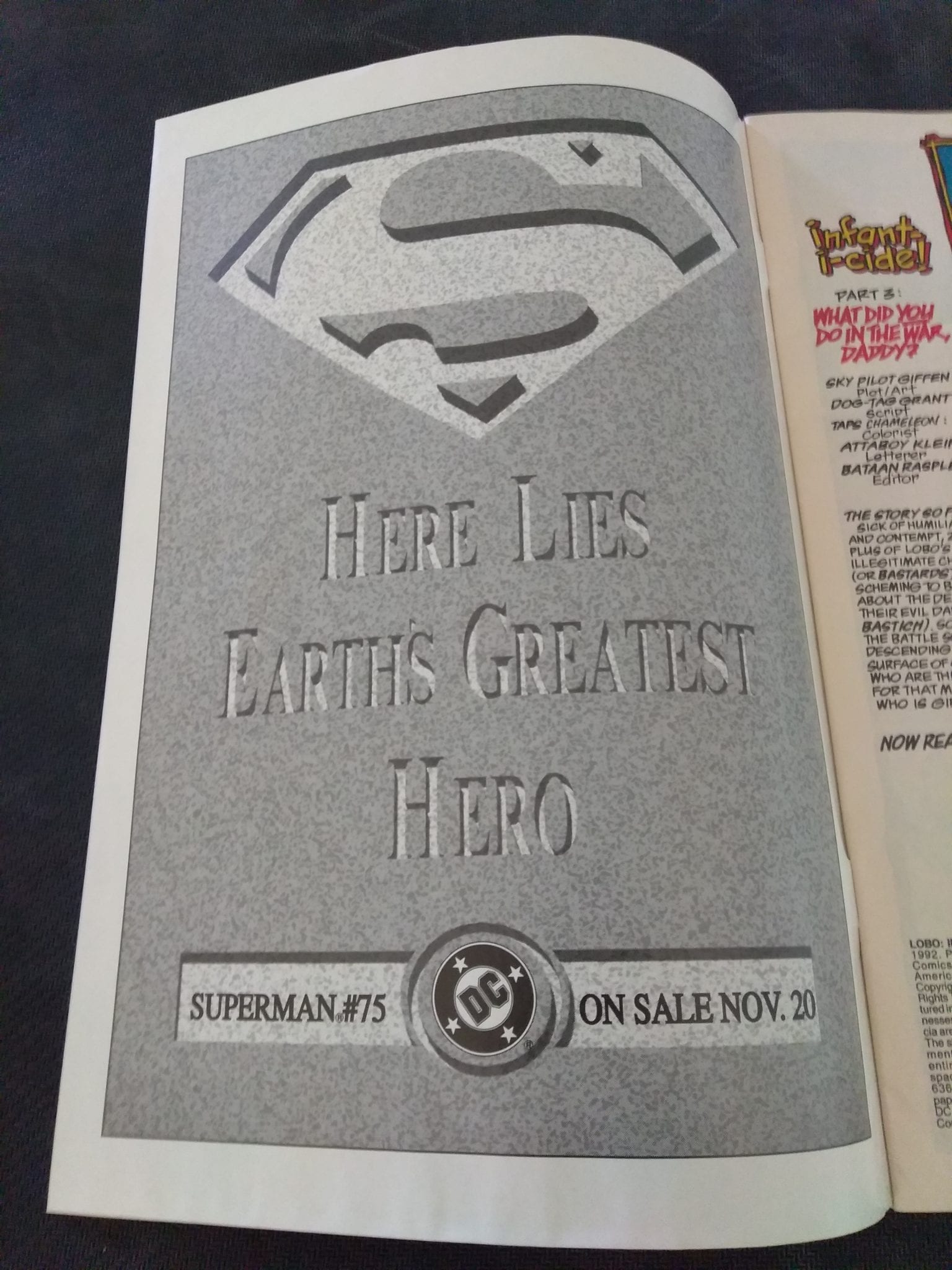
As always, I like to highlight ads in these old comics. The adverts help place it in a time and help tell what was going on in comics and pop-culture at the time. The ad for Superman’s Death is classic and you can tell where DC was going with their Big Two characters with the ad for Bane. The best ad though is the subscription page for DC/Vertigo (although they weren’t using the Vertigo banner just yet). Love they use John Constatine and that he’s smoking (anti-heroes were always lighting up back in the day).

Lobo

Lobo

Lobo

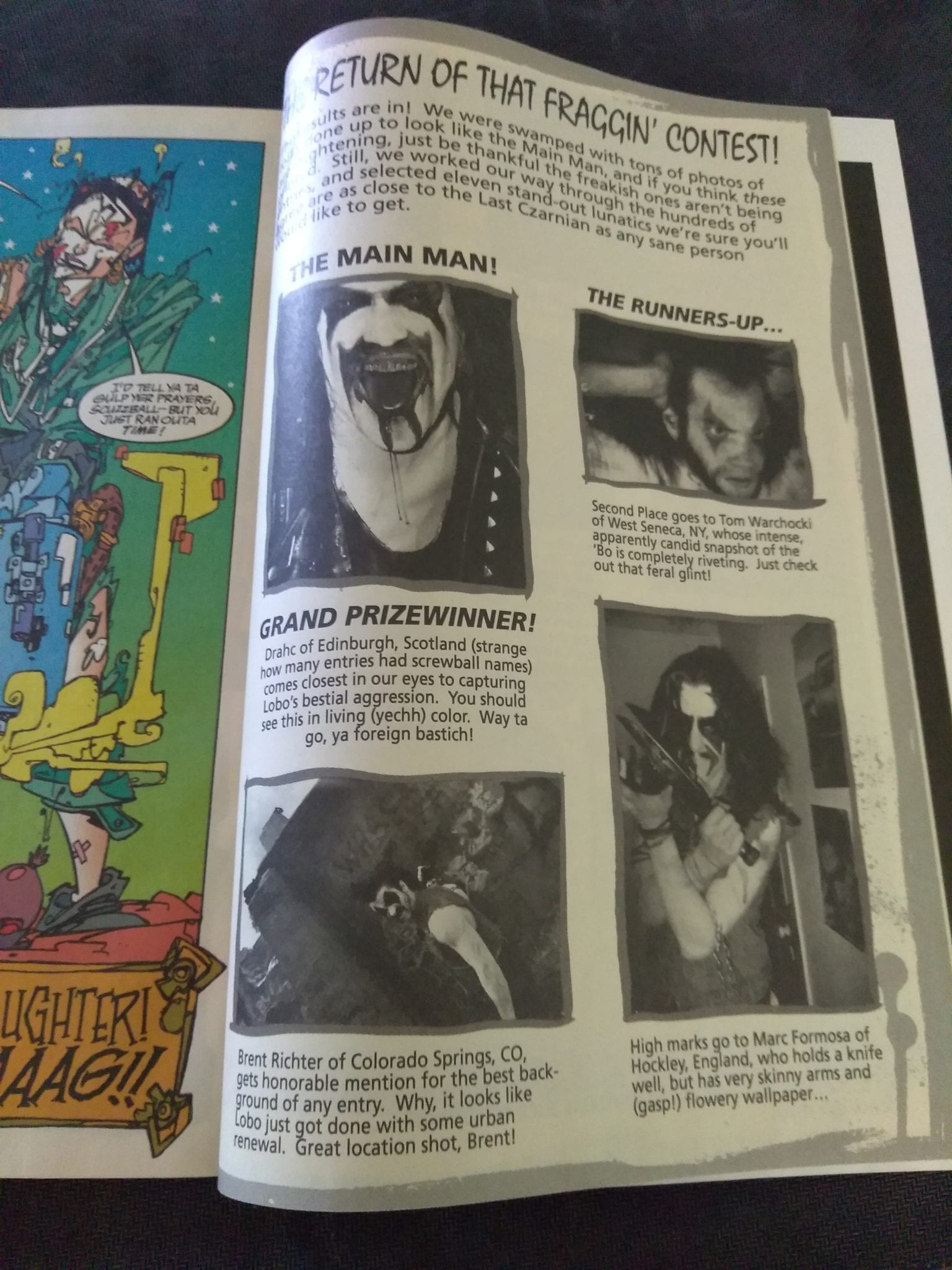
And finally here’s something you still see today in comics; fans sending in cosplay! This being Lobo, the fans and submissions are very interesting, to say the least. Lobo

Lobo


You can find great dollar bins at almost every local comic shop. So find a shop, ask a comic clerk and start bin diving!

Got your own awesome dollar bin finds? Toss them at me! 
Send emails to manny@monkeysfightingrobots.com
Follow me on Instagram: _idbuythatforadollar_
Tweet at me: @MannyG1138

Monkeys Fighting Robots Youtube

Review: MACHINE GUN WIZARDS #4 Fighting To The End

Machine Gun Wizards #4
Machine Gun Wizards #4 Credit: Dark Horse Comics

Heading to the shelves with a new title, Dark Horse ComicsMachine Gun Wizards #4 contains all of the exciting story elements from previous months. It also brings the larger than life historical adventure to a climactic finale, at least for now.

With a pot overflowing with idea’s and a creative team who know no bounds, what can Christian Ward possibly have planned for the fourth issue of his creator owned masterpiece? 

Machine Gun Wizards #4
Machine Gun Wizards #4 Credit: Dark Horse Comics

Writing On The Cards

Seemingly defeated, Eliot Ness and his Untouchables still have a few hands to play. With their enemies turning on each other and an unexpected ally on their side, there is still hope for Chicago, and the rest of the world.

In this final issue of  the first arc of Machine Gun Wizards, Christian Ward is tying up all of his loose ends. While maintaining an exciting struggle in the present, he allows time for some characters to boast about their past, affording the writer the chance explain the history that shaped this world. The back-up strips from the previous three issues link perfectly into the main story and form the foundation of the magical elements of the story.

To make the narrative work there are a number of surprises in this issue. In fact, more than you would imagine. Ward seems to have a bottomless top hat of tricks from which he pulls his narrative punches. As a reader you barely have time to digest one twist before another is thrown at you. The relentless story pounds throughout the pages to a climactic roof-top ending that would make Robert Rankin proud. The term ‘page turner’ doesn’t do it justice.

Machine Gun Wizards #4
Machine Gun Wizards #4 Credit: Dark Horse Comics

Artistic Exploration

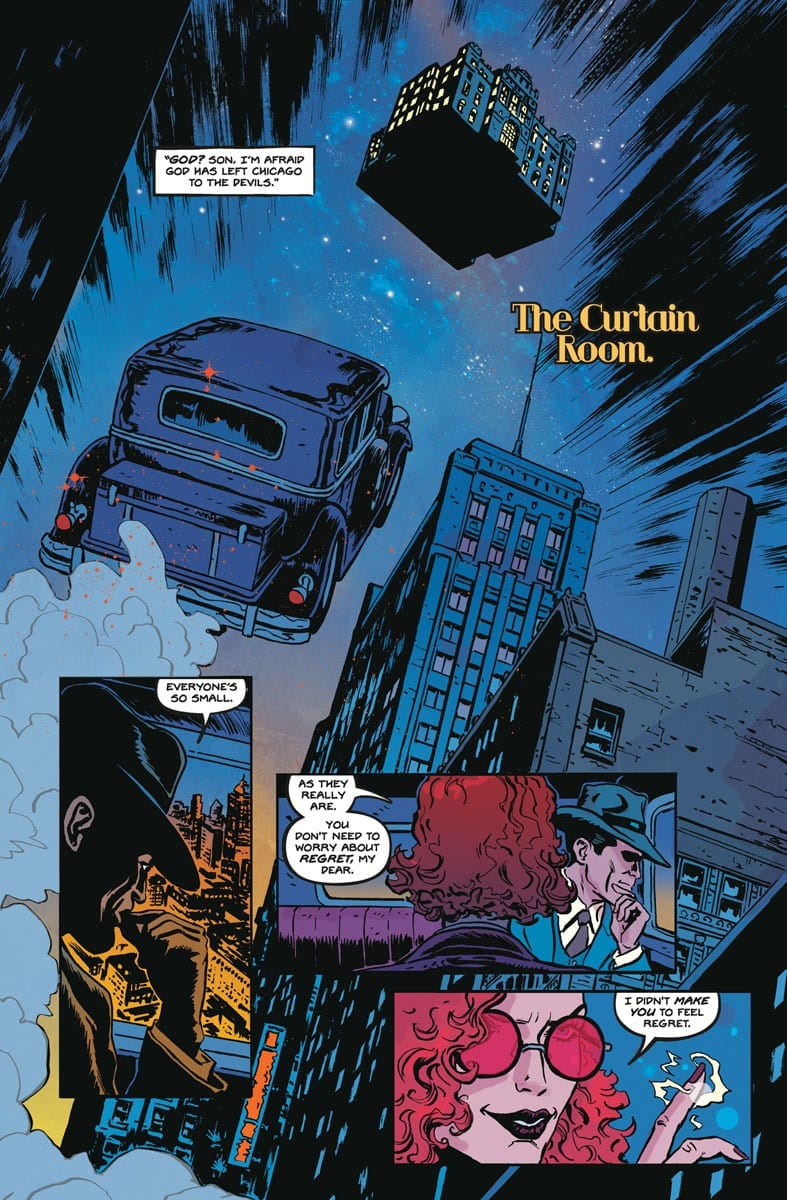
Leading the reader through the organised chaos is Sami Kivela’s wonderful artwork. Each panel captures the emotion of the character featured or the magic of the scene. Kivela’s art is as impressive up close and personal as it is is taking in the wide vista’s of 1930’s America. 

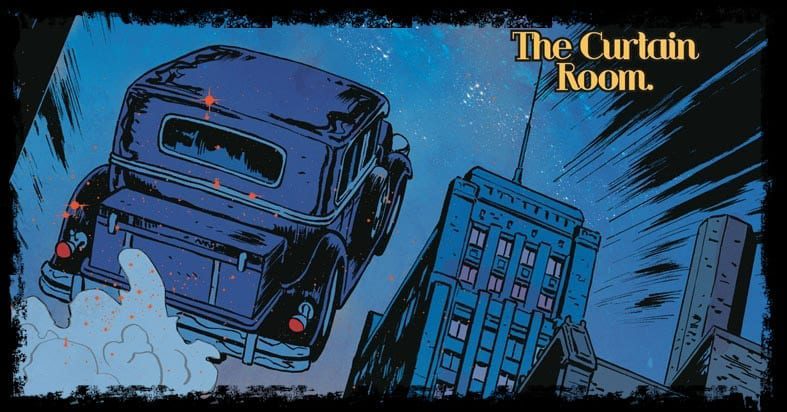
For a comic steeped so deeply in fantasy and science fiction it is surprising how realistic everything looks. The design and figure work is detailed and precise making it easier to accept the more outlandish elements of the narrative. For example, a flying car, although dramatic, seems natural within the framework of the narrative. Kivela also uses an array of striking viewpoints to heighten the tension within each scene. 

As in previous issues, the emotional theme of the scenes is reflected through the color work. The city nights are captured beautifully by an array of cool blues with hints of purple creeping in to represent the in-story magic at work. A number of different colors used by Christian Ward and Dee Cunniffe are either character specific or narrative related. The purple of the Toads blood is a prime example: As the source of the Magic in the world, the Toad touches many lives within the city and this is represented by the slow bleed of purple into the panels. 

With an increase in action comes a deluge of sound effects and fast paced text. Hassan Otsmane-Elhaou always excels at letter placement drawing attention to important speech while never overshadowing the images. 

Machine Gun Wizards is able to pull off the outlandish because the characterisation of its main cast is so captivating and believable. A large part of this is down to the interaction between the characters and Otsmane-Elhaou’s lettering brings out the best in the verbal back and forth. You get a real sense of who each character is from the lettering and placements of the speech balloons. Al Capone’s self assured arrogance is visualised by his speech overlapping borders and gutters, imposing itself across the panels and pages.  

Machine Gun Wizards #4
Machine Gun Wizards #4 Credit: Dark Horse Comics

Conclusion

Over the last few months Ward has pulled together a collection of narrative cliches and turned them into a compelling story. Machine Gun Wizards has the wonder of Harry Potter with the drama of The Untouchables and the outlandishness of Saga. All of these elements have been fused together to create the ultimate escapist adventure. 

Add into the mix the amazing artistic talent and you are on for a sure fire hit. Each issue has visually pushed the boat that little bit further. The concept never gets tired because Ward keeps twisting the story while Kivela and Co. bombard you with knock out images. The storytelling is engaging, easy to follow, and enthralling to the end. 

Machine Gun Wizards will appeal to anyone wanting a fun, exciting read but it will also appeal to genre fans and comic books enthusiasts as it combines a host of different elements all brought together in a single, beautiful package.  


Monkeys Fighting Robots Youtube

How Is Superman Loved By Everyone?

Superman ready to Smash the Klan

Superman is the quintessential superhero character, serving as one of comics’ highest thresholds. With over 80 years of history, the Man of Steel inspires people by the thousands. He is so influential that even the comic industry’s biggest superhero haters (e.g., Garth Ennis) and cynics (e.g., Mark Millar) are fans. But how is such a character loved by so many people in such a divisive world?

The Idea of Superman

The Man of Steel is the result of much trial and error. The Great Depression was the first obstacle for “Jerry Siegel” and Joe “Shuster” to get their idea published. With comic strips demanding for extravagance, Superman was created as a melting pot of the best character traits. Superman’s powers upon coming to Earth derive from John Carter on Mars. Other influences include “Douglas Fairbanks'” roles like Zorro. His civilian identity Clark Kent meanwhile comes from “Harold Lloyd,” a mild-mannered man who did not take kindly to bullies.

All of these seem arbitrary until the reader looks at how this fleshes out Kal-El into the inspiring Man of Tomorrow. Each story shows an extraordinary man who is just as human as everyone else. In the early stories, he could get angry and help anyone live the fantasy of beating back crooks. The stories that come afterward reflect the world around the Man of Steel and the changes he makes in reaction. Because with every day must come with a new tomorrow.

Superheroes have always been products of his or her home, often combining genres like science fiction with social commentary. This, in turn, helps the audience relate to the character while acknowledging they are still fictional.

How Is Superman So Popular?

Superman, on the surface, seems to be anything but popular. Fans of Superman, however, know that he is very human in spite of being from a more advanced world. A man with so many powers and skills is a simple yet surprisingly complex premise. If Krypton blew up because of factors like its denizens ignoring red flags, how can Earth be the place Kal-El thrives? For the Man of Tomorrow, it’s no longer just about power fantasies but trying to be a better man.

This is also what separates other superheroes from Superman. A significant number of them, such as Batman and Spider-Man, are propelled into crime-fighting by tragedy, including the death of loved ones. Such pessimistic beginnings, however, displays that their actions lean more towards guilt or trauma. At the same time, characters like Batman see Superman as something to strive towards, to the point of even sharing a couple of their influences like Zorro and Robin Hood. The Man of Steel’s kind nature, in turn, helps inspire other characters like Wonder Woman. She, much like Superman, is mighty, but the themes of truth and love in trying to create a better world is where they really compare.

Superman Is The American Way

Part of Clark Kent’s altruism comes from how his foster parents raised him on American values. But America has become more divisive and toxic in recent times, especially with the actions of neoliberals and neoconservatives. Some modern comics have even called this into question with Superman giving up his American citizenship. This, however, seems to have been swept under the rug in some media.

The American Way of Superman“Truth, Justice, and the American Way” remains an essential piece of the Superman mythos. Despite how America has its flaws, the Man of Steel is a patriot who embodies its values. Unlike ultra-nationalists like his father-in-law General Sam Lane, Kal-El never forces the US’ values on others or make sure it’s always on top. Superman respects the world around him and ideally serves as an example to follow, for both the world and the US.
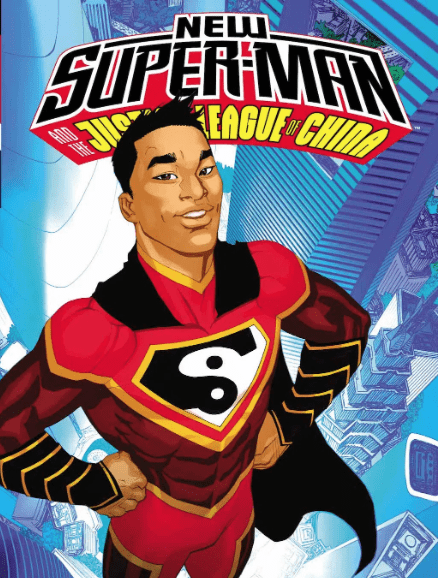
New Super-Man for your viewing pleasure.
Truth, Justice, and Democracy

This comes to a head in New Super-Man with the phrase “Truth, Justice, and Democracy” as an ideal for some characters. This is very relevant in the series setting, Shanghai. In the real world, China’s communist rule is becoming more imperialistic with its attempts to force its offshoots, such as Hong Kong, under its banner. As such, the people wish for a more democratic system to have a voice. Having their own Superman is a reaction to those ideals. While it’s not entirely the American Way, they are using an American icon as inspiration.

Superman is Relevant For All People

Even though he’s an inspiration, Kal-El still resembles a cis-gendered, heterosexual, white human. How can someone who resembles the ideal of Third Reich be so loved? It’s because Superman is an ideal to strive towards. It’s why he is called the “Man of Tomorrow” because Clark seeks to be better for himself and the people around him. This, however, is an idea, not a belief that can be tainted.SmashesKlan Superman Kryptonite Encounter

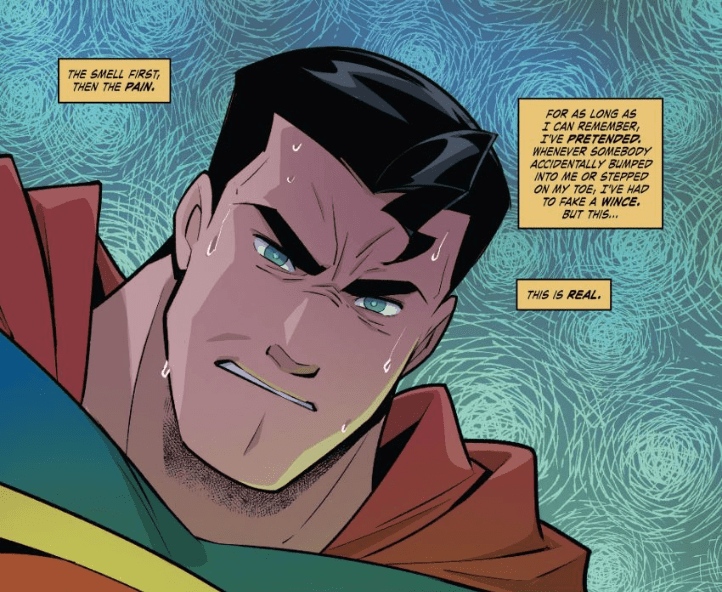
That is demonstrated in Superman Smashes the Klan. The Man of Steel struggles every day to fit in but knows that he’s different. Despite his job and friends, Clark still feels lonely at times. In Clark Kent’s own way, it’s like having a closeted identity or reaffirming his true self. Imagine how a transgender person goes through life but never understanding what brought them there in the first place. It’s one of the many reasons superheroes are so empowering.

Superman Makes Superheroes Look Good

Superman’s very presence is what kickstarts the appearance of superheroes. At the same time, it’s his very humanity that separates him from other superheroes. While the Man of Steel represents humanity at its very best, the superhuman community is another issue. Many superheroes are inherently flawed people with some questionable morals.

For example, Spider-Man is an altruistic character known for his slip-ups. While even the very best of people fail at important tasks like money problems, there are very toxic sides to the Wall-Crawler. Marvel preferring to keep his civilian identity Peter Parker close to his teenage roots, actually makes him look like a man-child. For all that talk of great power and responsibility, Peter never really lives up to those responsibilities. Many times, Peter puts his loved ones in danger because he never shared his secret identity. You’d think that after Gwen Stacy, he’d have learned better.

In comparison, even the worst stories never feature Superman as being toxic. Betray expectations like in Superman: Grounded maybe, but not toxic. Garth Ennis is a fan of Superman because he was allowed to mature. While the Man of Tomorrow gets stuck in the same traps as other A-list superheroes, his simple life gives meaning to them. It’s also why the usually cynical Mark Millar was devastated by the film Man of Steel, and this is the same guy who made Superman a communist. Making Superman more complicated than he needs to betrays the character’s point.

Don’t Other People Mess Him Up?

Because Superman is more like a symbol in practice, it becomes increasingly harder to write stories about him. Both Frank Miller and Brian Michael Bendis are Superman fanboys who portray the Man of Steel with varying success. What they all have in common, however, is trying to balance the “Super” with the “Man.” Clark Kent steals most of the spotlight for some of Superman’s most notable series; it’s what helps keeps the Man of Steel moments so special. Unfortunately, only a few people, including Grant Morrison, manage to make the sensations meaningful.

Some of those meaningful moments meanwhile are shared with Superman’s supporting cast. Lois Lane and Jimmy Olsen are two crucial people in Clark Kent’s life he can’t live without. Lois represented the complicated feeling boys have when trying to talk to girls until she and Clark get together. Jimmy meanwhile represents that younger friend that goes to you for advice and grows from your example — seeing the Man of Tomorrow from their perspective instead of the other way around creating this empathetic sense of awe. Unfortunately, since so many stories focus on Superman and not these outside forces, the Man of Steel feels bland in comparison.

Conclusion

People only think Superman is uninteresting because he is just as human as his audience. The general populace believes this Man of Steel is the greatest thing to see with his numerous adventures. But this isn’t even a quarter of what makes Superman so inspiring. It’s living life the only way he can and how such a simple idea can give rise to a better tomorrow.

What do you all think? Is Superman as great as people think, or is he just another Marty Sue? Leave your thoughts in the comments?

Monkeys Fighting Robots Youtube

Review: Old Death Comes at Night in KILLADELPHIA #1

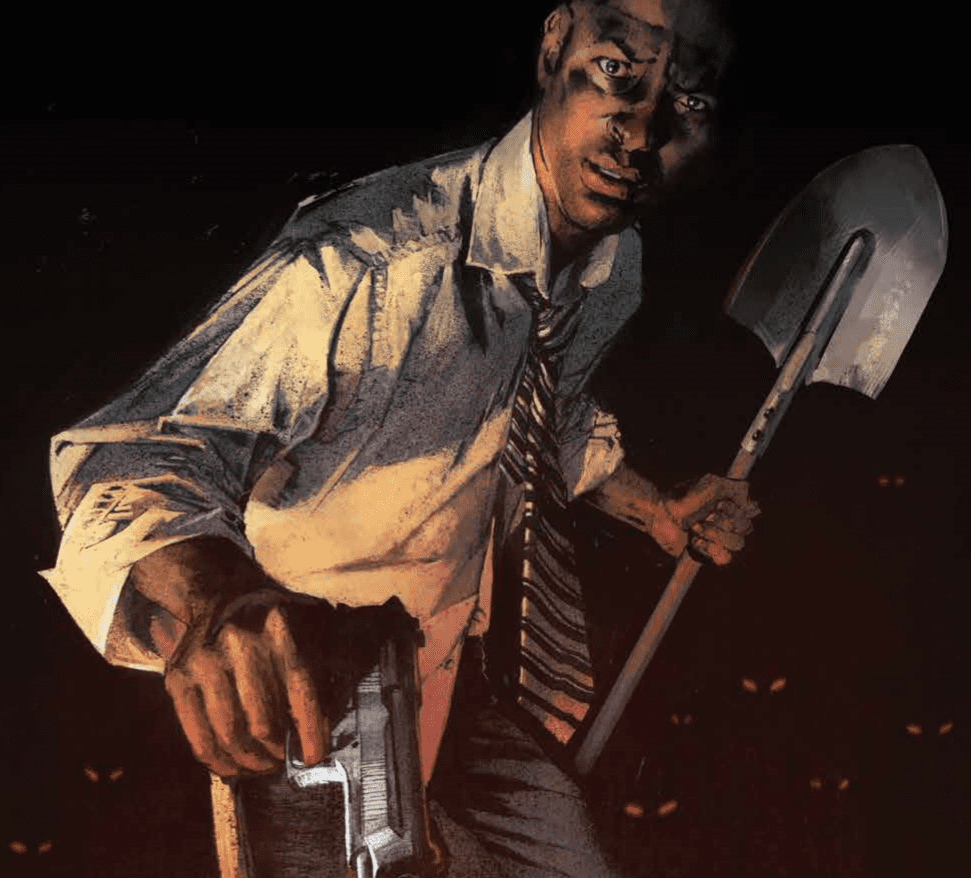
Acclaimed television writer Rodney Barnes and Spawn artist Jason Shawn Alexander create a bold hybrid of crime thriller and supernatural horror in “Killadelphia #1.” Barnes’ deft and original plotting blends superbly with the darkened realism of the art style to make for one of the most promising first issues of the year.

In “Sins of the Father Part One,” the death of revered detective James Sangster Sr. brings his estranged son, a small town cop, back home to bury him. When this son discovers his father’s latest case on a series of mysterious murders and some rather insane claims, he decides to investigate. Little does he know that he’s about to dive into the maw of long-hungry terror in a story that’s a brilliant supernatural-crime-thriller as well as a searing indictment of those responsible for urban poverty.


The most impressive part of Rodney Barnes‘ writing in this debut issue is the originality of the plot itself. The familiar elements of crime-torn urban projects and vampire horror come together with hints of historical fiction and modern political commentary. Every piece of this genre menagerie fits together like a puzzle and it never comes across as overly audacious or overstuffed. The dialogue adds in great part to both the plot and character development. The frame narrative with Sangster’s investigation is colored with varied character interactions that all have their own distinct tone. Even the protagonist Sangster Jr.’s more quiet and observing personality shines through in his specific moments. Jr.’s characterization is another stroke of genius on Barnes’ part, as it’s made clear that he is this way because of his upbringing. Without getting into spoiler territory, Barnes’ use of early life trauma as a sort of subplot device is key to the entire emotional core of the story, and it stays on the reader’s mind without ever overtaking the external events of the main horror story.

A large chunk of the story is given in emails and journal entries, and this works exceptionally well. Investigative crime stories need these sort of anecdotal devices as part of their nature, but it can be difficult to do without losing the audience in bulky exposition. Fortunately, Barnes is more than capable of delivering here. The notes all feel heartfelt and natural in the same way good dialogue does. There are revelations found in these bits of writing that also cleverly keep the audience in the dark in the best way. There’s a smorgasbord of exceptional writing delivered by Barnes here.

“Killadelphia #1” reaches a state of tonal and atmospheric perfection due in large part to Jason Shawn Alexander‘s immersive artwork. The tortured and tense mood throughout the issue is reflected in the semi-photo-realistic details that Alexander puts into his characters and the settings they inhabit. Sangster Sr.’s experience and determination is contrasted with his son’s quiet reservation. Small tonal touches like this are what stand out most in this comic as far as true talent is concerned, bringing forth Alexander’s skill in a more reserved way than his other well-known works. The grainy and shadow-intensive inks remind the audience that this is still a horror comic, and every monstrous detail (much of which is withheld for suspense) comes across with the perfect amounts of shock. Alexander’s work is filled by Luis Nct’s hazy coloring. Philadelphia is given the look of a proper overcast urban crime environment, with sudden explosions of reds or yellows that work almost as signal flares for the coming horror show. The art in the book is spectacularly good and is perfect for what kind of story is being told.

Marshall Dillon’s lettering is mostly par for the course during the normal dialogue and narrative texts, but he gets more to play with in the form of Sangster Sr.’s journal entries. The handwritten cursive styling of these passages work not only in the sense that they reinforce the immersion, but they also coincide with Sangster Sr.’s personality. The fact that this character wrote his entire journal in cursive fits with Sangster’s traditional and stoic personifications the audience has come to see from him. It can be a little hard to read at points, but being honest, that’s rather the point.“Killadelphia #1” is a gripping and engrossing cross of crime procedural, familial drama, urban political commentary and vampire horror. Barnes somehow manages to blend these genres together seamlessly to make a first chapter that succeeds in spades. It’s emotionally riveting and outright suspenseful. Alexander’s art here brings the world and characters to perfect artistic vision while collaborating with the script to maintain tension and leave the most horrific moments to the imagination of the reader. This is without a doubt one of the most promising debut issues of 2019, and make sure to have in your folder at your local comic shop on 11/27.
Monkeys Fighting Robots Youtube

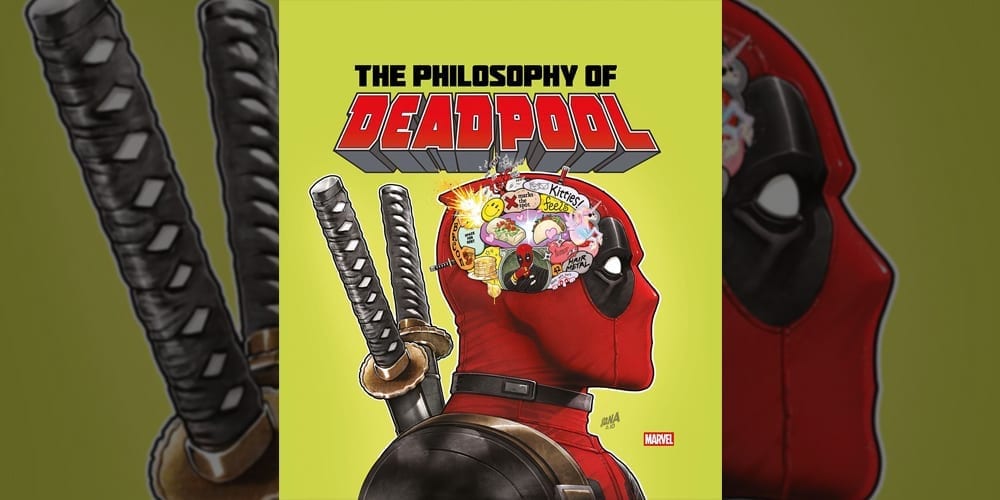
Win A Copy of THE PHILOSOPHY OF DEADPOOL From Titan Comics

philosophy of deadpool contest

Monkeys Fighting Robots and Titan Comics have teamed up to give away a free copy of the upcoming PHILOSOPHY OF DEADPOOL!

About the book:
A unique take on Marvel’s katana-wielding, gun-toting, insult-firing anti-hero. This book presents the most outrageous moments from Deadpool’s comic book history in a definitive guide to his wisdom, insights and guiding moral principles. Have you ever been in a tricky situation and asked yourself “what would Deadpool do?” This book provides the answer. And unicorns. Lots of unicorns.

The 144-page book is full of Wade Wilson’s signature quotes and nuggets of wisdom. Take a look at some of the good stuff you have to look forward to:

philosophy of deadpool
Courtesy of Titan Comics.
philosophy of deadpool
Courtesy of Titan Comics.

So how can you win your copy?

The contest is straightforward to enter:

Step 1 – Join our newsletter


Step 2 – Comment on this contest below.

***Bonus entry, share on social media***

The winner will be chosen at random on Friday, November 29, at 3 p.m. EST.

Good luck!

Monkeys Fighting Robots Youtube

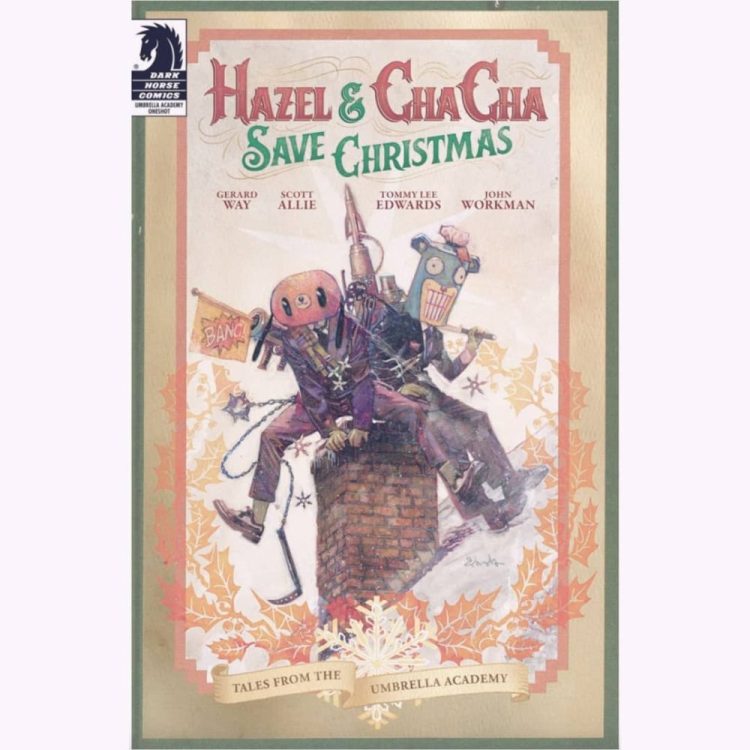
HAZEL & CHACHA SAVE CHRISTMAS is a Trip, You Might Not Get It, Then Again, You Might Not Care

I’ve never done LSD, but thanks to Hazel & ChaCha Save Christmas, written by Scott Allie and Gerard Way, with art by Tommy Lee Edwards and letters by John Workman, I think I get the gist. This Christmas story is the kind of story you may only half understand, but in the end, it’s such a fun ride you’ll enjoy the confusion just as much as the revelations. It’s a great addition to the Umbrella Academy universe as it follows stylistically in its steps.

While the events of the story aren’t always particularly clear, writers Allie and Way do make it clear early on that the point of their story is the ride, not the destination. In many ways, this story seems reminiscent of Pulp Fiction. Hazel and ChaCha have plenty of unrelated conversations about ghosts and soup while their jobs and the events of the comic effectively “go on in the background.” The result is not only hilarious, but it connects readers to these characters beyond just their function within the story. We shouldn’t connect with time-traveling hitmen. Somehow, with Allie and Way’s writing, we really do.

Edwards’ art allows us to enter further into the minds of our “protagonists.” We see the world through Hazel and ChaCha, and the results are simultaneously beautiful and terrifying. On one page, Hazel and ChaCha discuss Hazel’s belief in ghosts while they interrogate a man. Hazel says he believes ChaCha’s phone is haunted. ChaCha says, “My phone isn’t haunted.” As we see ChaCha’s response, we clearly see through Hazel’s untrusting eyes as we see ChaCha’s face covered in shadow with his eyes glowing in the dark. Similarly, a character seems to make Hazel and ChaCha made, and we know the character’s outline shift from black to red. Seeing through these characters is both psychedelic and gorgeous.

The coloring by Edwards’ creates a great sense of mood throughout the story. At first, it seems as though Edwards simply uses darkness to convey danger or evil, yet it’s actually his use of extremely bright colors in climactic moments that create a kind of ghostly effect. When Hazel says he believes ChaCha’s phone is haunted, the next panel shows us the phone cast in a ghostly bright red. By keeping the rest of the comic relatively dark, Edwards makes it so that these moments jump out at us. He even manages to make Christmas lights seem like a spooky sight.

Finally, Workman establishes the preoccupations of these characters perfectly with his lettering and placement. In many of Hazel and ChaCha’s scenes, we see their speech bubbles take up large amounts of space in the panel. At times their speech bubbles overlap those of other characters, events in the panel, or other characters altogether. These characters are frankly just more interested in talking amongst themselves than they are in whatever the hell else is going on. Workman’s use of font size also conveys the tone and rhythm of their conversations. When ChaCha casts doubts on something Hazel says, we see Hazel respond in a font that has doubled in size. This helps us see how quickly these characters get a rise out of one another and gives us a feeling of what the rhythm of their friendship is like.

Hazel & ChaCha Save Christmas is odd, it’s beautiful and it’s a riot. If you’ve liked The Umbrella Academy, this comic fits perfectly into the series in style and tone. Sitting down and giving this strange little comic a read is a great way to get into the Christmas spirit. Just please do us all a favor, and don’t forget to read it with soup!

Monkeys Fighting Robots Youtube

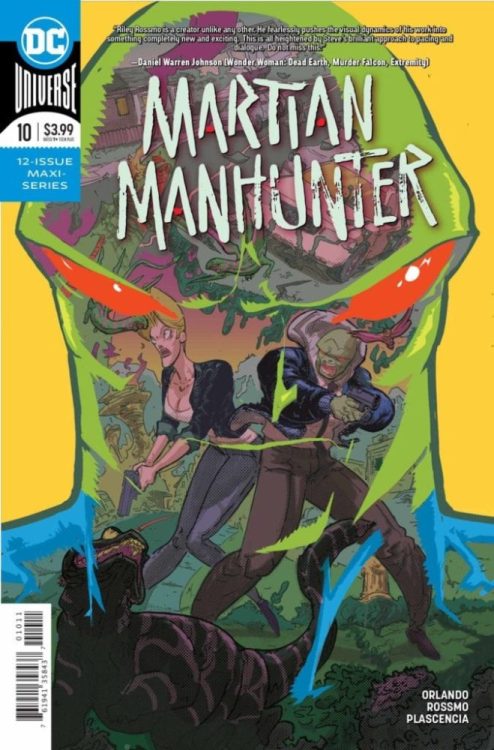
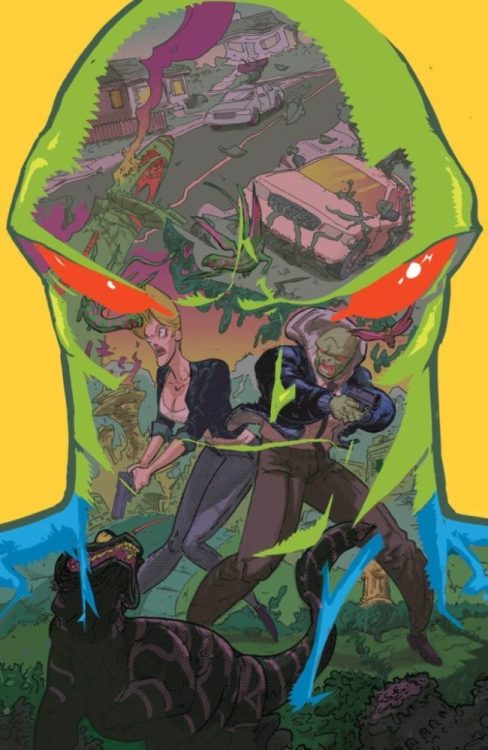
Exclusive DC Comics Preview: MARTIAN MANHUNTER #10

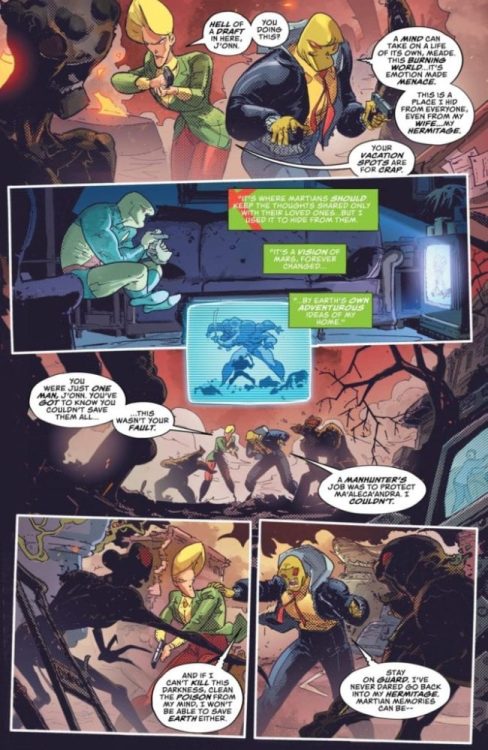
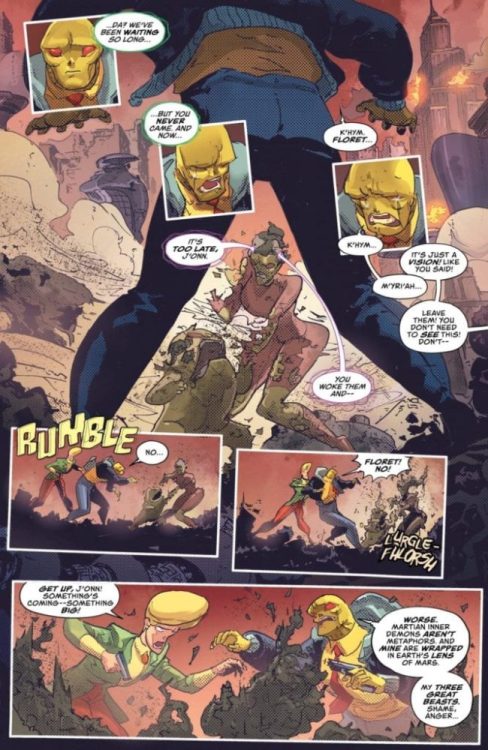
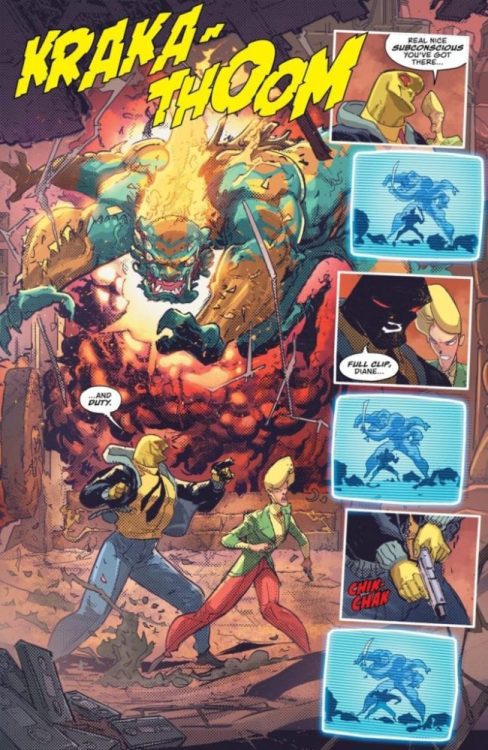
Exclusive DC Comics Preview: MARTIAN MANHUNTER #10

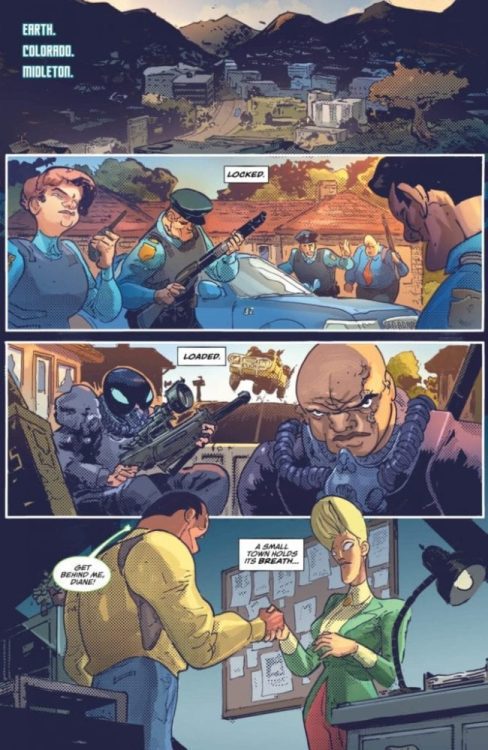
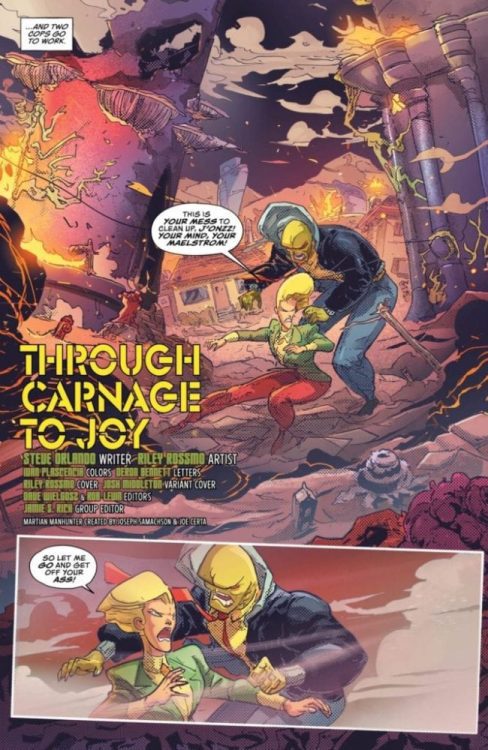
Martian Manhunter #10 hits your local comic book store on November 27, but thanks to DC Comics, Monkeys Fighting Robots has an exclusive five-page preview.

About the issue:
Diane Meade enters the mindscape of J’onn J’onnz and is attacked by the psychic forms of his tragedies, regrets, and even his aspirations. Will J’onn be able to save her and find the secrets in his mindscape that will lead him to save Ashley Addams and defeating Charnn once and for all?

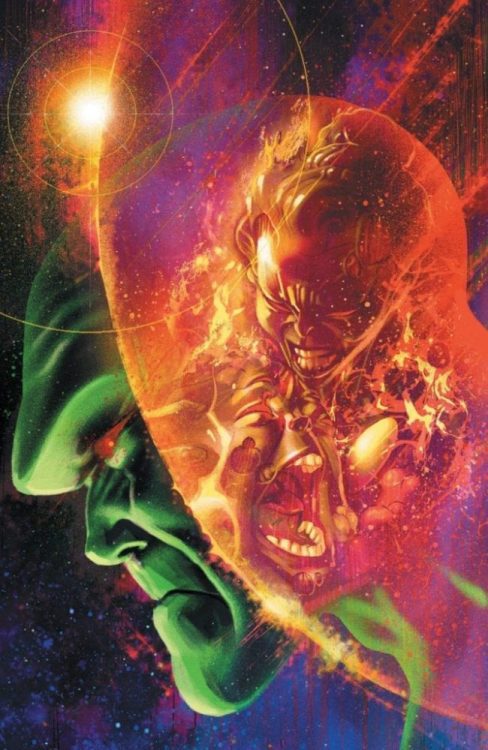
Martian Manhunter #10 is written by Steve Orlando, with art by Riley Rossmo, Ivan Plascencia worked on colors, letters are by Deron Bennett, and Josh Middleton created the variant cover.

What do you think of Orlando’s run so far? Comment below with your thoughts.

Check Out The Preview Below:

Joseph Samachson and Joe Certa created Martian Manhunter.

Monkeys Fighting Robots Youtube

INTERVIEW: Bryce Jacobs Talks Making Music For DAYBREAK On Netflix

Daybreak is a series from Netflix based on the comic book of the same name and starring Colin Ford from Under the Dome that’s about the end of the world and the teenagers and cliques that survived to form new geopolitical dynamics in what’s left of Glendale, California. Making Daybreak sound awesome in a post-apocalyptic way is song producer Bryce Jacobs.

Colin Ford is Josh Wheeler, an outcast and unremarkable student who survives the initial chaos to make a new life in the apocalypse. Josh has a crush on Samaira “Sam” Dean, played by Sophie Simnett (Disney’s The Lodge), and navigates the treacherous new landscape to find her. One of the biggest obstacles is the adults who survived the blast as zombie-like “Ghoulies.” No doubt a nod to the orginal “ghouls” as they were called in Romero’s Night of the Living Dead.  To make the world an extra bit dangerous, Daybreak’s post-apocalypse landscape features giant-sized, mutated pugs and a bizarre mix of new gangs that’s like a cross between Mad Max and The Warriors.

PopAxiom spoke with Bryce about his influences, the effect of “Stairway to Heaven,” and making music for the end of the world.

NeverEnding Thriller

Bryce is an Australian native but has called the US home for eleven years now. From an early age, Bryce recalls, “Music’s always been part of my DNA. The first album I remember was Thriller by Michael Jackson. I also remember the NeverEnding Story soundtrack.”

For Bryce, there was always a variety of music from pop to classical. “I thought everyone listened to pop music and soundtrack music. I loved both … so somewhere in the middle of that is my happiest of places.”

Bryce turned 11 when his mom “… got me my first guitar, and then the following year, my dad got me my first electric guitar.”

Listen To This

A few months later, Bryce heard a song for the first time, that would change everything. “… I heard “Stairway to Heaven” … and I was absolutely all in.”

Led Zeppelin’s dynamic, multi-layered, the eight-minute epic was the catalyst for Bryce to deep-dive into music for the rest of his life. “From that one song, I became obsessed with so many different styles of music. There was this classical technique in there, these folky jazz harmonies … arpeggios as well … it got me studying music theory and musicianship”

Another vital layer to the song: “The way that the song is constructed is extremely cinematic as well.”

My love affair was underway. I went on to listen to Pink Floyd, Deep Purple, then it was around the time of the grunge era for me so a lot of Soundgarden, Pearl Jam, Nirvana.” Bryce continues, “The grunge era in Australia ran right into the electronic dance music of like Chemical Brothers and Prodigy. My guitar playing was very influenced by that as well.”

“All these things cross-pollinate to form your musical identity.”

Let’s Go Crazy

Bryce’s musical influences come from roots dug deep into the landscape but also spread wide through the rich soil. The 70s introduced synthesizers to mainstream music, the 80s ushered in the use of computers, and the 90s introduced some powerful, music-making software. Add in the rapidly rising influence of hip-hop, and you get a lot of musical experimentation and great variety. “You look at a song like Batdance by Prince, which I love. That was a huge hit. But it’s pretty abstract. It goes in and out of sampling. There’s this massive guitar solo in the middle.”

Bryce expands on music’s evolution. “The 20th century was a massive renaissance in music. From the 50s on to the late 90s, it was this incredible cross-pollination.”

The bottom line: “Pop music then was a free-for-all.”

daybreak-comic book-series

Just Before Dawn

Daybreak’s Music Supervisor Andrea von Foerster (Happy Death Day, Modern Family) kicks off the show with “California Love” by Tupac with Dr. Dre. To create some original songs and covers for the series, Andrea “… called me up, and the concept sounded outstanding.”

On using “California Love” to get the show going, “That’s a big song and quite a brilliant choice.”

Daybreak feels familiar, with a global disaster that kills billions that lays ruin to the world, and leaves millions as shambling, thoughtless husks of humans. Yes, I’m describing zombies, but Daybreak takes its lore in a unique direction. Their zombies talk, repeating the last thought they had before the bomb. Bryce’s favorite line, “There’s a sale, 10% off group pants at Lulu Lemon.”

https://www.youtube.com/watch?v=2P9U41e75tE

About Daybreak

Daybreak is quick-witted and briskly paced while playfully bouncing around to the time just before the bomb. As a world of teenagers would do, new bands form, including a recurring one on the show. “The most important thing was to set up the sound for the band that was reflective of this world they’re living in.”

Bryce had to wonder what would be left to make music. “If there were a nuclear blast, they’d be grabbing these instruments that are very rough around the edges. Maybe missing a few strings. Without going too abstract, I wanted to give it this raw, trashy element, but, you know, cool trashy.”

The first song you hear from Daybreak’s fictional band is “Today” from Smashing Pumpkins. “I wanted to get the same kind of intensity, but do it in a raw context. Doing that with Today and then “Safety Dance” by Men Without Hats and the same band playing that, by that point, the band has personality. The last band on Earth …”

Bryce explains an exchange about another cover song that appears on the show. “Same with ‘Making Love Out Of Nothing At All.’” Showrunner Aron Eli Coleite suggested to Bryce, “Imagine you went into the store and bought a sh*t keyboard.”

For Bryce, the band within Daybreak and many musical elements take on a deeper layer in Daybreak. “What I was doing was tied to the narrative. The band had a personality, and then there’s this American Ninja and American Idol mashup going on too.”

daybreak-netflix-comic book

Wrapping Up

Who is part of Bryce’s creative DNA? “Thomas Newman has always had a beautiful aesthetic about him, and the way he approaches his music has so much personality to it. Danny Elfman is another big one. I’m a huge Nine Inch Nails fan and love what Trent Reznor does. Peter Gabriel, what he’s done with soundtracks is phenomenal.”

Having spent time at Remote Control, Bryce adds one more to the list, “Hans Zimmer, who has been such an inspiration to listen to and work with.”

Daybreak is available for streaming on Netflix. Bryce does work for the likes of DefJam and Universal records. So, what’s next? “Gutterpunks is a really cool short film that I did a few months ago. It’s in the festival circuit. It’s directed by Luke Arnold. It’s challenging to capture a world, especially drama, in 5, 10, 20 minutes, but it’s amazing.”

Thanks to Bryce Jacobs and Impact24 PR for making this interview possible.

Want to read more interviews like this? CLICK HERE.

Will you be watching Daybreak? Leave your comments below!

Monkeys Fighting Robots Youtube

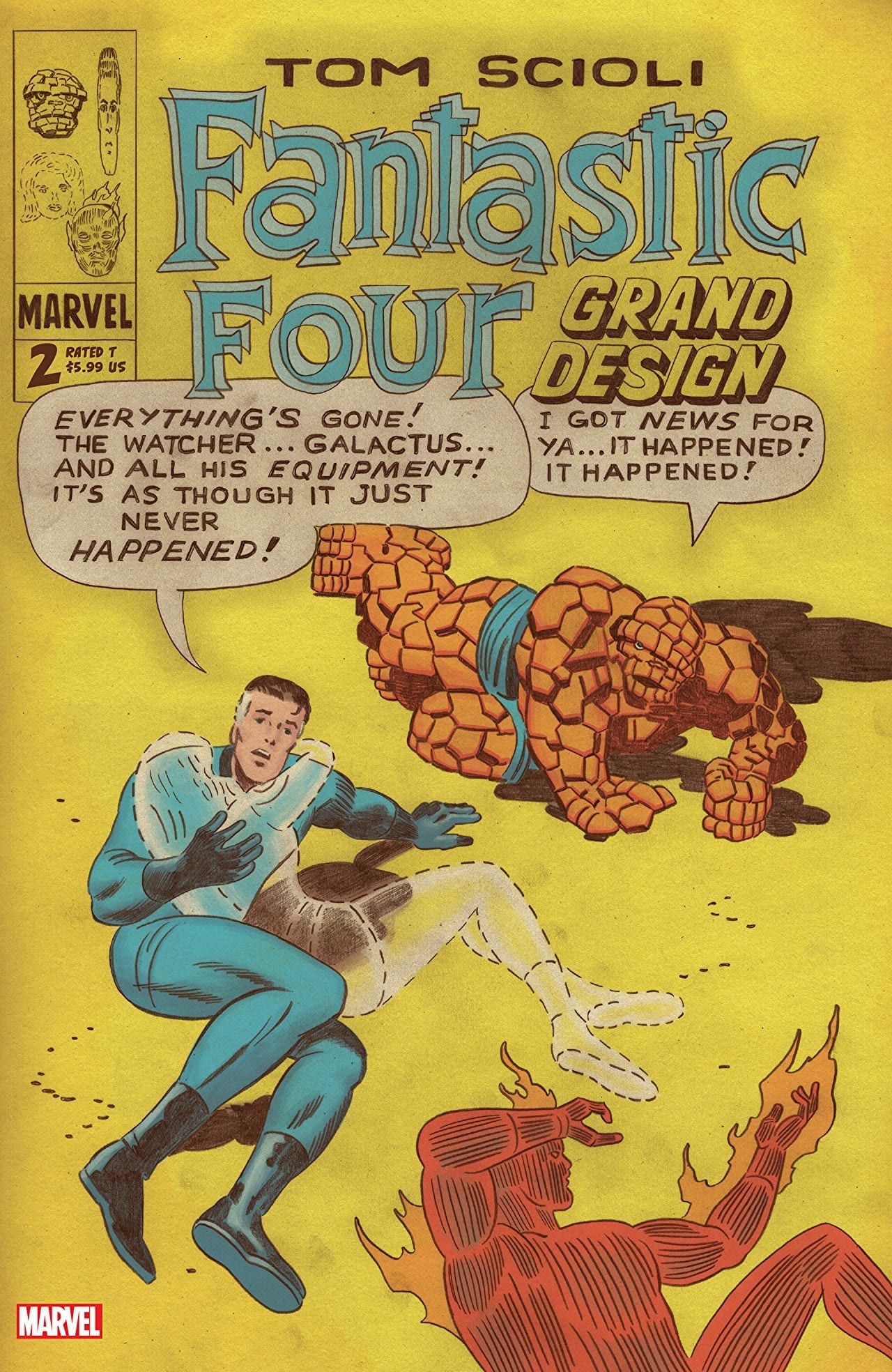
Interview: Tom Scioli on Marvel Comics’ FANTASTIC FOUR: GRAND DESIGN

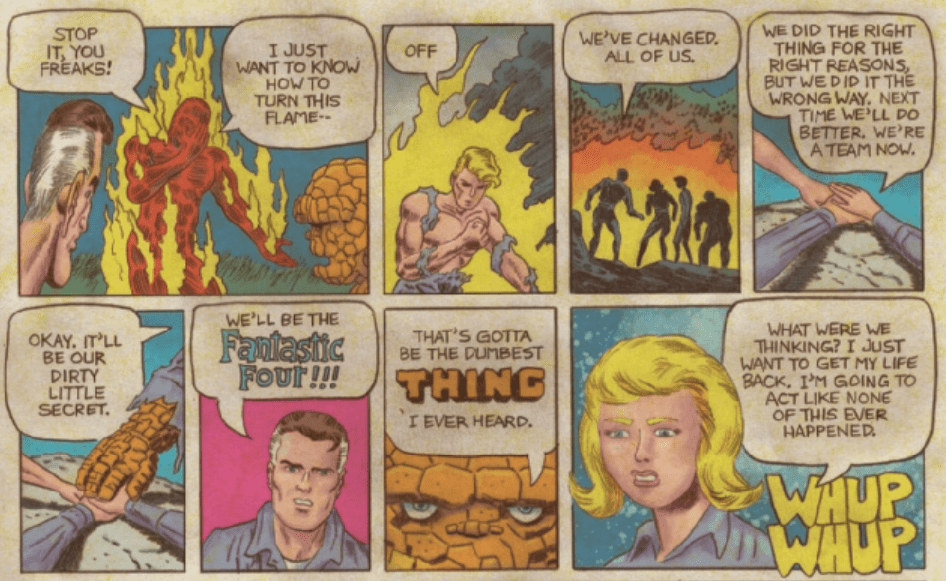
Tom Scioli’s Fantastic Four: Grand Design is one of Marvel Comics’ most exciting projects of 2019 (check out our review of issue one). In it, Scioli writes, pencils, inks, colors and letters an adaptation of the entire Lee/Kirby Fantastic Four run. Next Wednesday sees the release of Fantastic Four: Grand Design #2, the second and final issue. With that in mind, we at Monkeys Fighting Robots reached out to Tom and asked him a few questions about the book, his approach and the possibility of more Godland comics.

Monkeys Fighting Robots: Tom, Fantastic Four: Grand Design, is finally out. Can you tell us how this project came into fruition?
Tom Scioli: Ed Piskor created the whole Grand Design concept with his X-Men. They were looking to follow it up with other creators of a similar stripe. Chris Robinson the editor contacted me about potentially doing a Fantastic Four one and what that would look like. What issues would I want to cover. 

MFR: As a Jack Kirby fanatic, what was your emotional spectrum while working on this book?
Tom Scioli: First I had to get over the initial jitters of interpreting one of the great works of my favorite cartoonist. It was like staring into the heart of the sun. Once I got comfortable with the task, it was so much fun. When I’d get to some of my favorite parts, it was pure bliss. The first time I got to draw Black Bolt, I was having the time of my life and it only got better as Silver Surfer and Galactus showed up.

MFR: What’s your process like? Like what’s a typical workday for you? How do you schedule your time for a project that will take so much of your time?
Tom Scioli: I’ve gotten to the point where it takes 1 day per page, start to finish. My record is 4 pages in a day, everything but color. I just did that last night. 

MFR: Did you have a favorite FF moment you wanted to do in particular?
Tom Scioli: Doctor Doom stealing the Baxter Building. The arrival of the Silver Surfer and Galactus. Doctor Doom stealing the Surfer’s board. I wasn’t really looking forward to the later parts of the Kirby/Lee run, but I ended up having a lot of fun with Franklin Richards’s nanny Agatha Harkness.

MFR: You had to cram over 100 issues of storytelling into two books. What was the hardest part of doing this?
Tom Scioli: The subtractive part, having to make the hard decisions of “there’s just no room for this.”

MFR: Did you see anything new or different in those original Lee/Kirby books while you were working on FF:GD?
Tom Scioli: I got a new appreciation for the early, early issues. The surface was sometimes crude in those pre-Sinnott issues, but it still had that epic sci-fi feel, it was just a little more under the surface.

MFR: How long did it take you to create FF: Grand Design, from start to finish?Tom Scioli: 9 months. It’s my baby.

MFR: X-Men: Grand Design was the first ‘Grand Design project. Did Marvel give you any parameters to work with because of X-Men: Grand Design? Did it influence your approach in any way?
Tom Scioli: The one parameter is that they wanted a sense of roughly what issues I was going to cover. It’s focused around the Kirby era, but I was grabbing things from all over the place: 70s, 80s, 90s to today.

MFR: What other comics (or media for that matter) influenced Fantastic Four: Grand Design?
Tom Scioli: Movies, documentaries, Forrest Gump, games. Any incarnation of Fantastic Four: the cartoons and movies. And then the various other Marvel comics where bits and pieces might appear.

MFR: What’s your final feeling on FF: Grand Design now that you have finished it?Tom Scioli: I love it! It’s not for me to say, but it might be my finest work. If it is my best comic, it’s because it’s built squarely on the shoulders of the giants of comics.

MFR: Are there any current comics you are stoked on and reading?
Tom Scioli: I always enjoy Marvel’s Star Wars comics. I think everybody who works on them are such massive fans that they bring their A-game to it. Olympia is a new series from Image that I enjoyed. I stay up to date with Hama’s G.I. Joe and I recommend it highly as a comic that’s become brick by brick a life’s work for the author.

MFR: Gotta ask…any chance of more Godland comics in the future? Love that series!
Tom Scioli: You know, just the other day I had an idea for a new Godland story. I’ve done more Godland comics than anything else so I felt like I was done with it, but enough time has passed that I’m feeling like maybe there something more I can do there.

MFR: Is there going to be a Marvel Treasury Edition of Fantastic Four: Grand Design?
Tom Scioli: I don’t see why not.

MFR: Are you currently working on something you want to talk about?
Tom Scioli: Yes, but I think the publisher wants to wait to announce it.

MFR: Any final words for our readers?
Tom Scioli: Fantastic Four: Grand Design is in stores the day before Thanksgiving. Thanks for all the support and enthusiasm! I think you’ll be surprised and delighted by the finale.


Fantastic Four: Grand Design #2 is out on November 27, 2019, and is available at your local comic shop

Monkeys Fighting Robots Youtube