Home Blog Page 366

Box Office Flashback: January – Corrupt Cops, A Classic Cartoon, And An Important Book

One-hundred-plus years of film-making provides a long, rich, and deep history to look back on. Retro reviews and analysis of old films are practically necessary full-time specialties. Month after month, films release, vying to grab as much attention as possible en route to great financial success. Some rise, some fall, but regardless of box office numbers, some films transcend and rake in pop culture currency for decades.

Let’s take a look back ten, twenty, and thirty years at the biggest movies released in January.

1990 • Internal Affairs27.7 Million

internal affairs-film-1990

Superheroes dominate the box office today, but in the early 90s, thrillers captured many of the dollars at movie theaters. We had Basic Instinct, Cape Fear, and Single White Female between 1991 and 1992 alone. A year earlier was Internal Affairs, which featured Richard Gere playing a corrupt cop and Andy Garcia playing the officer investigating Gere. Not sure how many even remember this movie, but it took the box office win for the month over a beloved film that’s spawned six sequels and a TV spinoff — Tremors. The action flick starring Kevin Bacon and Fred Ward took only 16.6 million at the box office but went on to super-cult status that’s likely not going to end any time soon. Cut Tremors’ box office take in half, and you get third place, a comedy film called Ski Patrol.

Of note is the fourth place release this month, Leatherface: Texas Chainsaw Massacre III. Horror sequels never die!

2000Fantasia 200059.8 Million

fantasia-disney-film-2000

Ah, 2000, a time before Disney owned Star Wars, Marvel, Pixar, and 80 percent of the box office. At this time, Disney was cranking out mostly mediocre films while re-purposing older, much more successful animated films for a modest profit. Remember Beauty and the Beast: The Enchanted Christmas? Not many do. But that was Disney at this time (and arguably still?), and in January of 2000, they took the box office crown with an update to their acclaimed classic film Fantasia. The sequel, aptly titled, Fantasia 2000, got a digital makeover and added a few new parts. It just barely won the box office title over Next Friday, the sequel to the gangsta comedy Friday, which took in 57.3 million.

After that, though, things go off the deep end. In third place for the month was My Dog Skip at 34.1 million, followed by Down To You in fourth place at 20 million. That’s January for you.

2010 • Book of Eli94.8 Million

book of eli-denzel washington-2010

Just ten Januaries ago, we were still only one Marvel movie in, and the month was its usual peculiar self for movie releases. Book of Eli starred Denzel Washington and Mila Kunis in a post-apocalyptic quandary to save the Bible. Directed by the Hughes Brothers, the film didn’t receive critical success but does linger on in the memory of pop culture movie fans.

Taking a look at the rest of the month, you’ll notice that Book of Eli had some interesting competition. Trailing by 30+ million is Tooth Fairy, a film starring Dwayne “The Rock” Johnson, as the titular character. It was a strange time, indeed. Mel Gibson returned to a leading role during this month with Edge of Darkness, which took in 43.3 domestically and 81 million worldwide against a budget of 80 million. No bueno.

Two more cult favorites came out this month though. The first was Legion, the film starring Paul Bethany as an angel fighting the wrath of God and all his other angels. Also, Daybreakers, the future-noir vampire story featuring Ethan Hawke and Willem Dafoe.

January 2020

The Grudge is already out and not getting the best reviews. But January is undoubtedly the month where anything goes. The horror franchise is popular, and it could eke out a victory over Dolittle starring Tony Stark’s alter-ego Robert Downey, Jr. But this month is surprisingly loaded with possible winners. Underwater is the deep-sea horror flick starring Kristin Stewart. Who knows, right? On January 17, Bad Boys 4 Life goes head-to-head with Dolittle. A week later, The Turning, another horror film starring Finn Wolfhard from Stranger Things, crawls into theaters.

My prediction …

It’s tough to call. Bad Boys seems tacked on here which might mean the studio has little faith in the film. But that doesn’t mean it might not be a hit. Robert Downey is testing the power of his celebrity. He might turn out to be the winner here with Dolittle though family movies don’t tend to do as well in January since the kids are back at school and parents back at work. The Turning could turn out to be the sleeper success here.

What do you think will be the biggest money-maker released in January?
Monkeys Fighting Robots Youtube

Frank Miller: The Transition From Comics To Illustrated Novels

Frank Miller going from comics to illustrated novels.

Frank Miller. Most people likely know the name for his work on Batman, for better or worse. Well, critics won’t have to cringe much longer, because he’ll soon be going from comics to the illustrated novel, Cursed. Many critics, including Monkeys Fighting Robots, point out that while Miller’s storytelling is still pretty good, his messages can be confusing. However, they also highlight Miller’s strengths while expressing his desires. All of which culminate in his illustrated novel career.

The Frank Miller Brand

Miller’s work is best described as “pulpy” sensational tales calling back to the days of old. From the likes of Doc Samson to The Shadow, these stories inspire what would become superheroes. Miller himself found Superman and Batman during the Silver Age in both the comics and the Superman Fleischer cartoons. His earliest work in comics demonstrates a contrast with the swashbuckling Silver Age against pulp elements. Perhaps the most significant contribution to his pulpy style is in Batman: The Dark Knight Returns.

The Dark Knight Returns isn’t a dark tale about Batman needing to fix the world; according to YouTuber Matt Draper, it’s about Batman emerging as a legend. The series demonstrates how the Dark Knight’s pulpy beginnings revitalize him. Just wearing the costume makes Bruce feel alive after years of retirement. More importantly, it changes how the world looks at comics. No longer just a means of entertainment, but a method of looking at their own world. Strangely, the events of the 80s are still relevant. At his best, Frank Miller demonstrates how the contrast between any subjects, highlights their importance.

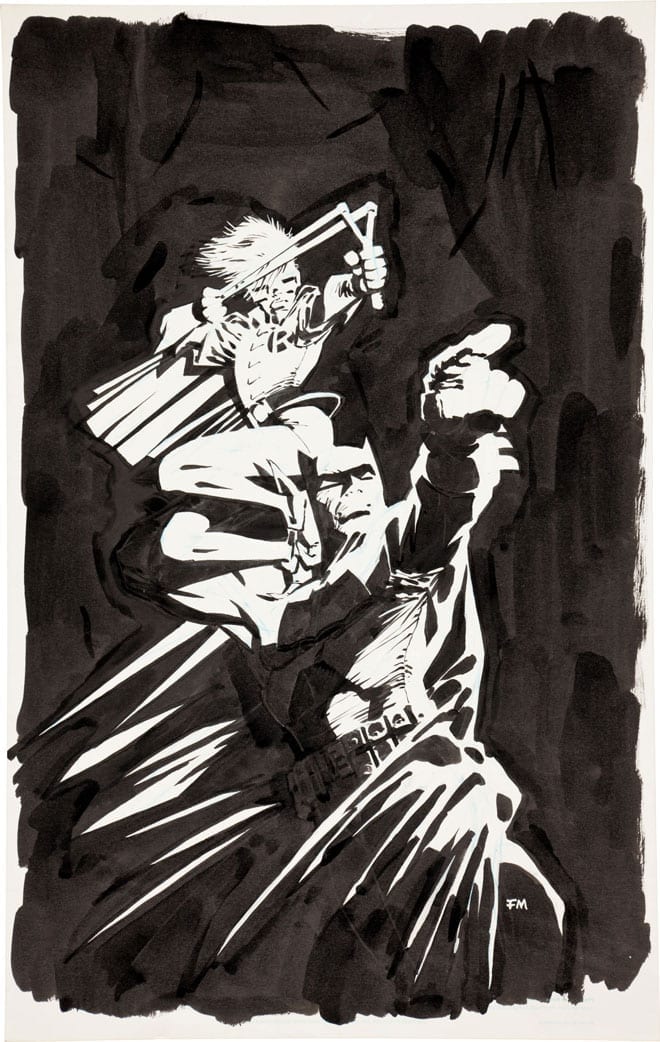
Miller artwork for an anniversary

The Art of Miller

Miller’s style is all about contrast, especially on where characters fit into a bigger world. While most of Millar’s illustrations look rough and sketchy, it’s a style that highlights where characters stand in-story. Whether it’s how someone looks against the background or their posture’s communication, the heightened contrast demonstrates their place and motivations. The Dark Knight Returns features numerous panels that highlight the action taking place. The multiple captions and dialog that go along these figures also demonstrate a dynamic. While the world in the panels shows one piece, the captions reveal a hidden interior.

Unfortunately, when the focus becomes one-sided, as is the case in The Dark Knight Strikes Again, any meaning becomes devoid. Because of how 9/11 traumatized him, Miller changed what would have been a fun romp into a rage fest. From letting Metropolis be destroyed by Brainiac to Batman brutally killing Dick Grayson after Grayson was driven insane, it’s nothing but Miller taking his frustrations out on others.

The Frank Miller Gap

Some of those frustrations also come in All-Star Batman and Robin, which further alienated people from Miller’s work. Some critics even strike out against Frank Miller for some of his less controversial pieces. 300, for example, was called out for its less ‘woke’ depiction of people with deformities (though that has more to do with Zack Snyder’s movie adaptation). Similarly, The Dark Knight III is given a notably cold reception by critics like Newsarama’s David Pepose. Miller barely even has any sway in the series other than generating the idea. Brian Azzarello and Andy Kubert actually do most of the work. Miller on his own, however, doesn’t get an easy time despite admitting guilt for his past actions with “I wasn’t thinking clearly.”

Frank Miller takes the time to think and act more clearly in Superman Year One. Unfortunately, a number of people who looked up to him now feel nothing but shame. A few critics like Adi Tantimedh of Bleeding Cool seem to assume the worst and nitpick this series. People like Pepose, meanwhile, like it mainly for nostalgia. But living solely for past glory is not the best thing to do. Some fans, including Pepose, are growing tired of the dialogue-heavy content of Miller. Miller likely recognized this and decides to do a farewell story with The Dark Knight Returns: The Golden Child.

The Dark Knight Retires

The Golden Child is Frank Miller entrusting his legacy to the younger generation. That is perhaps best represented through Jon Kent. Despite being a toddler, he’s wise beyond his years, a “floating little Buddha” by Miller’s description. Jon’s potential mirrors the hope Miller has for creators who can propel comics to new heights in ways he no longer can. While comics have outgrown Miller, he finds a medium that seems like a perfect fit.

Cursed With Contrast

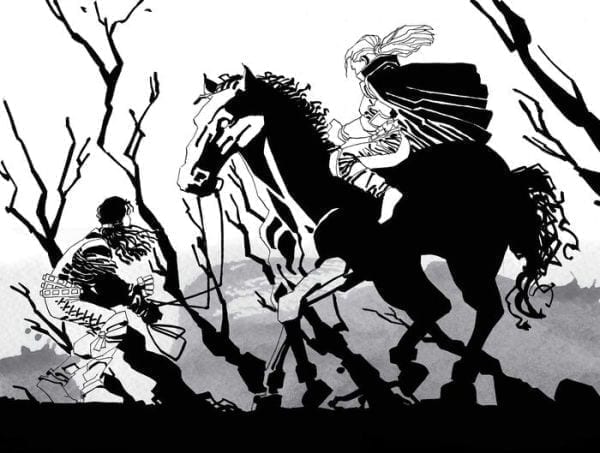
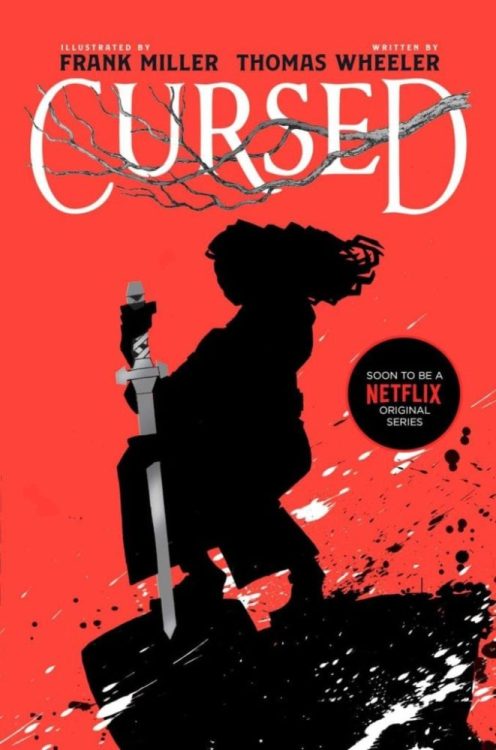
A Frank Miller original for Cursed
What can you get out of this picture?

Miller’s new story Cursed with writer Tom Wheeler uses Miller’s contrasting art style to help tell the story. Unlike comics, which put more focus on the artwork, illustrated novels like this focus more on the writing. The captions that fans like to criticize Miller for suit more definite meanings unlike visuals that are more subliminal. Yes while Wheeler does the writing in this work, it evokes Miller’s style. Every thought, every little detail as plain as day. Miller’s artwork evokes the same message, acting in parallel so that the reader can choose the written word or image. It’s like reading Sin City in a simpler form. If the Netflix series this novel is advertising works out, Miller might get a better audience. No one will ever forget the legend of Frank Miller, and maybe that legend can be revitalized.

What do you all think? Is Frank Miller just grasping at straws? Or do illustrated novels do him better justice? Leave your thoughts in the comments.

Monkeys Fighting Robots Youtube

Review: HIS DARK MATERIALS SEASON 1 – A Dark Adaptation of an Excellent Book Series

Philip Pullman’s His Dark Materials Trilogy is an acclaimed, ambitious, and controversial series of young adult novels. The TV series was equally ambitious, being the most expensive British TV series ever made.

In an alternative world that’s similar yet different to our own there is a young orphan called Lyra Belacqua (Dafne Keen). She lives under the protection of Jordan College in Oxford but longs to visit the Arctic, like her explorer uncle, Lord Asriel (James McAvoy). Lyra seemingly gets a chance to live her dream when she becomes the assistant to Mrs. Coulter (Ruth Wilson). Lyra quickly gets sucked into an adventure involving missing children, waterfaring travelers, armored bears, and an authoritarian regime called The Magisterium.

I’m a huge fan of the novels, so this put me in a unique position when reviewing the series. I was excited to see the story brought to life, but I had a certain picture in my head, which would blur my judgment. So I may as well state some of the changes I wasn’t keen on. I preferred the industrial, Victorian world in the novels, then the 1930s art-deco look of the series, the de-aging of Lord Boreal (Ariyon Bakare), the aging up of Will Parry (Amir Wilson), and the portrayal of Lee Scoresby (Lin-Manuel Miranda). Other changes, like Lyra’s hair color, is something I can overlook.

Every adaptation makes changes, that is the nature of the beast. Even faithful adaptations I liked such as A Clockwork Orange, Lord of the Rings, The Hunger Games series, and the first few seasons of Game of Thrones which made changes. There were two major aspects the His Dark Materials series needed to get right: the tone and the religious themes. And the series does get these parts right, mostly.

When the series moves northwards, it does turn into a darker story that experimentation on children death, children losing their souls, and betrayals. When the story moved to the North, it became darker and more engaging. The best episodes of the season were “The Lost Boy,” “The Dæmon Cages,” and “Betrayal” because they stuck to the dark tone of novels. These episodes include a child who escaped a secret facility without his soul, showing the horrors of Bolvangar and the tragedy at the end of the novel.

Philip Pullman is a vocal atheist and a critic of organized religion. His views influenced His Dark Materials. The 2007 film adaptation of The Golden Compass chose to underplay these themes so it could appeal more to Middle American audiences. This was a move that backfired because it upset fans of the novels. The TV series was much more overt about the religious element. The first episode introduced Father MacPhail (Will Keen), the leader of a powerful organization with the Magisterium, the church in Lyra’s world. The Magisterium figures did dress in religious clothing, and in the final episode of the series, Asriel points out that the Magisterium had been suppressing humanity for centuries. However, due to the art-deco look, The Magisterium comes across as an authoritarian, fascist government than an overarching religious organization.

The first season of His Dark Materials was eight episodes long, with each episode being around 55 minutes long. However, the first novel was only 400 pages long, so the series had to stretch and expand the story. The first three episodes of the series suffered because they really drag out the story. The length wasn’t used to showcase Lyra’s world, and many of these episodes were overly talky. The third episode, “The Spies,” where Lyra ends up in the protection of the Gyptians. The events in these episodes could have easily have been condensed into one or two.

The series improves a lot when the action moves to the Arctic. The story kicks up a gear as Lyra, and the Gyptians look for the meeting children, getting involved with the politics of armored bears, and saving Lord Asriel. The episodes in the second half of the season become more focus, like Lyra helping Iorek Byrnison (Joe Tandberg) get his armor back, finding the lost child, and having a whole episode set in Bolvangar.

There were some positive changes in the series. The series surprised audiences early on by showing characters who appear in the second novel, The Subtle Knife. The series established Will’s domestic struggles where he looks after his mother (Nina Sosanya). This was only told in passing in the novels. “The Dæmon Cages” expanded on the events in Bolvagar to great effort. There was haunting imaginary like the showing of the children who were severed from their dæmons. They became apathetic half-lives, and their dæmons acted like tortured animals. This episode was better at showing the nurses being odd than the books did.

The cast also took their time to grow on me. Dafne Keen’s Lyra started as a precocious child instead of the wild child she was in the novel. But as the series progress, she became more like the character she was in the novels: someone who’s smart, brave, and able to lie out of a situation, and showed she could handle the emotional scenes. McAvoy only got to shine in the final episode of the season, where he’s more willing to do horrific actions. Wilson was great at showing Mrs. Coulter as a dark and manipulative character, especially in the second episode, when she controls Lyra. But she also acted as a raged filled beast, which goes against the characterization in the novels. There was a great supporting cast with actors like Clarke Peters, Anne-Marie Duff, and Nina Sosanya. My favorite was James Cosmo as Farder Coram, a man who takes Lyra under his wing and tutors her. He had a powerful moment in the episode “Armour” when he tells Lyra what happened to his son.

While His Dark Materials was the most expensive British TV series, there were still limitations. The CGI for the dæmons and the bear were fantastic, and it needed to be. But some of the settings were clearly limited. When Lyra and the Gyptians arrived at Trollesund. It was obvious that the episode was filmed on a beach in Wales. Most of the action set in the North were filmed in a studio, and it showed because the CGI backdrops were obvious, and despite the characters standing sub-zero temperatures, there was no visual breath.

The first season of His Dark Materials was a successful adaptation that did stick close to the source material. However, it was at times frustrating because of the slow start and some of the changes the showrunners decided to make.

Monkeys Fighting Robots Youtube

Review: DOCTOR WHO 13TH DOCTOR Year 2 #1 Now With Extra Time Lord

Doctor Who 13th Doctor #2.1
Doctor Who 13th Doctor #2.1 Credit: Titan Comics

With Doctor Who back on the television and excitement for the series still at a high, this is the best time for Titan Comics to launch their own second series of the 13th Doctor, as portrayed by Jodie Whittaker in the show. It may be a new year and a new series but all the regular cast and creators are back to bring you wild adventures in space and time.

One of the things that happens a lot in the Doctor Who T.V. series is that there are gaps in the time lines, missing elements to stories or the characters lives. This happened all too often with Matt Smith’s incarnation with episodes starting in the middle of one of his adventures or a throw away line explaining that the Doctor had been away for several years. 

Although occasionally frustrating, the outcome is that there are plenty of holes to fill for new creators wanting to revisit older stories or characters. Enter Jody Houser with the first part of a multi-Doctor story that takes place during one of arguably the best Nu-Who episodes ever.

Don’t. Even. 

BLINK

Doctor Who 13th Doctor #2.1
Doctor Who 13th Doctor #2.1 Credit: Titan Comics

Weaving a Web

In a failed attempt to take the Fam to one of the most famous music festivals on Earth, Woodstock, the TARDIS and her crew end up on the wrong side of the Atlantic. Instantly recognising the time and place, the Doctor realises they may have bigger problems than being in the wrong country. 

London in the 1960’s is not only a time and place the Doctor has been before but at this exact moment in time an earlier incarnation of the Time Lord is in the midst of a fight with one of the most dangerous foes they have ever encountered.

The current Doctor must find out why the TARDIS has brought her back to this, precise, moment otherwise it might have catastrophic effects on her own timeline.

One thing you know for certain going into this comic is that Jody Houser knows how to write the current Doctor and her companions. Not only does she capture the characters voices but she reflects the tone of the new series as helmed by Chis Chibnall. In lesser hands, trying to blend the tone of early Doctors with current incarnations, can produce an uncomfortable experience but that is not so here. Houser fits the world of 13th Doctor snugly into the world of the 10th Doctor.

Houser has hijacked the earlier story, finding a gap in Martha and the Doctor’s adventures that hasn’t been explored, and fits the new story beautifully around it. There are plenty of references to both Doctor’s adventures to keep fans of the T.V. show amused while not interfering with the main narrative. From this initial chapter the Blink story appears incidental to the story this comic is telling, although hints are this will change over the coming months.

Doctor Who 13th Doctor #2.1
Doctor Who 13th Doctor #2.1 Credit: Titan Comics

Illustrating the Doctor’s

The visual style within this comic is fun and bright. Roberta Ingranata injects the energetic excitement that both of the leads have into the artwork. It’s bold and bubbly; it’s simply impossible not to be captivated by it.

The beauty of Ingranata’s work is that she makes it easily accessible. The characters likenesses are simplified but spot on. The page layouts follow a basic structure with an easy to follow line through the panels, keeping the narrative moving forward at a steady pace. Newbies to comics can pick this up and enjoy it without having to understand the ins and outs of comic book structure which is perfect for a title like this. It needs to be accessible to fans of the T.V. show who have no interest in comics as a general rule. 

Mirroring Ingranata’s artwork is the lettering provided by Starkings and Hedricks. They create simple follow through on the pages with the placement of the speech balloons. Small, snappy balloons keeps the narrative tight which in turn reflects the style of the best 10th/13th Doctor stories. 

And the sound effects in this comic are bold bringing an element of fun to the pages. This was evident in the recent Holiday Specials where the style matched the narrative but even in this, slightly more down to earth story, the sound effects still fit. 

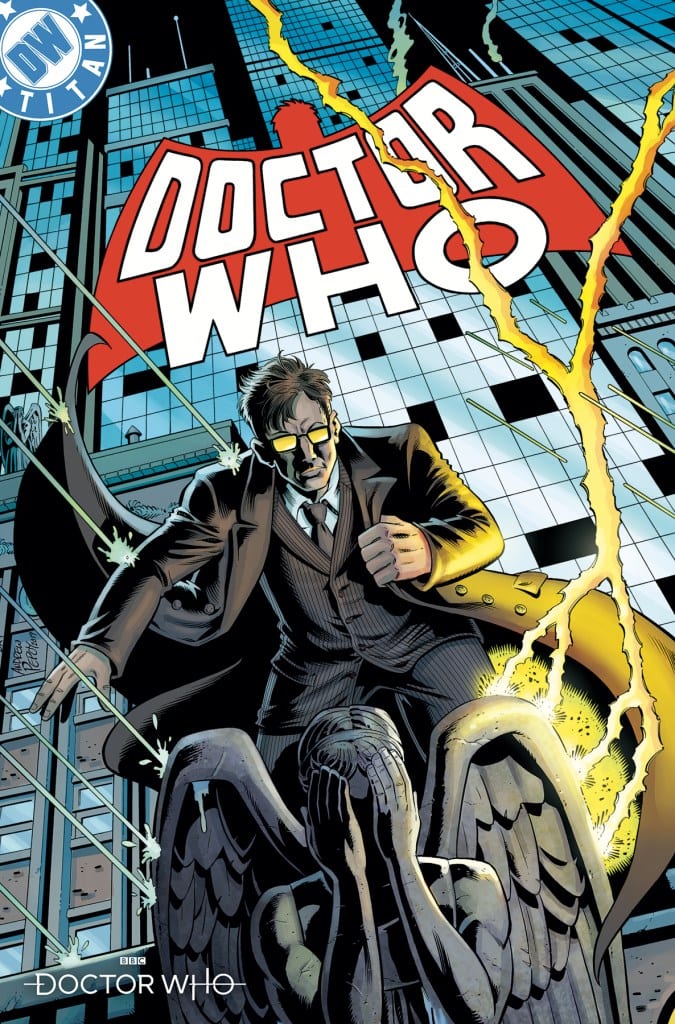
Bridging the gap between the darker tones of the story, it does feature the unnerving presence of the Weeping Angels after all, and the more upbeat aspects is Enrica Angiolini’s coloring. It is as if her job is to ground the outlandish moments and breathe fresh air into the dark times. 

Her palette is naturalistic, playing with the 1960’s setting to give realistic colors but with a bit of flair. She uses a lot of flat color fields overlaid with shadows to create depth and distance. Overall, Angiolini’s work gives the comic it’s detail and setting. 

Doctor Who 13th Doctor #2.1
Doctor Who 13th Doctor #2.1 Credit: Titan Comics

Conclusion

As a gimmick to draw in new readers, this story is ideal. It has the 10th Doctor, Weeping Angels, and links to one of the most popular Nu-Who stories. However, it is so much more than a gimmick. The narrative in this issue is delightfully clever and presented in an engaging way. Once the thrill of the gimmick has passed you will find yourself engrossed in this unravelling tale.

Houser and Co will hook you right in and this first issue will not be enough. It leaves you desperately wanting more; an excellent sign of a great comic. Just like the new T.V. series, the 13th Doctor’s comic adventures are going from strength to strength.  This year is going to be a spectacular year for Doctor Who, whatever medium you catch her in.

Monkeys Fighting Robots Youtube

Review: POSTAL DELIVERANCE #6 Is No Stranger To Violence

Postal Deliverance #6
Postal Deliverance #6 Credit: Top Cow

A new year and a new issue of Postal Deliverance hits the shelves. Published by Top Cow, from Image Comics, the series features tough characters in difficult situations. Outside of the Law but bound by the Rules of their own making, the Postal cast are constantly in conflict but can they manage to keep everything together or have they reached breaking point?

All is not well in Eden. Mutilated bodies hang from the trees; forced cover ups in the administration offices; old leaders itching to return; a killer on the loose.

The reluctant Mayor, Mark, is no stranger to death or violence but his limits have been reached and now it is about balancing his official responsibilities with his personal life. 

Postal Deliverance #6 Cover
Postal Deliverance #6 Credit: Top Cow

Tense Narration

Previous story lines in Postal have had a range of themes, from Family to Justice. In this latest issue Bryan Hill focuses on fear and trust, and how they are intertwined. The killer stalking the town forces reactions from the central cast and some readers may find it surprising that the majority of this issue only features the four main protagonists. 

The story is very procedural as it follows the investigation of a murder. The scenes play out in an order you would expect from a modern police show, switching from the crime scene to the coroner’s, to the investigation team. What makes it stand apart, and to a large degree much more comic book in it’s approach to storytelling, is that the conversations have more to do with the characters’ lives than they do a police investigation. 

Large elements background story, emotional drama, and world building takes place during the back and forth between characters. As with previous issues, Hill is using one narrative to tell another. The murder, and the killer it relates to, are almost background noise to the real family drama unfolding in front of the readers. The relationship between mother and son is becoming more strained, just as the threat of violence is becoming more prevalent. 

Hill clearly enjoys building complex character relationships. It’s surprising to think that the most exciting part of a comic like Postal is not the horrific body mutilation but bearing witness to the disintegration of a family. The anticipation of how certain characters will react to given circumstances fills this comic with tension and gripping drama. 

Postal Deliverance #6
Postal Deliverance #6 Credit: Top Cow

Delivering the Art

The art in this series of Postal has been much stronger and more consistent than in some of the earlier issues. This is largely due to the precise inking by Raffaele Ienco. His attention to detail in the characters and, when required, the backgrounds gives the comic a realistic appearance, highlighting the tone of each scene. However, this is only a perceived realism as Ienco is as equally talented at creating abstract images and transitions from panel to panel or page to page. 

The emotional beats of the story start with the script, flow through the lettering and are accentuated by Ienco’s layouts and compositions. A dramatic scene is brought to life by mixing medium and close up shots of the characters, giving the reader a full view of the interaction. Ienco then plays around with the backgrounds to give different emphasis to the foreground action. In one sequence, for example, the scene starts with a long shot showing two cast members confronting each other which is followed by a number of close ups, each with a differently colored background to illustrate the rage of one and the calm of the other.  

The character placement works with the speech placement, provided by Troy Peteri, to lead the reader through the comic. Together they pause at the relevant spots and protract the emotional content of the script. The visuals leave the reader in no doubt about the theme of this issue and Hill’s powerful words hammer home the point. Fear and Trust are both powerful emotions and sometimes the strength of one can overshadow the other.

Postal Deliverance #6
Postal Deliverance #6 Credit: Top Cow

Conclusion

There is, without a doubt, a violent story unfolding within the pages of Postal Deliverance and this ongoing threat has fuelled the narrative from issue 1. However, this issue is a prime example of what really matters in Hill’s story: the relationships between the central four characters. If you pick this up expecting page after page of bloody violence then you’ve not been reading this series closely enough. 

Family drama is the name of the game. It is intensely gripping and magnificently presented. This is a comic that could easily be misunderstood, especially from a description of a few words, but Postal Deliverance hasn’t wavered in it’s commitment to character or challenging artwork.  


Monkeys Fighting Robots Youtube

Ranked: The Ten Best Gambling Movies of All Time

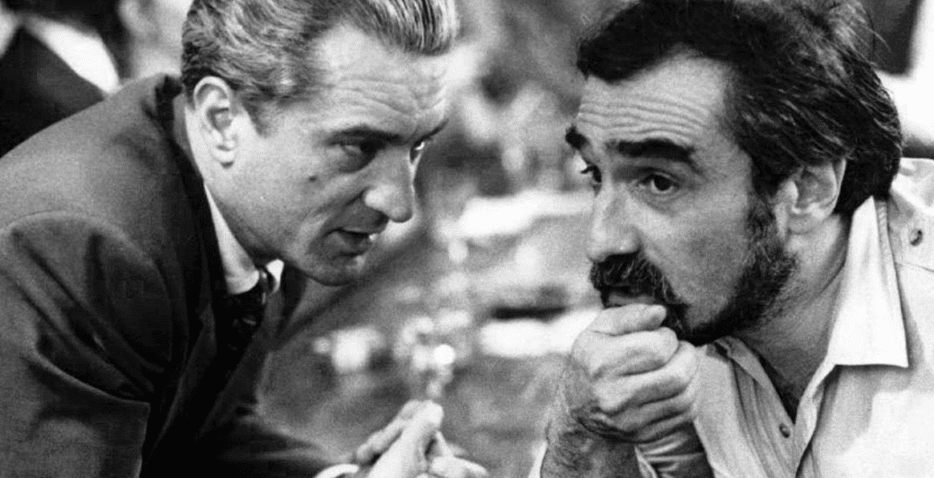
10 Reasons Why Martin Scorsese's CASINO is a Classic

There have been several casino and gambling movies released in the last sixty years. When you are done playing your favorite game at the Lucky Nugget casino, that are offering the greatest games on their online casino platform, you can relax by watching a classic gambling movie. Many gambling films have gone to achieve classic status and box office success among audiences worldwide. Here are the ten best gambling movies of all time you must watch:

 Casino

Even though it doesn’t show a lot of gambling, it is a gold standard for gambling movies. The story is about Nicky Santoro and Ace Rothstein, who are gangsters. They move to Las Vegas to make their mark. Ace operates the Tangiers Casino while Nicky is a

tough, strong man who shakes down the locals. Their weakness shows when Ace falls in love with a hustler and Nicky indulges in drugs. This leads to their downfall. The movie is about greed, power, love, and deception-ingredients for a mobster classic.

 21

21 is common and a favorite among gamblers. It is a classic underdog story where the player beats the house, and it also highlights the game of blackjack. In the movie, the protagonist who is Ben Campbell, wishes to study medicine at Harvard Medical

School but cannot afford school fees. He is introduced to a math teacher by the name Micky Rosa. He runs a card counting club with five other students. Ben joins the group, and they visit Las Vegas and other casinos in the US to use their skills and win big.

 Casino Royale

In the whole of the James Bond series, the poker game at Casino Royale is the most powerful. 007’s mission is to kill and take part in a game of high-stakes poker. He is supposed to stop banker Le Chiffre who is a terrorist, from winning. There is the $10m buy-in that would unsettle most professional players. However, when it comes to Bond, there is more at stake than just money. In the final, $115m is at stake. There is a surprise when Le Chiffre beats other players, but Bond seals the victory in a flush. This game of poker attracts a large audience around the world.

 Ocean’s Eleven

This is the coolest gambling movie that has ever been made. Danny Ocean plans to score the largest casino heist in history. He targets three casinos simultaneously: the Mirage, the Bellagio, and the MGM Grand, all owned by Terry Benedict. Even though the plan is risky, it is done perfectly. Ocean’s Eleven is among the most famous casino movies.

 Maverick

The movie is based on the 1950’s TV series. It is about a con called Bret Maverick, who tries to raise $25,000 to be in an all five-card poker tournament. He tries to raise funds by playing card games and even entering into debts. After getting the full amount, he gets to the game and wins the $500,000. Unfortunately, the money is stolen. There are further twists in the movie as he tries to get his money back.

Fear and Loathing in Las Vegas

The story follows oddball journalist Raoul Duke and his lawyer Dr. Gonzo. They are headed to Las Vegas to look for the American Dream. They encounter weird and wonderful characters along the way, from gamblers to racers via police and hitchhikers. Their objective is the American Dream, but they experience a lot of fear and loathing.

The Cincinnati Kid

The Cincinnati Kid is a Steve McQueen classic. The main character, Eric Stoner, is an upcoming gambler with luck on his side. He travels from town to town to look for beautiful women and high-stake games. The story joins Stoner as he gets in New Orleans. He plans to go up against Lance Howard, who is the best at Stud Poker. Stoner wins in the early rounds but is defeated by Howard in the end. The game requires a lot of intelligence and wit to play, making it famous.

 Rounders

Rounders is your conventional gambling skim. The talented poker player loses money to a gangster and turns his back on the game. He then goes back to the game to help a friend and save himself. The movie ends with Mike McDermott embracing his love for the game by dropping out of law school and boarding a plane to Las Vegas to participate in the World Series of Poker.

Monkeys Fighting Robots Youtube

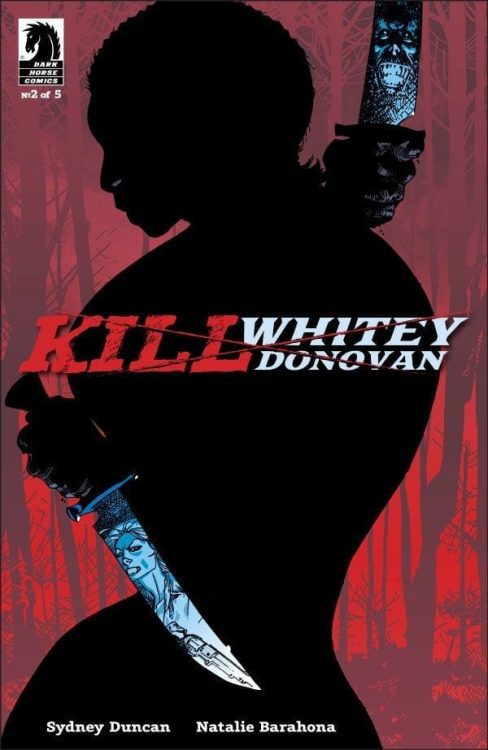
Review: Cooking Dinner with the Enemy in KILL WHITEY DONOVAN #2

Writer Sydney Duncan and artist Natalie Barahona return for a tense second issue of “Kill Whitey Donovan.” This new chapter never eases off the sense of foreboding with a mix of dreadful flashbacks and hostage scenarios. If this comic continues in such a fashion, this could be one of the most thrilling series in recent memory.

Hattie and Anna knew that executing their plan to kill ”Whitey” Donovan would be difficult, but they never anticipated their path to find him would be a literal inferno of war; hunted by the evil Tyson and his devil dogs, attacked by Confederate soldiers–with no allies yet to be found–can they possibly survive long enough to find the vengeance they so desperately seek?

Writing/Plot

Sydney Duncan‘s pacing in this issue is similar to the last in that it’s a tight interweaving of introspective dialogue and suspenseful sequences. This issue primarily focuses on Hattie’s background, and it does so through nightmares and flashbacks. The terror and struggle of being a black woman in the deep south in this era is never lost in the plot. Hattie’s efforts to blend in and hide her intentions takes her to embarrassing – and sometimes darkly humorous – situations. Duncan knows how to let the art do the talking, as there are several passages of wordless panels highlighting tension. There actually isn’t much internal narration in this issue as compared to the last. However, there is one specific scene that has a bit of a “people don’t talk like that” feeling to it. Poetic metaphorical prose is a fantastic and beautiful tool in a writer’s box. This being said, it doesn’t always work based on context or character. Outside of this, “Kill Whitey Donovan” continues to be a thrill to read in terms of pacing and character building.

Art Direction

Natalie Barahona’s artwork only seems to get more impressive in this second issue. The foggy environmental art sticks around, wrapping the atmosphere in a sort of thriller tension. The reader can almost feel the humidity of the South through the panels. The other feature that sticks out even more in this chapter is the stellar character art. The plethora of tertiary characters is matched by Barahona’s fantastic facial detail. Mainstream comics can especially be obsessed with making each and every character look essentially perfect. It’s fantastic to see artists like Barahona focus on making human art that looks like, well, humans. The digital sheen may throw some more classically-minded readers off, but that’s their loss. This is truly fantastic work here.

“Kill Whitey Donovan” #2 is an issue that capitalizes on the atmosphere put forth in the debut issue while ramping up the tension of its historical context. Duncan’s scripts are paced with stellar dialogue and quiet moments of terror. Barahona’s art is murky and atmospheric while also being beautiful and human. This is certainly turning out to be a must-read going into the new year.


Monkeys Fighting Robots Youtube

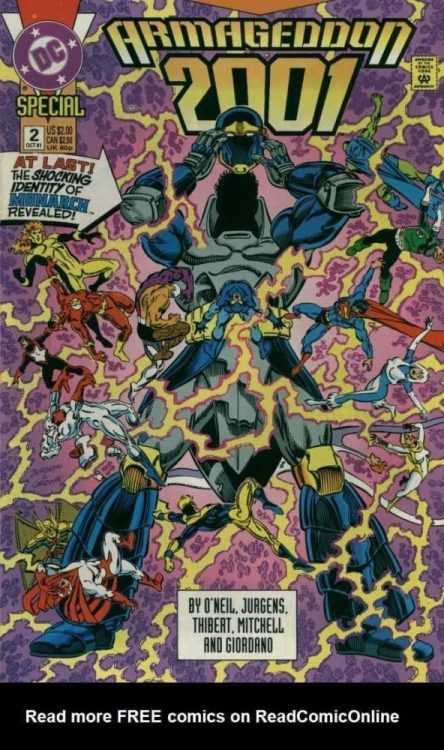
ARMAGEDDON 2001: The Unexpected Vs the Inevitable

Who is Monarch
The final issue revealing the "Shocking Identity of Monarch"

Some endings are inevitable, some endings catch us by surprise. Armageddon 2001, written in 1991 by Archie Goodwin, Dan Jurgens and Dennis O’Neil, is a textbook example of an inevitable ending. Until it isn’t. The writers opt for a twist, though they set up a different ending. They undercut their own story, insisting on the unforeseen.

The Premise of Armageddon 2001

The story takes place in multiple times. We begin in 2001, ten years in the future from when DC published the story. We follow Matthew Ryder; a man imbued with time travel powers trying to find the true identity of 2001’s mysterious tyrant, Monarch. All Ryder knows is Monarch was once a superhero. He travels back to 1991 to investigate, and in a series of annuals, we learn about the future. When Ryder, now called Waverider, places his hand on an individual, he can see their future. He plans to make contact with each hero until he uncovers Monarch.

The Problem with Monarch

Goodwin and the company seemed to think their story was centered around a twist. Monarch had to be someone unexpected. One hero is actually fighting Monarch in all the possible futures, proving they aren’t one and the same. Hank Hall, AKA Hawk, fights alongside his partner Dove. As people are ticked off the list, it becomes clearer and clearer who’s future we haven’t seen. Waverider places his hand on Captain Atom’s shoulder in the penultimate issue, and the issue ends abruptly.

Readers quickly figured out what the next issue would entail. Captain Atom was Monarch. A leak from DC apparently confirmed suspicions. But the creative team caught wind that everyone knew where the finale was going. In a final panic, they changed the script for their finale. Captain Atom was not going to be Monarch, Hawk was. The one hero you wouldn’t expect… because it was impossible. With no explanation for the inconsistencies, the series ended, and a good story died.

Inevitable Vs. Unexpected

Captain Atom as Monarch was inevitable. The story led us there, and leaked or not readers knew. So what? Not all endings need to be a twist. We know that Romeo and Juliet are going to die. It’s clear Walter White is going to implode. Thelma and Louise are sure to careen off a cliff at some point. That’s what is so brilliant. Those endings are inevitable, and the slow march to the conclusion has you on the edge of your seat.

An inevitable conclusion is just as satisfying, perhaps more so than a twist ending. When the audience feels like they have more knowledge than the characters, they sit in suspense as they can do nothing about the characters’ downfall. It’s this dramatic irony that makes some works so enticing. Twists don’t need the same kind of care and set up. A writer can simply do the unexpected, whether that’s the best for the story or not.

Dramatic irony insists a writer know their characters. What are the consequences of creating these people? What is their ultimate end? But furthermore, dramatic irony insists that there must be stakes. We have to care about these characters and events because if they’re going to die, we have to wish they wouldn’t. Otherwise, we glance at our watches until the guillotine comes down, yawning happily that their snore-fest lives are over.

What’s Next?

Armageddon 2001 placed shock over plot and character development. Interestingly enough, they had set up a perfect ending. Captain Atom was a loveable character whose demise would be tragic. They had high stakes, but the marketing had already assured “you’re never going to guess who Monarch is.”

Unfortunately, Armageddon 2001 has not acted as the martyr it should have. Writers and editors push for the shock and awe to this day. The “you’ll never guess what happens next” endings are valued over the “things get worse, but you already knew that didn’t you?” endings. Perhaps because it hurts to write such endings, creating a character that is admirable and watching them endlessly fall has got to be tough. But ultimately, it leaves people caring.

Monkeys Fighting Robots Youtube

Review: Cold-Blooded Murder in DETECTIVE COMICS #1018

The holidays arrive in Gotham in Detective Comics #1018, out this week from DC Comics. But despite the festivities, the discovery of a brutal, ritualistic mass murder means the city is set to have anything but a silent night.

It’s up to Batman to crack the case before the next sacrifice takes place. However, the explanation may be even stranger than the crime.

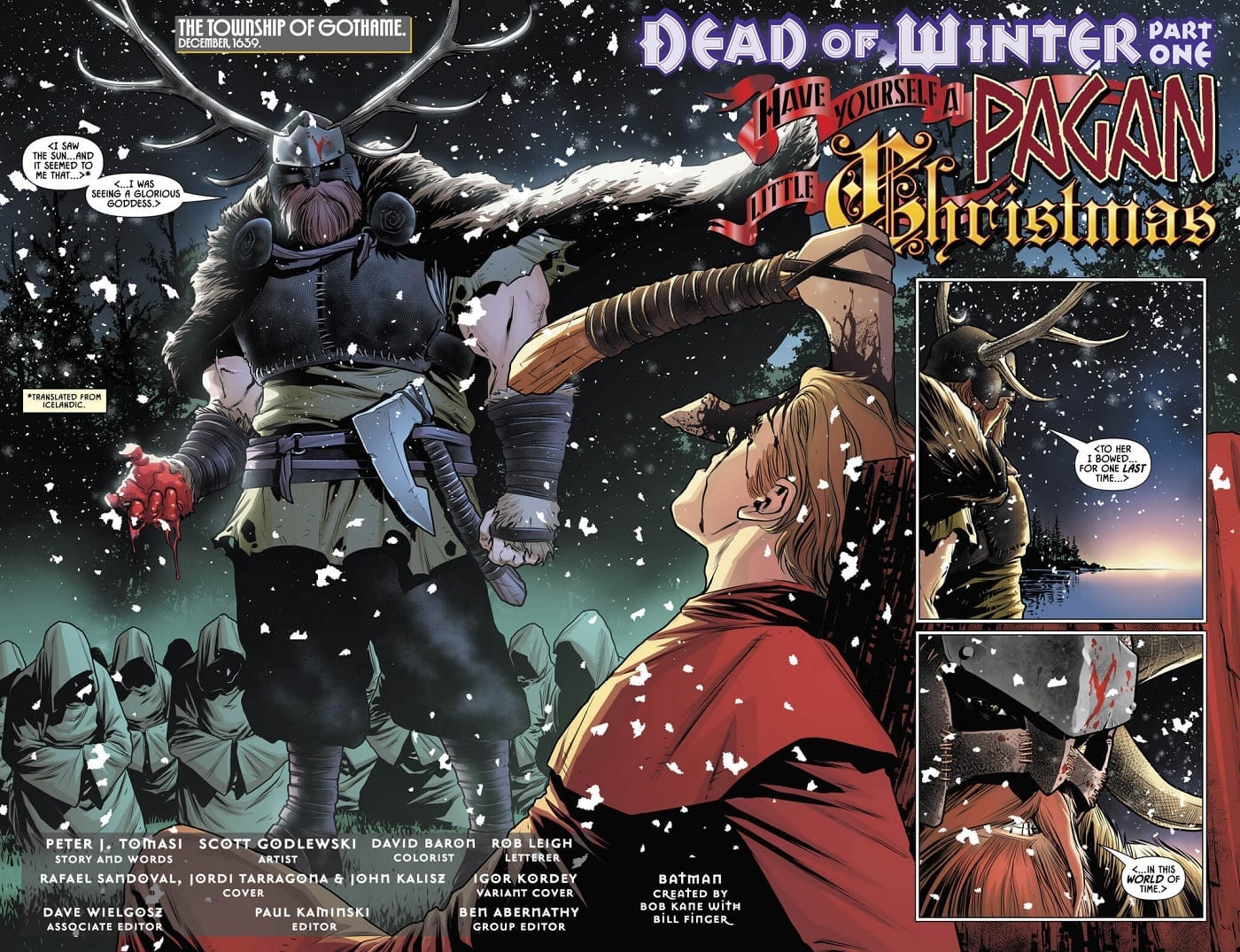
Page #1

The Writing

The story’s setup catches the reader from the first page. The book seems to introduce us several hundred years before the modern day, suggesting Gotham was once just a tiny, pre-Christian viking outpost. This prologue serves to provide flavor for a story, though it’s significance doesn’t become clear until the book’s end.

Detective Comics #1018 is a well-paced story, keeping the reader locked into the action on the page. Truth be told, this may be some of Tomasi’s best work yet on the series. It’s especially a treat for readers who more enjoy the “detective” aspect of Batman’s persona, rather than the superheroics.

The tone and premise are reminiscent of the classic Batman graphic novel The Long Halloween in some regards. The storytelling here is less action-centric, with Tomasi opting instead for more of a stripped-down sleuth narrative. We see Batman is called to the scene of a macabre multiple homicide, but each twist in the story just raises more questions, heightening the tension and mystery.

This seems to be the first Detective Comics story to take place following the events of Batman #77. Bruce is alone in Wayne Manor, isolated as the snow falls. Although it’s not a dominant theme, we see Bruce wrestle with his loss and trauma, which lends pathos and added dimension to the story. It’s especially prescient that Detective Comics #1018 takes place during the holidays. This allows Tomasi to really highlight Bruce’s loneliness.

Page #2

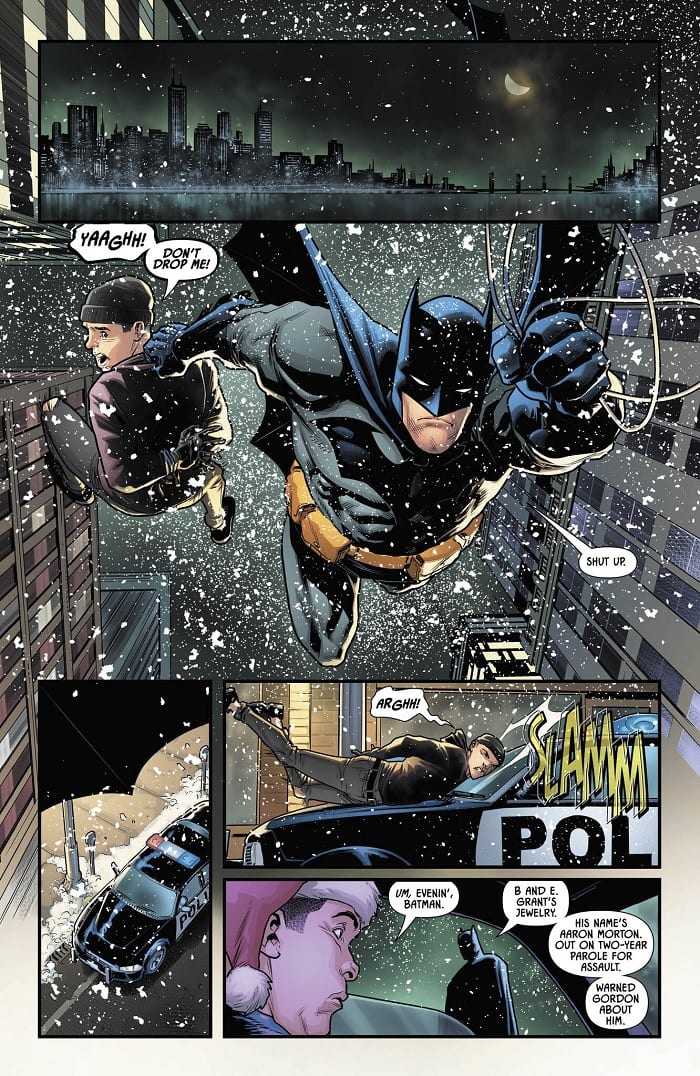
Page #3

The Artwork

Artist Scott Godlewski provides illustrations for Detective Comics #1018. By and large, the artist does a great job of capturing the tone of story. Godlewski conveys the frosty, wintery atmosphere of the setting well, grounding us in the season. The level of detail employed in the backgrounds serves this effect, too, making the reader feel transported to Gotham.

One of the most notable elements at play is the expressiveness of the character designs. Godlewski leans slightly into a cartoonish style, but in doing so, lends the work a much more expressive feel.

The book has a sense of aesthetic cohesion, with the snow falling throughout, while the use of similar visual motifs in terms of layout helps as well. The visuals mesh well with the tone of the writing, giving the book a darker and shadowy, yet nonetheless vibrant look. Detective Comics #1018 is a visually-striking book, all things considered.

Of course, the colors from David Baron help to sell the immersion and dynamism. As usual, Baron’s work is on-point, with a dominant greenish hue contrasting against icy blues and stony grays. It’s moody and tone-appropriate.

Page #4

Final Thoughts

Detective Comics #1018 is a winner. It’s compelling and interesting visual storytelling with a notably darker edge to the narrative. This issue is definitely worth picking up.

Monkeys Fighting Robots Youtube

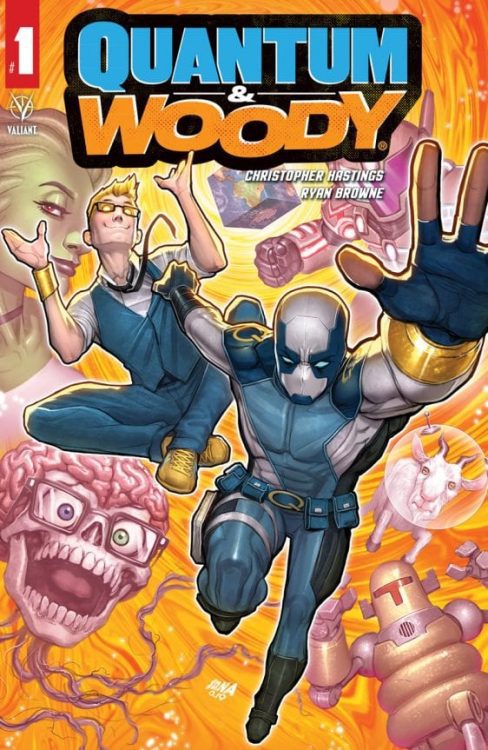
Exclusive Preview: QUANTUM & WOODY #1

Exclusive Preview: QUANTUM & WOODY #1

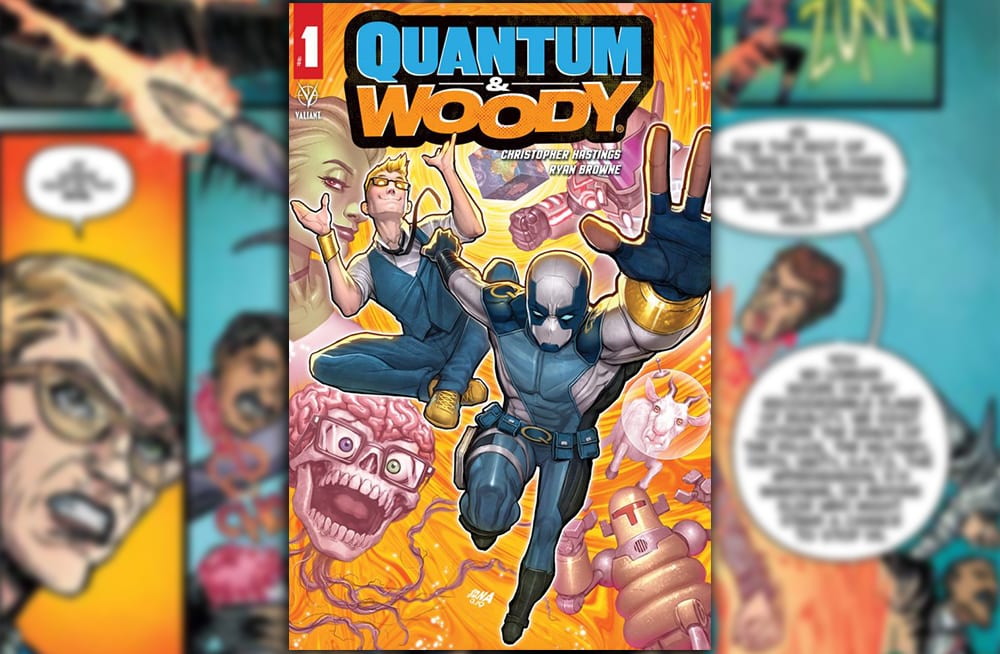
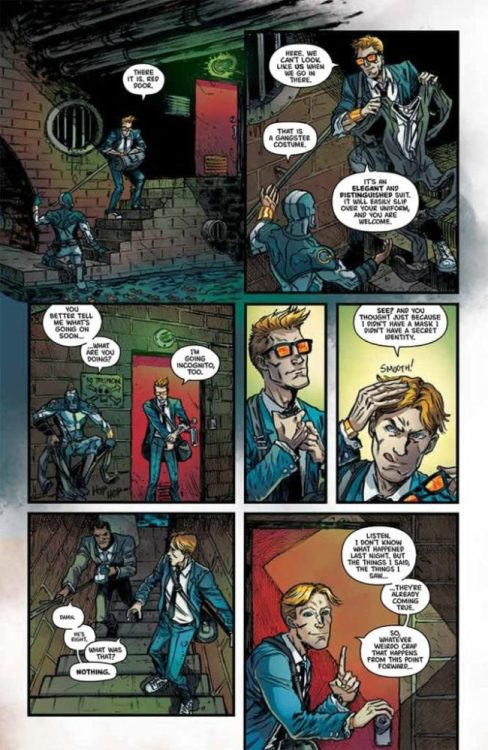
Quantum & Woody #1 hit your local comic book store on January 29, but thanks to Valiant Entertainment, Monkeys Fighting Robots has an exclusive four-page preview.

Quantum & Woody #1 is written by Christopher Hastings, with pencils & inks by Ryan Browne, Ruth Redmond handles colors, and you will read Hassan Otsmane-Elhaou letters.

The lines of sight used on page three are very well done, Browne talked with us about his philosophy as a visual storyteller and creating excitement with camera angles.

“I’m always aware of how shot selection affects the emotion/mood of the given panel. Simple stuff like a shot from below a figure makes them more imposing and a shot looking down on a character makes them look small and meek. Extreme close-ups to increase the intensity, tilted camera angles create a more dynamic and uneasy feeling for the viewer, and wide establishing shots are good to have at least once per page so the reader remembers where everyone is in relation to one another. I think about film a lot more than I think about comics with my storytelling and I think that shows,” said Browne.

About the issue:
Quantum & Woody — the worst superhero duo in the world — are Earth’s LAST hope against stopping a coalition of mad scientists from destroying the planet!

Quantum & Woody #1 has an FOC (final order cutoff) of January 6, so if you like what you see, bug your local comic book shop.

Monkeys Fighting Robots Youtube