Home Blog Page 441

Review: Building Glorious, Emotional Connections In Orphan Age #4

Monkeys Fighting Robots

Orphan Age from AfterShocks Comics steps up to fill the Apocalyptic hole left by The Walking Dead. But does it pack enough punch to make its presence known or is it cowering in the shadows?

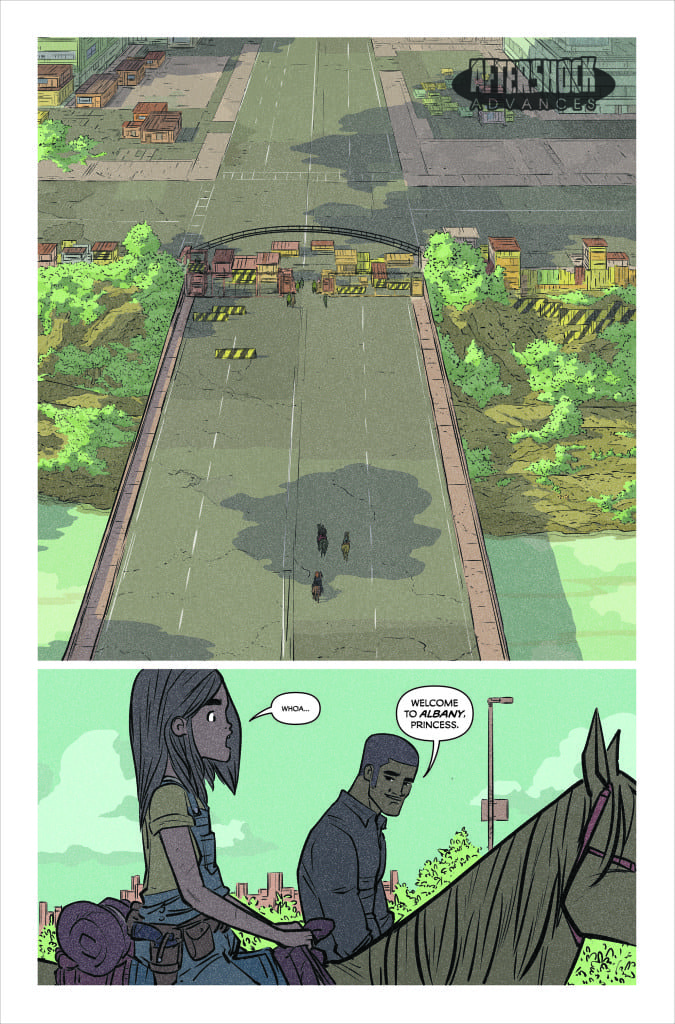
After 3 issues with the central characters crossing the wilds of America, issue 4 features Princess and Co reaching their destination: Albany. This has been their single goal since the attack on Dallastown by The New Church but will they find what they are looking for?

Building Emotional Connections In Orphan Age #4
Orphan Age #4 Credit: AfterShock Comics

Ted Anderson uses this issue to examine the three central characters by allowing them time to reflect on their situations. The change of location and the sudden shift from being alone in the wilderness to being surrounded by thousands of people elicits different reactions in each of the three.

For Princess it’s a time to grieve; for Daniel a time to reconnect; and for Willa it’s more complicated.

Anderson has created a moment of calm in the narrative. The entrance into the city of Albany gives him, as writer, a chance to explore the world and the characters a little bit more, opening up Orphan Age for the reader. But it is also the calm before the storm. Throughout the issue Anderson lays hints at a darkness just underneath the seemingly normal city of Albany. This is a reflection of Willa; she is quiet and sedate on the surface but there is something underneath, bubbling away. An anger that Anderson hints at on several pages in this issue.

Willa is a condensed version of the world at large. On the surface, life has found a way to survive the tragedy that killed all of the adults but the legacy left by the previous world is still evident and still influencing the survivors. Religion, war, greed, and corruption all play a part in Orphan Age and are all hang overs from a world most of the survivors can barely remember.
Building Emotional Connections In Orphan Age #4
Orphan Age #4 Credit: AfterShock Comics

Orphan Age is a character driven comic, much like The Walking Dead was, and it succeeds because of the detail that Nuni Plati puts into rendering the cast. His attention to detail and focus on facial expressions gives the reader an insight into the personalities and their emotional reactions to their surroundings. Plati is also a master at scene composition. He positions the characters in way that juxtaposes the speech with the cast, highlighting emotional reactions. The separation between the cast member’s is as telling as the vocal interactions.

As with previous issues of Orphan Age, the coloring has a sepia tone. Everything is muted and the whole atmosphere has a slightly dirty feel as if the world is covered with a layer of dust. This gives the impression that the comic is a western with all of the connotations that a western brings. Daniel and Willa are clearly gunslingers and their relationship is similar to Clint Eastwood and Lee Van Cleef’s in the movie For A Few Dollars More.

Only the lettering has a modern look to it. The crisp white speech balloons and neat black font are a striking contrast to the muted colors. This highlights the speech and the conversations between the characters. It focuses the reader on the interactions and enhances the personalities. On the rare occasion that the color palate changes, the speech becomes less imposing. It is as if the conversations are being swallowed by a world larger than the individual characters.

Building Emotional Connections In Orphan Age #4
Orphan Age #4 Credit: AfterShock Comics

Each layer of the comic builds on top of a simply foundation: the three central characters. The artwork, the plot and the lettering/speech enhances the relationship that the reader has with Princess, Daniel and Willa. Building this relationship is important for the narrative because the reader has to care about what happens to the characters. Without that empathy, nothing that happens will matter, there would be no connection. Anderson, Plati, Joao Lemos and Marshall Dillon all work together to construct emotional driven storytelling that draws the reader in and gives the reader characters to care about.

Just like the early days of The Walking Dead, Orphan Age understands that the survivors and their relationships are the important aspect of any good post-apocalyptic world. Without that the story is simply people killing monsters or other people. Anderson has set up the emotional hook to make the coming conflict a dramatic affair with real stakes involved.

With each issue Orphan Age grows as an interesting world but also a comic worth reading. The characters are maturing and so is the storytelling. Great things are in this comics future.


Monkeys Fighting Robots Youtube

AfterShock Exclusive Preview: THE LAST SPACE RACE #5

Monkeys Fighting Robots

The Last Space Race #5 hits your local comic book shop on July 31, but thanks to AfterShock Comics, Monkeys Fighting Robots has a four-page exclusive preview.

The Last Space Race is a sci-fi adventure written by Peter Calloway (TV’s Legion, Cloak & Dagger, American Gods), with art by Alex Shibao (Independence Day), Natalia Marques handled colors, Marshall Dillon lettered the pages, with Shibao and Marques working on the cover.

About The Last Space Race #5:

With the success of the saboteur, the ship meant to fly to the mysterious, alien vessel is minutes away from destruction. Will Sasha and Roger be able to save it before everyone on board is killed? Or will they burn up in Earth’s atmosphere? Find out what happens in the exciting, action-packed conclusion of the first arc of THE LAST SPACE RACE!

Check out the preview below.

AfterShock Exclusive Preview: THE LAST SPACE RACE #5

AfterShock Exclusive Preview: THE LAST SPACE RACE #5

AfterShock Exclusive Preview: THE LAST SPACE RACE #5

AfterShock Exclusive Preview: THE LAST SPACE RACE #5

AfterShock Exclusive Preview: THE LAST SPACE RACE #5


Do you have The Last Space Race on your pull list? Comment below with your thoughts on the series.

Monkeys Fighting Robots Youtube

Review: SUPERMAN #13 Takes Us Into Jor-El’s Past

Monkeys Fighting Robots

Brian Michael Bendis continues retelling the events of Jor-El’s shady past in the seventh installment to The Unity Saga: House of El storyline. In this issue, readers witness the distressed scientist attempting to convince the Science Council of Krypton’s members to take action against the planet’s impending destruction. But when his requests fall upon deaf ears, Jor-El must find a way to convince them of the danger lest his people, and family, are wiped from existence.

Story

Most Superman fans know how the none of the leaders of Krypton believed Jor-El’s concerns were worth investigating. However, Bendis dives deeper into this origin story. Readers witness the lengths the scientist is willing to go to save his people, even to the point of verbally threatening these beings who hold so much power over him.

We also see how this enormous burden affects his personal life. Jor-El’s wife does her best to ease his mind through calming words and an appeal to their infant son. It is through these interactions that Bendis gives the crisis real weight as readers sympathize with a man who cares deeply for his endangered family.

Lara and baby Kal-El

Jor-El’s desperation skyrockets when one of the Council members asks him about Rogol Zaar, the galactic villain who readers will remember was involved in Krypton’s destruction. But the Council gives no further information regarding the matter to the scientist’s displeasure. His desperate attempts to uncover this mystery throughout the rest of the story will leave readers on the edge of their seats.

Art

The creative talents of Brandon Peterson, Ivan Reis, Joe Prado, Alex Sinclair, and Dave Sharpe make this one of the most visually stunning issues in this series’ lineup. Reis and Peterson’s pencils capture the details often overlooked in many character illustrations, which are beautifully outlined by Prado’s inks. And with Sinclair’s bright, bold colors, one feels as if they’re in the midst of Krypton’s Science Council.

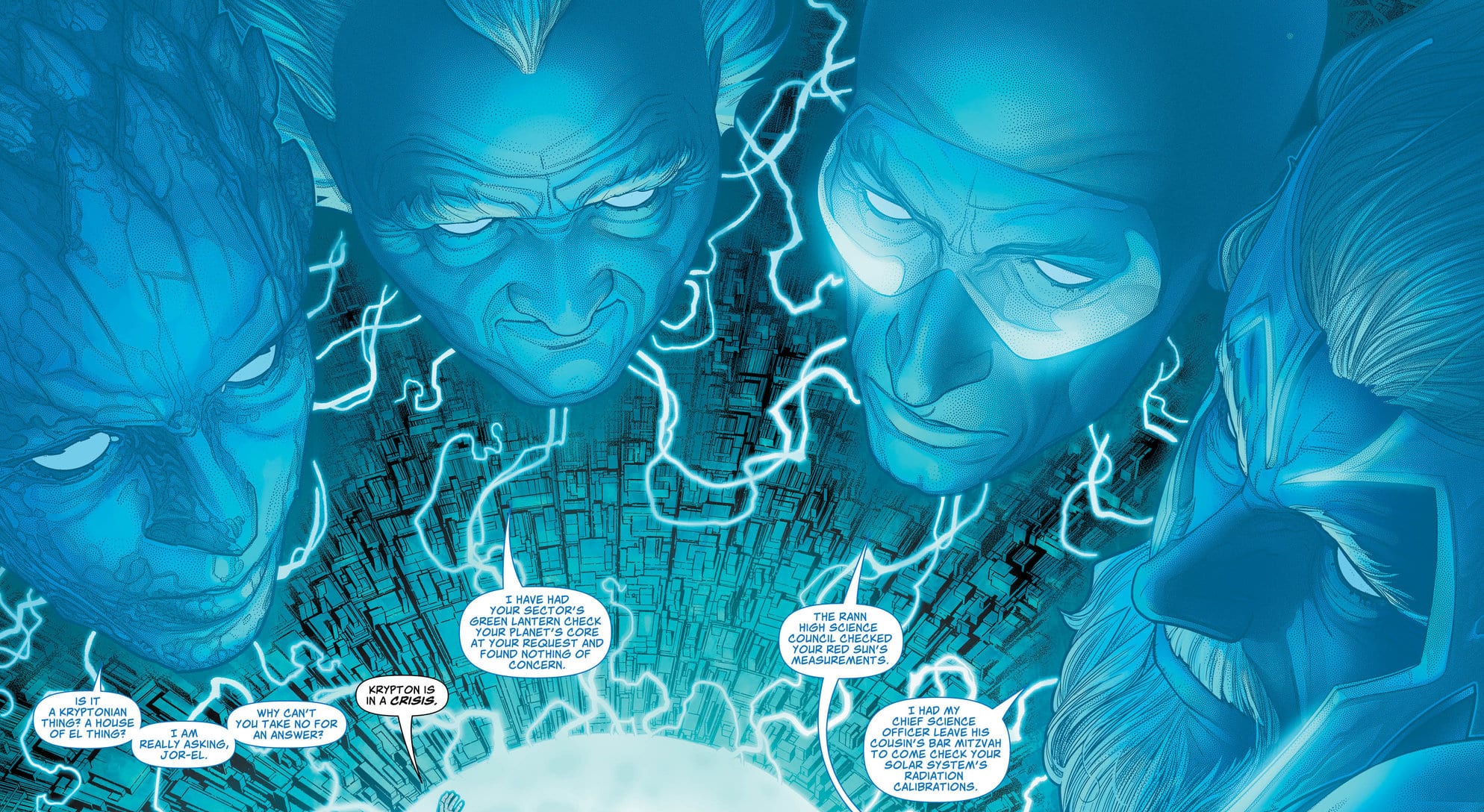
Jor-El and the Krypton Science Council

One of the other great features of this book is Sharpe’s clear distinction’s between the Science Council member’s dialogue and Jor-El’s. Using a bright blue font for the other members’ speech allows the reader to imagine electronic sounding voices, signifying the edges of the galaxy from which they’re communicating.

The Comic Book Covers

Reis, Prado, and Sinclair’s main cover features Superman leading a host of alien races against the one force who has made their lives miserable: Rogol Zaar. This establishes the sentiments of the characters in the issue, though gives no indication of Jor-El’s prominent role.

Jessica Chen’s variant cover, on the other hand, decides to use her illustration to cast light on Lois Lane, which is most likely due to her newly released comic line. It’s a nice reminder that the heroine is still fighting her own battles on Earth whilst the chaos in outer space rages on.

Conclusion

SUPERMAN #13 grants readers a look into the politics that lead to Jor-El’s request’s rejection. Only time will tell how Kal-El will lose this information in the battle against Rogol Zaar ahead.

What did you think of this issue’s retelling of the events leading to Krypton’s destruction? Let us know in the comments below!

Monkeys Fighting Robots Youtube

Exclusive Marvel Comics Preview: X-FORCE #10

Monkeys Fighting Robots

X-Force #10 hits your local comic book store on July 17, but thanks to Marvel Comics, Monkeys Fighting Robots has a five-page preview for you to check out!

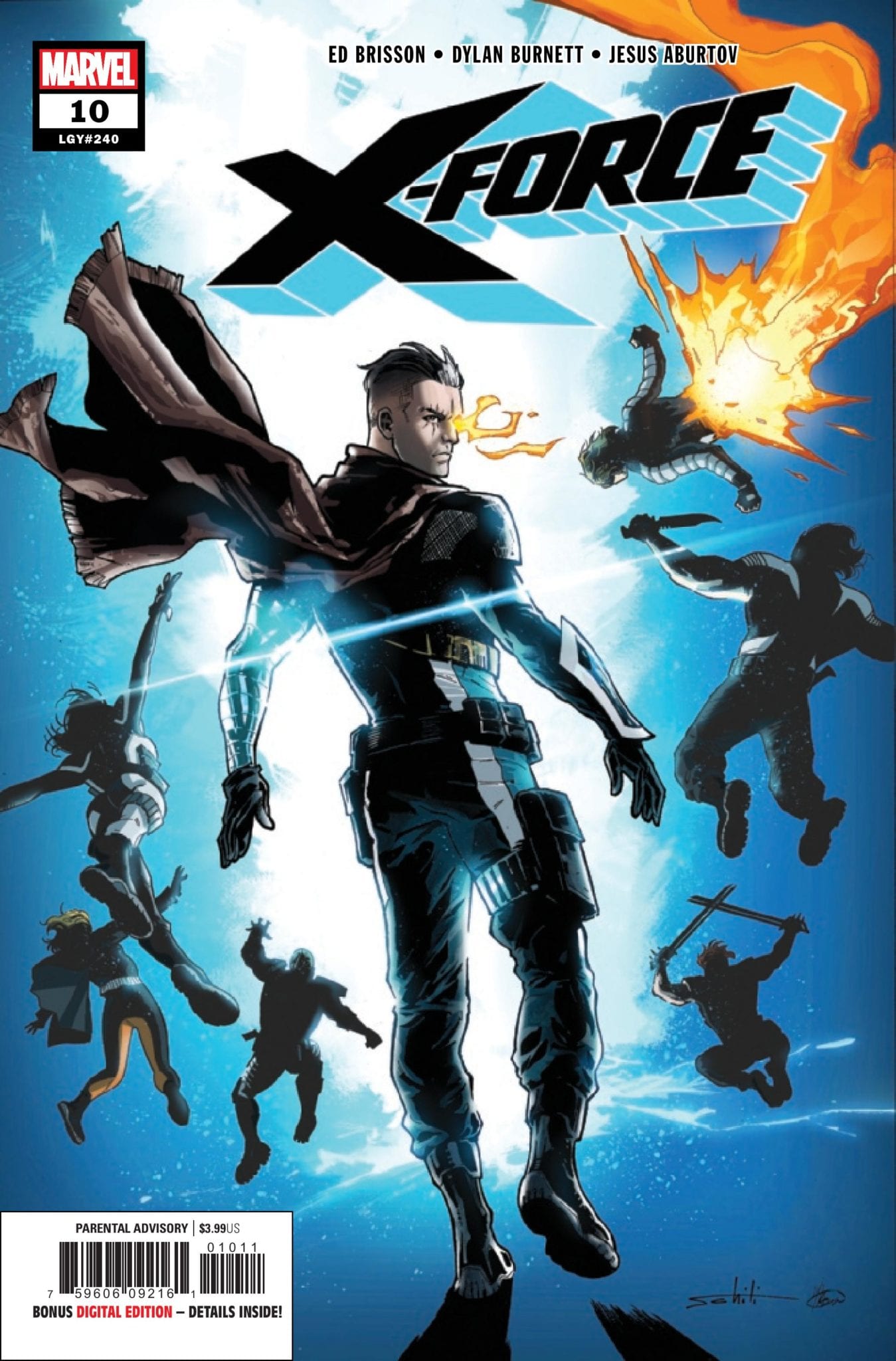
X-Force #10 is written by Ed Brisson, with art by Dylan Burnett, colors by Jesus Aburtov, and letters by Cory Petit. Valerio Schiti and Mattia Iacond worked on the cover

About X-Force #10:

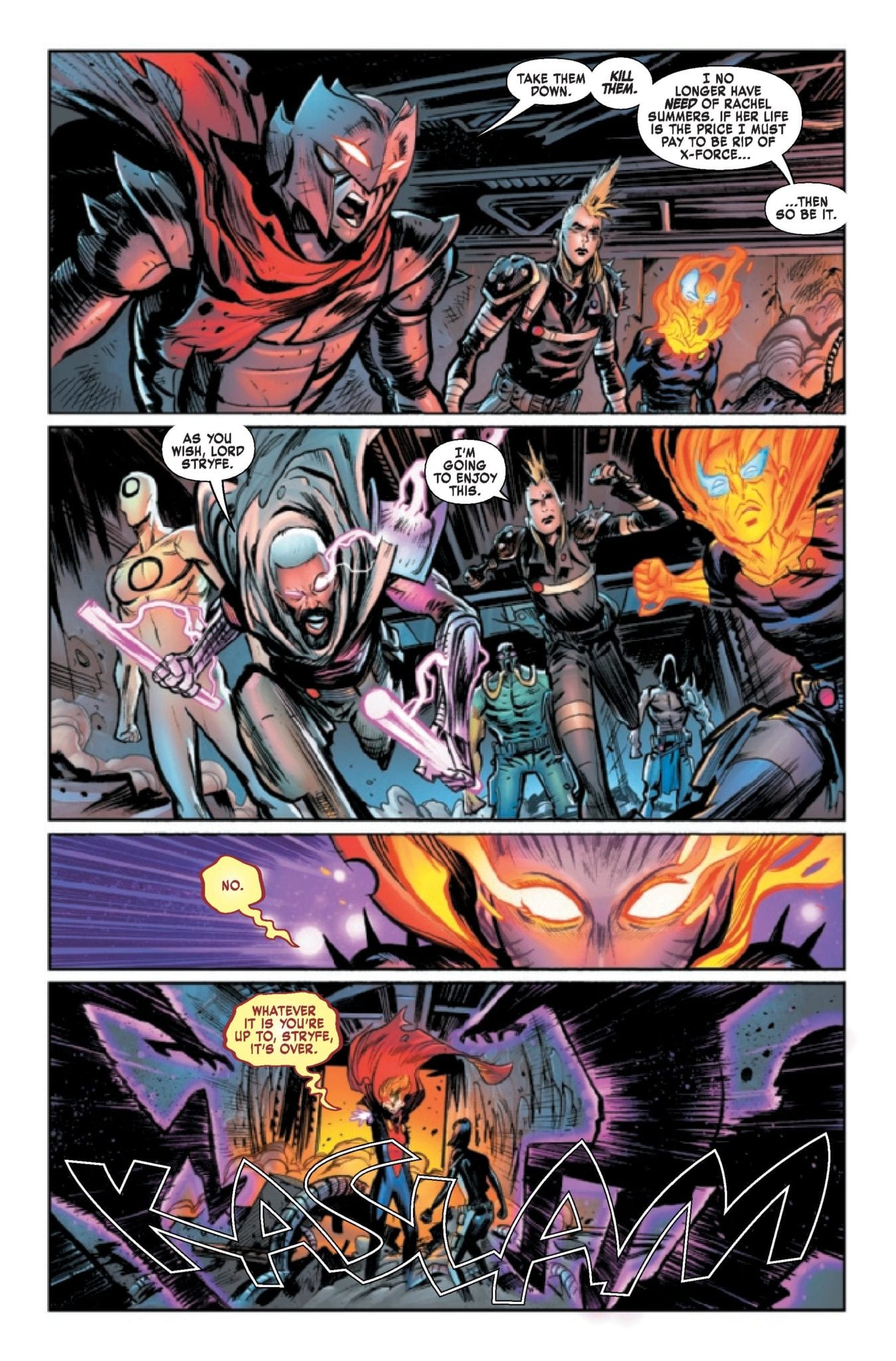
With Rachel Summers under his control, Stryfe and his Mutant Liberation Front finally have the power to secure their futures – at the cost of everyone else’s. Will Cable and his X-Force be able to stop them, or will the time stream be forever altered? Find out in this final showdown!

Exclusive Marvel Comics Preview: X-FORCE #10

Exclusive Marvel Comics Preview: X-FORCE #10

Exclusive Marvel Comics Preview: X-FORCE #10

Exclusive Marvel Comics Preview: X-FORCE #10

Exclusive Marvel Comics Preview: X-FORCE #10

Exclusive Marvel Comics Preview: X-FORCE #10

Exclusive Marvel Comics Preview: X-FORCE #10


Are you reading X-Force, what do you think of Brisson’s run? Comment below with your thoughts.

Monkeys Fighting Robots Youtube

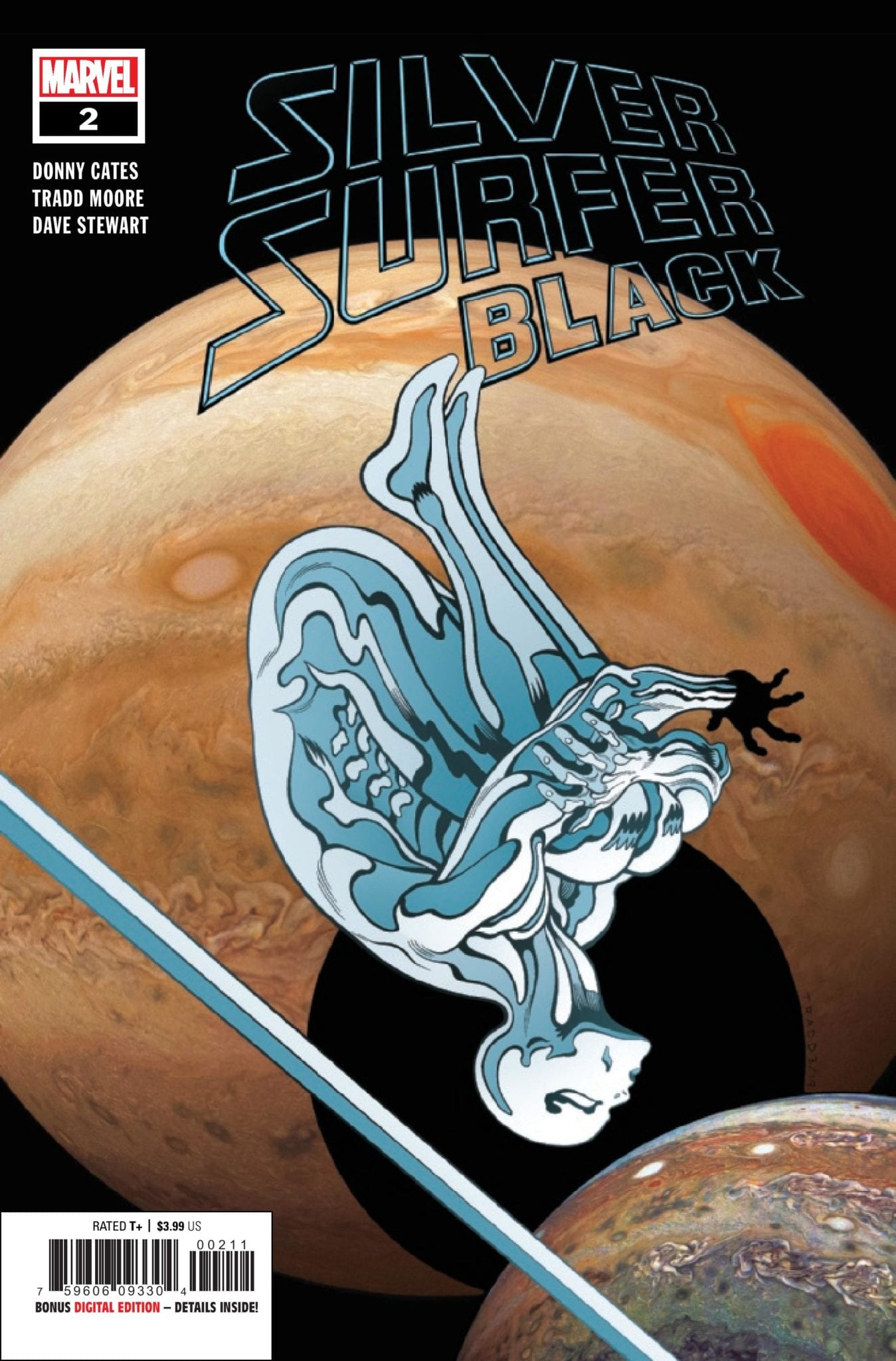
Exclusive Marvel Comics Preview: SILVER SURFER BLACK #2 (OF 5)

Monkeys Fighting Robots

Silver Surfer Black #2 hits your local comic book store on July 17, but thanks to Marvel Comics, Monkeys Fighting Robots has a five-page preview for you to check out!

Silver Surfer Black is written by Donny Cates, with art by Tradd Moore, colors by Dave Stewart, and letters by Clayton Cowles.

The first issue rocked the universe, here’s an excerpt from Colin Tessier’s review:
By using eloquent prose, Cates and Moore make the narration the strongest element of the issue; a number of the lines make the reader stop and dwell for a moment on the passionate words. “I listened and played deaf to the sounds of the dying, pleading and screaming of [these] people,” the Surfer says. “I heard their songs. And I did nothing but shine my light down upon the dying.” Radd’s guilt is devastatingly tangible, and his remorse makes him even more sympathetic.

About SILVER SURFER BLACK #2 (of 5):

Marooned across the cosmos! The Surfer will have to risk everything, to beat back the void that threatens to swallow the galaxy whole… including his very soul!

Check out the four-page preview below.

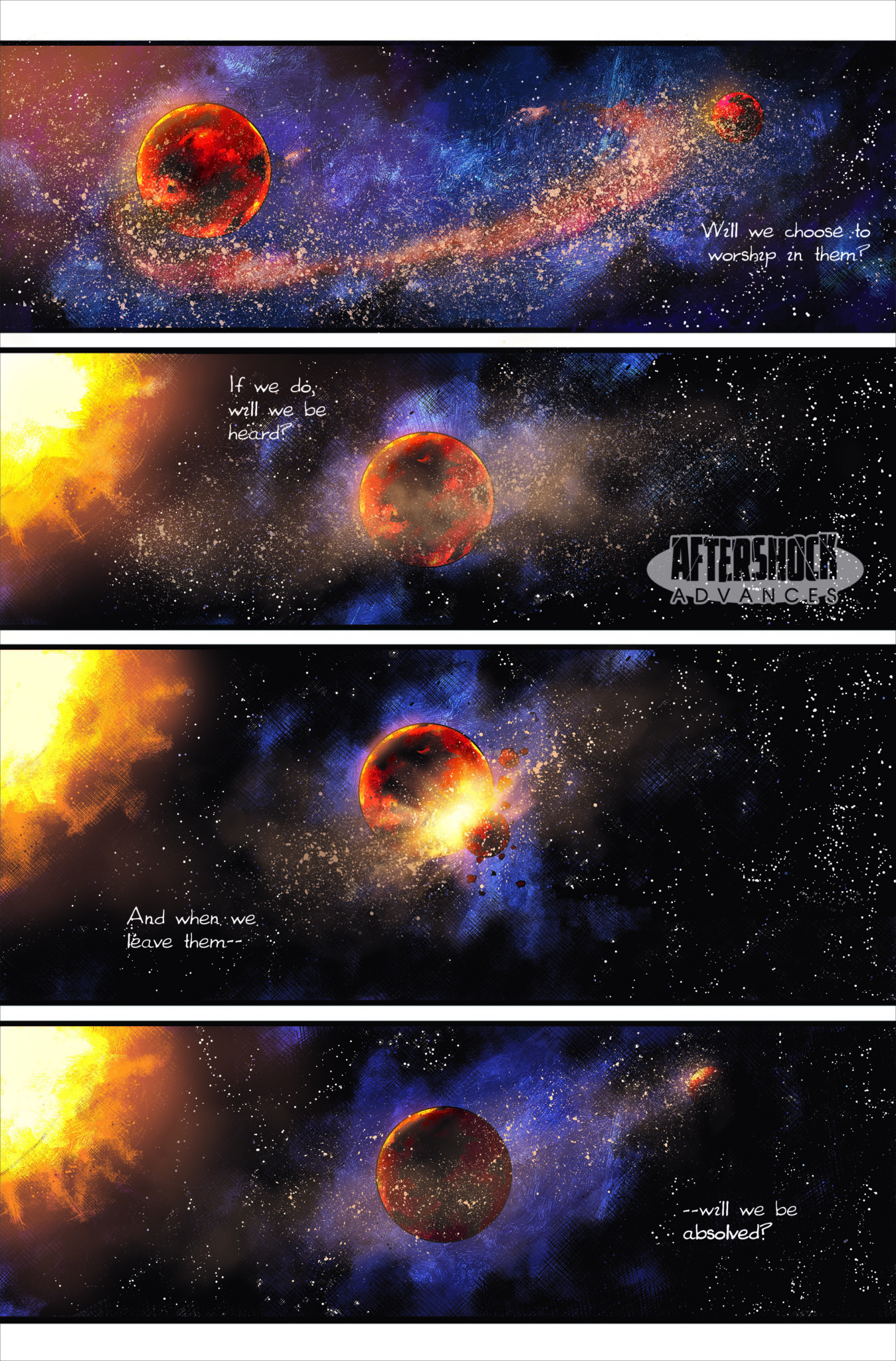
Exclusive Marvel Comics Preview: SILVER SURFER BLACK #2 (OF 5)

Exclusive Marvel Comics Preview: SILVER SURFER BLACK #2 (OF 5)

Exclusive Marvel Comics Preview: SILVER SURFER BLACK #2 (OF 5)

Exclusive Marvel Comics Preview: SILVER SURFER BLACK #2 (OF 5)

Exclusive Marvel Comics Preview: SILVER SURFER BLACK #2 (OF 5)


What do you think of that splash page by Moore? Comment below with your thoughts.

Jack Kirby created the Silver Surfer who first appeared in the comic book Fantastic Four #48, published in 1966.

Monkeys Fighting Robots Youtube

Review: Bendis boldly takes on the Dark Knight in BATMAN UNIVERSE #1

Monkeys Fighting Robots

Despite a painful questioning, Bendis does a decent job in his first Batman outing.

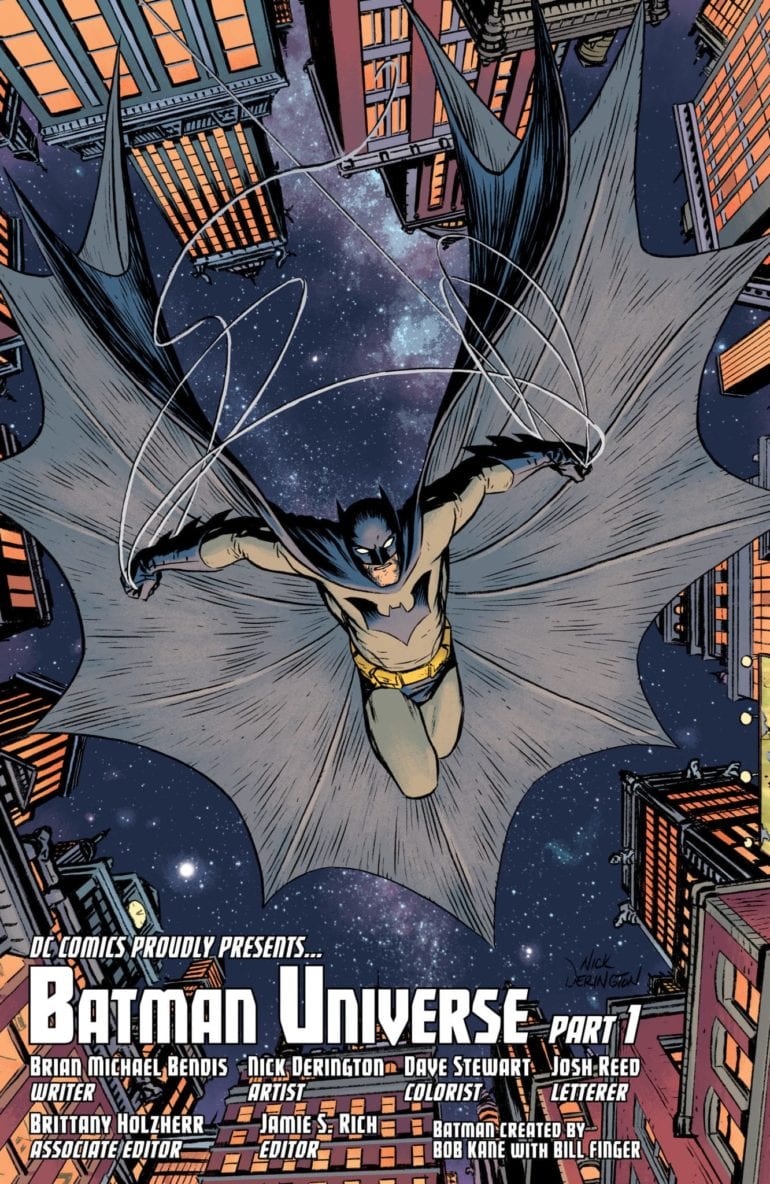
With Brian Michael Bendis being one of the former significant writers at Marvel, it was only a matter of time before he got his chance with DC’s most popular characters. Last year, DC began putting out 100-page giant comics exclusively to Walmart. While three of the stories in these giants were legendary tales at DC, some had brand new original stories. One of these stories was for Batman with the creative team of Brian Michael Bendis and The Doom Patrol’s Nick Derrington. While the 100-Page giants may not have worked out in DC’s favor, we will be getting this story as a series. So let’s see what Bendis has in store for the Dark Knight!

Batman Universe 1 cover

**Some Spoilers Below**

Story:

We open the story with Batman getting called away from an important dinner for a break-in at a museum. The Riddler, along with stunt teams disguised as himself, flee the museum while stealing a Faberge Egg. He fights his way through the crowd to find the actual Nygma and tackles him through a window. When Bruce asks why Edward would do such a thing, especially with such a low-grade riddle left behind. Riddler, however, keeps asking “When is the Riddler not the Riddler?” as he looks on terrified.

It becomes apparent Riddler is not the mastermind behind this, but Batman gets knocked out by an unseen enemy before he can learn more. When he wakes up, Riddler has fled Gotham and Bruce begins his investigation to find this mastermind.

Batman Universe 1 p1

This opening issue gave me vibes similar to the limited series Batman Europa. Bruce going on an international adventure to solve a crime that is above both he and one of his enemies’ heads. The only difference this time around is that Batman doesn’t have the meddling of the villain. This is treated like any of his cases, and I hope it sticks with it. I love big twists and turns in my narrative, but sometimes I want to see Batman kick some butt and do detective work, which he does plenty of in this opener.

The biggest problem I had, however, is the detour Batman makes to the original owner of the Egg. It turns out this issue was supposed to be the reveal of Jinny Hex and her back and forth with Batman is entirely pointless. Sure, we get a detective question asking sequence from Bruce, but Jinny gives him nothing. While I did enjoy most of the tale, this whole scene got on my nerves.

Batman Universe 1 p2

Art:

I love Derrington’s art style. It’s what drew me into The Doom Patrol, and it works exceptionally well here. The opening three pages alone are enough to hook a reader. Starting from the interior of the Batmobile, we watch as Bruce makes his approach on the Riddlers and it’s just amazing. While it may not have the more grounded, realistic look that the main Batman series has, this captures the feel of a fun comic book. 

The colors of Dave Stewart take this further by using brighter colors for all but Batman. It causes the reader to look to the one difference in the panel, which is indeed the caped crusader. Batman is the center of nearly every page, just as it should.

Batman Universe 1 p3

Conclusion:

While the Jinny Hex sequence doesn’t do the comic any favors, it’s still a decent first issue. We get plenty of action and detective work from Batman, with the mystery itself being intriguing. Derrington and Stewart work well together to give the story a great look as well. Hopefully, people will be willing to pick up this story now that its no longer connected to the 100-Page giants, because it’s promising to be a great Batman tale.

Monkeys Fighting Robots Youtube

Review: STRANGER THINGS SEASON 3 – Just Another Summer In The Upside Down

Marvel Comics May 2020 Solicits - Full List

Netflix’s hit sci-fi adventure series Stranger Things has returned with another impressive endeavor into the alternate dimension known as The Upside Down.

Season 2 may have dropped the ball a bit along the way last time audiences were beckoned to Hawkins, Indiana. Luckily, season 3 is an excellent return to form, and the cast is back and better than ever. Eleven (Millie Bobby Brown), Will (Noah Schnapp), Dustin (Gaten Matarazzo), Mike (Finn Wolfhard), and Lucas (Caleb McLaughlin) have all grown over the past two years, and love is in the air for some of them. While this latest outing from writer and directors, Matt and Ross Duffer, brings back the charm of the first season, it isn’t breaking new ground either.

Taking place in 1985, a year after the previous season, the gang thought they had eradicated all traces of the Mind Flayer in this world when Eleven closed the gateway to the alternate dimension. Of course, that isn’t correct, and it’s still lurking in Hawkins waiting to strike. With the unintended assistance from a secret group of Russians in the area, the Mind Flayer’s consciousness is able to access the unsuspecting town once again. Interestingly enough, the first film that appeared this season was Day of the Dead, which focused on scientist and military types dwelling in underground bunkers, a reference to the season’s plot.

Gaten Matarazzo as Dustin, Joe Keery as Steve Harrington, Maya Hawke as Robin in STRANGER THINGS

The enticing mystery this season will have viewers glued to the screen, and there isn’t a single filler episode. With the kids now older, expect the first couple of episodes to build interest by focusing on the relationship between Eleven and Mike. A cute pairing that has been building ever since the two first met and shared a kiss. They aren’t the only love birds, Lucas and Max (Sadie Sink) seem to be growing stronger than ever as well. Eleven and Mike’s romance may be short-lived though, as Hopper (David Harbour) doesn’t fancy how close the two are getting.

Unable to accept that Eleven is getting older, which means puberty is setting in. Hopper turns to Joyce (Winona Ryder), who is still struggling to deal with the events of last season. Hopper’s romantic interest in Joyce becomes more apparent, but his advances are shot down. Meanwhile, the Mind Flayer has found a new host and has begun to build an army to take down Eleven, and anything else standing its way. Elsewhere in town, Steve (Joe Keery) has gone from a cool guy to spoiling children, a refreshing change for his character that began last season. He now works at Scoops Ahoy, an ice cream shop at the Starcourt Mall. Nancy (Natalia Dyer) and Jonathan (Charlie Heaton) are still together and spend their summer interning at the Hawkins Post.

David Harbour as Jim Hopper, Winona Ryder as Joyce Byers in STRANGER THINGS

Once the season fills you in on the life of the Hawkins inhabitants, it doesn’t take long to transition into a full-on edge of your seat, nostalgic driven adventure. Similar to the seasons that came before it, Stranger Things’ third season is jampacked with 80’s references, it even features an opposing character channeling his inner Terminator, but he is no Arnold Schwarzenegger. The Mind Flayer is more gruesome and in itself another reference to the Terminator series, as it grows by gathering mass from the remains of its victims.

The Duffer Brothers are well aware that this nostalgic formula is what made the show a success when it initially arrived in the summer of 2016, but what keeps viewers coming back are the emotionally-driven characters portrayed by rising young actors and actresses. Season 3 is a retelling of story fans are familiar with, but it remains effective because of the characters involved. Another attribute this season has going for it is that the group of young kids is entering that stage of puberty, so the stakes are heightened, and this season features the most intense, graphic, gut-wrenching sequences to date.

Stranger Things 3 | Summer in Hawkins | Netflix
Dacre Montgomery as Billy Hargrove in STRANGER THINGS

As always, the cast brings their roles to life, as everyone involved gives a believable, and for some, heartbreaking performances. However, one trope from the series should be rendered obsolete, and that is the denial from certain characters who think nothing is wrong in the town. There’s an instance where Joyce is shutdown by Hopper who does everything possible to prove to her that all is well in Hawkins. While he probably did it because he wants her to feel safe, the town is known for not always being safe, and he is more than aware of that. Not to mention, Joyce was the one who ended up being right about her son’s whereabouts in the first season.

Stranger Things won’t last forever, in fact, the Duffer’s have made it known that they don’t plan on revisiting Hawkins for that long. While the world they have created is thrilling, they know that it has a shelf life. Regardless of that, this third season is very formulaic but still so well executed in doing what it does best. Such as the breakdown of groups that explore what is happening in town, but they all eventually come together, in the end, to resolve the issue together and learn from one and another. Millie Bobby Brown gives another delightful performance as Eleven, and her powers are in full force this season. Also, Lucas’ little sister Erica is an absolute delight. She is the breakout star this time around and offers the most hilarious dialogue in the series to date.

Stranger Things’ third season is another home run for Matt and Ross Duffer. A trip to Hawkins, Indiana is always eery, emotional, and quite scary. The season ends in a sad manner this time around, but then something else occurs that will inevitably play into the fourth season, which could take us to a whole new playing field.

Stranger Things Season Three is currently available to stream on Netflix.

Monkeys Fighting Robots Youtube

Review: Can Batman & The Spectre Keep it Together in DETECTIVE COMICS #1007?

Monkeys Fighting Robots

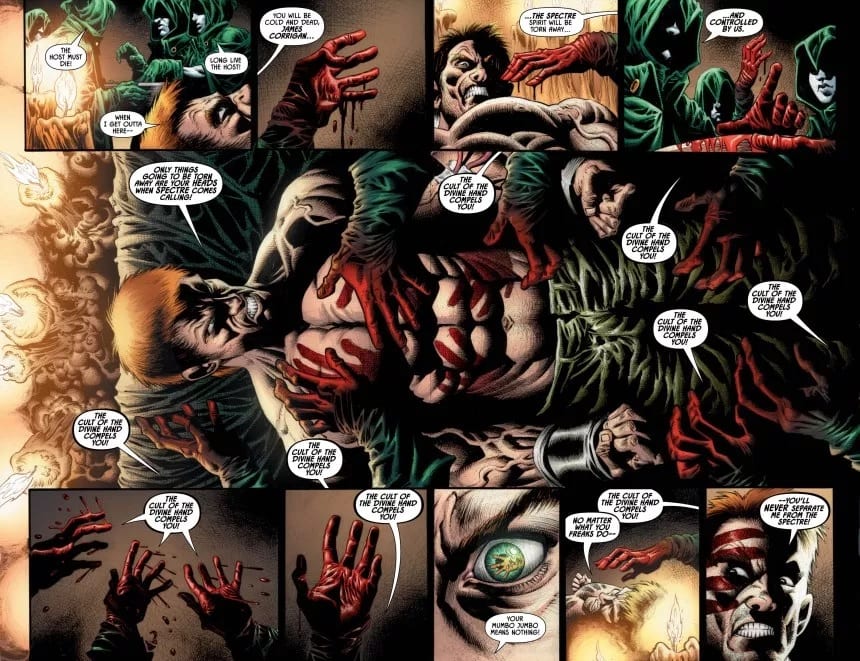
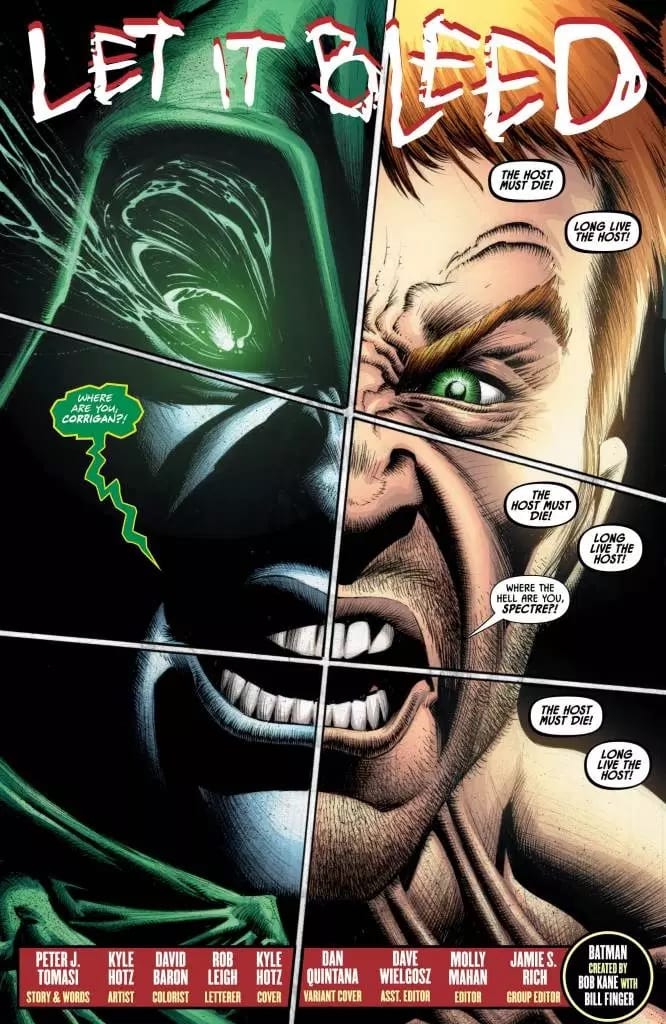
Batman and The Spectre’s uneasy truce holds as they search for Detective James Corrigan in Detective Comics #1007. Time’s running out, though, as the mysterious cultists prepare to turn Corrigan into a sacrifice for their mysterious purposes.

The Writing

The writing in this issue is, generally speaking, a bit of a letdown from our previous issue.

As in Detective Comics #1006, the core of the story’s conflict is not between our heroes and the cultists, but between Batman and The Spectre. It’s whether the pair’s differing philosophies will ultimately tank their partnership. That conflict is downplayed here, though, with The Spectre pretty effortlessly giving in to Batman’s side. The stakes don’t feel particularly high for Batman, leading to a lack of concern for the reader regarding Corrigan’s predicament.

We learn from the first few pages of Detective Comics #1007 that the group who abducted Corrigan—The Cult of the Divine Hand—plans to capture and command The Spectre’s powers for their own purposes. It’s never really clear what those purposes are, though. We don’t know if they have designs on world domination, taking over Gotham…maybe just doing some magic tricks?

The issue’s climax also creates a mixed reaction in the reader. The mystery wraps up with surprisingly little fanfare, and the battle is so one-sided, the tension never really rises high enough to grip the reader. Overall, it feel like writer Peter J. Tomasi may have had a grander vision for this two-part story. That vision doesn’t come across in the final product, though.

Detective Comics #1007

Detective Comics #1007

Detective Comics #1007

The Artwork

Like the writing, Kyle Hotz’s visuals in Detective Comics #1007 don’t quite meet expectations. In my review of our previous issue, I mentioned Hotz’s work having a distinctly ‘90s feel to it. There’s a lot of charm to that aesthetic. Unfortunately, he also drags up some of the decade’s more infamous trends as well.

One notices a lot of awkward anatomy and unnatural poses throughout Detective Comics #1007. Batman’s torso looks something like a ball on a stick, while limbs bend at awkward angles throughout the book. Their might have been a stylistic intent behind the work, but that isn’t really a compelling-enough explanation. While Hotz manages to create some strikingly moody and spooky imagery, it’s not a consistent presentation.

David Baron’s colorwork on Detective Comics #1007 is the standout element. He uses a lot of vibrant, unnatural greens for The Spectre, while keeping everything else sufficiently moody. Baron goes for the full Halloween palette in coloring candlelit rituals and spooky, abandoned churches, and the effect works nicely.

Final Thoughts

Detective Comics #1007 is a bit of a letdown from the promise of our last issue. Not bad, but not a high point in Tomasi’s run thus far.

Monkeys Fighting Robots Youtube

Review: SECOND COMING #1 is a Divine Comedy

Monkeys Fighting Robots

Second Coming, the new book by Mark Russell, is going to offend a lot of people. The concept alone had rattled some cages when it was announced last year, forcing DC Comics to cancel the series less than a month before it was scheduled to be released through their Vertigo imprint (RIP). Thankfully, newcomer publishing house AHOY Comics scooped the book up shortly thereafter. 

If you were curious as to how Second Coming came to fruition, as well as learning more about the controversy surrounding the book, you can read the Monkeys Fighting Robots interview with writer Mark Russell. But without delving further into the preemptive hate that this book received, does Second Coming #1 deliver from a comic book storytelling perspective? In short – hell yes.

** Spoilers Below **

Second Coming #1 Cover

Story

Second Coming follows Jesus Christ as he returns to Earth and discovers that his teachings have been distorted. To rediscover his inner messiah, Jesus becomes roommates with humanity’s superhero savior, Sun-Man, the Last Son of Krispex.

One’s a superpowered hero from another planet. One’s the righteous son of God sent to Earth. Can you smell the divine comedy that ensues? Actually, the pairing of Jesus and Sun-Man doesn’t actually happen until about two-thirds of the way through the first issue of Second Coming. 

In the beginning, rather, writer Mark Russell takes readers through his brief and crude bible lesson. Russell really doesn’t hold back on any punches, particularly with his not-so-subtle interpretation of the sacred fruit from the Garden of Eden. His take on God might ruffle a few feathers. The Almighty is a wise-cracking, wine-swilling, loud-mouthed, somewhat selfish deity who has lost his faith in humanity. This is a great counterbalance to Jesus Christ, who is presented as kind and optimistic, looking for a way to bring mankind back in the good graces of his father. 

When God wants to “toughen up” his son, he sends him to Sun-Man. This faux-Superman is, in classic biblical fashion, unable to have a child with his human wife. Sun-Man also has a knack for kicking ass first, asking questions later. This offers a unique dynamic between the super hero and super son, who offer opposing views on how criminals should be dealt with. If the first issue of Second Coming is any indicator, Russell’s exploration of the duo’s relationship, along with his hilarious observational comedy, will make this book one of the most important series on shelves today.

Art

There were two slightly different styles of artistry in Second Coming to offer a distinctness between the biblical era scenes on heaven and earth, and the scenes in the modern world. Artist Richard Pace uses a rougher, etched style for the biblical times, as if scratched onto a cave wall thousands of years ago. Leonard Kirk stepped in as the finisher on the modern scenes, which give off a much more traditional, comic book feel. Colorist Andy Troy offered a vibrant, bright palette, reminiscent of something right out of Action Comics. It’s a nice contrast to Pace’s darker, oil painting style.

Conclusion

There is so much humor packed in its pages, but the true spirit of Second Coming is within the moral dilemma presented, a profound message that will ring true for anyone of any background.

What did you think of Second Coming #1? Let us know in the comments!

Monkeys Fighting Robots Youtube

Review: SUPERGIRL #32 Dispensing Intergalactic Justice

Monkeys Fighting Robots

Continuing The House of El: United crossover, Supergirl, Krypto, and Jon throw down with a genocidal maniac only to discover they have a much larger fight on their hands.

After a quick summoning up by Jon for those who might not be up to speed, the supers fly into the palace of Gandelo to bring her to justice. Despite the over whelming odds and unknown strength of the villain, writer Marc Andreyko opens up this issue of Supergirl with witty banter and gives the heroes a sense of confidence which is picked up in the art work.

SUPERGIRL #32 Dispensing Intergalactic Justice
Supergirl #32 Credit: DC Comics

This entire issue is mostly a fight sequence between Supergirl and two adversaries with an occasional added bonus thrown in, such as Jon and Krypto. The first half is a pretty light affair with Kara’s over confidence leading her mouth first into battle. Andreyko fills the script with quips and witticisms coming from both sides of the battle. Gandelo gives as good as she gets.

The humour is well placed and gives the opening of the comic a jovial atmosphere which is a pleasant change in superhero comics. One of the highlights of reading Supergirl is that it doesn’t get bogged down in darkness; even in the most difficult times there is time for light relief. Andreyko understands this and uses it to pace this issue. At first the fight bounces along from punch to punch and quip to quip. However, it all takes a darker tone when the true villain enters the scene.

Everything from the script to Kevin Maguire’s art to the lettering changes midway through the comic and Andreyko introduces a real threat into Supergirl’s life. Maguire gives the action a heavy, violent feel with dramatic points of view and exciting choreography. This change of pace is a real jolt to the reader and adds to the overall reading experience. It is in these moments where Tom Napolitano’s lettering really shines. He has a knack of capturing the essence of the character within his speech balloons and font choices. There is clear definition between the characters even if it does appear a touch heavy handed in places.

SUPERGIRL #32 Dispensing Intergalactic Justice
Supergirl #32 Credit: DC Comics

The coloring is bold throughout with Fco Plascencia contrasting the heroes against the villains. Supergirl’s bright outfit stands out in the panels giving each page a natural flow of vision. Z’ndr’s coloring is the most intriguing as the tones used for his skin and clothing falls somewhere between the brightness of Kara and the coldness of the villains. Whose side is he on? At this point in the story Kara is unsure and this hesitation is reflected in a visual manner.

Issue 32 of Supergirl is an adventurous battle sequence that is beautifully paced by Andreyko. While the action itself is not necessarily original, the witty banter and the shifting tone lifts the narrative above a standard superhero punch up.

There are also some outstanding moments in this issue. A page of stacked panels which feature a surprising twist worthy of The Walking Dead or something written by Joss Whedon. Great character interactions, especially between Kara and Jon. And, of course, a ridiculously designed alien purely for comic relief.

DC comic’s Supergirl #32 is an exciting romp with a kick in its tail. It has also set up the conclusion of this current story arc in a wonderful fashion.

SUPERGIRL #32 Dispensing Intergalactic Justice
Supergirl #32 Credit: DC Comics
Monkeys Fighting Robots Youtube