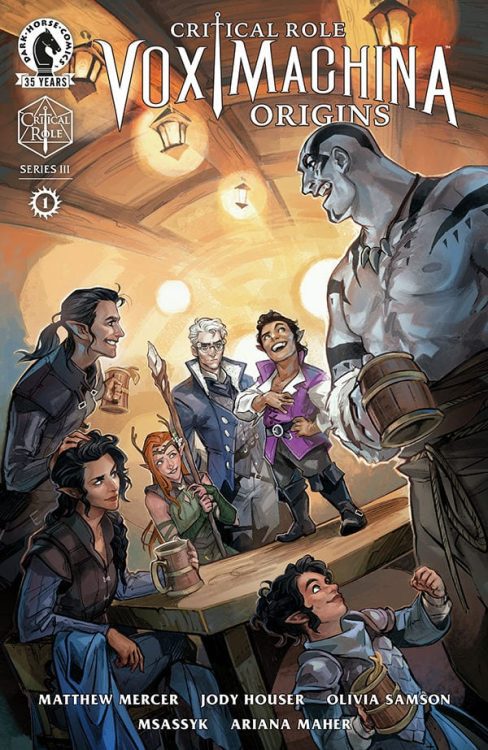
The campaign that started it all is back in CRITICAL ROLE: VOX MACHINA ORIGINS III #1. Available in comic book stores on Wednesday, February 10th, this issue details the next chapter of Vox Machina’s adventure. The setting is Westruun, a bustling town that’s become familiar with the adventurer’s exploits. Coupled with a massive amount of coin acquired from their most recent client’s mission, will Vox keep their egos (and money purses) under control?
Story
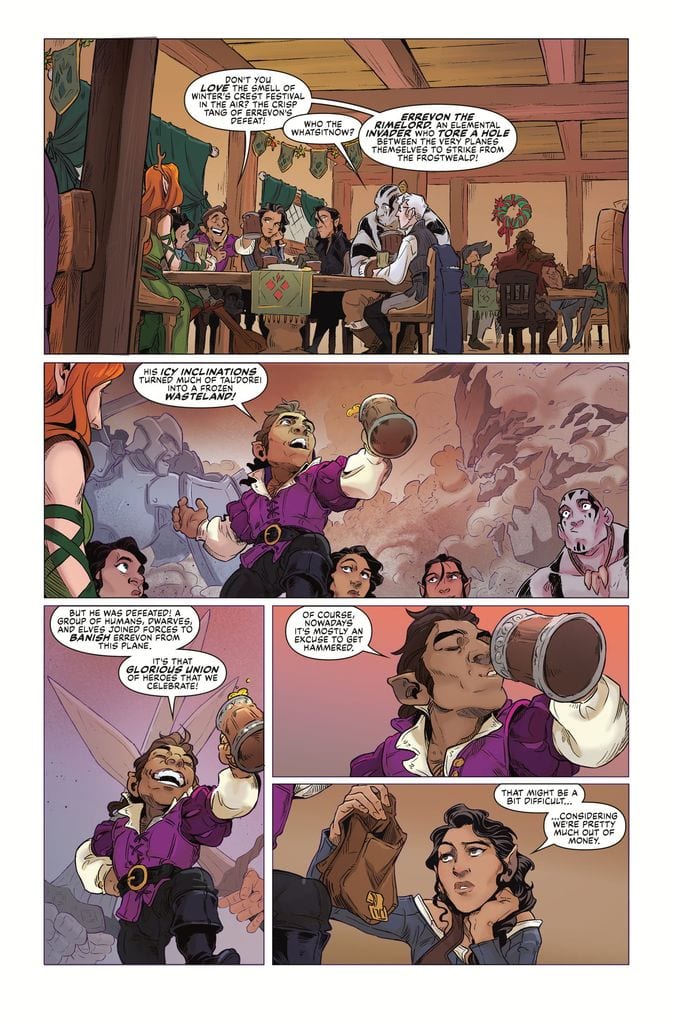
Readers are brought along to Westruun with Vox, which features a cozy tavern where the group agrees to pick up and spend their earnings. Some, like Scanlan, express joy at just the fact that the team is celebrating Winter’s Crest with ale and friends. Unfortuantely, we also see the eccentric group blow through the earnings almost immediately, forcing them to seek out another source of income.
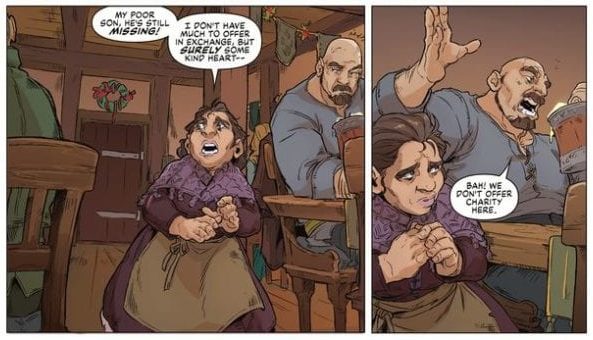
Fortunately, a potential source of funds comes in the form of a poor woman looking for her lost son. Despite the apathy of the local patrons, and many of the Vox members themselves, Keyleth opts to show mercy.
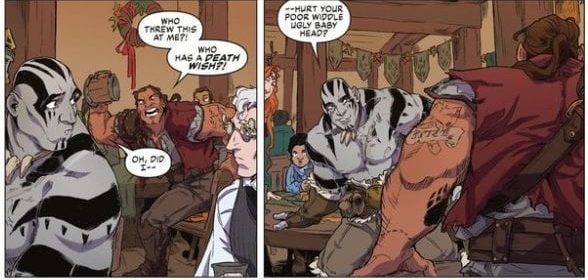
But before she can offer assistance, Grog gets into a fight with one of the patrons, which forces the team to leave the tavern.
It’s here that Vox’s next adventure really begins. After watching the goliath brawl, a mysterious figure named Kradin Grimthorne introduces himself, offering Vox a sponsorship in the Brawler’s League of Exandria.
Jody Houser’s narrative captures the distinct and often conflicting personalities found within Vox. Readers get a clear sense of the difference in characters like Keyleth and those closer to Grog; the former is in tune with those in need while the latter seeks battle more than anything. But rather than offering a judgement as to which is better, Houser’s commitment to characterization offers space for fans to identify with the characters that embody their own personalities.
Artwork
We loved the immense amount of detail featured in this issue. Olivia Samson’s penciling and ink work offers fully realized illustrations of not only the protagonists, but the background characters as well. This helps readers immerse themselves in the world of Critical Role. Coupled with Msassyk’s coloring, these images pop off the page with pleasing colors that work well together. It was also great to see letterer Ariana Maher’s use of various large fonts to represent environmental noises. These various elements meshed together effectively to create a harmonious issue.
Conclusion
CRITICAL ROLE: VOX MACHINA ORIGINS III #1 kicks off the next Vox adventure with an engaging story. We’re excited to see how the adventurers fair in the upcoming brawling tournament.
Do you think Vox stands a chance against their opponents in the Brawler’s League? Let us know in the comments below!
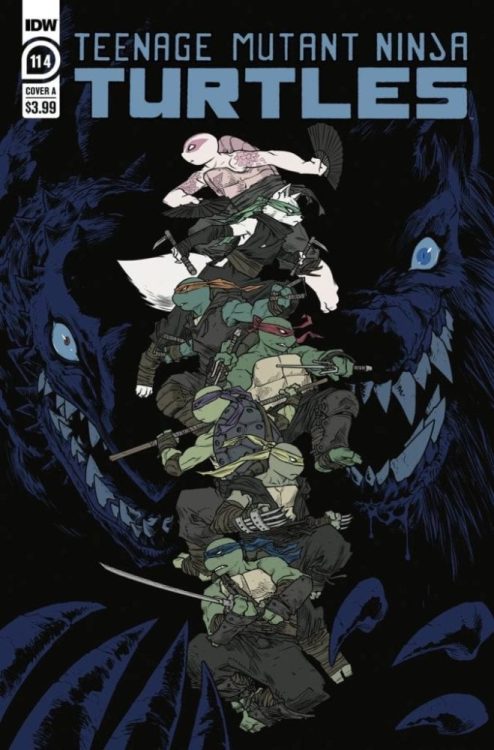
TEENAGE MUTANT NINJA TURTLES #114, available in stores on Wednesday, February 10th, continues to follow a future version of Lita as she seeks to prevent a disastrous future. #113 detailed Karai’s shady business deal with Hob, which allowed her to procure two huge “baby” mutants. However, shortly after their helicopter crashed. Now the two mutants are on the run and Karai is badly hurt. Will the turtles do anything to help their enemies?
Story
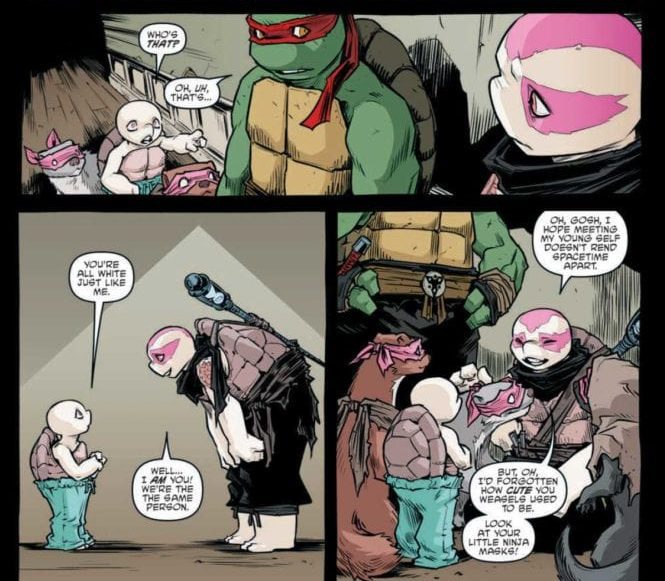
The story opens with the mind-boggling meeting of present and future Lita. Normally, such an event would lead to temporal ramifications. And indeed, future Lita nonchalantly comments on this fact. It makes the reader wonder if the time traveler has the same reckless attitude toward her other endeavors.
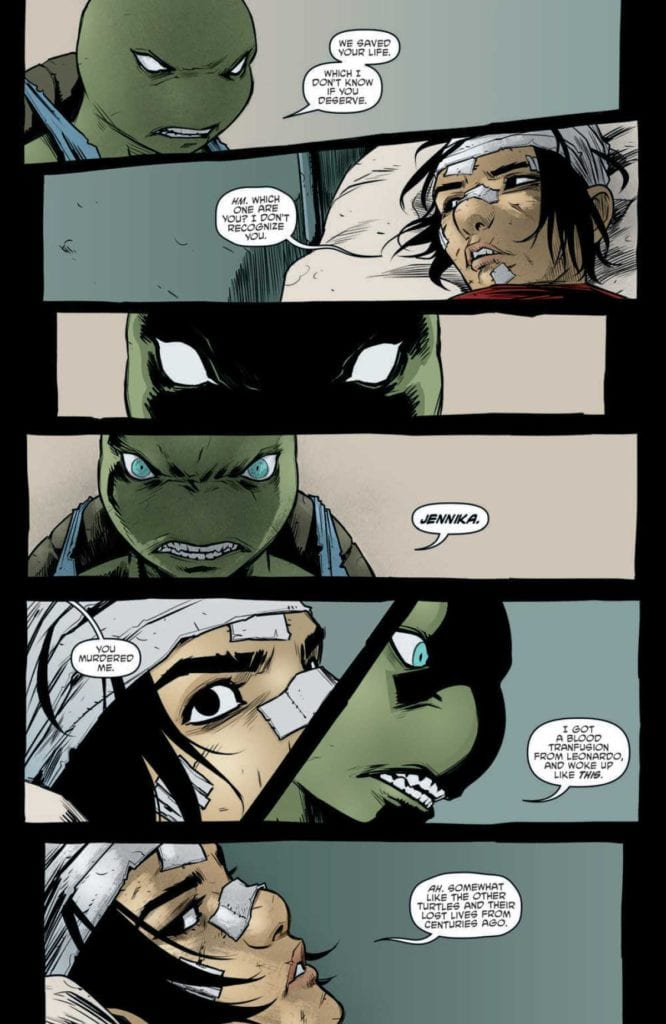
The crux of the issue, however, lies in Jennika’s confrontation with the injured Karai. Jennika reminds Karia who she is and what the Foot assassin did to her life. The scene is so tense readers can almost feel the heated rage between the two.
Writer Sophie Campbell structures the narrative effectively; her story paces well when moving from the Splinter Clan base to the streets of Mutant Town. Throughout this process virtually every character’s personality displayed, especially that of Jennika. Readers will find themselves drawn into these tense interactions as if they’re a part of them.
Artwork
The illustrations in this issue did a great job of crafting emotive characters. Campbell’s penciling and ink work provided detailed expressions on characters like Jennika and Karai, highlighting their troubled history.
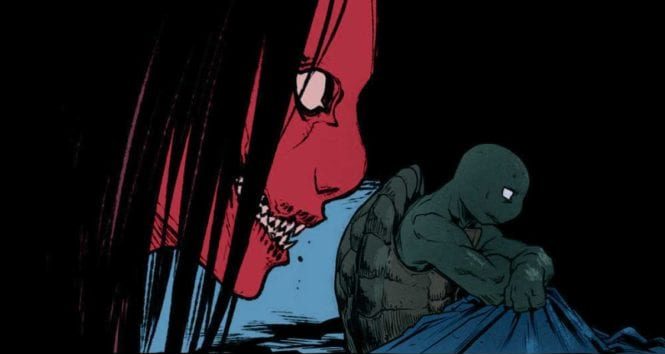
This dynamic is further fleshed out by colorist Ronda Pattison; her effective use of shadows highlight the deep-seated rage within these characters. In addition, Shawn Lee’s lettering is placed strategically around each characters so as not to distract readers from the illustrations.
Conclusion
TEENAGE MUTANT NINJA TURTLES #114 is the dramatic issue we’ve been waiting for. Tensions are high between Jennika, Karai, and other the characters, which could lead to wild changes in the future.
Do you like think the Splinter and Foot clans will ever come together? Let us know in the comments below!
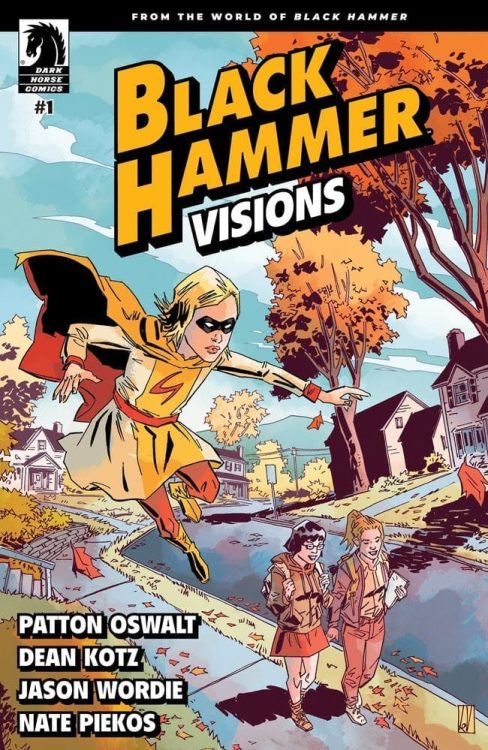
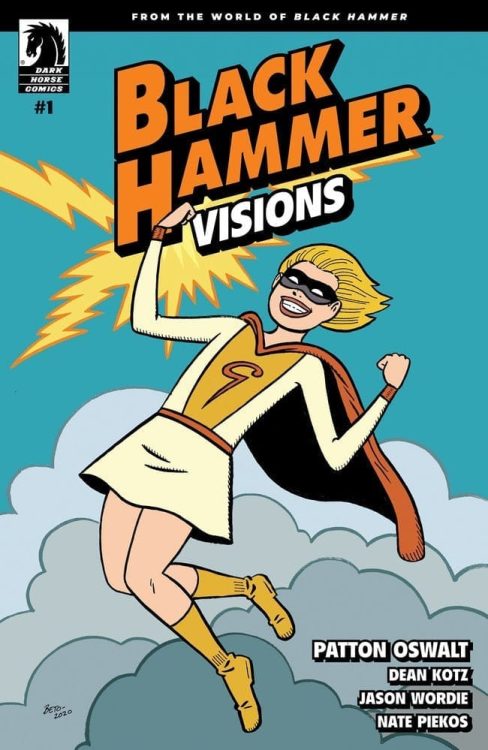
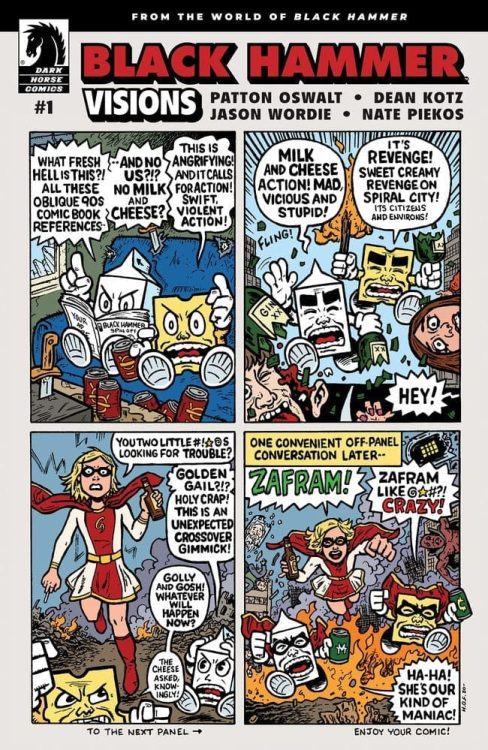
Graduation day is huge. It feels like the end of everything. But it’s tempting to downplay the whole event. Hell, it’s just high school, right? But writer Patton Oswalt, artist Dean Kotz, colorist Jason Wordie, and letterer Nate Piekos have empathy for teenagers leaving the world they know. Black Hammer: Visions #1 follows two teenage girls on their graduation day. They talk about their lives in Rockwood and the people who have left a mark on them. Dark Horse’s new series, Black Hammer: Visions, is a collection of one-shots, featuring some of our favorite Black Hammer characters. This first issue is a charming starting place.
Writing
Oswalt immediately has us liking high schoolers Barbara and Eunice. They’re a couple of misfits, but they’re proud of that. They talk about high school, a world they’re leaving behind, with a subtle mix of wisdom and denial. Eunice knows it’s not the end of the world, that they’re just graduating, but Barbara knows it’s the end of something. Yet neither of them spend much time talking about leaving high school. Oswalt makes it seem like that might be because they’ll secretly miss it. Instead, Eunice reminds Barbara of that one girl they knew back in elementary: Gail. Eunice’s stories about Gail don’t have big, dramatic moments. They’re stories about her swearing in class and being caught with cigarettes in the bathrooms. But it’s in all the mundane details that Oswalt sprinkles in tiny, significant moments. Gail may have actually shaped Eunice into who she is. And because Oswalt’s way of showing this is quiet and unassuming, it’s also deeply moving.
Art
Kotz makes this issue look like a photo album or scrapbook. Panels overlap each other, looking like photos that have been glued in place. It’s a perfect look for a story about memories and graduations. But Kotz also shows us what memory felt the most intimate to Eunice. As she relays all the times she remembers seeing Gail, we see Gail as a small figure on the page. She’s another kid in the crowd. But, in one brief moment, Barbara, Eunice, and Gail are all playing out in a field together. We get a close up look of Gail’s face as she runs towards the reader. What’s odd is, she’s smiling. Then the image shifts. She’s still close, but her face has changed. She’s got her eyes clenched shut and she’s sweating. Her face is full of pain. Eunice is remembering the one time she felt close to Gail and so Kotz is depicting Gail as though she’s close to us, as readers. It’s the one time they had unadulterated fun together, but it’s also the one time Eunice got a glimpse of Gail’s inner turmoil.
Coloring
Wordie shows this graduation day as a bright time for Eunice and Barbara. The sun is out, the diner looks cozy, and everything seems optimistic. And when Eunice walks us through some of her memories, the color palette gets slightly dimmer. We get the sense that these were happy times. The coloring is still bright. But these are happy times that have faded with age, a little. They’re not as clear as the present day. And finally, when Eunice and Barbara end out the issue at a party, the colors get darker. Wordie makes the moment feel a little more serious, yet still full of beauty. It’s as though Wordie is telling us that these girls are growing up. Things will be colored differently in their lives from now on.
Lettering
Piekos’ lettering shows the playful banter that Eunice and Barbara have mastered. Their word balloons are connected by winding tails, giving a bounce to their dialogue. But there seem to be plenty of opportunities to create more rhythm in this issue. When Eunice yells at Gail, her speech is long and complicated. But it’s presented in one single chunk. Occasionally, this seems to be deliberate. Piekos communicates a breathless excitement through some of the dialogue. There are no pauses, the characters just charge right through to the end of their line. But there are a few moments that feel rushed over. Real moments of panic and confusion aren’t given time to sink in.
Dark Horse’s Black Hammer: Visions #1 is an empathetic and warm look at high school graduations. It follows Eunice and Barbara, two girls whose lives are changing. But Oswalt, Kotz, Wordie and Piekos never talk down to these characters. Instead, they remind us what it was like for us to graduate high school. They show that it doesn’t take Armageddon for worlds to end. Sometimes it just requires moving on, as hard as it may be. Pick up Black Hammer: Visions #1, out from Dark Horse February 10th, at a comic shop near you!
California Christmas is a heartwarming film starring Lauren Swickard and real-life hubby Josh Swickard as a pair of opposites coming together to find laughs and love. Director Shaun Paul Piccinio and Cinematographer Brad Rushing continued their long-time collaboration in a film bringing California and Christmas together.
Callie (Lauren Swickard) runs a dairy farm that’s been in her family for a long time. Its hard work made even more challenging after the loss of her husband. Joseph is a businessman with orders from his boss and mother to close a deal acquiring Callie’s farm. Joseph heads to the farm to get down to business when Callie mistakes him for the new ranch hand. It’s then that Joseph learns that Callie has no plans to sell, and he hatches a new plan to get the deal done.
PopAxiomspoke with Shaun and Brad about their road to making movies and creating a Christmas movie for Netflix.
Do It All
Shaun and Brad both grew up with a focus on being creative professionals.
BRAD: “My background was fine art. Since I was a little kid, drawing’s been a favorite thing. I’m also a musician, and I make a lot of music and write songs. I went to a fine arts high school called the High School for Performing and Visual Arts in Houston.”
SHAUN: “I grew up in the theatre. My father was a drama professor, and he produced Shakespeare in the park and other shows for 35 years. My first play was at five-years-old with Oliver Twist. My mother also encouraged me to pursue the arts.”
For both director and DP [Director of Photography or Cinematographer], their teenage years included deep dives into creativity.
BRAD: “We had a media department, and one of my friends came into the art department and asked if anyone wanted to draw some cells for an animated movie he was doing. I thought, ‘That sounds different and fun.’ I did it, I took it to 11, beyond his specifications because I threw myself into it. When I saw that and saw my art existing in the dimension of time with movement and change, a light went off.”
SHAUN: “My parents bought me a video camera when I was 11-years-old and started doing stop-motion animation and doing music videos. At sixteen, I started directing commercials for local mom and pop shops around town. I would go in there and pitch them a wild idea, and one out of five would say yes. Before I left for college, I had directed about 30 commercials in my hometown. That’s kind of how I cut my teeth. I was doing reel-to-reel editing.”
During and after college, both filmmakers found their strengths and passions.
BRAD: “I went into college as a double-major but eventually shifted my focus full-time to filmmaking. I initially wanted to be a director. The first film that I got to be a part of which was a low-budget indie thing. I watched the director. Everyone was coming at him from every direction wanting a piece of his time. Meanwhile, I saw the DP, and for the most part, people were leaving him alone, but he got all the toys. He got to make the visual magic.”
SHAUN: “I’ve done every job; I was an extra for a year, and I treated that as my film school. I brought notepads and took notes on the different terminology and departments. The way I looked at it, I was getting paid for film education. I was a runner getting lunches and coffee for TV shows. I viewed all of it as my education. Luckily, I was able to move up pretty quickly. The process of telling stories has always inspired me.”
“Years later, as I was reflecting,” Brad says, “so many of my interests converge at cinematography. The visual arts, science, history, even music. There’s a rhythm to the camera moving. I will find that there are rhythms in the way we do things, and beats happen.”
When Shaun said he’s done “every job,” he means it. “I also have a background in martial arts. I was also doing fight choreography and performing stunts. That lead to stunt coordination then second unit directing, which lead to first-unit directing.”
About California Christmas
If you think California Christmas is your typical Christmas movie, you’d be partially right. It’s got plenty of tweaks on the formula that make it interesting to a broader range of viewers.
BRAD: “It’s funny; I’ve had several friends who’ve said to me, ‘I’m not a Christmas movie, romance kinda guy, but my wife was watching the film, and I got hooked into it.’
SHAUN: “It was a conscious choice to do things differently. There are a lot of tropes that we do still hit. But we tried to bring in interesting things, different characters. Amanda Detmer’s performance and her story are unexpectedly heavy. We found a nice balance for people to enjoy.”
How did Shaun and Brad become a part of California Christmas?
SHAUN: “We both have a friend, a producer, and also a stunt coordinator, Noel Vega. He brought us together. He’d worked with both of us. Noel suggested Brad. Now, California Christmas is our sixth or seventh project together.”
BRAD: “What I would add, the editor of California Christmas, Brett Hedlund, is a friend of mine from way, way back. We met working for Roger Corman at Concord/New Horizons in the 1990s. We have been friends ever since. We’ve done a variety of projects and enjoy one another’s company. I knew a lot of players on the project. It was serendipitous. It was so fun making the movie even with the challenges of COVID protocol.”
So, what makes California Christmas different than your usual Christmas movie? The answer is in the title.
SHAUN: “It’s a Christmas movie, but it’s also got California in the title. People have an image of California with sunny coastlines. We wanted to invoke that warm quality, glowing light to the imagery. We looked to Robert Redford films like A River Runs Through It and Horse Whisperer. The city portion of the film, which is not that long, has cool tones and a little more sterile versus when we arrive at the ranch.”
BRAD: “Shaun is a huge lens geek. He’s got this wonderful collection of all these lenses that he’s curiously picked up over the years. One of the things he likes to do is shoot on vintage anamorphics. For this one, we went with a KOWA. Part of the design and what we got from the films we looked at was the framing and the showcasing of these gorgeous natural vistas. Huge, lingering wide shots that give viewers a sense of place, time, and identity.”
“I’m a geek for two things,” Shaun says before pausing for a moment to think about that, “well, probably more things, but I love filmmaking and technology. I love the look of old films and film, so we try to recreate that with digital. What I loved about the KOWA was that they’re a great size. A lot of times, an anamorphic lens is big and heavy. I was impressed with the KOWA.”
Brad shares a bit of guerrilla filmmaking due to modern restrictions. “There were many things that we did to mitigate the challenges of the COVID protocols. One of those was, Shaun and I went out on our own, even on days off, and shot with his Black Magic pocket cinema camera, using his vintage lenses and an anamorphic adaptor from SLR Magic. We shot b-roll, establishing shots, we used a drone. All that b-roll was just the two of us. With the schedule, it was the only way to do it.”
https://www.youtube.com/watch?v=28MO3ngJNto
About That Scene
California Christmas plays with tropes, does its own thing, and even adds a moment that will make most viewers squirm. Don’t worry, readers; we won’t spoil the specifics. But the scene is a perfect marriage of movie magics.
SHAUN: “That makes me so happy that the illusion worked! It’s a combination of visual FX, camera tricks, and some old-school movie tricks. When it’s all stitched together, it all works.”
BRAD: “The performances too help us with the misdirection. Most of it is cheating and implied action. You’re buying the story based on the reactions and dialogue.”
SHAUN: “The sound design too. Our team does such amazing work. Our art department, too, they whipped up some great FX for that scene.”
“You should tell the story of how you met the VFX artist who put it all together,” Brad jokes.
Shaun laughs and reveals the mystery “I did the sequence myself. I did a temp for it. Everyone thought the temp looked great and said I should just do it. I’d done a lot of the work already, and so I took care of it.”
Wrapping Up
As life-long fans of all things creative, who make up part of their respective creative DNA?
BRAD: “I come from a fine arts background. My inspiration is very eclectic. Everything from classic artists like Hieronymous Bosch to Edvard Munch, they’re both so incredibly evocative. In terms of filmmakers, one of the most influential films to me was the original Alien. That is, in so many ways, my favorite film. I’m a horror fan going way back. My dad would let me stay up and watch old black and white horror films like The Thing From Another World or The Man From Planet X, all of that crazy stuff. Alien is one of the first of two movies that scared the bejeezus out of me. I love that word, the characters, that ship, and the lighting. The other thing I would throw into it is that I’m a big believer in my world experiences. When we talk about Robert Redford films, we use it as a starting point and add my real-world experience to it.”
SHAUN: “My film influences are wide and vast, from Buster Keaton to Ridley Scott. Alien is probably my favorite horror movie, Blade Runner is amazing, and so is Legend. Kurosawa is a big influence on me. The first Rocky movie, the performances, and the way it comes together. You know, he doesn’t win at the end, but he does. Also, the story of how that film was even made is so inspirational to me. Robert Rodriquez, he is a huge influence, especially the way he made El Mariachi. One of the first feature films we did it on the same budget that he did, around $7,000, and that was a conscious choice. We wanted to try and make a feature with the same resources that Robert had. I’d love to work with him. Guy Ritchie, Tarantino, and Tom Tykwer, who did Run Lola Run. The creativity in that film was a moment for me. Braveheart was another big one for me.”
What do Shaun and Brad think of remakes, and how would they approach an opportunity to play in the world of a long-time franchise?
SHAUN: “I don’t know if I want to say. I’ll give the idea away. I hate to do remakes of masterpieces, but I would say I want to do a live-action remake of The Last Unicorn. That is on my wishlist. Someone will beat me to it, or maybe they won’t do it, but that’s been on my dream board for a long time. I know I can tell that story in a way that honors the original piece.”
BRAD: “I am not a fan of remakes at all. Sometimes when you remake something for a new generation, it can exist alongside the original. The Thing From Another World is one of my favorites, and I do like John Carpenter’s The Thing. So, I’d like to do a sequel and play in a world. Being a Star Trek fan, people ask me if I want to Star Trek and I kind of don’t. It’s my indulgence, and I don’t know if I want to go behind the curtain. But I would love to do more space-based science fiction. I’m such a huge fan of the genre and working with visual FX. I’d love to do a historically accurate film set in ancient Egypt.”
California Christmas was a hit on Netflix during the holiday season and will bring a smile to viewers’ faces all year round on the streaming giant. So, what’s next for the long-time collaborators?
SHAUN: “Brad and I both have a couple of projects that will hopefully release in 2021. One is a World War II epic we filmed. We shot a bunch of amazing stuff. The other one is Salvage Marines, which is a science fiction action series. Both projects star Casper Van Dien. Be on the lookout. Also, American Fighter is coming to the US in March through Lionsgate.”
Is California Christmas on your watch list?
Thanks to Shaun Paul Piccinio, Brad Rushing,
and Kingmaker Communications for making this interview possible.
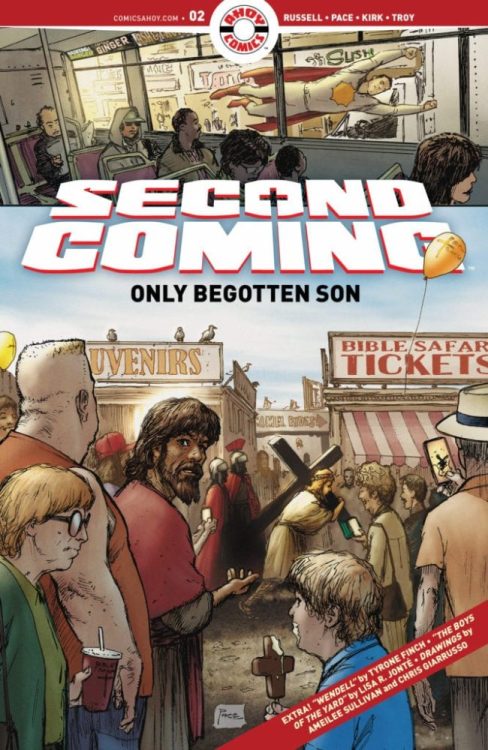
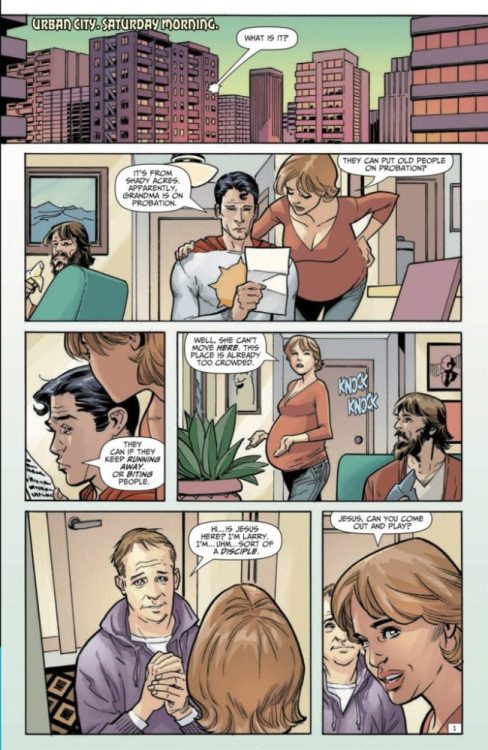
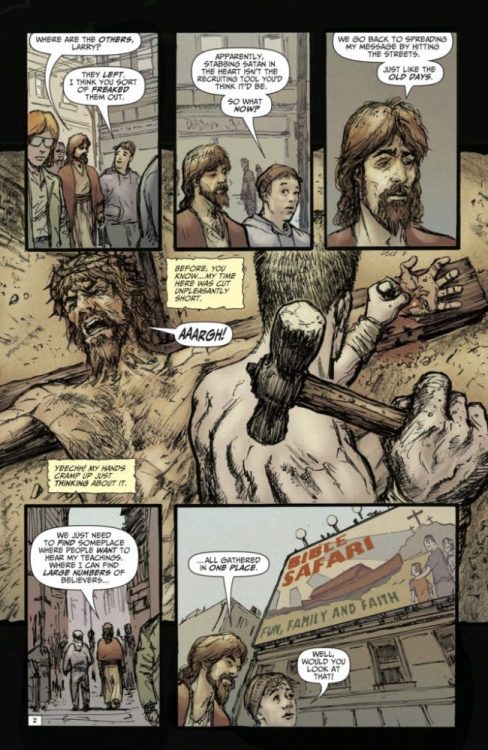
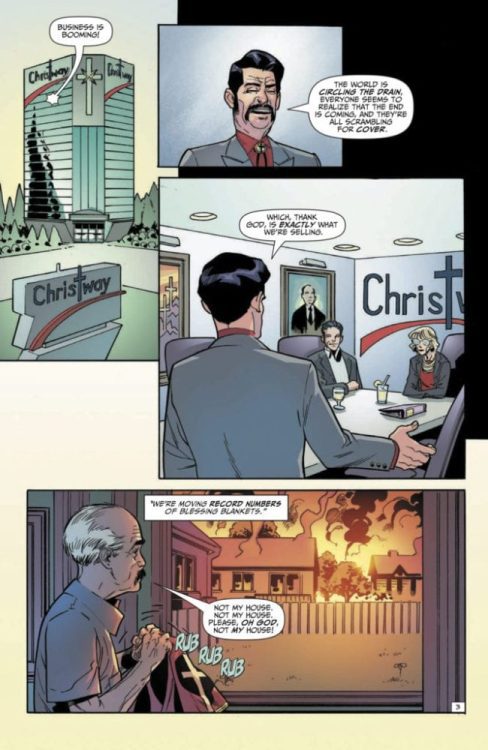
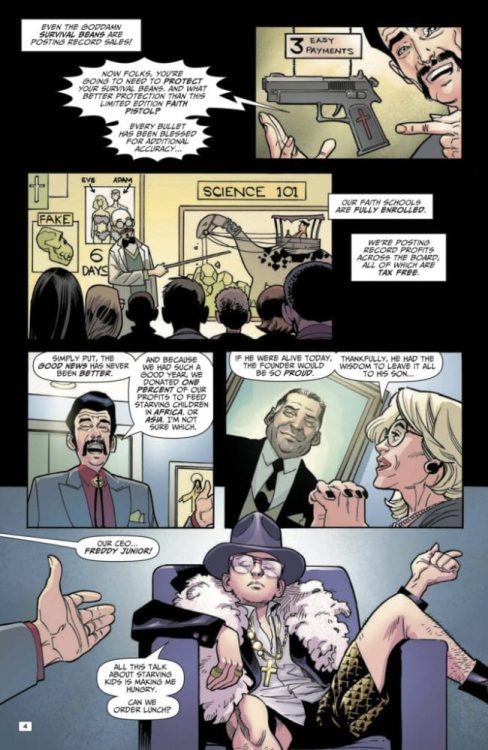
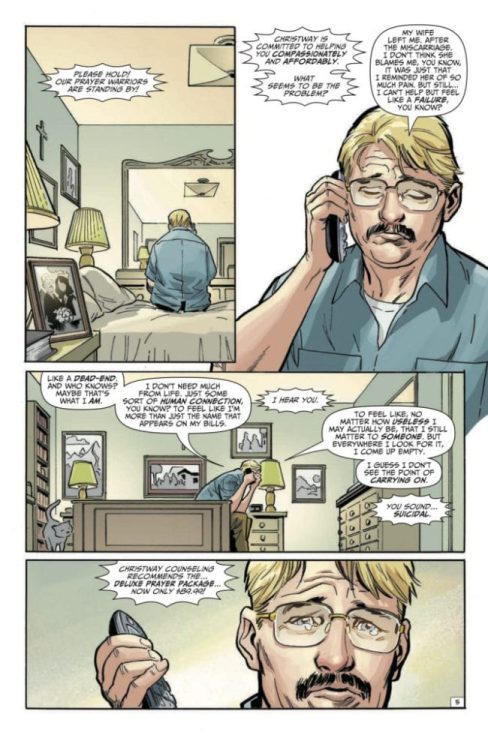
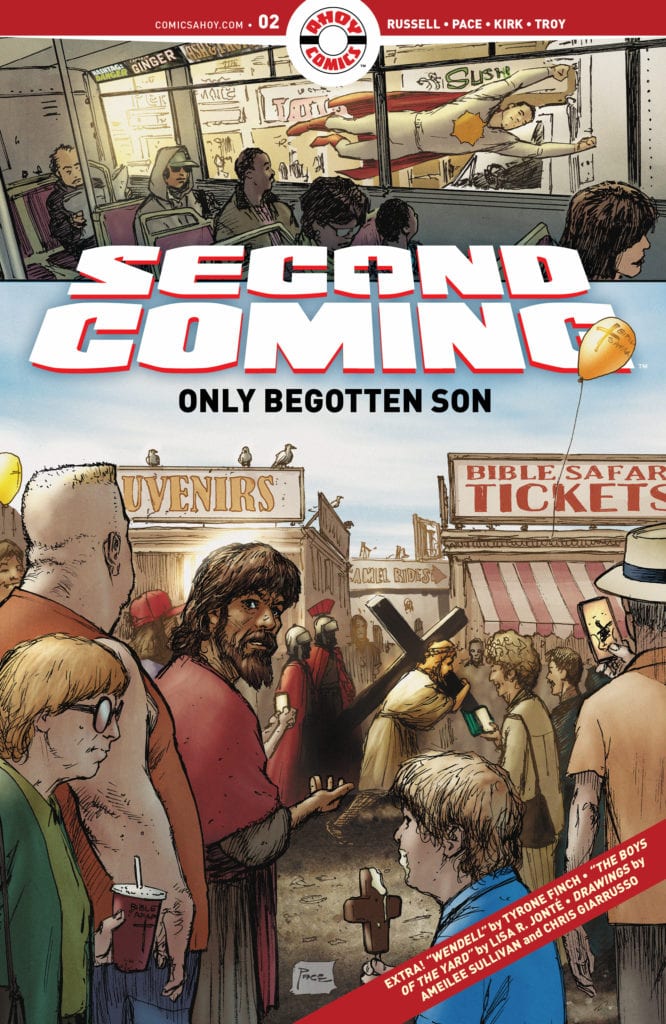
SECOND COMING: ONLY BEGOTTEN SON #2 hits your local comic books shop on February 17, but thanks to Ahoy Comics, Monkeys Fighting Robots has a five-page preview for our readers.
The book is written by Mark Russell, with art by Richard Pace, Leonard Kirk is the finisher on the Sunstar pages, Andy Troy is the colorist on the Sunstar pages, and you will read Rob Steen’s letter work. Pace created the cover.
About the issue: Chaos, weirdness, and corndogs reign when Jesus innocently stumbles into Bible Safari, a profit-squeezing amusement park that trades in his image. Meanwhile, Sunstar gets some disturbing news about his earthly foster-grandmother. Later, Jesus stands to recruit a new disciple—if he can inspire said disciple to keep on living! Also featuring illustrated bonus stories in the AHOY tradition.
Check out the SECOND COMING: ONLY BEGOTTEN SON #2 preview below.
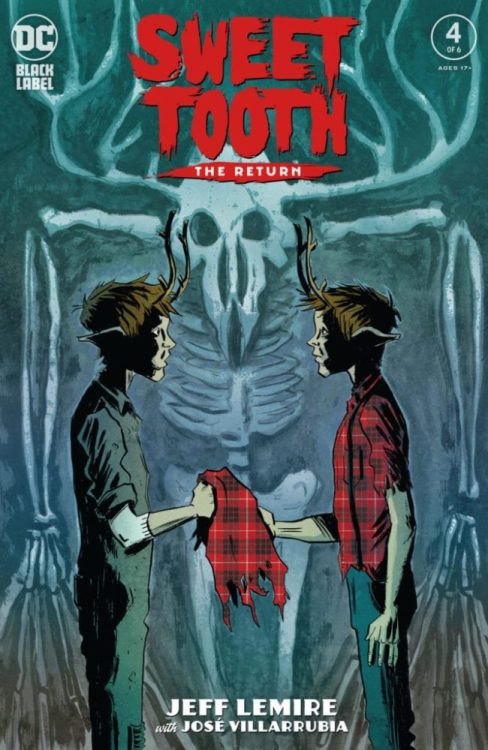
The mysteries behind writer and artist Jeff Lemire and colorist Jose Villarrubia’s sequel-series are revealed in “Sweet Tooth: The Return” #4. This chapter finally irons out all of the secrets and connections between this series and its predecessor, and in a manner that builds the characters in ways that are meaningful. Complete with dirtbag villains and lovable protagonists, this is yet another winner from Lemire’s catalog and is certain to be a treat of an issue for fans of the original comic.
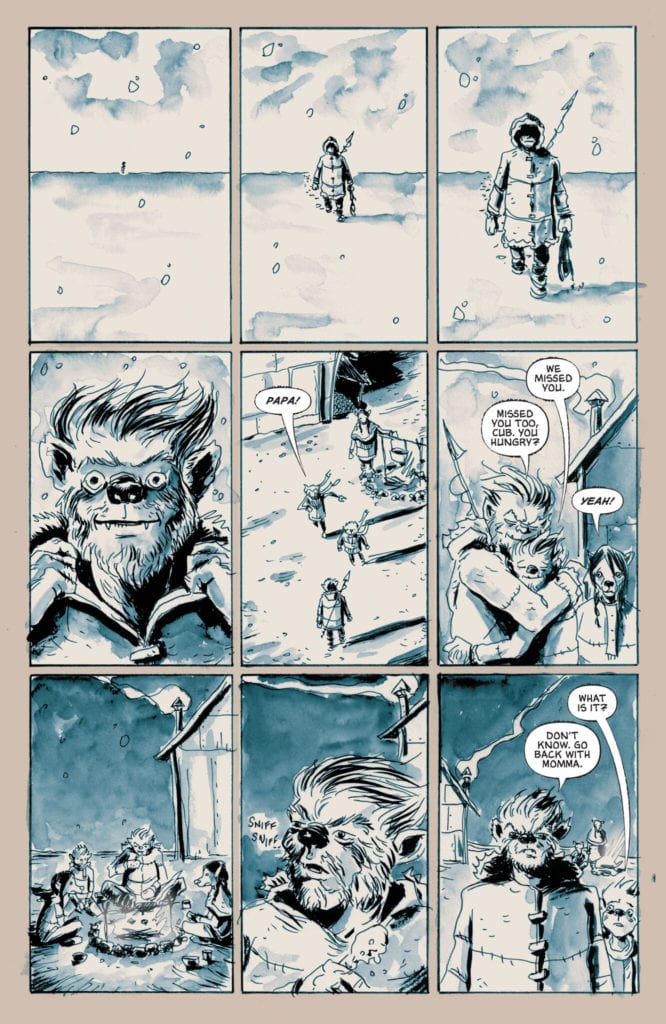
“Rejoice! For at long last the tale of the Boy’s miraculous birth is revealed. A savior born of holiness and science! Truly, such a feat could only be conducted by one as holy as Father. Behold! As the stage is set for the final confrontation between man and the abhorrent hybrid beasts that walk the earth! Praise! For out of nothing Father has birthed a savior: the Boy.”
Writing & Plot
Jeff Lemire’s focus in “Sweet Tooth: The Return” #4 is to catch the audience up on how exactly this story came to be in reference to the original. This is arguably the issue that everyone has been waiting for, the answer to why and how this story exists when the original wrapped up so perfectly. Lemire handles these events through the same flashback lens that the original comic used, though saying anymore would definitely lead to major spoilers. Many characters and events from the first Sweet Tooth series are namedropped here, and this is going to be the issue that gets fans talking about this mini-series. Admittedly, this is a much more dialogue and exposition-heavy issue than most Lemire comics, but it’s all delivered so naturalistically and in such a character-centric manner that it’s never boggy or boring. The main villain in this comic goes from your average a-hole to a prime example of complete human garbage over the course of this issue as we examine what his motivations are. While ‘The Boy” and his friends don’t get much attention this time around, there is enough development around them tied in with this issue’s revelations to keep developing our interest in this trio of kids. This is an comic that satisfies our long-standing curiosity about how this story came to be, as well as leaves us deeply anticipating the next chapter.
Art Direction
Every time a new issue comes out, I have to talk about just how perfectly charming Jeff Lemire’s pencils are. So, once again for “Sweet Tooth: The Return” #4, Lemire crafts this story with his artistic skills just as much as he does through writing. His wiry, rough hewn penciling is offered with a definite attention to character, with simplistic but effective expression animation. His panel direction is relatively straightforward, even with how this comic bounces from past to present. Lemire’s style really sells the uncanniness of the more haunting settings in bone-filled crypts and disturbing laboratories. Despite its outward lack of polish, Lemire’s art always has this sense of care in the visual work that makes his art all the more endearing. Now admittedly, much of what makes the visuals work so well here, and did in the original comic, is the colorwork of Jose Villarrubia. His tone-rich watercolors set the tone perfectly for every scene, ranging from the deep browns and greens of the woods to the dirty ruins of an old lab. Villarrubia also uses a neat kind of faded postcard look for the flashback sequences, and it’s a really neat take on the black and white color scheme. Overall this is once again another perfectly fitting visual experience for the story being told.
“Sweet Tooth: The Return” #4 is the piece of the puzzle we’ve all been waiting for. Jeff Lemire takes us through the events that separate the original series from this one via character-focused flashbacks and familiar plot devices. His visual work is his usual perfectly charming and unpolished style that is aided to perfection by Jose Villarrubia’s colors. This issue makes the wait for the following chapter almost intolerable, so join in on the suffering by picking up this comic when it hits shelves on 2-9!
The thought of comics brings different terms like villains, heroes, the supernatural and superpowers, and aliens to mind. A term like gambling is probably the last one that would associate with comics. Notwithstanding, comics and gambling have come a long way together and have also evolved over the years.
Lately, several kinds of gambling comic books that feature plots that relate to betting and or characters who like to gamble have surfaced. And to make it more interesting, people’s love for comics has grown to the extent that lots of the industry’s most loved characters can be found in slot games on the game floors of land-based casinos and online casinos as well. This makes us wonder when exactly did the relationship between gambling and comics begin? Well, here’s a brief history of their evolution together.
The Representation of Gambling in Comics
Comics did not just provide entertainment in the early-mid-20th century, and they served as moral lessons for all to share, including the dangers of gambling. The history of gambling in comics can be traced to two Superman stories from the 1940’s worth noting.
The stories are ‘The Gambling Racket in Metropolis’ and ‘Superman and the Number’s Racket.’ The two tales focus on suicidal gamblers who are saved and helped by Superman. As a matter of fact, the Man of Steel was so disturbed by his encounter with the gambler in ‘Superman in the Number Racket’ that he goes on a warpath against all of Metropolis’s gambling syndicates.
Furthermore, the misrepresentation of gambling also affected every form of betting activity in comics. Children were all warned to steer clear of gambling as it was described as a way to ruin your life’.
Gambling and comics went farther apart as gambling villains starting to feature in comics. The Green Lantern villain, Steven Sharpe III, for instance, was famous for his terrible gambling addiction. The addiction led to his death eventually, and this was one of the many examples of gambling ruining a life. But when the likes of Harvey Dent, one of the most popular Batman villains, joined, characters that placed bets became famous and exciting to the readers.
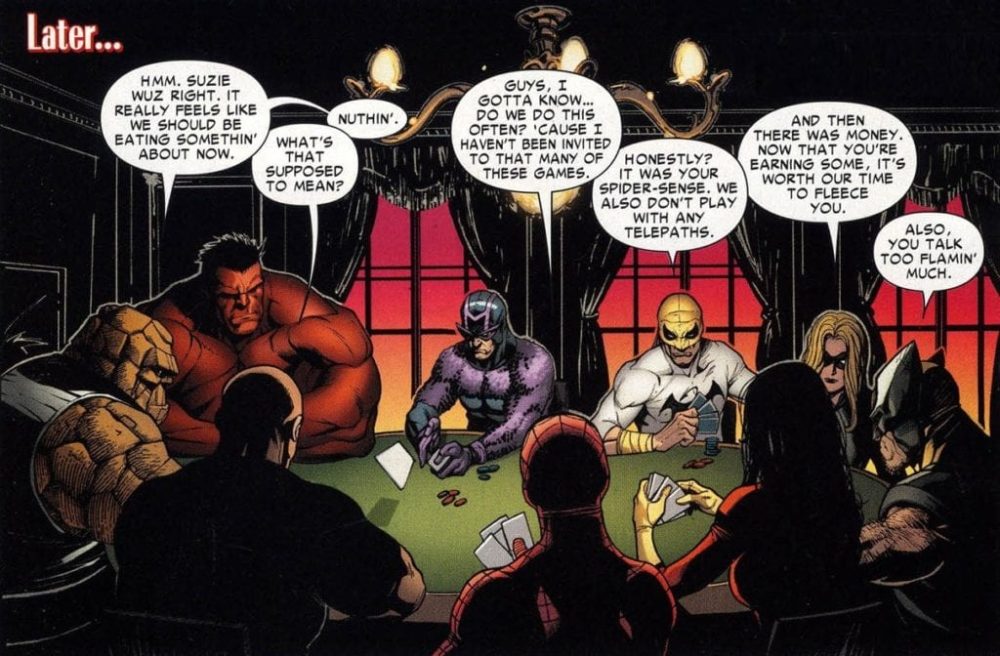
However, the cast of characters that had gambling addictions was totally unrelated. Their lives outside comics didn’t determine how they acted. A perfect example that proved that you didn’t have to be a villain to gamble was Marvel’s mutant, Gambit. Gambit is one of the X-men characters that love to play poker, and gambling is mostly part of who he is.
Casinos and Comics
However, there have been several technological advancements in both gambling and comics, such that superheroes like Spiderman, Ironman, Batman, and Superman have been inspirations to different casino games. Now, we have casinos paying homage to the superheroes and comics by featuring them in their game selections. Initially, it started with superhero and comic-inspired slots made available in land-based casinos in Las Vegas.
One of such is the Iron Man slot based on the very first Iron Man movie. Then, online casinos like comeon.com started offering them to players also, as some slots and casino games were superhero-themed and comic-based. These games include; Flash Slot, Kick-Ass Slot. Justice League Slot, Green Lantern Slot, Hellboy Slot, and many others. The provision of these games has become a win-win situation for both players and casinos.
Comic book fans can now play real money games themed after their favorite superheroes, and casinos have also been able to grow their followers and bond with their customers. What started as a means for criminal activity with the sole aim of dissuading children from gambling has now become an interesting, enjoyable aspect of comic plots and characters.
Sator sets a grim tone for itself early on and manages to establish a chilling atmosphere, but still comes up short. There’s so much attention to creating this unsettling atmosphere that little attention was given to the characters involved. Sator is a slow burn that almost gets it right, but with a story carried by hollow characters and subpar acting, it squanders the potential it showed.
The most frustrating aspect of Sator is its ability to keep you invested in the story despite the lackluster characters it centers on. The mythos of Sator isn’t fully fleshed out, but this knowledge of a supernatural entity stalking this forest is built up tremendously. A brilliant build to the film’s final moments where this entity is finally showcased. Directed and written by Jordan Graham, Sator stars Michael Daniel, Rachel Johnson, Aurora Lowe, Gabriel Nicholson, Wendy Taylor, and June Peterson. The film follows a family as they are terrorized in the forest by an entity known as Sator. Taking place primarily in a cabin in the woods, Sator has come to claim them all.
Graham’s supernatural entity is what keeps this screenplay afloat, and it’s this constant uncertainty of where it is during most of the runtime that makes the film uncomfortable at times. Besides that, the family it centers on is there to assist with making Sator more important than they are. The screenplay doesn’t balance out the development for these characters, which results in them coming off one dimensional. They are reduced to being nothing more than hype men for the entity you will anxiously be waiting to meet. Sator takes place mostly with Adam (Nicholson), a member of this broken family who is secluded in the woods. Graham’s screenplay doesn’t offer much about Adam, so there’s no room to care about him or his fate.
Thankfully, Sator is more interested in evoking fear with its lingering sense of dread that only intensifies with each scene. The atmosphere in this film is undeniable, and it assists with some horrific shots that are shown at certain points. The overused jump scare methods are in short supply here, but the terror is still present thanks to a concern with generating fear from within by playing with the human psyche. Performance-wise, Sator doesn’t include many performances that should be considered good, but they are sufficient enough. Nicholson is fine as Adam, but his delivery is flat almost every time and he isn’t given much to do. It’s mostly people standing around with glazed over looks, or just staring in the direction of the camera.
When a filmmaker understands how to spark fear through tension building, long tracking shots, and creating a spine-tingling atmosphere, it should never go unnoticed. Graham may have come up short with his script, but he directs this film very well. He opts to build on this fear of the unknown by establishing this unsettling vibe from the moment Sator starts and doesn’t relinquish it until the film fades to black. Also, the cinematography from Graham is beautiful as well. It accompanies the grim mood he manages to consistently keep throughout the film’s runtime. Graham put together the haunting score that will linger in your mind after the film has concluded as well.
Sator might be similar to Hereditary and The Witch, but what it lacks is quality characters to become invested in. A slow burn that will continue to be felt for some time after and Graham has put together a solid folk horror that keeps you on the edge. Sator could be in the discussion of art-house horror for its style and technical strengths highlighted throughout. Unfortunately, Graham’s genius behind the camera didn’t fully translate to the script, which keeps Sator from reaching its potential in the end.
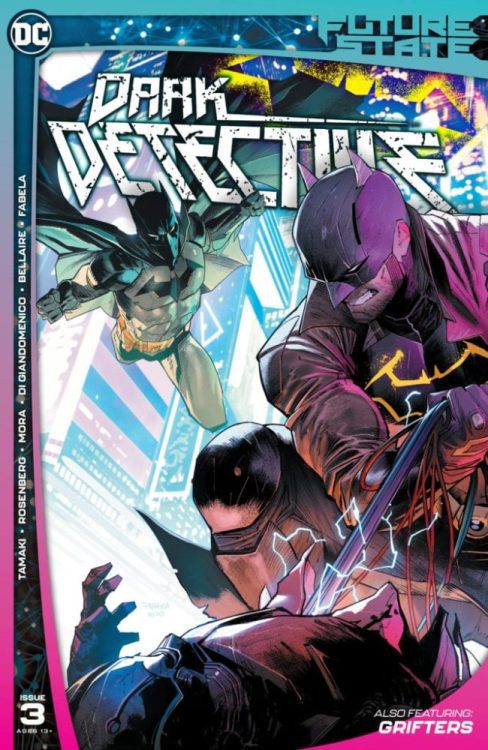
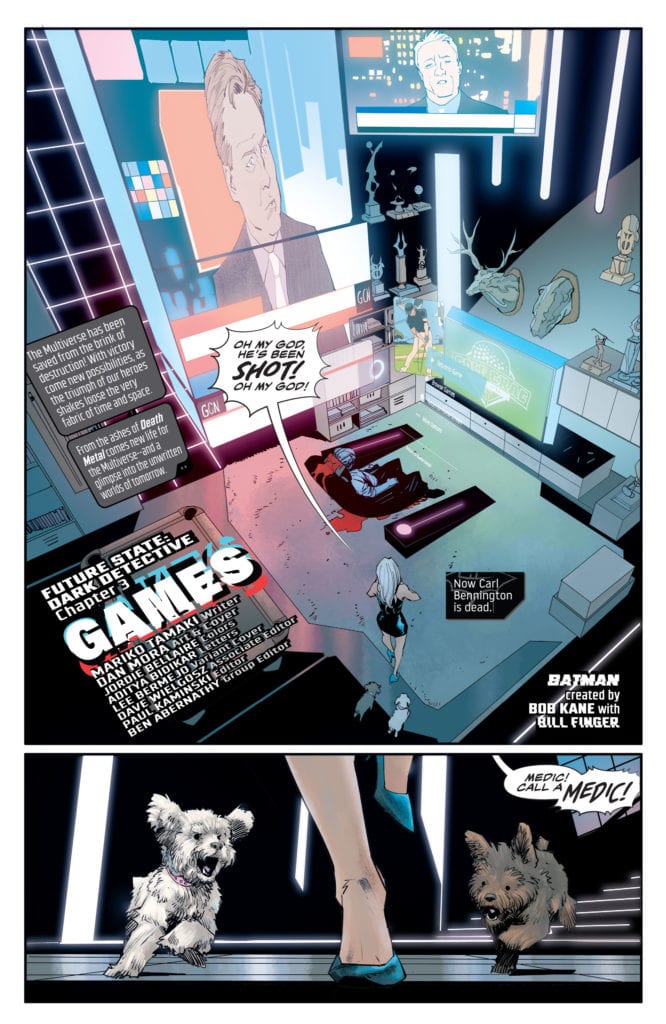
Bruce and Grifter find themselves backed into a corner in DC Comics’ Future State: Dark Detective #3. In “Games,” written by Mariko Tamaki, with art by Dan Mora, coloring by Jordie Bellaire, and lettering by Aditya Bidikar, Bruce Wayne on a tight budget is beginning to really understand the scope of the Magistrate’s power. And in “No Future Past, pt. 2,” written by Matthew Rosenberg, with art by Carmine Di Giandomenico, colors by Antonio Fabela, and letters by AndWorld Design, this creative team shows that when Grifter is at the end of his rope, he’ll live up to his name.
A Scared Bruce Wayne in “Games”
Writing
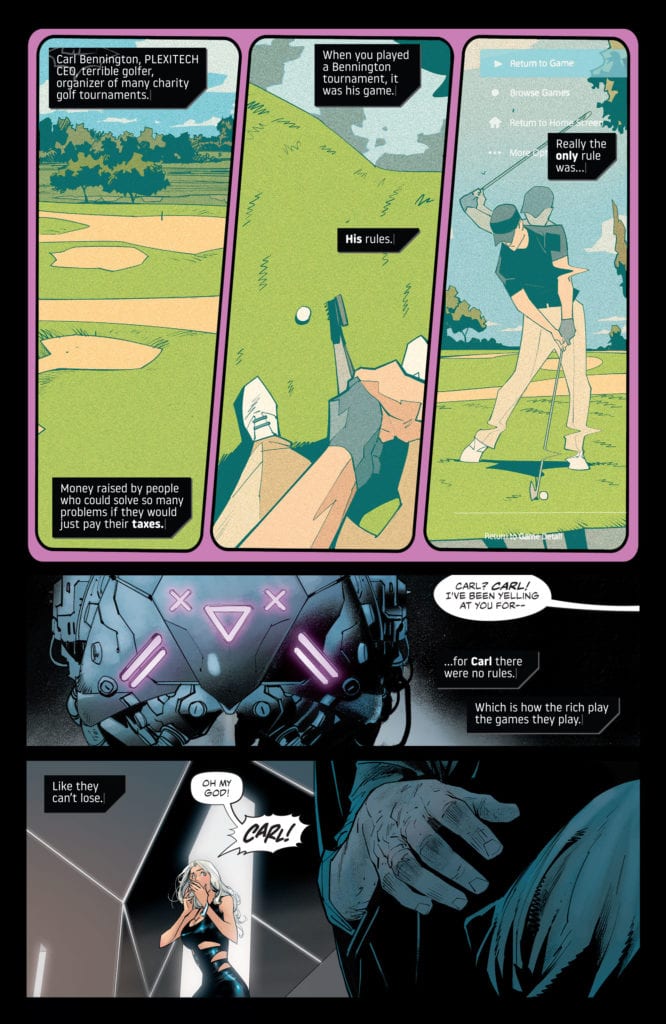
Tamaki’s script does a beautiful job of lulling readers into a feeling of safety. This is a script for a detective story. Bruce Wayne is finally rolling up his sleeves and getting to work. He’s following clue after clue down a thread that he hopes will lead him straight to the Magistrate. Yet things aren’t as simple as they once were for Bruce Wayne. He doesn’t have the same money or resources. And so, Bruce is capable of just enough detective work to figure out one thing: he’s screwed. Overwhelmed by the sheer power of the Magistrate, Tamaki leaves us with a Bruce Wayne who has been backed into a corner. Tamaki’s shift from a typical detective thriller to a story of a David and Goliath gets our hearts beating. For the first time in a long time, we’re not sure if Bruce is up to the task.
Art
Mora’s art plays on our fear of surveillance. At times, we’re seeing things through Bruce’s goggles. Other times, Mora is showing that the Magistrate sees everything. It’s funny, though, that we’re either seeing people surveilled by Bruce or by the Magistrate. Some scenes make a lot of the Magistrate’s toys look suspiciously like Batman’s. Mora doesn’t let us forget that Bruce has been behind all kinds of spying, himself. But again, this Bruce doesn’t have all the same gadgets he once did. Mora shows the stark contrast between Bruce and the Batman he once was. When Bruce and the new Batman briefly come face-to-face, Mora divides a picture of their faces down the middle, making them look like two halves of one person. Except that they look nothing alike. Bruce is scruffy, panicked and grimy, compared to the clean-cut new Batman, an image of who he once was. He’s changed a lot.
Coloring
Bellaire uses a lot of blues, purples, pinks and yellows in this chapter. The purples and pinks are familiar. The previous issues have been covered in these colors. That’s because these colors represent the technology that surrounds these characters: the neon billboards and the glow of the city’s lights. They have almost become synonymous with Gotham. Every cityscape we see is in a pinkish-purple hue. This technological rise has become inescapable. But the yellows and blues represent a fight against all of it. Blue is used to show Bruce’s own technology. These are his moments of fighting fire with fire. He’s watching the watchers. And the yellows are moments of chaos and panic. When Bruce gets to the end of his rope, the yellow explosions we see become a visual representation of his inner panic coming to a head.
Lettering
Bidikar makes each caption box almost look like a text box from online messaging. The first time we see Bidikar’s captions, they’re placed on top of an actual screen: an interrupted game of cyber-golf. And when the Magistrate’s drones arrive, their word balloons look similar to the caption boxes. They’re shown with straight edges and look like the corners have been cut off. Every panel, under Bidikar’s lettering, becomes a screen. These are no longer Bruce’s thoughts we’re hearing. We’re rifling through his phone, reading his private text messages. And so, Bidikar makes it so that we can’t experience this discussion of surveillance guilt-free. No, as we read, we become more and more aware of how much it feels like we’re spying on the characters.
Grifter Living up to His Name in “No Future Past, Pt 2”
Writing
Rosenberg amps up the action by keeping each line of dialogue short and to the point. He creates a sense of panic. From the get-go, Grifter has no time to talk or think. Every character is fighting for their lives, from the first page to the last. In fact, when characters calm down a little and begin to talk more, we panic. Rosenberg sets up such a fast-paced beginning that we get the sense these characters don’t actually have time to sit and chat. And with an explosive conclusion, he shows we weren’t wrong.
Art
Di Giandomenico plays with time in this chapter. He places some panels on top of others. These moments are so fast that they seem to occupy the same moment in time. A hand grabs at a character’s ankle and, on the panel beneath, he topples to the floor. He has no time to catch himself. But later, Di Giandomenico slows things down. As one character shoves another’s face into the ground, Di Giandomenico shows the sequence in five thin panels. Everything slows. The character is finally given time to take in his surroundings, even if half his face is in the ground.
Coloring
Fabela juxtaposes moments of calm blue with fiery orange. As our characters fight on a dock, Fabela adds speckles of orange flames all around the panel. It creates an almost 3-D effect. But Fabela mostly gives us a sense of hope. Every moment, though covered in chaos, looks like it could be peaceful. Each scene looks like a quiet morning that’s had destruction painted over the top of it. Fabela makes us think that these characters might have a future, if they ever get out of this. But as the story progresses, the presence of the orange destruction grows. Any chance of peace seems further and further from possible.
Lettering
AndWorld Design’s lettering creates pacing whenever possible. As Huntress and Grifter argue, she interrupts to tell him to shut up. Her word balloon almost gets in the way of some of his lettering. Her line is urgent and fast. Then, the sound of a smoke bomb being thrown through a window gets two separate noises. The “CRSH” of the glass breaking looks different than the “HSSSSSS” of the smoke. In these quick moments, AndWorld Design’s lettering still finds ways to show the sequence of events.
DC Comics’ Future State: Dark Detective #3 is another thrilling issue of a great new series. It has a brilliant and terrifying new chapter of Bruce Wayne’s days in a new Gotham and features the explosive conclusion to Grifter’s partnership with Luke Fox. Pick up Future State: Dark Detective #3, out from DC Comics February 9th, at a comic shop near you!
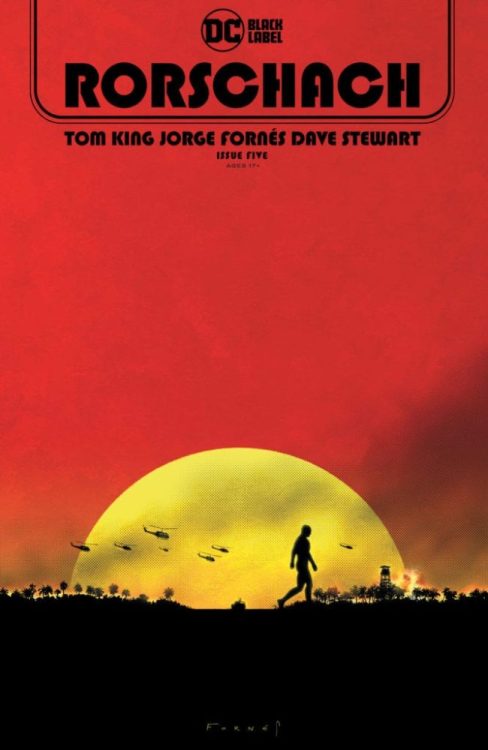
DC Comics’ Rorschach #5connects all the dots. But the picture we get isn’t much clearer. Writer Tom King, artist Jorge Fornes, colorist Dave Stewart and letterer Clayton Cowles open the floodgates of information in this thrilling mystery, but with every answer we have more questions.
Writing
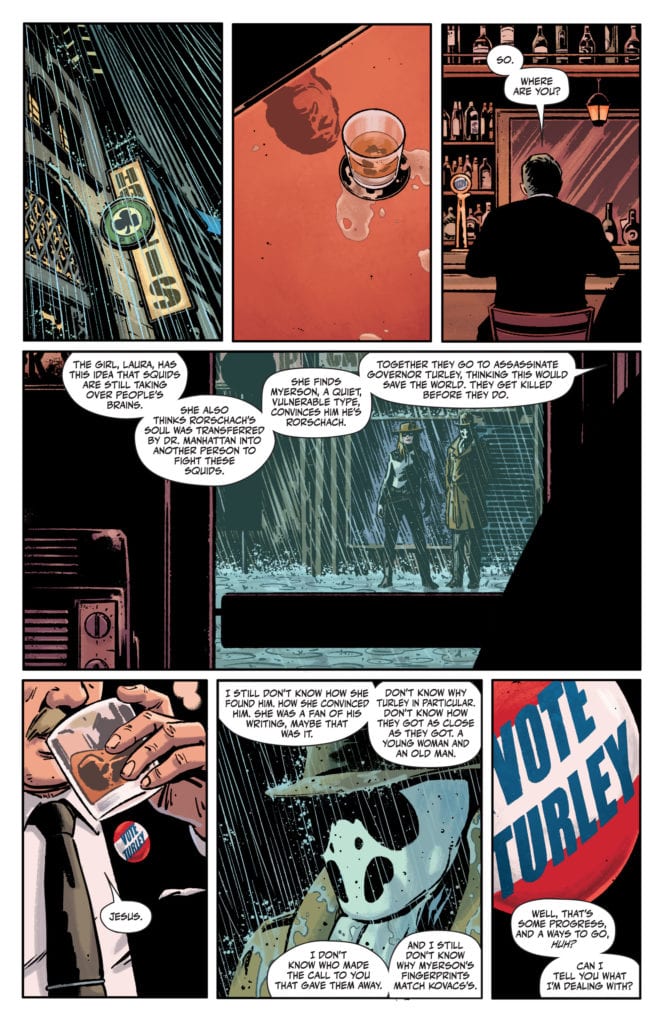
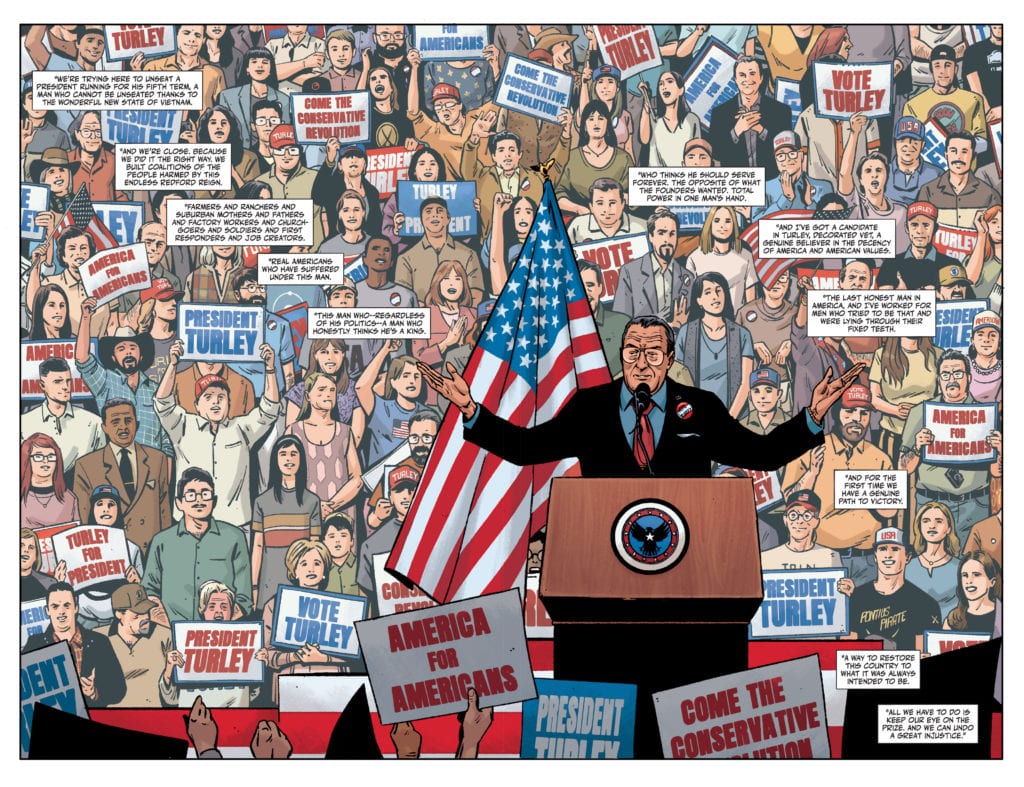
King isn’t one to exposition dump. So, when he does flood a panel with information, it’s worth taking note. In the first moments of Rorschach #5, King essentially gives us a run through of everything we know so far. Characters sit at a bar and try and make connections. But the Rorschach and The Kid characters, that our detective has been chasing, remain just as untouchable and mysterious as ever. On top of that, King brings in more complicating factors. We meet Turley. Turley is meant to be the people’s man. Rorschach and the Kid were violent insurrectionists trying to kill a man so they could hold onto their outdated values, right? Yet Turley doesn’t seem like any kind of hero. His nonchalance about violence and fetishization of The Comedian make him a character to worry about. And our protagonist certainly seems as disturbed as we are.
Art
Fornes highlights the absolute indifference all these characters have to what’s going on around them. One character is shown gunning down Rorschach and the Kid. His face doesn’t move as Rorschach screams over Laura’s dead body. He simply reloads his gun and unloads another clip. Our protagonist’s face never changes either. Whether he’s being asked to see Turley, watching a man take a dump, or listening to stories of murder and mayhem, he’s unmoved. Turley seems quite similar. Fornes first shows him, speaking with a crowd of smiling people behind him. He looks somber and serious. It’s not until he tells the detective about his time in the Vietnam War that we see the big difference between the two of them. Turley speaks fondly about his kills during the war and laughs at the thought of all that death. It’s the one time we see him smile, and we’re left wishing he wouldn’t.
Coloring
A lot of this issue is rather somber looking. Stewart uses faded colors to depict a rainy day. But Turley’s button and tie are bright. The reds and blues look artificial compared to the dark colors around them. The bright blue suit of one of Turley’s men only serves to make him look like he’s out of touch with the world around him. These painted-on colors don’t speak to us of patriotism. They speak of a sickly sweet façade. The only other moments that Stewart uses bright coloring are moments of extreme violence. The gunning down of Rorschach and the blood pooling around a Vietnamese man’s head are shown in brilliant red. It’s as though Stewart is saying that that’s what is truly American. To pull the trigger without flinching. To look into the abyss, convincing yourself that it isn’t looking back.
Lettering
Cowles makes every line that someone speaks look full of the weight of responsibility. When Turley speaks, his lines are rarely shown over his head. His words are over the heads of others. It’s like some kind of power play. His dialogue has a presence in the room, and that presence is heavy over whoever he wants to push around. One of his security guards is similar. He speaks to the detective and every word balloon is pictured over the detective’s head. It’s as though he’s saying “This is my house, I’m watching you.” But the liaison between our detective and Turley is different. When he speaks, bringing messages back and forth between Turley and our protagonist, his words surround him. He’s trapped in his responsibilities and he feels the weight of Turley’s power, even when Turley isn’t in the room.
DC Comics Rorschach #5 reminds us of what we know so far. The answer? Not much. This creative team continues to drench each chapter in mystery. With every answer, there are a hundred new questions. Pick up this neo-noir thriller, out from DC Comics February 9th, at a comic shop near you!