Home Blog Page 170

Space Forces in Comics: Who Patrols The Galaxy Best?

The increasing vastness of space could use a Space Force

DC Comics and Marvel Comics have several peacekeepers in space, but which Space Force does the best job? For the sake of this op-ed, in order to qualify: officers must have the backing and support of some form of authority, patrols and activities must be on an intergalactic level, and memberships should not be limited to one species or group. This unfortunately means we cannot include the Guardians of the Galaxy because they’re more along the lines of outlaws. We’re going to determine how well these forces operate, both in terms of function and ethics to see who is the most ideal among them.

Contenders

Let’s go over which forces from the Big Two meet the requirements. Some on the DC side are rather obvious but they do have fair competition. Marvel is also no slouch when it comes to a Space Force.

DC Space Forces
DC's most notable Space ForceThe most obvious contender from DC is the Green Lantern Corps and its other color counterparts. For simplicity’s sake, we’ll be focusing on the Green Corps since its leaders, the Guardians of the Universe are major points of discussion. Also on DC is the Green Lantern’s darker competition, the Dark Stars. They formed in reaction to the Guardians. Finally, we have the Legion of Super-Heroes in the 31st century for their service to the United Planets.

Marvel Space Forces

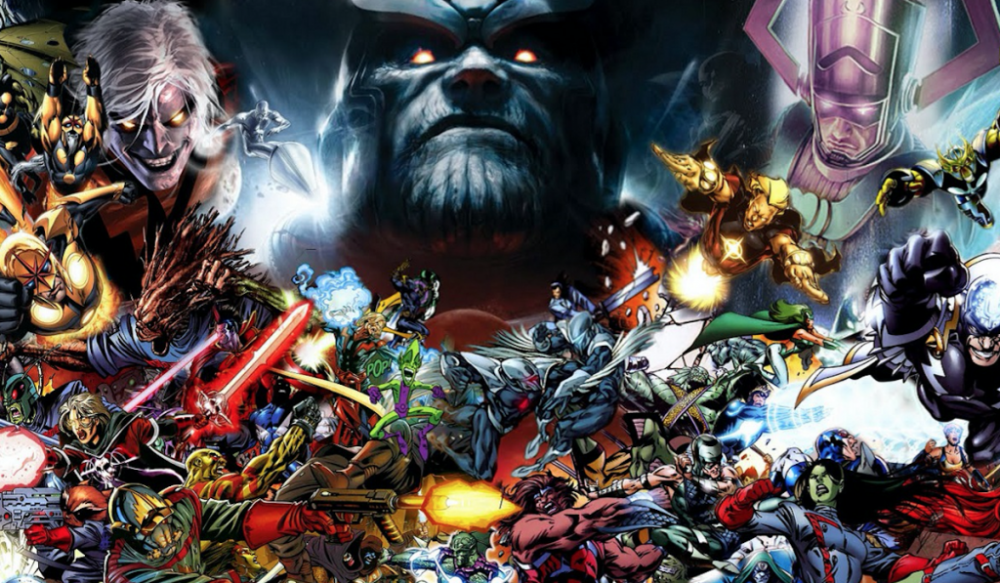
Simpler but nowhere near as effective as other corpsFrom Marvel comes the Nova Corps, a military force on Planet Xandar that accepts outsiders into its ranks when reaching intergalactic levels. Next is the Fraternity of Raptors, who Darkhawk was once part of, a former Shi’ar military force until striking out on their own. Finally, comes the contenders who just barely make the cut: the Space Knights. Please note that this faction will primarily follow the post-ROM era for licensing reasons.

Functions and Ethics

It stands to reason that all of these space forces have codes they have to follow in order to avoid inconvenience. But how functional are they?

Looking Green?

While the Green Lanterns are some of the most influential of these forces, their leaders and policies are very questionable. The Guardians are responsible for a number of war crimes and have often not been held responsible. Take, for example, when they tried to wipe out the universe’s magic users, which a recent comic brings back to light. Also, instead of trying to manage the Lantern’s mental health like when Hal Jordan was having a nervous breakdown, they use black-ops and special forces to hunt down people who are threatening their reputation. Only recently are the Guardians making progress after years of corruption.
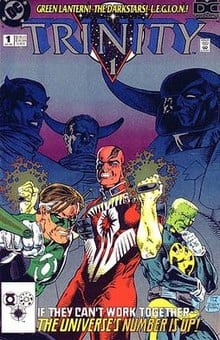
This is ironic, I didn't even know something like this came about in the late 80sNot that any of that progress will erase the forces made in reaction to the Guardians, like the Darkstars, made from Guardian offshoots called the Controllers. Frankly it’s not surprising that the Darkstars turn against the Controllers because unlike the Guardians they’re not subtle about their corruption. But here’s the problem, the Controllers instilled in the Darkstars a sense of dogmatic justice. Think of it like legalized lynching where the smallest of infringements means a death sentence. So who would hold these people responsible if their makers couldn’t?

Expanding Militaries

Between the Nova Corps and the Fraternity of Raptors, being military units, their actions prove to be questionable. With the Nova Corps more or less being led by a supercomputer, their operations often lack context. For example: after a peace treaty, they were left defenseless to an attack by the Kree. Next, after recruiting an extremist as a field leader, a number of casualties ensued. The Novas had to be rebuilt three times from all of this chaos, each weaker than the last.

The Fraternity meanwhile are zealots who recruit anyone to push their agenda for the Shi’ar Empire. They were so extreme, they were willing to kill or maim anyone who doesn’t suit their vision, like former empress Lilandra. Even when the Shi’ar disown them, their wishes to be an intergalactic paramilitary force remain present. More frightening is their effort to brainwash others into their cause, like with Robbie Rider. Military ops probably shouldn’t be the primary focus of a comic book space force.

The Ideal Space Force
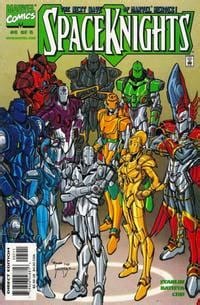
Spaceknights, Marvel's arguably best Space ForceNow it’s time for arguably the best examples of a Space Force from either side of the Big Two. First, Marvel’s surprising representative, the Space Knights. After the Prime Director (legally safe name of ROM) cleans up Galador of its mechanization philosophies, these space traveling cyborgs put more effort into rebuilding. This doesn’t just mean their planet but other civilizations affected by crises like the Annihilation Wave. They are also not opposed to working with others for better outcomes, as was the case of The Thanos Imperative through the Annihilators. The only problem is, their activities are still mostly limited to Galador.
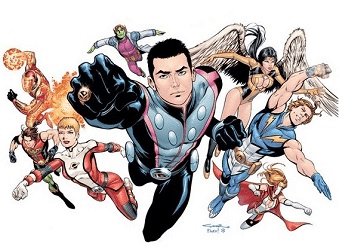
Legion of Super-Heroes DC's best space force

Then there’s DC’s Legion of Super-Heroes who, unlike the other space forces, are more akin to volunteers than government backed organizations. Following in the footsteps of superheroes from millennia ago, like Superman, Legionnaires are people more than willing to help others out of ethical duty and be held accountable for their screwups. In The Great Darkness Saga, Chameleon Boy is dealing with an incident he caused by order from the United Planets. As such, the Legion is probably comic’s ideal space force.

What Space Force Can We Learn From?

An ideal space force is meant to exemplify the best, brightest, most cooperative, and still be accountable for misconduct. With the Legion holding all of the best qualities, the other groups have something to aspire towards. A few of their recent comics display how. Within Geoffrey Thorne’s Green Lantern, the Guardians are amending their laws and being held accountable for past sins. Speaking of guardians… Al Ewing’s Guardians of the Galaxy run seems to have the titular group qualifying as a legitimate volunteer space force.

What do you all think? Is the Legion of Superheroes the best model to follow? Are some of the other space forces like the Space Knights too limited in depiction to get a proper grade? Is there room for improvement in any of the other forces? Leave your thoughts in the comments.
Monkeys Fighting Robots Youtube

Review: CHRONICLES OF FAITH: DAVID #0 Shows How True Heroes Embody Faith

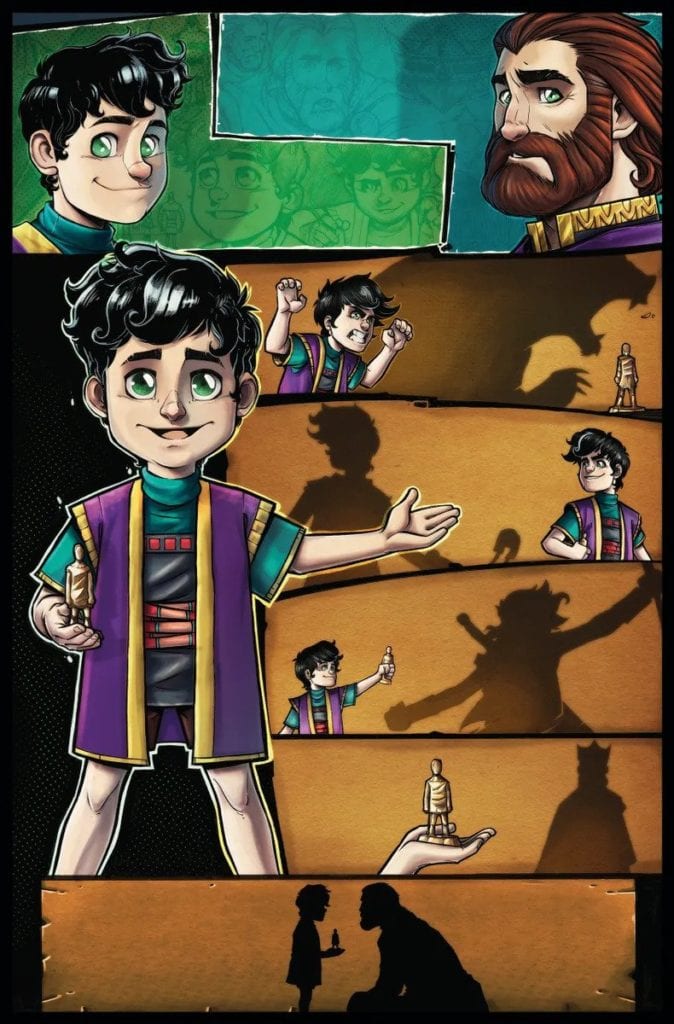
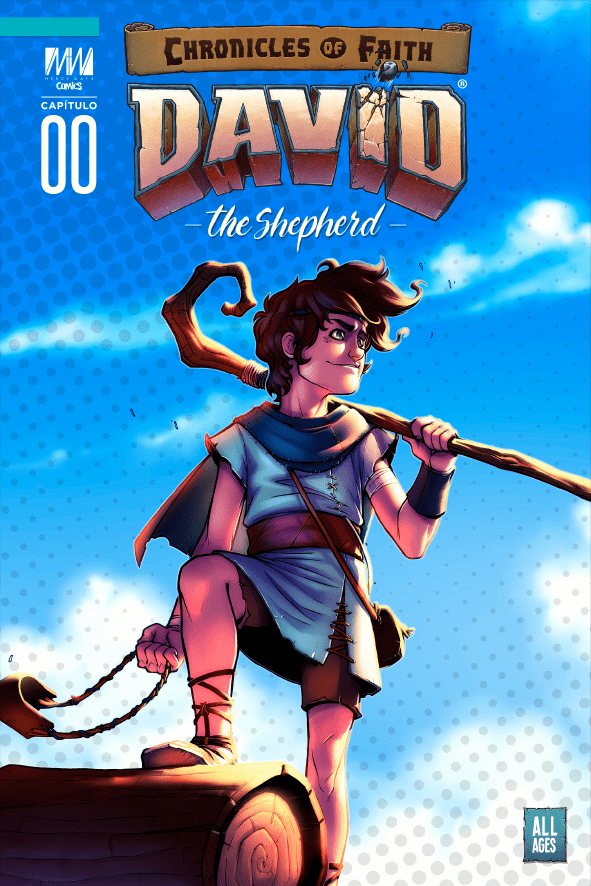
One of the most inventive takes on the biblical figure David is found in MercyWays and Brainy Pixel’s CHRONICLES OF FAITH: DAVID #0. This faith-focused story details the steps David, son of Jesse, took to become the ancient Israelites hero. In it readers will find that one does not become a hero without the proper preparation and faith.

Story

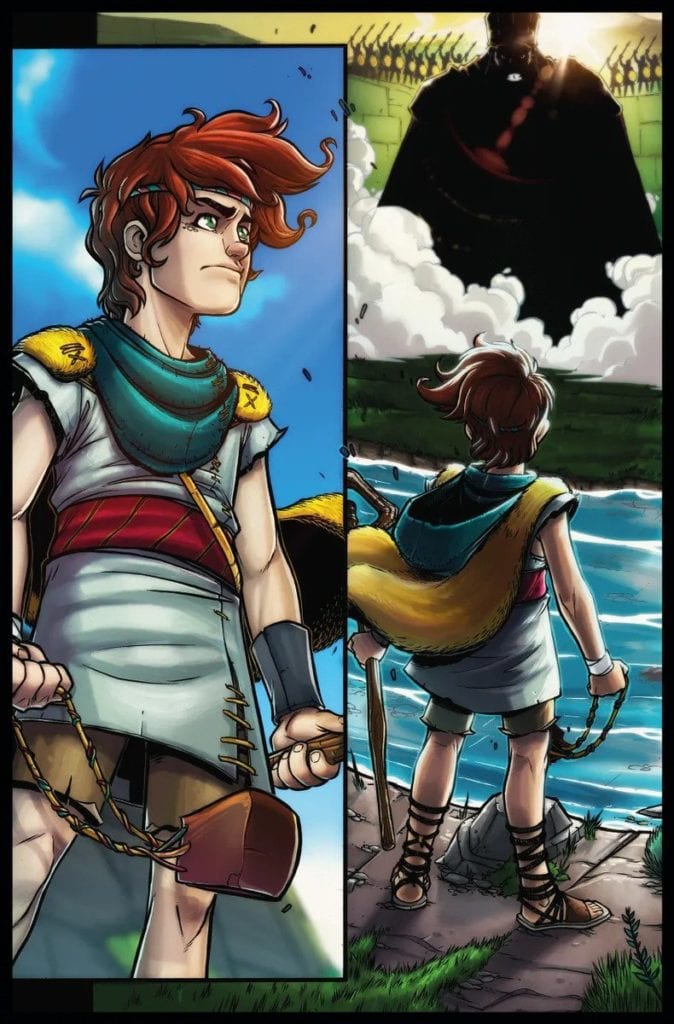
The narrative opens in the Valley of Elah, setting the scene for an epic battle between the Israelites and Philistines. From the panicked soldier’s exclamations, readers see how terrifying one particular Philistine warrior can be.

Goliath goads the Israelites into bringing out a champion to face him. But who is brave enough for the task?

Seeing the young David stand up against a seasoned fighter of such immense power is awe-inspiring. The sense of calm that washes over his inner thoughts shows readers they can find peace in their most trying times.

However, just as this story approaches the climatic moment, the narrative abruptly switches to Solomon, David’s son. This story within a story dynamic engages readers on an entirely new level. We find David teaching Solomon what it looks like to live a life of faith, rather than giving all the credit to himself.

Ivan Anaya’s script is one of the most engaging retellings of David and Goliath in recent history. Rather than employing a chronological narrative, this story uses various moments in David’s life to show how he became a hero of faith.

Artwork

Readers are treated to astounding displays of action, emotion, and colors, as well as clever word balloon placement throughout this story. Anaya’s penciling and ink work provides expressive characters with highly detailed facial features. We also loved Marvin Hernandez and Sofia Gonzalez’s coloring, which made each panel pop with bright hues. And Soffia Flores B.’s lettering completed the ensemble with a brilliant mix of font variants to represent the sound effects and character’s exclamations.

Conclusion

We were thrilled to read CHRONICLES OF FAITH: DAVID #0 and join in David’s story. This creative retelling remains true to the original tale while adding in those relatable elements to fully engage the modern reader. We look forward to seeing more heroes featured in the Chronicles of Faith series!

Do you want to see more biblical icons depicted in the comic book medium? Let us know in the comments below!

Monkeys Fighting Robots Youtube

Review: Lost In Temptation In THE DREAMING: THE WAKING HOURS #9

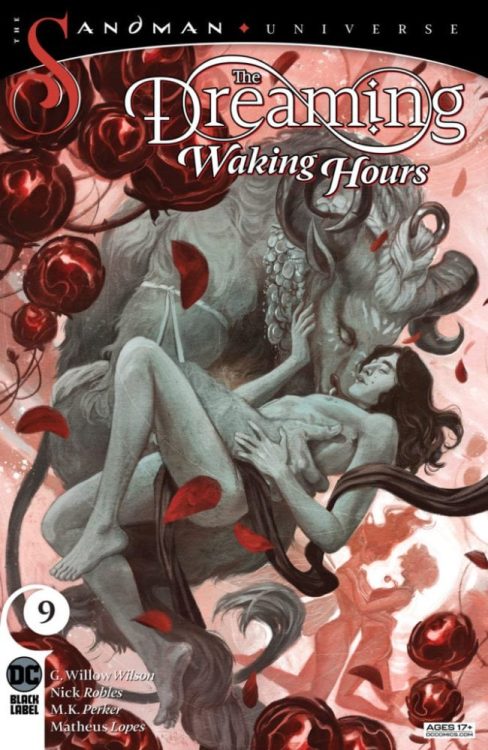
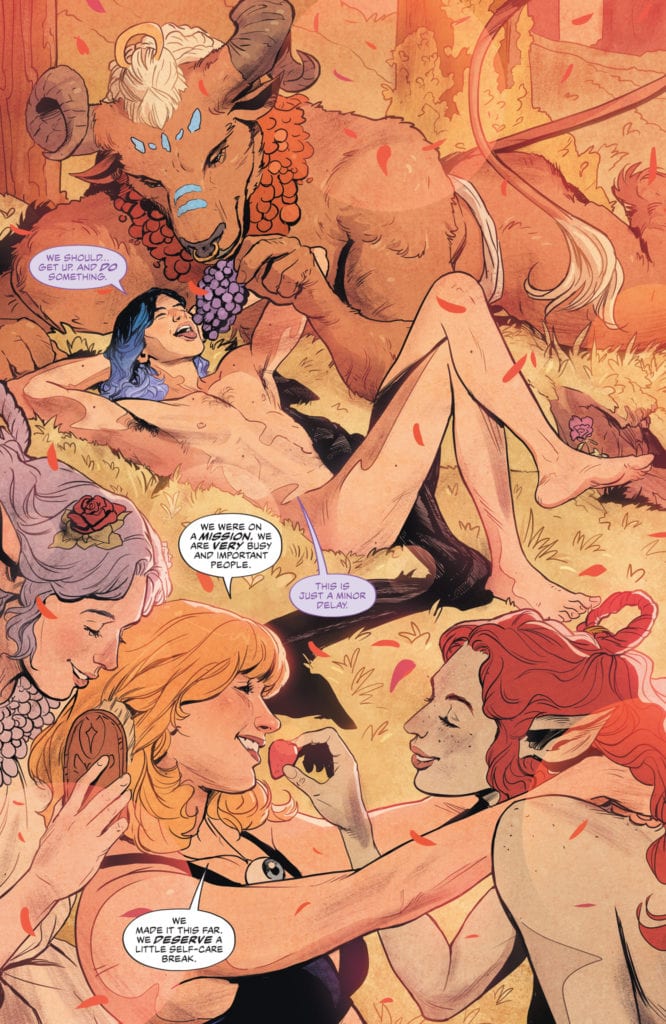
Writer G. Willow Wilson and artist Nick Robles, along with colorist Mat Lopes and letterer Simon Bowland, return to the land of Faerie in The Dreaming: The Waking Hours #9. This issue feels more like a vehicle transferring us from one stage of the story to the next, but it is still a wonderfully entertaining and tightly paced comic with great moments and incredible visual work.

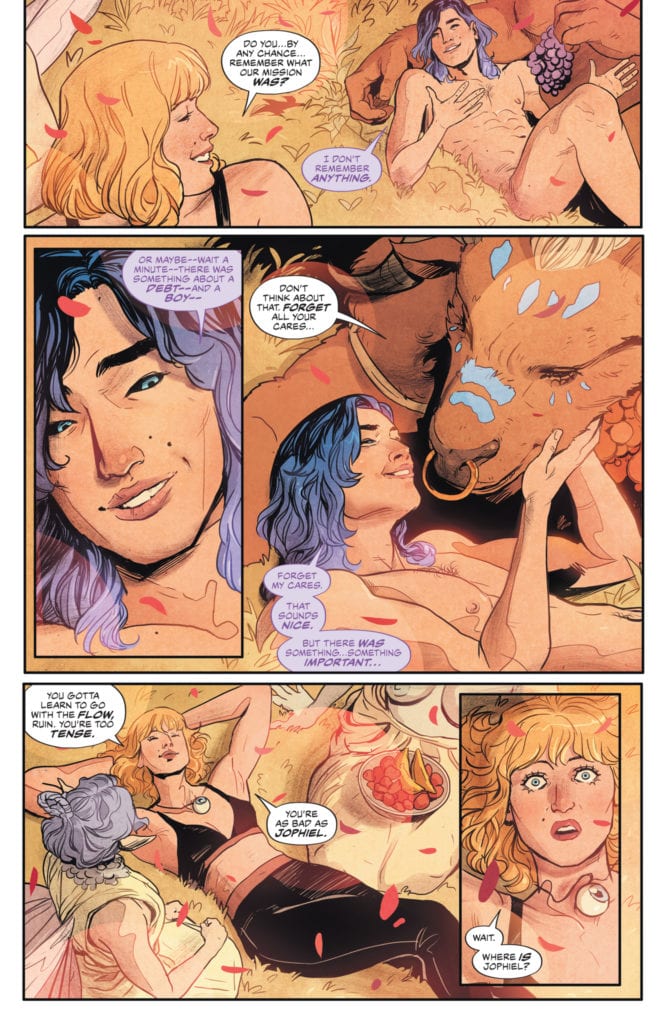
“Seduced by the sensual wiles of the realm of Faerie, Ruin and Heather After have not only been separated from the angel Jophiel, they’ve completely forgotten why they even set foot in this delightful place. But Faerie’s charms (literally) are lost on Jophiel, and he remains firmly on a mission…unfortunately for him, the king of Faerie has his own ideas on just what Jophiel’s power can do for him!”

Writing & Plot

G. Willow Wilson’s script for The Dreaming: The Waking Hours #9 is just as clever and competent as the prior issues, albeit a little more subdued. This chapter is more of a segue from one major plot point to the next rather than a point in and of itself, but it’s still a highly entertaining affair on its own. Watching Ruin and Heather struggle against the temptations laid upon them by the denizens of Faerie is delightfully amusing, as is much of the dialogue. Wilson always leverages the perfect amount of snark in her scripts, and weaves it in and out of more serious moments with a natural ease. Despite this issue being more of a “problem of the week so we can continue the main quest’ type story, it never feels boring or out of place and still adds to the overall plot. We get a bit more backstory for Heather (which I will never tire of), and a couple more major Sandman Universe players get reintroduced. This is a sharply written comic, nothing less than what I’d expect from the likes of Wilson up to this point.

Art Direction

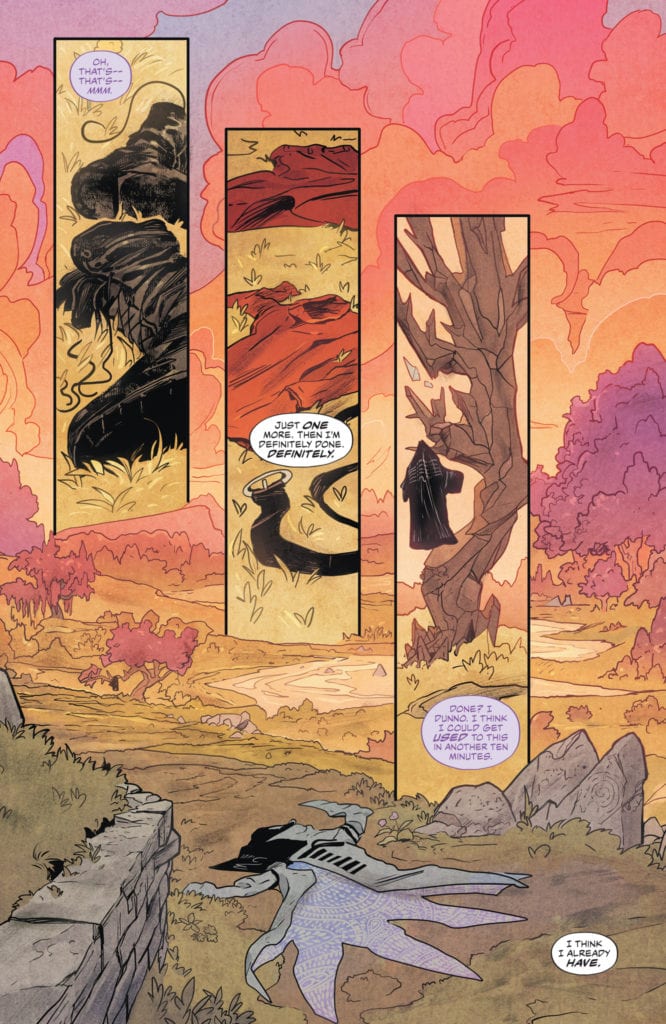
Almost every issue of The Dreaming, both this series and its predecessor, have been gifted with an unbelievably talented art team. This still rings true on The Waking Hours #9, with the pencils of Nick Robles and colors from Mat Lopes. Robles’s pencils are rife with imaginative detail, crafting fresh designs for both diverse humans and mythical beings as if it were second nature. The world design is brilliant as well, as the dilapidated Faerie is a beautiful but desolate landscape that contrasts brilliantly with the same setting from the days of Vertigo past. The panel direction is as sharp as ever too. While the panels and transitions never get quite as abstract as some prior issues have, it’s still a finely tuned experience from a directing perspective. Mat Lopes’s coloring is as stunning as ever, offering a vivid variety of gorgeous, otherworldly hues and tones to this fantastical realm just as he has been doing since the previous Spurrier/Evely run. The lettering from Simon Bowland replecates the classic Todd Klein letters from the original Sandman, with widely varying fonts for different characters and that unmistakable white-on-black dialogue lettering. The Waking Hours continues to be one of the most stunning books from the visual end on shelves right now.

The Dreaming: The Waking Hours #9 is a clever, well scripted, and stunning chapter in this outstanding series. While Wilson’s script has this issue functioning more as a segue from one piece of the story to the next, it is still rife with clever and funny moments and great characterization. The visuals from Nick Robles and Mat Lopes are as incredible as always, animating and coloring this world of magic with breathtaking detail. Be sure to grab this issue when it hits shelves on 4-6!

Monkeys Fighting Robots Youtube

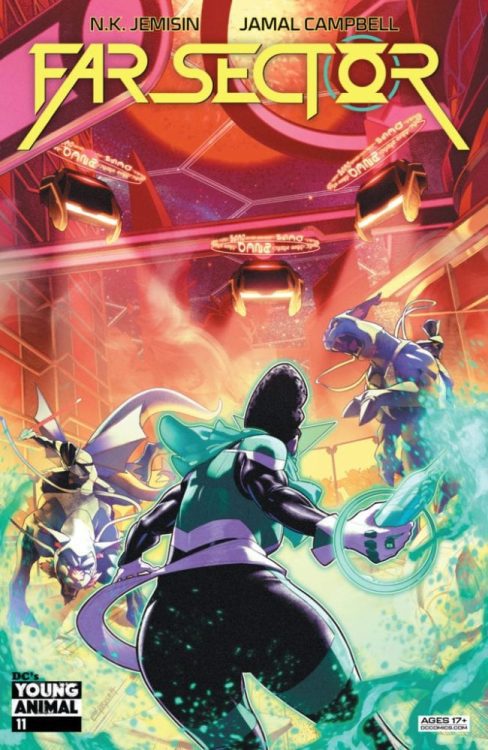
Review: FAR SECTOR #11 – Coups, Revolts, And Uno Cards

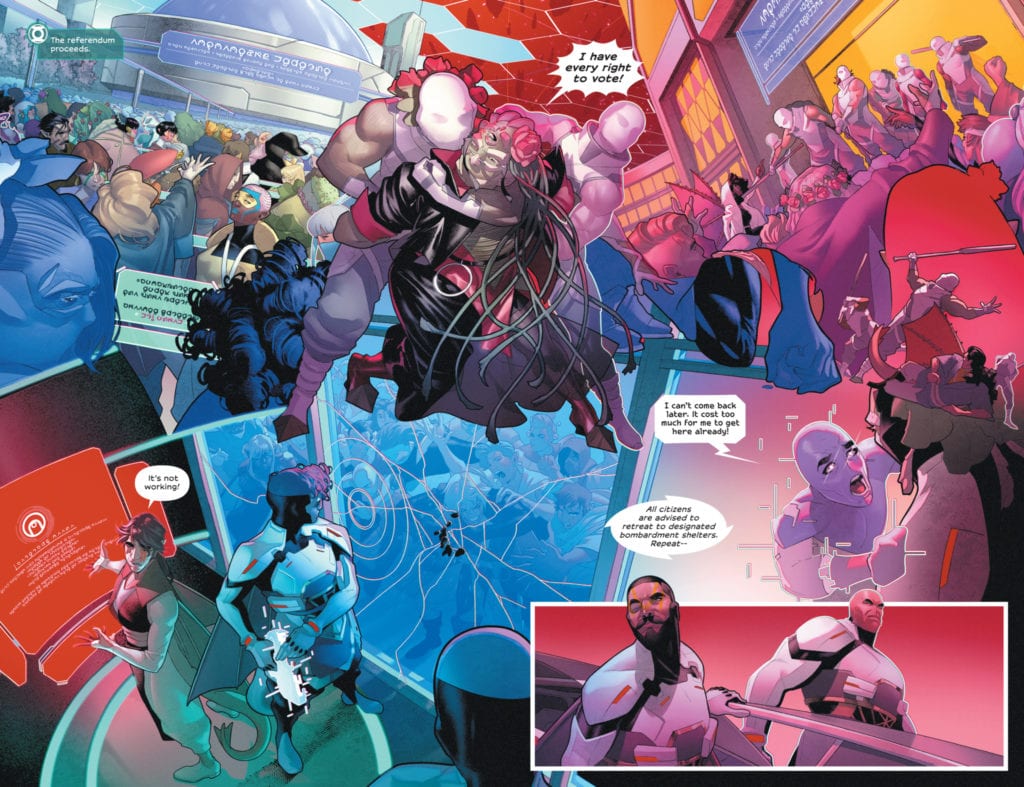
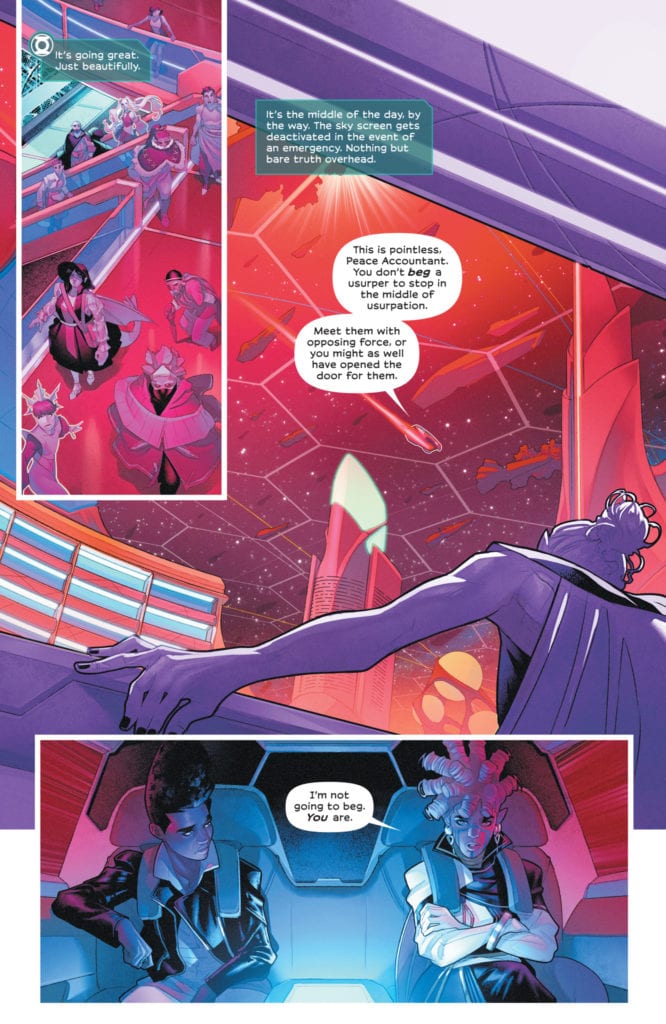
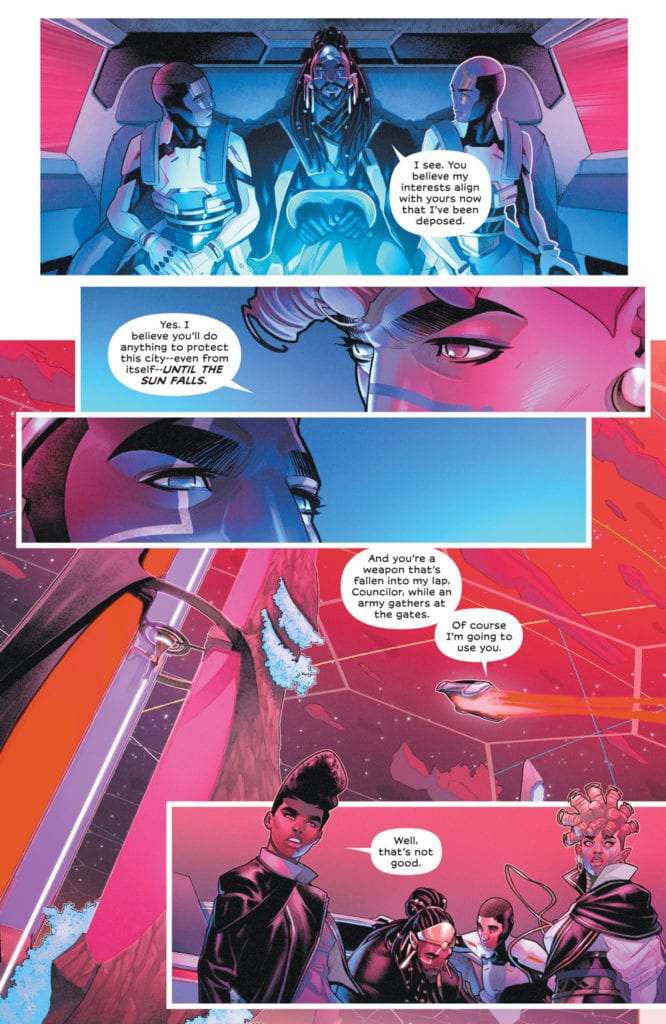
Writer N.K. Jemisin and artist Jamal Campbell return with the second to last chapter of their brilliant series Far Sector. This issue lays out the full focus and interests on all sides of the massive coup on the city enduring, crafting a sharp societal critique without getting lost in any kind of political preaching. With a busy but sharp and intelligent script and once again outstanding artwork, this issue is a stellar setup for one of the most anticipated finales in comics this year.

“Riots are breaking out across the City Enduring as its citizens realize that there are political shenanigans disrupting their way of life and subverting the will of the people. To quell this unrest, @BlazeofGlory is threatening to unleash a terrible weapon upon her own people. Jo has to race against the ticking clock of a Green Lantern ring that is rapidly losing power to bypass the city’s entire defense forces and stop this attack from above.”

Writing & Plot

N.K. Jemisin’s scripts for Far Sector are always packed with info and interlaced with great character narrative, but this issue focuses a bit more on the former. Far Sector #11 is chiefly concerned with making sure the reader knows who lies where and why, and where exactly the different factions of the City Enduring’s allegiances lie during this massive coup. There are still some solid bits of character writing, and the dialogue is very solid, but issues like this make me thankful for collected editions. Don’t get me wrong, every issue of this series has been a delight to get to read, but with all of the info and complex socio-political context to keep track of among the different races in the story, it gets to be a LOT to try and keep track of; especially now that the series has been only been releasing an issue every other month. This all being said, this is still a very tight issue that addresses its own plot and its exterior influences with intelligence and nuance. It presents an example of when a rebellion can rise up for the right reasons, but in its passion utilizes the wrong methods to achieve change. Jemisin’s treatment of Jo Mullein as a protagonist has made her one of my favorite characters to read, and this increases with each issue. Every chapter we unravel just a bit more about what makes her tick, but there’s always something under the surface. This issue continues the trend, while also keeping her unique link to the Green Lantern Corps alive while never focusing entirely on it. It’s honestly easy to forget that Mullein is a GL, even when she is wearing the ring. It’s a completely secondary trait to her character, and that makes her and this comic all the more fascinating.

Art Direction

I have been raving about the incredible work of Jamal Campbell for every issue of Far Sector that has been releases so far. So now, for Far Sector #11, I will do so again. Campbell’s incredible, almost 3D digital artistry for his characters and environments makes for one of the most beautiful science fiction comics ever released with each subsequent release. This issue darts around with breakneck speed, but Campbell manages to keep up with the chaos on every front. Every page is a flurry of focused and frenzied conversation, as well as cuts around and above the plant to catch glimpses of the growing conflict. Each shot is rife with impact and importance, building the urgency and atmosphere of this penultimate chapter. The complex emotions every character is facing feel genuine and relatable to the reader, and the scenery of a planet at war is both concerning and stunning. The high-production concept art-style of this comic is perfect for the story being told, and I’d love to see Campbell draw more sci-fi in the future. Deron Bennett’s lettering is sharp and clean, and combined with Campbells makes for one of the most stunningly well-put together comics hitting shelves this week.

Far Sector #11 is a frantic and busy comic book, full of important expository dialogue and developments regarding the massive conflict that has sprung up for Jo Mullein to finally deal with once and for all. N.K. Jemisin’s script carries a ton of important dialogue and information leading into her finale, but still manages to avoid making it a chore to get through. Jamal Campbell’s art is forever a display of modern perfection among comics art, and a masterclass in what contemporary techniques are capable of. Be sure to grab this penultimate issue when it hits shelves on 4-6!

Monkeys Fighting Robots Youtube

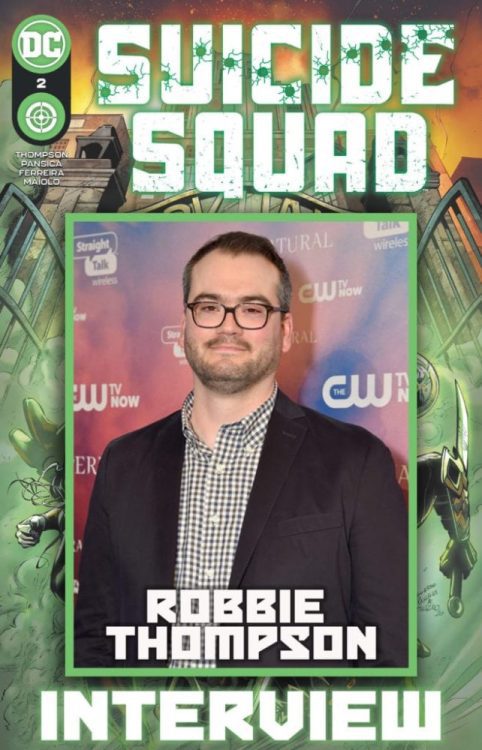
SUICIDE SQUAD: Robbie Thompson Talks Superboy’s Mental Health

SUICIDE SQUAD: Robbie Thompson Talks Superboy's Mental Health

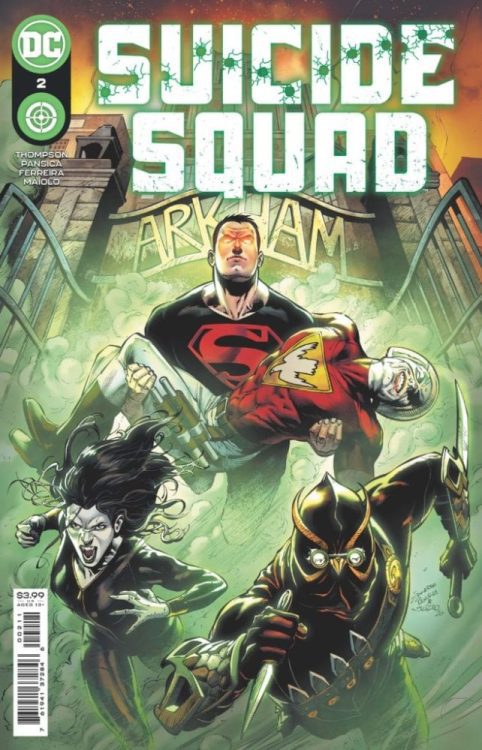
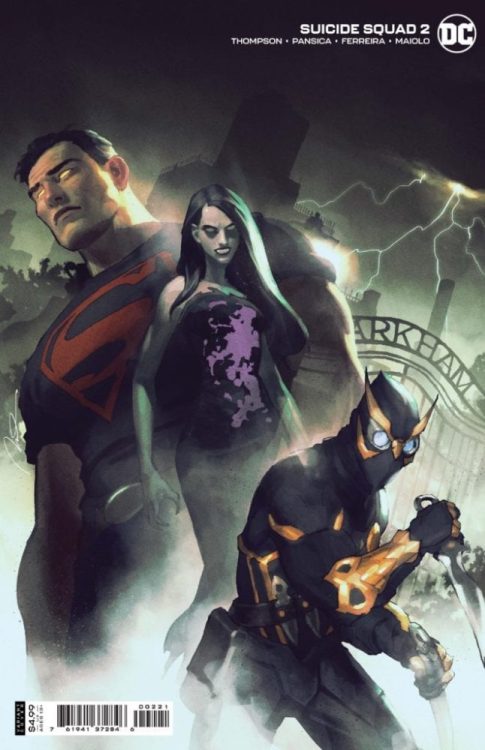
Suicide Squad #2 hits your local comic book store today, and Monkeys Fighting Robots can provide some insight into the series after our chat with writer Robbie Thompson.


About the issue:
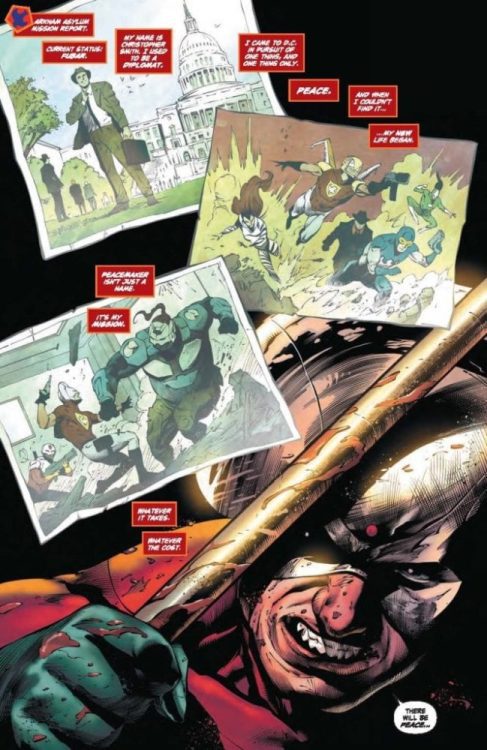
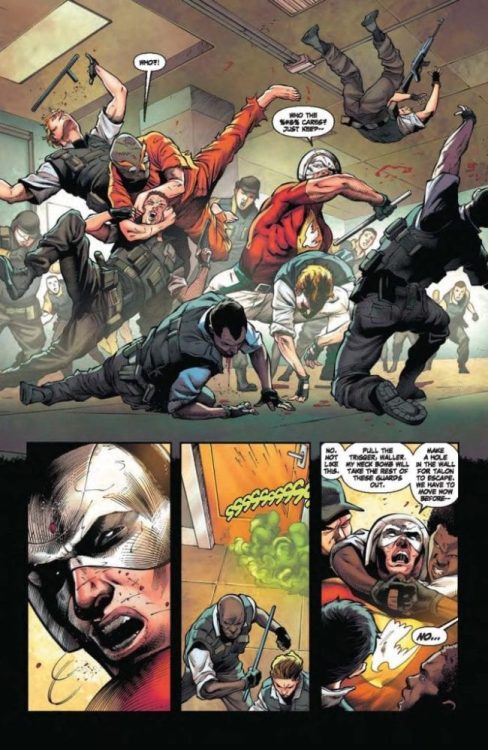
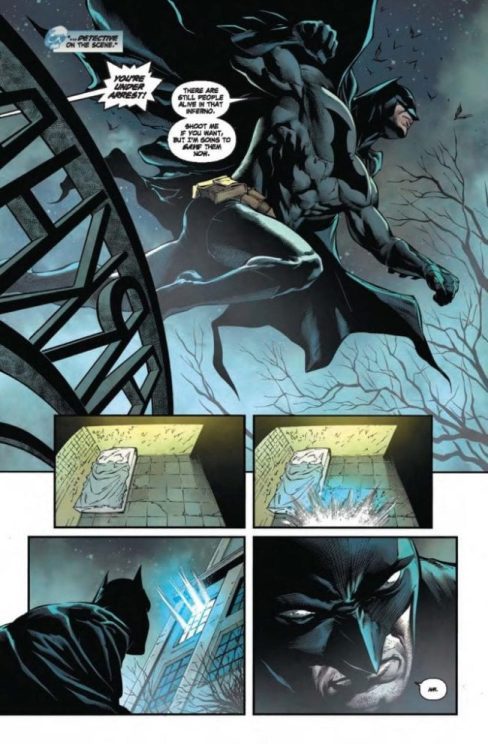
With the power of Superboy now under her control, Task Force X mastermind Amanda Waller sends the hero into Arkham Asylum to rescue Peacemaker and bring Talon—the famed Court of Owls assassin—back to join the new Suicide Squad. With lives hanging in the balance, the teen clone must decide if he’s going to assist Waller, even if it means getting his hands a little bloody along the way.

Creative Team: Robbie Thompson script, Eduardo Panscia pencils, Julio Ferreira inks, Marcelo Maiolo inks, Wes Abbott letters


Any mention of Connor Kent and my head explodes; that’s why I was excited to talk with Thompson. The concept of Superboy on the Suicide Squad adds a next-level layer of moral code in the giant grey world in between black and white.

MFR: Robbie, thank you for taking the time to talk with me.

THOMPSON: Thanks so much for taking the time to talk with me!

MFR: Eduardo Pansica’s art is brilliant in the first two issues of Suicide Squad. Talk about how he pairs well with your script.

THOMPSON: Eduardo is the perfect artist for this book. We worked together previously on Teen Titans, and I was so excited to get to work with him again. What I noticed on working on Teen Titans with him was how well he managed the team aspect of the book – he was able to create specific moments for every character and give them their due, and I really wanted to write to that in this series. So, I was riffing off his work, and trying to pair my script to him, really. As a team, we wanted to find a way back to that [writer John] Ostrander type tone, and Eduardo is able to bring this really fun, and nuanced balance between the action and emotion, which builds more and more as we get to know the team and explore their dynamics and humor in subsequent issues. And we have Julio Ferreira’s flawless inks, Marcelo Maiolo’s dynamic colors, and Wes Abbot’s killer letters – I am super lucky to be working with this squad!

MFR: Who was the first person you told that you wanted to put Superboy on the Suicide Squad, and what was their reaction?

THOMPSON: The first person who was told was me, haha – [DC] Editor extraordinaire Mike Cotton had discussed the book internally prior to my involvement, and there was a core group that he had floated and Superboy was one of the big names on the list. My first reaction was REALLY?! Then I wanted to know about the jacket and glasses, haha. Honestly, I thought it was a great idea – and I’ve always enjoyed when the Squad has brought in heroes to play on the other side of the fence. And when you have a great, true blue hero like Conner Kent in this type of situation, it creates instant conflict for the characters and the team. When we started to discuss the series, though, and where his character would be going, that’s when I was all in, and excited to dive into that emotional arc. I can’t wait for readers to see where we’re headed.

MFR: Was there anyone that DC Comics said you couldn’t use in Suicide Squad?

THOMPSON: You know, I pitched one character I thought they’d NEVER say yes to, and as of right now… they said YES! We’ll see if it all works out, but Mike and [Assistant] Editor Bixie Mathieu have been so great about going after the characters we want and working with other DC editorial groups to make sure they’re available to use.

MFR: Amanda Waller is one of the most intimidating fictional characters in comics. How do you bring that out in your writing?

THOMPSON: She’s such a fantastic character. And has such a great history. To be honest, I go back a lot to old Suicide Squad issues for inspiration, but a huge influence for me was Viola Davis’s performance in David Ayer’s Suicide Squad film. She’s one of the best actors working, period, and she is so scary in that first film and looks just as scary in the sequel (which I can’t wait to see!)

MFR: The first two issues are constant action and banter, but there’s chemistry, and the plot moves forward nicely. How do you know you’re hitting all the right notes with Suicide Squad?

THOMPSON: That’s a great question – for me it’s when there’s humanity in the mayhem. When these extraordinary heroes have grounded moments. Sometimes it comes out with humor, other times sadness. It’s one of the great joys of working on a book like this, that range of emotions. It also feels like you’re hitting the right notes when someone’s head explodes, too, of course.

MFR: James Gunn’s The Suicide Squad dropped a trailer last week. Is there pressure when you know a lot of new readers are going to give your book a read?

THOMPSON: No, in fact, for me it’s a huge inspiration. I really hope that folks that watched that amazing trailer and are hyped for the film come check out what we’re doing in the comics – and I really hope it inspires them to dig deeper and check out Ostrander’s run which, from what I’ve read, is a huge inspiration for the new film. I have watched that trailer about 500 times, and when I write the book now, I’m listening to Steely Dan’s “Dirty Work” on a loop. James Gunn is one of the best writer/directors working and that trailer is nothing but a big bag of awesome and inspiration for me personally. August 6th can’t get here fast enough!

MFR: The first two issues are loaded with large panels, single panels, and splash pages. Who’s idea was that, and why do you think it was the best approach for the story?

THOMPSON: We discussed a look internally early on and wanted to embrace the action that Squad stories usually have, but balance that with emotional moments. For example, we wanted to start with a breakdown of a character, or team, at the beginning, and then open it up, start with a sense of intimacy and then go really big, literally, for scale and action. Because we are also 22 pages instead of the usual 20, it felt like we had a little more room for things like that, for some pacing variation, and to really let the splash pages land with a punch – sometimes literally. I’m also a big fan of giving Eduardo room to play, so for example, I’ll just write the emotional beats and dialogue for an action scene, and leave him the most room to experiment and play visually. He always delivers something unique and puts his own spin on the moments which is the part of the collaboration that I enjoy the most. (Check out the five-page preview below to see what Thompson is talking about.)

MFR: Can you talk about where Superboy is emotionally and where you want to take him with your run on Suicide Squad?

THOMPSON: Superboy is a hot mess! He has no idea why he’s been dragged onto the Squad, he has no interest in being a bad guy or doing bad things, and worse than all that, he has the sinking feeling that something is deeply wrong with him. He’s not sure if it’s mental, physical, or both. Whatever it is, it’s going to break him down. That mystery of what’s wrong with him is something we’re going to unpack slowly, and will take a big turn in Issue 6. As I mentioned before, when we first started talking about Future State and then in success the on-going series, Superboy’s character arc was a huge linchpin of where we wanted to go and I can’t wait for readers to see what’s really going on.

MFR: I read in another interview you were given a list of characters to choose from to form your squad. Was there a character that you wanted to use but didn’t quite fit?

THOMPSON: Definitely, but more from a sense of timing. We are going to build our core group, the group you see in Future State, slowly. There were some bigger names that we wanted to slowly roll into the Squad as Waller pieces together her ultimate crew. So, for example, we wanted to use Bloodsport, but he fit better in our later issues than at the start. But overall, Mike, Bixie, and everyone at DC have been very supportive of the book, and, so far, nobody has been off-limits, which is great for us �� not so great for those characters, because not everyone is coming home from this series!

MFR: Robbie, thank you again for your time, and best of luck with Suicide Squad!

Monkeys Fighting Robots Youtube

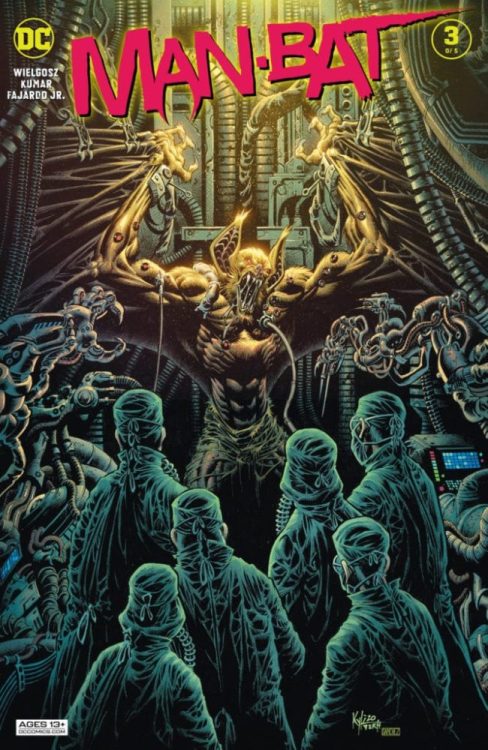
MAN-BAT #3: The Perpetual Problem Of Progression and Regression

Man-Bat #3 Cover

Man-Bat #3 from DC Comics hits your local comic book shop on April 6. In this issue, writer Dave Wielgosz depicts the titular character’s struggle to fix his faults. The emotional stakes of the issue come from the art of Sumit Kumar. Colorist Romulo Fajardo Jr. makes some of these encounters extremely surreal, and letterer Tom Napolitano makes the voices spoken by the major characters distinct.

Man-Bat #3: The Line Between Pro/Regression

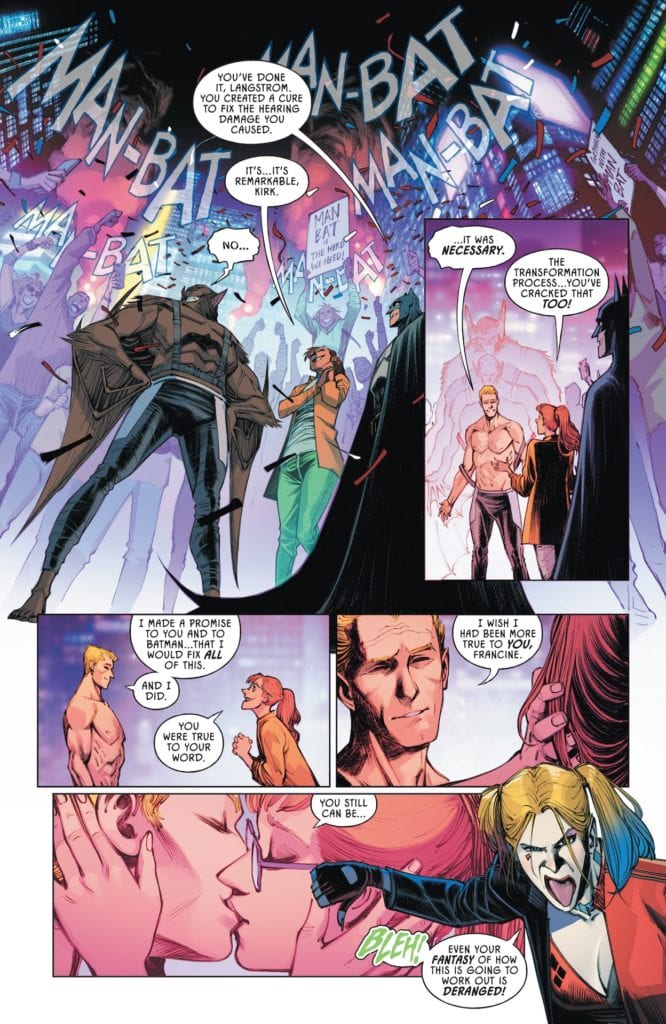
The main conflict of Man-Bat #3 on one pageWielgosz really enjoys working with the characters in Man-Bat #3. Calling back to the last issue, he presents Kirk Langstrom as a character with the weight of the world on his shoulders. It’s what makes Kirk’s relationship with his monstrous alter-ego all the more interesting. Man-Bat is practically when Kirk is more honest with himself, so seeing him continuing to compartmentalize Man-Bat feels like a character regression.
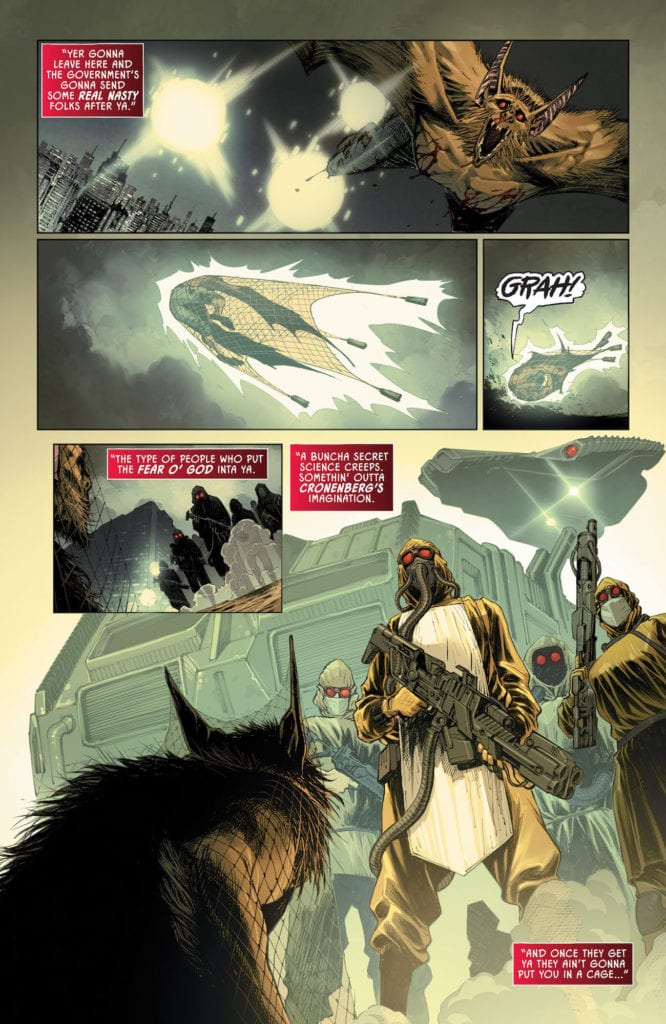
And who better to feel the whiplash of this regression than Kirk’s ex-wife Francine and his sister Lisa? The two women care enough about Kirk despite all of the frustrations he brings to them. Not that it makes dealing with him any easier, and the reader empathizes with their frustrations. It also allows the reader to believe Francine can handle the domineering Scarecrow.

On the topic of Scarecrow, he comes across as genuinely villainous in this issue. The way he speaks feels like he is striking his victims at their psychological weak points. It’s what makes them so susceptible to Scarecrow’s fear tactics. They’re the kind of tactics that are steadily improving with each issue. The reader can’t help but dread what he’s planning for the Langstroms.

Expressive Art Doesn’t Hide

What to expectKumar illustrates Man-Bat #3 with a host of expressive visuals confined to split-second panel work. In just two similarly drawn panels, it emphasizes how a quick moment changes everything. Whether it’s Francine’s shocking encounter with Scarecrow or Lisa’s blank surprise at her brother, the reactions serve as stories of their own.
The color by Fajardo gives several of these scenes a surreal presence. The way Kirk looks at a family photo with a silhouette of his face feels disheartening. It makes Kirk look like a ghost to his own family.

Napolitano’s lettering displays a very fitting narrative weight. The way Man-Bat speaks in Kirk’s mind through black captions is loud, rough, but honest. In comparison, Kirk’s own inner monologues with the smooth gray captions display him holding Man-Bat back, including the honesty.

Bring On Man-Bat #3

Man-Bat #3 continues a gripping saga of the struggles of delusion. Kirk may be a sympathetic character, but Man-Bat is looking more heroic the less he appears because at least the monster acknowledges the strength of everyone around him.

Monkeys Fighting Robots Youtube

Review: THE SWAMP THING #2 and the Shadow of Alan Moore

Swamp Thing V DC Comics

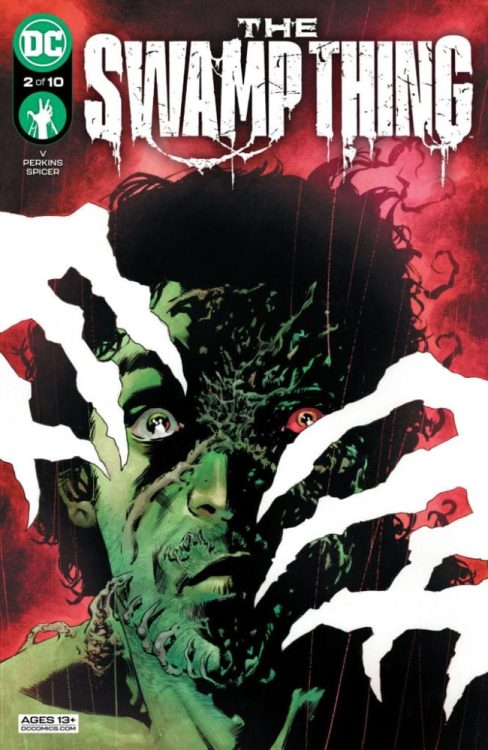
DC Comics’ latest The Swamp Thing series is beautiful. Both in its visual beauty— every page and panel is breathtaking— and in its mysterious, quiet writing. Part of what made the first issue of this series so brilliant was how this creative team threw off the burden of continuing Swamp Thing’s existing stories. They weren’t going to be telling a story about Alec Holland. This brave, new direction, with a mysterious new Swamp Thing, was fantastic. But writer Ram V, artist Mike Perkins, colorist Mike Spicer, and letterer Aditya Bidikar stumble in their second issue. While they may have put aside the contents of previous Swamp Thing comics, The Swamp Thing #2  stylistically still operates in its predecessors’ shadows.

Writing

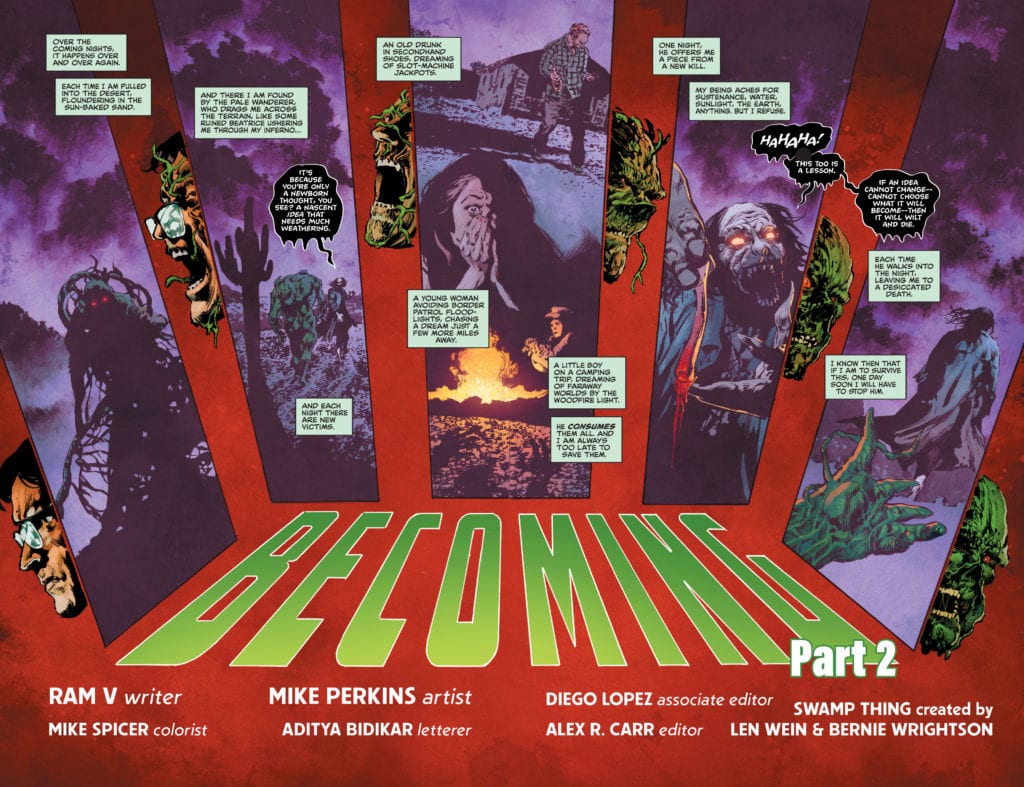
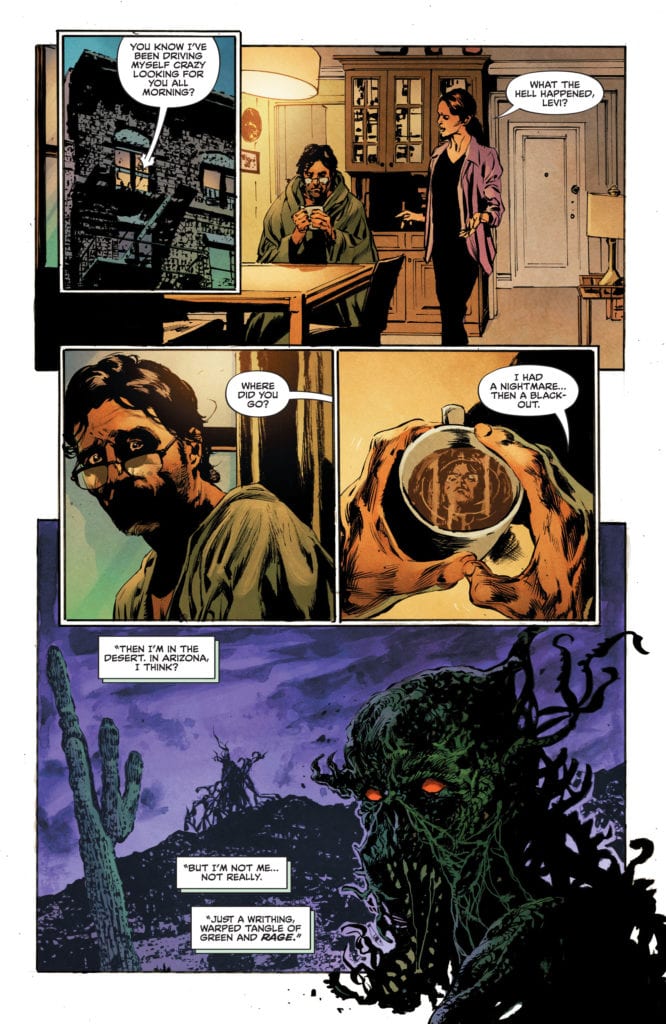
V has a brilliant narrative voice. He can really paint a picture. So much of these first few pages are spent doing just that. V describes Levi’s dreams in detail, giving the desert a mystical beauty. It’s all a little familiar, though. In fact, it’s even familiar for this character. It’s a style that feels borrowed from Alan Moore’s own work on Swamp Thing. This would be perfectly fine if V’s narration stopped at the captions. Unfortunately, much of the dialogue feels the same. It’s quite stilted. The Pale Wanderer and Swamp Thing talk as though they are just extensions of V’s own omniscient voice. And they talk in overly dramatic metaphors, with few true character moments that interrupt what feels more like preaching at one another. V’s knack for poetic writing actually does him a disservice here. His characters feel just a little too eloquent, and the discussions they have feel dry.

Swamp Thing V DC Comics

It really does feel as though V is seeking out a Moore’s Swamp Thing-esque voice. But, in modern comics, that voice feels a little dated. After all, those comics were written in the 80’s. And V’s move in that direction undoes some of the beautiful work he did in the first issue. It strips away some of the mystery, reduces characters to ideas rather than human beings. It robs his story of its humanity. Not only is V an eloquent writer, but he’s proven to be capable of writing heartbreaking character moments. Hopefully, we see him move back in that direction in the issues to come.

Art

Perkins brings in a lot of the lacking humanity to the story. Even in the rather big moments, Perkins still keeps us remembering that the characters are human. The Pale Wanderer refers to himself as an idea. In his dialogue, he literally dehumanizes himself. Yet when Perkins draws him, we somehow feel the Pale Wanderer is wrong. He does look human. We can see the fear under the anger, the trepidation under the cruelty. But one of the characters that really does feel human, the sheriff, is given quite a different treatment. Perkins shows the sheriff with shadows over his face. His eyes are rarely open, and when they are, they’re squinting and hard to see. His jaw is set, his face is emotionless. This is all coupled with a sad summary of the sheriff’s life. Perkins does a beautiful job of playing against each moment. He shows us glimpses of the humanity of those that deny it’s there, and he shows us the tough exterior of characters whose hearts are breaking.

Coloring

Spicer’s coloring is gorgeous. He uses a repetition of green, orange, purple and pink throughout. Many of the darker moments of the story have a tinge of purple or pink to them. These are most often the scenes that feature the Pale Wanderer. But there’s a peacefulness to the scenes too. Though the Pale Wanderer is killing and causing havoc, the scenes are almost comfortable. In one scene, the sheriff describes the hopelessness of his life. He sits in a bar with bright pink neon signs casting their light over the scene. Again, it’s a dark moment that looks beautiful. It’s as if Spicer is suggesting that despair isn’t as horrifying, at first glance, as we might like to think. In fact, it’s a comfortable place to be, and it lures us in with its subtlety.

Swamp Thing V DC Comics

Lettering

One of the greatest pieces of Bidikar’s lettering is found in how they connect some of the characters’ dialogue. Many of the characters have lots to say to one another. Bidikar could deliver each of their lines in one big chunk and lose all sense of rhythm, or they could stack word balloons on top of each other, dividing up each speech. Bidikar does stack word balloons, but they go a step further. Beyond just splitting the dialogue up, Bidikar actually creates space between thoughts. The sheriff gives us a speech about his bum liver and son who won’t talk to him. It’s all in one chunk. But then, when he follows up with, “I saw him, Emmet. I know he’s out there,” Bidikar places that line a half-inch away from everything else. We can hear the pause, the subtext of how these thoughts connect to one another. Bidikar shows us how the sheriff doesn’t rush through this, and it gives this moment of dialogue lots of weight.


V and Perkins’ The Swamp Thing is doing a lot right. But it’s stepping on its own toes in some ways. Its strengths lie in that it doesn’t try and be a Swamp Thing that everyone is familiar with. This isn’t Alec Holland; it’s Levi Kamei. But the creative team backtracks a little on that. They go in a new direction while also using narrative choices from past runs, choices that don’t quite jive with their story. However, there’s still lots to be excited about, and the end of this issue suggests V is already starting a new chapter in his approach. Pick up The Swamp Thing #2, out from DC Comics on April 6th, at a comic shop near you!


Monkeys Fighting Robots Youtube

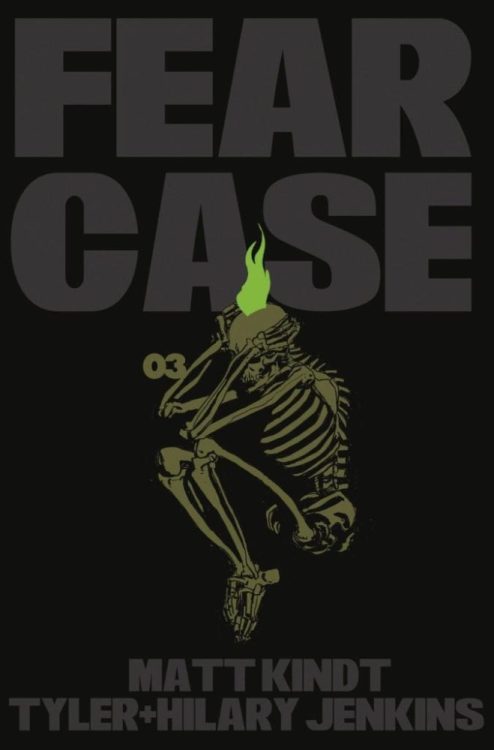
FEAR CASE #3: How Ideas Become Like A Religious Cult

Fear Case #3 Cover

Fear Case #3 brings the latest Matt Kindt saga at Dark Horse Comics to its climax on April 8. With spooky imagery by Tyler and Hilary Jenkins, the heroes the reader comes to love are now at risk. By the issue’s end, readers will be stuck anticipating the final issue.

Fear Case #3: The Cult of Ideas

After Kindt sets up the characters and internal conflicts in the last issues, they collide for a crisis. Mitchum and Winters, with their quirky dynamic, are approaching the deadline to find the titular MacGuffin. After the case eludes them last issue, there’s a real sense of strain on the agents. Even Mitchum, who suggests going on vacation for their last day, feels himself getting consumed by their mission. So when Winters goes missing, the reader can’t help but share Mitchum’s worries for his partner. Especially when there’s a cult out there looking for the case, a clear sign of what the agents could become past the deadline.

Art That Beckons

Tyler’s art continues to make the atmosphere as foreboding to the reader as it is for the characters. Certain pages of Fear Case #3 feature scenes with large empty spaces that feel overwhelming with how they dwarf the people in it. The opening scene of the outside of a bar, for example, features a lot of people looking defeated. It’s like the feeling of failure is following Mitchum and Winters. Sometimes it’s quite literal when it appears in the form of a knocking sound effect on Winters’ door.

Then readers have to consider Hilary’s coloring for the situations at hand. The dark blue night sky might look sad inside and outside the bar, but there’s a sense of comfort to it. The agents could certainly use the relaxation. Only for the bright red neon to accent the frustrations between Mitchum and Winters. Finally, the bright orange colors manifest when a threat approaches the agents like the cult or the case.

Don’t Miss Fear Case #3

Fear Case #3 is where this epic plot reaches its boiling point. The lovable characters are now in mortal danger, and now the only thing the reader can do is wait. And wait, they will, because the mini-series has the power to make sure they can’t turn away.

Monkeys Fighting Robots Youtube

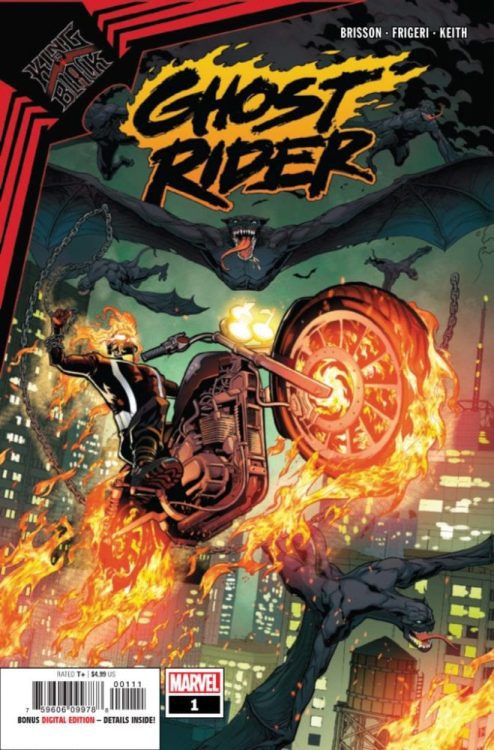
KING IN BLACK: GHOST RIDER #1 – The Unfinished Chapter Ends

marvel comics exclusive preview king in black ghost rider #1

King In Black: Ghost Rider #1 isn’t just an April 1 tie-in to Marvel’s King In Black Event; it’s the end of writer Ed Brisson’s run after getting cut short. What better way to show this closure than with returning art team of Juan Frigeri and colorist Jason Kieth? Also joining is letterer Joe Caramagna to make the series voices stand out. Because everyone in-story deserves remembrance as the status quo settles in for the next Ghost Rider run.

Tying Up Loose Ends

King In Black: Ghost Rider is what Brisson’s critically successful run boils down to. It was perfect for Johnny Blaze to be Mephisto’s tormentor for a change. That is until the inevitable status quo needs to come in. The reader shares this feeling of defeat with Johnny as this means giving a bully back some of his power. Fortunately, Danny will be at his brother’s side as the Death Rider when Mephisto makes a move. It certainly feels worth the wait after all of the Covid delays even if it does come with the baggage of a tie-in where Ghost Rider and allies fight dragons.

King In Black: Ghost Rider – Art Of Kings

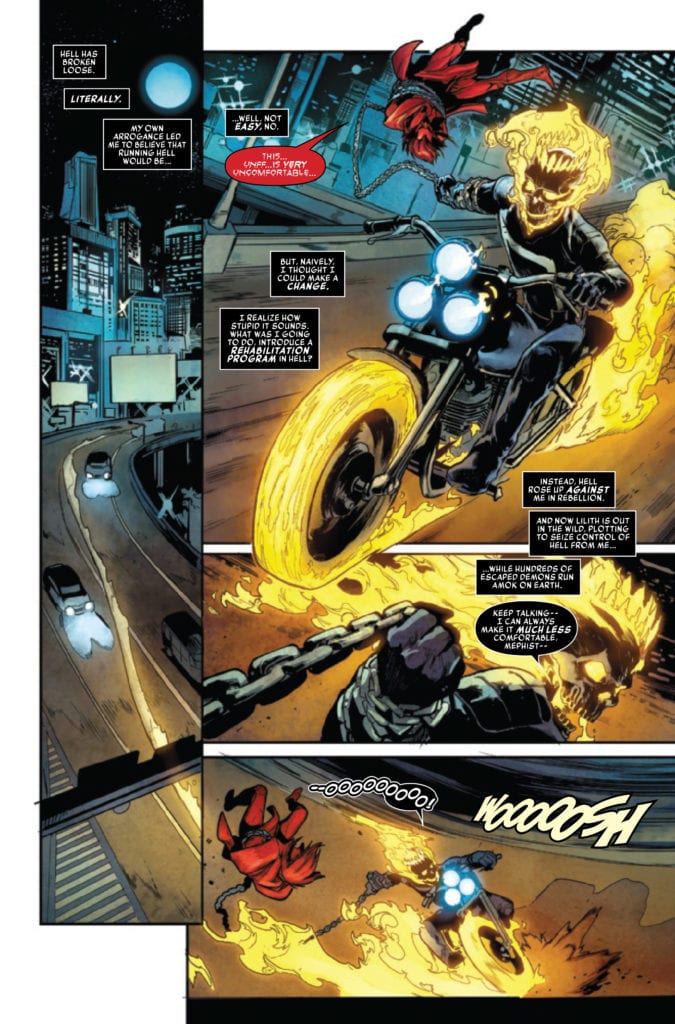
marvel comics exclusive preview king in black ghost rider #1Frigeri keeps the dynamic movement of King In Black: Ghost Rider moving at a steady pace. Seeing Mephisto getting dragged around in chains by Ghost Rider riding his motorcycle is certainly a sight to behold, especially when a quick stop makes Mephisto skid against the asphalt.
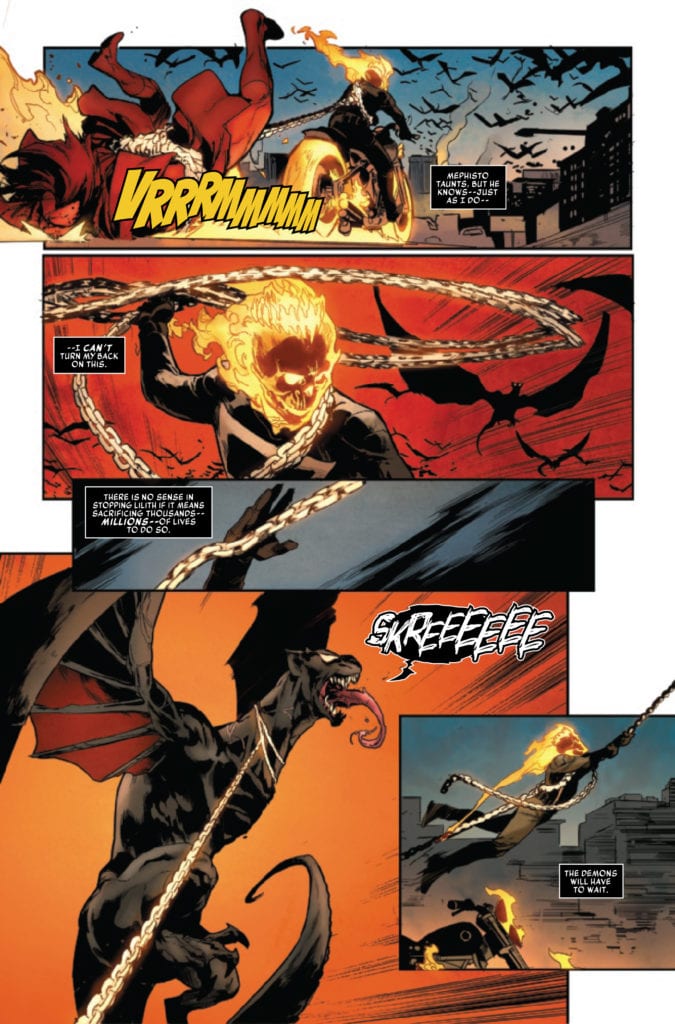
Even more eye-opening is the coloring by Keith. The ever scarlet Mephisto stands out strongly in every scene he’s in, as are the flames accompanying Ghost Rider. Against the night sky and symbiote dragons, the power these characters have is felt throughout the pages.

marvel comics exclusive preview king in black ghost rider #1Caramagna’s lettering makes the characters stand out twice as much. The words exchanged between Ghost Rider and Mephisto in color-coded word balloons highlight their character. Mephisto tries to taunt Johnny with monologues in an intimidating red word balloon. Unlike Ghost Rider, who speaks few words in black word balloons and as he revs his Hellcycle in loud sound effects.
King In Black: Ghost Rider – The Final Lap

King In Black: Ghost Rider ends on a bittersweet note the way it’s supposed to. After a wild ride fighting slimy dragons, this issue celebrates Ghost Rider and his supporting cast. It was certainly good to see Danny and Johnny making piece after everything that happened. Now all fans have to do is wait for the next run of Ghost Rider.

Monkeys Fighting Robots Youtube

Review: CROSSOVER #5 – Letting the Dominoes Fall

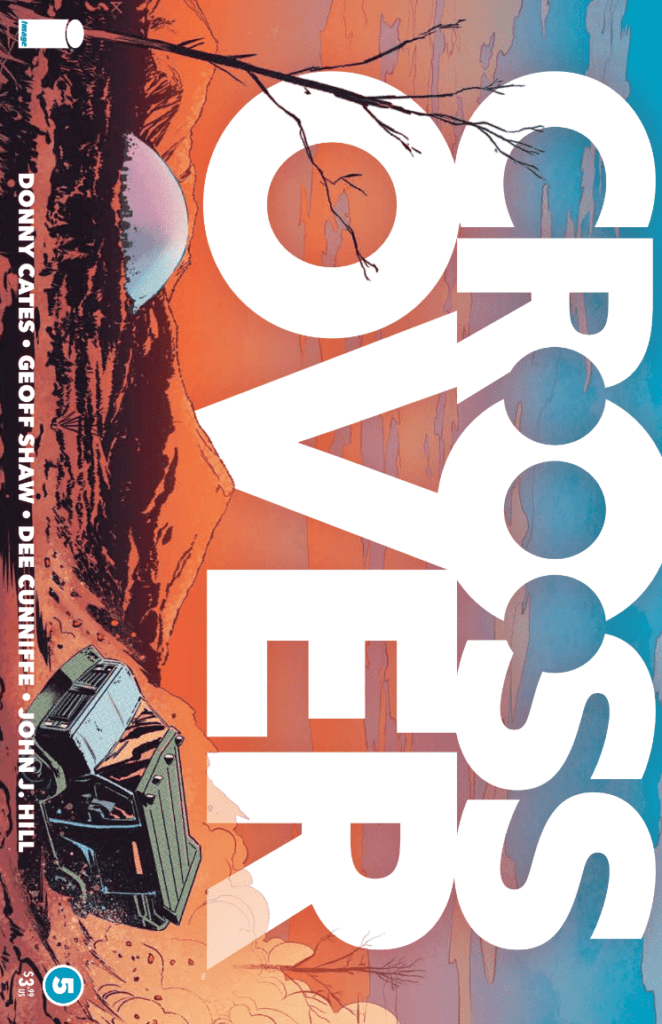
Crossover #5 Cover

Crossover #5, out now from Image Comics, is the penultimate issue of the series’ first arc and features many events that have been set up and foreshadowed, taking fruition at once.

Crossover #5 Story Example

Crossover #5, written by Donny Cates, is full of action. It seems everything that the series has been building up to has been set off at once, and the first arc is reaching its climax. There are so many insane moments that make this issue a thrilling read but to give all of these important moments enough emphasis, the art needs to be larger, making the issue an incredibly quick read. The issue contains multiple single and double splash pages that allow the art to shine but have the consequence of making the issue pass by rapidly. The art is amazing and well worth the issue’s price, but some readers may feel cheated by the lack of new story developments, only tiny instances where events that have already been set up begin to play out.

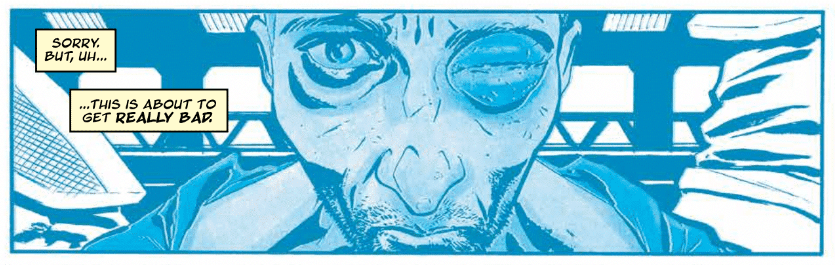
Crossover #5 Art Example

Geoff Shaw pulls no punches in Crossover #5 and provides a visual spectacle. Cates gives Shaw many opportunities to showcase his wonderful talents in a multitude of splash pages, which are impressive enough to take any reader’s breath away. Shaw’s characters are expressive, and the characters that are from fictional comic books all look like they could have been real superheroes. Every form is incredibly dynamic, which makes this climactic issue an absolute joy to read.

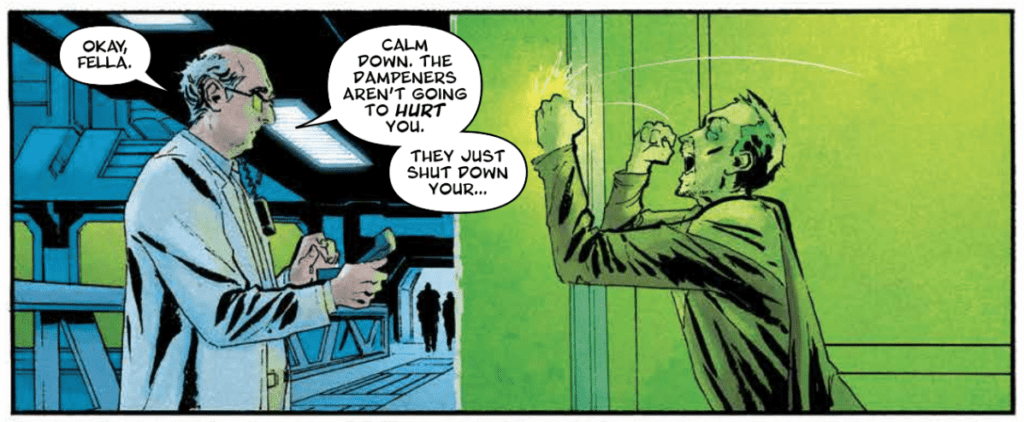
Crossover #5 comes to life through the coloring talent of Dee Cunniffe. The entire issue comprises a wide and vibrant color palette, which adds to the characters’ fantastic elements. Cunniffe’s characters that aren’t from a comic book have a much darker tone and palette that provides an amazing contrast between them and the comic book characters. Cunniffe also uses lens flares in this issue, emphasizing the panels it is used on since the effect is not often used in the series.

Crossover #5 Coloring Example

John J. Hill’s lettering in Crossover #5 is an excellent complement to the issue’s art. When the event happening on the panel is big, so is the font, and the style reflects the moment as well. Some characters have a different color scheme for their speech bubbles, and there are times where the words extend past the borders of a speech bubbles. Both of these are small ways that Hill is able to clarify the way that certain lines are said, and it has an enormous effect on the quality of the issue.

Crossover #5 is an issue where all the dominoes fall, and we creep towards the end of the series’ first arc. It is fast, action-packed, and a whole lot of fun.

Monkeys Fighting Robots Youtube