While it misses a few steps, this issue of Wonder Woman has great action and fantastic art.
The last two issues had an incredibly similar pattern, in that they failed to push the story forward. Darkseid has been searching for a way to get to Themyscira to enslave the Amazons. Wonder Woman, her twin brother Jason, and ARGUS have been fighting his forces over relics that open the gate to the Isle of the Amazons. Before they can fully piece together the plan, the lord of Apokolips launches a full-out assault on ARGUS HQ, taking them all to the portal. Will the children of Zeus and their allies be able to stop Darkseid?
**Some Spoilers Below**
Story:
Wonder Woman’s forces and Darkseid’s forces have finally gathered for one last battle for the gate. As Diana takes on the Dark God himself, Jason faces off against Grail, Darkseid’s daughter. It turns out he and Grail were not just partners, but lovers. She tries to sway him, but Jason, now set on his true destiny, denies her and unleashes his full power. During this, Steve Trevor and his ARGUS soldiers fight the Female Furies for control of the relics.
As implied by the summary above, this issue is an all-out brawl. It’s intense, yet still fun and shows off the skills of the heroes. It’s great to see the heroes doing battle with stakes instead of flashbacks. I think the best part of all the action has to be Jason using his powers against Grail. Seeing him as a nearly complete hero so soon after his introduction is still a bit shocking, but welcome considering how awesome the fights have been. Diana also stands out with her determination to get revenge for her father, despite how outclassed she is against Darkseid.
That being said, when the smoke clears, the only real story progression doesn’t happen until the last four pages. This wouldn’t be as bad if the previous few issues haven’t been as dull, but as it stands, this issue needed to have more progression.
Art:
I know it sounds like a broken record, but the art of the series continues to be top notch. Emanuela Lupacchino has returned once again to illustrate, and she shows why she’s one of the best when it comes to drawing the Princess of Themyscira’s adventures. The action looks fantastic, the characters are incredibly detailed, and every page is more kick-ass than the last. Romulo Fajardo Jr. helps these incredible illustrations pop with his masterful colorwork. This art team should be the continuing team for the book, or at least the standard artists should strive for.
Conclusion:
While still lacking a few crucial steps, this issue is heading in the right direction. There might not be as much story progression, but there is a significant amount of epic action to have fun. This, of course, is in large part of the art team, who has gone above and beyond. It’s not perfect, but if you like Wonder Woman being badass, it’ll be a good time.
DC Comics’ “New Age Of Heroes” continues with The Immortal Men #1, an idea and action-packed new series from superstar storytellers Jim Lee, Ryan Benjamin, and James Tynion IV.
The Immortal Men #1 Story by: James Tynion IV, Ryan Benjamin & Jim Lee Art by: Jim Lee Colors by: Jeremiah Skipper & Alex Sinclair Inks by: Scott Williams & Richard Friend Letters by: Carlos M. Mangual
There is a secret history to the DC Universe of heroes who have protected humanity from the shadows since the dawn of time…and who can liveforever. Enter the Immortal Men! The team, headed by the Immortal Man, has waged a secret war against the House of Conquest for countless years—but Conquest has dealt a devastating blow. When their base of operations, known as the Campus, is savagely attacked, the Immortal Men must seek out their last hope—an emerging metahuman known as Caden Park! Caden’s emerging powers may be able to ensure the Immortal Men’s survival—but will Conquest get to him first?
Writing
As part of DC Comics’ New Age of Heroes initiative, The Immortal Men sets out to bring new concepts into the DCU, and does so with a solid amount of myth-building and ’90s comics attitude. Storytellers Jim Lee, James Tynion IV and Ryan Benjamin work together to tell a fast-paced debut issue that may lean a bit on exposition but still has a strong enough protagonist in teenage meta-human Caden Park to keep you interested. His self-doubt and internal struggle are relatable. As are his reaction when he finally accepts what is happening. There are strong echoes of ’90s X-Men (the Lee art, of course, adds to this) and a good use of the ‘chosen one’ archetype. The story also brings back one of the fan-favorite characters from Dark Knights Metal…SPOILER ALERT…The Batman Who Laughs is alive and well, cackling with glee.
Art
Part of “New Age of Heroes” was to raise appreciation and acknowledgment of the artist in comics, and on that front, The Immortal Men really succeeds. Working with longtime collaborator Scott Williams and Alex Sinclair, Jim Lee creates some dynamic art in these pages. The art is crisp, vibrant and energetic. The character designs are also classic Jim Lee. If you are a Jim Lee fan, you will probably love this.
Conclusion
The Immortal Men is off to a solid start, and readers should give this new series a chance to see where it goes. New concepts and characters are a great way to revitalize a comic book universe, and something that should always be given a chance.
Two months ago screenwriter Joss Whedon decided he didn’t want to continue working on a “Batgirl” film. A woman has now stepped up to take his spot.
Warner Bros. has found its new writer in Christina Hodson. Hodson’s credits include Shut in and the upcoming Transformers spin off Bumblebee: The Movie.
Though quite a few have taken on the role as ‘Batgirl’ the film will focus on Barbara Gordon’s version.
Paste Magazine gives us more info on the character. The daughter of Commissioner Barbara is a headstrong woman with strong natural gifts in gymnastics and martial arts.
As Batgirl, she becomes part of the so-called “Bat Family” of extended heroes that includes the likes of Robin, Nightwing, Huntress, Black Canary, Spoiler and so many others in the Batman comics.
Batgirl made her film appearance wit Batman & Robin in 1997. Alicia Silverstone played the character
No word on who will star in the film, but a short list was leaked last year.
No. 1 With A Bullet #6 brings the story to a close with both violence and tenderness. As the true culprit is revealed, Nash and Violet use their love for each other to survive the encounter and return their lives to normalcy. But how long will it last?
No. 1 With A Bullet #6 Written by: Jacob Semahn Art by: Jorge Corona Colors by: Jen Hickman Lettered/Designed by: Steve Wands
Good or bad, all things must come to an end. But which will it be for Nash and Violet? Find out in the explosive series finale of NO. 1 WITH A BULLET!
***This review contains spoilers!***
Writing
After last month’s revelation,No. 1 With A Bullet left both the reader and its protagonist with their literal perceptions flipped. Writer Jacob Semahan immediately picks up on this thread and dives right into a very tense and disturbing situation: Nash bound and blindfolded as her girlfriend Violet seemingly reveals herself to be the person who has been destroying Nash’s life. But as has been the case with this series from the get-go, all is not what it seems...SPOILER ALERT…it’s not Violet at all…she too has been sucked into the disturbing obsession of Nash’s ‘No.1’ fan, a man neither them really even knows. Nash figures this out not with her eyes, but with her ears and her heart.
Like the last issue, Semahn once again uses the very real relationship he has created between Nash and Violet to save them. For a series so concerned with social media communication, it’s the very real, very ‘IRL’ connection between two women that conquers the chaos of obsession.
But Semahn is a clever writer, who understands the power of mystery. And although the story wraps up, there still exists a shroud of doubt and the unknown left to linger in everyone’s minds.
Art
Jorge Corona and Jen Hickman outdid themselves with this final issue. Their collaboration has grown stronger with each chapter, culminating in what is the strongest artwork this title has had. There is a great use of so many comic book techniques here; negative space, jarring panel layouts and shapes, and mood-altering coloring.
The lettering is also a stand out; the fonts and word balloon placement helping to create the emotion and tensions.
Conclusion
Now that’s it’s over, No. 1 With A Bullet will undoubtedly be collected into a trade. If you have been on the fence on this title, then please pick that up. Semahn, Corona and Hickman have crafted a twisted, emotional and relevant cyberpunk mystery that will surely become a cult-classic of the medium.
As Sonic continues to fight against the rough robots to investigate who is behind their attacks, he runs into his number one fan, Amy Rose.
Writing
After the second issue, this series is starting to feel like an IDW series. This makes perfect sense as many IDW series seem to land better after their second issue. As the majority of the comics from the company are based on existing franchises with large casts of characters, it’s important to remember each series is a fresh slate, with a new world to explore. This means elements which are known to be part of the franchise are not necessarily in play in the series until they get a proper introduction.
The first arc of this series is set to re-introduce the characters as they will act in this new series. The first issue introduced Sonic and Tails, this issue brings Amy Rose, and the next issue will finally bring Knuckles to the mix. It may seem like it’s a slower pace but at the same time, this is what is needed when dealing with large casts, characters, and mythology. Writer Ian Flynn seems to have a great feel for what needs to happen with this franchise moving forward and is producing an incredibly fun read in the process.
Artwork
The artwork gets a shift up thanks to the work of a new artist. Adam Bryce Thomas pulls overtime by doing pencils, inks, and color work for this issue. His work is perfect with the introduction of Amy Rose. She seems like a character who benefits from the use of a lot of great facial expressions as she is one for getting emotional being young and trying to prove herself to everyone, especially Sonic. You can feel the sentiment Amy feels from panel to panel, making the issue incredibly memorable.
The lettering by Corey Breen helps with introducing Amy’s emotional nature. The lettering delivers how awkward yet loud she can get around the blue blur. Also, the sound effects help the actions flow as if watching one of the original Sonic video games. The effect used for Sonic’s signature charge spin is spot on.
Conclusion
The book hasn’t lost its energy after the first issue and instead has proven a change of art, especially for certain characters, helps to make the issue more enticing. If you weren’t won over by the first issue of the new Sonic the Hedgehog series, then pick up this issue before you write off the series. It helps to prove just how entertaining this new book is going to be.
When it comes to playing old video games, remasters have become the go to for reliving ones gaming past. Last week’s release of the trailer for the Spyro: Reignited Trilogy caught a lot of people’s attention for good reason. The upgraded lighting and graphics drastically improve the look of the games. They look a lot more colorful, and detailed. Plus if it sells well, hopes for a new Spyro game could become reality.
Since its release back in June of 2017, the Crash Bandicoot N. Sane Trilogy has become the top selling remastered collection in PlayStation 4 history. Selling over 3 million copies according to VG Chartz. Not to mention it’s being sold for Nintendo Switch and PC as well. Remasters are a great way for developers to gauge the interests and wants of the gaming community.
After the success of the N. Sane Trilogy, rumors of a new Crash Bandicoot game in 2019 have been swirling around ever since. But whether or not it does happen, here are some video game remasters I would love to see happen!
Power Stone
The Sega Dreamcast fighter was one of the best and most underrated fighting video games of its era. What set it apart from other fighters was what you collected while fighting three other combatants. By collecting three gems that appeared in various parts of the stage, you would unlock your character’s ultimate form and its attacks. Ultimate forms mostly came in a style of armor and each one was unique. Being able to pummel opponents as a giant stone being in high-definition would be fantastic!
Crazy Taxi
Crazy Taxi was an amazing game. Though it has been ported over to mobile devices, barreling through the streets in updated cabs, and collecting fares while listening to The Offspring would be great! Any game that rewards you for driving like a lunatic should be given a new look, and in this case a third game.
The House Of The Dead 1&2
Though it did make its way to console, House of the Dead was a shooter that was more popular in the arcade. Using a controller instead of a plastic gun to shoot zombies and monsters felt very awkward and weird. So why bother with a remake? Well VR is a thing now-a-days, so why not give one of the best rail shooters of all-time the VR treatment?
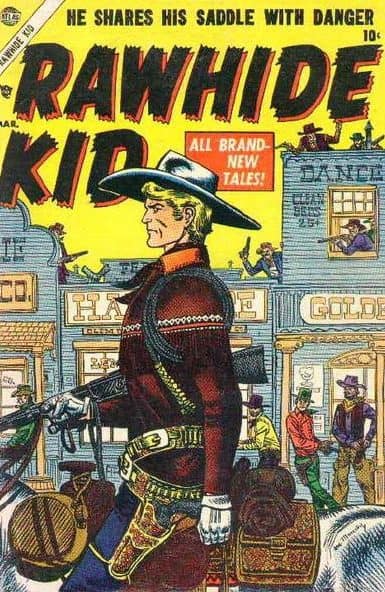
In American comic books, which tend to glorify the actions of well-meaning vigilantes, it just makes sense that a few cowboys would come out of the woodwork. Along with the hard-nosed and often-masked detective archetype, the cowboy — with or without bandana — was a popular source of inspiration for a number of caped crusaders.
Although these dusty cowpokes didn’t generally possess laser vision or the ability to defy gravity, to call them powerless would be a misrepresentation. One particular leather-slapper of the 1960s that springs to mind when thinking about superhero prototypes is Atlas Comics’ own Rawhide Kid, AKA Johnny Bart, who first appeared in Rawhide Kid #17 (cover date August, 1960).
Western Comics: Look Who’s Rawhiding Now
“Time to clean up this Hollywood set…”
As the issue number implies, Johnny Bart isn’t Atlas’s original Rawhide Kid. Rawhide Kid #1–16 tells the story of a blonde cowboy, only ever referred to as “Rawhide Kid,” who rides from town to town righting wrongs. And, although an entertaining Western comic in its own right, there just wasn’t enough to this character to give him staying power.
The second Rawhide Kid, however, obviously did have what it took to keep readers interested, and has enjoyed intermittent publication since the ’60s — most recently in Rawhide Kid: Sensational Seven (August–November, 2010).
Johnny Bart has defended his nearly 60-year intermittent tenure without the use of super-strength, telepathy, super-breath, or any other such power: instead, the Rawhide Kid draws and sights his guns faster than the speed of light, and I’m not being hyperbolic. Johnny Bart’s draw, as demonstrated in his first appearance in 1960, is so fast that it’s invisible to the human eye. On more than one occasion, Johnny even manages to shoot first even though an aggressor already has his gun drawn and trained on Johnny’s chest.
Perhaps more impressive than his faster-than-light draw, though, is the Rawhide Kid’s phenomenal sense of aim. In his first story, the Kid manages to fire backwards over his shoulders and disarm an adversary by shooting the gun out of his hand. He lines this amazing bit of gun-play up simply by locating his target in a mirror. Now that’s a pretty slick hombre, pard.
But before exploring how influential this particular hombre has been, let’s take a look at one who set the stage for the Rawhide Kid…both of them.
Western Comics: The Masked Raider
Making his Timely Comics debut alongside big names like Jim Hammond the (original) Human Torch and Prince Namor the Sub-Mariner, the Masked Raider first appeared in Marvel Comics #1 (cover date October, 1939). In a scant four pages, Al Anders, working as both writer and artist, tells the Masked Raider’s humble origin story…
Cal Brunder, “the real power in Cactusville,” and his gang of roughnecks terrorize ranchers and coerce them into selling their land to him. This is bad news for Jim Gardley who owns a ranch just outside of the Cactusville limits. Gardley refuses to sell, and he puts up a good fight when Brunder’s thugs come calling. But catching him from behind, one thug pushes the barrel of his revolver into Gardley’s back, and the hard-fisted rancher is forced to surrender. The gang takes him to Brunder who frames Gardley for cattle rustling.
Gardley is brought to the local sheriff’s office and takes up residence in a jail cell while awaiting trial. Using the old “Help, I’m dying” act, Gardley tricks the grey-haired sheriff into opening his cell, and delivers a knockout blow when the sheriff comes to his aid. Gardley then flees town on a stolen horse.
Western Comics: Lightning Never Strikes Twice
“Damn, I really should’ve cut eye-holes into this thing.”
Concerned that riding a stolen horse will draw suspicion, Gardley abandons his mount after clearing town, and raids his own ranch for supplies. He spends weeks perfecting his shooting talents, but no sharpshooting cowboy is complete without his trusty steed. So when Gardley sees a wild white stallion, he resolves to tame him. Gardley accomplishes this feat over the course of eight panels on a single page, and names his new steed “Lightning.”
All the Western narrative devices in position, Gardley covers his entire face in a black bandana and swears to “forever fight the lawless … bring justice to the oppressed, and help the poor” as the Masked Raider.
Western Comics: Shades of the Lone Ranger
Although the Masked Raider isn’t an original idea, the Lone Ranger having been introduced to the radio-listening public about seven years prior in early ’33, the Masked Raider marks Timely/Atlas/Marvel’s original foray into western comics, an on-again-off-again affair that has lasted 79 years.
Over this nearly 80-year span, there have been several Western characters to grace the pages of Timely, Atlas, and Marvel comics, but one of the most popular and influential — and recently controversial — was the aforementioned (second) Rawhide Kid.
Western Comics: The Familiar Origin of the Rawhide Kid
“Cut ’em out, ride ’em in…RAWHIIIIDE!!”
Hailing from Rawhide, Texas, Johnny Bart is the adopted charge of Ben Bart. Ben is an ex-Texas Ranger, and in addition to his regular guardianship duties Ben also teaches young Johnny to shoot.
Borrowing from stories of gunslingers who came before and providing the groundwork for a certain webslinger’s origin, Johnny Bart’s sad story is a well-told composite, written by Stan “the Man” Lee and penciled by Jack “King” Kirby. One day after Johnny has gone to town to sell some grain, two glory-seeking gunslingers amble onto Ben’s ranch. One sneaks behind the brave ex-Ranger while the other man, Hawk Brown, confronts Ben. Brown introduces himself as “the hombre who’s gonna out-draw” the famous Ben Bart.
Bart tries to reason with Brown but to no avail. The two men reach for their guns, but the second thug employs one of the oldest tricks in the book: he calls Ben from behind, making him look over his shoulder. This moment of hesitation is all Hawk Brown needs. Brown fires and kills Ben on the spot. The dirty deed complete, the two bad hombres resolve to go into town to brag about the deed and solidify Brown’s dishonest reputation as the fastest gun in the west.
Western Comics: O.G. Uncle Ben
If the murder of Johnny Bart’s non-parental legal guardian isn’t a strong enough indication that Lee — consciously or not — borrowed from this origin story to furnish that of Spider-Man, the fact that Johnny refers to his guardian as “Uncle Ben” throughout the tale should destroy any doubts that true believers might have.
Character traits that the Rawhide Kid shares with Spider-Man continue to mount throughout the various stories told in Rawhide Kid #17. In addition to his youth and the senseless murder of his father figure by a random goon, the Rawhide Kid, much like Spidey, runs afoul of the law quite quickly.
Not even making it to Rawhide Kid #18 before becoming a wanted man, Johnny Bart is continually on the run. Always morally upright and virtuous, as any Western hero should be, the circumstances of Johnny’s legal issues are all the result of a simple misunderstanding. Sound familiar?
So the next time some troubled fan of the Distinguished Competition tells you that Spider-Man is just a nerdy boy-scout type from Queens, you can tell them that they’ve got it all wrong; he’s really the Lone Ranger.
Western Comics: Final Thoughts
Jokes aside, I don’t mean to say that Stan the Man ripped himself off. Much like his continual collaborator Jack Kirby, a little overlap is to be expected in a creative career as prolific as his. The fact that Spider-Man’s origin story is less than original shouldn’t surprise anyone, and it shouldn’t spoil anyone’s opinions of the ol’ webhead either.
Hero-based comic books, super-powered or gun-powered as the case may be, tend to explore power dynamics between character types, e.g. hero vs. villain. These explorations are augmented when writers take time to flesh out characters’ motivations by way of intriguing origin stories. The senseless murder of one’s father figure is obviously a narrative device that resonated with Stan Lee, as it undoubtedly continues to with most people.
“If only I’d been bitten by a radioactive spider or something!”
The fact that Spidey’s origin story contains elements from Rawhide Kid’s shouldn’t bother people anymore than the fact that the Rawhide Kid’s origin story contains elements from the Masked Raider’s — both wrongfully accused outlaws who developed their sharpshooting skills by shooting cans. These characters, no matter their similar origins, end up in very different circumstances.
Just as the Masked Raider never fought a giant living statue, the Rawhide Kid never did battle with an octopus- or goblin-man. Though they might have started off in similar positions, it’s the situations these characters end up in that makes these stories unique and worthwhile.
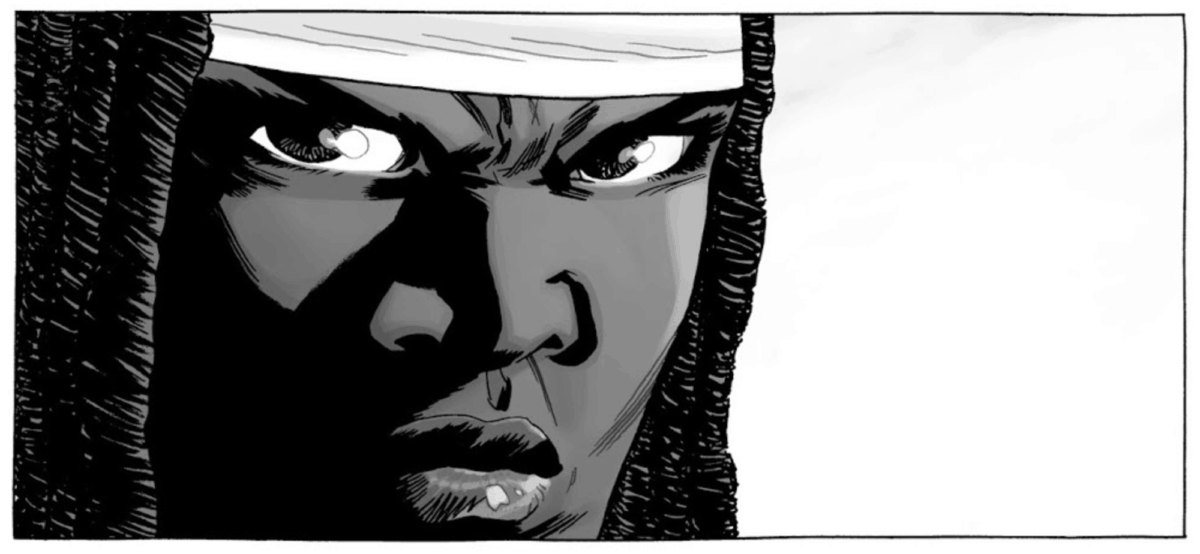
Issue 178 of The Walking Dead by Robert Kirkman was fascinating to break down, as you had three family dynamics working throughout the story.
Kirkman also does an excellent job at setting up the reader to eventually rip the rug from underneath him or her by the end the book.
Maggie and Sophia’s relationship is an example of how long the series has been going. There is some serious history between this makeshift mother and daughter team. In contrast, Michonne and Elodie are trying to make up for lost time. The different levels of character development among the mothers and daughters showcase Kirkman’s spectrum of writing skills.
Yet, Michonne’s unconditional love as a mother does foreshadow how the story arc will play out in the Commonwealth. The governor, Pamela Milton has the same feelings for her dumb-ass son, Sebastian and part four of six of NEW WORLD ORDER hits that sweet note right before the shit hits the fans. You get to the last page, and you want to read issue 179 immediately.
I’ve made mention of Charlie Adlard’s work concerning the movement of eyes before, and this issue continues the trend. Kirkman lets the page breath from time to time, and Adlard takes over as the storyteller. There are more than a few panels in 178 where the reader is allowed to soak in the emotion of the art.
178 is exactly where the book needs to be at this point in the story arc. There was some misdirection in the storytelling which has led to an unexpected outcome. All bets are off over the final two issues of the arc.
What did you think of the issue? Comment below.
About the issue: “NEW WORLD ORDER,” Part Four Princess unleashed—It’s possible Princess doesn’t quite fit in at the Commonwealth.
The Walking Dead #178 is written by Robert Kirkman, with art by Charlie Adlard, inks by Stefano Gaudiano, and grey tones by Cliff Rathburn. Rus Wooten lettered the book and Dave Stewart colored the cover.
Armando Iannucci’s latest film The Death Of Stalin is a cinematic collage of excellent writing, biting satire, and strong performances.
While it may seem odd to equate fantastic satire with a film focused on the death of a Russian leader who was known for killing his enemies, Iannucci has made a career of testing limits. Veep and The Thick of It (shows he both created for American and British television) both take a satirical look at the inner workings of government in a biting manner which pushes the boundaries of conventional humor. The film In The Loop used acerbic humor to shed light on the idiocy of 10 Downing Street and the invasion of Iraq.
Our narrative begins in 1953 as Radio Moscow is broadcasting a Mozart concert which catches the ear of Stalin (played by Adrian Mcloughlin) himself. He ends up calling the booth where they are broadcasting the event to demand a recording of the concert. The only issue is no recording was made. So the director of broadcasting (played by Paddy Considine) ends up having to convince a whole theater of music lovers to sit down and listen to the same concert once more. The pianist (played by Olga Kurylenko) finds out why they are now redoing the show and refuses to go on. Seeing his life flash before his eyes (remember Stalin has killed people for lesser reasons), he offers her 20,000 rubles to stay, and she reluctantly agrees. Once the second concert concludes, Russian soldiers arrive to pick up the recording and just the director is handing it over, the pianist slips a note in the record sleeve telling Stalin what a loathsome human being he is. The recording eventually makes it to his desk. The note slips out, and he reads it causing the Russian leader to roar with laughter which quickly morphs into a massive stroke. Stalin’s death is just the start of a cavalcade of chaos which dominates the second and third acts of the film.
The film quickly pivots from the shock surrounding the Russian leader’s death to a game of who will ascend to power. For now, Georgy Malenkov (played by Jeffrey Tambor) is to take the reins of power, but Lavrenti Beria (played by Simon Russell Beale) and Nikita Khrushchev (played by Steve Buschemi) are devising plans to take over. Vyacheslav Molotov (played by Michael Palin) and Field Marshal Zhukov (played by Jason Issacs) end up taking sides during the power struggle.
One of the strengths of the film is the performance of the ensemble. The chemistry between the principal players in the narrative is off the charts. The scenes between Tambor and either Buschemi or Beale provided some of the most significant laughs. The actors weren’t seeking to overshadow one another and continuously hit their respective comedic beats. The meek nature of Tambor’s character only made the actions taken by Buschemi’s character and Beale’s seem more ridiculous. The highlight was seeing each of them sprint walking with open arms in a race to see who would be the first to welcome Stalin’s daughter Svetlana (played by Andrea Riseborough). While Palin and Issac’s roles were smaller, by comparison, each added an essential element to the ensemble. Palin brought a tinge sarcasm and wit to his character which he’s done for year dating back to his days in Monty Python. Issacs added an element of physical comedy to the film which was both enjoyable and surprising. Zhukov’s slow-motion introduction is so well played, audiences will have tears streaming down their face from laughter.
The pacing of the film is near perfect. Writers David Schneider, Ian Martin, and Iannucci were able to create a storyline which perfectly blended the historical nature of his death with the satirical high jinks going on behind the scenes while sprinkling in just enough absurdity. Composer Christopher Willis score was stirring yet seemed to have whimsical undertones. One of my only complaints about the film was why they allowed many of the characters to speak in their native accent. Hearing Buschemi delivering his lines as Khrushchev sounding like he did in Reservoir Dogs was at times distracting.
Overall, Death Of Stalin is one of the more enjoyable releases in 2018. With the release of A Quiet Place, Rampage, and Avengers: Infinity War, a film like this tends to get forgotten. Don’t let that happen!
FX Networks has ordered a pilot for a series based on beloved and Eisner-winning comic book series Y: The Last Man, according to Deadline. FX announced the order via Twitter on April 5th.
FX has ordered Y, a drama pilot from Michael Green based on the DC comic book series Y: The Last Man. https://t.co/fNf4YD64de
The comic book series, published by Vertigo from 2002-2008, starts with the mysterious, simultaneous death of all nearly all mammals with a Y chromosome. The only male survivors are a bookish amateur escape artist, Yorick Brown, and his pet monkey Ampersand. Amid the chaos caused by death on such a massive scale Yorick and Ampersand, along with superspy Agent 355, and a cast of other memorable characters, search the world over for answers and Yorick’s girlfriend Beth. Created by writer Brian K Vaughan (Saga, Paper Girls) and illustrator Pia Guerra, the series ran for 60 issues.
FX has already nailed one comic book show, Legion. This new series, which is tentatively titled Y, is set to be helmed by Michael Green. Green is no stranger to comics, having previously worked on Logan and Smallville. The pilot will be directed by Melina Matsoukas who has previously directed episodes of Master of None and Insecure.
While a pilot order is no guarantee that a show will make it to TV, there are a lot of comic book fans that hope Y will find its way into our homes soon.
Who do you think would make the perfect Yorick? Who kicks enough ass to bring Agent 355 to life? Is the monkey from Friends still acting? Let us know in the comments.



 As implied by the summary above, this issue is an all-out brawl. It’s intense, yet still fun and shows off the skills of the heroes. It’s great to see the heroes doing battle with stakes instead of flashbacks. I think the best part of all the action has to be Jason using his powers against Grail. Seeing him as a nearly complete hero so soon after his introduction is still a bit shocking, but welcome considering how awesome the fights have been. Diana also stands out with her determination to get revenge for her father, despite how outclassed she is against Darkseid.
 The Immortal Men #1
 Art
Art No. 1 With A Bullet #6