Home Blog Page 481

Comics On Kickstarter: Jamie Jones’ THE BABOON

Monkeys Fighting Robots

COMICS ON KICKSTARTER is a new series we are starting at Monkeys Fighting Robots highlighting comic book Kickstarter campaigns. According to Kickstarter, $15.3 million was pledged to successfully funded comic book projects in 2018, up 27% from 2017. If you are working on a comic book related Kickstarter campaign, send us your information at info@monkeysfightingrobots.com.

What the heck is THE BABOON?!

Comics On Kickstarter: Jamie Jones’ THE BABOON

Jaime Jones’ The Baboon is a modern version of Hanna-Barbera adventure cartoons mixed with Jones’ art style (the love child of Todd McFarlane and Will Eisner).

According to Jones, The Baboon is his love letter to the pulp stories of the 40s and 50s. The tone is light, fast, and fun. This is his first Kickstarter campaign and Jones is going for quality with a 60-page hardcover. It took Jones a little over a year to complete the book as he is the writer, artist, inker, colorist, letterer, and designer. You will recognize Jones’ work from the back-up story in Violent Love, “A Constant Distraction” from Image Comics.

Watch the Kickstarter video for THE BABOON:

One of the things that potential backers look for on Kickstarter is a completed project, and Jones has stated The Baboon is complete. The funds collected will be purely for printing and shipping the book to backers. Click on the widget below for more information and to grab yourself a copy.

About the project:
To the world at large, The Baboon is a nothing more than a government myth. A figure of the shadows taking down evils wherever they lurk. To his crew -three of the greatest heroes of their time- he is a man of daring and compassion, who will stop at nothing to defend the world from the greatest evils known to man. But, to his adopted nephew, Jamie, Barton Marlow – The Baboon- is the coolest guy in the whole world. And now in his new life of adventure, Jamie wrestles with being the regular kid he once was and living up to his uncle’s expectations. A man whose fantastic exploits are unequaled for narrow escapes, fantastic adventures, and endless thrills.

Comics On Kickstarter: Jamie Jones' THE BABOON

The Mustelid Menace: While in search of the Jackal formula – a super soldier serum that could change the dynamic of the entire world – the Baboon is captured by the nefarious Professor Weezal. His only hope of escape is with the help of his amazing crew. But, things are strange on Mount Mustelid and the Jackal formula may be in full effect. Time is of the essence as the Baboon battles his way through armed men and hulking, carnivorous monsters. Let’s just hope they never have to go back.


What do you think? Is this the type of comic book project you want to see more of? Comment below with your thoughts.

Monkeys Fighting Robots Youtube

[Review] In SHAZAM! #3 The Family Learns the Truth of the Seven Magiclands

Monkeys Fighting Robots

The Funlands are a kid’s paradise, complete with sugary treats and carnival rides to enjoy to your heart’s content. And the ruler of this pseudo-Pleasure Island goes by King Kid, who is absolutely, positively not secretly a villain. The Shazam family also learns more about the seven realms of The Magiclands, which The Funlands and Earth (or, The Earthlands) are part of.

**Some Spoilers Below**

Story:

“SHAZAM! AND THE SEVEN REALMS” continues! Billy Batson’s world is turned upside down by a figure from the past while Mary, Freddy and the rest of the Shazam Family enter a realm of endless amusements, candy factories and friends in the Funlands! But what’s the catch? Plus, a shocking development within the Library of Eternity!

Shazam 3 Cover


In the previous issue, we learn that the exclamation point of SHAZAM! represents a seventh powered letter of the name. And King Kid believes he is that seventh champion of the superpowered family. A little trip down memory lane reveals how the kid who would be king literally stumbled into what would eventually become The Funlands. He also goes on to tell Billy and the others how he wished the endless fun of the Magiclands realm into existence, as well as the other children to share in the fun. Now the King Kid is wishing Billy would tell him what the magic word is, so he can have the power as the world’s mightiest mortal.

Writer Geoff Johns has proficiently crafted the tone of this story to appeal to an audience of all ages. Younger readers will enjoy its lighthearted, straightforward narrative, and older fans will appreciate the nostalgic optimism that Johns promised a return to when he announced the DC Universe Rebirth. The issue itself is not all that exciting. Its dialogue is run-of-the-mill, primarily serving as exposition and setting up what’s to come next. Having said that, Johns sure loves his world-building.

It is no doubt that Johns is one of the best writers working in the industry today. However, it seems as if he will only take on characters if he gets to perform some major universe expanding with them. But did we really need that right now: at the beginning of the first major Shazam! series since 2008? This is also the first time seeing the modern interpretation of the Shazam! family since 2011, when they appeared in the last few pages of the first issues of the New 52’s Justice League. A simpler story that reintroduced the characters would have been helpful.

Art:

The artwork continues to be amazing in this Magiclands story. Artists Dale Eaglesham, Marco Santucci and Mayo “Sen” Naito do a wonderful job in crafting characters with vivid expressions, and scenes with so much detail that you simply must stop reading and admire. I particularly appreciated the shift in artwork style during a flashback sequence. The artwork is only enhanced by the colors of Mike Atiyeh, who makes each panel bright and easy on the eyes.

Shazam 3 Page

Conclusion:

Clearly appealing to a younger audience, there isn’t too much to write home about in this issue. But it will hopefully all pay off as the Shazam! family explores the Magiclands and the truth behind King Kid’s intentions are revealed.

What do you think of this current run of Shazam? Which of the Magiclands would you like to take a trip to? Let us know on the comments!

Monkeys Fighting Robots Youtube

Review: OLIVER #2 Develops Whitta’s Apocalyptic Parable

Monkeys Fighting Robots

Oliver #2 picks up two years after the events of our last issue. The titular character continues growing at an accelerated rate, now nearly an adult, and he’s eager to join Prospero and the others at work to earn his keep. However, the government becomes aware that there’s a “hybrid” boy loose in London, and by the issue’s end, Oliver learns about who—and what—he really is.

The Writing

The book continues to follow the loose concept of Oliver Twist, but with a decidedly unique take on the story. Oliver #2 hinges around Dickens’s iconic scene in which Oliver asks Mr. Bumble for a second helping of gruel. Only this time, the portly official is replaced by a muscle-bound, gas mask-wearing monster with a shotgun.

There’s a lot more world building going on here, but Gary Whitta does a great job of keeping things compelling in this issue, laying things out in well-plotted  narrative form. We’re able to explore more of the world, learning about it as Oliver does. We also get glimpses of the world outside London, how it operates, and the general attitude toward the ex-soldiers. This helps ground us in the comic’s environs and draws us deeper into the story.

Like the original, there’s no ambiguity about the moral implications at play here. Oliver #2 swaps the hellish conditions of a Victorian-era poorhouse for a smoke-filled factory floor. The men who call London home are treated like dangerous criminals, and their lives can be snuffed-out in a brutal manner for even a minor offense. And, although they’re not children as in the original novel, there are nods to the men’s status as victims. As one quips after being told he and his brothers should have been shot after the war, “Maybe you shouldn’t have created us…”

The Artwork

Darick Robertson’s designs are once again strong in Oliver #2. Despite the grounded, realistic style of the work, he manages to draw incredibly-expressive faces and gestures from the characters.

Robertson’s work serves the story well, and provides some striking panels here and there. That said, it is not exceptionally dynamic. He cleanly divides most of the pages into horizontal strips, so the pages flow evenly. However, the result is that none of the pages really stand out. It’s good work, but doesn’t really deliver the “wow” factor, as Robertson has demonstrated he can do with sci-fi settings.

Final Thoughts

Oliver #2 is a good next installment in this latest Dickensian adaptation. Whitta develops the story, hitting the beats of the original, but clearly making it his own. Recommended.

Monkeys Fighting Robots Youtube

Review: HEROES IN CRISIS #6 Reveals Who Attacked Sanctuary

Monkeys Fighting Robots

After a revealing twist and Clark Kent’s epic speech in the last issue’s end, Heroes in Crisis #6 opts to take a slower, more meandering route than the previous chapter.

Much of the issue centers around three characters—Gnarrk, Wally, and Harley—and their experiences at Sanctuary before the massacre. Specifically, the images they choose to conjure up in The Chambers, and how they process them. We get background material, but only towards the issue’s last few pages does the story start moving forward.

The Writing

It’s hard to surpass the last issue in terms of gravitas. However, King tries to match the emotional pitch by taking a deeper look at the source of individual characters’ traumas. Heroes in Crisis #6 is essentially a flashback, filling us in on the characters’ experiences at Sanctuary before the massacre.

King provides a sharply-introspective look at Gnarrk. He’s a man torn between two very different times, wrestling with the virtues and faults of each. He debates the merits of enlightenment philosophy, pondering whether it’s better to be free to live a “nasty, brutish, and short” life, or to be weighted-down with the chains of a more advanced society. With Wally, his repeated disappearances—and that of his family—take center stage. And of course, for Harley, The Joker is a key figure to her trauma.

Each character’s story is handled delicately and with great pathos, as we can expect from King. By the end of Heroes in Crisis #6, the flashbacks catch up to the moments the killings ensue. As teased on the cover, we finally discover the perpetrator behind the massacre in the book’s last few panels.

The deconstructions of these characters are beautiful and carry plenty of weight. But, as with previous issues, much of it is essentially tangential to the narrative. This can leave the reader feeling a bit cheated. Also, one worries how they can wrap this up cleanly with just three issues left until the run’s climax.

The Artwork

Mitch Gerads provides artwork for most of Heroes in Crisis #6, with Clay Mann drawing the first and last pages.

Heroes in Crisis #6

Gerads’s illustrations are beautiful as always. What really shines in this issue, though, is the powerhouse team of Gerads and King as a creative unit. The way Gerads contrasts facial expressions and composition within a panel to complement or contrast with King’s dialogue is superb. He demonstrates exceptional skill at letting moments hang, allowing readers to feel the emotional weight.

Gerads gets assistance on colorwork in Heroes in Crisis #6 from Tomeu Morey. The colors are vibrant, yet retain a soft, dreamy quality, perfectly complementing the artwork. The final product comes together with brilliant effect. Each panel is like a painting, and it’s a joy to look at.

Final Thoughts

Heroes in Crisis #6 is heavy on mood and emotion, with absolutely brilliant artwork. But, while it provides backstory and pathos, only the last few pages actually advance the narrative.

Monkeys Fighting Robots Youtube

Review: All Aboard For STAR TREK THE Q CONFLICT #2

Monkeys Fighting Robots

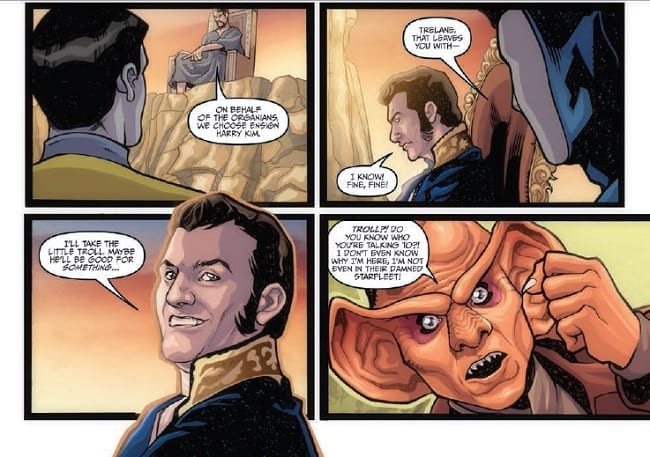
While Star Trek: Discovery is storming across T.V. screens, the rest of the franchise has been brought together by IDW Publishing to do battle for the enjoyment of Q and his eternal friends.  The second issue of The Q Conflict has a range of covers highlighting the mix of the crews and defines the format that the story is most likely to take for the rest of the series.

Drawing influence from other crossover event type stories, such as the original Secret Wars from Marvel comics and the multi Doctor stories from Doctor Who, The Q Conflict takes on the shape of a competition, pitting the crew of various space vessels against each other. The purpose is yet unstated and the prize a bigger mystery. But when Q is involved, nothing is going to be as it seems.

The Q Conflict #2 Credit: IDW Publishing

Writing/Story

Scott and David Tipton open this issue with the awkwardness of a schoolyard team picking experience. Most of the crew have been separated out between the godlike beings and only Quark and Ensign Kim remain to be picked. Is this a comment on the popularity of these characters? Maybe.

But this moment is quickly passed and the meat of the story begins. Q sets out the rules, with a few choice inputs from Picard, and sets the goal for the first part of the game. What follows is the attainment on this goal by the competing crews and the first stage of The Q Conflict is underway.

As the story plods along, a number of the characters are spotlighted for a moment of emotion or character statement. Ensign Chekov is frustrated; Commander Worf is uncomfortable; and Riker is smug. Most of these character aspects will be known to the readers as it’s hard to believe that anyone reading this isn’t a fan of Star Trek. Therefore, these moments are unnecessary and read as such. It is possible it will lead to important story points later in the series but for now they hang in the narrative like an immobile space craft.

The aim of this issue is to establish to crew rosters and layout the ground work for the ‘game’ they are being forced to play. The Tipton’s have taken a very straightforward approach to this which means that the outcome is a touch bland. There is no real threat to overcome and each crew seem to be on a jolly jaunt rather than fighting for the safety of the universe.  Ultimately, the comic follows a group of people racing against each other for a ball. It lacks drama and suspense.

Unlike a crossover event like Marvel’s Secret Wars where heroes and villains are pitted against each other in the game, The Q Conflict has nothing but heroes and therefore at this moment it doesn’t matter who wins. There is scope here for some challenging storytelling, especially as the characters come into real conflict with each other, but this issue is lacking any of that.

There is an exciting narrative hovering on the horizon, the readers just aren’t allowed to go there yet.

The Q Conflict #2 Credit: IDW Publishing

Art

The panel layouts from this second issue of The Q Conflict are thoughtfully designed. They lead the reader through the narrative and make it clear exactly which ship and crew each panel relates to. This is important for a comic like this because, in essence, everything is up in the air. The panel layouts ground the reader and focuses each location with its array of characters.

David Messina draws superb likenesses of the star ships crews and clearly has knowledge of each element of the franchise. He produces detailed work for Elisabetta D’Amico to ink and Alessandra Alexakis to color. Between them they create characters full of expression and emotion which is quite a challenge with the script they have been given.

The page layouts establish the location and the characters beautifully. The art team then build on this to make the comic endearing and provide an element of entertainment. The overall aesthetic is that of a Next Generation episode which is much warmer and comforting than the latest film franchise or Discovery.

The script is tedious in places and over written but Neil Uyetake manages to break this down in his lettering and make it flow across the pages. It’s easy to see who is speaking even if it’s not always clear from the dialogue itself. An easy to follow narrative is an important aspect of the comic which is helped by speech balloon placement.

The Q Conflict looks much better than it reads and it is a shame that the art team did not have a more exciting story to work their magic on.

The Q Conflict #2 Credit: IDW Publishing

Conclusion

A collection of easy in jokes and a lacklustre story means that The Q Conflict doesn’t live up to the potential of the first issue. The presentation is wonderful with artwork that captures the essence of a Star Trek episode but there is very little to back it up. This means that the flaws are more noticeable and any quirks are over enhanced.

Elements of the story and appearances from some characters will appeal to long term fans of the franchise. There is still potential in this series to tell an outstanding, genre busting story and as the series unfolds, this may yet come to fruition. For now, this chapter simply sets the scene in an adequate if uninspired way.


Monkeys Fighting Robots Youtube

Advanced Review: A New World Awaits In The Pages Of LITTLE BIRD #1

Monkeys Fighting Robots

Film maker Darcy Van Poelgeest and artist Ian Bertram (House of Penance) bring the tale of Little Bird to Image Comics. Set in a dystopian future where corrupt religion rules the land, a young girl faces the world with a desperate mission to save us all.

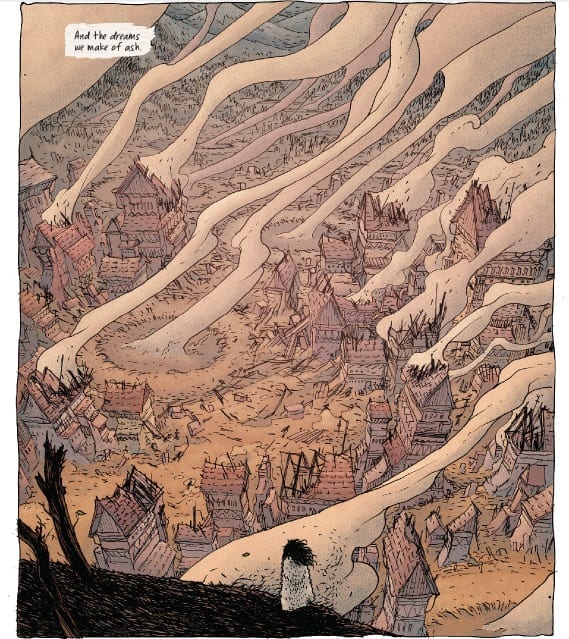
The collaboration introduces a disturbing world beautifully rendered in a style that is reminiscent of Nick Pitarra’s work on The Manhattan Projects. And just like that title, Little Bird is populated with innocent souls; corrupt officials; and a cast of emotional grotesques who fit the desolated world they inhabit.

Little Bird
Little Bird #1 Credit: Image Comics

Writing/Story

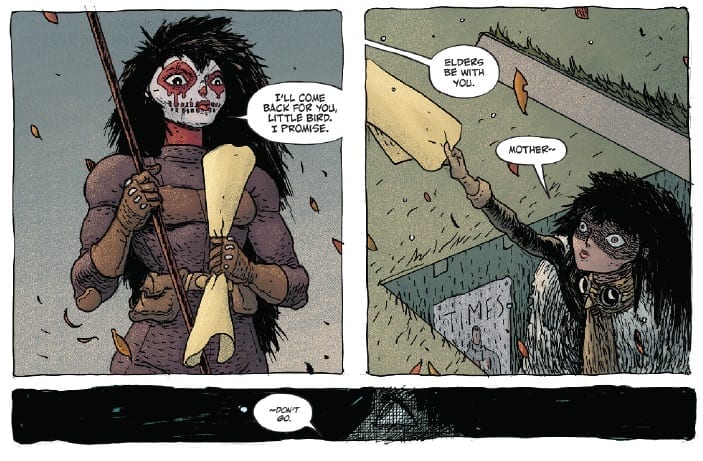
In Canada the resistance against the United Nations of America are set to make a stand. Tantoo, the leader of the group, places her child in a protective bunker and leaves her with details of ‘the plan’ in case she doesn’t return. And so begins Little Birds journey.

Darcy Van Poelgeest introduces a lot of concepts within this initial issue. He builds a fully realised world around a handful of characters and yet, at no point does it feel as though he is rushing through the story. As the narrative unfolds, through the eyes of the hero and the villain, the world is slowly introduced in a naturalistic flow. As each element of this dystopian future is required for the story, it is dropped effortlessly into the narrative.

For example, Little Bird finds a helmet with video playback built in. This shows her the preaching’s of the Bishop and in turn helps the reader to understand how the centre of power has shifted in this future. This introduces the villain of the story and also proves that in this America, Religion is King.

Despite the violence and destruction, the central theme of the story is Hope. Little Bird has an over powering sense of Hope which leads her from one encounter to the next. Her single minded belief is the driving force behind all of her actions. Van Poelgeest contrasts this against the complicated actions of the villains. Everything they do is so convoluted; unnecessary complicated. There are plans and schemes within larger plans. Little Bird’s plan is straightforward and simple. This comparison of purpose is the building blocks of this world.

Little Bird
Little Bird #1 Credit: Image Comics

Art

Bertram’s art is magical to behold. He has scratch thin lines and a design style that stands out in a crowd. There is an element of Frank Quitely about his work but he leans towards surrealist ideals with his design. Nothing is quite as it seems but it ultimately all makes some kind of sense.

There are many moments where Bertram creates panels within panels to emphasis the narrative. He uses a rough panel boarder which is barely visible, the white of the gutter marks the edges of his panels, but then creates stronger panel like shapes within the images themselves. Characters are constantly being framed, trapped in their own destiny as it were. Little Bird herself appears to be in a constant struggle between these defined boarders and wide open spaces.

The color work is a blend of naturalistic tones and garish colors. Matt Hollingsworth gives Bertram’s art depth and definition, imbuing each scene with emotional context.

Aditya Bidikar’s lettering highlights aspects of the characters, drawing the reader’s attention to them. He uses different fonts so that the readers will interact with the characters in different ways and he even changes the speech balloon shapes for some of the characters, namely the Bishops servants. These square edged balloons give the impression that these servant characters are unreal and unnatural which is the opposite of Little Bird’s caption boxes. This is another example of contrasting elements within the comic; a theme woven through each page.

Little Bird
Little Bird #1 Credit: Image Comics

Conclusion

Little Bird has a massive world in which to play in and Van Poelgeest introduces it to the reader in an engaging manner. He lays the ground work for an epic adventure but doesn’t skimp on characters. This is an engrossing first issue which will pull you right in. It looks divine and reads beautifully but also has the harshness that dystopian futures often bring.

There are moments of expression in Little Bird that elevate this comic above other ‘good against evil’ political tales.  Thin, wide screen panels of contemplation inserted into the page add emotional reinforcement for the central character throughout her journey. They are like punctuation marks within a novel. This produces an overall reading experience much different from the majority of the titles on the shelves.

There is a lot to absorb in issue 1 and the potential for future storytelling is vast. Like Image Comics other hit, Saga, Little Bird gives the reader a world to explore with seemingly endless boundaries.

Little Bird is released on 13th March 2019.

Monkeys Fighting Robots Youtube

Review: BOOKS OF MAGIC #5 Shows The Beauty Of Perspective

Monkeys Fighting Robots

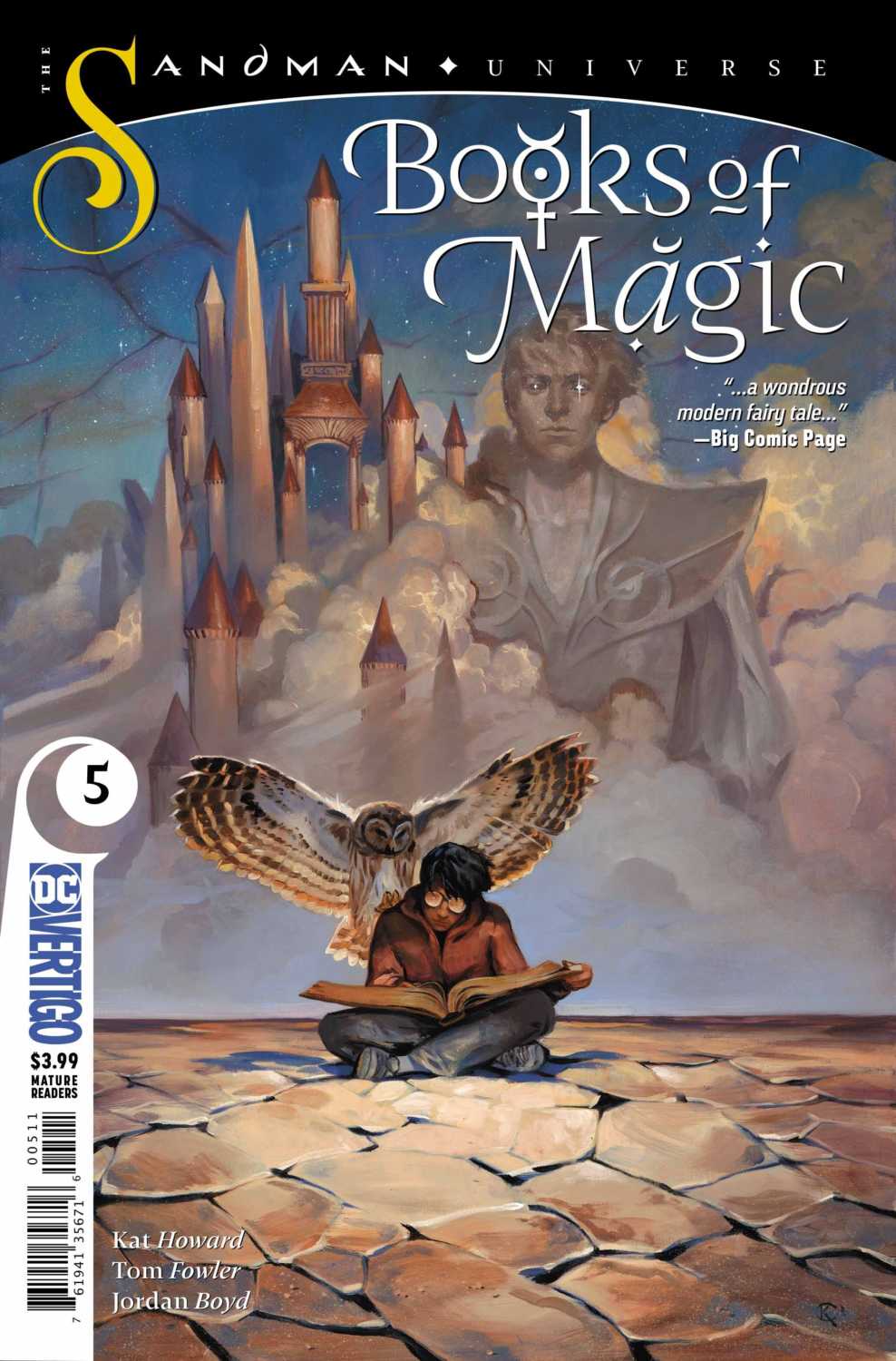
BOOKS OF MAGIC #5 takes readers into the fantastical world of The Dreaming as Timothy Hunter explores the realms of magic. He’s still learning how to balance his mystical side with the “normal” aspects of teenage life, but The Dreaming realm might help explain everything that’s been happening. Fortunately for Timothy, the answers he seeks might be closer than they appear; it’s all a matter of perspective.

books of magic #5 cover

Story

Timothy’s search for answers leads him and his owl companion to the dazzlingly bizarre world that is The Dreaming. This realm is made up of dreams and contains vastly distorted versions creations reminiscent of Earth. It’s enough to overwhelm the unassuming boy. He frantically looks for anything that seems familiar, eventually finding a library.

Timothy finds the library

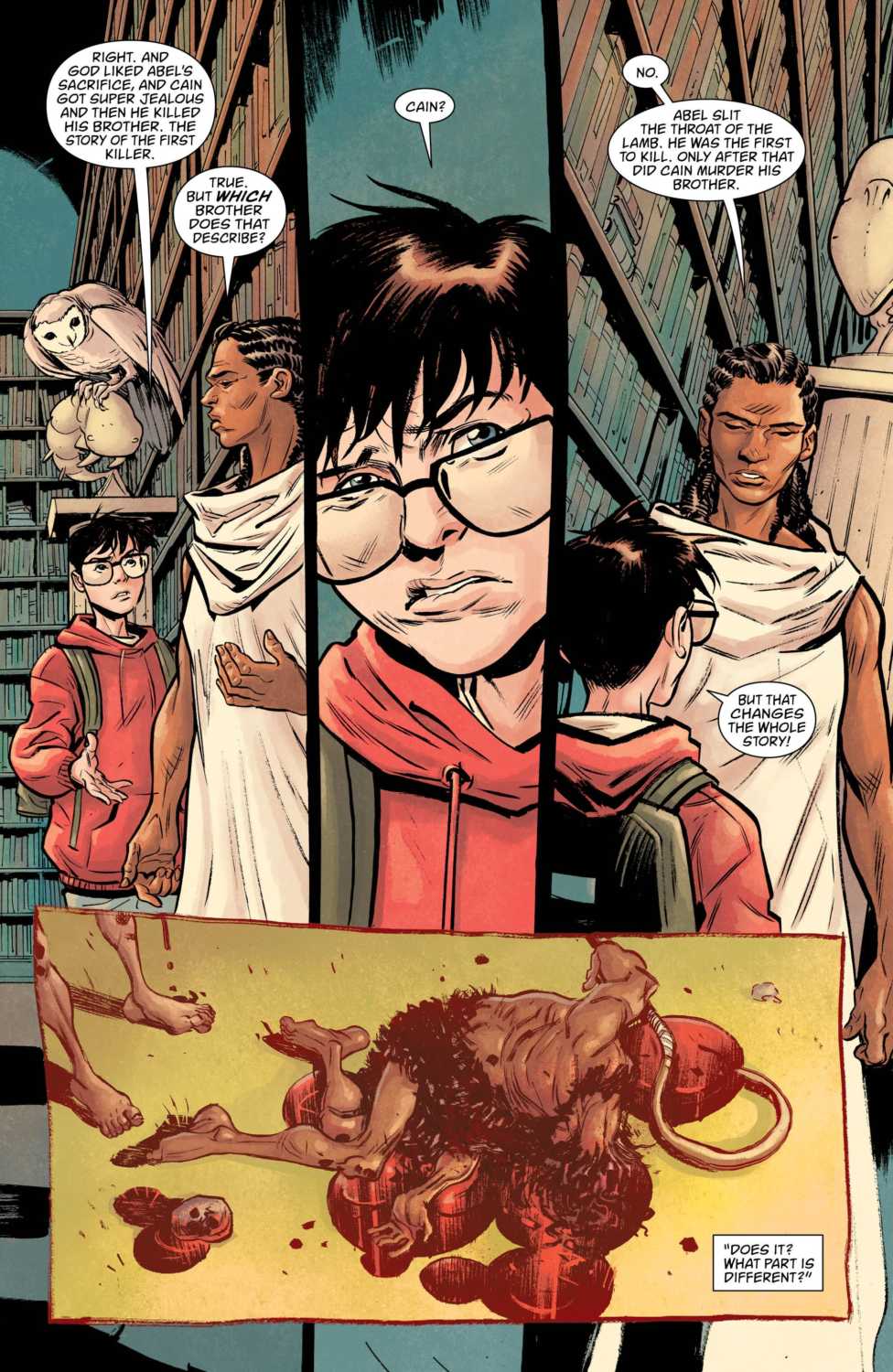
This issue is all about changing one’s perception of reality. We see a perfect example of it’s application when Timothy speaks with woman named Eve who’s taking care of a library in The Dreaming. When asked if the books housed inside are real or true, Eve responds with a well-known story while placing emphasis on a detail often ignored. Timothy claims the detail changes the whole story, but Eve offers another perspective: “The story is the same. The truth of it is the same. It is only that you see it differently now.”

Eve tells the story of Cain and Abel

new perspective on the Cain and Abel story

Kat Howard’s story furthers Timothy’s adventure through self-discovery and philosophical insight. This is the rare type of tale that invites you to think about the nature of reality while enjoying its wonderment.

Art

This series couldn’t have chosen more fitting illustrators than the likes of Tom Fowler, Jordan Boyd, Todd Klein and Kai Carpenter. Carpenter’s cover art uses pastel colors to blend the elements together, which helps combine the normalcy of Timothy’s act of reading with the wider magical world looming behind him.

Fowler, Boyd and Klein’s inner art tells a different story; Fowler outlines each figure with dark, bold lines that highlight their many differences, which adds to the realm’s appearance of chaos. Boyd’s vibrant and multi-faceted colors adds a complexity that balances out the chaos. And Klein’s lettering is strategically placed in the panels to avoid distraction while remaining informative and emphasizing each character’s variances in speech.

Timothy falls into The Dreaming

When combined in this issue, Fowler and Carpenter’s artwork reinforces the story’s theme of seeing things from multiple perspectives.

Conclusion

Issue #5 gives readers the philosophical reflection the original series became well-known for. At the same time, Howard offers a unique take on Timothy’s experiences.

Are you liking Howard’s retelling of the BOOKS OF MAGIC storyline? Let us know in the comments below!

Monkeys Fighting Robots Youtube

Review: History Repeats Itself In BATMAN BEYOND #29

Monkeys Fighting Robots

BATMAN BEYOND #29 brings “The Final Joke” story arc to its thrilling conclusion. Reappearing after being presumed dead, The Joker kidnaps Terry McGinnis’ younger brother Matt, a.k.a. the new Robin, to lure an elderly Bruce Wayne into a trap. Now it’s up to Terry to save his brother and prevent the villain from reenacting an eerily familiar death scene from Bruce’s past.

Batman Beyond #29 cover

Story

Dan Jurgens has administered a heavy dose of nostalgia on readers since The Joker’s reappearance in issue #25. He’s since used the story arc to work out each protagonist’s horrific reactions to their most dangerous foes’ return. But this issue ups the ante by setting the stage for Matt’s murder in the exact same manner as Jason Todd’s from years earlier.

Joker interrogating Robin

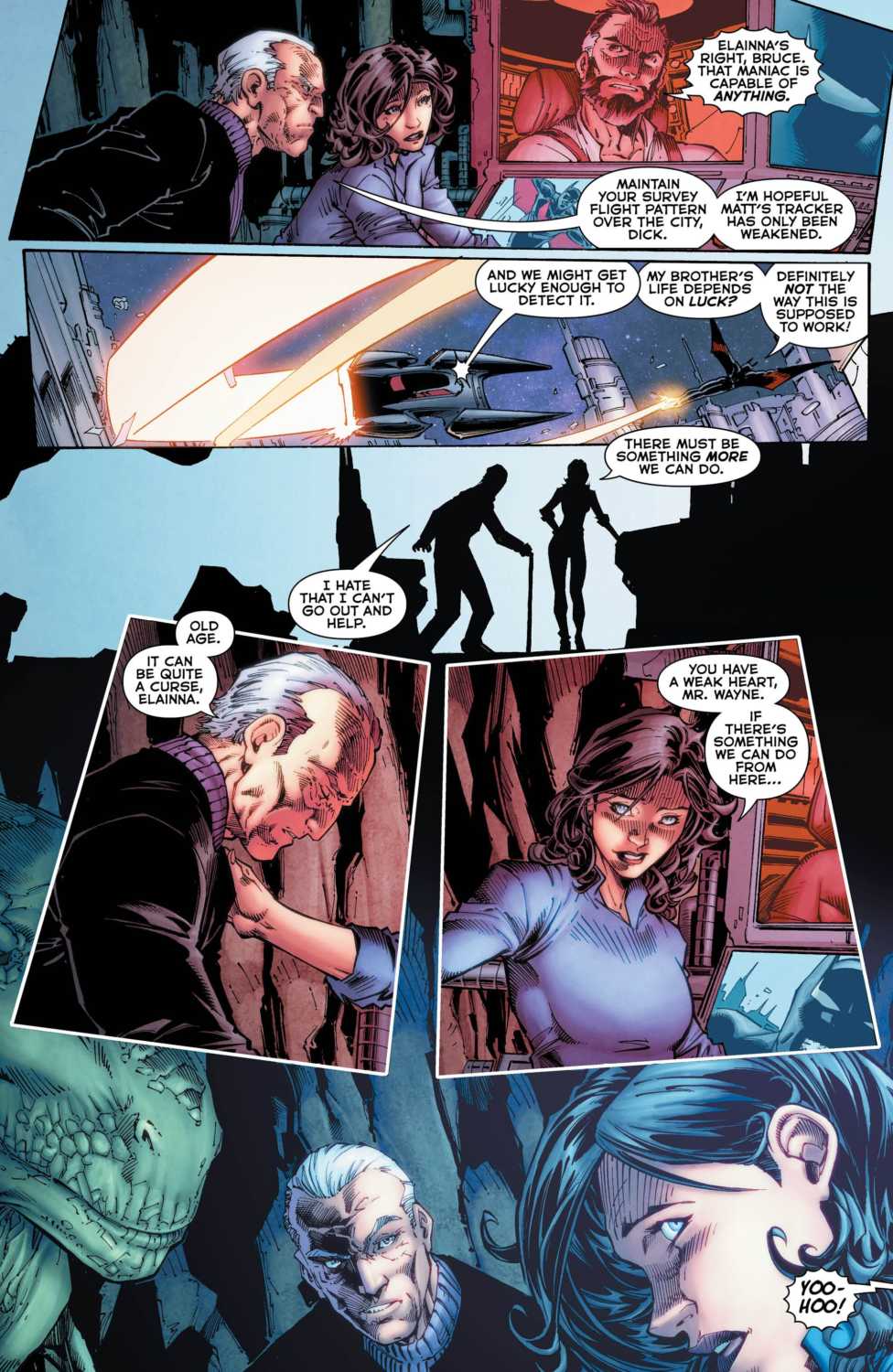
The issue moves at lightning speed as Terry and Dick Grayson track down The Joker and Matt. Readers will get to enjoy plenty of fight scenes featuring these two masters of acrobatic combat as they race to find Matt before it’s too late. At the same time Bruce and Elainna, Dick’s daughter, watch in horror as The Joker taunts them. Jurgens helps readers feel the emotion of the normally stoic Bruce as he faces his fear of losing another young crime fighter to The Joker’s madness.

Terry racing to save Matt from Joker

Bruce worrying about Robin

Jurgens’ drama builds as the implications of The Joker’s threats sink in. Readers will be drawn into the fear of such an unthinkable evil presence that just doesn’t seem to die. And in that same breath they will experience the hope each Bat family member embodies as they fight their hardest to save the young Robin.

Art

Pasqual Ferry and Dave McCaig’s cover art immediately grabs the reader’s attention with a nostalgic throwback to Todd’s death.

Batman Beyond #29 cover artwork

Brett Booth, Norm Rapmund, Andrew Dalhouse and Travis Lanham continue to prove the Batman Beyond mythos transitioned perfectly from television to the comic medium. Booth’s penciling, combined with Rapmund’s inks, create a distinctly Batman themed story.

The issue features Dalhouse’s dark shading mixed with bright hues and creates the perfect juxtaposition between Batman and The Joker, further emphasizing the polar opposite nature of each side. Lantham’s letters add even more distinctiveness through the jagged nature of The Joker’s dialogue, which helps the readers imagine his shifty manner of speaking.

Conclusion

This issue offers a satisfying conclusion to “The Final Joke”. The classic Batman/Joker dynamic has all of its flavor and more, highlighting the best of each character.

Did you think this was a fitting conclusion to the story arc? Let us know in the comments below!

Monkeys Fighting Robots Youtube

Review: ACTION COMICS #1008 Brings Superman Closer To The Rising Leviathan

Monkeys Fighting Robots

Last month’s Action Comics #1007 kicked off the “Leviathan Rises” story, which is setting the stage for the DC event Leviathan Rising. This event is meant to bring on a monumental shift for Superman, as well as for other heroes and organizations within the DC Universe. Before the Leviathan Rising event begins in May, Bendis is setting the stage in the next few issues of Action Comics. He does so by putting main players Clark Kent/Superman, Lois Lane and Jimmy Olsen, as well as special guests Amanda Waller, General Sam Lane and Adam Strange, in the middle of a (literally) explosive conspiracy. They each witnessed a “blue blob of light” destroy buildings that housed various familiar organizations. This most recent issue of Action Comics sees their paths begin to converge. And it’s… alright.

**Some Spoilers Below**

Story:

The superstar creative team of writer Brian Michael Bendis and artist Steve Epting dig into the DC Universe in this sweeping espionage epic that’s shattering the agencies-and heroes-dedicated to protecting the world! As the D.E.O. falls, only Jimmy Olsen may hold the answers to helping Superman and Lois Lane uncover who’s behind the attacks rocking the DC Universe’s biggest clandestine organizations. And when the Suicide Squad’s Amanda Waller makes a shocking discovery, can she help the trio understand the truth before the balance of power shifts to Leviathan forever?

Action Comics 1008 Cover

This issue isn’t all that exciting. Writer Brian Michael Bendis is maneuvering some interesting characters together to take on this Leviathan, including one that is hinted at on the final page of this issue. You won’t find any big action sequences. No earth-shattering revelations. But it’s not supposed to be that kind of issue. It’s part two of the story that’s setting up THE story. It’s a solid push forward.

Bendis continues to deliver dialogue that is rich with wit and charm. It particularly shines in an exchange between Superman and Lois, and then shortly after with Clark, Lois, and Jimmy. I almost wish that Bendis would use one of his Superman series for single-issue stories filled with his signature dialogue, and use the other for his big, tent pole concepts.

action comics 1008 variant cover

Art:

Steve Epting continues to bring Bendis’s words to life with wonderful artwork. Epting does admirable work with the characters’ facial expressions. The action pieces are worth noting as well, but Epting, much like his writing counterpart, excels with his characterization.

Conclusion:

Action Comics #1008 can easily be described as underwhelming, but that is only because it is setting the stage for what is hopefully going to be an exciting event series. Come for the charming dialogue, stay for the bigger picture.

What did you think of the rise of Leviathan in ACTION COMICS #1008? Let us know in the comments below!

Monkeys Fighting Robots Youtube

Review: Barry and Bruce Clash in THE FLASH #65

Monkeys Fighting Robots

The Flash and Batman Learn The Price

The Flash is carrying a ton of emotions right now. Wally’s death at Sanctuary weighs heavily on not just his but Batman’s mind. The pair team up after Gotham Girl went on a rampage in the Flash Museum. They follow her to a South American island, where someone promised to clone her brother Gotham. Along with the cloning, Gotham Girl is given super venom, allowing her to be stronger and faster than ever. Amidst the investigation, Flash learns that Gotham Girl was sent to Sanctuary before her snapping. This causes a rift between the detectives as they hurry off to stop her second attack on Central City. Will the heroes stop her in time?

Flash 65 cover

**Some Spoilers Below**

Story:

The Flash quickly saves civilians as Batman tries to break through to Gotham Girl. Gotham Girl, still believing what she does is heroic, continues to use up her powers. When Bruce fails to convince her, Barry steps up, saying he just wants to talk. This slows the superheroine enough to speak, only for the super venom within her to stop her heart. After she falls to the ground, Batman struggles to revive her. The Flash, unwilling to lose another young hero like Wally, steps in to revive her. After several chest compressions, and a sweet Speed Force defibrillating, he’s able to revive her. Unfortunately, the super venom is in her system, so the pair take her to the Batcave to detox. Once there, Batman and Flash talk about the supposed price of being a superhero.

Flash 65 p1

The action sequences are okay, but the real gold is the emotional moments in the issue. It opens with Barry remembering how he raced to Sanctuary, hoping what he heard wasn’t true. It’s these moments of desperation that make the issue feel more human in a sense. You want Flash to have this victory.

The heaviest moment in the whole arc is the talk on the price of being a superhero. It’s a verbal boxing match between both of the heroes. While Batman believes that the sacrifices heroes make are for a noble cause, Flash thinks that it’s just too much. Considering where he comes from, as well as the character’s publication history, I agree with Barry. A dead parent is a commonality amongst heroes, but Flash has lost partners, loves, memories, and broke time itself. Despite his optimism, Barry has a more tragic background than Batman. It makes me appreciate the character a whole lot more.

Flash 65 p2-3

Art:

The art team did a fantastic job bringing this crossover to a close. The illustrations were grounded enough to maintain the emotional weight while fantastic enough to be entertaining. It goes hand in hand with the phenomenal colorwork. Together it makes every panel emotion-filled, and it helps the story immensely. Love or hate the story; I think anyone would agree the art is top notch.

Conclusion:

While I had issues with the previous installment, this issue was able to end the story damn near perfectly. Flash has been changed by the events of Heroes in Crisis, and this story shows it perfectly. The argument between Flash and Batman makes the issue amazing, with the art matching the dramatic tone. Some might be a bit disappointed by the real lack of action, but I feel that’s what makes it stronger. If you get a chance, pick up this book and see if the price of being a hero is too high.


Monkeys Fighting Robots Youtube