Home Blog Page 451

Advance Review: Follow The Thrilling Journey In TEST #1

Monkeys Fighting Robots

Augmented test subject, Aleph, has escaped from a secret experimentation lab, is on the run, and is in search of a mythical town full of future technology. And so begins the new Sci-Fi comic from Vault, TEST by Eisner nominated writer Christopher Sebela, artist Jen Hickman, colorist Harry Saxon and letterer Hassan Otsmane-Elhaou.

Follow The Thrilling Journey In TEST #1
Test #1 Advert Credit: Christopher Sebela

Writing/Story

The first issue of TEST follows Aleph as he journeys haphazardly across the empty states of America. It reads like a stream of consciousness, a modern day On The Road by Jack Kerouac. Sebela has cleverly given Aleph a foil to converse with in the guise of a mobile phone which appears to have its own sentience. This allows Sebela to incorporate the exposition in to the comic in a conversational manner, without the need for voice over style caption boxes.

The back and forth of the two characters gives the reader a better insight into who Aleph is and what he is striving for. Sebela is able to dissected the character via a function of the story while not contaminating the characterisation in any way. The reader learns about Aleph through his own speech but this is mediated by a third party to produce balance.

Although this approach makes it easier for the reader to enter the world of TEST, it does not eliminate all of the mystery or explain everything that is going on. In fact, everything you know about this world you learn via Aleph. This makes his actions somewhat ambiguous and it is not always clear if he is justified in these actions.

The story progresses at an even pace, occasionally sliding into a drug induced blur of ideas that builds character while creating questions. Aleph’s journey is a long one and he has many encounters on the way that Sebela is able to fit into this single issue because of his clever economic storytelling. One part of the journey may take up to several pages but another is limited to one or two panels.

Dare You Follow In The Footsteps of TEST #1?
Test #1 Credit: Vault Comics

Art

The settings throughout the early part of TEST are minimalistic in design with very little definition. Aleph could be anywhere, seemingly lost in a post-apocalyptic environment. The atmosphere in the opening has a lot in common with the original Mad Max movie, creating a sense of vast wastelands for the character to get lost in; which is exactly the point. When the reader is introduced to Aleph, he is lost in the world, looking for something that he that may not even exist.

Nothing is clear, there is much that doesn’t make sense but all of this is seen through Aleph’s eyes so the reader understands exactly what Aleph is feeling. Jen Hickmen’s art reflects the chaotic nature of Aleph’s existence while also filling the panels with a lot of empty space. As the character is lost in his own environment, the reader emphasises with him on a much deeper level.

Hickman uses a thin inked line to define the characters then adds detail depending on the moment or the scene. Some backgrounds are comprehensively rendered while others contain the bare minimum. These later panels relay on the color work by Harry Saxon to define the scene and, more often than not, the atmosphere. As the scenes shift, whether in location or time, it is the coloring that signifies the change allowing the reader to follow the story from place to place, and from morning to night.

The range of lettering techniques and decisions on show in TEST is quite outstanding. The shifting mind of Aleph is depicted by the shifting presentation of his inner monologue; sometimes this is shown in speech balloons, at other times in hand drawn caption boxes. Hassan Otsmane-Elhaou also applies a range of different designs for presenting the text to distinguish each individual voice. The varied caption boxes and skilful overlapping speech balloons keep the reader on their toes and help to fully immerse them into the comic.

Dare You Follow In The Footsteps of TEST #1?
Test #1 Alternative Cover Credit: Vault Comics

Conclusion

TEST is an exhilarating stream of consciousness embodying a number of science fiction concepts. It is an expertly crafted comic that draws the reader in and then entraps them in the chaotic nature of the narrative and the art. It works by concentrating on the central character, zooming in for close ups then pulling away to reveal the environment he is traveling through.

The comic flows effortlessly from the opening page to the last, leading the reader on a journey that feels uncontrollable but is designed with such a precision that the creators manipulate the reading experience at every turn.

Like a Warren Ellis comic, this is sometimes intense and sometimes charming, with an element of action thrown in. TEST is an immersive narrative and a highly accomplished work of comic book art.

TEST from Vault Comics is released on June 26th.

Monkeys Fighting Robots Youtube

Review: BARRY FACES THE TERROR OF THE TURTLE IN THE FLASH #72

Monkeys Fighting Robots

The Flash Faces his First Foe!

We are in the midst of The Flash: Year One, and it’s been a wild ride so far. After his fated lightning strike at his lab, Barry Allen has begun to experiment with his powers. While trying to hit an all-time high with his speed, the Scarlet Speedster is sent to the future. We learn that Central City has fallen and that a villain known as the Turtle reigns supreme.

Before Barry is captured to feed the King Turtle, an older version of himself saves him. The two Flashes work their way through the ruins to find the cosmic treadmill and send the younger back. When Barry makes it back, however, he soon discovers the Turtle making his debut. Can Flash stop this villain from ruling the future?

Flash 72 Cover

**Some Spoilers Below**

Story:

We open up with Barry running in to face Turtle, forgetting what his older counterpart told him. As his speed begins to get drained, Turtle is left puzzled by the Flash and the origin of his powers. Before Barry can be defeated by the speed siphoning meta, he vibrates into a wall and causes it to explode. While it is able to knock out Turtle, it also sends debris flying at bystanders, including Iris. Flash quickly moves and saves them all and Turtle is shortly arrested after that. Time passes, and Barry soon begins making a name for himself as the Flash. It’s not long before he learns of a new criminal, a group of thieves wearing blue masks.

Flash 72 p1

Despite a few stand out transitions, I am honestly concerned about how this story is going to pan out. This story appeared to have its villain, and he’s done by the first half of this story. We had an entire issue that showed the Turtle taking over the city and Flash being the lone defender of the city. Turtle gets taken down as soon as Barry gets back! The usual formula for this story is that the battle with the future threat is at the end of the arc. This story treats it as if the Turtle threat was put down, with a sweet epilogue.

The transitions between periods are probably the best part of the issue. In them, we see Barry grow more and more into the Flash. It’s quick, but even these small moments help flesh out the origin story in the making. From him choosing his symbol to finally learning to look forward to tomorrow, The Flash origin gets more detailed, and it makes me appreciate it a little more.

Flash 72 p2

Art:

Howard Porter is just a perfect fit for this series. He is able to create these fantastic designs for the powers, and each panel is his jaw-dropping. Barry’s original Flash costume looks fantastic, being both iconic and straightforward at the same time. The only thing that could make it better is adding the spectacular colorwork of Hi-Fi to the mix. While they don’t wholly save the story, the fantastic artwork does an excellent job of selling this issue.

Flash 72 p3

Conclusion:

This story has tripped up, and it might have trouble getting back on track. What was supposed to be an overarching villain has been passed off as a one-off encounter. While there is a chance he might return, the story is continuing on with a different Flash villain. While the art of Howard Porter might try and sell readers on a good story, this issue just falls flat. The Flash might be getting one of his greatest foes next issue, but will it actually have an impact on the future teased in the second chapter?

Monkeys Fighting Robots Youtube

Review: DETECTIVE COMICS #1005 Rounds Out the Arkham Knight Arc

Monkeys Fighting Robots

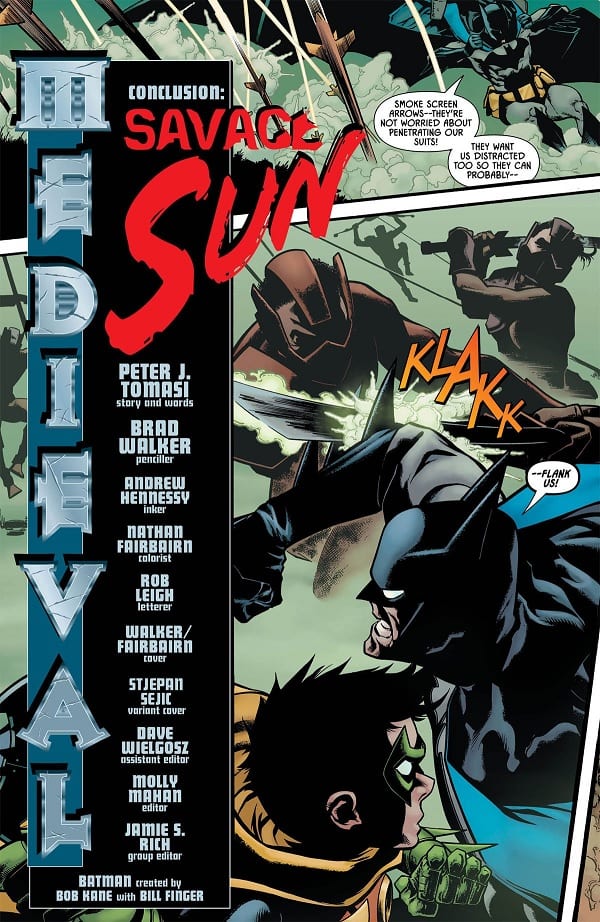
Batman’s showdown with the Arkham Knight comes to a climax in Detective Comics #1005. Bruce and Damian race to the Gotham Observatory, hoping to stop Astrid before she pulls the trigger on her plan. But, as we learned in our last issue, her drive to liberate Gotham from what she perceives as Batman’s reign of terror is not just misguided altruism. It’s a personal vendetta, and she won’t be stopped so easily.

The Writing

One of the strongest points in favor of Detective Comics #1005 is the tense and suspenseful writing. Tomasi keeps the reader locked in a minute-by-minute, continuous sequence. We never break away to an aside or secondary plot line, instead remaining engaged with the action throughout. The result is a thoroughly engaging and entertaining showdown.

The issue’s key weakness though, is the reasoning behind Astrid’s plan. Without spoilers, suffice to say that once the entire premise is revealed, it feels undeniably contrived and irrational. She conflates metaphorical meanings of light and darkness with literal light and darkness; metaphorical blindness becomes literal blindness. There’s a lapse in logic between her motivation and her (rather silly) plan. This detracts from what was, until now, a pretty stellar story arc.

Ultimately, there is more within the pages of Detective Comics #1005 that works than that doesn’t. As the issue’s epilogue reveals, the Arkham Knight’s crusade is far from over. So, while this may not have been the best culmination to the character’s grand introduction, it suggests we’ll see Astrid again as a member of the Rogues’ Gallery.

Detective Comics #1005

The Artwork

As expected, Bradley Walker does a quality job with the artwork. He never gets too fancy, preferring to keep the viewer grounded in the action. However, there’s nothing wrong with a meat-and-potatoes approach, especially with an action-packed issue like Detective Comics #1005.

The visuals are easy to follow and possess plenty of life and kinetic energy from cover to cover. The final showdown between Batman and the Arkham Knight feels suitably epic to close out a conflict that’s built up over the last several issues.

As always, Nathan Fairbairn’s colors are on-point here, too. You feel a suitable degree of darkness, then see it suddenly give way to a convincingly blinding lightshow.

Final Thoughts

Although details of Astrid’s plan leaves a bit to be desired, the rest of Detective Comics #1005 is a winner. It’s got action and tension propelling the narrative, with excellent artwork bringing it to life. Still worth picking up.

Monkeys Fighting Robots Youtube

PRODIGY #6 Review: To The Man Who Can Do Everything

Monkeys Fighting Robots

It seems that every other week we are graced with a new headline regarding another Mark Millar title being adapted for a movie or TV show. After creating the Kingsman Universe, Kick-Ass, Wanted, as well as various successes for Marvel, it is clear that the Millar well is a deep one to draw from. And it was no surprise when Netflix acquired the rights to all of Millar’s creations, as they could have a seemingly endless TV show or movie idea-generating machine. Prodigy #6 is the latest in Mark Millar and Rafael Albuquerque’s newest series, and while it is not his magnum opus, it is a very simple, enjoyable read with a unique art style.

Edison Crane must stop an invasion from a parallel universe… not too difficult for the smartest man ever.

Edison Crane is the hero an 8 year-old came up with in one of their ramblings in the best way possible. Crane is the smartest man in the universe, the best fighter in the universe, adored by all women, envied by all men, etc. And you can tell that Millar had a lot of fun envisioning and creating this “uber-Bond” character. Crane’s dialogue is cheeky and cocky. The villain’s read like Saturday morning cartoon baddies and their scheme for world domination is equally extravagant including an invasion from a parallel universe. There is some overarching plot from the previous chapters, but it really is window dressing. Millar clearly just wanted an excuse to put Crane in extremely dire circumstances only to have him calmly fix them.

Due to the nature of the story and Edison Crane, the main antagonists who have orchestrated the last couple of chapters feel a tad toothless in this issue. They devise a devious plan to fool Crane, but of course, they don’t because Crane is the smartest man ever. Obviously, their plan was never going to work so it brings to mind, why even bother having one.

This series has the feel of a great “monster-of-the-week” story and it could be really successful in doing so. By creating this constantly rotating series of baddies, they could become increasingly more wacky and outlandish, which would better fit the power fantasy tone of the story.

Rafael Albuquerque’s art plays really well into the more cartoonish elements of the story. The main antagonists’ features are sharp and pointed, with slender frames and comically expressive faces and the invading army looks like something out of a Saturday morning special. The scenery can be a bit dull and the panel layout is pretty vanilla but that’s really not why any one is reading this book. Albuquerque’s explosions and set pieces are awesome.

Marcelo Maiolo’s colors are sublime however. He drapes a majority of the early scenes in heavy shadow, making them feel heavier. And when the action picks up, bright-stylized vibrant colors flood the page. And once again the explosions look awesome.

Prodigy #6 is a fine issue. The plot could be improved by scrapping all of the bells and whistles and focusing on one circumstance per issue. Rafael Albuquerque and Marcelo Maiolo’s art is nothing exceptionally experimental, but combined it’s more than serviceable. Prodigy #6 is not going to convert the nonbelievers and it is not Mark Millar’s grand opus, but it is damn fun.

Monkeys Fighting Robots Youtube

FRIENDLY NEIGHBORHOOD SPIDER-MAN #7 Begins New Arc

Monkeys Fighting Robots

Tom Taylor’s Friendly Neighborhood Spider-Man #7 begins a new arc. “Feast Or Famine” puts Aunt May in a sticky situation.

friendly neighbor spidey 7 cvr

***SPOILERS LIE AHEAD***


It’s a really great time for Spider-Man fans right now. There’s a couple of really strong Spidey titles coming out in addition to what we’re getting on the big screen. Tom Taylor’s Friendly Neighborhood Spider-Man acts as the perfect contrast to Nick Spencer’s Amazing Spider-Man.

Spencer’s book is a return to classic Spidey comic booking, it’s all the chaos and explosive drama that you would want from your main series. Tom Taylor Friendly Neighborhood Spider-Man is a quieter, more focused effort. ASM is pushing the major continuity forward while FNSM reminds you with every issue why you love Spider-Man in the first place.

Tom Taylor has none of the pressure that comes with the Amazing title, he doesn’t have to worry about huge arcs and epics with high profile villains. He gets to focus on everyday life Peter Parker/Spider-Man, which he most certainly excels at.

This book explores drama that could happen to anyone reading it. Aunt May’s recent health concerns, and now her lack of health coverage for them, have been a major thread thus far. It’s been a while since May was a worth being concerned about in a Spider-Man title. Taylor makes her matter again, rather than be a convenient liability for Spidey when closing out a story arc.

Taylor manages to craft a scene that perfectly encapsulates everything that Spidey is in just a few pages. The opening moment with Parkers (both past and present) helping out homeless people is so effective that it’s impossible not to at least come away with a smirk on your face.

The ongoing joke about how sometimes it looks like Spidey is robbing someone works both times. Boomerang’s effectiveness as comedic relief carries over from Nick Spencer’s work. Tom Taylor keeps things consistent, these characters don’t sound different under another writer.

We don’t get to the Prowler until the final few pages but Spidey asks the same question readers will–is this Hobie Brown? The longtime ally of Spider-Man was last seen in Clone Conspiracy and was very much dead. We’ll see what kind of explanation we get, but at least Taylor isn’t shy about addressing continuity elephants in the room.

The red and blue colored “Woooo” for the police siren was a nice touch in addition to a solid effort by both colorist Nolan Woodard and letterer Travis Lanham. Woodard does a lot of mood-lighting in the background of these panels, simple and effective.

Between Amazing Spider-Man and Friendly Neighborhood Spider-Man, it’s not that one is clearly better than the other. They’re two sides of the same fantastic web-covered coin. Tom Taylor is a writer on the rise, and very deservedly so.

This series continuously takes it’s time to show it’s heart and bring an emotion out of the reader. It does so without cheap tricks or cliches, it’s simply reminding us why we actually love Spider-Man outside of the punching and costume.

Friendly Neighborhood Spider-Man #7 introduces a mystery for Spidey to solve that perfectly incorporates the wonderful supporting cast. Whether it’s a multi-issue arc or a single-issue story, Tom Taylor delivers the goods every time.

Monkeys Fighting Robots Youtube

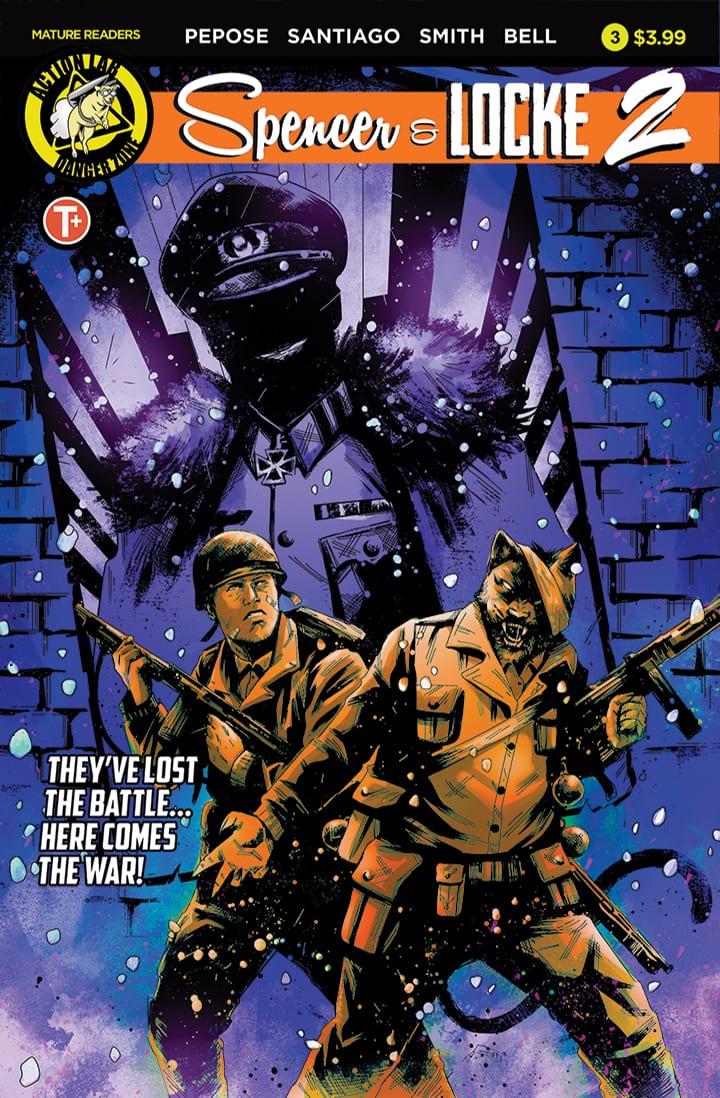
Review: SPENCER & LOCKE 2 #3 And The Rise Of A Hero

Monkeys Fighting Robots

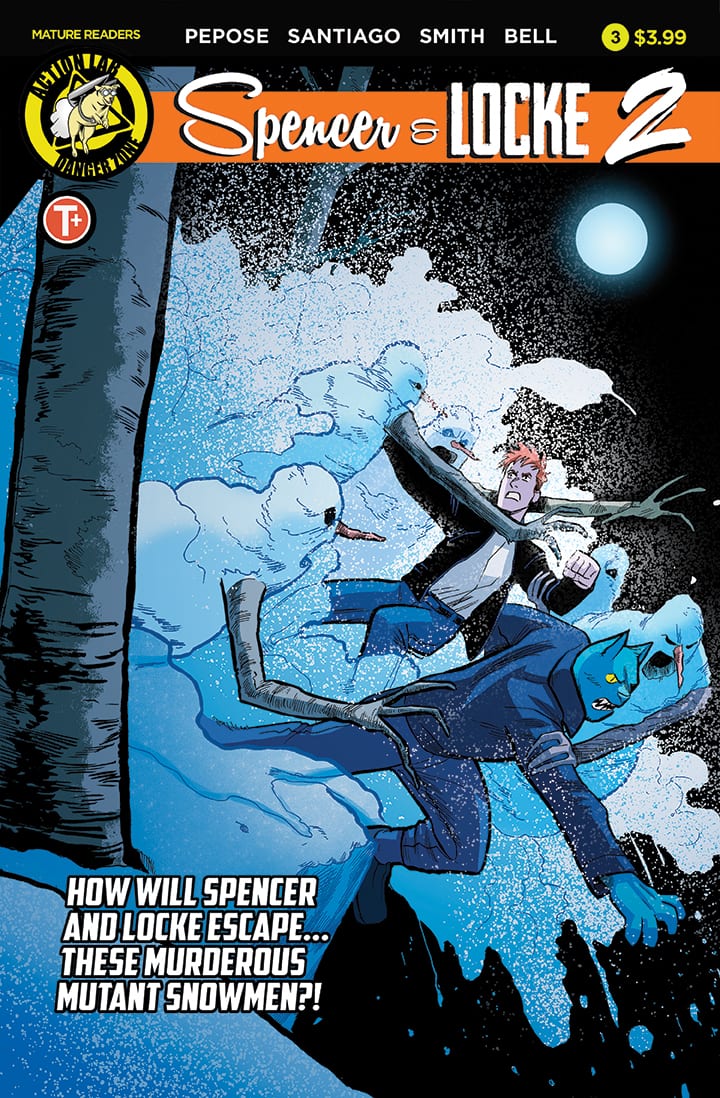
Spencer & Locke 2 #3 is out this week, delivering some of the best moments of the series to date.

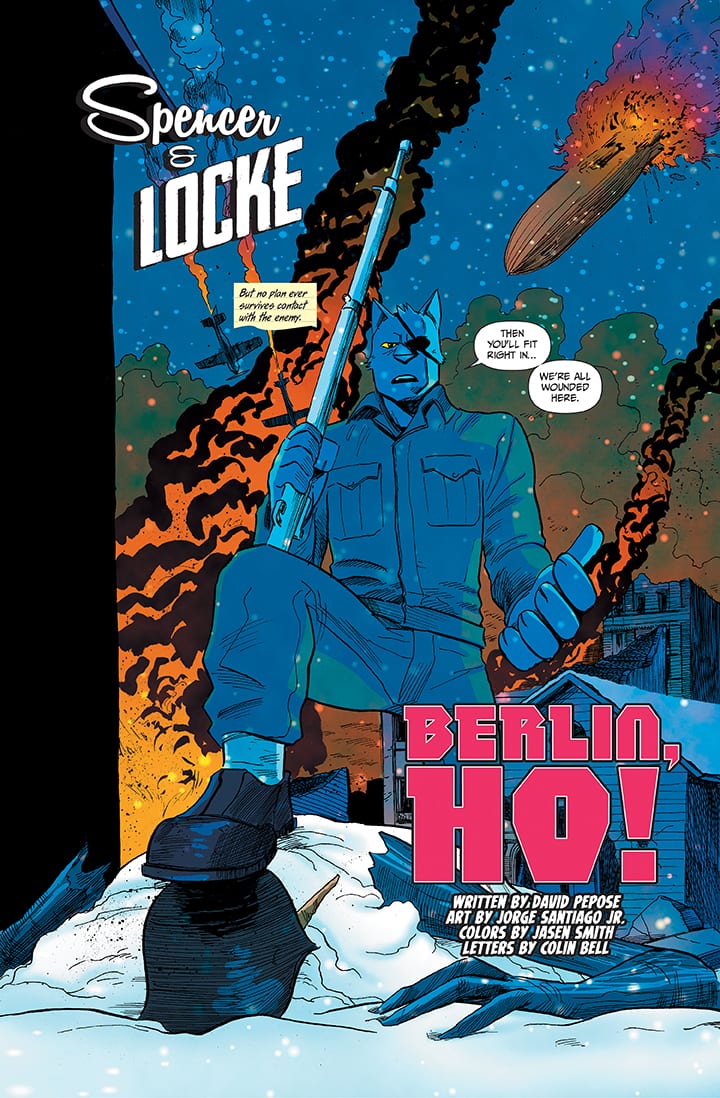
Hovering in the place between life and death, Locke is forced to navigate the quagmire of his mind. Meanwhile, Hero decides to take matters into her own hands to avenge her father. The series is written by David Pepose, with art by Jorge Santiago Jr., colors by Jasen Smith, and letters by Colin Bell.

As I sat down to read this issue, I thought to myself, with 100% sincerity, “when we last left our heroes…”

That’s the kind of fun mindset that Spencer & Locke puts you in as a reader. The series treats its material seriously, as it should, but it still feels like the creative team is just having a blast telling their story. This issue, for instance, has Locke facing his inner demons. It’s intense, poignant, and it has a really strong emotional payoff in the end. But also, his inner demons manifest themselves as Nazi killer mutant snowmen.

spencer & locke 2 review david pepose

Issue three is very character-driven. The villainous Roach does continue to wreak havoc, and there’s a last page cliffhanger that moves the plot forward, but for the most part, this chapter slows things down for a moment before heading into next issue’s explosive finale. Pepose and Santiago take the chance to peel back the layers on their characters and explore what makes them tick.

And it’s beautiful (in a tragic way). While lingering between life and death, Locke comes face-to-face with his childhood self and is forced to make a difficult decision. It’s arguably his defining moment in a series that bears his name. The scene is a reminder of what this comic is all about, and how intelligent and in touch with humanity it is, Nazi killer mutant snowmen and all.

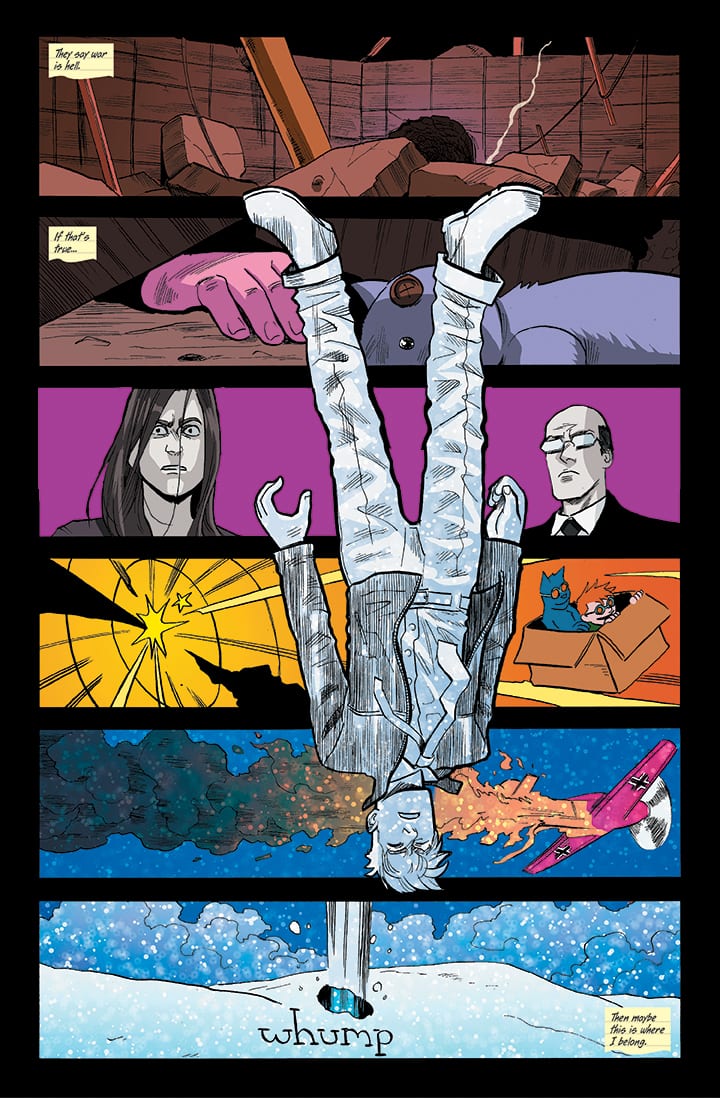
Roach also gets his own “behind the curtain” moment, as the opening page flashes back to his time as a POW and the horrors he faced (done by Santiago and Smith in the style of Beetle Bailey). These flashbacks build out Roach’s character and make him more than just the mass murderer we’ve come to know and fear. They actually build sympathy for him, and a villain you can sympathize for is maybe the scariest villain of all.

spencer & locke 2 review david pepose

Ok, finally, we have to talk about Locke’s daughter Hero. At the end of the last issue, Hero pulled a hoodie over her face like a cowl and vowed to take on Roach herself. This issue, we see her debut as “Captain Astounding,” and it’s one of the high points of the entire Spencer & Locke saga. Pepose writes her narration perfectly, and Bell’s lettering never lets you forget that this is still just a little girl, no matter how big she acts.

No matter how dark or serious Hero tries to act, there’s an innocence to her inner monologue that will put a smile on your face. It’s noir, reminiscent of Batman or Sin City, but by way of a child who has a very different idea of what constitutes “edgy.” I would gladly read a comic strip series of indefinite length about the adventures of Captain Astounding.

Only one issue left of Spencer & Locke 2, and it looks like it’s going to be a doozy! All bets are off, and the way this series has gone, I would expect something big and probably tragic to happen.


Are you reading Spencer & Locke 2? Sound off in the comments with your own thoughts on the issue!

Preview SPENCER & LOCKE 2 #3:

spencer & locke 2 review david pepose

spencer & locke 2 review david pepose

spencer & locke 2 review david pepose

spencer & locke 2 review david pepose

spencer & locke 2 review david pepose

spencer & locke 2 review david pepose

spencer & locke 2 review david pepose

Monkeys Fighting Robots Youtube

REVIEW: EVENT LEVIATHAN #1 Smothers Slow-Burn Mystery

Monkeys Fighting Robots

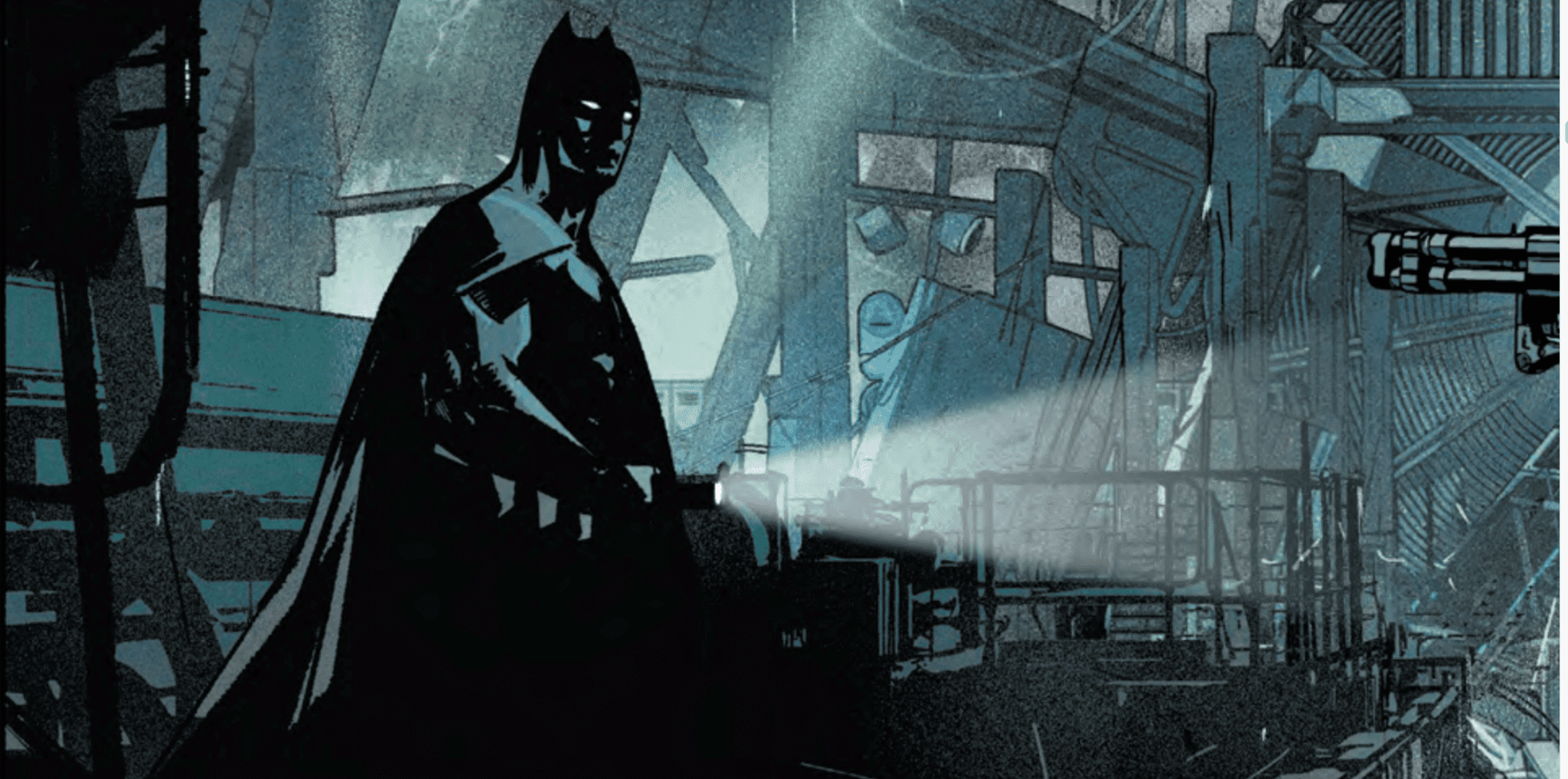
On paper, Event Leviathan #1 kicks off DC’s latest companywide crossover but it fails to deliver many substantial new developments.

Batman in Event Leviathan #1
Batman and DC’s best detectives are on the case in Event Leviathan #1.

DC recently wrapped up Heroes in Crisis, a “whodunit” mystery that promised to send lasting shockwaves throughout the DC Universe. That event didn’t live up to the hype and, based on this opening installment, Event Leviathan #1 might follow in the footsteps of its predecessor.

Event Leviathan #1

Script: Brian Michael Bendis

Art & Cover: Alex Maleev

Letters: Joshua Reed

STORY

Writer Brian Michael Bendis’ story relies almost exclusively on dialogue. He delivers the majority of the plot through a conversation between Batman, Lois Lane and, eventually, Steve Trevor. Later on, an interaction between Doctor Strand and Leviathan delivers another sizable chunk of the story. This issue is a dry reading experience because, most of the time, the reader just watches characters sit around and talk. Despite all its flaws, Heroes in Crisis was comparatively more enjoyable to read because writer Tom King usually offered some redeeming feature. Regardless of the controversial narrative decisions he made, King explored the emotional consequences of being a hero and made the reader think about them. There’s not much to hang on to in Event Leviathan #1; even when compelling plot threads, like Steve Trevor’s paranoia, pop up, they drown in a monotonous flood of lengthy dialogue.

With most crossover events, there’s an implicit expectation that most readers are familiar with the background of the story heading into the first issue. Bendis has been building up to Event Leviathan in Action Comics, so Event Leviathan #1 isn’t a cold open to this crossover. While it’s not fair to expect all fans to have read recent issues of Action Comics and the Superman: Leviathan Rising Special before they dive into this story, Bendis recaps that framework throughout Event Leviathan #1. Unfortunately, the exposition dilutes a story that doesn’t progress the event beyond what we already know. Bendis largely repeats the same information, like the coordinated collapse of the world’s intelligence agencies and Talia al Ghul’s potential involvement. This issue would have been a fairly successful prelude to the event but, as the first part of a self-billed mystery thriller, it’s a dissatisfying repackaging of Bendis’ recent work in related comics.

Though Bendis relies too heavily on dialogue, the conversational dynamic between Lois Lane and Batman has the potential to carry the series. It’s satisfying to see Lois challenge Batman repeatedly despite the fact that the world as they know it has fallen apart.

Lois Lane in Event Leviathan #1
Lois Lane isn’t afraid of Batman in Event Leviathan #1.

Lois doesn’t let Batman get away with his usual schtick. When he shows up and tries to solve the case himself, Lois shows that she’ll be a crucial part of the effort to save the world. She helps the Dark Knight unravel some of the mystery and, collectively, they decide this takeover attempt isn’t like the others. Bendis has the opportunity to do right b Lois; if he writes her as the strong, independent character she’s meant to be, she could break free of the stereotypes many fans still have about her.

When Green Arrow arrives, he concurs and quickly emerges as another main player in the series thanks to his spunky attitude and his raw reactions to the chaos around him. “Shush, nerd,” he brashly tells Batman when the Dark Knight starts to hog the conversational spotlight. Oliver Queen also angrily screams at Steve Trevor and blames him for letting this conspiracy unfold in the first place. Batman’s response, that whatever’s going on happened under all their noses, offers another glimpse at Bendis’ promising dynamics between these characters.

Event Leviathan #1
Bendis makes it clear that Lois Lane will be a major player in Event Leviathan.

Though the mystery doesn’t draw the reader in as eagerly as one might hope, these interactions are enough of a hook to draw them for at least another issue.

ART

Event Leviathan #1 is the first comic in recent memory where, at times, it feels like the art purposefully takes a back seat to the story. Artist Alex Maleev uses sketchy, noir-like art to complement the mysterious mood of the story and, for the majority of the issue, he uses dim, subdued colors. Without flashy visuals, the reader is compelled to focus on the dialogue-driven plot. The primary function of the art can be found in the characters’ facial expressions; Maleev breathes life into Bendis’ lines by showing the reader how the heroes are feeling.

Steve Trevor in Event Leviathan #1
Steve Trevor is the most expressive character in Event Leviathan #1.

These expressions are especially prevalent on Steve Trevor’s face. As someone who was intimately involved with the now-defunct intelligence community, Colonel Trevor has been through hell. He’s racked with guilt, shock and paranoia as he grapples with everything that’s happened. Stress lines make him look 20 years older and, when he calls Lois Lane a suspect, the empty look in his eyes shows that the Steve Trevor we know and love is gone. Thanks to Maleev’s art, these facial expressions elevate Bendis’ script by adding some heart to a exposition-heavy story.

Maleev’s art gets a chance to shine in one of the issue’s most mysterious sequences. In a flashback, when a villain clad in a metallic suit arrives, Trevor gets teleported in a protective field. There’s a blinding explosion and Maleev uses apocalyptic shades of reds, orange and yellow to show a devastating blast. Previous issues of Action Comics and the Leviathan Rising one-shot heavily implied that some characters have been hidden away with these protective fields. But Maleev’s art expands on that established knowledge because, when Trevor arrives at his destination, he’s surrounded by bright blue energy. Asking for a connection to Doctor Manhattan and Doomsday Clock would be wishful thinking but, nonetheless, the source of the blue energy feels important to the series’ bigger picture.

Steve Trevor in Event Leviathan #1
Steve Trevor looks like he just arrived from the future like the titular character in The Terminator.

Again, Maleev complements Bendis’ story and the art offers more intrigue than most of the script.

FINAL THOUGHTS

Event Leviathan #1 fails to build on the momentum of the Leviathan Rising one-shot. Instead, it simply spins its wheels; Bendis doesn’t offer many new nuggets of information in the story. The event may be a slow-burn mystery but, with such a dull first issue, Bendis may have already smothered the flame of the fans’ intrigue.

Monkeys Fighting Robots Youtube

Review: STAR TREK THE Q CONFLICT #5 Can’t Find The Space It’s Set In

Monkeys Fighting Robots

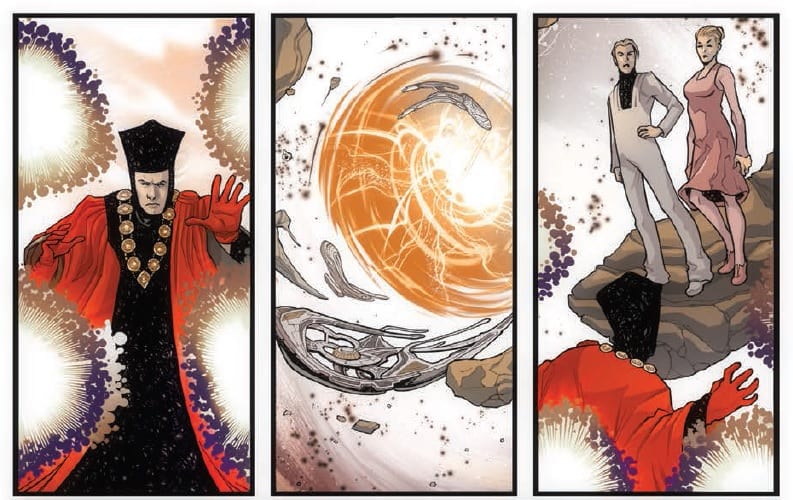
So far in the Star Trek: The Q Conflict, the creators have included four ships full of cast members, a range of omnipresent aliens and story elements from three of the Star Trek franchises. When it comes to cross over events, IDW Publishing does not do things by half.

As the series heads towards a grand finale next month, who has the strength to gain the upper hand and take the battle directly to Q? In this penultimate issue, more characters are brought on board and the crossover continues to grow.

STAR TREK THE Q CONFLICT #5 Can't Find The Space It's Set In
Star Trek The Q Conflict #5 Credit: IDW Publishing

Writing/Story

After the cliff hanger from issue four, with Q on the brink of all-out war with the Wormhole aliens, this issue starts with a dull thud. The opening panels are energised and bristle with unbelievable power but all too soon it’s over. Intervening in the conflict are additional members of the Q continuum and they instantly calm the situation down.

The games are allowed to continue but Q has received a talking too that may prove to be his undoing. As if to counter this, Q’s next mission involves one of the deadliest creatures in the known universe: The Borg Queen.

Scott and David Tipton soldier on with their crossover, attempting to get in every aspect of the franchise they can before the six issue run is complete. As previous issues, each new game features aspects from one of the franchises and this month is the turn of Voyager. Unfortunately, even before the game is introduced any engagement that the reader has with the story has been shattered by how quickly the last encounter is tied up.

Issue four had a jaw dropping cliff hanger with two mighty powers about to go to war. This issue starts by sweeping it all conveniently under the carpet. The Tipton’s forgo the difficult job of dealing with the consequences of their narrative by introducing a bland ‘reset button’. Like so many other aspects of this series, just as there appears to be anything of any substance, it is quickly disposed of and put away so that the tedious central concept can continue unabashed.

Credit where credits due, The Tipton’s know the characters of Star Trek exceptionally well, each individual has their own distinct voice. It is a shame that the story itself is made the main focus and also has the least amount of substance. The obsession with fitting in as much as possible from the Star Trek Universe is hampering the storytelling and dragging the narrative down into a quagmire of references and unnecessary characters.

By the end of this issue the reader should be at peak excitement, leading as it does into next month’s finale, however, just like the opening, the ending lacks any sense of drama. Throughout the entire issue there is no sense of danger, threat or excitement and one of the most dangerous villains in Star Trek history turns out to be as effective as a shop mannequin.

STAR TREK THE Q CONFLICT #5 Can't Find The Space It's Set In
Star Trek The Q Conflict #5 Credit: IDW Publishing

Art

The art work continues at its usual standard. The pencils by David Messina and inks by Elisabetta D’Amico are impressive but the script does not give them a chance to shine. Last issue there was an element of drama to the layouts and panels but this month it has become very static and any adventurous spirit has flown the coop.

There are a few moments of space battle that almost get the blood pumping but these are restricted to single panels. No sooner is the reader engaged than they are pulled back out of the narrative by long winded chatter and even more character introductions.

Alessandra Alexakis does a wonderful job on the colors, making the scenery look and feel like Star Trek, and Neil Uyetake’s somehow manages to fit all of that speech onto the page without detracting from the artwork. Unfortunately for them, the over explanatory script and lacklustre plot has switched the reader off long before their work can be appreciated.

STAR TREK THE Q CONFLICT #5 Can't Find The Space It's Set In
Star Trek The Q Conflict #5 Credit: IDW Publishing

Conclusion

Star Trek The Q Conflict has wavered from the beginning. It is a great concept but it is drowned by a need to squeeze as many characters in as possible and limits the space in which to tell a story. The last issue had a glimmer of hope and appeared to be leading somewhere but that was shot down in flames in the opening of this issue.

It is the story that is at fault as, for the most part, the art work endeavours to tell a Star Trek story in the best way possible. There are some wonderful character renderings and the scenery is pitch perfect Star Trek. The plot, however, has meandered through the different incarnations of the franchise desperate to include as much as possible without giving any of it to space breathe. Each villain that has been introduced has barely posed any threat, apart from the Wormhole Aliens, and this month was an insult to a character that was portrayed brilliantly on the screen.

Maybe it is a blessing that there is only one issue left in this story because to endure much more would be cruel punishment indeed.

Monkeys Fighting Robots Youtube

Review: SONATA #1 Offers Sci-Fantasy Goodness With Fantastic Artwork

Monkeys Fighting Robots

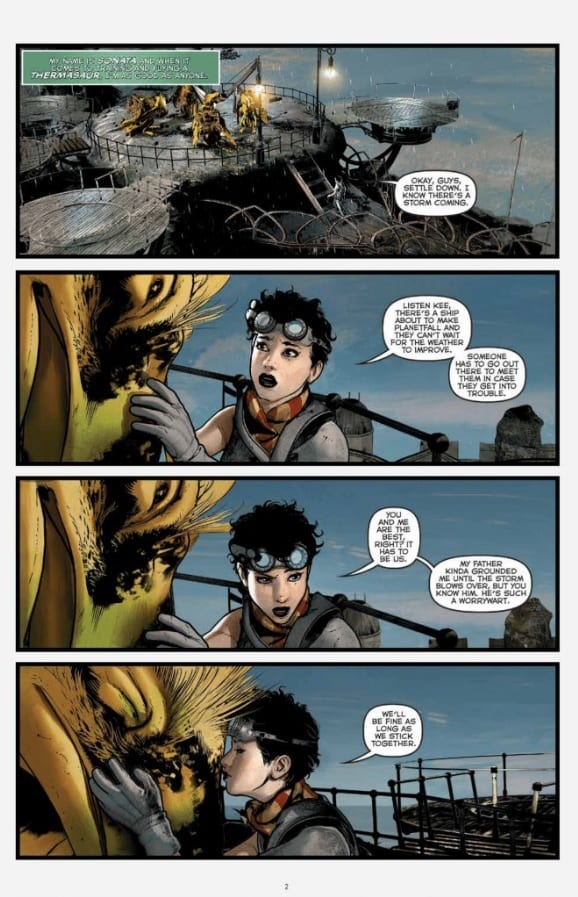
Sonata #1 by creators David Hine, Brian Haberlin, and Geirrod Van Dyke serves as a sweeping introduction to an impressive new science-fantasy story from Image Comics.

This first chapter lays out a clash between two cultures. At issue: a planet which both see as the key to their species’ respective futures. Our protagonist, Sonata, hails from the peaceful Ran, who come into conflict with the aggressive Tayans after the latter dams their shared water supply.

The Writing

Sonata #1 is an impressive opening from writers Hine and Haberlin. The title character is enjoyable as a protagonist, and characters feel believable and engaging. The worldbuilding, though, is one the story’s strongest assets.

From the beginning, the writers manage to exposit without resorting to info dumps. We have a good grasp on who are characters are, why they’re here, what they’re doing, and even the relative complexity of their technologies in comparison to one another. Then, add in some fascinating ideas, like a species of ghoulish-looking monsters called the Sleeping Giants, and a deeper layer of the planet’s mythos uncovered by the issue’s end. It’s rich, colorful, and inventive storytelling.

The stakes in the story are also laid out very clearly from the outset of Sonata #1. The colonial mission which brought the people to this planet is a one-way trip. Survival is on the line; thus, if the two can’t coexist, they could face mutual extinction.

The only real minor complaint here is the black-and-white nature of their conflict. One society is peaceful, living harmony with nature, and maintains good relations with the planet’s indigenous people. The other is violent, seeks to dominate nature, and views others as primitive and inferior. On one hand, there is some precedent for the Tayans’ stark colonialist worldview if you look at human history. On the other, it sets up a pretty clear dichotomy of “good” versus “evil,” with little space for ambiguity. Both ultimately feel a little one-dimensional as a result.

That notwithstanding, Sonata #1 opens multiple avenues for the plot to explore, and makes for a very compelling opening chapter overall.

Sonata #1

Sonata #1

The Artwork

Haberlin provides pretty stellar art for the book. From the opening pages, the illustrations are eye-catchingly stunning.

There’s an impressive level of detail on display, from the alien settings to the character designs. It’s all presented with a vibrant, lively sense that makes the work leap off the page. Each panel on each page feels carefully-planned and constructed. While the work often remains pretty tightly-focused on the characters, from time to time Haberlin provides a full-page illustration or wide shot that absolutely blows the reader’s mind.

Of course, Van Dyke’s colorwork on Sonata #1 really helps bring the work to life. It’s incredibly rich and vibrant, giving each page the level of life it deserves. The colors are really beyond reproach here.

Final Thoughts

Sonata #1 may be one of the strongest debuts of 2019. It’s a compelling, well-constructed story with intriguing worldbuilding and eye-popping artwork. You’ll definitely want to add this one to the pull list.

Monkeys Fighting Robots Youtube

Review: The Rage Of Betty Ross Is Unleashed In THE IMMORTAL HULK #19

Monkeys Fighting Robots

THE IMMORTAL HULK #19 takes a different angle than previous issues by focusing on someone other than Bruce Banner/Hulk. Readers instead bear witness to the rage and pain of another human-turned-monster: Betty Ross. Her turmoil leads her on path to Bruce, who’s busy fighting the new version of Abomination made from the corpse of Rick Jones. Suffice it to say, these three unfortunate characters are in for a confrontation that will reveal an unearthly rage and make the earth tremble.

Story

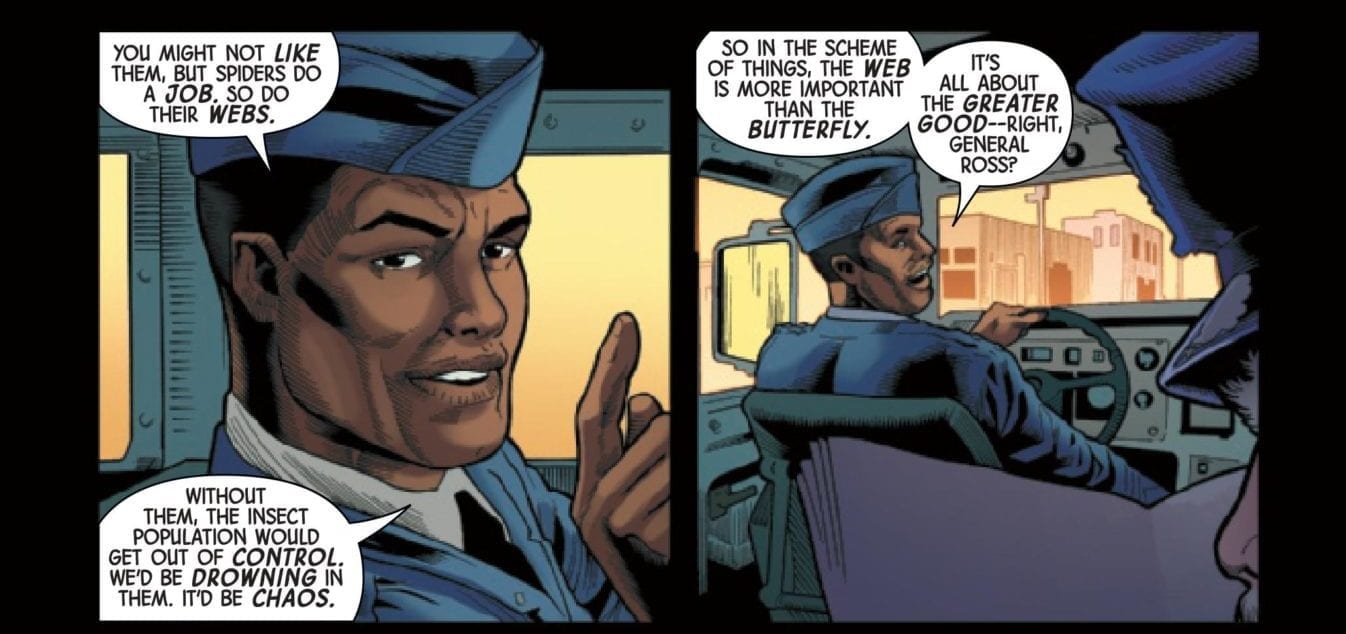
Al Ewing doesn’t pull any punches with this story, giving full light to the innermost turmoil of its characters. The legendary author takes readers into Betty’s memory of riding with her military father and one Captain Fortean. Betty comments on a butterfly stuck in a spider’s web, wondering if it will be able to escape. Fortean remarks how it’s important for spiders to keep the insect population in balance and how the butterfly’s likely death will be for the greater good.

Captain Fortean explains spider webs and butterflies

Betty doesn’t seem convinced and with good reason – her inner dialogue reveals she’s identified with that butterfly ever since. Ewing uses this effective parallel throughout the story to represent Betty’s rage and feelings of entrapment. Like the butterfly in the spider’s web, she’s been caught between the anger of her father and Bruce himself, struggling to stretch out her wings and truly be herself. Unfortunately, the anger has so twisted her innermost self that the resulting monstrosity wants nothing more than to kill Bruce and anyone standing in her way.

Art

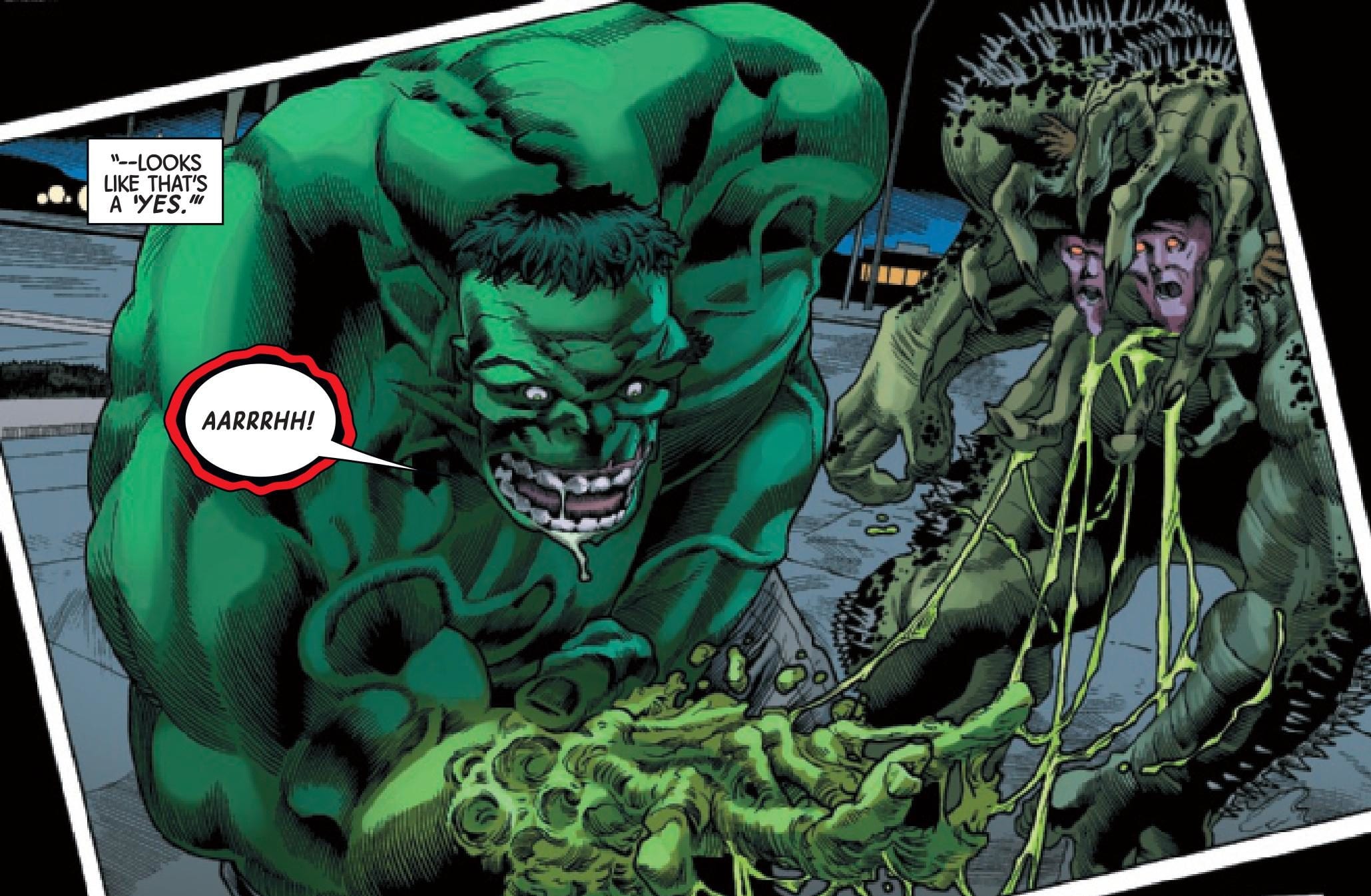
Just when one thinks the artwork in this line couldn’t be more gruesome, penciler Joe Bennett presents new levels of horror. And this is exactly what makes the comic come alive. His depictions of the Hulk’s flesh dissolving after coming in contact with Abomination’s acid are given added definition with Ruy José and Belardino Brabo’s solid ink work. And colorists Paul Mounts and Rachelle Rosenberg’s putrid greens and brown hues add the cherry on top to this horror-themed artwork.

Hulk fighting a Rick Jones Abomination

VC’s Cory Petit’s lettering further plunges readers into the story. He often features font that looks as if it’s made of slime during Hulk and Abomination’s battle scene to create the effect of it splattering all around.

The Comic Covers

Alex Ross’s main cover depicts a grotesque image of Abomination with Rick Jones’ face inside his jowls, setting the theme of inner turmoil that’s present within this story.

Greg Smallwood’s variant cover, on the other hand, features the Hulk fighting the Fantastic Four to celebrate the 25th anniversary of the MARVELS series and showcase a key moment in his history. Ema Lupacchino and David Curiel feature yet another variant that shows an armored Spider-Man being shot at, which has little if any connection to the story within.

Conclusion

THE IMMORTAL HULK #19 combines themes of horror, love, and pain in a way that leaves one in utter shock. Ewing, Bennett, and the rest of the creators have shown they can effectively bring the darkest aspects of human nature to life.

What did you think of Bruce and Betty’s confrontation? Let us know in the comments below!

Monkeys Fighting Robots Youtube