Home Blog Page 446

Interview: B. Clay Moore Takes Us On A Thrill Ride With KILLERS #1

Monkeys Fighting Robots

KILLERS #1 hits your local comic book store on July 31, but thanks to Valiant Entertainment, Monkeys Fighting Robots has an exclusive interview with the writer of the series B. Clay Moore.

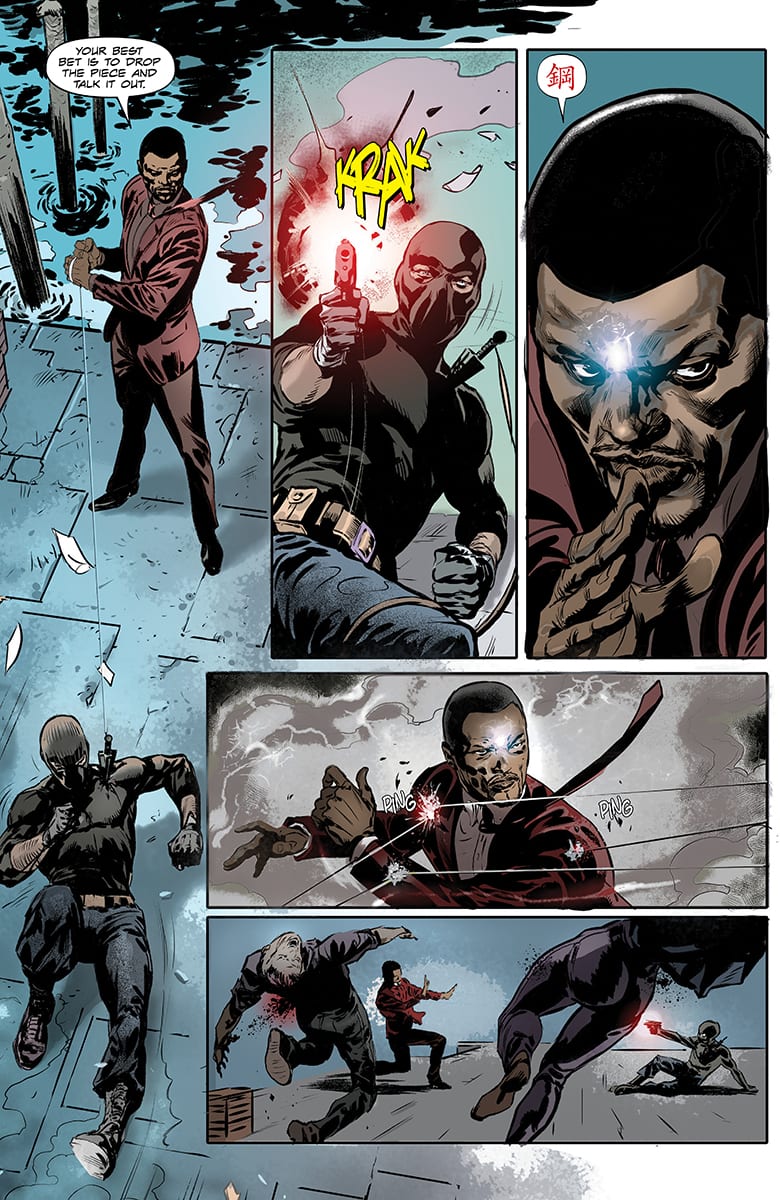
The first issue of KILLERS is all the best parts of a James Bond film with intense action and a few twists and turns. So, it was fun to dig a little deeper into the writing process with Moore. Check out the full interview and a five-page preview below.

MFR: Clay, thank you for taking the time to speak with Monkeys Fighting Robots. Killers #1 reads like a James Bond film, what are the elements that make up a good thriller?

MOORE: First and foremost, I think there has to be some connection to the characters, even if you’ve just met them. Even the greatest action sequences don’t work if the audience isn’t concerned about the personal stakes involved.

Beyond that, I suppose there must be a goal or set of goals that can only be achieved with difficulty.

Hopefully, those elements are all present in KILLERS.

MFR: The story in Killers is a mystery, how do you balance letting the story unfold but not revealing too much?

MOORE: I think the key is trusting that the audience is interested enough in the characters to let the characters lead them into the story. Obviously, you have to reward that interest by developing the story as you go, ideally through the eyes of the protagonists.

MFR: The book is intense and full of action, talk about what Fernando Dagnino brought to the table? Do you have a favorite page from the first issue?

MOORE: Fernando excels at action, but never loses sight of the characters while doing so. I think the stuff I like best is in the London rain. Evocative of the best noir.

MFR: KILLERS is a five issue mini-series, how do you handle pacing versus page count?

MOORE: That’s a good question, but one that’s kind of hard to answer. After writing a lot of comics, I’ve sort of developed an internal sense of pacing. I can usually tell if there’s too much action plotted to allow an issue room to breathe. I also tend to think of single issued as stories within the story, and do my best to build toward a climax that hopefully leads readers into the next chapter.

MFR: JOHN WICK 3 is the most profitable of the series, with the fourth film in production. Killers #1 quickly gets you attached to the main characters, who are assassins. What is it about assassins that society loves so much?

MOORE: I think people respond to assassins with some indication of depth of character. I’m sure there’s some part of everyone that imagines being able to break away from the rules of society, and who exemplifies that better than someone breaking society’s most rigid moral and legal code? Of course, to really make an assassin compelling, you’ve got to pit him or her against someone worse than themselves, so the villain seems to be just as key.

MFR: Speaking of action films, if you were writing a script for a buddy cop film who would be your lead actors and why?

MOORE: Wow.

I could probably answer this a dozen different ways.

Here’s an odd couple that I think could work: Give me Danny McBride as the cynical veteran and Mindy Kaling as the “just made detective” by-the-book partner.

Gold!

MFR: Again, thank you for your time and best of luck with Killers!

MOORE: Thanks much!


What did you think of the interview? Comment below with your thoughts.

Interview: B. Clay Moore Takes Us Inside KILLERS #1

KILLERS #1 hits your local comic book store on July 31, with a final order cutoff of July 8. If this sounds like a book you want, make sure to tell your comic shop.

KILLERS #1 is written by B. Clay Moore, with art by Fernando Dagnino, colors by José Villarrubia, Jeff Powell’s letters, and the four covers are by Jonboy Meyers, Diego Bernard, Ken Lashley, and Whilce Portacio.

About KILLERS #1 (of 5):

Five deadly assassins are recruited into a game of cat and mouse by their former sensei, the mysterious Jonin! But what does the Jonin want from them, and what do they gain out of helping him? Each of these assassins can channel their ki—the spiritual energy within all beings—in different ways, granting them incredible powers, essentially making them “super ninjas!”

Interview: B. Clay Moore Takes Us Inside KILLERS #1

Interview: B. Clay Moore Takes Us Inside KILLERS #1

Interview: B. Clay Moore Takes Us Inside KILLERS #1

Interview: B. Clay Moore Takes Us Inside KILLERS #1

Interview: B. Clay Moore Takes Us Inside KILLERS #1

Interview: B. Clay Moore Takes Us Inside KILLERS #1

Interview: B. Clay Moore Takes Us Inside KILLERS #1

Interview: B. Clay Moore Takes Us Inside KILLERS #1

Monkeys Fighting Robots Youtube

Review: ASCENDER #3 Takes Us Back To The Events Of DESCENDER

Monkeys Fighting Robots

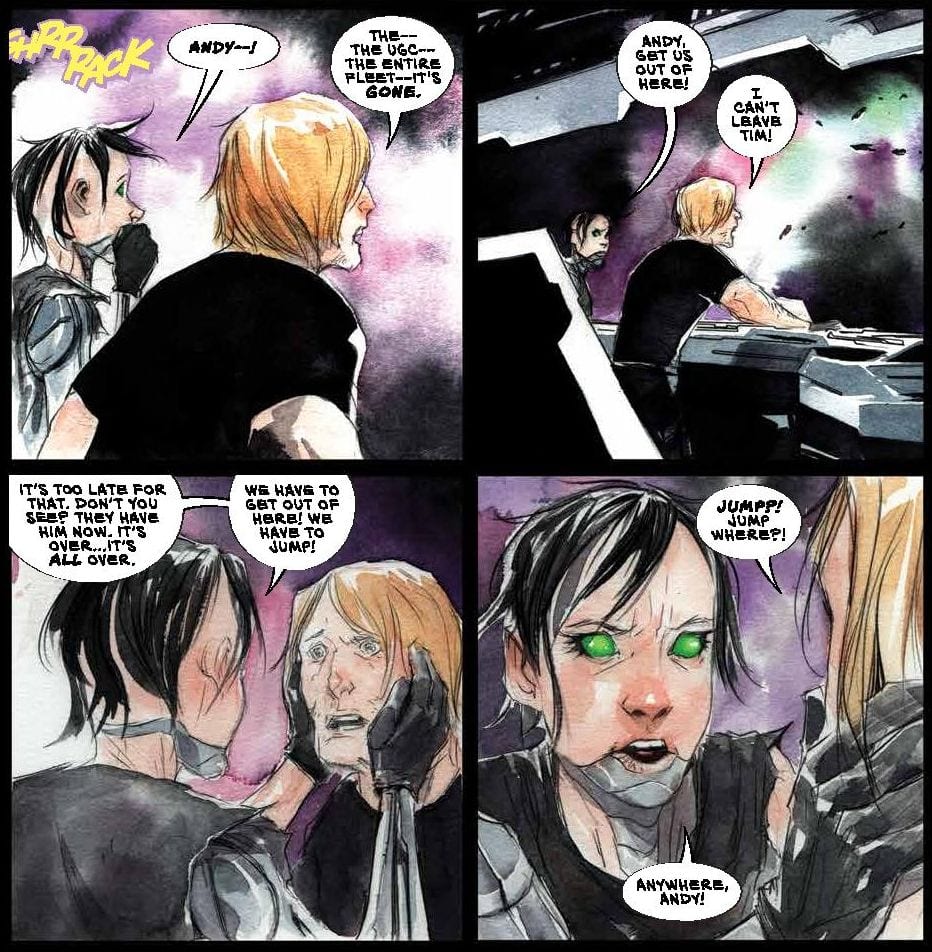
ASCENDER #3 picks up after Andy and his daughter Mila attempt to escape their home on Sampson. Mother’s vampire guards detected technology in their vicinity and sought to eradicate them. While detailing their escape, the story also takes readers into the past to show how they ended up on the planet in the first place. But more importantly, readers will learn what happened to Mila’s mother Effie all those years ago.

Story

Jeff Lemire takes readers back 10 years within the story to the events of his critically acclaimed work DESCENDER to fully establish its connection to ASCENDER. Readers witness Andy and Effie seek refuge from threatening forces, much like his and Mila’s predicament in the present.

Andy and Effie realize they must leave Tim behind

Seeing the two storylines match-up so closely helps readers sympathize with Andy. He’s had to go through two perilous escapes, both with someone he dearly loves. But the most interesting point in this story comes when we learn what truly happened to Effie before Andy and Mila’s arrival on Sampson.

It’s clear the vampiric army of Mother has been a thorn in the family’s side for quite some time. Learning what they did to Effie will leave readers on the edge of their seats and shaking with the same anger Andy feels every day.

Art

Dustin Nguyen’s artwork brings the thrills, and horrors, of the family’s various escapes over the years. Whether it’s the lush green jungles blasts from Mother’s forces in space, we get the feeling we’re right there in the story with our beloved protagonists.

Mila and Andy escaping from giant

Steve Wands’ lettering is on point throughout the issue. It’s particularly entertaining effective use of onomatopoeia, such as Bandit’s likable “FRA, FRA” or the terrifying “THOOM” of the giant. These little details make all the difference when it comes to enchanting the reader.

The Comic Covers

Nguyen’s cover art features Mila and Andy in battle-ready poses with one of Mother’s dragon ships in the background, showing how the nefarious overlord is behind all of their family’s pain.

Conclusion

ASCENDER #3 does an amazing job of telling Andy and Mila’s backstory, drawing important parallels when necessary. It’s exciting to see a prequel comic have such an impact on the subsequent story.

What did you think of the backstory told in this issue? Let us know in the comments below!

Monkeys Fighting Robots Youtube

Review: PAPER CUTS is an Anthology of Eclectic Stories

Monkeys Fighting Robots

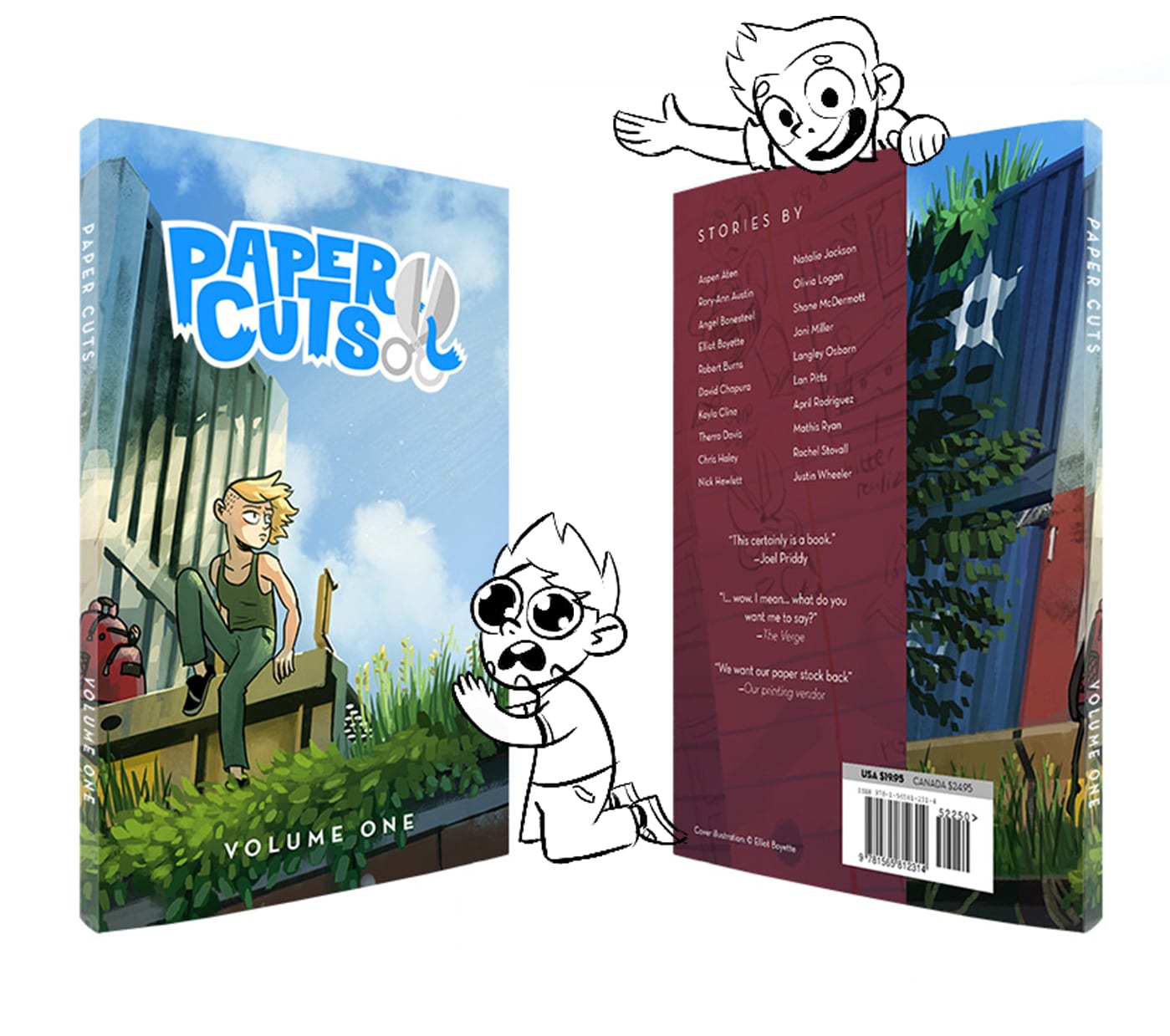
Paper Cuts, a new anthology comic book currently on Kickstarter, is a strange book. You won’t find a common character, or genre, or theme within its pages. It features a collection of stories by talented writers and artists, most of whom are alumni of the Comics and Illustration program at Memphis College of Art. What you will find in the book are diverse, off-the-wall short stories and artistry styles that you won’t find in any conventional comic book store, but deservedly should be.

According to editor Shane McDermott and art director Elliot Boyette, the Paper Cuts team “compiled some 170 color pages of grade A comics into a collection worthy enough for your bookshelf. There’s 15 amazing artists telling just as many fantastic stories that will take you to everywhere from the dreams of a professional wrestler, to the wild west to the nonsensical post-apocalyptic future.

“While this project was sprouted from a few college friends at the Memphis College of Art, it’s grown to include many talented individuals from across the United States. Comics from creators both established in the industry and up-and-coming names ready to explode off the page.”

Paper Cuts Anthology Cover

Story

Each story found in Paper Cuts is wholly different than the next. You’ll find an absurd comedy about a superhero manager of a fast food restaurant, as well as a drama about a soothsayer maid in the Victorian era. While each story in Paper Cuts have their own unique qualities, there are a few standouts that should be mentioned. 

The first is entitled Quiet by Aspen Aten, a poignant story about the depression that follows after a hard breakup, and the character’s ascension to finding herself and falling in love once again. Aten uses narrative captions to tell the majority of the story, which is meant to feel like the main character is writing a letter to her ex-girlfriend. It is a sweet and somber story which all can resonate with.

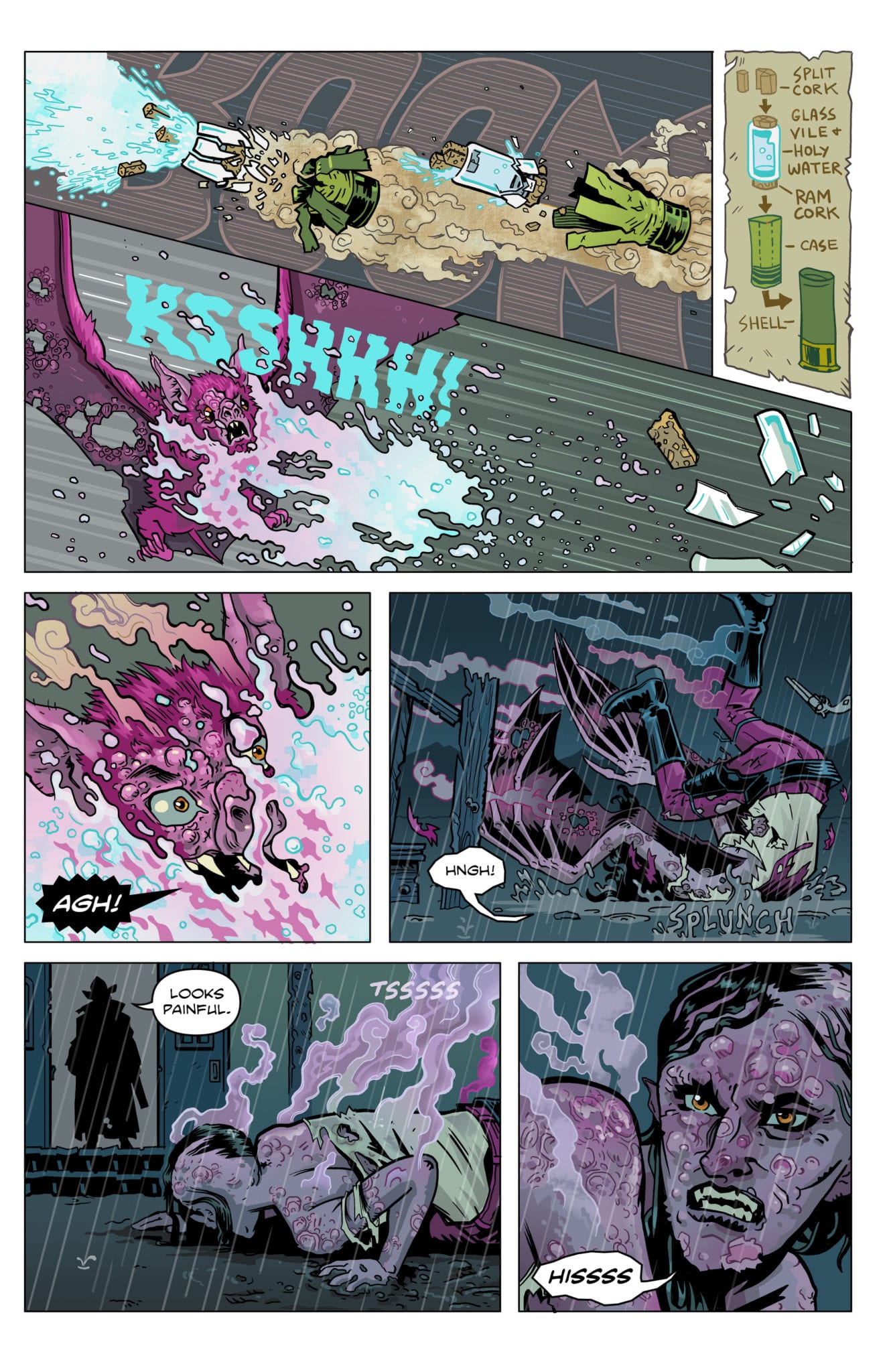
The next story worth noting is The Ghouls, The Bat, and The Ugly by Shane McDermott. It’s a gothic western filled with so much good worldbuilding in ten short pages, you just want to know everything about it by the time you read the final panel. McDermott planted the seeds for a spellbinding story set in an intriguing universe of zombie cowboys, seamonster barkeeps, and a wicked witch of the wild west. 

Paper Cuts Sample Page 1

Paper Cuts Sample Quiet

Art

The artwork in Paper Cuts is no different than its writing. Each short has a unique style and texture that evokes distinct emotions.

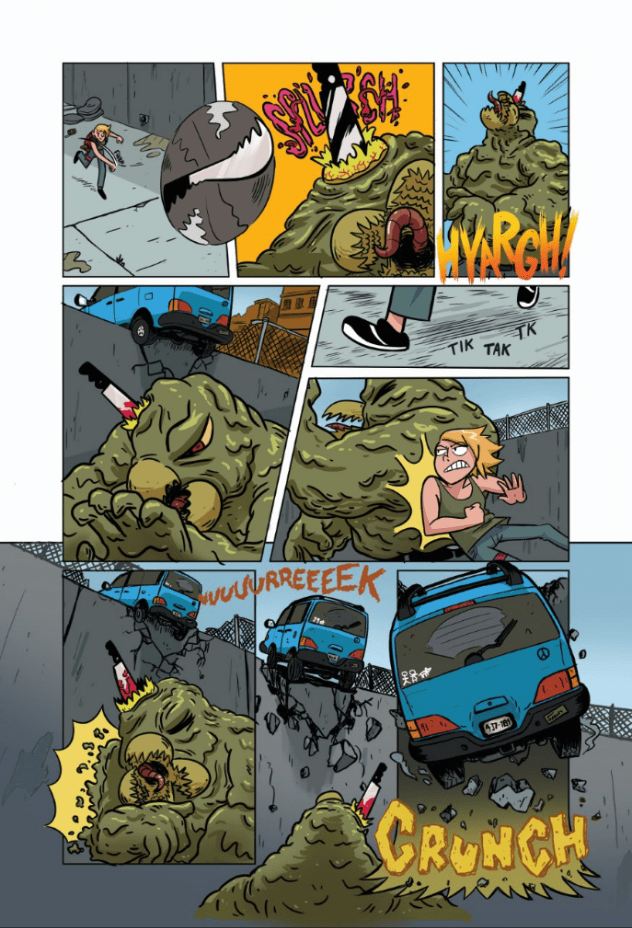
Junk Food by Elliot Boyette is about a heroic survivor coming to the aid of an injured scavenger in  a bizarre, post-apocalyptic world filled with mutants. Boyette’s style is reminiscent of Steven Universe, with thick, curvy linework and big, enthusiastic eyes. The illustration style offers a nice balance to the absurdity that takes place in the story.

Fade by Robert Burns takes place in a junk-punk future, where a young woman is on the run from goons through a garbage-laden, overpopulated city. It’s erratic lines really helps evoke the chaotic and messy future being showcased. The minimal use of colors gives the story and setting this otherworldly atmosphere.

Conclusion

Paper Cuts, with its mixed bag of stories and artwork styles, is an offbeat book from storytellers with wholly unique perspectives on the world, and is well worth your time and support. 

You can support Paper Cuts on its Kickstarter page, or learn more about the book and its creators on its website and Facebook page. 

Paper Cuts Sample Junk Food Paper Cuts Sample Fade

Monkeys Fighting Robots Youtube

Review: THE FLASH #73 Perfectly Focuses on the Man Behind the Mask

Monkeys Fighting Robots

The Flash Gets Back on Track!

The Flash is in the midst of his first year, and it’s been quite an eventful one. After coming back from the future, Barry defeats the Turtle in an attempt to rewrite it. The villain is sent to Iron Heights, and Barry continues with his superhero career. Iris has also been making leeway with her career as a reporter. Their careers cross paths when the plucky reporter tries to approach a group of blue masked thieves. They attempt to kill her, but Barry speeds in and disarms them all. He runs home to see he took one of the bullets. How will the Flash survive this incident?

Flash 73 cover

**Some Spoilers Below**


Story:

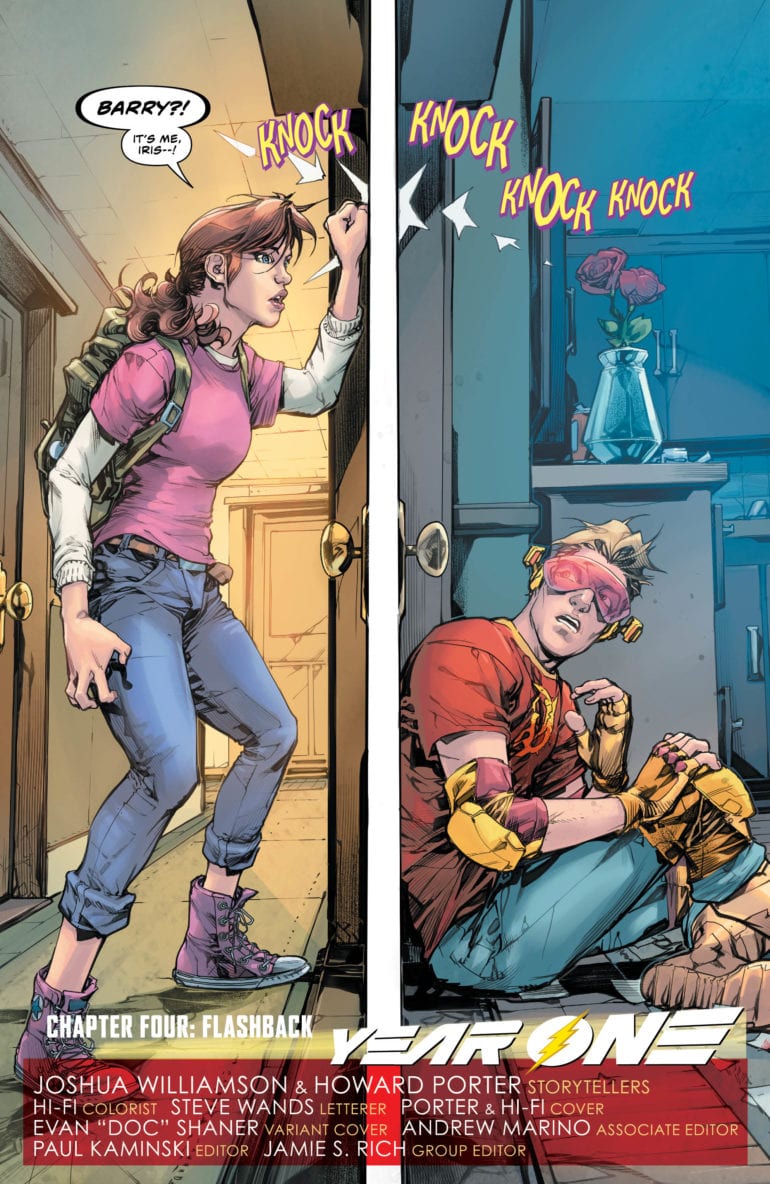
Picking up from right where we left off, Barry works to extract the bullet from his chest. While in the midst of his work, Iris quickly knocks on his door. She’s troubled for putting people in the line of fire and needs her boyfriend. Barry quickly removes his bullet, as well as learn of his accelerated healing, and opens the door to Iris. After a night together, Barry heads to Iron Heights to talk to Turtle. We learn that, much like our hero, Turtle was a scientist who got into a lab accident. The villain soon reaches out and touches Barry, learning instantly he is the Flash.

Flash 73 p1

This chapter of Flash Year One has many ups to its story. Right from the get-go, we dive into one of the character’s biggest staples: his relationship with Iris. The opening nails their relationship to a tee and reminds readers why they’re such an iconic couple. She’s just as prone to running in as Flash, and he can ground her as well. The entire opening was incredibly sweet and left me smiling.

The Turtle’s section was also incredibly exciting. I am not sure if this is a reimagining of his origin, but it gives a connection to Flash I never thought possible. It makes the character more relatable as well, as he was a quiet, nerdy kid before his transformation. The only thing that makes the story any better is the ending, which if you’ve been reading up to this point, will leave you with a smile. This story is on the fast track of becoming a Flash classic. Here’s hoping it ends on a high note with one final epic battle.

Flash 72 p2

Art:

Porter’s art continues to kick ass. He’s always done well during this arc, but this one was able to accomplish two goals. Porter can keep characters grounded and make the slower, more character-driven scenes more realistic. The conversation between Barry and Iris bleeds emotion through dialogue, but the art makes it even better.

While we don’t get a ton of it this issue, Porter also does a great job with the powers. Flash’s and Turtle’s powers clashing is always a sight to behold. Hi-Fi takes it a step further with colorwork that’s pleasing to the eyes. The art is definitely the constant great of this arc and makes this reviewer come back.

Flash 73 p3

Conclusion:

Just when readers thought the story would fall flat, the Flash Creative team brings out this curveball. We have magnificent character building, a necessity for these Year One stories. Porter continues to shine With his art style, as well as paired with Hi-Fi’s colorwork. This is just a fantastic issue and chapter for Flash Year One. 

Monkeys Fighting Robots Youtube

Review: DETECTIVE COMICS #1006 Takes a Darker Thematic Turn

Monkeys Fighting Robots

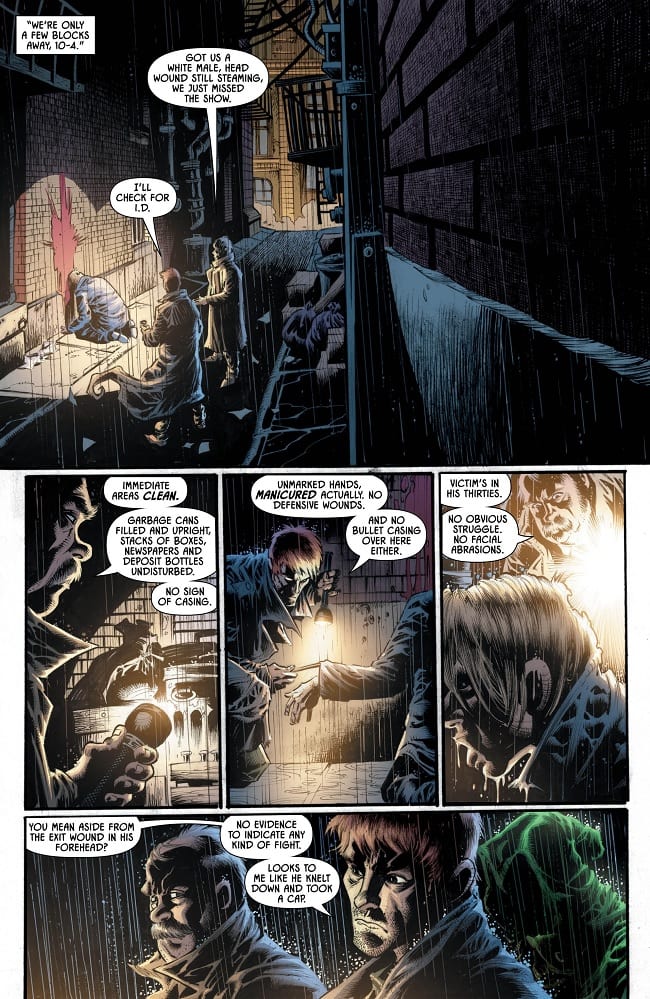
It’s the start of a new story arc in Detective Comics #1006, and the creative team of Peter J. Tomasi and Kyle Hotz aren’t shying away from the dark content here.

A grisly, cult-like execution in a Gotham alley calls down perhaps the DC Universe’s most lethal enforcer, The Spectre. In the ensuing chaos, the entity’s host goes missing. The disappearance forces The Spectre to turn to none other than the world’s greatest detective for help.

The Writing

As mentioned above, Tomasi doesn’t shy away from the darker tone of Detective Comics #1006. The story opens on a pretty grim sequence, and only pushes it further from there.

The crux of the mystery hinges on this strange cult group. They appear to be devotees of The Spectre, though the entity itself has little affection for them. One, after spilling blood to summon his master, begs The Spectre to “unleash his terrible wrath” on him. With this following up on our previous arc, the paramilitary zealots seem to be a recurring trend in Tomasi’s run.

That said, the primary tension in the story doesn’t focus on the cultists. Rather, it lies in the conflict between Batman and The Spectre’s methods and ideologies. The former, of course, abhors killing, while The Spectre describes his approach as “eye for an eye.” Of course, even that description may too generous, given he basically reduces his victim to a puddle of viscera. Like I said, the writer’s not afraid to get dark with Detective Comics #1006.

Overall, the writing in this issue is a strong opening to the new arc. Tomasi builds suspense, laying out an intriguing mystery without tipping his cards. The darker tone is unlike the stories we’ve seen in recent Detective Comics issues, setting up what could be a pretty twisted ride.

Detective Comics #1006

Detective Comics #1006

The Artwork

Hotz provides some moody, stylized artwork for Detective Comics #1006. Batman’s design harkens back to the ‘90s in many regards; the longer ears, the angular face, and the flowing, ragged-looking cape. It’s a fun throwback, and it fits the darker tone of the story well.

The artist delivers some striking imagery in this book. One could easily see numerous images pulled from the pages of Detective Comics #1006 and blown-up to print size. However, the consistency does falter from time to time. The way Hotz frames select panels can make it difficult to distinguish what’s happening at first glance. Overall, there’s far more which works than which doesn’t, though.

David Baron turns in solid work in the color department as well. The shadowy, noir tones of the book contrast with rich colors and occasional neons that seem to glow with a radioactive characteristic. It’s a unique look, and it works well here.

Final Thoughts

Detective Comics #1006 is a promising start to this new arc. The darker thematic elements and appealing artwork are a change from what we’ve seen in the book lately, but not an unwelcome one.


Monkeys Fighting Robots Youtube

Review: A Suitably Downer Ending in BATMAN: DAMNED #3

Monkeys Fighting Robots

Nearly seven months after the last installment, Batman: Damned #3 finally closes out Brian Azzarello and Lee Bermejo’s saga. It’s been an abstract and meandering ride, overshadowed somewhat by the controversy around the first issue’s withdrawal from shelves. Now, though, we finally crossed the finish line.

After being rescued from entombment by Swamp Thing, Batman goes off to confront the harsh truth of his situation. By the issue’s end, he learns what really happened on that bridge.

The Writing

Batman: Damned #3 is the strongest of the three books in this series in terms of storytelling. The first two were largely a surreal journey through a dark Gotham nightscape, producing many questions—and questionable plot decisions, like Harley attempting to rape Batman—with few answers. Batman: Damned #3 is effective at taking much of what was presented and contextualizing it. In context, we see the book’s end foreshadowed throughout.

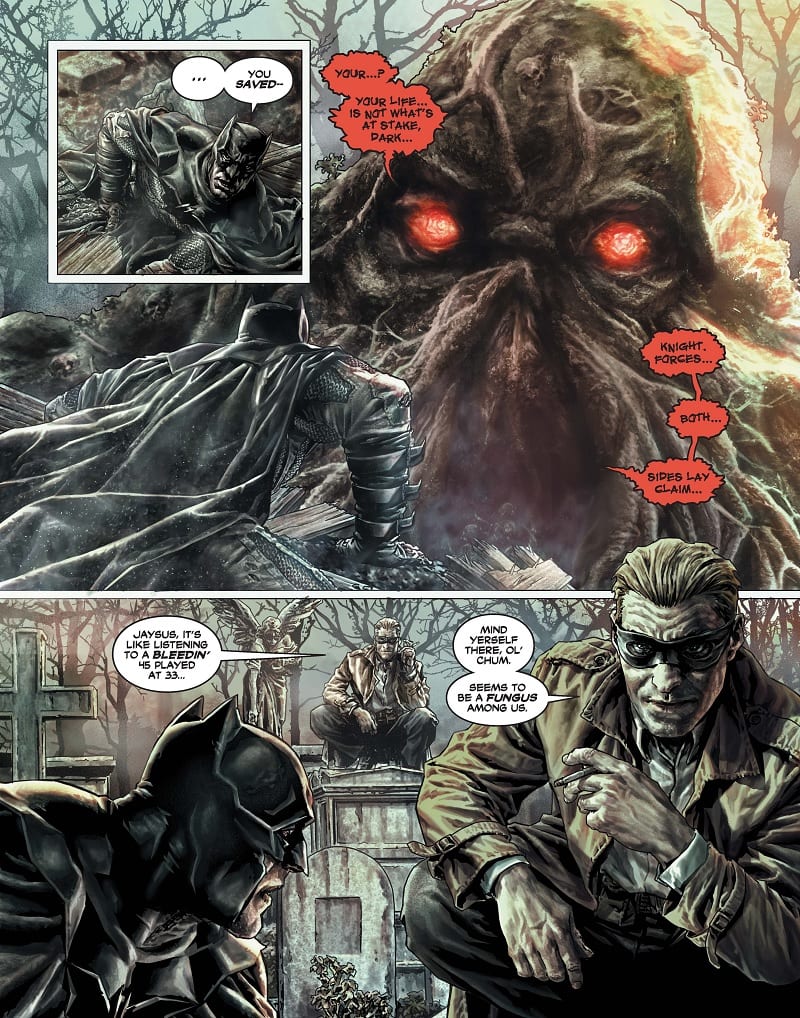
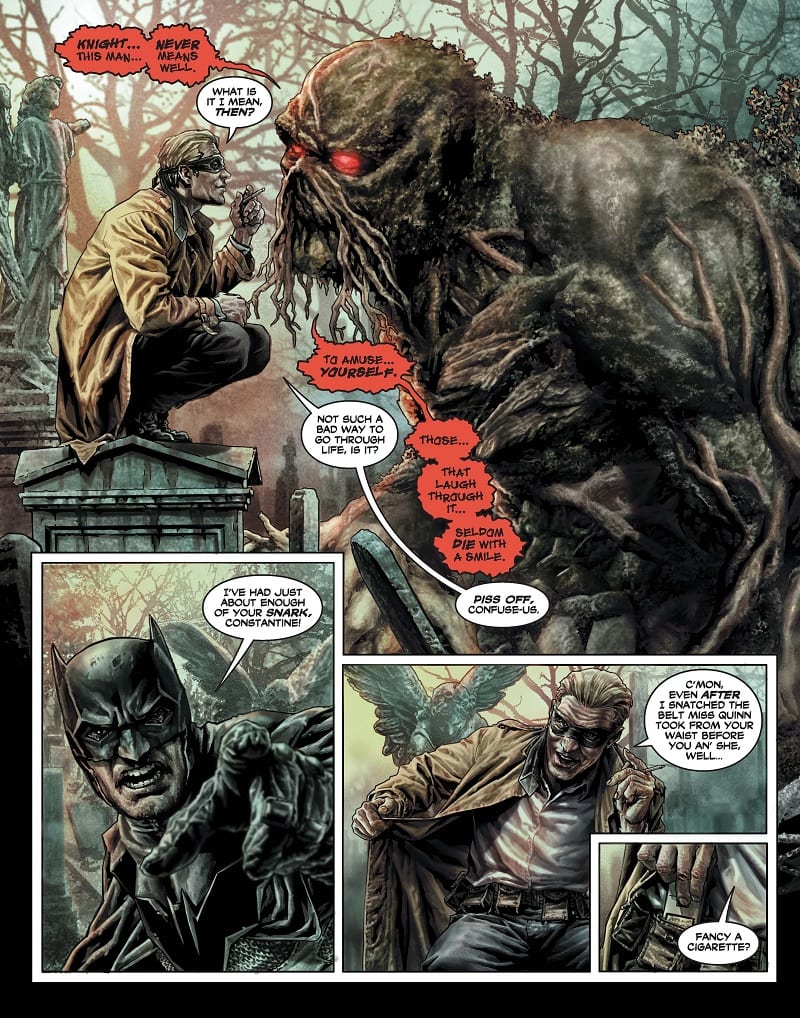
One of the book’s highlights is the interaction between Batman, Swamp Thing, and Constantine. The latter provides the same sardonic, glib commentary he has throughout the series. The former two, in response, voice their disdain for him. Their interaction provides a rare bit of comic relief in a narrative that tends toward an overwhelming grimdark tone.

While this is a Batman book, it hinges more on Constantine to drive the narrative. Although providing the same gallows humor commentary, his dialogue takes on a different context. Here, we see he’s less of a passive commentator, and more like Batman’s spirit guide. In moments, he even reveals compassion for the Dark Knight, trying to stave off the revelation of a harsh truth at the book’s climax.

Batman: Damned #3 provides a complete arc to the story. That said, one of the book’s core plotlines—that of Thomas Wayne’s infidelity—doesn’t seem to go anywhere by the end. It takes up a not-insignificant portion of the previous issue. However, Azzarello seems to drop the thread, rather than tie it into the narrative in a clear, coherent manner. This is not the only underdeveloped element of the narrative, but it’s the most glaring omission.

Batman: Damned #3

Batman: Damned #3

The Artwork

Again, Bermejo’s artwork is the real show stealer here. There’s incredible attention paid to detail; backgrounds are painstakingly finished, while incidental objects from the gnarled tree bark to the grime on a tombstone’s face are presented with painterly attention.

He does an excellent job of conveying motion and a sense of liveliness through the art. Even in the quieter moments of Batman: Damned #3, the images on the page carry vivacity and a dramatic weight. Though the writing can tend toward being overdramatic at times, the art manages to sell it. As with previous installments, the art alone could make this book worth buying.

The colors are suitably moody. The work is meticulously detailed, but with a consistent grimy, dingy, and cold impression. Throughout the book, the readers feels like they’re viewing the world as a place devoid of life…an effect which works incredibly well alongside the other elements.

Final Thoughts

Overall, Batman: Damned #3 provides a satisfying ending to the miniseries. Not every element falls into place, but it effectively caps-off a dark narrative with a consistent mood and tone.

Monkeys Fighting Robots Youtube

AMAZING SPIDER-MAN #24: New Villain On The Rise

Monkeys Fighting Robots

Following the fantastic “HUNTED” arc, AMAZING SPIDER-MAN #24 begins to show us a bit more of this mysterious new villain that’s been lurking in the shadows. Nick Spencer is joined by artist Ryan Ottley once again to begin the next chapter of the duo’s top-notch series.

asm 24 cvr

***SPOILERS LIE AHEAD***


Peter and MJ spend some quality time together, but the fallout from Kraven haunts our web-headed hero. Mysterio gets psychiatric treatment that turns into a horrifying introduction to our newest Spidey villain–Kindred.

This is a much quieter transition issue after such an explosive previous arc. Nick Spencer spreads the reader’s attention to all the appropriate corners to progress forward in Spidey’s web. We needed to see some of Pete and MJ being together, or else what’s the point of them being together, right?

Our beloved Peter Parker is taking the vision and consequences of his tangle with Kraven very poorly. Spencer has a perfect grasp on Peter’s voice and morale compass, Ottley illustrates a concerned and tortured Pete flawlessly.

The heart of Amazing Spider-Man #24 is Mysterio’s therapy session. Starting with his delusions of himself as he recounts his recent events, Spencer does so with charm and plenty of flair. We then start to dig more into the pain of Quentin Beck and how he dealt with death and resurrection.

Spencer’s script executes the story perfectly, and at the proper pace. I’m not usually a fan of when Mysterio’s helmet is anything but a blank fish bowl, but that’s not the case here. Ottley wisely chose to show Beck’s shadowy face in order to show his emotion and reactions during a long scene of two character sitting down talking.

The more we explore Mysterio’s pain, the more this new villain peaks his head out. Spencer has been slowly teasing this mysterious horror show in the background since Amazing Spider-Man #1 in the classic comic book way.

Now that we’re finally starting to get face time with him, there’s a heavy amount of hype that’s been earned. It also doesn’t hurt that we’re treated to Ryan Ottley’s art as we get our first long look at this menacing foe.

“Kindred” is the name that he shares with Peter as he makes the wall-crawler watch him brutally murder Mysterio in a dream. We still have no clue who this Kindred is but he’s clearly got some personal history and connection with Peter underneath the Spider-Man mask.

Spencer and Ottley are a dream duo for Amazing Spider-Man. Colorist Nathan Fairbairn also continues to prove he’s a perfect match for deepening the effectiveness of Ottley’s pencils. Issue #24 is another excellent Spider-Man comic book. A quieter, slow-burning issue like this makes it feel all the more like the classic tales we hold in such high esteem.

Monkeys Fighting Robots Youtube

Review: BOOKS OF MAGIC #9 Takes Us Into The Book Prison

Monkeys Fighting Robots

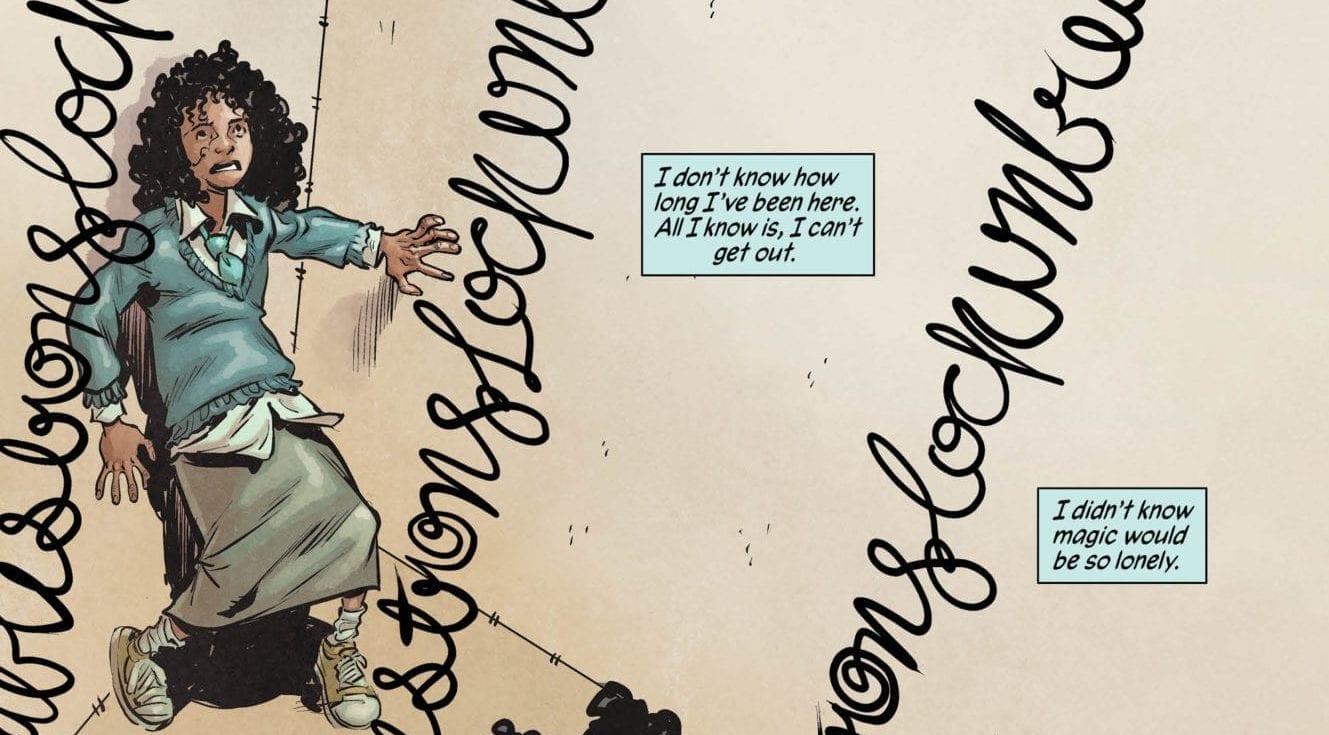
BOOKS OF MAGIC #9 shifts the spotlight from the young wizard Timothy Hunter to the friend he’s searched for tirelessly: Ellie. Readers of the series will remember her imprisonment inside of a book at the hands of their school librarian Mr. Davies. With Tim and Ms. Rose no where to be found, Ellie must navigate the confines of her literary prison alone. Fortunately for her, another prisoner’s predicament may be the motivation she needs to escape.

An Enchanting Story of Self-Liberation

Kat Howard, through Ellie, begins this tale by featuring a quick trip down memory lane. We learn the young wizard enjoyed magic from a very young age, which is made clear by a scene of her at a magic show put on by none other than the DC hero Zatanna. This helps readers understand the optimistic attitude toward Ellie fostered within herself before learning to harness her powers. And it makes it that much more disheartening when all of those hopes shatter after reliving her traumatic imprisonment.

Ellie relives her good and bad memories of magic

While bemoaning her fate Ellie meets Kip, an elderly wood creature who claims to have once been a prophetic tree. His brief origin story is reminiscent of the classic children’s book The Giving Tree, only this tale was more sinister. Kip was chopped up and placed in the paper bound prison many years ago.

Through a combination of desperation and care for Kip, Ellie musters up the courage necessary to tackle the bars of ink imprisoning them. But will her magic be enough? Readers will be inspired by Ellie’s self-liberating attempts to free both herself and Kip from this dungeon of words.

Magical Illustrations

Ellie trapped within the book

Tom Fowler’s pencils, Brian Churilla’s inks, and Jordan Boyd’s colors astound once again, showcasing their ability to conjure up fantastical landscapes most people only see in their wildest dreams. The artist finds a way to bring the interior of Ellie’s book prison to life by fashioning the tome’s cursive letters into bars of a cage. These letters match her frizzy hair to show how much a part of the book she’s become.

Todd Klein is equally fantastic in this issue. He gives each dialogue box details related to their corresponding characters such as Kip’s wood-like background with pieces missing as if park of the bark broke off.

The Comic Cover

Kai Carpenter’s main cover artwork is designed to look just like a fairy tale book. But it features Ellie banging on a window from inside the cover to show that her experience is the exact opposite of the fantastical escapism these books provide.

Conclusion

BOOKS OF MAGIC #9’s bring much-needed attention to Ellie after sidelining her for a few issues. But finally revealing her fate is well-worth the wait as we see her come into her own.

What did you think of Ellie’s experience in the book? Let us know in the comments below!

Monkeys Fighting Robots Youtube

WAR OF THE REALMS Wraps Up Flawlessly

Monkeys Fighting Robots

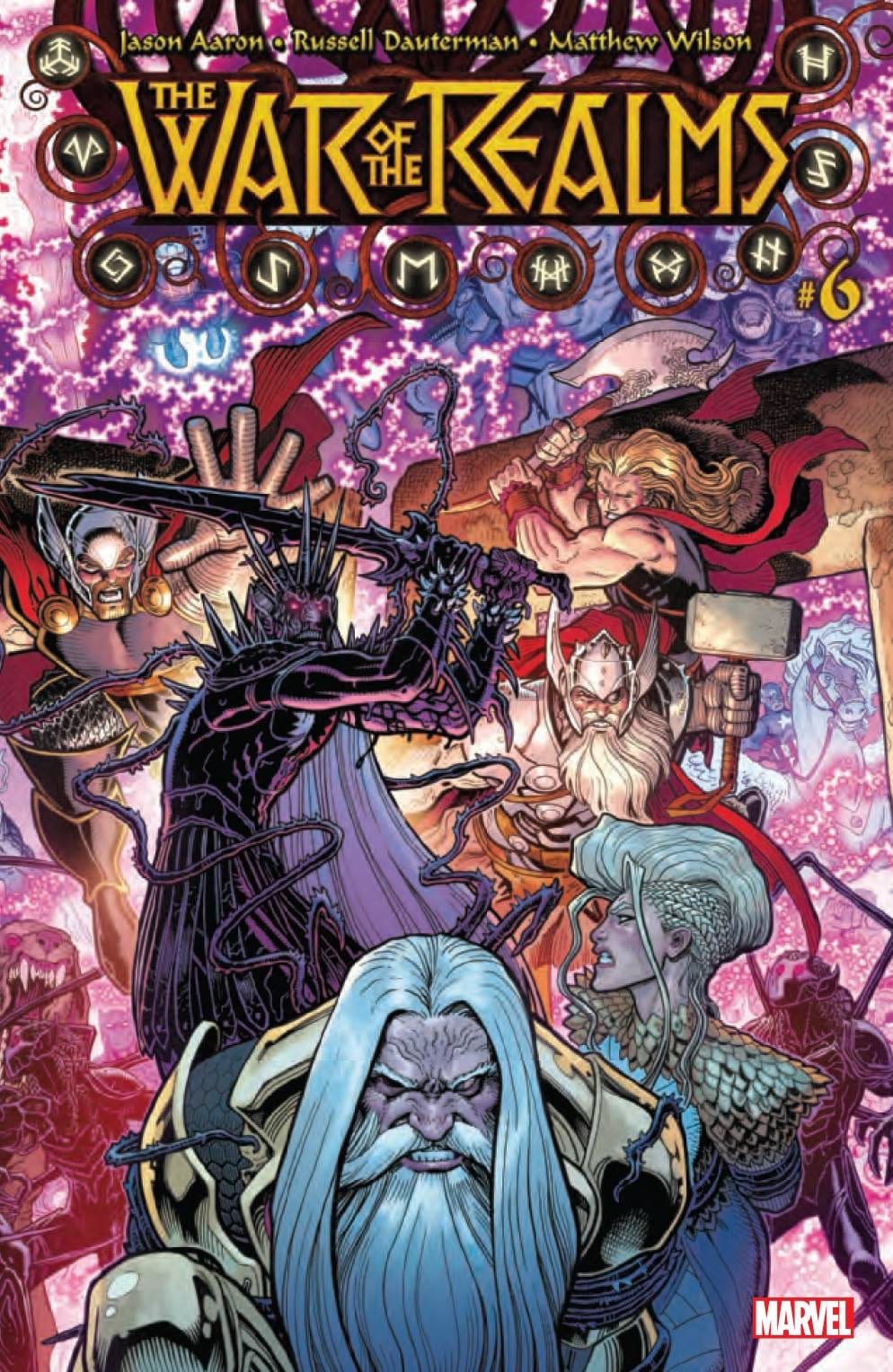
Jason Aaron’s massive epic, WAR OF THE REALMS, comes to a close with issue #6. It all comes down to the multiple Odinson’s to stop Malekith’s reign of terror.

WAR OF THE REALMS 6 CVR

***SPOILERS LIE AHEAD***


It’s been said over and over again, but we’ll say it one more time. Jason Aaron has been writing this Thor story for a very long time and it’s been a fantastic journey. War Of The Realms is very much a culmination of everything that he’s written before. This was a story eight years in the making.

With that kind of groundwork having been laid, the final siege against Malekith being lead by the many Thor’s of Aaron’s long run is extremely satisfying no matter how long you’ve been following along.

While the Thor Collective takes Malekith on, Earth’s Mightiest heroes dispatch his allies on Midgard. Each and every scene of triumph and interaction between our heroes is memorable and unique to this story. Jason Aaron utilized the advantages of crossover epics like no other creator has since Civil War. Incorporating all of the 616 into this fight for our realm where everybody gets a moment to shine.

War Of The Realms #6 has quick and easy payoffs for almost every character. Things that were set up and developed throughout this main story and all it’s tie-ins. There’s a connected tapestry here where all the different creators were on the same page that we sadly don’t get much of anymore.

Russel Dauterman had quite a task with this series and he’s truly delivered. War Of The Realms was a much larger scale and cast than he’s ever been handed. There were very few blemishes. Every bit of epic that Jason Aaron provided for this story was taken to a new level through Dauterman’s talent.

The surprise of Mjolnir being forged is a wonderful moment. Thor’s trusty hammer sidekick gets a beautiful redesign and the scene in which it drops is effectively heavy as the hammer itself. We get major closure on “Gorr was right” and Thor becomes the God Of The Unworthy–a brilliant development by Jason Aaron.

As All-Father looks on in awe of how great a god his younger self was, the reader witnesses another step in Aaron’s grand evolution for the character. Along with all that Aaron has accomplished with this cast of characters and all these stories, he’s solidified himself as an all-time great Thor creator.

Matthew Wilson’s layering and contrast of colors really elevate Dauterman’s art. Battle scenes come to life through Wilson’s color. Laufey’s last stand is a masterpiece. Bloodier moments, like Carol’s fire-sword decapitation, burn right into your memory thanks to the vibrant and imperative statement the coloring and contrast provides.

Character iterations exclusive to this War Of The Realms story are iconic and memorable thanks to Dauterman and Wilson. We will forever remember Daredevil The God Of Fear and Malekith merged with the Knull symbiote. These are the kinds of things we read comic book events for.

One major strength of War Of The Realms as a whole is the moments it provides–issue #6 is no different. Even moments that we can see coming from a mile away, like Loki’s return, are still every bit as entertaining as they’re intended.

Malekith’s final farewell is a bloody and brutal one. One would hope this isn’t the last we see of him as he’s clearly Thor’s become Thor’s greatest foe. He’ll likely spend some well earned time on the shelf.

The crawl out from the fallout begins, full of exciting new directions for the major players. That final page is a big one, Odin bowing to his son as the new All-Father Thor is absolutely stunning. We are officially in a new era for both Thor and the Marvel Universe.

War Of The Realms is everything a crossover should be. Marvel Comics are going to be in a good place so long as Jason Aaron is heavily involved.

Monkeys Fighting Robots Youtube

Review: A Driving Test Menaces The Team in FANTASTIC FOUR #11

Monkeys Fighting Robots

In Fantastic Four #11, a new adversary threatens to vanquish the heroes once and for all. The team must face the menacing threat of… a driving test. The Fantastic Four has stared down Doctor Doom without blinking. They’ve defeated Galactus. They’ve dealt with Mole Man and Namor, too. But could be this foe be the one that takes the First Family down?

Fantastic Four #11
In Fantastic Four #11, the team meets its most scariest threat yet: a driving test!

Fantastic Four #11

Writer: Dan Slott

Artists: Paco Medina, Kevin Libranda, Paolo Villanelli & Juanan Ramírez

Color artist: Jesus Aburtov 

Letterer: VC’s Joe Caramagna 

STORY

Throughout writer Dan Slott’s run on Fantastic Four, Franklin Richards has been a tough pill to swallow. Slott had Franklin and his sister Valeria return to the Marvel Universe as teenagers early in the series; since then, both Richards children have been prone to episodes of A.T.S.: Annoying Teenager Syndrome. Franklin, in particular, has consistently been a jerk. Last issue, he was especially obnoxious and he bragged about his godlike powers. This previous installment ended with some hints of progress but, here, Franklin is back to where he started.

Thankfully, Johnny Storm corrects one of the mistakes the family previously made when dealing with Franklin’s attitude; Johnny tries to talk to the troubled teen. (Last issue, nobody reached out to him.) Of course, Franklin blows him off but it’s the thought that counts, right? Plus, Franklin isn’t as insufferable this go-around; in fact, he uses his Annoying Teenager Syndrome to help save the day.

Fantastic Four #11
Franklin makes an unconventional pitch to Gargantua.

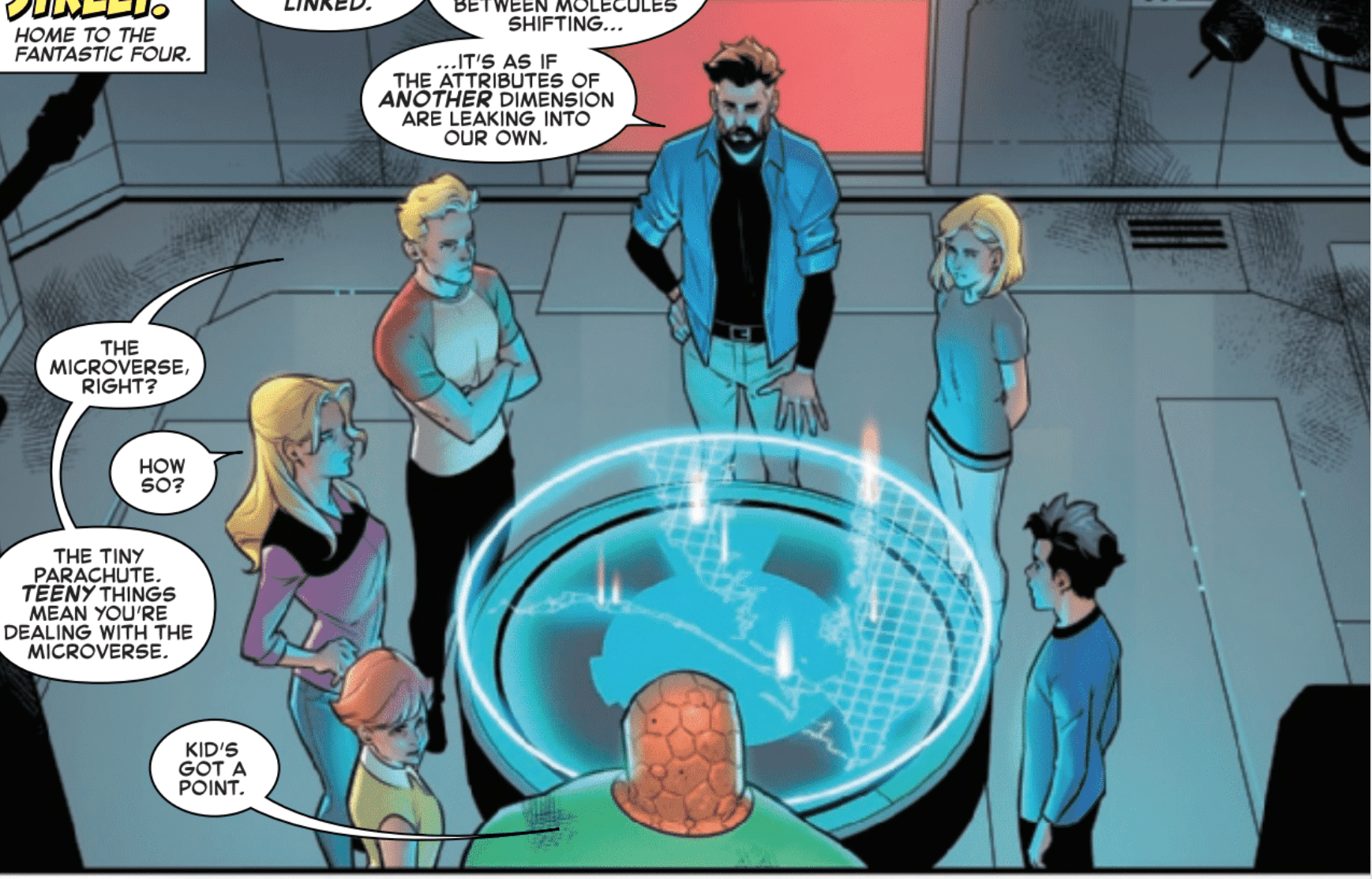
“Your kid used his disgruntled teen powers for good,” Johnny Storm succinctly tells Reed and Sue Richards. That’s right; when Gargantua (an unimpressive villain of the week in limited action) threatens to violently replace the main Marvel Universe with the Microverse, Franklin simply shows her some pictures of Earth on his phone and trashes the world Gargantua covets. Compared to the spectacular Microverse, Franklin says the main dimension “sucks” and asks the villain, “why would you trade one second of this–for the world I’m gonna be stuck with for the rest of my stupid life?” Under Slott’s guidance, Franklin remains a somewhat static character and it’s getting harder to use the virtue of patience as an excuse for this lack of progress. Still, at least for now, let’s appreciate that Slott found a way to make Franklin’s off-putting attitude legitimately useful.

Fantastic Four #11
Of the two Richards siblings, guess who failed the driving test?

In the traditional sense, Gargantua is the villain in this issue. But when Franklin and Valeria have to take a driving test, it’s clear what the real antagonist is. Harriet Underhill and Tobias Cobb of the Department of Extranormal Motor Vehicles invade Yancy Street and tell the Fantastic Four that the Richards siblings won’t be allowed to drive the team’s amazing vehicles until they pass the test. To prepare the siblings for the exam, Johnny and Ben Grimm try to teach Franklin and Valeria how to drive in a montage-like sequence that’d fit perfectly in an ’80s-movie. (Is that “Eye of the Tiger” in the background?)

Slott sets up a fairly predictable outcome and turns it on its head. Valeria wipes the floor with Franklin in these training sessions. But, when the duo gets roped into Gargantua’s battle with the Fantastic Four, Valeria fails to practice safe driving. “Talking on a communicator, operating complex apps and performing scientific experiments…while piloting a vehicle?,” Underhill asks the team. “Why, that’s worse than driving while texting!”  By comparison, Franklin pulls over and, before he enters the fray, he ensures that his passenger is safe. As a result, Franklin passed the test while Valeria failed. Even if he loses his powers, as Slott continues to suggest, Franklin has a guaranteed role on the team as its wheelman.

ART

Fantastic Four #11
Gargantua wasn’t impressive in this issue but the artists made the most of her involvement.

Slott’s run on Fantastic Four is eleven issues deep and, more often than not, the writing and the art combine to give the reader exactly what you’d expect in a story featuring the team. This time around, the team of Paco Medina, Kevin Libranda, Paolo Villanelli & Juanan Ramírez and color artist Jesus Aburtov make the most of Slott’s script and its lackluster villain (Gargantua.)

Sometimes, it’s the little things that make the difference. Using vibrant, electric blues and purples, the art team makes the Microverse come alive. The bright lightning-like bursts of energy make the reader feel like Gargantua’s dimension is actually expanding into the main Marvel Universe; the artists successfully convey the sense of motion.

Fantastic Four #11
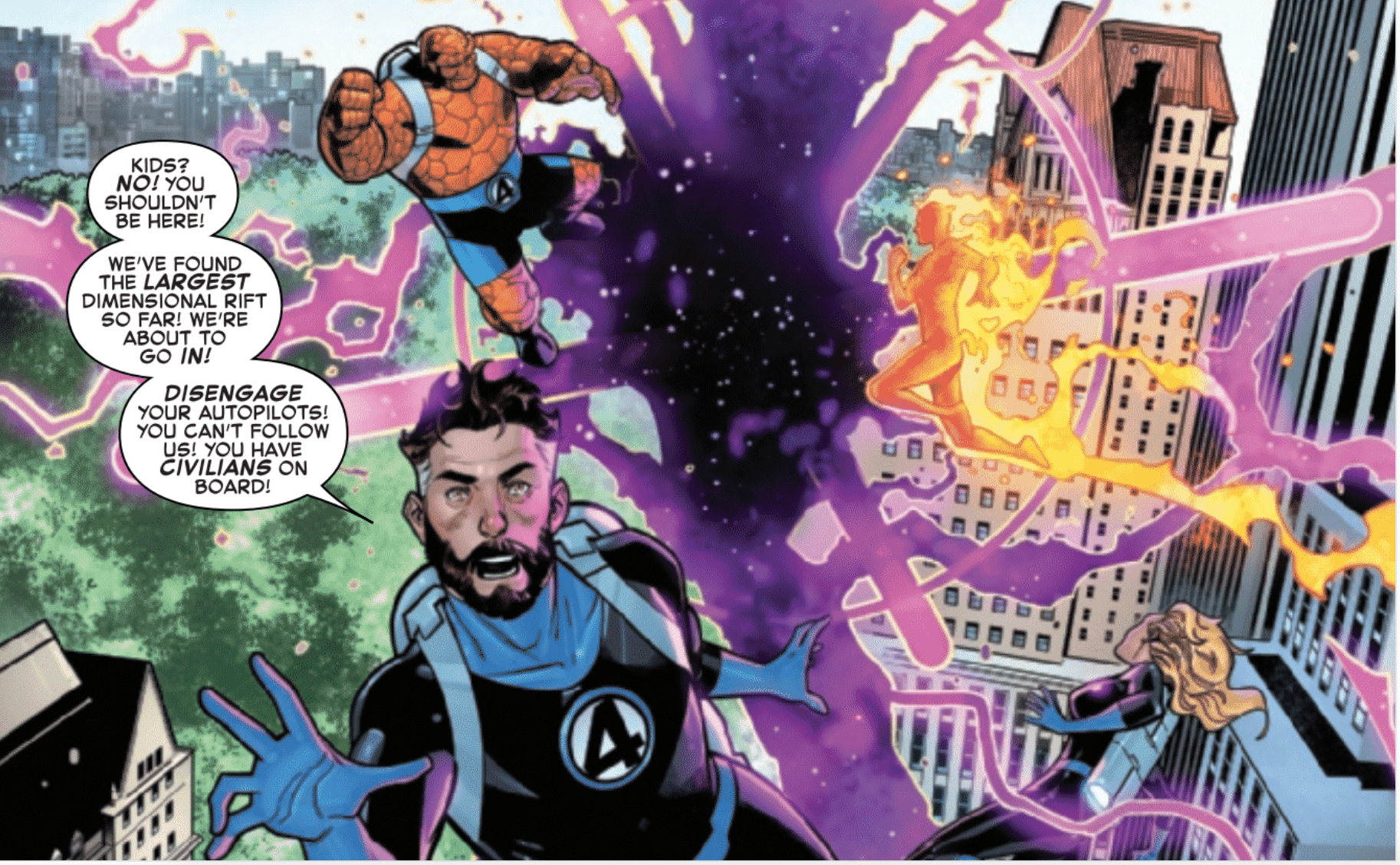
It’s not a black hole but these dimensional rifts still look intimidating.

Similarly, when the Fantastic Four investigates some subspace tears, the art team makes the scene feel like a classic story featuring Marvel’s First Family. The dimensional rift isn’t as menacing as a black hole but, using dynamic, ominous purple tendrils, the rift still seems dangerous. In a Fantastic Four story, every time the art complements the science fiction elements of the plot, it has to be considered a success.

As with other issues of Slott’s run, this installment focuses on the Fantastic Four’s family dynamic first and foremost. As long as Slott continues to do so in an enjoyable way, fans can consider the writer’s take on the First Family as a solid series that explores common domestic issues.

What’d you think of Fantastic Four #11? How do you feel about Franklin Richards’ attitude?

Monkeys Fighting Robots Youtube