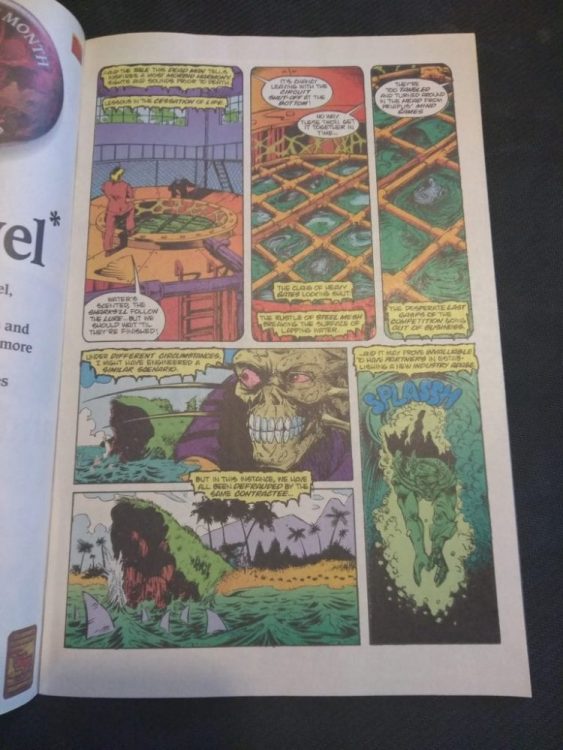
Venom #18 hits your local comic book shop on September 11, but thanks to Marvel Comics, Monkeys Fighting Robots has an exclusive four-page preview to share with you.
The book is by writer Donny Cates and artist Iban Coello, with colors by Rain Beredo and letters by Clayton Cowles. The cover is by Kyle Hotz and Dan Brown.
About the issue: ABSOLUTE CARNAGE TIE-IN! Carnage’s unlikely and symbiotic allies swarm Venom and his family! As all hell continues to break loose as Carnage’s army swarms the streets of New York, Eddie Brock has his hands full at Rex’s Warehouse!
Prodigal Son is a new series on FOX starting September 23rd, 2019, which centers around a young profiler whose father is an infamous serial killer. It’s a dark police procedural wrapped around a family drama with a chilling and heart-wrenching musical score created by Nathaniel Blume.
Playing a serial killer known as “The Surgeon” is everyone’s favorite former progenitor of the Lycans, Michael Sheen. The show’s lead, Sheen’s profiler son, Malcolm Bright, is played by former Walking Dead “Jesus” Thomas Payne. Fans of the long-lived zombie series might not even recognize Payne who is transformed from his former look.
PopAxiom interviews Nathaniel about making music and cracking bones for the Prodigal Son.
Hello Trumpet My New Friend
Thanks to mom, Nathaniel “… picked up the trumpet at age 11.” As he puts it: “She just thought it would be a good thing for me to try.”
As it turns out, Nathaniel had “… had an affinity toward that [trumpet] and music in general.”
“In the 90s, I started to seek out trumpet music. And at the time, John Williams’ Jurassic Park score was one of the first things that stuck out; scores like JFK, Stargate and Independence Day from David Arnold.”
As high school came to an end, playing the trumpet was still mostly a hobby. “By the time I got to college and started writing, it took hold that it was what I wanted to pursue.”
Nathaniel calls professor and author of The Score: Interviews with Film Composers, Michael Schelle, “an encouraging figure” who “pointed in the direction of composing.”
https://www.youtube.com/watch?v=26C6JqBdb20
About Prodigal Son
Nathaniel followed that inspirational gesture to shows like Legends of Tomorrow, The Flash, and the CNN Documentary Series 60s, 70s, 80s, etc. The current destination: Prodigal Son. “I got the script for the pilot and immediately had a lot of ideas.”
How does one get into the mindset of creating music for a show about a police profiler and his serial killer dad? For Nathaniel, “The jumping point was … The Surgeon.”
“I got on eBay, found a surgical tool kit, bone cutter, I got a plastic tarp to double as a bodybag, and had a sampling session here at the studio where I recorded all these sounds … slamming the bodybag, cutting gauze with scissors …”
But the deep dive into detail didn’t end there as Blume also snapped, “… dried-out chicken bones with the bone cutter.”
HIGH ANXIETY
Nathaniel took this “… slew of material … and made a playable instrument out of it which acts as a foundation for the percussion in the score.”
But Prodigal Son is more than just a nerve-chilling soundtrack. “At heart, the story is really a family drama. The protagonist is dealing with the baggage of having a serial killer father, and his relationship with his mother and sister, who also have their baggage.”
For Nathaniel, the balance between family and fright was a key part of the sonic puzzle. “The score straddles that world of giving the show the emotional nature it needs at times but also playing on the tensions, horror, and thriller aspect of the story.”
“It’s fun keeping the tension and anxiety high for people for an hour.”
Musical Mindsets
Cracking bones makes getting into the mindset of Prodigal Son a more direct experience. How does that compare to scoring for a superhero show, film, or documentary? “The initial process isn’t that different. You really have to come up with a sound world and the emotions and the feelings from scratch in any case.”
“The differences come with a TV program that goes on, for a season or even years. The challenges that come with that is how do you stay in that sound world but also make it feel like it’s shifting and adapting with the show.”
For a movie: “… you get more time to sit with it, but then you create the music, it works, and you’re done.”
The CNN Decades Series demanded something entirely different that the usual purpose of music in movies and television: “… they really didn’t want to tell the audience how to feel. They wanted to let the audience figure that out for themselves.”
Wrapping Up
What working composer today does Nathaniel look forward to hearing from? “I always look forward to what John Williams does.”
“But really, since I’m in a building with three other composers, Blake Neely. Sherri Chung, and Daniel James Chan, it’s always fun to see what they’re doing. We all work together and support each other.
Nathaniel adds a recent Oscar-winner to the list, “I went to USC with Ludwig Göransson (Black Panther), so I’m always excited to see what he’s doing.”
Prodigal Son is the latest addition to Nathaniel’s continuing work, “… co-composing The Flash and Arrow with Blake.”
Thanks to Nathaniel Blume and Rhapsody PR for making this interview possible.
Want to read more interviews, reviews, Op-Eds, and more? CLICK HERE.
Spawn #300, out today from Image Comics, uses an all-star team of artists to set up Spawn for the next 300 issues to come.
(Edited to reflect printing errors for artist’s credit)
Of course, no Spawn issue is without typos and mistakes. On the very first pages of this book, the artists are listed in the wrong order. The 1st chapter with Capullo is extremely long compared to the Opena chapter that is 2 pages. This book is a thick over-sized special that’s all-inclusive. When it comes to Spawn readers, whether you started at 1 or 299, this issue is for everyone. Todd McFarlane handles the script for 4 of the 5 chapters and Scott Snyder jumps in for chapter 2.
The first chapter recaps what has been happening recently in the story and establishes Spawn’s plan for the future. Capullo does a fantastic job with this chapter. With his style and detail, his work is always a treat to see in a Spawn book. It gives a taste of old Spawn to new readers who may only know him from Batman.
We also get to see Capullo’s version of a fairly new character and an updated old favorite. He always has such amazing character designs; all the lines adding extra detail that most people would overlook make his characters look so much more grotesque, scarred, and disfigured. This section is action-packed and brutal; it’s not hard at all to see why I like it so much.
Al Simmons seems to lose his costume and his powers, then makes his own costume out of what he finds lying around while plunging spikes through his arms. The first chapter welcomes New 52 Batman lovers with open arms, and channels the older energy of Spawn in a fresh modern style.
Chapter 2 Story: Scott Snyder/Pencils: Todd McFarlane
Snyder provides the script and McFarlane pencils the interior pages for the first time in over 20 years for this chapter. A character that has been on the covers previous to this issue undergoes a transformation with an awesomely huge new ax. It is short, and it is sweet, but this chapter illuminates the pages.
Chapter 3 Story: Todd McFarlane/Pencils: Jason Shawn Alexander
Alexander might have the perfect style for horror. McFarlane is obviously a veteran, and he shows it in Spawn #300. Every chapter of this book fits each artist’s style to perfection.I began reading Spawn when I saw Alexander’s covers for the “Dark Horror” arc.
His work is so dark and gritty, and in some panels, his environments look downright dirty. The style reminds me of the crayon drawings of the crazy people in horror stories. They have been so traumatized, they can’t talk, but they draw to explain what happened to them
Chapter 4 Story: Todd McFarlane/Pencils: J Scott Campbell
McFarlane says at the end of the book that this chapter shows characters of Spawn can constantly change just like Spawn himself. Here we see Priest take on a new role in what is sure to get some older Spawn books selling.
J Scott Campbell does a great job drawing so many of the characters from the history of spawn and then creating a new one. Fittingly enough, J Scott Campbell designs a female character for the Spawn mythos; McFarlane uses his talents for exactly what he is known for.
On the last two pages, Opena channels his work on Seven to Eternity and leaves us with a cliffhanger to take into 301 and beyond.
This is a perfect record-tying issue for Spawn. It is not too convoluted with a history that new readers are left confused, and it has enough old flavor to keep longtime readers satisfied. Spawn #300 is a historic issue that will be a key for many collectors. The bonus is that the interiors deliver something for fans to look forward to for many issues to come.
What did you think of the 300th issue? Let us know in the comments.
The world is ending. The anti-life equation is taking out heroes left and right, and the fate of the universe rests in the hands of…Booster Gold? I’m not liking those odds in DCeased: A Good Day to Die, out this week from DC Comics.
Mr. Terrific can see three potential responses: one scientific, one magical, and one he doesn’t even want to think about. He, Big Barda, Mr. Miracle, Blue Beetle, and Booster Gold will do what they can, no matter the price.
The Writing
With the main DCeased story thus far, writer Tom Taylor has taken an overdone concept and presented it in a fresh and emotionally-compelling manner. The DCeased: A Good Day to Die one-shot shifts focus away from the core Justice League members, offering a different storytelling approach in the process.
The writing is very fast-paced. Taylor wastes no time on exposition to recap the events of the story’s first four issues. In turn, this makes the storytelling feel more engrossing and urgent.
The book walks a fine tonal line. The world is very much ending, and we see several favorite characters killed off by the end of DCeased: A Good Day to Die. Taylor counterbalances that fact with gallows humor, though, injecting levity without undermining the dark tone. The characters he chose to include here play off one another brilliantly, possessing a charming dynamic even despite the dire circumstances.
The humor serves as a spoonful of sugar to offset the overwhelming dread, but characters’ deaths still carry emotional heft. It’s a delicate balancing act; a hair in either direction could send the book careening into tonal dissonance. Taylor gives the reader a bit of hope, only to snatch it away. Fortunately, he manages to pull it off with impressive results.
Taylor’s work on DCeased has been inspired thus far. Despite the lofty standards set, DCeased: A Good Day to Die manages to stand out as one of the highpoints.
The Artwork
A team of four different artists provide pencil and ink work for DCeased: A Good Day to Die. Laura Braga pencils the majority of the book, while Darick Robertson covers several pages focused on Constantine’s narrative. The two styles are distinct, yet they meld nicely together.
Not every element falls into place on the artistic side. There are occasional awkward poses and confusing choices of setting throughout. That said, perhaps Braga’s greatest strength is how she conveys emotional pitch through subtle expressions. Mastering facial expressions is among the most difficult facets of comic book illustration. The ability to convey the emotional meaning and weight of a statement with a subtle shift of an eyebrow or twinge of the lip is the sign of talent as an illustrator.
Colorist Rain Beredo had his work cut out for himself with DCeased: A Good Day to Die. The detailed settings splattered with a deluge of gore are a challenging subject. However, Beredo presents a final product that is vibrant, yet restrained. Colors pop off the page, without overpowering the rest of the work, or overwhelming the reader with an unintelligible mess of clashing tones.
Final Thoughts
DCeased: A Good Day to Die is an awesome addition to perhaps DC’s best event of 2019. Grab a veggie plate and dig into it.
Another very cool looking page. There's even some neat lettering work in this book.
IT Chapter Two is a flawed but effective companion to Warner Bros. 2017 hit horror film. Back in 2017, IT arrived in theaters at a time where 80’s nostalgia was at an all-time high due to the success of Netflix’s hit sci-fi series, Stranger Things. While the film didn’t offer as many references to the 80’s like Stranger Things, it did an amazing job depicting what it was like being a kid during that decade. Now, two years later the second half has arrived and it doesn’t stick the landing without being a bit muddled.
Adapted from one of Stephen King’s best novels, IT Chapter Two continues the story of The Losers Club. Now grownup and far away from Derry, the Losers return to fulfill an oath 27 years in the making. Pennywise has returned from its slumber and the Losers unite to face off against their fears and put them to bed once and for all. Directed by Andy Muschietti and written by Gary Dauberman, IT Chapter Two features an impressive cast consisting of James McAvoy, Jessica Chastain, Jay Ryan, Isaiah Mustafa, James Ransome, Andy Bean, Bill Skarsgard, and Bill Hader.
Bill Hader, Jessica Chastain, James McAvoy, James Ransome, Isaiah Mustafa, and Jay Ryan in IT CHAPTER TWO
Gary Dauberman is the only returning writer from the last film, and he ultimately has written a screenplay that is a solid companion to its predecessor. However, IT Chapter Two is riddled with plot inconsistencies and repetitive sequences that can grow tiring. For example, the Losers spend most of the second act walking around Derry getting caught up in the shenanigans of Pennywise. Audiences will sit through Bill, Beverly, Mike, Ben, Eddie, and Richie each spending time somewhere in Derry with flashbacks from the summer of 1989 filling in missing pieces. There are also several more instances that will cause laughter this time around, but some of the jokes are present at the wrong time during the film’s final moments.
Regardless of that, there are several flashbacks to the young losers to bring in that adolescent charm of the original, but this only emphasizes that the adult cast doesn’t have the same appeal a group of young teenagers has. The development of the adult Losers relies heavily on their child persona, which isn’t entirely bad but outside of that, the adult Losers offer nothing new to their characters. However, the lack of development may have been purposely done to illustrate how they can’t grow up entirely until they conquer their fears. As for the finale, describing it as predictable would be ridiculous because if you are familiar with the novel then the film’s ending should be somewhat predictable. With that being said, after a series of repetitive sequences, IT Chapter Two offers a heartwarming conclusion that may cause a few tears.
Bill Skarsgard as Pennywise in IT CHAPTER TWO
The performances from the adult Losers are well done and the chemistry between them is still present just like it was with the younger cast. Skarsgard once again gives a menacing, gruesome, and unhinged performance as Pennywise. McAvoy, Chastain, Ryan, Mustafa, and everyone else all do an amazing job portraying the adult Losers. Hader is definitely a standout, as he steals every scene he is present in for the most part, but nowhere near oscar worthy as most will claim. His comedic banter never gets old it is just placed in the wrong spots on multiple occasions.
Visually the film is beautiful but also a downgrade from its predecessor, while the cinematography from Checco Varese is fine, especially during the high stakes finale, it is a shame Chung Chung-hoon did not return. The CGI is in full effect here, and most of it looks acceptable at best. Some shots of Pennywise’s gaping mouth just look ridiculous though, this was an issue in the last film and it’s doubled here. Other shots of Pennywise’s final form are quite impressive though. Benjamin Wallfisch returns to once again provide a charming, yet terrifying score that beautifully accompanies each frame.
Jessica Chastain as Beverly Marsh in IT CHAPTER TWO
Muschietti directs the film amazingly for the most part, but the pacing is a bit all over the place in some spots. For instance, during the house of mirrors sequence, Pennywise spends far too much time banging his head on a mirror while Bill (McAvoy) counters him with an annoying round of kicks to the opposite mirror, all while a child looks on in fear. Muschietti does a great job of building tension in the repetitive sequences of the Losers walking around Derry, and the transitions between the flashbacks are well done.
While IT Chapter Two isn’t as good as its predecessor, it is a worthy companion that just has a few mishaps here and there with mostly the writing and technical aspects. These mishaps can’t outshine the performances from the cast, the emotional investment, an impressive final act, and an overall satisfying wrap up to one of the best coming of age tales.
MARVEL ENTERTAINMENT UNVEILS 2019 NEW YORK COMIC-CON PANEL LINE-UP
World Premiere of Marvel’s Hero Project for new streaming service Disney+
Marvel Games and Marvel’s Runaways to hold exclusive panels at Madison Square Garden
Exclusive variant comic books to be given away at Marvel Comics panels
Join the conversation using #MarvelNYCC
New York, NY (September 4, 2019) – Marvel Entertainment returns to New York Comic-Con this year with a massive line-up of all-star panels from Marvel Comics, Marvel Games, Marvel New Media, and Marvel Television – all starting Thursday, October 3 through Sunday, October 6.
Check out the schedule of Marvel Entertainment’s panels below. A full schedule of Marvel Entertainment booth activities, including additional signings and events will be released in the coming weeks.
MARVEL ENTERTAINMENT PANELS SCHEDULE:
THURSDAY, October 3rd Making Comics the Marvel Way 1:30 – 2:30 PM ET, Room 1A24
Talent Scout Rickey Purdin and an assortment of Mighty Marvel Guests take you behind-the-scenes and show you how a Marvel comic book is made! Learn about every aspect of production including writing, penciling, inking, coloring, editing, and more – with creators on hand to offer personal insights and anecdotes. If you’re interested in the ins-and-outs of the comic book industry, this is the one panel you can’t miss!
Spider-Man Spectacular: A This Week In Marvel Special Event 2:45 – 3:45 PM ET, Room 1A24
The return of Spider-Man 2099! The hype for Ghost-Spider, Miles Morales, Mary Jane, and more! Join This Week in Marvel cohosts Ryan Penagos and Lorraine Cink for a deep dive into all things Spidey with writers Saladin Ahmed, Seanan McGuire, and Leah Williams. Hold onto your butts for news, reveals, swag, and more!
FRIDAY, October 4th Marvel: Cup O’Joe 1:30 – 2:30 PM ET, Room 1A06
Join Marvel’s Chief Creative Officer Joe Quesada and special guests as they look back across decades of Marvel history and share their personal experiences from some of the most defining moments in the Marvel Universe! Don’t miss this intimate behind-the-scenes look at some of your favorite Marvel characters and stories. PLUS – attendees of the panel will receive an exclusive variant comic to be announced!
Marvel Games Panel 3:00 PM – 4:30 PM ET, Madison Square Garden
Get an inside look at the latest and greatest from Marvel Games! Attendees will see exciting new content from Marvel’s Iron Man VR and Marvel’s Avengers, with many unannounced surprises and panel exclusives. Hosts Angelique Roche (Marvel’s Voices) and Josh Saleh (Marvel’s Let’s Play) will be joined by Bill Rosemann (VP & Creative Director, Marvel Games) and other special guests from titles throughout the Marvel Games family!
MARVEL COMICS: Next Big Thing 4:00 – 5:00 PM ET, Room 1A06
From War of the Realms to House of X to Absolute Carnage, 2019 was jam-packed with all-new thrilling tales – but what’s next for the Marvel Universe? Editor-in-Chief C.B. Cebulski, Donny Cates (Absolute Carnage, Guardians of the Galaxy), Al Ewing (Immortal Hulk, Marvel Comics #1000), and Dan Slott (Fantastic Four, Tony Stark: Iron Man) are here to tell you! What universe redefining events will Incoming lead to in the coming year? And – what other senses-shattering stories loom on the horizon at the House of Ideas? Find out in this can’t-miss panel!
Marvel’s Runaways 5:30 – 7:00 PM ET, Madison Square Garden
Marvel’s Runaways is headed back to Madison Square Garden with an action-packed panel you won’t want to miss! Be the first to experience the premiere episode of the highly-anticipated third season with the stars and creative forces of Marvel’s Runaways. After the exclusive screening, join Jeph Loeb, Head of Marvel Television, along with the cast and executive producers, to discuss what’s to come in season three. All episodes of Marvel’s Runaways season three drop on Friday, December 13th only on Hulu.
SATURDAY, October 5th MARVEL COMICS: Marvel Fanfare with C.B. Cebulski 2:15 – 3:15 PM ET, Room 1A06
This is your chance to meet the head of editorial at Marvel! In an exclusive and intimate panel experience, Editor-in-Chief C.B. Cebulski, along with living legend Chris Claremont, will talk about anything and everything involved with Marvel Comics. Who were their favorite characters as kids – and have their favorites changed? Who is on Chris’ dream team of X-Men? Ask these questions and more in the Q&A! Plus – attendees will receive an exclusive Absolute Carnage: Miles Morales #2 cover featuring a CLASSIFIED image that you won’t be able to get anywhere else!
Marvel’s Hero Project 3:30 – 4:30 PM ET, Room 1A06
In life, it doesn’t take wearing a suit of iron, carrying a mythical hammer or swinging from spider webs to be a real hero. Sometimes the person who can make a positive difference in the world is the person who simply sees a problem and has the passion to find a creative solution. Come experience, for the first time ever at NYCC, Marvel’s Hero Project – an inspiring, brand-new, unscripted series that reveals the remarkable, positive change several young, real life heroes are making in their own communities. Join some of the creative team behind this series for a world premiere screening of the first episode along with a special Q&A that you won’t want to miss! Marvel’s Hero Project will premiere with the launch of the new streaming service Disney+ on November 12, 2019.
MARVEL COMICS: X-Men – Dawn of X 5:00 – 6:00 PM ET, Main Stage
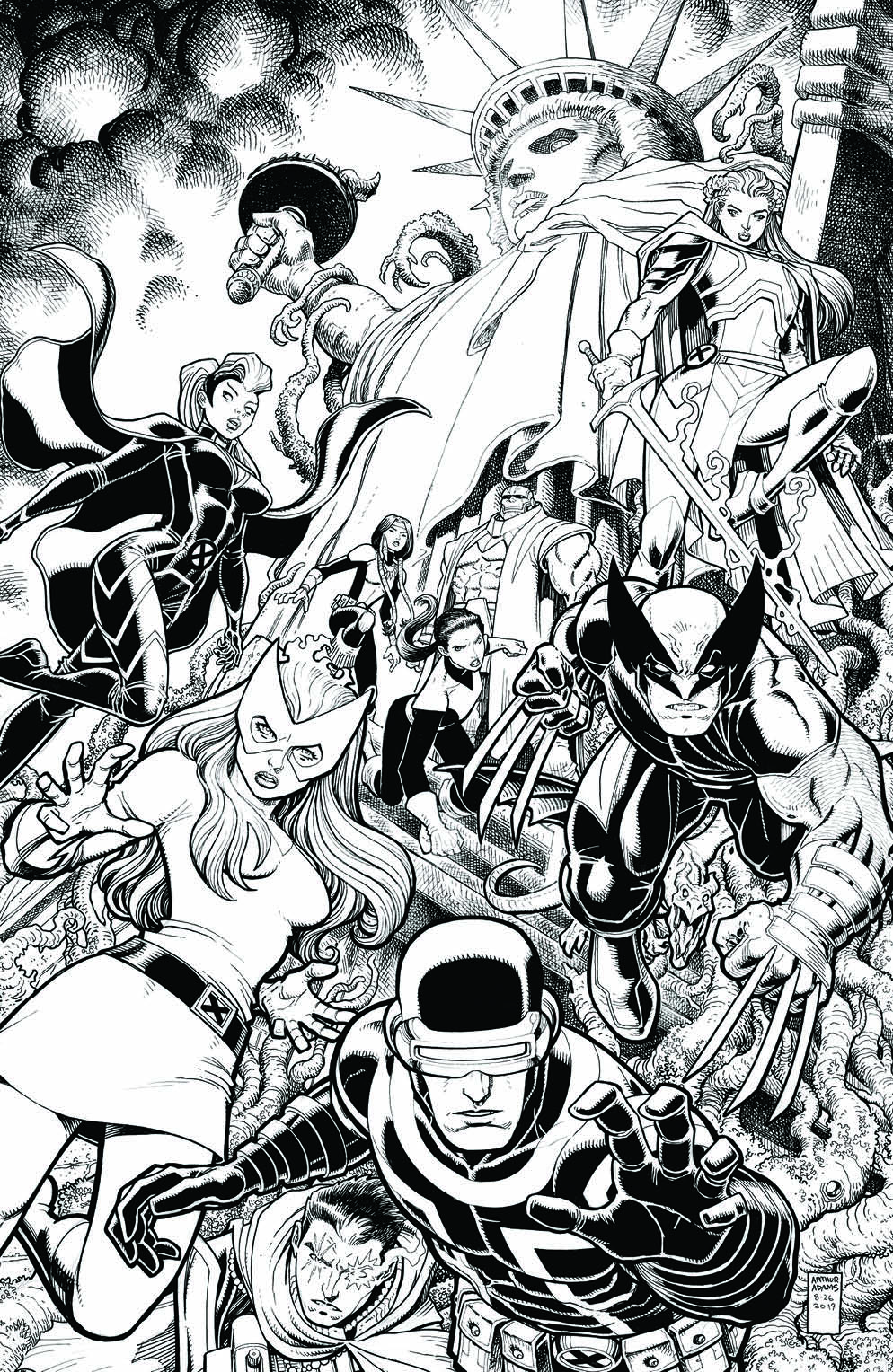
The Dawn of X is about to break! Join Editor-in-Chief C.B. Cebulski, Senior Editor Jordan White, and merry mutants Ed Brisson (New Mutants), Tini Howard (Excalibur), and Benjamin Percy (X-Force) on NYCC’s Main Stage in a discussion about the revolutionary new status quo for the X-Men. Plus – be the first to hear exciting new announcements for the Children of the Atom! Stay until the end of the panel to receive an exclusive variant cover version of Powers of X #5, featuring a stunning Dawn of X-inspired image by Arthur Adams!
SUNDAY, October 6th Women of Marvel (Including the World Premiere Screening of Marvel Rising: Operation Shuri) 12:15 – 1:45 PM ET, Room 1A06
From comics to games, animation and more, the Women of Marvel assemble to celebrate nerddom and all the women who help make it great! Join the conversation as some of the best talent in the industry discuss the creative process, being a woman in entertainment, and what they’ve got planned next.
Then stick around for the world premiere of “Marvel Rising: Operation Shuri”!
About Marvel Entertainment:
Marvel Entertainment, LLC, a wholly-owned subsidiary of The Walt Disney Company, is one of the world’s most prominent character-based entertainment companies, built on a proven library of more than 8,000 characters featured in a variety of media over eighty years. Marvel utilizes its character franchises in entertainment, licensing, publishing, games, and digital media.
Berserker Unbound #2 is a semi-fresh take on the classic primitive meets present story with a superb creative team behind it. One of my statements I like to say often is “No one writes melancholy like Lemire” so when he gets the opportunity to put his style in a new context, I am always excited. Berserker Unbound #2 is another rock-solid entry into his canon, bolstered by Mike Deodato Jr.’s linework, Frank Martin’s colors, and Steve Wands’s letters.
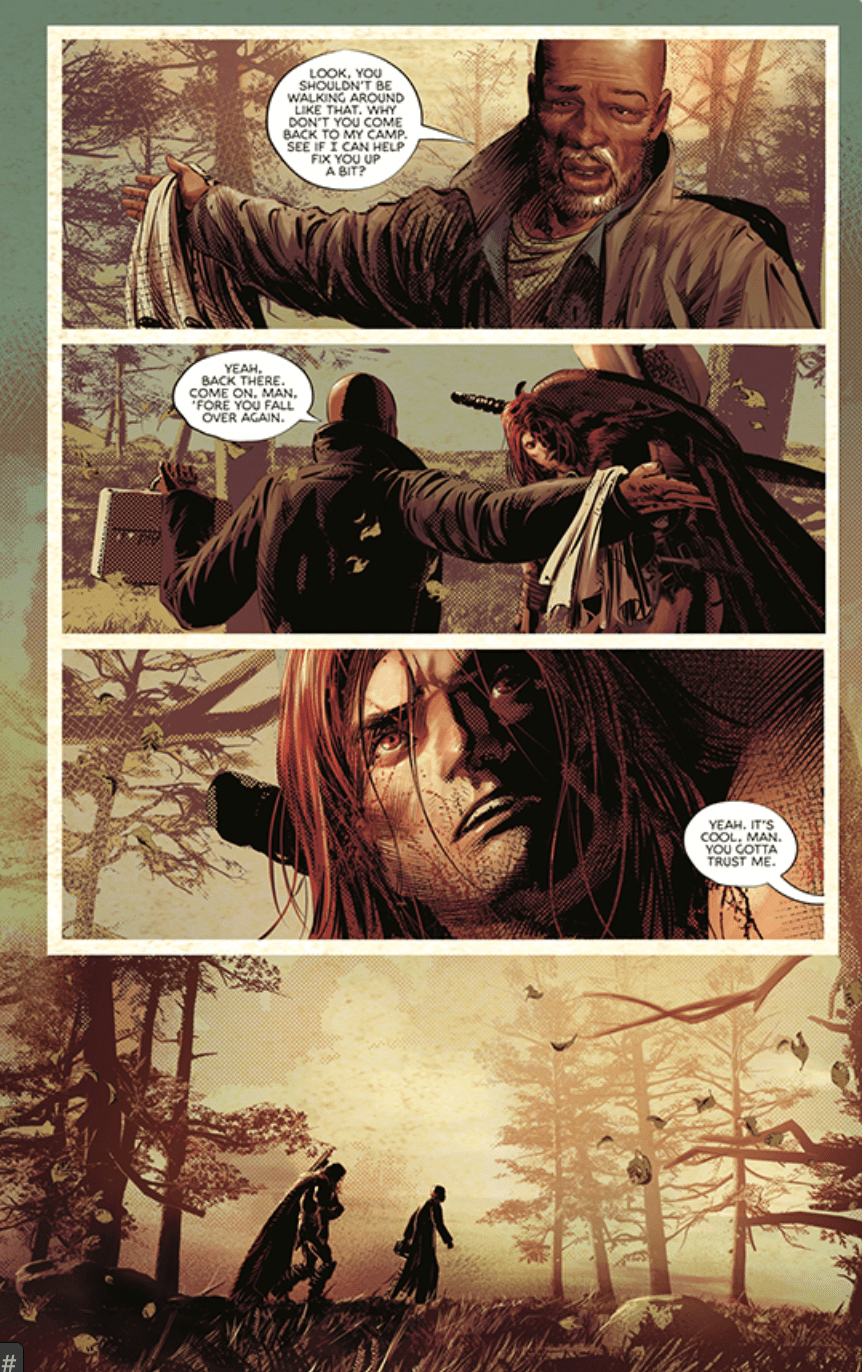
Berserker Unbound #2 begins with the unlikely pairing of the Mongrel King (M.K) and the homeless Joe Cobb. Cobb treats the Mongrel King’s wounds, offers him food, a bed, and even clothes him (kind of).
Joe Cobb is a noticeably charismatic and likable character. The full page of Cobb rattling on to M.K about how he hates people who talk too much is ironic and funny, but very well written and exposes a lot of what makes his character tick. In some way Cobb and M.K are similar in that they both feel displaced from the present, it’s just that with M.K the displacement is obvious.
While the miscommunication between Cobb and M.K is funny, I don’t see this schtick lasting much longer as the joke feels worn out by the end of the issue. Hopefully, the translation difficulty gets sorted out soon, but it is not a total distraction as Lemire’s written dialogue is characteristically quiet and melancholic.
Berserker Unbound #2 is different from almost every Lemire story in that the main character is seemingly unimportant to the world around him. Perhaps this is another example of M.K being out of place, as Cobb would continue living in the woods and getting his stamps with or without M.K.
It is noticeably unusual to see Lemire’s somber storytelling in a story revolving around a savage barbarian murderer, and the difference in the typical tone these stories are told in will bore some readers expecting a swords and sandals action-packed chapter. But avid readers of Lemire’s work should know what to expect from a story with his name attached and Berserker Unbound #2 definitely meets his standards.
A Lovely Stroll Through The Woods with a Barbarian
Mike Deodato Jr.’s line work and Frank Martin’s colors are breathtaking in this series. There is an almost photo-realistic quality to Deodato’s linework and Martin’s colors that heighten how jarring it is to see a prehistoric barbarian in present time. I personally love the disconnected layout of the panels with dividers intersecting almost every frame, yet somehow the works are cohesive. The way the panels are placed lets the readers enter the confused head of M.K and how he must see our world. This framing of the panels draws the reader’s eyes to when there is a still moment, such as the one between Cobb and M.K in the cave.
Berserker Unbound #2 is not reinventing the wheel when it comes to tradition Fish out of Water stories. But the creative team of Jeff Lemire, Mike Deodato Jr., Frank Martin, and Steve Wands more than puts this story over the edge. Some issues need to be addressed and corrected, but the chapter is an overall success.
No One Left To Fight #3 continues the stellar series from creators Aubrey Sitterson, Fico Ossio, and Taylor Esposito. Sitterson’s script is well-paced and direct, giving the stellar art from Ossio space to breathe. Esposito’s letters add character to and impact to the explosive battle scenes. Following up a knock out issue such as #2, there was worry that No One Left To Fight #3 would feel quieter: I was sorely mistaken.
No One Left To Fight #3 begins with Vâle’s response to Winda’s romantic proposal and deals with the repercussions of Vâle’s decision. It would be really for Winda to be portrayed as a one-note angry character in these circumstances, but Sitterson avoids these trappings expertly. Winda is understandably furious at Vâle, calling him a coward and decimating him with an energy attack, but in the end, she chooses not to severely hurt him physically anymore. Instead, she opts for attacking his psyche, claiming that he is choosing to be alone and miserable. It’s a character-defining move for Winda showing how much she does, in fact, care for and love Vâle.
It seems that Winda’s assertion that they are good for each other is correct as Sitterson flashes a glimpse at their future/parallel universe life together. Sitterson then flashes to the nightmare glimpse of the Hierophant coming to offer Vâle an exchange. In both Winda’s and the Hierophant’s conversation with Vâle, we get instances of Vâle admitting that something is wrong with him.
While Sitterson makes it seem that Vâle is suffering from a physical ailment or mysterious curse, I believe that Sitterson is setting up Vâle to be affected by something much more real. Vâle is suffering from Depression and Anxiety Disorders.
We are never told about Vâle’s training or his final fight that saved the world, but it’s implied that these tasks were extremely stressful and brutally physically demanding. Imagine the toll that would take on anyone, much less someone that is lacking the social and mental development of Vâle. All Vâle knows is to train for the upcoming fight, but the title of the story tells us there is literally No One Left To Fight. This entire story is kicked off because Vâle is anxious something horrifying is about to happen and then after being emotionally vulnerable with the one he loves and his maternal figure, he is incapable of reciprocating emotion with a potential romantic partner.
This is not even considering that the conversation with the Hierophant probably was not even real, considering no one else mentioned or made a comment of it despite hearing Vâle’s fight with Winda. The stress of the conversation with Winda could have even triggered a legitimate hallucination from Vâle! If this theory proves true, then Aubrey Sitterson has done a simply tremendous job of setting the reader up only to subvert their expectations.
Winda clearly handling Vâle’s rejection well
Of course, Fico Ossio’s art is sensational in No One Left To Fight #3. He rarely experiments much with panel layout, but he does not need to because his positioning and character designs are simply phenomenal. The fight with Winda is a standout, and the initial energy blast from Winda steals the show. Taylor Esposito’s letters in this splash panel are equally exceptional, and the way they curve around the border of the explosion sells the damage Winda is doing.
Despite how stellar his fight scenes are, Ossio is equally as adept at displaying emotion through detail. Yes, Winda has glowing red eyes filled with anger and rage, but she also has tears streaming down her face emphasizing her heartbreak. A lot of the characterization and pain we get from Winda in this chapter is done through Ossio’s art, and the effect is evident.
No One Left To Fight #3 is hands-down must-watch television. But it’s a comic book. Aubrey Sitterson’s script is an accurate character study disguised as a Saturday night Shonen-style anime, and Fico Ossio’s art and Taylor Esposito’s letters jump off the page and punch the reader in the mouth. No One Left To Fight just became the book I recommend to everyone, comic book fan or not.
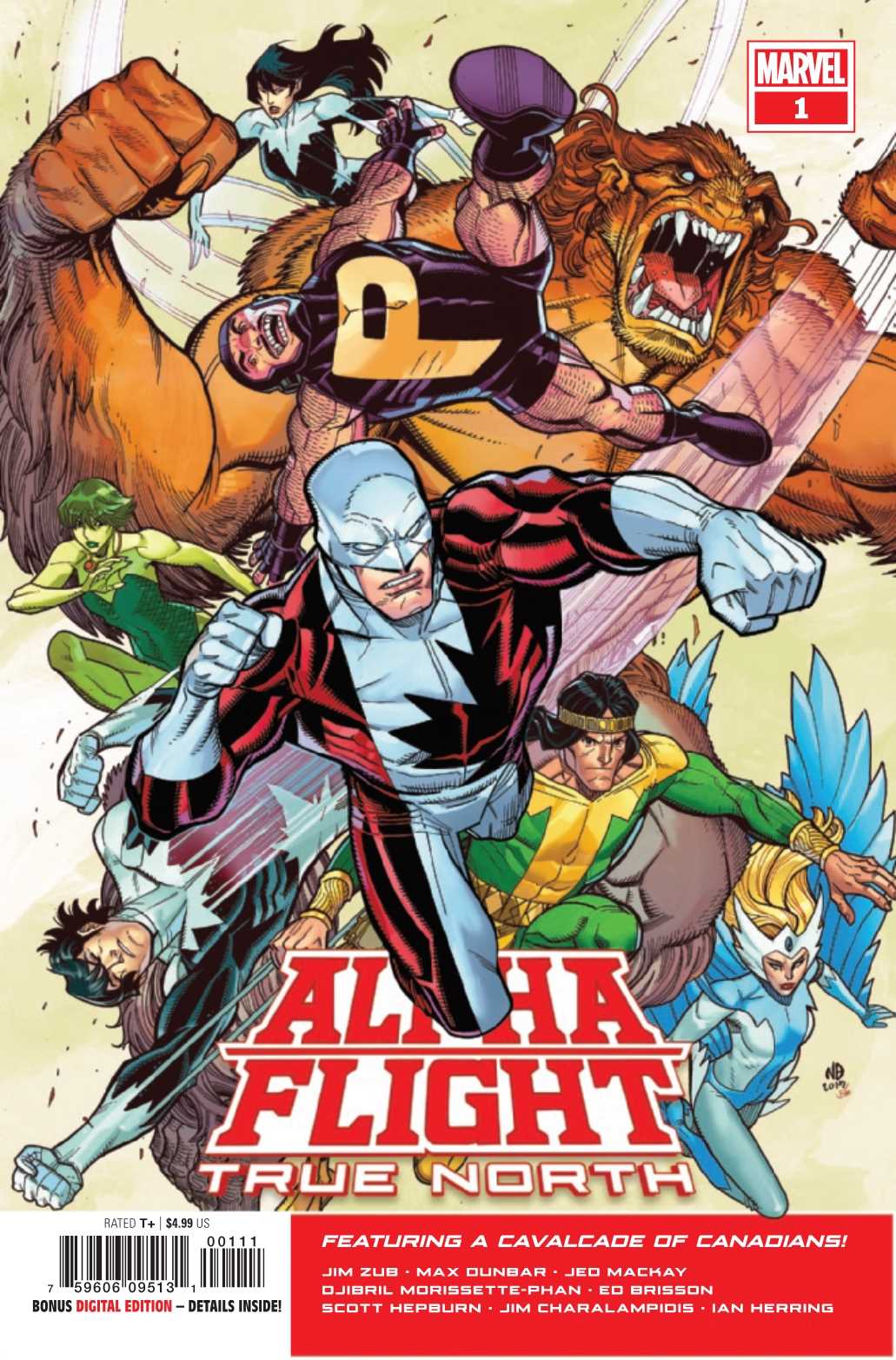
Alpha Flight: True North #1 by Marvel Comics gives readers three great stories revolving around some of the Canadian superteams most beloved and classic characters.
Grab your hat and come travel light – adventure lies just around the bend! Three brand-new tales no one has ever told – until now! Join the greatest creators the Great White North has to offer as we unearth the secret history of the classic Alpha Flight stalwarts: Puck! Snowbird! Talisman! Northstar! Marrina! Guardian! Vindicator!
‘Mired in the Past’ Written by: Jim Zub Art by: Max Dunbar Colors by: Jim Charalampidis
‘Monsters’ Written by: Jed MacKay Art by: Djibril Morisette-Phan Colors by: Ian Herring
‘Illegal Guardians’ Written by: Ed Brisson Art by: Scott Hepburn Colors by: Jim Charalampidis
Alpha Flight: True North is telling three stories and each is it’s own thing and can be read as a stand-alone.
Mired in the Past’ by Jim Zub, Max Dunbar and Jim Charalampidis is the first of the bunch and focuses on Snowbird and Talisman. Zub crafts a quick yet emotional story that highlights the characters’ powers and places on the team (great for newbie readers) but also opens up the origin of Snowbird a bit. Not easy to do with limited pages, but Zub nails it. Max Dunbar’s art is slick and energetic, with a nice amount of detail and some great creature and monster designs. It has a slight Greg Capullo vibe (that’s a compliment!). Jim Charalampidis’s colors add a ton of weight and atmosphere, creating a complete package.
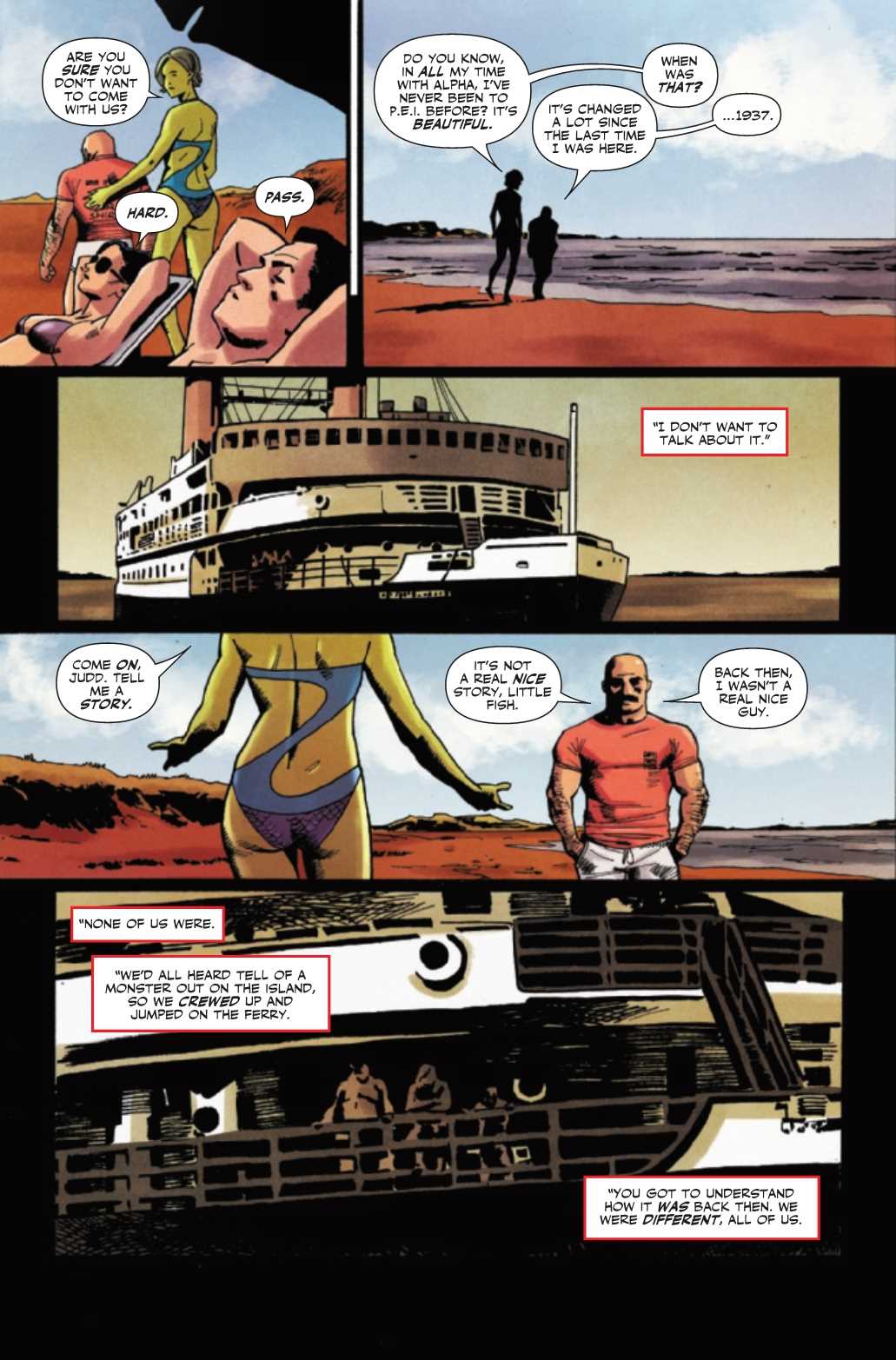
‘Monsters’ by Jed MacKay, Djibril Morisette-Phan and Ian Herring is the best of the bunch and tells a quick backstory starring Alpha Flight fan-fave Puck. ‘Monsters’ includes Fat Cobra (from Iron Fist lore) and cult character Ulysses Bloodstone; both a welcome sight. The narration by MacKay is gritty and heavy on an almost noir feel, which is great for a story about a dark moment in Puck’s past. The linework by Djibril Morisette-Phan is sketchy and dark; when you add the weight and volume of Ian Herring’s colors, you get immersed in the atmosphere.
The last story, ‘Illegal Guardians’ by Ed Brisson, Scott Hepburn and Jim Charalampidis features former team leaders Vindicator and Guardian and their daughter. This short does a solid job of making sense of the convoluted story of the Hudson family while setting up an interesting and dark twist at the end that brings the character of Guardian into a new light. Hepburn and Charalampidis together create some energetic superhero art that propels the story forward with some great action scenes.
Conclusion
Alpha Flight: True North is telling three stories, and as such, each is segment is different in tone and style. Yet ultimately they all have something in common: a strong emotional core about dealing with the past. They all also succeed in execution and make great use of the shorter format as well.
Alpha Flight: True North is available at your local comic book store on Wednesday, September 4th, 2019.
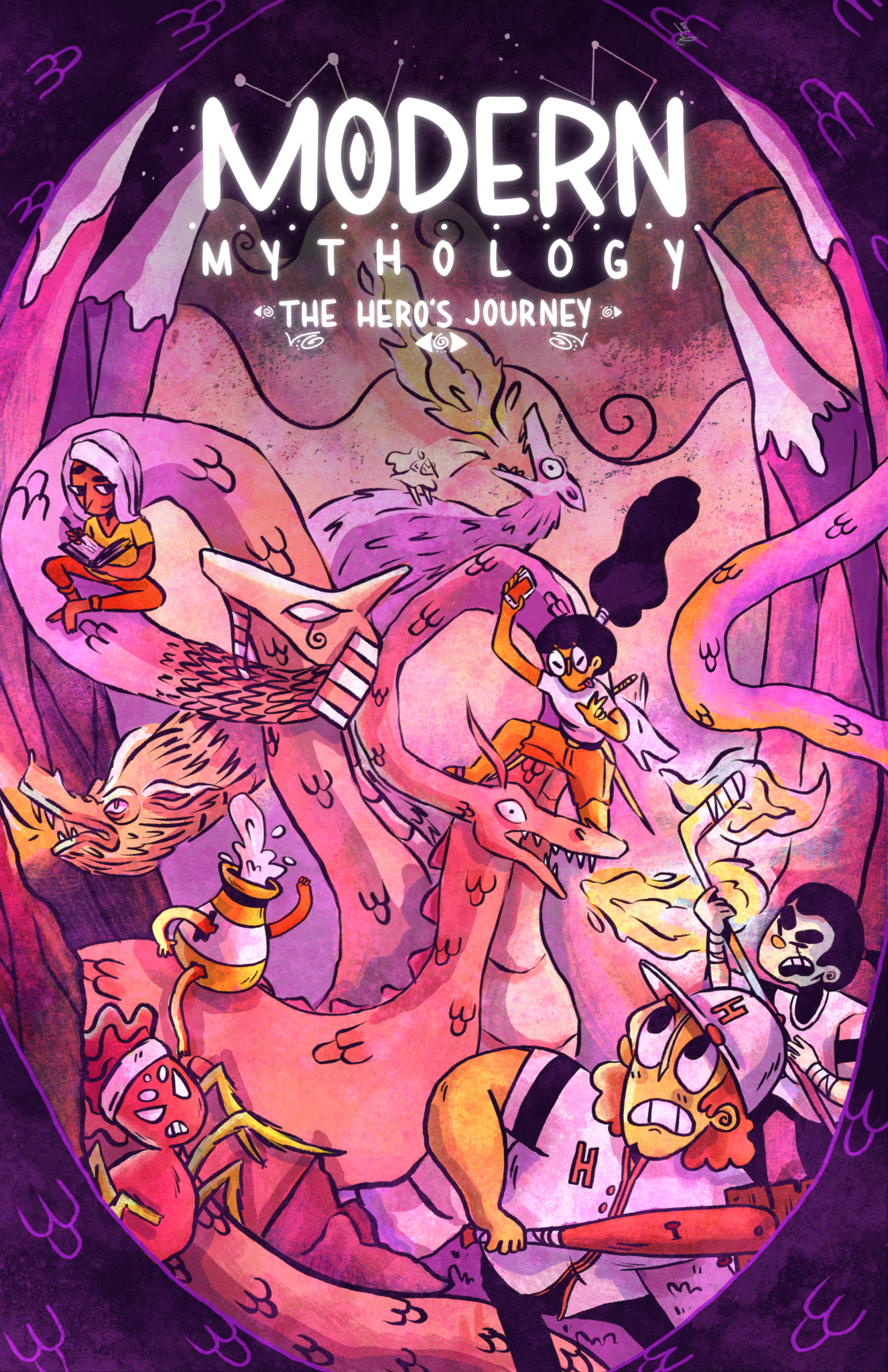
Created and edited by Caleb Palmquist of Endiku Studios, Modern Mythology: The Hero’s Journey retells classic hero myths set in the modern day. The anthology, which you can support on Kickstarter, collects 17 stories by 29 writers and artists from around the world. It also contains facts behind the myths, such as the cultural, historical, and storytelling traditions the tales come from.
Story
Seeing as the modern superhero is deeply rooted in the tales and mythologies of ancient Greece and Rome, it’s only fitting that a comic book is used to share new interpretations of these stories.
The people behind the Modern Mythology anthology manage to do so, crafting unique tones, styles, perspectives, settings, and genres around well-known mythos. For example, the story The Hunter and the Lion is a super-heroic action tale involving the African trickster God Anansi; the epic poem Beowulf is updated as a science fiction shoot-out; and you’ll also find a story of Hercules as a Cryptozoologist taking down poachers in the African Plains.
One such standout is Theseus, written by Russell Nohelty and illustrations by Nicolas Touris. The infamous Greek myth is about the eponymous hero who ventured through a labyrinth to slay the monstrous Minotaur. In the Modern Mythology update, Nohelty turns the classic tale on its head, making Theseus a dispassionate hipster who’s much more content browsing his phone than saving the people from a monster. The language used is humorous and telling about aspects of modern culture.
Another great example of modernized mythology in this book is Samson, written by Darby Shelton and artwork by Dee Parsons. It’s an update of the biblical legend of a man with tremendous strength, whose powers were weakened when his lover Delilah cut his hair. Only in this version, it takes a tragic accident and a haircut to make Samson realize his true strength. It’s a captivating tale with a powerful message, and a wholly unique spin on the classic tale.
LionHunter_01
Art
The artwork in Modern Mythology is also a diverse display of style and visual storytelling. In Tristan, written and illustrated by Noah Mease, no dialogue is used to tell the update of the tragic romance. Instead, Mease uses a simple black and white style when depicting a young man eagerly waiting for a response to a sent text message. He then switches to a single-shade, inkblot style when the character imagines a potential future with the love of his life. The style is presented as if the inky tear of the person waiting for a response fell into water, and flowed and shifted into what he was envisioning.
Another example of great artwork in Modern Mythology is from Cuchulainn, written by Fallon Walker and illustration by Kirk McLaughlin. Walker offers a powerful story of a sniper at the end of The Troubles in Northern Ireland. But it’s McLaughlin’s artwork that makes this story truly captivating. He uses a shadowed and messy style to depict the conflict, reminiscent of the gritty noir artwork in Sin City. He adds a palette of dark browns and greys, like a dark cloud is hanging over each panel.
Conclusion
Modern Mythology: The Hero’s Journey is a wonderful showcase of diverse talents. It’s a love letter to the stories that inspired it.
You can reserve a copy of Modern Mythology: The Hero’s Journey by supporting it on Kickstarter, where you can also get exclusive artwork and other perks. You can also learn more about the project on its Facebook page, as well as on Endiku Studio’s website and Caleb Palmquist’s Patreon.
Which legendary hero would you like to see in Modern Mythology? Let us know in the comments!