WONDER WOMAN COME BACK TO ME #3, out this week from DC Comics continues the strange tale of Diana and her allies being trapped in a land of the lost. In this world, everything is a danger, and Wonder Woman is barely keeping up with it.
Look who has appeared on the latest cover of Wonder Woman Come Back to Me.
***SPOILER WARNING***
Like the rest of this series, Wonder Woman Come Back to Me #3 has already been published once before, in Justice League Giants. Wonder Woman’s plot is being republished into one concise set. It’s perfect for collectors and readers who missed the first run.
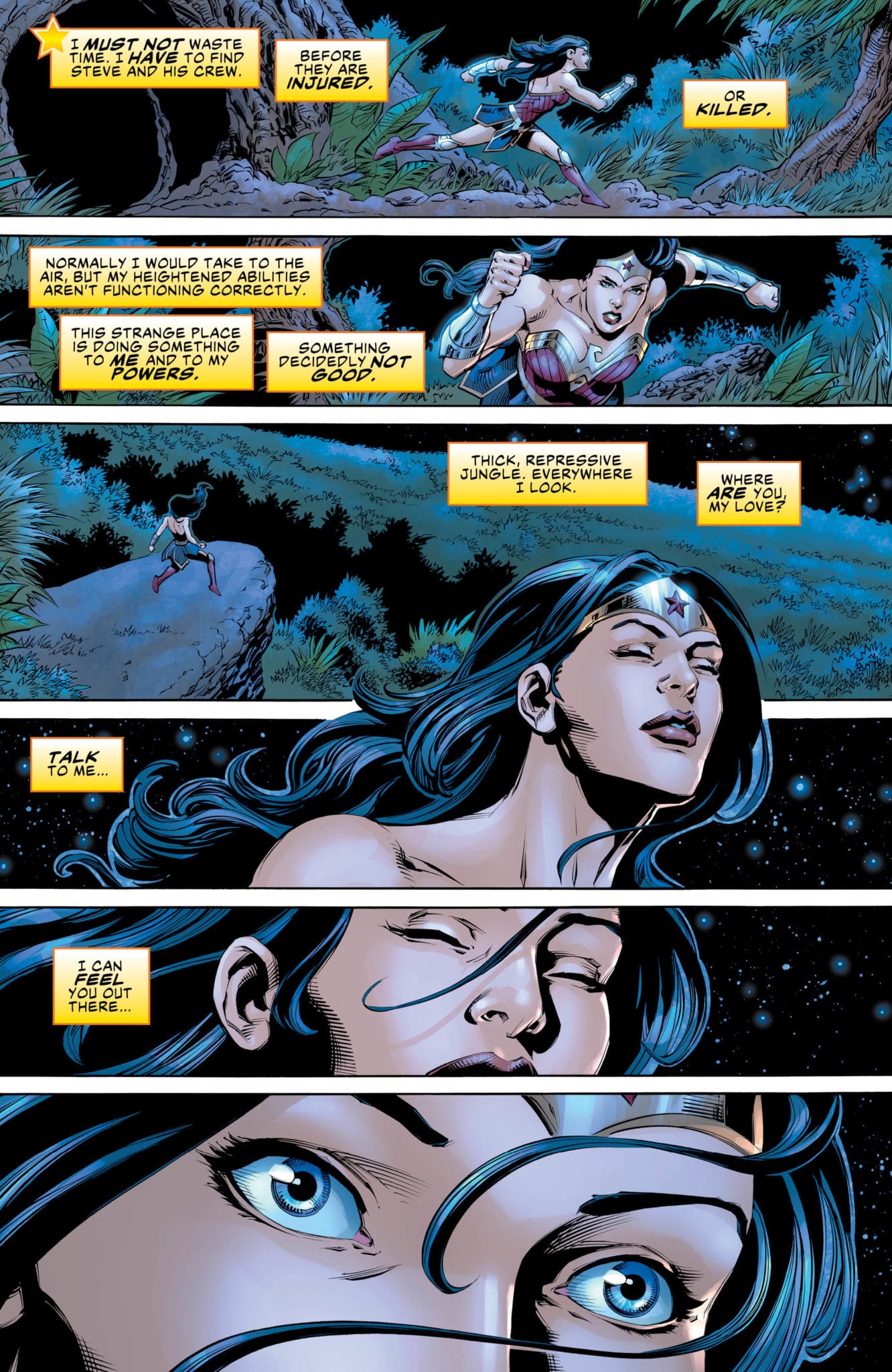
Wonder Woman on the run to save her love.
The third issue in the series continues the tale of this strange place that Diana and her friends and loved ones are trapped in. The world may seem full of life, with lush vegetation all around. But it is equally dangerous and deadly. A fact they’re all about to learn.
This issue is split into two segments (due to the way it was previously published), but the two fit together quite nicely. There’s only a slight break in the storytelling when the second half picks up, and that was clearly done with intention.
They have no idea what is about to happen…
Amanda Conner and Jimmy Palmiotti are the authors for this issue, and they are not afraid to throw challenges at Wonder Woman. This is not a safe world by any means, and the additional challenges they’ve put on Diana (her abilities being diminished) only increase the threat level.
Seeing Diana have to deal with the situation without her powers has admittedly been quite fascinating. It’s a rare day when she comes across something she can punch her way through, or fly away from. In that sense, this whole plot has been fairly refreshing.
It’s also getting more and more complicated as time goes on. The secondary characters introduced all have their own plots, and based on how this issue concluded; they’ll be starting to take over a little bit more in the next issue.
Admittedly the plot does get a little strange at times; but given the setting, and how many different subplots are running at the same time, this actually makes quite a bit of sense. And the secondary characters are peculiar themselves.
Needless to say, things aren’t going so well for the whole crew…
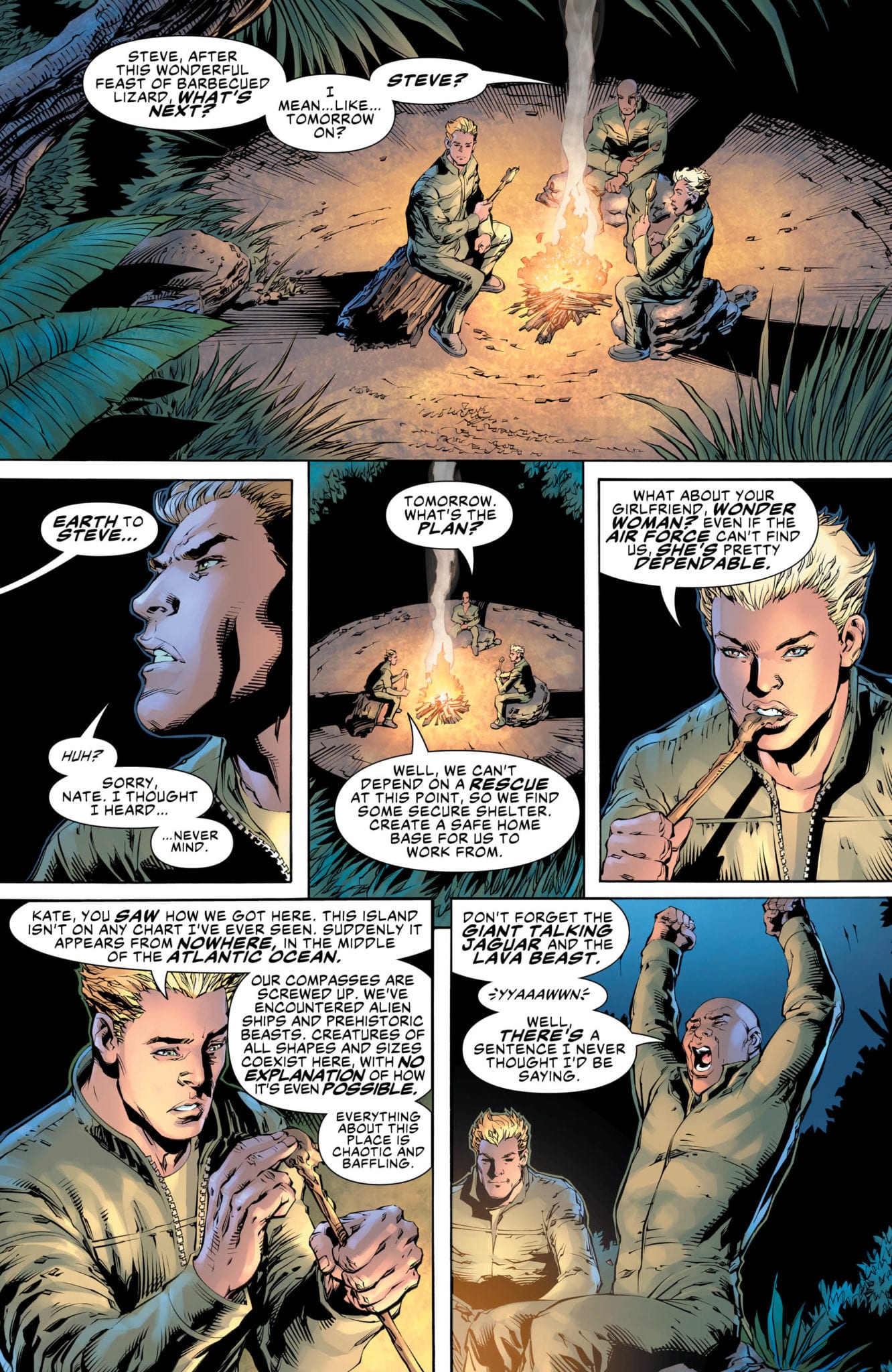
The artwork behind Wonder Woman Come Back to Me #3 was perfect for the plot. The jungle was full of vibrant colors and vegetation. Meanwhile, all of the strange critters are both familiar and eccentric at the same time – the perfect mix.
Four artists were brought on for this project; Tom Derenick for pencils, Trevor Scott for inks, Alex Sinclair for the coloring, and Travis Lanham for lettering. The sense of movement and shading in this issue were some of the best parts, though there were plenty of other elements to enjoy as well.
There were a couple of fight scenes that highlighted the issue artisticly with the facial expressions and backdrops a close seconds.
Wonder Woman to the rescue!
Wonder Woman Come Back to Me #3 was the perfect follow-up to the first two issues, while also building onto the already busy plot. There’s no telling how Diana and her group will get out of this mess, especially given the fact that there’s more than one development at hand.
This week Marvel’s mutant mania continues with HOUSE OF X #5. Jonathan Hickman’s brain keeps spilling brilliance right into our hearts and minds, this chapter is particularly creative.
SURVIVAL OF THE SWAMPIEST
***SPOILERS LIE AHEAD***
At some point you would figure the excitement would settle a little bit. You would think that all the changes our beloved X-Men have been going through in the beginning of this new era would lose their luster to some degree. That is not the case at all.
The way we left things in the last issue raised a lot of questions. No matter how close your theory was to the events unfolding in this issue, there’s no way you could have imagined it being this extraordinary.
House Of X #5 is absolutely loaded with creative re-imagining and re-purposing of characters, abilities, and philosophy. Everything we’ve seen so far in these two series has been on another level of creativity rarely found throughout the X-Men’s storied history.
Even still, this issue is a mind blowing experience.
Polaris and Magneto’s discussion about mutant and human society is a brilliant evolution of mutant philosophy that perfectly encapsulates their current place in the 616 universe. Each and every member of “The Five” gain a new purpose as a huge pillar in the new mutant society.
GOLDBALLS FTW
Hickman’s re-imagining of Goldballs made me audibly gasp when it was revealed that he’s been throwing biological eggs at people all these years. The process of turning those gold-eggs into mutant shells for Xavier to populate with the consciousness of fallen X-Men is absurdly cool. Even Cerebro gets a new purpose in copying mutant consciousnesses.
Watching this whole process unfold will give readers chills by how perfectly it’s executed and illustrated alone. Comic book characters are resurrected constantly, but this something completely different and special.
The Krakoan politics and place among the united nations is a dream many X-Men creators over the years have flirted with, but Hickman has been able to flesh out and actualize. There’s no poking holes in any of Hickman’s bold ideas and detailed execution.
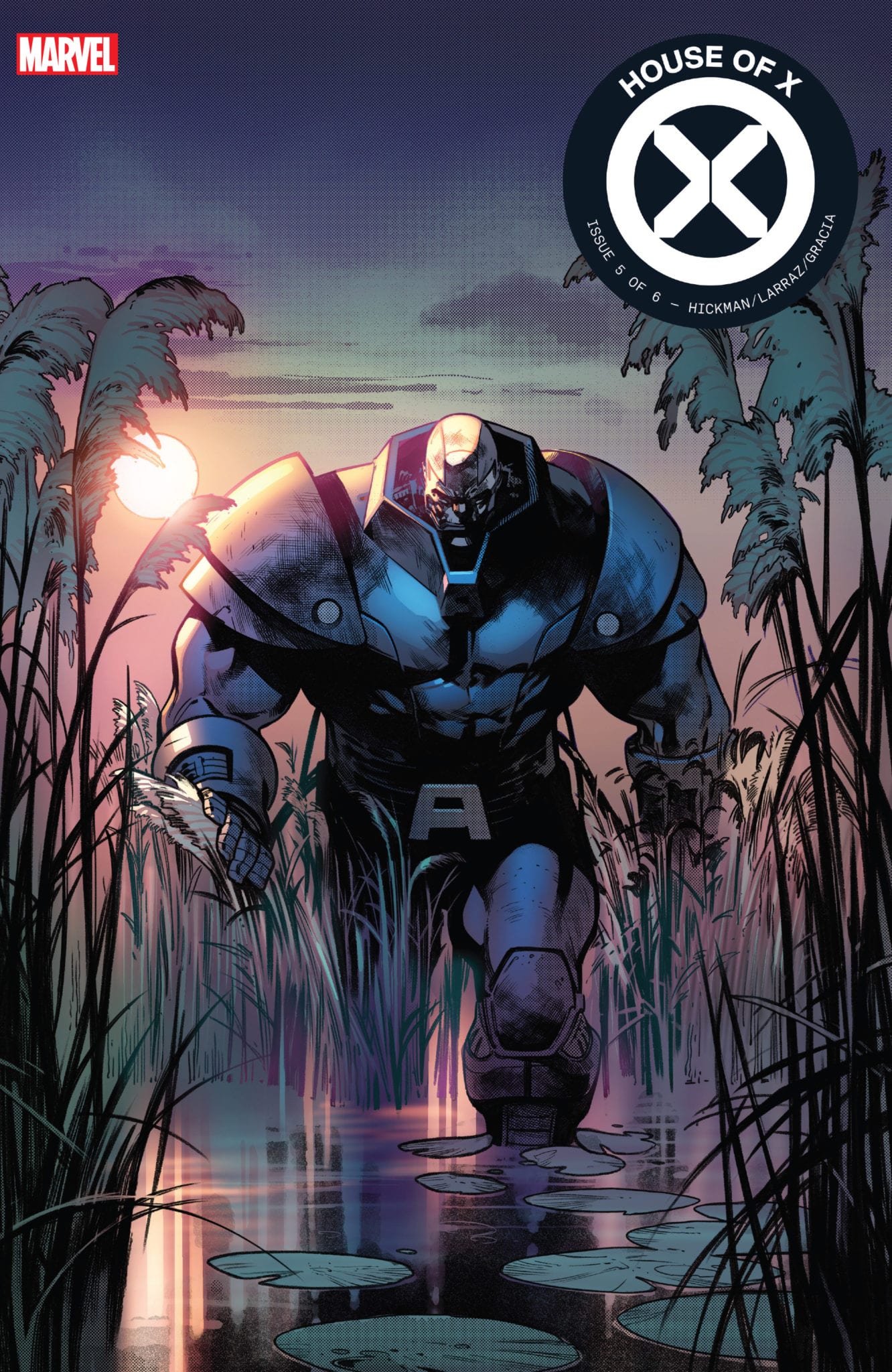
House Of X #5’s closing scene is another awe-inspiring shocker. Apocalypse, Mr. Sinister, and a cavalcade of X-Men villains arrive in Krakoa and pledge their allegiance. Apocalypse submitting to Xavier and confessing how proud he is for realizing his own vision for mutantdom to dominate the world is unreal. This is easily the most interesting take on Apocalypse in a very long time.
RESURRECTIONS HAVE NEVER BEEN THIS COOL
Hickman’s brilliant vision would be nothing without a visual compliment that readers can comprehend. Not only does Pepe Larraz exceed expectations, but this may be the best work of his career. The amount of creativity and beauty flowing through each and every one of these pages is inspiring.
Marte Gracia also dazzles with probably the best work in his career to date. These pages warrant multiple investigations into every panel. Gracia gives the atmosphere of this book a dreamlike shine that elevates Larraz’s art to another level.
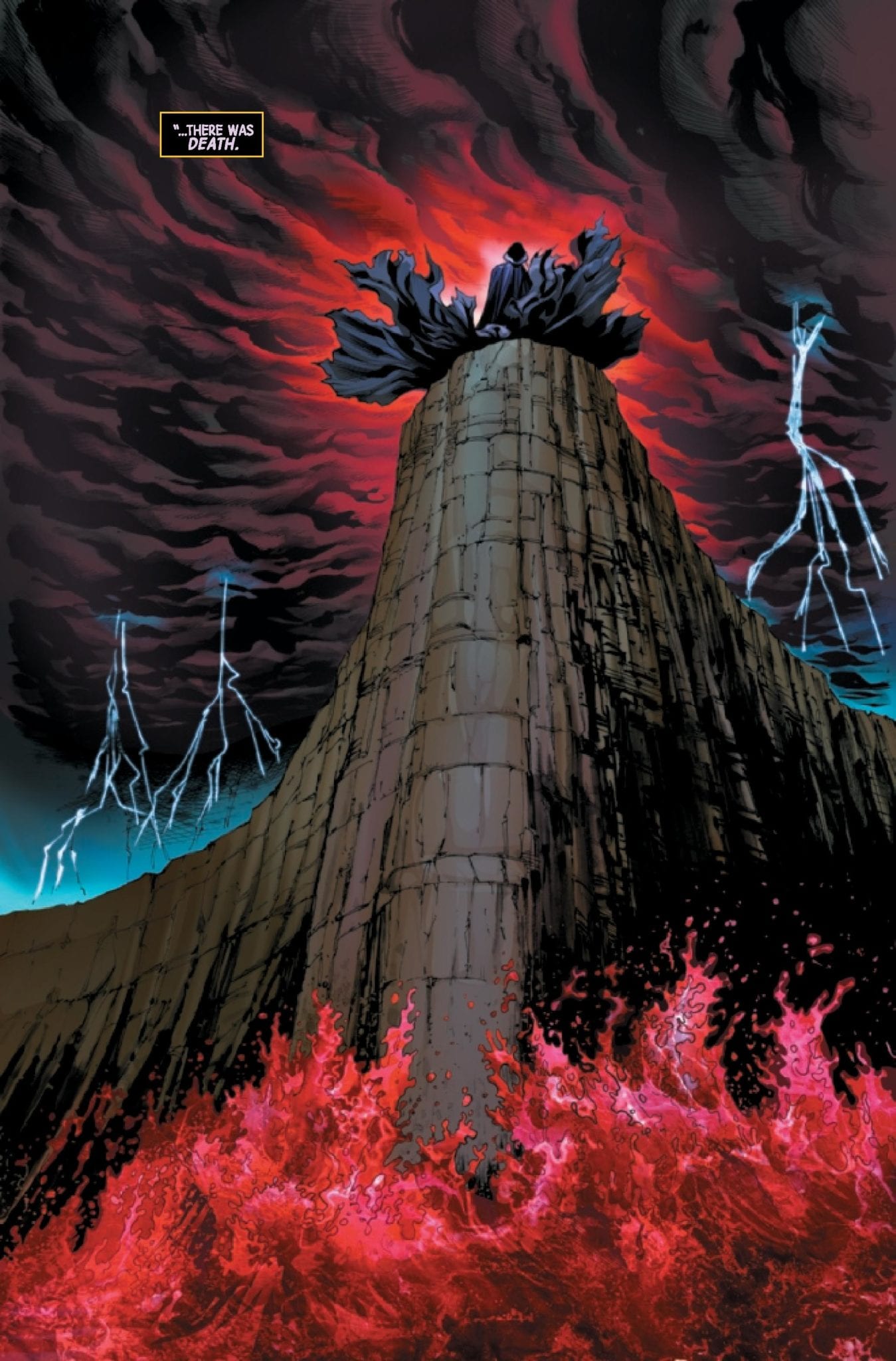
Every page of House Of X #5 is iconic and will stick with readers long after they’ve completed the issue. The art makes you want to stay here forever when you’re in the thick of it. These images immediately burn themselves into your brain and will be pillars in X-Men art history forever.
House Of X #5 is astounding. It’s breathtaking, shocking, and oozing with such creativity that it’s inspirational. There’s nothing that can compete with Hickman’s X-Men vision right now, it’s a masterpiece.
This week Marvel unleashes GUARDIANS OF THE GALAXY #9 upon their faithful cosmic followers. Donny Cates delivers another heavy metal soaked script that artist Cory Smith packages in a fast-paced and action-packed issue.
WHERE THE STAR JAMMERS AT THOUGH?
***SPOILERS LIE AHEAD***
The Universal Church Of Truth has Peter Quill held prisoner, with Pete’s own father at the forefront of their dastardly agenda. Rocket is on death’s door (and in a Gundam mech) as he and the other Guardians seek out an adolescent Magus to help defeat the UCOT.
Donny Cates’ brand of comic book writing and aesthetic is very distinct–and very metal/punk. It wasn’t all there at the beginning of this series but now nine issues in, we’re getting more of the Cates flavor and style that we’ve grown to love in his other work.
Maybe what kept this glorious team from feeling fully formed was that Cates hadn’t figured his Star-Lord out yet. Now with the team separated and Quill developing on his own journey, we may get the fully cooked chemistry we expected from issue one.
Guardians Of The Galaxy #9 is a very quick read thanks to it’s pacing and nearly nonstop action. It’s a full and satisfying serving of cosmic adventure and tantalizing imagery. The opening scene of what Quill sees as the Church’s vision reads like the lyrics of a doom metal song brought to life–which is Donny Cates through and through.
Artist Cory Smith takes center stage with this issue being more about “showing” rather than “telling.” He brings the weight and edge needed to make this script reach it’s potential. There’s creepy visuals, explosive action, and iconic full-pages–plus Rocket in a Gundam mech is beyond cool.
Inker Victor Olazaba gives Smith’s pencils a more threatening and dreadful edge. Colorist David Curiel gives panels a pulse with perfectly executed splashes and explosions of color. Letterer Cory Petit keeps the narrative flowing with immediate and imperative text.
CUE THE ELECTRIC WIZARD MUSIC
What we thought was an army of Adam Warlocks the Universal Church Of Truth was harvesting turned out to be that of Drax The Destroyer. The final page reveal is a memorable and effective one. Drax looks fantastic in his retro purple costume.
Peter is clearly in over his head behind enemy lines and the rest of the team is going to extreme lengths to try and stand a fighting chance. This is all with Rocket Raccoon’s life being on it’s last leg. Donny Cates seems to have his feet under him now as the book progresses to some highly entertaining places.
Whether you’re coming to this issue in allegiance to the characters or to soak up all of Donny Cates’ current wave of comics, you’ll be satisfied with Guardians Of The Galaxy #9.
MIDDLEWEST’s angsty protagonist Abel is on a mission to find a way to deal with the uncontrollable power inside of him. Led into The Winter Woods by the mysterious god Nokoyuna last issue, our hero came face to face with his demons—both internal and external. He met his grandfather, but soon learned the seemingly kind-hearted man was in fact a monster, showing even more destructive tendencies than Abel’s father. Now our hero finds himself back in Middlewest, searching for a way to cope with this additional trauma, all the while believing any hope of curing his power is lost.
Fans of this series can continue the epic adventure when MIDDLEWEST #11 hits stores on Wednesday, September 18th.
Story
Abel’s companion Fox, having been forced to wait outside of the Woods, is enthusiastic upon the return of his best friend. Though usually playing the role of sarcastic commentary, Fox shows his “humanity” in his loving care for the distraught Abel, even when the boy ignores him completely as they enter the shady Piper City. In this way, writer Skottie Young captures real emotions in a fantastical relationship between a boy and a talking fox, a clear case of absolute writing brilliance.
However, one can only take so much neglect in any relationship before emotions explode, leading to a fight between the duo. Abel storms off alone into the city and is abducted by a human trafficker almost immediately, adding to the constant snowballing of his problems. The trafficker loads Abel up into a van full of other young boys and sets off for another location. This threat, like the emotion of every character in this book, is very real, preventing any form of fantasy escapism. But hope is not lost; Fox tracks the truck to the human trafficking base and begins devising a plan to save his friend.
Artwork
Jorge Corona’s penciling and inking, Jean-Francois Beaulieu’s coloring, and Nate Piekos’ lettering work continue to give this series a flavor unlike any other. The seamlessness with which the forests near the Woods shift to the the industrialized landscape of Piper City keeps readers engaged the whole story. And the book’s lettering uses bold words at just the right moments to capture the raging emotions of Abel, Fox, and the other characters, making their interactions all the more relatable.
Comic Cover
Corona’s cover art features Abel and Fox, standing back-to-back, against a backdrop of industrial machinery to highlight their entanglement with Piper City. Each character appears to be glaring at the other from the corner of their eyes, emphasizing an anger, however reluctant, toward their companion.
Conclusion
MIDDLEWEST #11 is a dramatic story highlighting the painful realities in one’s relationships—with family, friendships, and even with oneself. We’re anxious to see how Abel and Fox navigate the dangers of Piper City.
What did you think of Piper City? Let us know in the comments below!
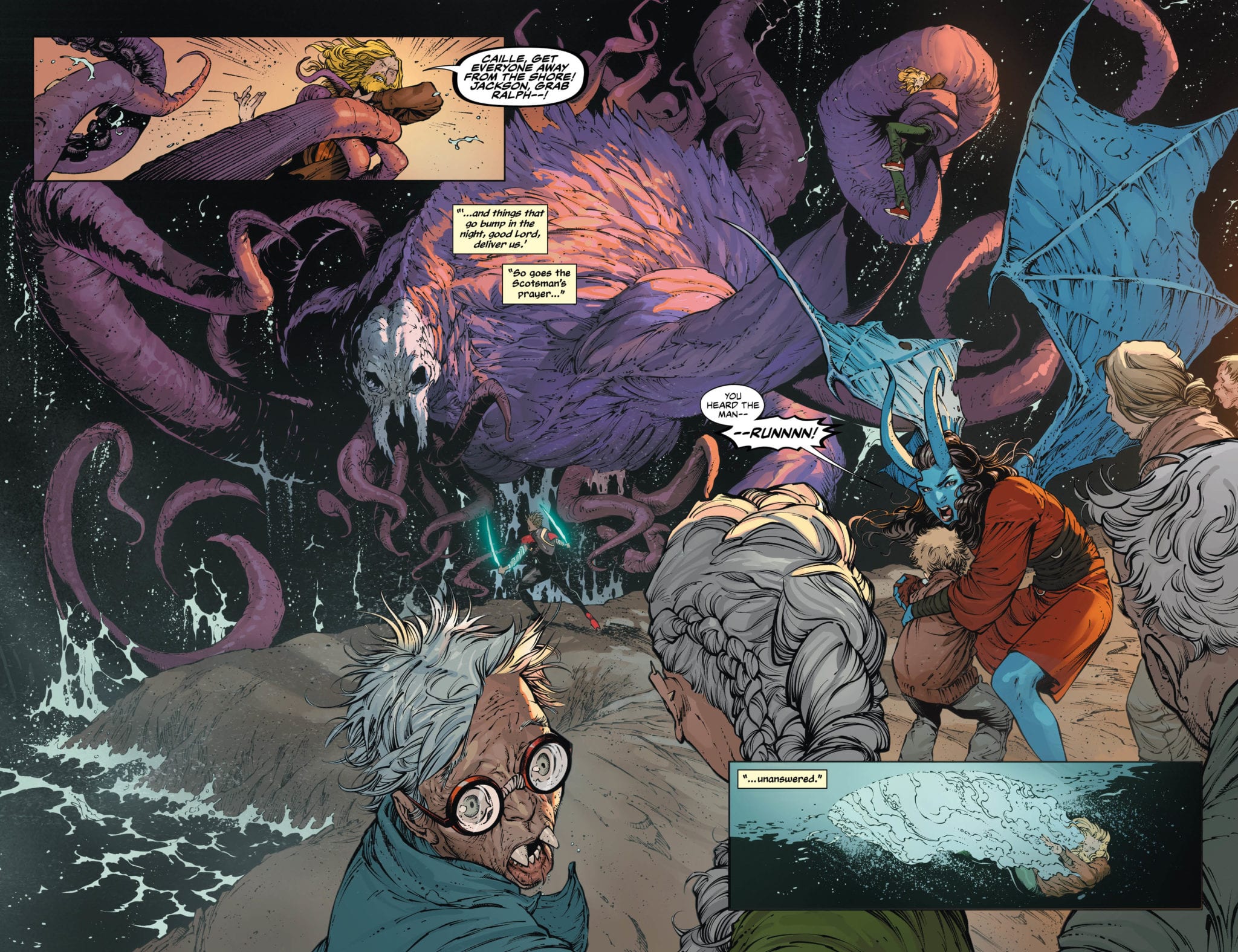
Readers last saw Arthur Curry facing down a monstrous oceanic creature on Amnesty Island, the proposed new home for his Old God friends. The hero desperately attempted to soothe the beast with his “call” ability to no avail, leaving the group vulnerable. While its motives for attacking are unknown, one thing is clear: the group needs to think of something quickly lest anyone gets hurt.
On Wednesday, September 18th, readers will find out just what the heroes had in mind.
Story
It was bad enough that the Old Gods had to face the discriminatory glances of the Amnesty Bay townsfolk when they first arrived (which was why they sought the Island’s refuge in the first place), but issue #52 brings them face-to-face with this deadly sea creature. Fortunately, they have Arthur and Jackson Hyde, a.k.a. Aqualad, on their side, both of whom jump to their defense immediately.
Jackson, with the Old God Callie’s help, charges at the beast with an optimism that’s sure to inspire readers. They can see that the hero trusts his abilities and believes he’ll be able to save Ralph, an innocent bystander in immediate danger. But despite the duo’s combined abilities (and Jackson’s banter about RPG monsters), the creature overwhelms them and kills Ralph on the spot.
Kelly Sue DeConnick beautifully portrays Jackson’s idealism and subsequent disheartening in this moment. We see the cold-hearted face of reality confront the young hero as he watches an innocent person die.
While this preoccupies the heroes, Black Manta, alongside a robot containing his deceased father’s cloned memories, scours the ocean floor in search of something to test out his “father’s” newfound abilities. Will they find Atlantis and harm Mera and the Atlanteans, or will these villains find our weakened heroes in Amnesty Bay?
Artwork
Robson Rocha’s penciling, Daniel Henriques’ inking, Sunny Gho’s coloring, and Clayton Cowles’ lettering work together in beautiful harmony throughout AQUAMAN #52. The intricate details of the fight with the ocean monster are placed front and center, including the torrential waves and the wounds of both the creature and our heroes. The colors of those defending the Island are juxtaposed with those of the monster, creating a conglomeration of dark and light colors to illustrate the chaos. But the icing on the cake is the shift in lettering throughout each scene: readers will see alternating dialogue boxes that tell of one of the Island’s ancient legends, fostering a momentary suspension of disbelief in the supernatural forces that may be at work.
Comic Covers
Main Cover
Rocha, Jason Paz, and Alex Sinclair’s main cover for the book features Arthur in the midst of an attack on the mechanized Black Manta, screaming that he’s “had enough.” This image embodies the pain the protagonist has felt throughout his recent “death,” amnesia, and rebirth processes, showing that every hero has their breaking point.
Variant Cover
Josh Middleton’s variant cover gives us an up close look at Arthur as he maneuvers his way through a school of jellyfish. This trend in Middleton’s variant covers, depicting the hero in a calm, undersea setting, shows us a radically different side of the man who’s forced to fight against forces of chaos.
Conclusion
AQUAMAN #52 is one of the most action-packed books in this current run. It’s also a coming-of-age story for Jackson as he learns an indispensable lesson many heroes struggle with: the good guys don’t always win.
What did you think of Arthur and Jackson’s team-up in this issue? Let us know in the comments below!
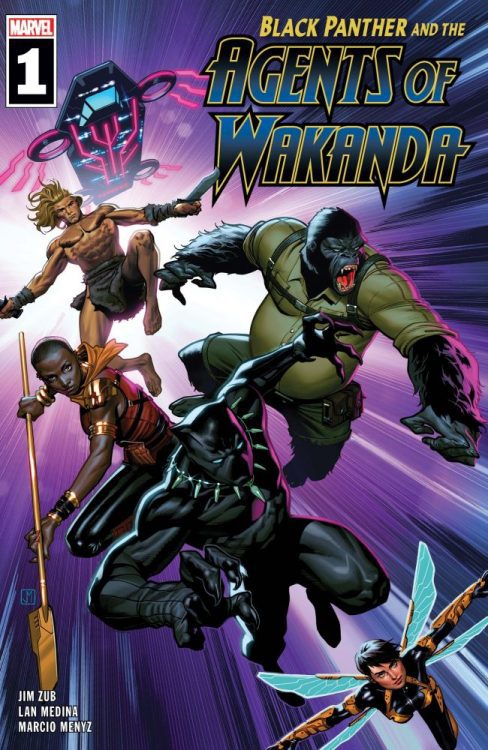
In Marvel Comics’ Black Panther and the Agents of Wakanda #1 (on sale 9/18), writer Jim Zub introduces readers to a motley crew that has the potential to be the next Guardians of the Galaxy. T’Challa’s hand-picked operatives may not seem like the most organic team but this unit of these disparate personalities could flourish with Zub at the helm.
Black Panther and the Agents of Wakanda #1
Writer: Jim Zub
Artist: Lan Medina
Color artist: Marcio Menyz
Letter: VC’s Joe Sabino
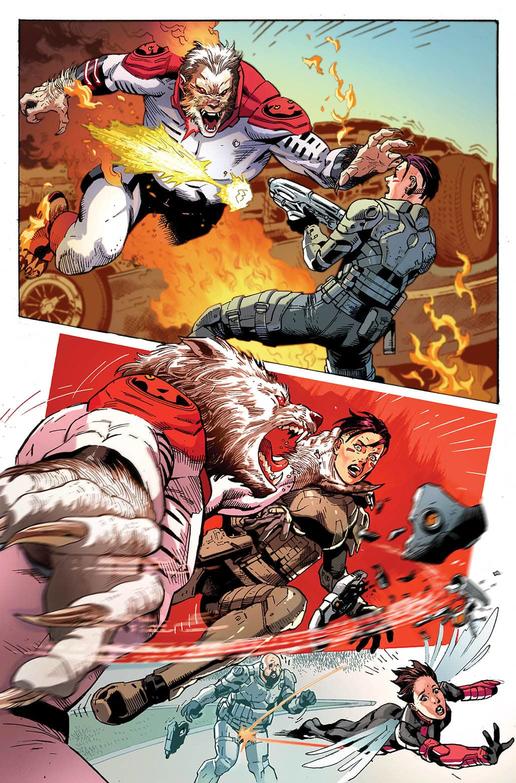
John Jameson unleashes his inner beast in Black Panther and the Agents of Wakanda #1
When putting together the team’s roster, Zub combines elements of the Marvel Universe’s strangest sections. Most readers are familiar with Okoye, T’Challa’s bodyguard and the leader of the Dora Milaje. Likewise, Ka-Zar and Janet van Dyne, also known as the Wasp, are recognizable heroes. But you’d be forgiven if seeing the other members ― Gorilla-Man, the Man-Wolf (John Jameson III), Broo and particularly Fat Cobra ― sends you on a frantic Google search. These characters aren’t household names and that’s the way Zub likes it. As the writer of Champions, he turns similarly underutilized heroes and makes them crucial players in the story. You might not know a lot about the Agents of Wakanda right now but it’s only a matter of time before some of them become breakout stars.
Zub doesn’t try to establish the Agents as Marvel’s next major team; instead, they’re framed as the J.V. Avengers. T’Challa, the founder of the unit, all but says so himself: “…Our duty as Agents of Wakanda [is to] gather intel for the Avengers but also to deal with immediate hazards the Avengers cannot contain.” This statement can be interpreted two ways; either the Agents are scouts who also handle emergencies the Avengers are too busy to deal with or T’Challa’s team is a group of operatives who are capable of saving the day when the Avengers aren’t available. Heck, the truth may lie somewhere in between. Establishing the Agents as a legitimate group will be one of Zub’s most pressing challenges but he’s on the right track after one issue.
As it currently stands, though, these are relatively obscure characters so, especially early on, Zub’s characterization of them will be vital to the series’ success. In the first issue, Zub focuses on Janet, John, Fat Cobra and Okoye. (The other members, plus Agent Roz Solomon and American Eagle, are smoothly excluded because they’re all on separate missions elsewhere.) It’s easy to see what role each of these main characters will fill on the team; Janet leads the team from within because she’s a seasoned veteran, John could be a liability because he can’t fully control his powers, Cobra likes to eat and fight and Okoye acts as the level-headed commander who gets down and dirty with her team as needed. Add T’Challa, the formidable King of Wakanda and Chairman of the Avengers, to the mix and the team’s distinct dynamic becomes even clearer. These general ideas begin to individualize the members of the team and they will allow Zub to continue to flesh out these characters.
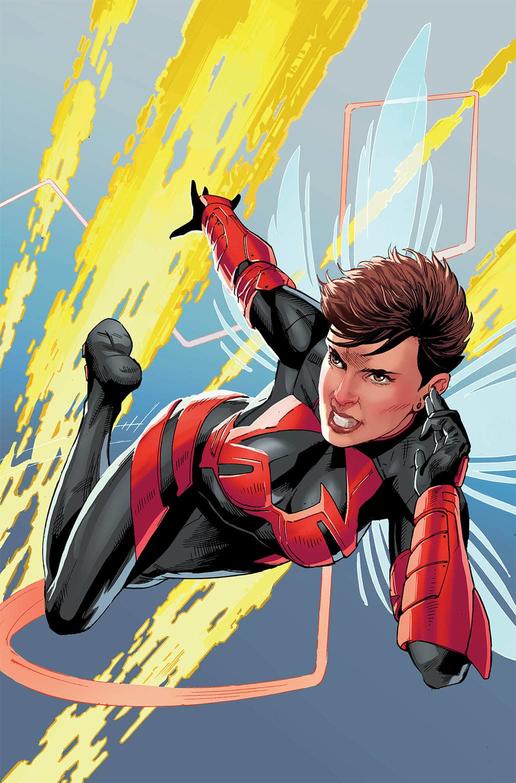
Janet van Dyne leads a mission to stop the Scavengers from stealing technology.
By beginning the issue with an action scene, Zub and the art team add some lively energy to the story right away. The Scavengers, a standard group of armed goons, are on the Agents’ radar because they’re trying to steal lost S.H.I.E.L.D. technology. Artist Lan Medina and color artist Marcio Menzyz make the resulting high-speed car chase feel like it’s right out of a movie. Medina draws smoke coming from the tires and you can practically hear the roar of the car’s engine as the thieves attempt their escape. Medina and Menyz also make the impact of John’s Vibranium bullets look even more devastating; when he shoots one of the Scavengers, the bullet causes the crook’s armor to explode. A red background on impact and a similarly scarlet blast for the weapon makes the weapon’s impact feel palpable. Plus, by making the Man-Wolf look particularly monstrous with rage-filled eyes and a scary snarl, Medina and Menyz complement Zub’s script when Jameson loses control and almost kills a Scavenger. Using italics, bold font and a blood-red outline for the speech bubbles, Letterer VC’s Joe Sabino makes Jameson’s bestial dialogue frightening, too. Each member of the art team adds supplement the strength of the script, which shows that Zub, Medina, Menyz and Sabino are a cohesive unit.
While we can’t definitely say that Black Panther and the Agents of Wakanda will be successful, the first issue offers plenty of reasons for optimism. The eclectic group of heroes has the chance to stand out in a crowded Marvel Universe and, based on the reveal at the end of the issue, it’s fair to think Zub has ambitious plans for the series.
What’d you think of Black Panther and the Agents of Wakanda #1? Where do you hope the series goes from here?
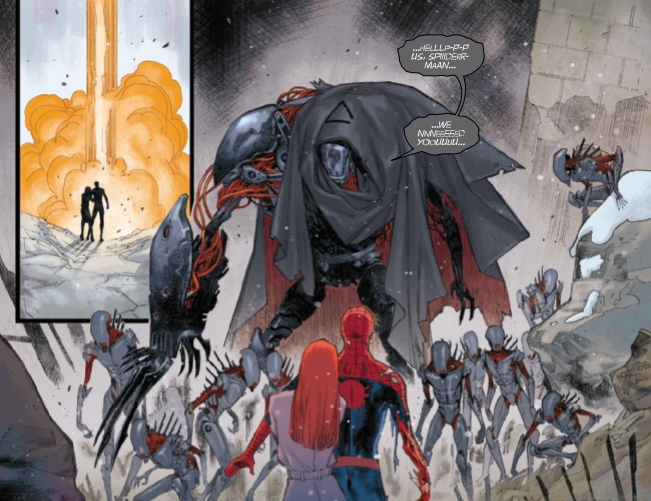
Spider-Man #1 by J.J. Abrams, Henry Abrams, Sara Pichelli, Elisabetta D’Amico, Dave Stewart and Joe Caramagna is an intriguing and beautifully illustrated book that takes the Peter Parker in a bold, insane, and new direction.
From Marvel –The most shocking and incredible comic of 2019 is here as J.J. ABRAMS (STAR WARS, STAR TREK, SUPER 8) and his son HENRY ABRAMS are joined by superstar artist SARA PICHELLI (MILES MORALES, GUARDIANS OF THE GALAXY) for SPIDER-MAN! What do they have planned for Peter Parker and Mary Jane Watson?! Who is Cadaverous?! The Modern Master of Mystery Makes His Marvel this September!
Spider-Man #1 Written by: J.J. Abrams & Henry Abrams Art by: Sara Pichelli Inking Assitant: Elisabetta D’Amico Colors by: Dave Stewart Letters by: Joe Caramagna
Story
If we told you anything about the story, it would ruin the issue for you. After you read the issue, we can talk about plot-points in the comment section below.
Narratively the story is well-executed and moves at a great clip. The ending with Ben discovering his powers (come on, we all saw that coming) is familiar but still written well enough to capture a bit of awe. The last panel effectively left me wanting more. How the Abrams’ portray Peter Parker was strange at first; it is hard to see him in his current situation. But the book draws out your compassion and makes you reflect on how you’ve read Spider-Man books whether you’re a newbie or have been with Peter since the beginning.
The overall feeling of looking through the book is not unlike watching an Abrams film. There are significant moments punctuated by some wide, big layouts that are truly cinematic. Yet, there are quiet character moments that require tight panels and face shots that carry the drama.
Art
No doubt this is a GORGEOUS book. Sara Pichelli is one of the premier comic artists, and she’s just excellent here. Pichelli’s pencils are loose, yet still clean and crisp. There’s an energy to them when needed, but static images still hold a lot of pause and stillness. But they all feel immediate as if they were just put to paper seconds ago.
D’Amico adds weight with the inking assist, adding a heaviness that helps the tone of the story. They also give some fluidity to the pencils.
When you add in Dave Stewart’s fantastic colors, you get a beautiful set of pages filled with some incredible designs, layouts, and palettes. The lettering by Carmagna is also a treat.
Conclusion
Spider-Man #1 is a good book and is well worth a purchase and a read. Yes, the Abrams father and son combo as writers is a bit of a stunt, but the story actually pays off and delivers the emotional impact we expect from Abrams. All we’re missing is ‘lens flare’ and some awesome Michael Giacchino score. When you add in the beautiful art, it becomes a must buy. Grab it at your local comic shop on September 18.
Shie Rozow is a music editor on shows like Arrow, Krypton, and Stargirl who’s also behind the music of Wu-Tang: An American Saga, a Hulu original show about the rise of one of the world’s most legendary rap groups that’s streaming now.
As the title might tell ya, the show’s about the Wu-Tang Clan and its formation during the 90s. Each of the members is surviving lives plagued by the crack epidemic and crime. But within the chaos, there is music and episode by episode, the show chronicles the story of how songs like 7th Chamber, “Bring the Ruckus,” and “Protect Ya Neck” came to be.
PopAxiom interviews Shie Rozow about making music for Krypton, Wu-Tang: An American Saga, and working with RZA.
Enter the Wu-Tang
In 2017, RZA directed a film called Love Beats Rhymes. “The studio brought me in as music editor, and that’s how I met RZA. Then RZA brought me on to this project,” said Shie.
Wu-Tang: An American Saga co-stars Zolee Griggs, who was seven when Wu-Tang made their presence known to the world. So, she wasn’t even allowed to hear the music until much later. Was Shie a fan of the clan? “Honestly, I never heard of Wu-Tang before I met RZA.”
Keep in mind, Shie was on the other side of the world when Wu-Tang came up in 1993. “I was in Israel, serving in the military. Hip-hop came to Israel a little later. By that time, I was studying film scoring and composition. I was all about stuff like that. It wasn’t in my orbit.”
Over the years, though, Shie started listening. “By the time I started this show, I knew their catalog pretty well.”
After several close collaborations, Shie’s relationship with RZA is on a different level. To most of the world, he’s RZA, “… but as a director, I just knew him as Bobby.” RZA’s full name is Robert Diggs.
Shie elaborates on their collaborations: “We’re here to tell the story, and the story comes first. On Loves Beats Rhymes, there was a song we tried that was very different from everything else we were doing. But it worked, so it didn’t matter that it’s different. It’s doing what it needs to do.”
“[RZA] … really understands that.”
One more thing about RZA, “He’s extremely collaborative.” Not surprising from a member Wu-Tang, a rap ensemble built on collaboration between its many members.
https://www.youtube.com/watch?v=w37TQZwnjXY
An American Saga
More than 25 years after the debut of Wu-Tang, it’s safe to say that there are a lot of people who know the songs. “When you’re working with well-known songs, you have to be very careful about how you cut them because it has to feel natural. You’re going to have fans who know the music inside and out. It has to feel right, you can’t just jump around and cut the way you could with an unknown song. People know how the song goes. Even if musically it works, because of that familiarity it might not work.”
Of course, the reality is “… you have to cut them,” because it’s not feasible to play the entire song or you’re basically making a music video.
In the opening scene of An American Saga, RZA is creating the legendary Wu-Tang hit “7th Chamber.” “We’re trying to make the audience feel like he’s creating the beat. I had stems from the original track where I could start with a little bit less and then add a little and a little more. But I had 10-15 seconds to do that.”
“People can become distracted by changes.”
Shie connotes to explain the challenge of working with well-known music, “Sometimes you have to cut a song and skip around lyrics. How do I do that in a musical way? It’s a lot of judgment calls and experimenting. You cut it multiple ways until you find what works.”
Shie Rozow with RZA, Johnell Young (left) and Alex Tse (right). Photo: Stephanie Pfingsten/Impact24 PR
Speaking Of Experimenting
Experimenting leads to new discoveries and sometimes that means multiple discoveries. Is it a blessing or a curse to discover multiple valid approaches? “I think it’s kind of fun.”
Experimentation is undoubtedly a feature for Shie and his line of work. “It’s an interesting challenge to come up with different options and try out different things.”
Shie adds, “You can’t be afraid of falling on your face either. The worst is, you pick a different option.”
Ultimately, if you’re always learning, you’re always winning. “Sometimes, what doesn’t work in one place might come up later and work in another place.”
Of course, not all projects are the same. “Some people are particular about what they want. So, there might be less experimenting on a given project.
In regards to RZA, “[He]… has a strong vision and knows what he wants, but he knows there’s a lot of ways to get there. I love that he’s open like that.”
From Wu-Tang to Clark Kent
Shie previously worked on the now-canceled Krypton show from SyFy. How does working on a show like that compare to the Wu-Tang series? “An American Saga is mostly songs and, even if it’s a radio in the background playing something, everything is very thought out — what part of the song you hear and how the transition happens.”
“On Krypton, it’s all score. It’s all Pinar Toprak’s music. We’re in a different world. So, you can’t put anything recognizable. So anywhere that there’s source music, she had to write it and create it.”
The common factor: “At the end of the day, it’s all about telling the story.”
If It Makes Noise …
As a music editor and composer, who is part of Shie’s musical DNA? “Oh, man. I’m a huge James Horner and Jerry Goldsmith fan. I know on occasion I say ‘That’s a very Horner thing to do’ or that’s a Goldsmith thing’ and I’m stealing it!”
“I’ve been fortunate to work with Danny Elfman. I’m a huge Paul McCartney fan, Beatles fan.”
Music is everywhere at all times for Shie. “I’m exposed to so much music the list is endless.” Shie goes on to list everything from flutes to Peruvian percussion to Mozart.
About listening to just about every kind of music possible, “It opens your mind to what you can do. Something is interesting here that’s unique that I can learn from.”
“To me, everything is music. I hear a jackhammer on the street and find the beat.”
Shie adds, “I was at a screening and I can semi-zone out and just hear the hum and the ebb and flow of conversation. That’s the way my brain works. If it makes noise, it becomes music, and it becomes ideas.”
Does Shie ever record random things? “I do a lot of stuff where I get an idea, or I might hear something that gives me an idea for a beat or a pattern or a melody. I record it on my phone.”
What’s Next?
Shie’s a busy man. “I’m scoring a very beautiful independent movie called Monologue. It’s a true passion project. I’m about to start on a really cool new Amazon show that I can’t talk about. I’m also working on Stargirl, also with Pinar Toprak.”
Thanks to Shie Rozow and Impact24 PR for making this interview possible.
Want to read more interviews like this? CLICK HERE.
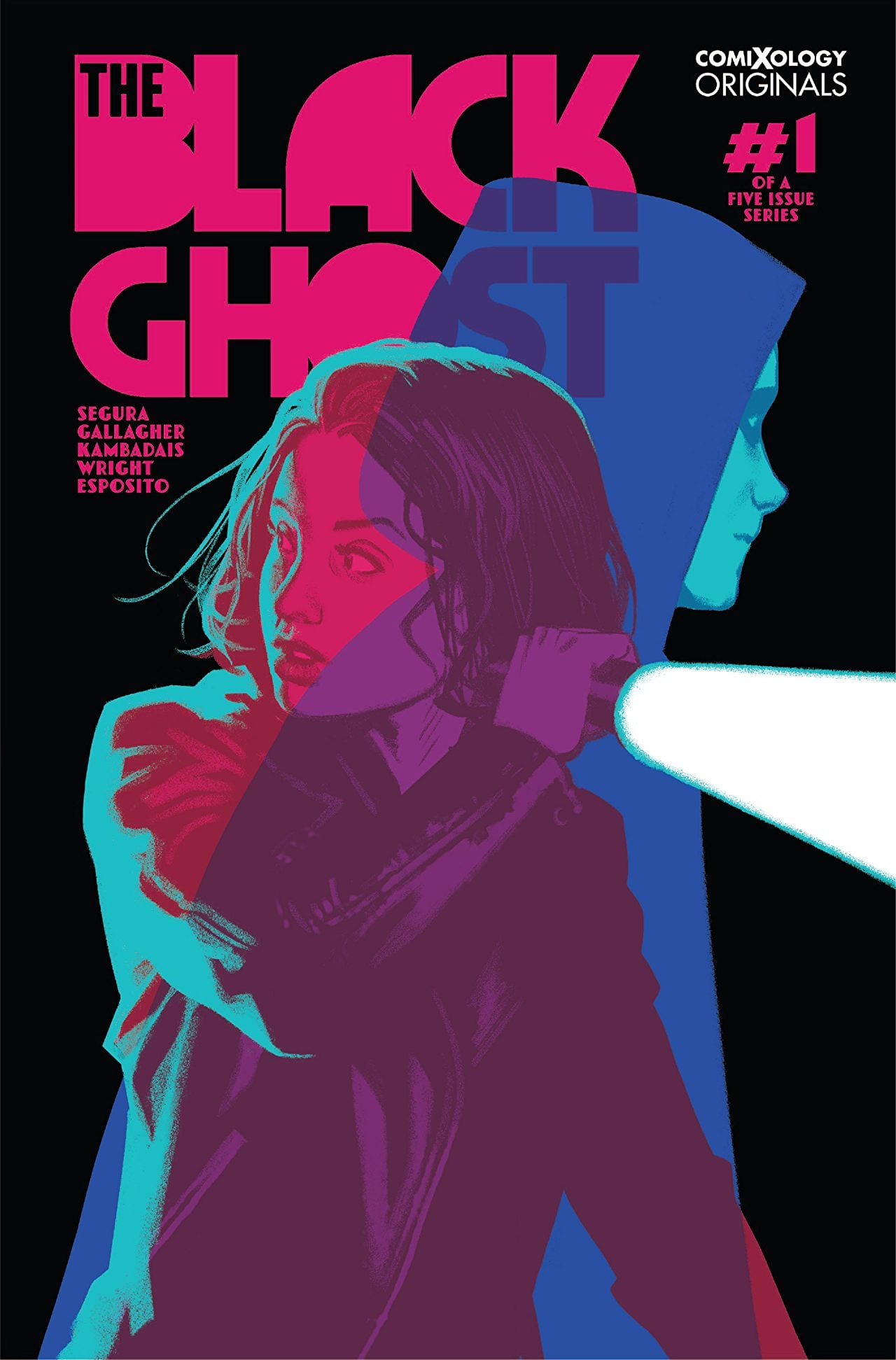
The Black Ghost #1, published by ComiXology, and created by Alex Segura, Monica Gallagher, Marco Finnegan, George Kambadias, Ellie Wright and Taylor Esposito perfectly blends noir, mystery and vigilante action into an exciting and great-looking new series that is a treat for comic fans.
Meet Lara Dominguez—a troubled Creighton cops reporter obsessed with the city’s debonair vigilante—The Black Ghost. With the help of a mysterious cyber-informant named LONE, Lara’s inched closer to uncovering the Ghost’s identity. But as she searched for the breakthrough story she desperately needs, Lara will have to navigate the corruption of her city, the uncertainties of virtue, and her own personal demons. Will she have the strength to be part of the solution—or will she become the problem?
The Black Ghost #1 Written by: Alex Segura & Monica Gallagher Art by: George Kambadais Layoutsby: Marco Finnegan Colors by: Ellie Wright Letters & Design: Taylor Esposito
Story
The Black Ghost #1 opens with an exciting in medias res scene that does a great job of introducing its main character, Lara, and also what her motivations and role in the story are. As the story progresses you organically learn more about Lara; very little exposition too, it’s all done through some great dialog and narration. Writers Alex Segura & Monica Gallagher create a protagonist you immediately start to feel for, given the situation she is in. Lara is tough, independent and smart. But she is also not without her faults, as both job neglection and a drinking problem are alluded to. We also get to see her relationship with a student (Lara is ALSO a night school teacher-great detail!) which helps add even more layers to Lara.
They also do a fantastic job in creating the world around Lara. The city of Creighton feels real and has atmosphere. In great crime/noir fiction setting and places are as important as characters and that is the case here. It gives readers a great overall package that feels complete, even for a first issue.
The writers also do a fantastic job in blending genres. The Black Ghost is a noir, a crime/mystery procedural and of course a superhero/masked vigilante story. That it works as all these things individually AND together shows how much care and love these writers must-have for their characters, world and the genres they are mixing.
And then we get one hell of an ending that leaves things with such a great set-up. I can’t remember the last time I said “Holy Shit” out loud when I finished a comic but The Black Ghost #1 a brand new book with brand new characters made me say it. And that’s no easy feat.
Art
The Black Ghost is a very good looking book. The art here is clean and thick-lined, creating a sense of heaviness in the digital images that make it feel tangible. There is also a great use of empty space; the technique opens up the pages to some great layouts that are as inventive as they are effective. The colors pop and are vibrant. The lettering is clear and designed effectively to convey differences between word balloons, descriptions and ‘voice over’ narration.
Overall the art falls somewhere between indie comics and superhero art; a nice place to hang out in if you can get there.
Conclusion
The Black Ghost #1 is a great start to what could potentially be a fun and unique comic book series. It’s rare to find a debut issue that delivers so much. Give it a try, you will not be disappointed!
The Black Ghost #1 is available here from ComiXology on September 18, 2019.
STRAYED #2 from Dark Horse Comics is out this Wednesday, and it is the perfect read for any cat lover hoping to get into a new series. Little Lou is an adorable astral projecting cat, but the world he lives in is content to take advantage of his abilities.
A different focus on the second issue’s cover.
***SPOILER WARNING***
After the first issue of Strayed came out, many fans still had questions about Lou and the world he lives in. Strayed #2 went a long way in answering some of those questions – while also tugging at the heartstrings of any animal lovers out there.
Lou has a special gift – he can astral project; a fantastic talent, especially when combined with his owner’s technology, thus granting him the opportunity to communicate with humans properly. Unfortunately for both him and his human, there are other humans in control who want to abuse this ability set.
Enter Strayed #2. Lou has been pushed to the limits as of late, with the greedy humans who control his fate sending him out again and again? What are they seeking? And worse, what will they do when they find it? These are questions fans have been asking. And while these questions were answered, many more were brought up throughout this issue.
Lou looks cuter than ever in this alternate cover.
Strayed #2 blends science fiction and drama, turning it into something curious and new. And it’s sure to make cat lovers feel a little pain in the hearts, especially when one overthinks about the conditions that Lou has been put through.
Heartache aside, this issue went a long way in explaining the world (or rather, universe) around Lou and his owner. There are still so many questions left to answer and to ask, but we’re getting there. Along the journey, even more, planets and species were showcased, all in a montage format. The world-building was done to hint at the depth behind the mission these humans have been on.
Carlos Giffoni is still at the helm of this series, so you can blame him for any emotional distress you experienced during this issue. We have to give him credit for giving us some emotionally compelling reasons to care because there’s still quite a lot left to this tale.
Lou is traveling once again.
As with the first issue of the series, Juan Doe has taken the brunt of the artwork. He handled both the lines and the colors, resulting in one cohesive and dynamic piece of work. There are a lot of positive things to be said about the artwork within this issue.
The myriad of worlds was shown in a striking compilation. While each world hosted a plethora of vibrant colors, no two worlds seemed overly similar. It’s clear; Doe has a creative mind for building an expansive universe.
The way Doe shows Lou’s astral form is fascinating – there’s a clear distinction between the physical cat and the astral one, and not just because of the color change. The structure and way the body moves change slightly as well. It’s all exceptionally done.
Finally, Matt Krotzer provided the lettering for this issue, and he had a solid template to work with. Krotzer handled the montage dialogue in a way that fits each panel perfectly. He also made a point of not blocking as little of the artwork as possible, which is appreciated.
What a world Loua has stumbled upon.
Strayed #2 proves to readers that there is still a lot going on behind the scenes. The world has been further established, as has the situation that Lou is in. We still have dozens of questions yet to have answered, but we’re feeling more confident about the anticipated delivery of those answers.








 Jorge Corona’s penciling and inking, Jean-Francois Beaulieu’s coloring, and Nate Piekos’ lettering work continue to give this series a flavor unlike any other. The seamlessness with which the forests near the Woods shift to the the industrialized landscape of Piper City keeps readers engaged the whole story. And the book’s lettering uses bold words at just the right moments to capture the raging emotions of Abel, Fox, and the other characters, making their interactions all the more relatable.