Annuals can be hit or miss. Sometimes, they’re integral parts of a story or callbacks to a long-ago tale. Other times, they’re seemingly throwaway stories that may not necessarily add to any ongoing storylines but add to the overall mythology of the character.
(Note: The events in Nightwing Annual #2 take place prior to Nightwing #50)
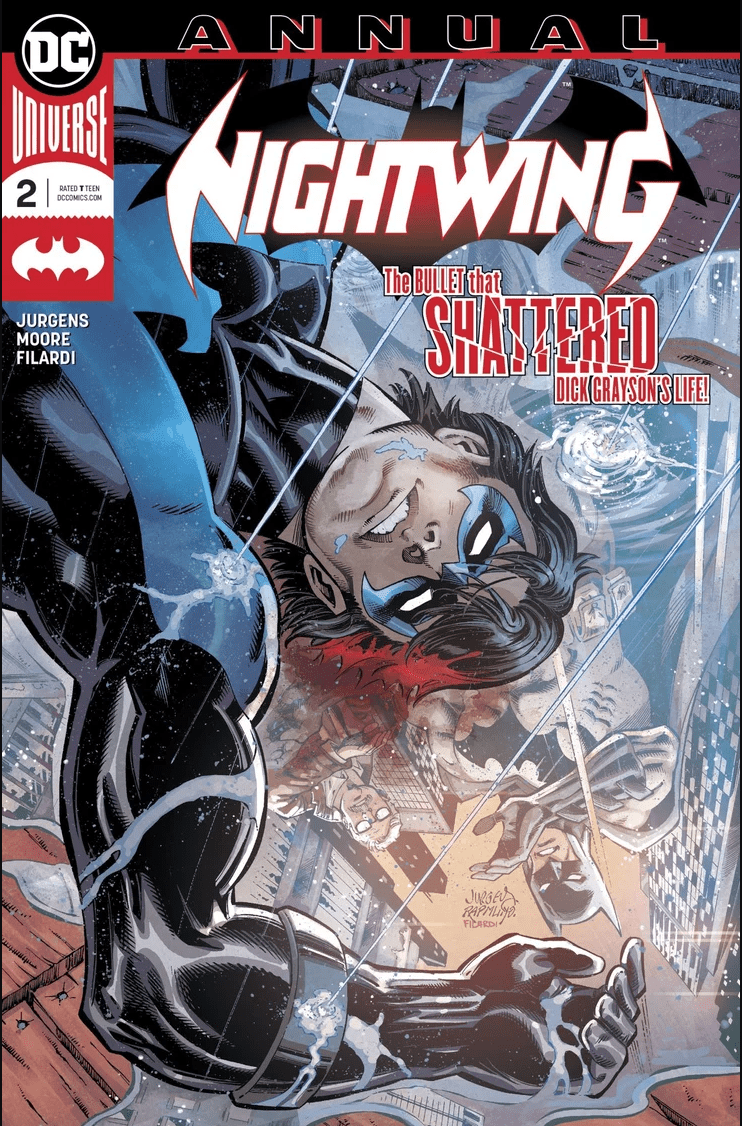
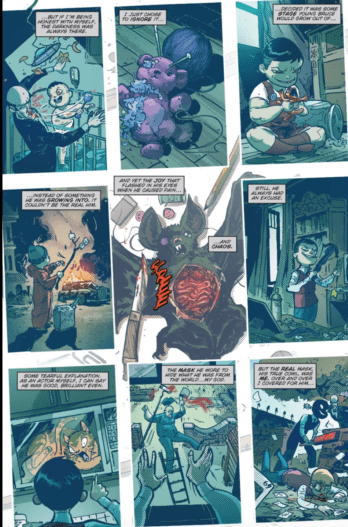
Nightwing Annual #2, “The Very Friendly Owl,” does both. After Nightwing was shot in the head by KGBeast in front of Batman and Commissioner Gordon on the roof of the GCPD, we see Dick Grayson, who now demands to be called Richard, talking with a world-class expert in brain injuries, Dr. Isabella Haas, hired by Bruce Wayne. Dick (sorry, RICHARD) is talking to Dr. Haas about his complete amnesia resulting from the gunshot wound. He now has no memory beyond his childhood, prior to the death of his parents, and is confused as to why local billionaire Bruce Wayne is interested in him and claims that Richard is part of his extended family.
In addition to his struggles with the present, the story also ventures back into Nightwing’s past. We see the introduction of his father’s great-aunt and great-uncle, Langdon, and Judith Grayson, who take Richard (not Dick) and his parents in for a rare family dinner to properly celebrate Thanksgiving after their circus performance. The story’s main focus throughout is family. Richard remembers the joys of the few memories he has of his blood family while his extended family of Bruce, Alfred Pennyworth, Damian Wayne, and Barbara Gordon, anxiously wait for word of Nightwing’s recovery.
Dan Jurgens’ story is poignant, showing emotions from the Bat Fam we’re not usually privy to. While Damian can still be an obnoxious ass the majority of the time, we are shown private moments of grief. Whether it’s Robin’s tears or Bruce’s impotent anger at being unable to fix the problem, it’s a unique look into the lives of the extraordinary Wayne family dealing with something ordinary families deal with daily, the grief surrounding an unexpected tragedy.
The writing is done well, but it is a little repetitive. We’re reminded over and over that Dick now wants to be called Richard because that’s what his parents called him, and he has no memory of being Dick. We’re also shown Bruce’s constant anger and frustration at being powerless to fix his first son and oldest partner. But it feels plodding at times, meant to take up real estate within the book instead of moving the plot forward. That being said, the payoff is tremendous and promises to add some great storylines in the months to come.
The art by Travis Moore is solid for an emotional book. His pencils are softer, more sentimental, allowing the reader to feel both the sadness of the Wayne family and the melancholy of Richard describing a rare interaction with both his parents and newly-introduced extended relations. Overall, it’s a well-done story that introduces a bigger plot to destroy Nightwing and Batman while maintaining a personal touch intended to tug at the reader’s emotions.
What did you think of the latest attempt to take down the Bat Family? Comment below with your thoughts.
It seems like the Terminator franchise has been dead in the water creatively for quite a while and it still is in some ways with Terminator: Dark Fate. However, after countless sequels failing to live up to the first two installments carried by series favorites Linda Hamilton and Arnold Schwarzenegger, this latest entry plays it safe and because of that, it’s easy to see why this film can be considered the best entry since Terminator 2: Judgment Day.
Terminator: Dark Fate takes notes from the Halloween series and ignores all of the franchise’s previous hiccups. James Cameron returns to the franchise for the first time since the second film as a producer and his involvement is just one of the few reasons this film manages to stay afloat. Taking place a couple of decades after the events in Judgment Day, the film follows Dani Ramos who has been chosen for termination by a machine from the future. Again, this film is very similar to the original two films and it plays it safe by using the premise that made them so amazing. Directed by Tim Miller, the film stars a returning Linda Hamilton, Mackenzie Davis, Natalie Reyes, Gabriel Luna, and Arnold Schwarzenegger returns once again as the T-800.
Linda Hamilton as Sarah Connor and Natalia Reyes as Dani Ramos in Terminator: Dark Fate
The script for Terminator: Dark Fate is all over the place but it includes elements that were missing from previous entries. Cameron clearly had some influence on how things played out because this film has a lot of heart and an emotional impact to it that hasn’t been seen since T2. All of the characters are well written, but Dani (Reyes) is underutilized a bit it seems because of Sarah Connor’s presence. Dani is the new Sarah Connor this time around, but the film never really feels like its focusing on her, as much as it is Sarah trying to save her. However, this may have been done intentionally to show that the series has always been about the character of Sarah Connor.
Adding to that, the dialogue is absolutely ridiculous at times and it brings down some of the humorous moments, which don’t feel out of place at all. For instance, the exchanges between Sarah and the T-800 become cringe-worthy at times but the delivery from the actors makes up for it. The story in Terminator: Dark Fate isn’t doing anything new that fans haven’t seen from the first two films, but it does switch some elements around to make it feel fresh. For example, in T2 John Connor reprograms a T-800 to be sent back in time to protect his ten-year-old self. Dark Fate features a human with advancements being sent back to protect Dani. Davis Stars as Grace, the advanced human sent to protect Dani and she feels like Kyle Reese 2.0. The story in the film is just fine, but it’s not breaking any new ground.
Performances are amazing from every person involved and of course, Hamilton and Schwarzenegger are a delight to see together on screen for the first time since T2. Despite the narrative revolving around Reyes’ character Dani, Davis is the most impressive here as she factors into that missing emotional element that is present heavily in this film. Her portrayal of Grace makes the character very likable and easy to become attached to more so than the girl she is here to protect. Again, it is as if the actual central character was purposely underutilized for everyone else’s benefit. Despite that, Reyes does a great job working with what she is given and audiences will easily sympathize with her.
Director Miller was just having fun with this fast-paced film because nearly every shot is breathtaking and the way everything is captured is awe-inspiring. The film’s pacing probably could have been a bit slower because Terminator: Dark Fate leaves very little room to catch your breath during all of its fun and familiar mayhem. However, the action in the film is completely insane at times and way over the top specifically near the end. Still, Miller directs Terminator: Dark Fate wonderfully as many expected he would.
Mackenzie Davis as Grace in Terminator: Dark Fate
Despite Terminator: Dark Fate featuring some of the worst effects in the franchise, showcasing ridiculous action scenes, and relying a little too much on nostalgia, it is easily the best since T2. Without Hamilton, the film probably wouldn’t have worked because her presence adds a lot to it. Cameron’s involvement also contributed to this movie feeling like the first two films, but it’s not doing anything audiences haven’t already seen. Still, Terminator: Dark Fate is a moderately acceptable sequel to the best Terminator film and fans of the series will have a blast with it.
A Man out of Time; A Magician with no Assistant; A Deal with the worst kind of Demon; John Constantine is back in Sandman Universe Presents Hellblazer Special #1, out this week from DC Comics. Fantasy writer extraordinaire Simon Spurrier re-introduces the popular, Adult only, occult character back into the DC universe with a flourish and an apocalyptic tale that has the highest stakes possible from the outset.
Constantine must rescue his friends, stop an all consuming war, save the world, but most importantly, he needs to find somewhere to get a kebab, an ‘orrible one.
Sandman Universe Presents Hellblazer Special Credit: DC Comics
Bringing Back The Magic
John Constantine was introduced to the world in the pages of The Saga of the Swamp Thing, created by Alan Moore for artists Steve Bissette and John Totleben simply because they like the look of The Police front man Sting. He was a working class warlock, cynical and often appeared heartless. Through the years the character has evolved but he has never strayed too far from his roots,
In Spurrier’s new vision, Constantine embodies all of these earlier attributes and the story itself is linked closely with past versions of the character. If you are a long time follower of the character you will recognise the opening apocalyptic battle as it references Neil Gaiman and John Bolton’s The Books of Magic mini series from 1990. In fact this Special leaps from that springboard into a ‘What John Did Next’ story while at the same time bringing him into the modern day in a similar vein to the Julian Sands helmed movie Warlock.
Spurrier references the larger DC and Sandman Universes constantly throughout the 38 pages but at the same time creates a world that is very much Hellblazer. The attitude and darker edge that is associated with the character is evident on every page, through the art and the script. Spurrier drags the script across the streets of London picking up a host of English vernaculars and abusive language. It is safe to say that easily offended readers should give this a wide berth as the humour is as blue as the language at times.
Sandman Universe Presents Hellblazer Special Credit: DC Comics
The Color (and Letters) Of Magic
As the story progresses, Constantine comes into contact with a number of characters, old and new, with confrontation following confrontation. Not only does this help to establish the central character, and the negative influence he has on those around him, but it also allows Marcio Takara to show off a wide range of artistic skills. Leaping from the surreal magical war of the future to the cold, clinical streets of modern day London provides an array of visual contrasts which are successfully depicted by Takara.
The differences between the future and the present are not just physical but also represent ideologies within the text. Who was John and who can he become? The transitional moods of Spurrier’s story is set by the art work.
The coloring plays a massive part in establishing the scenes and the ideas within John’s new world. The shifting of time frames, mixing of memories with present day, and even the magical elements contrasted against the ‘real’ world, all are accentuated through the coloring styles of Cris Peter. A quick glance at any of the pages allows the reader to instantly separate the different aspects of the story, making the reading experiences more fluid and satisfying,
This is purely down to the different approaches Peter uses in his coloring. A mix of vivid block colors indicates the modern day while a single, watercolor-esq painted approach signifies a flood of memories. The magical war is a blend of garish colors while a more subdued look is adopted for John’s stroll around London.
One of the more satisfying elements of the comic is Adityar Bidikar’s lettering. With a comic like Hellblazer it is imperative that a contrast is made between different realms. In this special, it is the job of Peter’s colors and Bidikar’s lettering. He has produced a number of different fonts to use to represent different aspects or characters within the comic but it is also his approach to the text that makes it so outstanding. Shifts in font size, the use of bold text, and the changing shape of speech balloons are just a few of the techniques that he uses throughout the 38 pages.
Reading the range of lettering on show is almost pleasurable enough without the characters, art or story. This is a master class in visual storytelling with the lettering standing out in a good way. Take away the images and you still get a well paced, emotionally driven story. The words give the reader details but the lettering here gives it feeling.
And the impressiveness doesn’t stop at the Art. Spurrier’s story has a number of levels to it to please any fan. The surface story is fascinating and exciting enough to keep new readers entertained without feeling left out. However, a deeper level of continuity based storytelling is bubbling just under the surface, referencing the 34 year history of the central character. And then, there is another, metaphysical level commenting on the world of Comics and it’s fandom. At one point John’s inner monologue tries to rationalise his reality hopping situation:
“It’s not about neat and tidy. Owes more to story and meaning than cause and bloody effect. You’d go mad – well madder – trying to decide what counts and what doesn’t, what’s real and what’s not. When the only question worth asking is: What matters right now.”
An insight into John Constantine but also an analysis on fans obsession with continuity. Spurrier is shaking things up in the Hellblazer world and he’s telling the readers not to try to tie it all up to the past but concentrate on this new story. He acknowledges his creative forebears but this is the new Hellblazer, with a new and improved Constantine.
Sandman Universe Presents Hellblazer Special Credit: DC Comics
Conclusion
Sandman Universe Presents have produced some excellent new takes on the magical characters from the DC Universe and with the disappearance of the Vertigo Imprint it’s good to see that the characters can live on. Spurrier achievement in this Hellblazer Special is to prove that the characters do not have to be watered down to exist in the modern age. Unlike some of the television interpretations of these characters, whose edges have been smoothed to make them more appealing for T.V audiences, in comics Constantine is still an English Bastard and the very definition of Anti-hero.
The artwork is superb and the story accessible to everyone, with the possible exception of those offended by bad language. With this Hellblazer Special, DC Comics continue to do the old Vertigo crowd justice with yet another brilliant Sandman Universe comic.
Now they are fugitives in space, how will the crew of the Sundog survive? A new arc for Berger Books’ expansive science fiction series, Invisible Kingdom, starts this week and it’s straight into action for G. Willow Wilson and Christian Ward’s band of intergalactic misfits.
When building on an introductory arc, the greatest challenge for the creators is to keep the story fresh but also true to what has come before. A number of series get the beginning right but falter at the next stage. So, how does Invisible Kingdom fare?
Invisible Kingdom #6 Credit: Dark Horse Comics
A New Adventure
After establishing the characters and the world layout in the first arc,Wilson begins the second story by challenging those conceptions. She forces the reader, and the characters, to face uncomfortable realities about the world that she has built. The all powerful Lux corporation holds planets and their people to ransom, with few daring to challenge them. Words spoken by Government officials are just that, words. In reality they are worthless against the hold that Lux has over the people.
This first issue in the second arc reinforces the isolation of the Sundog and it’s crew, highlighting the dangers of non-conformity. The narrative focuses on characters like Vess and Grix, comparing the life they had with the new, dangerous one they have chosen. Their sacrifices become clear as the story unfolds, illustrating what they have to give up to fight the system.
There are a number of wonderful character moments in this issue, especially for Vess. There is an emphasis on her and how she has been affected by the events of the first arc. Wilson shows the reader the inner conflict of the character through a series of events in this issue: struggling with mediation, returning home, and even altering her state of dress, all of these things symbolise a great change within the character.
Taking note from classic heroes-on-the-run science fiction stories, Invisible Kingdom has a diverse central cast and puts them into conflict with a comparable crew. The ‘good’ fugitives face the ‘bad’. Think of the first Guardians of the Galaxy film, the 1970’s Star Wars comics, or even elements of Saga. Wilson is able to bring the heroic nature of the Sundog crew out by contrasting them with characters who are the opposite to them.
Invisible Kingdom #6 Credit: Dark Horse Comics
The Future’s Bright
In a sea of science fiction comics and movies, how do you make yours stand out? The simplest way is to make it look different to everything around it, and that is exactly what Christian Ward does. He has a singular style that is instantly recognisable on the shelf.
Everything about his work is bold; bold shapes that form the characters and backgrounds; bold colors that are striking and emotive; even the layouts are bold as he uses interlocking panel shapes to drive the narrative across the page. Unusual panel layouts represent aspects of the story so that overlapping panels with no gutters speed up the pace of the action or an off kilter layout expresses the chaos of a space battle.
Ward’s work is immersive in that it takes over the page and drowns the reader in the visuals. I’ve said it before and I’ll say it again, the panels borders are their to contain Wards work, to keep it controlled. When those borders disappear it is like the world has been unleashed and there is no stopping it. Invisible Kingdom as a whole feels like this, as if the story is barely scratching the surface of this new universe.
Even Sal Cipriano’s lettering is affected by the bombastic nature of the narrative and art work. His speech balloons appear standardised but the borders are inconsistent, with the border changing thickness around the text. His caption boxes have rounded corners making them match the fluidic artwork and any radio communication has jagged edges, breaking the surface of the images as if it the text is forcing itself onto the panels. Cipriano’s approach blends with Ward’s work to create a single visual style.
Invisible Kingdom #6 Credit: Dark Horse Comics
Conclusion
The first arc for Invisible Kingdom was impressive, it challenged the reader mentally and visually. This new story is continuing this trend and has not lost any of its charm or visual flair. Wilson’s world building and characterisation is wonderfully engrossing. The influences of T.V. shows like Firefly or comics like Saga are there but the style of storytelling and the type of characters that Wilson writes are original and exciting.
It challenges conceptions of dominant corporations and their place in the world. It also looks at faith; at religion on a grand scale but also personal faith and belief. What do we do when our faith is challenged, when we are forced to fight that which we so strongly believed in?
Invisible Kingdom continues to be a majestic read. It is entertaining and thought provoking with a unique visual flair.
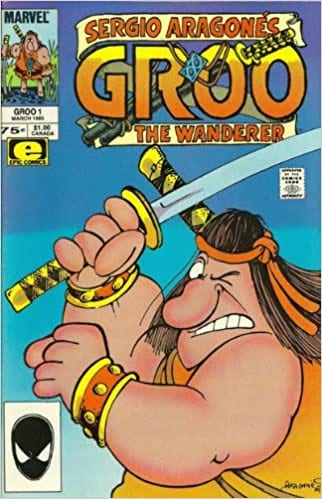
A bulbous, busted nose and a goofy grin, framed by a barbarian’s standard-issue headband and matted, unbarbered mane. Balloon-like muscles and ham-sized hands clutching twin katana-style swords. A pear-shaped girth draped in an orange jerkin that smells like pig filth and old fish (probably because its wearer has stashed fish in his vest and slept in a pig sty). And all that bulk teetering on spindly legs braced by big bare feet.
With a hero like this on the cover, you knew you were in for some fun. Sure enough, Groo the Wanderer taught me that a comic book can be, well, comical.
Out of the Margins
It was 1990 or thereabouts. I was a kid collecting Wolverine and Batman titles. Dark, gritty, “realistic” crime and punishment. Then one day, on the shelves of a local comic book shop, in the midst of all the spandex and explosions, the brooding and the blood, I spotted something unabashedly unrealistic. There was no mistaking that loose, cartoony style. The artist was Sergio Aragonés, beloved for his marginal doodles and wordless comic strips in Mad magazine.
That guy does a whole comic book? An ongoing series with a title and words and everything? And it’s published by Marvel!? This was a revelation to me. It was almost like a dream. (“…And my poodle was driving a ’67 Ford Mustang. But that doesn’t make sense. Fifi can’t drive stick.”)
The material inside didn’t disappoint. Rambling across fictive lands in some bygone age, Groo is a ferocious fighter and an incredible numbskull. Example: Seeing a couple of dragons on the loose, he pauses to count them, and finally exclaims, “One dragon and one dragon heading to town!”
Groo is feared far and wide not only because he can take on an entire army and win, but also because he is astronomically mishap-prone, with vast collateral damage in his wake. If you’re building a temple and you let him near the worksite, plan on starting over real soon. And most reliably, any ship Groo sets foot on will sink. People will hire him against their better judgment and come to regret it.
To Accidentally Do Right
And yet, things somehow work out by yarn’s end. For example, a group of shepherds pay the mercenary in roast lamb to protect a pasture. Their rivals, the cattle ranchers, make a counter-offer: They’ll pay him in steak to oust the sheep and keep the pasture for their cows. Soon, the men are cooking and serving Groo a feast to encourage him to make up his mind. He’s on his second cow, and fourth sheep, when the ranchers realize that while they’ve been standing around feeding Groo, their livestock have been sharing the field peaceably. Their problem is solved, though Groo is out of a job, again.
Groo is most monumentally dense when it comes to his unrequited love, the warrior woman Chakaal. Here’s a representative exchange:
Chakaal: “Get out of my life, Groo! I want you to go far, far from me so that you and I never cross paths again! I want nothing more to do with you since I am a competent swordswoman and you are an utterly inept moron wholly devoid of worth as a human being. Your occasional ability to accidentally do right does not mitigate the fact that I wish to nevermore see your face in or around my presence. You cannot get far enough away to suit me. Listen to the sound of my voice when I tell you to get lost.”
Groo: “Yes, but will you marry me?”
But Groo is loved by at least one character: his loyal, spotted dog. Rufferto is quicker on the uptake on most matters—not that it helps any, since he can’t talk. (Groo, racing into a witch’s castle: “What am I supposed to get again?” Rufferto, in thought balloon: “The antidote!” Groo: “Oh, I remember! The antipasto!”) However, the poor mutt is blind to the depth of his master’s dunderheadedness. (“Always kidding,” he tells himself.)
Wanderin’
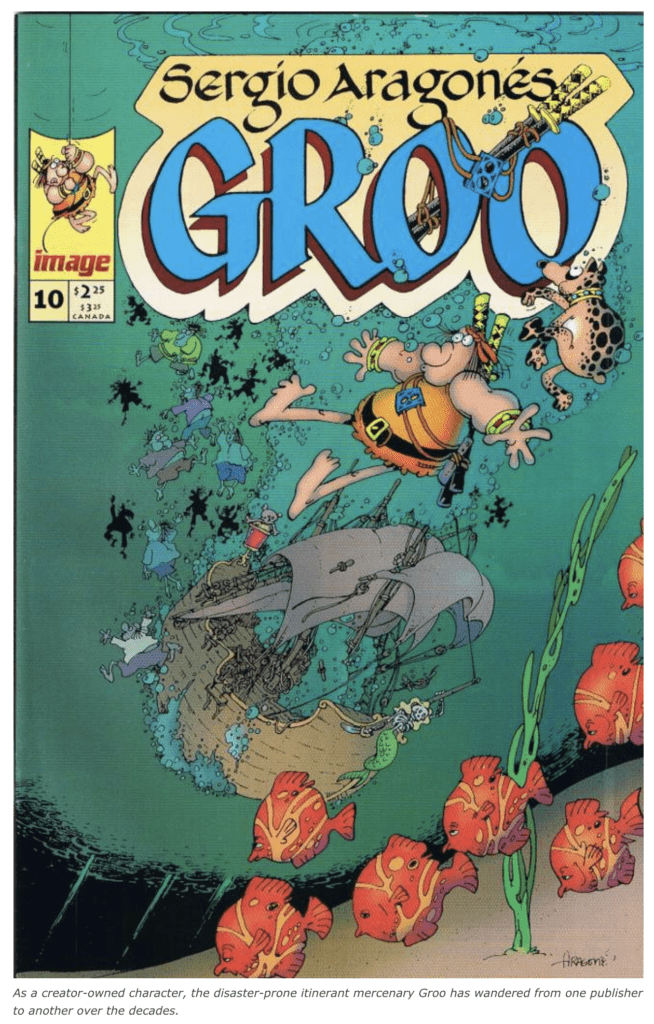
Before I offer my little thesis on what makes Groo special, let’s sketch his timeline and meet the men behind the legend. The monthly Groo the Wanderer was smack in the middle of its ten-year run on Marvel (or the Marvel imprint Epic) when I stumbled upon it circa ’90. But because Groo is a creator-owned property (one of the first), when Marvel dropped the comic, the team moved it to Image, and later Dark Horse. And it was initially published by Pacific in 1982.
The stories are drawn by Aragonés, co-written by Aragonés and Mark Evanier, lettered by Stan Sakai, and colored by Tom Luth.
Evanier is a veteran television writer, with credits including animated series (e.g, Richie Rich, Scooby-Doo), sitcoms (Welcome Back, Kotter; Cheers), and even Dick Clark specials. He is also the author of a biography of Jack Kirby, for whom he once worked as an assistant. In writing the dialogue and otherwise collaborating to flesh out Aragonés’ stories, Evanier employs all the tricks of timing and rhythm he honed over his career in TV as well as comics.
Aragonés is a master cartoonist. He certainly knows from gags, but he also takes quite seriously what appear at first to be doodles. In fact, the backgrounds, the architecture, the costumes, the weaponry are all lushly detailed. That’s based on the artist’s own research and travel, he explained in a FAQ on his website. Aragonés was born in Spain, raised in France and (mostly) Mexico, and landed in New York City in 1962. (He is trilingual.) With that kind of global background, it’s no surprise that he combines elements from various ancient cultures, then adds his own twists, to make for the familiar but unique settings that Groo wanders in search of kopins (the currency in his world) and cheese dip.
From Finn to Groo
Here’s what I find so great about Groo. As many readers know, comic books got their start as collections of reprinted newspaper comic strips. Bill Blackbeard argued that it was Popeye (debut in E.C. Segar’s syndicated strip Thimble Theatre: 1929) and not Superman (debut in Action Comics #1: 1938) who was the first modern superhero—the sailor was well-nigh invincible, after all—the difference being that Segar played it for laughs. Popeye was a hyperbolic stereotype of the tough sailor. He was like the outsized subjects of other, often humorous tall tales over the centuries, from Finn McCool to Paul Bunyan. (“How strong was he?…”)
I’ve read collections of Thimble Theatre, covering 1928 to 1938 (when, sadly, Segar died of liver disease at age 43). That strip is seriously uproarious—and not really intended for kids, the way the animated shorts were. (Example: one character asks another about “sewing oats” in his youth. The response: “In all my life, I have only sewn one oat.” “Just one oat?” “Just one oat. But oh, what an oat.”) And the adventure continuities are more fun than a barrel of spinach (or cheese dip). (Mmm, spinach cheese dip….)
The only drawback to reading such stories in a collection? The first panel of each new strip recaps the doings of the previous day’s. That practice made perfect sense when readers were coming back to the story after a 24-hour gap, but it turns into a tic that borders on the tedious when you’re trying to ride along on a voyage via the reprints.
In my mind, Groo is like a classic newspaper comic strip character—he even comes with an adorable dog whose thoughts we can read—but one who was invented wholly for the comic book medium. That means splash panels or double-page spreads depicting busy ports or epic battles that Groo is winning single-handed—or 20 tiny panels showing Groo thinking real hard. It means so much more freedom for the artist. It means stories that are self-contained in one issue, without any need for rehashing plot points, or stories that are broken up over two or more issues, but at least break at satisfying junctures.
Meanwhile, Groo fits firmly within that folk tale tradition, with his scrapping prowess and dimwittedness exaggerated to the Nth degree, and his comedic adventures are brought to life in a way that only comics can pull off (whether in a newspaper, pamphlet, or bound book).
Perhaps upon entering adolescence, I figured I was required to graduate from Peanuts to X-Men, to trade bulbous tykes and chuckles for grim storylines and photo-realistic vigilantes. “Ah, but I was so much older then,” Bob Dylan sang. “I’m younger than that now.” Slinging goofy fun in a mainstream comic book, Groo declared that it was still OK to laugh.
What comic first challenged your perspective of what a comic book can be? Let us know in the comments.
Recently Marvel Comics has tackled mutant families in X-Men, and mutant pirates in Marauders, but this Wednesday they take the next step in EXCALIBUR #1; mutants and magic.
Art by Marcus To, colors Erick Arciniega, letters VC’s Cory Petit
Magic, Mutants, Myths
Much like the other first issues, Excalibur #1 focuses more on the story, characters, and future rather than action. Writer Tini Howard’s slow paced nature works in its favor by helping ease in readers to the magic based side of X-Men. Howard elegantly pushes the plot forward by taking time to introduce each character, motivation, and how they all tie together.
In the recent Power/House of X series, a fair amount of the classic X-Villains join the X-Men in the mutant paradise, Krakoa. But, all is not hunky-dory. Nothing ever is;, especially for mutants. This uneasiness of ‘nothing good lasts forever’ comes from teaming up with Apocalypse. Even though he has accepted Krakoa’s ways, there are still hints of his former self and doubt stemming from others around him. But, when these moments happen, they are never forced or seem out of place.
Art by Marcus To, colors Erick Arciniega, letters VC’s Cory Petit
ART
The art by Marcus To falls in line with the other X-Titles style; keeping the characters looking realistic, and Krakoa a beautiful utopia. The designs for each character matches other titles they appear in, making the new relaunch of titles feel as one big universe. While doing this To keeps his art simple for new comers, yet elegant in its beauty.
These beautiful landscapes and costumes are helped immensely by Erick Arciniega’s magical colors. Throughout Excalibur #1 Arciniega paints a gorgeous bright colored background that makes the characters pop, while still showing the beauty of the locations. The few times magic or mutant powers are used, the pages light up akin to a firework show, encapsulating you.
Excalibur #1 may not contain the explosive fonts seen in the other titles, but VC’s Cory Petit keeps the bubble placement from covering the art. Plus, the usage of Apocalypse’s new ‘name’ makes for exciting dialogue moments.
Art by Marcus To, colors Erick Arciniega, letters VC’s Cory Petit
Conclusion
Howard’s slow paced, ease of excess story combined with To and Arciniega’s magical art makes Excalibur #1 a spell of a first issue. If magic mixed with mutants interests you, now’s the best time to hop in.
Cover Story: Like the other X-Men titles, Excalibur #1 has its fair share of Variant covers. But, the coolest comes from design artist, Tom Muller who also created all the new X logos.
Side Note: Much like Prince, Apocalypse turned himself into a symbol.
Art by Marcus To, colors Erick Arciniega, letters VC’s Cory Petit
Magic and You
What did you think about the first magical issue? Let us know below!
BLACK CANARY: IGNITE 0 ut this Tuesday from DC Zoom, the graphic novel is a tell-all tale of a young Dinah Lance and her journey towards becoming a hero. Perfect for fans of the illustrious Black Canary, this graphic novel will fit all age brackets.
Dinah is rocking the punk rocker look on the cover of Black Canary: Ignite
***SPOILER WARNING***
Black Canary: Ignite is the latest in a round of graphic novels geared towards a younger audience. And like the rest in the series, this is the tale of a younger Dinah, before she had truly settled into her powers or her superhero persona.
As such, we get to see an entirely new side of Dinah Lance, aka Black Canary, in this novel. It’s an exciting take, naturally. And it provides a lot of insight for the trials and tribulations she faced, long before she gained control over her iconic power.
Nobody is surprised that Dinah was in a band as a teenager.
This was perhaps the most adorable and charming take ever on the Black Canary. But that is probably no surprise to fans of Meg Cabot, the author of this delightful tale. Black Canary: Ignite not only gave us a chance to see a different side of a beloved character, but it also gave us a desperately needed break from a barrage of the heavier comics out there.
This novel was light and cute and even enchanting at times. Full of teenage angst and girl power, it’s sure to be a hit with a younger audience, while being splendidly nostalgic for older readers tempted to pick it up.
Dinah Lance as a teenager, is everything a fan might expect. She was bursting to the brim with energy, sass, and teenage rebellion. Appropriately so, music is her life, as are her best friends (I wonder where they ended up?).
And that was all before the big reveal came into the mix: her mother used to be the Black Canary, and she’s who Dinah inherited her powers from. Unfortunately, nothing ever stays in the past in the world of superheroes. Thus an old antagonist is seeking revenge on Dinah’s mother, and they’re willing to pull Dinah into the mix.
These revelations may have felt like somewhat weird twists, but they fit in perfectly with the tone of the story. And best of all, the way this novel was written, it’ll be perfect for old fans, but best of all, it’s ideal for a newer and younger audience.
And there goes her iconic power.
Black Canary: Ignite had one highly talented artist working behind the scenes. Cara McGee was the illustrator and colorist for the entire graphic novel, giving the piece a cohesive feel. If you’ve seen any of the other works coming out of DC Zoom lately, you’ll notice that the artwork here fits right in with the rest of it.
The artwork is bubbly and bright, which is fitting, given the intended audience and the more luminous nature of the main character. But it also wasn’t afraid to show darker scenes, such as Dinah or her mother being attacked.
The highlight of the artwork in this graphic novel would have to be the way Dinah’s power was portrayed. Here was a wild form of her powers, still budding and entirely out of control. As such, it had a slightly different look than we’re used to – and that is precisely how it should have been.
Did she even take time before assuming who was to blame?
Black Canary: Ignite is quite possibly the most cheerful superhero origin story out there right now, and is perfect for any young girls looking to get into comics. Or for those of us who simply love Dinah, and will happily devour any story about her. No matter your motivation, this is one graphic novel you’re not going to want to miss out on.
Knives Out is a brilliant murder-mystery that understands the importance of attention to detail. A modern whodunit that features an ensemble cast, where everyone serves a purpose and keeps you entertained from start to finish. This film has just about everything you’d expect from a whodunit film while also making it feel fresh for modern audiences. Knives Out is so well made, and it has so many layers to its central mystery that it warrants multiple repeat viewings.
Last Jedi director Rian Johnson has written a film that has a lot to say about wealth, immigration, and class in America in its own hilarious way. Knives Out revolves around the death of Harlan Thrombey, a wealthy crime novelist who is found dead after his 85th birthday. After his shocking death, the remaining Thrombey’s are all considered suspects by experienced detective Benoit Blanc. This crowd-pleasing treat stars Chris Evans, Ana de Armas, Daniel Craig, Jamie Lee Curtis, Toni Collette, Lakeith Stanfield, Katherine Langford, and many others.
Daniel Craig as Benoit Blanc in KNIVES OUT
Detail to the overall story was in full effect with this film because once everything is revealed, you can easily go back and pinpoint how it adds up perfectly in the end. Johnson’s script is covered in so many tiny details that leave no scene wasted, and there is a payoff for every setup. The family probably could have been developed a little bit better, but the first act does enough to introduce viewers to the Thrombey’s. Adding to that, the script is so clever and witty that even though the family may be slightly underdeveloped they each are memorable in some fashion. Knives Out is ten steps ahead of its audience, and that’s what makes the final moments so rewarding.
Johnson’s direction will keep viewers on the edge of their seats; he captures this film so wonderfully and brings you into this world with such ease. He’s shown his skill in the past with his previous work, and it continues here. Johnson’s ability to effectively manage so many characters at once while still keeping the audience guessing is very impressive. He also takes great pleasure in giving the audience answers only to provide more layers or pull the rug from under viewers of the film. His direction puts the film at a proper pace, which allows time for all of the scenes to matter and serve a purpose in the final twist.
Jamie Lee Curtis as Linda Drysdale Thrombey in KNIVES OUT
Adding to that, Armas and Craig are the two standout performers from this film. Armas stars as the nurse of the newly deceased novelist, and she does a good job bringing the character to life. Craig stars as Blanc, the highly hilarious detective who Craig clearly enjoyed playing. It’s apparent that he enjoyed playing this character, and he shares the scene with Armas character quite often. Armas is better of the two because she is leading a film that features several notable names, and she does it so well. Her ability to make the audience care about this innocent nurse who is stuck in the middle with this greedy family is wonderful.
Knives Out is another surprisingly good film this year that is very smart, detailed, and well-acted by a fabulous cast. Johnson’s modern homage to classic whodunit films that came before it is an absolute blast, and it will keep audiences guessing. Knives Out social commentary on American society may cause some to lose interest, but the story and the way everything plays out makes up for it because is just so well done.
Just in time for Halloween, Marvel Comics’ Marvel Zombies: Resurrection #1 offers readers a horrific hybrid between a zombie outbreak and a space adventure. Thanks to writer Phillip Kennedy Johnson, the miniseries hits the ground running. In these opening pages, some of Earth’s Mightiest Heroes succumb to some of their infected allies and a visually striking cliffhanger shows us that the Marvel Universe is in grave danger.
Marvel Zombies: Resurrection #1
Writer: Phillip Kennedy Johnson
Artist: Leonard Kirk
Color Artist: Guru-eFX
Letterer: VC’s Travis Lantham
Kennedy Johnson packs several gripping moments into the opening installment and it’s refreshing to see an event-based series swing for the fences right away. But some of these moments don’t fully hit the mark. The story opens with the reunion of the Illuminati. Many fans will remember this group for its culpability in some numerous controversies, from Civil War to Secret Invasion. The unit’s latest meeting should be a shocking moment but it doesn’t get the narrative importance it deserves. It’s fair to focus on the emergency at hand but none of the characters even acknowledge the Illuminati’s troubled past. While the inclusion of the group is a pleasant surprise, it’s disappointing that Kennedy Johnson seemingly ignores its significance.
In Marvel Zombies: Resurrection #1, the Illuminati is back.
But several other compelling moments make up for the failure to mention the Illuminati’s history. The image of Galactus’ diseased corpse floating in space quickly plunges the issue into the horror genre. Then, one full-width panel shows the Avengers’ spaceship closing in on Galan’s lifeless face. From start to finish, the art team captures the eerie isolation of space rather than the spectacular beauty other comics focus on. Color artist Guru-eFX uses dull blacks and grays to convey this sense of desolation. As effective as these scenes are, an even memorable one comes when the heroes go inside Galactus’ corpse.
Earth’s Mightiest Heroes unite to take on a mysterious, dire new threat.
Even before the zombies attack the heroes, Galactus’ mouth is a gruesome setting. Wolverine, the Fantastic Four, Iron Man and others stand on Galan’s rotting tongue and artist Leonard Kirk uses calluses, wrinkles and discoloration to make it look monstrous. Similarly, Galactus’ decaying teeth are off-putting; Kirk and the art team make each one look like a decomposed mountain. The whole scene feels like a twisted version of the classic Pinocchio scene where the eponymous character is trapped in Monstro. From start to finish, this story will give you chills.
Beneath all the gore, though, Kennedy Johnson crafts a story that leaves the reader wanting more. Tony Stark and Reed Richards initially agree that they should harvest Galactus’ corpse for its resources. While Iron Man later realizes they’d be better off destroying it and going home, Reed presses on. This determination is at least partially responsible for the ensuing tragedy; if Reed listened to his peers and his wife, Sue, all of this could have been avoided. Once again, Reed looks like an evil scientist. (At one point, Magik compares him to Victor Frankenstein.) While it’s only a matter of time before many of the heroes are zombified, we can hope to see the progression of Reed’s role in the outbreak.
Marvel Zombies: Resurrection #1 is worth checking out, especially in the spirit of the season. At best, it’s the beginning of a new Marvel series with a strong mystery surrounding Galactus’ death. At worst, it’s the first chapter of zombie invasion, which practically guarantees grisly deaths, scary story elements and everything else you’d want from a horror movie.
What’s you think of Marvel Zombies: Resurrection #1? Where do you want to see the mystery go from here?
Before bestowing your young ones with more mature comics like The Sandman or 30 Days of Night, there are plenty of spooky books to get them started this Halloween season. These comic books are filled with all sorts of ghouls and specters, but features stories, themes, and artwork that is accessible to people of all ages.
Anya’s Ghost
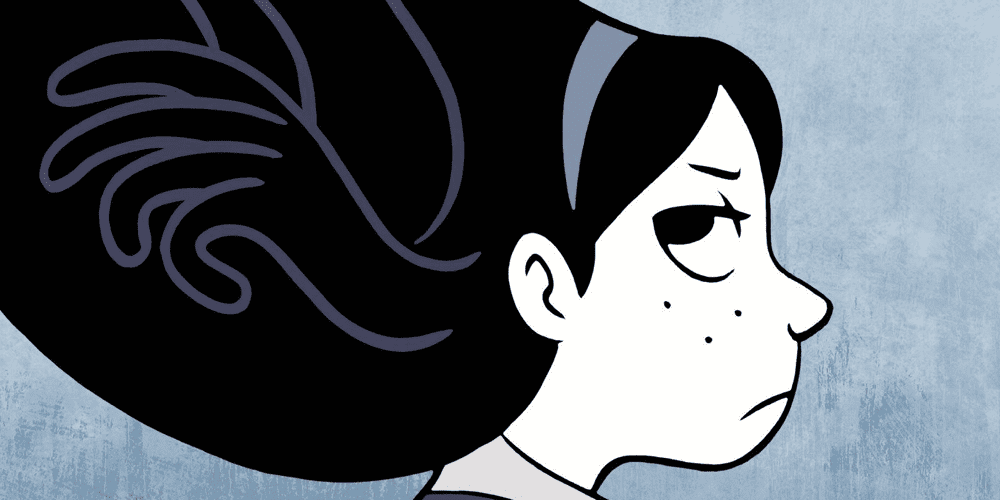
Written by Vera Brosgol, Anya’s Ghostis a coming-of-age ghost story about Anya, a self-conscious loner who befriends the ghost of a young girl who died nearly a century before. What starts as a cute, charming story of two outsiders finding and helping one another transforms into a beautiful and haunting tale once Anya begins to uncover the truth of her new friend’s death.
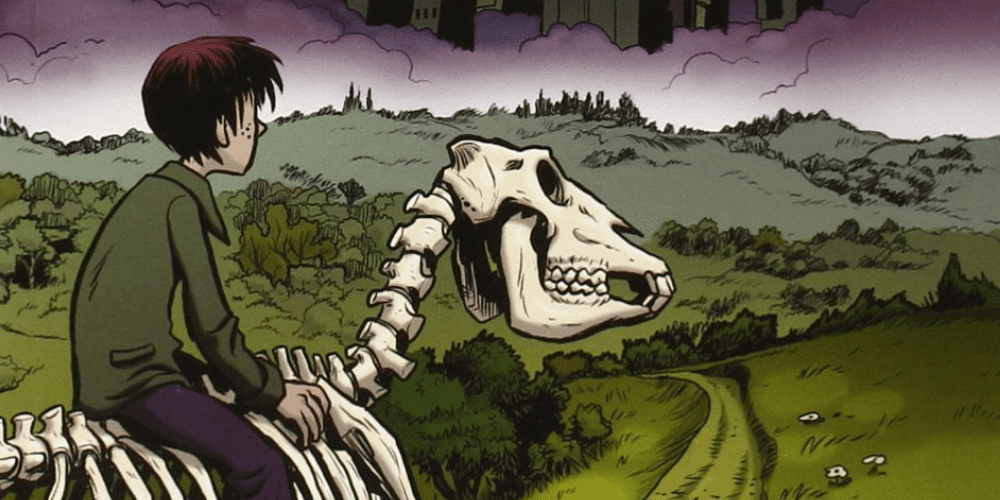
Ghostopolis
This spooky adventure, written and illustrated by Doug TenNapel, takes you on a Wizard of Oz-esque journey to the land of ghosts. Young Garth is transported to the eponymous Ghostopolis. With powers that the ghosts of Ghostopolis seemingly don’t possess, Garth and his ghost friends embark on a journey to take down an evil ruler and find a way to return home to the land of the living. Though it’s a wholly familiar story, it is still a most enjoyable book with heart, adventure, and a really cool magic system.
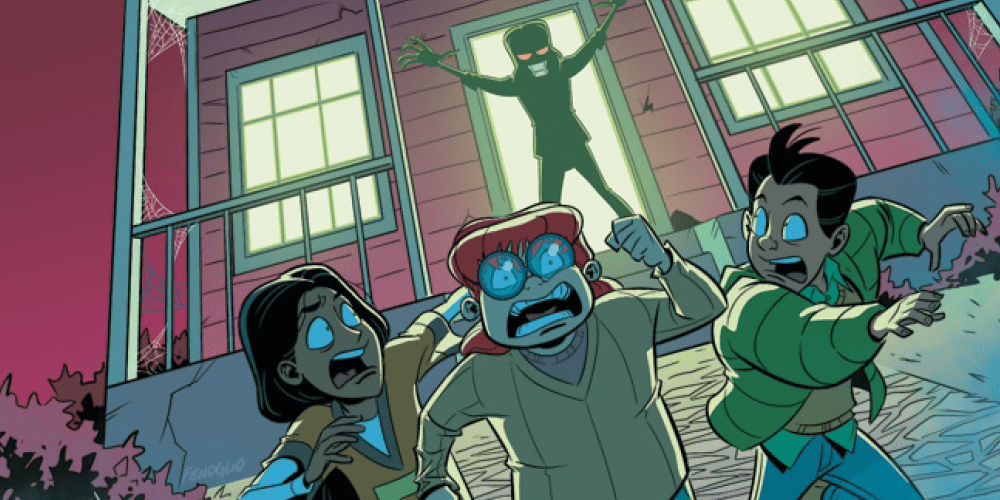
Goosebumps
Yes, the iconic series of children’s horror novels by R.L. Stine comes in comic format as well. And what’s more, there are multiple books for you and your kids to devour. There are four volumes of Goosebumps Graphix, each an anthology with three or four graphic novel adaptations of the classic stories such as Night of the Living Dummy and The Werewolf of Fever Swamp. There have also been a few original stories published, including most recently Horrors of the Witch House, about three friends who discover that an evil witch has purchased the town’s haunted house. These comics are just as fun and spooky as the original Goosebumps tales, and perfect for parents who read them as children to share with their kids.
Gotham Academy
Originally developed as part of the final wave of DC Comics’s New 52 initiative, Gotham Academy centered around Olive Silverlock and her friends as they navigate the spooky prep school, endure its bizarre staff, and uncover its mysteries. Though the initial series lasted only 19 issues, and its Rebirth era reboot (entitled Second Semester) just another 12 more, the book is without a doubt a fun and haunting read. It’s got that Harry Potter charm and sense of adventure, coupled with the gothic/noir spirit of the Batman mythos.
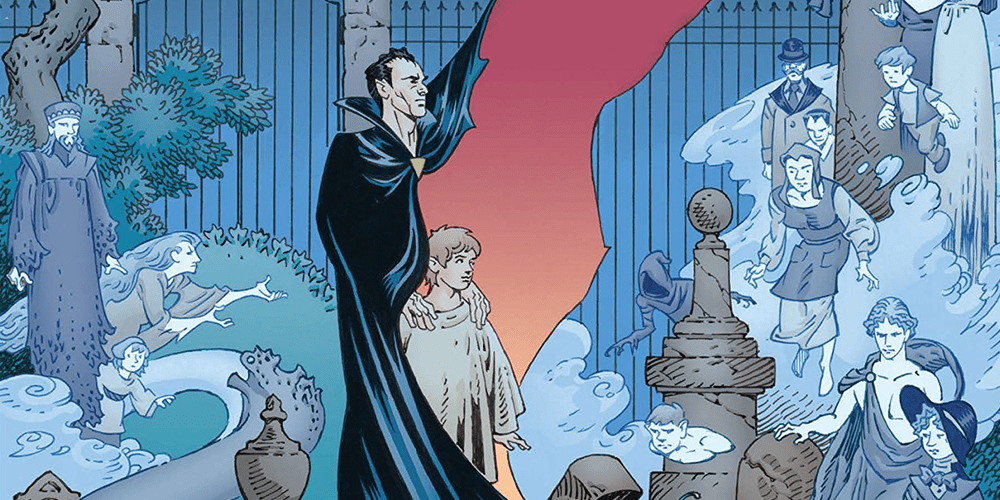
The Graveyard Book
The celebrated children’s novel by Neil Gaiman is adapted into graphic novel format, adding haunting imagery on top of the prolific tale. The Graveyard Book tells the story of Nobody “Bod” Owens, who, as an infant, crawls his way into a cemetery after his family is murdered. The ghosts of the graveyard take pity on the boy, and decide to raise him as one of their own. Each chapter of the book is written as a short story, or one episode of a bigger series, with Bod on an adventure in and around the graveyard. Gaiman is a master of dark fantasy, and The Graveyard Book is no exception. While the novel itself is a must read for you and your kids, the graphic novel adaptations brings those narrative visuals to life with beautiful detail and color.
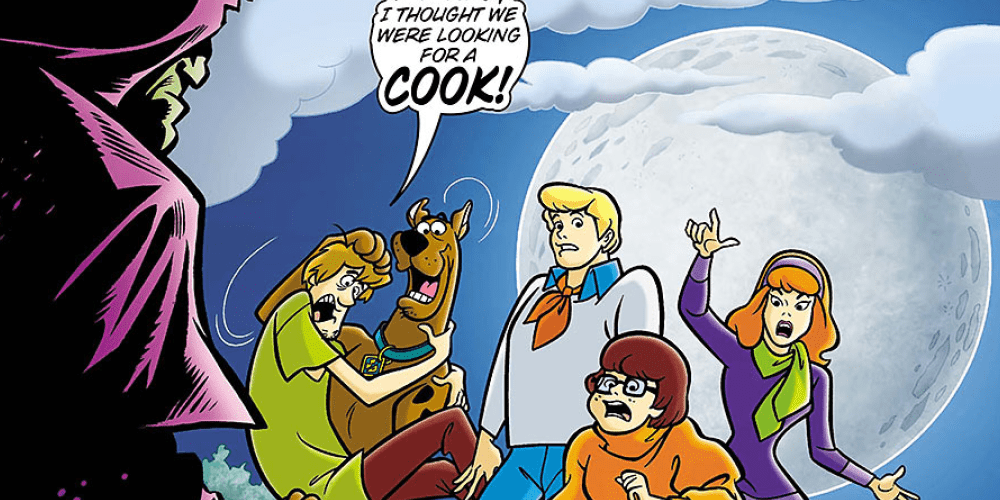
Scooby-Doo, Where Are You?
Another bit of nostalgia that you can share with the next generation, Scooby-Doo, Where Are You is a chuckle and chill inducing series. Published by DC Comics since 2010, each issue of Scooby-Doo features one new and one classic mystery that Mystery Incorporated must solve to catch the creepy crooks – who would have gotten away with it, if not for those meddling kids!
Spook House
Eric Powell (The Goon) wrote and co-illustrated this anthology series of scary campfire tales for kids. While it’s creepy in its own right, Spook House is a great gateway comic for kids that want a fun Halloween read. The writing has some dark elements to it, but the whimsical and cartoonish artwork serves as a great counterbalance. Some of the standout stories in the anthology include Heckraiser and The Creature from Granny’s Pond.
The Witch Boy
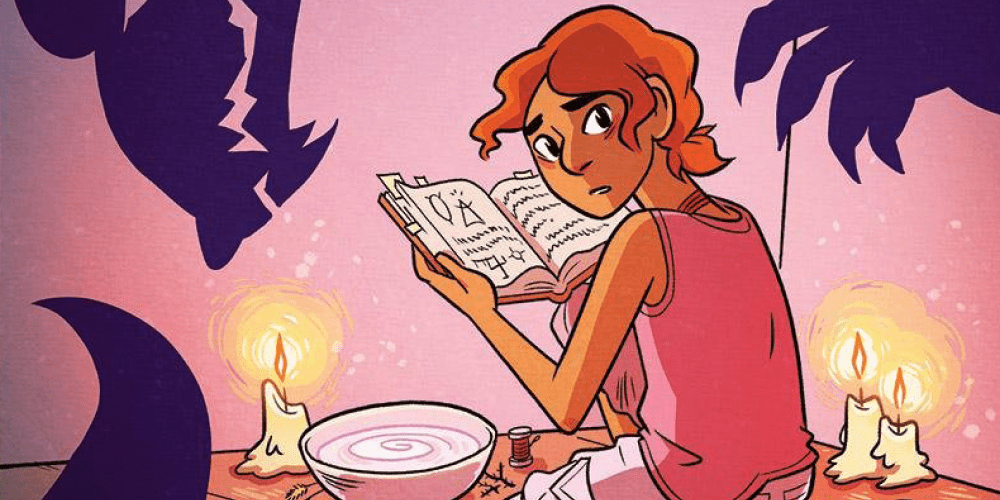
In The Witch Boy by Molly Ostertag, the girls in Aster’s family are raised to become witches, while boys become shape shifting demon hunters. But Aster, who has yet to prove he can shift, is more fascinated by witchcraft. The book presents relatable ideas such as going against what is expected of you, and the consequences you face in society because of those feelings. The book has spawned two sequels, The Hidden Witch and The Midwinter Witch.
What other spooky comic books are your kids reading this month? Let us know in the comments.