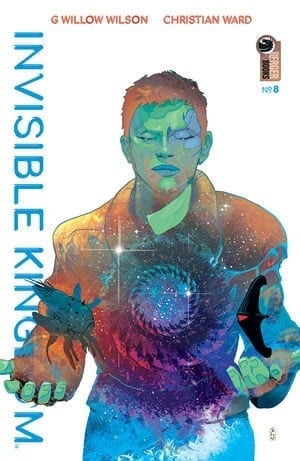
Blasting into the world this week is the new issue of Invisible Kingdom from Dark Horse imprint, Berger Books. This comic from G. Willow Wilson and Christian Ward is an exciting space adventure with beautiful imagery. If you haven’t checked this series out yet, this latest issue is accessible and once on-board, you’ll want to stay.
Invisible Kingdom #8 Credit: Dark Horse Comics
Familiar Narrative
While playing both sides, Captain Grix risks everything to get her ship back and escape the space pirates. However, her reputation has preceded her and now her plans are beginning to unravel. What chance does the crew of the Sundog have with enemies on both sides?
Whereas the first arc was all about world building with elaborate planetary systems and a host of different species mixing on the page, in this second arc G. Willow Wilson has scaled that world right back. The crew of the Sundog have become trapped on a spaceship surrounded by space junk and they have nowhere to go.
Although this narrative limits the vast expanse of Space that made the previous arc so exhilarating it does allow Wilson to focus much deeper on the characters. This issue, for example, is primarily a character breakdown of Captain Grix. The situations she faces and her interactions with the different factions within the narrative illustrates her personality in all its guises. She is a Captain, a mother, a thief, and a desperate woman just trying to survive. She makes a number of different plays and doesn’t win them all.
This character dissection is a wonderful read. It pulls the reader into the comic way beyond the surface appreciation of the art and, in turn, creates intense drama. The story itself isn’t groundbreaking, especially for this type of science fiction where it draws from classic western motifs, but the detailed character work ups the ante. The reader is invested in Grix and her crew to the point where each twist in the story heightens the tension. This comic slowly pulls you to the edge of you seat.
The pace at which the narrative unfolds is perfectly pitched with the first two thirds of the comic building the drama, setting all the pieces in place before a turn in fortunes changes the tempo. Links to the Western start to pile up with an interesting take on The Good, The Bad, and the Ugly in the setup of the final act.
Invisible Kingdom #8 Credit: Dark Horse Comics
Creative Visuals
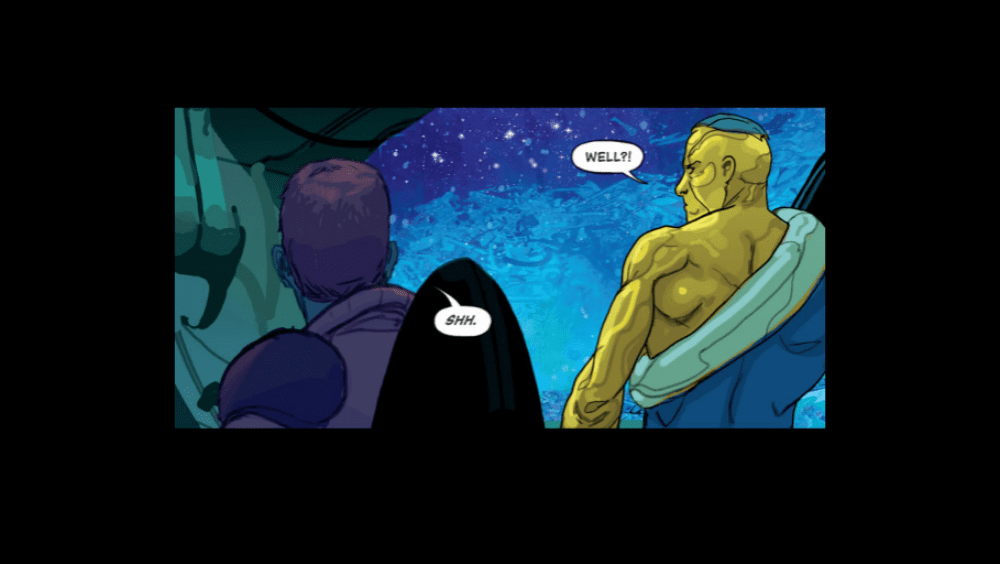
It almost goes without saying at this point that Christian Ward’s art work is outstanding. If you have read any previous issues of Invisible Kingdom then you know exactly what to expect from the visuals. If you have somehow missed issues 1 to 7 then you’re in for a treat.
Ward creates emotionally complex pages with expressionistic images that rely on color representation to identify various characters. Even the environments are color coded in a way that indicates what is happening at different locations in the narrative. It is clever but is also a very simple storytelling technique that any reader can adapt to almost instantly. It allows Ward to be less formulaic with his design and character work.
There is the sense of the cinematic about the layouts and image composition but then Ward goes beyond this to create linear sequences that only work in the comic book format. It is the sudden drop from full page width panel to a very small, square panel that stands out. It acts like a quick zoom and pinpoints a specific moment, giving it importance above everything else.
Sal Cipriano does something similar with his lettering. The speech balloons have a hand drawn look to them, with inconsistencies in the thickness of the balloon border. However, there are moments when the border has a smooth, even finish. It is a subtle change but adds weight to the text within the balloon. It makes the reader, almost subconsciously, ponder that particular speech, reading more in to it than the flowing conversations around it.
Cipriano also occasionally breaks the firmness of the panel borders with his speech balloons. This draws out the moment and, as before, highlights a specific phrase giving it an inflated sense of importance.
Invisible Kingdom #8 Credit: Dark Horse Comics
Conclusion
On the surface Invisible Kingdom is an entertaining Space Adventure with classic Western undertones, easily comparable to Firefly or even Star Wars. However, Wilson, Ward, and Cipriano elevate the experience with impressive knowledge of their craft and a more experimental approach to presentation.
It is clear that the creators are having an excessive amount of fun while making this comic because that comes across in the reading. You can’t help but be entranced by the characters and there are several that you will become emotionally attached to without necessarily realising it. This particular issue draws your attention to this fact because it centralises on character.
Wilson is cleverly imprinting the characters and their lives on the reader so that whatever follows next will be that much more dramatic. The danger highlighted in this issue will only intensify and our love of the characters will push the tension up, edging us ever nearer and nearer to the edge of our seats.
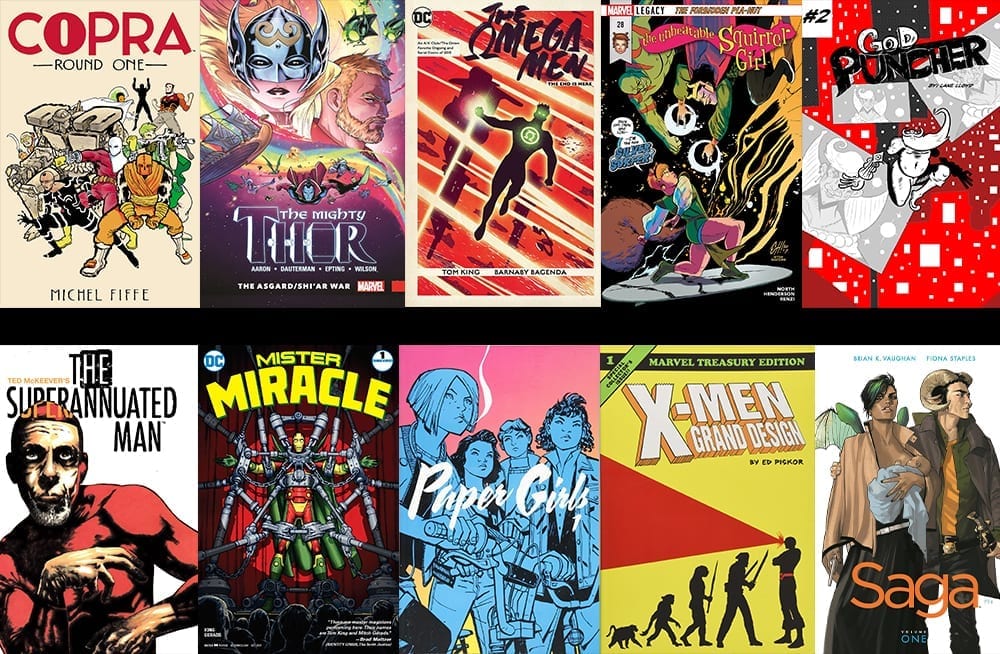
The past ten years of the comic book industry have been insane, to say the least, as superhero films dominate the landscape, and creator-owned books exploded on Kickstarter. With advances in technology, and our ability to connect with creators all over the globe; it has never been easier to create and publish a comic book than now. For this reason, I’m so proud of our diverse group of books below. These are Monkeys Fighting Robots’ favorite books from the past decade.
Saga
Anthony Composto
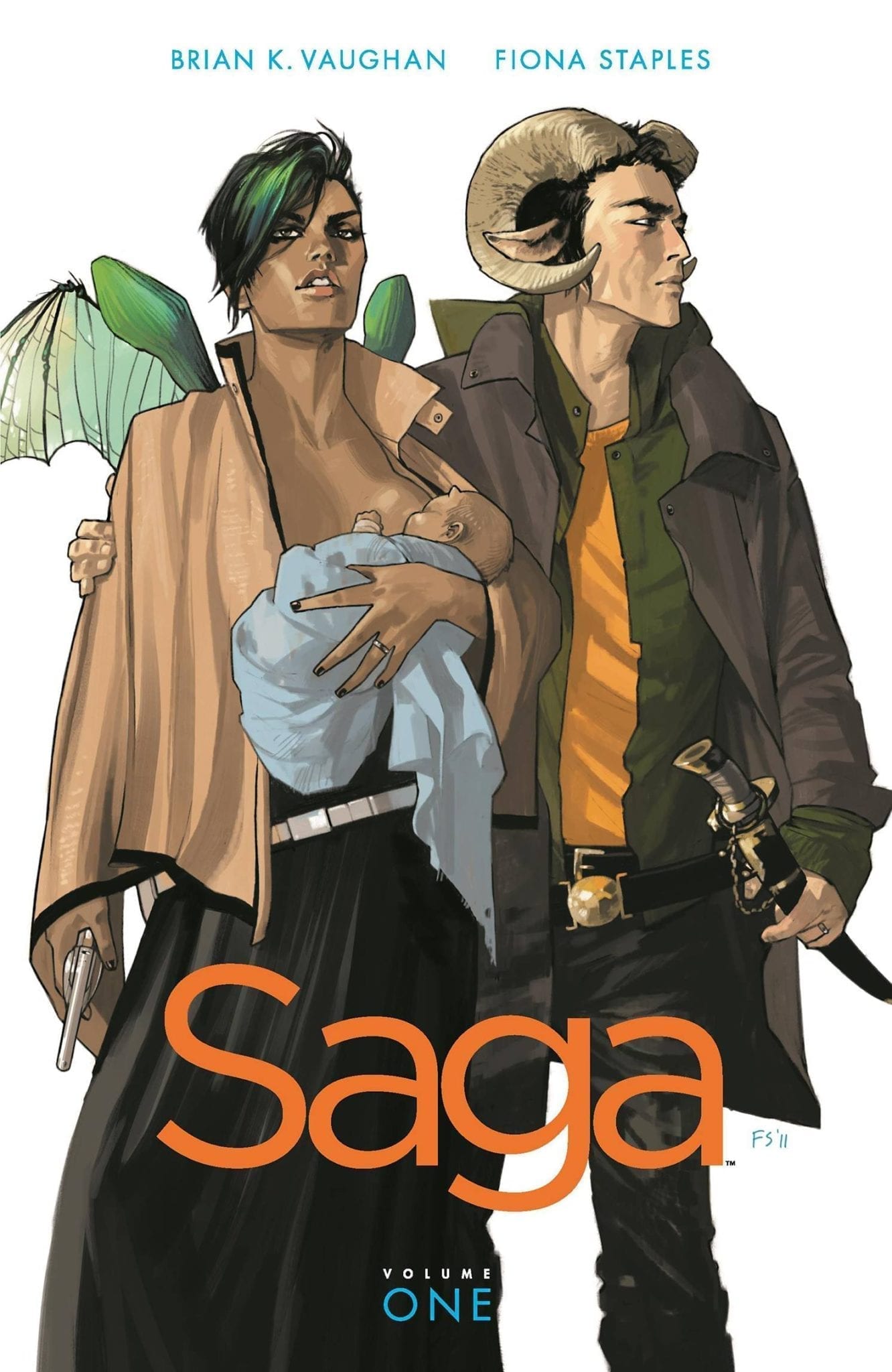
Every “Best of the Decade” list you read this year will feature Brian K. Vaughan and Fiona Staple’s Saga. You may even be sick of hearing people praise Saga over the past seven years. But there’s a reason comics fans won’t shut up about Saga: it deserves the acclaim. The world (or rather universe) Staples and Vaughan built is beautiful, vibrant, and interesting. The characters feel real and relatable despite their horns, wings, and television heads. The story is full of hope and love, but it doesn’t shy away from the darker, uglier side of life that we all must face. Plus, it has so many twists and turns that Saga never feels stale or boring. It’s endlessly readable; every time a new volume comes out, I find myself re-reading the entire series from the start, and it always fills me with the same sense of wonder. Through the intergalactic war and fantastic creatures that fill it, Saga is a quintessential comic on what it means to be human. It may be a more conventional pick, but Saga is, without a doubt, one of the best comics of the last decade, and with half the story still untold, it’ll be one of the best of the next decade to boot.
X-Men: Grand Design (Treasury Edition)
Manny Gomez
Ten years is A LOT of comics, and choosing one is a difficult task. So I went with the book I was most excited about, and that ended up delivering on all fronts: Ed Piskor’s X-Men Grand Design: Treasury Edition. As impressive as the single issues of Piskor’s love letter to the X-Men are, the collected and oversized Treasury Edition is my favorite physical comic book of the decade. The book harkens back to the classic Treasury Editions of the 70s yet also, due to the art and artist involved, gives off an almost Drawn and Quarterly/Fantagraphics indie comics vibe. It’s a perfect fusion of indie and mainstream comics in a gorgeous package. This edition also includes Piskor’s recoloring of the original X-Men #1. Piskor’s colors on Kirby’s pencils are sublime. Hopefully, this book sparks a whole slew of Grand Design books that keep this format and vibe. These are the kind of projects that keep comics fresh, viable, and exciting! Read more comics!
Paper Girls
David DeCorte
In case you haven’t noticed, ‘80s nostalgia has been a bit of a thing in recent years. While reliving the past can be nice, Paper Girls is a story that uses nostalgia as a lens through which we can better understand a broader truth about growing up, as well as the nature of nostalgia itself. Throughout this thirty-issue run, creators Brian K. Vaughn and Cliff Chiang deliver an incredibly inventive, fast-paced story, all brought to life with rich, stylish artwork. It’s the characterization, though, that makes the series so compelling. Each personality populating this world feels like a real, rounded person. These characters forge genuine emotional connections with the reader. This is the element that ultimately makes the theme of the inevitability of change—and the fact that change isn’t a bad thing—resonate so powerfully.
Mister Miracle
Justin Munday
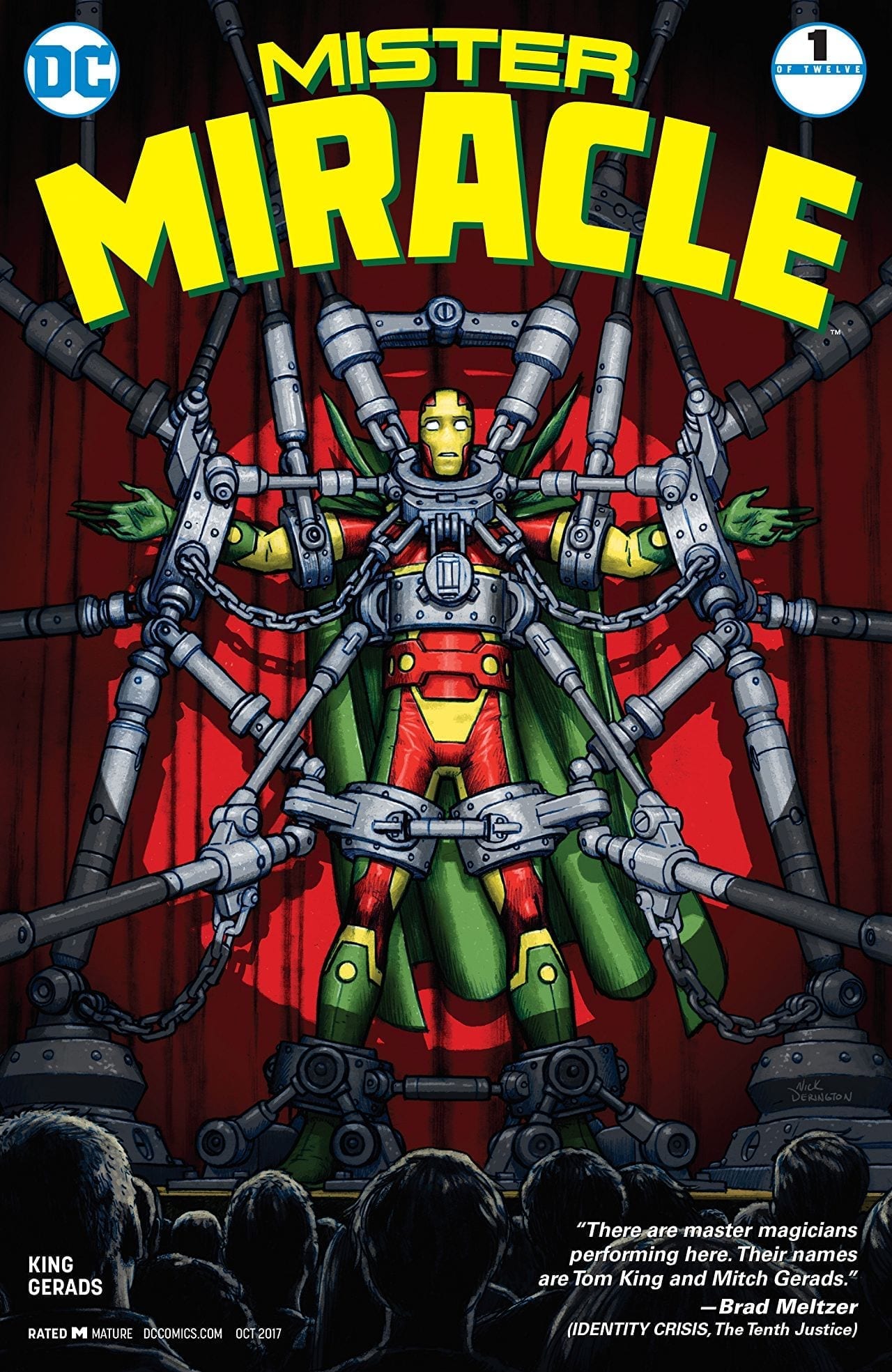
As many jokes as there may be about Tom King’s constant focus on PTSD and its ensuing nihilistic depression, there’s no scoffing at the effectiveness of Mister Miracle. King and artist Mitch Gerards’ 12-issue maxi-series about the chaotic emotional state of Scott Free, a.k.a. Mister Miracle is one of the most beautifully constructed comic series in recent memory. The opening plot point with Scott Free supposedly attempting to “escape” death itself is the catalyst for a year-spanning tale about survivor’s guilt, trauma, love, and fatherhood. Free, realistically, is trying to escape his haunting existence after being raised in the pits of Apokolips. Moments of frightening doubt and questionable reality are intercut by strange deadpan humor and uplifting scenes of emotional beauty. Scott and Barda’s relationship is one of the best working romances ever presented in the medium. Watching them go from dealing with Scott’s attempted suicide to waging war on the armies of Apokalips and back to deciding on a home remodel is a constantly reassuring and emotionally uplifting treat. King and Gerards take Jack Kirby’s classic creation to storytelling heights that Kirby himself could scarcely imagine. “Darkseid Is” is the calling card for the surrounding darkness that Free, and potentially anyone who reads the series, can succumb to under just the wrong circumstances. The entire rest of the series, however, is the response to it. It offers up the conclusion that yes, Darkseid is, but we can exist and thrive in spite of it.
The Superannuated Man
Darryll Robson
Unlike the 1990s, which turned into a quagmire for comic book fans, the last ten years have gone from strength to strength with arguably some of the best comics coming out in the later years of the decade. We’ve seen milestone issues like Action Comics #1000, surprise endings from The Walking Dead, and ground-breaking concepts like Building Stories by Chris Ware. To pick just one comic, or even a single series, from all on offer, is a mammoth task. Therefore I have selected a personal favorite, an underrated miniseries whose first issue was released in June 2014: The Superannuated Man.
Ted McKeever writes, draws, and potentially lives in the bizarre future world of The Supprannuated Man, where a lone human is merely trying to survive in a dystopian landscape of talking animals and existential blame. While post-apocalyptic landscapes are two a penny, McKeever has created a philosophical examination of what makes us human and the natural evolution of the world around us.
Highly detailed black and white artwork drag you through the poetic yet grotesque world, which is haunted by memories of the present day. At some level, we are all being left behind, and The Superannuated Man is about how we cope and adapt.
As the world of comics expands and more people fall in love with the sequential arts, there will be greater demand for something new, something different. Comics like The Superannuated Man, although not appealing to a large crowd, can now find an audience. And the fact that vanity projects such as this exist is proof that the industry is changing for the better.
God-Puncher
Jason Jeffords Jr
Picking my favorite comic of the decade might have been the hardest thing I’ve done all year, what’s even harder is having only a few sentences to portray why said comic is deserving of such an award. Let’s not waste any more sentences on why God-Puncher by Lane Lloyd is one of the best comics of the decade. Starting out, you may notice that you’ve never heard of God-Puncher; this is due to it being self-published by Lloyd himself, giving him the freedom to do whatever he pleases. This creative freedom is God-Puncher’s strong suit, yet one hardship the comic faces, as a world filled to the brim of comic publishing overshadows the self-published creators.
So much could be said about the issues of God-Puncher released so far, yet the most important fact is: how fun each issue is and how it embraces the energy of what comics are. Lloyd’s creative art and chaotic story shine beautifully through each panel he has painstakingly made all of them by himself. Each facet of the comic shows his love, admiration, and understanding of the medium. By the time you’re caught up on God-Puncher, you’ll fall in love with the world of self-published comics. You’ll realize there’s a vast world out there of comics waiting to be discovered that are self-published. God-Puncher changed the way I look at comics, which has only happened once before.
The Unbeatable Squirrel Girl
Anthony Wendel
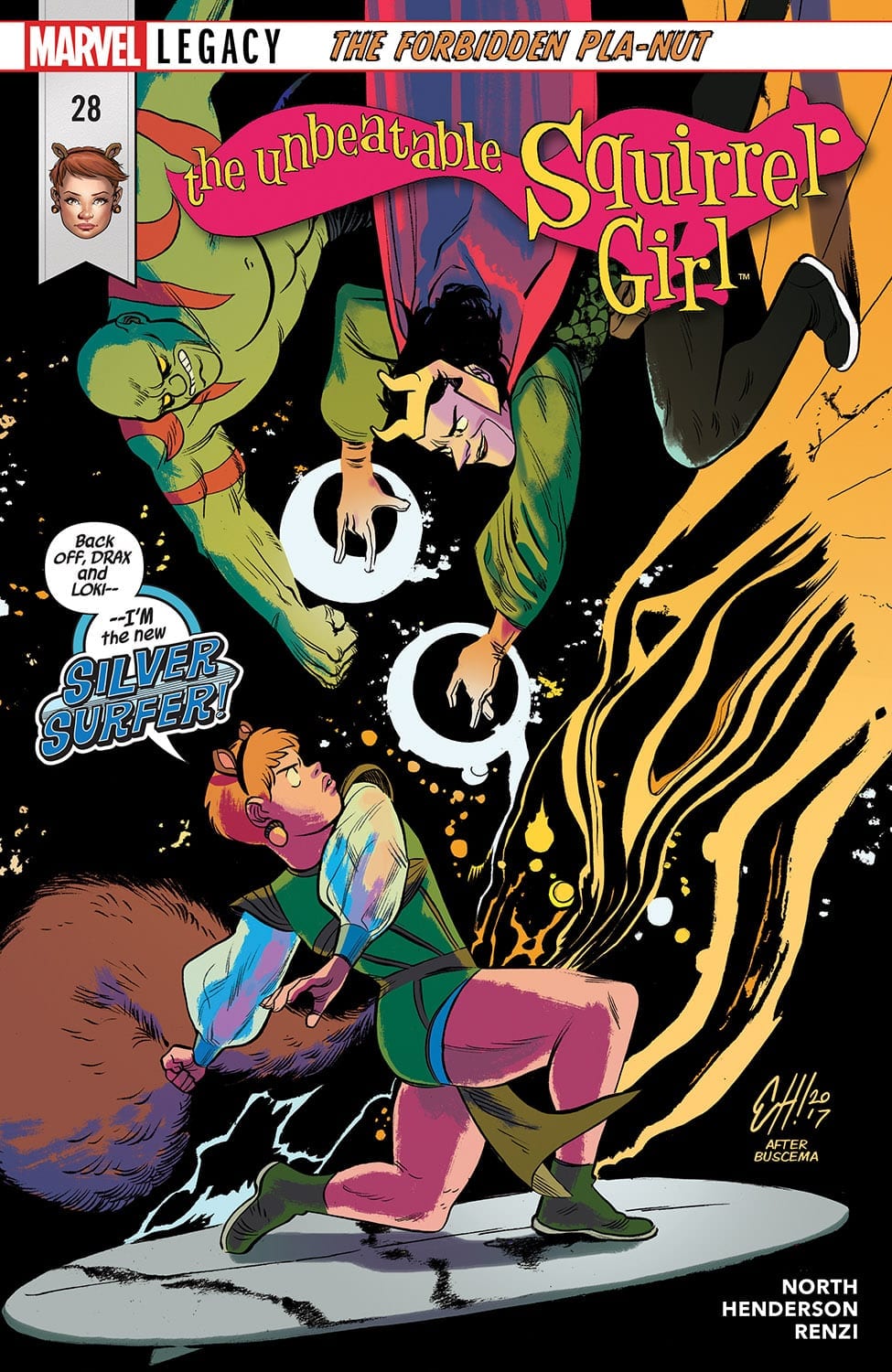
Comedy is hard. Comedy in comics can be even harder. Yet, somehow the Unbeatable Squirrel Girl found a way to make me laugh with every issue I read. Either by taking a character some would have labeled as a “D-Lister” and have her take a selfie after defeating Galactus, have to reject Mole Man trying to court her, or the time she legitimately went on a date with a Sentinel, it was impossible not find joy in this series. Squirrel Girl was just a fun character to watch, go on adventures who would not get swept up in title changing events, and instead would just leave the reader with a smile thanks to puns, meta-commentary, and cliff note jokes which were easy to miss but a joy to read. Also, just one word: Kra-Van. Google it and thank me later.
Omega Men: The End is Here
Jody Cardona
When I pick out comics to read, I usually go for the ones I think I would be entertained by first. I don’t often seek out the comics that make me sit and think about the world outside those colorful pages. That all changed when I picked up the first issue of Tom King’s Omega Men. From that first issue, we were brought into a darker universe than we have ever seen in DC Comics. A universe where morality was not black and white, but gray. Where heroes were just as despicable as the villains, and their victories just caused more problems to the universe at large. It was only after I finished the last issue of the series did it make me look to the world at large. This comic truly opened my mind to such issues that plague our world today. It’s one that will make you look at our world and make you see shades of gray. The Omega Men series is truly one of the best comics of the decade.
The Mighty Thor
Cat Wyatt
This decade has brought with it dozens of memorable comic issues and series. But few had the impact that the Mighty Thor did, at least as far as I’m concerned. Jason Aaron’s run took some serious risks with a beloved character, handing over the mantle of Thor to a new hero – or rather, heroine. Jane Foster as Thor may have been a surprise for many, but in hindsight, it fit her character perfectly. Think about how driven she’s always been, and it all falls into place. The Mighty Thor brought with it some serious impact and several new readers. Jane Foster’s Thor was emotional and brilliant, one that invited conversation and debate. I was always impressed by the creative team behind the project, taking on so much heat through social media, and yet never once backing down from their story. The Mighty Thor was intense, showing us the costs of being a hero, all while giving us a Jane Foster determined to do what was right. And it’s a plot that’s going to stick, forever in my heart.
COPRA
Jamie Jones
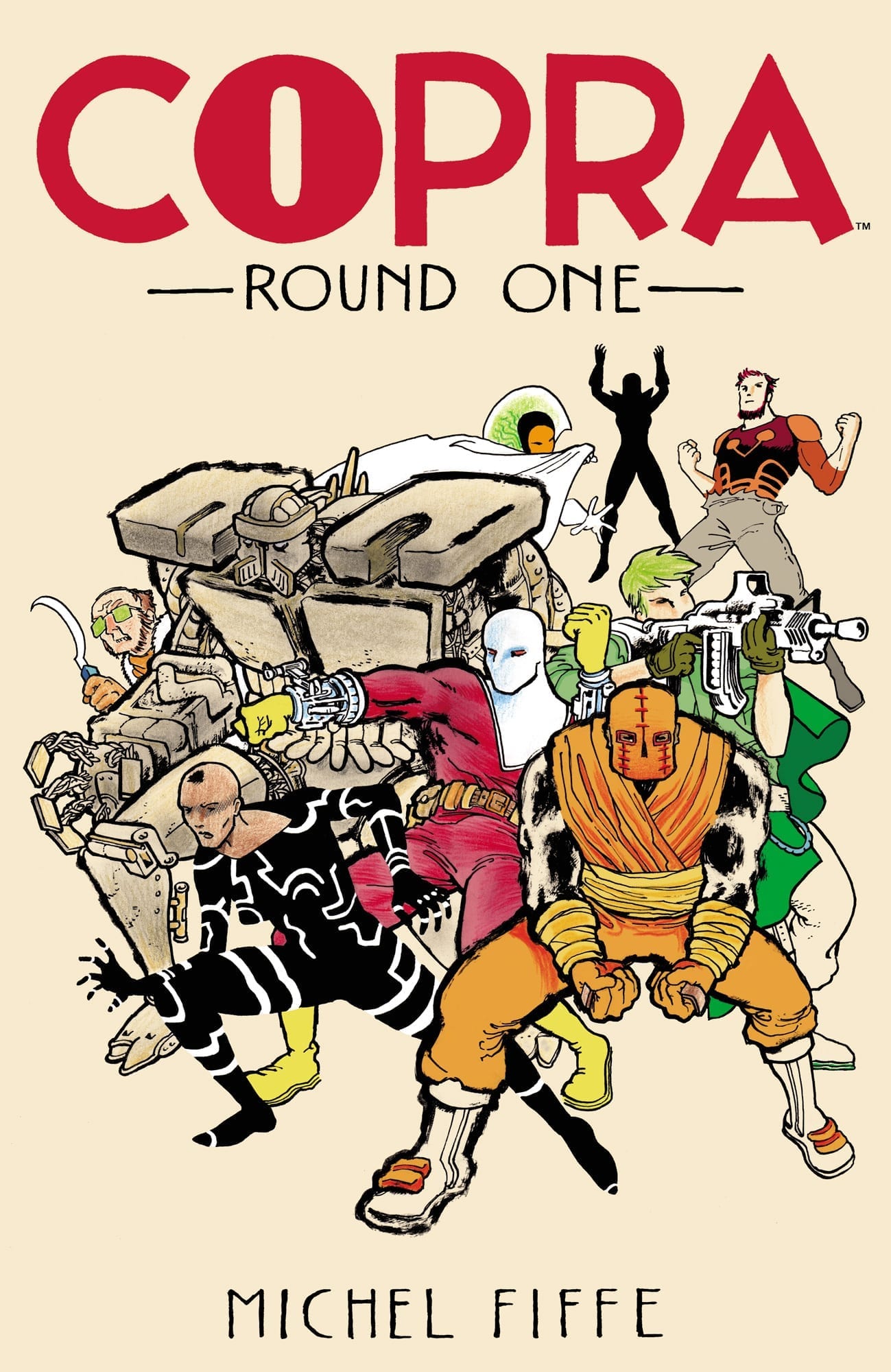
Like the manic scribbles of a middle school student making his own Death of Superman comic in the margins of a math test (the results of which is better than any book published by one of the big two), Michel Fiffe has taken the comics that he loves and made them into something worth reading. That sounds bad, like I’m bad-mouthing mainstream comics. I’m not. It’s just; Copra stands above so much in the superhero genre.
Fiffe has internalized all comics, pre-bubble-burst, and filtered it through a heavy dose of Clowes, Burns, and their ilk. Never letting COPRA’s ever-escalating action get in the way of small character moments and giving us deeply interesting characters whose growths and deaths mean something from issue to issue.
When I found COPRA, I was pretty bummed on comics. I couldn’t find anything that made me want to stay in the game. Nothing that made me want to make comics. Now, COPRA is one of the books that I keep close, a source of inspiration, a gold standard of self-publishing, and the constant reminder that it only takes one person to make a comic.
What was your favorite book of the past decade? Comment below with your thoughts.
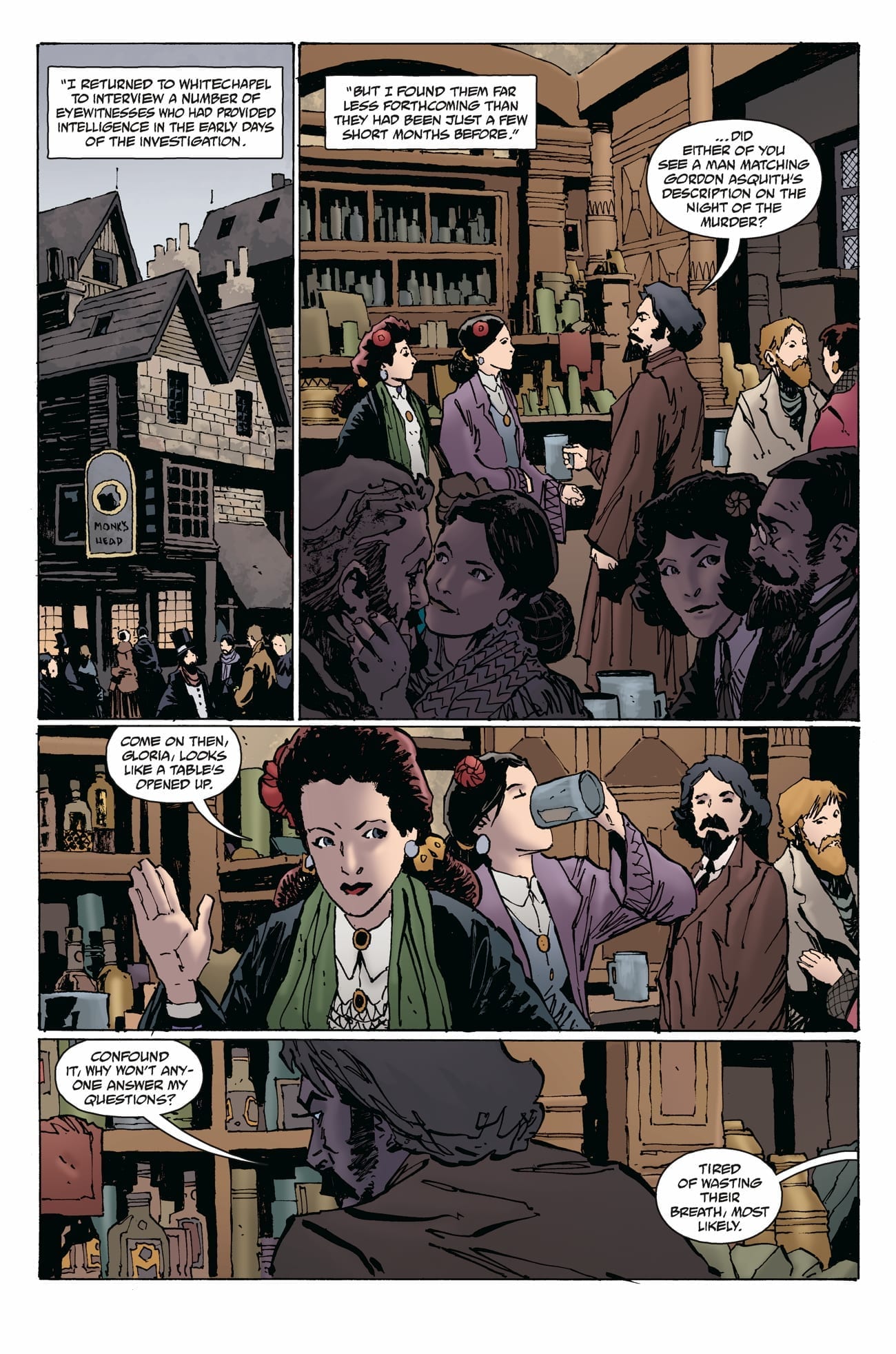
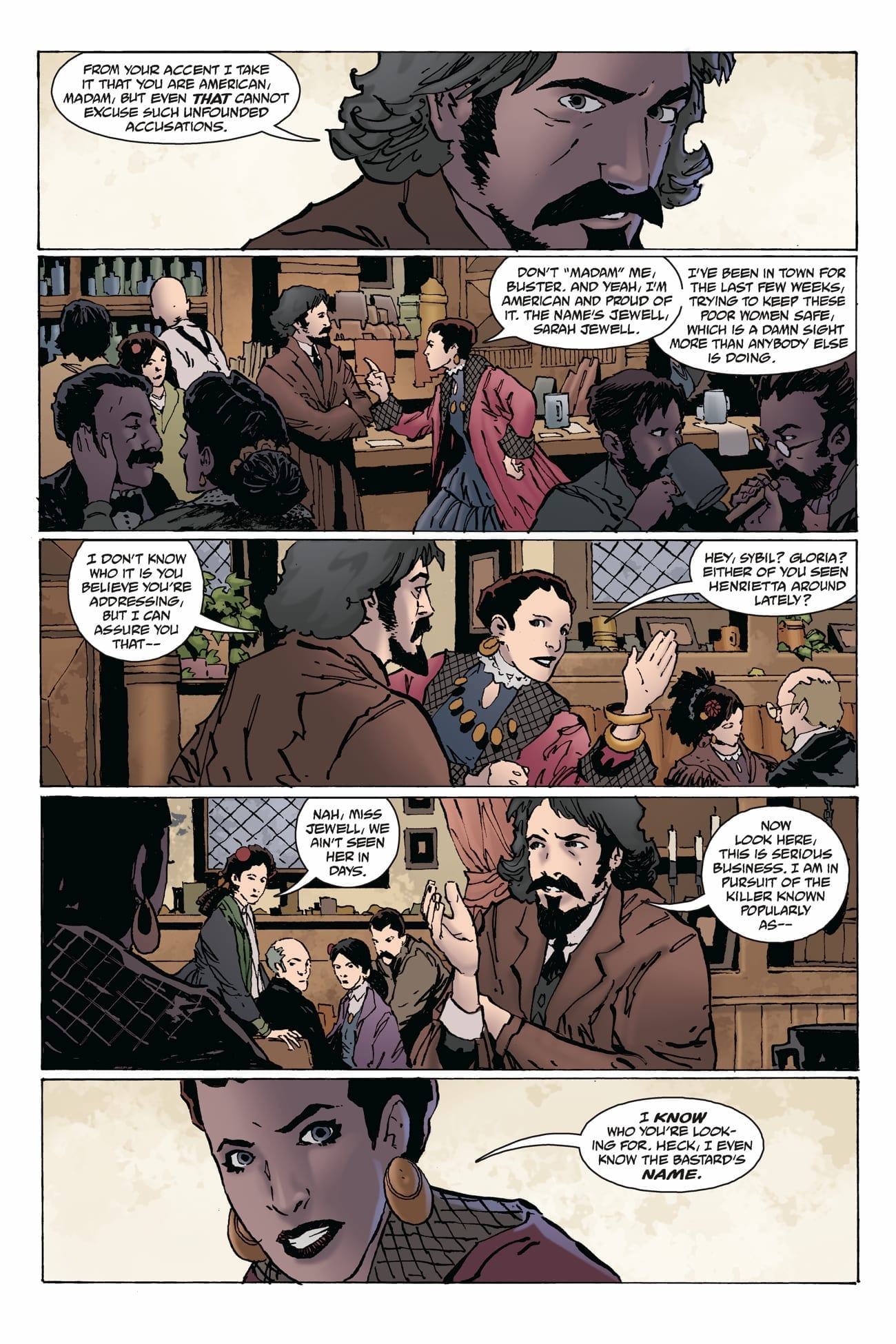
WITCHFINDER: THE REIGN OF DARKNESS #2 hits your local comic book store tomorrow, December 18th, but thanks to Dark Horse Comics, Monkeys Fighting Robots has an exclusive five-page preview for you.
About the issue: A new suspect arises as the Witchfinder continues his investigation into the Ripper murders! But with his investigative integrity in question, that may be the last thing he needs. Meanwhile, Sarah Jewell’s attempts to infiltrate the mysterious Proserpine Home could reveal the true culprit–or put both her and Edward Grey in even more danger!
The comic is by writers Mike Mignola and Chris Roberson, and artist Christopher Mitten, with colors by Michelle Madsen, and letters by Clem Robins.
Sir Edward Grey, the titular Witchfinder, was first introduced in Mignola’s Hellboy before receiving his own comic book. Reign of Darkness is actually the sixth volume in the Witchfinder series, and the third consecutive one to feature the team of Mignola and Roberson.
Reign of Darkness sees the legendary paranormal investigator take on one of London’s greatest threats: Jack the Ripper!
Check out the WITCHFINDER: THE REIGN OF DARKNESS #2 preview below:
Are you reading WITCHFINDER: THE REIGN OF DARKNESS? What is your favorite Mike Mignola book? Sound off in the comments!
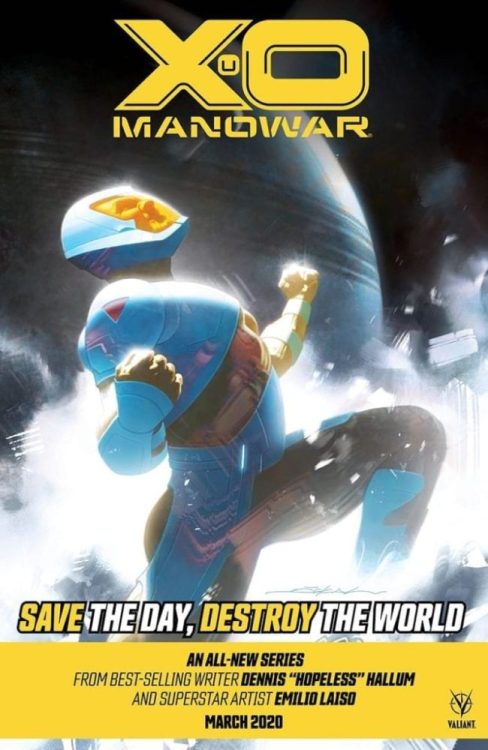
Valiant Entertainment announced today a new X-O MANOWAR series launching on March 25th, 2020.
From the official press release:
X-O MANOWAR #1 unleashes the Valiant Universe’s most powerful hero in an all-new series this March!
From fan-favorite writer DENNIS “HOPELESS” HALLUM (Star Wars: Darth Vader – Dark Visions) and breakout star artist EMILIO LAISO (Marvel’s Spider-Man: Velocity), a futuristic threat arises to destroy the planet, and the ancient warrior king – Aric of Dacia, a.k.a. X-O Manowar – is the only person with the courage and power to stand against impossible odds! Can Aric evolve into the superhero the world needs today?
The series will also feature colors by Ruth Redmond, letters by Hassan Otsmane-Elhaou, and covers by Christian Ward, Jeff Dekal, Rod Reis, Greg Smallwood,and Raúl Allén.
“What excites me most about the series is how much world building Valiant is letting us do,” remarked Hallum. “New villains. New allies. New friends and community. We’re planting Aric firmly on the ground so a big crazy comic book garden can grow up around him. There’s a very human story at the heart of this, but make no mistake, we’re filling up the X-O toy box with rad new toys.”
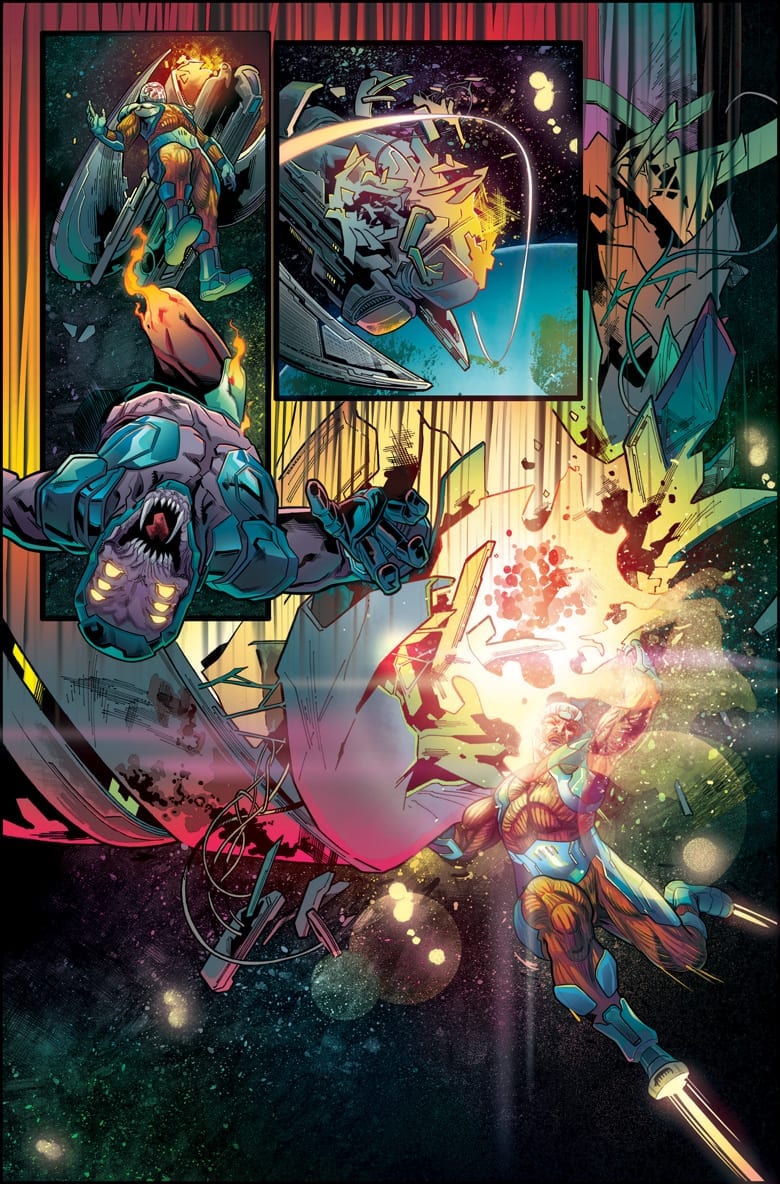
Take a look at the initial art reveal:
Are you looking forward to the new X-O MANOWAR? Sound off in the comments!
Doctor Who 13th Doctor Holiday Special Part 2 Credit: TITAN Comics
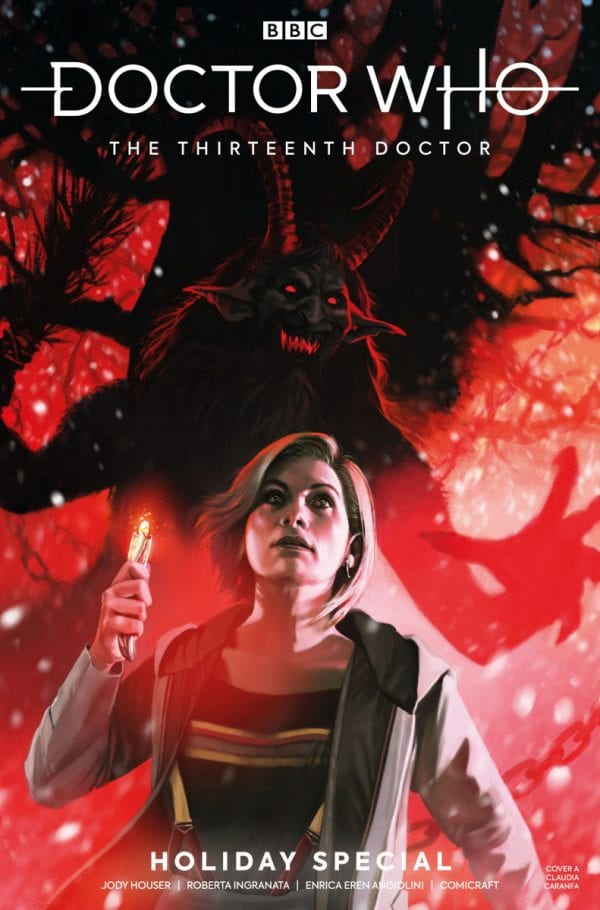
As the New Year creeps ever closer with it’s promise of brand new TV Doctor Who, Titan Comics release the final part of their 13th Doctor Holiday Special. Just in time for the Christmas Break, the Holiday Special hits the shelves with a second oversized issue of time travelling fun.
With all of the TARDIS crew present and correct, can the Doctor find out who stole their memories, why they have been imprisoned, and keep quiet about the real Father Christmas?
Doctor Who 13th Doctor Holiday Special Part 2 Credit: TITAN Comics
A Christmas Story
After having their memories altered, The Doctor and the TARDIS crew find themselves on the trail of a dastardly kidnapper. Heading into a winter wonderland they are captured by toy soldiers and imprisoned in Father Christmas’ basement.
And it just gets more outrageous from there.
After the first, scene setting issue, this concluding part to the story is a mixed bag, just like a Christmas Stocking. To continue the simile, it has a selection of funky toys and tasty sweets but also the boring socks and slightly bruised orange. There are good points and bad.
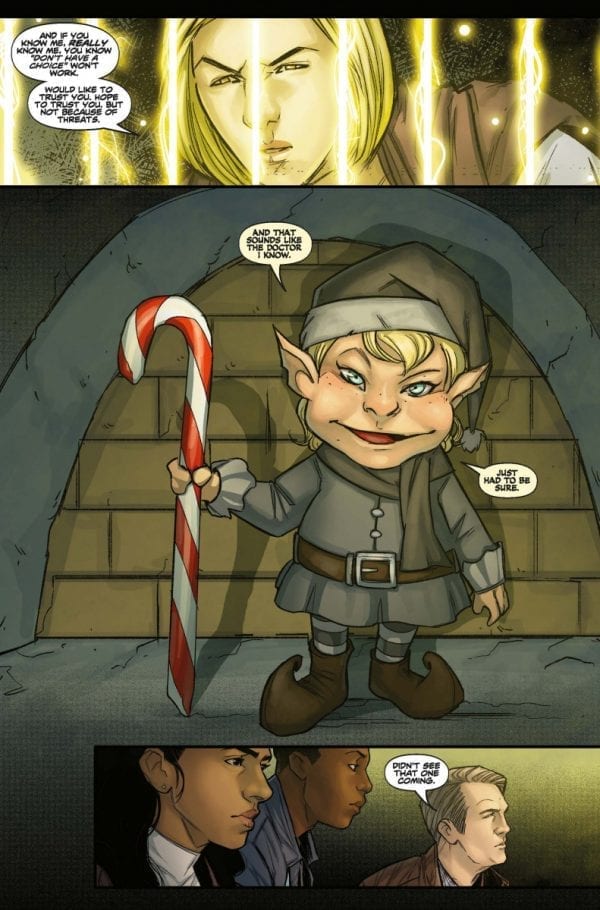
When it is good, this Holiday Special is very, very good. Jody Houser has embraced the Doctor Who festive tradition of creating a slightly ridiculous, feel good story. She has thrown the Doctor and her companions into an over the top Christmas setting complete with elves, wrapping paper, and even Father Christmas himself.
With a year of writing the comic under her belt, Houser has already proven that she can write these characters. If this is your first issue of the 13th Doctor comic, you will find that the characters on the page act and speak exactly as you would expect. The interpretation is spot on and the words drift off the page in the voices of the actors. If you read a 12th Doctor comic then this one, the voice of the central character will automatically alter as you read.
Part of this is down to the speech patterns written by House and partly due to the character rendering by Roberta Ingranata. Ingranata captures each pout and smile perfectly. Although there is an element of simplification in the rendering, none of the characterisation is lost; it is as if Ingranata has condensed the characters into their simplest, but most recognisable forms.
The other characters, the villains and the aliens, are all wonderfully designed with that over-the-top Christmassy feel. This matches the fun story that Houser is telling and produces an easier, lighter reading experience.
Doctor Who 13th Doctor Holiday Special Part 2 Credit: TITAN Comics
The Art of Winter
Unfortunately, in places, the lightness of the script and the art works against the story and the narrative reveals play out with a touch of flippancy. The resolve to last issues cliffhanger is disappointing as a result and certain other story elements are quickly cast aside, overlooked, or seemingly forgotten. This is because everything is taken in it’s stride and it becomes easy to miss important information or narrative beats.
There is also a problem with the visual manipulation of time. On some pages there are elaborate panels structures that lead the reader naturally through the story, adding punctuation to the narrative beats. Other pages are awkward, with too many panels representing a sequence of movements or the layout crowds the page making the visuals overlap and jumbling the story.
As the pacing is consistent, so too the narrative loses momentum and you will find yourself having to reset your inner storyteller on a number of occasions.
The colourist is consistent throughout, giving each page a festive glow. Enrica Eren Angiolini carries the emotional beats from sequence to sequence, altering the palette as required. This is also true of the letterers; Richard Starkings and Sarah Hedrik. The placement of the speech balloons lead the reader gently across the page as best it can while fighting, at times, the composition behind it.
Doctor Who 13th Doctor Holiday Special Part 2 Credit: TITAN Comics
Conclusion
Imagine the scene: it’s Christmas Day, the presents have all been opened, the food consumed, and all you want to do is sit back, relax, and enjoy a bit of light entertainment that doesn’t require much thought. Into this picture the Doctor Who Christmas Special was thrown. It was designed around such festive states and relaxed attitudes, until they started to use them for Regeneration stories.
This Holiday Special from Titan Comics owes more to those early stories with killer Christmas Trees and murderous Herald Angels. Houser has written something enjoyable, if a little daft, and will give you a warm fuzzy feeling. It won’t have much of a lasting impact and might not come out for another read for several more Christmases, but it is worth reading.
If the panels were tighter, and the composition stronger, it may have given the story more emotional impact. As it is, the character work is wonderful but the storytelling is awkward. While not being as good as the first part, or the first year of comics, it fits the festive season snugly and will help pass a lazy, Christmas day.
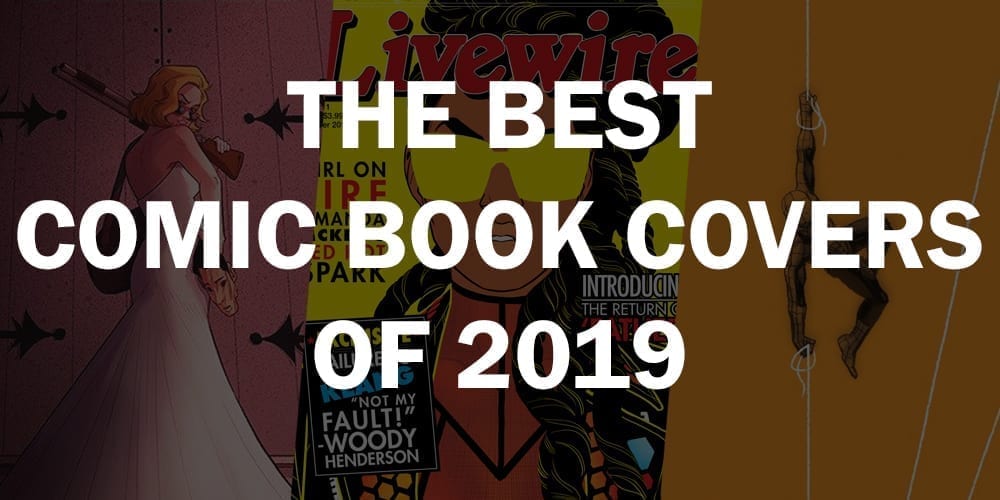
With just a little over two weeks left in the year, we are rounding up our favorite comic book covers of 2019!
2019 was a great year for comics big and small, and narrowing our favorites down to those below was a near impossible task. These are simply our picks, but we want to know yours too, so be sure to comment and let us know what YOUR favorite covers of the year were!
Nominations were collected by publishers, creators, and the Monkeys Fighting Robots team, and were then voted on by the MFR team. Thank you to all the publishers and creators who contributed nominations; we can’t wait to see what new goodies you have coming in 2020!!
Honorable Mentions:
Life and Death of Toyo Harada #1 Glass Variant
(Doug Braithwaite & Travis Escarfullery)
We love covers that do new and interesting things, and this glass variant from Valiant Comics fits the bill perfectly! Illustrated by Doug Braithwaite and crafted by Valiant Director of Design and Production, Travis Escarfullery, this is a cover that you can literally see yourself in. This is actually the publisher’s third glass variant, with two coming out last year for Bloodshot Rising Spirit #1 and Livewire #1.
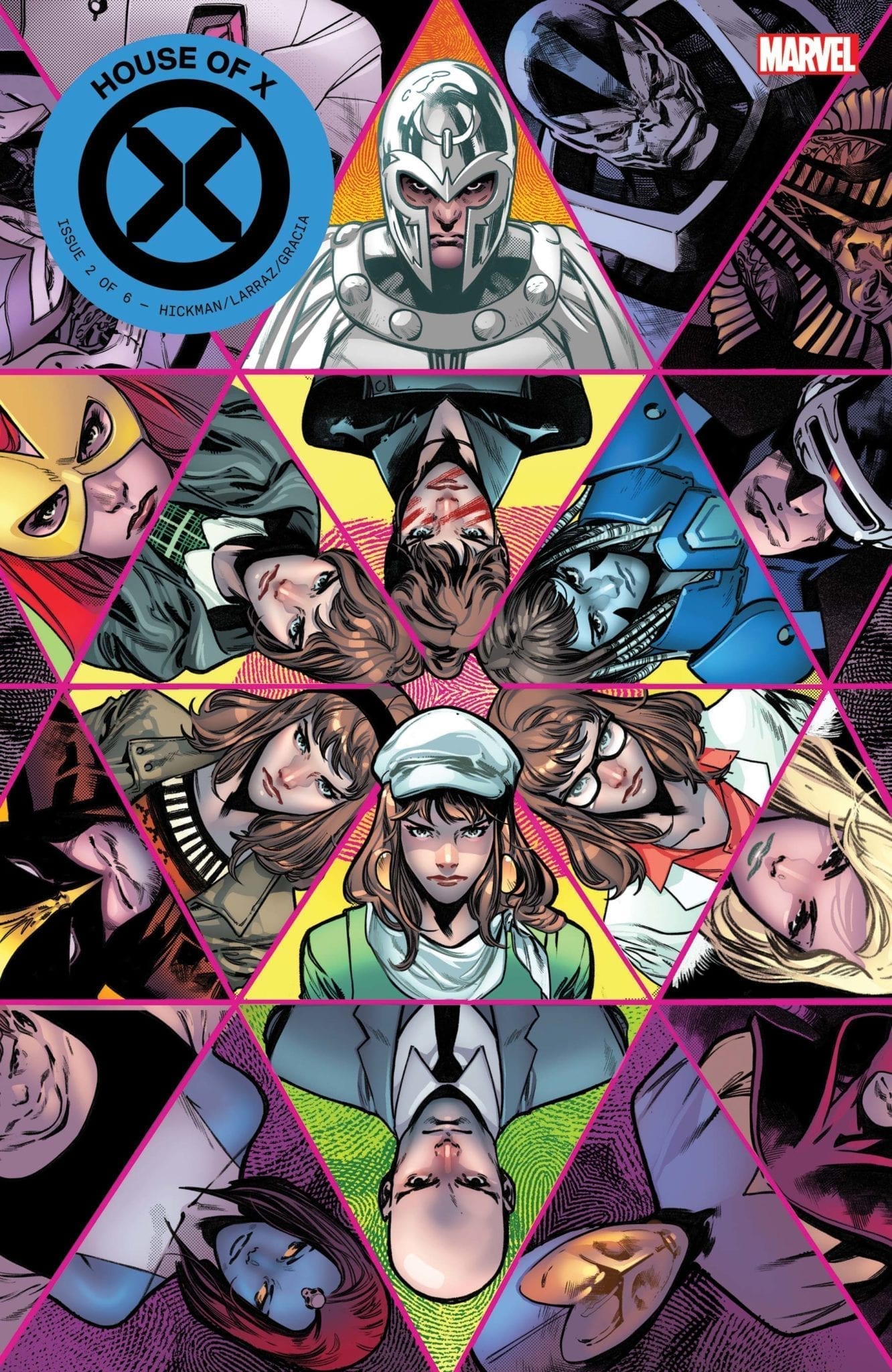
House of X #2 (Pepe Larraz & Marte Gracia)
We should have know this House of X issue was going to rock our world as soon as we saw the cover. The symmetry, the colors…all of it blends together to inform the reader of the complex yet fun ride inside.
Our Favorites From 2019 (in no particular order):
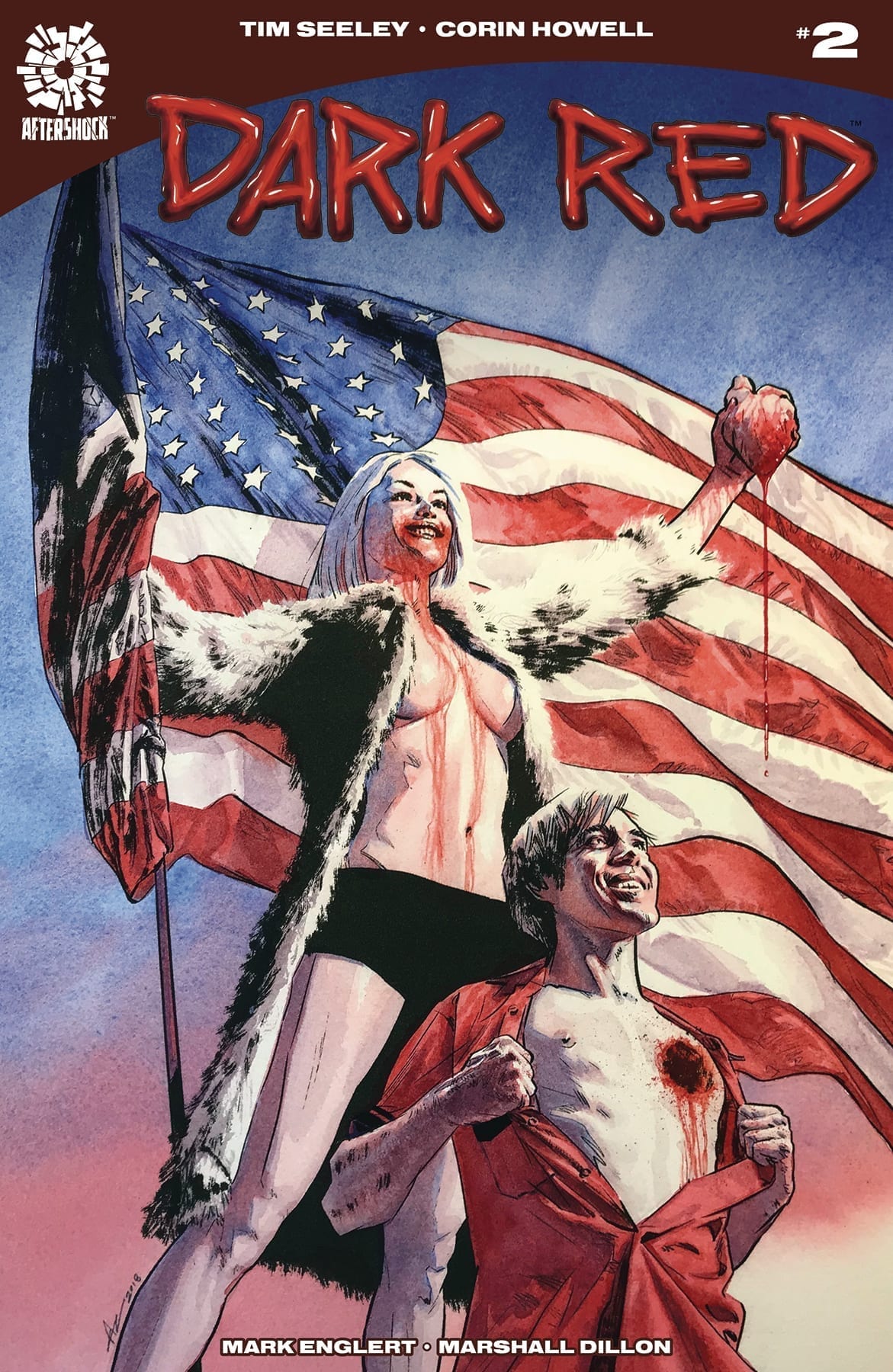
Dark Red #2 (Aaron Campbell)
A good cover should capture the essence of the story inside, and just look at this one for AfterShock Comics’ Dark Red. It’s bloody; it’s symbolic; it’s patriotic. Aaron Campbell sets you up perfectly for the political vampire comic you’re about to read.
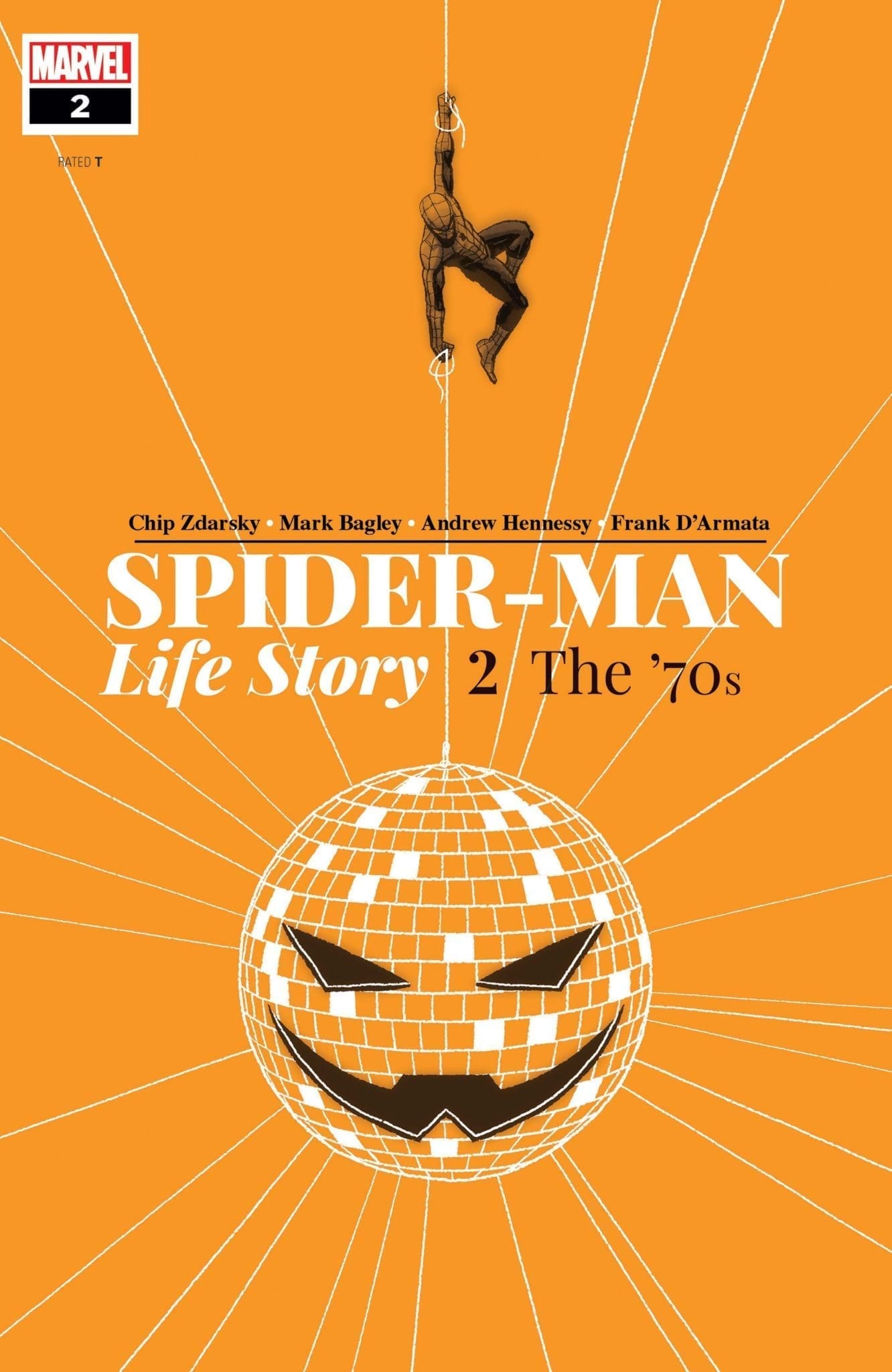
Spider-Man Life Story #2 (Chip Zdarsky)
Monochromatic covers rule, plain and simple. They really allow the book to stand out on the shelf among the rest of the week’s new comics. This one by Chip Zarsky (who also wrote the series) is memorable, not just for the artist’s bold use of orange, but for how it represents the strain that Spider-Man is under within the story.
Invisible Kingdom #6 (Christian Ward)
Christian Ward made our Best Covers list last year too, and you can see why. He’s easily one of the best artists working today, with a gorgeous, surreal style that simply doesn’t look like anything else on the stands. There’s an almost dreamlike quality to his Invisible Kingdom covers; they’re all great, but the subdued color palette on this one makes it stand out among the rest.
The Joker: Year of the Villain #1 (Forbidden Planet Variant) (Jock)
Similar to what we were just saying about Christian Ward, Jock’s art has a very surreal edge to it. Plus he draws the quintessential Joker for the 21st century. All of that combined with the trippy neon colors tells you all you need to know about this dark comic before you even open it.
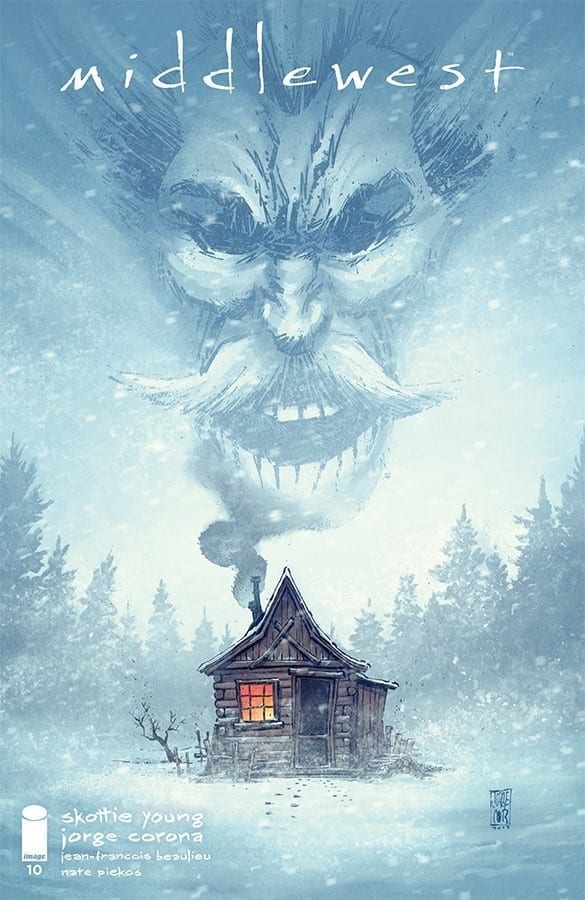
Middlewest #10 (Jorge Corona)
Middlewest #10 has perhaps been the most powerful issue in the series yet, and that honor extends to its cover as well. The blues and whites make this book feel frigid and harsh; the mists and the trees make it feel claustrophobic. There’s a sense of isolation, and of course we can’t leave out the GIANT ANGRY FACE billowing out of the chimney. This is an emotional one.
Livewire #11 (Fashion Variant) (Annie Wu)
Remember what we said earlier about monochromatic covers? The yellow on this Livewire variant really POPS and makes this book stand out, and the Rolling Stone homage gives it a unique vibe. This is a cover that would make you pick up this book even if you haven’t read any issues prior.
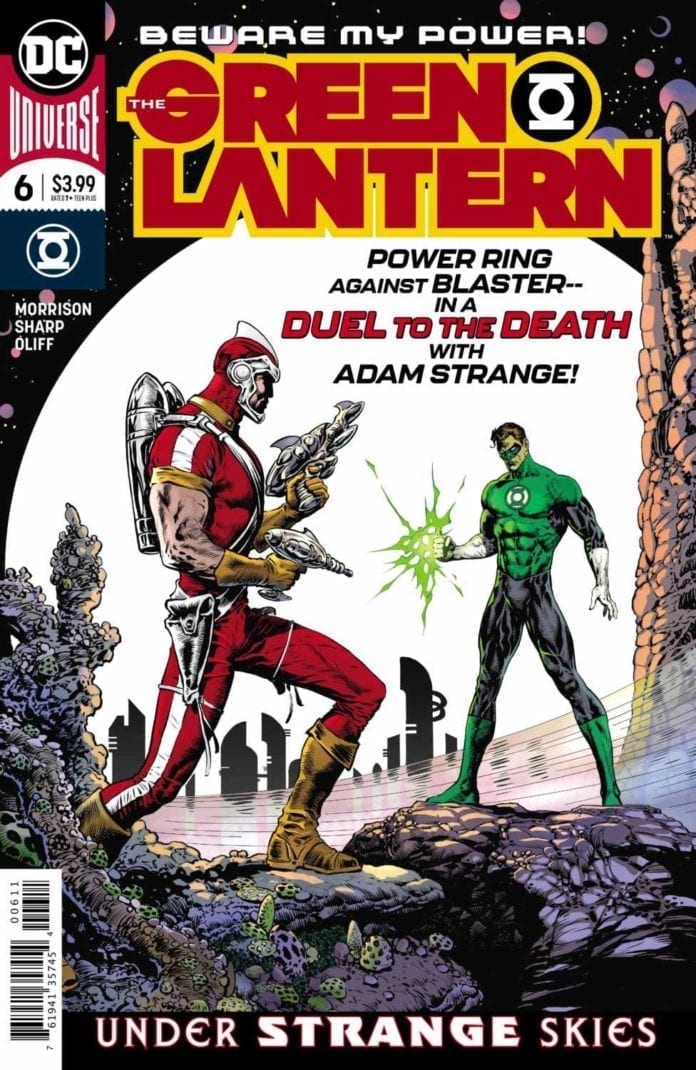
The Green Lantern #6 (Liam Sharp & Steve Oliff)
Every Liam Sharp/Steve Oliff cover for The Green Lantern is outstanding, but this one featuring Adam Strange takes the cake. It has this neo-western/gunslinger scene, and the copy makes it feel like an old-school sci-fi comic from the 50s. Plus, just look at all the detail Sharp put into the setting!
Going to the Chapel #4 (Johanna The Mad)
One look at this cover is all you need to understand why they call her Johanna the Mad… it’s because her work is MAD good (*mic drop*). The pinks and purples, and the soft nature of the coloring speak to both the romance and the western sides of the story, and just look at that wedding dress. This image of Emily in her dress holding a shotgun, it just perfectly communicates the nature of Chapel.
Coda #11 (Matías Bergara)
This Coda cover looks like it could have been the poster for an 80s fantasy movie, or the cover to a heavy metal album. Bergara tells you, “This story is about a journey, but it will not be an easy journey. It will be a perilous one.” The looming darkness over the bright, colorful mountain speaks volumes.
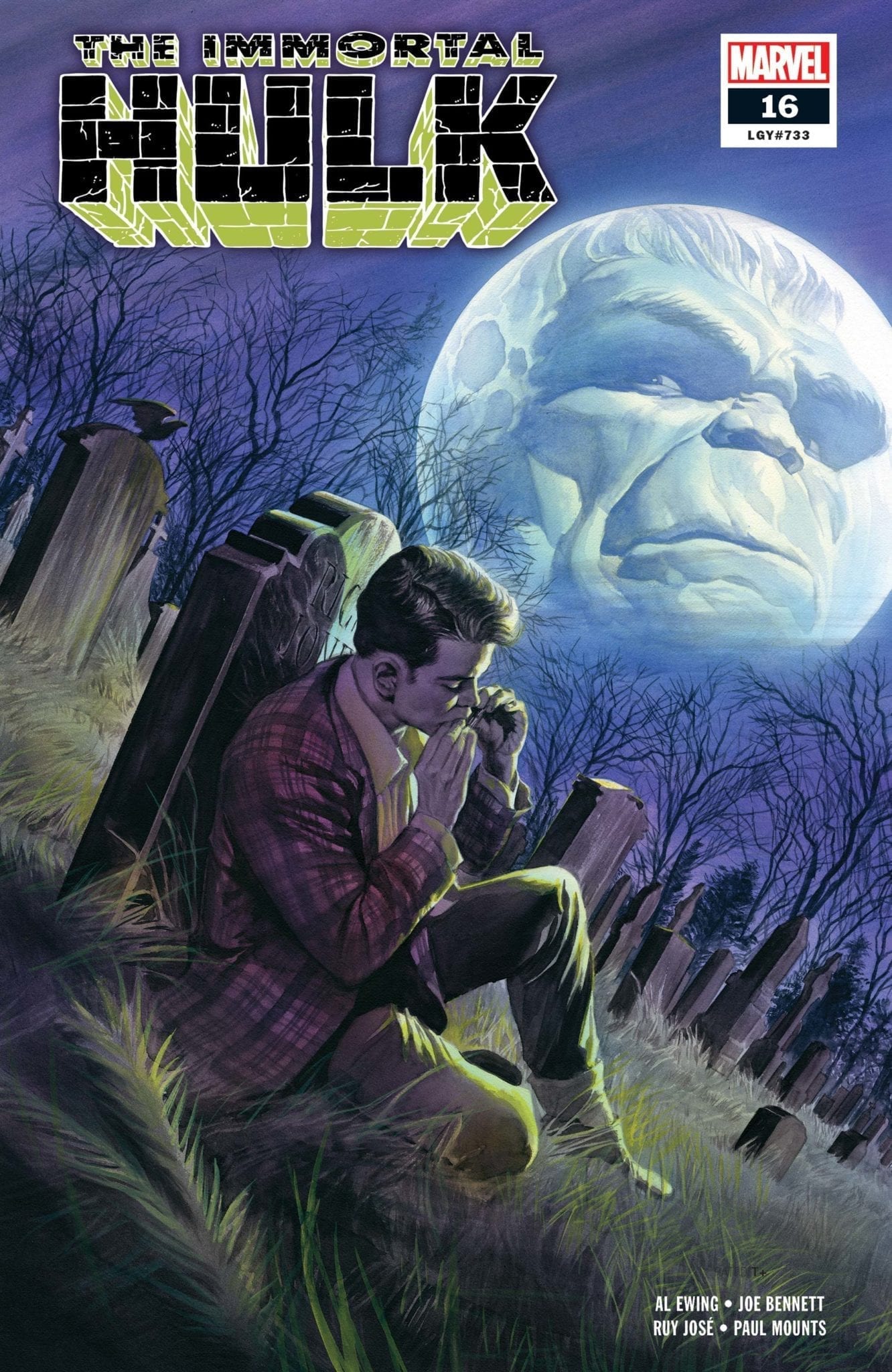
Immortal Hulk #16 (Alex Ross)
Alex Ross has been doing some of the best cover work of his career on Immortal Hulk, and that’s saying a lot. Any one of his covers could have made this list, but we chose this more understated one because it really speaks to the horror nature of the book. The darker colors, the graveyard setting, the looming full moon with the Hulk’s head inside…it all fills you with dread and fear for Rick Jones (and you SHOULD fear for Rick Jones).
What were your favorite comic books covers from 2019? Let us know in the comments!
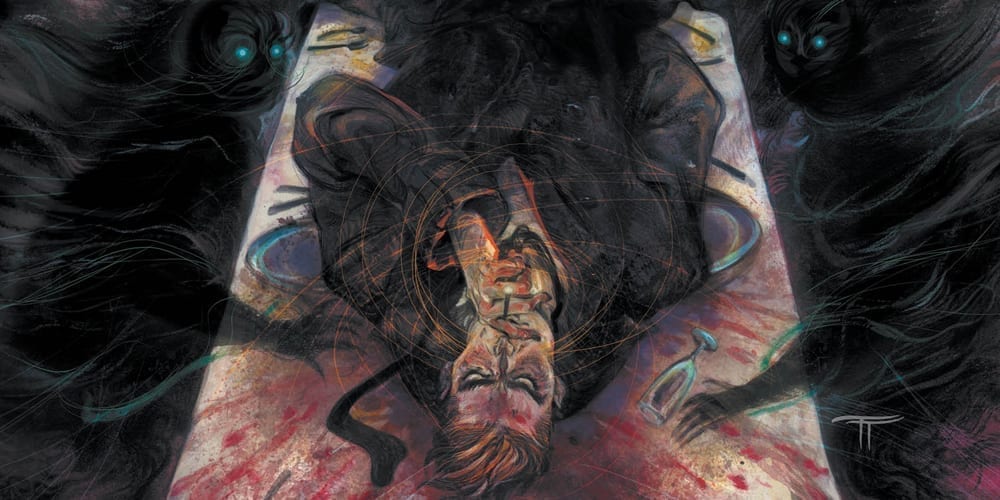
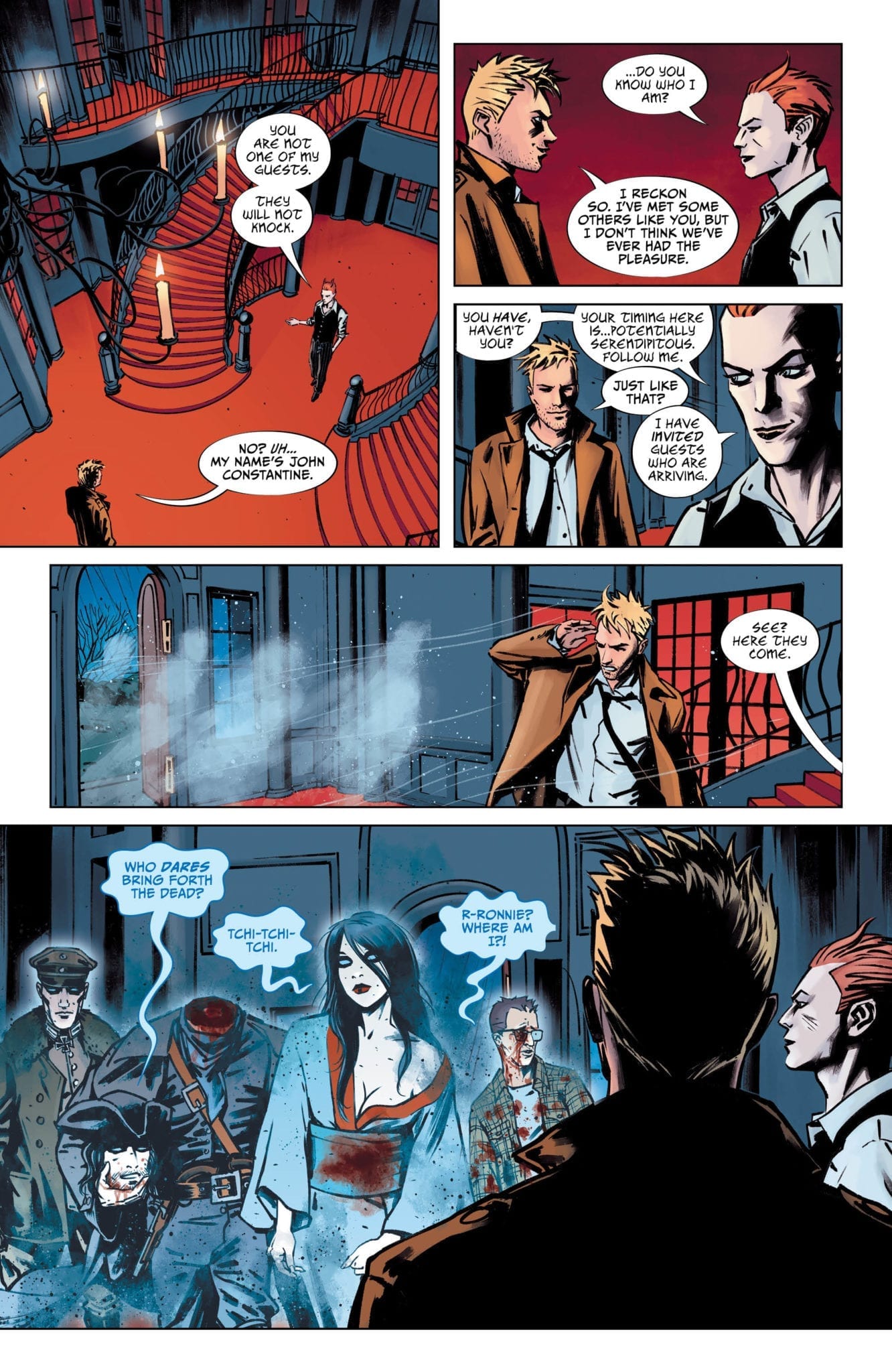
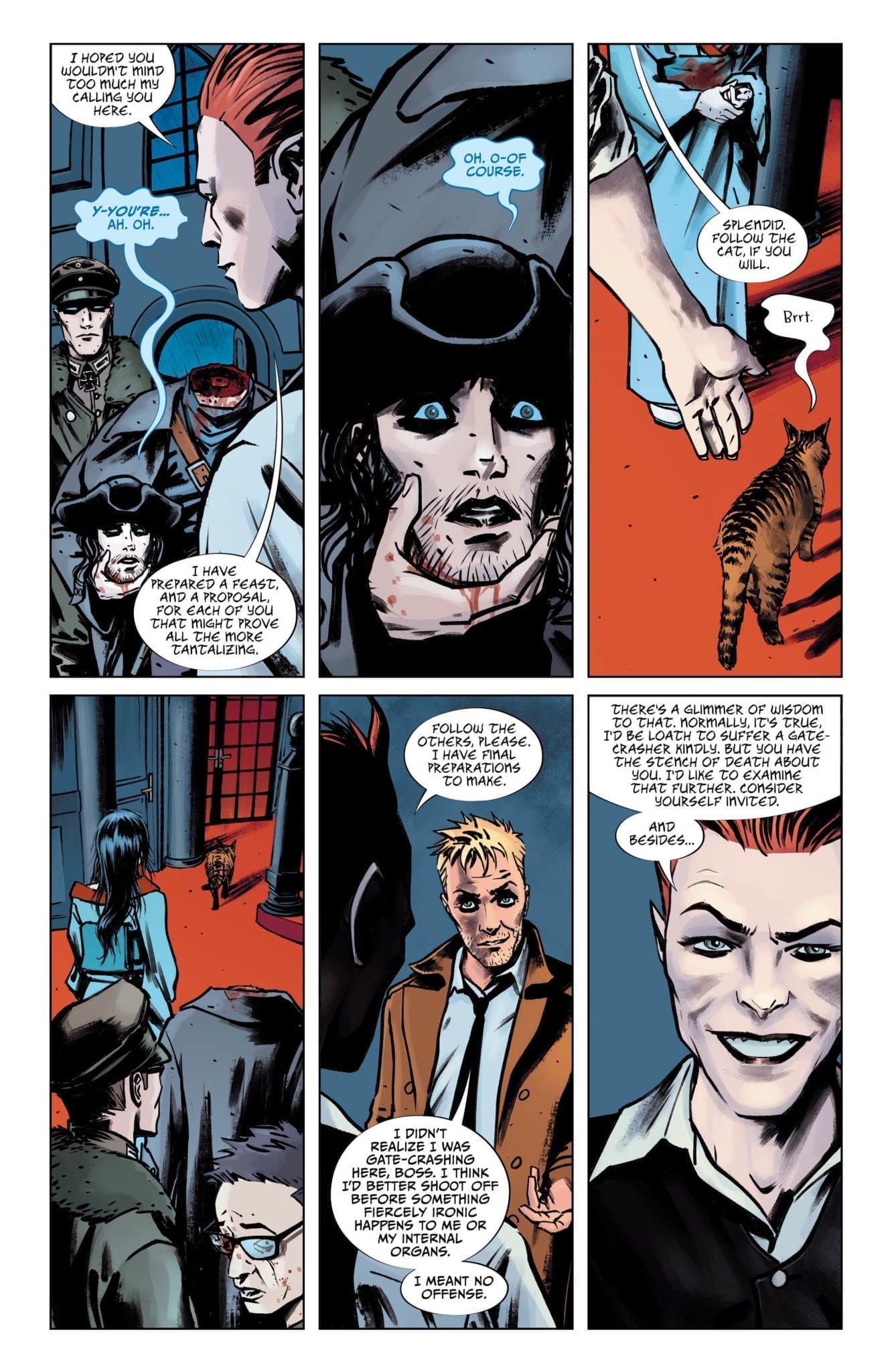
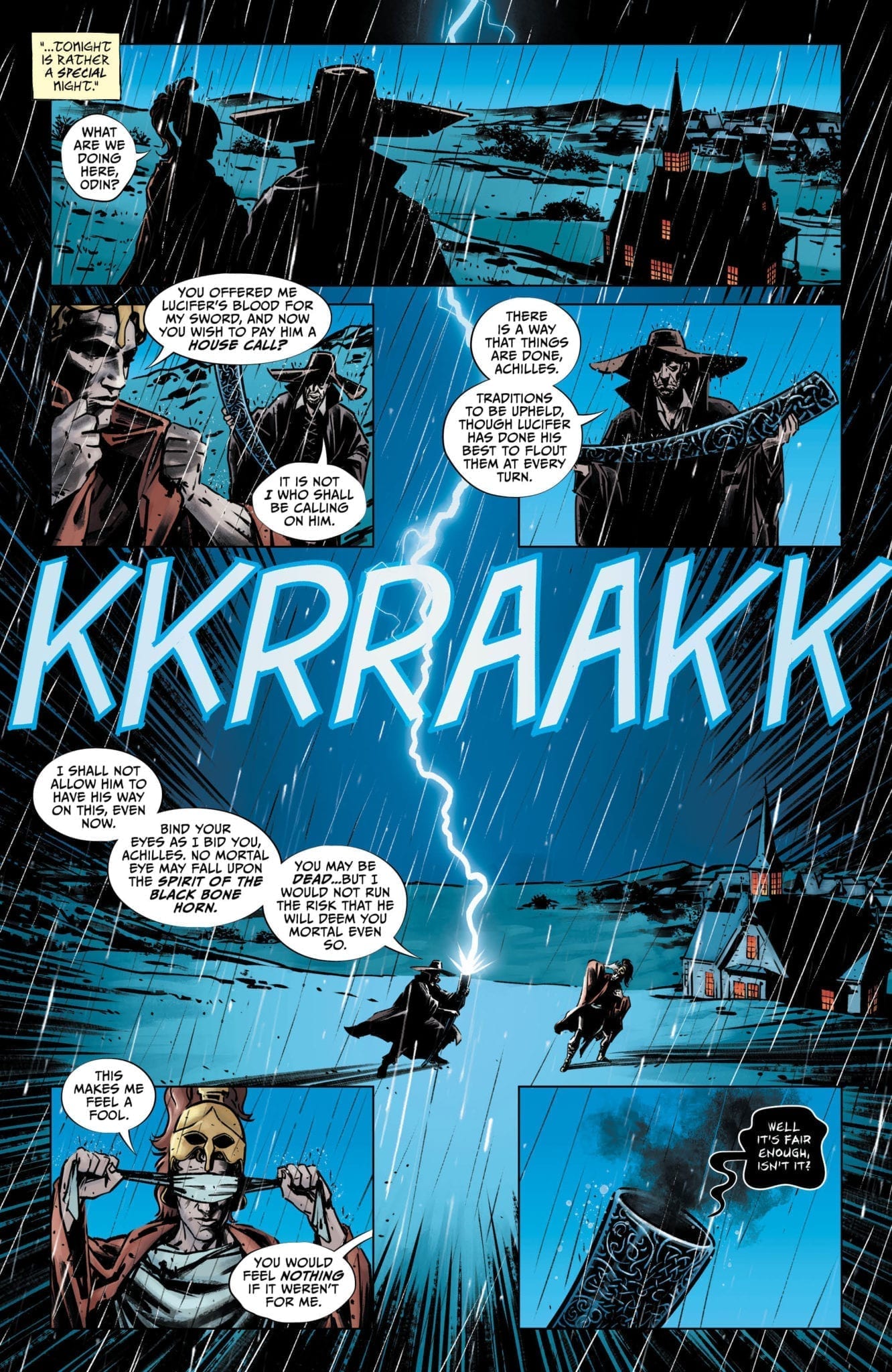
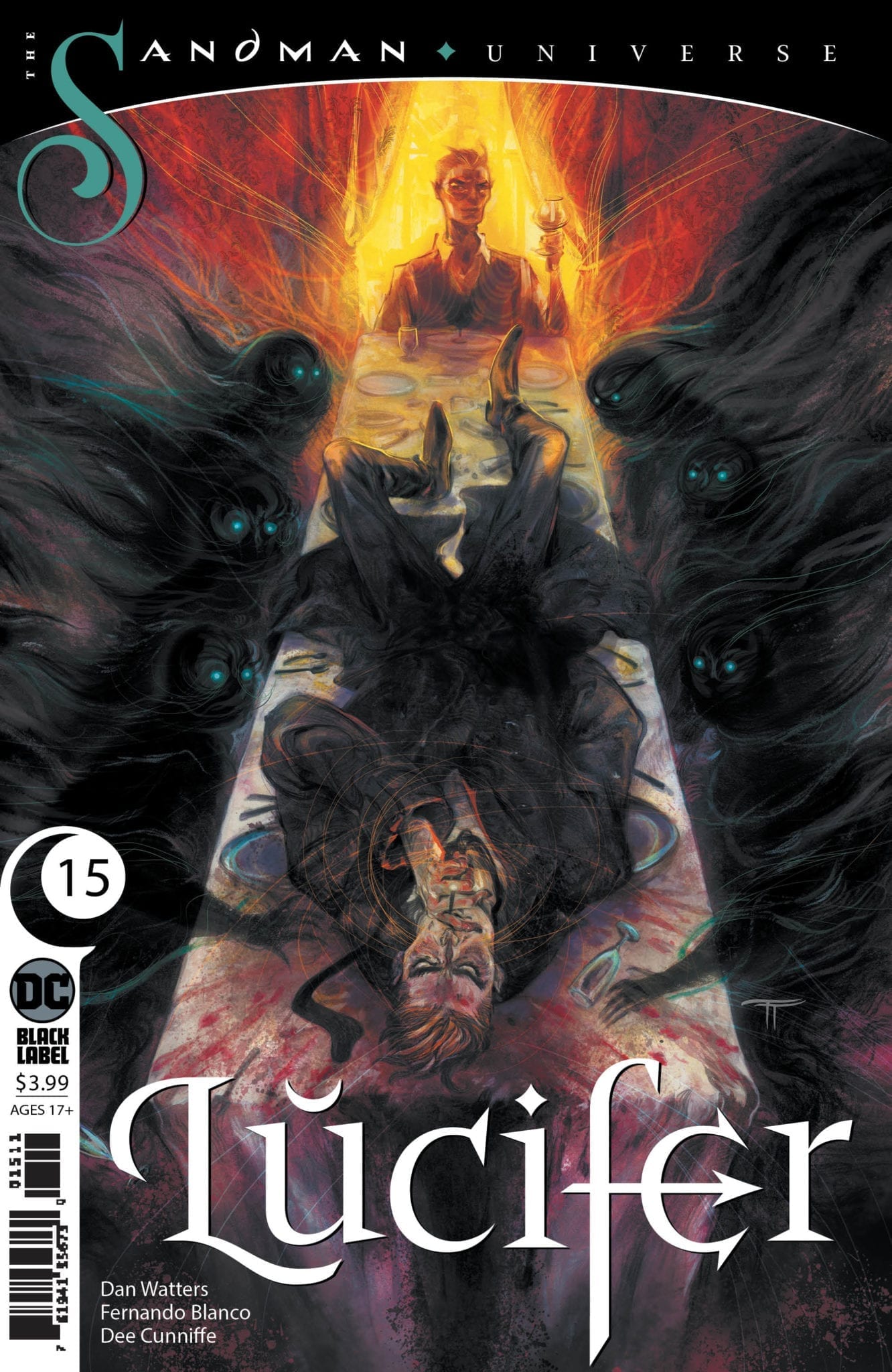
Lucifer #15 hits your local comic book store on December 18th, but thanks to DC Comics, Monkeys Fighting Robots has an exclusive four-page preview for you.
About the issue: Lucifer is hosting. With his new abode complete, the prince of darkness is throwing a nice little housewarming dinner party to break the place in. Invited are a collection of miserable individuals whose souls are the devil’s to command. But when an uninvited guest by the name of John Constantine crashes the party, all hell breaks loose. Meanwhile: a horn is blown, a dead man is murdered, and a closet proves to be quite a bit more spacious than first expected.
The comic is by writer Dan Watters and artist Fernando Blanco, with colors by Dee Cunniffe and letters by Steve Wands. The cover is by Tiffany Turrill. Lucifer is part of the “Sandman Universe” line of comics, curated by Neil Gaiman, and centered largely on characters Gaiman co-created.
To mark the 25th anniversary of the landmark series Marvels by Kurt Busiek and Alex Ross, Marvel Comics has already given us Marvels Epilogue and the massive Marvels Monster-Sized Edition hardcover.
Now comes news of a new 2020 series: Marvels Snapshots.
According to Marvel.com, “industry legend Kurt Busiek will bring together incredible creative teams for eight standalone, double-sized issues showcasing Marvel’s most beloved characters from the Golden Age to today.” Alex Ross will provide painted covers for the series.
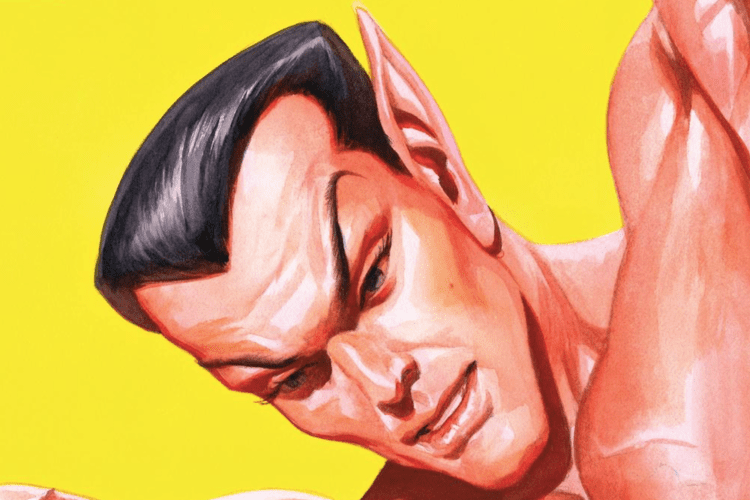
The first issue will be the World War 2-set Sub-Mariner: Marvels Snapshot #1 written by Alan Brennert and illustrated by Jerry Ordway. According to Brennert:
“I can honestly say that I enjoyed working on this story more than any comics story I’ve done in years. I grew up reading (and loving) Marvel’s Golden Age heroes in the 1960s, in reprints in FANTASY MASTERPIECES. But I never thought I’d have a shot at writing them—especially the All-Winners Squad!—and I’m grateful to Kurt Busiek and Tom Brevoort for providing me the opportunity, and to Jerry Ordway for bringing it all to glorious life.”
Editor Breevort adds:
“The MARVELS SNAPSHOTS books will provide a different perspective on moments throughout Marvel history while also giving a wide range of talent, many of whom are new to Marvel, to play in our sandbox under the expert watch of Kurt Busiek.”
The remaining books in the series — and their respective creative teams — are yet to be announced. Head over to Marvel.com to read the full press release; Marvels Snapshots arrives in comic stores March 2020.
Are you looking forward to following Kurt Busiek back into the past for a tour of Marvel history? Let us know in the comments!
With Symbiote Spider-Man: Alien Reality #1, out this week from Marvel Comics, creators Peter David and Greg Land offer up an interesting hook for their next installment of black suit Spidey stories.
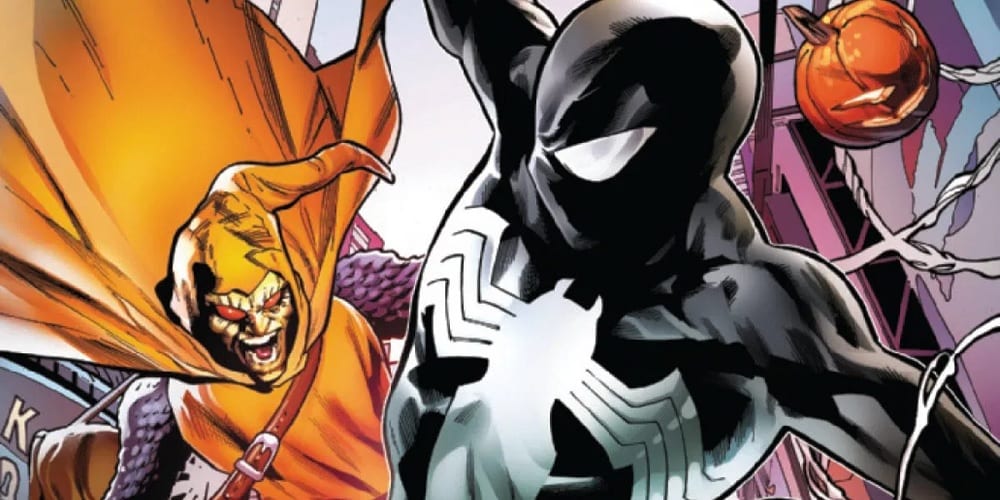
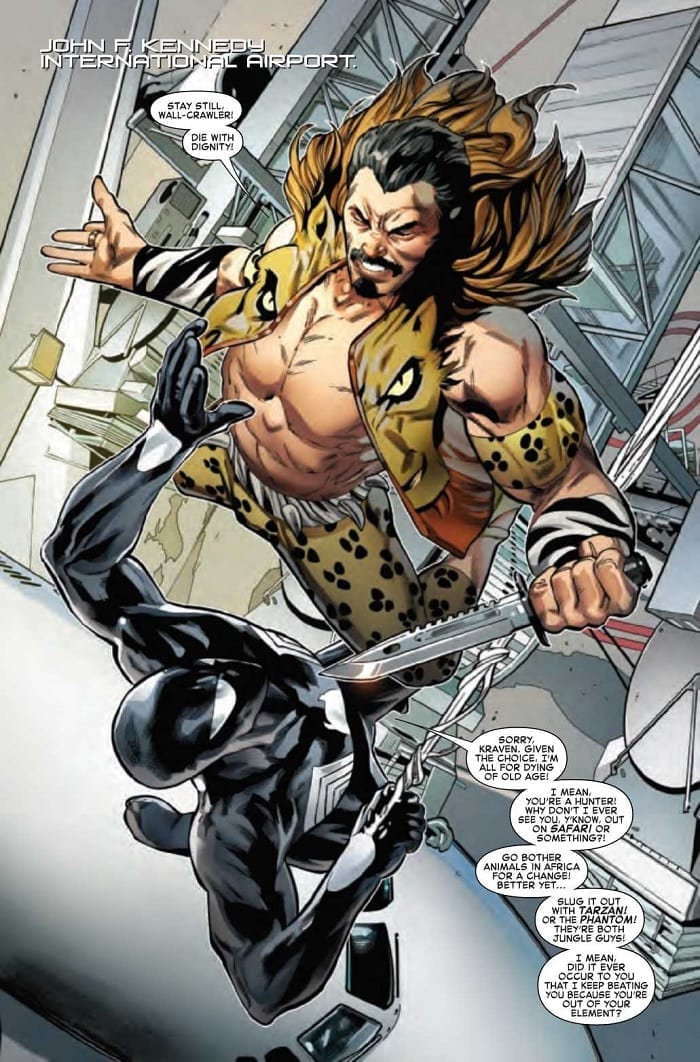
We first see a strange object crash to Earth. While Black Widow sets about investigating, Doctor Strange appears, suggesting this is no ordinary space rock. Meanwhile, Peter Parker dukes it out with Kraven the Hunter, only to find himself suddenly trapped in an alternate reality. In a flash, one of his oldest enemies is suddenly his partner, and he’s romantically involved with another superhero. Even the Spider-Mobile is back. Following the bizarre twist, Peter’s left to try and uncover what’s real, and who’s responsible.
The Writing
Writer Peter David lays out an intriguing lead to the story in Symbiote Spider-Man: Alien Reality #1. The Word of God—a book of powerful spells capable of manipulating reality—is in play. The book, of course, falls into the hands of one of Spidey’s classic villains, who uses it to alter Spider-Man’s life. Thus, what starts out as a rather mundane story quickly takes on an interesting, even comedic twist.
David does a good of pacing the story. He allows the weirdness to trickle out, bit by bit, as Parker realizes something is not right. The twists keep coming right up until the last page, ending with a cliffhanger that is sure to keep readers coming back. It’s also nice to see Hobgoblin get some attention, as he’s been a somewhat underutilized antagonist in the last few years.
Much of the book, especially in its second half, is one continuous sequence. If not handled properly, this could result in a poor balance of action and narrative. Fortunately, David finds a sweet spot to balance these elements in Symbiote Spider-Man: Alien Reality #1.
Although not packed with much thematic depth, the book offers a compelling and fun alternate reality story. While science may be Peter’s strong suit, throwing magic into the mix brings a kind of chaotic energy. With magic involved, just about anything could happen, allowing Hobgoblin to bend reality at will. The result is a book that packs surprises, without feeling too detached from its own internal logic.
The Artwork
Greg Land’s character designs in Symbiote Spider-Man: Alien Reality #1 are impressive and eye-catching. Where the work really shines, though, is in the characters’ expressive features. A raised eyebrow or a look of bewilderment on a character’s face really brings the writing to life and helps to draw the reader into the world of the book.
Speaking of drawing in the reader, there is an impressive level of attention paid to detailing the backgrounds throughout. The illustrations are vibrant and dynamic, with some truly excellent images sprinkled throughout.
On the whole, the layout and structuring of the page in Symbiote Spider-Man: Alien Reality #1 isn’t the most inventive use of the format. However, the artist compliments David’s writing well, hitting the story beats and effectively and clearly conveying the action on the page.
Frank D’armata’s colors are rich and very warm. There’s painstaking attention to detail here, with the artist taking care to show subtle gradients that capture shadow and light. It’s a strong showing in the art department overall.
Final Thoughts
Symbiote Spider-Man: Alien Reality #1 is a great start for this new story. Strong artwork and interesting story combine to bring a creative black suit story to life. Definitely worth checking out.
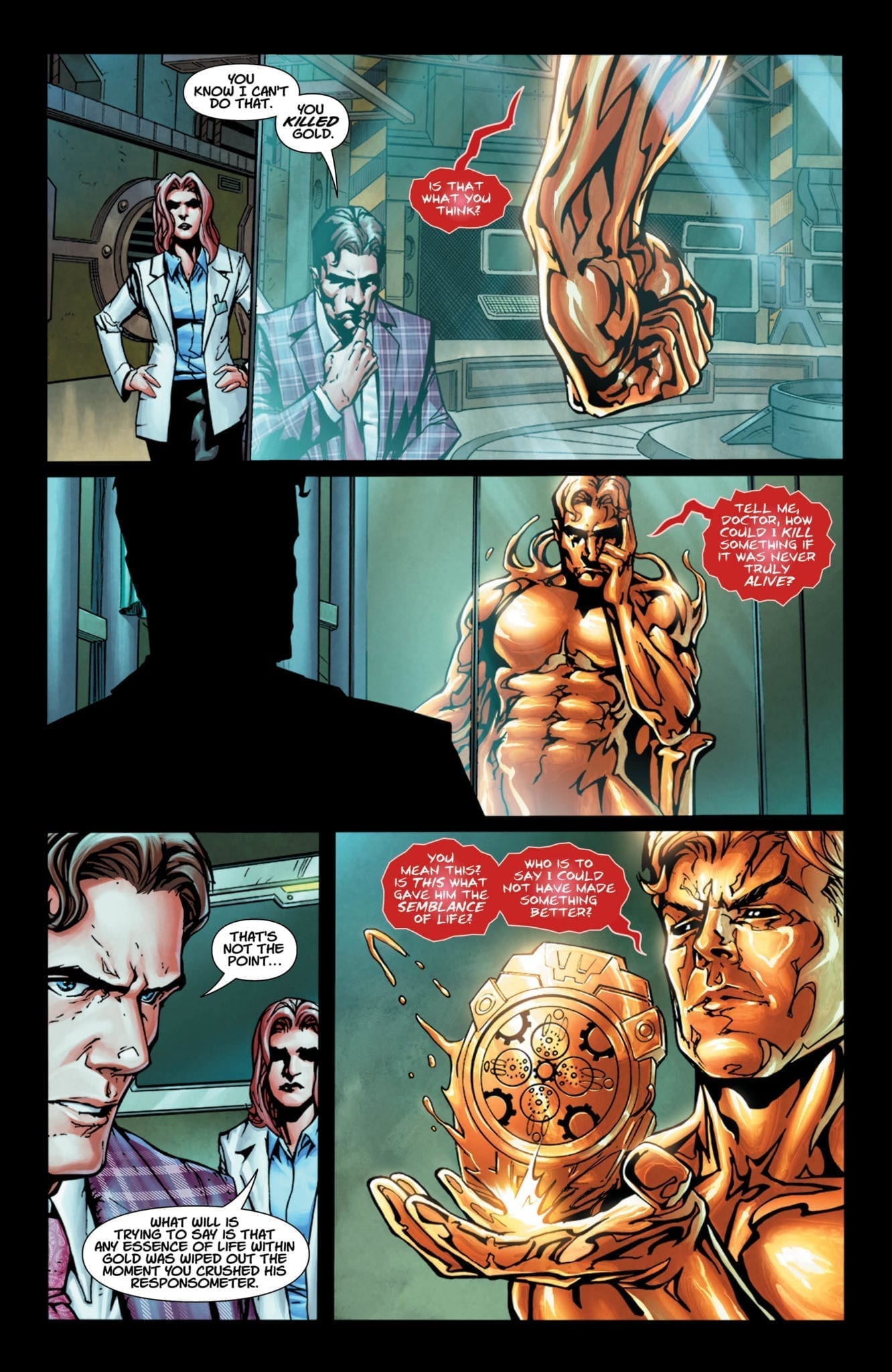
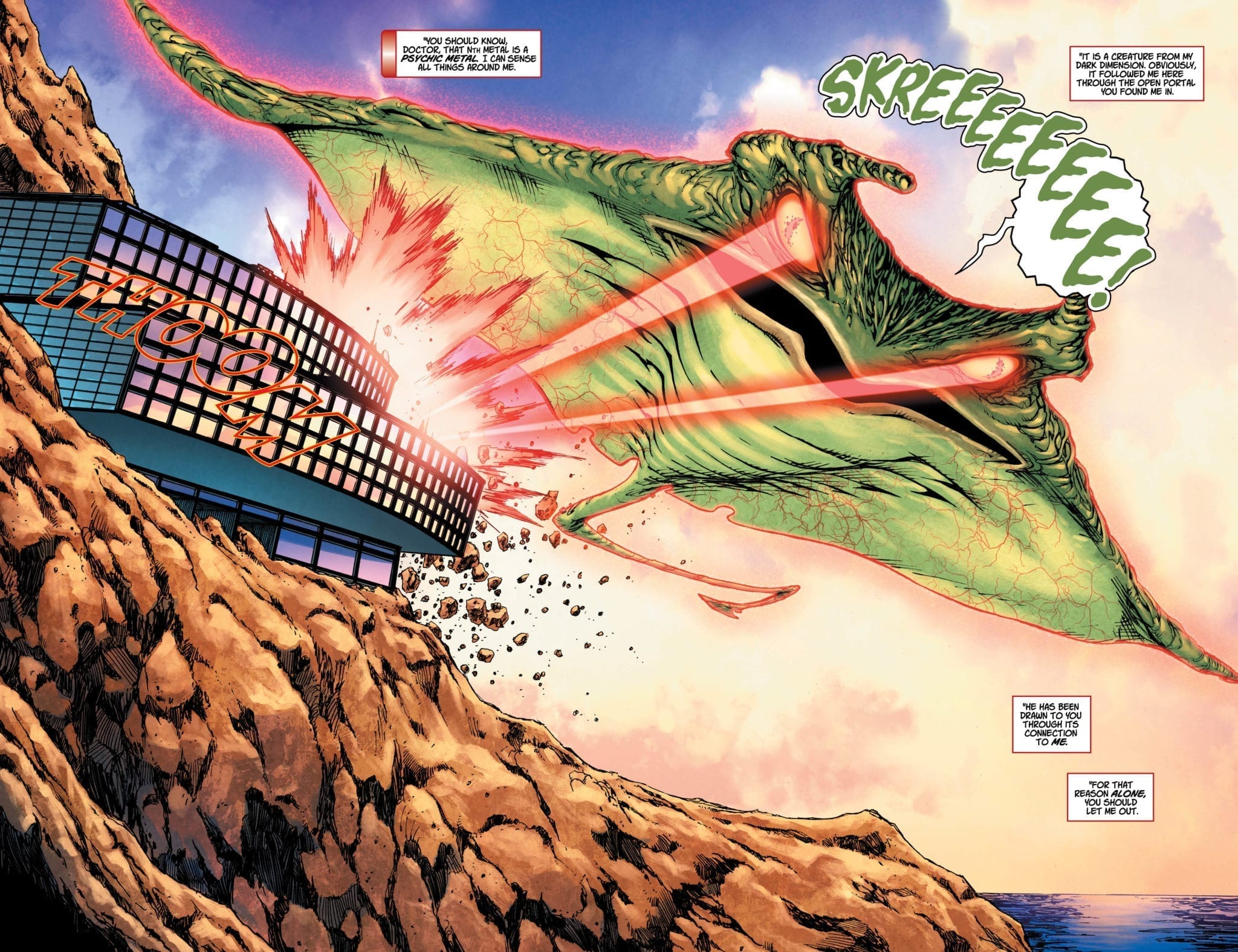
Metal Men #3 hits your local comic book store on December 18th, but thanks to DC Comics, Monkeys Fighting Robots has an exclusive six-page preview for you.
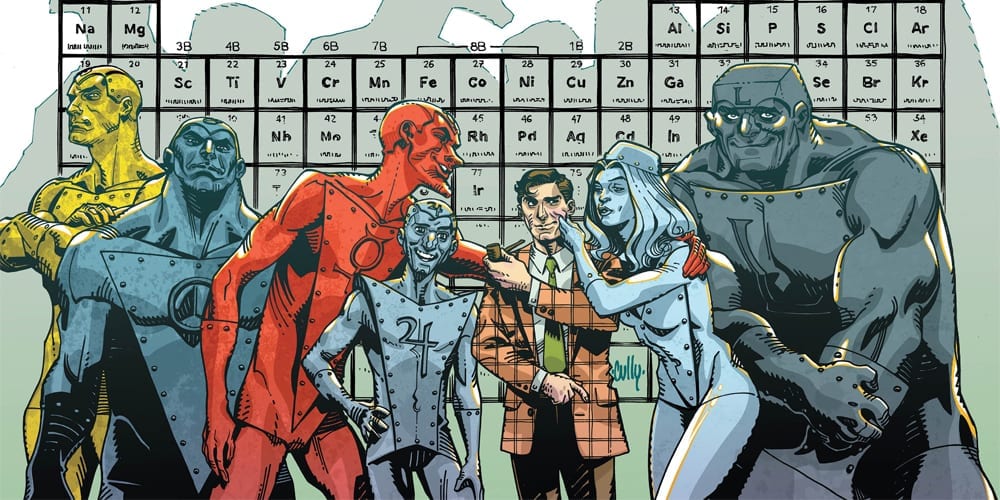
About the issue: In this issue, it’s kaiju versus giant robot versus the Metal Men! After killing off one of the Metal Men, Nth Metal gets placed into a holding cell at the lab so Doc Magnus can learn exactly how dangerous it is! That is, until a giant, flying manta with lasers coming out of its eyes attacks the lab-and now the Metal Men must team up with a giant robot in order to save the day!
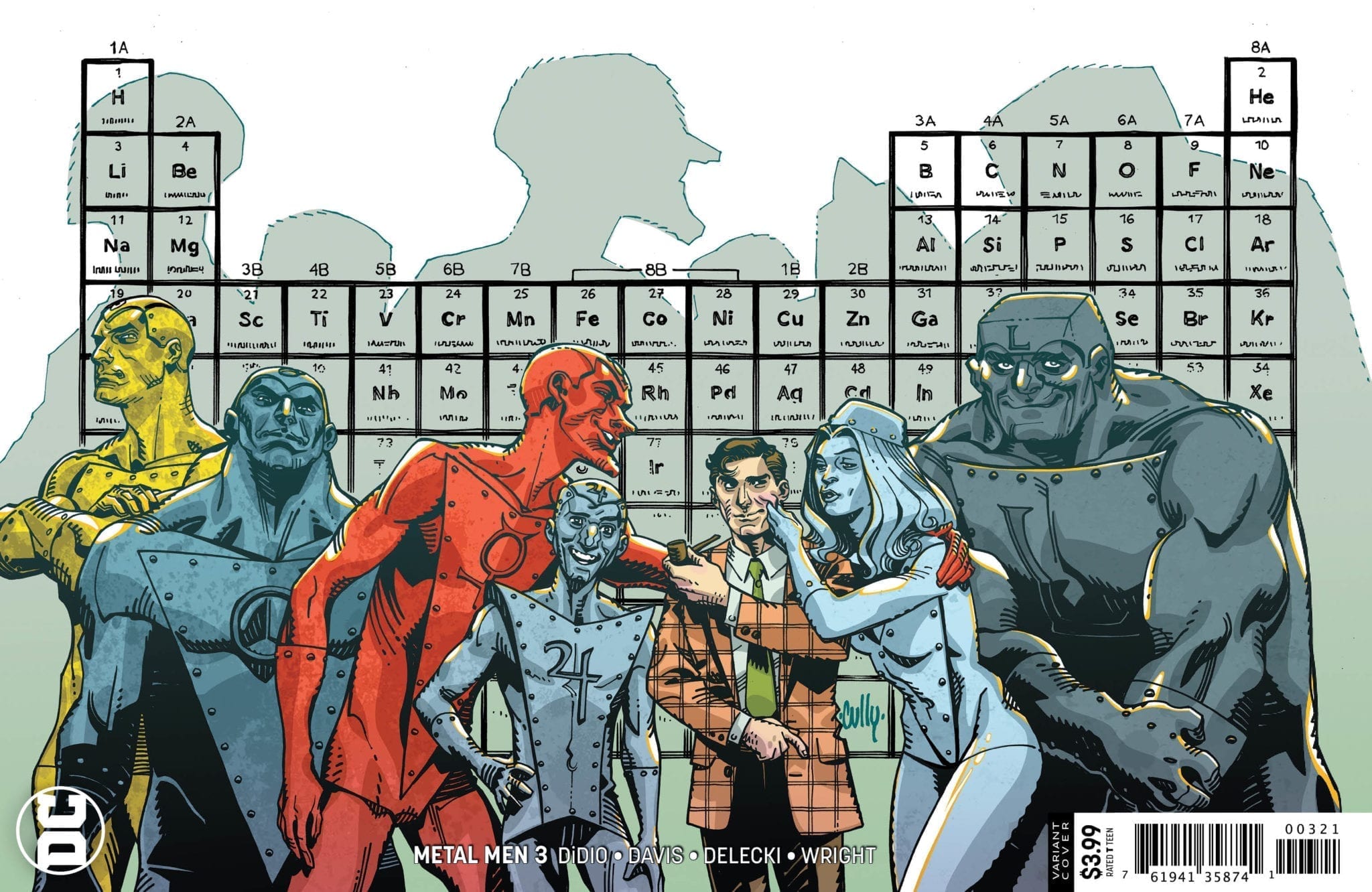
Metal Men #3 is by Dan DiDio and Shane Davis, with inks by Michelle Delecki, colors by Jason Wright, and letters by Travis Lanham. The main cover is by Davis, Delecki, and Wright, with the variant by Cully Hamner.
The Metal Men are one of DC Comics’ more obscure (but beloved) teams, created in 1962 by Robert Kanigher and Ross Andru. Prior to this series, they were most recently seen in Doomsday Clock as one of the teams that confront Watchmen‘s Doctor Manhattan.
Check out the Metal Men #3 preview below:
Are you reading DC Comics’ Metal Men? Sound off in the comments!