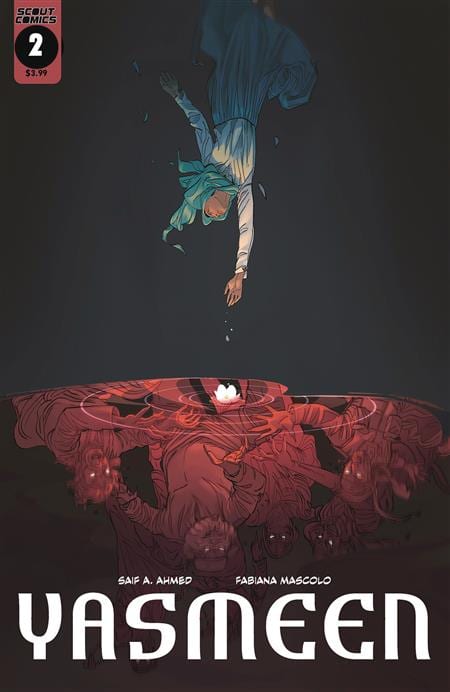
The second chapter of writer Saif Ahmed and artist Fabiana Mascolo’s “Yasmeen” takes a deft and delicate approach to immensely unsettling subject matter. This comic’s goal of presenting the effects of mass conflict and sexual trauma is handled with a practiced hand that focuses not so much on the acts themselves, but on people’s and society’s inability to understand these effects. With an emotionally devastating script and gorgeous, character-focused artwork, “Yasmeen” #2 is a comic that strikes at the heart of this series’ subject matter and does it in a remarkable manner.
“During the ISIS invasion of Mosul, Yasmeen and her uncle are stopped by one of Iraq’s infamous fake checkpoints, where Yasmeen’s uncle was murdered. Now Yasmeen finds herself at the mercy of a family of fanatics, while two years later in America, Yasmeen’s family pushes her back to school in hopes that she would forget the past and move on. Powerfully written by Iraqi immigrant, Saif A. Ahmed, YASMEEN is a dramatic coming of age drama in a time of war.”
Writing & Plot
Where the first issue of “Yasmeen” introduces Yasmeen’s family dynamic and the beginning of the tragedy that befalls them, this second issue focuses on the exact events Yasmeen went through after ISIS’s attack – and the trauma she has been struggling with ever since. Writer Saif Ahmed wastes no time in setting up her mental, emotional, and physical struggles both during and after her time as a captive and slave. Be forewarned, this is a difficult comic to get through, and warnings for traumatic content (rape and abuse) will hopefully be posted on this issue’s release. The comic’s difficulty is entirely in its content however, as Ahmed’s work handles such subjects with a deft and knowledgable hand. Often when writers (specifically male writers) handle these subjects, they end up – intentionally or not – fetishizing the subject in some manner. Ahmed makes no such mistake here, as the scenes where such actions occur are handled in a way that is disturbing not in a physically visceral way, but an entirely emotional one. My stomach turned not because of what I saw on the page, but because of what I couldn’t see happening but still knew damn well what occurred behind closed doors. Much like the first issue, Ahmed skillfully darts among three plot threads: one is Yasmeen and her family in their new life in America, one is in Mosul before the attack, and the third is during Yasmeen’s time in captivity. Each thread is used to complement the events of the others. This issue specifically points out the mundanity of everyday life and of her parents’ expectations, and really the expectations of the whole of society, in the face of what Yasmeen has undergone. Ahmed wastes no words or moments in this comic, as every moment has a connection to another from one part of Yasmeen’s life to the next. Each sequence is rife with analogy and metaphor, but it never feels pretentious or cluttered. There is a serious mastery of the art on display in this issue, and while this is not a joyous issue to read, it is handled with a grace and expertise seldom seen in this or any medium.
Art Direction
All of Ahmed’s careful scripting would be for naught if a talented visual storyteller wasn’t on board to bring the vision to life. Fortunately, “Yasmeen” #2 has the gifted Fabiana Mascolo as an artist. The thin penciling and light color palette she brings to the table are a superb visual match for the story being told. Mascolo’s thin lines and minimal inks craft an airy but detailed visual aesthetic, with a focus on character expressions and colors. Her choice of color is unique as well, with a lighter palette of soft tans and blues that complement the delicate pencils perfectly. Her sense of visual storytelling is expressed through how she expertly interprets emotion and action in each and every panel. From shock to pain, from unspeakable rage to fatherly love, Mascolo’s artistic nuance is the prime reason why this comic is so affecting. As with many great comics, the silent moments are often the most effective, and there are several in this comic that will stay in my memory for some time to come.
“Yasmeen” #2 is a devastating and emotionally haunting comic that handles its abrasive subject matter with a delicate hand seldom seen in any medium. Writer Saif Ahmed touches on the experiences of a young woman sold into slavery in a time of war, and the surrounding world’s inability to recognize the aftereffects of such trauma. He focuses on her family’s need to move on like their old life never happened, all while they fail to see that she will never truly be able to leave it behind. Artist Fabiana Mascolo brings a delicate and detailed visual style to this issue that beautifully humanizes its cast, and crafts some of the most memorable and painful realizations seen in a comic in recent years. “Yasmeen” has already proven itself to be a project of immense importance, and I highly recommend picking up this issue from your local comic shop when it releases on 8/19.
The release schedules for this year’s comics have been delayed, haphazard, and difficult to navigate. There are obvious negatives related to this but there are also unexpected positives. Sometimes absence makes the heart grow fonder and, if a comic delivers when it is released, it can have a bigger impact on the reader. Two months ago the first issue of A Man Among Ye from Image comics was released and the second issue is hitting the shelves this week.
When you have a magnificent first issue, the follow up can be tricky. The creators have to make sure that the momentum continues while expanding character and narrative. They have to give the reader more of the same but also something extra. A first issue has to make its mark, hook a reader in, but the second issue has to reward the reader for returning and prove that the series, however long, has legs.
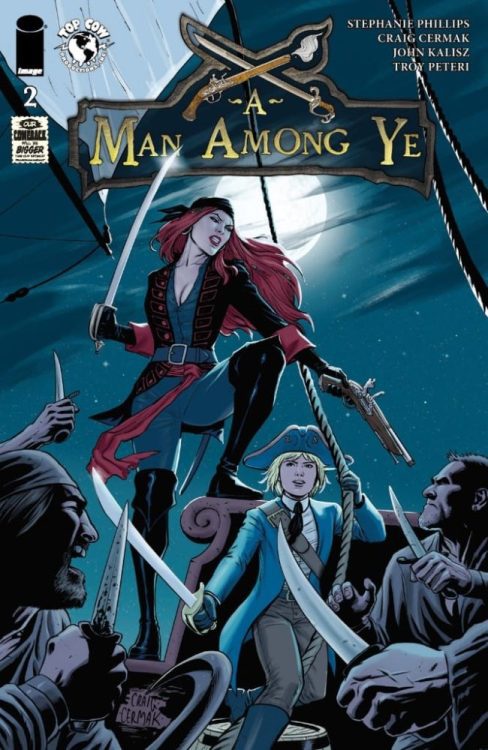
A Man Among Ye #2 Credit: Image Comics
Narratives on the High Seas
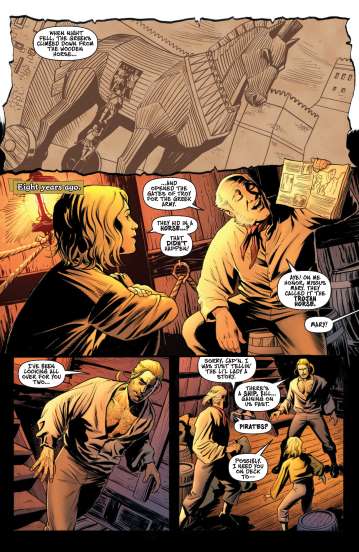
The second issue of A Man Among Ye opens with an image of the Trojan Horse followed by a scene from Mary Read’s history. Across these pages Stephanie Phillips fleshes out the young woman’s character and provides relevant backstory. It ties in directly to the previous issue but also into what is to come. Mary’s decisions and ultimate dilemma, which is at the heart of this issue, make sense because of this first flashback scene.
The link to Greek mythology is important in a number of respects. It ties in thematically and narratively with Mary and Anne’s character journey. The sense of adventure, exploration, and fighting the odds is as prevalent in A Man Among Ye as it was in the myths of old. It also incorporates the literal struggle between reality and Legend that Phillips has a taste for. The little known facts about Anne Bonny are embellished in most accounts that you read. Newspaper articles from the time served their own bias to create an image of Bonny, Calico Jack, and the pirate crews that made them monsters in society. In contrast fiction writers romanticise the lives of pirates, painting them as heroes or figures of fun.
Phillips walks a fine line between the two. She plays around with the elements of the narrative to make them exciting and creates admiration for the women of the story, people who suffered but strove to survive. However, she doesn’t shy away from the harsher realities of the time: entrenched sexism, state sanctioned murder, and corruption. The few good characters shine in this comic because this world lacks a sense of ‘goodness’.
A Man Among Ye #2 Credit: Image Comics
Artistic Interpretation
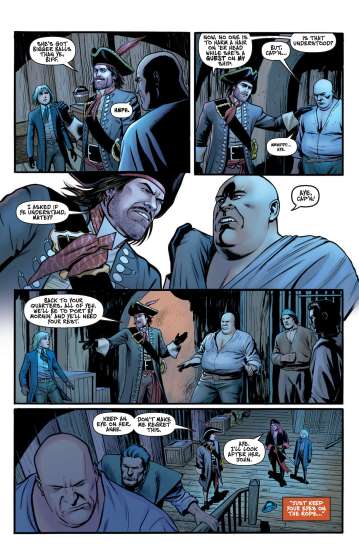
The look of A Man Among Ye is very classic and smooth. Craig Cermak’s style lends itself beautifully to a romantic ideal and may, to some readers, be too pedestrian. However, the emphasis of the narrative is on character. It is about de-mystifying legends and giving the historic names human faces with engaging personalities. Cermak’s art focuses on the nuances of emotion and character interaction. From the disgust on Mary’s face when she first tastes alcohol to the fear from the pirates on the gallows, Cermak captures reaction and emotion.
Everything else is set dressing. It’s as if the narrative is unfolding before the reader on a stage where each set and prop has some significance. The design of the pirate’s ship for example has a lot to say. Although not historically accurate, the features on the ship, as explained by Phillips herself in a short piece at the end of the comic, have greater significance and foreshadow elements of the plot. This subtle design work and page layouts are evident throughout, constantly feeding the reader information.
Cermak enjoys playing with his composition and switches the point of view throughout a sequence to alter the reader’s reaction to it. A series of straight on view points will be disrupted by a low angled panel or a dutch tilt to throw the reader off balance. This emphasises an element of the plot or character and makes it obvious for the reader to pick up on.
Colors across the pages bring out the mood of each scene. John Kalisz favours a color wash that dominates each page, running through the panels. He then darkens it or adds more light to express setting and emotion. Flashes of color are left to identify particular characters, especially Anne Bonny who is constantly depicted with her fiery red hair and jacket trimmings.
Troy Peteri concentrates on bringing the best out of the script. Nuances to the characters speech and various exclamations are brought out by subtle alterations to the text in the speech balloons. Making a word bold within a sentence adds gravitas to the meaning and speaks volumes about the speaker. Fears and paranoia come out with certain pirates as they panic about spies, while shock and wariness is forefront in Mary’s conversations with Anne.
A Man Among Ye #2 Credit: Image Comics
Conclusion
On the surface A Man Among Ye is a straightforward adventure at sea in the style of classic pirate tales of old. A romantic swashbuckling story befitting of Buccaneers from the 1950’s. Underneath, however, there are some very modern mechanics turning the narrative. It is a strong feminist take on a pulpy genre. It acknowledges the history surrounding the narrative with clear evidence of research and uses this to enhance the lives of the characters, making them real and believable.
Above all else A Man Among Ye is an enjoyable read. It has a lyrical flow to it and engaging art work that leads the emotional aspects of the story. Phillips’ focus on character makes the comic worth reading because she draws you into their lives and makes you want to learn more. The comic is a gateway into the world of Anne Bonny and Mary Read, one that will have you lost down an internet research hole.
Fatal Affair stars multi-award nominated actors Nia Long (Empire, Boyz N Da Hood) and Omar Epps (Higher Learning, ER) in a psychological thriller throwback that is every bit terrifying. Composer Matthew Janszen adds the sonic layer that enhances the sentimental scenes and takes the terror to the next level.
Fatal Affair is a spiritual return to old-school late-80s, early-90s psychological thrillers like Fatal Attraction or Basic Instinct. In the film, Nia Long’s Ellie Warren is a married woman, and one mistake, motivated by irrational passion, leads to a string of terror from an obsessed David Hammond played by Omar Epps. Fatal Affair is a psychological thriller that’s filling a niche of genre storytelling that once dominated the box office.
Long before Fatal Affair, Matt started playing piano “… at five. I continued piano lessons all through high school.” Music came into his life early on, but, he says, “I was a pretty late-bloomer to composing.”
Matt loved making music but, “I knew after high school that music performance isn’t really what I wanted to do. I get a lot of anxiety when I perform in front of people.”
Composing still wasn’t an idea Matt thought of pursuing. “I was good at math and science, so I went into engineering.” Matt went to Purdue and gradually transitioned to “… writing music for the theatre department. I was getting intrigued by how music and drama work together. That’s when I realized that film scoring was something that I wanted to pursue.”
About Fatal Affair
Fatal Affair director Peter Sullivan and Matt go back a long way. “I’ve worked with Peter on probably over 20 films now. He’s such a joy to work with. He’s so collaborative. He reached out to me to discuss the film.”
Discussions about Fatal Affair happened before any completed cut of the film. “Peter gave me some general ideas and initial thoughts about the movie, and I started fooling around with concepts. About two months later, he gave me a cut to work from, and that’s when we dove in.”
Like any good cinematic journey, Ellie’s life in Fatal Affair is going great, but then it goes haywire. “The idea of these two worlds. What Ellie’s life was to this dangerous path that it starts to go down that unravels into this psychological thriller. We wanted to represent those two ideas as the film progressed.”
Gifts & Gore
Matt’s filmography is a trip through duality. One minute you see credits for horror films like The Sandman or thrillers like Ominous or Fatal Affair. Between those entries a lot of Christmas movies like Wrapped Up In Christmas or A Perfect Christmas. “I used to joke that there was no gray area for me. It was either completely happy Christmas time or completely dark. There was no middle ground.”
Creating music for Christmas or terror is surprisingly not much different. “The approach no matter what you’re doing … it’s to support and tell the story. So, regardless of whether it’s a Christmas film about joy or a dark supernatural thriller, the general approach is the same.”
What changes from one kind of project to the other? “The sonic pallet is probably the biggest thing that changes between projects. Christmas movies tend to flow around the orchestral realm a lot. So they have a more acoustic, traditional sound. The supernatural elements sort of unleashes composers. You have an opportunity to try a lot of new sounds to create that world. The sky’s the limit.”
Matt continues, On a horror movie, I spend a lot more time figuring out what the palette is. In The Sandman, I used no orchestra. It was a lot of created sounds, pulled sounds, or synthetic sounds to create that world.”
Matt dives deeper into making music for horror and happiness. “The way I would describe it … when it comes to music you’re obviously dealing with the music itself; notes, themes, harmony. Then you’re dealing with what’s going to play those sounds. In Christmas movies, the creativity comes more from the music itself. Coming up with a strong theme that somebody can hum. It’s something that works well for the characters.”
On a horror film, Matt says, “You’re not as focused on a theme but a mood and tone that’s more rooted in sound design. It may not be something that people can hum, but it evokes a certain sense …”
Sci-Fi Cats
Matt’s currently sitting on 47 credits on IMDB. One of those includes creating the sounds for ThunderCats Roar, the return of the animated 80s classic. “It was a unique project for me. Most of the time, I come in, and it’s a blank slate. The creators … were adamant we use the original themes from the 1985 series. I was immediately drawn into that.”
Matt says that creator “… Victor Courtright is a massive ThunderCats fan, and he loves the music that Bernard Hoffer wrote.”
About Hoffer’s theme, Matt adds, “It’s timeless. It’s part of animation history. I was stoked to use those themes. There was a lot to learn there, and the ability to utilize them within the score was exciting.”
Fans of ThunderCats will love hearing the classic theme alive and well in Matt’s hands. He adds, “Not only did I painstakingly re-create a lot of those themes to be used in the new series, but we were also adamant that it sounded very close to the tone of the 80s show. So, I ran it through a lot of tape emulators and saturation plug-ins to give it a warmer feel so that it’s tapping into some of that nostalgia.”
ThunderCats Roar expands the lore with new settings and characters. “Then, of course, there are all the new themes to tie it all together. There are quite a few new characters in ThunderCats Roar who I got to create new themes for. It was exciting to add to the Thundercats universe.”
ThunderCats Roar episodes sometimes feature a more traditional song with vocals. “About a third of the episodes have songs that are sometimes sung by the cast, sometimes by an off-screen singer. So, it’s really exciting to come up with these songs. There’s a song called ‘Mandora’ and what she does as an intergalactic space force.” A bit of joy escapes from Matt in the form of laughter.
Wrapping Up
The topic of influential composers comes up. Matt says he “… could spend all day adding names to that list. I think you can’t NOT mention John Williams. He is on a level all his own.”
As a fan of horror, Matt’s next mention goes to “… Bernard Hermann … his style of writing is so unique and so amazing to study.”
One last composer of note, perhaps another that cannot be excluded from any list. “Hans Zimmer … conceptually he comes up with some of the most amazing concepts that you would never associate with whatever story he tells. Now, we associate that [concept] with the story. In Sherlock, the way he used Eastern European instruments and now we associate that with Sherlock. The organ and bass in Interstellar.”
Outside of film scoring, Matt says, “A lot of my pop sensibilities come from being a huge fan of Dave Matthews Band. All of the albums from that band are a go-to for me.”
Working on Fatal Affair proved fun for Matt who grew up on the thrillers from which the film draws inspiration. Does Matt have any sort of dream project? “Any remake of Star Trek I’d want to go into. I’m such a big fan of Bernard Hermann, and now after doing so many horror movies and thrillers, I think any Hitchcock remake. I would love to be a part of that. It would be exhilarating and extremely daunting!”
Fatal Affair is out on Netflix. So, what’s next from Matt? “HBO Max is doing an Aquaman animated mini-series [Aquaman: King of Atlantis], so I’m going to be scoring that. It’s exciting to dip my toes into the DC universe. What I’m most excited about is that we’re tapping into some retro ideas.”
Is Fatal Affair on your Netflix queue?
Thanks to Matthew Janszen and Impact24 PR
for making this interview possible.
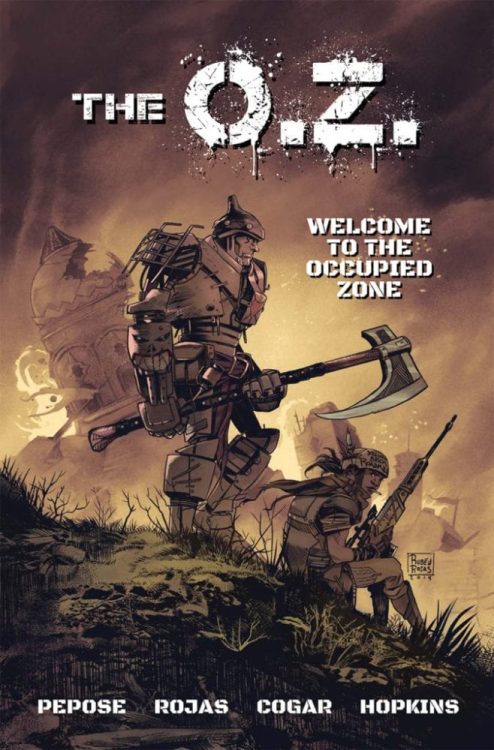
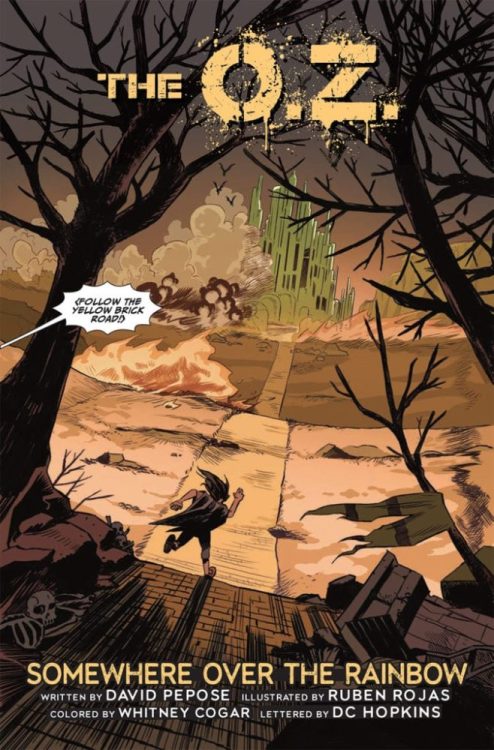
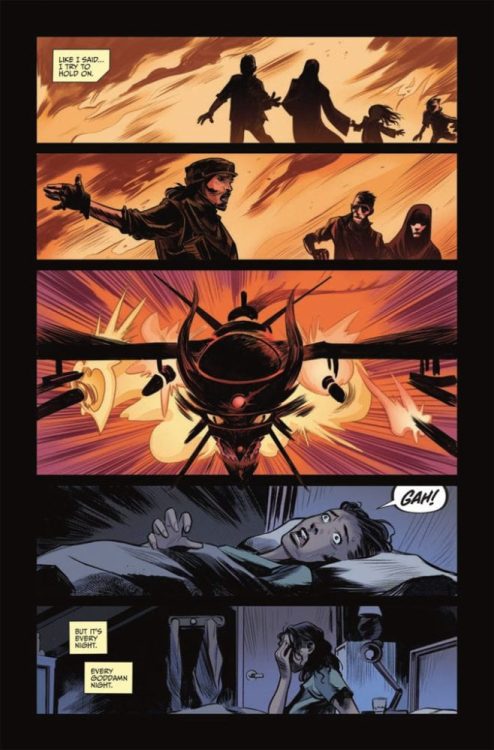
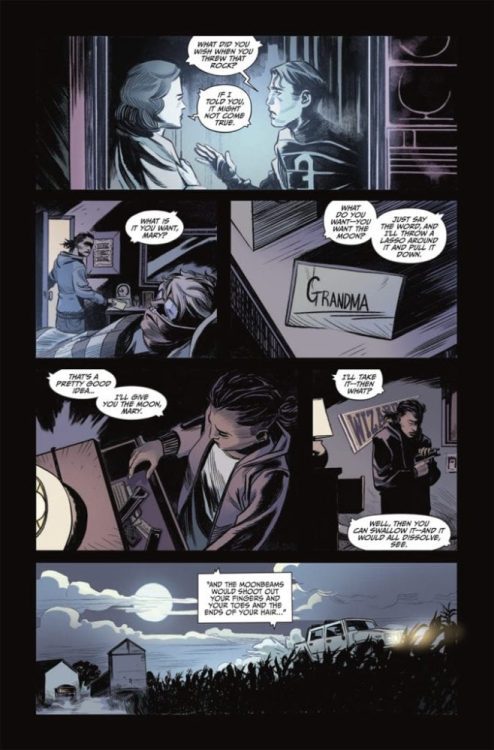
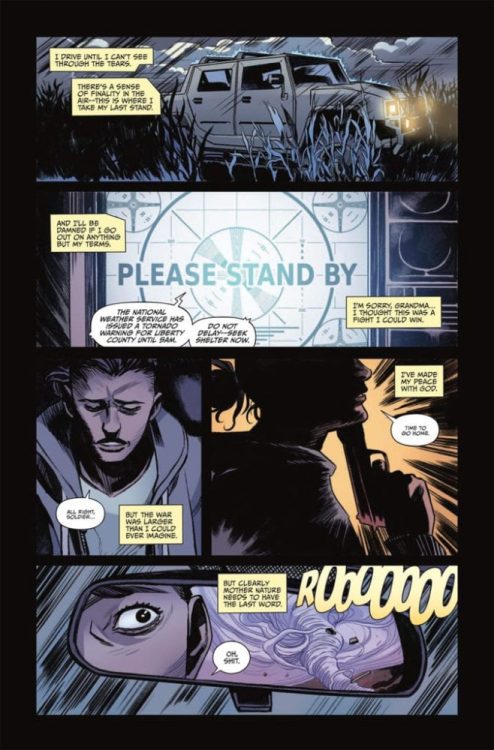
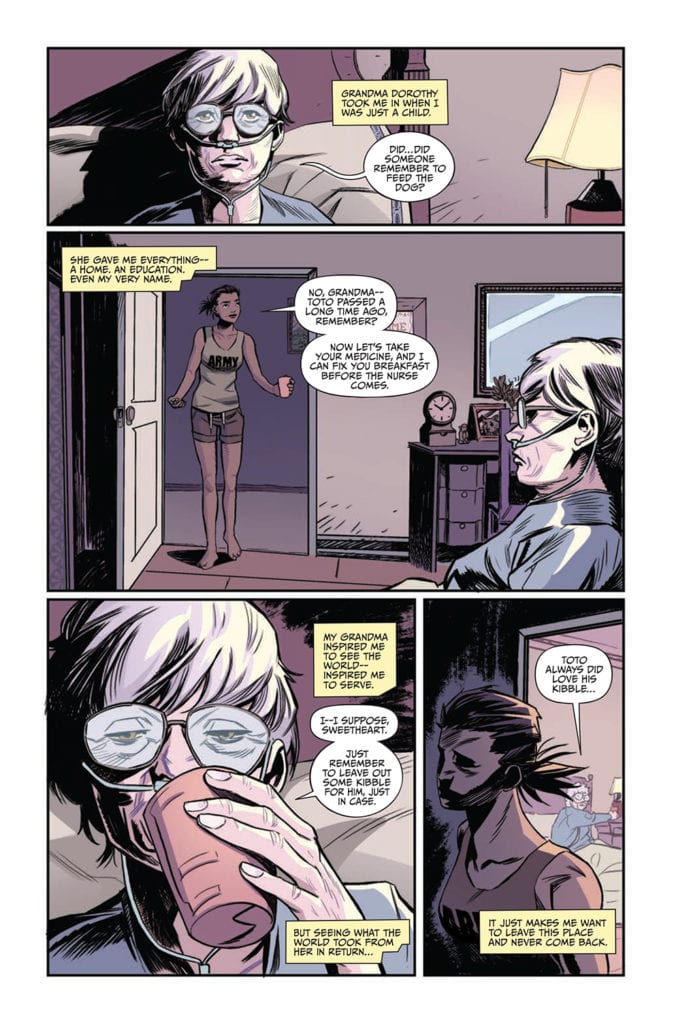
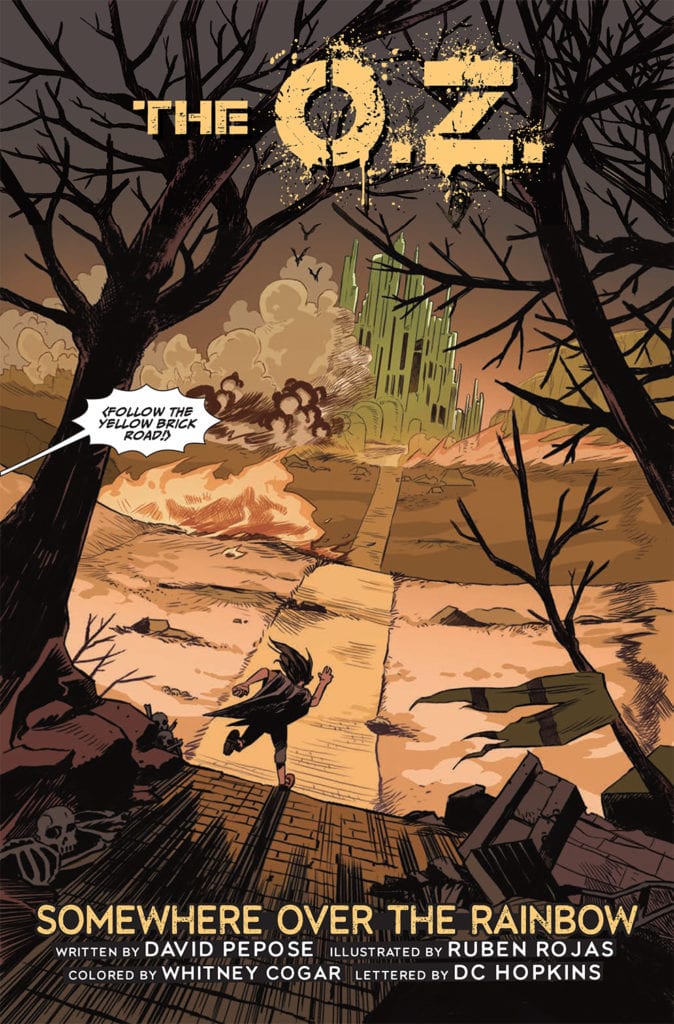
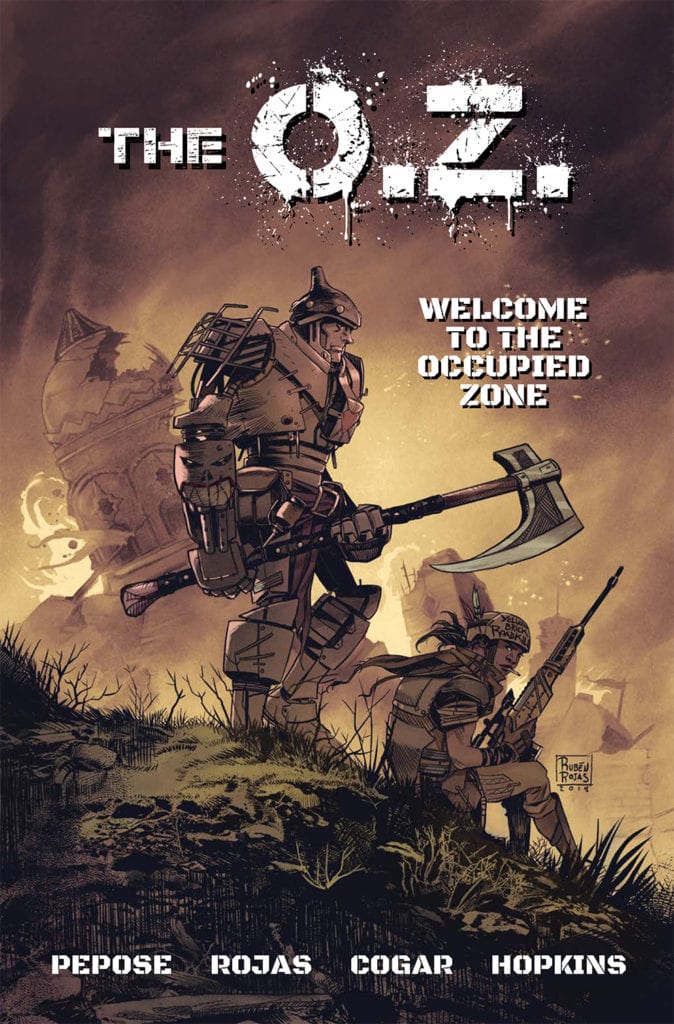
THE O.Z. is a new project on Kickstarter written by David Pepose, and it’s a take on The Wizard of Oz like you’ve never seen before. We spoke with Pepose about the genesis of the series, and why crowdfunding was the best platform for the book.
About the series:
You remember The Wizard of Oz, right? Remember how Dorothy and her friends vanquished the Wicked Witch of the West and everyone lived happily ever after? Well it turns out the resulting power vacuum sent Oz spiraling into decades of civil war. Now, Dorothy’s Iraq War veteran granddaughter has to try and bring peace to the magical land. Forget not being in Kansas anymore, we’re not even in Oz. This is the Occupied Zone. This is THE O.Z.
THE O.Z. is currently funding on Kickstarter, as mentioned, and you can check out the project by clicking here. This is the first of what the team is planning to be three double-sized Kickstarter campaigns for the comic. David has co-created the series with artist Ruben Rojas, colorist Whitney Cogar, and letterer DC Hopkins.
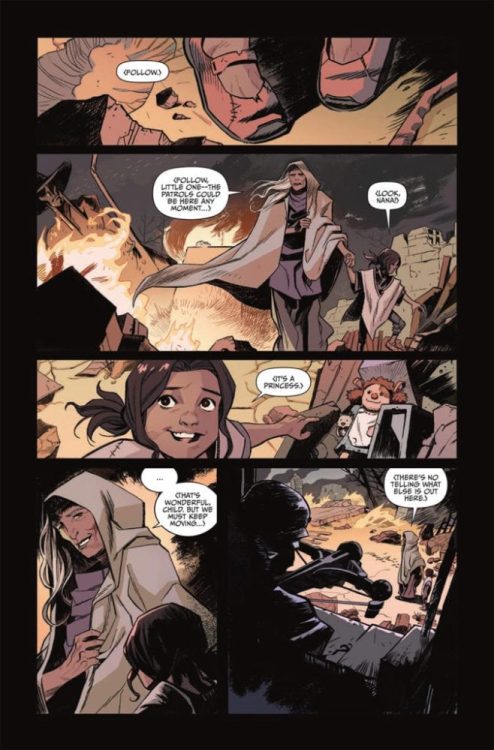
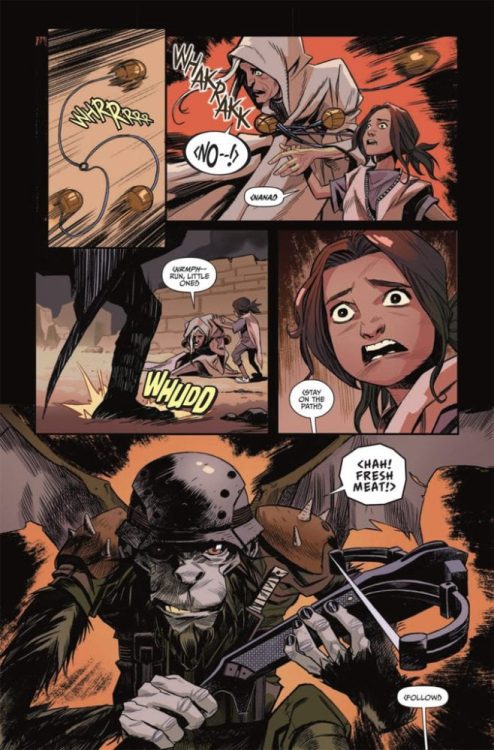
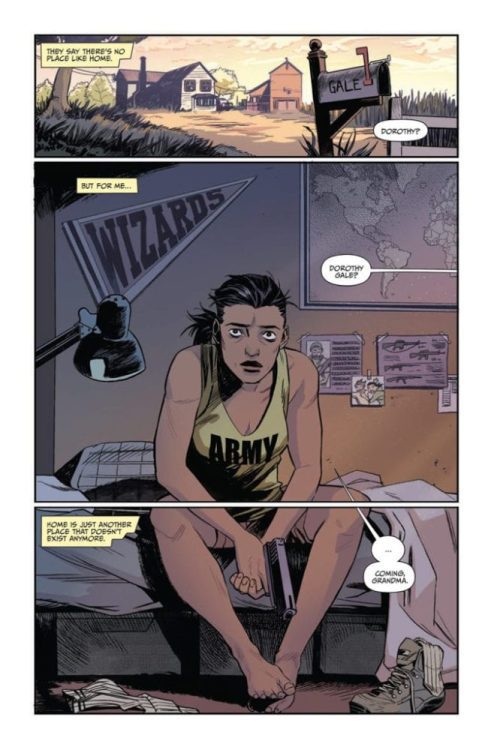
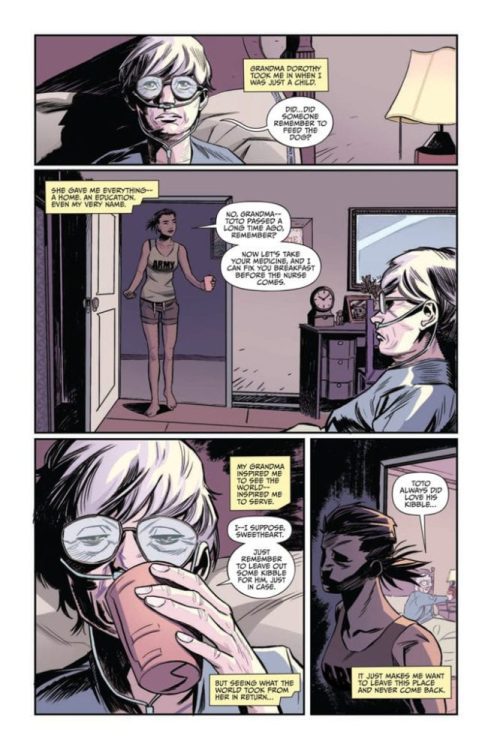
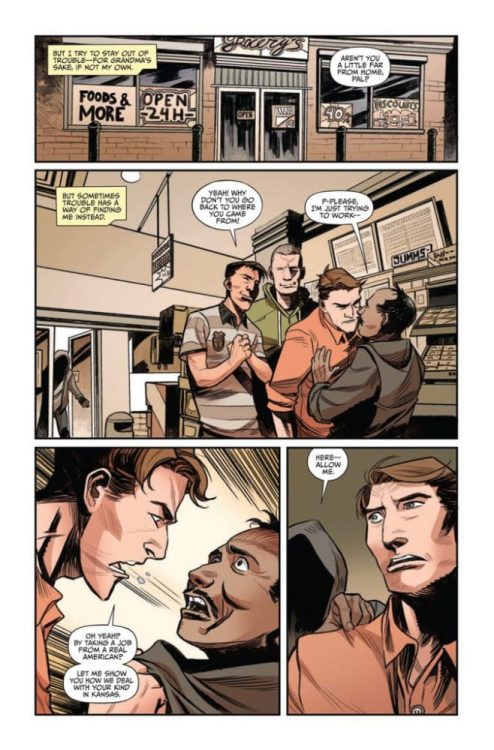
Check out the first 11 pages of THE O.Z. right here:
THE O.Z. 11-Page Preview
1 of 12
And read on for our full interview with David Pepose:
Monkeys Fighting Robots: First, you put Calvin and Hobbes in Sin City. Now, you’re throwing the wonderful land of Oz into civil war. I have to ask: Why do you insist on killing our childhood memories? What draws you to these gritty reimaginings?
David Pepose: You know, I swear I didn’t go into this business to be a serial childhood ruiner! (Laughs) But I think remixing and reimagining has been part of the comics industry from the creation of Barry Allen and the Teenage Mutant Ninja Turtles to Mark Russell’s spin on Snagglepuss, Tom King’s take on Elmer Fudd, to the current zeitgeist around Riverdale. There’s something about taking the familiar and reinventing it with a brand-new angle and tone that’s really appealing to me.
For me, with books like Spencer & Locke and now The O.Z., is that nostalgia in certain ways is almost like a shared history we all share — it’s a vision of the world before it became so complicated. And the great thing about universal archetypes like The Wizard of Oz is that they’re so flexible — I think it allows creators like myself to take a deeper dive into more morally complex territory, because nothing will ever break these symbols. And I think that lets readers follow these characters’ journeys with more confidence — they know that if these characters can survive and find their own meaning and direction, maybe our readers can, too.
MFR: What’s been going on in Oz since audiences have last visited?
Pepose: Unless you’ve been living under a rock, most people know the story of The Wizard of Oz — Dorothy Gale is swept up by a hurricane, drops into Oz, makes three extraordinary friends, and winds up killing the Wicked Witch of the West. And then… she goes back home. Which is great for Dorothy, but I felt would be a recipe for complete disaster for the land of Oz.
When you put it down on paper, the original Wizard of Oz story honestly reminded me of the invasion of Iraq — it’s easy to get wrapped up in black-and-white thinking about taking down despots, but as we’ve seen, regime change is harder than it looks, even when there’s an actual plan in place. Without committed infrastructure and planning, what’s to stop the land of Oz from falling into a horrific power vacuum, or devolve into decades of civil war?
And that’s where the story of The O.Z. begins, a generation after Dorothy defeated the Wicked Witch and then split. Life in the Occupied Zone has been brutal, and Dorothy’s former friends like the Tin Soldier, the Scarecrow, and the Courageous Lion have each taken their own path trying to regain some semblance of order. But like people a lot smarter than me have said, war is hell, and this battlefield is only going to escalate once someone else from Kansas arrives… namely, Dorothy Gale’s granddaughter, a disillusioned Iraq war veteran.
MFR: And what can you tell us about this new Dorothy? Who is she, and what sets her apart from her grandmother, the Dorothy fans know from the original Wizard of Oz?
Pepose: Our new Dorothy is the granddaughter of the original — but whereas the original Dorothy was about as sweet and wholesome as you might expect, our new Dorothy has endured some pretty hard-earned experience. She served in the Army in Iraq and Afghanistan, and she’s come back to Liberty, Kansas to care for her ailing grandmother, while struggling to find any sense of purpose and direction.
The thing I’ve always tried to impart with my books is that even if the high concepts might be shocking or subversive to some degree, I’m never doing this for the sake of shock value. Shock value can get readers interested once — but that’s not going to keep readers invested for a second round. In particular, because I began developing this story at the same time as the military-oriented Spencer & Locke 2, I wanted to give Dorothy a really deep emotional core as a soldier and a survivor, and establish some bigger moral stakes beyond just blowing stuff up.
The O.Z. is the story of a soldier who already has serious misgivings about the utility and morality of war in the first place — and now, by virtue of her heritage, Dorothy’s going to be thrust into a leadership position that could decide the fate of millions. It’s a lot to carry on her shoulders — she’s got to grapple with trauma, with guilt, and the moral calculus you’ve got to perform on the fly when you know that every decision you make is likely to wind up with someone dead. It’s almost like the Hippocratic Oath — how do you do no harm, or perhaps the least amount of harm, when you’re trained to kill and there are enemies in sight?
Of course, there’s just as much Star Wars to this book as there is Mad Max or The Hurt Locker, and so Dorothy’s training will affect a lot of what happens in The O.Z. There’s that phrase if all you have is a hammer, every problem looks like a nail…? In this case, Dorothy’s a trained soldier, and she’s been dropped into a war, and part of the sparks that fly off this book will be how she brings her unique training and translates it through this dangerous, magical world.
MFR: You’re working with Ruben Rojas, Whitney Cogar, and DC Hopkins on this book. How did they react when you first pitched them the idea?
Pepose: I’ve known Ruben since 2018, seeing him post his portfolio in response to a call for artists on Twitter. (I was, and continue to be, gobsmacked that he wasn’t scooped up on the spot.) So I actually pitched him on a trio of stories — the first being my then-unannounced series Grand Theft Astro, the second being The O.Z., and the third being another concept that’s currently on the backburner. Ruben immediately gravitated towards this one, and after taking some time to finally iron out the scheduling amidst both of our workloads, we got our initial pitch pages together later in 2019 — and I was so blown away I immediately told him, “let’s do more.��
Credit where credit is due — I owe Mad Cave editor Michael Moccio for recommending Whitney and DC. I’ve known Michael for the better part of a decade, and he had been singing Dave Hopkins’ praises for ages — Dave and I wound up crossing paths at Denver Comic Con a year or so back, and we just immediately hit it off. He’s a super-sweet guy, incredibly good-natured, and an absolute dream to work with — which is great when I need to micromanage my dialogue so it fits in the actual artwork, haha.
Whitney was the final piece of the puzzle, and again, Mike absolutely knew what I was looking for — he had worked with Whitney during his time at BOOM! Studios, and just raved about her. After seeing her pages hit my inbox, I can absolutely say Whitney exceeded the hype — she’s been our secret weapon from the beginning, taking Ruben’s already exemplary work and just bringing it to an incredible new level. But that’s the best thing about the creative team for The O.Z. — any one of them on their own are superstars. But when you put them together, they create something truly magical.
MFR: What was the design process like for this book? How did you all find a way to update such iconic settings and characters while keeping true to their iconic roots?
Pepose: Working with Ruben has been such a blast, and pretty much every time I’ve seen him turn in pages I’ve just started cackling with glee. Ruben is one of the most talented and gifted artists I’ve ever had the fortune of working with — he just goes so far above and beyond with his design work, and he’s an incredible collaborator in the truest sense of the word.
As I’ve gotten my feet under me more as a writer, I’ve been more experimental in terms of finding reference for Ruben, and he incorporates it magnificently — his design on the Tin Soldier, for example, is absolutely breathtaking, as this hulking war machine who’s been blown up and put back together so many times you can hardly recognize him. Dorothy, on the other hand, has that soldier’s eye, a lot of makeshift combat armor with some flourishes ranging from Vietnam-style helmet graffiti to a bit of a Western-style cloak.
For the Scarecrow, meanwhile, we focused on his physicality and body language — asking ourselves what a man made of straw might look like after all these years, almost like a deflated balloon. And the Courageous Lion has been a particularly fun challenge, because we get to tackle themes ranging from legacy to the challenges of someone who wears a crown.
I will say, without spoiling too much, Ruben’s take on The Wizard of Oz is stupendously good. When fans see him, they are going to lose their minds. I know I did.
MFR: How did you and Cogar settle on the color palette for this book? Oz has such a legendary bright and colorful look, but obviously for a war story like THE O.Z. you want something a little different.
Pepose: For those who don’t know my previous works, I am a tremendous color snob. (Laughs) I got my start as an intern at DC Comics, and they really instilled in me how important color is to any comic — the right colorist can elevate any artwork, but the wrong colorist is just the kiss of death. So I’m very exacting with how our colors interact with our line art… and boy, did Whitney just go above and beyond any expectations that I’ve had. (Which makes plenty of sense, given that she’s worked on Giant Days, which, y’know, won an Eisner.)
When Whitney and I first discussed The O.Z., I asked her to imagine Star Wars with a Mad Max kind of bent — I firmly maintain that Star Wars has such immense longevity because of the sheer scale of the worldbuilding. Every setting has its own palette, its own color temperature, its own vibe and flavor — you can immediately imagine the desert of Tatooine, the icy tundra of Hoth, the forests of Endor, or sterile machinery of the Death Star. (Even the volcano where Anakin Skywalker burned is memorable, for a prequel that most people don’t even enjoy!)
That expansiveness was a quality I really wanted to have in The O.Z., because obviously the cornfields of Kansas are going to have a very different vibe than, say, the bombed-out Emerald City where the Resistance hides, or the ominous yellows of the Deadly Desert, or the otherworldly eldritch teals of the Wicked Witch’s cauldron. And what’s most impressive to me is how quickly Whitney got it — like I said, I’m pretty exacting with my colors, about what feels right and what doesn’t, but Whitney just knocks it out of the park every time. I know Ruben and I both feel incredibly fortunate and grateful to be working with her.
MFR: Why take THE O.Z. to Kickstarter? Was it purely due to the current COVID-driven market conditions, or were other factors at play?
Pepose: I’d say a little of Column A, a little of Column B. The O.Z. has been a book I’ve been working on for years — dating back to the release of the first volume of Spencer & Locke. But like Spencer & Locke and Going to the Chapel, sometimes it’s challenging to get a publisher at the right place, at the right time, in the right frame of mind — and in particular, when you’re an up-and-coming writer with a brand-new artist, it’s challenging to get a publisher to bite on what had been planned as a six-issue miniseries. You add covid to the mix — with some publishers throttling new acquisitions until 2022 — and you realize shifting strategies is a good thing.
But the thing is, I’ve been eying Kickstarter for a long time. Some of my closest friends in the industry — Charlie Stickney of White Ash fame, The Jump writer Rylend Grant, Frank Gogol’s breakout work Grief, Russell Nohelty’s sprawling body of work — have all found major success on Kickstarter, and they’ve been press-ganging me for close to a year to get me to take the plunge. Because there really are different markets out there — some people only buy books at comic shops, others only buy on Amazon, others only buy at cons, and others only buy on Kickstarter.
I’ve always believed in bringing as many people to the table as possible, in making my stories accessible and building a wider consensus of fans — so I think taking the plunge on Kickstarter was always going to be inevitable, just to build on the amazing audience we’ve had with Spencer & Locke and Going to the Chapel. But launching this Kickstarter during the unpredictability of covid also meant we didn’t have to wait for a publisher’s permission to create anymore — because as I’ve seen Ruben, Whitney and DC’s pages coming in over the last year or so, I knew it would be downright criminal to keep this book hidden under wraps any longer.
MFR: Did you approach this project any differently than your previous works? Do you find the Kickstarter element any more freeing or restrictive on your writing?
Pepose:The O.Z. has been a very different animal as far as the writing and production process has gone, and I think that process ultimately is what also made me feel more comfortable with taking the plunge on Kickstarter. For the previous books I’ve pitched, I’ve usually just come up with a small number of pages and an outline detailing the rest of the story — but after talking with friends like Rylend, Frank, and Strayed creator Carlos Giffoni, I realized there was something to be said about barrelling ahead, publisher involvement be damned. Because when you’ve got someone like Ruben working on art, how can you tell him to just keep it to six pages?
So as opposed to Spencer & Locke or Going to the Chapel, which I didn’t script beyond the first issue until a publisher had acquired the book, I actually went full-bore in writing the entire series even without having a company attached. That’s right, The O.Z. is completely written, weighing in at 140 pages across what we plan to be three double-sized Kickstarter campaigns. We’ve currently got the first 44 pages already locked and in the bag, which made me feel a lot better about rolling the dice with self-publishing — I’m confident that Ruben and Whitney can chisel through the series at enough speed to let us roll out our Kickstarters every few months, but still do so at a pace that won’t kill my creative team. Or me. (Laughs)
But this project has definitely been unique, just in terms of the sheer scale I’m working with here — it’s the longest book I’ve written so far, and it’s really sprawling in terms of locations and stakes and the kinds of themes we wanted to work with. It for sure shares some DNA with both Spencer & Locke and Chapel, but I think the fantasy and war genres give The O.Z. its own unique flavor, as do the messages and themes we’re choosing to explore. I think there’s a real sense of responsibility we’re all bringing to the project to bring our A-game and not alienate any of the real-life veterans who might be reading this book.
MFR: How has Kickstarter changed the way you see the comics industry and its distribution system?
Pepose: Covid has really made me rethink about how I’m doing business, and I’d imagine a lot of creators are feeling the same way. For the longest time, I’ve been a con warrior — I think I did something like 16 shows last year? — and obviously, it’s going to be a long time before it’s safe for anyone to do an in-person show again. And you’ve seen even this year, if the country gets hit with stay-at-home orders, even the Diamond system we’ve used as a benchmark for so long can suddenly cause a cascade of ripple effects from publishers all the way to retailers.
For me, focusing on my digital presence has been really important to me — not just promoting my work on Facebook, Twitter, and Instagram, but finding out new ways to present and sell my work online. And covid in a lot of ways has removed any last vestiges of stigma associated with the platform — you’ve got Jeff Lemire and Matt Kindt on the platform, you’ve got Saladin Ahmed, you’ve got people like Jimmy Palmiotti or Cullen Bunn… I’m certainly not abandoning the traditional publisher model, since I have books in the works elsewhere, but the idea of building a following during this time of uncertainty through as many different avenues as possible feels like the only real option moving forward.
MFR: You are one of the hardest working guys in comics when it comes to promoting and marketing your comics. Do you have any advice for creators who are just entering the game and want to get the word out about their projects (or even established creators who struggle with this)?
Pepose: Well, first off, thank you for saying that — I assure you it comes from the bracing fear of not wanting to let down your collaborators or watch your projects crash and burn. (Laughs) But I consider myself lucky — I’ve worked in publicity and the press before, so I know both sides of that equation, and I also have never been afraid of talking a lot. (Laughs)
Still, I remember when I was first starting out on the convention scene, and how awkward I felt promoting my own work — if it’s good enough, shouldn’t it just catch someone’s eye and sell itself? And that’s something I think creators have to work extra-hard to try to overcome — particularly writers, because if you’re the one steering the ship, it’s up to you to get the spotlight for your sake and that of your collaborators. When I’m working with pros like Ruben, Whitney, and DC (or collaborators like Jorge Santiago, Jr., Jasen Smith, Gavin Guidry, Liz Kramer, Colin Bell, or Ariana Maher!), it gets really easy to talk them up, because they’re so incredibly good.
My advice for creators who want to get the word out is to figure out why a stranger would care about your project — this is probably something you want to think about while you’re actually making the project, but it’s never too late to start. (Laughs) Who’s your target audience? Are there any similar titles that operate in the same wheelhouse as your work? Making sure you can actually provide artwork to show is massive — I can’t tell you how many times I’ve almost overlooked a book, and then had some gorgeous artwork hook me right back in.
Beyond that, I think it’s just researching the market, knowing which places will cover comics, and doing your best to establish relationships long-term. You and I have known each other for a few years now, for example, and while I think some of that comes from you genuinely enjoying and supporting my books — which, y’know, thank you again for that! — but I think that friendship started just by me emailing you like an actual human being, rather than a form letter.
MFR: What are you most excited about with THE O.Z.? What are you most looking forward to fans seeing?
Pepose: There’s so much I’m excited about, seriously — our variant covers from Maan House, Rio Burton, and Kenneth Wagnon, for starters. Or seeing what people think of Dorothy, the Tin Soldier, and the Wizard of Oz. Or just hitting and surpassing our Kickstarter goal! (Laughs)
Honestly, the thing I’m most excited about with The O.Z. is that it takes some of the building blocks of my previous work and blows them up in a major way, but never at the cost of our artistic integrity. Every creator wants to keep growing with their work, and I’m really proud of the ambition and scale we’ve got here. I can safely say this book looks and reads every bit as good as I could have possibly hoped — I certainly think it’s the best-written book I’ve done yet, and I think anyone with eyes would agree it’s amongst the best-looking books I’ve ever worked on.
The thing I’m always excited for is to see fan expectations get turned on their heads — like I said, I think everyone has an idea of what The Wizard of Oz looks like in their minds, and The O.Z. definitely is going to upend that in a big way. This is an action-packed adventure on the other side of the rainbow, one that I think brings its own brand of brains, heart, and courage to the table. You may think you know the story of Oz, but this is the story of what comes next, so I hope fans of Mad Max, The Old Guard, and Fables join us in the trenches for The O.Z.
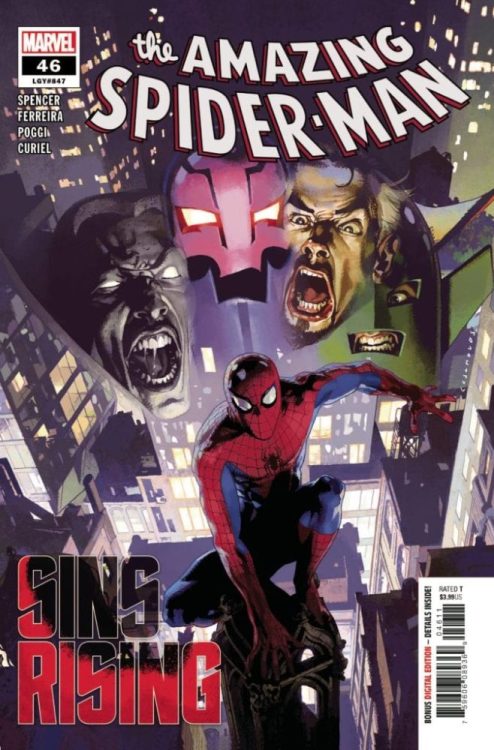
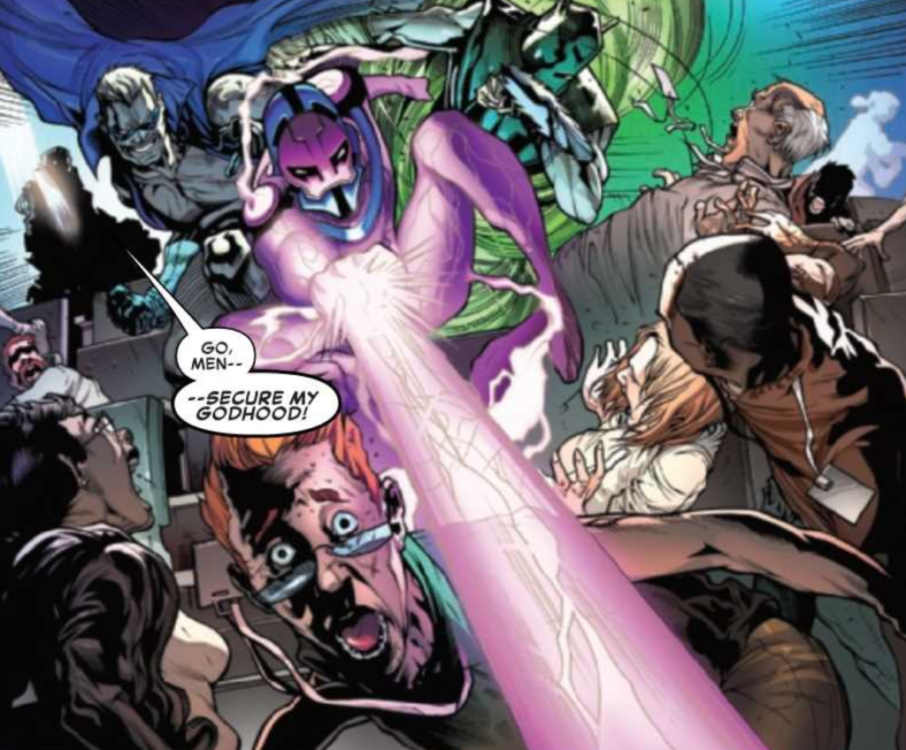
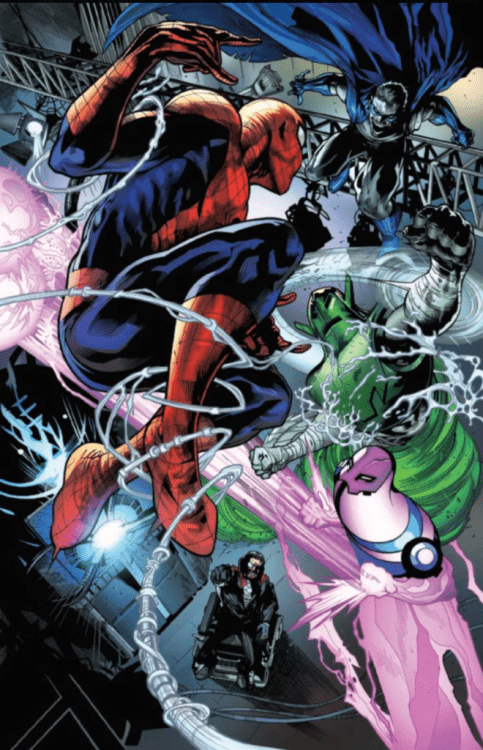
The Amazing Spider-Man #46 is an astounding second issue in the “Sins Rising” event that keeps the reader deeply engaged with the unraveling storyline, and continues to set the stage for greater things to come.
About the Book:
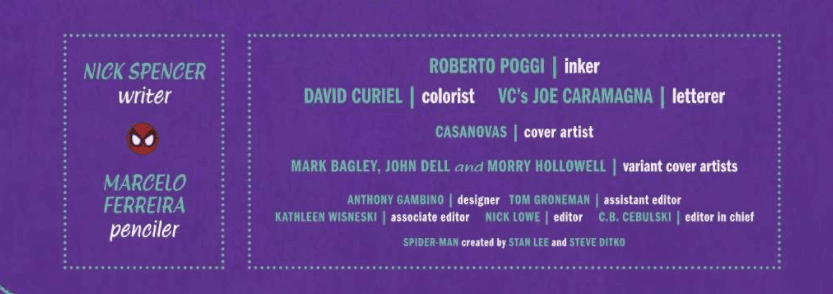
The writing of Nick Spencer, the penciling of Marcelo Ferreira, the inking of Roberto Poggi, the colors of David Curiel, and the lettering of VC’s Joe Caramagna work together to once again produce an astonishing issue. The second part of the “Sins Rising” event, The Amazing Spider-Man #46 is filled with action and riveting storytelling. The Sin-Eater is back with new abilities and is “murdering” villains of Spider-Man. However, once in the morgue, these recently deceased criminals awake without the urge to hurt anyone else. We don’t know the extent of the Sin-Eater’s new powers, but while he seems to be doing good deeds by getting rid of villainous behavior, Spider-Man does not trust him.
The Amazing Spider-Man #46 Story
The previous issue of The Amazing Spider-Man left on a cliffhanger and raised many questions that were never explained. There is still much unrevealed about the Sin-Eater and his new powers, as well as how he is affecting the villains he shoots. This issue answers some questions about the Sin-Eater and his capabilities, but still leaves much to discover. This is an effective way that Spencer is able to keep readers engaged, and he has perfected the balance of revealing enough information to keep the issue deeply entertaining, while also keeping enough secret to intrigue the reader.
The beginning of The Amazing Spider-Man #46 has internal dialogue of the famous web-slinger, and it is truly a highlight of Spencer��s writing in this issue. The way that Spencer is able to portray Spider-Man wrestling with what happened between him and the Sin-Eater in the past, as well as the Sin-Eater’s return, is clear and entertaining. It is evident in most issues, but in this one especially, that Spencer has a strong grasp on the Spidey’s character and personality.
At the beginning of The Amazing Spider-Man #46, Spider-Man believes the Sin-Eater is murdering villains, which sets up a standard contrast of beliefs between the two. However, Spencer makes it so that the brutality of the Sin-Eater is not real. It seems the Sin-Eater’s new abilities have allowed him to somehow cure villains of their wicked behavior, which leaves Spider-Man protesting against the Sin-Eater for a reason the public doesn’t understand. It is interesting to see Spider-Man holding a position that doesn’t make much sense, simply because of a hunch. We know the Sin-Eater is a villain, so the actions he has enacted must have some unforeseen consequences, but it is interesting to see what they could be, when the current situation makes the Sin-Eater’s actions appear nothing but positive.
Art
The pencils and inks of The Amazing Spider-Man #46 are absolutely fantastic, and Ferreira and Poggi do an excellent job of making the story come to life. This issue would be worth purchasing simply to look at the stunning art. Characters are expressive, poses are dynamic, and each action scene is so impressive that several pages deserve a moment of reflection before continuing reading. Several techniques are utilized to allow panels in action sequences to stand out, including action lines and characters overlapping panel borders, which make the issue an incredible page turner.
Curiel’s coloring of The Amazing Spider-Man #46 is absolutely superb. The colorist chooses many vibrant colors which not only provides an astonishing composition, but also highlights the colorful world these characters exist in. When the Sin-Eater arrives, his dark demeanor and story act in direct opposition to this, making his actions quite horrific. This issue also features many lasers and items that emanate light, and Curiel does a fantastic job of showing the light reflecting off of objects and people.
The lettering by Caramagna does a splendid job of complementing the fast-paced action of The Amazing Spider-Man #46. It is done in a fashion that allows the story to progress naturally, and changes in font and font size are used wonderfully to give emphasis to certain sound effects. For example, the sound of the Sin-Eater’s weapon firing has large red letters and a bold font that reads “Blam.” This particular lettering choice stands out so much that the impact of the Sin-Eater’s weapon firing has a deep impact, even if the shot itself is not shown on-panel.
Conclusion
The Amazing Spider-Man #46 is another outstanding issue in the “Sins Rising” event. The art wonderfully complements the story to provide an engaging tale. It keeps the readers entertained all the while setting the stage for the rest of the event, which I’m sure will be amazing as well.
In the early to mid 1980’s, a wave of comic creators swept the offices at DC comics and began transforming the landscape of mainstream comics. Under the advisement of the likes of Len Wein, Stuart Moore, and of course Karen Berger, these writers and artists would go on to break down the barrier created by the Comics Code Authority and put out some of the greatest works seen in this or any medium of storytelling. While names like Alan Moore, Neil Gaiman, Grant Morrison, and Garth Ennis may be household names for the comics industry now, it would have been impossible to foresee the influence these names would be on the medium for years to come – and the library of masterpieces that would come from the imprint they helped create.
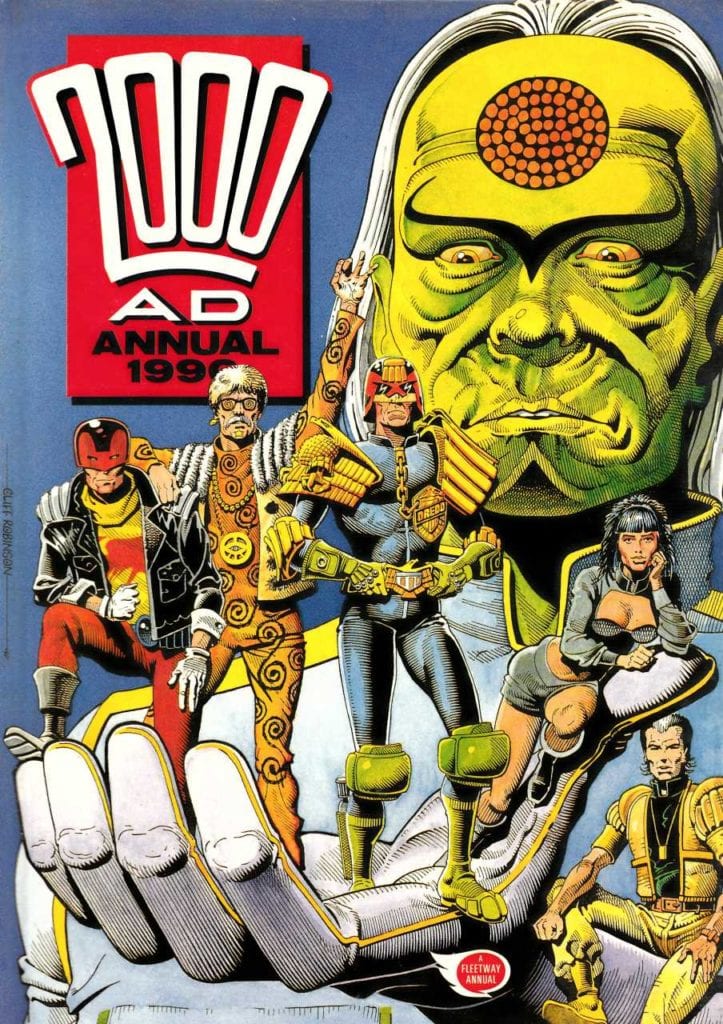
In 1979, then Green Lantern artist Joe Staton attended a comic convention in the U.K. and roomed with 2000 A.D. artist Brian Bolland during his stay. 2000 A.D. was known for its pulpy, satirical, and often mature-minded comics stories of all kind of genres (though mainly sci-fi). Bolland expressed to Staton his interest in drawing some covers for Green Lantern at DC, and seeing how stellar his work was, Staton wholeheartedly agreed. Once Bolland started turning in his work, DC’s the editorial staff were so impressed that they decided to send talent scout to England to see if they could scrounge up any more hidden talent.
And boy, did they.
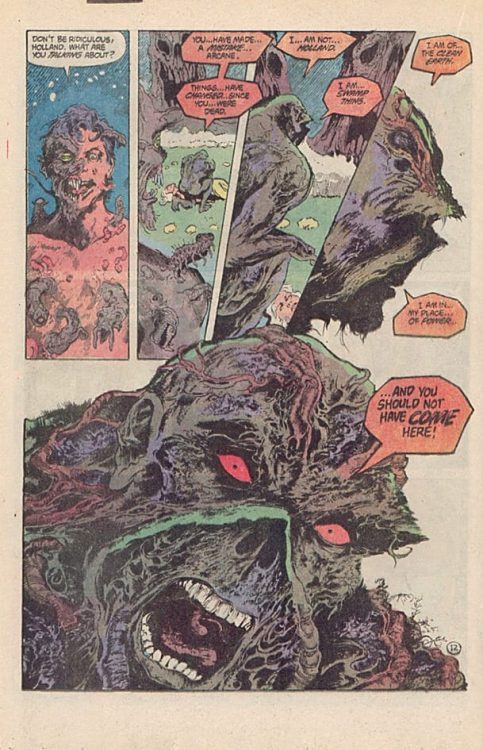
In an attempt to curb the dwindling sales of his beloved creation in Swamp Thing, Len Wein offered 2000 A.D. and Marvel U.K. writer Alan Moore to take over the series. While skeptical at first, upon assurances that he would be given a wide berth in terms of creative freedom, he took the job. The movement that would follow this landmark run would reimagine how comics were created and conceived by readers for decades to follow.
The unexpected financial and critical acclaim of Moore’s Swamp Thing stems from the approach to comic writing he took that differed from his American contemporaries. He and the other British writers that would follow him abandoned the gallant and embellished style of dialogue of the Bronze Age in favor of naturalistic dialogue and more mature narrative methods. The language used in both dialogue and narration was created to read like spoken dialogue that more easily wrapped the readers in its atmosphere. The complexity of many of the narrative descriptions is something that had not been matched before either, as it comes off with a sort of poeticism seldom found in any medium outside of classic literature. The work of the British Invasion writers is often considered to be a style that celebrates the English language at its fullest potential. The maturity in the pages of Swamp Thing didn’t just extend from its gruesome or explicit material (although that was certainly an element), but from the deeply intricate and philosophical nature of the stories being written.
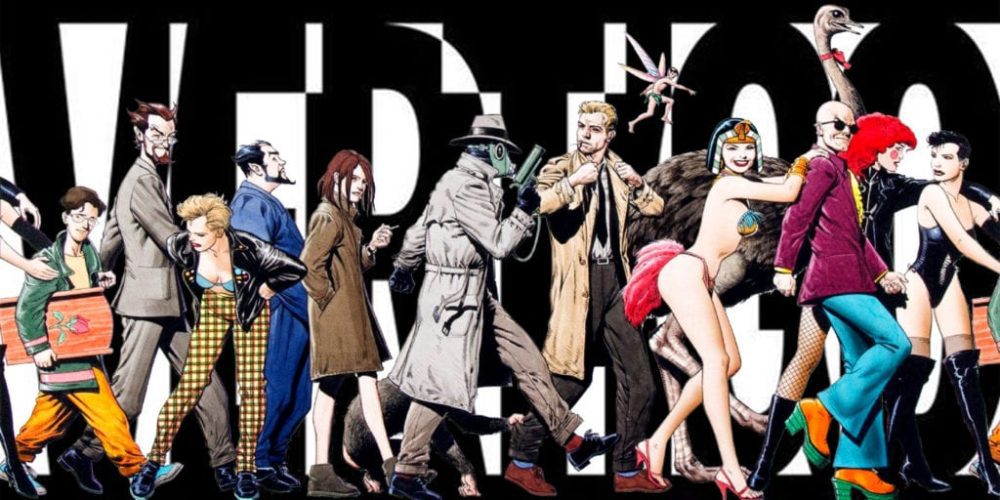
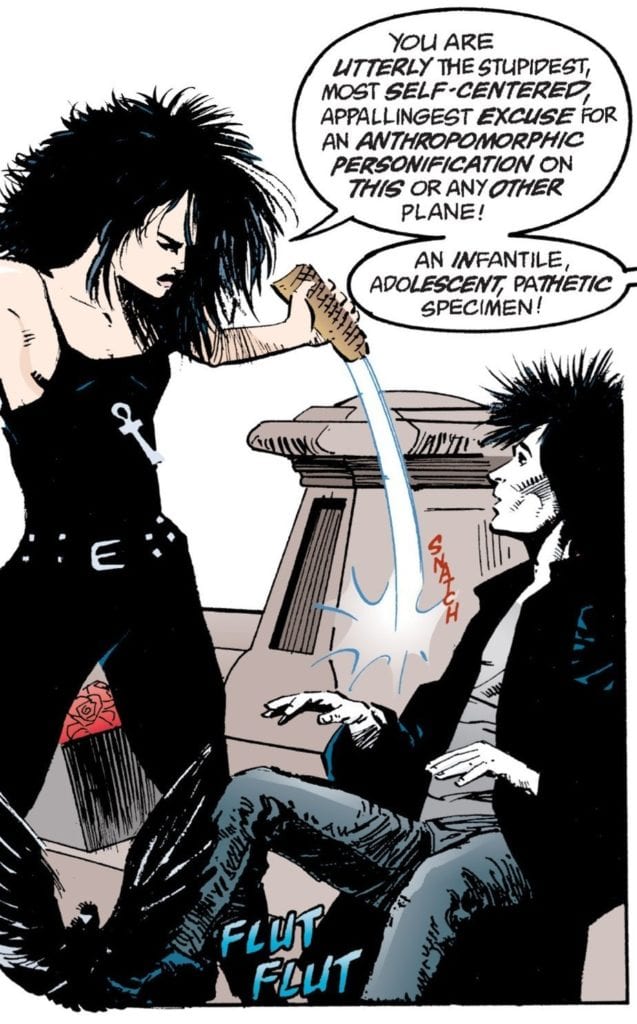
What made this initial wave of what would later become Vertigo so special was how the creators put themselves into their work. DC editor Karen Berger, who oversaw the majority of the “British Invasion” creators’ work for the new line, challenged writers to take classic characters and put their own distinct creativity into reimagining them for a new era. Berger was well aware that what Moore had started in Swamp Thing and Watchmen was the path to the future of comics, so she sought to keep that momentum going with an all-star lineup of talent. Moore took his understanding of metaphysics and philosophy and injected into Swamp Thing. Neil Gaiman took an obscure Jack Kirby character and blended his own visions of mythology and storytelling to create Sandman. Grant Morrison embedded his own spiritual experiences and investigations into counterculture in his work on Animal Man and Doom Patrol, both remnants of the Silver Age era. These writers, along with the likes of Peter Milligan (Shade, The Changing Man), Jamie Delano (Hellblazer), and Garth Ennis (Hitman, Hellblazer) crafted a new era of comics storytelling focused around mature concepts and naturalistic dialogue. Their runs on these respective characters were modern reimaginings rife with real-world parallels and messaging from the thoughts of the creators themselves. The “Berger-verse” as it was called became a massive critical and financial success in the industry, with its flagship titles matching or outselling DC’s mainstream superhero books of the era. With the Comics Code Authority broken and replaced with simple rating system (leading this new wave to be referred to as DC’s Mature Readers Line) there seemed to be only one way forward: Original comic stories. And with them, DC’s Vertigo imprint was born.
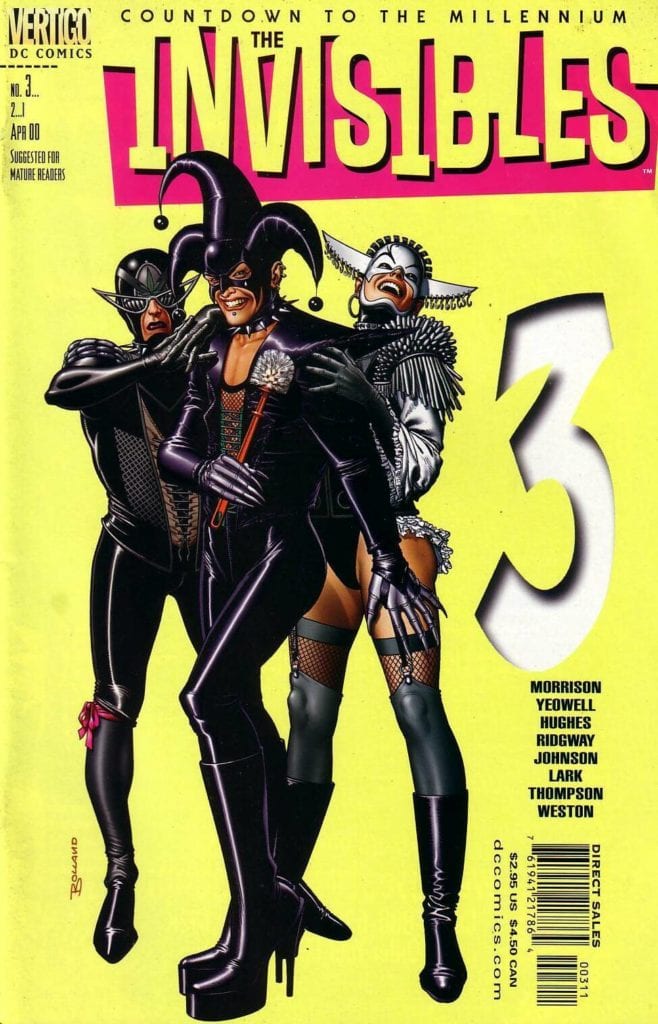
While most of the initial Vertigo lineup under Editor-In-Chief Karen Berger were continuations of previous DC Mature Readers Series (Sandman, Hellblazer, Swamp Thing, Shade The Changing Man, Animal Man and Doom Patrol), a small crop of completely original works reared their heads in the new imprint’s first year. Editor favorites Peter Milligan and Grant Morrison wrote complex and experimental mini-series’ such as “Enigma” and “Sebastian O” while DC and Berger continually brought in new talent. Vertigo’s earliest years were a potent mix of in-universe but unique comics and wholly original creations. Matt Wagner, Steven T. Seagle and Guy Davis crafted Sandman: Mystery Theater, a neo-noir series based on a character from DC’s Golden Age. Ann Nocenti and Sean Phillips continued Morrison’s work on Kid Eternity, and Peter Gross continued the story of Neil Gaiman’s Books of Magic. On the other hand, J.M. DeMatteis wrote graphic novels and mini-series’ such as Mercy and The Last One, while Milligan and artist Ted McKeever released The Extremist. While many of Vertigo’s well-established series had enjoyed long continual runs since this movement’s inception in the late 1980’s, it wouldn’t be until 1994 that a completely original work would be granted such luck. Grant Morrison’s inter-dimensional sci-fi conspiracy romp The Invisibles would run for 6 years and 55 issues. Then in 1995, in the midst of their run on Hellblazer, Irish writer Garth Ennis and artist Steve Dillon created the blasphemous cross-country epic in Preacher, which would continue on into 2000. From here, the flood gates of original creations both mini and continual would open, unleashing some of the greatest pieces of the comic medium.
Part of what drew such critical and financial success to Vertigo, aside from its cast of fearless creators, was the progressive and transgressive nature of its storytelling. The removal of the Comics Code Authority and the arrival of a rating system meant that creators could approach any subject they wanted in almost whatever way they pleased (provided the editor said it was okay). The Doom Patrol runs by Morrison and Rachel Pollack touched on everything from Dadaism to transgender politics and gender norms. Garth Ennis’ Hellblazer covers the Troubles in Northern Ireland and rampant British nationalism. Jason Aaron’s Scalped offers an examination of modern Native American life and a criticism of the American Government’s hand in such conditions. These are only small examples, and some series cover every controversial topic that could come to mind. The comparatively niche audience comics have makes the medium ripe for offering detailed perspectives unavailable in more mainstream mediums. Vertigo made for the perfect breeding ground for these kinds of stories, which still flourish today. These Vertigo comics aren’t all as eloquent as Sandman or Swamp Thing, either. Their delivery could be as raunchy or crass as the creators desired them to be (we’ve all read Preacher, right?) to get the points of the story across.
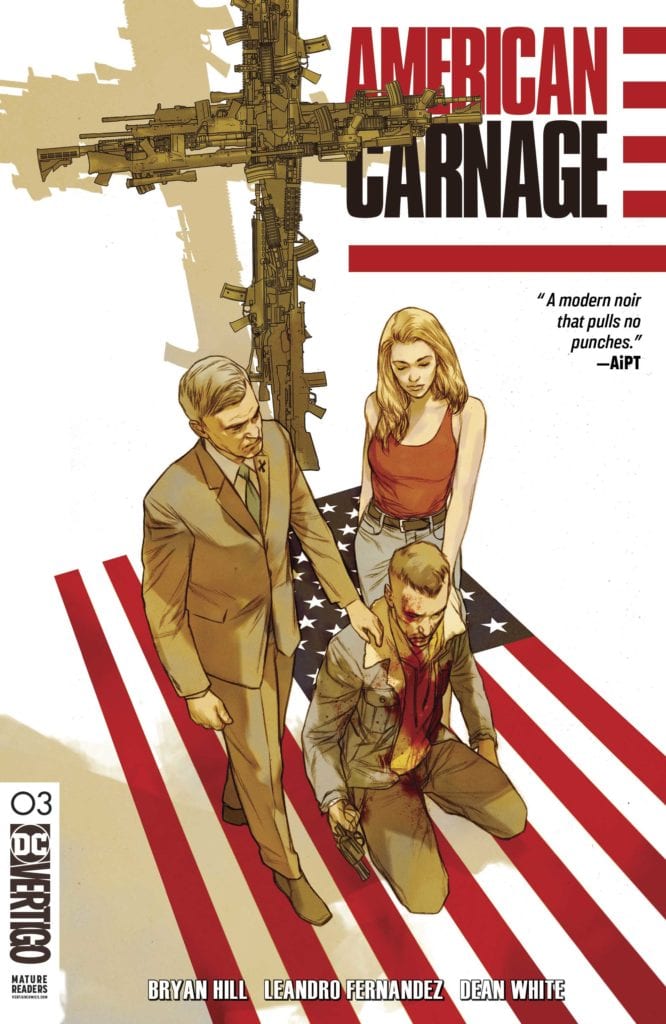
The creative trend of Vertigo comics and its creators was no doubt influenced by the works of European graphic novelists and the rise of mature-focused comic magazines. The rise of a new wave of wildly original and fantastical works in mainstream comics was the kick the industry needed to rope in a new generation of storytellers for the future. However, Vertigo was also a chance to bring back genres from decades prior. The creation of the comics code stifled the Golden/early Silver Age wave of science fiction, horror, and crime noir comics, as much of what was covered in those pages was effectively outlawed. While they still continued in some capacity (vicariously through some superhero comics), their potential was muted by censorship. DC’s undermining of the Code allowed for the triumphant return of these genres to the popular comics audience. Original science fiction exploded in American comics with the likes of Warren Ellis and Darick Robertson’s Transmetropolitan. Unbridled and varied horror experiences could be found in everything from Moore’s Swamp Thing to Steven Seagle’s House of Secrets and Scott Snyder’s American Vampire. Crime and noir returned to the mainstream in a massive way. What started with Sandman Mystery Theater culminated in comics such as of Brian Azzarello and Eduardo Risso’s 100 Bullets, Ed Brubaker and Sean Phillips’s Sleeper, Jason Aaron’s Scalped, and Bryan Edward Hill’s American Carnage just to name a small few. This massive amount of variety over the years of Vertigo’s tenure inspired a whole new wave of creators to tell stories of their own designs in the medium, whether they be at Vertigo itself – or the publishers that would ultimately outmode it.
Not long after the beginning of DC’s new publishing movement, other publishers had already started similar tactics on a much smaller scale. The likes of Dark Horse and Image Comics rose as a direct opposition to the so-called “Big 2” of the industry and their ownership of creativity – the latter of which was founded for this exact reason. These smaller publishers would expose the one weakness Vertigo had: the publisher owned the stories it published, not the creators. This problem separated the mainstream from the growing scene of indie comics publishers, where creators could go to get their original stories published and retain both the ownership rights and the majority of the profits. Dark Horse and Image are both household names in the comics industry today and were the first in a slew of publishers who provided similar features (Titan, Vault, Aftershock, BOOM!, and IDW just to name a few). Today, some of the greatest pieces of the medium come from these publishers. From Hellboy to Black Hammer, and from The Walking Dead to Saga, the majority of the industry’s greatest talents both new and old have flocked to independent publishers so they can create the stories they desire with little to no interference, all the while retaining the ownership of their work. Meanwhile, the very imprint that facilitated much of the comics medium’s new wave of uninhibited storytelling has shut its doors, unable to draw enough attention in the wake of this era of comics creativity. However, the influence that Vertigo and the new wave of British comic writers had on the shape of future comics storytelling can not be understated. Even the way mainstream superhero comics were written was reimagined in the wake of Vertigo’s influence. Comics grew not only in complexity or maturity, but in the intimacy of their characterization and the scope of what could be covered in the medium. DC’s Vertigo imprint was a paradigm shift for the comics, and one of the most important chapters in the history of this medium we love so much.
Disney is a company that has cultivated an image of wholesome entertainment that has provided many people with nostalgic memories, beloved characters, and popular franchises. But behind that image is a ruthless corporate entity whose true image is starting to show more and more.
Disney is a business, their aim is to make money: that is hardly going to come as a surprise to anyone. Their net was spread wide because they have operations in film and TV, video games, theme parks, and merchandise. But there were able to mix business savvy with creativity. In the early 2010s Disney started an aggressive expansion policy, first by buying Marvel, then the LucasFilm, and closing the decade with 20th Century Fox. They are now the biggest media company in the world and have garnered an image of being a conglomerate that gobbles up the competition.
Since the expansion, Disney has looked to make safe bets. The Marvel Cinematic Universe has become a juggernaut of a franchise that every other studio has tried to copy them. Disney had ambitious plans for the Star Wars franchise with them releasing a film once a year and lots of ideas for TV shows. Worst of all were Disney’s action-live remakes of their popular animated classics which was weaponized nostalgia. Many of these are just shot-for-shot remakes and creatively bankrupt: Beauty and the Beast and The Lion King were the worst examples.
Disney has also entered the streaming market with its service Disney+. The service was a one-stop hub for Disney movies, shows, and properties they have acquired i.e. X-Men: The Animated Series and The Greatest Showman. But they pulled all their content from other services, a predictable move as the streaming wars flare-up. Now even Disney’s harden fans are now seeing the company’s high levels of corporate greed they are prepared to sink to.
Back in 2015 Disney and Sony made a deal that shared Spider-Man. This allowed Spider-Man to appear in the MCU. Disney got to keep gross for any MCU films Spider-Man appeared in (i.e. Captain America: Civil War and The Avengers series), whilst Sony kept 95% of the theatrical gross of any Spider-Man films. Spider-Man: Homecoming and Spider-Man: Far From Home were able to use characters like Iron Man and Nick Fury. But in 2019 Disney tried to change the arrangement to a 50-50 co-financing deal and Disney would 50% of the theatrical gross which Sony rejected. Due to Disney’s positive reputation, some of the online reaction was pro-Disney. Even I joked that Disney’s solution was to buy Sony. Sony and Disney settled the dispute at the end of September and the deal was rumored to be a 75-25 split.
The big changes have come recently regarding Disney’s business. Disney has announced plans to release Mulan straight-to-Disney+ in nations that have the service and it has reported that Disney has canceled plans to 4K UHD Blu-ray for their classic films and Fox’s back catalog. In isolation, these moves can be seen as a response to the pandemic because Disney has been hit hard financially. But together these moves make it look like Disney are making moves to try and change the distribution model and force people to subscribe Disney+. Mulan is set to be released on Disney+ with a $30 price tag. Due to an initial backlash to the price Disney had to announce that the high price was for a purchase, not a rental. But this is still a high price for a purchase when Blu-ray can be cheaper, and the film is only available if people keep their Disney+ subscriptions. If a user decides to cancel their subscription, they lose their purchases.
Disney’s decision was met with anger by theater owners outside of the US. Theaters in Europe, Asia, and Oceania are begging for new releases and Mulan was meant to be a big draw. Instead, Disney has bypassed theaters and if it’s successful Disney gets to keep all the profits. Disney has said Mulan’s release on Disney+ would be a one-off, but if this project is successful what stops the company from releasing other major films this way and push how far they could charge audiences. Or Disney could charge audiences for early access to their hit shows or pay extra for classic content pulled off rotation. It would force them to pay twice.
The website The Digital Bits have reported that Disney are going to scale back on releasing 4K UHD Blu-rays to only recent theatrical releases, animated films, and Star Wars and Marvel-related projects. Classic live-action films and Fox films like the Alien and Predator franchises will not get 4K home releases. 4K Blu-ray format hasn’t taken off as a mainstream format and more popular with hardcore collectors. But this move can be seen as an attempt to bring back the Disney Vault where the company would give a classic film a limited edition home release and force up the price. The more troubling prospect is Disney maybe trying to phrase out physical media and make their films and TV shows available online and eventually only available on Disney+. It would a dastardly move to force people to subscribe to Disney+. If this comes to pass, then Disney could rival EA as a company that exploits their customers.
It’s not just the world of film and TV where Disney has been devious. The company was meant with a huge amount of criticism for trying to reopen Disney World Florida when COVID cases were rising in the state. Disney released a commercial to advertise they’re reopening the theme park and the backlash was evident by the high amount of dislikes on Youtube and a parody that made the rounds on Twitter. Disney World Florida has had to layoff staff because attendance numbers were lower than expected. Obviously people don’t want to go travel during a pandemic and economic crisis, especially to one of the COVID-19 hotspots.
Disney’s image of being a wholesome provider of entertainment has turned into to being a ruthless corporate machine. The parody of Mickey Mouse in South Park where he says “now get out there and make me some goddamn money” seems prophetic now.
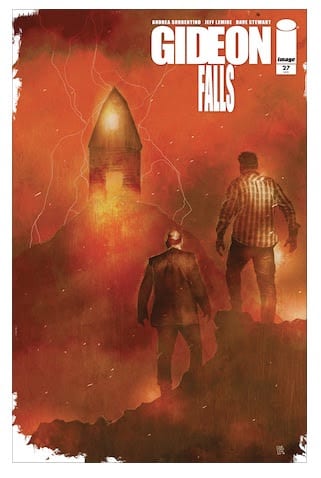
The successful Image Comics series, GIDEON FALLS, is set to conclude this December with issue #27, an 80-page book that promises to end the series with a “show-stopping conclusion.” The horror/mystery series, written by Jeff Lemire and drawn by Andrea Sorrentino, brought home the Eisner in 2019 for Best New Series.
Says Image of the the GIDEON FALLS series: “Gideon Falls explores the lives of a reclusive young man obsessed with a conspiracy in the city’s trash, and a washed up Catholic Priest arriving in a small town full of dark secrets.”
You can read the full press release from Image below.
Are you a fan of GIDEON FALLS? Let us know what you think in the Comments section, and please share this post on social media using the links below.
MULTIPLE EISNER AWARD WINNING GIDEON FALLS SERIES WILL KEEP READERS GUESSING UNTIL THE VERY END WITH AN 80-PAGE, SHOW-STOPPING FINALE THIS DECEMBER
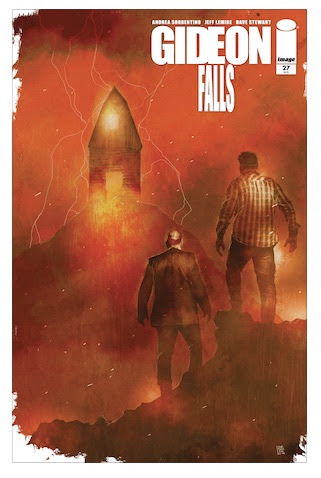
PORTLAND, Ore. 08/14/2020 — The Eisner Award winning Gideon Falls by New York Times bestselling writer Jeff Lemire and artist Andrea Sorrentino (the creative team behind Green Arrow and Old Man Logan), with the talents of Eisner Award winning colorist Dave Stewart, will come to its show-stopping conclusion with an extra-length, shelf-busting issue #27. This final, mind-bending issue will clock in at 80 pages and release from Image Comics this December.
The horror/mystery series became an overnight success and critical darling when it launched in March 2018. It went on to take home the 2019 Eisner Award for Best New Series and become one of the top selling, reordered series at Image Comics with multiple reprints.
“We’ve been fortunate to publish a lot of great work by Jeff and his many collaborators—Descender, AD, Plutona, Royal City—but his work with Andrea on Gideon Falls is one of his most incredible storytelling accomplishments to date,” said Eric Stephenson, Publisher & Chief Creative Officer at Image Comics. “It’s a true pleasure to see talent of this level complete such an amazing series, not just in the way they intended, but with their most thrilling issue yet!”
Gideon Falls explores the lives of a reclusive young man obsessed with a conspiracy in the city’s trash, and a washed up Catholic Priest arriving in a small town full of dark secrets. At the heart of the town’s secrets is intertwined the mysterious legend of The Black Barn, a otherworldly building that is alleged to have appeared in both the city and the small town, throughout history, bringing death and madness in its wake.
Fans won’t want to miss the satisfaction of this finale. Gideon Falls #27 will be the final issue in the series and will be available at local comic book shops in December.
Gideon Falls is also available for purchase across many digital platforms, including Amazon Kindle, Apple Books, comiXology, and Google Play.
As if Dark Nights: Death Metal wasn’t already shaping up to be DC’s biggest event of the year, along comes word of two new specials with some surprising names both on the page and behind the scenes.
Here’s the lowdown straight from DC:
The Darkest Knight Has Won.
The Multiverse is Destroyed. The Worlds of the DC Universe are Nightmares.
Dark Nights: Death Metal #3 hit shelves this week, taking the Justice League to the sun to rescue Jarro (and Superman!) and introducing a Darkseid-infused Batman called Darkfather! This in-demand third issue sold out ahead of release, but copies are available at your local comic book store and more supply will be delivered August 25!
CBR’s review of this week’s issue leads by saying “Dark Nights Death Metal #3 raises the stakes with cosmic psychedelia” while calling it “a hell of a lot of fun,” Newsarama says the creative team “leans into the cosmic calamity that is the DC Universe,” while The Beat calls it “a strong, stirring, and damn fun entry in the series.” And Dark Nights: Death Metal is only getting started!
In November, Dark Nights: Death Metal #5 will reveal the Darkest Knight’s true goal of remaking the Multiverse in his image—can Earth’s heroes rally together to make a last stand? And in two tie-in one-shot issues, the blood and guts and gratuitous violence of Lobo takes main stage while a world of evil Super Pets, and more, shows a glimpse into the nightmare realities that the Batman Who Laughs has created!
Take a look below at November’s lineup for Dark Nights: Death Metal!
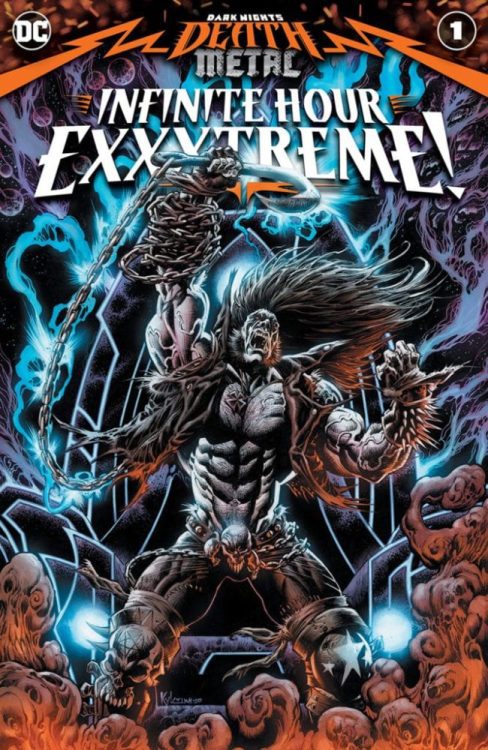
Dark Nights: Death Metal Infinite Hours Exxxtreme! #1 It’s storytime with Lobo. And it’s not going to be pretty!
Pull up a chair, ya bastiches—it’s time for Uncle Lobo’s Infinite Hour! It’s your chance to let the Main Man Lobo-tomize you with familiar yet freaky stories of the DC Universe, exactly as he remembers them: with blood and guts and exxxtreme gratuitous violence! Tell yer comics guy to put you down for alllll the copies!
Dark Nights: Death Metal Infinite Hours Exxxtreme! #1, written by Frank Tieri, Becky Cloonan, and others, art by Dale Eaglesham and others, cover by Kyle Hotz, 1:25 card stock variant cover by Rafael Grampá, on sale November 10.
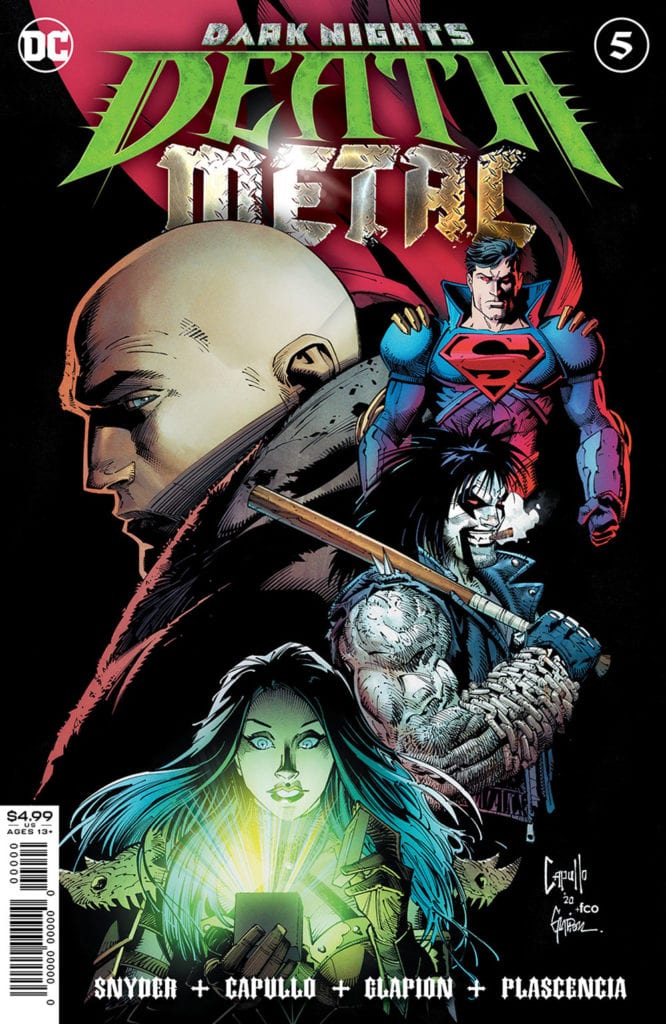
Dark Nights: Death Metal #5 The Darkest Knight has won—and the multiverse will pay the price!
The Darkest Knight has won. With absolute power at the villain’s fingertips, Wonder Woman and the rest of the DC heroes are nothing to him. As the Darkest Knight turns his sights to his true goal, remaking the Multiverse in his image, can Earth’s heroes rally together to make a last stand?
Dark Nights: Death Metal #5, written by Scott Snyder, art and cover by Greg Capullo and Jonathan Glapion, Swamp Thing variant cover by David Finch, Perpetua variant cover by Stanley “Artgerm” Lau, B. Rex variant cover by Lucio Parrillo, 1:25 variant cover by Doug Mahnke, 1:100 black and white variant cover by Greg Capullo and Jonathan Glapion, on sale November 17.
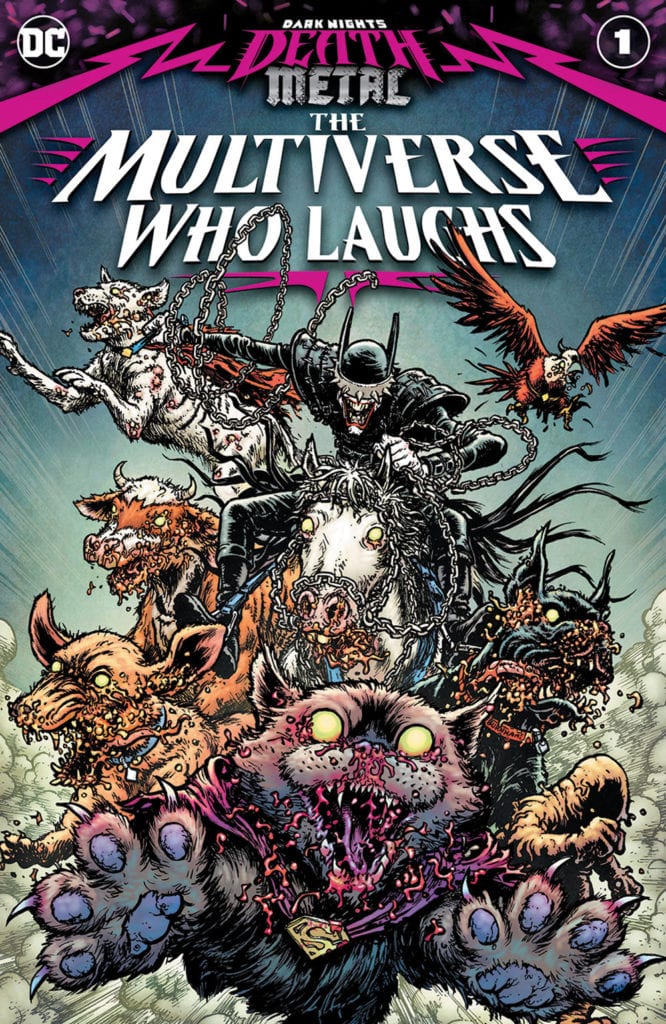
Dark Nights: Death Metal The Multiverse Who Laughs #1 With the multiverse is destroyed, the worlds of the DC universe are nightmares!
The DC Multiverse is a collection of alternate-reality worlds where anything is possible. Each world tells the tale of a possible split in reality, or shows how lives vary depending on a single, solitary decision. But now that the Multiverse has been destroyed, the Batman Who Laughs has used his god like power to create a new Dark Multiverse…a collection of 52 evil worlds, each more terrifying than the last. This one-shot offers the curious—and the brave—a glimpse into the nightmare realities that the Batman Who Laughs has created in tales by creators who know what it means to have a truly twisted sense of misfit humor. An Arkham Asylum even more terrifying than what we know? A world of evil Super Pets? All that and more in these new tales of the Multiverse Who Laughs!
Dark Nights: Death Metal The Multiverse Who Laughs #1, written by Amanda Conner, Patton Oswalt, Jimmy Palmiotti, Scott Snyder, Brandon Thomas, James Tynion IV, and Joshua Williamson, art by Chad Hardin and others, cover by Chris Burnham, 1:25 card stock variant cover by Simone Bianchi, on sale November 24.
Comic-Watch recently discovered and reported that Valiant Entertainment was shuttering its NYC offices. Despite Valiant’s innocuous response when asked for comment (see below), the move prompted some speculation that the publisher was on the cusp of more serious changes.
“All Valiant employees have been operating remotely since March. Nothing is more important than making sure Valiant’s employees are safe during this pandemic, so they will continue to work from home for the foreseeable future and business will continue to operate at 100%. – Valiant Entertainment, August 4th, 2020
Today, Valiant has released a new statement further expanding on their plans to restructure and reorganize in a COVID-19 world. With the announcement, Valiant appears to be shifting focus from publishing comics to leveraging its IP’s for expansion into other, presumably more profitable, mediums. You can read the full announcement from Valiant below.
What do you think? Is this simply a smart business move by Valiant, or a belt tightening reaction to an increasingly troubled comics market? Let us know what you think in the Comments section, and please share this post on social media using the links below.
Valiant Entertainment- August 2020
Nothing is more important than the safety of our team during these unpredictable times, and as such, we have continued to operate remotely since mid-March due to Covid-19.
As a part of our long-term strategy that brings Publishing, TV and Film closer together, we are restructuring our New York City/Los Angeles offices as well as transitioning new roles within the organization to optimize Valiant��s business priorities. In LA, Valiant has hired comic book industry veteran, David Wohl as a Senior Editor, who bring decades of experience to the team, and in NYC the Manhattan offices will be moving to a new location within the city, which is under construction and scheduled to be completed in the Fall 2020.
The future of Valiant Entertainment will continue to adapt, update and innovate across all platforms including comics, feature films, novels, and videogames giving fans the very best from our connected universe.
The latest from Valiant:
– November 2020 will see the return of X-O Manowar #2 from NY Times Best-Selling author, Dennis “Hopeless” Hallum and superstar artist Emilo Laiso. PLUS the return of Ninjak in 2021 featuring the dream team of Jeff Parker and Javier Pulido. Fans, new and old alike, should stay tuned as these are just a harbinger to many more announcements from Valiant in the coming months for iconic characters including Shadowman, Savage, and more!
– Announced in March, a re-master of the classic 1999 Shadowman game from Nightdive Studios is on the way. Release date is TBA (so keep an eye out for the A…)
– Published in July, a brand-new young adult novel, Faith: Taking Flight, with HarperCollins Publishers imprint Balzer + Bray, from New York Times bestselling author Julie Murphy is available today.
– Valiant Entertainment is teaming up with Blowfish Studios to develop a slate of all-new action packed video games with the popular characters from Valiant’s Superhero Universe. This will mark the first multi-platform Valiant video games since Acclaim’s acquisition of the company back in the 90’s.
– Released in theaters and on VOD today, Bloodshot (Sony), starring international action star Vin Diesel made its silver screen debut at #1 worldwide; Harbinger (Paramount) is currently in the works with a 2021 projected release.








 bestselling writer Jeff Lemire and artist Andrea Sorrentino (the creative team behind Green Arrow and Old Man Logan), with the talents of Eisner Award winning colorist Dave Stewart, will come to its show-stopping conclusion with an extra-length, shelf-busting issue #27. This final, mind-bending issue will clock in at 80 pages and release from Image Comics this December.