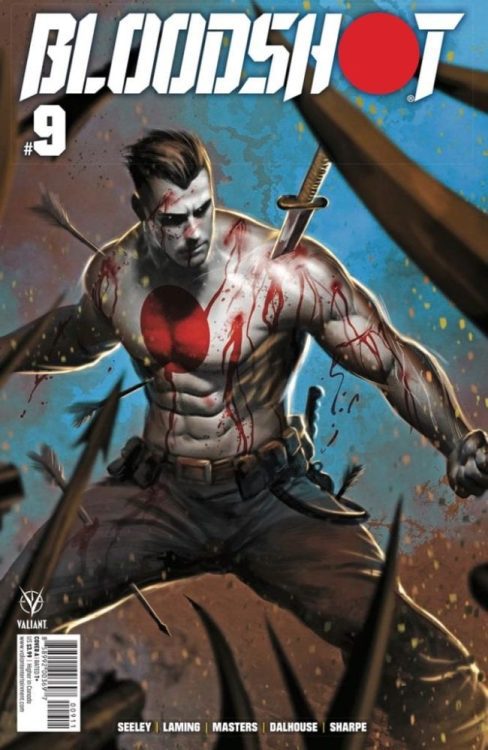
Bloodshot #9 out this week from Valiant Entertainment. Tim Seeley works with artists Marc Laming and Jason Masters, colorist Andrew Dalhouse, and letterer Dave Sharpe to close out this arc before it starts to drag.
Bloodshot #9 Is Action Movie Cheese
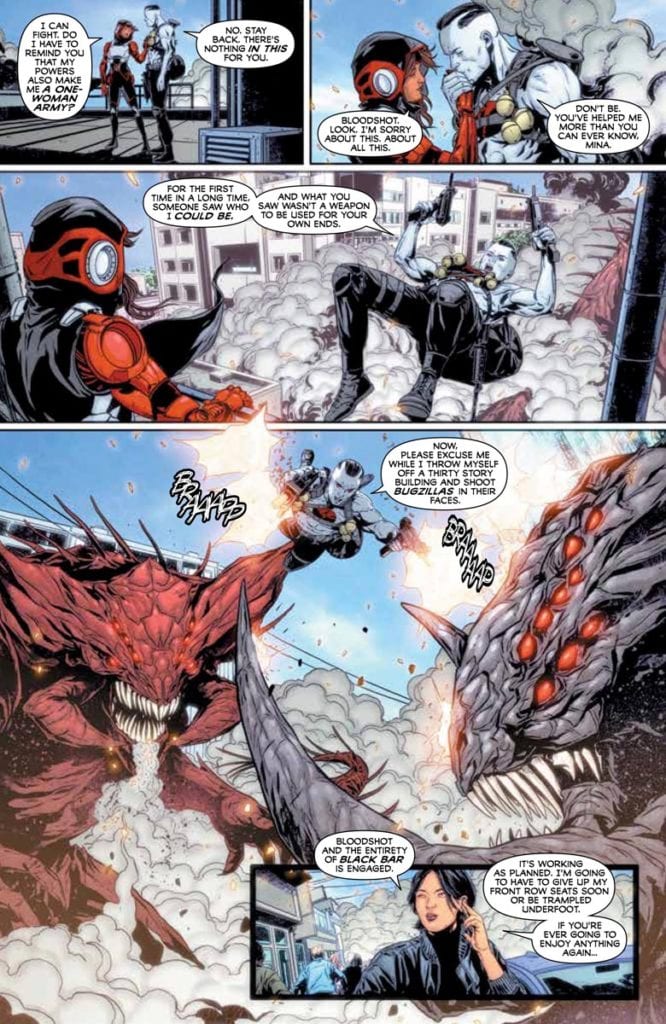
The character of Bloodshot seems to have two faces. In the previous issues, Bloodshot gets the portrayal of the somber soldier. To anyone familiar with his story and how the first few issues react to his monstrous reputation, this feels trite. The character has done a lot of good, sometimes more than other characters like Quantum & Woody. This brings up another side Seeley plays with, the cheesy action hero. Throughout Bloodshot #9, readers see the title character spouting one-liners like when he combats with bug kaiju. Unfortunately, since this issue connects more serious takes, this feels rather jarring. Last issue, Bloodshot could feel the agony of the monstrosities and the Burned inside of him. But now it looks like that plot point was abandoned entirely. Not helping is the return of an old enemy of Bloodshot near the end, sorry no spoilers.
How Art Flips On Itself
Bloodshot #9 returns Marc Laming and Jason Masters to the front. However, their return feels like a cinematic downgrade from Pedro Andreo. Things look fine when it comes to basic actions like the Burned’s invasion of MI6’s headquarters. But when it comes to larger-scale actions, they feel lackluster. After an explosion from a grenade that Bloodshot shoves into the bug monster’s eye goes off the following action, the monster claws at him. The problem is there’s no anticipation from the giant bug; it just happens, not to mention it feels redundant when placed after the explosion.
Then there’s the return of the Bloodshot Reborn t-shirt appearing at the climax of Bloodshot #9. On its own, it helps separate the character from the plot points, but on the greater whole, it feels more like fan service. Neither does this, as well as Bloodshot’s earlier appearance, explain the plot holes involving the lack of scars from the last issue save for flashbacks. Another plot hole comes in the form of a device that only appears on the last page, only for Bloodshot to rip it off without explaining what that device is even for.
Coloring And Lettering
Andrew Dalhouse, as the colorist, has his fair share of ups and downs. Most of the characters stand out enough from the action or blend in depending on the circumstance. The Burned, being former spies, would use the muted coloring to their advantage to infiltrate MI6. Then there’s the medical school; while it makes sense that the clothing everyone wears blends in with the white and blues when a monster has similar coloring, it doesn’t feel like a break-in. It would’ve served the plot a little better if the red monster attacked the building instead of the gray one.
Dave Sharpe, on letters, is probably the most consistent of everyone in Bloodshot #9. As someone with a lot onhisplate, he has to efficiently and carefully use word balloons and wordmarks. Sharpe always places each in ways that enhance what takes place. The more unique the action, the more unique the word mark. Electric shocks feature blue-lined stylizations while bodily harm resembles bodily fluids. But then some enhance effects that don’t make any sense. Like why does Nix end up burning when his subordinates don’t? Bloodshot didn’t even use any equipment that does that in his scuffle with Nix.
Bloodshot #9 Patches Up Everything
In all consideration, Bloodshot #9 looks like it was made in a rush to close out The Burned arc. This leaves the finale with many plot holes, some generic action scenes, and a cliffhanger that feels uninspiring. Especially for readers reading this issue in sequence with previous ones.
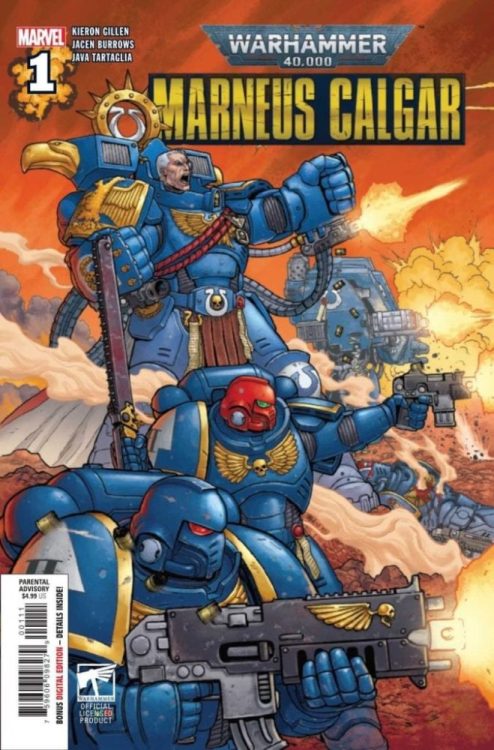
WARHAMMER 40K: MARNEUS CALGAR #1, available Wednesday from Marvel Comics, dives headfirst in the lore of Warhammer 40K, featuring a famous hero in the process. It is time to hear of Marneus Calgar, his past, and his present.
Warhammer 40,000 Marneus Calgar #1 has an impressive creating team on board.
Warhammer 40K, from Games Workshop, has teamed up with Marvel Comics in order to bring the lore of the games (and countless novels, for that matter) back into the world of comics. It’s a match made to be for more than one reason.
This new series takes a focus on Marneus Calgar, Chapter Master of the Ultramarines. It really isn’t surprising that Space Marines have taken the forefront here, but it will prove to be a story ideal for longstanding fans while welcoming in those newer to the universe and its lore.
What is particularly eye-catching about this new series is the creative team that has been pulled into the project. Kieron Gillen (writer), Jacen Burrows (artist), Java Tartaglia (colorist), and VC’s Clayton Cowles (letterer) have all been brought together for this unique experience.
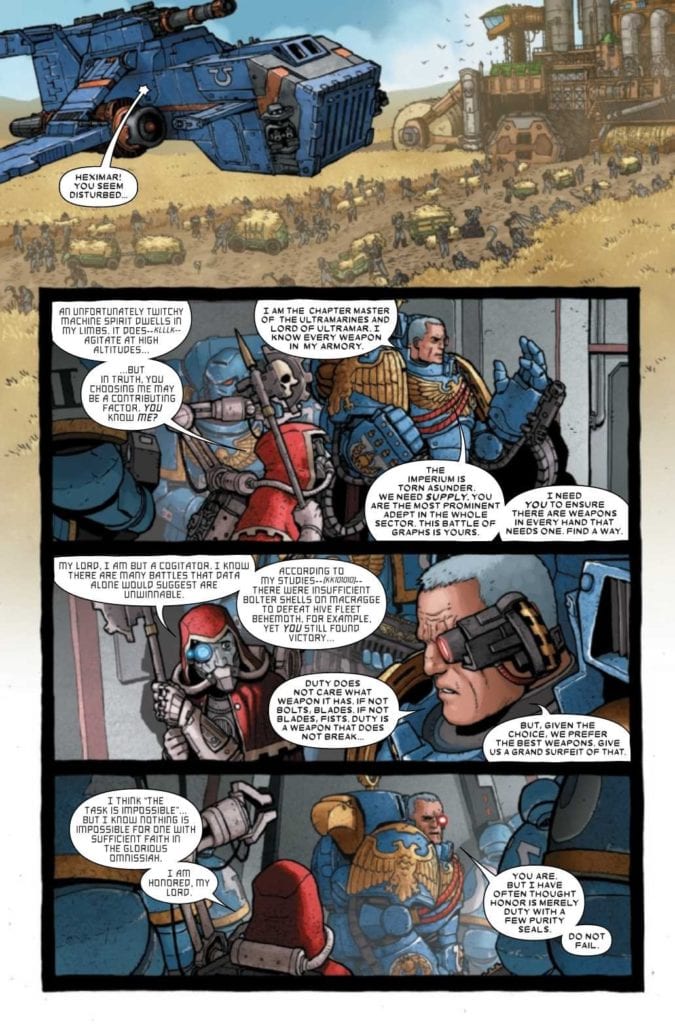
Do not fail (Warhammer 40,000 Marneus Calgar #1)
The Writing
Warhammer 40K: Marneus Calgar #1 is not one of those issues that starts off slow. It dives right into the action, with Marneus Calgar well into his time as Chapter Master. Even so, there is still so much to learn about this Space Marine.
Kieron Gillen is probably better known for The Wicked + The Divine, but after reading this issue, one can see how his writing is perfectly applied to the world of 40K. There’s an epic scale to the series, yet even in this introduction, it doesn’t feel to be the focus.
The focus is on the man himself. His past, his present, and his future. It’s an origin story, but it’s unfolding as it relates to current events. It’s carefully done, written in a way that should prove entertaining for the hero’s fans while also being accommodating to newer fans and readers.
The transitions between the past and the present should feel jarring. After all, Marneus Calgar couldn’t appear more different, and yet it isn’t. It all flowed smoothly, all while setting the scene – explaining the weight that the Marines carry while hinting at a larger battle to come.
All things considered, this is a fascinating introduction. There are many elements to Calgar’s story that make it worth the read, not least of which being his untold (until now) origin story.
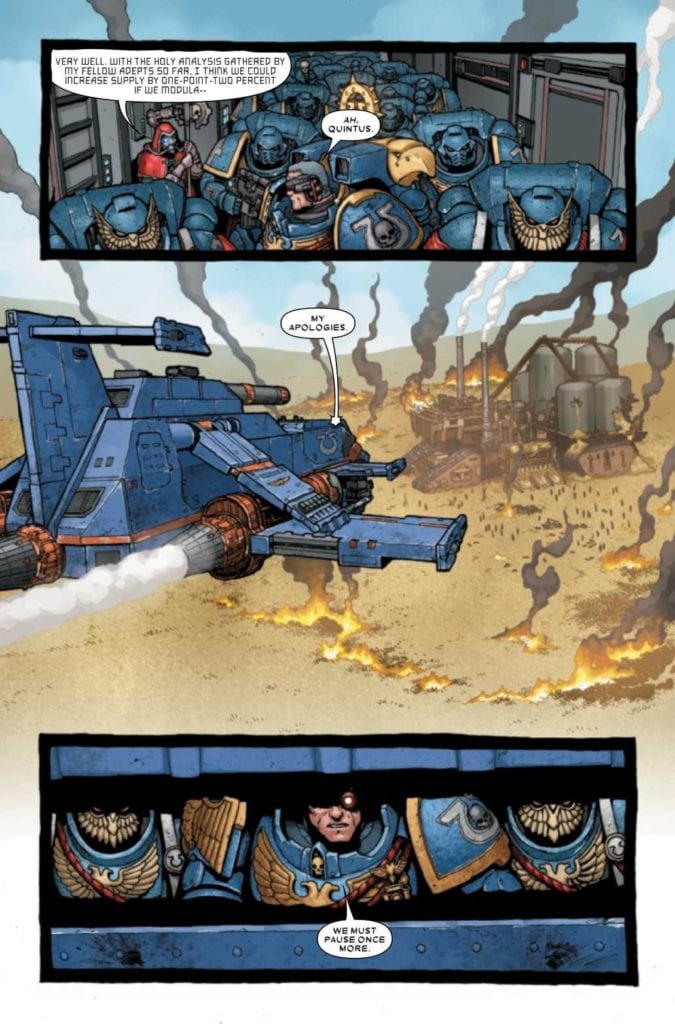
And so battle interrupts a conversation, almost casually.
The Art
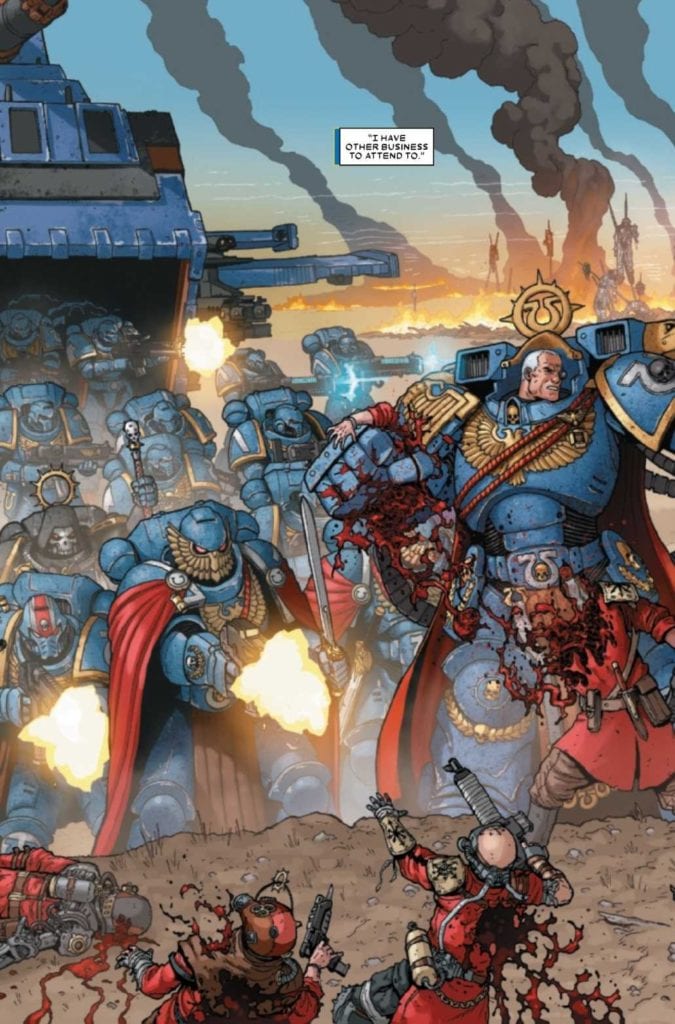
Warhammer 40K: Marneus Calgar #1 looks at feels exactly as expected. That is a high compliment, given all of the expectations that come along with this universe. All that credit goes to the artistic team, for obvious reasons.
The Ultramarines look larger than life, as well they should. Calgar steals the show, both as an adult and in his younger (and significantly smaller) form. The battle at hand actually feels like one of many, allowing for subtext to run across the pages, all while implying that there is more to come.
Meanwhile, the colors are rich and vibrant. The bright blues and reds take dominance, complemented by the gold accents. None of that should be a surprise, but it still works nicely here. The red of blood allows for further pops of colors, alongside brilliantly shaded backdrops. All of which enhances the epic nature.
The lettering proved to be vital in this issue. Not only did it provide a sense of impact at times, but it indicated many other subtle elements. From the passage of time to dark implications surrounding characters.
A bloody battle has begun (once again).
Conclusion
Warhammer 40K: Marneus Calgar #1 is a worthwhile read, though truthfully, the story has only just begun. It wasn’t afraid to end both sides of the tale with cliffhangers, leaving readers anxious to see how the threads will be picked up in the second issue.
On the off chance that it wasn’t obvious, this is a story that will likely get graphic in due time. Not only does it portray war, but it will likely show the darker side of what Ultramarines (and all Space Marines) go through in order to become the heroes and warriors they are known as.
TALES OF MFR: The Complete Collection– 146 backers
April 2022
Scott Marino, Ryan Balkam, Marc Rouleau, Ethan L., Steve Stegelin, Christopher Wheeling, Rick Reason, Luke Simkins, Tobey Zehr, Michael Fromm, James B. Clarke II, Gordon, Brian J. Crowley, Stephanie Phillips, Cat Wyatt, Andrew & Jeni Balch, Ericb, Roger O Thornhill, Corbin Andrew Parker, Jesse Miller, Robert Lee Jefferson Coffil, Graham Bashford, Patrick Camacho, NEIGHBORHOOD COMICS, Random Old Guy, John Averette Jr., Bruce C, Chance Sergenti, David Arthur, Manny Gomez, rip_red, Farnor, Buddy H, Mitchell C, Chris Call, Flakbait, James Caraballo, Kirk Spencer, Mike Wolf, Tim Taylor, David Pepose, Ben Gelb, Jack Reickel, Brian B, Shlepzig, Tyler Chin-Tanner, erik norman berglund, Emmet & Jesse Golden-Marx, Zwilling, Louis Bright-Raven, Anthony Composto, Steve Agnew, The McNelis Family, Andrew Heidgerken, Chris R Cameron, C Gale, Gregory Pearlman, Brian Winger, Britt Schramm, Sean Jordan, Krinsky, BoomBoom66, Nate, Christiana Laudie, Zac Johnson, Will Salamango, Rocko Jerome, David R. Clarke, George O’Connor, Freyja K Andersdottir, Eli Schwab, John Ward, Sleepy Reader, John Nacinovich, Mark Siegel, Matt Florell, Zoran Gvojic, @artsincelunch, Steven C. Brown, Paul Carroll, James Wynne, Hunter Groves, BethAndBeets.com, Charlie Stickney, Mark M., Dan Finch, Matthias, Alec Sorbello, RMB, Tommy S., Jeffrey Ryan Zambrano, Liam S., Leonard Sultana (An Englishman In San Diego), B.J. Mendelson, Jerry Stultz, Adrian F. Wassel, J.R. Murdock, Max Cage, Christian Carnouche, Rylend G., Susan Wilson, Matt N., Dimi Nakov, John B., Eron Wyngarde, Bryan Walman, T.J. Wiley, Kingofcomics.nl, Joe, Dustin Laughlin, Nathaniel Adams, Eugene D., David A Byrne, Alic Reader, Glen O., Kurt Belcher, Andrew B, Max Anderson, Nils R., Mark M., Zachary Owens, Malcolm & Parker Curtis, GreenShirt52, Alex Hutchinson, Howling Pages, Gary Phillips, Giuseppe Lo Turco, Matthew L., Richard Wrinkle, Anon, Roy Heintzelman, Vince Bayless, Nellie Cole, Anonymous, Tony Anjo, Jon Duckworth, Jason B. Harris, Brandon Eaker.
MONKEYS FIGHTING ROBOTS: THE MAGAZINE #3 – 131 backers
Michael E. Fromm, Brandon Mudd, Michael Stagno, Danny Sciortino, Gregorio Narvasa, Darryll Robson, Kristen Simon, Jen DeMoss, John Nacinovich, David Pepose, Cat Wyatt, Jason Jeffords Jr, Telmus Ardu, Ruben R. Diaz, Shah Emami, Sam Pratt, Dan Stryker, Sabir Pirzada, Huxley F Anderson, David Bell, Brandon Higdon, Sridhar Reddy, GMarkC, ECagnetti, Mark Siegel, Justin Munday, Bridger Heys, MJ Krey, Roger Riddell, Elliott Elliott, Mike Clinton, Monty Cantsin, McNelis Family, Michael Augustyni, Chris Call, WBeniston, Benjamin Gelb Jr the 3rd, Brian Strom, Trey Alexander, Kirk & Mindy Spencer, Daniel Ziegler, Nathaniel Gold, Justin Aguilar, Jason Inman, David Linstad, Hamster Rage, Adam Volpe, Marc Rouleau, Tobey Zehr, Brian Cattapan / Cattapan Comics, Willard Wagener, Ash Doyle, Tim Sarrantonio, Don Leibold, James Wynne, Zoran Gvojic, Mark Freeman, Tom Stillwell, Paul Carroll, Steve Orlando, David Lyons (@DrivingCreators), Team Metalshark Bro, Chrisea Graves, Jason McNamara, Ram V, Michael Nimmo, Pedro Alfaro, DwainIBe, Umar Ditta, Jason Beirens, BUDDYH, Harley Jebens, Kelly Little, the geekery, Matt Florell, Trey Walker, Dan Newland, Bryan Peabe Odiamar, Alex Rudolph, Hoyt Silva, Luis Rivera, The Comic DeSPECtive, Jessica Wilson, Cody Baker, Mike Hegg, Alice Isabelle, Hanni Ruth and Tessa Rose Sardo, Kimberly Cook, Davey Blaze Toys, Matt Nance, Chris Lipscombe, Andrew & Jeni Balch, Don Unger, Daniel Correll, Eddie Beis, Kat “Comic Uno” Calamia, Brandon Eaker, Ted Bergeron, Kayden T Clark, Jason Hammons, Kyle Rose, Gerardo, Todd H., Wes Riggs, Jedediah Speer, Justin, Emmet & Jesse Golden-Marx, Erik Klaus aka Interstateninja, Derek C Johnson, Facundo Wilgenhoff, Kendell, J_Louse, Bryan Walman, The Saturday Night Slasher, Oliver Schmidt, Lesly Julien, Sid Sondergard, Elwood, Ben, Jeff@Briar Patch Comix, Aaron Moore, Jeffrey Curran, Loc Michel, Mike Romeo, Sentient Cow Games, Terry Coccoli, Jason Abbott, aka “squiggle”, David Vodicka, AnHonorableLeech, Benjamin Robinson, Mary Polacek, Brian W, Christopher Williams, Zachary Owens, Darren Thomas, Rhodri, Eric Baker, Alessio Urbina, Todd Terrill, Jason Harris, The Mighty Lizard, Tony Howson, Dan Theodore, Vince Bayless, Gabriel Hernandez, Joshua Cook, Tom Foster, Erin Collins, David R. Clarke, Ra3ndy Field, Lewis Tyson, Norbert Martin, FancyPantsPanda, Jay Diehl, Robert J Andrews II, Eli Schwab, Tony Ripley, Ian Wienert, Ryan Browne, Daniel Williamso, Jesse Miller, Dakota Yeager, Mack Daddy Swain, Smartest Monkey, Luke Simkins, Randall Armstrong, Craig Cicero, Birdie, Strange Adventures Comix & Curiosities, Nick Minford, Chris Gural, Christopher Wheeling, Jeremy Daniels, Ossi P, Andy Lanning, Carlos Escobedo, electronic, Casey Parkhurst, Sean Moran – Fist Shaking Comics, Nick Curtis, Topherlicious, Elora Powell, Nathaniel Knapp, Dave “Baby Gorilla” Forman, emeraldcitycomics.com, Shlepzig, Derek Reinhard, Charles Moulton, Gavin “RobotSlayer” Greene, Michael Ferrer, Jeff Douglas, Trevour Ross, Bertram Hopewell III, Geoff Kennedy, Freyja Andersdottir, Carm, Minerva-chan, Tristen Bagnall, John Kleindl, Arthur Castro, Christopher Bilbo, Phil Avelli, Fred W Johnson, Chris Casos, C. M. Cogan, Pablo A. Eekman, Erik Poulsen, d.e.raga, Innocent Bystander, Capital City Comic Con, Lansing MI, Adam Parker-Edmondston, Bryan Huttner, The Hoo7igans, Nick Collins, A. David Lewis, and Jesse Marsh.
Hoyt Silva, Michael Fromm, Jason D Jeffords Jr, Anthony Composto, Robert Kobor, Christopher Wheeling, Bret Juliano, Deborah Gingrich, John Nacinovich, Tony Ripley, Darryll Robson, Kyle Rose, Charlie Stickney, Stephanie Phillips, paul d jarman, Shane Tiernan, Karl Kesel, Caleb Palmquist, Jaroslaw Ejsymont, MH, vince bayless, Roland Mann, Travis Gibb, GMark C, Kirk Spencer, Scott Steubing, scott marino, David Pepose, Gordon Mclean, Mike Hassett, Jacob Pickthall, Rick Reason, Danny Lee, Christina Gale, Owen Ryan, Brian Cattapan / Cattapan Comics, Greg Mase, Daniel Govar, Gary Luker, Brian J. Crowley, Milton Lawson, Kevin Behen, matt kund, Brandon Mudd, James Tuten, Ryan Sheffler, Monica, Andy Green, Dan Finch, Travis Stein, Tom Stillwell, Gary Govel, Trey Alexander, Max Bare, Cheers to Comics! Podcast, Anthony Wendel, Acie Blaze, Onrie Kompan, Craig Cicero, Eugene Green, David Linstad, Jessica Wynne, Jeff, Ben, Nathaniel Gold, Rick Shea, Nick O’Gorman, Eli Schwab, Emmet & Jesse Golden-Marx, Bryan, Daniel Lyons, Rob swain, Tommy, Sami Radtke, Samuel Pratt, KC Jones, Mark S Siegel, Alex, brownbagcomics, James Scott Caraballo, Matt Harding Productions, Michael Augustyni, Jerale Clebourne, Tim Lannen, Cameron Petti, Johnny J. Flores, Katie, Todd H., Abbie Price, Elisha Deogracias, Eric Ericson, James Hereth, Mr Andersin, Tim Hunt, James Loyd, Kristopher Paulk, Derek J. Bush, Luis, Jeremy Hill, Adrienne Shaffer, Oscar Manjarrez, Devon Marcel, Nick Richardson, Gordon, Jamilyn Parks, Manny Gomez, David Kane, Mitchell Coleman, Tim Fontaine, Jonathan Orphal, Xavier Hugonet, Kristen Simon, Stephane, Norbert Martin, proninronin, Patrick James, Tim Seeley, Paul McErlean, Andrew, bob frantz, George O’Connor, Erik Klaus, Chris Lontok, Captain Anton, Ashcan Comics Pub. (ACP Studios), Nate, Jason Harris, KGentile, Don Combs, Tim Craig, robbie vermillion, Jenny Armendarez, Matthew Rosenberg, Pete Davies, Tyler, Mark Freeman, and Gary Moloney.
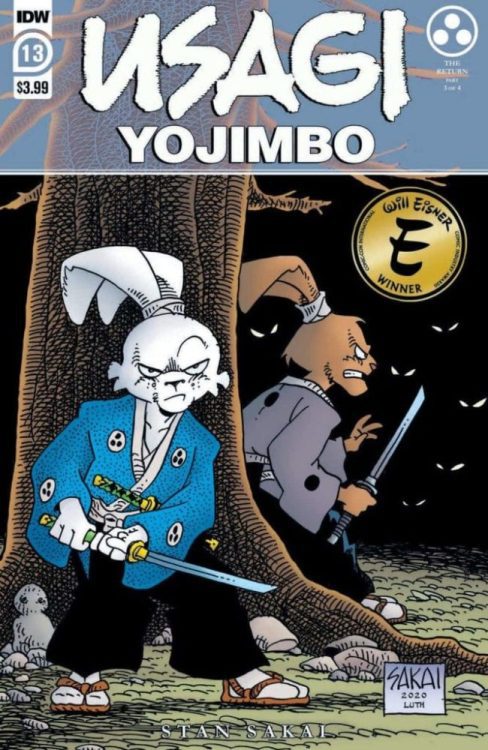
Usagi Yojimbo #13 enters the climax of a story arc in this week’s release from IDW. Creator Stan Sakai as writer, artist, and letter joins colorist Tom Luth in a rather powerful issue.
Background and Recap
In IDW’s chapter on the wandering long-eared ronin, Usagi doesn’t just take on new journeys but encounters old friends. One is a samurai group who serve his late lord Mifune, the lord Usagi went to great lengths to keep his dignity. Because his slayer Lord Hikiji would’ve put Mifune’s head on display. But what happens when Usagi’s home village, lead by his childhood rival Kenichi, had to swear loyalty to Mifune’s slayer less the village face destruction? Well, Usagi has no resentment towards Kenichi despite him marrying their childhood sweetheart, Mariko, and raising Usagi’s son, he never knew. In fact, he’s more than willing to help out Kenichi when goings get tough. However, the remnants of Lord Mifune’s samurai plan to wipe out the village in vengeance against Lord Hikiji. Usagi ultimately finds the samurai’s plan too extreme since it puts innocents in danger and decides to help Kenichi.
Usagi Yojimbo #13 Drives Anticipation
While this four-part arc is better with context from the previous two issues, this issue can stand on its own. With Stan Sakai focusing on writing Usagi and Kenichi’s relationship, the reader of Usagi Yojimbo #13 gets an idea of what they’re up against. Despite their differences, Usagi and Kenichi are still friends who recognize one another’s strengths and weaknesses. Unfortunately, while Usagi’s cunning skill in a quick-time strategy with Kenichi’s complementary aggressiveness can’t solve everything. A flashback displays this as, despite their teamwork, they still come up short on what to take away from it.
Especially when a call for help, they planned ends up failing. But before a major cliffhanger comes to rub this conflict in Usagi’s face, a chance for a turnabout occurs. But since the reader doesn’t know if this is a good or bad chance, it sets up a powerful cliffhanger for a reader to await the next chapter.
Art
Stan Sakai’s cartooning remains extremely efficient and expressive after many years. Many of the unnamed characters look very similar, but Sakai takes the time to make sure they are never the same. While they are often killed off in cartoonish fashion with imaginary skulls appearing over the corpses, it is important to make each kill important. The best display of that is in contrast with scenes of intense struggle. Mariko is exhausted in all of her appearances with her flustered expressions and messy hair. So seeing the adrenaline in her spike in an encounter and killing potential attackers is a scene of cathartic levity. Every piece of Sakai’s artwork, including the wordmark lettering handmade for little noises, feels expertly crafted.
Tom Luth, as the colorist, brings about a natural sense of the setting in Usagi Yojimbo #13. The uniforms the enemy samurai wear in the first pages tells a lot about what happened in the previous chapters. This case being infiltration of Kenichi’s guard before a larger encounter, has them change to outfits matching Usagi’s. It’s a small but very relevant point that brings up the conflict between Usagi and enemy leader Kato. While they both served the same lord, they have very different goals.
The Legend Continues In Usagi Yojimbo #13
Usagi Yojimbo #13 reminds readers why this series was nominated for Eisners. From the efficient but carefully crafted artwork to storytelling that raises the tensions. While this issue does end on a cliffhanger, it’s only because the story here needs a grand finale to match. So stay tuned for the next issue.
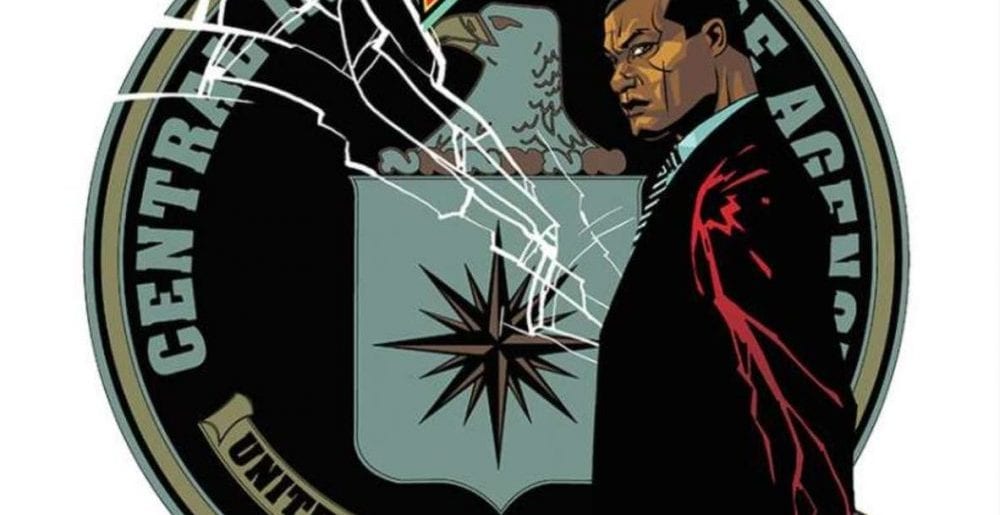
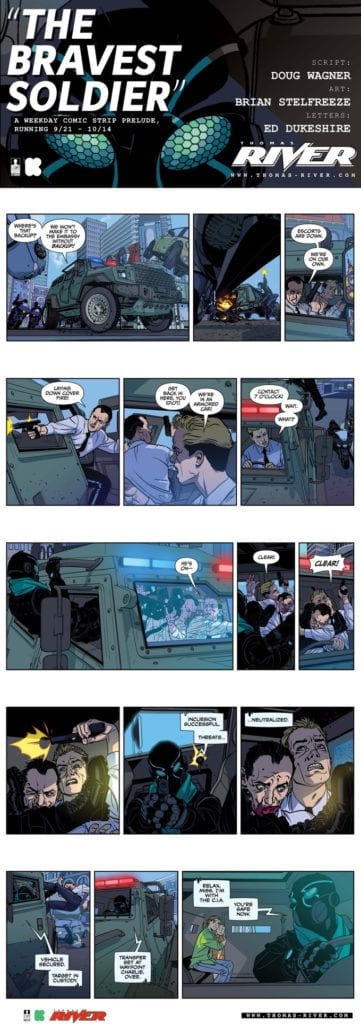
From creators Brian Stelfreeze and Doug Wagner comes a sharp, intelligent new secret agent comic series in the form of Thomas River, and they decided it deserved its own soundtrack. This politically charged and intense series follows an African American master spy investigating attacks against American cities, all while dealing with the turbulent racial divide in the United States. The unexpected complexity of this Kickstarter comic is matched by the music the two creators have picked for it and will make for a kick-ass soundtrack to go along with the reading experience.
Brian Stelfreeze
I enjoy thinking of a specific soundtrack when I’m drawing certain scenes. It helps me to think of things rhythmically rather than artistically. Different beats and tempos push me to draw different lines.
Pharoahe Monch, “Simon Says”
Accepting the mental of bad-ass. This is the song I think of when Thomas makes the decision to start dropping bodies. It just feels like one of those “you just made me mad” slow-motion sequences.
No time to bleed. I think of the song for those timebomb situations. When Thomas has half the time to do what needs to be done but he charges into action anyways.
Before starting each writing session for Thomas River #1, I’d give Hannah a listen. For me, her cover of “Praise You” has the perfect balance of grimness and hope that I wanted to portray in the first issue. It set my creative mind in the proper state before ever typing a word.
I always tend to throw in an ’80s classic into my rotation for every story. There’s just something about those songs from my teen years that brings an edge to my writing approach. This song just seemed to fit the paranoia and secrecy of everything happening behind the scenes in Thomas River. In my head, Thomas always has an itch nagging him from somewhere in his subconscious. He knows that forces are always at play and it’s just a matter of time before he is called to face them.
Much like “Praise You,” this song speaks to the solemness I wanted to convey in this first issue. It also kept reminding me that everyone is a hero in their own story. It became the theme song for both Thomas AND Amena. Once you read it, you’ll understand.
Natasha Blume, “Black Sea”
I needed this particular song to constantly remind me of the allure of death, the peacefulness that calls from the thought of it just all being over and quiet. Yes, that sounds dark.
Tatiana has a certain edginess in her acoustic work that makes the hackles on my neck stand up and makes me instantaneously introspective. I listened to this before writing the scene with Amena and Uncle Aaron in the subway. It encapsulated the feel I thought Amena was experiencing in that moment.
I have to laugh at myself a little bit with this one, and yes, I know it’s a strange choice, but hear me out. It felt right for the President’s speech and final ultimatum. I needed a little attitude and Taylor Swift and Kendrick Lamar did it for me.
The Backdraft soundtrack is always my go-to when I need an injection of badassery. I use it all the time to help me work out storylines, and it is the perfect soundtrack for Thomas River.
“Thomas River is known as a world-renowned engineer among his metropolitan friends. He jets around the globe as a consultant to the biggest engineering firms, but that is simply a cover. In reality, River is the quintessential secret agent—equivalent to Jason Bourne, Ethan Hunt, and James Bond in every manner but one… he is a Black man. Raised by his working-class family in Baltimore, Thomas was an exceptionally gifted student. While he could have gone down the wrong path, and almost did, Thomas’ mother simply wouldn’t let it happen. After buckling down, Thomas earned a full-ride to Cornell, where he double-majored in Structural Engineering and Linguistics. Graduating with honors, the CIA saw his true potential and recruited him into their ranks. And he did not disappoint.”
Head Over to the Thomas River Kickstarter to start reading!
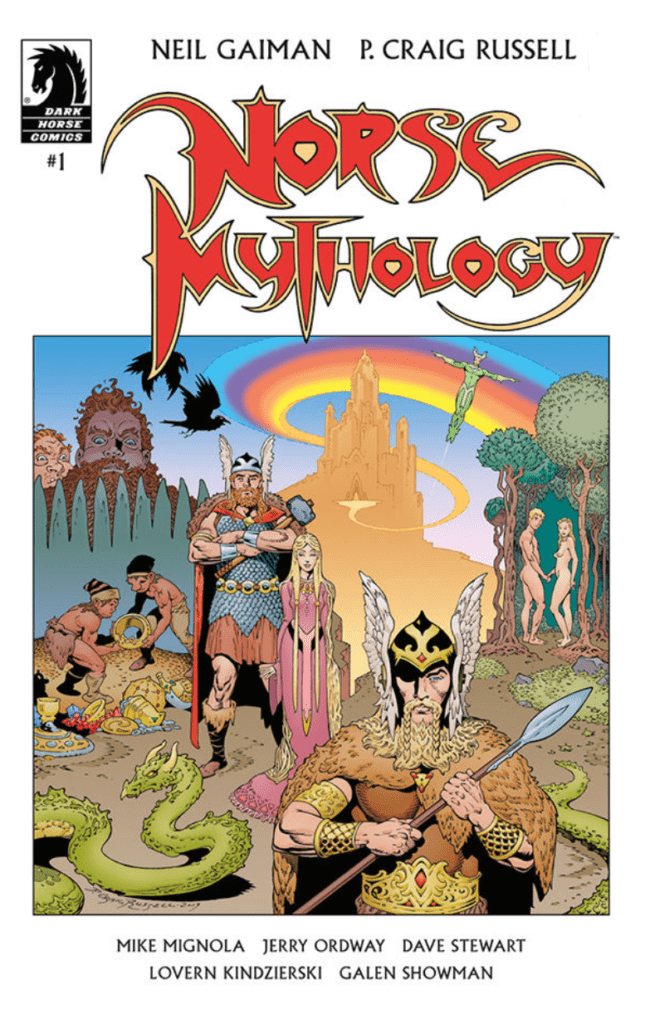
Norse Mythology #1, out now from Dark Horse Comics, is a seamless introduction to a mythology universe that many may not have encountered before.
About the Book: In 2017, Neil Gaiman published his book Norse Mythology, which retold many of the classics stories with the flair of Gaiman’s writing while remaining true to the original tales. P. Craig Russell has adapted the book into scripts for a new comic book series, featuring many incredibly talented artists. This may be the first experience in Norse folklore for many people, and it is an amazing place to begin.
Norse Mythology #1 Story
Norse myths are not as prevalent as those of say, the Greek or Romans. The only exposure they have had to Norse mythology was through Thor comic books or movies for most people. These obviously take many liberties, so Norse Mythology #1 is a wonderful way to take in the classic stories. Gaiman and Russell present the myths to the reader in a sequence that makes it very understandable and easy to follow. They don’t bombard you with too many characters or places at once, and everything that is introduced is given enough time and description so that it is easier to remember.
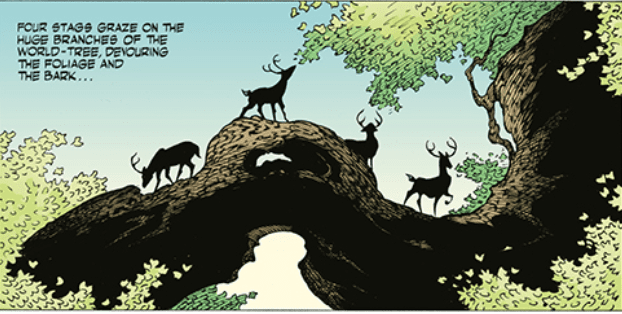
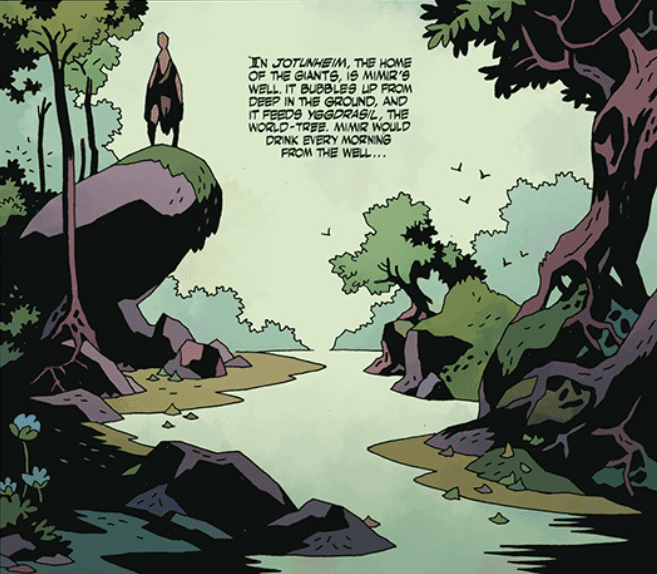
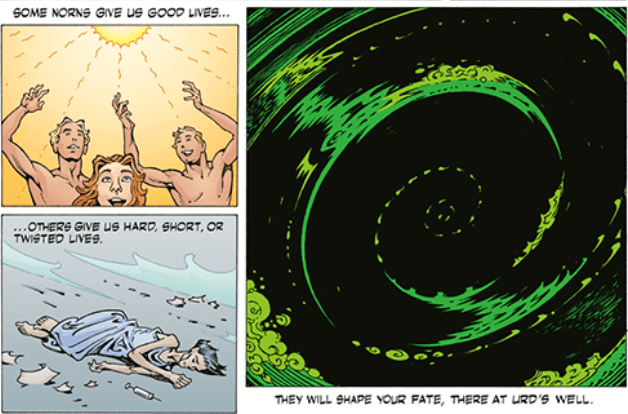
Norse Mythology #1 features three stories, which each serve a purpose in the narrative. The first story, “Yggdrasil and the Nine Worlds,” is a story that takes us all over the many settings of Norse mythology and introduces the reader to the many new places the following stories will be taking place. It informs the reader about the tree of life, a dragon, and the Norns, but there is no real story to this first section. Instead, it is a wonderful introduction that leaves you in awe of all the fantastic places within the world of Norse mythology. “Mimir’s Head and Odin’s Eye” is a story of Odin’s past and acclimates the reader with the style of events in this new world. The final story, “The Treasures of the Gods,” is about Thor and Loki, and is the beginning of a tale to be later continued. This leaves the reader wanting to know how the story ends and provides a basis for what future stories might be like.
“Yggdrasil and the Nine Worlds”
P. Craig Russel also did the art for the first story of Norse Mythology #1, and he does a fantastic job of showcasing the many diverse locations in Norse mythology. Russel’s characters are sometimes portrayed with very little detail, even when their scenery is very intricate. This is a phenomenal way to portray a character as ominous since they now appear to the reader only as a figure.
“Yggdrasil and the Nine Worlds” features page after page of vibrant colors, painting the many worlds of Norse mythology in a beautiful light. Through Lovern Kindzierski’s color choice, the first look at the Norse myths’ world provides a lasting impact on the reader and draws them into the fantastic world.
“Mimir’s Head and Odin’s Eye”
Mike Mignola’s art adds a lot to Norse Mythology #1. His figures are straightforward most of the time, and Mignola makes heavy use of shadow. The shadows reflect the tone of the story and provide an interesting stylizes look throughout the story.
Dave Stewart’s coloring choices for “Mimir’s Head and Odin’s Eye” are much darker than the previous story, reflecting this tale’s tone better. This choice also has the added effect of having things such as blood draw more attention because the bright red contrasts heavily with everything around it.
“The Treasures of the Gods”
Jerry Ordway provides a wonderful visual experience in Norse Mythology #1. All of the characters have such detailed faces that are incredibly expressive, and it is evident that so much care is put into every panel background. Ordway gives us an aerial view of mountain tops, panels full of splintered wood, and even intricately detailed stone walls. Ordway’s rendition of Loki is also impeccable, and it is easy to tell how mischievous he is simply through facial expressions.
Lovern Kindzierski does another phenomenal job on the second story he colors in Norse Mythology #1, and his work brings the art of Ordway to life. The colors change throughout the story to reflect the tone of scenes, and the choice of bright, single-colored backgrounds for certain panels helps add energy to a scene and bring focus to a character’s actions.
Norse Mythology #1 Lettering
Galen Showman did the lettering for all of Norse Mythology #1, and his work was excellent on every page of the issue. Using unique fonts when a certain character is yelling or being shaken was very interesting to see. The choice to not have a caption box for words that describe the story is genius because it gives the reader the feeling that the words aren’t coming from someone narrating the story, but instead exist as just part of the world.
Conclusion
Norse Mythology #1 is a fantastic introduction to an enormous collection of myths that have been told for centuries. Even if you have had prior exposure to Norse myths or even read the original book by Neil Gaiman, this series is worth checking out for the beautiful portrayal of these timeless figures.
Wolverine #6 is out this week from Marvel Comics. Writer Benjamin Percy, artist Viktor Bogdanovic, colorist Matthew Wilson, and letterer VC’s Cory Petit present part three of 22 “X of Swords,” Logan seeks out the Muramasa blade, the weapon he will wield in Otherworld’s contest of champions. However, he is not the only one who pursues the blade.
Percy comes strong out of the gate, giving readers what may be the strongest written issue in this series to date. Past arcs have taken a while to pick up steam, but this is a tightly written issue. Add to that the fact that he has to pivot away from the story he’s been setting up in order to participate in this X-Men mega-crossover, but Percy steers into the skid, telling one of Logan’s most personal stories yet.
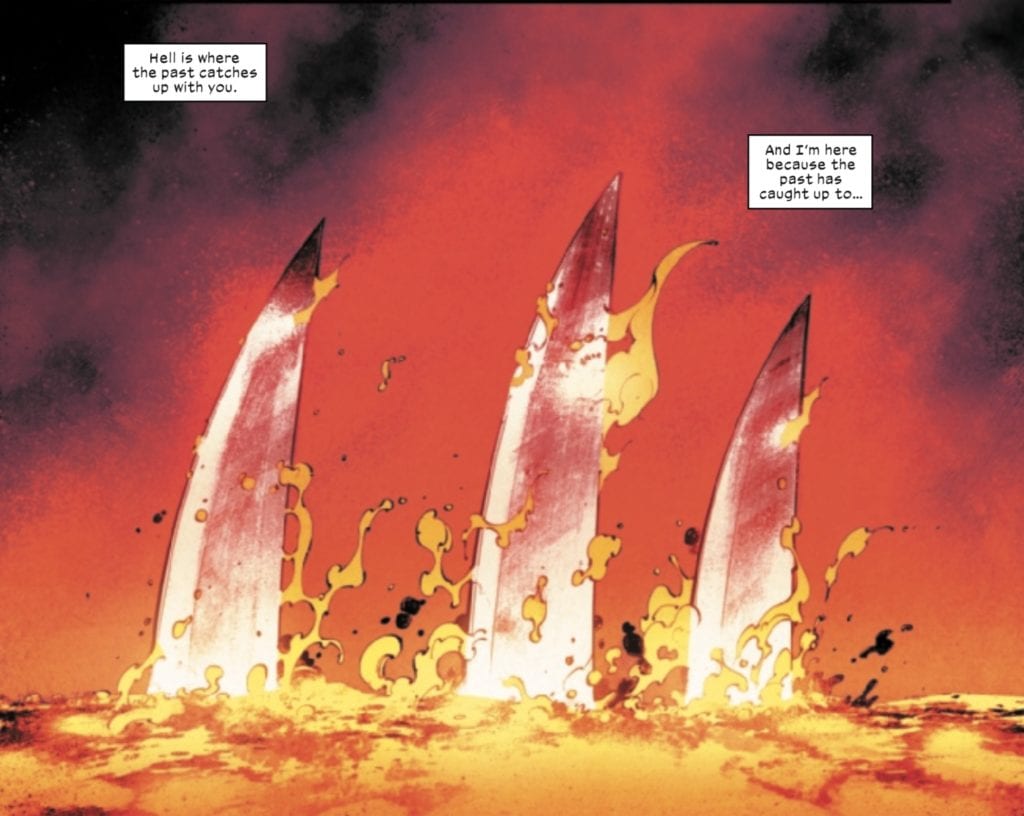
This issue starts bold from the very first page. Percy’s prose about hell hits hard. It is succinct and visceral, capturing Wolverine’s durability, as he does whatever it takes and endures any trial to succeed in his mission. Petit does an excellent job of wrapping the lettering around a beautifully drawn and colored scene by Bogdanovic and Wilson that contains one of the most compelling images in the book — Wolverine’s claws slowly emerging from a fiery pit of lava…literally in hell!
Bogdanovic’s work here is subtle with just the tip of Logan’s claws emerging, but they are accentuated by Wilson’s colors, whose slight tint of red on the claws make them appear to be glowing from the heat. The way this image takes up half of the first page really draws readers in right from the beginning with its evocative imagery.
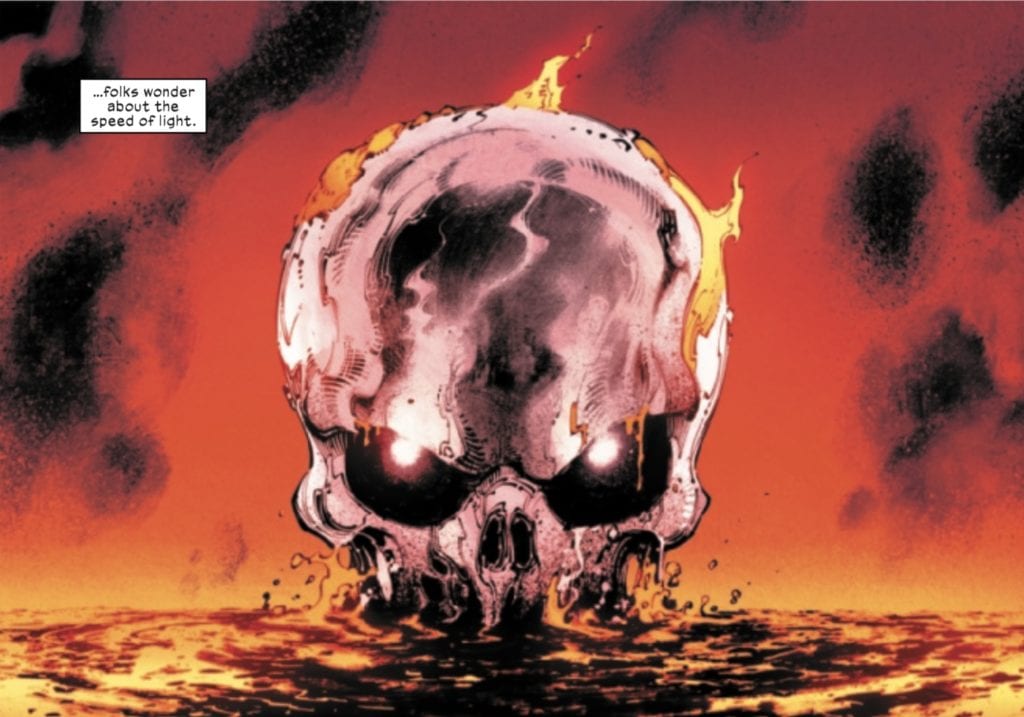
The entire story is framed around Logan’s emerging from the lava. This serves to capture Logan’s unkillability and determination as he walks through the fires of hell itself! As we arrive at the second to last page, we are again treated to another powerful but haunting Wolverine image.
The skull Bogdanovic draws provokes feelings of horror as Wilson’s colors in Logan’s eyes show that, despite having all of his flesh and most of his vital organs burned away, there is a soul alive inside of him.
This issue was very much a trial by fire (literally!) for Wolverine. Percy’s writing has never been stronger, while Bogdanovic and Wilson draw and color some gorgeous if at times, horrific imagery that fits both the moodiness and low-grade horror of the title. Petit’s letters provide the reader with compelling dialogue and exposition without crowding or weighing down the story.
Wolverine #6 is another solid chapter in the “X of Swords” mega-event, with Logan’s journey continuing in X-Force #13.
What did you think of Wolverine #6? Are you enjoying “X of Swords?” Tell us in the comments below!
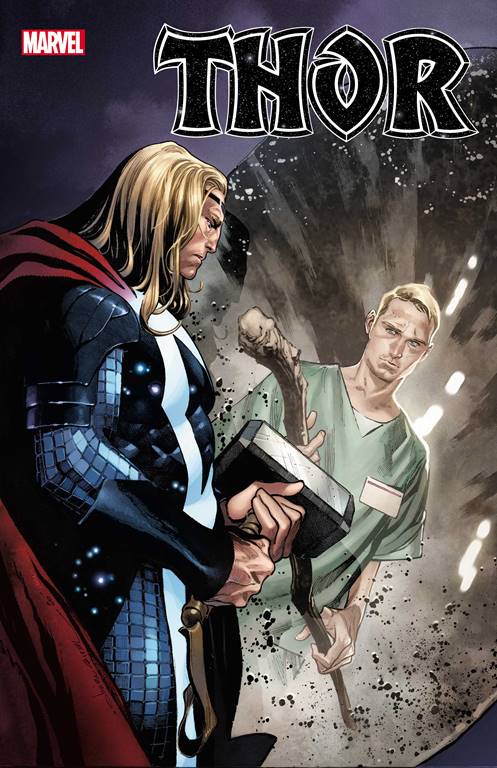
Even for the denizens of Asgard, it seems everything old can be made new again. Marvel Comics has released a preview of the upcoming THOR #9, available on November 4th, featuring the return of Thor’s old human ward, Don Blake.
Says Marvel about Blake’s return: “So where has the good doctor been all this time? The answer will shock Thor and fans alike as Donald Blake is no longer the man he once was.”
You can watch a motion-comic trailer, check out the cover art, and read the full Marvel press release below.
Do you have fond memories of the Don Blake years with Thor? Let us know what you think in the Comments section, and please share this post on social media using the links below.
DONALD BLAKE RETURNS WITH A VENGEANCE IN THE THOR #9 TRAILER
“Prey” by Donny Cates and Nic Klein kicks off on November 4th!
New York, NY— October 8, 2020 — Donny Cates and Nic Klein’s critically acclaimed run on THOR continues next month with the start of a brand-new arc! “Prey” will feature the startling return of Thor’s classic alter ego, Donald Blake, in what promises to be Donny Cates’ darkest story yet.
It’s been years since the God of Thunder required his human ward. So where has the good doctor been all this time? The answer will shock Thor and fans alike as Donald Blake is no longer the man he once was. Enter the twisted prison of Donald Blake in this chilling trailer, featuring never-before-seen artwork from THOR #9!
“‘Prey’ is maybe the most fun I’ve ever had writing at Marvel. Thor fans are going to lose their minds over this one and I can’t wait to unleash this terrifying beast on them!” Cates said. “Nic Klein is back and at the top of his game on this one. I promise you this, True Believers, just like the mighty thunder king himself…..you won’t see this one coming. Behold…the return of Donald Blake!”
Journey into a dark mystery left unsolved since 1962 when THOR #9 arrives on November 4th!
Flip This Bitch is a full-service production design firm that creates fictional fantasy worlds come alive on hit web series like Critical Role and makes reality shows like Jersey Shore look slick and sexy.
Flip This Bitch is a small group of dedicated artists. Depending on the project, the company typically organizes film-set duties for 30 or more people. However, the group’s core includes President and Production Designer Jeffrey Toraichi Eyser, VP and Set Decorator Sue Oneto, and Executive VP and Art Director Joe Myers.
PopAxiom wrangled Jeff, Sue, and Joe for a chat about what they do, how they do it, and the origin of the company’s name.
How did the members of Flip This Bitch get their start in the film and television industry?
Jeff: “I moved to Los Angeles back in 2006 and landed my first job in television with Bad Girls season one. From there, I fell in love with the art department and design. It was something I had a focus on growing up, and so it was a natural shift.”
Jeffrey Toraichi Eyser, Production Designer & President – Flip This Bitch
Joe: “I went to film school in Florida and drove across the country three days later. I started an internship, and within a year or two, I was working with Jeff on Bad Girls Club. He said, ‘Hey do you want to do this job with fewer people, but more respect?'”
Joe Myers, Art Director & VP – Flip This Bitch
Sue: “My education is actually in social work. I got my Masters in social work but quickly realized there’s no money in that and I wasn’t married to the idea that I loved doing it. I always had a dream to be living in California. I drove across the country to California six years ago. I had a friend who worked in the art department as a decorator and asked her if she could get me a quick gig for some cash while I figure out what I want to do. She hired me for two weeks on the Tyra Banks pilot for her talk show. I fell in love with the art department. It was a very fast switch in my head. I was passionate about it, and it was a career I could build on. Then I met these freaks who got my name from a mutual contact and asked me if I’d come to a job for a couple of days. Here we are five years later.”
Sue Oneto, Set Decorator & VP of Projects – Flip This Bitch
Where did Flip This Bitch get its start?
Jeff: “Flip This Bitch has been around for almost 12 years, but we’ve been a real company for the last five. It started as a funny idea with my friend Alexis and I as a title for our team. We thought it would be funny to have a crew wearing t-shirts with our faces on it saying ‘Flip This Bitch,’ so we did. We became known as Flip This Bitch, and as we progressed and became bigger in the industry, we became a real company. We have a team of carpenters; a team of draftsmen; people who get us lunch.”
Sue: “The first project that I was on with Flip This Bitch was a reality show called Fix My Mom, where they just pitted mothers and daughters sort of against each other, but trying to make them come together. I started working on the Bad Girls Club.”
Joe: “Our first big show as Flip This Bitch, as recognized by the government, was Fix My Mom.”
Jeff: “Fix My Mom was our very first show as a team, I did 15 seasons of Bad Girls Club. Collectively we did about seven or so seasons. We did a season of The Real World and MTV’s The Challenge in Spain.”
Sue: “We’ve done the reincarnated Jersey Shore, which bled into Floribama Shore, which bled into many other MTV reality shows that we tend to always do.”
Jeff: “We do kind of everything. We do reality TV, TV, and film, but we also do residential projects for people, restaurants, stage productions, and gameshow-type shows. It’s an interesting niche we’ve carved out for ourselves.”
Flip This Bitch works on a lot of reality television, which is a lot more work than most viewers recognize.
Jeff: “Ultimately, it’s funny; people tend to look down on the reality TV world. But I feel like the mindset is the same. You’re developing a world for the characters. Our characters happen to live in the world we create. We have to make sure there’s a bar near-by and a pool table to keep people busy. It’s about creating a flow through the set and how people will interact with it.”
Joe: “I think one of the primary things that we’ve talked about before, so many times a scripted show is trying to dull-down the fantastical, whereas we take reality and lift it and heighten the experience.”
Jeff: “A lot of times, we’re building these sets. Even when you see a show that takes place in a house, we’re building sets within the house. A lot of the walls you see are built in front of existing walls to hide the cabling, lighting, and camera gear. You generally see about half of an actual house. We’ve gone in and built rooms inside of rooms to create our looks. I don’t think people realize how much work goes into a lot of these set constructions.”
Reality TV of the likes worked on by Flip This Bitch film all over the world.
Sue: “There was one year where we clocked like thirty-something flights.
Joe: For three months, we traveled between Spain, Georgia, and Florida.”
How many projects does Flip This Bitch handle at any given time? The answer is a bit hazy when things are continuously busy.
Jeff: “Currently, we have six?”
Sue: “Seven?”
Joe: “I was thinking five.”
Where does each member draw inspiration?
Sue: “The first name that comes to my head and I’m stealing it from Jeff because I know he’s going to say it is Kelly Wearstler. She’s a genius with putting crazy combinations of patterns, furniture, and lighting together, and it all looks brilliant. She’s probably my number one.”
Joe: “My aesthetic is probably less from interior design and more from print and graphic design, like screen printing and minimalist design; 2D art is where my heart is.”
Jeff: “There are so many things to pull from. I’m really into chaos right now. It’s all about trying to meld things into our work.”
Flip This Bitch services a wide range of clients.
Jeff: “We work with MTV, Discovery, SyFy channel, NETFLIX, and Critical Role. The residential project that we’re doing now, which I can’t reveal, is big in that world.”
Role-playing games (RPGs) like Dungeons and Dragons are popular because of Critical Role and Flip This Bitch’s work. It helps that Jeff and Joe are fans of RPGs.
Joe: “We have a Flip This Bitch Pathfinder Game.”
Role-playing games aren’t part of Sue’s wheelhouse.
Sue: “I do enjoy the Critical Role jobs. I don’t understand it. But I love to learn, and I get to learn about all these characters and the world. It’s a fun challenge for me because it’s totally different from anything I’ve been into.”
Jeff: “When you love working with people, it makes it all fun.”
What’s a dream project for each member of the team?
Sue: “I want to do horror. If they were to remake A Nightmare On Elm Street, that would be so amazing to me!”
Joe: “I would love to do something like future LA. Something like Westworld or Blade Runner. I think that future-mid-century aesthetic works well with our skillset. We’d knock it out of the park.”
Jeff: “Anything Evil Dead. I would lose my mind.”
Flip This Bitch handles films, television, reality television, game shows, and homes. So, what’s a tip from the team for designing at home?
Sue: “I love nature and the outdoors, so I take every opportunity to bring that inside. So, plants or using a lot of wood or stone. I advocate for plants everywhere.”
Jeff: “I have a stock answer for this one. My biggest tip is that there are no rules. You shouldn’t be afraid to do whatever makes you happy.”
What’s coming next from Flip This Bitch?
Joe: “We’re working on Top Elf season two for Nickelodeon. It’ll be out for Christmas. Children get to compete to be Santa’s next helper.”
Jeff: “We’re doing a secret dating show that we can’t talk about and another in Georgia we can’t talk about.”
Are reality shows in your queue?
Thanks to Flip This Bitch for making this interview possible.
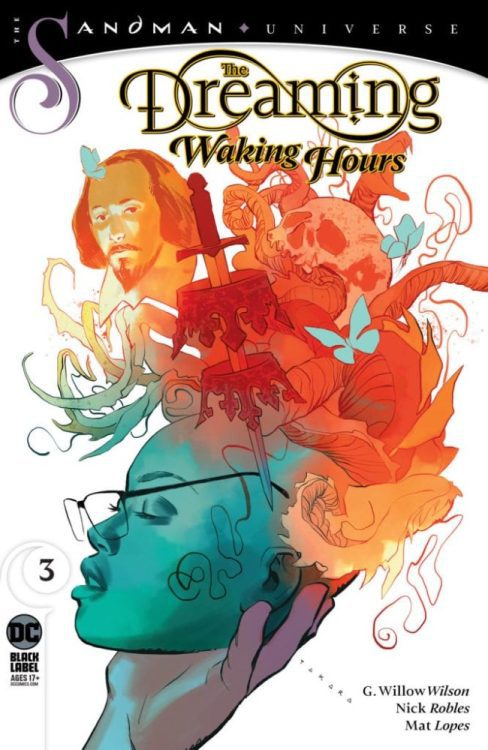
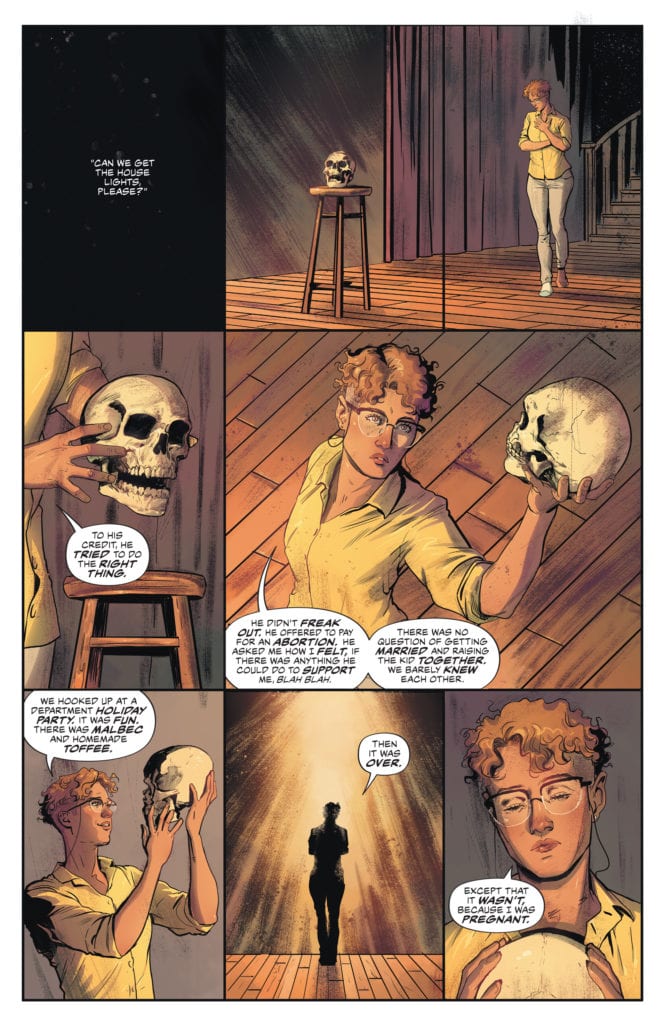
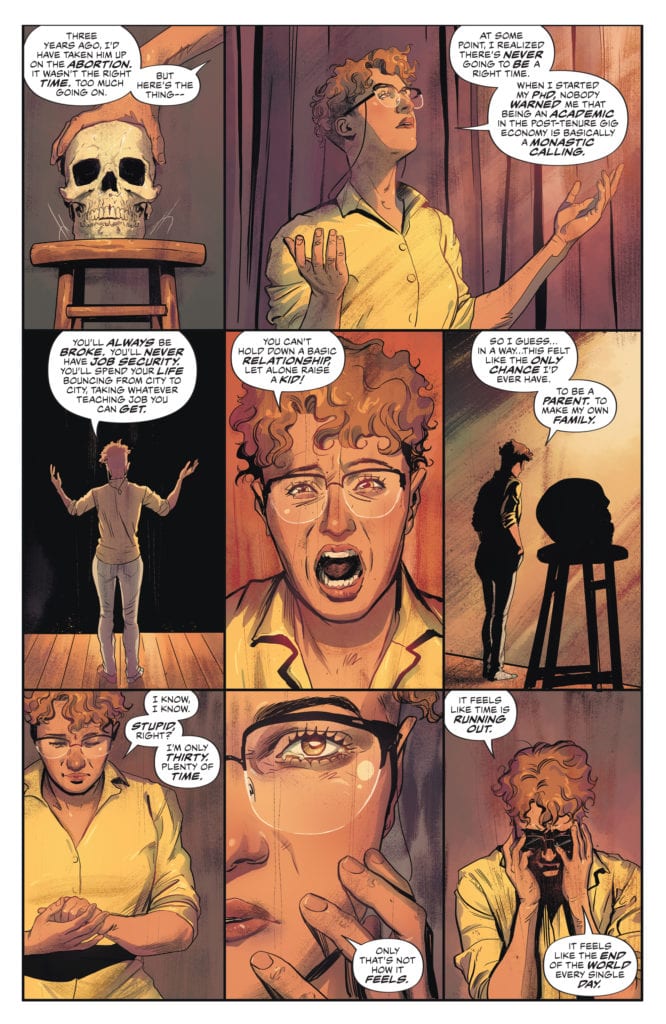
Writer G. Willow Wilson and artist Nick Robles continue to craft an immensely pleasing tale in “The Dreaming: The Waking Hours” #3. This issue offers emotional weight, whimsy, and classic callbacks aplenty to create what may be the most entertaining issue of this series thus far. With outstanding visual direction from Robles and colorist Mat Lopes, and tonally superb lettering from Simon Bowland, this new chapter of The Dreaming is a surefire crowdpleaser for new readers and classic Sandman fans alike.
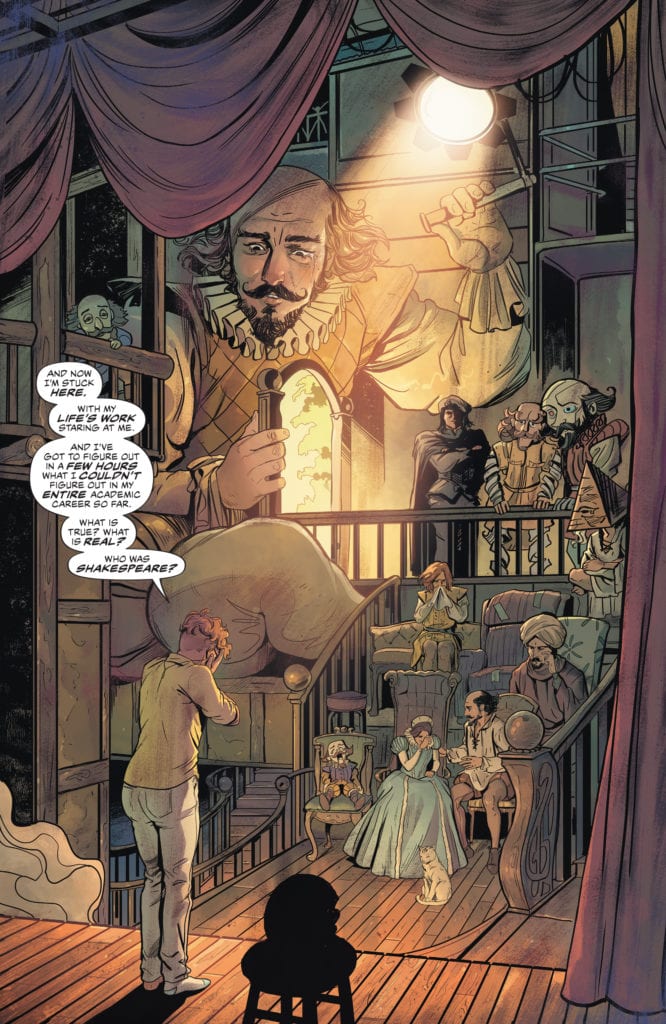
“In the waking world, Ruin and the fallen cherub Jophiel have teamed up with the sorceress Heather After to try to pull Lindy out of the Dreaming, and home to her newborn daughter…but they’d better work fast. Lindy’s mind is rapidly disintegrating as she reckons with thousands of possibilities for who Shakespeare really was, each one alive and walking around in front of her—and if she can’t keep it together, then she’ll be lost forever!”
Writing & Plot
G. Willow Wilson‘s approach to writing the inhabitants and guests of the Dream Realm in “Waking Hours” #3 makes for some of the most pleasant and comparatively light-hearted storytelling seen in this universe. Don’t get me wrong, there’s still plenty of emotional weight to be felt in these pages, (Lindy’s life story is no pleasant affair) but the air of good intentions and pleasant mischief makes this a hard comic to not have fun with. Lindy being stuck in a realm full of potential Shakespeares from all manner of literary theory is quietly hilarious. The journey of a hopelessly incompetent nightmare, a smartassed angel, and their dangerous with counterpart all trying to reunite an infant with its mother feels vaguely Pratchett-esque in the best possible ways. The fact that the whole comic feels so damn smart, while also paying superb homage to the creation of Neil Gaiman before her is the icing on the cake. Each new character is a great addition to the Sandman mythos, and the old characters feel exactly like they always have. Some special appearances by classic characters aren’t just for fan service (although they are great for that), but they genuinely serve the plot. The dialogue and narration are uniquely delivered based on the character speaking/thinking the lines, and they all also feel naturalistic and easy for readers to get in tune with. The poetic and literary prose style of prior Sandman tales has been eschewed in favor of something more new-reader friendly, but this doesn’t diminish the experience and makes for a stellar read.
Art Direction
The visual symphony that is created by Nick Robles’s pencils and Mat Lopes’s colors in “The Waking Hours” #3 gets continually more impressive as it continues. The changes in method from scene to scene are seamless yet breathtaking, as Robles casually changes from conventional pencils to what seem like watercolor paints and back again. It’s akin to J.H. William III’s work in Overture, but not quite as radical. The penciller makes his mark on The Dreaming by still offering a similar style to Bilquis Evely’s run on the prior series, but still also making these huge departures that add not just variety, but the tonal context within a scene. The images of Dream wandering around his prison for nightmares does deserve a different aesthetic than the rest of the book. Mat Lopes’s colors serve as the unifying thread of creative cohesion between the prior Dreaming run and this one, and it’s difficult to imagine anyone but him coloring this universe at this point. Each and every page on this comic is filled with vibrance. Even the rainy and fog-covered London streets appear luminescent. Each character has their own color scheme that seems to follow them wherever they go; Lindy is surrounded by yellow light from candles or the sun, Ruin brings cool blues and violets with him wherever he wanders, and Dream brings his usual ever-changing array of starlit skies and the morphing color waves of dreamy realities. There’s one particular scene where a summoning (no spoilers!) occurs where Robles’s talents quite literally explode onto the page in fiery blues and ethereal tones. The letters from Simon Bowland, another carry-over from Spurrier and Evely’s run, are just as varied and tonally mixed as all great Sandman stories should be. Every character would seem to have their own font, and the wavering or stilted delivery of some dialogue wraps the reader in the experience of being a part of this comic. Much like its predecessor, this is easily one of the best looking comics hitting shelves right today.
“The Dreaming: The Waking Hours” #3 is a whimsical and emotional chapter full of more brilliant characterization and fantastic character appearances than could be dreamed of in a good night’s sleep. G. Willow Wilson’s script dances across the lines of relatable human drama, horror, and literary whimsy while also giving us a compelling character-focused narrative. The visual marvel that is the combined work of Nick Robles and Mat Lopes shifts and changes among all manner of beautiful sights while keeping a consistent visual core. This is yet another brilliant chapter for this Sandman Universe tale, and a great read whether you’re a long time fan or not. Be sure to grab this newest release from your local comic shop when it hits shelves on 10/8!


 The character of Bloodshot seems to have two faces. In the previous issues, Bloodshot gets the portrayal of the somber soldier. To anyone familiar with his story and how the first few issues react to his monstrous reputation, this feels trite. The character has done a lot of good, sometimes more than other characters like Quantum & Woody. This brings up another side Seeley plays with, the cheesy action hero. Throughout Bloodshot #9, readers see the title character spouting one-liners like when he combats with bug kaiju. Unfortunately, since this issue connects more serious takes, this feels rather jarring. Last issue, Bloodshot could feel the agony of the monstrosities and the Burned inside of him. But now it looks like that plot point was abandoned entirely. Not helping is the return of an old enemy of Bloodshot near the end, sorry no spoilers.