Home Blog Page 223

Review: Mystery & History in ITHAQA #1-3

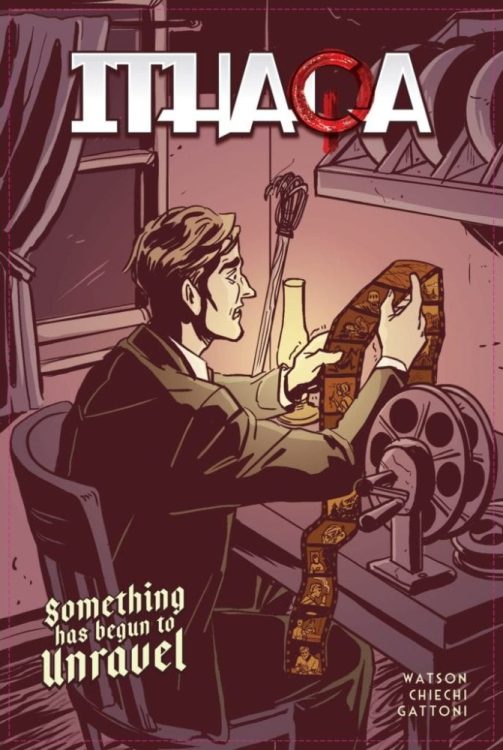
ITHAQA #1-3 is the first part of a self-published series by writer Michael Watson, artist & co-creator Theresa Chiechi, and letterer Lucas Gattoni.

About the series:

In ITHAQA, filmmaker and conman Mookie Smitts discovers the horrible Eldritch Truth of the cosmos, as a moving picture he is struggling to produce in the 1920s accidentally uncovers a plot to destroy the Spacetime Continuum.
Writing

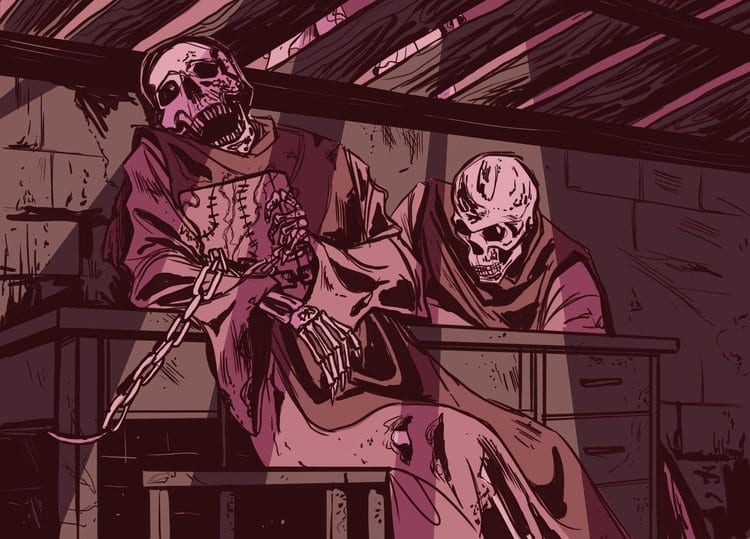
Watson’s non-linear approach to this story makes this comic feel truly mysterious and engaging. Each issue operates in the same manner. It opens and ends with a scene featuring one of the main characters talking to a detective after the event called “The End of Time” has already happened. The reader doesn’t know what this incident entailed or what its name means. But, it’s clear to us this incident has changed the main characters’ lives dramatically. The End of Time scarred them all forever- some in subtler ways than others. By setting up the mystery so well, Watson keeps the reader guessing. Conjuring up the theories as to what it all means becomes part of the fun.

This non-linear approach does make for anticlimactic endings. But, between the beginning and the end, we experience and learn many new things. So much so that the ending serves as some kind of breather from the panic and chaos taking place throughout each chapter.

Art

Chiechi’s artwork is gorgeous. The facial expressions are well-drawn, the colors manage to establish the mood well for the reader, and the artwork’s style has a Disney touch to it, which oddly works. But, her mastery of costume design is what’s truly admirable here. Anything the reader wants to know about a character’s personality, they can find out by looking at how this character dresses. Hazel, the group’s optimistic, gullible girl, almost always sports a red bucket hat, which seamlessly elevates her naiveness and makes her look like a child. The rebellious Margaret always dons a long, red skirt; The red so bold and courageous, it beautifully captures her toughness and stubbornness during these unforgiving times.

Chiechi’s artwork definitely succeeds in impressively embodying the spirits of the 1920s. But, where it doesn’t quite work are ITHAQA’s terrifying, supernatural sequences. When the time comes for Chiechi to outright scare the reader, it feels like Chiechi pulls her punches and doesn’t deliver on the real horrific images we’ve all been waiting to see.
Lettering

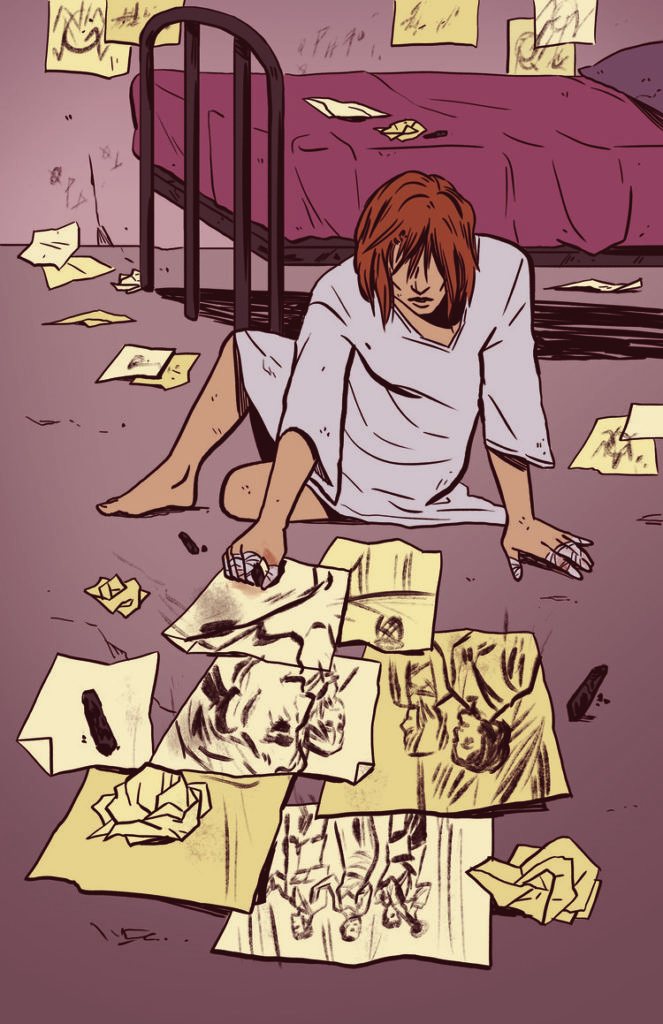
Gattoni’s lettering gives the creative team a crude nudge in the right direction in terms of tone and style, and then some. Except for a few odd balloon placements, Gattoni knows exactly how to further immerse the reader in the story’s world. It’s clear Gattoni had a lot of fun with designing the balloons, captions, and sound effects. Especially the balloons when a character casts spells in an unknown language; They look so otherworldly and chaotic; the reader almost feels like the spelling is being cast on them. Noteworthy work here from Gattoni.

Conclusion

It’s easy to forget ITHAQA was made during this last decade. Everything about this comic just sucks the reader into its world without ever breaking the ultimate spell, the suspension of disbelief. The mystery grows bigger and stronger with each chapter to a point where the reader can’t help but try to figure out for themselves what’s about to happen next. Strongly recommended for fans of Lovecraftian horror and stories about the days of the past.

Monkeys Fighting Robots Youtube

X OF SWORDS Aftermath: X OF SWORDS – STASIS #1 Shows That the Islands Have Their Own Plans

X OF SWORDS – STASIS #1 serves as the calm before the storm, as Krakoa’s champions make their way to the Starlight Citadel, and readers find out who the champions of Arakko are. We are also served another helping of tarot readings about the fates of the sword-wielders from Krakoa and discover that the person leading the forces of Arakko behind the Helm of Ameth is none other than Apocalypse’s long lost love Genesis (which if you read her dialogue up until that point, you can sort of figure it out before her face appears).

But despite all of those revelations, this piece really isn’t about those, but rather an obscure but important part of Hickman’s run that receives explanation here.

Fans may forget that Arakko was first mentioned all the way back in Powers of X #4 (so for better or worse, THIS is the story Hickman and company wanted to tell). Arakko first appears in the present day, however, in X-Men #2. If you’re like me, you might’ve found this story, taking place in Hickman’s second issue, to be a bit random. In fact, I was a bit put off by it and wondered why such an obtuse story was taking place so early in this new run, but I forgot that Hickman plays a very long game when he plans a run. In hindsight, when read as a whole, this series will probably hang together very well.

In X-Men #2, Cyclops and his children discovered another island heading toward Krakoa, which merged with it. They found Summoner on this island, revealed to be a piece of Arakko.

In Stasis, readers learn that Summoner had requested that Arakko give up a part of itself to fulfill his ruse, with the promise that it would ultimately lead to Arakko’s reunification with Krakoa.

Whatever game Saturnyne may be playing, and whatever the intentions of Arakko’s inhabitants to kill Krakoa’s inhabitants or those inhabitants’ intentions to defend themselves, Arakko and Krakoa are playing their own game, one which will most likely end with them being rejoined and the status quo of Krakoa altered in Hickman and company’s next phase of storytelling.

X of Swords – Stasis #1 is available now!

Monkeys Fighting Robots Youtube

Review: PROJECT 45 #1 – Some Old School Sci-Fi For Your Day

Project 45 #1 Cover

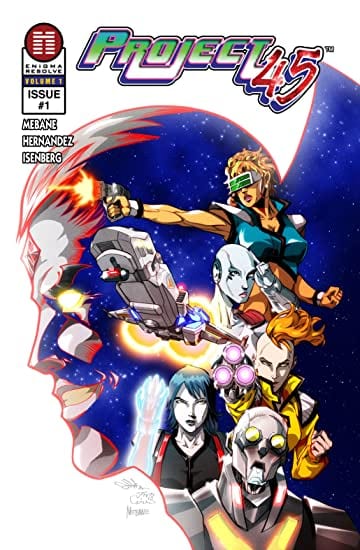
Project 45 #1 published last month, is the first comic from a new indie publisher Enigma Resolve created by founder Kal Mebane. It’s a throwback to the late 80s and early 90s sci-fi animation. Joining Kal is his co-writer Yelena Mebane, co-penciler Jay Hernandez, and inker Jake Isenberg. The comic is available on their website store in multiple formats, while Comixology and select comic stores have the full-color version.

Project 45 #1 The Setup

Kal and Yelena Mebane have Project 45 #1 go at their own pace. Like most military conflicts, the antagonists reveal themselves by attacking without warning, not unlike terrorists. After this attack is a transition to the military school of the main cast, a school favoring diplomacy no less, with the antagonists not favoring this, the reader might feel a little anxious about what’s coming. As they get to know POV character Carmen Ariez the reader can immediately sympathize with her rough start. Because for a school that specializes in diplomacy, the students don’t seem very welcoming. For all of her troubles, Carmen gets hit in the face with slime and is in a group with the school’s problem children.

The titular Project 45 all seem very rough around the edges with their record as underdogs and attitude problems. But then again, the best group Project 12 are elitists who, with subtle context, flaunt their status at Carmen. It’s tough not to empathize with her when she crawls up in a fetal position on her bed. That being said, Carmen and the rest of Project 45 may have the chance to prove to everyone when the antagonist targets one of their teammates.

The Extra Important Details

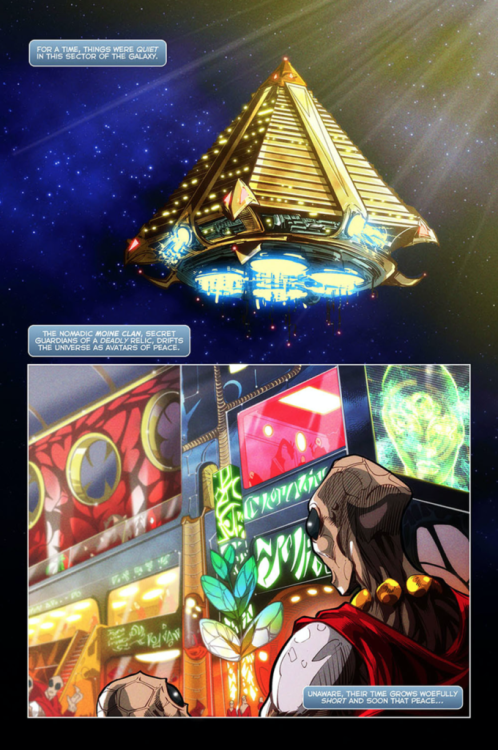
Project 45 #1 first pageKal Mebane’s best ability in Project 45 #1 is in the awe-inspiring artwork. Every scene in the issue evokes stylizations similar to 80s sci-fi anime like Mobile Suit Zeta Gundam. With so many character designs, settings, and intricate space backgrounds, it’s good to have Jay Hernandez backing him up. The opening scene of a pyramid spaceship is filled with an inner-city that looks like something out of 5555 Interstella. It not only looks good, but there was an entire culture of people thriving, which by the time the antagonist’s attack creates a sense of tragedy.
As the inker, Jake Isenberg has to bolden the significant plot points on characters because some of the backgrounds would be too distracting. Because Mebane’s colors give such intricate detail to galaxies and machinery is highly mesmerizing. Take a moon-sized base, so large and black the design is perfect for stealth in an already gigantic amount of space because it displays the need for these villain’s secrecy against the intergalactic military; despite how confidant some of the supporting villains sound, they’re still in a vulnerable state.

Lettering

As a letterer, Mebane is both creative and efficient, word balloons that sometimes get a red outline to display the volume of voice and wordmarks that look crafted for specific tasks. Almost none of those wordmarks they’re for the same action; save for instances like mechanical reactions to other actions, including a bionic arm adjusting for weapon mods or a cyborg reacting to a sneak attack. The ending wordmark, in particular, brings up similarities to a classic 80s neon sign to stay true to the influences of Project 45 #1.

Project 45 #1: A Rocky But Good Start

Project 45 #1 sets up what can become a tribute to several fan-favorite sci-fi shows. The aesthetics paint a universe ready for the readers’ pleasure, especially thanks to villains ready to ruin it all. With them coming for the underdog team of Project 45, anything can happen.

Monkeys Fighting Robots Youtube

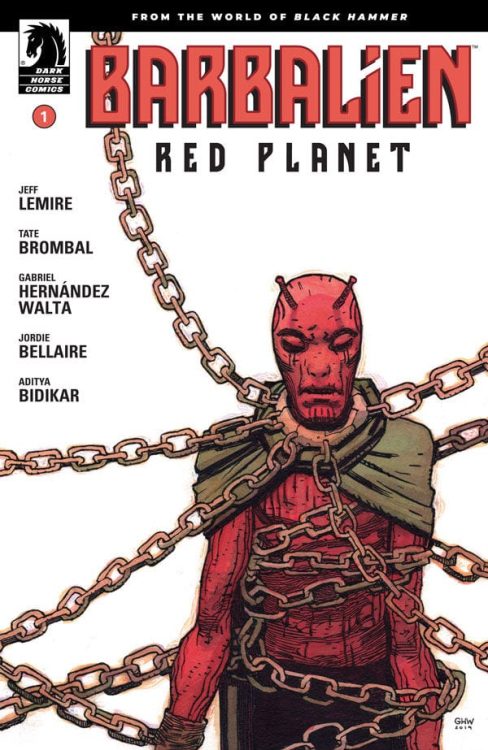
Review: BARBALIEN: RED PLANET #1 Balances Truth with Subtlety

Barbalien Brombal Dark Horse

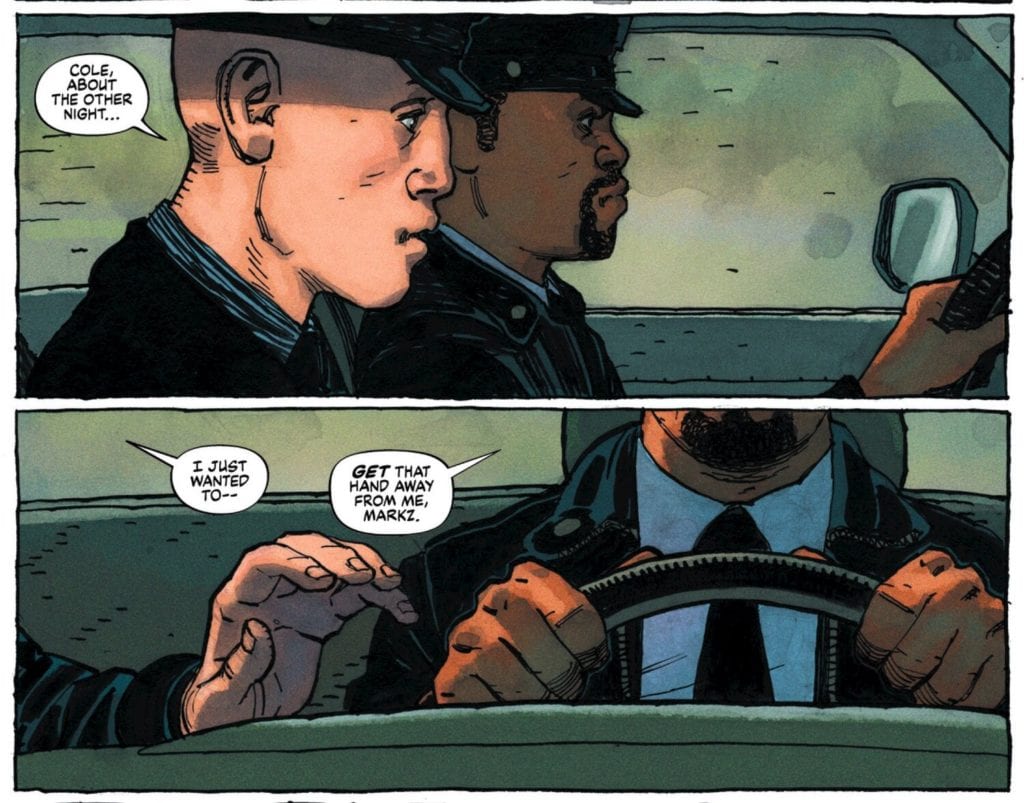
Written by Jeff Lemire and Tate Brombal, with art by Gabriel Hernandez Walta, colors by Jordie Bellaire and letters by Aditya Bidikar, Dark Horse’s Barbalien: Red Planet #1 doesn’t skirt the issue. Set during the AIDS crisis, we follow Mark Markz. Markz is both secretly a Martian and a closeted homosexual. Thanks to Markz’s shapeshifting powers, he works as a cop in the day and flies around as the vigilante Barbalien at night. Watching the gay rights movement gain momentum, Markz finds himself on the other side of the baton. This creative team creates a story that’s poignant and moving, but also gentle and empathetic.

Writing

Lemire and Brombal are clearly passionate about gay rights and angry at how the early days of the gay rights movement was full of police brutality. But Lemire and Brombal don’t let their passion get in the way of subtle storytelling. They empathetically step into the shoes of someone who feels caught in the middle. Barbalien, Mark Markz, is stuck between wanting to fit in and wanting to embrace who he is. He’s a gay cop, helping stop the gay rights movement.

Through the voice of the activist Miguel, Lemire and Brombal get the opportunity to voice how they feel about the injustice. Miguel rails against the system and the tragedy, and he does so powerfully. It’s on-the-nose, but it’s a rally. People don’t mince words in rallies. Meanwhile, on Mars, Lemire and Brombal set up blood types as being a sign of a Martian’s standing. This idea that blood could be clean or dirty perfectly sets up the prejudice we see on Earth in the AIDS crisis. So for every shout from the rooftops, Lemire and Brombal have a sly wink and a careful nudge.

Barbalien Brombal Dark Horse

Art

Walta makes us feel trapped. Using a 9-panel grid, Walta shows Markz’s usual routine. In the left hand column, we see Barbalien rescuing a child from a burning building. In the middle column, Office Mark Markz helps a woman who is being mugged and gets her home safe. The final column shows Markz at home, flipping through channels on TV. Because Walta sets this up in columns, instead of rows, it feels like we’re watching the same events being repeated. Even though we’re just following Barbalien into one burning building, Walta gives us the sense that these things are just part of Markz’s day-to-day. It might be a different kid or lady, but Markz is always helping, and coming home to a lonely house. Just as the page makes us go “hey, why are we watching this happen again?” we feel Markz’s own irritation at the redundancy of his life.

Barbalien Brombal Dark Horse

Coloring

Bellaire doesn’t want us to forget what this issue is really about. Like an AIDS ribbon, we see the color red pop up over and over. The protestors wear it and have it on their signs, Miguel wears red shoes, Barbalien has red skin. It becomes almost a haunting color. A color that represents more than just AIDS, it represents the blood of the gay rights movement. So when Office Mark Markz saves a woman in a red coat, being mugged in front of red graffiti, it’s as though he can’t get these people out of his head. When Markz finally leaves his lonely, blue apartment, he finds an underground club. The colors of his blue loneliness and the blood and sweat of the gay rights movement merge to create a beautiful purple. Markz brings his own pain to the table, and these new people he’s met bring theirs, and together they make something beautiful.

Lettering

Bidikar’s sound effects have subtle differences to them. This allows the issue to have a uniform feel, while also making sure each sound seems unique. A remote control doesn’t sound like a car screeching to a halt, but the overall style of the lettering remains the same. But Bidikar switches it up when lettering the Martians. Their words, even the sounds they make, are different. It’s interesting that we don’t see Barbalien talk in these scenes. It begs the question, how would Barbalien’s lines be lettered? Instead, we only have Barbalien’s lines on Earth to go by. They’re lettered the same as every other earthling. It again highlights how Markz is stuck between worlds, literally in this case. Markz is neither fully Martian nor fully human, he simply is.


Dark Horse’s Barbalien: Red Planet #1 has all the passion of a rally cry delivered with subtlety and finesse. Lemire, Brombal, Walta, Bellaire and Bidikar create a stunning first issue. Barbalien: Red Planet #1 is empathetic and beautiful. Pick it up, out from Dark Horse November 18th, at a comic shop near you!

Monkeys Fighting Robots Youtube

Review: IRON MAN #3 Spirals Into Depression

Iron Man #3, Ross cover

IRON MAN #3, available from Marvel Comics on November 11th, finds Tony Stark spiraling into deeper levels of despair, struggling to define himself as a hero, and finally meeting this series’ big bad. Written by Christopher Cantwell, this issue continues the existential angst of Iron Man #1 and Iron Man #2 before giving Stark a cold shock of superhero reality.

Cover Art

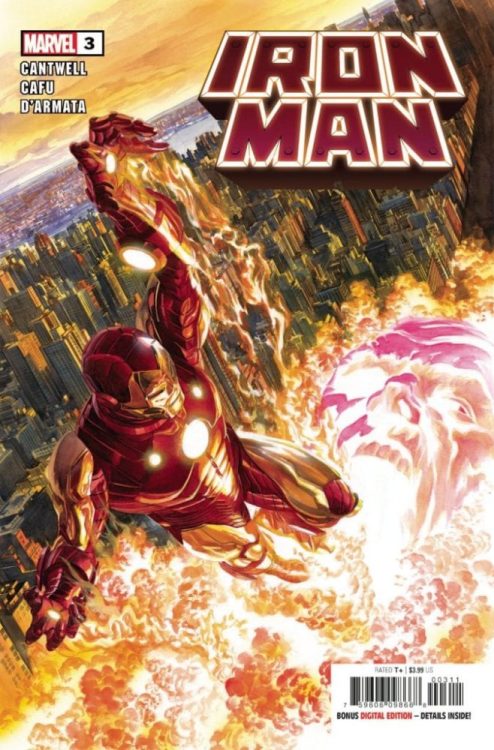
Once again, Alex Ross delivers a gorgeous cover. Iron Man flies high against the backdrop of the cityscape to escape a fiery death. It’s an exciting and gorgeous cover.

Writing

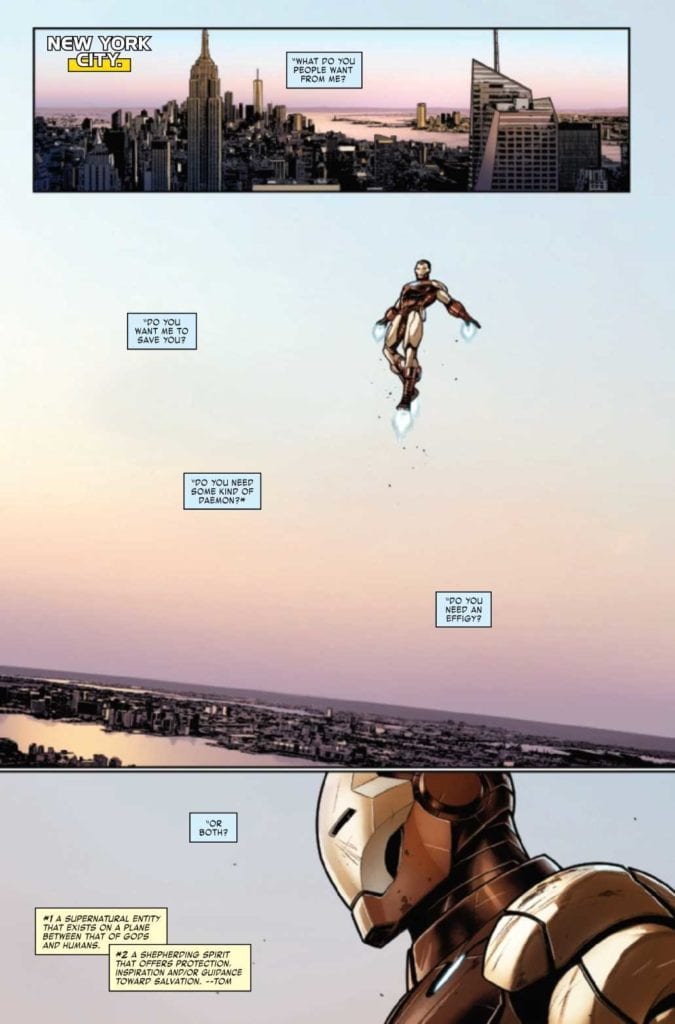
The overarching theme that comes through when reading Cantwell’s story so far is, “Tony Stark can’t catch a break.” He’s continually jumped by a cavalcade of serious and semi-serious villains from the Iron Rogue’s Gallery, which has potential as a build-up to Korvac’s reveal in the final pages. However, Cantwell takes it further.

Iron Man #3, writing sample

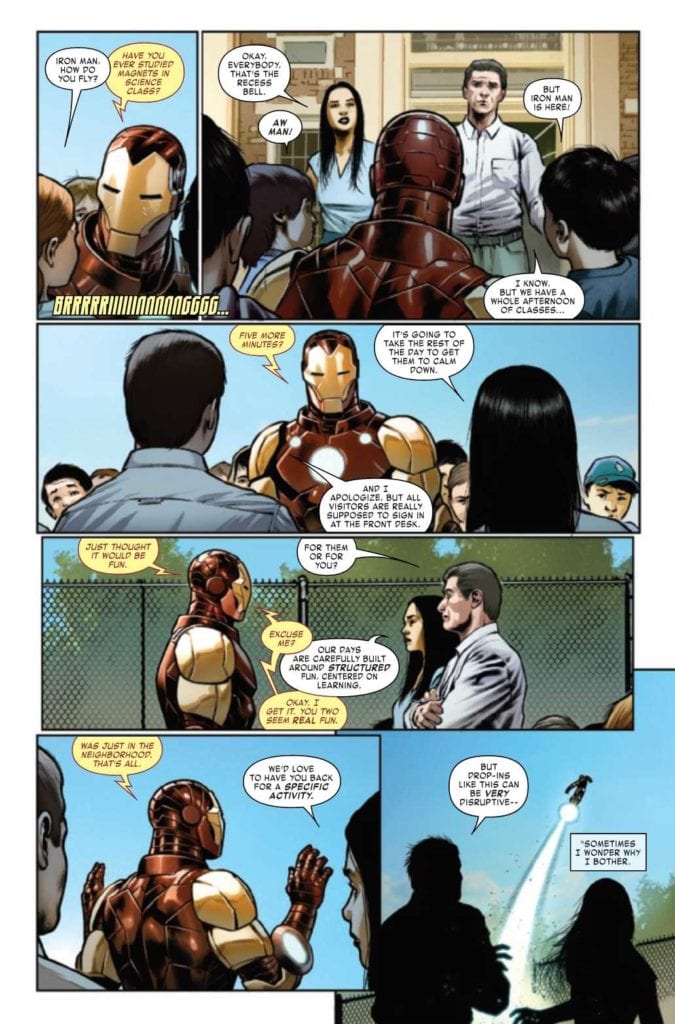
Not only does Iron Man get beat up by returning villains, but he gets roasted by the civilians he saves, and once again, from Hellcat. Cantwell is hammering it down with a sledgehammer that no matter how much Iron Man does to save people or how badly he gets injured in the process of said saving, everyone is dogmatically disappointed and annoyed with Iron Man. Any hint of hero worship or gratitude for Iron Man’s heroics is stripped away with a little extra salt for the wound.

Iron Man #3, writing sample 2

To be fair, this is structurally much better than the previous issue, but Stark’s constant self-doubt and the world’s non-stop Iron Man bashing make the story depressing. Readers want someone or something to root for, but here, even Iron Man doesn’t want to root for himself.

Pencils/Inks

CAFU’s art is the standout for this series. Similar enough to Alex Ross’ hyper-realistic style but distinctive enough to be picked out on sight, CAFU creates a visual story that’s good enough for live-action without removing any of the fantastical elements you can only pull off in a comic.

Where CAFU’s art really shines is in angle choices between mundane conversation and action scenes. When characters are talking in everyday surroundings, the panel angles are flat, straight, and unremarkable. When Iron Man is called into action, CAFU chooses unique angles to amplify the sense of movement and action. Again, CAFU’s art saves this series.

Coloring

Frank D’Amata’s color work compliments CAFU nicely with a matte veneer covering all the surroundings and characters, giving them a dreamy glow that adds a fantasy feel to the art. The hues are rich and deep, and every panel looks like a museum-quality painting.

Lettering

VC’s Joe Caramagna lays down some excellent lettering in this issue. There’s quite a lot of wordy conversations going on, and so Caramagna keeps the dialog well-integrated into the art and easy to read. As noted in the previous issue, Caramagna makes a visually pleasing choice to match the sound effect border colors to the power source, complimenting the art in an almost symmetrical way that looks great in the panel.

Conclusion

IRON MAN #3, available from Marvel Comics on November 11th, takes Iron Man further down the rabbit hole of self-loathing before dealing with the biggest blow of all from the series’ main villain. The art is gorgeous on all fronts, but the story’s constant Iron Man bashing borders on sadistic. Read at your own risk.

Monkeys Fighting Robots Youtube

Review: TEENAGE MUTANT NINJA TURTLES #111 And Why Relationships Are Hard

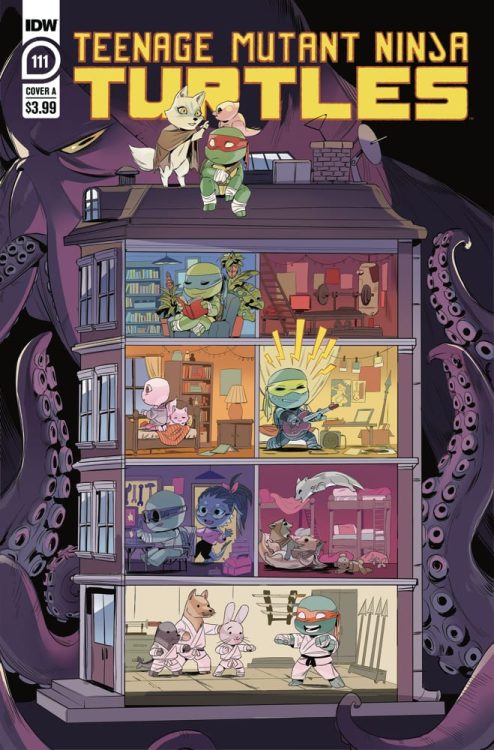
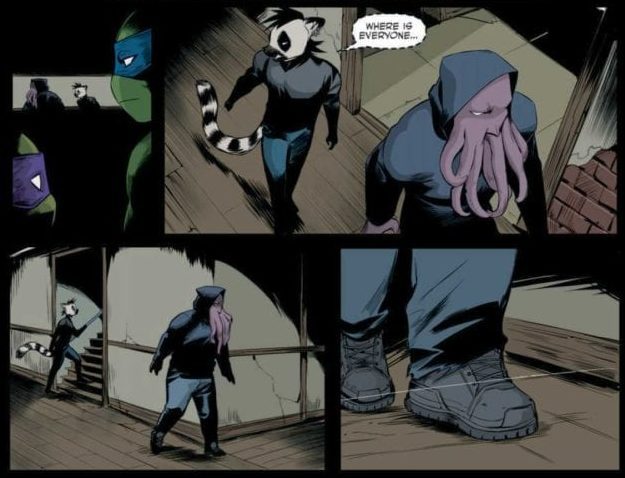
TEENAGE MUTANT NINJA TURTLES #111, available in stores on Wednesday, November 11th, turns the tables on the Mutanimals. After weeks of infiltration attempts into the Turtles’ home, our heroes decided to set traps to stop them in their tracks. What unfolds is much like the tale of Kevin McAllister in Home Alone: someone defending their home from intruders with humiliating pranks.

Story

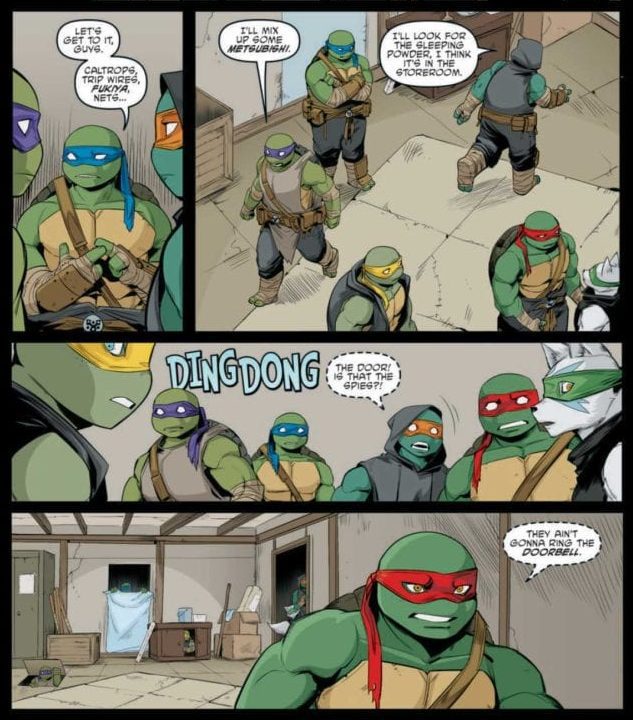
Sophie Campbell dives right into the high-paced narrative from the opening pages, showing the Turtles and their allies debate the merits of allowing spies to enter their home. This gives readers information they need from the get-go, which allows for character development. And what better opportunity for character development than the unexpected arrival of a familiar face (and not the intruders they were expecting)?

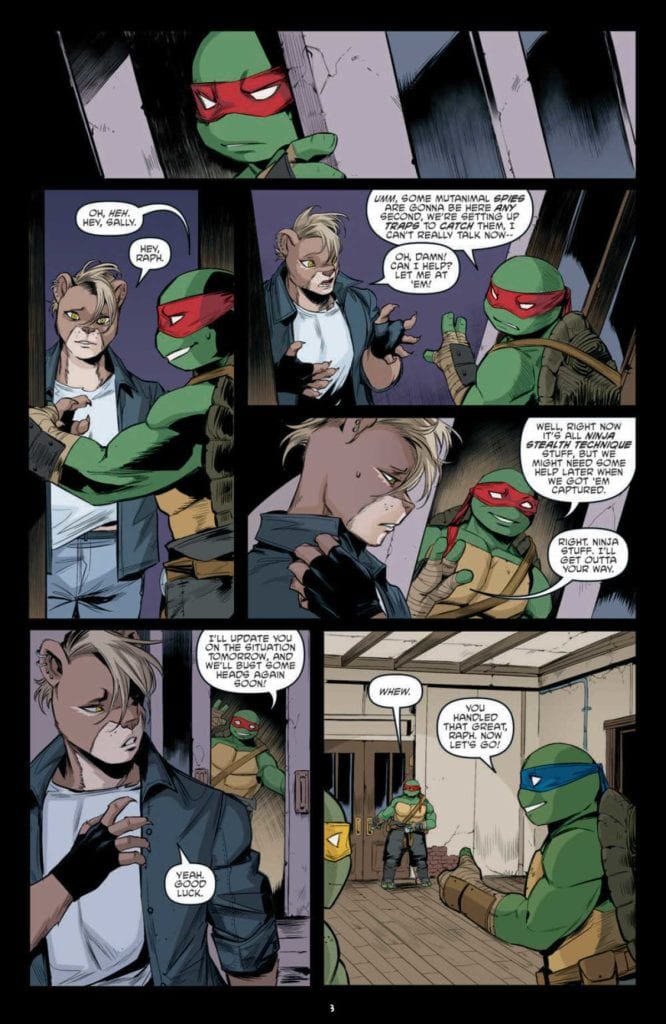
Seeing the downtrodden look on Sally’s face speaks volumes. Raphael’s rejection of her wish to help appears to have broken something in their relationship. This introduces the theme of rejection into the issue, which continues when Mona Lisa faces a difficult conversation with her parents.

The tension builds between the Turtles and their adversaries, but relationships seem to be suffering in midst of it all. Readers will find out what costs each character is willing to pay to achieve their goals.

Artwork

Jodi Nishijima’s penciling and ink work, Ronda Pattison’s coloring, and Shawn Lee’s lettering craft scenes that fit perfectly for this stealth-themed issue. The Turtles and their allies’ forms are drawn with sleek borders that allow them to mesh well with their surroundings. These panels contain darker shades to allow our heroes to mask themselves in shadows as their adversaries advance.

It was also great seeing the lettering capture the speech volume of each character. The smaller text for those speaking more quietly was particularly effective.

Conclusion

TEENAGE MUTANT NINJA TURTLES #111’s characters express the emotions, reactions, and experiences that reflect the real world with stunning clarity. We were engaged from the beginning to the end.

What do you think the Mutanimals’ goal is? Let us know in the comments below!

Monkeys Fighting Robots Youtube

Review: Vader Faces His Past Demons In STAR WARS: DARTH VADER #7

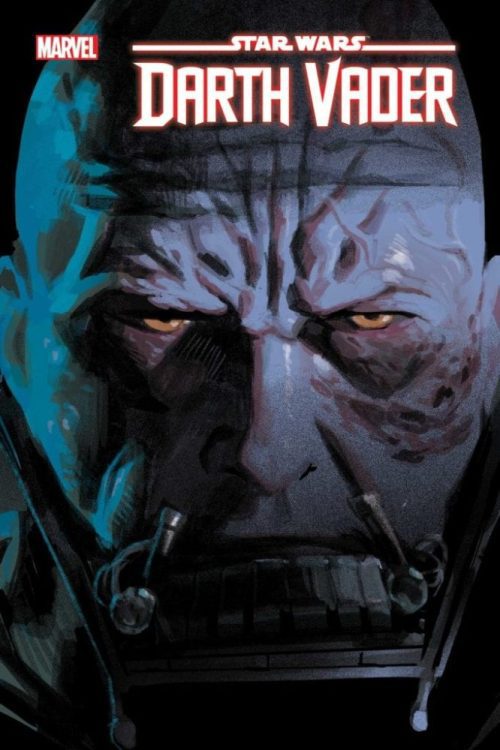
STAR WARS: DARTH VADER #7, available in comic book stores on Wednesday, November 11th, takes readers on one of Darth Vader’s most grueling journeys in Star Wars canon. After failing to comply with Emperor Palpatine’s orders, the Sith Lord experiences tremendous punishment on the planet of Mustafar. Longtime fans will remember this as the lava planet on which Vader nearly perished at the hands of Obi-Wan Kenobi.

Story

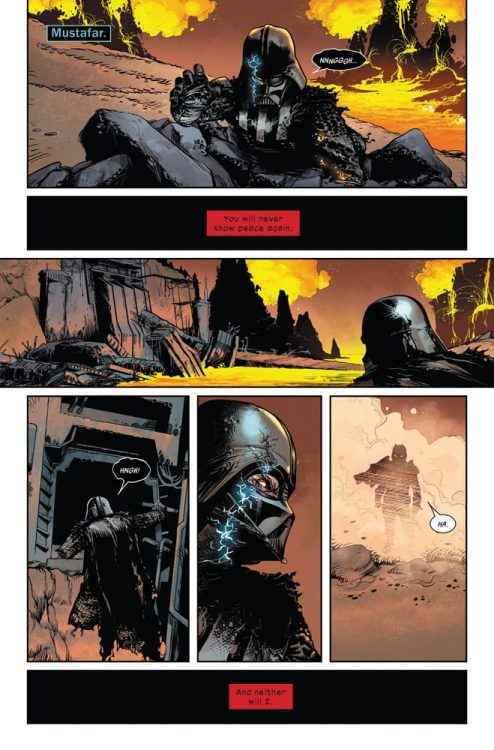
Vader finds himself in an eerily similar situation as the aftermath of his fight with Obi-Wan years ago. Most of his limbs are severed, and the heated planet surface makes it almost unbearable to touch. But in a feat of willpower fans love in the character, Vader crawls his way to the Sith Temple erected years ago.

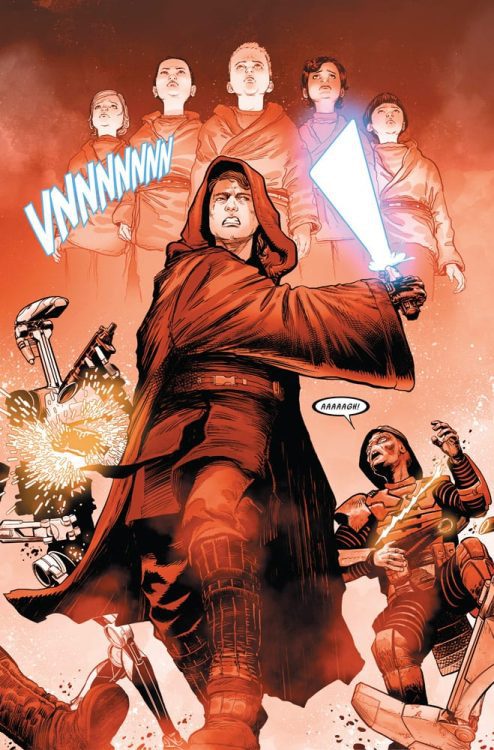
Writer Greg Pak does a brilliant job of narrating our protagonist’s journey, both across the planet and through his memories. Readers witness events from Vader’s past — specifically those from Star Wars: Episode III – Revenge of the Sith — that retell his murder of the Jedi. This coupling of guilt from his past and anger at his present condition makes for a dynamic character. We can’t wait to see more of Vader’s internal struggle as he progresses through the saga fans know so well.

The story continues to amp up in intensity, complete with a Sith assassin and a mysterious voice communicating to Vader psychically. And readers will be stunned to learn identities.

Artwork

Raffaele Ienco’s penciling and ink work, Neeraj Menon’s coloring, and VC’s Joe Caramagna’s lettering provided us with high-quality illustrations worthy of the film franchise. The dark black shading on Vader’s suit are complemented beautifully by the fiery reds of Mustafar’s landscapes. What’s more, the lettering fits in well with each panel, using fonts of similar style to their surroundings.

Conclusion

STAR WARS: DARTH VADER #7 shoots and scores, especially for longtime Star Wars fans. Vader’s internal struggle engages readers on a new level.

Who do you think the mysterious voice belongs to? Let us know in the comments below!

Monkeys Fighting Robots Youtube

INTERVIEW: Actor Carmela Zumbado As A Human Robot In The Wall Of Mexico

Legendary actor Esai Morales (Ozark, NYPD Blue) is the patriarch of a bizarre family living just south of the US border in The Wall Of Mexico, a film directed by Zachary Colter and Magdalena Zyzak with surreal, mythical, and geopolitical themes flowing through its runtime.

Don (Jackson Rathbone) is the new handyman at the Arista’s large home, a Mexican-American family with a well that some believe may have unique properties. Don’s job is mostly unremarkable until he meets Tania (Marisol Sacramento and Carmela Zumbado’s Ximena. Don’s captivated by the alluring women, but his whole world begins to crumble as the need to build a wall arises.

PopAxiom spoke with Carmela Zumbado about becoming an actor and playing the cold, almost alien Ximena in The Wall Of Mexico.

East To West

Carmela is originally from Miami, Florida, and grew up just slightly north in Weston. She lives out in Los Angeles but was visiting her father back on the east coast. “My sister and I are driving back to LA, so it’s a good time to chat with people on the phone.”

Carmela’s road to becoming an on-screen entertainer began at an early age. “My sisters and I were always performing for our family members. We did dance shows and talent shows. We were always in love with performing. We did theatre in high school.”

“We decided to make careers out of it,” Carmela says of herself and her acting siblings. “We built up several small credits in Florida, and Georgia then made the move to Los Angeles. Things took off from there.”

carmela zumbado-wall of mexico-film-actor

About The Wall Of Mexico

Carmela’s young career includes appearances on My Crazy Ex-Girlfriend, The Magicians, and the hit Netflix series You. “My agent sent me the script,” says of her introduction to The Wall Of Mexico, “and I thought it was so cool and refreshing to read.”

The Wall Of Mexico is a film that knows what it wants to be from start to finish. “It breaks a lot of stereotypes and commonalities that we see portrayed by Latin people in TV and film. It was an artful script, and I loved reading it and the characters.”

The next stupid involved a “read with Marisol,” Carmela says, then declares, “they loved us.”

Carmela’s voice and energy through the phone are vibrant. She’s the type of person who is happy to feel a range of emotions. However, Ximena Arista could not be more different. How did Ximena come to be? “We talked a lot about Ximena’s backstory, what she did prior to the film; a lot of lounging around and doing cocaine while contemplating different philosophical theories.”

The Aristas are a wealthy family. “Because of her wealth, she was able to receive a solid education and traveled to Europe and received an extensive world-view by observing different cultures.”

“She reminds me of a cyborg,” Carmela says with a laugh, “who operates on the basics of logic and isn’t motivated by emotion.”

Carmela discussed her character of Ximena a lot with co-director and writer Zachary Cotler, “She’s not what you normally see represented as a Latin woman in TV and film.”

Carmela explains, “A lot of times I get auditions for roles that’s just the stereotypical Latina woman, sexy, and a bombshell or a cartel wife.” However, Ximena, though portrayed by the stunning Carmela, is “none of those things. She doesn’t lead with her sexuality. She has no sense of awareness of her presence sexually or interested in other people sexually.”

Mentions of robots and cyborgs come up repeatedly when talking with Carmela about her character in The Wall Of Mexico. “Thinking of her as a robot leads to her eccentricities and some of the nuances that came up naturally.”

The Wall Of Mexico is a mysterious film that centers around possibly magical water. “You can formulate your thoughts. It’s not very on-the-nose. The movie doesn’t tell you what to think.”

“We knew. But it’s also kind of whatever you surmount it to be. Reality is whatever truth you make it to be.”

wall of mexico-interview-actor

Wrapping Up

Carmela’s life-long love with entertainment is deeply rooted in her family. “I’m inspired by all of my family members and my ancestors. I’m lucky that my father’s mother was able to leave behind some very old family photos and mementos of our culture. She was from Colombia and moved to Cuba to marry my grandfather. They’ve always bestowed upon my sisters and me different relics of family history. I’m so inspired by being able to honor those who came before me. I think art is a beautiful way to do that.”

Carmela’s only 22 deep into her IMDB credits. What does she want to do next? “I’d like to do anything funny or a period piece where I get to travel back in time. Or a musical; I would pick West Side Story, but they already got that in production.” She laughs, “I did not get that role!”

The Wall Of Mexico is available digitally on Amazon. What’s next for Carmela? “Next up, I got to film a Christmas movie that’ll be out in December. It’s called White Elephant. It’s a romantic-comedy Christmas movie.”

Is Wall Of Mexico on your watch list?

Thanks to Carmela Zumbado and October Coast
for making this interview possible.

Read more interviews HERE!

Monkeys Fighting Robots Youtube

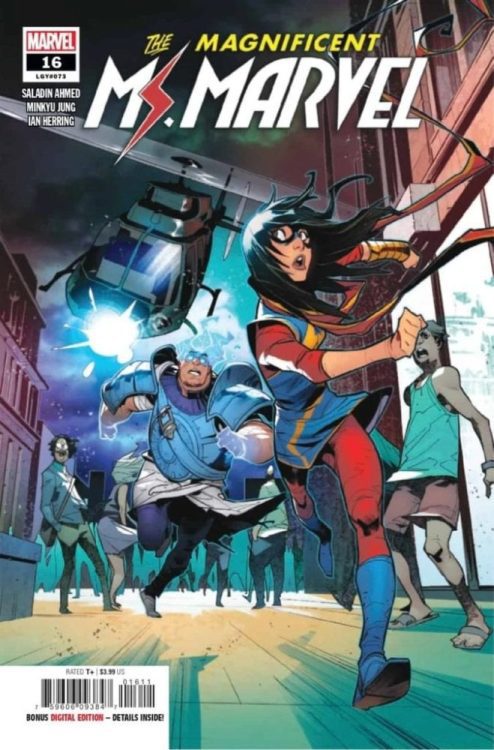
Outlaws And Heroes In THE MAGNIFICENT MS. MARVEL #16

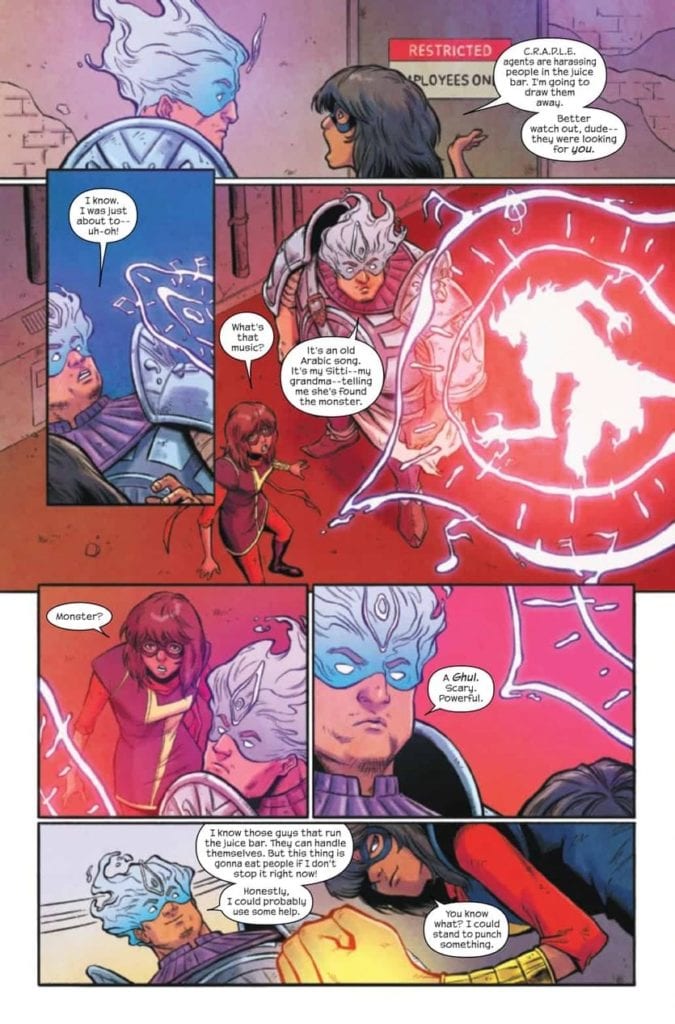
THE MAGNIFICENT MS. MARVEL #16, available today from Marvel Comics is a tale that goes hand and hand with Champions #2. The effects of Outlawed are still going strong, with Kamala’s Law gaining more traction and power.

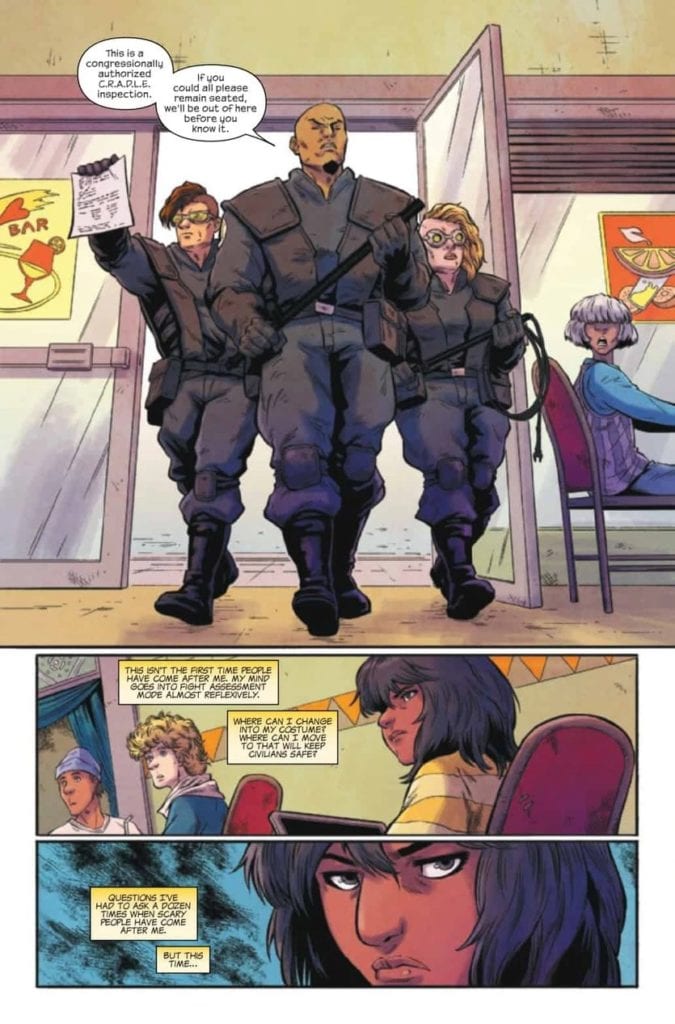
So it begins; C.R.A.D.L.E. is making aggressive uses of the power granted to it (The Magnificent Ms. Marvel #16).

The events of The Magnificent Ms. Marvel #16 are deeply ingrained in the events of Outlawed and Champions. Kamala’s entire world has been rocked, first with her injury, next with the creation of a law using her name, and now all of this.

When you put it in that light, everything that has occurred, and will occur, is deeply personal to Ms. Marvel. After all, it’s her mild-mannered alter ego whose name is being used to create all of this change — change that she does not agree with.

It makes for a complex and raw read, as Kamala tries to find a way through this, while staying true to herself. Yet if there is anybody that can do it, it is Kamala Khan.

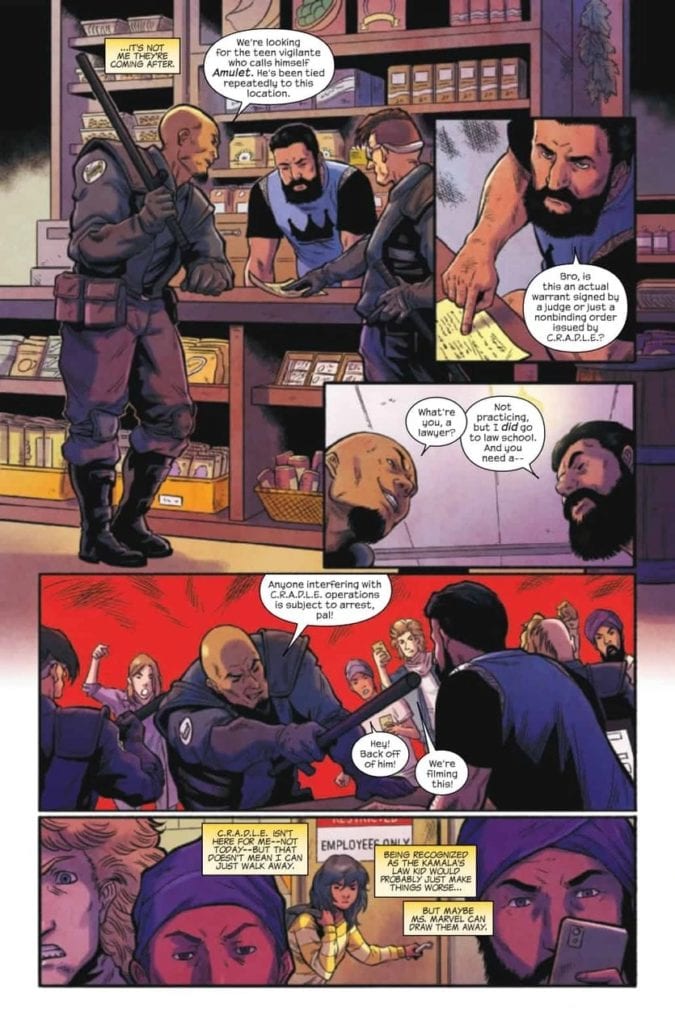
It’s almost a relief to see a lawyer speaking up here (The Magnificent Ms. Marvel #16).

The Writing

The Magnificent Ms. Marvel #16 is a powerful read, much like the previous issue was (as well as Champions #2, also out today). Written by Saladin Ahmed, this is an issue that tackles both sides.

Amazingly, Kamala’s struggle is still relatable, despite how it sometimes feels larger than life. It just goes to show how personable her character is, and how close to home some of these events truly are. All of which was surely designed with intent.

While Kamala invariably ends up dealing with C.R.A.D.L.E. and their actions, this issue also sticks true to her core as well. There are family problems to be balanced and dealt with, not to mention her friends and their reactions to what has happened.

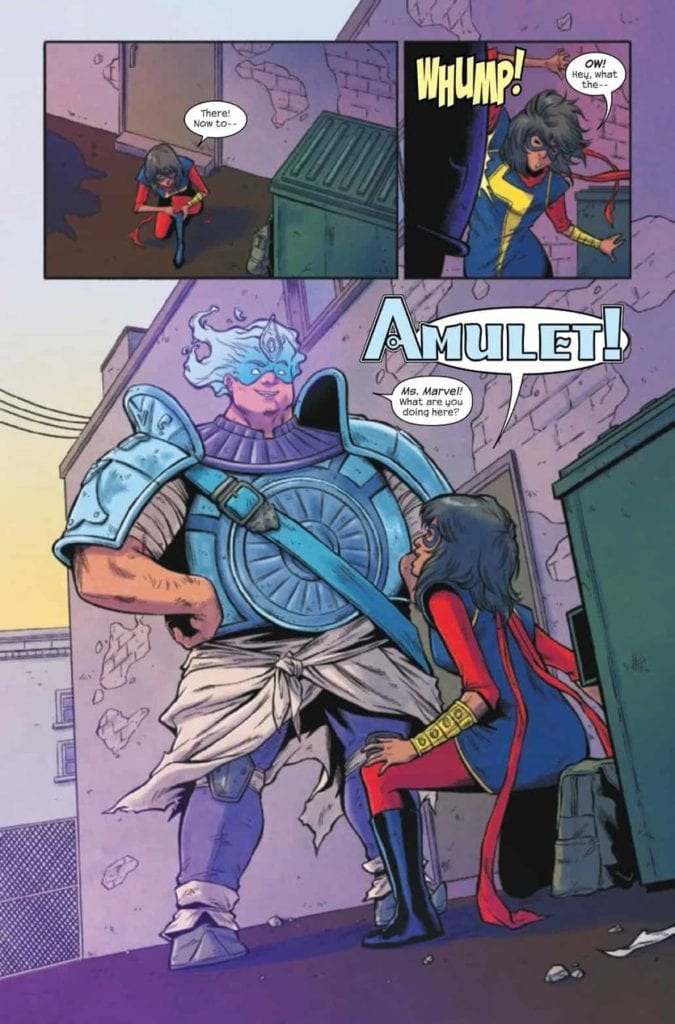
It makes the issue feel so very…human. Especially when balanced out with a quick moment of humor, and plenty of action (thanks to Amulet for that bit). All of which really was just setting the scene for a cliffhanger of an ending.

Amulet is back on the scene! (The Magnificent Ms. Marvel #16)

The Art

The artwork within The Magnificent Ms. Marvel #16 feels like coming home, in many ways. Yet it also portrays several scenes that have never come across her pages before. It makes for an exciting visual affair.

Minkyu Jung was the lead artist here and is responsible for portraying everything from the massive moments and fights to the little details. The creature Kamala fought looks like something from a legend, and with good reason. Meanwhile, there is plenty of nuances to be found in the expressions and reactions of each and every character shown.

The colors were provided by Ian Herring, who did a fantastic job. A bold use of color really allowed certain scenes to pop, while more muted tones set the scene in other ways. It made for a starkly contrasted issue, yet one that worked well.

VC’s Joe Caramagna’s lettering is absolutely superb in The Magnificent Ms. Marvel #16. You can practically hear the crunches, the sighs, and the turmoil, and that is thanks largely in part to the placement and orientation provided by Caramagna.

A new adventure awaits Ms. Marvel, it would seem. (The Magnificent Ms. Marvel #16)

Conclusion

The Magnificent Ms. Marvel #16 is an intense and complicated read. Kamala is naturally going through a lot right now, and yet she’s still keeping up the good fight. This issue is made all the better by another appearance from Amulet, and a few other surprises along the way.

Monkeys Fighting Robots Youtube

INTERVIEW: Catching up With COPRA And Michel Fiffe

Copra

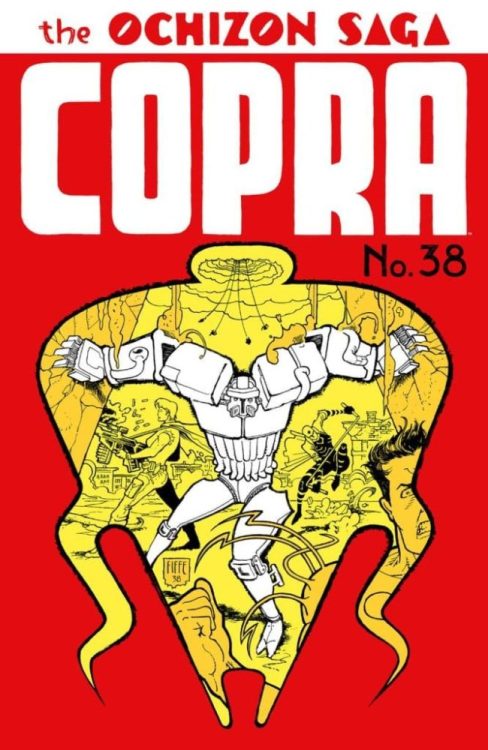
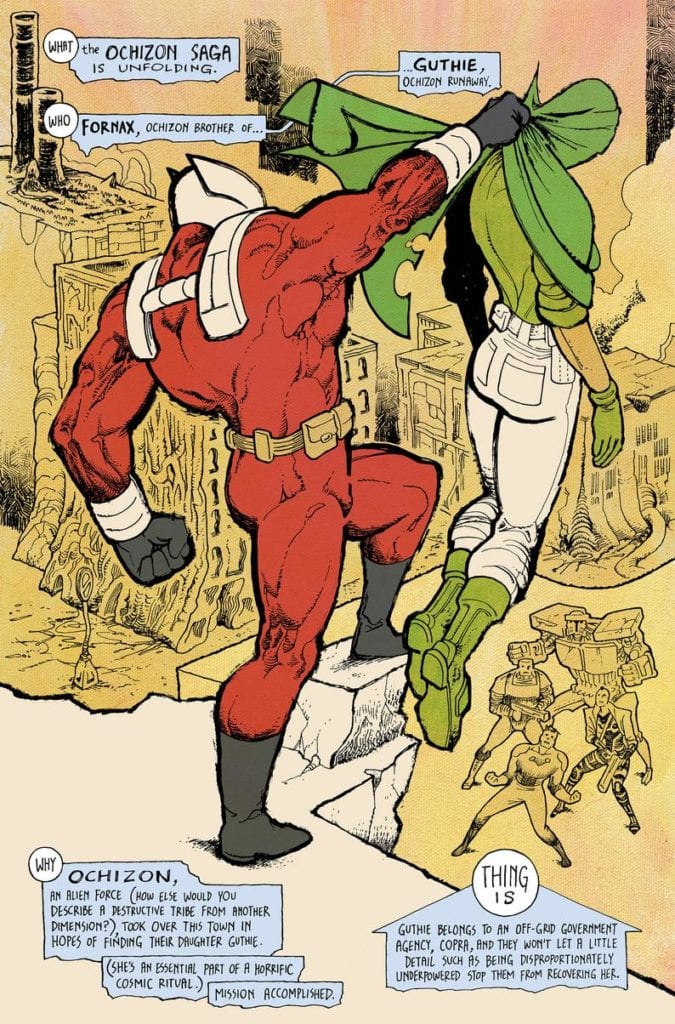
Michel Fiffe’s COPRA recently saw a run of single issues published by Images Comics, something that deviated from the original run’s self-published process. But now, as Copra gets ready to begin the epic ‘Ochizon Saga’, the book is returning to its self-published roots (via Fiffe’s Etsy) and also to it’s original ‘legacy’ numbering, with the simultaneous release of issues #38 and #39. With all that looming, Michel was cool enough to chat with us about this momentous occasion and also share an exclusive image too! Read on and make sure you read and support Copra!


Monkeys Fighting Robots: Ok, so why two issues at once?
Michel Fiffe: Beats just getting one comic in your mailbox! Also saves on shipping costs.
MFR: Speaking of the issues, they are the start of something pretty big for the Copra crew. Give our readers a hint of what’s in store in issues #38 & #39.
Fiffe: It’s the climax of the larger story that I’ve been working towards for years. Imagine the horror and absurdity of humans holding their own against alien demi-gods. Big action, deep characters, and everything in between.
MFR: So these two issues are going back to self-published. What made you make this decision to have Image Comics publish only the collections? Did the pandemic and the chaos comics distribution go through have any bearing on your decision? 
Fiffe: It had some bearing, yeah. I didn’t like being at the complete mercy of several institutions. Not my style, not when I can normally get these comics to readers quicker than anyone else. I wanted more control.
MFR: Did it have any effect on the storyline itself?
Fiffe: Zero percent. Even when I stopped self-publishing and went to Image, the story continued seamlessly.
MFR: A lot of creators took the self-published route in 2020. Whether it was through Etsy, Kickstarter, Patreon, etc. Why do you think so many creators found success taking this route?Copra
Fiffe: Maybe it’s because we have a direct line to the folks who actually read and enjoy our work? If you don’t mind the paperwork, cut the middleman out!
MFR: So what was the process for these issues? What’s the path from conception to publishing on these single issues? 
Fiffe: What starts as scribbles on a scrap sheet of paper and ends up as a comic is beyond me… but I’ve tried to map it all out. There’s a “How To” segment of essays going over every detail over at my Patreon. It’s a lot to chew on.
MFR: What do you hope readers get out of this more direct publishing? 
Fiffe: A direct engagement with me, which is an aspect I’ve always enjoyed as both creator and a reader. Plus, you’ll get the stories almost as soon as they leave my drafting table.
MFR: What sort of schedule can fans expect now for Copra going forward?
Fiffe: I’m juggling a few other projects now, so the COPRA schedule will remain unpredictable but consistent. I’m far from done with the series.
MFR: Where can comic fans find your work these days?
Fiffe: Get to the socials, and look me up and I’ll be yakking about what I’m working on. 
MFR: And what’s ahead for you in 2021? What are your hopes, plans and expectations for the new year? 
Fiffe: Non-stop activity. More comics, more art, more COPRA.Copra


Monkeys Fighting Robots Youtube