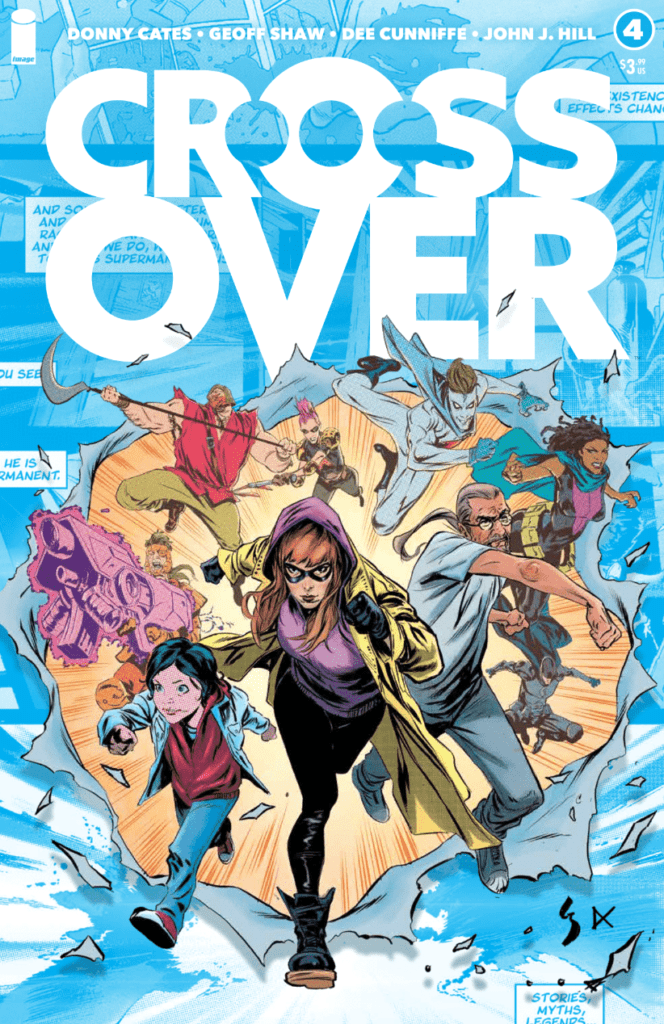
Crossover #4, out now from Image Comics, is a bombastic issue with such a gripping ending that will leave you with a need to continue following the series.
Donny Cates does a lot of things to keep this series’ story exciting, and Crossover #4 is where everything really starts to pick up. The issue continues to feature an incredibly nonchalant narrator, who will do things such as interrupt a scene, misremember the sequence of events, or have a character’s dialogue alter what they were in the middle of saying. This peculiar narration style is quite comedic and makes reading exposition a more entertaining experience. Another aspect of what makes this issue so notable is its ending — or should I say endings? I wouldn’t dare spoil such an exciting reveal, but rest assured, Crossover #4 is worth purchasing to see the insane new path the story will be taking.
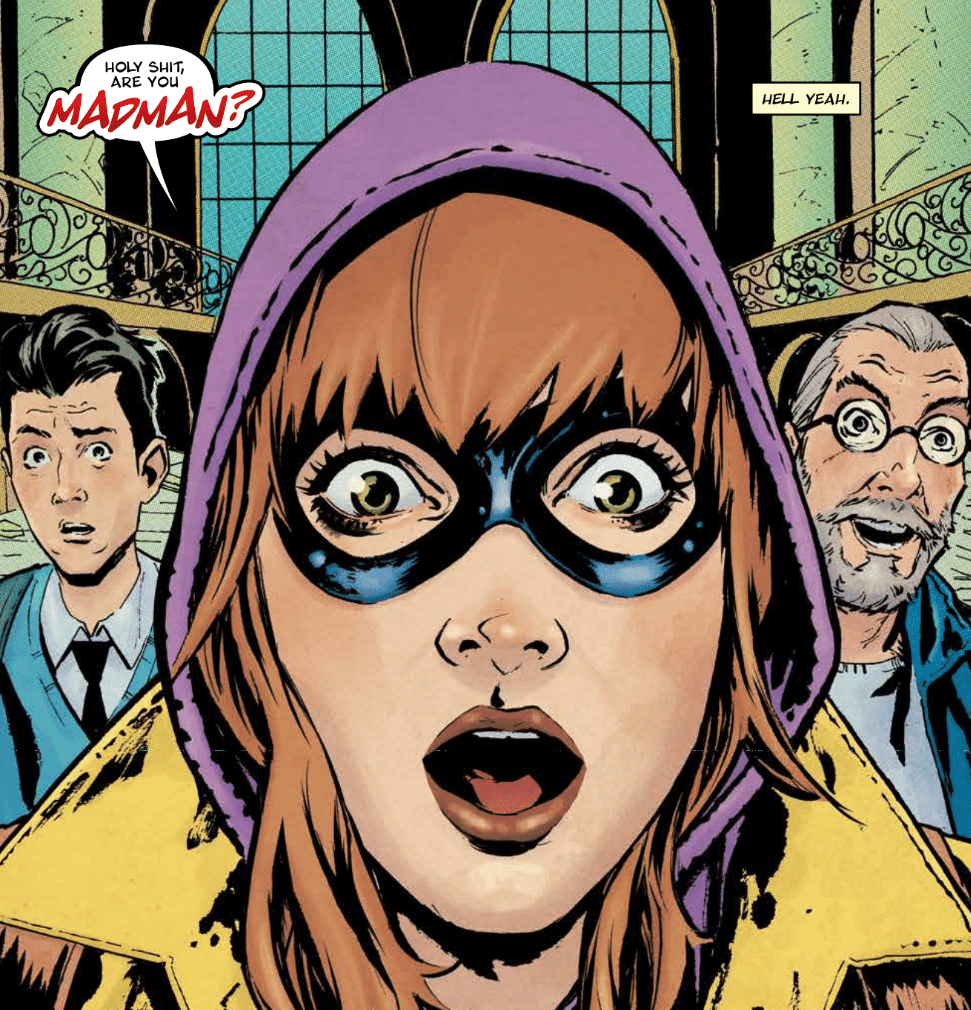
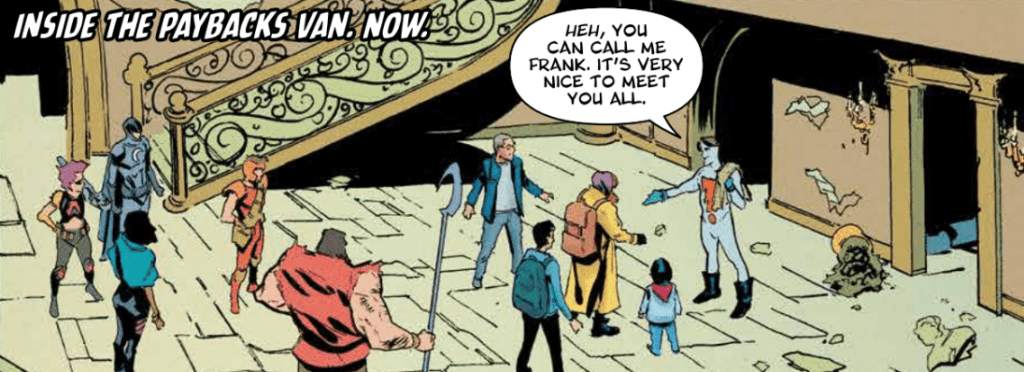
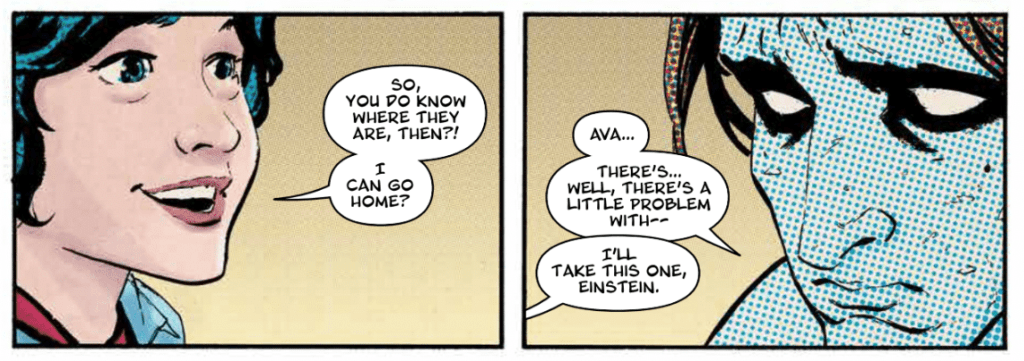
Geoff Shaw’s contrasts between comic book characters and the characters from the real world are astounding. The comic book characters have an idealistic physique and a naturally heroic attitude that distinctly sets them apart from the real-world characters, who have various statures and physiques. For almost all characters in Crossover #4, it would be easy to tell which characters belonged to which world even without the dotted design placed on the comic book characters. The issue also features a brilliant double splash page of Madman in combat. It shows multiple actions at once and is a fun moment with a classic comic book feel.
Crossover #4 wouldn’t be nearly as enjoyable without Dee Cunniffe’s colors. He does such a phenomenal job at giving the comic book characters a classic feel and the real world a grim one. The contrast of the colorful comic book characters against the bleak background creates a unique style that helps the book stand out.
John J. Hill makes the dialogue of Crossover #4 pop. Whether that be through applying emphasis to specific words or giving a unique font to essential characters and items when they first appear, Hill makes sure that the reader clearly comprehends critical moments in the dialogue. Hills also gives some sound effects a color that heavily contrasts with a scene’s background, which adds energy to the moment.
Crossover #4 may be the best issue in the series yet, and it paves the way for many exciting things to follow. The art and colors work together to make a fun and unique style for the comic book characters interacting in the real world, and the lettering assists the story so that it can flow uninterrupted. This is one issue you do not want to miss.
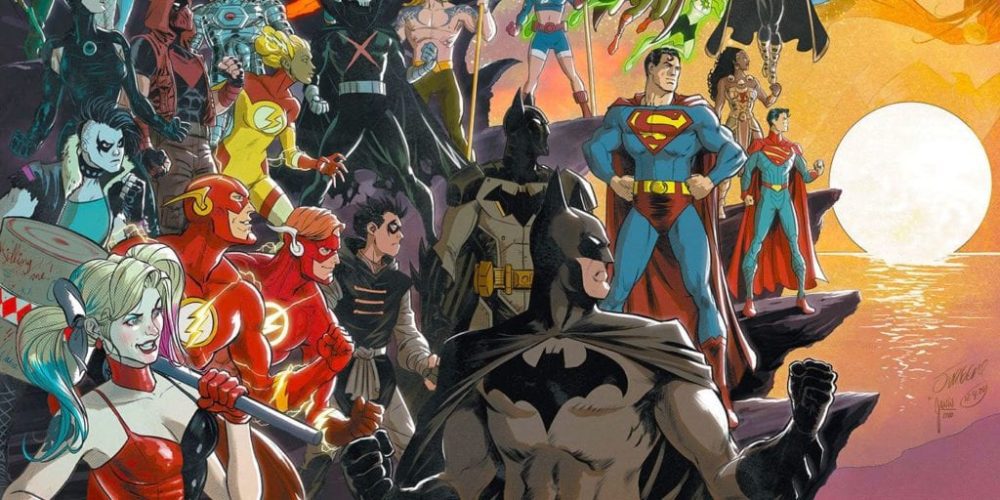
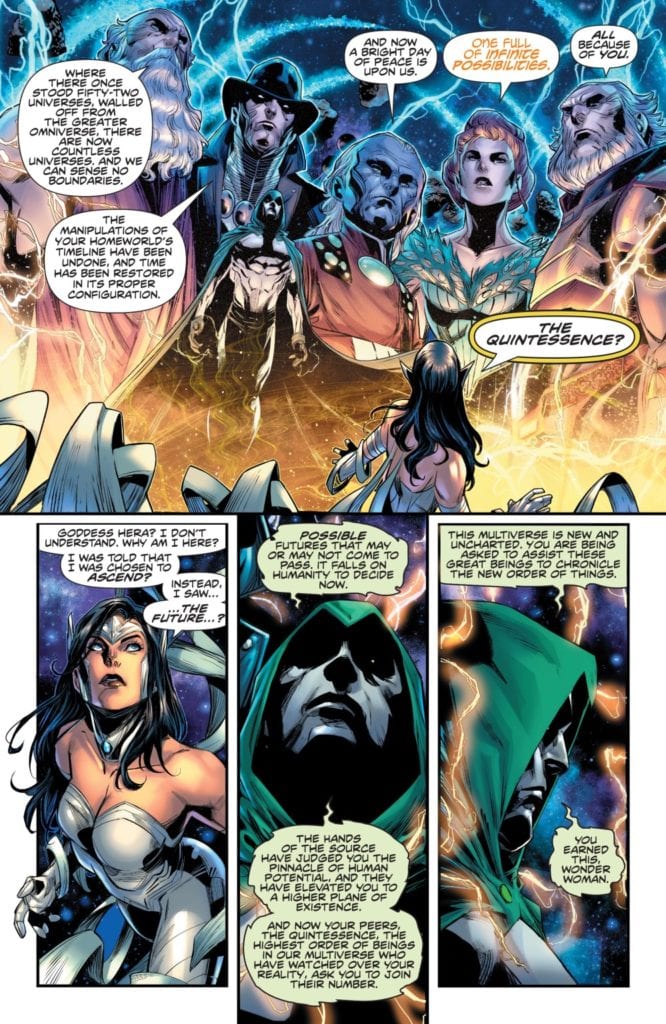
Though DC Comics has launched several line-wide reboots, the premiere of its latest initiative in Infinite Frontier #0 has successfully excited even the most jaded comic fans. It’s a book filled with the promise of a brighter tomorrow. Possibilities jump off of every page, and many readers, from long-time followers to casual fans and everyone in between, can’t wait to see what happens next. This debut issue is the perfect comic for the world right now, both the one within the pages of the book and the real one we’re all living in.
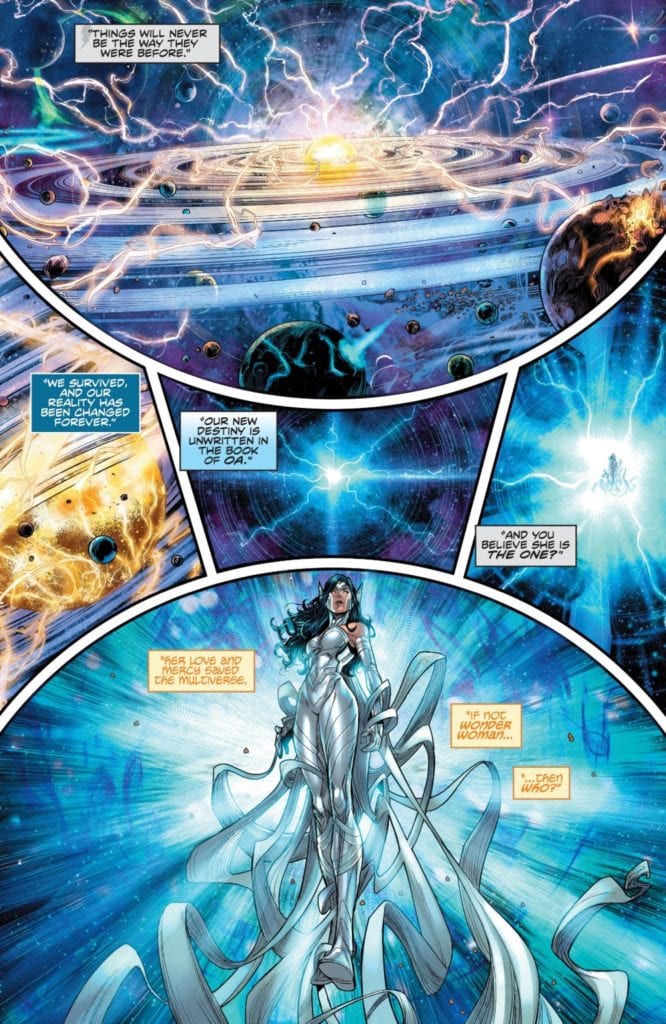
The buzz generated by Infinite Frontier #0 is genuinely remarkable. The main story, written by acclaimed scribes Joshua Williamson, James Tynion IV, and Scott Snyder, turns DC on its head by revealing that the universe is limitless. Even on page one, the reader learns that the destiny our beloved heroes face is unwritten. Truly, anything is possible in this new world order. This monumental change is a stark departure from the DC Universe fans had become accustomed to.
Whereas the multiverse was once contained within somewhat loose boundaries, even after the Source Wall broke, the stories that DC can tell are now infinite. Throughout this highly anticipated issue, Wonder Woman acts as a tour guide, and she shows the reader just a small sample size of what’s to come. From Black Adam’s return to the devastating attack on Arkham Asylum, the core trio of writers present a new status quo that’s exhilarating.
Every step of the way, Infinite Frontier #0 is full of hope and possibility.
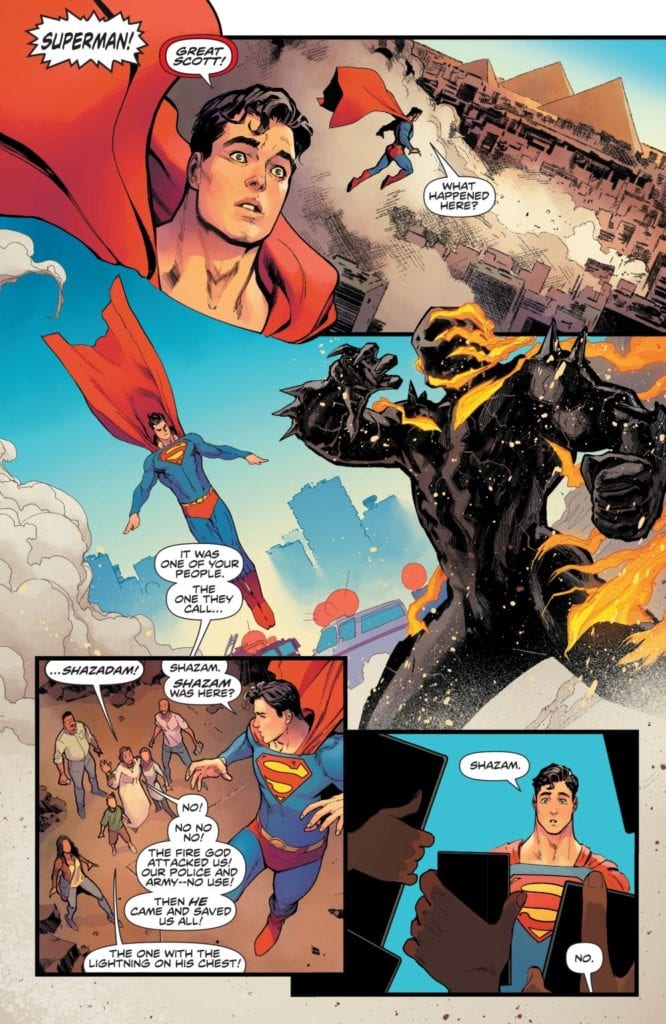
The artwork also reflects the optimism that’s evident throughout the entire story. Dire events like Dark Nights: Death Metal were appropriately dreary, but this tone quickly pervaded the majority of the DCU. Thankfully, Infinite Frontier #0 is filled with bright, joyful colors that make it impossible not to smile. This effect is especially apparent during the second Superman snippet, written by Phillip Kennedy Johnson, illustrated by Jamal Igle, and colored by Hi-Fi.
Other excerpts are also good examples, but it’s fitting that Superman, in this case, Jon Kent, is an embodiment of this renewed hope. Sure, the scene might require striking colors to capture the galactic nature of extraterrestrial threats. But even when Kent is flying by the iconic Daily Planet globe, there’s something powerful about the dazzling, electric blue sky in the background. It’s a new dawn, it’s a new day, and DC fans should definitely feel good by the time they’re done reading Infinite Frontier #0.
Superman embodies the optimism seen in Infinite Frontier #0.
At one point, it’s a story about romance and finding your way back to the ones you love. Williams Green Arrow & Black Canary portion of the book reunites one of DC’s most recognizable couples. This section, illustrated by Alex Maleev and colored by Jordie Bellaire, shows that Oliver Queen and Dinah Lance are back together. The reader gets to see an intimate moment for the couple, and the scene does just enough to warm the fans’ hearts and lure them in for the next chapter.
Infinite Frontier#0 makes several statements, and one profound scene stands above the rest. In the Green Lantern: Alan Scott teaser, the legendary hero bravely comes out to his children, Ophidian and Jade, and they warmly embrace their father. Scott explained how he felt compelled to reveal his true self ahead of his new mission as the sentinel of the world.
Tynion IV punctuates the emotional moment with a poetic description of Scott’s actions, stated by both the Green Lantern and his son. “No fear,” they both say, a moment that beautifully captures Scott’s bravery and pairs it with his duty as a Green Lantern, a line of heroes who are known for their courage and their ability to overcome fear.
This excerpt about Scott takes Infinite Frontier #0 to another level, as it tells the reader that this book is very much a reflection of, and maybe even a proclamation about, the modern world. Scott’s valor and the touching response he receives from his children speaks to the acceptance and understanding that this world needs right now.
Infinite Frontier #0, shows how heroes can write their own destinies
From there, it’s easy to reflect on this book’s numerous connections to the real world. First, it’s refreshing to see an extensive gathering of DC’s heroes. In some ways, the book reads like a family reunion, an experience that makes the reader think of the distance that’s caused by life during a pandemic.
Countless people have been separated from their loved ones due to travel restrictions. Watching these characters come together, even indirectly, is a welcome change of pace because it adds a timely example of comics’ ability to be an escape. Reading this reunion unfold on the page makes the reader hope for a world where everyone can reconnect with their loved ones.
As nice as that is, perhaps the leading reason why this book is so profound can be seen in its metaphorical meaning. For roughly a year now, the world has been trapped in COVID-19 mode. The pandemic has dominated nearly every facet of life, from responsibilities like school and work to freedoms like dinner dates and concerts. Life before COVID-19 has become a distant memory, and life has felt like a perpetual cycle of fear, restriction, and despair.
For months, the pandemic has rewritten the story of day-to-day existence. Across the globe, people are locked into this new way of living. It can be hard to find hope for the future when, more often than not, COVID-19 has cursed the world to suffer that aforementioned vicious cycle.
But that’s where Infinite Frontier #0 comes in. Enough doom and gloom. Yes, this book is actually about how incredible heroes can now experience an immeasurable variety of new possibilities and destinies. But the issue serves as an eye-opening reminder about the nature of real life. While the pandemic will continue to hinder life as we know it, people have the chance to write their own stories every day.
Life is whatever you make of it. One can choose to get bogged down in the anguish that’s often associated with the pandemic. On the other hand, one has the opportunity to rise above, make the most of it and follow their dreams, whatever they are.
That’s the heart of the story in Infinite Frontier #0, as it shows the reader how everyone can be their own hero.
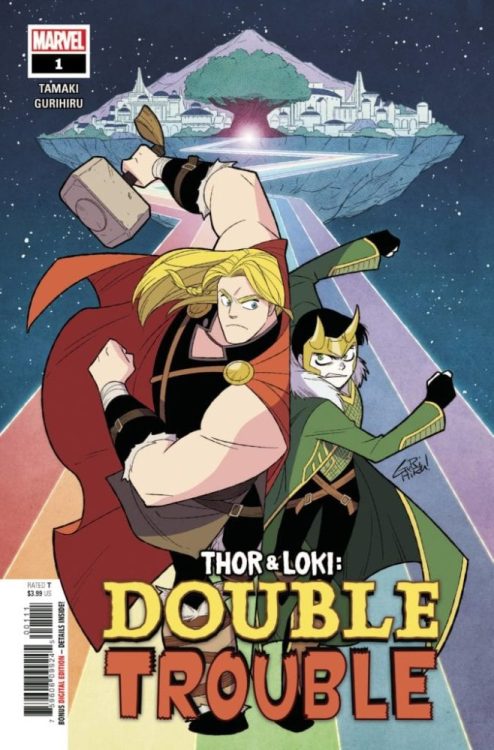
Thor and Loki: Double Trouble #1 is out on March 10 from Marvel Comics. Writer Mariko Tamaki depicts the titular Asgardian brothers’ intense rivalry with teenage levity. To bring that feeling of levity in cartoonish full is artist duo Gurihiru. Finally, VC’s Ariana Mahler as letterer makes every word on display have a sense of ironic weight to them.
Thor and Loki: Double Trouble #1 Summary
Tamaki gives a quirky take on Thor and Loki’s relationship. These two foster brothers have always been bitter rivals, so going into their teenage years is a nice change of pace. Rather than rehash the usual cat and mouse game, Thor and Loki: Double Trouble #1 plays everything for laughs. Being teenagers allow the brothers’ attitudes to be a little more bearable and funny. Because who really wants to watch two adults get into one another’s business… again? Teens can allow suspension of disbelief a little easier, especially when depictions like these show humanizing flaws.
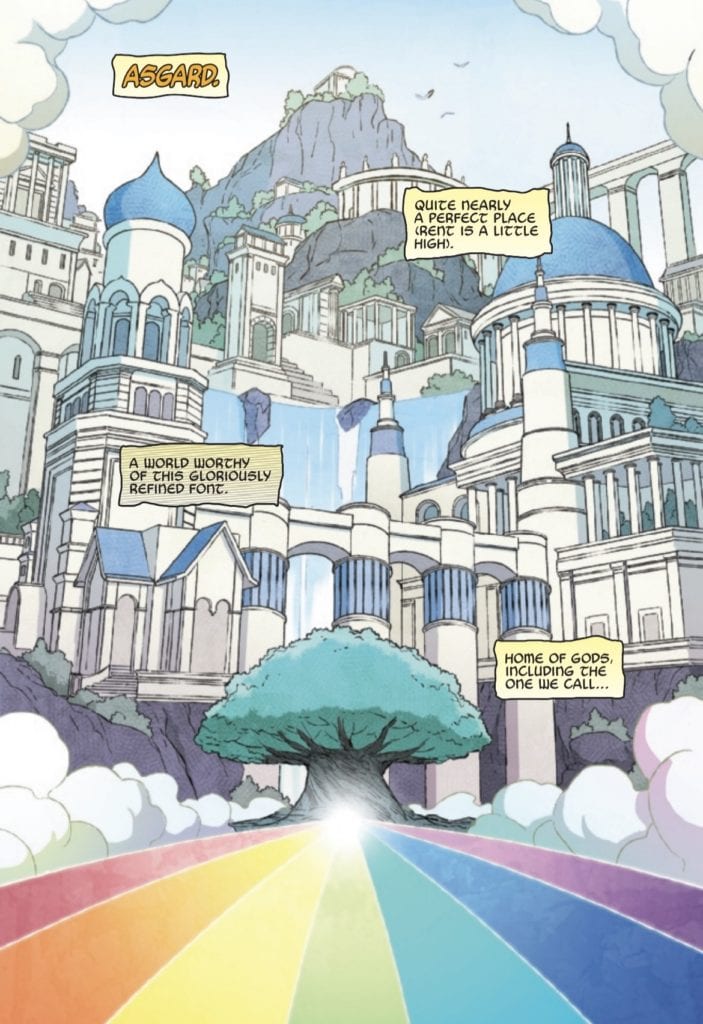
There’s a balance of being self-aware and self-conscious about the setting and characters. Introductions to Asgard make it out to be this practical paradise that prides itself on the classical font Asgardians in several series make use of. Thor likes to show off in his belief of being the strongest Asgardian. At the same time, Loki is always ready to play Thor’s ego against him so Loki can feed his own ego. Despite all of the legends and myths surrounding Asgard, the people living in it, including these brothers, are still people.
Hijinks Of Legend
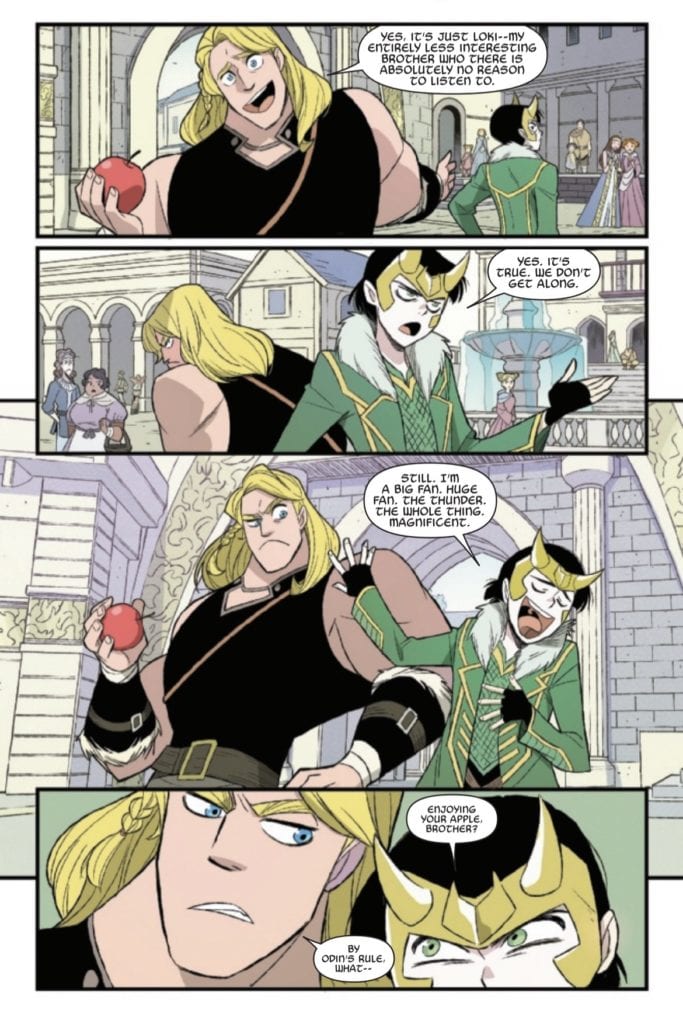
Gurihiru never strays away from depicting characters in humorous ways. Thor’s large frame and straightened facial features often make him look like the most notable person in view. Using Mjolnir and lifting a statue over his head is certainly a way to get the reader’s attention. To counteract his brother’s showboating, the lankier and round facial featured Loki often appears in Thor’s background. That is until the use of his magic and trickery has Loki steal the spotlight only to give it back to Thor to make him look bad. Annoy him enough by stealing an apple as a horse, Thor’s ready to attack.
The lettering by Mahler never misses a beat in its presentation. Steady guidance through captions introduces the setting until a big introduction to Thor in bold letters. That’s a sequence that lines up perfectly with Thor’s character. So with Loki lacking any announcers, he has to do it himself. So what better way to steal Thor’s thunder than with a few slow-clap SFX as his introduction? His word balloons directly cutting off Thor only adds to this character dynamic.
Relax With Thor and Loki: Double Trouble #1
Thor and Loki: Double Trouble #1 begins a series that will be a good pass time between all the bigger releases. Instead of big world-ending events, it’s nice to see Thor and Loki’s sibling rivalry with cartoonish flair. Heck being teenagers means they can get away with it without making themselves look too stupid.
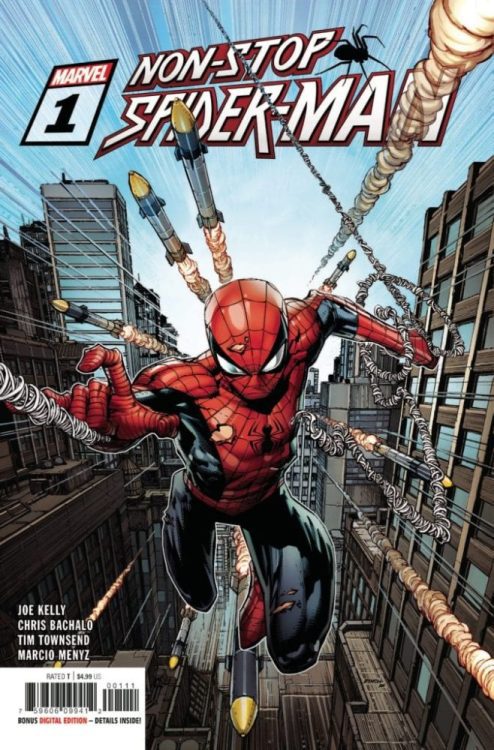
Non-Stop Spider-Man #1 rockets out on March 10 from Marvel Comics. Veteran writer Joe Kelly takes the reader on an intense joyride thanks to a simple plot. Penciler Chris Bachalo provides a highly dynamic look for the plot’s pace. The layouts and pacing are so fast, inker Tim Townsend and colorist Marcio Menyz have to keep the reader on point. Lettering by VC’s Travis Lanham deserves a special mention for placement’s sake.
Ready For Non-Stop Spider-Man #1?
Non-Stop Spider-Man #1 is when Joe Kelly showcases superhero action with a simple plot. Taking place in Peter Parker’s college days, this issue has all of the energy from Spider-Man’s early days with Stan Lee and Steve Ditko. By keeping the plot simple, the pace moves linearly to complement the art. Even if it looks like Spider-Man will have to juggle multiple tasks at once, a gang with resources and a new street drug that’s affecting people in Peter’s circle will do that. So it’s great that flashback sequences feel slower to let the weight of those situations sink in.
…Then Go!
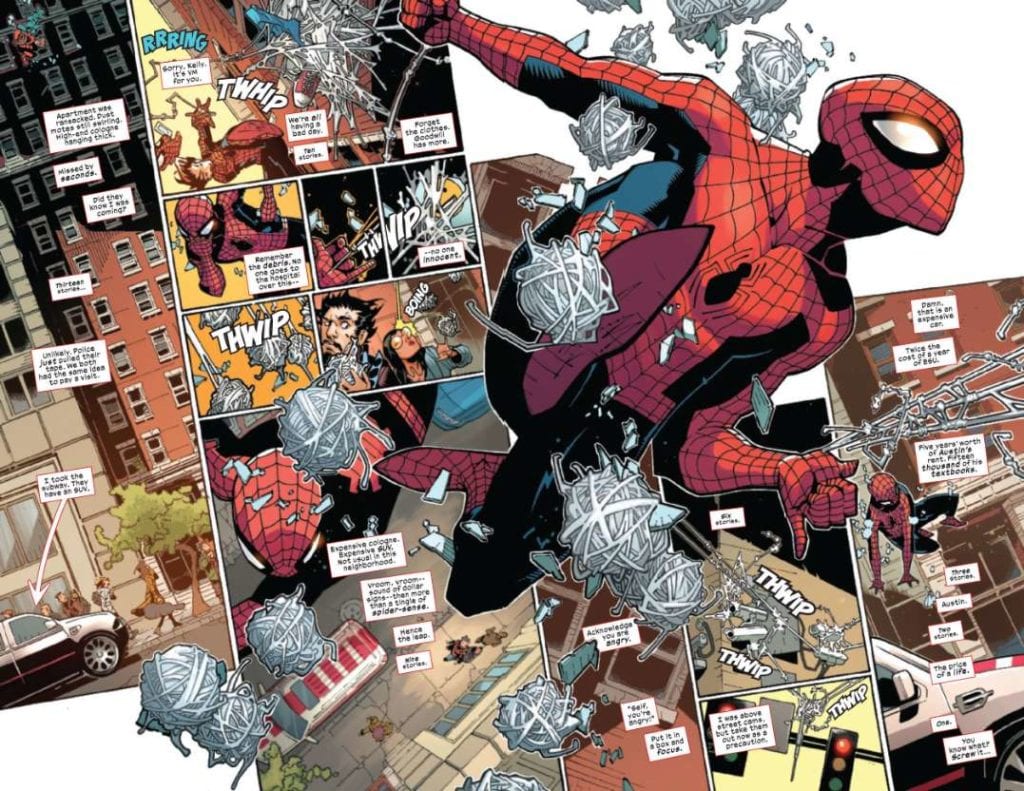
The real highlights of Non-Stop Spider-Man #1 come from the dynamic art style. Bachalo’s art keeps the present time on an angle to demonstrate the speed at which events play out. Everything looks like it’s moving so fast, there are many “blink and you’ll miss it” moments. Did jumping out of a window right off the bat distract you long enough for Peter to change costumes? Because the inking by Townsend does bolden on moments of impact and plot relevancy. Directly below Peter in one long panel is a van he’s chasing. This, along with the red costume against darker backgrounds by Menyz, keeps the reader on point.
Now compare all of this to flashback sequences where the panels straighten out. Because these events happen in the past, everything slows down as if building up momentum for the present. Not only that but with the colors of a funeral scene making everything look part of the environment, Parker genuinely feels stuck in the moment. When Peter is applying himself with a bright blue jacket to stand out from the background, momentum picks up.
Watch For Signs!
Lanham’s lettering doesn’t just extend out of actions; they juxtapose the situation. Like most SFX, they serve to highlight certain objects or moments of impact. A ringtone in juxtaposition with a caption immediately following it practically screams the pace. So many things are happening, Peter’s mind can barely keep up. There are even times when the Spidey Sense practically speaks out in words like in Into The Spider-Verse. Only this isn’t merely a callback; it’s Spider-Man’s power instructing him to act quickly of oncoming dangers.
Without captions or word balloons, the reader more than likely sees Spider-Man springing into action for no apparent reason. It would still be exciting to look at, but a little more story goes a long way. A big two-page spread, in the beginning, features so many things happening at once; the many captions slow the reader down. This puts readers into the head of Spider-Man as he pursues a mafia while using his webbing to minimize collateral damage after jumping out a window. There’s a real feel of being “in the zone” within Non-Stop Spider-Man #1.
Non-Stop Spider-Man #1 Will Take You For A Ride
Non-Stop Spider-Man #1 will fill a reader with excitement with its sense of time and energy from start to finish. If anybody has ever wanted to feel what Spider-Man goes through in the comics, this is the place to find out.
Haymaker‘s a 2021 film from writer, director, and star Nick Sasso (Boardwalk Empire) about a former MMA star trying to reinvent himself after his life in the ring comes to an end. Composer Christopher Thomas fills the film with sonic jabs and uppercuts that push the narrative to greater heights.
Nick Sasso is Nick Malloy, an MMA fighter who suffered a humbling defeat in the ring. Now, he’s working as a bouncer, but that gig soon ends when Nick stops an attempted rape. The potential victim, Nomi, a transgender singer played by Nomi Ruiz (Mayans M.C.), is grateful and offers Nick a job as her bodyguard. Nick agrees, and while the pair form a close relationship, Nick’s also busy trying to get back in the ring and return to glory.
PopAxiom spoke with Chris about when he knew he wanted to be a composer, making the music for Jeffrey Reddick’s Don’t Look Back and getting in the ring for Haymaker.
Music Forever
When Chris says, “Music’s always been a part of my life,” he means it. “My parents are musicians. My father told me that the day I was born, they put on a conductor’s baton and a bow tie and took a picture. It ended up on the cover of the hospital’s pamphlet that year.”
“When they brought me home,” he continues, “they told me they played some St. Olaf Choir music. From day one, I was being prepared for music.”
Chris’ connection to music grew by leaps and bounds quickly. “I knew I wanted to make music forever when I was in the second grade. I heard Beethoven one day, and I decided that I needed to learn piano and learn the songs of this person.”
“After that,” he says, “I was introduced to the cello in the fourth grade. The cello is what I studied professionally into college.”
By the age of eleven or so, Chris knew “music was it. I knew I was going to be a composer.”
“I didn’t even know what a composer was at that time,” he admits. “I just knew I needed to keep creating music and write it down.”
Chris’ journey to film composition took a turn after a random store find. “One day, I found some tape cassette albums for movies like A Nightmare Before Christmas, Jurassic Park, and more John Williams. It sort of hit me: ‘wait a minute, these guys work for film. I wonder if that’s how you make a living and write music?’ I got into Bernard Herman and Nina Rota. I heard my personality in these offbeat composers.”
About Haymaker
Chris worked on two projects with a producer connection. Andrew van den Houten worked as a producer on both Haymaker and Don’t Look Back, the horror film from Jeffrey Reddick, the Final Destination creator. “I finished the score for Haymaker first, but it had a much bigger delay on the release.”
As Haymaker wrapped up, “Andrew told me he was about to start a new film with Jeffrey Reddick. Andrew passed on my score for Haymaker to Jeffrey, who then wanted to meet about the new project. Andrew called Jeffrey right then and there.”
Haymaker lives firmly in the drama category, while Don’t Look Back mixes in a healthy helping of horror. “I tried not to go all horror music all the time [with Don’t Look Back]. We saw the world through Kaitlyn’s eyes, and we needed more drama. It was a lot of juggling the drama and thriller aspects.”
“In Haymaker,” he explains, “when Nick and I started working together, we knew there were a lot of obvious things that we could play in this film.”
However, Chris affirms, “we did the opposite.” Haymaker‘s sound isn’t what you might expect. “We said, let’s not hit every moment. Let’s write a concert piece and only hit moments in a scene when we have to. Let’s make it feel like a violin concerto in a movie.”
“The approach was completely the opposite from Don’t Look Back,” he says.
The composer gets near-final cuts of films, sometimes with a temp score, sometimes without. What’s part of Chris’ process? “I watch the films as much as possible until I start to feel the rhythms in the movie and the edits.”
“I try to look for that almost like the cuts are a metronome,” he explains. “I look at the colors and get a sense of the tone radiating from what’s happening on screen. I turn that into sounds and send it to the directors.”
Chris is a big fan of theme. “Theme is a connection. It’s how you relate and grow with a character.”
Wrapping Up
“Bruno Coulais makes some of my favorite film scores,” he says when asked about modern composers. “Danny Elfman is a big one for me. It’s like Bernard Herrmann was reincarnated for another generation.”
The spirit of Bernard Herrmann and the composers of that ilk is important to Chris. “I like to feel like I’m going to keep carrying that spirit.”
Chris could rattle off a massive list of composers he admires. “I love Alan Silvestri, John Powell, and James Newton Howard. My other obsession growing up was movies.”
Chris loved movies. “I had a lot of support and talent for the music. But I watched tons of classic films from Hitchcock, Fellini, and Kurosawa. I heard so much of my imagination in those scores that I felt like those composers were guiding me where I wanted to go.”
What’s a film he’d love to score if they were making a version for modern audiences? “I don’t know if I want to see a remake of one of these, but I’d be honored to carry the torch for Rebecca or Vertigo. I’d love to do something like Vertigo, but Rebecca speaks to my aesthetic.”
“The Haymaker album is available on iTunes, YouTube Music, and other streaming platforms. The film is currently available for rent on VOD and digital platforms. So, what’s next for Chris? “Over the summer, I was part of a shoot for a masterclass on film scoring. That “will be coming out soon.”
Is Haymaker on your watch list?
Thanks to Christopher Thomas and Projection PR
for making this interview possible.
WandaVision has reached its conclusion with an action-packed episode which had reveals that will be important for future Marvel projects.
Agatha holds Wanda’s son hostage, forcing Wanda to use her powers against the more experienced witch: something Agatha wants to happen. S.W.O.R.D. has sent in the resurrected body into Westview to take down Wanda, leading to a giant battle between two vibranium androids.
“The Series Finale” was pretty much the third act of an MCU movie, the point in the film where the heroes and villain have their showdown. As a CGI fest and action spectacle, it’s up there with many of the cinematic entries. Wanda and Agatha throw spells and hexes at each other whilst the two versions of Vision fight in the sky and crash down into the ground. There were crowd-pleasing moments during these battles, like when Wanda and her family stand together like The Incredibles. The finale can be seen like an anime series since many have an action-ordinated climax.
Whilst “The Series Finale” was an action-filled episode it also presented moral dilemmas and provided information for the future of the MCU. Wanda has to face the ethical issues of her illusion when Agatha breaks Wanda’s control of the townspeople. Wanda realizes that she’s the villain to Westview’s residents because they beg her to free them or let them die. But if she lets the people go, she will lose her family. It all plays into the themes of the series where Wanda needs to move on from her grief.
In the finale Agatha reveals that Wanda is really the Scarlett Witch, a powerful witch who doesn’t need a coven and be more powerful than the Sorcerer Supreme. She also states that the Scarlett Witch is destined to bring destruction. This was the series setting up Doctor Strange in the Multiverse of Madness where Wanda is going to be the villain.
In the comics Agatha has been a tutor to Wanda. The finale did play on this because Wanda did learn from Agatha during the battle.
The two Visions did have a superpowered battle but they were evenly matched. They had the same set of abilities. Because of this, they had to resolve their fight through a philosophical debate instead of laser blasts and punching. It’s in character for Vision due to his intelligence and it makes a change to the usual superpowered fisticuffs.
The other way the finale ties into the wider MCU was with its post-credit scenes. The post-credit scenes have been a tradition in the MCU since the beginning. One scene was setting up Captain Marvel 2, whilst Wanda’s scene was similar to the ending of The Incredible Hulk where the main characters were living in solitude.
“The Series Finale” was as deep or character-driven as the other WandaVision episodes, but it does work as a popcorn experience and still manages to have strong emotional moments.
Zac talks with writer Grant DeArmitt and artist Lane Lloyd about their current Kickstarter project, HUNT FOR THE SOLAVORE – A Space Opera of Cosmic Horror.
Grant talks about where some of his ideas came from and some of the other comics that have influenced his work. Lane discusses what it’s been like moving from being both a writer and artist to primarily an artist. These two are some of the coolest people in the industry and they’re lots of fun to talk to!
HUNT FOR THE SOLAVORE is everything you want in a comic. It’s one part Lord of the Rings, two parts Star Wars and all parts Jack Kirby. Check out the project and please back it if you can!
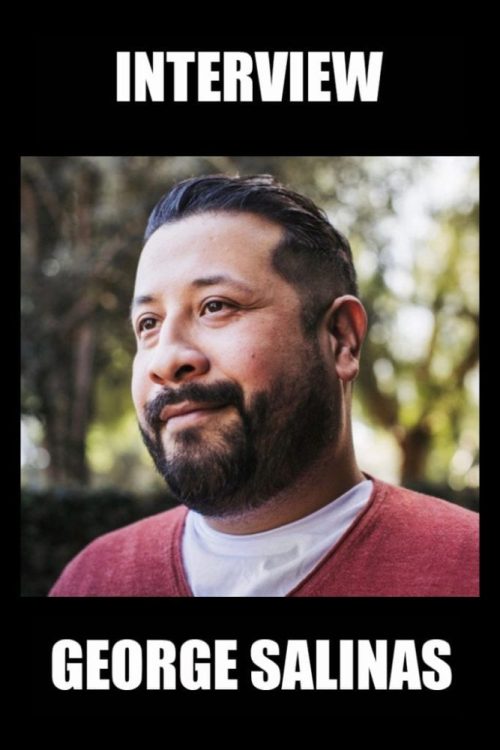
Back in January, Executive Producer and CEO of Bridge Works Entertainment, George Salinas partnered with Ivan Plaza, owner and founder of the Latinx comic book publisher, Chido Comics, to create Latinx superhero stories and share Latin comic culture with the U.S. Audience.
Salinas created Bridge Works Entertainment to promote and uplift projects that fall under the radar with American audiences and expand on the need for Latinx storytelling. His most recent project is Julie and the Phantoms on Netflix. Monkeys Fighting Robots caught up with Salinas to talk about the importance of representation, comic books, Luchadors, and Hollywood.
Enjoy the George Salinas interview below:
MFR: George, thank you for taking the time to talk with me. Why is it important to you to give Latinx culture a platform in the industry?
SALINAS: It is important to give Latinx culture a platform because we have a lot to offer to the industry with the stories we have to tell. We have a rich and complex history that spans centuries back. Everything from our food to our music to our traditions have a complex and rich history that spans centuries back. They make up a beautiful culture that is so much more than the current portrayals of Latinx. As a Latino man myself, I have seen a vast group of undiscovered talent within my community that need a platform to tell our stories and we are currently underserved, so I’m excited to be a part of this movement and to continue pushing for great Latinx storytelling.
MFR: What did you see in Chido Comics that made them a good fit to partner with Bridge Works Entertainment?
SALINAS: Chido Comics have a very unique way of telling a story and creating characters that happen to be Latinx and cater to the community. I am very excited for our partnership because we have a lot of great projects in the works that will bring more Latinx content to US audiences.
MFR: Over the past 20 years, how much has the comic book industry changed the film and television industry when it comes to finding new ideas?
SALINAS: Over the past 20 years, the comic book industry has changed in a big way. The intellectual property has become as great as books, and there is so much amazing content out there. The fanbase is growing, and the demand for more comic-based film and television is something that gives me a lot of ideas and motivation to bring more formats over to comic lovers. Comic book fans are amazing because they stand behind their favorite characters, giving us permission to create TV and film for them.
MFR: What’s the process like, taking a project from a different market and bringing it over to the US?
SALINAS: The process is always exciting but definitely comes with its difficulties. You always have to find that one amazing showrunner who loves the project as much as you do and can adapt it the best way possible. Once you find that showrunner with passion for the project, you’re off to the races.
MFR: How do you decide what projects to produce? What storytelling elements are you looking for?
SALINAS: I look at a lot of different stories and projects and tend to gravitate towards a project that contains a compelling story or characters that get me excited. If a character jumps off the page for me or if I can visualize the story, I am immediately interested and invested.
MFR: The Luchador has such a rich history. They are the original superheroes. What comes to mind when you think about the Luchadors of past and present?
SALINAS: Luchadors have always been a big deal in the Latinx community. Luchadors take me back to my childhood, and I love how different generations have been able to be fans of them. I will always be excited watching them as superheroes – it never gets old to me.
MFR: I can’t believe we don’t have one already, but how close are we to a blockbuster Luchador film?
SALINAS: I know! I think we are very close as they are so big. I cannot wait to see what film we can come up with.
MFR: With viewership so divided and so many platforms to consume content, how do you measure success?
SALINAS: I measure success in many ways, but the most important to me is when I have a fan tell me how much they loved what I brought to them. I love the feeling of knowing that I was able to provide an hour of entertainment where viewers can watch great television and forget all of their worries and troubles in that time.
MFR: 2020 and 2021 has been a huge evolutionary moment for the entertainment industry; what are your biggest takeaways?
SALINAS: My biggest takeaway from 2020 was that we have to take more chances! My goal for 2021 is to keep moving forward, be more creative, and bring even better content to viewers and fans.
MFR: Thank you again for your time, and best of luck with your future projects.
Before taking on Michael Myers later this year Andi Matichak returns in this new thriller SON. A film that ironically resembles a scenario presented in a previous Halloween film regarding a cult. Carried mostly by Matichak’s impressive acting, SON begins on a high note, utilizes an engaging narrative, and creates this horrific atmosphere. At some point, the film’s appeal grows dull but Matichak’s performance makes it all worth it.
SON’s energetic opening will keep you engaged till its lackluster closing and the film does a great job at introducing its lead character, who is suffering from trauma due to a horrific past she escaped a couple of years back. Moments of unease and tension stick around for most of the film’s runtime, but then certain aspects fall short due to the narrative decisions. Directed and written by Ivan Cavanaugh, SON stars Luke Blumm, Emile Hirsch, Cranston Johnson, David Kallaway, and Andi Matichak. The film follows Laura (Matichak), who escaped a cult that raised her eight years ago while pregnant. Now raising her son David (Blumm), Laura believes the cult has returned after David starts experiencing an unexplained illness.
Andi Matichak as Laura in SON
Cavanaugh takes viewers on a very unnerving look at just how far a mother could go for her child. A mother’s love knows no boundary is a sentiment many would agree with, but Laura’s situation is unique. She has managed to live a normal life away from this cult for eight years and forces beyond her control might reel her back in. Laura is complex as a character because of the limits she is pushed to. On one hand, Cavanaugh writes her as an innocent victim of abuse, which makes it easy for her to garner support from audiences. However, her actions to protect her son David are gruesome. It’s a tough situation to find yourself in because while the cult is wrong, Laura’s actions aren’t better at times. Still, you know she is only acting out of finding herself in a precarious position.
SON deciding to toy around with the topic of Mother Knows best is its strongest attribute. Matichak’s performance here is powerful in many instances despite the material being lukewarm. She carries the film wonderfully and demands your attention through all of the chaos that unfolds. Cavanaugh’s script gets predictable at times, which takes away from the film because the twists that happen are nothing groundbreaking. Still, most of the narrative is coherent and the relationship between Laura and David helps the film maintain its momentum as well. Blumm’s portrayal of the titular character is solid, and it’s troubling to watch at times given he has done nothing to welcome this torment at such a young age.
Andi Matichak as Laura in SON
Cavanaugh seems to have drawn inspiration from Rosemary’s baby, many might see shades of The Omen. Cavanaugh shows off his abilities behind the camera by presenting fast-paced moments of dread, but certain pacing decisions make this narrative grow frustrating. He understands how to direct a horror film, as he has proven in the past and it’s reinforced here in SON. The tension is present and unfortunately, it does die down once the narrative loses its steam. Piers McGrail’s cinematography enhances the gruesome narrative being told and allows certain sequences to grow more intimidating. The technical aspects of SON make for a visually appealing film at times, and this aspect of it can’t go unnoticed.
SON is a decent cult-centered horror film that relies on its strong lead performance and technical strengths. Cavanaugh has crafted an engaging piece that stumbles along the way but proves he has a place in the horror genre. The most important lesson learned here was that Matichak is ready to thrive in this genre for many roles to come. Fans of Rosemary’s baby should have fun with this outing as well.
RLJE Films will release the horror SON in Theaters and on Digital and On Demand on March 5, 2021
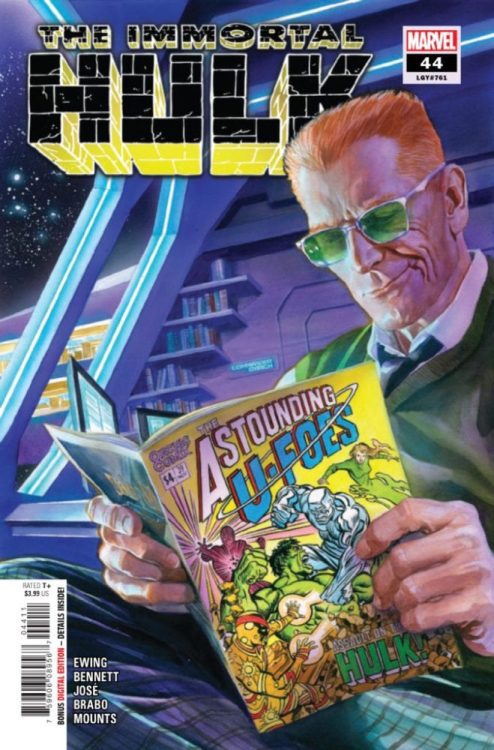
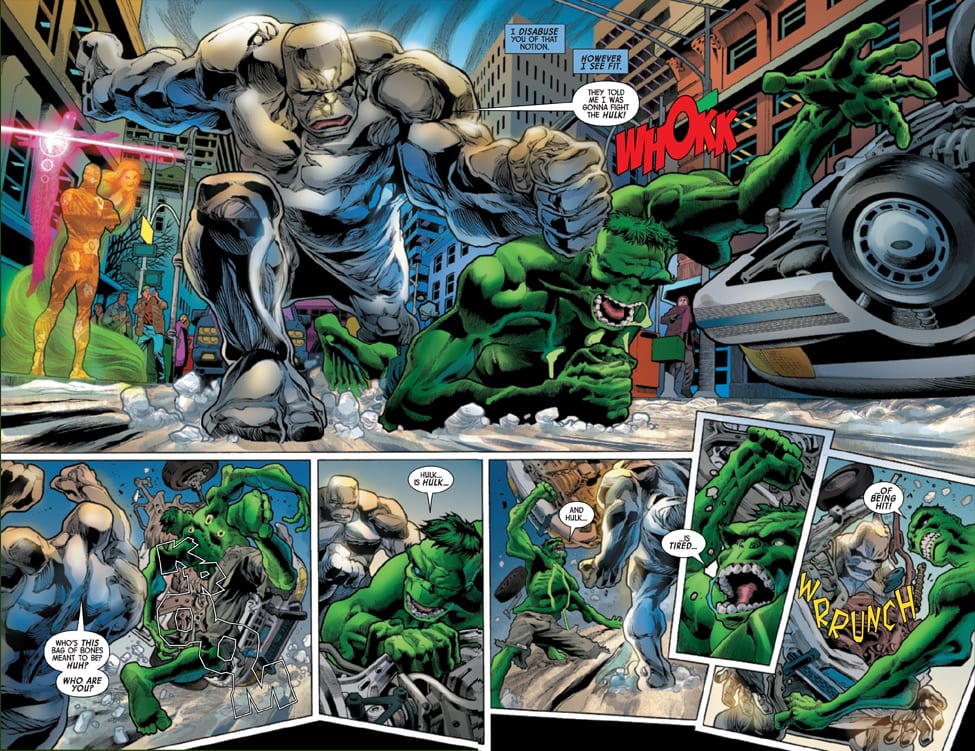
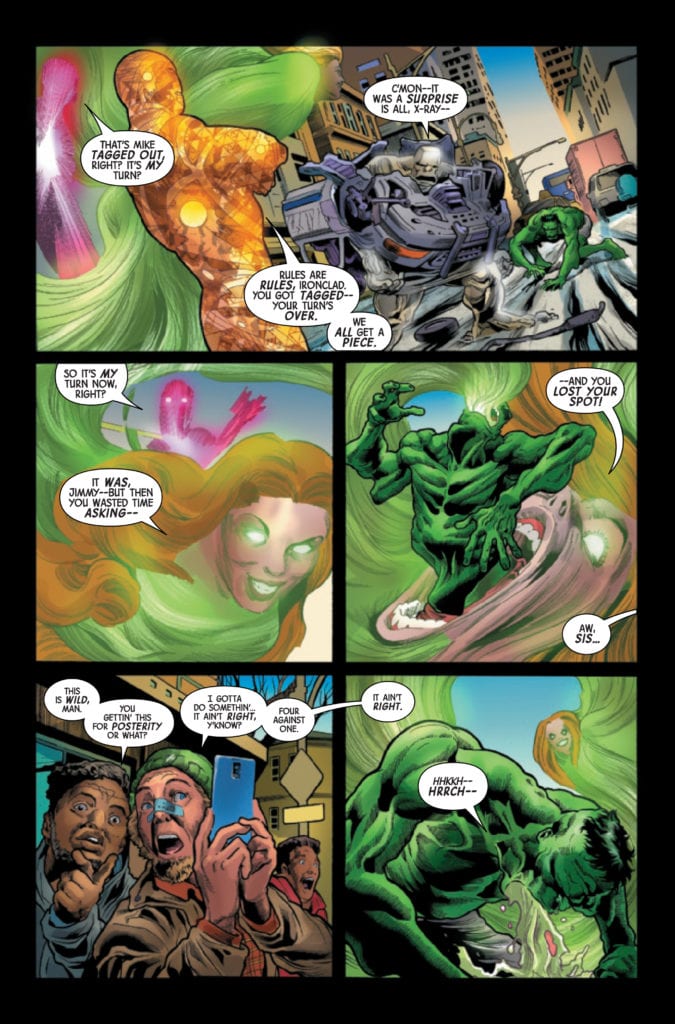
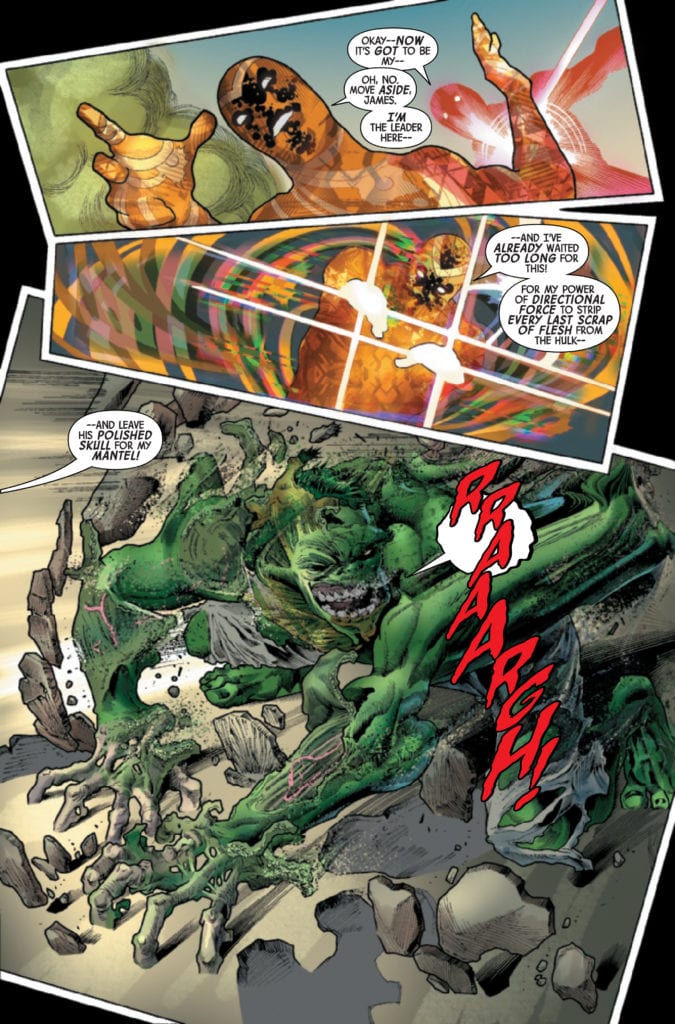
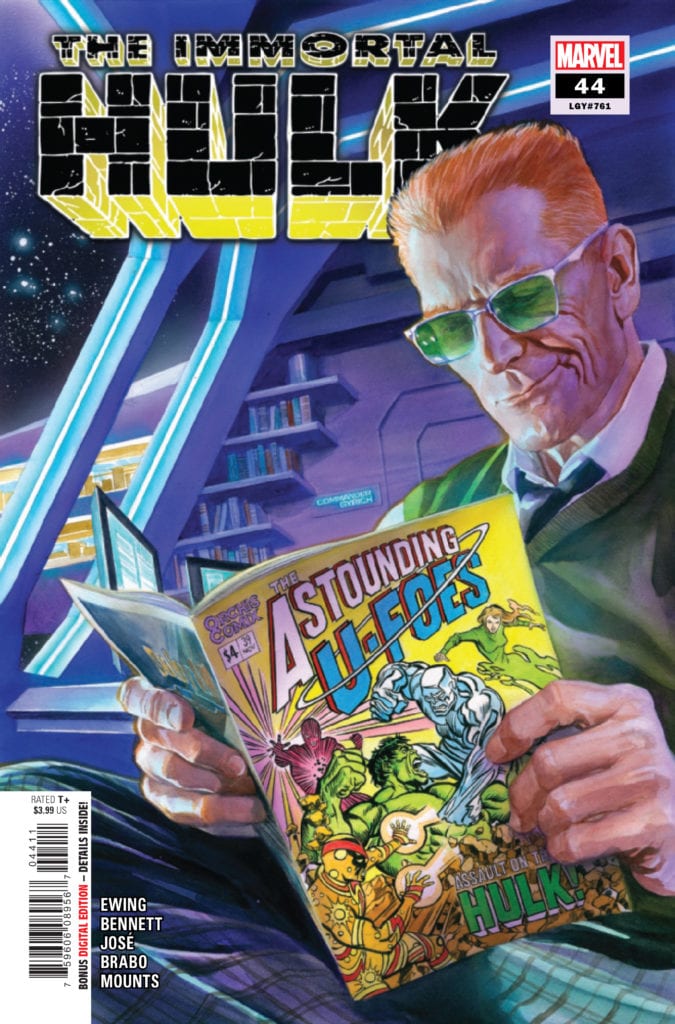
IMMORTAL HULK #44 hits your local comic book store March 10th, but thanks to Marvel Comics, Monkeys Fighting Robots has an exclusive four-page preview for you.
About the issue: In New York, the U-Foes are hunting a weakened Hulk – with the one thing that can kill him for good. In New Mexico, the new Sasquatch faces something even weirder than he is. Something very strange is happening to Jacqueline McGee. And far above the world, HENRY PETER GYRICH watches…
The issue is by writer Al Ewing and artist Joe Bennett, with inks by Ruy José and Belardino Brabo, colors by Paul Mounts, and letters by Cory Petit.
With IMMORTAL HULK ending at issue #50, we are officially in the endgame.
Check out the IMMORTAL HULK #44 preview below:
Are you reading IMMORTAL HULK? Sound off in the comments!


 The real highlights of Non-Stop Spider-Man #1 come from the dynamic art style. Bachalo’s art keeps the present time on an angle to demonstrate the speed at which events play out. Everything looks like it’s moving so fast, there are many “blink and you’ll miss it” moments. Did jumping out of a window right off the bat distract you long enough for Peter to change costumes? Because the inking by Townsend does bolden on moments of impact and plot relevancy. Directly below Peter in one long panel is a van he’s chasing. This, along with the red costume against darker backgrounds by Menyz, keeps the reader on point.