SHADOW DOCTOR #3 from AfterShock Comics hits your local comic book shop on April 28, but thanks to the publisher, Monkeys Fighting Robots has an exclusive four-page preview for our readers.
The book is written by Peter Calloway, with art from Georges Jeanty, Juancho! drops the color, and you will read Charles Pritchett’s letter work. Mark Chiarello created the cover.
About the issue: Nathaniel got what he wanted: he had the money – a gift from Al Capone – to start his medical practice. He was going to be a doctor. Then the bomb went off. In the chaotic aftermath – and with a life on the line – Nathaniel was going to learn what taking money from the mafia truly meant.
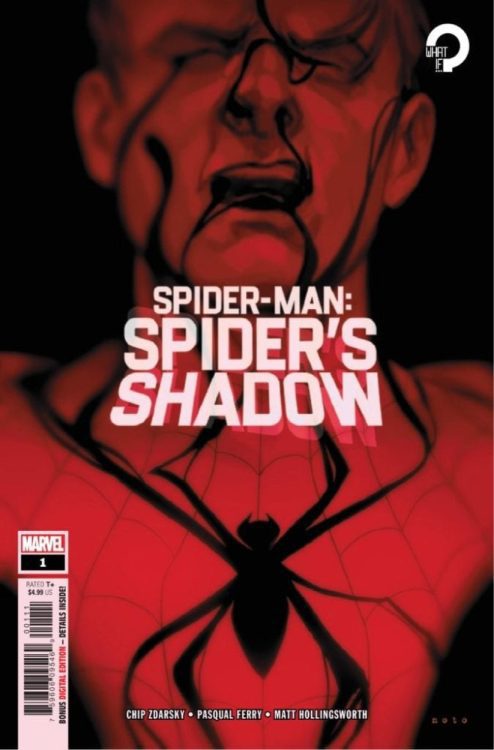
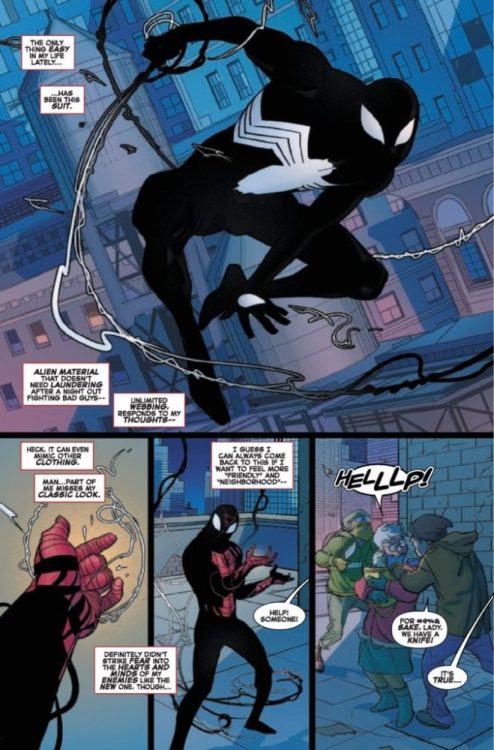
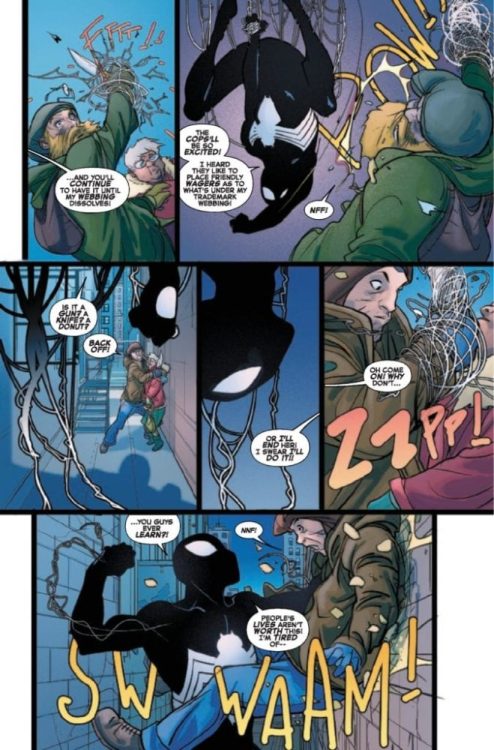
Some writers know Peter Parker’s tone very well, and Chip Zdarsky is going to run wild with it in this WHAT IF? story.
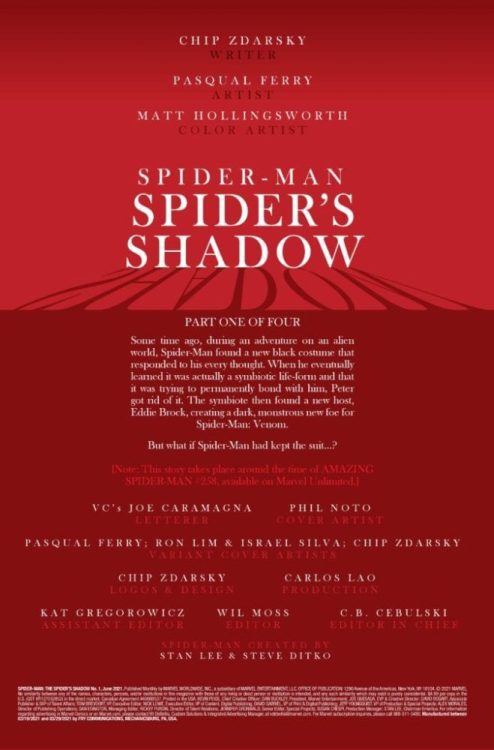
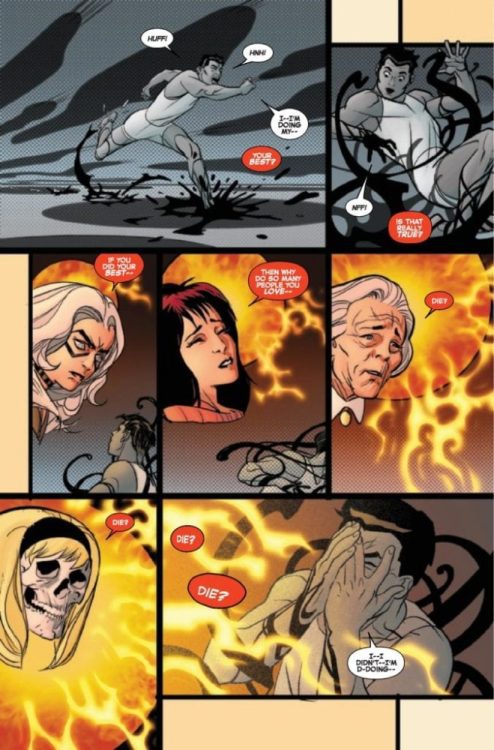
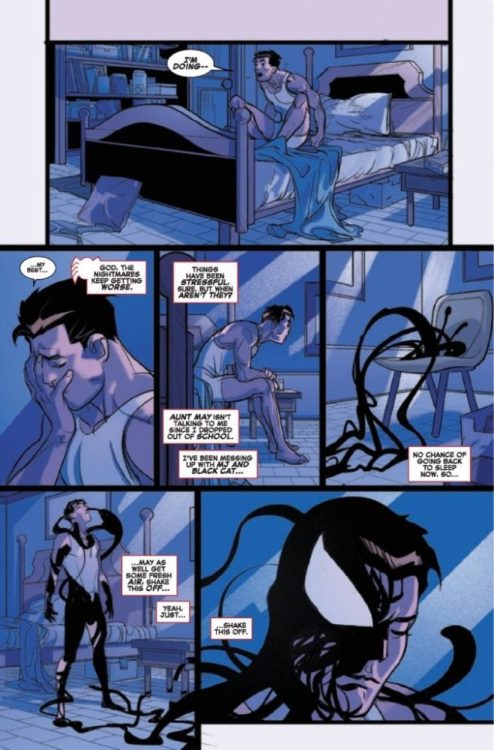
Marvel Comics has provided Monkeys Fighting Robots with an exclusive preview of SPIDER-MAN SPIDERS SHADOW #1 (OF 4), hitting your local comic book shop next week.
The book is written by Zdarsky, with art from Pasqual Ferry, Matt Hollingsworth drops the color, and you will read Joe Caramagna’s letter work. Phil Noto created the cover.
About the issue: WHAT IF PETER PARKER BECAME VENOM? Peter Parker once put on an alien suit that nearly destroyed his life – but what if he’d never taken it off? Ignoring every warning, Spidey embraces the dark symbiote! Haunted by terrible nightmares and exhausted by an endless barrage of bad guys, Peter can’t seem to catch a break these days. So when the Hobgoblin attacks, he finds a hero at the end of his rope…and vulnerable to new dark impulses. Spider-Man is about to change his rules – but is it truly Peter who is in charge? Creative powerhouses Chip Zdarsky, Pasqual Ferry, and Matt Hollingsworth bring you a terrifying tale of a Peter Parker possessed and on the edge!
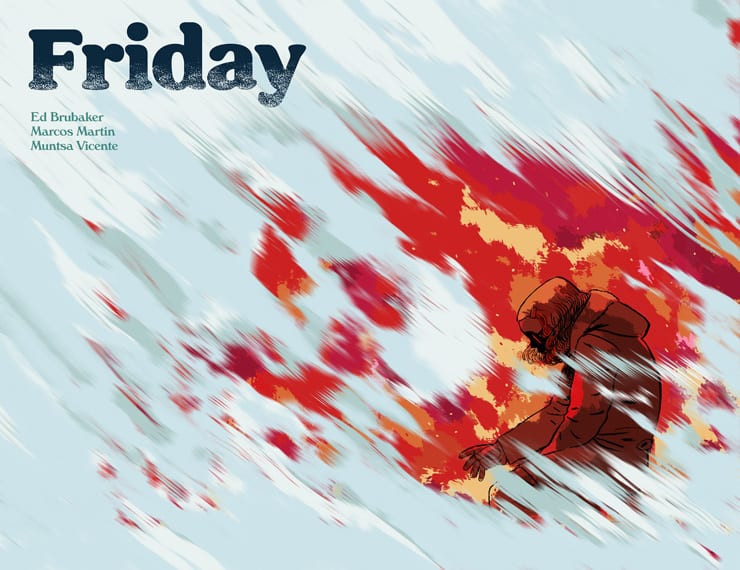
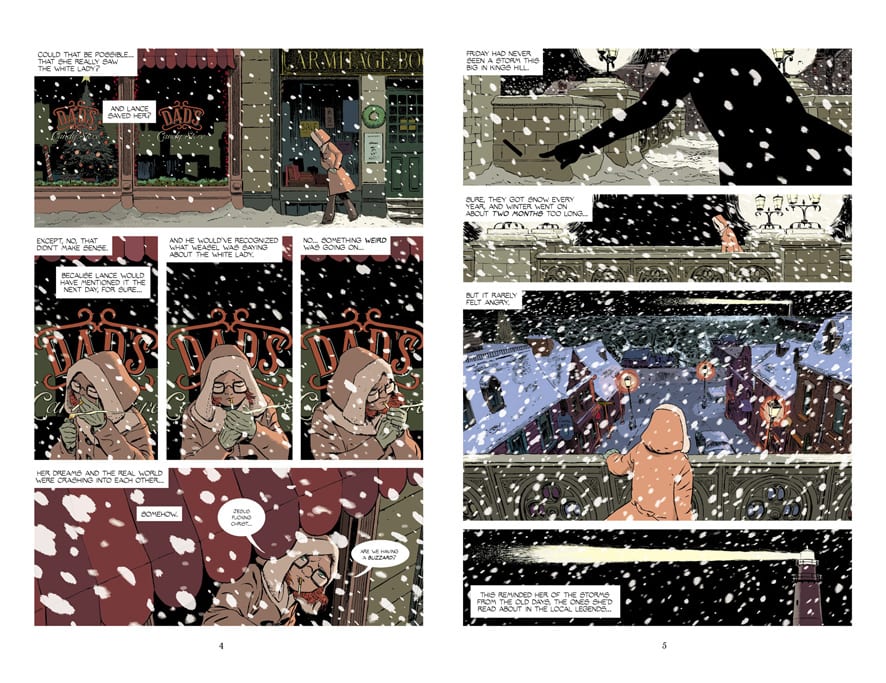
In Brubaker’s letter section, aptly named “Thank God It’s Friday,” he spends some time talking about the behind the scenes of this particular issue. The major takeaway is that the end of Friday #3 was meant to be the end to Friday #1. But then the characters took over. It’s clear that writer Ed Brubaker, artist and letterer Marcos Martin, and colorist Muntsa Vicente are just getting started.
Writing
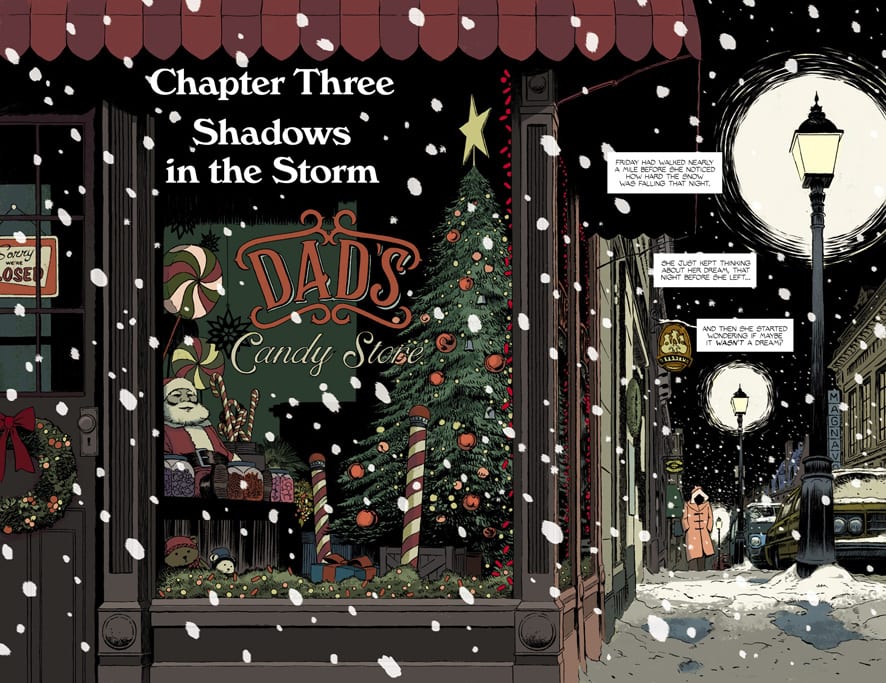
It takes guts to let go of the reigns. When Brubaker describes his original plans for Friday #1, one can picture what he’s talking about. A tight script with a cliffhanger ending. Brubaker is good at those. But instead, Brubaker let his characters tell the story. Kings Hill and all of its charming occupants took us the long way round. In this chapter, things begin to feel faster. Friday has always seemed a little awkward. We can see how she feels out of place, like she’s too big for Kings Hill. Now, we see her beginning to feel at peace. She starts to see that growing up isn’t about getting too big for some things, it’s about being at peace with never outgrowing your home. It’s a beautiful development for the character, which Brubaker punctuates with a complication. As Friday crouches in the snow, her life goes up in flames around her. And maybe, just maybe, that brief moment of peace only made things feel worse. It’s a heartbreaking moment that was beautifully led up to by all of us taking the long road.
Art
This is a pretty emotional issue. But Martin achieves that by playing down the emotions on the page. Friday is a rather stoic character. She has a tough exterior. She doesn’t smile much, but she doesn’t look melancholy either. Most of the time, Friday looks concentrated. Her brow is knit, her eyes are focused. So when she grins, even slightly, it’s huge. There’s a fantastic moment on one of the pages where Martin has three panels of Friday’s face, side-by-side. The first is covered in shadows, but what we can see of her face makes her look a little sad. Then, we see her smile, just a little. “And feeling like herself for the first time since the summer,” the words say above her. In the final image in that row, she’s frowning. “Being a person was so stupid and frustrating sometimes,” the next panel says. It’s a beautiful moment. The very fact that something made Friday smile is what makes her sad. This small, innocuous row of images shows the emotional depth of the writing and art. It shows us that these characters are complex. So complex, they even confuse and infuriate themselves.
Coloring
Vicente’s coloring is downright intriguing in this issue. In the last issue, Vicente used the color yellow to show Friday’s childishness. When we first met her, she was in a big yellow sweater, and as she grew up we saw her in less and less yellow. It’s telling, then, that when Friday goes to visit Lancelot Jones, his room’s light looks yellow through the window. Lancelot represents, to Friday, her childhood. He was her childhood friend and partner. It’s because of him that she seems to feel guilty about growing up. As she goes back out into the night, the colors of adulthood take over. The cool blues and dark purples of the forest. But then, we get one last dazzling show of yellow. Vicente colors one fateful scene almost entirely in yellow. It feels like the bright, dying moments of her childhood as Friday sits, heartbreakingly aware that she is undoubtedly an adult now.
Lettering
Martin’s letters are just as much a work of art as his pencils. Sound effects are worked into the artwork seamlessly, often splashing across the background of a panel, with the cause of the noise in the foreground. Martin gives us a sense of how a character is feeling by the size of their dialogue. Friday yells at Lancelot’s window. When he doesn’t answer she says “God damn it,” in small letters. It’s under her breath and full of rage. She talks to herself often, actually. When she looks for a sled in a dark shed “… Tell me they didn’t get rid of… no…” she says quietly. She follows up with “There you are,” in big letters. This isn’t a comic you think about reading, it’s a comic you just read. You hear every moment in your head, never thinking twice about how it would sound. Martin masterfully leads readers through this issue.
This is just the end of the first arc for Friday. Hell, it was supposed to be the end of the first issue. But that means that we have lots to look forward to. This creative team continues to do beautiful work. Get your copy of Friday #3 at Panel Syndicate. This fantastic site lets you pay what you want for each issue. If you can spare a few dollars, please do! That way we can keep reading this wonderful series for a very, very long time.
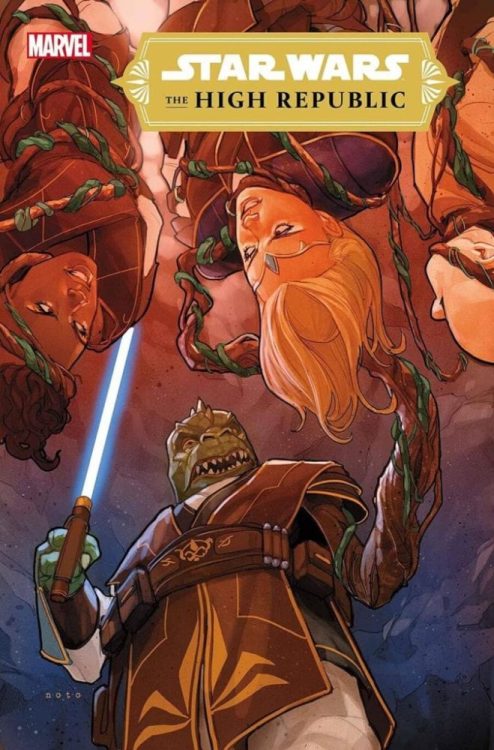
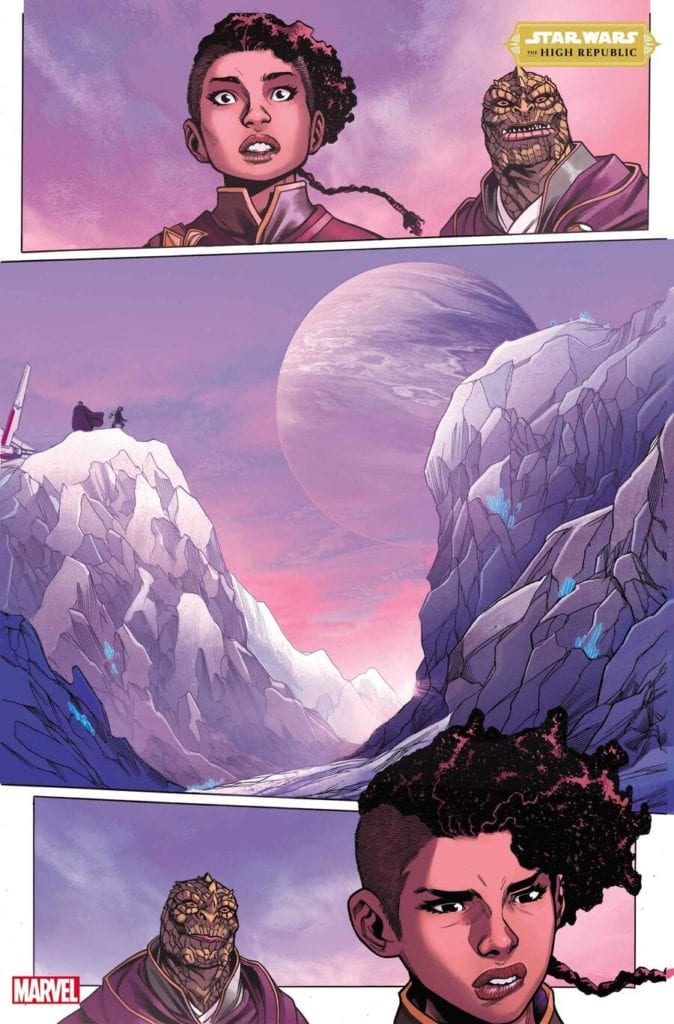
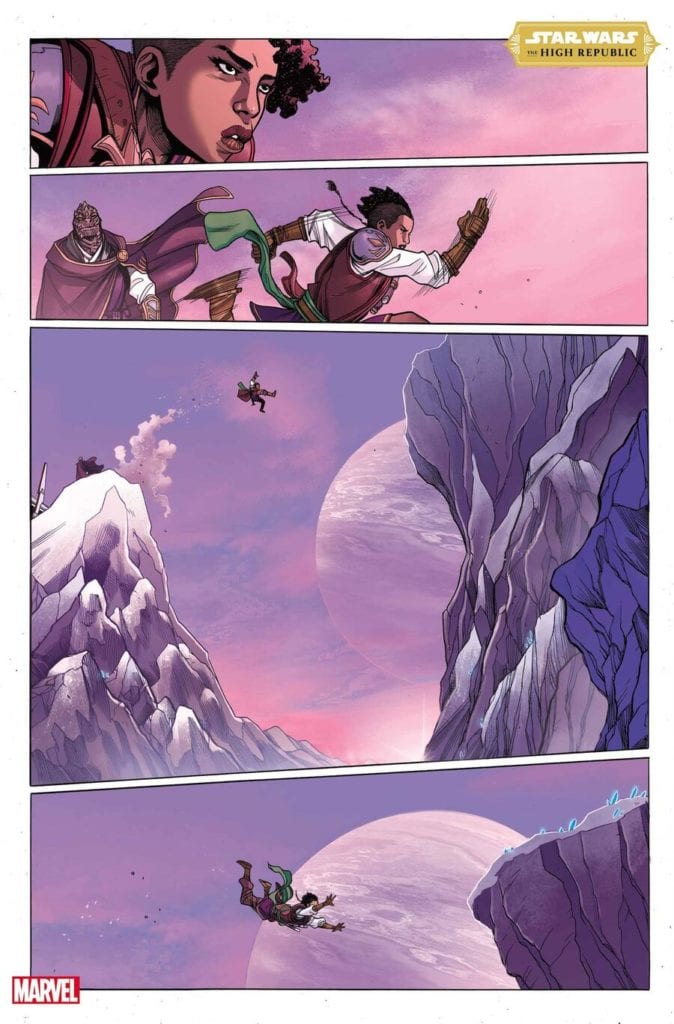
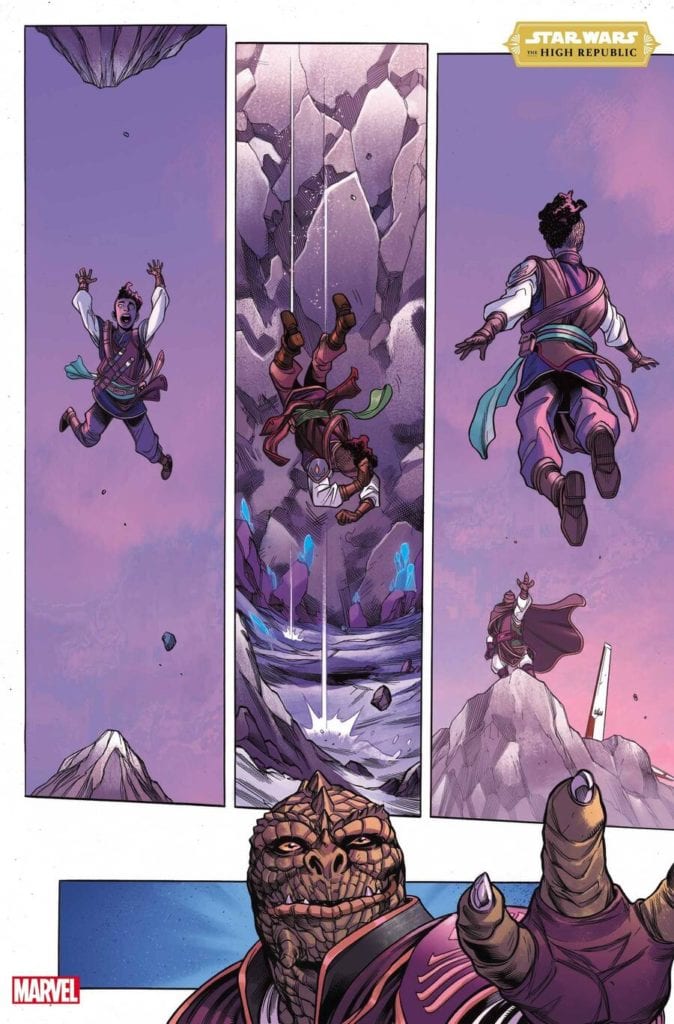
Writer Cavan Scott and artist Ario Anindito, with inker Mark Morales, colorist Annalisa Leoni, and letterer Ariana Maher present “Star Wars: The High Republic” #4. This issue continues to present and explore new threats and concepts within the Star Wars universe while digging into more character storytelling and great galactic adventure. With more stellar artwork from the visual team, this issue is another entertaining success in this new chapter from the Galaxy Far Far Away.
“THE JEDI TURNED AGAINST EACH OTHER?! AVAR KRISS and her band of brave JEDI helpless in the clutches of a traitor in their midst. STARLIGHT BEACON under attack from an insidious foe. Danger from an age-old enemy. Who is really pulling the strings on the distant planet of SEDRI? Plus: The secret history of the terrifying DRENGIR revealed.”
Writing & Plot
Cavan Scott’s script for “The High Republic” #4 is the most fast paced and action oriented thus far, but it still takes the time to flesh out its cast. The opening sequence is a flashback showing Avar Kriss training under her former master and current ally, Jedi Master Sskeer, before taking us back to the present where the latter is possessed by a Dark Side wielding plant. The trails that these characters have faced up to this point have ensured that every moment in this comic has tension. Nothing in this chapter feels like a throwaway, and each scene adds something to the characters or the lore at large. Sskeer’s struggle with trauma, Avar’s coming to grips with her own role and her former master’s fall, and the first real test of Starlight Beacon all come to a head here. The discovery of the Drengir on the outset seems a bit odd, even for Star Wars, but the notion of ancient Dark Side aligned plants just works here thanks to Scott’s framing of this new menace. Knowing that there is still much more story to come is immensely intriguing, and this issue’s end is one of the wildest yet coolest cliffhangers I’ve gotten to see in comics recently, Star Wars or otherwise.
Art Direction
This unexplored era of the Star Wars universe in “The High Republic” #4 is brought to life by the consistently brilliant grouping of Ario Anindito’s pencils, Mark Morales’s inks, and Annalisa Leoni’s colors. The animation and detail that the lines and shades give to the characters and environments here all look near-immaculate with the same kind of high production we’ve been getting from all of Marvel’s Star Wars outings. The art style still obviously retains the look and feel of a Star Wars tale, but with new design choices the replicate the unseen era we get to see here. The panel direction as well is kinetic and natural, making this fast paced issue easy to follow and very capable at building tension. The colors are gorgeously vivid, giving every panel a life that is rare even in the most well-produced mainstream comics. From the bright golds and whites of Starlight Beacon to the dank tunnels in the home of the Drengir, and to the glow of lightsabers humming in the dark, everything in this book looks spectacular. This is another piece in the long line of outstanding looking Star Wars comics, and one that very much has a life of its own.
“Star Wars: The High Republic” #4 is an intense, character-driven, and action-packed installment in this fantastic series. Cavan Scott’s script is full of lore and character building and also full of twists and pleasant surprises. The visuals from Anindito, Morales, and Leoni are vivid and full of life, bringing this mysterious era of Star Wars history to focus with familiar yet new energy. Be sure to grab this issue when it hits shelves on 4-7!
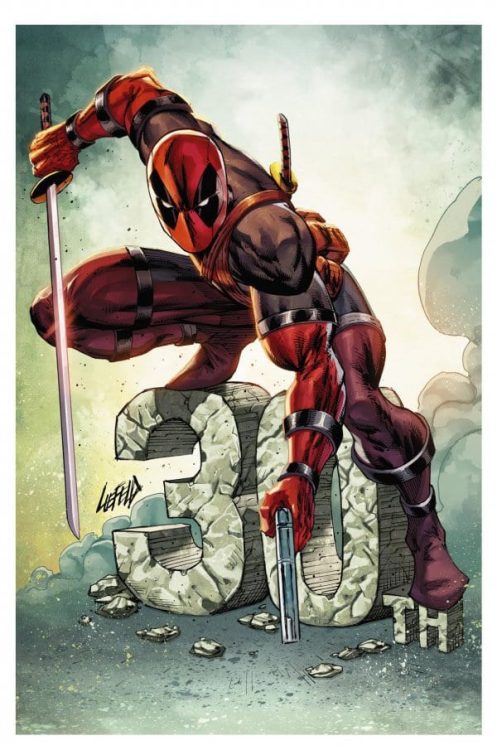
Be ready to party, fans of Deadpool, because it’s Wade’s 30th birthday and you’re all invited. Available now from Marvel, Deadpool Nerdy 30 #1 is an eight-part anthology celebrating the 30th anniversary of the character’s first appearance in The New Mutants #98.
Writers: Joe Kelly, Skottie Young, Kelly Thompson, Fabian Nicieza, Gail Simone, Daniel Way, Gerry Duggan, Brian Posehn, Rob Liefeld, & Chad Bowers
Artists: Gerardo Sandoval, Aaron Conley, Kevin Libranda, Bob Quinn, Patch Zircher, Michael Shelfer, Paco Medina, Scott Koblish, & Rob Liefeld
Colorists: Chris Sotomayor, Jean-Francois Beaulieu, Rachelle Rosenberg, Jim Charalampidis, Jesus Aburtov, Nick Filardi, Brian Valenza, Jay David Ramos, & Federico Blee
Letterer: VC’s Joe Sabino
Nerdy 30 strings together eight loosely connected, semi-biographical shorts. They follow Deadpool from conception to death, then finally to the inception of the character in New Mutants in a meta, tongue-in-cheek ending. Part retrospective, part birthday party—all delightful.
No Chill Whatsoever
Each story is entertaining on its own, thanks to some returning favorite creators. But there are a couple stand-outs. The first of which is story six entitled “No Chill Whatsoever.” Written by Marvel mainstay Daniel Way and drawn by his frequent collaborator Paco Medina, “No Chill Whatsoever” layers a neo-noir style over Deadpool’s childish pursuit of a birthday cake.
It’s Deadpool’s birthday, and no birthday is complete without a cake. So, instead of turning in a drug chemist to the C. I. A., Deadpool handcuffs the man to a rack inside the freezer of an ice cream shop. Medina’s bold outlines and dusty, charcoal-like shading coupled with colorist Jesus Aburtov’s pastel blue, purple, and green create a sense of whimsy that is complementary to the writing.
Moreover, (without revealing the story’s ending) Deadpool manages to get in a final word against C. I. A. corruption, which gives this non-violent short a little punch. It’s classic ‘Pool: adventurous, hilarious—and socio-politically relevant.
Party for One
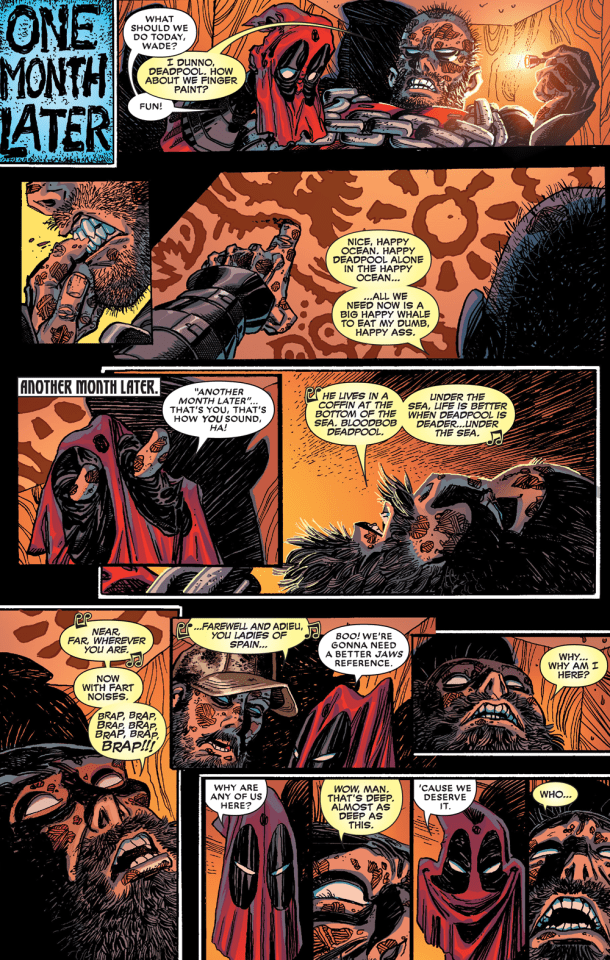
The second standout was story seven, “Party for One.” As the penultimate story, “Party for One” follows Deadpool as he’s close to death. As usual, he’s got himself into a multi-villain conflict and is now dealing with the consequences. Writers Duggan and Posehn take Deadpool’s habit of talking to himself to a hilarious existential extreme. Deadpool mocks himself, sings, and questions his life, while confined.
Artistically, Koblish ups the melodrama of it all by using a cinematic style, especially in the latter half of the story. Deadpool flashes back to the conflict that lead to his current predicament. On one page, we get a dramatic medium shot panel of an injured Deadpool. Next, an overhead of Deadpool getting shot. Then, finally, Deadpool stumbles away from a burning city, negotiating with another villain. It all looks and feels like one of Marvel’s big blockbuster movies.
Filardi’s contrasting cold light blues and warm orange, the latter framed in black, gives a sense of shifting time and space. The colors also contribute to the overall gravitas. But in no way does “Party for One” ever feel too serious. It’s tongue-in-cheek and self-aware as this story seems to mock every self-serious comic book hero’s near-death experience. It’s as if Duggan, Posehn, and Koblish have let us in on their inside joke.
Lettering
Even though there’s a lot to love about it, Deadpool Nerdy 30 #1 isn’t flawless. My only problem with this anthology is the lettering. Sabino’s lettering is functional for the most part, but his tendency to place SFX in corners and his placement of speech bubbles takes some of the fun out of the read.
One too many times I found myself puzzled by a speech bubble tail pointed toward a character’s chest or leg instead of their mouth. In my two favorite stories, there are instances of SFX tucked so close to the corner that my eyes almost missed them as I scanned the page.
Despite my lettering nitpicks, Nerdy 30 is still a wild ride and a comforting hug to long-term fans of Deadpool. So, if you haven’t already, give yourself an excuse to celebrate and pick up this special issue!
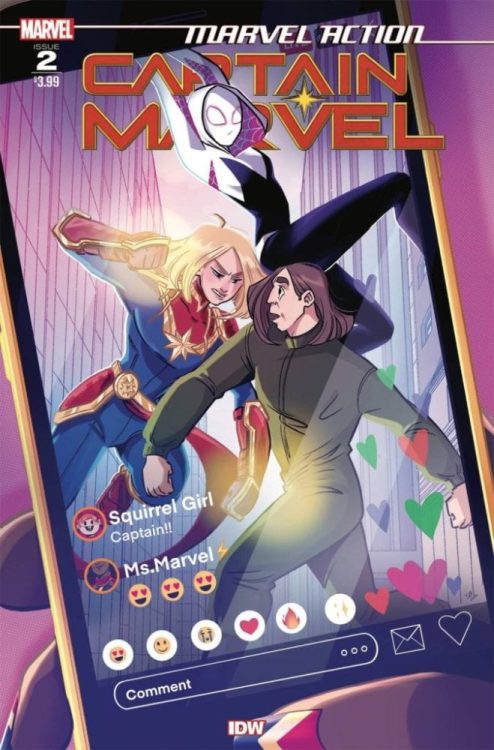
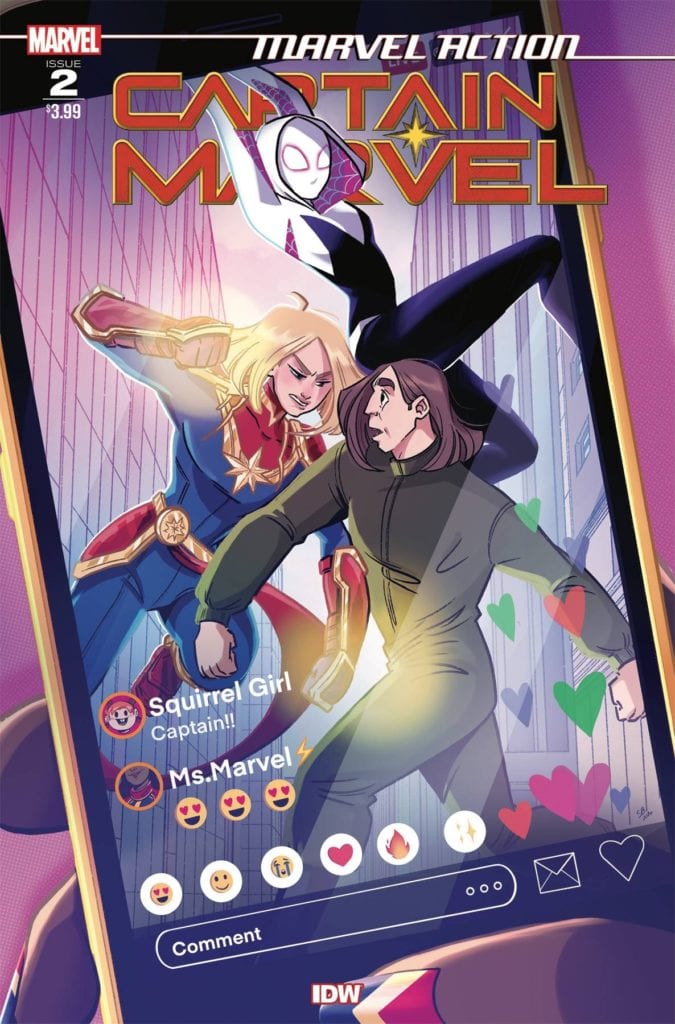
Captain Marvel and Ghost-Spider team-up in Marvel Action Captain Marvel #2.
IDW’s MARVEL ACTION: CAPTAIN MARVEL #2, available now, brings two (or three, depending on how you look at it) iconic heroes together for an action-packed adventure involving social media and trends.
Captain Marvel and Ghost-Spider team-up in Marvel Action Captain Marvel #2.
It’s still hard to believe that we’re lucky enough to get another Marvel Action: Captain Marvel series. But who am I to complain!? Better yet, this series seems to be bringing in many fan favorites – characters who would be a delight to see interacting with Captain Marvel.
Thus far, the series has been virtually full of ‘girl power’ characters – in all the best ways possible. Captain Marvel is reaching out to the younger heroes out there that need her help—all while getting a little bit of support from the younger generation at the same time. It makes for a light and approachable series for all.
Marvel Action: Captain Marvel #2 continues that trend, throwing Captain Marvel, Chewie (the one and only), and Gwen Stacey (Ghost-Spider) together for a chaotic battle against…technology?
The Writing
Marvel Action: Captain Marvel #2 is a fun and endearing adventure, courtesy of writer Sam Maggs. Picture a team-up between Captain Marvel and Ghost-Spider. Now imagine that Ghost-Spider is a bit on the younger side, in need of a mentor, and looking to increase her online presence. Now you have an idea of what sort of chaotic fun is in store.
This issue has a lot of fun with expectations and tropes surrounding the world of social media. It pokes fun at things like ‘ClikClok’ (any guesses on what that could be standing in for?), flash mobs, and social media trends.
It’s all in good fun, of course. It’s a great counter to work-obsessed Carol Danvers fans are most used to seeing. Perhaps this is precisely what she needed on her vacation. Granted, most people wouldn’t consider fighting a villain their idea of a break, but this is Carol we’re talking about.
Adorably, even Chewie seems to get a moment or two in this issue. While some people would be concerned about her joining in the fight, this is still a lighthearted issue. Meaning that nobody gets eaten – or sent to another dimension.
The Art
Unsurprisingly, the artwork in Marvel Action: Captain Marvel #2 is just as much fun as the writing itself. It isn’t every day you get to see Carol deal with social media – or save the day through creative means (though there is still some fighting involved, promise!).
You can tell that Mario Del Pennino (layout artist), Isabel Escalante (inks), and Heather Breckel (colors) all had a blast illustrating this issue. The scenes are sometimes silly but in a good nature sort of way.
Likewise, the colors in this issue are all very bright and eye-catching. Our leading ladies (all three of them) pop off the pages while they deal with the oddest of villains. Meanwhile, the villains feel intentionally slightly cartoonish, but in a way that will make you laugh.
Conclusion
Marvel Action: Captain Marvel #2 is another fun and entertaining issue in this series. If you’re looking for an issue that will make you smile, then this is the issue for you. The overall good nature and humor of the issue is very tongue-in-cheek and is perfect for audiences of all ages.
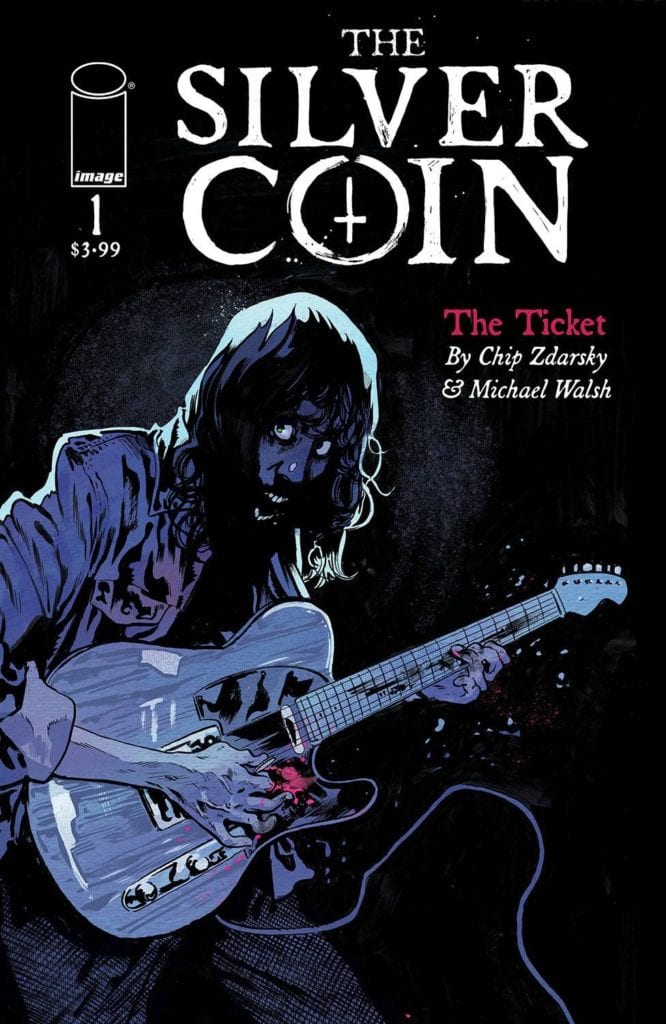
Silver Coin #1 is the start of a new anthology created by Chip Zdarsky, Michael Walsh, Kelly Thompson, Ed Brisson, and Jeff Lemire.
Image Comic’s THE SILVER COIN #1 is the start of a thrilling new horror series. One that brings many different creatives together. This is the first in an anthology created by Michael Walsh, Ed Brisson, Jeff Lemire, Kelly Thompson, and Chip Zdarsky.
Silver Coin #1 is the start of a new anthology created by Chip Zdarsky, Michael Walsh, Kelly Thompson, Ed Brisson, and Jeff Lemire.
The Silver Coin #1 is the start of a brand new collaboration, one that brings Chip Zdarsky, Michael Walsh, Kelly Thompson, Ed Brisson, and Jeff Lemire all together for one series. Specifically, it’s a horror series, and who can pass that up?
The first issue was written by Chip Zdarsky (Stillwater), and illustrated by Michael Walsh (Star Wars, Black Hammer), and it does an excellent job of setting the tone. But more on that later. Every issue will be set in the same world, one that is naturally quite full of horror, chills, and thrills.
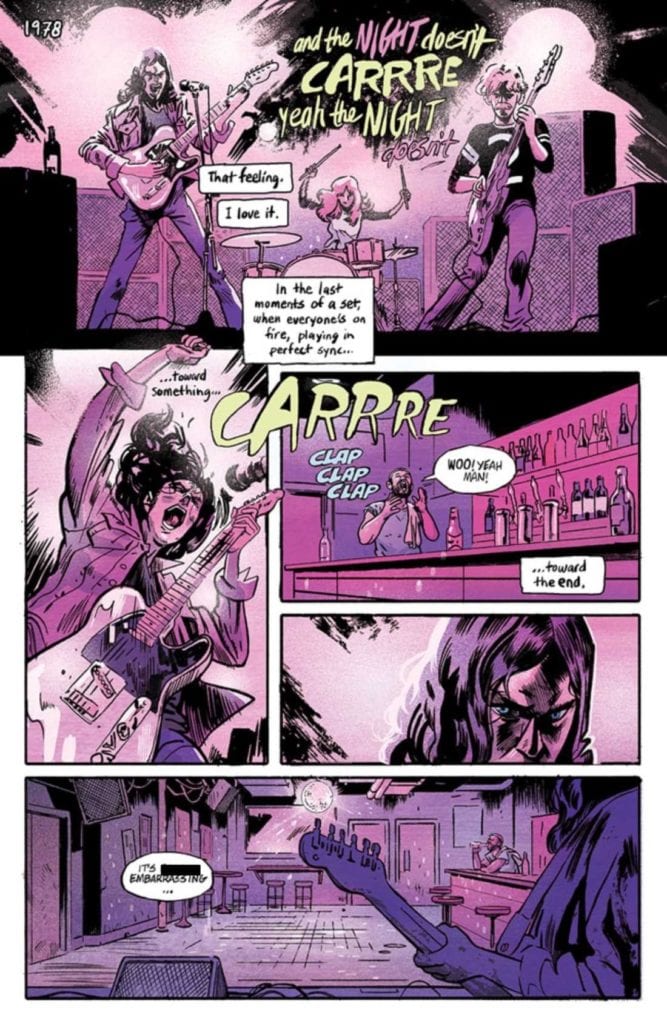
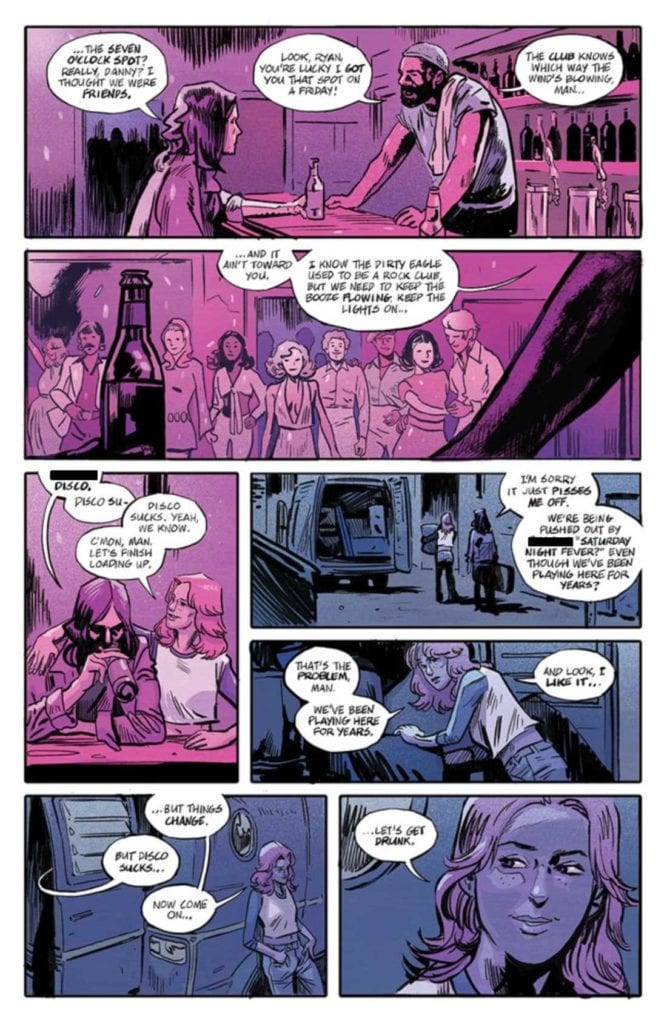
It’s 1978, and one rock band is falling to hold the attention of their audience. They just can’t outshine the newest trend – disco. That is until one of their bandmates finds this mysterious silver coin…
It’s one rock band versus the rise of disco in Silver Coin #1.
The Writing
If you’re looking for a graphic series that merges horror with rock vibes, then The Silver Coin #1 is an issue you need to pick up. Chip Zdarsky starts this anthology off right. The introduction is one that is easy to imagine and even easier to emphasize.
That fact makes what follows all the more tragic. The characters in this story aren’t necessarily likable – but they don’t have to be. Their struggle is real – a band fighting against the changing of the tides (IE: the audiences’ growing love of disco).
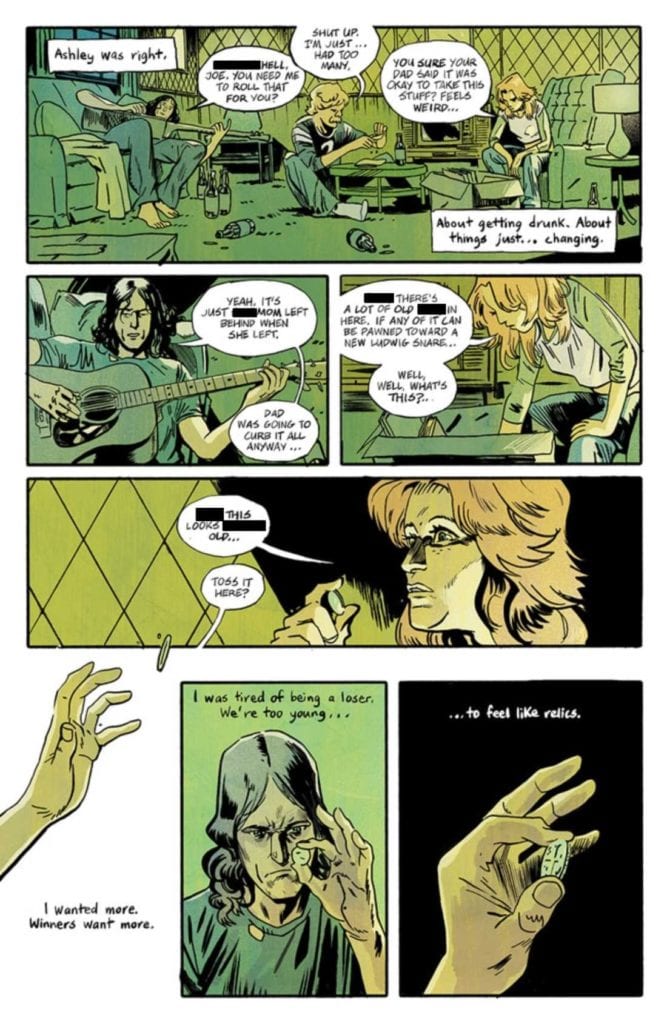
Zdarsky elegantly introduced the true driving force of the series: the silver coin. It’s immediately clear that something is wrong with this coin. Every time it comes into play, something happens. It’s easy to predict that things will worsen before they get better (assuming they survive that long).
One of the most intriguing parts of the narrative, at least for me, was watching how one character’s obsession seemed to grow. Sometimes it was subtle; other times, it seemed to double between panels. It spoke volumes about the horror of the unknown, and I can’t wait to see how the anthology’s next issue follows it up.
As you can see, the struggle is real in Silver Coin #1.
The Art
The Silver Coin #1 has such a dark aesthetic; it’s quite perfect for the plot. It matches the horror and rock elements in equal measures. The end result is a story that feels as organic as it is chilling.
The lines, colors, and letters were all done by Michael Walsh, and the level of cohesion really shows. The color palette is a highlight worth talking about here. Each panel seems to have one solid color that it runs with. It gives the issue a really unique look, one that feels quite at home with the overall style.
Walsh’s lettering is another element worth discussing and with good reason. He takes the lyrics (literal lyrics) to a new level here – you can almost hear them being sung. More than that, you can practically feel the passion going into the words.
Likewise, it’s the lettering that hints at something more sinister happening, especially towards the end. Take note of the stability (or lack thereof) in the way thoughts and words form. It’s pretty telling.
A mysterious silver coin has been found in Silver Coin #1.
Conclusion
The Silver Coin #1 is a dramatic start to this horror anthology. The creative team/creators of this series is what originally caught my attention, but it’s the aesthetic that really sold me on the whole series. I am very much looking forward to seeing what happens next.
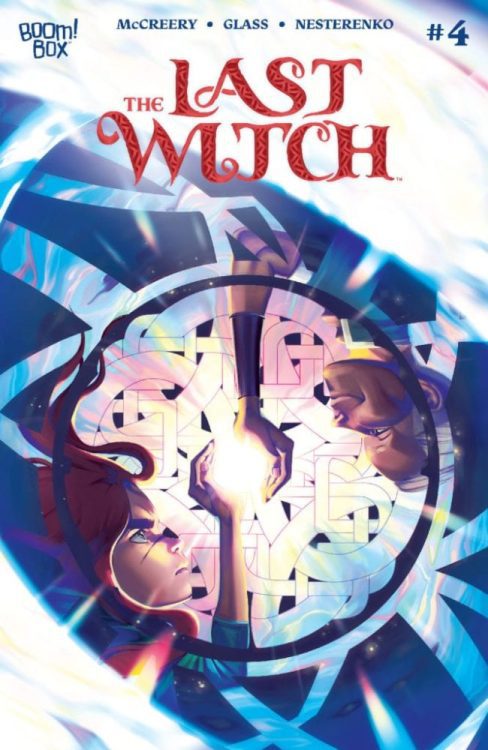
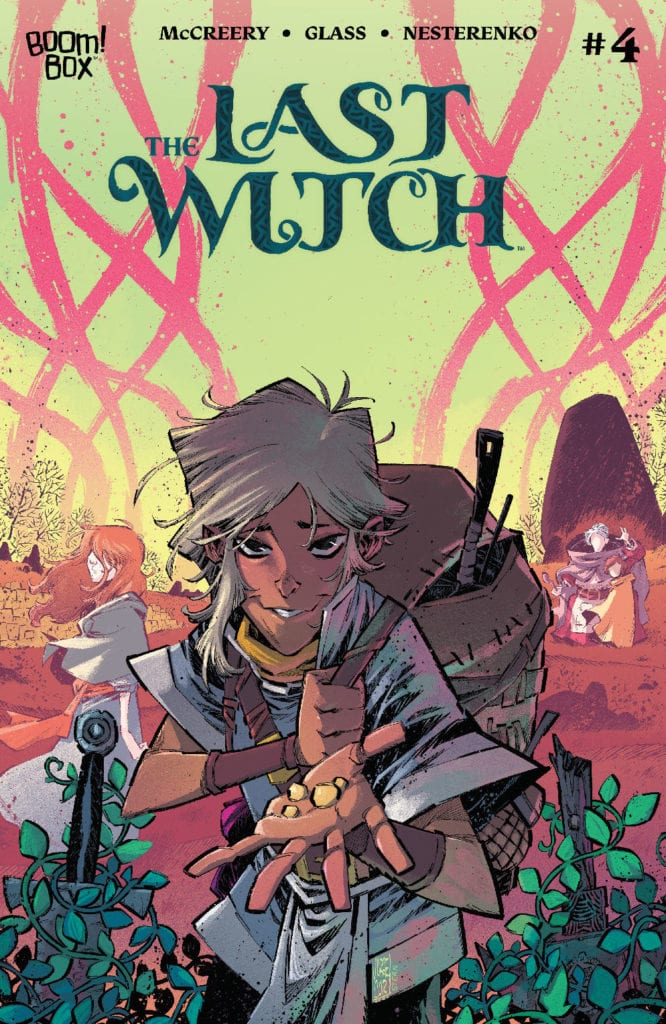
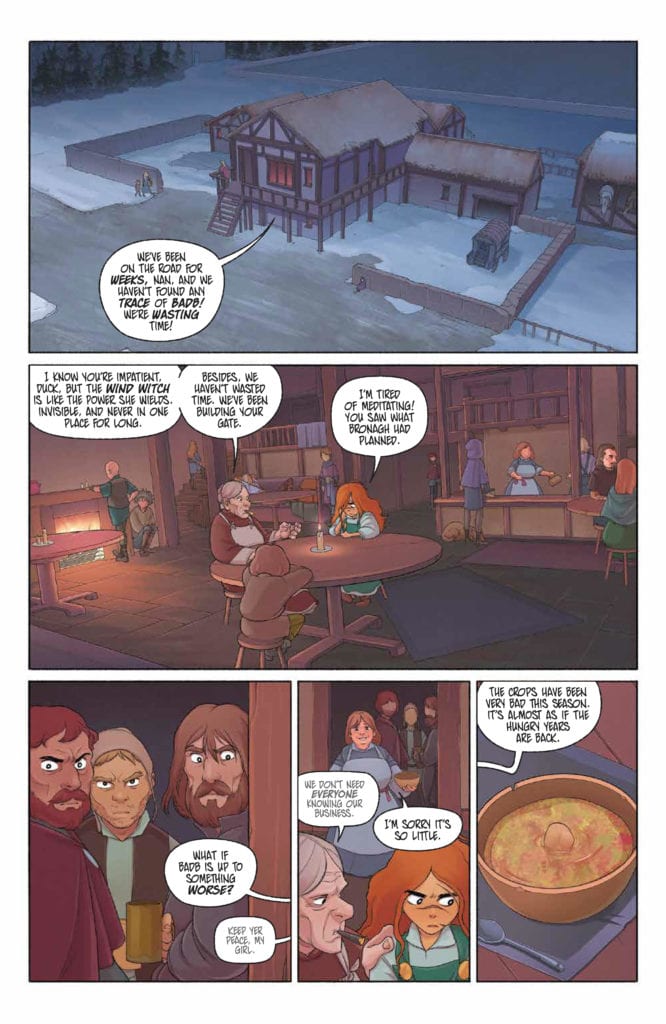
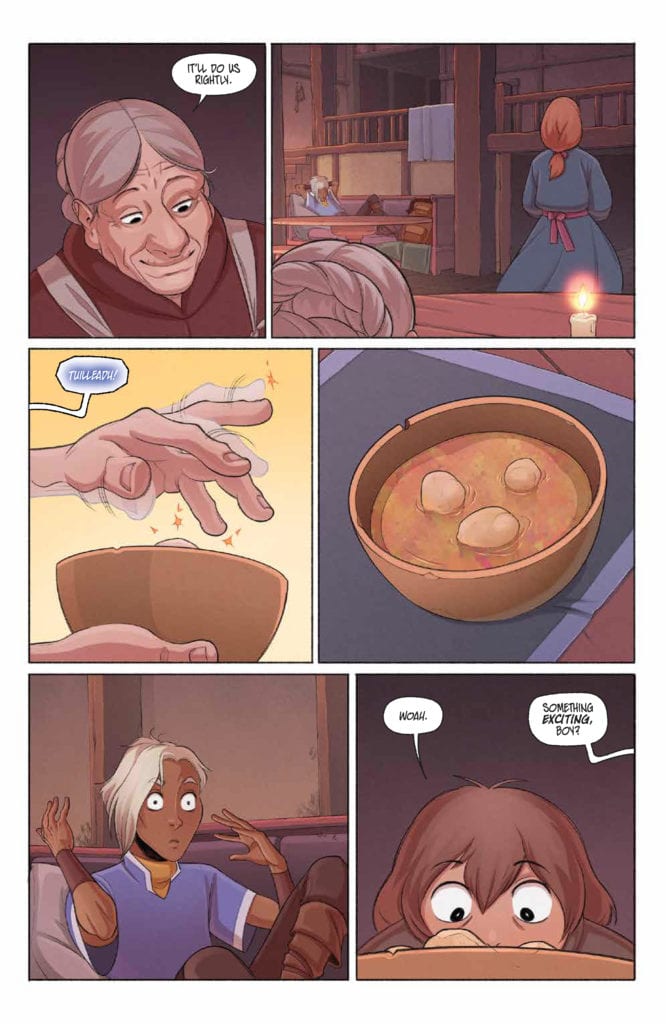
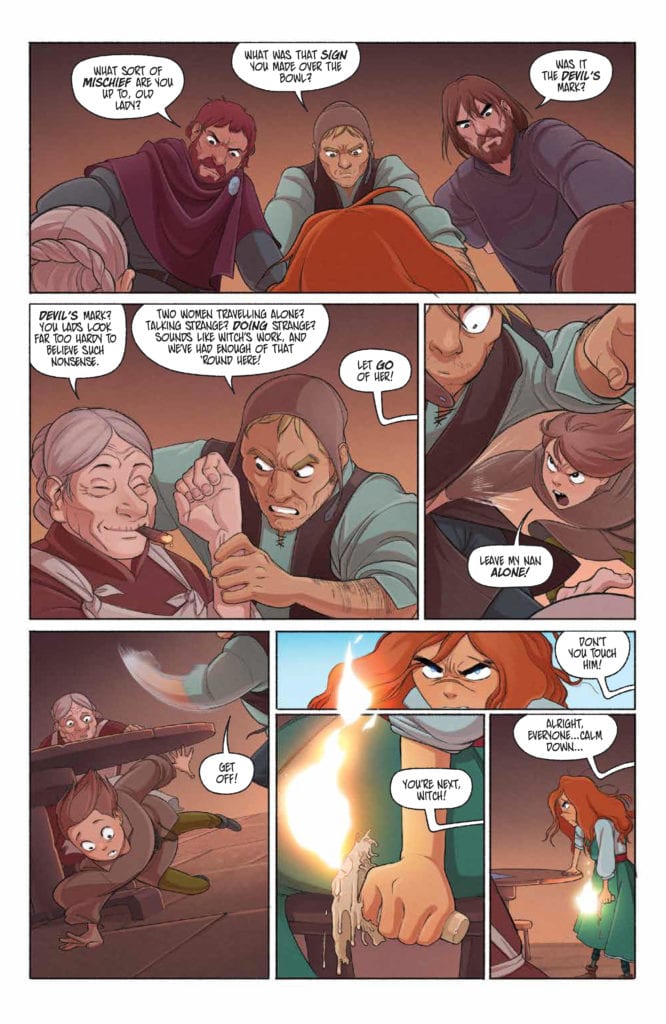
THE LAST WITCH #4, available Wednesday from BOOM! Box continues the tale of Saoirse and her growing powers. She’s faced two lethal battles so far and barely managed to survive both. She’ll have to get even stronger before she faces off against the next witch.
A new character arrives in The Last Witch #4.
Not too long ago, little Saoirse’s biggest concern was whether or not she’d get away with sneaking out into the woods. Those days are long gone. Now she’s striving to gain as much power as possible before being forced into battle against yet another witch.
Yes, that’s right, another witch. She’s already faced off against two of them: one wielded fire and the other water. Next, Saoirse will be facing off against a wind witch, though she must take a minute to train before that can happen.
The Last Witch #4 continues the tale of one young woman and her fight to keep the world safe. More specifically, she’s fighting to keep her grandmother and brother safe. They’re all she has left of this world, and she’ll do whatever it takes to protect them.
Perhaps now would be a good time to keep your voice down?
The Writing
Each and every issue of The Last Witch has felt different from the last. That is partially due to how much Saoirse seems to change between each issue. But it’s also more than that. Her battles, her elements, and countless other details have changed along the way as well.
The Last Witch #4, written by Conor McCreery, continues her story. By this point, she’s defeated two witches, and it shows. Her power and confidence have risen, though that in itself brings complications. Already we’ve seen the grandmother warn time and time again about the dangers of magic use – of how it can corrupt.
That has been a dark undercurrent this whole time as we watch Saoirse grow in power. It’s hard not to be concerned about her, and this issue really picked up that particular thread. So while there is no major battle fought in this issue, there is still quite a lot going on.
Much of it is internal, while there are some new developments happening around our little witch (and her remaining family members). The new changes are fascinating, and admittedly just a little bit concerning. That seems to be the theme of the series, after all.
Well, that’s a handy trick!
The Art
As per usual, the artwork inside The Last Witch #4 is simply stunning. V.V. Glass (art), Natalia Nesterenko (colors), and Jim Campbell (letters) really do make a fantastic illustration team. Saoirse’s story is just as much a visual tale as a narrative one, and I sincerely do not believe it would carry the same impact without the artwork to support it.
The magic portrayed within this issue is fascinating. Here we see her fire and water, but also more than that. Finally, we’re getting a chance to see the deeper connection that has formed—the connection between Saoirse and the world (ley lines) around her.
There are so many little details worth picking up on, much like previous issues in this series. It makes it a worthwhile experience to read the issue more than once. Speaking from experience, it seemed like I spotted a new implication every time I read it.
The colors are vibrant and do an excellent job of blending with the magical elements (literally) of the series as a whole. Saoirse’s fire is a dominant feature, but it felt like water demanded more attention this time around. Likely, we’ll soon see more of an influence from air in the future.
Yeah, that’s about the reaction I expected.
Conclusion
The Last Witch #4 is yet another fascinating addition to this series. Saoirse has grown and changed so much already – and somehow the series is doing the same right alongside her. This is one of those series that is nearly impossible to predict, thanks to all of the surprises it brings with it. Yet it still feels so familiar at the same time – delightfully so.
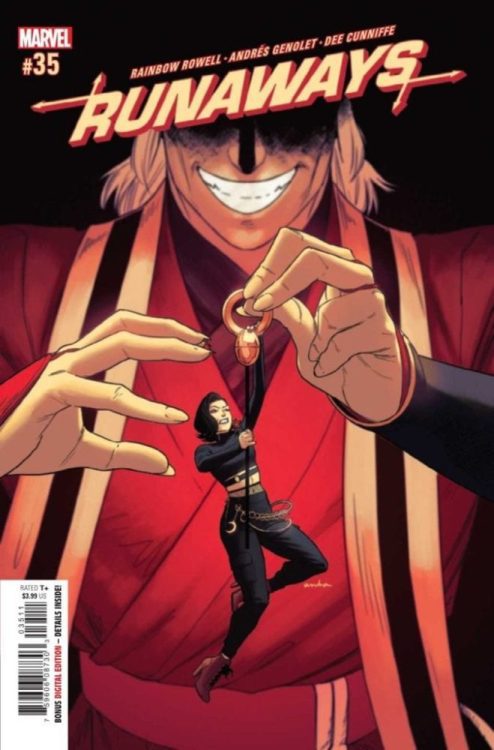
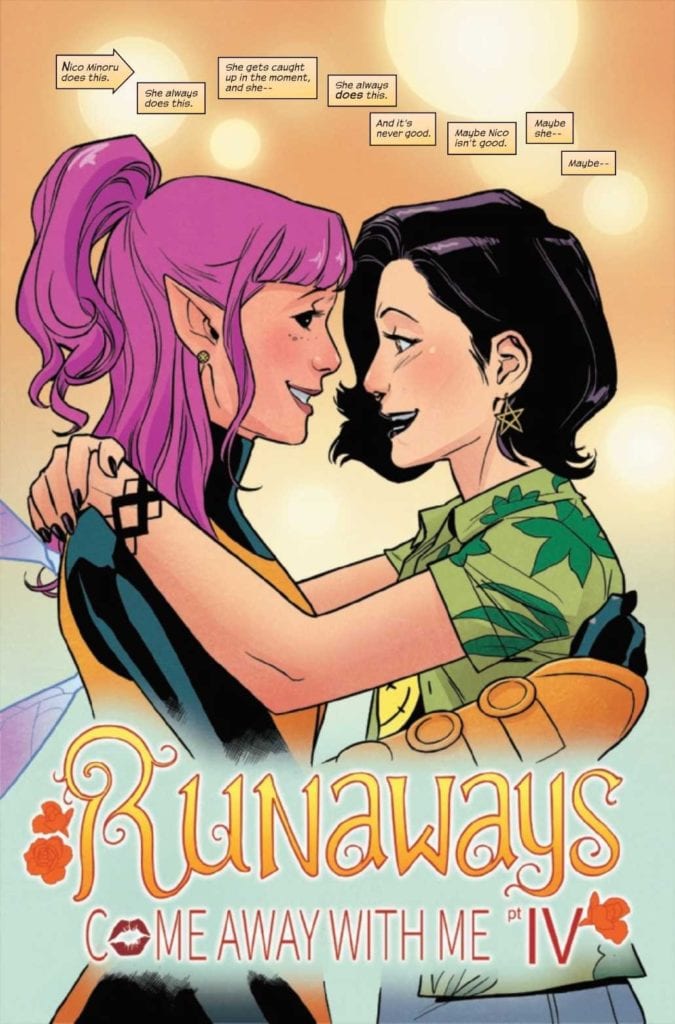
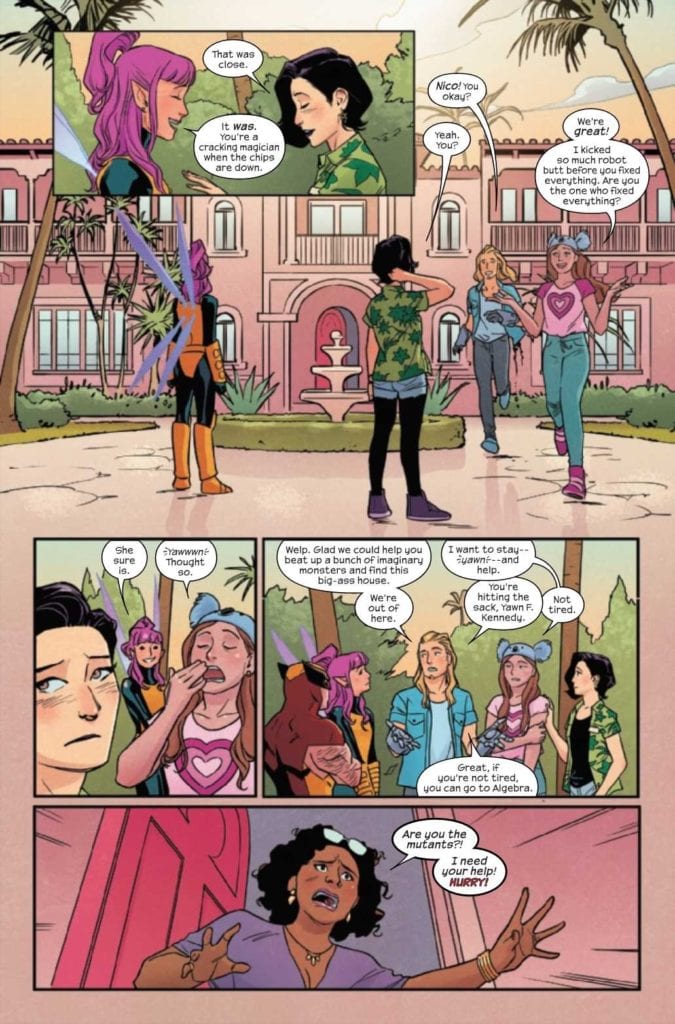
Marvel’s RUNAWAYS #35, available Wednesday, is a complex issue. It wraps up several plot arcs while raising more concerns along the way. This issue is a masterclass in foreshadowing, proving that the Runaways are never far from danger.
Nico does have a talent for getting herself into these situations, doesn’t she?
Last we saw, the Runaways were in the middle of a daring mission – one they hadn’t fully agreed to. But they’re the Runaways, so getting pulled into random missions is sort of their thing, especially when a young hero is on the line.
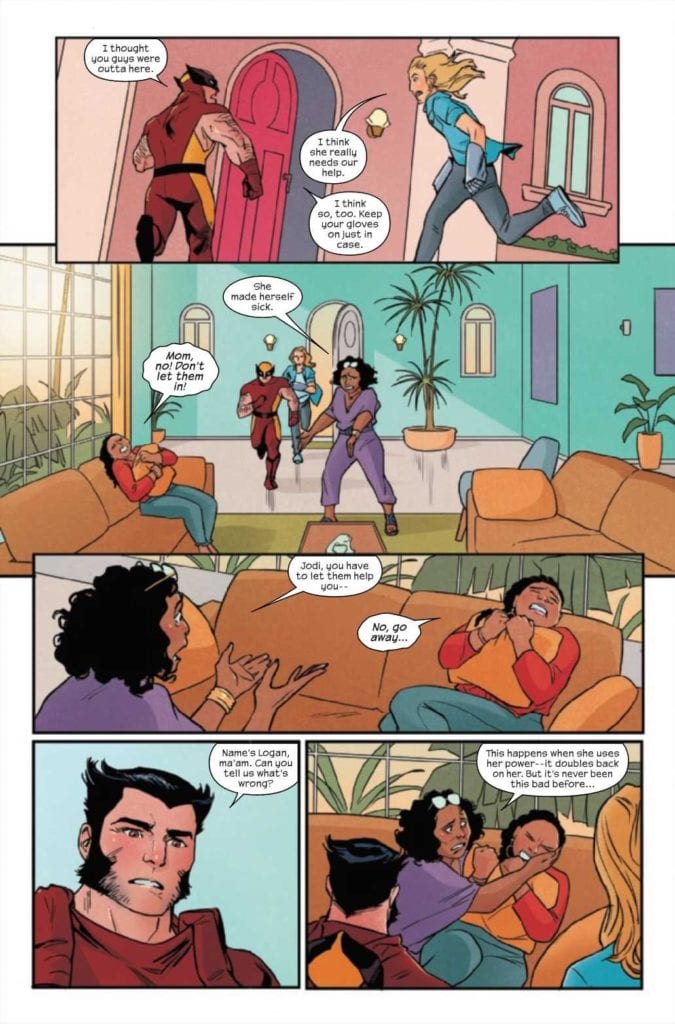
On the bright side, the chaos came with an X-Men team-up. Wolverine and Pixie are also wrapped up in this adventure (they may or may not be the cause of said adventure). Fans of superhero interactions will undoubtedly appreciate the more comical moments brought about by their presence (see the last issue for a real treasure).
Runaways #35 picks up where the last issue left off, naturally. Before we dive into the review itself, let’s take a moment to discuss that cover. That has got to be one of the most foreboding covers I’ve seen in some time. It’s full of foreshadowing. Surrounding the deal that Nico made. One that I feel like most of us would have known to turn down…
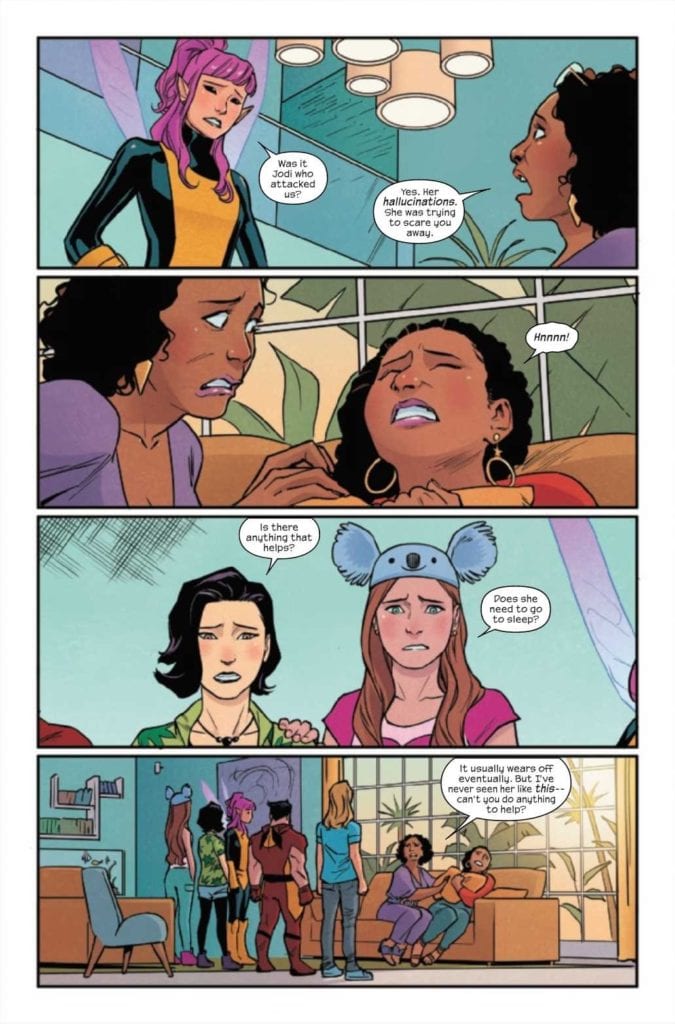
Meanwhile, there is still somebody in need of saving.
The Writing
Runaways #35 is an issue that will run readers through the emotional wringer. It’s tense, fascinating, and (as mentioned above) fairly foreboding. There’s a lot of subtlety to appreciated in Rainbow Rowell’s writing, as always.
The truth of the matter is there’s actually quite a lot that happens in this issue. While it isn’t an overwhelming amount, it does take a little more time to process – mainly due to all of the implications.
One thing is certain, fans old and new will appreciate some of the hints (and revelations) that happen here. Some of it feels like a blast to the past, while other moments are clearly building on newer plot arcs. The result is an issue that feels fully fleshed out. While still fitting in with that classic Runaways vibe.
There are some severe highs and lows inside. Most of these points were pertaining to the relationships that have formed along the way. It’s hard to predict how things will go from here, but I imagine every fan will have a different theory.
That looks like a painful power backlash.
The Art
The art of Runaways #35 had a lot to keep up with this time around (nothing new there), but it did so with style. That classic Runaways look is there, with sharp pops of color and lots of small details to pick up on.
Andrew Genolet’s artwork really brought that sense of foreshadowing to a whole new level. While I firmly believe those moments would have been fascinating regardless, the impact is a lot higher. Deliciously so. Additionally, Genolet’s portrayal of the characters and their gambit of emotions really brought the story home.
Dee Cunniffe’s colors are divine, as always. They’re bright and bold, much like the characters themselves. These colors enhance the frequently subtle backgrounds, allowing them to pop or complement as needed. The colors surrounding Nico’s magic are especially eye-catching – with a clear intent to draw the eye.
The lettering, provided by VC’s Joe Caramagna is the final touch this issue needed. It easily picks up on all of the details Rowell, Genolet, and Cunniffe were working into the narrative. The lettering makes it all flow smoothly, ensuring that the readers miss nothing.
Both Nico and Molly can certainly sympathize with the negative sides of using their power.
Conclusion
Runaways #35 is a fascinating and richly detailed issue. This is an issue that fans will be remembering – and theorizing about – for quite some time. Personally, I can’t wait to see what Runaways #36 is going to bring with it.
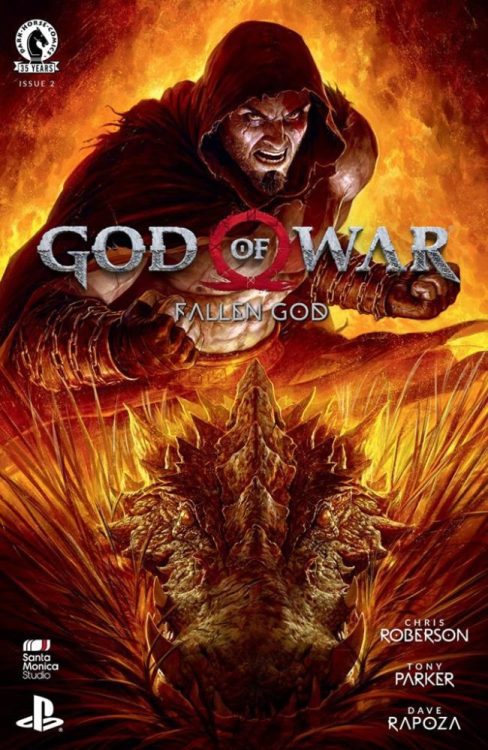
GOD OF WAR: FALLEN GOD #2 hits comic book stores on Wednesday, April 7th, further detailing Kratos’s agonizing journey after battling the gods. Along the way he met an elderly man who spoke of fate and destiny, ideals the warrior is vehemently opposed to. So our protagonist continued running. But an old “friend” may throw another wrench in the mix, one that will further propel Kratos toward his destiny.
Story
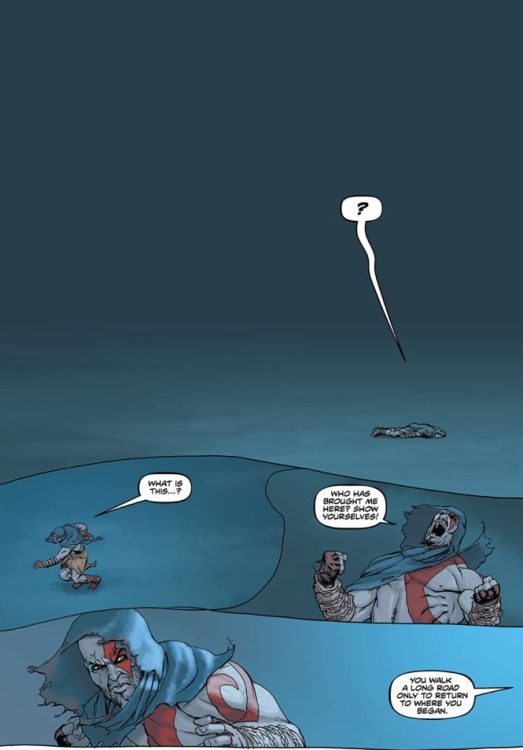
Last issue Kratos sought to escape from the Blades of Chaos bound to his hands. Yet each attempt to rid himself of them failed—even throwing them into the ocean sent them right back. His travels now lead him into an expansive desert where one can commune with the forces that be.
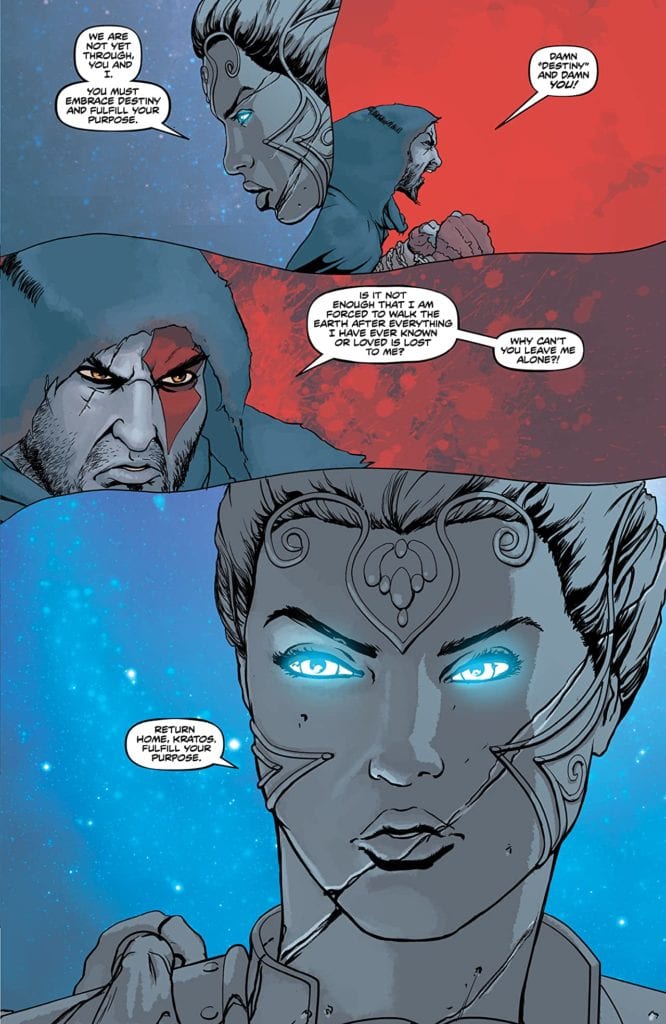
After listening to the cryptic messages from the old man for so long, Kratos is surprised to hear another voice speaking in this desert. He soon recognizes it as Athena’s, the goddess who he believes to be the cause of all his past—and present—suffering. The reader can practically feel the frustration, rage, and sorrow all in this one panel.
Athena and Kratos’s words ask readers an age-old philosophical question: Is our destiny determined, or do our choices shape it? And as if to purposely add further confusion to this query, the story throws a “chaos beast” (which is aptly named) at our hero to test his resolve.
Chris Roberson’s narrative does a brilliant job of casting Kratos as a reluctant savior figure. Choosing to believe the people see him as the true monster, the protagonist hopes to dispense with any notion of duty. It’s clear the might of Kratos’s will and the force of the gods’ determinism are engaged in a battle with no end in sight.
Artwork
Tony Parker’s penciling and ink work, Dan Jackson’s coloring, and Jimmy Betancourt of Comicraft’s lettering fit extremely well with Robertson’s written story. The detailed figures of Kratos heaves his muscled body across expansive desert and brush to emphasize how difficult his self-imposed quest is. Readers will notice how his pale gray skin stands out against even the most colorless backgrounds, reminding us of the past burdens he carries. What’s more, the blend of wordless exclamations in the dialogue speaks volumes, showing how few words effectively placed work extremely well with a character like Kratos.
Conclusion
GOD OF WAR: FALLEN GOD #2’s reluctant hero makes this story just as engaging as the games that brought him to life. We can’t wait to see where his destiny lies.
Do you think Kratos actually controls his own destiny? Let us know in the comments below!