The sports entertainment world lost yet another legend today. Jim “The Anvil” Neidhart has passed at the age of 63.
ESPN’s Tim Fiorvanti reported that Neidhart fell in his home, hit his head, and “succumbed to his injury” this morning. According to family statements to the Associated Press, as stated in Fiorvanti’s article, Neidhart got up to lower the thermostat in his bedroom and possibly suffered a grand mal seizure.
Neidhart began his professional sports career playing for the Oakland Raiders and Dallas Cowboys where he participated on their practice squads and in preseason games. His football career didn’t pan out, and he then turned to professional wrestling.
Neidhart moved to Calgary to train with Stu Hart and worked for Hart’s Stampede Wrestling from 1978 to 1983 and again in 1985. He was a two-time Stampede International Tag Team Champion with both Hercules Ayala and Mr. Hito.
During his tenure with Stampede Wrestling, Hart wanted extra publicity for Neidhart and entered him in an anvil-throwing contest, which Neidhart won. Neidhart’s nickname then became “The Anvil.”
Jim “The Anvil” Neidhart Photo: WWE.com
While still working for Stampede Wrestling, Neidhart had regular stints with New Japan Pro Wrestling, Georgia Championship Wrestling, Mid-South Wrestling, Continental Wrestling Association, and Championship Wrestling from Florida.
Vince McMahon purchased Stampede Wrestling from Hart in the mid-80s and with the purchase came the contracts of Neidhart and Stu’s son Bret. The two were eventually paired up to form The Hart Foundation.
The Hart Foundation Photo: WWE.com
The Hart Foundation was in full force in the late-90s when the faction included Neidhart, Bret Hart, Bret’s brother Owen Hart, Davey Boy Smith and Brian Pillman. The team was dominant until the “Montreal Screwjob,” and then Bret Hart and Smith left the WWE.
Neidhart stopped wrestling full-time in 1998, but had special appearances with both WWE and TNA in 2007 and 2009, respectively.
Neidhart became a household name again while appearing on the E! Network reality show Total Divas. Neidhart’s daughter, Natalie performs with the WWE under the ring name Natalya, and she has been a long-time focus of the show, which will soon debut its 8th season. Natalie is married to TJ Wilson, who previously wrestled under the name Tyson Kidd but now works behind the curtain with the WWE.
Jim Neidhart & daughter Natalie Neidhart-Wilson Photo: Instagram @natbynature
Tributes began trending online soon after the announcement of his passing:
Twitter: @BretHart
Twitter: @RealJimmyHart
Twitter: @JRsBBQ
Twitter: @TripleH
Neidhart is survived by his wife, Elizabeth (Ellie), and daughters Natalie, Kristin, and Jenni.
The Package on Netflix is a comedy that takes the concept of a running joke to a whole new level. Adam Schiff is a composer who created the music for the film and dozens other projects like Hear No Evil (2017) and The $100,000 Pyramid. Adam works with Russell, the co-founder of Bleeding Fingers Music, a sound-making collective of composers, sound designers, and more. One of Russell’s partners is Hans Zimmer, the music-maker behind modestly successful films such as The Dark Knight and Inception.
Monkeys Fighting Robots spoke with Adam and Russell about their work on The Package and more about Bleeding Fingers Music.
What better way to start off an interview than asking total strangers “Tell me about The Package …” Cue the laugh track.
About The Package
The Package is a throwback to the sex comedies we don’t see much of anymore. So, what did director Jake Szymanski say to Adam and Russell to inspire the music for the film? Adam replies “Early on when we met with Jake to watch the film he said, ‘You know, farts and boner music.’” Russell, the “disruptor” as listed on the Bleeding Fingers website injects “Boy have you come to the right place.”
Russell: “They wanted to do comedy without the standard comedy solutions. I think it’s a dreaded genre for composers. Action and drama is a sort of comfort zone. It’s something composers love to score. Comedy is a challenge.”
Adam: “They wanted to keep the tension of time running out as well, and they wanted the score to help with that.”
Russell: “There are twelve hours to get the pecker to the hospital, and so the music helps keep that established throughout.”
Russell: “We’re very fortunate that the on-screen talent and chemistry of this film is there. You’re scoring a film and watching it again and again. By the 100th time you’re still laughing.”
Adam: “It really is funny every time.”
About Bleeding Fingers Music
Bleeding Fingers Music works on a variety of projects. Their work is “all over the map,” but Russell thinks “… it speaks to the skillset and team of composers that are so varied but also so collaborative.”
Adam: “It’s a real collaborative space. The different composers, we’ll talk about the latest software or brainstorm problems together.”
Russell: “We have an incredible team, we’re very fortunate. The whole purpose of Bleeding Fingers is to accelerate new and exciting talent in this business.”
Take a look at their filmography and you’ll see they’re mission is going great.
Spreading the Love …
Who’s a composer today whose work you admire? I add a caveat, it can’t be anyone from Bleeding Fingers Music.
Adam: “Oh, there’s so many. I wouldn’t know where to start.”
Russell (cheeky): “You wouldn’t?”
Adam: “A lot of great work is coming from TV I think. I love Sean Callery, Ben Firth, and Christian Henson.”
Russell: “I’m going to steal a credit. Yesterday, Hans introduced me to the music of Johnny Klimek and Tom Tykwer (Babylon Berlin).”
What’s Next?
Bleeding Fingers houses dozens of music makers. So, what’s coming soon from the house that Hans help build?
Russell: “Ahh, we can’t tell you! It’s called an NDA, not a frieND-A. I will say we’ve got this sort of global project going on. Let’s just say that next year is the 50th anniversary of the moon landing. So, space will be a big deal.”
Thanks to Adam Schiff, Russell Emanuel, and Impact24 PR
for making this interview possible.
THE MAGIC ORDER #3 by Mark Millar, Oliver Coipel, and Dave Stewart pushes the story to a tense midpoint as the Moonstone family suffers a huge loss that may just lead to their end.
The Magic Order #3 Written by: Mark Millar Art by: Oliver Coipel Colors by: Dave Stewart Letters by: Peter Doherty
We live in a world where we’ve never seen a monster, and The Magic Order is the reason we sleep safely in our beds. Magic meets the mob in THE MAGIC ORDER, as five families of magicians—sworn to protect our world for generations—must battle an enemy who’s picking them off one by one. By day, they live among us as our neighbors, friends, and co-workers, but by night, they are the sorcerers, magicians, and wizards that protect us from the forces of darkness…unless the darkness gets them first.
MILD SPOILERS BELOW!!!!!!
Writing
The Magic Order #3, like the issues before it, wastes no time. It starts fast and the pace barrels forward all the way until the final page, a violent and climactic encounter that severely affects the main cast of characters, eliminates a very important player, and elevates the threat of the villains even further. Mark Millar writes the Moonstone family as desperate and afraid and that tension is perfectly felt by the reader. We also start to get some more history of the family, particularly Gabriel and the tragedy that befell his daughter.
And once again Millar creates great action sequences, with creative and unique spell concepts that are disturbing; a man is turned into a human candle and someone is literally torn part in what is the most violent sequence we have seen in this title yet.
Art
Oliver Coipel and Dave Stewart once again prove to be a perfect art team. They are able to balance tense, dread-filled panels, gory action, and quiet moments of conversation with a masters eye for detail and execution. The layouts and panels slick, easy to read yet no less effective or artistic. This has been one great looking comic book from the very beginning.
Conclusion
The Magic Order continues to be classic Mark Millar; a high-concept idea, well written and executed by the perfect artist for the material. Don’t be surprised when it joins the ranks of other Millar properties (Kick-Ass, Wanted, and of course, the core concept of Marvel’s Civil War crossover that led to the MCU’s Captain America: Civil War) that had an impact in and out of comics.
A soul heist + a rivalry for the ages + a lot of people exploding = a whole lot of fun on the newest episode of Preacher, “The Tom/Brady”.
Preacher Feature is a weekly look into the AMC show Preacher based on the comic book of the same name by Garth Ennis and Steve Dillon. In this column, Josh Versalle gives a breakdown of the events from the show (including how they relate to the comics), and speculates as to what’s going on and what might be coming up. That means SPOILERS are bound to follow, so if you haven’t watched the episode yet, turn back now.
“If you want your soul, you’re going to have to kill him.”
This is what Herr Starr tells Jesse as they head in front of All-Father. All-Father intends to transfer Genesis (the supernatural being that resides in Jesse and at times gives him the power to control people’s minds with his words – not the band behind Invisible Touch) to Humperdoo, the cretinous scion of Christ. Starr has other plans, but he can’t let his boss the All-Father know that, so he tries to have Jesse assassinate the All-Father. Too bad for Jesse that it takes a lot of firepower to penetrate the chest of such a rotund man, and the attempted coup fails. Jesse ends up strapped to a soul-transfer machine as the Grail tries to find a combination of DNA that will allow Genesis to inhabit Humperdoo without killing him. After a series of attempts (and exploding clone Humperdoos), they seemed to have found one that works: a mixture of Thomas Jefferson and Wayne Brady.
Miss Marie is having nightmares about what will happen when she finally dies (after untold years of stealing people’s souls, it can’t be pretty) and summons Satan to renegotiate their deal. She offers him Jesse, whom Satan has had his eye on for quite some time. He dispatches The Angel of Death (Erinn Ruth) to bring Tulip to him, presumably as leverage to trap Jesse.
I don’t wanna die. My mom’d be upset.”
Hapless Grail agent F.J. Hoover (Malcolm Barrett) tries to take on vampiric power couple Cassidy and Eccarius, but after failing once again, Hoover is left with the choice of dying (possibly by bee-mask) or becoming a vampire. He picks the latter and Cassidy transforms him, but Eccarius has other plans. Ecc is about to kill Hoover when Cassidy realizes that Ecc has been killing his vampires, not sending them into the world as undead ambassadors. Cass confronts the stronger Eccarius while Hoover makes good his escape.
Tulip, Featherstone, and Jody head to Japan to steal souls from the vault of Soul Happy Go Go (the Grail-owned soul trading company from season two). Posing as HR representatives, they first give the company’s upper management a much-needed anti-harassment demonstration, then execute the heist. They extract the souls from the vault, but upon landing back in New Orleans, they run into trouble in the form of the Angel of Death. She’s looking for Tulip, but Tulip tricks her into abducting Featherstone instead. Heading to Hell’s bus stop, they meet up with a few other familiar faces: Eugene, Hitler, and the Saint of Killers.
Best Frenemies Forever
The escalating rivalry between Tulip (Ruth Negga) and Featherstone (Julie Ann Emery) has become the highlight of the series recently. The animosity started last season when Featherstone pretended to befriend Tulip, only to later shoot her (sadly, studies show 6 out of 10 friendships end this way). It has delightfully spilled over into this season, in the form of barbs, a busted nose, and now a possible damnation. The two actors play off each other so well on-screen and the writers (Mary Laws and Kevin Rosen are the credited writers for this ep.) have found fun ways to keep them at each other’s throats all season. Part of what makes the antagonism between the two so great is the betrayal Tulip feels. When you’re a no-nonsense bank robber like Tulip, friends are hard to come by, and finding out someone you’ve let into your life wasn’t what you thought they were hurts. This take on betrayal is a different, but similar, angle to the relationship between Jesse and Cassidy from the comics.
Comic Connections and Easter Eggs
If you read the comics (specifically Preacher Special: Cassidy – Blood & Whiskey), you already knew that things between Cassidy and Eccarius weren’t going to turn out well (poor Cassidy has no luck in relationships. Tulip was still in love with Jesse, Lisa ended up dead, and Eccarius well…he killed Lisa). In the show, Eccarius is much stronger, so things might end up differently.
The title reference to a DNA combination of Thomas Jefferson and Wayne Brady led to a weak payoff, but the comedy bar for Wayne Brady references was set in 2004 at an unattainable height by Chappelle’s Show.
Cheese Monthly (the publication with the misfortune of having their office share an elevator with the Grail) is a magazine Starr finds in the cave of the carnivorous Chunt Brothers in the comics.
As the third season of Attack On Titan carries on, there continues to be an absence of actual titans. Instead, the focus seems to be on a human based conspiracy. Does it cause a decrease in enjoyment? Not in the slightest.
Summary
The search for Eren and Historia forces the Scout Regiment to get creative with their counterattack.
Review
The main theme of this episode seems to be the manipulation of the truth and how it affects the world within the walls. The normal citizens help to frame the sense of control the government has on the populus. Everyone is willing to believe the newspapers and gossip without much of a thought otherwise. The news of the Scouts being behind the murder is believed for the most part, except by those in the service who actually understand their motivation. This power the higher ups have over the citizens really helps to frame them as evil and devious.
Speaking of these characters in the service, Hitch and Mario, the show reminds us Hitch was Annie’s roommate. Apparently, despite the manipulation of information and covering all their bases, the higher ups didn’t think to provide any kind of backstory to where Annie went or even officially state she had been killed. The assumption many have is she was killed in battle but from the conversation the characters are having it almost feels like they still assume she is out there and is going to be back any minute. This seems like the type of loose end you would want to nail down to make sure it doesn’t come back to haunt you later.
Though the lack of Titan killing is apparent, the conspiracy drama is very interesting and intense. This season of Attack On Titan has a different feel than previous season but it is still a cut above other shows out there.
Dismissing a film just based on the cast is foolish.
Sometimes the most pleasant stories on screen are also the most simplistically structured. If anyone were to take a glance at either the trailer or synopsis for Ken Marino’s Dog Days, it would be easy to dismiss the film as another rom-com involving dogs. However, there is more to this release than a couple of touching scenes involving a Shih Tzu’s comforting someone as their heart has been broken. Dog Days highlights the power of companionship and the various forms of love which can originate from the furriest of our friends. This film is far from a walk in the park. Moviegoers will walk in expecting a story full of frivolity and end up with a touching tale. Bring tissues for everyone in your row.
Jon Bass stars as “Garrett” in Ken Marino’s DOG DAYS, an LD Entertainment release. Credit: Jacob Yakob / LD Entertainment
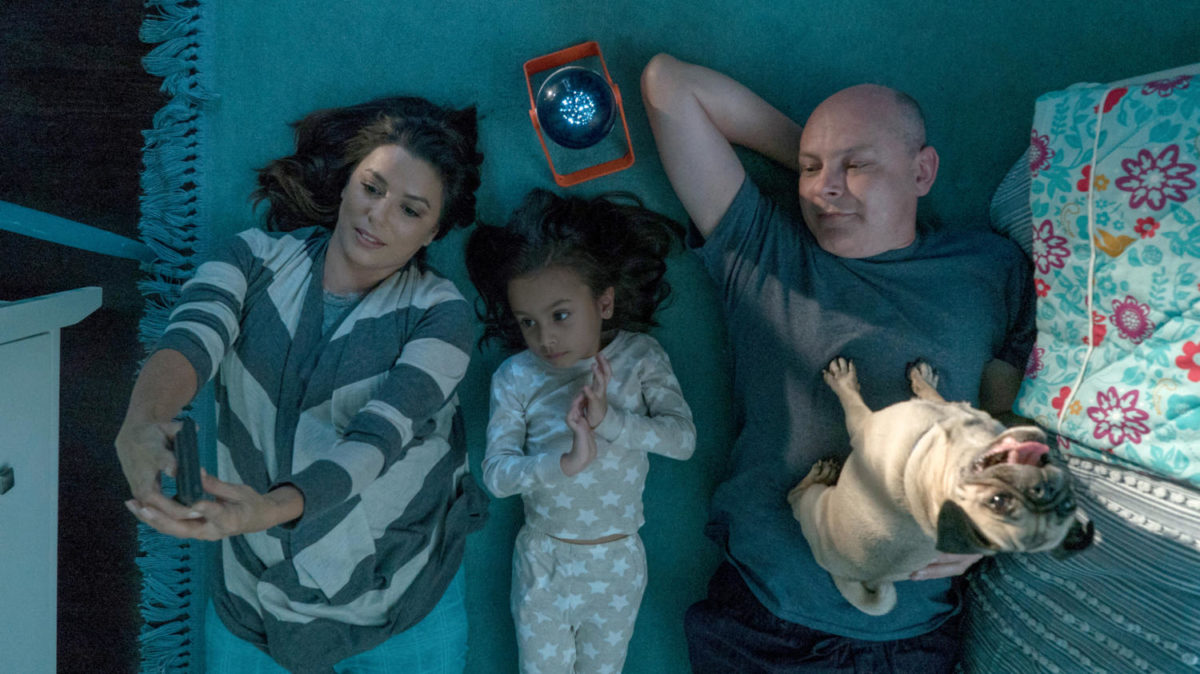
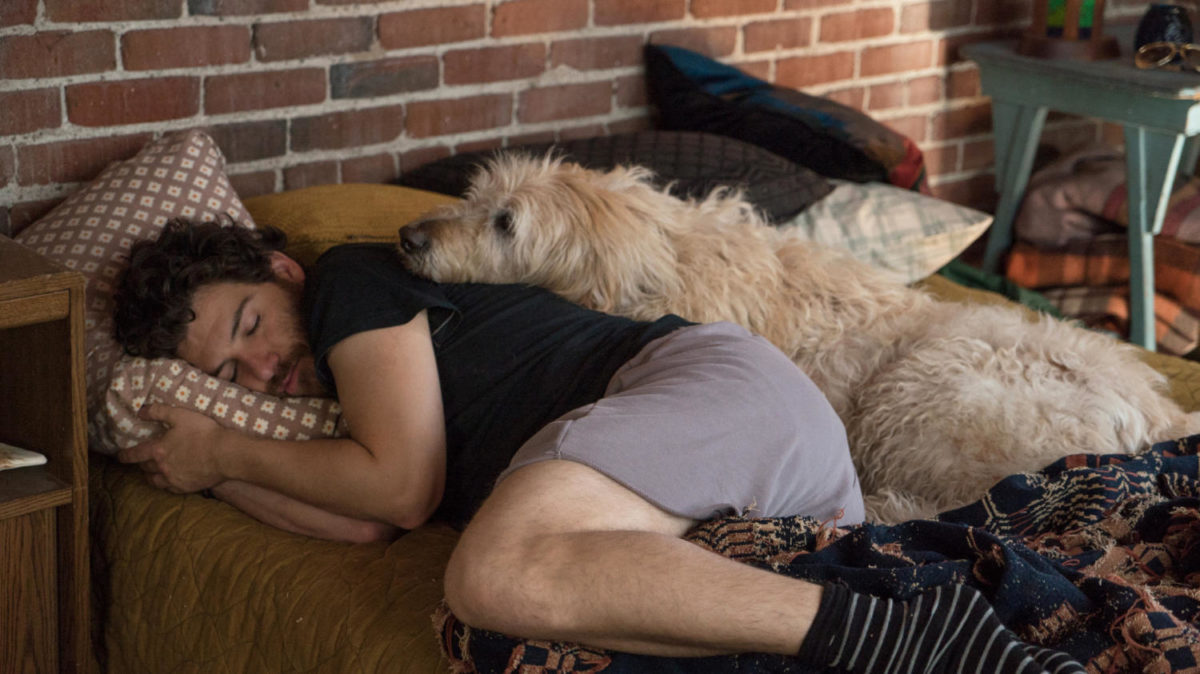
Dog Days is written by Elissa Matsueda and Erica Oyama. Matsueda and Oyama carefully wove in multiple storylines highlighting individuals who are in various stages of their lives. Elizabeth (Nina Dobrev) is a morning show host who just became newly single and is forced to team up former NFL sensation Jimmy Johnson (Tone Bell). The only thing these two have in common is a love for animals. Tara (Vanessa Hudgens) works at a coffee shop across the road from this vets office which is run by Dr. Michael (Michael Cassidy). While Tara lusts over this hunky doctor, Garret (Jon bass) secretly wishes they were together. Dax (Adam Pally) is an overstimulated thirty-something who has his sister’s dog thrust onto him when she has to go into the hospital (to have a baby). Grace (Eva Longoria), Kurt (Rob Cordory), and their adoptive daughter Amelia (Elizabeth Caro) find a dog while playing at a splash pad which they took home to keep safe. Little did they know it was one thing which would unite them. However, the dog’s original owner Walter (Ron Cephas Jones) is looking and appears close to retrieving her.
(L to R) Eva Longoria as “Grace,” Elizabeth Caro as “Amelia” and Rob Corddry as “Kurt” in Ken Marino’s DOG DAYS, an LD Entertainment release. Credit: Jacob Yakob / LD Entertainment
Marino’s pacing in the film was brisk yet effective. Not everything needs to be drawn out! The narrative had struck an appropriate balance between plausibility and implausible moments. My favorite portions of the film were during Amelia and Walter’s tales. Elizabeth’s story was indeed touching, but it seems like the only purpose for the storyline was to give Dog Days and emotional backbone.
Adam Pally (left) stars as “Dax” and Jessica St. Clair (right) stars as “Ruth” in Ken Marino’s DOG DAYS, an LD Entertainment release.
Dax undergoes the most significant transformation during Dog Days. While at first, he’s not sure what to make of his sister’s dog, now he can’t imagine a world without her. Companionship, love, and just being happy can open ones’ eyes as to what truly matters. Tara would never have given Garrett a second glance if it weren’t for the love she felt for animals (which drew her to volunteer at the shelter which he runs).
Adam Pally stars as “Dax” in Ken Marino’s DOG DAYS, an LD Entertainment release. Credit: Jacob Yakob / LD Entertainment
Dog Days might not have performed in a way most expected at the box-office, but that’s because word of mouth hasn’t spread about it. The film is touching, funny, and has a message which will resonate with everyone. Quite a combination of attributes for quite a lovely tale.
The second to last season of the highly popular Netflix series Voltron: Legendary Defender has arrived. How does it compare to previous seasons? Will it give fans exactly what they want? Only one way to find out.
SPOILER ALERT
Summary
After the battle with Lotor, the Paladins of Voltron find they must return to Earth if they have any hope of moving forward.
Writing
This season felt like a rollercoaster but one where the low parts of the ride really seemed to drag. After the intense battle with Lotor, the team finds themselves out of gas, in the middle of nowhere, and left with the only choice being taking the long, slow way back to Earth. Unfortunately this long journey drags on the characters as well as the audience.
There are good moments in this extended road trip, including a fantastic flashback into Shiro and Keith’s relationship. Yet there is an episode which is the equivalent of a “Bottle Episode” as the team has to stay together drifting in space. They start to go mad from fear and isolation which forces them to finally come to terms with the feelings which have been building up. It feels necessary but at the same time awkward as it appears like the team only got around to discussing their feelings and are able to bond afterward because they are the verge of death. Haven’t they been through enough already to show how close they are as a team?
A lot of world building takes place which helps to show what happened to Earth since the team’s departure. It does help to explain changes Earth went to prepare for the Galra invasion but at the same time it feels like it goes on for a bit too long. It does give some back characters some time to shine. Hunk also finally gets to some time show some character development. Also, Shiro, despite not piloting a lion anymore finds a way to be an incredible force of inspiration and in combat. These character moments are the best parts of the entire season.
Animation
The animation also feels like it has decreased in quality. There are scenes of gorgeous animation which are breathtaking to behold. The final battle of the season is especially incredible thanks to the over the top action which plays out through some of the best animation yet.
Unfortunately, there are moments which just feel off in terms of presentation. Almost like another layer needed to added. This is more noticeable usually when the camera zooms in on the characters and their facial details. There isn’t a total decline in presentation but there moments which aren’t as good the audience has come to expect.
Conclusion
This season of Voltron: Legendary Defender isn’t bad, but it isn’t fantastic. Considering this show has been known for being over the top with its quality, seeing so many flaws at once is disconcerting. Hopefully the team will learn from their mistake and the final season will blow everyone away. For now though, season 7 was entertaining but it was far from legendary.
The OVA boom of the 80s was an exciting time for Anime, a new influx of talent and money began to flood the market. Whilst this boom created unwatchable trash like Angel Cop and Genocyber, it also created diamonds in the rough. As such, I feel the need to talk about them. So, let’s kick off this series with the Devilman OVAs.
I got into this series because Bennett the Sage did a review of the first two OVAs and panned them. Yet I liked what I saw and was convinced part of the problem was the atrocious dubbing.
“The real” Ryo Asuka & Akira Fudo
I was, proven correct. The original Japanese version was great. If nothing else, Devilman should have been given one of those Trojan horse dubs in the late 90s with Steve Blum, Wendee Lee, and the entire Animaze dubbing studio behind it (Cowboy Bebop, Outlaw Star and Trigun are three series dubbed by the studio).
Staff
Even before we start we need to look at the talent behind the scenes, because there is a lot to talk about. The animation was produced by Oh! Production, a contractor studio who worked on Nausicaa, Castle in the Sky, My Neighbor Totoro & Kiki’s Delivery Service. The Ghibli connections do not stop there however, as the character designer was the late Kazuo Komatsubara, a venerable character designer whose name you might not know, yet if you’re a fan of 70s-80s anime. You know his work from Galaxy Express 999, Space Pirate Captain Harlock, Nausicaa, and in a bizarre twist: the original 1972 Devilman TV series. Finally, the director of the project: the late Tsutomu (aka Umanosuke) Iida, was an assistant director on Castle in the Sky (and Miyazaki protégé) who would later direct the last half of Mobile Suit Gundam: The 08th MS Team, and the 2001 adaptation of Hellsing. One other note, Iida co-wrote the script for the first two OVAs with Devilman’s original mangaka, Go Nagai. So, on paper at the very least, this sounds like a slam-dunk, one of my favorite manga, made by people with deep ties to one of my favorite directors of all-time (anime or otherwise). Let’s dig in.
Summary
Now do you believe me about the Studio Ghibli ties? Akira even has the expressive hair!
Now since no one has talked about Devilman: Crybaby, on the site. I’ll do a comparison between this and the more well-known (and frustrating) Devilman: Crybaby.
We open with a three or four-minute sequence of the birth of Demons, with pseudo-classical music playing in the background as demons get torn apart in a visceral way. Right away, it’s clear the OVA is moving on the right foot, because it gives us a reason to know what these demons are, and why we (as an audience) should care.
Couldn’t find a sequence that could be shown without black bars. So here’s a sequence from later in the OVA.
The backstory remains the same. Akira’s parents are dead, Miki is his friend, and Akira was adapted by Miki’s family. However, Akira is portrayed differently in the OVA, while he was technically a wimp, he is morally strong. This is shown in the first OVA where he defends the life of a bunny, from a group of 1950s greasers. He gets beaten up and has blood spilling down his face, yet his resolve is firm, and the greasers let him go. (I know it’s what Japanese delinquents looked like back then, but I shouldn’t be thinking of Grease or Squiggy from Laverne & Shirley, when I see these guys).
This lead to a wonderful scene, where Miki is placing the bandage on Akira, and the scene is almost silent. Why is this wonderful? Simple, Iida is using actions and silence to convey a mood. Meanwhile, Crybaby just wants to blast you with music and hypnotic colors.
Meanwhile in Devilman: Crybaby: Aah! My eyes!!! Too bright!! Too bright!!
This must have been something Iida and the team picked up from Miyazaki, the power of action and silence, instead of speaking. After all, actions speak louder than words. In film (and by extension Anime) it’s hard to create quiet moments, and yet the first Devilman OVA finds a way to utilize this concept in many of its scenes, which creates this lingering feeling of dread, as you’re watching the proceedings. As any horror expert will tell you (if they know what they’re talking about), tension and mood building are a thousand times scarier than jump scares or torturing people, (and requires a thousand times more work).
After bandaging Akira up, Miki and Akira are heading back home when Akira meets an old friend: Ryo Asuka, clad in a giant long coat, huge aviator sunglasses, and Char Aznable hair. Akira immediately recognizes him, Ryo brandishes a knife, and says Miki shouldn’t come with them, in his mid-80s red Audi. Are we sure Char Aznable & Ryo Asuka aren’t the same person?.
Char?
I’ll say this straight up, I love this characterization of Ryo, over Crybaby’s. Why? Well it goes to audience perception: in Crybaby, the reading I got was Ryo was a psychopath, seemingly distant from Akira from day one, instead of starting off cordial, and then growing icy (which was how Nagai seemed to characterize him). The 80s version adheres more to the Nagai version, so while he is mysterious, and does have axe-crazy moments, however he is also a more interesting character, who told Akira that he was the only one he trusts and seemed to mean it. I have a feeling, if the series had been completed, we would have seen him go from trustworthy to the villain, in a unique and subtle way. They were even hinting toward this direction in the second OVA with Ryo taking a reduced role, due to him being injured, yet still provided the save when he needed to, yet something was off about him.
Anyway, Ryo gives his backstory. His father went crazy, presumably under the influence of the demons he was studying, and after his father’s death, Ryo was given a large inheritance. After they arrive at Ryo’s estate, demons attack them but make their escape with the help of Ryo’s sawed-off shotgun (aren’t guns illegal in Japan?). These action scenes were phenomenal and gave me flashbacks to the action-packed extravaganza that was Castle in the Sky. Plus, guns and violence have the actual effect of having visceral impact, and not seeming like background noise (looking at you Crybaby).
How effective were the action scenes in the OVA? Here’s an explosion shot.
So, the plan is set up, Akira will merge with a demon to kill them, and the mode of introducing this? Well, in the original manga: it was a 70s acid rock party. In Crybaby: a gigantic rave, here it’s an 80s hair metal party. The transformation sequence is the same for both versions, except Crybaby’s seemed completely ridiculous, with Tron Legacy style design (don’t remind me of such an abomination), and ridiculous oversexualization, which I don’t think was satire.
Thus, ends the first OVA. Right away, you can see why I like the first two OVAs over Crybaby, yet there’s one other thing to bring up. Pacing, the OVA paces itself, knows when to reveal, let’s the story and moments happen. Instead of trying to summarize a 2 year/5 volume manga in ten episodes. This resulted in a problem, Crybaby was cramming too much plot into its short runtime, so the show couldn’t sit still and develop character moments that make a remarkable story.
One other aspect that was terrible in Devilman: Crybaby: characterization. Here’s Johan Liebert from Monster extracting information from some hapless goon.
Onto the second episode and I’ll try to be quicker.
The second OVA is split into two plots, the A plot featuring Sirene, and the B plot featuring Jinmen. In a surprising development, the B plot is first.
Akira Fudo embracing his inner Spider-Man.
Devilman is confronted by Jinmen, the turtle creature with his victim’s faces on his shell. Like the Crybaby episode he was in, he doesn’t last long. Unlike Crybaby, however, he leaves an impression, because he torments Akira with his dead mother.
The main plot involves another famous Devilman villain named Sirene. One of the positives of Crybaby, was how they updated some of the characters backstory. I liked how Sirene was now a businesswoman, unfortunately they didn’t really do anything with it. We’re not talking about the scumbag reporter, she sent him out, she didn’t do anything like trying to buy Ryo’s corporation, so again wasted a good opportunity.
And Ryo Asuka makes the save! (Marv Albert voice) Yes!
She is trying to get back/kill/do something to Amon. First, she tries killing Miki, which Akira prevents but unfortunately Akira is captured by Sirene and her psychotic lust for him. Eventually Ryo, comes in to save the day with a well-timed (and well shot) assist from a sniper rifle. The rest of the OVA is a fight between Sirene and Devilman. There’s another wonderful moment when Sirene is low on energy. So, she merges with another demon named Kaim, and we find out that Kaim and Sirene are one in their goal of killing, it’s simultaneously sweet and horrifying, and it’s portrayed as sweet, which was probably for the best. The second OVA ended decently enough. Sirene doesn’t defeat Devilman and was frozen in place.
In conclusion, the first two Devilman OVAs, are forgotten gems of the OVA boom. Two excellently animated, perfectly plotted, wonderfully characterized series and shouldn’t be remembered for a bad English dub. Devilman: Crybaby, despite my ragging on the show, isn’t terrible. However, look too much into it and you’ll hate it when you finish analyzing it.
At last, the first part of the Provisional Hero License Exam is over. MY HERO ACADEMIA delivers a happy ending for the 1-A class. While the exam comes down to the wire, every student manages to come together and win. The excitement and high stakes that fuel “RUSH!” makes it an awesome watch. “RUSH!” is perhaps the most well-named episode of MY HERO ACADEMIA yet.
Much like last week, what makes this episode especially strong is teamwork. The only reason all of the students pass is because they work together. Each part of the episode focuses on a different team-up between students. This kinship and fierce loyalty is what makes the show so strong. The series is as much about the entire class as it is about Midoriya. MY HERO ACADEMIA is such a strong show that it can create strong narratives that don’t really include Midoriya. The focus on all the characters in the class makes the series a smash.
Along with the spectacular focus on the whole team, there is some great standalone development. Several of the other students get great moments of maturity and change. Kaminari’s takedown of Shishikura was great, as the character has mostly been a joke through the series. Likewise, Aoyama goes from goofy coward to brave hero, putting his passing grade on the line. Even students like Sero and Ashido get solid beats of heroism. Class 1-A is filled with cool heroes who have grown since MY HERO ACADEMIA began. “RUSH!” is an awesome showcase for just how great they are.
Along with the great focus on the 1-A students, there’s also a great focus on the other schools. Several students from Ketsubutsu and Shiketsu got recognition in “RUSH!” as well. Yo Shindo and his Ketsubutsu Academy squad were like a creepy inverse of Midoriya’s team-ups. Meanwhile, Shiketsu High School has several students who struck out on their own as antagonists. While Shishikura was taken down, both Inasa Yoarashi and Camie Utsushimi are still threats. How they will continue to plague Class 1-A will be exciting to watch.
The fact everyone from Class 1-A passed the first test is a bit surprising. However, “RUSH!” does not promise that every student will pass overall. MY HERO ACADEMIA provides a great episode where the students are strong enough to pass… for now. What the next part of the test holds for Class 1-A will surely lead to an even more intense rush.
Uncanny X-Men returns in November with a 10-part weekly story titled X-MEN DISASSEMBLED, and according to Marvel, it could very well be the X-Men’s FINAL mission!
Wait for a second, did Marvel announce a new ongoing series and then overhype the new series to the point that all the X-Men die at the end of the story? Let’s look through this press release one more time.
From Marvel – This November, UNCANNY X-MEN returns with a new ongoing series, and it all kicks off with a massive 10-part weekly story! X-MEN DISASSEMBLED brings together nearly every mutant left on earth in a story that threatens to destroy them – an epic tale of mystery and tragic disappearance, with an adventure so earth-shattering, it could very well be the X-Men’s FINAL mission!
Yeah, they did. Apparently, whoever survives the first ten issues will be part of the ongoing series. Now we have to wait and see if X-MEN DISASSEMBLED is HYPE or OVERHYPE.
This is the type of press release that comic book fans are tired of. Every story arc doesn’t need to be a massive event that changes the face of Marvel Comics. Readers want good stories drawn by good artists. Overhyping an event leads to disappointment. In my head, if five X-Men don’t die in the first ten issues, then I think X-MEN DISASSEMBLED is OVERHYPED.
The creative team on the book is impressive. The Uncanny X-Men writing team features Ed Brisson, Kelly Thompson, and Matthew Rosenberg, with art by Mahmud Asrar, R.B. Silva, Yildiray Cinar and Pere Pérez. Leinil Francis Yu is in charge of covers.
Uncanny X-Men hits your local comic book store on November 14.
Are you excited for the return of Uncanny X-Men? Comment below with your thoughts.