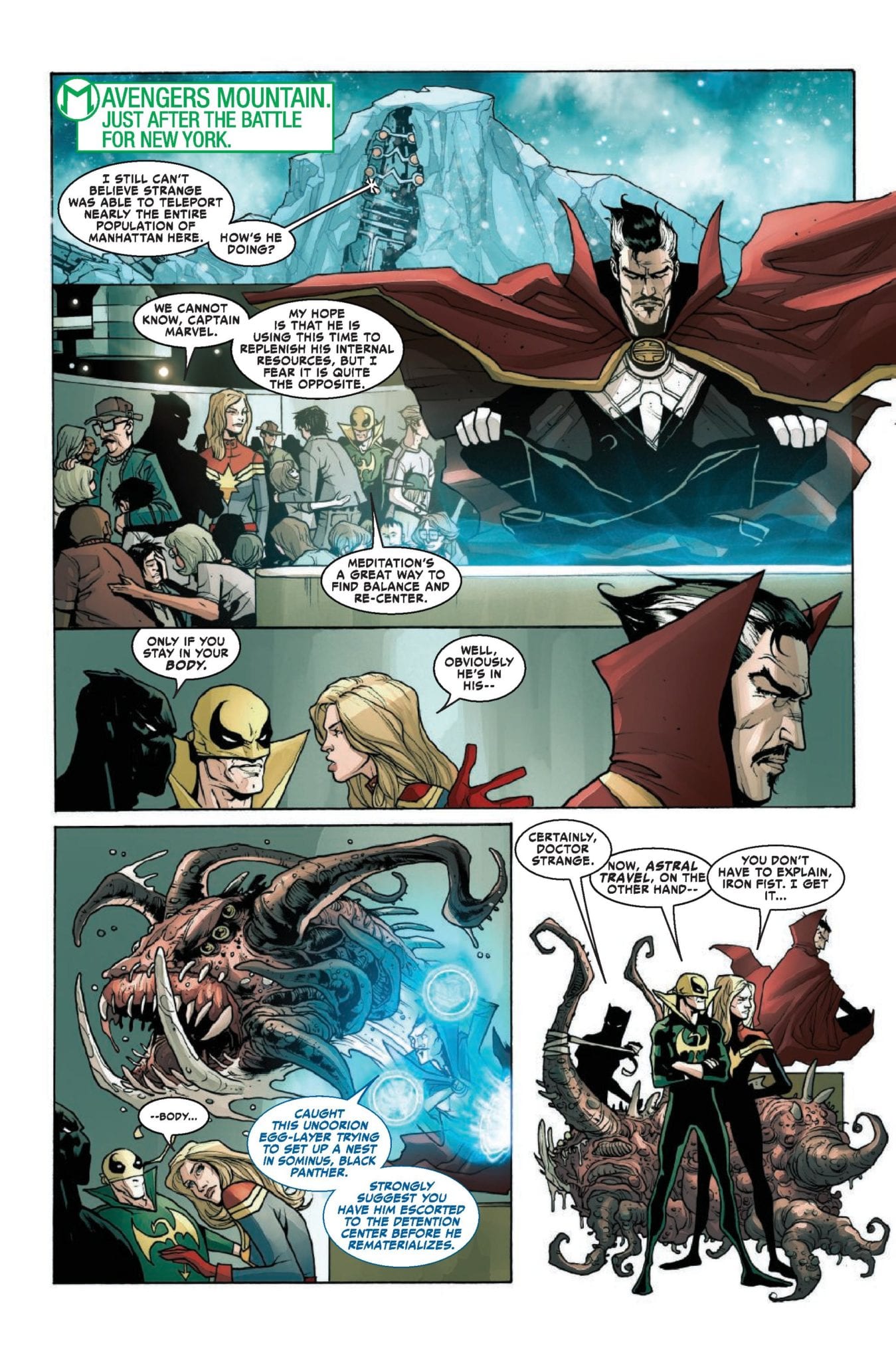
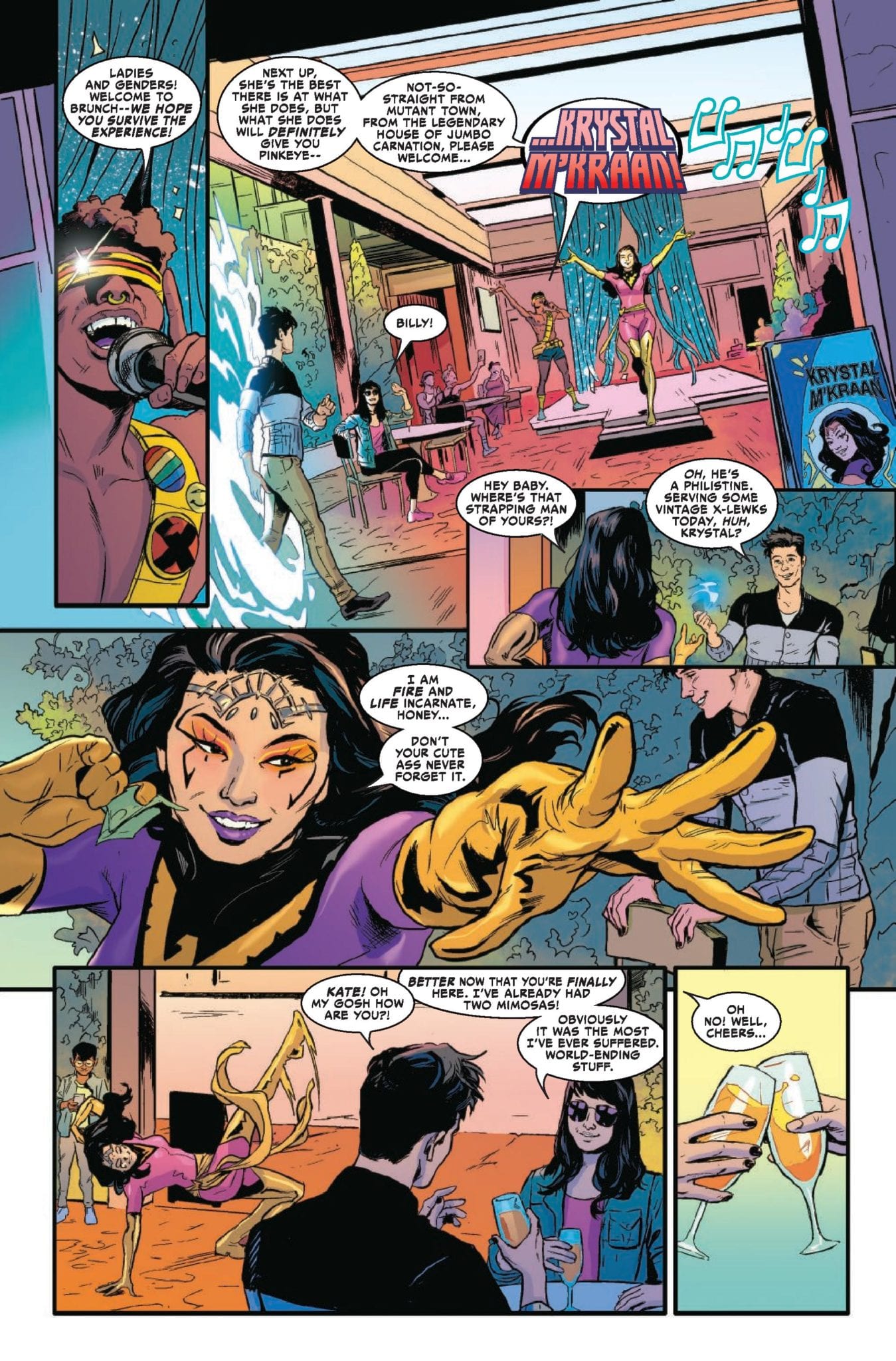
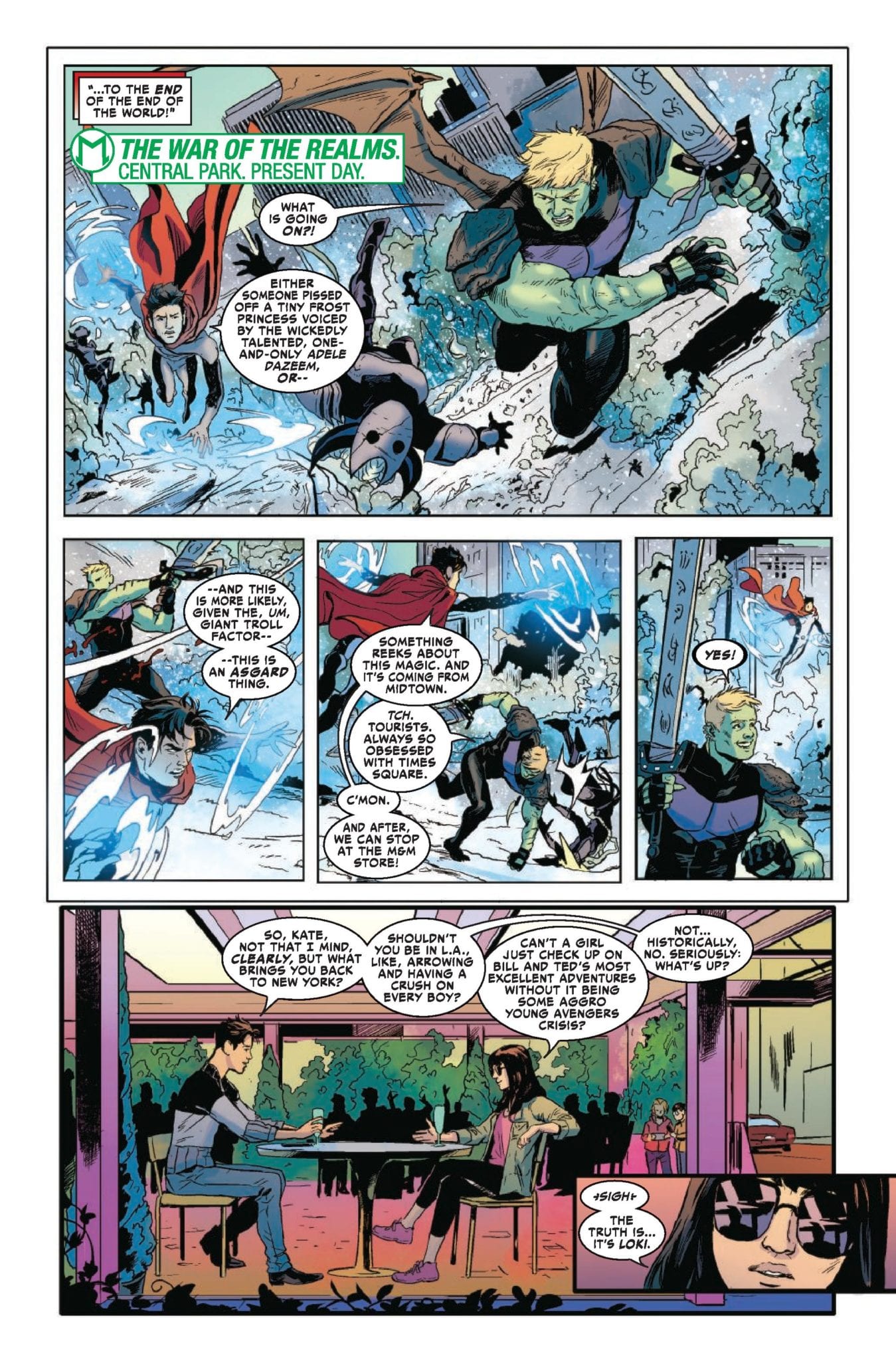
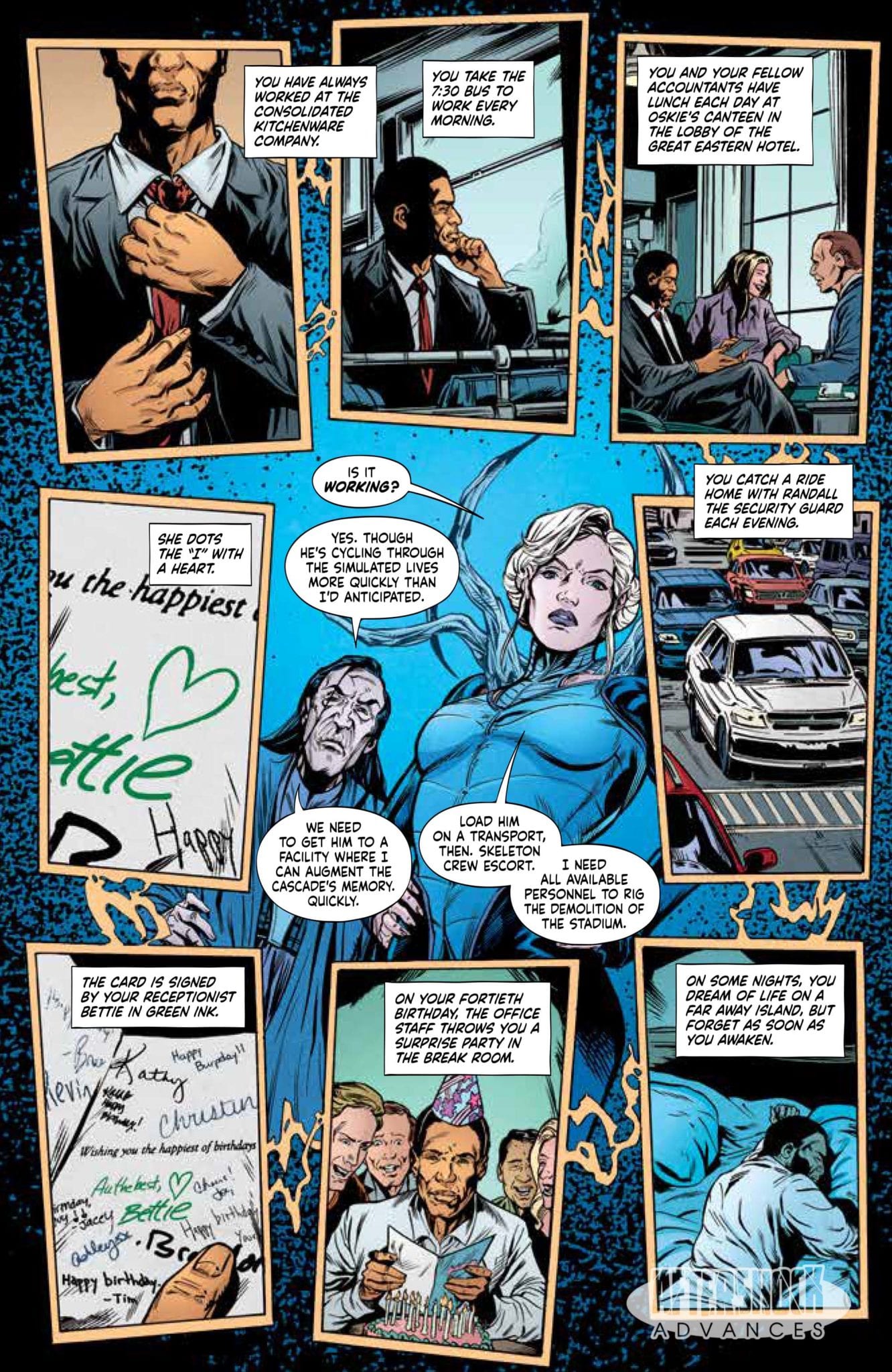
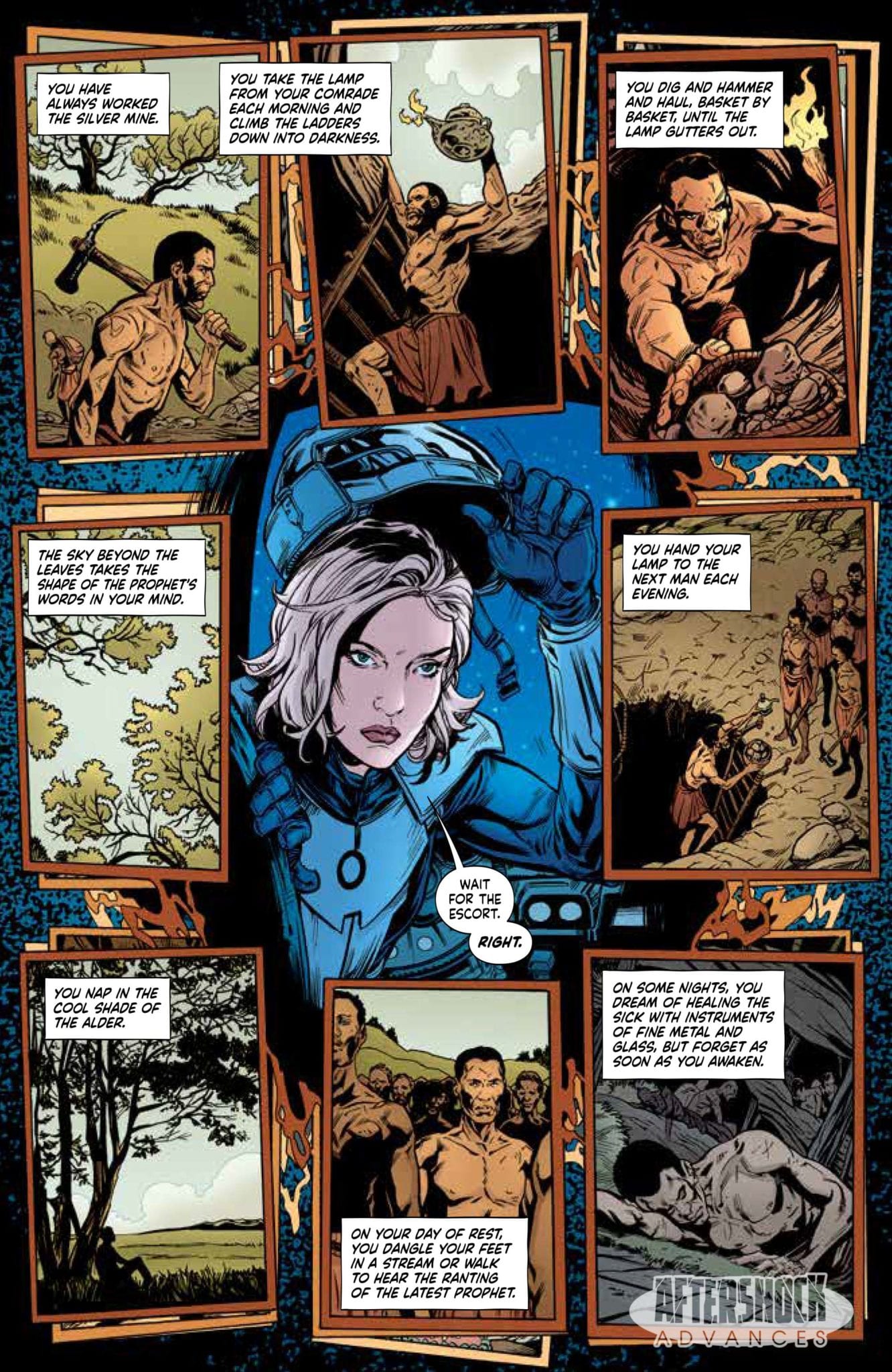
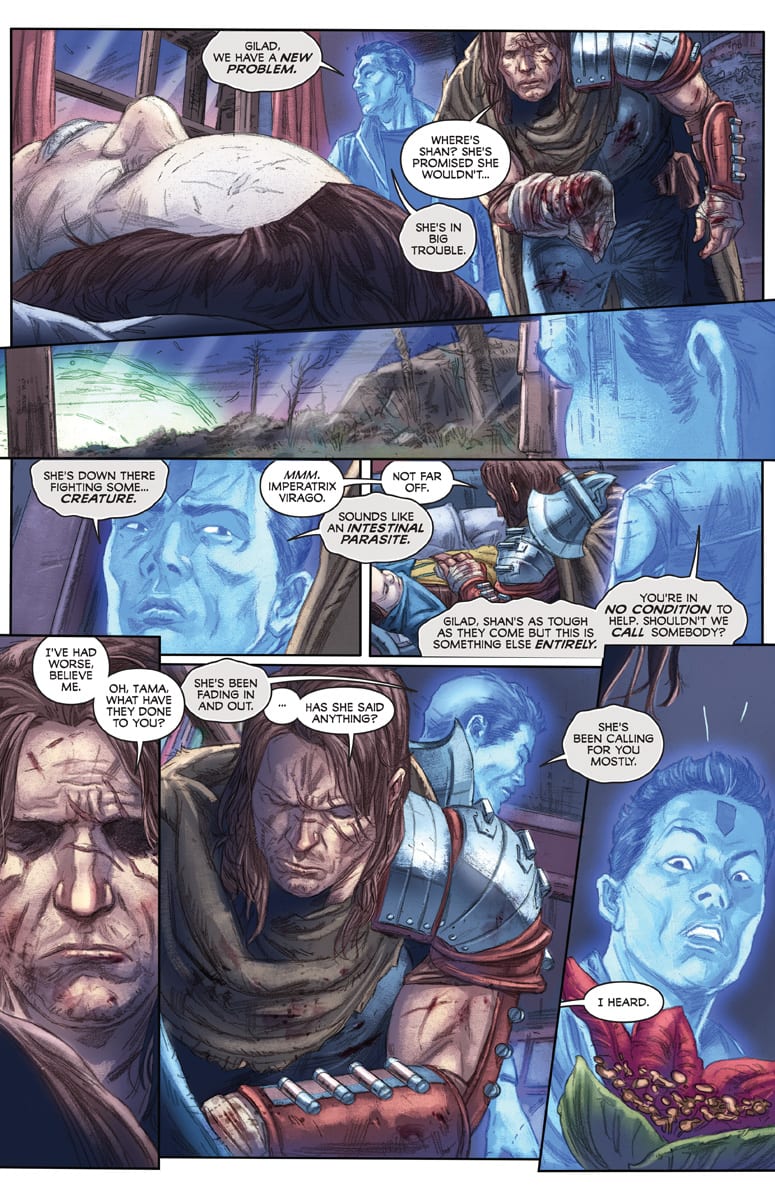
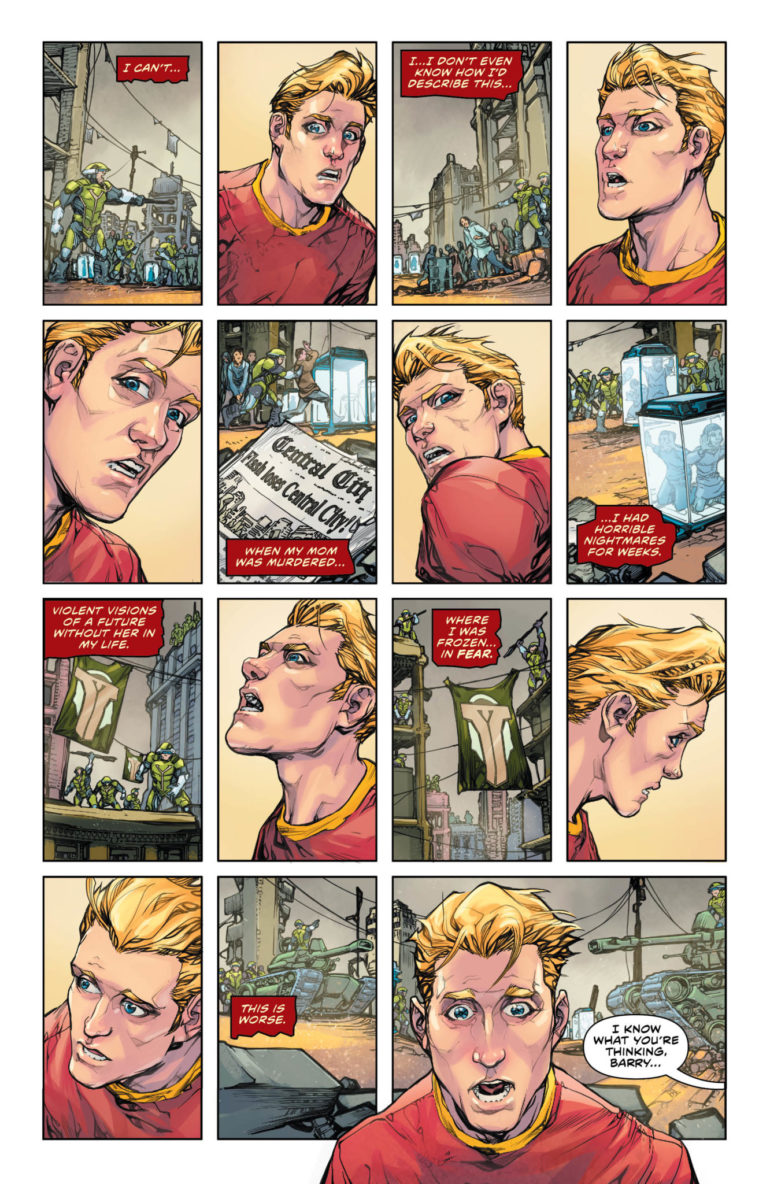
War Of The Realms: War Scrolls #2 doesn’t hit your local comic book store until May 29, but thanks to Marvel, Monkeys Fighting Robots has an exclusive NINE-Page preview!
About the issue: THE MUST-READ COMPANION TO THE WAR OF THE REALMS! From the Asgardian Bifrost, Daredevil watches Malekith and his forces lay waste to realms. Jason Aaron and Andrea Sorrentino take Daredevil — the God Without Fear — to places he never believed he would see! Then, Devin Grayson spins a tale of magic and its consequences as Doctor Strange casts a spell that will cost him dearly — and devastate the Asgardian pantheon! All this and more straight from the battlefield of WAR OF THE REALMS!
The creative team on the book:
Written by: Various, Jason Aaron, Devin Grayson
Art by: Various, Paul Davidson, Andrea Sorrentino
Cover by: Alan Davis
Check out the War Of The Realms: War Scrolls #2 below:
How many of the War of Realms tie-ins are you picking up? Comment below with your thoughts.
The plot thickens in Detective Comics #1004, as we learn Astrid Arkham’s origins, and the root of her hatred for Batman.
As the daughter of Arkham Asylum’s head doctor Jeremiah Arkham, Astrid grew up within the walls of the facility. Seeing the asylum’s inmates as a surrogate family, she learns to hate Batman after learning about a tragedy within her own past. This hatred sets her on her mission to cleanse Gotham of Batman, and bring about the mysterious “Eclipse” she references.
The Writing
Much of Detective Comics #1004 is occupied by exposition, with Dr. Arkham relaying Astrid’s entire backstory. Dedicating this much time to exposition is a hard trick to pull off well. Tomasi manages to do it, though, delivering another excellent chapter in the story.
We see a young Astrid interact with The Joker, Clayface, and other members of the Batman’s rogue’s gallery. It’s a bit uncanny, to a degree. We see genuine affection for the girl from characters we’re not accustomed to seeing in such an intimate light. Her interactions with these characters in Detective Comics #1004 give motivation to her actions as an adult.
Given the circumstances, she develops a startlingly-reasonable interpretation of the dynamics between Batman and his enemies, only viewed from a completely different perspective. In her view, Batman is not a hero or a protector. Rather, he’s the shadowy monster who comes to spread fear and pain among her adopted family.
Astrid’s backstory does induce a little bit of chronological confusion. She’s presumed to be around twenty years old at the time of Detective Comics #1004. However, characters present from her first moments like Batman, Harley Quinn, and Poison Ivy don’t seem to have aged at all in that span of time. Of course, there are ways around that matter, as fan speculation meticulously points out.
That point notwithstanding, the writing is strong, establishing pathos and motivation for Astrid’s crusade. It advances the narrative well, and leaves us on the precipice of a climactic showdown.
The Artwork
Bradley Walker’s artwork in Detective Comics #1004 is once again on-point. The sequences illustrating Astrid’s past flow seamlessly across the page without defined panels, giving the work a dreamlike impression that reflects a sequence of interwoven memories. Scrolls of Astrid’s childhood drawings serve as a device to lay out the story, which is a very neat effect.
The way in which Walker draws the flashbacks contrast well with the present-day sequences. He closely-crops many of these images in tight, evenly-spaced, rectangular panels. The end result is a work that feels cohesive, without being dull.
Nathan Fairbarn’s eye for color really shines in the flashback sequences. He bathes the figures in a lot of single hues against the beige backdrop of the scroll, adding to the dreamlike, flashback vibe.
Final Thoughts
Tomasi and company don’t disappoint on Detective Comics #1004. An excellent chapter in an equally attention-grabbing run.
During World War II, the Freedom Fighters fought against the Nazis to try and stop the Reich. Just when they appear to win, the Reich revealed a metahuman of their own: The Superman of this world. Dubbed Overman, the Kryptonian was able to overcome the Freedom Fighters and helped the Nazis take over the world. Decades pass and the Freedom Fighters bring Uncle Sam out of his dimension to face the Nazi party of today. When he was revealed to the world, however, the Fuhrer requests to reawaken Overman. Has Uncle Sam returned just to be defeated once again?
**Some Spoilers Below**
Story:
We open the story with the Nazis awakening their greatest weapon, Overman. He doesn’t say much but smiles at the fact he gets to help his Reich. Overman takes off to find the Freedom Fighters, who are handling a relic of their own. Uncle Sam is out cold after his explosive return, and the Freedom Fighters have no idea what to do with him. He eventually wakes up and gets up to speed with his new team. It turns out they were trying to bring him back for a while, referencing the events of the Multiversity: Mastermen comic. Before they can get comfortable with their new teammate, however, Overman finds them and attacks.
Halfway through the series and the epic story shows no signs of stopping. This issue has badass action and extreme tension. It’s very rare to get comics that have readers on the edge of their seats, but Freedom Fighters has been able to do it time and time again. This time around the threat of Overman and, as expected, he brought a whole new level of terror and action. There was even a twist in the middle of the story that had this reviewer’s jaw hit the floor. The only problem with the issue, however, is the fact it doesn’t precisely align with Mastermen. It’s just a nitpick to a fantastic comic, and it shouldn’t stop readers from taking a look themselves.
Art:
The world of Freedom Fighters continues to look as amazing as it is grim. The battle between the team and Overman is the best-looking fight I’ve seen in a while. From the illustrations to the colorwork, this comic never stopped impressing. The best page is hands down the twist mentioned in the story section. The moment the reader saw the full-page spread, it filled me full of terror and delight. I love the look of this book, and I can’t imagine it with any other art team.
Conclusion:
Freedom Fighters continue to be the underdog series that deserves to be in the spotlight. It’s gritty, action-packed, and just a fantastic time. Even with these giant action sequences, there is a finely written story woven in. I highly recommend this comic as well as the series.
STRONGHOLD #4 hits your local comic book store on June 5, but thanks to AfterShock Comics, Monkeys Fighting Robots has a four-page preview of the issue written by Phil Hester with art by Ryan Kelly.
MFR Review by Darryll Robson – A magnificent comic which blends the superhero mythos with modern comic book storytelling. Stronghold contains exceptional work from everyone involved and surpasses anything the Big 2 are putting out.
About the 32-page issue: On the run from The Stronghold, Grey and Claire encounter an apostate agent who, like Claire, defected from the organization long ago. But what he knows about both lovers’ pasts may point to a fate more terrible than the certain death they flee.
Simon Bowland lettered STRONGHOLD #4 with colors by Dee Cunniffe.
Check out the STRONGHOLD #4 preview below:
Do you have STRONGHOLD on your pull list? Comment below with your thoughts on the series and AfterShock Comics.
You’ve played the game. You’ve seen the movie (right?). Now read Clue: Candlestick #1, the new comic adaptation written and illustrated by Dash Shaw.
Professor Plum receives a coded message from Mr. Boddy, informing him of threats against his life, and a desire to settle his estate’s vast collection of oddities. Of course, some of the collection’s most prized pieces include a rope, a lead pipe, and a candlestick to name a few. Plum heads off to meet his friend at a remote manor…but they’re not meeting alone.
The Writing
Clue: Candlestick #1 is disarmingly funny and charming, yet strangely uncanny at the same time.
Much of the writing draws on the absurd as Shaw faithfully incorporates as many components of the game as possible, including the characters and the whodunit nature of the story. The murder weapons are all here, albeit with bizarre new backstories. Even the weird statues under which Boddy hides his friends’ keys are shaped like giant game pieces.
What’s interesting about this interpretation is that Mr. Boddy’s life isn’t the only one at stake. Until the killer’s identified, any of the characters could be on the chopping block. Clue: Candlestick #1 reads like something of a mashup between surreal comedy and an old dark house film. It’s a Wes Anderson take on The House on Haunted Hill, with distinct notes of Abbott and Costello in the mix. The dialogue is witty, without stepping into cloying territory.
The book invites readers to try and solve the mystery as the story plays out. Shaw signals deliberately to clues and other points of interest. At certain points, though, the clues being thrown around can be a bit distracting. Doubly so, when the writer draws deliberate attention to them through narrative interjection.
That said, there’s no immediate answers given. The mystery is allowed to simmer, giving readers the impression that there are more layers of complexity to unravel as the story progresses. There’s reread value here, too, as you pick up on new elements you might have missed on a first go around.
The Artwork
As mentioned, Shaw provides artwork for Clue: Candlestick #1 as well. He has a distinct vision for the work, providing brightly-colored, pop-tinged visuals that complement the writing’s off-kilter tone.
The art feels like a four-panel news comic in certain regards. The quirky and minimal line work conveys little dynamism or motion, making each panel feel fairly static. Character designs are reminiscent of something you might see on an Adult Swim series. However, the effect compliments the story, rather than detract from it. Detail is employed very selectively, as in illustrations of the murder weapons, or in key panels.
Shaw’s notes in Clue: Candlestick #1 become unavoidable elements of the page design throughout the book. The effect can be somewhat cluttered with notes directing the reader’s attention to different points. It’s not enough to overpower the work, but it is distracting at points.
Final Thoughts
Clue: Candlestick #1 is an attention-grabbing, unique start for the new series. It’s too early to say whether the charm will last or fade with successive issues. However, the creator’s vision for the series suggests it’s worth rolling the dice.
The villainous Imperatrix Virago has made her claim on Tama, Earth’s Geomancer and life force vessel. Shan is doing her best to hold her off, but it’s only a matter of time before the necromancer reaches the young girl. And to make matters worse, Syntilla’s virus has weakened her to the brink of death. Fortunately, the Eternal Warrior Gilad is on the search for a cure. But can he find it and reach Tama before it’s too late?
Story
Andy Paknadel and Alex Diggle’s INCURSION #4 is the climactic story readers of this series have been waiting for. The protagonists’ desperate attempt to keep Tama alive is diametrically opposed to Virago’s desire to extract the life force from the planet. The young girl’s very life will ultimately determine the fate of Earth.
As the battle rages on, Gilad continues looking for a cure despite the horde of Virago’s army. His diligence is commendable, but it’s his motivation that inspires the reader. Through Gilad’s actions, the writers paint a beautiful picture of his true impact. We see that his role as Tama’s protector serves a greater purpose than simply keeping her alive. He wants to keep her human.
This finale crafts intriguing insights into the relationship between Gilad’s role as Tama’s protector and Tama’s role as Earth’s guardian. Readers will experience the heart-wrenching drama that comes with the delicate balance of life and death these heroes attempt to protect.
Art
Doug Braithwaite’s penciling gives readers highly detailed battle-scenes throughout the issue; one can see every scratch and cut opened by the clash of swords. Similarly, Diego Rodriguez and Leonardo Paciarotti treat readers to brilliant colors in these fights, including the crimson red blood spread throughout the battlefield’s mountainous backdrop.
In addition, Marshall Dillon’s lettering gives life to each character, especially Virago. The squiggled lines around her dialogue lets the reader imagine her cryptic manner of speaking.
Doug Braithwaite’s main cover, along with Diego Rodriguez, Renato Guedes, and Tonci Zonjic’s variant covers, give readers thought-provoking predictions for this story. Their artwork is splendid, featuring illustrations of Virago, Gilad, and Tama with ominous overall tones.
Conclusion
INCURSION #4 wraps up the wild journey Valiant began back in issue #1. Fans of Gilad the Eternal warrior and Tama will be rewarded for following along with this cosmic, earth-shaking adventure.
We’ve gone back to the beginning of the Flash! Barry Allen is a CSI working for Central City. He lives his lives life in Central City as he also tries to solve his mother’s murder. The fateful day comes where he is struck by a bolt of lightning and forces him into a coma. By the time he awakens, Barry realizes he has super speed. He begins to test his abilities, learning the iconic skills the Flash is known for. Barry then decides to go as fast as he can and ends up running into the future. There he learns Central City has fallen and an older Flash continues to fight a dangerous foe. What the heck happened to Barry’s city?!
**Some Spoilers Below**
Story:
After finally settling into the timeline, Barry looks around and begins to freak out that his home city is in ruins. The older Flash quickly tells him to relax and to follow him to a place he can send his younger self back. Along the way, he explains that the villain responsible for the destruction was the Turtle. The slow villain had gained power over the years thanks to his abilities and was able to defeat the Flash and take the city. The older Flash leads Barry to a compound that has the cosmic treadmill and the pair head in to take it from the Turtle’s army.
I can already see where this storyline is going to go and that’s a problem. Barry will try and change the future, but it’s going to go wrong. It’s a Flash time travel trope that has been done before. We still have a bit of a way to go in the arc but it needs to add something new, or it’s going to lose readers.
That being said, I loved the interaction between Barry and the old Flash. Without Jay Garrick in the timeline, we need that elder figure for the Flash. The older Barry’s explanation on how he doesn’t need to use his fists to fight was a perfect teacher-student moment. While moments like these are great, it doesn’t help the story as a whole.
Art:
Howard Porter’s art continues to knock it out of the park. The designs of future Flash and Turtle look fantastic as well as the dystopian future they live in. The super speed is also creatively illustrated, especially when Barry returns to the present. Throw in the fantastic colors of Hi-Fi, and we have one of the best-looking comics on shelves.
Conclusion:
While it looks pretty, this comic’s story isn’t doing anything new yet. While I love the interactions between characters, the overall story is beginning to look like a predictable time travel story. All we can do at this point is to wait for the next issue and hope the Flash can pull out a fresh twist.
With Ellie’s fate unknown, Ms. Rose and Timothy need to find a way out of Faerie. But Titania’s spell has taken all desire to leave from Timothy! Is the choice completely out of his hands? Will he muster up the courage to face the truth of his connection to Faerie and find his way to Ellie?
Story
Since finding himself in the land of Faerie, Timothy has chosen to spend most of his time lazing away in the villages and woods with enchanted creatures. The boy has no memory of his magic training or Ellie’s peril and a complete lack of desire to leave. Fortunately, Rose knows exactly what game Titania is pulling and will stop at nothing to break her spell.
Kat Howard’s depiction of Timothy is the exact opposite of the boy we know from past issues. He’s easy-going, carefree, and would like nothing more than to waste his days away in the land of Faerie. But this isn’t an inconsistency in Howard’s writing; it’s a strength. Readers get a clearer understanding of Timothy’s character by seeing his opposite. And it’s clear his real personality – the anxious and cautious persona – is the antithesis of all that Faerie represents.
It seems Titania and her subjects are bent on keeping Timothy in this alternative persona and Faerie forever. But he may recover his free will once his connection to the realm is uncovered. The story’s drama increases exponentially once Timothy and Rose confront this truth Titania has been keeping from them.
Art
The artwork in BOOKS OF MAGIC #8 is exceptional as always. Tom Fowler’s penciling meshes beautifully with Brian Churilla’s solid inking to illustrate the exotic shapes found in Faerie’s mystical landscape. This, combined with Jordan Boyd and Marissa Louise’s mix of dark and light hues, gives life to the atmosphere the story calls for.
In addition, Todd Klein’s lettering does a great job of moving the story forward. He positions them in such a way that the reader is easily able to follow the illustrations as the story’s events unfold.
Kai Carpenter’s cover art features the beautiful queen Titania. The fairy beings in her hair capture the sorceress’ whimsical nature, but her foreboding look suggests a hidden sinister side.
Conclusion
BOOKS OF MAGIC #8 gives readers more answers to the mystery of Timothy’s connection to Faerie via its fast-paced story. It sets us up for more mysteries to be solved in the coming issues.
What do you think is Timothy’s true connection to Faerie? Let us know in the comments below!
Even as Megacon 2019 wound down at the Orlando Convention Center on Sunday, Zachary Levi kept the energy level high during his Q&A session.
Levi, of course, is a hot TV and film star right now, coming fresh off the success of his role in Warner Bros.’ Shazam! However, he’s also known for his role in the TV series Chuck, and as Flynn Rider in Disney’s Tangled, a role he reprises for the upcoming Kingdom Hearts III.
Hoverboards, Self-Help, and The Jungle Cruise
The previous panel (a Q&A with Tom Welling, Kristin Kreuk, and Michael Rosenbaum of Smallville) ran long, causing a delay for Levi’s session. As Levi put it, though, “we’re the last panel of the day,” suggesting his session would run long as well. He seemed to have little interest in the chair set up for him, preferring to stand, pace, and occasionally flip across the stage throughout the session. He’s a powerful personality, talking fast and rarely standing in one spot for more than a second or two.
Fans brought a wide variety of questions to the star, covering everything from self-help advice to the ramifications of time travel. Despite Shazam! being his most recent work, most of the audience seemed interested in Tangled-related questions. Levi handled every topic, though, with great energy and humor.
“We don’t know what time travel will do to the spacetime continuum,” Levi said in response to one fan’s question about going back in time to speak with a younger version of himself. “But, if Back to the Future taught me anything…it’s really cool, and I get a hoverboard.” He also noted The Jungle Cruise as his favorite Disneyland ride, describing the attraction as “Roughly eleven minutes of dad joke standup, which is right up my alley.”
Of course, Levi’s session also had an unmistakable level of sincerity to it and genuine love for his fans. “I’m not always bubbly and an extrovert,” Levi answered when one fan asked how he managed to be so outgoing. He said that, like any extrovert, he feeds off the energy of those around him, pointing out he is “incredibly grateful” to fans who spend their time and money coming to see him. He even offered to sign a yearbook for a member of the audience afterwards.
Levi mentioned being a strong advocate of seeking therapy, and also credits his spirituality with much of his success and happiness. As he says, the four keys to a successful life are “empathy, gratitude, humility, and trust.”
“Be patient with yourself,” Levi says. “You’re worthy of being patient with yourself.”
The topic of fanart also came up; specifically, what he does with all the fanart he receives. Levi explained that when he receives a new work (presumably a common occurrence), he typically autographs it and then auctions it off for charity. “I think ‘that’s lovely…but what do I do with it?’” Levi said, illustrating his response when presented with fanart. As he put it, he didn’t want to “build a shrine” to himself in his house by hanging on to it. Instead, he opts to direct it toward generating money and attention for a good cause.
…and yes, by audience demand, he did the Flynn Rider “smolder.”
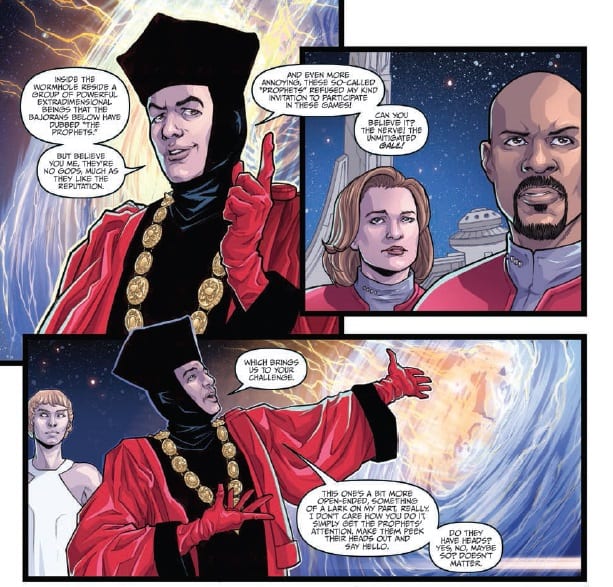
Continuing to boldly go where no comic crossover has gone before, Star Trek The Q Conflict reaches Bajoran space and all that Deep Space Nine had to offer. IDW Publishing, and the Tipton’s in particular, are committed to bringing on board as many aspects of the franchise as possible to really give this crossover a universal feel.
Aspects of the original series and the Next Generation have featured heavily so far but now it’s the turn of Captain Sisko’s turf to play host to Q’s outrageous game.
STAR TREK THE Q CONFLICT Credit: IDW Publishing
Writing/Story
As per previous issues, Scott and David Tipton have a strong hold on the characters from all of the Star Trek incarnations. Their representations are flawless with each cast member speaking and acting exactly as you would expect them too.
The difference in this issue is that there is finally a threat for the crews to face. As Q’s selfish game continues, he leads the various star ships into Bajoran space and challenges them to ‘bring out the Prophets’. On the Enterprise E, Guinan expresses concern over Q’s true motives, and not without cause. What is Q’s goal and has he over stepped the mark by involving the Wormhole creatures?
This issue unfolds like the previous three issues, with a simple set up and check in with the various mixed crews. However, the Tipton’s have a surprize in store for the cast and the reader as a twist in the tale changes everything. The writers introduce a foreshadowing of this in the opening but this is easily missed, especially as Guinan, true to character, is non-descript in her warnings.
When the moment comes, the twist in the story takes over and the rest of the issue runs out of control, from the reader’s perspective. The Tipton’s have a firm grasp on the narrative and control the pace of the decent perfectly. It’s like they are leading the reader down a Star Trek rabbit hole and for the first time in the series the reader has no idea what to expect.
STAR TREK THE Q CONFLICT Credit: IDW Publishing
Art
The artwork also benefits from the change in pace. Silvia Califano and Elisabetta D’Amico have added a layer of dynamism to the panels that help illustrate the spiralling narrative. The characters and the story is becoming bigger and to reflect this the panel boarders are barely able to contain the action. Cast member’s cross over the gutters, images bleed to the edge of the page and when things really begin to heat up, the panels themselves become distorted.
The color work by Alessandra Alexakis is outstanding. It adds depth to the characters and creates the setting that the cast inhabit. The scenery makes the panels in The Q Conflict; grounding the action on the star ships but opening everything up in the space sections. The wormhole has never looked so all encompassing.
Neil Uyetake’s lettering is adequate. It does the job it sets out to do but some of the speech balloon tails over reach and create unnecessary barriers between characters. His depiction of the wormhole aliens’ disembodied voice is finely presented, giving the Prophets a visually distinctive voice.
STAR TREK THE Q CONFLICT Cover Art Credit: IDW Publishing
Conclusion
Previous issues of Star Trek: The Q Conflict have spent too many of the pages on build up and then rushed through the action element of the story. This latest issue has better pacing to the narrative. The dilemma at the centre of the story has time to grow but it also has time to pose an actual threat. The price for this is that the comic features less characters but this is a fair price to pay. Instead of trying to pay lip service to the franchise, this chapter has a story and fits in the relevant characters as they are needed.
The Q Conflict is picking up and it finally has a story worthy of such a momentous crossover of characters. Issue 4 is the best issue so far and it’s not too late to join the party