Home Blog Page 456

Review: PUNK MAMBO #2 Delivers Strong Writing, Excellent Artwork

Monkeys Fighting Robots

Punk Mambo #2 finds the titular priestess in Haiti, following the trail of whoever is kidnapping the spirits. The loa are unhappy about Punk Mambo’s brazen lack of respect for her powers and the customs of voodoo. They need her, however, if they’re going to stop Uncle Gunnysack and recover their stolen comrades.

The Writing

The story is a bit more compact than in our first issue, allowing Bunn to delve into more characterization. The interactions between Punk Mambo and the loa flesh out her character, while giving personalities to the loa as well. We’re also introduced to Josef, a Haitian priest tasked by the loa to assist the mission. Throughout Punk Mambo #2, Josef plays an important role as an observant devotee to contrast with Punk Mambo’s lack of reverence.

Punk Mambo, as a character, doesn’t respect the spirits or the Voodoo faith in general. She’s essentially colonizing the religion and using it for her own personal gain. It’s a troublesome point, but Bunn doesn’t let that go unremarked upon. He employs the character of Josef as an effective foil who’s willing to challenge Punk Mambo and call out her behavior.

The dialogue in Punk Mambo #2 is strong and witty, making the characters feel very organic and believable. This tends to be one of Bunn’s strong suits, and he certainly doesn’t disappoint here.

A good deal of the issue focuses on the interactions between Punk Mambo, Josef, and Marie. That’s not to say, though, that there’s no action. The trio end up in a showdown with Uncle Gunnysack’s devotees in the book’s second half. That said, the fight doesn’t really seem to add much, as Uncle Gunnysack himself shows up shortly after. It’s nice in that it adds some dynamics to the otherwise subdued storytelling, and it allows Punk Mambo and Josef to showcase their abilities. It doesn’t really serve to advance the narrative much, though.

The Artwork

Adam Gorham’s lines for Punk Mambo #2 are excellent. He presents a lot of eye-catching, dynamic imagery throughout, and the work generally flows extremely well. Panels are meticulously detailed and vibrant, really grounding the reader in the environment.

One of Gorham’s strengths is in his expressive faces. Readers can detect subtle changes in characters’ expressions—a slight smirk, the furrowing of a brow—and pick up significant tonal information. Going off that point, his designs for the loa are awesome. Even if one knows nothing about Voodoo as a religion, you can still draw key context about what each spirit represents based on the way they’re portrayed. Uncle Gunnysack is perhaps the most impressive and imposing, looking something like a more-terrifying cross between Krampus and a pro wrestler.

The colorwork by José Villarrubia and letters by Dave Sharpe are on-point here, too. Villarrubia employs a wide palette of colors, with dark, radiating tones for the loa, but bright, softer colors for street scenes and marketplaces. Even Sharpe’s letterwork on the loa give the reader key insight into each spirit’s personality and tone.

Final Thoughts

Punk Mambo #2 keeps up the momentum from our first issue, while advancing and enriching the overall narrative. It’s a fun, engaging story, brought to life by quality artwork. Definitely check this out.

Monkeys Fighting Robots Youtube

Interview: David Pepose on SPENCER & LOCKE & Tips For Aspiring Writers

Monkeys Fighting Robots

Monkeys Fighting Robots talked with David Pepose at MegaCon 2019, where the writer discussed his series Spencer & Locke and offered up some advice for aspiring comics writers.

Check out the full interview with David Pepose here:

On Roach Riley, villain of Spencer & Locke 2:

“That was sort of the toughest part about writing our sequel: I wanted to make a villain that was just as worthy as our lead characters. Because our first arc was sort of “what if Calvin and Hobbes grew up in Sin City?” and it was a story about PTSD and trauma and mental illness and what are the lengths that the mind will go to protect itself from harm. So i was thinking, what’s the opposite of all that? And it took me a little while to get into that headspace.”

“Spencer and Locke, their trajectory, it’s a redemptive kind of arc, and what’s the opposite of that? Roach thinks, once you’ve had the worst day of your life, that’s it, nothing else can touch you. I looked to Heath Ledger’s Joker as a huge inspiration. Also Taxi Driver and The Deer Hunter. So once I got into that head space, the whole story kind of clicked for me in terms of its themes and how Locke would react to things and how Roach would slowly start taking control of the situation. He was kind of a hard character to stay in long term, but it was so rewarding to write.”

spencer & locke 2 comics david pepose jorge santiago roach riley

On his upcoming series Going to the Chapel:

“The easy log line is: it’s like Die Hard met Wedding Crashers. It’s about a wealthy bride who’s dealing with a serious case of cold feet, but before she can say anything, her wedding is taken over by a gang of Elvis-themed bank robbers. So she’s in it to play both sides against the middle, she wants to get out in one piece. It’s a love story! It’s a story about commitment and dysfunctional families and what does it take to say till death do us part?

I feel like rom-coms always get a bad rap… There’s a preconception of who’s allowed to consume and enjoy these things, and I think that’s nonsense. A lot of my favorite movies are twists on the rom-com genre… I think rom-coms are just as flexible of a genre as crime or science fiction. And so I wanted to write something that I thought I would really like to read, that both men and women would enjoy and have a lot of fun reading.

People said it’s like if 90’s Julia Roberts was in a 90’s Quentin Tarantino movie.”

going to the chapel preview david pepose action lab danger zone spencer locke

On what advice he has for aspiring comic book writers:

“Don’t get discouraged. There are going to be so many roadblocks that happen to you in comics… Things will fall through. It’s just the nature of the business. People get busy, they have family things come up, they bite off more than they can chew, and the things that writers have to remember is: you have it easy. You can write five scripts in the amount of time that one artist can draw one issue… So you have to kind of manage your expectations a bit. And when you find somebody who can go the distance, you really have to hold on to them tight.

On top of that, it takes time. It’s a marathon. It took nine months for the pitch for Spencer & Locke – just the pitch – to get put together. And then it took another six months to get an offer for it. And then it took another ten months to complete it! So when you start thinking of it like that, especially when you’re starting out in the creator-owned scene, these things aren’t fast. And the higher quality you’re shooting for, the longer it’s going to take.

My biggest suggestion for any writer out there is: learn other elements of the business. For me, I started as a reviewer, so I was able to articulate what I liked about comics art and what I didn’t like and the kinds of shots I liked, so I could discuss with an artist in the thumbnail stage what I liked. I took classes at Comics Experience online for coloring and lettering, and that helped me out in a BIG way, because if you’re able to look at your pages and be able to go in Photoshop and say, “hey what would it look like if we did this?” then you can convey that to your colorist and you guys can go back and forth about what would look best for this book to stay true to your vision but also do something that the colorist feels they’re a part of.

It’s a lot of communication. It’s a lot of back and forth. And it’s a lot of trial and error. No two teams work the same way.”

“Making comics is the hardest thing I’ve ever done, but it’s also the most worthwhile. Anybody out there who’s thinking they want to do a comic, do it. Start small, if you want. You don’t even have to start making the artwork. If you’re a writer, start with some short scripts until you feel confident enough that you can do a full issue script, until you can do a four issue art, you can do a six issue arc. A lot of people think, “oh I’m going to do 60 issue epic” and that’s not how it works, guys. Publishers don’t know who you are. Publishers are also naturally risk-averse. They’re very conservative with the choices they make, because of course they’re not looking to go into debt. They’re looking to at least break even on their books or hopefully bring back some sort of dividend. And so being able to say, “I have a self-contained story, it’s got a beginning, middle, and end, here’s what it is,” DON’T hold on to your twists, tell your editors exactly what this book is going to be, they know that you’re not biting off more than you can chew, they know that you’re not crazy, they know that maybe you can write. These are all things that publishers want to know.

And then once you start working with them, once you start turning in scripts, then they can know “oh ok they’re easy to work with, they can hit a deadline, they know how to write, they’re not crazy,” these are all things that go a long way to help your career in the long term.”


Spencer & Locke 2 is going on right now, and Going to the Chapel will be here later this year – add both to your pull list!

Thanks again to David Pepose for taking the time to talk with us.

Monkeys Fighting Robots Youtube

Interview: Joshua Williamson Talks FLASH: YEAR ONE & Upcoming BATMAN/SUPERMAN

Monkeys Fighting Robots

Monkeys Fighting Robots chatted with writer Joshua Williamson at MegaCon 2019, where he talked about his current Flash: Year One story, and what to expect from his upcoming Batman/Superman.

Watch the full interview with Joshua Williamson here:

Why is now the right time to tell Flash: Year One?

“Oh man, well, for me we’ve been building this big story with Barry since issue one, and we’re trying to tell this big narrative and sort of my view on who Barry is. Right now, in the story of The Flash, he is kind of at his worst. It’s like all the stuff that happened with Wally, all that stuff with Kid Flash, Iris is gone … he’s kind of alone.

During the Trickster storyline, he was confronted with the idea that he was questioning being happy. It made him reflect on himself, like, ‘what’s going on with me that i think being happy is weird?’ It made him confront how pessimistic he’d become, which is not who Barry Allen is, right? Barry Allen is an optimistic, hopeful person. He’d become so pessimistic.

At the end of the Trickster storyline, Trickster won. Like, The Rogues all escaped. Iron Heights was destroyed, The Rogues escaped, Trickster got away. And now you look at Barry and he’s like, ‘all The Rogues are free, Hunter is out there, I’ve got all these forces, all these things are happening,’ it’s just weighing down on him and he feels very pessimistic, he feels very overwhelmed by all this stuff. And then he meets Steadfast in issue 69 who’s like, ‘you need to remember something, you forgot something really important.’ And that’s what makes him relive that memory.

I wanted to put Barry at his most pessimistic before we do a story about… You know, he was an optimistic, hopeful kid. After his mom died he became this pessimistic person. What Geoff Johns said best was that after [Barry’s] mom died, he was always standing still, and then the lightning hits him and he becomes The Flash. But I wanted to show a story about how it wasn’t that easy. The powers don’t make him optimistic. The powers don’t make him hopeful. I wanted to show how he goes from this pessimistic person who then has the powers who then becomes the hopeful, optimistic person again. And so that’s what I was able to do with this story. I wanted to show that story again. And it’s perfect timing for this book because yeah, Barry’s pessimistic, but then for the next thing that’s coming – the thing after “Year One” – he needs to be optimistic and hopeful again. Even though there’s a lot of intense stuff coming at him, I want him to be that person again so he can tackle those problems.”

What can people expect from Batman/Superman?

“It’s got Batman and Superman in it, I’ll tell you that. It’s going to be spinning out of some of the stuff that’s been going on with Metal and some of the stuff that’s been going on with the Batman Who Laughs series. But it’s going to be its own story.

If you want to know what’s going on in the DC Universe, this is one of those books to keep an eye on. Stuff that happens in it will impact what happens in the DCU in 2020 in a major way.

But what’s happening is that Batman and Superman find out that there are characters in the DCU that are being possessed by the dark multiverse version of themselves. So kind of like there was the Dark Knights? We’re doing something like that where there are characters being corrupted and replaced by those people, and [Batman and Superman] have to figure out who they are. Which heroes, which characters have been turned, which have been infected by the Batman Who Laughs? So Batman Who Laughs is in it more as a presence; it’s more about them investigating these characters and trying to figure out who it is. Can they keep this a secret, or do they bring everybody in, right? Who do you trust in a situation like this?

So it’s mostly about that. David Marquez is drawing it and it looks awesome. I’ll show you a page when we’re done, but dude, it’s so good.”

He did show me a page after the interview, and I can confirm that it is, in fact, so good.

Was there any discussion about who’s name was going to come first in the title?

“Oh sure, but you know who won. It was Batman. We talked about that a lot in the beginning, and we kind of went back and forth, but the decision was made to make it Batman/Superman, which I was fine with.

To me, it’s both of their books. Just because [Batman’s] name is on top… It’s both of their books. And a lot of it has to do with a lot of Superman stuff. A lot.”


You can read Josh’s The Flash right now, while Batman/Superman #1 hits stores in August. You can also pick up his indepedent comics NailbiterBirthright, and Ghosted from Image Comics.

Thanks again to Joshua Williamson for taking the time to talk with us!

Monkeys Fighting Robots Youtube

Interview: Tom Taylor Talks DCEASED & FRIENDLY NEIGHBORHOOD SPIDER-MAN

Monkeys Fighting Robots

Monkeys Fighting Robots sat down with Tom Taylor at MegaCon 2019 and talked about the writer’s current superhero horror comic DCEASED, as well as what’s coming up in his Friendly Neighborhood Spider-Man series.

Check out the full interview with Tom Taylor here:

Tom on where “the line” is when writing a gruesome horror story like DCEASED:

“I haven’t found it yet … I just sort of hack at the line with a blunt knife and DC goes ‘sure, yeah.'”

On who Peter Parker is at his core:

“He’s just a very good person who wants to do good and help people around him and I love him.”

On bringing out readers’ emotions:

“I made Mitch Gerads cry on a plane [with Friendly Neighborhood Spider-Man #6]… YES! Yea, no, I’ve made lots of people cry in public and that’s always one of my favorite things.”

On what’s coming up in Friendly Neighborhood Spider-Man:

“You’re going to get to see an all new villain, actually. Not sure if I can say that, but I just said it!”


Thanks again to Tom Taylor for taking the time to talk with us. Tom’s currently writing DCEASEDFriendly Neighborhood Spider-Man, all of the Star Wars: Age of Resistance titles, and more. You can also watch his TV show The Deep on Netflix!

What’s your favorite Tom Taylor comic? Sound off in the comments!

Monkeys Fighting Robots Youtube

Exclusive Marvel Comics Preview: WAR OF REALMS: WAR SCROLLS #2

Monkeys Fighting Robots

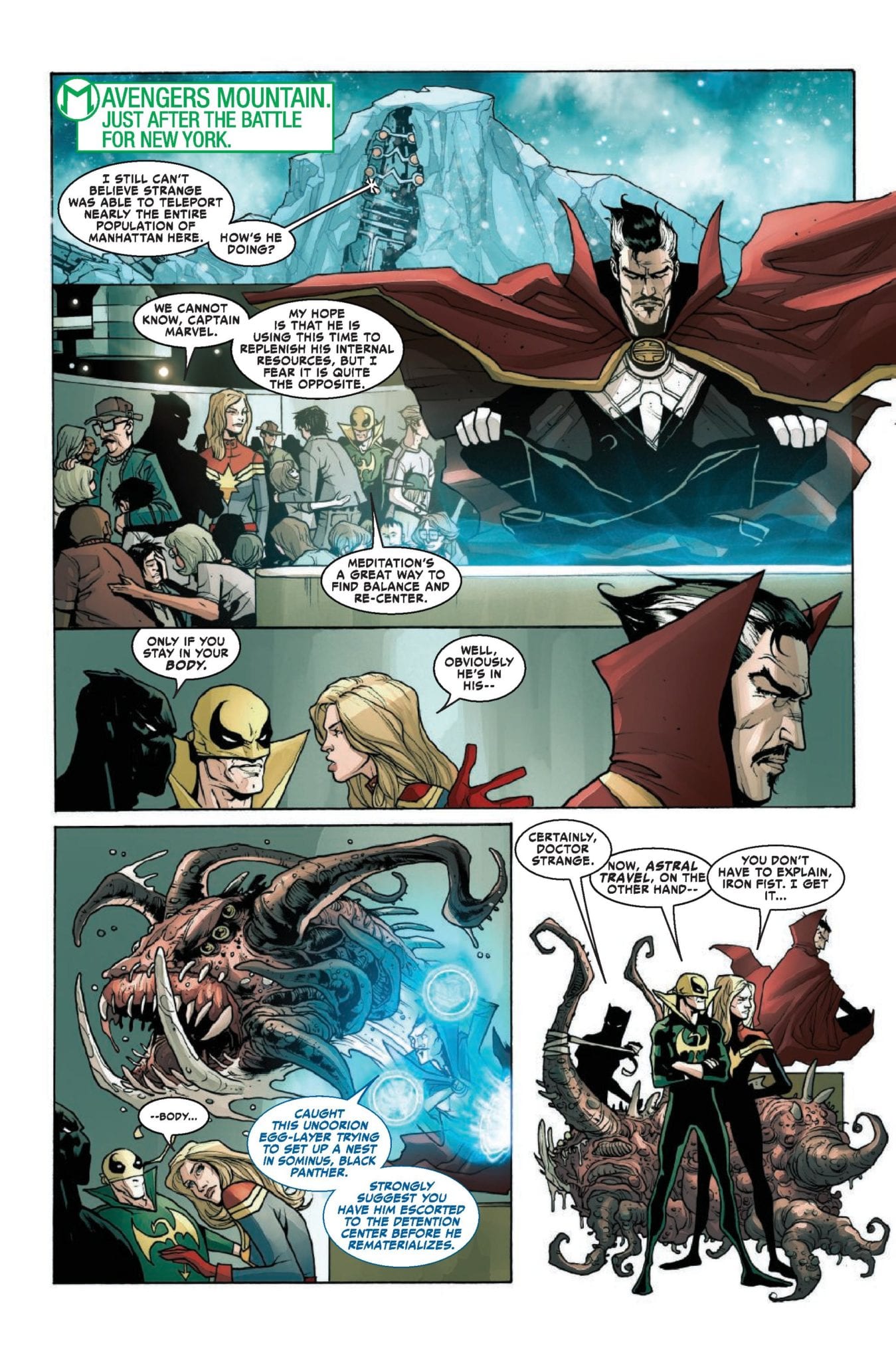
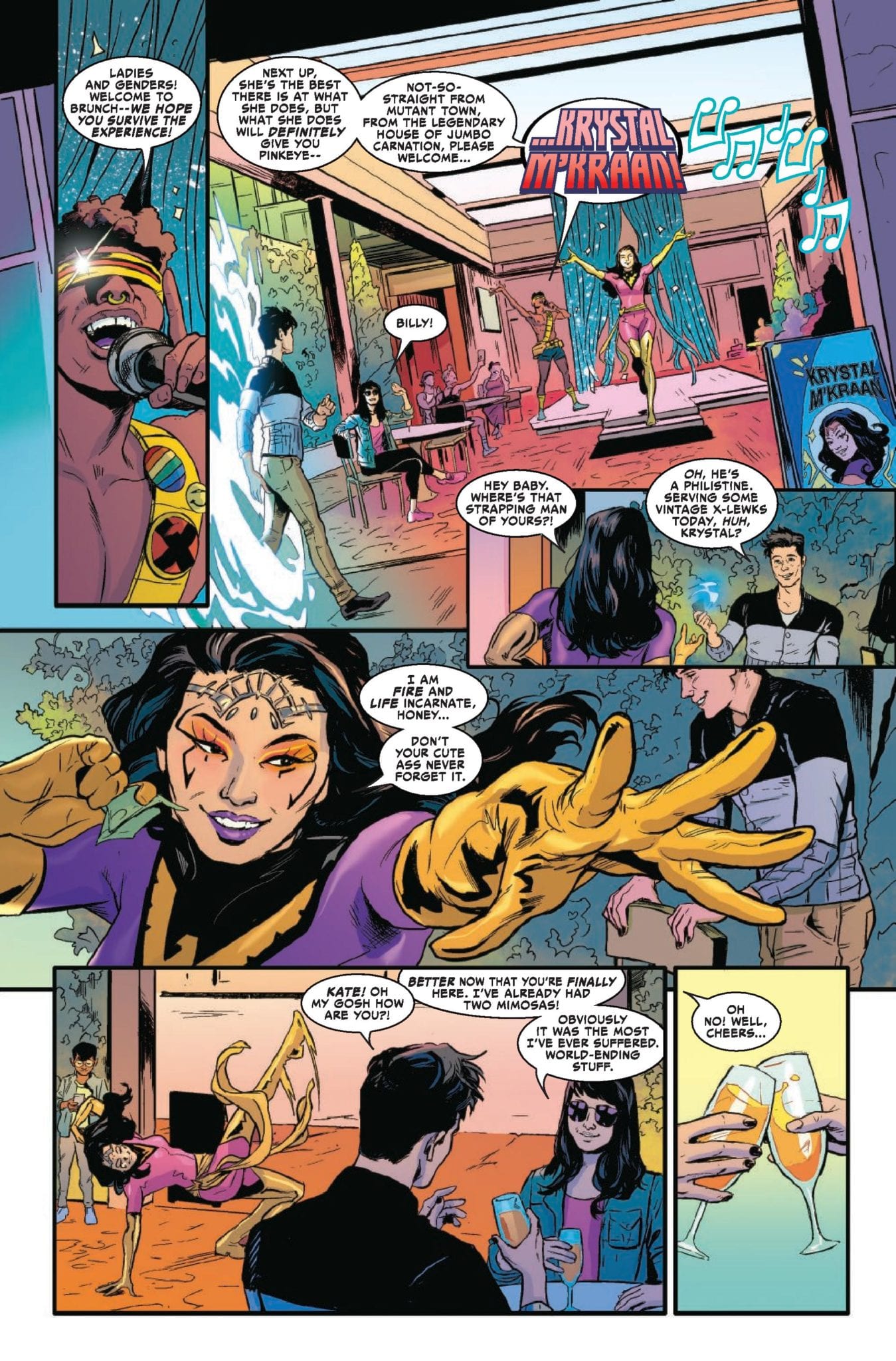
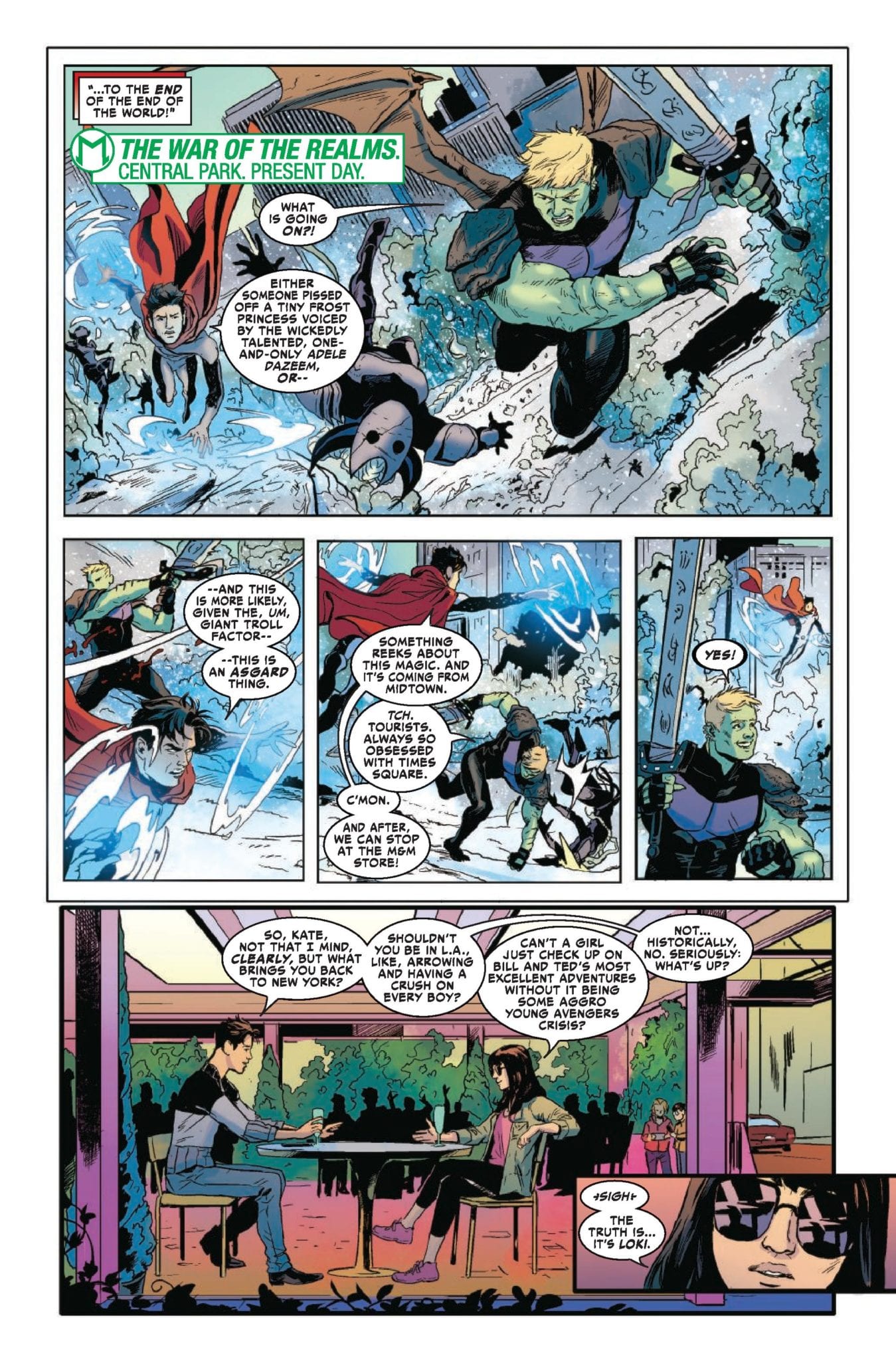
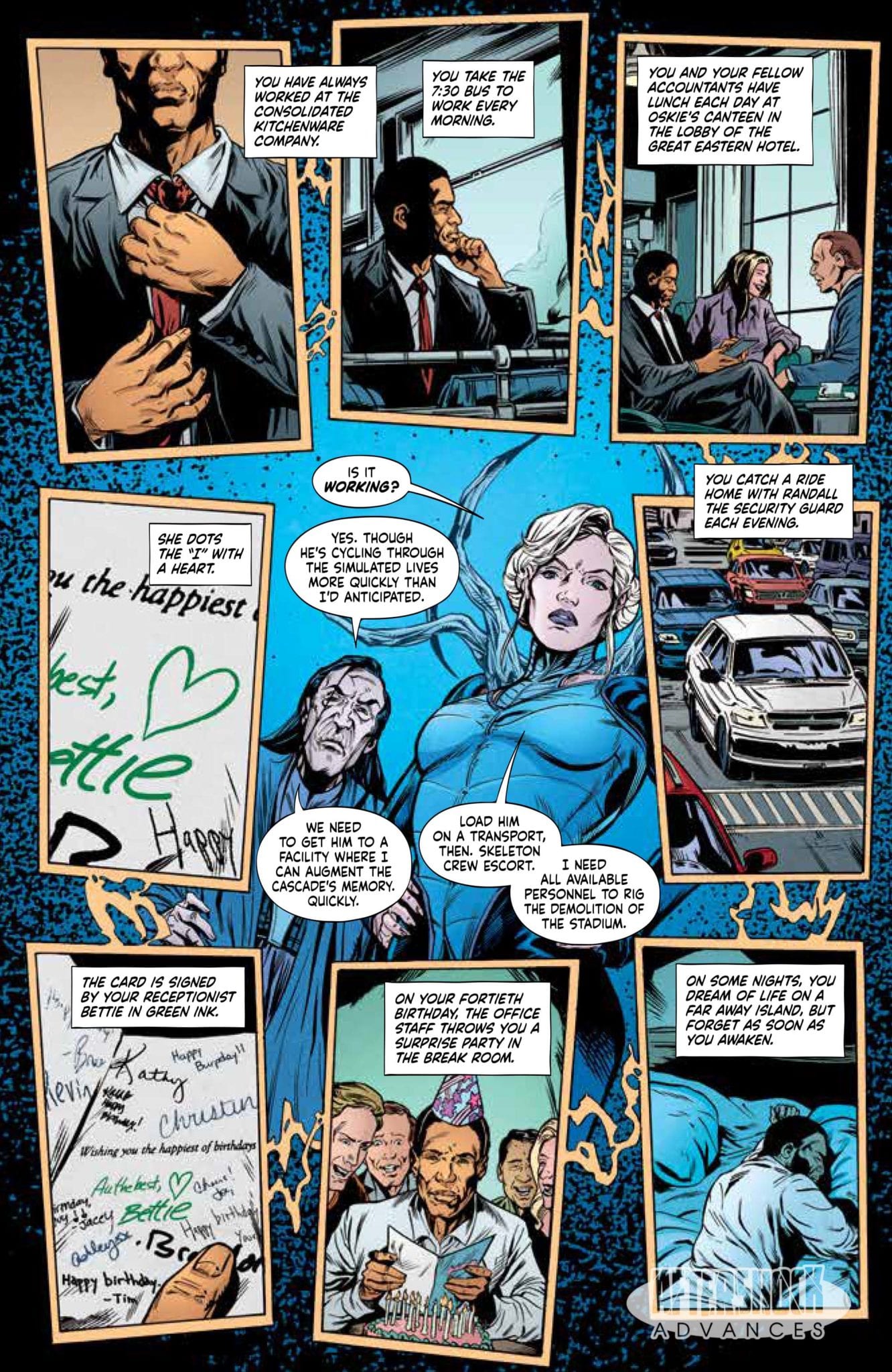
War Of The Realms: War Scrolls #2 doesn’t hit your local comic book store until May 29, but thanks to Marvel, Monkeys Fighting Robots has an exclusive NINE-Page preview!

About the issue:
THE MUST-READ COMPANION TO THE WAR OF THE REALMS! From the Asgardian Bifrost, Daredevil watches Malekith and his forces lay waste to realms. Jason Aaron and Andrea Sorrentino take Daredevil — the God Without Fear — to places he never believed he would see! Then, Devin Grayson spins a tale of magic and its consequences as Doctor Strange casts a spell that will cost him dearly — and devastate the Asgardian pantheon! All this and more straight from the battlefield of WAR OF THE REALMS!

The creative team on the book:
Written by: Various, Jason Aaron, Devin Grayson
Art by: Various, Paul Davidson, Andrea Sorrentino
Cover by: Alan Davis

Check out the War Of The Realms: War Scrolls #2 below:
War Of The Realms: War Scrolls

War Of The Realms: War Scrolls

War Of The Realms: War Scrolls

War Of The Realms: War Scrolls

War Of The Realms: War Scrolls

War Of The Realms: War Scrolls

War Of The Realms: War Scrolls

War Of The Realms: War Scrolls

War Of The Realms: War Scrolls


How many of the War of Realms tie-ins are you picking up? Comment below with your thoughts.

Monkeys Fighting Robots Youtube

Review: The Tragedy of Astrid Arkham in DETECTIVE COMICS #1004

Monkeys Fighting Robots

The plot thickens in Detective Comics #1004, as we learn Astrid Arkham’s origins, and the root of her hatred for Batman.

As the daughter of Arkham Asylum’s head doctor Jeremiah Arkham, Astrid grew up within the walls of the facility. Seeing the asylum’s inmates as a surrogate family, she learns to hate Batman after learning about a tragedy within her own past. This hatred sets her on her mission to cleanse Gotham of Batman, and bring about the mysterious “Eclipse” she references.

The Writing

Much of Detective Comics #1004 is occupied by exposition, with Dr. Arkham relaying Astrid’s entire backstory. Dedicating this much time to exposition is a hard trick to pull off well. Tomasi manages to do it, though, delivering another excellent chapter in the story.

We see a young Astrid interact with The Joker, Clayface, and other members of the Batman’s rogue’s gallery. It’s a bit uncanny, to a degree. We see genuine affection for the girl from characters we’re not accustomed to seeing in such an intimate light. Her interactions with these characters in Detective Comics #1004 give motivation to her actions as an adult.

Given the circumstances, she develops a startlingly-reasonable interpretation of the dynamics between Batman and his enemies, only viewed from a completely different perspective. In her view, Batman is not a hero or a protector. Rather, he’s the shadowy monster who comes to spread fear and pain among her adopted family.

Detective Comics #1004

Astrid’s backstory does induce a little bit of chronological confusion. She’s presumed to be around twenty years old at the time of Detective Comics #1004. However, characters present from her first moments like Batman, Harley Quinn, and Poison Ivy don’t seem to have aged at all in that span of time. Of course, there are ways around that matter, as fan speculation meticulously points out.

That point notwithstanding, the writing is strong, establishing pathos and motivation for Astrid’s crusade. It advances the narrative well, and leaves us on the precipice of a climactic showdown.

The Artwork

Bradley Walker’s artwork in Detective Comics #1004 is once again on-point. The sequences illustrating Astrid’s past flow seamlessly across the page without defined panels, giving the work a dreamlike impression that reflects a sequence of interwoven memories. Scrolls of Astrid’s childhood drawings serve as a device to lay out the story, which is a very neat effect.

The way in which Walker draws the flashbacks contrast well with the present-day sequences. He closely-crops many of these images in tight, evenly-spaced, rectangular panels. The end result is a work that feels cohesive, without being dull.

Nathan Fairbarn’s eye for color really shines in the flashback sequences. He bathes the figures in a lot of single hues against the beige backdrop of the scroll, adding to the dreamlike, flashback vibe.

Final Thoughts

Tomasi and company don’t disappoint on Detective Comics #1004. An excellent chapter in an equally attention-grabbing run.

Monkeys Fighting Robots Youtube

Review: Overman Fights For The Reich in FREEDOM FIGHTERS #6

Monkeys Fighting Robots

Overman faces the Freedom Fighters!

During World War II, the Freedom Fighters fought against the Nazis to try and stop the Reich. Just when they appear to win, the Reich revealed a metahuman of their own: The Superman of this world. Dubbed Overman, the Kryptonian was able to overcome the Freedom Fighters and helped the Nazis take over the world. Decades pass and the Freedom Fighters bring Uncle Sam out of his dimension to face the Nazi party of today. When he was revealed to the world, however, the Fuhrer requests to reawaken Overman. Has Uncle Sam returned just to be defeated once again?

Freedom Fighters 6 cover

**Some Spoilers Below**

Story:

We open the story with the Nazis awakening their greatest weapon, Overman. He doesn’t say much but smiles at the fact he gets to help his Reich. Overman takes off to find the Freedom Fighters, who are handling a relic of their own. Uncle Sam is out cold after his explosive return, and the Freedom Fighters have no idea what to do with him. He eventually wakes up and gets up to speed with his new team. It turns out they were trying to bring him back for a while, referencing the events of the Multiversity: Mastermen comic. Before they can get comfortable with their new teammate, however, Overman finds them and attacks.

Freeddom Fighters 6 p1

Halfway through the series and the epic story shows no signs of stopping. This issue has badass action and extreme tension. It’s very rare to get comics that have readers on the edge of their seats, but Freedom Fighters has been able to do it time and time again. This time around the threat of Overman and, as expected, he brought a whole new level of terror and action. There was even a twist in the middle of the story that had this reviewer’s jaw hit the floor. The only problem with the issue, however, is the fact it doesn’t precisely align with Mastermen. It’s just a nitpick to a fantastic comic, and it shouldn’t stop readers from taking a look themselves.

Art:

The world of Freedom Fighters continues to look as amazing as it is grim. The battle between the team and Overman is the best-looking fight I’ve seen in a while. From the illustrations to the colorwork, this comic never stopped impressing. The best page is hands down the twist mentioned in the story section. The moment the reader saw the full-page spread, it filled me full of terror and delight. I love the look of this book, and I can’t imagine it with any other art team.

Freedom Fighters 6 p2

Conclusion:

Freedom Fighters continue to be the underdog series that deserves to be in the spotlight. It’s gritty, action-packed, and just a fantastic time. Even with these giant action sequences, there is a finely written story woven in. I highly recommend this comic as well as the series.

Monkeys Fighting Robots Youtube

AfterShock Exclusive Preview: Phil Hester And Ryan Kelly’s STRONGHOLD #4

Monkeys Fighting Robots

STRONGHOLD #4 hits your local comic book store on June 5, but thanks to AfterShock Comics, Monkeys Fighting Robots has a four-page preview of the issue written by Phil Hester with art by Ryan Kelly.

MFR Review by Darryll RobsonA magnificent comic which blends the superhero mythos with modern comic book storytelling. Stronghold contains exceptional work from everyone involved and surpasses anything the Big 2 are putting out.

About the 32-page issue:
On the run from The Stronghold, Grey and Claire encounter an apostate agent who, like Claire, defected from the organization long ago. But what he knows about both lovers’ pasts may point to a fate more terrible than the certain death they flee.

Simon Bowland lettered STRONGHOLD #4 with colors by Dee Cunniffe.

Check out the STRONGHOLD #4 preview below:

AfterShock Exclusive Preview: STRONGHOLD #4

AfterShock Exclusive Preview: STRONGHOLD #4

AfterShock Exclusive Preview: STRONGHOLD #4

AfterShock Exclusive Preview: STRONGHOLD #4

AfterShock Exclusive Preview: STRONGHOLD #4


Do you have STRONGHOLD on your pull list? Comment below with your thoughts on the series and AfterShock Comics.

Monkeys Fighting Robots Youtube

Review: CLUE: CANDLESTICK #1 is a Fresh Twist on the Whodunit Formula

Monkeys Fighting Robots

You’ve played the game. You’ve seen the movie (right?). Now read Clue: Candlestick #1, the new comic adaptation written and illustrated by Dash Shaw.

Professor Plum receives a coded message from Mr. Boddy, informing him of threats against his life, and a desire to settle his estate’s vast collection of oddities. Of course, some of the collection’s most prized pieces include a rope, a lead pipe, and a candlestick to name a few. Plum heads off to meet his friend at a remote manor…but they’re not meeting alone.

The Writing

Clue: Candlestick #1 is disarmingly funny and charming, yet strangely uncanny at the same time.

Much of the writing draws on the absurd as Shaw faithfully incorporates as many components of the game as possible, including the characters and the whodunit nature of the story. The murder weapons are all here, albeit with bizarre new backstories. Even the weird statues under which Boddy hides his friends’ keys are shaped like giant game pieces.

What’s interesting about this interpretation is that Mr. Boddy’s life isn’t the only one at stake. Until the killer’s identified, any of the characters could be on the chopping block. Clue: Candlestick #1 reads like something of a mashup between surreal comedy and an old dark house film. It’s a Wes Anderson take on The House on Haunted Hill, with distinct notes of Abbott and Costello in the mix. The dialogue is witty, without stepping into cloying territory.

The book invites readers to try and solve the mystery as the story plays out. Shaw signals deliberately to clues and other points of interest. At certain points, though, the clues being thrown around can be a bit distracting. Doubly so, when the writer draws deliberate attention to them through narrative interjection.

That said, there’s no immediate answers given. The mystery is allowed to simmer, giving readers the impression that there are more layers of complexity to unravel as the story progresses. There’s reread value here, too, as you pick up on new elements you might have missed on a first go around.

The Artwork

As mentioned, Shaw provides artwork for Clue: Candlestick #1 as well. He has a distinct vision for the work, providing brightly-colored, pop-tinged visuals that complement the writing’s off-kilter tone.

The art feels like a four-panel news comic in certain regards. The quirky and minimal line work conveys little dynamism or motion, making each panel feel fairly static. Character designs are reminiscent of something you might see on an Adult Swim series. However, the effect compliments the story, rather than detract from it. Detail is employed very selectively, as in illustrations of the murder weapons, or in key panels.

Shaw’s notes in Clue: Candlestick #1 become unavoidable elements of the page design throughout the book. The effect can be somewhat cluttered with notes directing the reader’s attention to different points. It’s not enough to overpower the work, but it is distracting at points.

Final Thoughts

Clue: Candlestick #1 is an attention-grabbing, unique start for the new series. It’s too early to say whether the charm will last or fade with successive issues. However, the creator’s vision for the series suggests it’s worth rolling the dice.

Monkeys Fighting Robots Youtube

Review: The Battle For The Fate Of Earth Concludes In INCURSION #4

Monkeys Fighting Robots

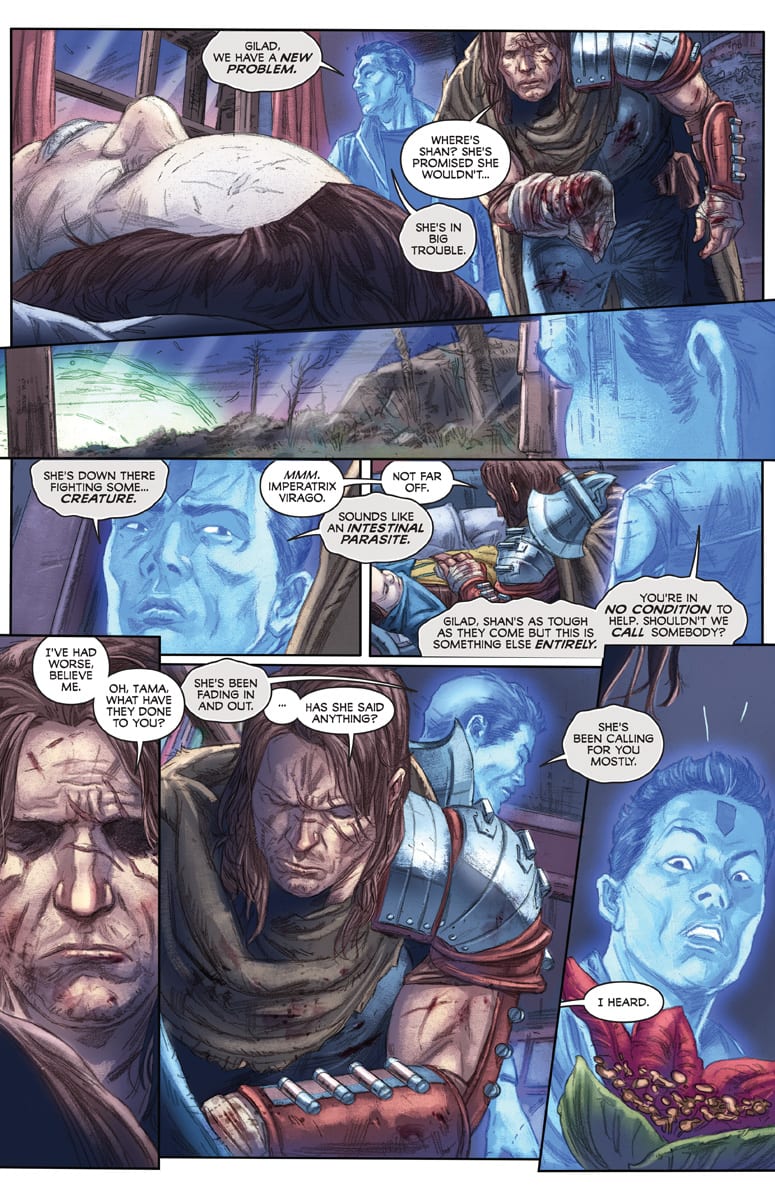
The villainous Imperatrix Virago has made her claim on Tama, Earth’s Geomancer and life force vessel. Shan is doing her best to hold her off, but it’s only a matter of time before the necromancer reaches the young girl. And to make matters worse, Syntilla’s virus has weakened her to the brink of death. Fortunately, the Eternal Warrior Gilad is on the search for a cure. But can he find it and reach Tama before it’s too late?

Story

Andy Paknadel and Alex Diggle’s INCURSION #4 is the climactic story readers of this series have been waiting for. The protagonists’ desperate attempt to keep Tama alive is diametrically opposed to Virago’s desire to extract the life force from the planet. The young girl’s very life will ultimately determine the fate of Earth.

As the battle rages on, Gilad continues looking for a cure despite the horde of Virago’s army. His diligence is commendable, but it’s his motivation that inspires the reader. Through Gilad’s actions, the writers paint a beautiful picture of his true impact. We see that his role as Tama’s protector serves a greater purpose than simply keeping her alive. He wants to keep her human.

Gilad returns and ponders how to save Tama

This finale crafts intriguing insights into the relationship between Gilad’s role as Tama’s protector and Tama’s role as Earth’s guardian. Readers will experience the heart-wrenching drama that comes with the delicate balance of life and death these heroes attempt to protect.

Art

Doug Braithwaite’s penciling gives readers highly detailed battle-scenes throughout the issue; one can see every scratch and cut opened by the clash of swords. Similarly, Diego Rodriguez and Leonardo Paciarotti treat readers to brilliant colors in these fights, including the crimson red blood spread throughout the battlefield’s mountainous backdrop.

In addition, Marshall Dillon’s lettering gives life to each character, especially Virago. The squiggled lines around her dialogue lets the reader imagine her cryptic manner of speaking.

Doug Braithwaite’s main cover, along with Diego Rodriguez, Renato Guedes, and Tonci Zonjic’s variant covers, give readers thought-provoking predictions for this story. Their artwork is splendid,  featuring illustrations of Virago, Gilad, and Tama with ominous overall tones.

Conclusion

INCURSION #4 wraps up the wild journey Valiant began back in issue #1. Fans of Gilad the Eternal warrior and Tama will be rewarded for following along with this cosmic, earth-shaking adventure.

Monkeys Fighting Robots Youtube