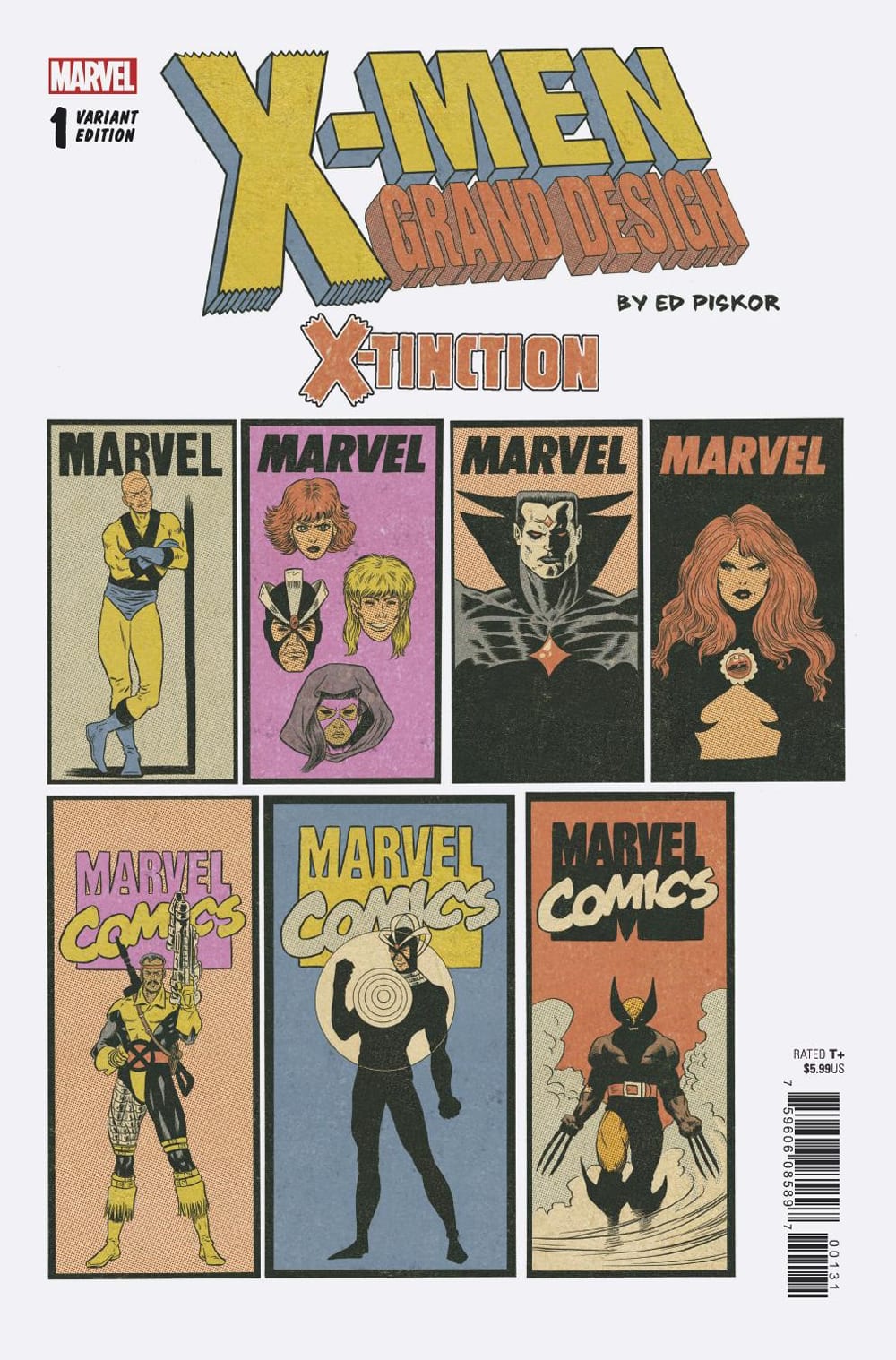
X-MEN GRAND DESIGN ‘X-TINCTION’ finds Ed Piskor returning with another gorgeous, detailed, and lovingly created distillation of another chapter in the classic X-Men Saga, including ‘Mutant Massacre’ and ‘The Fall of the Mutants’ and appearances by fan-favorites Longshot, Cable, and The Marauders!
X-Men: Grand Design– ‘X-Ticntion’ #1 Story, Art and Letters: By Ed Piskor Published by: Marvel Comics
Writing
X-Men: Grand Design is a unique concept. Reviews (and even the solicits) call it a re-telling, but it’s much more than that. Piskor has been doing more than re-telling. He has been distilling; those are two different things. X-Tinction’, which brings GD right up to the late ’80s, makes this more evident as this is the era where X-Men lore began to get extremely convoluted and complicated. We’re talking Mr. Sinister here. Yet Piskor is able to deep dive (20,000 fathoms deep) without getting lost in it. He does this by using the overall story as a narrative tapestry, highlighting moments both small (character arguments, thoughts) big (insert classic X-Men epic moment. There are MANY) and weaving them together smoothly.
Another excellent narrative trick is the on-going use of Uatu, the Watcher, as a narrator. It’s not a new trick, but in Piskor’s hands the Watcher narration takes on a certain amount of gravitas that is classic Marvel. It adds a ‘documentary’ feel to the way the comic unfolds (much like Piskor’s Hip Hop Family Tree books if you have read them. If you haven’t you REALLY should).
A mention has to also be said for Piskor’s use of old-school tools like thought balloons. Not enough of those floating around on comic pages these days.
Art
Piskor’s art is refreshing, his indie comics roots are definitely in place. This book has a handcrafted feel missing from far too many pages and panels these days. The art here is miles away in style and tone from the original, yet it fits marvelously thanks to Piskor’s confident and passionate drawings. You can also feel and see a texture to the pages (this is helped by the paper stock used, which has a nice, strong and solid matte feel to it). The art looks great in digital format, but this is something to see on the page for sure.
Conclusion
A project like X-Men: Grand Design doesn’t come often. This is absolutely a comic for obsessive fans of the medium by someone who is equally obsessed. This is also a comic meant to be physically held and read by turning pages. In other words, this comic is meant to be experienced. And that’s what X-Men: Grand Design is. So jump in on this experience with ‘X-Tinction’ because Piskor’s ride is almost over (we have just one more issue left).
Nick Spencer’s Amazing Spider-Man epic “HUNTED” concludes this week. Kraven puts Spidey in a classic hero dilemma, forcing him to make a tough decision that might change him forever.
***SPOILERS LIE AHEAD***
Kraven’s final play is revealed, forcing Spider-Man to kill him in battle if he wants to save the lives of both Black Cat and Billy Connors. These life or death scenarios are nothing new for Peter Parker, but that doesn’t make this one any less challenging!
Hunters and the hunted is all Kraven sees the world as and tries to convince Spider-Man that this is the only way to protect those he loves. Spidey overcomes his trickery and proves that what Kraven perceives as weakness is actually what makes people strong, to rise above ideals such as his.
Spidey overcoming Kraven, he realizes that he is “the beast” and destroyed all of his own family to prove an invalid point. In a truly shocking twist ending, Kraven honors the sacrifice of “the spider” by once again donning the Spidey suit and having his clone-son murder him.
The final punctuation mark on this “HUNTED” story is a tragic and bold one. As far as the story goes, it’s a wonderful wrap-up to Kraven’s longstanding arc. As far as continuity goes, Nick Spencer just masterfully reloaded the Kraven The Hunter role with his clone-son’s new hatred for Spider-Man as he’ll most likely blame Peter for the murder he just committed.
Nick Spencer crafted a story that’s much more than heroes punching villains. This has lasting consequences, major growth and development, and a heartbreaking finale. “HUNTED” is all-in-all a fantastic Amazing Spider-Man story.
This was a show-me effort for anyone doubting Spencer’s ability on this Amazing Spider-Man run. He’s a master at short, contained stories. He has a talent for slow-burning background developments. Now we all see that he is more than capable of crafting a larger scale epic that delivers from beginning to end. This one doesn’t fizzle out, that’s for sure.
Humberto Ramos does another fantastic job penciling and inking this major finale. The animal-istic side of these characters and their actions are illustrated in such a way that exposes the primal point that Spencer was trying to convey. That final page is a total heart-breaker and leaves the right sour taste in your mouth for the final chapter of Kraven.
“THE HUNTED” did a lot of things right for both Spider-Man and his cast of villains and support. Vulture should come out of this in a very interesting place of prominence. Nick Spencer proved that he can juggle a ton of threads and keep pushing the world of Spider-Man forward into places that readers are going to want to go.
I’ve said it before and I’ll definitely say it again, Amazing Spider-Man is in very good hands.
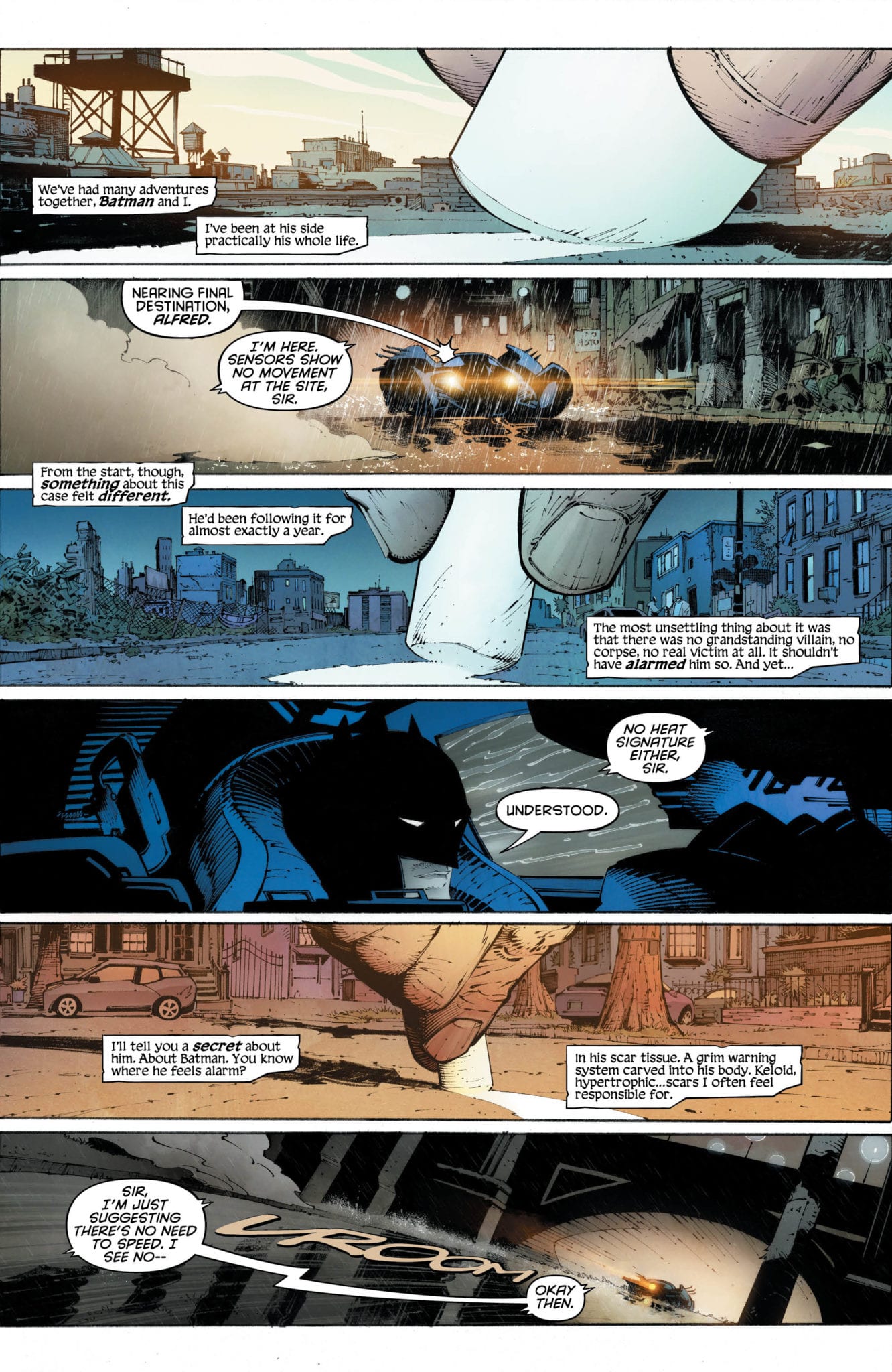
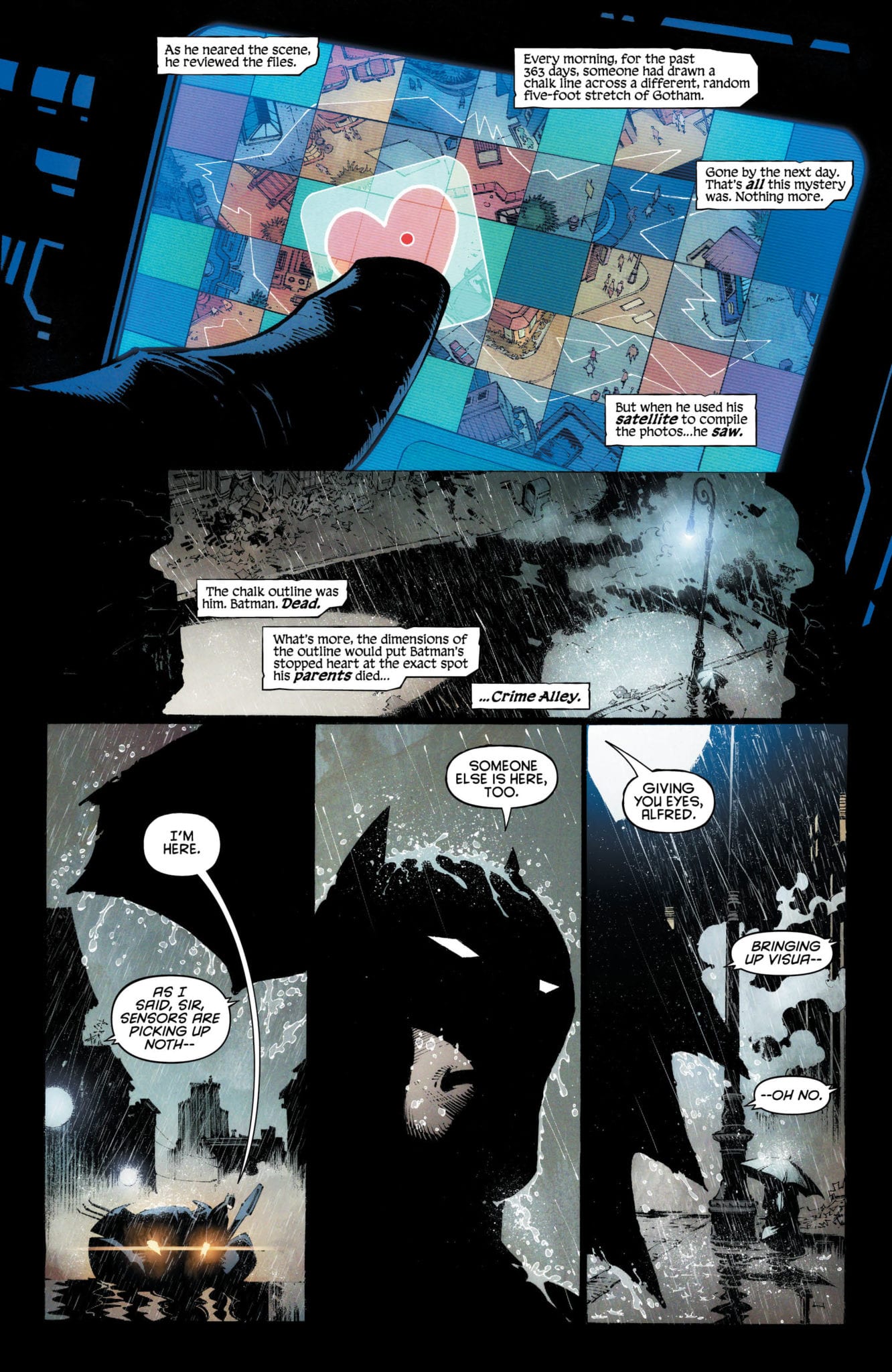
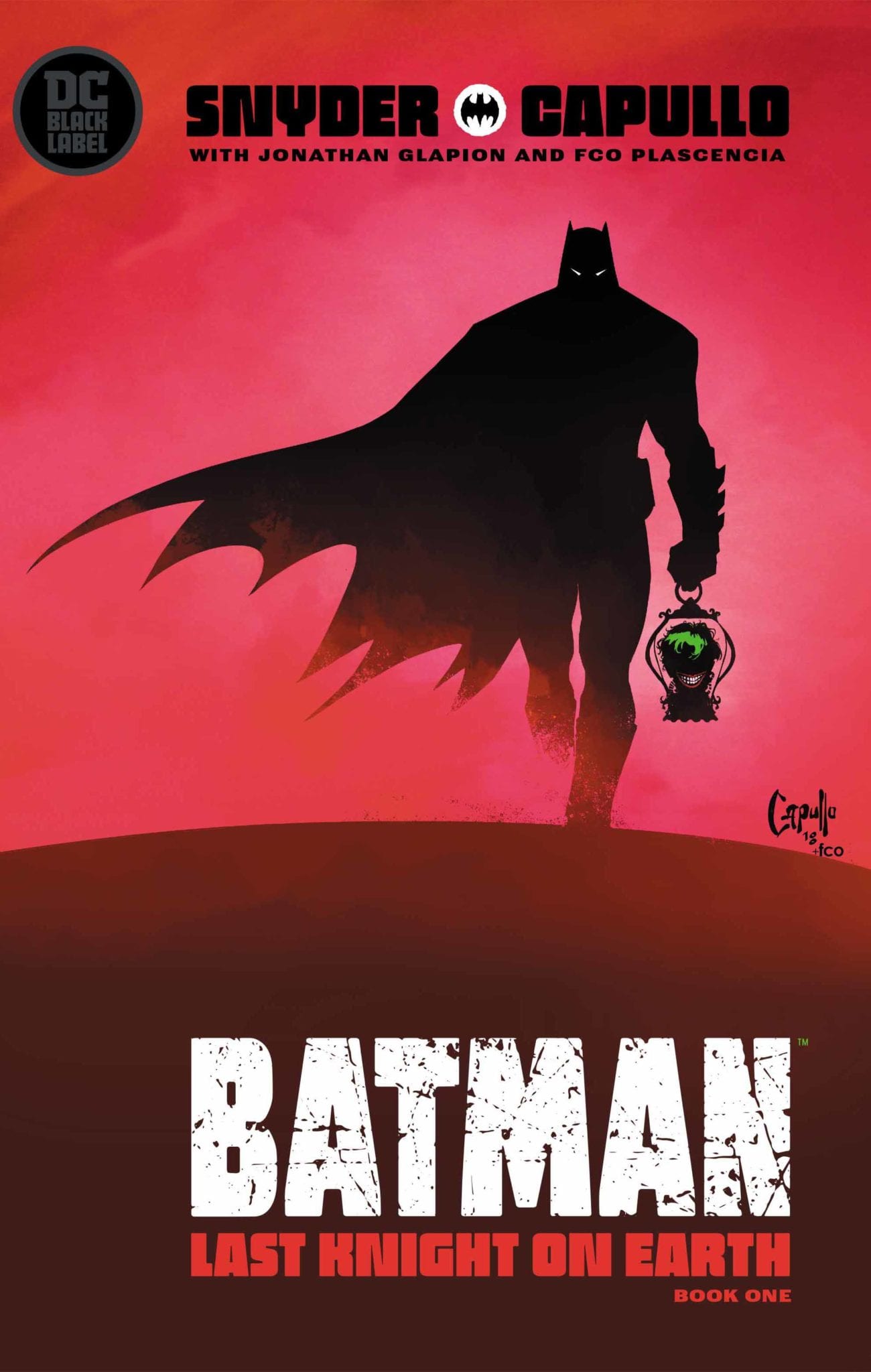
Batman: Last Knight On Earth #1 (of 3) hits your local comic book store today, and the 56-page book written by Scott Snyder with art by Greg Capullo is so insanely epic that it will melt your face off.
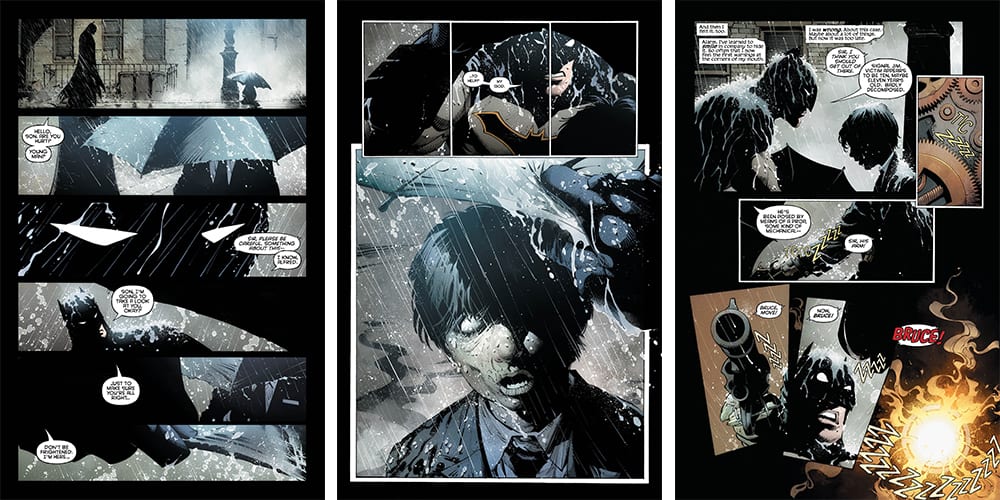
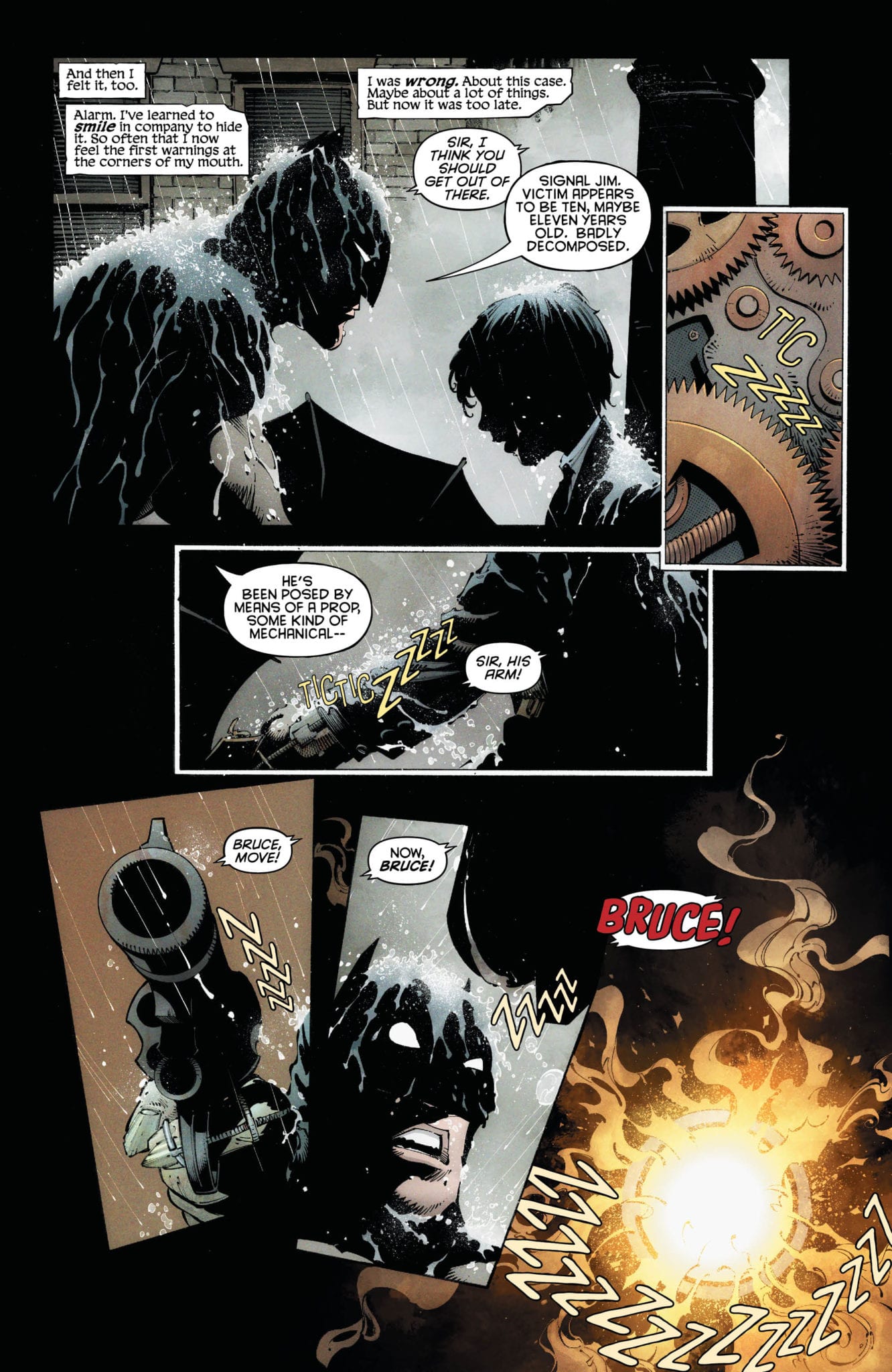
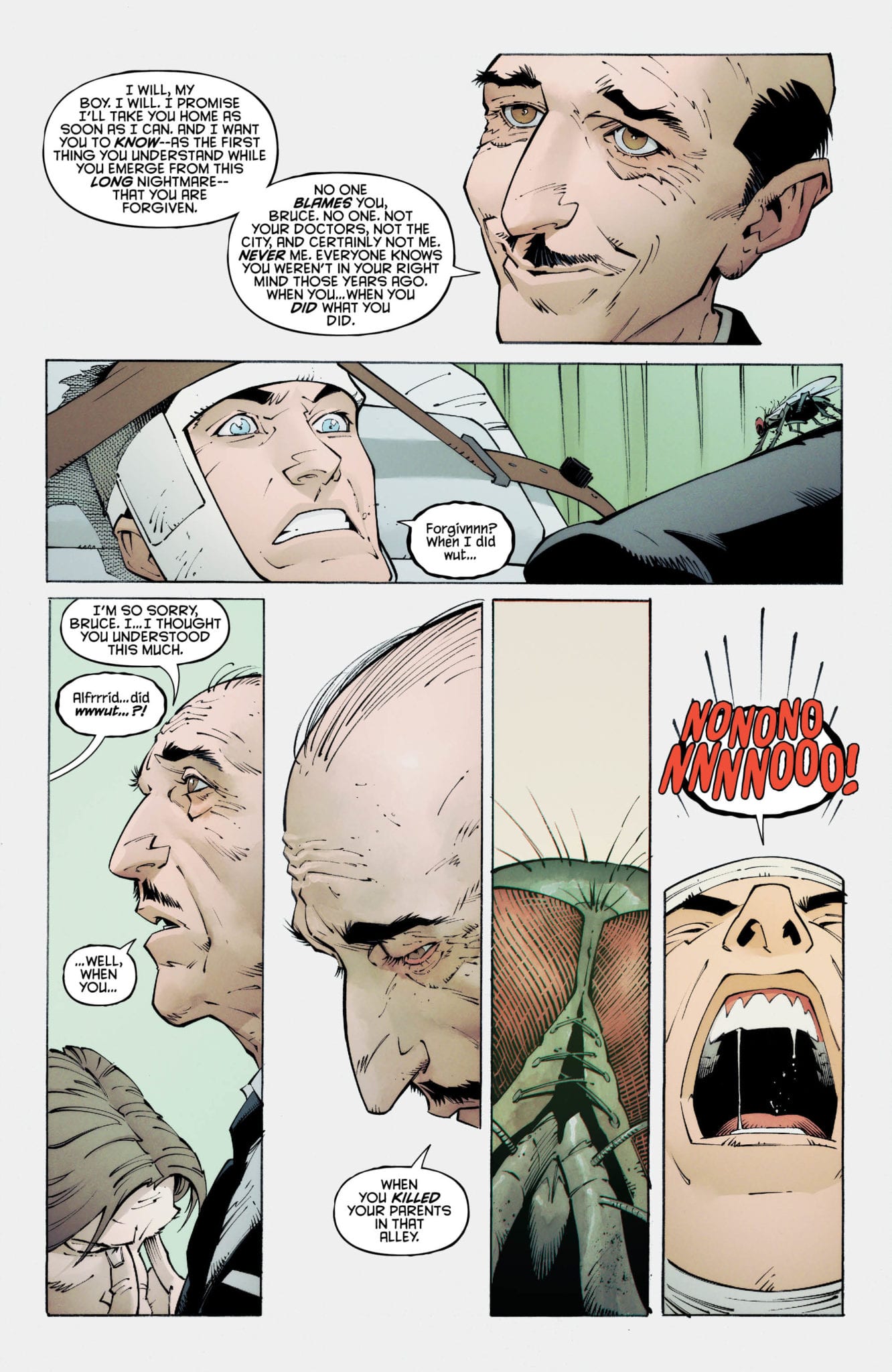
The creative team of Capullo on pencils, Jonathan Glapion on inks, and FCO Plascencia on colors absolutely crush every single panel. The book has grounded gritty moments that have texture and emotion. There is true horror and sadness in the eyes of the characters in the first chapter. Then when the insanity of the world is unleashed on Bruce Wayne, the action sequences have movement, clarity, and excitement. The book has several epic panels that have shock value and give you goosebumps, but the most bone-chilling panel is early on in the book.
SPOILER ALERT – When discussing the art and the writing of Batman: Last Knight On Earth #1 (of 3) spoilers may seep their way into the conversation. If you haven’t read the book yet turn back now.
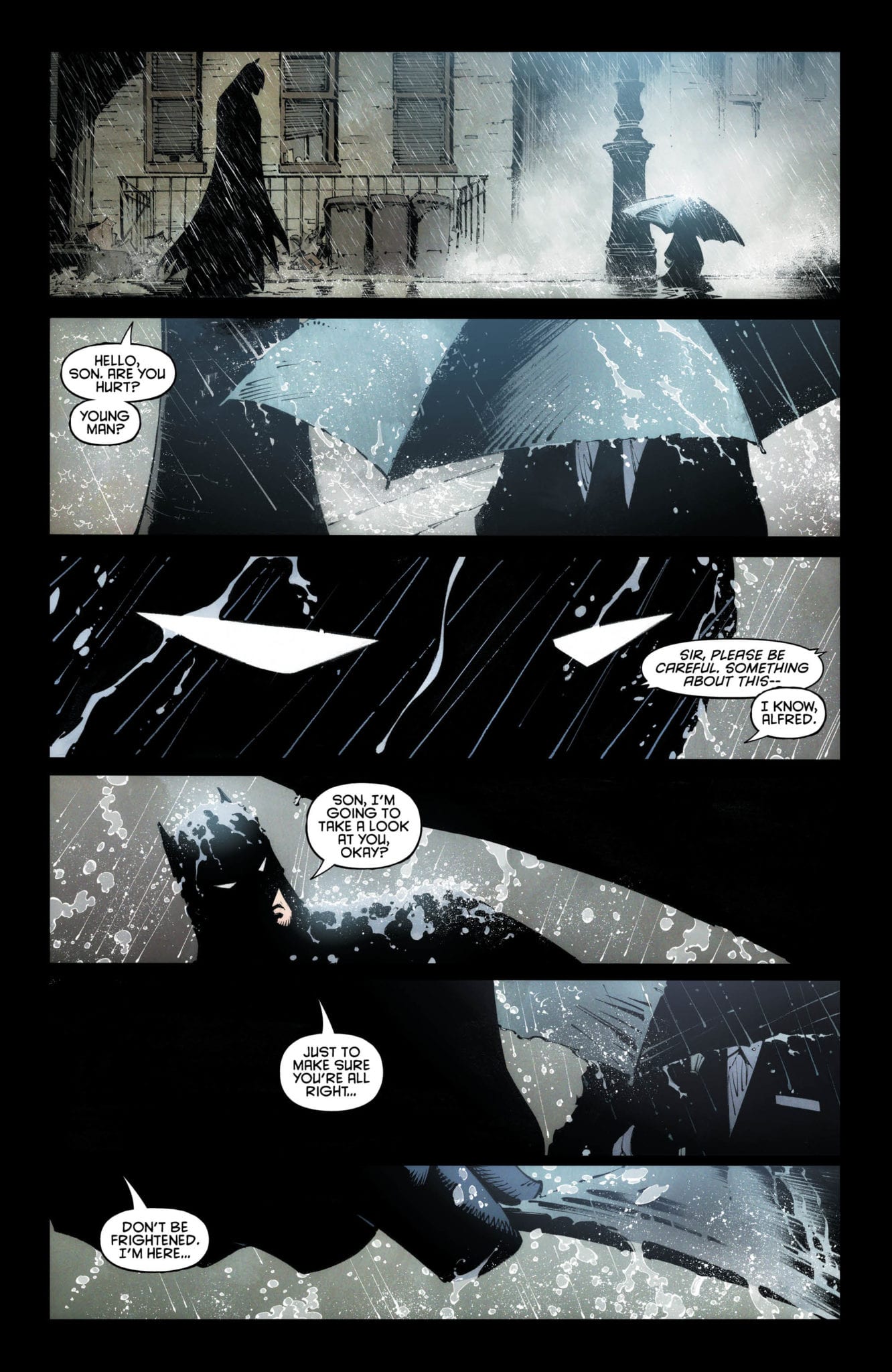
The panel is of a boy who looks like Bruce Wayne from Crime Alley, with a monotone panel that is layered with rain and the point of view makes direct eye contact with the reader. The reveal and panel have a Walking Dead vibe that sends shivers down your spine. The proportion of Batman’s hand pulling up the umbrella is almost life-size and it emphasizes the POV even more. The panel knocks you and Batman off balance. The two pages involved in this scene are a “how-to” guide for visualizing horror in a comic book.
Snyder’s writing is on full-throttle. Batman: Last Knight On Earth #1 holds nothing back and has a grand scope that feels like a finale. Everyone who is anyone in the DC Universe is involved, but not shoe-horned in just to make an appearance. Snyder has everything planned out and Batman is on a hero’s journey like no other. The narration of the first issue is what stands out when it comes to Snyder’s writing, as there is compassion, friendship, and a bit of mystery to the narrator. Snyder’s use of narration builds the intensity of moments like a musical score.
If you look closely at Tom Napolitano’s lettering work you will notice subtle changes to Bruce Wayne’s word balloons. This had me questioning myself and Batman as to what was real and what was fake. It’s this attention to detail that takes a good book and makes it great.
Overall, Batman: Last Knight On Earth #1 is the most fun you will have reading a comic this month. Snyder and Capullo are focused on delivering a Batman tale that rivals the feelings you got watching Avengers: Endgame.
Do you have Batman: Last Knight On Earth on your pull list? Check out the 10-page preview below.
About BATMAN: LAST KNIGHT ON EARTH #1
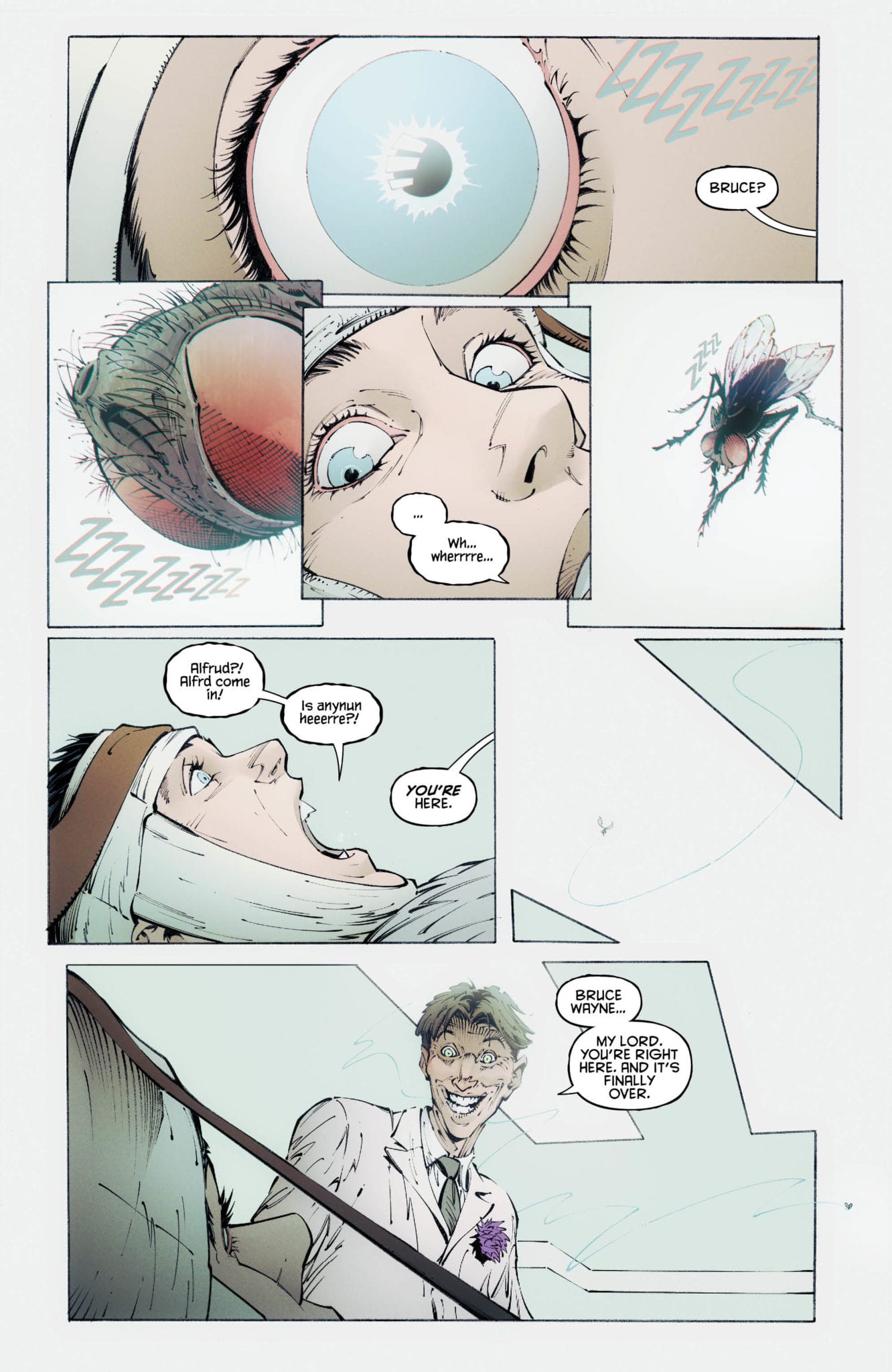
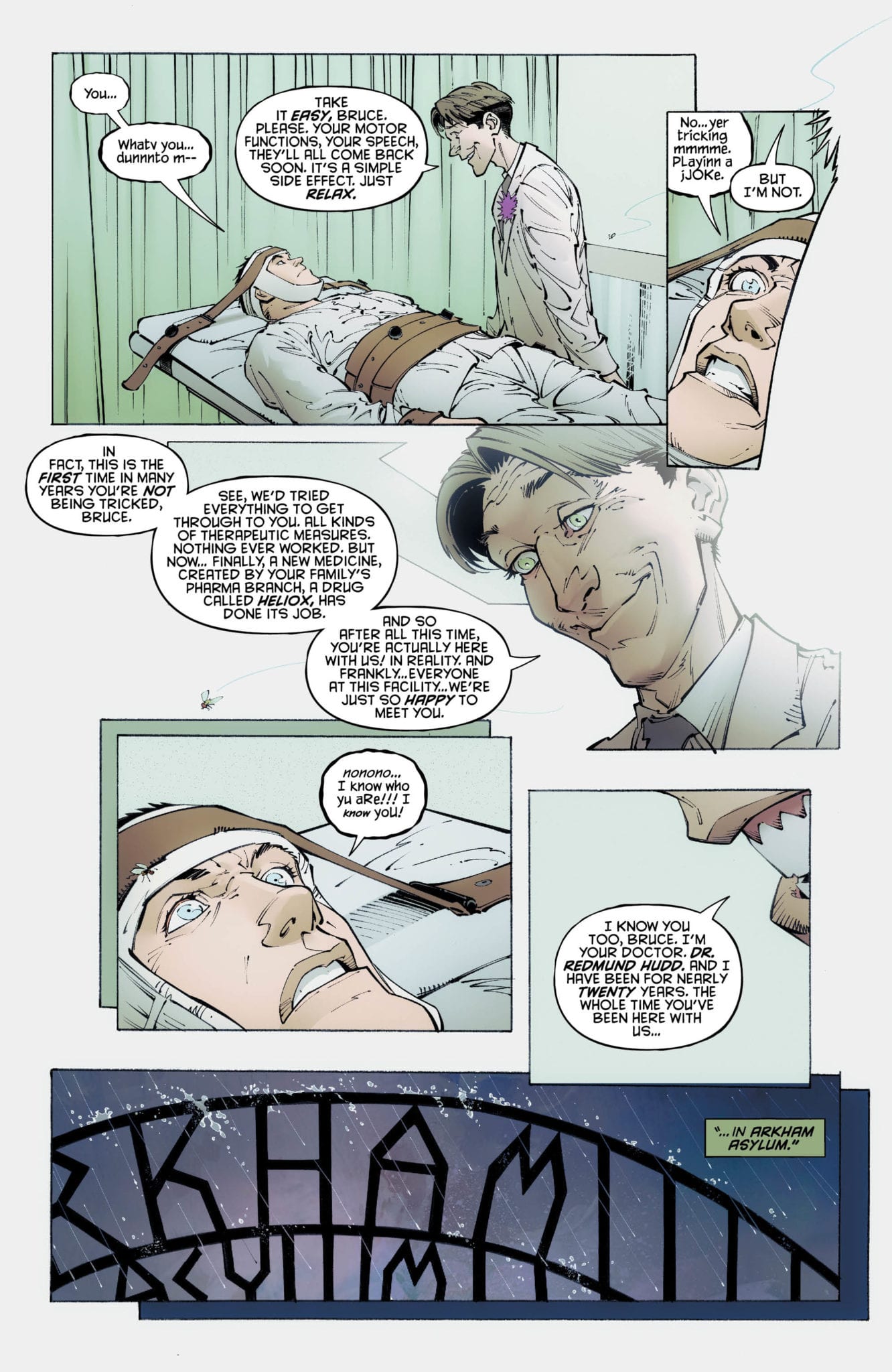
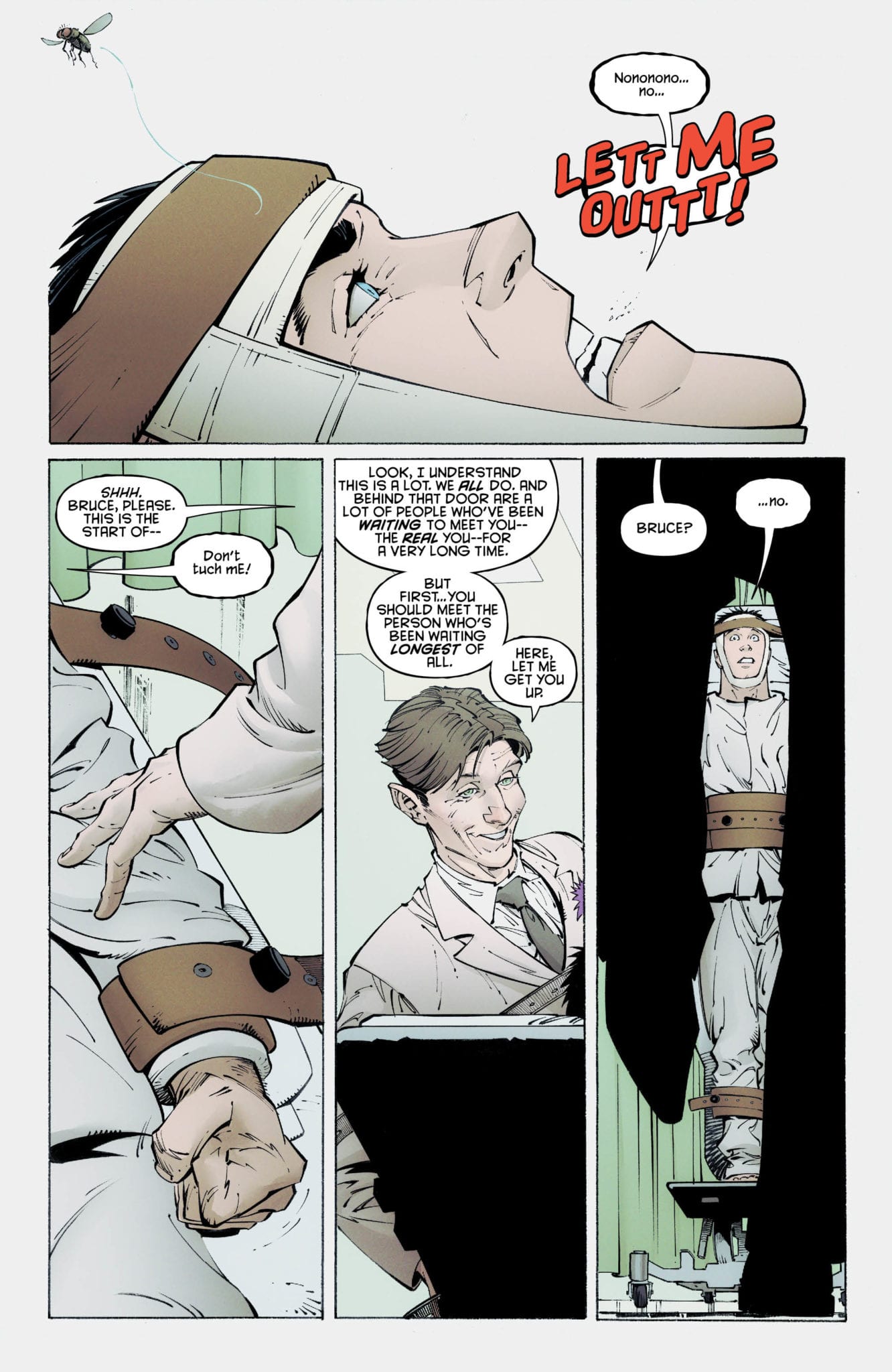
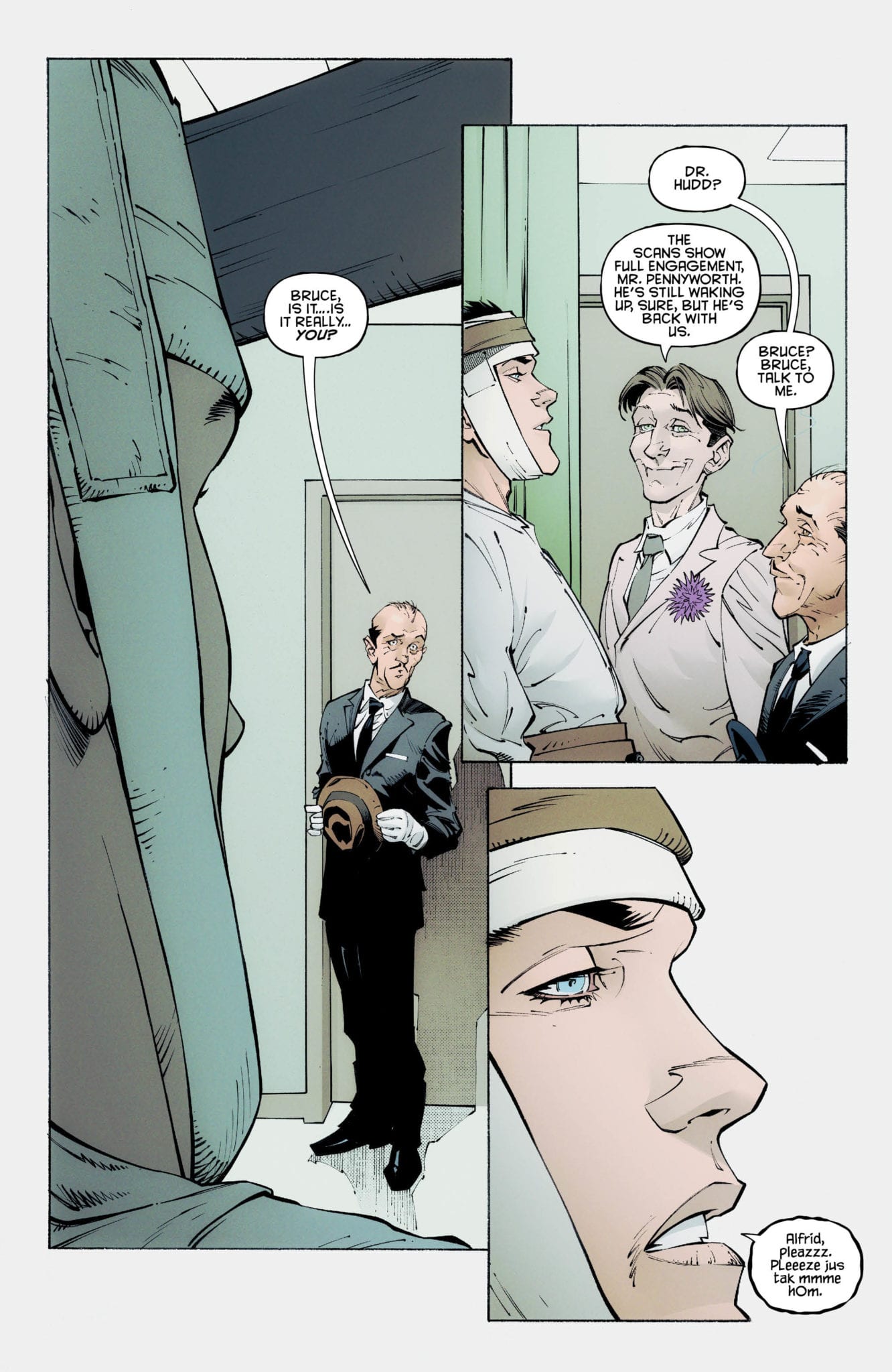
Bruce Wayne wakes up in Arkham Asylum. Young. Sane.
And…he was never Batman.
So begins this sprawling tale of the Dark Knight as he embarks on a quest through a devastated DC landscape featuring a massive cast of familiar faces from the DC Universe. As he tries to piece together the mystery of his past, he must unravel the cause of this terrible future and track down the unspeakable force that destroyed the world as he knew it…
From the powerhouse creative team of writer Scott Snyder and artist Greg Capullo, the team that reinvented Batman from the emotional depths of “Court of Owls” to the bombastic power of DARK NIGHTS: METAL, DC Black Label is proud to present the bimonthly, three-issue miniseries BATMAN: LAST KNIGHT ON EARTH, published at DC’s standard comic trim size.
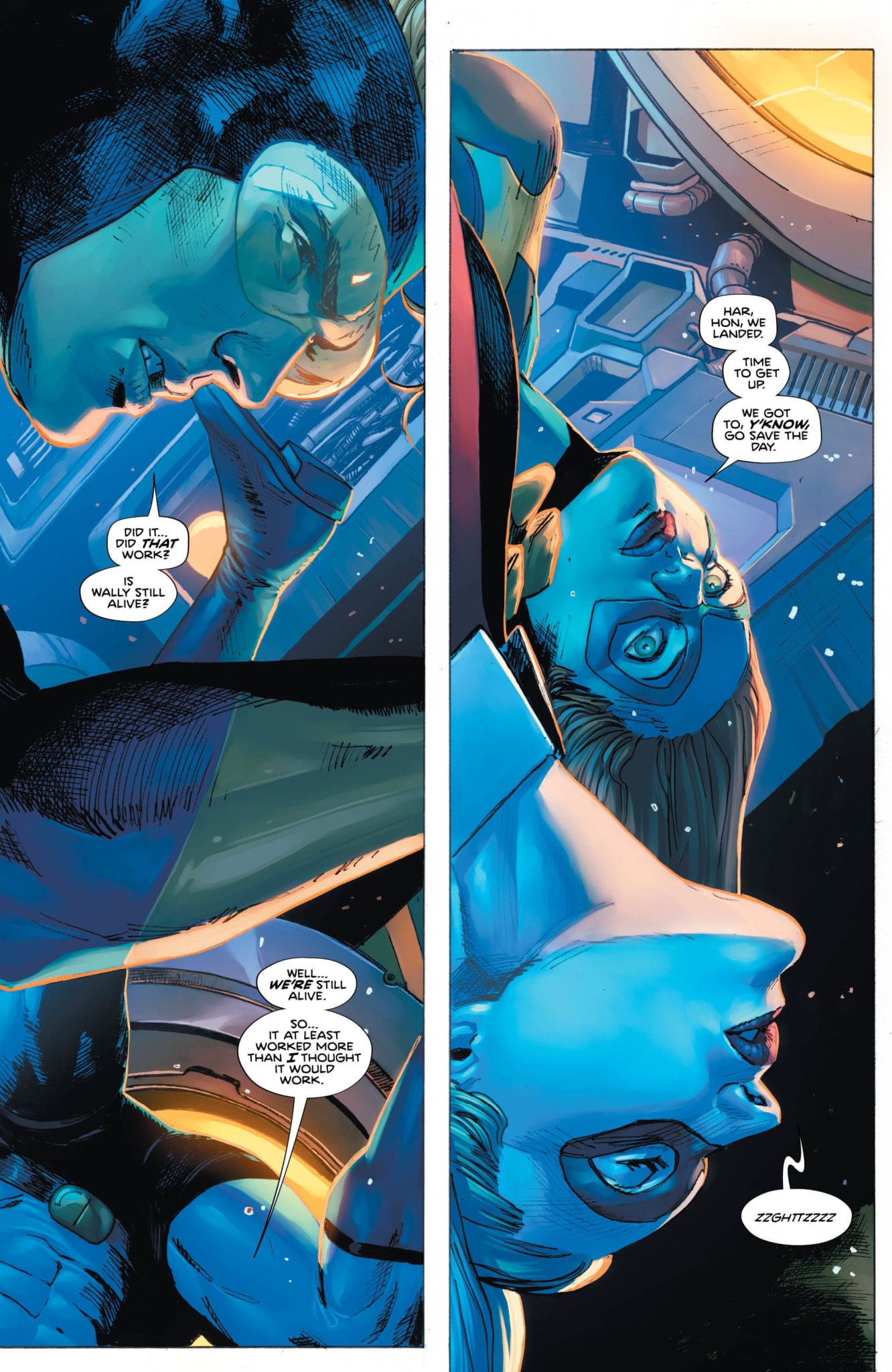
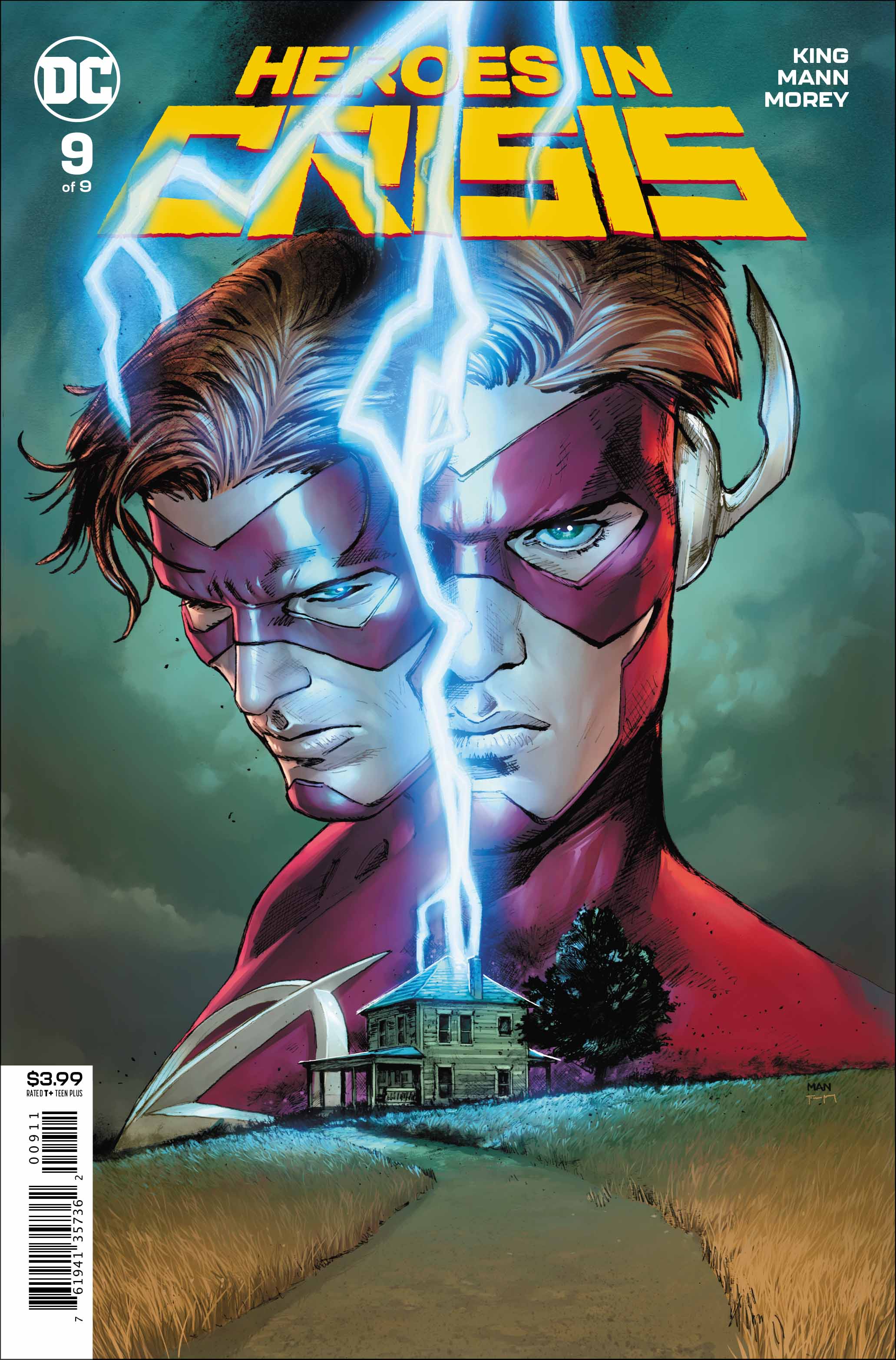
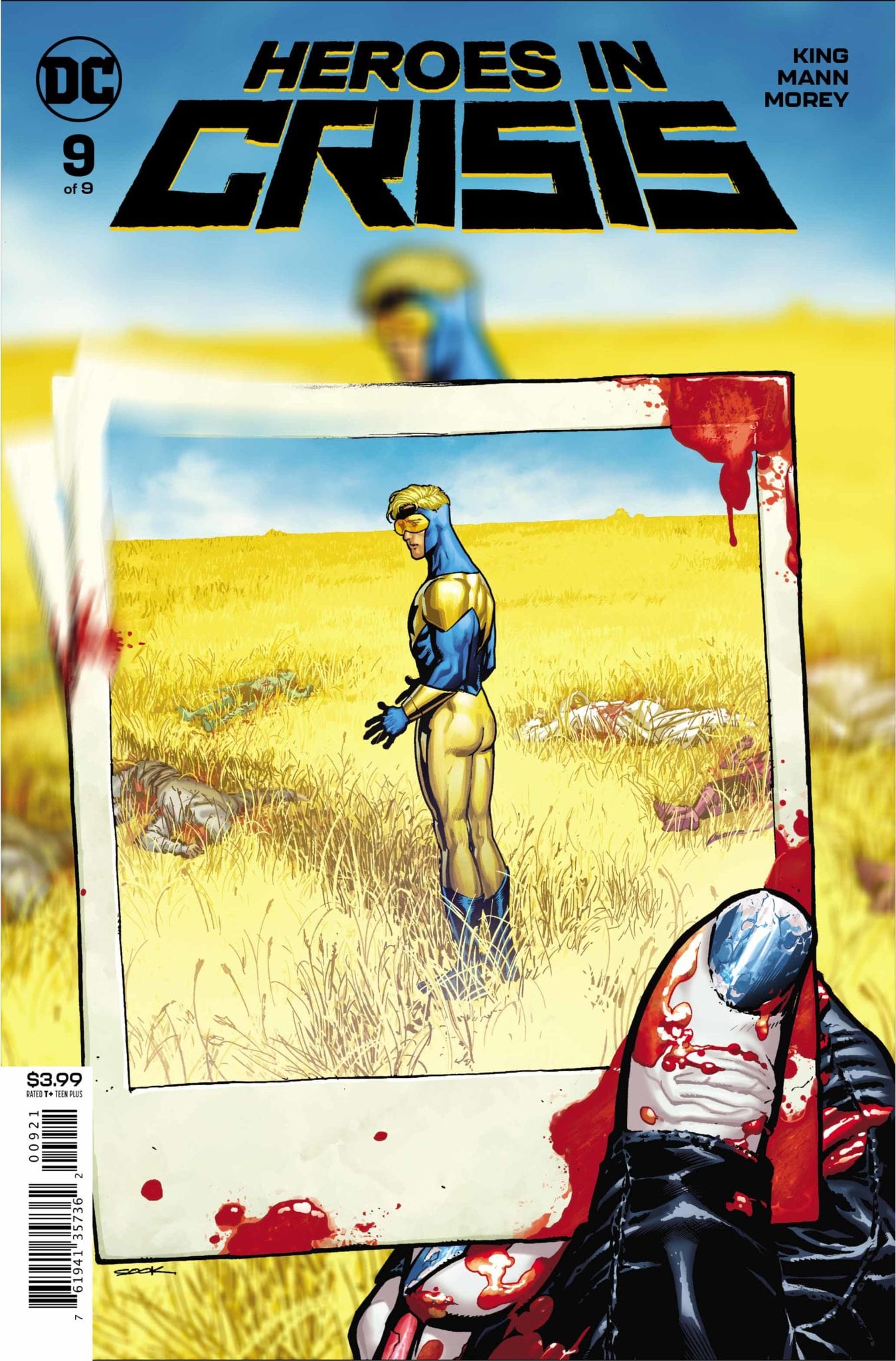
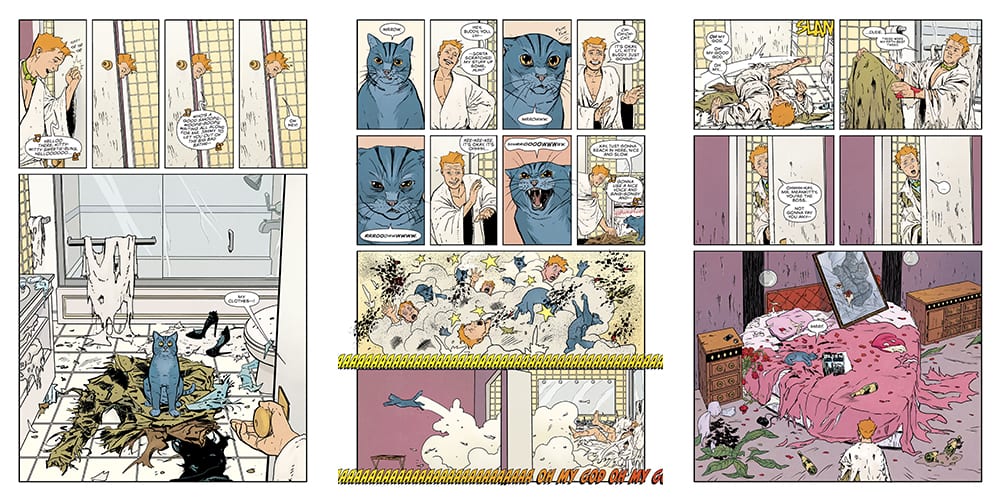
Heroes In Crisis #9 hits your local comic book store this week, and writer Tom King pulls off the impossible by concluding the series with such emotion that you carefully turn each page to see what’s next, and there is a sober excitement for the future of the main characters in the book.
SPOILER WARNING – When discussing the art and the writing of Heroes In Crisis #9 spoilers may seep their way into the conversation. If you haven’t read the book yet turn back now.
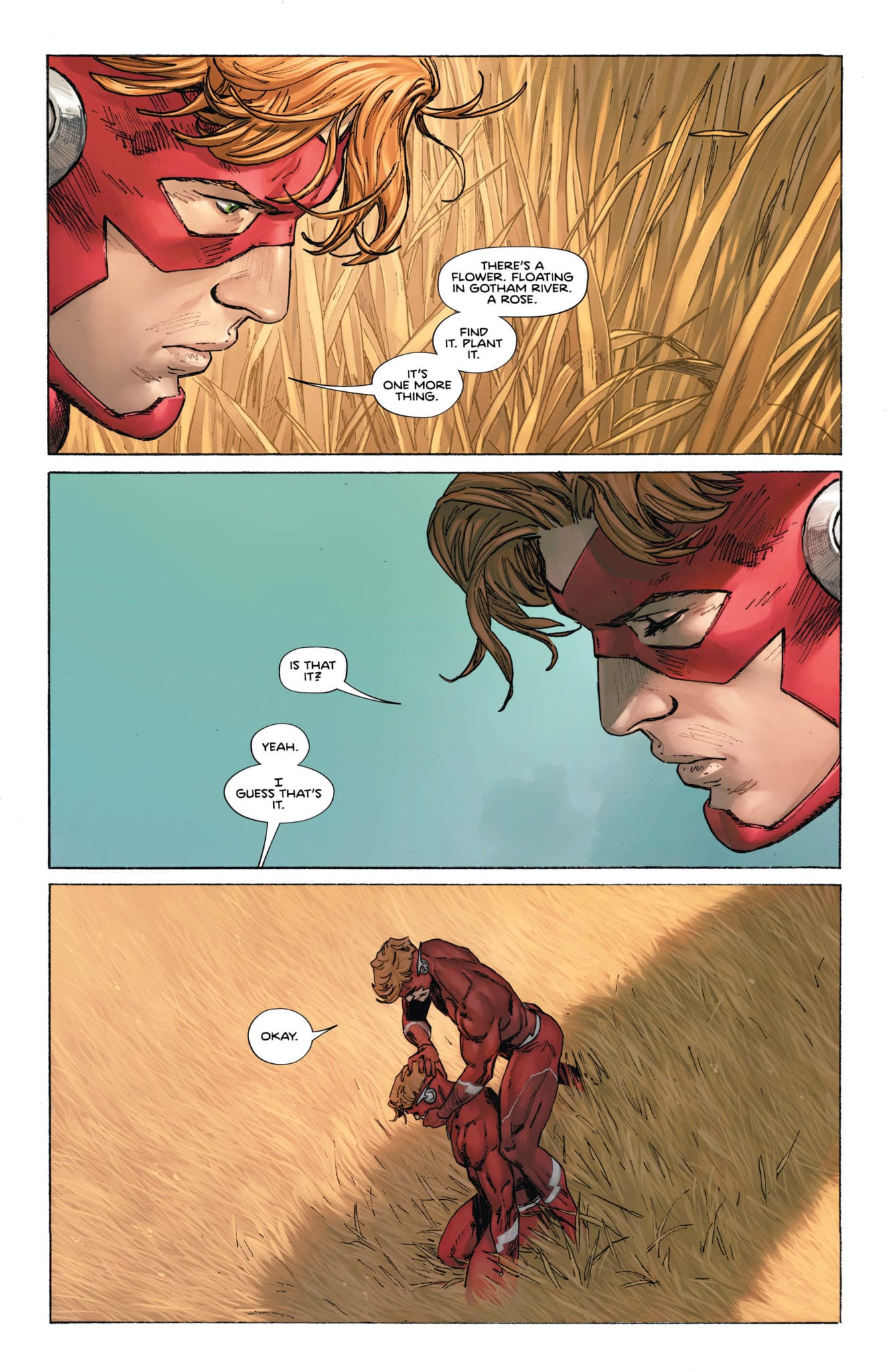
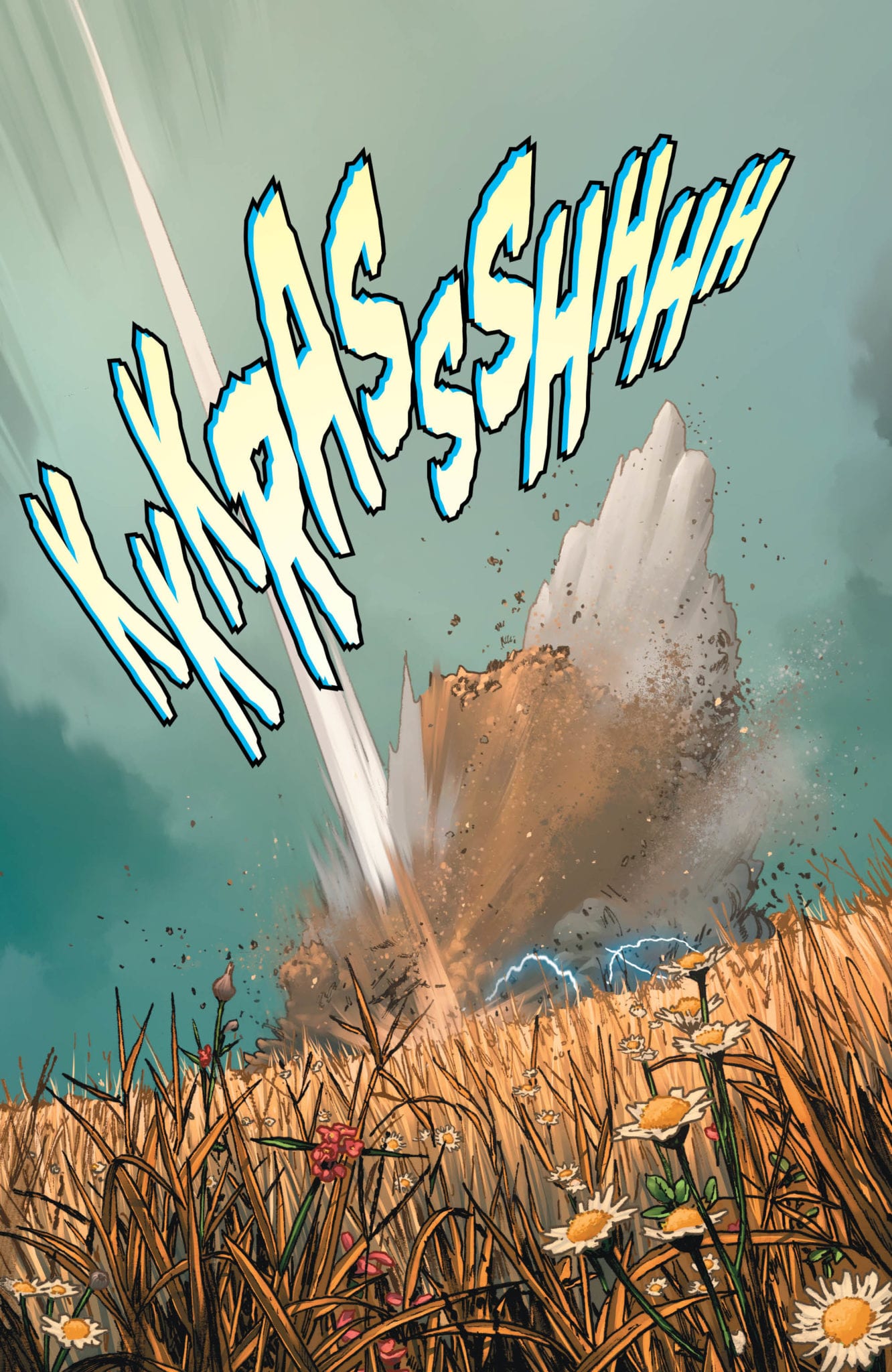
Clay Mann handles all the art in the finale and the script is tailor-made for epic panels that leave you in awe. The final issue is full of raw emotion from every character involved and Mann is tasked with bringing that intensity to each panel. The book feels like a film in the way the camera angles are worked. Every panel conveys emotion and has a purpose. There are seven panels involving Harley Quinn that are cinematic gold. I’ve never had a static image emotionally squeeze me as hard as Mann’s work did in the finale. Tomeu Morey’s colors assist Mann’s pencils as the background colors bring the characters out of the page. Morey also gives certain panels a soft background blur that keeps the conversation serious but heartfelt.
Clayton Cowles has to stack a ton of King’s dialogue in the book, and it flows. The lettering in the book directs your eyes very well, and Cowles excels at framing the artwork to increase an emotional response from the reader. The final two pages of the book have a gentle ‘S-motion’ to the lettering that gives momentum so that the final word on the page is exciting and inspirational.
As mentioned before, Heroes In Crisis is about the raw emotion of being a superhero. Superman’s speech from issue five is probably the best moment from the series, but the final issue is where it all connects. King’s writing shines when it comes to unpacking the complexities of Wally West’s emotional state. There is a level of compassion in the writing that gets under your skin and resonates. Wally, Booster Gold, Batgirl, Harley Quinn, Poison Ivy, and Blue Beetle are all damaged goods to a certain degree, but you care deeply about the characters because of the little details that King puts into his story. What elevates the book, even more, is the ending had me excited for what comes next.
Overall, Heroes In Crisis was an up and down story but was definitely worth the price of admission.
What did you think of Heroes In Crisis? Check out a six-page preview below.
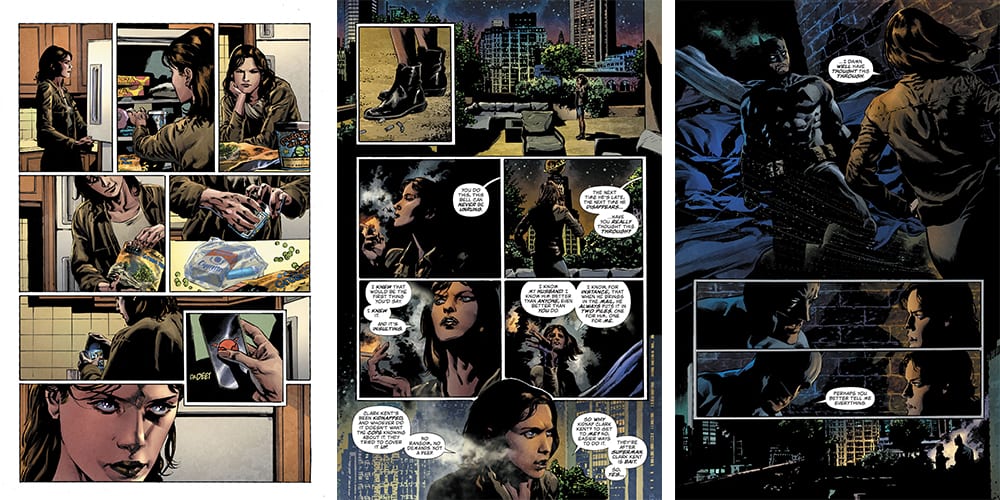
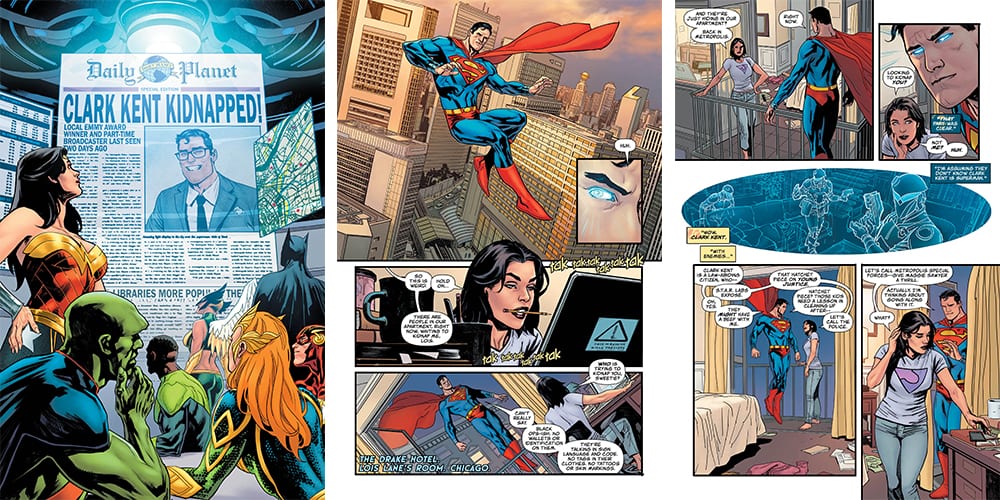
Superman: Leviathan Rising Special #1 hits your local comic book store today, and the 80-page issue tries to build suspense with the written talents of Marc Andreyko, Greg Rucka, Matt Fraction, and Brian Michael Bendis, but fails to develop the mystery enough to sink its hooks in the reader.
On the other hand, the artistic side of the book with Yanick Paquette, Mike Perkins, Steve Lieber, Eduardo Pancica, and Júlio Ferreira delivers a book that is worthy of your time. Paquette’s panel layout is one of the standouts, with the artist taking a unique design to his splash pages.
Fraction and Lieber’s Jimmy Olsen
Fraction and Lieber’s Jimmy Olsen tale is the most memorable from an insane point of view. The story is fun, light-hearted, and captures your attention. Rucka and Perkins cover Lois Lane with grit and grime, it will be exciting to see where the duo takes the character.
Rucka and Perkins
If you’re a first-time reader or haven’t picked up a Superman book in a while, it may be helpful to go back and start at the beginning of Bendis’ run on Superman. The motivations of certain characters seem vague and bit more backstory would be helpful.
In a week that features Heroes In Crisis #9 and Batman: The Last Knight On Earth #1, Bendis needed to bring his A-game and Superman: Leviathan Rising Special #1 comes off flat. If you are a fan of Superman, then this book is for you. If you are on the fence about the character, there is nothing in the 80-pages that will sway you either way. Bendis should have taken more chances with this issue, because when you charge $9.99 for a book, you need to deliver. Superman: Leviathan Rising Special #1 reminds me of Adventures of Superman #500 and the return of the Supermen. There is excitement for the issue but I’m not sure why yet. Event Leviathan comes in two weeks, giving Bendis another chance to sway the reader’s excitement.
Brian Michael Bendis and Yanick Paquette
Do you have Superman: Leviathan Rising Special #1 on your pull list? Comment below with your thoughts.
About SUPERMAN: LEVIATHAN RISING SPECIAL #1
An all-star roster of writers and artists highlight the new threat of Leviathan, but also tees up new ongoing series for Jimmy Olsen by writer Matt Fraction and artist Steve Lieber, and Lois Lane by writer Greg Rucka and artist Mike Perkins, coming in June! As Leviathan enacts a plan to take down Superman, it’s up to Lois, Jimmy and the heroes of the DC Universe to rescue the Man of Steel.
DC Comics released a 10-page preview of BATMAN: LAST KNIGHT ON EARTH #1 Tuesday night.
ABOUT BATMAN: LAST KNIGHT ON EARTH #1
Bruce Wayne wakes up in Arkham Asylum. Young. Sane.
And…he was never Batman.
So begins this sprawling tale of the Dark Knight as he embarks on a quest through a devastated DC landscape featuring a massive cast of familiar faces from the DC Universe. As he tries to piece together the mystery of his past, he must unravel the cause of this terrible future and track down the unspeakable force that destroyed the world as he knew it…
From the powerhouse creative team of writer Scott Snyder and artist Greg Capullo, the team that reinvented Batman from the emotional depths of “Court of Owls” to the bombastic power of DARK NIGHTS: METAL, DC Black Label is proud to present the bimonthly, three-issue miniseries BATMAN: LAST KNIGHT ON EARTH, published at DC’s standard comic trim size.
Looking for a new story that combines magic and mythology in a dramatic, space opera setting? She Said Destroy #1 may have you covered.
The new title from Vault Comics outlines an interplanetary conflict between the last remaining gods: Morrigan, the goddess of death, and her sister Brigid, who wants to destroy her and conquer the solar system. Morrigan’s followers won’t be defeated so easily, though, and they intend to fight back.
The Writing
The work is a passion project for the two creators, as one can tell based on recent interviews with creators Joe Corallo and Liana Kangas. The book’s charm does come across on the page, manifesting in a complex world with an intricate mythology.
Corallo’s worldbuilding is the book’s strongest asset from the writing side. From the prologue on the first page of She Said Destroy #1, we get insight into the world’s defining attributes. We know that there were once thousands of gods. Now, though, there are only two left—Morrigan and Brigid—figures borrowed from ancient Irish mythology. We know also the goddesses’ worshippers are spread across the solar system, with Brigid’s followers having wiped out all the other deities and forcing their sun goddess on everyone. Beyond that, Corallo manages to competently weave enough exposition into the story to keep info dumps to a minimum.
Where the book comes up short is in clearly defining our protagonist. That role falls (presumably) to a girl named Winona, one of the witches who follows Morrigan. We’re told repeatedly that she’s special in some way and she has the favor of her goddess, but it’s not quite clear what that means, or why she’s favored. In that respect, She Said Destroy #1 falls guilty of riding the “chosen one” cliché.
The issue extends to other characters as well. We’re introduced to several, but get relatively little in the way of characterization or distinct personalities. Jackelyn feels like an interesting character, as does Morrigan, who serves as our narrator. However, the fact that we don’t know anything about most of the characters means we never feel the stakes are particularly high.
One can hope that, in subsequent issues, we’ll learn more about Winona and other central figures in the story. At present, there are few personas who command the reader’s interest and concern.
The Artwork
The linework by Liana Kangas in She Said Destroy #1 is easy on the eye. She employs a fairly minimal, somewhat scratchy style throughout the book. Most panels feature close-cropped illustrations of the characters with little background detail. Occasionally, though, the artist provides panels with wider, more landscape-style images to give us an impression of the world.
The lack of detail can make it hard to flollow the action on the page at key points. In a few panels, as a matter of fact, it’s hard to make out what we’re seeing at all. But for the most part, Kangas’s style works well enough.
The illustrations are dynamic, but they don’t always move fluidly from one panel to the next. Fortunately, colorist Rebecca Nalty helps provide flow to the artwork in She Said Destroy #1. While she employs just about every color imaginable, they’re similarly toned, making the work feel nice and cohesive.
Final Thoughts
She Said Destroy #1 has an interesting concept, and it definitely shows promise. The creative team will need to iron out some of those issues with characters, though, to make the most of this story.
As more information slowly trickles out about the new Star Trek T.V. series, IDW Publishing continues to keep the Trek audience entertained with titles such as Star Trek Year Five. Acting as an homage to the original series and a companion to the number of live action versions readily available, Star Trek Year Five is pure indulgence for any Star Trek fan.
Star Trek Year Five #2 Credit: IDW Publishing
Writing/Story
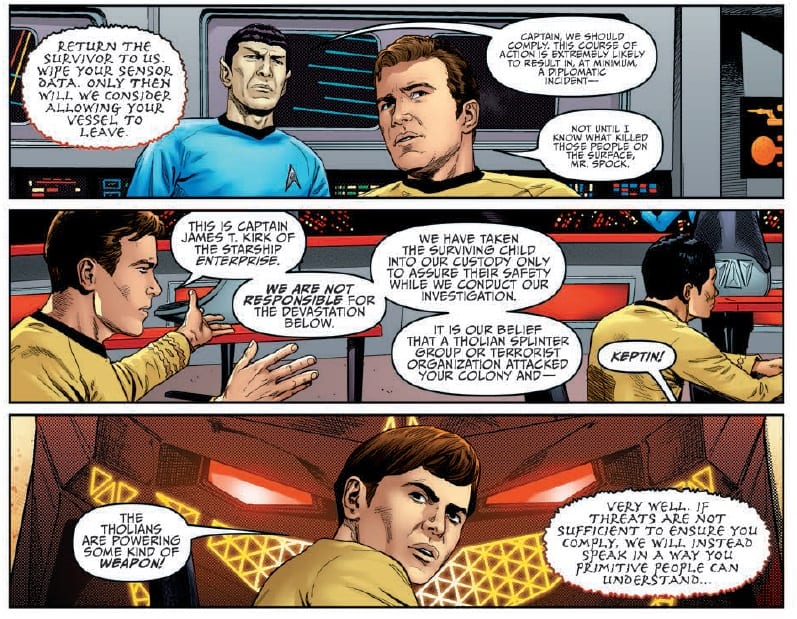
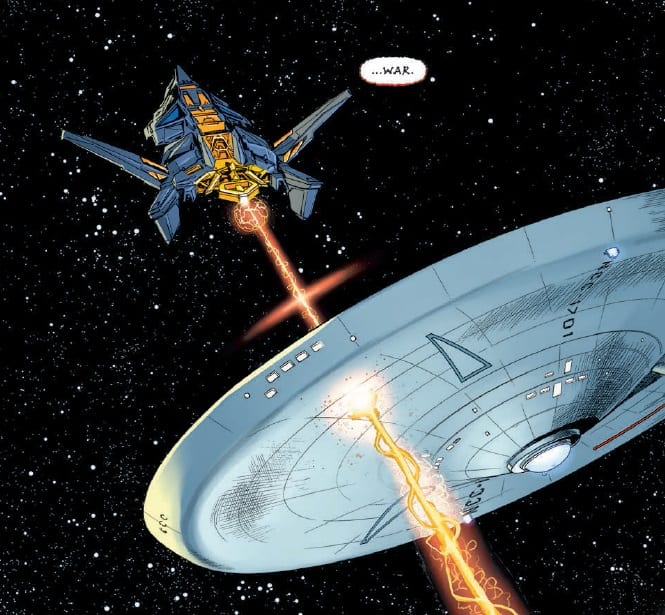
After rescuing the only survivor of a massacre on an unexplored planet, Captain Kirk and the crew of the Enterprise face a Tholian threat which, if handled incorrectly, could start an interstellar war.
With the end of their mission so close, should Captain Kirk play it safe or stand his ground? How much is one life worth?
These are the questions that Jackson Lanzing and Collin Kelly ask in the second issue of Star Trek Year Five and they lead to some deep, sociological conversations. The original Star Trek series was always about ethical dilemmas and shining a light on society; Lanzing and Kelly have adopted this approach and there are a number of contemplative moments.
The script is speech heavy for the majority of the comic but it suits the type of story being told. This is Classic Star Trek and it is presented as such. It is a comforting contrast to the super-fast, action heavy versions audiences are faced with at the cinema or on T.V. That doesn’t mean Year Five isn’t exciting, it just has a different approach, inspired by Gene Roddenberry’s initial concept.
Lanzing and Kelly have captured the characters perfectly, so much so that you can hear the actors voice as you are reading. Their accents and inflections are woven into their speech so the reader can tell who is talking even when they are off panel.
Star Trek Year Five #2 Credit: IDW Publishing
Art
The wonderful character representation is also reflected in Stephen Thompson’s art work. He uses very precise, thin pencil lines to shape the figures and scenery, allowing for an impressive amount of detail. The visual style is clearly inspired by the original series and the images make you feel as though you are back in the 60’s watching the show on television.
Thompson uses the scenery to create frames within the panels thereby giving the scenes some depth. It also allows Thompson to lead the reader through the panels and across the page. The layouts are fairly standard, and there is a lot of exposition to fit in, so Thompson uses his framing techniques with shifting camera angles to drive the story forward. The pacing of the comic comes from the changing panel shapes with the occasional page bleed punctuating moments of significance.
Both Charlie Kirchoff, on colors, and Neil Uyetake, on letters, follow the aesthetic set by Thompson. Kirchoff uses muted colors to give the pages that 1960’s atmosphere but emphasises the uniforms worn by the Enterprise crew. This is almost as important for the characters as their speech.
Uyetake spaces the speech balloons out, giving each sentence or paragraph space to breath. The information is laid out in a naturalistic, conversational way but still conjures up memories of watching the staged Original Series episodes.
Star Trek Year Five #2 Credit: IDW Publishing
Conclusion
Star Trek Year Five is everything you could want from a Star Trek comic. It allows itself some indulgence in nostalgia, and references the Original series on a number of occasions, but not enough to make it just for fans. The central story is a strong, important story which can be read on a number of levels. On the surface it is a straight forward Sci-Fi romp with impending destruction around every corner but underneath there is a greater philosophy.
It is only two issues in but Star Trek Year Five is already shaping up to be a classic Star Trek comic, destined to be talked about for years to come.
Dick Tracy Forever from IDW Publishing moves through the years as it pays homage to Dick Tracy and all the things that made the character so popular. After last months ‘early years’ issue, this month sees the classic Grotesques make an appearance as well as some of the futuristic technology that Chester Gould loved.
This is the Forties; this is where Dick Tracy made his name.
Dick Tracy Forever #2 Credit: IDW Publishing
Writing/Story
Just like the first issue, Dick Tracy Forever #2 offers up several stories surrounding the famous detective. The first features ‘that damned watch’ and focuses on the technological obsession from the original strip. This follows a ‘story within a story’ pattern with a kick at the end. Michael Avon Oeming uses the narrative frame to tell a story about Dick Tracy from the point of view of the criminal, a rarity for Tracy fans. The story is comedic with an over exaggerated sense of dilemma. Its first narrator, English Bob, clearly thinks a lot of himself and comes with a thick layer of stereotyping. This is followed by a similar, although contrasting, voice for the second part of the story.
Although lacking any real substance, the opening tale is a humorous homage to the two-way wrist radio that has become synonymous with the character. The second story, however, is much more ambitious. Featuring several of the famous villains from Dick Tracy’s rogue’s gallery, The Two Dicks centres around a plot to produce poisonous gas for foreign agents. Chester Gould wrote several stories featuring German Spies during the Second World War era so it’s no surprise Oeming would venture into this territory.
The story is action packed with some very strong character moments. There are, however, a large number of characters featured and they suffer because of this. Oeming is able to give the characters more narrative time than the Disney movie spent on the grotesques featured in that production, but it still lacks any satisfying depth. It is as if the reader has come in at the end of the story having missed all of the build-up. One of the successful elements of Gould’s original strips was the lead in time for a story. He spent weeks building his characters before the inevitable chase across the country. Oeming has bypassed this and got straight to the climax. All of the elements of a great Dick Tracy story are there; evil villains; dastardly plans; gruesome deaths; elaborate traps; however, it all happens too fast.
Dick Tracy Forever Credit: IDW Publishing
Art
Oeming’s art work is suitably dynamic. He captures the characters beautifully, embodying them with life and emotion. His use of thick black lines makes everything bold adding a harshness to the stories. It is very blunt and to the point, just like Tracy’s attitude towards the law.
There is a dark atmosphere created by Oeming’s use of black but this relates to the stylistic element of the original strip more than it does to a narrative darkness as seen in Frank Millers’ Sin City comics, for example. Oeming enjoys contrasting the foreground and background, often reducing one or the other to almost black silhouette.
The colors are garish and unnaturalistic, much like the tone of the story. Taki Soma uses color to emphasis character rather than depict reality which is exactly the correct approach for this comic. Broccoli Rabe is given a sickly green color that matches his name but also is an indication of his character. Tracy stands out in the panels because of his bright yellow coat; constantly the centre of attention in his own comic book.
Shawn Lee uses the lettering to break up the blackness in the backgrounds, cementing the speech over the top of the shadows. However, he uses coloured text boxes for the narration which indicates the separate characters but also reminds the reader that the visuals are flashbacks, told from the point of view of the speaker. The contrast between the clean whiteness of the speech balloons and the darker, colored narration boxes symbolise the time shift and the bias of the story teller.
Dick Tracy Forever Credit: IDW Publishing
Conclusion
Dick Tracy Forever is bold and brash. Much of the narrative is over the top action with wild visuals and design. It captures the feel of the expressive 1940’s Dick Tracy strips and pays homage to the characters that made that era of the strip so popular. The villains show the same despicable tendencies that Gould gave them 70 odd years ago.
The drawback with this monthly title is that Oeming is moving through the stories and the characters with such a speed that the reader does not get time to indulge in any of it. The story has no sooner started than a conclusion is reached. It would be nice to spend time with these characters and allow a sense of drama to build up. A character like The Brow could easily take up four monthly issues of storyline.
Dick Tracy Forever is a step in the right direction for the ever growing franchise but a commitment to a longer, more dramatic, ongoing story would allow the characters to shine and capture the hearts of old and new fans alike.
New Netflix drama What/If comes from Revenge creator Mike Kelley who drew inspiration from a lot of 90s thrillers and pulled a coup by getting Renée Zellweger to star in a T.V. show for the first time ever as a regular cast member. Another addition to the team is composer Fil Eisler (Empire, Revenge) who layers the show with a little noir here and some industrial sounds there.
According to Netflix, What/If is a “neo-noir social thriller” that “explores what happens when acceptable people start doing unacceptable things.” It’s also an anthology series much like American Horror Story that will morph every season. Season one focuses on Anne Montgomery played by Renée Zellweger who makes a devious offer to a cash-strapped San Francisco couple named Lisa Ruiz-Donovan (Jane Levy) and Sean Donovan (Blake Jenner). From there, things unravel and descend into chaos as Anne manipulates everyone around her.
PopAxiom wondered … what if we could interview composer Fil Eisler about making music, What/If, and Superintelligence?
About What/If
Fil Eisler previously worked with What/If creator Mike Kelley on Revenge. However, the sounds of both shows are quite different. “We deliberately wanted to go in a different direction.”
What/If is undoubtedly influenced by 90s thrillers like Basic Instinct and Indecent Proposal. “They deliberately took a lot from that. There are even a few cameos.”
The music for What/If is a hybrid of sounds. “What we ended up coming to was that Anne Montgomery had this neo-noir orchestral sound but underneath that would be the machinations of this Machiavellian scheme going on.”
Fil says about Kelley, “ … makes things very twisted and dark, which is right up my alley.”
To achieve some of this twisted mix, Fil says, “I spent a lot of time delving in the world of modular synths.”
Elaborating on the score of What/If: “There’s a very dark, sort of industrial undertones but with this quiet and lush orchestral … over the top. Proper themes, proper melodies, so in a lot of ways it’s very old school.”
Nineties thrillers were light on the noir elements when it came to the score. For Fil, he went way old-school: “Film-noir to me goes way, way beyond … much further back. The 40s, 50s, and even 60s.”
Significant influences on the shows sound included, “… Bernard Herman, Miklós Rózsa … Alfred Newman.”
But Fil doesn’t think it was a conscious influence, “They’re sort of part of my DNA.”
Speaking of DNA
Fil Eisler was born in Prague and doesn’t remember life without music in the house. “We had a grand piano … so music was always around me from an early age.”
Growing up, Fil had an English grandmother who was a violinist and later taught music therapy. “She’d sit with me at the piano, and we’d make up stories with music.”
Sure, as a kid there was a lot of senseless key banging going on here sometimes but, Fil says, “It’s really fun and something I do now with my kids.”
As early as four or five, Fil started taking piano lessons and also sang in the choir. “My dad brought home a guitar once when I was around eight years old, and that was it. I fell in love with it. That became my instrument.”
Movies & Music
Fil grew up in a theatre-centric, classical music surrounding, so the idea of film scoring, “… came much later.” However, Fil was undoubtedly a fan of film too. “If there was something I was obsessed with besides music, it was movies.”
As a kid, Fil says, “I don’t know how much I made the connection … between films and who was making the music.”
But he does recall the kind of movies that made their way into his creative DNA. “Spielberg, James Bond, James Cameron, Ridley Scott … lots of horror movies and that was in the 80s, the sort of golden age of slasher films.”
Fil’s cinematic influences included many classic films: “I remember going to see SavingPrivate Ryan and Schindler’s List. The first time I saw Pulp Fiction and Heat,” Fil exclaims, “Oh my god, Heat, I saw that about five times in theaters.”
Movies like those made Fil, “… want to do that.”
Much like so many musical artists owe a lot to the Beatles, or Elvis for you Elvis people, Fil thinks the same goes for John Williams when it comes to scoring. “To this day he’s the master.”
Williams was a household name in the 80s because of StarWars and IndianaJones, oh, and E.T., oh, and … you get the point. But Fil, “… never thought of the music separate from the film.”
Fil adds, “I could always sort of close my eyes and see visuals with the music. It’s always been there.”
Wrapping Up
Another upcoming project from Fil is a film starring Melissa McCarthy called Superintelligence. It’s a comedy about something potentially terrifying — artificial intelligence.
But, as Fil puts it, “[Superintelligence] is not Terminator …” With James Corden as the voice of the A.I., it’ll be hard to not find Superintelligence charming.
As for the music: “Superintelligence is very much an orchestral score in the vein of a Williams or Silvestri.”
What’s next from the composer? “Right now I’m working on a movie called Wander Darkly with Sienna Miller and Diego Luna. It’s simply fantastic.”
Fil will soon be at work on the sixth and final season of the hit FOX series Empire.
Thanks to Fil Eisler and Rhapsody PR for making this interview possible.