Home Blog Page 438

Review: SWORD MASTER #1 Energetically Blends Fantasy, Martial Arts, Manga And American Comics

Monkeys Fighting Robots

Sword Master #1 slashes it’s way out of Marvel Comics recent ‘War Of The Realms’ crossover and blends action, fantasy, mythology and martial arts into a manga-influenced book with tons of energy.

MIGHTY MARVEL MARTIAL ARTS DOUBLE TROUBLE! ALL-NEW ONGOING SERIES! You saw him tear through Fire Goblins in WAR OF THE REALMS with his big, damn magic sword! Now learn the mysterious origins of LIN LIE, A.K.A. SWORD MASTER, Marvel’s newest Chinese superhero, in the English language debut of the original series written by Shuizhu and drawn by Gunji! Haunted by dreams of demons, Lin Lie hunts for his missing archeologist father – and for the secret of the black sword he left behind. And in a brand new story written by Greg Pak (NEW AGENTS OF ATLAS), Sword Master teams up with SHANG-CHI! What happens when an undisciplined, untrained kid with a magic sword, tangles with the one and only, undisputed MASTAninditoER OF KUNG FU? (Spoiler alert: they will indeed drive each other crazy, with huge ramifications for the Marvel Universe!)Sword Master
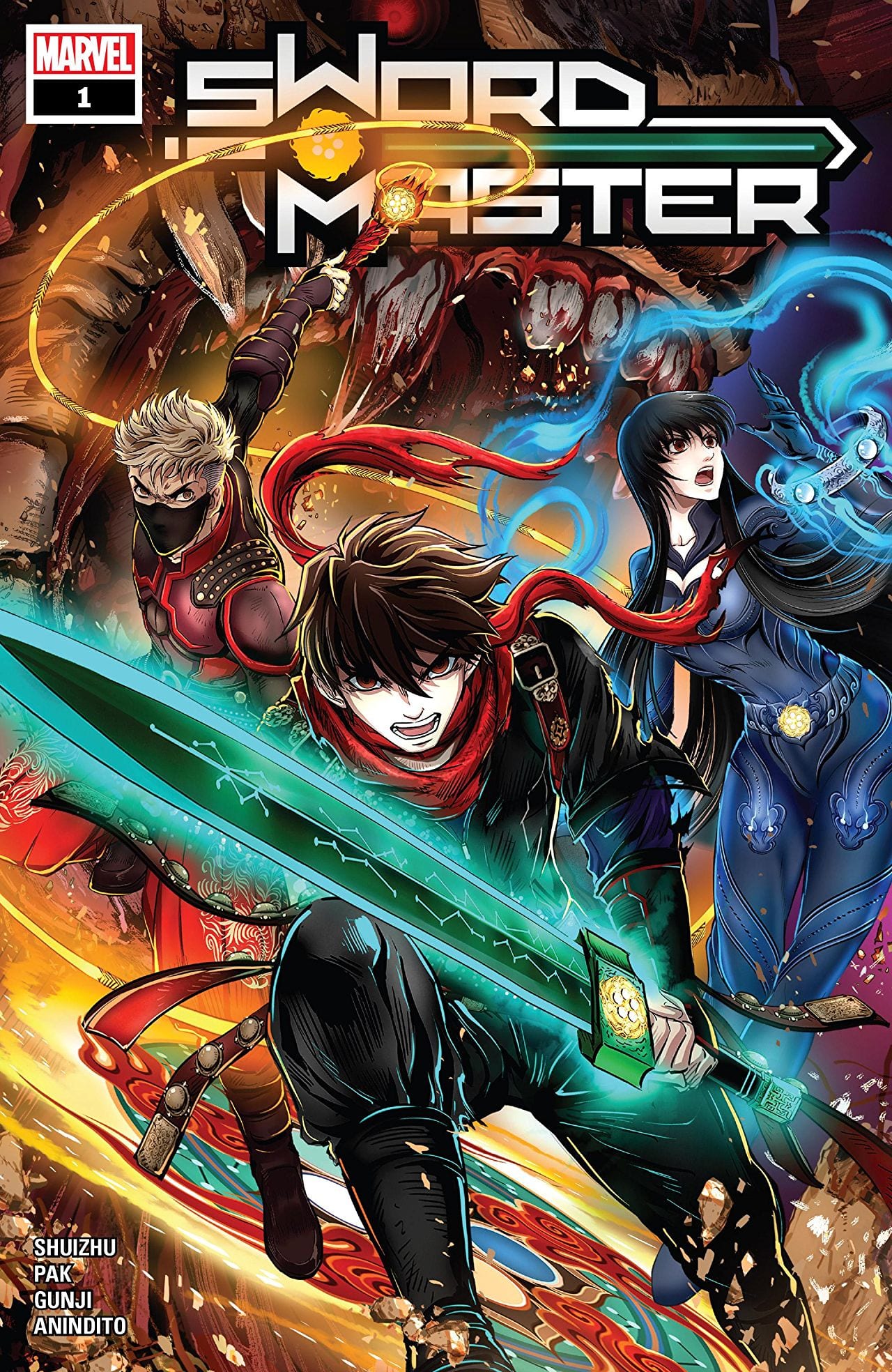
Sword Master #1

‘Sword in The Tomb’
Written by: Shuizhu
Art by: Gunji
Adapted by: Greg Pak

‘Sword Master & Shang-Chi: Master Class’
Written by: Greg Pak
Art by: Ario Anindito
Colors by: Rachelle Rosenberg
Letters by: Travis Lanham

Story

Sword Master #1 contains two stories, and although they are different in style and look, both have the same narrative purpose in mind: catch up readers on who Sword Master is, what his purpose is and how this new character fits into the post War Of The Realms Marvel Universe. Both chapters succeed and create a fast, action-packed reading experience.

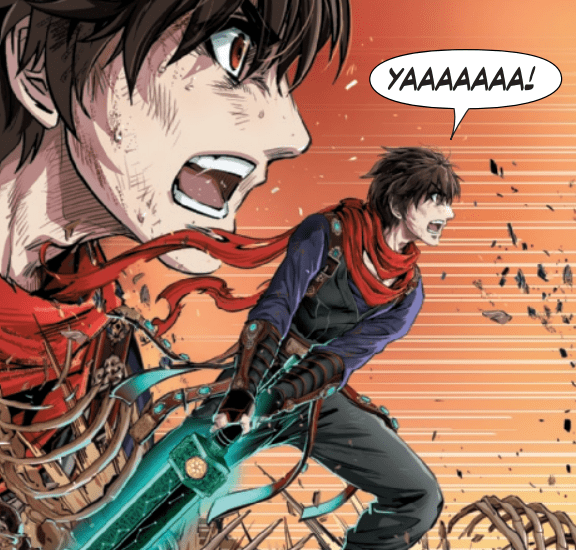
The first story, ‘Sword in The Tomb’, is a translation of a previously printed tale. This short chapter is a solid introduction. It suffers a bit from exposition and an often used dream sequence to get a lot of information across, but it moves fast and it’s engaging enough that it doesn’t drag or bore. There’s plenty of action and pathos. You also get a definite feel as to who Lin Lie is though his conversation and relationship with his friend Cheng (who is a classic best friend/sidekick right off the bat). Lin seems to be on then Peter Parker type of young superhero; he’s driven by tragedy but is not overly dark. It’s clear he feels he has a responsibility to find out what happened to his father and how he fits into this new world he has been thrust into. It also ends on a good cliffhanger.Sword Master
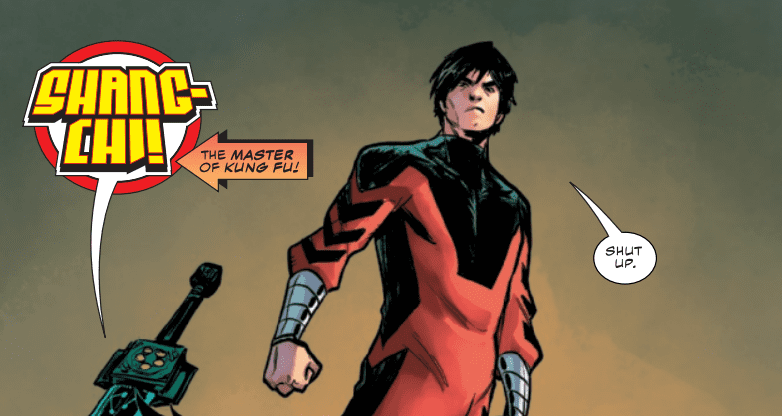
The second story, ‘Sword Master & Shang-Chi: Master Class’, takes Lin to New York, dropping the reader in medias res of Lin confronting a few unsavory dudes. It’s here that we get one of the highlights of the issue, an awesome appearance by Shang-Chi, Marvel’s Master of Kung-fu. Shang-Chi is one of Marvel’s ‘cult’ characters, and an appearance by him is always welcome. It means we’re going to get to explore a different side of the MU and that’s always exciting. This chapter is written by Greg Pak, and the writer creates an instant sensei/student dynamic between Lin and Shang-Chi that feels natural. Hopefully, this relationship remains central to the book. The training sequence, in particular, is nicely done and also serves as a good way for people who may not know who Shang-Chi is to get a good idea of who/what the character is.

Art

Both stories here have really strong art, and each feels distinct to its own chapter. ‘Sword In The Tomb’, illustrated by Gunji, is very much of the manga school (big eyes, lots of speed lines, body movement and dramatic, intense facial expressions. Here there is only a hint of western comics influence coming out via panel placement and structure. It’s a visual treat; it’s just pretty to look at.Sword Master
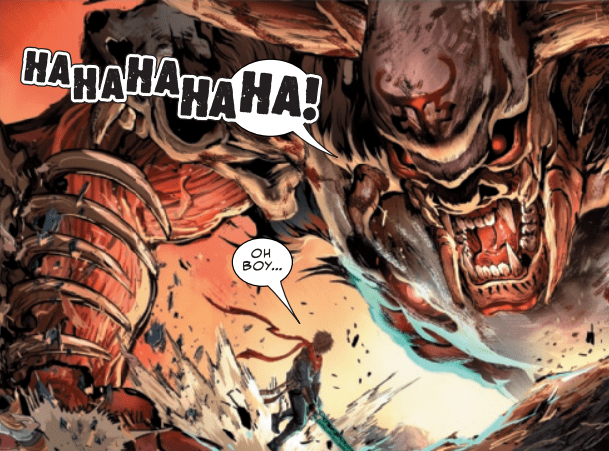
Chapter two’s art falls in line more closely with what we see in most Marvel Comics, but it still has the same energy, flare and dynamics we got in ‘Sword In The Tomb’.  Ario Anindito and Rachelle Rosenberg have good synergy and create a slightly darker tone that gives ion the New York atmosphere that helps create a strong sense of place. Sword Master
Conclusion

Sword Master #1 shouldn’t be missed. It’s great to see Marvel give a different kind of hero and story a chance. Comic readers should do the same. So grab a comic at your local comic shop!

Monkeys Fighting Robots Youtube

Review: FEARLESS #1 Seems Great On Paper But Falls Short On Execution

Monkeys Fighting Robots

Fearless #1 takes a promising idea but fails to deliver the goods because two of the stories are memorable for the wrong reasons.

Fearless #1
Storm’s dialogue is one of the highlights of Fearless #1

Fearless #1

“Campfire Song” 

Writer: Seanan McGuire

Artist: Claire Roe

Color Artist: Rachelle Rosenberg

“Style High Club”

Writer: Leah Williams

Artist: Nina Vakueva 

Color Artist: Rachelle Rosenburg

“Unusual Suspects”

Writer: Kelly Thompson

Artist: Carmen Carnero

Color Artist: Tamra Bonvillain

Lettering: Janice Chiang

In theory, Fearless #1 is exactly the kind of content that Marvel needs to be producing. It’s a comic that features women characters and it’s written exclusively by women. Plenty of readers might hear that and think, “Yes! Sign me up!” This writer is part of that group. This series is inherently exciting because, at least on some level, it demonstrates that Marvel knows diversity and representation need to be a priorities moving forward. But Fearless #1, as a comic book, fails to tell compelling stories and it doesn’t provide many reasons to hope for the rest of the miniseries.

Fearless #1
Carol’s unnamed coworker steals the show in this scene.

Let’s focus on the most successful of the three mini-stories included in the issue, “Campfire Song.” This snippet is the only one of the trio that will receive another installment in the series; writer Seanan McGuire’s snippet was the only one that ended with “too be continued.” The beginning of McGuire’s plot isn’t perfect; Carol Danvers, who the writer calls the “heroine of heroines,” is a non-factor and she’s conversationally outshined by her unnamed French coworker. Danvers’ usually snappy dialogue is absent and she’s practically invisible in the portion of the story.

Fearless #1
Will Sue Storm’s distrust of the camp prove to be valid?

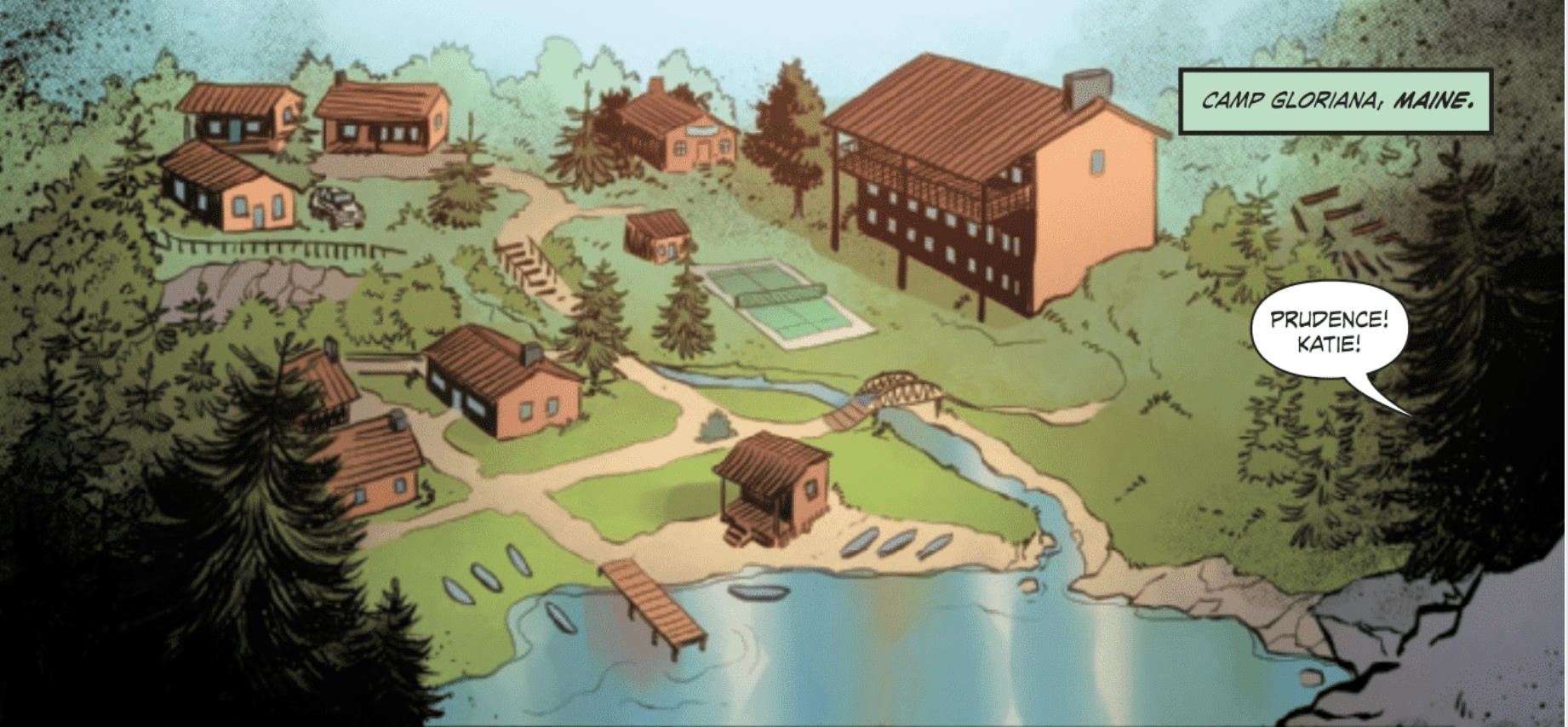
Speaking of invisible, Sue Storm kicks things off in a scene with her husband Reed Richards. The dialogue between the two effectively sets the stage for what’s to come; McGuire establishes that Storm distrusts the Gloriana Leadership Camp for Female Empowerment, where she and other heroes will be giving speeches to the technological geniuses of tomorrow. Storm thinks the camp is too secretive but Reed encourages his wife to ignore her instincts and attend the event anyway. Reed’s actions are fair because Storm could be overly paranoid. But, given that this is a Marvel Comics, it’s far more likely than shenanigans are on the horizon.

Fearless #1
Storm is the MVP of Fearless #1.

Of the trio of heroines involved in “Campfire Song,” Storm (relatively) fares the best. She fends off some loggers who insult her because she’s a mutant. Storm doesn’t show much restraint with these men; after they criticize her and one of them throws a rock at her, Storm unleashes a nasty storm of lightning and rocks on them. This aggressive approach seems to defy the lessons of Charles Xavier but Storm redeems herself with some moving lines after these actions.

“Men and their money,” Storm says. “They have the means for making more than they’ll ever need without violating pristine boreal forests like this one. Have they never heard the word ‘enough’ before? But perhaps none of us know what ‘enough’ means.” Storm’s words add some much-needed weight to what had been a mostly unmoving story. Hopefully, she, along with Storm and Danvers, will receive more chances to explore meaningful real-world issues as the miniseries continues.

Fearless #1
In “Campfire Song,” the settings feel like organic places.

The art team of Claire Roe and Rachelle Rosenberg deserves credit because they make each of the settings (a camp in Maine, an apartment in Manhattan, a station in Earth’s orbit in space and a forest in Canada) feel genuinely distinct from one another. At the camp site, you can practically smell the bug spray and campfire smoke. Roe fills the background with trees and Rosenberg’s usage of rich greens complement the feeling that the camp is deep in the woods. You can also practically hear the sounds of traffic when the story shifts to the Richards’ home in Manhattan; the buildings look particularly industrialized and the effect is augmented by the jarring juxtaposition of the city and the campsite. Finally, the astronomical purples used by Rosenberg help transition the story’s setting from the city to outer space and the dreary gray skies help contrast the Canadian forest from the one seen at the campsite. Roe and Rosenburg help make each part of the story feel fresh but the consistent art styles remind readers that each piece is connected.

Quick Hits

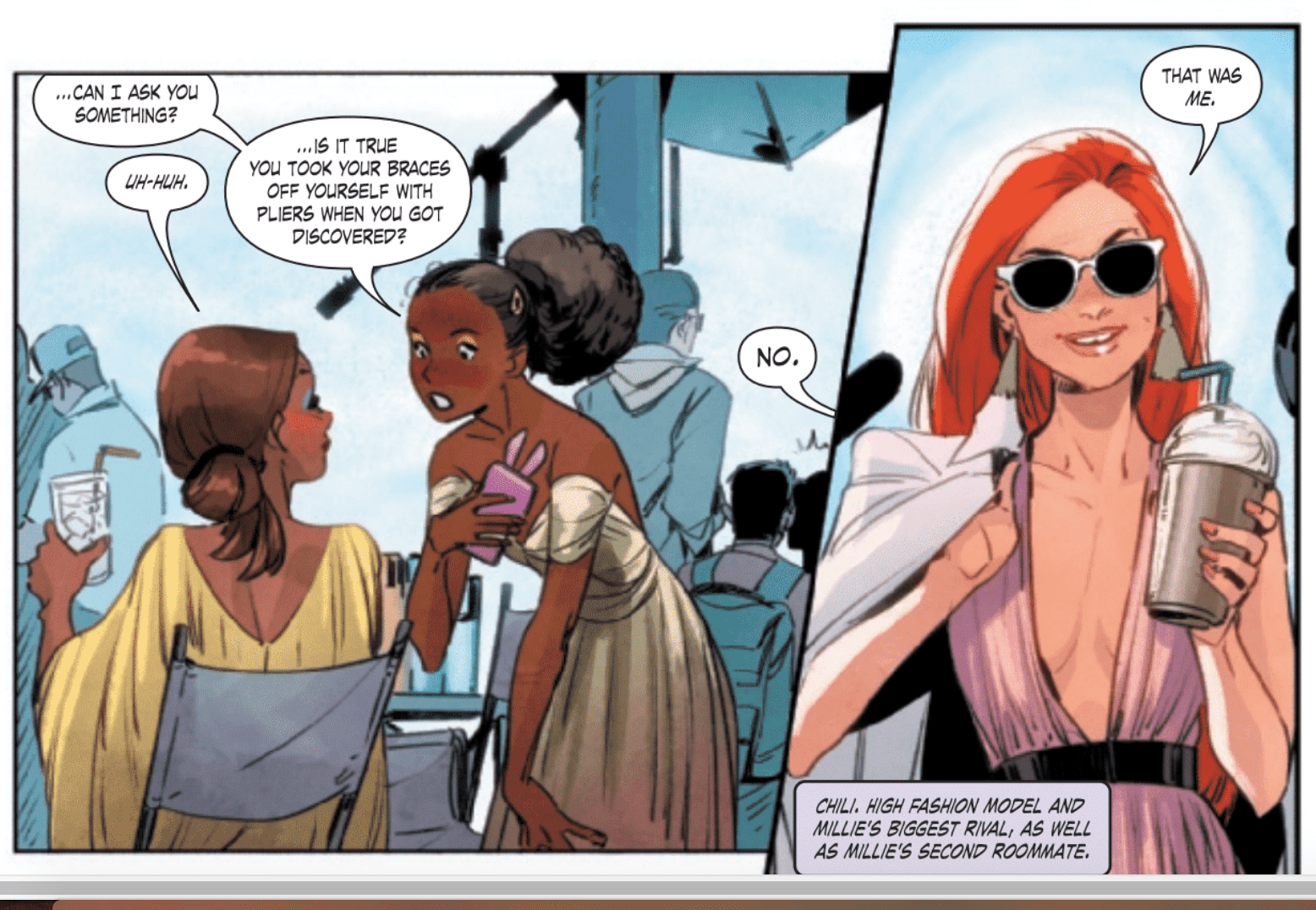
“Style High Club,” the second portion of the issue, could have been really enjoyable. Writer Leah Williams had the opportunity to dig deep and satirize society’s superficial value of appearance. Instead, the story features the worst of Instagram culture, where most people are obsessed with selfies. Most of the story reads like an episode of a CW show about teenagers. Chili is a stereotypical mean girl (armed with loud sunglasses and a coffee drink from the equivalent of Starbucks) and a chunk of the snippet focuses on her rivalry with Millie, the main character. Like the issue itself, “Style High Club” takes a fascinating idea and doesn’t make the most of it.

Fearless #1
In “Style High Club,” Chili is embodiment of several cliches.

The third mini-story, “Unusual Suspects,” will disappoint the reader because it sets up an intriguing mystery and abruptly ends. Elsa Bloodstone calls Jessica Jones and asks her for help without providing many details. Writer Kelly Thompson and the art team of Carmen Carnero and Tamra Bonvillain establish this mysterious tone because Thompson doesn’t give a lot of explanation and the artists draw Bloodstone in close-up panels so the reader can’t see her surroundings. Jones comes to Bloodstone’s rescue and finds her surrounded by miniature versions of Marvel’s leading heroines, including Captain Marvel, Gwenpool, Ms. Marvel, X-23 and others.

Fearless #1
Fearless #1 ends on a frustrating note.

But there’s no resolution; Bloodstone simply says, “I don’t want to bloody talk about it, Jones!” Then, the story simply ends. What happened to the heroes? The world may never know. Maybe Thompson is just playing with the fans but, as a reader, that’s a frustrating tease, especially when it closes out the issue.

Given the talent that’s involved, fans should trust that the miniseries will get better. But, based on this opening installment, it’s off to a lackluster start.

What do you think of Fearless #1? Where do you hope to see it go from here?

Monkeys Fighting Robots Youtube

Review: KILLER GROOVE #3 Is A Masterful Work Of Storytelling

Monkeys Fighting Robots

Music and murder go hand in hand in the third issue of AfterShock Comic’s Killer Groove. As Ollie Masters begins to tie up the numerous threads of his story, the readers are in for a visual treat.

Jonny’s music career is beginning to take off as his violence inspired songs become hits. He has started to play the big gigs and frequent the hip parties but on the side, his other career as hired hit man, is also blossoming.

Meanwhile Jackie has a new case, one involving the music business. During her search for a guitar her path crosses with her former boyfriend, Jonny, and the consequences will be far reaching.

Killer Groove #3
Killer Groove #3 Credit: AfterShock Comics

The plot might be fairly straight forward but Masters’ handling of it is not. The comic starts with three set pieces, each establishing character and each with the same narrative rhythm. They also set up the main bulk of the story for this issue; leading the characters and readers all to the same place. It is fascinating to see Masters draw the story together, nudging the plot and tightening the narrative so it all comes naturally together by this issues close.

The conflict between the cast drives the story while developing the characters. It is a comic about interactions and contrasts. The duality of Jonny is juxtaposed against the straight forward, black and white thinking of Jackie. The extras in the cast are there to highlight certain elements of each lead in the same way that the plot does. By the end of this issue the reader has a greater understanding of both Jackie and Jonny.

Killer Groove #3
Killer Groove #3 Credit: AfterShock Comics

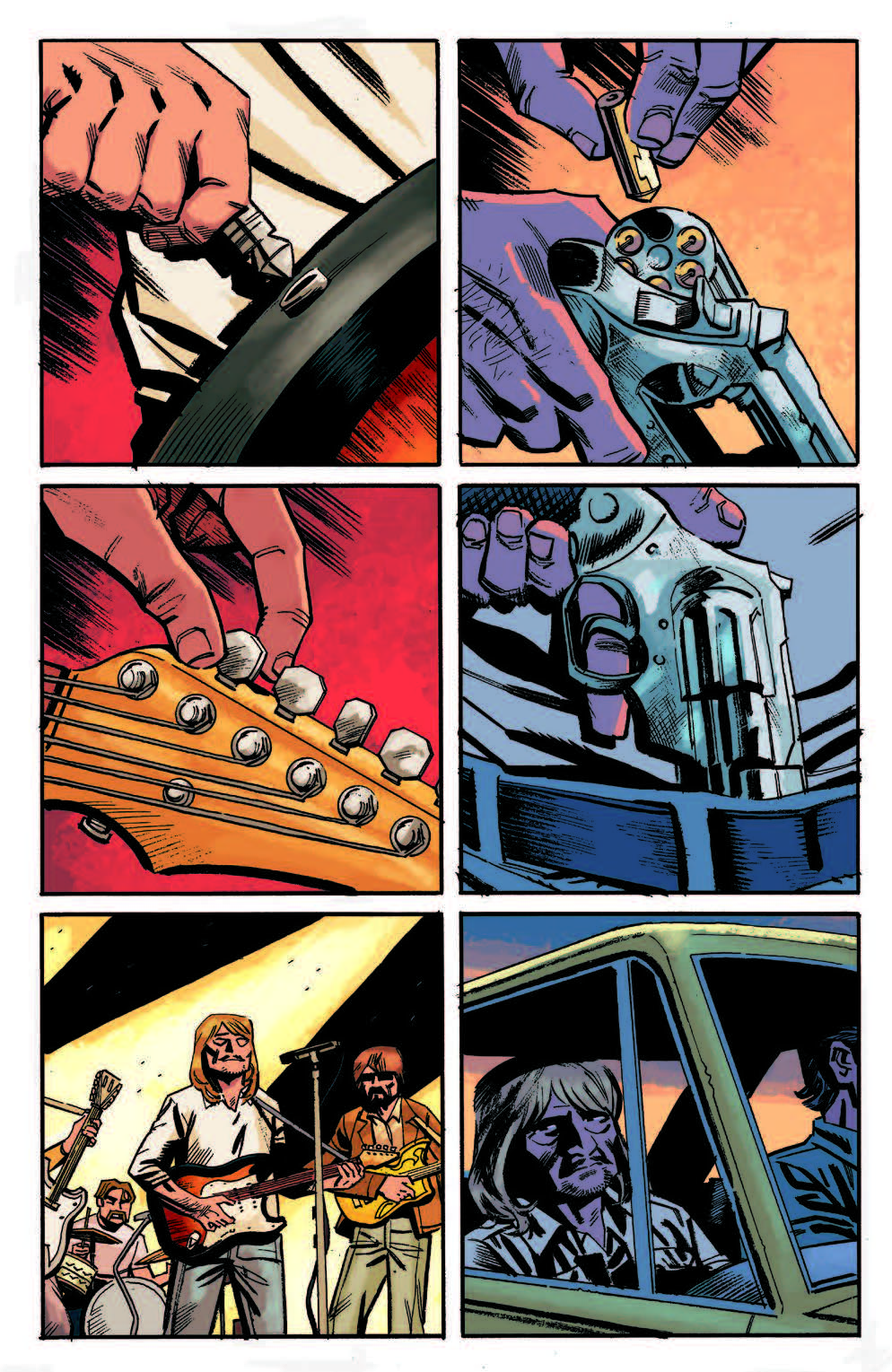
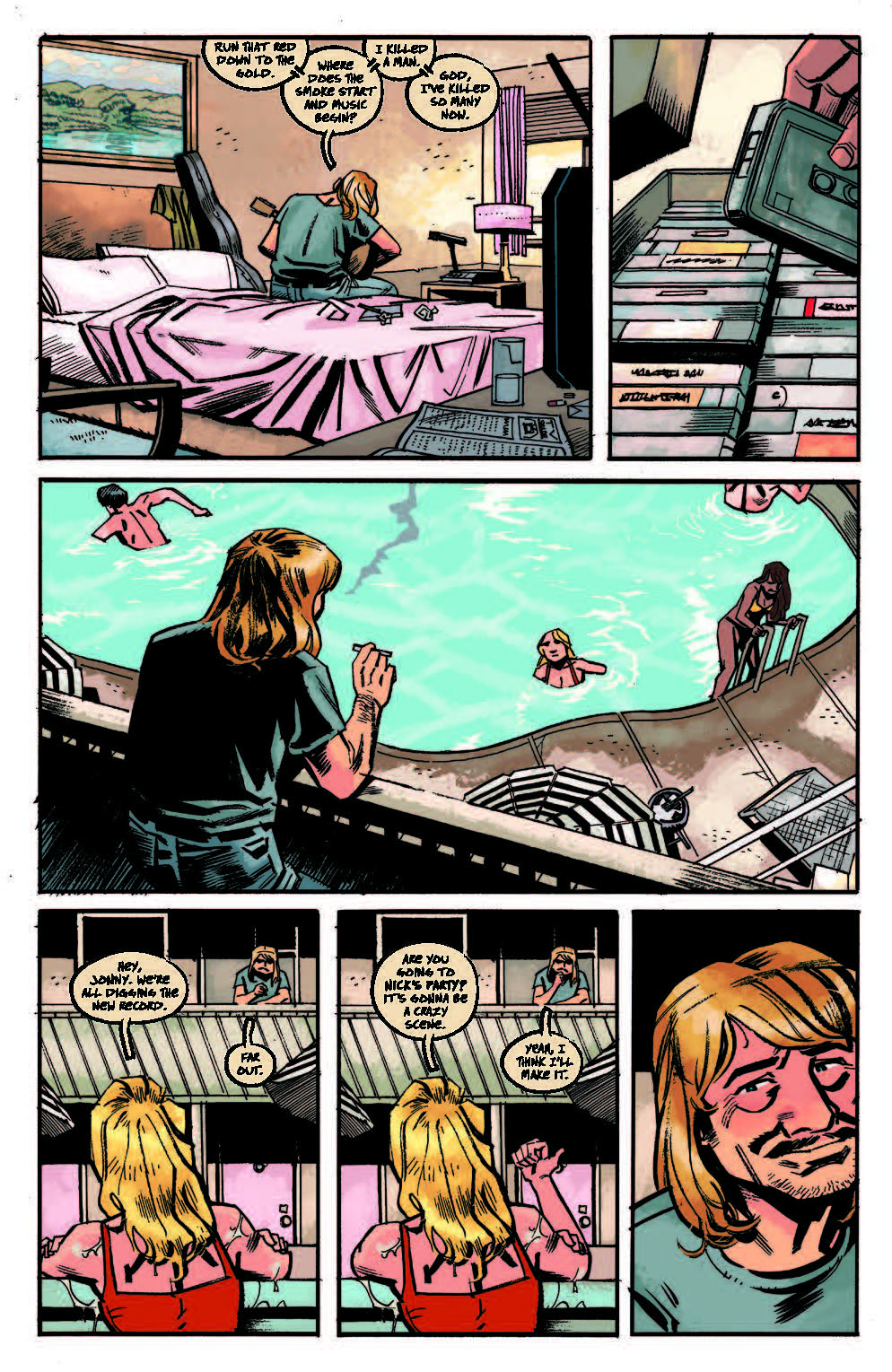
Eoin Marron’s expressive art work is flush with gesture and expression. Each scene has an establishing shot, often of an outside location, which is then followed up by mostly close ups, often with only one character in shot. This focus on the character allows Marron to control the narrative, allowing the reader only to see what Marron wants the reader to see. The occasional wide shots add additional information only when it becomes relevant to the plot or the tone.

As with previous issues the overall tone of the comic is provided by Jordie Bellaire’s colors. She injects each page with an overall feeling that grabs you the minute you turn a page. Then she alters the occasional panel to give a particular moment a punch, making it stand out on the page.

An act of violence, for example, is shrouded in red tones with a solid red background; this draws you to the panel instantly and then you read the page around it. The act of violence becomes the important part of the page and the reader is then forced to interpret the motivations and consequences by reading the surrounding panels. It creates a focal point which the narrative flows around.

Killer Groove #3
Killer Groove #3 Credit: AfterShock Comics

The other important aspect of the comic, and helps the reader understand the character interactions, is the superb lettering by Hassan Otsmane-Elhaou. The speech balloons with their flat ended tails instantly gives Killer Groove a unique look. The coloring makes the speech blend with the artwork so that it fits naturally on the page and doesn’t create a barrier between the images and the speech. The complex handling of the text, changes in font style and size, adds yet another layer to the comic which is already stacked high with interacting storytelling techniques.

Killer Groove is a pulp crime story that revels in being a comic. It embraces all aspects of comic book storytelling and is a prime example of what it is possible to do with a page of art, color and text. The story is fascinating and emotionally gripping and the way that the story is being told is masterful. In the same way that Raymond Chandler wrote stories that were a pleasure to simply read, Masters and co. have produced a comic that elicits the same, all-encompassing delight just by opening the pages.

Monkeys Fighting Robots Youtube

Review: COLLAPSER #1 – Nice Guy DJ Turns Superhero

Monkeys Fighting Robots

It doesn’t seem like a popular trend to make the main protagonist in your comic book a genuinely nice guy, such as Liam James in Collapser #1. I’m not dense there will always be the genuine all-American nice guy Superman, your friendly neighborhood Spiderman, most of the energetic Flash incarnations, and so many more A-List optimists dressed in colored tights. But these characters can feel a bit cartoonish sometimes, almost nice for the sake of being nice. Writers Mikey Way and Shaun Simon, artist Ilias Kyriazis, colorist Cris Peters, and Simon Bowland with letters team up to create something new, a genuinely anxious-nervous too-nice guy and an all-around solid introduction to the world of Collapser.

Collapser #1 centers around soon-to-be hero Liam James receiving a package that turns out to be a black hole that seemingly changes the world around him. Writers Way and Simon do an adequate job of setting the world around James, but very much excel at making him feel real.

Throughout James’s inner monologue during his work shift, he is determined to play a game of chess with his elderly patient, Mr. Edgar. Even in his monologue during his DJ setlist, he is coaxing himself through it- reassuring himself to keep his anxieties at bay. Even as he gets into a fight with his girlfriend, he is stating how is making the right choice.

The use of the monologs sell how introspective and anxious Liam is, and it draws a sharp distinction between the more cocksure or stoic nice guys of more popular books. In a word, Liam is simply real compared to his contemporaries, someone you could imagine struggling in this world. Unfortunately, there was not as much information on the rest of the chapter regarding the rest of the plot. Most of this issue was dedicated to the introduction of Liam and his situation.

Due to this singular focus, it can get confusing as to what exactly the black hole does. It seemingly allows him to speak to people that are dead, but that feels empty and punchless so it cannot possibly be it.

Liam James with sword
That sword isn’t a toy anymore

Kyriazis’s lines are detailed and expressive. His style can come off a tad cartoonish, which meshes well with the nice-guy attitude Liam has, but when Kyriazis is allowed to run wild on splash pages is where he shows his stuff. At Liam’s DJ set, people are dancing, making out, and just jamming and Kyriazis fits right at home depicting the hectic chaos of the event. His quieter scenes feel sterile and plainer in comparison. Cris Peter’s colors add to the cartoony elements of the story. Peter uses deep blues and reds with frequency, and it compliments Kyriazis’s splash panels very well.

It’s hard to not like a chapter when it’s sole purpose is to set up its main character as a nice relatable guy. Luckily, Mikey Way and Shaun Simon succeed at bringing Collapser’s hero Liam James to life and Kyriazis and Peter’s combine to bring the mood and overall vision to the forefront. Collapser #1 does nothing but inspires for the future of the series.

Monkeys Fighting Robots Youtube

Review: SONATA #2: Cool Creature Designs Carry Another Solid Issue

Monkeys Fighting Robots

Sonata #2 follows a stellar debut with a not as sensational second entry. All of the items fans adored with the first issue, stellar world-building, interesting characters, and cool technology and monsters are still present. But writers David Hine and Brian Haberlin’s story can be a bit overwhelming with fictional lingo or borderline cliché tropes. Haberlin’s lines are still impressively detailed and depicted, and Geirrod Van Dyke’s colors mesh well with the worn-in aesthetic of the setting, but there is something off-putting that will push away some readers. But these are mainly minor personal gripes, and readers who fell in love with the first issue will find more of the same in Sonata #2.

Sonata #2 revolves around Pau finding Sonata and Treen in the Lumani’s forbidden area, and how Pau and Sonata’s tribes react to finding they are missing. There are certain tropes here that Haberlin and Hine are playing into in this chapter that will go over differently with certain readers.

It certainly feels that they are using a “Romeo & Juliet” vibe between Pau and Sonata, especially as Pau directly thinks that she is ‘Definitely’ into him, and of course the “uneasy pact between warring factions that will most certainly end in betrayal” theme between the Rans, Tayans, and Lumani.

All of this is made bearable by the fact that Sonata, Pau, and Treen are interesting and fully developed characters. Sonata is rebellious, independent, and brave while Treen is staunchly neutral and sticks with the tenets and beliefs of his tribe. Pau serves as a source of playful chaos in the group dynamic with his cocksure attitude and heavy reliance on technology.

Unfortunately, their tribes do not get the same treatment and are shaded in a more black and white manner, with minimal differences and no subtlety. The Rans are peaceful, The Tayans are warriors that rely on tech, and the Lumani are the indigenous people. That’s pretty much all the differences. Hopefully Haberlin and Hine give the same amount of attention and nuance to the tribes as they do their three main characters in later issues; otherwise, this series could grow a bit stale.

God crushes guy
All hail your new lord, a giant stone colossus thing.

Haberlin’s linework is incredibly detailed and impressive. His style veers more towards photo-realism, but there is something not quite right about it. Perhaps it is Van Dyke’s colors because when it comes to people the figures look almost superimposed onto the background like a bad PS3 cut scene. This is a style that is seen in other books, and it is most certainly not bad, but it can be off-putting to some audiences.

That being said, the monster and overall character designs are top-notch. The chimera-bird-creature that attacked Sonata and the god that awoke at the end of the issue is truly breathtaking.

Sonata #2 is a solid entry into the series. While not as effective as the debut Brian Haberlin and David Hine’s story is still effective as is Haberlin and Geirrod Van Dyke’s art and Frances Takenaga’s letters. Sonata remains a book to watch out for sci-fi fantasy fans.

Monkeys Fighting Robots Youtube

Review: THE LION KING Is An Unnecessary, But Delightful Trip Down Memory Lane

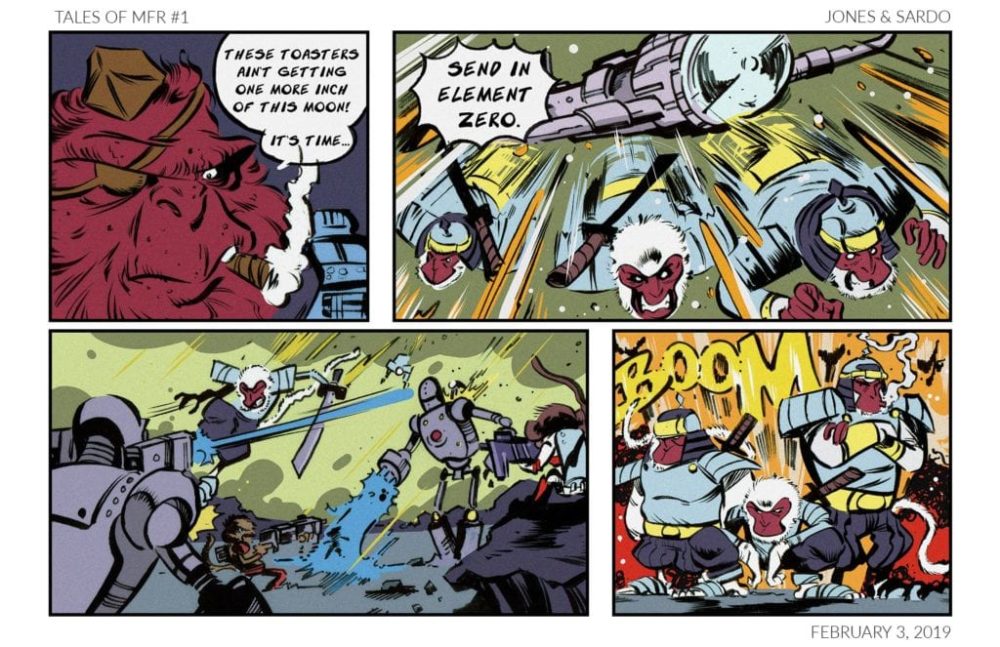
Tales of MFR #1

The Lion King was a massive success upon its release in 1994, and to this day remains one of the best-animated stories ever told. The film was praised for its animation, memorable songs, and the talented voice actors that brought it all to life. Now, an updated take on the story has been released for a new generation to enjoy. However, the same emotional impact isn’t there.

Directed by John Favreau (The Jungle Book) and written by Jeff Nathanson, the film features a star-studded cast consisting of Donald Glover, Seth Rogen, Chiwetel Ejiofor, Alfre Woodard, John Oliver, James Earl Jones, Beyonce, and many more lending their voice talents. Just like the original, The Lion King follows Simba, a young lion prince tricked into leaving behind his birthright after a tragedy occurs, but later discovers who he is and returns to claim his rightful place as king. The film doesn’t have its own identity, as it stays very close to the original. While that is probably for the best, it also proves that The Lion King didn’t need to join in on the rising trend of remakes in Hollywood.

Even though most of them are underutilized, the vocal contributions are impressive across the board. Timon and Pumbaa, voiced by Billy Eichner and Seth Rogen, are resurrected in a manner that almost outshines the original. Jones’ reprisal of Mufasa lacks the enthusiasm he possessed the first time around, and it more than likely is due to how realistic this movie ended up being. Glover’s portrayal of Simba was an unexpected delight as well, but a lot of the supporting cast was acceptable at best or just not giving it their all.

THE LION KING – Featuring the voices of John Oliver as Zazu, James Earl Jones as Mufasa and JD McCrary as Young Simba, Disney’s “The Lion King” is directed by Jon Favreau. In theaters July 19, 2019. © 2019 Disney Enterprises, Inc. All Rights Reserved.

Despite that, The Lion King is a visual spectacle, and the circle of life has never looked this awe-inspiring. Favreau’s immersive landscape, combined with its loveable inhabitants and their infectious singing, makes for a fantastic experience from start to finish. After his success with The Jungle Book, it isn’t surprising that he has created a sensational depiction of Pride Rock, which many would consider a masterpiece. However, the realism of our animals is the film’s most significant detraction.

While the visual effects are a remarkable component, they also strip the on-screen characters of anything that resembles an emotion. The voice acting can’t be executed or delivered in a manner that was present in 1994. Most of the lines feel downplayed and nonchalant. These animals are supposed to be “live-action” and in our own real-world now. So because of that, some if not all of the animal’s expressions do not match with what is being said, it’s as if they couldn’t care less, which is what a real-world animal would appear like.

The beauty of The Lion King wasn’t merely in its story or catchy tunes; it also relied heavily on the animations of the animals, which made the content more impactful to viewers. The anguish, and heartbreak in Simba’s eyes after he finds Mufasa is no longer present, so the moment doesn’t hit home the same way. Luckily, Nathanson’s screenplay doesn’t go off the rails, and he plays it safe by telling a frame-for-frame story that millions can adore. There’s even some refreshing banter added between Timon and Pumbaa, which is one of few extra additions to this far too familiar tale.

THE LION KING – Featuring the voices of Florence Kasumba, Eric André and Keegan-Michael Key as the hyenas, and Chiwetel Ejiofor as Scar, Disney’s “The Lion King” is directed by Jon Favreau. In theaters July 19, 2019. © 2019 Disney Enterprises, Inc. All Rights Reserved.

Adding to that, the iconic opening sequence featuring “The Circle of Life” is present, Simba gets his expected solo, and of course, “Hakuna Matata” outshines them all. Scar, who is magnificently voiced by Chiwetel Ejiofor, has his iconic song “Be Prepared” stripped down to a waste of time sadly. With a near thirty-minute extra runtime, it’s a bit disappointing that the song wasn’t given a proper spotlight. Hanz Zimmer returns to compose the score, as he should, and delivers all the same tunes for a new generation to join in on.

While not a horrendous reimaging, The Lion King is the year’s risk-free remake that tries to avoid upsetting an entire generation by staying close to home. Substituting animations for a photo-realistic Africa landscape, the film loses out on recreating lively animals. It does retain the charming characters though, which is enough for some moviegoers. Since this is so similar to the original, the overall story isn’t bad by any means, it just isn’t as impactful and feels like an unnecessary rehash.

Monkeys Fighting Robots Youtube

2019 Will Eisner Award Winners – The Complete List

Monkeys Fighting Robots

The 2019 Will Eisner Awards were held last night at San Diego Comic-Con, and we have your complete list of winners below!

The Will Eisner Comic Industry awards are voted on by comics industry members and the awards ceremony is held in conjunction with San Diego Comic-Con International every year.

Best Lettering:

Todd Klein— Black Hammer: Age of Doom, Neil Gaiman’s A Study in Emerald (Dark Horse); Batman: White Night (DC); Eternity Girl, Books of Magic (Vertigo/DC); The League of Extraordinary Gentlemen: The Tempest (Top Shelf/IDW)

Best Digital Comic:

Umami, by Ken Niimura (Panel Syndicate)

Best Webcomic:

The Contradictions, by Sophie Yanow

Best Writer:

Tom King, Batman, Mister Miracle, Heroes in Crisis, Swamp Thing Winter Special (DC)

Best Writer/Artist:

Jen Wang, The Prince and the Dressmaker (First Second)

Best Cover Artist (for multiple covers):

Jen Bartel, Blackbird (Image); Submerged (Vault)

Best U.S. Edition of International Material:

Brazen: Rebel Ladies Who Rocked the World, by Pénélope Bagieu, translated by Montana Kane (First Second)

Best U.S. Edition of International Material – Asia:

Tokyo Tarareba Girls, by Akiko Higashimura (Kodansha)

Best Humor Publication:

Giant Days, by John Allison, Max Sarin, and Julia Madrigal (BOOM! Box)

Best Publication for Early Readers (up to age 8):

Johnny Boo and the Ice Cream Computer, by James Kochalka (Top Shelf/IDW)

Best Publication for Kids (ages 9-12):

The Divided Earth, by Faith Erin Hicks (First Second)

Best Publication for Teens (ages 13-17):

The Prince and the Dressmaker, by Jen Wang (First Second)

Best Comics-Related Periodical/Journalism:

TIE: Back Issue, edited by Michael Eury (TwoMorrows) and PanelxPanel magazine, edited by Hassan Otsmane-Elhaou

Best Comics-Related Book:

Drawn to Purpose: American Women Illustrators and Cartoonists, by Martha H. Kennedy (University Press of Mississippi)

Best Academic/Scholarly Work: 

Sweet Little C*nt: The Graphic Work of Julie Doucet, by Anne Elizabeth Moore (Uncivilized Books)

Best Penciller/Inker:

Mitch Gerads, Mister Miracle (DC)

Best Coloring: 

Matt Wilson, Black Cloud, Paper Girls, The Wicked + The Divine (Image); The Mighty Thor, Runaways (Marvel)

Best Painter/Multimedia Artist (Interior Art):

Dustin Nguyen, Descender (Image)

Hall of Fame Inductees (Judge’s Choice):

Jim Aparo, June Tarpé Mills, Dave Stevens, Morrie Turner

Hall of Fame Inductees (Voters’ Choice):

Jose Luis Garcia-Lopez, Jenette Kahn, Paul Levitz, Wendy and Richard Pini, & Bill Sienkiewicz

Spirit of Comics Retailer Award:

La Revisteria Comics in Buenos Aires, Argentina

Best Archival Collection/Project – Strips:

Star Wars: Classic Newspaper Strips, vol. 3, by Archie Goodwin and Al Williamson, edited by Dean Mullaney (Library of American Comics/IDW)

Best Archival Collection/Project – Comic Books:

Bill Sienkiewicz’s Mutants and Moon Knights… And Assassins… Artifact Edition, edited by Scott Dunbier (IDW)

Best Publication Design:

Will Eisner’s A Contract with God: Curator’s Collection, designed by John Lind (Kitchen Sink/Dark Horse)

Best Short Story:

“The Talk of the Saints,” by Tom King and Jason Fabok, in Swamp Thing Winter Special (DC)

Best Single Issue/One-Shot:

Peter Parker: The Spectacular Spider-Man #310, by Chip Zdarsky (Marvel)

Best Anthology:

Puerto Rico Strong, edited by Marco Lopez, Desiree Rodriguez, Hazel Newlevant, Derek Ruiz, and Neil Schwartz (Lion Forge)

Best New Series:

Gideon Falls, by Jeff Lemire and Andrea Sorrentino (Image)

Best Limited Series:

Mister Miracle, by Tom King and Mitch Gerads (DC)

Best Continuing Series:

Giant Days, by John Allison, Max Sarin, and Julaa Madrigal (BOOM! Box)

Best Adaptation From Another Media:

“Frankenstein” by Mary Shelley, in Frankenstein: Junji Ito Story Collection, adapted by Junji Ito, translated by Jocelyne Allen (VIZ Media)

Best Graphic Album – Reprint:

The Vision hardcover, by Tom King, Gabriel Hernandez Walta, and Michael Walsh (Marvel)

Best Reality-Based Work:

Is This Guy For Real? The Unbelievable Andy Kaufman, by Box Brown (First Second)

Best Graphic Album – New:

My Heroes Have Always Been Junkies, by Ed Brubaker and Sean Phillips (Image)

Monkeys Fighting Robots Youtube

Review: SERA AND THE ROYAL STARS #1 A Mysterious Magical Mythos

Monkeys Fighting Robots

Have you ever wished Aladdin was a bit more violent and had dragons? Well, Sera and the Royal Stars is what you’ve been hoping for.

A new premiere issue from Vault Comics, Sera and the Royal Stars dives headfirst right into the action. At least to me, this creative team is unknown. Writing this magical war fantasy is Jon Tsuei. Penciling, we have Audrey Mok with the coloring done by Raul Angulo and lettering from Jim Campbell. The great thing about new titles from independent publishers is they have to stand out. They have to hook people quick. They have to convince you to buy their book rather than one of Marvel’s 38 variants for whatever book it released that week. The interior art in this book is fantastic; the colors are vibrant and pop off the page, the character designs are as if Assassin’s Creed smashed right into Aladdin. The dialogue and narratives are easy to read and follow. Thanks to pretty basic lettering that is always tried and true.

SPOILERS FOLLOW

Review: SERA AND THE ROYAL STARS #1 A Mysterious Magical Mythos

This story opens with what appears to be the end of a battle, as the first characters we see are collecting their dead, but things aren’t as they appear. Lines are forming, and the battle is upon them yet again. In the midst of war, our main character is thrust into some cosmic dimension, the only other being here is named Mitra and she gives an ominous message about celestial lights and physical realms that only confuses Sera. BAM! Right back to the fighting, Sera wakes up in her world and is told her incapacitation coincided with a solar eclipse. As they escape the battlefield, two hooded characters talk about sensing the presence of a “Yazata,” most likely some magical race, also that a new era is beginning. Later, after Sera has fallen asleep, she is back with Mitra, and in my favorite part of the book, Mitra removes Sera’s heart and replaces it with a glowing crystal of some kind. When she wakes, she assumes it was a dream until she sees that her chest is glowing and is engulfed in a vision of an apocalyptic future that awaits if she does not do what she has been chosen for.

Review: SERA AND THE ROYAL STARS #1 A Mysterious Magical Mythos

In what appears to be a story of a clashing family, the enemies Sera has been fighting since the start of the book, are led by her uncle, brother of the king. The capital city of Setareh has an Aladdin feel as well, surrounded by a wall, and the city has a huge palace in the center. On her journey, Sera is told of a temple occupied by strange magic. Inside she encounters an old man and a humanoid lizard army sent by a dragon that would very much like to cut out her heart, we learned earlier that might not be a good decision on their part. The lizard army appearance opens this world up into more fantastical possibilities where humans are not the only inhabitants. The reveal at the end is an illustrious cliffhanger to keep you coming back for issue #2 and beyond.


What do you think of the world of Sera and the Royal Stars? What did you think of the first issue? Let us know in the comments.

Monkeys Fighting Robots Youtube

Review: The City of Bane Begins in BATMAN #75

Monkeys Fighting Robots

At long last, we reach the third act of a story that’s three years in the making with Batman #75. Kicking off the City of Bane arc, this book sets up for a climactic conflict.

Bane was first introduced in the 1993 special Batman: Vengeance of Bane. In the book, our narrator comments that “[Batman] became his obsession…and his purpose.” Bane could have the world, but he only has eyes for Gotham, because of what it represents. Now with Bruce Wayne liquidated, Bane’s hand is finally free to put his long-developing plan into action. With the help of Thomas Wayne, Psycho Pirate, and more, Bane plans to do the one thing Bruce could never do: bring peace to Gotham….whether it wants it or not.

The Writing

It’s not clear how long Bruce Wayne’s been gone by the beginning of Batman #75. Regardless, it’s long enough for Bane to have fully taken control of Gotham. Villains control city government; they’ve supplanted the police; they enforce a brutal brand of justice with the backing of national figures. It’s dark times in Gotham…which is much of what this issue focuses on.

Tom King’s writing is well-paced. It’s largely expository, catching readers up on events as they’ve developed in the interval since our last issue. However, the exposition is meted out naturally through the story, making for a thoroughly engaging read. Some of the dialogue—Gotham Girl’s, in this case—does lean into that very King-esque trope of stumbling over words and awkward rambling punctuated by ellipses, which is unnecessary. It’s ultimately a minor complaint, though.

As mentioned in the review of our last issue, King’s work on Batman has tended toward abstraction and obfuscation. That’s not a bad thing, so long as it’s counterbalanced by concrete elements, which is what we have here. Batman #75 is sharp and focused from a narrative standpoint. Although there are no real surprises to be had, it’s still thoroughly engaging.

The storytelling feels purposeful, directly grounding the reader in the story. It ties up several plot threads, and pushes the story forward toward the climax. As such, it’s a strong start for the closing chapter in King’s monumental run on the series.

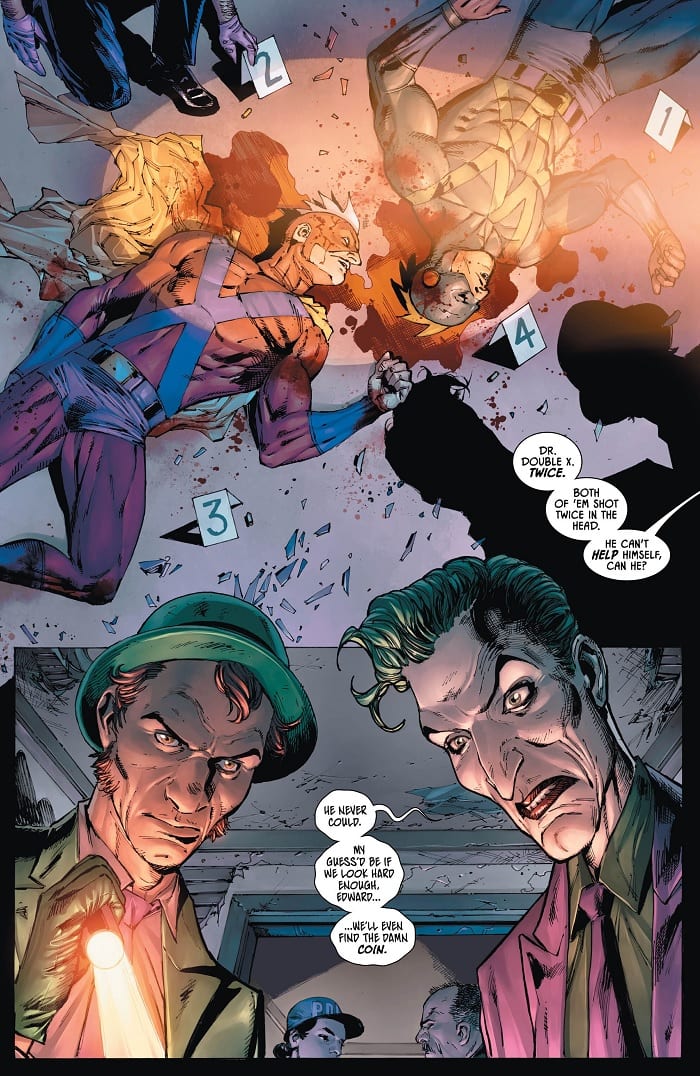
Batman #75

Batman #75

Batman #75

The Artwork

The artwork by Tony S. Daniel is expressive and appropriately unsettling in Batman #75. Moving through this world, it really does feel like a dark, even lifeless version of Gotham you’d expect to see if Batman were defeated. This is Bane’s world now, and it feels suitably claustrophobic, stifled, and dominated.

A lot of the visual strength here lies in attention to fundamental craft elements. Daniel’s work is subtly stylized, but hews more toward straightforward designs. It’s far from what one could describe as basic, though. The artist makes heavy and dramatic use of perspective. Not only that, but the work is action-packed, with plenty of dynamic movement and vibrancy. The work is constantly moving, in fact, but Morey does an excellent job of centering the action in the panel. Thus, the reader’s eye never struggles to find the point of the image on which we’re meant to focus.

Colors by Tomeu Morey feel just slightly saturated, meaning that nothing really leaps off the page. The work is consistent and richly-done, though, giving it a fairly refined look. It’s a strong showing all around for both the line work and colors.

Final Thoughts

Batman #75 is a good opening to the arc that will provide the culmination to King’s three-year story. Let’s hope the next nine issues can keep up the momentum.

Monkeys Fighting Robots Youtube

Exclusive Marvel Comics Preview: SECRET WARPS ARACHKNIGHT ANNUAL #1

Monkeys Fighting Robots

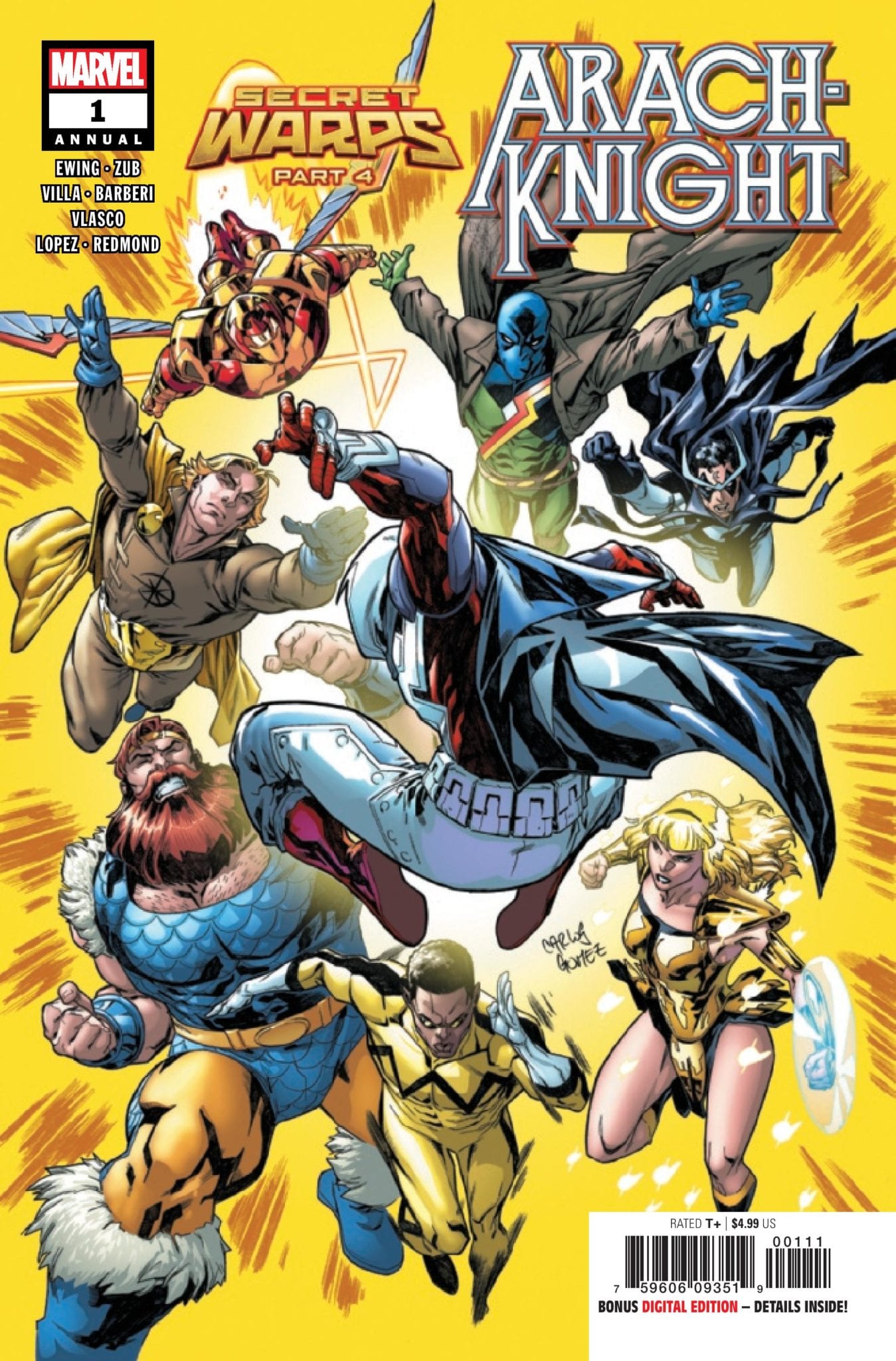
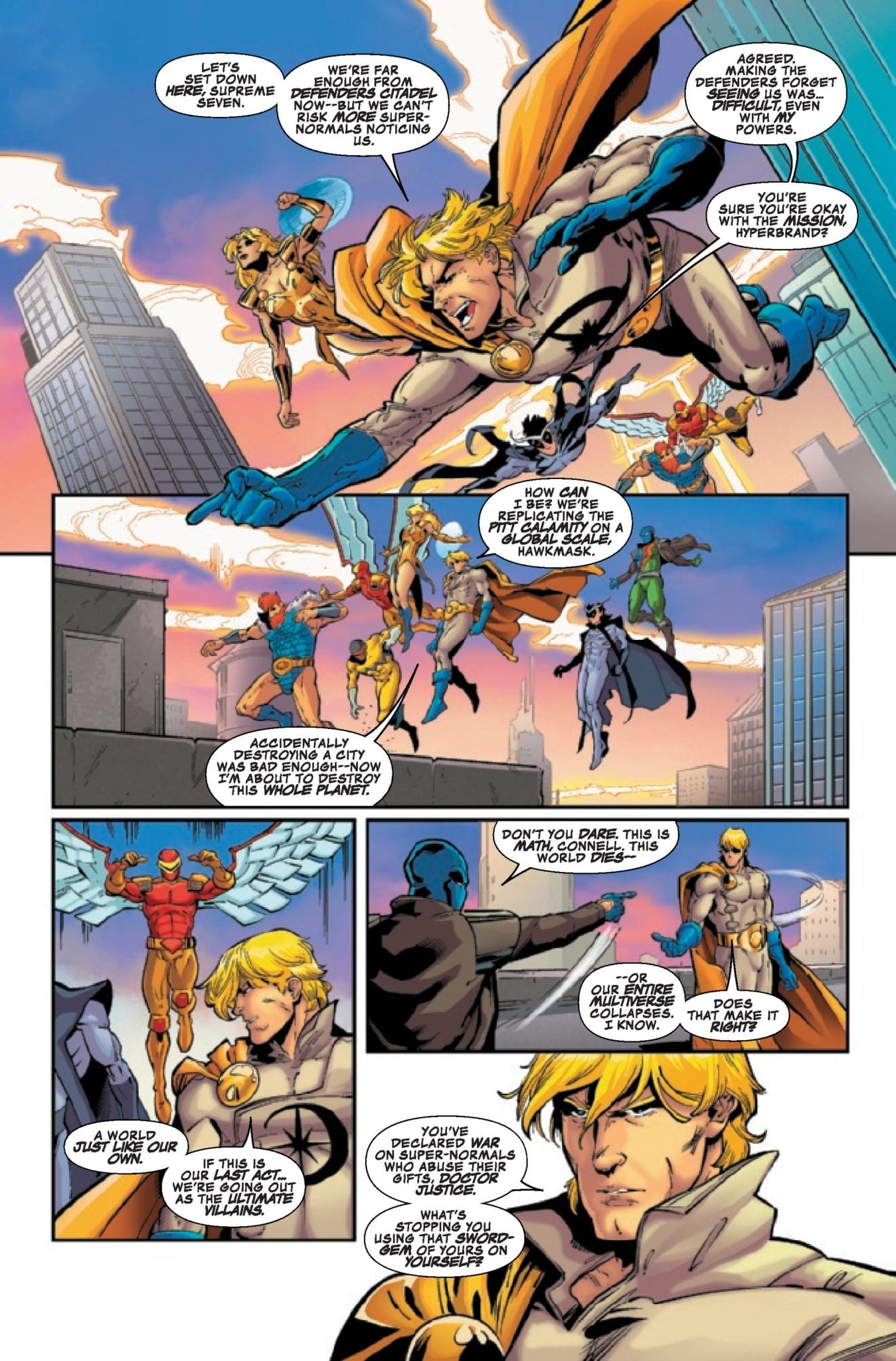
Secret Warps: Arachknight Annual #1 hits your local comic book store on July 24, but thanks to Marvel Comics, Monkeys Fighting Robots has a five-page preview for you to check out!

The first story in Secret Warps: Arachknight Annual #1, “SUPREMEUNIVERSAL” is written by Al Ewing, with art by Carlos Gómez, Juan Vlasco inked the story, colors by Carlos Lopez, and letters by Clayton Cowles. The second story in the annual, “A Terrific Tale” is written by Jim Zub, with art by Carlo Barberi, Ruth Redmond’s colors, and Cowles’ letters. The main cover is by Gómez and Edgar Delgado, with variant covers by Carlos Pacheco, Rafael Fonteriz, and Nolan Woodward.

About Secret Warps: Arachknight Annual #1:

“SECRET WARPS,” PART 4 – SUPREMEUNIVERSAL! The web-spinning Arachknight finds himself out of the depth of all four of his personas as his own warped universe begins colliding with another – the New Supreme Universe, homes of the Supreme Seven! PLUS: A bonus tale of ol’ AK trying to persuade the Terrific Two to become a Trio!

Check out the preview below:

Exclusive Marvel Comics Preview: SECRET WARPS ARACHKNIGHT ANNUAL #1

Exclusive Marvel Comics Preview: SECRET WARPS ARACHKNIGHT ANNUAL #1

Exclusive Marvel Comics Preview: SECRET WARPS ARACHKNIGHT ANNUAL #1

Exclusive Marvel Comics Preview: SECRET WARPS ARACHKNIGHT ANNUAL #1

Exclusive Marvel Comics Preview: SECRET WARPS ARACHKNIGHT ANNUAL #1

Exclusive Marvel Comics Preview: SECRET WARPS ARACHKNIGHT ANNUAL #1

Exclusive Marvel Comics Preview: SECRET WARPS ARACHKNIGHT ANNUAL #1


Are you reading SECRET WARPS crossover? Comment below with your thoughts.

Monkeys Fighting Robots Youtube