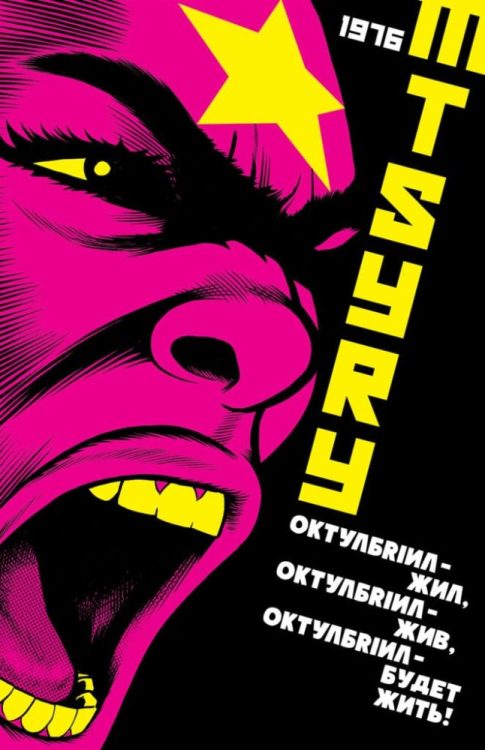
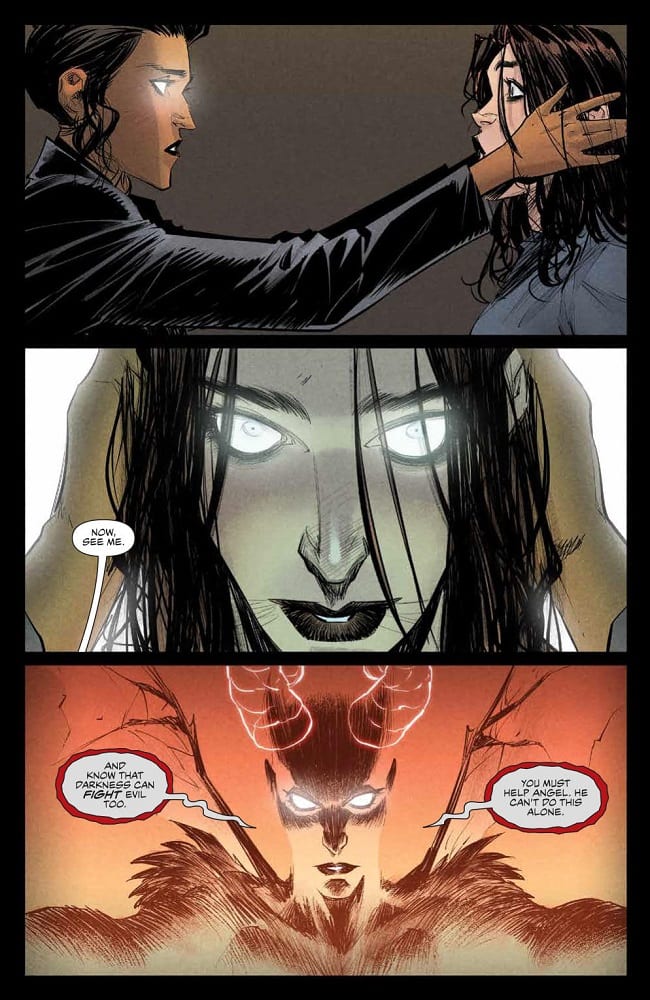
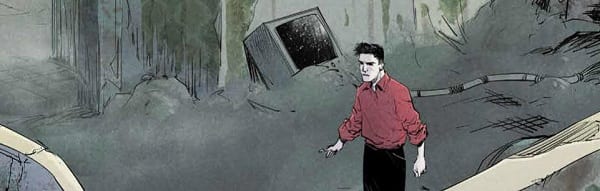
The final cut off for orders are today for MIDNIGHT VISTA #2, so for any retailers and readers on the fence, we have a four-page preview for you to check out below thanks to AfterShock Comics.
About the issue: It’s the news story of the century! Oliver Flores – the kid on the face of every milk carton in New Mexico – has been found.
Recovering at the hospital, Oliver is finally able to reveal where he’s been for the last nineteen years: Along with his stepfather, he was abducted by aliens. And the only real problem with that is…no one believes him. Not the detectives from his case, not the doctors who treated him, not even his biological dad. They’re all convinced Oliver is suffering from massive trauma.
Meanwhile, no one seems to notice the suspicious Strangers in Black trying to silence Oliver for good.
Based on a true story from writer Eliot Rahal (HOT LUNCH SPECIAL), with out-of-this-world art from Clara Meath, MIDNIGHT VISTA will make you believe in little grey men.
MIDNIGHT VISTA is a science-fiction drama from AfterShock Comics about a young boy who gets abducted by aliens, is brought back as an adult and remembers everything. Although the story itself is a fictional meditation on alien abduction, the series was inspired by the writer’s (Eliot Rahal) real-life close encounter.
Now, Rahal will release an extended one-shot podcast that explores the non-fictional aspect of his experience, which will include edited interviews from Eliot’s stepfather, mother, and himself. The recording will be free to download through a QR code that will be included in the trade paperback for Volume 1 of MIDNIGHT VISTA.
MIDNIGHT VISTA was created by Clara Meath and Eliot Rahal, with colors by Mark Englert and letters by Taylor Esposito.
MIDNIGHT VISTA #2 Preview
Are you reading MIDNIGHT VISTA? Comment below with your thoughts.
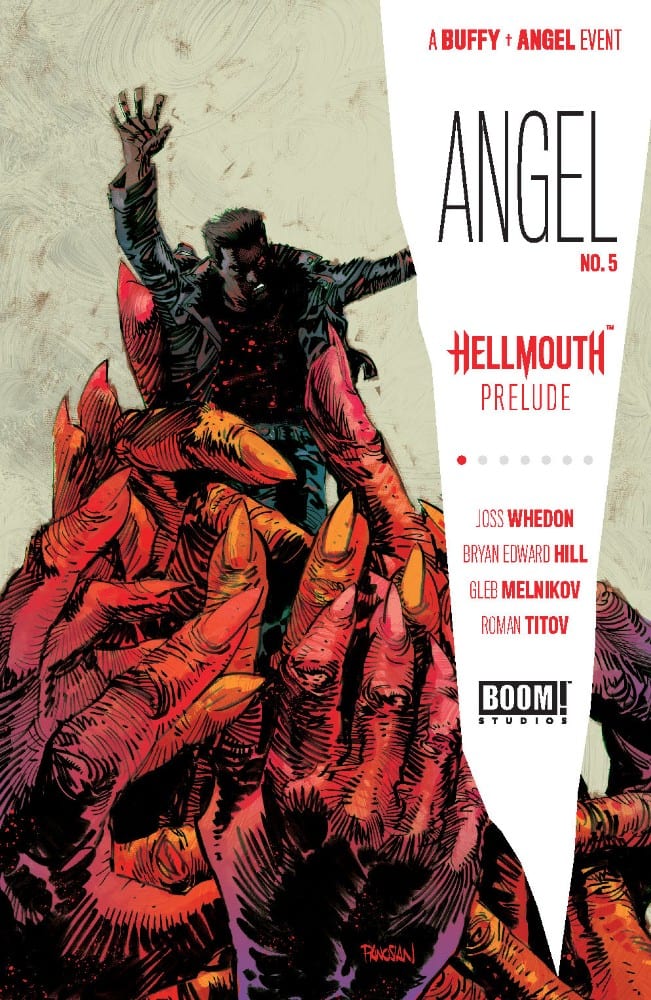
In the lead up to the Buffy/Angel crossover event Hellmouth, an historic meeting is about to take place. In this week’s pages of Angel from BOOM! Studios writer Bryan Edward Hill retells the entrance of Charles Gunn into the Buffyverse, and it’s a violent as his screen introduction.
Angel #5 Credit: BOOM! Studios
Introducing A Hero
Charles Gunn is an instrumental part of Angel’s group in the television series. Introduced in the first series and quickly becoming a series regular, the street fighting Gunn brings conflict to the team; conflict within himself and conflict between him and Angel. The creators developed an interesting relationship between the two characters that was based on respect but lacked trust. Gunn was there to question what the team were doing and challenge Angel’s mission.
Bryan Edward Hill clearly understands this aspect of the characters and Gunn’s introduction into the comic draws many parallels with the television series. Gunn is a hero on the streets; he has a strong internet following; and he protects those who can’t protect themselves. Hill sets up the character by showing the reader his strengths, his popularity but also shows his weaknesses. This issue of Angel centres on Gunn and concentrates 90% on building his character. By the end of this issue Gunn’s life has been laid out.
Hill makes sure that Gunn is shown interacting with a number of characters in a number of situations so that the reader can get to see the many sides of the complex character. This is not just another Vampire hunter, he has a mission fuelled by a traumatic incident in his past. He also understands diversity and contradictions. This is shown through his first conversation with Angel where he does not judge based on appearances and accepts that a Vampire can be more than just a demon.
Angel #5 Credit: BOOM! Studios
Drawing a Gunn
This issue allows Gleb Melnikov to show off his vast range of character acting. The attention to detail in the facial expressions not only give the cast some character but also adds context to the narrative. The subtleties of Gunn’s character, insinuated in the script, are visually portrayed on the page through the panel transitions and compositions. Gleb portrays Gunn as heroic as well as vulnerable. The scared face of a child explains as much about Gunn’s mission as a series of fight scenes and voice overs.
There is an overriding sense of battling against darkness in this issue of Angel, and the concentration on Gunn as a character requires this. The atmosphere is upheld by the gloomy darks of the night streets and the distance flashes of city lights. Despite his internet presence, Gunn fights off the grid, a concept illustrated perfectly by Roman Tutov’s colors.
The darkness of night and prevailing cloud enveloping Gunn’s character is present on every page, bleeding into the black gutters of the panels. There are very few moments where a sense of hope is expressed through the coloring. Even when the greys and dark blues are replaced it is often by colors invoking worse imagery.
The most notable is the flashback sequence of Gunn’s first meeting with Lukas, the vampire that has plagued his life. The panels become soaked in a blood red that represents the fear, horror, and violence of the encounter. It has a profound , lasting effect on Gunn and the reader.
It is also in this moment where the lettering really stands out. A maniacal laugh is etched into the night, becoming the background, just like the incident becomes the birth of Gunn’s fight against the vampires.
Ed Dukeshire has to use a number of different fonts throughout this issue, marking the difference between texting, speech, and sound effects. One of the simplest, and most effective, weapons in Dukshire’s arsenal is the different balloon styles for the heroes and the villains. The vampires, except Angel, have uneven, wavy borders on their speech balloons whereas the heroes have smooth borders. This difference is especially effective during a scene where a saviour becomes a threat. The style of balloon changes to hammer home the moment ,giving the narrative and the images a third signifier to help the storytelling.
Angel #5 Credit: BOOM! Studios
Conclusion
This issue of Angel builds the world around the central character beautifully. It introduces a character who has changed very little from his T.V. counterpart but who feels brand new. The interactions between the cast member’s are moving and humorous and tell a full, rounded story. With the exception of the ending, issue 5 of Angel is a magnificent, stand alone story.
With exceptional art, engaging narrative, and a cast of diversely interesting characters, Angel is a joy to read. This is a great issue to start with if you want to get to know the characters and the tone of the series, even if you are not interested in the upcoming crossover event.
What would you sacrifice to see your dreams come true? This is what Azzarello and Llovet ask in the season ending of Faithless from BOOM! Studios. After six exhilarating chapters Faith’s journey is coming to an end. Or is it really the beginning?
Warning: Faithless is abound with adult content and is definitely not safe for work. It’s a no holds barred erotic adventure that takes a few unexpected turns.
Faithless #6 Credit: BOOM! Studios
Testing Faith
Azzarello has taken Faith on a journey of enlightenment, sexually and artistically, since the first issue. He has surrounded the central character with new highs, exceptional experiences but also doubt and unbelievable loss. This final issue is no different.
Opening with a full frontal sex scene that leaves nothing to the imagination, Azzarello tests not only the characters boundaries but also the readers. By now the contents of Faithless should not be shocking, you know exactly what you’re getting before you pull back the cover. Having said that this issue definitely pushes as far as it can go.
The reason Faithless isn’t just sex for sex sake is that everything that happens, each element of the narrative, is important for character development. Therefore, you may think the opening sequence is over the top and unnecessary but as the issue progresses Azzarello makes you understand that it is all apart of Faith’s growth. She is being tested and pushed to become the very best that she can be. This issue sees Faith being offered a choice and the decision she makes relates to the sexual experimentation as much as the artistic and personal development.
This series has been about a character embracing a brand new world in order to become something she has dreamed about. For some she has gone too far, for others not far enough. It is up to the reader to decide if Faith has been manipulated down a particular path and if it’s the correct path to follow. The reader has an advantage because they can see what has happened around Faith much better than she can but when the devil comes calling, would you be tempted?
Faithless #6 Credit: BOOM! Studios
Building Faith
Without question the gorgeous artwork makes the seductive narrative believable. With the sweeping images flowing from panel to panel it’s perfectly clear that Faith is being swept along by the beauty and magic of the moment. Maria Llovet draws Faiths world with such an eye for attraction and seduction that the images suck you into the panels. The reader is caught up by the same sensual eroticism that has bewitched Faith. It is so easy to forget the horrific things that have happened.
The visual journey through this comic is a delight. Llovet’s inks are free and loose with colors that are bright and alluring. Sequences of panels dance across the pages with the images breaking the borders, blurring the lines and removing some of the stability of time. This heightens the dreamlike quality of the work and advances the magical elements.
The final element stamping home the otherworldly feel of the comic is the superb lettering by AndWorld Design. In this issue there are some outstanding musical lyrics woven into the fabric of the pages. They break all of the rules of the comic book, sweeping across the panels, borders, and gutters with wild abandon.
The large, colorful text helps to set the scene and mood. It also draws attention to the narration spoken above the images. The contrast between the garish lyrics and the small, white text in a black caption box immediately creates a juxtaposition on the page making the reader look for hidden meanings and depths.
Faithless #6 Credit: BOOM! Studios
Conclusion
Faithless is a thought provoking, love letter to fashion, theatre, and Art. The creators have clearly enjoyed crafting the magical world of lovers and inner demons, and the resulting comic is mesmerising and beautiful.
Azzarello and Llovet have embraced the adult nature of the story and not shied away for depicting scenes that aren’t often found in mainstream comics, especially in America and the UK. The erotic scenes, some might say pornographic, are not exploitative and serve a narrative purpose. It won’t be to everybody’s taste but the industry is better for having a diverse range of material available.
Issue six of Faithless is a beautiful, if a somewhat down beat, ending to the first act. And just like the central character, the reader is taken on an unexpected, exhilarating journey.
Scout Comics has been on the rise for a while now. With a truly diverse set of titles that range in all sorts of genres, the indie comics publisher has a title for just about anyone. One of their latest, Midnight Sky (check out our review of the book here!), is written by Scout Comics CCO and Publisher James Pruett, a life long veteran of the comics industry. James was kind enough to take time from his busy schedule writing comics and helping run a comics company to talk to us at Monkeys Fighting Robots about, well comics of course! Check out the interview and then make sure you check out Midnight Sky and all the great comics Scout has to offer!
Monkeys Fighting Robots: So, James, you’ve had quite an extensive career in comics! Can you fill our readers in on your career?
James Pruett: I started my career in July 1993 by co-creating the award-winning anthology series NEGATIVE BURN with my twin brother, Joe Pruett, and Charles Moore. This was my first professional writing credit, as well. From there I got to know the Publisher of Caliber Comics, Gary Reed, and by the next year, I went on staff at Caliber Comics as the Managing Editor/Associate Publisher.
While at Caliber, I created and wrote the APPARITION, BLACK MIST, SOJOURN, NEW WORLDS, CALIBER CORE, KAOS MOON (co-scripted) and STRAIT JACKET, among others (which later evolved into MINDBENDER for Scout) I stayed at Caliber until the end of 1999 and left to work for the family business back in GA and still continued to write and edit freelance. It was during this time that I was lucky enough to write an X-Men Unlimited story with Mike Deodato, which is still one of the highlights of my career.
MFR: How did you link up with Scout Comics?
Around 2015 or so, my brother Joe became one of the founding members of AfterShock Comics and I found my creative urges coming to the forefront again and decided that I wanted to get back into writing and pulled out a script I had written around 2003 and began shopping it around to various publishers in early 2016. I had read a little about this new company, Scout Comics, and met a creator that was writing ELASTICATOR for Scout at Heroes Con in Charlotte, NC and started asking him questions about them. We hit it off pretty well and he eventually put me in contact with Brendan Deneen and after our phone conversation the next thing you know I became the Publisher of Scout Comics.
MFR: What’s your role as CCO and Publisher at Scout Comics like?
Pruett: The easiest way to describe what I do at Scout is that I’m pretty much responsible for most of the day-to-day functions on the publishing side of the company. I deal directly with Diamond, the printers and most of the creators. I attend a large number of conventions for Scout and do a lot of face-to-face meetings with retailers trying to build the Scout brand awareness. I edit and review every single title before it goes to the printer. I’m one of 4-5 of the Scout Team members that review every single submission that comes to us. I’m responsible for scheduling all of Scout’s titles and making sure that everything comes in on time and gets sent to the printer. Basically, the entire publishing process falls into my lap. I’m sure there are other areas and responsibilities I’m not covering here, but you get the idea.
While my role deals with the more day to day maintenance of the publishing side of the business, the reason for our success is due to the entire Scout team of partners that contribute with their own expertise in all avenues of publishing and multimedia. It really is a team effort and that is the key to our increasing market presence in both the publishing world and multimedia industry. My hat is off to James Haick, Brendan Deneen, Tennessee Edwards and our newest partner, Don Handfield. Great guys, Great team!
MFR: What do you think that smaller, more indie publishers offer the comic book market?
Pruett: I think that independent publishers bring variety and diversity to the market that the larger publishers are either unwilling or unable to do. Scout brings fresh voices and fresh ideas to the comic industry. Now, I’m not saying that other publishers don’t, but I really stand by the stories and the artistic visions that we’ve introduced over the last few years and feel that we have a unique approach that sets Scout apart.
MFR: What are some of your current titles?
Pruett: Some of our more successful current titles currently are ELECTRIC BLACK, STABBITY BUNNY, MIDNIGHT SKY, HEADLESS, THE MALL, RED WINTER, CRUCIFIED, SOLAR FLARE, GUTT GHOST, THE SOURCE and RISE.
The Mall #2 from Scout Comics
MFR: What does Scout Comics have planned for 2020?
Pruett: Our plan is to continue to grow our market share and introduce new creative talent that should be the next wave of great comic talent. Some upcoming titles that I’m really excited about include GENETICAA, a new series from industry legend Paul Jenkins;DEVILREAUX, an upcoming new series from Walking Dead actor Vincent M. Ward making his comic writing debut; NORTH BEND; A TOWN CALLED ELSEWHERE; SAM AND HIS TALKING GUN; ASSASSINS AND SON, among others.
MFR: Okay so on to Midnight Sky! We reviewed the book earlier this summer and loved it. For those who might not know what the title is about, can you give us a synopsis?
Pruett: For a little over a decade, the world has been at war with an invisible, secret enemy that is undetectable because they look like everyone else. Changelings, inter-dimensional beings from a dying world, find themselves in need of a new home and have chosen Earth, but in order to do so, they must first transform the atmosphere and climate to one better suited to their own needs. Using the warming climate change as incentive, the First Changeling, who came to Earth through a dimensional portal that scientists had mistakenly opened to their world, is able to manipulate plans that scientists were using to attempt to reverse the warming process by cooling the atmosphere. What was hoped to be salvation turned into Armageddon as particles placed in the Earth’s atmosphere for cooling purposes were instead used to greatly block the sun’s rays from penetrating the Earth’s atmosphere resulting in an eternal Midnight Sky of darkness. This resulted in massive food shortages and brought on catastrophic weather patterns making much of the earth’s surface inhabitable. The humans that were left were forced to migrate to what were formally the more tropical climates as these areas still contained tolerable temperatures.
There are three main protagonists, Jennifer, an immigrant mother originally hailing from Panama, and her two children, Elita, who is half human and half Changeling as Jennifer’s husband had been replaced unknowingly and they conceived her, and Alejandro, a Changeling that replaced her birth son as an infant and whom she has raised for the past 15 years. They are on a quest to Cape Canaveral hoping to find the permanent portal to the Changeling’s dimensional world in an attempt to recover the child that was taken from her as an infant by the Changelings. The main problem is that in order to do this, she would have to sacrifice the Changeling child that she has raised since infancy and that calls her mother. Jennifer has a nearly impossible task of deciding whether motherhood is limited to just giving birth to a child? Will she be able to make the ultimate sacrifice in order to save her natural child?
MFR: What was the genesis of this idea?
Pruett: Dreams. Seriously.
MFR: Which character is your favorite to write? Which one proved most difficult?
Pruett: I’d have to say Elita is my favorite character to write. She’s a lot of fun. She’s a 13-year-old girl born into this crazy world of despair and thrust into a role as a possible savior, something she never wanted or prepared for, and she’s still just a big kid at heart. She’s so pleasant and personable she makes me smile even as I put her into some of the darkest and most dangerous situations of all the characters She gives me hope.
MFR: What led you to work with Scott Van Domelen on this title?
Pruett: Scott Van Domelen was introduced to me by Phillip Kennedy Johnson, the writer of the Scout Comics series, SMOKETOWN. It’s no secret to anyone that knows me, but SMOKETOWN is one of my favorite all-time comic series. I didn’t know Scott before SMOKETOWN, but as the series developed, I just fell in love with the raw emotion that Scott was able to bring to each story. He is excellent in portraying character’s emotions just through subtle facial expressions or body language. I just knew I had to work with him someday. So, when I was looking for an artist for MIDNIGHT SKY I thought of Scott. He’s a true talent and has a bright future in the industry.
MFR: What’s the day to day or week to week creative process for you with Scott?
Pruett: Scott’s a dream to work with. Due to all the demands on my time, both from my day job and from being the Publisher of Scout, I tend to write most of my scripts by scenes (3-5 pages at a time). I have an outline of each issue of things I want to touch on and address as I write, but Scott’s enthusiasm sometimes derails that, but in a good way. Scott will constantly send me emails with his thoughts and some really interesting suggestions as to what might be cool and ideas of where our creations could go. I love his interaction and the fact that he is relating to these characters as much as I am. You couldn’t ask for a better collaborator. That being said, I’ll usually send him 3-5 pages at a time. He’ll break my scripts down into thumbnails and share with me. I’ll either say “good to go” or “let’s make some changes here” and then he’ll touch those up and send me pencil pages for review before finalizing the inks. Then it’s on to the colorist, Ilaria Fella, who’s great, and we start over with a new scene.
MFR: How long of a story do you have to tell?
Pruett: That’s a trick question. Like all the comic series I create, I always have multiple storylines in my head just dying to get out onto paper. Because of the difficultness of doing ongoing series for independent publishers, I write in story arcs of 4-8 issues with every intention of continuing each series as long as the readers and retailers want to read more. So,MIDNIGHT SKY is envisioned as an ongoing series with multiple story-arcs, but, ultimately, that will be up to the reading audience. I would love to write 100 issues of MIDNIGHT SKY and keep it going forever. We have enough material to go on for years.
MFR: Who are your biggest creative influences, both in general and on ‘Midnight Sky’?
Pruett: I have a lot of creative influences and I don’t want to leave anyone off, but probably will. Of course, I think every writer is influenced by Alan Moore in some regards, and I’m no exception. Not comparing myself to him, but acknowledging my respect for his works. I’m a little old school in some regards so I find some of my characterization probably comes from a little of Chris Claremont from his early X-MEN days. Don McGregor showed me that comics didn’t have to just be about action and fights from his stories on Black Panther in JUNGLE ACTION, Killraven in AMAZING ADVENTURES, and SABRE from Eclipse Comics, which was the comic that truly made me realize that there was another world outside of Marvel and DC in the early 1980s.
As for MIDNIGHT SKY, I think the obvious influence would be the 1970’s movie version of Invasion of the Body Snatchers. In fact, for issue 2 we did a special homage cover to this movie poster, just for fun.
MFR: What do you hope readers take away from ‘Midnight Sky’ as a series?
Pruett: At its core, MIDNIGHT SKY is a story about survival, hope, desperation, trust, and most importantly, defining the true definition of family. Is it blood or does it go much deeper than that? Nothing is more important than family, but how you choose to define family is left to many interpretations and realizing that the classic definition isn’t always the only option available.
MFR: Can you tease any future story developments?
Pruett: I think I already gave away a large part of the storyline in some of the answers previously. Probably should have kept some closer to my chest. Oops!
MFR: Anything else you would like to let our readers know about? What are you working on next?
Pruett: I always have some things percolating. I’m helping to script the upcoming DEVILREAUX series, but that’s more so just to get things rolling. I’m developing a new series called TOXIC with Raymond Estrada, an extremely talented new artist. I’m also in the very rough beginning outline process of co-writing with my son, Alex Pruett, a historical comic based on the life of Alexander the Great since we’re both huge Greek history fanatics.
You can check out Midnight Sky and all the other Scout Comics titles on their official website or check out their books at your local comic shop as well.
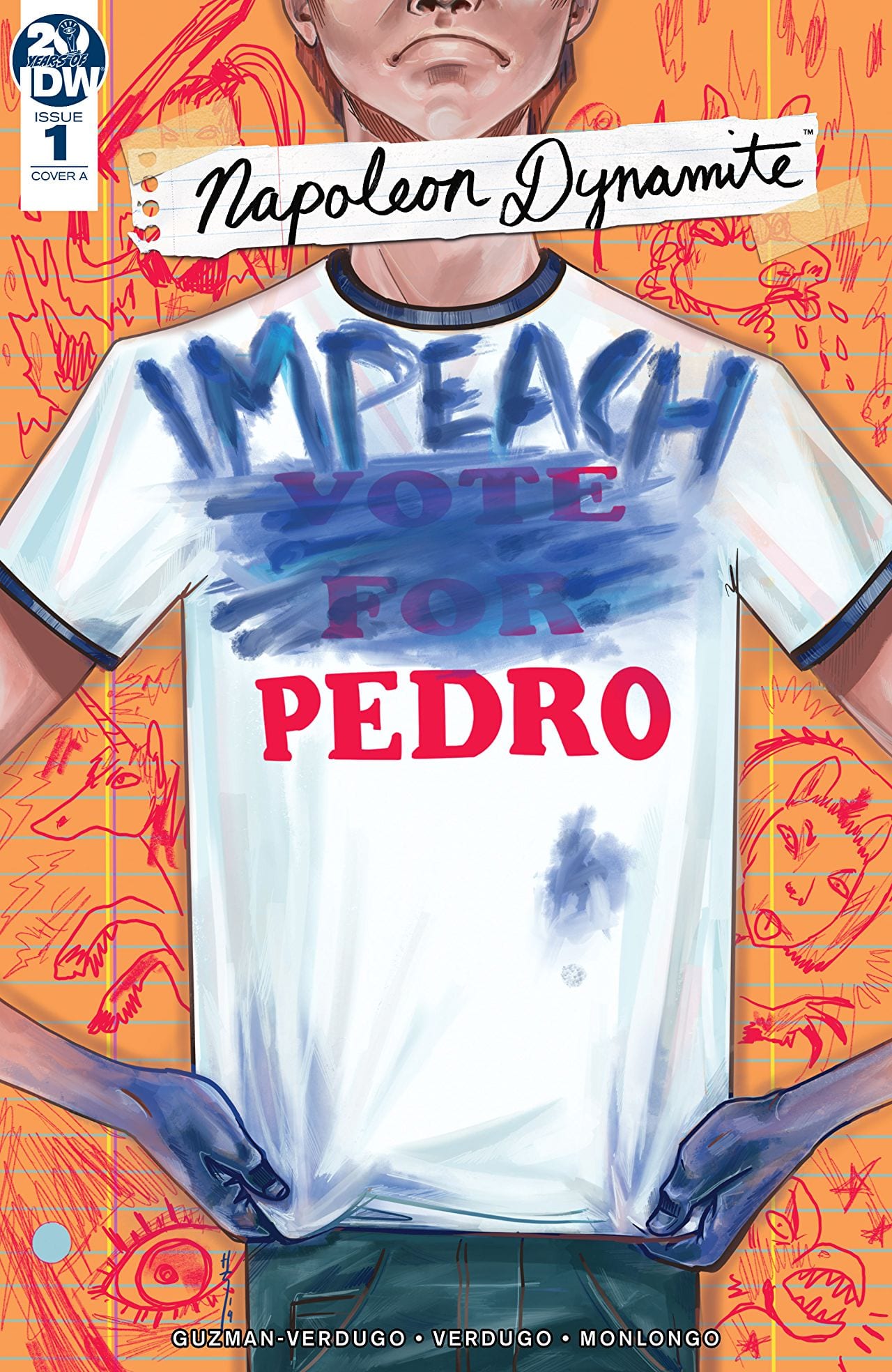
For a generation not raised on Rocky Horror Picture Show, Napoleon Dynamite might be the absolute definition of a cult film. So when IDW announced that Napoleon, Pedro and the gang were headed to a comic book series, expectations were understandably high. Still, with a top notch creative team in writers Carlos Guzman-Verdugo and Alejandro Verdugo, artist Jorge Monlongo, and letterer Christa Miesner, fans have reason to hope that their favorite weirdo high school comedy can make the transition well. Now that the book is out, should fans invest in the first issue?
Your Mom Goes to College
Issue one of Napoleon Dynamite picks up pretty much exactly where the film left off. The election has been successful, Pedro’s administration is in power, and Pedro, Napoleon, and Deb are still hopelessly unpopular. Now, however, it’s senior year for the teens, and everyone’s nervously looking toward the future. We get a glimpse of Napoleon’s plans in a conversation he has with a guidance counselor, in which he tells of his plans to be a cryptozoologist. The guidance counselor, and really everyone in Napoleon’s life, isn’t thrilled about his choices.
But that’s not all Napoleon has to worry about. A new girl named Joana Gato has transferred to the school, and for some strange reason, has her heart set on bringing down Pedro’s presidency. Can Napoleon & Co. fend her off while deciding on colleges, dealing with bullies, and, just maybe, finding some romance?
Oh yeah, and has the mayor been murdered?
Great Skills
Carlos Guzman-Verdugo and Alejandro Verdugo bring all the offbeat, repeatable humor of the movie to this comic book version of Napoleon Dynamite. Fans will be pleased to know that the world of Napoleon is very much intact. The small-town, ambling antics of Napoleon’s school and family life matter a lot to the story, with returning characters Grandma, Rico, and even Tina coloring Napoleon’s mundane but somehow ridiculous life. Plus, the addition of the murdered mayor story gives this comic just enough zing to make it its own story, building onto the film’s world instead of just rehashing it.
The only critique you might give the writing (and overall, the comic) is the overuse of first person narration from Napoleon himself. Part of the hilarity of Napoleon Dynamite in the movie is that he’s just so weird, almost alien. He’s relatable, sure, but the humor comes out of his actions and statements being so strange and unpredictable. Getting a window into that thought process sounds fun, but it ends up spoiling his weirdness, like explaining the punchline of a joke before you tell it. All that said, Guzman-Verdugo and Verdugo nail a perfect Napoleon impression on the page. The over-serious lingo they write will have you hearing John Heder’s voice as much as you see his iconic look.
The Shading on the Upper Lip
Speaking of the look, this comic’s artwork from Jorge Monlongo accomplishes something pretty incredible. Without creating photorealistic drawings of the movie’s actors, the art manages to present the characters perfectly. Napoleon’s misplaced arrogance, Pedro’s lack of enthusiasm, Deb’s awkwardness are all right there, distilled into cartoonish caricatures that work so well in a comic book. Actually, if IDW never published this comic, or even if the movie had never been made, Napoleon and Co. would have been IDEAL for a newspaper funnies strip, so perfectly do their designs match their personalities. If Monlongo’s designs get the acclaim they deserve, they’ll certainly be on more more quirky, character-driven humor books.
Of course, these designs wouldn’t work half as well if the tone of the comic didn’t click with the film like it does, and a lot of that comes from Monlongo’s colors. Their muted pastels and fluorescent lighting give the comic the same indie feel that the movie had, even though the designs are anything but realistic. Monlongo’s colors don’t just link the movie to the comic; they prove that it can work as one.
I’d Vote For You!
If you haven’t gathered by now, fans of the Napoleon Dynamite movie should absolutely pick up its comic book cousin. All the awkward teen angst, bone dry humor, and Midwestern monotony are there, complemented and improved by a unique visual style. But what if you’re not a fan of the movie? Should you buy Napoleon Dynamite #1 if you don’t like, or haven’t seen, the cult classic? We’d still say yes, and that’s because for everything this book is, it’s most importantly different. In a market that is easily saturated with similarly-drawn superheroes, variety is absolutely vital. You’ll get that with Napoleon Dynamite, we assure you.
For more reviews like this one, follow us on Twitter. And for all your comic book discussion, news, and reviews, stay tuned to Monkeys Fighting Robots.
The Good Place is a comedy series on NBC starring Kirsten Bell, Ted Danson, William Jackson Harper, and Jameela Jamil which takes place in an idyllic afterlife and making this surreal place come to life is Emmy-winning art director Adam Rowe.
The Good Place is entering its fourth and final season, but if Rotten Tomato scores are to be believed, you’d quickly wonder why. Season one sports a 91 percent, season two and season three are both currently at 100 percent. The Guardian called it “relentlessly optimistic.” Fans will undoubtedly miss the show, but at least it’s going out on its own terms.
PopAxiom interviewed Adam Rowe about becoming an art director, possibly painting forever at Forever 21 and making The Good Place.
Welcome to Miami
Adam and I spoke for an hour, but the first ten minutes were all about Miami, Florida, which is where I was calling from. Adam’s a big fan of the city after working on Versace and Dexter. “It so diverse and beautiful there.”
A native of Ottawa, Illinois, Adam now lives in LA, and after more than a decade, he proudly calls it home. “I’ve fallen in love with the city.”
But to end on a note that makes Miami sound cool, Adam says, “Miami is addicting.”
Getting To The Good Place
Adam’s path started in theatre and is now entrenched in the film and television world. Was that the plan all along? “I hate to say it this way, but I followed the money. I wanted to work in theatre, but it was hard to earn enough to live.” Keep in mind, at the time, Adam was mainly living in an SUV and not some extravagant, unaffordable lifestyle. “I would paint for any theatre that would hire me.”
“I kind of got into this triangle of working from Denver to Santa Fe to Florida.”
After moving around a lot , a friend suggested moving to LA. On a short trip to the city, LA was overwhelming, but Adam made the move anyway. “I dove in. It took about three months, but I got a job for a scenic company that made scenery for all sorts of things. I painted for them.”
The company landed a new contract. “I painted roughly 40-45 Forever 21 stores. If you remember, those stores are essentially all white. So, I was spending 8-10 hours a day in a Tyvek suit thinking ‘Is this it? Is this what a scenic artist becomes [laughs]?”
Six Foot Sub
Suffice it to say, Adam was looking for other opportunities to use his talents and landed an interview with Dan Bishop, the production designer for shows like Parks and Rec and Carnivàle. “I showed up to a coffee shop for the interview with a portfolio and a six-foot sub I carved out of foam for a Subway commercial.”
A couple of days later, Adam received an offer to work as a production assistant on a new show Dan Bishop was working on. “I said yes then found out I was working on Mad Men. It was just a pilot then.” Adam got to watch the pilot and was “blown away.”
As Mad Men was getting underway, there was a lot of turmoil in the world. First was the 2007 writer’s strike and second, was the 2008 recession. “Between 2006 and 2010, I basically said yes to anything that would hire me.”
What were some of those jobs? “I did stills for Fabreze; I worked on the Hillshire Farms ‘Go Meat!’ campaign; I worked on a game show that went nowhere called Paparazzi. Another game show called Pay It Off on BET.” There was a third, short-lived gameshow too.
All these diverse avenues of experience were enlightening. “The more I got into scripted television, the more interested I became.”
About The Good Place
Both The Good Place and Parks and Rec are the brainchild of Michael Shure were both “… very ambitious in what they wanted to do.”
About Shure, Adam says he has a “… clear visions about what he wants.”
The Good Place takes place in a weird place that’s a heaven-like paradise engineered for worthy people. “The challenge with The Good Place is time-tracking and staying within the timeline of the show. You want to set rules and follow those rules within the show. We try it hard to get it right.”
“For example, in a particular episode, we might have to ask ‘Is this taking place when Yogurt Yogurt Yogurt is Yogurt Yogurt Yogurt?’”
About keeping things straight, what’s Adam’s opinion on the infamous Starbucks cup in Game of Thrones? “Three or four times I brought it up to put that into The Good Place. That show allows for little things like that.”
Details Of Design
The Good Place is a surreal world, and so any touches of our reality have to be deliberate, but so do omissions of our reality too. “It seems very mundane, but when you’re shooting in Budapest or Australia you don’t think about light switches and plugs, for instance, but they’re different. In The Good Place, we tried hard to hide electricity.”
Film and television productions are a dance of different jobs working in unison. “In season three, Tahani (played by Jameela Jamil) is frying eggs. She throws an egg at the wall. There’s only so much you can plan for that moment. The team uses a material that won’t get destroyed by the egg because you will have reshoots.”
In an example from Parks and Rec, “When we learn that Ron Swanson has booby traps all over his cabin in the woods. We had discussions with the effects team and the DP to learn how they plan to shoot the scene. We workshopped a bunch of ideas. We made a scary version, a not-so-scary version … you come up with four or five ideas and present them to the showrunner and producers.”
Back to The Good Place, “In an episode of The Good Place, there is an American-themed restaurant in Australia, and they wanted these giant beers. As it turns out, we couldn’t get it to work because it’s hard to hold that much beer.”
Rent To Own An Emmy
Just days before our interview, Adam won an Emmy for his work on Rent: Live. “I’m still in the afterglow. No one can prepare you … it’s so surreal.”
About doing theatre on TV: “If you’re doing something on TV, inherently, they want more, more, more. On Rent, we wanted to include the audience, and we wanted them all around.”
TV gets a bigger budget than your average theatre production. The space and stage itself were larger than usual, which creates new challenges. “In “Over the Moon,” we were on one side of the soundstage, and the next scene, without a commercial break, we’re in “La Vie Boheme,” and have to be on the opposite side of the stage.”
Adam adds, “It was also a challenge to get things to play nice with commercial breaks. And so, we, as the art department had to react to what the writers, producers, and directors, were doing to meet those demands.”
“We’re dealing with live fire on stage with an audience. We’re dealing with ‘snow’ in the form of bubbles, not the usual particulates you see. We had flying stunts.”
Creative DNA
In a relatively short amount of time, Adam’s worked on shows spanning a wide range of genres and styles. What’s part of his creative DNA that inspires his work daily? “Early dramatic training. The fact that I had a great drama teacher in high school, Mrs. Williamson. I was heavily exposed to music. I took piano and choir. Those fundamental values I learned at an early age carried me through.”
Adam continues, “I saw as many musicals I could. I remember going to New York and seeing Lion King, Rent, Cabaret, whatever I could.
The power of influence comes from just about everywhere if you’re looking. “I get heavily inspired any time I go to Las Vegas and the visuals going on all over the place.”
One last source of inspiration: “… You throw in nature. There’s so much to take inspiration from.”
Wrapping Up
The Good Place wrapped shooting. So, what’s coming next from Adam? “I’m on a musical now called The Prom, and I’m diving into all this research about life in high school which influences what we make.”
“The Prom is set to come out next fall.”
One last word about The Good Place: “Without giving anything away, we finished shooting on August 8th in a really beautiful environment with copious amounts of hugging.”
Catch the final season of The Good Place on NBC!
Thanks to Adam Rowe and Impact24 PR for making this interview possible.
Want to read more interviews like this? CLICK HERE.
MARVEL ACTION CAPTAIN MARVEL #2 comes out this Wednesday from IDW, and it is delightfully full of flerkins and sass. Fans of Chewie (aka Goose) will love this miniseries.
Carol isn’t looking too thrilled about her predicament.
***SPOILER WARNING***
Marvel Action Captain Marvel #2 continues the insanity started in the last issue. And that’s probably why this miniseries is perfect for cat and flerkin lovers alike. And don’t worry, we promise that no cats or flerkins were harmed in this issue.
This series is a lighter counterpart to what has been happening in Carol’s main series (Captain Marvel), which makes us think that there was some intentional timing going on here. But that works perfectly for those fans needing a laugh or two.
Captain Marvel is looking ready to fight in Marvel Action Captain Marvel #2.
Flerkins have been a running joke in Captain Marvel’s series for quite some time. But when you think about it, it really was only a matter of time before somebody tried to weaponize those cute little (and dangerous) faces. And anybody that has read her series could probably make an accurate guess on who is behind that whole mess.
Sam Maggs is the author behind this series, and they’ve done an excellent job of balancing the humor within this plot. It has a lighter tone, but never quite crosses the line into ridiculous, which is a fine line in this case.
The main plot is a sound one – no fan can deny the core concept behind using the flerkins like this. Nor can they deny which race would be the most inclined to give it a go. They’re sort of famous for that sort of thing, after all. This adds a sense of comic realism to a plot that could otherwise be considered something too surreal.
The Guardians of the Galaxy have dealt with flerkins before.
There’s a good chance that the artists working for Marvel Action Captain Marvel #2 enjoyed their jobs a little too much this time around. But that’s just a guess – the flerkin costumes sure are as humorous as they are delightful.
Sweeney Boo was the lead artist for this issue, with Brittany Peer doing the colors. Together they made something bright and entertaining. The highlight is obviously the number of flerkins shown, but there are other noteworthy moments in this issue as well.
The lettering was done by Christa Miesner, and she knocked it out of the park. The title page for this issue is perfectly designed to fit the comic – and one of the better ones showcased recently.
Marvel Action Captain Marvel #2 was a fun issue; a solid second in what is a three-issue series. It moved the plot forward but also wasn’t afraid to have some fun along the way. Now we’ll just have to wait and see how Carol and her allies deal with the mess they’ve been handed.
Unless you have been living under a rock, you can’t have missed BOOM! Studios’ reboot of Buffy The Vampire Slayer with the exceptional creative team of Jodie Bellaire and Dan Mora.
But wherever Buffy goes, Angel is sure to follow.
So, it comes as no surprise that at the end of the first Buffy arc, the brooding vampire with a soul was pictured lurking in the background, ready to be unleashed back into the comic book world.
Helming the relaunch of the character, and becoming responsible for reintroducing Angel and his gang into the modern world, is writer Bryan Edward Hill. Having worked on a number of high profile characters for DC Comics and Top Cow, Hill’s ability to write engaging character-driven action is perfect for a crime-fighting demon, like Angel.
Later in the month, on the 25th, the first arc will be released in a collected edition which includes the surprise 0 issue that kicked off this run. Bryan Edward Hill kindly took some time out from his busy schedule to share with us the lowdown on what makes the vampire with a soul such an intriguing and beloved character.
Angel Volume 1 Cover Credit: BOOM! Studios
Darryll Robson For Monkeys Fighting Robots: Thank you for taking the time to speak with me today, I know that you are currently working on several different projects at the moment and I wondered how you organized your time when working like that? Do you work on one particular project for a length of time, or do you chop and change throughout the week?
Bryan Edward Hill: Well. When I’m working on a television show, I don’t have a lot of free time. Television requires writers room presence, and that takes up 40 to 50 hours a week. What I try to do is set aside different days for individual projects so that I can maintain mood, you know, and then I don’t have to flit between too many different things. If I’m working on Angel, then it’s a very different vibe than a sci-fi action piece, or a historical drama or something like that, so I designate different days for different things. Angel, I tend to write at night because it is more of that feeling and mood. So that is, in particular, my late night, right-before-bed writing.
MFR: Is there much collaboration you have to do with Angel because it is obviously part of the Buffyverse, do you have to liaise with the other writers and creators?
HILL: Luckily for me, BOOM! does a lot of that, Jeanine Schaefer my editor over there, she manages most of that conversation. I don’t have to deal with it personally too much, which is good because you don’t want to have to write with all of those tones. It’s better; I think to do what you want to do and then find out if what you want to do is acceptable for the rest of it. It’s hard to keep all of those rules in mind all of the time.
MFR: Have you had a lot of freedom with the stories you’ve been able to tell in Angel?
HILL: Yeah, so far. I have spoken in some detail what the overall plan was and where I wanted to go with this year. And one of my intentions was to push it a little bit in the terms of aesthetics, of its scope, of its emotion. Comics, unlike TV, they have limitless budgets in terms of how the visual storytelling can go. Obviously, you have to pay your artists, and letterers and all of that, your writers, but you can make it an epic experience, and I’ve been able to do that the way I’ve wanted to and I’m very grateful for that.
MFR: You’ve had an excellent creative team working on the comic. Have there been any particular scenes that when you’ve seen the finished work, it’s blown you away?
HILL: I was a little familiar with Gleb’s (Gleb Melnikov, Artist on Angel) work before we worked on the book together but there’s so many artists, and so much work out there, you know, I’m not going to say I was following him because I wasn’t. But when I saw Gleb do the first flashback that I put into the book and the strong graphic quality of his images, that really set the tone for me as a writer. It showed me what kind of artist I was dealing with and how much Gleb could really do, so that freed me up.
It’s a bit like when you are directing an actor, and you have a script, and you have an idea of what you want it to look like, and you do a take, and then the actor does something you just couldn’t imagine. The nuance, the subtly, the presence on screen, whatever it is, and then you realize, “oooh wait a minute,” I can do a lot more things than I thought I was going to be able to do when it was just me and a word processing program.
And that’s really the experience of working with Gleb, is that he is so capable in so many different ways that it frees me up to do bolder structure and make some narrative choices to remove dialogue and let the images carry the story, which is really how I prefer to work honestly. Although I am a writer, I try not to have dialogue be the driver of the storytelling. I have always been in love with the moving image, or the still image, and its ability to tell a story. I would give my writing the platform to power the images rather than get in the way and slow that process down.
Angel Volume 1 Interior Art Credit: BOOM! Studios
MFR: Were you a big fan of the Angel TV show originally?
HILL:I was, I was more a fan of Angel than I was Buffy really, because I could identify more with Angel. That was my favorite of the Weadon-verse on television, for sure.
MFR: Do you feel the stories you have told so far, and that you are planning on telling, are influenced by the style of Angel, like it was different from Buffy so did you consciously pick up the themes that the T.V. show picked up?
HILL: Yes but not so much in a conscious way as much as what happens to your unconscious when you just watch a thing a lot. In that way, a show can be almost like music, in that you start to get a feel for it. I have watched all of the seasons now, and I rewatched some of my favorite episodes, I kind of got back into the groove of it. It’s more of a feeling thing. It’s not like I have a list of things that make Angel uniquely Angel as much as you just sort of know when it’s circling what it needs to circle.
MFR: Did you get to choose which characters you used then, did you pick you’re favorite characters or did BOOM! tell you which characters you needed to use?
HILL: BOOM! gave me a lot of freedom to use who I wanted to use, when I wanted to use them, so the cast we have seen so far, those are the characters I wanted to start with first. In a lot of ways, the story is about the formation of Angel’s group, and there’s a little bit of heroism going on. You know we have this back story about Angelus when he was evil, having his own dark riders and his own kind of nefarious group bringing suffering across the world and now in modern times he is somewhat reluctantly gathering a new group of people around him that can do good in place of the harm he once caused.
I picked very specific characters in the mythology to fill out some archetypal roles: the warrior nature of James Gunn: the magical incarnations of Winifred: that sort of thing. The team that we have is the team that we needed for the story that I wanted to tell. That being said, I would love to bring in as many characters from the series as I possibly could. We’ve got some new characters that are not new to the Angel universe but are new to the comic book and are familiar to readers, and they have new twists, but they are essentially who they were. I am excited to see how people respond to those.
MFR: I know that you created the new character Lilith who, when I read the comic I see as being a replacement for Doyle for the original series. She has that link to the powers that be, which is the part that Doyle played. I wondered how important it was for you to create your own character as one of the main characters in the story?
HILL: Lilith isn’t so much as a creation as much as an incorporation of existing, magical, esoteric thought in mythology. Lilith as an archetype has always been interesting to me because some people look at her as if she is a villain, other people find her to be the symbol of female empowerment. And all of that seemed really interesting to me. I wanted to explore Angels relationship to magic a bit, to the so-called spirit world and how he deals with that and how it deals with him. And bringing in this idea that there are entities out there that are concerned with the affairs in the human world and, even if they cannot directly influence things physically, they can always influence others to do things good and bad. Lilith seemed like an excellent gateway to discuss those things. And I wanted to have a bit of a ferocious female energy in this book and writing her allows me to do that.
MFR: So this is a character that will continue through your run on the Angel comic?
HILL: Yes, I would think so. Perhaps not in ways that people can expect, but her influence will certainly be felt in the comic book going forward.
Angel: Lilith and Fred in Action Credit: BOOM! Studios
MFR: We’ve got the collection of the first arc out next week and the crossover event going on with the Buffy comic
HILL: Hellmouth, a lot of exciting things going on there.
MFR: Yes, I’m assuming that’s going to have a big impact on what you’re writing on Angel?
HILL: For sure. Without getting into details, the events of Hellmouth, are going to raise the stakes in those books and they’re to raise the personal stakes for all of the characters. The most important thing for an event like that is the characters change because of their experiences there, and you’re certainly going to see that, and it’s going to be reflected in both Buffy and Angel going forward. I would expect there to be multiple degrees in the terms of intensity for Angel that is a direct result of the events to come in Hellmouth.
MFR: So, do you have a long term plan for Angle? Is it a year or two-year plan that you’ve got?
HILL: Because I work in television as well, I do think in terms of seasons, and I do have what I consider like, a season of comics in me. A year of issues, I would say about 12 issues. So I think by season, by season, by season and it’s both detailed and incredibly malleable. It’s a bit like knowing you want to get to Athens but not knowing exactly the path you are going to take to get there. So, I have what I would refer to as a soft plan, but I do certainly have events I’d like to cover emotional points that I want to hit, and some evolutionary things with the world that I want to make sure I get set in to tell the story.
MFR: One last question, is there a particular character that you are really desperate to use in the comic?
HILL: I will say that readers can look forward to the entrance of Wolfram and Hart into the narrative. And also of Lorne. Wolfram and Hart as an enemy have always been interesting to me because I’ve always been fascinated with corporations and corruption and some of the esoteric history behind the power centers of the world.
And with Lorne, I’m just a real fan of karaoke. And I’m glad I can share that love with readers around the world.
Angel in a Hell Dimension Credit: BOOM! Studios
Monkeys Fighting Robots would like to thank Bryan Edward Hill for talking to us about Angel, and also to BOOM! Studios’ Esther Kim for her assistance.
Angel continues his adventures in issue 5 released on 25th September 2019, the same day as Angel Volume 1 comes out. So you can be completely up to date before the start of October when the exciting Hellmouth Crossover starts, taking over both Angel and Buffy comics for the rest of the year.
Avengers #24 hits your local comic shop next week on September 25, but thanks to Marvel Comics, Monkeys Fighting Robots has an exclusive four-page preview of the battle between Cosmic Ghost Rider, Thor, and She-Hulk.
The issue is written by Jason Aaron, with art by Stefano Caselli & Luciano Vecchio, Jason Keith dropped some colors, and Cory Petit gave us letters. Frank Martin assisted Caselli on the main cover. Greg Land, Jay Leisten, and Frank D’Armata provided the variant covers.
About Avengers #24: THE CHALLENGE OF THE GHOST RIDERS!
If the Avengers thought one Ghost Rider was tough to deal with, wait’ll they see how many Spirits of Vengeance have just been unleashed by the King of Hell, Johnny Blaze! Including the craziest, most powerful Rider of them all…That’s right; it’s the Avengers vs. Cosmic Ghost Rider!
Donny Cates and Geoff Shaw created the Cosmic Ghost Rider. The character first appeared in Thanos Vol. 2 #13 back in January 2018. Is the Cosmic Ghost Rider the most powerful character in the Marvel Universe? Comment below with your thoughts.
Dark Ark: After The Flood #1 kicks off the Halloween season on October 2, but thanks to AfterShock Comics, Monkeys Fighting Robots has a four-page preview for you.
The book is written by Cullen Bunn, with art by Juan Doe, letters by Dave Sharpe, Andrei Bressan worked on the incentive cover, and the lenticular cover is by Mike Rooth. Doe is known for his artwork in ANIMOSITY: THE RISE, AMERICAN MONSTER, and WORLD READER.
About Dark Ark: After The Flood #1: Two arks were built to survive the Flood. One was filled with the creatures of the natural world. The other was populated by…everything else.
Now that the denizens of the DARK ARK have beaten Noah’s Ark to land, a new societal order must be created – one based on the rule of monsters. Khalee, a new sorceress, ventures to maintain order amidst the chaos, but her otherworldly masters have a different task in mind. She must devise a way to bring Noah’s Ark to the monsters…because the beasts must feed.
Are you excited for the return of Dark Ark? Comment below with your thoughts.
Take your first look at DARK ARK: AFTER THE FLOOD #1