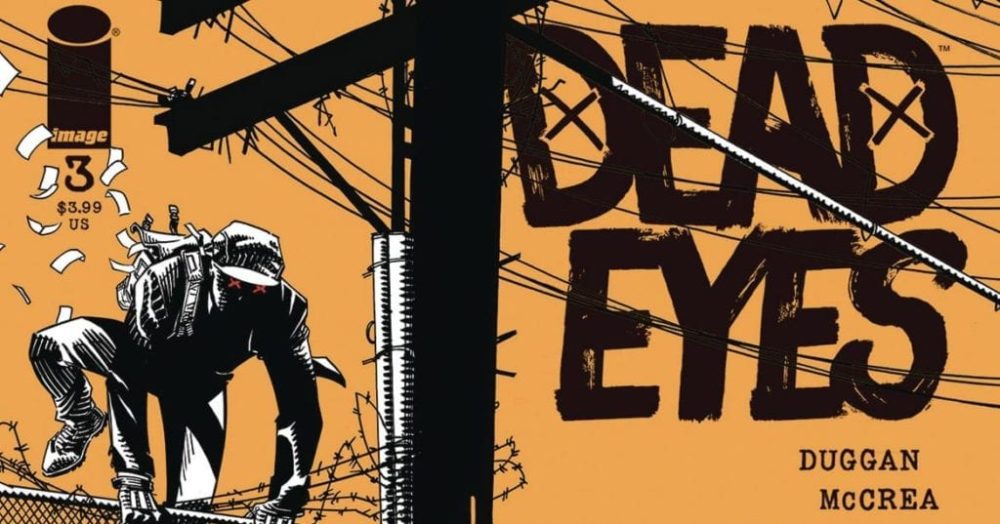
Dead Eyes #3 is a comic that has been waiting in the wings for some time now. However, the long over due and rebranded Image Comic finally sees the light of day this week. It is a real world vigilante story packed with action and violence.
With your dubious past closing in on you, and the mob believing you stole their money, what lengths would you go to to clear your name? And how do you reconcile your carefree history with the responsibilities of the present?
Dead Eyes #3 Credit: Image Comics
A Touch of Character
While his wife settles herself in the hospital Dobbs, aka Dead Eyes, dons the mask and stalks the halls, ready to tackle the mob head on. Each kill brings him one step closer to the money that they believe he stole.
The majority of this issue is spent in the hospital with the central character doing a number of good deeds in different ways. Whether it’s paying for someone else’s access to TV and Internet, or rescuing an injured man for the clutches of the mob, Gerry Duggan, writer, makes sure the reader knows who the good guy is.
The violence and greed that feeds the characters in this comic manifests itself in different ways and Duggan uses the plight of an aging vigilante to examine how these two things affect people in different ways. Dead Eyes is an archetype for costumed characters with the ever present struggle between ‘hero’ and civilian. Dobbs is forced by his previous life to once again wear the mask against the wishes of his wife. It’s far from a new idea but Duggan manages to give it a new spin and make the conflict fresh again.
The action is confined mostly to one location, allowing Duggan to focus the narrative on personal interactions between the characters. The intimacy of the central character and his wife is contrasted with a similar, albeit more disturbing, intimacy that Dead Eye’s shares with the mob.
Dead Eyes #3 Credit: Image Comics
A Sense of Location
John McCrea uses the space on the page wisely. He adopts a widescreen format more often than not, allowing plenty of room within the panels to add scenery. The detail within the background creates an immersive atmosphere for the characters to inhabit and for the reader to get lost in. The location becomes as important as the action and one feeds off the other with the contradictions of the building mimicking the moral dilemma of the central character.
The setting represents the struggle between life and death, a struggle all to familiar to Dead Eyes in his return to crime fighting. The heavy shadows within the backgrounds creates an imposing atmosphere throughout the comic. An atmosphere which is punctuated by the cold, oppressive coloring by Mike Spicer. A sickly grey/green prevails throughout the hospital adding an element of discomfort to the reading experience.
The urgency of the dialogue is brought out by Joe Sabino’s lettering, adding to the drama of the issue. Each page builds momentum as the action intensifies within the hospital, much in the same way as the narrative builds in the Die Hard movie. The noticeable change in the lettering, with size changes in the font and speech balloons being broken, expedites the motion of the narrative, speeding it up from one page to the next.
The drama builds throughout this issue like a well crafted action/crime story. It centres on the struggles of one character who drifts in and out of the scenery but is never far from the centre of attention.
Dead Eyes #3 Credit: Image Comics
Conclusion
Dead Eyes is not the fun, adventurous type of vigilante often found within the pages of the Big Two publishers. It’s gritty and realistic, dealing with hard hitting real life problems that are complicated by the destructive obsession of the protagonist.
There are moments of high tension but also occasional scenes of tenderness. Duggan wants the reader to care about this man who’s bad decisions in the past are coming back to haunt him.
After waiting over a year for new material from Dead Eyes, this issue doesn’t disappoint. The final scene is perfectly paced drama, beautifully rendered by the art team.
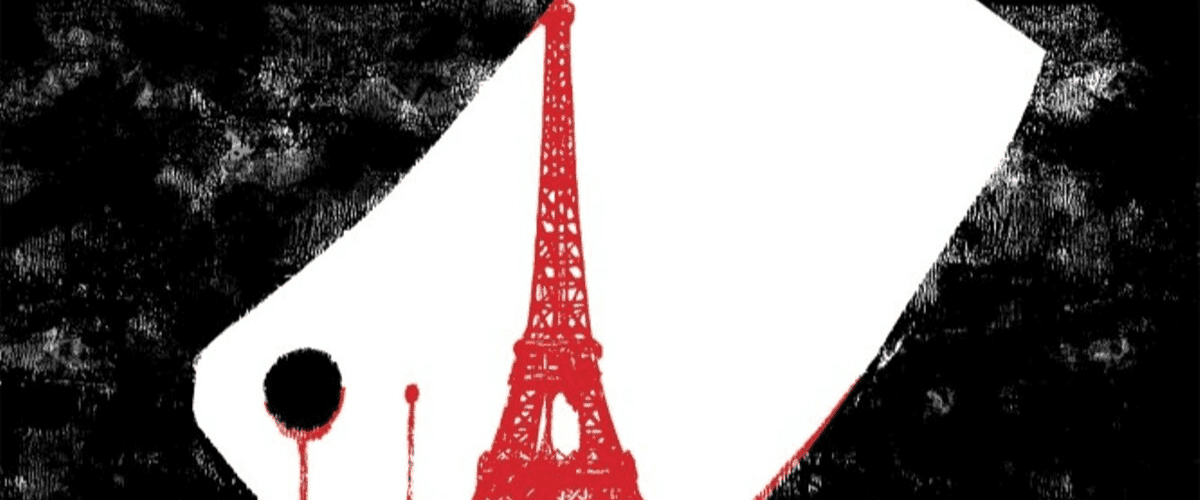
The realistic examination of factual events in world history is something that the comic medium doesn’t explore too often. World War II is an area of time that is typically spun in favor of some fictional character or event, as can be seen in everything from Captain America to the Hellboy Universe. So when such an interesting and understated event like the serial murders in Nazi-occupied Paris is given a treatment by a writer through an American publisher, it’s worth taking note of. It’s a relief too then that Stephanie Phillips’ debut issue of “The Butcher of Paris” is an engrossing and dread-inducing start to a series that will expose one of the most harrowing incidents during an already horribly troubled time in European history.
In Nazi-Occupied Paris in 1944, the brutality of the Third Reich’s reign is not the only terror Parisians have to fear. A serial killer has been stalking and murdering civilians by the dozens and using the situation in Paris as a cover. Now with the authorities alerted, it becomes a race against time – and the Nazi oppressors – to stop this relentless horror before more bodies can pile up.
Despite the fact that the synopsis of “The Butcher of Paris” is given upon opening the first issue, writer Stephanie Phillips still takes her time in presenting the horror of the murders themselves. In the meantime she stresses the turmoil the people, especially Jewish people lived under while being ruled by Hitler’s forces. It would be easy to focus on the serial killings almost solely and therefore make the Nazi occupation element lose the element of stress and terror that such an experience needs. Fortunately, this is given the proper attention it deserves. This is a thoroughly dread-inducing issue, with civilians doing anything they can to escape or at least stay alive under Nazi occupation – and this is before the murders are discovered. The characters in the book are well defined by their positions and their struggles, with each main character having an important part to play in the coming story. Interestingly, Phillips chooses to have the killer exposed near the beginning. The reader meets him only a few pages into this debut issue. This further helps instill the sense of dread via dramatic irony; the audience knows who the killer is, but the character do not. A brilliantly written start all around.
The art provided by Dean Kotz‘s pencils and Jason Wordie’s coloring is excellently in tune with the story here. The visual style very much lines up with the semi-realistic and shadow-laden aesthetic provided in many of Dark Horse’s horror comics. The thick lines and heavy inks Kotz uses create the oppressive mood the story needs for its chaotic plot. His detailing of character’s differing facial features and expressions makes each person easy to recognize, which is difficult in a story that uses so many supporting characters. The environmental detail of 1940’s Paris is remarkable as well, from the stone buildings to the dress of civilians and S.S. troopers alike. Wordie’s colors fill the pages with a murky depth in tandem with Kotz’s inks. The panels all seem as though they are lit by either moonlight or gas lanterns, and it works wonders in establishing the tone of the story. The quietly effective work needed for a comic such as “Butcher of Paris” can often go unnoticed in favor of more “explosive” works, but this issue shows just how much this sort of art is needed for storytelling.
The lettering from Troy Peteri is also an interesting choice, as the font favors a slightly more erratic style over more standard comic fonts. It doesn’t look unlike title cards for horror film from this era, and it adds a sort of frantic urgency to much of the dialogue. The bold lines are also subtle but noticeable, and it adds more of the horror undertones to the reading experience overall.
“The Butcher of Paris” #1 is a wonderfully suspenseful first issue, fraught with tension building dramatic irony and historical terror. Possibly the most ingenious element in this comic is that despite its premise about a historical serial killer, Phillips never loses sight of the horror that came to the people of Paris under the boot of the Third Reich itself. Fantastic tension building and character drama fuses with phenomenal art to create one of the most stellar debut issues a series could ask for. Be sure to pick it up from your local comic shop on 12-4.
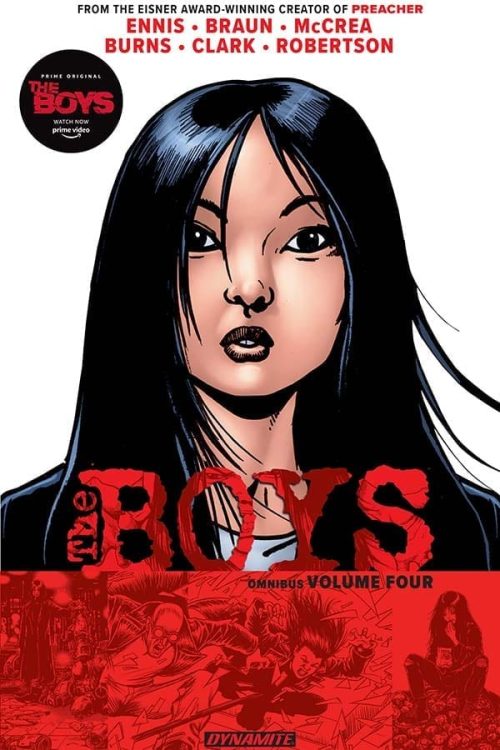
The Boys is creator Garth Ennis’ gigantic middle finger to mainstream comics and its reliance on superheroes. With supes all but dominating the big screen and many smaller ones, it was only natural for an adaptation of The Boys to appear. However, with the changes come the need to make scenarios more compelling, distilled, and sensational. That last part is what makes the overall themes of either series so divisive. Below is the research from the gutters. Spoilers ahead for both series.
The Boys Premise
In either series, a team of somewhat ordinary people wages an espionage style war against superheroes. The team’s newest recruit Wee Hughie gets drawn into the conflict after his girlfriend is accidentally killed by Flash pastiche A-Train. The superheroes have the backing of the megacorporation, Vought, to be both above the law and indulge hedonistic lifestyles. A-Train’s team, The Seven, also get a recruit in Annie January (Starlight). After a hazing, she encounters Hughie and begins a relationship with him. Meanwhile, both teams’ leaders Billy Butcher and Superman pastiche the Homelander engage in a personal war over the memory of Butcher’s wife.
The comic, however, presents a very different story in comparison to the show. As such, the themes that Ennis wanted to convey seem to clash at certain points. Where does one series succeed, and where does the other fail?
Integral Setting of The Boys
In the Amazon show, The Boys are a thrown-together group of vigilantes who have, in some way, been wronged by Vought. Utilizing whatever connections they have, the team wages war against the Seven. Unfortunately, without any backing or formal training, the Boys are easily overwhelmed. A good number of their wins are accomplished by plans made by the seat of their pants. In effect, the show presents a thrilling departure from the comic book.
In the comic series, The Boys are a black ops team with official backing from the CIA. With years of experience under their belt, they’re able to give Hughie better time to adjust. They also avoid unnecessary fights whenever possible. Unlike what most spy franchises like James Bond would display, the point of being a spy is to gather information and sabotage. In essence, the comics reveal a world that believes in the necessary means of keeping superheroes under control — especially one that makes 9/11 look even worse through a botched plane rescue.
Character Motivations in The Boys
Ennis’ main strengths lie in emotional realism, giving the audience a reason to care about or follow his characters. While half of The Boys’ comics involve making mainstream superheroes look like tools, the better parts of the series come from meaningful character interaction. The Amazon show also goes out of its way to utilize those emotional interactions but in more sensational methods. In a way, however, this betrays the point of the comic.
Wee Hughie
Hughie, for example, is portrayed as an avenger who slowly becomes a side-kick of Butcher. Everything from the death of his girlfriend Robin to his relationship with Annie becomes a means to an end for him. While the audience still supports him for his quick thinking and plans, Hughie becomes less sympathetic under Butcher’s influence.
This is in contrast to the comics version of Hughie, who never wanted revenge. The only reason he is even in the Boys is that Butcher manipulated him. Despite every horrible situation, Hughie never got used to the violence and horrors. In the end, Hughie retains his innocence with more maturity. Even Butcher admits that’s what makes him admirable.
On a side note, Comic Hughie’s appearance was based on Simon Pegg. The actor, in turn, plays Hugh Campbell Sr., TV Hughie’s dad. Strangely, this is the comic Hughie trying to tell his counterpart not to lose himself, which is what makes TV Hughie’s descent much worse.
Annie January (Starlight)
Annie, much like Hughie, goes through a couple of changes in the Amazon show. Most of them are in reference and reaction to social movements. For example, at the “Believe Expo,” Annie uses the opportunity to tell everyone about her sexual hazing. She is also portrayed as less dependent on outside forces even before breaking off with Hughie. In effect, she takes over comic Hughie’s role.
Annie, in the comics meanwhile, doesn’t have much portrayal outside of her appearances as Starlight. The only time she can be herself is with Hughie, especially after everything in her life turns upside down. But even Hughie lets Annie down a couple of times. He didn’t use her to spy on the Seven like TV Hughie, but he did snap at Annie after seeing the footage of her hazing. So Annie goes on an unseen journey of self-reflection where she becomes more independent. While she and Hughie get back together, it’s on their respective merits. Merits that drive home the overall message of the series.
The Themes of The Boys
The Boys’ central theme is the perspective of heroes. Superheroes are undoubtedly fun to look at, but behind the scenes, they are just as messy as regular people. This includes being lazy and entitled after having their needs covered. Giving supes celebrity all but gives them an excuse to be statically flawed as long as it makes their corporate overlords money.
On the other hand, violent anti-heroes like the Boys are not viable either. Traumas haunt characters like Butcher and act on their bloodlust on targets they deem necessary. In other words, they’re psychopaths, bigots, or just plain insane. Unlike supes who tend to still have a choice in what they do; these people are driven by their nature and thus have little self-control.
So what makes a hero? Not tragedy, the comic series displays that this is just a gimmick. Starlight was to be given a very revealing costume as part of a grim and gritty persona as a former rape victim. However, she refuses, after nearly being raped by A-Train before this but not becoming darker. Anyone who does fit this mold is (again) likely insane. Ennis’ central message is that real heroes are the people who serve and take personal responsibility. This is something the Amazon series fails to show.
Sensationalism Is Nothing But a Gimmick
Aside from the changes in characters, the Amazon show makes the plot more similar to an action movie. The use of explosives and guns bring this home. The world is so bleak in comparison to the comic; it almost feels like a parody. Vought International, for example, is an all-around evil corporation, unlike Vought-American, where it just does whatever works. Why? Because conspiracies like on the show are a waste of resources! Then there comes what little action there is in the comic.
The comic’s opening conflict with Teenage Kix, for example, is the most action the comic gets on-screen. It’s an act to send a message both in series and for the reader to get an idea of what the cast faces. Hughie, in particular, is scared and overwhelmed when he accidentally kills one hero. But that’s the point, fights are ugly, and it’s best to avoid them whenever possible. Any time violence does occur; it’s usually from a distance, out-of-view, or en-media res. That’s the ideal way of using sensationalism, unlike the show where violence occurs every other period to keep audiences engaged.
As such, Amazon delivers a ham-fisted narrative down the audience’s throat. io9 journalist Charles Pulliam-Moore even calls this hypocritical on Amazon’s part. But does that mean the comic is better?
Both of The Boys Have Faults
The comic has its fair share of flaws. For one, most of the supes in the comic feel like caricatures, with only a few of them getting fleshed out. Most of the time, whenever supes do appear, it’s to mock the major comic companies. So, the series drags by a little in the middle arcs like with the G-Men. The show, however, makes the supes look more human while mocking celebrity lifestyles. Aside from the Seven, D-list supes need income but only get recognition from past exploits. But this is arguably the only vast improvement the show has over the comic.
The show’s main flaw is that instead of deconstructing the two sides, it just makes the Boys look like caricatures in season 1 — the themes of knowing when to stop and walk away feel wasted here.
What do you think of the first season of THE BOYS? Leave your comments below.
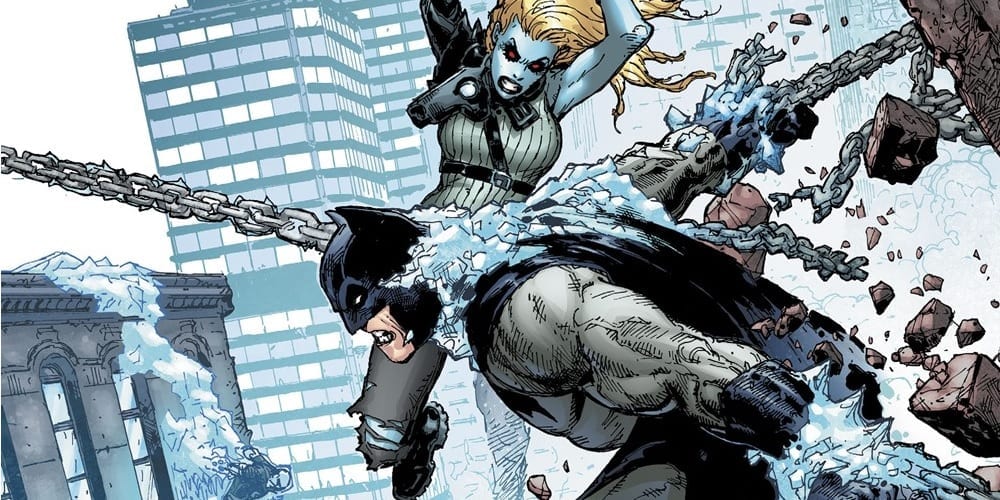
Nora continues to act out her plan in Detective Comics #1016, out this week from DC Comics. What exactly she intends to do, though, is not entirely clear until the book’s finale. Meanwhile, Batman forms an uneasy alliance with Mr. Freeze, hoping they can stop Nora’s crime spree before she causes any major damage.
The Writing
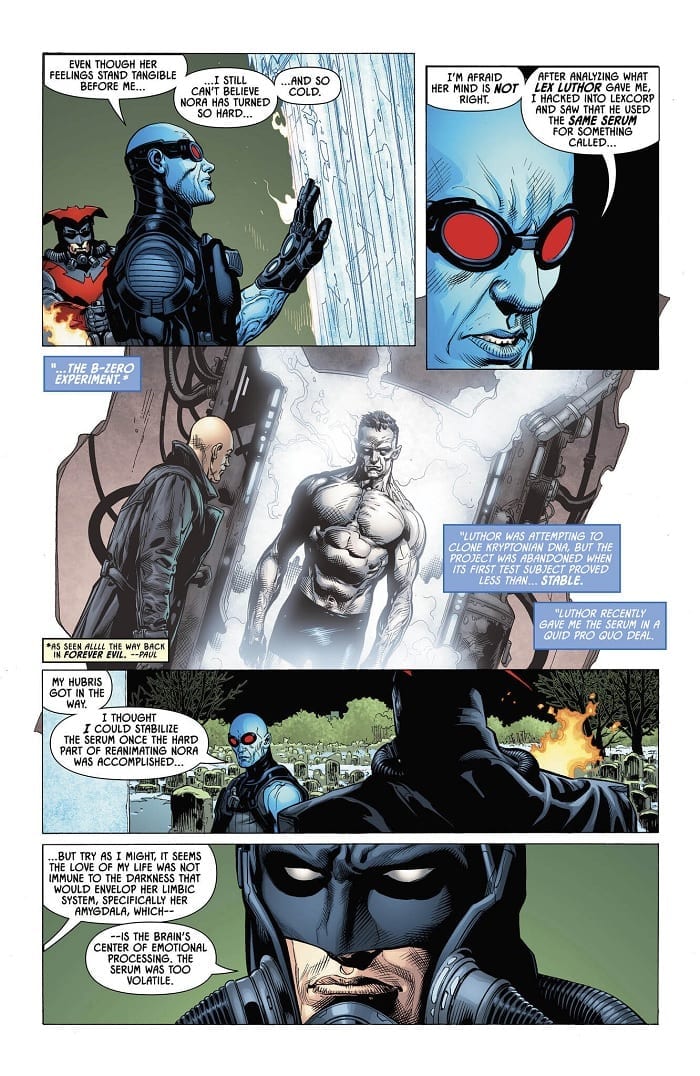
The book begins with a callback to an earlier story arc. Freeze explains that the serum used to revive Nora was used by Luthor as part of his research on Subject B-0 (say it fast if you don’t get the name at first). This gives a thin, but reasonable explanation for Nora’s sudden personality change. The book’s real strength, though, lies in the interpersonal emotional stakes between the characters.
The dialogue in Detective Comics #1016 is crisp and well-written. Writer Peter J. Tomasi conveys the emotional weight of the situation, yet avoids treading into melodrama. The work builds genuine pathos, delivering a well-written conclusion to this arc.
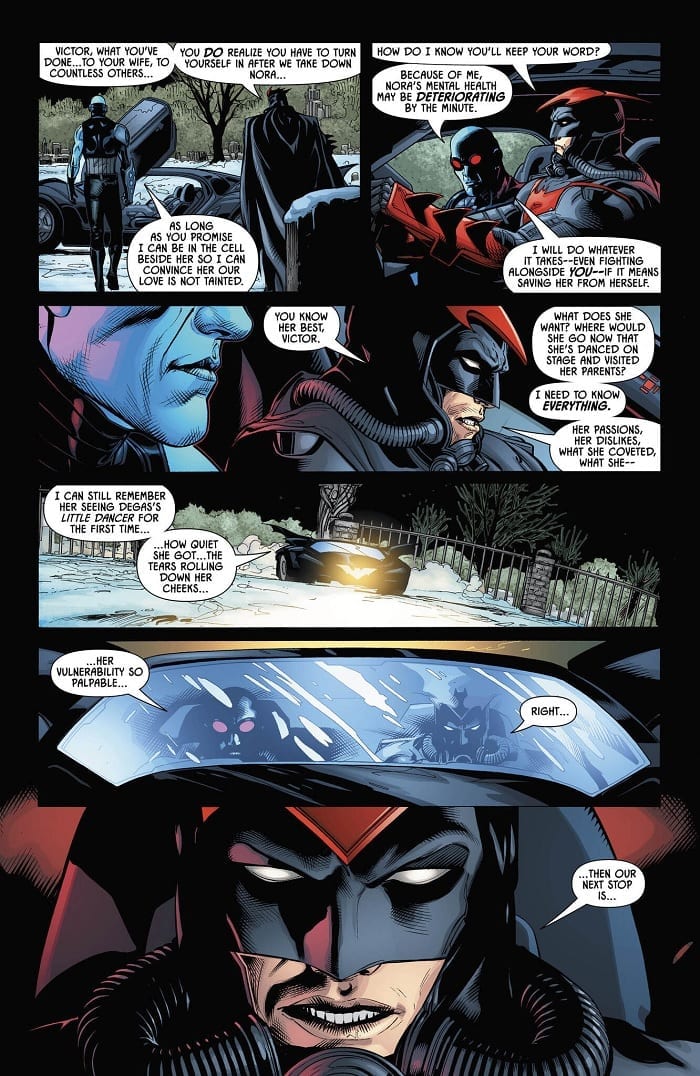
One might have assumed that this story would be wrapped up with a return to the status quo by the arc’s end. However, the ending provides a surprising, yet satisfying finale. The situational irony of the book’s twist is counterbalanced by genuinely effective and tragic storytelling. While other authors have given us a closer look at the flawed figure of Victor Fries, Detective Comics #1016 may stand as the definition of the character’s tragic arc.
One could complain about the relatively flat nature of Nora’s character here. Her motivation is a little muddled, and beyond her love of ballet, we don’t really get much of a sense of her character. There is, however, some dimension to be found in her desire to break free of Victor’s control.
Overall, Detective Comics #1016 proves to be one of the strongest chapters yet in Tomasi’s run on the book.
The Artwork
Artists Doug Mahnke and Tyler Kirkham offer impressive illustrations on Detective Comics #1016. The pages are consistently energetic, maintaining the reader’s attention and accentuating the tension in the storytelling. Panels provide some interesting work that is dynamic, yet cohesive.
The book’s layout nicely compliments the storytelling as well. We begin with more evenly-spaced, regular panels, but these dissolve to more uneven, jagged lines as the book progresses. This serves to underscore the action, enhancing the overall feel of the work.
Of course, the artwork in Detective Comics #1016 is not perfect throughout. For instance, the illustrations don’t always hit every story beat perfectly; there are times when the characters’ dialogue could work better if in a different layout. This is more of a nitpick, though, as overall, it’s excellent visual storytelling.
Colorist David Baron brings more of those brilliant, icy blues to the table for the story’s climax. The blue really cut through most of the pages, capturing the reader’s eye. He contrasts these with other vibrant tones, though, ensuring one’s attention is always focused in the right spot from one panel to the next.
Final Thoughts
Detective Comics #1016 offers a great conclusion to an, overall, above-average story. Given the strength of the finale, I’d say the entire run is worth grabbing if you’re not already following with each issue.
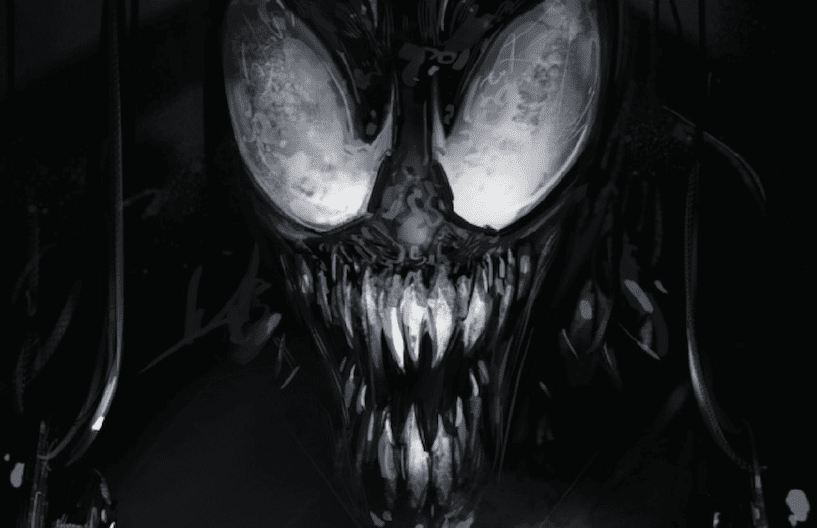
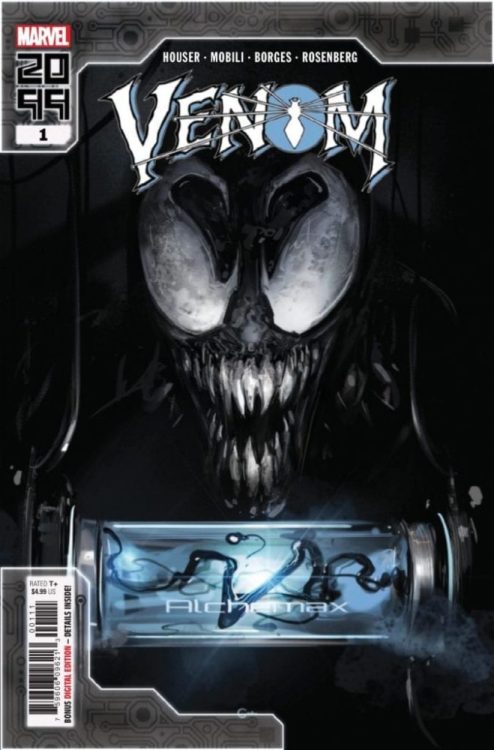
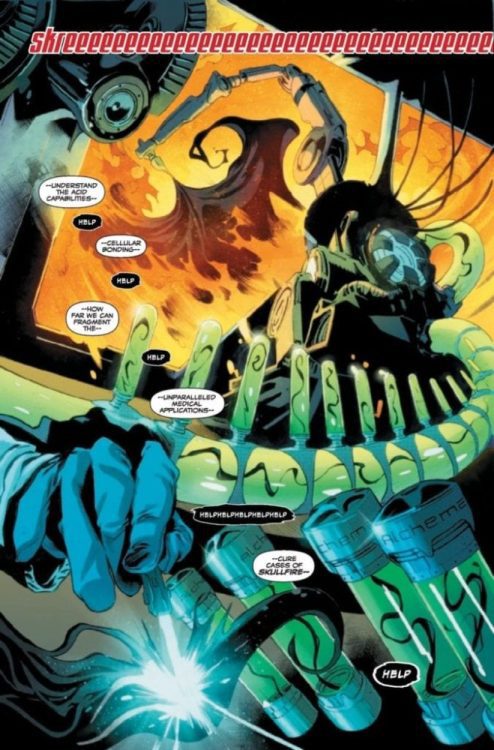
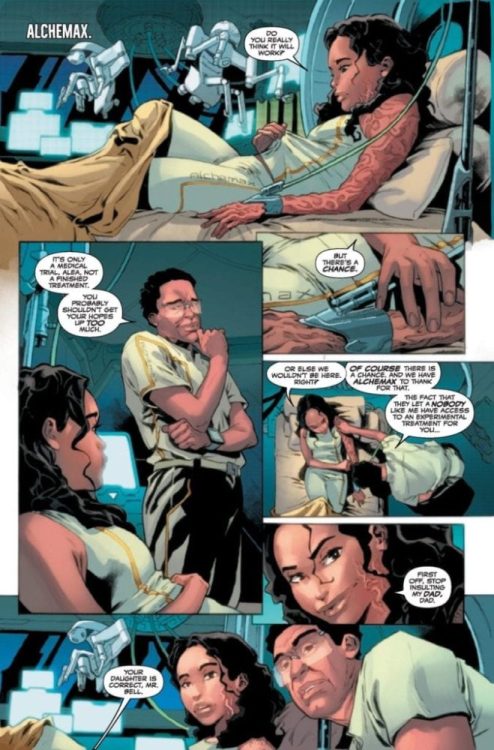
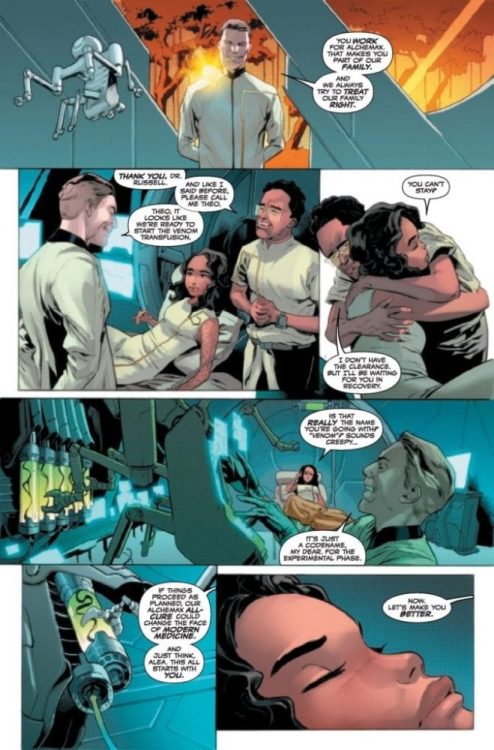
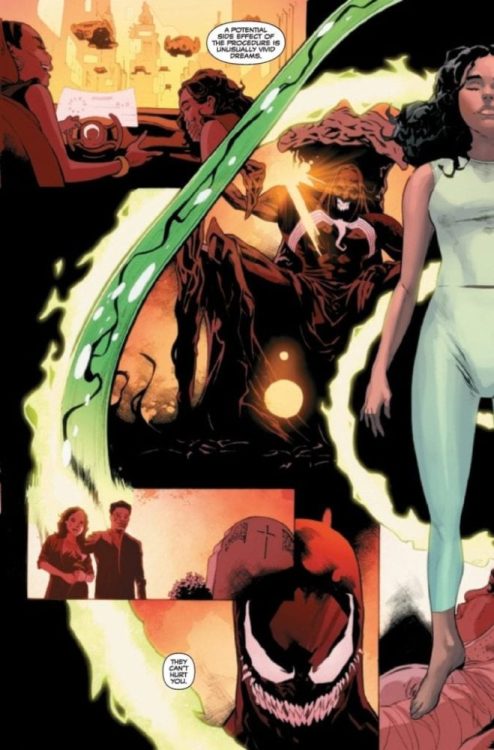
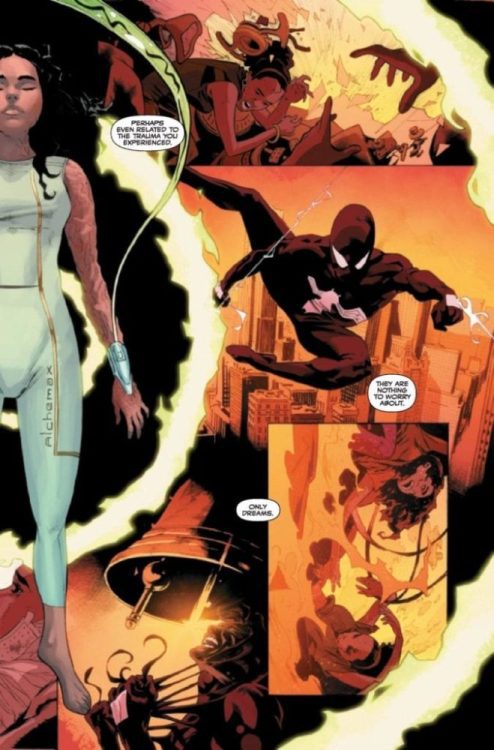
Venom 2099 #1 hits your local comic book store on December 4, but thanks to Marvel Comics, Monkeys Fighting Robots has an exclusive five-page look at the future of Venom.
What Marvel has to say about the book: WHAT IS VENOM 2099?
Welcome to the future, where the cure for what ails you is at your fingertips with ALCHEMAX! Our industry-leading pharmaceutical department (HELP) is providing consumers with (FREE ME) the bleeding-edge technology you’ve come to know from our (SAVE ME) products with VENOM, our all-cure drug. Trials begin (DON’T LET THEM DESTROY ME) this December!
Creative Team:
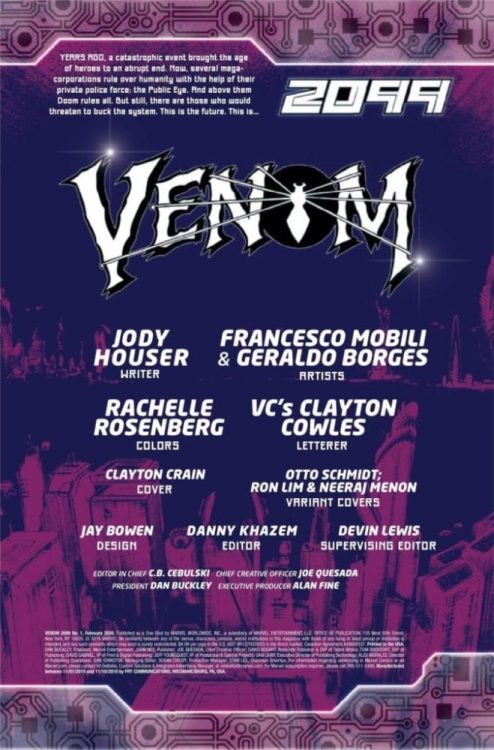
Writer Jody Houser plots the story, with Francesco Mobili & Geraldo Borges’ artwork, colors are provided by Rachelle Rosenberg, and Clayton Cowles makes it readable. Clayton Crain is the cover artist, Otto Schmidt, Ron Lim & Neeraj Menon are the variant cover artist, and Jay Bowen was the graphic designer on the project.
Are you reading Marvel’s relaunch of the 2099 line? Comment below with your thoughts.
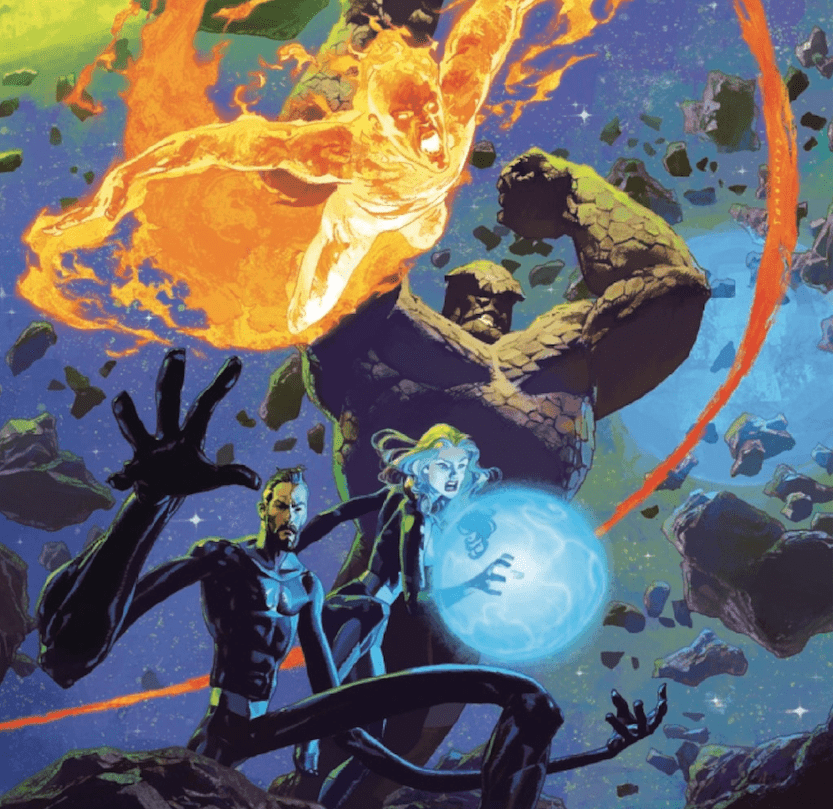
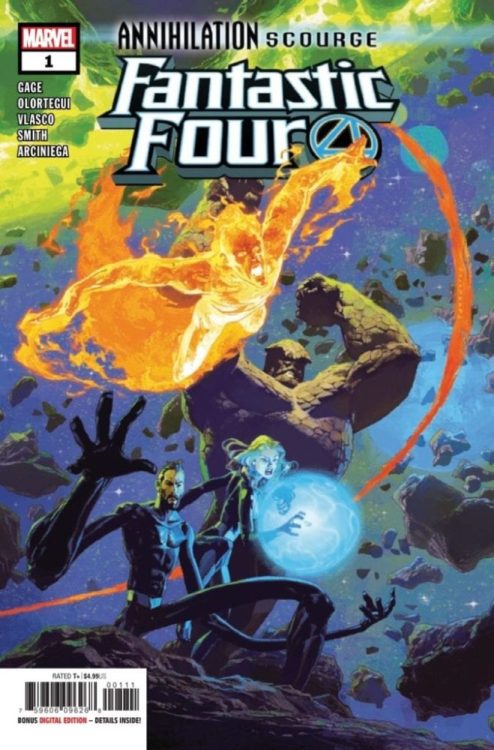
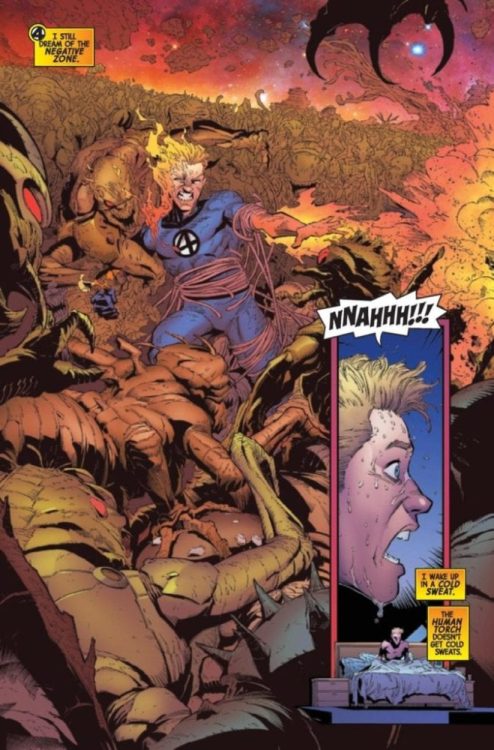
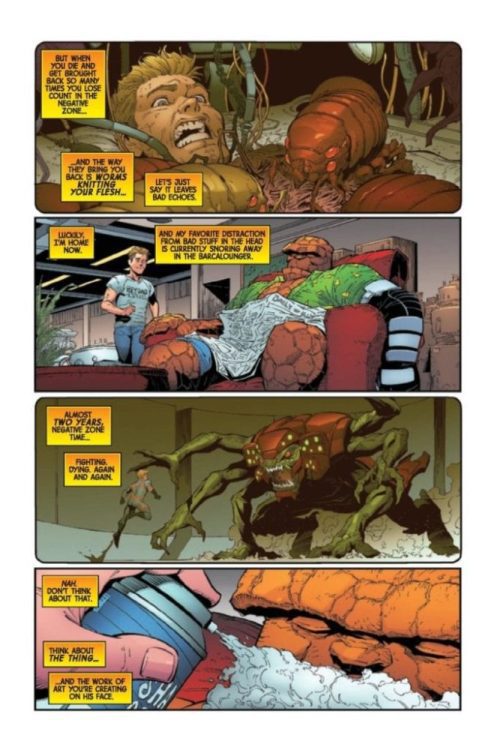
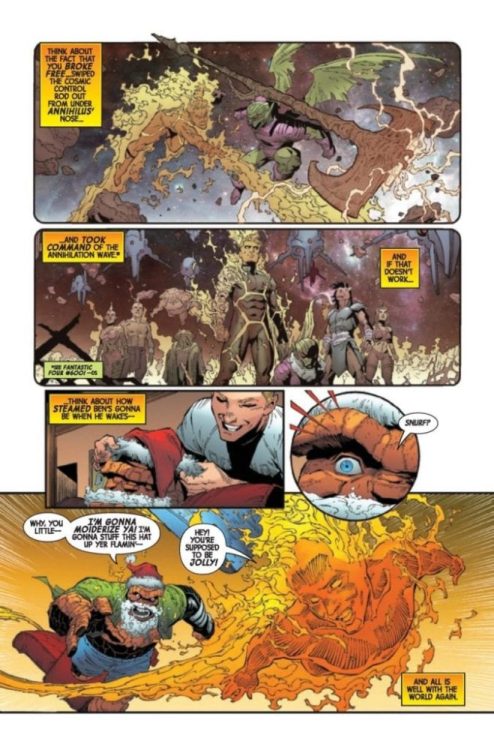
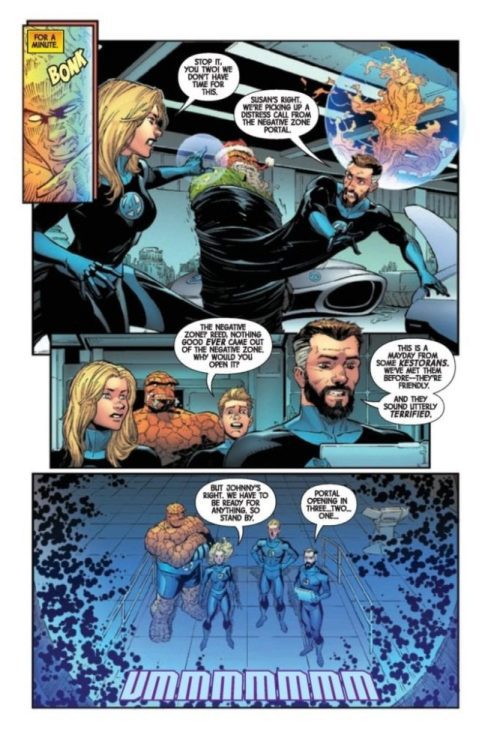
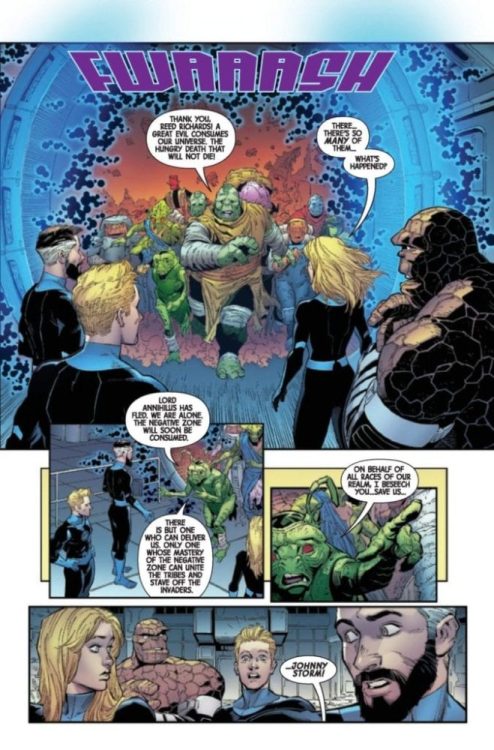
Annihilation – Scourge: Fantastic Four #1 hits your local comic book shop on December 4, but thanks to Marvel Comics, Monkeys Fighting Robots has an exclusive five-page look at the horrors of the Negative Zone.
What Marvel has to say about the book: Alerted to a potential tear in the dimension, the Fantastic Four go to investigate – but what they discover is so much worse than they prepared for! Will the Fantastic Four be able to hold back the Scourge or will the Negative Zone finally succeed in tearing this family apart? Overrun, the Fantastic Four are about to learn: No one ever truly comes home from war.
Creative Team:
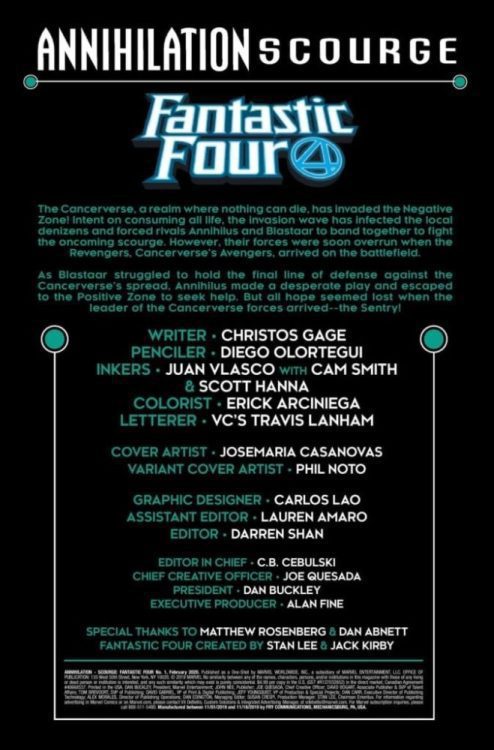
Writer Christos Gage plots the story, with Diego Olortegui’s artwork, Juan Vlasco adds inks with Cam Smith & Scott Hanna, colors are provided by Erick Arciniega, and Travis Lanham makes it readable. Josemaria Casanovas is the cover artist, Phil Noto is the variant cover artist, and Carlos Lao was the graphic designer on the project.
Are you reading Matthew Rosenberg’s ANNIHILATION – SCOURGE? Comment below with your thoughts.
Annihilation – Scourge: Fantastic Four #1 Preview
Stan Lee and Jack Kirby created the Fantastic Four.
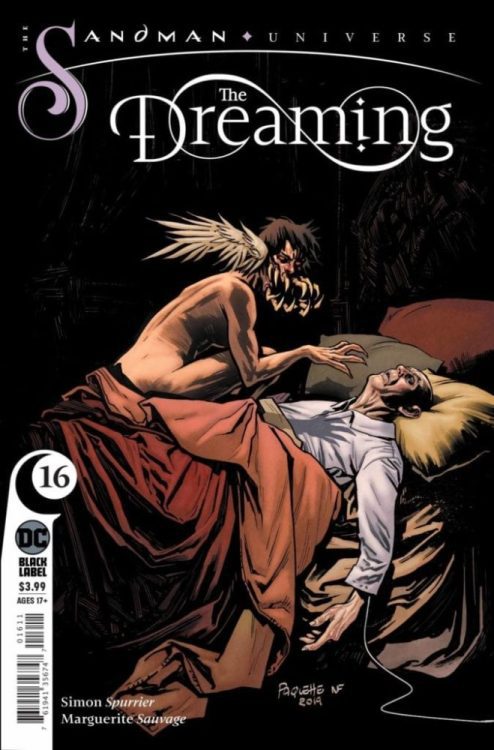
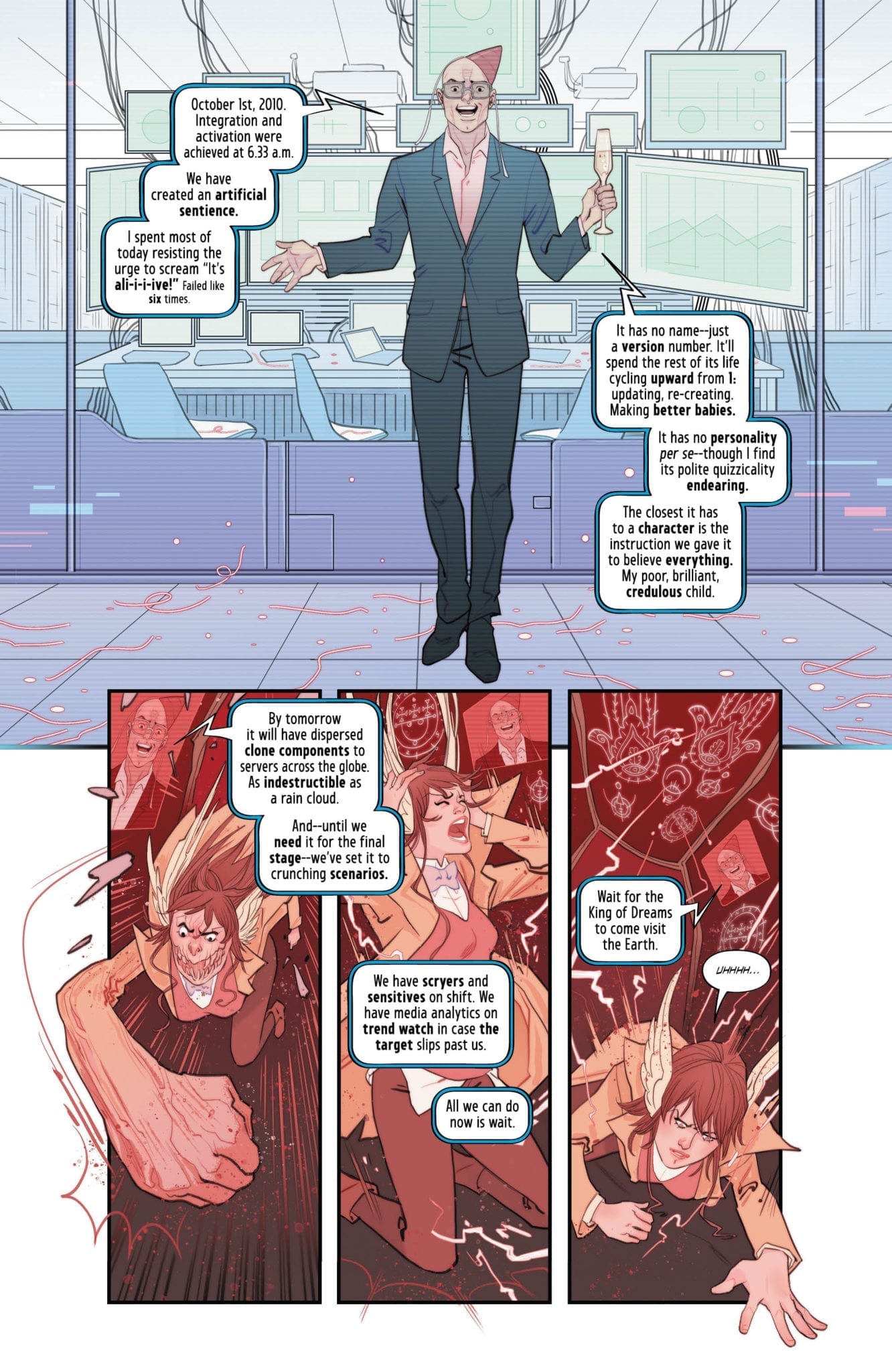
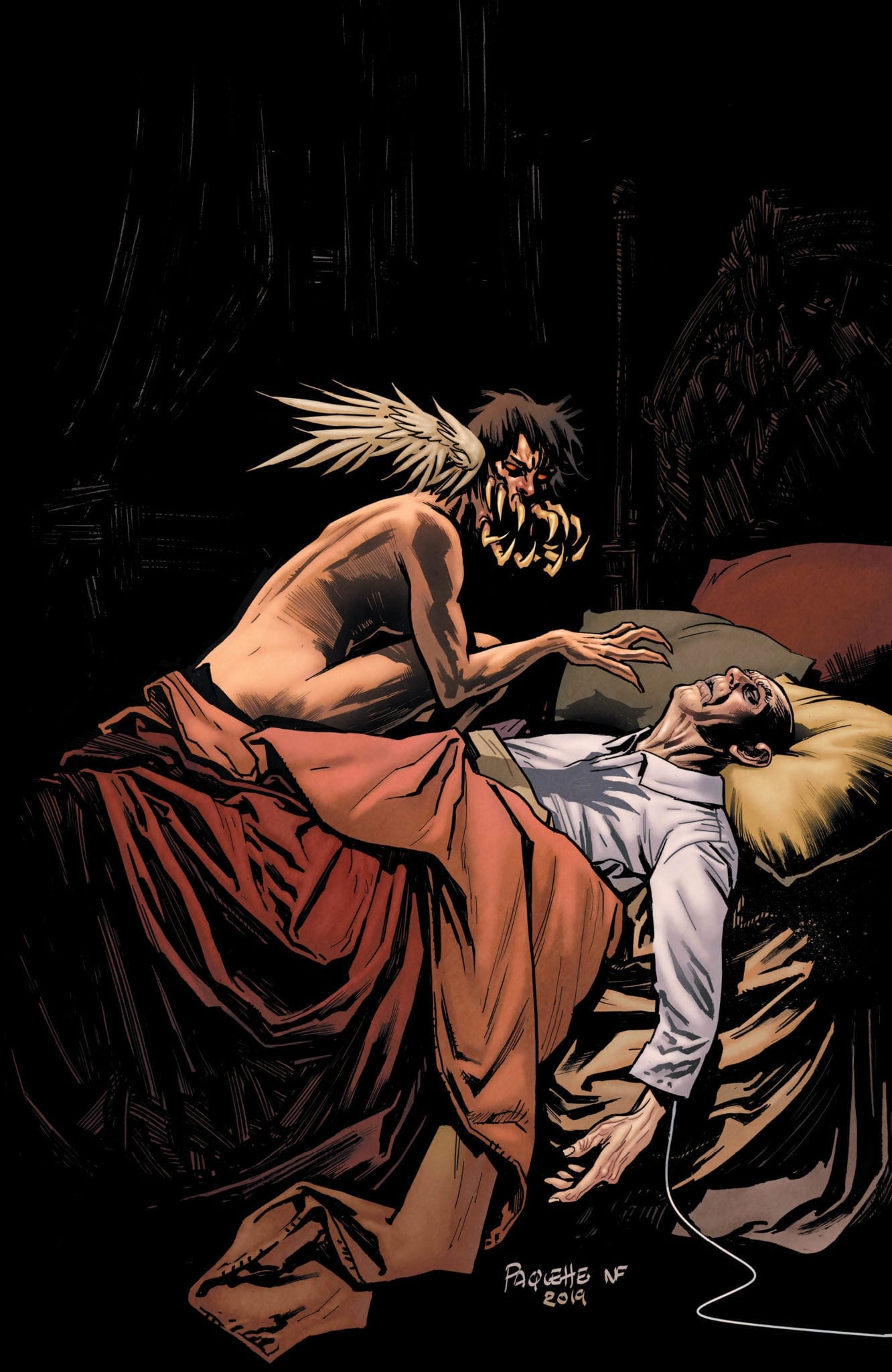
The Dreaming #16 hits your local comic book store on December 4th, but thanks to DC Comics, Monkeys Fighting Robots has an exclusive six-page preview for you.
About the issue: At last, Dora stands face-to-face with the man who tried to unmake her… but he’s not what she expected. As it turns out, he’s the architect behind everything that’s happening to the Dreaming-but the true shape of his plan has slipped far out of even his control!
The Dreaming #16 is by writer Si Spurrier and artist Marguerite Sauvage, with letters by Simon Bowland. The cover is by Yanick Paquette and Nathan Fairbairn.
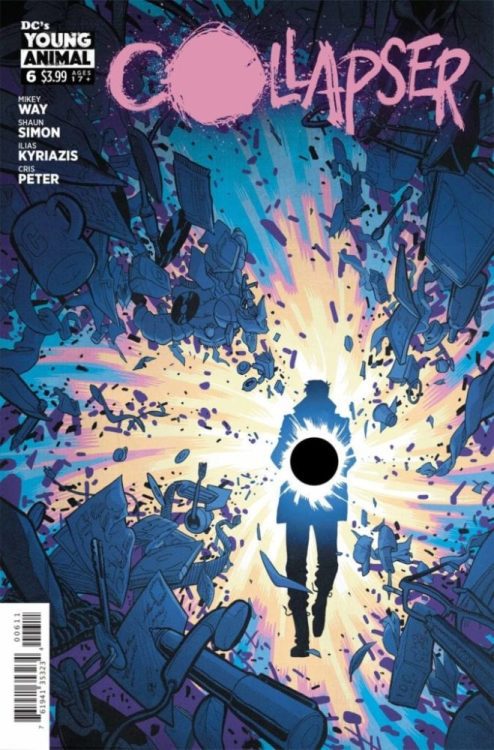
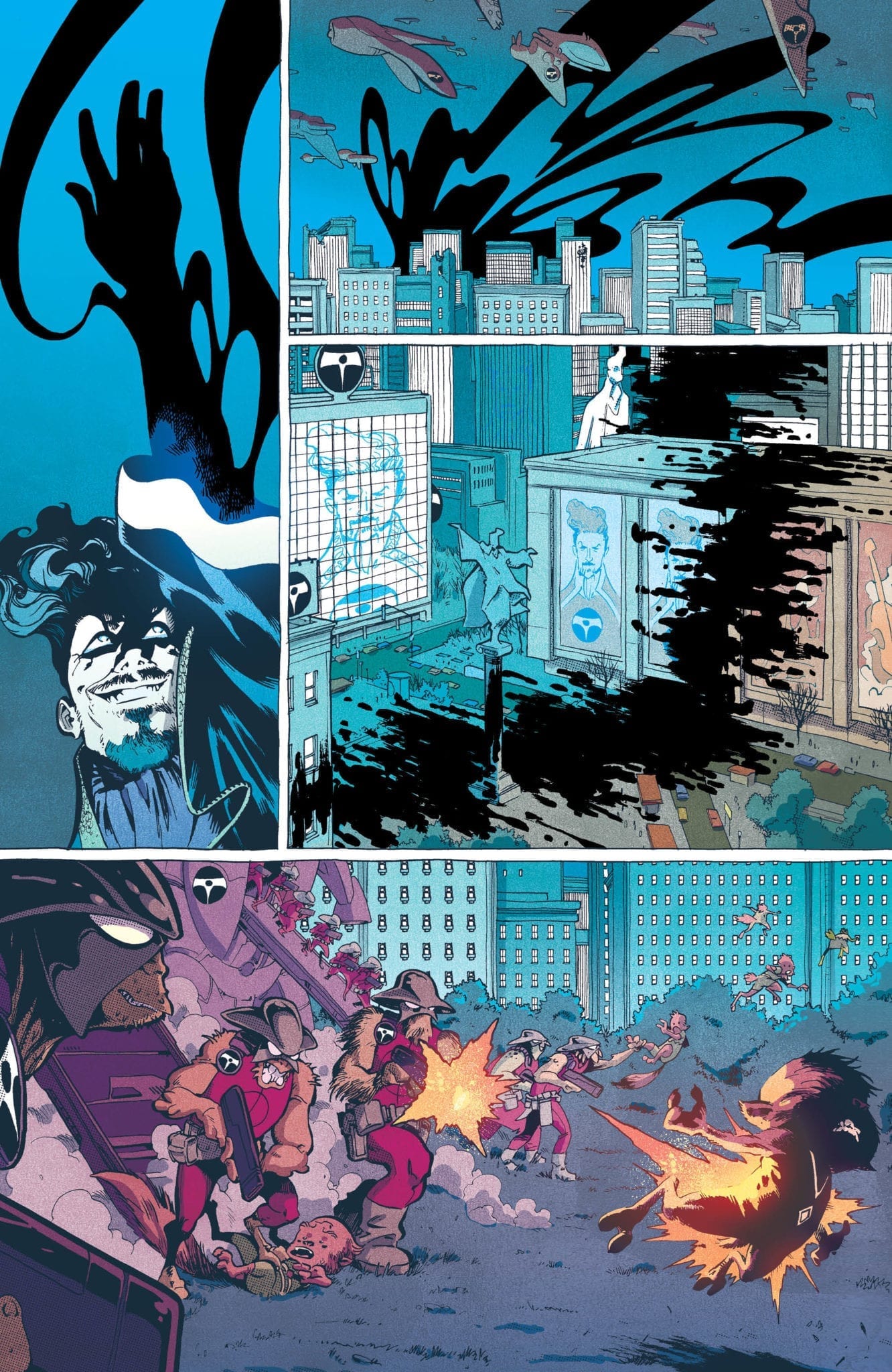
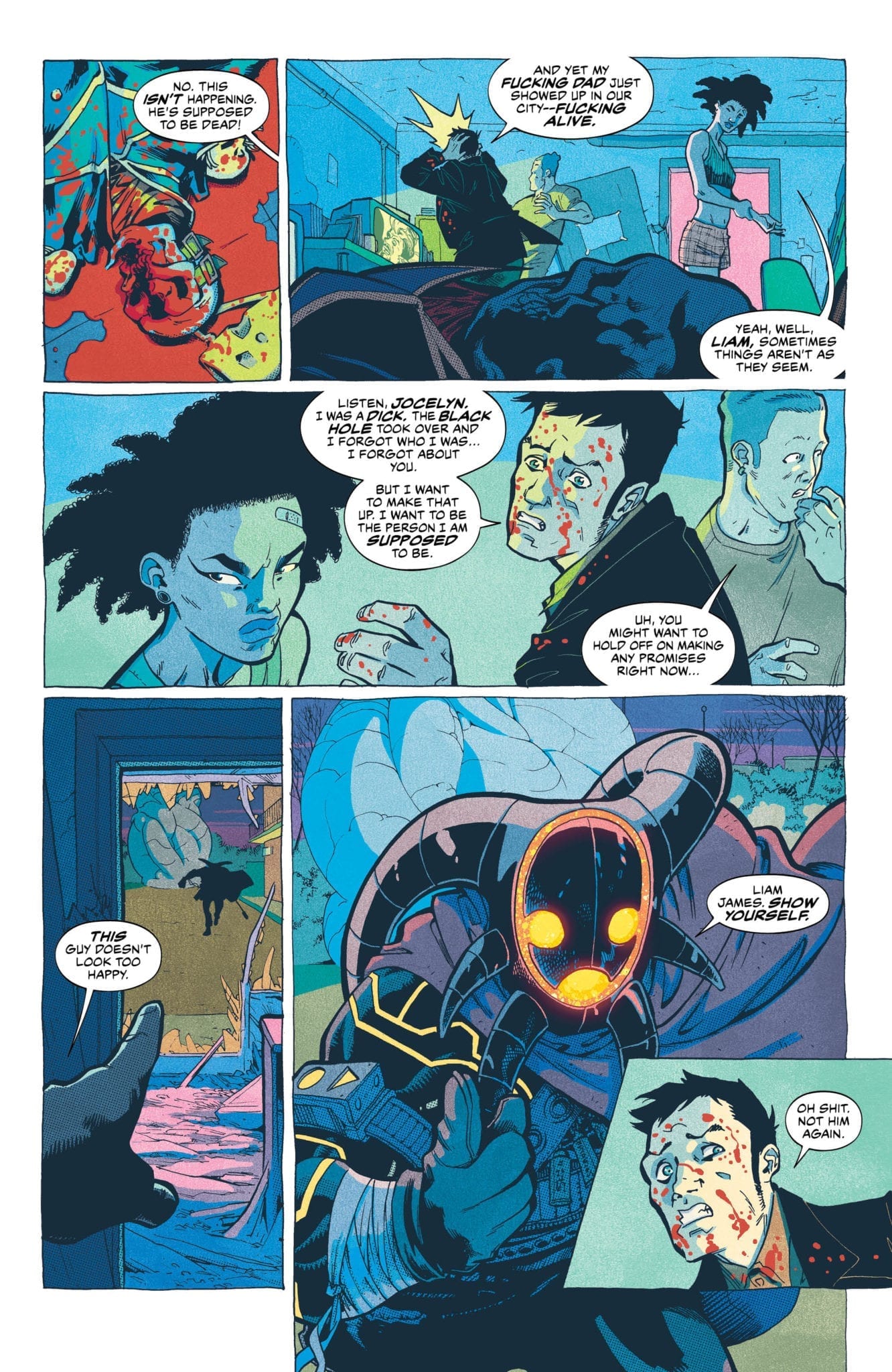
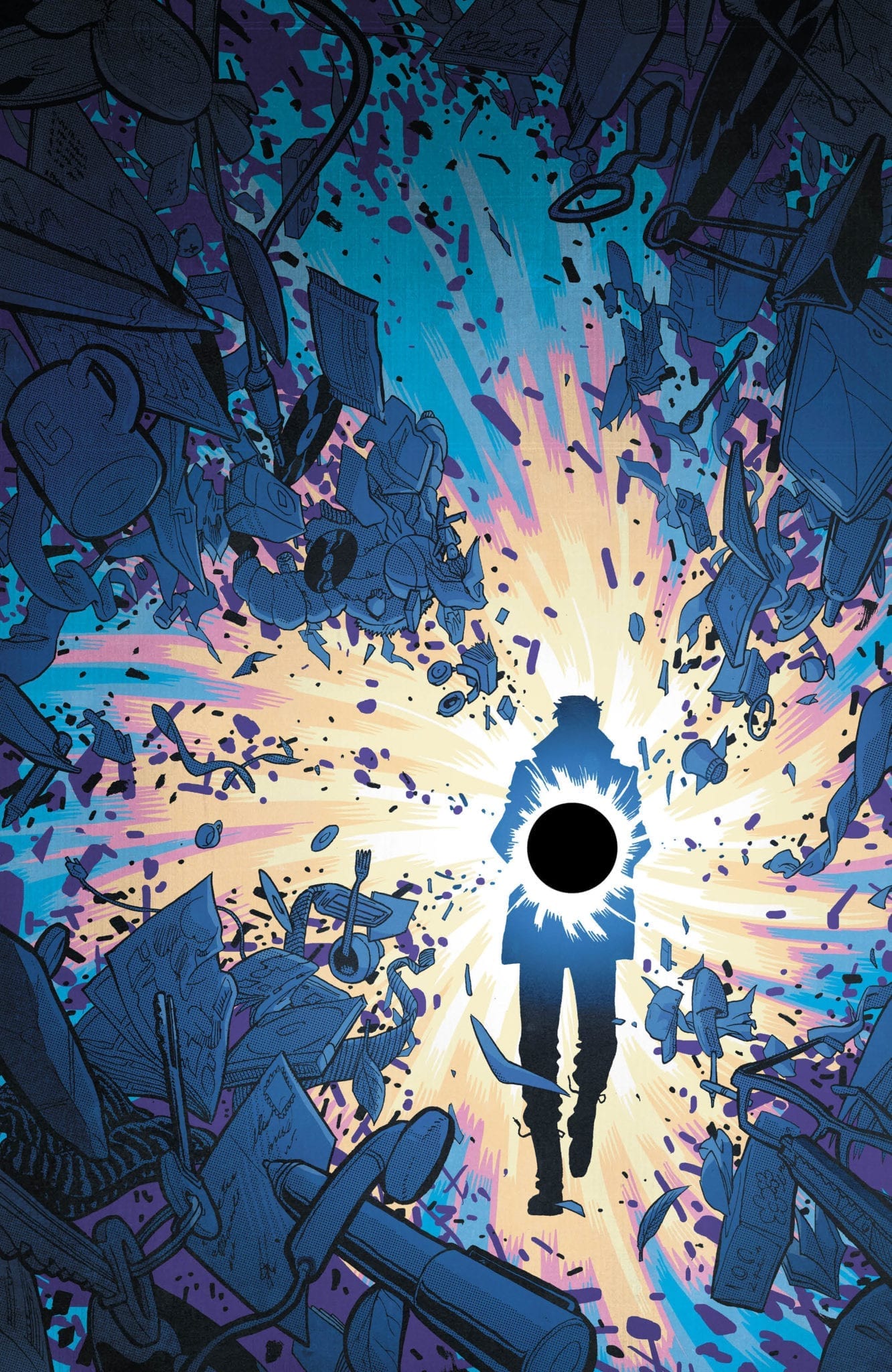
Collapser #6 hits your local comic book store on December 4th, but thanks to DC Comics, Monkeys Fighting Robots has an exclusive four-page preview for you.
About the issue: The final issue is here! With his supervillain father in possession of Liam’s black hole and reshaping the world into a fascist dystopia, the hero formerly known as Collapser must form a surprising alliance to save the world from his family’s terrible legacy-that is, if he doesn’t completely shut down in an implosion of panic first. Has Liam found the cure?
Collapser #6 is by writers Mikey Way and Shaun Simon and artist Ilias Kyriazis, with colors by Cris Peter, and letters by Simon Bowland. The cover is by Kyriazis.
This is the last issue of the Young Animal series.
Check out the Collapser #6 preview below:
Are you reading DC Comics’ Collapser? Sound off in the comments!
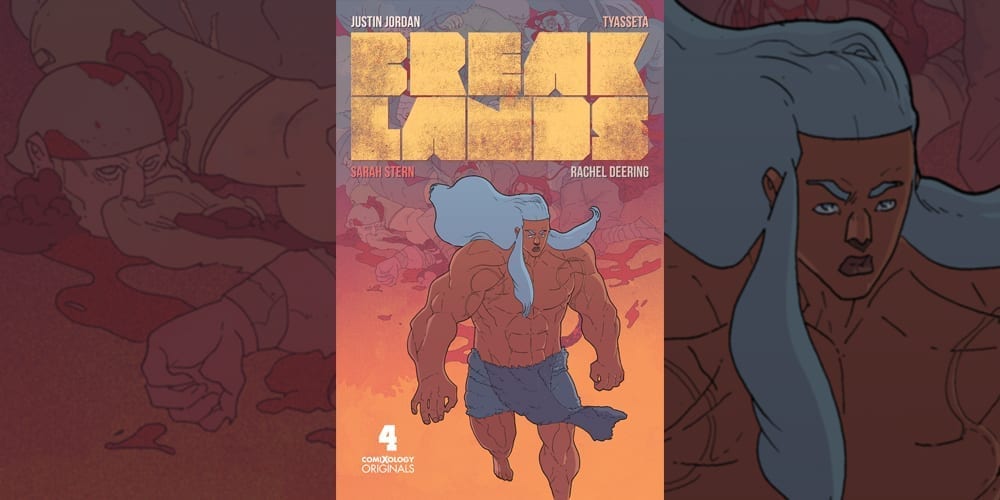
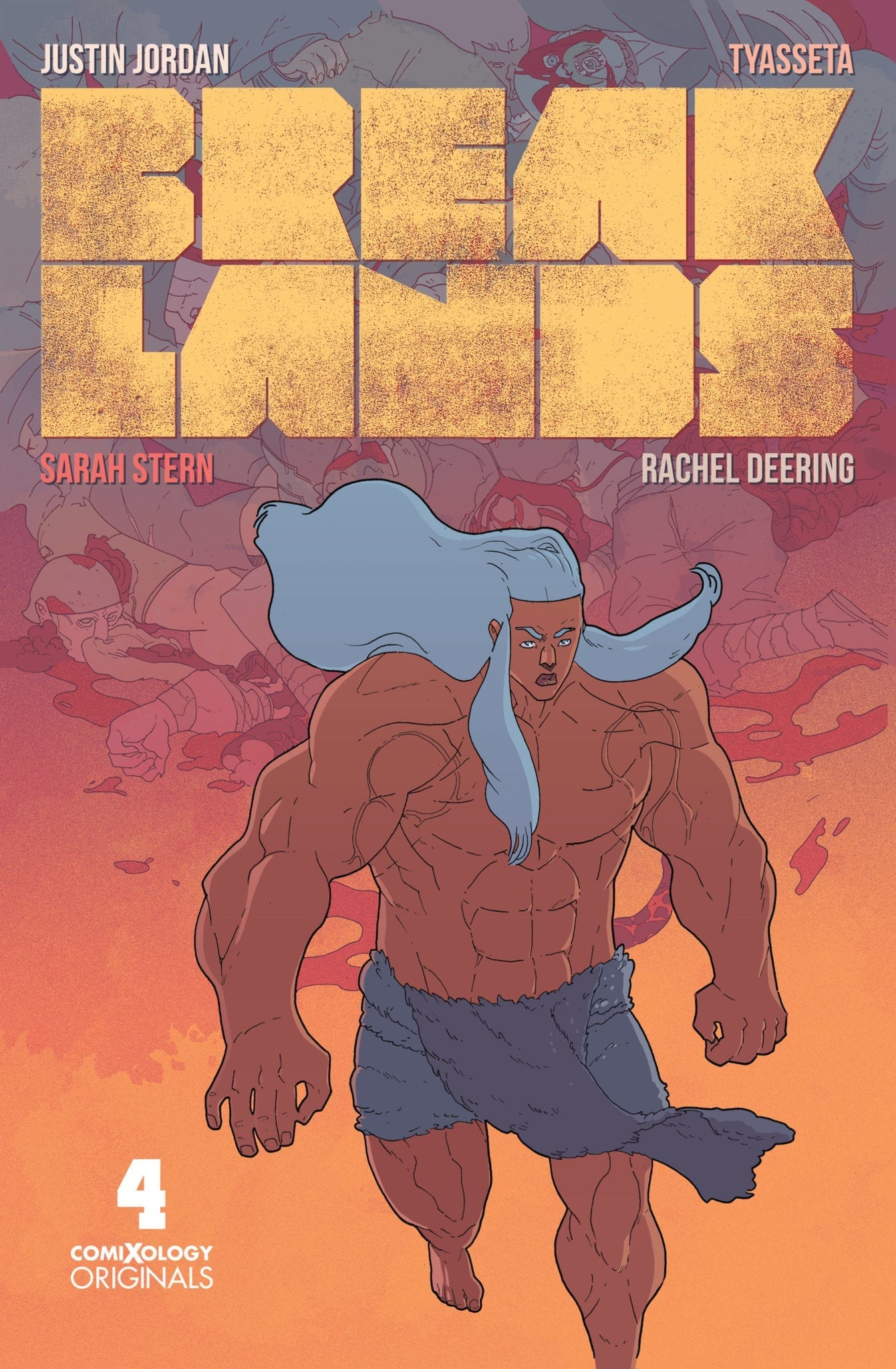
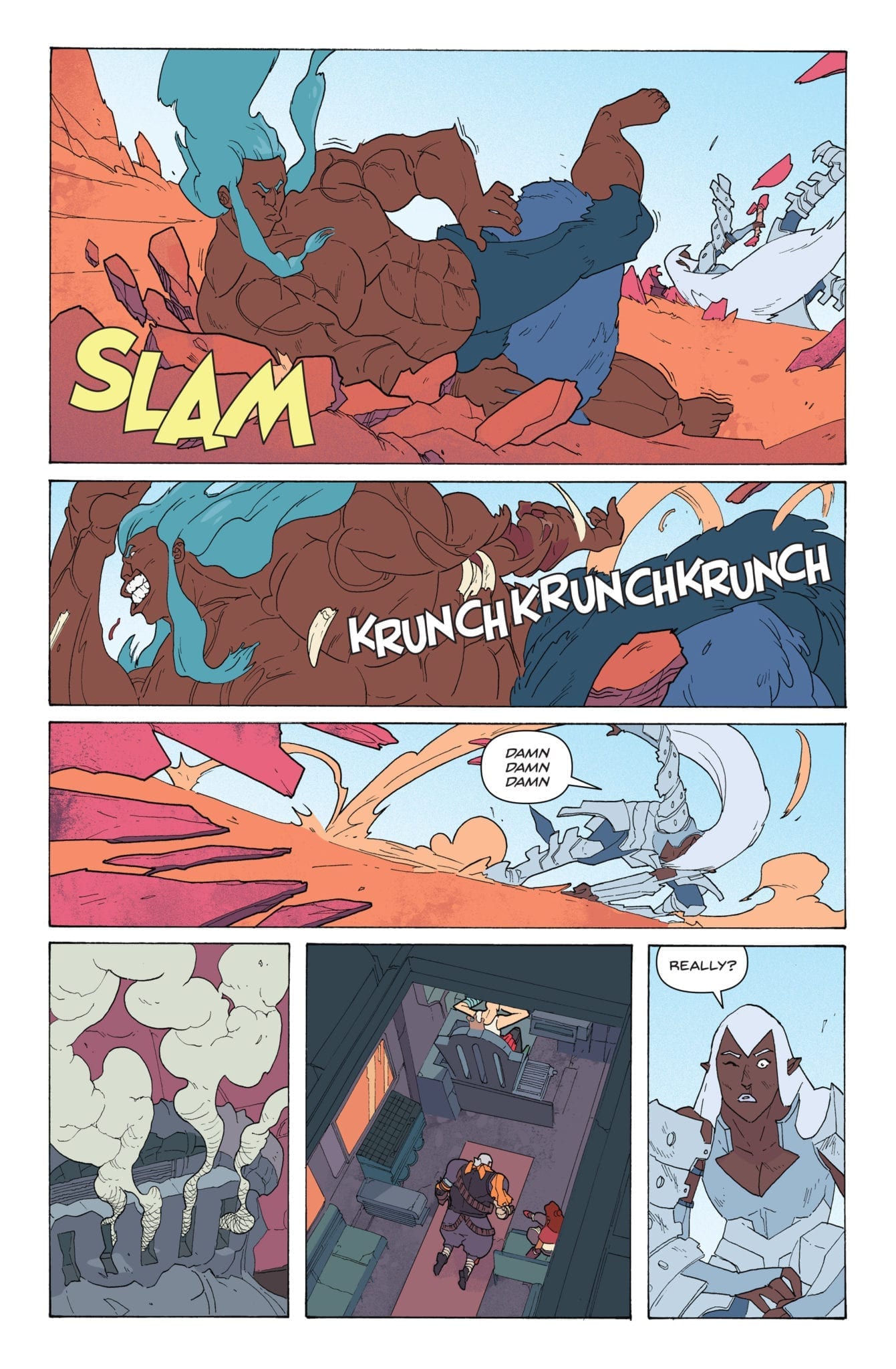
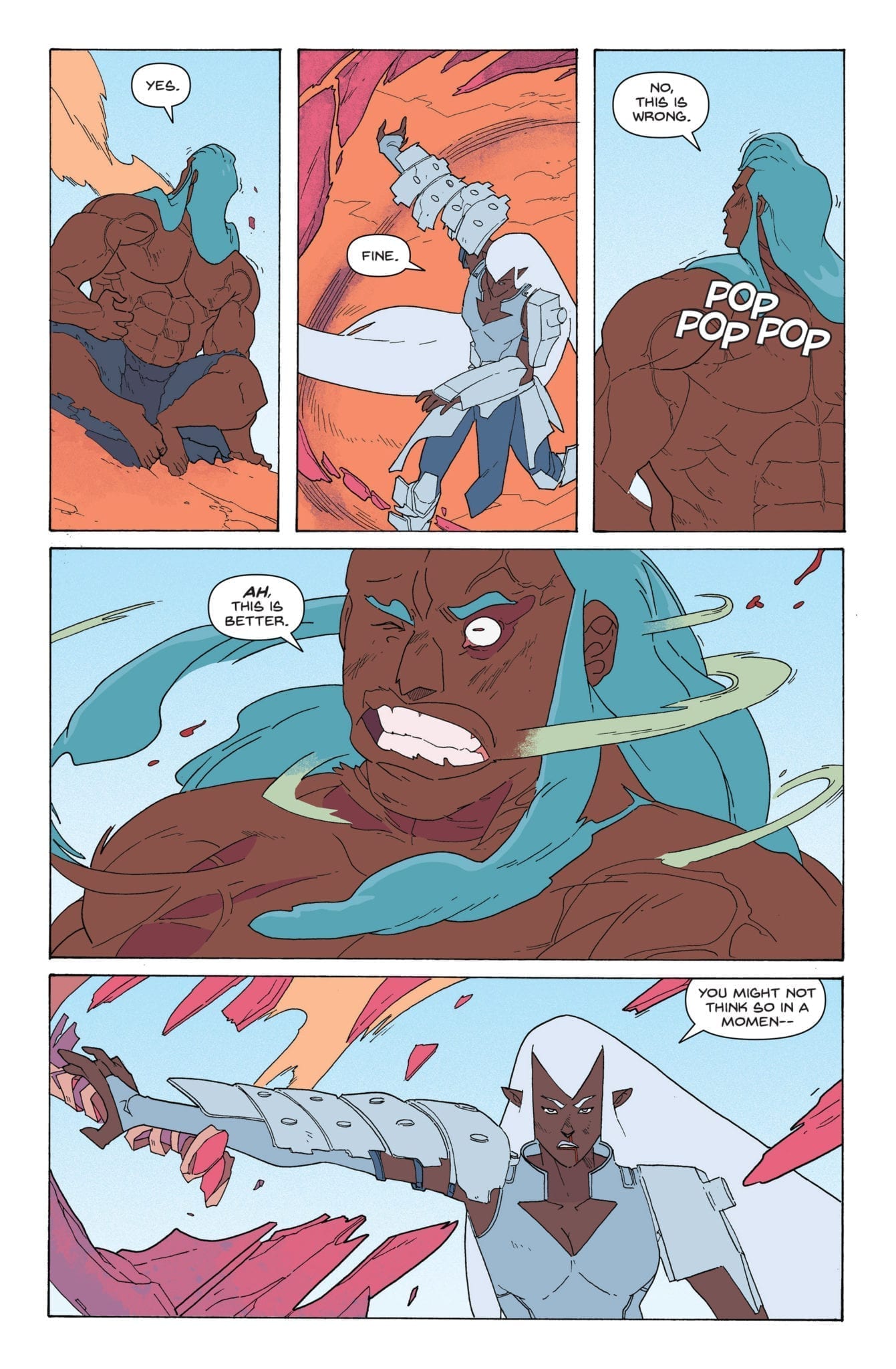
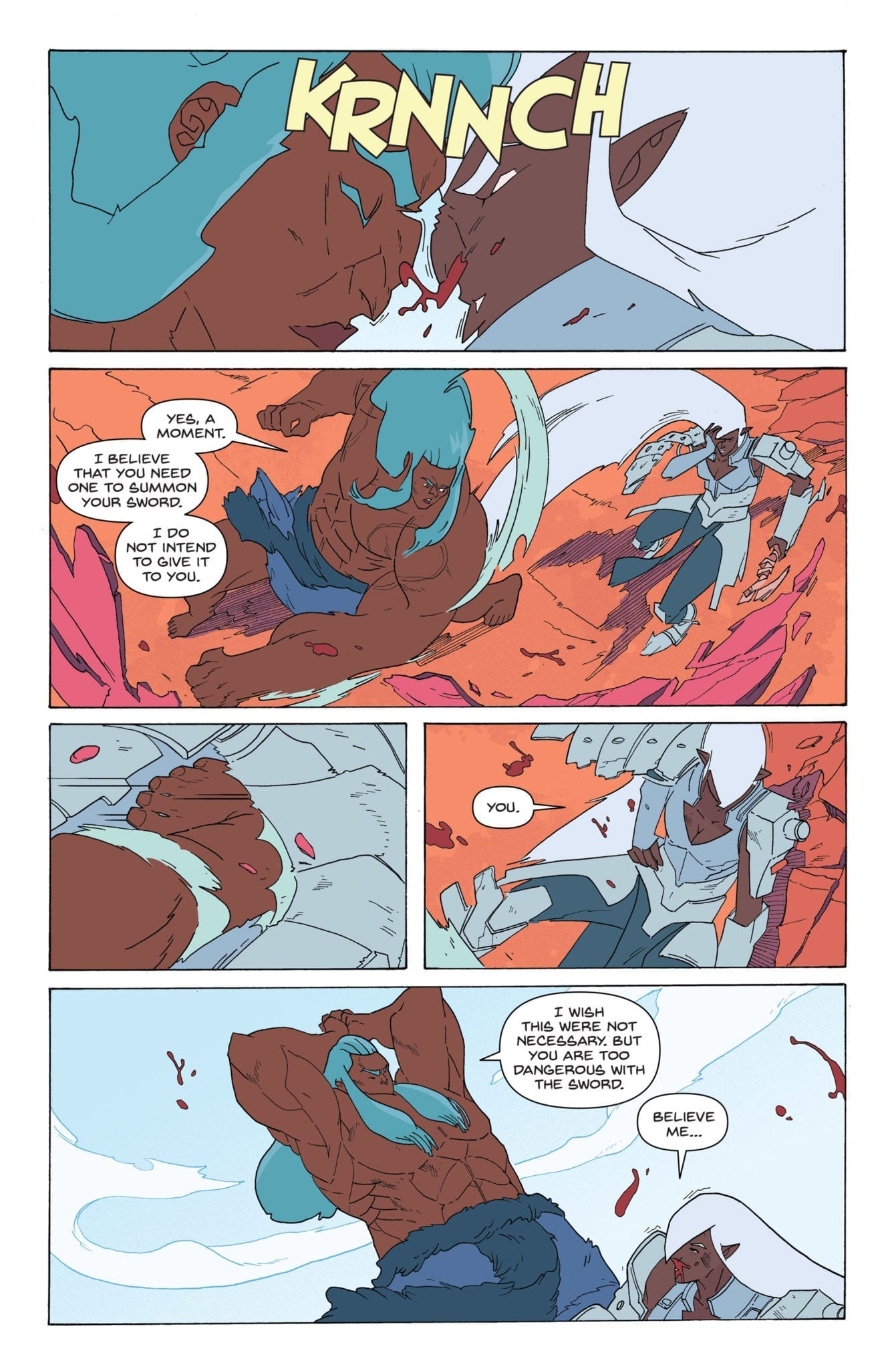
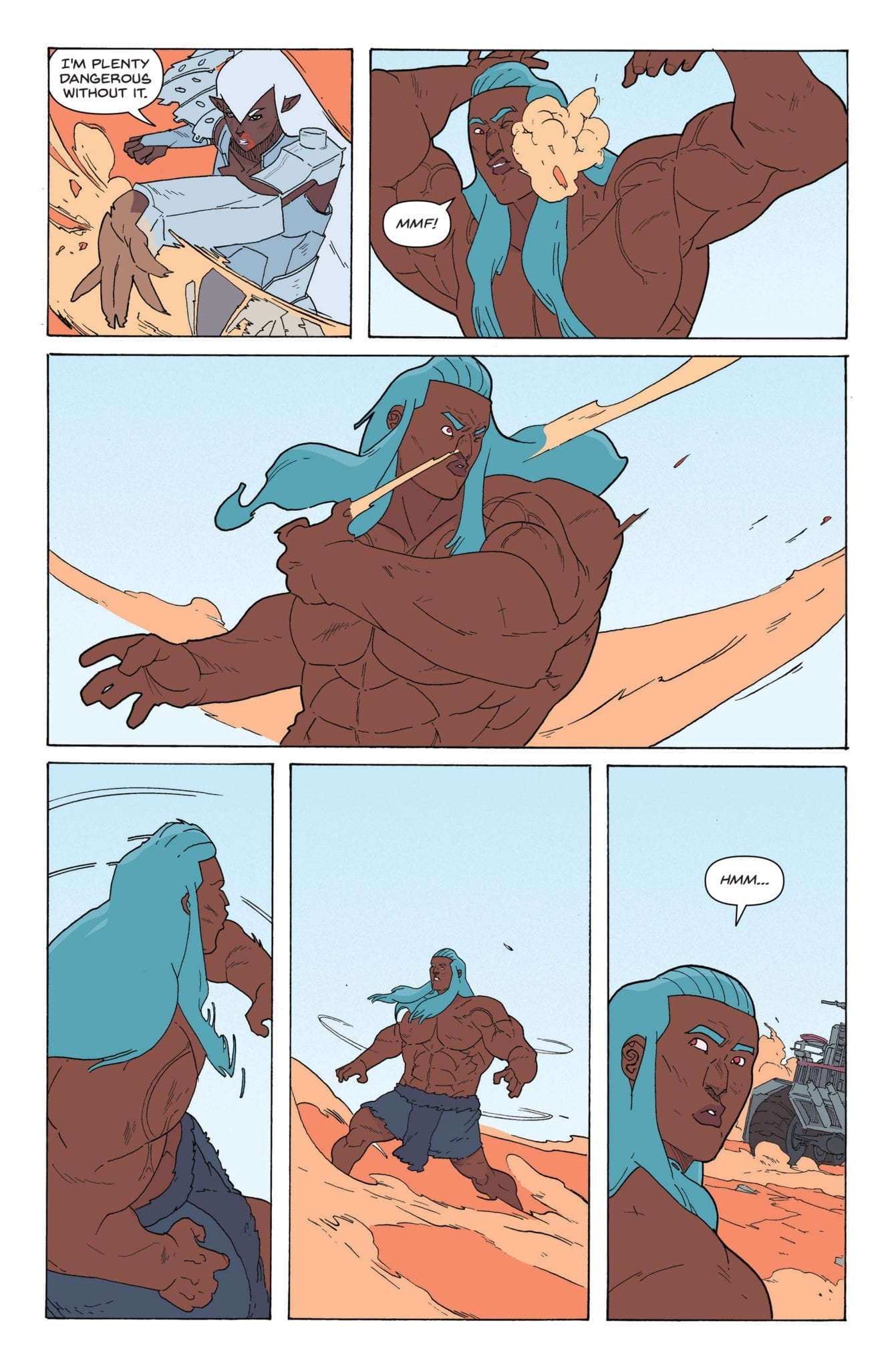
Breaklands #4 hits your local comic book store December 4th, but thanks to comiXology, Monkeys Fighting Robots has an exclusive five-page preview for you.
The series is billed as “Mad Max meets Akira.” In a future where history was reshaped by godlike psychics, Kasa Fain is the only girl in the world without a power of her own. When her brother is kidnapped, she’s going to need to use every thing she does have to get him back.
About BREAKLANDS Issue #4: In Tradertown, everything is legal except for violence. So how are Kasa and company going to get her brother back when they can’t even THINK about attacking the Rumblers to get him?
Breaklands is by writer Justin Jordan and artist Tyasseta, with colors by Sarah Stern and letters/production by Rachel Deering. The series was created by Jordan, Tyasseta, and Stern.
It’s part of the comiXology Originals line of exclusive digital content only available on comiXology and Kindle. These titles will be available as part of comiXology Unlimited, Kindle Unlimited and Prime Reading at release.
Check out the Breaklands #4 preview below:
What’s been your favorite comiXology Original so far? Sound off in the comments!
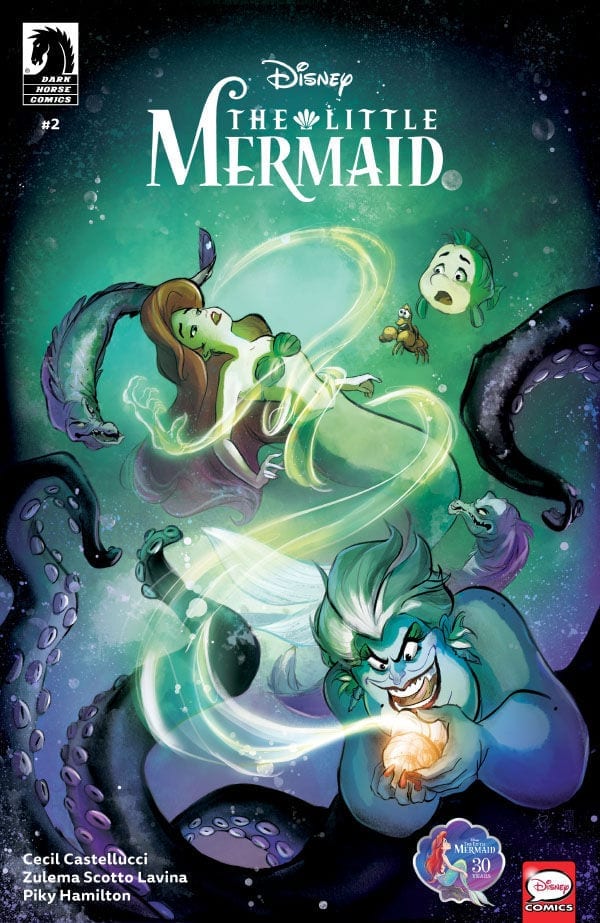
The second issue of Disney’s The Little Mermaid from Dark Horse Comics has some very impactful moments thanks to art by Zulema Scotto Lavina. Yet, does the story wafer too much and make it lose the momentum it achieved in the first issue?
Ariel’s trove of treasures is discovered by King Triton, and the memento of her forbidden love for a human, Prince Eric, is destroyed. Ariel is faced with the ultimate decision–will she sacrifice the essence of who she is to pursue the love she knows to be true?
Writing
This issue turns the adolescent angst up high. As ariel longs to be in the human world, classic internal conflicts associated with teenagers are present. Mentions of “the same old thing” and “no one understands me” pop up in this issue. The teen angst is so over the top, it almost makes Ariel seems incredibly naive and ignorant to just how evil Ursual is or how much danger she could be as Ariel enters the sea witch’s realm.
Speaking of which, the issue doesn’t take the time to properly address Ursula. She’s mentioned much like in the previous issue as being a “ghost story” being a myth. Instead, Ariel is simply dead set on getting legs. There is no mention from Ariel’s internal dialogue of “Ursula used to be the blank” or “She was known for so and so atrocities.” The movie established she used to live in Atlantica but King Triton banished her but this is just in a brief message. It seems like this would have been a perfect opportunity to use Ariel’s monologue to establish Urusla’s back story better. Still, writer Cecil Castellucci is making sure it’s more Arield’s story than anyone other characters.
Artwork
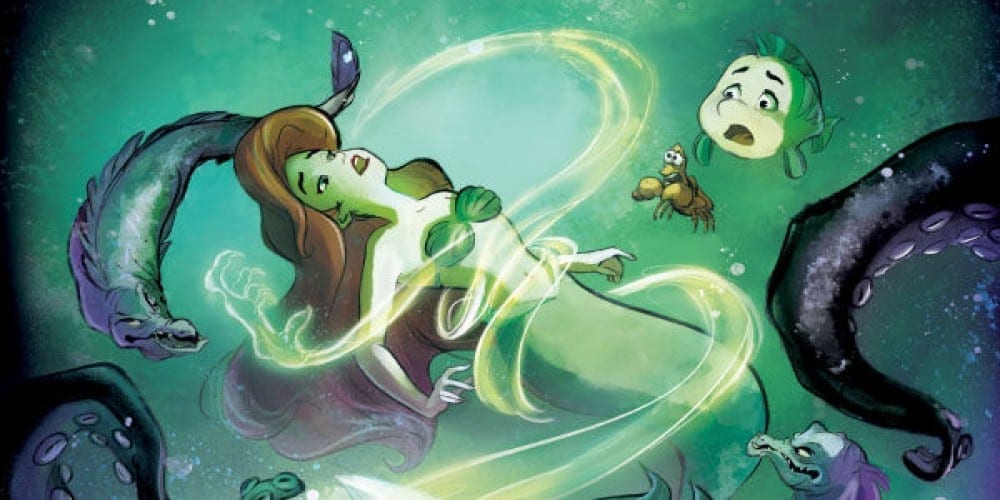
The artwork by Zulema Scotto Lavina it still at a high level of presentation. It is able to recreate scenes from the film in a striking manner. A special note needs to be given to how the scene where Ariel first immerges from the water after getting her legs was captured.
With Piky Hamilton on colors, the mystical elements of the story are the best part of the entire issue. Triton’s destruction of Ariel’s collection and Urusal’s spell to give Ariel her legs are very impactful thanks to colorwork. Thanks to the attention paid to the color, the issue truly feels magical.
The lettering by Richard Starkings and Comicraft’s Jimmy Betancourt maintains a great sense of storytelling thanks to Ariel’s monologue boxes. Also, little elements like adding musical notes around a dialogue bubble when someone is singing. It helps to show how many of the musical numbers from the film have been turned into speeches to Ariel instead of songs.
Conclusion
Disney’s The Little Mermaid #2 from Dark Horse Comics still continues to be a great series for young readers. It is a faithful adaptation of the original story and boasts fantastic art which faithfully captures moments of the original film. As long as this level of quality continues, this series will definitely be one for fans of comics and Disney priorities to pick up.