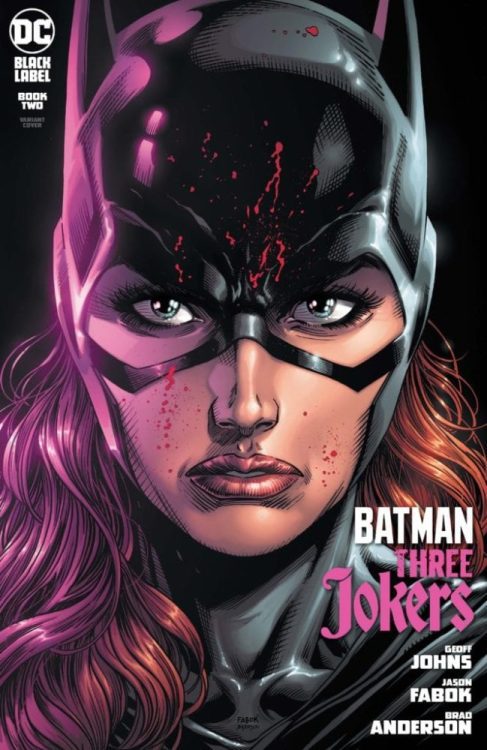
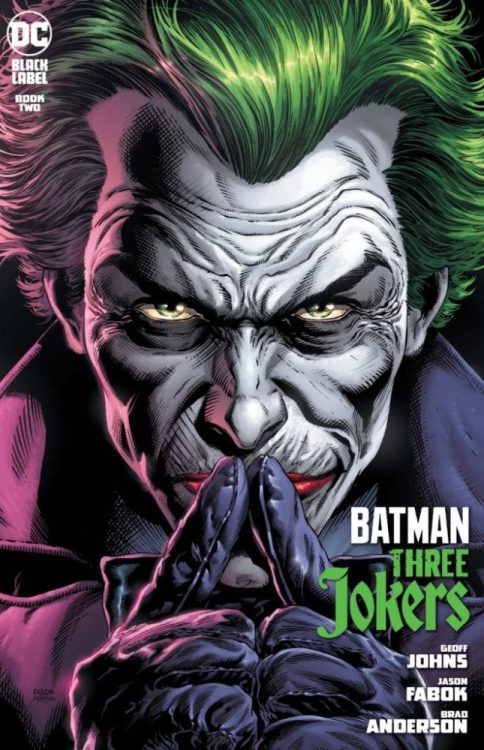
After a long wait and many teases, fans finally got their hands on Geoff Johns and Jason Fabok’s Batman: Three Jokers this week.
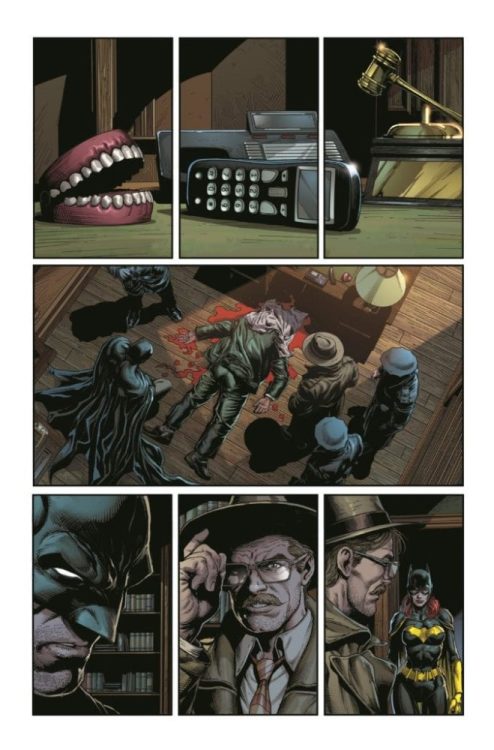
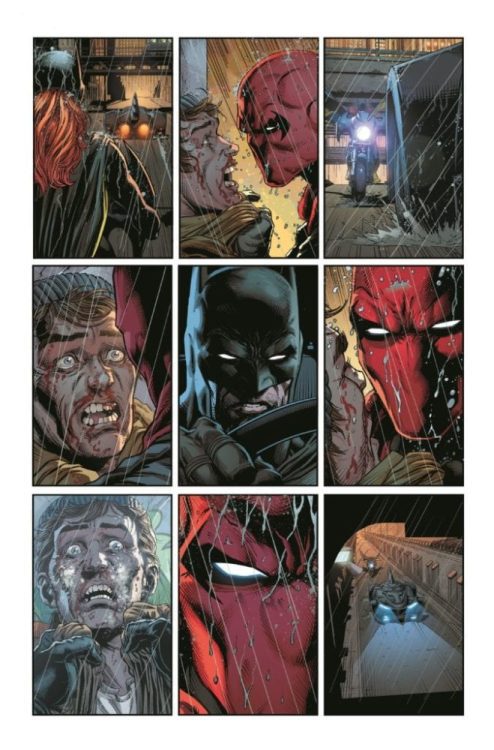
Now, DC Comics has a short preview for issue #2 ahead of its release next month:
If you’re like most fans, it’s probably taken you until now to catch your breath after reading the debut issue of Batman: Three Jokers! Geoff Johns, Jason Fabok and Brad Anderson have laid the groundwork for a Batman tale for the ages, and they’ve just gotten started!
DC has your first look at incredible artwork for issue #2, on sale Tuesday, September 29.
As Batman and Batgirl follow an unexpected thread linking the three Jokers with someone from the Dark Knight’s past, Red Hood dives headfirst into trouble and finds himself struggling to stay afloat without the aid of his allies.
Batman: Three Jokers continues its trajectory as the ultimate examination of The Joker and his never-ending conflict with Batman. Prepare yourselves for the second chapter of one of the most terrifying and personal mysteries Batman has ever faced!
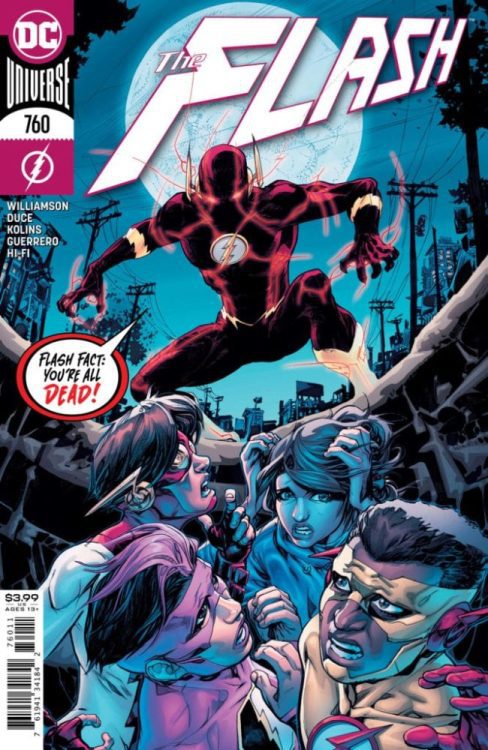
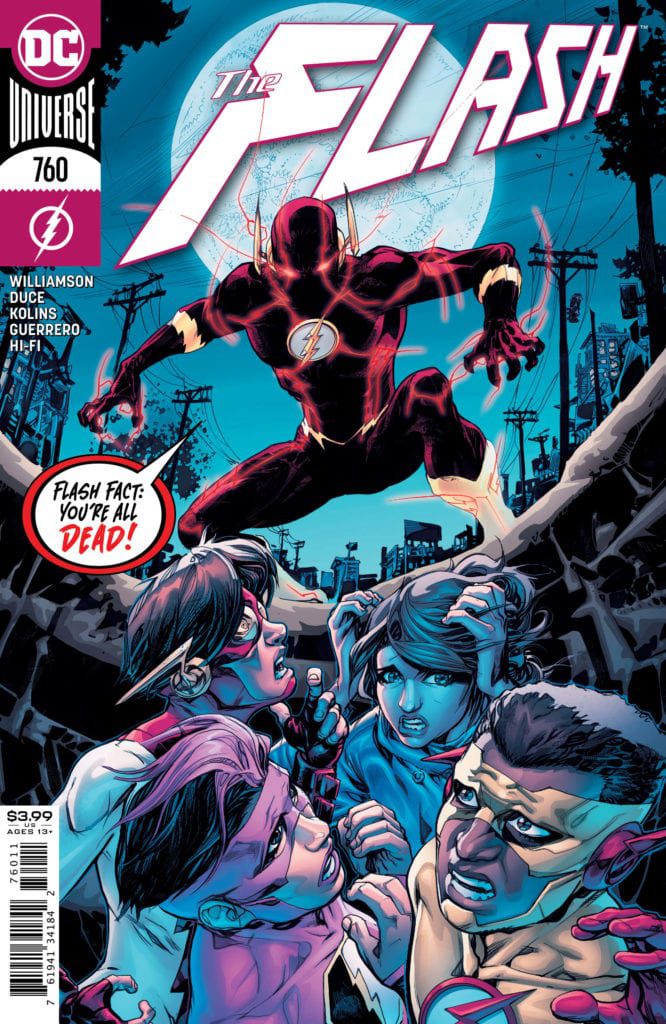
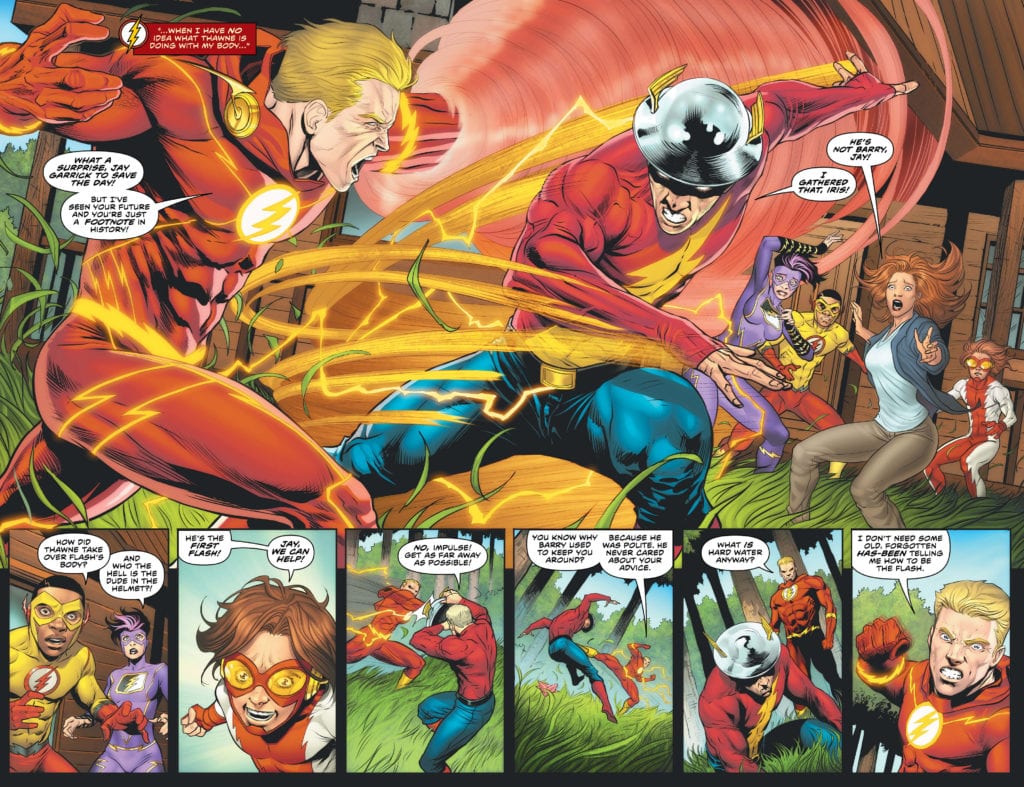
Barry Allen is no longer in control of his actions. Eobard Thawne has taken his body in an attempt to take the mantle of The Flash. Barry is stuck in the Speed Force with Jesse Quick and Max Mercury, which work with him on trying to retake his body. As Eobard works as the Scarlet Speedster, Bart Allen pieces the truth together and warns Kid Flash and Avery Ho. With the speedster of the future furious, he attempts to murder the three children. He is stopped, however, by the return of Jay Garrick, the Flash of the Golden Age. Will Barry get out before his body is used for evil?
**Some Spoilers Below**
Story:
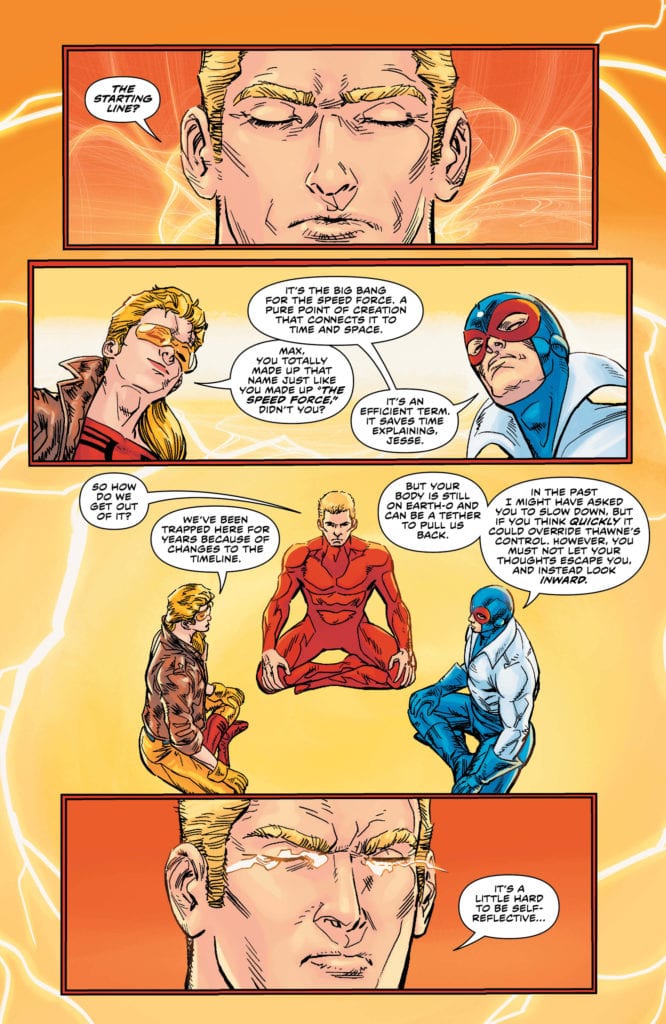
As Barry learns about the speed force from Max and Jesse, Jay holds the line against Thawne. The Flash of the Golden Age does his best, but Thawne ends up being too much. Before he can deliver the final blow, Barry tries vibrating free, causing Thawne to flee. Meanwhile, the Legion of Zoom continues on their crime spree of Central City. They head to the final target, only to learn that it’s Nora Allen’s Grave. Thawne arrives, explaining that if he wants to stay in The Flash’s body, he needs to absorb the chrono-energy from her corpse.
The story in this issue can be best described as all Flash, little substance. Pun aside, there are great moments during this story. Williamson appears to try and tie the old and new together as his story comes to a close. The return of the pre-New 52 speedsters uniting with the speedsters of Rebirth is a great way to end the run. Max and Jesse working alongside Barry from within the Speed Force, makes sense and is a great way to honor the past. Even the cameo of an old Flash villain brought a smile to my face. Each speedster gets a moment to shine, and it helps the book.
The problem with the issue is that while the returns are a significant impact for long time fans, for those who just hopped on during Rebirth, it’s not. It’s very cool to be sure, but there hasn’t been one reference to Max Mercury or Jesse Quick in the entirety of Williamson’s run. If there were more references to the past in other stories, this could have been so much better. As it stands, these last-minute reveals stop a good story from becoming great.
Art:
Christian Duce takes the place of Rafa Sandoval this time around and knocks it out of the park. As I’ve mentioned in his previous works, he excels in showing how the powers work. He adds details that some will miss on the first read-through, but if one were to look closer, provide realism. The best example would be the blurred lines on The Flash when Barry tries to take back over. It shows off the vibrational disharmony between the speedsters and could have easily been missed. Scott Kolins does excellent work in the Speed Force section as well, providing a great slower moment between an old enemy and Barry. Throw in the fantastic colorwork of Hi-Fi and Luis Guerrero, and we have ourselves one beautiful issue.
Conclusion:
Overall this issue was good but had the potential to be better. The return of the past speedsters may feel hollow, but there are some spots that hit the feels hard. The art team does a fantastic job of bringing the story to life. As we edge closer and closer to the end, the entire landscape has changed for the next creative team. This reviewer is personally excited to see what changes Williamson has left for us.
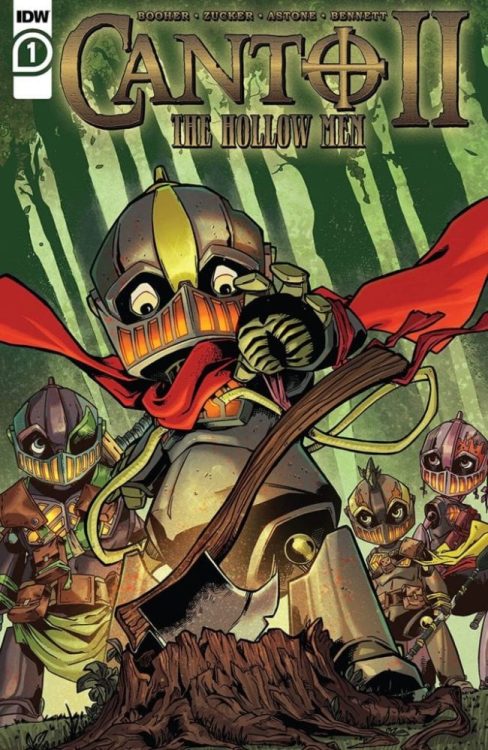
The first CANTOseries came out last year, introducing us to a heartwarming fable with adventure, magic, and love. It was a fairy tale as old as time, that a hero can come from the most unlikeliest of places.
The titular Canto now returns in a sequel series from IDW subtitled The Hollow Men by writer David M. Booher, artist Drew Zucker, colorist Vittorio Astone, and letterer Deron Bennett.
Story
Book 2 of all-ages fan favorite Canto begins! Once, a little tin slave with a clock for a heart broke all the rules—he found love, he was given a name, and he escaped his masters to go on an epic journey to save his love’s heart. He met strange allies and terrifying enemies and, ultimately, though his adventure didn’t turn out as planned, he returned to his people and led them to freedom.
That freedom is in jeopardy when Canto discovers his people’s clocks will stop unless they return to captivity. He and his friends Falco, Rikta, and Veratta embark on a new adventure to save the lives of all their people. Can they lift the curse before their time runs out?
Everything that made the first run of Canto so beloved is back in The Hollow Men. Booher, Zucker, and company continue to build upon this enchanting world. And while there were a few pages that could have been left on the cutting room floor so we could get to the setup of this sequel series quicker, it by no means takes away from the quality of story.
As expansive as this realm is, it wouldn’t be as compelling if it were not for the short and stout Canto. No great fantasy story would be what it is without its hero. Frodo Baggins. Willow Ufgood. Canto deserves to have a rightful place among those characters. He’s a hero we need during these trying times. He’s innocent and endearing through and through. No matter his stature or status, he braves the harsh landscape to fulfill his quest.
Art
Zucker brings a robust and whimsical quality to the artwork. It really shows in the character designs of Canto and his fellow metal people. They all have a signature size and accoutrement that help them stand out for the reader. Their big eyes are filled with such life and expression. Zucker has also developed a landscape that is wholly unique. The detail of the world drawn behind the characters is created with just as much soul as Canto and his fellowship.
Astone’s colors have a worn, ancient quality to them. It’s as if the book had been created centuries ago, and time has muted and yellowed the colors. It brings this old-world quality to the first issue of The Hollow Men, making you feel as if you are reading an antique fable. Bennett’s letters add to that vintage storybook vibe. What stands out in his work are the caption boxes, which look like their text was meticulously scribbled down via ink and quill onto papyrus scrolls.
Conclusion
If you enjoyed the first Canto series, you will appreciate The Hollow Men without a doubt. It’s a fantasy comic book filled with so much heart. Anyone of any age can (and should) pick up this book.
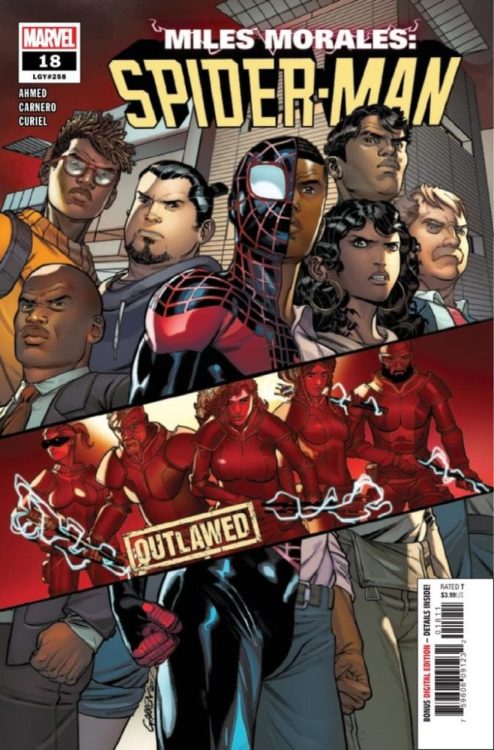
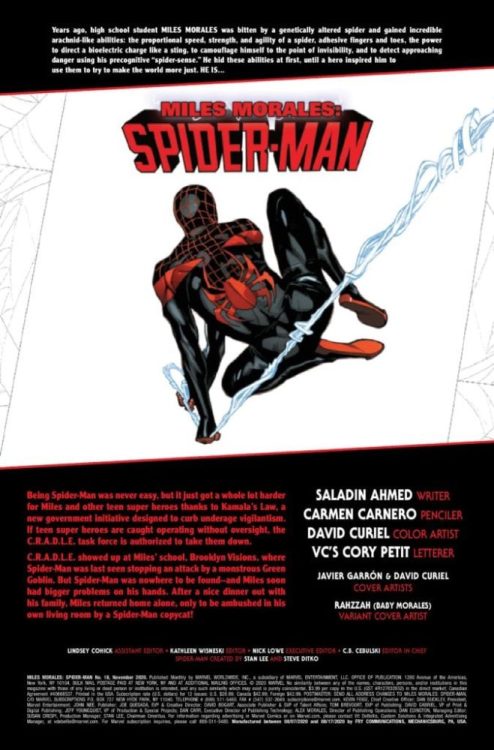
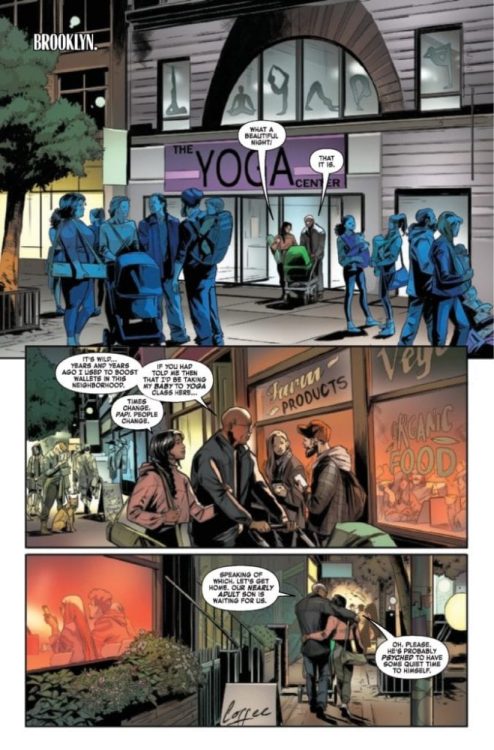
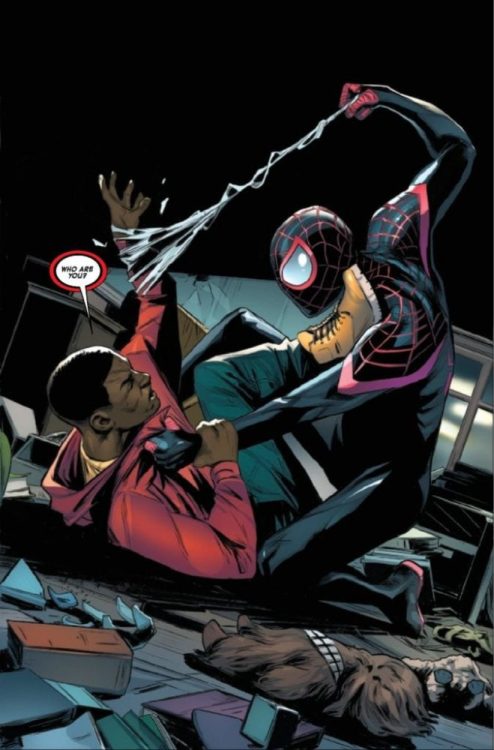
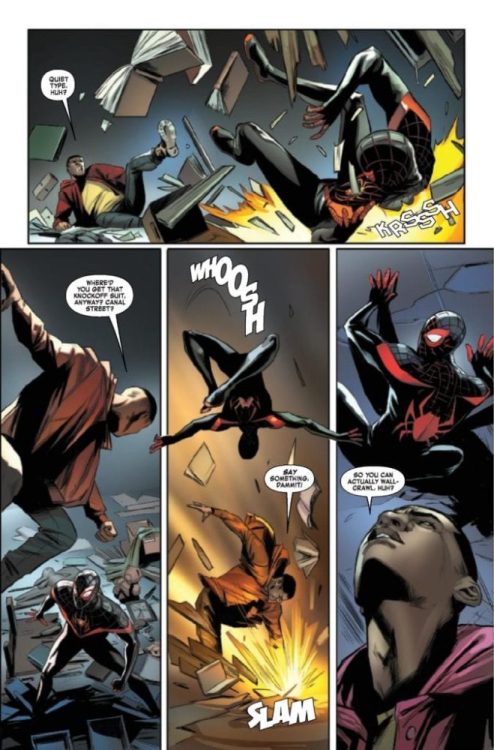
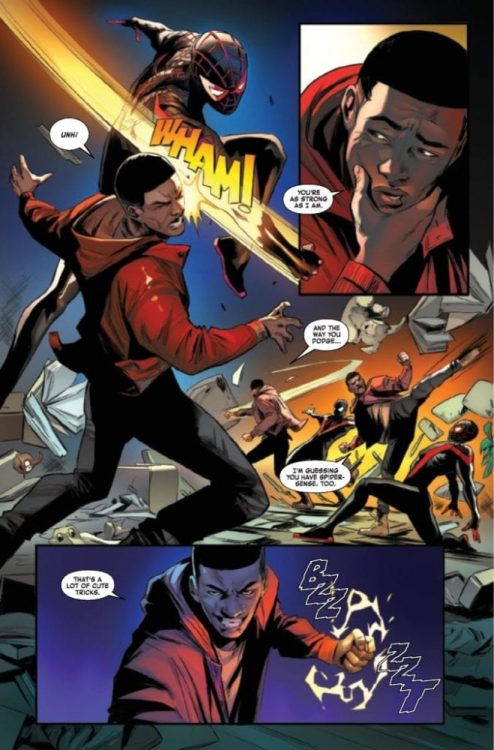
MILES MORALES: SPIDER-MAN #18 hits your local comic book shop on September 2, but thanks to Marvel Comics, Monkeys Fighting Robots has an exclusive four-page preview for our readers.
About the issue: Ganke. Barbara. Judge. Lana. Mr. Sumida. Rio. Jeff. Miles knows he has to help people as Spider-Man, so he’s ready to live as an outlaw. But is he ready to do it without the support of someone he loves? Who’s with Miles, who’s against him, and who’s side are YOU on?
MILES MORALES: SPIDER-MAN #18 is written by Saladin Ahmed, with art by Carmen Nunez Carnero, David Curiel drops the color, and you will read Cory Petit’s letter work. Javi Garron and Curiel worked on the cover, and Rahzzah (Baby Morales) handled the variant cover.
Check out the preview below:
Are you reading MILES MORALES: SPIDER-MAN, who do you think the new Spider-Man is? Comment below with your thoughts.
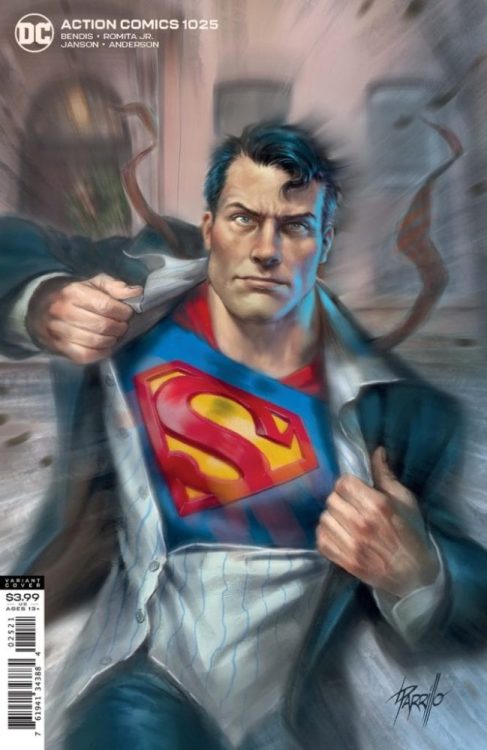
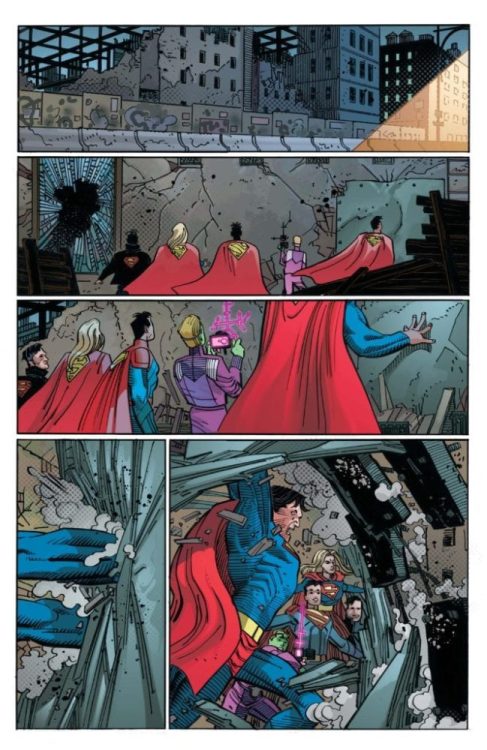
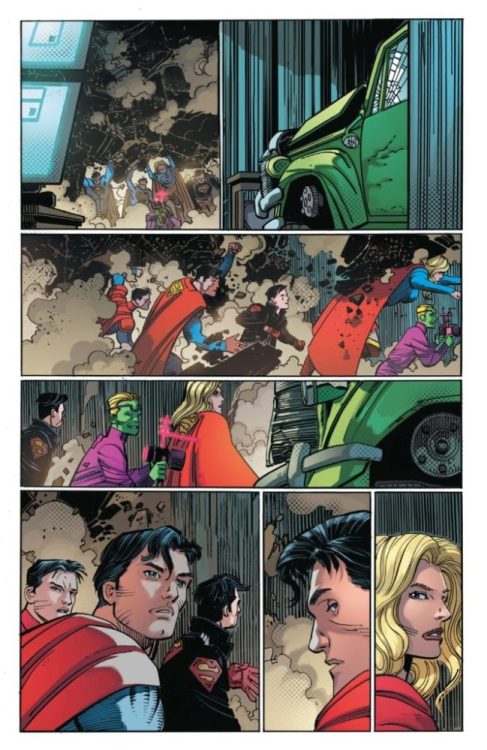
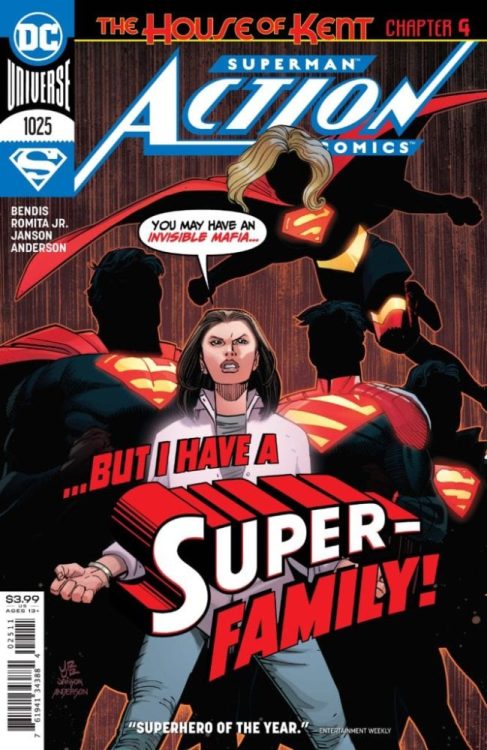
The “House Of Kent” storyline in Action Comics is about to get a lot more super — literally, with the whole Super-Family called into battle against the Invisible Mafia.
ACTION COMICS #1025: “House of Kent,�� Chapter Four!
On September 22, Lois Lane calls the bluff of the Invisible Mafia and raises them an entire Super-Family as the fourth chapter of “House of Kent” continues in Action Comics #1025.
Here’s your first look at art from comic book legends John Romita Jr. and Klaus Janson, as well as covers by Romita Jr./Janson and Lucio Parillo!
ACTION COMICS #1025
Written by BRIAN MICHAEL BENDIS
Art and cover by JOHN ROMITA JR. and KLAUS JANSON
Variant cover by LUCIO PARRILLO
On Sale 09/22/20
$3.99 US | 32 PAGES | FC | DC
Welcome to the House of Kent! Superman’s truth is out there—and now it’s time to rewrite the rules! The Invisible Mafia has taken advantage of the chaos that’s descended on Metropolis, and the House of Kent is going to talk to them in a language they’ll understand. It’s a new adventure featuring Superman like you’ve never seen him—or them—before, in a story guest starring Supergirl and two—yes, two!—Superboys!
There are several movies where you will find yourself forcing your brain off for the narrative to make complete sense and Unhinged is the most recent film to join that club. A film with no real point to it other than being a 90-minute reminder that road rage could possibly get you in trouble. Following almost every cliche there is, Unhinged manages to still be a solid, but over the top thrill-ride that features Russell Crowe giving an unfortunate woman her worst day ever.
During the opening credits, it becomes apparent that the movie understands it doesn’t have much going for it. Set in a world where road rage is running wild, Unhinged follows Rachel Hunter on a day she will never forget. After a minor road rage incident, Rachel is stalked by an unstable driver who wants to show her what a bad day looks like. Written by Carl Ellsworth and directed by Derrick Borte, Unhinged stars Russell Crowe, Caren Pistorius, Gabriel Bateman, Jimmi Simpson, and Austin McKenzie.
Caren Pistorius and Gabriel Bateman as Rachel and Kyle Hunter in Unhinged
As mentioned above, the film relies heavily on plot conveniences and requires you to shut your brain off for most of this script to make sense. Typical dumb character decisions are in abundance and while the acting from everyone involved is adequate, there is no overlooking this nonsense in between. Russell Crowe stars as Tom Cooper, an unstable man that could care less what happens to him because the film makes it clear that he has nothing left to lose. Convinced his life is the worst, he is the poster child for misery loves company in this film. Rachel, the protagonist starts off at a low point in life and she never really develops beyond that because she’s still at the low point when the film ends. The only difference is now she knows to second guess honking her horn at strangers.
The premise is average but that doesn’t stop the film from becoming intense and over the top. Crowe has a blast in this role and eats up every scene from the opening credits to the final shot. He definitely is the standout and makes Unhinged more entertaining than it should have been. Pistorius plays the lead mother well and Bateman gives a solid performance as her son, Kyle Hunter. Fans of the Child’s Play remake will recognize him as the new Andy, but he is far better in this film. Performances aside, all of the characters are generic and underdeveloped so their fates are unimportant. Rachel makes so many irrational decisions that you find yourself not wanting to root for her but against her.
Russell Crowe as Tom Cooper in Unhinged
While this is a plausible scenario that can occur, the script involving the scenario just has too many errors. However, the film plays out just fine once your brain is removed. There are great action sequences throughout and Borte builds upon the tension with each scene as Crowe’s character becomes more deranged. The film’s score by David Buckley is a great addition to the tension Borte establishes and Unhinged never has a dull moment because once Rachel meets Tom the film rushes through to the finish line.
Unhinged is a fun thriller to pass the time with solid performances and great stunt work, but it’s really the script that holds the film back. Crowe and Pistorious clearly had fun while making this and it’s a shame their characters weren’t developed further. Overall, this is a very flawed film that’s anchored mostly by great acting and adequate tension building.
The Mirror Universe, Star Trek’s parallel dimension, is as much as a part of the geek zeitgeist as the series itself. Over the years each series has ventured into the alternative universe which first appeared in The Original Series episodeMirror, Mirror in 1967. The concept of an ‘evil’ dimension where the regular cast have become compromised by disturbing philosophies is a popular narrative featured in a number of different T.V. Shows. Series such as Doctor Who and Buffy The Vampire Slayer have both used the trope and the comedy show Community made it an ongoing part of their second and third seasons.
In Star Trek, the Mirror Universe has touched almost every aspect of the franchise. The first series of Star Trek: Discovery used crossing over a major part of the plot, and a number of comic writers and artists have also played in the sandbox of black leather and goatee beards.
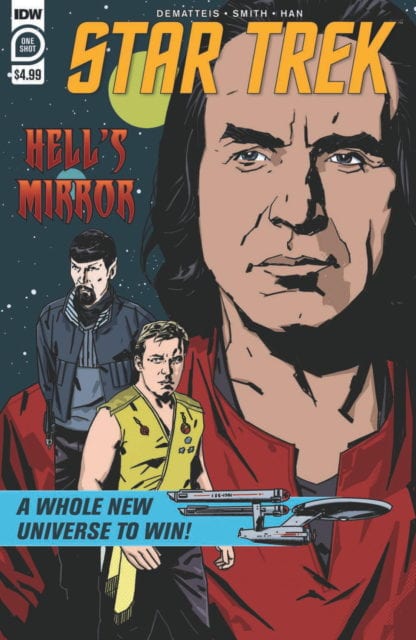
The latest one shot from IDW Publishing, Star Trek Hell’s Mirror, features the regular cast of the original series as seen in the first crossover story. It also includes possibly one of the franchise’s most popular villains: Khan Noonien Singh.
Star Trek Hell’s Mirror Credit: IDW Publishing
Crossing Over
J.M. DeMatteis will be a recognisable name to comic book readers. He has an impressive history writing for Marvel and DC as well as a slate of comics for smaller publishers. He also wrote the final issue of Marvel’s original Star Trek comic, published in 1982, so his return to the franchise is an exciting one.
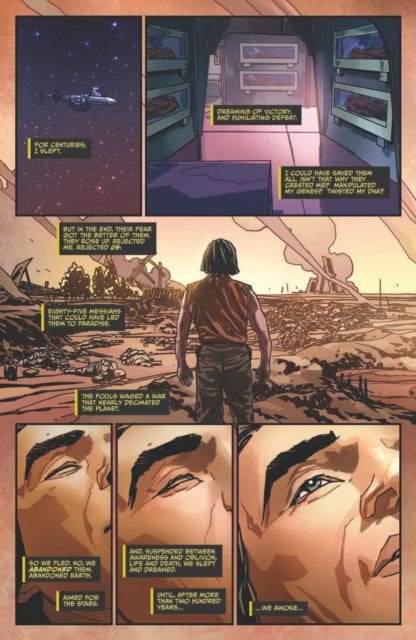
The story is simple: DeMatteis reintroduces Khan to the reader through an opening monologue, although some prior knowledge of the character and the Mirror Universe at large is required. Going into this blind will leave you stumbling in the dark for a while, trying to reconcile the characters with what you already know about them. Having said that, the chances that this comic is picked up by anyone who isn’t already closely familiar with Star Trek history is very slim.
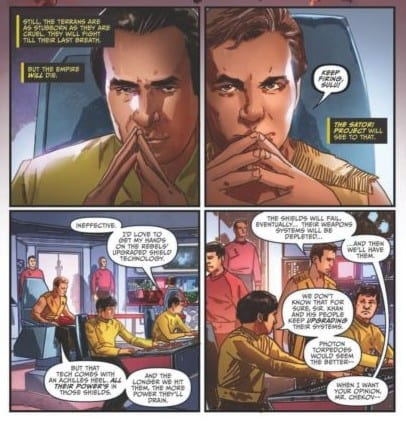
After the reintroduction, Khan’s journey takes him across the Terran Empire, inciting rebellion and behaving as you might expect, except there is a twist. In this universe Khan is the hero, a seeker of peace and freedom for all. DeMatteis tells the story from Khan’s point of view allowing the reader to get close to the character, with the regular Star Trek cast playing second fiddle.
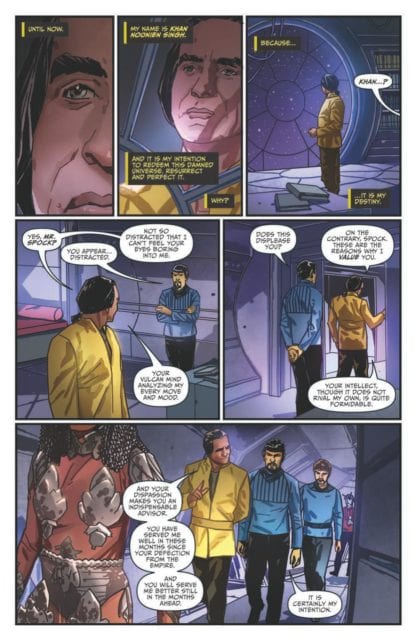
DeMatteis picks out elements of the original Mirror, Mirror episode and the second Star Trek movie, recreating them in the story with a subtle twist. This roots the narrative in a world the reader will recognise but also highlights the difference between the Federation and the Terran Empire. It is clear from the narration by Khan and the actions on the page that this is a universe fuelled by hatred and anger.
Star Trek Hell’s Mirror Credit: IDW Publishing
Mirror Image
Artist, Matthew Dow Smith, renders the characters with thin, black lines, focusing on outlines while the detail is filled in by colorist Candice Han. This is a very effective style for the comic and adds depth to the page. The shading allows for a realistic image and brings out the emotion of the characters.
Han’s coloring also makes the characters easy to follow on the page. Each of the main cast has a slightly different uniform with a varying degree of brightness. This is important because some of the panels are laden with speech balloons covering up so much of the image. This is not a fault of the lettering by Neil Uyetake but a problem with an over-written script. The text on the page needed to be edited or the panel layouts should have been altered. On a number of pages, the text heavy script is not a problem, the opening of the comic is testament to this, but other pages are weighed down by exposition and flocks of speech balloons.
This is a shame because the artwork itself is wonderful. Smith draws an astonishing background that sets the scene perfectly. At no point throughout the comic are you in any doubt that this is an alternative universe or the form this dystopian world takes. The atmosphere on each page is as oppressive as the Terran Empire itself with the characters fighting their way through their lives. Smith also places panels side by side to create exciting comparisons between characters and situations. This is most notable when comparing the two leads, Kirk and Khan.
Smith uses a very standard set of viewpoints for the reader to see the action. This mix of long shot to body shot to close up relates to the era that the Original Star Trek hails from. The look of the series and the spin off movies is captured by Smith who only employs low or high angles to emphasise a major moment in the story.
Star Trek Hell’s Mirror Credit: IDW Publishing
Conclusion
The purpose of an alternate universe is to illustrate something about the central characters of the story. By portraying an ‘evil’, emotional Spock, it gives the audience a greater insight into the Spock we already know. Hell’s Mirror fails to do this, instead relies on the simple premise of the characters being opposite versions of themselves. The character of Khan isn’t grown by his appearance here because there is no comparison between the original and the doppelganger. We are given a fully realised character but not shown how he relates to the character we already know.
The assumption made in this comic is that because everyone else is playing against type, then Khan would do so as well. The main aim of Hell’s Mirror seems to be to retell The Wrath of Khan with the central roles reversed: Kirk is the aggressor and Khan the diplomat. This makes for a fun read, and this comic is a mountain of fun, but it feels like a missed opportunity. There was the chance here to delve into the mirror universe and create a unique take on the characters, giving the readers something truly unexpected. Unfortunately, this just isn’t the case and Hell’s Mirror is nothing more than a single idea stretched to fill 24 pages of comic.
Khan is a fascinating and fantastic character and deserves more page/screen time but there are much better stories out there with him in. This isn’t a bad rendition of the character, not like the Benedict Cumberbatch take in the movie Into Darkness, but the concept does have a greater potential than is present in Hell’s Mirror.
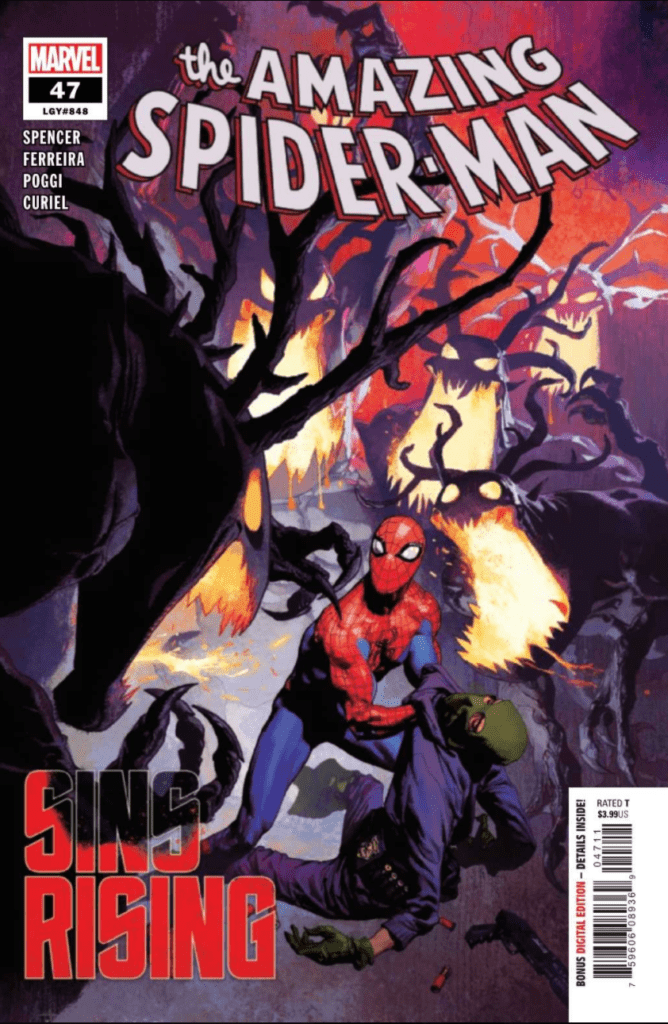
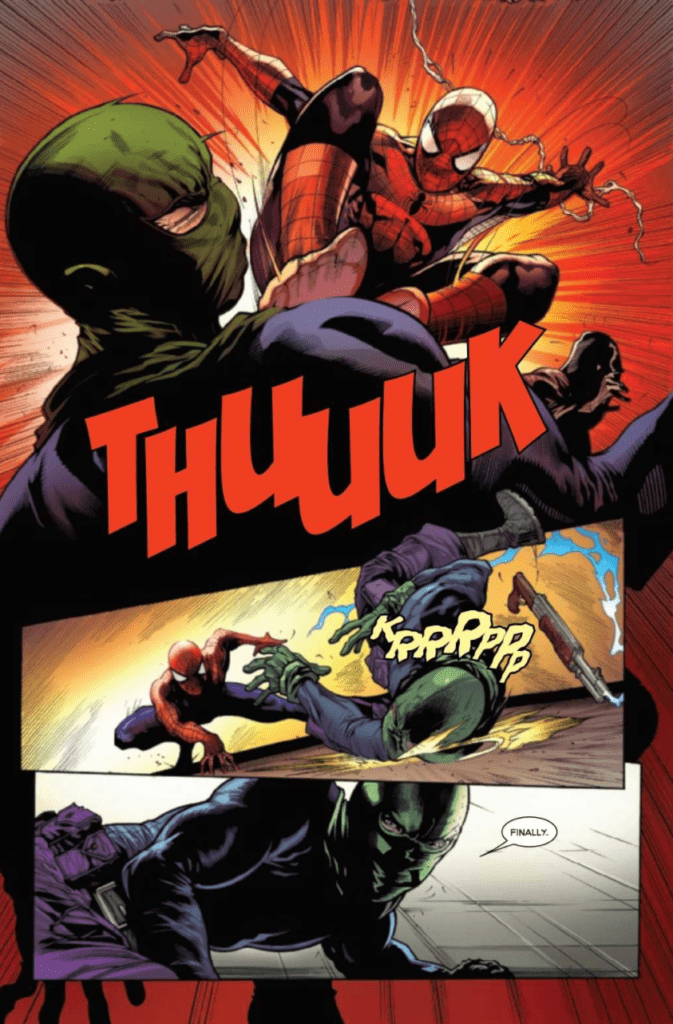
The Amazing Spider-Man #47, published by Marvel Comics, is the third part of the Sins Rising event and continues the outstanding quality of the arc.
About the Book:
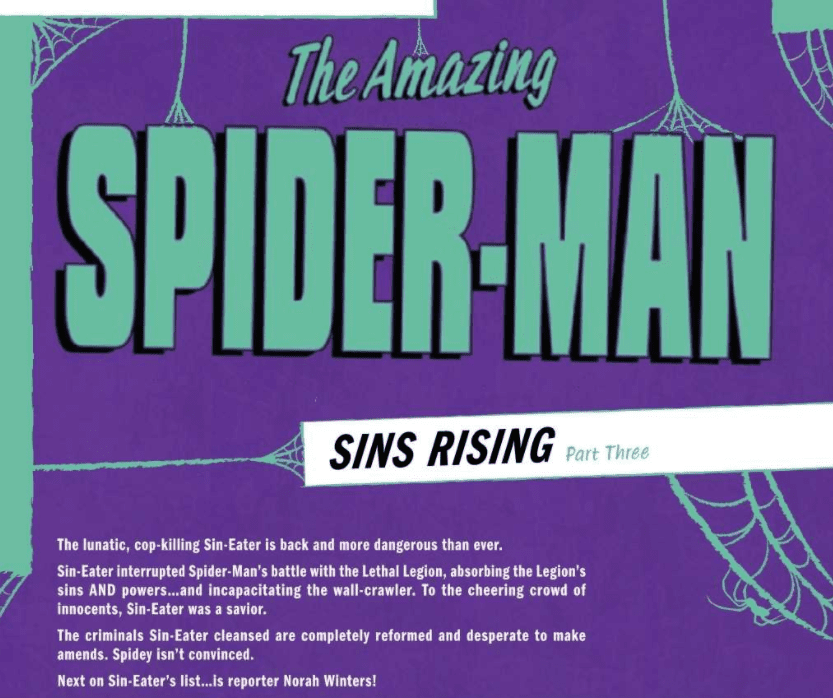
The Sin-Eater has been killing off villains of Spider-Man’s, only to have them come back to life in the morgue without their powers or urge to hurt others. Despite doing nothing wrong, Spider-Man does not trust the Sin-Eater and is doing everything he can to stop him.
The Amazing Spider-Man #47 Story
Nick Spencer, as always, does a phenomenal job of keeping the reader engaged with every page. The Sin-Eater’s motives and plans have not been entirely revealed, but each issue in this event we are given more and more, with enough information left to leave the reader curious enough about future issues. The Amazing Spider-Man #47 unveils another crucial step in the Sin-Eater’s plan that both fits the Sin-Eater character and is a new, unexpected twist. It makes the issue incredibly fun, while also creating excitement for what might result from the actions taken by the Sin-Eater in this issue.
What began in the previous issue is now having more profound effects in The Amazing Spider-Man #47, where Spider-Man wishes to stop the Sin-Eater for unfounded reasons. Yes, he was killing people, but they return to life eventually, now without the want to hurt anyone else. It seems like the perfect way to stop criminals. Spider-Man did have the fact that the villain Overdrive was in critical condition to help his argument, but we discover in this issue that it may be because of reasons other than the Sin-Eater. This leaves our hero with a belief centered on a hunch, which makes the public — and perhaps even the reader — doubt whether he is right. It is an incredibly exciting series of events that I cannot wait to see how it plays out.
Art
The Amazing Spider-Man #47 features many different scenes that appear only for a panel or two so that we can get a small slice of life for characters that we are not familiar with. These few panels that focus on many different locations allow for the pencils of Marcelo Ferreira and inks of Roberto Poggi to shine, as it allows for so many diverse characters to be brought onto panel that are living their everyday lives. The scenery and people are drawn beautifully and show off the high skill of Ferreira and Poggi.
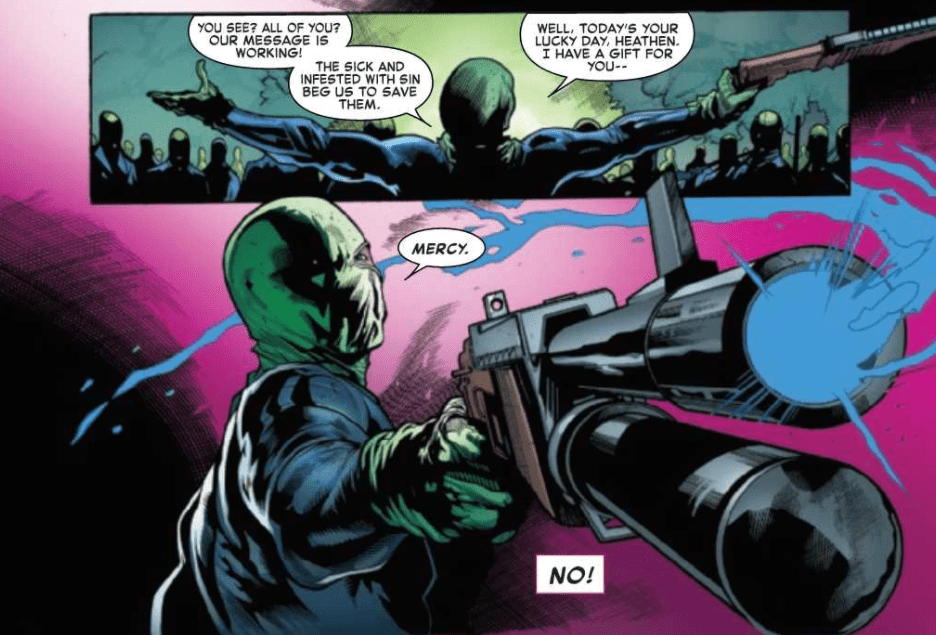
Later in the issue, we are graced with a direct confrontation between the Sin-Eater and Spider-Man that features a multitude of powers and weapons that the Sin-Eater had acquired from villains he had shot. The battle is beautiful, and the dynamic poses and figures that Ferreira and Poggi make help create a deeply memorable confrontation. The way characters from certain panels overlap the borders of other panels is another technique frequently used, and it effectively makes characters pop out more than they would have otherwise.
The colors of David Curiel in The Amazing Spider-Man #47 are also shown off by the many different scenes at the beginning of the issue. The different palettes of each panel highlight just how skilled he is, no matter the environment he is coloring for. There is a point in the issue that takes place at a morgue with poor lighting that limited the abilities of what Curiel could do, but shortly after, we are able to witness his vibrant colors and gorgeous shading again in a brilliant fight scene.
The lettering of this issue was outstanding. VC’s Joe Caramagna kills at every chance he is given, and The Amazing Spider-Man #47 allows him to shine like few other issues. Rarely are there enough opportunities for the letterer to stun you, but the fight scene later in the issue features quick exchanges of blows from a multitude of weapons, which Caramagna enhances with fonts of many different styles and colors. Towards the back of the book features some of the best lettering I have ever seen in an issue as the action unfolds.
Conclusion
The Amazing Spider-Man #47 is yet another fantastic issue in the Sins Rising events. The end of each issue leaves the reader satisfied with what they have been given and wanting to know how each of the elements of the story will be resolved. It is a riveting piece of writing that is complimented incredibly well by stunning line art, colors, and lettering.
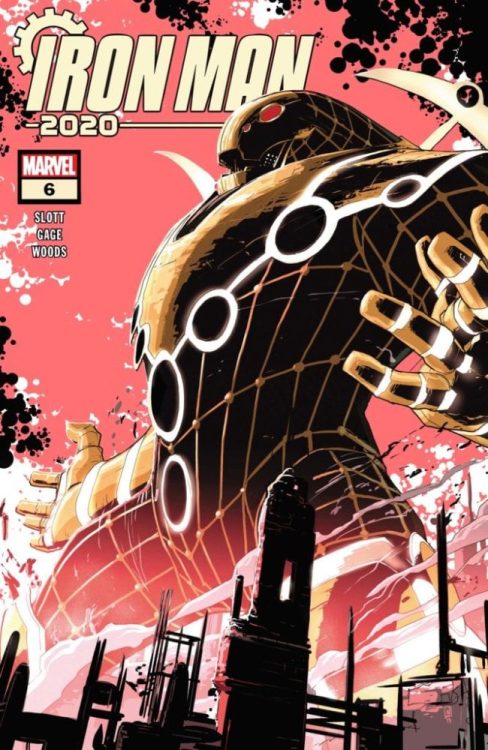
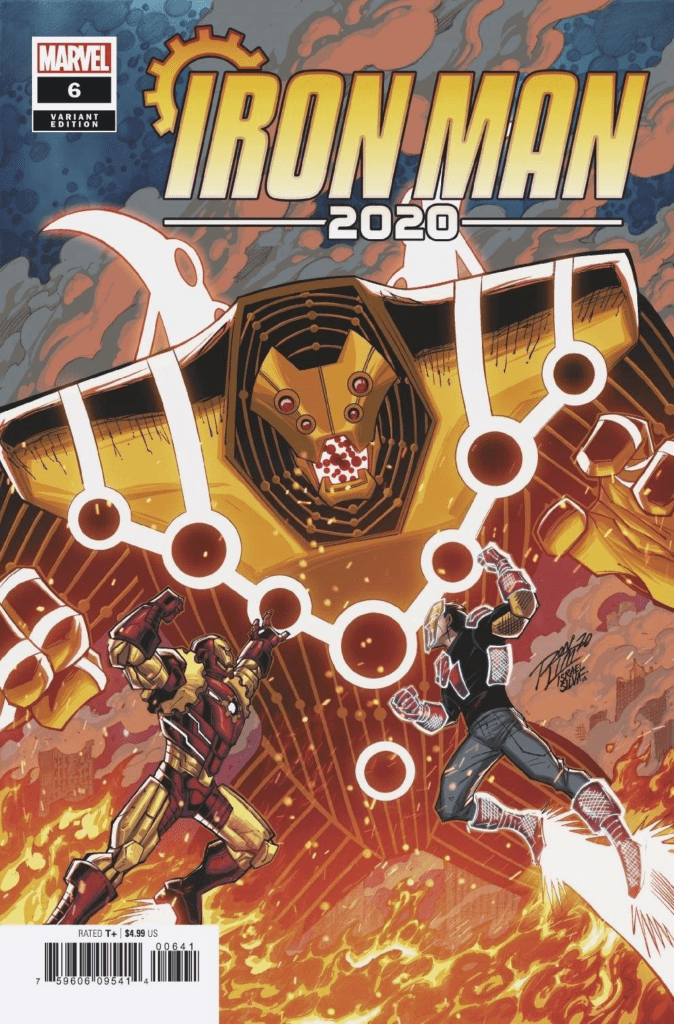
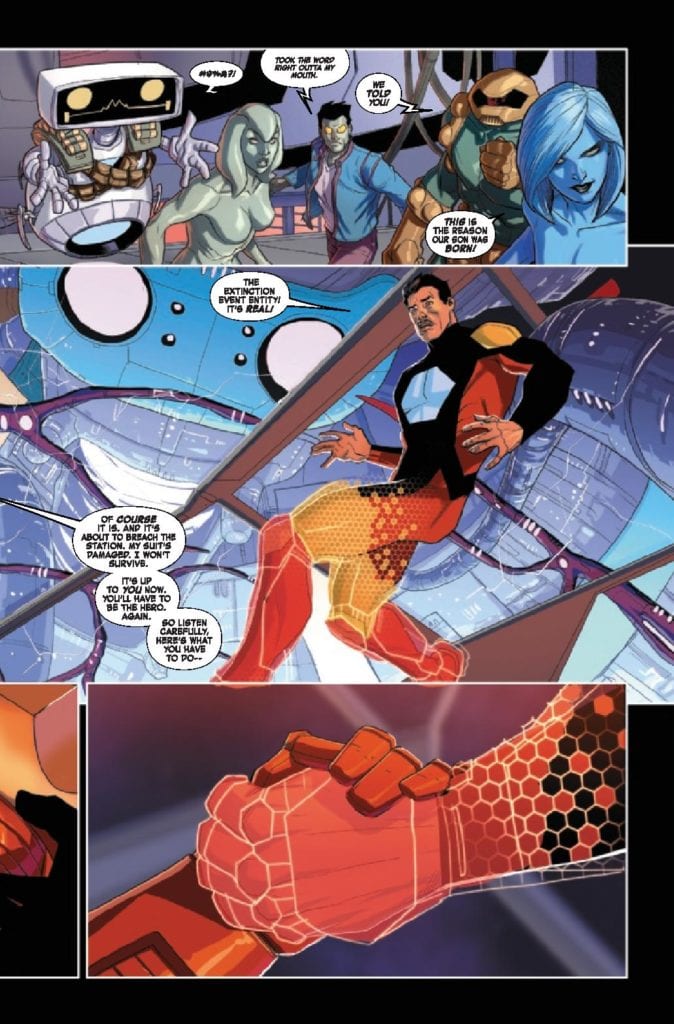
Iron Man 2020 #6 delivers an ending to the 2020 event thanks to Dan Slott, Christos Gage, Pete Woods, VC’s Joe Caramanga. After starting the year on a low point, Tony Stark is back with a new armor and finds him having to work with his brother Arno to defeat a much bigger threat. Will the two Starks be able to put aside their differences long enough to save the world?
Throw out the rest of your stupid, worthless flesh-bag calendars. 2020 is over, man! The moment Arno Stark has been preparing for is here: the end of all human and artificial life as we know it!
Writing
This issue marks the end of Dan Slott’s run on Iron Man and it truly feels like the closing of a chapter of the character’s history. Elements of both Tony Stark: Iron Man (which Slott wrote) and all of the 2020 events comics come into play in this issue. The fight against the Extinction Event Entity is massive and takes the efforts of Iron Man and his allies if they have any hopes of bringing it down.
The ending Dan Slott and Christos Gage deliver an ending many may not see coming or perhaps they will and they will feel unsatisfied with the way it wraps up. The bottom line is its a device ending which fans are either going to love or hate. Still, the way Arno was presented (as a borderline supervillain) there was little chance of him doing more with the armor than what was accomplished.
Artwork
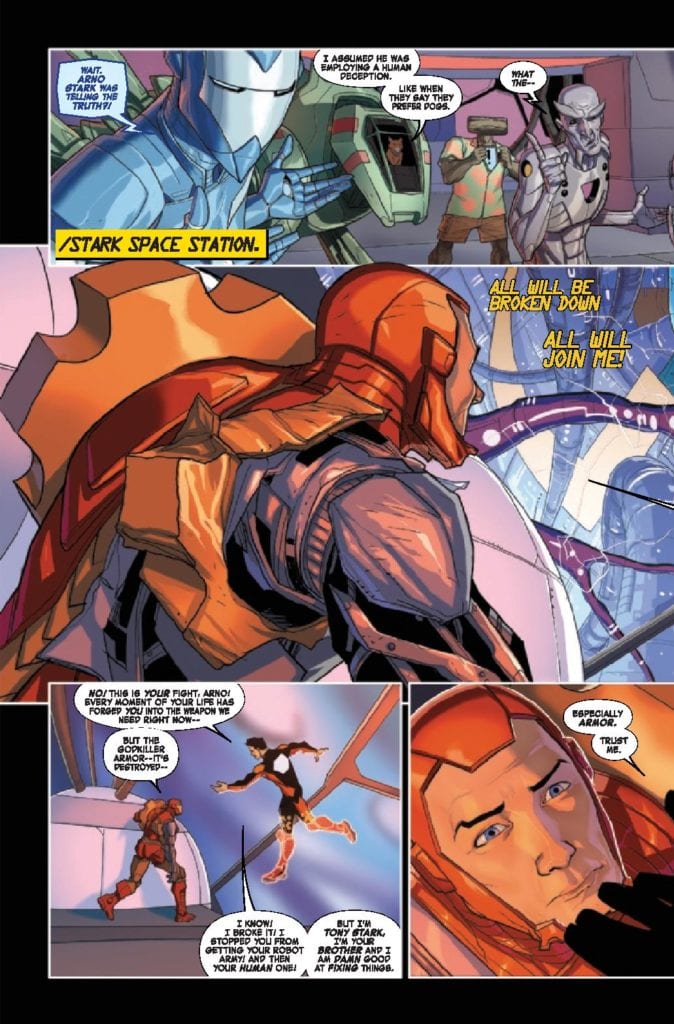
The art by Pete Woods is fantastic and focuses on action scenes as the final battle plays out through the issue. Woods utilizes lots of two page spreads to showcase the scope of the battle as it plays out. To this end, the scale is incredible and allows the reader to experience the immense destruction as Tony and Arno work to takedown the Extinction Event Entity.
The Lettering by VC’s Joe Caramanga helps the audience to track the flow of the action as it plays out. The strategic placement of word bubbles allows for the reader to track the story especially with all of the two-page spreads which happen throughout the issue. Also, the little skull and crossbones asterisks will be missed which were used to censor the robots when they got to profane.
Conclusion
Iron Man 2020 #6 may seem like a quick wrap up to the 2020 event and has an ending many may not agree with. Still, after the delays and other downfalls of 2020, this issue is a course correction allowing Iron Man to have a better year than most. If there is one good thing to come out of such a chaotic year, its Iron Man 2020.
Marvel Action: Captain Marvel A.I.M. Small is the second trade in Marvel and IDW’s collaboration following Carol Danvers. Although on closer inspection, Sam Maggs makes this story illustrated by Sweeney Boo, colored by Brittany Peer, and lettered by Christa Miesner into a co-Unstoppable Wasp story.
Marvel Action: Captain Marvel A.I.M Small: Featuring The Unstoppable Wasp
Marvel Action: Captain Marvel, according to the reviews, ranks just behind the Spider-Man series in terms of acclaim. It’s pretty easy to see why. Captain Marvel puts in the time to enjoy the small things in life with her friends. Her driving lessons with Nadia Pym are just as exciting and nerve-racking as super-heroism. But of course, Maggs decides to use this time to explore Captain Marvel’s character through dynamics. Captain Marvel’s character usually involves trying to be the best possible version of herself. But she can be very stubborn and possess tunnel vision. Carol knows she’s powerful and leading thinking that as long as things go her way, nothing can go wrong. So Maggs’ forces the Captain to follow the Unstoppable Wasp’s lead.
After some MacGuffin forces Carol’s powers down less, they cause destruction, she and Nadia have to work together. This might be a little disappointing if people are coming in to expect Captain Marvel in action. Especially if half of the time, Nadia has more of the limelight. But this is a story about trusting someone you respect and letting go of preconceptions. All while trying not to force a situation to be too serious as Carol becomes a little more patient. Because despite Carol’s predicament, she’s far from helpless in the plot.
Art
Marvel Action: Captain Marvel A.I.M. Small retains the cartoony yet semi-realistic art of Sweeney Boo. It perfectly encapsulates the relatable conservations of Driver’s Ed and shrinks rays in the same world. The colors by Brittany Peer provide just enough contrast to highlight the settings while the best use is in the Wasp suit wings. The high-speed illusionary effects have a perfect sheen to them. Christa Miesner tops everything off with some word balloons and captions that, for the most part, are linear. Even if they do occasionally scatter about and confuse some of the reader’s direction of choice. Like do you begin with a caption with a timer first, then the word balloon, or the caption next to it?
Have A Little Fun With Marvel Action: Captain Marvel A.I.M. Small
Marvel Action: Captain MarvelA.I.M. Small may be more along the lines of a Marvel Team-Up than a Captain Marvel story, but it brings a nice dynamic. Along with the down-to-earth two-way mentoring is a romp that requires no overarching story that takes too long. Just a silly piece that goes on for as long as it has to.