Watching someone spiral out of control can make you uncomfortable, and that’s exactly what The Serve intends to do. This is a slow-paced depiction of a woman having her world crumble day by day. A story centered around basic human needs being ignored and the consequences that can arise as a result. The Swerve is a nail-biting look at someone’s existence being eradicated.
This film takes its time allowing you to grow sympathetic towards the lead character, Holly. Everything around her seems normal, but inside she is progressively losing her sanity. Psychological thrillers set out to play with your mind, but The Swerve plays with your emotions as well. Directed and written by Dean Kapsalis, The film stars Azura Skye, Bryce Pinkham, Ashley Bell, and Zach Rand. The Swerve follows Holly (Skye), a caring mother, and teacher who finds herself going through a mental breakdown, as everyone in her life continues to act like she doesn’t exist. Her family ignores her, her husband is cheating on her, and her sister is the cherry on top of her negative home life. Eventually, Holly finds comfort in one of her students, and her issues just become worse.
Azura Skye as Holly in The Swerve
There aren’t enough words that can speak to how emotionally draining this film can be at times. Kapsalis has effectively written a distressing film that will stick with you once it’s over. The characters aren’t developed outside of Holly, but they all factor into her pending demise and they don’t even notice. The Swerve opens with Holly being startled by a rat in her house as if to show how simple the smallest inconvenience can spark so much change in her. As mentioned, Holly is a mother, as well as a teacher, but her children don’t seem to care too much about her. However, a student in her class, Paul (Rand), has a crush on her. Their relationship is inappropriate and odd, but Holly finds comfort in this because of how unavailable her husband seems. Kapsalis’ screenplay definitely is a near-perfect depiction of a slow descent into madness.
Skye’s portrayal of Holly is what will have viewers glued to the screen. She is so powerful in this role and takes you on a brutal journey through every emotion Holly feels. Also, the chemistry between her and Rand helps amplify their inappropriate relationship. Skye has been in numerous projects in the past, but her performance here is career-defining. Between Kapsalis’ direction and Skye’s performance, the film forces you to feel for this woman’s unfortunate situation. Rand is great in his role as Paul, and while their relationship is inappropriate. It’s important to remember that Paul is the only character in this film who makes Holly feel alive.
Bryce Pinkham and Azura Skye in The Swerve
Kapsalis’ takes you on a slow burn that features a chilling score by Mark Korven. It adds to the distressing nature of the film and heightens the mental downfall of Holly. Also, the score contributes to the atmosphere established in the film. Kapsalis has made an impression with this outing because he does a great job establishing the film’s sad nature and slowly making it darker, as Holly spirals to her endpoint. The cinematography on display was great as well, so from a technical standpoint, The Swerve is a homerun.
The Swerve is a dark look at a woman’s mental instability slowing consuming her existence. It’s carried mostly by a strong career-defining performance by Skye, but it is an effective debut feature from Kapsalis. This will certainly be a hit for anyone who has suffered from mental illness, domestic abuse, or severe depression. The Swerve highlights how important it is to pay attention to the emotions of others.
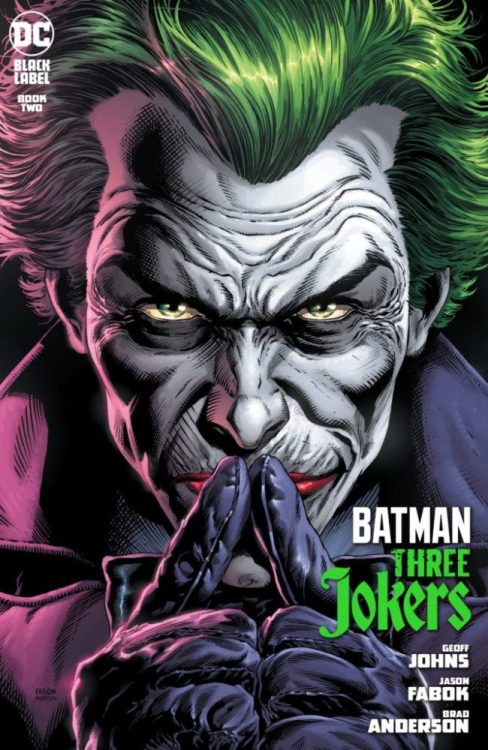
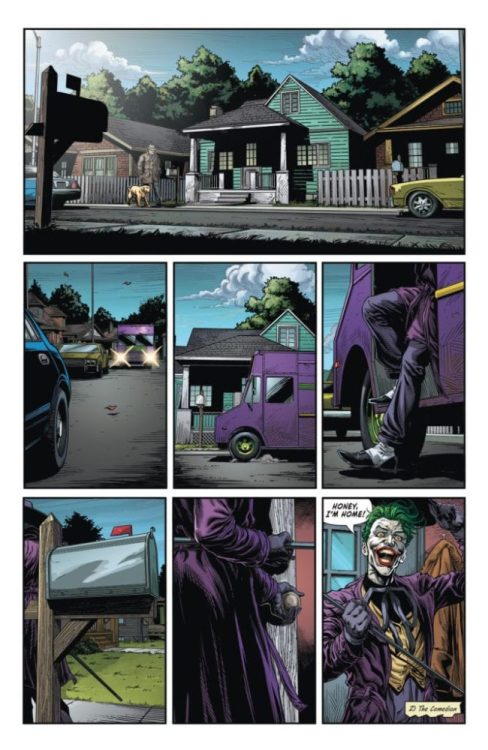
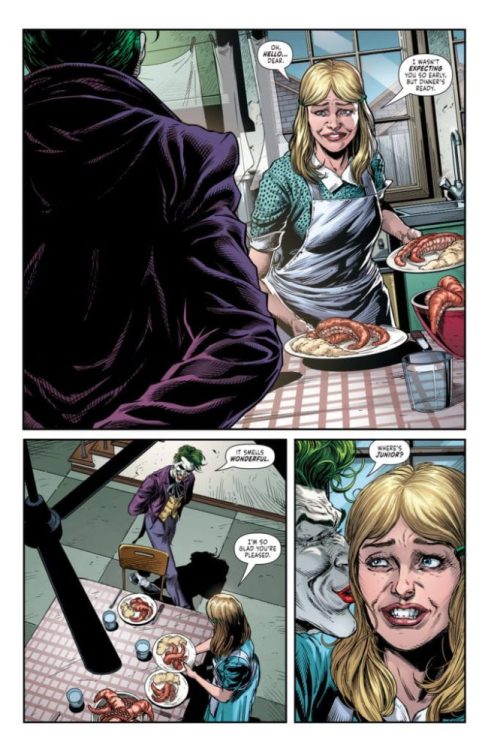
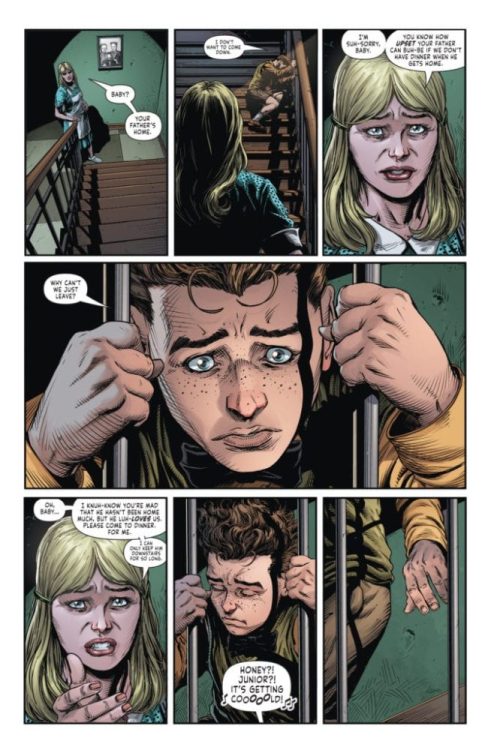
BATMAN: THREE JOKERS #2 comes out this week, but thanks to DC Comics, Monkeys Fighting Robots has a three-page preview for our readers.
About the book: As Batman and Batgirl follow an unexpected thread linking the three Jokers with someone from the Dark Knight’s past, Red Hood dives headfirst into trouble and finds himself struggling to stay afloat without the aid of his allies.
Batman: Three Jokers continues its trajectory as the ultimate examination of The Joker and his never-ending conflict with Batman. Prepare yourselves for the second chapter of one of the most terrifying and personal mysteries Batman has ever faced!
BATMAN: THREE JOKERS #2 is by writer Geoff Johns, artist Jason Fabok, with Brad Anderson’s colors, and Rob Leigh’s letters.
What did you think of the first issue? Comment below with your thoughts.
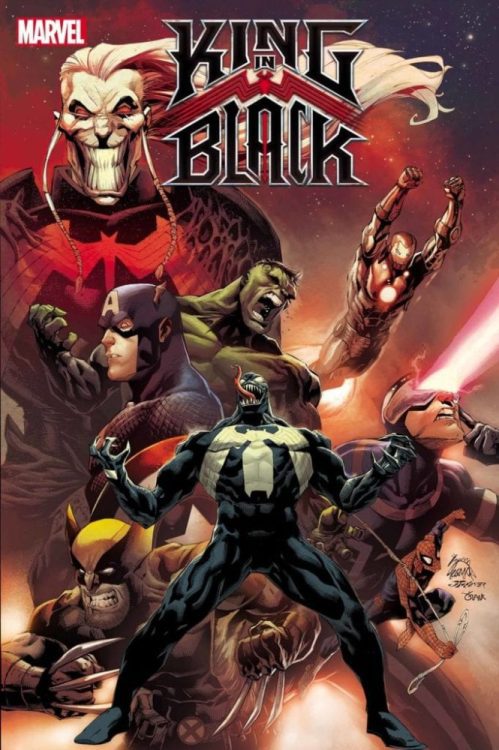
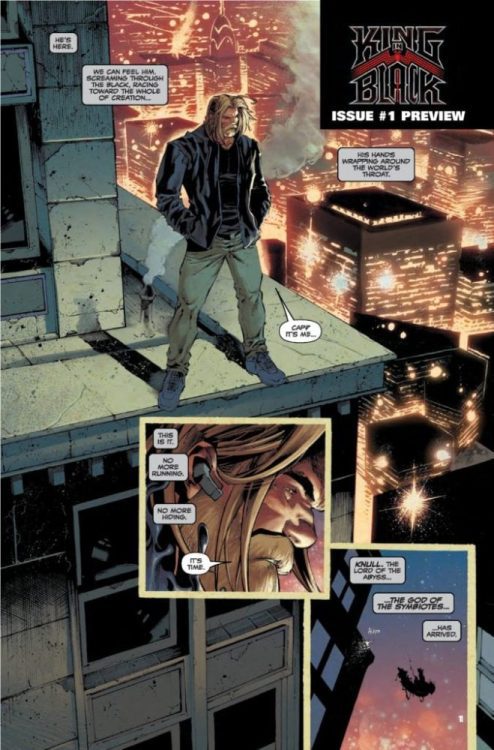
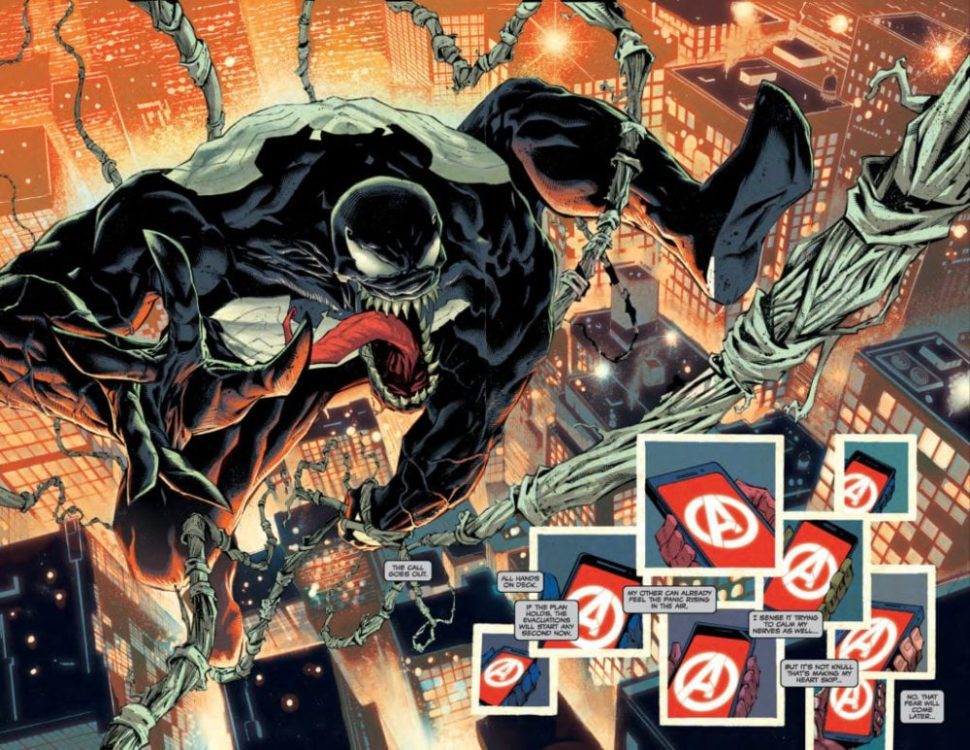
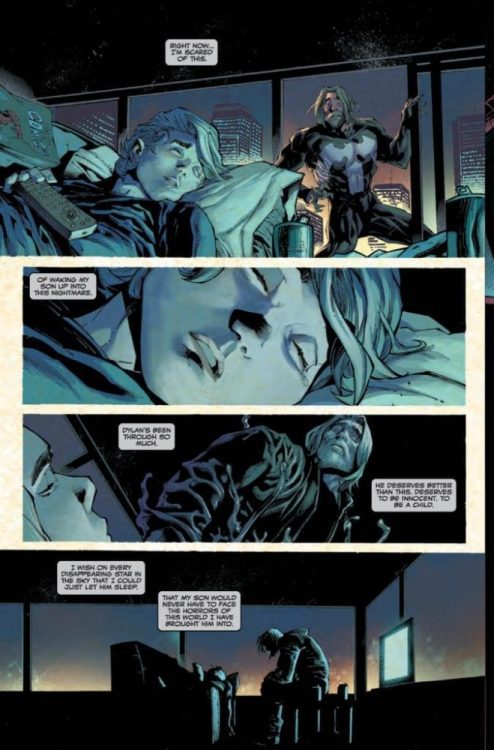
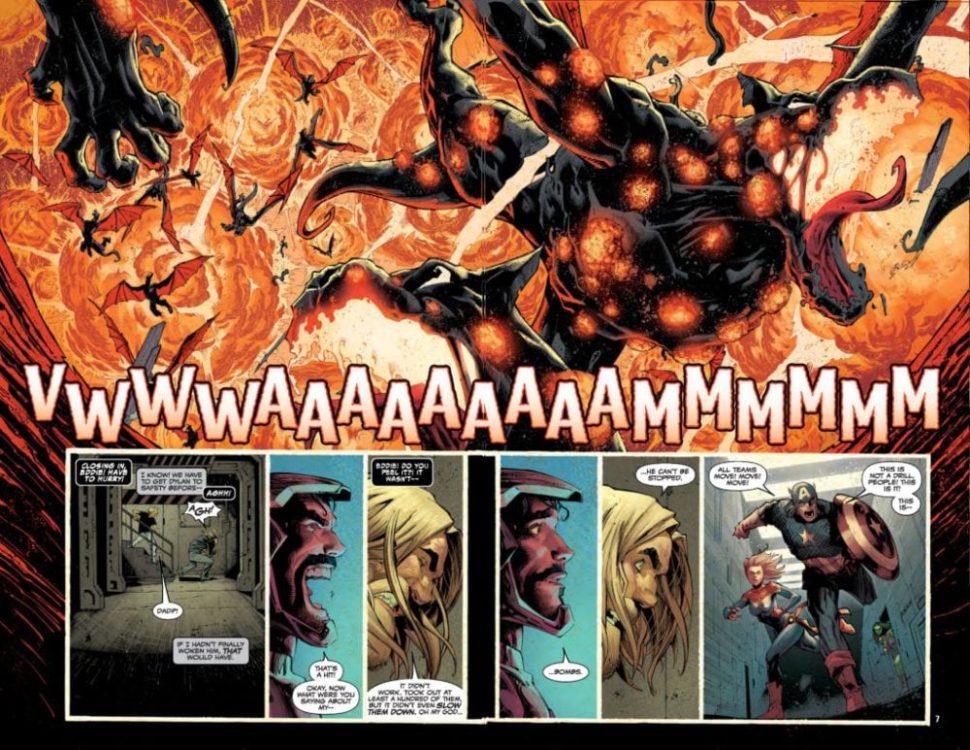
King In Black #1 hits your local comic book store on December 2, but thanks to Marvel Comics, Monkeys Fighting Robots has a seven-page preview for our readers.
The book is written by Donny Cates, with art by Ryan Stegman, JP Mayer drops the inks, Frank Martin handled colors, and you will read Clayton Cowles’ letter work.
About King In Black #1: DARKNESS REIGNS!
After a campaign across the galaxy, Knull’s death march arrives at Earth and, worse yet, he hasn’t come alone! With an army of hundreds of thousands of symbiote dragons at his command, the King in Black is a force unlike any Earth’s heroes have ever faced. EDDIE BROCK, A.K.A. VENOM, has seen firsthand the chaos that even one of Knull’s symbiotic monsters can wreak – will he survive an encounter with the God of the Abyss himself?
How excited are you for King In Black #1? Comment below with your thoughts.
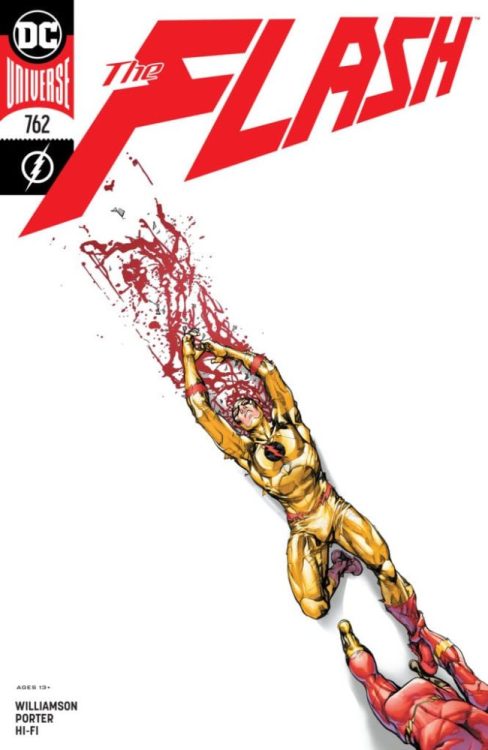
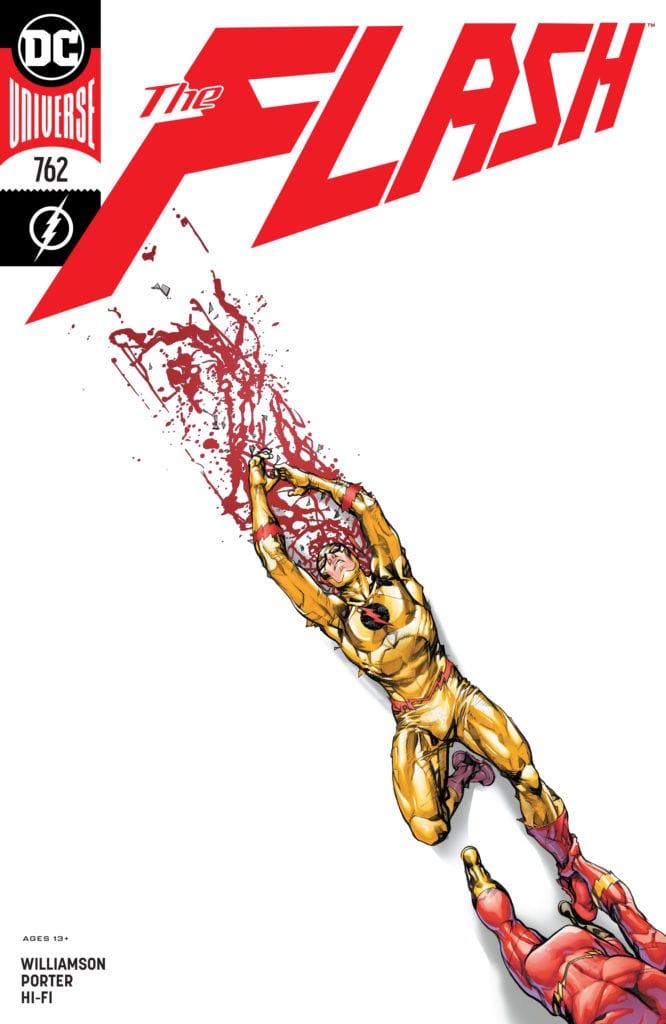
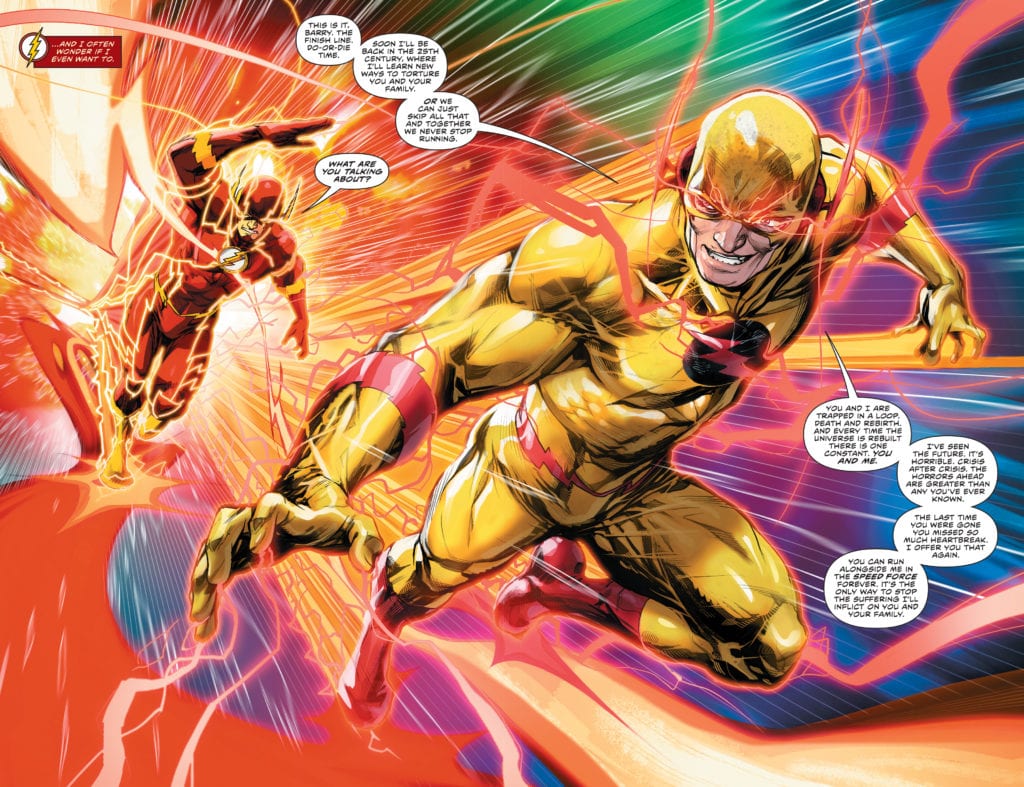
Over a hundred issues of The Flash built to this. Since the return of Wally West, Barry’s life has hit many turns. New speedsters were born, new forces were found, and the family came and went. In the last issue, we learned that Thawne caused most of the biggest conflicts during the run. From Barry and Wally clashing in Flash War to the creation of Godspeed, all of this was orchestrated by the Reverse Flash. Angered by this, The Flash chases his long time foe into the Speed Force. Will he go too far and kill Thawne once more?
**Some Spoilers Below**
Story:
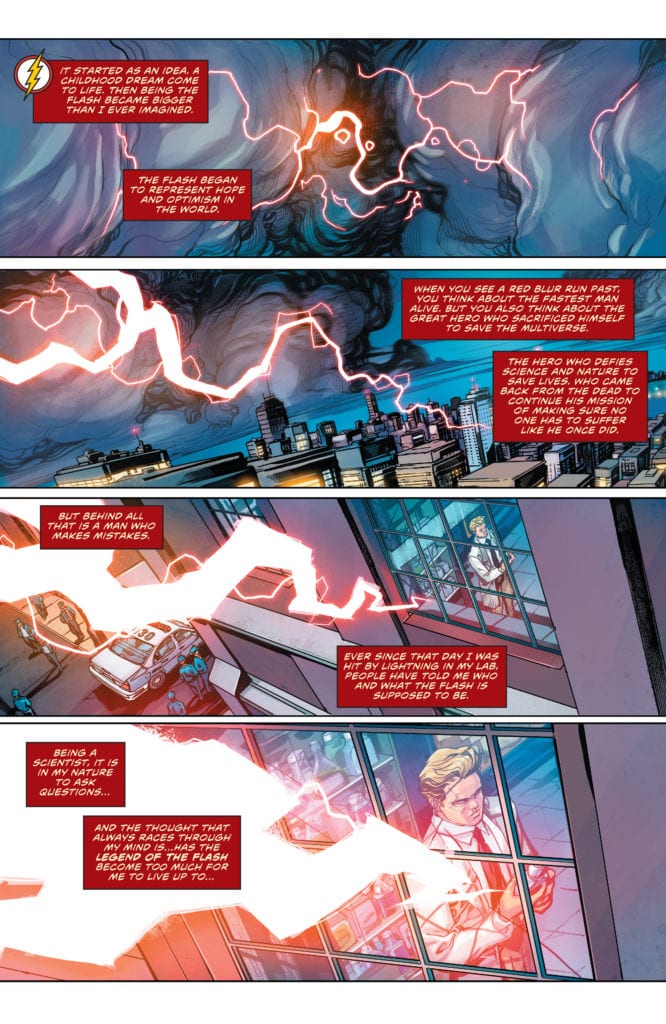
The Flash and Thawne are racing through the speed force, the latter expositing a truth about them. He points out with every crisis, they are the constants, always destined to face each other. Thawne eggs on Barry, telling him to continue the cycle and to kill him. Barry refuses and tells him that he forgives him. The evil speedster rushes the hero, which is what Flash was hoping for. At the moment they make contact, Barry puts a piece of his own Speed Force in Thawne. This essentially resets Thawne, changing him back to the curator of the Flash Museum from before he turned evil.
This ending is damn near perfect. Throughout the run, we’ve watched Barry focus on his past. He wanted to avoid past mistakes as much as he could while trying to reunite his family. In the end, he finally learns and avoids making the same mistake, which restarts their conflict every time. It was a clever switch up that I wasn’t expecting. In one fell swoop, Williamson gave hope to the future and brought an end to a decade’s worth of Flash Conflicts. He will return, but the Thawne many readers have read has been defeated.
After the battle is over, we get this beautiful scene of the whole family back together again. It was heartwarming and a little bit sad. We finally have the family back together, but just as we’re about to lose the creative team. We see the members that have returned and the new ones made along the way. Seeing everyone together will hit everyone with nostalgia, whether you are a long time Flash Fan or just jumped on the Williamson run. We also get this bittersweet moment that reminds the readers why Barry goes through all of this pain every time.
Art:
Howard Porter brings the run to the close in his amazing style. He brings his A-game every issue, and he doesn’t hold back here. While the fight between Flash and Thawne is excellent, the family reunion scene is damn near perfect. As I mentioned before, this scene will fill any reader with nostalgia, and Porter’s illustrations help it. Seeing the cast of the new series interacting with the old Flash favorites in such a calm setting was fantastic.
Conclusion:
Joshua Williamson’s run of The Flash is, without a doubt, a pillar of the DC Rebirth initiative. For the past four years, we saw Barry bring his life back together. Each story had its ups and downs, its jaw-dropping action and heartfelt emotions, and so much more. All of it comes to a head in this final issue. It ties up the run perfectly and sets the stage for the coming team to tell their story. The brilliant work of Howard Porter and Hi-Fi brings this issue to life with fantastic art that will define this run. The race may be over for Williamson, but The Flash will keep running forward after this spectacular series.
A desperate single mother joins a drug cartel while the government of the Philippines uses brutal measures to take them down in the new film starring Alessandra de Rossi (Since I Found You) and directed by Ben Rekhi (Waterborne).
Watch List centers around Maria (Alessandra de Rossi), a mother of three who’s rounded up by police during a massive assault on civil liberties in the name of getting drugs off the streets. Maria’s husband’s taken too and ultimately used as an example to future would-drug pushers. Now a widower, Maria’s got to figure out how to survive. That’s where Alvin (Arthur Acuña) and other nefarious players come into Maria’s life.
PopAxiom spent some time talking with Ben Rekhi about his road to filmmaking, being a director, and getting the Watch List made.
Invested
Around 11 or 12, Ben and his friends “started playing with the family video camera in the backyard. I had a neighbor who was a little older than me, who would make funny videos. I thought it was pretty cool.”
Like any kid in the 70s, 80s, 90s, 00s, 10s, or today, Ben says he ”grew up in the age of Spielberg and Lucas.”
Naturally, the influence brought on by those two filmmaking legends meant Ben and his friends were “making little Indiana Jones movies.”
The young filmmaking crew had a rare advantage. “We had access to some of the digital editing software. One of my friends, his uncle worked for Apple. We were early adopters of morphing technology and lightsabers. We’d see something like Terminator 2, then come home and try to make some morphing effects ourselves.”
“It’s great to have all those tricks and stuff,” Ben says, “but I think it was Lucas who said that FX is just a tool and aren’t much without a story. FX on its own is not so interesting.”
Of course, when Lucas made his comment, we didn’t have nearly the spectacle we have now. “It’s debatable because there’s some eye-popping stuff that’s being created.”
However, Ben still believes “it only really works if you’re emotionally invested.”
Becoming A Director
Ben’s backyard videos became “more and more sophisticated and I went to film school.”
“At first it was fluid,” Ben says of film school, “Everyone was doing everything. But I guess I had this passion for corralling people and getting people organized. Directing felt the most tuned to my skillset.”
It may not sound sexy, but corralling is part of being a director. “So much of it is management. I think it was Danny Boyle who broke it down and said filmmaking is just about getting people to show at a certain place at a certain time. It’s an oversimplification, but so much of it is that and getting people on the same page.”
Don’t let that fool would-be directors. “Of course,” Ben asserts, “there’s also diving into the creative side too and using the tools you have available for doing that. But film is such a collaborative effort. So many other art forms is one person creating the art. Film is more like a symphony and making sure that everyone is playing the same song.”
Directors need to conduct this symphony, which with so many moving parts, it’s incredible movies get made at all. “Any film that gets made is a small miracle.”
After Tisch, Ben ended up as an intern on Oh, Brother Where Art Thou and “working in the camera department under Roger Deakins. I was twenty years old and getting Roger’s tea every morning. I learned so much in those two months in Mississippi, almost more than in four years of film school.”
“I kept in touch with George Clooney’s team and ended up on the first film that he directed, Confessions of a Dangerous Mind,” Ben says, “where my job was to shoot things for the behind-the-scenes for the DVD.”
Following Confessions of a Dangerous Mind, Ben says, “I partnered with one of my classmates to do a short film on graffiti writers, and we used that to fund-raise for a feature and produced Bomb The System. It did well in the festival circuit, got nominated for an Independent Spirit Award, and we sold it.”
The success of Bomb the System afforded Ben a great opportunity. “I was able to leverage that into directing my first feature, Waterborne, which won the Audience Award at South-by-Southwest.”
Big Break
That’s it! Ben became a non-stop success after that, or so the feel-good biopic would have you believe. “As anybody who works in this business knows, it’s a roller coaster. At one point, I had an agent, and I was up for several directing and writing jobs, but I couldn’t land my next film. I fell back into a rut after having a film that was good and broke through, but didn’t quite crossover into that ‘breakout film’ type scenario.”
“I was young, and I didn’t quite understand how to turn those opportunities into the next one,” Ben admits and soon learned, “one thing about life is that anytime you have any kind of mild success, you have to step on the gas even harder.”
Ben also got some advice that he holds dead. “Always have your next project lined up before the current one releases. That way, no matter how the current project does, you’ll have the next shot ready to go.”
The movies always have a happy ending, so “You always hear the success stories, but rarely about the failures. For every movie that sells at Sundance, there are 1000s that don’t go anywhere.”
“Once you’re in the field,” Ben says, “you realize that’s not a very good odds game. You wouldn’t go to a casino and bet on 1000-to-1, especially with your life and career.”
More advice that Ben holds dear came from a directing legend. “Some of the best advice I ever got was from Spike Lee. He came and talked to us at NYU, and someone asked, ‘Do you have any advice for young directors.’ Ben continues, “Spike Lee replied, ‘I have a question for you. Why should you direct? Is there anything else you can see yourself doing with your life? If there’s anything else, then do that. This is way too hard and way too competitive.’”
None of this is to discourage would-be filmmakers. But the journey is long, and many only see a destination. “It’s not all about the destination, it’s about the journey. Do you enjoy creating every day? Of course, we want to do our best work. But the work is just the result; the process is the experience, everything in between, it’s our lives.”
About Watch List
Ben’s filmography quickly reveals that he’s not shy about approaching heavy topics. “Watch List began with a photograph I saw in the paper that stuck with me. It was about a woman holding her husband who’d just been murdered, and she kind of resembled the Mother Mary. This was the photo that put the drug wars on the map in 2016.”
Ben reached out to the journalist who worked on the story. “She told me story after story of the most heartbreaking things I’d ever heard. She invited me to come to Manila and see for myself.”
Ben went to Manila and “was embedded with these journalists for three weeks. I did ride-alongs to crime scenes, spoke to victims’ families, police officers, and started to piece together the tragedies that were unfolding. There was a true story of a woman who worked for the police as an informant. And because she was a woman, she was able to get closer to her targets and not raise suspicion and lure them out into a trap.”
The writing process began as Ben’s brain started asking questions. “What a mother must go through to put food on the table for her kids. Or, how far would someone go to protect their kids? Would they shoot someone else’s father? All those questions seemed like the most compassionate way to tell the story.”
In Watch List, you get to one character “going from being a victim to becoming a vigilante and seeing all sides of the drug war.”
Ben worked with a writer in the Philippines, and through a connection at XYZ Films (The Raid, Mandy), he connected with “producers like Erik Matti … it was very serendipitous. It was nine months from idea to the first day of production.”
Nine months is from idea to production is phenomenal. “I feel like the universe aligned to make it happen. I constantly asked myself why I was the person to tell this story? I felt compelled. I feel like ideas infect you. They come out of nowhere and take hold. It’s kind of our jobs as artists to follows those ideas and see them through without over-rationalizing it.”
Ben shares a bit of what he’s learned. “I did a project where I intellectually approached it and tried to think my way through, and it was a traumatic experience. For Watch List, I said, let me surrender to my heart and intuition and see what happens. It’s the fastest film I’ve brought into the world, and it’s the one I’m most proud of.”
Ben laughs and says, “Art is a spooky thing.”
Outsider
Ben was born in California, so making a movie about the Philippines’ drug war meant a cultural disconnect. “Research, to me, is so important to any story. I let authenticity be my guide. So, when I’d go out into the street to talk to people, I would incorporate what I’d hear into the story.”
Everyone’s hear the saying, “write what you know.” Ben adds, “but I think it was Dan Brown, who said, ‘I write what I want to know.’ That, to me, is something that I embraced for Watch List.”
Ensuring authenticity is a vital component of a film like Watch List. “Also,” Ben says, “being an outsider has its advantages. I can get this story to people outside the Philippines and create great awareness.”
Film Vs. Reality
Film productions, particularly those taking place outdoors, are at the whims of mother nature. “We were caught in a typhoon, and that flooded out a location with water up to our knees. We had to get out of there.”
“One of the locations,” Ben recalls, “was a little shack next to train tracks. There was a train that came by and hit our set and took part of it. We had to shut down for a couple of hours.”
By now, you might start to understand what Spike Lee was talking about. But the Watch List shoot got even more dramatic. “I was briefly hospitalized at one point for exhaustion. I had to get an IV and everything.”
Ben explains a key contributor to his exhaustion. “The way they shoot in the Philippines is that all the crew and equipment are on a 24-hour hire. You shoot for 24 hours and then have a day off, then another 24 hours, then a day off. We get 16, 18, 20, 22 hours into a shoot day and be complete zombies. I would not wish that on my worst enemy.”
“It’s the way the industry’s evolved there,” Ben continues, “but they’re trying to change that now after a few directors died in this process and actors have hurt themselves. They’re slowly changing things, but it was brutal; 110 degrees and humid.”
The authenticity of the level seen in Watch List was many times, all too real. “We were shooting in the real slums where a lot of these things took place. So, we’d be filming on the same corner where someone had been shot the night before. But I think all that helps add to the realism.”
Wrapping Up
Ben grew up a fan of Spielberg and Lucas. Who’s are some future legends in his eyes? “Literally from my school, NYU, that’s Cary Joji Fukunaga is doing extraordinary work. Denis Villeneuve is another one. These are guys that are very sophisticated storytellers who are choosing to work in different genres. It’s exciting not to get boxed into one type of film. James Mangold fits into that and Danny Boyle. Filmmakers who are incredible storytellers, but also chameleons. That, to me, is who I admire the most.”
“Quantum Leap the TV show was so incredible,” Ben says when asked about dream projects, “and one that I thought would make an amazing film. I know they’ve been trying for a while. I’ve always loved 80s sci-fi comedies like Back to the Future, Ghostbusters, or even weird stuff like Weird Science too.”
Watch List released digitally on September 1. So, what’s next for Ben? “I just finished my first feature documentary called the Reunited States about people trying to bridge our political divides. It couldn’t be more timely or urgent, given the state of things. It’s on the festival circuit and will probably distribute later this year.”
Ben’s got one project releasing and the next project already in motion. “My next fictional film we’re just putting together now is at the intersection of mass shootings and online extremism. It’s about a young woman who survives a mass shootings and goes online to start targeting extremists and stop them before they do anything in the real world.”
Is Watch List on your, um, watch list?
Thanks to Ben Rekhi and October Coast
for making this interview possible.
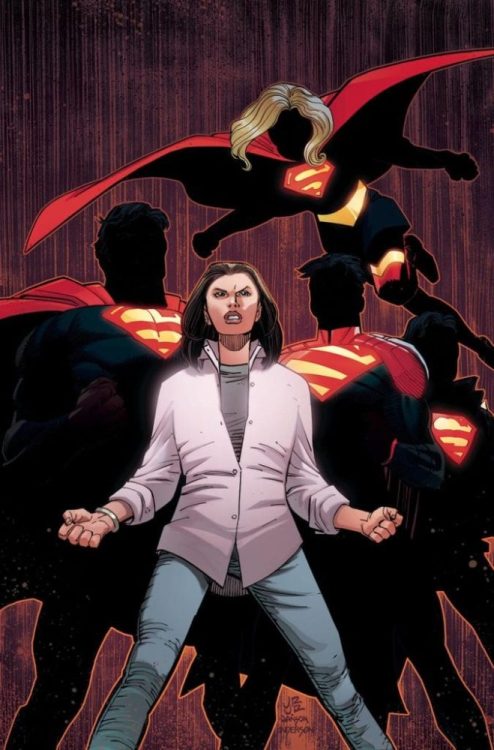
On September 22, DC Comics released Actions Comics #1025. Writer Brian Michael Bendis, penciler John Romita Jr., inker Klaus Janson, color artist Brad Anderson, and letter Dave Sharpe continue their “House of Kent” story. Hopefully, all of its members will make it out alive!
Writing
One can’t help but feel some joy at seeing the entire Super-Family together again. It’s certainly been fun to see Conner Kent reconnect with all of the people who had forgotten him. But one also can’t help but feel like this arc, and Conner’s return, in general, might’ve been better served in the hands of Jurgens or Tomasi. Bendis’s “House of Kent” arc is hampered by an Invisible Mafia story that’s running out of gas (no pun intended, given the villain of the arc).
It does feel like it’s time for a change of writer on this title (in Mark Waid we trust?). Hopefully, after waiting so long for his return during the Rebirth era, Conner Kent will still be alive and recognizable in a post-Bends Superman run.
Art and Colors
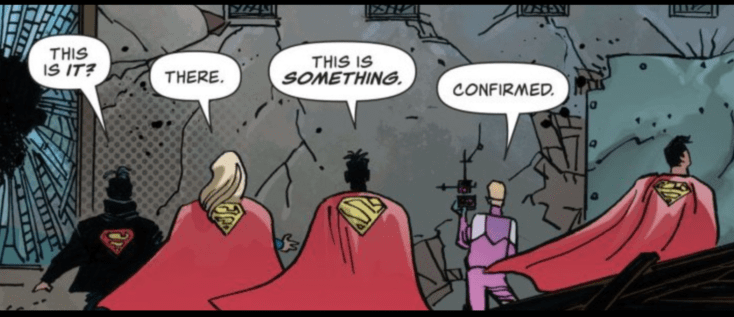
Fans of Romita Jr. should like this issue because when he draws characters close up, they can be quite compelling. Sometimes, though, from far away, his drawings can be a bit angular and sloppy. For instance:
It’s hard to get past Jon Kent’s Bart Simpson hair, as well as whatever doodle for beginners hellscape Brainiac 5 crawled out of. Maybe Romita fans will disagree with me, but as epic as Conner’s return to the Superman titles SHOULD be, I wish this was a prettier book.
Anderson, of course, provides some excellent colorwork. While some of his colors can be a little too “solid” in scenes where he colors the Super-Family, in other panels, like those involving Red Mist, his color work is shaded and nuanced, provide an excellent complement to Romita.
Letters
As with any Bendis book, there can be a tendency for an over-abundance of word balloons to cramp the comics panels. This issue largely avoids that (except in a Daily Planet scene), with Sharpe providing some great lettering, both in character dialogue and in some of the exposition boxes. This issue feels very kinetic, with the lettering only being minimally distracting at times.
Conclusion
As happy as fans are to see Conner, many of them are waiting for a changing of the guard on the Superman titles. We know Bendis’s time on the book is coming to an end. Who knows? Maybe his finale will surprise and please fans. Hopefully, every member of the Superman family will make it out alive for whatever comes next.
What did you think of Action Comics #1025? Tell us in the comments below!
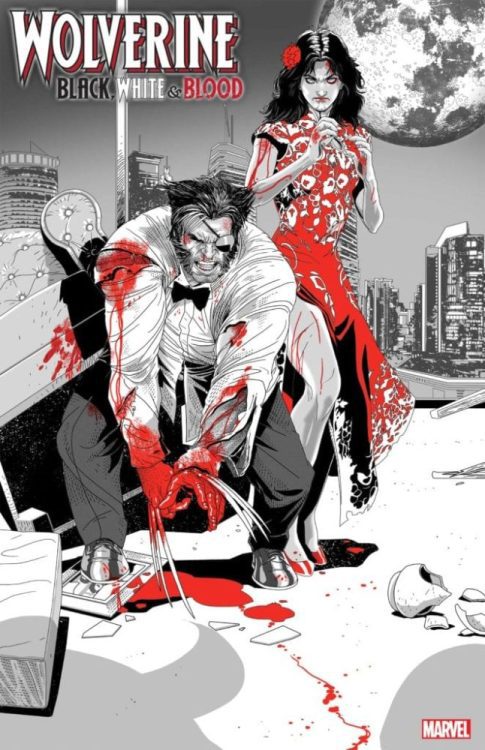
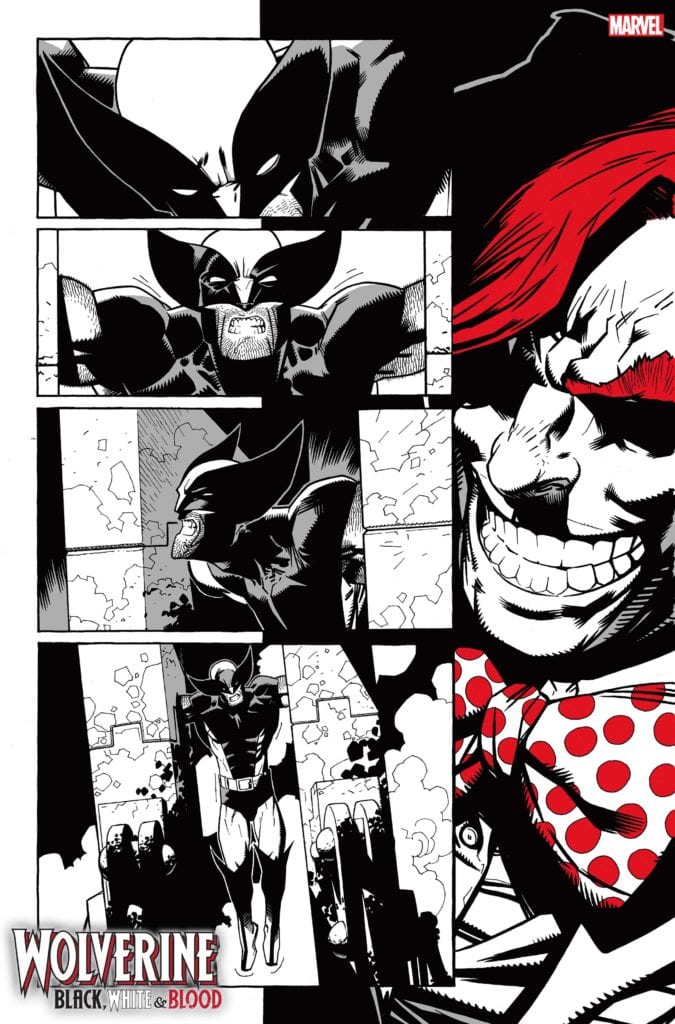
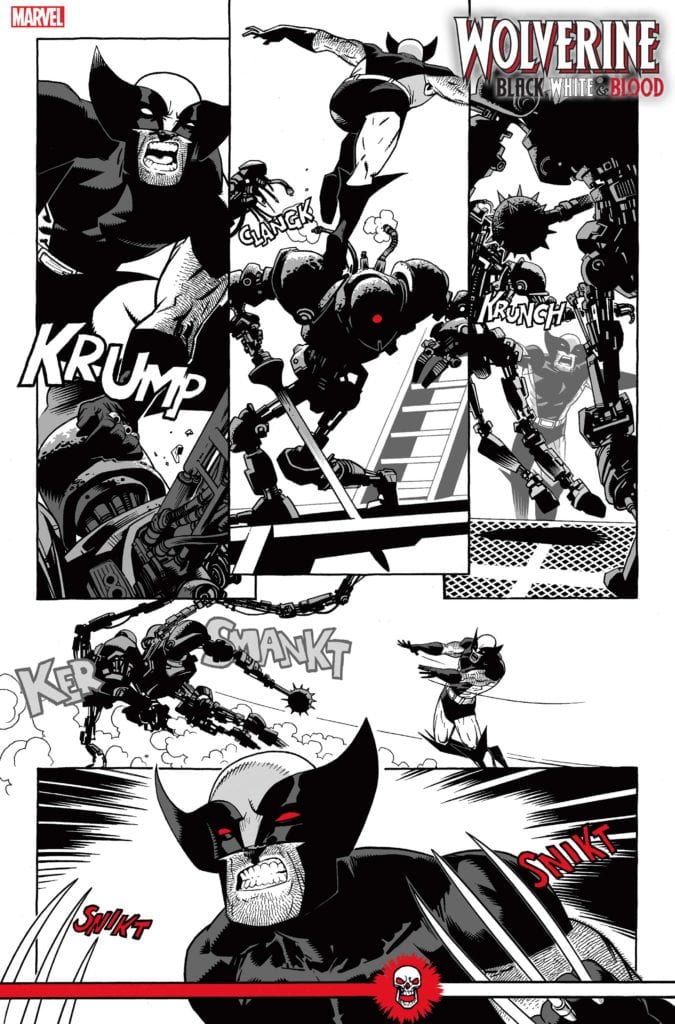
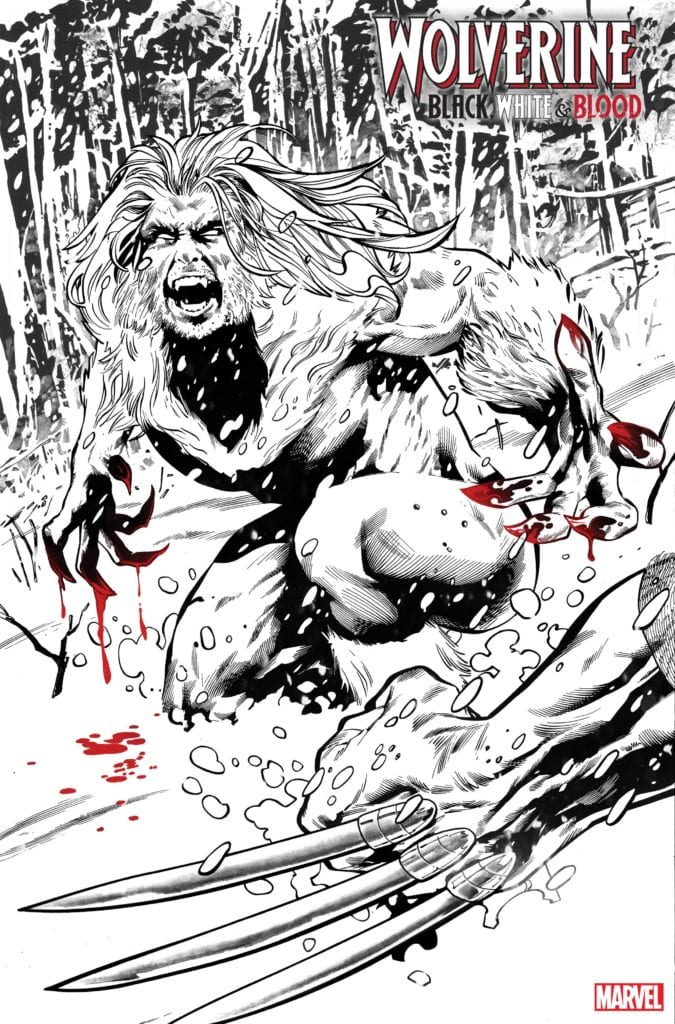
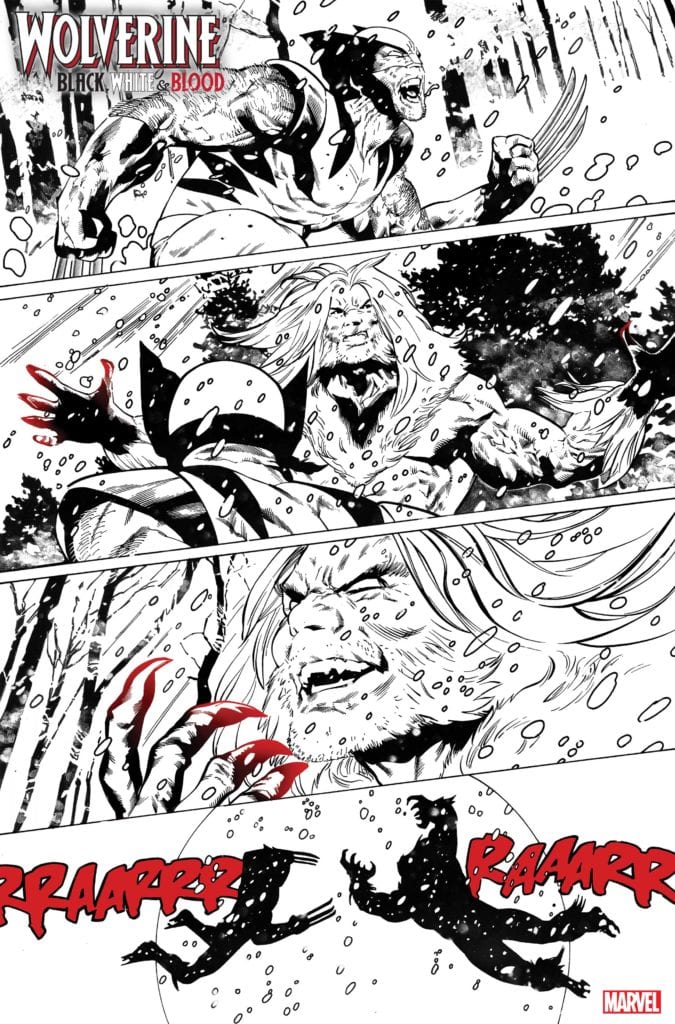
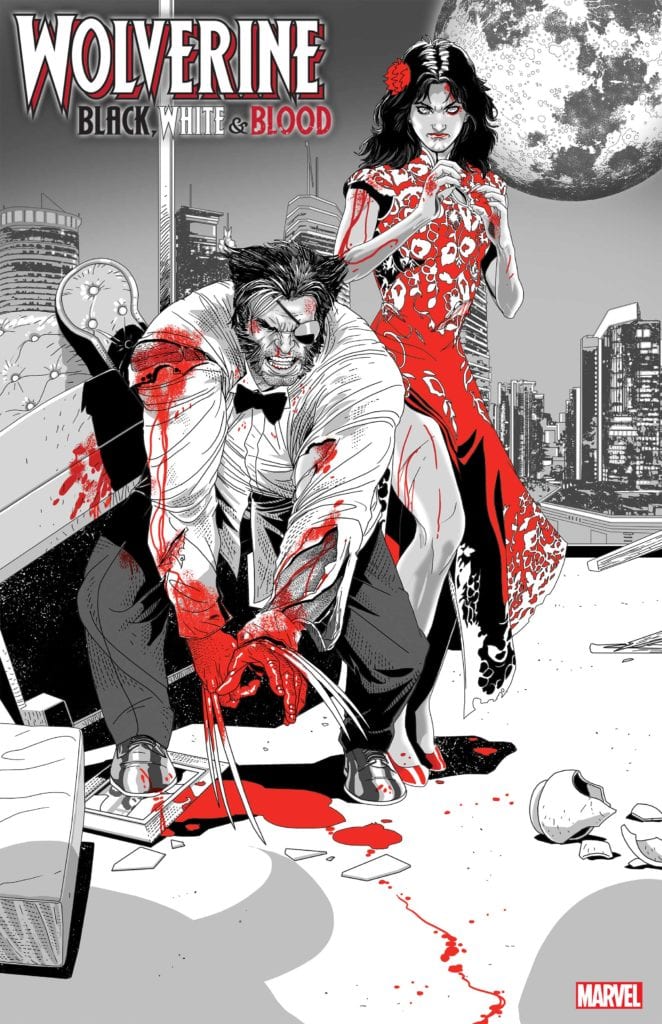
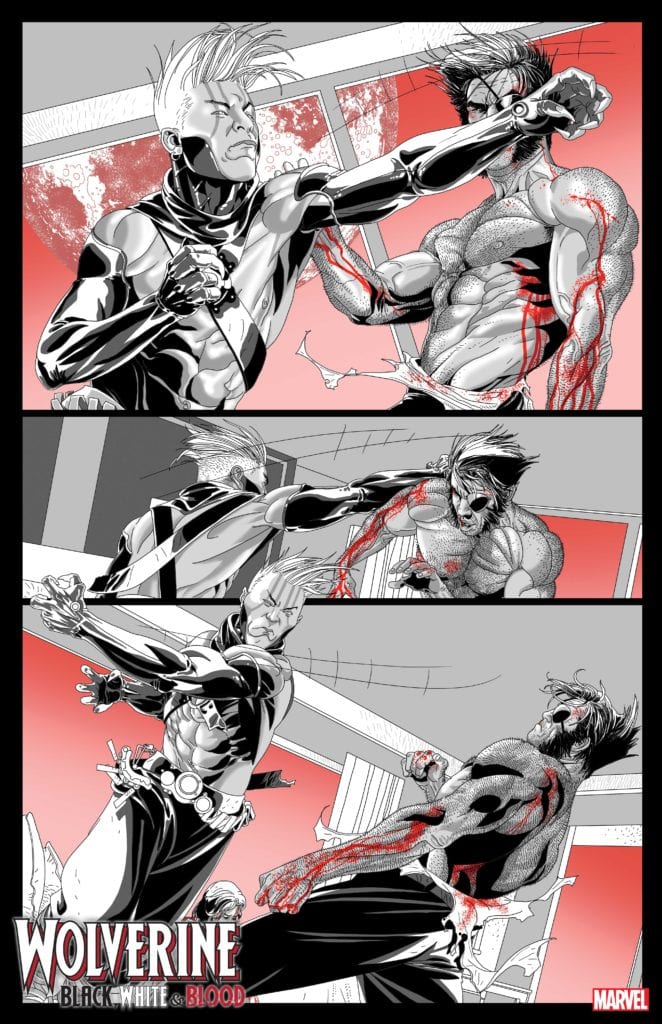
Wolverine: Black, White, and Blood #2 (of 4) hits your local comic book store on December 16, but thanks to Marvel Comics, Monkeys Fighting Robots has a six-page preview for our readers.
The book is written by Vita Ayala, Chris Claremont, and Saladin Ahmed, with art by Greg Land, Kev Walker, and Salvador Larroca.
About Wolverine: Black, White, and Blood #2 (of 4): SHARPEN YOUR CLAWS FOR ROUND TWO OF WOLVERINE’S ALL-NEW ALL-STAR BLOODY BATTLES!
The adventures of WOLVERINE continue in the visceral black, white, and blood-red format! Legendary X-scribe Chris Claremont re-teams with the incomparable Salvador Larroca to bring LOGAN back to Madripoor as PATCH, where he and KATE PRYDE face their toughest battle yet. Then, Saladin Ahmed and Kev Walker build a life-or-death catch-22, courtesy of the maniacal ARCADE, that will force Wolverine to make a life-or-death decision! Vita Ayala and Greg Land put Wolverine on a mission to stop a “cure” for the X-gene, where he’ll cross paths with his deadliest foe: SABRETOOTH!
Do you have Wolverine: Black, White, and Blood on your pull list? Comment below with your thoughts.
From Saladin Ahmed and Kev Walker’s story:
From Vita Ayala and Greg Land’s story:
From Chris Claremont and Salvador Larroca’s story:
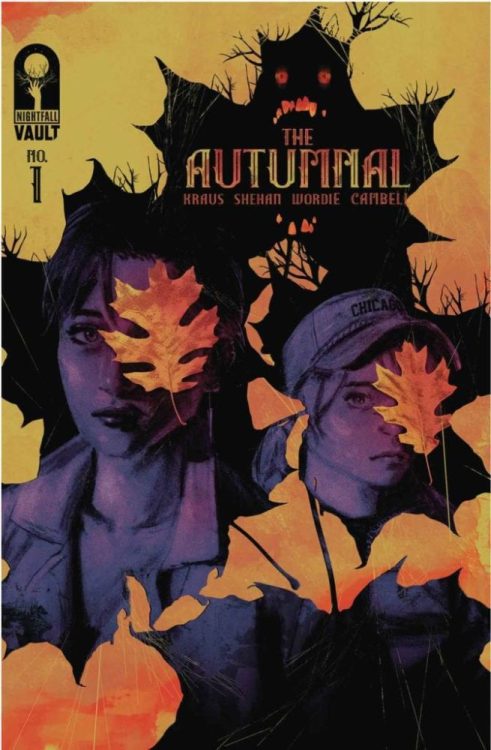
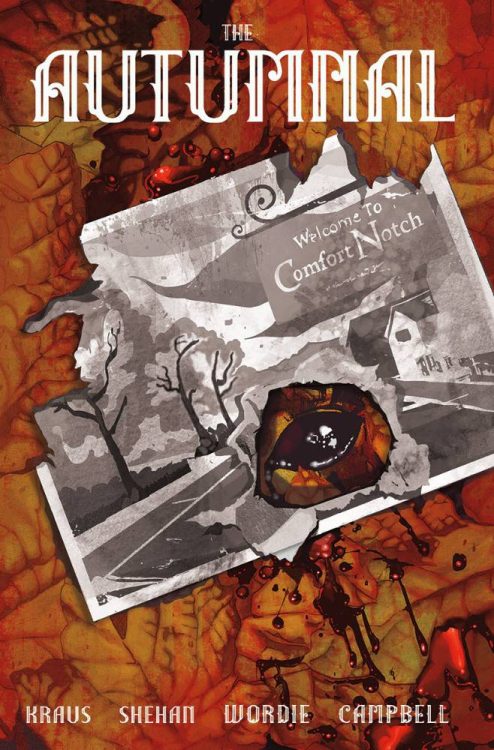
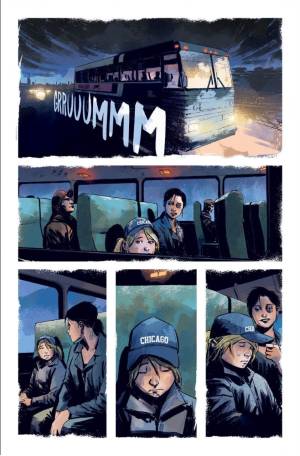
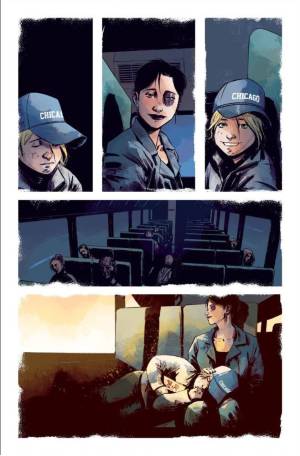
Just in time for the changing of the seasons and just shy of Halloween, acclaimed novelist Daniel Kraus (The Shape of Water, Trollhunters) and artist Chris Shehan bring readers the first issue of “The Autumnal” from Vault Comics. With help from colorist Jason Wordie and letterer Jim Campbell, this debut issue is a deceptively quiet start that will have readers begging for more with its engaging characters, measured pacing, and outstanding visual work.
“Following the death of her estranged mother, Kat Somerville and her daughter, Sybil, flee a difficult life in Chicago for the quaint – and possibly pernicious – town of Comfort Notch, New Hampshire.”
Writing & Plot
Daniel Kraus’s script for “The Autumnal” #1 offers accomplishes an immense amount of storytelling – while also doing very little. The characterization and is accomplished primarily through the considerable but not overbearing dialogue. The act of bringing the audience up to date with Kat and Sybil Somerville is also done this way, but also with the inclusion of environmental and visual context clues. This pair has had a hard life, and they don’t take crap from anyone. The pair are instantly endearing and I found myself caring about their story almost immediately. The dialogue and internal narration from Kat is primarily layered with anger and spite born out of being protective of her child, but also flecked with her own inner sadness and trauma. This representation of a low-income single mom would almost seem like a stereotype if it wasn’t portrayed so damn well and in such a thoughtful way.
Now based on what I’ve described above, you might think that this is some comic about a familial drama. Admittedly, the horror elements in this issue take their time in being presented. This is the most impressive aspect of “Autumnal” #1. The information given about the Somerville family beyond Kat’s woes is sparse and allows for the setup getting into the late pages to be as well-hidden as possible. See, this really does feel like a pointed drama for most of this comic, but its transition into an eerie horror still feels natural. There’s isn’t any sudden flip of the switch and the world turns upside down. The strangeness just steas=dily compounds until the issue’s climax. There isn’t much that can be said without giving away the plot, just know that in terms of slow-burn horror hiding the bit, this comic nails the act.
Art Direction
What gives “Autumnal” #1 its immersive and increasingly haunting atmosphere is the character-centric pencils of Chris Shehan and otherworldly colors of Jason Wordie. Shehan has a notable gift for crafting distinct characters and their expressions that makes getting into them as a reader an effortless task. Kat’s personality and hidden depths are made outwardly obvious by Shehan’s talent, as are Sybil’s deceptively complex emotional range. Just as impressive is his eye for visual directing. This comic does have a cinematic approach to how it frames character and progresses the story in the early segments. His approach increasingly hinges on cues specific to the comics medium. Building tension by leaving the focus of a scene covered but gauging the terror in the eyes of the characters is a tactic that packs a heavier punch in comics than in film, and this comic does so brilliantly. Building this comic’s unique atmosphere in a whole new way is colorist Jason Wordie (one of my favorite colorists in the business right now). Each page and/or scene is given its own color palette that bathes everything in that sequence in a hue, such a pale green, light blue, or autumnal orange. However, there are also some sequences where he introduces an effect that almost looks as though he splashed random transparent colors on the page. This look blurs the reality on the page, and is mainly used at the comic’s more unusual sections. It’s gorgeous, atmospheric, and highly detailed work that rally makes this slow-burn horror comic shine.
“The Autumnal” #1 is a successfully riveting opening chapter for a character-centric, slow-burn style horror comic. Daniel Kraus’s scrip offers a stellar portrayal of a hardened low-income single mother and her exceptionally smart but equally troubled daughter, wrapped up in a brilliantly paced and increasingly uneasy horror story. Chris Shehan and Jason Wordie’s visual work is outstanding i every regard and fills this book with the perfect atmosphere to successfully immerse the reader in its enviornment. If this kind of horror is your thing, then pick up this new printing when it hits shelves at your local comic shop on 9/23!
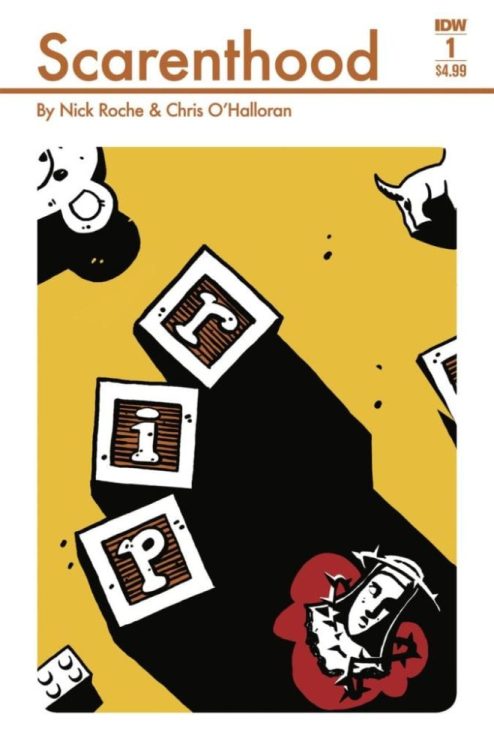
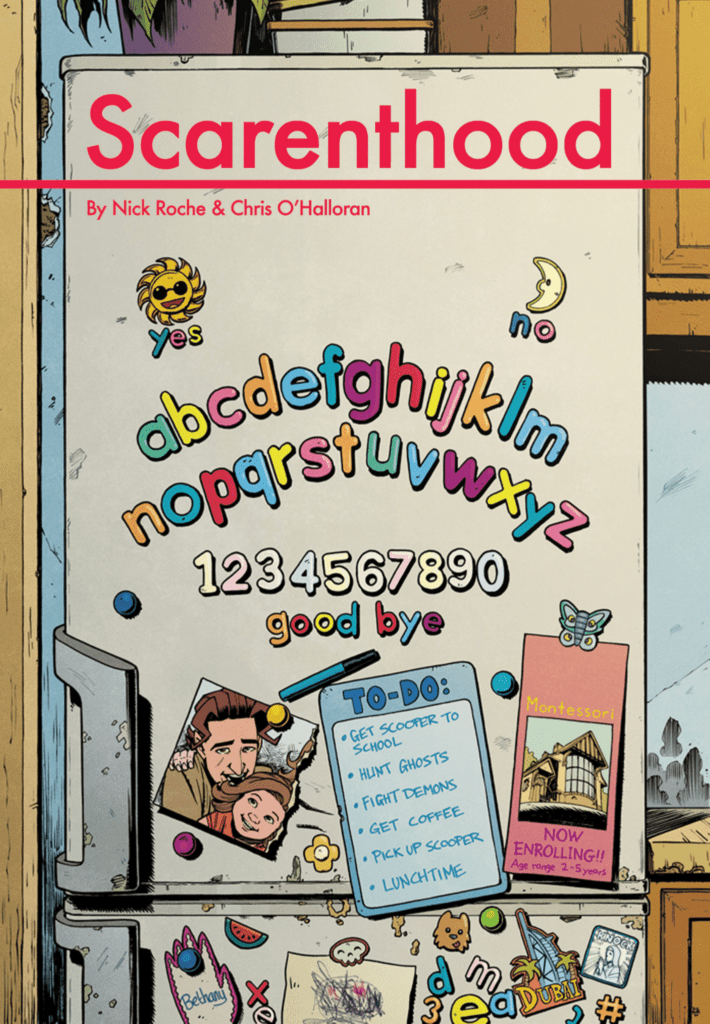
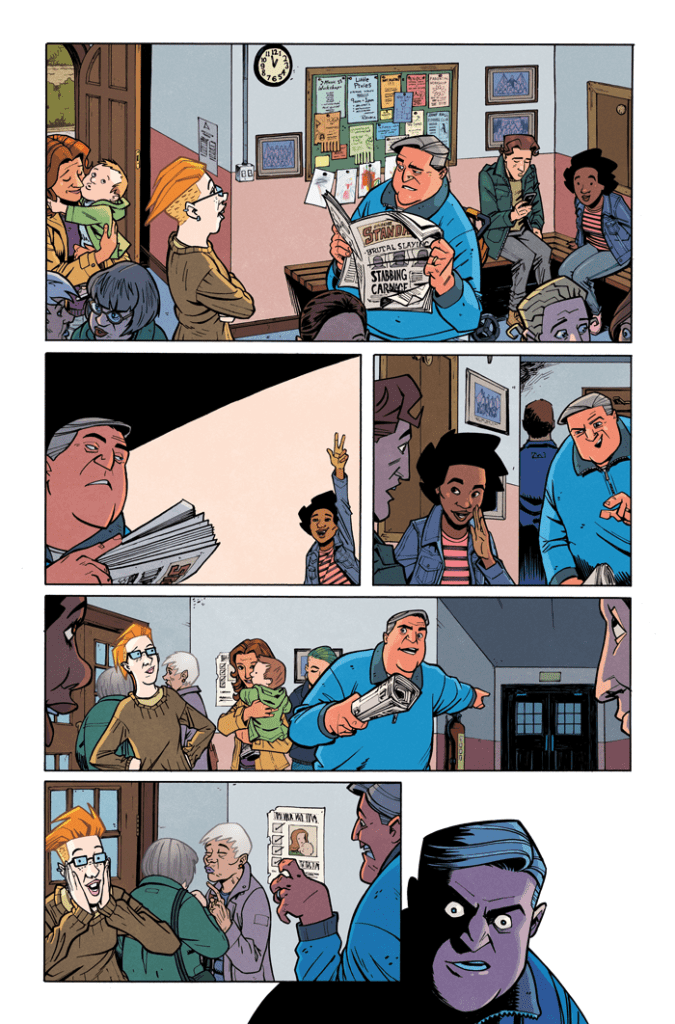
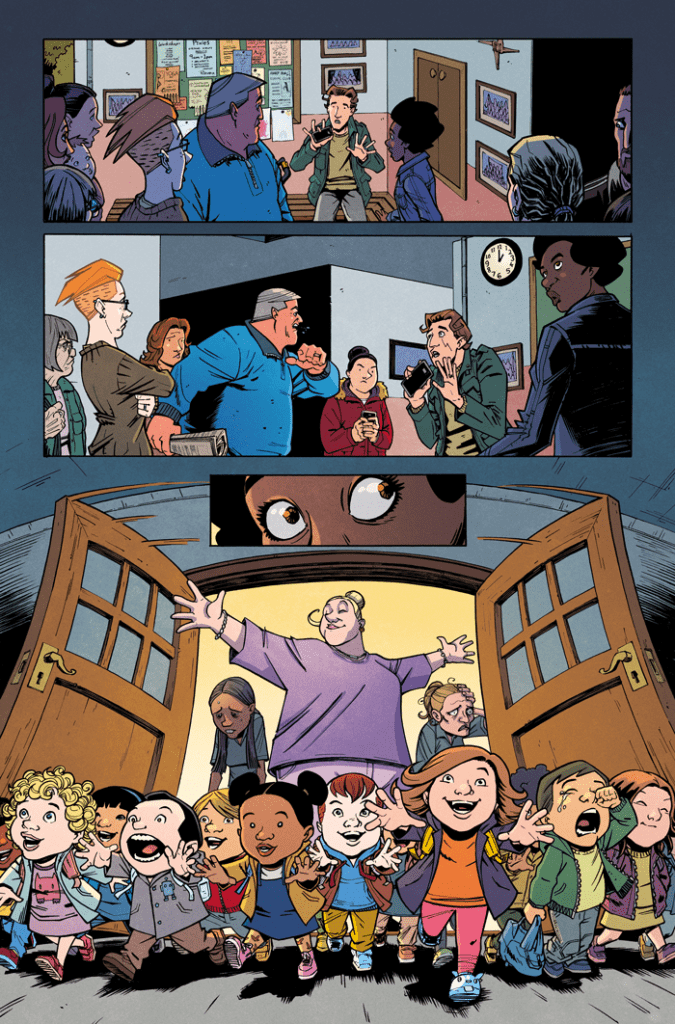
Monkeys Fighting Robots spoke with writer/artist Nick Roche about his upcoming comic SCARENTHOOD, an “Irish-set suburban folk horror” that’s as much about the fear of failing your kids as it is demon hunting.
The series is by Roche, colorist Chris O’Halloran, and letterer Shawn Lee. The logo design is by Wayne Daly, and David Mariotte is the editor. SCARENTHOOD #1 hits stores October 28th from IDW Publishing.
About the series: TO-DO LIST: Drop kids at preschool/ Grab coffee with other parents/ Go ghost-hunting in woods/ Fight demonic entity/ Collect kids/ Naptime. With their kids away on a field trip, a group of parents disturbs an ancient evil buried beneath the old Church Hall, unearthing a decades-old mystery about a missing child, and inviting something… hungry into their lives. Suddenly, their mornings go from playdates and peanut allergies, to a battle for the souls of one broken family-and one child in particular. What scares you the most: fighting demons, or letting your kids down?
Monkeys Fighting Robots: First off, SCARENTHOOD is just too good of a title to not ask about. Where did that come from?
Nick Roche: It took AGES to come up with it! And I wasn’t even trying at that stage; the early pitch was called something completely different – Chris and I still have files saved with that title. And people thought it was fine. But I could see no one was sold on it, and to be honest, neither was I. I don’t even want to share it, because I’d be worried it would taint the name SCARENTHOOD with its mediocrity. I might use it as a subtitle for a SCARENTHOOD story at some point. But the specifics of the title are lost to me, it just sort of sifted into my brain as I worked on something else, and I’m SO glad it did. Because it was one of those passive bits of creativity that happens TO you, it feels like someone else came up with it. (But they didn’t, RIGHT? Legally, that’s important to state.)
MFR: I get the sense that SCARENTHOOD comes from a very personal place — what was your thought process in coming up with the story?
NR: Eight years ago, there’s no way I could have cooked this up. But seven years ago, I became a dad and found myself emotionally, morally, and occasionally financially responsible for a little girl. Once she got to pre-school age, I found myself having to white-knuckle my way through chat with the other parents at the school gates. As a comic creator, you get used to the isolation of your own hovel, so I was very much out of my depth forging chatty bonds with complete strangers. It made me feel like I was the one starting school and navigating new social circles. A lot of us were self-employed or stay-at-home parents, and we realised that the discipline of returning to the home was solely down to us — nothing was stopping us from doing what we wanted or going wherever we liked. Of course, that mainly just meant for coffee, though I’m convinced some of the mums and dads were hooking up on the side. Rather than caffeine or canoodling, my mind leapt to ghost-hunting, and I imagined a world where the parents of pre-schoolers fight the forces of evil in the local woods while their kids are in class. And that’s pretty much SCARENTHOOD.
MFR: You have four very distinct parents at the center of this mystery. What can you tell us about them and how you developed their personalities?
NR: Cormac’s the lead — he and his daughter Scooper are new to the area (with a ton of emotional baggage), and both are having trouble fitting in. The other parents know each other from the school run already: Jen’s husband is wealthy but works away from home a lot. She’s lonely, with itchy feet and a yearning for pre-parenting excitement. Sinead likes to rile the others and crack jokes at their expense, all while observing matters as they unfold. And Flynno is an older parent who had a kid late in life after his other children had grown up. He’s an inveterate bullshitter who tries to explore the truth in the world via outlandish conspiracies, including one about a prominent Irish rock singer. He’s at the heart of the story, due to an event that befell his family over forty years ago.
I tried to select personalities and character types that complement and conflict nicely with each other. One of them is partly me, there’s a little of two of my best friends in some others, and one is loosely based on a former in-law that I no longer have to interact with. I’ll let readers guess which is which.
MFR: Horror is one of the hardest genres to get “right” in any medium, but I feel like comics are especially difficult since you can’t utilize music or other shortcuts — you have to rely purely on your skills as a storyteller. Do you have any preferred storytelling moves or techniques that you use to scare your audience?
NR: It’s an odd one; I’m 100% not a ‘Horror Guy’. We were pretty sheltered as kids, and just weren’t allowed near anything stronger than a PG cert movie. So by the time I was legally allowed to watch horror stuff, my curiosity had died down, and I never really dived into it. And yet… as soon as I got the chance to write my first comic (Transformers Spotlight: Kup), I basically wrote ‘I Am Legend, With Robots’. Just full-on horror featuring psychological breakdowns and creepy nocturnal Zombots. Then with the Wreckers series I followed that up with, I leaned into mechanised body horror, with the odd giant spider. And now I’m writing about parental anxieties and adult isolation… via ancient demonic entities and haunted Catholic effigies. It’s still a surprise to me.
I like to employ multiple panels per page in the instances of high tension. A quick-paced rhythm of intensifying close-ups on a character as something starts to dawn on them, or intercutting panels of something terrible with the object of its ire. Repeated panels are good too, with a gradual change across them as the situation becomes more tense. Oh, and loads of black. Tons of the stuff. Jesus, so much of it.
MFR: How does being both writer and artist make it easier to tell a horror story, and how does it make it more difficult?
NR: For instances like the above where I’m playing with very specific panel layouts, it really helps that the writing and art are coming from the one person, because they’re coming from the one place; the script was written via thumbnails, so I’m able to structure the story around the best visual way to share that information. Any drawbacks are mainly of the normal ones I feel with making comics, which is the voice in my head that’s asking, “Are you SURE you’re doing this right?” That can be a little stronger when it’s horror, because as I say, I’m not very well steeped in the genre, and I may think that someone whose parents loved them enough to let them watch all of Driller Killer would probably do a better job than me.
MFR: Chris O’Halloran’s colors are seriously next-level on this book — he can shift the tone from “everything’s fine” to “shit just got real” on a dime. How involved is Chris in the development and storytelling process?
NR: Well, you can see for yourself just how much he’s bringing. He’s utterly in control of the tone of each scene. If there’s anything lacking in the line-art, atmosphere-wise, he finds a way to wrest control of the moment and make the reader realise, “Right, THIS is how we’re gonna make you feel.” He just gets better and better too — the pages he’s handing in for the final issue are THICK with atmosphere. And he’s perfect at capturing the feel of the location too. It was so important to have an Irish colourist to share the visual shorthand when it comes to the environments, but he’s exceeding that. There’s a scene set in a particular location in urban Dublin, and you can smell the fossil fuels from it. I say this to everyone: I can’t BELIEVE I’m getting to work with him. He’s amazing.
MFR: Horror is a very intimate genre, especially in a small-town folk horror like SCARENTHOOD. How do you approach a story like this as a writer/artist compared to something bigger and more action-driven like TRANSFORMERS?
NR: I think with the Transformers stories I wrote, I was starting to explore the concept of family dynamics, and a look at what a parental relationship would mean between a robot that turns into a helicopter AND an armoured car, and one that turns into a giant spider. After I hoovered up every Eisner going with those, I tried to bring that focus to humans. Plus, I’d worked in lots of horror beats into my TF work, so apart from a few explosions and character switching between humanoid and fighter jet mode, there are fewer differences between my own Transformers work and SCARENTHOOD than you may think.
Though SCARENTHOOD is drawn in a cartoony style, its settings are taken from real life, so there are times when I feel like going detail crazy on some mech backgrounds that come from my imagination, rather than take a reference shot of how exactly the folds sit on a three-quarter-length jacket. But then, when I’m drawing hundreds of robots, SCARENTHOOD is exactly the sort of thing I wish I was drawing…
MFR: In your mind, what is the perfect horror story of any medium?
NR: I’m a big fan of MR James’ short stories, and he’s one of the biggest influences on SCARENTHOOD. So it’s either “Oh, Whistle And I’ll Come To You, My Lad” (including the great Jonathan Millar adaptation from 1968) or Ghostwatch, a one-off BBC Hallowe’en hoax-umentary special from 1992 featuring a suburban family terrorised by a sinister presence that viewers (including myself) believed was real at the time.
MFR: Who are your horror inspirations, the writers and filmmakers who made you want to make SCARENTHOOD?
NR: There’s so many gaps in my knowledge of horror, I’m starting to feel like a real tourist here… It’s hard to go wrong with any MR James stuff, and the BBC adapted a ton of them back in the 1970s, all shot on videotape. These adaptations all have a hauntological feel of their own, and even though their period pieces, that sense of creepy nostalgia is something I want to tap into with SCARENTHOOD. I’m a big fan of an animated short called The Sandman from 1991 which has a deliciously gruesome sting in its tale. (And kids in danger; always good to lean on that trope!) And an odd one, but for kids in Ireland, every St Patrick’s Day meant a showing of Darby O’ Gill and The Little People, whose depiction of The Banshee and a headless coachman to deliver you to the afterlife absolutely shat me up. Basically, it’s Disney and The BBC’s fault.
Big shout-out to From Hell, also. That caused me to sleep with the light on when I first read it. In my mid-twenties.
MFR: And finally, we’re all going through some tough times right now — what are your go-to comfort comics?
NR: Current stuff I’ve been enjoying are [Kieron Gillen and Dan Mora’s] Once And Future, and John Allison’s web series, Destroy History and Steeple. A highlight of lockdown was devouring Simon Furman and Geoff Senior’s Dragons Claws in one go, and writing that has made me want to do it again. I’ve mainly been reading the reprint of The Pan Book Of Horror, a 60-year old anthology with VERY outdated attitudes and verbiage, but has a good hit-rate for nasty little scares. Hmm. Maybe I am becoming a Horror Guy…
Thanks again to Nick Roche for taking the time to chat with us! SCARENTHOOD #1 is out October 28th from IDW Publishing.
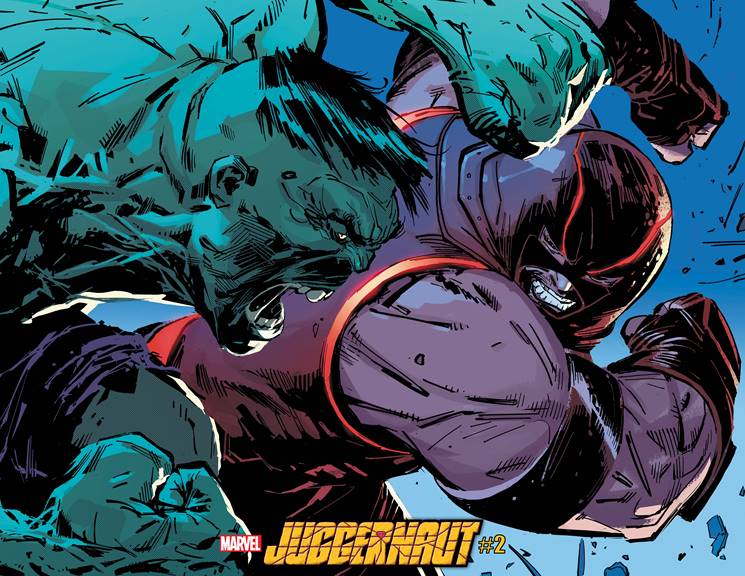
When the strongest Avenger collides with the unstoppable Juggernaut, it’s safe to say they’re going to make a mess. Marvel Comics invites you to take a front row seat at the strong man battle of the year between the Hulk and the Juggernaut in JUGGERNAUT #2, available to retailers on September 28th.
Says Marvel of the upcoming issue: “it’s Juggernaut VS Hulk in an epic clash that will shake the Marvel Universe to its core—literally!” You can check out an exclusive preview image and read the full Marvel press release below.
Can you think of a better matchup? Let us know what you think in the Comments section, and please share this post on social media using the links below.
THE UNSTOPPABLE GOES UP AGAINST THE STRONGEST THERE IS IN JUGGERNAUT #2
New York, NY— September 24, 2020 — Renowned X-Men writer Fabian Nicieza (X-Force, Deadpool) and celebrated artist Ron Garney (Captain America, Daredevil) are taking the unstoppable Juggernaut in a bold new direction with a brand-new series! JUGGERNAUT #1 hit stands yesterday, and fans learned that Cain Marko’s new path is as full of destruction and mayhem as ever before. The action continues next month when a matchup that True Believers have debated about for decades comes to life. That’s right —it’s Juggernaut VS Hulk in an epic clash that will shake the Marvel Universe to its core—literally! Get an exclusive look at this legendary battle now by visiting Marvel.com.