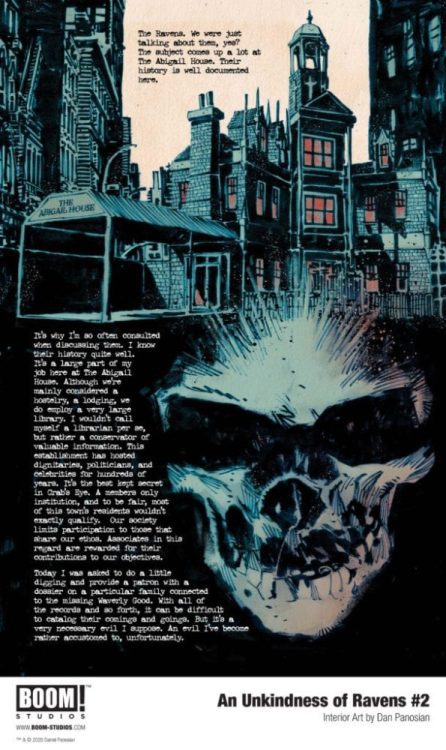
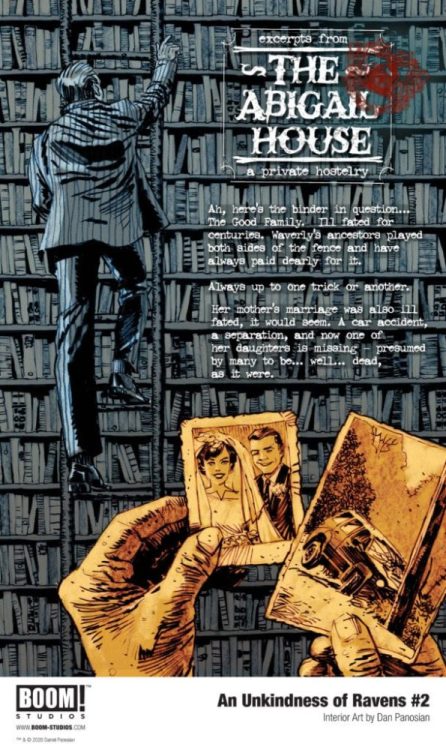
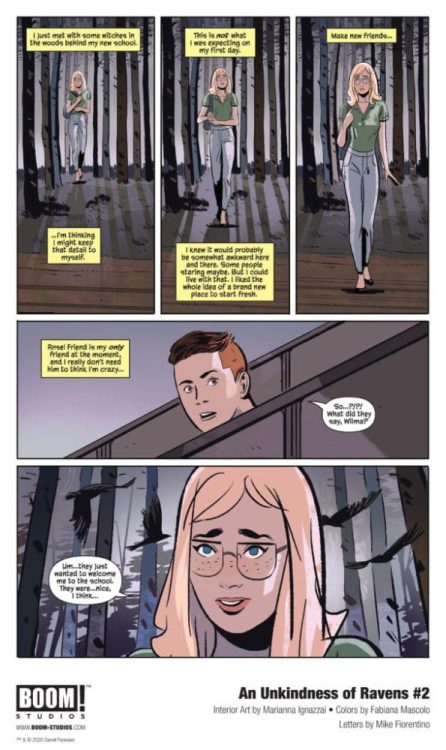
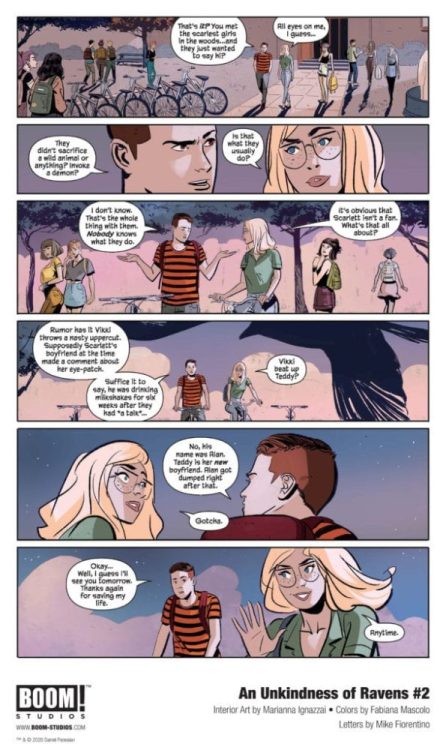
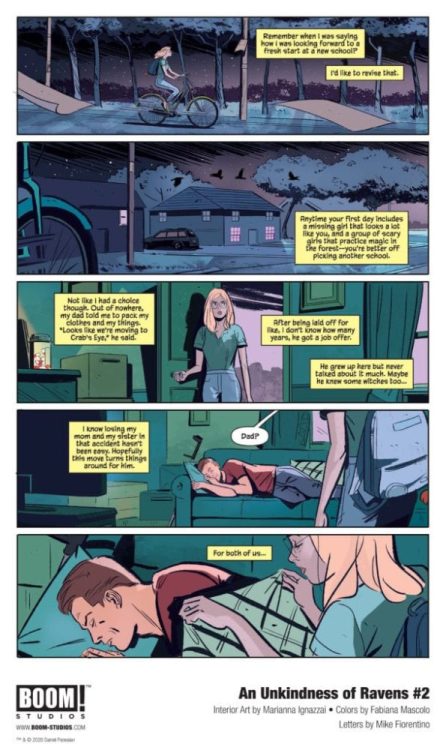
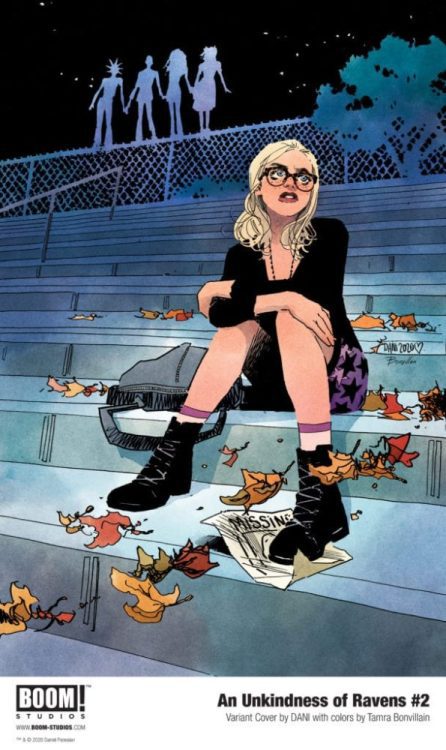
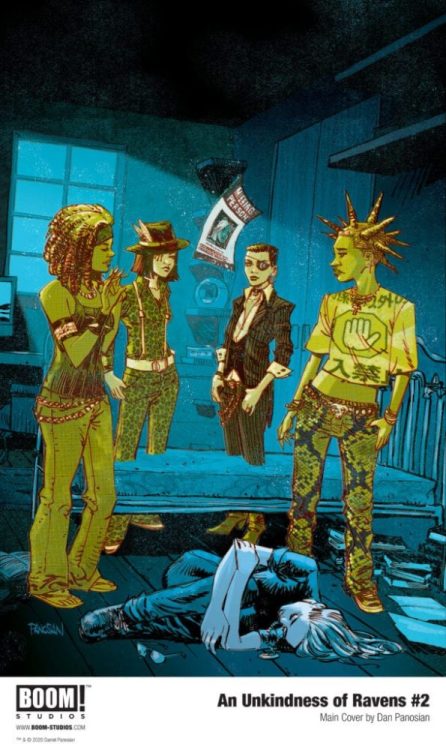
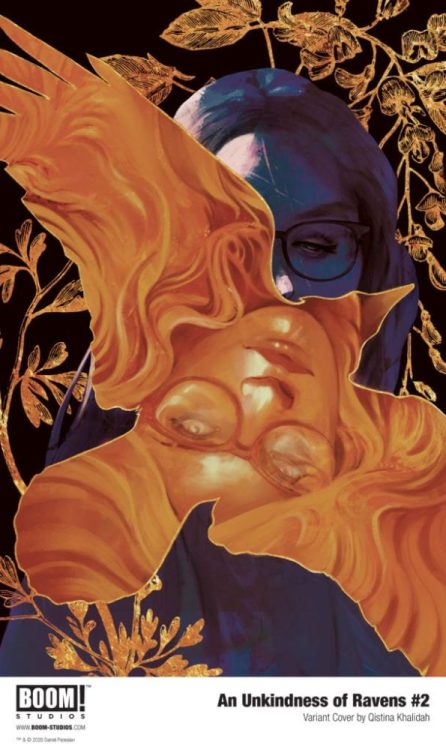
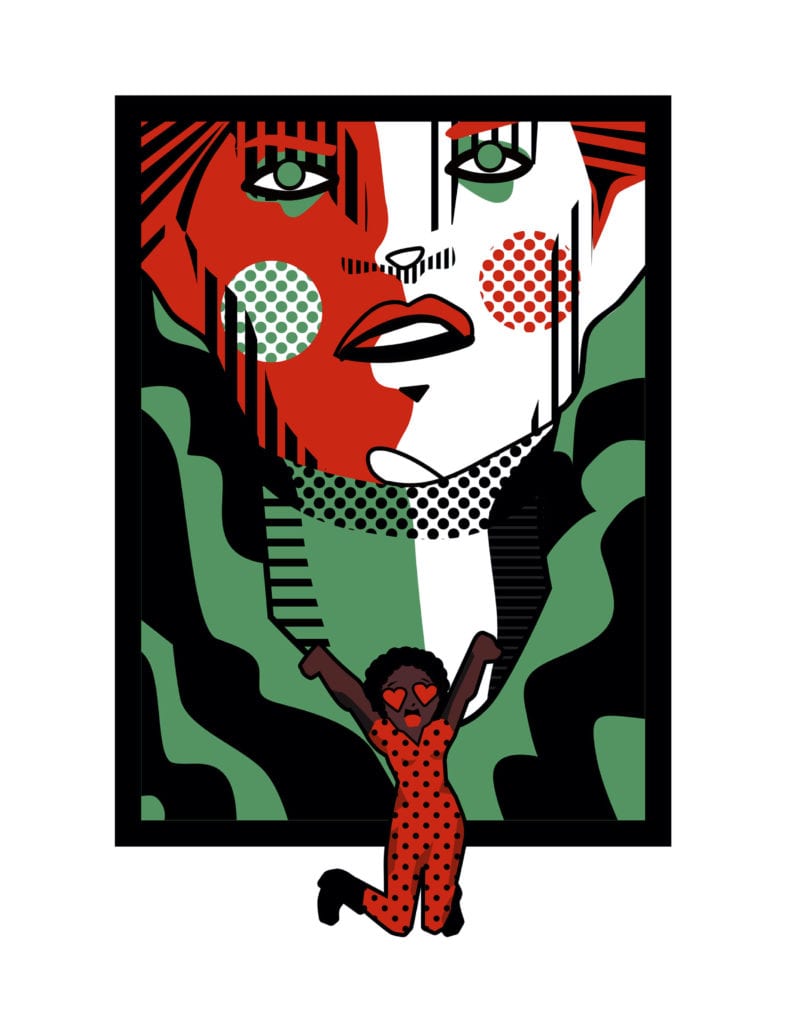
An Unkindness of Ravens #2 hits your local comic book shop on October 28, thanks to Boom! Studios, Monkeys Fighting Robots has an exclusive first look at the issue for our readers with five interior pages and three covers.
The book is written by Dan Panosian, with art by Marianna Ignazzi, Fabiana Mascolo drops the color, and you will read Mike Fiorentino’s letter work. An Unkindness of Ravens #2 features a main cover by Panosian and variant covers by Qistina Khalidah and DANI.
About An Unkindness of Ravens #2: Wilma is being courted by the Ravens, a group of witches who want her to join their coven. But Scarlett, the most popular girl in school, wants Wilma for herself. But Scarlett, the most popular girl in school, has eyes on Wilma herself, and her motives may not be as genuine as they initially appear…
Check out the preview below!
Do you have An Unkindness of Ravens on your pull? Comment below with your thoughts.
About the series: * Not all the witches burned during the Salem Witch Trials – and the ones that survived did so together. Now, generations later, their descendants protect the ancient secrets entrusted to them. They call themselves the Ravens.
* Wilma is the new girl in school, and she plans to go completely unnoticed – except that she bears an eerie resemblance to the Raven member Waverly. And Waverly just went missing.
* But the truth behind Waverly’s disappearance will put the entire coven in danger – and Wilma will have to rely on power she never knew she had if she wants to save her new friends.
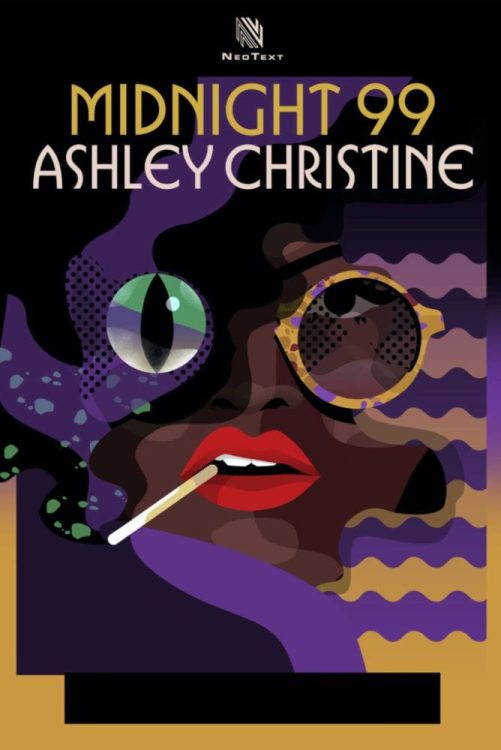
Midnight 99 is available digitally through Amazon for $2.99 on October 6. Thanks to NeoText Publishing, Monkeys Fighting Robots has an exclusive look at chapter 2 of Ashley Christine’s debut novella, a classic hard-boiled whodunnit. (Scroll to the bottom to read the book.)
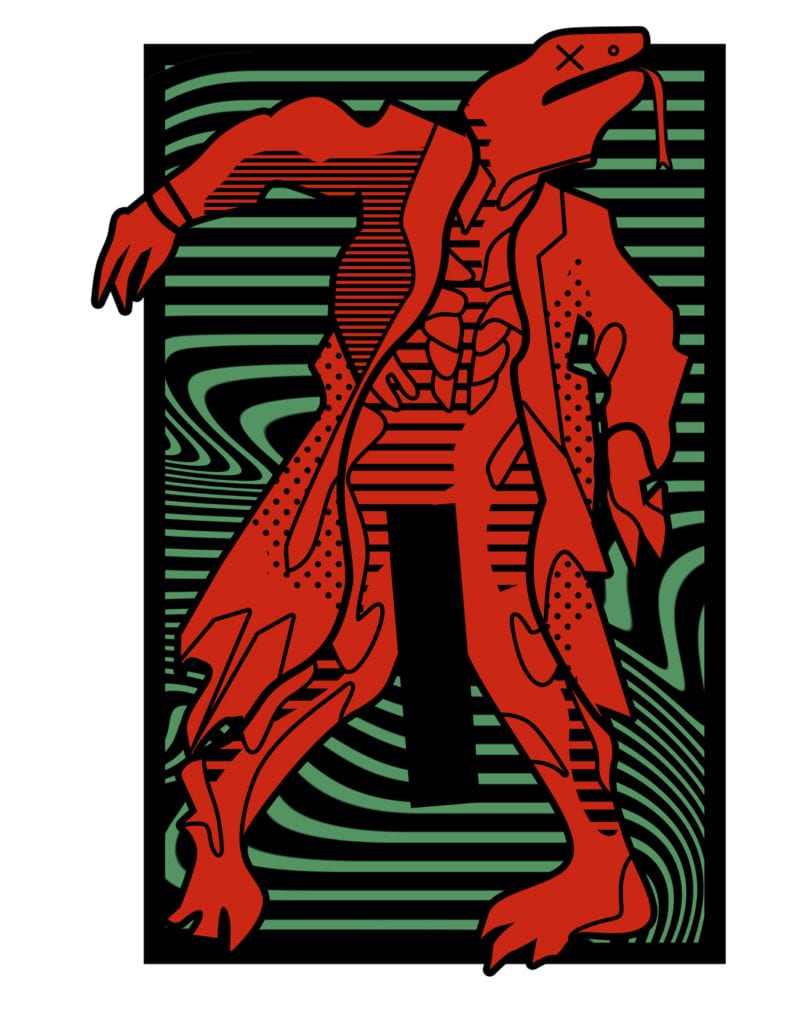
“MIDNIGHT 99 is a reaction to my frequent existential angst of living on a planet that my species is slowly destroying,” – Christine.
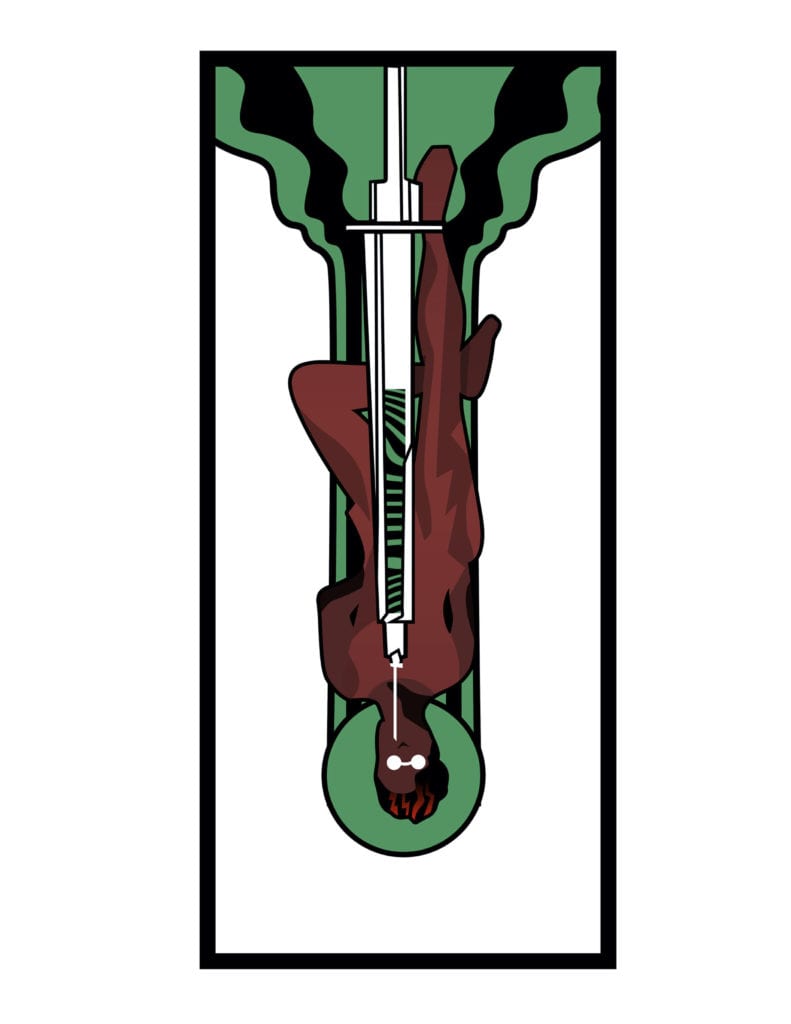
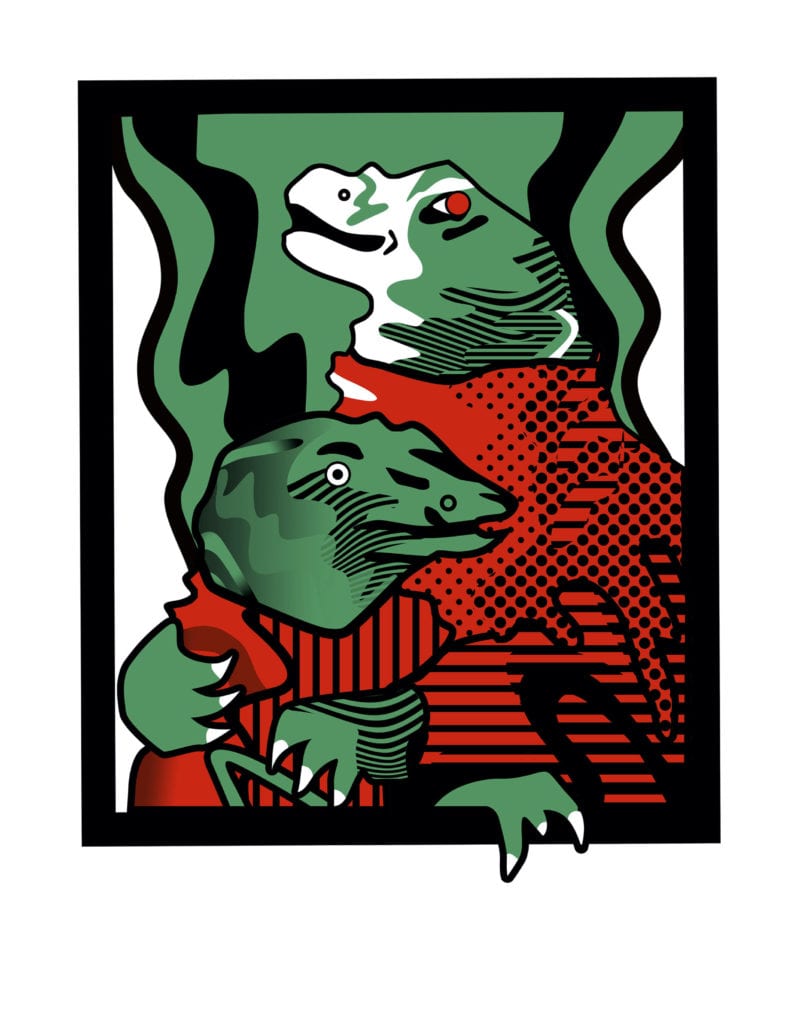
“When I couldn’t find an answer as to why we humans are so out of sync with our environment, I made up my own—which is that giant Reptilian space Lizards are using humans to terraform planet Earth to an ideal Lizard temperature. They also created the patriarchy, wealth inequality and were producers of Eddie Murphy’s 1985 hit ‘Party All The Time.’” – Christine.
Also, as a genderqueer/non-binary woman and unabashed eccentric, I wanted to create a character that someone like me could relate to. Enter Tulsa Kalhoun, a chaos-baiting, genderfluid, bisexual dumpster fire of a human being. She’s the unholy spawn of Hunter S. Thompson, Grace Jones, and Tank Girl. She is loud, unapologetically herself, and always just a little bit horny. Like me, she’s queer and a weirdo—a queerdo. Which is a word I just made up. And trademarked.” – Christine.
About the book: Meet Tulsa Kalhoun. Once upon a time she was a well-respected, pantsuit-wearing broadcast journalist— until an inconvenient supernatural awakening left her career and sanity in tatters. Now she stumbles through this world peddling a private pharmacy of perception-expanding herbal narcotics, made with plants you’ve never heard of from places not found on maps. But when Tulsa wakes up in a hotel bathroom on the eve of the secret unveiling of Earth as the ultimate Reptilian vacation destination, blacked out from a particularly indulgent vision quest bender, she knows that she’s supremely and epically screwed. Because a supposedly unkillable Lizard Overlord named Doug is dead on the toilet.
With no memory of what happened— and an ever more tenuous hold on the daily cocktail of alien pharmacologicals that barely keep her tethered to this plane of existence—Tulsa has to retrace her steps, searching for clues of how she got to her current predicament. She’ll have to wade through a swamp of daunting challenges and colorfully shady characters like the Illuminati, the Youthinati, debauched Reptilian tourists, kinky gray aliens who are way too into butt stuff, Neckties, Necronauts, off-brand soda, her super-hot half-human half-Lizard ex-girlfriend, and her own self-destructive tendencies.
Marvel Comics released X-Factor #4 on September 30. Writer Leah Williams, artist Carlos Gomez, colorist Israel Silva, and letterer VC’s Joe Caramagna continue the story begun in X of Swords: Creation #1, showing the aftermath of the battle in Otherworld, the fates of the fallen mutants, and raising the stakes of the upcoming conflict with Apocalypse’s children by throwing a wrench in Krakoa’s resurrection protocols.
While X of Swords: Creation established that the X-Men would pick ten champions to fight on behalf of Krakoa, it was easy to wonder, “What’s the big deal? These characters will be resurrected anyway” (not just in a typical comic book-y way, but in a Krakoan resurrection protocol way). Sure, even if they were resurrected, their loss in the tournament will still ensure the invasion of Krakoa by Arakko. This issue, however, really raises the stakes by revealing that one’s death in Otherworld messes up one’s Cerebro back-up, replacing it with some Otherworld amalgamation of one’s identity. Indeed, we learn in this issue that while a version of Rockslide has returned, this is not the same character who died in Otherworld, and so Krakoa suffers its first real loss and permanent death. This event just got some teeth!
Polaris takes center stage in this issue, caught between her grief over Rockslide’s death, her inability to stop it, and her father’s harshness. It is truly heartbreaking to watch Lorna gather the pieces of Rockslide as she mourns his loss and carry his pieces off into the night. Gomez’s artwork does a good job capturing Lorna’s emotions in her desperate gathering and clinging to Rockslide’s remains and her forlorn wandering into the night.
But there is an arc here that ends in triumph, as Lorna works through the darkness of the night, Gomez and Silva portray Lorna the next morning as having gone through her dark night, having understood Lady Saturnyne’s message to her, and constructed a casting circle out of Rockslide’s remains as a tribute to him.
There is a beautiful image of the image drawn by Gomez and colored by Silva of Polaris standing in the center of the sunrise, with a gorgeous lens flare. This is juxtaposed to a sad-looking Apocalypse who sits in the darkness being scolded by Xavier and Magneto, who note that no one will miss him. In some ways, Apocalypse’s own despair mirrors Polaris’s, and as the sun shines on her, so does the morning sunshine in on Apocalypse, as Caramagna’s letters present Lorna’s inner monologue about pain, redemption, and the hope for something better. As the sun has shone on Lorna, so it may shine on Apocalypse once again.
X-Factor #4 was a strong second chapter to the X of Swords event, elevating the threat that Krakoa faces and potentially shaking up Krakoa’s status quo. The possibility exist that some of the residents of Krakoa may not make it out alive, or, since this is comic books, may at least have their characters or personalities transformed by the time this event ends.
What did you think of X-Factor #4? Tell us in the comments below!
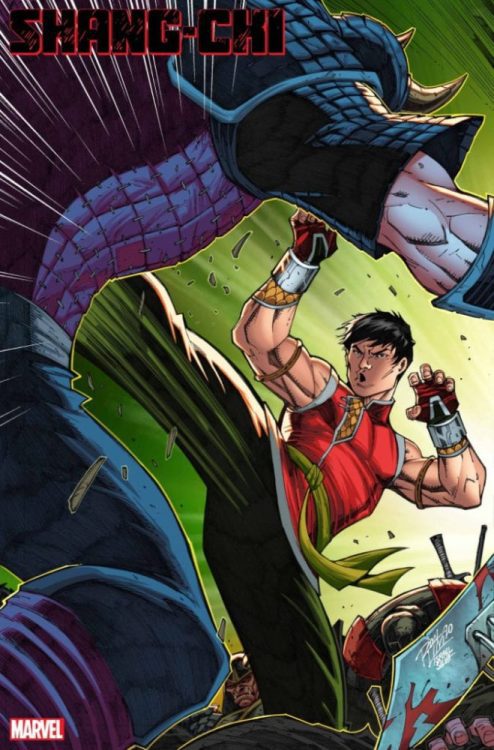
Shang-Chi #1 Alternative Cover Credit: Marvel Comics
Marvel Comics are masters at putting out Superhero comics packed with action and adventure. In today’s market, however, it seems that every comic has to distil the feeling of a multi-million dollar movie into 22 pages without losing the sense of grandeur, and excitement. With limited space to tell a strong narrative as well as pack in the excessive action, the creators at Marvel have to limit sequences to a handful of panels. This poses interesting dilemmas when it comes to portraying fight scenes, especially with highly choreographed fighting styles required for such titles as the new Shang-Chi.
In Brothers and Sisters part one, writer Gene Luen Yang and artists, Dike Ruan and Philip Tan, are tasked with launching a new title that will appeal to new and old readers alike. Whether or not they are successful or not remains to be seen but their approach to the storytelling is definitely an exciting one.
A number of different factors can limit storytelling in North American comics: page count and cost per comic are two main elements. It’s much harder to fill an entire chapter or issue of a comic with a single fight scene when that constitutes a fourth or fifth of your total page count. In order to capture the feel of those intense combat sequences from, for example, Manga books, artists Ruan and Tan use condensed imagery and clever panel layouts.
Spoiler Warning: The following breakdowns contain minor spoilers for Shang-Chi #1
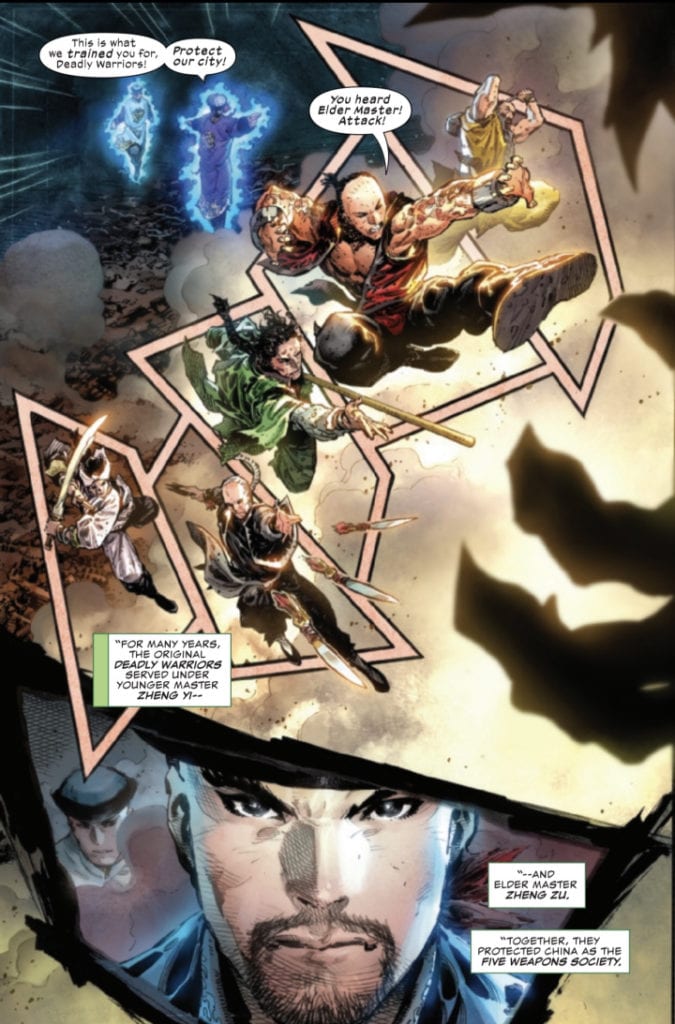
There are three different approaches to capturing the dynamic action in issue one of Shang-Chi. The first, used in the opening flashback sequence by Tan, is to break up a single image with a number of unusually shaped panels. Page four of the comic has the Elder Master send his Deadly Warriors to do battle with Fin Fang Foom. The page is designed like a full page spread, one moment in time with the Warriors leaping into battle, however Tan has broken the image up to create the impression of a string of panels thereby extending the time period within the page. Add to this an overly large insert panel, with a close up of the Elder Master, and Tan is able to create the sense of a long and difficult battle with, essentially, a single image.
There is a line of action on the page starting with Zheng Zu in the top corner. His sweeping arm leads the reader to follow the action diagonally up the page from left to right, following each of the Warriors in turn. You start at the bottom of the diagonal sweep and jump from character to character, reading as if it is a sequence of separate panels because Tan has placed borders behind them . There is no real narrative need for those borders, however from a visual point of view it focuses the audience’s attention and forces you to read each character one at a time. You can see the team but you also get a sense of the individual.
Tan has created a page grid that distorts the reader’s sense of time. You relate the characters to each other because they are part of a single image but you also see them independently. Each has an action, a skill unique to themselves and Tan highlights each of their actions in turn. There are no more pages to this fight scene, the villain turned up at the bottom of page three and the entire fight is contained within page four. However, by focusing on each character separately and as part of a whole, the audience pieces together a series of events and conjures up the entire fight in their mind. You turn the page believing you have witnessed a full and difficult battle.
Shang-Chi In Action Credit: Marvel Comics
One Image Or Many?
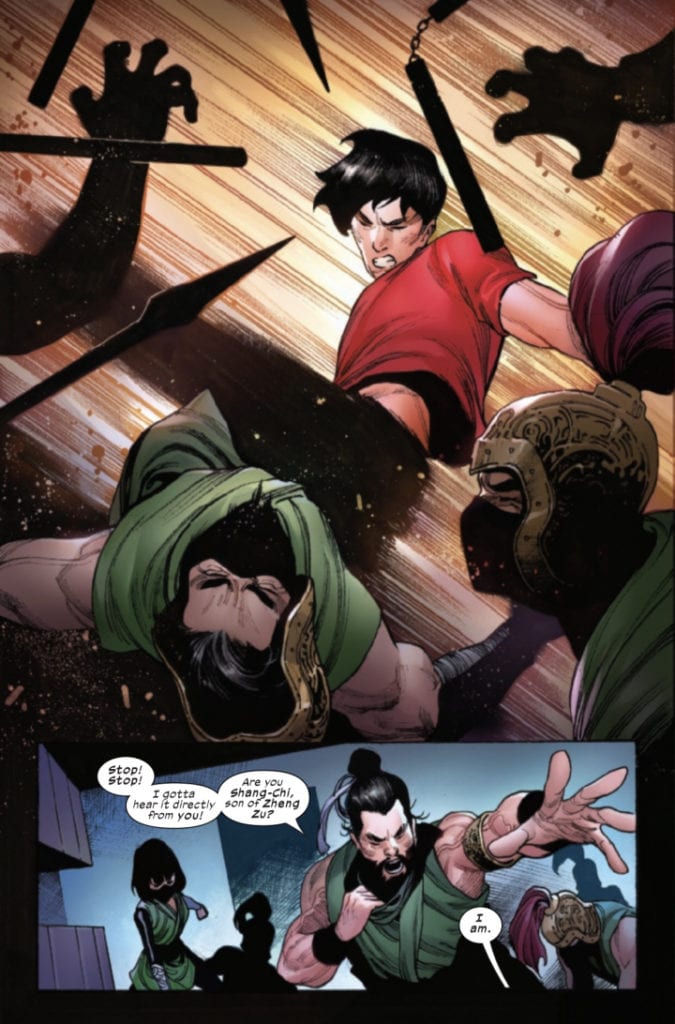
Ruan also uses a large single image to depict a moment of action but this is different in two respects. On page 17 the title character Shang-Chi is embroiled in a fight with a swarm of Warriors of the Deadly Staff. Two thirds of the page is taken up with Shang-Chi striking out with a roundhouse kick. In contrast to Tan’s earlier page, this image represents a single moment in the battle and instead of stretching the time out, Ruan shortens it to emphasise Shang-Chi’s deadly speed.
Much of the image is static: Shang-Chi’s torso and head, and the warriors that he is striking. His leg, however, becomes a blur, fading out towards his foot. Ruan is showing that Shang-Chi’s kick is moving faster than your eyes can see. The background is replaced by motion lines and a brightening light that is centred on Shang-Chi. Everything about the image is about speed and power. It is a snapshot of the fight and even then it is difficult to focus on Shang-Chi’s movement.
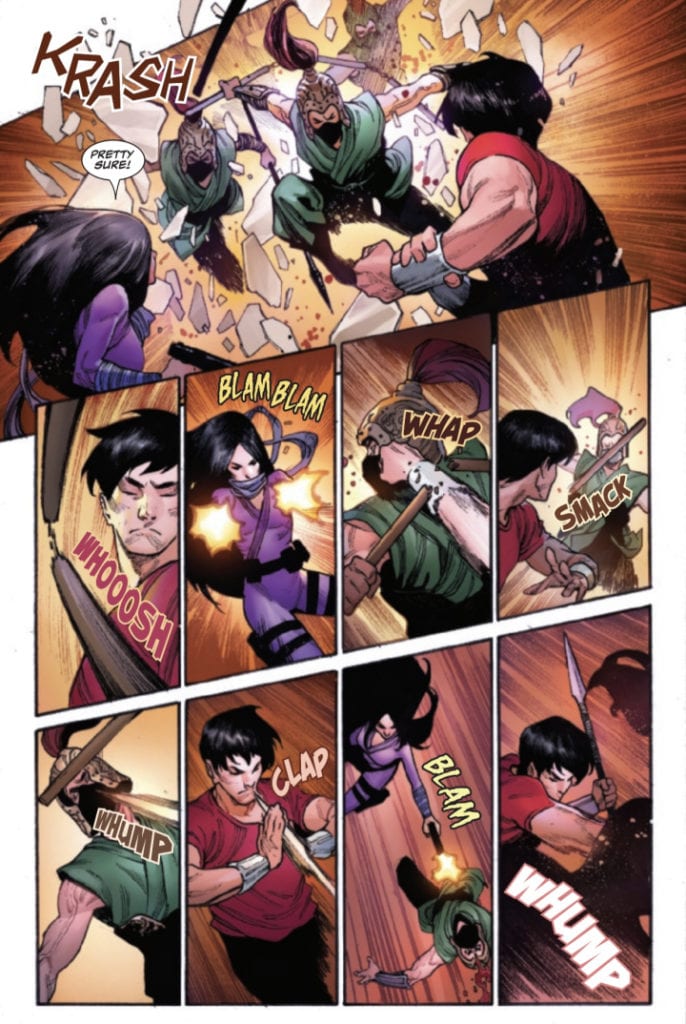
The rest of the fight follows a more standard Superhero comic layout. The start of the fight, on page 16, is broken down into panels with an obvious grid layout. The shock moment of the warriors breaking through the wall extends across the top of the page. It is the biggest, most dramatic moment on the page and therefore is given the most space to occupy. Afterwards the reader is treated to a series of snapshot actions, seemingly unrelated to each other. Shang-Chi avoids some nun-chucks, Leiko Wu shoots her guns, and various warriors get struck in the face. It is a series of events, small moments that add up to a greater whole.
Almost opposite to both previous examples, Ruan is showing staggered elements of the fight, insinuating outcomes although a closer examination shows that this is not a string of actions and consequences but simply standalone actions. There are no backgrounds as these have been replaced by movement lines which further distorts the sense of timing for the sequence. The layout may be different to Tan’s page but the outcome is the same. The reader is given an impression of the totality of the fight, filling in the gaps left by the gutters and the page turn.
Everyone loves a good action scene but, just like in cinema, some serve an artistic purpose beyond the narrative. Style and aesthetics are as important, if not more important, than the narrative function and if produced well can alter an audience’s view of the whole. Each of the three different approaches to displaying action takes a different route but their goal is the same. They illustrate the style and finesse of the fighters. In the scenes mentioned above the fight itself isn’t as important as what the fight says about the characters.
Tan’s flashback sequence has an element of Myth about it. It depicts a frozen moment in time while containing all the elements of a Legend. In contrast Ruan’s uses modern comic techniques to illustrate a modern fighter. A comparison between the two allows the reader to see where Shang-Chi has come from, where he currently is, and where his future lies.
Not only do the artists bring a sense of power and dynamism to the fights, equal to any live action movie, but they are also able to use the scenes to comment on character and narrative. This condensed storytelling frees up more space in the comic for the narrative to flow. It allows for more plot and more character to be included without losing the action and excitement that most readers will be expecting when they pick up Shang-Chi #1.
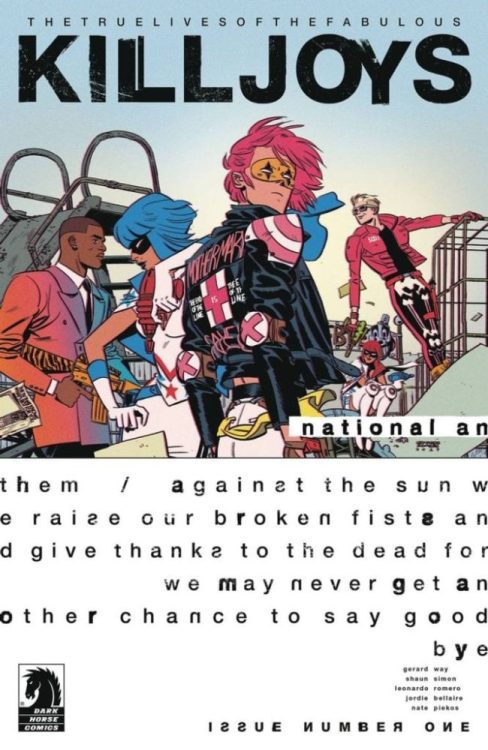
Writer Gerard Way (Umbrella Academy, Doom Patrol, and a singer of a semi-popular little musical act known as My Chemical Romance) joins with co-writer Shaun Simon and artist Leonardo Romero to return to tell the tale of what started the Killjoy’s ride against capitalist censorship and rad times in “The True Lives of the Fabulous Killjoys: National Anthem” #1. Along with colorist Jordie Bellaire and letterer Nate Piekos, this first of six issues attacks its readers with sensory overload and creative narration, aided by outstanding artwork and an impossible to dislike aesthetic. Equal parts The Invisibles and They Live!, “National Anthem” is sure to be a hit with fans of Way’s work and batshit crazy comics fan alike.
“After the Analog Wars, the Killjoys lost their way — and their memories. A rat chews through Mike Milligram’s TV cord, and reality unravels. But when his Ramones records disappear, Mike remembers what the Fabulous Killjoys and some toy rayguns can do. Gerard Way and Shaun Simon take it all back to their original concept, rebooting the Killjoys in present-day America, where it’s impossible to tell what’s real and what Mom and Dad just tell you to keep you calm.”
Writing & Plot
This series’s standing as both a prequel and a soft reboot of the original Killjoys story honestly strengthens “National Anthem” in terms of its readability and its ability to stand alone as a comic. Gerard Way and Shaun Simon blast the reader with esoteric information at a lightning pace as it is, so not being relied upon to have read the previous series for better understanding helps out by itself. This being said, having read the previous series, as well as Way’s other works and knowing the aesthetic and style of My Chemical Romance’s Danger Days album, which this comic is based on, will help prepare you for its unapologetic weirdness. Make no mistake, this is a “weird” comic. Way has worn his love of Grant Morrison’s work on his sleeve both in-person (Morrison actually portrayed the villain in a couple MCR music videos for Danger Days) and in his own writing. In many ways, this feels like a love letter to the Mad Scotsman’s own style. The way that Way and Simon use both outlandish and unnaturalistic dialogue, as well as almost frantic chaos-poeticism will be welcome to readers who anticipate and/or enjoy this style, but could be alienating to those who won’t see it coming.
While I understand Way’s love for Morrison’s style and writing approach (he’s one of my favorites as well), there’s a point where tribute becomes emulation. “National Anthem” comes very close to hitting that point. When I said earlier that this comic is a mixture of The Invisibles and John Carpenter’s They Live, I meant that literally. This issue really does read like an Americanized retelling of Morrison’s Vertigo counterculture epic mixed with the anti-commercialization messages of Carpenter’s film quite clearly in blatant black and white. For anyone who is somehow unfamiliar with these works and still reads comics, then this won’t be an issue. However, as much as I enjoy this book, it’s so blatantly obvious that it has to be called out. Even with this gripe though, it’s hard not to be impressed with the sheer talent and panache that Way and Simon pull off this comic’s written execution. Not only does it move at a lightning pace without ever losing the audience, but it accomplishes an insane amount of storytelling for a 48-page issue. Yes, that is a double-sized comic, but the pacing and plot traveled in that span is seriously impressive. Way and Simon do such a stellar job at familiarizing the reader with this insane world and its cast while also nailing down this esoteric writing style that it’s hard not to be impressed by this comic’s sheer bombastic-ness.
Art Direction
The pencils of Leonardo Romero in “Killjoys: National Anthem” #1 are just as eloquently everywhere-at-once as the script, offering a multitude of styles while maintaining a detailed professionalism that’s difficult to replicate. There’s a mixture of pop-art, Ditko-vividness, Richard Case weirdness, and modern stylings that make this comic just such a damn treat to look at. Romero actually has a semi-similar artistic style to original Killjoys artist Beck Cloonan, but with thinner lines and sharper detail. Bringing Way and Simon’s vision of desolate wastes, 50′ Americana, and inter-dimensional monstrosities to life has got to be an insanely daunting task, but Romero eats it alive here. His visual direction is a huge part of what makes this comic such a fast-pace shot of lighting to read, as each page shows off major segments of story but manages to take its time to allow the weight of every moment to hit. All the while, it feels like that tunnel in Willy Wonka. The other massive component to this book’s success is Jordie Bellaire’s coloring. The neon and vaporwave crossed over with the vivd retro aesthetics of Steve Ditko, all covered with a newsprint varnish makes this comic’s desired aesthetic. Each page spits Bellaire’s vibrant work and pulls you deep into this comic’s world and concept. The lettering from Nate Piekos is distinct, borrowing font styles from silver age comics but with the bolds and effects of modern comics. This is a visually outstanding book, with an aesthetic that pays tribute to a classic era while also being wildly original.
‘The True Lives of the Fabulous Killjoys: National Anthem” #1 is a shot of psychedelic adrenaline from the land of inter-dimensional rock and roll. It’s an obvious connection to the works of Grant Morrison and other counter-culture material makes little impact on how much fun this first issue is. Gerard Way and Shaun Simon’s script is written with a pace shot out of a cannon and laced with slick prose. The visual work from Leonardo Romero and Jordie Bellaire is astoundingly rad, with waves of light and color that you can almost hear. If you’re a fan of the original Killjoys series (MCR album included), or just like weird and insanely cool comics, be sure to grab this issue when it hits shelves at your local comic shop on 10/14!
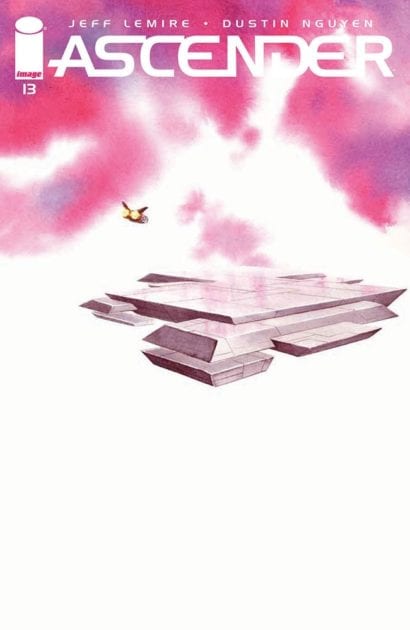
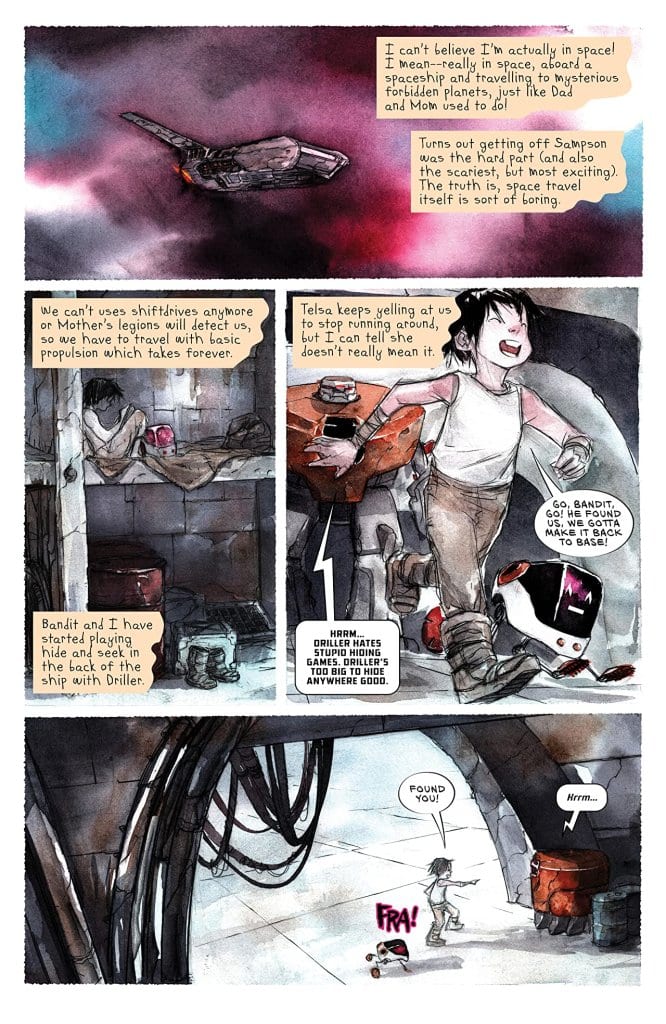
ASCENDER #13, available in comic book stores on Wednesday, September 30th, escalates the conflict between Mother and the resistance tenfold. While our hero Mila is in the midst of a space flight from Sampson, Mother’s forces continue to grow, extending their reach further into the cosmos. Will Mila and the team avoid them forever, or will their pursuers catch up after acquiring more allies?
Story
The story follows Mila, Telsa, Hilda, and the rest of their crew en route to a new location: Phages. Hilda describes this place as a “ghost planet,” warning Telsa against bringing them there. The pilot notes how Mother is even afraid of the planet. But this only encourages her partner even more; the hardened fighter has finally found a place to rest (or so she believes).
Throughout much of this narrative, the writing gives readers an insight into the young protagonist’s thoughts regarding the adventure so far. We feel her rollercoaster of feelings as the memories of their recent flight from Sampson and Mother’s forces. And she notes how much she misses Andy and her old life.
But while all of this is taking place, readers are brought to Mother herself, who’s decided to release a universal order to bring in any USG rebels hiding throughout the universe, which of course includes Mila and the crew.
Writer Jeff Lemire is a master of story escalation. Being able to balance scenes of calm and reflection with those full of excitement and danger makes his writing so engaging.
Artwork
Dustin Nguyen’s artwork and Steve Wands’s lettering were the perfect pairing for this narrative. Their depictions of Mila’s frustrations in learning magic, as well as her longing for her father, helps readers treat her as if she were a real person. And Mila’s dialogue, depicted as torn pages from her journal, draws readers into the narrative even more.
Conclusion
ASCENDER #13 is equal parts introspective and adrenaline-fueled. And this is why we love Lemire’s storytelling.
What do you think lies in store on the planet of Phages? Let us know in the comments below!
Old friends reunite and dormant desires return in Up On The Glass, a thriller from director Kevin Del Principe (Fashion of the Wolf), co-writer Nikki Brown (Those Little Monsters), and starring Chase Fein (On The Rocks).
Up On The Glass introduces viewers to Liz and Hunter Shelton, a married couple living a good life. The pair reunite with old college friends, including Jack (Chase Fein) who’s life is on the rocks. As the night among friends becomes more intimate, jealousy and desire motivate a descent into murder and mayhem. For a tension-filled 90-minutes, viewers get an engrossing thriller.
PopAxiom and Chase talked about becoming an actor and turning into Jack for Up On The Glass.
Theatre & Film
Acting is something that seems built into Chase’s being. “I was always kind of an entertainer since I was a kid, cracking jokes for everybody and doing magic. In high school, I did some plays.”
Chase picked up speed on the road to stage and screen come college. “It wasn’t until I went to New York University and Stella Adler Studio of Acting that I fell in love with acting. The Stella Adler Studio set me on the path and changed my life.”
Before TV and film, there was only the theatre. “Stella Adler was a four-year conservatory. All we did was theater. I went to RADA (Royal Academy of Dramatic Arts). There it’s all theatre classics,” Chase adds, “I’m a classics nerd, so I did my Master’s in European Classical Acting.”
Now 39 credits into his career as an actor on film and television, Chase shares some perspective on acting for stage and screen. “It’s like painting and sculpting. They’re different mediums, and both have exciting elements.”
“What’s often missed with theatre and film,” Chase says, “is that they complement each other. I got the theatre heart and soul, the use of my full body, my full voice, and full emotions.”
For film and television, Chase continues, “it can sometimes be jarring for a theatre actor. We’re imitating real life. The camera’s a foot away from you and can read your brain. Ease and relaxation pairs with the intimacy of film.”
About Up On The Glass
Chase’s connection to Up On The Glass came via a close bond. “I got involved with it through my friend Rachel Imbriglio, a casting director. We originally met when I played some fun parts on a kid’s show, Mutt and Stuff. We hit it off and have been friends ever since.”
As Chase explains, Rachel “saw a film of mine called On The Rocks (2017), and that character had a certain essence that vibed with Jack for this project.”
“We went to grab a drink,” Chase says, “and I met Kevin and Nikki.” Soon after, Chase “read the script and thought it was super-cool.”
The work to make Jack began.” Kevin gave me a lot of great backstory and ideas about Jack’s type of person and the overall movie. That gave me a lot of texture and flavor into Jack.”
“Although I had a connection from the beginning,” Chase shares a bit of the process for making Jack come alive, “he was elusive throughout the process of finding him. I would work with different friends of mine and tried different styles. It was an amalgamation of all these things that was absolutely enjoyable. But it was tricky, tough, and confusing.”
Chase says the process, though challenging, “was a blessing,” he adds, “Sometimes as actors, you want a perfect experience of everything lining up. We find the character, we play it perfectly, and everything is there. But, to be honest, we’re not playing perfect people. The people we play don’t have everything figured out.”
“I think, in the end,” Chase says, “it helps because there’s a turbulent confusion, a sense of loss, and that helped me get to the heart and find this guy.”
For actors, all preparation leads to the stage and gets under the lights. “Things come alive when you’re on your feet.”
Making Up On The Glass
Film productions are hectic hurricanes of different players moving in many directions. Up On The Glass was no different a storm. “We had to fit so many pages in a day that I think I went crazy. We’re on page 36, and you’re with the guys. Now, we have a 10-minute turnaround. He’s dead, and you’re dragging him. So, ten minutes of crying and then, jump back to page 50, and you’re dancing and having a good time.”
“It sounds crazy,” Chase says about a day in the life on set, “but it’s a lot of fun.”
What’s Chase’s quick pitch for Up On The Glass? “Grounded mid-Western retelling or re-imagining of the Talented Mr. Ripley and that kind of world.”
Chase explains Up On The Glass a bit more. “You watch a movie like the Talented Mr. Ripley, and it’s perfect. The talent is incredible. Everything is so clean, and he’s great at imitating. He watches something once, and he’s imitating,” however, Up On The Glass looks at similar ideas differently,” but Jack is the not-perfect Matt Damon. He doesn’t have the tools and watches desperately to see how he fits in.”
Wrapping Up
Chase’s influences are many. “I love Jack Nicholson, Daniel Day-Lewis, Christian Bale, Michael Fassbender, and Kate Blanchett. Non-actors like Paul Thomas Anderson or the MMA fighter Anderson Silva.”
Chase explains more about the types of people he admires. “I’m drawn to artists who have a fully-immersed obsession with their work. They love it so much that they can be in it for 18 hours a day.”
“I love Alan Watts,” Chase says when asked about a dream project, “I would love to play a biopic about Watts.” The question gets a little more specific, honing in on a dream remake or reboot: “I’m a huge sucker for emotionally driven science fiction, so one of my favorite movies is Solaris.”
Up On The Glass is available on VOD and various streaming services like Amazon and YouTube. So, what’s next? “Right now in quarantine,” Chase says, “I’m working with a couple of people to get a few features prepped. I’m learning Russian for two hours a day and practicing drumming too.”
Is Up On The Glass on your watch list?
Thanks to Chase Fein and October Coast
for making this interview possible.
Shang-Chi #1 is this week’s beginning of a new series from Marvel Comics. Under fan-favorite writer, Gene Luen Yang, numerous artists like Dike Ruan, Philip Tan, and Sebastian Cheng provide several sides of the conflict. All while letterer Travis Lanham ties everything together.
Background
Shang-Chi is a character whose creation comes from a reaction to the 1970s kung-fu movie craze. Originally planned to be an adaptation of 1972’s Kung Fu TV show, Marvel instead adapts elements from the pulp villain Fu Manchu. Under Steve Englehart and Thanos creator Jim Starlin, Shang-Chi combines those previous elements with the late Bruce Lee to capture the kung-fu trend. Shang-Chi would face his father, the Fu Manchu stand-in Zheng Zu in rejection of becoming an assassin. With a movie featuring the character scheduled to appear in February 2021, now is probably a good time to acquaint with the character. But after some guest appearances, people should know Shang-Chi as a character more than the legend.
Shang-Chi #1 The Burden of Family Legacy
Shang-Chi #1 pulls the reader into the life of the title character. People who are unfamiliar with Shang-Chi probably only see surface-level details like his impressive martial arts skills. It’s something that indeed defines his life, even at his attempts to live an everyday life. At the same time, this background is also what isolates him. He is so used to people trying to kill him that just a handshake from a pretty woman with no ill intent surprises him. But nothing seems to keep Shang-Chi away from his family past. Both when his boss brings it up and when his father’s cult is out for him again. It’s hard not to feel bad for the guy after all of this.
This time, things are just a little bit different. A new head of this cult, Sister Hammer, is out for blood to claim total control of this “Five Weapons Society.” But the only way she can do that is by eliminating Shang-Chi. By the end of Shang-Chi #1, however, Shang-Chi does get a personal stake in this story through his relationship with Sister Hammer. One that could be hopeful or outright devastating. Anything specific would spoil the tale.
How Art Creates The Legend
Shang-Chi #1 features several artists to illustrate the different aspects surrounding the title character. Philip Tan creates a very detailed that make what he draws look larger than life. The moments frozen in time look like portraits with Sebastian Cheng’s colors displaying the characters in all of their glory. Something the captions from Travis Lanham enhances through slowing down the reader’s gaze so that the reader witnesses them.
Compare this to Dike Ruan’s more relaxed art style. By separating Shang-Chi from his legend, readers find a normal man. Not that it takes away his ability to handle himself in a chaotic fight. The movements through some dynamic panels showcase not just the speed at which Shang-Chi moves but how he can cover multiple enemies more than a few bullets could.
See The Legend of Shang-Chi #1
Shang-Chi #1 is off to a great start by introducing readers to a character with legendary influences. But also by trying to show that despite this origin, Shang-Chi is still just trying to live his life to the best of his ability. What can we expect when the Five Weapons Society goes at him with full force? We’ll have to wait and see.
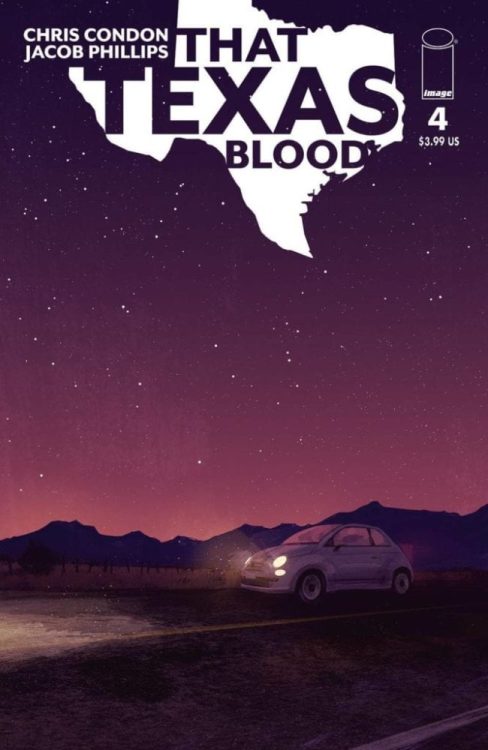
THAT TEXAS BLOOD #4, available from Image Comics on September 30th, continues the slow, simmering build toward uncovering the cause of Travis’ death and what that means for Randy. Light on action and forward progress of the main plot, this issue swells with anticipation.
Cover Art
Chris Condon loads the back pages of this series with little insights into what inspired the comic, so we know Jacob Phillips’ cover inspiration was a The Simpsons episode titled “Mother Simpson.” Having some recollection of that episode, it nails the emotional imagery nicely. It’s a quiet moment during dusk where Randy’s girlfriend is driving to (surprise) meet him, and it feels hopeful and dreadful at the same time. Phillips pulled off some tremendous emotional punch.
Writing
Condon’s story doesn’t have a lot of forward progress in the series, but what it does do is build, build, build on the tension. Randy struggles to come to terms with his brother’s death, and you can feel the conflict within him as he can’t quite figure out what to do next. The Sherriff’s questioning of the local barkeep, and his subsequent talk with his wife, echoes Randy’s stress and confusion about the next steps in expectation in whatever is about to happen.
The new subplot is the imminent arrival of Randy’s girlfriend, and her journey feels ominous in the way you feel anxious watching a mouse about to walk into a lion’s den. She’s going after Randy out of love and concern, but there’s little doubt she’s not prepared for what’s about to happen.
And what is about to happen? I’m not sure, but Condon has done a masterful job lighting a very long fuse on a powder keg about to blow.
Pencils/Inks
Phillips’ art is less detailed in this issue than previously. Where the previous issues had more defined linework, this issue missed some of that detail that made the characters feel like stylized extrusions of real people and closer to vague character placeholders. It’s all there – the town, the backdrops, the atmosphere, but some of the sharpness, especially in the faces, lowered the impact of the characters’ emotions. That lack of detail was a bit of a miss when the issue is so focused on exposition and inner turmoil.
Coloring
Linework aside, Phillips’ coloring work in this issue is top-notch. The entire issue jumps from one scene to the next, filtered through harsh lenses. The bar scene where something(?) is about to happen to Randy is saturated with red. The dusk scene with Randy’s girlfriend driving down the highway is bathed in bluish-purple to hint at the sadness she doesn’t know is about to hit her. Phillips executed an excellent demonstration of mood through color.
Lettering
Phillips’ lettering work adds to the tension of the story by using a small font in over-sized word balloons to make the dialog feel heavier. It’s an excellent technique for public speaking that works equally well in comic form. Talk softly, so the audience has to lean in and pay closer attention. By keeping the dialog lettering compressed inside larger bubbles, the reader has to lean in and focus more intently on what’s being said. The dialog feels weightier and more important. This technique is executed so well; it almost takes away from the art in a few panels. This is excellent lettering work by Phillips.
Conclusion
THAT TEXAS BLOOD #4, available from Image Comics on September 30th, turns the heat up a few ticks to a fast simmer before the entire town boils over. Short on action and plot movement but very long on tension and anticipation, I sincerely hope the climatic impact pays it off. I eagerly recommend this issue and can’t wait to see what happens next.
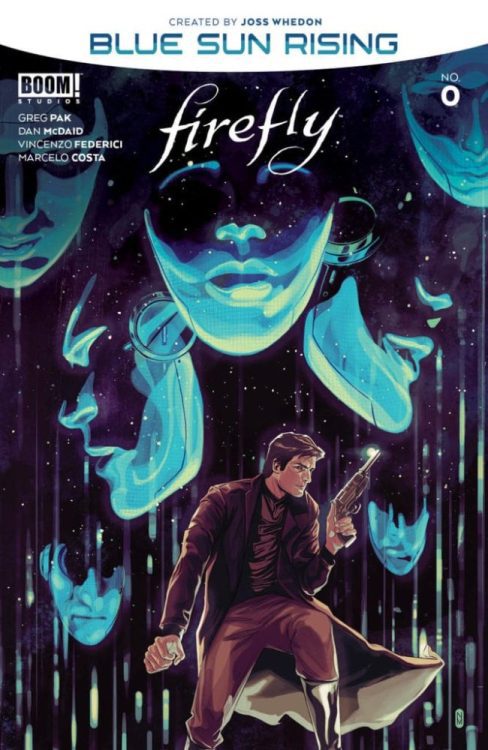
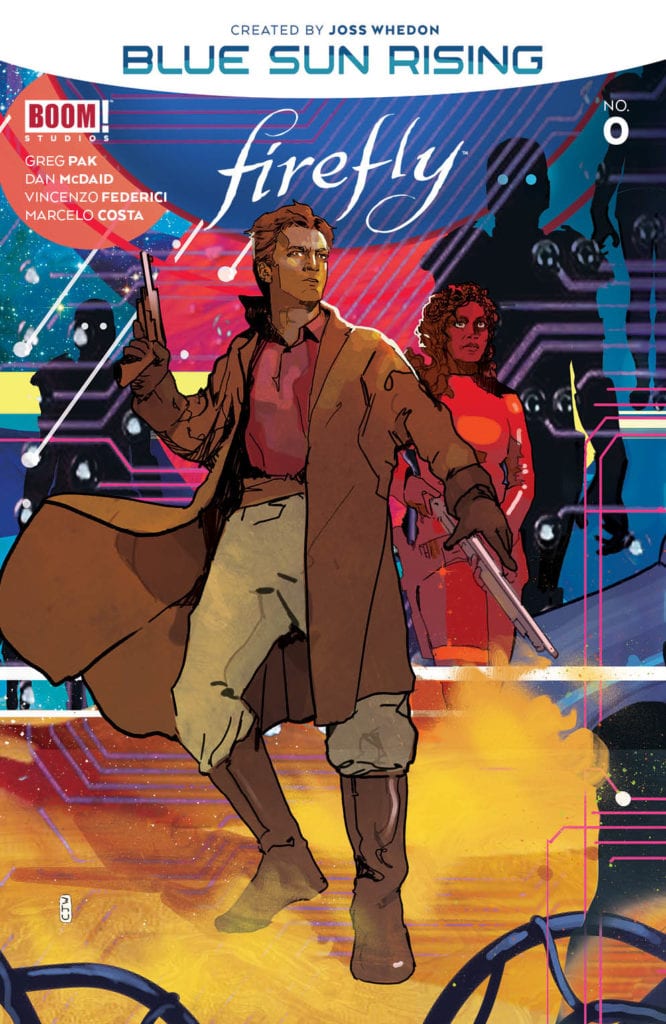
FIREFLY: BLUE SUN RISING #0, available this Wednesday from Boom! Studios, brings with it a cross-over event for the world of Firefly. This issue is the first of two, and only one of several events worth keeping an eye out for.
***SPOILER WARNING***
It’s hard to believe that the beloved show, Firefly, has grown its presence in the comic book world enough to warrant a crossover event, and yet that is exactly what is happening here. At least two issues are going to be revolving around the Blue Suns – the latest big bad to enter the universe (and cause Mal no end of problems, naturally).
Seeing a bit more of this new big and terrifying corporation will prove to be interesting, of course. They’re the replacement for the Alliance, and have proven to bring with them their own series of complications.
That isn’t the only exciting bit of news to be looking forward to this fall. The Blue Sun Rising arc’s release has been carefully timed. For what? To increase the excitement for Firefly’s latest graphic novel, Firefly: Watch How I Soar. Set to release sometime in November, fans can probably guess who this novel is going to follow (hint: it’s Wash).
The Writing
Firefly: Blue Sun Rising #0 isn’t the first deviation from the main plot for Firefly. It isn’t even the first time it’s happened in this latest run. As it turns out, Malcolm Reynolds has been pretty busy as of late, and that’s creating a whole lot more material to write about.
As with the main series, this issue was written by Greg Pak. He’s really taken the world of Firefly and turned it into something of his own making. A fact that couldn’t possibly be clearer in this issue.
It’s interesting to see how much the team has changed over time, but what’s more interesting in this case is watching how the enemies have changed. It’s a depressing thought – the idea of the Alliance merely (and quickly) being replaced with another major antagonist. Yet it’s also painfully realistic.
This new enemy, the Blue Suns, seemed easy to overlook at first. Typical bureaucrats and businessmen. But now…thanks to this crossover event, that’s no longer going to be a possibility. The infusion of hard science fiction elements makes these guys a larger threat than ever. Though at the same time, it feels to be at the cost of some of the original elements and tones that made fans love the series. Only time will tell how it all plays out.
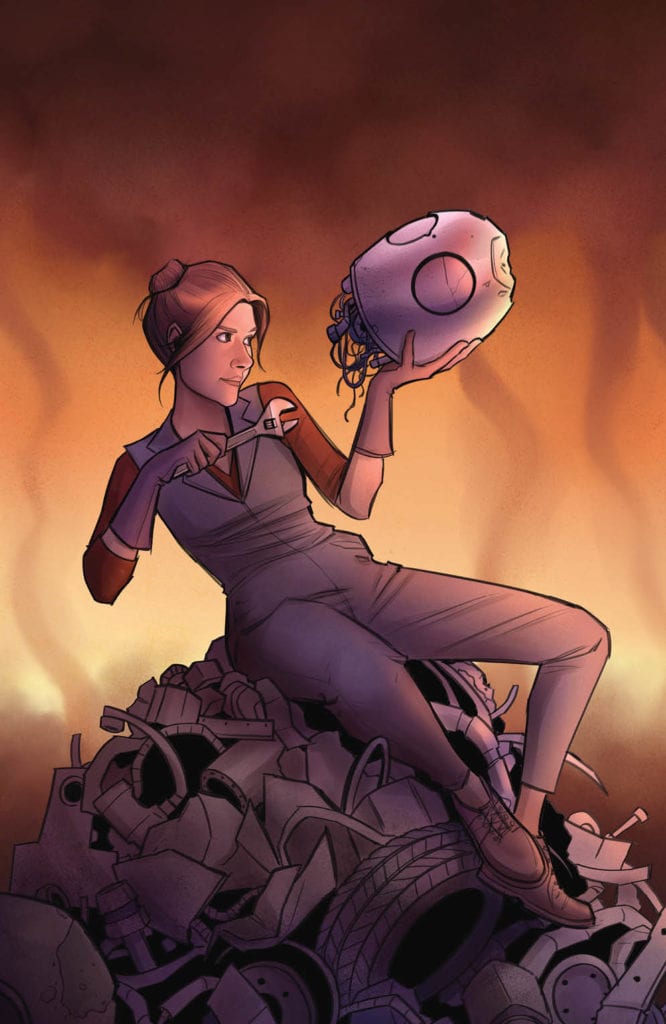
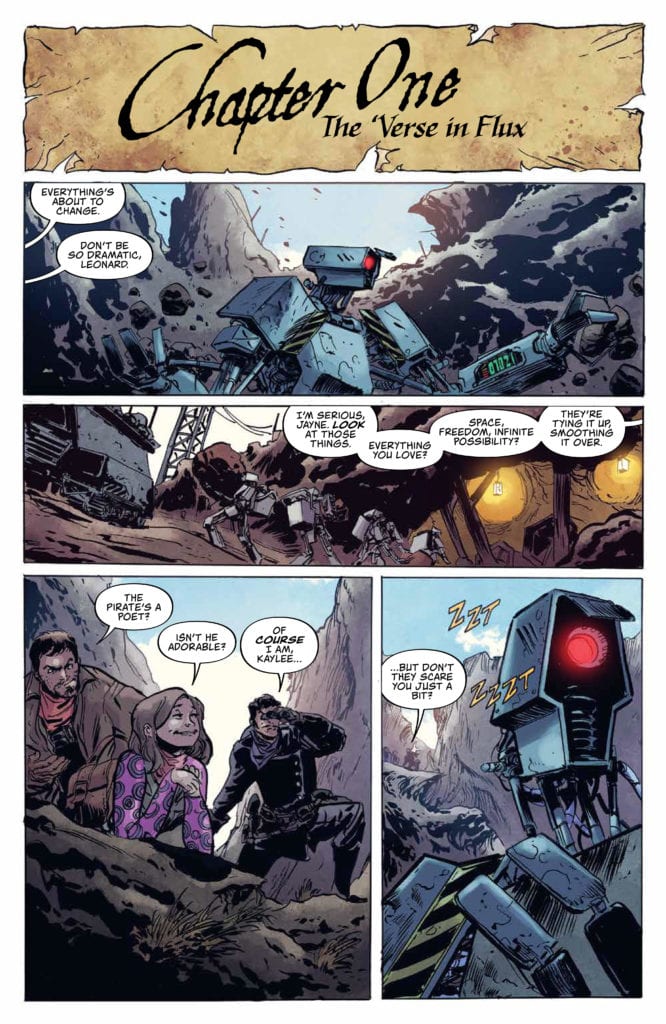
Fans of Kaylee will love this variant cover of Firefly: Blue Sun Rising #0.
The Art
Firefly: Blue Sun Rising #0 contains artwork as bold as the changes within. It really does feel like our characters are fighting for their lives on outer worlds and moons – with nothing but dirt and danger to keep them company.
Dan McDaid took the lead for this issue, working alongside Marcelo Costa (colors) and Jim Campbell (letters). There’s plenty of action to spot, and it admittedly looks even more dramatic thanks to the lovely backdrops, making the darker figures really pop.
The sense of motion and impact is also exceptionally done – especially when there’s an explosion to portray (and this is the Firefly crew we’re talking about…). The final scene portrayed does raise some questions, and eyebrows, as it pulls in elements unfamiliar to Firefly’s series so far.
The ‘Verse is in Flux in Firefly: Blue Sun Rising #0
Conclusion
Firefly: Blue Sun Rising #0 is the start of a new crossover experience for Firefly, and from the looks of it, a whole new complication for the crew. There’s no doubt that what happens here is going to affect the main continuity, the only question is, how will they handle it?





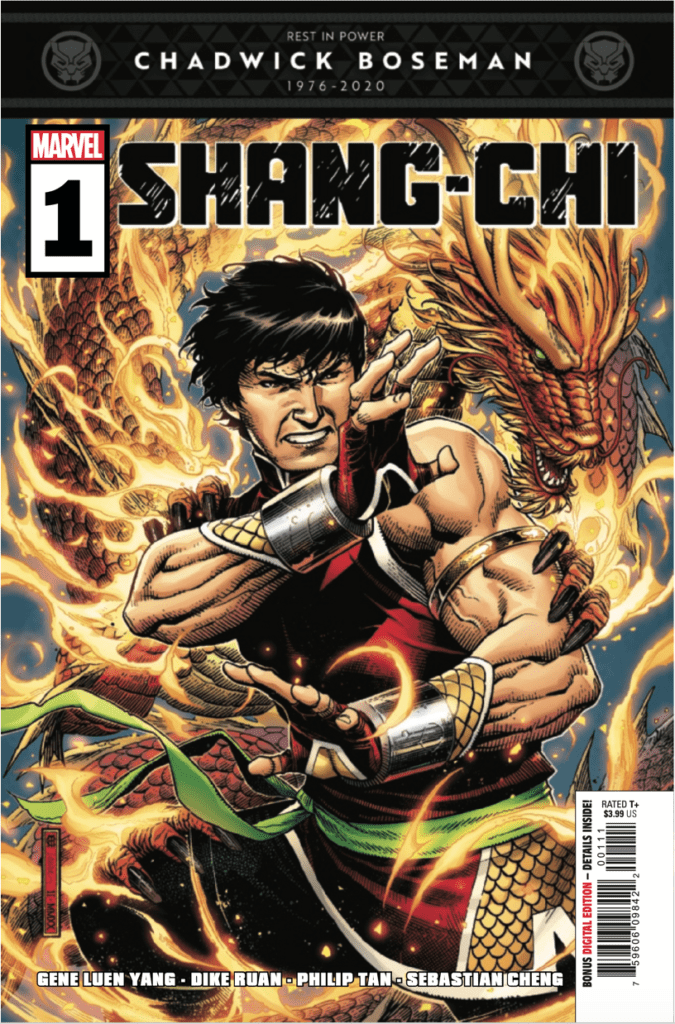
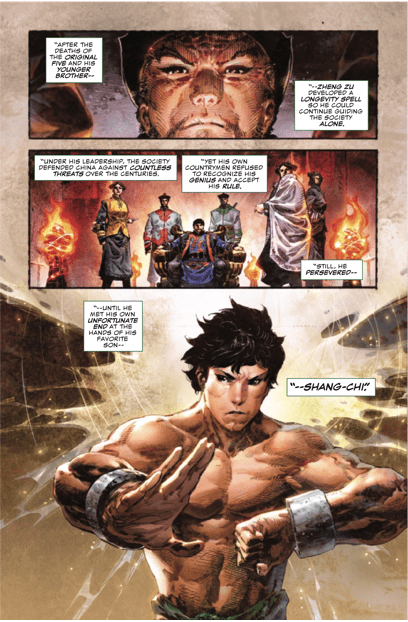 Shang-Chi #1 features several artists to illustrate the different aspects surrounding the title character. Philip Tan creates a very detailed that make what he draws look larger than life. The moments frozen in time look like portraits with Sebastian Cheng’s colors displaying the characters in all of their glory. Something the captions from Travis Lanham enhances through slowing down the reader’s gaze so that the reader witnesses them.
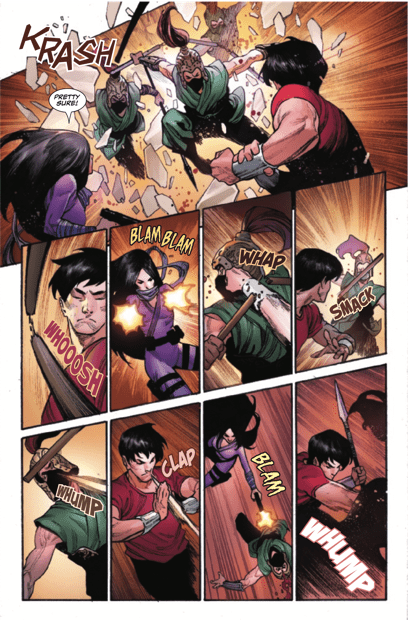 Compare this to Dike Ruan’s more relaxed art style. By separating Shang-Chi from his legend, readers find a normal man. Not that it takes away his ability to handle himself in a chaotic fight. The movements through some dynamic panels showcase not just the speed at which Shang-Chi moves but how he can cover multiple enemies more than a few bullets could.