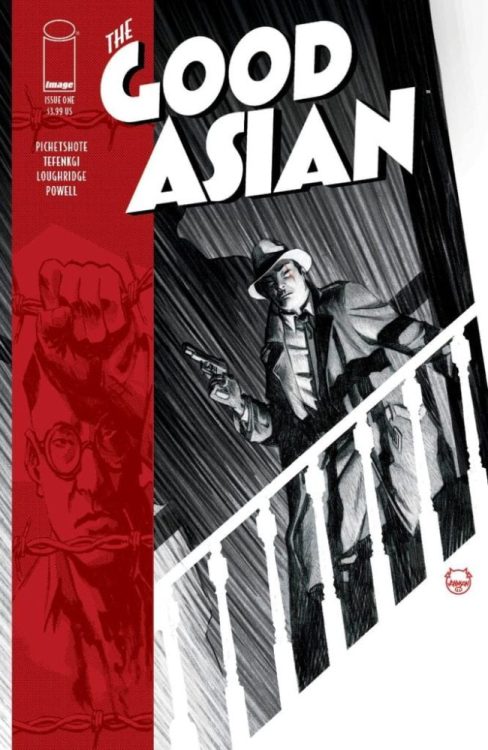
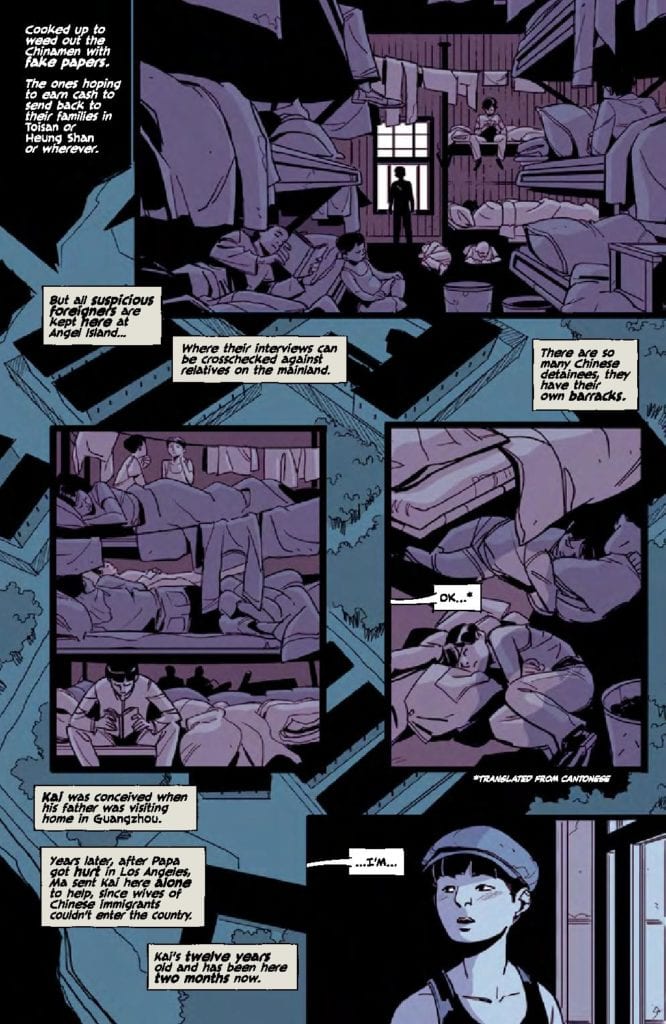
The Good Asian #1 arrives on shelves on May 5th from Image Comics. The story follows Edison Hark, a Chinese-American detective as he works to hunt a killer during the time of the Chinese Exclusion Act. This intense and gripping drama comes from the creative team of Pornsak Pichotshote (writer), Alexandre Tefenkgi (artist), Lee Loughridge (colorer), and Jeff Powell (letterer).
THE GOOD ASIAN is a Chinatown noir starring the first generation of Americans to come of age under an immigration ban, the Chinese, as they’re besieged by rampant murders, abusive police, and a world that seemingly never changes
Writing
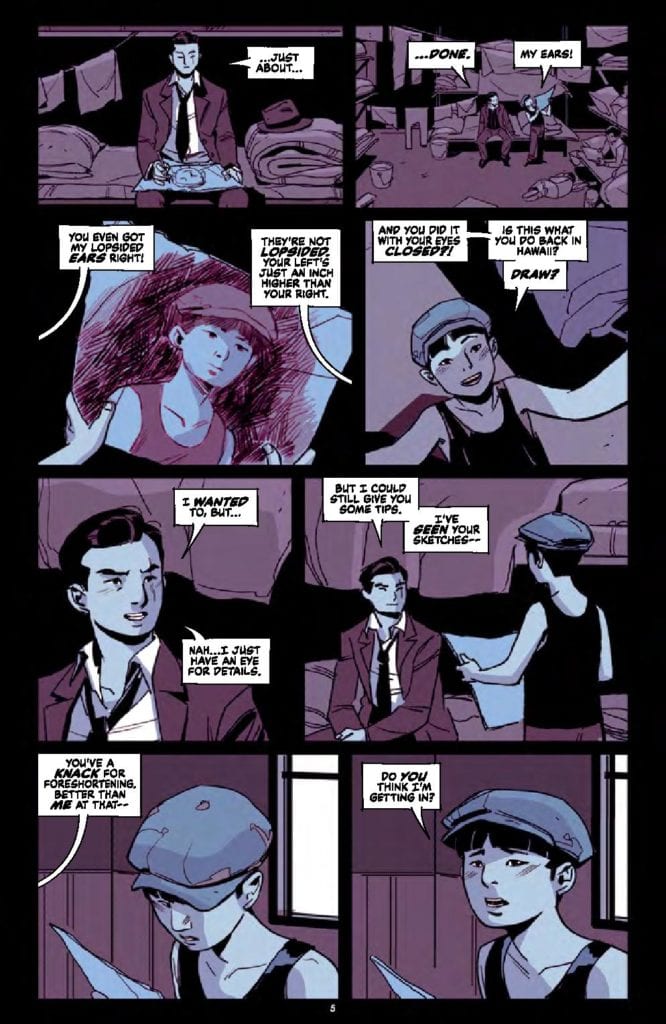
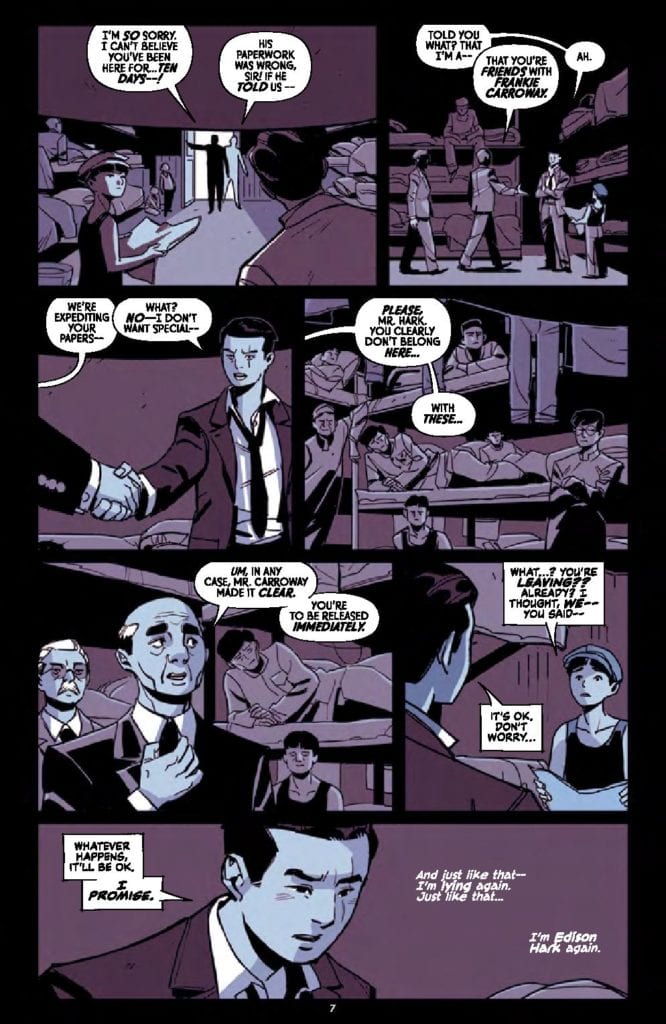
The Good Asian is not a book for the faint of heart. It is brutal, harsh, and uncomfortable, but in a very engrossing way. Edison is an intriguing character, quickly shown to be incredibly skilled as a detective thanks to a photographic memory and high attention to detail. He just wants to solve a missing person’s case without getting involved with the bigger issues around him. Sadly, it won’t be so easy for Edison, as he finds everyone he meets carrying some kind of prejudice.
Pornsak Pichotshote is able to capture the audience with the first two pages and keep them invested with each turn of the page. Much like how his previous book, Infidel, captured the feel of a horror film, The Good Asian makes the reader experience a classic detective story as Edison gathers clues and faces consequences for every choice he makes.
Artwork
The artwork by Alexandre Tefenkgi offers great attention to body language and an insight into what the characters are going through in a particular scene. Looks of disgust, fear, and anger are palpable from frame to frame. The use of the square boxes to show clues is a fascinating touch to aid the visual storytelling.
The colorwork by Lee Loughridge makes the square boxes showing the detective clues more noticeable and defined. The colors also help deliver the story’s emotional impact in a big way. Scenes conveying energy and optimism are distinct, while the moments which are supposed to be hopeless and dirty come through perfectly thanks to Loughridge’s precise use of color on top of Tefenkgi’s thoughtful line art.
Jeff Powell’s letter work offers a great sense of flow and urgency to the issue. Edison’s internal monologue comes through so the reader can hear the detective’s train of thought in an engrossing way. And looking through the panels, it’s surprising and refreshing how often a character’s reaction, like a grunt, is used to convey the impact of each scene instead of through big sound effects.
Conclusion
The Good Asian #1 is the start of a gritty, intense, and engaging comic series. This is a book every fan of mystery and intrigue needs to read — not only because it is a good detective story, but also because it conveys a deep look at humanity beneath it all. It’s the start of something big, and everyone needs to pick up the issue so they can enjoy the ride.
Wild Indian is a film written and directed by Lyle Mitchell Corbine that stars Michael Greyeyes (Fear The Walking Dead) and Chaske Spencer (Banshee) in a dark thriller supported by the Sundance Institute through the Writers and Directors Labs. Gavin Brivik navigated the process to create an immersive sonic experience.
Michael Greyeyes is Makwa, and Chaske Spencer plays Teddo, two childhood friends. During their formative years, the pair covered up the savage murder of a schoolmate. Now, adults, the men, find themselves in radically different places in life. However, they’re both haunted by the past. It’s now time to confront the tragic secret and the trauma that helped shape their lives.
PopAxiom spoke with Gavin Brivik about his rock and roll dreams, falling in love with Jazz, and the evolution of the Wild Indian score.
Away From Film
Gavin’s musical journey began as “a guitarist. I didn’t compose music for a while. I wanted to do the whole being in a band and touring thing.”
“I grew up loving classic rock,” he says, “so my biggest influences were like Pink Floyd, Cream, and Hendrix. I was obsessed with those bands, and I sometimes thought I was born in the wrong era.”
As a guitarist, Gavin “studied a lot of blues and jazz guitar,” he says. “I would love to have been in a jazz quartet.”
However, Gavin didn’t take to jazz immediately. “I didn’t even like it in high school. My teacher emailed my parents to urge me to join the jazz band because they needed a guitarist. I remember thinking, ‘Jazz music, that’s lame. I’m a rock musician!’ But I grew to love it.”
“I think it takes that sort of commitment where you are either exposed to it, or you are open to learning about it,” he says about Jazz. “Jazz is musician’s music. It’s very complicated music to understand.”
Gavin, the guitarist, ended up injuring his wrist. “I wasn’t able to play guitar for a few years. I was devastated. I was trying to find another path in music. I signed up for a composition class in school and loved it. I stopped pursuing a career as a performer and focused on writing music.”
“I spent six years writing music away from film,” he says of going from guitarist to composer. “In the back of my head, cinema was a passion of mine. In school, one of the teachers offered a course in film scoring, and I felt like I understood how to write music for film.”
About Wild Indian
Some projects happen via word of mouth, and others come through agents. Gavin’s involvement with Wild Indian came via “mutual friends with Lyle on Facebook.”
“A few years ago,” he explains, “some of our friends were posting about him at the Sundance Labs program. I started seeing him showing up on my Facebook news feed. I ended up messaging him and asking if he had a composer.”
Gavin says that Lyle “did have somebody in mind, but they could not write the score due to a scheduling conflict. Lyle ended up sending me the script, and I wrote some music based on the script.”
“I was so inspired by his writing,” he says about the script. “I ended up writing ten tracks. He listened to them, and he wanted to work with me.”
Did those tracks change over time? “They changed quite a lot,” he answers. “Initially, as you might know, a lot of films use temp scores. We didn’t use any temp scores. We only used those tracks I wrote from the script. Some of it was working, some of it wasn’t. A lot of those tracks more demonstrated my style.”
As the process for putting the film together wore on, “I wrote some new tracks, and those weren’t working either. They were too dark. We needed to highlight the emotions of the character and do less painting of this dark atmosphere.”
“The music was just too dark,” he continues, “and we weren’t empathizing with the characters.”
Gavin and Lyle “wanted to elevate the film with a more melodic and orchestral score.” But this shift was a surprise to both men. “It’s something we did not anticipate doing. The score became more character-driven, less atmospheric, more melodic, and emotional.”
“It allowed the viewers to feel the pain and struggle of the characters,” he says, “instead of wallowing in this dark, moody stew the entire movie.”
Process
“Lyle had been working on the film for six years,” he says. “I’ve been with it for two years. Over that time, you’re having discussions and constantly revisiting the work. We had so much time to work on it that we could tweak and work on stuff.”
Wild Indian is a gritty film with some heavy themes. “It’s taxing to spend a lot of time in a dark place,” he says. “You take an actor; they do these grizzly scenes over and over. So many actors struggle emotionally sometimes after roles like that. As a composer, we’re watching these scenes, and we have to write music to draw out even more of that darkness.”
Gavin goes from scary to funny and back. “When you watch a scary movie, you follow it up with a sitcom. I might spend a day writing some dark music and then find time to switch gears and watch some light-hearted stuff, chat with some friends, or play video games. Anything to escape a little bit of the darkness.”
Wrapping Up
Gavin draws inspiration from a wide range of musical wells. But we discuss a few in particular who went from rock musicians to composers. “Trent Reznor and Atticus Ross are some of my most highly regarded composers and musicians. I love Johnny Greenwood. His scores are some of the most creative and unique. He writes a lot of concert music. I find that he elevates everything he’s a part of from Radiohead to all the other stuff he does.”
What remake, reboot, or reimagining would Gavin love to score? “Maybe a Hitchcock film? I love Bernard Herman. But I’d also be down to do a James Bond film or a remake of a classic horror film like how they did the recent remake of Suspiria.”
Wild Indianpremiered at Sundance in Jaunary 2021 and will be streaming soon. So, what’s next for Gavin? “My first solo project will be coming out. It’s called Realms and Forms. It’s an instrumental, experimental ambient album. It’ll be coming out through Bitbird”
Is Wild Indian on your watch list?
Thanks to Gavin Brivik and Rhapsody PR
for making this interview possible.
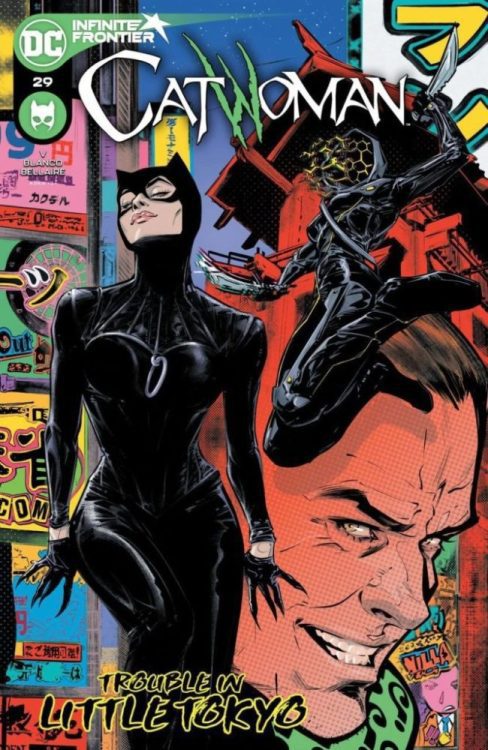
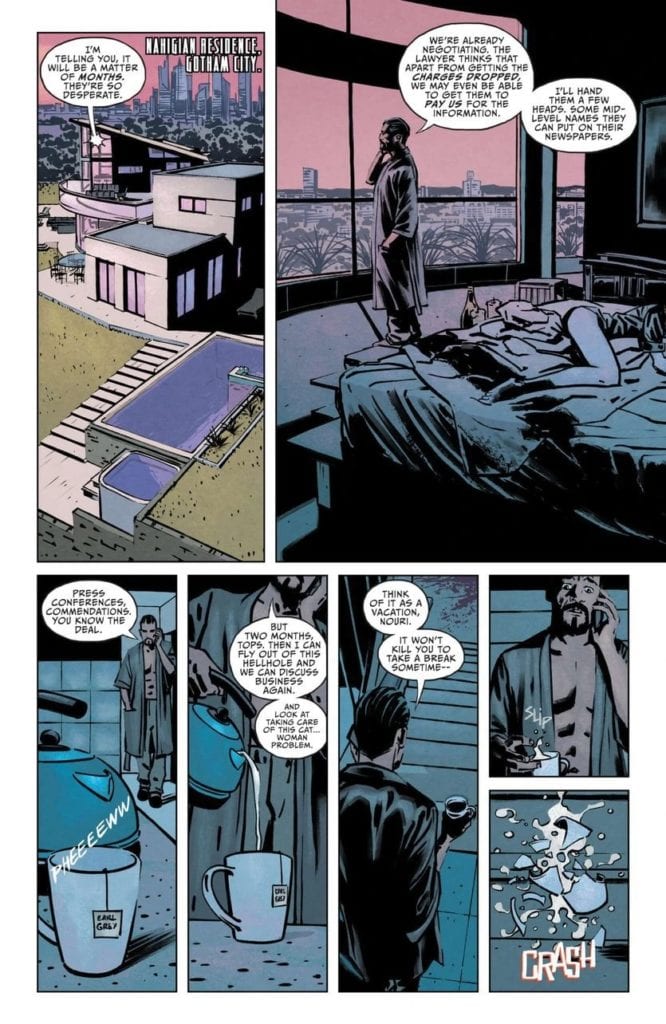
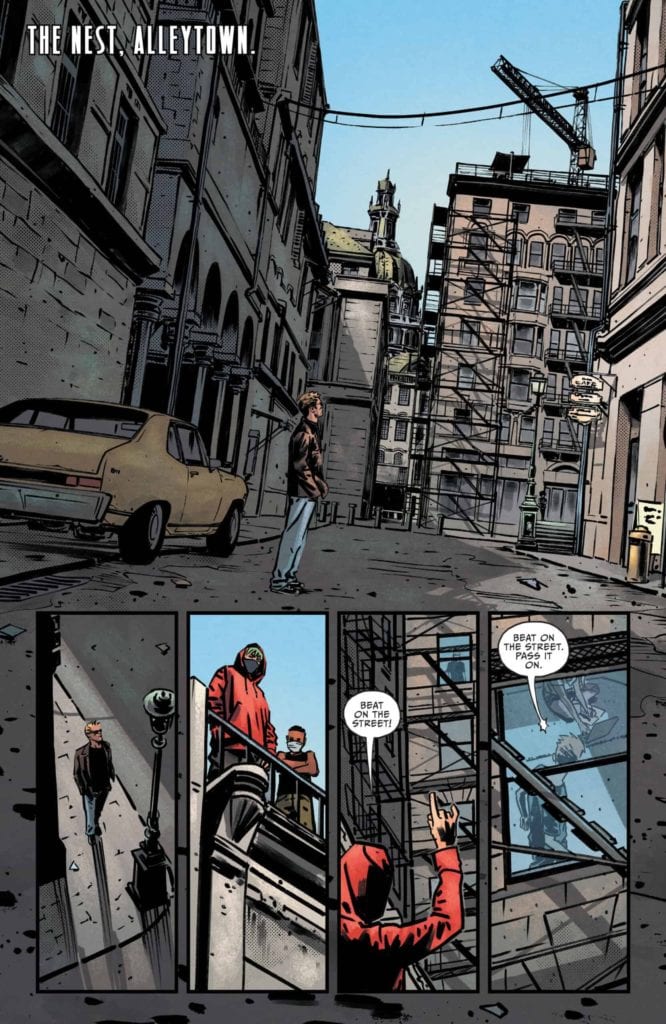
DC Comics‘ CATWOMAN #29, on sale now, sends us back to Alleytown, where Selina is fighting to take back her turf and set her own rules. Written by Ram V, with art by Fernando Blanco, Jordie Bellaire, and Tom Napolitano, Catwoman is about to take on a whole new set of enemies.
This does not bode well.
Only a short time has passed since Selina was given an ultimatum. Take a year, work on taking care of the long list of enemies she gained during the Joker War. It’s a grand goal, and one that she hasn’t really set down to deal with. Not yet, at any rate. Instead, she’s been focusing on herself and Alleytown.
Catwoman #29 brings us back to the Alleytown, a place she once called home. Once she returns to her old stomping ground, Selina realizes that it’s a haven for the area’s young thieves. She may think that she can stay out of trouble (hint: she can’t) and avoid the temptations of an interesting case, but you know how that saying goes about curiosity and cats. At least satisfaction brought it back.
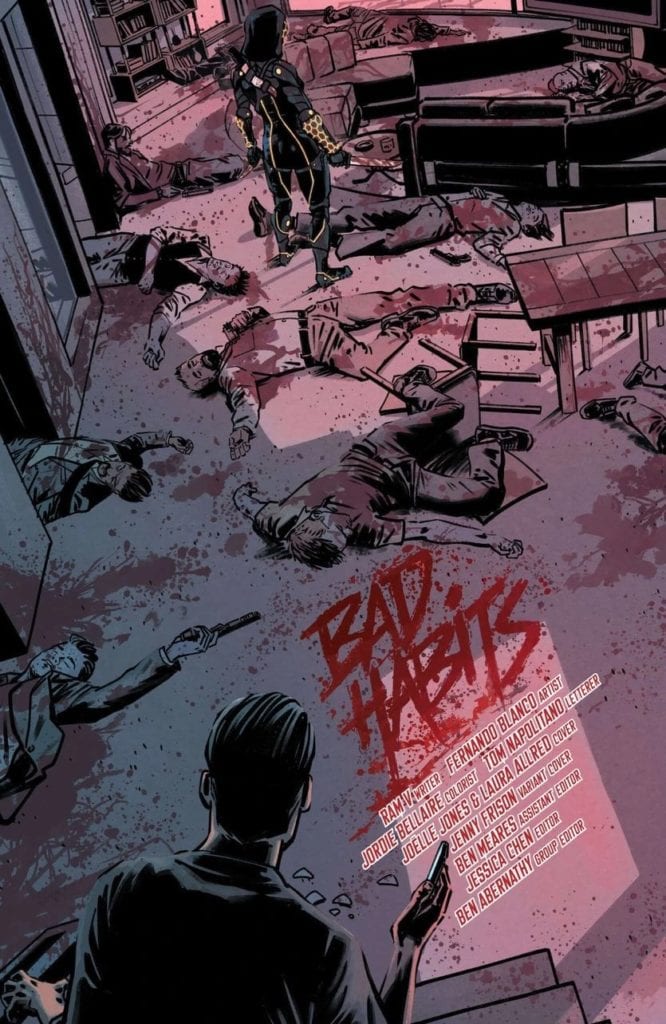
Yep, called it. That is quite the blood bath.
The Writing
If you’re looking for a fast-paced read, one that involves the best thief around and several other known criminals to boot, then Catwoman #29 is the issue for you. Selina Kyle may have gone to ground, but that doesn’t mean that she’s staying out of trouble.
In fact, I’m fairly certain that writer Ram V is trying to assert the opposite. The end result is an issue that is full of hints, revelations, and surprises. New and old enemies pop up all around, and it’s hard to predict how they’re all going to interact with one another. Likewise, it’s unclear how Selina will deal with these threats.
On the other hand, our lovely Catwoman finds several potential allies. Unfortunately, more often than not, it feels like these characters need her help, so they could be liabilities. At least, that’s what Selina would have us think.
As hinted at above, there are a few cameos to be found within this issue. I won’t spoil them by going into detail. But be aware that some of them are more surprising than others. One of which is mildly horrifying and concerning, even if we all assume that it will somehow work out perfectly in the end. The implications alone are still haunting.
A new antagonist has entered the fray!
The Art
The artwork for Catwoman #29 is as varied and wild as the cast is, and that’s saying something. There’s action, surreal science fiction moments, flash and pomp, and crime aesthetics that would only ever feel at home in Gotham.
Fernando Blanco’s artwork is a sight to behold. There are times it feels like the series has been transported to a world that feels utterly bizarre at times. Bellaire compliments this progression by using the bright hues that one pictures in a futuristic world.
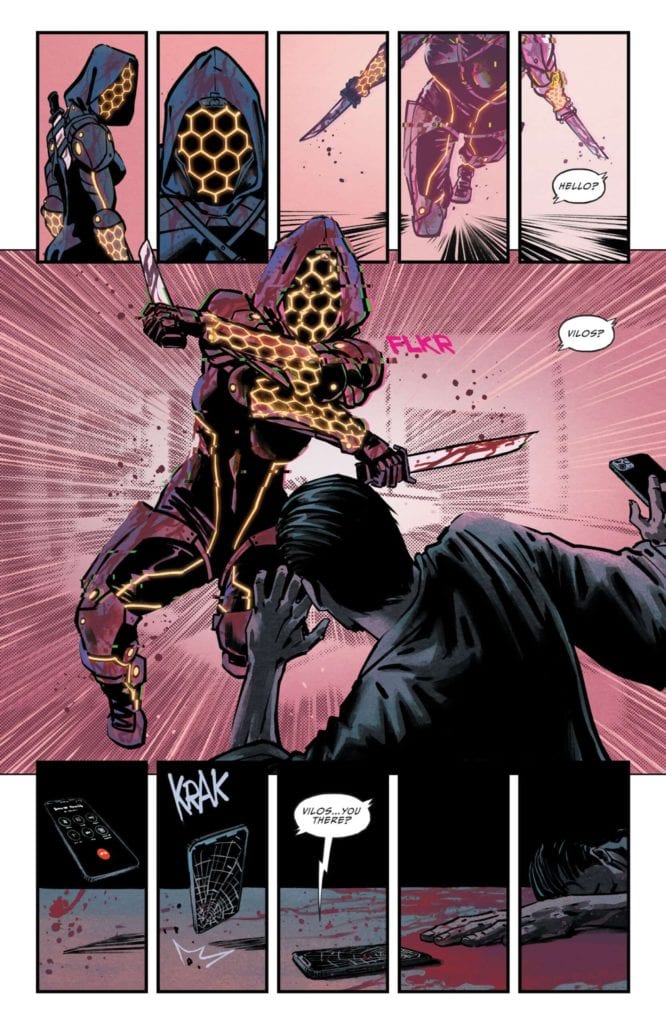
The design of her new enemy is fascinating. This new character (see above) is reminiscent of a few other supervillain characters, but she has her own flair. Though many questions surround her, one thing is certain: she’s got style.
Jordie Bellaire’s colors are fantastic in this issue. They dive into the bright and surreal side of the spectrum, but this visual tone matches what Ram V is trying to create here. It also matches the color palettes of the characters involved and the overall city aesthetics. The plot feels so much larger than life, and thus, so does the artwork.
Tom Napolitano’s letters are another high point for this issue. While they certainly makes the bangs and explosions more fun, that is not my favorite part. No, that award goes to another moment in the series. One where you can practically hear the change in voice as a character plummets.
Meanwhile, back in Alleytown.
Conclusion
Catwoman #29 brings Selina and crew back home, but they’re not taking a break. This issue sets up several new conflicts and takes some time to have fun. While there’s a lot of casual action in this issue, it does feel like we’re being set up for an even larger confrontation that’s sure to play out at some point in the future.
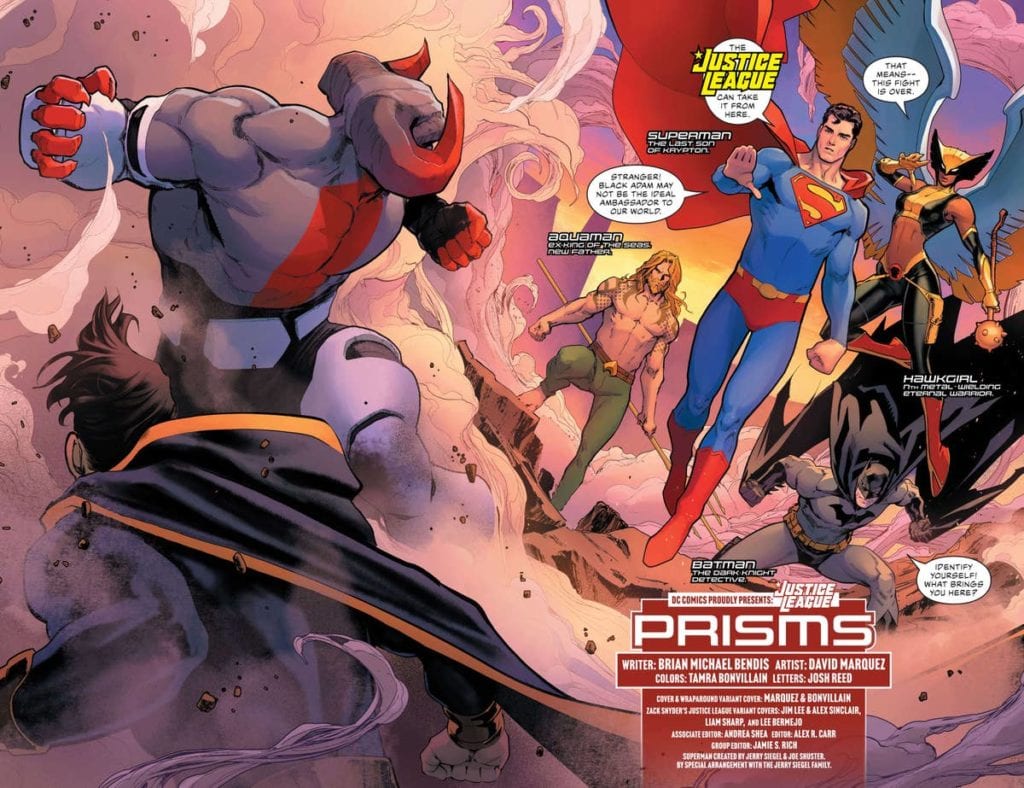
Infinite Frontier has launched the DC Universe into a bold new era, and writer Brian Michael Bendis is leading the way with Justice League #59, on sale now. Along with David Marquez, color artist Tamra Bonvillain, and letterer Josh Reed, Bendis takes the team in an exciting new direction and launches a fascinating exploration into the superhero’s complex place in the world.
WRITING
The most compelling aspect of Justice League #59 comes on the first page. While Bendis and Marquez offer a fun, albeit predictable, fight between a mysterious threat and the team’s new line-up, the story hooks the reader on this opening page by diving right into the heart of the matter. Bendis makes it quite clear that his run on this book, at least in the early going, will question what it means to be a superhero.
One could say that this analysis sounds like a tired path to follow, but Bendis offers a fresh twist by contextualizing this examination within the popular understanding of the DCU. However you feel about Zack Snyder’s depiction, he seemingly presented the iconic heroes as genuine gods among men. This presentation also seems to be the foundation for Bendis’ depiction of the Justice League.
On the first page, an unseen narrator (who turns out to be Green Arrow) explains the team’s shortcomings. He states that regular people see heroes as symbols rather than individuals. Queen then argues that Superman’s decision to share his identity to the world made him more relatable and more inherently human.
This theme of relatability is also at the forefront of the book’s first scene. There, Black Adam sympathizes with a young boy whose mother has passed away. On paper, the two characters are drastically different; one is the almighty ruler of Kahndaq, the other is an ordinary child. But Bendis shows how they still manage to connect with each other over a shared experience, as Black Adam is honoring the anniversary of his beloved’s death just as the boy is grieving his own loss.
Black Adam finds himself at the heart of the story in Justice League #59
Bendis captures the striking bond between Black Adam and the child, and it feels like this moment is a small, yet powerful, taste of the question this book will explore: what, if anything, truly separates superheroes from regular people? Based on this first intriguing scene, Bendis is beginning this consideration from a solid position that only stands to improve from here on out.
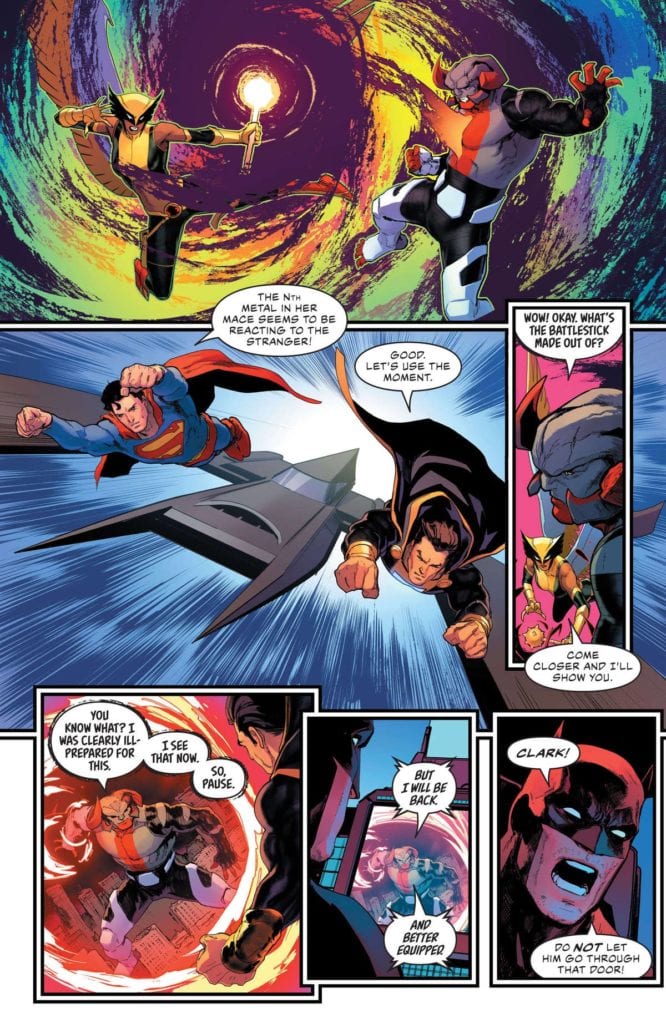
Don’t worry, there’s still plenty of traditional caped crusader goodness packed into the book. The reader gets to meet the core of the new team — Superman, Aquaman, Batman, and Hawkgirl — before the rest of the group is introduced later on. This quartet, alongside Black Adam, must battle an unstoppable monster, who calls itself Brutus, but what should be a fairly easy fight devolves into a near disaster.
In JUSTICE LEAGUE #59, the new line-up has to confront a mysterious threat they’ve never seen before.
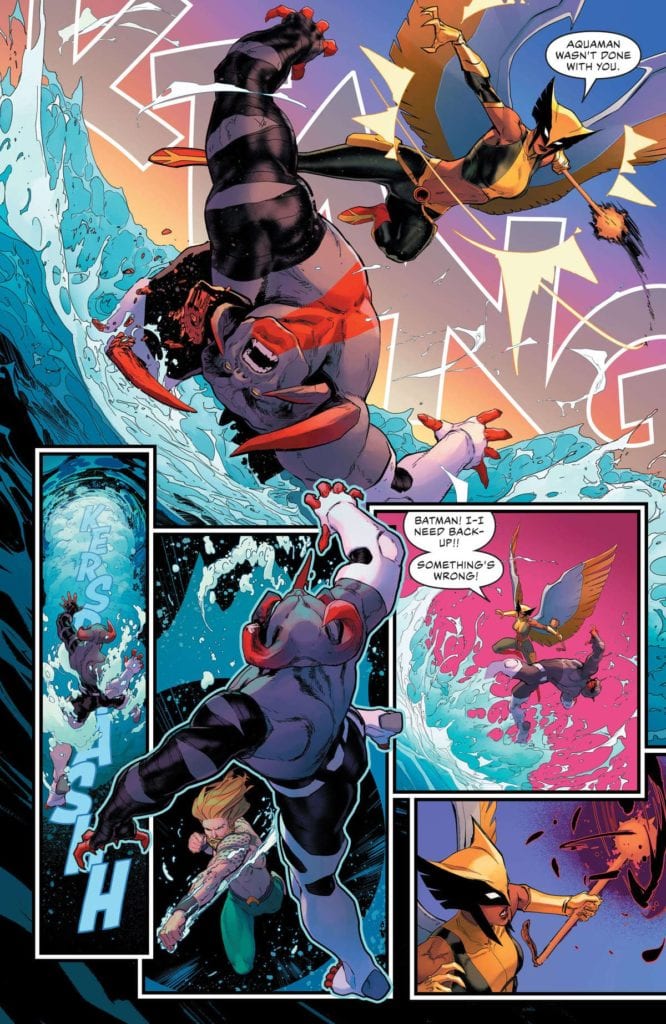
From Hawkgirl’s malfunctioning mace to Aquaman’s inability to match up with the beast, everything goes wrong during the team’s clash with Brutus. The new Justice League is quickly put to the test, and after the fight, the members are left to collectively lick their wounds and ponder the group’s next move. A surprising reveal on the last page also sets up the next step in this story, in which Bendis will bring in one of his original creations from a previous series.
ART
From the start, Marquez and Bonvillain compliment Bendis’ script perfectly. On the first page, Queen’s aforementioned narration is set against the image of the team members combined symbols. Bonvillain uses a gradient for these interconnected icons, from The Flash’s lightning bolt to Superman’s “S”. The top of the page is colored with a shiny gold that captures the flawlessness that’s often associated with superheroes.
But this shiny hue increasingly fades to a dim, subdued orange-bronze at the bottom. This subtle touch hints at the failure that Queen speaks to; the shift in color appropriately begins right when Green Arrow explains that mankind’s inability to understand typical heroes is one of the reasons why the Justice League doesn’t always work. This clear synergy between the art team and the writer is remarkable.
The new team nearly bites off more than it can chew in Justice League #59.
Likewise, Marquez and Bonvillain beautifully depict Kahndaq like a hybrid of Rome and a mythical kingdom. The former utilizes what looks like classical architecture to fuel that comparison to legendary city, while the latter gives the scene a breathtaking purple-orange background that’s right out of a fairytale. This otherworldly tone lines up with the story that’s unfolding on the page, as Black Adam comes across like a magnificent king that one would expect to see in a storybook. The unspoken comparison between superheroes and fairytale characters adds another layer of insight to an already dynamic story.
Brutus’ arrival shatters the innocent tone featured in the first scene. Thanks to the art team, the fearsome beast comes complete with demonic horns and both hellfire and brimstone. It arrives in a burst of flames that disrupts that lovely purple background, creating a strong juxtaposition in the process. For his part, Reed’s letters add to the sense that Brutus isn’t from this world. Unlike every other character, his speech bubbles have a sketchy, rough border, and his text is Bizarro-like because it’s slightly crooked. The eventual confirmation that Brutus comes from an entirely different dimension makes the battle scene even more effective. For the beloved heroes, it’s painfully clear that Brutus is a menace unlike any other.
At this point, Justice League #59 is just the appetizer for Bendis’ work on the book. Fans may be divided over his place as the series’ writer, given his sometimes polarizing work at Marvel. But based on this first outing with these assembled heroes, Bendis has a firm grasp on DC’s most esteemed characters, and he has laid out a fascinating path for them. Plus, having art as beautiful as the combination of Marquez and Bonvillain is a wonderful cherry on top. Any and all Justice League fans should get in on the ground floor of what’s sure to be a memorable run.
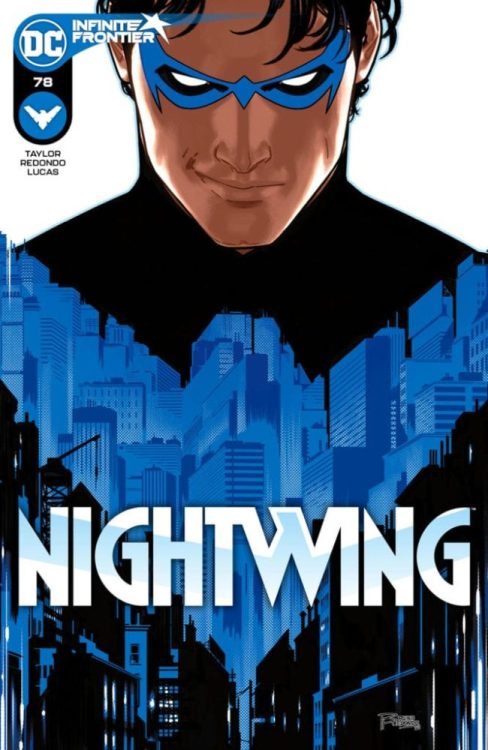
Writer Tom Taylor, artist Bruno Redondo, colorist Adriano Lucas, and letterer Wes Abbott are back! After their brilliant work on DC Comics’ Suicide Squad, they’ve set their sights on Dick Grayson. With DC Comics’ Nightwing #78, they kick off a new era for the spandex-clad acrobat. And if this first issue is any sign of what’s ahead, this is going to be a fun ride.
Writing
Taylor wastes no time in pulling on your heartstrings. It’s not abnormal to cry while reading a Tom Taylor comic. In fact, that’s a response he often hopes for. But to cry during the first issue of a run? I mean… I’m not saying I cried but… Shut up! You’re crying! *Ahem* Moving on…
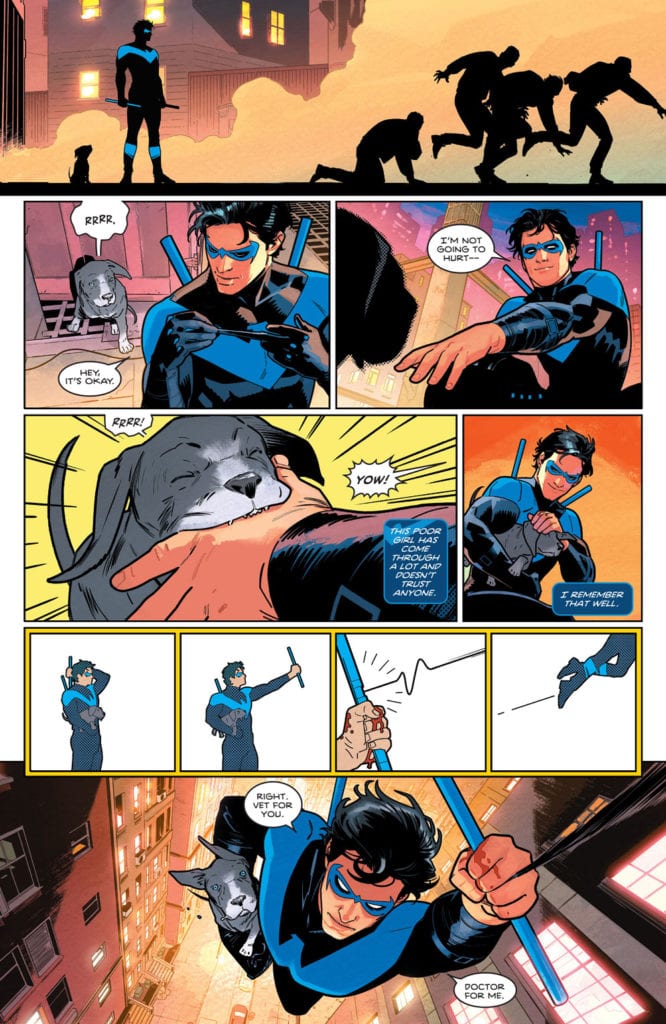
Taylor shows us a brief moment in Dick’s past. It’s a memory that seems kind of forgettable. He stands up for someone who’s being bullied at school and, when he gets home, he and Alfred debrief. But Taylor’s understated writing makes this small moment shine. It’s a memory that makes Nightwing who he is. But as the story continues, we see that this run won’t just be about small character moments. Heads are crushed, apartments are invaded, and deadly plans are made. Taylor shows us that this is going to be an eventful series that’s joyfully all over the place. He’s just as comfortable writing action as he is writing heartfelt conversations.
Art
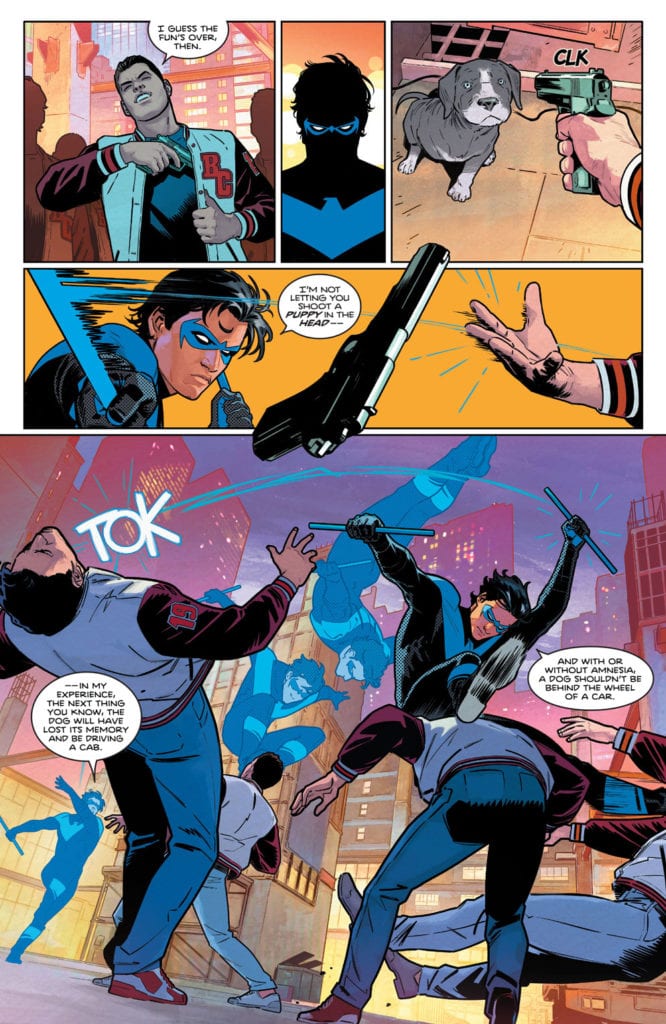
Redondo is equally versatile. There’s so much movement to this comic. In one panel, we see Nightwing jump over some goons he’s beating up. Redondo doesn’t show the jump as several different panels. Instead, he shows each turn and twist in the same panel. This makes Nightwing look lightning fast. But later, when Nightwing is shooting his grappling hook off into the sky, Redondo shows us each tiny beat. We see Nightwing pull it out, aim, shoot, and zoom off. It feels like a laid back moment that adds a little fun to the read. Redondo is a master of time on the page, and he’s constantly switching up the pacing to create a rhythm to the plot.
Coloring
Lucas does a beautiful job of setting a scene. When we see Nightwing’s memory, each panel looks like it’s in a pale blue haze. It’s the feeling of a bright morning. And even though the scene progresses throughout the day, the memory maintains that feel. When we cut to a modern day Nightwing, Lucas changes the colors. The pinks and yellows of every scene make it feel more like a sunset than a morning. Maybe it’s just a nod to the passage of time, or maybe there’s a dark night ahead for Nightwing. (“Leaping into the Light” would be an ironic title for this first arc, if that’s the case.) Either way, Lucas’s colors are a stunning visual cue of time passing.
Lettering
Abbott’s lettering is tons of fun. We see the familiarity between Dick and Barbara when they talk. As kids, Barbara has huge gaps between his lines of dialogue where Dick interjects. She seems enthusiastic about talking to him, but worried she’s not giving him room to talk. When they grow up, the gap shrinks. These are now two people who know each other well. They know the pauses that they need to leave for the other to interject. They’re relaxed and at home around each other.
But lots of the fun in this comic comes from Abbott’s sound effects. Every sound has its own unique font. The “CRK” of Dick headbutting someone in the jaw is as thin as the hairline fracture he undoubtedly caused. The click of a gun being cocked is barely noticeable compared to the big “TOK” of Nightwing punching someone in the face. But it’s the action lines around these moments that make them feel fun. They’re part of the scene, involved in the movement of the characters. Abbott makes each sound feel alive.
It’s good to have this creative team back. Nightwing is going to be a fantastic ride and DC Comics’ Nightwing #78 is a brilliant start. Expect lots of heartfelt drama, a healthy dose of laughs, and some incredible action. At least for this first issue, you definitely won’t be disappointed. Pick up Nightwing #78, out from DC Comics March 16th, at a comic shop near you!
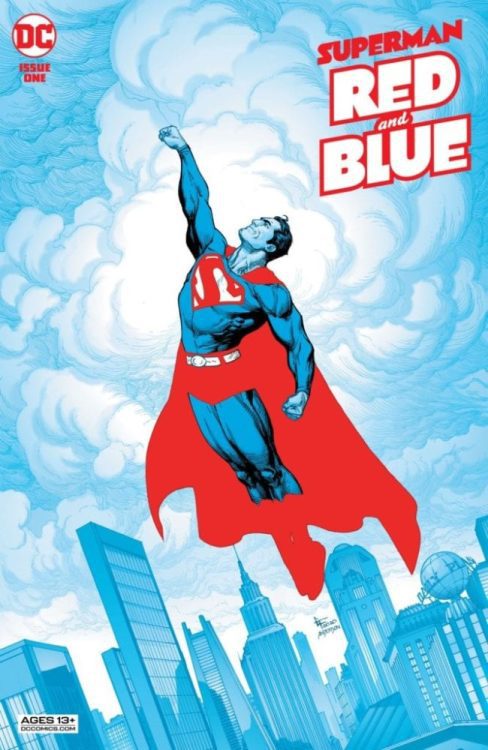
Superman: Red and Blue #1 is DC celebrating the boy scout in blue and his humanity. Each story has a down-to-earth vibe to emphasize the man over the super, even in boyhood.
Untitled: A Silver Age Reaction
The first story of Superman: Red and Blue #1 does not have a title as writer John Ridley makes a point about Superman’s conflicting emotions. This story is a reaction to a World’s Finest Silver Age comic, where Superman was at the mercy of a Soviet internment camp. It’s an event that makes him sweat as much as moving a planet with all of his might. Now in his civilian identity, he’s interviewing the man who tortured Superman for months and the reader shares Clark Kent’s trepidation.
Artist Clayton Henry makes clever use of his illustrating and inking techniques where objects and characters in bolder lines hold weight. The red and blue coloring by Jordie Bellaire is what brings out the emotional stakes. Finally, Dave Sharpe gives allows lettering moments that need to sink in to take up space on the page. It’s what allows the reader to experience Clark’s nervousness.
The Measure of Hope: The Man For Tomorrow
Brandon Easton writes this section of Superman: Red and Blue #1 about how Superman inspires people but has human flaws. A fan asks Superman to appear at his mother’s funeral after a lifetime of following Superman’s example. But even Superman can’t be everywhere at once and he arrives late. If anybody’s ever felt like they never have enough time to do important things, this story might resonate with them.
Steve Lieber makes every important character stand out with bolder lines against the background, even sheets with the Superman logo. The colors by Ron Chan showcase emotional states. Characters colored in both red and blue showcase people in personal conflicts. Even the lettering captions demonstrate this conflict, the red captions of the fan’s mother echo in juxtaposition with the fan’s blue captions.
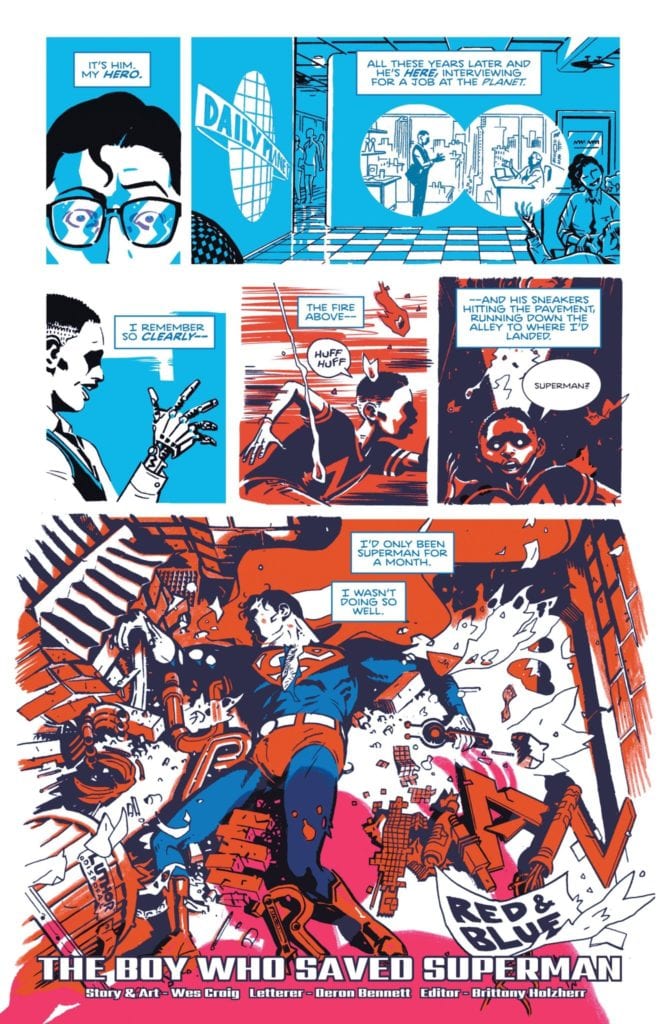
The Boy Who Saved Superman: Premiere Superman Red and Blue #1
Wes Craig depicts arguably the best story of Superman: Red and Blue #1 by showcasing someone Superman admires. The titular “boy” isn’t some famous writer or war hero. He’s just a regular person who, despite the risks, tries to help Superman when he’s hurt in battle. Through this readers find that Superman admires people like them as much as they admire him.
Craig’s art is extremely expressive in both character and setting. The look of surprise on Clark’s face is what gets readers undivided attention, along with his internal dialogue from Deron Bennett. Within the conflict are a large amount of panels that shift in size to express how chaotic the situation is. Combining with all of the colors, this makes the calmer situations in the Daily Planet feel like a moment of relief.
Human Colors In Superman: Red and Blue #1
This section of Superman: Red and Blue #1 serves as a juxtaposition against DC’s Batman anthology. Dan Watters gives this plot a silly start, a fifth-dimensional imp steals the world’s colors as well as people’s concept and feelings about color; like red representing the passions of love and war. So when Superman has the opportunity to put everything back, he’s conflicted as he could restart many of the world’s problems. Batman thinks that color should be locked away until Lois reminds Superman that black-and-white is Batman’s domain.
Dani gives this story a very simple aesthetic to demonstrate the story’s conflict. Every page features very simple lines to illustrate the shapes and characteristics of the setting. Batman’s cape and cowl makes him stand out when he and Superman are in the same room. This brighter Sin City aesthetic gives way to warmer and cooler colors when Superman gives the color back. It makes the world feel more lively despite the potential trouble.
On a smaller note, Sharpe comes back to give the words spoken some character. The imp speaks with a unique font in outlined word balloons, to further emphasize his otherworldliness. Lois’ captions meanwhile have a style with a fancy starting letter to promote her ability as a writer. It’s like she’s writing an article for the Daily Planet to make sure the events of the story are recorded.
The School of Hard Knock-Knock Jokes
The final section of Superman: Red and Blue #1 has Marguerite Bennett depict how the lessons of Superman’s parents shaped him. At only five years old, Clark has a lot of concern about his kindergarten days. The reader feels sympathy for Clark in how he expresses his concerns in showing off his powers. Trying to fit in is a struggle and trying to be friends with lonely and unpopular kids, for fear of losing new friends, is outright terrifying. The lessons from Ma and Pa Kent about inclusion feel so powerful.
Jill Thompson’s art, with its extremely detailed illustrating, shading, and coloring, is all very enticing with Clark’s bright colors guiding readers throughout the section. When Clark looks at the world from a frightening upwards angle, some brightness changes everything. The red sound effects like a child’s laugh and parents’ smooching from Troy Peteri enhances that feeling of brightness greatly.
Look Out For Superman: Red and Blue #1
Superman: Red and Blue #1 serves as a great way to introduce new and old readers to the Man of Steel. By putting reader’s behind the eyes of Clark Kent, his humanity really shines through. The Boy Who Saved Superman displaying Superman’s admiration for the common man hits similar notes as recent hit Soul. It all reminds fans that behind the sensationalism is a man to relate with.
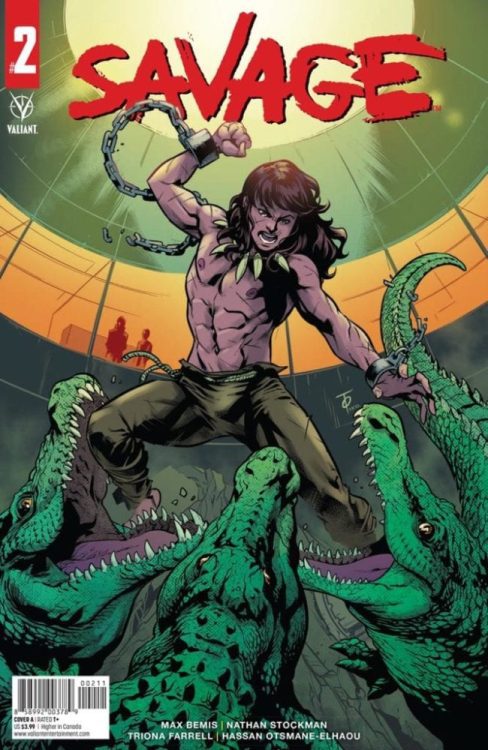
Savage #2, out from Valiant Entertainment on March 17, has writer Max Bemis examine the title character’s mental limitations. The artwork by Nathan Stockman shows how Kevin Sauvage feels restrained by the modern world. Despite all of the flashy colors from Triona Farrell, the lettering by Hassan Otsmane-Elhaou shows how awkward Kevin feels. It’s a great story about trying to connect with others and all of the awkwardness that gets in the way.
Savage #2: Bigger Implications
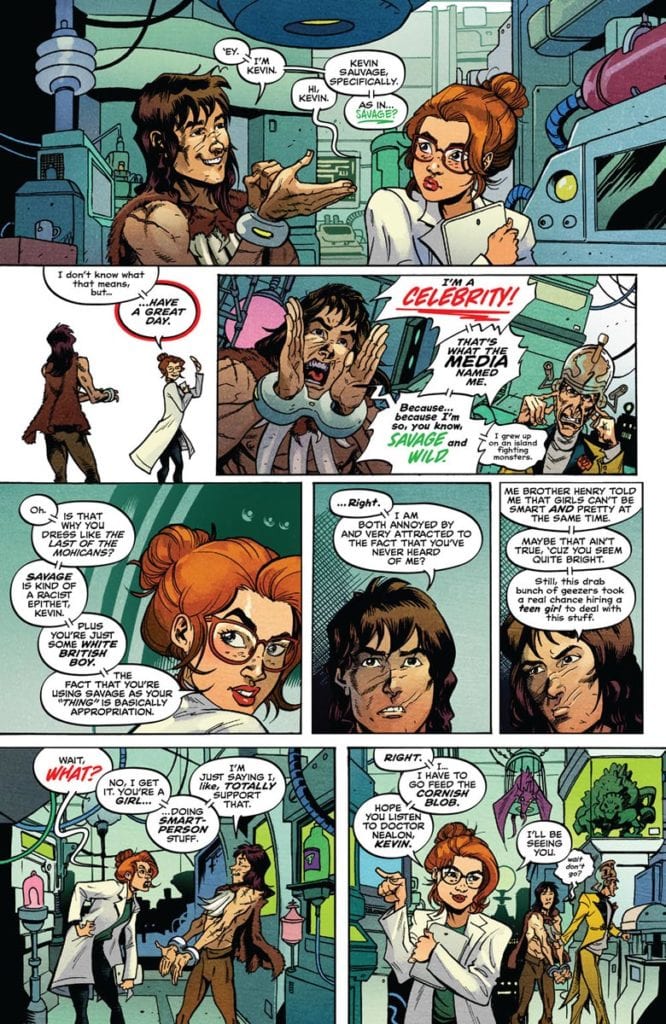
Bemis displays how Kevin’s main conflict in Savage #2 isn’t just fitting in with modern life, but dealing with his self-consciousness. It becomes apparent that amid all of the celebrity life and mad scientist encounters from the last issue, Kevin never really adjusted to normal life. When speaking with a girl who doesn’t know his celebrity status, he is awkward in his presentation. Without an influencer script or proper social skills, Kevin fumbles his words. The reader empathizes that despite Kevin’s celebrity status, he’s still a teenager.
When Kevin realized his brother is a bigger jerk-weed than anticipated.
It doesn’t help that his brother, Henry, is proving to be a bad influence. Constantly, Henry shows more concern with monetizing his brother than actually caring for him. One of the reasons Kevin has trouble talking to a girl is because Henry is a greedy chauvinist uninterested in teaching his brother social skills. Worst of all, instead of any concern for Kevin’s well-being during and after dinosaur attacks, Henry wants to publicize them. With Henry serving as a gateway to modern life, the reader can’t help but empathize with Kevin and his frustrations with this lifestyle.
Ferocity Loses Its Edge
Stockman gives the images of Savage #2 a confining sense of scale. Throughout the issue, Kevin looks small and restrained even when he’s not wearing restraints. He only moves wildly when he’s in danger. Not that it does him any good when going through a double page spread labyrinth full of death traps. Sure Kevin escapes, but he looks completely exhausted at the end.
All that blood curdling rage in orange by Farrell can’t even buy Kevin a moment of peace. Some of the panels in the above labyrinth have a sense of annoyance with their green and blue backgrounds. The reader can’t help but empathize with these color coded moments. They’d be pretty annoyed and exhausted too after such a gauntlet.
Lettering Of The Wild!
Finally, the lettering by Otsmane gives the words spoken more meaning. Kevin, in all of his appearances, goes between being loud to soft spoken. A number of times Kevin begins and ends his sentences with stylistic fonts to show how much energy he’s trying to put into his words. A huge sound effect looking word to get people’s attention can quickly get the momentum running, until Kevin says something he regrets. Which then leads to a softer speaking font in lowercase words that express how much that misspoken word affects the moment.
You try not getting nervous from this shot.
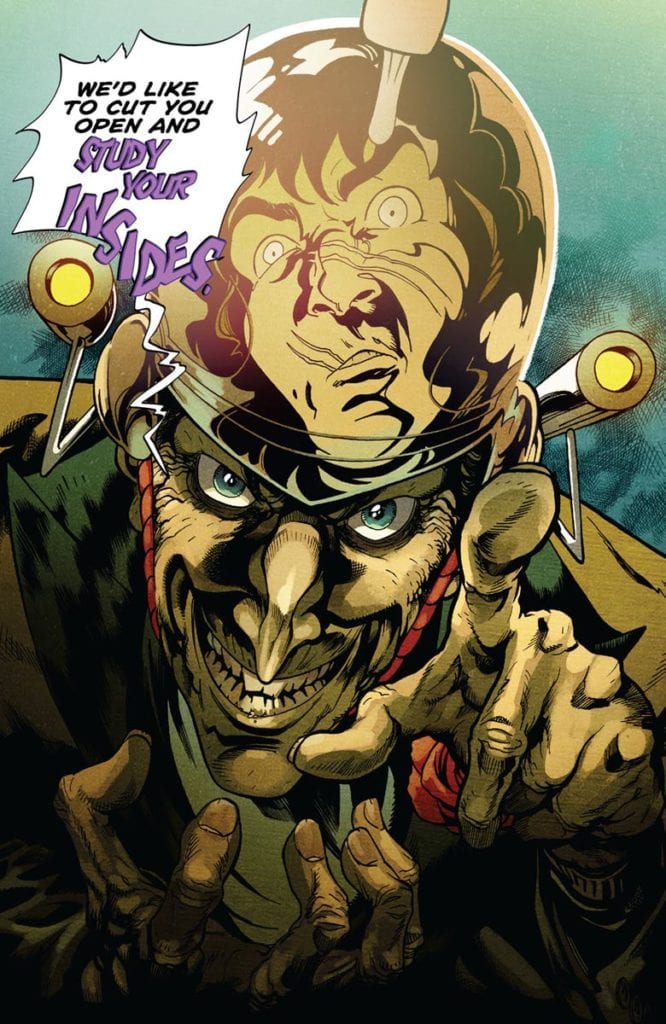
When speaking with Savage #2 antagonist Professor Hanley Nealon, who flaunts his dramatic speech, it’s hard not to feel awkward. Nealon likes to feel in control of the situation which is where his use of speech balloons comes in. The balloons guide the reader around the page and his lab, while Nealon himself says many words without really saying anything. This all sounds intelligent, but it’s really just his way to disorient Kevin and the reader. Nealon’s flair for the dramatic shines through in a splash page where Nealon explains his motivations for Kevin in one big stylistic word balloon. It’s deranged and unsettling to the reader.
Tune In For Savage #2
Savage #2 is really getting readers more invested in the journey of Kevin Savage. With how much the modern world only wants to exploit Kevin, the reader empathizes with his frustrations. A brother who shows no real care, a mad scientist ready to experiment with him, and Kevin’s own disillusionment with his “savagery.” It will leave the reader begging to see Kevin’s next stage of development sooner.
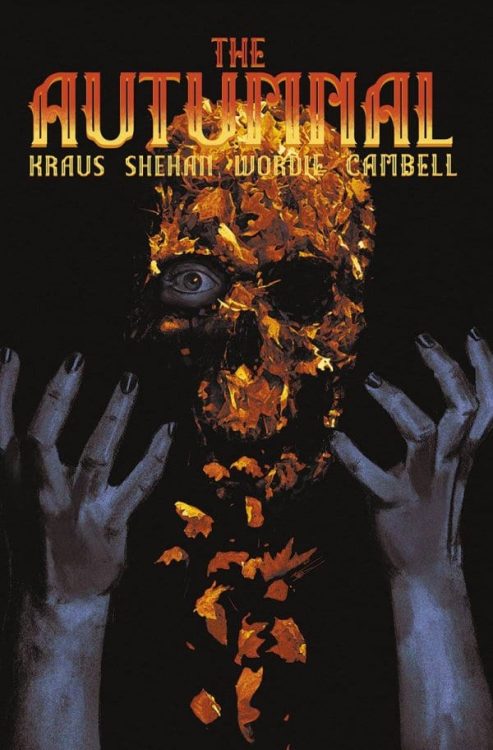
From writer Daniel Kraus, artist Chris Shehan, colorist Jason Wordie , and letterer Jim Campbell, comes the fifth chapter of one of the most well-crafted horror comics of the year. “The Autumnal” #5 is a thoughtfully paced comic book with intimate focuses on its cast of characters, while adding more pieces to the creeping puzzle that is the unseen terror of Comfort Notch. With an equally meditative and unnerving script and eerie perfect artwork, this comic is yet another incredible installment in a brilliant story.
“The sudden vanishing of a Comfort Notch citizen compels Kat to follow a hidden-in-plain-sight clue… before the worst omen of all manifests from the leaves.”
Writing & Plot
The writing on Daniel Kraus for the duration of this entire series thus far has been nothing short of astounding, and the same goes for “The Autumnal” #5. The script for this issue is rife with character moments that feel real and grounded, and make every person feel like someone you could actually speak to. Kat is now one of my favorite comic protagonists in recent years, and its because I feel like I understand and empathize with every aspect of both her past and her current struggle. She is a single mother with a checkerboard past that is only trying to do best by her child, and her instincts tell her over and over that there is something overwhelmingly wrong with this new town. The fact that she is also a good person is a bonus. There are almost no horror clichés here; Kat doesn’t stick around just to further the plot, as she is rooted to Comfort Notch and its people by her own nature. The supporting cast is fantastic as well, with Kat’s daughter being a delightful character, the scarred drug addict Carol being a sympathetic grouch, and tattoo removal specialist-turned boyfriend Rob keeps on being a beacon of reason and light. The dialogue itself feels real and genuine, with each character having their own voice. The creepy moments land with the perfect amount of shock, and the tender moments feel affirming. This series continues to be one of the most well written comics on stands right now, with Kraus being a tour de force of talent.
Art Direction
The paradoxical soothing yet unnerving aesthetic of “The Autumnal” #5 is built once again by artist Chris Shehan, whose pencils provide stunning detail and tone for environments, characters, and the general creepiness of Comfort Notch. The small town covered in leaves and woods comes across like a mix of a Stephen King novel and John Carpenter’s Halloween. The little details of the houses and resident small town diner carry a sense of familiarity to them that draws the reader into the comic with ease. The character animations are once again outstanding, with each person having their personalities portrayed through their expressions. Kat’s worry and suspicion shows through her eyes, Rob’s concern for his new lover is plastered on his face, while the lies of the deceitful are bared through grinning teeth. The colors of Jason Wordie are what really sell the “Autumn” part of “The Autumnal,” with the whole town and setting being draped in that orange and red hue that can suddenly turn into foggy shadow and other dark, vivid hues during the more horrific scenes. Subtlety is still the name of this comic’s game, so the visual direction of this comic is crafted to keep the reader strung along with often silent panels to accomplish storytelling beats that can only be done in this medium. Minor details are brought to your attention that can sometimes be difficult to make out, but that is all in the design. The letters from Jim Campbell are a perfectly contemporary font that blends in with the story and still sells the tone of the dialogue and narration perfectly. This is an expertly crafted comic book, and one of the most intricately put together horror books of the year.
“The Autumnal” #5 is a brilliant, insightful chapter in a horror comic series that is brimming with brilliance, character insight, and creeping horror. Daniel Kraus pens a script that gives priority to the evolving emotions and relationships of the main cast, while demonstrating a keen sense of tension and dread building when it comes to telling a horror story. The visuals from Chris Shehan and Jordie Bellaire are a beautiful and haunting display of character and environmental artistry, with out-of-nowhere haunting imagery and top-notch panel direction. This truly is one of the finest horror comics in recent memory, and you owe it to yourself to pick up this latest issue when it hits shelves on 3-10.
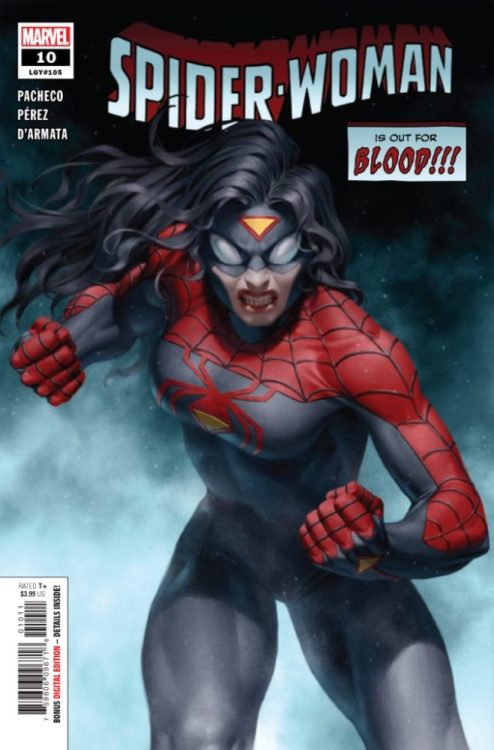
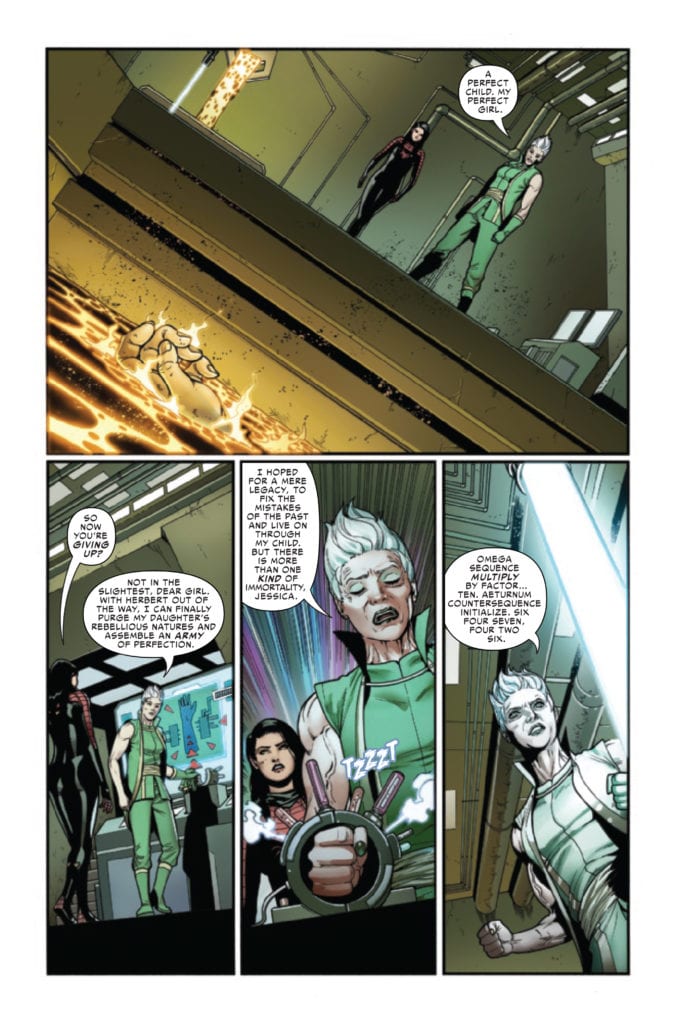
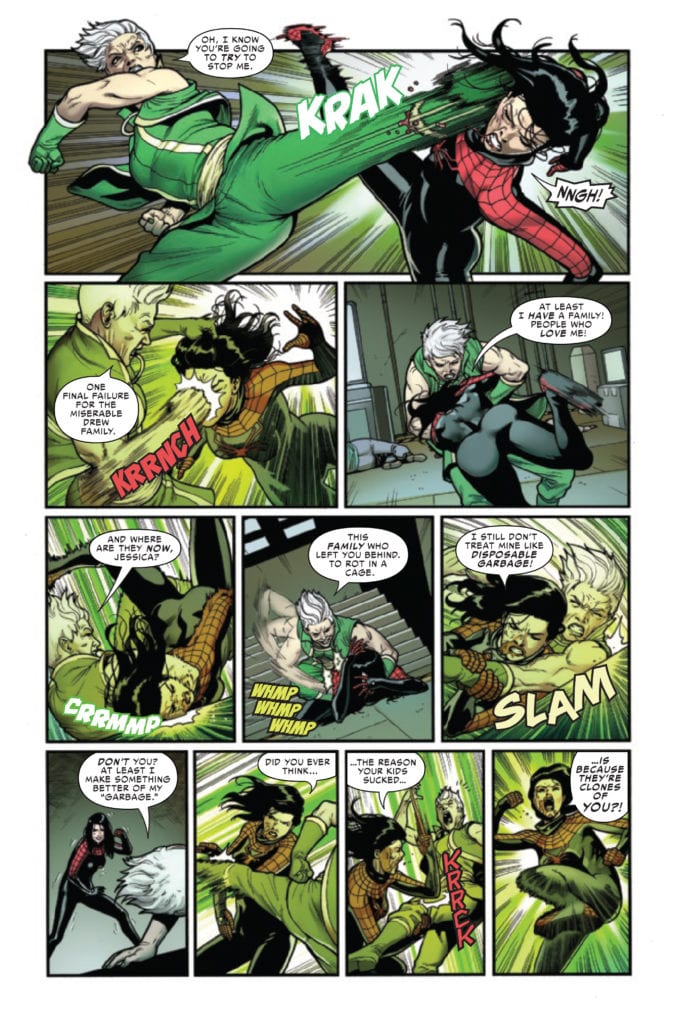
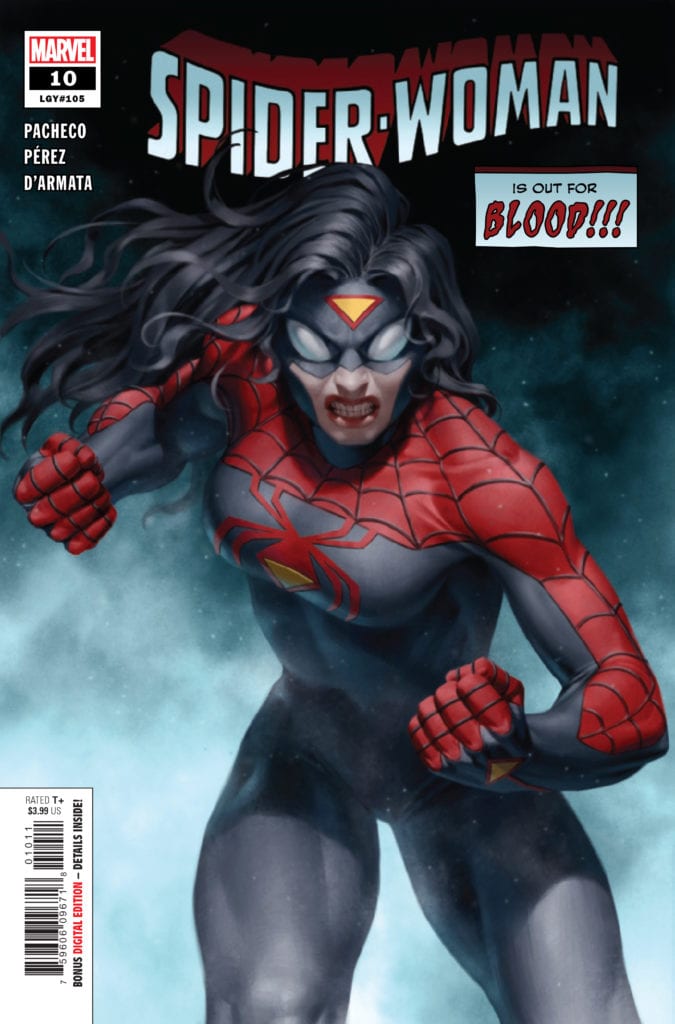
SPIDER-WOMAN #10 hits your local comic book store March 17th, but thanks to Marvel Comics, Monkeys Fighting Robots has an exclusive four-page preview for you.
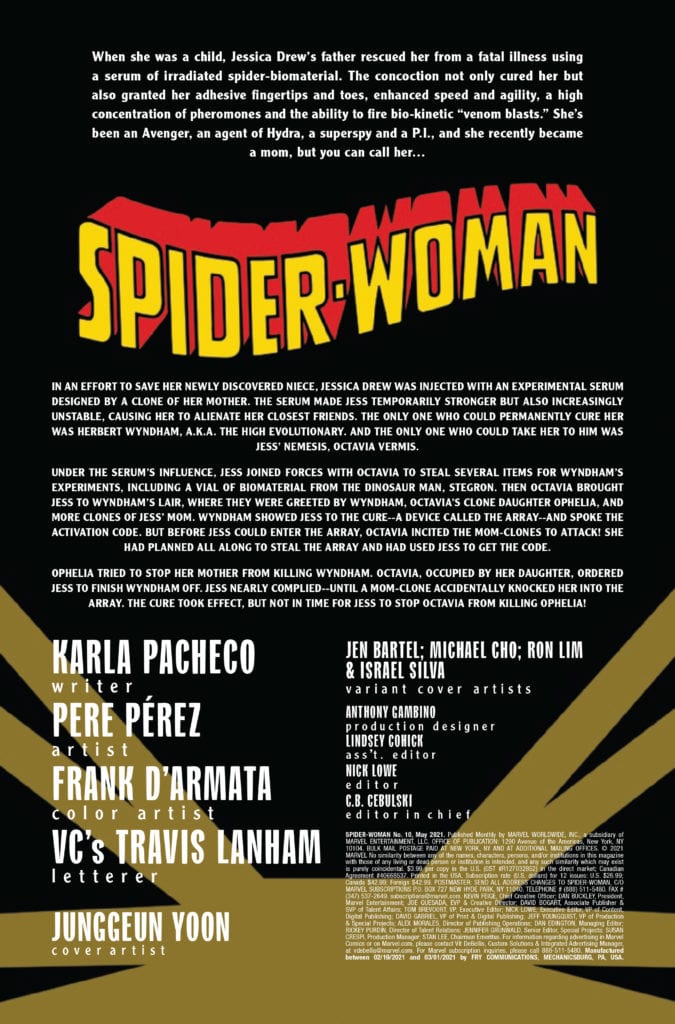
About the issue: The fuse lit back in #1 finds its destination.
Spider-Woman has crossed so many lines, leading to this moment and an offer to embrace the destiny forged by her Hydra years. Will she take it? You may think you know what a super hero would choose, but Jessica has a habit of defying expectations.
The issue is by writer Karla Pacheco and artist Pere Pérez, with colors by Frank D’Armata, and letters by Travis Lanham. The cover is by Jung-Geun Yoon.
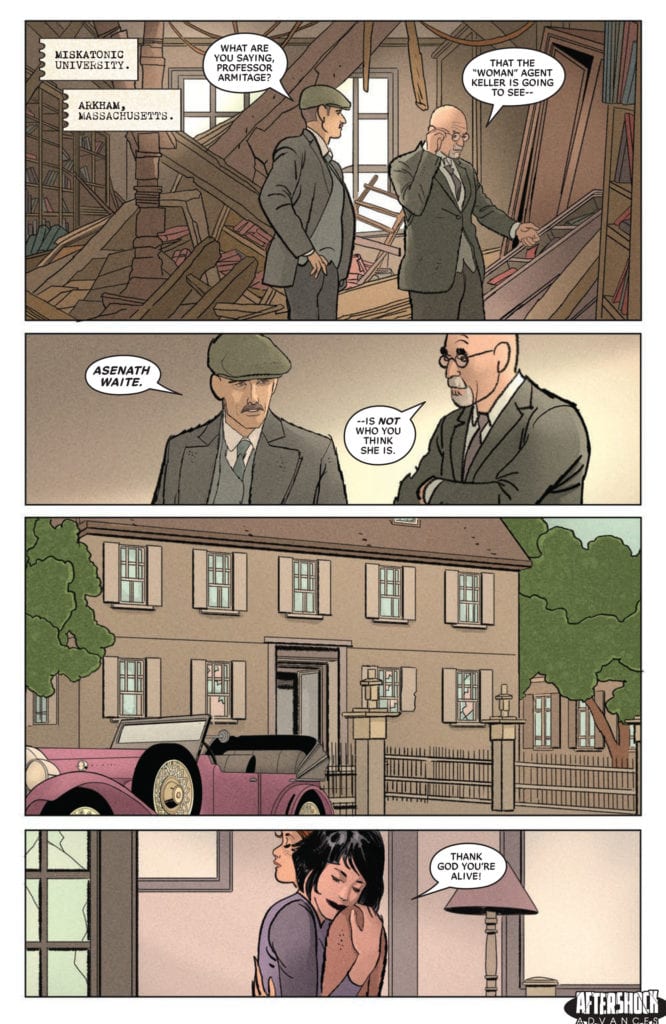
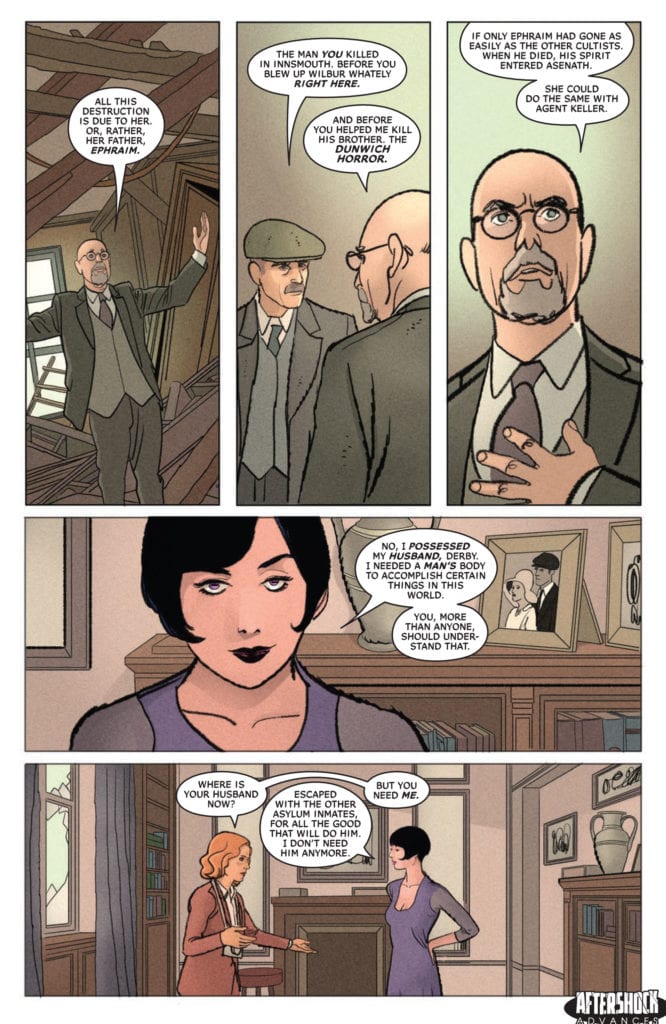
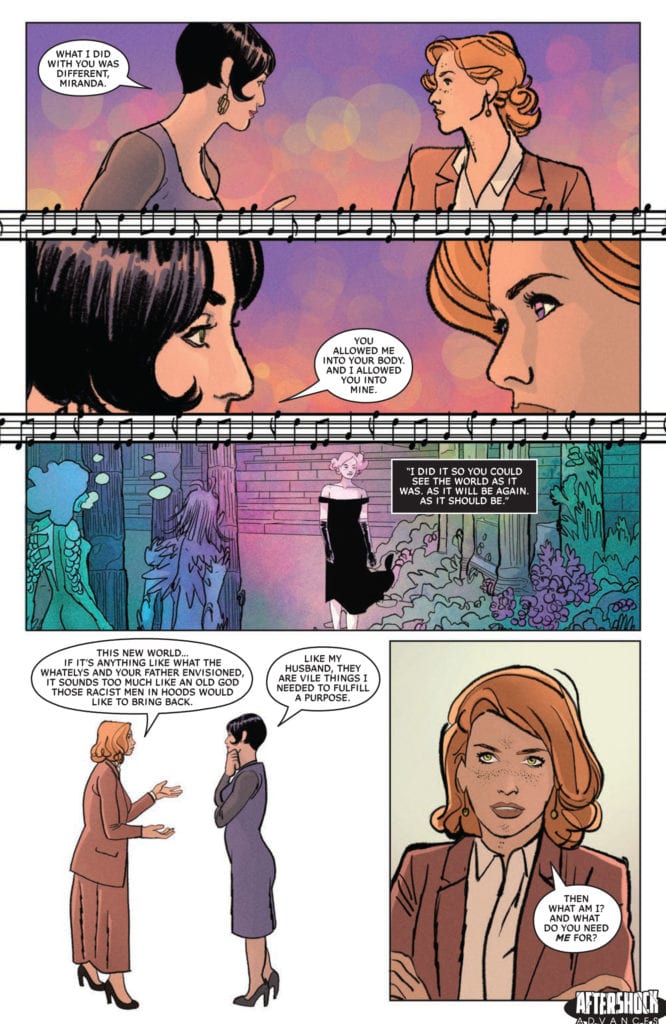
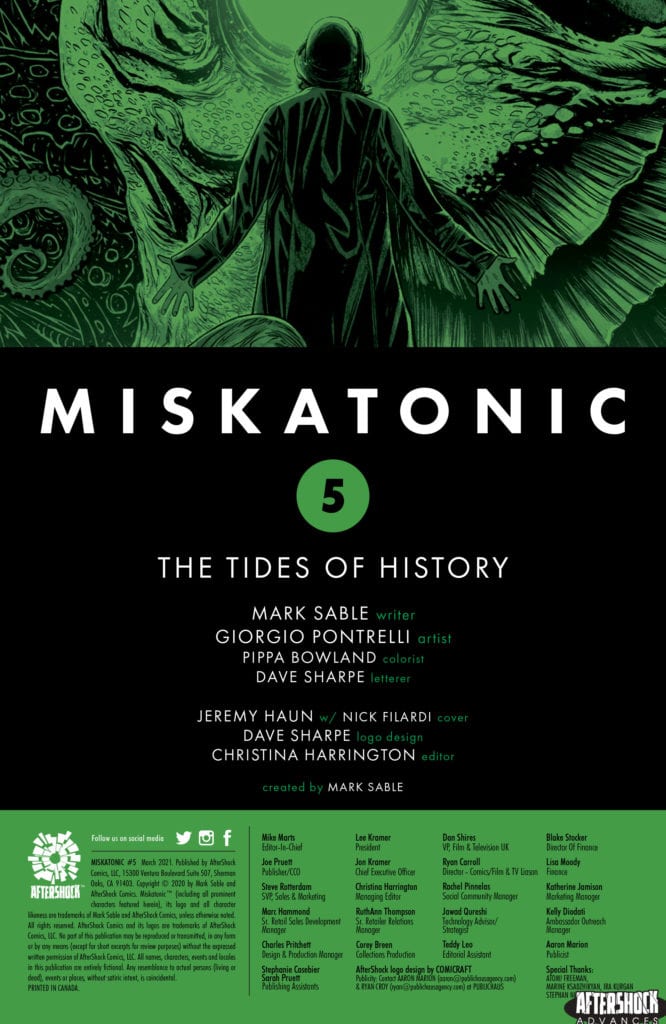
MISKATONIC #5 hits your local comic book store March 24th, but thanks to AfterShock Comics, Monkeys Fighting Robots has an exclusive four-page preview for you.
About the issue: Miranda Keller is one of J. Edgar Hoover’s first female investigators. After all she’s seen in the Miskatonic Valley – a white supremacist cult, bulletproof amphibious humanoids and the reanimated dead – she might also be the last. Now, her career and her life depend on stopping the resurrection of an Elder God.
MISKATONIC #5 is by writer Mark Sable and artist Giorgio Pontrelli, with colors by Pippa Bowland, and letters by Dave Sharpe. The main cover is by Jeremy Haun with Nick Filardi.
“MISKATONIC is addictive storytelling from the get go. Historical and modern sensibilities clash in a narrative full of intrigue and realism. It has instantly set itself up as an unmissable series.“
Check out the MISKATONIC #5 preview below:
Are you reading MISKATONIC? Sound off in the comments!