Home Blog Page 129

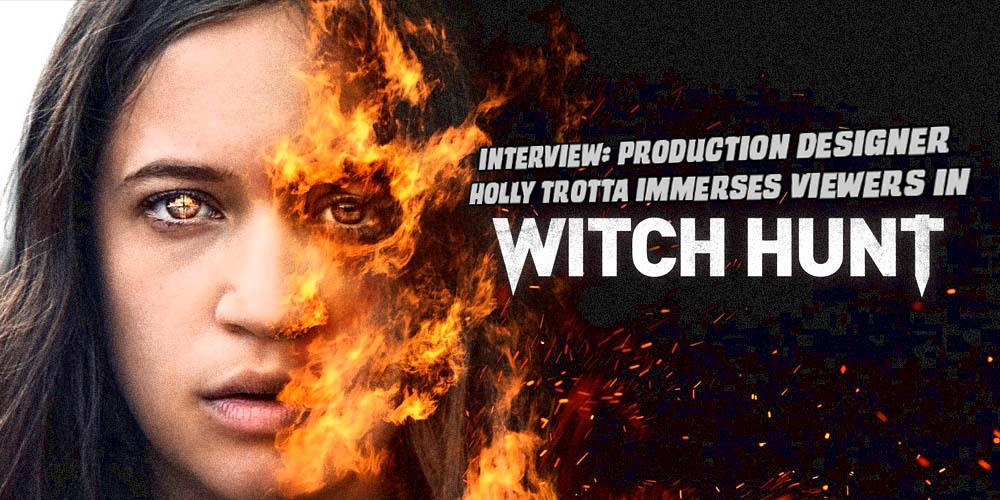
INTERVIEW: Production Designer Holly Trotta Immerses Viewers In WITCH HUNT

witch hunt-interview-holly trotta

In the new film Witch Hunt written and directed by Elle Callahan (Head Count) and starring Elizabeth Mitchell (Lost), witches exist alongside us in the present day, but they’re persecuted and hunted. Production designer Holly Trotta brought this wicked world to life.

It’s modern-day America, and witches are real, but they’re hunted by an official organization known as the Bureau of Witchcraft Investigation (BWI). Martha Goode (Mitchell) and her teenage daughter Claire (Gideon Adlon, The Craft) are a family with a secret; they smuggle witches out of the country and into Mexico, where witchcraft isn’t persecuted. However, standing in the way during this politically-flavored horror-thriller is Hawthorne, an agent determined to stop Martha’s illegal activities and kill any witch he finds, including young Claire, who’s developing powers of her own.

PopAxiom spoke with Holly Trotta about becoming a production designer and creating the world of Witch Hunt.

Inner Workings

Holly grew up with a fine artist mother and engineer father. “So, it was built into my DNA that there was an artistic side and a technical side.”

However, Holly struggled with “learning disabilities, and I was dyslexic. So I struggled a lot in school with reading, writing, and arithmetic.”

“I found my love of the arts,” she adds, “I went to the School of Visual Arts in Manhattan. That was amazing because I was just able to study art. Also, a lot of the faculty works in the industry. So, that’s one of the big reasons I ended up going there. So, you get to work on actual projects and things that are going to be published.”

Holly majored in advertising, but her education in that field “led me to 3D design. I fell in love with being able to make and hold things.”

“I was studying with one of my mentors,” Holly’s professional artistic career slowly took shape, “Kevin O’Callahan, who said that I should be going out and doing these things and not sitting behind a computer.”

Holly started working with Kevin “on the side while in school. I had an internship at Atlantic Records and eventually started freelancing. A lot of early on production design was segueing into music videos.”

“I didn’t want just to do music videos,” she says, “so I started getting into fashion. Coming up the ranks with set designers like Mary Howard. She’s worked with the best-of-the-best photographers in the world. I eventually designed with Mary, who gave me so much hands-on experience with sets and the inner workings.”

Fashion & Film

Holly was getting intimate perspectives on different ways to dress a scene between fashion shoots and music videos. “Fashion photography is very different from film because you’re in a moment, a vignette. In film, you’re creating a whole 3D world. So there’s a lot of similarities, but I see it as taking a set from a photo and expanding it for a film.”

“Some of the best photo sets I was on,” she adds, “were with photographers who would shoot on the RED camera and grab stills from the video. I think that’s where I thought,’ this is amazing; I want to create a world.’ So, the combination of music videos and fashion lead me down this road to production design.”

Holly’s love for film is rooted in the “narrative aspect. There’s so much backstory. You create a set for a character, and you think to yourself, ‘this person would have this furniture because they grew up in this area around this time.’ There’s so much to tell through the sets to make the sets believable. I enjoy diving into and living in these worlds.”

“Film is so collaborative,” she continues, “you’re not only in the art department and tapped to do sets but working with the director, the DP, costumes; there are so many crossovers. I love the collaborative experience.”

witch hunt-horror-film

About Witch Hunt

It’s Holly’s collaborations that paved the way to the gritty world of Witch Hunt. “I worked with Defiant Studios on two previous films. So, Chris Abernathy, the line producer, contacted me and asked if I was interested in reading the script. I definitely was.”

“Even before pre-production started,” Holly shares, “Elle [Callahan] and I had a lot of discussions. She sent me what she was looking to do, the feel, and the inspiration. I thought it had potential to be a lot of fun.”

Witch Hunt takes place in our modern world, but “it does have this stylized look almost like a period piece.”

The film begins with a traditional scene for a movie about witches with a burning at the stake. However, just seconds into the film, that stylized look is apparent. “The burning at the stake we pulled a lot of references from American Horror Story, compiled with research and a lot of old-school photographs.”

“Elle said early on,” Holly adds, “that she did not want to feel like this was shot in California. She said, ‘I don’t want to see a single palm tree. I want this feel like it’s Salem.’ If you’ve ever been to Salem, there’s an air about the place. Granted, I went during Halloween times, so there’s that extra element, but the architecture and the vibe are special.”

Making Witch Hunt

Witch Hunt undoubtedly has a modern, western, period piece vibe. “There was a mashup of locations to create a weird sort of setting for the movie to take place.”

Later in the film, there’s another element from traditional witch stories but turned on its head with the intensity cranked up to eleven. “The dunking scenes were a particular style of furniture. It was supposed to feel like you were at a school. So, we used some older elements that you’d find in a schoolhouse and converted it to this weird chair. We modified an existing chair to create this contraption and equipment for people to test witches.”

One of Witch Hunt’s antagonists is a massive wall blocking witches from escaping into Mexico. “We created a 24-foot wide wall that was elongated in post.”

The CG process is another collaboration for Holly. “I’m working with the post-supervisor either beforehand or on set. We talk about where we need markers and green screen setups. In conjunction with on-set, post-production person working with us on the day, who makes sure that the markers are a specific length and size depending on their position. Things that are farther away need larger markers.”

Wrapping Up

“I love Wes Anderson,” Holly answers immediately when asked about directors she loves. “Everyone loves him. Legends like Tim Burton who does such weird, obscure, off-beat stories.”

Inspiration for creative professionals comes from all sorts of places. “Something that’s inspired me lately are programs such as Unreal Engine. You can do so much in it, and I’m excited by being able to learn the inner workings of that and continue to grow with the capabilities of these programs.”

“Coming from much more an old-school background,” she says, “a lot of the things that were learned were conceptual first before the technology. So, the way the world is shifting into a digital platform, it’s important to be up-to-date and stay ahead of the curve as to where things are going.”

“As a production designer,” she adds, “it’s so important to paint pictures for the directors through concepts.” That’s where things like Unreal Engine come in “It’s a great launch point.”

Holly loves dreams but says, “I think in the way of goals. It helps make things a bit more tangible. My goal is to work on larger productions for some of the big, classic studios. I have a fascination with getting involved with science fiction, too, and psychological thrillers. Those resonate with me, and anything that resonates with an artist is easier to dive into.”

Is Witch Hunt on your watch list?

Thanks to Holly Trotta and Projection PR
for making this interview possible.

Find more interviews from Ruben R. Diaz here!
Monkeys Fighting Robots Youtube

Review: Grief, Fury and the Start of Something New in FRIDAY #4

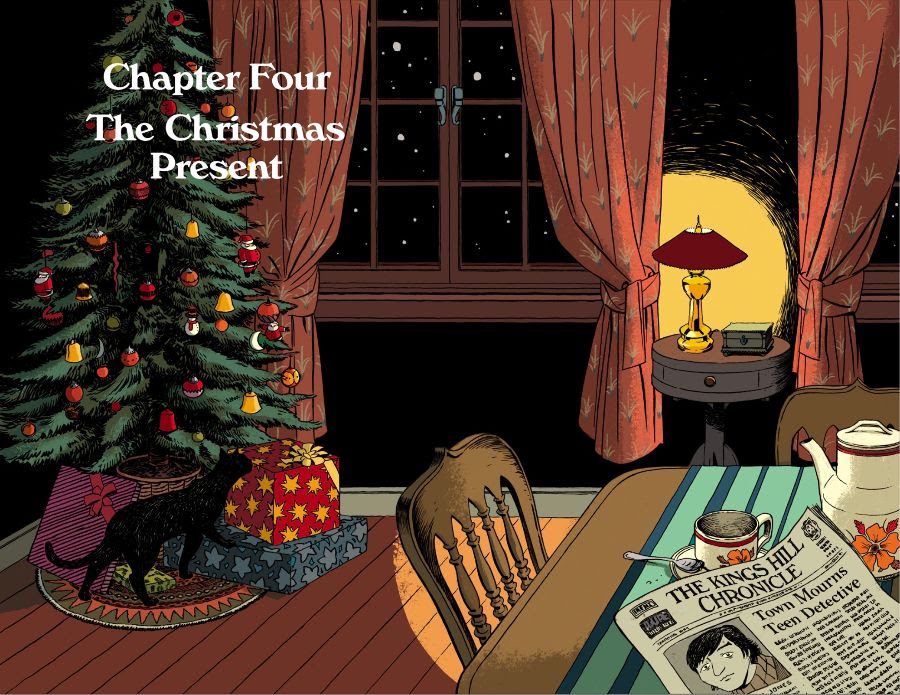
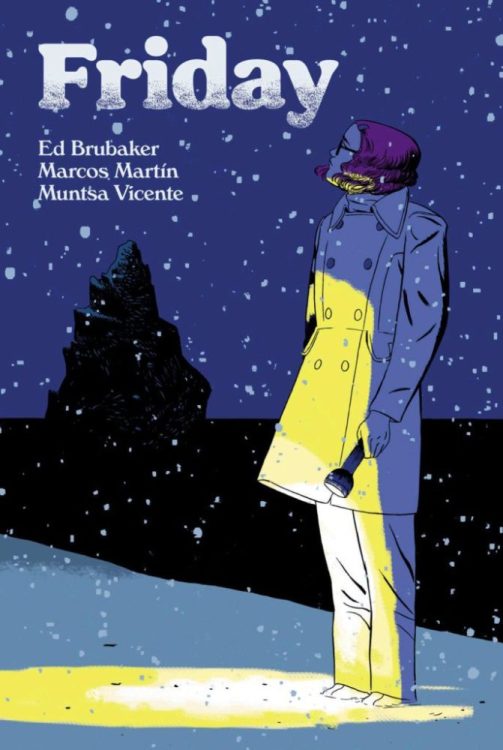
Panel Syndicate’s Friday is back! In Friday #4, writer Ed Brubaker, artist and letterer Marcos Martin, and colorist Muntsa Vicente show us how the events of the last issue have changed everything. Spoilers ahead for people who haven’t read Friday #3!

spoilers ahead

Writing

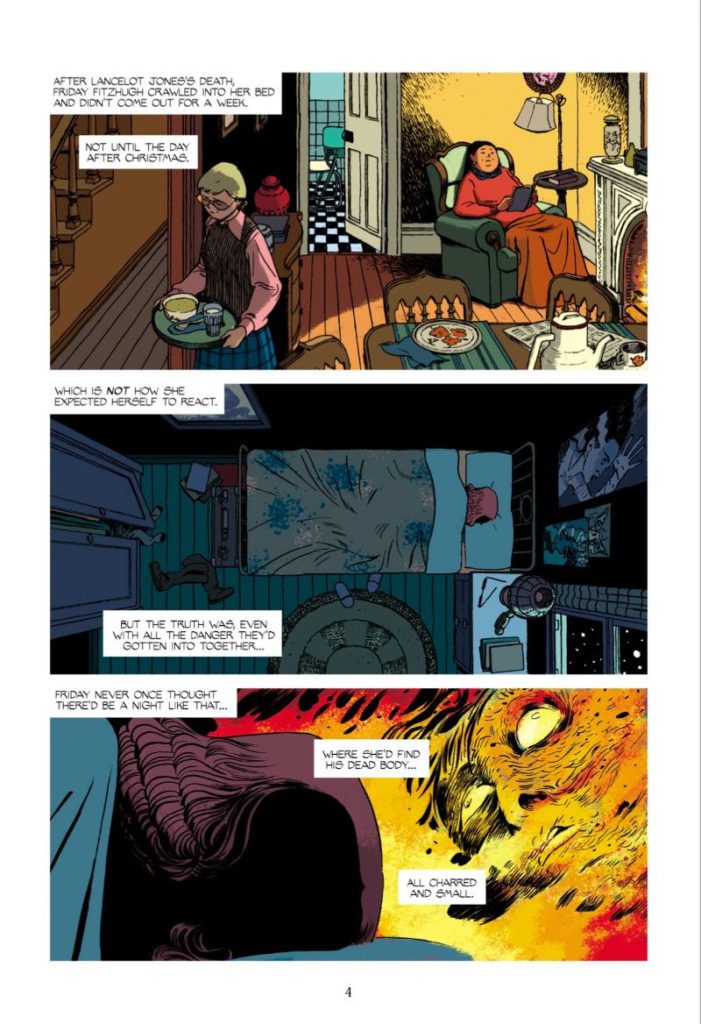
Lancelot Jones is dead. Brubaker makes that absolutely clear, with images of Lancelot burning in the wreckage of his and Friday’s headquarters. This wasn’t a fake-out. It would make sense for the plot to kick into overdrive at this point. Friday has all the motivation she needs to get to the bottom of this case. But Brubaker doesn’t treat Lancelot like a plot device. His death isn’t merely an inciting incident, and Friday’s grief is the main focus of this issue. She’s paralyzed by loss.

Friday Brubaker Panel Syndicate

But there’s a complexity to Friday’s grief, too. When a cop asks Friday about the night Lancelot died, she mentions the scene of the crime. “At your clubhouse, I saw some science equipment in there…?” She says. “It was our headquarters, not a clubhouse,” Friday responds. There’s a fury bubbling beneath her sadness and Brubaker makes us fear, not for Friday, but for whoever is behind all of this. We see her move from a state of mourning to being furiously hungry for answers. There’s going to be hell to pay.

Art

Martin’s art is gorgeous, as always. We see Friday’s rollercoaster of emotions in her eyes. There are bags under her eyes, at times, that show her tiredness and her hopelessness. Sometimes the fatigue gives way to fury, shock, or a even a look of intrigue. We’re piecing together Friday’s internal struggle, just as she’s piecing together the case. She’s pulling herself up by her bootstraps and getting to work, all while screaming on the inside.

Martin also shows us deliberately conflicting things. We see Friday’s confidence as she starts investigating. Her face is clear, she’s not going to let anyone get in her way. But Martin also shows us how small she feels. She talks to the sheriff, getting information out of him while telling him how things are going to be. But when he gets in his car, she looks tiny and slouched over in the panel. Her confidence is a way to push her self-doubt away. Every time she falters in that, Martin makes it heartbreakingly clear.

Friday Panel Syndicate Brubaker

Coloring

There’s a lot of warmth to the color palette in this issue. Where there was once pale blue and dark purple, there’s now soft browns and vibrant reds. It has the feeling of Friday coming in from the cold. She’s in a safe place. But Vincente is just showing how Friday thinks she ought to feel. She should feel safe and warm, but she feels empty. Vicente’s coloring is a beautiful way of showing the support Friday has, while also showing the pressure she feels to be “back to normal.”

And of course, we have more fantastic uses of the color yellow. Vicente shows us a flashback of Lancelot burning. He burns in startling yellows and oranges. And later, when Friday’s high school boyfriend comes climbing through her window, he’s wearing a yellow coat. But the shade is off, muddled by the darkness of the night. It makes him look like a cheap knock-off of the bright Lancelot Jones.

Lettering

There’s something incredible I hadn’t noticed about Martin’s lettering, until this issue. All of the caption boxes, from our third-person omniscient narrator, are placed in the upper left-hand corner of every panel. Of course, this makes logical sense. We read from left to right, from top to bottom. So, anything in the top left-hand corner you’ll read first. But even the longer captions tend to hug the corners. Instead of allowing the longer sentences to lengthen the box, a new line will start. It makes the narration, which feels like an extension of Friday’s inner monologue, feel full of hesitation.

There’s one big exception to this, in this issue. Every caption box stays in the corner or doesn’t venture out far, except for when Friday is thinking about Lancelot’s corpse. “Where she’d find his dead body…” it says in a box, directly above Friday’s head. “All charred and small.” With this, Martin shows how invasive these thoughts are. Her trauma doesn’t stick to the corners, it pushes past the borders and into the scene. It is there to be noticed and to get in the way of her trying to sleep.


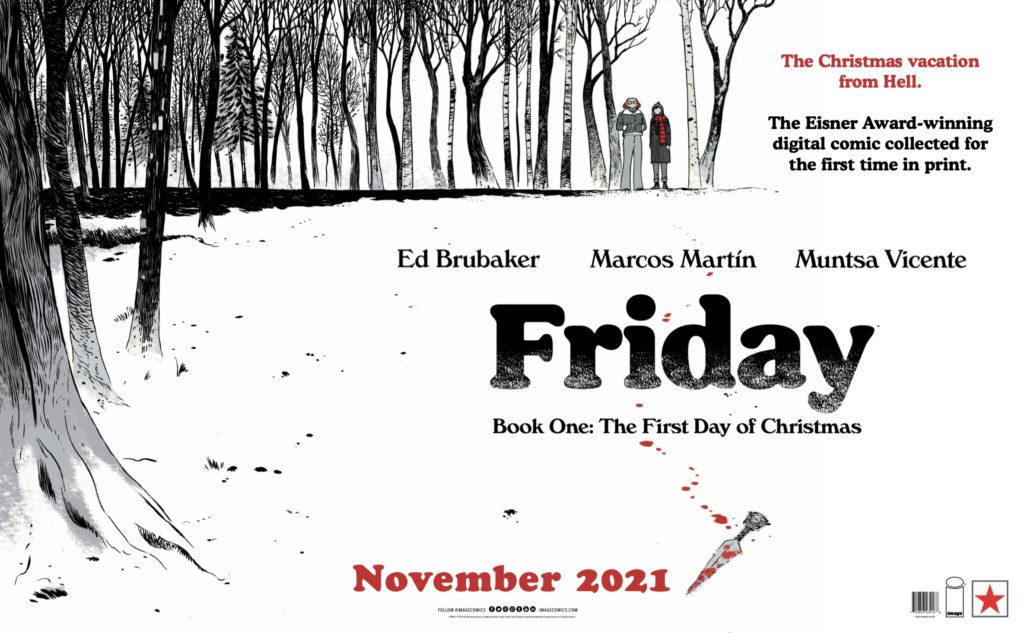
Panel Syndicate’s Friday continues to be a delight. Maybe someday this creative team will produce an issue that’s anything short of perfect. That day is not today. Go to Panel Syndicate’s website to buy yourself a digital copy. You can pay what you want to for it! And, don’t forget to pick up a physical copy of Friday, Book One: The First Day of Christmas, out in comic stores from Image Comics on November 3rd!

Monkeys Fighting Robots Youtube

AfterShock Comics Exclusive Preview: MISKATONIC: EVEN DEATH MAY DIE

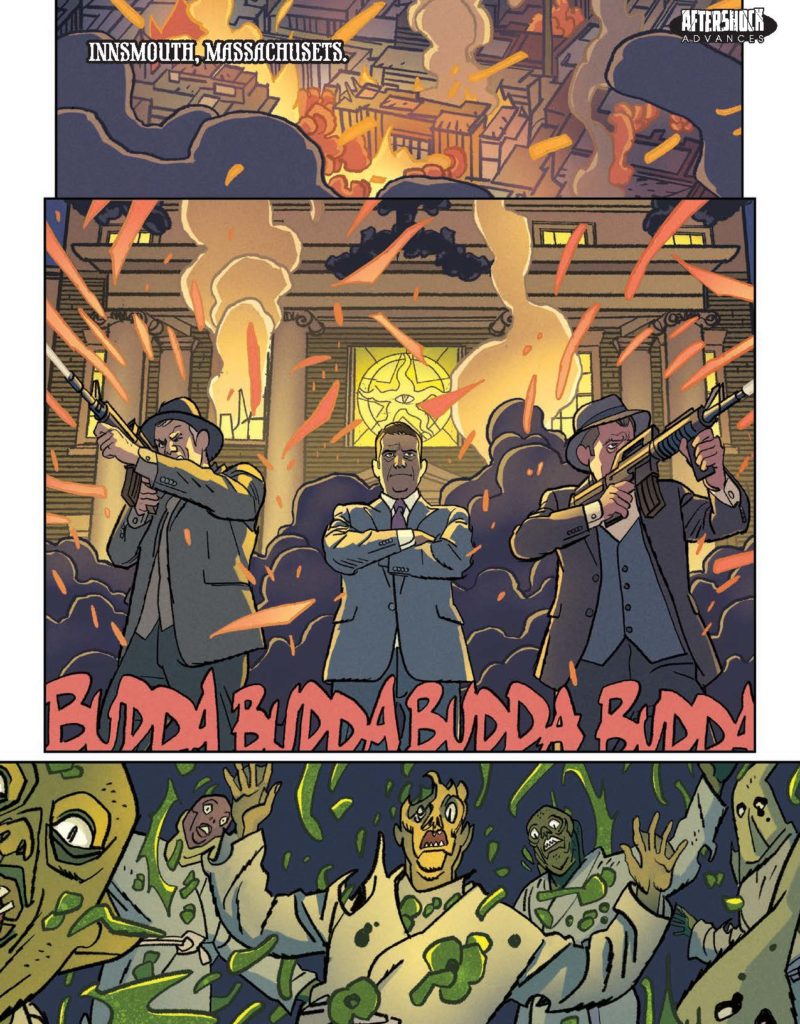
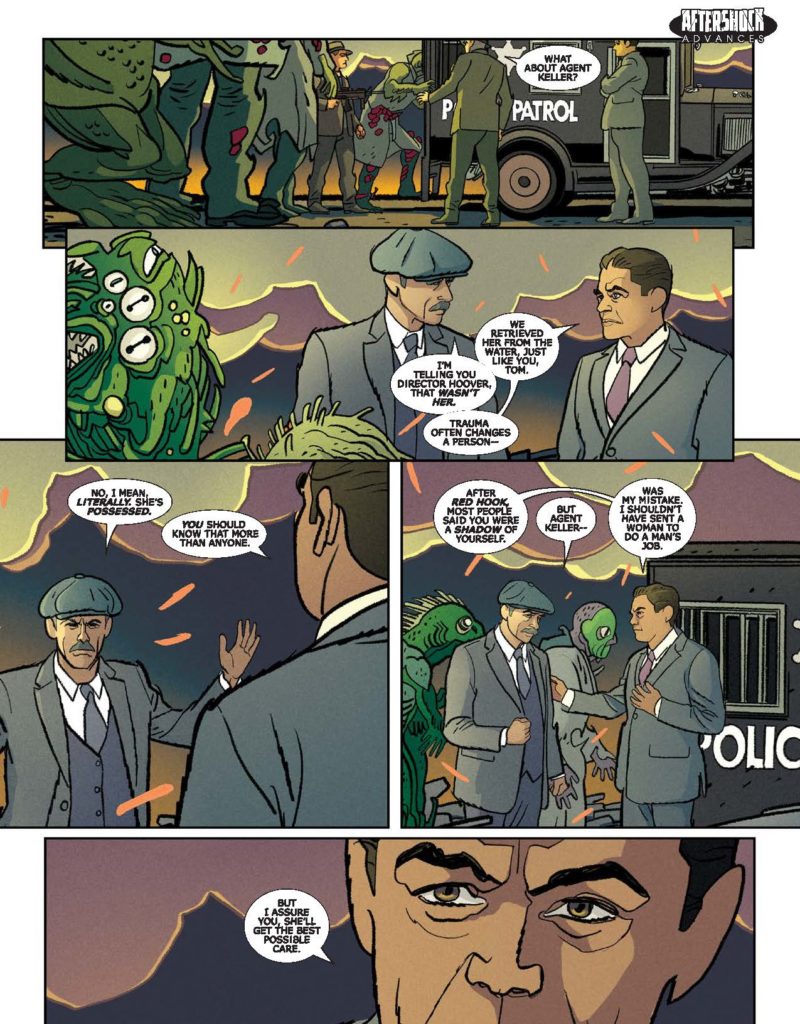
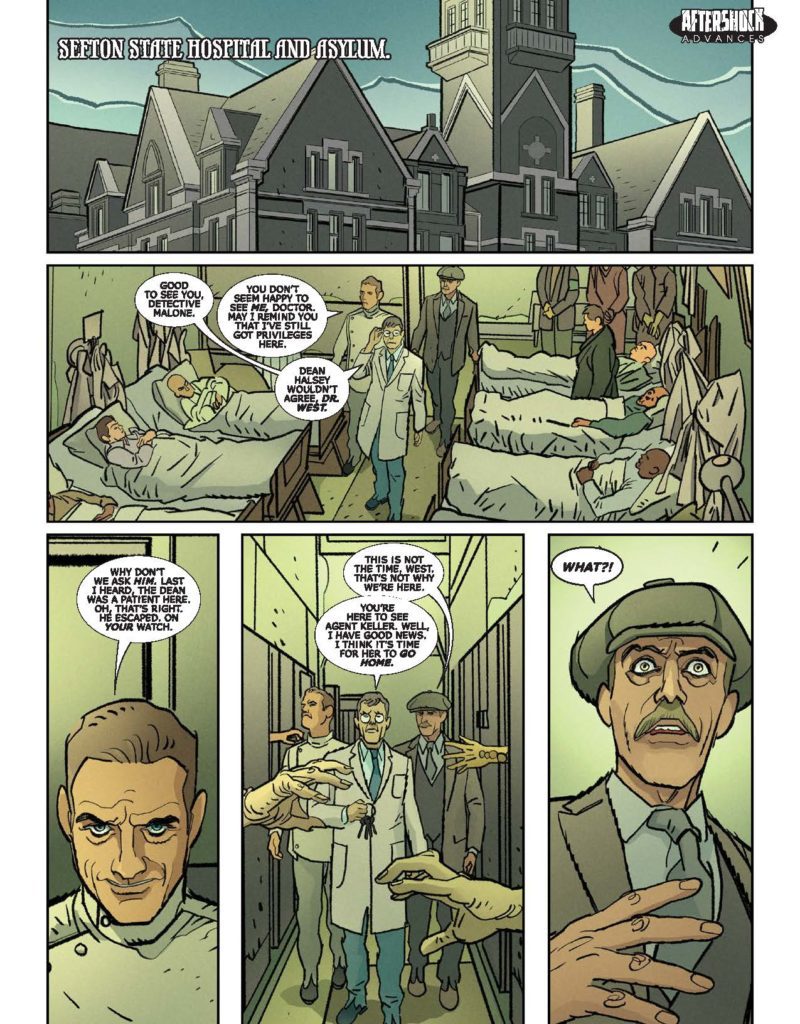
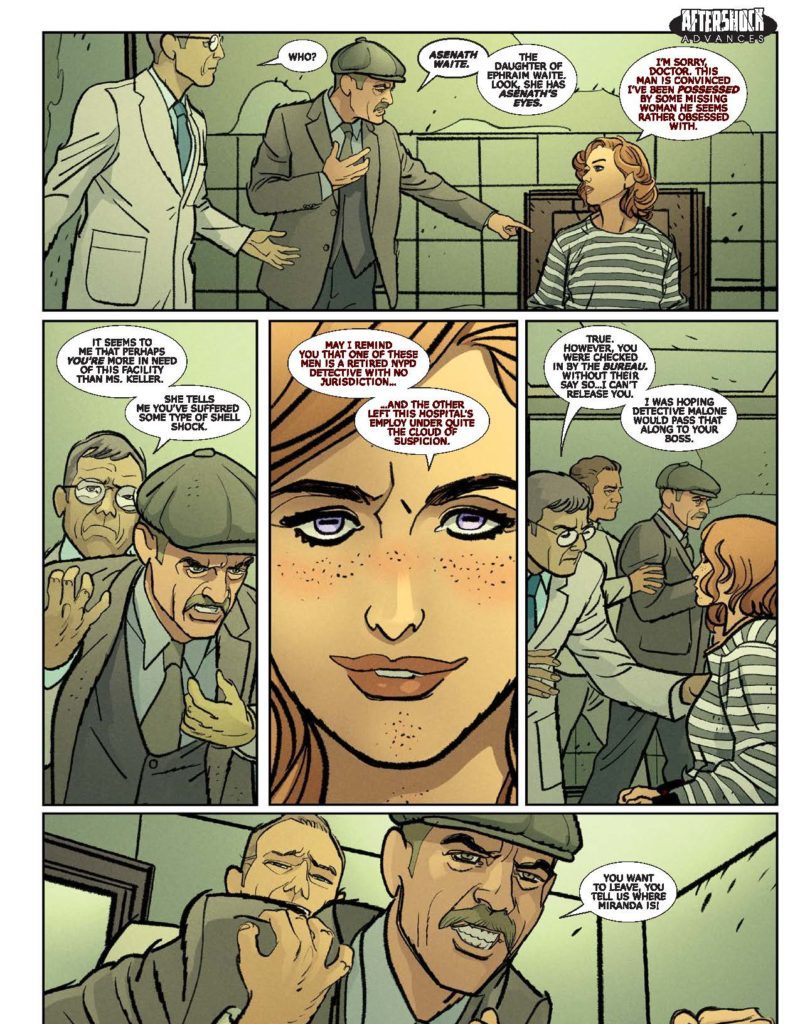
miskatonic even death may die aftershock comics exclusive preview

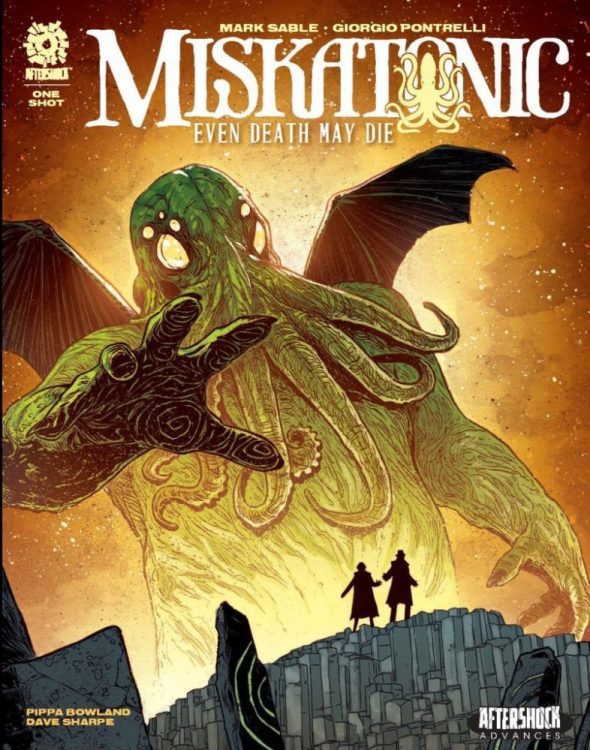
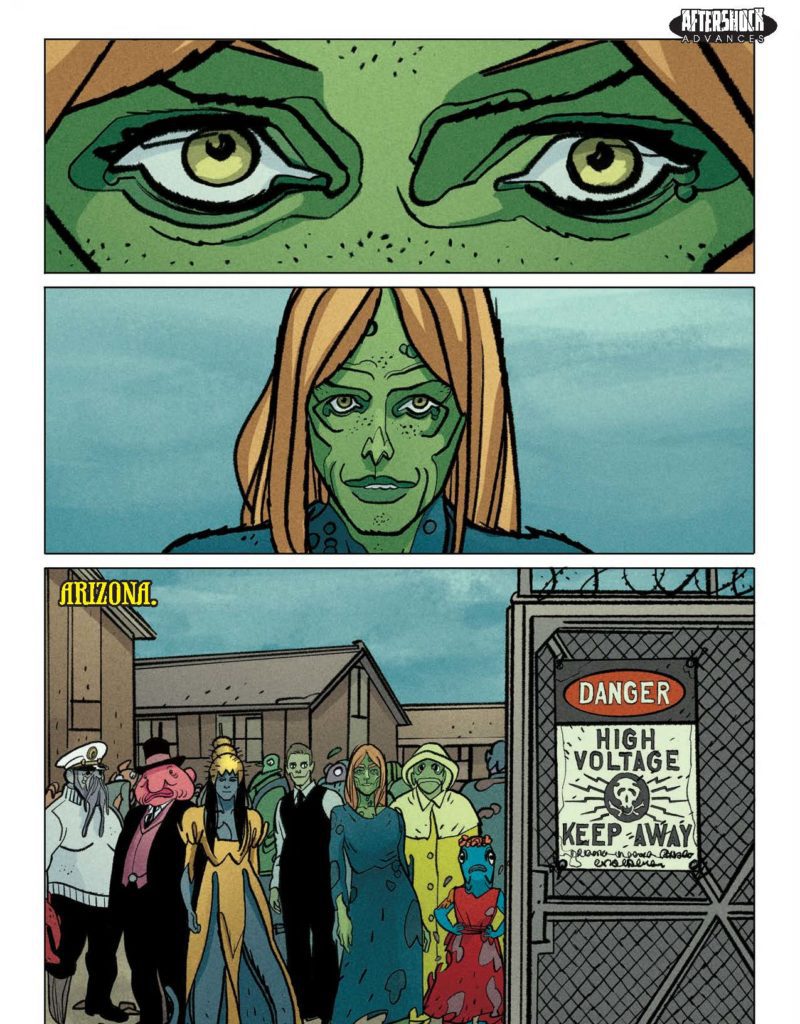
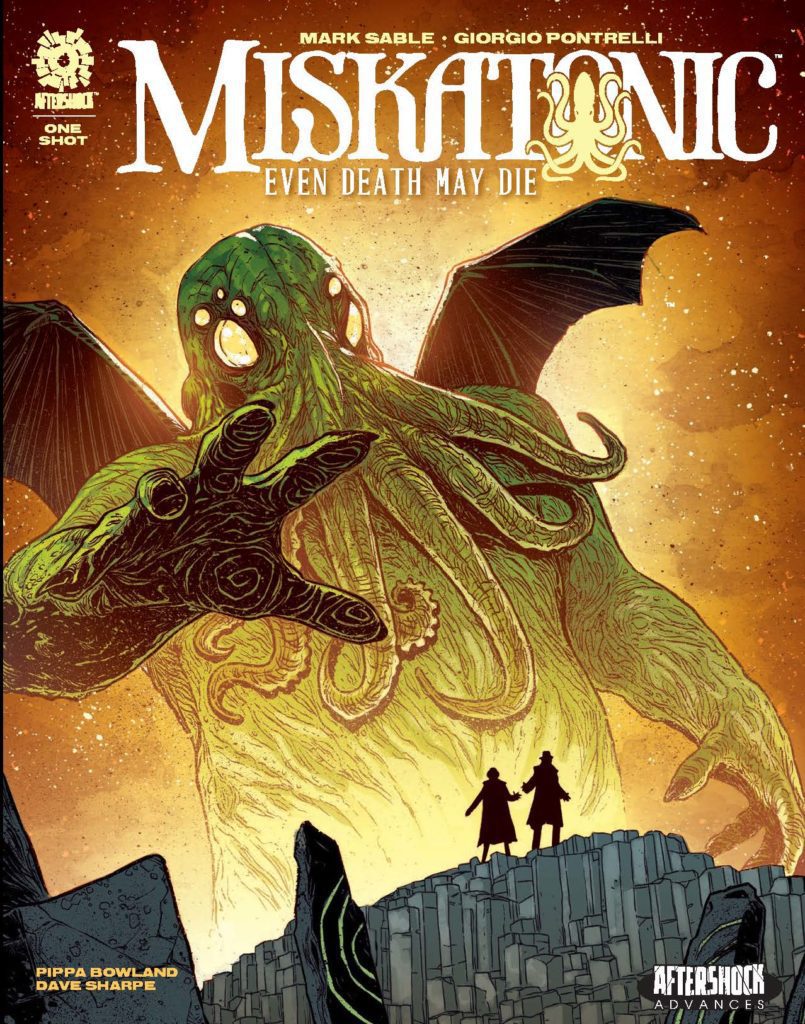
MISKATONIC: EVEN DEATH MAY DIE hits your local comic book store November 24th, but thanks to AfterShock Comics, Monkeys Fighting Robots has an exclusive six-page preview for you.

About the issue:
The hit series returns! 

The horrifying events in the Miskatonic Valley have torn apart retired detective Tom Malone and ex-FBI agent Miranda Keller. Miranda tries to escape a Deep One concentration camp and a traumatized Tom is obsessed with finding and freeing her. But soon they both start sharing dreams of Cthulhu, a monstrous entity in the South Pacific who will soon awaken and bring about the end of the world as we know it.

The one-shot is by writer Mark Sable and artist Giorgio Pontrelli, with colors by Pippa Bowland, and letters by Dave Sharpe. The main cover is by Jeremy Haun; there is also an incentive variant by Cliff Richards.

EVEN DEATH MAY DIE is a follow-up to the five-issue MISKATONIC series, which came out earlier this year in paperback.

Check out the MISKATONIC: EVEN DEATH MAY DIE preview below:

miskatonic even death may die aftershock comics exclusive preview

miskatonic even death may die aftershock comics exclusive preview

miskatonic even death may die aftershock comics exclusive preview

miskatonic even death may die aftershock comics exclusive preview

miskatonic even death may die aftershock comics exclusive preview

miskatonic even death may die aftershock comics exclusive preview

miskatonic even death may die aftershock comics exclusive preview

miskatonic even death may die aftershock comics exclusive preview


Did you read MISKATONIC? Sound off in the comments!

Monkeys Fighting Robots Youtube

UNFINISHED BUSINESS: An Interview with Paul Levitz

An unabridged version of this interview was originally published on the site Popular Culture and Theology by Monkeys Fighting Robots writer Matthew Brake. 

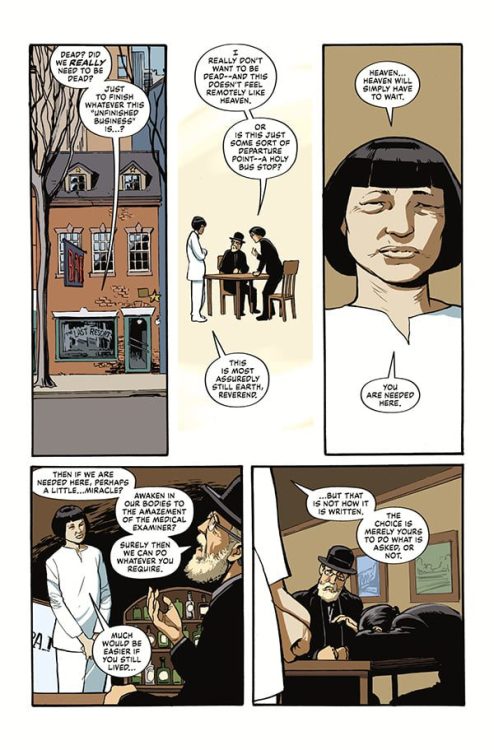
Matthew Brake: I know you and I have talked a little bit about the inception of this story, but could you talk a little bit about your motivations for writing Unfinished Business?

Paul Levitz: I don’t think I’m ever quite sure what motivates me to write something that isn’t an assignment along the way. Mike Richardson over at Dark Horse was asking me what I wanted to do next. He was suggesting at the time that the preferred format they were working in was four-part miniseries.

Okay, what do I feel like doing?

Tim Hamilton, who I had worked with on Brooklyn Blood, my immediately preceding project for Dark Horse, wasn’t in the mood to do more of that. He was playing with children’s books for a while to figure out something new to do, and this came to me.

Brake: Say a little bit more about that, because you’ve said before that this story is, in part, inspired by a joke.

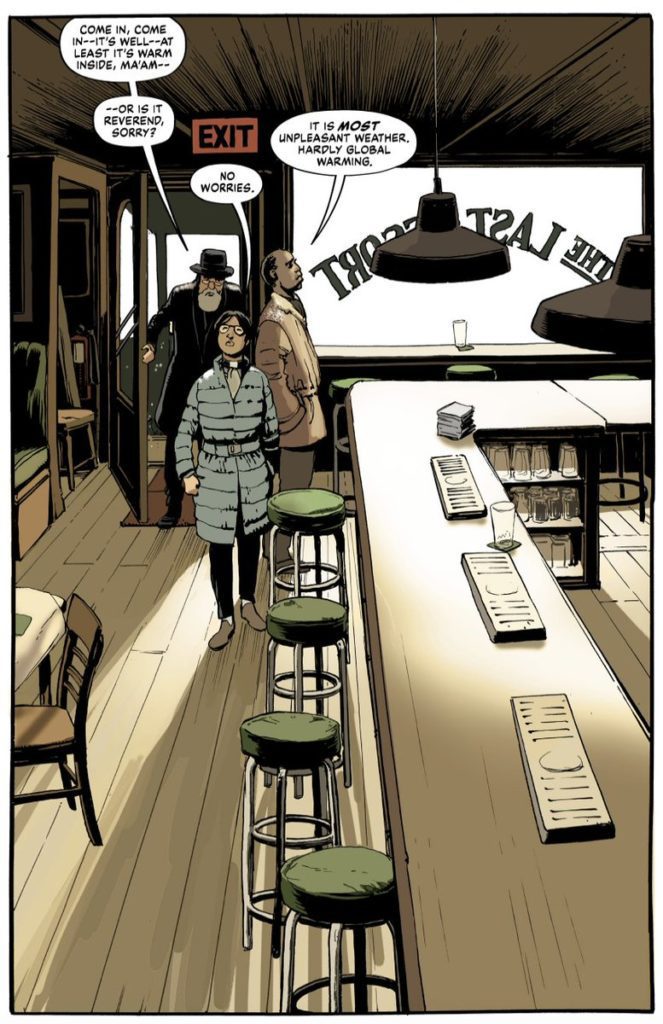
Levitz: Oh, I mean, the heart of the story, obviously, is the opening joke about “a rabbi, a priest, and a minister walk into a bar.” There’s lots of variations on it. But that’s sort of a classic gum line and then what’s the payoff for it? And I went to, perhaps, the most extreme possibility.

Brake: So that was the inception, and then, was it taking that joke and then crafting the story of where this could go? Or did you already have some ideas in mind about a message you were trying to convey?

Levitz: It’s not so much a “message story.” As a writer, I think my philosophies or my politics are relatively transparent within my work, but I don’t usually sit there and say, “This is a time to do a tract about or this is a time to do a sermon about [blank].” I had a dear old friend who was down with cancer at the time who was a rabbi. That may have been a piece of the influence. I wanted to do a story that could sort of include him. I mean, the rabbi in the story is not defined as being of the same sex and behaviors as my friend, David, but he was a bit of an homage to him and probably part of that came from conversations I was still having with David in the years of his illness.

Brake: I do want to come back and talk about your friend David later because I appreciated your afterword where you discuss that relationship. But when you’ve come to my class, you’ve spoken about the difference between art and craft and how with craft you put together a story where you understand the mechanics of the story, can write a story correctly, and meet a deadline. However, with art, it can come from a more personal place. I’m curious with this story, the craft is there, but would you call it art because it comes from a personal place?

Levitz: You know, art is in the eyes of the beholder to some extent, and I don’t know that what I accomplished with the story rises to my definition of art. I think a lot of it was based in my craft. To the extent it was art, it was because I was touching subject matter that was unusual for me to play with and that opens some interesting doors to being thoughtful about it.

Brake: I appreciated the way the three protagonists come together. They come together. They’re uneasy with each other, and then for a time, they part ways. It almost reminded me of the Chinese restaurant scene from the Defenders on Netflix where you have Daredevil, Luke Cage, Jessica Jones, and Iron Fist come together.

Levitz: I didn’t see that series, so I don’t know the reference. But I can imagine.

Brake: It’s sort of worth the watch…well, about half sort of worth the watch (laughs).

But I liked how the minister, the rabbi, and the priest seem almost like superheroes gathering. Before they become a team, they’re uneasy with each other. Then they temporarily part ways, but they come back together later. Did the structure of that kind of superhero storytelling affect any of your writing or those character decisions?

Levitz: That’s an interesting question.

Maybe.

I mean, most of the stories I’ve done in my life use superhero tropes. But I think part of it was really an attempt to capture a very human moment. There are times in our lives when circumstances throw us together with people we wouldn’t actually be together with. You don’t really have room in the structure of a comic to go through that, but in the real world, you go through that exercise that is a search for common ground: “Where did you go to school?” “What did you study?” “Where did you grow up?” “I don’t recognize that accent.”

All of the kind of dumb opening lines aren’t pickup lines, but are part of how we connect to each other. We search for what we have in common. I’ve never had the privilege of being in a room with multiple religious figures from different religions, but I would certainly imagine that it’s a different kind of dance. And certainly, if you’re dealing with a very Orthodox rabbinical figure, they’re generally not comfortable around women. They have a host of formal prescriptions of what they can and cannot do in the presence of a woman, including any physical contact.

I think the two Christian figures would not have as complicated of a situation but still would have some interesting barriers. The Catholic priest was deliberately chosen out of the African tradition which is perhaps more classical or more conservative than the American, and the idea of a woman priest/minister would be perhaps not uncomfortable in the same way as it would be to an Orthodox Jew, but confusing in some fashion. And then the woman comes out of a very open liturgical tradition and how does she fit with all of this? How does she deal with people who may be more closed-minded? Does she take offense? There isn’t a lot of room to explore all of that, but some of that takes place in the subtext. I did my best to indicate that all three of these people were people of genuine religious belief and sincere faith, living out whatever the right way is that they would feel their faith should be expressed. But being in that room and that bar would confuse anyone alive or dead, including them, no matter how sincere their beliefs.

The bartender, whatever the bartender represents, whether it is a sending of God or a secondary or tertiary supernatural figure, how do you react to that, and that would certainly be a bewildering moment.

If my memory serves, I wrote most of this before The Good Place was on the air. A wonderful, wonderful show. But to some degree, when I saw it, it reminded me of what I was trying to do. Kristen Bell’s character shows up, “Where am I? What am I?” and Ted Danson is feeding her the bill of goods. Does she buy into it entirely? What makes her suspicious of it at what point? Lovely, lovely show. Beautifully written.

Brake: I did want to ask you about the bartender. It’s interesting you throw in a little bit of ambiguity about who she represents. As I was reading it, I was reading her as a God figure, which I found interesting because it made me think of the book The Shack, which is about a man who is dealing with the loss of a child and goes into a shack and encounters God. The author is a Christian, so his God is Trinitarian, but God the Father appears as a Black woman, for instance, and all the different members of the Trinity appear as various ethnicities, genders, and so on, so I found that interesting. I wasn’t sure if there was influence there. But if this figure does represent God, I appreciated the choice of having her be an Asian woman whose age we can’t quite identify.

Levitz: [Simon] Fraser gets a lot of the credit for that. He didn’t care for my original description of the bartender, which was probably more traditional, and he came up with this figure, which I thought was wonderful, and then I wrote to it as best I could. I think in any modern way of looking at religion, whether you go to the ancient traditions that the Jews had or the Muslims adopted, you cannot depict God. Any modern way of looking at it has to concede that either we cannot understand what God physically could represent as, if there is such a figure, and the whole idea that we are created in God’s image has to be a metaphorical statement.

And what it means, whether that image is in the image of the mind of God or the image of the biochemistry of what God envisions, we don’t get to know. And any discussion of the physical image of God just sort of reminds me of the scene in Avenue Q where they start arguing back and forth, and the actor who’s playing a pseudo-Gary Coleman is loudly announcing that God was a black man, and I think it’s the Princeton character who responds to him by pointing out, “No, no. Jesus was Jewish,” and everybody just cracks up and that’s the end of it. This is obviously an incomprehensible contradiction to this group of people.

Brake: This question is more tongue-in-cheek, but I can’t help but notice that of the three “people of the cloth,” the Jewish rabbi comes out looking the best. Personal bias creeping in perhaps? (laughs)

Levitz: Probably. I mean, I tried to give them each their moment. The priest gets sort of the physical victory in the process and gets the most directly tortured, so he overcomes the most in it. Reverend Moore gets sort of the most personal battle in dealing with her unborn child. I obviously have my biases, and, as I said, part of the inspiration for the book was to do something in honor of David, who did not get to read the book ultimately or read the script, but I had hoped he would be around long enough to.

Brake: One of the things I do appreciate about this volume, as I said, is your personal afterword where you acknowledge your religious heritage, coming from a Jewish background, while also acknowledging your own lack of adherence to organized religion.

But I want to return to the figure of Dr. David Kaufman, who you name your Jewish rabbi protagonist after. I’m wondering if you could say something about his influence on you because you mentioned your conversations with him. So was he someone you engaged in conversations of religion and spirituality with? And if so, would you mind providing some insight into the nature of some of those conversations? Were they religious and theological inquiries? Were they of a personal nature? You can also decline to answer of course if that’s too personal.

Levitz: David and I had an interesting journey. As a young man, he was a student in English at Tulane. He loved the Legion of Superheroes and would send long, long letters about it, many of which were published, and we connected through that. He was an aspiring comic writer, and we connected a little bit on that. And then he kind of vanished from my radar.

He popped up again a couple of decades later as an English professor at Tulane who was looking to connect to the actor who was playing Jimmy Olsen on Lois and Clark to get him to New Orleans for a menorah lighting ceremony, if I’m remembering correctly, and he was hoping I could help him with that. Ultimately, that didn’t work out. This was after Katrina maybe. A little time had passed. A lot of renewal was happening in New Orleans at that moment.

Anyway, we got back in contact, and he had converted to a Hasidic order. He was brought up relatively secularly, so this was a sizable conversion. We never talked about what motivated him to the conversion. He had a pack of kids and a complicated life structure around all of that. He was qualified technically as a rabbi but was not functioning as whatever the equivalent for a parish rabbi would be. I don’t know what the right term for that is. His personal philosophy and work were remarkably worldly and liberal for a member of that Hasidic order. He made part of his living writing for politicians, speech writing and things like that, and often for liberal politicians, which was a fascinating contradiction.

He was an aspiring detective storywriter, and he wrote a couple of novels that, as he went through different drafts, he sent back and forth to me and we’d give it them look. They often turned on plot points that were based in Jewish lore or Jewish culture with a pair of detectives who were an orthodox Jew and an Irishman. Both very vividly depicted. We got together a number of times in New York and at least once in New Orleans. I got the chance to visit him when I was down there for Neil Gaiman’s birthday party that he threw when he turned 50. While there, I got a window into his life a little bit and part of the time during that period was a particularly challenging time in my life, and he provided good counsel through it that was very helpful to me.

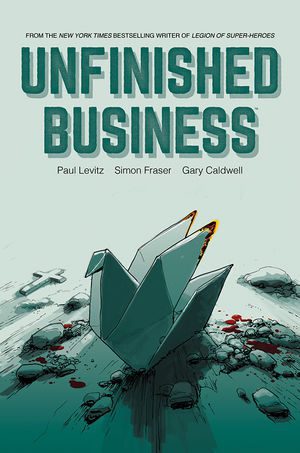
You can read the full unabridged interview on Popular Culture and theology by clicking here, and be sure to check out Unfinished Business at the Dark Horse website or your local comic book store!


Monkeys Fighting Robots Youtube

Review: ANTLERS Manifest A Slow Burning Creature Tale

Antlers is a highly unnerving creature film with an important message about child abuse. Based on Nick Antosca’s short story, the film is a relentless slow burn with a superb creature design. It may take itself too seriously, but it’s executed tremendously for the first two acts. After spending many moments building up intrigue and tension, Antlers does lose some steam during the third act. This doesn’t erase the brilliance of those first two acts, which makes Antlers worth checking out.

Working as an allegory for abuse, Antlers provides the perfect setup for viewers to grow attached to the characters on screen. The film’s downtrodden landscape aids in maximizing the emotional angst portrayed by its characters. Director Scott Cooper relies on the surroundings to create this never-ending claustrophobic feeling. Antlers is brought to life through terrific performances from Keri Russell, Jesse Plemons, Jeremy Thomas, Scott Haze, Amy Madigan, and Graham Greene.

Cooper collaborated with Antosca on this chilling screenplay and Cooper translates it into a methodical creature film for the screen. The film centers on Julia Meadows (Russell), a teacher who has recently returned to her hometown. She becomes increasingly concerned for her student, Lucas Weaver (Thomas). Lucas has been displaying signs of abuse, and Julia’s traumatic past makes her desperate to help her student. However, Lucas is secretly keeping a supernatural creature inside his house. The torment Lucas endures at home and school makes him likable early on.

Lucas is bullied at school and then goes home to a life no child deserves to live. Very few resources are available, he’s visibly unclean, and it’s as if no one lives there. Of course, he’s keeping a massive secret in his upstairs attic that will torment the entire town. The dynamic between Julia and Lucas acts as Antlers heart, her determination to save Lucas makes her easy to get behind. Initially, Lucas is hesitant to tell Julia the truth. He understands that telling would mean an uncertain future for him at home. Julia resides with her brother Paul (Plemmons), the local sheriff, and they both share a traumatic experience that has crippled their bond as siblings.

This exploration of generational trauma and cycles of abuse makes Antlers fun to experience and the atmospheric dread that lingers in each shot amplifies the film’s themes. Building towards the creature reveal also kept the film intriguing and shows Cooper knows how to keep the audience invested. It was a solid setup with a tremendous payoff, and Cooper keeps the creature terrorizing Lucas shrouded in darkness. Towards the end, unnecessary exposition dumping takes place to confirm what was already being made obvious. 

Antlers is tackling the wendigo folk tale and the subtle approach was relinquished in favor of exposition dumping. The methodical unease felt early on grows into a thrilling final confrontation with the wendigo. How it’s defeated is severely underwhelming and made the creature appear less menacing. Aside from that, Russell and Thomas are very convincing in their roles. Thomas delivers one of the best child performances this year, and Russell is mesmerizing as this rightfully concerned teacher with a troubling past.

Cooper keeps the tension consistent, never letting up, but allows the unease to grow with each new revelation surrounding Lucas’ horrific life at home. One scene in Lucas’ attic involves an intense body contortion that will send chills down your spine. The bone-chilling score from Javier Navarrete acts as an ominous force ringing throughout each scene. The film’s pacing never grows dull, and the methodical approach allows enough time to become attached and invested in its narrative.

Antlers is an effective creature film that may have a rocky finish, but the events leading up to its satisfying end solidify it as a good film. Wendigo horror isn’t breaking new ground, so I can see why some may think the film takes itself too serious. Antlers should make for a fun watch this Halloween season when it arrives this weekend.


Monkeys Fighting Robots Youtube

Review: THE RUSH #1 and the Desperation of the Gold Rush

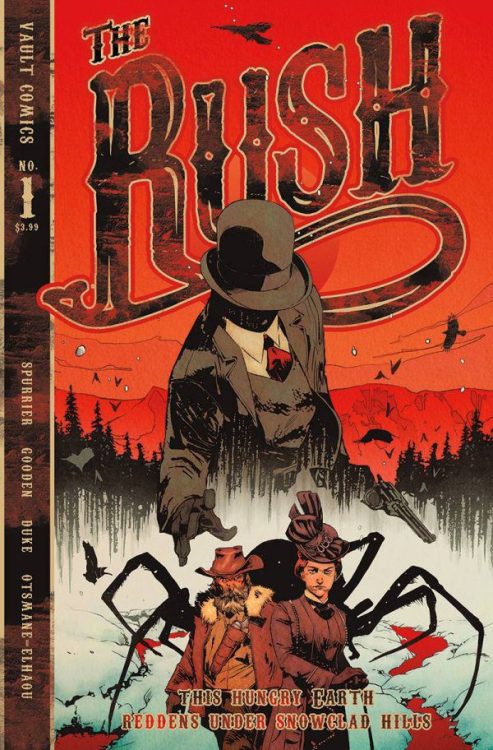
The Rush Spurrier Vault Comics

You can always trust Vault Comics to produce thrilling and thought-provoking work. THE RUSH, or This Hungry Earth Reddens Under Snowclad Hills, is no exception. Writer Simon Spurrier, artist Nathan Gooden, colorist Addison Duke, and letterer Hassan Otsmane-Elhaou put us into the shoes of 1899’s gold miners. They tap into the desperation and exhaustion of what’s been a very tough year.

About the Plot:

THE RUSH #1 takes place during the Gold Rush, in 1899. Out in the wilderness, a monster stalks those who are desperate enough to still be searching for gold. One such poor soul is Caleb Bridger. THE RUSH #1 follows his mother as she travels out to find him and bring him home. God only knows what she’ll run into along the way…

The Rush Spurrier Vault Comics

Writing

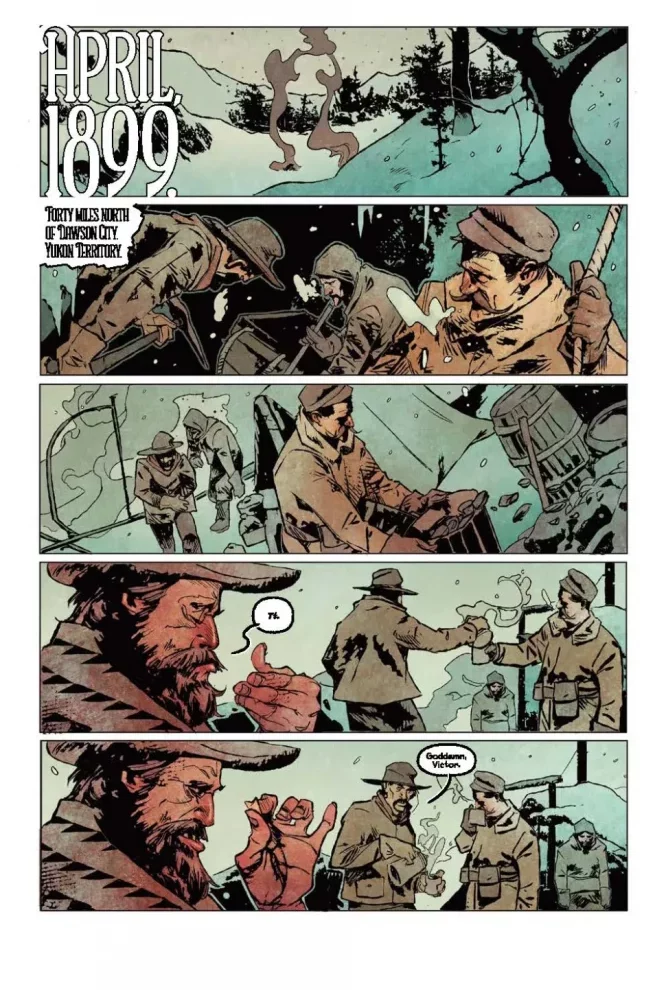
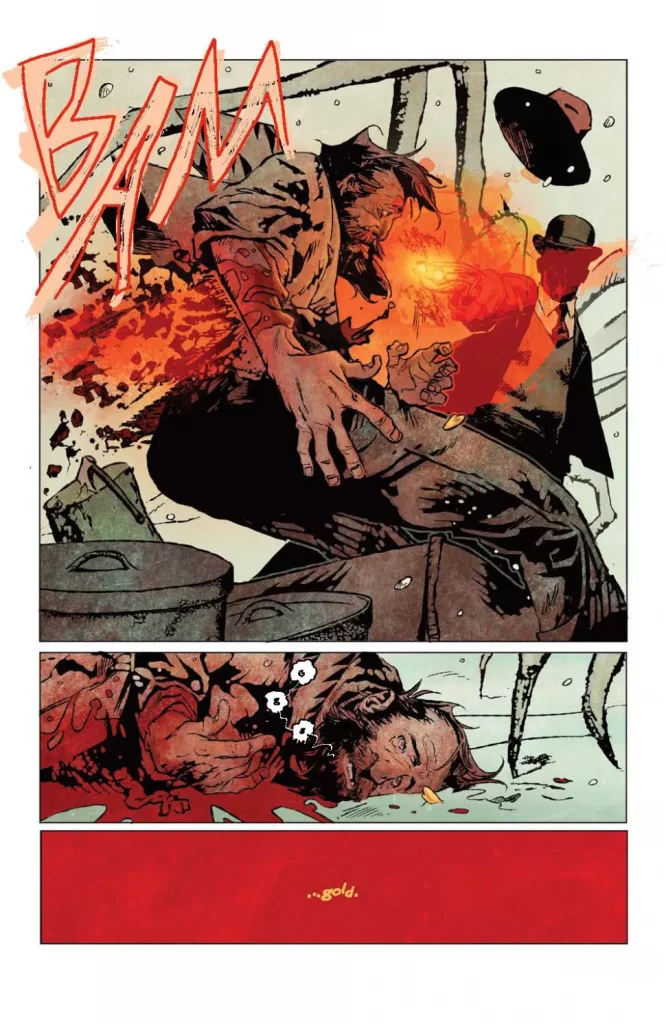
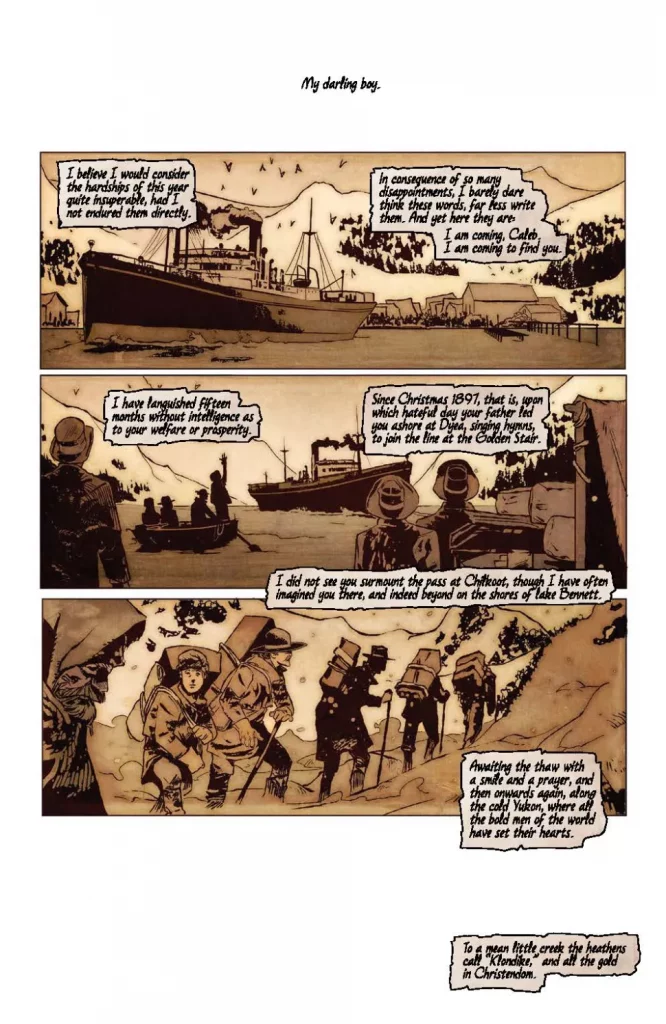
Spurrier begins this story with a monster. But it’s not a monster with tentacle arms or red eyes. It’s a monster that wears a bowler hat and tie. As the monster approaches, another character is distracted by a lump under his skin. He takes a knife to it and, after maiming himself, finds a nugget of gold. The subtext to these moments is immediately clear. Spurrier wants us to think greedy, well-dressed men, taking scraps away from the poor. It’s so easy to look back on the Gold Rush and just pass it off as a time of greed. But now, we know better. We’ve lived through a year where we’ve had nothing to do but sit and think about all the ways that our systems are broken.

And Spurrier wants us to draw those connections. He wants us to remember the desperation of 2020, a desperation that still lingers. “My darling boy,” the main character, Mrs. Bridger, writes. “I believe I would consider the hardships of this year quite insuperable, had I not endured them directly.” It’s a distanced, polished way of saying she’s surprised she’s made it this far. Spurrier is re-contextualizing the Gold Rush. It’s a quiet and slow start to this series, but it promises so much more to come. Spurrier is in no rush, himself. He’s going to tell this story right.

Art

As we start the issue, and first meet our monster, there are several moments that bleed past the panel borders. Birds fly out into the margins of the page, the loud noises of gun fire burst past the edges of the panel. Gooden is immersing us in the world, but also showing us that some moments are too big to be contained. Soon after, though, we get Mrs. Bridger’s letter to her son. Very big moments seem to happen in her letter. We see men stab each other in the face, another man vomits all over himself, and two men are in a gunfight. But these scenes have a thick, white margin around them. They are utterly unremarkable to Mrs. Bridger. Gooden shows us that death and violence are just a norm in the time of the Gold Rush.

Gooden’s character designs are beautiful. He can make a character look charming on one end of the page and have them looking sinister two panels later. But it’s all done with great subtlety. Gooden is a master of the human face and manages to drive this story onwards with the emotions of the characters, all while keeping the characters generally stoic. It’s small tells like a shift of the eyes or the tightening of a jaw that gives us all the emotion we need.

The Rush Spurrier Vault Comics

Coloring

In the world of THE RUSH, every scene has an ambience. Duke doesn’t stop at just coloring the scene, he gives each scene a feeling. As the issue opens, everything is quite neutral. There are browns, blues and whites, but it mostly looks pale. One of the characters, however, has a reddish hue. Then, as the monster shows up and violence rears its ugly head, Duke shows why the red was there in the first place. Soon, it’s all we see.

Then, we see Mrs. Bridger’s letter. Duke colors it in a light brown, throughout. This adds to the normalcy of these scenes. There’s violence and death, but Mrs. Bridger barely notices. It’s all par for the course. But as we see her and her chaperone enter Dawson City, a city built on the riches found in the initial Gold Rush, the pages are given a golden tint. When they venture out into the wilderness, where all this gold supposedly came from, color drains from the page again. Not only does Duke show us what to feel in each scene, but he points to the pointlessness of the Gold Rush still going on. The gold is gone and the wilderness is a desolate and empty place.

Lettering

There’s an incredible amount of energy to Otsmane-Elhaou’s letters. From the moment the monster first attacks, the “BAM” that tears through its victim is messy and looks scribbled on the page. It perfectly sums up the senseless brutality of that moment. The same can be said of the “HRRKK” of vomit, spewing from a character’s mouth, or the “HAW! HAW! HAW!” of a bunch of drunks laughing at Mrs. Bridger. Each sound is perfectly tailored to each situation.

But it’s the dialogue of THE RUSH #1 that feels downright magical at times. When Mrs. Bridger finds her husband has returned home without saying anything, she’s furious. His response is spirited at first. He stumbles along his words, but it’s with gusto that he lays down his defense. But at the end of one of his word balloons, his lettering becomes tiny: “I couldn’t take it no more,” he says. The size of the font tells us everything we need to know about his shame. Otsmane-Elhaou’s lettering is some of the best in the business, and Vault Comics’ THE RUSH #1 is a textbook example of why!

The Rush Spurrier Vault Comics


THE RUSH #1, from Vault Comics, is a story of hardship and desperation. It’s about people who are stuck in a vicious cycle of poverty, while those who hold the purse strings do nothing to help. This creative team brilliantly ties these events to real life, connecting 1899 to the present day. With a slow and methodical start, this series promises to be a subtle and entrancing horror-show. Pick up THE RUSH #1, out from Vault Comics today, at a comic shop near you!

Monkeys Fighting Robots Youtube

BOOM! Studios Exclusive First Look: EAT THE RICH #4

eat the rich boom! studios exclusive preview

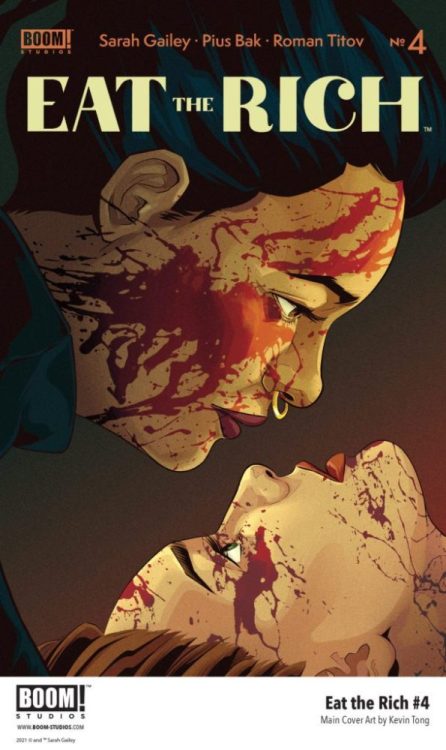
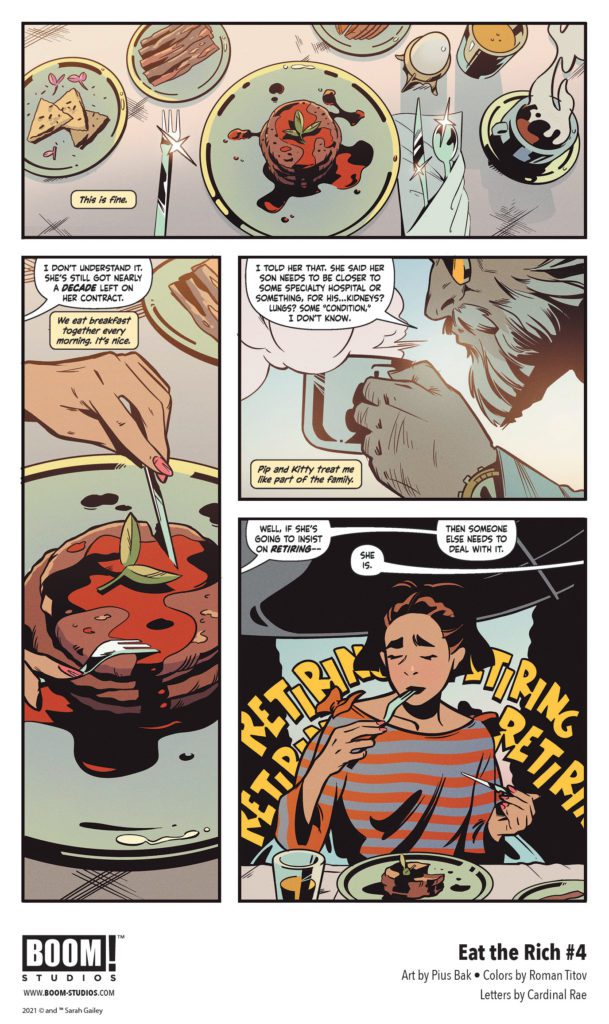
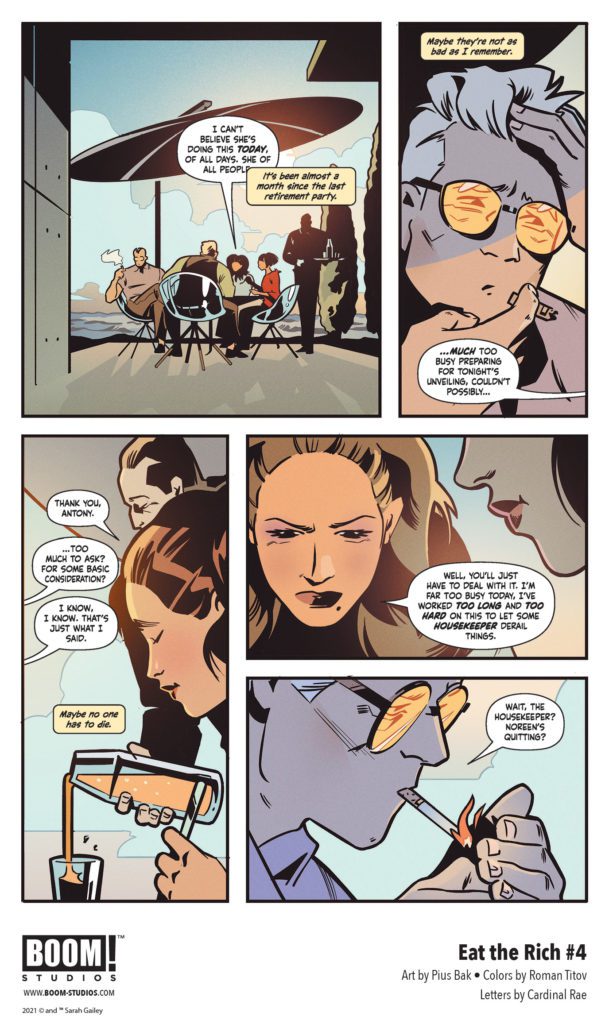
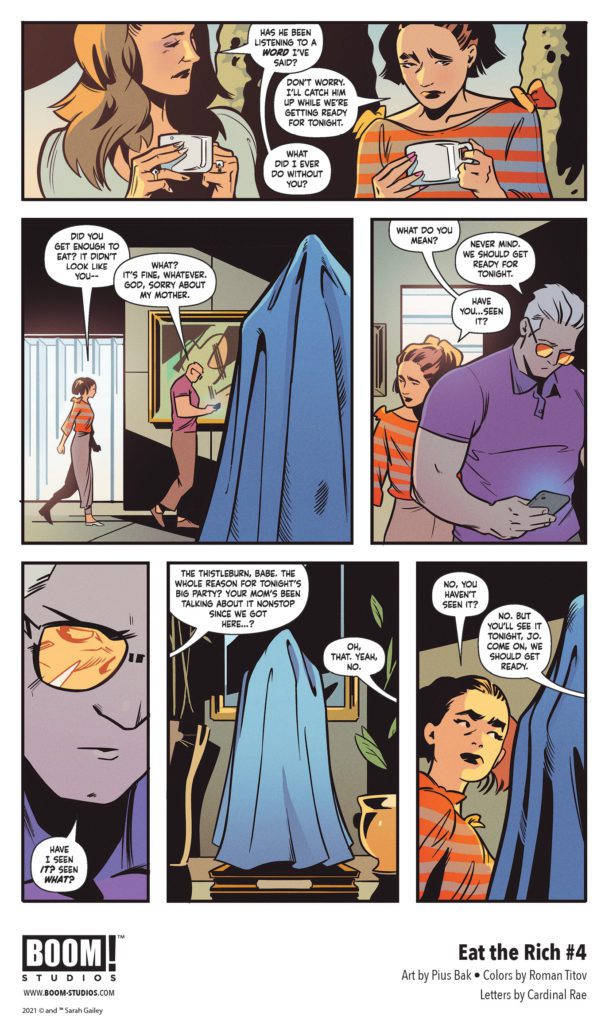
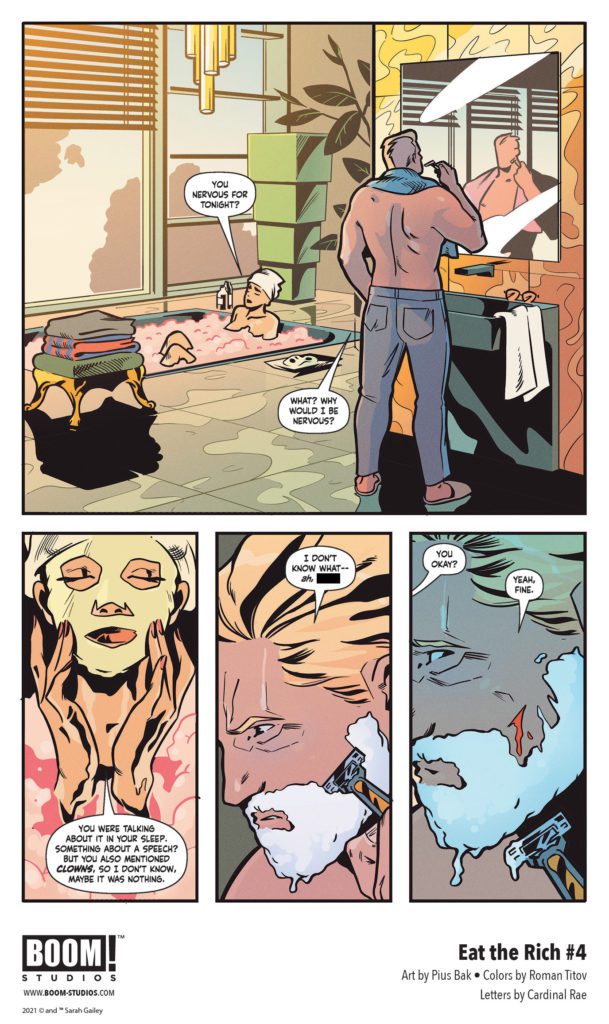
EAT THE RICH #4 hits your local comic book store November 17th, but thanks to BOOM! Studios, Monkeys Fighting Robots has an exclusive five-page preview for you.

About the issue:
Even as Joey struggles to make sense of everything she’s seen, what role her beloved Astor has in it, and what it means for her relationship with him, Crestfall Bluffs is a flurry of activity preparing for the Thistleburn Unveiling Gala Party. When Joey intervenes in a situation she doesn’t fully understand, it will bring everything to a head in the most unexpected way!

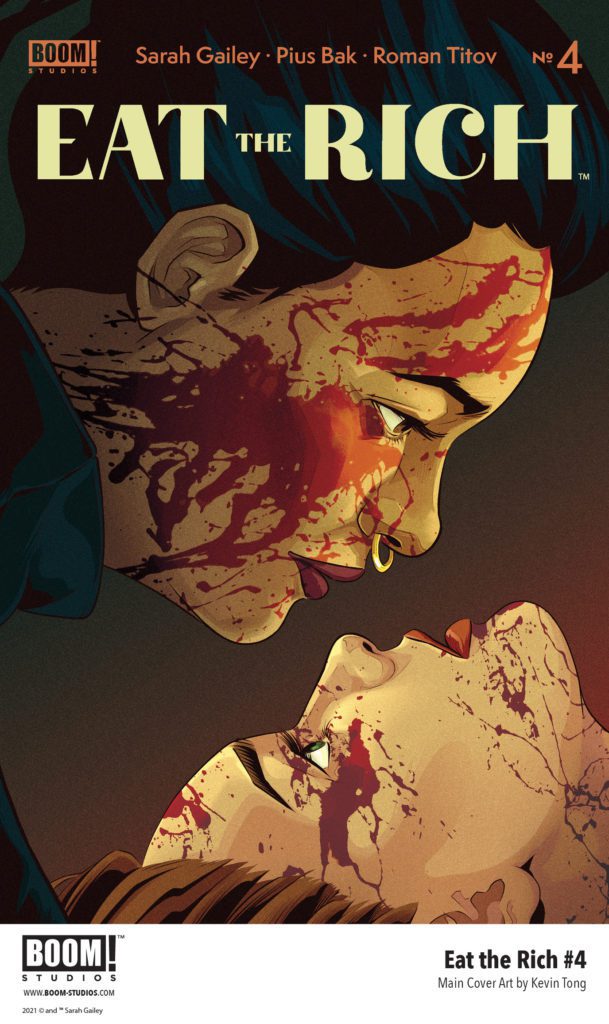
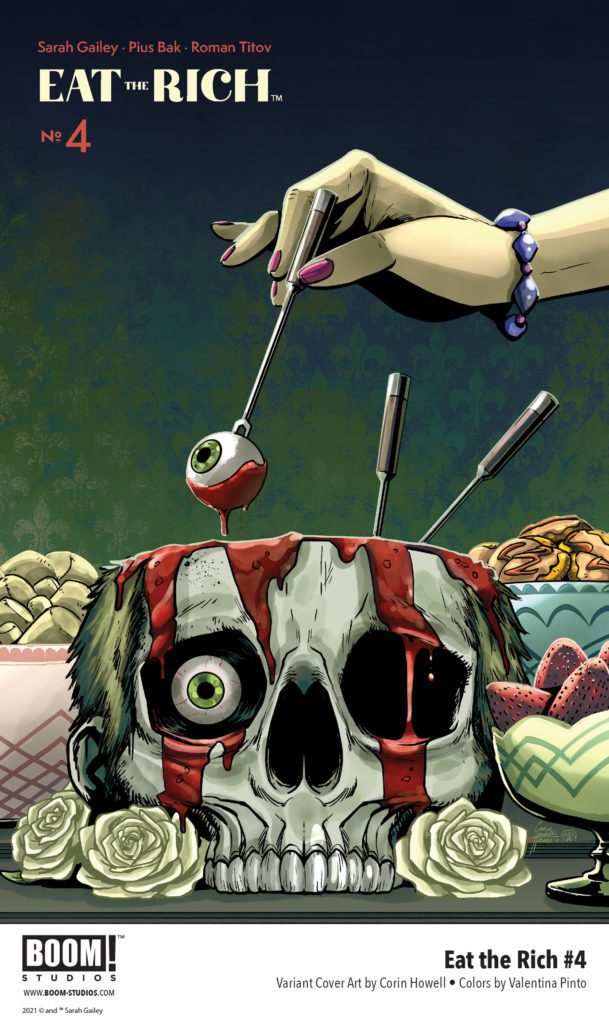
The series is by writer Sarah Gailey and artist Pius Bak, with colors by Roman Titov, and letters by Cardinal Rae. The main cover is by famed illustrator Kevin Tong, with variants by Becca Carey and Corin Howell.

Check out the EAT THE RICH #4 preview below:

eat the rich boom! studios exclusive preview

eat the rich boom! studios exclusive preview

eat the rich boom! studios exclusive preview

eat the rich boom! studios exclusive preview

eat the rich boom! studios exclusive preview

eat the rich boom! studios exclusive preview

eat the rich boom! studios exclusive preview

eat the rich boom! studios exclusive preview


Are you reading EAT THE RICH? Sound off in the comments!

Monkeys Fighting Robots Youtube

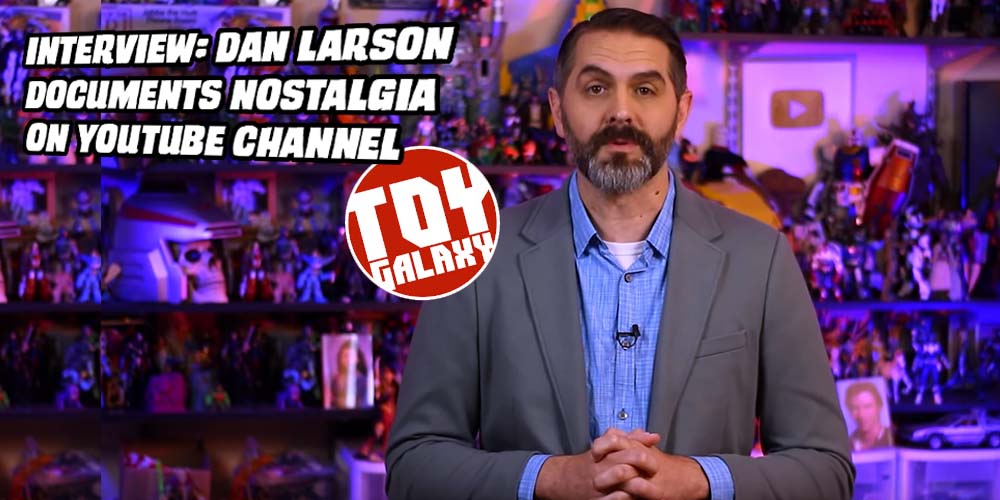
INTERVIEW: Dan Larson Documents Nostalgia On YouTube Channel Toy Galaxy

toy galaxy-youtube-interview-pop culture

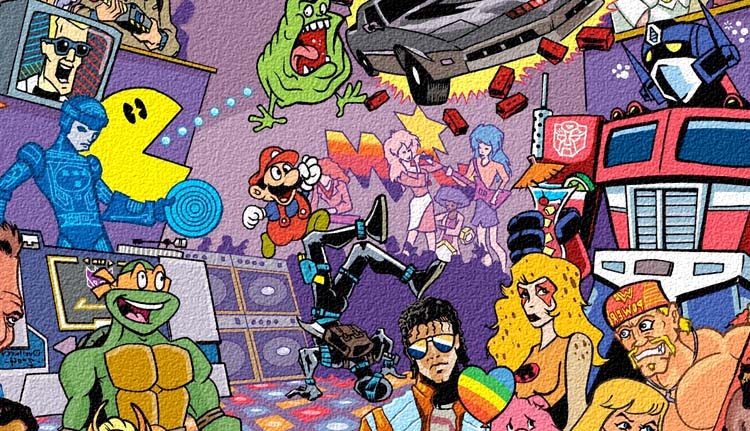
Nostalgia’s a hell of a drug in the 21st century as beloved franchises are rebooted, re-imagined, or continued seemingly endless, and over at the YouTube channel Toy Galaxy, they deep dive into the origins of that nostalgia.

Transformers, A-Team, GI Joe, Knight Rider, Robotech, Wizard magazine, Max Headroom, and more feature as subjects of Toy Galaxy videos . For roughly 20 minutes, Dan and his partner Greg take viewers on a content-dense ride through the behind-the-scenes elements that gave rise to many of the things we know and love today. While Netflix is hurtling two new He-Man shows at us in one year, Toy Galaxy is riding through memory lane to tell us just how He-Man and the Masters of Universe came to be in the first place. In addition, the channel will discuss details that even larger documentaries on the same subject might overlook.

PopAxiom spoke with Dan Larson, the man in front of the camera for Toy Galaxy, whose clear, calm, and light-hearted delivery (with a dash of delicious Gen X snark) makes watching the channel a delight every time.

Page Maker

Before Dan was informing and entertaining on YouTube, he “went to Rhode Island College. That school is mostly about teaching teachers. I was looking to break into comic books and publish my books.”

“I graduated with a degree in printmaking,” Dan says, “so like limestone blocks and woodcut prints and lithography. But my real education came from working at the campus newspaper. Then, from 1994 to 1998, I learned how to do digital desktop publishing. It was the first time I touched a digital camera.”

The transition from the old-school ways to new was something Dan will never forget. “My freshman and sophomore year, we were using photocopy machines to reduce and enlarge images and glue them down, then suddenly we’re doing all that on a computer in Adobe Page Maker.”

toy galaxy-interview-dan larson

Creating Toy Galaxy

Dan’s a lifelong fan of action figures, and his partner Greg is a cinephile. So when conceiving of Toy Galaxy, the pair as themselves, “Do we want to do a ‘zine’ where it’s sort of photocopies and stapled or do we want to something that looks and sounds professional.”

“When we started,” he says about the initial days of creating the channel,” we saw a lot of low-tech stuff out there with bad sound and picture; long run-times. We didn’t want to be that. We wanted it to look like there’s a whole team behind it.”

Over the years, he says, “We’ve established what’s long enough for us. There are definitely videos where I start to get too deep into the weeds, and I lose the narrative. I have to pull back.”

“Fifteen or twenty minutes is our sweet spot,” he definitively says. “Anything longer than that, and I lose the narrative. Anything shorter than that feels like we didn’t cover it.”

Galactic Evolution

Toy Galaxy began in April of 2015. After six years, what’s changed in how they create videos? “It’s a whole different process. The focus of the channel’s shifted. The original intent was to do action figure reviews. At the time, YouTube wasn’t putting a focus on long videos. Now, they like long videos because it keeps eyeballs on YouTube.”

“We were watching people doing toy reviews,” he continues, “and thinking ‘ten minutes to do an action figure review?’ So we focused on short, concise, and, most importantly, entertaining. We knew we were never going to be the first to review something. Channels were doing it for years already. We could not compete with that; we weren’t getting free merchandise or anything like that.”

Dan explains, “The approach was, we want to make our videos so entertaining to watch that even if you watched the other 100 reviews, you still want to watch ours. So how is Toy Galaxy going to do it, and what jokes will there be this week?”

Early on, Toy Galaxy “put in a timing mechanism by calling the videos four minutes or less. This review of Spider-Man in four minutes or less. That was the hook and gave us our angle.”

“Over the years,” he adds, “we envisioned our channel as sort of a network. We wanted to approach action figures and the industry in the same sort of way. So we were offering up a variety of things with the reviews, versus videos, ten things you need to know about whatever.”

Franchise Universe

Dan and Greg focused on creating a successful business and watched the numbers. “We knew what people were responding to and weren’t responding to. So, we pushed the channels in the right directions. Ten things you need to know evolved into longer format videos, becoming the ‘History of.’ The other shows we were doing weren’t doing as well, and one-by-one we cut them off.”

“We know exactly our demographic — to the birthday.” Dan laughs, and so do I because that demographic is primarily people like me. Though, Toy Galaxy undoubtedly appeals to a broader audience as there are fans of franchises of all ages. “We appreciate when people message us saying, ‘Hey, I love what you’re doing. It’s a show I can watch with my kid since we’re both into Masters of the Universe or Voltron.”

Though the six years, Dan asserts, “The one thing that’s never changed is our approach, we’re always trying to answer our questions first. I always think, what will make me or Greg laugh? I never considered myself a journalist; I never studied journalism, but at the end of the day, I have questions, and those are the questions we ask.”

“Why were Masters of the Universe this shape versus GI Joe, who was this shape,” he continues, “Where did it come from? Why were 12-inch action figures popular in the 60s, but by the 80s, it’s smaller figures? How do these things evolve and change?”

Processing

“Greg programs the channel,” Dan begins the discussion of Toy Galaxy behind-the-scenes. “I’m the in the blood fan of all these things. Greg was more the type who watched them, didn’t get too involved with them, then immediately turned to other things. His obsessions are more cinema and film.”

Greg’s lack of sentimentality for most of Toy Galaxy’s subjects is “a good thing … none of this is precious to him. If we need to put something out there, that is a fact; even if we know, it’ll upset the discourse or the fandom. We’re stating facts.”

“It used to be we’d program out a few weeks in advance,” he’ says, but things have slowly changed. “Since we’ve taken on sponsors, it’s more like 10 to 12 weeks now. Though it’s not set in stone, and it’s fluid. We can respond to feedback from one video to the next.”

“Tuesdays, we’re doing research. Then, Wednesday, I take that research and immerse myself in whatever it is. So, for The Transformers: The Movie, I went back and watched the movie.”

Dan makes sure to have “a good understanding of the generalities and where we want to go with it. I will go deeper in the research because I watch the thing, and I compare the experience to my understood experience from my life. Having watched the thing as a kid, I can draw from that and understand the community’s opinion on the topic.”

“On Thursday, I spend the whole day writing it all up,” Dan adds, “Friday we shoot. Greg will edit over the weekend or Monday, and we start all over again on Tuesday.”

toy galaxy-interview-youtube

The Transformers: The Movie

At the time of this interview, Toy Galaxy put out a video for the animated Transformers movies from the 80s in time for the film’s 35th anniversary. Throughout, Dan clearly says the full name of the movie, The Transformers: The Movie. “Greg was adamant about that. So in the script, I shortened it to just Transformers or Transformers: The Movie, but Greg said, ‘no, stop, it’s The Transformers: The Movie. That’s the name of the movie. Transformers is the Michael Bay movie.’ So I did a ‘control plus F’ and changed them all to The Transformers: The Movie.”

“We put out that The Transformers: The Movie video and people have responded saying ‘It was so refreshing,'” Dan shares, “They say, ‘so many videos are about it being the best or worst movie ever made’ and neither of those things is true. So we’re not coming at it from a perspective of how it ranks in terms of good or bad cinema; we’re telling you here’s how it was made, here are some of the circumstances behind it, here’s why it is a box office failure, but it was still a success.”

Deep Thoughts

As superficial as franchises and merchandising might seem, it speaks to profound truths about society. Of course, fandom doesn’t usually dive too deep into those kinds of thoughts, but Dan does. “At a higher level, we ask why is this generation still so obsessed with this stuff to the point that it’s still driving movies and cartoons and all that stuff?”

“I go back and forth thinking about how we were guinea pigs,” Dan says as we discuss the political changes in the 80s that gave rise to franchise dominance. “We were this experiment. Thirty-five, forty years later, what did the experiment produce? What kind of society did unregulated children’s advertising produce?”

In a sense, human society is one giant laboratory in constant motion. “YouTube is sort of another social experiment. What happens when you have whole generations of kids raised on this mostly unregulated thing?”

Wrapping Up

Toy Galaxy covers more than just toys; it’s more like a pop culture universe. “One of our best performing videos was Max Headroom. We just had a video about Wizard and Toyfare magazines.”

Six years into their experiment, and with subscriber numbers still on the rise, Dan says, “We’re hoping we’ve built up a fan-base that doesn’t care what we talk about and just want to hear how we talk about a particular thing.”

“Growing up and through my 20s and 30s,” he reflects, “before we started the channel, I always had this vision of a museum or writing a book about the history of toys. Part of the drive of building my collection was that I needed every version of Captain America because I may need to go back to these and talk about them at some point in the future. I never thought something like Toy Galaxy was in my future.”

Are you subscribed to Toy Galaxy?

Thanks to Dan Larson for making this interview possible.

Find more interviews from Ruben R. Diaz here!
Monkeys Fighting Robots Youtube

Top 7 Manga Adaptations of All Time

Top 7 Manga Adaptations of All Time

Manga has been massively influential in the pop culture world, although its impact outside of Japan is more down to animated adaptations rather than the original comics.

Today there is a multitude of movies and TV shows that are based on or inspired by manga, and as with any adaptation, the quality can vary wildly.

If you only want to watch the cream of the crop, the following line-up of exceptional interpretations of game-changing manga series will be a good starting point.

Black Jack

Despite its name, Black Jack isn’t the best gambling manga of all time. It’s more interested in telling unique tales of medical breakthroughs, self-sacrifice, and the importance of modesty in the face of significant achievements.

These elements are translated expertly to the screen in the first full-length film adaptation, released in 1996. It may lack the extreme edge of some of its contemporaries but in retrospect Black Jack: The Movie is an intriguing and artistically striking artifact of a time when Japanese animation was still relatively unknown in the West.

Ghost In The Shell

Doubtlessly managing to outdo the manga on which it is based, Ghost In The Shell is another 90s anime adaptation that pushed the envelope with its art style and visual effects.

In fact, if you watch the movie today, it’s hard to appreciate just what effect it had on audiences at the time. So many touches that we take for granted now were first found here, and it is no surprise to see it cited alongside Akira as one of the main influences for the Matrix franchise. The less said about, the more recent live-action remake, the better.

One-Punch Man

When the first season of One-Punch Man hit in 2015, it felt like a breath of fresh air, standing out from the cookie-cutter anime crowd by parodying so many elements and skewering them perfectly while still cramming in some incredible action set pieces and mega-scale battles.

The tone of One-Punch Man is undeniably silly, but it wears this ridiculousness on its sleeve and manages to avoid the po-faced sincerity, which can compromise many of the other more modern manga adaptations that are doing the rounds today.

Akira

Arguably the most famous manga adaptation ever made and undoubtedly the most critically acclaimed, Akira still stands like a behemoth over the industry more than three decades after its release.

Its ability to blend political commentary and sci-fi smarts with brutal action and deep characterization helps to justify the high esteem in which it is held by fans. If nothing else, it proved that complex manga could indeed be adapted to feature-length film format without making sacrifices in the transition.

Fullmetal Alchemist

Like all popular manga series, there is a cavalcade of adaptations of the steampunk universe of Fullmetal Alchemist, with multiple anime series, two animated movies, and the inevitable hit-and-miss live-action iteration.

While seeing hand-drawn characters recreated by flesh and blood actors is clearly not always a good idea, the animated interpretations of Fullmetal Alchemist fare far better. The first anime is probably the one to watch as a priority, partly because it takes the story in a different direction to the manga and packs plenty of surprises as a result.

Devilman Crybaby

While opinions were divided upon release, Devilman Crybaby had gained critical traction in the past few years and is now regarded as a well put together adaptation of a vintage manga series that once again proved a hit with Western audiences, who made up the majority of the viewership on Netflix when it debuted in 2018.

Once again, it manages to explore some intriguing themes and topics, presenting debates around the likes of sexuality and growing up in a way that does not feel preachy or pared back. And, of course, the unflinching intensity of the many set pieces proved that modern manga adaptations could still go hard when called upon.

Fist of the North Star

Fist of the North Star is not exactly the most sophisticated franchise out there, but that does not stop the stupendous strength and stoicism of its protagonist Kenshiro from being compelling.

Various adaptations exist, and the 1986 animated feature film is gloriously violent and over the top as fans would hope.

The world of manga adaptations is vast and growing all the time, so explore these examples and then see what else is out there!

Monkeys Fighting Robots Youtube

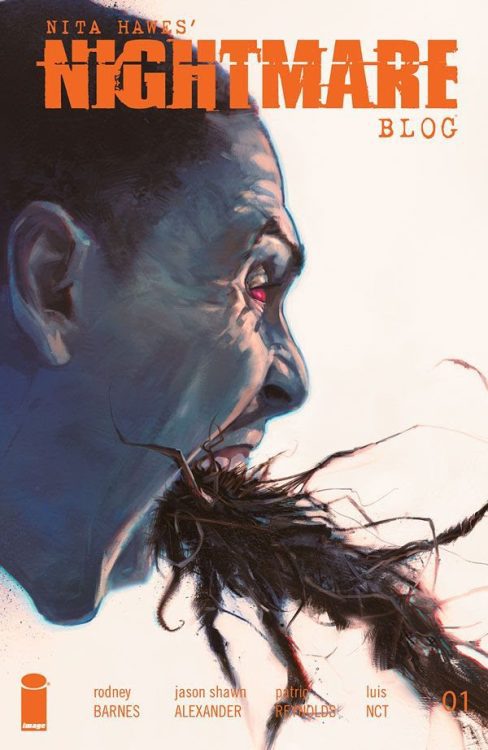
Review: Brimstone, Blood, & The Blues In NITA HAWES’ NIGHTMARE BLOG #1

From Killadelphia creators Rodney Barnes and Jason Shawn Alexander comes a spinoff tale in a new town with a new kind of terror. Along with artist Patric Reynolds, colorist Luis NCT, and letterer Marshall Dillion, Nita Hawes’ Nightmare Blog #1 is a tense and deep opening to this new horror series. With the same kind of character driven writing that makes Killadelphia so successful, and incredible as ever visual work, this new series is off to one hell of a start.

“Jimmy Sangster might have left Maryland for the vampire-infested city of “Killadelphia,” but there is still untold evil lurking the streets of Baltimore. The demon Corson has surfaced from the underworld to possess a once-wronged man, and his vengeance will come at the cost of humanity’s despair! But Jimmy’s former lover Nita Hawes—a woman with demons of her own—has begun a quest to root the evil out of her city. Guided by the ghost of her dead brother, she must come to terms with her own past, lest she join her brother in a state worse than death!”

Writing & Plot

Rodney Barnes constructs horror the right way in Nita Hawes’ Nightmare Blog #1. Much like with Killadelphia, he constructs the story in a two-fold direction. He builds the character and backstory of Nita Hawe and other cast members to make them relatable and feel human. When he isn’t doing that, he’s scaring the hell out of us with his antagonist. Hawes’ experience with evil comes from her past – both from her ex Jimmy Sangster (protagonist of Killadelphia) and the tragic manslaughter of her brother. The problem is, her brother won’t leave her be now. Hawes’ guilt takes a unique form here, as her little brother’s ghost pusher her to make this blog and root out evil.

Barnes does fantastic work making Hawes a well-rounded character that is simultaneously experiencing and dealing with trauma. We are only at the tip of the iceberg with her investigations into the underworld, and I can’t wait to see how she navigates that threat. On the other hand, we have Corson. His backstory is as compelling as any slaughter-loving demon’s can be. This blues-singing monstrosity is a genuine terror on the page, with every one of his scenes sticking well into my memory. Especially with what may very well be the single most jolting turn-of-the-page scare in comics this side of Junji Ito.

Art Direction

Jason Shawn Alexander’s work on Spawn has likely prepared him well for what he does here in Nita Hawes’ Nightmare Blog #1. Much like with Killadelphia, he and Patric Reynolds are responsible for the art and layouts in this spinoff. Alexander displays a keen sense of horror direction in this issue. He typically sets up 5 to 8 panels per page, capturing moment to moment movements from different perspectives. In the case of character moments, its a great way to get a sense of people’s emotional states and personalities. In a horror scene, it’s an intense play-by-play for the approach and slaughter by a demon to his victims. This intricate directing shifts just for the last turn-of-the page scare. A full page image creates one of the most chilling scenes in horror comics.

Alexander and Reynolds have a distinct, gorgeous style that is perfect for character detail and horror. Their use of realistic references has an almost photorealistic effect that never gets into uncanny valley territory. Minute expressions are portrayed with perfect detail to give us a view into the heads of our main characters. The demonic details come to life with ferocious surprise, with disturbing designs and gory aftermath. Much of the horror here is based on staples of the genre, but it’s handled so well that it’s a welcome sight for any horror fan.

Color & Lettering

The painted style colors from Luis Nct add a whole other layer of complexity to the book’s aesthetic. Every image is saturated with a palette of shades due to the color work instead of a flat tone. His work is especially memorable on the more monstrous and supernatural sequences. These moments bathed in blood, viscera, and/or hellfire feel akin to the works of Francisco Goya. Marshall Dillion’s lettering deserves note here for its simple yet creative touches. His main font is a standard, highly legible contemporary font that come alive during the demon Corsan’s passages. The red-on-black lettering is such a smart move. His SFX letters are really cool as well, coming off as scratchy disturbing shockwaves. This comic is a phenomenal work of visual horror storytelling.

Verdict

Nita Hawes’ Nightmare Blog #1 is a phenomenal and frightening start to this spin-off series. Rodney Barnes pens a script that builds its characters to make their troubles relatable to the reader while never letting up on the brutal terror that has come to their world. The visuals from Jason Shawn Alexander, Patric Reynolds, and Luis NCT are densely detailed and darkly atmospheric, making images that will stay with you long after you close the book. If you’re a fan of Killadelphia or a horror fan in general, be sure to grab this issue when it hits shelves on 10/20!


Monkeys Fighting Robots Youtube