Home Blog Page 117

Review: Jen’s Back to Basics in SHE-HULK #1

Marvel’s Jennifer Walters is about to get her own solo series for the first time in years, thanks to She-Hulk #1. Rainbow Rowell, Roge Antonio, Rico Renzi, VC’s Joe Caramagna all lent a hand in bringing this latest series to life.
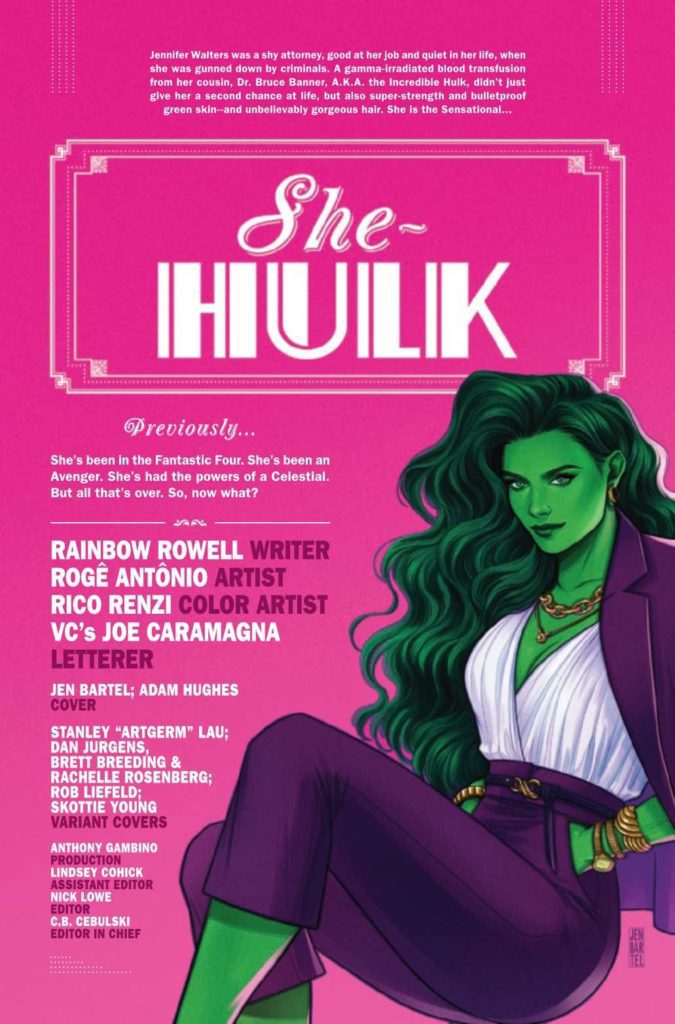
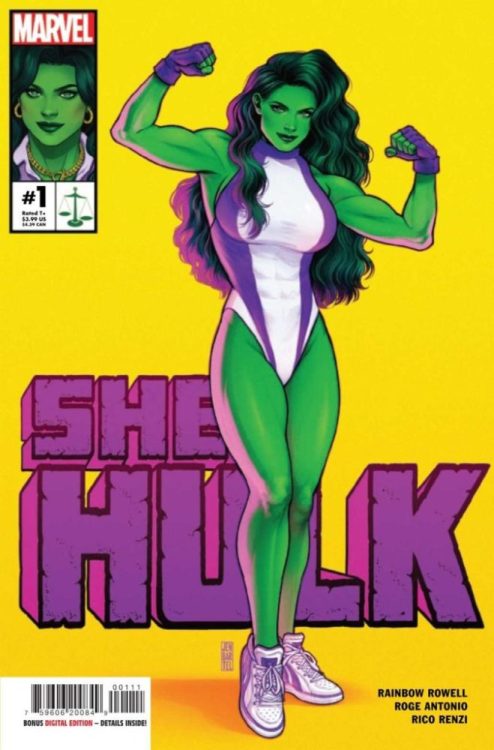
She-Hulk is looking as sensational and fashionable as ever!

One of the best parts about Marvel’s slew of new series is that it is creating new levels of hype. This, in turn, gives fans rare opportunities: such as brand-new series focused on characters we know and love. Take the most recent Marvel Disney+ series, which undoubtedly helped launch a new five-issue Hawkeye: Kate Bishop series.

Now? Now is the time of Jennifer Walters. AKA, She-Hulk. She-Hulk #1 brings the sensational character many know and love to the forefront and does so with style. It’s actually quite impressive, creating a series compelling to long-standing fans while still welcoming to new audiences.

Jen’s life has been full of ups and downs as of late…okay, that is probably the understatement of the century. She’s been put through hell and back, and now it is time for her to once again find her footing.
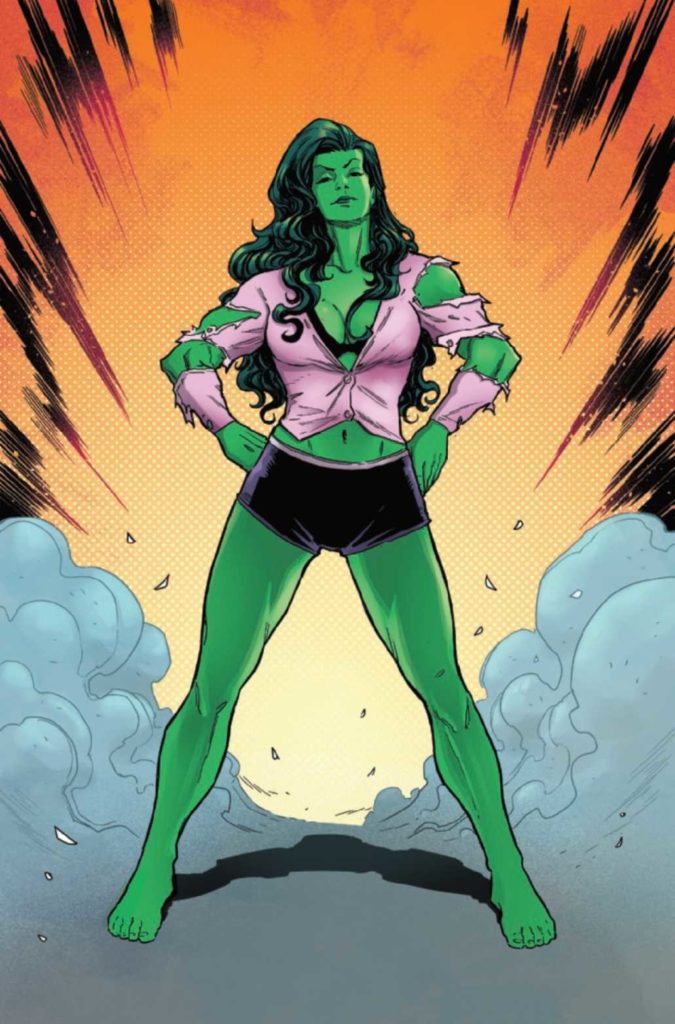
She really can rock a confident pose, can’t she?

Writing

Given the last appearance of She-Hulk (see Avengers #50), it was somewhat difficult to predict how Jen’s latest series would start. Yes, she is back to her normal self. “Normal” meaning she’s constantly fighting to keep that balance between Jen and Hulk.

At a glance, She-Hulk #1 looks to be a somber start to the series. Jen’s in the midst of a new life crisis (I can’t say I blame her), and that is always upsetting to witness. However, writer Rainbow Rowell clarifies early on that Jen is not giving up. Pretty sure those words aren’t even in her vocabulary.

As such, this issue spent a lot of time setting up She-Hulk for her new life. New job, new home (sort of), new wardrobe (also sort of), the works. The only things that haven’t changed are the enemies. It seems like the same ones always target her first, but maybe that isn’t a bad thing. Stability is nice, you know?

The final three pages of this issue take things off the rail. An old face makes a shocking appearance, which will create even more drama (and probably danger) for She-Hulk.
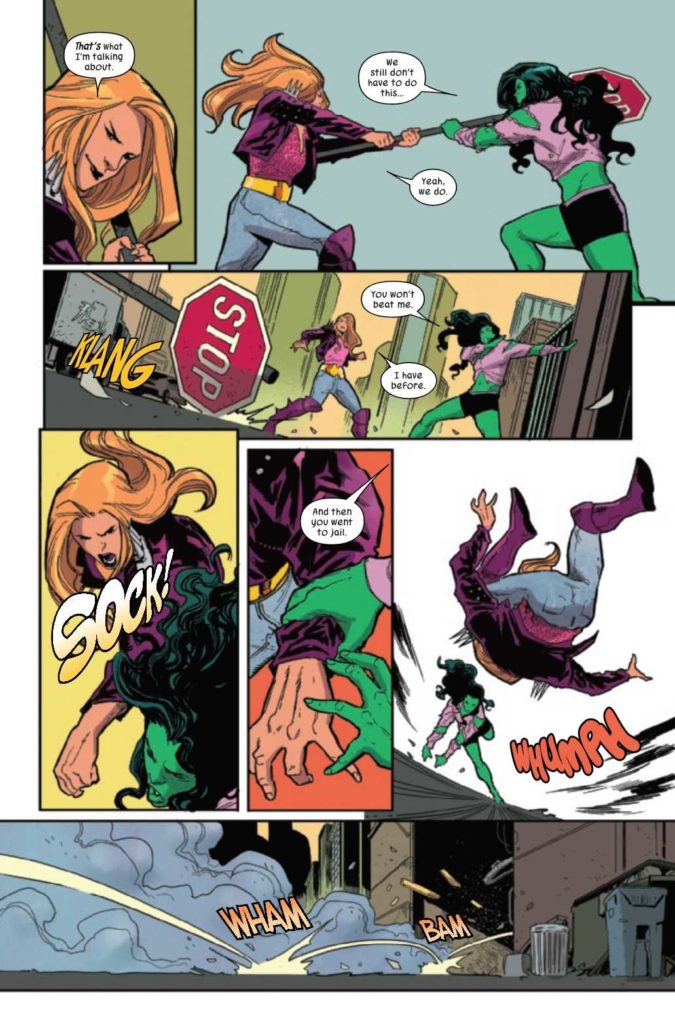
Time for a quick fight, as per usual.

Artwork

Covers carry a lot of weight, especially when they’re the first in a series. The cover of She-Hulk #1 is so perfect and so nostalgic; I do not doubt that it’ll bring a smile to each and every one of her fans. You can thank Jen Bartel and Adam Hughes for that cover.

That cover sets the tone for this issue. She-Hulk #1 is full of attention-grabbing artwork created by Roge Antonio. Antonio’s work lets She-Hulk’s personality shine so brightly here, with lots of little details to remind us of why we love her. The sense of motion and scale help significantly when subtly reminding readers just how much She-Hulk has to hold back daily.

Rico Renzi did a fantastic job balancing the muted colors appropriate for a life crisis with the vibrant colors that will always follow She-Hulk around. It makes the transitions clearer while adding a little bit of much-needed levity.

The letters provided by VC’s Joe Caramagna are pure perfection. Especially early on during She-Hulk’s first major fight since stepping back from being an Avenger. It’s kinda hard to ignore how much that fight must have hurt, thanks to those helpful sound effects and their placement.
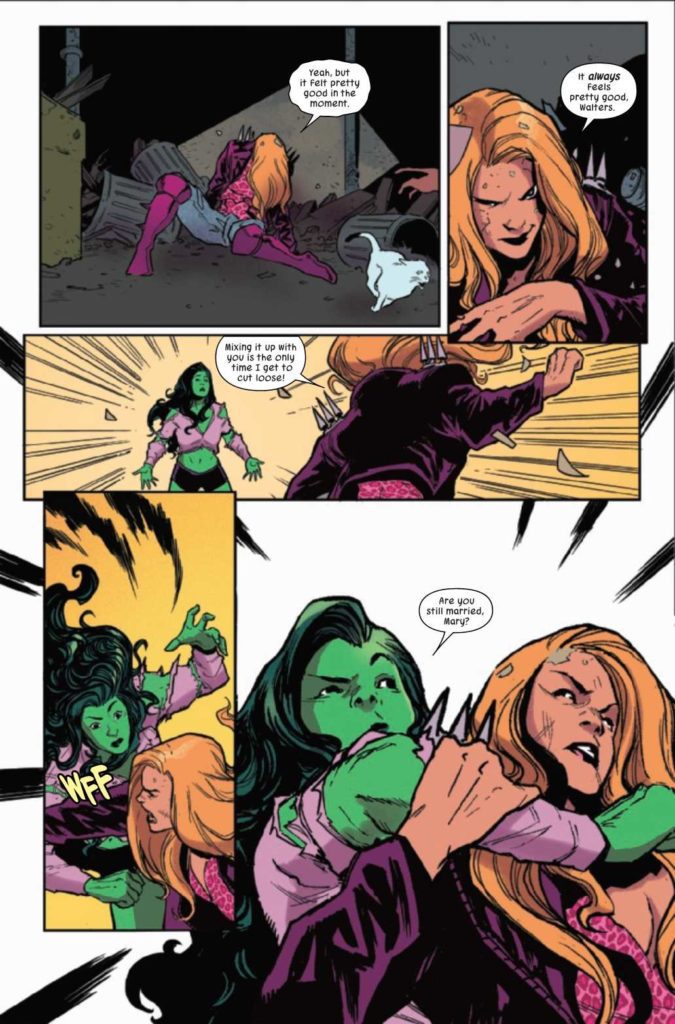
She-Hulk
Not the sort of question you expect to see popping up during a fight, huh?

Conclusion

She-Hulk #1 promised lots of change while staying true to a hero we all know and love. So far, the series has delivered on that front. Better yet, it appears to be a solid starting point for new fans hoping to read up before the Disney+ series drops. Talk about a win-win.
Monkeys Fighting Robots Youtube

Review: Delving Into a Dark Past in LADY MECHANIKA: THE MONSTER OF THE MINISTRY OF HELL #2

Lady Mechanika is back in action in Image Comics’ Lady Mechanika: The Monster of the Ministry of Hell #2. Written and illustrated by Joe Benitez, die-hard Lady Mechanika fans should not miss out on this series.

Readers have long wondered about the history of Lady Mechanika. And while we still don’t know the whole story of what happened to her, Lady Mechanika: The Monster of the Ministry of Hell #2 is starting to fill in some of those gaps.

It is also working very hard to shred our hearts along the way. I think most readers always guessed that her backstory would be a dark one, but it would have been difficult to imagine just how far that went.

Lady Mechanika’s series have always been perfect for steampunk, fantasy, and horror fans. But now it seems like there’s room for fans of the precise craft of foreshadowing. Or perhaps it merely feels that way, given how much my spine tingled while reading…

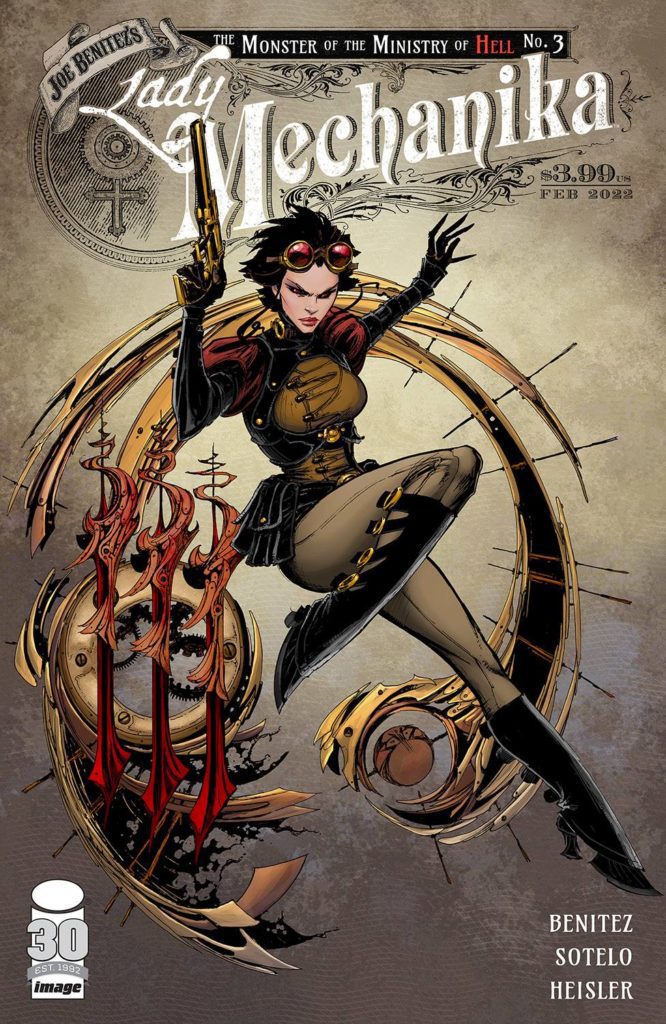
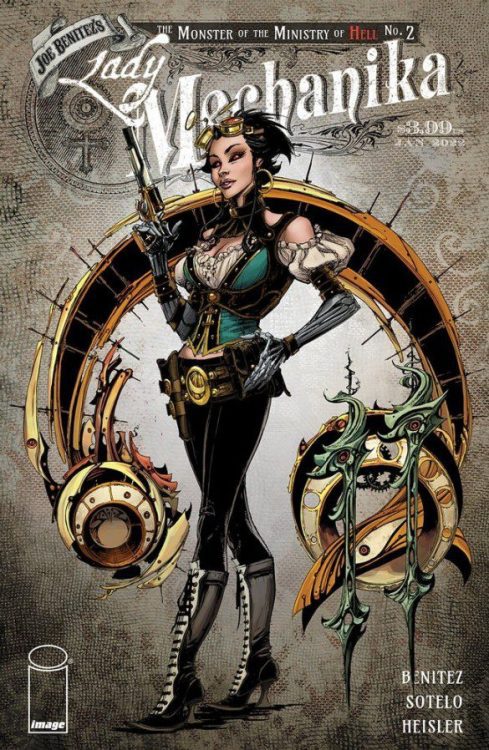
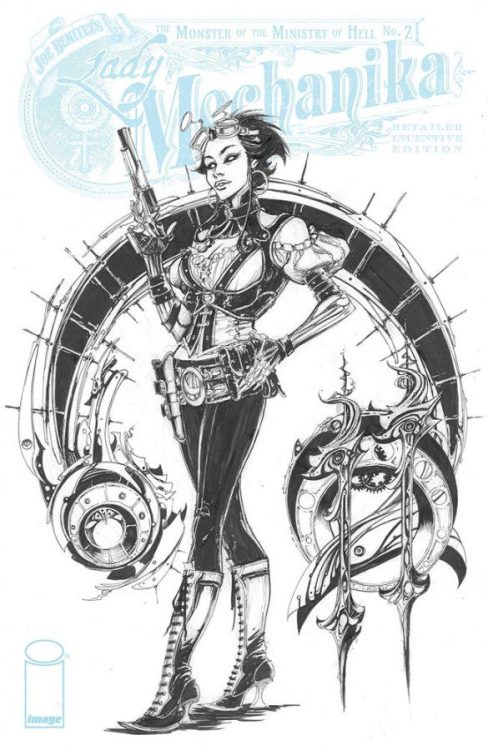
Lady Mechanika is looking calm and ready for her next battle on the cover of Lady Mechanika: The Monster of the Ministry of Hell #2.

Writing

Lady Mechanika: The Monster of the Ministry of Hell #2 was written by Joe Benitez, with writing assistance from M.M. Chen. It continues the pattern established in the previous issue, with the story splitting into two parts.

Unlike the last issue, this one seems more deeply invested in the past. Given how much there is to learn, that is hardly a surprise. What is a surprise is how heavily this issue weighs on the heart.

The few times the present becomes the focus feels intentional – there’s a story being told through the transitions as much as anything else. Points are heavily emphasized to ensure they’re stuck firmly in our minds.

Likewise, the contrast between these two timelines is…jarring. Here we see real horror mashed against the shallow horror that comes from manufactured scenes and events (such as carnival houses).

Take a look at the details on this cover of Lady Mechanika: The Monster of the Ministry of Hell #2.

Artwork

Lady Mechanika: The Monster of the Ministry of Hell #2 lives up to the expectations set by the previous incarnations. That is to say; the artwork is exquisite. Joe Benitez is the lead artist, with Beth Sotelo and Sabine Rich providing colors and Michael Heisler doing the lettering.

As always, there’s a merging of steampunk and horror elements. However, this issue is much darker than many other issues, and I mean that both figuratively and literally. There are panels shrouded by darkness. At other times, the brightest of scenes somehow come off as all the more terrifying. It’s beautifully (and horrifically) done.

Joe Benitez’s attention to detail makes the scenes within this issue all the more alarming. Speaking of alarming – the raw emotions Benitez stuffed into specific panels is borderline overwhelming. Consider yourselves warned.

The colors compliment these details, helping them stand out or blend in as necessary. There’s one page, in particular, where the colors bring the impact of the scene to its full potential. It’s a moment that will linger in my mind for quite a while to come.

Michael Heisler provided the final piece to complete this issue: the lettering. Heisler’s style is perfect for this series, as there’s no avoiding the painful crack that comes with pain or the subtle ways in which characters let the truth slip out.

A sneak peek at what is in store in Lady Mechanika: The Monster of the Ministry of Hell #3.

Conclusion

Lady Mechanika: The Monster of the Ministry of Hell #2 is a dark and tense issue, but it is also part of a larger whole that many fans have been waiting for. As such, it is the perfect read for anyone who wants to know about Lady Mechanika and her past.

Monkeys Fighting Robots Youtube

Review: SHADOWMAN #5 – A War of Ideologies

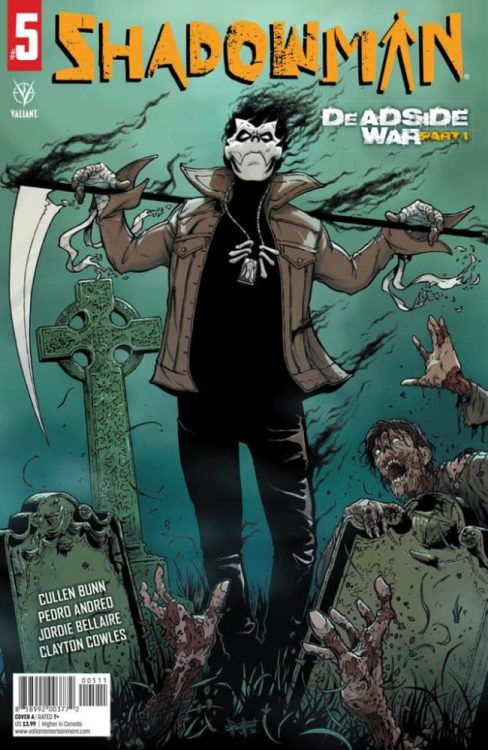
Shadowman #5 cover

Shadowman #5 resurrects Valiant Entertainment’s horror hero for a thrilling new arc on January 19th.

Background

The Deadside of the Valiant Universe is reacting to the mortals’ vices and misery, creating blights of spirits. Jack Boniface, the titular Shadowman, tries to keep the peace but finds himself in a losing battle. Because the Deadside isn’t simply a realm of spirits to manage, but a spirit with free will.

Progress Or Payback

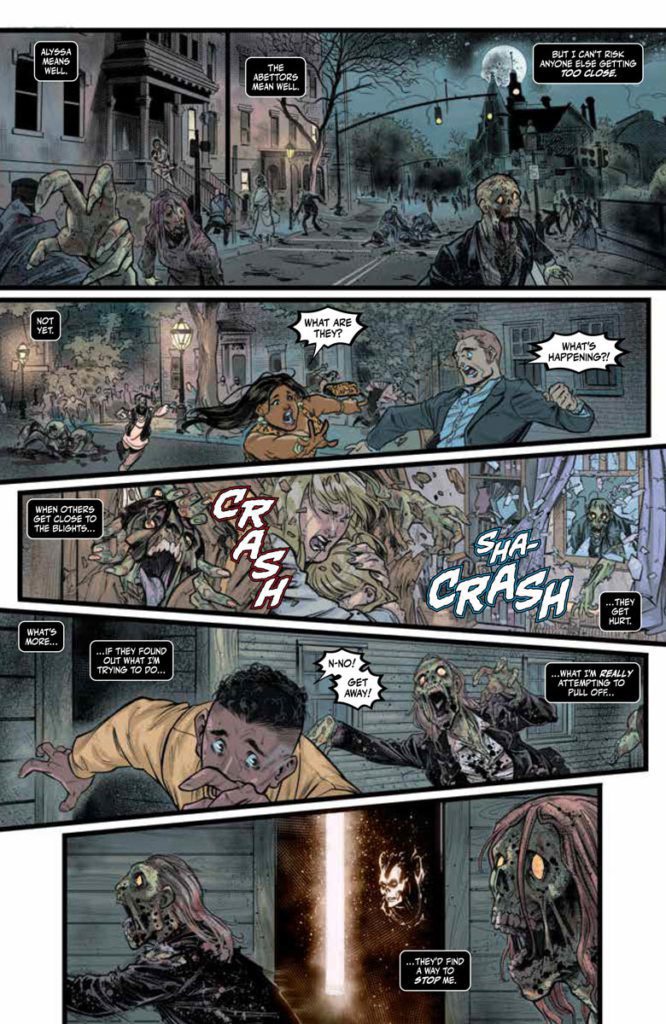
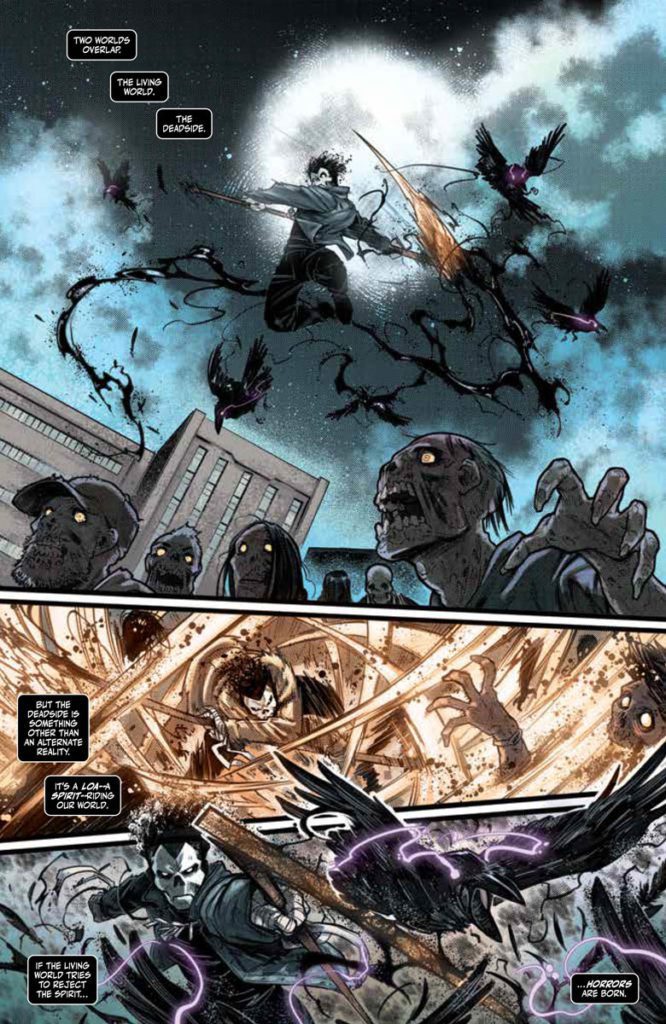
Shadowman #5 Preview Page 1Cullen Bunn cleverly makes this issue about an inevitable ideological war. Jack wants to change approaches instead of retain a broken system of spirit management with coexistence. It’s a neat idea that fits into Jack’s development from runs before by learning to live with his Shadow Loa, making Shadowman an example to follow. But it’s not just the Deadside herself causing mayhem that he has to worry about. A returning supporting character Alyssa and the Abettors would rather have the status quo remain as is. Between the two threats, there’s a nervous tension that leaves readers on edge.
Blurring Lines

Pedro Andreo’s artwork showcases impressive designs of characters and the grotesque undead. Each one has a very memorable trait to identify among all of activity on a page.

But it wouldn’t be half as memorable without the colors by Jordie Bellaire. Her choices in color highlight the most important events taking place. Brightly colored innocents running from the ravenous undead practically tell the story. But not as much as the transitions in a spread where the warm lights among the zombies dim out for foreboding foreshadowing of a coming disaster.Just something to add

If only the more spectral interactions with greater spirits weren’t so distracting. In practice this shows off the otherworldly power of Shadowman and the Loa. But sometimes the inking and coloring get so blurry that it’s hard to tell what’s happening.

In Clayton Cowles’ lettering, there’s a lot of character put into every sound made. In one of the most compelling instances, the notes from Jack’s saxophone performance arrange in a way that evoke sheet music. Meanwhile, word balloons reflect different things about the speakers’ personalities. The manifestation of the Deadside speaks in the same shape of distorted word balloons as the Loa pantheon, but the color and classical font suggest she’s older and more powerful than they are. It’s what adds to the reader’s anticipation of her next move.

Ready For A Thrill Ride?

Shadowman #5 comes back with plenty of intrigue. This new chapter has a few characters with motivations ready to be explored, especially in relation to the title character. This is one saga that people will want to see through.

Monkeys Fighting Robots Youtube

Review: PRIMORDIAL #5 Expertly Balances Intrigue and Emotion

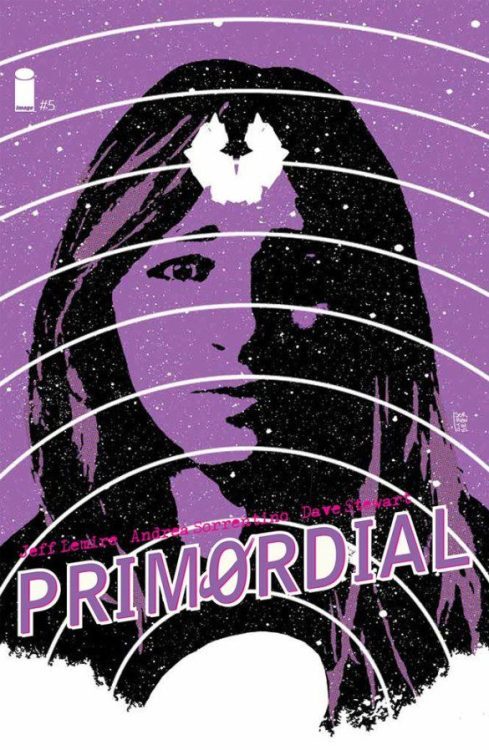
Primordial Lemire Image Comics

Image Comics’ Primordial series is full of beauty and heartbreak. It takes complicated concepts and boils them down to the devastatingly powerful emotions at the center of this story. Primordial #5, the penultimate issue to this stunning series, is no exception. Writer Jeff Lemire, artist Andrea Sorrentino, colorist Dave Stewart, and letterer Steve Wands deliver a gut-punch of an issue, setting us up for a high-stakes finale.

Writing

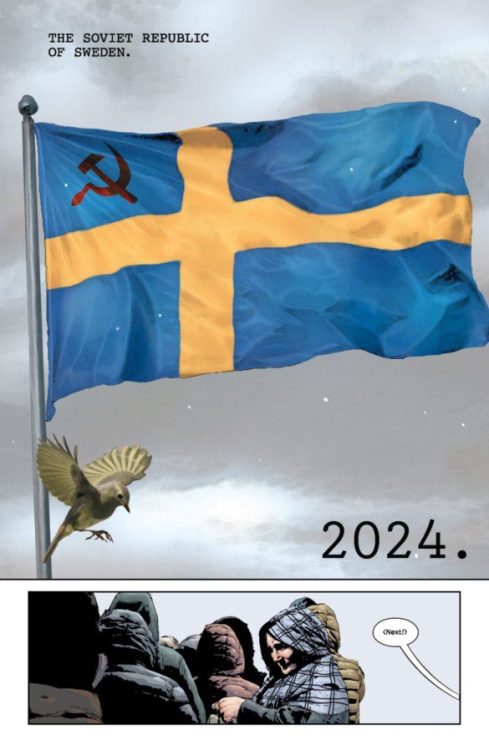
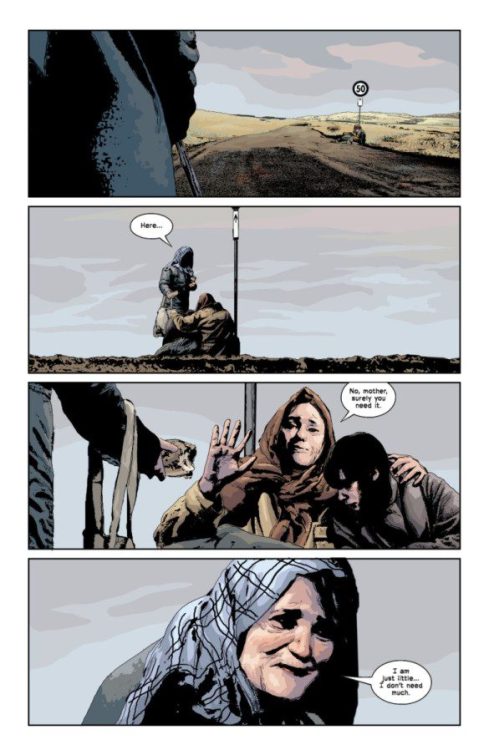
Lemire writes with such subtlety, slowly teasing out a completely different version of world history. In Primordial #5, we see how these subtle differences have rippled out into giant changes. But still, Lemire doesn’t get distracted by his own version of history. Sweden being a Soviet state in 2024 is an interesting detail, but not the focus of the narrative. Lemire continues to focus on the characters who have been gently driving this story forward. Their interactions are full of heart and emotion. The animals, aboard their spacecraft, communicate with each other earnestly. Lemire has developed this earnestness in these characters organically, but their sincere exchanges feel perfectly timed to up the stakes in a series that is running out the clock. It’s almost as though the characters know they only have one more issue in which they’ll get to share a page.

Primordial Lemire Image Comics

Art

Sorrentino has shown a wildly different art style in Primordial than what his readers are used to. Laika, Able, and Mrs. Baker, on their spaceship, have always been rendered in a Frank Quitely-esque style, with no shadows. In Primordial #5, Sorrentino blends this style with his usual shadowy chiaroscuro style. It results in bright panels full of photorealistic characters that have small but dark shadows, contrasting with the overall glow of each scene. Peppered into this issue, as well, are pages with a painted quality to them. It’s abundantly clear that Sorrentino is pushing himself to try out new things and experiment with different styles. Even the moments that feel a little strange and out of place – like a cartoon heart doodled over a painted panel – are exciting to see. Because they’re proof that Sorrentino is a creative force to be reckoned with. Everything is on the table for his experimentation, and we haven’t even begun to see what he’s capable of.

Coloring

Primordial #5 starts with panels that are bleak but beautiful. Stewart infuses scenes of grey and brown with a subtle brightness. And as the issue continues, Stewart ups the brightness more and more. There’s a joy that’s rising up in each character. As they’re feeling lighter, so does each page. But then Stewart makes a turn for the more ominous. He begins to associate bright colors with moments of violence and panic. Neon reds are used to show flashbacks of death. So as we get to our last few pages, the vibrant colors feel like they’re balancing on a tightrope. They could be heralds of joy, or omens of oncoming danger.

Primordial Lemire Image Comics

Lettering

Wands’ lettering is full of small details that make this issue shine. Just like in Primordial #4, we get a moment when our animal characters panic. We see Abel’s dialogue revert from the wispy word balloons that represent his newfound intelligence back to the simple balloons of his animalistic days. His font in this moment is scratchy and looks primitive. He’s scared, and his words show that. Elsewhere, Wands adds little elements to his sound effects so that they stand out in the chaos. The “CHK” of someone arming a weapon pops out at the beginning of a panel. Meanwhile, the “AT-AT-AT” of the weapon firing is cut off by the panel edges. With this, Wands breaks down each moment of a wild scene. Each individual step has its own flavor and purpose.


Image Comics’ Primordial has always been about an alternate version of history. But Primordial #5 finally shows us what the present in that world would look like. This creative team perfectly balances the intrigue and emotion of this series, leaving you both devastated and hungry for more. Primordial #5 is out from Image Comics on January 19th at a comic shop near you!


Monkeys Fighting Robots Youtube

Review: Swinging into a New Adventure in CATWOMAN #39

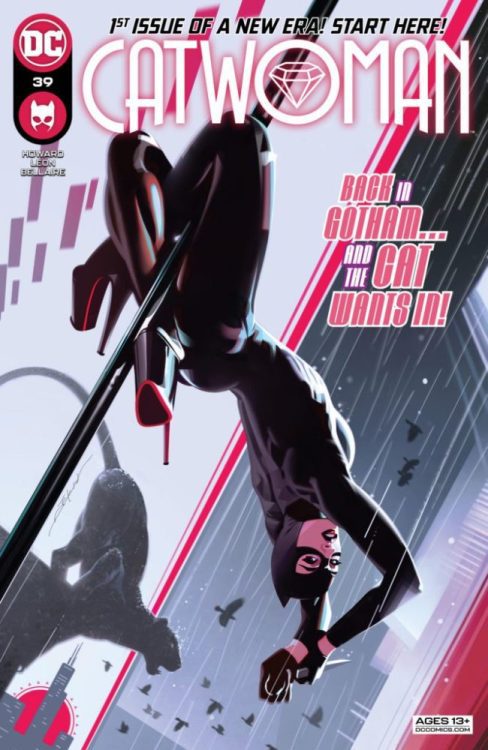
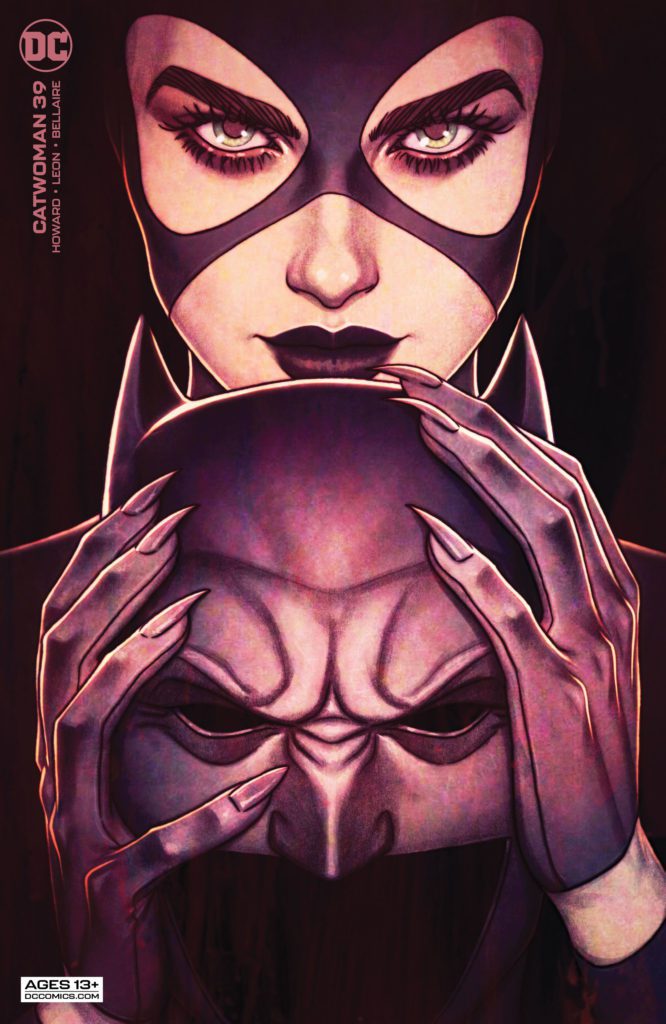
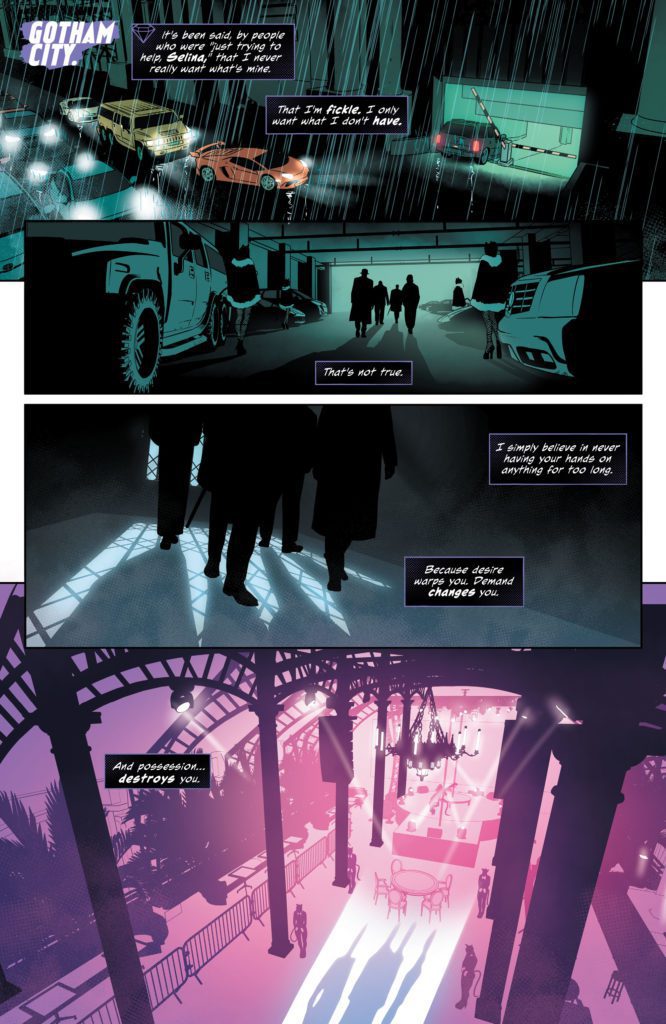
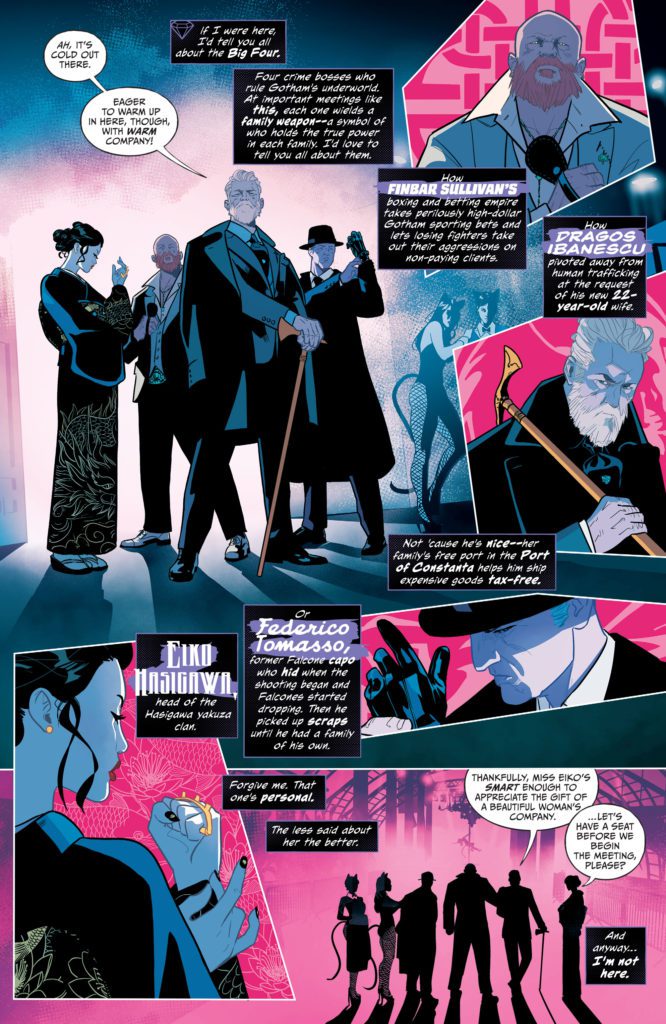
DC’s Selina Kyle, aka Catwoman, is about to step out of Alleytown and back into the world of Gotham in Catwoman #39. Once again, she’s not content to take the simple road, especially not while Tini Howard (writer), Nico Leon (artist), Jordie Bellaire (colorist), and Tom Napolitano (letterer) are in charge.

Catwoman #39 marks the start of something new. New plots, new creative team, new potential allies, and plenty of new threats. Selina has done her time, stepping back to see what threats would track her down. Well, as with any cat, she’s gotten quite bored of that game, so now it is time to start a new one.

Where Alleytown took Catwoman back to basics, a return to Gotham City is like returning to the main event. Here she is in a world full of adventures, enemies, and potential heists. Where will this cat strike first?

Does anyone else think she looks like she’s thinking up new mischief?

Writing

This issue is surprising for various reasons. Catwoman #39 is a blend of old and new. On the one hand, we are very much returning to form, with Selina making trouble for herself in ways that only a cat could pull off. And yet it all feels so familiar.

Adding onto that sense of newness is Tini Howard, as this is her DC Comics debut. She’s already showing a strong grasp of at least one classic character here, while throwing her own flair into the mix.

This latest plot promises lots of trouble, alongside a new set of secondary characters for fans to love or hate (or that odd mixture of both). While this is exciting, it’s also somewhat bittersweet as readers reflect on the goodbyes recently thrust upon us.

Overall, Catwoman #39 has a lot of fun in a limited amount of time. Howard pulls out most of Selina’s vices in a short period of time, reminding us of everything that can distract this cat. Oh, and let’s not forget the heavy cat theme; that was a nice touch.

Catwoman
Heavy thoughts to start this issue off strong.

Artwork

The artwork in Catwoman #39 comes off as fresh, which is fitting, given the new plot and team. Nico Leon (art), Jordie Bellaire (colors), and Tom Napolitano (letters) team up with Tini Howard to bring this latest arc to life.

Everything about this issue feels vibrant and flashy. It is reminiscent of a laser light in that sense – meant to catch our eyes and lead us off on a merry chase. Leon’s art makes for a strong foundation, creating bold new characters, striking backdrops, and mixing in some surprising details. While many panels pop from the page, one, in particular, stood out to me, proving that Leon knows how to turn a feline into a gem.

The colors are even bolder than the plot, bouncing back and forth between shadows and bright hues. Thanks to these choices, it’s easy to see it like Selina’s at a party or otherwise having a blast.

Finally, there’s the lettering, which is highly effective here. Tom Napolitano had a lot to work with, as Selina generally is not quiet when she fights. Likewise, a lot is going through her mind that must make it onto the page.

Catwoman
Vibrant colors and dark characters meet in this surprising mixture of elements.

Conclusion

Catwoman #39 is a solid start to a new Catwoman plot arc, one that sets the scene for countless conflicts and adventures to come. One can only hope that the pace will stay this steady for the foreseeable future.

Monkeys Fighting Robots Youtube

Review: NIGHTWING #88 is a Nostalgic Shotgun Blast of Fun

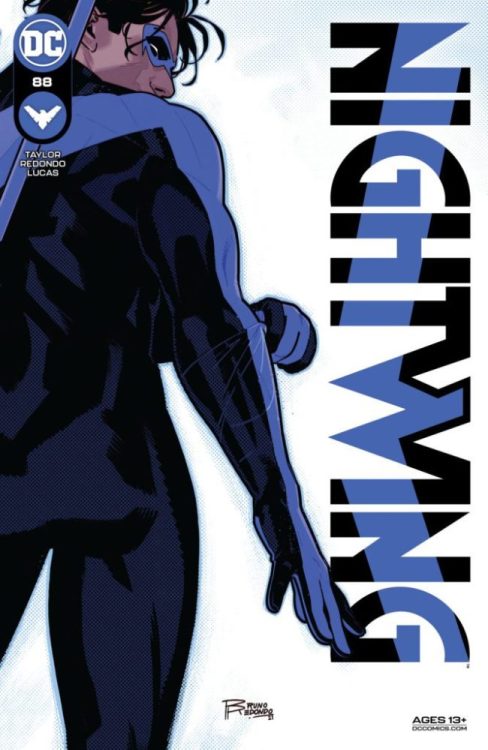
Nightwing Taylor DC COmics

DC Comics’ Nightwing continues to be a glorious love letter to fans of Dick Grayson. Writer Tom Taylor, artist Bruno Redondo, colorist Adriano Lucas, and letterer AndWorld Design continue to celebrate all the different facets that make Nightwing who he is. Nightwing #88 focuses on Dick Grayson as a team member and leader.

Writing

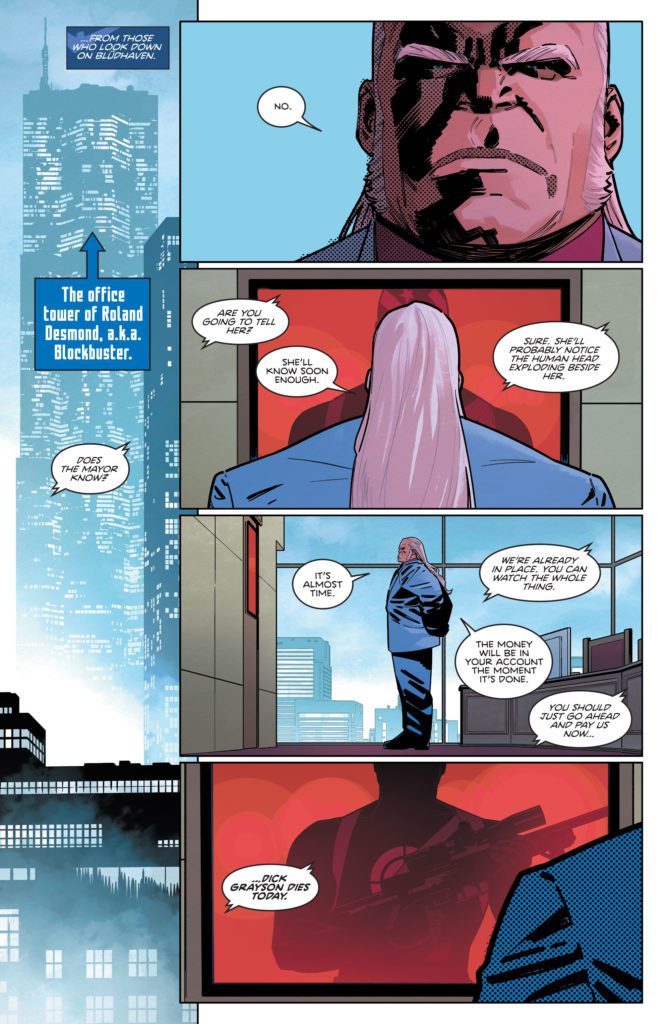
This issue centers around a public appearance Dick Grayson has to make. Grayson has promised Bludhaven that he’s going to use his newfound wealth to start the Alfred Pennyworth Foundation, which will work to give back to the citizens of the city of Bludhaven. But for once, it’s Grayson who has a price on his head, not his alter-ego Nightwing. Taylor sets the stakes up early and mysteriously. We get glimpses of the characters that are contracted to take out Dick Grayson. But once the stakes are in place, Taylor amps up the fun. We get to see a ton of brilliant cameos, lots of bombastic action, and a final page that will make your heart drop.

Nightwing Taylor DC COmics

Art

In any comic drawn by Bruno Redondo, there’s just way too much to talk about. There’s beauty in the page layouts, in the minute details, and in everything in between. Many of Redondo’s layouts work to give us a sense of space. We see characters walking through separate panels stretched over one background. It feels like we’re strolling alongside the character, matching their speed. And then there’s the wonderful details of every character’s costume, too. Redondo shows all the seams and creases in every dramatic pose. Redondo’s enthusiasm for drawing costumes is so clear. He even draws Grayson as an awe-struck cartoon character when he’s presented with his new Nightwing costume. Redondo’s love of the craft drips from every page. It fills the panels and the gutters alike.

Coloring

Much of the first few pages of this issue are colored primarily in shades of blue. Lucas makes it clear: this is Nightwing’s town. But as the issue progresses, things get a little more colorful. We see the red and yellow of a gun going off. On the next page, Lucas uses those same colors to color the person who finds the shooter. The character’s fury is a force to be reckoned with and is as intense as a gunshot. By the end of the issue, the color scheme has changed quite a bit. The vibrant colors give way to a muted red. The juxtaposition from the first few pages, all shown in a cool blue, tells us that danger has come to Bludhaven. There’s going to be a shift in the status quo.

Lettering

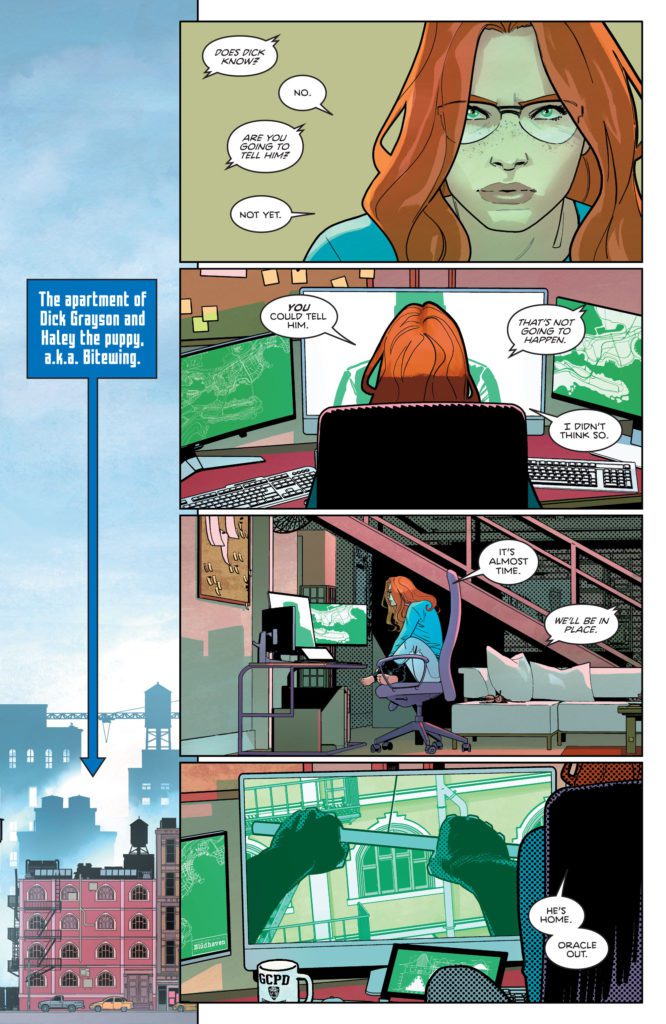
AndWorld Design’s lettering is playful and fun. The word balloons ping pong us back and forth across each panel. Occasionally, a few word balloons take a double take to figure out the reading order. But one of the best gags from the comic is thanks to AndWorld Design’s letters. When we see Blockbuster’s office from an exterior establishing shot, there’s a caption box with a short arrow that points more specifically to where in the skyline his office is located. Later, when we get a similar shot of Nightwing’s apartment, there’s another caption box to point out where it is. But the caption box now has a long arrow, stretching way down. It’s a brilliant way to show the disparity between how Blockbuster and Nightwing live.


DC Comics’ Nightwing #88 is so freaking fun. It’s heartwarming, action-packed, and full of great laughs. If you love Nightwing and you love Dick Grayson, you’ll love this series. Pick up Nightwing #88, out from DC Comics January 18th, at a comic shop near you!

Monkeys Fighting Robots Youtube

Review: ARROWSMITH: BEHIND ENEMY LINES #1 – Magic In Wartime

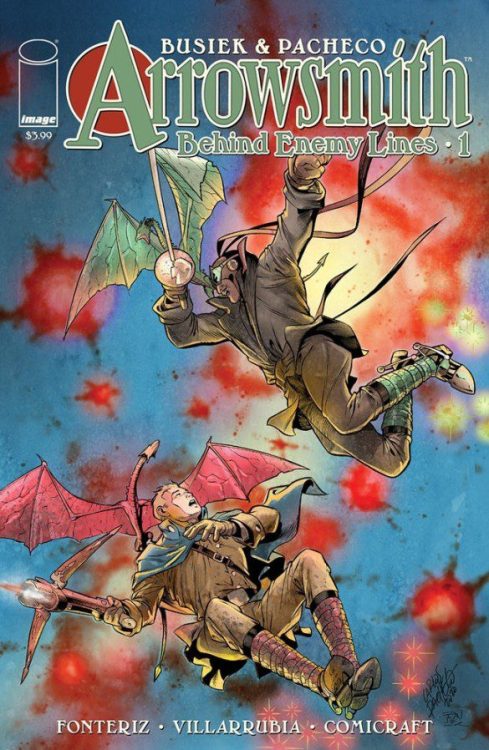
Industry veterans writer Kurt Busiek (Astro City, Conan The Barbarian) and artist Carlos Pacheo (X-Men, Fantastic Four) have returned to their original creation after an almost 20-year hiatus with Arrowsmith: Behind Enemy Lines #1. Along with inks from Jose Rafael Fonteriz, colors by Jose Villarruiba, and letters from Tyler Smith and Jimmy Betancourt, this wonderfully unique and visually stunning return sees a blending of genres and styles that is a rare achievement even in the comics medium. With a stellar script and incredible visual work, this long-awaited return is one that is sure to please old readers and intrigue newcomers alike.

“Young airman Fletcher Arrowsmith plunges back into the heat of war—and finds himself behind enemy lines, facing a threat that could doom the Allied Powers.”

Writing & Plot

It shouldn’t be surprising to see contemporary comics legend Kurt Busiek come up with an idea so unique like that found in Arrowsmith: Behind Enemy Lines #1. While it may be old news to fans of the 2003 series So Smart In Their Fine Uniforms (which will receive the deluxe hardcover treatment this April), new readers such as myself will no doubt be dazzled by the blending of genres here. The first few pages’ appearing like many WWI stories, journalistic narrative and all, serves as a great misdirection. As soon as the tiny dragons and magical airborne swordfights appear, the full brunt of creativity on display here comes to light. This is a world with a lived-in fantastical mystery that is so intriguing because it also comes off as relatable and realistic. The backgrounds of the characters and the wartime struggles here are the same as the ones in our own world. Here, they just have dragons and golems as a common occurrence.

Busiek’s writing itself is split up between naturalistic dialogue and overhead narrative. Said narrative is delivered in the guise of journal entries, a common feature in war stories. This further lends that sort of familiarity in the fantastical I mentioned earlier. Creating the sense that this happened in some way, like so many period piece war stories do, is the spark that makes this comic work so well as a concept. The magical elements feel so matter-of-fact that their whimsy fades into a reality as the story pulls the reader in. This is brilliant work by Busiek, and I can’t wait to read the oncoming chapters.

Art Direction

There aren’t many artists who could bring the grounded yet magical feeling found in Arrowsmith: Behind Enemy Lines #1 to life. Fortunately, Carlos Pacheo is here to team up with Busiek again to do just that. Just like in the original series, Pacheo’s light, animated pencils bring a detail and relatability to his characters. At the same time, his designs and touches of magic in this world combine with the facsimile WWI aesthetic to pull the reader effortlessly into the unique creation we see here. Pacheo uses thin, arguably faint lines that, in conjunction with Jose Rafael Fonteriz’s smoky inks, deliver an artistic storytelling feel that captures the seriousness in the fantastical perfectly.

The watercolor-style technique brought by Jose Villarrubia continues to add to the wartime aesthetic, crafting something that combines the fog of war with a sort of mystic, dreamlike feeling. Arrowsmith’s visual style is as wonderfully unique as its core concept is.

Verdict

Arrowsmith: Behind Enemy Lines #1 is a sharply written and gorgeous return to this long-absent world. Kurt Busiek pens a script that takes familiar war story tropes and blends them with the wonder of a long-present magic system while keeping the comic’s core themes intact. The visuals from Carlos Pacheo, Jose Rafael Fonteriz, and Jose Villarrubia are stunningly animated and atmospheric, with a blend of styles that humanizes the characters, grounds the setting, and brings the mystical elements to life in a consistently manner. Be sure to grab this wonderful opening issue when it hits shelves on 1-19!


Monkeys Fighting Robots Youtube

Review: WASTELANDERS: BLACK WIDOW #1 – A Tragic Tale

Marvel Comics is taking a familiar approach with the characters in the Wastelanders series. Each character will get their own one-shot showing their story and how they survived this long in the alternate reality. This is the same approach used by the Marvel Cinematic Universe.

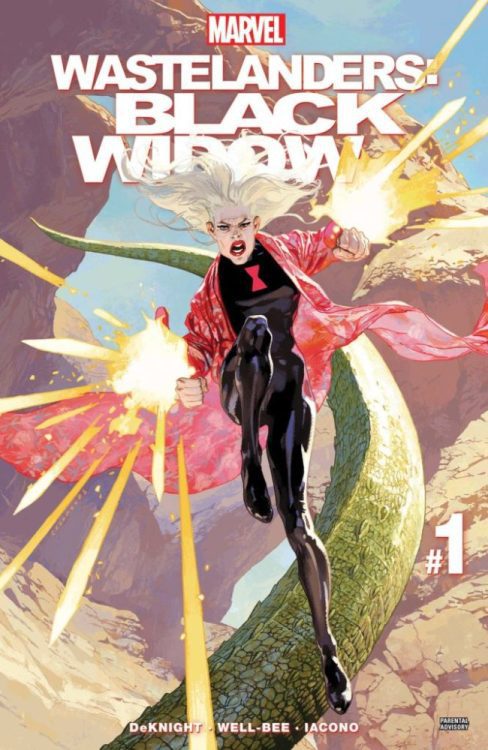
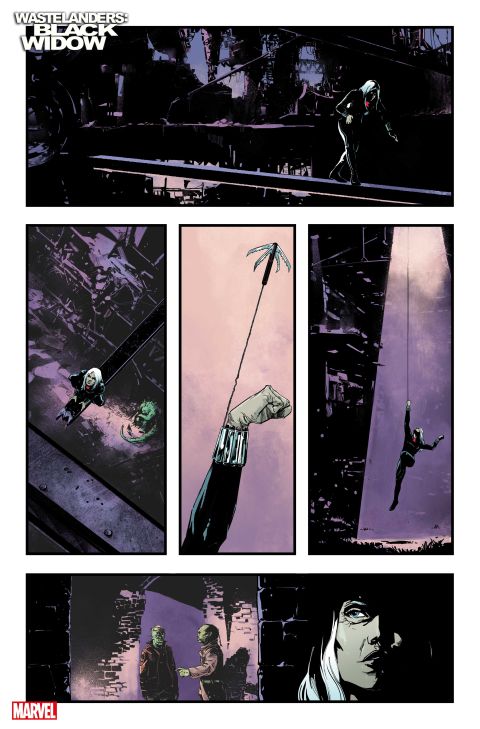
Wastelanders: Black Widow #1 offers us a glimpse into how Yelena made out in this horrible future. Written by Steven S. DeKnight, with pencils by Well-Bee, colors by Mattia Iancono, and letters by Cory Petit, we get another hard look at how bad the Marvel Universe can become.

WRITING

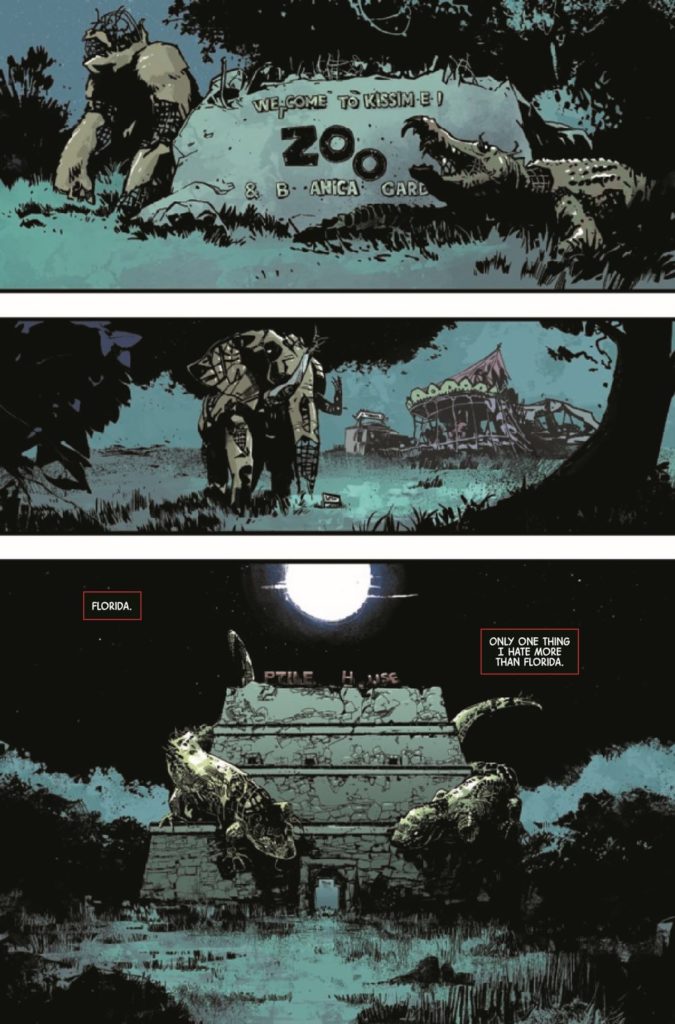
Steven S. DeKnight has been writing each of these one-shot books to build up the Wastelander universe. Each tale comes with it’s own bit of tragedy and loss, and this issue is no different. DeKnight gives us a Yelena that has been beaten down by too much and has become disconnected from the world. DeKnight makes good use of flashbacks in this issue as well. These are effective in showing us how happy Yelena was before the Wasteland as she used to pal around with her sister and they would go on missions together. When the depression and loss starts to hit, DeKnight takes the time to show us the downward spiral of Yelena. This is evident as she no longer fears death and becomes increasingly violent. The addition of the Lizard in this issue is a pleasant surprise. If there was one villain who would find a way to survive and torment heroes in a time like this, it’s the Lizard. While his panel time isn’t excessive, DeKnight establishes that the Lizard is a violent threat that can take a lot of damage. He is able to withstand Yelena’s electric burst and still keep moving, that says a lot about his toughness.

ART

Well-Bee is the penciler for this issue and he does an excellent job of emphasizing scale for characters. This is made incredibly evident the first time we lay eyes on the Lizard King as he towers over one of his minions. Bee’s pencils bring the look of desperation as we see several establishing shots of how the wastelands look. Long stretches of nothing but dead grass and graves are seen multiple times throughout the issue, which adds depth to just how dire things really are in this universe.

Mattia Iacono does an amazing job using moody colors to make this issue feel dire. Panels use light and bright colors for the happy times in Yelena’s life, but quickly turn to dark and dreary when we get to the Wasteland. Something as simple as a bright red blood spot sticks out on the dark backgrounds of this issue. Iacono does everything right for this issue to come off as depressing, and his colors hit you hard the more you get into the story. By the end of the book, we don’t feel hopeful, but rather worried for what might happen next.

The letters by Cory Petit are just as dark and dreary as the pencils. Black boxes with red lettering work perfectly here, not just because they are Black Widow’s colors, but because they also represent a scheme that isn’t visually appealing, just like the wasteland. Petit is a pro that knows how to make readers feel a word. When Widow gets thrown to the ground by the Lizard King, we see a “Kraka” sound effect when she lands. We feel that as we read the effect.

CONCLUSION

Wastelanders: Black Widow #1 continues the shared universe from Steven S. DeKnight. Each issue builds up how depressing the world is now, and getting different points of view has been a successful method for readers to enjoy each character. Wastelanders: Black Widow #1 is out now at a comic shop near you.

Monkeys Fighting Robots Youtube

Review: ANGEL #1 — Back Among the Living of L.A.

Angel 2022 #1
Angel #1 Credit: BOOM! Studios

These days the average audience is used to different dimensions or alternate timelines, because these narrative devices have hit the big screen in some of the most popular movies of the last 10 years. However, this type of storytelling has been a part of niche culture for a long time. Philip K. Dick wrote The Man In The High Castle in 1962, Star Trek introduced it’s Mirror Universe to television in 1967, and every superhero comic fan knows of DC’s Crisis on Infinite Earths from 1985.

The television series Buffy reveled in it’s version of an alternate universe, with evil versions of the central characters and a high level of kink. It went one step further in 2019 when BOOM! Studios released a completely rebooted Buffy comic, with an Angel series to follow, which essentially set up a whole new comic universe for each series. In the latest release from the publisher, the Angel comic has once again shifted dimensions and the new writer, Christopher Cantwell, gets to re-imagine the characters all over again.

In a world where something evil is coming (when isn’t it?), can this new iteration of Angel, Cordielia, and friends, stand together and face the inevitable end of days?

Angel 2022 #1
Angel #1 Credit: BOOM! Studios

Re-introduction

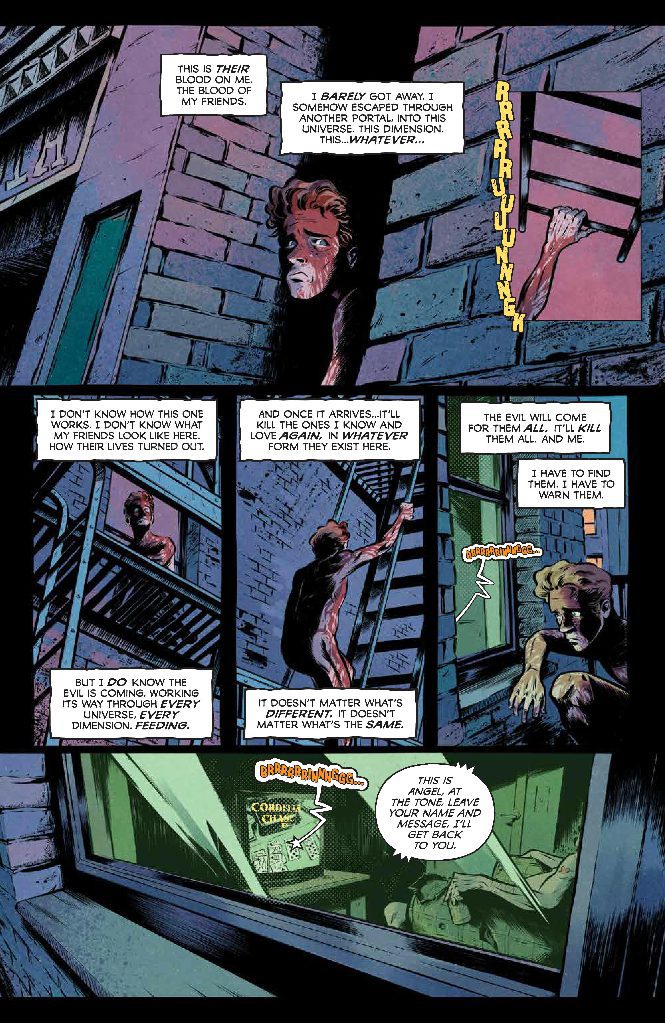
Whether you are brand new to Angel or have been following the characters since the early days of the Buffy television series, this first issue for 2022 immediately lets you know that the characters you are about to meet are different from any other version you may have met before. Cantwell’s plot starts with a mysterious figure emerging into the world like Kyle Reese in The Terminator, and uses the man’s inner monologue to set the scene:

“I am the only one left. In the Universe…dimension…whatever I came from.”

This introduction prepares the readers to meet the cast and lays the groundwork for the endless possibilities that this new version of the world can divulge. This settles the reader at the beginning of the comic so that they can enjoy rediscovering the characters. As the clever interpretations slowly appear across the pages, fans get to be excited and surprised by how different our heroes are.

Cantwell uses this first issue to introduce a number of familiar faces and places but gives them enough twists to make the reveals interesting and often funny. There are surprises, shocks, and clever manipulation of Angel lore throughout, but none of it is at the cost of the central story. The narrative is as friendly for a new reader as it is a hardened fan, which is a pleasant change for comics. Cantwell gives every reader something to enjoy.

Angel 2022 #1
Angel #1 Credit: BOOM! Studios

Re-Imagined

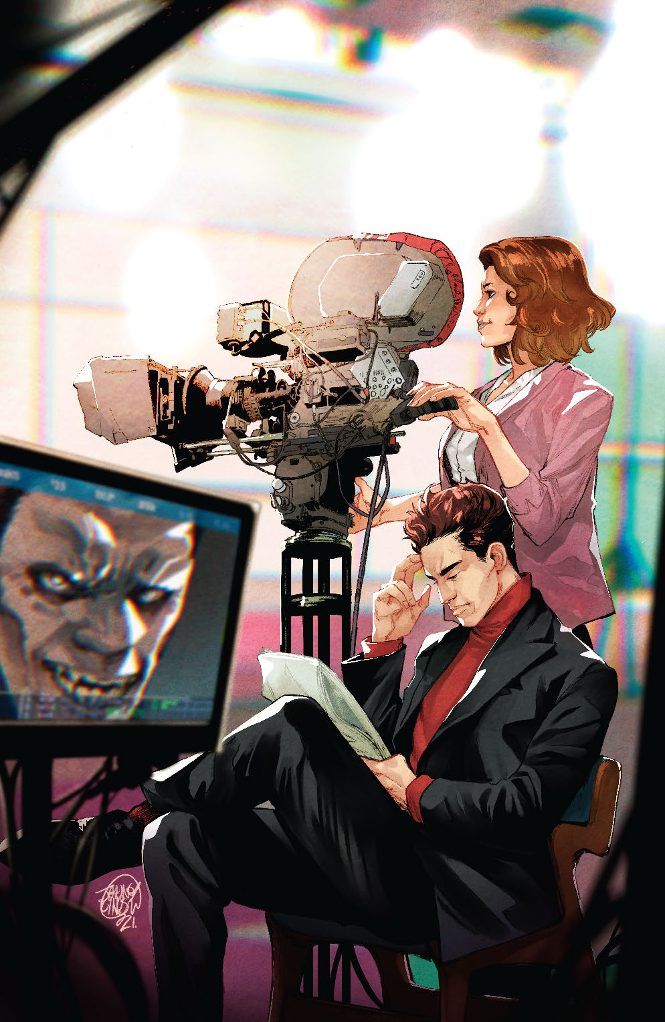
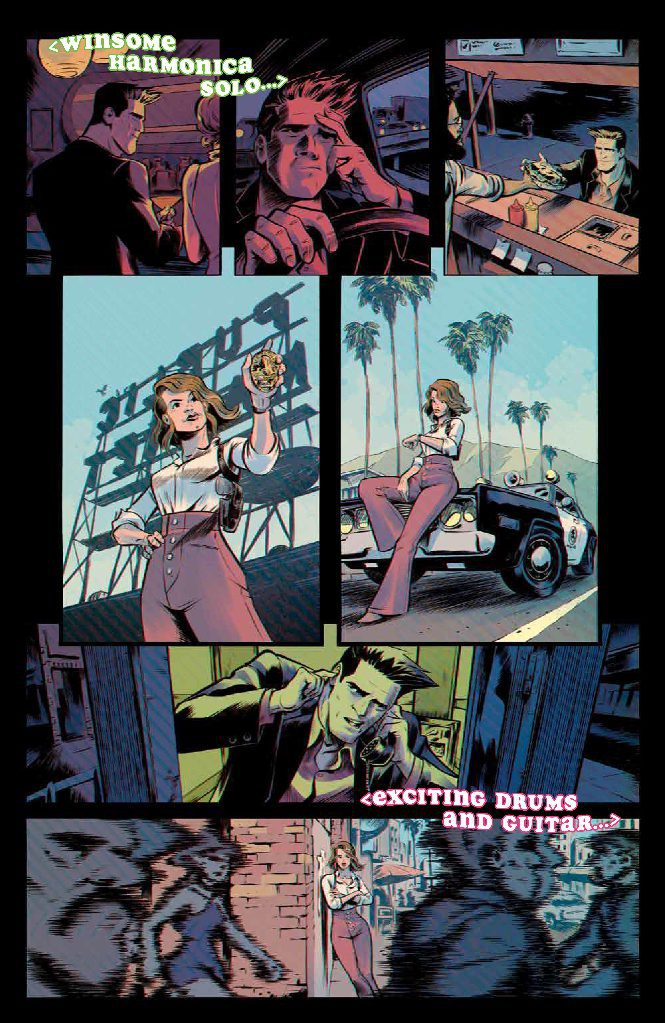
Daniel Bayliss’ artwork is a joy to read. It is slick and punchy, mimicking the unrealistic sheen of the Hollywood aesthetic. However, when the story moves away from the lights and sets of the T.V. studio and onto the streets of L.A., a darkness begins to prevail and the off kilter angles in the panels create a sense of foreboding. Bayliss produces a stark contrast between the two worlds inhabited by the characters which is instantly visible on the page.

The colorists, Patricio Delpeche with assists from Maria Agustina Vallejo, play a large part in this scene setting because they create the dynamic visuals across the full page. Certain elements on a page are highlighted by the contrasting color choices so that a page made up mostly of dark purples and blues can be used to draw the reader’s attention to one element of one panel, which has been colored with a luminous green. The opening few pages of this comic demonstrate the brilliant storytelling that the art and colors can achieve and are only the beginning of the brilliance to follow in the rest of the comic

Angel #1 is a story about different worlds, in the sense of alternate dimensions but also of social and cultural environments. Delpeche’s colors help to illustrate the difference between the various hemispheres and so does Becca Carey’s lettering. Choices made by Carey about the design of caption boxes and overlay fonts make it easy for the reader to differentiate between one world and another. A surprising amount of the humor is brought out through Carey’s design work. The television theme tune that runs through one scene is a prime example. The text itself is the joke but the lettering makes it land and draws out the laugh.

Angel #1 Credit: BOOM! Studios

Conclusion

When BOOM! Studios released its first Angel comic in 2019, the creators produced an exciting, horror based take that was perfect for the character and his entourage. It is a difficult act to follow, however Cantwell and Co. have done a masterful job. They have focused on the humor elements that made the Angel television series so enjoyable, and centered the plot around Angel’s family of characters. Conflict and intrigue comes from the demonic elements in the story but also from the central characters’ interactions with each other. Cantwell has presented a dysfunctional family with obvious secrets bubbling under the surface, waiting to burst out to complicate relationships.

From the opening mystery to the overpowering demonic conclusion, Angel #1 is a joy to read. It has engaging characters, who are both familiar and brand new at the same time, a structured plot that moves at a steady pace, and artwork that fits the tone of this new version of Angel’s world. It leaves you gasping for more: more action, more demons, but most importantly of all, more wonderful interpretations of characters that have been around for over 22 years now.

Monkeys Fighting Robots Youtube

Review: WORLD CLASS – The Joys of Struggling Towards a Goal

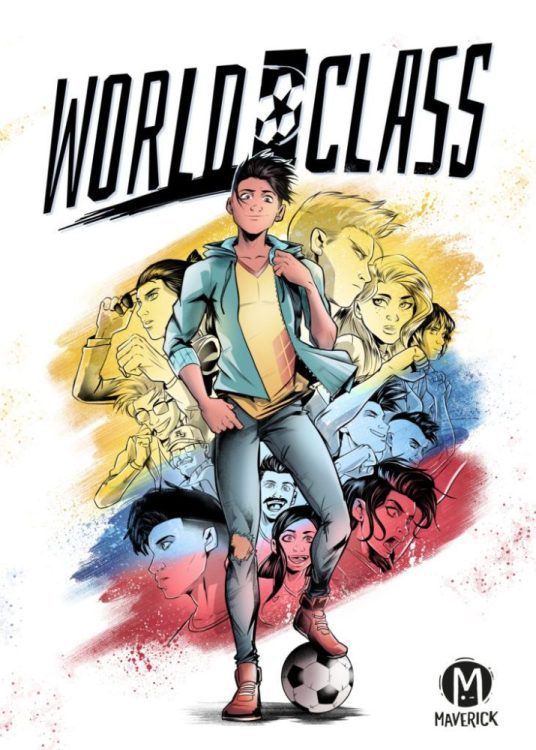
World Class Cover

World Class from Mad Cave Studios’ YA imprint, Maverick, comes a compelling tale about pushing past comfort zones. The graphic novel comes to comic stores on February 9, 2022 and bookstores on February 22nd.

World Class Synopsis

World Class Banner

About World Class (from Mad Cave):

Life’s a pitch for teen football star, Adrian “Colombian Cannon” Molina. With his powerful shot, Adrian looks like a shoe-in for the European junior league. When a Regents United elite prep school scout offers him a full scholarship, the news seems too good to be true. Adrian’s celebration is short-lived thanks to his meeting with the team’s star, Titan Evans. Titan is everything Adrian is not; rich, powerful, and connected. Despite that, Titan sees the Colombian Cannon as a threat to his domination on the pitch. Hallway brawls and constant bullying from Titan and his cronies consume Adrian’s new life along with crippling anxiety thanks to the fear of losing his spot on the team.

Appearance Is Everything

World Class captures the tensions, anxieties, and excitement of a sports biopic. Adrian Molina is such a relatable character. Getting onto a great Association Football team in another country is one thing, but having to share space with a school bully is terrifying. Titan is a character readers will love to hate, until it becomes apparent that he’s facing pressures of his own. These two struggle to act as teammates, which serves as one of the most effective arcs in the book.

Fortunately, writer Jay Sandlin makes the other elements of World Class just as satisfying. Adrian doesn’t have to deal with his struggles alone, his teammate Luciano serves as a foil to both Adrian and Titan. Luciano is friendly, open, and isn’t afraid to speak his mind about what’s going wrong. He’s a real team player who earns a major plot point in the book. The quirky supporting cast, like Game of Thrones loving Kong and spotlight hog Ashlie, are all memorable in their own right. Some of them, like Ashlie, even have plots and arcs of their own outside of the main story. It makes the world these characters live in feel authentic.

Channels The Excitement

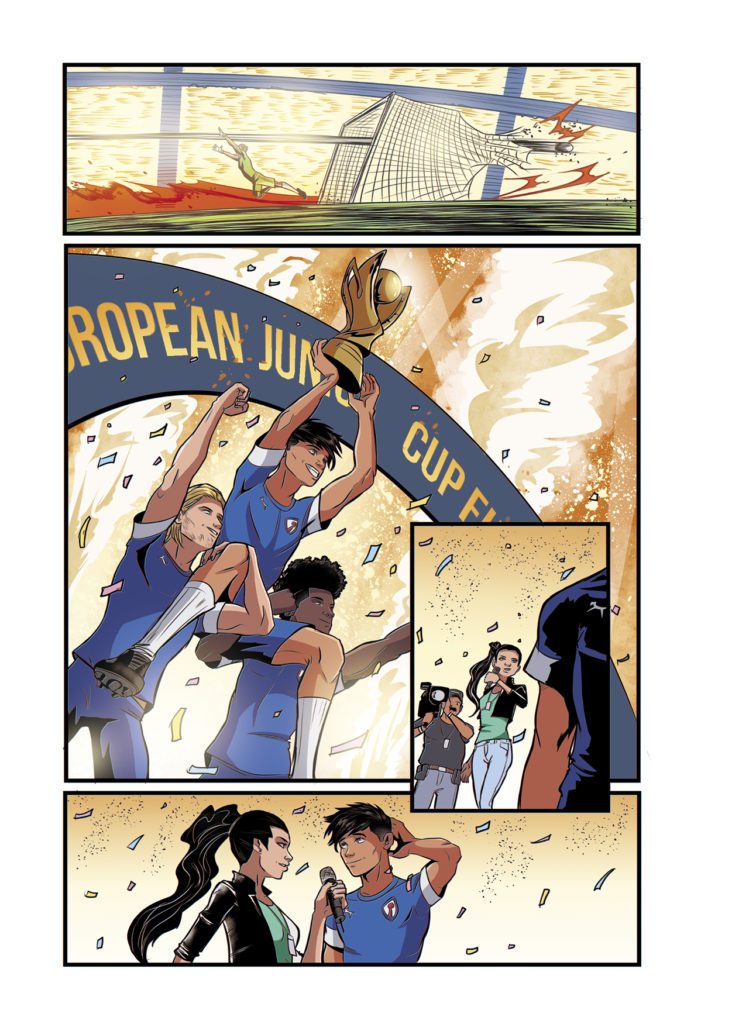
Just a look into the gamePatrick Mulholland illustrates World Class with energy and visuals that imprint readers with the thrills of watching a real game. In fact, some two-page spreads look like collages of snapshots that evoke a Mulholland comic that caught everyone’s attention. The way he uses panels and angles to accentuate characters’ actions is outright phenomenal. It also helps to have a colorist like Rebecca Nalty to give these panels color coded backgrounds to match the intensity. The background sometimes fades away, putting everything into one dramatic moment.

The lettering by Justin Birch has plenty of energy of its own. Mundane conversations get filled with so much emotion, the word balloons can sometimes barely contain the dialogue. One bit that stands out is how the game announcers have color coded word balloons to represent their teams. Plus, Birch’s use of sound effects make the actions sequences twice as dynamic.

World Class Says It All

World Class has everything readers didn’t know they could want from a sports series. From compelling, rich characters to art that instills excitement through its panel work, this is one title to keep an eye on.

Monkeys Fighting Robots Youtube