Home Blog Page 113

INTERVIEW: Jim Rugg on All Things HULK GRAND DESIGN

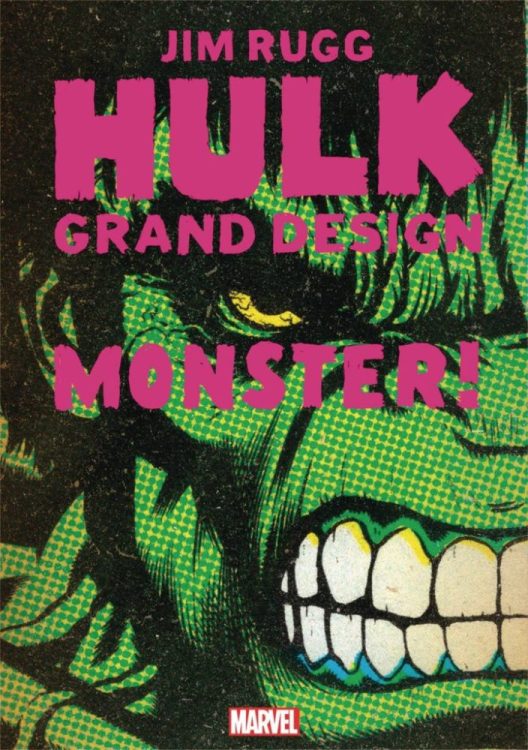
Hulk Grand Design

Jim Rugg joins the Grand Design club with HULK GRAND DESIGN. Like Ed Piskor (X-Men Grand Design) and Tom Scioli (Fantastic Four Grand Design), Rugg handled everything on the book: pencils, inks, colors, and lettering. With the book set to release on March 16, 2022 (3:16 y’all!), the Pittsburgh-based cartoonist took some time to talk about the project. Check out the interview below and make sure you tell your local comic shop that you want HULK GRAND DESIGN!


Monkeys Fighting Robots: Let’s start with something basic. Why Hulk? What about the Green Goliath made you want to tackle just an incredibly gigantic project?
RUGG: Hulk is the first comic book character that I remember. Before I started reading comics, I had a Hulk cereal bowl. I was 6. And every morning before 1st grade, I would eat breakfast and read his origin and study John Romita’s Hulk drawing. Plus, I loved monsters and Hulk was like the coolest looking monster ever. As a cartoonist, I look at Hulk and think – he’s one of the greatest, most well-known fictional characters of the 20th century. It is exciting to get to play with a character of Hulk’s stature, quality, and longevity. 

MFR: What was the initial process in getting Incredible Hulk Grand Design started? Did you approach Marvel or did Marvel approach you? Was there a lot of negotiation involved?
RUGG: I think Marvel asked for a pitch. After Ed Piskor’s X-Men Grand Design, I sent Marvel a proposal for a Hulk Grand Design book. Nothing happened for a while but eventually, Marvel green-lit Tom Scioli’s Fantastic Four Grand Design. And then I think they got back to me in late 2019 or early 2020. There was a little negotiation. Nothing unusual. 

MFR: Were you given any kind of deadline, or was that something you set for yourself?
RUGG: I didn’t have a deadline right away. We figured out the number of books and pages and I started working. Then when I was about halfway through the first book, we decided on a deadline. I made this book during lockdown, so there were some unknowns and ups-and-downs. I think Marvel’s editors were working from home most of the time. Early in the lockdown, I was told to stop working on Hulk – that’s when I did Octobriana 1976 – the world’s 1st blacklight comic book. 

MFR: How much leeway did Marvel give you once the project was green-lit (pun intended)?
RUGG: Marvel gave me a lot of leeway. I wasn’t sure what to expect because I hadn’t done much work for Marvel before Hulk Grand Design. I would send things in like outlines and pages. And they mostly just said, great, keep going. I’m used to working on my own books without any outside input or feedback. So I was very comfortable with this approach. Wil Moss took over editing the book early in the process. When we talked about it, I felt like he viewed it as a unique project and gave me a lot of freedom as a result. He and his assistant editors were great – when I needed something, had questions, had ideas, they were there. But he also gave me a lot of room to make Hulk Grand Design like I would make Street Angel or one of my other books. As I got more comfortable, the book really became a dream project. Ultimately, if you love Hulk Grand Design or you hate it, it’s on me. Marvel was awesome in that they hired me to be me and they really let me do what I wanted. I could not be happier with that part of the experience.

MFR: I know this was an immense research project as well. I mean, you are a self-described Hulk fan, but we are talking hundreds of issues here. Did Marvel give you access to all the Hulk back catalog? How did you go about reading so many comics? Did you have a set ‘reading schedule’?
RUGG: I bought comics, borrowed comics, I read reprints and digital copies of many of the comics that I couldn’t find. I would read like 20 issues a night. Some days, I would read Hulk comic books all day.  Eventually, I had a Google doc that was broken into 80 pages. Each page had a sentence or two description. That was my script. When I started a new page, I would write/draw the page based on that description. It usually took 2-3 days to make a page. I would reread the relevant issues during the writing process.
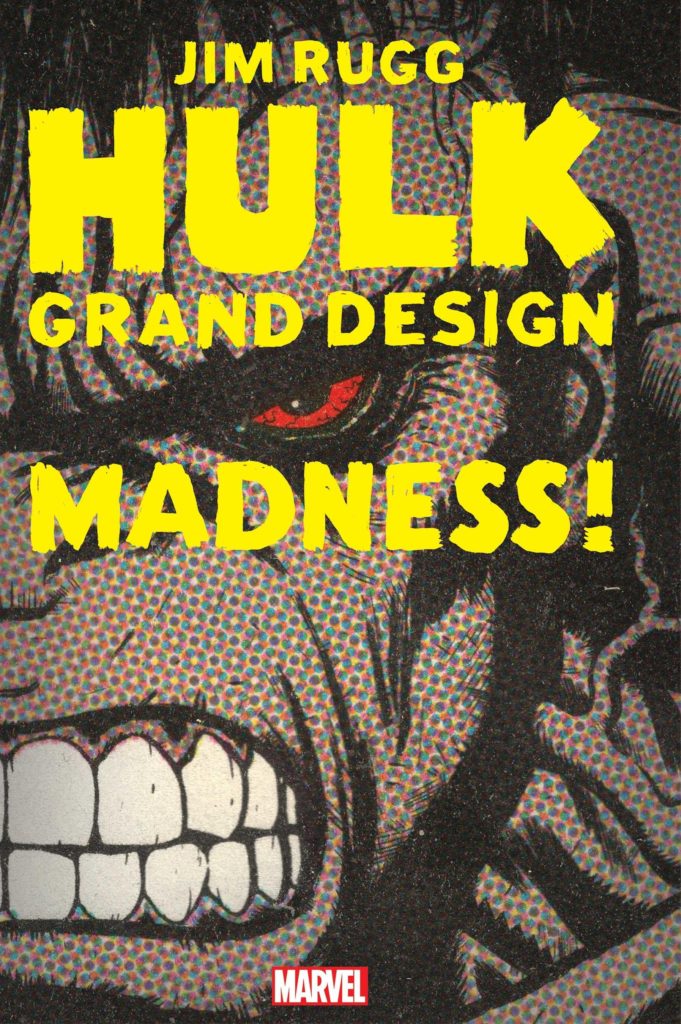
Hulk Grand Design
Cover to HULK GRAND DESIGN #2 by Jim Rugg

MFR: Did you take notes as you read?
RUGG: Yes. I was overwhelmed when I started. So I began making very basic notes on index cards – who did the Hulk fight? Anything else noteworthy in the issue like the artist, characters, story? So I ended up with a huge stack of index cards that summarized the Hulk in chronological order. From there, I organized the notes into pages.

MFR: Was there anything new about the Hulk you connected with as a character? Anything new about the book you discovered?
RUGG: Hulk is a static character for the first 20 years. The changes are mostly visual as different artists take over. That was interesting. It’s not entirely new, but seeing it issue by issue was exciting – a lot of good comic book artists drew Hulk. In the late 200s, the Hulk’s character begins to evolve with writer Bill Mantlo. And then Peter David comes on and continues to explore some of the threads that Mantlo introduced. It was interesting for me to see how creators approached Hulk. He is so different than most of the Marvel heroes. So watching creators try to develop his character was interesting. 

MFR: So what would you say is your favorite story arc?
RUGG: Mr. Fixit. That was different. It was what drew me to reading comics. The characterization was very different than the Hulk Smash green monster Hulk. But it felt like a good version of the character to me. Weirdly, I think it’s Hulk at his happiest moment. Jeff Purvis’ art is strong too. That’s a fun story arc. But Hulk is full of fun stories. I enjoyed John Byrne’s brief run as writer/artist. I like when Hulk’s S.H.I.E.L.D. girlfriend is turned into Ms. M.O.D.O.K. Across 60 years of history, there are so many great stories! 

MFR: Did you have a favorite writer and artist?
RUGG: Sal Buscema does a great green Hulk. Buscema draws Hulk almost like a pyramid shape. He looks very powerful. Before this project, I thought Herb Trimpe was my favorite Hulk artist. And I love Herb Trimpe’s Hulk! But Sal Buscema’s Hulk is probably the iconic version from my childhood memories. 

MFR: What story arc did you like the least? 
RUGG: The Pantheon. I hated it. It was the storyline that made me quit reading Hulk. And when I look at it critically, it’s the least Hulk-like arc and runs for 4 years. I can see how a creator would go in this direction. It’s a different take on the character. But I feel like it turned a unique character into something generic. It featured a civilized Hulk in a costume – i.e. like most of Marvel’s superheroes. And Hulk was constantly getting his ass kicked during this arc. I don’t read Hulk because I want to see Hulk smashed. The supporting cast of the Pantheon bored me as well. 

MFR: You love to work with different mediums, tools, and methods. How did you decide what method to use for each page or moment?
RUGG: I approached each page differently. When I started a page, I only had a sentence or two of description. So I considered everything – tools, look, tone, story, characters. And then I would use whatever media I thought would look the best with the page’s story. I used everything – paint, ink, markers, nibs, brushes, wash, digital, printer, scanner, ballpoint pens, notebook paper, pencils, colored pencils, collage. I guess it’s somewhat intuitive. I would also keep a list of different ideas that I wanted to use from color palettes to collage to book excerpts and advertising. I think I was able to use most of them. 

MFR: Did you try any new art methods with Hulk Grand Design, anything you had never tried before?
RUGG: I used markers a lot more than I have in the past. But I can’t think of anything that was completely new. I definitely used more materials and techniques in this book than any other (except maybe Supermag). Using different materials and methods was a huge part of the fun of making this! 

MFR: Do you have a favorite page, sequence, or image from the project?
RUGG: I’m happy with how the last page turned out. But honestly, I’m happy with most of the pages. I had one page that required major changes and I think the revised page is much better so that’s good. There are a couple of Hulk vs Wolverine pages that I’m proud of – one in Monster and one in Madness. The first Mr. Fixit page is a personal favorite. 

MFR: Is there an aspect that you struggled with?
RUGG: I struggled early in the project. Trying to shape the narrative was tough. There was so much to fit into the story. I also struggled stylistically and with confidence. This is a giant character. I guess I was intimidated. But after I started working on pages, it felt great. Each page felt like a chance to tackle a new character or fight or version of the Hulk – that became very exciting. 

MFR: And finally, what do you hope we (the readers!) will get from Incredible Hulk Grand Design?
RUGG: I hope longtime fans will get a chance to remember some of the stories and moments that made them Hulk fans. Whether it’s character moments, artists, covers, etc. As long-time fans, they know Hulk. I hope they will have moments of awe as they see my interpretations of the Hulk. And I hope it provides a little bit of community for Hulk fans. I used to love talking comics with friends or at the comic shop. So I hope Hulk Grand Design readers will enjoy the book and enjoy talking about it with their fellow Hulk fans at the shop or online. For new readers – it’s a chance to share my enthusiasm for the character and the medium of comics. I hope it blows their mind and makes them fall in love with comics and they become life-long comics readers.
Monkeys Fighting Robots Youtube

Review: LOVE EVERLASTING #1 – You Can’t Run from Love

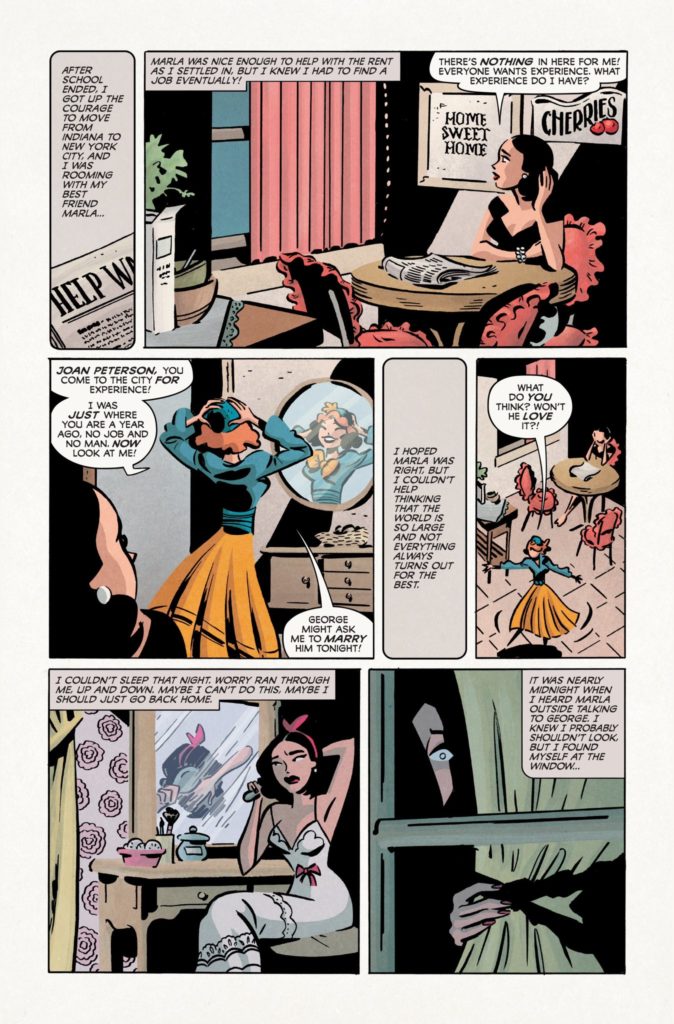
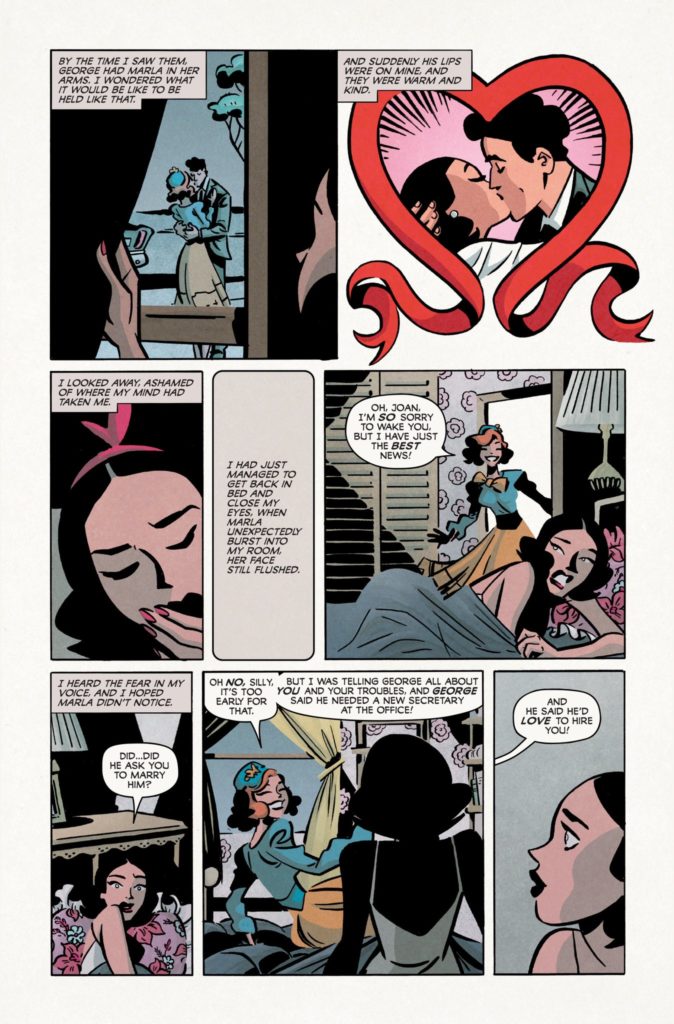
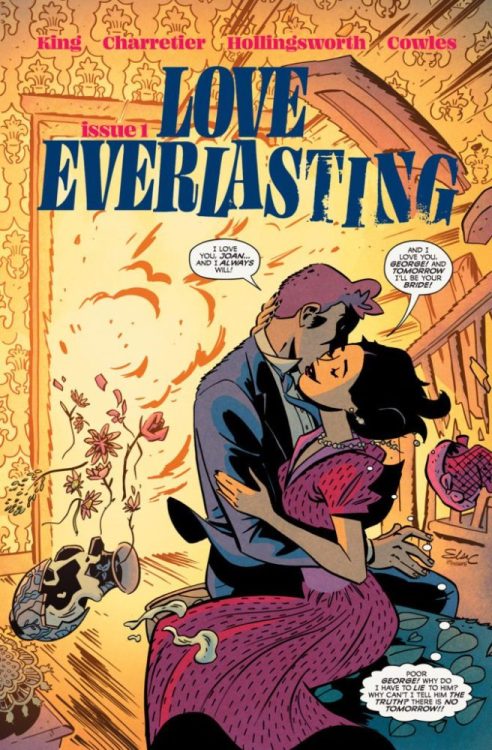
Love Everlasting #1 is not what you’d expect. The first few pages, heavy-laden with the exposition dumps of thought bubbles and caption boxes, are a recreation of the romance comics of the 50’s to 70’s. It’s retro, cheesy, and delightful. But soon, Love Everlasting #1 changes quite a bit. Eventually, it’d be more accurate to call it psychological horror than to call it a romance comic. Writer Tom King, artist Elsa Chatterier, colorist Matt Hollingsworth, and letterer Clayton Cowles are doing something completely original with this series. Better yet, they’re allowing readers to get access to it for free, through their Substack, Everlasting Productions.

Writing

It’s tempting to say that King is lampooning the writing of old romance comics in his first few pages. The story is melodramatic and the romance between the two characters is sudden and intense. But King actually seems to embrace these staples of the genre, rather than poke fun at them. The first story in Love Everlasting might be over the top, but it’s joyfully over the top. You find yourself chuckling at the drama, yet still giddy when the story comes to a close. If King had simply wanted to write in the style of old romance comics, he could have done so and done so well. But instead, he takes things a step further. As we go into our second story, everything becomes immediately confusing. And King lets the confusion sink in before offering any clues as to what is going on. By the end of the issue, King has turned the whole genre on its head. He’s changed everlasting love from a dream into a threat. This script will leave you begging for the next chapter.

Love Everlasting

Art

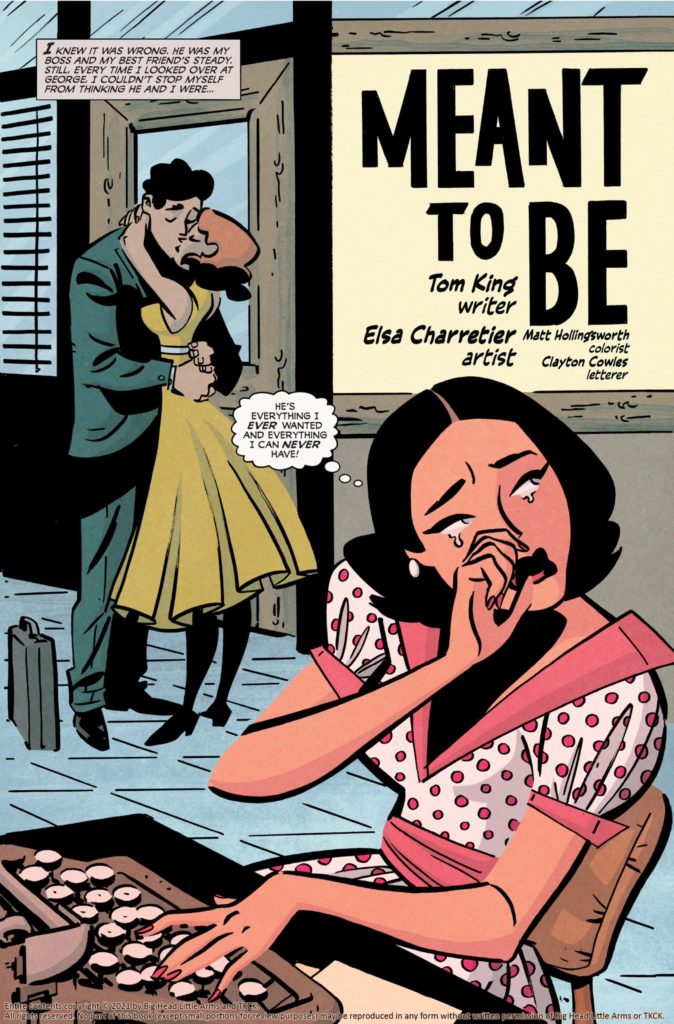
Chatterier’s art perfectly matches the style of the 50’s and 60’s. It’s playful and beautiful at the same time. As we meet our protagonist, Joan Peterson, we quickly learn that she’s someone who feels more like an extra than a main character. And Chatterier shows this brilliantly. In every panel, Joan looks small. She’s often off to one side, like she’s trying to stay out of everyone’s way. There are plenty of instances of her even hiding behind things. The other characters, like her confident roommate Marla, stand tall in every frame, taking up space and brimming with happiness. And when we switch into another story, Joan seems the same. She’s a supporting character in her own life. Until she begins to suspect that something is up. We see her in the dead center of a panel while she stares at the reader, with the art style changed to a scratchy, unfinished look. When Joan finally feels like she understands what’s going on, at least somewhat, she starts to push into the center of every frame. She takes charge. She starts acting like a real main character.

Love Everlasting

Coloring

Hollingsworth gives each story in Love Everlasting #1 a distinct flavor. The first story, about Joan falling for George, has many panels that have a slight pink tint to them. We’re seeing the world through the hopelessly in love eyes of Joan. The next story, focusing on Joan and a musician from the Village, Hollingsworth colors in blues and purples. The entire chapter feels like it’s happening in a nightclub. And the last full story we get, set in the Wild West, is colored in earthy tones of beige and red. Hollingsworth makes us feel that these aren’t just different chapters. They’re entirely different worlds.
Love Everlasting

Lettering

Cowles ups the drama of every scene with his lettering. We see the small font of people speaking with bated breath, leaning in for a kiss. Or we see the growing font of Joan’s realization in a caption box. “But then. But then! But then!!” it says, with each refrain being bigger than the last as she finally latches onto some hope. As Joan begins to realize that everything isn’t okay, Cowles places small caption boxes on the page that interrupt her other thoughts. Finally, this culminates in a jagged, red word balloon with large, bold letters. Every beat, every change, is emphasized by Cowles masterfully.

Love Everlasting is a smart, terrifying upending of the romance genre. It reels you into a world that feels comfortable and familiar, before pulling the rug out from under you. You don’t want to miss this fantastic new series. Each issue is free through Everlasting Productions, with issue #1 available now.
Monkeys Fighting Robots Youtube

Review: NEWBURN #3 – Blood, Bodies, and Black Castles

Newburn

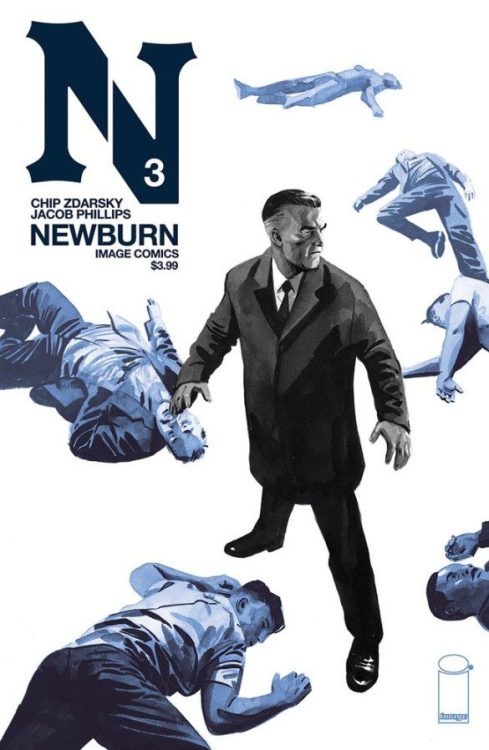
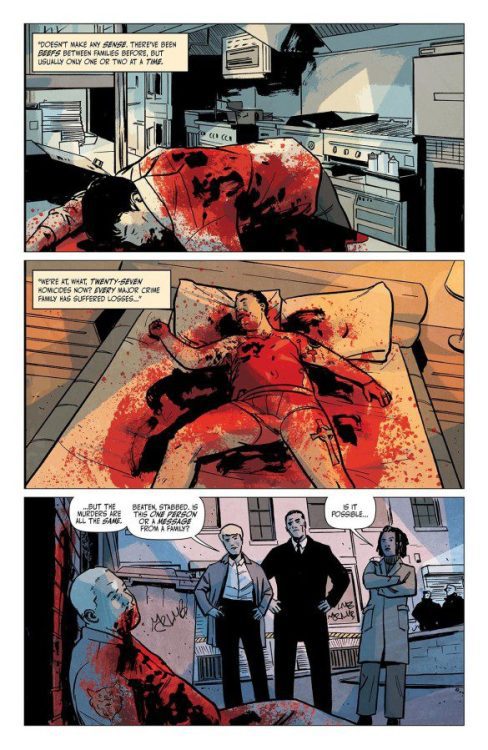
From page 1, you know that shit’s going to go down in Newburn #3. Or, more accurately, shit has already gone down. Writer Chip Zdarsky, and artist, colorist, and letterer Jacob Phillips open this issue on three dead bodies, lying in pools of their own blood. Image Comics’ Newburn has thus far been no stranger to death. But this issue, in particular, takes a turn for the gruesome and macabre. It’s disturbingly interesting.

Newburn

Writing

Zdarsky makes an interesting shift in this issue. For once, Newburn is facing something unlike anything he’s ever seen before. Zdarsky isn’t showing us the Columbo-esque confidence of someone who has figured out everything on page one. He’s showing us the step by step process of Newburn figuring something out from the ground up. We see Newburn talk more than usual. We see him listen more carefully. As such, there’s plenty of text in Newburn #3. Perhaps a bit more than in his first two outings. But Zdarsky brilliantly counteracts this by pulling back on the dialogue altogether near the end. Once Newburn has figured everything out, the pages become wordless. The silence rings in the air as you lean forward in your seat. Zdarsky creates a fantastic rhythm in his script, pulling you in for the big, satisfying finale.

Newburn
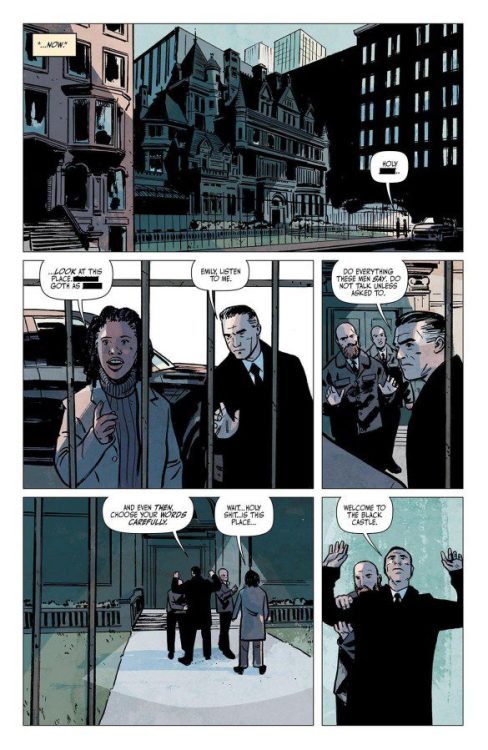
You kind of have to love that Image Comics missed the last “Holy Shit” on this page when blacking out swear words for their previews.

Art

Once again, Phillips shows us what makes Newburn so different from everyone. In a world of snarls, grimaces, and the occasional smile, Newburn is a constant stoic. He’s a man who is always in control. And even Phillips’ page layouts show us this. They’re your typical, straight-edged, neatly placed panels. They echo the ordered, tidy life that Newburn lives. He may deal with all kinds of crazy people, but he won’t let their way of life effect his. Until, in the last couple pages of this issue, the layouts change. In place of all of the right angles, we see gutters that slant and cut through the air. Newburn is finally facing someone who’s just as chaotic as he is orderly. Phillips heightens this moment of the script by making these pages unlike anything we’ve seen yet.

Coloring

Phillips’ coloring is always a highlight in this series. Every scene feels like it has a specific hue to it. The first scene, out in the cold morning light, is cast in a soft blue tone. The scenes in the Black Castle have a menacing red glow to them. And one scene, set in a morgue, is shown in with a green tint to it. Each coloring choice adds to the ambience of every setting. But it also works to match the feeling of each beat of the narrative. Phillips choices are both stunning to the eye and thematically engaging, as usual.

Lettering

There’s a specificity to the size of Phillips’ lettering. As Newburn #3 reaches its big crescendo, the font of the dialogue gets bigger. Soon, the bolded and italicized lettering has these characters yelling at one another. Then, on the next page, Newburn is whispering to himself in a smaller font than usual. You can hear each character change their volume for emphasis. Phillips wants you to do more than just read this comic. He wants you to hear it.


Image Comics’ Newburn #3 is a gruesome good time. Zdarsky and Phillips are creating a brilliant series that has incredible range. In one issue, they can dive into the complexities of the human spirit. In the next, they’re talking serial killers and knife fights. I can’t wait to see what they’ve cooked up for us next. Newburn #3 is out from Image Comics at a comic shop near you!

Monkeys Fighting Robots Youtube

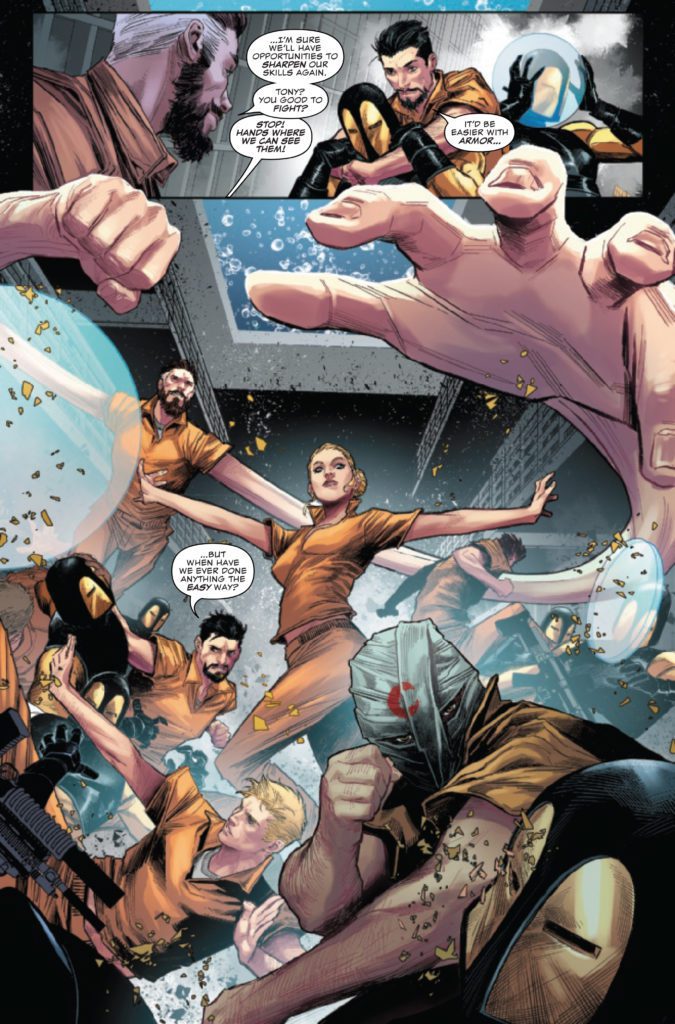
Marvel Comics Exclusive Preview: DEVIL’S REIGN #4

marvel comics exclusive preview daredevil devil's reign

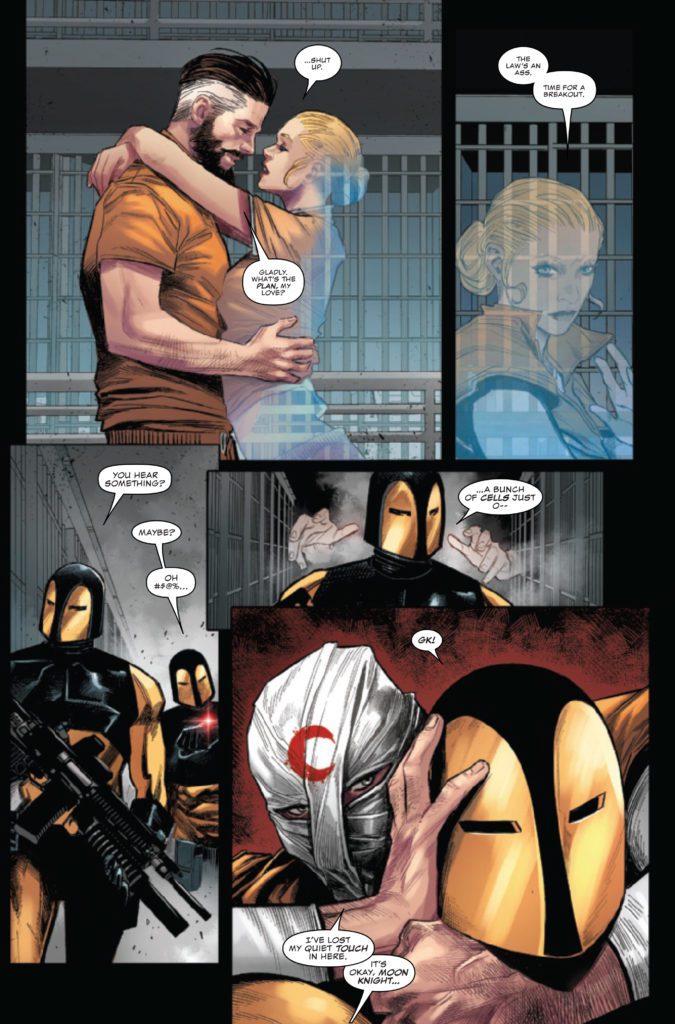
DEVIL’S REIGN #4 hits your local comic book store February 9th, but thanks to Marvel Comics, Monkeys Fighting Robots has an exclusive three-page preview for you.

About the issue:
NEW YORK UNDER SEIGE! Wilson Fisk, duly elected Mayor of New York, has broken. Whatever shred of decency that may have been left of him is gone entirely and now, with an army of super villains at his command, THE KINGPIN has set his gaze upon everyone the heroes of the Marvel Universe hold dear – but even the Kingpin is unaware of the magnitude of danger he has put the city, its citizens and even himself with his war against the city’s super heroes!

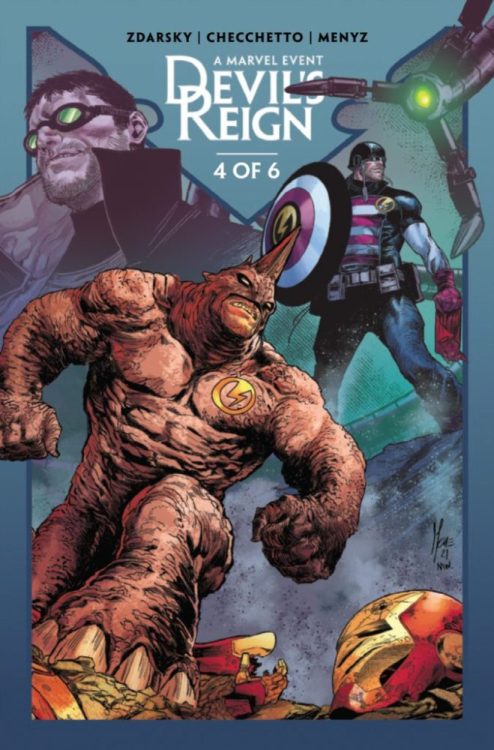
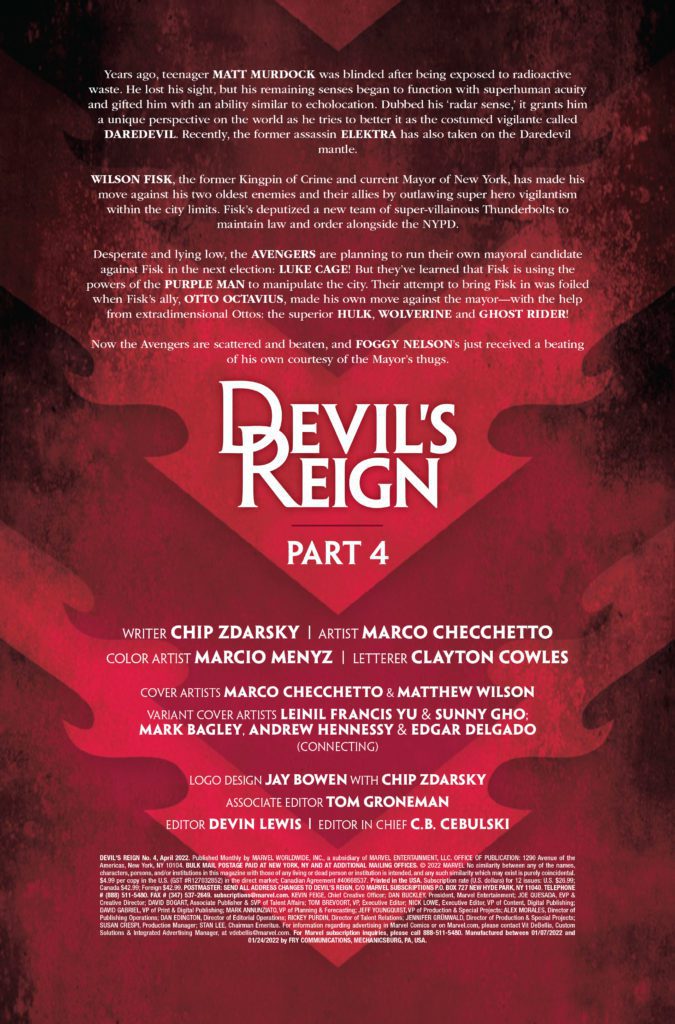
The issue is by writer Chip Zdarsky and artist Marco Checchetto, with colors by Marcio Menyz, and letters by Clayton Cowles. The main cover is by Checchetto and Matthew Wilson.

Check out the DEVIL’S REIGN #4 preview below:

marvel comics exclusive preview daredevil devil's reign

marvel comics exclusive preview daredevil devil's reign

marvel comics exclusive preview daredevil devil's reign

marvel comics exclusive preview daredevil devil's reign

marvel comics exclusive preview daredevil devil's reign


How are you enjoying DEVIL’S REIGN so far? Sound off in the comments!

Monkeys Fighting Robots Youtube

AfterShock Comics Exclusive Preview: MANIAC OF NEW YORK: THE BRONX IS BURNING #3

aftershock comics exclusive preview maniac of new york bronx is burning

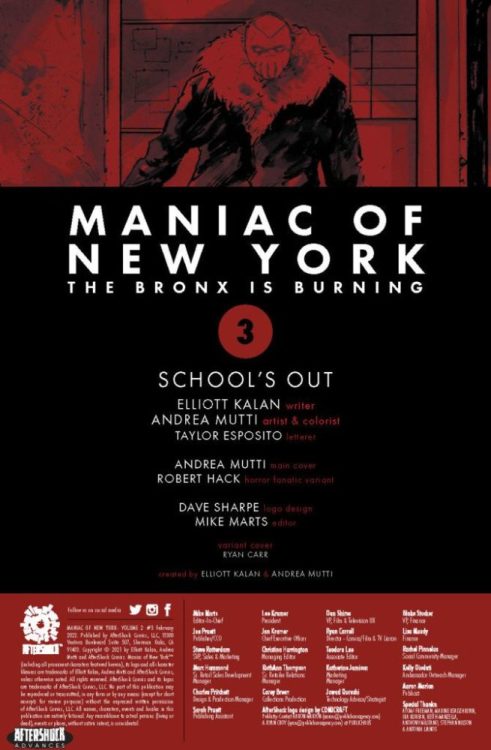
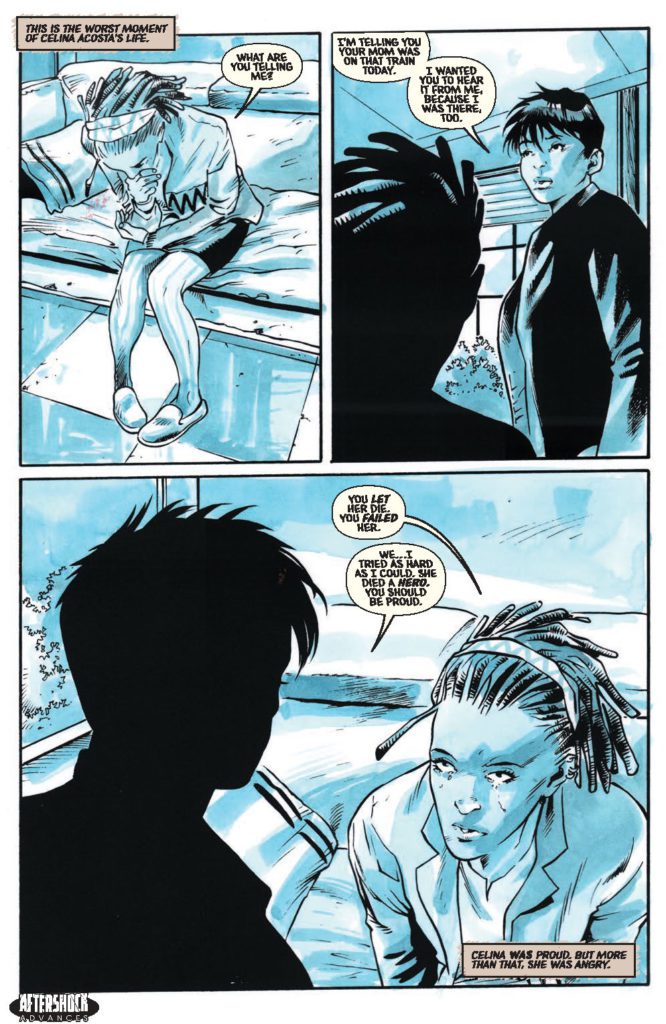
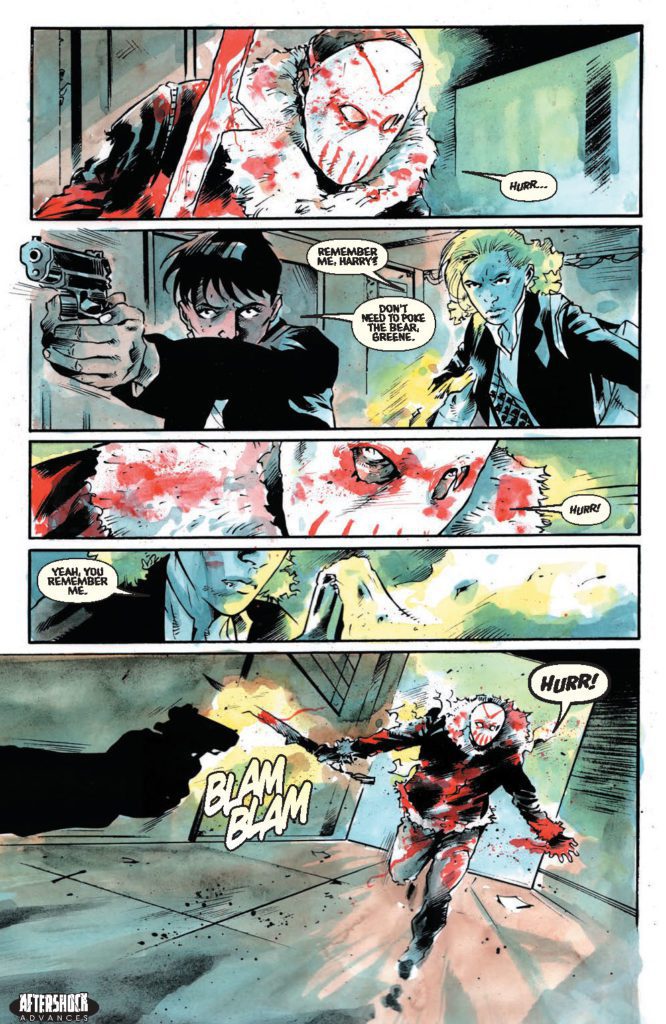
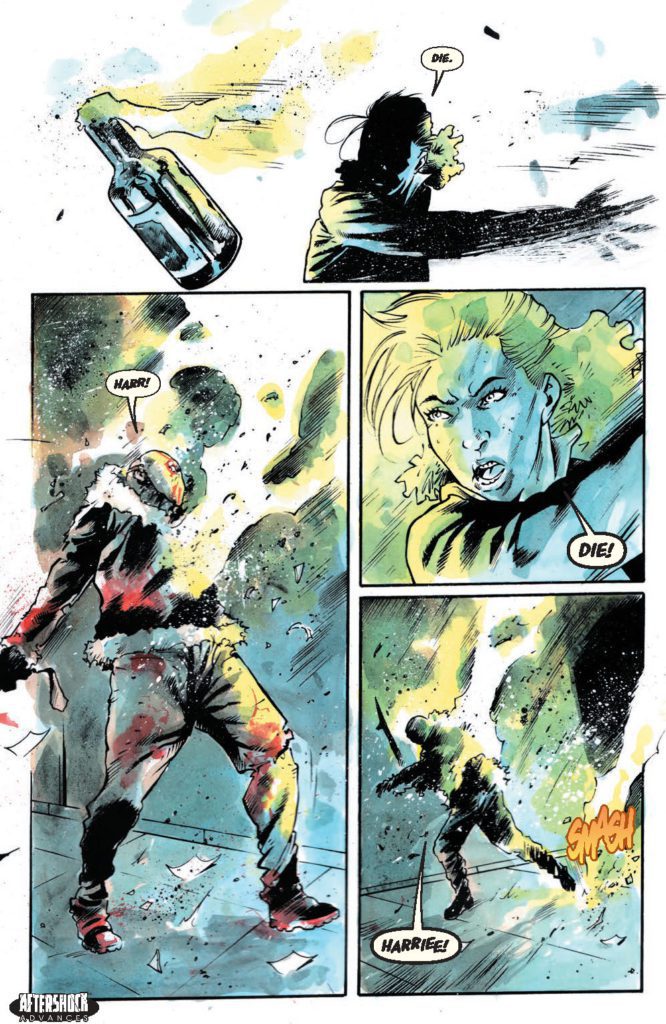
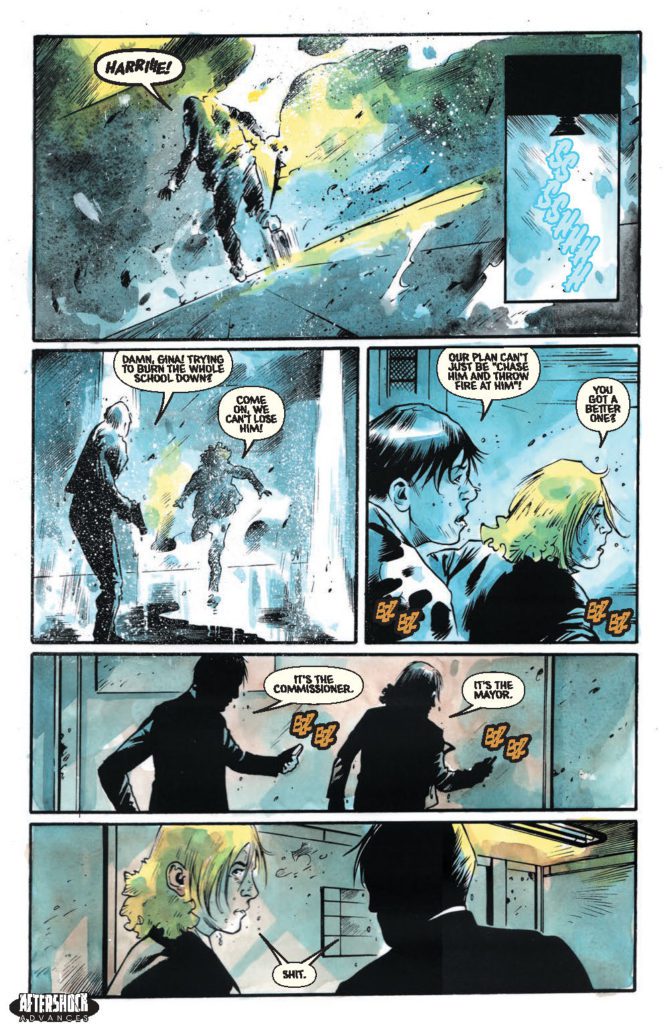
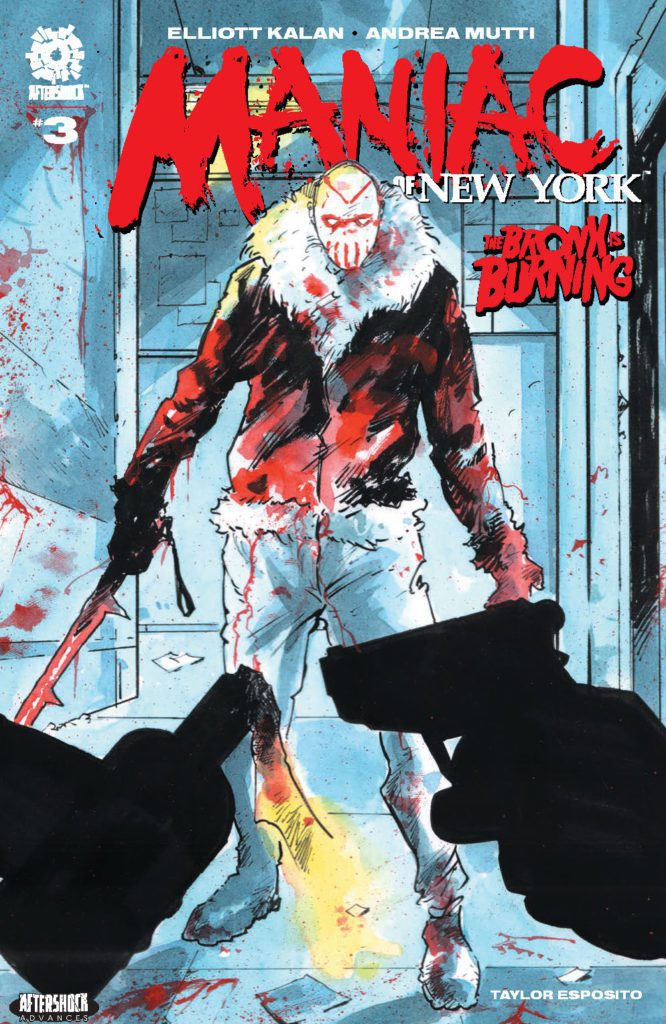
MANIAC OF NEW YORK: THE BRONX IS BURNING #3 hits your local comic book store February 16th, but thanks to AfterShock Comics, Monkeys Fighting Robots has an exclusive four-page preview for you.

About the issue:
Gina Greene and Zelda Pettibone are face-to-face with Maniac Harry once more, and theyre armed with enough Molotov cocktails to burn down the borough! But the Mayor of New York seems determined to get in their way. Can Gina and Zelda stop Harry before his body count rises?

SPOILER ALERT: They cant! Theres only one issue left after this one, and it just might be the biggest bloodbath yet!

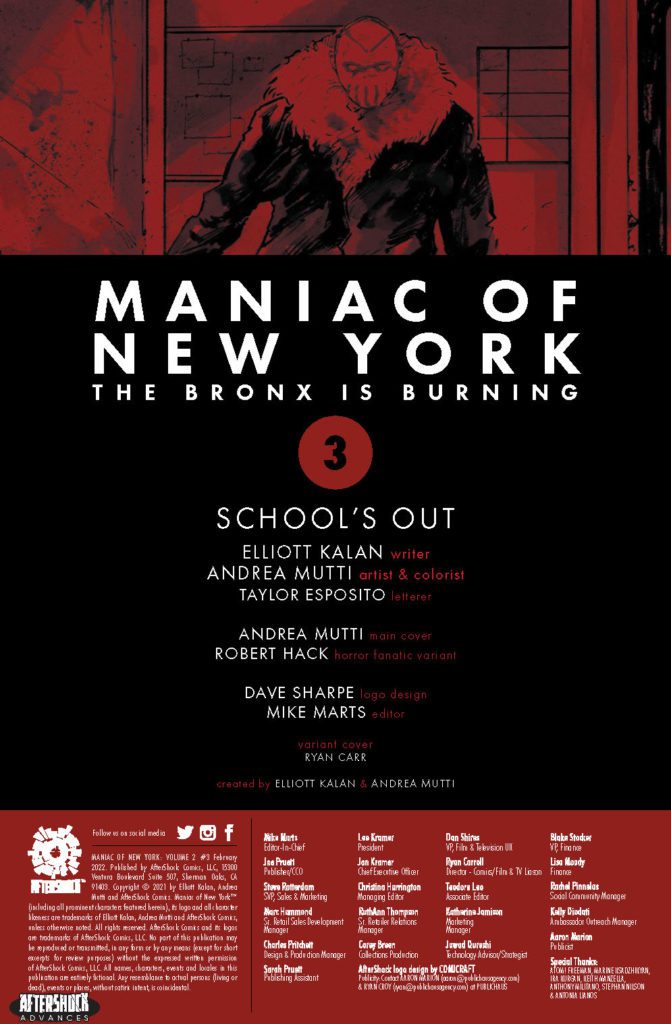
The comic is by writer Elliott Kalan and artist Andrea Mutti, with letters by Taylor Esposito. The main cover is by Mutti, and the Horror Fanatic variant is by Robert Hack.

Check out the MANIAC OF NEW YORK: THE BRONX IS BURNING #3 preview below:

aftershock comics exclusive preview maniac of new york bronx is burning

aftershock comics exclusive preview maniac of new york bronx is burning

aftershock comics exclusive preview maniac of new york bronx is burning

aftershock comics exclusive preview maniac of new york bronx is burning

aftershock comics exclusive preview maniac of new york bronx is burning

aftershock comics exclusive preview maniac of new york bronx is burning


Are you caught up on MANIAC OF NEW YORK? Sound off in the comments!

Monkeys Fighting Robots Youtube

Review: A New Age Of Sci-Fi In NEW MASTERS #1

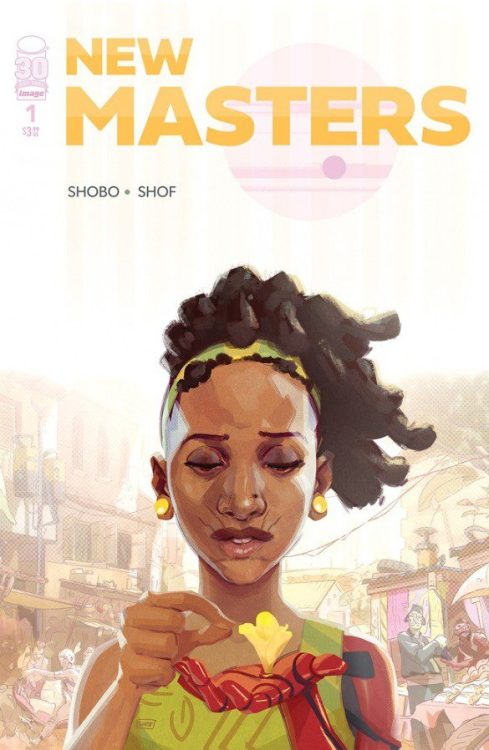
From Shobo and Shof Coker (Outcasts Of Jupiter) comes a smart and unique take on a familiar sci-fi concept with New Masters #1. This story of colonization in a distant future offers a perspective we don’t often see in out Western-dominated world of comics fiction. With a sharp, intriguing script and stunning visual work, this could prove to be the start of a new mega-hit over at Image Comics.

“In a striking vision of West Africa under the thumb of alien colonizers, a motley crew of outcasts find themselves caught up in a power struggle for control of an ancient artifact with immense power.”

Writing & Plot

Developing a brand new science fiction world is a daunting task from a scripting perspective. In order to keep the story engaging, the perfect blend of worldbuilding and characterization needs to take place. It’s fortunate then that Shobo Coker pens a script that effectively accomplishes both with New Masters #1. This far-future vison of an Earth colonized by advanced alien races from the perspective of West Africa is a fascinating hotbed for storytelling from a perspective we seldom get to see. Our main cast, including Ola, a scavenger, and Tosin Ojumah, the human governor of this new territory shared with other alien societies, are each survivors navigating a new brand of colonialism from different ends of the societal spectrum. Being West African himself, Shobo has a perspective on this kind of resource-based hostile control that we here in the “West” definitely do not. The class and labor elements in this story bring in some cyberpunk genre tropes to help craft something familiar, but still unique unto itself.

Shobo’s writing style carefully combines distinctive dialogue and necessary exposition to create something informative and compelling. Character speech is filled with personal colloquialisms that add a sense of place and realism to this society. The expository bits come out as characters speaking to each other about current events in-world. These sequences still have the flow of naturalistic dialogue, and as such aren’t a chore to get through. Every aspect of this comic’s writing feels deliberately constructed, but with a natural flow that makes for an engaging and relaxed read that the reader will feel drawn into, but not overworked by.

Art Direction

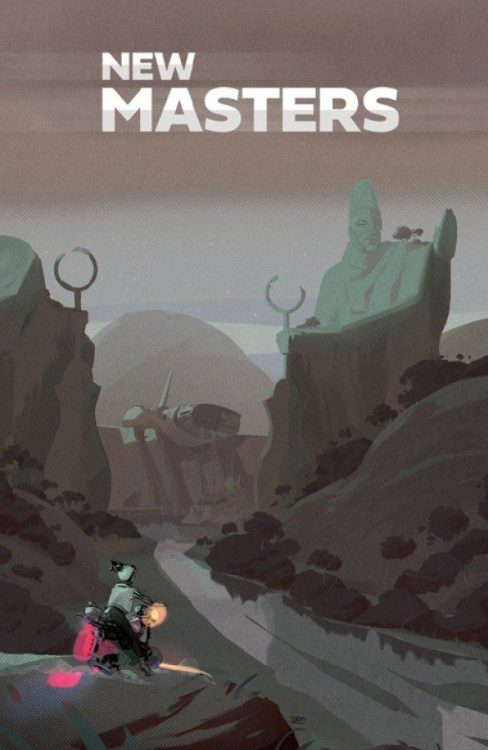
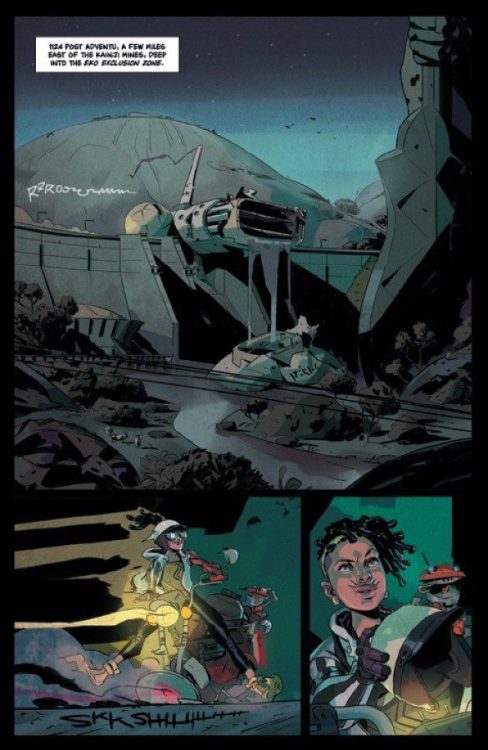
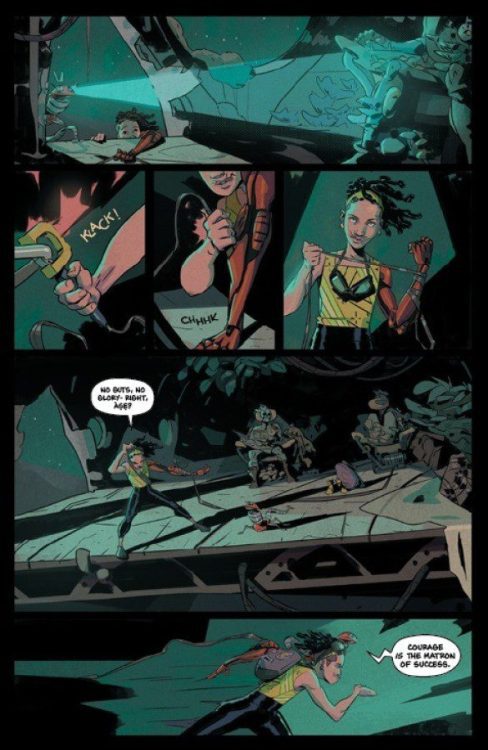
Science fiction comics introducing new visions of the future have to have immensely talented artists to bring these concepts to life. Fortunately, Shof Coker demonstrates he is more than capable of such in New Masters #1. Coker’s detailed and colorful art style brings this vivid vision of far-future West Africa as the Earth’s interplanetary hub to life with stunning energy. Every one of Shof’s character designs, human and alien, are distinct and memorable. Wardrobe design is a mix of futuristic-affluence and ever-present poverty. On one hand, people in upper-tiers of society wear ornate or sleek gowns and professional dress suits. On the other, people still living in the city’s poor outskirts and risk their lives to earn a pittance wear worn tank tops and ripped pants. Each denizen of this city has a different aesthetic to match their role in this society. Shof’s colors highlight this even more. His use of watercolor-esque styling and vibrant, varied tones craft a stunning and definitively futuristic look to the whole comic. I can’t help but compare Shof Coker’s work to to that of Mike Huddleston in Decorum or Nick Dragotta in East Of West. You know this book is doing something right if I’m comparing it to Hickman joints.

Verdict

New Masters #1 is an exciting and sharply crafted opening chapter for this sci-fi comic with a needed new perspective. Shobo Coker’s script expertly balances exciting action with worldbuilding, compelling exposition, and naturalistic dialogue. Shof Coker’s art is distinct, vivid, and stunning, crafting this futuristic vison of an alien-colonized West African metropolis with a flair both familiar and wholly unique. Be sure to grab this new release when it hits shelves on 2-2!


Monkeys Fighting Robots Youtube

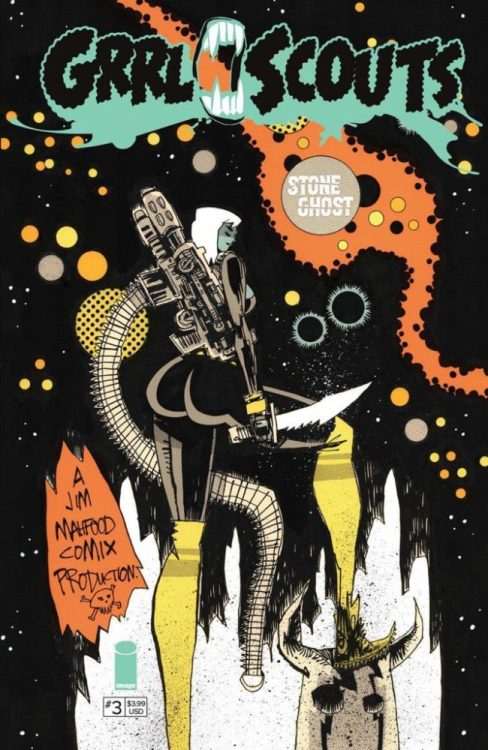
Review: GRRL SCOUTS: STONE GHOST #3 — A Cosmo Stained in Ink

It’s very hard to mistake a Jim Mahfood comic. Much of his comics career has been dedicated to pushing his mixed-media, psychedelic style to further heights of insanity. Grrl Scouts has been with him for most of that career, which is why the series has gone from women smuggling weed to a full-blown space opera. But, when a comic’s this kinetic, and looks this damn good? You just have to get swept away in it. Swim against the current, and you might get hurt.

WRITING

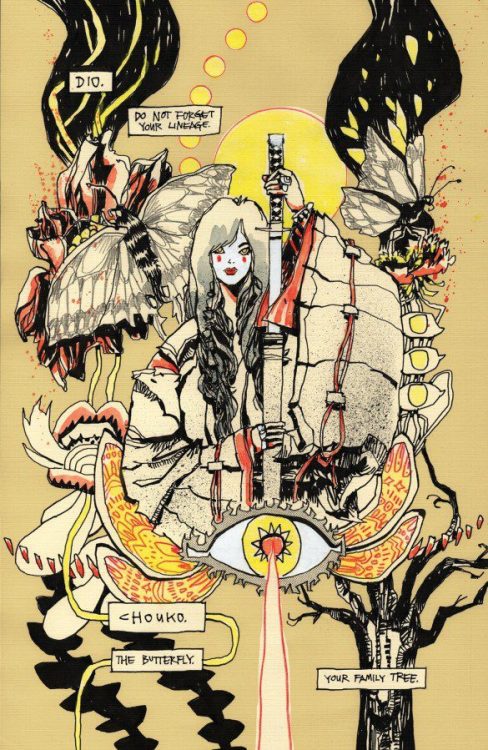
Grrl Scouts: Stone Ghost continues to juggle a bunch of storylines while occasionally hinting at how this story might connect to ones before. The main plotline continues the story of shy newcomer Dio and her offbeat robot companion Natas as they travel the universe to recover the ashes of Dio’s boyfriend. Their search finds them kidnapping a gangster so that they can dream-jump inside his head to find the ultimate location of the ashes, all while Dio attempts to ignore dreams hinting that she might be a descendent of “The Butterfly,” first member and founder of the Grrl Scouts. But meanwhile, Dio’s ghost friend Gordi expresses regret over betraying Dio to a cult worshipping a dark god named “The Teeth,” whose cult leader sends a man with a kettle for a head to hunt down Dio, and… Well, there’s a lot going on. Self-indulgence continues to be the comic’s raison d’etre. The issue opens up with the characters declaring they’ve bought themselves comfortable sweaters off-panel. Why? Well, why not? This is a series, after all, that opened on a spread of band posters and Kevin Smith tapes waaaay back in 1999. Mahfood wants to make something entertaining above all else, and part of how he does that is by throwing all his influences into a blender and setting it to “liquify.”

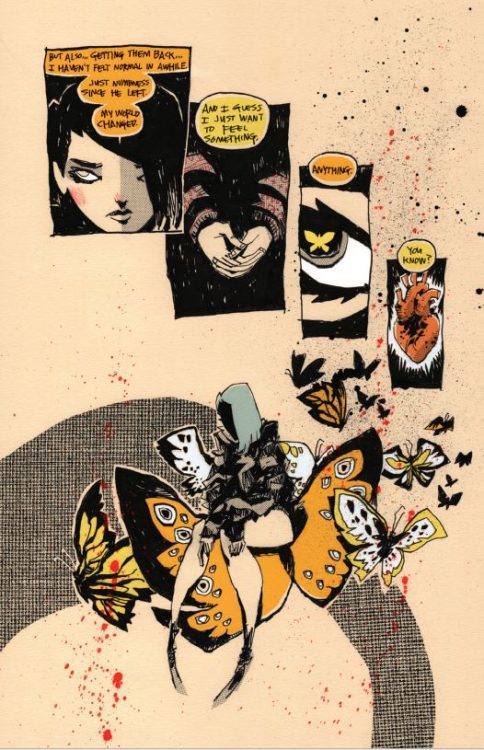
Part of Mahfood throwing what’s on his mind into his comic, however, is a continuing plotline about the main character, Dio, grieving over her boyfriend’s death from brain cancer. Mahfood has been open about this being inspired by the death of a real-life friend, to the point where the character’s last moments with a George Harrison LP are said to mirror the real article. No one would mistake this for a fully somber comic, but death weighs a lot heavier on its mind than in previous outings. This too, is part of carrying the series through decades. While it may be as free-wheeling and kinetic as ever, this is no longer a comic by someone in their twenties.

ART

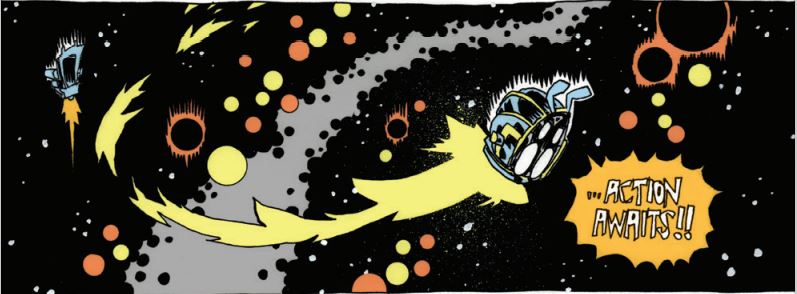
It’s hard to know where to start here. Just take a look at the example pages. Mahfood is a born stylist, and knows just how important presentation can be. What’s new for this comic, however, is that he’s coloring it himself. He goes with a more limited palette, dominated by primary reds, blues, and yellows. Flashbacks to Dio’s boyfriend are presented as scribbles on yellow notepad paper. It’s a book that’s willing to play with layouts, colors, character design… If there’s one thing that’s immediately obvious in this book, it’s that Jim Mahfood had fun drawing it. And that’s one of the biggest reasons this book is worth picking up. It’s a jam session.

VERDICT

Grrl Scouts: Stone Ghost continues the series tradition of each installment somehow looking better than the last, and opens up the series into a wild sci-fi world. Now, more than ever, it’s a vessel for Mahfood to do whatever the hell he wants. I wouldn’t have it any other way.

Monkeys Fighting Robots Youtube

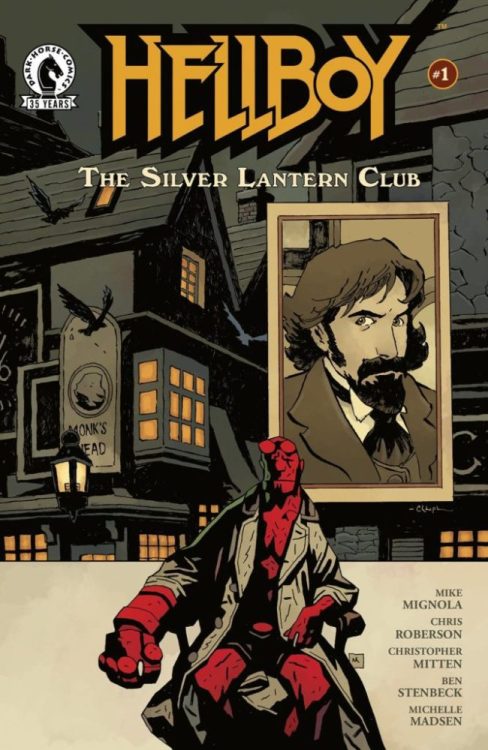
Review: Pub Crawls and Pratfalls in HELLBOY: THE SILVER LANTERN CLUB #4

Hellboy has always, at heart, been a bit of a goof. For as skilled as Mike Mignola is at drawing shadows and quiet moments of contemplation, he’ll just as happily have Hellboy fall over himself, or maybe end up in a pink bathrobe. Which is why it’s nice to see one of the many Mignolaverse titles lean into comedy. For as much awe as the books can treat their own lore with, it’s fun to see Silver Lantern Club treat the supernatural the same way Hellboy himself does: cryptic, commonplace, and very annoying.

WRITING

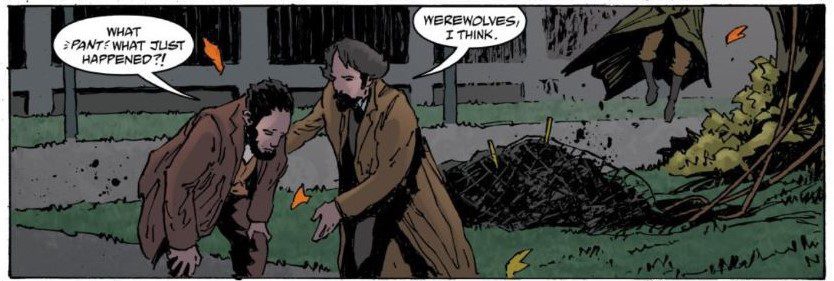
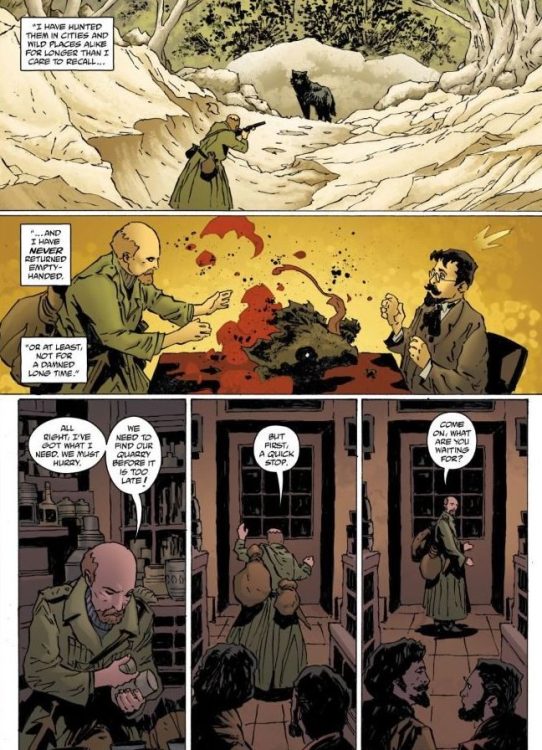
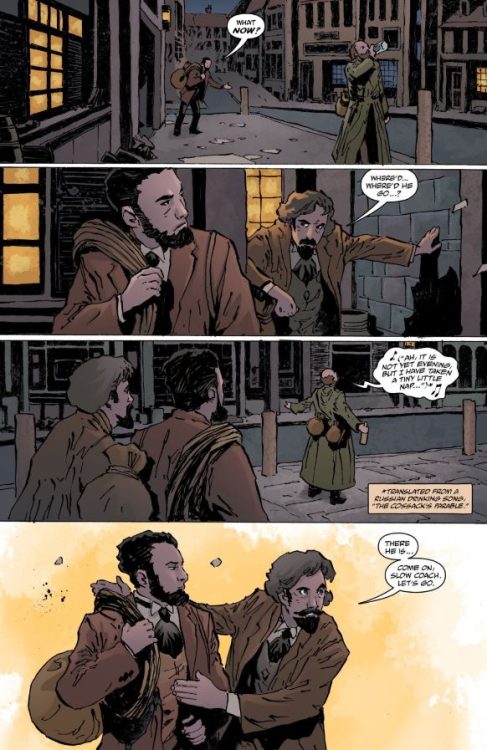
The Mignolaverse’s backbone is built on simple folktales, and Mignola and Chris Roberson have been writing Hellboy stories for quite awhile. “Simple and breezy” is the name of the game here. Framed as a tale being told to Hellboy by former paranormal investigator Simon Bruttenholm, it recounts a time that Simon and fellow investigator Edward Grey were roped into a werewolf hunt. Edward’s friend and immortal werewolf hunter Yad Tovich drags them from pub to pub, insisting that there’s no time to spare in their supernatural hunt — except for one more drink, of course. But Simon and Edward quickly come to realize that the hunter Yad may be a bit more calculating than he lets on. The plot, then, is an opportunity for the characters to bounce off one another as they wander London’s bars at night. The supernatural itself even takes a backseat to the bar-hopping, much of it coming from half-remembered adventures the characters drunkenly explain to one another.

Yad Tovich has shown up in a previous Hellboy story as a more tragic character. But here he sets the tone for the issue, cast as a drink-loving, spirited old man, unreluctant to lead others into trouble. Werewolves have never fit into the Hellboy universe’s aesthetic of crumbling castles and Victorian fashion quite as well as vampires, but they certainly belong with Yad’s rugged, outdoorsman attitude. I have a feeling we’ll be seeing more of him.

ART

Ben Steinbeck and Christopher Mitten share art duties here, with Steinbeck drawing the modern day framing scenes, and Mitten working on the meat of the story. Mitten’s scratchy lines and exaggerated character acting both compliment the story’s chaos. Mitten is obviously having a lot of fun drawing drunk characters, as he makes them sway and stumble and grip streetlamps for support. Meanwhile, Steinbeck’s art, while still cartoony, feels more weighty and grounded. It works as a contrast to Mitten’s more impressionistic style, making the scenes where Simon talks to Hellboy feel more fixed in the present.

Befitting a story less focused on the supernatural, Michelle Madsen’s colors ground the story in earthy browns and greens. The werewolves of the issue fit right into this natural environment, the only supernatural tell being their small, bright-green eyes. It all makes for a believably dingy vision of Victorian London for the protagonists to stumble through.

As for letterer Clem Robins, he’s been working on Hellboy books for quite a while, and maintains his pleasant, handwritten look. It’s a style seen through most Mignolaverse titles, and helps keep all the books with different art styles and tones feel consistent with one another.

VERDICT

Hellboy: The Silver Lantern Club is a series that trades the Mignolaverse’s ghost stories for bar tales. Which means getting to see a more grounded, rowdy side of the universe. It’s a fun change of pace, and makes for a nice, comfortable read. After so many years, it’s nice to see these characters can still hold their liquor.

Monkeys Fighting Robots Youtube

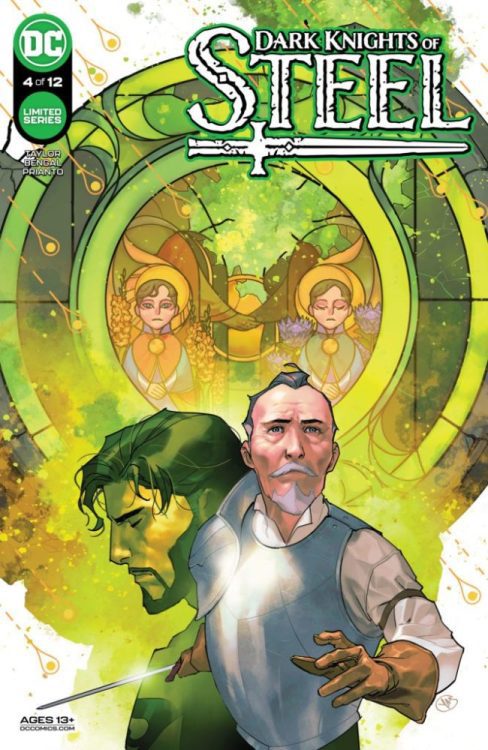
Review: Connecting Dots in DARK KNIGHTS OF STEEL #4

Dark Knights of Steel

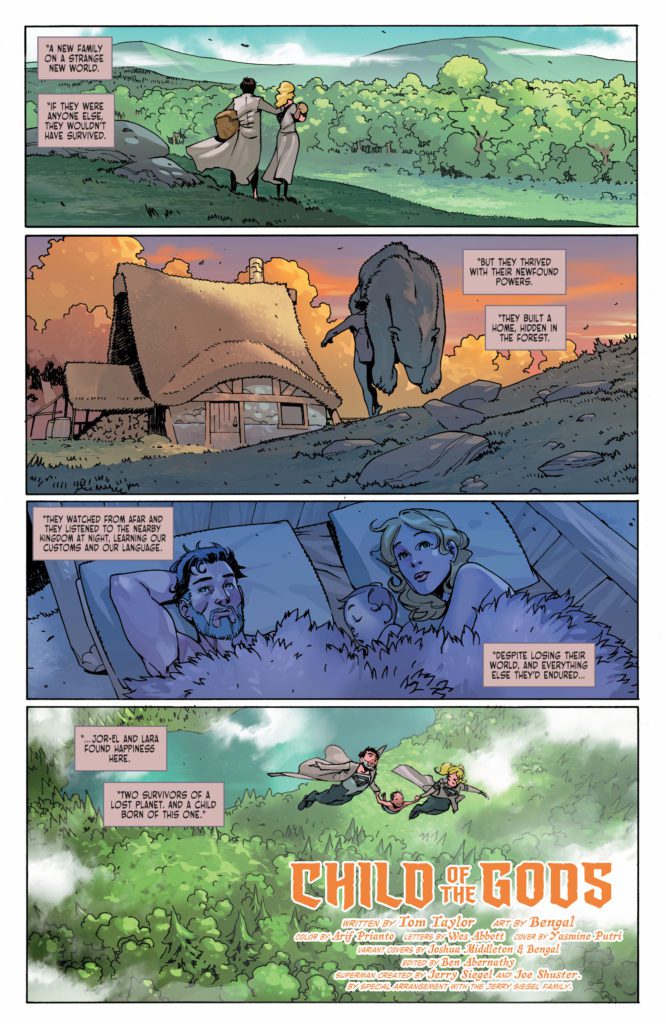
DC Comics’ Dark Knights of Steel #4 answers plenty of questions. Writer Tom Taylor, artist Bengal, colorist Arif Prianto, and letterer Wes Abbott give us a history lesson about this alternate version of the DC Universe. While this issue has plenty of action and drama, it’s the quiet, intimate moments that shine.

Writing

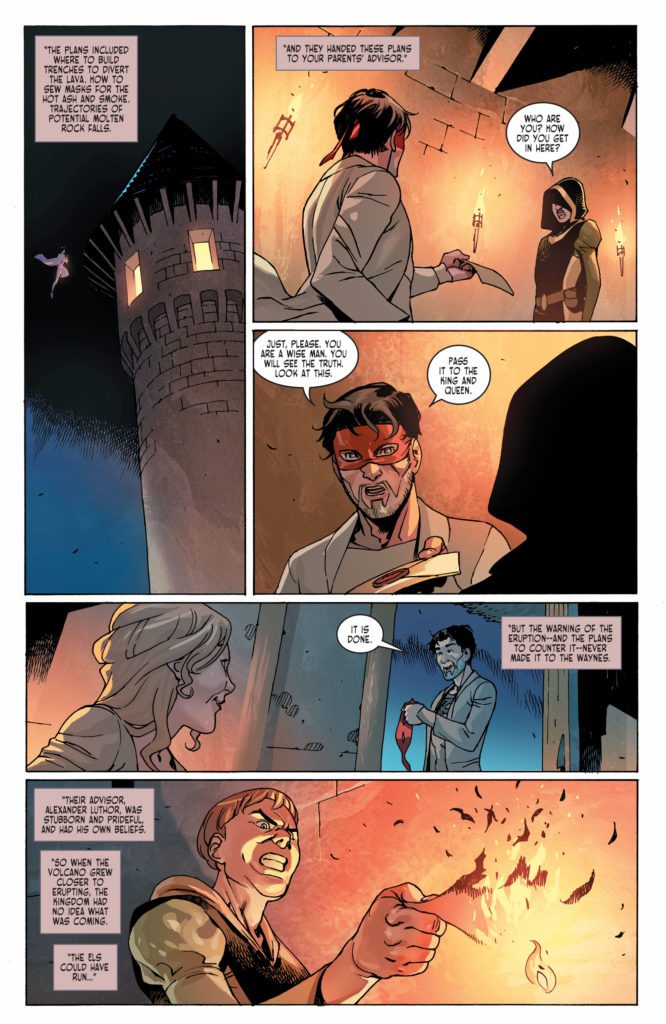
Taylor’s script fills in many of Dark Knights of Steel‘s blanks. But, in some cases, the mystery was more interesting than Taylor’s answers. Taylor takes us through the lives of the Els. With exploding volcanoes, twisted villains, and devastating heartbreak, there’s plenty to talk about in these pages. It often feels that it’s the flashiest moments, however, that fall flat. They blend into the usual chaos of comic book madness. Instead, it’s the details of the friendship between the Waynes and the Els that feel like a breath of fresh air. Taylor takes typical family drama tropes and turns them on their head in heartwarming ways. So while this issue’s action felt run of the mill, their were still stunning moments to witness, like pauses between crashing waves.

Dark Knights of Steel

Art

Bengal similarly struggles with this script. His art is stunning, but it’s jam-packed with emotional sequences. These moments feel melodramatic in a way that robs the story of stakes. When King Jefferson’s eyes crackle with power at the sound of bad news, it feels like too much. And when Jor-El screams at someone for looking to the stars for insight, the outburst is sudden and less terrifying than a calm delivery of the same line. But then, the same moments that work well in the writing work brilliantly in the art as well. When characters hide their faces, or turn away from the reader, it speaks to us more than any expression could. And when the characters are full of a simple happiness, a slight smile on their faces, you can’t help but smile along with them.

Coloring

There’s a wonderful thing that Prianto does with the color scheme of Dark Knights of Steel #4. It quickly becomes clear that certain colors mean specific things. Red is often associated with the power of the Els. Even the red glow of a volcano quickly provides an opportunity for the Els to show their might. Conversely, green is the color of encroaching evil. It’s the color of Kryptonite and death. Right after we see a character undergo a green tinted metamorphosis, we come back to a peaceful scene of celebration. But in the background, there’s a green tarp that’s held up by sticks. It feels as though Prianto is hinting that the danger hasn’t passed, it’s still hiding in the shadows. And with that, even joyful moments in garden paradises can become omens of oncoming doom.

Lettering

Abbott’s approach to lettering in Dark Knights of Steel #4 manages to be both straightforward and fun. His sound effects mimic what’s happening in the scene. The sound of a fist breaking a rock into bits looks cracked and like it’s splitting into pieces. The noise of heat vision piercing the air is written in a font that looks like it’s made up of lasers. The quiet snapping of wood is shown in small, jagged lettering. Abbott blends his letters into the story, but if you stop to notice them you see how they’re full of a playful flair.


DC Comics’ Dark Knights of Steel #4 is full of punchy action that ultimately feels quite forgettable. But in the margins of these scenes, in the respites from the chaos and drama, there are beautiful moments that will stick with you. Pick up Dark Knights of Steel #4, out from DC Comics February 1st, at a comic shop near you.

Monkeys Fighting Robots Youtube

Review: A Blast Of Chinese Mythology In MONKEY PRINCE #1

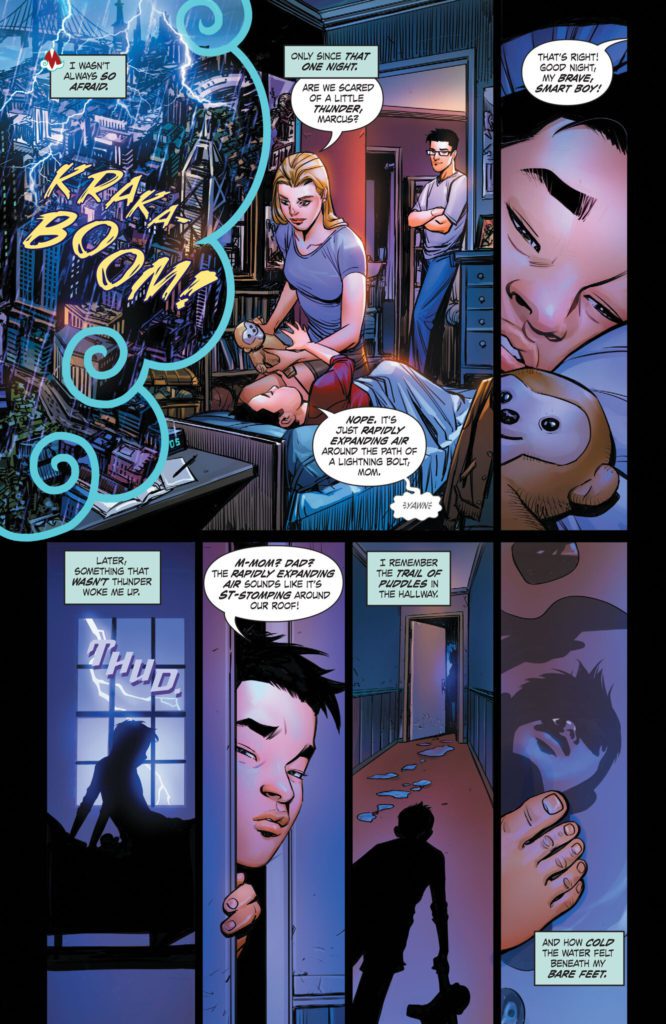
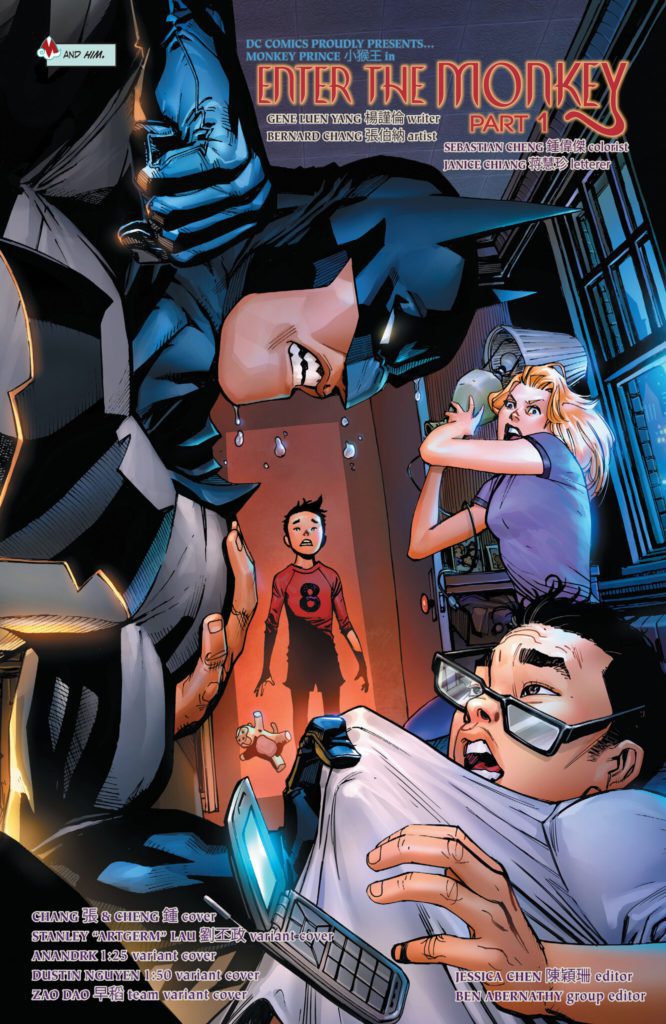
From writer Gene Luen Yang (Dragon Hoops, Superman Smashes The Klan) and artist Bernard Chang comes an ancient legend arriving in the DC universe with Monkey Prince #1. Featuring colors by Sebastian Cheng and letters from Janice Chiang, this opening issue is a gorgeous, wildly fun, and inventive take on one of the oldest stories in literature. While it does feel a tad rushed and throws a lot at the reader very quickly, this first chapter in an exciting ride I’m looking forward to seeing more of.

“Introducing the newest hero in the DCU, the great sage, equal to the heavens, better than his predecessor the legendary Monkey King, even better than the Justice League—and definitely the Teen Titans—(actually, all the heroes combined), everyone put your hands together for…the Monkey Prince! Marcus Sun moves around a lot because his adoptive parents are freelance henchpeople, so this month he finds himself as the new kid at Gotham City High School, where a mysterious man with pig features asks Marcus to walk through a water curtain to reveal himself as who Marcus really is…someone who has adventured through The Journey to the West, can transform into 72 different formations, can clone himself using his hairs, and is called…the Monkey Prince!”

Writing & Plot

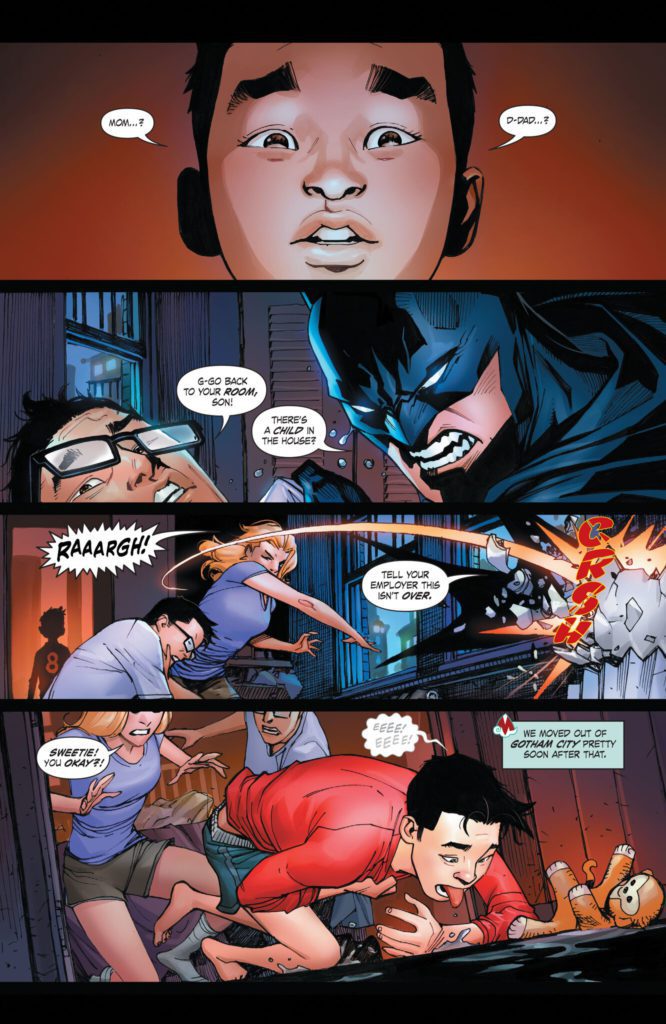
Gene Luen Yang‘s script for Monkey Prince #1 is full of an infectious enthusiasm that’s hard not to love. There’s an almost Saturday morning cartoon type of energy to this comic, and I found myself smiling through much of the reading experience. We meet Marcus Sun as a high schooler traumatized by his first-hand experience with an angry superhero (due to the fact that his parents are for-hire goons). Rather suddenly, we then get dipped into the mythical and magical hijinks of him becoming the Monkey Prince, heir to the power of the Monkey King. Yes, that Monkey King. I won’t get into any more details at risk of spoilers, but if you’ve ever read or are familiar with Journey To The West (or ever watched Dragonball), then this issue will doubtless be a treat.

Yang’s utilization of the classic mythical property is inspired, and it never gets in the way of the main plot. There’s almost no exposition, so the pacing stays lightning-fast and new developments come very quickly. This method fits the tone comic very well, but it can cause a bit of whiplash. Quite a lot gets thrown at the reader very quickly, so it can sometimes take a moment to gather what exactly is happening. This issue is saved by just how much of a joy this comic is to read. The character reveals are surprising and emotionally satisfying (whether that emotion be fear or delight), and the plot is an absolute joy to behold. This is the most outright fun I’ve had with a DC comic in recent memory.

Art Direction

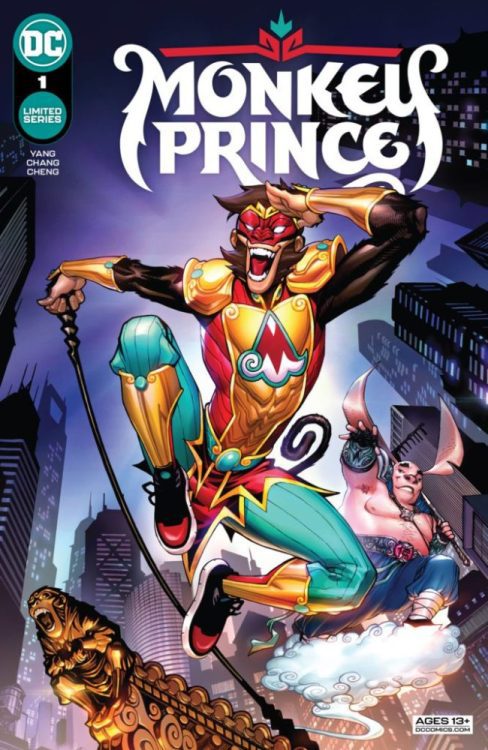
The amount of exuberant energy the script for Monkey Prince #1 requires would need an especially talented artist to pull it off. Fortunately, Bernard Chang is on hand to deliver. His immensely detailed pencils and tight direction create a reading experience that is wickedly exciting to follow, and easy for a reader to fall into. Chang’s designs for characters new and old are intricately designed and animated. The classics are easy to recognize, and the new ones are sure to stay in your mind. Every character has unique features and is easy to recognize instantaneously. The design for the Monkey Prince himself is outwardly simple, yet obvious that Chang put a ton of work into. The character’s costume design is a perfect blend of mythical royalty and a modern superhero. Chang puts a ton of effort into placing these mythical beings and settings into the DC universe and making it feel seamless.

As phenomenal as Bernard Chang’s work is, it wouldn’t be nearly as effective as it is without Sebastian Cheng’s colors. His vivid, hi-fidelity palette pulls the reader into this read with a style that matches the energy of the pencils and script. Every panel leaps off of the page thanks to Cheng’s work here. The lettering from Janice Chiang is sharp and well-designed, with expressive fonts and effective SFX lettering that makes itself known but still stays out of the way. This is a stunning comic book from front to back, with an absolutely killer visual team.

Verdict

Monkey Prince #1 is an immensely fun new take on an old mythology that blends seamlessly into the DC universe. Gene Luen Yang’s script, while a bit rushed-feeling, creatively introduces a cast of iconic characters and stories into another universe of storied characters and does it with a blast of narrative energy. The visuals from Bernard Chang and Sebastian Cheng are stunning and brilliantly directed, making this one of the most fun and gorgeous DC comics in recent memory. Be sure to grab this debut issue when it hits shelves on 2-1!

Monkeys Fighting Robots Youtube