Home Blog Page 468

Review: Controlled Mayhem In STRONGHOLD #3

Monkeys Fighting Robots

Conspiracies; Alien Invaders; Superhero actions; Stronghold #3 from AfterShock Comics has it all. Continuing to dig into the ‘Alien among us’ concept, the creators pull out all the stops and expand their world view.

Stronghold keeps getting bigger and bigger, and going to places the reader would not expect.

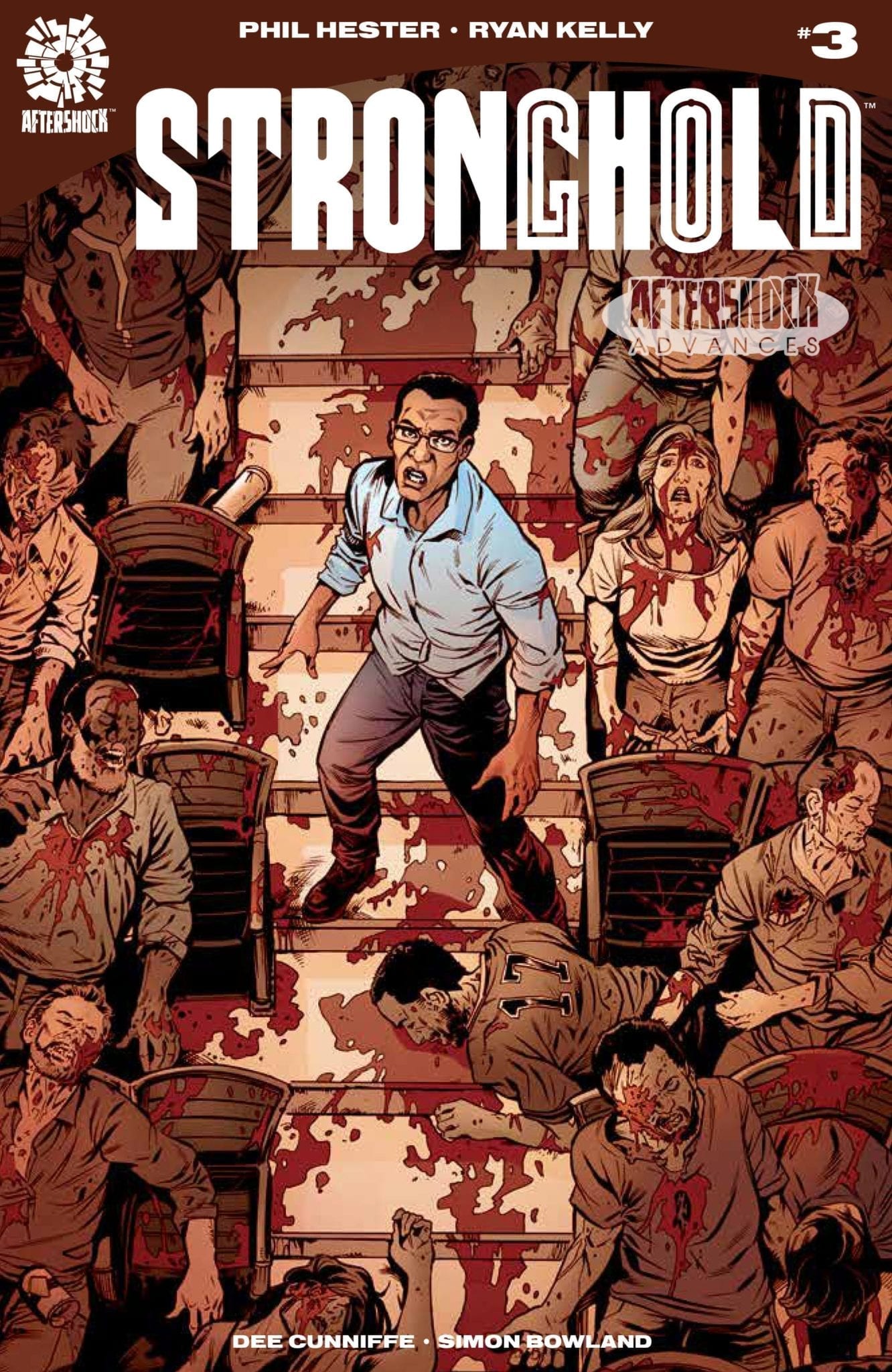
cover art
Stronghold #3 Credit: AfterShock Comics

Writing/Story

After the massacre at the stadium, the Stronghold rally to control the situation and keep the Primacy out of the action. But the best laid plans don’t stand a chance against the ingenuity of Michael and his mission to find Claire.

With his emerging new powers and a villain to confront, how will Michael react to the deaths of so many innocent people?

Phil Hester opens this issue with a bang. It’s big and it’s bold. He does not apologise from the harshness of the scene but at the same time he does not wallow in the violence. The Adversary is a larger than life character and an obvious villain but one of the brilliant aspects of Hester’s script is that, as the story unfolds, the villain becomes sympathetic. The obvious black and white elements of the narrative are quickly muddied, just as in previous issues, so that the reader is not sure who or what to believe.

Hester creates a world where the reader instantly wants to root for the superhero character but he then makes the reader question this choice. What do we know about him? Where does he come from? Why are the Stronghold so obsessed with controlling his environment? All of these questions are raised and, to a certain point, Hester leaves the answers up to the reader.

Stronghold is about character’s getting manipulated and the consequences of that. It is also a comment on how mainstream comic’s handle their hero’s. So often superhero stories are straightforward, the reader knows who to stand behind even when things go awry. There is comfort in them, knowing who the hero is. With Stronghold Hester is challenging that conception. He uses elements from the format to create a world of grey areas. There is a large element of control and manipulation by various characters throughout the comic making this relevant to today’s world.

If comics like Superman and Captain American represented the need for Hope in the 1940’s then Stronghold represents the need for information in the modern world. It highlights the dangers of accepting everything at face value but also the reasons why it is easier or more appealing to do this.

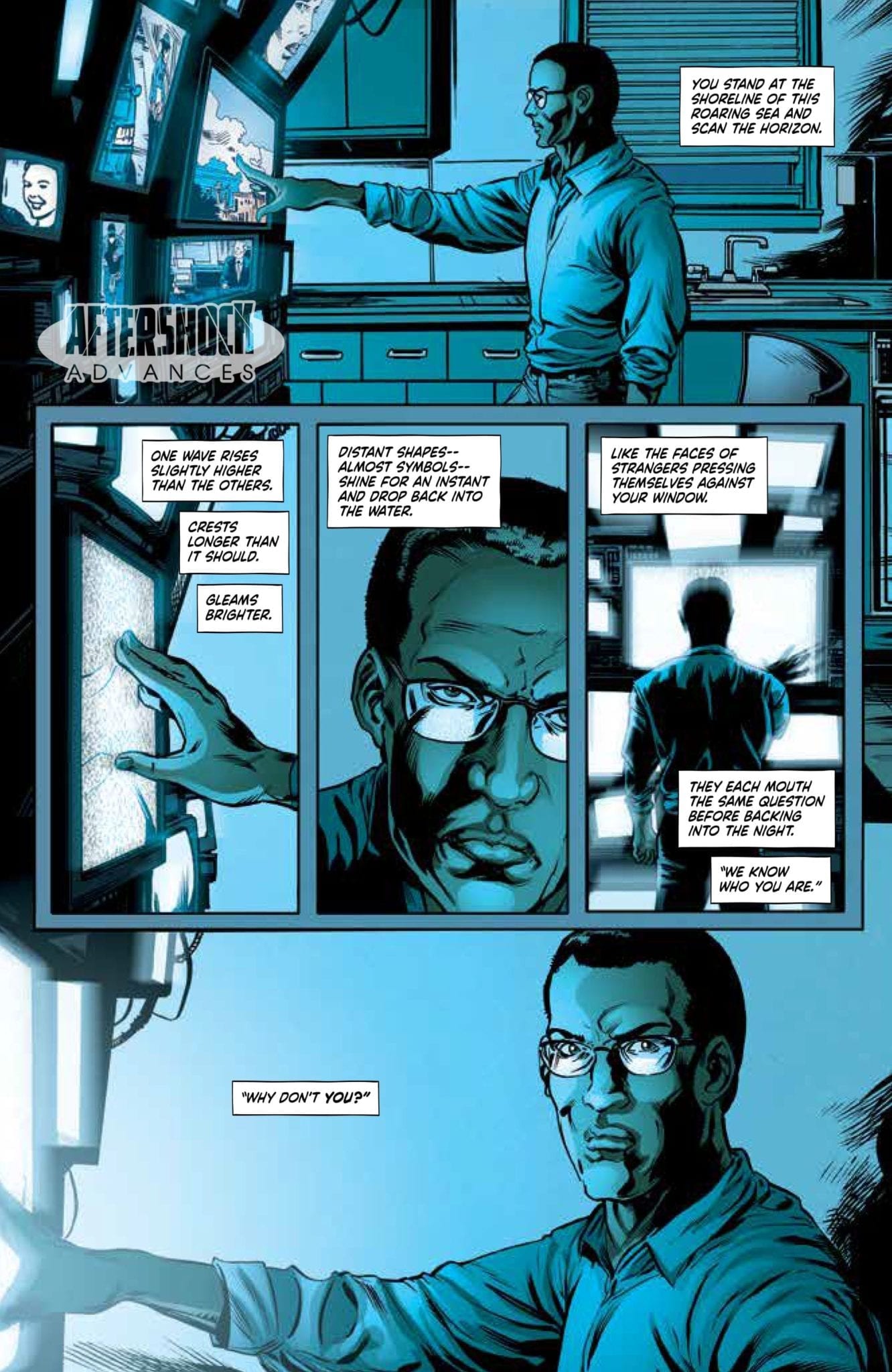
Stronghold interior art
Stronghold #3 Credit: AfterShock Comics

Art

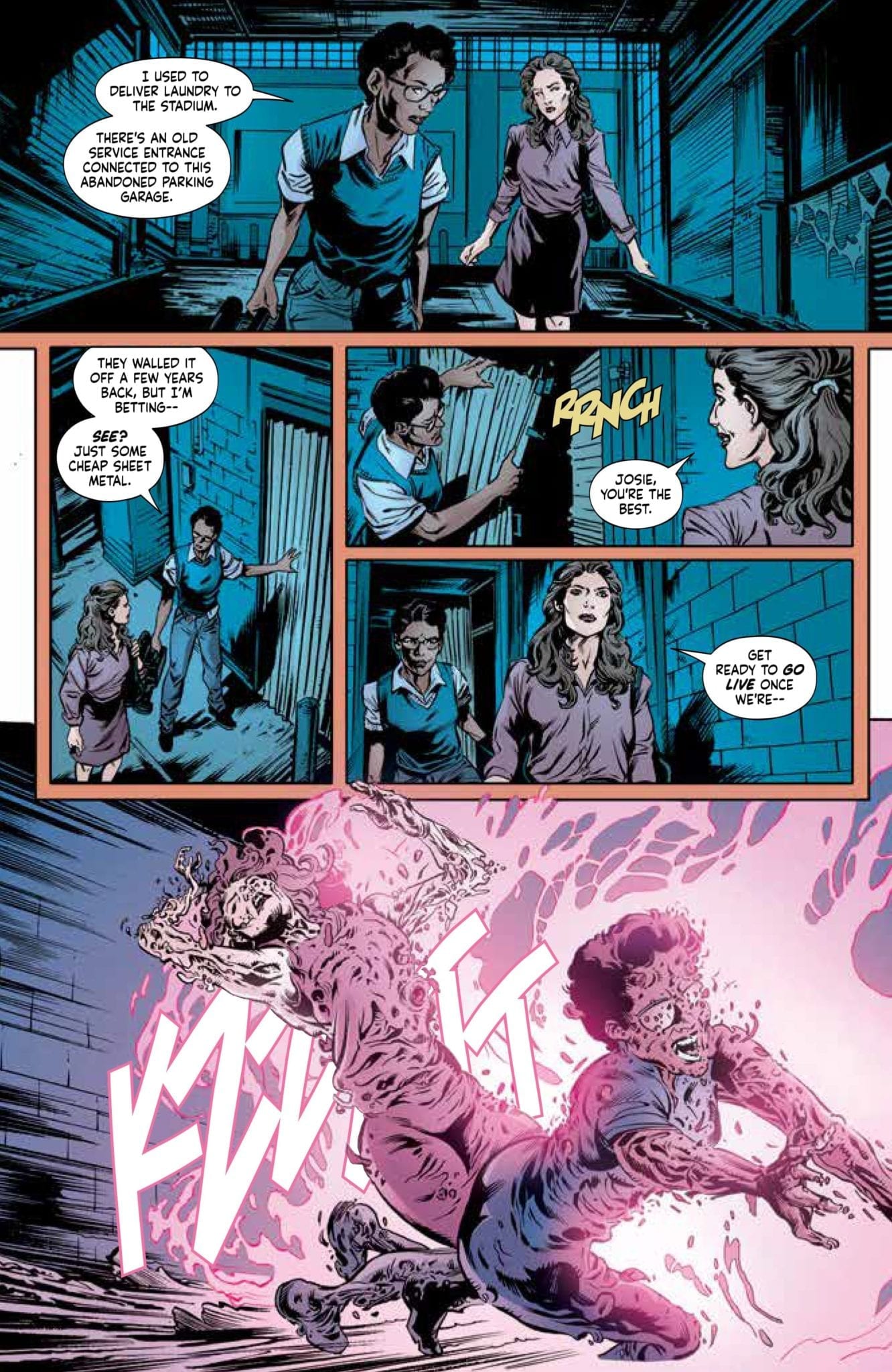
Ryan Kelly has a firm grasp on a sense of the dramatic. Each of the pages of Stronghold is packed with bold images and dynamic composition. Kelly creates a cinematic staging of the scenes using the panels like a camera, following the action and focusing on characters in slow zoom like movement. The intensity of a moment is heightened by the pacing in the panels: a slow turn followed by a stepped close up, for example, produces a menacing moment and enhances the threatening behaviour.

There is a tone set by the coloring throughout Stronghold. For a large part of the comic, Dee Cunniffe uses mostly a blue hue across the pages. This reflects the twilight setting for much of the comic but also makes the reader uncomfortable, as it portrays a coldness penetrating the narrative. It also allows Cunniffe to highlight one element of a scene and make it easy to follow across the panels.

Simon Bowland excels in giving the speech some punch. He spreads the speech across linked balloons to create a rhythm which he punctuates with the use of bold text. The text directs the way that the reader digests the images around it, giving moments set beats and a reading pattern. This in turn dictates the pace of each page and the transition between panels. The gutters work to identify the tone of a scene but it is Bowland’s lettering that gives each page it’s pace.

interior art work
Stronghold #3 Credit: AfterShock Comics

Conclusion

Stronghold has layers. There are stories and concepts over lapping and weaving together to form a complex and challenging work of fiction. The art work gives the narrative depth and tone. It also packs an emotional punch. There are disturbing scenes and touching scenes, each containing the same intensity.

AfterShock have produced some outstanding comics in the last few years and Stronghold is one of their best. It delves into the ethos of modern superhero comics to produce a piece of work that is both part of the mainstream and a critique of it at the same time.
Monkeys Fighting Robots Youtube

Review: STAR TREK THE Q CONFLICT #3 Continues To Plod On

Monkeys Fighting Robots

The Star Trek franchise is currently experiencing a surge in popularity thanks to the successful ST: Discovery show on Netflix and the constant reports of various potential spin offs. So this is a prime opportunity for IDW Publishing to push it’s Start Trek comics, and what better way than with a universal cross over event.

Featuring the crews of two Enterprise’s, Voyager and the Defiant along with some of the most powerful beings in the franchise’s history, Star Trek The Q Conflict is an epic undertaking.

interior art
Star Trek The Q Conflict #3 Credit: IDW Publishing

Writing/Story

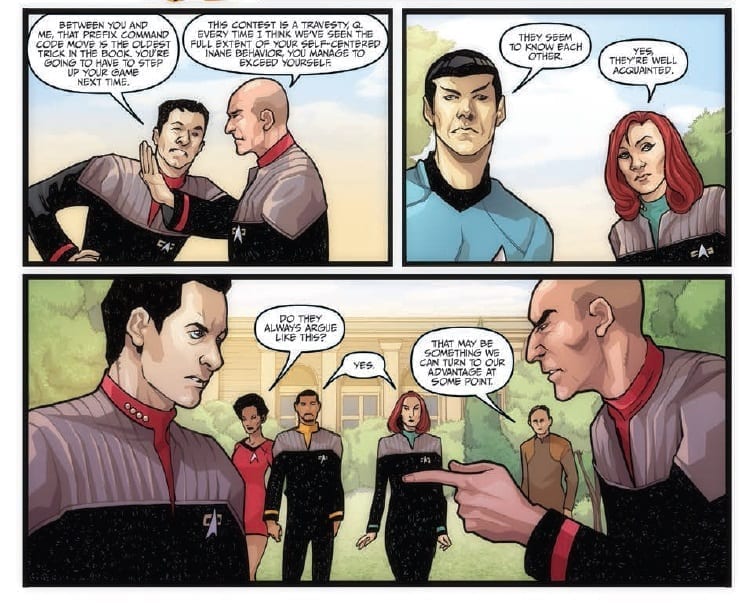
Continuing the interstellar game set by Q and the other god-like beings, the federation crews are pushed to their limits. After an initial loss in the first game, Q argues with Captain Picard over the importance of the situation.

Meanwhile the other captains take some time to dig for information about what is really going on.

All too soon the second game begins and someone bends the rules to add an element of danger to the proceedings.

With such a large cast writers Scott and David Tipton have to pick and choose the characters carefully for each scene. They have an advantage in that most readers will know the characters quite well: very few none Start Trek fans will be reading this comic. But this also leads to very little character building within the narrative. The characters are there to play a given part and nothing more, like the survivors in a 1970’s disaster movie who each have a single skill to help plot move forward but nothing more.

There is some great dialogue between a number of the characters, especially Picard and Q who the Tipton’s have got spot on. Unfortunately, a lot of the speech is exposition with no real character voice. Large sections of the dialogue could be spoken by any of the cast. With all of this exposition you would expect that the narrative to move on at a fast pace however, apart from the constant references to the war Q is raging, there is nothing new added to the overriding story.

Just like last issue, the game that the crews are forced to play is barely entertaining and over before it’s had a chance to get interesting. The whole escapade feels like an opportunity missed.

Interior art
Star Trek The Q Conflict #3 Credit: IDW Publishing

Art

This comic’s saving grace is the artwork. The strong inking by Ellsabetta D’Amico defines the characters wonderfully giving them a presence on the page. There is a clearly defined foreground focusing the reader’s attention on the crew and the ships. The backgrounds are mere color washes that serve no purpose giving the entire story an air of unreality. This works well for The Q Conflict because much of the story is set in environments created by the God like beings.

Alessandra Alexakis’ color work successfully differentiates the foreground from the background. The cast have a uniformity to them but he still manages to separate each of the different crews, allowing the reader to instantly recognise who is who. Part of this is down to the pencil work and lay out design by David Messina who creates striking likenesses of the characters, even from a distance.

Unlike the rather mundane plot, the art has some expressive features and the cast display some emotional reactions to the world around them. There is an element of dynamism in the space battle but not enough plot for the art work to really shine.

Due to the amount of dialogue Neil Uyetake has a difficult time positioning the lettering in exciting or effective ways; there are moment’s where it feels that he has had to fill a space just to get the speech in. He does, however, employ a number of clever balloon framing techniques to emphasis the loudness of the speech. He presents whispers in the background and shouts in the foreground in subtly different ways that the reader subconsciously picks up.

cover art
Star Trek The Q Conflict #3 Credit: IDW Publishing

Conclusion

Star Trek The Q Conflict has a wonderful premise at the heart of it but because of the cast, or writers, insistence on no fighting there is a distinct lack of conflict. At most there is some heated bickering but this is not enough to make the comic a compelling read. Most of this issue is a half time locker room pep talk. And when the action does start it is over too quickly, losing any sense of threat that the situation may have held.

Overall this comic has more in common with the original 1960’s episodes of Star Trek than it does any of the newer incarnations. The other federation cast member’s seem out of place and lost in a narrative not suited to their characterisations.

The best way to sum The Q Conflict up is to quote Trelane from this very issue:

“Nothing is happening! This isn’t combat or strategy! There’s no stakes! I’m not feeling the excitement!”

Monkeys Fighting Robots Youtube

Comics On Kickstarter: Brian Crowley’s HAMSTER RAGE

Monkeys Fighting Robots

COMICS ON KICKSTARTER is a new series we are starting at Monkeys Fighting Robots highlighting comic book Kickstarter campaigns. According to Kickstarter, $15.3 million was pledged to successfully funded comic book projects in 2018, up 27% from 2017. If you are working on a comic book related Kickstarter campaign, send us your information at info@monkeysfightingrobots.com.

What the heck is HAMSTER RAGE?

Comics On Kickstarter: Brian Crowley's HAMSTER RAGE

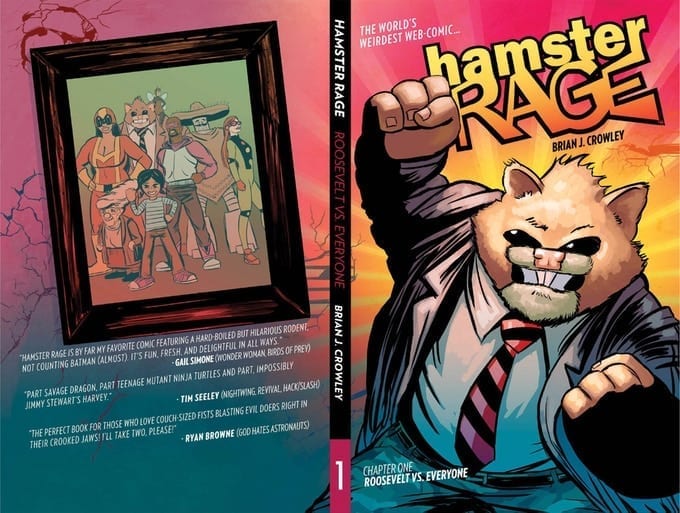
Brian Crowley’s Hamster Rage is the story of MegaBabe, leader of the super team Allied Force, and Roosevelt, her childhood pet hamster who’s now over eight feet tall, super-powered and has the mind of a hyperactive child.

The 160-page graphic novel collects the first four issues and has pinups and covers by Gene Ha, Tim Seeley, Tony Akins, Steve Seeley, Jenny Frison, Hilary Barta, Jim Terry, Ryan Browne, and Geof Darrow.

Watch the Kickstarter video for HAMSTER RAGE:

One of the things that potential backers look for on Kickstarter is a completed project, and the Ringling School of Art and Design graduate has said, Hamster Rage Chapter 1: Roosevelt VS Everyone is complete. The funds collected will be purely for printing and shipping the book to backers. Click on the widget below for more information and to grab yourself a copy.


What do you think? Is this the type of comic book project you want to see more of? Comment below with your thoughts.

Monkeys Fighting Robots Youtube

Review: Changing The Game In BUFFY THE VAMPIRE SLAYER #4

Monkeys Fighting Robots

Issue 4 of Buffy The Vampire Slayer marks the end of the first story arc in BOOM! Studios new Buffy-verse. With the announcement of the surprise Angel comic, also out this week, certain elements of the plot may have been given away. Or have they?

The element of surprise has been an integral part of this series so far with the creators mixing up what the fans know about the characters and their relationships with each other. Nudging a character slightly to create a different dynamic has given this version of Buffy an edge over other tie-in comics in the franchise and this issue is no different.

cover art
Buffy The Vampire Slayer #4 Credit: BOOM! Studios

Writing/Story

In this issue Jordie Bellaire has slowed the plot down, producing a character driven issue. The emphasis of the narrative is on how the lives of the central characters have been affected by the appearance of the Slayer in Sunnydale.

It open’s with Buffy and the Scooby gang training. Giles warns of the dangers of ahead, referencing Drusilla’s appearance in previous issues, and then gives Buffy the night off to relax before the coming battle.

This element of the plot allows Bellaire to focus the story on Buffy and her friends. She is able to show them as the teenagers that they were before the craziness began and how they interacted with each other. It also allows for the narrative to compare who they were before with who they are now. Bellaire does this by highlighting the small changes in their interactions; for example, the moment when Xander is late and Willow expresses concern because he is never late.

The slow pace of the comic relaxes the readers and allows Bellaire to build up the momentum leading into the final pages. She lulls the reader into a false sense of security and then slowly takes that security aware. It is something that the TV show did really well and Bellaire does it beautifully here. Although the changes made earlier in the run to one of the characters may lead the reader to guess what is going to happen, or at least who it will happen to.

Buffy Page Art
Buffy The Vampire Slayer #4 Credit: BOOM! Studios

Art

As ever the art work is brilliant. Dan Mora lays out each page with a simple goal in mind; relaying the story, and then fills each panel with dynamic images.

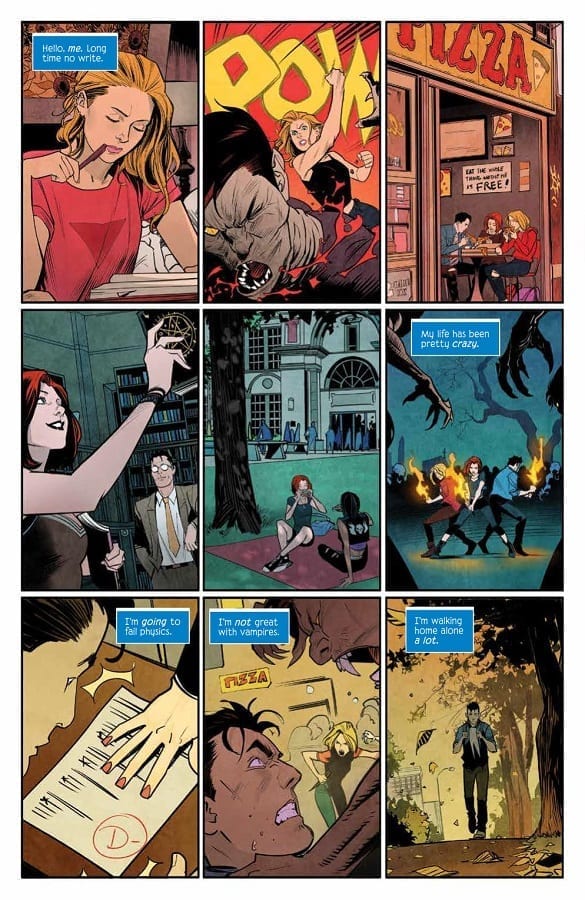
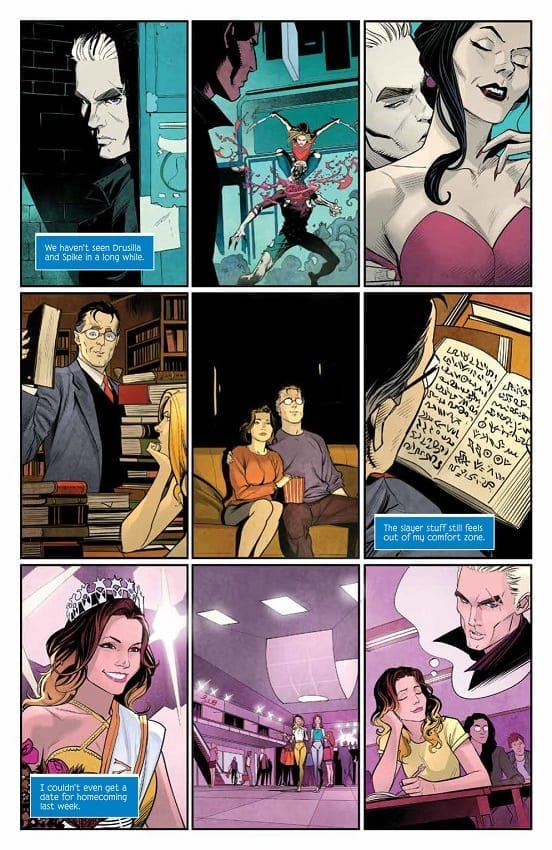
The opening pages are an example of how good Mora is at expressing character. He employs the 9 panel grid and dedicates one row of three panels to each central character. Then each panel represents a different aspect of the character; sometimes by portraying an act which has already happened in the comic or by glimpsing something that hasn’t been explained. Each three panel row adds depth to each character so that the opening two pages contain a plethora of information.

Raul Angulo gives each scene a different color theme to distinguish each one and set the tone for the scene. The school and home scenes are fairly muted with Buffy standing out in vibrant clothing because she is the focus of those scenes.

A more unnerving color palette is then used as the story progresses and a contrast between panels on the same page picks up the mood of the characters, forcing the reader to subconsciously compare them. There is one moment later in the comic when Angulo shifts the shading tone to a deep red just on one character and instantly the reader knows the danger this character is in. It is simple but extremely effective.

The lettering, by Ed Dukeshire, manages to capture the Buffy-speak that Bellaire employs throughout. The inflections and emphasis by the characters on words and phrases is perfectly captured by Dukeshire’s work. He also creates an ambiguity with the main caption boxes making the reader double guess who is speaking. Usually this would be a bad thing but in this instance it helps to keep the narrative moving while retaining an element of mystery.

One of the area’s where Dukeshire excels is in the texting conversations. He creates believable mobile screens with the text laid out in a realistic manner. As the character tilts the mobile phone, the text is also tilted to match. Just like the straightforwardness of some of the coloring, this obvious lettering technique makes the world of difference to the readability of the comic.

Buffy page Art
Buffy The Vampire Slayer #4 Credit: BOOM! Studios

Conclusion

This issue of Buffy The Vampire Slayer is both a wind down from the opening excitement and set up for the nightmare to come. The entire creative team painstakingly make so much of the action mundane and normal so that the reader can get to know the characters better. It also helps to set the right tone for the end of the issue. From the opening there is no indication of how the narrative will progress which is perfect for this type of story.

This first arc of Buffy The Vampire Slayer has been near perfect from start to finish. Bellaire has captured the essence of the characters and given them her own spin. In turn the entire art team have all pulled out their best work to make sure that this comic would be a hit.

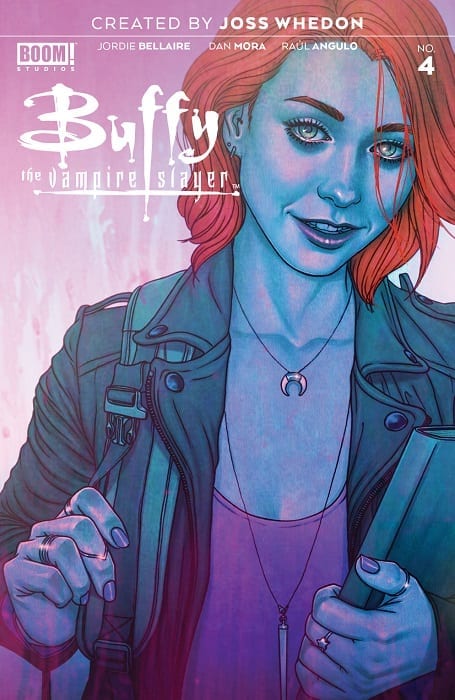
Alternative cover
Buffy The Vampire Slayer #4 Alternative Cover Art
Monkeys Fighting Robots Youtube

INTERVIEW: Composer Cormac Bluestone Talks The Nightman Cometh And The Cool Kids

The Cool Kids is an old-school, multi-camera sitcom on FOX and co-created by Charlie Day (It’s Always Sunny In Philadelphia) about four seniors living at a retirement home who act more like high schoolers than wizened elder folk and lacing the hilarity with the right music is composer, Cormac Bluestone.

The Cool Kids stars comedy legends David Alan Grier (The Big Sick), Martin Mull (A Futile and Stupid Gesture), Leslie Jordan (American Horror Story: Roanoke), and Vicki Lawrence (Hollywood Squares) who all live at Shady Meadows Retirement Community. Grier is Hank Henderson, the de facto leader of a group of four, however, when one of their clique passes on, a new member fills the slot whether Hank likes it or not. That new member is Margaret Flynn played by Vicki Lawrence who is a firebrand of a woman that ruffles feathers but is clearly meant to be part of this quartet.

PopAxiom had the chance to talk to Cormac Bluestone and pick his brain about making music for The Cool Kids, It’s Always Sunny In Philadelphia and the power of workflow.

Growing Up With Music

Cormac started playing the violin at three, switched to the piano at twelve, then guitar all the way through college “As long as I can remember I’ve been playing music.”

Movies are ubiquitous “I always had a love for music in film and television, so I was fortunate to end up in a place I wanted to be.”

Growing up in the 80s Cormac was exposed to electronic music early on by a sixth-grade teacher “I was writing music in DOS.” Cormac adds “I love tech.”

Cormac is a composer but don’t be fooled, perusing his IMDB will reveal credits as an actor, producer, and cinematographer “I really wanted to be a part of this industry somehow. But editing, camera work, all that stuff, it all kind of adds up to the same idea in today’s digital age and the way things work.”

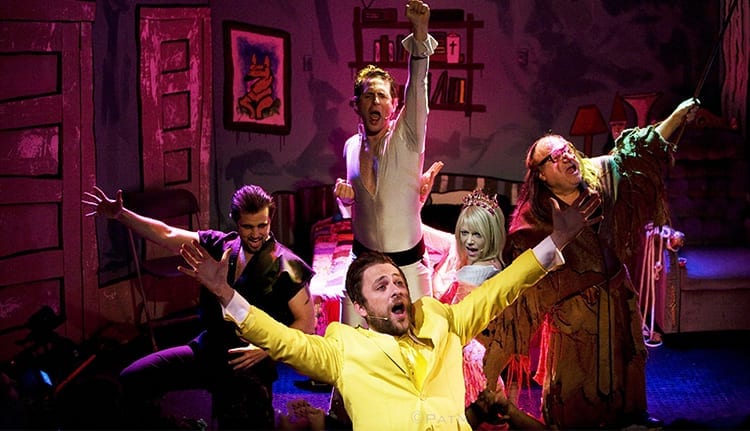
nightman-always sunny-charlie day

The Nightman Cometh

Cormac’s journey to The Cool Kids started with a beloved FX comedy “I have to say my first real break was It’s Always Sunny In Philadelphia and working on ‘The Nightman Cometh.’”

Cormac continues “That was my first real big TV job. I had been writing musical short one-acts for years in New York City. Me and my friends who had a theatre company would perform them in bars.”

The composer continues “The more we did, the more I thought, ‘how do we make a bigger show?’” And then came a move out west and one important Day “In L.A., we staged the ‘best-of-the-best’ and Charlie Day came to see it.”

Making The Cool Kids

What was Cormac’s first reaction to reading the script for The Cool Kids? “I loved it. I grew up in the 80s with multi-cam sitcoms, so I was so excited to get to work on a show like that. And then, you have the cast, plus guests like Jamie Farr (MASH).”

The Cool Kids is co-created by Charlie Day who shows up in a cameo in the pilot. Was it Cormac’s connection to Day that got him the gig? “Absolutely.”

Time is a significant factor in life, and when it comes to network sitcoms, there is a wildly varying amount of it “The turnaround really depends. Sometimes I get as long as a week to do an episode and sometimes it’s under 24 hours.”

But Cormac admits “Personally, I welcome the short deadlines. I’m about workflow.”

From the onset “Charlie and Paul Fruchbom who created the show, they were very clear on what they wanted. I think that’s what our audience has responded to. They know what they are going to get, but also know they’re going to be surprised.”

Musicals + Video Games

You cannot do an interview with Cormac and ignore an interesting list on his credits — Assassin’s Creed: The Musical “That was such a gem. A friend of mine was working for the YouTube channel Machinima. My friend asked me if I could do some music for this for the release of the game. The lyrics were perfect. So I made a couple tracks. The director they hired turned out to be an old friend of mine. We had some amazing singers.”

About making the short film, Cormac says, “It was an incredible experience.”

Of course, talk of video games begs the question, is Cormac a gamer? “I’ve played every Halo, every Madden. But I don’t get a lot of time to play these days.”

Cormac talks about the influence of video game music “But video game music …. today, it’s so much more cinematic too. Something like Red Dead Redemption is so incredible.”

Making Music

For Cormac, there is one crucial aspect to making music for him “I think you gotta start with a workflow. How is this going to get done? How do we do it in a way that’s comfortable?”

A part of the score-making workflow often includes temp tracks “My point of view on temp tracks is that I’ve been lucky. Some of the editors and producers I work with pick great temps.”

Cormac also thinks “But that’s a challenge too because if you have a great temp, then you have to ask ‘what can I bring to this?’”

However, he doesn’t see this as a negative “It’s a fun part of figuring that out. What is it about this piece of music that is appealing? And then how can I deliver something as good or better?”

Continuing the talk on temp tracks, there’s a reality to making movies and TV “It’s hard to edit without music.” So temp tracks are necessary, but not necessarily evil as they are sometimes portrayed.

For Cormac “The only real negative is if a project sits too long and people fall in love with a temp. But TV moves so fast these days it’s hard for that to happen.”

In regards to his current show “The Cool Kids, we did 22 episodes this season, and the temp tracks at this point are all my music from before.”

Wrapping Up

Who would you say is part of your musical DNA? “Oh, man.”

Cormac begins “I have to say Mark Mothersbaugh (Thor: Ragnarok).”

Cormac delves deeper into his first answer “[Mothersbaugh] Came from one of the biggest 80s acts — Devo. His versatility. But when I saw Rushmore in theaters, his instrumentation on it was so different than a big score, but it feels like a big score and punctuates the comedy. I learned so much about comedy.”

It might seem a bit common for musical artists to turn to composing since people like Trent Reznor, Thom Yorke, and Johnny Greenwood are making music for films and television. But in the 70s and 80s, it was rare, but another of Cormac’s picks had a similar start “One of my true favorite composers is Danny Elfman. He was part of [70s/80s new wave band] Oingo Boingo. I don’t even think he wanted to be a composer, but he got to work with Tim Burton.” And the rest is history.

More of the musical DNA comes together “Of course, various other artists. I grew up listening to Van Halen, John Williams … Alan Silvestri. It’s a real mixed bag.”

Cormac adds one more name to his list “Mike Post was someone I loved growing up, and he produced Van Halen’s Van Halen 3. It’s a great album, and you can hear what Post brings and how it marries what Van Halen does, and Gary Cherone is a fantastic singer.”

Cormac’s work is not done “We’re finishing up The Cool Kids. We’re in the very last stages.” Keep an ear out for more from the composer, because The Cormac Cometh, ahh-ah-ahhhhh!

Thanks to Cormac Bluestone and Impact24 PR for making this interview possible.

Monkeys Fighting Robots Youtube

The Scoop On DC’s New Lois Lane, Jimmy Olsen Comics

Monkeys Fighting Robots

Superman’s Girlfriend Lois Lane and Superman’s Pal Jimmy Olsen were two mainstay series of DC’s Silver Age. Soon, those characters will each headline their own books again — though we likely won’t get Lois scheming to marry Superman or Jimmy as “the Red-Headed Beatle of 1,000 B.C.” (Google it).

lois lane

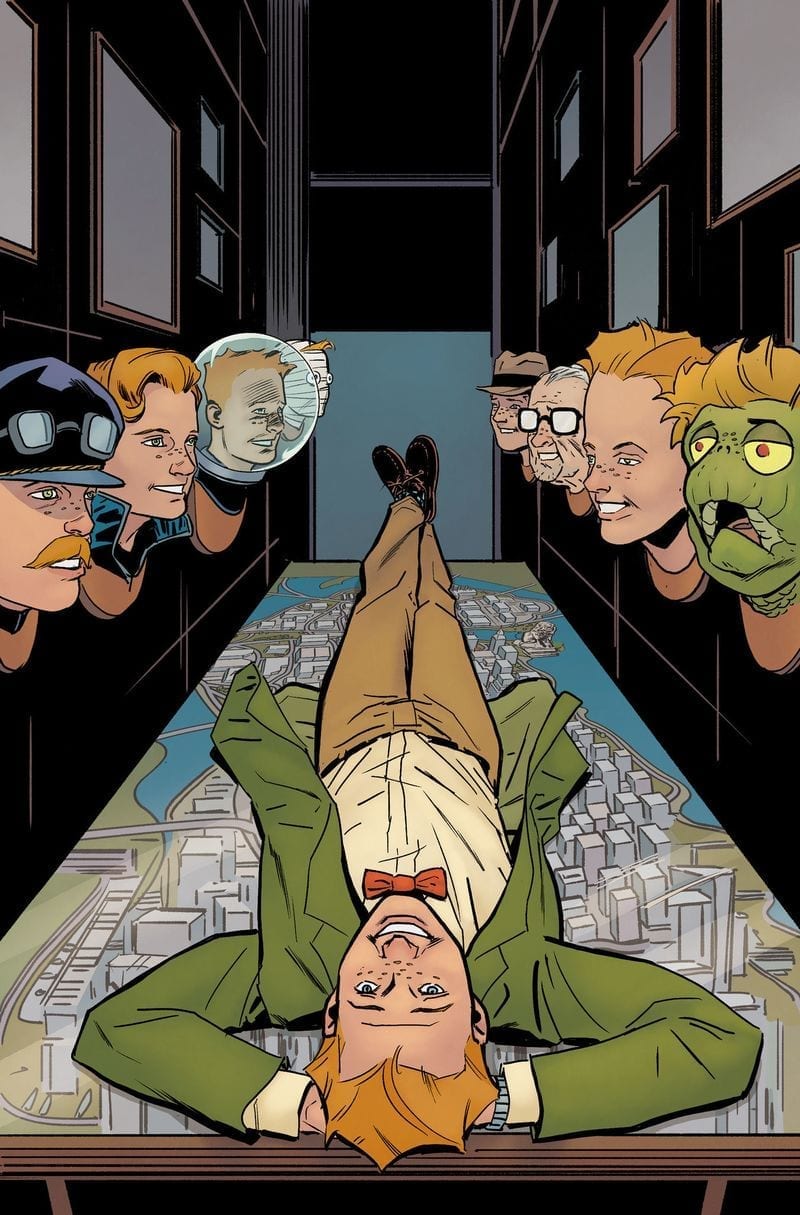
The LA Times‘s Hero Complex has a sneak peek at Lois Lane by Greg Rucka and Mike Perkins, and Superman’s Pal Jimmy Olsen by Matt Fraction and Steve Lieber. Both are 12-issue series debuting in July.

jimmy olsen

Rucka, who formerly steered the adventures of another female DC icon in Wonder Woman, has this to say about Lois:

“Lois Lane is the best investigative reporter in the DC [Universe]. This is our truth, and this is what the book is about… [She] is often described as fearless, but that’s a mistake, because it implies that nothing frightens her. There’s plenty that frightens her; the difference is that it never stops her. She was like that before Superman entered her life, and so she remains.”

lois lane

At least from the descriptions, the two books will strike different narrative tones, with Jimmy’s being the more “fun and light and optimistic.” Lieber says,

“I think there’s a lot of storytelling power in the juxtaposition of the ordinary and the extraordinary, and Jimmy is all about that… [It’s] a chance to be funny in the world full of much larger than life characters.”

jimmy olsen

You can get a taste of the two new series in the upcoming Superman: Leviathan Rising Special, as that one-shot will include short stories by creative teams for both Superman’s Pal Jimmy Olsen and Lois Lane. More preview art can be found at Hero Complex.

If you’ve been enjoying Brian Bendis’s Superman work, and the world of Metropolis he’s built, will you follow these characters to their own comics? Let us know in the comments!

Monkeys Fighting Robots Youtube

INTERVIEW: Composer Patrick Warren Talks The Chamberlin And Showtime’s The Chi

The Chi is an award-winning and recently Peabody-nominated Showtime series about the lives of strangers brought together by tragedy, and Patrick Warren is the composer responsible for bringing out the feels.

Created by Emmy-winner Lena WaitheThe Chi stars Jason Mitchell, Ntare Guma Mbaho Mwine, Jacob Latimore, and Alex Hibbert who are four disparate souls who are united when their small community on the Southside of Chicago is rocked by a fateful turn of events. As their lives intersect and they deal with the aftereffects, friendships are forged and lost. The Chi began its second season in April of 2019.

PopAxiom spoke with Patrick Warren about his career in making music, working on The Chi, and being a globally known expert in playing the Chamberlin.

Thanks, Mom

The road to making music started when Patrick’s mother, a nurse, had her son learn an instrument “As a child, I was forced to take piano lessons. Somewhere around my teenage years … my mother said ‘You are old enough to make your own decisions, you can quit if you’d like.”

Patrick had never seriously considered quitting by that point, but did ponder it for a moment “I decided to keep going with it and shortly after discovered rock and roll. I’ve been obsessed with music ever since.”

Patrick studied music, eventually falling in love with composition and continuing his studies at UCLA “They would give us a little piece of video and tells us ‘you have four cellists, four violins… and a french horn. Make it go to this picture.”

However, Patrick’s musical career “… started out as a rock musician with many different bands and touring.” The young man has toured or worked with the likes of Fiona Apple, Bruce Springsteen, Bob Dylan, and Lana Del Rey.

Patrick’s career grew and evolved “I started making arrangements for string orchestras, and I think that sort of gradually started me towards film scoring.”

The Chamberlin

Out in the world, there are some weird instruments. One of them is the Chamberlin, created in 1949, which typically looks like a piano but is something entirely its own “The most well-known use of the instrument is the beginning of Strawberry Fields by The Beatles.”

The idea behind the Chamberlin was trying to put an “orchestra in a box,” and Patrick admits “I became obsessed with the idea … I took an approach to make that instrument sound as much like an orchestra as I could in the sounds and the way I would play it.”

The Chamberlin is a marvelous machine, but it’s also a unique instrument “It’s a real mechanical beast. It has motorcycle bushings and flywheels. The motors … came from a refrigerator. It was quite a contraption.” Patrick would have a full set of tools while on the road, working as a part-time mechanic to keep the machine working.

About The Chi

Patrick continued to work with musicians while expanding his skillset as a composer “I met Common when I worked on a song he wrote with John Legend for the movie Selma, the song Glory.” That song won an Oscar in 2015.

From Glory, Patrick worked with Common again on “… this amazing record called Black America Again. Common also offered something special to Patrick, creative freedom “Common said ‘do whatever you want.’”

Did Patrick listen? “I really went nuts.”

The Chi-interview-composer-showtime
Patrick Warren with Jason Mitchell (Left) and Barton Fitzpatrick (Right). Photos by Eric Charbonneau.

Common is an executive producer of The Chi and invited Patrick to be the show’s composer “A little bit of what we did on the record became a bit of something we did on the show. It was a starting point.”

As The Chi got underway “… we weren’t really sure what we wanted musically, so there was a lot of temp music. The editors, of course, hear it all the time and start to like it. Season two was different in that they used my music as the temp.”

As for Patrick’s approach to projects like The Chi “When I write music I have the dialogue up and almost approach it as the lyrics to a song.”

https://www.youtube.com/watch?v=w2SIzEGg0oo

Making Music

Over 20 years, Patrick’s worked with musician T Bone Burnett “… a brilliant producer who asked Patrick to work on the gritty HBO show True Detective.” The show won an Emmy for Outstanding Music Composition in 2014.

Writing music for TV and film presents interesting challenges “I’ll write a beautiful piece of music for say a funeral scene, and I think I’ve nailed it. It’s not too sappy. I’ll play it for friends who love it. Then you play for it Producers, and they say ‘I like it, but I want to be in a murderous headspace. So you have to approach it in a new way. But that’s part of what scoring is all about.”

Patrick is a fan of experiment instruments and sounds, and as a science fiction fan, he admires stories that take that kind of out-of-left-field approach too “The movie Arrival starts with a string quartet, and it’s not what you expect from a science fiction film. But it lets you know that it’s not just another shoot-em-up type of movie.”

Creative work often has to be compressed down for specific effects. For instance, a screenwriter has to boil the entire story into one or two sentences known as a logline. In music, snippets of songs, usually relegated to theme songs, fill the role of setting the mood for an entire show. We talk about the simplicity of the Game of Thrones theme for a moment then Patrick, like many creators before him, declares “Writing simple melodies is deceptively hard.”

Wrapping Up

Who is in Patrick’s musical DNA? “I have to say, Tom Waits is in my DNA a lot. I’ve been a huge fan of his forever, and I got to tour with him. Such a fan of the way he writes. I love older jazz. A lot of classical.”

At night, Patrick puts headphones on with some music “… and falls asleep.”

If The Chi isn’t enough of Patrick’s music for fans to enjoy, the musician and composer worked on several upcoming albums including “A Sara Bareilles record that came out recently (Amidst the Chaos) which T Bone had me write a bunch of strings for.”

Patrick isn’t forced to play piano anymore. In fact, there’s a hint of joy as he talks about making music “It’s an absolute blast.”

Thanks to Patrick Warren and Impact24 PR for making this interview possible.

Monkeys Fighting Robots Youtube

AfterShock Exclusive Preview: STRONGHOLD #3

Monkeys Fighting Robots

Stronghold #3 hits your local comic shop on April 17, but thanks to AfterShock Comics, Monkeys Fighting Robots has an exclusive seven-page preview to share with you.

The 32-page book is written by Phil Hester, with art and cover by Ryan Kelly, colors by Dee Cunniffe, and letters by Simon Bowland.

Phil Hester (The Coffin, Deathstroke, The Darkness, SHIPWRECK) and Ryan Kelly (The Wicked & The Divine, Lucifer, Saucer Country) weave a tale of cosmic horror, high-adventure and tragic romance unlike anything else in comics.

About the issue:
When the last vestiges of normalcy are stripped from Michael Grey’s life, he is finally confronted by his past in the far-flung cosmos…and the enemies he made there. Can the Stronghold put the broken pieces of Grey’s life back together before the terrors he battled in the stars follow him to our fragile Earth?

Stronghold has been a critical darling for AfterShock through two issues. You can read our 5-star review of the first issue here, and our equally-glowing review of the second issue here.

Check out the full preview for Stronghold #3 below:

stronghold #3 aftershock comics exclusive preview

stronghold #3 aftershock comics exclusive preview

stronghold #3 aftershock comics exclusive preview

stronghold #3 aftershock comics exclusive preview

stronghold #3 aftershock comics exclusive preview

stronghold #3 aftershock comics exclusive preview

stronghold #3 aftershock comics exclusive preview

stronghold #3 aftershock comics exclusive preview


Do you have Stronghold on your pull list? Comment below with your thoughts on the series.

Monkeys Fighting Robots Youtube

Here Come The Bad Guys: DC’s ‘Year Of The Villain’ Details

Monkeys Fighting Robots

So far we’ve had the dramatic last page of Batman #50, the “Leviathan” storyline creeping through the pages of Action Comics, the return of the Batman Who Laughs, Perpetua’s looming arrival in Justice League, and the announcement of a special 25 cent comic book on sale in May. Now, DC Comics has unveiled full details for their “Year of the Villain.”

year of the villain dc comics

The event will be presented in three main titles: Batman, Justice League, and Event Leviathan/Action Comics. The official descriptions are below.

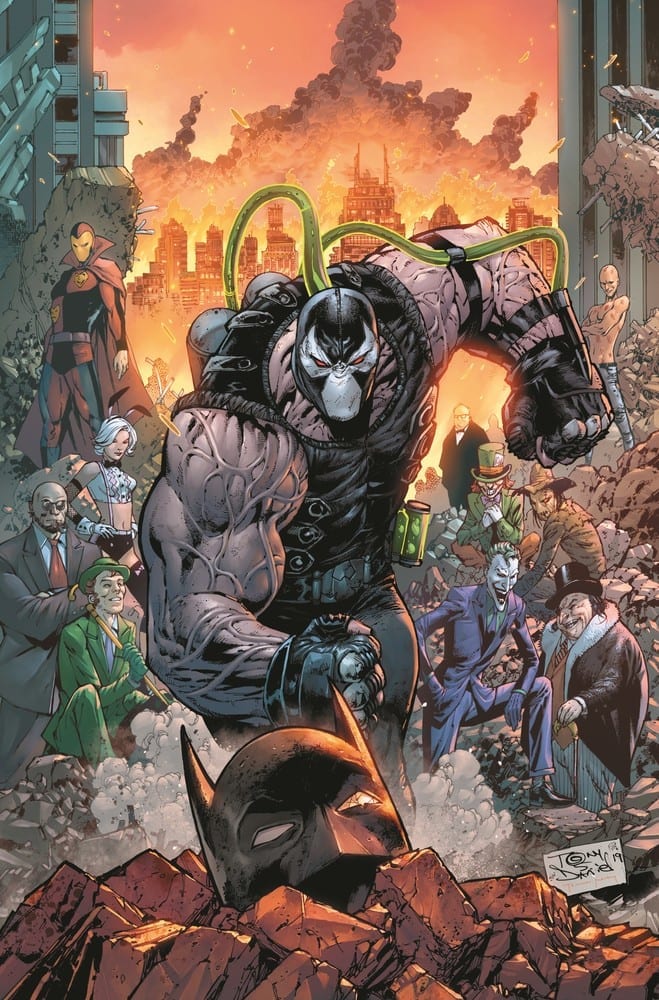
BATMAN: CITY OF BANE

It’s going to be a long hot summer for the Dark Knight as well, courtesy of Tom King and Tony S. Daniel as “City of Bane” begins BATMAN #75, on sale July 17. This extra-sized anniversary issue kicks off a new multi-part storyline tying together all the threads of the first 74 issues of Tom King’s epic Batman run.

Bane’s minions have moved into Gotham City, taken control and rule with an iron fist; and they aren’t above rounding up any rogue villains that aren’t ready to get with the program. Meanwhile Batman is nowhere to be found – at least not the Batman that anyone knows. And if Gotham City is already under Bane’s thumb, what kind of offer can Lex Luthor make him, and will he accept?

batman bane

JUSTICE LEAGUE

In DC’s YEAR OF THE VILLAIN #1 written by Scott Snyder and James Tynion IV with art by Jim Cheung, Lex Luthor has decided once and for all that heroism is a false dream and for man to ascend to his place in the universe, he must embrace his basest, most evil instincts. But this means making an incredible sacrifice to achieve his goal and gain the support of Perpetua, the first being to be imprisoned within the Source Wall, now freed from the events of DARK NIGHTS: METAL.

Beginning with June’s issue #25, Luthor’s plans begin to crystalize in a “prelude” story co-written by Snyder and Tynion with art by Javi Fernandez. In July, he makes “The Offer” to some of the DC Universe’s most noteworthy characters; he alone holds the key to them realizing their full potential. This kicks off an epic event taking over 2019, setting the stage for an all-out clash between the forces of Justice and Doom:

  • July –  Year of the Villain: The Offer

  • August – Year of the Villain: Dark Gifts

  • September – Year of the Villain: Evil Unleashed

  • October – Year of the Villain: Doom Rising

justice league

ACTION COMICS/EVENT LEVIATHAN

Beginning with the “Leviathan Rises” storyline in ACTION COMICS #1007, Brian Michael Bendis and Steve Epting continue to explore the DCU’s clandestine world of espionage and terrorism. The organization known as Leviathan continues to remove competitors from the playing field while its ultimate purpose (and the person behind it) remains unknown.

In DC’S YEAR OF THE VILLAIN #1, Batgirl and Green Arrow dive further into this mystery in a story featuring a moody style reminiscent of a spy thriller (courtesy of artist Alex Maleev), where offers are made and suspicions about the identity of Leviathan are raised. Fans can follow the ongoing mystery in ACTION COMICS #1010 (April 24), #1011 (May 11) and SUPERMAN: LEVIATHAN RISING SPECIAL #1 (May 29) before the DCU’s greatest sleuths and detectives join forces to thwart this full-blown threat as the six-issue EVENT LEVIATHAN miniseries begins on June 12.

leviathan

Besides the big three titles, other DC books will carry special villain portrait covers by artists like Frank Quitely, Adam Hughes, Franics Manapul, and Stanley “Artgerm” Lau. According to DC, the covers, “will be printed on cardstock with minimal trade dress, presenting the art in a bold, dynamic setting and carry an increased cover price ($1 extra) over the standard version.”

flash manapul

catwoman artgerm

You can also click over to DC’s announcement page to see the full press release along all the covers for the event.

Are you intrigued by a villain-centered event? Will you be all-in on this one? Leave us a comment below!

Monkeys Fighting Robots Youtube

Marvel Announces Roy Thomas and Jerry Ordway’s CAPTAIN AMERICA & THE INVADERS: THE BAHAMAS TRIANGLE #1

Monkeys Fighting Robots

Marvel Comics announces a new series, Captain America & The Invaders: The Bahamas Triangle, with issue #1 dropping this July. The book is written by Will Eisner Comic Book Hall of Famer Roy Thomas, with art by Inkpot Award-winning Jerry Ordway, and multiple variant covers by Ron Lim and Patch Zircher.

No one has a greater love for The Invaders than Thomas; he created the original team with artist Sal Buscema in The Avengers #71 (December 1969).

About the issue:
March 1941. Assigned to safeguard President Roosevelt during a fishing trip in the Bahamas, the newly commissioned Cap endures his baptism under fire — while a German U-boat (carrying the Nazi super-soldier called Der Wunderkrieger (or Wonder Warrior) heads for the island chain’s capital! His mission: to kidnap England’s once-king, the Duke of Windsor, and sit him on the throne of a defeated Britain! But others happen to be in that part of the Atlantic as well — the once-bitter rivals the Sub-Mariner and the Human Torch!

Ordway has contributed to some of the biggest books in the industry during his career, and now we get to see what he comes up with working on vintage characters from Marvel’s early days.

This will be the second Invaders series out currently, joining the series by Chip Zdarsky, Carlos Magno, Butch Guice, Alex Guimaraes, and Travis Lanham.

Check out a full-size version of Ordway’s cover below:

Marvel Announces - Captain America & The Invaders: The Bahamas Triangle #1


Are you excited to see The Invaders in their prime? Comment below with your thoughts.

Monkeys Fighting Robots Youtube