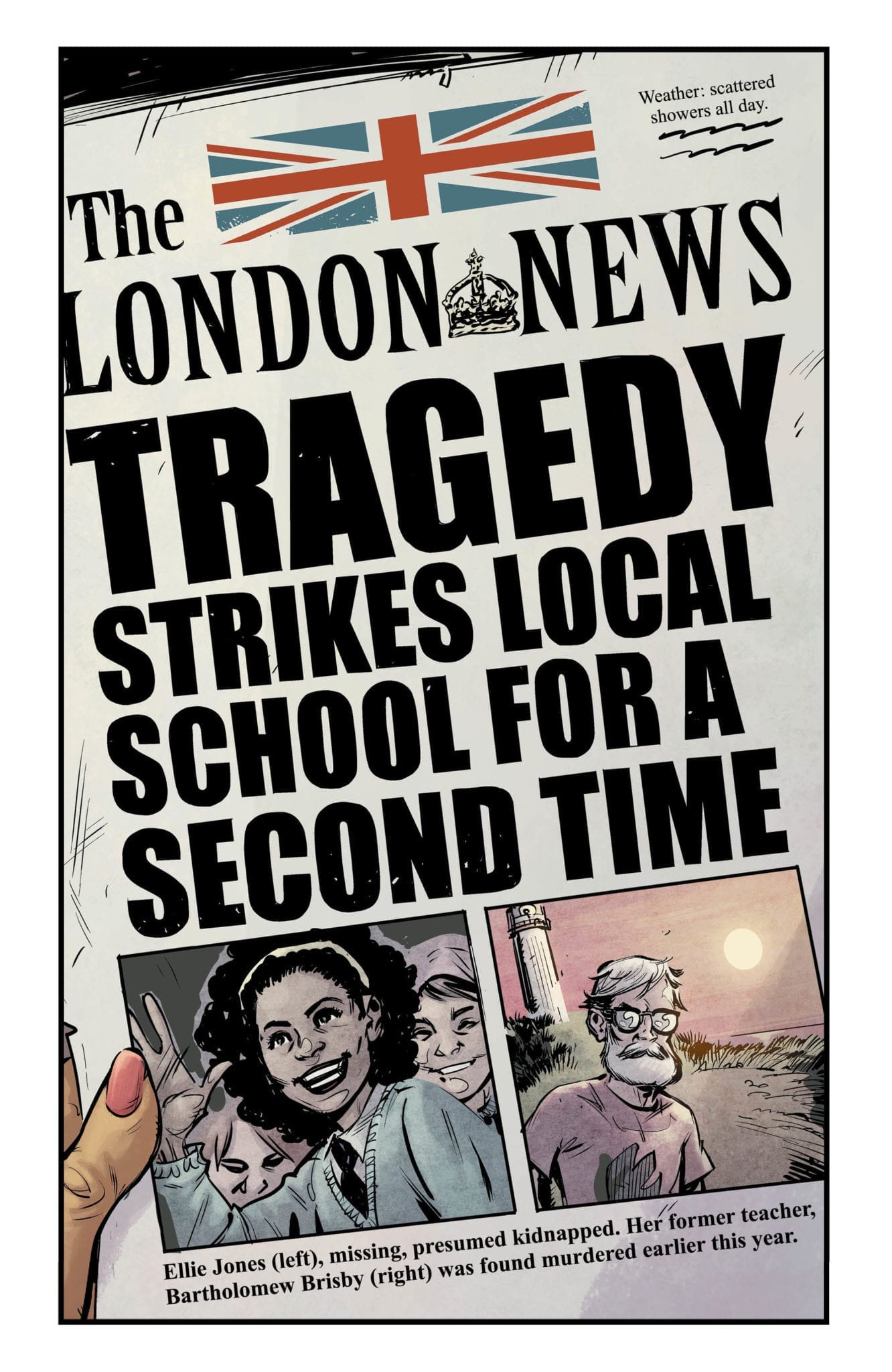
Timothy Hunter has had a lot on his mind lately. His journey through The Dreaming, while increasing his understanding of the magical realms, kept him away from home for a long time. But upon returning Timothy learned of Ellie’s disappearance, and the only person who can help him is Ms. Rose, his magical guide whose motives are quite questionable.
Story
Kat Howard is on a mission to make Timothy as confused as possible in this issue. And it makes for that much more of an exciting story. Upon his return to London, the poor boy has put his search for the Books of Magic on pause in order to search for Ellie. Fortunately, Rose agrees to assist Timothy in his search, but her shady relationship to his recently deceased teacher leaves him questioning her every move.
Howard’s Timothy comes with all the qualms one would expect from a teenager. Shifting realities, a teacher’s confusing instructions, and less time to see your friend — all the core aspects of a student’s high school experience. They may be exaggerated to fantastical proportions, but it’s clear young readers will resonate with Timothy’s journey.
The duo’s quest to find Ellie inadvertently sends them to Faerie, a mysterious land saturated with magic. They’ll have to find a way out of the realm and get back on track less they lose her forever.
Art
BOOKS OF MAGIC #7’s cover features the classic pastel art of Kai Carpenter. The illustration depicts Timothy and Rose in the midst of a forest in Faerie, complete with watchful eyes to emphasize the dangerous nature of the realm.
The issue’s inner story features fantastic artwork from Tom Fowler, Brian Churilla, Jordan Boyd, and Todd Klein. Fowler’s illustrations of Faerie’s environment captures the magic that suffuses it, and Churilla’s inks accentuate their details more so. Boyd uses earthy colors in the creatures of Faerie to highlight their dependence on the magical land. In addition, Klein employs cursive lettering for the Faerie inhabitants to help readers imagine Timothy’s journey is taking place within a child’s storybook.
Conclusion
Issue #7 dives deep into Timothy’s connections, both in regard to Rose and the land of Faerie itself. Readers will eagerly anticipate the reveal of these answers in the next issue.
What do you think is Timothy’s connection to Faerie? Let us know in the comments below!
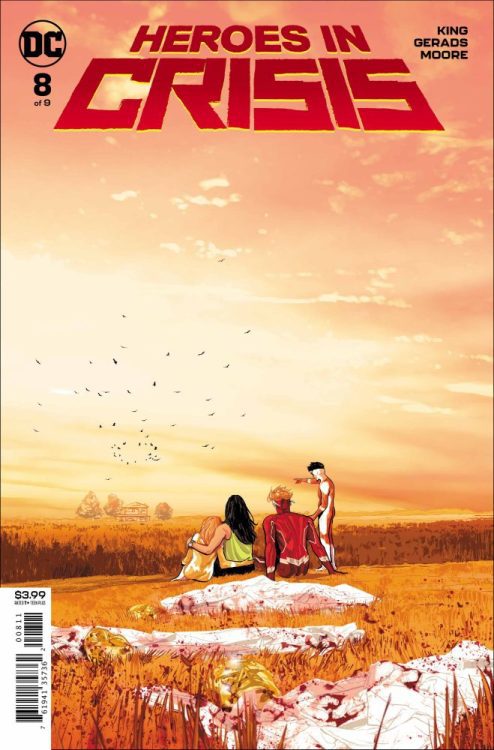
Tom King and company has baited readers since September of 2018 with the clues and misdirection that fill the pages of Heroes in Crisis. Who had committed these heinous acts of murder, and why?
With the eighth of nine books that make up this story hitting shelves today, those questions have (most likely) been answered. A confession has been given, and its ramifications will be felt throughout the entire DC Universe.
** Major Spoilers Below **
Story
You’ve seen all the clues. You’ve heard the testimony and eavesdropped on the secret confessions of the World’s Greatest Super Heroes. Now, with the killer revealed, it’s time to find out why. What could have driven a hero to the brink, to turn a savior into a murderer? Rifts will form between old allies, and the trinity of Wonder Woman, Superman and Batman will have their leadership challenged and will question their own judgment. Sanctuary has become something they never imagined…and it’s still potentially carrying on without them!
Poor Wally West. Pushed aside as the prime Flash in The Flash: Rebirth in 2009. Erased from memory in the New 52 reboot. Forgotten of in a post-Rebirth world, including by his fellow Titans and wife. Also, his children were also wiped from existence, and he briefly died from running too much. It’s no wonder that he was in need of some serious superhero therapy.
Now, as revealed in the latest pages of Heroes in Crisis, Wally’s emotions and curiosity have gotten the better of him. Because of such, As a result, he has been revealed as the culprit of the killings at the Sanctuary.
Writing
This issue is all about the confession of Wally West, and it feels like it is one for Tom King as well. King has sprinkled clues throughout the previous issues of the series, and uses the entirety of this issue to divulge the who, how, and why.
King’s best work is in character studies. Just look at his takes on The Vision and Mister Miracle. Where Heroes in Crisis shines is in the confessionals. King takes a deep dive into the tortured and conflicted minds of the lesser known and unheard of DC Universe heroes. Those moments of tragedy and emotion are much more compelling than the murder mystery. Furthermore, though this book finally sheds light on the mystery, it’s Wally’s inner turmoil, and Tom King’s dialogue, that drives the story.
Perhaps, a focus on Wally West would have better suited this series, much like King’s work on Vision and Mister Miracle. A Flash who feels he doesn’t belong in this timeline, who is dealing with the emotional strife of living in a world where he is forgotten by his friends, his wife, and where his children have never existed.
Art
Mitch Gerads takes over the artwork for the majority of this issue of Heroes in Crisis. Gerads showcases some major talent in each panel of this issue. As Wally speeds through, cleaning up his mess, Gerads evokes the hurriedness of the situation through chaotic bursts of speed and lightning. And readers are sure to feel just as charged to flip through the pages to the end.
What Gerads does best in this book is evoke the rage and despair that Wally West endures. His facial expressions and his posture make the character come to life on the page. The penciled scratches etched on Flash’s face and costume suggests a worn and battered hero. One who has reached a breaking point.
Conclusion
With the big answers revealed, it will be very interesting to see how Heroes in Crisis concludes, and how the revelations of this issue will affect the entire DC continuity from here on out. Perhaps The Flash will undo everything he has done with time travel, as Flashs’ tend to do. Regardless, the strongest aspects of this series have been the character studies. It’s the look at the flawed people under the masks, as opposed to the murder mystery, that sell the story.
Are you surprised at who the killer is in Heroes in Crisis? How do you think the series will conclude? Let us know in the comments!
Coming this summer, some of Marvel’s mightiest heroes will come face-to-face with villains they have yet to contend with in ‘Acts of Evil’.
Ms. Marvel, who will take on Super Skrull, Venom (Lady Hellbender) and Punisher, who will be tabbed against Brood Queen, will all celebrate their respective annual issues in pinning them against the unexpected.
“You know what everyone says is worse than the devil? The devil you don’t know,” said Kathleen Wisneski. “For ‘Acts of Evil’, Marvel is pitting our heroes against villains they’ll never see coming, and we’ve lined up creative teams with fresh takes on these characters to make sure our fans are just as blindsided.”
The creative team for Ms. Marvel Annual #1: Ms. Marvel vs. Super Skrull will be Magdalene Visaggio and Jon Lim, while Karla Pacheco and Adam Gorham will helm Punisher Annual #1: Punisher vs. Brood Queen and Venom Annual #1: Venom vs. Lady Hellbender will be spearheaded by both Ryan Cady and Simone di Meo.
The ‘Acts of Evil’ series, in sizing up Marvel’s heroes against new villains, will launch with these three in July and continue in August and September. Keep an eye out for more reveals as we cruise through the summer.
Click HERE for the official release from Marvel, including a look at all the covers.
What do you think, what epic Marvel matchup would you like to see? Let us know in the comments section below.
The original series originated in 2002, out of the pages of X-Force, which was also a Giant-Size issue, which brought together a group of mutant celebrities that were all camera-friendly and media savvy. The issue will introduce a new threat for the group to fight and will also introduce a brand new U-Go Girl. UGG was part of the original team that also consisted of Doop, Guy Smith, Anarchist, Veenus Dee Milo, Spike and Henrietta Hunter.
Giant-Sized X-Statix #1 is set for release in July. Keep an eye out for a release date as summer draws closer.
Click HERE for for the official press release from Marvel.
What do you think, does the world need more Mutants? Are you excited about the revival of this fan-favorite mutant squad? Let us know in the comments section below.
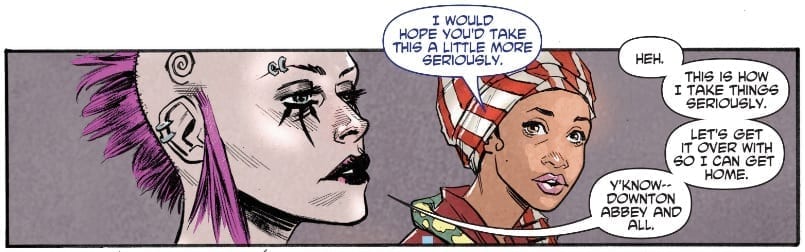
In practice, the loa are powerful spirits who command respect and service in humans. The titular character in Punk Mambo #1, the first chapter in the new five-part series from Valiant, offers them neither of these.
Punk Mambo uses her powers for profit on the streets of New Orleans. But, when one of the loa bonded to her is kidnapped, she heads off to track down the culprit.
The Writing
Cullen Bunn weaves a fun, fantastic tale in Punk Mambo #1. Readers will pick up on some similarities to characters like John Constantine, only with a less self-serious tone. The series is a supernatural detective story, but it leans heavily on black comedy with a lively, madcap zeal. Beneath the humor, though, are the bones of a solid story.
Punk Mambo (real name Victoria Greaves-Trott) appeared in several Valiant titles in recent years, but new readers will have no problem picking up what the character is about. We know she’s snide, cynical, and much older than she appears. She also has some pretty incredible Voodoo-inspired powers, which she employs in a mercenary fashion. We get all the information we need, while avoiding a prologue-style info-dump.
Punk Mambo #1 functions as an excellent Act One for the larger story. It introduces the character, and also opens the door to a larger narrative, suggesting there may be some price to pay for her flippant attitude toward the powers she wields.
The Artwork
Adam Gorham provides some excellent artwork for Punk Mambo #1. He employs a variety of close-cropped and wider images, giving us variety while remaining visually cohesive. His character designs are appealing, opting for a lot of heavier, shadowy lines, which are complemented by vibrant color work.
Gorham uses detail very selectively. He often allows backgrounds to fade out, focusing attention on the characters without detracting from the visual effect. However, the details that are present feel very deliberate, creating some eye-catching images throughout.
Final Thoughts
Punk Mambo #1 is a great start to the new series, providing an entertaining story and alluring artwork. Highly recommended.
IDW Publishing are no strangers to Dick Tracy. They have been reprinting the newspaper strips in wonderful collection books since 2006 and have already published one new comic based on the character.
Their new outing, Dick Tracy Forever, is one from writer Michael Avon Oeming’s bucket list and is something that he has been wanting to work on for over a decade. It promises to change the way we see the character while also proving why the character continues to be popular and relevant today.
Dick Tracy Forever #1 Credit: IDW Publishing
Writing/Story
Michael Avon Oeming has embraced the history of Dick Tracy to create a new set of tales, not in continuity but set in their own world. The format of this first issue harps back to the early days of the comic strip from 1931 and incorporates the fun extra’s that Chester Gould enjoyed, such as the Crime Stoppers Guide.
In Dick Tracy Forever, these elements are not just page fillers but also mood setters. The crossword puzzle is pasted onto the side of imposing, dark buildings reflecting the claustrophobic nature of the city Tracy works in.
The three stories Oeming offers are all tenuously linked, another call back to the strips from the 1930’s and 40’s that bled into one another. Each is action packed and features a different crime but Tracy’s distribution of justice is constant. Oeming illustrates Tracy’s determination for justice by selecting criminals from different backgrounds, each with a different story. The reader compares and judges as they see fit but Tracy works in black and white; commit a crime and you are punished.
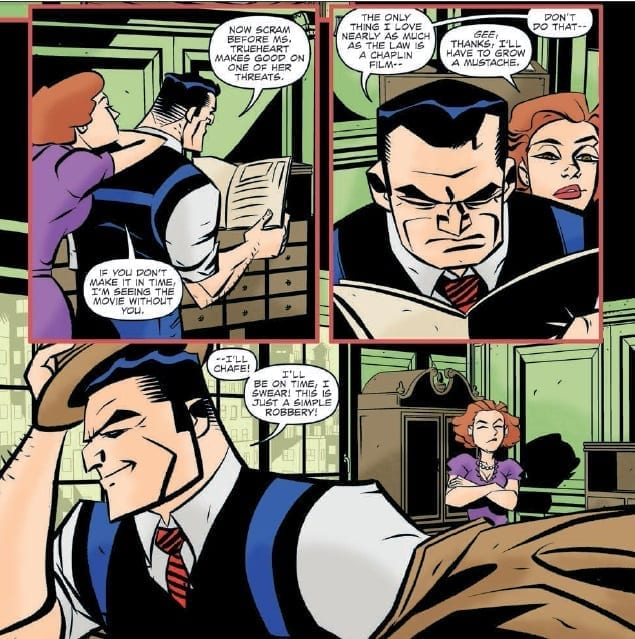
One of the endearing features of Chester Gould’s creation were the support cast that surround the central detective. Oeming understands this and gives the extra’s their own character, updated for a modern audience. Tess Trueheart is the most prominent and Oeming has picked up the feisty, independent attitude that she always had. He has in turn made her central to the stories, assisting or impeding Tracy’s investigations. The interaction between these two lovers gives the comic heart and comedy in equal measures.
Dick Tracy Forever #1 Credit: IDW Publishing
Art
Oeming’s art is bold and brash just like the central character. He has adopted a noir style suitable to stories set in the 1930’s. Long dark shadows fill each panel reflecting the darkness that surrounds Tracy in his fight against crime. There is a sense that all of this comic is set in the dark hours when criminals come out to play.
Tracy has strong features which Oeming accentuates with thick, black lines and harsh angles. In comparison, Tess is much rounder in feature with a more delicate outline.
There is a progression to the art style throughout the comic. Subtle changes to the depiction of the characters and their design chart the history of the Dick Tracy strip itself. The change from battered brown trench coat to the iconic yellow that Dick Tracy is known for seems to match a change in the Tracy character.
The coloring sets the mood and not just of the scenes. Taki Soma pays close attention to the characters and what they are wearing. The color of their garments reflect their personalities, which is most notable by Dick Tracy himself.
Shawn Lee uses a range of lettering techniques to help the dialogue flow from panel to panel and page to page. However, it is the introduction of thought balloons that will really but a smile on the readers face. The good old fashioned thought balloon is rarely used these days and has been replaced by caption boxes. However, Lee uses them liberally bringing Tracy’s thoughts directly into the comic strip. This gives the reader a unique impression of the character that can be lost by a voice over type caption. The reader is able to see the workings of the detective’s mind as it happens without the distance created by captions.
Dick Tracy Forever #1 Credit: IDW Publishing
Conclusion
The last outing of Dick Tracy for IDW Publishing, Dick Tracy Dead or Alive, wasn’t the most successful interpretation. The art style that was used didn’t fit the energetic, dynamic character that Dick Tracy is. Oeming’s interpretation however is spot on.
The Disney movie from the early 1990’s understood the character and what makes him so appealing. As a result, they created a cinematic visualisation of the character and his life. It was over the top; over acted; simplistic; but above all entertaining. Dick Tracy Forever does exactly the same thing but in comic book format. It takes elements from the early years and reinterprets them for a modern audience. There is the focus on crime but also on the central characters relationships. The Gruesome Villains that made the character so famous have a part to play but at this stage they barely feature. This is because for the first decade the criminals were mostly representations of the real life criminals that were making the headlines. Oeming does the same thing in this comic. It may be set in the past but the criminals are all too modern; desperate veterans, technical spies, corrupt billionaires.
Dick Tracy Forever is an exciting start to a new series. It combines nostalgia and modern storytelling in equal amounts to create a relevant take on a classic character. Much like the Disney movie, Dick Tracy Forever has clearly been made by people who love the character and as a result the readers won’t be able to stop themselves from loving it.
Continuing their line of Star Trek comics, IDW Publishing asks the question, “What happened next?” In their new offering, Star Trek Year Five, the creators return to the original crew of the Enterprise and explore the final year of their original mission. Everyone knows what came after but where did the Enterprise go in that final, missing year?
Star Trek Year Five #1 Credit: IDW Publishing
Writing/Story
The crew of the star ship Enterprise have been exploring together for exactly four years. Their current mission provides then with a spectacular light show to accentuate their celebrations.
But as the crew celebrate Captain Kirk receives a communication containing news he doesn’t want and Lieutenant Uhura picks up a distress call from an uninhabited planet.
The most important job of a first issue is to hook a reader so that they will continue to come back month after month. For a lot of Star Trek fans that hook is in the title of this comic; Year Five. To witness the continuation of the original mission through to completion appeals to all fans of the original series.
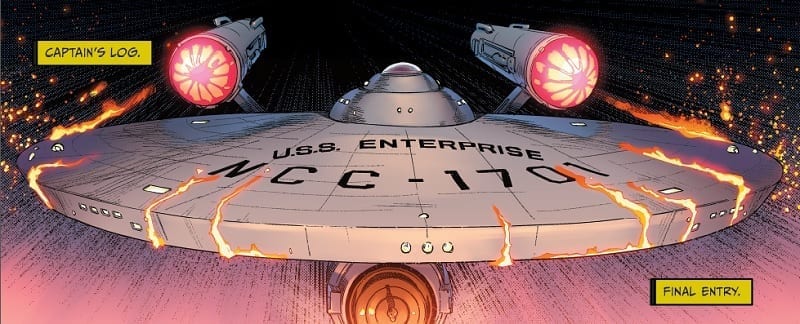
And if the title wouldn’t do it the opening section of this comic would. Writers Jackson Lanzing and Collin Kelly open the comic with a panel showing the Enterprise, NCC-1701, burning up, under obvious distress with two caption boxes, two words each:
Captain’s Log. Final Entry
No matter what happens next that first panel has trapped you in the story. Those four words sends shivers down your spine, like hearing the words ‘Winter is coming’, they have an involuntary effect on the reader.
The first page is a jaw dropper packed with emotion but the reader will have to wait for a resolution because there is the fifth year to live through.
The rest of this issue is a set up for the series and the first mission in the Enterprise’s final year. There is a lot of exposition in the opening pages, which is littered throughout with continuity references. Lanzing and Kelly know the characters very well and capture their individuality in their speech. The cast of Year Five are the characters from the original series, down to a T. This isn’t an interpretation or re-imaging; this is Star Trek series 4.
Star Trek Year Five #1 Credit: IDW Publishing
Art
It is not only the story that captures the feel of the original Star Trek; the artwork also embraces the 1960’s aesthetic beautifully. The combination of Stephen Thompson’s pencils and Charlie Kirkoff’s colors is reminiscent of the Star Trek comics produced in late 1960’s and early 1970’s where Alberto Giolitti provided the artwork. The panels are dynamic with viewpoints that reflect the characters within.
Captain Kirk, for example, strides through a panel, his importance and presence cannot be restrained by the boarders or gutters of the page. Thompson gives the panel a low camera angle so that the readers look up to the captain in the same way as the crew. There are a number of character establishing panels throughout this first issue of Year Five and they show how much of an understanding the artists have for the cast.
The hardest job goes to Neil Uyetake who has to fit the massive amount of dialogue over Thompson and Kirkoff’s art. Luckily for Uyetake, the characters are the stars of this comic, not the sets, so he is able to position the speech balloons around the cast. On occasions this creates a claustrophobic feel to some of the spaces which helps to remind the reader that the original Enterprise was much smaller than later ships. The lettering gives the reader the impression of being trapped in a submarine rather than a luxurious star liner. This is a working ship, not a pleasure cruiser, and this point is illustrated by the packed panels and lack of open spaces.
It also provides a wonderful comparison to the away teams trip on the surface of Lloyd Zeta-9 because there is suddenly so much space. Large landscapes fill the page and the dialogue becomes less prominent.
Star Trek Year Five #1 Credit: IDW Publishing
Conclusion
Star Trek Year Five issue one states its intentions from the beginning and, throughout this issue, constantly reminds the reader that this is Original Series Trek. The characters are the ones we know and love. The sets have a 1960’s TV show aesthetic, so much so that you could believe that this comic was set on the sound stages of Paramount Pictures lot.
The entire art team work together to produce a single vision of this Star Trek universe, referencing not only episodes from the original series but also extended universe material, especially the comics style from the 1960’s.
And, of course, this comic has one big hook for the reader which captures you from the very first page. Once you start to read Year Five you will want to know what happens next; it is highly improbable that after issue one, anyone would miss issue two.
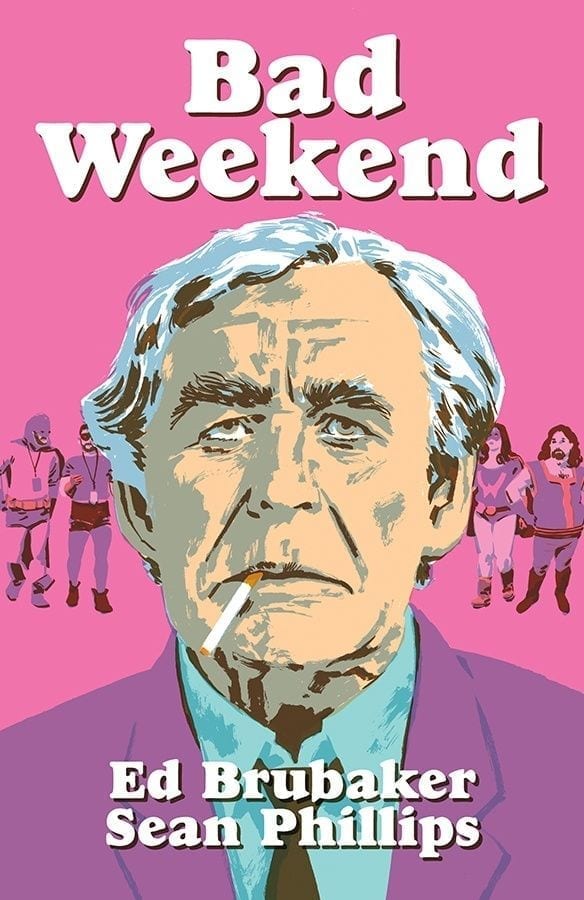
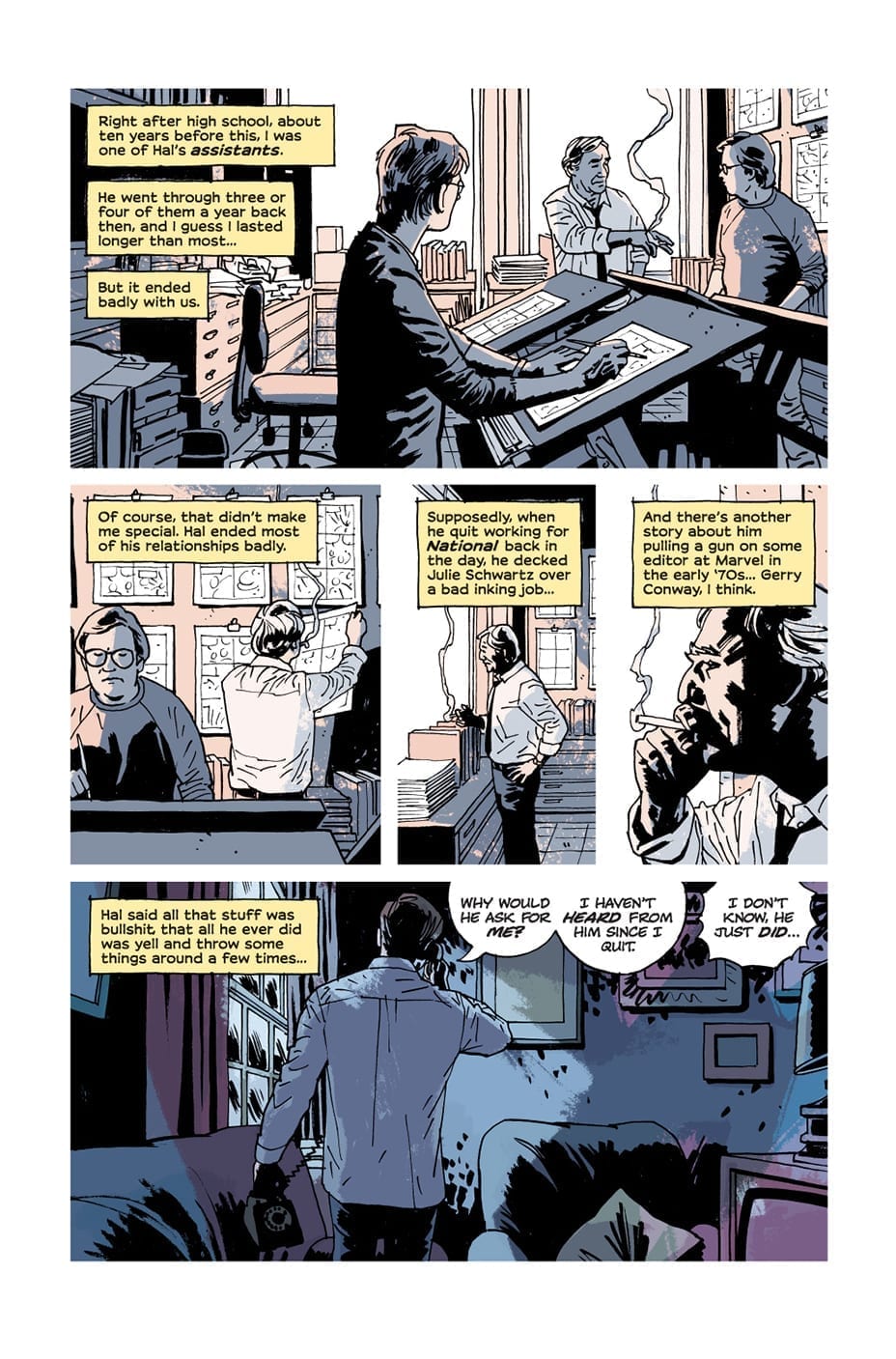
Good news, Criminal fans: Image Comics has announced a new graphic novel from the celebrated team of Ed Brubaker and Sean Phillips. Bad Weekend will explore different territory than what we’ve become used to in the series; instead of hard-boiled crime fiction, this time the milieu will be the backstage world of comic creators.
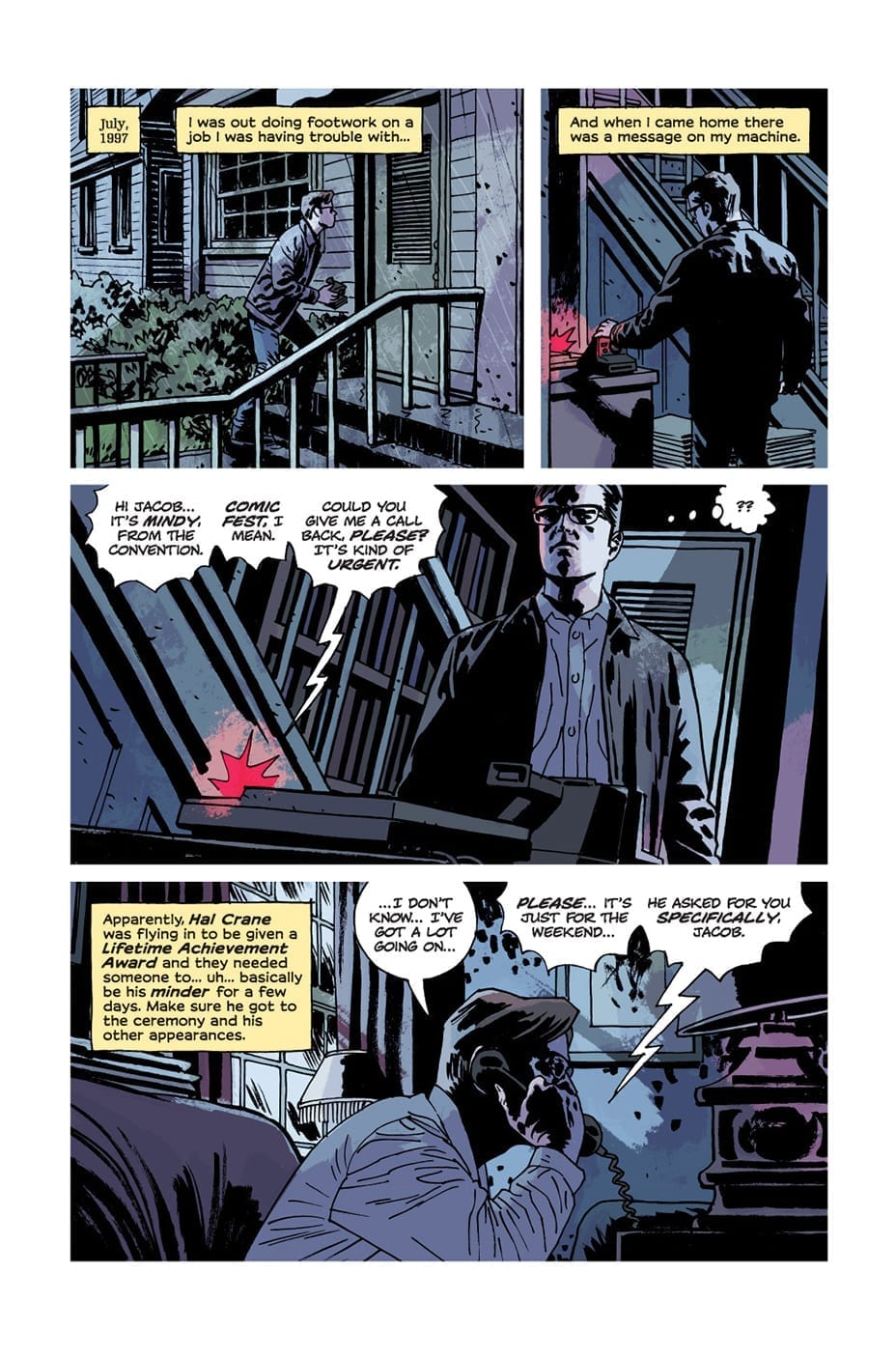
In Bad Weekend, we meet Hal Crane, a legendary cartoonist who’s been around since the earliest days of comics. Hal knows that comics won’t just break your heart. Comics will kill you. Stuck at an out-of-town convention waiting to receive a lifetime achievement award, Crane must confront a history of old grudges and terrible mistakes.
In Brubaker’s words:
“Hal Crane isn’t based on anyone in particular. But bits and pieces of his history are lifted from sad tales and sordid gossip that you hear over the years in this business, especially about the old days. Gambling. Drinking. Prostitution. Theft. Death. There’s always been a darkness at the edge of comics and I wanted to explore that in Bad Weekend. Is this a expose of the industry? Sort of, but it’s a love letter to the medium, as well.”
If you’re already a Criminal reader, you’ll know Bad Weekend from the current run, though Image describes the upcoming graphic novel as featuring “an expanded and remastered version of the story… with several completely new scenes.” The format will be the same as last year’s hardcover My Heroes Have Always Been Junkies.
The Bad Weekend news comes on the heels of Brubaker and Phillips renewing their exclusive contract with Image last year. Still to come in the news department should be updates on the Kill Or Be Killedbig screen adaptation.
Bad Weekend arrives in July, just in time for Comic-Con. You can read Image’s entire press release here.
Are you a Criminal fan who’s been enjoying this story in installments? Does Bad Weekend‘s behind-the-scenes comic industry story sound like something you’ll want to check out? Leave us a comment below!
From the very beginning, Chester Gould’s Dick Tracy character was a hit. His style of rough justice and commitment to the law struck a nerve with the readers, and his popularity grew. It wasn’t long before Dick Tracy branched out from the Detroit Mirror and started appearing in newspapers all over America, as well as in novels, on the radio and in TV serials.
Even after nine decades Chester Gould’s tough, crime-fighting hero still has a large audience which explains why IDW Publishing is about to release its second comic series based on the character.
One of the first Dick Tracy Strips from October 21 1931
New Man On The Block
Originally given the title Plainclothes Tracy, Chester Gould’s creation started as a young, suave love-struck man but all of that changed when his finance, Tess, was kidnapped and her father was shot by local gangsters. To find Tess and avenge the death of her father, Tracy joined the plainclothes squad and so began his war on crime.
In the early days Chester Gould concentrated the stories on mobsters and petty criminals, while creating a world of characters for Tracy to interact with. This soap opera element of the strip enhanced Tracy’s appeal, and readers felt that they experienced his life right there, alongside him.
The sense of justice and determination that Tracy showed in the first story was to become his hallmark characteristics. The extras in the cast helped to define this aspect of him; whether it was the young Pat Patton idolizing his mentor or Tess Trueheart watching Tracy drift away from her, engrossed in his obsession with the law.
In that first decade, Tracy was a lawman, tracking down criminals and putting them behind bars. He was center stage in the strip. He was the man to look up to. That would start to change over time.
The Voice of Dick Tracy (Not Bob Burlen)
The Sound of The Man
Dick Tracy’s popularity was such that it wasn’t long before the character branched out into other media. In 1934 the first Radio Play was broadcast and America got to hear their favourite detective speak for the first time.
Played initially by Bob Burlen, the producers of the show picked up on the hard-nosed, no-nonsense elements of Tracy’s character. Burlen played the part with an authoritative voice, booming from the speakers. His strong physical presence always dressed in smart suits was translated into a powerful voice. Just like the first years of the comic strip, it was clear who the star of the radio series was; Dick Tracy front and center.
Although fans couldn’t see him, Tracy’s radio presence was still extremely popular and ran for many years. Tracy himself was played by a number of different actors, all with the same bombastic flair.
Dick Tracy Vs Crime Inc. Artwork
The Father Figure: Ralph Byrd
The natural progression from radio was to Television and film. Several actors played the part over the numerous serials and movies but Ralph Byrd was the first and made the part his own.
Byrd was slightly different from the earlier interpretations of the character. He had a gentler approach as if the sharp features had been chiseled away. The character was also more of a mentor to the younger characters and, more importantly, the younger viewers.
The first serial, simply called Dick Tracy, saw the detective pit his wits against The Spider Gang. Each episode featured a separate case, but they were all linked back to the Spider Gang. The serial was obviously popular and more followed; the best of which is Dick Tracy vs. Crime Inc. It was an exciting cliff-hanger serial and showed off Byrd’s best performance. The villain, a character called The Ghost, was able to turn invisible and his identity formed part of the mystery of the serial.
The Crime Inc. serial took the best elements of the comic strip at the time and turned them into compelling viewing.
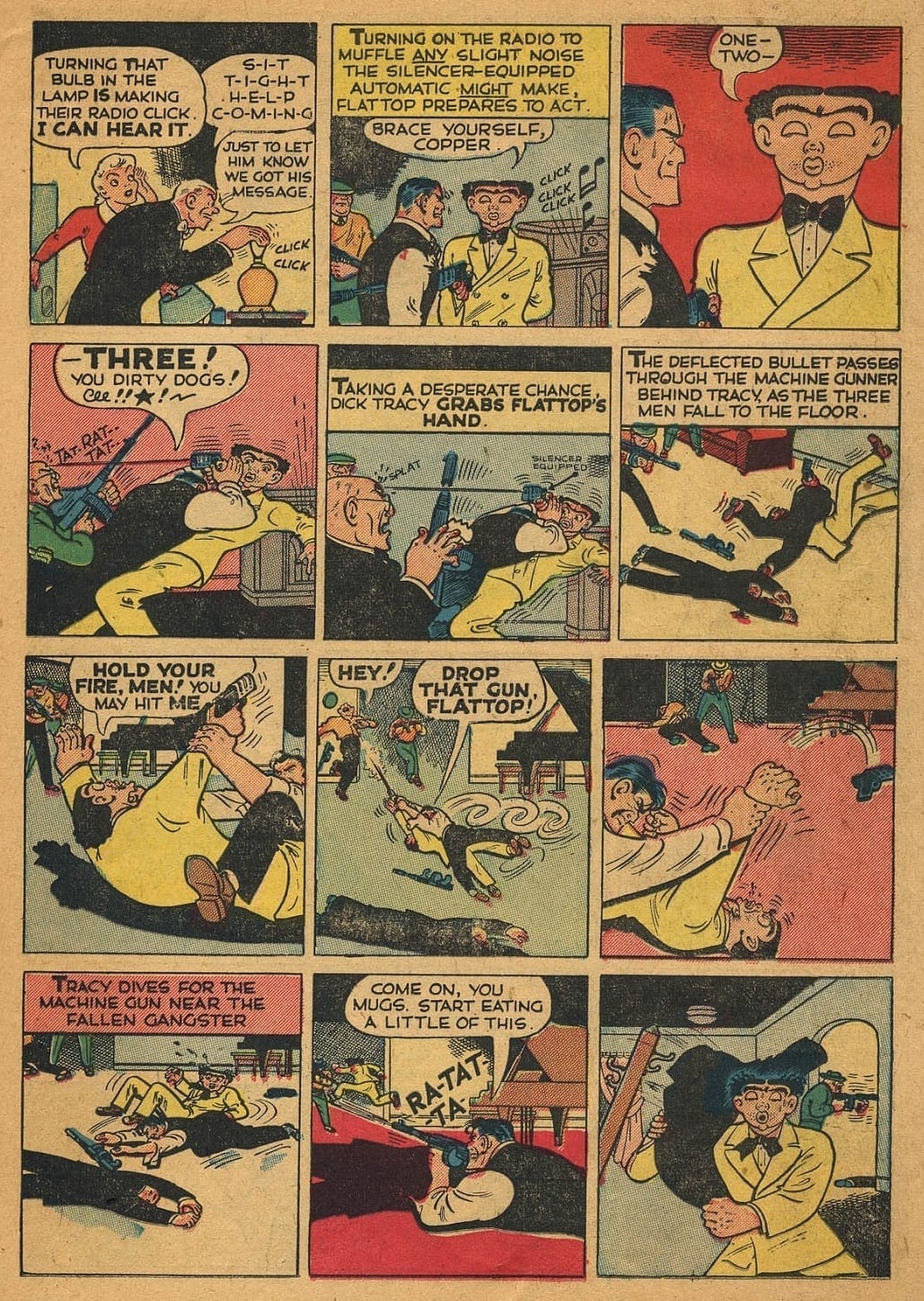
Dick Tracy Fights Flattop. Reprinted Strip
Enter The Grotesques
Meanwhile, back in Chester Gould’s comic strip a new era was to dawn on Dick Tracy; an era that was creatively Gould’s greatest period.
Gould’s workmanship had continued to improve, partially through repetition and partially through necessity. The overall style of the strip was beginning to change. It started to look more modern, and the stark black and white contrasts were used to great effect in the panels. Gould also became known for producing expressive environments.
In 1941 Gould introduced a character that was to change the direction of the Dick Tracy strip. Up to this point, the melodrama of the early years and the run from one story slowly into the next was becoming predictable. Although there were some great characters, the format itself need to be shaken up if Dick Tracy was to continue. Enter Little Face Finny.
Although he wasn’t the most outrageous character to feature in the comic strip and his crimes weren’t spectacular in any way, he was the first of Gould’s grotesques; a character with fantastical features that usually represented the characteristics of the villain. Little Face was the template that so many of Dick Tracy’s most famous villains followed for the 10 years that followed.
And with the introduction of a new type of villain, Tracy himself had to undergo a change. In the 1940’s Tracy became an action hero. Often chasing down the villain’s over several months, all across America. He faced death on a regular basis, often being injured in the line of duty. There was still the soap opera element, but Tracy was evolving into a James Bond type character. Stronger, faster and much more deadly. The violence in the 1940’s increased and Tracy dished out his fair share. He was still a shining example of justice, but he was becoming as cold as some of the villain’s he faced.
The 1940s were about excitement and violence. Gould produced some of his finest work depicting this new, headstrong Tracy. The attention to detail over this period was second to none. Visually and narratively, the 1940s is where Dick Tracy shined brightest.
Kyle Baker’s outstanding take on Tracy’s Violent World
The Mouse And The Detective
Warren Beatty had his eye on Dick Tracy for years. As early as 1975, Beatty had been thinking about what he could do with the character but it wasn’t until the late 1980’s that he managed to get his hands on the rights. Working with the reluctant Disney Studio (reluctant to work with Beatty at least) the Dick Tracy movie was made; over budget and with a massive marketing campaign behind it.
It has received mixed reviews over the years but one thing can be agreed on: the movie has an outstanding visual flair. Beatty often stated he was creating a piece of artwork and in that respect he was right. The look of the film is spellbinding.
Beatty played Tracy, and it harkened back to the early radio interpretations of the character: gruff, hard-faced and separated from the world around him. His obsession for justice blinded him to everything else. Surprisingly, however, Beatty created an air of romanticism around the character. In the movie Breathless Mahoney, played exceptionally by Madonna, constantly flirts for the detective’s attention but he only ever has eyes for one woman, Tess Trueheart.
This relationship was built up in the comic books that were released as part of the marketing campaign. The three issue run, written by John Moore and drawn by Kyle Baker, adopts a similar artistic style to the movie making it very different from the weekly comic strip. However, the tone and pacing of the comics, Truehearts and Tommy guns, is magnificent. The visual style is beautiful to behold as it captures the essence of the world that the movie is set in. Dick Tracy is a character that is larger than life surrounded by a cast of caricatures. They are the best and worst of us stretched to breaking point before being visually interpreted in unsettlingly bright colors.
Whatever your feelings towards the movie, the tie in comics are a work of art and some of the best Dick Tracy comics released.
Cover For IDW Publishing Dick Tracy Forever #1
Reprints And New Takes
In 2006, 75 years after the first strip appeared in print, IDW Publishing began reprinting the comics, in chronological order and in glorious, hard backed books. Each book comes with several pages of additional information in the form of essay’s and interviews all relating to Dick Tracy.
One of the additional bonuses of IDW Publishing having the printing rights is that they can, after 12 years, begin publishing new comics based on the characters. At the end of last year, the first attempt called Dick Tracy: Dead or Alive was released. Written by Michael and Lee Allred with Art by Rich Tommaso and Laura Allred, it had a challenging style and take on the character which may not have been the best way to launch a new line of comics.
However, the second mini-series starts this week. Dick Tracy Forever is written and drawn by Michael Avon Oeming with colors by Taki Soma and letters by Shawn Lee. Just like Warren Beatty, Oeming has been planning his take on Dick Tracy for many years. A publication was in production nearly a decade ago before the project fell through. IDW has now given Oeming the chance to realize his vision.
A different take to the Dead or Alive miniseries, Dick Tracy Forever is fun and exciting. It is packed with dynamic artwork and the melodrama that initially made the comic strip so popular. Oeming understands the importance of the supporting cast and gives them character. The comic is split into three stories which are all short and sweet but extremely moreish. They also reflect on how the central character changed over time. It is as if Oeming has condensed the first decade of Tracy strips into a single issue. Dick Tracy changes subtly from obsessive detective to bordering action hero in three short stories ready for his future in issue two, the cover of which implies it is the era of the grotesques.
Whether re-reading the classic strips, indulging in new stories or watching one of the many live-action interpretations, the character of Dick Tracy resonates with the audience. Just like any other popular, long-running franchise, not every incarnation will be to everybody’s tastes, but the chances are there will be at least one version of the character that you will find exciting and intriguing.
Dick Tracy subtly changes over time, becoming more relevant to the new audiences that start to follow him. The supporting cast does the same, especially the villains who have changed from Al Capone type mobsters, through larger than life metaphors and on to modern, cyber-criminals.
Dick Tracy has endured and will continue to do so for many more years.
Aside from the many comics that can be picked up, I would recommend the following:
Any of The Complete Dick Tracy volumes published by IDW Publishing. If you are new to Dick Tracy, I would recommend any of the volumes containing material from the 1940s. These are arguably the best of Gould’s work and contain the most famous villains like The Brow, Flattop, Pruneface, etc.
The Dick Tracy Depot website has news and reviews on all things Tracy. It also has links to youtube channels where you can listen/watch some of the old Tracy shows.
The second annual Atlanta Comic Con is nearly here and this year’s slate will feature even more top celebrities and creators!
Atlanta Comic Con is one of six conventions spearheaded by the Imaginarium agency, an organization whose love for comics, art and pop culture is boundless. It also runs cons in Michigan, Wisconsin, San Francisco, Indiana and Tampa Bay.
ATLCC will again take place in the heart of Atlanta, at the Georgia World Congress Center. The event features exhibitors that cater to a wide-spectrum of fandoms, where you can pick comics, magazines, toys, games, films, sketches and much, much more! You also have the opportunity to meet some of the hottest television and film actors, among professional cosplayers and comic book creators as well.
Plenty of creators will be there for ATLCC, headlined by legendary creators Gerry Conway, who will be there on both Saturday and Sunday, only. Some great artists will also be there in Vanesa Del Rey, John Beatty, Joe Rubinstein and Ron Lim (Saturday/Sunday only), among others.
Atlanta Comic Con will roll around at NOON (ET) on July 12 and culminate on Sunday, July 14, ending at 5pm. Visit atlantaccomicon.com for all the information you can use, including the guest lists, directions and FAQs, and HERE for tickets.